


Abstract
This study systematically investigated how sintering aid type and amount, silica properties, and temperature affect the characteristics of silica-based dry ramming mixes. We selected boric anhydride and sodium polyphosphate as the sintering aids. Phase evolution results and properties evaluated via X-ray diffraction analysis and property testing indicate that fine-grained, high-purity quartz from Hubei presented the fastest phase formation after firing at 1550 °C. Both sintering aids accelerated phase transformation; however, additional boric anhydride did not modify the process further. Sodium polyphosphate caused pronounced volumetric expansion of up to 20% at 1400 °C, but this expansion gradually decreased as sodium polyphosphate increased at 1550 °C. The sintering behavior and properties of silica-based dry ramming mixes were governed by the interplay between the extent of phase transformation (dominant at 1400 °C) and the quantity of liquid phase (dominant at 1550 °C). Overall, boric anhydride is more suitable for silica from Hubei and Hebei; however, based on the conditions assessed in the present investigation, a high content of sodium polyphosphate (3 wt%) is required for Henan-derived silica.
1. Introduction
Induction furnaces offer several advantages, including high efficiency, energy conservation, minimal environmental pollution, easy adjustment, and precisely controllable operating conditions. Consequently, they are extensively utilized in industries such as foundry, steelmaking, non-ferrous metal smelting, and precision alloy production [1]. In recent years, driven by the need to conserve energy and reduce consumption, small-capacity blast furnaces and converters have been progressively phased out. Simultaneously, induction furnaces, known for their low energy consumption, have undergone rapid advancements, characterized by increased capacity and higher power levels. This progress has imposed more stringent operational demands on the refractory linings of these furnaces, necessitating enhanced performance standards [2].
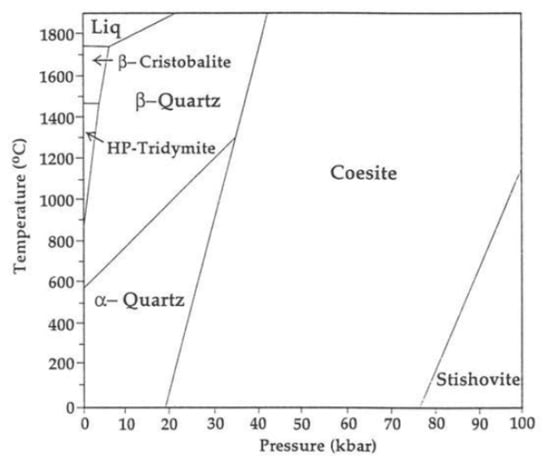
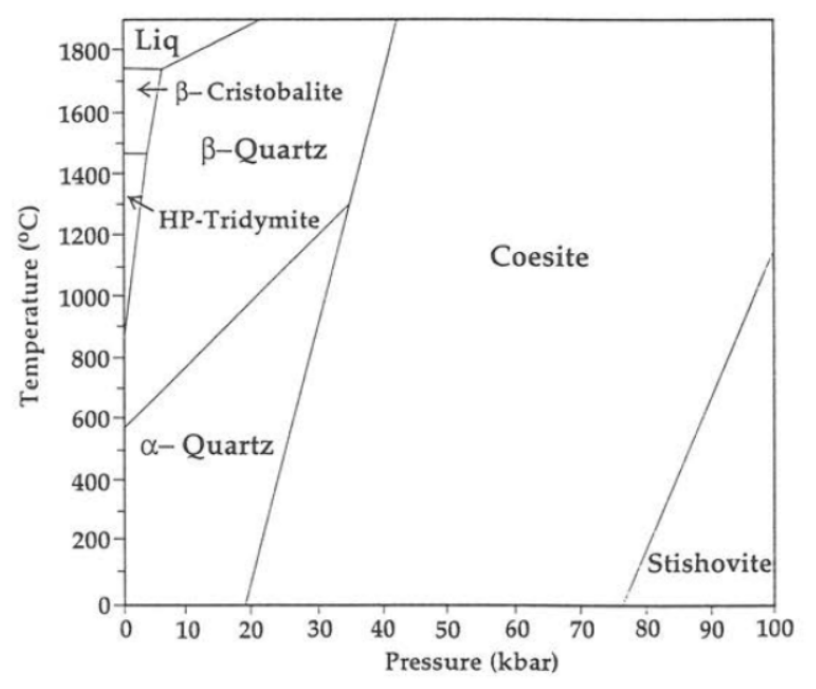
According to the phase diagram shown in Figure 1 [3], α-quartz is the predominant crystalline form of silica in nature [4]. At elevated temperatures, α-quartz transforms into a series of intermediate and stable polymorphic phases, such as β-tridymite (which forms in the presence of a mineralizer at 870 °C) and β-cristobalite (at 1470 °C) [5,6]. In the absence of a mineralizer, metastable cristobalite forms at 1200–1350 °C, while β-tridymite is rarely detected even after prolonged soaking. The reconstructive formation of β-cristobalite from quartz at high temperature results in a significantly larger volume expansion (17%) compared to the reversible β–α transformation of cristobalite, which occurs upon cooling at around 200–270 °C (~2.8%) [7,8].
Figure 1.
Phase diagram of SiO2 [3].
Currently, the linings of many induction furnaces are fabricated by ramming silica-based mixes. These mixes, primarily composed of natural silica rock, are cost-effective and exhibit favorable properties such as thermal shock resistance, strength, and slag corrosion resistance. As a result, they are widely used in induction furnaces for melting various cast irons and cast iron alloys [9,10,11,12]. Although chromium oxide can improve the bonding within silica matrices, its high cost limits its application [13]. Instead, boron-containing compounds are more commonly employed as sintering agents in silica-based dry ramming mixes [14]. Boric anhydride, with its low melting point, facilitates the early development of sufficient strength during furnace baking, thereby enhancing the volume stability of the lining [15,16,17]. Typically, the amount of boric anhydride added ranges from 0.2% to 1.5%. At high temperatures, a significant liquid phase derived from boric anhydride can mitigate excessive stresses caused by silica’s volume expansion, maintaining the structural integrity of the lining under high-temperature conditions. Furthermore, this liquid phase effectively infiltrates pores, defects, and cracks within the linings before introducing molten iron or steel. Additionally, phosphates are commonly used as sintering aids in the refractory industry; they are frequently employed in smelting furnace linings for foundry systems that impose low phosphorus requirements or restrictions on boron content [18,19].
However, silica-based dry ramming mixes have various limitations, primarily including numerous influencing factors, significant quality fluctuations, and poor stability. Silica’s raw material characteristics such as particle-size distribution, type, and quantity of sintering aids are critical factors affecting the properties of silica-based dry ramming mixes [20,21,22,23]. Despite investigations conducted on the effects of boron oxide and sodium phosphate on silica ceramics and ramming mixes [18,24,25,26], boron-containing sintering aids were generally higher than 1 wt%. The specifications for stainless steel smelting should be considered alongside environmental protection requirements to minimize the boron content as much as possible. This study aims to clarify how the silica source, calcination temperature, and sintering aid type affect the properties of silica-based dry ramming mixes under low-boron and boron-free constraints. It also compares boric anhydride and sodium polyphosphate in terms of sintering behavior, strength, and volumetric stability. Furthermore, the action mechanisms of sintering aids at different temperatures are elucidated to provide a foundation for developing low-boron, high-performance silica-based dry ramming mixes for stainless steel smelting.
2. Materials and Methods
The experimental raw materials were natural silica rocks obtained from three different regions (A: Luoyang, Henan; B: Gucheng, Hubei; C: Chengde, Hebei, China) after crushing. Their chemical compositions were analyzed using X-ray fluorescence spectrometry (9900 Series, Thermo Fisher Scientific, Waltham, MA, USA), and silica’s grain sizes were observed under an optical microscope (ZEISS Axioskop 40, Oberkochen, Germany). The sintering aids were boric anhydride (BO, purity 97.5%, Xi’an Unique Science and Technology Co., Ltd., Xi’an, China) and sodium polyphosphate (NP, Na2O 29%, P2O5 69%, LITHOPIX P4, Zschimmer & Schwarz, Lahnstein, Germany). Differential thermal analysis (DTA) up to 1500 °C was conducted using a simultaneous thermal analyzer (STA 449 F3 Jupiter, NETZSCH, Selb, Germany) at a heating rate of 10 °C/min under air with a flow rate of 50 mL/min. To ensure accurate testing, the sintering aids added to the silica powders (<0.074 mm) were increased and set to 10 wt%. The samples for DTA were designated “+10BO” and “+10NP”.
According to the literature [27], the particle size distribution of silica was calculated using the Andreasen model with a q value of 0.31, resulting in the following composition: 5–3 mm, 15%; 3–1 mm, 25%; 1–0.074 mm, 35%; and less than 0.074 mm, 25%. Silica aggregates and powders were weighed according to this ratio, after which the selected sintering aids were added.
Raw materials were blended for 10 min using a cement mixer (JJ-5, Wuxi Jianyi, Wuxi, China). The mixture was poured into molds and pressed into shaped samples with ϕ 50 mm × 50 mm dimensions at 150 MPa using a manual hydraulic press to ensure comparable results. The as-received green bodies were dried in an oven at 110 °C for 2 h and then fired at 1400 °C and 1550 °C, respectively, for 3 h in air within a muffle furnace. The heating process was as follows: the temperature increased from ambient to 100 °C within 1 h and reached 900 °C after 3 h. Following a 3 h holding period at 900 °C, an additional 3 and 4 h were required to reach target temperatures of 1400 °C and 1550 °C, respectively. The samples were cooled inside the furnace. The following parameters of the fired samples were measured: phase composition, evaluated by X-ray powder diffraction (XRD, X’pert Pro MPD, Philips, Almelo, The Netherlands) and calculated using the RIR method [28]; volume change rate (according to GB/T 5988-2007 [29]); bulk density (according to GB/T 2997-2015 [30]); apparent porosity (according to GB/T 2997-2015 [30]); and cold crushing strength (according to GB/T 5072-2008 [31]). The microstructure and elemental distribution of sample A+3NP were characterized using an electron probe microanalyzer (EPMA, JXA-8230, JEOL, Tokyo, Japan).
3. Results
3.1. Characteristics of Silica
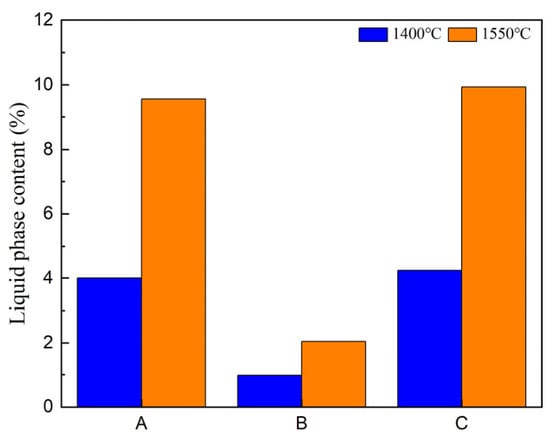
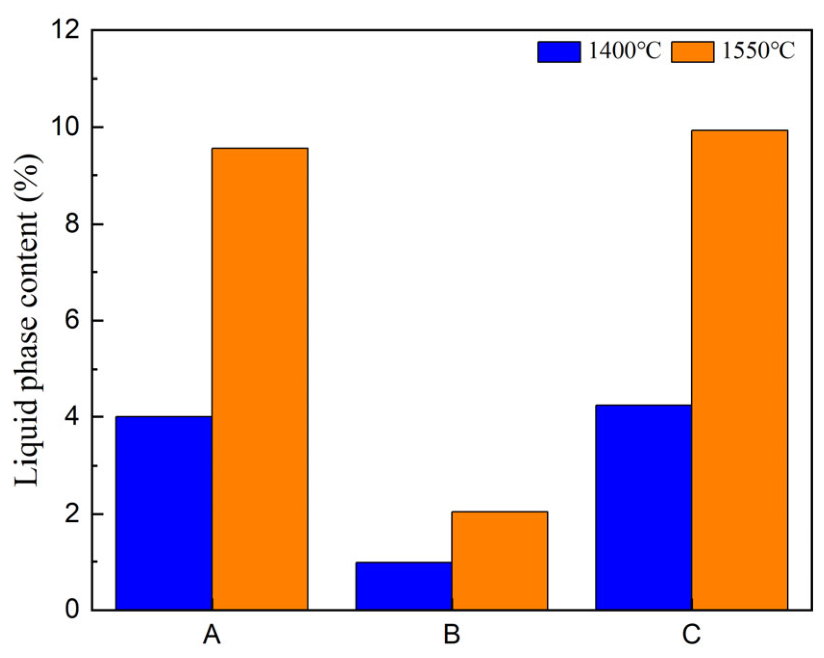
The chemical compositions of selected silica rocks from different regions are presented in Table 1. Silica B from Gucheng, Hubei, exhibited the highest purity, but also the highest CaO impurity. Silicas A and C had comparable Al2O3 contents, while silica C showed a higher TiO2 content. TiO2 has been reported to have a catalytic effect on the formation of β-tridymite [32]. Assuming silica reached equilibrium at high temperatures, its liquid-phase contents in silica from the three regions were calculated (as shown in Figure 2) using the chemical compositions listed in Table 1, the thermodynamic software FactSage (version 8.1), and the FToxid and FactPS databases. As temperature increased from 1400 °C to 1550 °C, the liquid-phase content at least doubled. Due to differences in impurity levels, silica B had the lowest liquid-phase content at 1550 °C (2%), while silica C had the highest (9.9%).
Table 1.
Chemical composition of silica (wt%).
Figure 2.
Calculated liquid phase contents of silica at high temperatures.
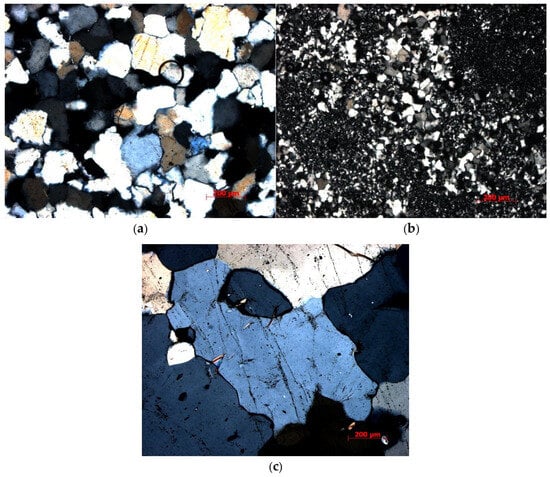
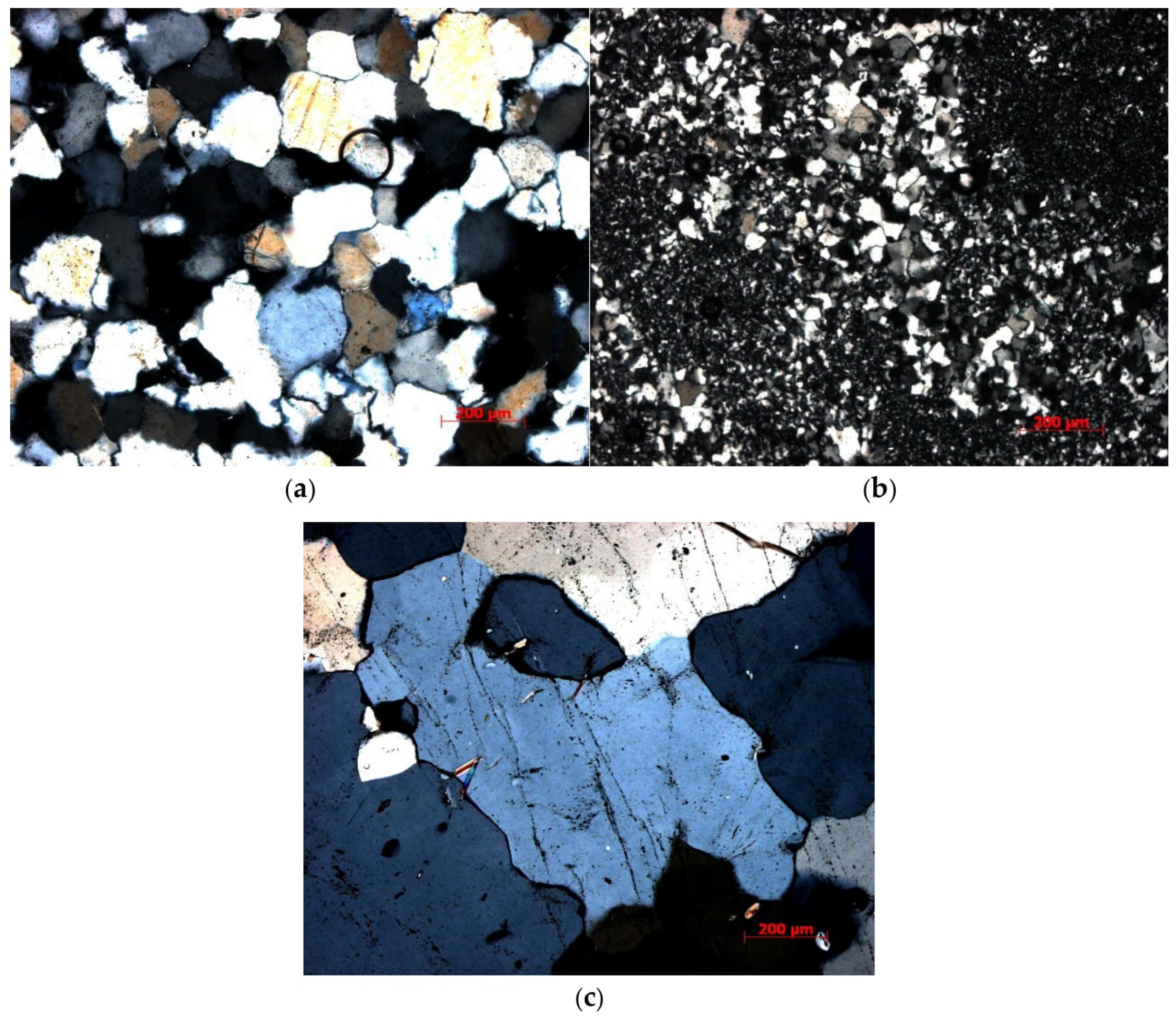
Silica grain sizes are shown in Figure 3. Silica B from Hubei consisted of fine grains, all below 100 μm. The average grain size of silica A from Henan was approximately 200 μm, while silica C from Hebei had relatively large grains, reaching up to 600 μm.
Figure 3.
Microstructures of silica from different origins: (a) A, (b) B, and (c) C.
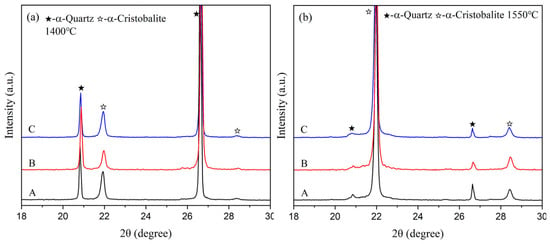
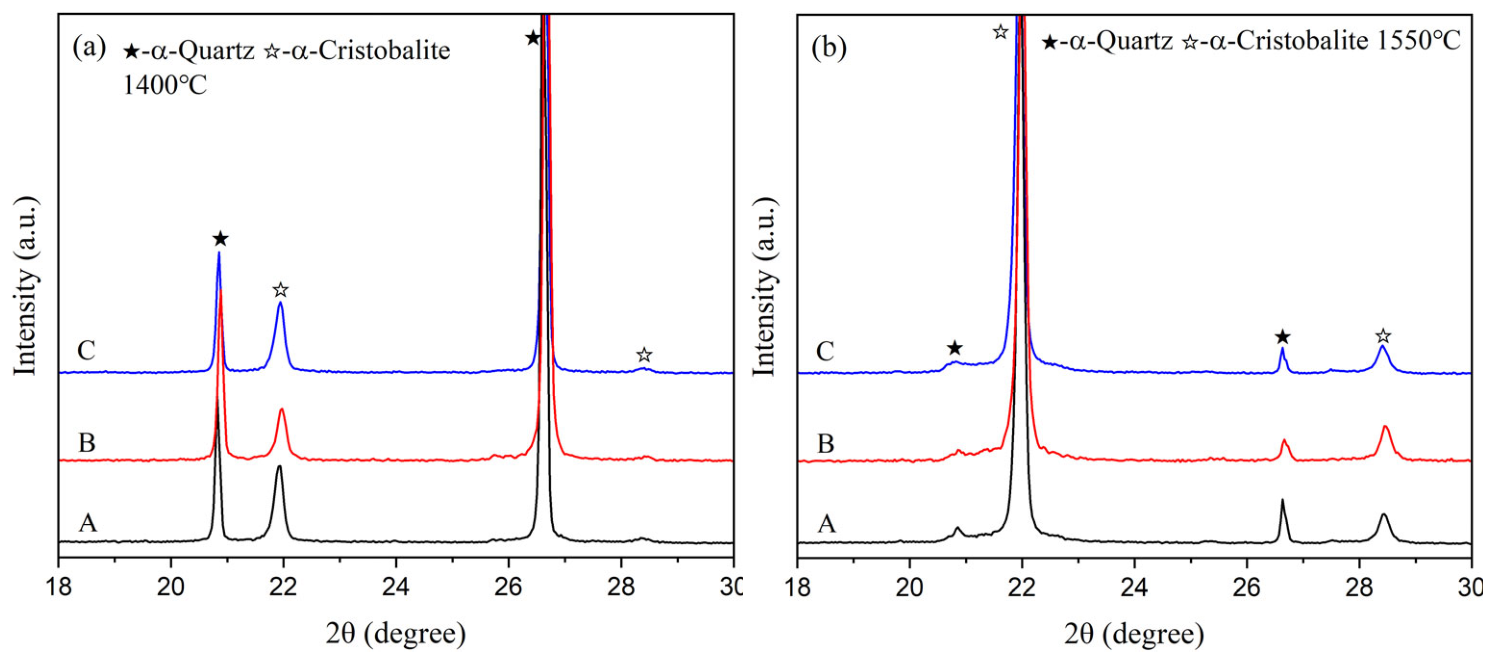
To evaluate phase changes under smelting conditions of gray iron and ductile iron, the samples were fired at 1400 °C and 1550 °C, respectively. Figure 4 presents the XRD patterns (18–30°) of the sintering aid-free silica ramming mixes after firing at different temperatures (full patterns with a 2θ range from 10 to 90° are provided in the Supplementary Materials). All samples were observed to be predominantly α-quartz with only a small amount of α-cristobalite present after holding at 1400 °C for 3 h. Although the ramming mixes consisted of aggregates and powders, the phase transformation was less pronounced compared to finer powders (less than 30 μm), which contained 46% α-cristobalite after heating at 1400 °C [33]. When the temperature increased to 1550 °C, α-cristobalite became the major phase in all samples. These results will serve as a reference for comparing the effects of sintering aids.
Figure 4.
XRD patterns (18–30°) of silica-based dry ramming mixes without sintering aids from different origins after being fired at different temperatures: (a) 1400 °C and (b) 1550 °C.
3.2. Effect of Boric Anhydride on Properties of Silica-Based Dry Ramming Mixes
Silica-based dry ramming mixes with the same particle size gradation were used, and boric anhydride was added in amounts ranging from 0 to 0.4% by weight. Additionally, silica from different regions (A, B, and C) was used as a variable to investigate various factors affecting the properties of silica-based dry ramming mixes under the influence of boric anhydride.
3.2.1. Effects of Boric Anhydride Combined with Silica Characteristics on Phase Transformation
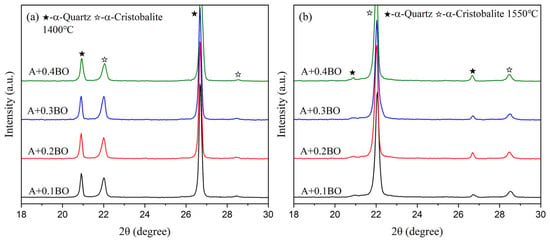
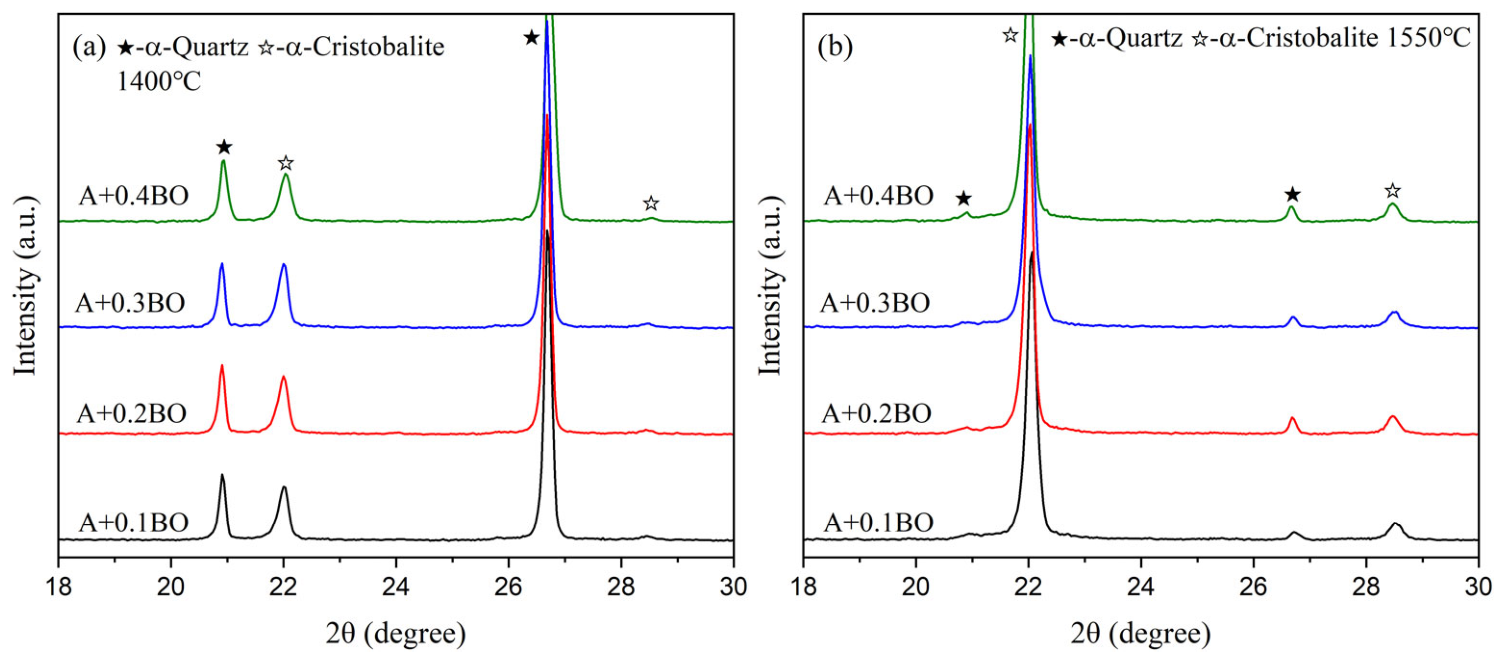
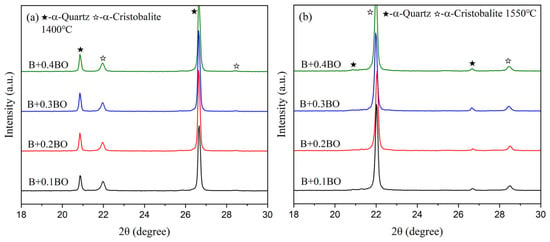
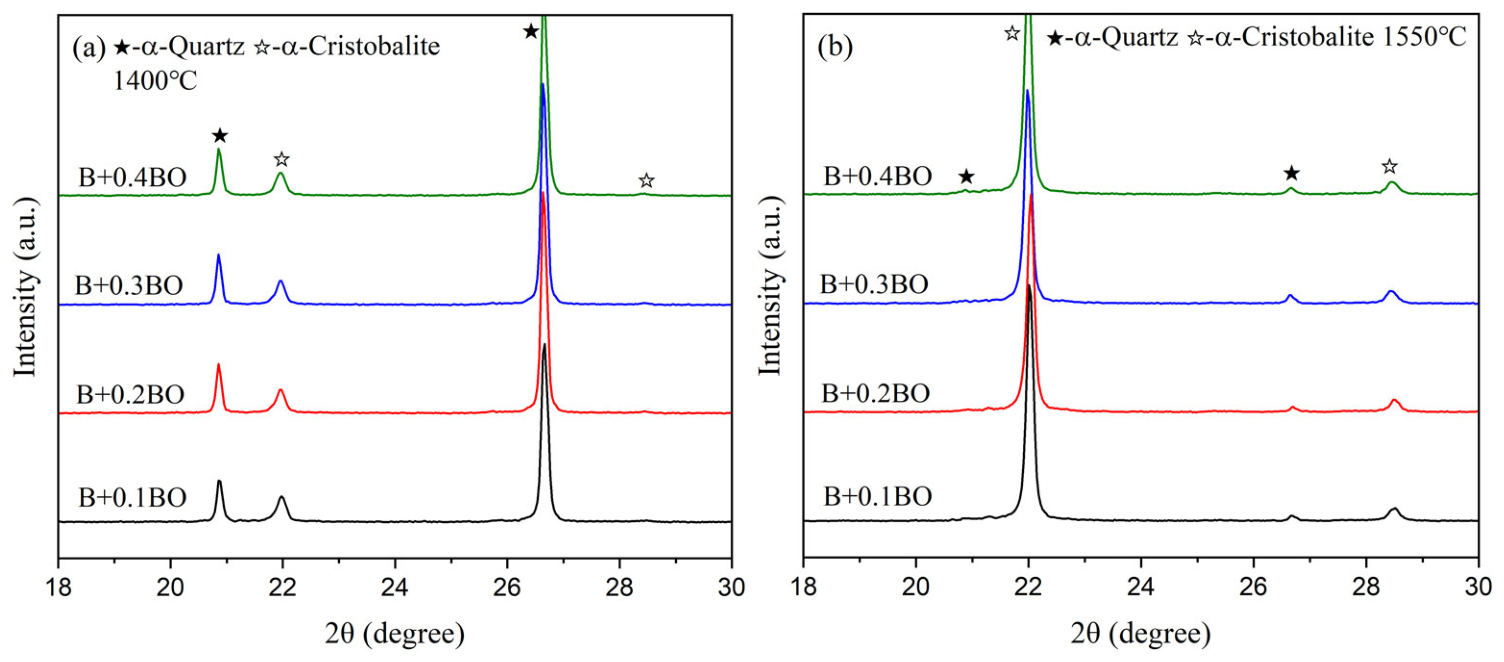
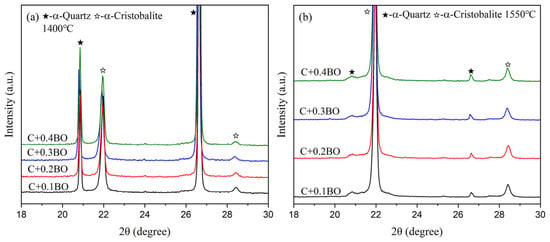
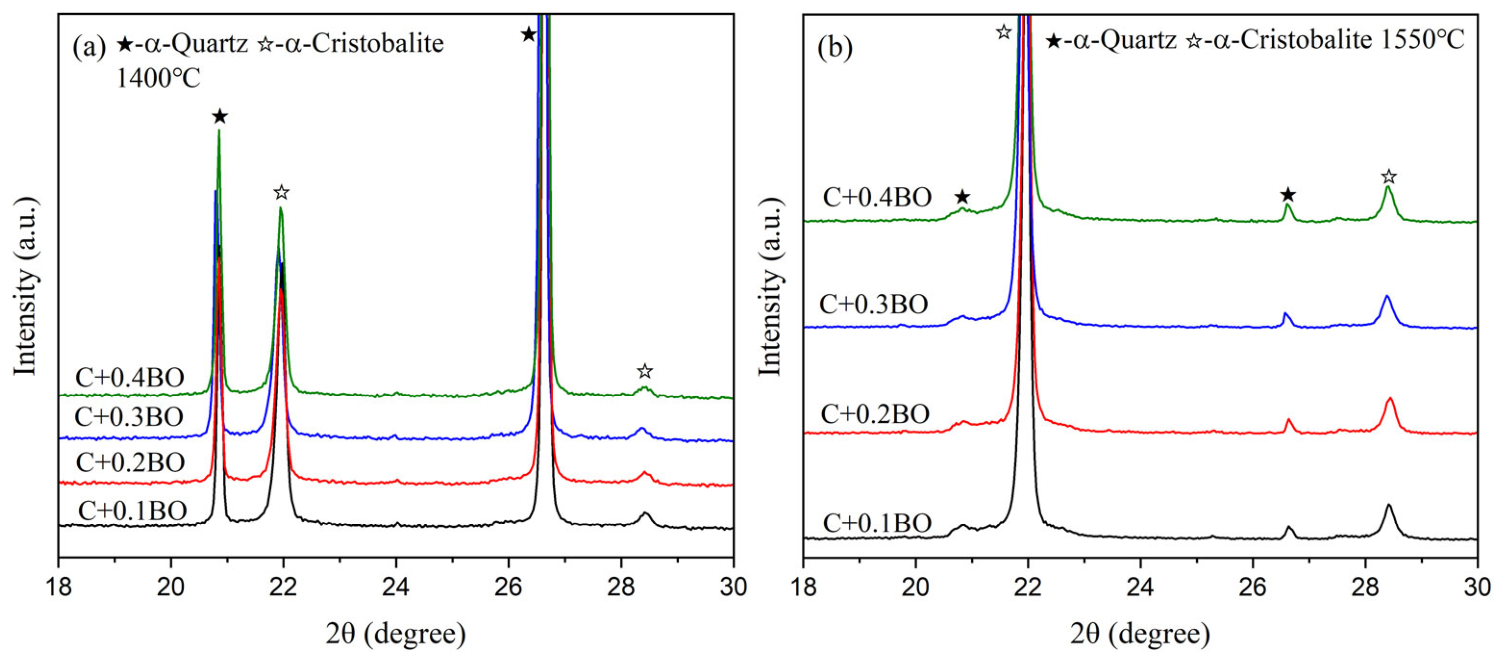
Figure 5, Figure 6 and Figure 7 and Table 2 present the XRD patterns and relative proportions of detected crystalline phases in boric anhydride-containing silica ramming mixes fired at various temperatures, respectively. For boric anhydride, following the incorporation of boron into the system, the proportion of α-quartz in samples fired at 1400 °C showed a slight decrease; By contrast, the α-cristobalite content increased slightly, indicating that the addition of boric anhydride promoted phase transformation to some extent. However, with increasing boron content, the α-cristobalite content exhibited a slight decrease, which was attributed to the suppression of nucleation and growth of cristobalite due to the enhanced integrity and stability of the network structure in the liquid phase [34]. Regarding silica characteristics, the extent of phase transformation of B+BO samples fired at 1400 °C was not sensitive to the addition of boric anhydride, followed by samples C+BO, while A+BO showed the highest sensitivity. Combined with the characteristics of silica, this phenomenon is related to the purity of silica: the more impurities present between silica crystals, the more prone they are to forming internal cracks within the grains, which accelerate the penetration of the liquid phase into the system [35]. Among the samples of pure silica fired at 1550 °C, sample B exhibited the highest concentration (95%) of cristobalite due to its finer grain size. The cristobalite content in samples fired at 1550 °C rose from 89% in the reference formulation to 96% upon boric anhydride incorporation.
Figure 5.
XRD patterns (18–30°) of the boric anhydride-containing silica-based dry ramming mixes made of silica A fired at different temperatures: (a) 1400 °C and (b) 1550 °C.
Figure 6.
XRD patterns (18–30°) of the boric anhydride-containing silica-based dry ramming mixes made of silica B fired at different temperatures: (a) 1400 °C and (b) 1550 °C.
Figure 7.
XRD patterns (18–30°) of the boric anhydride-containing silica-based dry ramming mixes made of silica C fired at different temperatures: (a) 1400 °C and (b) 1550 °C.
Table 2.
Relative proportions of detected crystalline phases in boron anhydride-containing silica-based dry ramming mixes after being fired at different temperatures.
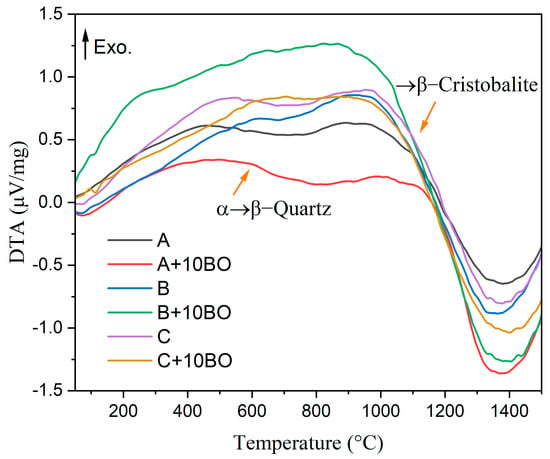
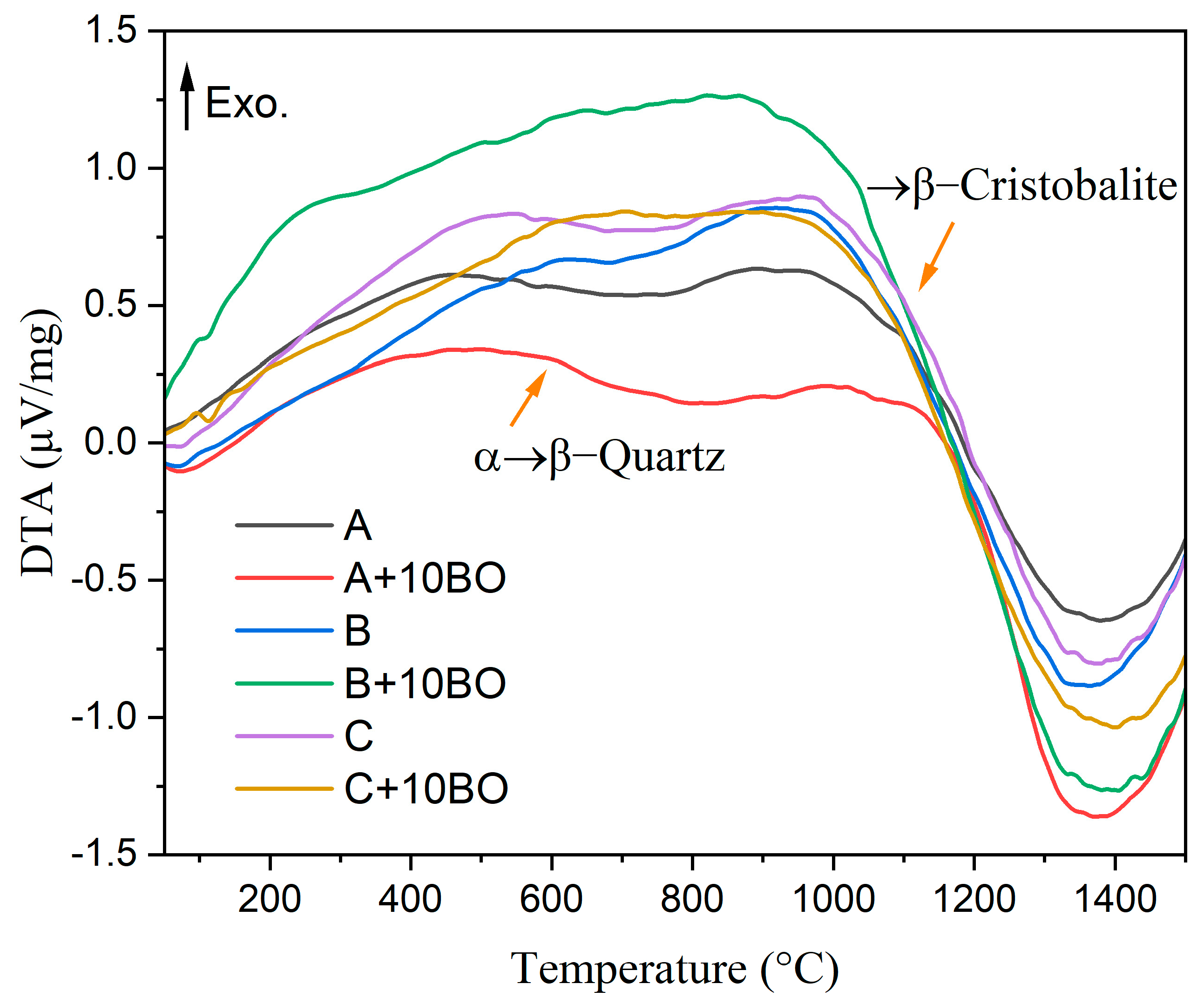
To verify the preceding analysis and discussion, differential thermal analysis was performed on silica powders and mixtures with sintering aids. Figure 8 shows the DTA curves for different silica sources (A, B, and C) both with and without the addition of 10 wt% boric anhydride (BO). In the low-to-medium temperature range, a weak endothermic inflection appeared at approximately 570 °C for silica A and B, explicitly identified as the α–β transition of quartz [36]. However, this peak shifted to a higher temperature for silica B, which had a finer grain size, consistent with the known dependence of transformation temperature on grain size [37]. Incorporating BO slightly broadened and suppressed this transition peak. As the temperature approached 1100 °C, an endothermic downward trend began, marked by an arrow indicating cristobalite formation [38]. In the high-temperature sintering region (>1200 °C), all curves exhibited a prominent, broad endothermic peak, corresponding to the formation of a liquid phase. A clear comparison indicates that the addition of 10 wt% BO significantly deepened these endothermic troughs (e.g., comparing A with A+10BO). This demonstrates that boric anhydride acted as an effective flux, substantially promoting liquid-phase generation in silica-based dry ramming mixes.
Figure 8.
DTA curves of different silicas with and without the addition of 10 wt% boric anhydride.
3.2.2. Effect of Boric Anhydride Addition on Properties of Silica-Based Dry Ramming Mixes
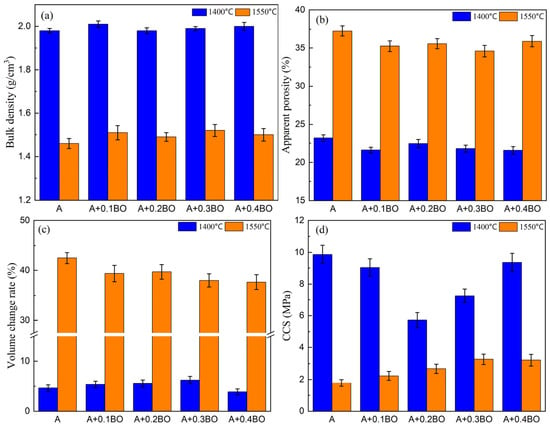
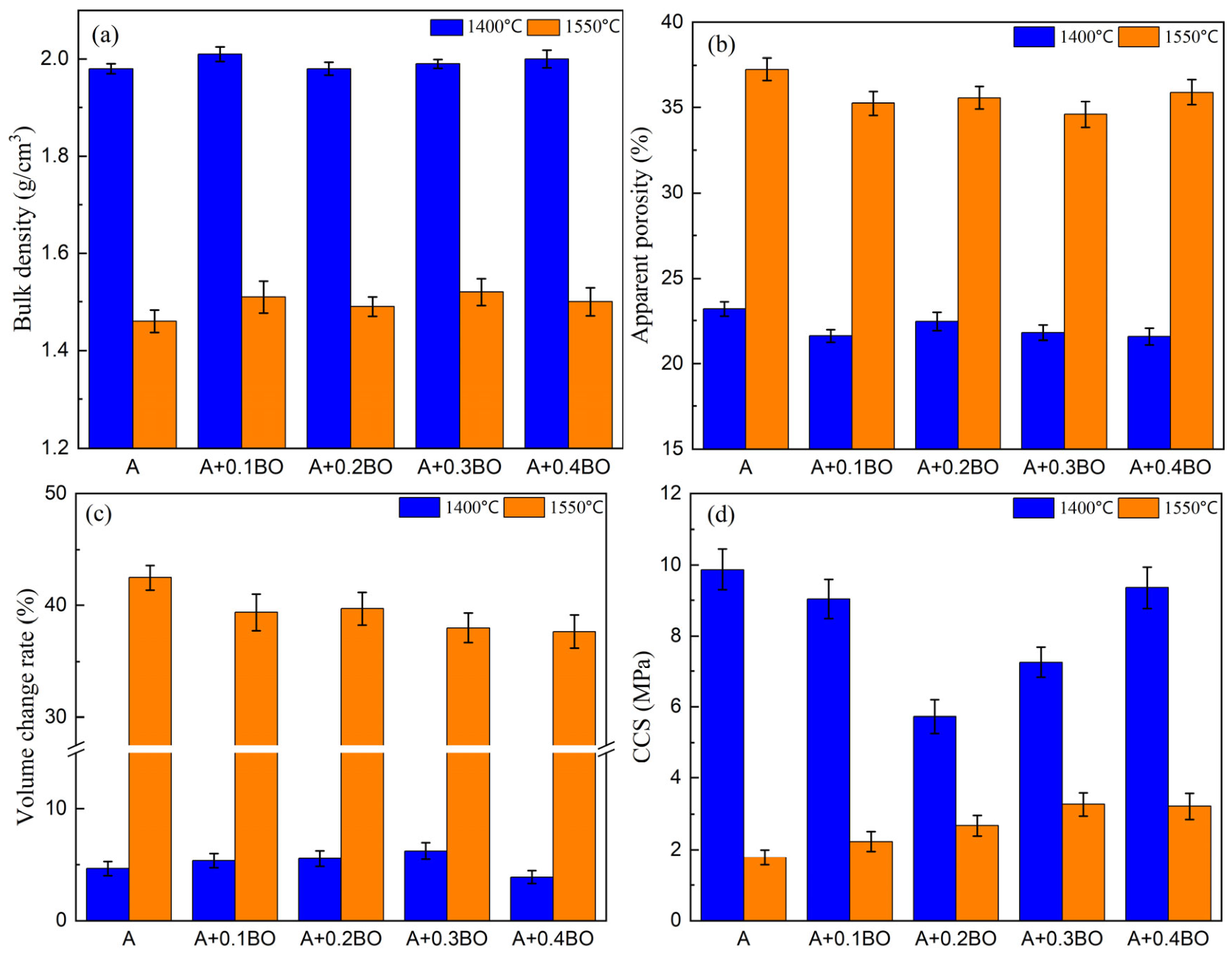
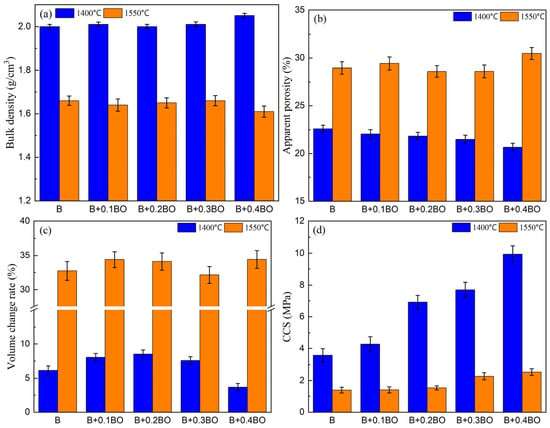
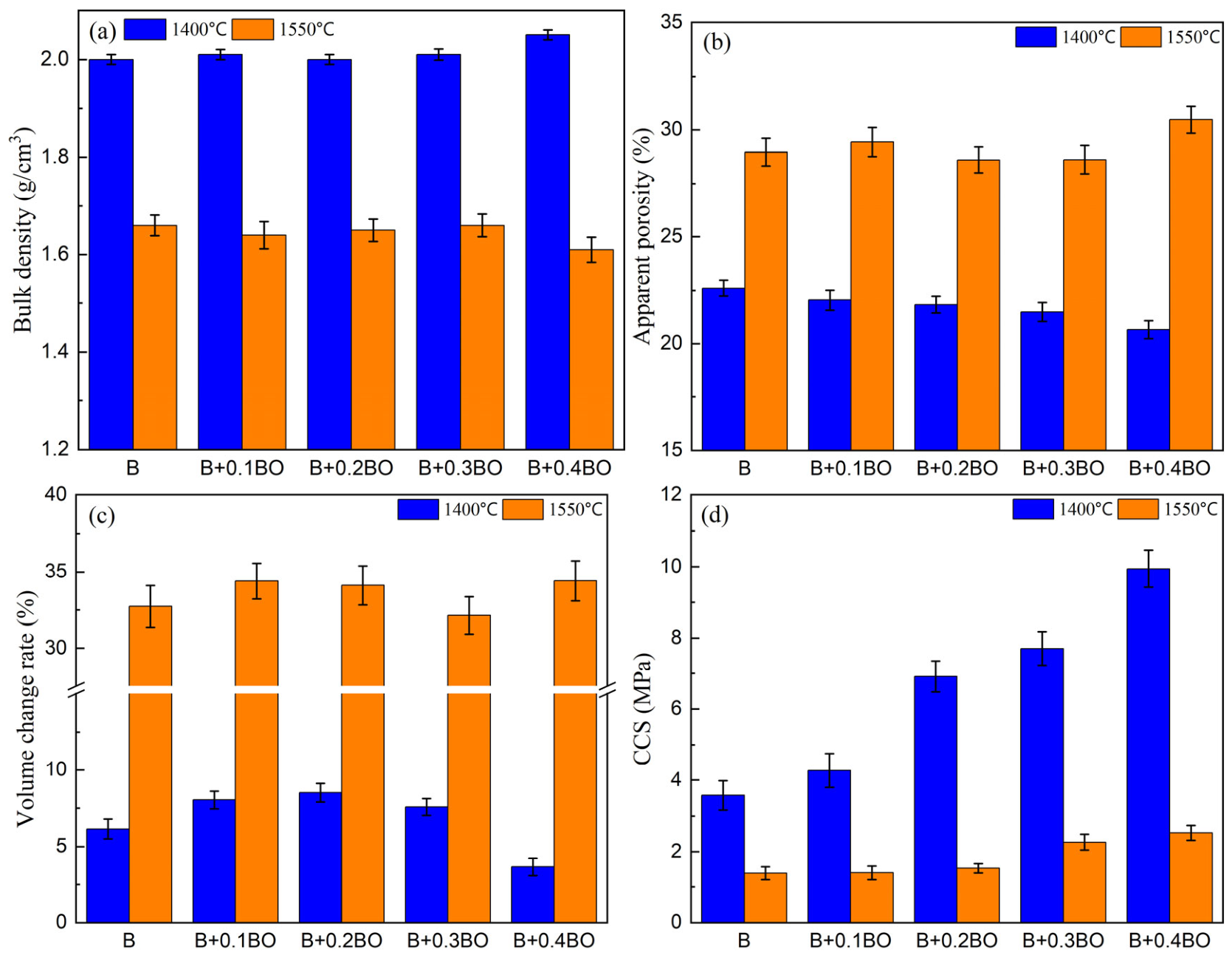
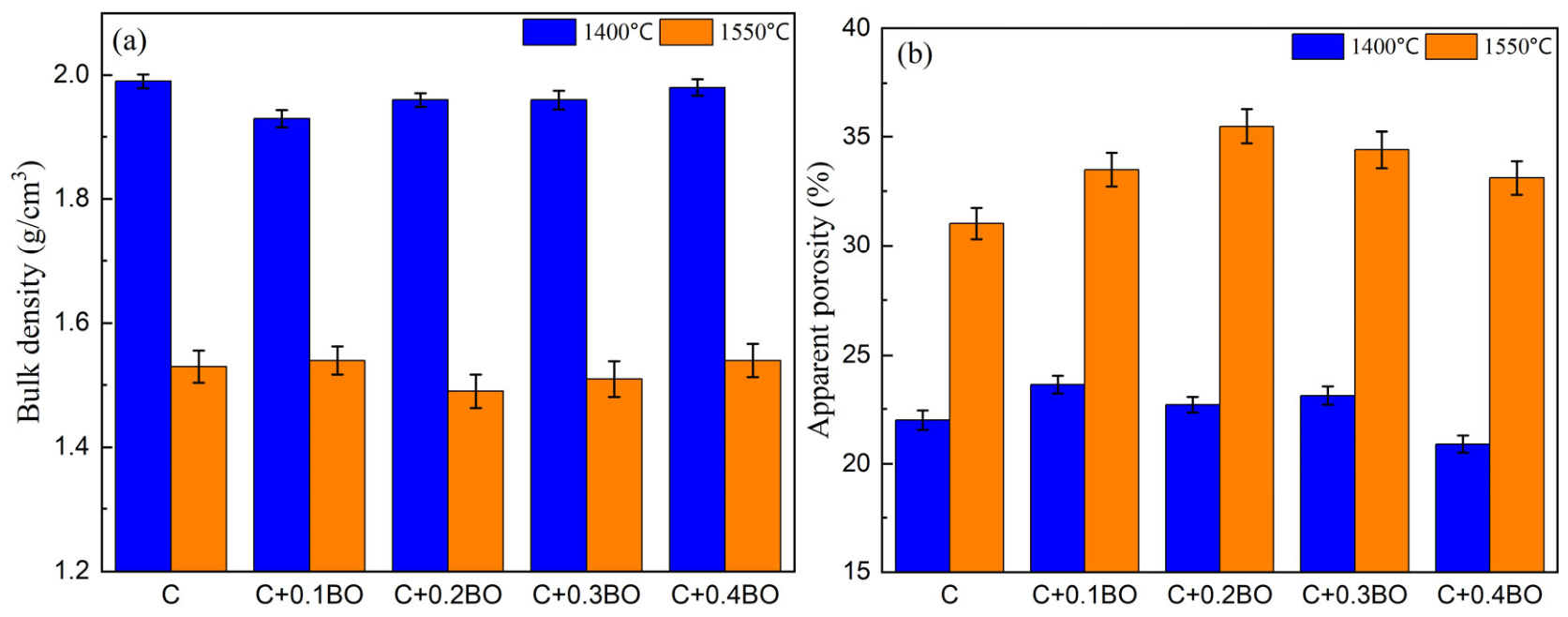
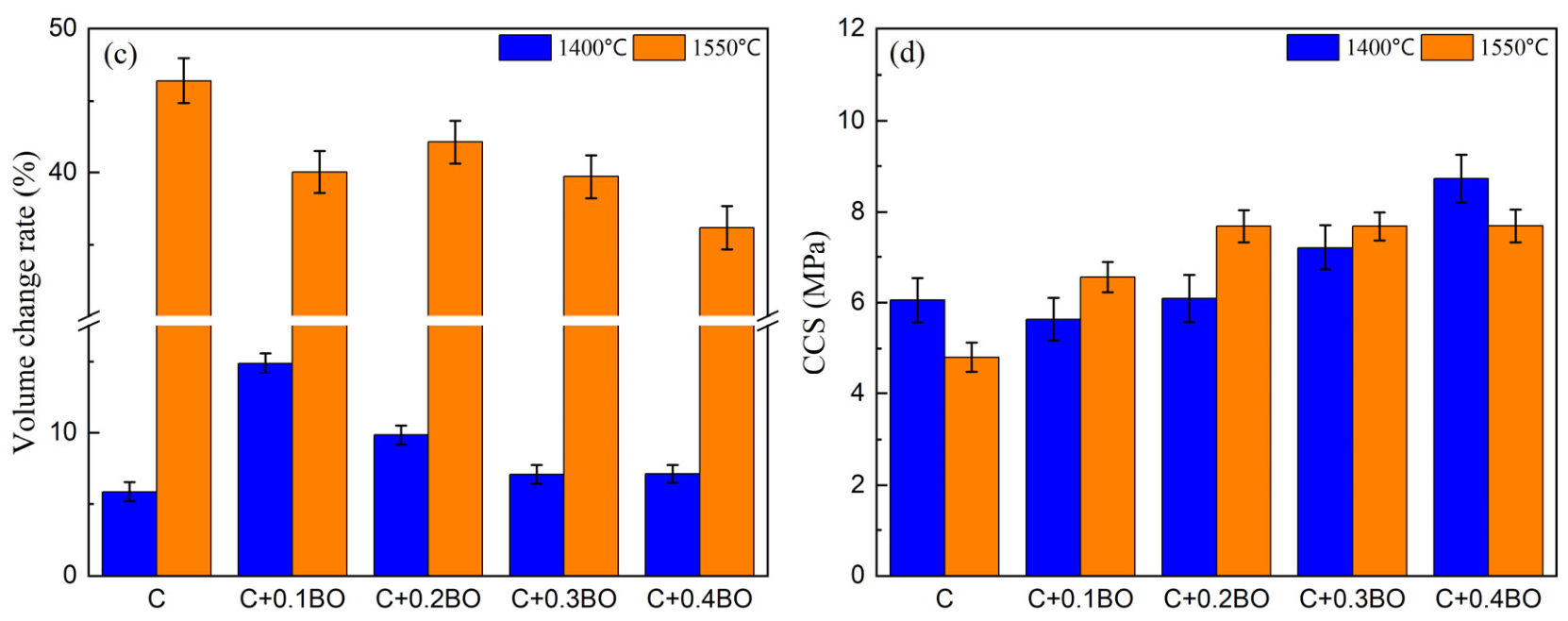
The grain size is closely related to the volumetric changes caused by phase transformations [39,40]. Figure 9, Figure 10 and Figure 11 present the properties of silica-based dry ramming mixes composed of silica sourced from three different regions, with the addition of specific amounts of boric anhydride.
Figure 9.
Properties of boric anhydride-containing silica-based dry ramming mixes made of silica A fired at different temperatures: (a) bulk density; (b) apparent porosity; (c) volume change rate; (d) cold crushing strength.
Figure 10.
Properties of boric anhydride-containing silica-based dry ramming mixes made of silica B fired at different temperatures: (a) bulk density; (b) apparent porosity; (c) volume change rate; (d) cold crushing strength.
Figure 11.
Properties of boric anhydride-containing silica-based dry ramming mixes made of silica C fired at different temperatures: (a) bulk density; (b) apparent porosity; (c) volume change rate; (d) cold crushing strength.
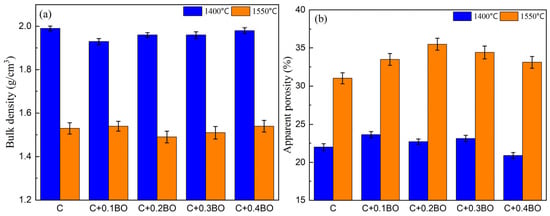
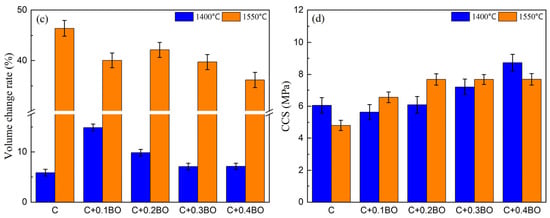
The bulk density (1.93–2.01 g/cm3) and apparent porosity (21–24%) of samples fired at 1400 °C were generally similar to those of the corresponding sintering aid-free silica samples, consistent with the limited extent of phase transformation in each group at this temperature. With the incorporation of boric anhydride, the apparent porosity of samples A+BO and B+BO decreased slightly, while the bulk density of samples C+BO decreased marginally. According to the phase transformation analysis in the previous section, this is attributed to more complex phase transformation behavior of silica C under the influence of boric anhydride. The addition of boric anhydride caused a certain expansion (5–15%) in the silica-based dry ramming mixes fired at 1400 °C. However, with further increases in boric anhydride content, the volume change rate of samples B+BO and C+BO progressively decreased to 4–7%, consistent with boric anhydride’s effect on phase transformation. Regarding cold crushing strength, samples A+BO and C+BO first decreased and then increased with boric anhydride addition, whereas B+BO samples behaved differently—the cold crushing strength of these samples continuously increased. This difference was a consequence of the limited contribution of the liquid phase to phase transformation in silica B, which caused less structural damage; thus, strength exhibited a more regular, monotonic relationship with the increase in liquid phase. The minimum CCS observed for sample A+0.2BO can be interpreted as a non-monotonic coupling of boric anhydride’s dual role—modifying phase-transition-induced volume changes and forming a liquid phase that promotes sintering. Overall, cold crushing strength in these samples was influenced by both phase transformation and liquid phase content (boric anhydride addition), with the latter playing a dominant role.
The densification parameters (bulk density, apparent porosity, and volume change rate) of the samples fired at 1550 °C were either comparable to (B+BO) or slightly higher than those of the corresponding sintering aid-free samples (A+BO and C+BO). These differences were attributed to the higher liquid phase content in silica A and C, resulting from their impurity levels. At this temperature, α-quartz essentially transformed into β-cristobalite; therefore, phase transformation no longer exerted a predominant influence. The addition of boric anhydride significantly reduced the volume change rate for A+BO and C+BO samples, with the reduction becoming more pronounced as boric anhydride content increased. This effect was attributed to the substantial increase in the liquid phase. In contrast, samples B+BO showed no significant change because their liquid phase content was relatively low, and the additional liquid phase from boric anhydride was insufficient to reduce the volume change rate. Boric anhydride also notably increased the cold crushing strength of all samples.
From the above analysis, it is evident that boric anhydride had a dual effect on the properties of silica-based dry ramming mixes. On the one hand, it promoted silica’s phase transformation, causing structural damage and consequently impairing performance. On the other hand, the liquid phase generated by boric anhydride acted as a buffer and repaired cracks, thereby enhancing performance. In the boric anhydride-bonded system, the densification indices for samples fired at 1400 °C were primarily influenced by phase transformation—That is, the simpler the phase transformation, the better the performance. Conversely, at 1550 °C, the cold crushing strength and densification indices were mainly governed by liquid-phase content, leading to improved performance. The higher the liquid-phase content, the better the performance.
3.3. Effect of Sodium Polyphosphate on Properties of Silica-Based Dry Ramming Mixes
To compare the effects of sodium polyphosphate on silica-based dry ramming mixes with identical particle size distributions in the matrix, 1%, 1.5%, and 3% sodium polyphosphate P4 were added to each group, respectively. Various performance parameters, including bulk density, apparent porosity, volume change rate, and cold crushing strength, were then analyzed.
3.3.1. Effect of Sodium Polyphosphate Combined with Silica Characteristics on Phase Transformation
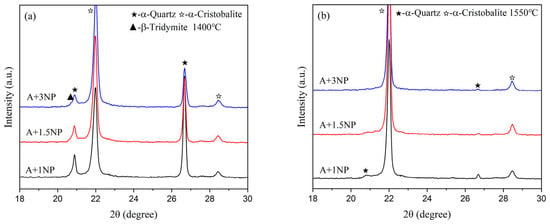
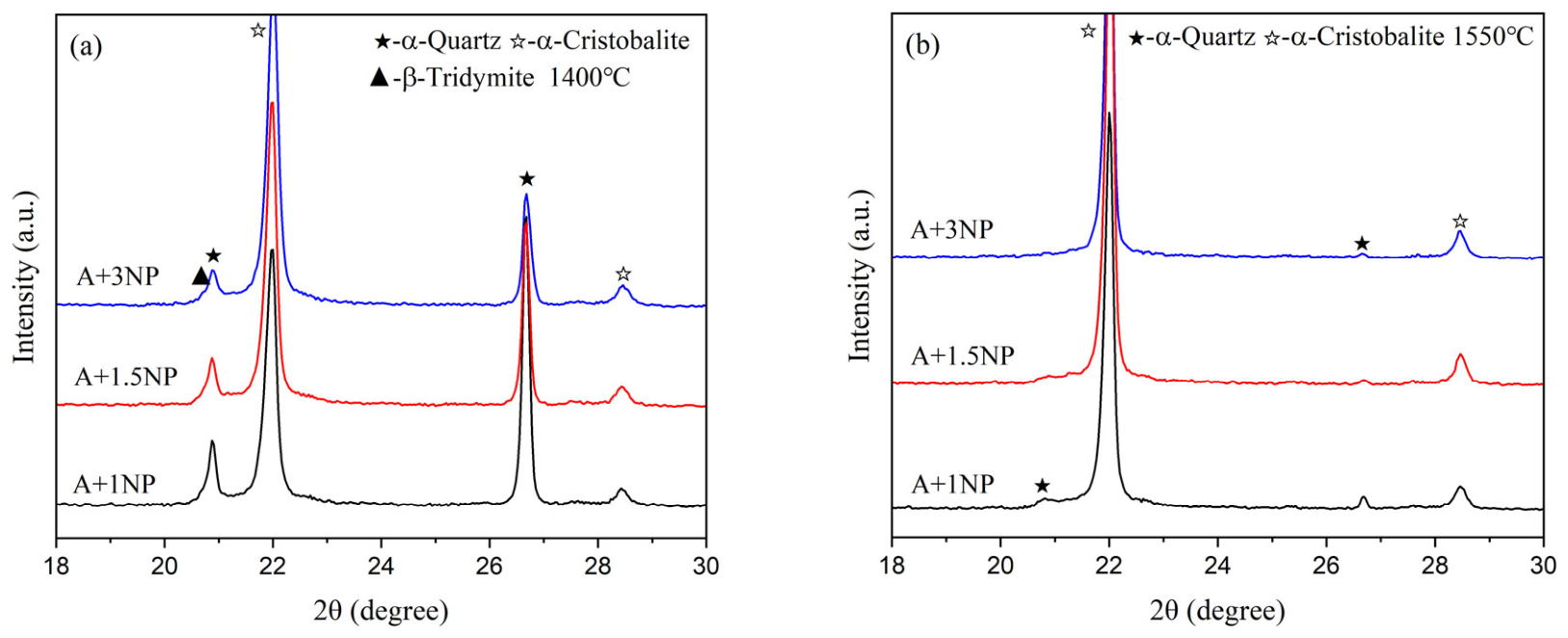
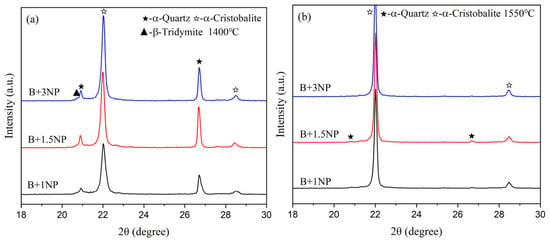
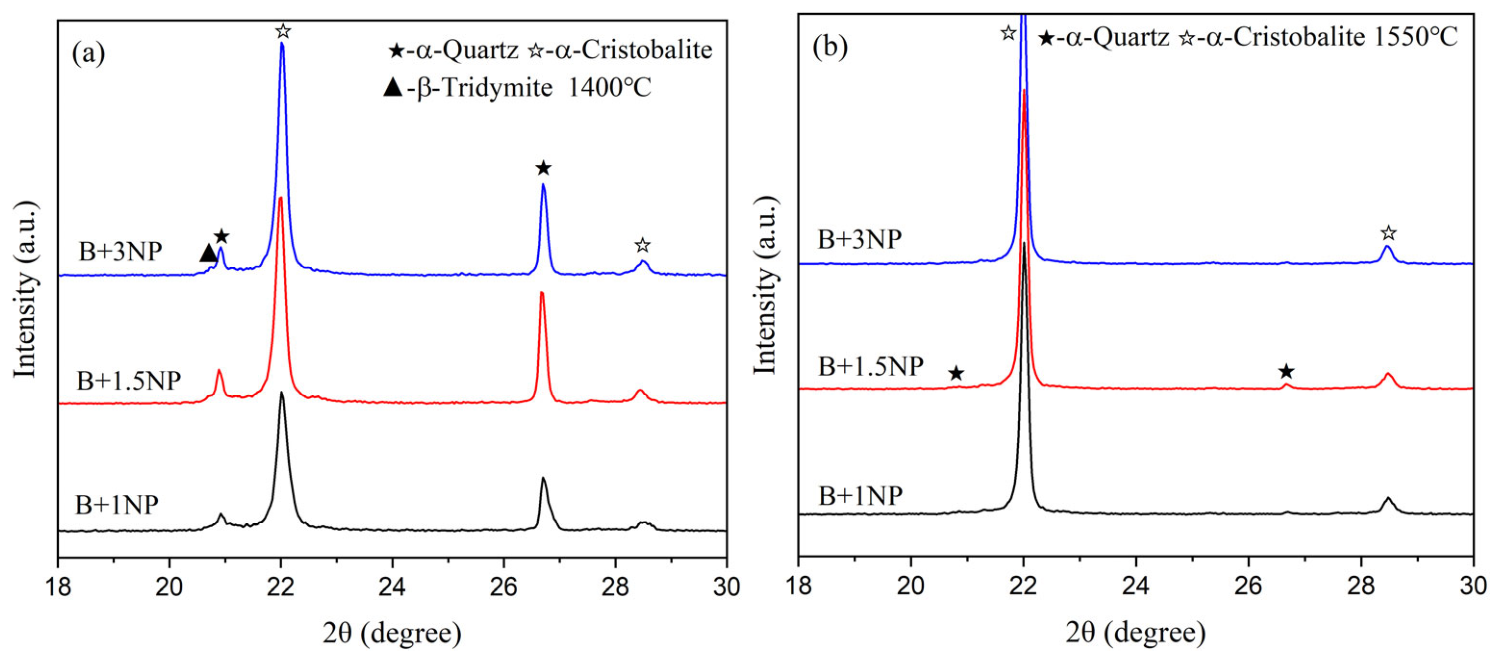
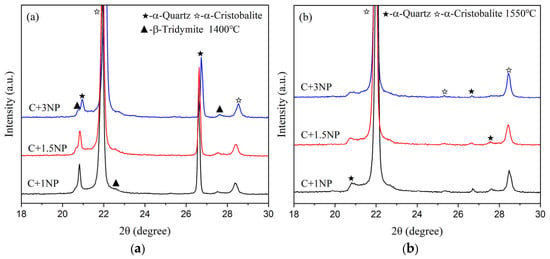
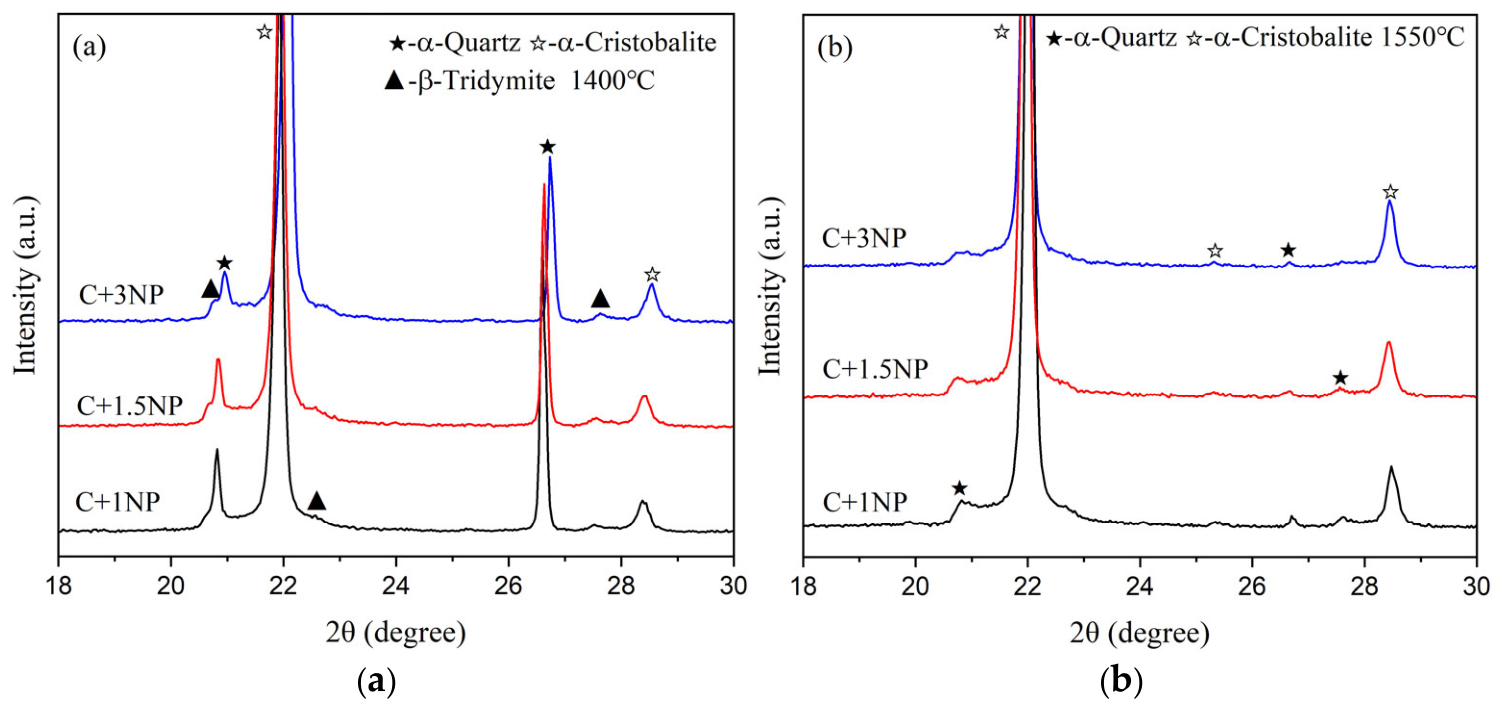
Impurities in α-quartz can influence phase transformations; in particular, increased levels of alkali and alkaline earth metal impurities can accelerate this process [41]. Figure 12, Figure 13 and Figure 14 and Table 3 present the XRD patterns and relative proportions of detected crystalline phases in sodium polyphosphate-containing silica-based dry ramming mixes fired at various temperatures, respectively. With the introduction of sodium polyphosphate, the proportion of α-quartz decreased significantly, while α-cristobalite increased substantially. This indicates that the addition of sodium polyphosphate significantly promotes silica phase transformation at high temperatures. Unlike the boric anhydride-bonded system, increasing sodium polyphosphate content resulted in a marked increase in α-cristobalite. This can be attributed to two factors: first, the physicochemical reactions become more active with higher sodium polyphosphate content, accelerating phase transformation; second, the liquid phase generated by interacting components in sodium polyphosphate is more chemically reactive and does not exert the retarding effect observed with the boron-containing liquid phase. Regarding silica characteristics, B+NP samples generated the smallest proportion of β-tridymite at 1400 °C, leading to the simplest phase transformation, while C+NP samples generated the largest proportion of β-tridymite at 1400 °C, leading to a complex phase transformation. Regarding β-tridymite, the addition of sodium polyphosphate generally promoted formation at 1400 °C; however, the strong promoting effect of sodium polyphosphate on phase transformation meant that all tridymite was transformed into β-cristobalite at 1550 °C. Complete conversion of quartz occurred in some A+NP and B+NP samples.
Figure 12.
XRD patterns (18–30°) of sodium polyphosphate-containing silica-based dry ramming mixes made of silica A fired at different temperatures: (a) 1400 °C and (b) 1550 °C.
Figure 13.
XRD patterns (18–30°) of sodium polyphosphate-containing silica-based dry ramming mixes made of silica B fired at different temperatures: (a) 1400 °C and (b) 1550 °C.
Figure 14.
XRD patterns (18–30°) of sodium polyphosphate-containing silica-based dry ramming mixes made of silica C fired at different temperatures: (a) 1400 °C and (b) 1550 °C.
Table 3.
Relative proportions of detected crystalline phases in sodium polyphosphate-containing silica-based dry ramming mixes after firing at different temperatures.
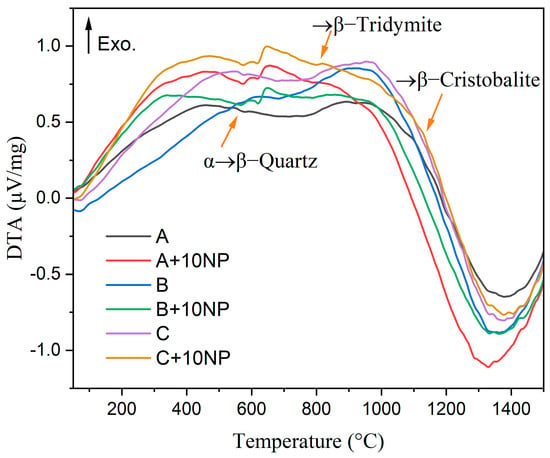
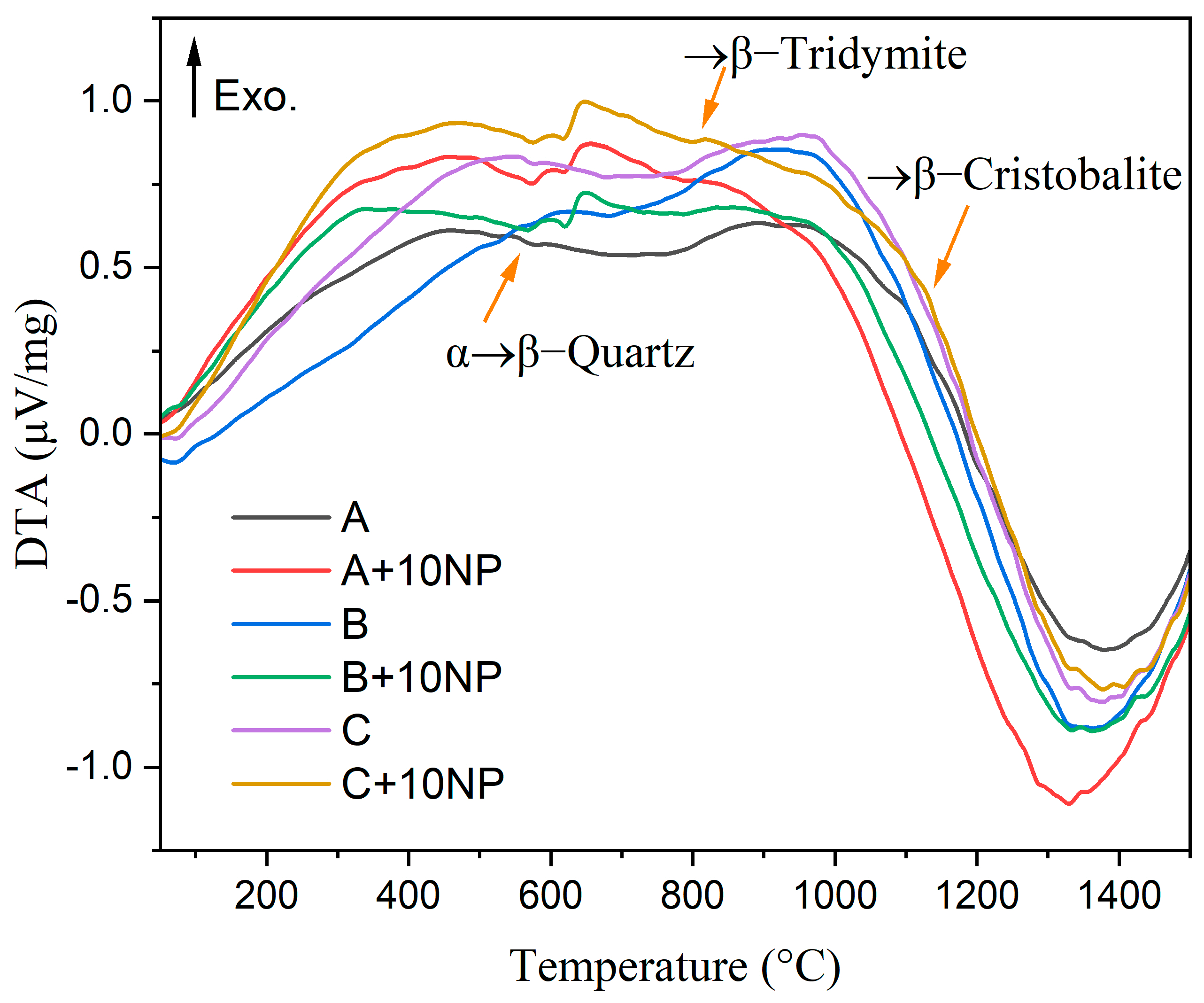
The DTA curves of different silica sources (A, B, and C) with and without 10 wt% sodium polyphosphate (NP) are shown in Figure 15. As indicated by the upward arrow, positive values correspond to exothermic effects. Notably, the addition of 10% NP significantly altered the thermal behavior. The endothermic peak around 630 °C represented the melting of sodium polyphosphate [42]. The β-quartz → β-tridymite transition near 800–900 °C aligned with the reported conversion of β-quartz to hexagonal β-tridymite at approximately 870 °C [43]. Compared with pure silica, silica+10NP samples showed a broader endothermic region in the thermal curves above 1000 °C, indicating that cristobalite formation started at a lower temperature.
Figure 15.
DTA curves of different silica with and without the addition of 10 wt% sodium polyphosphate.
3.3.2. Effect of Sodium Polyphosphate Addition on Properties of Silica-Based Dry Ramming Mixes
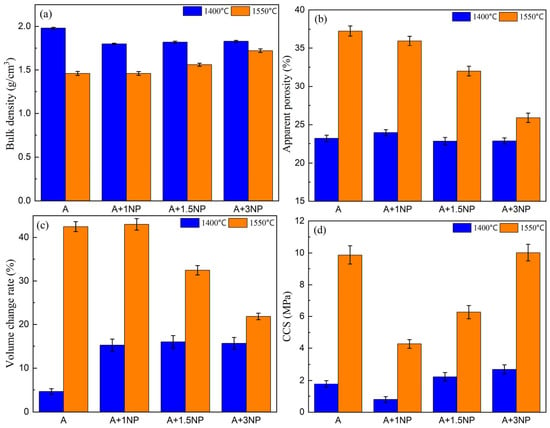
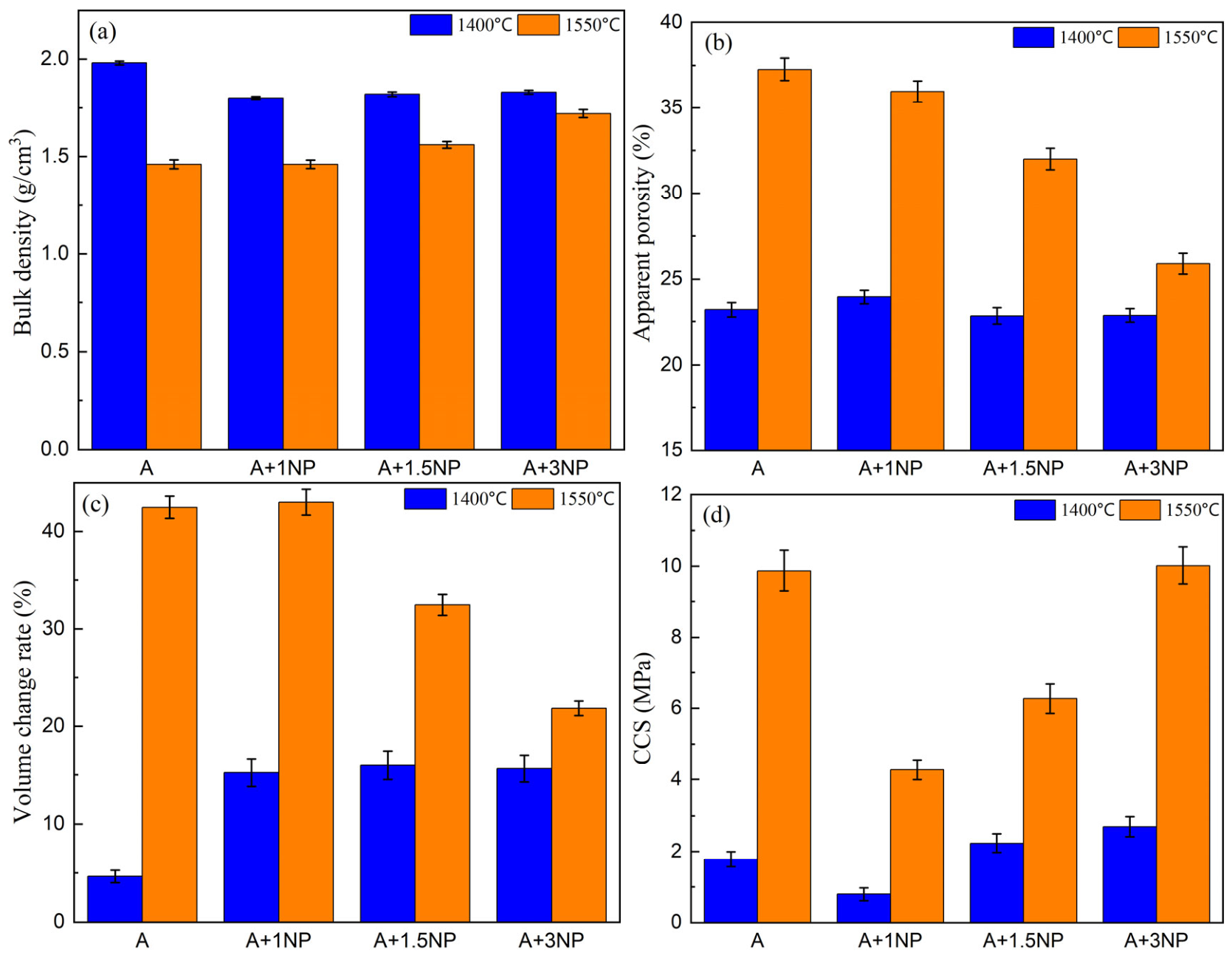
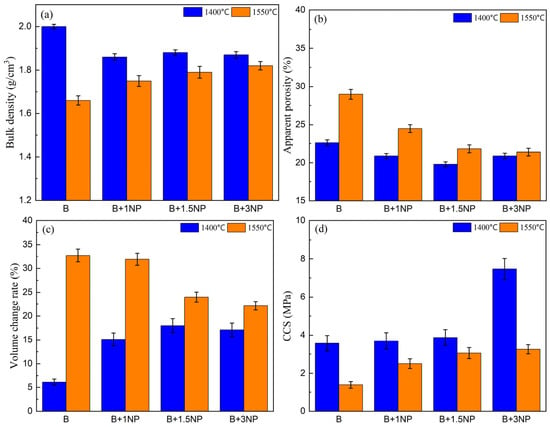
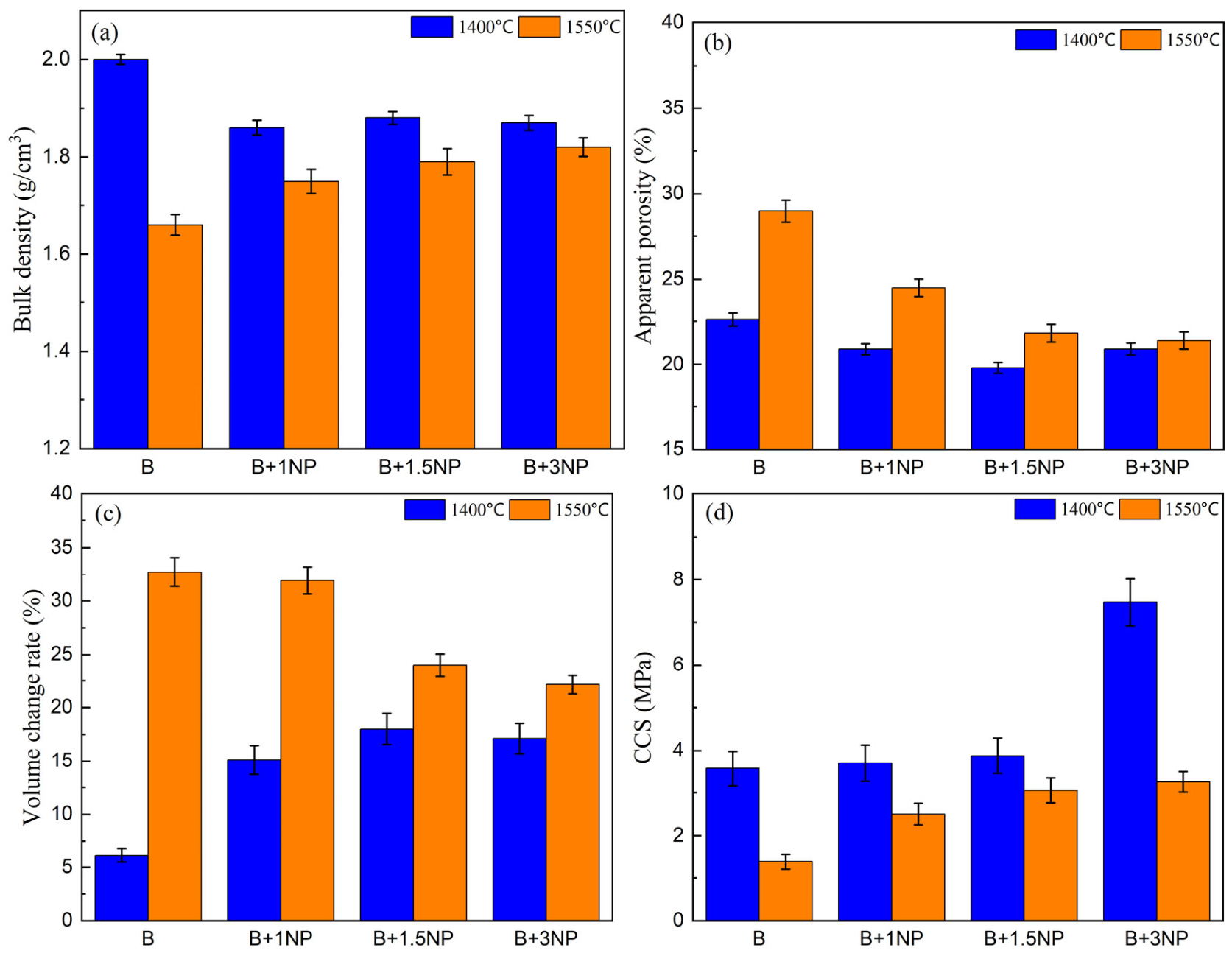
Figure 16, Figure 17 and Figure 18 illustrate properties of silica-based dry ramming mixes formulated from silicas A, B, and C, respectively, after incorporating varying amounts of sodium polyphosphate. In conjunction with the analysis presented in Section 3.2.2, the following discussion can be made:
Figure 16.
Properties of sodium polyphosphate-containing silica-based dry ramming mixes made of silica A fired at different temperatures: (a) bulk density; (b) apparent porosity; (c) volume change rate; (d) cold crushing strength.
Figure 17.
Properties of sodium polyphosphate-containing silica-based dry ramming mixes made of silica B fired at different temperatures: (a) bulk density; (b) apparent porosity; (c) volume change rate; (d) cold crushing strength.
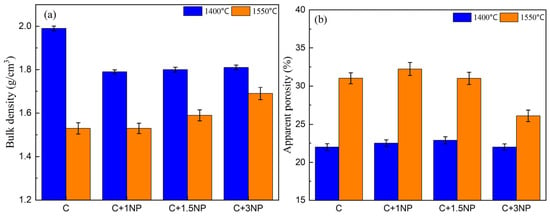
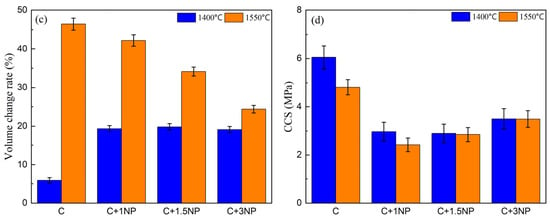
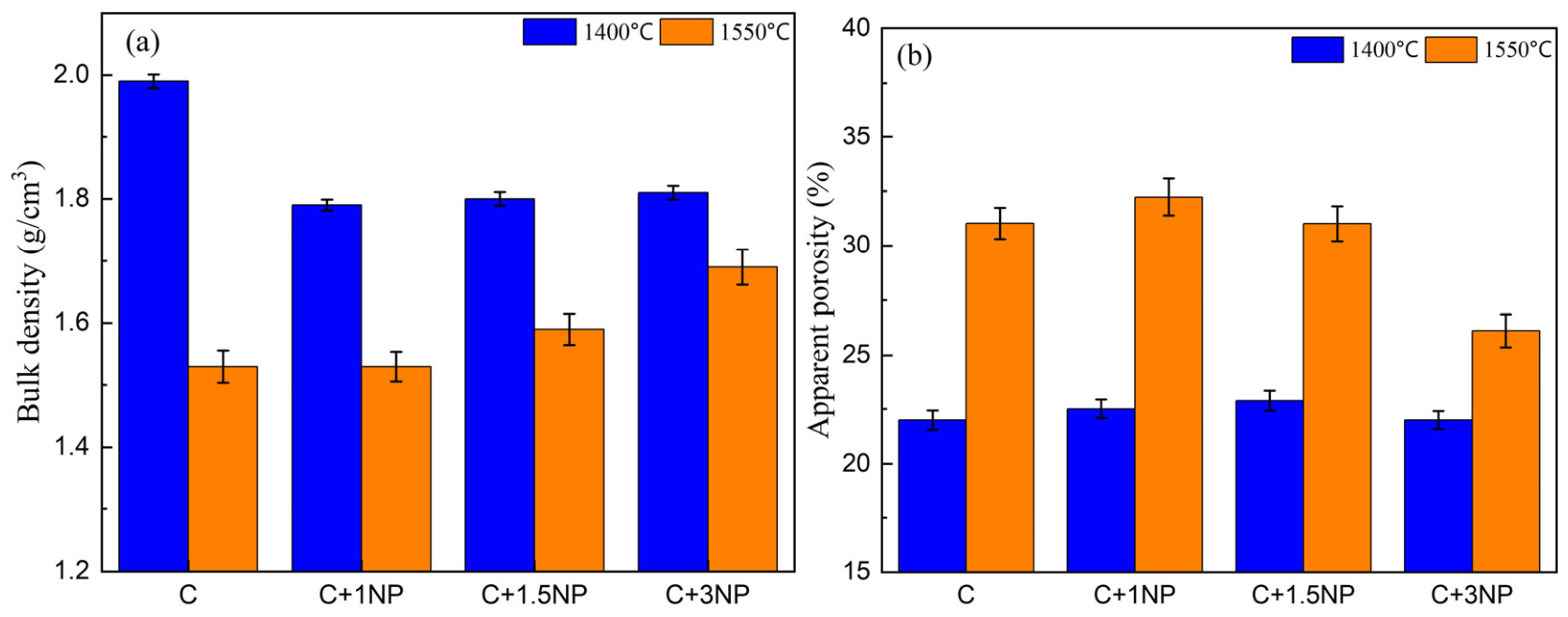
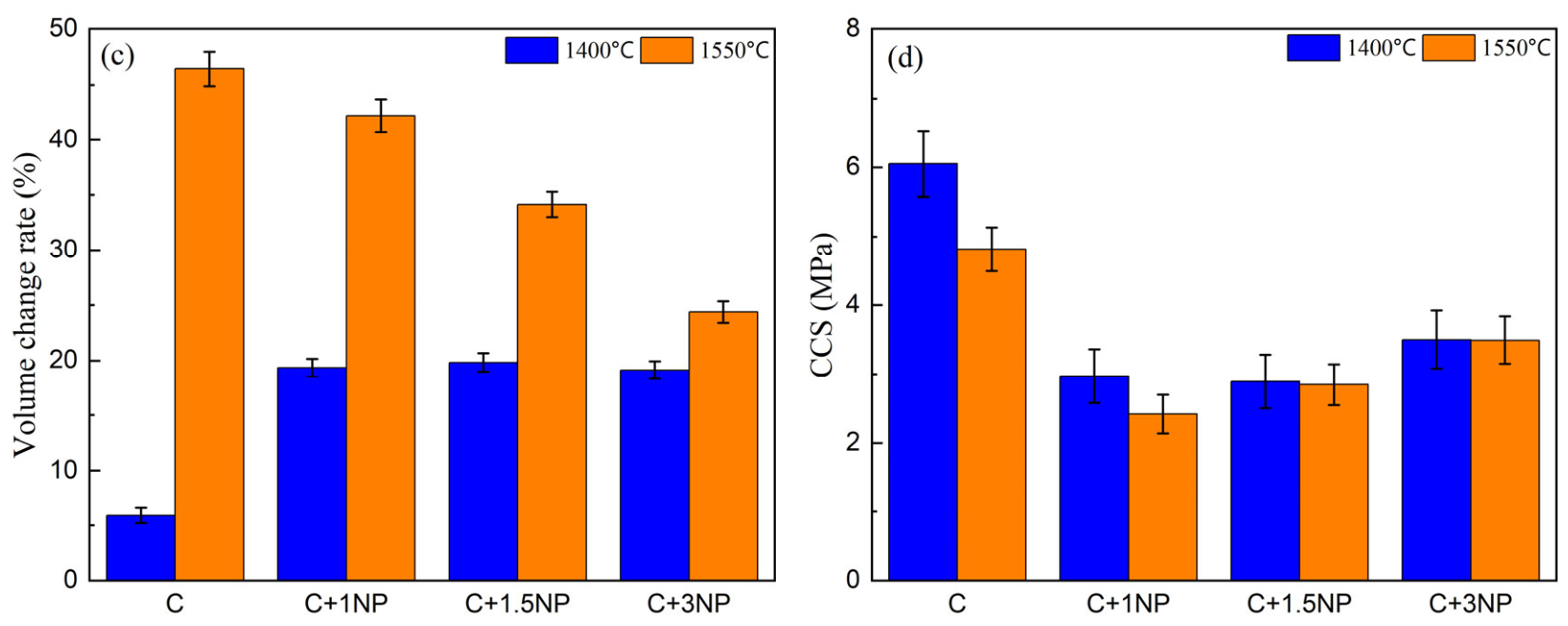
Figure 18.
Properties of sodium polyphosphate-containing silica-based dry ramming mixes made of silica C fired at different temperatures: (a) bulk density; (b) apparent porosity; (c) volume change rate; (d) cold crushing strength.
The addition of sodium polyphosphate caused a marked reduction in bulk density (1.79–1.88 g/cm3) and an increase in the volume change rate (15–20%) in silica samples from three regions fired at 1400 °C. Correlating these findings with phase transformation data suggested that sodium polyphosphate accelerated phase transformations, thereby intensifying volume expansion. However, as sodium polyphosphate content increased, a slight rise in bulk density and a marginal decrease in volume change rate were observed, indicating that the increased liquid phase partially mitigated expansion induced by phase transformations. Overall, the degree of densification substantially decreased, implying that phase transformation predominantly governs performance at this temperature; specifically, greater phase transformation corresponded to reduced densification. Notably, following the addition of sodium polyphosphate, the apparent porosity of B+NP samples exhibited a slight decrease, attributable to liquid-phase infiltration. In contrast, A+NP and C+NP samples, which underwent more complex phase transformations, initially showed a slight increase in apparent porosity, followed by a decrease. Regarding cold crushing strength, A+NP and C+NP samples significantly declined upon the initial addition of sodium polyphosphate, followed by an increase with further increments. The initial decrease aligns with the effects of phase transformation, while the subsequent increase was ascribed to the substantial rise in liquid-phase content. Conversely, samples B+NP displayed distinct behavior: their cold crushing strength with sodium polyphosphate addition exceeded that of the corresponding sintering aid-free sample and continued to improve with increasing sodium polyphosphate levels. This phenomenon likely resulted from the comparatively simpler phase transformation in silica B, which caused less structural damage, coupled with enhanced bonding strength due to the increased liquid phase.
All samples made from three silica regions fired at 1550 °C exhibited a pronounced increase in bulk density, a reduction in apparent porosity, and a significant decrease in volume change rate. These improvements in densification were further enhanced by the increasing sodium polyphosphate content, attributable to the greater liquid phase generated. At this temperature, crystalline phases in all groups had predominantly transformed into β-cristobalite, rendering phase transformation effects negligible. Unlike the boric anhydride system, the observed densification enhancements—including increased bulk density, decreased apparent porosity, and reduced volume change rate—were consistent across silica types and showed minimal dependence on silica characteristics. This uniformity can be explained by the abundant liquid phase introduced by sodium polyphosphate at elevated temperatures, which superseded the influence of phase transformations and compositional variations. Except for samples B+NP, the cold crushing strength of each group initially decreased with sodium polyphosphate addition and subsequently increased with further increments. β-tridymite only appeared in samples fired at 1400 °C; however, the strong promotion of phase transformation by sodium polyphosphate meant it effectively converted to cristobalite by 1550 °C, exerting no significant influence on cold crushing strength.
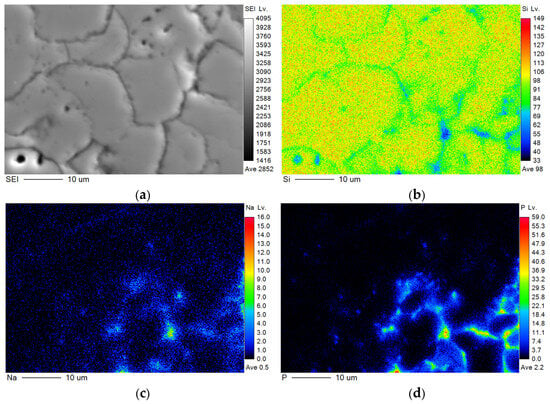
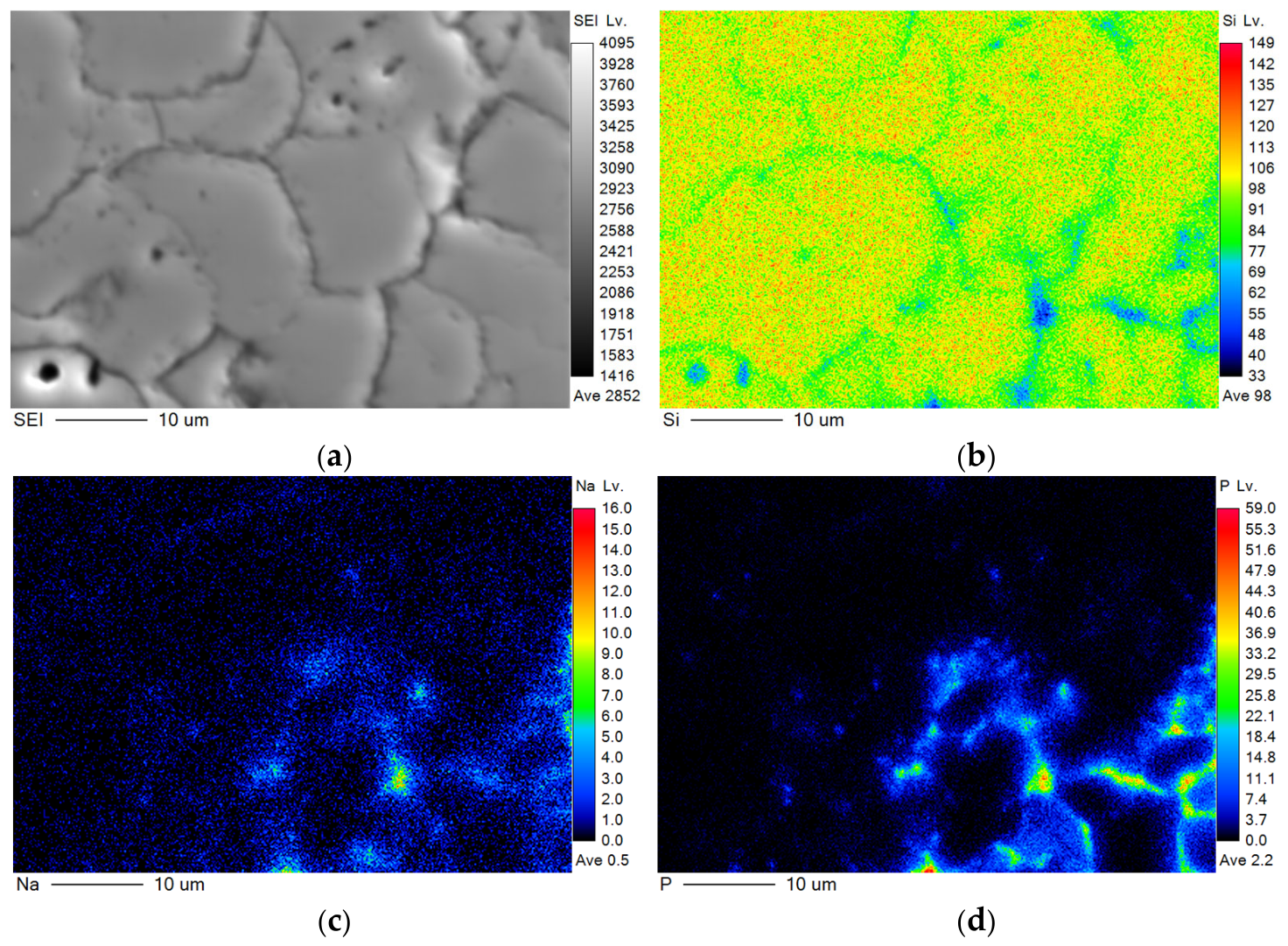
Sample A+3NP, fired at 1550 °C and exhibiting the highest cold crushing strength, was selected for microstructural observation, as shown in Figure 19. The secondary electron image (SEI) (Figure 19a) revealed polygonal grains with a few isolated pores within the grains of the fired sample A+3NP. Elemental mapping analysis indicated that the silica grains corresponded to silicon-rich regions (Figure 19b). In contrast, sodium and phosphorus were predominantly concentrated along the grain boundaries (Figure 19c,d), rather than uniformly distributed throughout the grains. This spatial distribution suggested that the addition of sodium phosphate as a sintering aid facilitated the formation of a Na2O–SiO2–P2O5 liquid phase during high-temperature firing. This intergranular glassy phase acted as a medium for mass transfer in the transformation of silica polymorphs. When a liquid phase formed with sodium polyphosphate addition at the conversion temperature, its effect became significantly more pronounced due to the enhanced contact area with the quartz grains, facilitated by capillary action [44]. Furthermore, Na+ ions served as a network modifier, depolymerizing the silicate network and leading to a reduction in mechanical properties in some samples [45,46].
Figure 19.
Microstructure and elemental distribution of sample A+3NP fired at 1550 °C: (a) SEI, (b) Si, (c) Na, and (d) P.
Collectively, these findings indicate that the influence of sodium polyphosphate on the properties of silica-based dry ramming mixes differed markedly from that of boric anhydride. Phosphate substantially accelerated phase transformation processes; however, its associated liquid phase exerted only a limited retarding effect on these transformations, resulting in pronounced early-stage volume expansion and a significant reduction in densification. At elevated temperatures and higher sodium polyphosphate additions, the phase transformation was essentially complete, and the abundant liquid phase generated markedly enhanced densification. A moderate expansion can offset sintering shrinkage and facilitate joint closure; however, excessive expansion risks undermining the integrity of the lining unless it is managed through compositional optimization strategies. Within the phosphate-bonded system fired at 1400 °C, densification parameters (bulk density, apparent porosity, and volume change rate) were primarily governed by phase transformation. In the phosphate-bonded system, cold crushing strength and densification indices at 1550 °C were more strongly dependent on the extent of phase transformation than in the boric anhydride system. Nevertheless, the liquid phase generally predominated, correlating a higher liquid-phase content with improved performance.
4. Conclusions
This study comprehensively investigated the influence of varying amounts of boric anhydride and sodium polyphosphate, silica characteristics, and temperatures on the properties of silica-based dry ramming mixes through a series of comparative experiments. The key findings are summarized as follows:
(1) The complexity of phase transformations in silica-based dry ramming mixes was closely related to their properties. A greater variety of phase transitions, such as the formation of β-tridymite, led to more substantial volumetric changes. This behavior depended on the grain size, impurity content, and type of sintering aids used. Specifically, silica from Gucheng, Hubei, with fine grains and high purity, had the lowest liquid phase content at elevated temperatures. In contrast, silica from Luoyang, Henan, and Chengde, Hebei, had coarser grains and higher impurity levels.
(2) The sintering aids strongly influenced the properties of silica-based dry ramming mixes by affecting both sintering and phase transformation. Boric anhydride promoted phase transformation, whereas the liquid phase formed at higher addition levels retarded this process. The balance between these opposing effects led to a moderate property enhancement, making boric anhydride suitable for a broad range of processing conditions. In contrast, sodium polyphosphate markedly accelerated phase transformation, as indicated by higher cristobalite and tridymite contents at 1400 °C. The transformation of silica polymorphs was facilitated by an intergranular liquid phase containing sodium and phosphate formed during high-temperature firing. Consequently, sodium polyphosphate induced pronounced property changes, which were characterized by a notable expansion at 1400 °C and a significant decrease in expansion with increasing addition at 1550 °C.
(3) Overall, the properties of silica-based dry ramming mixes were governed jointly by the extent of phase transformation and the liquid-phase content, with the dominant factor shifting from phase transformation at 1400 °C to liquid phase at 1550 °C.
(4) In summary, boric anhydride demonstrated greater compatibility with silica from Hubei and Hebei, whereas the use of silica derived from Henan showed the most favorable performance with the incorporation of sodium polyphosphate (3 wt%) under the conditions evaluated in this study.
Supplementary Materials
The following supporting information can be downloaded at: https://www.mdpi.com/article/10.3390/app162211196/s1. Figure S1: XRD patterns of silica-based dry ramming mixes without sintering aids from different origins after fired at different temperatures: (a) 1400 °C and (b) 1550 °C; Figure S2: XRD patterns of the boric anhydride-containing silica-based dry ramming mixes made of silica A fired at different temperatures: (a) 1400 °C and (b) 1550 °C; Figure S3: XRD patterns of the boric anhydride-containing silica-based dry ramming mixes made of silica B fired at different temperatures: (a) 1400 °C and (b) 1550 °C; Figure S4: XRD patterns of the boric anhydride-containing silica-based dry ramming mixes made of silica C fired at different temperatures: (a) 1400 °C and (b) 1550 °C; Figure S5: XRD patterns of sodium polyphosphate-containing silica-based dry ramming mixes made of silica A fired at different temperatures: (a) 1400 °C and (b) 1550 °C; Figure S6: XRD patterns of sodium polyphosphate-containing silica-based dry ramming mixes made of silica B fired at different temperatures: (a) 1400 °C and (b) 1550 °C; Figure S7: XRD patterns of sodium polyphosphate-containing silica-based dry ramming mixes made of silica C fired at different temperatures: (a) 1400 °C and (b) 1550 °C.
Author Contributions
Conceptualization, Y.J. and W.Y.; methodology, W.Y.; software, Z.J.; validation, Z.J. and Y.X.; formal analysis, Z.J. and Y.X.; investigation, Z.J. and Y.J.; resources, Z.J.; data curation, Z.J., Z.Y., and W.Y.; writing—original draft preparation, Z.J. and Z.Y.; writing—review and editing, W.Y.; supervision, W.Y.; project administration, W.Y. All authors have read and agreed to the published version of the manuscript.
Funding
This research received no external funding.
Institutional Review Board Statement
Not applicable.
Informed Consent Statement
Not applicable.
Data Availability Statement
The original contributions presented in this study are included in the article; further inquiries can be directed to the corresponding author.
Acknowledgments
Thanks to Hubei Annaijie Lining Materials Co., Ltd. for providing support and Jun Sun for technical assistance with sample processing and testing.
Conflicts of Interest
Authors Zhenggang Jia and Yanchang Jiang were employed by the company Hubei Annaijie Lining Materials Co., Ltd. The remaining authors declare that the research was conducted in the absence of any commercial or financial relationships that could be construed as a potential conflict of interest.
References
- Tang, H.; Jia, Z.; Li, B.; Chen, H.; Yuan, W. Enhanced properties of tailored alumina-magnesia-based dry ramming mixes by calcium magnesium aluminate (CMA). Materials 2023, 16, 1707. [Google Scholar] [CrossRef] [Scilit]
- Li, X.; Zhu, B.; Wang, F. Effect of quartz crystalline size on physical properties of quartz ramming mix. Refractories 2012, 46, 35–36, 40. [Google Scholar] [CrossRef]
- Heaney, P.J. Structure and chemistry of the low-pressure silica polymorphs. Rev. Mineral. Geochem 1994, 29, 1–40. [Google Scholar] [CrossRef] [Scilit]
- Götze, J.; Pan, Y.; Müller, A. Mineralogy and mineral chemistry of quartz: A review. Mineral Mag. 2021, 85, 639–664. [Google Scholar] [CrossRef] [Scilit]
- Febo, R.D.; Casas, L.; del Campo, A.A.; Rius, J.; Vallcorba, O.; Melgarejo, J.C.; Capelli, C. Recognizing and understanding silica-polymorph microcrystals in ceramic glazes. J. Eur. Ceram. Soc. 2020, 40, 6188–6199. [Google Scholar] [CrossRef] [Scilit]
- Stevens, S.J.; Hand, R.J.; Sharp, J.H. Polymorphism of silica. J. Mater. Sci. 1997, 32, 2929–2935. [Google Scholar] [CrossRef] [Scilit]
- Folstad, M.B.; Yu, H.; Wang, H.; Tangstad, M. Disintegration of six different quartz types during heating to 1600 °C. Minerals 2023, 13, 132. [Google Scholar] [CrossRef] [Scilit]
- Pabst, W.; Gregorová, E. Elastic properties of silica polymorphs—A review. Ceram. Silik. 2013, 57, 167–184. [Google Scholar]
- Pritibhushan, S.; Subhash, S.C. An optimum design of the lining of a medium frequency induction melting furnace. Int. Tran. Oper. Res. 1998, 5, 255–259. [Google Scholar] [CrossRef] [Scilit]
- Eminov, A.A.; Namazov, S.S.; Kadyrova, Z.R. Development of optimum dinas ramming mixes for lining heating units. Refract. Ind. Ceram. 2022, 63, 302–305. [Google Scholar] [CrossRef] [Scilit]
- Serry, M.A.; El-Maghraby, M.S.; Moustafa, A.M. Utilization of Egyptian quartz and quartzite raw materials for processing chemically-bonded ramming mixes. Ind. Ceram. 2006, 26, 121–126. [Google Scholar]
- Zavertkin, A.S. Effect of quartzite heat treatment on induction furnace lining failure mechanism. Refract. Ind. Ceram. 2019, 60, 67–70. [Google Scholar] [CrossRef] [Scilit]
- Kashcheev, I.D.; Zemlyanoi, K.G. Effect of chromium and zirconium oxides on properties of Bobrovsk deposit quartzite ramming mixes. Refract. Ind. Ceram. 2013, 54, 106–110. [Google Scholar] [CrossRef] [Scilit]
- Sengupta, P. Refractories for the Cast Iron Melting: Extraction Metallurgy—New Perspectives; Chopra, S., Vijayaram, T., Eds.; IntechOpen: London, UK, 2024; p. 95. [Google Scholar]
- Sun, J.; Su, Y.; Zhao, Q.; Wang, G. Study of the high-temperature sintering characteristics of boron oxide composite silicon-based ceramics. Appl. Sci. 2024, 14, 11179. [Google Scholar] [CrossRef] [Scilit]
- Abbas, N.; Luqman, M.; Rauf, A.; Shuaib, M.; Haroon, H.; Shah, S.K.; Saleem, M. Effect of boron oxide addition on microstructure and mechanical properties of slip cast fused silica. Mater. Sci. Forum 2022, 1067, 227–231. [Google Scholar] [CrossRef] [Scilit]
- Zavertkin, A.S. Use of vein quartz for lining induction furnaces during melting copper-based alloys. Refract. Ind. Ceram. 2020, 60, 468–471. [Google Scholar] [CrossRef] [Scilit]
- Jia, Z.; Mao, S.; Jiang, Y.; Yuan, W. Effects of raw material characteristics and sintering aids on properties of silica-based ramming mixes. China’s Refract. 2025, 34, 29–37. [Google Scholar] [CrossRef]
- Ribeiro, G.C.; Vieira, A.P.S.; Prado, U.S.; Ribeiro, S. Influence of the heat treatment temperature on the properties of a commercial refractory concrete chemically bonded phosphate. Ceram. Int. 2025, 51, 59170–59181. [Google Scholar] [CrossRef] [Scilit]
- Zavertkin, A.S. Effect of binder on phase transformations in an induction furnace lining. Refract. Ind. Ceram. 2012, 53, 172–174. [Google Scholar] [CrossRef] [Scilit]
- Jiang, W.; Jia, Z.; Jiang, Y.; Yuan, W. Quantitative analysis of the shape characteristics for quartz particles. Materials 2026, 19, 1068. [Google Scholar] [CrossRef] [Scilit]
- Zavertkin1, A.S. Development of a lining made from Karelian quartzites for crucible induction furnaces. Refract. Ind. Ceram. 2009, 50, 400–405. [Google Scholar] [CrossRef] [Scilit]
- Kukartsev, V.A.; Trunova, A.I.; Kukartsev, A.V. Thermal analysis of quartzite used to line a crucible-equipped industrial-frequency induction furnace. Refract. Ind. Ceram. 2014, 55, 220–222. [Google Scholar] [CrossRef] [Scilit]
- Karamian, E.; Gheisari, H.; Kadkhodaei, V.; Monshi, A. The role of SiC and different binders on mechanical strength and compaction of silica based refractories materials. Int. J. Iron Steel Soc. Iran 2015, 12, 37–41. [Google Scholar]
- Li, J.; Li, Y.; Li, S.; Xiang, K. Effect of BPO4-B2O3 composite additive on crystallization and sintering of silica ceramics. Trans. Indian Ceram. Soc. 2024, 83, 29–34. [Google Scholar] [CrossRef] [Scilit]
- Li, T.Z.; Luo, J.R.; Wu, S.S.; Wan, L. A new phosphate-bonded investment material for rapid ceramic molding. Adv. Mater. Res. 2009, 79–82, 1451–1454. [Google Scholar] [CrossRef] [Scilit]
- Gao, Y.Q.; Xue, Q.H.; Duan, F.; Zhang, Y. Effect of the particle size distribution on the properties of dry ramming mix. J. Xi’an Univ. Arch. Tech. (Nat. Sci. Ed.) 2008, 40, 764–767. [Google Scholar] [CrossRef]
- Schreiner, W.N. A standard test method for the determination of RIR values by X-ray diffraction. Powder Diffr. 1995, 10, 25–33. [Google Scholar] [CrossRef] [Scilit]
- Refractory Products-Determination of Permanent Change in Dimension on Heating. In Refractories Standard Compilation, 4th ed.; Standards Press of China: Beijing, China, 2010; Volume 2, pp. 81–90.
- Test Method for Bulk Density, Apparent Porosity and True Porosity of Dense Shaped Refractory Products. In Refractories Standard Compilation, 4th ed.; Standards Press of China: Beijing, China, 2010; Volume 2, pp. 3–8.
- Refractories-Determination of Cold Compressive Strength. In Refractories Standard Compilation, 4th ed.; Standards Press of China: Beijing, China, 2010; Volume 2, pp. 59–68.
- Manivasakan, P.; Rajendran, V.; Rauta, P.R.; Sahu, B.B.; Sahu, P.; Panda, B.K.; Valiyaveettill, S.; Jegadesan, S. Effect of TiO2 nanoparticles on properties of silica refractory. J. Am. Ceram. Soc. 2010, 93, 2236–2243. [Google Scholar] [CrossRef] [Scilit]
- Pagliari, L.; Dapiaggi, M.; Pavese, A.; Francescon, F. A kinetic study of the quartz-cristobalite phase transition. J. Eur. Ceram. Soc. 2013, 33, 3403–3410. [Google Scholar] [CrossRef] [Scilit]
- Chen, Y.; Zhu, S.; Ma, Z.; Wei, H. Study on the structure change and devitrification of high silica glass particles with B2O3 modification by Raman, IR and MAS NMR spectroscopies. J. Non-Cryst. Solids 2021, 573, 121144. [Google Scholar] [CrossRef] [Scilit]
- Zhang, X.; Li, Y.; Tian, Z.; Sun, Y.; Ma, C.; Zheng, Q. Transformation mechanisms of cemented silica and crystalline silica to tridymite in silica bricks. Interceram 2022, 71, 20–28. [Google Scholar] [CrossRef] [Scilit]
- Santos, C.P.; Mendes Silva, J.M.; De Oliveira, C.M.; Jiusti, J.; Klegues Montedo, O.R.; Peterson, M. Quartz quantification in porcelain stoneware tile formulations by differential scanning calorimetry. Thermochim. Acta 2021, 705, 179050. [Google Scholar] [CrossRef] [Scilit]
- Akashi, S.; Sasaki, T.; Mori, T.; Takeoka, K.; Yoshinaka, M. Studies of mineral dusts using thermal analysis I—Quartz grain size and the α-β transformation temperature. Jpn. J. Hyg. 1984, 38, 923–927. [Google Scholar]
- Uribe-Zorita, M.d.; Álvarez-Lloret, P.; Ramajo, B.; Reynes, J.F.; Marcos, C. Phase stability and structural reorganization of silica in cherts under thermal and mechanochemical stress. Materials 2025, 18, 3077. [Google Scholar] [CrossRef] [Scilit]
- McKnight, R.E.A.; Moxon, T.; Buckley, A.; Taylor, P.A.; Darling, T.W.; Carpenter, M.A. Grain size dependence of elastic anomalies accompanying the α–β phase transition in polycrystalline quartz. J. Phys. Condens. Matter. 2008, 20, 075229. [Google Scholar] [CrossRef] [Scilit]
- Shimizu, K.; Hatae, E.; Mishima, M.; Asano, K.; Yamato, T. Physical properties and microstructure of silica rock, and their effects on phase transformation. Taikabutsu 2001, 53, 10–15. [Google Scholar]
- He, J.; Jusnes, K.F.; Tangstad, M. Phase transformation in quartz at elevated temperatures. Asp. Min. Miner. Sci. 2021, 6, 691–699. [Google Scholar] [CrossRef] [Scilit]
- De Jager, H.; Prinsloo, L.C. The dehydration of phosphates monitored by DSC/TGA and in situ Raman spectroscopy. Thermochim. Acta 2001, 376, 187–196. [Google Scholar] [CrossRef] [Scilit]
- Sulaiman, A. Preparation and characterization of a Syrian pumice-based ion exchanger for copper (II) ion adsorption. Sci. Rep. 2026, 16, 28337. [Google Scholar] [CrossRef] [Scilit]
- Budnikov, P.P.; E Pivinskii, Y. Quartz Ceramics. Russ. Chem. Rev. 1967, 36, 210. [Google Scholar] [CrossRef] [Scilit]
- O, G.H.; Choe, K.C.; Kim, R.C. Effect of sodium phosphate on the properties of sodium silicate and collapsibility of sodium silicate sand. Inter. Metalcast. 2023, 17, 297–304. [Google Scholar] [CrossRef] [Scilit]
- Qian, Y.; Song, B.; Jin, J.; Prayogo, G.I.; Utimula, K.; Nakano, K.; Maezono, R.; Hongo, K.; Zhao, G. Ab initio molecular dynamics simulation of structural and elastic properties of SiO2–P2O5–Al2O3–Na2O glass. J. Am. Ceram. Soc. 2022, 105, 6604–6615. [Google Scholar] [CrossRef] [Scilit]

Disclaimer/Publisher’s Note: The statements, opinions and data contained in all publications are solely those of the individual author(s) and contributor(s) and not of MDPI and/or the editor(s). MDPI and/or the editor(s) disclaim responsibility for any injury to people or property resulting from any ideas, methods, instructions or products referred to in the content. |
© 2026 by the authors. Licensee MDPI, Basel, Switzerland. This article is an open access article distributed under the terms and conditions of the Creative Commons Attribution (CC BY) license.