


Abstract
Industry 5.0 extends the digital foundations of Industry 4.0 by emphasising human-centricity, sustainability and resilience. Its implications for footwear remain dispersed across studies. This systematic review identifies enabling technologies investigated or implemented in the footwear industry and examines their relationship with the three dimensions. Scopus (23 September 2026) and Web of Science (18 September 2026) were searched for English-language original articles published in 2016–2026. Relevant titles, abstracts, and available full texts were screened; information was extracted and checked, and methodological quality was appraised across four review-specific domains. Of 631 records, 85 studies were included in a descriptive thematic synthesis. Six technology themes were identified: robotic automation and computer vision, additive manufacturing and computational design, digital intelligence and data-driven systems, worker-centred technologies, supply-chain digitisation, and smart and functional footwear. Production deployment was most evident in defined robotic, monitoring, and process-control applications; many AI, computational-design, and smart-footwear systems remained at simulation or prototype stage. Human-centricity concerned worker support and product personalisation; sustainability was often inferred from efficiency rather than measured environmental outcomes; resilience concerned production flexibility and supply-chain visibility. Few studies examined these dimensions together, and industrial validation remains limited. Overall, the footwear sector is still moving through an uneven Industry 4.0 transition, while Industry 5.0 priorities are beginning to reshape how existing technologies are designed, applied and evaluated. The review was not registered and was funded by Erasmus+ projects.
1. Introduction
Successive industrial revolutions have transformed manufacturing from manual and craft-based production to mechanised, automated and increasingly interconnected systems. Industry 4.0 accelerated this transition through artificial intelligence (AI), robotics, the Internet of Things (IoT), additive manufacturing, cloud computing, blockchain and cyber-physical production systems. These technologies underpin the “smart factory”, in which machines, products and information systems communicate and support increasingly autonomous decisions. Industry 5.0 builds on this technological foundation but redirects its purpose. Rather than focusing primarily on digitalisation, flexibility and efficiency, it places industrial development within a broader vision centred on human-centricity, sustainability and resilience [1,2,3].
In this sense, Industry 5.0 should not be understood as a replacement for Industry 4.0, but as an extension and reorientation of it. It seeks to combine technological progress with social equity, worker wellbeing, environmental responsibility and the capacity of industrial systems to withstand disruption. It has also been described as an industrial evolution led by humans and informed by the 6R principles—Recognise, Reconsider, Realise, Reduce, Reuse and Recycle—which connect industrial upcycling, waste prevention, logistics efficiency and customised production [2,4]. At its heart, Industry 5.0 represents a shift from a narrow focus on economic profit and growth towards societal value and from welfare towards wellbeing [1,5,6].
This transition is particularly important for footwear manufacturing. Industrial development has made footwear more affordable, diverse in design, and technologically advanced. However, footwear factories still depend heavily on manual work, repetitive tasks and the tacit knowledge of skilled operators. The footwear manufacturing system is based on complex geometries and is notoriously difficult to automate, leaving it, at its core, a human-operated system [7]. Flexible components, variable material properties, and the need to manipulate non-rigid shoe parts make operations such as cutting, stitching, roughing, gluing, assembly, and finishing challenging for conventional automation. The continued performance of monotonous and routine tasks can also contribute to operational errors, occupational exposure, and worker dissatisfaction. These characteristics have placed the sector behind other manufacturing industries in the adoption of some advanced technologies and have made the availability and retention of skilled personnel a continuing concern [7,8,9].
Industry 5.0 technologies could address these limitations in several complementary ways. Collaborative robots and other human–machine interaction technologies can support operators in repetitive, physically demanding, or hazardous tasks while retaining human judgement and adaptability. Unlike conventional industrial robots operating in isolated environments, collaborative robots are designed to work alongside people, respond to their presence, and assist them with operations such as material handling, assembly, polishing, and finishing [5,10]. In footwear production, robotic systems have already been investigated for shoe-sole grasping, upper and sole manufacturing, gluing, packaging and other assembly operations [7,8,9]. Their Industry 5.0 relevance, however, depends not only on technical performance but also on how they affect worker safety, ergonomics, skills and decision-making.
Augmented reality (AR), virtual reality (VR) and advanced human–machine interfaces provide another route towards more human-centred production. Footwear manufacturing combines manual and industrial operations, and much of its expertise remains embedded in the experience of skilled workers. AR and VR systems can provide real-time instructions, simulate manufacturing scenarios and support operator training without placing the full coaching burden on experienced personnel. In footwear closing, assembly and finishing, such systems can preserve production knowledge, reduce training time and help new operators develop the necessary skills in a controlled environment [11]. Human-centric AI architectures, wearable sensing and intelligent interfaces can further support decision-making, workload management and interaction between workers and production systems [12,13].
Beyond human–machine collaboration, digital twins, simulation, IoT and data analytics can connect physical footwear production with its digital representation. Real-time data from equipment, materials and processes can support monitoring, production planning, fault detection and predictive maintenance. Digital twins and simulation can be used to test production configurations before their physical implementation, while machine learning can identify patterns linked to equipment degradation, quality variation, or process inefficiency [14,15]. When considered from a work-system perspective, predictive maintenance can also improve the predictability of work and reduce unplanned interventions, although its effect on operators depends on how tasks, responsibilities and decisions are redistributed between people and automated systems [16].
AI, generative design, computer-aided design (CAD), three-dimensional scanning and additive manufacturing also create opportunities for customised and more resource-efficient footwear. Their contribution appears strongest in early design exploration, customised product development, targeted manufacturing tasks and sustainability-related optimisation. Nevertheless, fragmented digital workflows, limited access to footwear-specific data, difficulties integrating new systems with existing CAD and production environments, and the gap between digital simulations and physical production continue to constrain their wider adoption [17].
The environmental potential of these technologies is similarly significant but cannot be assumed. Additive manufacturing, optimisation algorithms and automated nesting may reduce material use and production waste, while AI-supported quality control can limit defects and rejected products. IoT systems and data analytics can improve energy and resource monitoring, and digital supply-chain tools can support demand forecasting, traceability and more efficient inventory management. Smart and connected footwear may also generate information during product use, potentially supporting maintenance, improved future designs, and new service-based business models. Combined with circular design [18,19], recycled or bio-based materials [20,21,22,23] and recovery systems [24], these technologies could contribute to more sustainable footwear value chains [25,26]. However, sustainability claims require evidence of actual reductions in material consumption, energy use, waste or emissions rather than an assumption that digitalisation is inherently sustainable.
Resilience introduces a further dimension. Connected production systems, predictive maintenance, supply-chain visibility and flexible automation can help companies respond to changing demand, equipment failures and supply disruptions. At the same time, greater digital dependence can create new vulnerabilities involving cybersecurity, data quality, interoperability and system reliability. Secure data transmission and storage are therefore essential when manufacturing decisions depend on interconnected equipment, cloud platforms, AI models and digital twins [13,27,28,29]. Industry 5.0 adoption consequently requires not only individual technologies but also the skills, infrastructure, governance and organisational capacity needed to integrate them safely across the manufacturing system.
Despite this growing body of research, the available knowledge remains fragmented. Existing reviews provide complementary perspectives: Maddikunta et al. [2] survey Industry 5.0 enabling technologies and potential applications across sectors; Touriki et al. [26] examine the integration of smart, green, resilient and lean manufacturing; and Koutkalaki et al. [17] focus on AI and generative design in footwear, including manufacturing and sustainability implications. Additionally, research studies commonly examine individual applications—robotic assembly, AI-assisted design, computer vision, additive manufacturing, predictive maintenance, worker training or supply-chain optimisation—without positioning them within an integrated Industry 5.0 perspective. Many relevant studies continue to use the language of Industry 4.0 and focus mainly on technical efficiency. Conversely, general Industry 5.0 reviews rarely account for the specific geometries, materials, manual operations and production structures of the footwear industry. As a result, it remains unclear which enabling technologies have actually been investigated or implemented in footwear manufacturing, where they are applied, how they contribute to human-centricity, sustainability and resilience, and what prevents their wider adoption.
To address this gap, the present study systematically identifies, classifies, and critically evaluates the enabling technologies supporting the transition towards Industry 5.0 in the footwear industry. It addresses the following research questions:
RQ1. What Industry 5.0 enabling technologies have been investigated or implemented in the footwear industry?
RQ2. How do these enabling technologies contribute to the core dimensions of Industry 5.0, namely human-centricity, sustainability and resilience?
RQ3. What technological, implementation, and research challenges affect the adoption of Industry 5.0 enabling technologies in the footwear industry?
The review therefore moves beyond compiling a list of technologies. It examines their manufacturing applications and level of implementation, the evidence supporting their alignment with the three Industry 5.0 dimensions, and the technological and research gaps that continue to separate experimental development from wider industrial adoption.
2. Methodology
2.1. Information Sources and Search Strategy
The review was reported in accordance with PRISMA 2020. Scopus was searched on 23 September 2026 and Web of Science on 18 September 2026. The search combined three groups of terms:
- Sector: footwear, “footwear manufacturing”, “shoe manufacturing”, shoemaking;
- Activity: manufactur*, production, industr*, “value chain”;
- Technology: “Industry 5.0”, “artificial intelligence”, AI, “digital twin*”, robot*, cobot*, IoT, “internet of things”, blockchain, cybersecurity, “smart material*”, simulation.
Terms within each group were joined with OR, and the three groups were joined with AND. Publication year (2016–2026), English language, and document type were checked as record-level eligibility filters. Database-specific search strings are provided in Table 1.
Table 1.
Final database search strategies and results.
2.2. Eligibility and Selection
Eligible records were English-language original research publications from 2016 to 2026 classified as articles in the database metadata. Records classified as reviews, conference papers, editorials, or other document types were excluded during record preparation.
At title and abstract screening, a record was considered potentially eligible if it described a substantive footwear-specific application, investigated a relevant advanced technology or computational approach, and indicated an assessable research contribution. Relevance was assessed from the study’s subject and application; use of the phrase Industry 5.0 was not required. Records concerning unrelated industries, or mentioning footwear or technology incidentally, were excluded.
For records passing this stage, the full report was sought. Full-text assessment checked the actual footwear application, the technology or method investigated, the study design and findings, and whether these provided evidence relevant to the review questions. Reports for which a full text could not be obtained due to a paywall or password protection were recorded as not retrieved and were not assessed for full-text eligibility.
One author screened titles and abstracts and assessed the retrieved full texts for eligibility. A second author independently checked the eligibility decisions at both stages against the same criteria.
2.3. Data Extraction and Synthesis
One reviewer extracted study information into a structured workbook, and a second reviewer checked the entries against the reports. The recorded fields included bibliographic details; Industry 5.0-related technologies; implementation status; manufacturing or footwear application; methods and study context; reported outcomes and performance; human-centricity, sustainability and resilience contributions; barriers and facilitators; and relevance to the review questions.
Because the studies differed in design and outcomes, the review used descriptive and thematic synthesis rather than a pooled quantitative estimate. Each included study was assigned to one dominant technology theme based on its main application. Its associations with human-centricity, sustainability and resilience were mapped separately and could overlap. The extracted information was presented in tables and synthesised narratively; no formal subgroup or sensitivity analysis was conducted.
The designation of a technology as a potential Industry 5.0 enabler depended on its application and relationship to human-centricity, sustainability or resilience, rather than its technological identity or the terminology adopted by the original authors. Technologies investigated within Industry 4.0 or conventional process optimisation were therefore examined for their potential contribution to these dimensions, without treating their inclusion as evidence that they constituted an Industry 5.0 implementation.
Studies were mapped to the Industry 5.0 dimensions according to the contributions identified from their aims, applications and reported outcomes. Human-centricity concerned workers’ safety, ergonomics, physical and cognitive workload, wellbeing, skills, collaboration with technology and decision-making, together with footwear users’ fit, comfort, personalisation, protection and functional needs. Sustainability concerned environmental and resource-related contributions involving material, energy and chemical use, waste, emissions, cleaner processes, durability and resource recovery. Resilience concerned production or supply-chain adaptability, flexibility, continuity, responsiveness and robustness, supported by mechanisms such as reconfiguration, equipment reliability, maintenance, monitoring, decision support, traceability and supply-chain visibility. For automation and efficiency studies, assignment depended on a study-specific connection to the relevant dimension, such as reduced hazardous exposure, lower resource requirements or adaptability to product variation; automation or productivity gains alone were not treated as demonstrated benefits. Assignments could overlap, and the resulting counts itherefore represent mapped associations, including inferred contributions, rather than exclusively measured improvements.
Links to the Industry 5.0 dimensions were identified as explicit where the study investigated them directly, or interpreted cautiously where they were inferred from its reported application and outcomes. No numerical quality threshold was used to exclude studies. Instead, methodological limitations informed the interpretation of findings, particularly where simulations, small samples or single-setting tests were used to support wider claims. Because study designs and outcomes varied substantially, findings were synthesised descriptively and thematically. No common effect measure was calculated across studies. Numerical findings, where discussed, are reported in the form and units used by the original studies.
2.4. Search Results
The searches identified 631 records (Scopus, 469; Web of Science, 162). Filtering removed 342 records (Scopus, 305; Web of Science, 37), leaving 164 and 125 records, respectively, and deduplication removed 107, leaving 182 for title and abstract screening. Of these, 81 were excluded because they lacked a footwear focus or a relevant enabling technology, or represented an ineligible study type, and 101 reports were sought. 14 reports could not be retrieved due to paywalls or password protection; 87 full texts were assessed, two were excluded, and 85 studies were included (Figure 1). Canello and Capone [30] were excluded because their study did not investigate a footwear-specific application; Puszczalowska-Lizis et al. [31] were excluded because their study did not investigate an eligible enabling technology.
Figure 1.
Flow diagram of the study identification, screening, eligibility assessment and inclusion process.
2.5. Methodological Quality
Methodological quality was assessed for all 85 included full-text studies using four review-specific domains: clarity of methods and evidence, potential sources of bias or uncertainty, evaluation or validation of results, and support for the authors’ conclusions. One author made the four-domain judgments, and a second author independently checked them against the full-text reports. Given the heterogeneous study designs, no composite score or quality-based exclusion threshold was applied. Study-level judgments and brief reasons are reported in Supplementary Table S1 and informed the narrative interpretation.
The review was not registered, and no review protocol was prepared. No separate formal assessment of bias due to missing results or certainty of evidence across the synthesised findings was conducted.
3. Results
3.1. Industry 5.0 Enabling Technologies in the Footwear Industry
Study-level characteristics, validation approaches, quantitative evidence where reported, and methodological appraisal findings are presented in Supplementary Table S1. The 85 studies were organised into six interconnected themes according to their dominant technological focus and application (Table 2). Study-level allocation to the six technology themes and the three Industry 5.0 dimensions, including directly addressed and inferred contributions, is provided in Supplementary Table S2. Validation and implementation were described using consistent categories: simulation, for computational or virtual evaluation; laboratory experiment, for controlled physical testing; prototype, for an experimental product or system evaluated for feasibility or performance; pilot, for limited-scale testing under representative operating conditions; and industrial use, for reported operational application in an actual production or organisational setting. Conceptual, survey and decision-support studies were identified separately where they did not establish implementation. Categories could overlap—for example, a prototype could undergo laboratory testing—and multiple categories could occur within a technology theme. Reported industrial use was distinguished from production-line demonstrations and did not imply widespread adoption or transferability to other settings.
Table 2.
Thematic classification of Industry 5.0 enabling technologies in the footwear industry.
Robotic automation and computer vision constituted the largest cluster, comprising 27 studies (31.8%). The technologies included industrial and collaborative robots, depth and light detection and ranging (LiDAR) cameras, 3D scanning, point-cloud processing, force control, artificial intelligence, and robotic simulation. They were applied to loading and grasping, adhesive application, bonding, assembly, grinding, polishing, deburring, and packaging. Several robotic systems achieved high levels of technical performance. Y. Zhang and Wei [33] reported a 97.08% success rate for grasping scattered and stacked shoe soles with an average processing time of 1.34 s. Oliver et al. [9] similarly achieved an average grasping success rate of 97.5% for low- and medium-flexibility soles without heels. For adhesive spraying, Huang et al. [35] reported deviations within ±1 mm after deployment on the production line, as well as four manual operators replaced and adhesive overapplication eliminated. Gomez-Hernandez et al. [49] reported operational accuracy errors of about 1.5 mm and 1.0 mm during two phases of automated shoe bonding. Wang et al. [56] combined 3D reconstruction with trajectory planning for shoe-upper glue spraying, testing path accuracy and repeatability across different uppers. Hou and Li [55] likewise tested trajectory generation across three shoe styles, illustrating progress towards handling product variation without extensive manual teaching.
Collaborative robotics was most visible in footwear finishing. Borrell et al. [51] combined a collaborative robot with LiDAR-based vision for patina finishing of bespoke leather footwear, reporting a 25% increase in productivity and a cycle time of approximately ten minutes per shoe. The system was operated on a production line for three months. Forlini et al. [38] also reported industrial implementation of collaborative robotic polishing, with improvements in polish penetration and a reduction in the physical effort required from operators, which were not measured quantitatively. More advanced approaches, including self-supervised learning, reinforcement learning and Sim-to-Real transfer for robotic deburring, remained at the experimental stage [36]. Therefore, production deployment was more evident for defined handling, spraying and finishing operations than for highly autonomous AI-based robotic systems.
Additive manufacturing and computational design formed the second-largest theme, comprising 20 studies (23.5%). This cluster included 3D printing, finite element analysis (FEA), 3D scanning, lattice and topology optimisation, machine learning and computational material characterisation. Applications focused primarily on customised midsoles, insoles, heels, toe caps and the evaluation of footwear materials and mechanical performance.
The strongest quantitative findings concerned customised pressure-reducing structures. J. Zhang et al. [71] reported reductions in peak plantar pressure of 19.68–55.25% during walking and 16.19–54.39% during running for 3D-printed auxetic diabetic-shoe midsoles compared with a non-auxetic design. Lu et al. [61] combined FEA and machine learning to optimise a lattice insole, achieving a maximum plantar-pressure reduction of 44.45%. Baranowski et al. [58] also demonstrated close agreement between experimental and numerical results for 3D-printed cellular soles, with errors below 4% for peak force and 6% for specific energy absorption. Shaulian et al. [72] used finite-element modelling to compare graded-stiffness heel supports, while Xie et al. [75] fabricated a customised sole for older adults and evaluated its mechanical and friction properties. Neither study established a clinical or wearer-level benefit.
Other studies investigated the mechanical performance of printed heels, soles and protective components. Gelaziene and Milasiene [60] found that several polymers used in different printing processes withstood loads above 15,000 N without damage, although performance varied by material. García Rojas et al. [59] reported the highest compressive load capacity for heels made from an acrylonitrile butadiene styrene (ABS)-like resin, reaching 10.8 kN. FEA was also used to evaluate toe-cap impact resistance, footwear traction, adhesive composition, and material behaviour [62,67,69]. Despite these results, most studies remained at the simulation, laboratory-testing, or prototype stage.
Digital intelligence and data-driven systems accounted for 17 studies (20.0%). Technologies included digital twins, predictive analytics, production simulation, AI-based forecasting, IoT production tracking, and maintenance optimisation. Using a Tecnomatix Plant Simulation model, Devireddy et al. [82] evaluated a virtual change to a footwear production line that increased simulated throughput by 95.7% while reducing the per-unit carbon footprint by 34.5%. B. Zhang et al. [78] compared different levels of electricity-consumption data and found that less granular methods overestimated energy consumption by 38.0–192.8%, demonstrating the effect of data resolution on product carbon-footprint calculations.
Data-driven systems were also used for forecasting, monitoring, and operational optimisation. Negre et al. [89] reported forecasting accuracies of 98.8% for Prophet and 93% for the seasonal autoregressive integrated moving average (SARIMA) model, with SARIMA providing substantially faster monthly predictions. Intalar et al. [90] implemented IoT sensors and image processing in a safety-shoe factory to support real-time machine monitoring and bottleneck identification. Alam et al. [85] found that a two-level opportunistic maintenance strategy produced cost savings of 16.9% compared with corrective maintenance. In footwear design, Kim et al. [92] evaluated the Shoe-CLIP similarity tool against image-pair benchmarks and a preliminary comparison involving seven designers. For production planning, Amjad et al. [91] simulated alternative workforce and workstation arrangements in a shoe factory’s lasting department; the preferred arrangement had not been implemented at the time of the study. These studies demonstrate the breadth of data-driven applications, although their evidence was mainly derived from individual companies, simulations, or case studies.
Nine studies (10.6%) focused primarily on supply-chain digitisation and sustainability enablers. These included enterprise resource planning (ERP), radio-frequency identification (RFID), IoT, blockchain, digital supply-chain replicas and multi-criteria supplier-selection methods. Majeed and Rupasinghe [97] analysed inbound and outbound transactions in an SAP ERP environment and proposed a conceptual framework integrating RFID and IoT technologies to automate data capture and transaction execution in apparel and footwear supply chains. Mofatteh et al. [99] simulated a blockchain- and quick-response (QR)-enabled packaging system in which balanced deposit-return incentives produced return rates above 60% and estimated carbon savings of approximately 1.9 tonnes per 5000 units. Other studies examined blockchain-adoption conditions, sustainable supplier selection and redistributed manufacturing, but remained largely conceptual, survey-based or simulation-based [100,101,102,104]. Through interviews with 11 professionals in four footwear organisations, Arshad and Ramish [105] identified gaps in supplier data sharing, IT capability and sustainability awareness; their proposed big-data framework was not operationally tested.
Smart and functional footwear represents another distinct direction. Jianlin et al. [107] incorporated silver-plated piezoresistive yarn into a knitted sneaker upper for stride counting. Based on four tests conducted over three weeks, reliability coefficients were 0.87 for normal walking, 0.92 for walking downstairs, and 0.88 for walking upstairs. Amorim et al. [111] developed a piezoelectric insole that generated voltage peaks of up to 13 V, while the polyvinylidene fluoride-based nanogenerator studied by Kashfi et al. [109] reached 15.1 V. Deep learning was also applied by Yardimci et al. [106] to predict temperature and humidity inside footwear. Their best-performing model produced mean absolute percentage errors of 1.51–1.56% for temperature and 2.43–2.62% for humidity. Cracknell et al. [113] developed a fluid-filled orthotic insole and measured lower plantar pressures during a single-participant evaluation, providing a physical test of a responsive design but limited evidence of wider user benefit. Despite these promising results, the evidence remains largely confined to experimental prototypes, with little assessment under pilot-scale or large-scale manufacturing or long-term use conditions.
Human-centric and worker-centred technologies formed the smallest primary cluster and are notably less developed than those directed towards automation and product performance. Papetti et al. [93] combined IoT-based monitoring, wearable biomechanical sensors and electrooculography to assess physical and cognitive workload in footwear production. Jadhav et al. [96] used digital human models to evaluate a redesigned stitching workstation for hand-crafted footwear; the virtual RULA grand score decreased from 7 for the existing posture to 3 for the proposed configuration, which was not tested after workplace installation. Rahman et al. [95] identified the lack of real-time integration between physical and digital production, weak collaboration between human expertise and information technology, and limited managerial vision among the principal challenges to Industry 5.0 adoption.
3.2. Contributions to Human-Centricity, Sustainability and Resilience
Most of the included studies did not explicitly frame their technologies through Industry 5.0. Their contribution to its three dimensions was therefore assessed from the aims, applications and reported outcomes of each study. The resulting contributions were organised according to the three core dimensions of Industry 5.0, as summarised in Table 3.
Table 3.
Contributions of enabling technologies to the core dimensions of Industry 5.0 in footwear manufacturing.
3.2.1. Human-Centricity
A conceptually important distinction within the corpus is between studies that use automation to replace human labour entirely and those that use it to assist, augment, or protect human workers. The former is characteristic of Industry 4.0; the latter is the defining characteristic of Industry 5.0. Most of the robotic automation studies in this corpus aim primarily at labour substitution—they are Industry 4.0 in their core orientation—but achieve Industry 5.0 relevance through secondary effects: eliminating hazardous exposures [8,47,49,52], potentially reducing or redistributing physically demanding work [38,51], or explicitly framing the robot as an assistant to retained human expertise [38,46,51].
The studies most clearly aligned with Industry 5.0’s human-centricity pillar include Papetti et al. [93], who developed and applied an IoT-supported method for assessing worker well-being in a footwear factory; Lucas et al. [94], who used system-dynamics models to estimate how overtime and recovery time influence physical overload and absenteeism; and Rahman et al. [95], who examined and prioritised Industry 5.0 implementation challenges and strategies, including collaboration between human expertise and information technology.
Human-centricity was also expressed through product personalisation and user wellbeing. Additive manufacturing, computational design and smart sensing were used to support personalised fit, plantar-pressure redistribution and the assessment of thermal comfort, particularly in diabetic, orthopaedic and performance footwear [58,61,71,106]. This represents a user-centred form of human-centricity, distinct from the worker-centred applications described above.
Overall, human-centricity was more often identified as a secondary benefit of automation or product customisation than as the original design objective of the technology. Explicit examination of worker participation, skills, acceptance, decision-making authority and changing job roles remained limited.
3.2.2. Sustainability
There is an important asymmetry in how sustainability is addressed across the corpus. The majority of studies that report sustainability contributions do so indirectly—through waste reduction associated with automation precision [35,40], reduced chemical consumption from plasma treatment [52], or lower material waste in additive manufacturing [60,71]. Only a handful of studies provide direct, quantified carbon or energy evidence.
B. Zhang et al. [78] contributed the most methodologically precise sustainability evidence in the corpus, demonstrating that commonly used data sources (nameplate values, factory averages) overestimate energy consumption by 38.0–192.8% relative to process-measured values. Devireddy et al. [82] demonstrated that a digital twin-enabled process change could achieve a 34.5% reduction in per-unit carbon footprint alongside a 95% increase in throughput, but this finding is based on simulation rather than measured production data. Mofatteh et al. [99] provided the only supply chain-level quantified sustainability outcome, projecting CO2 savings of approximately 1.9 tonnes per 5000 packaging units under a blockchain-enabled deposit-return system.
The rarity of quantified sustainability outcomes reflects a sector-wide gap: the most advanced production-floor technologies in this corpus (robotics, vision systems, collaborative robots) were not typically evaluated for environmental impact, and the most sustainability-oriented studies (digital twins, carbon accounting, blockchain packaging) were mostly simulation-based. Consequently, the sustainability relevance of many technologies rests on plausible process improvements rather than demonstrated environmental outcomes. Greater precision, lower rejection rates or reduced processing time may contribute to sustainability, but these operational improvements should not be treated as verified reductions in energy use, waste or emissions unless such effects were measured directly.
Additive manufacturing illustrates this distinction particularly clearly. Several studies reported material optimisation, lightweight structures and customised production, yet few assessed the energy requirements of printing, production time, material recovery or the environmental performance of the complete product system.
3.2.3. Resilience
Resilience contributions are distributed across two largely non-overlapping sub-clusters: supply chain resilience, addressed by blockchain, IoT monitoring, digital supply chain replicas, demand forecasting, and ERP integration studies [88,89,97,100,102], and production floor resilience, addressed by adaptive robotic systems, real-time vision, and digital twins [33,35,41,82].
Very few studies address both simultaneously, suggesting that Industry 5.0 integration in footwear remains functionally siloed between logistics-oriented firms and manufacturing-technology-oriented researchers. The Intalar et al. [90] IoT production tracking case and the Román-Ibáñez et al. [54] distributed robotic monitoring proposal represent the most direct attempts to bridge these two domains at the factory-floor level, but neither provided full integration between production-floor and wider supply-chain systems.
Macchion and Fornasiero [77] found that local production improved order lead-time performance for customised products, although the preferred supply-chain configuration depended on trade-offs between time and cost. Turner et al. [104] proposed a redistributed manufacturing architecture that could reduce transportation and bring production closer to customers, but would require robust local manufacturing facilities.
Predictive maintenance provides a further production-level contribution to resilience. Alam et al. [85] found that a two-level opportunistic maintenance strategy reduced costs by 16.9% compared with corrective maintenance, illustrating how data-supported intervention can reduce unplanned disruption and improve equipment availability. However, these outcomes were not validated through operational deployment.
Resilience was generally inferred from flexibility, visibility, forecasting, or reduced downtime rather than assessed directly through observed disruption and recovery. Longitudinal evidence showing how footwear companies perform before, during and after an actual supply or production disruption was largely absent.
3.3. Challenges Affecting Industry 5.0 Technology Adoption
The barriers identified in the included studies were organised into technological, implementation and research-related challenges, as summarised in Table 4. This distinction separates limitations inherent in the technologies from the organisational conditions affecting their adoption and from weaknesses in the available evidence.
Table 4.
Challenges affecting the adoption of Industry 5.0 enabling technologies in the footwear industry.
The most persistent technological difficulty was the transfer of systems developed under controlled conditions to the variable setting of footwear production. Changes in material behaviour, geometry, size and product style can affect recognition, manipulation and process accuracy. Forlini et al. [38] used force control and operator-supervised process adjustment in luxury-shoe polishing, whereas Huang and Hsieh [42] combined contour sensing with a shoe-last model that could be applied to different footwear styles formed on the same last and size. Nevertheless, applications validated under operational conditions remained concentrated in relatively well-defined tasks, including adhesive application, surface treatment and collaborative finishing [8,46,51].
The findings also show that adoption is not solely a technical matter. Investment capacity, digital infrastructure, workforce skills and sustained management support influence whether a successful prototype can become part of normal production [90,95]. These constraints are particularly relevant to SMEs, whose limited investment capacity can restrict the adoption of expensive and complex technologies.
Finally, the evidence base itself remains uneven. Laboratory and simulation studies often report strong technical results, but fewer examine performance over extended periods or across different factories and product families. Human, environmental and resilience outcomes are also assessed less consistently than accuracy and productivity. The current literature therefore demonstrates considerable technological potential but provides less conclusive evidence regarding scalable and balanced Industry 5.0 implementation.
4. Discussion
The evidence across the identified sources does not present a single, unified account of Industry 5.0 in footwear manufacturing. Rather, it reflects a sector that has been traversing Industry 4.0 automation in a highly fragmented and uneven manner, with Industry 5.0-characteristic emphases on human-centricity, sustainability, and resilience emerging most clearly in the most recent studies (particularly those dated 2025–2026) and in studies explicitly oriented toward luxury, specialised, or European manufacturing contexts. Taken together, the findings indicate that the three Industry 5.0 dimensions remain weakly integrated. Human-centricity is most visible in collaborative work, occupational safety and personalisation; sustainability in process efficiency, material optimisation and selected carbon-accounting applications; and resilience in production flexibility and supply-chain visibility. Few studies evaluate all three dimensions within the same technological application. This uneven transition is also reflected in the different levels of technological maturity found across the literature. Production deployment was reported mainly for clearly defined robotic, monitoring and process-control applications. In contrast, advanced AI, smart-footwear and computational-design systems were primarily investigated through simulation, laboratory validation and prototypes.
The technological landscape identified in this review is dominated by technologies commonly associated with Industry 4.0, particularly robotics, computer vision, simulation, additive manufacturing and IoT-based systems. Their presence in an Industry 5.0 review is not necessarily contradictory. The distinction lies less in the technology itself than in the purpose and conditions of its use. The same robotic or digital system may support labour substitution and efficiency, or it may be configured to improve safety, retain human expertise, reduce environmental impacts, or strengthen production adaptability. Most of the studies examined here demonstrate potential alignment with Industry 5.0 rather than the development of technologies explicitly designed around its principles.
Figure 2 brings these findings together by linking the identified technology themes with their application across the footwear value chain and their pathways towards human-centricity, sustainability and resilience. It also places the main technological, implementation and research challenges across these relationships, reflecting their influence throughout the adoption process.
Figure 2.
Integrative synthesis of Industry 5.0 enabling technologies, their application across the footwear value chain, contribution pathways to human-centricity, sustainability and resilience, and the cross-cutting challenges affecting adoption.
These patterns bring several tensions to the foreground: whether automation replaces or supports human expertise; whether resilience is developed within the factory or across the wider supply chain; and whether the technologies proposed are compatible with the resources and operating conditions of footwear SMEs. These tensions are considered in turn.
4.1. Automation Depth Versus Human-Centricity
The most pronounced tension in the corpus concerns the degree to which automation should replace versus facilitate human labour. A subset of studies pursues near-complete automation of individual operations, including robotic bonding, adhesive spraying and grinding [35,43,49]. A distinct group frames its contribution around human–robot collaboration, with the craftsperson remaining integral to the process, as seen in collaborative systems developed for patina application and luxury footwear finishing [38,46,51]. Jadhav et al. [96] show a further worker-centred pathway: using digital tools to improve an artisan’s workstation rather than automate the stitching task. Its ergonomic improvement remains a virtual result.
These apparently different directions can largely be explained by the product segment and the operation involved. Studies pursuing fuller automation predominantly address repetitive operations in volume footwear manufacturing, often involving hazardous materials, measurable dimensional tolerances and structured movements. By contrast, studies maintaining a strong human role concern high-value, bespoke or luxury products, where aesthetic judgement, tactile feedback and artisanal variation remain commercially important. Two finishing systems retained human expertise in different ways. In Borrell et al. [51], the craftsperson taught the robot trajectories manually, whereas in Forlini et al. [38], trajectories were generated through CAD/CAM and the operator selected or adjusted the polishing recipe, supervised the process, and completed the final finishing. Forlini et al. [38] also found that automated polishing could take slightly longer than manual polishing, suggesting that its value lies primarily in consistent quality and improved working conditions rather than throughput alone.
4.2. Resilience Across Production and the Supply Chain
Resilience contributions are distributed across two largely non-overlapping sub-clusters: supply-chain resilience, addressed through blockchain, IoT monitoring, demand forecasting and ERP integration [89,97,100,102], and production-floor resilience, supported by adaptive robotic systems, real-time vision and digital twins [33,35,41,82]. Very few studies address both levels simultaneously, suggesting that Industry 5.0 integration in footwear remains functionally divided between supply-chain and manufacturing-technology applications. The production-tracking prototype developed by Intalar et al. [90] and the distributed robotic monitoring architecture proposed by Román-Ibáñez et al. [54] represent some of the clearest attempts to connect these domains at factory level. Supply-chain studies also indicate that local production can strengthen responsiveness in customised-production contexts, although this requires adequate local manufacturing capacity [77,104].
4.3. Technology Readiness and the SME Gap
A recurring structural constraint is the mismatch between the capabilities of the technologies investigated and the resources available to the SMEs that constitute a substantial part of footwear manufacturing. Castelli et al. [50] designed their collaborative adhesive-deposition cell with small craft enterprises in mind, selecting collaborative robots because they can be programmed and introduced without extensive changes to the existing layout. Evidence from Bangladeshi footwear exporters further indicates that management vision and human–technology collaboration may be as important as technological cost [95]. The longer-term implementation examined by Chang [88] nevertheless shows that a medium-sized company can operationalise blockchain-supported smart manufacturing when technological investment is accompanied by sustained management commitment.
For footwear manufacturers, the clearest near-term opportunities concern defined operations with reported industrial use, including robotic loading, adhesive application, bonding and polishing, alongside selected monitoring and alarm-management systems. These applications provide a stronger basis for considering adoption than systems evaluated only through simulation or prototypes, although suitability remains dependent on materials, product variation, production volumes and integration requirements. For SMEs, staged implementation at a specific workstation or process could allow costs, operator requirements and benefits to be assessed before wider investment. By comparison, many AI-assisted design, digital-twin optimisation, advanced lattice-design and smart-footwear applications remain predominantly computational or experimental and require further validation under representative conditions before routine adoption. Technology developers should prioritise evaluation across products and operating conditions, interoperability and operator involvement. Policymakers could facilitate adoption through shared demonstration facilities, workforce training and accessible testing services. Technical readiness should nevertheless be assessed separately from evidence of improved worker wellbeing, environmental performance or disruption resilience.
The evidence supporting these technology areas also differs in scope. Selected robotic and monitoring applications provide operational evidence, although results from particular factories, tasks and product ranges offer limited assurance of transferability to other settings. Additive-manufacturing and computational-design studies mainly establish mechanical or design feasibility through simulation, laboratory testing and prototypes; these findings do not by themselves establish production scalability or sustained wearer benefits. Digital-intelligence and supply-chain approaches frequently rely on models or individual case studies, making their reported improvements dependent on assumptions, input data and organisational context. Worker-centred and smart-footwear applications provide targeted evidence on workload, ergonomics or product functionality, but limited validation across workers, users and operating conditions constrains broader conclusions. Consequently, reported percentage improvements should be interpreted against each study’s comparator and validation conditions rather than used to rank technology categories directly.
4.4. Sustainability Claims Versus Measured Outcomes
Within the technology-focused corpus, sustainability was generally reported as a secondary outcome rather than being evaluated as the main purpose of the technology. Its contribution was commonly associated with greater process precision, reduced material waste, lower chemical consumption, or improved resource efficiency. Direct and quantified environmental evidence was provided by a smaller group of studies. Using a plant-simulation-based digital twin, Devireddy et al. [82] estimated a 34.5% reduction in the carbon footprint per unit through process optimisation. Ruzafa-Silvestre et al. [52] demonstrated the replacement of chemical surface treatment through robotised plasma technology, while Mofatteh et al. [99] estimated carbon savings from a blockchain-supported packaging return system. B. Zhang et al. [78] further showed that carbon-footprint estimates vary substantially according to the energy data used. This pattern indicates how sustainability is treated within the literature on enabling technologies; it should not be interpreted as representing the wider body of sustainability research in the footwear sector.
4.5. Conceptual Synthesis and Contribution
Across these tensions, the principal gap is not the absence of potentially relevant technologies, but the limited evidence concerning their integrated and sustained use. Many applications have been tested for a particular product, material or production operation, while fewer have been evaluated across different footwear models, factory conditions or extended periods of operation. Human, environmental and resilience outcomes are also assessed less consistently than technical accuracy, productivity and processing time. Connecting the contribution pathways identified under RQ2 with the challenges examined under RQ3 therefore helps explain why technological advances do not automatically establish Industry 5.0 benefits.
Figure 3 presents a review-derived conceptual framework connecting the six technology themes with three potential contribution pathways.
Figure 3.
Proposed conceptual framework linking footwear technology themes, implementation and assessment considerations, and potential Industry 5.0 contributions.
Technologies within each theme may support multiple pathways. For human-centricity, opportunities to reduce hazardous or demanding tasks and support customised products are considered alongside worker participation, task and role redesign, retention of expertise, and attention to worker and user needs. Labour substitution alone does not establish improved working conditions. For sustainability, precision, material utilisation and process optimisation require consideration of material and process choices, energy requirements, recovery arrangements, and environmental performance across production scales and the product life cycle. Operational efficiency alone does not establish reduced environmental burdens. For resilience, visibility, prediction, and flexibility need to be connected with decisions and intervention, equipment and system integration, and coordination across production and supply-chain partners. Visibility and local flexibility alone do not establish continuity under disruption. The lower band brings together the technological, implementation, and research challenges affecting these pathways; the arrows indicate proposed relationships derived from the synthesis rather than validated causal effects.
The conceptual contribution lies in distinguishing technological opportunities from the application-specific considerations through which intended Industry 5.0 benefits may be realised and assessed. This provides a footwear-specific refinement of the three-pillar perspective: the presence of an enabling technology does not establish its contribution, and contributions may differ across dimensions within the same application. The cross-cutting challenges further distinguish technological limitations, organisational implementation constraints and weaknesses in the available research. Product variability, data quality, model reliability and technological maturity affect operational suitability; investment, infrastructure, skills, management commitment, acceptance, standards, governance and security shape adoption and integration. Limited industrial and long-term validation, together with incomplete evaluation of Industry 5.0 outcomes, restricts the conclusions that can be drawn about the resulting benefits.
The framework integrates reported applications, implementation barriers, and evaluation gaps into proposed relationships. Supporting evidence ranges from measured outcomes and simulation-based estimates to benefits proposed by the original authors or inferred in this review. Accordingly, the considerations shown are not universal prerequisites, nor do the pathways imply uniformly demonstrated improvements. Future research could examine and refine these relationships through comparative industrial case studies, assessing which considerations matter under different production conditions, whether benefits persist during sustained operational use, and whether contributions to one dimension involve trade-offs with another.
5. Limitations
Each included study was mapped to at least one Industry 5.0 dimension; however, these relationships were not always examined explicitly by the original authors. In several studies, particularly those focused on automation and process efficiency, the contribution was inferred from the reported aims, applications and outcomes rather than evaluated directly.
Moreover, the search strategy was designed to identify enabling technologies rather than literature indexed specifically under human-centricity, sustainability or resilience. The review therefore captures how these dimensions are addressed within technology-focused studies but does not represent the complete footwear literature relating to each dimension.
The search used selected broader technology categories rather than an exhaustive enumeration of specific techniques and applications. These categories provided entry points to more specialised research where the searched terms appeared in titles, abstracts, or keywords. However, additive manufacturing, 3D printing, machine learning, computer vision and augmented reality were not searched explicitly; relevant studies using only these specific terms may therefore not have been included in the review.
The review was not registered, and no protocol was prepared, limiting the ability to verify whether methodological decisions were specified in advance. The search was limited to English-language research studies indexed in Scopus and Web of Science between 2016 and 2026. Relevant research indexed in other databases or published in other languages may therefore have been missed. The diversity of technologies, applications, and validation stages also limited direct comparison between studies and prevented a quantitative synthesis. The 14 reports that could not be retrieved may have contained relevant evidence, and their exclusion could have affected the representation of technology themes and Industry 5.0 contributions. Initial selection and extraction decisions were made by one reviewer and checked by a second; errors in these decisions remain possible.
All 85 included studies underwent methodological quality appraisal; none was excluded on this basis. The strength of evidence nevertheless varied. Many studies evaluated technical performance through simulations, laboratory experiments, or limited case settings, while broader industrial or user-level outcomes were less often tested directly. Claims about scalability and real-world impact were therefore interpreted in light of each study’s validation approach and stated or apparent limitations.
6. Conclusions
This systematic literature review examined the technologies supporting the transition towards Industry 5.0 in the footwear industry and considered their contribution to human-centricity, sustainability and resilience. The findings show a diverse technological landscape, including robotics and collaborative robots, artificial intelligence and computer vision, additive manufacturing, simulation and computational modelling, IoT-enabled monitoring, digital twins, blockchain and smart-footwear technologies.
Most of these technologies originated within the Industry 4.0 paradigm and were developed primarily to improve automation, productivity, accuracy or process control. Their relevance to Industry 5.0 depends on how they are applied. Technologies demonstrated stronger alignment when they supported workers, preserved specialist knowledge, improved occupational safety, enabled personalised products, reduced resource consumption or increased production and supply-chain adaptability. The transition towards Industry 5.0 therefore does not necessarily require an entirely new technological base, but a change in the objectives, design and evaluation of existing technologies.
The evidence nevertheless remains fragmented. Human-centricity is most apparent in collaborative robotics, worker monitoring and product personalisation, while sustainability is generally linked to resource efficiency, waste reduction and a limited number of quantified environmental applications. Resilience is addressed through flexible production systems and improved supply-chain visibility, but these two levels are rarely considered together. Few studies examine all three dimensions within the same application, and many advanced technologies remain at the simulation, laboratory, or prototype stage.
Several obstacles continue to limit wider adoption. Footwear production involves considerable variation in materials, geometries, styles and production volumes, making it difficult to transfer experimental systems directly to industrial settings. Investment requirements, integration with existing equipment, limited technical expertise and uncertain returns create additional difficulties, particularly for SMEs. The literature also provides limited long-term evidence across different products, factories and operating conditions.
For industrial adoption, the strongest deployment evidence concerns selected robotic operations and monitoring systems already used in production; many advanced design, optimisation and smart-footwear applications require further validation under representative conditions. Adoption decisions should therefore be application-specific and consider integration costs, workforce requirements and demonstrated outcomes alongside technical performance.
Therefore, future research should move beyond isolated demonstrations and examine technologies as connected elements of the footwear value chain. Greater emphasis is needed on industrial validation, interoperability, affordability and workforce participation, together with consistent indicators for evaluating human, environmental and resilience outcomes. Overall, Industry 5.0 adoption in footwear remains at an emerging stage. Its progress will depend not only on technological advancement, but also on whether these technologies can be integrated in ways that are practical for companies, beneficial to workers and demonstrably supportive of more sustainable and resilient production.
Supplementary Materials
The following supporting information can be downloaded at: https://www.mdpi.com/article/10.3390/app162211191/s1, Table S1. Methodological quality and Table S2. Study-level mapping.
Funding
This research was funded by Erasmus+ project, grant number “Shoe 5.0-Partnership for Footwear Industry 5.0 Readiness 2022-1-PT01-KA220-VET-000088122” and by Erasmus+ project “REILEAP-Reinforcing capacities of HEIs for leather and leather products in Uzbekistan-Kazakhstan, 618930-EPP-1-2020-1-EL-EPPKA2-CBHE-JP”. The funders had no role in study selection, data extraction, analysis, interpretation, manuscript preparation, or the decision to submit.
Institutional Review Board Statement
Not applicable.
Informed Consent Statement
Not applicable.
Data Availability Statement
Study-level characteristics and methodological quality assessments are provided in Supplementary Table S1. The study-level mapping underlying Table 2 and Table 3 is provided in Supplementary Table S2.
Acknowledgments
The authors used QuillBot Grammar Checker (web app version 44.201.4) for minor grammatical corrections and language polishing and ChatGPT (OpenAI, GPT-6 Sol) for feedback on manuscript structure, clarity, and coherence. The research design, data analysis, conceptual framework, and conclusions were developed independently by the authors. The final work reflects the authors’ original thinking and interpretation of the evidence.
Conflicts of Interest
The authors declare no conflicts of interest.
Abbreviations
The following abbreviations are used in this manuscript:
| AI | artificial intelligence |
| ERP | enterprise resource planning |
| IoT | internet of things |
| RFID | radio-frequency identification |
| SMEs | small and medium-sized enterprises |
| CAD | computer-aided design |
References
- Breque, M.; De Nul, L.; Petridis, A. Industry 5.0: Towards a Sustainable, Human-Centric and Resilient European Industry; European Commission, Directorate-General for Research and Innovation: Brussel, Belgium; Publications Office of the European Union: Luxembourg, 2021. [Google Scholar]
- Maddikunta, P.K.R.; Pham, Q.-V.; Prabadevi, B.; Deepa, N.; Dev, K.; Gadekallu, T.R.; Ruby, R.; Liyanage, M. Industry 5.0: A survey on enabling technologies and potential applications. J. Ind. Inf. Integr. 2022, 26, 100257. [Google Scholar] [CrossRef] [Scilit]
- Xu, X.; Lu, Y.; Vogel-Heuser, B.; Wang, L. Industry 4.0 and Industry 5.0—Inception, conception and perception. J. Manuf. Syst. 2021, 61, 530–535. [Google Scholar] [CrossRef] [Scilit]
- Rada, M. Industry 5.0 definition. Medium. 2018. Available online: https://michael-rada.medium.com/industry-5-0-definition-6a2f9922dc48 (accessed on 10 July 2026). [CrossRef] [Scilit]
- Nahavandi, S. Industry 5.0—A human-centric solution. Sustainability 2019, 11, 4371. [Google Scholar] [CrossRef] [Scilit]
- Renda, A.; Schwaag Serger, S.; Tataj, D.; Morlet, A.; Isaksson, D.; Martins, F.; Mir Roca, M.; Hidalgo, C.; Huang, A.; Dixson-Declève, S.; et al. Industry 5.0, a Transformative Vision for Europe: Governing Systemic Transformations Towards a Sustainable Industry; European Commission, Directorate-General for Research and Innovation. Publications Office of the European Union: Brussel, Belgium; Publications Office of the European Union: Luxembourg, 2022. [Google Scholar]
- Borrell Méndez, J.; Cremades, D.; Nicolas, F.; Perez-Vidal, C.; Segura-Heras, J.V. Conceptual and preliminary design of a shoe manufacturing plant. Appl. Sci. 2021, 11, 11055. [Google Scholar] [CrossRef] [Scilit]
- Kim, M.-G.; Kim, J.; Chung, S.Y.; Jin, M.; Hwang, M.J. Robot-based automation for upper and sole manufacturing in shoe production. Machines 2022, 10, 255. [Google Scholar] [CrossRef] [Scilit]
- Oliver, G.; Gil, P.; Gomez, J.F.; Torres, F. Towards footwear manufacturing 4.0: Shoe sole robotic grasping in assembling operations. Int. J. Adv. Manuf. Technol. 2021, 114, 811–827. [Google Scholar] [CrossRef] [Scilit]
- Lefranc, G.; Lopez-Juarez, I.; Osorio-Comparán, R.; Peña-Cabrera, M. Impact of cobots on automation. Procedia Comput. Sci. 2022, 214, 71–78. [Google Scholar] [CrossRef] [Scilit]
- Rossi, M.; Papetti, A.; Germani, M.; Marconi, M. An augmented reality system for operator training in the footwear sector. Comput.-Aided Des. Appl. 2021, 18, 692–703. [Google Scholar] [CrossRef] [Scilit]
- Adel, A. Future of industry 5.0 in society: Human-centric solutions, challenges and prospective research areas. J. Cloud Comput. 2022, 11, 40. [Google Scholar] [CrossRef] [Scilit] [PubMed]
- Rožanec, M.J.; Novalija, I.; Zajec, P.; Kenda, K.; Ghinani, H.T.; Suh, S.; Veliou, E.; Papamartzivanos, D.; Giannetsos, T.; Menesidou, S.A.; et al. Human-centric artificial intelligence architecture for Industry 5.0 applications. Int. J. Prod. Res. 2022. advance online publication. [Google Scholar] [CrossRef] [Scilit]
- Dalzochio, J.; Kunst, R.; Pignaton, E.; Binotto, A.; Sanyal, S.; Favilla, J.; Barbosa, J. Machine learning and reasoning for predictive maintenance in Industry 4.0: Current status and challenges. Comput. Ind. 2020, 123, 103298. [Google Scholar] [CrossRef] [Scilit]
- Luo, D.; Thevenin, S.; Dolgui, A. A state-of-the-art on production planning in Industry 4.0. Int. J. Prod. Res. 2022. advance online publication. [Google Scholar] [CrossRef] [Scilit]
- Van Oudenhoven, B.; Van de Calseyde, P.; Basten, R.; Demerouti, E. Predictive maintenance for Industry 5.0: Behavioural inquiries from a work system perspective. Int. J. Prod. Res. 2022. advance online publication. [Google Scholar] [CrossRef] [Scilit]
- Koutkalaki, Z.; Plakantonaki, S.; Azariadis, P. Artificial Intelligence and Generative Design in the Footwear Industry: Implications for Design, Manufacturing, and Sustainability. In Proceedings of the CAD’26, Athens, Greece, 6–8 July 2026; 2026; pp. 93–99. [Google Scholar] [CrossRef] [Scilit]
- Gerolimos, N.; Kiskira, K.; Sfyroera, E.; Tsoumas, J.; Alevizos, V.; Plakantonaki, S.; Foka, M.; Priniotakis, G. Integrating Biomimetic Reasoning Into Early-Stage Design Thinking for Sustainable Textile Development. Biomimetics 2026, 11, 238. [Google Scholar] [CrossRef] [Scilit] [PubMed]
- Ghimouz, C.; Kenné, J.P.; Hof, L.A. On sustainable design and manufacturing for the footwear industry—Towards circular manufacturing. Mater. Des. 2023, 233, 112224. [Google Scholar] [CrossRef] [Scilit]
- Kiskira, K.; Plakantonaki, S.; Nikolopoulos, D.; Sfyroera, E.; Gerolimos, N.; Priniotakis, G.; Zakynthinos, G. Valorization of Fruit and Nut Agricultural Residues for Sustainable Biomaterials and Biotextiles: A Qualitative Review with Strategic Insights for Greece. Environments 2026, 13, 221. [Google Scholar] [CrossRef] [Scilit]
- Plakantonaki, S.; Zacharopoulos, N.; Christopoulos, M.; Kiskira, K.; Markou, G.; Tsakanika, L.-A.; Priniotakis, G. Upcycling industrial peach waste to produce dissolving pulp. Environ. Sci. Pollut. Res. 2025, 32, 4636–4655. [Google Scholar] [CrossRef] [Scilit] [PubMed]
- Plakantonaki, S.; Xypolytas, V.-F.; Zacharopoulos, N.; Kiskira, K.; Sfyroera, E.; Belessi, V.; Priniotakis, G. Fibers Made from Peach Waste; Springer: Cham, Switzerland, 2026. [Google Scholar] [CrossRef] [Scilit]
- Waithaka, A.; Plakantonaki, S.; Kiskira, K.; Mburu, A.W.; Chronis, I.; Zakynthinos, G.; Githaiga, J.; Priniotakis, G. Cellulose-Based Biopolymers from Banana Pseudostem Waste: Innovations for Sustainable Bioplastics. Waste 2025, 3, 37. [Google Scholar] [CrossRef] [Scilit]
- Plakantonaki, S.; Tournis, I.; Zacharopoulos, N.; Kouvelos, E.; Sapalidis, A.A.; Athanasekou, C. Introducing Reverse Osmosis and Membrane Distillation in the Recovery Process of N-Methylmorpholine N-Oxide in Cellulose Fiber Production. Recycling 2025, 10, 194. [Google Scholar] [CrossRef] [Scilit]
- Hora, M.; Hankammer, S.; Canetta, L.; Sel, S.K.; Gome, S.; Gahrens, S. Designing business models for sustainable mass customization: A framework proposal. Int. J. Ind. Eng. Manag. 2016, 7, 143–152. [Google Scholar] [CrossRef] [Scilit]
- Touriki, F.E.; Benkhati, I.; Kamble, S.S.; Belhadi, A.; El Fezazi, S. An integrated smart, green, resilient, and lean manufacturing framework: A literature review and future research directions. J. Clean. Prod. 2021, 319, 128691. [Google Scholar] [CrossRef] [Scilit]
- Farooqui, A.; Bengtsson, K.; Falkman, P.; Fabian, M. Towards data-driven approaches in manufacturing: An architecture to collect sequences of operations. Int. J. Prod. Res. 2020, 58, 4947–4963. [Google Scholar] [CrossRef] [Scilit]
- Page, M.J.; McKenzie, J.E.; Bossuyt, P.M.; Boutron, I.; Hoffmann, T.C.; Mulrow, C.D.; Shamseer, L.; Tetzlaff, J.M.; Akl, E.A.; Brennan, S.E.; et al. The PRISMA 2020 statement: An updated guideline for reporting systematic reviews. BMJ 2021, 372, n71. [Google Scholar] [CrossRef] [Scilit] [PubMed]
- Zeltmann, S.E.; Gupta, N.; Tsoutsos, N.G.; Maniatakos, M.; Rajendran, J.; Karri, R. Manufacturing and security challenges in 3D printing. JOM 2016, 68, 1872–1881. [Google Scholar] [CrossRef] [Scilit]
- Canello, J.; Capone, G. Industry 4.0 and upgrading in the Italian fashion supply chain: A history-friendly model. J. Ind. Bus. Econ. 2026. [Google Scholar] [CrossRef] [Scilit]
- Puszczalowska-Lizis, E.; Omorczyk, J.; Ziemianska, A.; Lizis, S. Assessment of mid-calf protective footwear for firefighters: Comfort, functionality, and style in relation to foot structure. Appl. Sci. 2026, 16, 8116. [Google Scholar] [CrossRef] [Scilit]
- Bettahar, H.; Harischandra, P.A.D.; Zhou, Q. Robotic threading from a gel-like substance based on impedance control with force tracking. IEEE Robot. Autom. Lett. 2022, 7, 33–40. [Google Scholar] [CrossRef] [Scilit]
- Zhang, Y.; Wei, H. Automatic loading method for robot guided by 3D vision for scattered and stacked shoe soles. Eng. Res. Express 2024, 6, 025208. [Google Scholar] [CrossRef] [Scilit]
- Borrell Mendez, J.; Perez-Vidal, C.; Segura Heras, J.V.; Perez-Hernandez, J.J. Robotic pick-and-place time optimization: Application to footwear production. IEEE Access 2020, 8, 209428–209440. [Google Scholar] [CrossRef] [Scilit]
- Huang, Y.-Y.; Lai, J.-T.; Wu, H.-H. Real-time 3D vision-based robotic path planning for automated adhesive spraying on lasted uppers in footwear manufacturing. Appl. Sci. 2025, 15, 6365. [Google Scholar] [CrossRef] [Scilit]
- Tafuro, A.; Molinaro, M.; Zanchettin, A.M.; Rocco, P. Self-supervised vision-driven trajectory planning for intelligent robotic deburring. Mach. Intell. Res. 2025, 22, 655–676. [Google Scholar] [CrossRef] [Scilit]
- Gracia, L.; Perez-Vidal, C.; Mronga, D.; de Paco, J.-M.; Azorin, J.-M.; de Gea, J. Robotic manipulation for the shoe-packaging process. Int. J. Adv. Manuf. Technol. 2017, 92, 1053–1067. [Google Scholar] [CrossRef] [Scilit]
- Forlini, M.; Ciccarelli, M.; Carbonari, L.; Papetti, A.; Palmieri, G. Smart automation in luxury leather shoe polishing: A human centric robotic approach. Int. J. Comput. Integr. Manuf. 2025, 38, 1329–1343. [Google Scholar] [CrossRef] [Scilit]
- Chiu, M.-C.; Tsai, H.-Y.; Chiu, J.-E. A novel directional object detection method for piled objects using a hybrid region-based convolutional neural network. Adv. Eng. Inform. 2022, 51, 101448. [Google Scholar] [CrossRef] [Scilit]
- Pancu, R.; Șuteu, M.D.; Vesselenyi, T.; Buhas, S.D.; Szabo-Alexi, M.; Szabo-Alexi, P.; Dragos, P.F. Inverse kinematics proposal to automatize the 3D scanning of handball shoes by using a robotic arm with 3 actuated joints. Appl. Sci. 2024, 14, 297. [Google Scholar] [CrossRef] [Scilit]
- Chiu, M.-C.; Yang, L.-S. Integrating explainable AI and depth cameras to achieve automation in grasping operations: A case study of shoe company. Adv. Eng. Inform. 2024, 62, 102583. [Google Scholar] [CrossRef] [Scilit]
- Huang, C.-K.; Hsieh, M.-E. Adaptive junction line detection for robotic footwear assembly using contour sensing and shoe-last-based geometric matching. Int. J. Adv. Manuf. Technol. 2026, 144, 7859–7880. [Google Scholar] [CrossRef] [Scilit]
- Wu, X.; Li, Z.; Wen, P. An automatic shoe-groove feature extraction method based on robot and structural laser scanning. Int. J. Adv. Robot. Syst. 2016, 14, 172988141667813. [Google Scholar] [CrossRef] [Scilit]
- Tsai, Y.-T.; Lee, C.-H.; Liu, T.-Y.; Chang, T.-J.; Wang, C.-S.; Pawar, S.; Huang, P.-H.; Huang, J.-H. Utilization of a reinforcement learning algorithm for the accurate alignment of a robotic arm in a complete soft fabric shoe tongues automation process. J. Manuf. Syst. 2020, 56, 501–513. [Google Scholar] [CrossRef] [Scilit]
- Pagano, S.; Russo, R.; Savino, S. A vision guided robotic system for flexible gluing process in the footwear industry. Robot. Comput.-Integr. Manuf. 2020, 65, 101965. [Google Scholar] [CrossRef] [Scilit]
- González, A.; Perez-Vidal, C.; Borrell, J.; Solanes, J.E.; Gracia, L. Development of a collaborative robotic system to polish leather surfaces. Int. J. Comput. Integr. Manuf. 2024, 37, 285–303. [Google Scholar] [CrossRef] [Scilit]
- Zhang, Y.; Wei, H.; Lv, Y. Research on the path extraction method of shoe upper grinding based on 3D vision. Eng. Res. Express 2023, 5, 045077. [Google Scholar] [CrossRef] [Scilit]
- Román-Ibáñez, V.; Jimeno-Morenilla, A.; Pujol-López, F.; Salas-Pérez, F. Online simulation as a collision prevention layer in automated shoe sole adhesive spraying. Int. J. Adv. Manuf. Technol. 2018, 95, 1243–1253. [Google Scholar] [CrossRef] [Scilit]
- Gomez-Hernandez, J.-F.; Gutierrez-Hernandez, J.-M.; Jimeno-Morenilla, A.; Sánchez-Romero, J.-L.; Fabregat-Periago, M.-D. Development of an integrated robotic workcell for automated bonding in footwear manufacturing. IEEE Access 2024, 12, 5066–5080. [Google Scholar] [CrossRef] [Scilit]
- Castelli, K.; Zaki, A.M.A.; Dmytriyev, Y.; Carnevale, M.; Giberti, H. A feasibility study of a robotic approach for the gluing process in the footwear industry. Robotics 2021, 10, 6. [Google Scholar] [CrossRef] [Scilit]
- Borrell, J.; González, A.; Perez-Vidal, C.; Gracia, L.; Solanes, J.E. Cooperative human–robot polishing for the task of patina growing on high-quality leather shoes. Int. J. Adv. Manuf. Technol. 2023, 125, 2467–2484. [Google Scholar] [CrossRef] [Scilit]
- Ruzafa-Silvestre, C.; Carbonell-Blasco, M.P.; Pérez-Limiñana, M.A.; Arán-Ais, F.; Orgilés-Calpena, E. Robotised atmospheric plasma treatment to improve the adhesion of vulcanised and thermoplastic rubber materials for a more sustainable footwear. Int. J. Adhes. Adhes. 2022, 117, 103010. [Google Scholar] [CrossRef] [Scilit]
- Borrell, J.; Perez-Vidal, C.; Segura, J.V. Optimization of the pick-and-place sequence of a bimanual collaborative robot in an industrial production line. Int. J. Adv. Manuf. Technol. 2024, 130, 4221–4234. [Google Scholar] [CrossRef] [Scilit]
- Román-Ibáñez, V.; Jimeno-Morenilla, A.; Pujol-López, F.A. Distributed monitoring of heterogeneous robotic cells. A proposal for the footwear industry 4.0. Int. J. Comput. Integr. Manuf. 2018, 31, 1205–1219. [Google Scholar] [CrossRef] [Scilit]
- Hou, X.; Li, J. 3-D trajectory planning scheme for shoe upper processing. IEEE Trans. Instrum. Meas. 2024, 73, 5036215. [Google Scholar] [CrossRef] [Scilit]
- Wang, T.; Feng, W.; Li, J.; Gao, J. 3-D reconstruction and trajectory planning for real-time shoe upper glue spraying system. IEEE Trans. Instrum. Meas. 2025, 74, 5048018. [Google Scholar] [CrossRef] [Scilit]
- Seul, A.; Mihai, A.; Costea, M.; Bodoga, A.; Curteza, A. The influence of materials on footwear behaviour: A finite element simulation study. Materials 2023, 16, 7203. [Google Scholar] [CrossRef] [Scilit] [PubMed]
- Baranowski, P.; Kapusta, A.; Płatek, P.; Sarzyński, M. Influence of 3D-printed cellular shoe soles on plantar pressure during running—Experimental and numerical studies. Biocybern. Biomed. Eng. 2024, 44, 858–873. [Google Scholar] [CrossRef] [Scilit]
- García Rojas, M.A.; Hernández Urbina, K.S.; Villarreal-Archila, S.M.; Rodríguez, J.N.; Bas, Á.O. Additive manufacturing of high heels using the input–transformation–output model: Comparative evaluation of PLA, ABS and ABS photopolymer resin materials. J. Manuf. Mater. Process. 2026, 10, 119. [Google Scholar] [CrossRef] [Scilit]
- Gelaziene, E.; Milasiene, D. Influence of the type of plastic and printing technologies on the compressive behavior of 3D-printed heel prototypes. Materials 2023, 16, 1930. [Google Scholar] [CrossRef] [Scilit] [PubMed]
- Lu, Z.; Li, X.; Sun, D.; Song, Y.; Fekete, G.; Kovács, A.; András, K.; Gu, Y. Parametric cushioning lattice insole based on finite element method and machine learning: A preliminary computational analysis. J. Biomech. 2025, 184, 112674. [Google Scholar] [CrossRef] [Scilit] [PubMed]
- Rodrigues, P.V.; Ramoa, B.; Machado, A.V.; Cardiff, P.; Nóbrega, J.M. Assessing the compressive and impact behavior of plastic safety toe caps through computational modelling. Polymers 2021, 13, 4332. [Google Scholar] [CrossRef] [Scilit] [PubMed]
- Luximon, A.; Jiang, L.; Luximon, Y. Sizing and grading methods with consideration of footwear styles. Int. J. Ind. Ergon. 2020, 78, 102960. [Google Scholar] [CrossRef] [Scilit]
- Mihai, A.; Seul, A.; Curteza, A.; Costea, M. Mechanical parameters of leather in relation to technological processing of the footwear uppers. Materials 2022, 15, 5107. [Google Scholar] [CrossRef] [Scilit] [PubMed]
- Paiva, R.M.M.; António, C.A.C.; da Silva, L.F.M. Multiobjective optimization of mechanical properties based on the composition of adhesives. Int. J. Mech. Mater. Des. 2017, 13, 1–24. [Google Scholar] [CrossRef] [Scilit]
- Xu, S.; De, S.; Khaleghian, M.; Emami, A. Wear resistance of additively manufactured footwear soles. Lubricants 2025, 13, 89. [Google Scholar] [CrossRef] [Scilit]
- Shih, K.-S.; Jhou, S.-Y.; Hsu, W.-C.; Hsu, C.-C.; Chen, J.-W.; Yeh, J.-C.; Hung, Y.-C. A biomechanical investigation of athletic footwear traction performance: Integration of gait analysis with computational simulation. Appl. Sci. 2020, 10, 1672. [Google Scholar] [CrossRef] [Scilit]
- Tsang, Y.-W.; Fu, H.-J.; Zhuang, Z.-W.; Chung, C.-L.; Huang, P.-C.; Chao, Y.-C.; Liu, D.-S. Demonstration of curing degree estimation approach of EVA foam during injection moulding by integrating thermal–physical characteristics and FEA simulation. Polym. Bull. 2025, 82, 1643–1662. [Google Scholar] [CrossRef] [Scilit]
- Kropidłowska, P.; Irzmańska, E.; Gołębiowski, Ł.; Jurczyk-Kowalska, M.; Boczkowska, A. Analysis of the impact resistance of toecaps by the finite element method: Preliminary studies. Int. J. Environ. Res. Public Health 2023, 20, 152. [Google Scholar] [CrossRef] [Scilit] [PubMed]
- Zhang, Z.; Feng, Y.; Liu, C. Teaming finite element analysis and deep learning to advance inverse design of metamaterial with adaptive pressure response in footwear design. J. Comput. Inf. Sci. Eng. 2026, 26, 061006. [Google Scholar] [CrossRef] [Scilit]
- Zhang, J.; Lu, S.; Lin, Y.; Wang, Y.; Yi, X.; Fang, W. Pressure-reducing design of 3D-printed diabetic shoe midsole utilizing auxetic lattice structure. Appl. Sci. 2024, 14, 5291. [Google Scholar] [CrossRef] [Scilit]
- Shaulian, H.; Gefen, A.; Solomonow-Avnon, D.; Wolf, A. A novel graded-stiffness footwear device for heel ulcer prevention and treatment: A finite element-based study. Biomech. Model. Mechanobiol. 2022, 21, 1703–1712. [Google Scholar] [CrossRef] [Scilit] [PubMed]
- Sultana, A.; Kwok, T.-H.; Ng, H.D. Numerical assessment of directional energy performance for 3D printed midsole structures. Math. Biosci. Eng. 2021, 18, 4429–4449. [Google Scholar] [CrossRef] [Scilit] [PubMed]
- Fay, S.C.; Hosoi, A.E. Modeling running via optimal control for shoe design. J. Biomech. Eng. 2024, 146, 041004. [Google Scholar] [CrossRef] [Scilit] [PubMed]
- Xie, J.; Zhou, Z.; Luo, T.; Pang, H.; Meng, X.; Zhou, F. Study on design and additive manufacturing of customized bionic sports sole for the elderly. IEEE Access 2021, 9, 69830–69838. [Google Scholar] [CrossRef] [Scilit]
- Wang, T.; Wan, Y.; Qin, J.; Habibi, M. Influence of unit-cell geometry on 3D-printed chiral-inspired tubular metamaterials: Auxeticity and energy absorption in athletic footwear applications. Polym. Adv. Technol. 2026, 37, e70732. [Google Scholar] [CrossRef] [Scilit]
- Macchion, L.; Fornasiero, R. Global–local supply chain configurations for different production strategies: A comparison between traditional and customized productions. J. Fash. Mark. Manag. 2021, 25, 290–309. [Google Scholar] [CrossRef] [Scilit]
- Zhang, B.; Feng, C.; Hu, Y.; Yan, K.; Li, F.; Wu, T.; Li, S.; Min, P.; Li, L.; Tian, J.; et al. Unveiling the resolution-induced variability in product carbon footprints: Evidence from multi-level electricity consumption data in footwear manufacturing. Resour. Conserv. Recycl. 2026, 231, 108938. [Google Scholar] [CrossRef] [Scilit]
- Saraçoğlu, İ.; Süer, G.A.; Gannon, P. Minimizing makespan and flowtime in a parallel multi-stage cellular manufacturing company. Robot. Comput.-Integr. Manuf. 2021, 72, 102182. [Google Scholar] [CrossRef] [Scilit]
- Silvestre, S.E.M.; Chaicha, V.D.P.; Merino, J.C.A.; Nallusamy, S. Implementation of a lean manufacturing and SLP-based system for a footwear company. Production 2022, 32, e20210072. [Google Scholar] [CrossRef] [Scilit]
- Calderón-Andrade, R.; Hernández-Gress, E.S.; Montufar Benítez, M.A. Productivity improvement through reengineering and simulation: A case study in a footwear-industry. Appl. Sci. 2020, 10, 5590. [Google Scholar] [CrossRef] [Scilit]
- Devireddy, M.R.; Anbalagan, A.; George, S.; Kauffman, M.; Long, T. Reducing carbon emissions in shoe manufacturing through digital twin-enabled project management. Eng. Proc. 2026, 130, 3. [Google Scholar] [CrossRef] [Scilit]
- Sadeghi, P.; Rebelo, R.D.; Ferreira, J.S. Balancing mixed-model assembly systems in the footwear industry with a variable neighbourhood descent method. Comput. Ind. Eng. 2018, 121, 161–176. [Google Scholar] [CrossRef] [Scilit]
- Hernández-Vázquez, J.I.; Hernández-Vázquez, J.O.; Hernández-González, S.; Martínez-González, A. Multi-objective optimization of the buffer allocation problem considering the overall equipment effectiveness indicator. Int. J. Ind. Eng. Theory Appl. Pract. 2025, 32, 5. [Google Scholar] [CrossRef]
- Alam, M.A.; Rafiquzzaman, M.; Ali, M.H.; Jubayer, G.F. Analyzing the impact of opportunistic maintenance optimization on manufacturing industries in Bangladesh: An empirical study. BenchCouncil Trans. Benchmarks Stand. Eval. 2024, 4, 100172. [Google Scholar] [CrossRef] [Scilit]
- Liu, Q.; Yang, H. An improved value stream mapping to prioritize lean optimization scenarios using simulation and multiple-attribute decision-making method. IEEE Access 2020, 8, 204914–204930. [Google Scholar] [CrossRef] [Scilit]
- Lau, K.; Fernie, G.; Roshan Fekr, A. Estimating the slip resistant quality of winter footwear using artificial intelligence. Saf. Sci. 2025, 181, 106686. [Google Scholar] [CrossRef] [Scilit]
- Chang, C.-W. Evaluation of smart alarm systems for Industry 4.0 technologies. Appl. Sci. 2020, 10, 2022. [Google Scholar] [CrossRef] [Scilit]
- Negre, P.; Alonso, R.S.; Prieto, J.; García, Ó.; De-La-Fuente-Valentín, L. Prediction of footwear demand using Prophet and SARIMA. Expert Syst. Appl. 2024, 155, 124512. [Google Scholar] [CrossRef] [Scilit]
- Intalar, N.; Chumnumporn, K.; Jeenanunta, C.; Tunpan, A. Towards Industry 4.0: Digital transformation of traditional safety shoes manufacturer in Thailand with a development of production tracking system. Eng. Manag. Prod. Serv. 2021, 13, 79–94. [Google Scholar] [CrossRef] [Scilit]
- Amjad, A.; Shah, Z.A.; Ramzan, I.; Khan, S. Optimizing production efficiency in Pakistani shoe manufacturing: A simulation-based analysis. Pak. J. Eng. Appl. Sci. 2022, 31, 19–33. [Google Scholar] [CrossRef] [Scilit]
- Kim, H.-J.; Oh, S.-H.; Kim, S.-H. Shoe-CLIP: Attribute-based semantic similarity evaluation with explainable evidence for sneaker design. IEEE Access 2026, 14, 107717–107732. [Google Scholar] [CrossRef] [Scilit]
- Papetti, A.; Gregori, F.; Pandolfi, M.; Peruzzini, M.; Germani, M. A method to improve workers’ well-being toward human-centered connected factories. J. Comput. Des. Eng. 2020, 7, 630–643. [Google Scholar] [CrossRef] [Scilit]
- Lucas, R.E.C.; Merino, E.A.D.; Merino, G.S.A.D.; da Silva, L.B.; dos Santos Leite, W.K.; Silva, J.M.N.; Júnior, J.F.R. Simulation model to analyze the impact of work on absenteeism. Hum. Factors Ergon. Manuf. Serv. Ind. 2024, 34, 601–617. [Google Scholar] [CrossRef] [Scilit]
- Rahman, M.A.; Moktadir, M.A.; Alghababsheh, M.; Dwivedi, A.; Bashir, M. Human-centric Industry 5.0 for sustainable business: Implementation challenges and strategies. Bus. Strategy Dev. 2026, 9, e70342. [Google Scholar] [CrossRef] [Scilit]
- Jadhav, G.S.; Arunachalam, M.; Salve, U.R. Ergonomics design and evaluation of the stitching workstation for the hand-crafted Kolhapuri footwear using a digital human modeling approach. J. Ind. Prod. Eng. 2019, 36, 563–575. [Google Scholar] [CrossRef] [Scilit]
- Majeed, M.A.A.; Rupasinghe, T.D. Internet of things (IoT) embedded future supply chains for Industry 4.0: An assessment from an ERP-based fashion apparel and footwear industry. Int. J. Supply Chain Manag. 2017, 6, 25–40. [Google Scholar]
- Shamsuzzoha, A.; Toscano, C.; Carneiro, L.M.; Kumar, V.; Helo, P. ICT-based solution approach for collaborative delivery of customised products. Prod. Plan. Control 2016, 6, 1123322. [Google Scholar] [CrossRef] [Scilit]
- Mofatteh, M.Y.; Kyalo, B.; Telfort, E.; Fatahi Valilai, O. Blockchain enabled sustainable packaging for carbon footprint reduction in the European footwear industry. Green Technol. Sustain. 2026, 27, 280–298. [Google Scholar] [CrossRef] [Scilit]
- Li, W.; Zhang, B.; Song, R.; Yu, K. Driving factors and the role of sustainable supplier development in blockchain-enabled supply chains: Evidence from the fashion manufacturing industry. Corp. Soc. Responsib. Environ. Manag. 2026, 33, 6322–6342. [Google Scholar] [CrossRef] [Scilit]
- Wang, C.-N.; Nguyen, T.T.T.; Dang, T.-T.; Nguyen, N.-A.-T. A hybrid OPA and fuzzy MARCOS methodology for sustainable supplier selection with Technology 4.0 evaluation. Processes 2022, 33, 2351. [Google Scholar] [CrossRef] [Scilit]
- Wu, H.; Liu, J.; Liang, B. AI-driven supply chain transformation in Industry 5.0: Enhancing resilience and sustainability. J. Knowl. Econ. 2025, 16, 3826–3868. [Google Scholar] [CrossRef] [Scilit]
- Akhtar, M. Prioritisation of criteria for sustainable and agile global manufacturing outsourcing partner selection using simulation based stochastic fuzzy PIPRECIA method. Production 2023, 33, e20230035. [Google Scholar] [CrossRef] [Scilit]
- Turner, C.; Moreno, M.; Mondini, L.; Salonitis, K.; Charnley, F.; Tiwari, A.; Hutabarat, W. Sustainable production in a circular economy: A business model for re-distributed manufacturing. Sustainability 2019, 11, 4291. [Google Scholar] [CrossRef] [Scilit]
- Arshad, F.M.; Ramish, A. The role of big data analytics in the footwear supply chains: A multiple case study perspective. J. Sci. Technol. Policy Manag. 2026, 17, 1301–1335. [Google Scholar] [CrossRef] [Scilit]
- Yardimci, C.; Yalçın, F.; Karavana, H.A. Deep learning-based forecasting of temperature and humidity in footwear using multi-sensor data. J. Ambient Intell. Smart Environ. 2026, 18, 322–335. [Google Scholar] [CrossRef] [Scilit]
- Jianlin, H.; Yuan, C.; King, R.R.; Weijun, W. A knitted smart sneaker system based on piezoresistive strain sensing for stride counting. Ind. Textila 2024, 75, 97–101. [Google Scholar] [CrossRef] [Scilit]
- Sheward, F.; Burriesci, G.; Romano, D.M. Artificial muscles for footwear technology: Knitting structures with variable elasticity. Adv. Mater. Sci. Eng. 2026, 2026, 9046033. [Google Scholar] [CrossRef] [Scilit]
- Kashfi, M.; Fakhri, P.; Amini, B.; Yavari, N.; Rashidi, B.; Kong, L.; Bagherzadeh, R. A novel approach to determining piezoelectric properties of nanogenerators based on PVDF nanofibers using iterative finite element simulation for walking energy harvesting. J. Ind. Text. 2022, 51, 531S–553S. [Google Scholar] [CrossRef] [Scilit]
- Sarlak, H.; Shakir, K.; Rogati, G.; Leardini, A.; Berti, L.; Caravaggi, P. Current strategies and priorities for diabetic footwear design and production: A cross-European exploratory survey of clinicians and shoemakers. Acta Diabetol. 2026, 63, 887–895. [Google Scholar] [CrossRef] [Scilit] [PubMed]
- Amorim, M.L.M.; Ginja, G.A.; Moreira, M.D.M.A.C.; Junior, O.H.A.; Siqueira, A.A.G.; Monteiro, V.; Afonso, J.A.; Carmo, J.P.P.D.; Afonso, J.L. Development and evaluation of a piezoelectret insole for energy harvesting applications. Electronics 2025, 14, 4254. [Google Scholar] [CrossRef] [Scilit]
- Yalçın, F.; Karavana, H.A. Footwear breathability test machine: A new method and system design for testing footwear breathability and its thermal comfort, case study on leather boot. J. Ind. Text. 2025, 55, 15280837251346790. [Google Scholar] [CrossRef] [Scilit]
- Cracknell, D.; Battley, M.; Fernandez, J.; Amirpour, M. Static and dynamic optimisation of fluid-filled responsive orthotic insoles. Biomech. Model. Mechanobiol. 2025, 24, 713–741. [Google Scholar] [CrossRef] [Scilit] [PubMed]
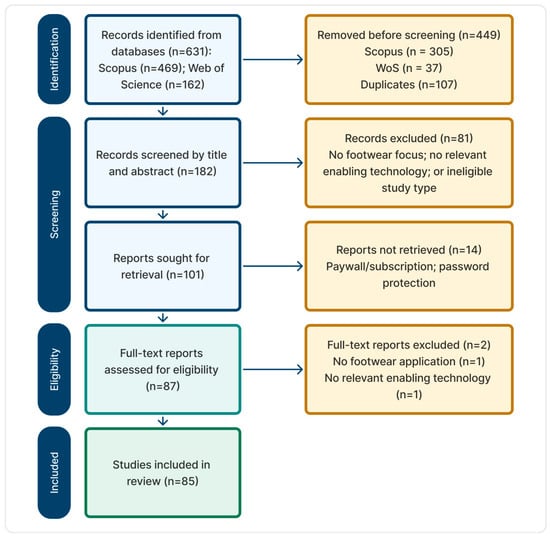
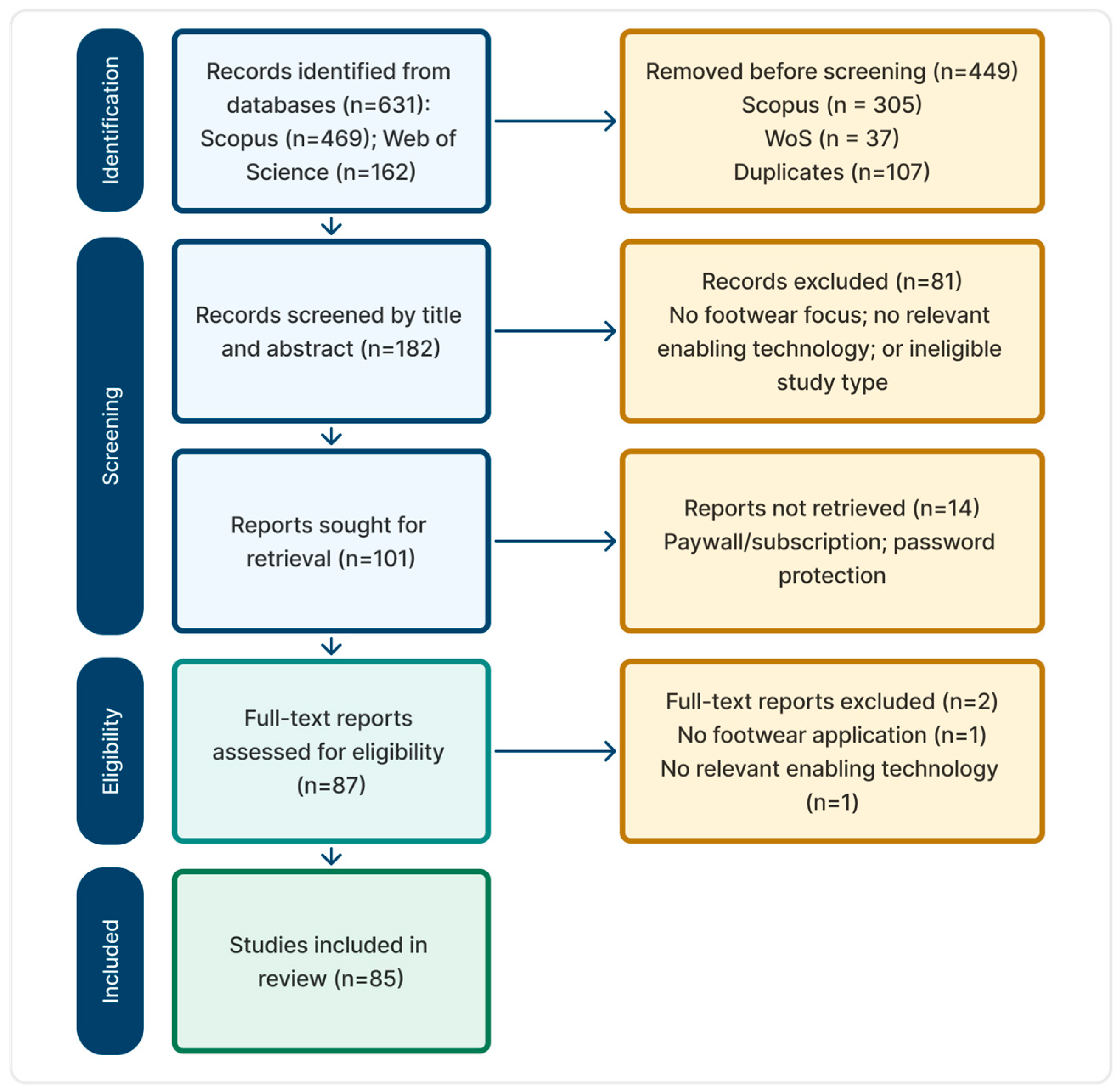
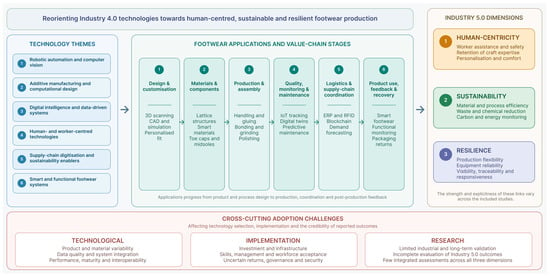
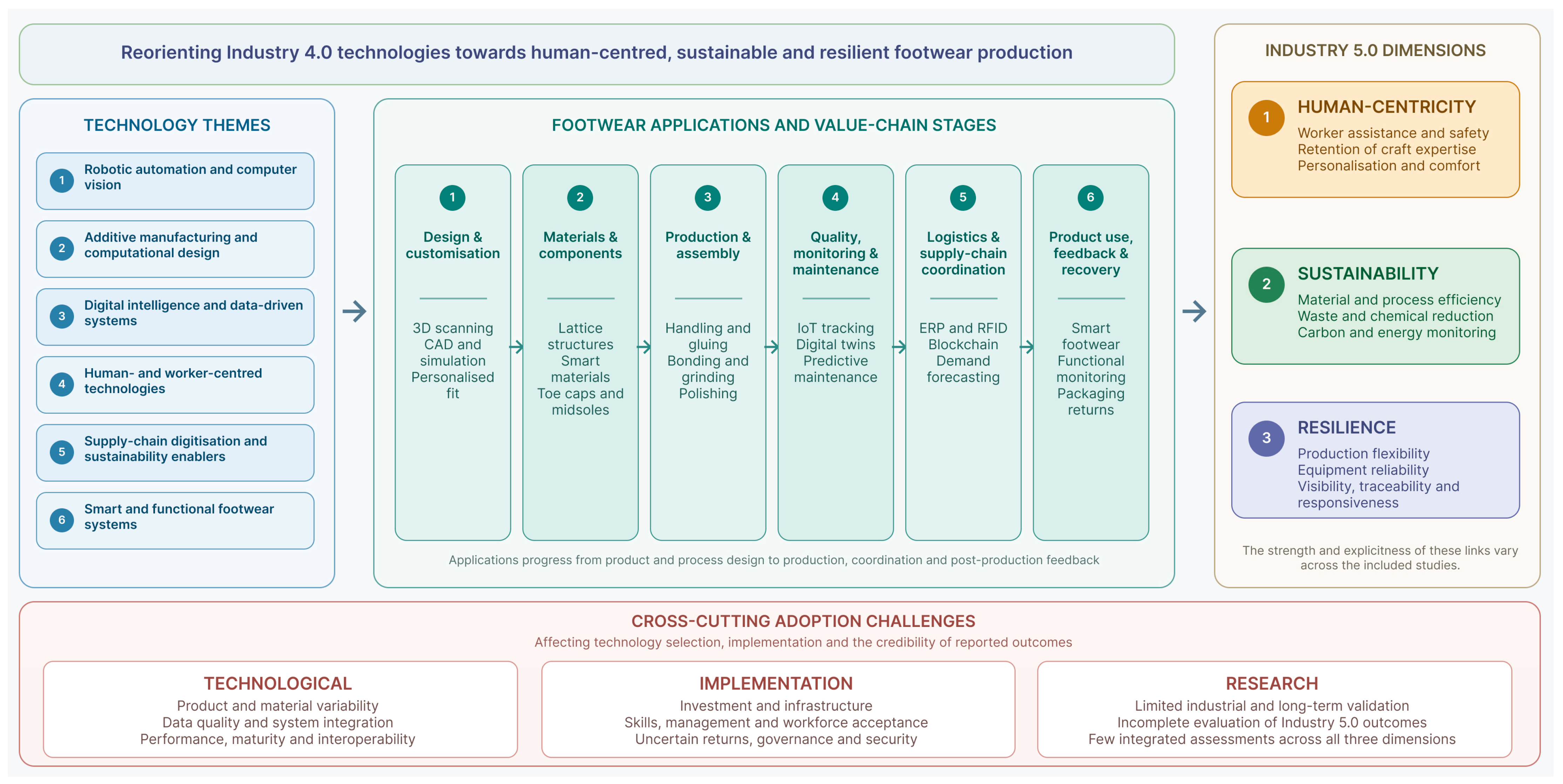
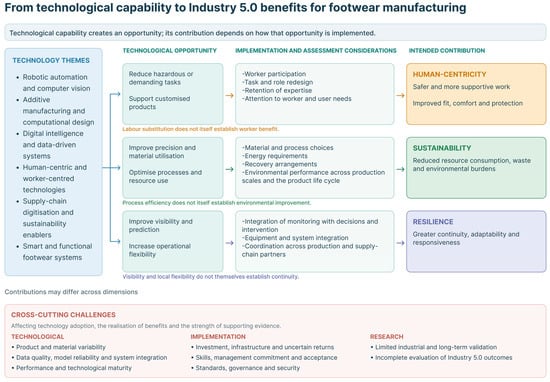
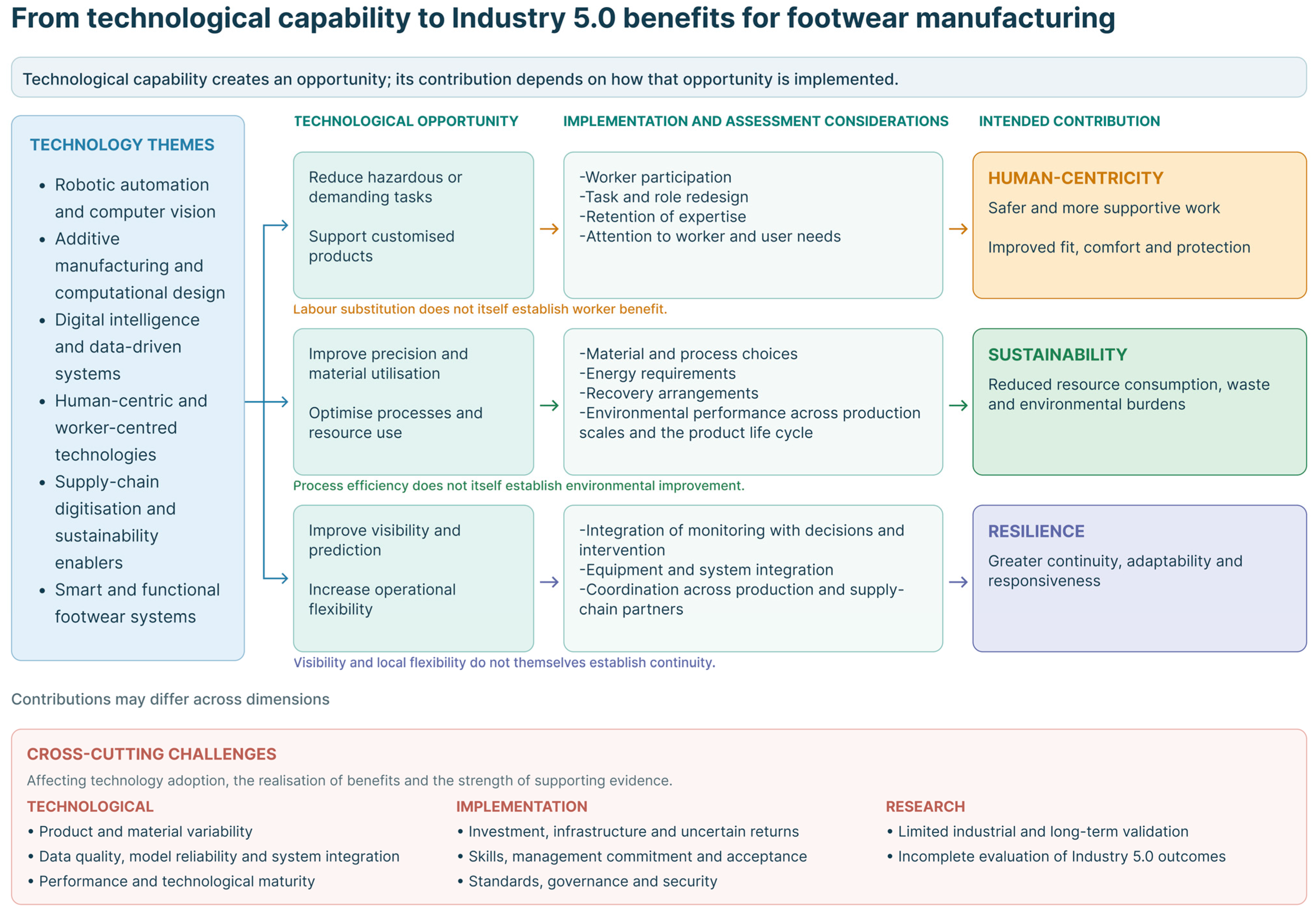

Disclaimer/Publisher’s Note: The statements, opinions and data contained in all publications are solely those of the individual author(s) and contributor(s) and not of MDPI and/or the editor(s). MDPI and/or the editor(s) disclaim responsibility for any injury to people or property resulting from any ideas, methods, instructions or products referred to in the content. |
© 2026 by the authors. Licensee MDPI, Basel, Switzerland. This article is an open access article distributed under the terms and conditions of the Creative Commons Attribution (CC BY) license.