


Abstract
This study analysed the off-the-ball attacking tactical actions (OBATA) performed by goalscorers within a maximum of three seconds before receiving the final pass leading to open-play goals in the Spanish First Division during the 2024–2025 season. The sample comprised 694 open-play goals across all 360 matches. An observational study was conducted using the ad hoc OBATA instrument, which demonstrated content validity and high inter- and intra-observer reliability (κ > 0.97). Movement behind the opponent (MBO) and body-oriented reception (BOR) were the predominant actions. Significant associations were found between the finishing zone and tactical action (V = 0.240, p < 0.001) and between the finishing zone and the number of touches (V = 0.179, p < 0.001). Within the penalty area, Zone 1 Right was associated with MBO and Zone 1 Left with movement alongside the opponent; both zones were associated with one-touch finishes. Goals scored from outside the penalty area were associated with BOR, two-touch sequences, and sequences involving more than three touches. OBATA were associated with the spatial context of finishing, indicating that different off-the-ball actions characterised goal-scoring sequences across finishing zones. These findings may inform the design of training tasks in youth football incorporating specific off-the-ball movements in game situations preceding finishing, although the effectiveness of these applications remains to be established.
1. Introduction
Performance analysis in football enables the identification of technical, tactical, and contextual factors associated with competitive performance [1,2,3]. Within attacking performance, research has examined indicators such as goals, shots on target, passing patterns, and finishing characteristics [4,5]. However, the relatively low frequency of goals during matches highlights the limitations of relying exclusively on goals as indicators of attacking performance and supports the analysis of the offensive processes preceding them [6].
From the perspective of attacking performance, several studies have analysed the sequences preceding goals by examining attacking patterns such as build-up play, organised attacks, attacking transitions, and set pieces in national and international competitions [7,8]. These studies have contributed to a better understanding of the attacking processes associated with goal scoring; however, research has predominantly focused on actions involving the ball, including the assist and finishing action, as well as on the contextual characteristics of the attacking sequence.
Consequently, the off-the-ball attacking tactical actions (OBATA) performed by the goalscorer before contacting the ball remain underexplored in the scientific literature. These movements may contribute to creating spatiotemporal advantages, disrupting defensive organisation, and establishing favourable conditions for finishing [6,9]. Therefore, their analysis may provide a more comprehensive understanding of the functional mechanisms underlying goal scoring in professional football.
Observational methodology is particularly appropriate for investigating these behaviours in real competitive contexts because it enables tactical actions to be systematically analysed while preserving the natural conditions in which they occur [10]. In this context, clearly defined observational categories and reliable coding procedures are essential for the systematic analysis of tactical behaviours [11].
Although validated observational instruments are available for analysing attacking performance in football, including REOFUT, VATOF, INDICOC, and CODITAG, they have focused primarily on assessing general attacking actions, goals, goal-scoring opportunities, or the technical and tactical behaviours involving the ball [6,12,13,14]. However, to our knowledge, no instrument has been specifically designed to categorise the off-the-ball attacking tactical actions performed by the goalscorer during sequences preceding a goal. This represents a methodological and conceptual gap in the analysis of goal-scoring behaviour. Therefore, the present study aimed to analyse the off-the-ball attacking tactical actions performed by goalscorers before goals scored from open play and examine their associations with finishing zone and number of touches during the 2024–2025 Spanish First Division season.
Based on previous research on finishing and the creation of attacking advantages, three hypotheses were formulated: (H1) movement behind the opponent (MBO) and body-oriented reception (BOR) would be the most frequent OBATA categories in the sequences preceding goals; (H2) OBATA would be significantly associated with finishing zone; and (H3) finishes from outside the penalty area would be associated with a greater number of touches and a higher prevalence of body-oriented reception.
2. Materials and Methods
2.1. Study Design
An observational methodology was used, as it is considered particularly suitable for studying behaviour in natural settings [10]. According to the observational design framework proposed by Anguera et al. [15], the study followed a nomothetic, point, and multidimensional (N/P/M) design: nomothetic (N), as multiple goal-scoring sequences were analysed; point (P), as it focused on a single season (2024–2025) from a cross-sectional perspective; and multidimensional (M), as several response dimensions related to the observed attacking tactical actions were recorded.
2.2. Sample
The initial sample comprised the 995 goals scored across the 360 matches played by the 20 teams participating in the 2024–2025 season of the Spanish First Division. After applying the established inclusion and exclusion criteria, the final sample consisted of 694 goals scored from open-play situations. Each goal-scoring sequence constituted one observational unit. Only goals scored during open play were included, defined as situations in which the ball is in play and can be contested by either team [16]. The complete relevant sequence also had to be available, including at least three seconds of footage preceding the final pass received by the goalscorer, to identify the off-the-ball attacking tactical actions. All the actions analysed met this criterion, enabling the identification and coding of the off-the-ball attacking tactical actions preceding the finish. Goals resulting from set pieces—including penalties, corner kicks, free kicks, and throw-ins—as well as own goals were excluded. All 360 matches were screened, although goalless matches naturally contributed to no observational units. The video footage was obtained from YouTube via the official LaLiga EA Sports channel, where highlights of all competition matches are publicly available. As this was a non-participant observational study based exclusively on publicly available video footage and involved no interaction with participants or collection of private information, ethical approval and individual informed consent were not required.
2.3. Procedure
LINCE PLUS software (version 3.2.5), an open-source tool that enables the coding, recording, quality control, and analysis of observational data, was used to code the goal sequences [17]. Data were collected using an ad hoc OBATA observational instrument, specifically designed to identify and record off-the-ball attacking tactical actions preceding goals scored during open play. Its development was informed by several previously validated observational instruments for analysing attacking performance in football, including REOFUT [12], INDICOC [6], VATOF [13], and CODITAG [14], as well as the work of Morillo-Baro et al. [9].
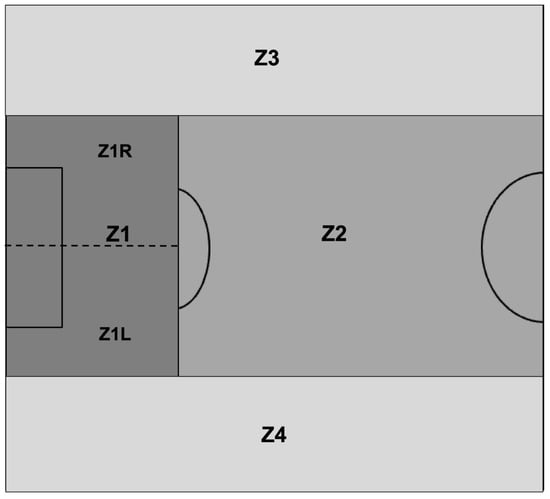
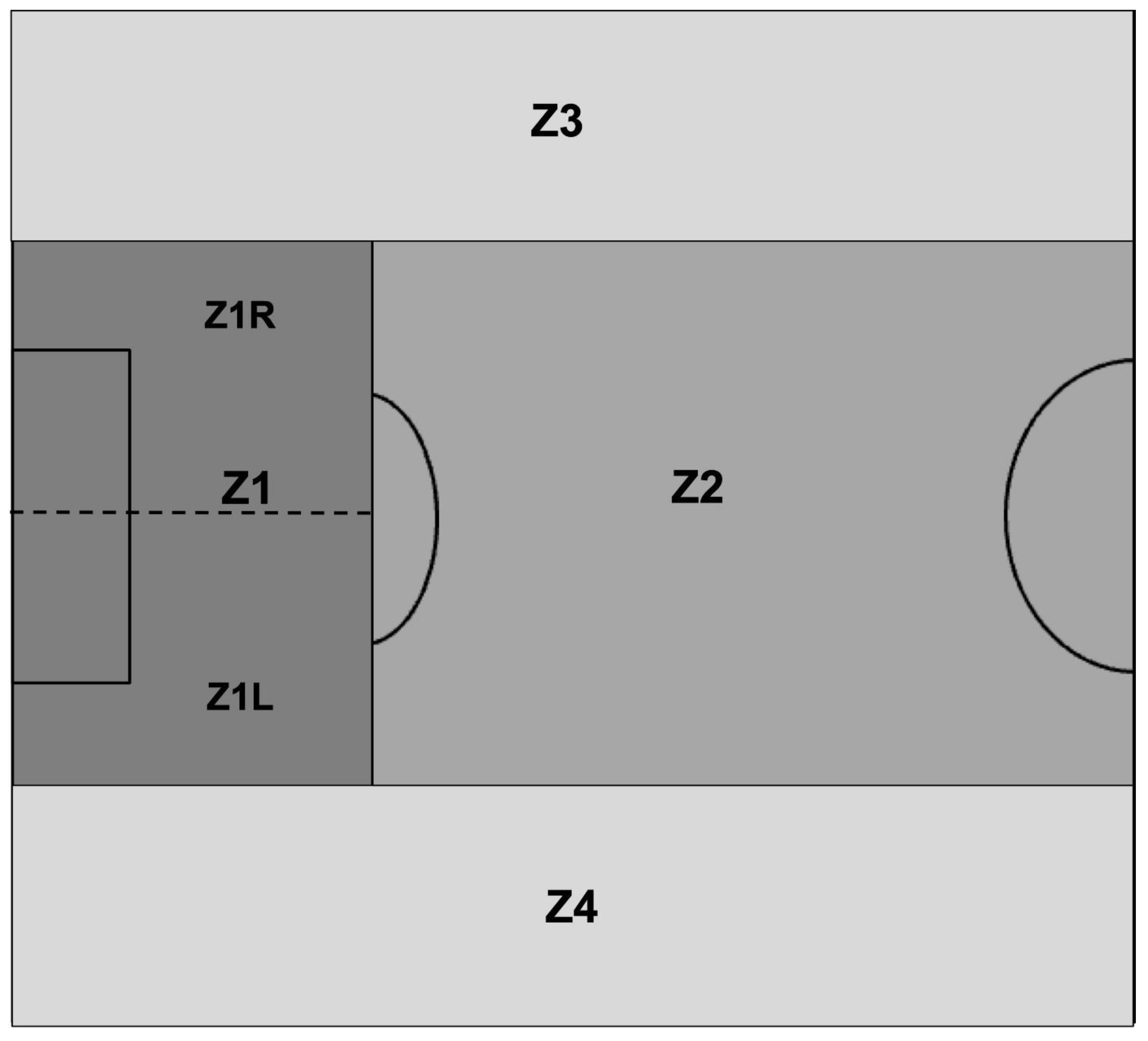
The final version of the OBATA instrument comprised five criteria and 23 categories that were exhaustive and mutually exclusive within each criterion (Table 1). The criteria were selected on the basis of their relevance to characterising the attacking context preceding the finish and were structured as follows: (a) finishing zone (Figure 1), (b) off-the-ball attacking tactical action, (c) number of touches, (d) match period, and (e) match status.
Table 1.
Criteria, categories, and codes of the OBATA observational instrument.
Figure 1.
Finishing zones. Note. Adapted from [9,17].
The five off-the-ball attacking tactical action categories of OBATA were operationally defined following expert review. Body-oriented reception (BOR) refers to adjustments in body position before receiving the ball, with the trunk and hips partially or fully oriented towards the attacking direction, facilitating subsequent progression, turning, dribbling, or finishing within a maximum of three touches. Movement behind the opponent (MBO) involves an attacking run initiated behind a nearby defender, who is positioned ahead of the attacker, allowing the attacker to receive the ball behind, in front of, or between defenders. Movement alongside the opponent (MAO) refers to movement alongside a defender or towards a goal while increasing, maintaining, or reducing interpersonal distance to facilitate the subsequent attacking action. Movement countering the opponent’s anticipation (MCOA) involves an initial movement that elicits an observable defensive response, followed by a change of direction to exploit the opposite space. Other actions (OA) include situations in which none of the four predefined off-the-ball tactical actions were identified, such as finishes following rebounds, defensive errors, or second-ball situations, including immediate dribbling after an unanticipated ball recovery without a preceding off-the-ball movement.
Off-the-ball attacking tactical actions were identified within a maximum of three seconds before the final pass was received by the goalscorer. This observation window was established as an operational criterion considered sufficient to identify the goalscorer’s preceding off-the-ball action, rather than as a previously validated temporal threshold. When multiple actions occurred, only the predominant action was coded to ensure mutual exclusivity between categories.
The number of touches was defined as the total number of ball contacts made by the goalscorer during the final individual possession sequence, including the contact used to score. One-touch finishes (OT) involved a direct shot; two-touch finishes (TT) involved one preceding touch followed by the shot; three-touch finishes (3T) involved two preceding touches followed by the shot; and finishes involving more than three touches (M3T) comprised at least four contacts, including the final shot.
Match status was classified according to the score immediately after the goal: winning (the scoring team took or extended its lead), drawing (the goal resulted in a level score), or losing (the scoring team remained behind).
Whereas existing observational instruments address broader aspects of attacking play, including the final attacking action, finishing location, contact surface, technical execution, or number of touches, OBATA specifically isolates the goalscorer’s predominant off-the-ball tactical behaviour before ball reception or contact within the sequence leading to the finish.
2.4. Data Quality Control
To develop and optimise the instrument, a pilot study was conducted by coding 152 goals scored during the FIFA Club World Cup. This process was used to assess the instrument’s applicability and its compliance with the fundamental criteria of exhaustiveness and mutual exclusivity (E/ME) [15]. Two expert coaches participated in the process, reviewing and refining the preliminary version of the instrument after completing specific training. Although both competitions involve professional football, differences in competitive context may limit the transferability of the pilot findings.
Content validity was assessed using the Delphi method [18] by a panel of 10 experts with FIFA, UEFA, or CONMEBOL qualifications and recognised experience in performance analysis, observational methodology, or football coaching. To be eligible, experts were required to have at least five years of professional or research experience in one or more of these areas. Consensus was reached on all elements of the instrument after two rounds of review, and the suggested modifications were incorporated into the final version.
Finally, inter- and intra-observer reliability were assessed using Cohen’s kappa coefficient calculated with LINCE PLUS software. Inter-observer reliability was evaluated using 152 goals from the FIFA Club World Cup, independently coded by two observers. Intra-observer reliability was assessed using all 694 goals from the 2024–2025 Spanish First Division season, which were coded twice by the principal investigator, with two coding sessions separated by two weeks. Reliability was calculated separately for each of the five observational criteria. Inter-observer kappa values ranged from 0.94 to 1.00, whereas intra-observer values ranged from 0.93 to 1.00. The observers underwent specific training, including a review of the OBATA categories, practical coding sessions, and the resolution of coding discrepancies, and coded the sequences under standardised conditions. The overall Cohen’s kappa coefficient exceeded 0.97 for both inter- and intra-observer reliability, indicating “almost perfect” agreement according to Landis and Koch [19].
2.5. Statistical Analyses
First, descriptive analyses were conducted by calculating the absolute and relative frequencies of all observed categories. Because Z3 had a low observed frequency, it was merged with Z2 before the inferential analyses to reduce sparse cell frequencies in the chi-square contingency tables. Z4 contained no observations and was excluded from these analyses. Associations between categorical variables were subsequently examined using contingency tables and Pearson’s chi-square tests. The significance level was set at p < 0.05 for all analyses. All expected cell frequencies were ≥5, satisfying the expected-frequency assumption of Pearson’s chi-square tests. No adjustment for multiple comparisons was applied.
The strength of the associations was estimated using Cramér’s V and interpreted according to Cohen [20]. When statistically significant omnibus associations were identified, adjusted standardised residuals (ASRs) were examined to identify the cells contributing to these associations. Absolute ASR values equal to or greater than 1.96 were considered statistically significant at the nominal p < 0.05 level, without adjustment for multiple comparisons. Accordingly, cell-specific associations were interpreted as exploratory findings. All statistical analyses were performed using JASP software (version 0.19.5).
3. Results
Table 2 presents the frequency distribution of the OBATA categories. Movement behind the opponent (MBO) and body-oriented reception (BOR) were the most frequent actions, together accounting for 64.9% of the observations.
Table 2.
Absolute and relative frequencies of off-the-ball attacking tactical actions (OBATA).
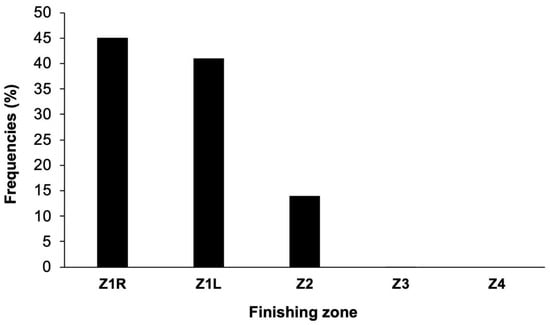
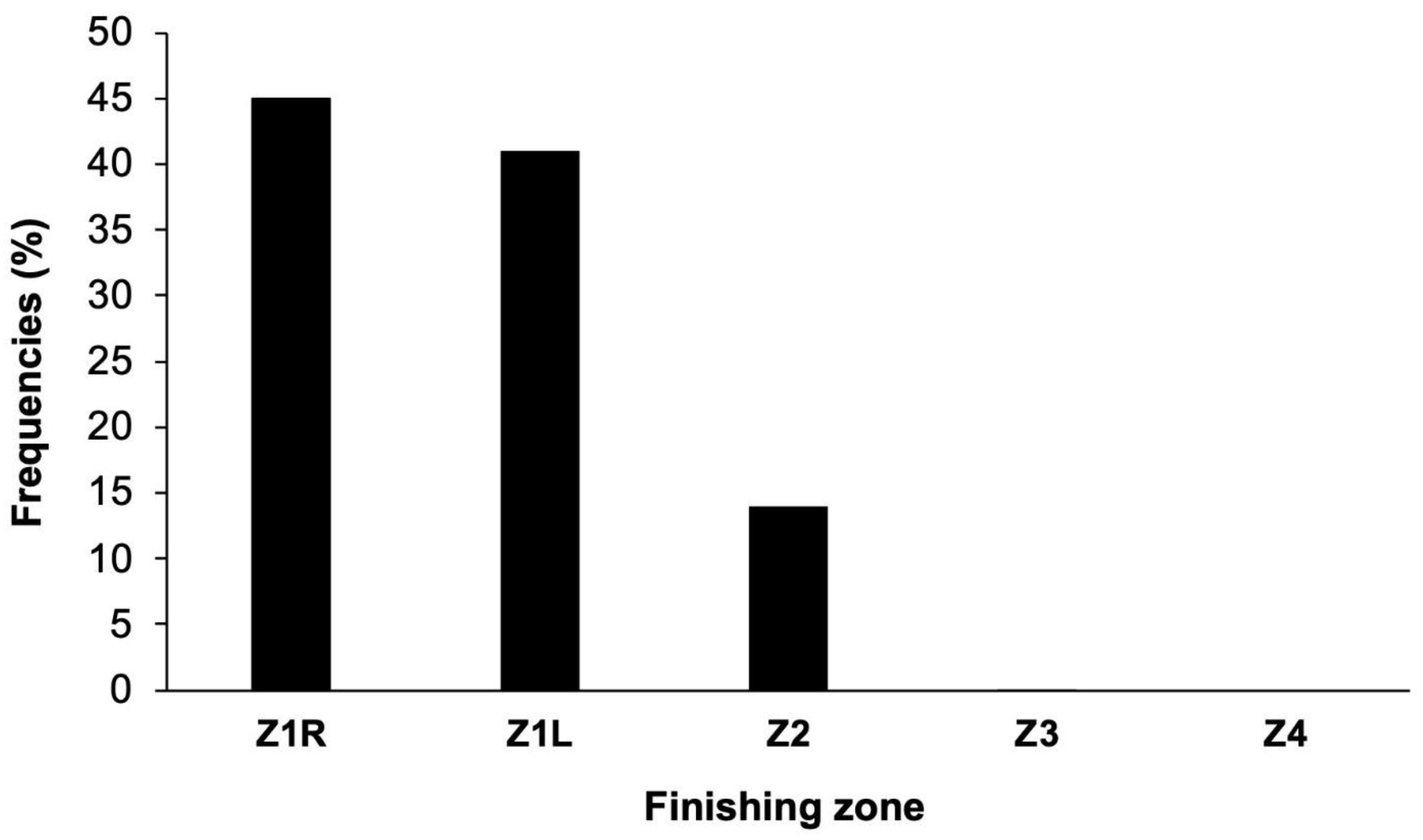
Figure 2 shows the percentage distribution of goals by finishing zone. Most goals (86%) were scored inside the penalty area, with a similar distribution between Z1R and Z1L.
Figure 2.
Relative frequencies (%) of goals by finishing zone. Note. Z1R = Zone 1 Right; Z1L = Zone 1 Left; Z2 = outside the penalty area; Z3 and Z4 = wide channels outside the penalty area.
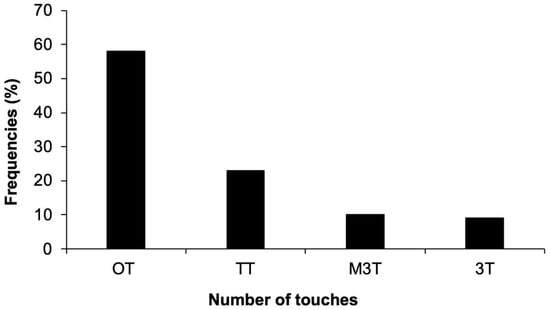
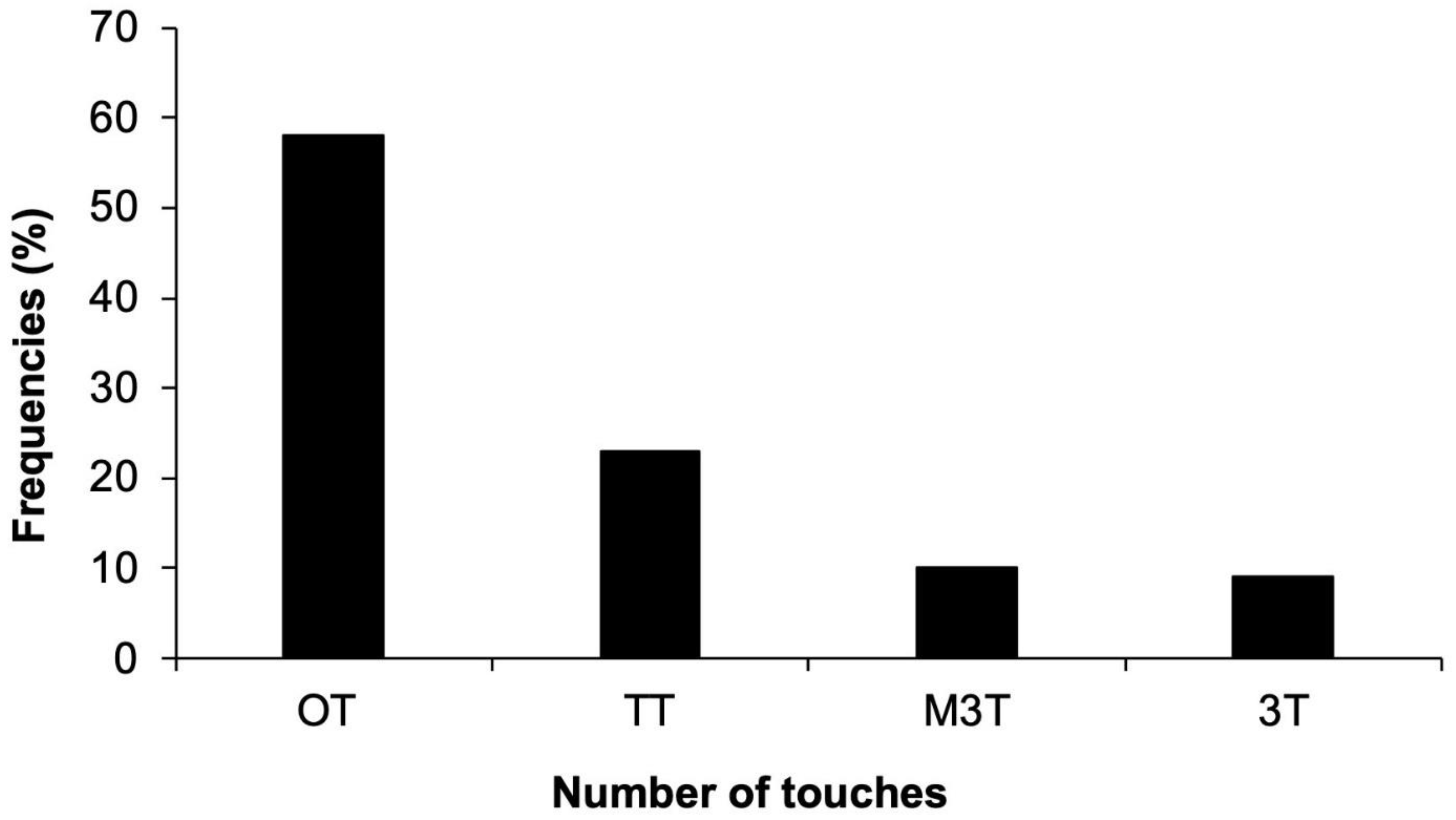
Figure 3 shows the percentage distribution of the number of touches before scoring. One-touch finishes (OT) predominated, accounting for 58.5% of the observations.
Figure 3.
Percentage distribution of the number of touches before scoring. Note. OT = one touch; TT = two touches; 3T = three touches; M3T = more than three touches.
Regarding match period, the 76–90+ min interval accounted for the largest proportion of goals (24%), whereas the 0–15 min interval showed the lowest scoring frequency. In terms of match status, most goals (75%) resulted in the scoring team taking or extending the lead, whereas goals that resulted in a level score or left the scoring team trailing were less frequent.
Table 3 presents the results of the tests examining the associations between finishing zone (FZ) and off-the-ball attacking tactical actions (OBATA), number of touches (NT), match status (MS), and match period (MP). A statistically significant association was found between FZ and OBATA, χ2 (8, N = 694) = 80.182, p < 0.001, Cramér’s V = 0.240. Analysis of the adjusted standardised residuals (Table 4) revealed positive associations between Z1R and MBO (z = 2.35), Z1L and MAO (z = 2.86), Z2 and BOR (z = 5.37), and Z2 and OA (z = 4.83).
Table 3.
Results of the association tests between the finishing zone and the study variables.
Table 4.
Adjusted residual analysis according to the finishing zone and OBATA category.
A statistically significant association was also observed between FZ and NT, χ2 (6, N = 694) = 44.492, p < 0.001, Cramér’s V = 0.179. Adjusted standardised residuals indicated that Z1R (z = 1.99) and Z1L (z = 2.39) were positively associated with OT, whereas Z2 was positively associated with TT (z = 3.14) and M3T (z = 4.23) and negatively associated with OT (z = −6.28) (Table 5).
Table 5.
Adjusted residual analysis according to finishing zone and number of touches (NT).
No statistically significant association was found between FZ and match period, χ2 (10, N = 694) = 6.397, p = 0.781, Cramér’s V = 0.068. By contrast, a nominally statistically significant association with a very small effect size was found between FZ and match status, χ2 (4, N = 694) = 9.721, p = 0.045, Cramér’s V = 0.084.
4. Discussion
The present study aimed to examine the off-the-ball attacking tactical actions (OBATA) performed by the goalscorer during the sequences preceding a goal and to assess their associations with the finishing zone and number of touches. For this purpose, a specific observational instrument was developed and subjected to content-validity and reliability procedures, enabling these behaviours to be identified and recorded in competitive match contexts. The main findings indicate that the OBATA performed before contact with the ball were not distributed independently of the finishing zone. Descriptively, movement behind the opponent (MBO) was the most frequent action, followed closely by body-oriented reception (BOR). These results indicate that both running in behind and positioning to receive the ball with an appropriate body orientation were frequently observed in goal-scoring sequences, without establishing whether these actions increase the probability of scoring.
To the best of our knowledge, few studies have specifically analysed the off-the-ball tactical actions performed by the goalscorer during the sequences preceding a goal. In this respect, the present study provides a complementary perspective on the existing literature, which has traditionally focused on variables related to possession, passing, and finishing. The findings are consistent with previous research showing that most goals in elite football are scored from inside the penalty area [21,22]. Beyond this descriptive tendency, the significant association between OBATA and the finishing zone indicates that off-the-ball actions were related to the spatial context in which goals were ultimately scored, although this relationship was not deterministic. This finding is particularly relevant in a competitive context characterised by uncertainty, continuous interactions among players, and interdependent behaviours that are difficult to isolate under real match conditions [4].
The analysis of the adjusted residuals identified specific associations between certain OBATA categories and finishing zones. Movement behind the opponent (MBO) was significantly associated with Zone 1 Right (Z1R), whereas movement alongside the opponent (MAO) was significantly associated with Zone 1 Left (Z1L). These results suggest that the distribution of off-the-ball movements observed before ball reception differed across finishing zones. Specifically, runs in behind may enable goalscorers to exploit space beyond the defensive line, consistent with previous research highlighting the importance of movements behind the defensive line and into the gaps between defenders to disrupt the opposition’s last line and create finishing opportunities [7,22]. Movement alongside an opponent, by contrast, may facilitate access to finishing areas while maintaining a favourable position relative to the defender. Nevertheless, because variables such as attacking direction, foot dominance, and defensive configuration were not examined, the associations with the right and left finishing zones should be interpreted cautiously. From an applied perspective, these findings may inform the design of training tasks that incorporate runs behind and movements alongside defenders across different finishing zones. For example, coaches could design small-sided games with constraints encouraging movement behind a defender (MBO) before finishing, or structured drills involving movement alongside a defender (MAO) followed by a final pass and shot. These tasks could provide repeated opportunities to practice the observed actions under defensive opposition, without assuming that their effectiveness in improving scoring performance has been demonstrated.
Furthermore, the association between Zone 2 (outside the penalty area) and body-oriented reception (BOR) was the strongest positive association identified in the inferential analysis. This pattern suggests that successful attacking sequences culminating in finishes from outside the penalty area may involve more elaborate technical and tactical preparation, characterised by positional adjustments that facilitate receiving the ball with an open body orientation and subsequently executing the finish. The greater-than-expected frequency of body-oriented receptions in Zone 2 may reflect differences in the technical preparation observed before goals scored from outside the penalty area. Unlike finishes performed close to the goal, where time pressure may favour one-touch actions, situations occurring farther from the goal may allow or require additional actions to orient the body and prepare the ball before the shot. In this context, body-oriented reception may provide a functional orientation for the subsequent finishing action. These findings are compatible with the principles of positional play described by Seirul·lo [23], according to which players’ body orientation shapes their possibilities for interacting with the surrounding environment. Moreover, the lower frequency of MBO in this zone suggests that runs behind were less characteristic of attacking sequences ending in goals from outside the penalty area. This interpretation is consistent with the spatial patterns of attacking play discussed by González-Ródenas et al. [24], although the present findings do not allow conclusions regarding the relative effectiveness of these actions.
Regarding the number of touches, the results revealed a significant association between finishing zone and the number of touches taken before scoring (Cramér’s V = 0.179). Specifically, the areas inside the penalty area (Z1R and Z1L) were significantly associated with one-touch finishes (OT). This result is consistent with the descriptive findings, according to which this type of finish accounted for more than half of all the goals analysed. One possible explanation lies in the spatiotemporal constraints characterising areas close to the goal. The limited space in areas close to the goal may favour the immediate execution of the shot, making one-touch finishing particularly relevant in these contexts. By contrast, finishes from Z2 were significantly associated with both two-touch sequences and sequences involving more than three touches, which may reflect differences in technical preparation, including oriented first touches or ball carrying before attempting the shot. Overall, these results indicate that finishing actions were associated with different spatiotemporal contexts according to their location relative to the goal. This pattern is consistent with the findings of Çobanoğlu [25], and the performance indicators described by Sánchez-López et al. [14], and Bamplekis et al. [16].
One of the main limitations of this study is that the analysis focused exclusively on the actions performed by the goalscorer, without specifically considering the dynamic interactions with teammates, opponents, and the surrounding environment. Furthermore, only attacking sequences that culminated in goals were analysed. The absence of a comparison with unsuccessful attacking sequences prevents us from determining whether the identified actions increase scoring probability or distinguish goal-scoring sequences from those that do not result in a goal. Accordingly, the observed associations should be interpreted as descriptive relationships rather than evidence of tactical effectiveness, superiority, or causality. In addition, the analysis was restricted to a single professional league and season, which may limit the generalisability of the observed patterns to other competitive contexts. Moreover, the potential clustering of goals within matches or teams was not accounted for in the statistical analyses, which may have affected the precision of the inferential results. Furthermore, players’ dominant foot, playing position, attacking direction (right or left), and the origin of the final pass were not considered in the analysis. These factors may influence the observed distribution of goals between Z1R and Z1L and should therefore be considered when interpreting the observed associations. Additionally, combining finishing zones Z2 and Z3 due to the low frequency of goals in Z3 reduced the spatial specificity of the analysis and prevented the identification of potential differences between these zones. Although all included sequences provided sufficient footage to identify and code the preceding tactical action, the use of publicly available match highlights may have restricted the observation of additional off-the-ball movements outside the camera frame. Moreover, the scarcity of research specifically examining the off-the-ball attacking tactical actions preceding a goal limited the possibility of comparing the present findings with those of previous studies. Future research should incorporate temporal variables to identify the onset and end of off-the-ball actions, examine the relationships among the final pass, the preceding action, and the finish, and further investigate the spatial interaction patterns between the goalscorer and their direct opponent. Comparative analyses across leagues, seasons, and competitive levels would also help determine the extent to which the observed patterns are context-specific or generalisable across professional football. These approaches would contribute to a more comprehensive understanding of the attacking performance associated with goal scoring.
5. Conclusions
The present study shows that the off-the-ball attacking tactical actions performed by the goalscorer during open play were not distributed independently of the finishing zone. During the 2024–2025 Spanish LaLiga season, movement behind the opponent (MBO) and body-oriented reception (BOR) were the most frequent actions in the sequences preceding a goal. The results showed that MBO was associated with Zone 1 Right (Z1R), whereas movement alongside the opponent (MAO) was associated with Zone 1 Left (Z1L). These areas close to the goal were also associated with one-touch finishes. By contrast, Zone 2 (outside the penalty area) was associated with BOR and with both two-touch sequences and sequences involving more than three touches. These findings indicate that body-oriented reception and sequences involving multiple touches were more frequently observed than expected among goals scored from outside the penalty area. Finally, this study provides a specific observational instrument for analysing off-the-ball attacking tactical actions preceding a goal. The instrument demonstrated content validity and high inter- and intra-observer reliability, supporting its potential use in applied and observational research. In addition, the findings may inform the design of representative training tasks incorporating off-the-ball actions within different spatial finishing contexts, although the effectiveness of these applications remains to be evaluated.
Author Contributions
Conceptualization, V.M.R. and E.B.; Methodology, V.M.R., A.G.G. and E.B.; Investigation, V.M.R., A.G.G. and E.B.; Data Curation, V.M.R., A.G.G. and E.B.; Formal Analysis, V.M.R. and A.G.G.; Writing—Original Draft Preparation, V.M.R.; Writing—Review and Editing, A.G.G. and E.B. All authors have read and agreed to the published version of the manuscript.
Funding
This research received no external funding.
Institutional Review Board Statement
Ethical review and approval were not required for this study because it was a non-participant observational study based exclusively on publicly available video footage of professional football matches, with no interaction with participants and no collection of private or sensitive information.
Informed Consent Statement
Not applicable. The study was based exclusively on publicly available video footage of professional football matches and involved no interaction with participants or collection of private information.
Data Availability Statement
The data supporting the findings of this study are available from the corresponding author upon reasonable request.
Acknowledgments
During the preparation of this manuscript, the authors used ChatGPT (OpenAI, GPT-6) for English-language editing and stylistic refinement. The authors reviewed and edited the output and take full responsibility for the content of this publication.
Conflicts of Interest
The authors declare no conflicts of interest.
References
- Lago-Peñas, C. El análisis del rendimiento en los deportes de equipo: Algunas consideraciones metodológicas. Acción Mot. 2008, 1, 41–58. [Google Scholar] [CrossRef] [Scilit]
- Lames, M.; McGarry, T. On the search for reliable performance indicators in game sports. Int. J. Perform. Anal. Sport 2007, 7, 62–79. [Google Scholar] [CrossRef] [Scilit]
- Sarmento, H.; Marcelino, R.; Anguera, M.T.; Campaniço, J.; Matos, N.; Leitão, J.C. Match analysis in football: A systematic review. J. Sports Sci. 2014, 32, 1831–1843. [Google Scholar] [CrossRef] [Scilit]
- Brito Souza, D.; López-Del Campo, R.; Blanco-Pita, H.; Resta, R.; Del Coso, J. A new paradigm to understand success in professional football: Analysis of match statistics in LaLiga for 8 complete seasons. Int. J. Perform. Anal. Sport 2019, 19, 543–555. [Google Scholar] [CrossRef] [Scilit]
- Wright, C.; Atkins, S.; Polman, R.; Jones, B.; Sargeson, L. Factors associated with goals and goal scoring opportunities in professional soccer. Int. J. Perform. Anal. Sport 2011, 11, 438–449. [Google Scholar] [CrossRef] [Scilit]
- González-Ródenas, J.; López Bondía, L.; Calabuig Moreno, F.; Aranda Malavés, R. Indicadores tácticos asociados a la creación de ocasiones de gol en fútbol profesional. Cult. Cienc. Deporte 2015, 10, 215–225. [Google Scholar] [CrossRef] [Scilit]
- Li, C.; Zhao, Y. Comparison of goal scoring patterns in “the Big Five” European football leagues. Front. Psychol. 2021, 11, 619304. [Google Scholar] [CrossRef] [Scilit]
- Liu, H.; Gómez, M.Á.; Lago-Peñas, C.; Sampaio, J. Match statistics related to winning in the group stage of 2014 Brazil FIFA World Cup. J. Sports Sci. 2015, 33, 1205–1213. [Google Scholar] [CrossRef] [Scilit]
- Morillo-Baro, J.P.; Reigal, R.E.; Ruiz-López, J.A.; Vázquez-Diz, J.A.; Morales-Sánchez, V.; Hernández-Mendo, A. Finalization actions of the finalist teams in the Soccer World Cup 2018: A study with polar coordinates. Qual. Quant. 2022, 56, 779–792. [Google Scholar] [CrossRef] [Scilit]
- Anguera, M.T.; Camerino, O.; Castañer, M.; Sánchez-Algarra, P.; Onwuegbuzie, A.J. The specificity of observational studies in physical activity and sports sciences: Moving forward in mixed methods research and proposals for achieving quantitative and qualitative symmetry. Front. Psychol. 2017, 8, 2196. [Google Scholar] [CrossRef] [Scilit]
- Travassos, B.; Davids, K.; Araújo, D.; Esteves, P.T. Performance analysis in team sports: Advances from an ecological dynamics approach. Int. J. Perform. Anal. Sport 2013, 13, 83–95. [Google Scholar] [CrossRef] [Scilit]
- Aranda, R.; González-Ródenas, J.; López-Bondia, I.; Aranda-Malavés, R.; Tudela-Desantes, A.; Anguera, M.T. “REOFUT” as an observation tool for tactical analysis on offensive performance in soccer: Mixed method perspective. Front. Psychol. 2019, 10, 1476. [Google Scholar] [CrossRef] [Scilit]
- Caicedo Parada, S.A.; Calderón Vargas, M.A. Diseño y validación de un instrumento observacional para la valoración de acciones tácticas ofensivas en fútbol–VATOF [Design and validation of an observational instrument for the evaluation of offensive tactical actions in football–VATOF]. Retos 2020, 38, 306–311. [Google Scholar] [CrossRef] [Scilit]
- Sánchez-López, R.; Echeazarra, I.; Castellano, J. Assessment of a coding tool to analyse goals in football (CODITAG). Apunt. Educ. Física Y Deport. 2023, 151, 58–69. [Google Scholar] [CrossRef] [Scilit]
- Anguera, M.T.; Blanco-Villaseñor, A.; Hernández-Mendo, A.; Losada, J.L. Diseños observacionales: Ajuste y aplicación en psicología del deporte. Cuad. De Psicol. Del Deporte 2011, 11, 63–76. [Google Scholar]
- Bamplekis, C.; Michailidis, Y.; Margonis, K.; Kyranoudis, A.; Zelenitsas, C.; Metaxas, T. Goal analysis of the entire Italian National League Serie A. Hum. Mov. 2022, 23, 104–111. [Google Scholar] [CrossRef] [Scilit]
- Soto-Fernández, A.; Camerino, O.; Iglesias, X.; Anguera, M.T.; Castañer, M. LINCE PLUS software for systematic observational studies in sports and health. Behav. Res. Methods 2022, 54, 1263–1271. [Google Scholar] [CrossRef] [Scilit]
- López-Gómez, E. El método Delphi en la investigación actual en educación: Una revisión teórica y metodológica. Educ. XX1 2018, 21, 17–40. [Google Scholar] [CrossRef]
- Landis, J.R.; Koch, G.G. The measurement of observer agreement for categorical data. Biometrics 1977, 33, 159–174. [Google Scholar] [CrossRef] [Scilit]
- Cohen, J. Statistical Power Analysis for the Behavioral Sciences, 2nd ed.; Lawrence Erlbaum Associates: Hillsdale, NJ, USA, 1988. [Google Scholar]
- Reigal, R.E.; Morillo-Baro, J.P.; Mackintosh-Muñoz, G.; Vázquez-Diz, J.A.; Hernández-Mendo, A.; Morales-Sánchez, V. Comportamientos de ataque exitosos de los equipos finalistas de la UEFA Champions League 2020–2021: Análisis mediante coordenadas polares [Successful attack behaviours of the finalist teams of the UEFA Champions League 2020–2021: Analysis using polar coordinates]. Retos 2024, 55, 922–930. [Google Scholar] [CrossRef] [Scilit]
- Papadopoulos, S.; Papadimitriou, K.; Konstantinidou, X.; Matsouka, O.; Pafis, G.; Papadopoulos, D. Factors leading to goal scoring in the Spanish and Italian soccer leagues. Sport Mont. 2021, 19, 13–18. [Google Scholar] [CrossRef] [Scilit]
- Seirul·lo, P. ADN Barça; Roca Editorial: Barcelona, Spain, 2024. [Google Scholar]
- González-Ródenas, J.; Aranda-Malavés, R.; Tudela-Desantes, A.; Sanz-Ramírez, E.; Crespo-Hervás, J.; Aranda-Malavés, R. Past, present and future of goal scoring analysis in professional soccer. Retos 2020, 37, 774–785. [Google Scholar] [CrossRef] [Scilit]
- Çobanoğlu, H.O. Analysis of goal scored on Russia World Cup 2018. J. Educ. Train. Stud. 2019, 7, 184–191. [Google Scholar] [CrossRef] [Scilit]

Disclaimer/Publisher’s Note: The statements, opinions and data contained in all publications are solely those of the individual author(s) and contributor(s) and not of MDPI and/or the editor(s). MDPI and/or the editor(s) disclaim responsibility for any injury to people or property resulting from any ideas, methods, instructions or products referred to in the content. |
© 2026 by the authors. Licensee MDPI, Basel, Switzerland. This article is an open access article distributed under the terms and conditions of the Creative Commons Attribution (CC BY) license.