


Abstract
Long agricultural videos contain time-distributed multimodal evidence, including visual scenes, speech, subtitles, operational context, and expert explanations. Existing work remains fragmented across video perception, retrieval, summarization, monitoring, and knowledge representation, with limited attention to traceable knowledge services. This evidence-mapping review examines how long agricultural videos can be transformed into user-relevant knowledge resources. It proposes a user-driven architecture linking multimodal understanding, knowledge-unit segmentation, temporal retrieval, evidence binding through knowledge graphs and retrieval-augmented generation, and evidence-grounded recomposition. The review also clarifies the operational boundaries among knowledge points, semantic segments, evidence clips, and knowledge units and identifies validation requirements for datasets, benchmarks, expert assessment, user studies and provenance control. A bounded evidence-mapping approach was applied to the Web of Science Core Collection and PubMed, supplemented by citation tracking. Citation tracking included both backward tracking of reference lists and forward tracking of citing articles. The formal search, conducted on 26 June 2026, identified 245 records; after subsequent updates through September 2026, 113 records were retained in the primary coded corpus. Evidence sources were classified as direct agricultural (D), transferable (T), or background evidence (B), whereas conceptual constructs and methodological requirements were labeled P and analyzed separately from empirical evidence. The corpus supports component-level methods, but explicit validation of a complete service chain was not identified in the primary corpus. Remaining challenges concern knowledge-level annotation, query–evidence benchmarking, provenance-aware generation, rights workflows, and user-centered validation. Future studies should test the proposed architecture in bounded agricultural domains with timestamped evidence, agronomic assessment, comparative baselines, and lawful-reuse workflows.
1. Introduction
Agricultural videos are an increasingly important medium for knowledge transfer in smart agriculture. Long agricultural videos are particularly valuable because they contain heterogeneous evidence distributed across time, including symptoms, procedures, animal behavior, machinery operation, field conditions, speech, subtitles, and contextual metadata. Automatic speech recognition (ASR), optical character recognition (OCR), visual analysis, and metadata processing provide basic mechanisms for organizing this evidence, while agricultural foundation models and multimodal large language models (MLLMs) [1,2] offer new possibilities for linking visual, textual, and domain knowledge. Existing studies span poultry monitoring [3], smart aquaculture sensing [4], agricultural video platforms [5], vision-language applications for cattle analysis [6], and agricultural content retrieval [7]. These studies establish important component methods, but they mainly evaluate perception, monitoring, or retrieval within individual sources rather than the traceable reuse of long, heterogeneous agricultural videos.
The practical challenge is therefore not only to recognize what appears in a video, but also to convert distributed evidence into information that can answer a user’s specific need. A user-driven service begins with an information need rather than a predefined model output [7]. Farmers may seek visual examples of a crop symptom, extension workers may need a concise training sequence, and students may require an explanation assembled from several source intervals. Meeting these needs requires the identification of claim-relevant intervals rather than merely shots, actions, or generic semantic segments, followed by clip retrieval, evidence verification, and output recomposition within an auditable chain. We use the term cross-source recomposition for the claim-bound integration of complementary intervals from multiple videos while preserving their timestamps, context, provenance, uncertainty, conflicts, and reuse status.
The relevant literature is substantial but fragmented. Direct agricultural studies provide component-level evidence for crop and weed segmentation, livestock monitoring, disease detection, and related field-scene analysis [8,9,10,11,12,13]. General unmanned aerial vehicle (UAV) tracking [14] and medical imaging [15] contribute transferable tracking, segmentation, or recognition methods, but they do not directly validate agricultural long-video knowledge services. Video retrieval and temporal localization research addresses query-based interval discovery [16,17,18,19,20], while summarization, key-frame extraction, captioning, and editing studies address compression and presentation [21,22,23,24,25,26,27,28,29,30,31]. The central gap is not the absence of individual modules, but limited explicit validation showing that these modules jointly support a complete, traceable agricultural knowledge-service chain. Within the 113-record primary corpus, an explicitly end-to-end validated chain was not identified. This finding indicates limited reporting and validation in the reviewed literature rather than proof that no such system exists. Provenance, contextual completeness, and licensing or permission workflows are therefore treated as requirements proposed by this review. Table 1a,b position this review against adjacent reviews and clarify that its unit of analysis is a traceable agricultural long-video knowledge service rather than an isolated perception or retrieval module. Recent adjacent reviews now included in Table 1a,b cover comprehensive long-video understanding, MLLM-based video temporal grounding, training-free long-video understanding, and multimodal/video retrieval-augmented generation [32,33,34,35].
Table 1.
(a) Search and methodological characteristics of adjacent reviews. (b) Thematic, dataset, metric, and real agricultural validation coverage of adjacent reviews.
To prevent scope inflation, the evidence map separately retained agricultural component studies on livestock or crop segmentation [39,40,41] and broad smart-agriculture reviews covering the Internet of Things (IoT), artificial intelligence (AI), robotics, extended reality (XR), socio-technical adoption, artificial intelligence of things (AIoT), and crop-disease machine learning [42,43,44,45,46]; these records were used only for component or contextual coverage.
This review makes four synthesis contributions. First, it conceptualizes long agricultural videos as decomposable knowledge resources rather than as indivisible media files. Second, it distinguishes knowledge points, generic semantic segments, and evidence clips as different analytical units. Third, it organizes direct agricultural and transferable methodological evidence into a traceable service pipeline. Fourth, it identifies the data, evaluation, governance, and deployment requirements needed to test that pipeline.
Accordingly, this review addresses four research questions (RQs):
RQ1. How should knowledge units in long agricultural videos be conceptually and operationally distinguished from shots, actions, events, and generic semantic segments?
RQ2. Which multimodal methods can segment and retrieve knowledge-bearing intervals, and what evidence supports their transferability to agricultural settings?
RQ3. How can knowledge graphs and retrieval-augmented generation preserve provenance, uncertainty, temporal evidence, and contextual constraints?
RQ4. Which datasets, annotations, metrics, baselines, and user-centered protocols are required to evaluate agricultural long-video knowledge services?
Figure 1 summarizes the research questions and their corresponding synthesis domains.
Figure 1.
Research questions and synthesis domains.
Section 2 explains the review scope, evidence selection logic, core concepts, and service architecture. Section 3, Section 4, Section 5, Section 6 and Section 7 examine multimodal understanding, segmentation, retrieval, knowledge binding, and recomposition. Section 8 and Section 9 address evaluation and the research agenda; Section 10 discusses implications and limitations; Section 11 concludes.
2. Review Scope and Conceptual Framework
This section clarifies the scope and evidentiary status of the review before its analytical units and the proposed service architecture are defined.
2.1. Literature Coverage
This review adopted a bounded evidence-mapping approach. Literature was obtained through a combination of database searching and citation tracking. Formal database searches were conducted in the Web of Science Core Collection and PubMed on 26 June 2026. These two databases constituted the prespecified formal search sources. No language restrictions or publication-type filters were applied at the database-search stage; publication eligibility was determined during title/abstract and full-text screening according to the predefined criteria in Table S2. Citation tracking included backward tracking of reference lists and forward tracking of citing articles. The search records were deduplicated in Zotero, primarily by DOI and attachment filename. The deduplicated records then underwent program-assisted relevance prescreening based on titles, abstracts, keywords, and journal information. Program outputs were used solely to support ranking and preliminary classification; all final eligibility decisions were made manually.
Two authors independently screened titles, abstracts, and full texts against the predefined relevance and evidence criteria detailed in Table S2. Studies were included if they (i) provided extractable evidence directly relevant to agricultural settings, agricultural visual content, or agricultural long-video knowledge services, or (ii) reported transferable methods or benchmarks that could be explicitly mapped to a module of the proposed workflow. Studies based on images or short video clips were retained only as component-level evidence and were not treated as validation of a complete long-video service system. The two sets of screening decisions were compared on a record-by-record basis. Disagreements were reviewed and discussed by two additional authors; unresolved cases were adjudicated by all authors. After screening and a final round of rescreening, 95 records identified or confirmed through the June 2026 searches were retained. Backward and forward citation chasing of the included core studies, supplemented by targeted manual searches, yielded 10 additional eligible records in August 2026, which were assessed using the same procedure. During the revision stage in September 2026, four recent reviews and four long-video benchmarks were reassessed against the same predefined criteria, verified from full text, and coded using the same evidence map. These eight eligible additions were incorporated into the primary coded corpus. The resulting 113 records constituted the unified primary coded corpus (95 June-identified/confirmed records, 10 August additions, and 8 September additions).
For synthesis, evidence statements are classified by evidence role and relevance as direct agricultural evidence (D), transferable evidence (T), background evidence (B), or review-proposed content (P). D, T, and B describe how a source is used; they are not methodological-quality scores. P is reserved for definitions, audit fields, governance requirements, evaluation checks, and architectural links proposed by this review and is not assigned as a category of empirical study. Reporting and validation characteristics are recorded separately in Table S3. These categories are used throughout Section 3, Section 4, Section 5, Section 6, Section 7 and Section 8 to prevent component-level findings from being interpreted as end-to-end validation.
The construction and final rescreening of the primary coded corpus are shown in Figure 2. Figure 3 presents the publication-year distribution of the locked 113-record primary coded corpus. Unless otherwise stated, all corpus-level synthesis in this article refers to these 113 records. A separate complementary discovery and coverage-sensitivity layer was maintained for sensitivity analysis and was not merged into the 113-record primary coded corpus. The bibliography contains the works cited in this review. The eight revision-stage additions—four recent reviews compared in Table 1a,b and four long-video benchmarks discussed in Section 3.2—were coded as transferable or contextual evidence within the final 113-record primary coded corpus.
Figure 2.
Audited construction of the primary review corpus and complementary coverage-sensitivity layer. Abbreviations: DOI, digital object identifier; UNC, uncertain classification.
Figure 3.
Publication-year distribution of the 113-record primary coded corpus.
2.2. Core Concepts and Analytical Boundaries
A long agricultural video is an extended multimodal record that contains multiple or distributed knowledge units and therefore requires navigation, segmentation, or retrieval beyond whole-file access. Visual and audio-visual studies provide observable evidence for symptoms, actions, environments, and operations [47,48,49]. Inertial measurement unit (IMU)-based cow behavior classification involves a nonvisual sensor stream rather than visual evidence [50]. Natural-language video indexing, lecture video browsing, subtitle recognition, and OCR-related methods provide potentially transferable components for extracting or locating text-like evidence [17,18,20,51]. In contrast, a multimodal dynamic-genre study yields a transcription and an encoding scheme for analysis, not an automatic terminology-extraction method [52]. Metadata, expert knowledge, and agricultural semantic structures provide contextual grounding [5,53,54].
For operational purposes, this review adopts a measurable threshold and defines a long video as an individual video or a continuous acquisition stream lasting at least 30 min. Recordings shorter than 30 min that are explicitly described by the source as untrimmed or that contain multiple temporally annotated events are retained as component-level untrimmed-video evidence, but are not treated as validation of a complete long-video system.
Of the 113 included records, 19 met the coding criteria for long or untrimmed video: five agricultural primary studies, eight transferable cross-domain primary studies or long-video benchmarks, and six reviews or overviews. Among the five agricultural primary studies, three (60%) met the ≥30 min criterion, comprising continuous acquisition over 22 weeks across five barns, 120 sow-behavior videos lasting 50–80 min, and continuous poultry-house surveillance over an approximately 33-day production cycle, with recordings stored as files of 24 min 33 s. The remaining two studies (40%) used shorter untrimmed analytical units: 1337 cattle-behavior videos lasting 30–300 s and 157 sow-behavior segments lasting 20 s to 10 min; these were retained as component-level evidence rather than complete long-video validation. Temporal information for all 19 records is provided in the final field, “Reported temporal criterion/duration,” of Table S3.
The framework separates four distinct units that are often conflated. A knowledge point is a domain concept, such as a symptom pattern, a causal explanation, an operational step, a recommendation, or a warning. A generic semantic segment is a locally coherent multimodal interval identified without requiring that it support a particular user-facing claim. These are operational definitions adopted in this review rather than definitions taken directly from the cited literature. Query-conditioned instructional summarization provides a transferable example of task-aware selection from a procedural video [21]. An evidence clip is a timestamped source interval explicitly bound to a particular claim and retaining its supporting visual or transcript context and provenance. A knowledge unit is a reusable, answerable or teachable agronomic object that represents a knowledge point through one or more explicit claims, each linked to one or more timestamped evidence clips, together with contextual qualifiers, provenance, and uncertainty. Figure 4 distinguishes temporal video structures from claim-bound evidence clips and knowledge units, while Table 2 formalizes the operational boundaries among these units. Shots, action/event intervals, and generic semantic segments are treated as potentially overlapping temporal structures rather than as a strict hierarchy. A knowledge point is a non-temporal agronomic concept or proposition; a retrieved interval becomes an evidence clip only after explicit claim binding and provenance retention. A knowledge unit links a knowledge point and one or more explicit claims to one or more timestamped evidence clips, together with contextual qualifiers, provenance, and uncertainty.
Figure 4.
Conceptual and operational distinctions among temporal video structures, knowledge points, evidence clips, and knowledge units.
Table 2.
Conceptual and operational boundaries of long-video units (RQ1).
2.3. User-Driven Service Architecture
This review proposes a service chain spanning understanding, segmentation, retrieval, knowledge binding, and recomposition. The proposed workflow first analyzes frames, speech, subtitles, OCR, and metadata; it then segments candidate temporal intervals and aligns user queries with relevant intervals. Retrieved clips would be linked to entities, conditions, timestamps, provenance, uncertainty, and rights status before selected evidence is assembled into short videos, captions, scripts, or multimodal answers. Figure 5 distinguishes literature-supported within-source retrieval components from the review-proposed cross-source recomposition stage. Source identity, timestamps, contextual qualifiers, uncertainty, and permission/license metadata are proposed audit fields rather than empirically standardized system requirements. Knowledge-aware summarization and video captioning provide transferable support for content selection and presentation [23,26], but they do not validate rights management or the complete agricultural service chain. Table 3 and Table 4 summarize the evidence status of the service modules and relevant method families.
Figure 5.
Proposed workflow from one or multiple agricultural source videos to traceable knowledge services. Solid blue arrows indicate the main workflow. Dashed black arrows connect the workflow to the cross-cutting record rail, which retains source identity, start/end timestamps, contextual qualifiers, uncertainty, and permission/licence metadata throughout the workflow. Box colors are used for visual distinction only and carry no additional meaning.
Table 3.
Service modules, evidence objects, and evidence status.
Table 4.
Method families and representative long-video benchmarks for knowledge unit segmentation and query–clip retrieval (RQ2).
2.4. Study-Level Evidence Map and Reporting Appraisal
To make the corpus-wide evidence auditable, each of the 113 primary-corpus records was entered as one row in Supplementary Table S3. The map reports bibliographic identity, corpus origin, evidence role/relevance (D/T/B), video and long/untrimmed-recording status, multi-source status, research question relevance, method or study focus, dataset or source material, reported evaluation metrics, major findings or use in this review, reported limitations or transfer boundaries, full-text coding status, and exact source locator. Separate fields record the reporting of dataset size/diversity, public data or material availability, train/validation/test splits, repeated experiments, statistical validation, real agricultural evaluation, and formal risk-of-bias appraisal. P is reserved for constructs proposed by this review and is not used as an empirical-study quality grade. NR denotes information not reported or not systematically normalized and is not treated as a negative score. Table 3 and Table 4 remain concept-level syntheses and should be read together with the complete study-level map in Table S3. The evaluation framework presented later in this review should also be interpreted in light of that map.
3. Multimodal Semantic Understanding for Long Agricultural Videos
Multimodal semantic understanding is the entry layer of the proposed service chain. Direct agricultural studies provide module-level evidence for crops, diseases, livestock, actions, and scenes [55,64,65,66,67,68]. Agricultural field data acquisition is represented by precision-agriculture teleoperation and fishery video capture [69,70]. These studies provide complementary temporal components [56,71,72,73,74,75,76,77]. They show that heterogeneous video signals can be extracted, but they do not demonstrate knowledge-point retrieval or end-to-end service performance.
3.1. Multimodal Evidence Channels and Domain Semantics
The visual channel captures symptoms, pest morphology, crop structure, animal posture, machinery states, and field operations, but agricultural video understanding cannot be reduced to static image classification. The relevant evidence may unfold across frames, recur after interruptions, or depend on motion and scene context. Direct agricultural examples include crop, pest, disease, field-scene, agricultural temporal-segmentation, and livestock analyses [8,9,10,64,65,66,67,68,69,70,72,78,79,80,81,82,83,84]. General action-recognition and sequence-sampling studies [71,73,74,75,76,77], animal-attribute recognition and reidentification studies [85,86], aquaculture echogram behavior detection [87], medical segmentation [15], and general video segmentation [88] provide transferable, adjacent, or cross-domain component evidence. Tracking studies [14,64,86] further inform identity continuity. Based on this component evidence, the review proposes retaining temporal anchors and identity consistency so that later retrieval stages can return complete, inspectable evidence rather than isolated labels.
Speech and subtitle channels provide another critical semantic layer. Expert narration may contain disease names, operational rationales, causal explanations, thresholds, dosages, and warnings. Subtitle recognition and multimodal retrieval studies show how text-like evidence can be aligned with visual content [51,89]. Active-speaker detection and virtual cinematography provide potentially transferable cues for linking speakers and scenes [90]. Agricultural cattle studies using multiple sensor or visual modalities support animal-level identification and behavior interpretation [49,50,91,92]. A video-only convolutional neural network–long short-term memory (CNN–LSTM) study contributes to temporal cow behavior recognition rather than multimodal fusion [93]. In an agricultural long-video service, transcript-like links may involve variety names, pesticides, fertilizers, machinery settings, or field conditions.
In agricultural knowledge services, transcript text should not be treated as generic language data. The same concept may appear as a formal scientific name, a local name, an abbreviation, or a colloquial expression. A service pipeline therefore needs domain normalization that maps these variants to standardized entities and links them back to the visual intervals where the evidence appears. This alignment is especially important for pest and disease videos: agricultural disease and semantic modeling studies support the need for disambiguation [54,94], while multimodal retrieval, subtitle recognition, and active-speaker detection provide transferable alignment mechanisms [51,89,90].
OCR and screen-text understanding have to be treated separately. Agricultural videos may contain slides, screen captions, whiteboard writing, product labels, dosage tables, and platform overlays. These elements can carry key information when narration is incomplete or noisy; in live-stream replays, relevant information may also appear in pinned comments or on-screen lists. OCR output should be aligned with timestamps, and recognition errors or mixed-language text should be recorded as uncertainty. This is a proposed evidence-management requirement of this review.
Non-speech audio can also be informative. Livestock and machinery videos may contain abnormal vocalizations, alarms, operating sounds, or environmental noise. Agricultural audio-visual fusion studies show that synchronized sound and imagery can improve behavior interpretation [47,95,96]. Red–green–blue (RGB)-depth action recognition provides a different multimodal example and should not be cited as evidence for audio [82]. Whether audio improves segmentation or ranking in a user-driven service remains an empirical question, particularly if acoustic evidence is weak or noisy. Cattle identification and dairy-cow behavior studies provide livestock-specific multimodal examples [91,92], while CNN-LSTM cow behavior detection provides a video-based temporal recognition example [93].
3.2. Foundation Models and Multimodal Integration
Vision-language models (VLMs), large language models (LLMs), and agricultural foundation models can align heterogeneous modalities and support interactive interpretation, but they should not replace evidence binding. Agricultural multimodal and foundation-model reviews describe broad alignment and reasoning capabilities [1,2], while application studies separately illustrate cattle vision-language analysis [6] and agricultural text-to-content retrieval [7]. An Applied Sciences capability-based survey further organizes multimodal video understanding around alignment, semantic expression, and reasoning, and highlights long-video memory, temporal evidence, and decomposed evaluation as transferable concerns [37]. However, that general capability taxonomy does not define agricultural knowledge units or validate agronomic provenance and user outcomes. In the proposed architecture, these models map visual, audio, textual, and domain cues into candidate evidence representations while retaining timestamps, source clips, uncertainty, and provenance. Knowledge-aware summarization and multimodal lecture browsing provide transferable components for organizing long-form evidence [20,23]. Figure 6 therefore positions foundation-model components within this broader evidence hierarchy: they function as interpreters and coordinators, not as substitutes for timestamped source records, explicit claim–evidence binding, uncertainty, or provenance.
Figure 6.
Multimodal evidence processing and optional foundation-model coordination for agricultural long-video analysis. Solid gray arrows indicate the main evidence-processing pathway. Dashed orange arrows indicate optional coordination or interpretation support. Arrowheads indicate the direction of the connections. Box colors are used for visual distinction only and carry no additional meaning.
Recent reviews of multimodal language and foundation models describe capabilities relevant to long-video services [1,2]. Recent long-video reviews further emphasize long-term temporal dependencies and training-free selection-, memory-, and agent-based processing strategies [32,34]. Domain deployment nevertheless requires agricultural terminology, expert oversight, multimodal retrieval, lightweight inference, and spatiotemporal encoding. Cross-domain navigation augmentation provides transferable representation-learning evidence [97], but its results should not be treated as validation of agricultural advisory outputs.
Recent long-video benchmarks provide complementary transferable evidence for evaluation. MLVU evaluates diverse long-video genres and tasks; Video-MME stratifies short-, medium-, and long-duration videos and incorporates audio and subtitles; LVBench targets extreme, hour-scale videos and temporal-understanding capabilities; and LongVideoBench evaluates long-context interleaved video–language understanding [60,61,62,63]. These benchmarks are useful for testing long-context reasoning, duration robustness, temporal ordering, and multimodal integration. However, they do not evaluate agricultural terminology, agronomic completeness, claim–evidence traceability, provenance, or performance in real agricultural environments.
3.3. From Semantic Understanding to Service-Ready Representations
A service-ready representation should include detected entities, action candidates, transcript spans, OCR text, key frames, temporal boundaries, modality sources, confidence scores, source-video identifiers, and domain mappings; agricultural retrieval and semantic modeling studies provide a partial background for this representation [7,54]. One-shot spatial video grounding can contribute query-conditioned object localization within frames under limited annotation [19], but it should not be treated as evidence for start-end interval localization. Unlike model-centric labels, masks, embeddings, or captions, these evidence objects are designed for downstream segmentation, retrieval, KG/RAG binding, clip assembly, and user inspection. The representation layer should therefore preserve both the semantic content and the information needed to audit its origin and reliability.
Service-ready representations also support progressive disclosure. A casual user may need only a short clip and a concise explanation, whereas an expert may need to inspect the transcript, key frames, entity links, and confidence scores. Supporting these levels is important because the intended users include farmers, students, extension officers, and researchers.
3.4. Design Considerations for Multimodal Fusion
Multimodal fusion strategies should be tailored to the specific requirements of the knowledge-service task. Early fusion is beneficial if visual frames, subtitles, and audio are tightly synchronized, such as in narrated demonstrations where an expert points to a symptom while naming it. Conversely, late fusion may be more robust if modalities are noisy or asynchronous, as observed in live-stream replays containing delayed comments or slides. Hybrid fusion can preserve modality-specific evidence while forming a joint representation. Agricultural audio-visual sow behavior recognition [96] and cross-modal sentiment modeling [98] illustrate task-specific fusion architectures, but neither study directly establishes that the resulting representation is effective for retrieval or knowledge-point segmentation.
Studies of audio-visual and cross-modal fusion illustrate that modalities can contribute unequally to a task [96,98]. Accordingly, this review recommends weighted or uncertainty-aware fusion rather than unqualified embedding concatenation, especially if visual, speech, or OCR evidence is noisy. Few-frame action recognition and high-speed medical video classification remain transferable examples of data-scarce or specialized video recognition [99,100], not evidence of agricultural service performance.
3.5. Practical Implications for Multimodal Preprocessing
Effective model training and indexing rely on rigorous preprocessing of long agricultural videos. This process involves transcribing speech, aligning subtitles, timestamping OCR text, and sampling visual frames while preserving critical transitions in symptoms or operations. Content-based retrieval and natural-language indexing [16,17,18], lecture-video browsing [20], and subtitle/OCR recognition [51] provide component methods for locating text-like evidence; instructional summarization provides task-aware compression [21]. In live-stream replays, where actionable knowledge may be interspersed with informal chatter, temporal anchors should be retained rather than flattening multimodal data into a single document. This temporal-preservation requirement is an architectural conclusion of this review, not a result directly established by every cited component study.
A practical pipeline should also encode each modality’s reliability. ASR may fail in dialect-heavy speech, field noise, or outdoor demonstrations; OCR may degrade with small or occluded text, and visual recognition may be uncertain under variable illumination. Reliability metadata can guide retrieval and generation or expose weak evidence to the user. Knowledge-aware summarization and subtitle recognition studies illustrate component-level handling of heterogeneous evidence [23,51], but the effect of reliability metadata on user trust remains to be tested.
4. Video Segmentation, Key Frames, and Knowledge-Point Extraction
The next step is to convert continuous long videos into usable semantic units. Direct agricultural evidence supports temporal segmentation for specific agricultural behaviors or field tasks [55], whereas general semantic and instance segmentation [59,101] and summarization and key-frame studies [21,22,23,24,25,28] provide transferable or background methods. Neither evidence stream by itself establishes knowledge-point segmentation for a complete agricultural service. Based on these components, this review proposes defining knowledge-point boundaries through the combined use of visual discontinuity, transcript structure, domain terminology, retained context, and user intent.
4.1. Knowledge-Point Boundaries and Key-Frame Evidence
Knowledge-point boundaries transcend conventional shot boundaries. A camera change may occur while the same explanation continues, whereas a single shot may contain a symptom display, a causal account, a recommendation, and a warning. Shot-based key-frame extraction provides boundary and preview logic [22]. Instructional and knowledge-aware summarization methods address compression across longer instructional content [21,23,24,25]. Natural-language indexing and retrieval studies contribute to query-aligned search [16,17,18]; one-shot spatial grounding contributes to query-conditioned object localization within frames [19], and agricultural temporal behavior localization yields a closer precedent for start-end interval discovery [55]. FoodMem provides a cross-domain example of near-real-time video segmentation [102]. Building on these components, this review proposes combining visual discontinuity, transcript structure, domain terminology, and user intent in defining semantic and evidence clips.
Key frames remain valuable as thumbnails, retrieval anchors, and evidence summaries; instructional and temporal summarization studies provide transferable background for selecting representative visual evidence [24,31]. However, in a knowledge service, key frames should supplement, not replace, clips. They serve as surrogates to help users judge relevance, while the service preserves the surrounding temporal explanation. In pest and disease videos, a key frame might display a visible symptom, but the clip explains the growth stage, an environmental condition, or a management option. Similarly, in operation videos, a key frame may show a tool position, while the clip contains the motion sequence required for safe execution. Thus, the system should bind key frames to clip context: the frame enables fast browsing, but the clip preserves the knowledge unit. Best-frame selection, salient-object ranking, and video retargeting provide related transferable background for choosing or presenting representative visual evidence [103,104,105].
Knowledge-aware summarization is particularly relevant because selection should be guided by task context and external knowledge rather than visual diversity alone [21,23,24]. For agricultural content, a usable summary must preserve the relationships among symptoms, causes, control measures, operational steps, and warnings. The conceptual distinctions in Figure 4 consequently treat summarization as the selection of complete knowledge units, not merely the compression of visually varied frames.
4.2. Multi-Granular Segmentation and Evidence Quality
This review treats the following recurring characteristics as testable design assumptions for agricultural long-video services rather than as established empirical generalizations: narration may be redundant or interrupted by audience interaction; visual scenes may be repetitive in field or greenhouse operations; a knowledge point may be distributed across non-contiguous intervals; critical details may appear briefly; and domain terms may vary across regions and experts. These assumptions imply that segmentation should be evaluated against more than visual shot changes alone.
Effective segmentation requires multi-granular outputs. Coarse chapters facilitate browsing; medium-length generic semantic segments support retrieval; short evidence spans enable KG/RAG answer generation, and key frames facilitate quick previews. These levels must remain interconnected, allowing a user to expand from a short answer to its broader context. This hierarchical representation also mitigates the risk of misleading fragment reuse. High-motion segmentation and transformer-based action recognition offer general video-understanding baselines for difficult motion cases, not direct agricultural evidence [71,106].
Segmentation evaluation therefore needs to go beyond boundary precision. A useful segment should be semantically coherent, sufficiently complete to support a claim, free of irrelevant content, and aligned with the user’s task. Existing semantic and instance segmentation studies provide methodological baselines [59,101], but agricultural knowledge services also require knowledge completeness and evidence usability in addition to temporal overlap.
An evidence clip is useful only if its boundaries, visual quality, and explanatory context work together. A precisely localized interval may still fail to serve its purpose if the symptom is blurred, the key frame is misleading, or the spoken explanation ends too early. These requirements are incorporated into the multi-level evaluation framework developed in Section 8. A service-level evaluation must still ask whether the clip supports the intended knowledge claim.
4.3. Technical Challenges in Long-Video Cutting
Long-video cutting presents both computational and semantic hurdles. Processing every frame is costly, whereas aggressive downsampling may result in a loss of fleeting symptom displays, subtle gestures, or critical warnings. Shot-based key-frame extraction, recurrent temporal sampling in agricultural segmentation, and repetition-aware sequence sampling provide component-level precedents [22,72,73]. A cross-domain detection pipeline that combines application-specific key-frame extraction, image enhancement, region-of-interest cropping, and lightweight classification further illustrates how representative frames can be prioritized under latency constraints [107]; it does not establish agricultural detection performance. Building on these components, this review proposes a hierarchical strategy in which coarse segmentation identifies candidate intervals, a finer analysis extracts knowledge points, and user queries trigger targeted refinement. This hierarchy is a testable design hypothesis for balancing computational load and evidence completeness.
A further challenge is boundary ambiguity. Explanatory content and visual evidence may be interleaved, making the exact start or end of a knowledge point contestable even for human annotators. This review therefore proposes a core-plus-context representation: the core interval contains the primary evidence, while the context interval preserves the surrounding explanation. This proposal should be tested through inter-annotator agreement and user studies instead of being treated as an established best practice.
4.4. Annotation Strategies for Knowledge-Point Segmentation
Knowledge-point segmentation necessitates annotation strategies distinct from those used in conventional video classification. Annotators must define not only temporal boundaries but also the semantic role of each interval, such as symptom display, causal explanation, comparison, operational step, warning, recommendation, or summary. These fine-grained labels support supervised segmentation, retrieval evaluation, and clip-assembly planning, effectively bridging the gap between domain expertise [53] and agricultural semantic organization [54]. Semantic annotations of animal-behavior videos provide closer cross-domain examples for linking visual regions with behavioral labels [108].
A multistage annotation pipeline is often more feasible than exhaustive manual labeling. Automated techniques—including shot detection, ASR segmentation, and OCR extraction—can generate candidate boundaries. Domain annotators can subsequently refine such candidates by merging, splitting, or relabeling them into coherent candidate semantic segments, which can later be linked to knowledge points and claims [53]. Weakly labeled spatiotemporal agricultural datasets illustrate how reduced manual labeling can still support detection, segmentation, and tracking tasks [64].
5. Clip Retrieval, Temporal Grounding, and User-Intent Matching
Retrieval connects user needs with evidence clips. Direct agricultural evidence supports domain-specific visual or hierarchical retrieval components [7], while content-based retrieval, natural-language indexing, lecture-video browsing, instructional summarization, and one-shot grounding provide transferable mechanisms for semantic search, preview generation, task-aware selection, or query-conditioned localization [16,17,18,19,20,21,22]. These component results do not establish claim-bound retrieval across long agricultural videos. Based on this evidence, the review proposes query–clip retrieval that combines user intent, agricultural terminology, temporal boundaries, evidence sufficiency, and provenance retention.
5.1. Semantic Query-Clip Matching and Temporal Grounding
Query-clip matching is inherently more demanding than keyword matching. A user may describe a symptom in everyday language, while the expert video uses formal terminology. A transcript line may contain the disease name, yet the corresponding visual symptom may appear earlier or later in the timeline. Content-based retrieval and natural-language indexing support query-content matching [16,17,18]; one-shot spatial grounding facilitates query-conditioned localization of objects in frames [19]; lecture browsing and subtitle/OCR methods support spoken and text-like evidence [20,51]; and key-frame or instructional summarization methods contribute visual anchors and task-aware selection [21,22,25]. Together, these studies address separate parts of the query-clip alignment problem.
Operationally, retrieval should translate a natural-language request into domain-aware query features, candidate intervals, ranked evidence objects, and explicit temporal boundaries. The system should expose the inferred filters and the ranking evidence so that users can understand why a clip was returned instead of treating retrieval as an opaque similarity score.
Temporal grounding requires the system to return the relevant interval rather than only the source video. MLLM-based video temporal grounding research organizes this problem around video moment retrieval, dense video captioning, video highlight detection, and temporally grounded video question answering [33]. Agricultural temporal behavior localization in an untrimmed surveillance video provides a direct precedent for start-end localization [55]. In a one-hour training video, the start and end times of a symptom explanation or an operation step are more useful than a whole-file result. Temporal grounding should therefore be evaluated by interval accuracy, explanation completeness, and whether the returned clip supports the user’s question.
Ranking should consider usefulness alongside similarity. General content-based video-retrieval literature supports evaluating retrieval with more than a single similarity score [16]. For agricultural services, this review extends that principle by proposing visual clarity, transcript completeness, domain context, source reliability, and claim-support capacity as candidate ranking features. Their weights and practical value require validation with domain query sets, expert relevance judgments, and user studies. Figure 7 summarizes the retained cross-modal retrieval and temporal-grounding workflow. Spatial grounding within frames and temporal grounding of video intervals are treated as distinct tasks, and user/expert judgments form a feedback loop for query representation, ranking, and annotation rather than a terminal retrieval output.
Figure 7.
Proposed query-to-evidence retrieval workflow with temporal grounding and explicit evidence records. Solid blue arrows indicate the main retrieval pathway. Dashed red arrows link reranking to user/expert relevance review and return review feedback to domain terminology normalization for query representation. Arrowheads indicate the direction of each connection. Box colors are used for visual distinction only and carry no additional meaning. The lower panel lists the minimum fields required for a traceable evidence object.
Filtering is equally important. Agricultural users often need results constrained by crop type, disease stage, geographic context, season, production mode, or equipment; these are constraints that a general retrieval score cannot capture. Semantic modeling and agricultural disease-control scene recognition provide a methodological background for such domain constraints [54,65]. A user-driven service should therefore support explicit filters or infer them from the query while making any assumptions transparent if there is any uncertainty. Research on plant disease detection and classification illustrates the visual diagnosis side of this problem but not the full contextual filtering requirement [94].
The output of retrieval should be a reusable evidence object. At a minimum, it must include the source video ID, start and end times, key frames, transcript spans, OCR text, recognized entities, confidence scores, and rights status. Multimodal retrieval and agricultural semantic modeling provide a relevant background for connecting retrieval outputs with structured domain representations [54,89]. Without such metadata, a retrieved clip cannot reliably support an answer or an assembled short video. Table 2 positions this evidence object as the linchpin linking retrieval, temporal grounding, knowledge binding, and generation.
Matching user intent should also accommodate multiple output modes. A diagnostic query may return ranked clips with representative frames. A procedural query may return an ordered clip sequence. A learning query may return a short assembled video accompanied by a textual explanation. A verification query may return source clips with timestamps. Designing the retrieval around these output modes ensures that the system remains user-driven rather than model-driven.
5.2. Evaluation of Retrieval Usefulness
Assessing retrieval usefulness requires a multidimensional evaluation framework that incorporates system, user, and expert metrics. System-oriented metrics include retrieval measures such as Recall@K and mean reciprocal rank (MRR) [16], together with temporal localization measures such as temporal intersection over union (tIoU), as used in agricultural behavior localization [55]. User-oriented metrics focus on practical utility, assessing whether the user successfully located the desired symptom or operation, the time saved during the search, and the perceived clarity of the retrieved clips. Expert-oriented metrics are also needed to validate agronomic correctness and determine whether visual evidence supports the explanation.
The following query taxonomy is proposed in this review: exact disease or operation names, symptom descriptions, comparative questions, procedural questions, and vague natural-language needs. Agricultural vision-language retrieval research supports the narrower point that training and evaluation should include more natural, user-like textual queries [7]; it does not validate every query category listed here. This diversity matters because end users often do not use formal domain terminology. For instance, a farmer might describe a leaf as having “brown spots and yellow edges”, whereas the video may use the technical disease name. Retrieval models therefore need domain grounding as well as multimodal evidence; agricultural semantic modeling offers a useful background for this requirement [54].
5.3. Retrieval Interfaces and User Interaction
The retrieval interface connects users with the technical system. Building on general text–video retrieval evidence [17,18], this review proposes flexible agricultural search inputs, for example, disease names, visible symptoms, operation goals, crop types, or natural-language descriptions. Instead of returning a simple ranked list, the system should present clip previews, precise timestamps, key frames, transcript snippets, and evidence tags. Professional users may also need filters for crop stage, region, date, and source reliability. Lecture-video research supports topic-, slide-, keyword-, and segment-oriented browsing [20]. A guided learning sequence is an additional design proposal for agricultural training and should be tested in user studies.
Considering interaction history may facilitate retrieval personalization, but can also introduce bias. Watch time and click-through rates may reflect usefulness, curiosity, or visual salience. Expert-knowledge elicitation supports structured expert input [53], but does not establish that expert corrections or any particular behavioral signal should be assigned a fixed weight in agricultural retrieval. This review therefore proposes comparing implicit feedback, explicit relevance judgments, and expert reviews in domain-specific user studies before using them to influence agronomic ranking.
6. Knowledge Organization, KG/RAG, and Trustworthy Question Answering
Retrieved clips become knowledge-service resources only when they are organized. Direct agricultural evidence supports expert-knowledge elicitation [53], agricultural semantic representation [54], KG-assisted captioning [57], and question-answering components [58]. Knowledge-aware summarization, instance-driven multimodal retrieval, and RAG workflows provide transferable mechanisms for evidence selection, precise correspondence, and knowledge-supported generation [23,38,89]. This component-level evidence does not establish a validated KG/RAG workflow for long agricultural video services. Based on the synthesis, the review proposes binding clips to entities, relations, claims, timestamps, contextual qualifiers, provenance, uncertainty, conflicts, and rights information before answer generation.
6.1. Video-Grounded Knowledge Graphs (KGs) and Evidence Organization
A video-grounded KG can connect clips with entities, attributes, relations, and provenance records. Agricultural semantic meta-modeling supports the representation and integration of heterogeneous agricultural entities and relationships [54]. Building on this background, this review proposes nodes for crops, diseases, symptoms, operations, tools, chemicals, animal behaviors, and environmental conditions, together with edges for causal relations, preventive measures, temporal order, similarity, and evidential support. Figure 8 extends this evidence-bound organization into claim-level binding and provenance-preserving recomposition across one or more source videos.
Figure 8.
Proposed claim-level evidence binding and provenance-preserving cross-source recomposition workflow. Solid blue arrows indicate the main pathway from source evidence through claim–evidence bundling and checks to the output. The dashed purple arrow links claim–evidence bundles to domain knowledge and external guidance as contextual resources, rather than as timestamped source-video evidence. Arrowheads indicate the direction of the connections. Box colors are used for visual distinction only and carry no additional meaning. The label 0/113 indicates that none of the 113 primary-corpus studies explicitly reported protocol-based validation of the complete cross-source recomposition chain; it does not mean that 113 experiments failed.
KGs are especially useful for disambiguation. A query about a disease symptom may involve visual signs that resemble nutrient deficiency or pest damage. Expert-knowledge elicitation and agricultural semantic modeling support the structured representation of domain distinctions and relationships [53,54]. Building on these components, this review proposes that a KG connect symptom terms with disease entities, host crops, causal agents, growth stages, management actions, and evidence clips. The graph does not eliminate uncertainty, but can make the reasoning path more explicit. Here, the KG is treated as an organizing and provenance-tracking mechanism rather than merely a storage structure. Retrieval and knowledge-aware summarization studies provide a related background for connecting evidence objects with responses [23,89].
6.2. RAG-Based Trustworthy Question Answering
In the proposed architecture, retrieval precedes generation so that users can inspect the clips, transcripts, and domain documents used in an answer. This remains a design requirement rather than evidence of a validated agricultural long-video RAG system. The retrieval unit should be a multimodal evidence object rather than a text chunk alone: a disease explanation may need visual examples, an operation question may require sequential clips, and a training query may need transcript spans with diagrams. Recent multimodal-RAG research provides a transferable basis for retrieval, fusion, augmentation, and generation across text, image, audio, and video [35], but does not by itself validate timestamp-level evidence binding in agricultural long videos. Multimodal retrieval and knowledge-aware summarization provide the relevant methodological background [23,89]. The Applied Sciences review of enterprise RAG supports transferable workflow, evaluation, and deployment considerations but concerns text and document knowledge rather than timestamped agricultural video evidence [38]. Agricultural KG-enhanced image captioning and an agricultural planting-domain QA digital human demonstrate domain-specific KG and generation components [57,58]; neither study validates knowledge-point segmentation, clip-level temporal provenance, or the complete long-video service chain.
RAG outputs should be tailored to different responsibility levels. For low-risk learning scenarios, the system may provide explanatory summaries with source links. For operational guidance, it should include contextual details and safety warnings. For disease or pest management, plant-disease recognition studies show why visual evidence and disease categories require careful interpretation [94]. Expert-knowledge elicitation and agricultural semantic modeling further support the need to distinguish evidence, interpretation, and domain context [53,54].
The KG/RAG layer also facilitates systematic knowledge updates. Agricultural recommendations evolve with changes in local policies, pesticide registrations, climate conditions, and expert consensus. A service that stores evidence clips, domain entities, and source metadata can refresh knowledge records without reprocessing every video from scratch. This design can improve maintainability and auditability over time, provided that updates are governed and documented.
6.3. Knowledge Update Governance
Agricultural knowledge is not static. Expert-knowledge elicitation is relevant if knowledge is uncertain, tacit, or emerging [53]. Building on this general evidence, this review proposes a versioned knowledge layer for changes in regulations, pesticide registrations, climate conditions, resistant pest populations, and local extension guidance. The source evidence should remain distinct from the current recommendation logic so that older clips can be retained as visual examples while management advice is reviewed and updated. Agricultural semantic modeling provides a background for linking evidence to structured, versioned records [54].
Governance also requires defined expert roles. Domain experts should be able to correct entity links, flag unsafe clips, update recommendations, and approve generated templates. These interventions should be logged for auditability. Agricultural long-video services are therefore knowledge management systems that combine machine processing with institutional responsibility.
6.4. Provenance-Aware RAG Workflow
A provenance-aware RAG workflow for long agricultural videos can be divided into five key stages. First, the query is normalized into domain terms and user intent. Second, the system retrieves multimodal evidence objects rather than isolated text chunks, drawing on multimodal retrieval methods [89]. Third, a semantic layer verifies entities, relations, and contextual conditions; here, agricultural semantic meta-modeling provides the relevant background [54]. Fourth, the generator produces an answer or a clip-assembly script with explicit citations to evidence clips, with knowledge-aware summarization being methodologically relevant [23]. Fifth, the system exposes timestamps, uncertainty, and rights status to the user. This workflow makes generated outputs more inspectable by exposing the evidence and the constraints used in generation.
The provenance layer should also support contradiction handling. Expert-knowledge elicitation and agricultural semantic models support recording contextual distinctions [53,54]. Building on these components, this review proposes the following conflict-handling rule: recommendations from different videos should not be merged if they concern different crops, regions, seasons, or management systems; the service should present contextualized alternatives or request expert confirmation. This rule remains to be validated in disease control and animal health tasks.
7. Evidence-Grounded Recomposition and Generative Video Knowledge Services
Retrieved clips become user-facing outputs when they are assembled into a coherent response. Task-aware, narrative, personalized, and multiple-input summarization provide transferable methods for selecting and sequencing content [28,31,36], while video captioning and knowledge-aware multimodal summarization provide background for presentation and evidence-constrained selection [23,26]. The primary corpus did not provide explicit validation of claim-bound cross-source recomposition in an agricultural long-video service. Based on these component methods, this review proposes an evidence-grounded recomposition stage in which every selected interval retains source identity, timestamps, context, provenance, uncertainty, transformation history, and permission status.
7.1. Clip Selection, Deduplication, and Sequencing
Clip selection is the first operation in evidence-grounded recomposition. A system should not simply select the top-ranked clips, as they may be redundant or incomplete. Selection should maximize coverage of the user’s intent while preserving evidence quality [21,23]. For a disease topic, coverage may encompass symptom appearance, differential diagnosis, causation, prevention, and treatment. For an operation topic, this review proposes that coverage may include, for example, preparation, execution, common errors, and safety precautions; instructional-video summarization provides transferable background for such task-oriented selection [24].
Deduplication is the second operation. Agricultural videos often repeat explanations or present similar scenes over extended periods. An assembled short video should avoid visually similar or semantically redundant clips unless repetition serves a deliberate pedagogical purpose [31]. Deduplication should consider visual similarity, transcript overlap, entity redundancy, and knowledge-point coverage. This helps produce a concise summary rather than a compressed but still redundant version of the original long video [23].
Ordering is the third operation. Disease-related responses may progress from symptoms and differential diagnoses to causes, prevention, treatment, and precautions; operational responses may proceed from preparation to execution, adjustment, quality checks, and common errors. The order should follow domain logic rather than the retrieval score alone. In the revised architecture, planning, evidence selection, generation, review, output, and feedback are represented as part of the proposed recomposition and provenance workflow in Figure 5 and Figure 8.
7.2. Explanation, Personalization, and Governance Constraints
Explanation is the fourth operation. An assembled video may require generated captions, narration, or a short textual summary. Video captioning can support caption generation for source clips [26]. However, this review proposes an evidence-grounded presentation requirement: every generated short video or answer should preserve explicit references to the source clips from which it was constructed. Knowledge-aware summarization provides related component background [23].
Generative constraints. Short-video generation may sequence source clips and add captions or narration. Video-captioning and knowledge-aware summarization research provide transferable support for these technical components [23,26]. When recomposed outputs are presented as agricultural evidence, the system should not silently synthesize visual evidence absent from the source. Any illustrative or generated content should be explicitly labeled as non-evidential. Whether source content may be reused depends on applicable permissions and licenses. These are proposed governance principles of this review rather than conclusions established by the cited technical studies.
Personalization and user feedback. Personalization may increase service value for farmers, extension workers, students, and researchers with different information needs. Expert knowledge elicitation supports structured expert participation [53], but does not validate a particular weighting of clicks, watching time, replay points, follow-up questions, corrections, or expert review. The usefulness and safety of these feedback signals should therefore be tested in agricultural user studies; popularity metrics should not be treated as an agronomic authority without expert validation.
Copyright, ethics, and dual-track governance. Evidence-grounded recomposition raises copyright and ethical issues because long videos may contain expert teaching, identifiable individuals, platform content, copyrighted slides, or product labels. A system should record source ownership, timestamps, transformation operations, rights status, and permission metadata with each evidence object. Deepfake and sensitive-content detection studies are relevant only to authenticity, misuse, and content-governance risks in recomposed videos [107,109].
7.3. Quality Control for Generated Short Videos
Generated short videos must pass quality checks before being returned to users or published. Video-captioning evaluation literature provides useful starting points for checking caption quality and coherence [27]. The system should also verify that each clip is relevant, that the sequence is coherent, that captions do not contradict source evidence, and that no critical warnings have been omitted. A short video that is concise but misleading is more harmful than a longer clip that retains proper context; knowledge-aware summarization is relevant background for this concern [23].
Quality control can combine automated checks with human review. Automated checks can detect missing source links, duplicated clips, unsupported generated statements, and low-confidence ASR or OCR outputs. Human experts can review high-risk outputs, particularly those involving disease control, chemical application, animal health, or machinery operation.
7.4. Clip Assembly Templates for Agricultural Scenarios
Different agricultural scenarios benefit from different clip assembly templates. A disease symptom template may include visual symptom display, disease name, differential diagnosis, causation, prevention, and management options. An operation template may include preparation, step-by-step execution, parameter adjustments, quality checks, common errors, and safety precautions. A science popularization template may include concept introduction, illustrative examples, underlying mechanisms, and practical implications. These templates can guide clip ordering and reduce incoherent outputs.
Templates should remain flexible. One user may need only symptom examples, while another may require a complete teaching sequence. The system should therefore treat templates as constraints rather than fixed scripts. User intent, available evidence, clip quality, and rights status should collectively determine the final sequence. This approach helps evidence-grounded recomposition remain structured while adapting to the user task.
8. Datasets, Evaluation, Deployment, and Validation
Direct agricultural evidence in the primary corpus mainly supports datasets and platforms for object detection, segmentation, behavior recognition, monitoring, or data collection and organization [3,5,10,110,111]. Instructional-video summarization, captioning, retrieval, and grounding studies provide transferable dataset and evaluation patterns from non-agricultural domains [16,17,18,19,20,21,24,25,26]. Neither group provides a jointly validated benchmark aligning long agricultural videos with knowledge points, natural-language queries, evidence clips, and user tasks. Based on this gap, the review proposes datasets that incorporate timestamps, transcript alignment, knowledge-point labels, query–clip pairs, provenance metadata, expert review, and governance records.
8.1. Dataset and Benchmark Design
Reliable agricultural video intelligence depends on data infrastructure as well as model architecture. A service-oriented dataset should combine realistic field capture with structured metadata, verified annotations, modality alignment, expert oversight, and governance records. These requirements are represented as the dataset and annotation layer of Figure 9. Field capture is not treated as evidence that a complete knowledge service has been validated in the field.
Figure 9.
Proposed multi-level validation framework for agricultural long-video knowledge services. The upper panels present six validation levels, from dataset and annotation assessment to operational deployment monitoring. The five dimensions shown below apply across all six levels. KG = knowledge graph; RAG = retrieval-augmented generation. The symbol “≠” emphasizes that field-recorded data alone do not constitute end-to-end field validation of a complete knowledge service. Colors are used for visual distinction only. The framework represents a review-derived research agenda for future validation.
Dataset design should reflect the service pipeline. At the raw level, agricultural video data infrastructure and YouTube-based agricultural practice datasets show the importance of long videos, metadata, and multimodal records [3,5]. At the annotation level, existing agricultural benchmarks provide segmentation- or tracking-oriented labels [10], whereas future knowledge-service datasets additionally need semantic clip boundaries, knowledge-point labels, entity links, and query-clip relevance judgments. At the evaluation level, they require expert-validated answers, acceptable clip sequences, and user satisfaction records. Without such layered data, training and evaluating end-to-end services remain difficult.
8.2. Multilevel Evaluation Framework
Segmentation evaluation should encompass boundary accuracy, semantic coherence, knowledge completeness, and redundancy control. Conventional semantic and instance-segmentation studies provide useful component metrics [59,101], but a temporal segment should also be judged by whether it preserves the complete evidence needed to support the associated knowledge point. A symptom interval that excludes an expert warning may have accurate boundaries yet remain practically incomplete.
Existing content-based video retrieval research supports evaluation of relevance, temporal grounding, rank quality, and standard retrieval metrics [16]. This review additionally proposes evaluating evidence completeness and filter correctness. Recall, mean average precision (mAP), and interval-overlap metrics remain useful, but agricultural relevance also depends on the crop or animal type, growth stage, location, and management context. Evaluation should therefore combine domain-aware judgments with interval-level grounding; agricultural temporal behavior localization provides a direct metric precedent [55].
Knowledge evaluation should assess entity accuracy, relation correctness, provenance integrity, and uncertainty indication. Agricultural semantic meta-modeling provides a background for representing domain entities and relationships [54]. If a KG/RAG system links a clip to a wrong disease entity or omits a critical condition, the generated answer may be misleading; this is a design risk identified by this review. Expert-knowledge elicitation can support a structured expert review of such mappings and omissions [53], but does not itself validate the proposed KG/RAG workflow. Evidence binding should be evaluated by whether each claim can be traced to a source clip, a transcript span, or a domain document.
Generation evaluation should consider coherence, faithfulness, non-redundancy, task completion, and user value. Video-captioning evaluation surveys provide useful starting points for metric design [27], while captioning methods illustrate the generation tasks being evaluated [26]. However, text-overlap-based metrics alone cannot fully determine whether an agricultural answer is safe, complete, and practically useful. Expert review and user studies should therefore form part of the validation, especially for disease-control or operation-guidance scenarios.
8.3. Deployment, Credibility, and Copyright Validation
Deployment introduces practical constraints such as edge devices’ limitations, bandwidth, latency, noisy field video, ASR errors, regional terminology, privacy, and permission management. Application validation should therefore incorporate user studies with farmers, extension workers, students, or experts instead of relying solely on offline benchmarks. Table 5a defines 16 metric groups used in the framework and identifies the framework stage evaluated by each group. Table 5b organizes deployment constraints and validation evidence, linking technical metrics, agricultural outcome indicators, deployment constraints, user validation, provenance, and rights-management requirements; task-oriented multi-device video analytics provide a transferable deployment background [112].
Table 5.
(a) Principal evaluation metrics and framework-stage mapping (RQ4). (b) Evaluation protocol for agricultural long-video knowledge services (RQ4).
A credibility and copyright evaluation should record source ownership, permission status, privacy risks, transformation history, expert review, and the accessibility of source evidence. Technical accuracy alone is insufficient if a service reuses protected materials or prevents users from inspecting the evidence underlying an answer. These checks should be reported alongside conventional model performance.
Figure 9 shows the proposed agricultural long-video evaluation framework organized around evidence quality, semantic correctness, temporal completeness, user usefulness, and provenance traceability. The framework links dataset and annotation quality, module-level metrics, claim/evidence integrity, expert and target-user outcomes, field experiments, and operational monitoring. It shifts assessment away from caption overlap alone toward time-aware, domain-grounded, user-oriented, and auditable validation.
8.4. Bridging Technical Metrics and Agricultural Outcomes
Standard technical metrics are well established for segmentation, captioning, content-based retrieval, and temporal localization [16,27,55,101]. The unresolved issue is how those metrics relate to agricultural outcomes: a high-mIoU model may still yield a clip that does not help identify a disease; high retrieval recall may coexist with omitted warnings or local context, and a fluent explanation may remain agronomically incomplete. This review therefore proposes linking technical performance to task-specific outcomes instead of treating the connection as already demonstrated.
The candidate agricultural outcome indicators proposed by this review include symptom identification accuracy, recall of complete operation sequences, search time, user confidence assessed against expert judgment, unsafe-interpretation rates, and teaching efficiency. These indicators have not been jointly validated for the proposed service chain and should be tested through preregistered user studies and expert assessment before being treated as evidence of practical benefit.
The proposed architecture and evaluation framework should be interpreted as a review-derived, testable research agenda rather than an established or quantitatively validated technical standard. To illustrate how the proposed stages could be connected, we present a bounded application scenario based on multiple long agricultural videos. The bounded application scenario is summarized in Table 6. In this scenario, the source videos would be segmented into knowledge points, which would then be linked to a knowledge graph for structured representation and stored in a vector database. A user query concerning crop diseases, pests, or related agricultural problems would trigger the retrieval and combination of relevant knowledge fragments, followed by the generation of an evidence-linked response. This scenario is included solely to clarify the functional connections among the proposed stages. It is not presented as an implemented system, a controlled benchmark, or quantitative validation of the architecture.
Table 6.
Illustrative application scenario mapping the proposed framework to agricultural question answering based on multiple long videos.
8.5. Benchmark Construction and Reporting Standards
Future studies should report datasets and benchmarks transparently. Long-video benchmarks demonstrate the value of reporting video duration, task diversity, available modalities, annotation design, dataset splits, and duration-stratified results [60,61,62,63]. Required metadata include video duration, crop or animal species, available modalities, annotation granularity, query types, knowledge-point density, annotator expertise, inter-annotator agreement, and licensing status. Without this information, methods cannot be compared or reproduced reliably.
Reporting should also distinguish between task levels. High performance in frame-level disease detection does not imply success in long-video knowledge retrieval, and fluent summarization does not guarantee evidence provenance. Video-captioning evaluation metrics provide useful but limited background for generation evaluation [27]. Benchmark papers should specify whether they evaluate perception, segmentation, retrieval, knowledge binding, generation, or the end-to-end service chain. This separation reduces overreaching claims and improves comparability.
8.6. Protocol for User Studies
User studies are needed to determine whether the proposed service supports agricultural tasks such as symptom identification, operational learning, disease-pattern comparison, safety-warning retrieval, or teaching-material preparation. Candidate measures include task completion, time, perceived usefulness, confidence, error rates, and reuse intention; their validity should be tested with target users rather than assumed from cross-domain interaction studies. Expert knowledge elicitation remains relevant to structured expert assessment [53].
Drawing on content-based retrieval and knowledge-aware summarization as component comparators [16,23], this review proposes comparing the full service with four baselines: watching the complete video, transcript keyword search, conventional video summarization, and clip retrieval without knowledge binding. The comparison should estimate the contribution of semantic cutting, retrieval, KG/RAG, and output generation. The TRECVID summarization history provides the background for baseline design and reporting conventions [113].
9. Research Gaps and Future Directions
9.1. Major Research Gaps
This synthesis identifies five major research gaps in the development of long agricultural video knowledge services.
Section 9 develops the research roadmap across data, models, knowledge, users, systems, and governance. Existing studies collectively support different modules for perception, segmentation, retrieval, summarization, semantic organization, deployment, and generation [1,2,3,4,5,6,7,16,17,21,22,23,26,27,53,54,112]; the citation range should not be interpreted as indicating that every paper supports every module. Within the 113-record primary coded corpus, this review did not identify an explicitly end-to-end validated agricultural knowledge-service chain or a clearly validated cross-source recomposition system. This is a bounded conclusion about limited explicit reporting and validation in the reviewed evidence base, not proof of absence across all published literature.
The study-level evidence map in Table S3 shows that the 113-record primary corpus comprises 46 direct agricultural (D), 57 transferable (T), and 10 background (B) records. Multi-source status was coded as 39 single-source, 49 single-source or not reported, 16 not applicable, and 9 unclear; the review did not confirm a study that validated the complete cross-source service chain. All 113 primary-corpus records were coded from full text or a complete OCR rendering.
Second, within the bounded corpus, knowledge-point-level dataset annotations were uncommon. Agricultural users usually search for symptom explanations, operation sequences, prevention advice, or management recommendations rather than isolated objects. Existing poultry monitoring infrastructure, dairy cow video-segmentation benchmarks, and related livestock or crop segmentation studies illustrate progress in agricultural multimodal data and segmentation labels [3,10,39,40,41]. Future datasets should therefore add knowledge-point boundaries, query-clip pairs, transcript alignment, visual-evidence labels, entity links, and expert-validated relations. Such annotations would allow models to identify the agricultural knowledge that a clip conveys, not only what objects appear in the frame.
Third, stronger domain grounding is needed. Agricultural terminology and recommendations vary across crops, regions, production systems, and user groups. Drawing on agricultural technology context, expert-knowledge elicitation, and agricultural semantic modeling [43,53,54], this review proposes that long-video services connect visual and textual evidence with domain vocabularies, contextual conditions, management guidance, uncertainty, and expert knowledge. Without this grounding, a fluent caption or answer may remain agronomically ambiguous or unsafe.
Fourth, evaluation should move beyond offline technical metrics. Agricultural usefulness must be tested through task completion, expert judgment, field constraints, error analysis, and comparison with realistic baselines [112]. Viewing behavior and follow-up questions may inform interface design, but should not be treated as evidence of agronomic correctness without expert validation.
Fifth, ethics and copyright governance remain unresolved. Long agricultural videos may include personal data, copyrighted teaching materials, commercial products, platform-specific content, or expert demonstrations, and recomposition changes the form and context of source material. This review therefore proposes tracking source ownership, transformation history, licensing status, privacy risk, and citation obligations, together with formal permission workflows for source-video and figure-panel reuse. These are governance requirements for future implementation and submission; they are not presented as legal conclusions derived from the technical literature reviewed here.
Overall, this review identifies the principal bottleneck as limited coordination across evidence infrastructure, expert governance, rights management, and realistic evaluation, rather than any single model. This statement is a synthesis of the reviewed evidence and proposed requirements, not a direct finding of one cited technical study.
9.2. Staged Implementation Roadmap
A practical implementation roadmap can proceed in stages. The first stage builds a long-video repository with transcripts, OCR, metadata, and coarse topic labels. The second adds knowledge-point segmentation and query-clip annotation within a bounded domain, such as crop disease education or greenhouse operation training. The third develops multimodal retrieval and evidence-object storage. The fourth adds KG/RAG-based evidence binding and user-facing answer generation. The final stage introduces assembled short-video generation, learning from feedback, permission management, and expert moderation. This staged approach is important because a full end-to-end system is difficult to construct at once. Each stage can produce usable outputs and evaluation data while helping researchers identify whether the bottleneck is in data annotation, multimodal understanding, retrieval quality, knowledge grounding, generation faithfulness, or interface design.
10. Discussion
Taken together, the synthesis answers the four research questions as follows. For RQ1, a knowledge unit is not equivalent to a shot, action/event interval, or generic semantic segment; it is a knowledge point or explicit claim bound to one or more timestamped evidence clips, together with context, provenance, and uncertainty. For RQ2, the corpus supports multimodal perception, segmentation, retrieval, temporal grounding, and summarization as separable components, but transfer to agricultural knowledge services requires domain terminology, long-video annotations, and tests of evidence completeness. For RQ3, KGs and RAG provide transferable mechanisms for organizing entities and retrieved evidence, whereas clip-level provenance, contradiction handling, permissions, and uncertainty remain review-proposed requirements. For RQ4, validation requires layered datasets and protocols spanning temporal boundaries, query–clip relevance, claim–evidence integrity, agronomic correctness, target-user outcomes, and deployment governance. The reviewed literature supports the feasibility of separable components, whereas explicit validation of the integrated service chain was not identified in the 113-record primary corpus. The architecture should therefore be evaluated as a testable research agenda rather than treated as a field-validated system.
This asymmetry has two implications. Component studies support knowledge-aware summarization, content-based retrieval, expert-knowledge elicitation, and agricultural semantic organization [16,23,53,54]. Building on that evidence, this review proposes an additional accountability criterion: advisory outputs should expose source intervals, contextual boundaries, uncertainty, and rights information, and technical gains should be evaluated through user tasks. Whether these requirements improve safety, verification, or task success remains to be tested directly.
The pipeline also exposes potential design trade-offs that single-module benchmarks may conceal. Shorter clips may improve efficiency but remove context; personalization may improve engagement but reinforce misleading preferences; and richer generation may improve presentation while increasing provenance management demands and copyright risk. These relationships should be treated as testable hypotheses. They motivate staged deployment, expert review of high-risk tasks, and comparison with simpler baselines, but should not be interpreted as effects already established by the reviewed studies.
This review has three principal limitations. First, the bounded search and coding design was not prospectively registered. Although search, screening, and evidence-coding records were retained for audit, relevant studies may have been missed, and the 113-record corpus should not be interpreted as a bibliometric census of the field. Second, the literature is heterogeneous and lacks a common benchmark, preventing quantitative comparison across pipeline modules. Third, the conceptual figures organize the argument but do not empirically validate the proposed architecture.
A substantial part of the primary corpus provides transferable component methods rather than direct validation in agricultural long-video settings. Claims about user benefits, safety, and end-to-end performance consequently remain hypotheses requiring domain-specific datasets, expert assessment, comparative user studies, and documented permission workflows.
11. Conclusions
Drawing on component evidence from multimodal agricultural reviews, agricultural retrieval, knowledge-aware summarization, and agricultural semantic modeling [1,7,23,54], this evidence-mapping review derives a user-driven architecture for converting long agricultural videos into traceable knowledge resources. The proposed architecture links multimodal understanding, knowledge unit segmentation, temporal retrieval, KG/RAG-based evidence binding, and evidence-grounded recomposition. Existing personalized video summarization and story-based temporal summarization provide transferable background for user-adaptive selection and sequencing [31,36], but they do not establish claim-bound cross-source agricultural recomposition with per-clip source identity, timestamps, context, conflict handling, uncertainty, transformations, and rights status.
The immediate research priority is not unrestricted end-to-end generation but staged validation in bounded agricultural domains. Progress requires knowledge-point datasets, domain-aware query–clip benchmarks, expert-validated evaluations, realistic user studies, and governance procedures for provenance and lawful reuse. Evidence that these services improve diagnosis, training, or extension work should be established before the architecture is treated as field-ready.
Supplementary Materials
The following supporting information can be downloaded at https://www.mdpi.com/article/10.3390/app162010327/s1: Table S1: Reproducible database search strategies; Table S2: Search, screening, and corpus-construction audit; Table S3: Study-level evidence map of 113 included studies; Table S4: Source-audited comparison of adjacent reviews; Supplementary Code: Screening-support and preliminary-classification script. Table_S3_Evidence_Map_113_Studies.xlsx provides the complete study-level evidence map for Supplementary Table S3, including the corresponding manuscript references [1,2,3,4,5,6,7,8,9,10,11,12,13,14,15,16,17,18,19,20,21,22,23,24,25,26,27,28,29,30,31,32,33,34,35,36,37,38,39,40,41,42,43,44,45,46,47,48,49,50,51,52,53,54,55,56,57,58,59,60,61,62,63,64,65,66,67,68,69,70,71,72,73,74,75,76,77,78,79,80,81,82,83,84,85,86,87,88,89,90,91,92,93,94,95,96,97,98,99,100,101,102,103,104,105,106,107,108,109,110,111,112,113]. The screening-support and preliminary-classification script is provided separately as screen_and_classify.py.
Author Contributions
Conceptualization, H.W.; methodology, J.Z. and L.C.; investigation, H.C.; writing—original draft preparation, H.W.; writing—review and editing, M.W., J.Z., H.C., L.C. and Z.Q.; visualization, H.W. (literature review framework) and Z.Q.; supervision, M.W.; project administration, M.W. All authors have read and agreed to the published version of the manuscript.
Funding
This research was funded by the Beijing Smart Agriculture Innovation Consortium Project (grant number BAIC10-2026) and the 2026 Special Project for Reform and Development of the Beijing Academy of Agriculture and Forestry Sciences (grant number GGFZSJS2026).
Institutional Review Board Statement
Not applicable.
Informed Consent Statement
Not applicable.
Data Availability Statement
The study-level evidence map and supporting search and screening documentation are provided in the Supplementary Materials and the accompanying Excel workbook. No new primary experimental data were generated in this study. The screening-support script is also provided as a Supplementary File.
Acknowledgments
The authors deeply appreciate the support associated with the funded projects listed above.
Conflicts of Interest
The authors declare no conflicts of interest.
Abbreviations
The following abbreviations are used in this manuscript:
| AI | Artificial intelligence |
| AIoT | Artificial intelligence of things |
| ASR | Automatic speech recognition |
| CBVR | Content-based video retrieval |
| CNN | Convolutional neural network |
| J&F | Jaccard and F-measure |
| IMU | Inertial measurement unit |
| IoT | Internet of Things |
| IoU | Intersection over union |
| KG | Knowledge graph |
| LLM | Large language model |
| LSTM | Long short-term memory |
| mAP | Mean average precision |
| MLLM | Multimodal large language model |
| mIoU | Mean intersection over union |
| nDCG | Normalized discounted cumulative gain |
| OCR | Optical character recognition |
| QA | Question answering |
| RAG | Retrieval-augmented generation |
| RGB | Red–green–blue |
| RQ | Research question |
| tIoU | Temporal intersection over union |
| UAV | Unmanned aerial vehicle |
| VLM | Vision-language model |
| XR | Extended reality |
References
- Haghighat, M.; Saleh, A.; Rahimi Azghadi, M. Multimodal language models in agriculture: A tutorial and survey. Inf. Fusion 2026, 129, 104042. [Google Scholar] [CrossRef] [Scilit]
- Yin, S.; Xi, Y.; Zhang, X.; Sun, C.; Mao, Q. Foundation Models in Agriculture: A Comprehensive Review. Agriculture 2025, 15, 847. [Google Scholar] [CrossRef] [Scilit]
- Essien, D.; Dhaliwal, Y.; Neethirajan, S. A longitudinal multimodal big data infrastructure for precision poultry monitoring. Front. Big Data 2026, 9, 1821612. [Google Scholar] [CrossRef] [Scilit] [PubMed]
- Zhang, Q.; Wang, S.; Zhang, T.; Ren, G.; Zhang, L.; Wang, Y.; Zheng, B.; Li, J.; Zheng, H. Toward smart aquaculture: A review of multimodal methods, datasets, and applications from the modality perspective. Comput. Electron. Agric. 2026, 240, 111227. [Google Scholar] [CrossRef] [Scilit]
- Maxim, L.; Rabatel, J.; Douguet, J.-M.; Grabar, N.; Interdonato, R.; Loustau, S.; Rajaonarivo, L.; Roche, M.; Teisseire, M. Agro-STAY: Data Collection and Analysis of Alternative Agriculture Practices from YouTube. In Artificial Intelligence and Green Computing, Proceedings of the 2nd International Conference on Artificial Intelligence and Green Computing (ICAIGC 2025), Beni Mellal, Morocco, 14–16 May 2025; Springer: Cham, Switzerland, 2026; pp. 71–82. [Google Scholar] [CrossRef] [Scilit]
- Ahmad, M.; Zhang, W.; Smith, M.; Brilot, B.; Bell, M. Toward Multimodal AI for Livestock: Vision-Language Modelling for Non-Invasive Cattle Behaviour Analysis in Smart Barns. In Proceedings of the 2025 IEEE 16th Annual Ubiquitous Computing, Electronics & Mobile Communication Conference (UEMCON), Yorktown Heights, NY, USA, 22–24 October 2025; IEEE: New York, NY, USA, 2025; pp. 279–288. [Google Scholar] [CrossRef] [Scilit]
- Abdari, A.; Falcon, A.; Serra, G. Hierarchical Vision-Language Retrieval of Educational Metaverse Content in Agriculture. In Image Analysis and Processing—ICIAP 2025, Proceedings of the 23rd International Conference on Image Analysis and Processing, Rome, Italy, 15–19 September 2025; Springer: Cham, Switzerland, 2026; pp. 13–25. [Google Scholar] [CrossRef] [Scilit]
- Jiang, K.; Afzaal, U.; Lee, J. Transformer-Based Weed Segmentation for Grass Management. Sensors 2023, 23, 65. [Google Scholar] [CrossRef] [Scilit] [PubMed]
- Hu, Z.; Yang, H.; Yan, H. Attention-Guided Instance Segmentation for Group-Raised Pigs. Animals 2023, 13, 2181. [Google Scholar] [CrossRef] [Scilit] [PubMed]
- Yao, L.; Liu, J.; Hong, W.; Kong, F.; Fan, Z.; Lei, L.; Li, X. SideCow-VSS: A Video Semantic Segmentation Dataset and Benchmark for Intelligent Monitoring of Dairy Cows Health in Smart Ranch Environments. Vet. Sci. 2025, 12, 1104. [Google Scholar] [CrossRef] [Scilit] [PubMed]
- Kim, W.-S.; Lee, D.-H.; Kim, T.; Kim, H.; Sim, T.; Kim, Y.-J. Weakly Supervised Crop Area Segmentation for an Autonomous Combine Harvester. Sensors 2021, 21, 4801. [Google Scholar] [CrossRef] [Scilit] [PubMed]
- Zhou, S.; Sun, Q.; Zhang, N.; Chai, X.; Sun, T. PodNet: Pod real-time instance segmentation in pre-harvest soybean fields. Plant Phenomics 2025, 7, 100052. [Google Scholar] [CrossRef] [Scilit] [PubMed]
- Yang, L.; Song, J. Real-time detection of dead broilers in high-density poultry houses using high-resolution video and semantic segmentation. Poult. Sci. 2026, 105, 106969. [Google Scholar] [CrossRef] [Scilit] [PubMed]
- Zhang, C.; Huang, G.; Liu, L.; Huang, S.; Yang, Y.; Wan, X.; Ge, S.; Tao, D. WebUAV-3M: A Benchmark for Unveiling the Power of Million-Scale Deep UAV Tracking. IEEE Trans. Pattern Anal. Mach. Intell. 2023, 45, 9186–9205. [Google Scholar] [CrossRef] [Scilit] [PubMed]
- Takimoto, B.; Bito, K.; Hari, S.; Taguchi, H.; Haneishi, H. Observation and density estimation of a large number of skin capillaries using wide-field portable video capillaroscopy and semantic segmentation. J. Biomed. Opt. 2023, 28, 106003. [Google Scholar] [CrossRef] [Scilit] [PubMed]
- Spolaôr, N.; Lee, H.D.; Takaki, W.S.R.; Ensina, L.A.; Coy, C.S.R.; Wu, F.C. A systematic review on content-based video retrieval. Eng. Appl. Artif. Intell. 2020, 90, 103557. [Google Scholar] [CrossRef] [Scilit]
- Zhang, D.; Nunamaker, J.F. A Natural Language Approach to Content-Based Video Indexing and Retrieval for Interactive E-Learning. IEEE Trans. Multimed. 2004, 6, 450–458. [Google Scholar] [CrossRef]
- Ravi, S.; Chauhan, S.; Yadlapallii, S.H.; Jagruth, K.; Manikandan, V.M. A Novel Educational Video Retrieval System Based on the Textual Information. In Proceedings of the 13th International Conference on Soft Computing and Pattern Recognition (SoCPaR 2021); Springer: Cham, Switzerland, 2022; pp. 502–511. [Google Scholar] [CrossRef] [Scilit]
- Li, M.; Wang, T.; Zhang, H.; Zhang, S.; Zhao, Z.; Miao, J.; Zhang, W.; Tan, W.; Wang, J.; Wang, P.; et al. End-to-End Modeling via Information Tree for One-Shot Natural Language Spatial Video Grounding. In Proceedings of the 60th Annual Meeting of the Association for Computational Linguistics (Volume 1: Long Papers); Association for Computational Linguistics: Stroudsburg, PA, USA, 2022; pp. 8707–8717. [Google Scholar] [CrossRef] [Scilit]
- Yang, H.; Grünewald, F.; Bauer, M.; Meinel, C. Lecture Video Browsing Using Multimodal Information Resources. In Advances in Web-Based Learning—ICWL 2013, Proceedings of the 12th International Conference on Web-Based Learning, Kenting, Taiwan, 6–9 October 2013; Springer: Berlin/Heidelberg, Germany, 2013; pp. 204–213. [Google Scholar] [CrossRef] [Scilit]
- Kim, K.; Lee, K.; Hwang, S.-W. Instructional Video Summarization Using Attentive Knowledge Grounding. In Machine Learning and Knowledge Discovery in Databases. Applied Data Science and Demo Track; Springer International Publishing: Cham, Switzerland, 2021; pp. 565–569. [Google Scholar] [CrossRef] [Scilit]
- Lakshmi Priya, G.G.; Domnic, S. Shot based keyframe extraction for ecological video indexing and retrieval. Ecol. Inform. 2014, 23, 107–117. [Google Scholar] [CrossRef] [Scilit]
- Xie, J.; Chen, X.; Zhao, S.; Lu, S.-P. Video summarization via knowledge-aware multimodal deep networks. Knowl.-Based Syst. 2024, 293, 111670. [Google Scholar] [CrossRef] [Scilit]
- Narasimhan, M.; Nagrani, A.; Sun, C.; Rubinstein, M.; Darrell, T.; Rohrbach, A.; Schmid, C. TL;DW? Summarizing Instructional Videos with Task Relevance and Cross-Modal Saliency. In Computer Vision—ECCV 2022; Springer: Cham, Switzerland, 2022; pp. 540–557. [Google Scholar] [CrossRef] [Scilit]
- Yoo, T.; Jeong, H.; Lee, D.; Jung, H. LectYS: A System for Summarizing Lecture Videos on YouTube. In 26th International Conference on Intelligent User Interfaces; ACM: New York, NY, USA, 2021; pp. 90–92. [Google Scholar] [CrossRef] [Scilit]
- Chen, T.-H.; Zeng, K.-H.; Hsu, W.-T.; Sun, M. Video Captioning via Sentence Augmentation and Spatio-Temporal Attention. In Computer Vision—ACCV 2016 Workshops; Springer International Publishing: Cham, Switzerland, 2017; pp. 269–286. [Google Scholar] [CrossRef] [Scilit]
- Inácio, A.D.S.; Lopes, H.S. Evaluation metrics for video captioning: A survey. Mach. Learn. Appl. 2023, 13, 100488. [Google Scholar] [CrossRef] [Scilit]
- Atif, O.; Lee, J.; Park, D.; Chung, Y. Behavior-Based Video Summarization System for Dog Health and Welfare Monitoring. Sensors 2023, 23, 2892. [Google Scholar] [CrossRef] [Scilit] [PubMed]
- Kumain, S.C.; Singh, M.; Awasthi, L.K. Revisited Visual Saliency Detection with Deep Learning: A Review of Recent Advancements. ACM Comput. Surv. 2026, 58, 157. [Google Scholar] [CrossRef] [Scilit]
- Kumain, S.C.; Singh, M.; Awasthi, L.K. A dual-stream encoder–decoder network with attention mechanism for saliency detection in video(s). Signal Image Video Process. 2024, 18, 2037–2046. [Google Scholar] [CrossRef] [Scilit]
- Lee, S.; Sung, J.; Yu, Y.; Kim, G. A Memory Network Approach for Story-Based Temporal Summarization of 360° Videos. In 2018 IEEE/CVF Conference on Computer Vision and Pattern Recognition; IEEE: New York, NY, USA, 2018; pp. 1410–1419. [Google Scholar] [CrossRef] [Scilit]
- Zou, H.; Luo, T.; Xie, G.; Zhang, V.; Lv, F.; Wang, G.; Chen, J.; Wang, Z.; Zhang, H.; Zhang, H. From Seconds to Hours: Reviewing MultiModal Large Language Models on Comprehensive Long Video Understanding. arXiv 2024, arXiv:2409.18938. [Google Scholar] [CrossRef] [Scilit]
- Wu, J.; Liu, W.; Liu, Y.; Liu, M.; Nie, L.; Lin, Z.; Chen, C.W. A Survey on Video Temporal Grounding with Multimodal Large Language Model. IEEE Trans. Pattern Anal. Mach. Intell. 2026, 48, 1521–1541. [Google Scholar] [CrossRef] [Scilit] [PubMed]
- Liu, J.; Wang, Y.; Zhang, L.; Wang, Y.; Xu, S.; Wang, L.; Yan, J.; Zhang, D.; Chen, X. Towards training-free long video understanding: Methods, benchmarks, and open challenges. Vicinagearth 2025, 2, 6. [Google Scholar] [CrossRef] [Scilit]
- Abootorabi, M.M.; Zobeiri, A.; Dehghani, M.; Mohammadkhani, M.; Mohammadi, B.; Ghahroodi, O.; Baghshah, M.S.; Asgari, E. Ask in Any Modality: A Comprehensive Survey on Multimodal Retrieval-Augmented Generation. In Proceedings of the Findings of the Association for Computational Linguistics: ACL 2025, Vienna, Austria, 27 July–1 August 2025; Association for Computational Linguistics: Stroudsburg, PA, USA, 2025; pp. 16776–16809. [Google Scholar] [CrossRef] [Scilit]
- Peronikolis, M.; Panagiotakis, C. Personalized Video Summarization: A Comprehensive Survey of Methods and Datasets. Appl. Sci. 2024, 14, 4400. [Google Scholar] [CrossRef] [Scilit]
- Zhao, R.; Pu, D.; Li, C.; Zhang, Z.; Peng, X.; Ma, Y. Multimodal Video Understanding: A Capability-Based Survey of Alignment, Expression, and Reasoning. Appl. Sci. 2026, 16, 7154. [Google Scholar] [CrossRef] [Scilit]
- Karakurt, E.; Akbulut, A. Retrieval-Augmented Generation (RAG) and Large Language Models (LLMs) for Enterprise Knowledge Management and Document Automation: A Systematic Literature Review. Appl. Sci. 2026, 16, 368. [Google Scholar] [CrossRef] [Scilit]
- Li, Q.; He, Z.; Liu, X.; Chu, M.; Wang, Y.; Kang, X.; Liu, G. Lameness detection system for dairy cows based on instance segmentation. Expert Syst. Appl. 2024, 249, 123775. [Google Scholar] [CrossRef] [Scilit]
- Qiao, Y.; Xue, T.; Kong, H.; Clark, C.; Lomax, S.; Rafique, K.; Sukkarieh, S. One-Shot Learning with Pseudo-Labeling for Cattle Video Segmentation in Smart Livestock Farming. Animals 2022, 12, 558. [Google Scholar] [CrossRef] [Scilit] [PubMed]
- Lan, Y.; Huang, K.; Yang, C.; Lei, L.; Ye, J.; Zhang, J.; Zeng, W.; Zhang, Y.; Deng, J. Real-Time Identification of Rice Weeds by UAV Low-Altitude Remote Sensing Based on Improved Semantic Segmentation Model. Remote Sens. 2021, 13, 4370. [Google Scholar] [CrossRef] [Scilit]
- Ahmed, N.; Shakoor, N. Advancing agriculture through IoT, Big Data, and AI: A review of smart technologies enabling sustainability. Smart Agric. Technol. 2025, 10, 100848. [Google Scholar] [CrossRef] [Scilit]
- Anastasiou, E.; Ntakos, G.; Kanakari, E.; Bitsika, S.; Gemtou, M.; Katsaragakis, M.; Soudris, D.; Volioti, C.; Arvanitou, E.-M.; Folina, M.-T.; et al. Applications of robotics and extended reality in agriculture: A review. Smart Agric. Technol. 2025, 12, 101521. [Google Scholar] [CrossRef] [Scilit]
- Wu, P.; Zhong, Y. Artificial intelligence in sustainable agriculture: Towards a socio-technical roadmap. Smart Agric. Technol. 2025, 12, 101578. [Google Scholar] [CrossRef] [Scilit]
- Bayar, J.; Ali, N.; Cao, Z.; Ren, Y.; Dong, Y. Artificial intelligence of things (AIoT) for precision agriculture: Applications in smart irrigation, nutrient and disease management. Smart Agric. Technol. 2025, 12, 101629. [Google Scholar] [CrossRef] [Scilit]
- Majdalawieh, M.; Martins, C.; Radi, M.; Alaraj, M.; Khan, S. Precision agriculture in the age of AI: A systematic review of machine learning methods for crop disease detection. Smart Agric. Technol. 2025, 12, 101491. [Google Scholar] [CrossRef] [Scilit]
- Chae, H.; Park, M.; Noh, B. A smart livestock framework for multimodal abnormally screaming pig identification and behavioral reporting in group-housed environments. Comput. Electron. Agric. 2025, 239, 110909. [Google Scholar] [CrossRef] [Scilit]
- Ge, J.; Cao, J.; Zhu, X.; Zhang, X.; Liu, C.; Wang, K.; Liu, B. Consistencies are All You Need for Semi-supervised Vision-Language Tracking. In Proceedings of the 32nd ACM International Conference on Multimedia; ACM: New York, NY, USA, 2024; pp. 1895–1904. [Google Scholar] [CrossRef] [Scilit]
- Zhang, Y.; Zhang, Y.; Jiang, H.; Du, H.; Xue, A.; Shen, W. New method for modeling digital twin behavior perception of cows: Cow daily behavior recognition based on multimodal data. Comput. Electron. Agric. 2024, 226, 109426. [Google Scholar] [CrossRef] [Scilit]
- Peng, Y.; Chen, Y.; Yang, Y.; Liu, M.; Hu, R.; Zou, H.; Xiao, J.; Jiang, Y.; Wang, Z.; Xu, L. A multimodal classification method: Cow behavior pattern classification with improved EdgeNeXt using an inertial measurement unit. Comput. Electron. Agric. 2024, 226, 109453. [Google Scholar] [CrossRef] [Scilit]
- Liu, J.; Wang, H.; Wang, W.; He, X.; Liu, J. WL-MSR: Watch and Listen for Multimodal Subtitle Recognition. In Proceedings of the ICASSP 2023—2023 IEEE International Conference on Acoustics, Speech and Signal Processing (ICASSP), Rhodes Island, Greece, 4–10 June 2023; IEEE: New York, NY, USA, 2023; pp. 1–5. [Google Scholar] [CrossRef] [Scilit]
- Li, D.; Guo, Q. The Transcribing and Encoding Scheme of Multimodal Dynamic Genres. In 2014 Seventh International Symposium on Computational Intelligence and Design; IEEE: New York, NY, USA, 2014; pp. 299–302. [Google Scholar] [CrossRef] [Scilit]
- Robledo, J.; Sulá, A.I.P.; Jaworski, L.G.; Mouafo-Tchinda, R.A.; Andersen Onofre, K.F.; Thomas-Sharma, S.; Garrett, K.A. Expert Knowledge Elicitation: Accessing the Big Data in Experts’ Brains. Phytopathology 2025, 115, 1245–1259. [Google Scholar] [CrossRef] [Scilit] [PubMed]
- Zeginis, D.; Kalampokis, E.; Palma, R.; Atkinson, R.; Tarabanis, K. A semantic meta-model for data integration and exploitation in precision agriculture and livestock farming. Semant. Web 2024, 15, 1165–1193. [Google Scholar] [CrossRef] [Scilit]
- Han, Y.; Wu, J.; Zhang, Q.; Feng, X.; Xu, Y.; Zhang, T.; Wang, B.; Zhang, H. ASGP-IDet: Temporal behaviour localisation of beef cattle in untrimmed surveillance videos. Comput. Electron. Agric. 2025, 232, 110059. [Google Scholar] [CrossRef] [Scilit]
- Wu, H.; Yang, M.; Wei, F.; Shi, G.; Jiang, W.; Qiao, Y.; Dong, H. Weakly-Supervised Video Anomaly Detection with MTDA-Net. Electronics 2023, 12, 4623. [Google Scholar] [CrossRef] [Scilit]
- Zhao, C.; Meng, X.; Yu, L.; Yang, S. MKG-CottonCapT6: A Multimodal Knowledge Graph-Enhanced Image Captioning Framework for Expert-Level Cotton Disease and Pest Diagnosis. Appl. Sci. 2026, 16, 3029. [Google Scholar] [CrossRef] [Scilit]
- Bai, B.; Meng, X.; Xu, J.; Zhao, C.; Gao, Q. An Agent-Driven Question-Answering Digital Human Based on a Knowledge Graph for the Agricultural Planting Domain. Appl. Sci. 2026, 16, 5615. [Google Scholar] [CrossRef] [Scilit]
- Li, X.; Wang, J.; Li, X.; Lu, Y. Video Instance Segmentation by Instance Flow Assembly. IEEE Trans. Multimed. 2023, 25, 7469–7479. [Google Scholar] [CrossRef] [Scilit]
- Zhou, J.; Shu, Y.; Zhao, B.; Wu, B.; Liang, Z.; Xiao, S.; Qin, M.; Yang, X.; Xiong, Y.; Zhang, B.; et al. MLVU: Benchmarking Multi-task Long Video Understanding. In Proceedings of the 2025 IEEE/CVF Conference on Computer Vision and Pattern Recognition (CVPR); IEEE: New York, NY, USA, 2025; pp. 13691–13701. [Google Scholar] [CrossRef] [Scilit]
- Fu, C.; Dai, Y.; Luo, Y.; Li, L.; Ren, S.; Zhang, R.; Wang, Z.; Zhou, C.; Shen, Y.; Zhang, M.; et al. Video-MME: The First-Ever Comprehensive Evaluation Benchmark of Multi-modal LLMs in Video Analysis. In Proceedings of the 2025 IEEE/CVF Conference on Computer Vision and Pattern Recognition (CVPR); IEEE: New York, NY, USA, 2025; pp. 24108–24118. [Google Scholar] [CrossRef] [Scilit]
- Wang, W.; He, Z.; Hong, W.; Cheng, Y.; Zhang, X.; Qi, J.; Ding, M.; Gu, X.; Huang, S.; Xu, B.; et al. LVBench: An Extreme Long Video Understanding Benchmark. In Proceedings of the 2025 IEEE/CVF International Conference on Computer Vision (ICCV); IEEE: New York, NY, USA, 2025; pp. 22958–22967. [Google Scholar] [CrossRef] [Scilit]
- Wu, H.; Li, D.; Chen, B.; Li, J. LongVideoBench: A Benchmark for Long-context Interleaved Video-Language Understanding. Adv. Neural Inf. Process. Syst. 2024, 37, 28828–28857. [Google Scholar] [CrossRef] [Scilit]
- Guclu, E.; Halstead, M.; Denman, S.; McCool, C. Weakly labelled spatial-temporal sweet pepper data: Enabling higher quality detection, segmentation, and tracking. Int. J. Robot. Res. 2026, 45, 983–1004. [Google Scholar] [CrossRef] [Scilit]
- Wen, H.J.; Zhang, L.X.; Fu, Z.T.; Li, X.X.; Su, Y. Agricultural disease-control scene determination based on audio-visual fusion. J. Food Agric. Environ. 2012, 10, 867–870. [Google Scholar]
- Yang, W.; Liu, K.; Tan, Z.; Lo, L.-Y.; Wang, Y.; Wong, K.-H.; Wen, C.-Y. Hierarchical 3-D Scene-Graph-Based Semantic-Metric SLAM for Plant Inspection and Fruit Counting in Intelligent Hydroponics System. IEEE Internet Things J. 2025, 12, 49071–49082. [Google Scholar] [CrossRef] [Scilit]
- Doha, R.; Al Hasan, M.; Anwar, S.; Rajendran, V. Deep Learning based Crop Row Detection with Online Domain Adaptation. In Proceedings of the 27th ACM SIGKDD Conference on Knowledge Discovery & Data Mining; ACM: New York, NY, USA, 2021; pp. 2773–2781. [Google Scholar] [CrossRef] [Scilit]
- Juhos, R.; Kusza, S.; Bilicki, V.; Bagi, Z. Integrating Deep Learning and Transcriptomics to Assess Livestock Aggression: A Scoping Review. Biology 2025, 14, 771. [Google Scholar] [CrossRef] [Scilit] [PubMed]
- Liu, T.; Zhang, B.; Tan, Q.; Zhou, J.; Yu, S.; Zhu, Q.; Bian, Y. Immersive human-machine teleoperation framework for precision agriculture: Integrating UAV-based digital mapping and virtual reality control. Comput. Electron. Agric. 2024, 226, 109444. [Google Scholar] [CrossRef] [Scilit]
- Gregory Dal Toé, S.; Neal, M.; Hold, N.; Heney, C.; Turner, R.; McCoy, E.; Iftikhar, M.; Tiddeman, B. Automated Video-Based Capture of Crustacean Fisheries Data Using Low-Power Hardware. Sensors 2023, 23, 7897. [Google Scholar] [CrossRef] [Scilit] [PubMed]
- Qu, X.; Zhang, Z.; Xiao, W.; Ran, J.; Wang, G.; Zhang, Z. Sparse Dense Transformer Network for Video Action Recognition. In Knowledge Science, Engineering and Management, Proceedings of the 15th International Conference on Knowledge Science, Engineering and Management (KSEM 2022), Singapore, 6–8 August 2022; Springer: Cham, Switzerland, 2022; pp. 43–56. [Google Scholar] [CrossRef] [Scilit]
- Ahmadi, A.; Halstead, M.; McCool, C. Virtual Temporal Samples for Recurrent Neural Networks: Applied to Semantic Segmentation in Agriculture. In Pattern Recognition, Proceedings of the 43rd DAGM German Conference on Pattern Recognition (DAGM GCPR 2021), Bonn, Germany (Virtual), 28 September–1 October 2021; Springer: Cham, Switzerland, 2021; pp. 574–588. [Google Scholar] [CrossRef] [Scilit]
- Bacharidis, K.; Argyros, A. Repetition-aware Image Sequence Sampling for Recognizing Repetitive Human Actions. In 2023 IEEE/CVF International Conference on Computer Vision Workshops (ICCVW); IEEE: New York, NY, USA, 2023; pp. 1870–1879. [Google Scholar] [CrossRef] [Scilit]
- Zhang, L. Behaviour Detection and Recognition of College Basketball Players Based on Multimodal Sequence Matching and Deep Neural Networks. Comput. Intell. Neurosci. 2022, 2022, 7599685. [Google Scholar] [CrossRef] [Scilit] [PubMed]
- De Coster, M.; Van Herreweghe, M.; Dambre, J. Isolated Sign Recognition from RGB Video using Pose Flow and Self-Attention. In 2021 IEEE/CVF Conference on Computer Vision and Pattern Recognition Workshops (CVPRW); IEEE: New York, NY, USA, 2021; pp. 3436–3445. [Google Scholar] [CrossRef] [Scilit]
- Sun, Z.H.; Wu, S.; Jia, K.B.; Feng, J.C.; Liu, P.Y. A Review on Action Recognition Based on Contrastive Learning. J. Electron. Inf. Technol. 2025, 47, 2473–2485. [Google Scholar] [CrossRef]
- Li, M.; Bai, R.; Meng, B.; Ren, J.; Jiang, M.; Yang, Y.; Li, L.; Du, H. Complete Video-Level Representations for Action Recognition. IEEE Access 2021, 9, 92134–92142. [Google Scholar] [CrossRef] [Scilit]
- Zuo, Y.; Li, W. An Improved UNet Lightweight Network for Semantic Segmentation of Weed Images in Corn Fields. Comput. Mater. Contin. 2024, 79, 4413–4431. [Google Scholar] [CrossRef] [Scilit]
- Plata, I.T.; Panganiban, E.B.; Alado, D.B.; Taracatac, A.C.; Bartolome, B.B.; Labuanan, F.R.E. A Recognition Method for Cassava Phytoplasma Disease (CPD) Real-Time Detection based on Transfer Learning Neural Networks. Int. J. Adv. Comput. Sci. Appl. 2021, 12, 255–265. [Google Scholar] [CrossRef] [Scilit]
- Guerra Ibarra, J.P.; Cuevas de la Rosa, F.J.; Linares Ramirez, A. Color Dominance-Based Polynomial Optimization Segmentation for Identifying Tomato Leaves and Fruits. Agriculture 2024, 14, 1911. [Google Scholar] [CrossRef] [Scilit]
- Chodey, M.D.; Noorullah Shariff, C. Hybrid deep learning model for in-field pest detection on real-time field monitoring. J. Plant Dis. Prot. 2022, 129, 635–650. [Google Scholar] [CrossRef] [Scilit]
- Asali, E.; Li, G.; Saeidifar, M.; Liu, T.; Oso, O.M.; Mandiga, A.; Chandra Bodempudi, V.U.; Reddy Kota, S.A. Spatiotemporal video encoders and zero-shot segmentation for 3D action recognition and behavior analysis of broiler chickens associated with different welfare indicators and body weight. Comput. Electron. Agric. 2026, 241, 111305. [Google Scholar] [CrossRef] [Scilit]
- Shao, X.; Liu, C.; Zhou, Z.; Xue, W.; Zhang, G.; Liu, J.; Yan, H. Research on Dynamic Pig Counting Method Based on Improved YOLOv7 Combined with DeepSORT. Animals 2024, 14, 1227. [Google Scholar] [CrossRef] [Scilit] [PubMed]
- Wu, D.; Ying, Y.; Zhou, M.; Pan, J.; Cui, D. YOLO-Claw: A fast and accurate method for chicken claw detection. Eng. Appl. Artif. Intell. 2024, 136, 108919. [Google Scholar] [CrossRef] [Scilit]
- Liao, Y.; Qiu, C.; Zhang, Z.; Chen, J.; Zheng, J.; Su, K.; Li, H.; Wang, L. Animal Attribute Recognition via Multi-task Learning Based on YOLOX: A multi-task learning network based on YOLOX to realize target detection and attribute recognition at the same time. In 2021 The 5th International Conference on Video and Image Processing; ACM: New York, NY, USA, 2021; pp. 7–12. [Google Scholar] [CrossRef] [Scilit]
- Wu, J.; He, L.; Liu, W.; Yang, Y.; Lei, Z.; Mei, T.; Li, S.Z. CAViT: Contextual Alignment Vision Transformer for Video Object Re-identification. In Computer Vision—ECCV 2022, Proceedings of the 17th European Conference on Computer Vision, Tel Aviv, Israel, 23–27 October 2022; Springer: Cham, Switzerland, 2022; pp. 549–566. [Google Scholar] [CrossRef] [Scilit]
- Måløy, H. EchoBERT: A Transformer-Based Approach for Behavior Detection in Echograms. IEEE Access 2020, 8, 218372–218385. [Google Scholar] [CrossRef] [Scilit]
- Zhou, Z.; Ren, L.; Xiong, P.; Ji, Y.; Wang, P.; Fan, H.; Liu, S. Enhanced Memory Network for Video Segmentation. In 2019 IEEE/CVF International Conference on Computer Vision Workshop (ICCVW); IEEE: New York, NY, USA, 2019; pp. 689–692. [Google Scholar] [CrossRef] [Scilit]
- Liu, B.; Bao, Y.; Lin, S.; Wang, X.; Tan, X.; Wang, Y.; Xie, Y.; Lu, C. IDMR: Towards Instance-Driven Precise Visual Correspondence in Multimodal Retrieval. In 2025 IEEE/CVF International Conference on Computer Vision Workshops (ICCVW); IEEE: New York, NY, USA, 2025; pp. 6379–6388. [Google Scholar] [CrossRef] [Scilit]
- Cutler, R.; Mehran, R.; Johnson, S.; Zhang, C.; Kirk, A.; Whyte, O.; Kowdle, A. Multimodal Active Speaker Detection and Virtual Cinematography for Video Conferencing. In ICASSP 2020—2020 IEEE International Conference on Acoustics, Speech and Signal Processing (ICASSP); IEEE: New York, NY, USA, 2020; pp. 4527–4531. [Google Scholar] [CrossRef] [Scilit]
- Chen, T.; Liu, M.; Si, Y.; Khot, L.R.; Wang, K.; Wang, B. Multimodal deep learning framework for robust individual identification of Holstein cattle using gait dynamics and coat pattern features. Comput. Electron. Agric. 2026, 246, 111632. [Google Scholar] [CrossRef] [Scilit]
- Zhang, Y.; Zhang, Y.; Gao, M.; Wang, X.; Dai, B.; Shen, W. Multimodal behavior recognition for dairy cow digital twin construction under incomplete modalities: A modality mapping completion network approach. Artif. Intell. Agric. 2025, 15, 459–469. [Google Scholar] [CrossRef] [Scilit]
- Wu, D.; Wang, Y.; Han, M.; Song, L.; Shang, Y.; Zhang, X.; Song, H. Using a CNN-LSTM for basic behaviors detection of a single dairy cow in a complex environment. Comput. Electron. Agric. 2021, 182, 106016. [Google Scholar] [CrossRef] [Scilit]
- Li, L.; Zhang, S.; Wang, B. Plant Disease Detection and Classification by Deep Learning—A Review. IEEE Access 2021, 9, 56683–56698. [Google Scholar] [CrossRef] [Scilit]
- Li, B.; Zhu, J.; Liu, L.; Shen, M. PigACT: An audio-visual multimodal fusion framework for lactating sow behaviour recognition. Biosyst. Eng. 2026, 266, 104464. [Google Scholar] [CrossRef] [Scilit]
- Yang, Y.; Xu, C.; Hou, W.; McElligott, A.G.; Liu, K.; Xue, Y. Transformer-based audio-visual multimodal fusion for fine-grained recognition of individual sow nursing behaviour. Artif. Intell. Agric. 2025, 15, 363–376. [Google Scholar] [CrossRef] [Scilit]
- Wei, Z.; Lin, B.; Nie, Y.; Chen, J.; Ma, S.; Xu, H.; Liang, X. Unseen from Seen: Rewriting Observation-Instruction Using Foundation Models for Augmenting Vision-Language Navigation. IEEE Trans. Neural Netw. Learn. Syst. 2026, 37, 1726–1738. [Google Scholar] [CrossRef] [Scilit] [PubMed]
- Gan, C.; Tang, Y.; Fu, X.; Zhu, Q.; Jain, D.K.; García, S. Video multimodal sentiment analysis using cross-modal feature translation and dynamical propagation. Knowl.-Based Syst. 2024, 299, 111982. [Google Scholar] [CrossRef] [Scilit]
- Shafizadegan, F.; Naghsh-Nilchi, A.R.; Shabaninia, E. Hybrid embedding for multimodal few-frame action recognition. Multimed. Syst. 2025, 31, 113. [Google Scholar] [CrossRef] [Scilit]
- Sakthivel, S.; Prabhu, V. Optimal Deep Learning-Based Vocal Fold Disorder Detection and Classification Model on High-Speed Video Endoscopy. J. Healthc. Eng. 2022, 2022, 4248938. [Google Scholar] [CrossRef] [Scilit] [PubMed]
- Lateef, F.; Ruichek, Y. Survey on semantic segmentation using deep learning techniques. Neurocomputing 2019, 338, 321–348. [Google Scholar] [CrossRef] [Scilit]
- AlMughrabi, A.; Galán, A.; Marques, R.; Radeva, P. FoodMem: Near real-time and precise food video segmentation. Pattern Recognit. Lett. 2025, 192, 59–64. [Google Scholar] [CrossRef] [Scilit]
- Apostolidis, K.; Mezaris, V. A Fast Smart-Cropping Method and Dataset for Video Retargeting. In 2021 IEEE International Conference on Image Processing (ICIP); IEEE: New York, NY, USA, 2021; pp. 2618–2622. [Google Scholar] [CrossRef] [Scilit]
- Gharahbagh, A.A.; Hajihashemi, V.; Ferreira, M.C.; Machado, J.J.M.; Tavares, J.M.R.S. Best Frame Selection to Enhance Training Step Efficiency in Video-Based Human Action Recognition. Appl. Sci. 2022, 12, 1830. [Google Scholar] [CrossRef] [Scilit]
- Fang, H.; Zhang, D.; Zhang, Y.; Chen, M.; Li, J.; Hu, Y.; Cai, D.; He, X. Salient Object Ranking with Position-Preserved Attention. In 2021 IEEE/CVF International Conference on Computer Vision (ICCV); IEEE: New York, NY, USA, 2021; pp. 16311–16321. [Google Scholar] [CrossRef] [Scilit]
- Kim, Y.-W.; Byun, Y.-C.; Han, D.S.; Dominic, D.; Cyriac, S. High-Movement Human Segmentation in Video Using Adaptive N-Frames Ensemble. Comput. Mater. Contin. 2022, 73, 4743–4762. [Google Scholar] [CrossRef] [Scilit]
- Zeng, J.; Liang, G.; Ma, Y.; Yang, X.; Chen, C. Pornographic video detection based on semantic and image enhancement. Comput. J. 2024, 67, 3009–3019. [Google Scholar] [CrossRef] [Scilit]
- Hammouda, N.; Mahfoudh, M.; Cherif, M. Semantic Annotation of Videos Based on Mask RCNN for a Study of Animal Behavior. In Knowledge Science, Engineering and Management, Proceedings of the 15th International Conference on Knowledge Science, Engineering and Management (KSEM 2022), Singapore, 6–8 August 2022; Springer: Cham, Switzerland, 2022; pp. 391–402. [Google Scholar] [CrossRef] [Scilit]
- AlMuhaideb, S.; Alshaya, H.; Almutairi, L.; Alomran, D.; Alhamed, S.T. LightFakeDetect: A Lightweight Model for Deepfake Detection in Videos That Focuses on Facial Regions. Mathematics 2025, 13, 3088. [Google Scholar] [CrossRef] [Scilit]
- Duan, Y.; Zhang, S.; Zhao, S.; Gu, X.; Meng, Y.; Li, D.; Zhao, R. FiVOS: A fish segmentation algorithm based on interactive video object segmentation and filter enhancement. Comput. Electron. Agric. 2025, 237, 110438. [Google Scholar] [CrossRef] [Scilit]
- Qazi, A.; Razzaq, T.; Iqbal, A. AnimalFormer: Multimodal Vision Framework for Behavior-Based Precision Livestock Farming. In 2024 IEEE/CVF Conference on Computer Vision and Pattern Recognition Workshops (CVPRW); IEEE: New York, NY, USA, 2024; pp. 7973–7982. [Google Scholar] [CrossRef] [Scilit]
- He, Y.; Li, X.; Luo, J. Task-Oriented Integrated Sensing and Semantic Communications for Multi-Device Video Analytics. IEEE Trans. Mob. Comput. 2026, 25, 7323–7337. [Google Scholar] [CrossRef] [Scilit]
- Awad, G. Video Summarization at TRECVID—Past Efforts and What’s Next. In Proceedings of the 2nd Workshop on User-Centric Narrative Summarization of Long Videos; ACM: New York, NY, USA, 2023; p. 75. [Google Scholar] [CrossRef] [Scilit]
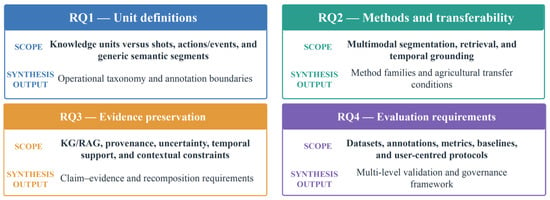
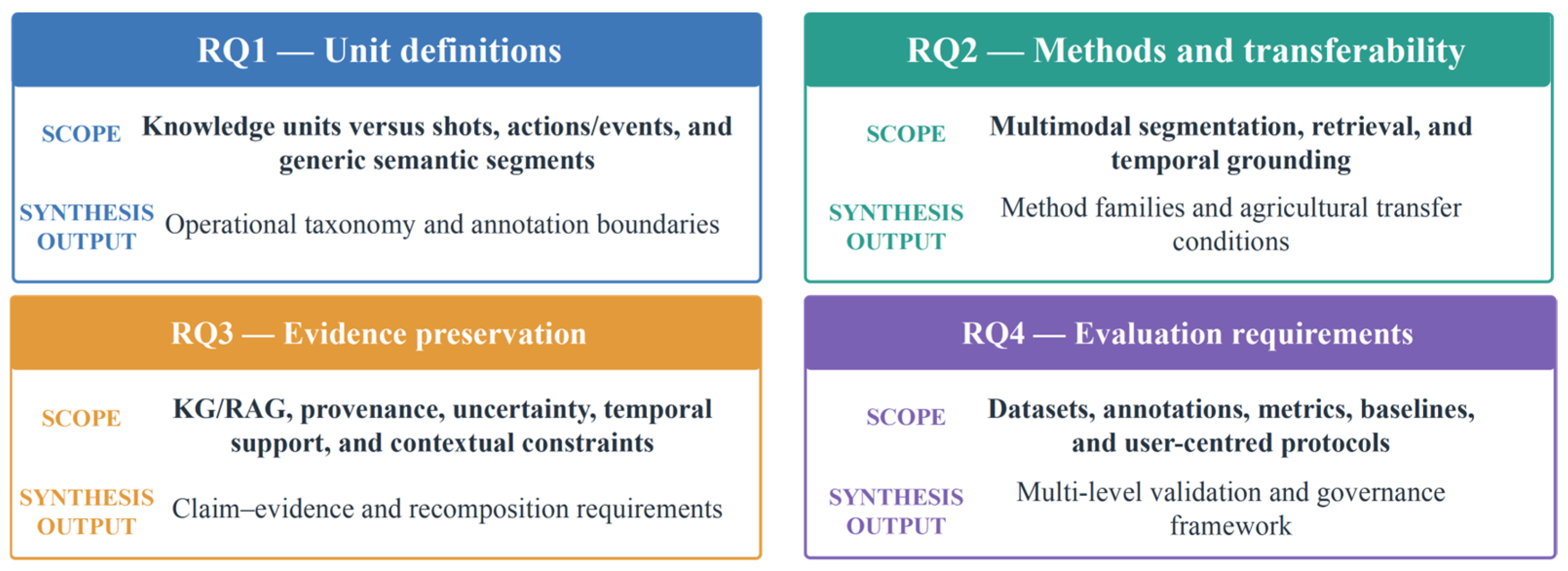
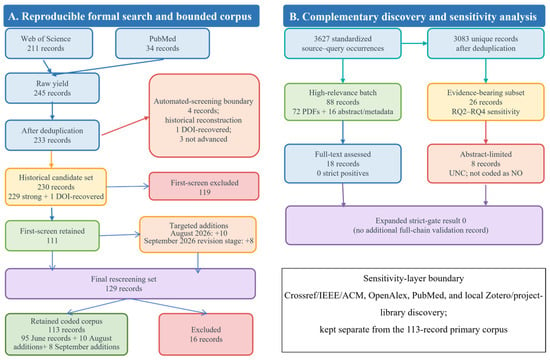
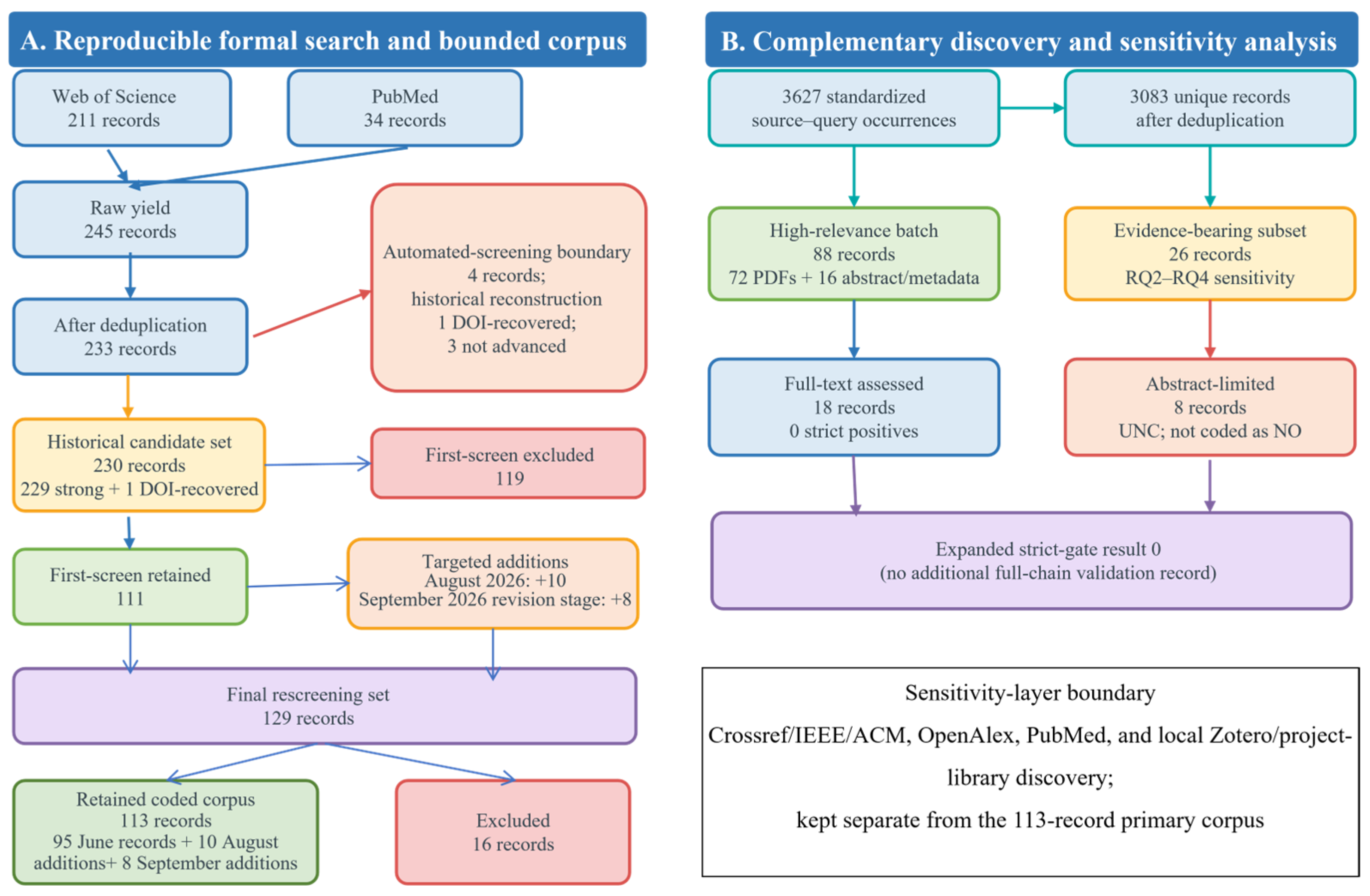
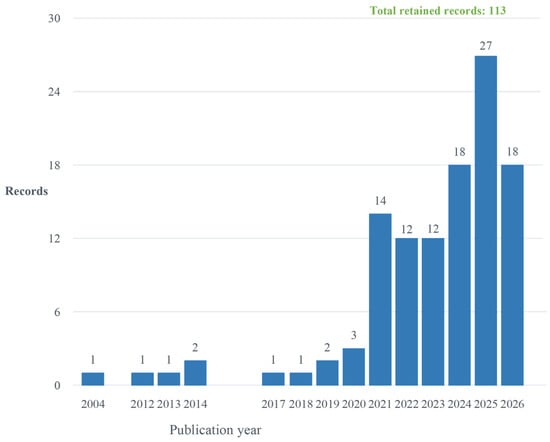
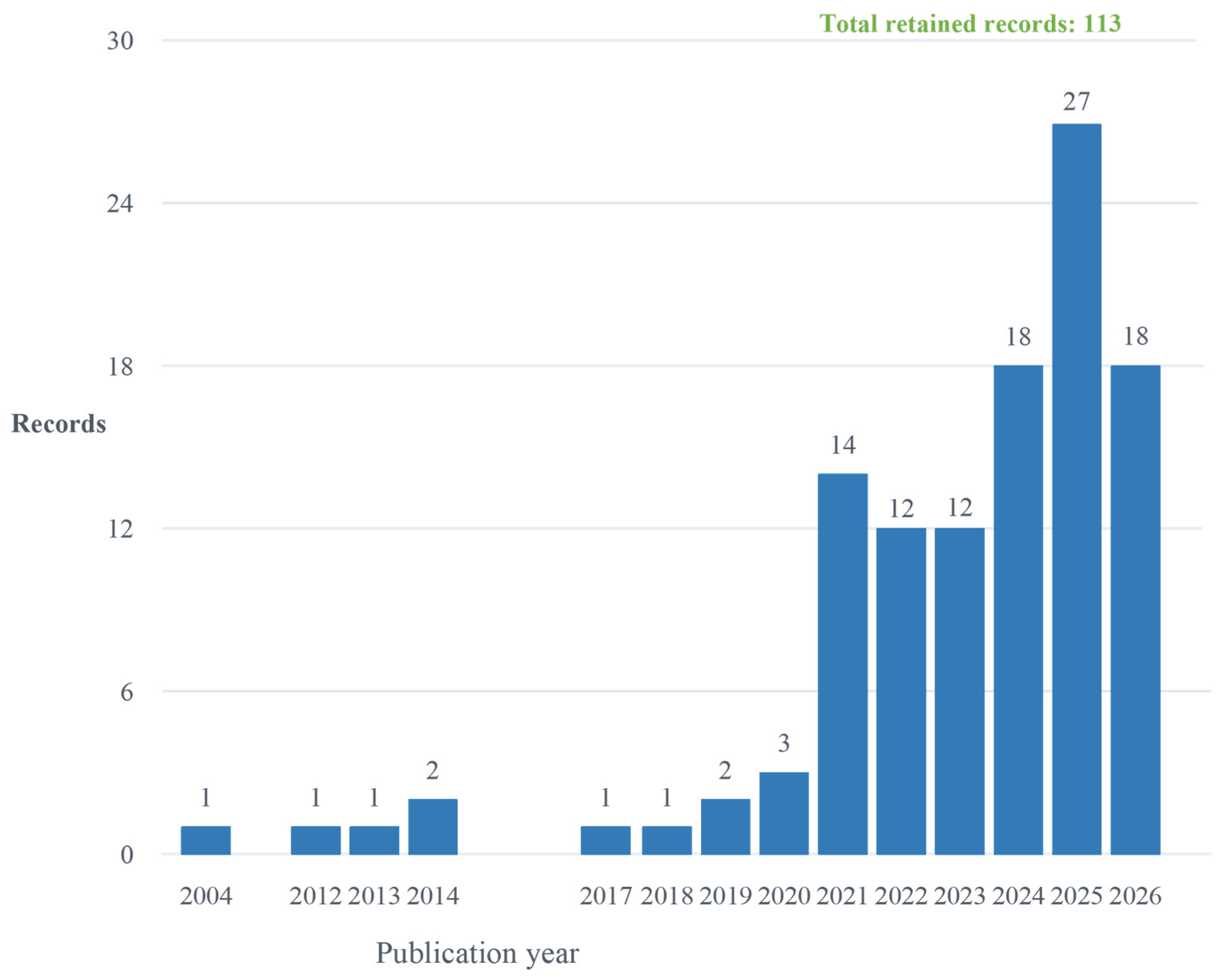
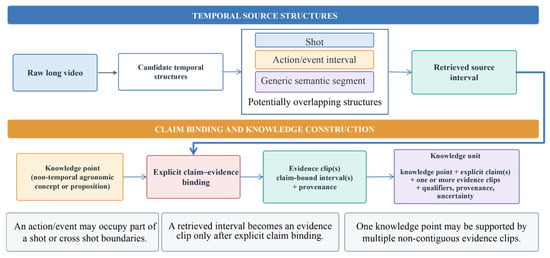
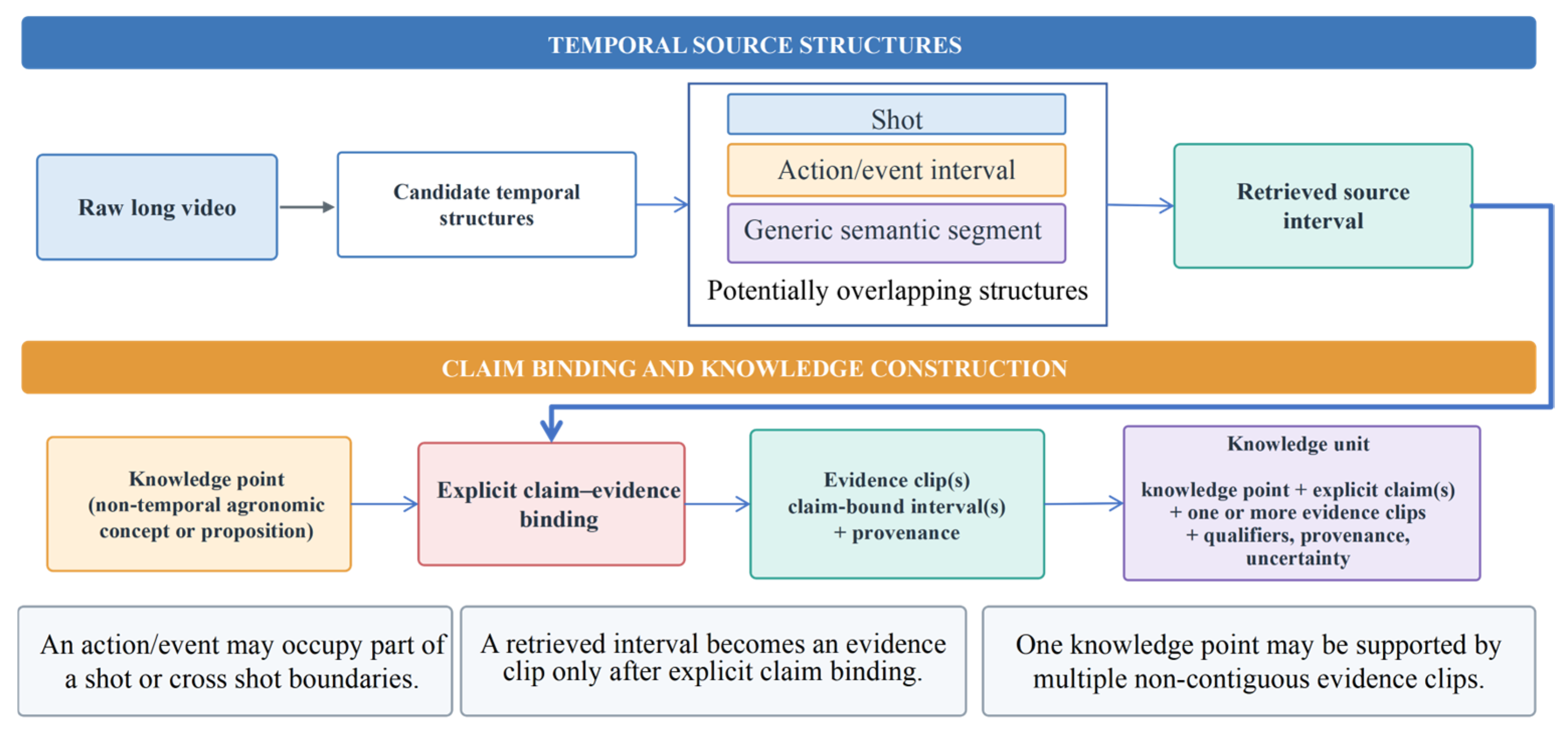
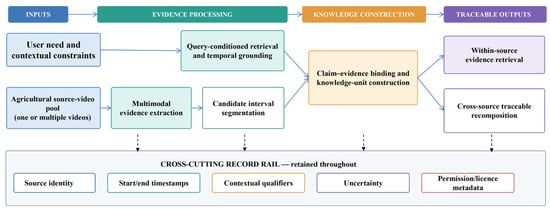
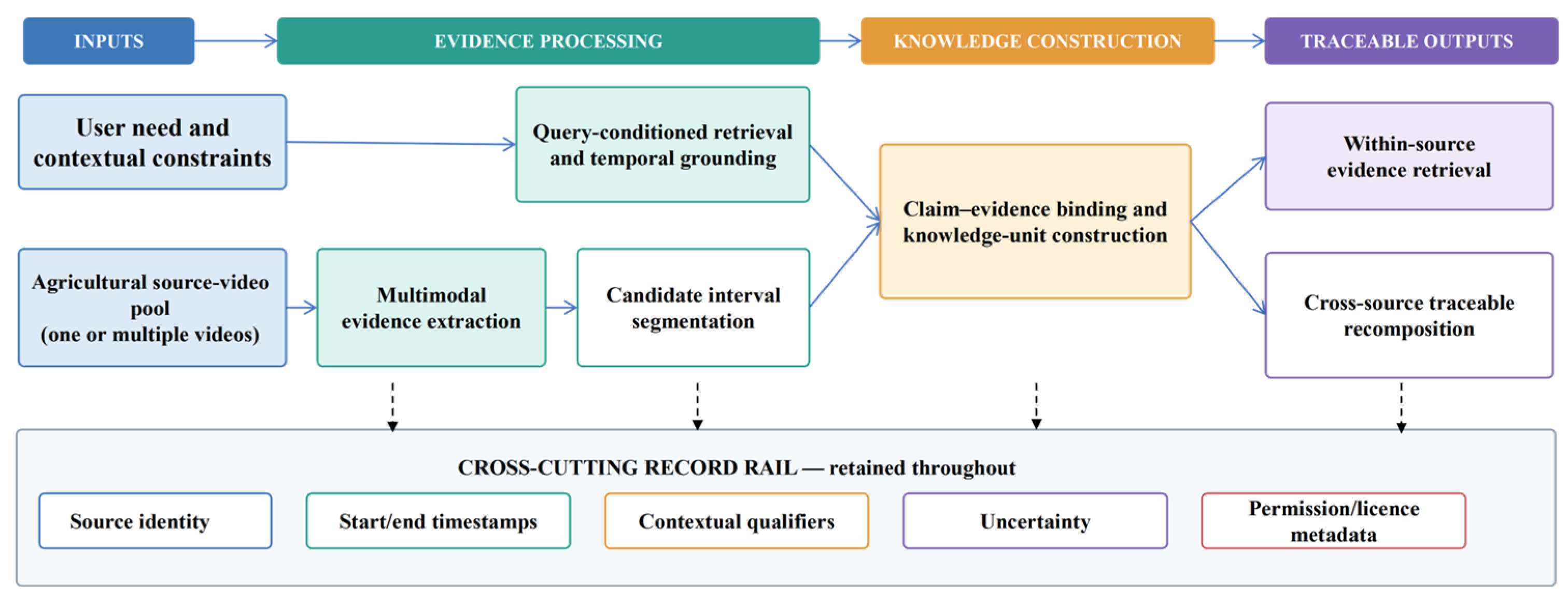
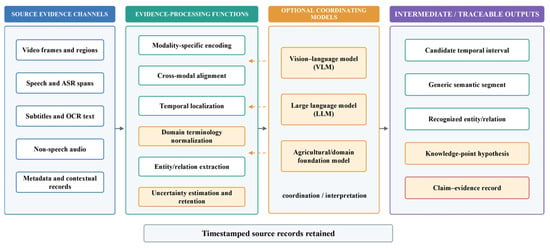
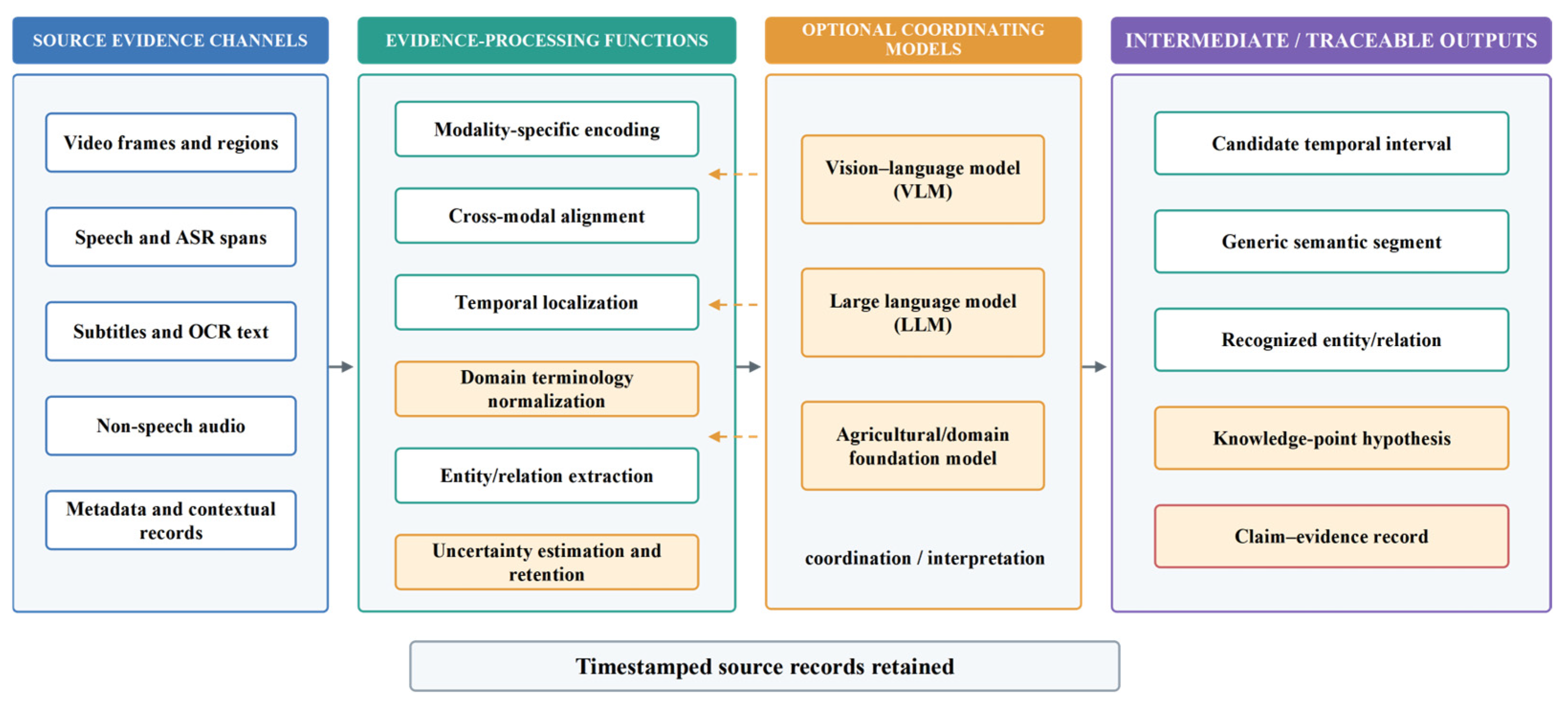
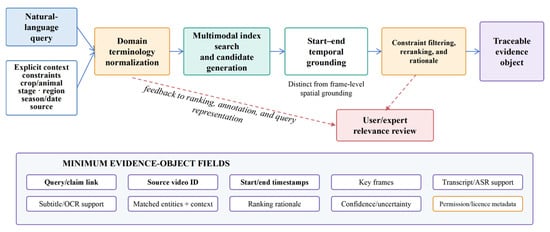
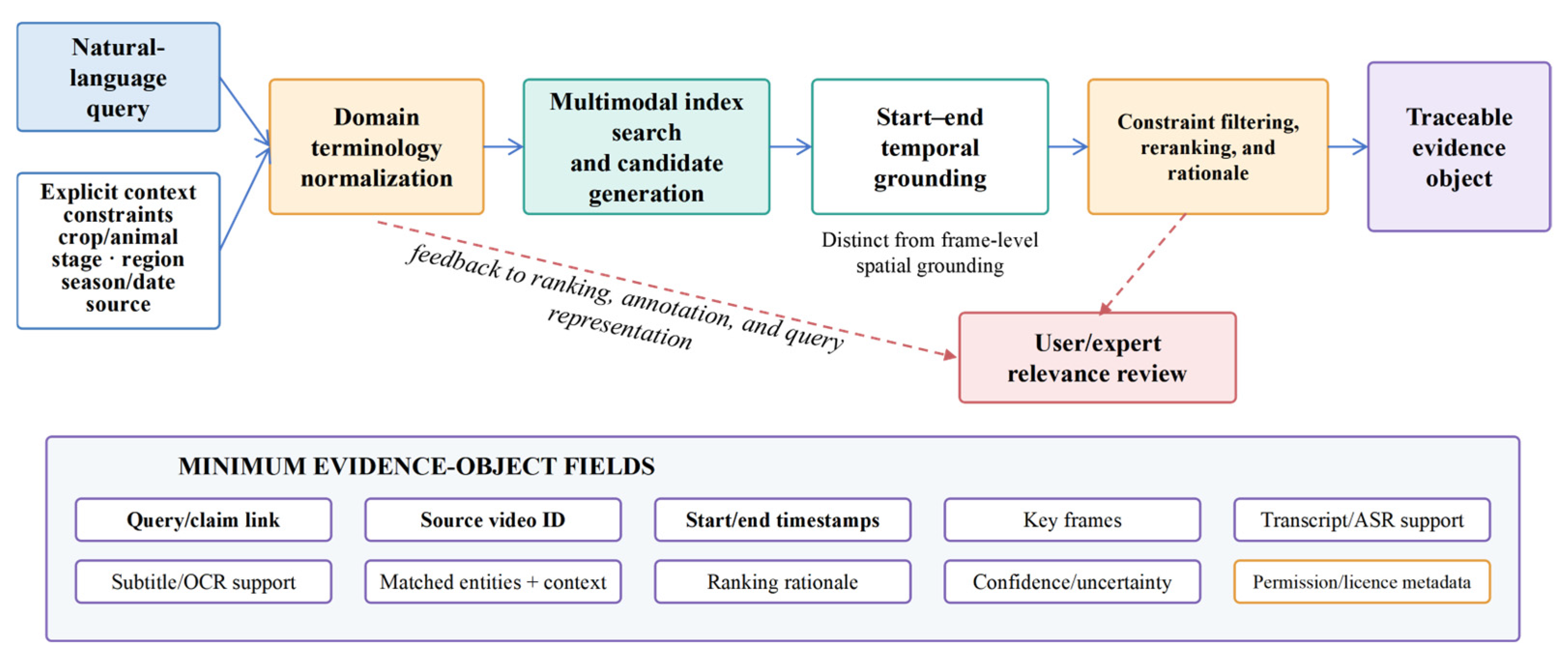
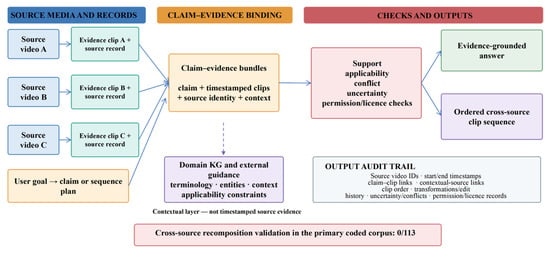
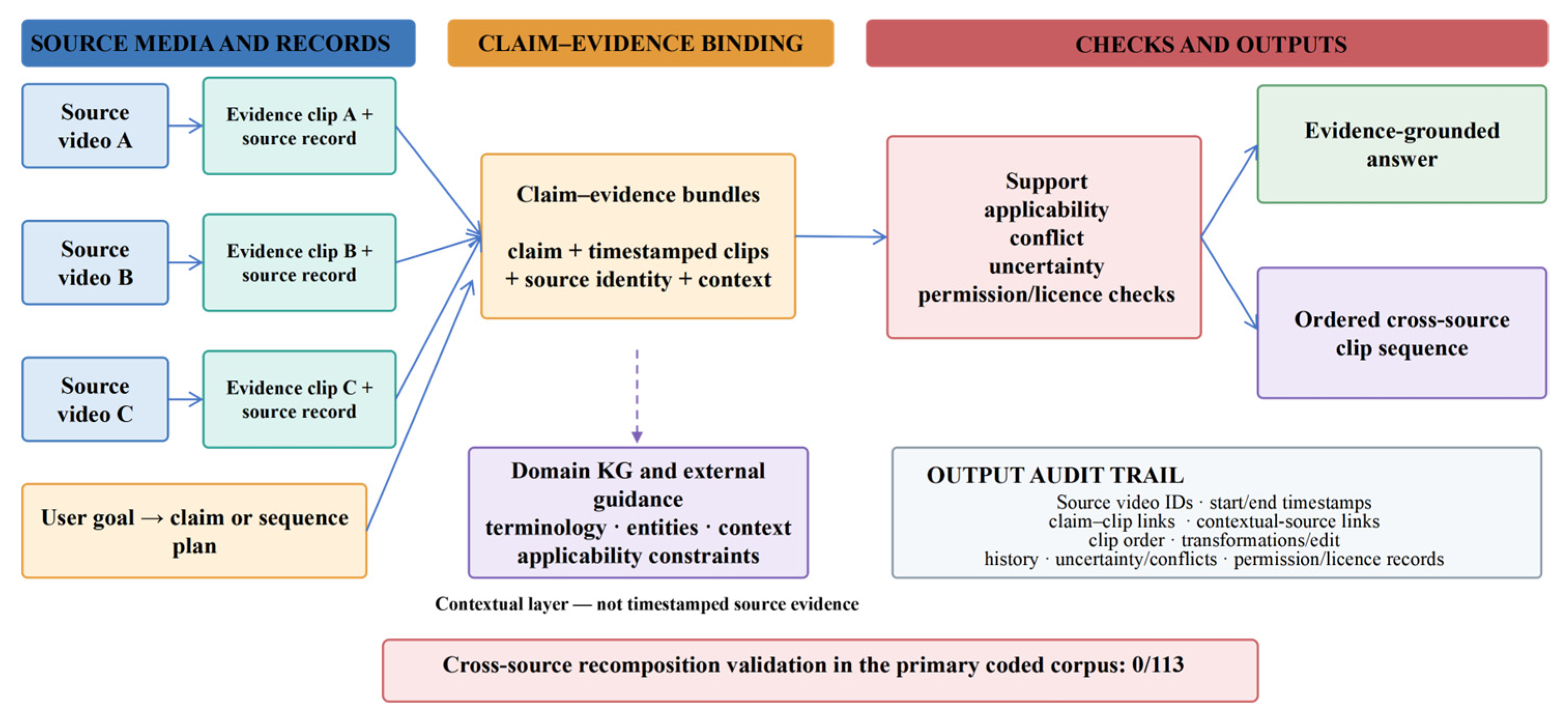
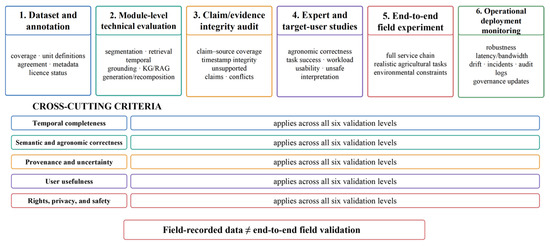
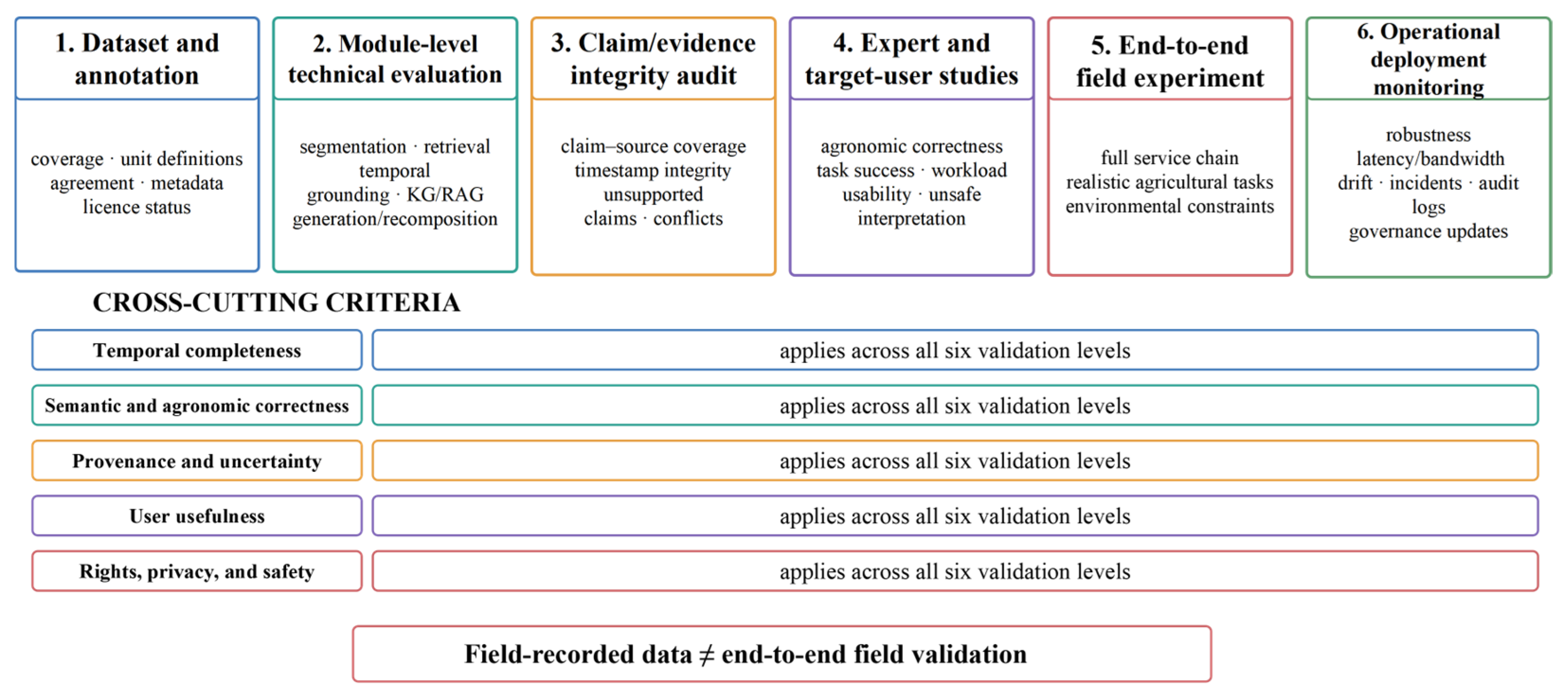

Disclaimer/Publisher’s Note: The statements, opinions and data contained in all publications are solely those of the individual author(s) and contributor(s) and not of MDPI and/or the editor(s). MDPI and/or the editor(s) disclaim responsibility for any injury to people or property resulting from any ideas, methods, instructions or products referred to in the content. |
© 2026 by the authors. Licensee MDPI, Basel, Switzerland. This article is an open access article distributed under the terms and conditions of the Creative Commons Attribution (CC BY) license.