


Abstract
Weak-layer failure plays an important role in layered snow-slab instability, but how loading-angle-induced changes in the balance between normal and shear loading affect damage evolution and failure behavior remains insufficiently understood. Informed by avalanche surveys along highways in Altay, Xinjiang, this study combines laboratory tests with PFC discrete element simulations to examine layered snow-slab responses at selected loading angles between 0° and 180°. The simulations show an asymmetric variation in mechanical response with loading angle. The low-angle conditions (0–45°) exhibit relatively high structural stiffness and load-bearing capacity. Under nominal shear loading at 90°, peak stress decreases to 1710 Pa, with a peak strain of approximately 0.014. Numerical AE events accumulate progressively under low-angle loading and increase more sharply near failure at 90°. At the particle scale, low-angle loading is associated with mixed compression–shear fractures and continued force-chain reorganization, whereas the 90° condition exhibits concentrated fracture activity and rapid degradation of the load-bearing network. These results identify progressive and abrupt instability characteristics under the model and loading conditions examined and provide insight into the influence of loading direction on failure in layered snow.
1. Introduction
Avalanches are among the most destructive geological hazards in alpine regions, characterized by sudden outbursts and high impact energy that frequently cause severe losses to mountain highways and residential settlements [1,2]. In particular, slab avalanches initiate instantaneously through line-release failure along weak interfaces. Owing to their high unpredictability and suddenness, slab avalanches constitute a primary concern for avalanche mitigation. Field surveys along Highways G219, S232 and X852 in Altay, Xinjiang, have documented 90 avalanche sites, some of whose run-out paths extend directly onto road surfaces and pose direct threats to transportation safety. The occurrence of slab avalanches is essentially governed by the instability evolution of layered snow slabs. Therefore, refined research on slab instability mechanisms is of great theoretical significance for clarifying the internal development mechanism of avalanche hazards in alpine regions.
Existing investigations on mechanical properties and instability mechanisms of layered snow are largely based on laboratory shear experiments [3,4,5]. Joshi et al. [6] employed displacement-controlled shear apparatuses to characterise shear mechanical behaviours and failure modes of homogeneous snow. Reiweger et al. [7,8] developed a novel combined compression-shear test apparatus and demonstrated that applied strain concentrates preferentially within weak layers where fractures first emerge. Subsequent work on natural-snow specimens identified the interface adjacent to surface hoar as the dominant site for ice-crystal nucleation and confirmed that strain gradients within weak layers are independent of sample dimensions. Capelli et al. [9] integrated acoustic-emission monitoring to quantify microcrack activities under varied loading angles and clarified damage-evolution mechanisms within snow layers.
Building upon laboratory observations, an increasing number of researchers have adopted discrete-element-method (DEM) numerical simulations [10] to reveal mesoscopic fracture evolution and force-chain reconstruction during slab instability at particle scale. Thornton et al. [11] simulated shear deformation of soft elastic spheres and captured concurrent macroscopic stress responses and internal variable evolution. Gaume et al. [12,13] constructed mixed-mode failure envelopes for different weak-layer types using PFC2D and reproduced crack propagation in saw-cut experiments. Mulak et al. [14] implemented a sintering model to simulate diverse loading rates and reported that both broken bonds within slabs and weak-layer strength decrease with increasing inclination angle. Bobillier et al. [15] utilised PFC3D to quantify contributions of weak layers and overlaying slabs to strength, modulus and size effects of stratified snow under low-angle loading.
Existing studies generally regard shear failure between weak layers and overlying snow slabs as an essential internal condition for slab avalanche initiation. Most previous research focuses on the influences of snow layer intrinsic properties (e.g., density and weak layer type) and external disturbing factors (e.g., temperature and loading). Nevertheless, limited attention has been paid to how variations in stress partitioning induced by altered loading conditions regulate slab instability modes. Changes in loading direction alter the relative contributions of normal and tangential loading in layered snow, but their influence on damage accumulation and instability characteristics requires further investigation.
Informed by field observations of snow stratigraphy, this study adopts an idealized layered snow model and combines laboratory tests with PFC discrete element simulations at selected loading angles between 0° and 180°. Macroscopic stress–strain responses, cumulative numerical AE events, fracture patterns, and force-chain evolution are examined to compare progressive and abrupt instability characteristics under different loading directions. The results provide mechanical insight into damage evolution and instability in layered snow under the investigated conditions and inform further studies of snow instability in mountainous regions.
2. Materials and Methods
2.1. Study Area
2.1.1. Field Avalanche Investigations
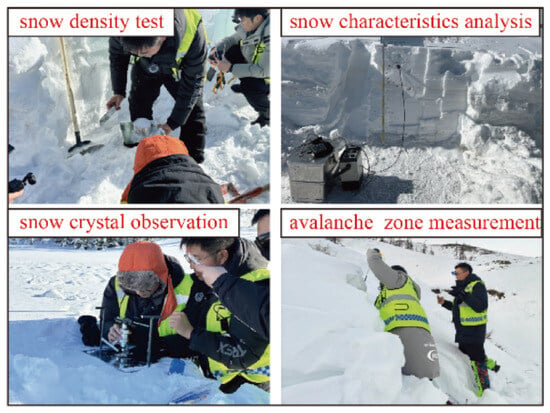
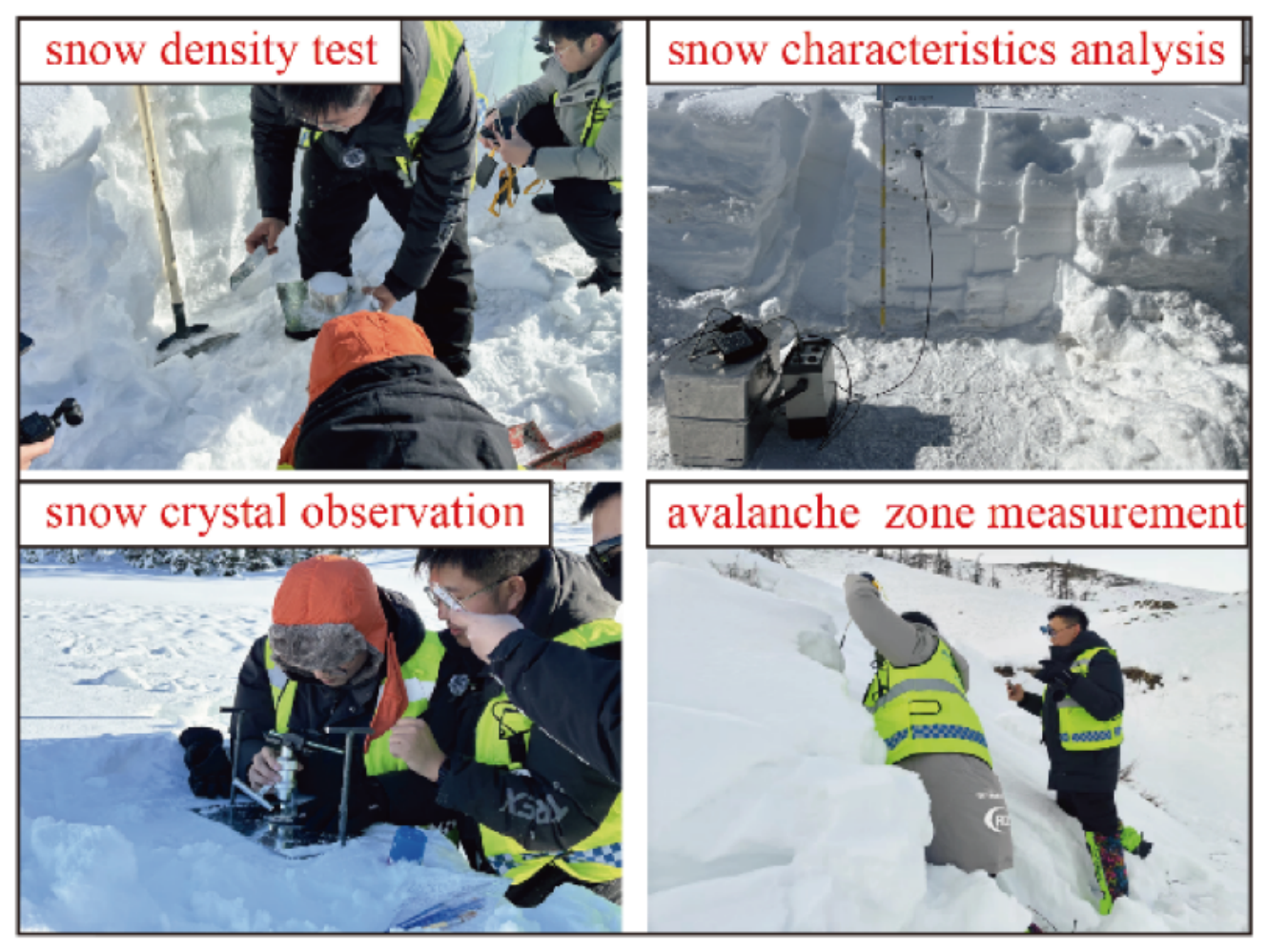
Field investigations were carried out along Highways G219, S232 and X852 in Altay, Xinjiang (Figure 1). Comprehensive physical snow data were acquired through density measurements, stratigraphic analyses, crystal-morphology observations and mapping of avalanche run-out zones. Statistical analyses of avalanche hazards across the Altay region were subsequently performed.
Figure 1.
Avalanche investigation in Altay region.
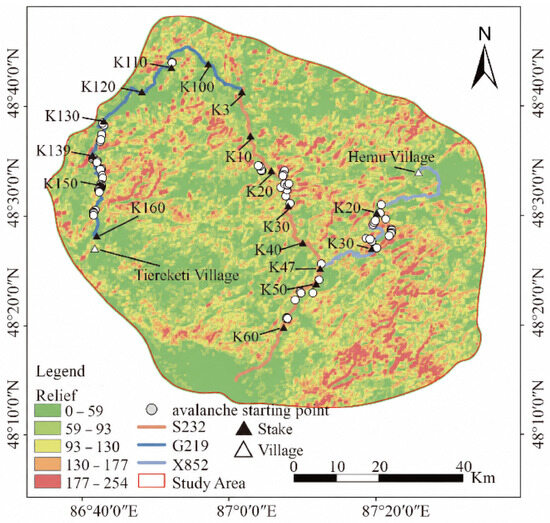
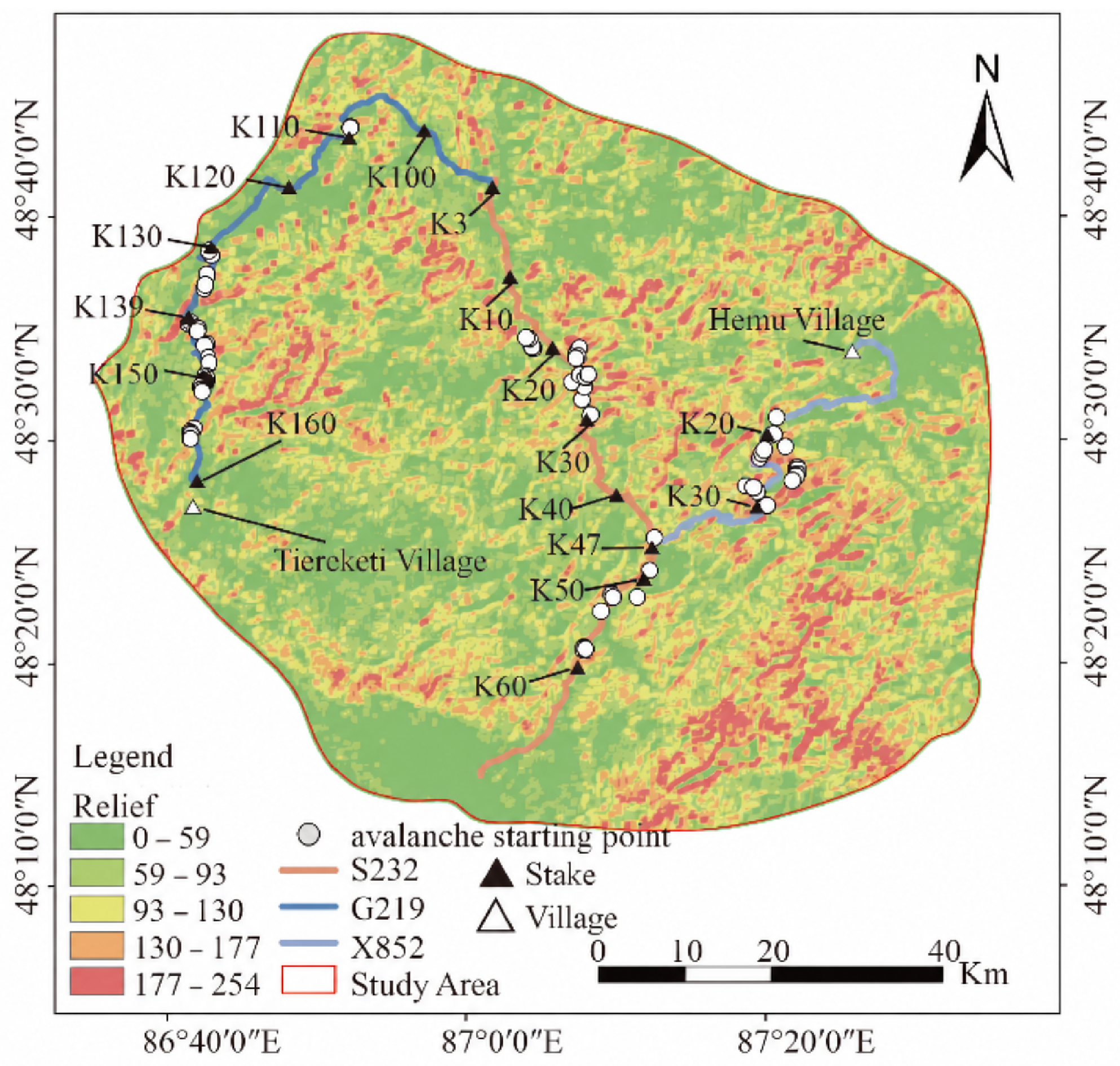
Highway S232 starts at Kanas Lake (K3+000), passes through Jiadengyu (K33+232) and Hemu junction (K47+400), and terminates at the Hailiutan toll station of the Kanas scenic area (K74+000). Highway G219 runs from the vicinity of Kanas Lake (K91+000) to Terek Township (K160+000). Highway X852 connects Hemu Village (K0+000) with the Hemu junction (K47+400). In total, 90 avalanche sites were identified during field surveys; their geographical distribution is shown in Figure 2.
Figure 2.
Distribution map of avalanche hazard sites.
2.1.2. Investigation on Slab-Avalanche Instability Modes
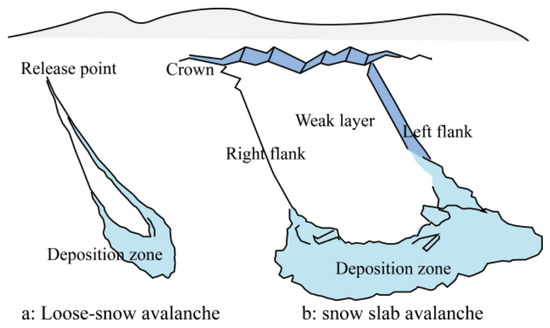
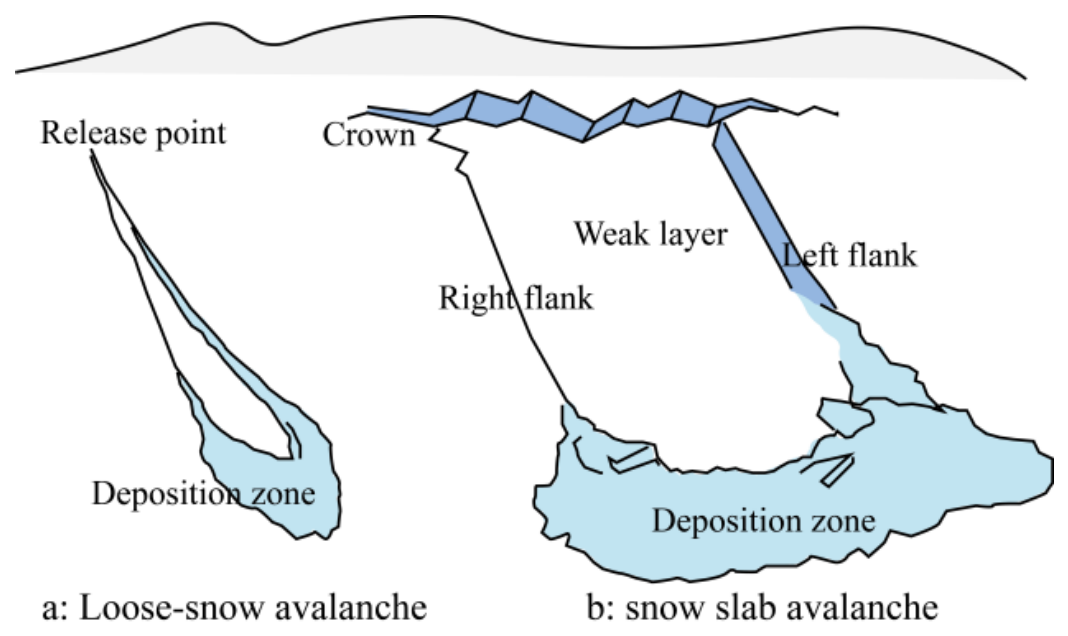
Avalanches can be classified into two release types according to failure patterns: loose-snow avalanches and slab avalanches. Slab avalanches are typically line-release failures, whereas loose-snow avalanches generally initiate as point-release events (Figure 3).
Figure 3.
Schematic diagram of loose-snow avalanche and slab avalanche.
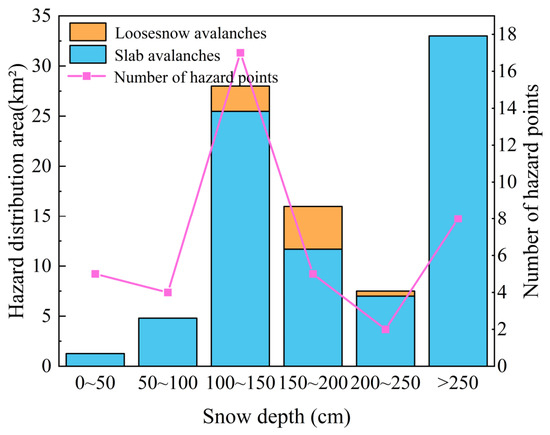
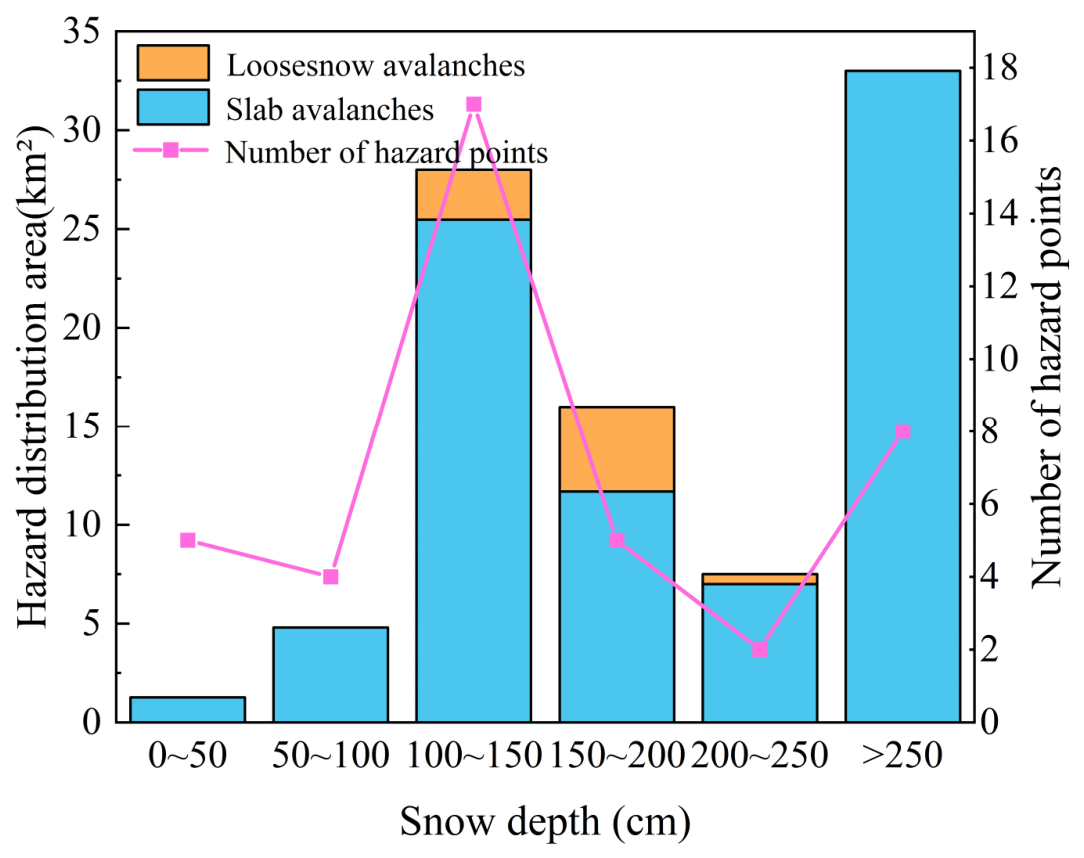
The 90 surveyed avalanche sites were grouped into six snow-depth intervals: 0–50, 50–100, 100–150, 150–200, 200–250, and >250 cm. The number of sites and the distribution of avalanche types were examined within each interval (Figure 4). Among the surveyed sites, slab avalanches predominated in the 0–150 cm intervals, whereas all records in the >250 cm interval were loose-snow avalanches. Loose-snow avalanches were mainly recorded in the 100–200 cm and >250 cm intervals. These results describe the distribution of snow depths and avalanche types within the surveyed sample; the observed patterns may also reflect the combined influence of slope inclination and other terrain and snowpack conditions. Based on the layered snow structures identified in the survey, an idealized model comprising a snow-slab layer and a weak layer was constructed to investigate the mechanical response and instability of layered snow under different loading directions.
Figure 4.
Numbers and types of surveyed avalanche sites within different snow-depth intervals.
2.2. Experiments for Stratified Snow Slabs
2.2.1. Layered Snow-Slab Model
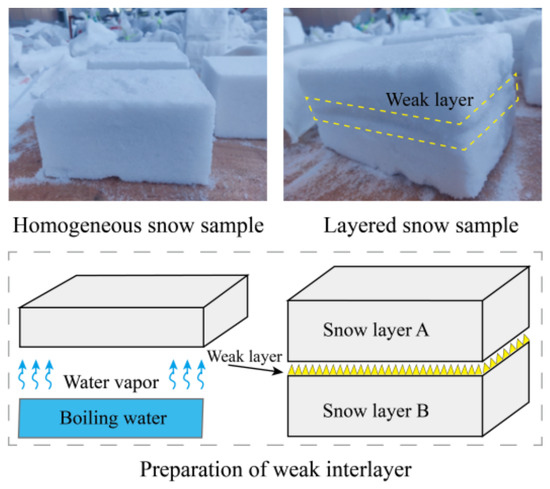
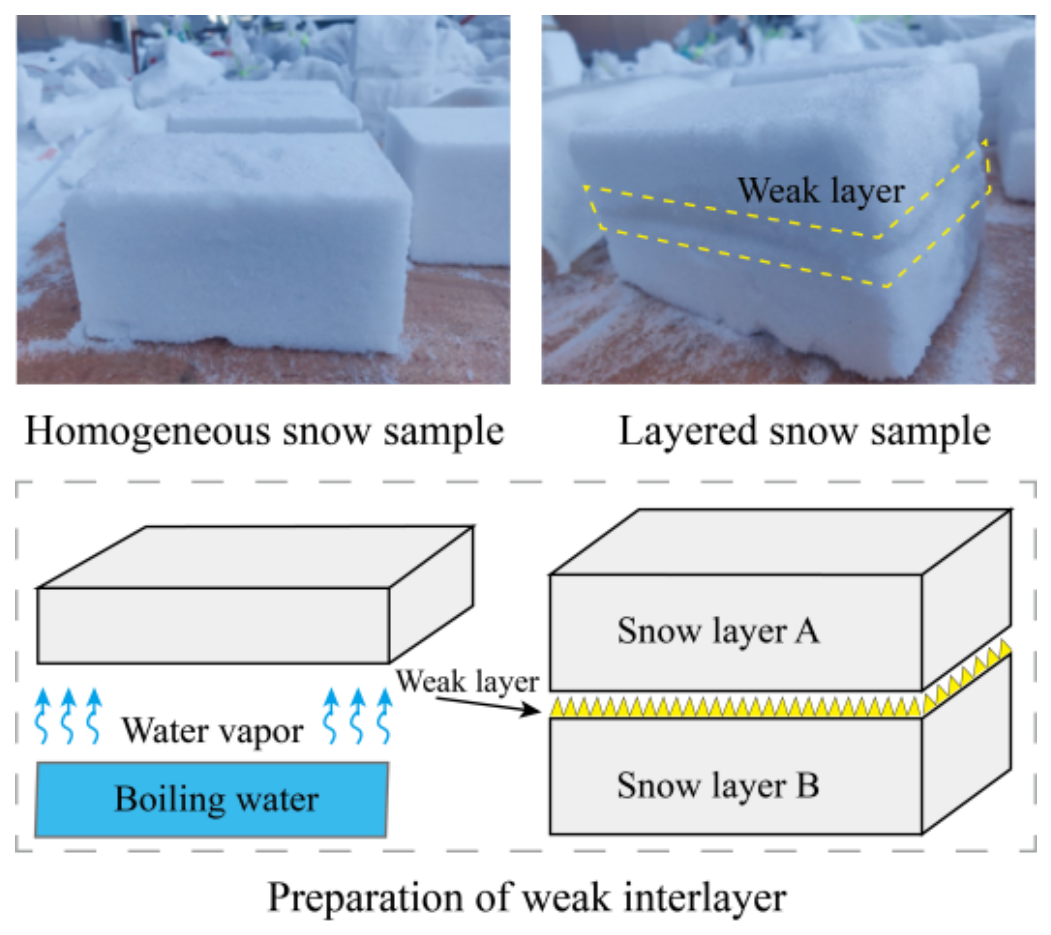
Undisturbed natural in situ snow slabs cannot be directly obtained under laboratory constraints. Fresh undisturbed dry snow collected under low-temperature conditions was therefore adopted as raw material (moisture content is extremely low and its influence is negligible). The snow was sieved through a 2 mm mesh, lightly compacted and placed into standard containers. Snow mechanical properties are highly density-dependent. Referring to the measured density of 319 kg/m3 for a slab-avalanche site at K139+150 along Highway G219 and the reported density range of 0.089–0.55 g/cm3, sample density was fixed at 300 kg/m3. Previous studies have demonstrated that failure within weak layers constitutes a critical trigger for avalanche initiation. Following the procedure proposed by Reiweger et al. [8], structural weak layers were produced: ice crystals were formed via water-vapour deposition on the snow surface under low-temperature conditions for 15 s, followed by overlaying a homogeneous snow layer and isothermal sintering for 24 h (Figure 5). Detailed sample parameters are summarised in Table 1.
Figure 5.
Schematic diagram of layered snow sample.
Table 1.
Physical Properties of Stratified Snow Specimens.
2.2.2. Physical Tests
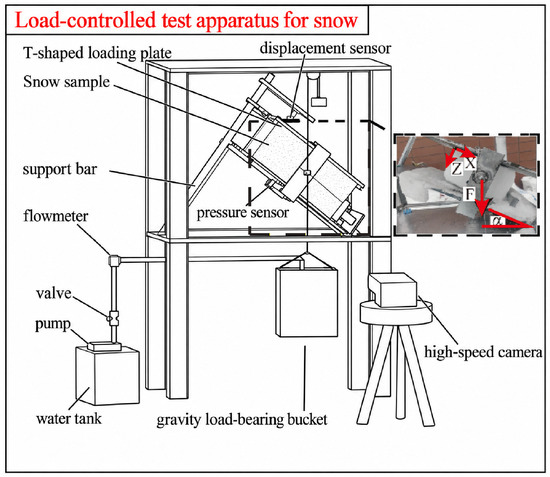
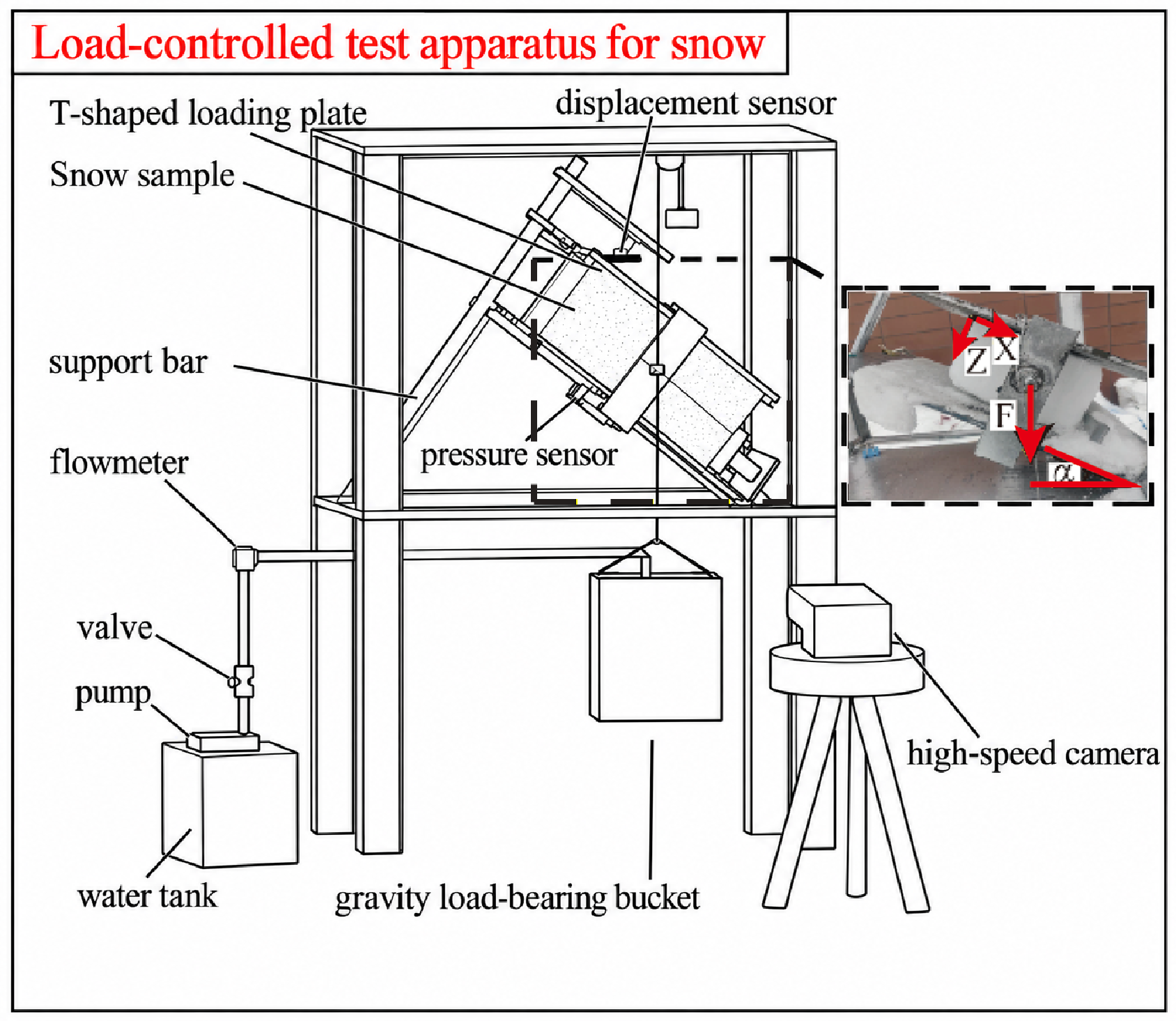
Field avalanches erupt instantaneously and their full processes are difficult to reproduce, so in situ internal stress and deformation evolution within snow cannot be directly measured. To reveal mechanical responses and failure mechanisms of stratified snow slabs in alpine Xinjiang, an inclination-adjustable shear-test apparatus for snow slabs was developed (Figure 6). The apparatus consists of loading and monitoring modules. The loading angle describes the direction of the externally applied load, with 0°, 90°, and 180° corresponding to nominal compression, shear, and tension, respectively. The loading system applies loads via a T-shaped loading plate driven by a gravity-loaded bucket controlled by a variable-flow water pump, and supporting struts enable adjustment of loading inclination angles. The monitoring system integrates a CR6 multi-channel data logger (Campbell Scientific, Inc., Logan, UT, USA), pressure transducers, digital dial gauges and a 210 fps high-speed camera to synchronously record force, deformation and fracture patterns of snow specimens. Specimen dimensions and layer parameters are listed in Table 1. Stresses calculated from the externally applied load are nominal stresses, and their peak values represent the load-bearing capacity under the specified loading and support conditions. The loading plate and support boundaries may produce nonuniform stress distributions within the specimen; these peak values are therefore not treated as intrinsic strength parameters of natural snow.
Figure 6.
Schematic of the inclination-adjustable, load-controlled snow testing apparatus.
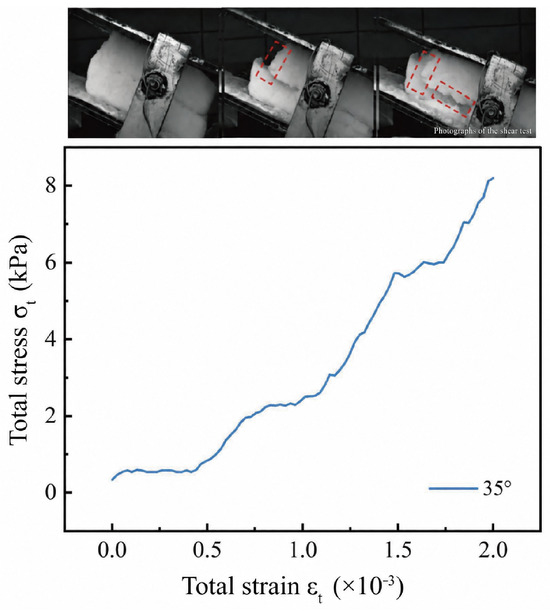
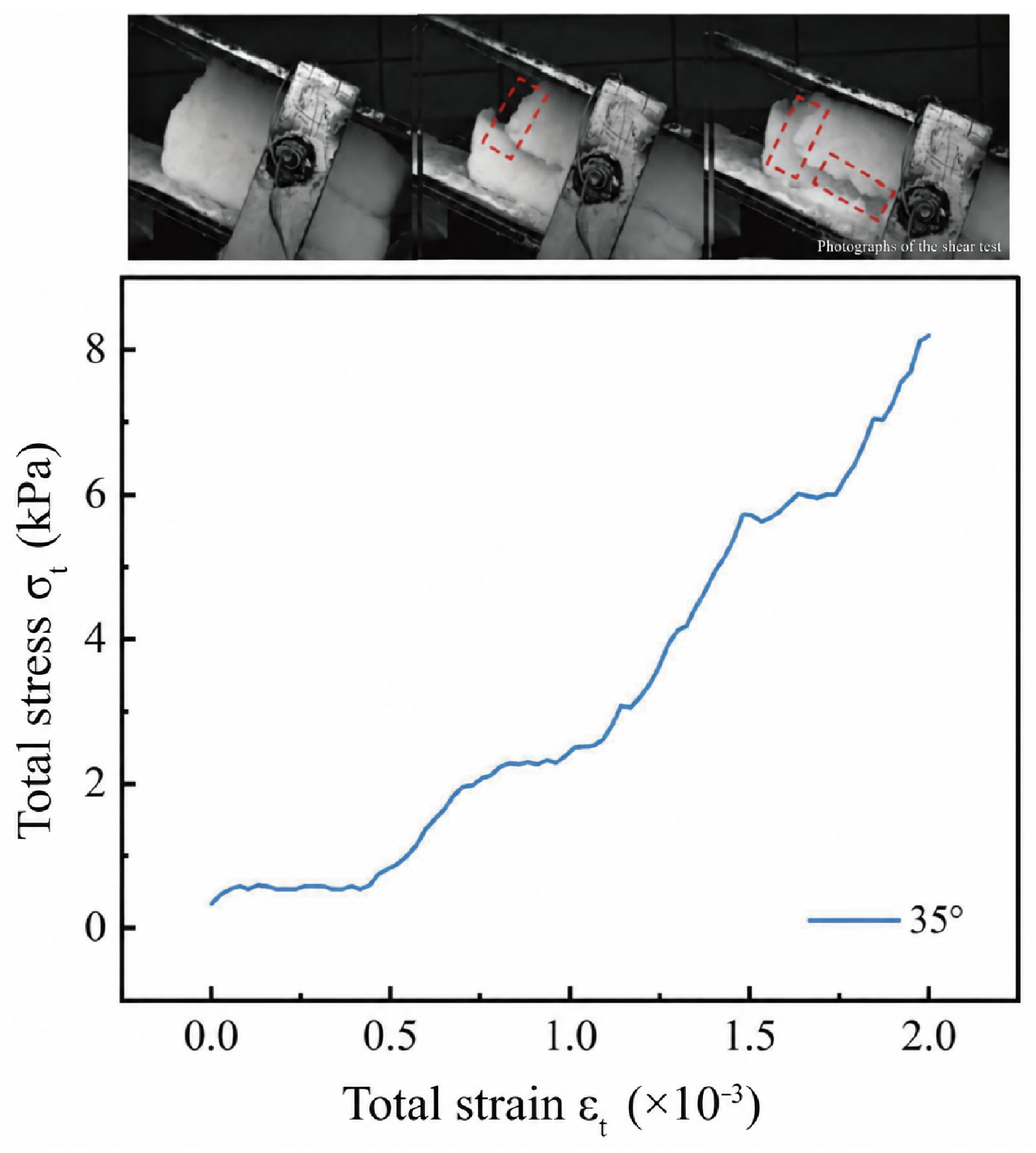
The laboratory experiments provided stress–strain responses of layered snow specimens at different loading angles. Figure 7 illustrates the macroscopic mechanical behavior at 35°. Experimental results for the other loading conditions were also used for comparison with the numerical simulations, as presented in the following sections.
Figure 7.
Stress—strain curves of layered snow sample under 35° inclination angle.
Its overall trend is consistent with experimental results for steep-angle snow reported by Reiweger et al. Failure observations show that instability initiates as shear dislocation inside the weak layer, which triggers sliding of overlying snow and eventually leads to through-going failure and complete loss of bearing capacity, representing a typical shear-dominated failure mode. Local fluctuations in the experimental curves may reflect loading disturbances, specimen heterogeneity, and measurement effects; the available records are insufficient to distinguish their individual contributions. Stress–strain curves obtained at different angles serve as reference benchmarks to reduce numerical-simulation errors.
2.2.3. Numerical Simulations
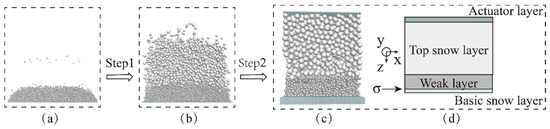
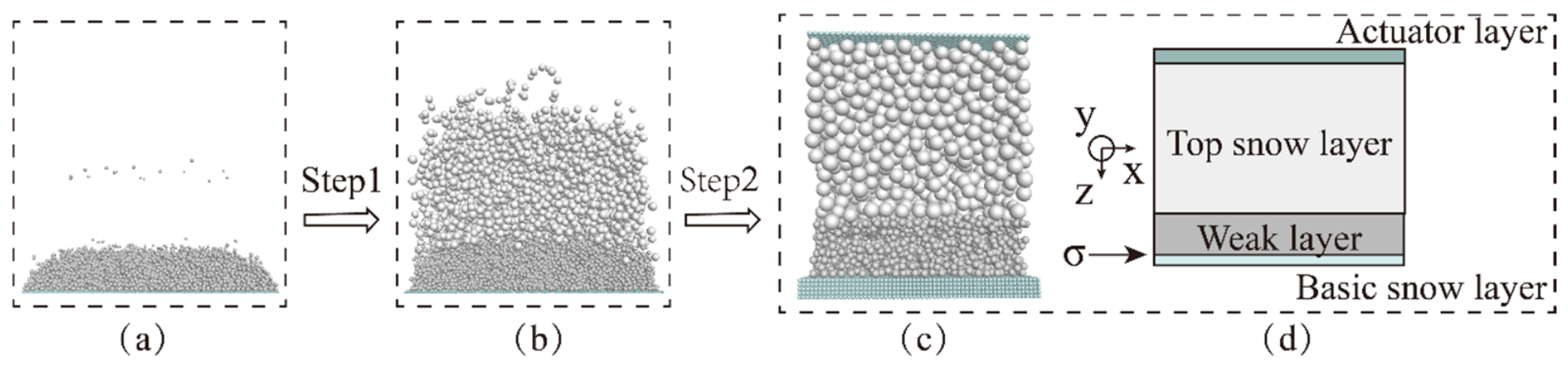
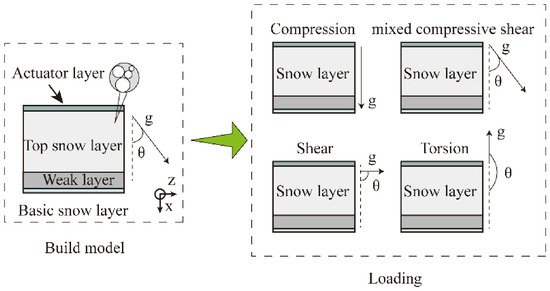
The numerical-modelling workflow for stratified snow samples is illustrated in Figure 8. Following the established modelling framework for layered snow [15], specimens were generated in an enlarged dimension and then trimmed to eliminate side-wall boundary packing effects; side walls were subsequently removed to achieve boundary-free loading conditions. Different from conventional rigid-cluster loading approaches, this study innovatively installs an actuator layer composed of deformable particles (blue particles in subplot d) atop the snow slab. Prescribed loads and deformations for multiple loading scenarios are realised through mechanical governing equations. The complete three-dimensional model comprises a base substrate, a weak layer, a snow-slab layer and an actuator layer.
Figure 8.
Preliminary modelling workflow for layered snow sample: (a) weak-layer generation; (b) snow-slab deposition; (c) specimen trimming; (d) final model configuration with an actuator layer.
The weak layer was generated using the ballistic deposition method [16], with a target porosity of 80% and particle radii of 5 ± 0.1 mm. The snow-slab layer was constructed using the cohesion-free ballistic deposition method [17], with a target porosity of 55% and particle radii of 10 ± 0.1 mm. The base layer consisted of a single layer of spherical particles with a radius of 2.5 mm. These values represent numerical particle radii and are not directly equivalent to snow-grain sizes in the physical specimens. The representative density of the numerical weak layer was set to 110 kg/m3 as a model input.
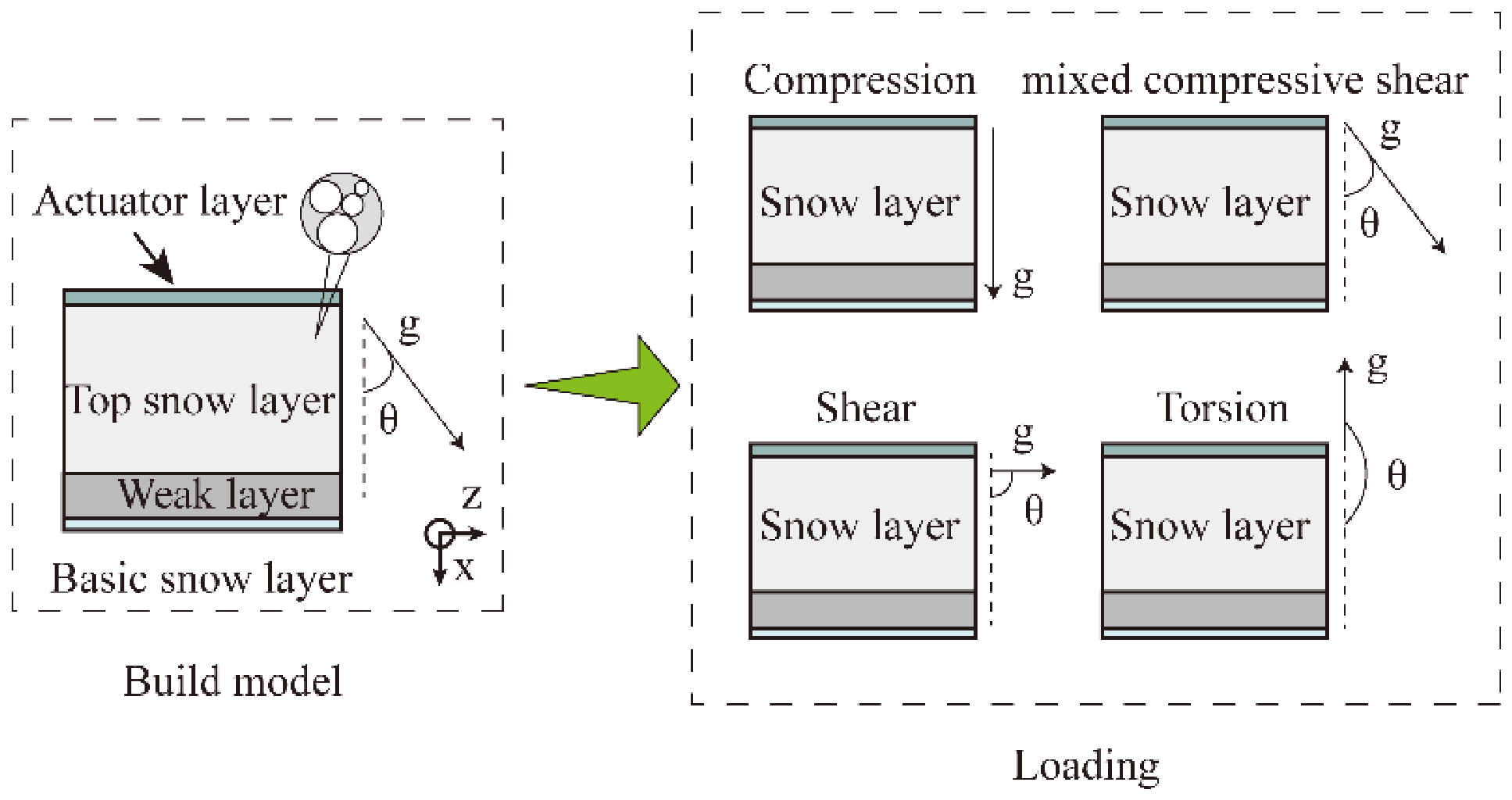
After specimen generation, different loading conditions were imposed by changing the gravity direction, and fracture events and the associated numerical acoustic emission information were recorded during the simulations [18]. Servo-controlled pre-loading stabilised the specimen at the target inclination angle. Upon mechanical equilibrium, loads were applied at a constant rate by the upper actuator layer (Figure 9). A uniform loading rate of 168 Pa/s was applied until specimen failure. Peak strength was defined as the maximum stress attained during the late elastic stage. Calculations were terminated when strain reached 0.04 and structural bearing capacity was exhausted.
Figure 9.
Schematic diagram of snow sample loading process.
A moment-tensor-based numerical acoustic emission method was used to analyze fracture activity in the layered snow specimens [19]. Interparticle bond breakage induces changes in the surrounding contact forces. Moment tensors were calculated from these force changes and the positions of the contact points relative to the event center to characterize the sources of fracture events [20,21]. The evolution of cumulative numerical AE events during loading was used to compare the stages at which fracture activity occurred and its degree of concentration across loading angles. All AE events reported here were obtained from numerical simulations; no physical AE monitoring was conducted in the laboratory experiments.
2.2.4. Parameter Calibration
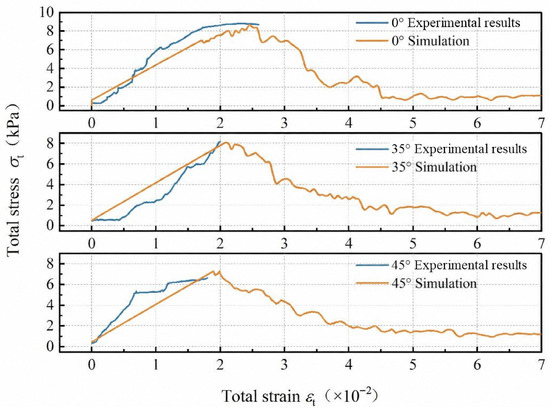
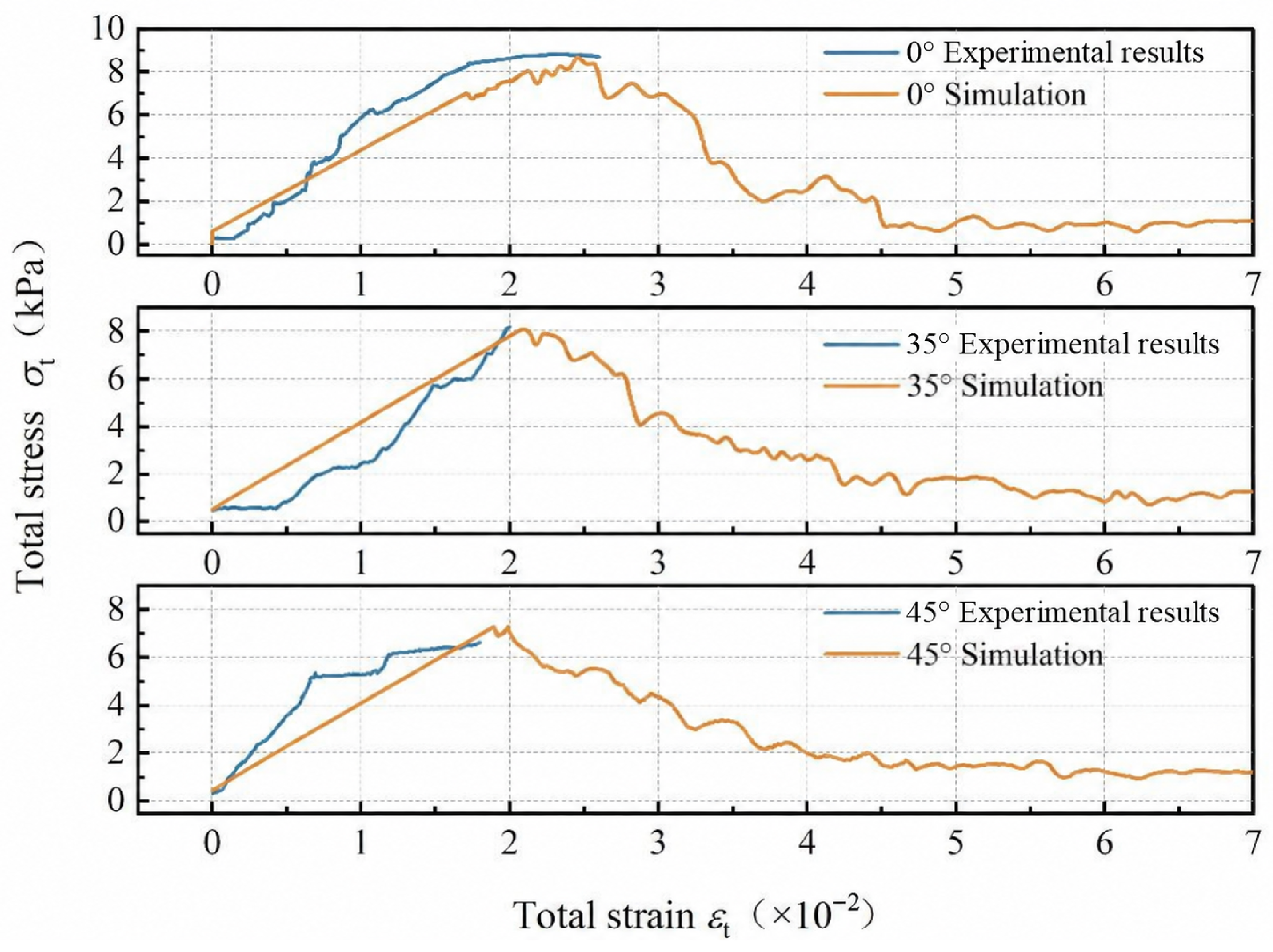
Experimental stress–strain responses at multiple loading angles were used jointly to constrain and determine a single set of discrete element model parameters. The snow-particle friction coefficient was set to 0.5 [22]. Calibration followed a stepwise trial-and-error procedure: elastic parameters were first adjusted to match the initial deformation responses across the calibration conditions, followed by adjustment of bond parameters to match the peak load-bearing capacities. Figure 10 compares simulated and experimental curves for representative loading conditions. The final parameters, listed in Table 2, were held fixed for all loading conditions; material and contact parameters were not readjusted for individual angles.
Figure 10.
Calibration results under different loading angles.
Table 2.
Discrete element simulation parameters (used for all loading conditions).
2.2.5. Comparison of Simulated and Experimental Failure Patterns
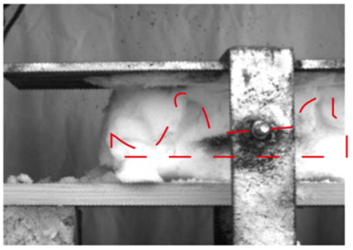
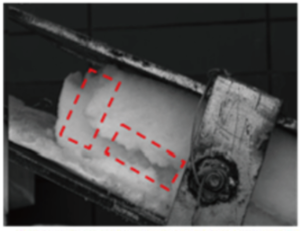
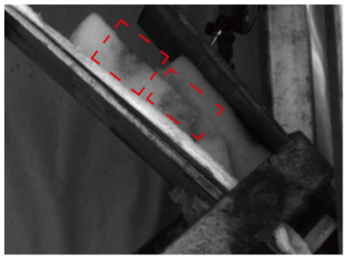
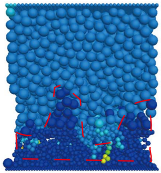
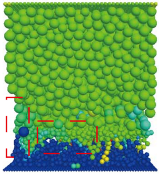
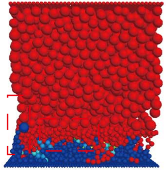
Damage patterns from numerical simulations and laboratory experiments for 0°, 35° and 45° loading angles were compared with respect to the evolution of weak layers and overlying snow slabs, showing high consistency. Under 0° loading, the specimen undergoes overall vertical movement; particle velocities within the weak layer diverge outward and local dilatancy occurs. At 45°, particle displacements evolve gently with minimal internal disturbance. Deformation behaviours at 35° are intermediate: displacements propagate downwards, are obstructed at the weak layer and trigger fracture initiation.
For the three loading conditions, the simulated particle motions, weak-layer cracking, and dilation were broadly consistent with the experimental observations, providing supplementary support for the model’s ability to reproduce the main failure features. Table 3 shows the specimen configurations after loading, in which the visible gaps reflect both the initially porous particle structure and local separation associated with deformation and failure. The model represents an idealized porous weak layer rather than the pore geometry or temperature-driven metamorphic processes of natural snow.
Table 3.
Comparison of sample damage patterns at different angles.
2.2.6. Test Scheme
The numerical model had initial cross-sectional dimensions of 200 mm × 200 mm. After equilibration under preload, the particle assembly was loaded at different angles at a prescribed stress rate of 168 Pa/s. The same material and contact parameters listed in Table 4 were used for all loading conditions, without angle-specific recalibration. Seven cases (0°, 15°, 35°, 45°, 70°, 90°, and 180°) were selected to compare macroscopic responses and particle-scale evolution under different combinations of normal and tangential loading. The loading angle specifies the direction of external loading: 0°, 90°, and 180° correspond to nominal compression, shear, and tension, respectively. This classification does not imply that the corresponding single stress state exists throughout the weak layer.
Table 4.
Test scheme.
3. Results
The results compare the responses of the idealized layered snow model at selected loading angles between 0° and 180°. Macroscopic mechanical responses, cumulative numerical AE events, fracture patterns, and force-chain evolution are considered together to characterize differences in instability behavior under the prescribed loading conditions.
3.1. Mechanical Properties of Stratified Snow Slabs Under Different Angles
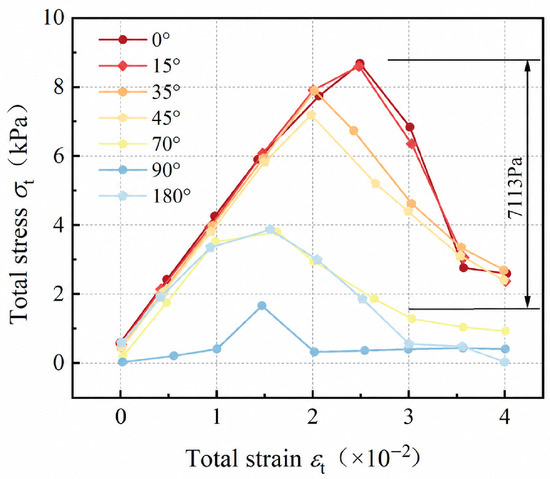
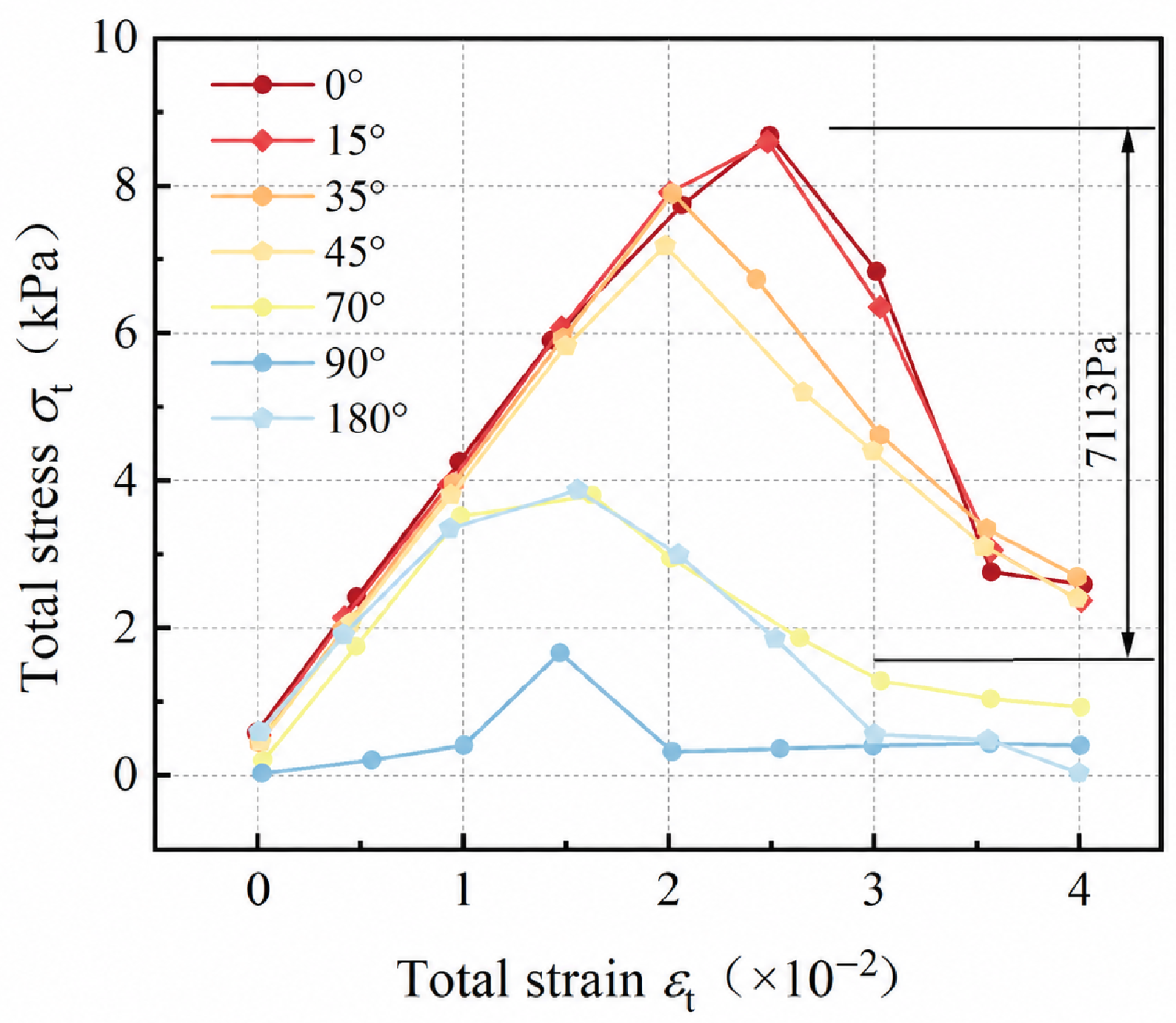
The stress–strain responses of layered snow slabs under different loading angles indicate that the stiffness and strength of snow slabs do not decay linearly with increasing loading angle but present significant angle-partitioned anisotropic characteristics (Figure 11). In the low-angle compression-shear coupling regime of 0–45°, the combined action of normal pressure and shear load produces a steeper linear segment of stress–strain curves, endowing the slabs with higher elastic modulus and structural stiffness compared with moderate and high-angle loading conditions. The peak stress in this regime remains stable at approximately 8.3 kPa with low data dispersion, reflecting reliable bearing and deformation resistance of the snow structure.
Figure 11.
Stress–Strain Response Under Various Loading Angles.
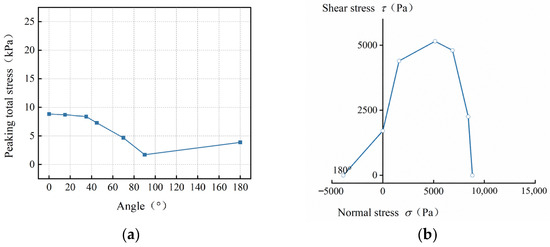
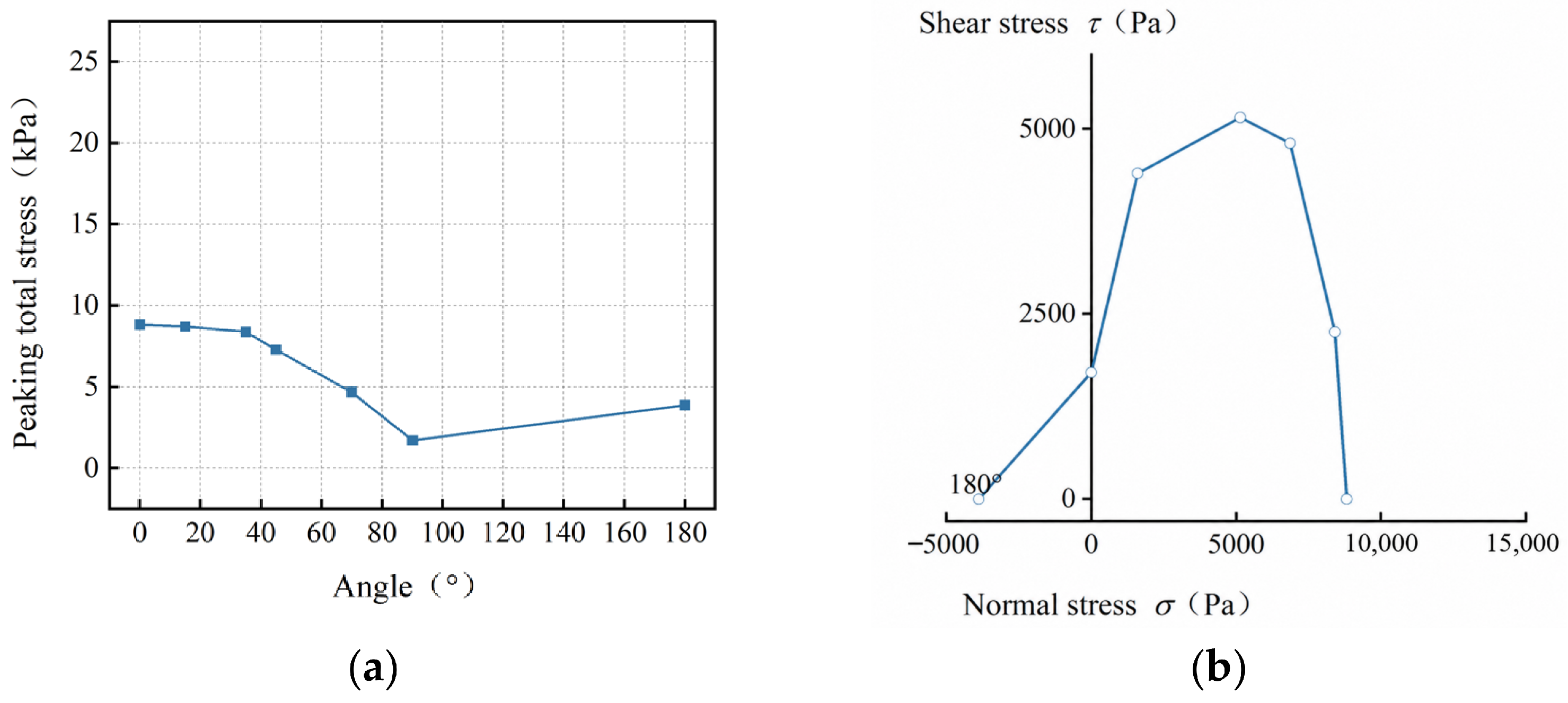
Peak stress varied asymmetrically with loading angle (Figure 12). Among the simulated conditions, nominal compression at 0° produced the highest peak stress, 8823 Pa, while nominal shear at 90° produced the lowest, 1710 Pa. Peak stress increased to 3880 Pa under nominal tension at 180°. Under 90° loading, the peak stress is reached at a strain of approximately 0.014, followed by a marked stress drop. Compared with the more progressive response at low loading angles, the 90° condition exhibited a more abrupt macroscopic loss of load-bearing capacity. These observations describe differences among the simulated cases and do not establish a continuous transition or a universal critical loading angle. The stress–strain curves at 70° and 180° show comparable pre-peak responses and peak stresses, followed by different post-peak softening trends. At a strain of approximately 0.04, the stress at 180° decreases to nearly zero, whereas that at 70° remains approximately 1 kPa.
Figure 12.
Peak stress and failure envelope at different angles. (a) Peak stress-angle diagram. (b) Failure envelope at different angles.
3.2. Evolution of Cumulative Numerical AE Events and Fracture Characteristics of Layered Snow
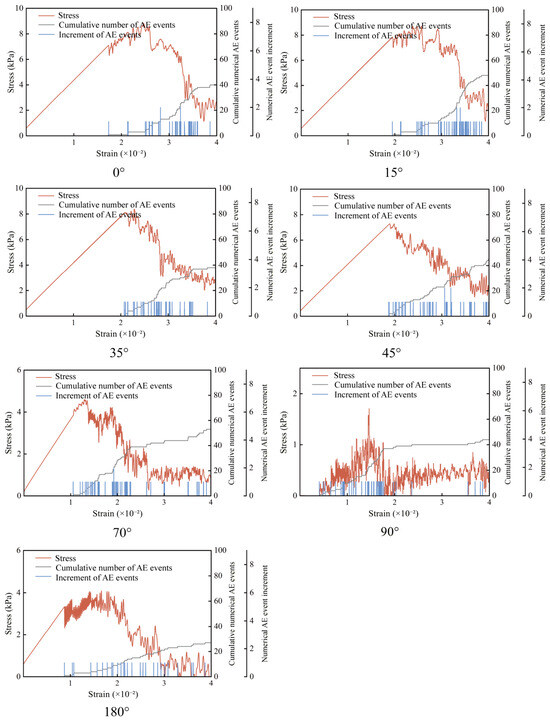
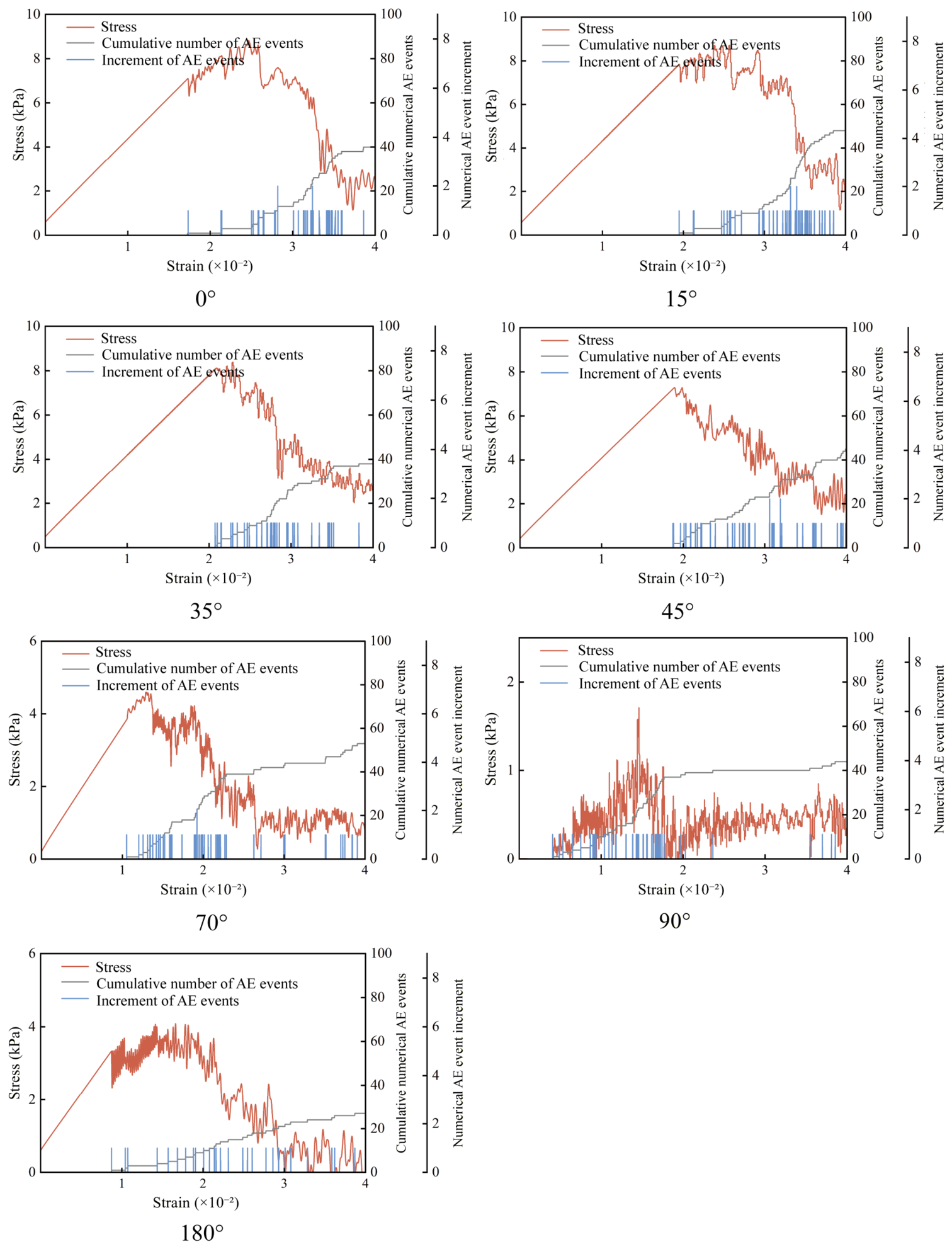
Cumulative numerical AE events characterize the evolution of identified fracture activity within the model. Event accumulation exhibits distinct stages at different loading angles (Figure 13). For the 0–70° conditions, event counts increase in stages. Few events are recorded during initial compaction and the early elastic response; after fracture initiation, events accumulate progressively and continue to increase after peak stress. The 70° condition produced the highest final cumulative count of numerical AE events, at 52. These counts describe recorded fracture activity rather than directly quantifying the total extent of damage or released energy.
Figure 13.
Stress–strain responses and evolution of cumulative numerical AE event counts in layered snow specimens.
By contrast, few numerical AE events were recorded during the early loading stage at 90°, followed by a concentrated increase near peak stress, indicating that recorded fracture activity was concentrated around instability. Limited pre-peak event activity does not imply a complete absence of microscopic damage. The 180° condition produced the lowest final cumulative event count, at 28. Rapid particle separation following the formation of a through-going tensile crack limited subsequent fracture activity. Taken together with the stress–strain responses, these event histories support a distinction between more progressive and more abrupt responses within the investigated model and loading conditions.
3.3. Mesostructural Evolution and Instability Characteristics at Different Loading Angles
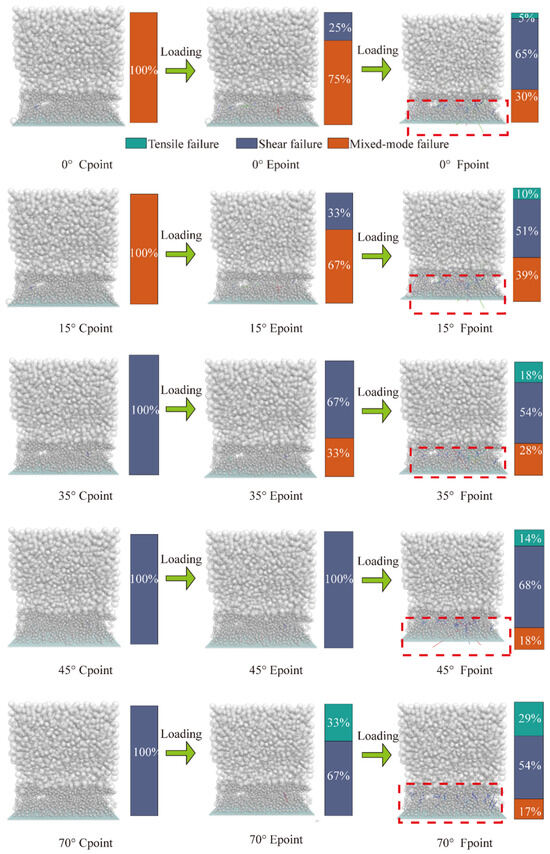
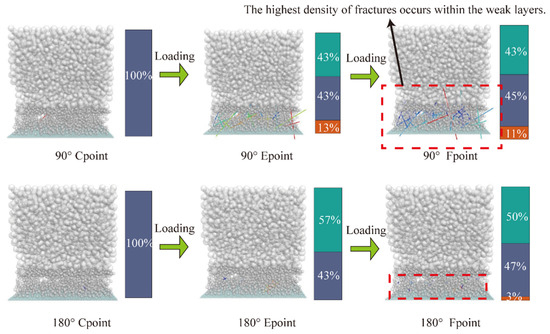
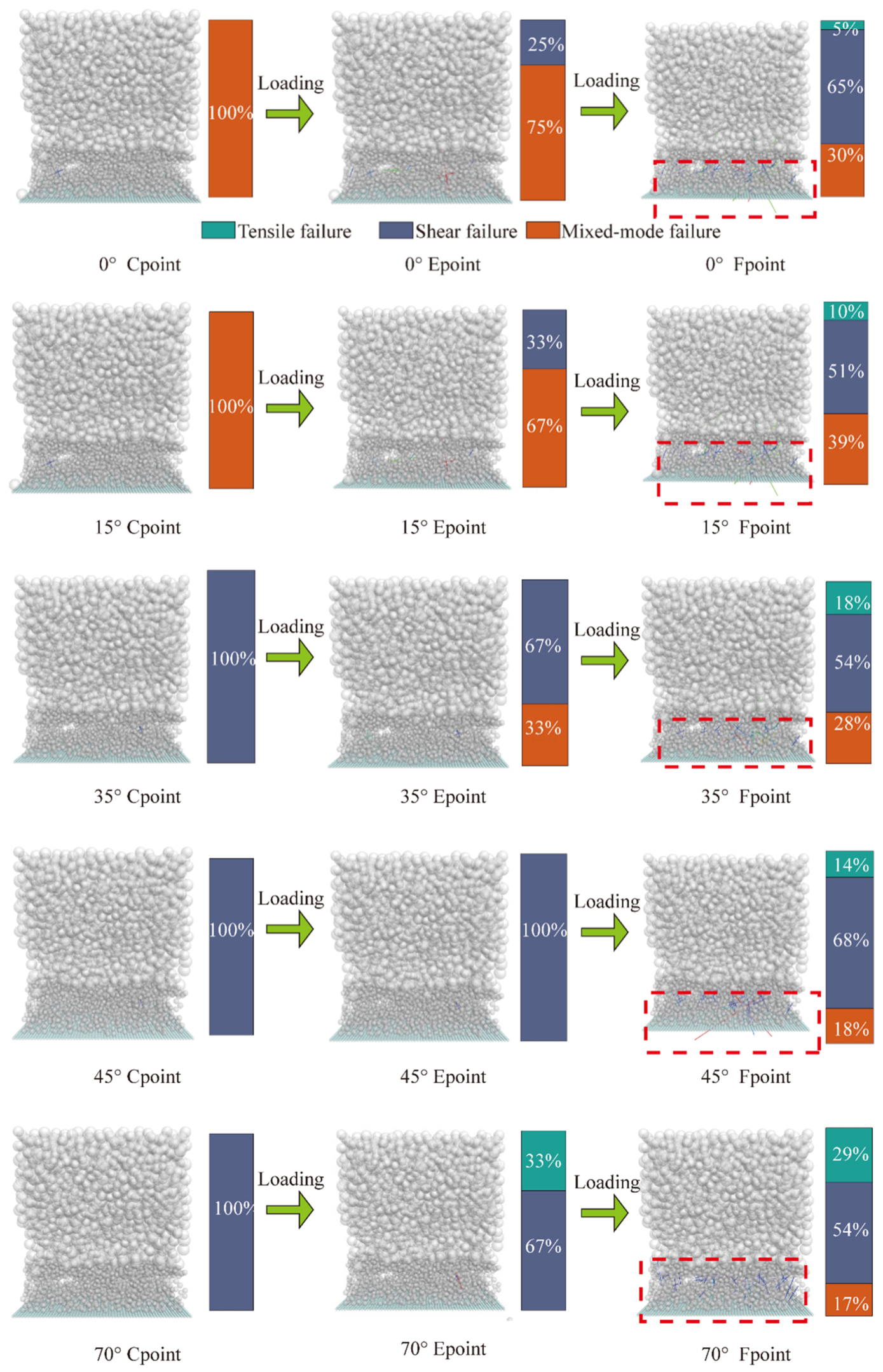
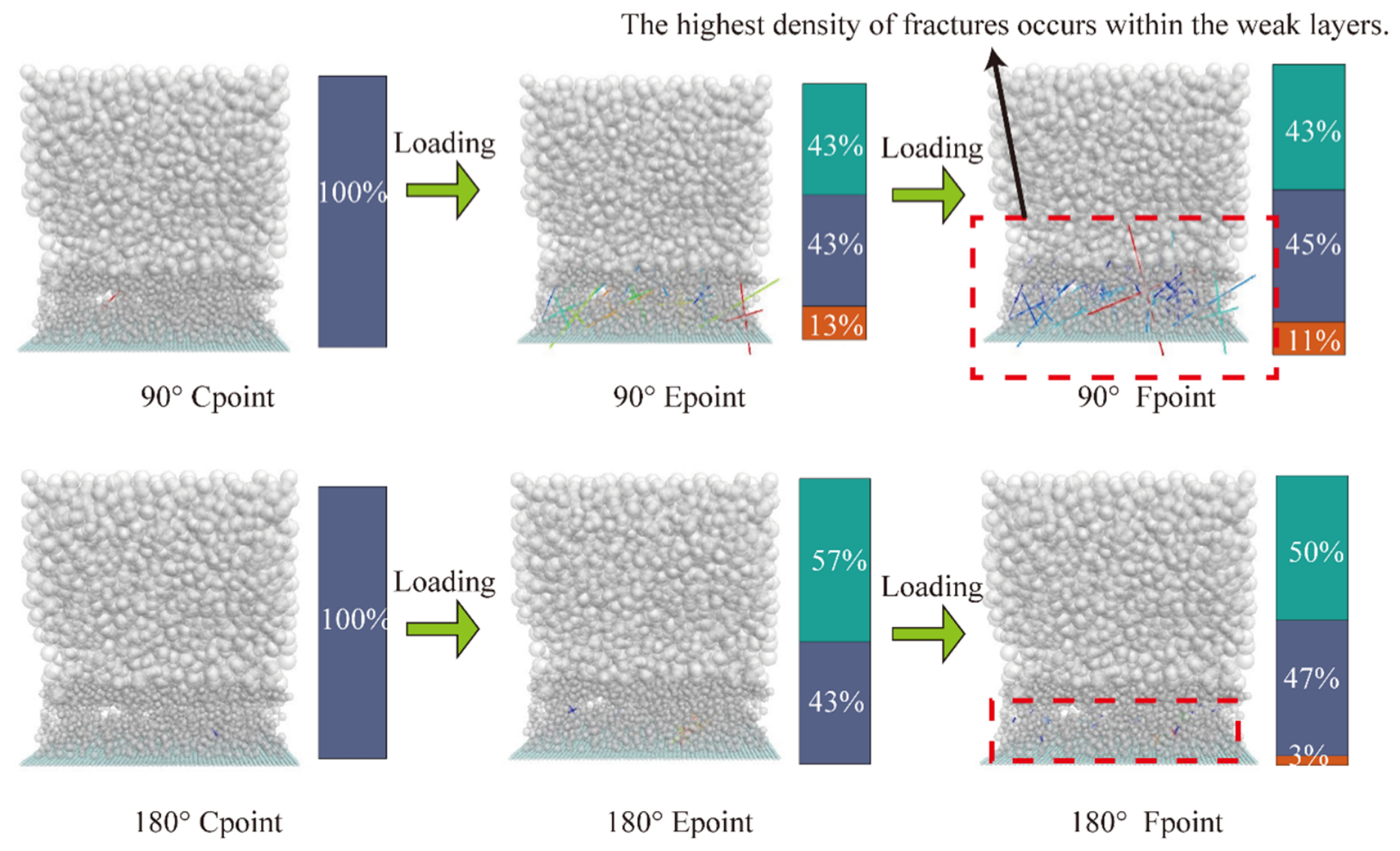
Mesoscopic fracture patterns and force-chain configurations provide a particle-scale perspective on the responses observed at different loading angles (Figure 14). Microcracks preferentially initiate in the mechanically weak layer, while fracture types and propagation patterns vary among loading conditions. Under low-angle loading (0–15°), mixed compression–shear fractures account for approximately 75% of fractures at peak stress, while shear fractures become more prominent later in loading, reaching approximately 65%. Shear fractures are prominent in the 35–90° conditions. Here, fracture classifications describe local failure within the particle model and do not imply a spatially uniform stress state in the specimen. The 90° condition exhibits pronounced particle sliding and extensive cracking, alongside fluctuations in the macroscopic stress response. At 180°, tensile fractures account for 43% of fractures at peak stress; subsequent particle separation limits further recorded fracture activity. This does not establish that the overall damage is smallest at 180°. Low-angle loading is associated with relatively dense load-bearing force-chain networks, whereas the 90° condition shows degradation of these networks as load-bearing capacity decreases.
Figure 14.
Crack evolution of layered snow sample.
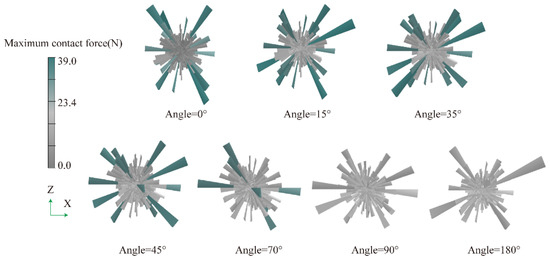
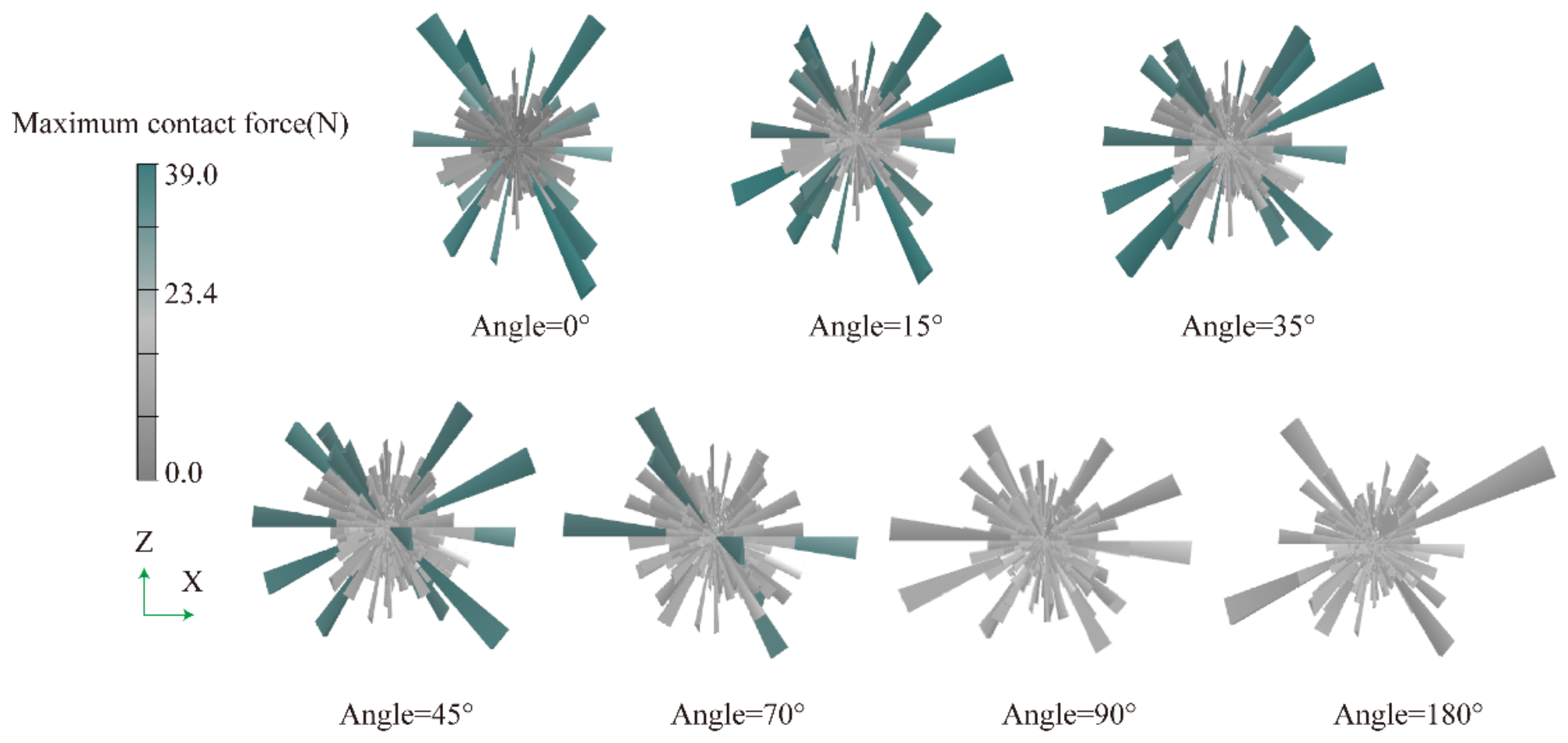
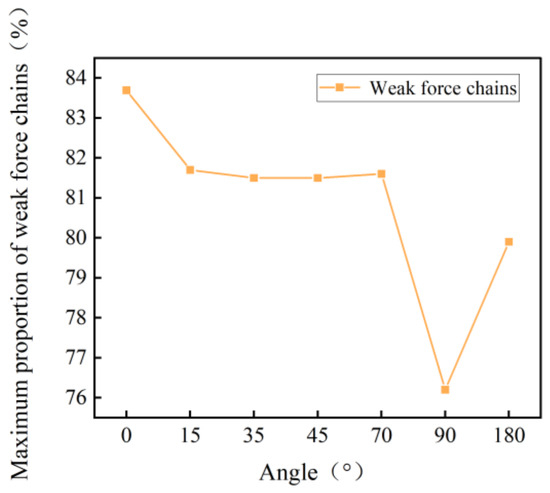
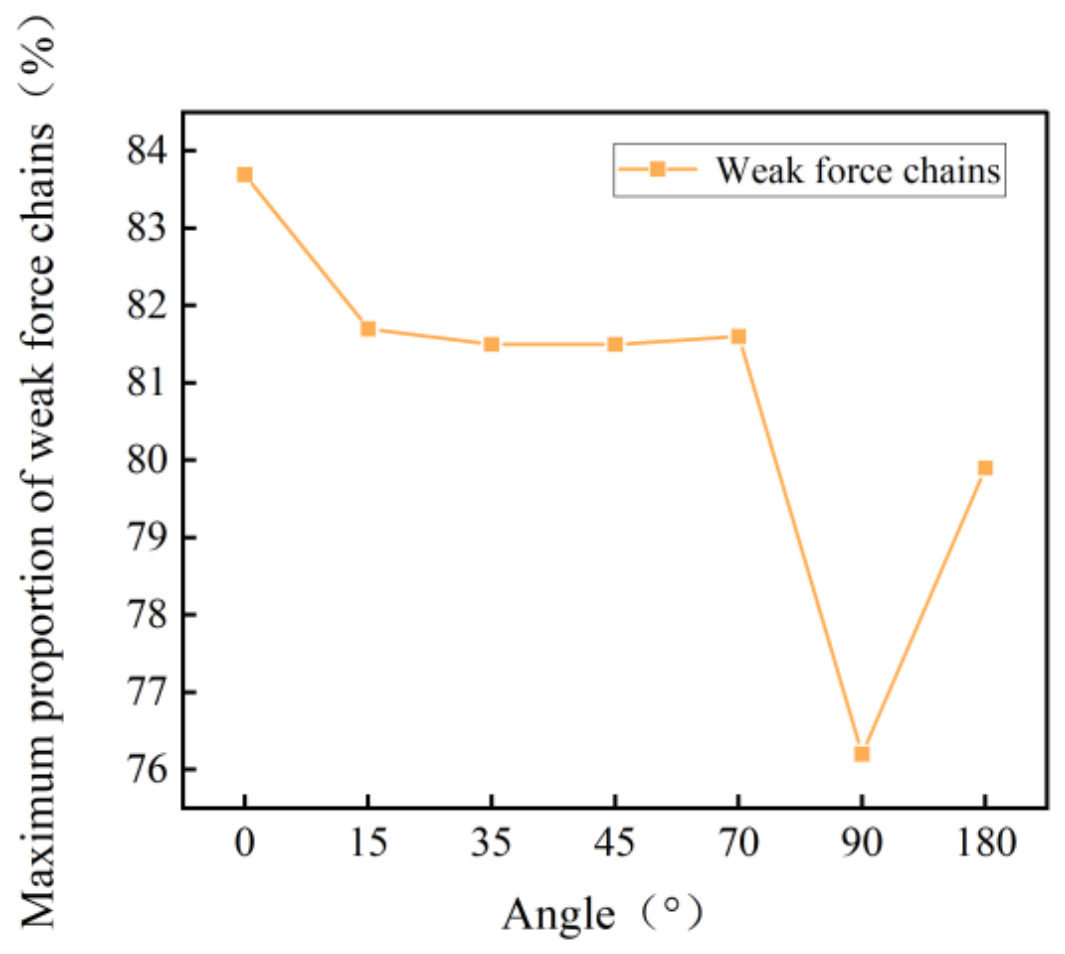
Force-chain evolution provides additional context for the differences among loading conditions (Figure 15 and Figure 16). The weak-force-chain proportion characterizes the contact-force network within the numerical model; it is not a measure of interlayer adhesion or a friction coefficient. The initial proportion of strong force chains at 90° is approximately 30%, compared with approximately 20% in the other cases. During loading, the proportion of weak force chains increases, indicating changes in the load-bearing contact network. At low loading angles, continued force-chain reorganization accompanies the more progressive macroscopic response. At 90°, repeated disruption of force chains is associated with rapid loss of load-bearing capacity; at 180°, particle separation disrupts force transmission. These two conditions exhibit rapid degradation of the load-bearing structure near failure, but macroscopically abrupt failure does not imply an absence of preceding local damage. The force-chain observations, stress–strain responses, and numerical AE histories together describe the contrasting responses of the current model to different external loading directions.
Figure 15.
Contact force of layered snow sample.
Figure 16.
Proportion of maximum weak force chains.
4. Discussion
4.1. Research Innovations and Practical Engineering Implications
Previous studies have examined weak-layer failure, crack propagation, and the micromechanical response of layered snow. The present study complements this work by comparing macroscopic responses and particle-scale fracture activity at selected loading angles using a fixed set of material and contact parameters. The combined stress–strain, numerical AE, and force-chain results identify more progressive responses at low loading angles and a more abrupt response at 90°. These categories describe the observed progression of fracture activity and loss of load-bearing capacity within the investigated system, rather than two universally distinct microscopic failure mechanisms.
With material and contact parameters held fixed, the simulated loading conditions exhibit different mechanical responses. The 90° condition shows relatively low load-bearing capacity and a concentrated loss of stability compared with the low-angle conditions. However, the discrete set of loading angles and the influence of loading geometry do not support identifying 90° as a universal critical transition angle for natural snow. The observed differences in fracture activity and load-bearing capacity provide a basis for further investigation of layered snow instability under more complex loading and slope conditions.
Macroscopically abrupt instability is compatible with preceding local damage. In snow loading experiments, Capelli et al. [9] showed that changes in acoustic emission before brittle failure can reflect damage evolution. Gaume et al. [13] distinguished local weak-layer failure, crack propagation, and slab fracture, while Bobillier et al. [15] used discrete element modeling to analyze microscopic failure and macroscopic responses under compression and mixed-mode loading. Building on these studies, the present work examines the relationship between fracture activity and load-bearing capacity at different loading angles. Under some conditions, numerical AE events accumulated progressively before peak stress; under others, event counts increased mainly near instability, accompanied by a rapid loss of load-bearing capacity. The progressive and abrupt instability characteristics identified here therefore primarily describe differences in the distribution of fracture activity over the loading process and in the manner of macroscopic loss of load-bearing capacity. Limited pre-peak event activity under abruptly failing conditions neither implies an absence of local damage nor establishes that the two response types involve fundamentally different microscopic failure mechanisms.
4.2. Limitations and Future Perspectives
The laboratory experiments and numerical simulations in this study were based on an idealized layered snow structure and focused on mechanical responses and damage evolution under different loading directions. The model simplified the heterogeneity, pre-existing defects, and spatial variability of natural snow. Loading was applied at a constant rate, without accounting for the coupled effects of temperature changes, meltwater, wind disturbance, or dynamic loads. In the field, slope inclination, snow-layer thickness, density, and interlayer structure jointly influence snowpack stresses. The model loading angle specifies the external loading direction and cannot be directly equated with either the local stress state in the weak layer or the actual slope inclination. The available results are also insufficient to separate the effects of material response and loading geometry on instability characteristics. Accordingly, the results primarily describe layered snow instability under the investigated conditions, and their applicability to field-scale avalanche initiation requires further validation.
Regarding parameter calibration and model validation, agreement between simulated and experimental responses across multiple loading conditions does not establish the uniqueness of the microscopic parameter set. Parameter sensitivity and variability associated with different particle packings and bond networks have not been systematically assessed. Verifiable density measurements are unavailable for the weak layer of the physical specimens, limiting quantitative correspondence with the numerical model. Experimental constraints on the high-angle shear and tensile loading conditions remain limited. Numerical AE has not been validated against physical AE measurements, and event identification and accumulation depend on the model and recording criteria. Numerical AE is therefore used primarily for relative comparisons of fracture activity within the model and cannot be directly equated with measured acoustic signals or actual energy release.
Future research could combine in situ field monitoring with laboratory tests on layered snow specimens to better establish the relationships among slope geometry, snow-layer structure, and loading conditions. Parameter sensitivity analyses and repeated simulations with different particle structures could assess the robustness of the identified instability characteristics. Incorporating temperature, meltwater, and dynamic loading could further extend the model’s applicability. Combining physical AE monitoring with deformation measurements could also help assess the correspondence between numerical fracture events and actual damage processes.
5. Conclusions
This study combines laboratory observations with PFC discrete element simulations of an idealized layered snow structure informed by field surveys in the Altay region of Xinjiang. Comparisons at selected loading angles between 0° and 180°, using fixed material and contact parameters, identify differences in macroscopic response and particle-scale fracture activity. The main findings under the investigated model and loading conditions are as follows:
- (1)
- The macroscopic mechanical responses of layered snow slabs exhibit significant loading-angle-partitioned anisotropy. In the low-angle compression-shear coupling regime (0–45°), snow slabs possess higher elastic modulus and structural stiffness with stable peak stress and excellent deformation resistance. Among the loading angles examined, the 90° condition exhibited low peak stress and ultimate strain, with instability concentrated within a narrow deformation interval. The overall mechanical behavior follows an asymmetric law of “stable compression, shear-induced sharp drop, and tensile recovery”.
- (2)
- Cumulative numerical AE histories differ among loading conditions. Under low-angle loading, recorded fracture events accumulate progressively, whereas at 90° the event count increases more sharply near macroscopic instability. These differences characterize the timing and concentration of identified fracture activity within the model. Limited pre-peak activity does not demonstrate an absence of local damage, and event counts alone do not quantify actual energy release.
- (3)
- Particle-scale observations show continued force-chain reorganization under low-angle loading and more rapid disruption of the load-bearing network near instability at 90°. These observations are consistent with the contrasting macroscopic responses and numerical AE histories. They support an interpretation of progressive and abrupt instability characteristics under the investigated conditions, without establishing a universal critical angle or two fundamentally separate microscopic failure mechanisms.
Author Contributions
Conceptualization, K.W. and C.H.; methodology, K.W. and C.W.; software, C.H. and L.X.; validation, L.X. and R.Y.; formal analysis, R.Y.; investigation, Y.X.; resources, Y.X.; data curation, K.W. and C.H.; writing—original draft, K.W.; writing—review and editing, C.W.; visualization, C.W.; supervision, L.X. and R.Y.; project administration, L.X.; funding acquisition, L.X. All authors have read and agreed to the published version of the manuscript.
Funding
This research was Supported by the Regional Science Foundation Project of the National Natural Science Foundation of China (52368052), Natural Science Foundation of Xinjiang Uygur Autonomous Region for Young Top-notch Talents-Youth Science and Technology Innovation Talents Program (2024TSYCCX0001).
Institutional Review Board Statement
Not applicable.
Informed Consent Statement
Not applicable.
Data Availability Statement
The original contributions presented in the study are included in the article; further inquiries can be directed to the corresponding author.
Acknowledgments
We thank all those who assisted with the experiments and data collection.
Conflicts of Interest
Author Kexin Wang, Liangfu Xie and Yan Xu were employed by Xinjiang Transportation Planning Survey and Design Institute Co., Ltd. The remaining authors declare that the research was conducted in the absence of any commercial or financial relationships that could be construed as a potential conflict of interest.
References
- Wang, S.; Ren, J. A review of avalanche disaster research in China and abroad. Prog. Geogr. 2012, 31, 1529–1536. (In Chinese) [Google Scholar]
- Wen, L.; Xiang, L.; Cai, Y. Study on the formation mechanism of avalanche. Mt. Res. 2016, 34, 1–11. (In Chinese) [Google Scholar] [CrossRef]
- Ma, C.; Zheng, H.; Yang, N.; Sun, T. Microstructural evolution and mechanical properties of snow under compression. Constr. Build. Mater. 2025, 472, 140883. [Google Scholar] [CrossRef] [Scilit]
- Zheng, Y.; Chen, T.; Jiang, C.; Huang, Q. An explanatory model for failure modes of compacted snow under uniaxial compression. Cold Reg. Sci. Technol. 2025, 239, 104608. [Google Scholar] [CrossRef] [Scilit]
- Guo, H.; Zhang, H.; Ping, B.; Yang, J.; Cui, Y.; Ding, Q. Study on the compaction characteristics of snow on airport runways under vertical load. PLoS ONE 2025, 20, e0332521. [Google Scholar] [CrossRef]
- Joshi, S.; Mahajan, P.; Upadhyay, A. Study of layered snow under shear and tension. In Proceedings ISSW; International Snow Science Workshop: Telluride, CO, USA, 2006; pp. 165–173. [Google Scholar]
- Reiweger, I.; Schweizer, J.; Ernst, R.; Dual, J. Load-controlled test apparatus for snow. Cold Reg. Sci. Technol. 2010, 62, 119–125. [Google Scholar] [CrossRef] [Scilit]
- Reiweger, I.; Schweizer, J. Weak layer fracture: Facets and depth hoar. Cryosphere 2013, 7, 1447–1453. [Google Scholar] [CrossRef] [Scilit]
- Capelli, A.; Reiweger, I.; Schweizer, J. Acoustic emission signatures prior to snow failure. J. Glaciol. 2018, 4, 543–554. [Google Scholar] [CrossRef] [Scilit]
- Ritter, J.; Löwe, H.; Gaume, J. Microstructural controls of anticrack nucleation in highly porous brittle solids. Sci. Rep. 2020, 10, 12383. [Google Scholar] [CrossRef] [Scilit] [PubMed]
- Thornton, C.; Antony, S. Quasi-static shear deformation of a soft particle system. Powder Technol. 2000, 109, 179–191. [Google Scholar] [CrossRef] [Scilit]
- Gaume, J.; Chambon, G.; Reiweger, I.; van Herwijnen, A. On the failure criterion of weak-snow layers using the discrete element method. In Proceedings of the Proceedings, International Snow Science Workshop, Banff, Alberta, Canada, 29 September–3 October 2014; Volume 29, pp. 681–688. [Google Scholar]
- Gaume, J.; van Herwijnen, A.; Chambon, G.; Birkeland, K.; Schweizer, J. Modeling of crack propagation in weak snowpack layers using the discrete element method. Cryosphere 2015, 9, 1915–1932. [Google Scholar] [CrossRef] [Scilit]
- Mulak, D.; Gaume, J. Numerical investigation of the mixed-mode failure of snow. Comput. Part. Mech. 2019, 6, 439–447. [Google Scholar] [CrossRef] [Scilit] [PubMed]
- Bobillier, G.; Bergfeld, B.; Capelli, A.; Dual, J.; Gaume, J.; Van, H.; Schweizer, J. Micromechanical modeling of snow failure. Cryosphere 2020, 14, 39–49. [Google Scholar] [CrossRef] [Scilit]
- Löwe, H.; Egli, L.; Bartlett, S.; Guala, M.; Manes, C. On the evolution of the snow surface during snowfall. Geophys. Res. Lett. 2007, 34, L21507. [Google Scholar] [CrossRef] [Scilit]
- Kadau, D.; Herrmann, H.J. Density profiles of loose and collapsed cohesive granular structures generated by ballistic deposition. Phys. Rev. E—Stat. Nonlinear Soft Matter Phys. 2011, 83, 031301. [Google Scholar] [CrossRef] [Scilit] [PubMed]
- Lockner, D.A. The role of acoustic emission in the study of rock fracture. Int. J. Rock Mech. Min. Sci. Geomech. Abstr. 1993, 30, 883–899. [Google Scholar] [CrossRef] [Scilit]
- Hazzard, J.F.; Young, R.P. Moment tensors and micromechanical models. Tectonophysics 2002, 356, 181–197. [Google Scholar] [CrossRef] [Scilit]
- Zhao, Q.; Yang, T.; Zhang, B.; Zhao, Y.; Teng, L.; Du, S. Rock failure modes and acoustic emission characteristics under different fissure angles. J. Min. Sci. Technol. 2025, 10, 203–213. (In Chinese) [Google Scholar]
- Zhao, Q.; Zhao, Y.; Yang, T.; Teng, L.; Wang, S.; Liu, Y. Discrete element simulation study of fault stick-slip instability patterns at different microcrack densities. Seismol. Geol. 2024, 46, 1357–1373. (In Chinese) [Google Scholar]
- Ligneau, C.; Sovilla, B.; Gaume, J. Numerical investigation of the effect of cohesion and ground friction on snow avalanches flow regimes. PLoS ONE 2022, 17, e0264033. [Google Scholar] [CrossRef] [Scilit] [PubMed]

Disclaimer/Publisher’s Note: The statements, opinions and data contained in all publications are solely those of the individual author(s) and contributor(s) and not of MDPI and/or the editor(s). MDPI and/or the editor(s) disclaim responsibility for any injury to people or property resulting from any ideas, methods, instructions or products referred to in the content. |
© 2026 by the authors. Licensee MDPI, Basel, Switzerland. This article is an open access article distributed under the terms and conditions of the Creative Commons Attribution (CC BY) license.