


Abstract
Museum and archive storage facilities worldwide face persistent difficulties in maintaining stable microclimatic conditions. This study presents a Smart Archival Box, a modular hardware–software system for preventive conservation, together with a model-based evaluation of its microclimate control. The numerical domain has a nominal volume of 0.125 m3 (0.5 m × 0.5 m × 0.5 m) and combines a 1 kg ArtSorb cassette, four TEC1-12706 thermoelectric modules, particulate/activated-carbon filtration, distributed monitoring and RFID-based access control. Temperature is regulated by a single proportional–integral–derivative (PID) controller with ambient-load feedforward, back-calculation anti-windup, hot-side derating and a dew-point safety limiter. Three scenarios—hybrid (H), active (A) and passive (P)—were evaluated over 10,173 one-second intervals (10,174 records; 2.8258 h) while the prescribed ambient temperature rose from 16 to 32 °C, and ambient relative humidity fell from 67% to 27%. H and A remained within the broader 16–20 °C preservation band for 100% of the run and within the tighter 17.5–18.5 °C control band for 79.7% and 80.5%, respectively, finishing at 18.53 °C and 18.56 °C. P reached 21.20 °C and remained within the tighter band for 47.7% of the run. Calculated electrical consumption was 0.05177 kWh for H, 0.05156 kWh for A and 0.00565 kWh for P. Relative humidity remained within 45–55% in all scenarios. The filtered H and A scenarios reduced mean PM2.5 and total volatile organic compound (TVOC) exposure by 98.4% and 94.4%, respectively, relative to the prescribed ambient profiles. The graphs for document prototype construction and functional bench observations and model results that have not yet been validated by enclosure tests are presented in Results Section. The close H/A performance over this short disturbance does not establish an advantage of ArtSorb and requires repeated humidity-disturbance experiments.
1. Introduction
Studies of museum archives conducted by the International Centre for the Preservation and Restoration of Cultural Property (ICCROM) in 136 countries show systemic difficulties in ensuring the preservation of archives: two-thirds of museums face a shortage of space, half report overloaded storage facilities and one-third an unsatisfactory state of infrastructure (ICCROM, UNESCO 2011). Much less attention is paid to the modernization of repositories compared to exhibition halls. In response to the deterioration of the state of collections, museum workers are forced to apply targeted repairs or erect temporary storage structures [1,2,3,4].
To maintain optimal environmental parameters, intelligent packaging materials are being actively developed that can automatically regulate temperature and humidity [5], as well as neutralize dangerous volatile compounds [6,7]. As Gawade et al. [8] investigated, the development of “smart” archival boxes allows for continuous monitoring of microclimate parameters using battery-free sensors, which minimizes the risks of damage to artifacts. The effectiveness of storage conditions in museum archives is evaluated through long-term studies of the corrosivity of the environment; as Molina et al. [9] have shown, the use of specialized metal dosimeters is a reliable tool for such an assessment. The experience described by Lindblom [10] on the example of the Vasa Museum shows that the management of collections requires taking into account the specific conditions of the premises, since non-compliance with standards creates serious problems for the preservation of materials. At the same time, as analysed by Ankersmit et al. [11], the quality of storage in Dutch museums varies from basic conditions to high-tech solutions, which requires constant optimization.
The specifics of the design of storage systems are largely determined by the physical properties and dimensions of the stored items. Of particular complexity are scientific and technical collections, which are objects ranging from compact hand tools to large-sized equipment weighing more than 10 tons, placed in hangars or in the open air [12,13]. Diagnostic surveys of individual scientific-technical holdings, such as historic fire-extinguisher collections, illustrate the practical challenges of assessing conservation status for this class of object [14], while broader reflections on the conservation of scientific and technological objects highlight the need for dedicated, material-specific preservation strategies [15]. Such technical objects consist of a variety of materials—from rare aluminium alloys and brass [9] to plastic, glass, wood, paper and oils [16,17]. Such a variety of components often leads to internal emission of volatile organic compounds, which pose a threat of degradation both for the object itself and for neighbouring objects [18,19]. Antique papers and documents with iron-gall ink are especially sensitive to microclimatic changes [18,19]. For such paper carriers, humidity changes within ten percent and temperature fluctuations of up to five degrees are considered acceptable, provided that the level of relative humidity does not exceed 65% [20].
The integration of digital technologies structures disparate archival data. As Rao and Wang [21] emphasize, the creation of systems that use intelligent data contributes to the preservation of architectural heritage and the generation of new knowledge.
The creation of databases, as studied by Liu et al. [22] using the example of the Beijing–Mukden railway registers, makes it possible to study in detail the characteristics of objects and ensure their scientific preservation. The ArcGIS platform was used to process the data, where each historical object was assigned geographical coordinates, date of construction, technical parameters, and current state. Now the database is used to assess the risks of any historical building when planning new urban development or laying modern roads.
To prevent the loss of objects, as demonstrated by Fadli and AlSaeed [23], Historic Building Information Modelling (HBIM) platforms are being actively implemented. Unlike conventional 3D modelling, HBIM creates a “smart” digital copy of an object. Each element of this copy—from a brick to a layer of plaster—contains complete information about its material, age, physical condition and restoration history. Thus, a “digital twin” of the object is created. In addition, as Zhang et al. [24] substantiated, the use of building visualization techniques becomes the basis for the digital protection of architectural heritage.
In the field of protection of museum valuables, there are also examples of the use of NFC sensors for the preventive protection of works of art, when battery-powered devices evaluated the difference in conditions inside and outside the packages [25]. In a similar way, RFID technologies are used for the identification of relics and environmental control [26,27].
At the present stage, artificial intelligence plays a significant role. As Chen et al. [28] argue, multimodal data integration allows for thematic analysis, which is important for managing large archives.
In turn, as Xu and Jin [29] systematized, the use of Linked Data technologies is a key tool for digital archives. If traditional digital archives work as isolated repositories, then Linked Data turns them into a single, globally intertwined network of knowledge. A traditional search in an archive gives the user a specific document. Linked Data links this document to external sources such as Wikidata, geographical directories, or museum collections. When searching for a document, the researcher automatically receives links to related events, buildings, or other information from other archives around the world. Thus, intelligent systems, as explored in modern works, not only record environmental parameters, but also generate new knowledge necessary for the preventive conservation of cultural heritage sites. Recent systematic reviews confirm that the integration of IoT and AI technologies into environmental monitoring is reshaping preventive conservation practice across the sector [30], building on earlier work establishing energy-efficient IoT architectures specifically designed for continuous environmental monitoring in preventive conservation [31].
The software and hardware complex (SHC) under development is designed for storage, conservation and continuous monitoring of the condition of ancient handwritten and archival sources using modern digital technologies. The system is built on a modular principle and includes two interacting levels: an autonomous intelligent box “Smart Archival Box” with a nominal volume of 0.125 m3 (0.5 m × 0.5 m × 0.5 m), which provides a local microclimate and registration of access to the contents, and a racking infrastructure that provides physical placement, mechanical fixation and, at the subsequent stage of project development, automated movement of boxes. Control and monitoring of the entire system is implemented through a central computing node that aggregates data from all sensors and actuators and provides the operator with a single dispatching interface.
The key scientific task solved within the framework of the project is the combination of passive and active methods of stabilizing the microclimate in a compact sealed volume while minimizing energy consumption, as well as the construction of a distributed sensor network that provides continuous monitoring of the safety of the document throughout the entire life cycle of storage.
In contrast to the approaches summarized in Table 1, which provide either monitoring without stabilization or stabilization of an entire room, the proposed Smart Archival Box brings active and passive microclimate control, pollutant filtration, monitoring and access control to the level of a single storage unit. The main contributions of this work are as follows: (i) the design of a compact sealed box that combines Peltier-based temperature control with passive ArtSorb humidity buffering; (ii) a single PID controller with anti-windup and a dynamic dew-point limiter that prevents condensation on the cold plate; (iii) a lumped-parameter thermal and pollutant model of the box used to compare hybrid, active and passive operating scenarios; and (iv) a multi-protocol monitoring and access-control architecture that provides a digital audit trail for each box.
Table 1.
Comparison of existing approaches to the storage of cultural heritage collections with the proposed system.
2. Materials and Methods
To ensure the safety of the document within the framework of strict requirements while maintaining climatic conditions, additional measuring devices are required.
2.1. Architecture of the Hardware and Software Complex
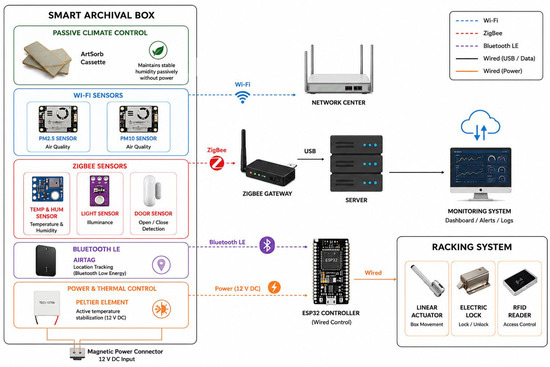
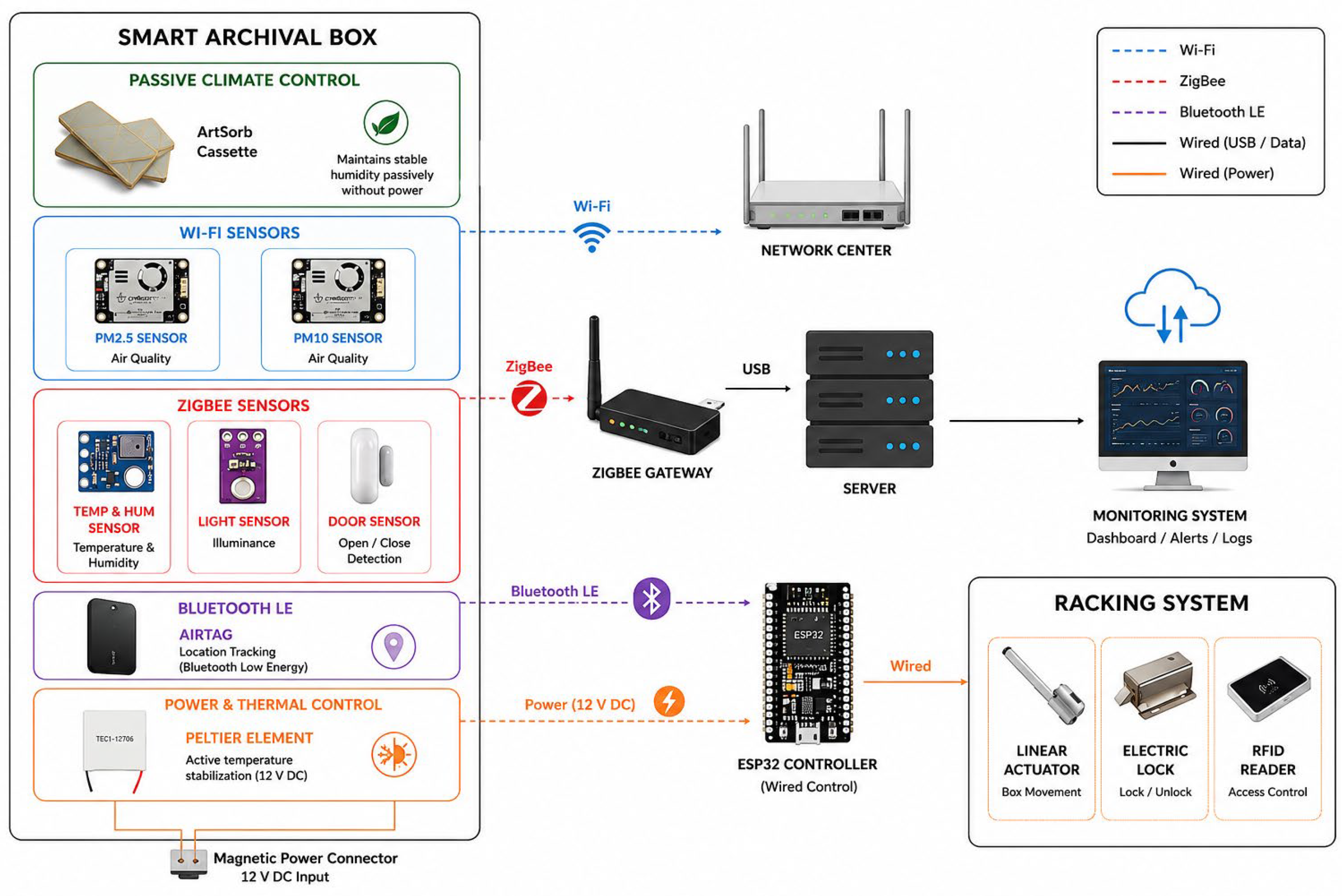
The proposed solution combines passive humidity buffering by ArtSorb with active thermoelectric temperature regulation. The controller targets 18 °C and uses a tighter numerical control band of 17.5–18.5 °C; relative humidity is evaluated against 45–55% (Figure 1). These settings lie within the broader conservation conditions discussed with reference to ISO 11799:2024 and ASHRAE guidance for museums, galleries, archives and libraries [32,33].
Figure 1.
Diagram of the architecture of the proposed solution.
Depending on the requirements of the subsystem, the Data Transmission System is based on the principle of choosing a communication protocol:
- -
- Wi-Fi is used to transmit air quality telemetry;
- -
- ZigBee (IEEE 802.15.4 [34]) ensures the functioning of environmental sensors;
- -
- Bluetooth Low Energy (AirTag) implements the geolocation of the box;
- -
- Wired interfaces guarantee reliable control of actuators.
A document condition monitoring module is also integrated into the system. The decision-making process in the system is cyclical: data from the sensor level (temperature, humidity, illumination, smoke) are aggregated at the central computing node, where the dew point is calculated according to the Magnus–Tetens equation. Based on the comparison of the data obtained with the target values and taking into account the boundary conditions (a dew-point safety margin of 2.5 °C), a control action is formed for the Peltier thermoelectric module and the electromagnetic lock.
Thus, the proposed structure provides not only physical preservation, but also digital traceability of the life cycle of each document in the archive.
2.2. Design of the Smart Archival Box
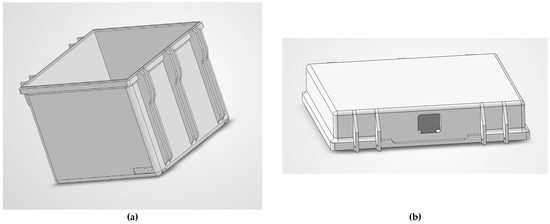
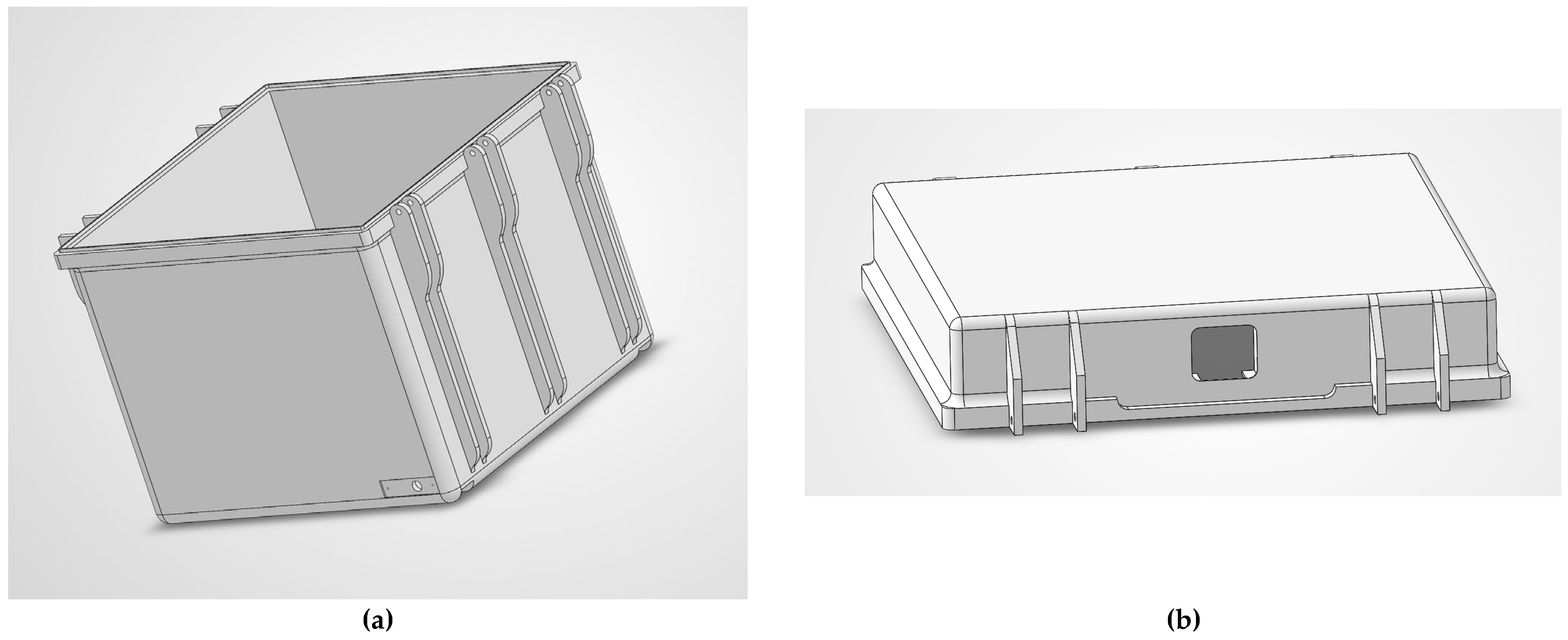
To provide sufficient storage space and stable thermal conditions, the enclosure geometry was designed with heat exchange in mind (Figure 2). The body is a cube with an external edge length of 0.5 m (nominal volume 0.125 m3; internal volume ≈ 0.11 m3 for a 10 mm wall) and is built into a shelf of a metal rack. The body is made of high-density ABS plastic with a wall thickness of 10 mm.
Figure 2.
Construction Scheme of Smart Archival Box in CAD. (a) Box. (b) Lid.
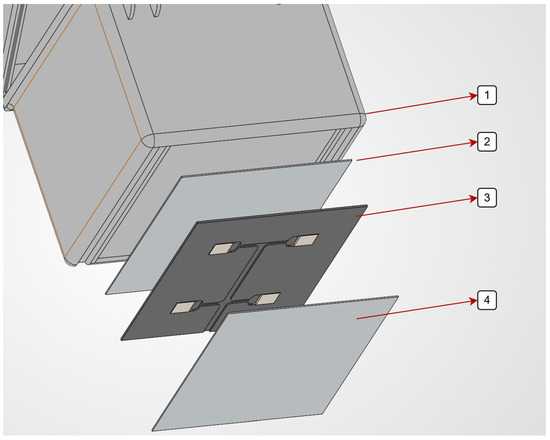
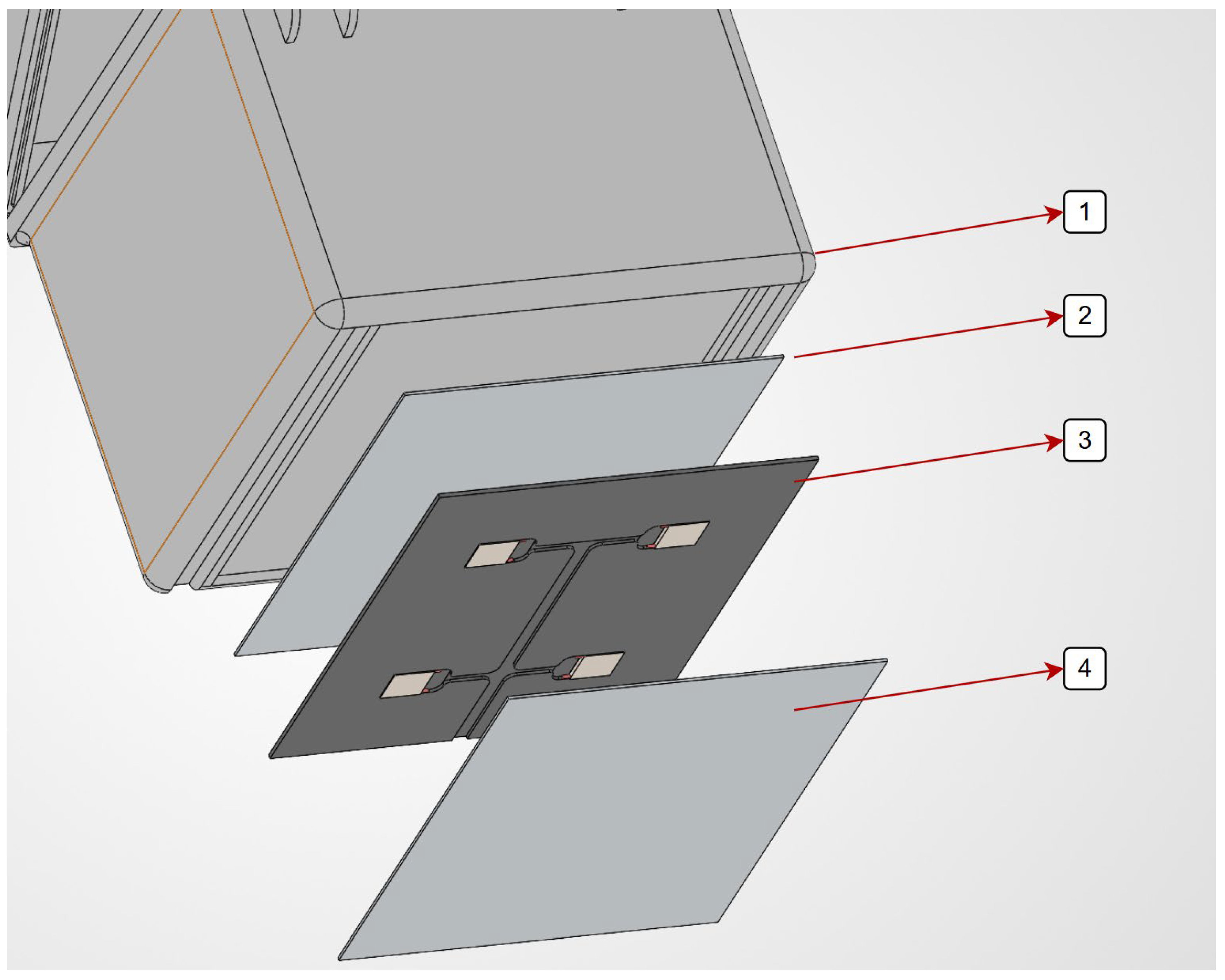
Temperature control is provided by four TEC1-12706 thermoelectric modules clamped between two full-size 3 mm aluminium spreader plates (Figure 3). The inner plate exchanges heat with the box air; the black-anodized outer plate rejects heat by natural convection and radiation. No fan or finned heat sink is included on the hot side.
Figure 3.
Using Peltier elements to adjust the temperature of the inside of the box (1—box, 2—inner plate, 3—TEC1-12706 thermoelectric modules, 4—outer plate).
The 1.0 kg ArtSorb cassette initialized at its 50% RH reference moisture content was chosen. The cassette is mounted in the lid of the prototype to buffer relative humidity. A 2 mm tongue-and-groove feature and a rubber gasket provide the lid seal.
A rubber gasket is installed around the protrusion to ensure the tightness of the box.
2.3. Mathematical Model of the Environment Inside the Smart Archival Box
The input parameters of the model are listed in Table 2. All symbols are defined after the corresponding equations and are summarized in the Nomenclature at the end of the paper.
Table 2.
Input parameters of the thermal and pollutant model of the Smart Archival Box.
First, heat transfer through the enclosure is considered. The implemented model uses an effective enclosure area equal to the total area of all six faces:
This six-face area, S = 1.50 m2, is the value listed in Table 2 and used in all computations. It is conservative: because the bottom face carries the thermoelectric assembly, a five-face area of 1.25 m2 would reduce the conductive wall load S(Tout − Ta)/RΣ by 17%. The hot-side spreader plate is treated separately, with area a2 = 0.25 m2, in Equation (3).
The heat balance of the air inside the closed box is
where ma is the mass of air inside the box (kg); cp,a is the specific heat capacity of air at constant pressure (J/(kg·K)), so that Ca = macp,a is the heat capacity of the internal air (J/K); Ta, Tout, Tb and Tm are the temperatures (°C) of the internal air, the ambient air, the inner (cold) aluminium plate and the internal thermal mass (walls, partitions and stored items), respectively; RΣ is the total thermal resistance of the walls (m2·K/W); ṁa is the mass flow rate of air leaking through the lid seal (kg/s); Hm is the conductance between the internal air and the thermal mass (W/K); and Hpa is the conductance between the inner aluminium plate and the internal air (W/K). All terms on the right-hand side are heat flows in W; dividing Equation (2) by Ca gives the rate of change of the air temperature in K/s.
The hot aluminium plate, which rejects heat to the ambient air, is described by
where Ch is the heat capacity of the hot plate (J/K); N = 4 is the number of Peltier modules; α is the effective Seebeck coefficient of one module (V/K); I is the module current (A); R is the electrical resistance of one module (Ω); KTEC is the thermal conductance of one module (W/K); Th and Tc are the hot- and cold-side temperatures (°C); h is the convective heat-transfer coefficient between the hot plate and the ambient air (W/(m2·K)); ε is the emissivity of the black-anodized aluminium; and σ = 5.67 × 10⁻⁸ W/(m2·K4) is the Stefan–Boltzmann constant. The subscript K denotes absolute temperature, TK = T + 273.15; temperature differences are identical in °C and K, so absolute temperatures are required only in the Peltier and radiation terms.
In the implementation, the hot-side heat flow of each module is computed as the cold-side heat flow plus the electrical input, which is algebraically identical to the bracketed term of Equation (3).
The cold side of the modules, which is thermally coupled to the inner aluminium plate, is described by
where Cc is the heat capacity of the cold side of the modules (J/K), and Hbc is the conductance between the cold side of the modules and the inner aluminium plate (W/K).
The dew-point temperature Td of the internal air is calculated from the measured temperature and relative humidity using the Magnus–Tetens approximation:
where RH is the relative humidity measured by the sensor (%), Ta is in °C and γ is an auxiliary dimensionless variable. For Ta = 18 °C and RH = 50%, Equation (5) gives Td = 7.42 °C.
Pollutant concentrations inside the box are described by a well-mixed single-zone mass balance. For a generic pollutant i, it reads
where t is time (h); Ci and Ci,out are the concentrations of pollutant i inside and outside the box (µg/m3); ACH is the air-exchange rate of the closed box due to leakage (h−1); Gi is the internal emission rate (µg/h), e.g., off-gassing of stored materials; V is the internal air volume (m3); ki is the first-order loss-rate coefficient due to deposition or wall sorption (h−1); Qf is the air flow rate through the filter (m3/h); ηi is the single-pass filtration efficiency for pollutant i (–); and f ∈ [0, 1] is the filter state factor (f = 1 for a new filter in operation, f = 0 when the filter is switched off).
For PM2.5, the loss term corresponds to particle deposition on the internal surfaces:
where CPM and CPM,out are the PM2.5 concentrations inside and outside the box, GPM is the internal PM2.5 emission rate, kdep is the deposition-rate coefficient (h−1) and ηPM is the filtration efficiency for PM2.5.
For total volatile organic compounds (TVOC), the loss term corresponds to sorption on the internal walls:
where CVOC and CVOC,out are the TVOC concentrations inside and outside the box, GVOC is the internal TVOC emission rate, kwall is the wall-sorption rate coefficient (h−1) and ηVOC is the filtration efficiency of the activated-carbon stage for TVOC.
2.4. Climate Control System and Hardware Implementation
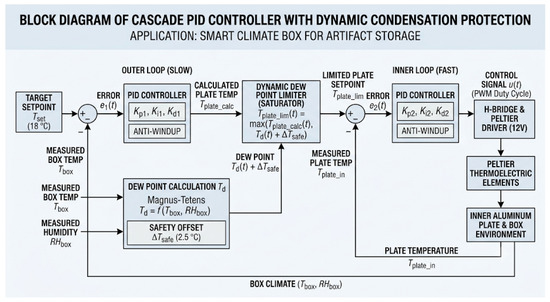
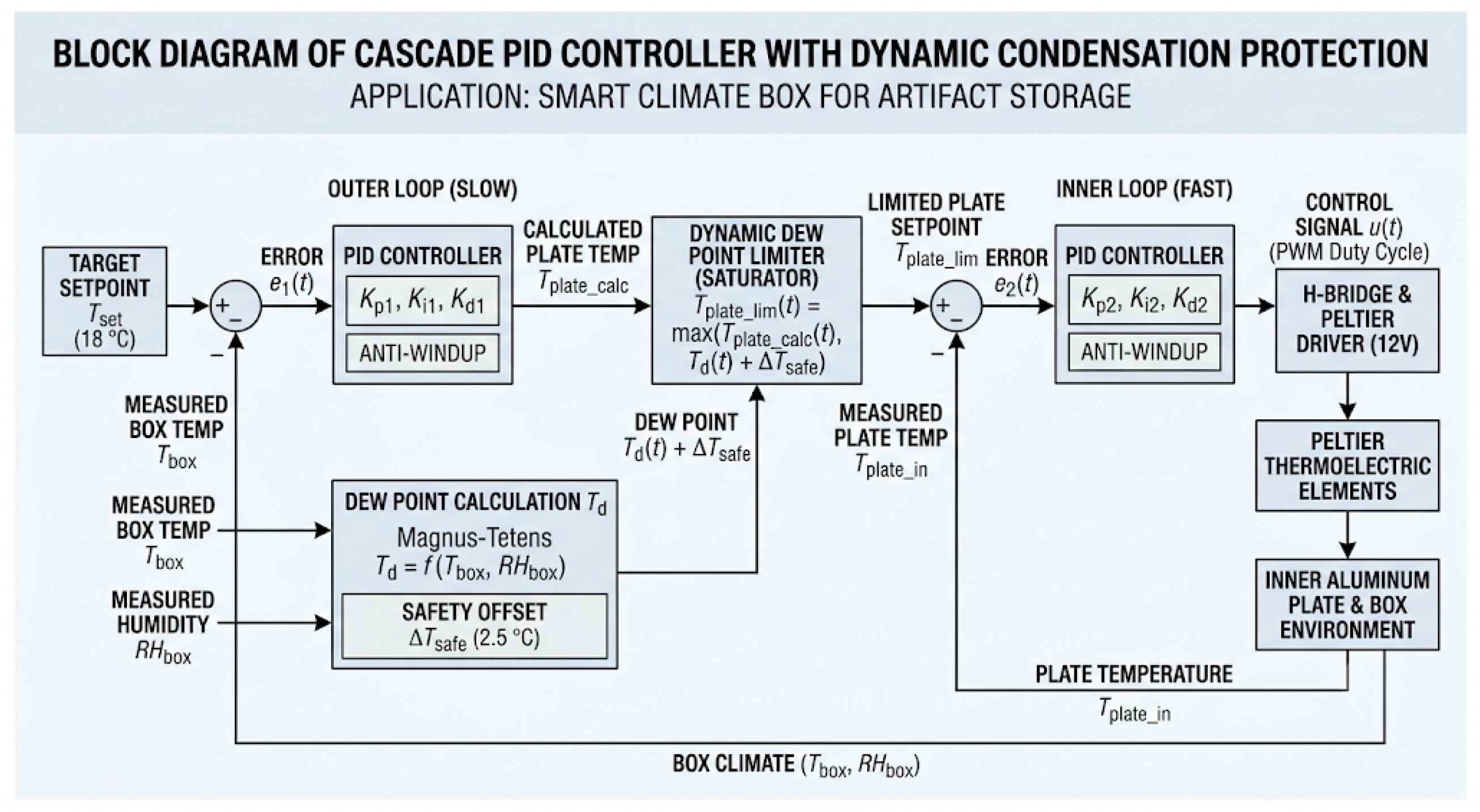
To maintain the microclimate required by ISO 11799:2024 (T = 18 ± 2 °C, RH = 50 ± 5%), a thermoelectric system based on Peltier modules is used (Figure 4).
Figure 4.
Structural diagram of the box climate control.
For the target values of 18 °C and 50% RH, Equation (5) gives a dew-point temperature of Td = 7.42 °C.
To prevent condensation on the cold plate, a safety margin ΔTsafe = 2.5 °C is introduced as a boundary condition:
where Tpl,min is the lowest admissible temperature of the inner (cold) plate. For the design conditions, Td + ΔTsafe = 9.92 °C; therefore, the minimum plate temperature is limited to 10 °C.
A single PID controller acts on filtered internal-air temperature. The normalized raw command combines proportional, integral and derivative terms with feedforward compensation for the ambient conductive load. The command is saturated to [−1, 1], the integral state is corrected by back-calculation (Kaw = 0.50), and the command can change by no more than 0.25 per 10 s control update. Negative commands request cooling and positive commands request heating. The magnitude sets the active duration of a 10 s burst window, limited to 8 s (80% duty). Cooling is inhibited if the cold-side temperature approaches max(Td + 2.5 °C, 10 °C); duty is derated between hot-side temperatures of 60 and 72 °C, with shutdown at 84 °C and restart at 55 °C. Table 3 lists the implemented parameters. The gains were selected by engineering tuning of the simulated transient; a formal stability proof and a separate experimental step response were not performed.
Table 3.
Parameters of the single PID controller.
The developed software and hardware complex is built on a distributed modular architecture, in which the Smart Archival Box acts as an autonomous node for collecting information about the state of the internal document storage environment, and the central computing node performs the functions of data aggregation, storage, analysis and visualization. Information transfer between the components of the system is implemented through several communication technologies, each of which is used in accordance with the requirements of a particular subsystem for power consumption, communication range, bandwidth and reliability of data transmission.
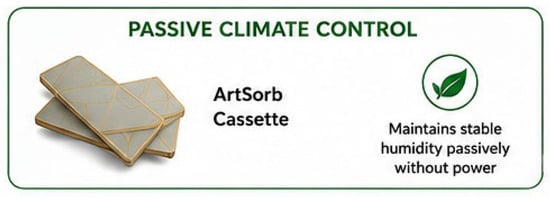
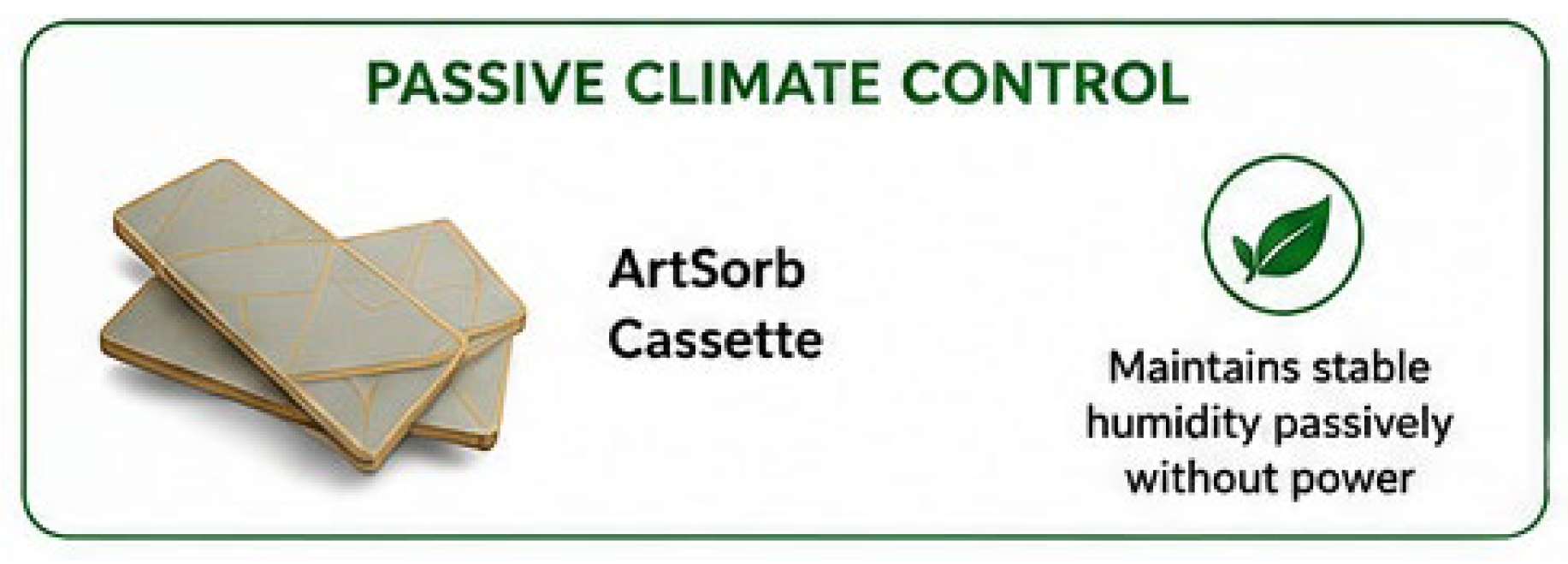
Inside the smart box there is a passive subsystem of climate stabilization, represented by ArtSorb climatic cassettes (Figure 5). This element does not contain electronic components and does not participate in the process of data exchange, and is intended only to buffer the relative humidity of the air passively through sorption and desorption. The operation of the cassettes does not require power supply and is carried out independently of the rest of the subsystems of the complex.
Figure 5.
Elements of passive climate control.
Manufacturer-specific calibration and cross-sensitivity data must be established during experimental validation. The PM2.5 and PM10 sensor were used with inbuild Wi-Fi module (Figure 6).
Figure 6.
Wi-Fi particulate sensors.
The filtration subsystem is a recirculating particulate/activated-carbon stage with Qf = 1.5 m3/h, single-pass efficiencies ηPM = 0.75 and ηVOC = 0.25, and fan power of 1.5 W. These are engineering parameters used in the model, not measured cartridge specifications; filter material, placement, pressure drop and replacement interval remain to be verified on the prototype.
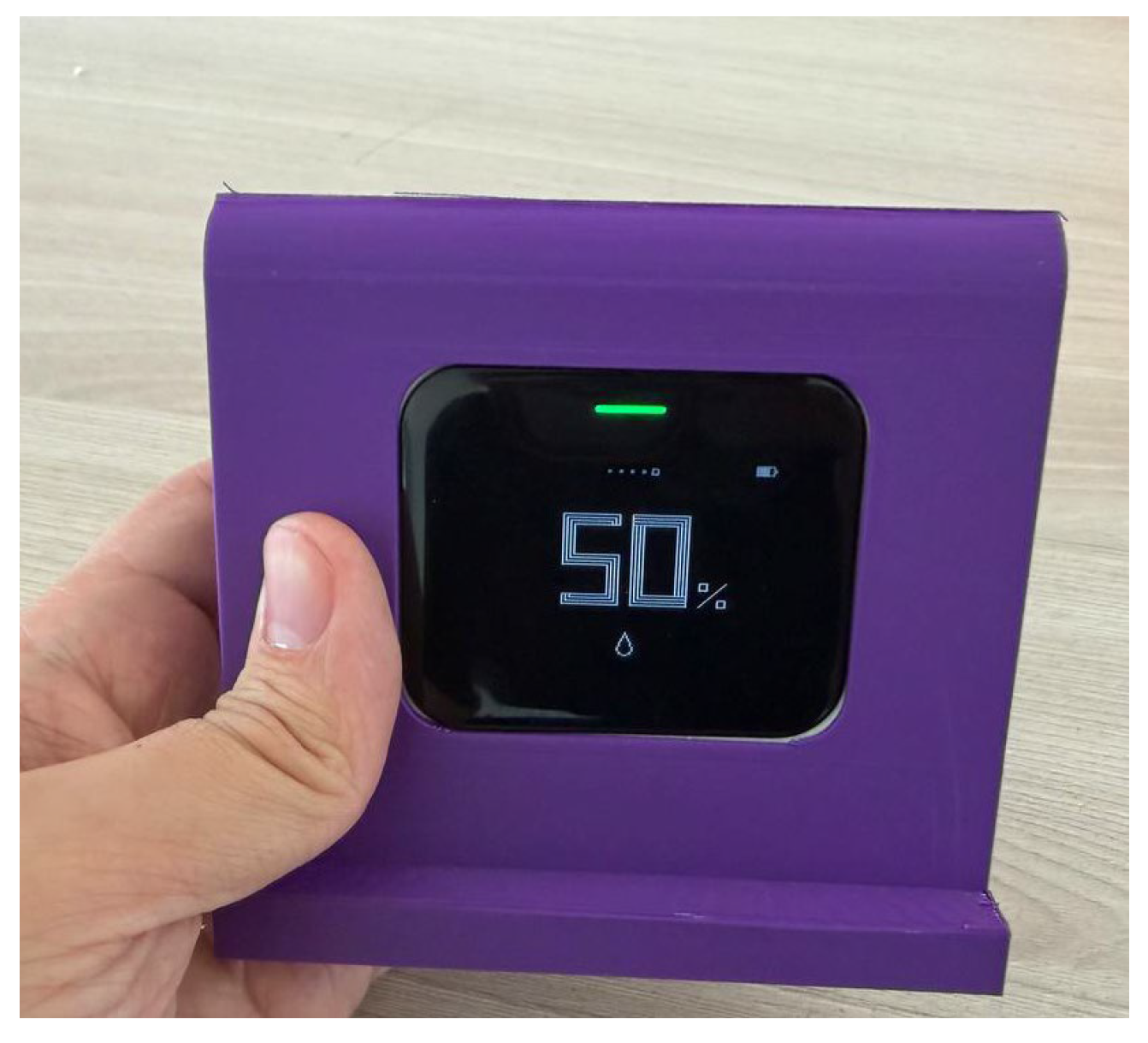
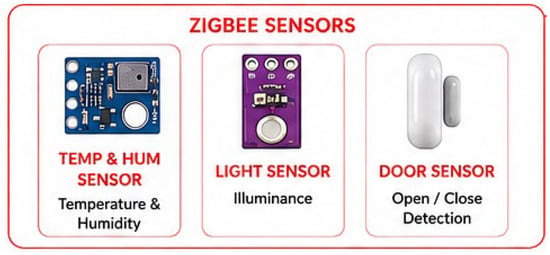
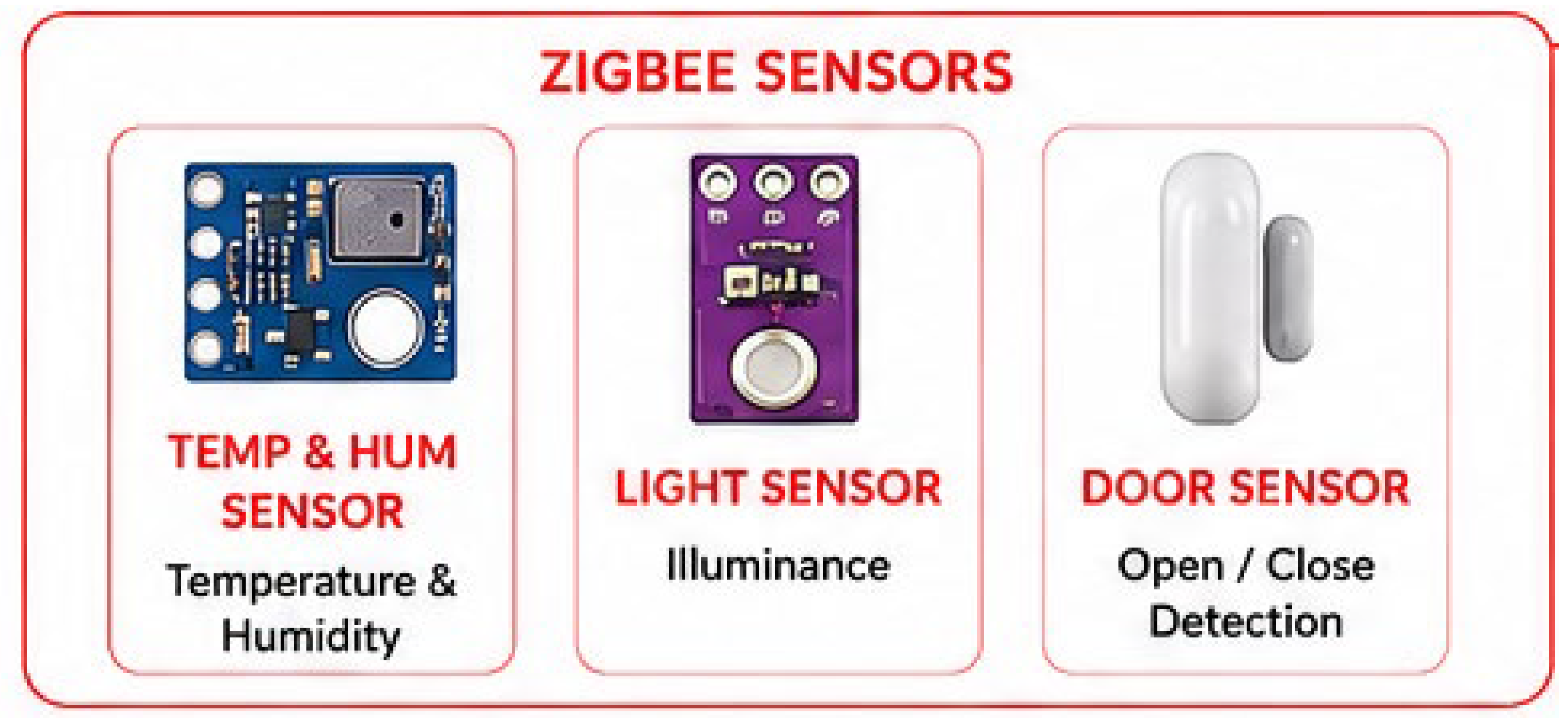
Temperature and relative humidity are represented by filtered sensor states updated by the 10 s controller. The prototype architecture uses ZigBee devices in the 2.4 GHz IEEE 802.15.4 band (Figure 7), but a manufacturer-specific sensor model, traceable calibration uncertainty and final mounting-height study were not available for the present numerical evaluation. These items are explicitly included in the experimental-validation plan.
Figure 7.
ZigBee sensors for temperature, humidity, illumination and door opening, closing.
The role of the network coordinator is performed by an external ZigBee Gateway connected to the central server via a USB interface (Figure 8). The coordinator forms a unified ZigBee network, registers end devices, processes incoming IEEE 802.15.4 packets and converts them into application layer messages. After receiving telemetry, the gateway transmits information to the monitoring server via a USB serial interface using a virtual COM port, where specialized software (for example, Zigbee2MQTT) decodes the received packets and converts them into MQTT messages. Further, the MQTT broker ensures the publication of data to the relevant services of the monitoring system. This approach allows you to completely separate the wireless communication layer from the information processing layer, ensuring the scalability of the complex with an increase in the number of smart boxes.
Figure 8.
Network and device distributor.
To control the location of the archive box, the Apple AirTag module is used (Figure 9), which operates using Bluetooth Low Energy technology (Bluetooth LE version 5.x). Unlike other sensor devices, AirTag does not transmit data directly to the system server. The device periodically transmits BLE identification packets received by the nearest devices of the Apple ecosystem. After detection, the packets are encrypted and transmitted to the device owner through the Apple Find My cloud infrastructure. Thus, it is possible to determine the location of the box in case it is removed from the archive room or unauthorized movement without the need to equip the system with its own GPS modules or mobile communication tools. The use of Bluetooth Low Energy can significantly reduce the power consumption of the device and ensure a long period of autonomous operation.
Figure 9.
Smart Archival Box locator.
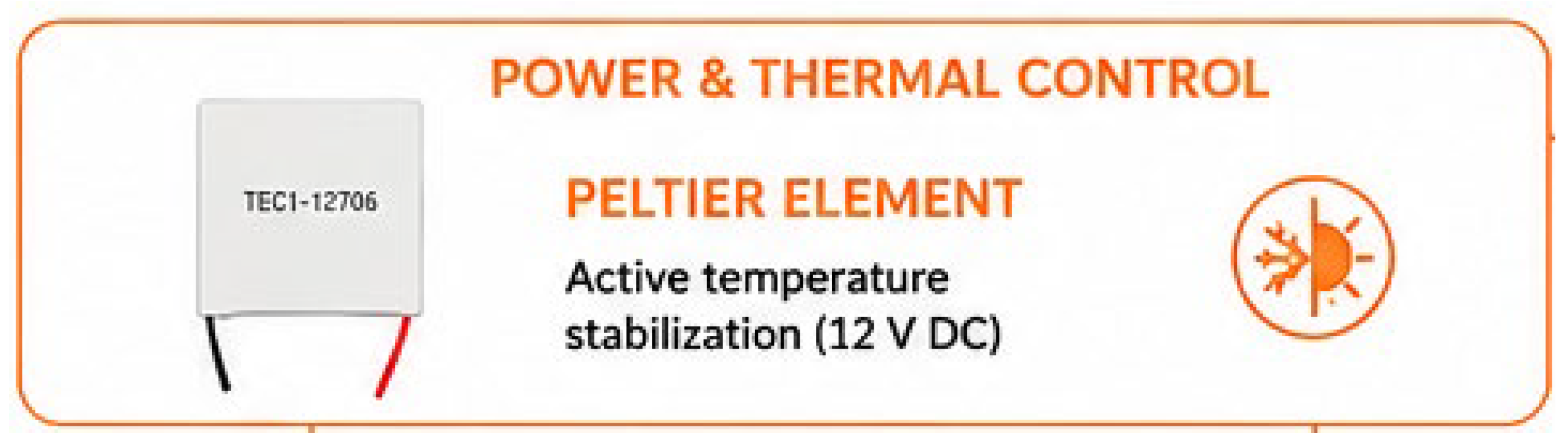
The active subsystem consists of four TEC1-12706 (Figure 10) modules supplied from a 12 V DC source through four current-limited H-bridge channels. Current is limited to 2 A per module (8 A peak total). Time-proportioning burst control uses a 10 s period and a maximum on-time of 8 s, corresponding to 0.1 Hz and 80% maximum duty. Voltage, current, Peltier heat flow and electrical power are calculated from the TEC model; they were not obtained from a calibrated power analyser in the present study.
Figure 10.
Peltier element.
The computing core of the actuator subsystem is the ESP32 microcontroller (Figure 11), which is responsible for controlling the racking infrastructure devices. The controller is connected to the actuators via general-purpose wired input/output interfaces (GPIOs) that provide direct control of electrical loads through power drivers and relay modules. The use of a wired connection is due to the need for guaranteed delivery of control commands and high reliability of the actuators.
Figure 11.
ESP32 wired controller for wireless communication.
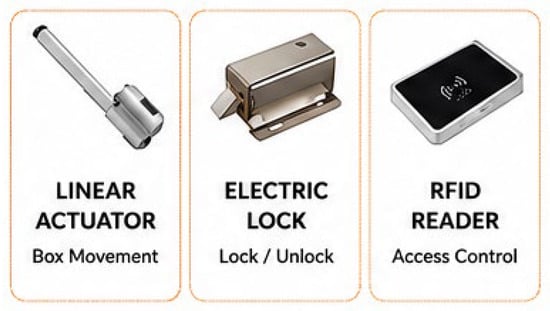
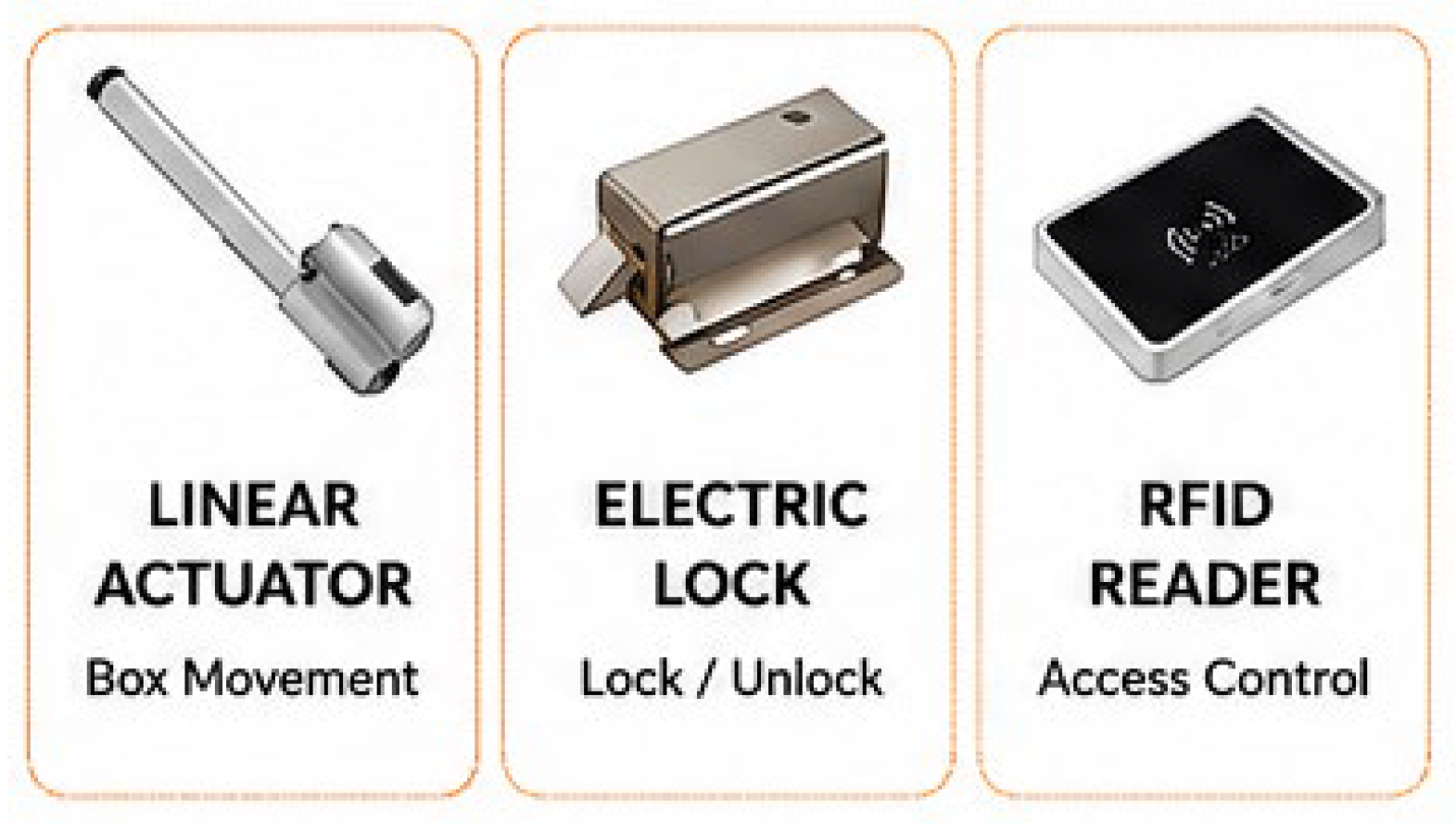
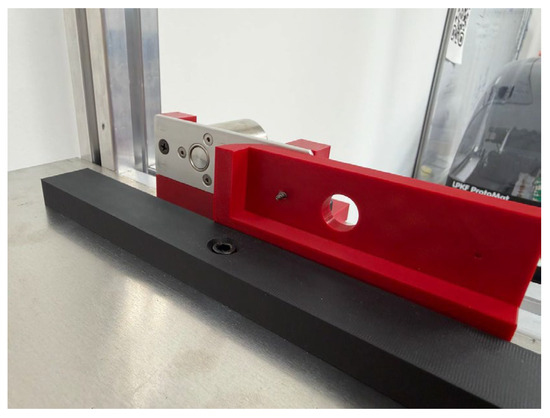
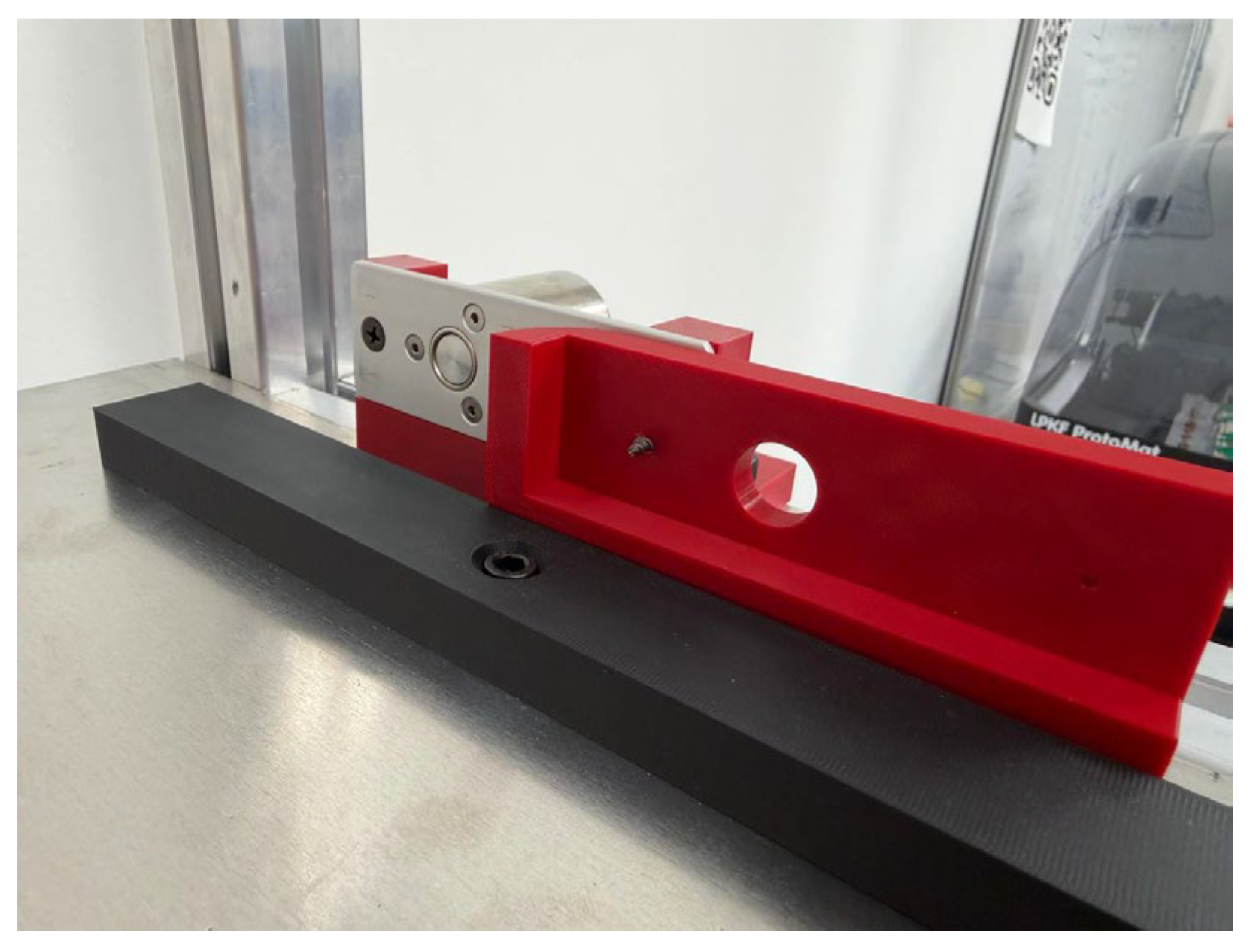
The electromagnetic lock is also connected to the ESP32 wired and controlled by switching a 12 V power supply circuit. After receiving a command from the server, the controller generates a control signal to the executive key, briefly removing power from the lock and unlocking the archive box. After the preset interval is completed, the power is automatically restored, which allows the system to return to a protected state without the participation of the operator.
The RFID reader is connected to the microcontroller via an SPI or UART serial interface, depending on the hardware implementation used. After holding the RFID card, the reader generates a unique user identifier and transmits it to the controller. ESP32 performs a local check or sends the identifier to the authorization server, after which it decides whether to allow access to the box. Upon successful identification, a command is generated to unlock the electromagnetic lock, and information about the operation performed is transmitted to the system audit log (Figure 12).
Figure 12.
Smart Archival Box open/close status monitoring and management module.
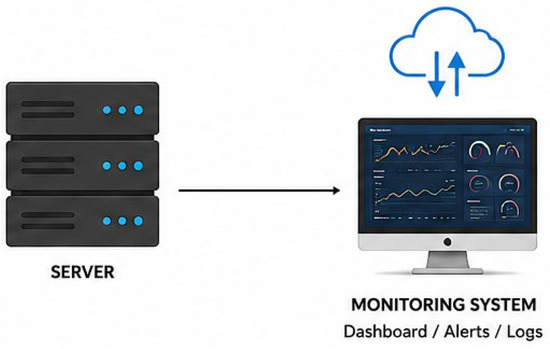
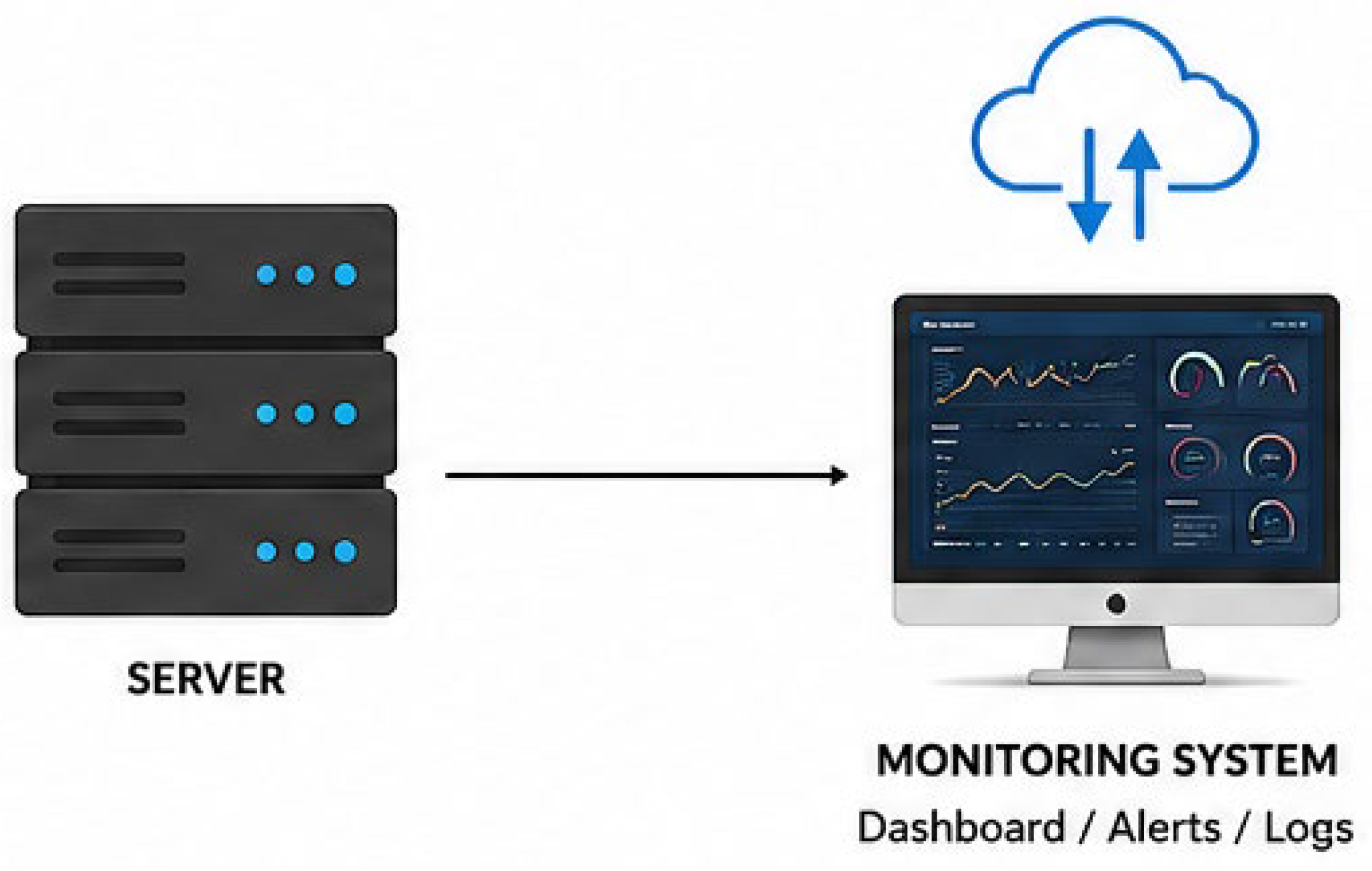
The central server is the main computing element of the complex and combines data received simultaneously through several communication channels. Through a local Ethernet or Wi-Fi network, the server receives information from air quality sensors, receives ZigBee Gateway telemetry via a USB interface, and also interacts with ESP32 via the MQTT network protocol or HTTP API to transmit control commands to actuators. The server has an MQTT broker, an automation system, a time series database and a web monitoring interface. The received data is processed, archived and analysed, after which it is displayed to the operator in real time in the form of graphs, event logs and alarm notifications (Figure 13).
Figure 13.
Visualization of data coming from the server.
Thus, the architecture of the complex is a multi-level data exchange system, in which each communication protocol is used in accordance with the specifics of the task to be solved. Wi-Fi provides the transmission of a large amount of telemetry information directly to the server, ZigBee implements the energy-efficient operation of autonomous sensors, Bluetooth Low Energy is used for independent positioning of the archive box, wired interfaces provide reliable control of actuators, and the MQTT protocol combines all components of the complex into a single distributed monitoring and control system. Such a separation of communication technologies simultaneously ensures low power consumption, high reliability of data transmission, scalability of the architecture and the ability to centrally manage a large number of Smart Archive Boxes.
2.5. Evaluation Setup and Operating Scenarios
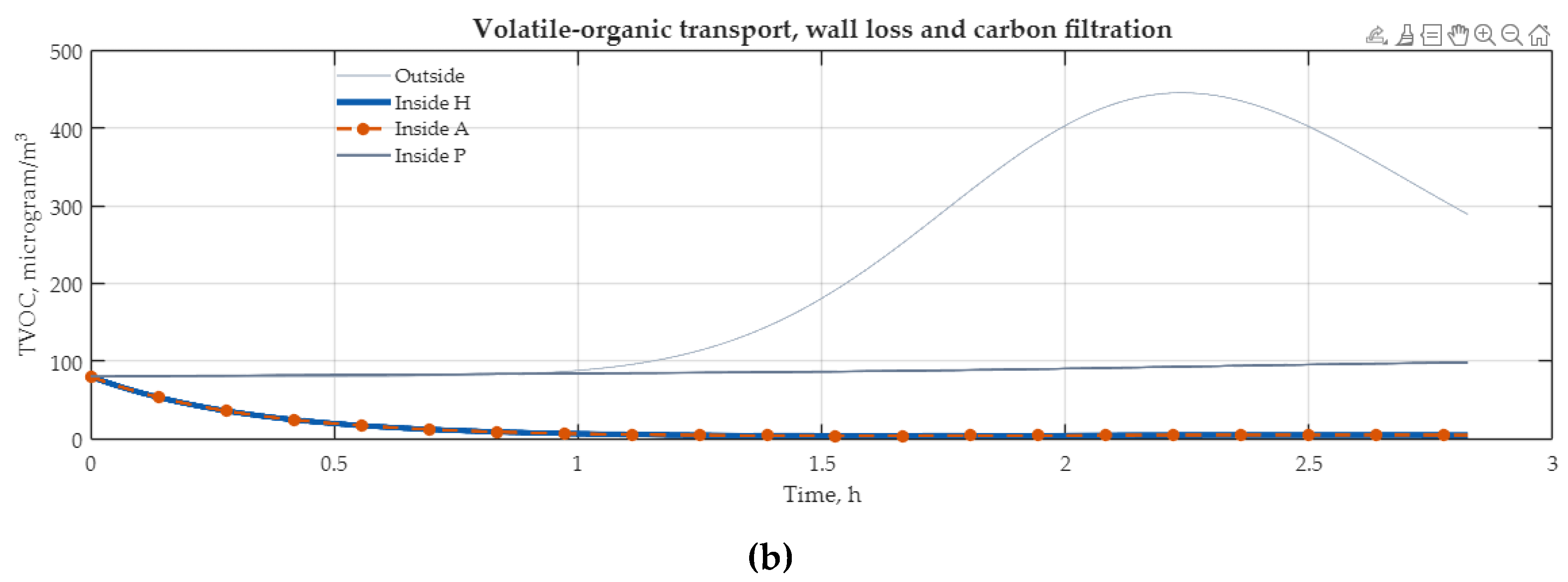
The modelled configuration includes 600 A4 sheets of 80 g/m2 paper (approximately 3.0 kg), the ABS enclosure, PIR insulation and 1.0 kg of ArtSorb. The box remains closed throughout the run. The imposed profiles share the same 10,173 s interval: ambient temperature rises from 16 to 32 °C along a half-cosine ramp; ambient RH falls smoothly from 66.8% to 26.9%; PM2.5 follows a bell-shaped challenge from 12 µg/m3 to a peak of 86.9 µg/m3 at 1.15 h; and TVOC follows a bell-shaped challenge from a baseline of 80 µg/m3 to 445.5 µg/m3 at 2.24 h. These are prescribed numerical boundary conditions rather than measured climatic-chamber records.
Three scenarios were compared (Table 4). Geometry, leakage, material loading and initial conditions are identical. H uses thermoelectric control, ArtSorb and filtration; A uses thermoelectric control and filtration without ArtSorb; P uses ArtSorb with the thermoelectric modules and filter switched off. The constant auxiliary load is 2.0 W in P (controller and sensors) and 6.0 W in H and A (controller, sensors, TEC driver and filter fan).
Table 4.
Configuration of the operating scenarios.
The indicators are the fractions of time within the 17.5–18.5 °C control band, the broader 16–20 °C preservation band and the 45–55% RH band; temperature and RH extrema; internal PM2.5 and TVOC exposure; hot- and cold-side safety limits; and integrated electrical energy. Sensor noise is generated with a fixed random seed; repeated experimental runs and uncertainty intervals are reserved for validation work. All results and all reported indicators are taken from a single model run per scenario over the same 0–10,173 s interval (10,174 records at 1 s). Compliance is the percentage of these records lying within each band, with the band limits included. The mean-exposure reduction of each pollutant is obtained by comparing the time-integrated internal concentration with the time-integrated ambient concentration over 0–10,173 s. Electrical energy is the time integral of the calculated supply-side power, which comprises the thermoelectric input power during the on-time of each burst, corrected for a driver efficiency of 0.92, and a constant auxiliary load of 6.0 W in H and A and 2.0 W in P. No temperature, humidity, pollutant or electrical quantity in was measured on the prototype.
The internal relative humidity is obtained from a lumped water-vapour balance solved together with Equations (2)–(4). The vapour mass of the internal air changes through leakage exchange with the ambient air, sorption and desorption by the paper load (all scenarios) and the ArtSorb cassette (H and P only), and condensation on the cold plate if its temperature falls below the dew point, which did not occur. The moisture content of each hygroscopic material relaxes towards its equilibrium value with a first-order time constant, and the equilibrium value varies linearly with relative humidity around 50% RH; moisture uptake by a material represents sorption, and moisture release represents desorption. The dry masses, response times, equilibrium moisture contents and isotherm slopes are listed in Table 2. The internal relative humidity is then computed from the vapour density and the air temperature using the Buck saturation-pressure formula. The sorption parameters are nominal values for paper and the silica-gel-based ArtSorb sorbent and were not identified for the installed materials, so the RH curves show the expected behaviour under these assumptions rather than a verified buffering effect.
3. Results
3.1. Prototype Assembly and Bench Verification
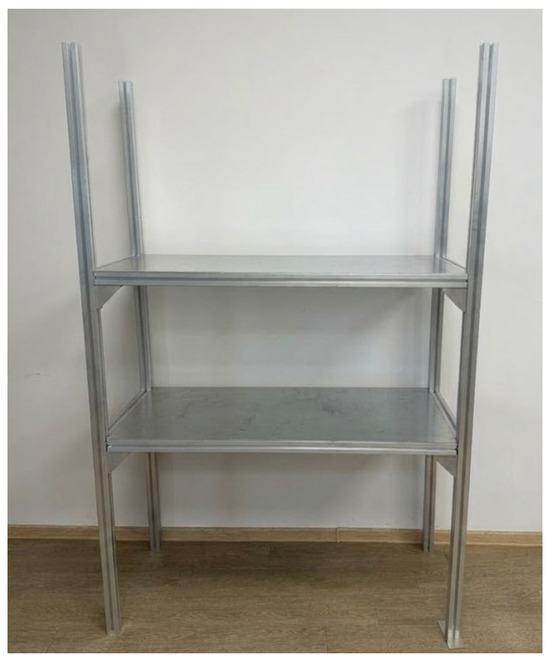
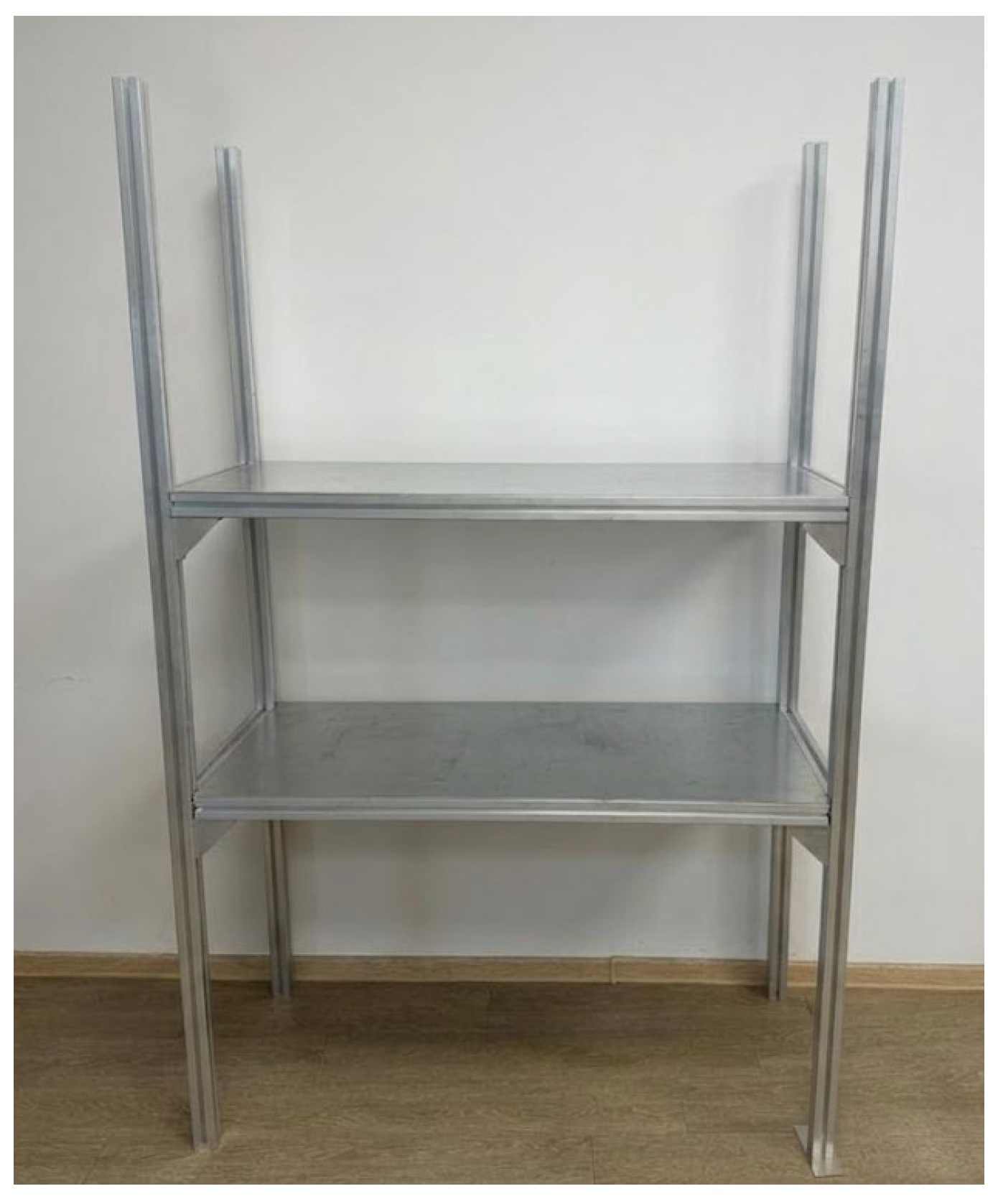
At the current stage, an experimental stand was assembled from 45 × 45 mm T-slot aluminium profile. The stand supported functional checks of the sensor/telemetry chain, electromagnetic lock, RFID access workflow and thermoelectric assembly. It was not used to obtain the numerical microclimate curves in, and the automated rack drive was not included in the reported evaluation.
It should be emphasized that the aluminium frame is a temporary technological solution used exclusively for laboratory testing of the architecture; at the next stage of the project, all units will be transferred to the developed specialized automated rack, structurally different from the profile stand and intended for serial operation in the archive repository (Figure 14).
Figure 14.
Prototype of a rack made of aluminium sheets and profiles.
The enclosure was designed in a three-dimensional modelling environment and manufactured by fused-deposition modelling (FDM) with post-processing. The numerical model uses a nominal internal air volume of 0.125 m3. The prototype accommodates approximately 500–700 A4 sheets; its exact usable internal volume will be measured during physical validation. The removable lid uses mechanical latches and a gasket to maintain the seal.
On the surface of the lid, there is a technological cut-out for the air quality sensor. Separately, in the lower part of the side wall of the case, there is a seat for the counterpart of the solenoid-type electromagnetic lock—this unit is structurally not connected to the lid and is designed for mechanical fixation of the box itself relative to the guides of the rack.
Along the perimeter of the case, there are grooves-ribs for the installation of removable internal partitions, which ensures the adaptability of the internal space to various formats and types of stored materials.
Inside the box there is a set of wireless sensors that provide continuous monitoring of the state of the microenvironment and contents:
- -
- Temperature and relative humidity sensor (Figure 15);
- -
- Air quality sensor (PM2.5/PM10 particulate concentration);
- -
- Light sensor;
- -
- Box lid opening/closing sensor;
- -
- A geolocation module based on wireless beacon technology (Bluetooth Low Energy) is used to track the location of the box in case it is removed from the racking system.
Figure 15.
ZigBee temperature and relative humidity sensor installed inside the prototype box.
All sensors communicate with the central computing unit via a wireless protocol, which eliminates the need for cable routes inside the box and simplifies system maintenance.
Stabilization of the microclimate inside the sealed volume is implemented by a combined method that combines passive and active methods. Passive humidity buffering is intended to be provided by ArtSorb cassettes based on modified silica gel, which require no power but need periodic reconditioning as the sorbent approaches saturation. Active temperature stabilization is implemented by a thermoelectric module based on Peltier elements, located on an aluminium heat distribution plate under the bottom of the case. The combined use of sorption and thermoelectric subsystems is designed to keep microclimate parameters within the range regulated by ISO 11799:2024 (T = 18 ± 2 °C, RH = 50 ± 5%), and is expected to require less energy than conditioning the entire storage room; a quantitative comparison with centralized systems is beyond the scope of this study.
The thermoelectric module and air quality sensor are powered through an external magnetic charging connector located on the housing of the box, which allows you to power the active components without breaking the tightness during regular maintenance.
For access control, a miniature solenoid-type electromagnetic lock is used: the counterpart of the lock is located in the lower part of the side wall of the box body, and the coil itself with the locking mechanism is fixed to the guide rail of the rack. When the box is pushed into the rack, the locking mechanism is activated and locks the box itself relative to the guides, preventing its unauthorized removal from the rack cell. At the same time, the box lid remains completely independent of this unit and is opened manually using mechanical latches—after the box is unlocked at the rack level. The unlocking logic is based on a short-term opening of the lock power circuit (12 V) with automatic power restoration in 10–15 s after confirmation of the access operation (Figure 16). This solution eliminates the need for a constant control signal to the lock and reduces the power consumption of the subsystem in standby mode.
Figure 16.
Lock system.
The rack is equipped with a smoke detector for early detection of emergencies, as well as guide rails that ensure smooth and repeatable movement of the box when extending and moving. At the promising stage of the system’s development, it is planned to integrate a linear electric drive that provides automated movement of the box from the rack at the operator’s command without manual intervention, which is especially important with a high density of boxes and the need for quick access to a specific storage unit.
Collection, primary processing, and long-term storage of telemetry data from all sensors and actuators are performed on a compact computing node that acts as a telemetry gateway and monitoring server.
The node software provides real-time visualization of current and historical values of microclimate parameters, generation of alarm notifications when parameters exceed the established tolerances, logging of access operations (opening/closing, user identification, timestamps) and remote initiation of unlocking of a specific box by the operator. This architecture provides centralized management of an arbitrary number of boxes as part of a racking system without the need for direct physical interaction of personnel with each storage unit.
3.2. Evaluation of the Smart Archival Box
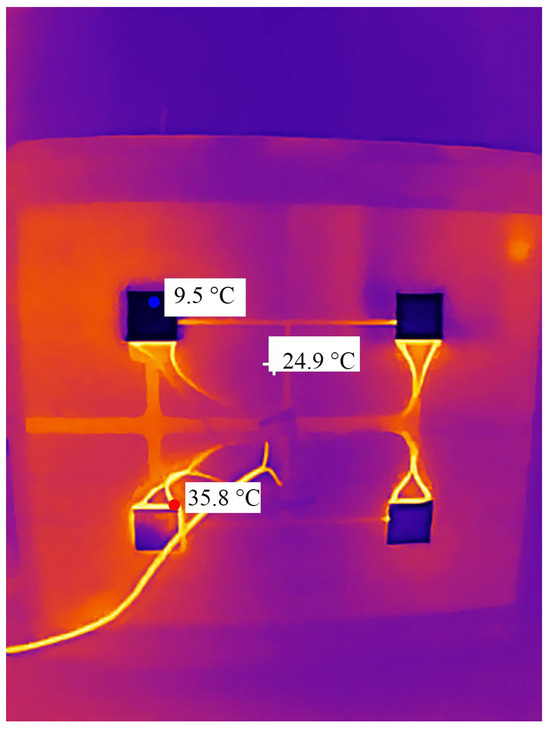
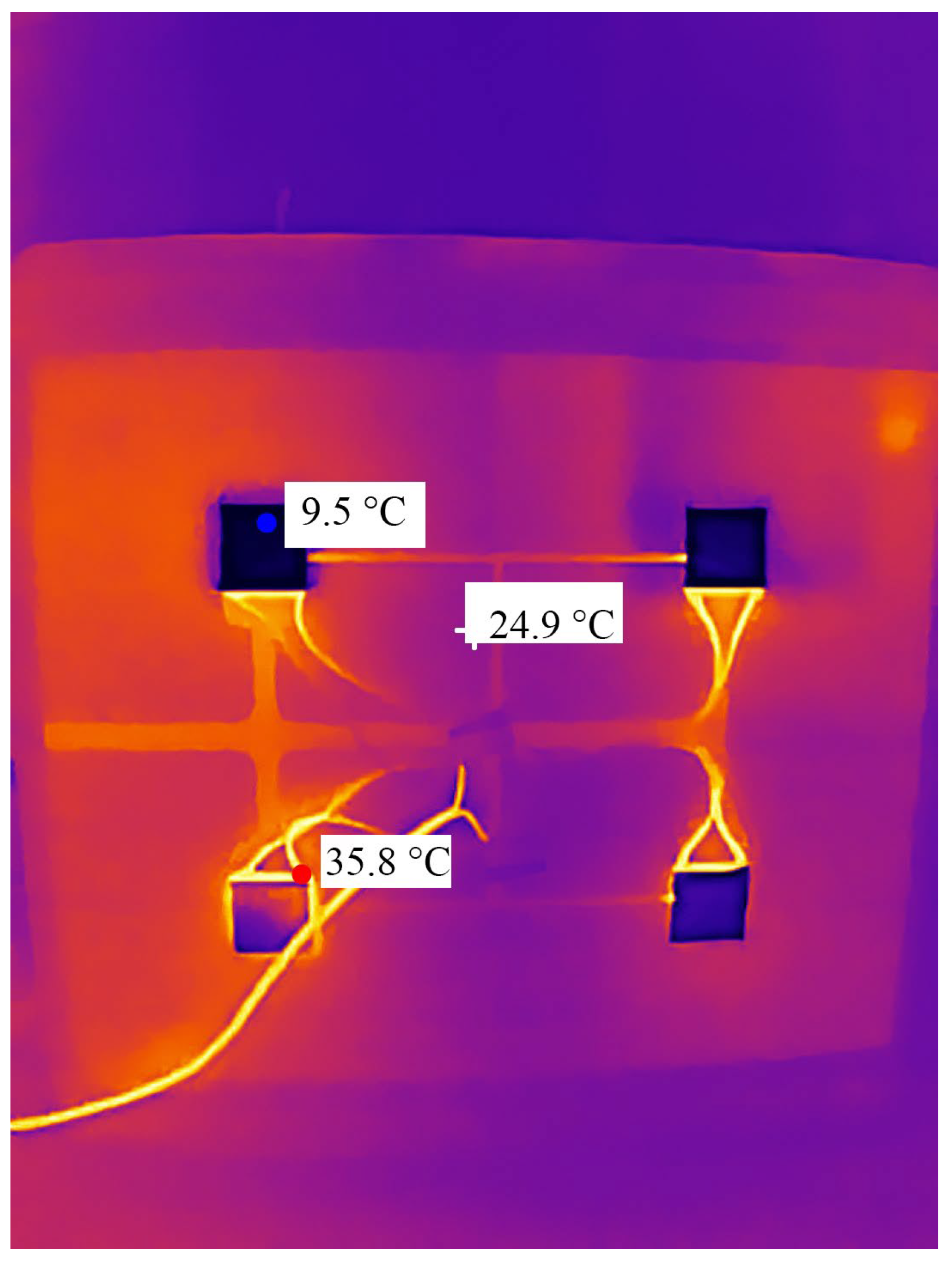
The cold-plate assembly with four Peltier modules was observed with an infrared camera during prototype bench operation (Figure 17).
Figure 17.
Thermal image of the cold plate with four Peltier modules during bench operation of the prototype; spot readings: minimum 9.5 °C, centre 24.9 °C, maximum 35.8 °C.
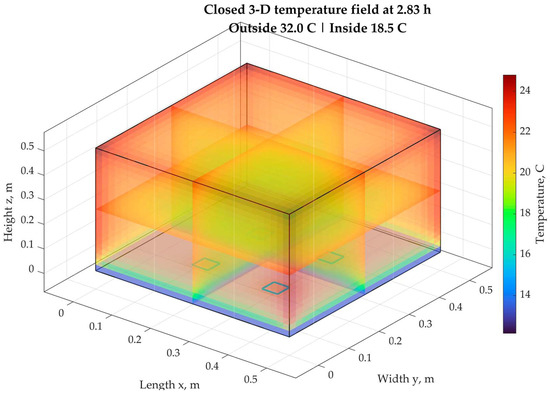
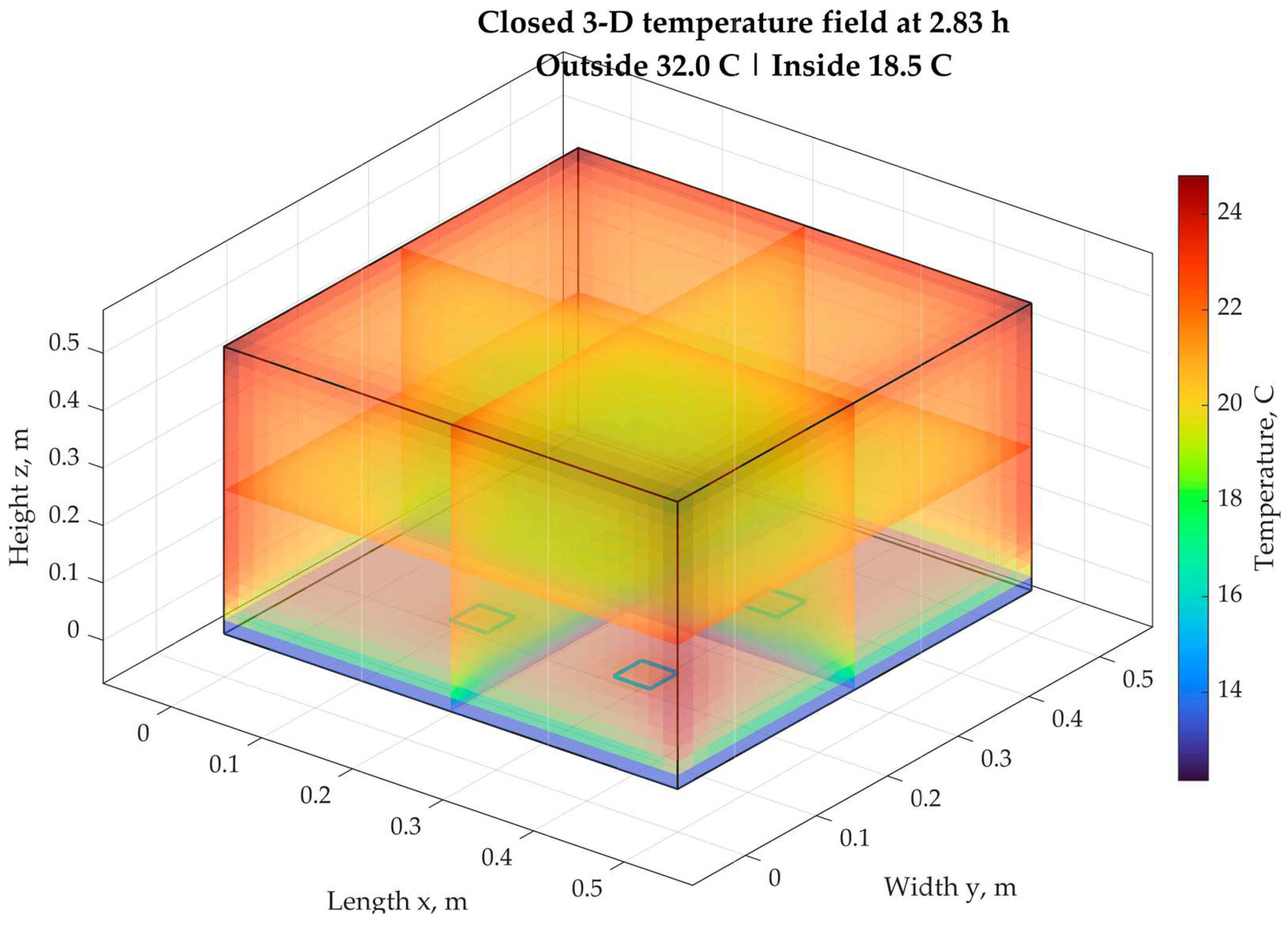
Figure 18 shows the reconstructed three-dimensional temperature field for scenario H at the final record, t = 10,173 s (2 h 49 min 33 s). The animation of the reconstruction is presented in video via link in Supplementary Materials.
Figure 18.
Reconstructed three-dimensional temperature field inside the Smart Archival Box at t = 2.83 h (scenario H).
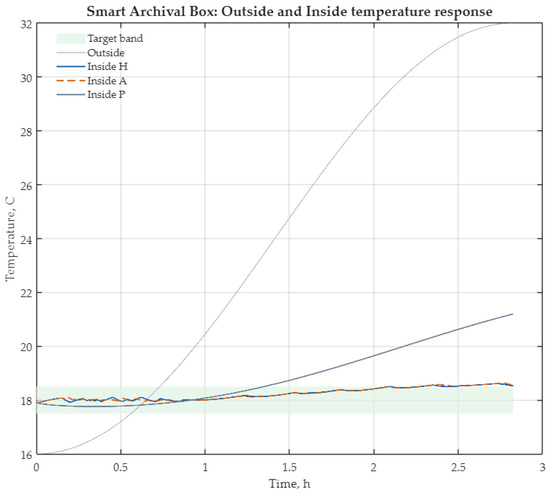
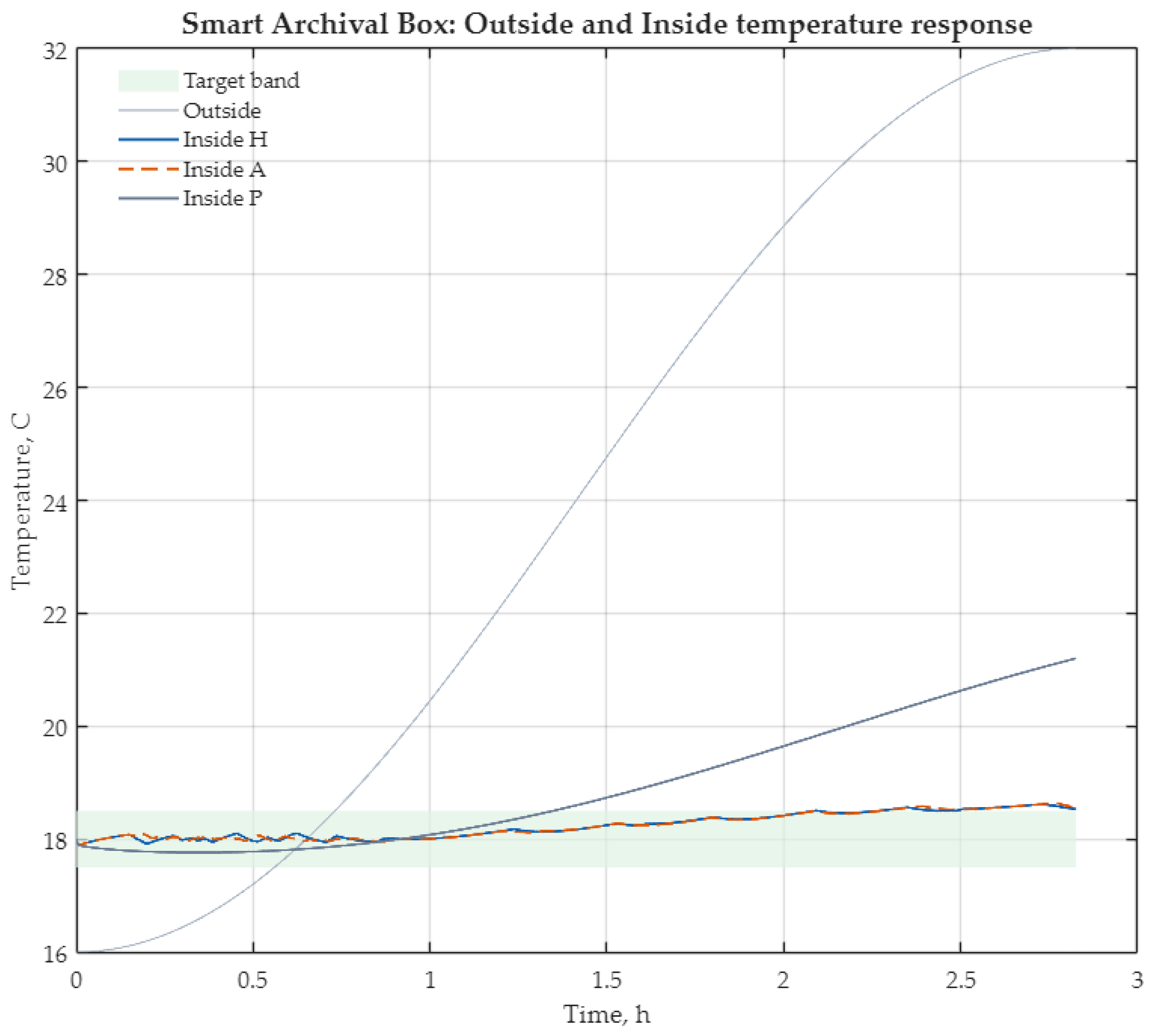
At the final record, ambient temperature is 32.0 °C, and internal-air temperature is 18.53 °C in H and 18.56 °C in A. Both active scenarios remain within the broader 16–20 °C preservation band for the entire run. They stay within the tighter 17.5–18.5 °C control band until 2.08 h (H) and 2.28 h (A), after which the internal temperature drifts slightly above it, to maxima of 18.62 °C and 18.64 °C, as the ambient load approaches its peak; compliance with the tighter band is therefore 79.7% for H and 80.5% for A. P leaves the tighter band at 1.35 h and the broader band at 2.18 h, reaching 21.20 °C, with 47.7% compliance in the tighter band and 77.1% in the broader band (Figure 19).
Figure 19.
Internal air temperature in scenarios H, A and P compared with the ambient temperature; the shaded band marks the 17.5–18.5 °C control band (0–10,173 s).
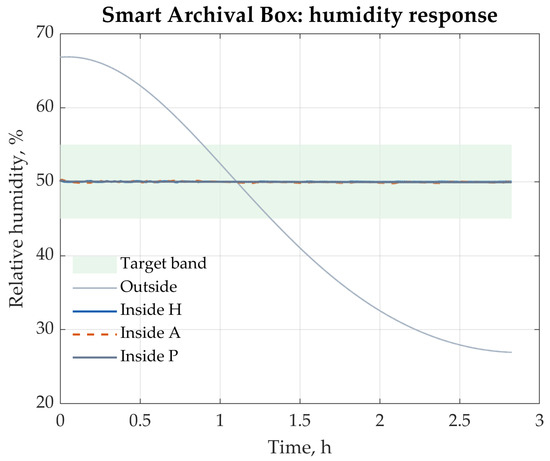
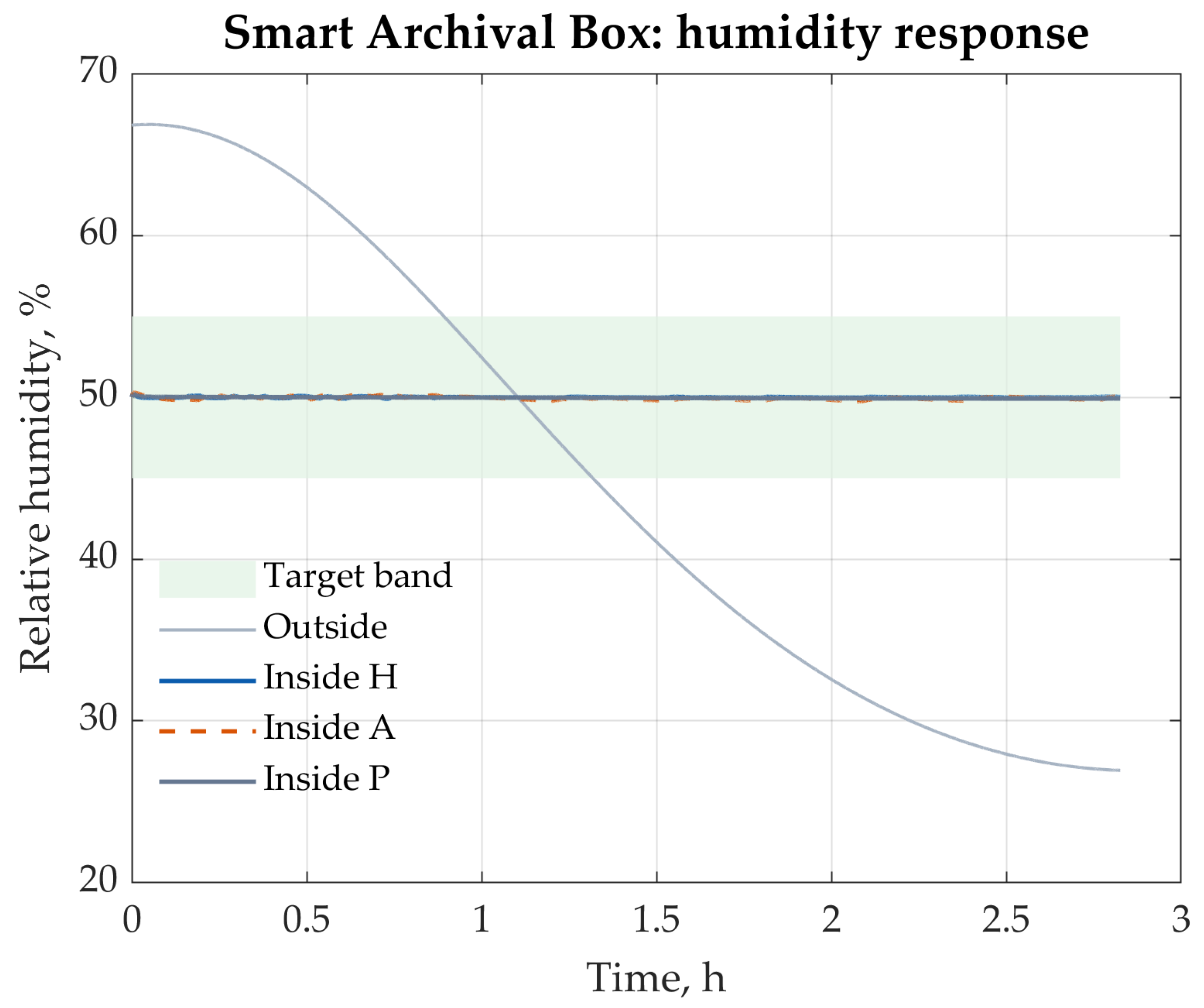
Maximum hot-side temperatures are 42.55 °C for H and 42.25 °C for A. Internal RH remains within 49.75–50.27% in all scenarios while ambient RH decreases from 66.8% to 26.9% (Figure 20). The internal RH range is 49.90–50.18% in H, 49.75–50.27% in A and 49.92–50.19% in P. The smaller excursion in H than in A (0.28 versus 0.52 percentage points) reflects ArtSorb sorption and desorption in the moisture balance; it is far smaller than the accuracy of typical RH sensors and has not been verified experimentally, so it does not demonstrate a practical humidity-buffering advantage of ArtSorb.
Figure 20.
Internal relative humidity in scenarios H, A and P; the shaded band is the target range of 50 ± 5%.
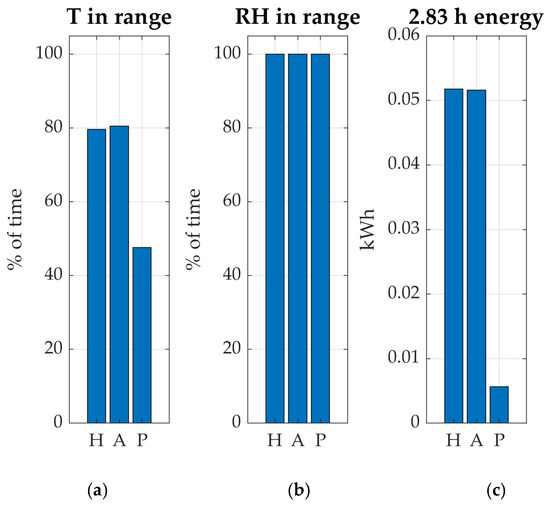
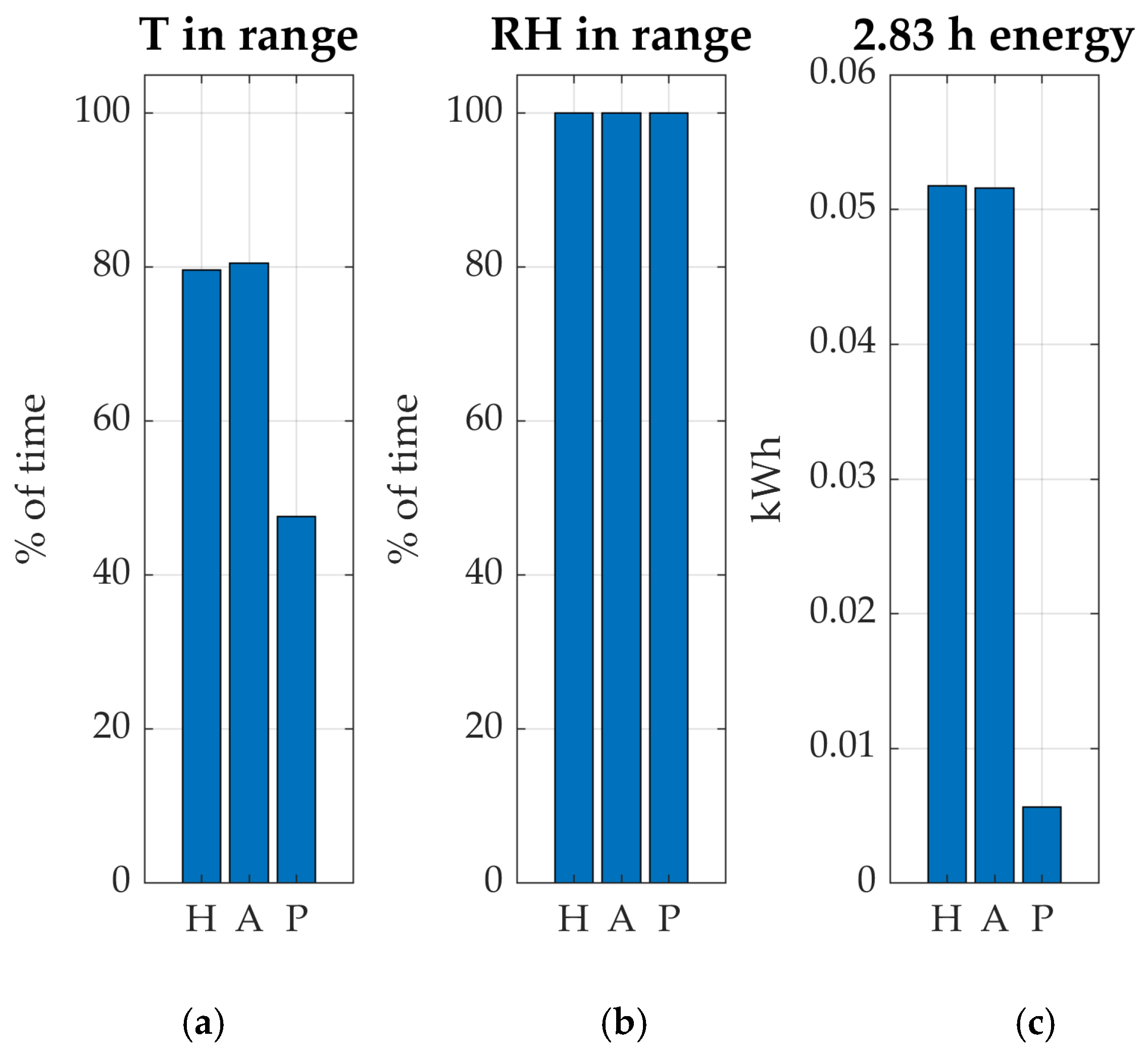
Figure 21 summarizes the indicators. Compliance with the 17.5–18.5 °C band is 79.7% for H, 80.5% for A and 47.7% for P, and compliance with the 16–20 °C band is 100%, 100% and 77.1%; RH compliance is 100% in all scenarios. Energy consumption over 2.8258 h is 0.05177 kWh for H, 0.05156 kWh for A and 0.00565 kWh for P, corresponding to mean powers of 18.32, 18.25 and 2.00 W.
Figure 21.
Calculated performance indicators for scenarios H, A and P over 0–10,173 s: (a) time within the 17.5–18.5 °C control band; (b) time within the 45–55% RH range; (c) calculated electrical energy.
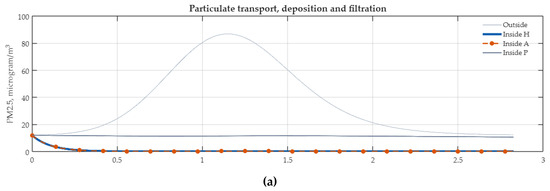
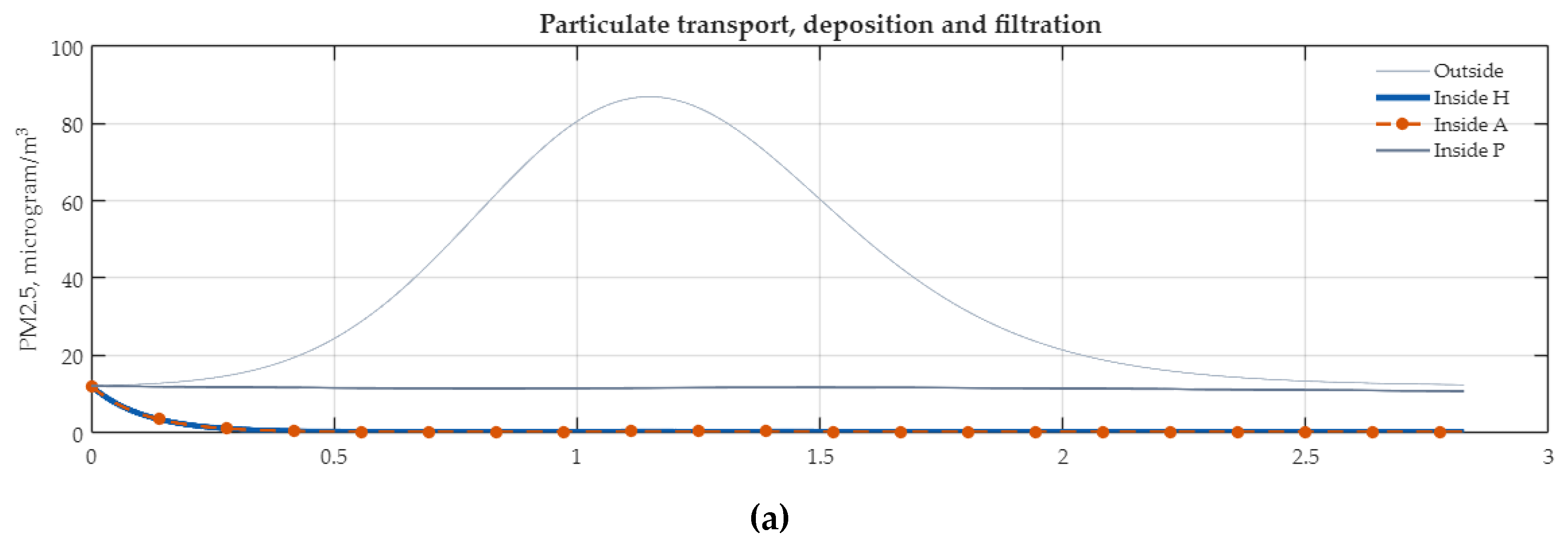
Ambient PM2.5 rises from 12 µg/m3 to 86.9 µg/m3 at 1.15 h and then decreases to 12.3 µg/m3. Internal PM2.5 never exceeds its initial value of 12.0 µg/m3 in any scenario; with filtration it falls to 0.07 µg/m3 in H and A, whereas in P it ends at 10.7 µg/m3. Mean-exposure reductions relative to the ambient profile are 98.4% for H/A and 68.9% for P (Figure 22a).
Figure 22.
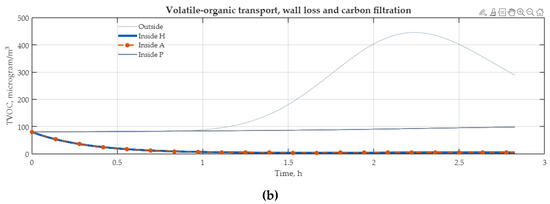
Ambient and internal pollutant concentrations: (a) PM2.5; (b) TVOC.
Ambient TVOC reaches 445.5 µg/m3 at 2.24 h. Internal TVOC in H/A decreases from its initial 80.0 µg/m3 to 4.5 µg/m3, whereas in P it rises to 98.1 µg/m3; mean-exposure reductions are 94.4% and 60.0%, respectively (Figure 22b). H and A coincide because both use the same filter and pollutant parameters.
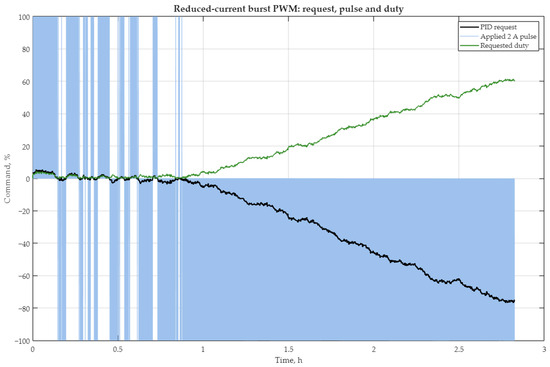
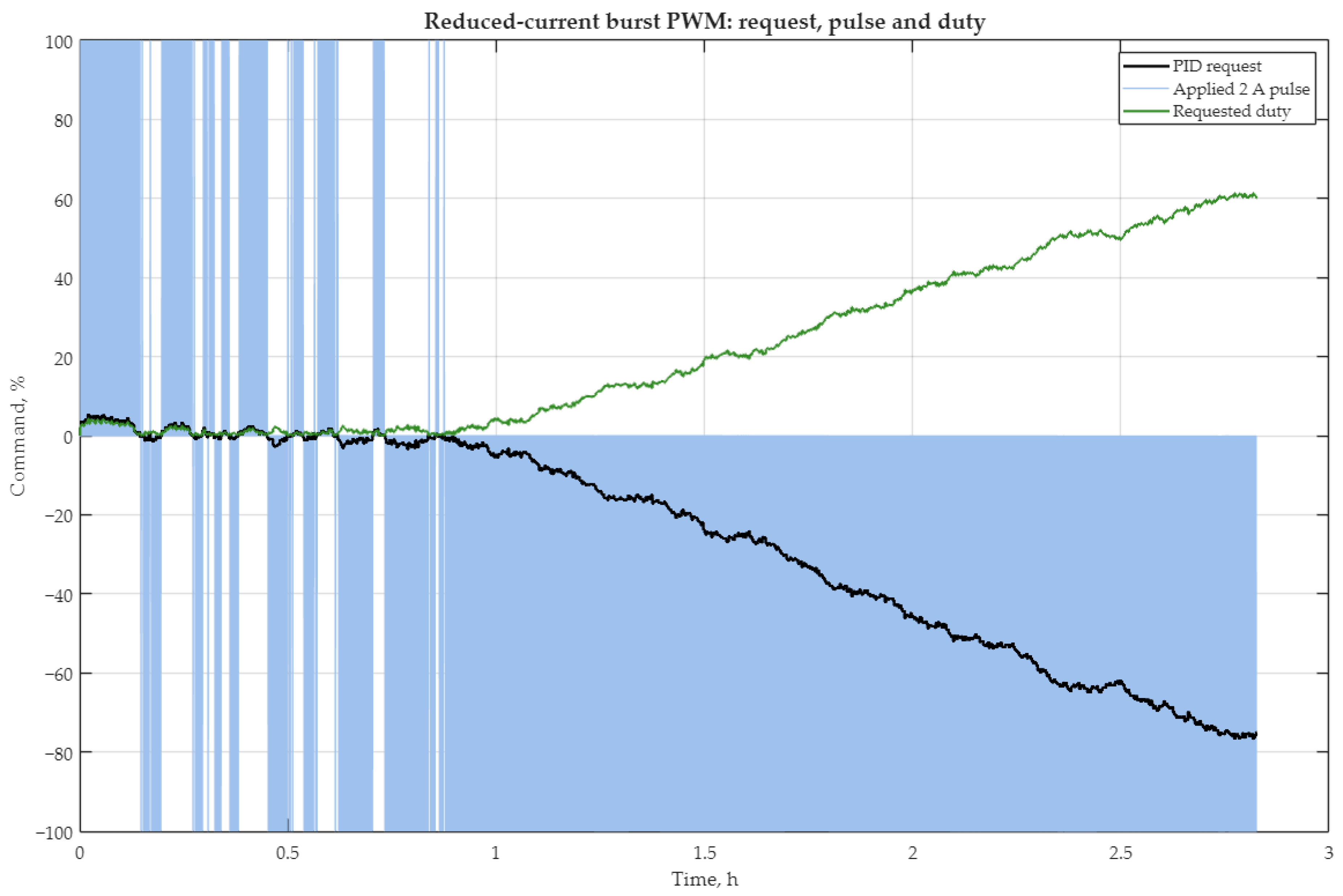
Figure 23 shows the PWM operation in scenario H over the same 0–10,173 s run as Figure 19, Figure 20, Figure 21 and Figure 22. The requested burst duty rises with the ambient heat load to about 61%, and the applied on-time of the synchronized 2 A pulses reaches at most 7 s of each 10 s window, below the 8 s (80%) limit. The minimum cold-plate temperature is 12.08 °C, above both the 10 °C floor and the dew-point safety threshold max (Td + 2.5 °C, 10 °C), which does not exceed 10.5 °C. The hot side reaches 42.55 °C, far below the 60 °C derating threshold and the 84 °C cut-out.
Figure 23.
Operation of the PWM driver of the Peltier modules in scenario H.
Under the prescribed disturbance, H and A provide nearly identical temperature retention and pollutant removal. Their final internal temperatures are 18.53 °C and 18.56 °C, RH remains close to 50%, and the filter strongly reduces mean PM2.5 and TVOC exposure.
P consumes about 11% of the energy of H/A but leaves the 17.5–18.5 °C control band much earlier and ends above the 20 °C preservation limit. Neither active scenario reaches the hot-side cut-out or the condensation-protection limit.
4. Discussion
The results indicate that active thermoelectric control maintains the internal air temperature within 16–20 °C throughout the 2.8258 h ambient ramp from 16 to 32 °C. Configurations H and A finished at 18.53 °C and 18.56 °C, with compliance rates of 79.7% and 80.5%, respectively, within the tighter 17.5–18.5 °C control band; the departures occur after about 2.1 h, when the heat load is highest, and remain below 0.15 K. Configuration P reached 21.20 °C and achieved 47.7% compliance. These results suggest that, under the modelled short-term heat load, passive insulation alone is insufficient.
The similar temperature and energy performance of configurations H and A does not establish a temperature-control role or advantage for the ArtSorb cassette. The consumption of configurations H and A was 0.05177 and 0.05156 kWh, corresponding to mean powers of 18.32 and 18.25 W, respectively. Configuration P consumed 0.00565 kWh, corresponding to 2.00 W. Thus, the active configurations provide improved temperature stability at the cost of higher energy consumption, whereas these results alone do not establish an overall preference for H over A.
In all configurations, the internal relative humidity remained close to 50% and stayed within the 50 ± 5% range, despite the ambient relative humidity changing from 66.8% to 26.9%. In the model, this follows mainly from the low assumed leakage rate (ACH = 0.020 h−1) and the moisture capacity of the paper load over a 2.83 h period. In the hybrid configuration, the ArtSorb cassette is intended to provide additional passive humidity buffering, as sorbents are used for this purpose in museum enclosures [5,6,7]. The model predicts a slightly narrower RH range with ArtSorb (0.28 versus 0.52 percentage points), but this difference is below practical sensor resolution, and the present results do not demonstrate an additional buffering benefit; this intended function remains to be verified experimentally.
The model includes paper (all scenarios) and ArtSorb (H and P) as moisture-buffering materials. However, the short test duration, closed lid and low air leakage resulted in only a small difference between configurations H and A. Therefore, the long-term moisture capacity and service life of the ArtSorb cassette require additional testing under repeated humidity changes and lid-opening conditions. Future tests should compare configurations with and without ArtSorb under identical temperature-control settings and should report peak relative-humidity deviation, recovery time, saturation and regeneration characteristics.
The model-reconstructed temperature field (Figure 18) shows spatial variation around the final internal air temperature of 18.53 °C, with lower temperatures near the bottom cooling plate and higher temperatures near the walls and lid. This distribution may inform sensor placement and the assessment of storage-environment uniformity, but it requires verification by independent multipoint temperature measurements.
The controller increased the thermoelectric burst duty as the external heat load increased while maintaining dew-point and hot-side safety limits. The minimum cold-plate temperature was 12.08 °C, and the maximum hot-side temperature was 42.55 °C, well below the 84 °C thermal cut-out threshold. No thermal cut-out or condensation occurred in any scenario.
The pollutant results indicate substantial protection of the internal environment. Compared with the mean prescribed ambient concentrations, the filtered H and A configurations reduced PM2.5 by 98.4% and TVOC by 94.4%. The unfiltered P configuration reduced PM2.5 by 68.9% and TVOC by 60.0%, owing to enclosure tightness, particle deposition and wall sorption. These results suggest the combined benefit of enclosure sealing and filtration for short-term pollutant control.
Compared with the previously proposed intelligent archival system, which focused mainly on temperature and humidity monitoring [8], the developed system combines environmental monitoring, active temperature control, passive humidity stabilization, pollutant filtration and digital access control. This configuration enables an automatic response to adverse changes in storage conditions. Box-level control also allows different storage conditions to be maintained for different types of materials without conditioning the entire room.
Component cost, filter-replacement interval and ArtSorb service life were not measured and therefore are not quantified in this study. The ZigBee/MQTT architecture supports system expansion to multiple archival boxes. During a power outage, the enclosure and ArtSorb cassette continue to provide passive protection, whereas monitoring and access logging require backup power. Practical deployment should also address dependence on third-party AirTag services, the limited security of cloneable RFID credentials, authenticated TLS-protected MQTT communication, role-based access control and tamper-evident logging.
Extent of experimental validation. The physical work reported in this study comprises the fabrication of the enclosure and rack prototype and functional bench checks of the sensor/telemetry chain, electromagnetic lock, RFID access workflow and thermoelectric assembly, including infrared observation of the cold plate (Figure 14, Figure 15, Figure 16 and Figure 17). The microclimate, energy and pollutant results in Figure 18, Figure 19, Figure 20, Figure 21, Figure 22 and Figure 23 are numerical predictions under prescribed boundary conditions and have not yet been compared with enclosure measurements. Validation will require climatic-chamber tests of the closed box with calibrated multipoint temperature and RH sensors, measured electrical power and reference pollutant instruments, repeated to establish uncertainty intervals, and tests with and without ArtSorb under controlled humidity disturbances.
5. Conclusions
A Smart Archival Box integrating thermoelectric temperature control, passive humidity buffering, pollutant filtration, distributed monitoring and access logging was developed at prototype level and evaluated numerically. Each scenario comprised 10,174 one-second records over 2.8258 h. H and A finished at 18.53 °C and 18.56 °C under an ambient rise to 32 °C and remained within 16–20 °C throughout; P finished at 21.20 °C.
Compliance with the tighter 17.5–18.5 °C control band was 79.7% for H, 80.5% for A and 47.7% for P. All configurations remained within 45–55% RH. In H/A, mean PM2.5 and TVOC exposure was reduced by 98.4% and 94.4%, respectively, relative to the prescribed ambient exposure. The minimum cold-plate temperature was 12.08 °C and the maximum hot-side temperature was 42.55 °C; neither safety limit was reached.
Energy consumption was 0.05177 kWh for H, 0.05156 kWh for A and 0.00565 kWh for P. H and A were nearly indistinguishable in this short closed-box scenario; therefore, the humidity-buffering function of ArtSorb remains an intended function, and neither its additional value nor a preference for H over A was demonstrated.
Prototype construction and subsystem bench observations support continued development. The microclimate performance reported here has not yet been validated experimentally. Further work should provide this validation and quantify uncertainty through repeated climatic-chamber enclosure tests, controlled humidity disturbances with and without ArtSorb, lid-opening tests and long-term assessment of sorbent, filter and hot-side performance.
Supplementary Materials
The following supporting information can be downloaded at https://www.youtube.com/watch?v=plBjAyB-Sdo (accessed on 9 October 2026).
Author Contributions
Conceptualization, I.K., A.N. and A.B.; methodology, B.A. (Batyrzhan Akhmetzhanov), D.D. and I.K.; software, B.A. (Batyrzhan Akhmetzhanov); validation, B.A. (Batyrzhan Akhmetzhanov), D.D., I.K., A.R. and D.K.; formal analysis, I.K., D.K. and B.A. (Beibit Abdikenov); investigation, B.A. (Batyrzhan Akhmetzhanov), D.D., I.K. and D.K.; resources, D.D., A.N. and A.B.; data curation, B.A. (Batyrzhan Akhmetzhanov) and D.K.; writing—original draft preparation, I.K., B.A. (Batyrzhan Akhmetzhanov), D.D. and D.K.; writing—review and editing, I.K., B.A. (Beibit Abdikenov), A.B., A.R. and A.N.; visualization, B.A. (Batyrzhan Akhmetzhanov), D.D. and I.K.; supervision, A.N. and A.B.; project administration, I.K. and B.A. (Beibit Abdikenov); funding acquisition, B.A. (Beibit Abdikenov). All authors have read and agreed to the published version of the manuscript.
Funding
This research was funded by the Science Committee of the Ministry of Science and Higher Education of the Republic of Kazakhstan within project BR28712621 “Manuscript Heritage of Kazakhstan: Registration, Restoration, Scientific Cataloguing, Digitization, and Comprehensive Codicological Research”.
Institutional Review Board Statement
Not applicable.
Informed Consent Statement
Not applicable.
Data Availability Statement
The original contributions presented in this study are included in the article/Supplementary Material. Further inquiries can be directed to the corresponding authors.
Acknowledgments
During the preparation of this manuscript, the authors used DeepL for the purposes of translating the text from Russian into English and proofreading it for grammar, spelling, and style. The authors have reviewed and edited the output and take full responsibility for the content of this publication.
Conflicts of Interest
The authors declare no conflicts of interest.
Nomenclature
| Symbol | Description | Unit |
| a | External edge length of the box | m |
| S | Effective six-face enclosure heat-exchange area | m2 |
| V | Internal air volume of the box | m3 |
| Ta, Tout | Internal and ambient air temperature | °C |
| Tb, Tm | Temperature of the inner aluminium plate and of the Internal thermal mass | °C |
| Th, Tc | Hot- and cold-side temperature of the Peltier modules | °C |
| TK | Absolute temperature, T + 273.15 | K |
| Td | Dew-point temperature | °C |
| Tpl,min | Minimum admissible cold-plate temperature | °C |
| ΔTsafe | Dew-point safety margin | K |
| RH | Relative humidity | % |
| γ | Auxiliary variable of the Magnus–Tetens formula | – |
| ma, ṁa | Mass of internal air; leakage mass flow rate | kg; kg/s |
| cp,a | Specific heat capacity of air at constant pressure | J/(kg·K) |
| Ca, Ch, Cc | Heat capacity of internal air, hot plate and module cold side | J/K |
| RΣ | Total thermal resistance of the walls | m2·K/W |
| Hm, Hpa, Hbc | Thermal conductance (air–mass, plate–air, module–plate) | W/K |
| h | Convective heat-transfer coefficient of the hot plate | W/(m2·K) |
| ε, σ | Emissivity; Stefan–Boltzmann constant | –; W/(m2·K4) |
| N | Number of Peltier modules | – |
| α, R, KTEC | Seebeck coefficient, electrical resistance and thermal conductance of one module | V/K; Ω; W/K |
| I | Module current | A |
| Ci, Ci,out | Internal and ambient concentration of pollutant i (PM2.5 or TVOC) | µg/m3 |
| Gi | Internal emission rate of pollutant i | µg/h |
| ACH | Air-exchange rate of the closed box | h−1 |
| ki, kdep, kwall | Loss-rate coefficients (generic, PM2.5 deposition, TVOC wall sorption) | h−1 |
| Qf | Air flow rate through the filter | m3/h |
| ηi | Single-pass filtration efficiency | – |
| f | Filter state factor (0–1) | – |
| t | Time | s or h |
| ACH | Air changes per hour | - |
| BLE | Bluetooth Low Energy | - |
| HVAC | heating, ventilation and air conditioning | - |
| MQTT | Message Queuing Telemetry Transport | - |
| PID | proportional–integral–derivative | - |
| PWM | pulse-width modulation | - |
| RFID | radio-frequency identification | - |
| TEC | thermoelectric cooler | - |
| TVOC | total volatile organic compounds | - |
References
- Hourcade, B.N. Managing museum storage in Rogaland (Norway). Mus. Int. 2021, 73, 194–203. [Google Scholar] [CrossRef] [Scilit]
- Laurin, G.; Scott, P. New storage facility for the National Museum of Science and Industry. Stud. Conserv. 1994, 39, 154–158. [Google Scholar] [CrossRef] [Scilit]
- Murillo de la Cueva, P.L.; Cabrera, I.B. Storage as a system: Collection management at the Museo Nacional del Prado. Mus. Int. 2021, 73, 32–41. [Google Scholar] [CrossRef] [Scilit]
- Xavier-Rowe, A.; Newman, C.; Stanley, B.; Thickett, D.; Pereira Pardo, L. A new beginning for English Heritage’s archaeological and architectural stored collections. In Proceedings of the ICOM-CC 17th Triennial Conference Preprints, Melbourne, Australia, 15–19 September 2014; Bridgland, J., Ed.; International Council of Museums: Paris, France, 2014; Article 1517; pp. 1–10. [Google Scholar]
- Gorgolis, G.; Ziemann, S.; Kotsidi, M.; Paterakis, G.; Koutroumanis, N.; Tsakonas, C.; Anders, M.; Galiotis, C. Novel graphene-based materials as a tool for improving long-term storage of cultural heritage. Materials 2023, 16, 3528. [Google Scholar] [CrossRef] [Scilit]
- Smedemark, S.H.; Ryhl-Svendsen, M.; Toftum, J. Removal of organic acids from indoor air in museum storage rooms by active and passive sorption techniques. Stud. Conserv. 2020, 65, 251–261. [Google Scholar] [CrossRef] [Scilit]
- Zuliani, A.; Bandelli, D.; Chelazzi, D.; Giorgi, R.; Baglioni, P. Environmentally friendly ZnO/castor oil polyurethane composites for the gas-phase adsorption of acetic acid. J. Colloid Interface Sci. 2022, 614, 451–459. [Google Scholar] [CrossRef] [Scilit]
- Gawade, D.R.; Ziemann, S.; Kumar, S.; Iacopino, D.; Belcastro, M.; Alfieri, D.; Schuhmann, K.; Anders, M.; Pigeon, M.; Barton, J.; et al. A smart archive box for museum artifact monitoring using battery-less temperature and humidity sensing. Sensors 2021, 21, 4903. [Google Scholar] [CrossRef] [Scilit]
- Molina, M.T.; Ramírez-Barat, B.; Díaz, I.; Cano, E. Comparison of storage systems for a scientific-technical museum collection based on corrosivity assessment by metallic dosimeters. Stud. Conserv. 2026, 71, 430–442. [Google Scholar] [CrossRef] [Scilit]
- Lindblom, I. Collection management and storage issues at the Vasa Museum. WIT Trans. Built Environ. 2003, 65, 191–198. [Google Scholar] [CrossRef]
- Ankersmit, B.; Loddo, M.; Stappers, M.; Zalm, C. Museum storage facilities in the Netherlands: The good, the best and the beautiful. Mus. Int. 2021, 73, 132–143. [Google Scholar] [CrossRef] [Scilit]
- Kuchař, M.; Oswald, C.; Fišer, J.; Khol, M.; Simeunović, G.; Vyhlídal, T.; Guilminot, E.; Echinard, J. Corrosion prediction for preventive protection of aircraft heritage. Herit. Sci. 2024, 12, 102. [Google Scholar] [CrossRef] [Scilit]
- Rocca, E.; Mirambet, F. The electrochemical techniques for the diagnosis and restoration treatments of technical and industrial heritage: Three examples of metallic artefacts. J. Solid State Electrochem. 2010, 14, 415–423. [Google Scholar] [CrossRef] [Scilit]
- Díaz Cortés, A.; Ramírez Barat, B.; Leal Perez-Chao, J.; Llorente, I.; del Egido, M.; Cano, E. Diagnóstico del estado de conservación de colecciones científico-técnicas: Extintores históricos del MUNCYT. Ge-Conservacion 2020, 18, 7–19. [Google Scholar] [CrossRef] [Scilit]
- Lemos, M.; Tissot, I. Reflections on the conservation challenges of scientific and technological objects. Conserv. Patrim. 2020, 33, 24–31. [Google Scholar] [CrossRef] [Scilit]
- Kammer, J.; Truong, F.; Boissard, C.; Soulié, A.-L.; Dupont, A.-L.; Simon, L.; Gros, V.; Lavédrine, B. Quantitative and qualitative assessment of VOCs emitted from cellulose acetate movie films by PTR-ToF-MS. J. Cult. Herit. 2021, 47, 50–58. [Google Scholar] [CrossRef] [Scilit]
- Lattuati-Derieux, A.; Egasse, C.; Thao-Heu, S.; Balcar, N.; Barabant, G.; Lavédrine, B. What do plastics emit? HS-SPME-GC/MS analyses of new standard plastics and plastic objects in museum collections. J. Cult. Herit. 2013, 14, 238–247. [Google Scholar] [CrossRef] [Scilit]
- Rouchon-Quillet, V.; Remazeilles, C.; Bernard, J.; Wattiaux, A.; Fournès, L. The impact of gallic acid on iron gall ink corrosion. Appl. Phys. A 2004, 79, 389–392. [Google Scholar] [CrossRef] [Scilit]
- Kolar, J.; Štolfa, A.; Strlič, M.; Pompe, M.; Pihlar, B.; Budnar, M.; Simčič, J.; Reissland, B. Historical iron gall ink containing documents—Properties affecting their condition. Anal. Chim. Acta 2006, 555, 167–174. [Google Scholar] [CrossRef] [Scilit]
- ISO/TR 19815:2018; Information and Documentation: Management of the Environmental Conditions for Archive and Library Collections. ISO: Geneva, Switzerland, 2018.
- Rao, Z.; Wang, G. Smart data-enabled conservation and knowledge generation for architectural heritage system. Buildings 2025, 15, 2122. [Google Scholar] [CrossRef] [Scilit]
- Liu, F.; Qiang, W.; Lu, Z.; Fan, Y.; Wang, H. Research on heritage characteristics based on railway architectural heritage database in Jinzhou section of the Peking–Mukden Railway. Front. Archit. Res. 2024, 13, 1127–1144. [Google Scholar] [CrossRef] [Scilit]
- Fadli, F.; AlSaeed, M. Digitizing vanishing architectural heritage; The design and development of Qatar historic buildings information modeling [Q-HBIM] platform. Sustainability 2019, 11, 2501. [Google Scholar] [CrossRef] [Scilit]
- Zhang, X.; Zhi, Y.; Xu, J.; Han, L. Digital protection and utilization of architectural heritage using knowledge visualization. Buildings 2022, 12, 1604. [Google Scholar] [CrossRef] [Scilit]
- Steinberg, M.D.; Kimbriel, C.S.; d’Hont, L.S. Autonomous near-field communication (NFC) sensors for long-term preventive care of fine art objects. Sens. Actuators A Phys. 2019, 285, 456–467. [Google Scholar] [CrossRef] [Scilit]
- Xiao, C.; Chen, N.; Li, D.; Lv, Y.; Gong, J. SCRMS: An RFID and sensor web-enabled smart cultural relics management system. Sensors 2017, 17, 60. [Google Scholar] [CrossRef] [Scilit]
- Tse, J. Development of a new environmental monitoring system for museums and galleries using RFID-enabled technology. Stud. Conserv. 2016, 61, 334–336. [Google Scholar] [CrossRef] [Scilit]
- Chen, X.; Xie, H.; Tao, X.; Wang, F.L.; Leng, M.; Lei, B. Artificial intelligence and multimodal data fusion for smart healthcare: Topic modeling and bibliometrics. Artif. Intell. Rev. 2024, 57, 91. [Google Scholar] [CrossRef] [Scilit]
- Xu, F.; Jin, X.P. A review of cultural heritage digital preservation based on linked data. J. Natl. Libr. China 2020, 29, 90–99. [Google Scholar] [CrossRef]
- Laohaviraphap, N.; Waroonkun, T. Integrating Artificial Intelligence and the Internet of Things in Cultural Heritage Preservation: A Systematic Review of Risk Management and Environmental Monitoring Strategies. Buildings 2024, 14, 3979. [Google Scholar] [CrossRef] [Scilit]
- Perles, A.; Pérez-Marín, E.; Mercado, R.; Segrelles, J.D.; Blanquer, I.; Zarzo, M.; Garcia-Diego, F.J. An Energy-Efficient Internet of Things (IoT) Architecture for Preventive Conservation of Cultural Heritage. Future Gener. Comput. Syst. 2018, 81, 566–581. [Google Scholar] [CrossRef] [Scilit]
- ASHRAE. Chapter 24: Museums, Galleries, Archives, and Libraries. In 2019 ASHRAE Handbook—HVAC Applications (SI Edition); ASHRAE: Atlanta, GA, USA, 2019. [Google Scholar]
- ISO 11799:2024; Information and Documentation: Document Storage Requirements for Archive and Library Materials. ISO: Geneva, Switzerland, 2024.
- IEEE 802.15.4-2020; IEEE Standard for Low-Rate Wireless Networks. IEEE: New York, NY, USA, 2020.









Disclaimer/Publisher’s Note: The statements, opinions and data contained in all publications are solely those of the individual author(s) and contributor(s) and not of MDPI and/or the editor(s). MDPI and/or the editor(s) disclaim responsibility for any injury to people or property resulting from any ideas, methods, instructions or products referred to in the content. |
© 2026 by the authors. Licensee MDPI, Basel, Switzerland. This article is an open access article distributed under the terms and conditions of the Creative Commons Attribution (CC BY) license.