


Abstract
Plant-based meat alternatives (PBMAs) are gaining increasing attention due to their potential role as substitutes for traditional meat products, driven by sustainability and health concerns related to animal production and consumption. Therefore, investigating and understanding consumer acceptance of less common PBMAs remains crucial. In this context, this research explored sensory expectations and actual experiences of a plant-based hotdog compared to a pork hotdog in a US sample. Using a within-subject design, participants (n = 88) evaluated both products before and after tasting, assessing overall liking, willingness to buy (WTB), and key sensory attributes. Furthermore, Check-All-That-Apply (CATA) batteries were used to explore product descriptors and situational appropriateness for consumption, while open-ended questions were employed to examine what consumers liked and disliked the most about the products in more detail. Results revealed no significant differences in expected liking between the two products before tasting. However, after tasting, the pork hotdog received significantly higher scores for both overall liking and WTB compared to the plant-based hotdog. Despite the plant-based product being associated with situations related to health and sustainability, it did not lead to the same appealing hedonic experience as the animal-based product. In addition, both penalty-lift analysis and text mining of the open-ended responses confirmed that consumers seek meaty characteristics in both animal- and plant-based hotdogs (e.g., “I don’t like how light the meat is” or “would like a more meat flavor”). This research provides valuable implications for policymakers and the food industry in terms of aligning strategies with consumers’ preferences and needs, supporting efforts to reduce red meat consumption and promote healthier, more sustainable dietary choices.
1. Introduction
Growing concerns over environmental sustainability and public health are driving a global shift toward healthier and more sustainable diets, with particular emphasis on efforts to reduce meat consumption [1]. This shift is prompted by the significant impact of livestock farming, especially for red meat, on climate change, as it contributes to more greenhouse gas emissions than most other food sources while also negatively impacting land and water usage [2,3]. Simultaneously, excessive red meat consumption has been associated with various health issues, such as cardiovascular diseases, cancer, and obesity [1,2]. Therefore, there is a current need to support the promotion of a dietary shift toward healthier, more sustainable eating choices. Moreover, there is a current global inequitable distribution of meat consumption across regions, with the US being one of the leading countries and reaching over 100 kg per capita per year [4].
To address the reduction in meat consumption, a potential strategy that has been proposed is an increased consumption of plant-based meat alternatives (PBMAs) [5]. The objective of PBMAs is to provide consumers with a substitute for meat products while still delivering the sensory experience and nutritional benefits (as a source of protein) of meat consumption [6,7,8]. Thus, these alternatives often mimic the taste, texture, and appearance of traditional meat products to support more environmentally and health-conscious decisions while maintaining a familiar food product experience [7,9]. However, despite their increased availability in the global market [10], meat consumption has not significantly decreased; rather, its shares are expected to grow in the coming years [1,11]. This paradox indicates that while PBMAs are growing in popularity [7], they are still not sufficiently modifying meat consumption patterns; thus, further understanding of the factors driving consumer acceptance is required [12].
While much of the sensory and consumer research on PBMAs has focused on beef alternatives, such as PBMA burgers and their counterparts [13,14,15], fewer studies (e.g., [16]) have examined plant-based counterparts to pork-containing products. This gap in the literature is particularly important considering that pork consumption is expected to increase in several countries [17], as well as in its processed forms, such as sausages and hotdogs [18]. With hotdogs being a symbol of American culture and given their prominence in the US market [19], US consumers could provide valuable insights into the acceptance of plant-based (PB) vs. animal-based (AB) hotdogs due to their familiarity with this meat variety [20]. Thus, understanding their preferences can help identify the key factors that influence consumer perceptions of plant-based substitutes designed to replicate their animal-based counterparts.
Understanding consumer acceptance of plant-based pork alternatives is crucial for fostering the adoption of these products [21,22,23]. Thus, we investigated the sensory expectations and actual experiences of eating a plant-based hotdog compared to its animal-based counterpart using a US sample. The research also explored consumers’ purchasing intention before and after tasting, as well as additional measures that can help predict future consumption behavior [24]. Specifically, product descriptors and situational appropriateness—defined as the perceived suitability of a product for specific usage contexts [24]—were explored both pre- and post-tasting. By focusing on pork, our research aims to contribute to a more comprehensive understanding of what consumers expect and consider when consuming PBMAs with respect to meat products, ultimately informing strategies that may encourage a reduction in red meat consumption.
2. Materials and Methods
2.1. Participants
A total of 88 US adults participated in the experiment. Participants were recruited via emails and flyers and had to (i) be more than 18 years old, (ii) have purchased sausages/hotdogs at least once over the six months prior to the study, and (iii) have no allergies/restrictions to soy or pork. The study was conducted in the fall of 2023 at Cornell University (Ithaca, NY, USA). The study was granted ethical approval by Cornell’s Institutional Review Board for Human Participant Research (Protocol n°: IRB0147823). Participants signed informed consent before taking part in the study and were compensated for their time.
Finally, the survey included sociodemographic questions (i.e., gender, age, education level, and employment status), the results of which are reported in Table 1. The sample consisted mainly of young, highly educated participants, with females representing the majority of respondents (68%) and students accounting for over half of the sample.
Table 1.
Descriptive characteristics of the evaluators (n = 88).
2.2. Study Design
Using a within-subject design, each participant evaluated a PB and an AB hotdog under two Conditions: Expected (only product information provided prior to tasting) and Actual (product tasting). In the Expected Condition, participants were presented with the product information (i.e., “Plant-based hotdog” or “Pork hotdog”). No additional information (e.g., brand or nutrition facts) was provided to minimize potential biases or associations, similar to [13,25]. Using this information only, participants were asked to rate their expected Overall Liking (9-point hedonic scale: 1 = Dislike extremely… 9 = Like extremely (Peryam & Pilgrim, 1957) [26])—and their Willingness to Buy (WTB) (7-point scale: 1 = Definitely would not buy… 7 = Definitely would buy the product [13]. Additionally, based on frequently mentioned attributes in the literature, Check-All-That-Apply (CATA) batteries were used to investigate the products’ descriptors (dry, juicy, weak meat flavor, strong meat flavor, yucky, good taste, cheap, expensive, processed, unprocessed, classic product, unusual product, strong vegetable flavor, weak vegetable flavor, and none of the above) [27,28], and the product’s situational appropriateness (“When I want something I like”, “When I feel like trying something new”, “To move my diet in a more sustainable direction”, “When I want something healthy”, “As part of the meals that I post on social media”, “To set a good example for those around me”, “As a regular part of my diet”, “As part of easy and convenient meals”, and “None of the above”) [29].
After responding to the questions under the Expected Condition, participants were presented with the test sample of the product they had just evaluated in a hypothetical way and asked to taste it. In this phase (Actual Condition), panelists answered the same questions as in the Expected Condition. Additionally, Appearance, Flavor, and Texture Liking were evaluated on a 9-point hedonic scale. Two open-ended questions were added to further explore consumer likes and dislikes (“What, if anything, do you LIKE about this hotdog?”/“What, if anything, do you DISLIKE about this hotdog?”).
The same procedure was carried out for both the pork and plant-based hotdogs using a balanced presentation order to avoid order effects [30].
2.3. Products and Cooking Procedure
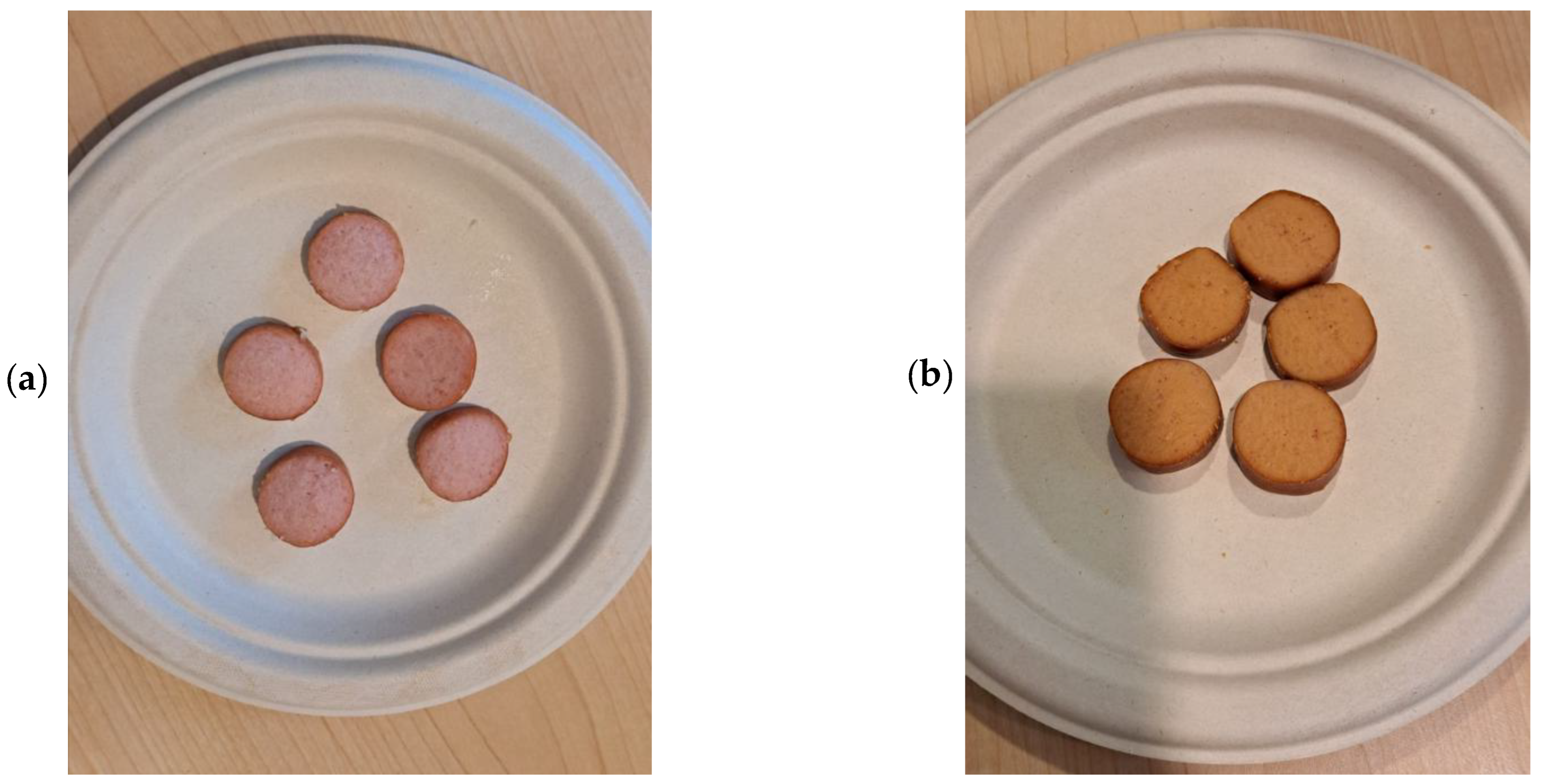
Two commercially available products, a PB and an AB hotdog, were evaluated in this study. Both were purchased from local supermarkets and had a similar price range (Ithaca, NY, USA). After purchasing, the hotdogs were refrigerated until the sensory experiment. Both products were cooked in a crockpot, following the instructions provided by the manufacturer, and served hot to participants. The test sample consisted of 5 hotdog slices of about 6–7 mm and was served on a single-use plate with a fork. The ingredient lists of the products used in the test are reported in Table A1, while an image of the served samples is presented in Figure A1. No condiment or topping was added. Between samples, participants were encouraged to drink still water to clean their palate.
2.4. Analysis
Statistical analysis was performed using R Statistical Software, version 4.2.3 [31]. The packages used for the analysis were readxl [32], tidyr [33], ggpubr [34], lme4 [35], lmerTest [36], emmeans [37], dplyr [38], performance [39], sjPlot [40], rstatix [41], openxlsx [42], kableExtra [43], corrplot [44], FactoMineR [45], tidyverse [46], factoextra [47], ggplot2 [48], cata [49], and purr [50].
Paired t-tests at a 95% Level of Confidence were carried out to investigate differences in participants’ average WTB and overall liking scores between products and within conditions. Similarly, paired t-tests were used to explore differences in the products’ appearance, texture, and flavor liking.
For CATA batteries, frequency counts and percentages were calculated, and Cochran’s Q tests (with Sheskin as a post hoc test) were performed to determine the presence of significant differences (p < 0.05) in the frequency of the terms selected by respondents. In addition, for both CATA batteries, correspondence analysis (chi-square distances) was conducted to explore the relationship between the samples and the descriptors/situational appropriateness selected by participants. Successively, penalty-lift analysis was conducted to assess the average influence of each product descriptor on consumer liking [51]. This method considers the difference between the average hedonic score when a CATA attribute is selected versus when it is not selected. This difference estimates how much the hedonic response increases (or decreases) when the attribute is used to describe the product being evaluated. In addition, paired t-tests were performed to compare the average liking score of participants who checked a specific descriptor versus those who did not to identify significant differences.
Regarding the open-ended questions posed after tasting each product (“What, if anything, do you LIKE about this hotdog?”/“What, if anything, do you DISLIKE about this hotdog?”), Natural Language Processing (NLP) and text mining were employed to investigate structures and common patterns from the unstructured text format [52,53]. The respondents’ comments were systematically organized through tokenization, which involves breaking the text into meaningful tokens for further analysis, and stemming, where base words are identified (e.g., “tasty”, “taste”, and “tastiness” are all reduced to the root “tast”). Subsequently, we examined the stemmed tokens in terms of word frequency and presented the results graphically to enhance visualization and interpretation of consumer sentiments.
3. Results
3.1. Expected and Actual Conditions
In the Expected Condition, no significant differences were observed for the overall liking between the pork and plant-based products, with both products showing neutral scores. However, significant differences emerged after tasting, with the pork hotdog receiving a higher actual liking than the plant-based one. Plant-based product’s Liking significantly decreased after tasting, compared to the Expected Condition, while that of the pork hotdog significantly increased, compared to its expected liking (Table 2).
Table 2.
Overall liking of the plant-based (PB) and animal-based (AB) hotdogs in the Expected and Actual Conditions (n = 88).
A similar trend was observed in WTB. Before tasting, panelists showed a higher willingness to purchase the plant-based product compared to the animal-based one, with the pork hotdog receiving a 2.91 WTB score and the plant-based product obtaining a 4.47 WTB score (out of a 7-point Likert scale). However, after tasting, the WTB for the plant-based hotdog significantly decreased, reaching a 3.19 WTB score. On the contrary, the willingness to purchase the pork hotdog significantly increased and shifted to a 3.66 WTB score. Table 3 shows the results for the WTB.
Table 3.
Willingness to buy (WTB) of the plant-based (PB) and animal-based (AB) hotdogs in the Expected and Actual Conditions (n = 88).
Regarding more specific sensory attributes (evaluated on a 9-point scale), no differences were identified between products in terms of appearance (PB = 5.63 ± 1.71|AB = 5.33 ± 1.87). Nonetheless, the pork hotdog scored significantly higher in both flavor (p < 0.001; PB = 5.13 ± 2.07|AB = 6.81 ± 1.45) and texture (p < 0.001; PB = 4.71 ± 2.05|AB = 6.00 ± 1.89).
3.2. Check-All-That-Apply
CATA questions were used to gather information about the sensory descriptors and situational appropriateness that panelists associated with the products under investigation.
Table 4 represents the contingency table summarizing the frequency of use for each CATA descriptor by participants. Before tasting (Expected Condition), the majority of descriptors, except for two (“yucky” and “weak vegetable flavor”), significantly differentiated between test products. The plant-based hotdog was more frequently associated with the expectation of being “expensive”, “unusual”, and having a “weak meat flavor”. Opposite terms—i.e., “cheap”, “classic”, and “strong meat flavor”—were more frequently associated with the pork hotdog, along with being a “processed” product. After tasting, the only attributes not discriminating between products were “processed” and “unprocessed”, as both hotdogs were considered processed foods by the majority of participants (65.9%). Apart from this, tasting the plant-based product led more participants to associate it with being “dry”, “yucky”, and “good taste”, and fewer respondents associated it with being “expensive”. However, it is worth noting that, despite more participants defining the plant-based product as having a “good taste” in the Expected condition, this attribute was significantly more associated with the pork hotdog after tasting. For the animal product, the tasting experience led more panelists to define it as “juicy” and having a “good taste”.
Table 4.
Proportions of CATA terms selected by respondents for the descriptors of the plant-based (PB) and animal-based (AB) hotdog and by Condition (n = 88).
CATA terms were also used to discriminate between the situational appropriateness associated with the two products (Table 5). In the Expected Condition, “when I want something I like” was more frequently related to the pork hotdog, whereas the plant-based one scored higher for “when I feel like trying something new”, “to move my diet in a more sustainable direction”, “when I want something healthy”, and “to set a good example for those around me”. Results remained similar for most statements after tasting, with a slight decrease for the “when I feel like trying something new”, “when I want something healthy” and “to set a good example for those around me” statements for the plant-based product. Neither hotdog was considered “as a regular part of my diet” or “as part of the meals that I post on social media”, but both were frequently related to “as part of easy and convenient meals”.
Table 5.
Proportions of CATA terms selected by respondents for the situational use associated with the plant-based (PB) and animal-based (AB) hotdog and by Condition (n = 88).
3.3. Correspondence Analysis
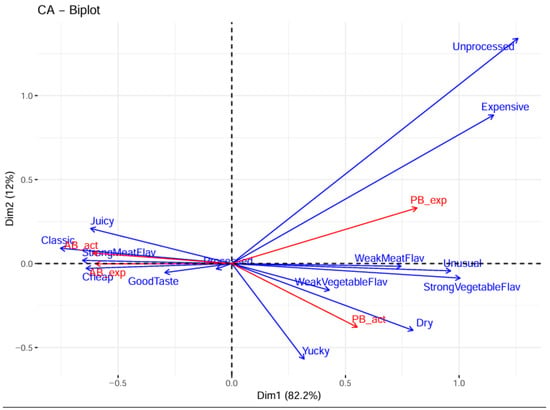
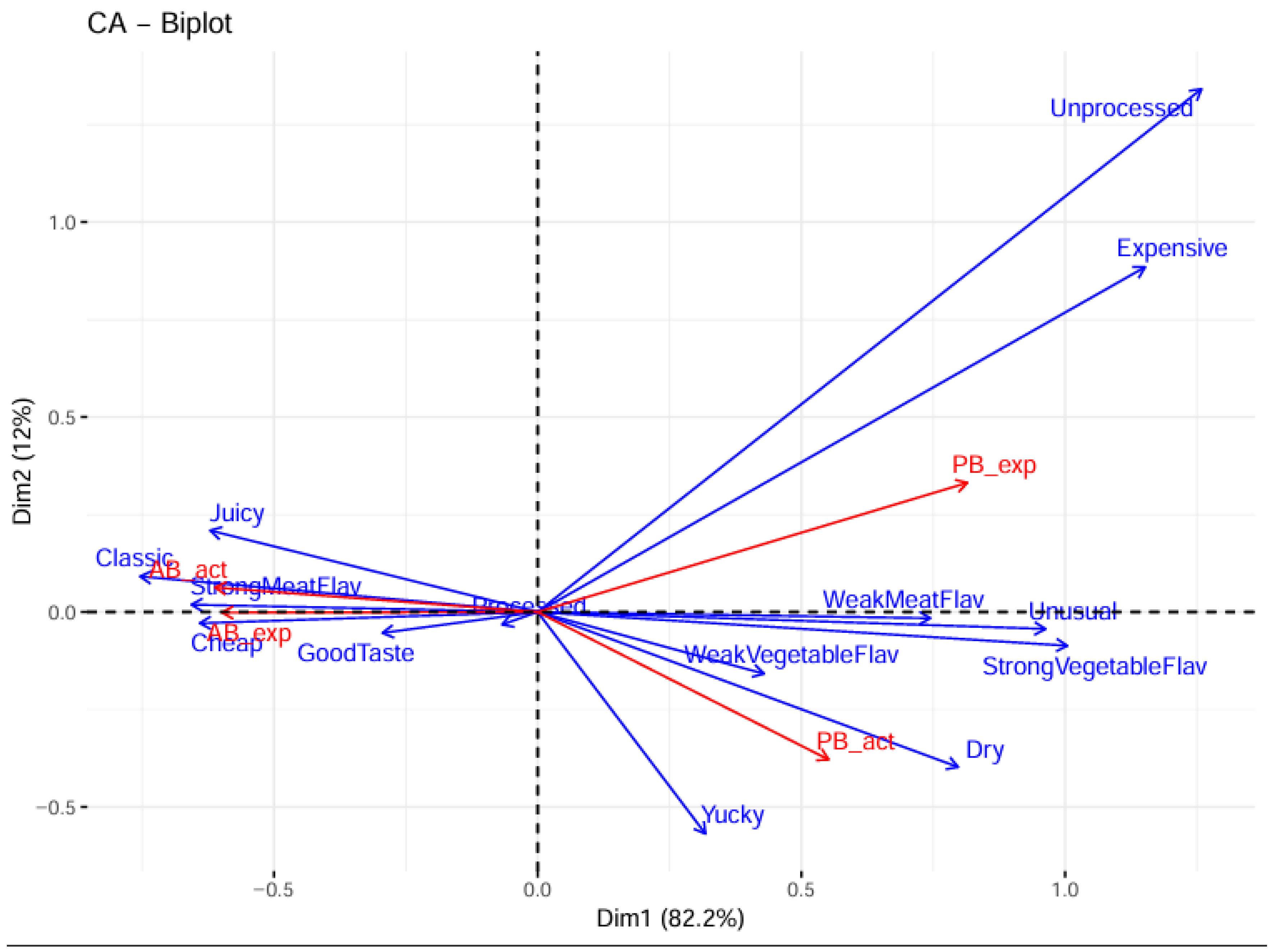
Figure 1 represents the results of the correspondence analysis and represents the products and CATA terms used as product descriptors in both conditions. Dimensions one and two together explain 94.22% of the variance, with dimension one explaining 82.24% and dimension two explaining 11.98%. More specifically, dimension one was positively correlated with “unprocessed”, “expensive”, “unusual” and “strong vegetable flavor”, and negatively correlated with “classic”, “strong meat flavor”, “cheap”, and “juicy”. Instead, the second dimension was positively correlated with “unprocessed” and “expensive”, and negatively correlated with “yucky” and “dry”.
Figure 1.
Correspondence analysis performed using the CATA terms used to describe the products under Expected and Actual Conditions (n = 88). Note: Blue terms are CATA descriptors used to describe the two products under expected and Actual Conditions. Red terms indicate the products: PB_exp = plant-based product in the Expected Condition; AB_exp = animal product in the Expected Condition; PB_act = plant-based product in the Actual Condition; AB_act = animal product in the Actual Condition.
The plot of the correspondence analysis shows that products are arranged in different areas according to the CATA descriptors. The pork hotdog was associated with “cheap”, “strong meat flavor”, “classic product”, and “juicy” in both conditions. Oppositely, the plant-based hotdog was mostly associated with being “expensive” in the Expected Condition, and with being “dry” and having a “weak meat flavor” after the taste experience.
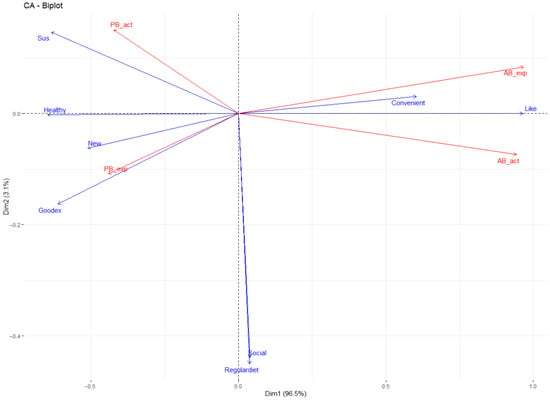
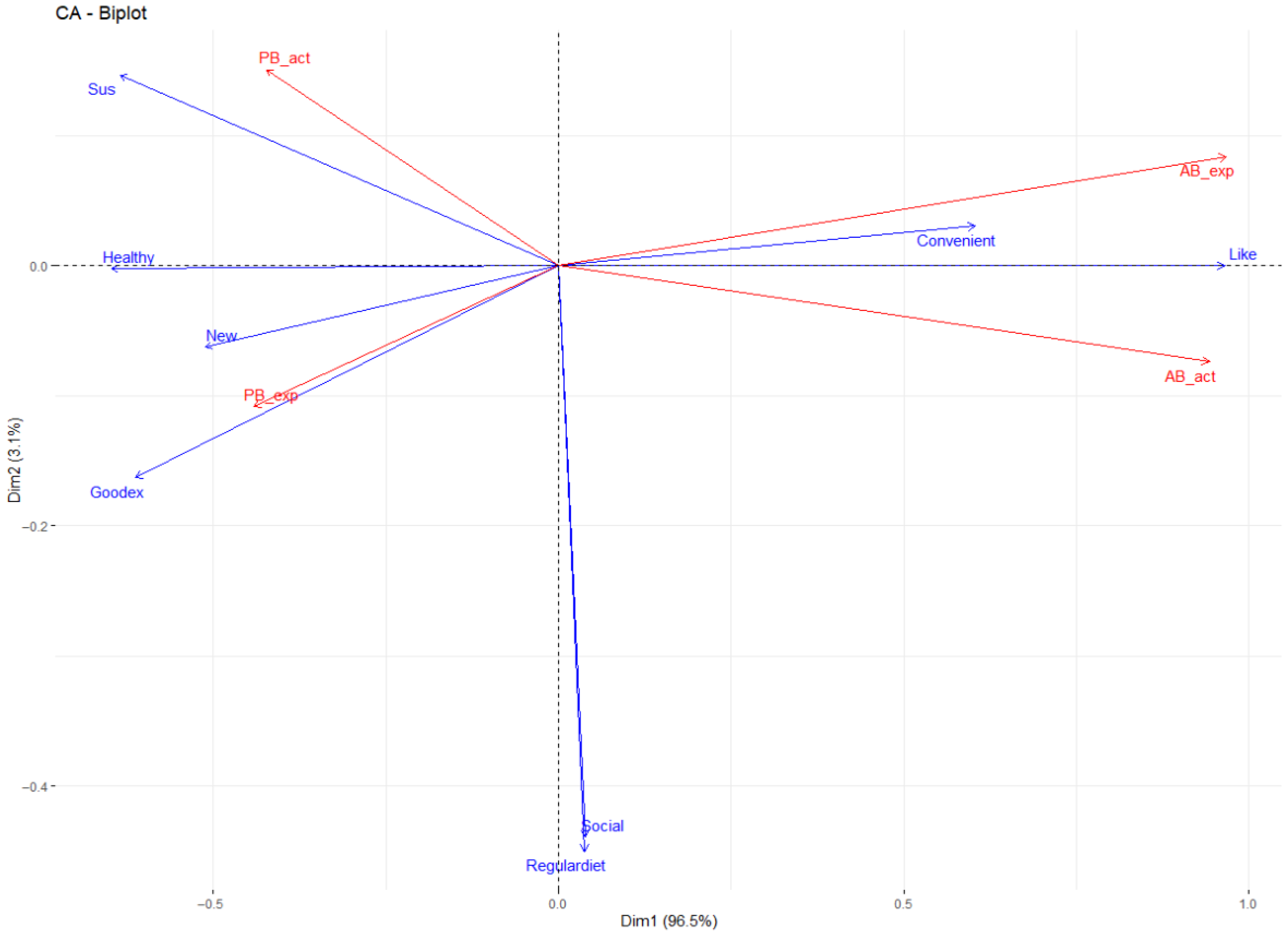
Figure 2 shows the results of the correspondence analysis when using the CATA terms for situational appropriateness. Dimensions one and two together explain 99.54% of the variance, with dimension one explaining 96.46% and dimension two explaining 3.08%. More specifically, dimension one was positively correlated with “When I want something I like” and “As part of easy and convenient meals”, and negatively correlated with “When I feel like trying something new”, “To move my diet in a more sustainable direction”, “When I want something healthy”, and “To set a good example for those around me”. Instead, the second dimension was positively correlated with “To move my diet in a more sustainable direction”, and negatively correlated with “As part of the meals that I post on social media”, “To set a good example for those around me”, and “As a regular part of my diet”.
Figure 2.
Correspondence analysis performed using the CATA terms for the situational use of the products under Expected and Actual Conditions (n = 88). Note: Blue terms are CATA situational uses selected by participants for the two products under Expected and Actual Conditions: Like: “When I want something I like”; New: “When I feel like trying something new”; Sus: “To move my diet in a more sustainable direction”; Healthy: “When I want something healthy”; Social: “As part of the meals that I post on social media”; Goodex: “To set a good example for those around me”; Regulardiet: “As a regular part of my diet”; Convenient: “As part of easy and convenient meals”. Red terms indicate the products: PB_exp = plant-based product in the Expected Condition; AB_exp = animal product in the Expected Condition; PB_act = plant-based product in the Actual Condition; AB_act = animal product in the Actual Condition.
The correspondence analysis for the situational appropriateness aligns with the one computed for the CATA descriptors, as these results also show no major impact of the taste experience. Especially for dimension one, in fact, the products maintained their positions between conditions. Specifically, before tasting, panelists primarily associated the plant-based product with “To set a good example for those around me” and with “When I feel like trying something new”. After tasting, the plant-based product was mostly associated with “To move my diet in a more sustainable direction”. On the contrary, the pork hotdog was linked to “As part of easy and convenient meals” in the Expected Condition, whereas, in both conditions, respondents associated it with “When I want something I like”.
3.4. Penalty-Lift Analysis
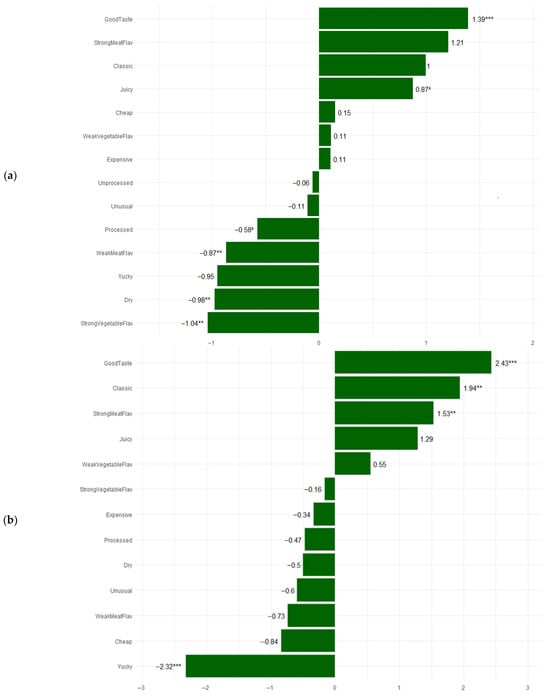
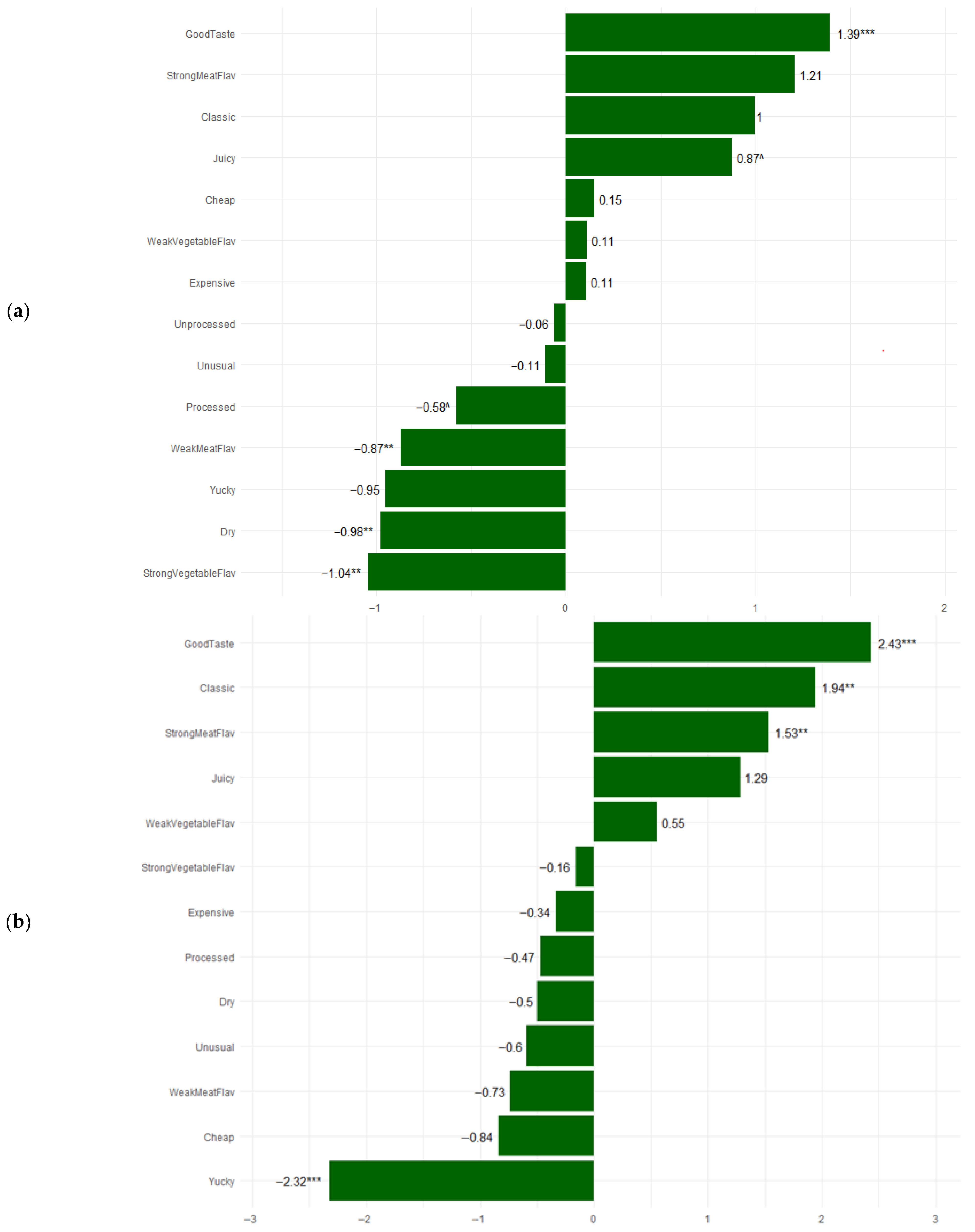
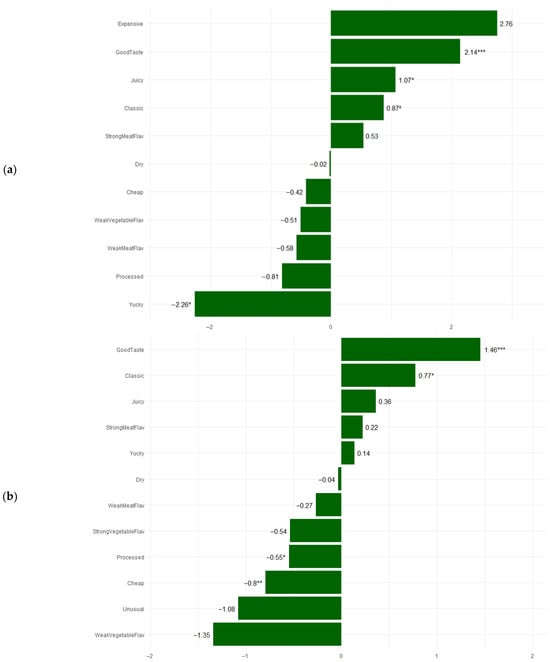
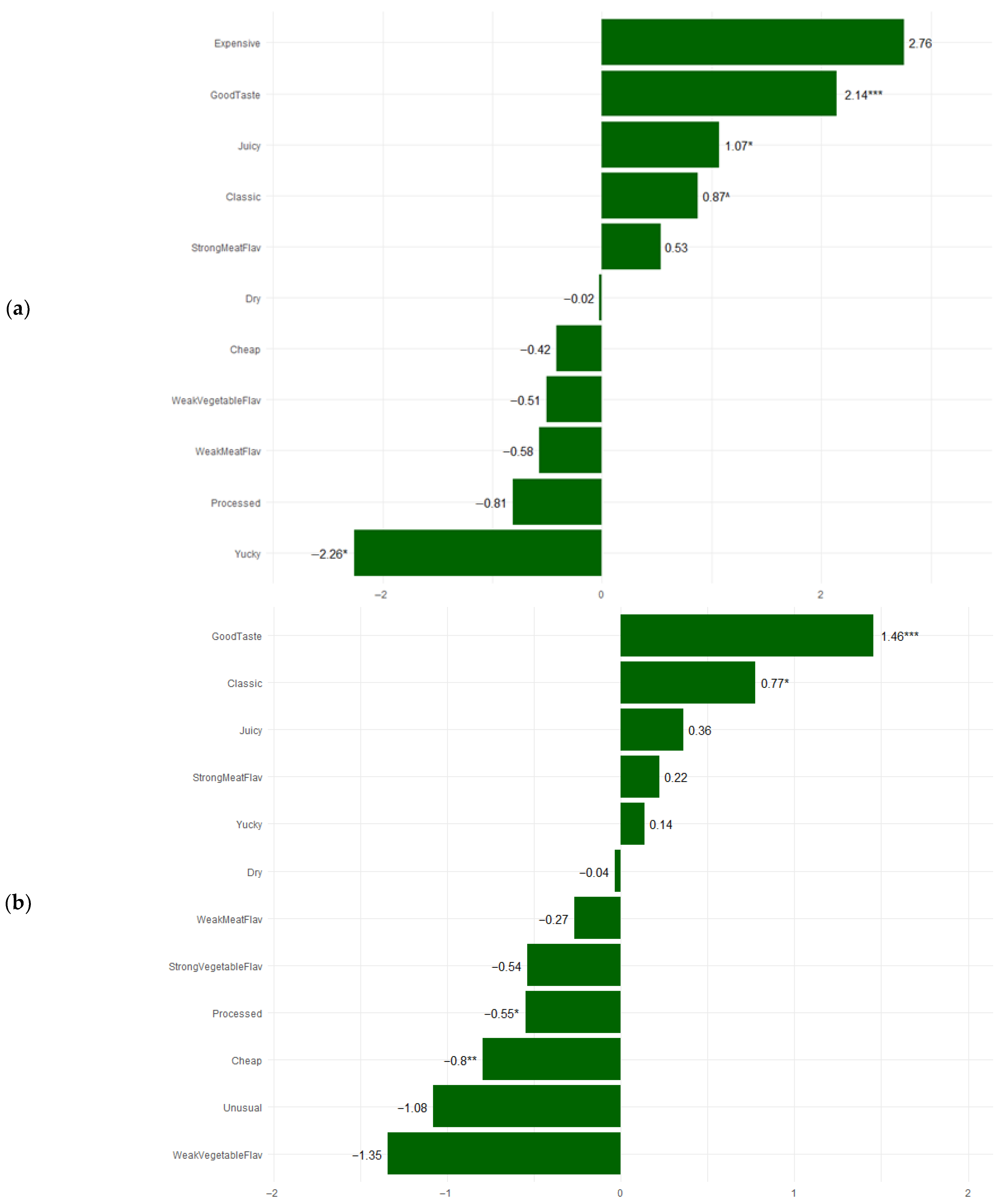
Figure 3 and Figure 4 represent the results of the penalty-lift analysis. Specifically, Figure 3 shows how much selected attributes contributed (positively or negatively) to consumer liking for the plant-based products under both Expected and Actual Conditions, whereas Figure 4 shows the results for the pork hotdog.
Figure 3.
Penalty-lift analysis for the plant-based hotdog (PB) under the Expected (a) and Actual (b) Conditions (n = 88). Note: The values indicate a change in the liking when an attribute (y-axis) was selected in the CATA task compared to when it was not selected. *** p < 0.001; ** p < 0.01; * p < 0.05; ^ p < 0.1.
Figure 4.
Penalty-lift analysis for the pork hotdog (AB) under the Expected (a) and Actual (b) Conditions (n = 88). Note: The values indicate a change in the liking when an attribute (y-axis) was selected in the CATA task compared to when it was not selected. *** p < 0.001; ** p < 0.01; * p < 0.05; ^ p < 0.1.
For the plant-based hotdog, the primary drivers of consumer liking slightly changed before and after tasting, with “good taste”, “strong meat flavor”, and being “juicy” and a “classic product” being the top 4 drivers in both conditions. For the attributes leading to disliking the plant-based product, “dry” and “yucky” remained major drivers between conditions, with the latter becoming a more pronounced negative driver after tasting. In addition, while having a “strong vegetable flavor” was a key factor for dislike before tasting, its impact diminished in the Actual Condition, where the perception of the product being “cheap” emerged as a significant element negatively contributing to the liking.
As for the pork-based hotdog, having “good taste” and a “strong meat flavor”, and being “juicy” and a “classic product” all positively contributed to the liking of the animal product in both conditions. Moreover, in the Expected Condition only, the “expensive” attribute was recognized as another positive driver for liking. Regarding the drivers negatively impacting the liking of the pork hotdog, results showed that “dry”, “cheap”, “weak meat flavor”, the presence of “vegetable flavor”, and “processed” were all identified as negative attributes for liking. In addition, while “yucky” was present in the Expected Condition only, after tasting the product, the attribute “unusual” appeared and the presence of “vegetable flavor” assumed a stronger impact for disliking the pork hotdog.
3.5. Text Mining
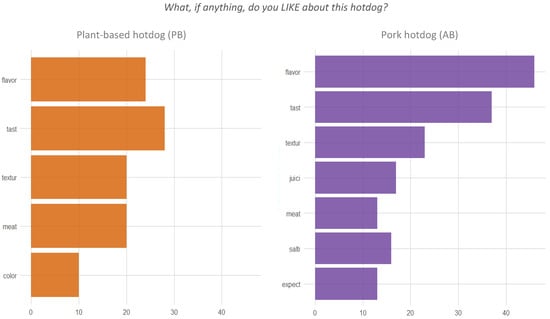
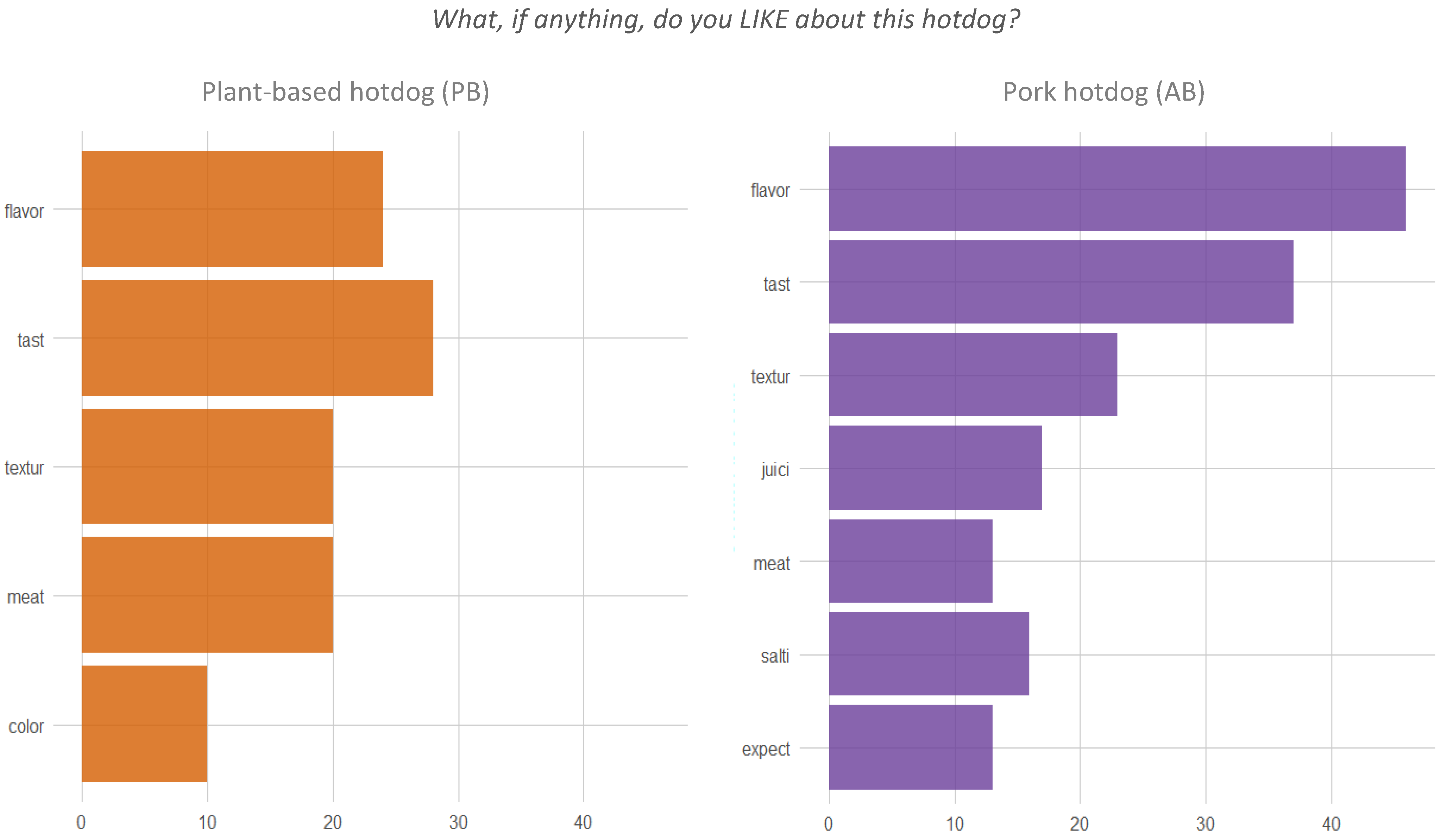
Results from the NLP and text mining analyses reveal the key characteristics that influenced panelists’ preferences for (or against) the two products from the open-ended questions asked after tasting. Figure 5 shows the results for the “What, if anything, do you LIKE about this hotdog?” question. Specifically, while flavor, tastiness, and texture were valued in both products, a higher number of respondents cited these attributes in relation to the pork hotdog, particularly emphasizing its flavor. In addition, the pork hotdog was also appreciated for its juiciness, meat-like characteristics (e.g., “it has a meaty flavor”, “meaty texture”, “a real taste of meat”), saltiness, and for well-aligning with participants’ expectations (e.g., “It tastes like what I would expect from a regular hotdog”, “The texture, shape and smell resembles what I would normally expect in a hotdog”). Regarding the plant-based product, along with its flavor, tastiness, and texture, respondents also highlighted its meaty attributes (e.g., “similar to a real meat hotdog”, “a real feel of meat”), as well as its appealing color.
Figure 5.
Text mining results for the characteristics that participants liked about the two products (n = 88). Note: The y-axis represents the stemmed tokens, while the x-axis shows the number of respondents who mentioned that word in their comments. Orange: plant-based hotdog; Purple: pork hotdog.
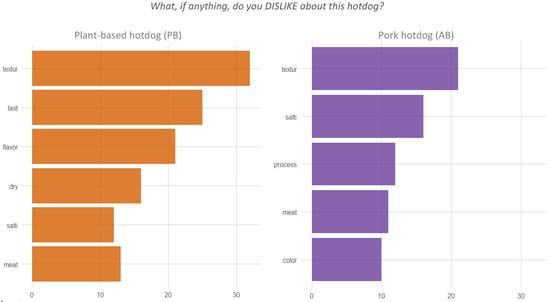
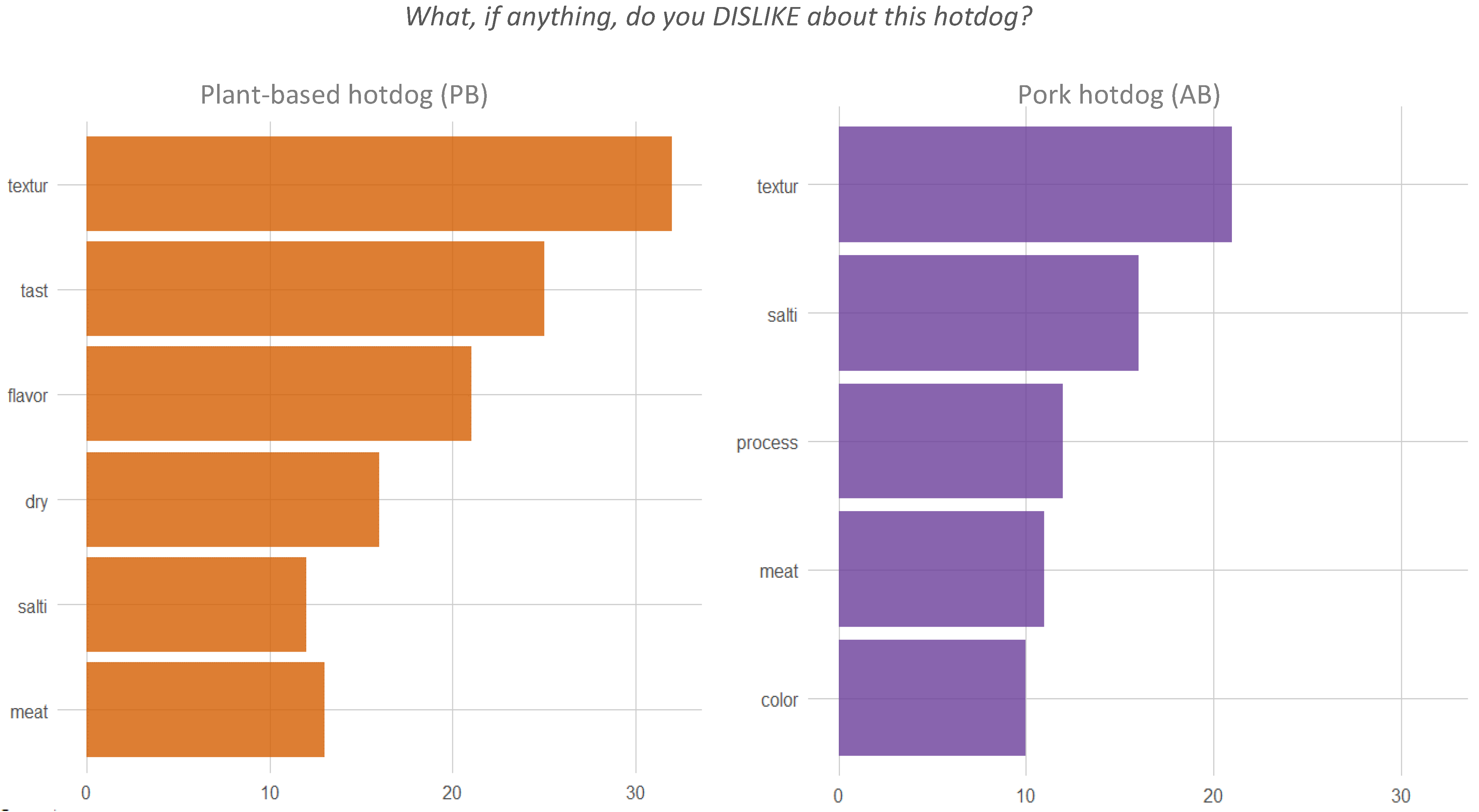
While a greater number of attributes were identified for the animal-based product in relation to positive comments investigating elements of liking, more characteristics were identified for the plant-based hotdog when exploring what participants disliked about the product (Figure 6). Specifically, although some respondents liked the texture of the plant-based product, more panelists expressed dissatisfaction with comments like “The texture is not my favorite” or “I don’t like the texture”. Similarly, despite some respondents appreciating the taste or the flavor, others commented “I don’t like the taste”, “a bit of a weird aftertaste”, “kind of a plastic taste”, “mild flavor”, “lack of meat flavor”, “no meat flavor”, or “not much of a hotdog flavor”. Finally, some respondents found the product too dry and too salty and with a lack of meat-like characteristics (e.g., “it does not seem a meat product” or “lack of a meat flavor”). In contrast, for the animal product, some participants stressed some texture issues by describing it as “rubbery” or expressing dissatisfaction with the skin’s texture. Additionally, some participants found the pork hotdog overly salty and highly processed, did not like the color, and did not perceive it as meaty as they would have expected (e.g., “I don’t like how light the meat is” or “would like a more meat flavor”).
Figure 6.
Text mining results for the characteristics participants disliked about the two products (n = 88). Note: The y-axis represents the stemmed tokens, while the x-axis shows the number of respondents who mentioned that word in their comments. Orange: plant-based hotdog; Purple: pork hotdog.
4. Discussion and Implications
Despite technological advancements, a key challenge in the development of plant-based alternatives lies in meeting consumers’ sensory expectations [8,12,15,54]. Therefore, sensory and consumer science can play an essential role in understanding consumer perceptions and the factors that influence acceptance of these products. In this context, our research aimed at furthering the scientific literature on the topic by assessing consumers’ sensory expectations and actual evaluation of a less explored PBMA, specifically a plant-based hotdog and its animal-based counterpart.
Our results revealed no significant differences in consumers’ sensory expectations between the animal and the plant-based product, with both hotdogs showing neutral scores in terms of expected liking. This finding is in contrast with previous studies on PBMAs, which found a higher liking expectation for the animal-based product [13,55,56]. Furthermore, our results showed that, before tasting, consumers had a higher purchase intention for the plant-based hotdog than the animal one. This, along with the lack of difference in the sensory expectations between the two products, might suggest that consumers are becoming more familiar with plant-based alternatives. Therefore, since familiarity is often linked to higher product acceptance [10,12], the growing availability of PBMAs in the global market may be fostering greater consumer familiarity, which, in turn, could lead to a higher acceptance of PBMAs as comparable to traditional meat options.
Despite similar sensory expectations between the two hotdogs and a higher WTB for the plant-based product before tasting, opposite results were found after tasting. Specifically, the liking for the animal hotdog significantly increased, while that of the plant-based product significantly decreased. In addition, the tasting led consumers to exhibit a negative WTB for the latter product and a higher WTB for the pork hotdog. These findings confirm the critical role that sensory appeal has in the acceptance of PBMAs. As a matter of fact, despite the positive perception before tasting, the sensory experience did change both consumers’ liking and purchasing intention. This is in line with previous studies showing that tasting leads to a higher sensory appeal for traditional animal products than PBMAs [13,16,55]. Additionally, our study showed that appearance was not the main factor distinguishing the two products; instead, flavor and texture were rated more favorably for the animal-based product, highlighting these attributes as key differentiators.
Similarly, when focusing on the CATA tasks, more positive descriptors were associated with the animal product (e.g., “juicy”), whereas consumers linked the plant-based hotdog to less favorable descriptors, such as “unusual” and “dry”. This is not surprising, as the AB product contained a substantive amount of fat (18 g per serving) and listed water as its 2nd ingredient after pork. In contrast, the PB product contained only 2 g of fat per serving and no added water. Meat texture, specifically juiciness, has been linked to its moisture and intramuscular fat content and fatty acid composition [57], which in turn depends on the carcass traits [58] and harvest season [59]. In contrast, for meat-analog products, plant-based proteins are used to fulfill this role [60,61].
Nevertheless, when investigating the situational appropriateness, the plant-based hotdog was more strongly associated with the concepts of sustainability and health (“to move my diet in a more sustainable direction” and “when I want something healthy”), as well as with the “when I feel like trying something new” situational use. In contrast, respondents associated the animal product mostly with “When I want something I like”. Given the positive association of plant-based products with health and sustainable concepts—also confirmed by previous studies [13,56]—it is worth considering that policymakers and industries may emphasize such aspects to steer consumer acceptance of PBMAs. As an example, interpretative front-of-pack labels that clearly communicate the health and environmental benefits could serve as an effective strategy to encourage their adoption. However, these results also support the idea that reduced sensory quality remains a major barrier to the broader adoption of most PBMAs, particularly when compared to traditional animal-based products. Therefore, while communication strategies highlighting the health and sustainability of PBMAs are essential, these must be complemented and supported by sensory and consumer research, as well as product development, to enhance sensory appeal and drive greater consumer acceptance. Moreover, it should be noted that more participants associated the plant-based hotdog with both “yucky” and “good taste” after tasting, reflecting two opposite directions of the product evaluation. This suggests the presence of two consumer segments: those who liked and those who disliked the plant-based product. However, this aspect could not be explored rigorously due to the sample size not allowing further sample clustering; thus, future research could investigate such aspects to gain more precise insights into the factors driving preferences for plant-based alternatives based on different consumer groups.
Additionally, this study explored the key drivers of product liking to offer more targeted insights for product developers. This was achieved through both penalty-lift analysis and open-ended questions, which allow a more detailed investigation of the drivers for liking and disliking the products by using consumers’ own language [13,28]. Findings from both the penalty-lift analysis and text mining revealed that consumers predominantly sought meaty attributes—in terms of flavor, texture, and color—in both animal- and plant-based products. Similarly, a weak meat flavor was a major element leading to product dislike for both products. Along with this, the plant-based hotdog was criticized for its texture and for being too dry. These findings are in line with previous work showing that PBMAs still do not meet consumers’ desired sensory attributes, especially when compared to meat products [16,55,56]. In this context, most studies have confirmed that one critical aspect is the lack of meat-like sensory characteristics [8,13,28]. Thus, our research supports the idea that—particularly for plant-based alternatives designed to replace traditional hotdogs—the food industry should prioritize replicating the sensory characteristics of the animal product to deliver a meaty experience.
Finally, this study is among the first focusing on pork alternatives while incorporating both hedonic responses and “beyond liking” measures. By examining consumers’ degree of liking, WTB, product descriptors, and situational appropriateness, this research offers valuable insights for policymakers and food developers aiming at promoting PBMAs. However, certain limitations need to be drawn. First, the study population is not representative of US consumers, and, in addition, the sample size used in this research, despite being in line with previous sensory studies [13,62], does not allow for a representative subsampling of the population. However, segmenting consumers is crucial for understanding diverse preferences and identifying key drivers of acceptance or rejection within specific groups. Therefore, future research with larger and more diverse samples is suggested to confirm our results and enable a deeper exploration of consumers’ behaviors. In addition, we conducted our study in a laboratory context, which may limit the generalizability of our results [63]; thus, similar research could be conducted in real-world settings to determine whether comparable results are observed in environments where the products are typically consumed. Furthermore, we did not provide information on the products’ brand or nutritional value, which could potentially influence consumers’ perceptions; however, this is commonly done in consumer studies to minimize potential biases or associations [13,25]. Ultimately, the preparation procedure of the products may have impacted the sensory perception. To mitigate this limitation, a consistent preparation method was employed throughout the experiment.
5. Conclusions
This study highlights the critical role of sensory attributes in consumer acceptance of PBMAs, specifically in the context of plant-based hotdogs. However, along with traditional sensory evaluations (i.e., hedonic responses), this study confirms the importance of exploring other factors, such as product descriptors and situational appropriateness, to gain a more nuanced understanding of consumer acceptance and better predict consumers’ consumption behaviors [24]. By combining measures that go beyond hedonic responses, our findings showed that, despite positive scores for liking and WTB in the Expected Condition, plant-based hotdogs still do not meet consumers’ sensory expectations in the actual experience. Specifically, results indicated that while the plant-based hotdog was perceived as a healthy and sustainable option, its sensory characteristics pose significant barriers to acceptance. In this context, consumers primarily seek meaty characteristics, such as flavor, texture, and color, in both animal- and plant-based products.
Therefore, to enhance consumer acceptance and drive the adoption of PBMAs, the food industry must prioritize replicating the sensory qualities that consumers associate with traditional meat. Finally, future sensory and consumer studies on the topic are required to (1) systematically optimize sensory attributes of plant-based products and align with consumer expectations, (2) investigate how contextual factors such as meal occasion or brand positioning influence acceptance, and (3) explore long-term consumption behaviors and repeated exposure effects. These directions will help ensure the successful integration of PBMAs into the mainstream market, ultimately contributing to healthier and more sustainable dietary choices.
Author Contributions
G.A.: Conceptualization, Data curation, Formal analysis, Investigation, Methodology, Writing—Original draft preparation, Writing—review and editing. G.S.: Conceptualization, Methodology, Supervision, Writing—Original draft preparation, Writing—review and editing. M.I.G.: Conceptualization, Funding acquisition, Supervision, Writing—review and editing. A.S.: Conceptualization, Methodology, Writing—review and editing. R.D.: Conceptualization, Methodology, Writing—review and editing. All authors have read and agreed to the published version of the manuscript.
Funding
This research received no external funding.
Institutional Review Board Statement
The study was granted ethical approval by Cornell’s Institutional Review Board for Human Participant Research (Protocol n°: IRB0147823), approval date: 26 September 2023.
Informed Consent Statement
Informed consent was obtained from all subjects involved in the study.
Data Availability Statement
Data are available upon reasonable request.
Conflicts of Interest
The authors declare no conflicts of interest.
Appendix A
Table A1.
Ingredient list of the products used in the study.
Figure A1.
Images of the served samples: (a) pork hotdog and (b) plant-based hotdog.
References
- WHO. Red and Processed Meat in the Context of Health and the Environment: Many Shades of Red and Green; World Health Organization: Geneva, Switzerland, 2023. [Google Scholar]
- Godfray, H.C.J.; Aveyard, P.; Garnett, T.; Hall, J.W.; Key, T.J.; Lorimer, J.; Pierrehumbert, R.T.; Scarborough, P.; Springmann, M.; Jebb, S.A. Meat Consumption, Health, and the Environment. Science 2018, 361, eaam5324. [Google Scholar] [CrossRef] [Scilit]
- FAO. Livestock Solutions for Climate Change; FAO: Rome, Italy, 2017. [Google Scholar]
- FAO. FAOSTAT Statistical Database [Online Database]. Available online: www.fao.org/faostat/en/#home (accessed on 19 September 2024).
- FAO. Thinking About the Future of Food Safety A Foresight Report; FAO: Rome, Italy, 2022. [Google Scholar]
- Yu, J.; Wang, L.; Zhang, Z. Plant-Based Meat Proteins: Processing, Nutrition Composition, and Future Prospects. Foods 2023, 12, 4180. [Google Scholar] [CrossRef] [Scilit]
- Andreani, G.; Sogari, G.; Marti, A.; Froldi, F.; Dagevos, H.; Martini, D. Plant-Based Meat Alternatives: Technological, Nutritional, Environmental, Market, and Social Challenges and Opportunities. Nutrients 2023, 15, 452. [Google Scholar] [CrossRef] [Scilit]
- Xavier, J.R.; Shashikumar, S.H.; Vats, D.; Chauhan, O.P. Future Trends in Plant-Based Meat: Consumer Perception, Market Growth and Health Benefits. Future Foods 2025, 11, 100551. [Google Scholar] [CrossRef] [Scilit]
- Caputo, V.; Sun, J.; Staples, A.J.; Taylor, H. Market Outlook for Meat Alternatives: Challenges, Opportunities, and New Developments. Trends Food Sci. Technol. 2024, 148, 104474. [Google Scholar] [CrossRef] [Scilit]
- Andreani, G.; Banovic, M.; Dagevos, H.; Sogari, G. Consumer Perceptions and Market Analysis of Plant-Based Foods: A Global Perspective. In Handbook of Plant-Based Food and Drinks Design; Academic Press: Cambridge, MA, USA, 2024; pp. 393–408. [Google Scholar] [CrossRef] [Scilit]
- OECD-FAO. OECD-FAO Agricultural Outlook 2021–2030; OECD: Paris, France, 2021; ISBN 9789264436077. [Google Scholar]
- Giacalone, D.; Clausen, M.P.; Jaeger, S.R. Understanding Barriers to Consumption of Plant-Based Foods and Beverages: Insights from Sensory and Consumer Science. Curr. Opin. Food Sci. 2022, 48, 100919. [Google Scholar] [CrossRef] [Scilit]
- Grasso, S.; Rondoni, A.; Bari, R.; Smith, R.; Mansilla, N. Effect of Information on Consumers’ Sensory Evaluation of Beef, Plant-Based and Hybrid Beef Burgers. Food Qual. Prefer. 2022, 96, 104417. [Google Scholar] [CrossRef] [Scilit]
- Sogari, G.; Grasso, S.; Caputo, V.; Gómez, M.I.; Mora, C.; Schouteten, J.J. Sensory, Emotional, and Appropriateness of Plant- and Meat-Based Burgers. J. Food Sci. 2024, 89, 2974–2990. [Google Scholar] [CrossRef] [Scilit]
- Appiani, M.; Cattaneo, C.; Laureati, M. Sensory Properties and Consumer Acceptance of Plant-Based Meat, Dairy, Fish and Eggs Analogs: A Systematic Review. Front. Sustain. Food Syst. 2023, 7, 1268068. [Google Scholar] [CrossRef] [Scilit]
- Martin, C.; Lange, C.; Marette, S. Importance of Additional Information, as a Complement to Information Coming from Packaging, to Promote Meat Substitutes: A Case Study on a Sausage Based on Vegetable Proteins. Food Qual. Prefer. 2021, 87, 104058. [Google Scholar] [CrossRef] [Scilit]
- Font-i-Furnols, M. Meat Consumption, Sustainability and Alternatives: An Overview of Motives and Barriers. Foods 2023, 12, 2144. [Google Scholar] [CrossRef] [Scilit]
- Statista. U.S. Population: Consumption of Frankfurters and Hot Dogs from 2011 to 2024. 2020. Available online: https://www.statista.com/statistics/282293/us-households-consumption-of-frankfurters-and-hot-dogs-trend/?srsltid=AfmBOoqwqU0eiVJi18X7yJr4QluGfNkHUscVDPuFwxrKfAh7wQjbEBNW (accessed on 5 January 2026).
- Kraig, B.; Carroll, P. Man Bites Dog: Hot Dog Culture in America; Rowman & Littlefield Studies in Food and Gastronomy; Altamira Press: Walnut Creek, CA, USA, 2012; ISBN 0759120749/9780759120747. [Google Scholar]
- Salgaonkar, K.; Nolden, A.A. Exploring Consumer Preferences and Challenges in Hybrid Meat Products: A Conjoint Analysis of Hotdogs. Foods 2024, 13, 1460. [Google Scholar] [CrossRef] [Scilit] [PubMed]
- Boukid, F. Plant-Based Meat Analogues: From Niche to Mainstream. Eur. Food Res. Technol. 2021, 247, 297–308. [Google Scholar] [CrossRef] [Scilit]
- Aschemann-Witzel, J.; Ares, G.; Thøgersen, J.; Monteleone, E. A Sense of Sustainability?—How Sensory Consumer Science Can Contribute to Sustainable Development of the Food Sector. Trends Food Sci. Technol. 2019, 90, 180–186. [Google Scholar] [CrossRef] [Scilit]
- Lanz, M.; Hartmann, C.; Egan, P.; Siegrist, M. Consumer Acceptance of Cultured, Plant-Based, 3D-Printed Meat and Fish Alternatives. Future Foods 2024, 9, 100297. [Google Scholar] [CrossRef] [Scilit]
- Giacalone, D.; Llobell, F.; Jaeger, S.R. “Beyond Liking” Measures in Food-Related Consumer Research Supplement Hedonic Responses and Improve Ability to Predict Consumption. Food Qual. Prefer. 2022, 97, 104459. [Google Scholar] [CrossRef] [Scilit]
- Savov, R.; Tkáč, F.; Chebeň, J.; Kozáková, J.; Berčík, J. Impact Of Different Fopl Systems (Nutri-Score Vs Nutrinform) On Consumer Behaviour: Case Study Of The Slovak Republic. Amfiteatru Econ. 2022, 24, 797–816. [Google Scholar] [CrossRef] [Scilit]
- Peryam, D.R.; Pilgrim, F.J. Hedonic Scale Method of Measuring Food Preferences. Food Technol. 1957, 11, 9–14. [Google Scholar]
- Rodrigues, I.; Magalhaes, D.R.; Trindade, M.A. Use of Focus Group as Selection Method of Descriptors for Check-All-That-Apply (CATA) for Sensory Characteristics of Hot Dogs. Foods 2022, 11, 269. [Google Scholar] [CrossRef] [Scilit]
- Sogari, G.; Caputo, V.; Joshua Petterson, A.; Mora, C.; Boukid, F. A Sensory Study on Consumer Valuation for Plant-Based Meat Alternatives: What Is Liked and Disliked the Most? Food Res. Int. 2023, 169, 112813. [Google Scholar] [CrossRef] [Scilit]
- Cardello, A.V.; Llobell, F.; Giacalone, D.; Chheang, S.L.; Jaeger, S.R. Consumer Preference Segments for Plant-Based Foods: The Role of Product Category. Foods 2022, 11, 3059. [Google Scholar] [CrossRef] [Scilit] [PubMed]
- Williams, E. Experimental Designs Balanced for the Estimation of Residual Effects of Treatments. Aust. J. Sci. Res. Ser. A 1949, 2, 149–168. [Google Scholar] [CrossRef] [Scilit]
- R Core Team. R: A Language and Environment for Statistical Computing; The R Foundation: Vienna, Austria, 2023. [Google Scholar]
- Wickham, H.; Bryan, J. Readxl: Read Excel Files_, R Package Version 1.4.3; CRAN: Vienna, Austria, 2023.
- Wickham, H.; Vaughan, D.; Girlich, M. _tidyr: Tidy Messy Data_, R Package Version 1.3.0; CRAN: Vienna, Austria, 2023.
- Kassambara, A. _ggpubr: “ggplot2” Based Publication Ready Plots_, R Package Version 0.6.0; CRAN: Vienna, Austria, 2023.
- Bates, D.; Mächler, M.; Bolker, B.; Walker, S. Fitting Linear Mixed-Effects Models Using Lme4. J. Stat. Softw. 2015, 67, 1–48. [Google Scholar] [CrossRef] [Scilit]
- Kuznetsova, A.; Brockhoff, P.B.; Christensen, R.H.B. LmerTest Package: Tests in Linear Mixed Effects Models. J. Stat. Softw. 2017, 82, 1–26. [Google Scholar] [CrossRef] [Scilit]
- Lenth, R. _emmeans: Estimated Marginal Means, Aka Least-Squares Means_, R Package Version 1.8.9; CRAN: Vienna, Austria, 2023.
- Wickham, H.; François, R.; Henry, L.; Müller, K.; Vaughan, D. _dplyr: A Grammar of Data Manipulation_, R Package Version 1.1.4; CRAN: Vienna, Austria, 2023.
- Lüdecke, D.; Ben-Shachar, M.; Patil, I.; Waggoner, P.; Makowski, D. Performance: An R Package for Assessment, Comparison and Testing of Statistical Models. J. Open Source Softw. 2021, 6, 3139. [Google Scholar] [CrossRef] [Scilit]
- Lüdecke, D. _sjPlot: Data Visualization for Statistics in Social Science_, R Package Version 2.8.15; CRAN: Vienna, Austria, 2023.
- Kassambara, A. _rstatix: Pipe-Friendly Framework for Basic Statistical Tests_, R Package Version 0.7.2; CRAN: Vienna, Austria, 2023.
- Schauberger, P.; Walker, A. _openxlsx: Read, Write and Edit Xlsx Files_, R Package Version 4.2.5.2; CRAN: Vienna, Austria, 2023.
- Zhu, H. _kableExtra: Construct Complex Table with “kable” and Pipe Syntax_, R Package Version 1.4.0; CRAN: Vienna, Austria, 2024.
- Wei, T.; Simko, V. R Package “Corrplot”: Visualization of a Correlation Matrix (Version 0.92). 2021. Available online: https://github.com/taiyun/corrplot (accessed on 15 July 2025).
- Lê, S.; Josse, J.; Husson, F. FactoMineR: An R Package for Multivariate Analysis. J. Stat. Softw. 2008, 25, 1–18. [Google Scholar] [CrossRef] [Scilit]
- Wickham, H.; Averick, M.; Bryan, J.; Chang, W.; McGowan, L.; François, R.; Grolemund, G.; Hayes, A.; Henry, L.; Hester, J.; et al. Welcome to the Tidyverse. J. Open Source Softw. 2019, 4, 1686. [Google Scholar] [CrossRef] [Scilit]
- Kassambara, A.; Mundt, F. _factoextra: Extract and Visualize the Results of Multivariate Data Analyses_, R Package Version 1.0.7; CRAN: Vienna, Austria, 2020.
- Wickham, H. Ggplot2: Elegant Graphics for Data Analysis; Springer: Berlin/Heidelberg, Germany, 2016. [Google Scholar]
- Castura, J. _cata: Analysis of Check-All-That-Apply (CATA) Data_, R Package Version 0.1.0.6; CRAN: Vienna, Austria, 2024.
- Wickha, H.; Henry, L. _purrr: Functional Programming Tools_, R Package Version 1.0.2; CRAN: Vienna, Austria, 2023.
- Giacalone, D. Product Performance Optimization. In Methods in Consumer Research: New Approaches to Classic Methods; Ares, G., Varela, P., Eds.; Woodhead Publishing: Cambridge, UK, 2018; Volume 1, pp. 159–185. [Google Scholar]
- Tao, D.; Yang, P.; Feng, H. Utilization of Text Mining as a Big Data Analysis Tool for Food Science and Nutrition. Compr. Rev. Food Sci. Food Saf. 2020, 19, 875–894. [Google Scholar] [CrossRef] [Scilit]
- Netsiri, P.; Lhotáková, M. Application of Natural Language Processing to Extract Consumer Behaviors from Product Reviews. J. Econ. Bus. Issues 2023, 3, 9–25. [Google Scholar]
- Jaeger, S.R.; Giacalone, D.; Jin, D.; Ryan, G.S.; Cardello, A.V. Information about Health and Environmental Benefits Has Minimal Impact on Consumer Responses to Commercial Plant-Based Yoghurts. Food Qual. Prefer. 2023, 106, 104820. [Google Scholar] [CrossRef] [Scilit]
- Schouteten, J.J.; De Steur, H.; De Pelsmaeker, S.; Lagast, S.; Juvinal, J.G.; De Bourdeaudhuij, I.; Verbeke, W.; Gellynck, X. Emotional and Sensory Profiling of Insect-, Plant- and Meat-Based Burgers under Blind, Expected and Informed Conditions. Food Qual. Prefer. 2016, 52, 27–31. [Google Scholar] [CrossRef] [Scilit]
- Michel, F.; Knaapila, A.; Hartmann, C.; Siegrist, M. A Multi-National Comparison of Meat Eaters’ Attitudes and Expectations for Burgers Containing Beef, Pea or Algae Protein. Food Qual. Prefer. 2021, 91, 104195. [Google Scholar] [CrossRef] [Scilit]
- Ruiz-Carrascal, J.; Ventanas, J.; Cava, R.; Andrés, A.I.; García, C. Texture and Appearance of Dry Cured Ham as Affected by Fat Content and Fatty Acid Composition. Food Res. Int. 2000, 33, 91–95. [Google Scholar] [CrossRef] [Scilit]
- Li, X.; Ha, M.; Warner, R.D.; Hewitt, R.J.E.; D’Souza, D.N.; Dunshea, F.R. Genetic Lines Influenced the Texture, Collagen and Intramuscular Fat of Pork Longissimus and Semimembranosus. Meat Sci. 2024, 207, 109376. [Google Scholar] [CrossRef] [Scilit]
- Li, X.; Ha, M.; Warner, R.D.; Lealiifano, A.; Hewitt, R.J.E.; D’Souza, D.N.; Trezona, M.; Dunshea, F.R. Muscle, Season, Sex, and Carcass Weight Affected Pork Texture, Collagen Characteristics, and Intramuscular Fat Content. J. Anim. Sci. 2024, 102, skae231. [Google Scholar] [CrossRef] [Scilit]
- Joshi, V.; Kumar, S. Meat Analogues: Plant Based Alternatives to Meat Products- A Review. Int. J. Food Ferment. Technol. 2015, 5, 107–119. [Google Scholar] [CrossRef] [Scilit]
- Younis, K.; Ashfaq, A.; Ahmad, A.; Anjum, Z.; Yousuf, O. A Critical Review Focusing the Effect of Ingredients on the Textural Properties of Plant-Based Meat Products. J. Texture Stud. 2023, 54, 365–382. [Google Scholar] [CrossRef] [Scilit]
- Cordelle, S.; Redl, A.; Schlich, P. Sensory Acceptability of New Plant Protein Meat Substitutes. Food Qual. Prefer. 2022, 98, 104508. [Google Scholar] [CrossRef] [Scilit]
- Stelick, A.; Dando, R. Thinking Outside the Booth—The Eating Environment, Context and Ecological Validity in Sensory and Consumer Research. Curr. Opin. Food Sci. 2018, 21, 26–31. [Google Scholar] [CrossRef] [Scilit]

Disclaimer/Publisher’s Note: The statements, opinions and data contained in all publications are solely those of the individual author(s) and contributor(s) and not of MDPI and/or the editor(s). MDPI and/or the editor(s) disclaim responsibility for any injury to people or property resulting from any ideas, methods, instructions or products referred to in the content. |
© 2026 by the authors. Licensee MDPI, Basel, Switzerland. This article is an open access article distributed under the terms and conditions of the Creative Commons Attribution (CC BY) license.