


Abstract
Dynamic events, such as new task arrivals, UAV failures, and changes in task time windows, require timely updates to task allocation plans in multi-UAV systems. Global replanning provides broad flexibility for feasibility recovery, but it may also modify assignments and route structures that remain valid after an event. This study proposes Assignment-Preserving Replanning (APR), which inherits the operational state at a common event time, partitions unfinished tasks into directly affected and initially unaffected sets, and explicitly protects valid assignments and relative route structure during repair. When feasibility cannot be recovered within this protected scope, APR selectively releases protected tasks associated with constraint conflicts to expand the modifiable scope. APR was evaluated against constructive repair, partial replanning with a fixed or localized scope, and two global adaptive large neighborhood search methods. Among 116 primary scenarios feasible for all five methods, APR achieved the lowest reassignment rate of 17.71%. It preserved 100.00% of initially unaffected task assignments in 103 scenarios and 100.00% of comparable induced route structure in 91 scenarios. These structural gains were accompanied by a higher mission cost. Across the broader primary evaluation set, APR showed lower feasibility than global replanning but substantially shorter computation time. A stochastic robustness analysis using 10 independent random seeds reproduced the overall trends. Overall, APR provides a complementary replanning strategy that trades some search flexibility and mission efficiency for stronger structural continuity of valid portions of the existing plan. Whether these gains reduce energy consumption, control effort, communication burden, operator workload, or execution risk remains to be validated.
1. Introduction
Unmanned aerial vehicles (UAVs) are increasingly employed in spatially distributed missions such as surveillance, search and rescue, infrastructure inspection, environmental monitoring, logistics, and communication relay. Multi-UAV systems can improve spatial coverage and mission flexibility by allowing multiple platforms to perform tasks concurrently, but effective operation requires systematic coordination of task assignments and execution sequences [1]. Multi-UAV task allocation is closely related to multi-robot task allocation (MRTA), in which tasks must be matched to available agents under resource and operational constraints [2,3]. Temporal and ordering requirements further couple assignment and routing decisions because the feasibility of a task may depend on its position within a UAV route [4]. Reviews of MRTA optimization have consequently emphasized the combinatorial nature of jointly selecting task assignments and execution sequences [5].
Heterogeneous multi-UAV missions introduce additional constraints because UAVs may differ in speed, endurance, onboard equipment, and task capabilities, while tasks may differ in service duration, priority, capability requirements, and allowable time windows. Genetic algorithms have been applied to coupled assignment and sequencing problems involving heterogeneous UAVs and time-dependent constraints [6,7], while decentralized auction mechanisms provide an alternative means of coordinating task allocation across multiple agents [8]. These approaches are primarily concerned with constructing effective task assignments under a given mission state.
During execution, however, the mission state may change. New surveillance, inspection, rescue, or delivery requests can appear after the initial plan has been generated. Dynamic task insertion and partial replanning have therefore been investigated without reconstructing the complete mission plan [9,10]. UAV failures can require the redistribution of unfinished tasks, while changes in task time windows can invalidate previously feasible route sequences [11,12]. More recent studies have considered heterogeneous dynamic allocation in unknown environments and bionic or metaheuristic adaptation [13,14], multi-agent reinforcement learning [15], hybrid localized reallocation [16], event-triggered replanning [17], resilience-oriented recovery after UAV loss [18], and rolling-horizon updates that jointly reconsider allocation, routing, and energy management [19].
These studies have improved the ability of multi-UAV systems to recover after dynamic events, but an updated plan must be evaluated not only by its efficiency, but also by its stability. If tasks that remain valid after an event are repeatedly reassigned or reordered, the structural extent of plan change increases, and additional route updates, command transmission, and operational coordination may be required. A similar trade-off between efficiency and stability has been recognized in route rescheduling, where changes in route structure are considered together with the quality of the updated route [20], and in dynamic scheduling, where efficiency and deviation from an existing schedule are treated as separate criteria [21]. In this study, structural plan stability refers to the extent to which valid task assignments and relative route structures of the plan before the event are retained after replanning. It is evaluated as a structural property of the task allocation plan and not as a direct measure of physical or human operational cost.
1.1. Research Gap
Existing partial replanning methods reduce the replanning scope by retaining task bundles, limiting reassignment to UAVs associated with an event, or restricting modification to selected task subsets [10,11,16]. These mechanisms can reduce unnecessary replanning, but preservation is generally obtained indirectly through the restricted search scope. They do not explicitly identify initially unaffected tasks and protect both their original UAV assignments and their relative route structure.
Assignment consistency has also been studied under stale or asymmetric information, with an emphasis on maintaining a consistent allocation view among UAVs [22]. The problem considered here is different: assignment preservation compares plans before and after an event and asks whether an assignment that remains operationally valid after the event should be retained. A key remaining problem is therefore to determine which portions of the existing plan should remain protected after an operational change and which portions should be reopened for replanning.
A second gap concerns the flexibility of the replanning scope. A predetermined partial scope may be too restrictive when a dynamic event produces downstream time window or operational time conflicts. Conversely, reopening every unfinished task from the beginning removes the principal advantage of partial replanning. Global search methods such as adaptive large neighborhood search provide broad flexibility by repeatedly removing and reinserting tasks [23,24], but all unfinished assignments and route sequences remain potentially modifiable. A replanning framework is therefore needed that begins with a protected scope and expands the modifiable portion only when the restricted problem cannot recover feasibility.
A third gap concerns evaluation. Assignment preservation and route preservation represent different dimensions of structural plan change. A task can remain assigned to the same UAV while its position relative to other initially unaffected tasks changes, and the reverse can also occur after reassignment. Studies of route rescheduling and dynamic scheduling have demonstrated the importance of measuring changes relative to an existing plan [20,21], but assignment preservation and route structure preservation have received comparatively limited separate treatment in dynamic multi-UAV task allocation. Accordingly, feasibility, mission efficiency, assignment preservation, and route preservation should be evaluated as separate performance dimensions. Plan preservation should not substitute for feasibility and should instead be evaluated only after the required operational constraints have been satisfied.
1.2. Research Objective and Contributions
This study proposes Assignment-Preserving Replanning (APR) for dynamic multi-UAV task allocation. The objective is to recover a feasible residual plan after a dynamic event while limiting unnecessary changes to parts of the existing plan that remain valid. APR is not intended to replace global replanning or to prioritize plan preservation over feasibility. Instead, it provides a complementary replanning strategy for operational situations in which a substantial portion of the current plan remains usable and extensive restructuring is undesirable.
APR begins from the actual operational state at a common event time. UAV positions and availability, completed and ongoing tasks, and unfinished routes are inherited from the plan before the event. Unfinished tasks that require modification because of the event form the directly affected set, whereas tasks whose existing conditions remain valid at the event time form the initially unaffected set and remain protected. APR first repairs this restricted problem. If feasibility cannot be recovered, protected tasks associated with constraint conflicts are selectively released, which expands the modifiable scope incrementally rather than reopening the complete residual plan.
The main contributions of this study are summarized as follows:
- State inheritance at the event time and explicit task partitioning: the residual planning problem is constructed from the actual operational state, and unfinished tasks are explicitly partitioned into directly affected and initially unaffected sets according to conditions at the event time.
- Assignment-Preserving Replanning with selective release: the UAV assignments and relative execution order of initially unaffected tasks are explicitly protected, while protected tasks associated with constraint conflicts can be released incrementally when additional flexibility is required to recover feasibility.
- Separate evaluation of structural plan stability: task reassignment, preservation of initially unaffected task assignments, and preservation of the induced route structure among initially unaffected tasks are quantified separately from mission efficiency.
- Comparative and diagnostic validation: APR is compared with constructive repair, partial replanning with fixed and localized scopes, and global replanning under multiple dynamic events and problem conditions. The evaluation is supplemented by stochastic robustness analysis, search budget convergence analysis, component analysis, objective weight sensitivity through reoptimization, priority-specific analysis, and representative route and schedule comparisons.
Figure 1 provides a conceptual overview of APR from the plan before the event to the recovered plan. The figure illustrates state inheritance at the event time, protection of initially unaffected tasks, repair of the directly affected portion, and selective expansion of the replanning scope. The task labels and routes in Figure 1 are conceptual and do not represent a specific computational scenario.
Figure 1.
Conceptual overview of Assignment-Preserving Replanning from the baseline plan to the recovered plan after dynamic events.
The novelty of APR does not lie in any individual insertion, auction, or local improvement operator. Its principal methodological distinction is the combination of explicit protection of plan elements that remain valid after an event with conditional expansion of the replanning scope when additional flexibility is required for feasibility recovery. The resulting framework provides a complementary replanning strategy between unrestricted global replanning and partial replanning with a predetermined scope.
2. Related Work
2.1. Multi-UAV Task Allocation
Multi-UAV task allocation extends the general MRTA problem by combining task-to-UAV assignment with route sequencing. Formal MRTA taxonomies distinguish allocation problems according to agent and task characteristics [2,3], while temporal and ordering constraints further determine whether assignments can be treated independently or must be coordinated with task sequences [4]. Optimization-oriented reviews have identified exact, heuristic, market-based, and metaheuristic methods as major solution families for these coupled allocation problems [5].
For UAV systems, genetic algorithms have been used to optimize multiple task assignments and heterogeneous UAV missions with time window constraints [6,7]. Decentralized auction methods such as the consensus-based bundle algorithm provide distributed allocation mechanisms that can operate without a single centralized optimizer [8]. Learning-based approaches have also been investigated to obtain rapid allocation decisions from repeated mission experience [15]. These approaches differ in optimization architecture and computational strategy, but their principal focus is generally the quality of the task allocation generated for the current mission state.
Centralized and distributed architectures also involve different operational characteristics. Centralized methods can use complete mission information to coordinate the allocation globally, whereas distributed methods may offer advantages in scalability, communication organization, and fault response. Comparative analyses therefore suggest that the two architectures should be considered complementary rather than universally superior alternatives [25]. This architectural distinction is separate from the focus of the present study, which concerns which portions of an executing plan should remain modifiable after the mission state changes. APR therefore addresses replanning scope and structural plan preservation rather than the underlying communication or decision architecture.
2.2. Dynamic and Partial Replanning
Dynamic task allocation introduces events that require an existing plan to be updated during execution. Heuristic distributed methods have addressed the insertion of new tasks into an evolving multi-vehicle plan [9]. Partial replanning has further reduced the update scope by resetting selected task bundles rather than recomputing the complete allocation [10]. When UAVs become unavailable, distributed reassignment can transfer unfinished tasks among operational UAVs [11], while allocation with time window constraints explicitly considers whether updated assignments can still satisfy temporal requirements [12].
The increasing complexity of dynamic environments has motivated alternative solution strategies. Metaheuristic models have been developed for heterogeneous UAV task allocation in uncertain or unknown environments [13,14], and multi-agent reinforcement learning has been applied to coordinated dynamic task allocation [15]. Hybrid dynamic assignment has combined spatial clustering with partial reallocation to restrict the region in which assignments are modified [16]. Reassignment based on contract net mechanisms and maximum task allocation strategies have also been proposed for dynamic multi-UAV recovery [26,27], while recent distributed formulations explicitly consider heterogeneous capabilities and communication constraints [28,29]. These approaches improve adaptation to changing mission states, but the mechanisms used to restrict or expand the replanning scope differ considerably among methods.
Replanning can also be characterized by the time at which the mission plan is reconsidered. Approaches triggered by specific events update the allocation when operational changes occur [17], while resilience-oriented approaches replan after UAV destruction or communication degradation [18]. Rolling-horizon frameworks periodically reconstruct a finite portion of the planning problem using updated mission information [19]. Such methods determine when replanning is activated and, in some cases, where the search is concentrated. However, they do not necessarily determine which task assignments and route relations that remain valid after an event should remain explicitly protected once replanning begins.
Recent studies have further broadened dynamic task allocation to search and rescue as well as disaster response settings through adaptive optimization and hierarchical allocation based on forecasting [30,31]. Deep reinforcement learning has also been investigated for task assignment in UAV swarms [32]. Other formulations explicitly incorporate task deadlines, vehicle range and payload limits [33], dynamic communication constraints [34,35], multiple task priorities [36], and dynamic rescheduling with energy balancing [37]. More recently, a dynamic formulation with multiple objectives has incorporated state inheritance and several classes of dynamic events into multi-UAV task allocation [38], thereby aligning the replanning problem more closely with the current execution state. Its primary focus, however, is dynamic optimization and response to operational events rather than explicit preservation of assignments and relative route structure that remain valid after an event.
Existing research on dynamic replanning can therefore be viewed from three related perspectives: generating a feasible and efficient updated plan, restricting the replanning scope, and explicitly preserving valid elements of the existing plan. The present study focuses primarily on the third perspective while linking it to the second by expanding the replanning scope only when feasibility cannot be recovered within the protected plan.
2.3. Partial Replanning and Structural Plan Stability
Partial replanning is closely related to plan stability, but the two concepts are not identical. Resetting selected bundles [10], reallocating tasks associated with failed UAVs [11], or restricting search to spatial clusters [16] reduces the number of decision variables, yet an initially unaffected task within the modifiable scope may still change UAV or route position. Explicit structural plan preservation therefore requires the original assignment and relative route structure to be represented directly in the replanning process.
Related concepts have been examined in several neighboring areas. Dynamic multi-UAV allocation with assignment consistency focuses on maintaining consistent allocation information under stale or asymmetric communication [22]. In contrast, the assignment preservation problem considered here evaluates whether a task that was validly assigned before an event remains with the same UAV afterward. At the route level, rescheduling research has used changes in route arcs to quantify deviation from a previous routing plan [20]. Dynamic production scheduling has similarly treated efficiency and schedule stability as separate objectives [21]. These studies motivate distinguishing the stability of task assignments from the preservation of route structure in dynamic UAV replanning.
APR is consequently positioned between unrestricted global replanning and partial replanning with a predetermined scope. It does not attempt to keep every decision made before an event unchanged. Feasibility remains a hard requirement, and protected tasks can enter the replanning scope when constraint conflicts prevent recovery. The distinguishing mechanism is the explicit protection of initially unaffected tasks together with incremental expansion of the modifiable scope based on constraint conflicts when additional flexibility is required. Table 1 summarizes this positioning relative to representative approaches to dynamic task allocation and replanning.
Table 1.
Positioning of representative dynamic task-allocation and replanning approaches.
Table 1 highlights two distinctions that are central to this study. First, APR explicitly protects the UAV assignments and relative route structure of initially unaffected tasks rather than relying solely on a reduced search region to preserve them indirectly. Second, its replanning scope is not fixed after the event. The scope can be expanded selectively when protected tasks are implicated in constraint conflicts. APR therefore provides a complementary replanning strategy that preserves structural continuity while allowing additional search flexibility to be introduced when necessary for feasibility recovery.
3. Problem Formulation
3.1. Operational Scenario and System Model
The problem considered in this study begins from an established multi-UAV mission plan that is already being executed when an operational change occurs. A multi-UAV mission plan can be viewed as a parallel operation in which several UAVs simultaneously execute different ordered task sequences. For example, in a surveillance mission, each UAV may visit a different sequence of observation locations. In an infrastructure inspection mission, UAVs equipped with different sensors may divide the inspection points according to their capabilities. Although such applications differ in their specific operational purposes, they share a common mission structure in which heterogeneous UAVs execute spatially distributed tasks subject to capability, temporal, and operational time constraints.
Let the set of UAVs be denoted by and the initial task set by . Each UAV is characterized by an initial position , travel speed , maximum operational end time , and capability set . Each task is defined by its location , service duration , earliest start time , latest start time , required capability , and priority . Here, represents the latest allowable service start time rather than the task completion deadline, and represents the relative task priority, with a larger value indicating a higher priority.
The complete task plan is represented as a set of ordered UAV routes. The route assigned to UAV is denoted by and lists the tasks in their execution order. A UAV may perform multiple tasks, whereas each task is assigned to exactly one UAV. The routes of different UAVs are executed in parallel on a common time axis, and the overall completion time is determined by the UAV that finishes its route last.
Figure 2 illustrates the operational flow of the dynamic multi-UAV task allocation problem considered in this study. When a change in mission demand, available resources, or task constraints occurs during execution of the established plan, the UAV and task states at a common event time are inherited to construct the residual mission. The residual mission consists of the available UAVs, unfinished existing tasks, and any newly introduced tasks, with the remaining tasks distinguished as directly affected or initially unaffected according to the event. The resulting residual dynamic task allocation problem then determines task-to-UAV assignments and ordered execution sequences subject to the inherited capability, time window, and operational time constraints, yielding a feasible updated residual plan.
Figure 2.
Operational framework of the dynamic multi-UAV task allocation and residual replanning problem considered in this study.
The travel time between two locations is calculated by dividing their Euclidean distance by the travel speed of the corresponding UAV. Specifically, let denote the travel time of UAV between locations and . Each UAV returns to its depot after completing its final task.
A UAV must possess the sensor or payload capability required by each assigned task. Every service must begin within its specified time window, and each UAV must complete all assigned tasks and return to its depot before its maximum operational end time. Adding a task to a UAV route or changing its execution order affects not only the arrival and completion times of that task but also those of all subsequent tasks. Multi-UAV task allocation must therefore determine the assigned UAV and the task sequence jointly.
This study addresses task assignment and execution sequencing at the mission planning level. Obstacles, wind fields, no-fly zones, inter-UAV collision avoidance, continuous flight dynamics, and low-level trajectory control are treated as separate path planning and control problems. Each task is assumed to be performed independently by one UAV. Cooperative tasks and precedence or synchronization constraints among tasks are not considered. Accordingly, the maximum operational end time represents an operational availability limit at the planning level rather than a physics-based representation of energy consumption or control effort.
3.2. Dynamic Events and Operational Changes
From the task allocation perspective adopted in this study, dynamic operational changes during a multi-UAV mission can be interpreted as changes in mission demand, available resources, or task constraints. New task insertion and partial replanning have been considered in dynamic multi-vehicle and multi-UAV allocation [9,10], while reassignment after UAV failure [11] and task allocation with time window constraints [12] represent other common forms of operational change.
To represent these different sources of change, the present study considers four event types: new task arrival, UAV failure, time window change, and compound event. A new task arrival represents a demand change, UAV failure represents a resource change, and a time window modification represents a constraint change, while a compound event combines these changes at the same event time. Table 2 summarizes the corresponding change category, the direct change introduced by each event, the tasks that are initially affected, and representative operational interpretations.
Table 2.
Summary of the dynamic operational changes and events considered in this study.
A new task arrival introduces a previously unplanned task while leaving the conditions of the existing UAVs and tasks unchanged. A UAV failure removes the failed UAV from the set of available resources, requiring its unfinished tasks to be reassigned to operational UAVs. A time window change moves the latest allowable start time of an existing task to an earlier value and may therefore invalidate its original assignment or execution sequence. A compound event applies UAV failure, new task arrival, and time window change simultaneously. The model represents the operational change induced by each event at the task allocation level rather than the physical mechanism causing the event.
Other dynamic events may include task cancellation, changes in service duration or capability requirements, and changes in the travel environment. These events are outside the scope of the present computational experiments. However, provided that their direct effects on tasks or available resources can be identified, they could be incorporated into the same residual replanning formulation by extending the rules used to identify directly affected tasks and the corresponding constraint evaluator.
3.3. State Inheritance and Residual Mission
Dynamic replanning should begin from the actual operational state at the event time rather than by solving a new static problem in which all UAVs restart from their depots. The inherited state defines the residual mission from which subsequent task allocation and execution sequencing are performed.
Let the initial baseline plan be denoted by , and let denote the time at which service for the final task in the baseline plan is completed. Using the plan-progress ratio , the common event time is defined as:
The parameter indicates how far the baseline mission has progressed when the event occurs. A value of represents an early event occurring after approximately 25% of the nominal task-execution period, whereas represents a late event occurring during the latter part of the mission. Applying the same physical event time to all UAVs allows their different route progress states to be evaluated on a common time axis.
The baseline plan is simulated until , and each task is classified as completed, ongoing, or not yet started. Each UAV is classified as traveling, servicing a task, waiting, or returning to its depot. The set of UAVs that remain available after the event is denoted by .
A task being performed by an operational UAV at the event time is treated as a locked ongoing task. Its assigned UAV and execution state are retained, and the task is excluded from reassignment. If the UAV performing the task fails at the event time, however, the task is converted into an unfinished task associated with the failed UAV.
Let denote the effective replanning start location of UAV , and let denote the corresponding time at which the UAV becomes available for a new replanning decision. If the UAV is immediately available at the event time, corresponds to its event-time position and . If the UAV is executing a locked ongoing task, and correspond to the completion location and completion time of that task, respectively. The arrival time of the -th task on the route after the event of UAV is calculated as:
Here, is the completion time of the preceding task, and is the location of that task. For the first replanned task, and .
The service start and completion times are calculated as:
If a UAV arrives before the beginning of the task time window, it waits until before starting service. Otherwise, service begins immediately upon arrival. The completion time is obtained by adding the service duration to the start time, and this value is propagated to the arrival time calculation for the next task.
Figure 3 illustrates how the baseline multi-UAV plan is transformed into a residual decision problem through state inheritance at the common event time. A new task arrival is treated as a demand change, a time window modification as a constraint change, and UAV failure as a resource change. Completed tasks are removed from the residual mission, whereas ongoing tasks assigned to operational UAVs remain locked. The residual decision problem is then constructed from the inherited UAV states, available resources, existing unfinished tasks, and any newly introduced tasks. A compound event represents the simultaneous occurrence of multiple change types at the same event time.
Figure 3.
Transformation of the baseline multi-UAV plan into the residual decision problem through state inheritance at the common event time.
3.4. Directly Affected and Initially Unaffected Tasks
A dynamic event does not affect all unfinished tasks to the same extent. Newly arrived tasks, unfinished tasks assigned to failed UAVs, and existing tasks whose time windows are modified require direct reconsideration, whereas many tasks assigned to operational UAVs may remain executable without changing their original assignments. Accordingly, the residual mission can be divided at the event time into tasks that directly require reconsideration and tasks whose existing conditions remain valid immediately after the event. This classification is determined by the direct consequence of the event on the existing mission state and is defined independently of the specific replanning algorithm subsequently applied.
Let denote the set of existing unfinished tasks that were present before the event and remain subject to replanning. Let denote the set of tasks newly introduced by the event. Completed tasks and locked ongoing tasks assigned to operational UAVs are excluded from the replanning set. Let denote the set of unfinished tasks remaining on failed UAVs, and let denote the set of existing tasks whose time windows are directly modified. The set of directly affected tasks is defined as:
Tasks in are classified as directly affected because the event changes either their own task conditions or the availability of their originally assigned UAV. In contrast, an existing unfinished task is not directly affected when its own attributes and the availability of its original UAV remain unchanged at the event time. This initial classification does not imply that such a task must remain unchanged throughout the subsequent replanning process. Such a task may nevertheless become indirectly affected during replanning if modification of a directly affected task causes a downstream time window or operational time conflict on its existing route. Indirect effects are identified by complete evaluation of the modified residual routes rather than by the event definition itself.
The set of unfinished tasks that existed before the event but are not directly affected is defined as:
The set is the initially unaffected task set. These tasks have neither their own attributes nor the availability of their originally assigned UAV directly changed by the event. The term unaffected therefore refers to the classification at the event time and does not imply that the task remains permanently fixed throughout replanning.
In the proposed APR method, this initial classification is used to protect the assigned UAVs and relative execution order of tasks in . If the protected residual plan remains infeasible and complete route evaluation identifies a time window or operational time conflict involving a protected route, the corresponding protected tasks may become eligible for selective release. Once released, a task enters the modifiable replanning scope and is treated together with the unresolved tasks during subsequent repair. This section defines the task classification itself, while the protection and selective release mechanisms are described in detail in Section 4.
The complete set of tasks requiring assignment after the event is denoted by , with as its definition.
For example, consider an existing residual route in which only the latest allowable start time of is tightened at the event time. Task belongs to and is therefore directly affected, whereas and initially belong to . If repairing requires it to be moved earlier and the resulting delay causes to violate its time window, is then regarded as indirectly affected. Thus, although is not directly changed by the event itself, it becomes eligible for modification only when the consequences of repairing the directly affected portion make the existing protected route infeasible. If feasibility is recovered without modifying the protected task, remains unchanged in the protected portion of the residual plan.
3.5. Feasibility Constraints
A feasible task plan must assign every task to a capable UAV while simultaneously satisfying the time window, operational time, and depot return requirements. These constraints are evaluated from the inherited state at the event time defined in Section 3.3 and are treated as hard constraints common to all replanning methods considered in this study.
Let be a binary variable equal to 1 if task is assigned to UAV , and 0 otherwise. Each replanning task must be assigned exactly once to one available UAV:
Equation (6) excludes both unassigned tasks and duplicate assignments.
A task may be assigned to a UAV only if the UAV possesses the required capability. If the required capability of task is not contained in the capability set of UAV , that UAV–task combination is not admissible. Combinations that do not satisfy this capability requirement are excluded when insertion candidates are generated.
The service start time must satisfy the task time window:
Equation (7) requires the service start time to lie between the earliest and latest allowable start times. A UAV may wait if it arrives early, but a route is considered infeasible if the service start time exceeds .
Let denote the residual route of UAV after the event. Each residual route is evaluated from the inherited UAV position and next decision time at the event, rather than from the original depot state. Each UAV must complete all remaining tasks and return to its depot before its maximum operational end time:
Here, is the operational end time of UAV , including completion of its final remaining task and return to the depot. A value greater than represents a violation of the remaining operational time limit.
A plan is considered feasible only when it contains no unassigned tasks, duplicate assignments, capability mismatches, time window violations, or operational time violations. Satisfaction of these hard constraints takes priority over all cost and plan preservation measures. Mission efficiency and plan preservation are therefore evaluated only after feasibility has been established. A reduction in reassignment or any other preservation measure cannot compensate for a violation of a hard constraint.
3.6. Mission and Replanning Objective Functions
When several feasible residual plans are available, they must be compared in terms of both mission performance and the extent to which existing assignments are changed. The objective functions defined in this section are normalized optimization measures for comparing feasible residual plans; they are not intended to represent monetary cost or the full physical and operational burden associated with replanning.
The mission cost is defined as:
Here, is the residual mission makespan after the event normalized by the nominal residual makespan of the baseline plan. The term is the total UAV travel distance after the event, normalized by the nominal residual travel distance of the baseline plan. The term is the coefficient of variation in the operational times of the UAVs after the event. Here, workload refers specifically to the distribution of UAV operational times and does not refer to human operator workload.
The normalization denominators are calculated by assuming that the remaining routes of the baseline plan continue unchanged from the same state at the event time. The residual makespan is defined as the maximum difference between the depot return completion time of each UAV and the event time. The residual total distance is the sum of all remaining route distances, including return travel to the depots. To avoid numerical instability, the lower bound of each normalization denominator is set to 1.0.
The weights in Equation (9) were specified a priori and were not fitted to the benchmark results. Makespan and total travel distance were treated as the two primary measures of mission efficiency and were therefore given comparable dominant weights of 0.45 and 0.40, respectively. Workload balance was included as a secondary regularizing term with a weight of 0.15 to discourage solutions that concentrate the remaining workload on a small number of UAVs. These values are design weights specific to this study rather than universally optimal coefficients. Their influence on the reported mission cost comparison is examined separately through the weight sensitivity analysis based on reoptimization described in Section 5.4.
Although total travel distance is operationally relevant, it is used here as a mission level efficiency measure and is not converted directly into propulsion energy consumption. Such a conversion would require vehicle dynamics and energy models specific to the UAV platform, which are outside the abstraction considered in this study.
The replanning objective, which additionally accounts for changes in the UAV assignments of existing tasks, is defined as:
where is the proportion of existing tasks whose assigned UAV changes after replanning, and controls the relative contribution of assignment change to the replanning objective.
Feasibility is evaluated separately from , and a lower value of cannot compensate for a hard constraint violation. The reassignment ratio assigns the same unit contribution to each changed assignment of an existing task and is therefore a dimensionless structural measure of plan change rather than a task specific physical reassignment cost. Accordingly, should be interpreted as an optimization objective that combines mission efficiency with the extent of assignment change, not as a direct measure of communication volume, energy consumption, control effort, human operator workload, or execution risk.
This formulation is used because the present benchmark does not provide validated coefficients that relate individual assignment changes to communication, energy consumption, control effort, human operator workload, or execution risk. If such operational data become available, can be generalized by assigning task dependent coefficients to individual reassignments or by coupling the replanning objective with a separate model of operational cost. In this study, is used as a fixed design parameter applied consistently to all methods and is not claimed to be optimal for all operational conditions.
Task priority is not included as a direct weighted term in either or . In this study, and are defined to evaluate mission efficiency and assignment changes relative to the existing plan, respectively. Task priority is instead used as a secondary scheduling criterion after feasibility and time window urgency have been considered. APR is therefore not intended to optimize task priority itself.
3.7. Structural Plan-Stability Metrics
Retaining the UAV originally assigned to a task and retaining the original task order on that UAV represent different levels of plan stability. Accordingly, the evaluation distinguishes several complementary structural measures of replanning change: the overall extent of reassignment, the preservation of UAV assignments for initially unaffected tasks, and the preservation of the corresponding route structure.
Let denote the UAV assigned to task before the event, and let denote its assigned UAV after replanning. The reassignment rate is defined as:
Equation (11) measures the proportion of existing unfinished tasks whose assigned UAV changes after replanning. It includes unavoidable changes, such as the reassignment of tasks from failed UAVs, and therefore represents the overall extent of assignment modification. It is interpreted as a structural measure of the change in the existing task allocation pattern after an event.
The preservation rate for initially unaffected task assignments is defined as:
Equation (12) measures the proportion of tasks not directly affected by the event that remain assigned to their original UAVs. If is empty, the metric is undefined and is excluded from aggregation. Whereas Equation (11) measures assignment changes over all existing unfinished tasks, Equation (12) specifically evaluates the preservation of assignments that remain initially valid at the event time.
To evaluate preservation of route structure, all directly affected tasks are removed from the remaining route before the event of each available UAV. The remaining initially unaffected tasks are connected in their original order to form an induced route. Let denote the set of directed task pairs in these reference induced routes, including the corresponding UAV identity. Let denote the corresponding arc set after replanning.
The induced route arc preservation rate for initially unaffected tasks is defined as:
Equation (13) measures how much of the original adjacency structure among initially unaffected tasks is retained after directly affected tasks are removed. Even when the same two tasks remain in the updated plan, the corresponding arc is not regarded as preserved if the tasks are assigned to different UAVs or if their relative order or direction changes.
Directly affected tasks are removed from both the reference and updated induced routes. Consequently, simply inserting a newly arrived task or a task transferred from a failed UAV between two initially unaffected tasks does not by itself destroy the corresponding induced route arc. An arc is lost only when the assignment or relative order of the initially unaffected tasks themselves changes.
If the reference induced route contains no comparable arc, the preservation rate is not assigned a value of zero. Instead, that case is excluded from the calculation of the mean and from the corresponding statistical analysis.
The metrics in Equations (11)–(13) quantify structural changes in the task allocation and route plan before and after replanning. They are therefore structural measures of plan stability and do not directly quantify additional flight time, energy consumption, communication volume, control effort, human operator workload, or execution risk.
To provide a complementary UAV-level measure of the structural replanning scope, the evaluation also reports the percentage of updated UAV routes. For each operational UAV, its complete residual task sequence after replanning is compared with the corresponding reference residual route at the event time. A UAV route is counted as updated when these two sequences differ. Updated UAV routes (%) is reported as the mean fraction of operational UAVs with a changed residual route in each scenario.
This measure indicates how broadly replanning changes UAV route plans at the structural level. It does not directly quantify command transmission, communication traffic, energy consumption, control effort, operator workload, or execution risk associated with those changes. The relationship between structural plan preservation and such operational consequences is discussed separately in Section 7.
4. Assignment-Preserving Replanning
4.1. Overall Procedure
A dynamic replanning method must clearly determine which parts of the existing plan should be retained and which should be reconsidered after an event. Assignment-Preserving Replanning (APR) consists of three main stages: state inheritance, restricted replanning, and conditional scope expansion. Together, these stages focus plan modifications on the portions that require recovery while preserving continuity in the remaining plan.
In the first stage, the baseline plan is simulated up to the event time to inherit the actual UAV states and task progress information. Directly affected and initially unaffected tasks are then identified. Completed tasks are removed from the replanning problem, while ongoing tasks assigned to operational UAVs remain locked to their current UAVs and execution states.
In the second stage, directly affected tasks are inserted using a feasibility-first procedure while the UAV assignments and relative execution order of initially unaffected tasks remain protected. The operations labeled Protect initially unaffected tasks and Repair directly affected tasks in Figure 1 represent the two main functions of this restricted replanning stage.
In the third stage, if a feasible plan cannot be generated within the initial protected scope, APR selectively releases protected tasks associated with constraint conflicts. Local improvement is then restricted to the directly affected tasks and the tasks whose protection has actually been released.
Assignment preservation is not imposed as an absolute constraint under all conditions. Assignments and route structures are retained as long as they remain valid and their protection does not prevent feasibility recovery. When additional flexibility is required, the relevant protected tasks are selectively included in the modifiable scope.
Figure 4 presents the complete APR procedure from state inheritance at the event time to generation of the recovered plan. If insertion of the directly affected tasks produces a feasible plan, restricted local improvement is applied and the best feasible plan is returned. Otherwise, APR checks whether an additional protected task can be released. If release is possible, one protected task associated with the current conflict is released within the allowable limit, added to the modifiable task set, and the repair process is repeated. If the release limit has been reached or no eligible protected task remains, the replanning attempt is reported as unsuccessful.
Figure 4.
Overall procedure of the proposed APR method.
4.2. Protected Plan Initialization
APR initializes the residual plan by retaining tasks and route relations that remain valid after the event. APR places the initially unaffected task set in the protected plan according to the UAV assignments and relative execution order of the baseline plan. The directly affected task set is removed from the initial plan and transferred to an unresolved task pool.
The remaining route of a failed UAV is not included in the protected plan. If an operational UAV is performing a task at the event time, the expected completion location and completion time of that task are incorporated into the replanning start state. Consequently, the new residual route of each operational UAV begins from its position at the event time or from the completion state of its ongoing task rather than from the depot.
This procedure differs from using the existing plan only as a warm start. A conventional warm start provides an initial solution for global search, but all tasks may subsequently be modified. In APR, initially unaffected tasks are excluded from the modifiable task set while their protection remains active.
Because only directly affected tasks are removed from the initial plan, the size of the first replanning problem is governed more strongly by the number of tasks actually affected by the event than by the total number of unfinished tasks. For example, when one new observation location is added to an existing surveillance plan, most original routes can be retained while only the insertion position of the new task is examined. In contrast, simultaneous failures of several UAVs increase the number of tasks excluded from the protected plan and therefore enlarge the initial replanning scope.
4.3. Feasibility-First Auction-Style Repair
Newly arrived tasks and unfinished tasks from failed UAVs must be inserted into suitable route positions of capable operational UAVs. For each unresolved task, APR identifies UAVs that satisfy the required capability and generates all insertion positions compatible with that capability along their routes. For example, a rescue task requiring a thermal sensor can be inserted only into routes assigned to UAVs equipped with that sensor. Even for the same UAV, positions before, between, or after existing tasks are treated as different insertion candidates.
Each candidate plan is evaluated by inserting the task into a specified position on a specified UAV route and simulating the complete resulting route. The evaluation therefore considers not only the time window of the inserted task but also the arrival times of downstream tasks, the depot return time, and the maximum operational end time of the UAV.
This procedure is not a fully distributed implementation of the consensus-based bundle algorithm (CBBA), because it does not perform communication among UAVs or distributed winner consensus. Instead, a centralized evaluator compares task, UAV, and insertion position combinations in a manner similar to auction bidding. The procedure is therefore referred to as auction-style repair.
Candidate plans are compared using the following lexicographic evaluation vector:
The term is equal to 1 when at least one hard constraint violation exists and 0 otherwise. The term is the number of structural violations, including unassigned tasks, duplicate assignments, and capability mismatches. The term is the cumulative magnitude of time window delays and operational time violations. The final term compares mission and replanning costs among feasible candidates.
The elements of the evaluation vector are compared from left to right. A feasible candidate is therefore always preferred to an infeasible candidate, even when its cost is higher. Among infeasible candidates, a plan with fewer violations is preferred. If the number of violations is the same, the plan with the smaller total violation magnitude is selected.
Among candidates with identical , the task with the earlier latest allowable start time is considered first. If is also identical, the task with the higher priority is preferred. Thus, task priority does not override feasibility but acts as a secondary scheduling criterion within the feasibility-first repair procedure.
At each iteration, the best task, UAV, and insertion position combination is added to the current plan, after which candidates for the remaining unresolved tasks are reevaluated. The number of candidates increases with the number of operational UAVs and the number of insertion positions in their routes. However, APR does not remove and reinsert initially unaffected tasks that remain protected. When the event has a localized impact, APR can therefore evaluate fewer candidates than a global replanning method.
4.4. Conflict-Based Selective Release
Protecting all initially unaffected tasks preserves the existing plan, but this restriction may prevent the insertion of an affected task or the recovery of feasibility when downstream time window or operational time conflicts arise. Selective release is therefore activated only when the initial protected repair does not produce a feasible plan. If the protected repair is feasible, no protected task is released.
When selective release is activated, APR first evaluates the complete current routes and identifies UAV routes with time window or operational time violations. Protected tasks located on these violating routes form the primary release candidate set. Candidate tasks are collected according to their occurrence in the current routes, with duplicate entries removed. If no protected candidate is found on a violating route, the candidate set is expanded to the protected tasks remaining on the operational UAV routes. This procedure gives priority to tasks associated with the current constraint conflict before protection is relaxed elsewhere in the plan. The implementation follows this candidate generation sequence without random sampling.
Each release candidate is evaluated individually. For a candidate task , APR temporarily removes from its current route and forms a trial insertion pool consisting of and all tasks that remain unresolved in the current plan. The trial pool is then repaired using the same feasibility-first auction-style insertion procedure described in Section 4.3. The resulting trial plans are compared using the lexicographic evaluation criterion in Equation (14), and the candidate that produces the best trial plan is selected for release. If two candidates produce identical evaluation results, the candidate encountered first in the generated candidate sequence is retained. Only one protected task is released in each iteration.
After a task is released, the selected trial plan becomes the current plan, the released task is removed from the protected set, and the complete routes are evaluated again. If the updated plan remains infeasible, the release candidate set is regenerated from the updated route configuration, and the same procedure is repeated. The process terminates when a feasible plan is obtained, no release candidate remains, or the maximum number of permitted releases is reached. Thus, the release decision is based on evaluation of all candidates in the current release set rather than random selection.
The maximum number of released tasks is limited by
The parameter specifies a nominal proportional limit on the number of initially unaffected tasks whose protection may be removed, with the resulting value rounded upward to an integer by Equation (15). This upper bound prevents repeated release from progressively reopening most of the residual plan and thereby approaching unrestricted global replanning. The value is used as a fixed design setting in the present experiments and is not claimed to be optimal across different mission conditions.
Randomness is not used in the selective release decision itself. The stochastic operations in APR are confined to the subsequent restricted local improvement stage, where relocation, exchange, and within-route reordering operations are sampled only from the directly affected and released task set. Consequently, the random local search operations do not determine which protected task is released.
Selective release should therefore be interpreted as a conditional expansion of the replanning scope rather than as a routine operation applied after every event. When the consequences of an event propagate into protected routes, APR progressively admits additional tasks to the modifiable set only when the protected repair remains infeasible. As the affected portion of the residual plan increases, the difference between the search scope of APR and that of global replanning gradually narrows.
4.5. Restricted Local Improvement
Even when the initial repair procedure produces a feasible plan, the positions of newly arrived or reassigned tasks may remain inefficient in terms of travel distance or mission completion time. The modifiable task set is defined as the union of directly affected tasks and tasks whose protection has actually been released. Local improvement is applied only to this set. The considered operations are the relocation of a task from one UAV route to another, the exchange of two tasks, and a change in task order within the same route.
The assigned UAVs and relative execution order of initially unaffected tasks that remain protected are not modified. Local improvement therefore does not reoptimize the entire residual plan. Instead, it refines the allocation and sequence of only those tasks that have been made modifiable because of the dynamic event or selective release. Candidate plans are compared using the lexicographic criterion in Equation (14) and are accepted only when they improve the current best plan. Among feasible candidates, the plan is updated when decreases. The best feasible plan found during the search is returned.
The computational burden of restricted local improvement depends primarily on the number of directly affected and released tasks rather than on the total number of unfinished tasks. For a new task event or a localized UAV failure in which most of the existing plan remains valid, the modifiable task set remains small. In contrast, multiple UAV failures or compound events increase the number of modifiable tasks and may reduce the computational difference between APR and global search.
5. Experimental Setup
5.1. Constructive Feasible Benchmark
A fair comparison of dynamic replanning algorithms requires a common baseline plan that is feasible before a dynamic event occurs. This setting also represents the operational sequence considered in this study, in which a nominal multi-UAV plan is established first, and new task demands or resource changes arise during its execution.
The benchmark instances were generated in a normalized two-dimensional environment without assuming a specific UAV platform or application. Rather than generating arbitrary instances and subsequently relaxing infeasible constraints, a feasible baseline plan was constructed first, after which the task time windows and UAV operational limits were defined around the resulting routes.
The UAV and task locations and capabilities were generated first. A baseline UAV was then assigned to each task by considering capability compatibility, travel distance, and current workload. The task sequence for each UAV was constructed using a nearest-neighbor rule, and the corresponding service start times were subsequently calculated. Task time windows and maximum operational end times were then generated to contain the constructed routes, ensuring that every baseline plan was feasible before the dynamic event.
The operating area was represented by a normalized plane. The normalized representation allows the benchmark to describe spatially distributed missions, such as surveillance, infrastructure inspection, disaster response, and local delivery, without assigning a specific physical distance unit.
The initial UAV positions were distributed near the four corner regions of the operating area, with Gaussian perturbations having a standard deviation of 2. UAV speeds were sampled from .
Three capability types were considered: RGB, thermal, and LiDAR. These capabilities provide simplified representations of visual surveillance, thermal search, and shape or distance sensing. At least two UAVs were generated with each required capability so that no task depended exclusively on a single UAV.
Task locations followed either a uniform or clustered spatial distribution. The uniform distribution represents missions in which task locations are dispersed over the operating area, whereas the clustered distribution represents inspection, rescue, or monitoring demands concentrated within localized regions. The clustered instances used two, three, and four cluster centers for the Small, Medium, and Large problem sizes, respectively. A Gaussian distribution with a standard deviation of 8 was applied around each cluster center. These numbers correspond directly to the benchmark generator used in the experiments.
Task service durations were sampled from . Task priorities of 1.0, 1.5, and 2.0 were assigned with probabilities of 0.55, 0.30, and 0.15, respectively.
The task time windows were generated to contain the service start time in the constructive baseline route. Specifically, the earliest and latest allowable start times were defined as and , respectively.
The maximum operational end time of UAV was set to , where is the depot-return completion time of UAV in the baseline plan, is the latest depot-return completion time among all UAVs, and is sampled from . This constructive procedure guarantees a feasible initial plan for every benchmark instance and provides a consistent reference from which changes after an event can be evaluated. However, because the task time windows and operational limits are generated around the constructive baseline routes, the benchmark is not fully independent of the initial plan structure. This limitation is considered when interpreting the results and is discussed further in Section 7.4.
Table 3 summarizes the benchmark configuration and the principal experimental settings. The 432 generated dynamic scenarios include 216 primary scenarios consisting of new task arrivals and UAV failures and 216 constraint disruption scenarios consisting of time window changes and compound events. Stochastic robustness was evaluated separately using 10 independent random seeds for the stochastic methods, while the component and convergence analyses were conducted as separate diagnostic experiments.
Table 3.
Benchmark and experimental settings.
5.2. Dynamic Event Generation
The difficulty of replanning can vary substantially even among events of the same type, depending on the number of modified tasks or the extent of resource loss. For example, the addition of a single inspection point and the simultaneous arrival of several rescue requests are both new task events, but they require different replanning scopes.
To account for these differences, each event was generated at low, medium, or high severity. The proportions of unfinished tasks affected at the event time were set to 8%, 18%, and 32%, respectively. For a new task event, the number of new tasks was set to half of the task count corresponding to the severity ratio, rounded upward, with at least one new task generated in every scenario.
The number of failed UAVs was set to one at low severity, at medium severity, and at high severity. These settings resulted in 1, 2, and 3 failed UAVs for the Small and Medium instances and 1, 3, and 4 failed UAVs for the Large instances. UAVs with unfinished tasks at the event time were selected preferentially. This procedure represented increasingly severe resource loss while ensuring that at least one UAV remained operational.
New tasks were generated near operational UAVs capable of satisfying their required capabilities. Their service durations were sampled from , and each new task was assigned a priority of 2.5. The time window allowances for low-, medium-, and high-severity new tasks were set to , , and time units, respectively. The higher priority and shorter time allowances represent urgent inspection, rescue, or additional delivery requests.
For a time window change, a subset of existing unfinished tasks was selected at the event time. For each selected task, the modified latest allowable start time was set to , where was set to 3, 7, and 12 time units for low, medium, and high severity, respectively. The earliest allowable start time was adjusted to to retain a valid time window. This procedure was designed to make the baseline service start infeasible while preserving the possibility of recovery through reassignment to a closer UAV or modification of the execution sequence.
A compound event simultaneously applied UAV failure, new task arrival, and time window change at the same severity level. No optimization based feasibility screening was performed after event generation, thereby avoiding the selection of scenarios that favored a particular method.
Among the 432 dynamic scenarios, the 216 new task and UAV failure scenarios were defined as the primary operational scenarios because they mainly require partial recovery of the existing plan. The remaining 216 time window and compound event scenarios were classified as constraint disruption scenarios for evaluating strong disturbances to hard constraints. Feasibility rates were reported for all event types, whereas direct comparisons of mission cost and plan preservation focused primarily on the evaluation set consisting of new task and UAV failure scenarios.
5.3. Compared Methods
Dynamic task allocation can be addressed using different replanning strategies, ranging from sequential constructive insertion to partial replanning and global metaheuristic search. The primary comparison methods were selected to represent these different search scopes. All methods use the same state at the event time, route representation, UAV to task capability requirements, hard time window and operational time constraints, and feasibility evaluator. The comparison methods are adaptations to the common residual multi-UAV problem considered in this study rather than exact reproductions of the original algorithms.
GreedyRepair is a study-specific constructive baseline based on the general best insertion principle used in routing problems with time window constraints [39]. Insertion heuristics have been widely used to construct feasible routes by sequentially inserting tasks at suitable positions. In the present implementation, all replanning tasks are processed according to time window urgency and task priority, and each task is assigned to the feasible UAV and insertion position with the best evaluation value. No iterative destroy-and-repair search is performed. GreedyRepair is therefore intended to represent a simple centralized constructive response rather than a reproduction of a specific published UAV task allocation algorithm.
CBBA-PR-Inspired is based conceptually on the Consensus-Based Bundle Algorithm proposed by Choi et al. [8] and its partial replanning extension developed by Buckman et al. [10]. The original CBBA uses decentralized bidding and consensus to construct conflict-free task allocations, while CBBA-PR partially resets previously allocated tasks before rebidding in response to dynamic task arrivals. The implementation used here is intentionally simplified for comparison within the common centralized evaluation environment. It releases one, two, or three tasks from the tail of each operational UAV route according to event severity and reinserts the released and affected tasks using the same centralized feasibility evaluator used by the other methods. It does not implement distributed communication, consensus iterations, or the original bundle reset procedure. Its results should therefore be interpreted as those of a partial replanning baseline with a fixed-route-tail scope inspired by CBBA-PR, rather than as a direct performance evaluation of the original distributed CBBA-PR algorithm.
To provide a direct comparison with localized partial replanning, an HCPR-PR-Inspired baseline was additionally implemented based on the partial reassignment concept of HCPR [16]. For new task events, the two operational UAVs nearest to the new task region are selected, and up to two farthest unfinished tasks are released from each UAV before the new and released tasks are reinserted within this local subset. This implementation represents an adaptation of the HCPR partial reassignment mechanism to the common benchmark, rather than a reproduction of its complete clustering and distributed communication architecture.
The two Global ALNS methods are adapted from the Adaptive Large Neighborhood Search framework introduced by Ropke and Pisinger [23] and its generalized vehicle routing formulation [24]. The original ALNS framework repeatedly applies competing destroy and repair heuristics to explore large neighborhoods of the current solution. In the present implementation, all unfinished tasks remain modifiable, and random, worst, and related removal operators are combined with auction-style and regret-2 repair operators. The UAV capability, time window, and operational time constraints are evaluated using the common feasibility evaluator defined in this study. Global ALNS-Mission uses as its optimization objective, whereas Global ALNS-Stability uses , which additionally accounts for reassignment. These two methods therefore provide global search references with the same search scope and operators but different optimization objectives.
APR uses the same residual problem representation and hard constraint evaluator but differs in its search scope. Only directly affected tasks are initially modifiable, while initially unaffected tasks remain protected. Protected tasks associated with constraint conflicts are released incrementally only when the initial protected repair cannot recover feasibility. The subsequent repair and local improvement operations are therefore restricted to the directly affected and selectively released task sets. Table 4 summarizes the methodological origin, initial search scope, implementation used in this study, and search setting of the compared methods.
Table 4.
Compared replanning methods and their implementation.
5.4. Evaluation Protocol and Statistical Analysis
Because replanning methods may recover feasible plans for different subsets of scenarios, feasibility and the quality of successful results were evaluated separately rather than combined within the same sample.
GreedyRepair, CBBA-PR-Inspired, and HCPR-PR-Inspired are deterministic in the present implementation, whereas the two Global ALNS methods and APR contain stochastic search operations. The primary comparison used the prespecified repeat 0 to provide a common reference run for all methods. Dependence on random seeds was examined separately using 10 independent random seeds for each of the 216 primary scenarios for the stochastic methods. This resulted in 2160 runs for each stochastic method.
The feasibility rate was calculated over all scenarios in the corresponding evaluation set. For and , the median was retained as the primary measure of central tendency because these continuous cost measures are evaluated over heterogeneous dynamic scenarios and can be influenced by individual extreme values. Reassignment and plan preservation measures are scenario level proportions, for which the arithmetic mean directly represents the average fraction of assignments or route relations changed or preserved.
To provide additional distributional information, the overall results report the mean and sample standard deviation together with the median for and , and the mean and sample standard deviation for the reassignment and plan preservation measures. The stochastic robustness analysis using 10 independent random seeds additionally reports the mean, standard deviation, median, and interquartile range for and . Runtime is reported as the median over all scenarios in the corresponding evaluation set.
Directly comparing cost and preservation metrics across different sets of successfully solved scenarios may introduce selection bias. To reduce this effect, an additional common feasible set was constructed using the primary scenarios for which all five primary methods generated feasible plans. HCPR-PR-Inspired was evaluated on the 108 new task scenarios, with a separate comparison using the 68 scenarios feasible for APR, HCPR-PR-Inspired, CBBA-PR-Inspired, and GreedyRepair.
The evaluation also reports Updated UAV routes (%), defined as the mean fraction of operational UAVs whose residual task sequence differs from the corresponding reference route at the event time. This metric represents the structural extent of route plan changes at the UAV-level and does not directly quantify communication volume, operator workload, or other operational costs.
The 432 derived scenarios were not treated as statistically independent samples. Instead, the 18 independently generated baseline instances were used as statistical blocks. Paired Wilcoxon signed-rank tests were applied to the performance at the block level of APR and each comparison method. Holm correction was applied to the four pairwise comparisons conducted for each metric [40]. The evaluation distinguished results obtained from the same benchmark, problems feasible for all compared methods, and repeated stochastic runs in accordance with recommended practices for comparing optimization algorithms [41]. The significance level was set to 0.05. The additional descriptive dispersion measures do not change this inferential unit.
To examine scheduling behavior associated with task priority, a priority-specific analysis was conducted using feasible APR solutions. For task assigned to UAV , the time from the event to service start, , the remaining time window slack at service start, , and the normalized service start position, , were evaluated. Results were summarized separately for the original task-priority levels , , and , and for newly arrived tasks with . Because is assigned specifically to newly arrived tasks, this group was interpreted descriptively rather than as an isolated effect of task priority.
To examine the adequacy of the search budget used for the Large instances, a separate convergence analysis was conducted. Six Large scenarios were selected from the primary evaluation set to cover the two event types, new task arrival and UAV failure, the three severity levels, both spatial distributions, both event timings, and the three independent baseline instance indices. For each scenario, Global ALNS-Mission, Global ALNS-Stability, and APR were extended from the 600 trial budget used in the main experiment to 1200 trials.
The best objective value found up to each search point was recorded at trials 0, 10, 25, 50, 100, 200, 400, 600, 800, 1000, and 1200. The optimized objective was for Global ALNS-Mission and for Global ALNS-Stability and APR. This analysis was conducted specifically as a diagnostic of search budget adequacy, while variability across random seeds was evaluated separately through the stochastic robustness analysis using 10 independent random seeds.
To evaluate the contribution of individual APR components more comprehensively, the component analysis was extended to all 216 primary scenarios. For each scenario, Full APR and four diagnostic variants, NoAuction, NoLocalSearch, NoPlanProtection, and NoSelectiveRelease, were evaluated using the same search budget determined by problem size. This resulted in 1080 component runs. Because all variants were evaluated on the same scenarios, their differences were interpreted using paired comparisons at the scenario level.
To examine sensitivity to the mission cost weights in Equation (9), the five primary methods were rerun and reoptimized under three alternative weight settings. In addition to the main setting (0.45, 0.40, 0.15), the tested settings were balanced (0.40, 0.40, 0.20), makespan-oriented (0.60, 0.30, 0.10), and distance-oriented (0.30, 0.60, 0.10). For each alternative setting, all 216 primary scenarios were reoptimized using the same prespecified repeat 0 seeds and the original scale-dependent search budgets of 250, 400, and 600 trials.
The 116 scenarios that were feasible for all five primary methods under the main weights were retained as a reference set for evaluating median and retained feasibility. Agreement of the resulting routes with the corresponding solutions under the main weights was evaluated separately over all 216 primary scenarios. This procedure evaluates the effect of objective weights on the optimization process and resulting solutions, rather than merely recalculating objective values for fixed solutions.
Separate parameter diagnostics were retained for the reassignment weight and the selective-release limit . Using the original diagnostic setting, was varied among 0, 0.10, 0.20, 0.40, and 0.60, while was varied among 0, 0.10, 0.20, 0.35, and 0.50. These parameter sweeps were used to examine whether the reported APR behavior depended strongly on the selected design values and were not part of the primary inferential comparison.
For the qualitative comparison of route and schedule changes, a representative scenario was selected using a predefined rule rather than manual case selection. Candidate scenarios were required to be common feasible repeat 0 cases with a defined induced arc metric under Equation (13). The selection considered the visual readability of Medium new task cases, the proximity of the APR mission cost to its median over the common feasible set, and the difference in plan preservation between APR and Global ALNS-Stability. The selected scenario is presented in Section 6.8 through representative route and Gantt schedule comparisons.
All computations were performed on a Windows based workstation equipped with an Intel Core Ultra 9 285 K processor with 24 logical processors and 128 GB of system memory. The algorithms were implemented in Python 3.10 and executed on the CPU without GPU acceleration. Accordingly, the reported runtimes should be interpreted as empirical relative performance measures obtained under the same hardware and implementation environment, rather than as formal real time guarantees.
6. Results
6.1. Overall Performance
The primary evaluation set comprised 216 scenarios involving new task arrivals and UAV failures. Table 5 summarizes the results from the prespecified repeat 0. Feasibility was evaluated over all 216 scenarios for each method. For feasible solutions, and are reported as the median, with the corresponding mean and sample standard deviation in parentheses. Reassignment and plan preservation metrics are reported as mean ± standard deviation. The unaffected induced route arc preservation rate was calculated only when the reference induced routes contained at least one comparable arc, and the corresponding valid sample size is reported separately. Runtime is reported as the median over all 216 scenarios. The dispersion measures in Table 5 describe variation across the primary scenarios for repeat 0, whereas variability across random seeds is examined separately in Section 6.4.
Table 5.
Overall performance for the 216 primary dynamic scenarios.
The two Global ALNS methods achieved the highest feasibility rates, with 79.17% for Global ALNS-Stability and 78.24% for Global ALNS-Mission. APR generated feasible plans in 68.06% of the primary scenarios, compared with 65.74% for GreedyRepair and 57.41% for CBBA-PR-Inspired. These results indicate that the broader search scope of the Global ALNS methods recovered feasible plans in a larger proportion of the primary scenarios. In contrast, the restricted search used by APR reduced the range of admissible plan modifications and consequently provided less flexibility for feasibility recovery.
Within the feasible APR results, the mean reassignment rate was 15.96%, while the mean preservation rate for initially unaffected task assignments was 99.19%. Using the induced route definition in Equation (13), the mean preservation rate was 97.86% across the 122 feasible APR results containing comparable reference arcs. The corresponding values for the other methods indicate different levels of change in the existing assignment and route structure. Because the methods were feasible for different subsets of scenarios, however, these values should be interpreted descriptively at this stage rather than as a controlled comparison among methods. Section 6.2 therefore evaluates mission cost and plan preservation using only the scenarios for which the five primary methods produced feasible plans.
The mission cost results also reflect the different search scopes. Global ALNS-Mission obtained the lowest median of 0.883 over its feasible results, followed by Global ALNS-Stability at 0.905. The corresponding values were 0.939 for CBBA-PR-Inspired, 0.948 for GreedyRepair, and 0.965 for APR. This pattern is consistent with the greater freedom of the global methods to modify unfinished assignments and route sequences. The median values additionally reflect the reassignment term included in Equation (10), but direct interpretation of these values is reserved for the common feasible comparison in Section 6.2.
APR required a median runtime of 0.159 s, compared with 4.936 s for Global ALNS-Stability and 5.124 s for Global ALNS-Mission. GreedyRepair and CBBA-PR-Inspired were faster, with median runtimes of 0.034 s and 0.096 s, respectively. APR should therefore not be interpreted as the fastest replanning method in the comparison. Rather, its runtime lies between those of the simple constructive or partial methods with a fixed scope and the substantially more computationally intensive global ALNS methods. The runtime advantage relative to global search is consistent with APR evaluating a restricted set of directly affected and selectively released tasks instead of repeatedly reopening all unfinished tasks.
6.2. Common Feasible Scenarios and Statistical Comparison
Using scenarios that were feasible for all methods removes the effect of differences in successfully solved instances and enables a direct comparison of mission cost and plan changes. The five primary methods generated feasible plans for 116 primary scenarios. Among these, 103 scenarios contained at least one initially unaffected task for which the assignment preservation metric in Equation (12) was defined, and 91 scenarios contained at least one comparable arc in the reference unaffected induced routes.
In Table 6, and are the medians over the 116 scenarios feasible for all five primary methods, whereas the reassignment rate and updated UAV route rate are arithmetic means over the same scenarios. The unaffected-task preservation rate is the arithmetic mean over the 103 valid scenarios, and the unaffected induced-route arc preservation rate is the arithmetic mean over the 91 valid scenarios. Runtime is the median over the 116 common-feasible scenarios.
Table 6.
Direct comparison of the common feasible primary scenarios.
APR achieved the lowest reassignment rate at 17.71%. Its unaffected-task preservation rate was 100.00%, and its unaffected induced-route arc preservation rate was also 100.00%. Thus, when all methods were evaluated under the same feasible conditions, APR retained the original UAV assignments of all initially unaffected tasks for which the metric was defined and preserved all comparable induced-route relations among those tasks.
By including a reassignment penalty, Global ALNS-Stability reduced the reassignment rate from 55.35% for Global ALNS-Mission to 29.58% and increased unaffected-task preservation from 55.03% to 86.24%. Its induced-arc preservation rate also increased from 31.23% to 58.71%. This result shows that incorporating reassignment cost into the objective function can reduce plan changes to some extent.
However, all unfinished tasks remained subject to removal and reinsertion in Global ALNS-Stability. APR instead explicitly protected initially unaffected tasks within the search space. It therefore produced higher assignment and route structure preservation than the global method using only a reassignment penalty.
The mission cost of APR was 0.967, which was higher than those of the comparison methods. Preserving the original UAV assignments and relative execution order restricted the freedom to construct globally more efficient residual routes.
The replanning cost of APR was 0.990, which was numerically close to the 0.984 obtained by Global ALNS-Stability. However, the block-based statistical test indicated that was significantly higher for APR than for Global ALNS-Stability. The two methods should therefore not be interpreted as having equivalent replanning costs. The distinguishing result of APR lies in limiting reassignment and route changes structurally rather than in minimizing the absolute value of .
Figure 5 compares the reassignment rate, unaffected-task preservation rate, and unaffected induced-route arc preservation rate. APR exhibits the lowest reassignment rate and the highest values for both preservation metrics. This pattern is consistent with the explicit protection mechanism of APR rather than with the reassignment penalty alone.
Figure 5.
Plan-change and preservation metrics for the common-feasible primary scenarios (; unaffected-task preservation, ; induced-arc preservation, ).
Figure 6 shows the relationship between mission cost and unaffected induced-route arc preservation. It compares the median mission cost calculated from the 116 common-feasible scenarios with the mean arc preservation rate calculated from the 91 scenarios containing comparable reference arcs.
Figure 6.
Trade-off between median mission cost () and mean induced-arc preservation () for the common-feasible primary scenarios.
Global ALNS-Mission achieved the lowest mission cost but the lowest induced-arc preservation rate. APR had a higher mission cost but preserved all comparable unaffected induced-route arcs. This comparison illustrates the trade-off between mission efficiency and structural plan preservation.
The statistical comparisons between APR and the other methods are presented in Table 7. The feasibility rate of APR was significantly higher than that of CBBA-PR-Inspired and significantly lower than those of the two Global ALNS methods. No significant difference was found between APR and GreedyRepair. The mission cost of APR was significantly higher than those of all comparison methods.
Table 7.
Holm-adjusted -values for paired Wilcoxon tests between APR and the compared methods.
In contrast, APR achieved a significantly lower reassignment rate and significantly higher unaffected-task and unaffected induced-route arc preservation rates than all comparison methods.
Across the 18 baseline-instance blocks, the median differences in induced-arc preservation between APR and the comparison methods were 29.31 percentage points relative to CBBA-PR-Inspired, 73.66 percentage points relative to Global ALNS-Mission, 33.69 percentage points relative to Global ALNS-Stability, and 53.41 percentage points relative to GreedyRepair. These differences indicate that the observed difference in structural preservation was substantial in magnitude as well as statistically significant.
GreedyRepair deserves separate attention because its overall feasibility rate was numerically close to that of APR, and the difference was not statistically significant. In the common feasible set, GreedyRepair achieved a lower mission cost and shorter runtime than APR. APR, however, reduced reassignment from 38.96% to 17.71%, increased unaffected task and induced arc preservation from 73.41% and 47.53% to 100.00%, and reduced Updated UAV routes from 44.86% to 20.05%. These results do not indicate universal superiority of APR over GreedyRepair. Rather, they show that APR occupies a different operating point that places greater emphasis on limiting structural changes to the existing plan. Updated UAV routes (%) denotes the mean fraction of operational UAVs whose residual task sequence differs from the corresponding reference route at the event time in Table 6.
6.3. Event-Wise Performance and Benchmark Factors
The type and occurrence conditions of a dynamic event determine how much of the existing plan must be modified and therefore influence both feasibility recovery and plan preservation. Table 8 presents feasibility by event type for the five primary methods and the additional HCPR-PR-Inspired result for the new task scenarios, whereas Figure 7 compares the five primary methods across all four event types.
Table 8.
Feasibility rate by dynamic event (%).
Figure 7.
Event-wise feasibility rates across the compared methods.
For new task events, APR achieved a feasibility rate of 94.44%. Among its feasible results, the mean reassignment rate was 0.46%, while the unaffected task preservation rate was 99.54%. Using the induced route definition in Equation (13), the mean unaffected induced route arc preservation rate was 98.47% across the 96 feasible APR results containing comparable reference arcs.
A new task arrival does not directly alter the conditions of the existing UAVs or tasks. Consequently, much of the residual plan can remain valid, and recovery can often be achieved by inserting only the newly introduced task into an appropriate route. This event structure closely matches the initial protected scope of APR. Its feasibility rate was approximately 4.63 percentage points lower than those of the two Global ALNS methods, but the assignments and relative route structure of the initially unaffected tasks were largely preserved.
The additional HCPR-PR-Inspired comparison produced 64.81% feasibility over the same 108 new task scenarios, 29.63 percentage points below APR at 94.44%. Its feasible solutions nevertheless showed limited plan changes, with 0.82% reassignment, 99.18% unaffected task preservation, and 96.44% induced arc preservation. In the 68 new task scenarios feasible for all four local or constructive methods, APR and HCPR-PR-Inspired updated similarly small fractions of UAV routes, 12.65% and 13.03%, respectively. These results show that the fixed local scope of HCPR-PR-Inspired can also preserve much of the existing plan when it recovers feasibility. APR recovered feasibility in a larger proportion of these scenarios while retaining a similarly localized extent of route updating in the common feasible subset.
For UAV failure events, APR achieved a feasibility rate of 41.67%. Because unfinished tasks assigned to failed UAVs had to be transferred to operational UAVs, the mean reassignment rate increased to 51.08%. Nevertheless, the unaffected task preservation rate for tasks originally assigned to operational UAVs remained at 98.06%. Among the 26 feasible results containing comparable reference arcs, the unaffected induced route arc preservation rate was 95.59%. APR therefore allowed reassignment where it was directly required by UAV loss while limiting additional changes to tasks that remained associated with operational UAVs.
The feasibility rates for time window changes and compound events were low for all five primary methods. In the time window change scenarios, the latest allowable start times of selected tasks were moved 3, 7, or 12 time units earlier than their baseline service start times according to event severity. These changes were deliberately constructed to invalidate the corresponding baseline service starts and could also propagate timing conflicts to downstream tasks. Compound events simultaneously reduced the number of available UAVs, introduced additional tasks, and tightened existing time windows.
The low feasibility rates of the Global ALNS methods under these events indicate that recoverability was limited even when all unfinished assignments and route sequences were allowed to change. However, no exact optimization method was used to establish infeasibility certificates. The reported feasibility rates should therefore be interpreted as algorithmic recovery rates under the specified search budgets, not as evidence that the remaining scenarios were theoretically infeasible.
In addition to event type, the performance of APR varied with problem size, spatial distribution, event severity, and event timing. Table 9 and Figure 8 summarize these descriptive results for the 216 primary scenarios.
Table 9.
APR performance across benchmark factors.
Figure 8.
APR performance across benchmark factors: (a) feasibility rate and (b) median runtime.
The feasibility rates of APR were 68.06%, 65.28%, and 70.83% for the Small, Medium, and Large instances, respectively. No monotonic decrease in feasibility was observed with increasing problem size. Within the tested benchmark, recoverability was therefore influenced not only by the total number of tasks but also by the residual problem created by each event, including the number of affected tasks and the availability of operational UAVs.
The median runtime increased from 0.066 s for the Small instances to 0.242 s for the Large instances. As the number of tasks and UAVs increases, additional insertion positions and local improvement candidates must be evaluated. Nevertheless, the median runtime remained below 0.3 s for the Large instances under the present implementation and search budget. This result provides empirical evidence of relatively short replanning times for the tested problem sizes, but does not constitute a formal guarantee of real time performance.
APR achieved a feasibility rate of 71.30% for clustered task distributions and 64.81% for uniform distributions. Spatial concentration can reduce additional travel distances between tasks and may increase the number of insertion positions that satisfy the time window and operational time constraints. However, these values represent descriptive benchmark outcomes rather than an isolated causal effect of spatial distribution.
As event severity increased, the feasibility rate decreased from 86.11% at low severity to 62.50% at medium severity and 55.56% at high severity. Events of greater severity increased the number of directly affected tasks or the extent of resource loss, thereby increasing the amount of replanning required while reducing the flexibility available within the residual mission.
Late events achieved a feasibility rate of 77.78%, compared with 58.33% for early events. At a later event time, a larger portion of the baseline mission had already been completed, which generally reduced the number of unfinished tasks subject to replanning. However, this difference should be interpreted as a descriptive outcome of the combined effects of residual task count, remaining operational time, resource availability, and event composition rather than as an independent causal effect of event timing.
6.4. Stochastic Robustness
The performance of stochastic search methods may vary across random seeds. A separate analysis was therefore conducted to determine whether the main conclusions depended on a particular run.
APR and the two Global ALNS methods were repeated using 10 independent random seeds. Each method was executed 10 times for each of the 216 primary scenarios, resulting in 2160 runs per method. In Table 10, and are summarized by their median, interquartile range, mean, and standard deviation over feasible runs, while the reassignment and plan preservation metrics are arithmetic means. The proportions of scenarios for which the feasibility outcome was identical across all 10 seeds were 96.76% for Global ALNS-Mission, 96.76% for Global ALNS-Stability, and 97.69% for APR.
Table 10.
Stochastic robustness analysis using 10 independent random seeds.
Across the 10 independent random seeds, APR achieved a run-level feasibility rate of 68.33%. Its was 0.970 ± 0.078, with a median of 0.965 [0.926, 1.008], while was 1.003 ± 0.081, with a median of 0.987 [0.950, 1.039]. The reassignment rate and unaffected task preservation rate were 16.06% and 99.21%, respectively. The corresponding distributions for the two Global ALNS methods are also reported in Table 10. The overall feasibility, mission cost, and plan preservation patterns were consistent with those observed in the prespecified repeat 0.
6.5. Priority-Specific Scheduling Behavior
To examine scheduling behavior associated with task priority, a separate analysis by priority level was conducted using feasible APR solutions. Table 11 summarizes the median time from the event to service start, , the remaining time window slack at service start, , and the normalized service start position, , for the original task priority levels , 1.5, and 2.0, and for newly arrived tasks assigned . These measures were used to examine the scheduling consequences of task priority without incorporating directly into or .
Table 11.
Priority-specific scheduling statistics of APR for feasible primary scenarios.
For the existing tasks with , 1.5, and 2.0, the median times from the event to service start were 27.03, 27.93, and 29.76, respectively, while the corresponding median normalized service start positions were 0.267, 0.257, and 0.258. Thus, no clear monotonic improvement was observed with increasing priority among the existing tasks. This is consistent with the APR design, in which is not a direct optimization term in or , but a secondary scheduling criterion applied after feasibility and time window urgency have been considered.
Newly arrived tasks with had a shorter median time from the event to service start of 11.90. However, because is assigned only to newly arrived tasks, which are also generated under distinct task generation and time window conditions, this difference is interpreted as the scheduling behavior of the new task insertion setting rather than as an isolated effect of priority.
6.6. Search-Budget Convergence Analysis
Figure 9 shows the best objective values found as the search progressed after extending the search budget to 1200 trials for the six selected Large scenarios. Global ALNS-Mission used as its optimized objective, whereas Global ALNS-Stability and APR used . Accordingly, the objective trajectories in Figure 9 are intended to show search progress within each method as the number of trials increases rather than to provide a direct comparison of absolute objective values across methods.
Figure 9.
Search-budget convergence for the selected Large scenarios: (a) median best-so-far optimized objective and (b) feasibility rate up to 1200 search trials.
Doubling the search budget from 600 to 1200 trials did not change the feasibility status of any of the six Large scenarios for any of the three stochastic methods. The median relative improvement in the optimized objective between 600 and 1200 trials was 0% for all three methods. Among the runs that were already feasible at 600 trials, the maximum additional objective improvements were 0.13% for Global ALNS-Mission, 0.88% for Global ALNS-Stability, and 0.21% for APR. Larger objective changes occurred in a small number of infeasible runs, but these runs remained infeasible at 1200 trials and therefore did not result in additional feasible recovery.
These results indicate that, for the selected diagnostic set of Large instances, additional search beyond 600 trials provided only limited improvement once a feasible plan had been found and did not recover any additional feasible cases. The 600 trial budget was therefore retained for the main benchmark comparison. This result is limited to the selected diagnostic scenarios and should be interpreted as evidence of search budget adequacy rather than as a general demonstration of asymptotic convergence.
6.7. Diagnostic Component and Parameter Analysis
The component analysis was extended to all 216 primary scenarios to examine the contribution of the principal APR mechanisms without relying on a limited diagnostic subset. Full APR and four diagnostic variants, NoAuction, NoLocalSearch, NoPlanProtection, and NoSelectiveRelease, were evaluated on the same scenarios using the same search budgets according to problem size. Table 12 and Figure 10 summarize their feasibility, mission and replanning costs, and plan preservation metrics. and are reported as medians over feasible results, whereas the reassignment and plan preservation metrics are reported as arithmetic means. Induced-arc preservation was calculated only for feasible results containing at least one comparable reference arc.
Table 12.
Component analysis of APR across all 216 primary scenarios.
Figure 10.
Component analysis of APR across the primary scenarios: (a) feasibility and plan-stability metrics and (b) mission and replanning costs.
The largest differences were observed for NoPlanProtection. Its feasibility rate decreased from 68.06% for Full APR to 48.15%, while the reassignment rate increased from 15.96% to 40.27%. Unaffected-task preservation decreased from 99.19% to 73.33%, and induced-arc preservation decreased from 97.86% to 44.02%.
NoPlanProtection is not a pure ablation that removes only one isolated operator. In this variant, the residual problem is reconstructed without explicit protection of initially unaffected tasks, which simultaneously removes protected initialization and the restricted search scope. The observed changes should therefore not be interpreted as the isolated causal effect of a single protection operator. Nevertheless, under the same search budget, the results indicate that the protected replanning structure is important for limiting structural changes to the existing plan.
The analysis also clarified the contribution of selective release. The feasibility rate decreased from 68.06% for Full APR to 62.50% for NoSelectiveRelease. Selective release was activated in 76 of the 216 primary scenarios. Among these cases, 14 scenarios were feasible only when selective release was enabled, whereas two were feasible only without selective release. This corresponds to a net gain of 12 feasible scenarios, or 5.56 percentage points over the complete primary set. The mean number of released tasks among the activated scenarios was 5.72. These results support the intended role of selective release as a conditional mechanism for expanding the protected search scope when additional flexibility is required, rather than as a routine operation applied after every event.
NoLocalSearch achieved a feasibility rate of 66.20%, only 1.86 percentage points below Full APR, indicating that restricted local improvement made only a modest secondary contribution in the present benchmark. In contrast, feasibility decreased to 48.15% for NoPlanProtection and 62.50% for NoSelectiveRelease. Taken together, these diagnostic results suggest that the principal behavior of APR is associated with protected initialization and conditional expansion of the replanning scope rather than with the local improvement operator.
Table 13 presents the results obtained by applying the alternative weights directly during optimization. On the 116 reference scenarios feasible for all five methods under the main weights, the methods retained feasibility in 98.3–100% of cases under the alternative settings, and APR retained feasibility in all 116 scenarios under each setting. Thus, feasibility behavior changed little across the tested weight combinations.
Table 13.
Sensitivity to the mission-cost weights in Equation (9) based on algorithm reruns.
The final routes were not invariant to the weight settings. Exact route agreement with the corresponding solution under the main weights was 80.1%, 88.9%, and 69.4% for APR under the balanced, makespan-oriented, and distance-oriented settings, respectively. The corresponding values were 52.8%, 56.5%, and 42.1% for Global ALNS-Mission and 57.9%, 58.8%, and 47.7% for Global ALNS-Stability. The results therefore demonstrate sensitivity of the resulting routes to the objective weights rather than weight-invariant behavior. APR nevertheless maintained feasibility in all 116 reference scenarios under the three alternative settings.
Although the absolute values changed, the main mission efficiency trade-off also remained: Global ALNS-Mission remained on the lower mission cost side, whereas APR remained on the higher mission cost side. In Table 13, the values are reported as median /retained feasibility (%)/exact route agreement with the solution under the main weights (%). Median and retained feasibility are evaluated on the 116 reference scenarios feasible for all five methods under the main weights. Exact route agreement is evaluated over all 216 primary scenarios. The alternative settings were evaluated through complete algorithm reruns using the original repeat 0 seeds and search budgets, rather than by recalculating objective values for fixed solutions.
The reassignment weight in Equation (10) was examined separately. In the diagnostic cases, varying among 0, 0.10, 0.20, 0.40, and 0.60 did not change feasibility, , reassignment, or the two preservation metrics; only changed according to its definition. Within these tested cases, this result indicates that the plan preservation behavior of APR was governed primarily by the explicit protected and modifiable task sets rather than by the scalar reassignment penalty alone. Accordingly, should be interpreted as a fixed design parameter used in the present experiments rather than as a universally optimal value.
The selective release limit was also varied among 0, 0.10, 0.20, 0.35, and 0.50 in the same diagnostic setting. No change in the reported performance measures was observed within these cases. The selected value is therefore not presented as an empirically optimal parameter. Instead, it serves as a nominal parameter that limits the allowable expansion of the protected search scope, with the integer release bound determined by Equation (15).
6.8. Representative Route and Schedule Comparison
To complement the aggregate performance metrics, a representative new task scenario was examined at the route and execution schedule levels to illustrate how replanning changes UAV assignments and task sequences. The representative case was selected using a predefined rule from repeat 0 scenarios for which all five primary methods were feasible and the induced arc metric in Equation (13) was defined. The selected case is a Medium clustered instance with a medium severity late new task event at . At the event time, , , , and are existing initially unaffected tasks, and is newly introduced.
Figure 11 compares the residual plan at the event time with the replanned routes obtained by APR and Global ALNS-Stability using a simplified route schematic. Before replanning, UAV 0 is assigned to , UAV 3 follows , and UAV 7 is assigned to . APR assigns the new task to UAV 7 and forms the sequence , while retaining on UAV 0 and the sequence on UAV 3. Consequently, its reassignment rate is 0%, and both unaffected-task preservation and induced-arc preservation are 100%, with .
Figure 11.
Representative new task replanning example: (a) residual plan at the event time, (b) APR, and (c) Global ALNS-Stability replanning.
In contrast, Global ALNS-Stability reassigns to UAV 8, reverses the UAV 3 sequence to , and assigns to UAV 0. Its reassignment rate is therefore 25%, with 75% unaffected-task preservation and 0% induced-arc preservation, although it achieves a lower mission cost of .
Figure 12 presents the corresponding Gantt schedules for the same replanning results. APR accommodates the new task without broadly restructuring the existing execution schedule, thereby preserving the UAV assignments and relative route structure of the initially unaffected tasks. Global ALNS-Stability achieves a lower mission cost by allowing broader changes to the assignment and execution order of existing tasks. This representative case therefore illustrates, rather than independently establishes, the trade-off observed in the aggregate results: the global method obtains a lower mission cost in this case, whereas APR retains more of the existing assignment and route structure.
Figure 12.
Gantt schedules for the representative replanning example: (a) APR and (b) Global ALNS-Stability.
7. Discussion
7.1. Structural Plan Stability and Replanning Trade-Offs
The results show that feasibility, mission efficiency, and structural plan stability represent distinct performance dimensions in dynamic multi-UAV replanning. Global ALNS-Mission achieved the lowest mission cost by allowing all unfinished tasks and route sequences to remain modifiable. Global ALNS-Stability reduced plan changes by including reassignment in the objective, but its search space still allowed every unfinished task to be removed and reinserted. APR instead limits the initial search scope by explicitly protecting the assignments and relative route structure of initially unaffected tasks. The distinction among these methods therefore concerns not only the optimization objective but also which parts of the existing plan are allowed to change after an event.
This distinction is evident in the scenarios feasible for all five primary methods. APR achieved the lowest reassignment rate of 17.71% and preserved 100.00% of both initially unaffected task assignments and comparable induced route arcs. In comparison, Global ALNS-Mission reassigned 55.35% of existing tasks and preserved 55.03% of initially unaffected task assignments and 31.23% of induced route arcs. Global ALNS-Stability reduced reassignment to 29.58% and increased the two preservation measures to 86.24% and 58.71%, respectively. These results indicate that including reassignment in the objective can reduce plan changes, whereas explicit restriction of the modifiable search space provides stronger structural preservation of both assignment and route structure. Such preservation does not substitute for feasibility and is evaluated separately from mission efficiency.
The comparison with GreedyRepair further illustrates this trade-off. GreedyRepair achieved a lower median mission cost and shorter runtime than APR in the common feasible scenarios, but APR reduced reassignment from 38.96% to 17.71% and increased assignment and induced route preservation for initially unaffected tasks from 73.41% and 47.53% to 100.00%. APR should therefore not be interpreted as universally superior to constructive repair. Rather, the results position APR at a different operating point: it places greater emphasis on structural continuity of the existing plan while accepting a higher mission cost and longer runtime than the simple constructive baseline.
The component analysis further supports this interpretation. NoLocalSearch reduced feasibility only from 68.06% to 66.20%, indicating that restricted local improvement provides a modest secondary contribution. In contrast, removing the protected replanning structure reduced feasibility from 68.06% to 48.15%, increased reassignment from 15.96% to 40.27%, and substantially reduced both assignment and induced-arc preservation. Because the NoPlanProtection variant simultaneously removes protected initialization and the restricted search scope, these differences should not be interpreted as the isolated causal effect of a single operator. Nevertheless, under the same search budget, the results indicate that APR’s principal behavior arises from explicit plan protection and conditional expansion of the replanning scope rather than from the local search operator itself.
Assignment preservation and route preservation should also be distinguished. A task may remain assigned to the same UAV while its relative position changes, whereas insertion of a directly affected task between two initially unaffected tasks does not necessarily destroy their induced adjacency. The two metrics therefore capture complementary aspects of structural plan stability. In this respect, APR differs from partial replanning approaches based on bundle reset, subsets of UAVs associated with an event, or localized task clusters [10,11,16] by explicitly representing valid assignments and route relations as protected elements of the residual plan. The combination of this explicit protection with conditional scope expansion constitutes the principal methodological distinction of APR.
7.2. Performance Across Event Types
The effectiveness of a protected replanning strategy depends on how much of the existing plan remains valid after a dynamic event. In particular, whether an event produces a localized direct change or propagates temporal and resource conflicts across multiple residual routes determines the amount of replanning flexibility required for feasibility recovery.
New task arrivals provide the clearest example because the existing UAV and task conditions remain unchanged and only the additional task must be incorporated. APR achieved 94.44% feasibility for new task events while limiting reassignment of existing tasks to 0.46% and preserving 99.54% of initially unaffected task assignments. The stochastic robustness analysis using 10 independent random seeds produced a similar feasibility rate of 94.72%, indicating that this pattern was not specific to the prespecified run. This behavior is consistent with the initial protected scope of APR when the dynamic change is localized and most of the existing residual plan remains valid.
The comparison with HCPR-PR-Inspired further illustrates the effect of replanning scope for new task events. HCPR-PR-Inspired achieved 64.81% feasibility over the same 108 scenarios, compared with 94.44% for APR. Among the 68 new task scenarios feasible for all four local or constructive methods, APR and HCPR-PR-Inspired updated similarly small fractions of UAV routes, 12.65% and 13.03%, respectively. These results show that both approaches can maintain a localized extent of route updating when they recover feasibility. Within the present benchmark adaptation, APR recovered feasibility in a larger proportion of the new task scenarios while retaining a similarly localized level of route modification in the common feasible subset. This comparison should not be interpreted as universal superiority over the original HCPR method, because the HCPR-PR-Inspired implementation represents a localized adaptation to the common benchmark rather than the complete original architecture.
UAV failures impose a more difficult recovery problem because unfinished tasks assigned to the failed UAV must be transferred to operational UAVs. APR consequently showed lower feasibility than the Global ALNS methods under these events, but it still preserved 98.06% of initially unaffected task assignments on operational UAVs. The feasibility rate across 10 independent random seeds was 41.94%, close to the 41.67% obtained in the prespecified run. This behavior is consistent with the intended partitioning mechanism: tasks that must change because of UAV loss are reopened, whereas other tasks remain protected unless additional flexibility is required.
Changes in task time windows can propagate conflicts beyond the task directly modified by the event. Moving one task earlier may delay downstream tasks and create additional time window or operational time violations. Selective release addresses this situation by allowing protected tasks associated with these conflicts to enter the modifiable scope incrementally. Its contribution is reflected in the component analysis, where disabling selective release reduced the primary scenario feasibility rate from 68.06% to 62.50%.
The time window and compound events used in this study were intentionally disruptive, and all methods showed relatively low feasibility under these conditions. The low recovery rates therefore reflect the difficulty of the tested disturbances rather than a limitation unique to protected replanning. In addition, because no exact infeasibility analysis was performed, unsuccessful recovery cannot be interpreted as proof that the corresponding scenarios were infeasible.
The relative suitability of APR therefore depends on the event type and on how much of the residual plan must be reconsidered. For localized changes in which a substantial portion of the existing plan remains valid, protected replanning can retain structural continuity while still providing useful recovery flexibility. For severe resource losses or broadly coupled constraint disruptions, global replanning provides greater freedom to restructure the residual mission and may therefore recover feasibility in cases where the protected search does not. A possible extension is a hierarchical replanning strategy in which APR is attempted first and global replanning is invoked only when the protected search cannot recover feasibility.
7.3. Operational Interpretation of Plan Preservation
Plan changes may be associated with additional operational actions that are not represented directly by mission distance or makespan. Reassigning an existing task may require changes in command routing, task information, sensor settings, or temporal coordination, while changes in route order can alter the expected execution sequence even when the assigned UAV remains unchanged. The reassignment, induced arc preservation, and updated UAV route metrics therefore provide complementary structural measures of how extensively an established plan changes after replanning. However, the operational consequences associated with these structural changes are not measured directly in the present study. A reduction in structural plan change should therefore not be interpreted as a proportional reduction in communication burden, energy consumption, control effort, human operator workload, or execution risk.
The common feasible comparison shows the same distinction at the UAV-plan level. APR reassigned 17.71% of existing tasks and updated 20.05% of operational UAV routes, compared with 38.96% and 44.86%, respectively, for GreedyRepair. The remaining primary comparison methods updated approximately 40–53% of UAV routes. These results provide structural evidence that APR modifies fewer UAV residual plans, consistent with the representative route and Gantt comparisons in Figure 11 and Figure 12. The demonstrated result is therefore a smaller structural scope of plan modification; the amount of command change, physical maneuvering, or downstream execution burden associated with this difference remains to be quantified separately.
APR also required substantially less computation time than the Global ALNS methods under the same implementation environment. This difference is consistent with its restricted search structure because candidate evaluation is concentrated on directly affected and selectively released tasks. For UAVs already executing a mission, shorter replanning time may also help reduce the discrepancy between the state used for replanning and the continuously evolving operational state. The reported runtime, however, is an empirical result for the present Python 3.10 implementation and hardware platform and should not be interpreted as a formal real time performance guarantee. Reduced computation time also does not by itself demonstrate lower communication latency, energy consumption, or control effort.
These structural plan change metrics should not be interpreted as direct physical or operational costs. The reassignment ratio assigns the same structural contribution to each changed assignment of an existing task and does not quantify the communication, energy, control, or supervisory effort associated with an individual reassignment. Similarly, induced arc preservation measures continuity of route structure rather than physical trajectory change, and the updated UAV route metric indicates whether a residual UAV plan changes rather than the amount of information or control action required to implement that change.
The present results therefore demonstrate that APR limits the structural extent of changes to an executing multi-UAV plan, but they do not establish that this structural preservation produces quantitative reductions in energy consumption, control effort, communication burden, human operator workload, or execution risk.
Establishing these relationships requires further validation that couples the task assignment and execution sequencing framework considered here with models that explicitly represent energy consumption and control effort. Such models could quantify how structural changes in the task plan affect propulsion energy, trajectory modification, and control inputs. Communication and human supervisory effects should likewise be evaluated using distributed communication environments, hardware in the loop experiments, or operator in the loop studies. These extensions are required to determine whether the structural preservation demonstrated here translates into measurable operational benefits or reduced execution risk.
7.4. Limitations
This study focuses on task assignment and execution sequencing at the mission planning level and therefore uses a normalized two-dimensional travel model with constant UAV speeds. Obstacles, wind fields, no-fly zones, collision avoidance, detailed flight dynamics, and explicit energy consumption models are not included. Accordingly, the plan preservation characteristics demonstrated here apply to the task assignment and execution sequencing level and should not be interpreted directly as physical trajectory or platform performance. This abstraction is useful for isolating the effect of replanning structure, but additional validation is required before the results can be generalized to realistic flight environments.
The constructive benchmark guarantees a feasible initial plan, but the task time windows and UAV operational limits are generated around the baseline routes. The benchmark is therefore not fully independent of the initial plan structure, and further validation using exogenous time windows or real mission data is required. This construction provides a controlled feasible starting point common to all methods, but it may also couple problem difficulty and opportunities for plan preservation to characteristics of the baseline routes. The extent to which the same trends persist under more diverse mission conditions therefore remains to be examined.
The validated dynamic events are limited to new task arrival, UAV failure, time window change, and compound events. These events represent the demand, resource, and constraint changes considered in the present formulation, but other dynamic changes, including task cancelation, changes in service duration, capability degradation, changes in the travel environment, and communication constraints, were not directly evaluated. The reported feasibility rates represent the recovery performance of the tested algorithms under the specified benchmark and search budgets and do not constitute infeasibility certificates for unsuccessful cases. Unsuccessful recovery should therefore not be interpreted as evidence that the corresponding scenarios are theoretically infeasible.
Finally, the study is based on centralized simulation without actual UAV flights, hardware-in-the-loop validation, or distributed communication effects. The present findings therefore provide simulation level evidence of structural plan preservation. Further validation under realistic communication, trajectory planning, energy, control effort, and hardware constraints is required to determine whether the observed preservation characteristics persist in operational multi-UAV systems.
8. Conclusions
This study proposed Assignment-Preserving Replanning (APR) for dynamic task allocation in multi-UAV systems. APR inherits the actual operational state at a common event time and partitions unfinished tasks into directly affected and initially unaffected sets. Directly affected tasks are repaired while the UAV assignments and relative route structure of initially unaffected tasks remain protected. When feasibility cannot be recovered within the protected scope, selective release expands the modifiable task set by releasing protected tasks associated with constraint conflicts. The principal distinction of APR is therefore the explicit protection of valid portions of the existing plan combined with conditional expansion of the replanning scope.
The method was evaluated using 432 dynamic scenarios generated from 18 independently constructed baseline instances. The primary evaluation focused on 216 new task and UAV failure scenarios, with additional analyses of stochastic robustness, search budget convergence, component contributions, objective weight sensitivity, task priority, and representative route and schedule changes.
The main findings can be summarized as follows:
- Feasibility and plan preservation: APR achieved a feasibility rate of 68.06% across the 216 primary scenarios, lower than those of the Global ALNS methods because of its restricted search scope. Among the 116 primary scenarios feasible for all five methods, APR achieved the lowest reassignment rate of 17.71% and preserved 100.00% of initially unaffected task assignments and comparable induced route structure in the corresponding valid scenarios.
- Mission efficiency and computation: APR incurred a higher mission cost than the comparison methods but required substantially less computation time than the Global ALNS methods. These results reflect the trade-off between search flexibility, mission efficiency, and structural continuity of the existing plan.
- Robustness and diagnostic results: The stochastic robustness analysis using 10 independent random seeds reproduced the overall feasibility and plan preservation trends. The component analysis further indicated that protected replanning and selective release played more important roles in determining APR behavior than restricted local improvement. The convergence and objective weight analyses also supported the main interpretation within the tested settings.
Overall, APR should not be interpreted as universally superior to unrestricted global replanning or simple constructive repair. Rather, it provides a complementary replanning strategy for dynamic situations in which a substantial portion of the existing plan remains valid and unnecessary restructuring is undesirable. When extensive restructuring is required because of severe resource loss or broadly coupled constraint disruptions, global replanning provides greater flexibility for feasibility recovery.
The benefits demonstrated in this study concern structural plan preservation and do not establish quantitative reductions in energy consumption, control effort, communication burden, human operator workload, or execution risk. Future work should therefore incorporate models that explicitly represent energy consumption and control effort and evaluate APR under realistic communication, trajectory planning, and flight conditions. Hardware-in-the-loop, operator based, and actual UAV flight experiments will also be needed to determine whether structural plan preservation translates into measurable operational benefits.
Author Contributions
Conceptualization, S.-Y.H. and H.-J.H.; methodology, S.-Y.H., S.L. and H.-J.H.; software, S.-Y.H., S.O. and J.-C.L.; validation, S.-Y.H., S.O., J.-C.L. and H.-J.H.; formal analysis, S.-Y.H., S.O., J.-H.L. and J.-C.L.; investigation, S.-Y.H., S.O., J.-H.L. and J.-C.L.; data curation, S.O. and H.-J.H.; writing—original draft preparation, S.-Y.H. and H.-J.H.; writing—review and editing, S.-Y.H., S.O. and H.-J.H.; visualization, S.-Y.H. and S.O.; supervision, S.-Y.H. and H.-J.H.; project administration, S.-Y.H.; funding acquisition, S.-Y.H. All authors have read and agreed to the published version of the manuscript.
Funding
This research was supported by the Challengeable Future Defense Technology Research and Development Program through the Agency for Defense Development (ADD) funded by the Defense Acquisition Program Administration (DAPA) in 2025 (No. 915106201).
Data Availability Statement
The data supporting the findings of this study are available from the corresponding authors upon reasonable request.
Conflicts of Interest
The authors declare no conflicts of interest.
References
- Alqefari, S.; Menai, M.E.B. Multi-UAV Task Assignment in Dynamic Environments: Current Trends and Future Directions. Drones 2025, 9, 75. [Google Scholar] [CrossRef] [Scilit]
- Gerkey, B.P.; Matarić, M.J. A Formal Analysis and Taxonomy of Task Allocation in Multi-Robot Systems. Int. J. Robot. Res. 2004, 23, 939–954. [Google Scholar] [CrossRef] [Scilit]
- Korsah, G.A.; Stentz, A.; Dias, M.B. A Comprehensive Taxonomy for Multi-Robot Task Allocation. Int. J. Robot. Res. 2013, 32, 1495–1512. [Google Scholar] [CrossRef] [Scilit]
- Nunes, E.; Manner, M.; Mitiche, H.; Gini, M. A Taxonomy for Task Allocation Problems with Temporal and Ordering Constraints. Robot. Auton. Syst. 2017, 90, 55–70. [Google Scholar] [CrossRef] [Scilit]
- Chakraa, H.; Guérin, F.; Leclercq, E.; Lefebvre, D. Optimization Techniques for Multi-Robot Task Allocation Problems: Review on the State-of-the-Art. Robot. Auton. Syst. 2023, 168, 104492. [Google Scholar] [CrossRef] [Scilit]
- Shima, T.; Rasmussen, S.J.; Sparks, A.G.; Passino, K.M. Multiple Task Assignments for Cooperating Uninhabited Aerial Vehicles Using Genetic Algorithms. Comput. Oper. Res. 2006, 33, 3252–3269. [Google Scholar] [CrossRef] [Scilit]
- Jia, Z.; Yu, J.; Ai, X.; Xu, X.; Yang, D. Cooperative Multiple Task Assignment Problem with Stochastic Velocities and Time Windows for Heterogeneous Unmanned Aerial Vehicles Using a Genetic Algorithm. Aerosp. Sci. Technol. 2018, 76, 112–125. [Google Scholar] [CrossRef] [Scilit]
- Choi, H.-L.; Brunet, L.; How, J.P. Consensus-Based Decentralized Auctions for Robust Task Allocation. IEEE Trans. Robot. 2009, 25, 912–926. [Google Scholar] [CrossRef] [Scilit]
- Zhao, W.; Meng, Q.; Chung, P.W.H. A Heuristic Distributed Task Allocation Method for Multivehicle Multitask Problems and Its Application to Search and Rescue Scenario. IEEE Trans. Cybern. 2016, 46, 902–915. [Google Scholar] [CrossRef] [Scilit]
- Buckman, N.; How, J.P.; Choi, H.-L. Partial Replanning for Decentralized Dynamic Task Allocation. In Proceedings of the AIAA Scitech 2019 Forum, San Diego, CA, USA, 7–11 January 2019. AIAA Paper 2019-0915. [Google Scholar] [CrossRef] [Scilit]
- Yang, M.; Bi, W.; Zhang, A.; Gao, F. A Distributed Task Reassignment Method in Dynamic Environment for Multi-UAV System. Appl. Intell. 2022, 52, 1582–1601. [Google Scholar] [CrossRef] [Scilit]
- Cui, W.; Li, R.; Feng, Y.; Yang, Y. Distributed Task Allocation for Multiple UAVs with Time Window Constraints. Drones 2022, 6, 226. [Google Scholar] [CrossRef] [Scilit]
- Peng, Q.; Wu, H.; Li, N. Modeling and Solving the Dynamic Task Allocation Problem of Heterogeneous UAV Swarm in Unknown Environment. Complexity 2022, 2022, 9219805. [Google Scholar] [CrossRef] [Scilit]
- Shi, J.; Tan, L.; Lian, X.; Xu, T.; Zhang, H.; Zhang, Y. A Multi-Unmanned Aerial Vehicle Dynamic Task Assignment Method Based on Bionic Algorithms. Comput. Electr. Eng. 2022, 99, 107820. [Google Scholar] [CrossRef] [Scilit]
- Liu, D.; Dou, L.; Zhang, R.; Zhang, X.; Zong, Q. Multi-Agent Reinforcement Learning-Based Coordinated Dynamic Task Allocation for Heterogeneous UAVs. IEEE Trans. Veh. Technol. 2023, 72, 4372–4383. [Google Scholar] [CrossRef] [Scilit]
- Alqefari, S.; Menai, M.E.B. A Hybrid Method to Solve the Multi-UAV Dynamic Task Assignment Problem. Sensors 2025, 25, 2502. [Google Scholar] [CrossRef] [Scilit]
- Hu, C.; Li, Y.; Qu, G. Integrated Dynamic Task Allocation via Event-Triggered for Tracking Ground Moving Targets by UAVs in Urban Environments. Robot. Auton. Syst. 2025, 193, 105061. [Google Scholar] [CrossRef] [Scilit]
- Sheng, Z.; Yang, H.; Song, P.; Yang, S.; Wang, J. Towards Resilience Optimization: Distributed Task Replanning of Multi-UAV System under Complex Terrain, Individual Destruction and Constrained Communication. Aerosp. Sci. Technol. 2026, 168, 110791. [Google Scholar] [CrossRef] [Scilit]
- Han, Z.; Guo, W. Dynamic UAV Task Allocation and Path Planning with Energy Management Using Adaptive PSO in Rolling Horizon Framework. Appl. Sci. 2025, 15, 4220. [Google Scholar] [CrossRef] [Scilit]
- Monroy-Licht, M.; Amaya, C.A.; Langevin, A.; Rousseau, L.-M. The Rescheduling Arc Routing Problem. Int. Trans. Oper. Res. 2017, 24, 1325–1346. [Google Scholar] [CrossRef] [Scilit]
- Rangsaritratsamee, R.; Ferrell, W.G., Jr.; Kurz, M.B. Dynamic Rescheduling That Simultaneously Considers Efficiency and Stability. Comput. Ind. Eng. 2004, 46, 1–15. [Google Scholar] [CrossRef] [Scilit]
- Zhao, C.; Li, M.; Zhu, X.; Zhu, C. Assignment-Consistent Dynamic Multi-UAV Task Allocation: Communication-Efficient Dynamic Multi-Unmanned Aerial Vehicle Task Allocation under Stale and Asymmetric Information. Drones 2026, 10, 523. [Google Scholar] [CrossRef] [Scilit]
- Ropke, S.; Pisinger, D. An Adaptive Large Neighborhood Search Heuristic for the Pickup and Delivery Problem with Time Windows. Transp. Sci. 2006, 40, 455–472. [Google Scholar] [CrossRef] [Scilit]
- Pisinger, D.; Ropke, S. A General Heuristic for Vehicle Routing Problems. Comput. Oper. Res. 2007, 34, 2403–2435. [Google Scholar] [CrossRef] [Scilit]
- Song, Y.; Ma, Z.; Chen, N.; Zhou, S.; Srigrarom, S. Comparative Analysis of Centralized and Distributed Multi-UAV Task Allocation Algorithms: A Unified Evaluation Framework. Drones 2025, 9, 530. [Google Scholar] [CrossRef] [Scilit]
- Wang, G.; Lv, X.; Yan, X. A Two-Stage Distributed Task Assignment Algorithm Based on Contract Net Protocol for Multi-UAV Cooperative Reconnaissance Task Reassignment in Dynamic Environments. Sensors 2023, 23, 7980. [Google Scholar] [CrossRef] [Scilit]
- Qamar, R.A.; Sarfraz, M.; Ghauri, S.A.; Mahmood, A. TRMaxAlloc: Maximum Task Allocation Using Reassignment Algorithm in Multi-UAV System. Comput. Commun. 2023, 206, 110–123. [Google Scholar] [CrossRef] [Scilit]
- Yue, W.; Zhang, X.; Liu, Z. Distributed Cooperative Task Allocation for Heterogeneous UAV Swarms under Complex Constraints. Comput. Commun. 2025, 231, 108043. [Google Scholar] [CrossRef] [Scilit]
- Chu, J.; Yan, F.; Xu, Z. Communication-Constrained Multi-UAV Task Allocation Method for Non-Independent Tasks. Eng. Sci. Technol. Int. J. 2025, 70, 102166. [Google Scholar] [CrossRef] [Scilit]
- Qamar, R.A.; Sarfraz, M.; Ghauri, S.A.; Baig, N.A.; Sohail, M.F. Optimizing the Dynamic Task Allocation for Multi-UAV Systems in a Search and Rescue Scenario. Clust. Comput. 2026, 29, 351. [Google Scholar] [CrossRef] [Scilit]
- Pu, Q.; Yang, L.; Li, T. Dynamic Task Allocation for Multi-UAVs in Disaster Scenarios: A Novel Two-Level Optimization Method with Forecasting. Aerosp. Sci. Technol. 2026, 172, 111711. [Google Scholar] [CrossRef] [Scilit]
- Liu, B.; Wang, S.; Li, Q.; Zhao, X.; Pan, Y.; Wang, C. Task Assignment of UAV Swarms Based on Deep Reinforcement Learning. Drones 2023, 7, 297. [Google Scholar] [CrossRef] [Scilit]
- Ghassemi, P.; Chowdhury, S. Multi-Robot Task Allocation in Disaster Response: Addressing Dynamic Tasks with Deadlines and Robots with Range and Payload Constraints. Robot. Auton. Syst. 2022, 147, 103905. [Google Scholar] [CrossRef] [Scilit]
- Ponda, S.; Redding, J.; Choi, H.-L.; How, J.P.; Vavrina, M.; Vian, J. Decentralized Planning for Complex Missions with Dynamic Communication Constraints. In Proceedings of the 2010 American Control Conference, Baltimore, MD, USA, 30 June–2 July 2010; pp. 3998–4003. [Google Scholar] [CrossRef] [Scilit]
- Su, X.; Zhang, M.; Bai, Q. Coordination for Dynamic Weighted Task Allocation in Disaster Environments with Time, Space and Communication Constraints. J. Parallel Distrib. Comput. 2016, 97, 47–56. [Google Scholar] [CrossRef] [Scilit]
- You, M.; Xu, H.; Shi, Z.; Bao, X.; Wang, C.; Wu, H. A Dynamic Multi-Priority Unmanned Aerial Vehicle Assignment Algorithm Integrating an Improved Discrete Particle Swarm Optimization and Greedy Strategy. Drones 2026, 10, 550. [Google Scholar] [CrossRef] [Scilit]
- Xu, W.; Wang, Y.; Du, S.; Liu, S. Energy-Balanced Task Allocation and Dynamic Rescheduling for Multi-Robot Systems in Complex Environments. Appl. Sci. 2026, 16, 4311. [Google Scholar] [CrossRef] [Scilit]
- Li, G.; Liu, Y.; Zheng, Q.; Liu, K. A Multi-Swarm Dynamic Crow Search Algorithm for Multi-UAV Dynamic Task Allocation. Drones 2026, 10, 467. [Google Scholar] [CrossRef] [Scilit]
- Solomon, M.M. Algorithms for the Vehicle Routing and Scheduling Problems with Time Window Constraints. Oper. Res. 1987, 35, 254–265. [Google Scholar] [CrossRef] [Scilit]
- Demšar, J. Statistical Comparisons of Classifiers over Multiple Data Sets. J. Mach. Learn. Res. 2006, 7, 1–30. [Google Scholar]
- Beiranvand, V.; Hare, W.; Lucet, Y. Best Practices for Comparing Optimization Algorithms. Optim. Eng. 2017, 18, 815–848. [Google Scholar] [CrossRef] [Scilit]
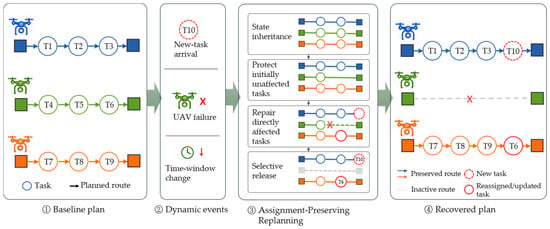
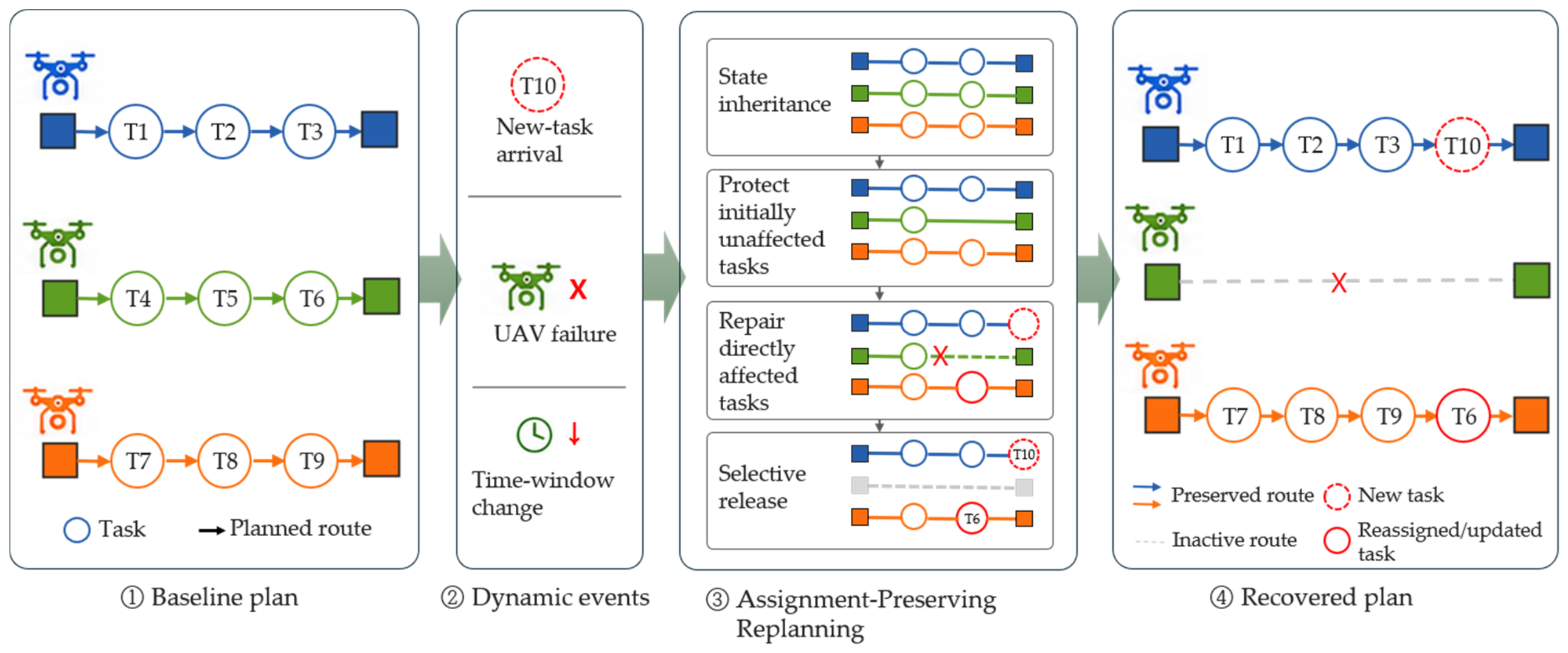
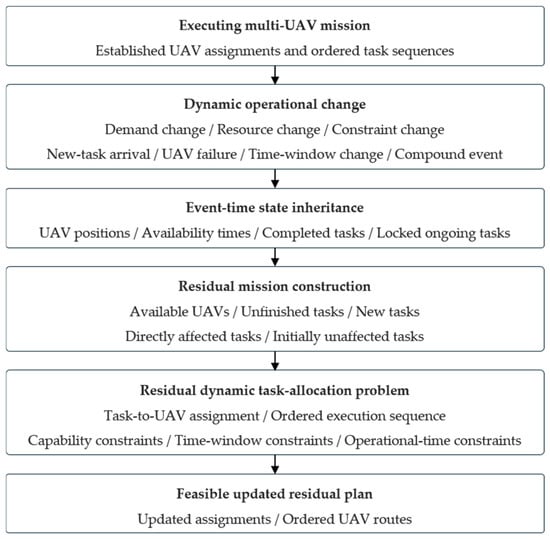
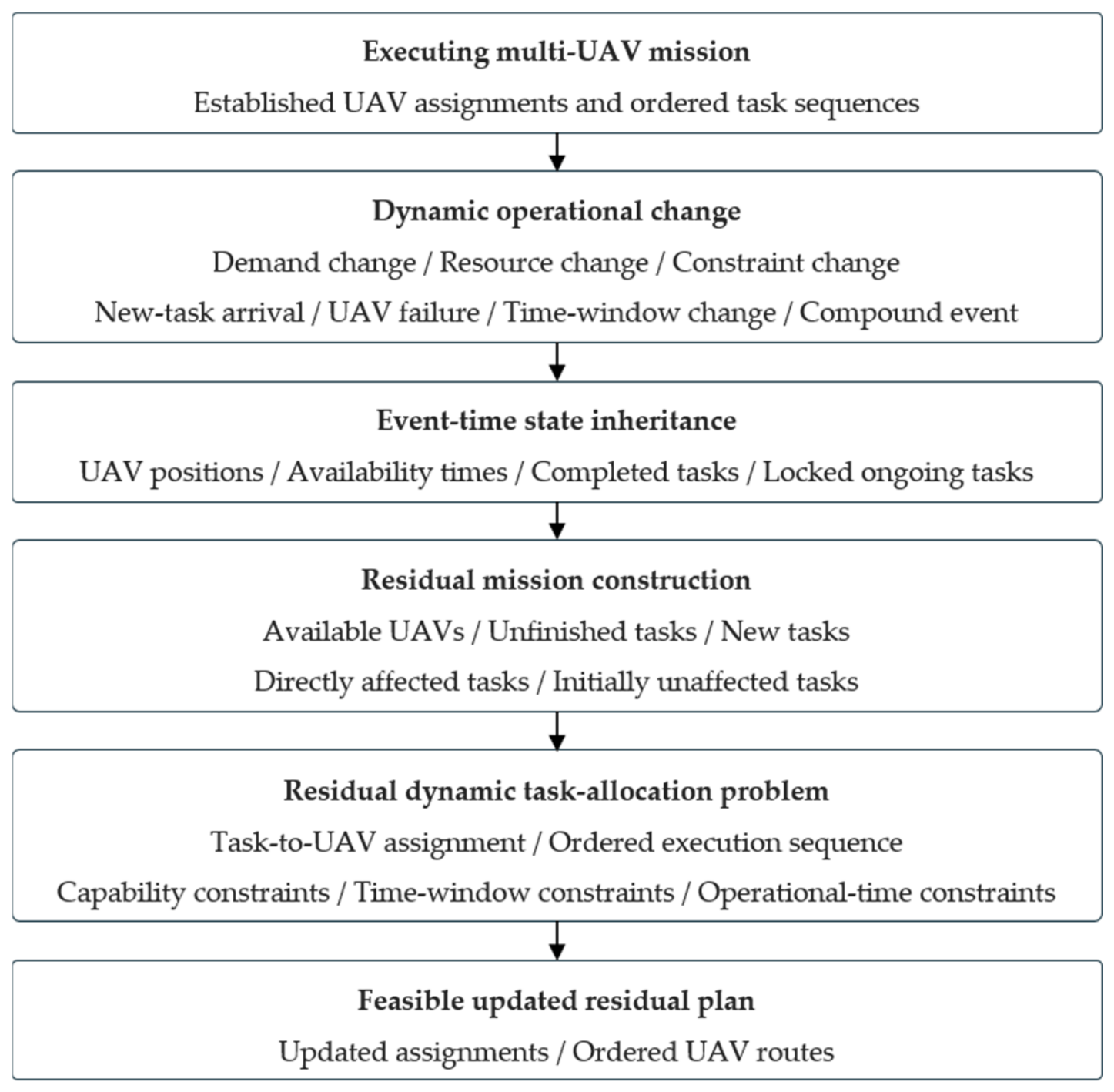
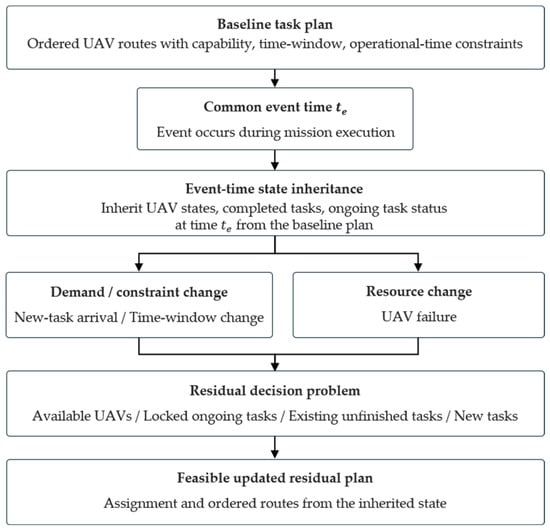
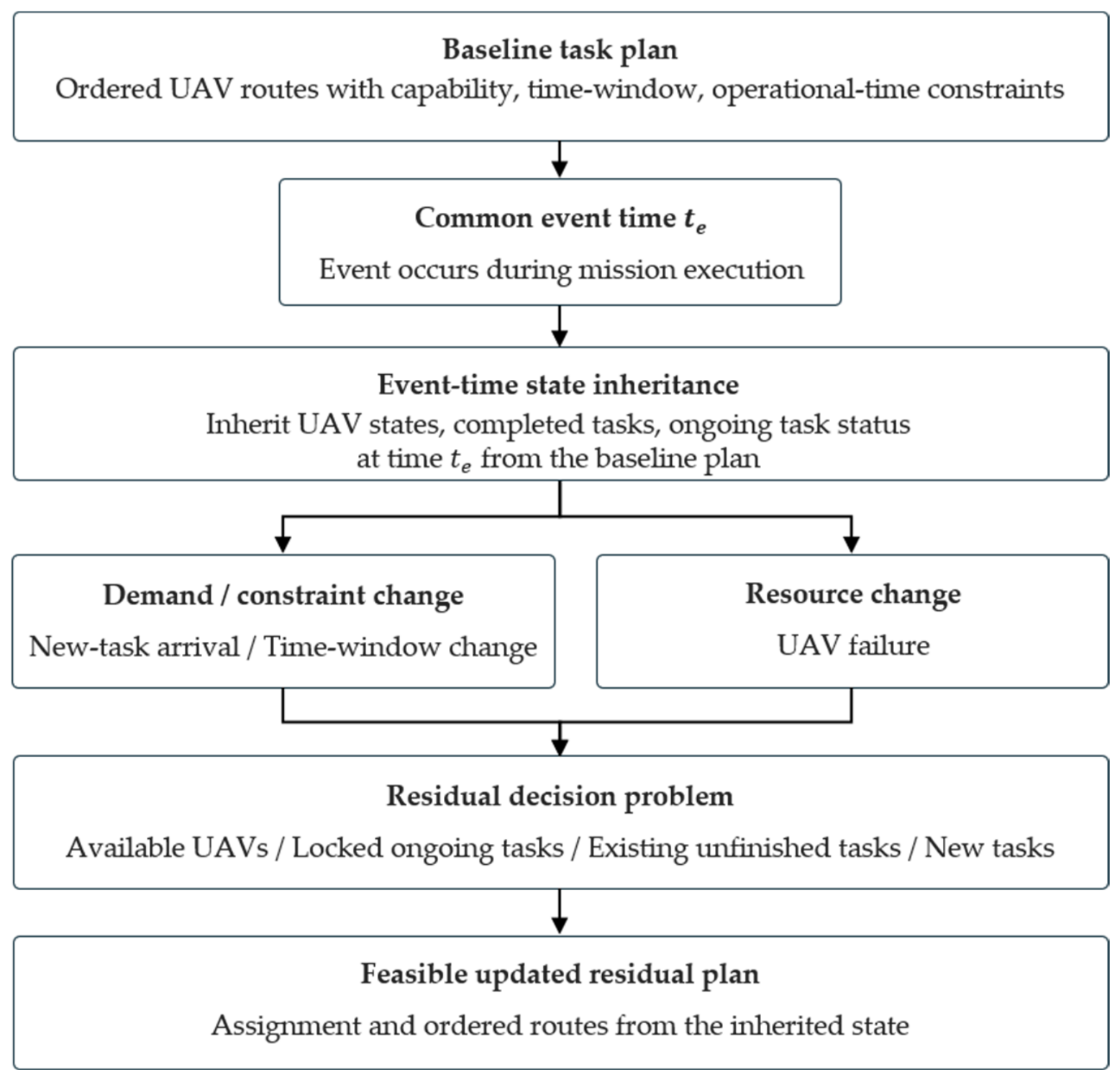
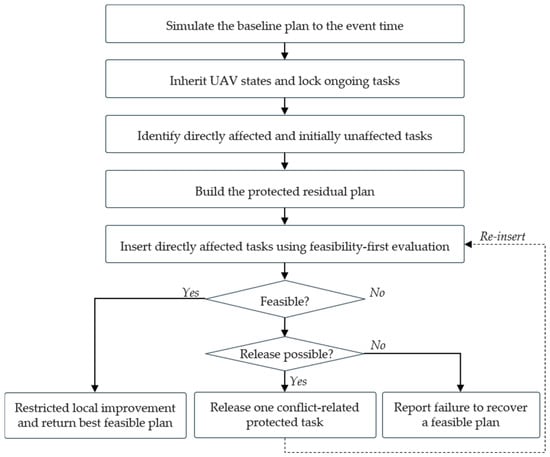
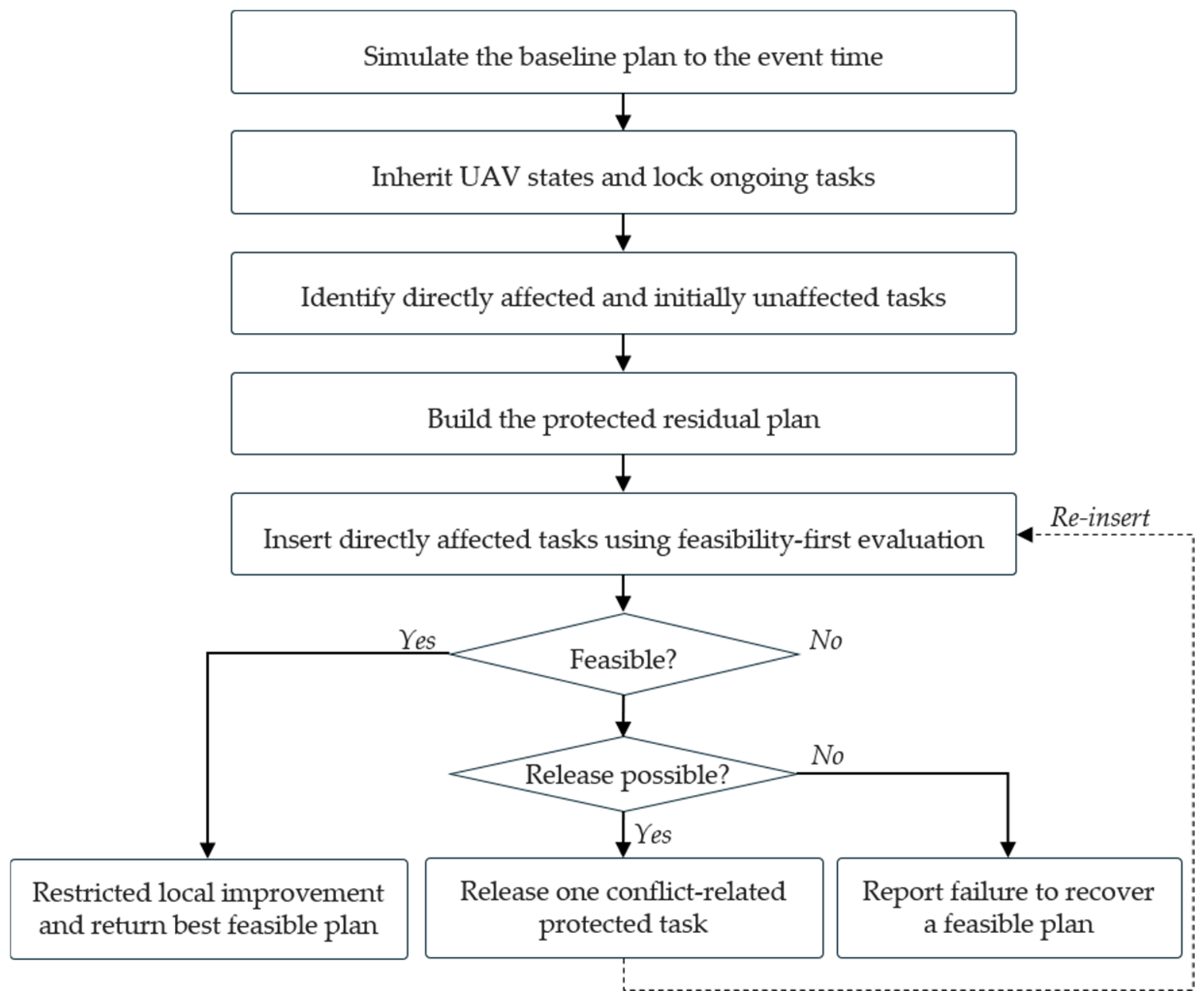
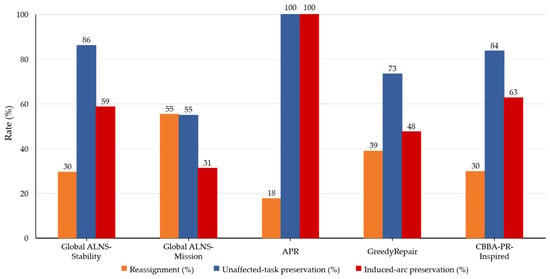
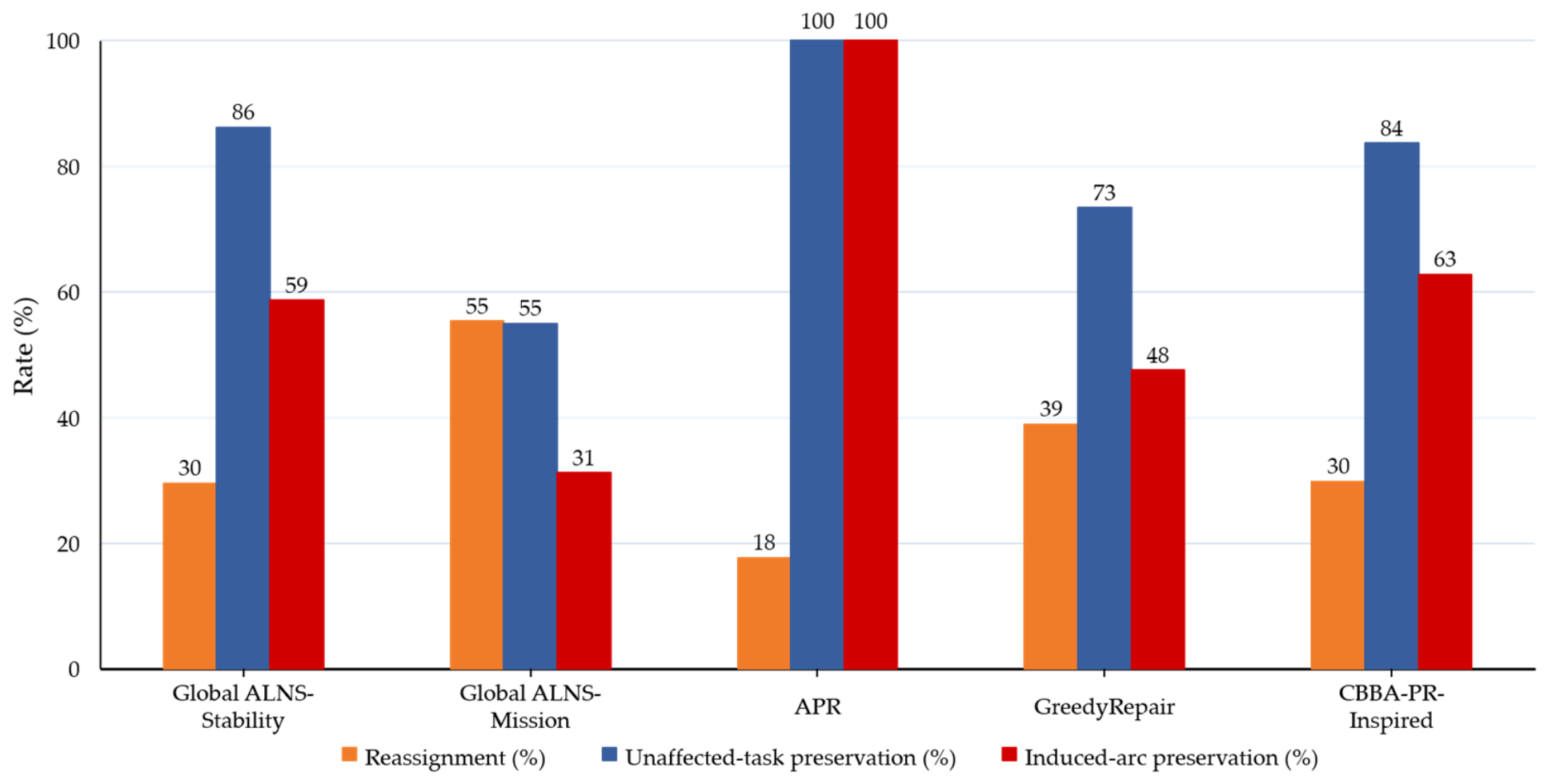
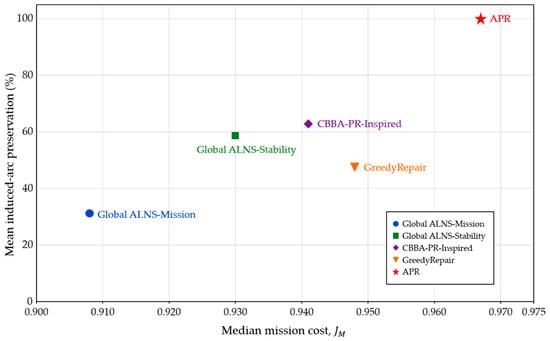
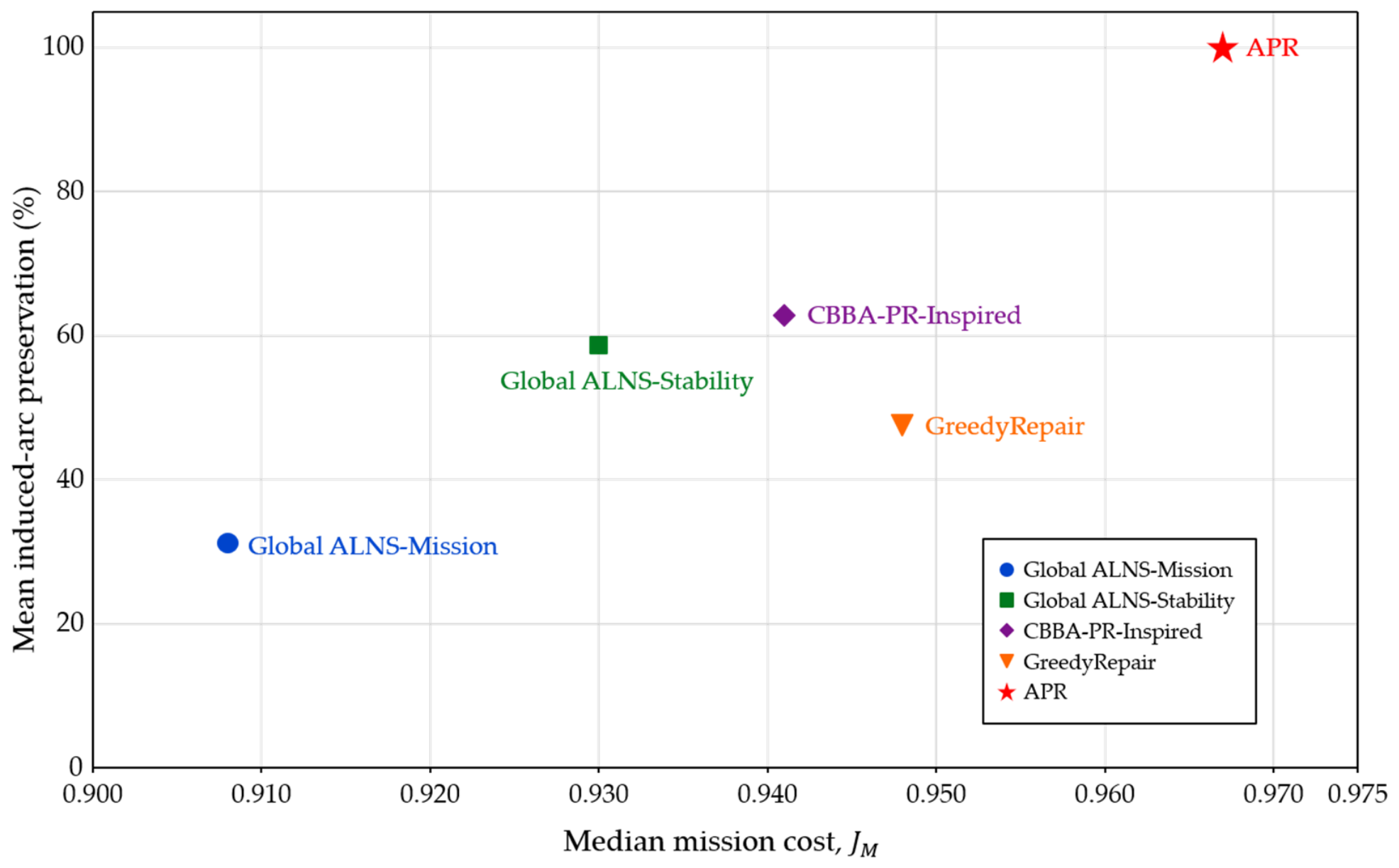
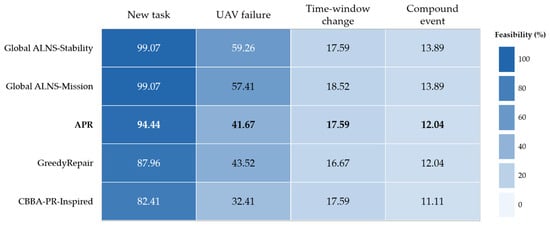
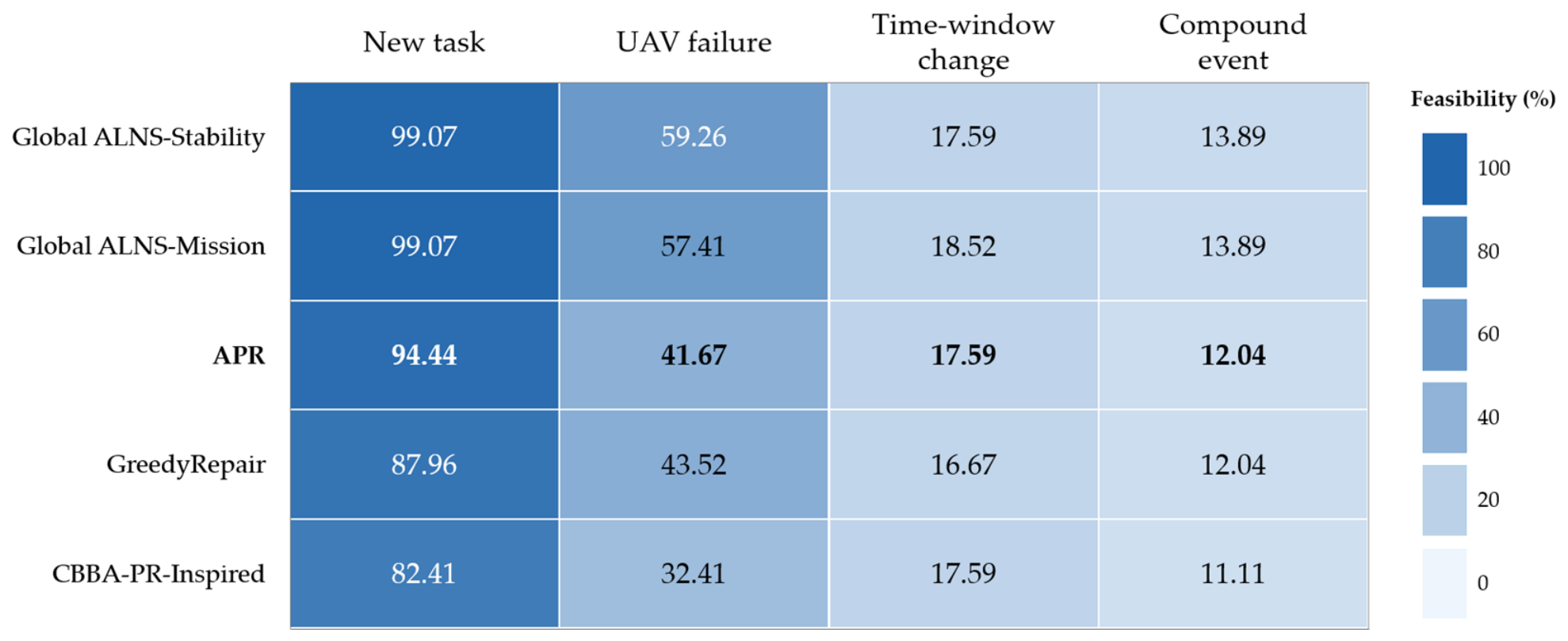
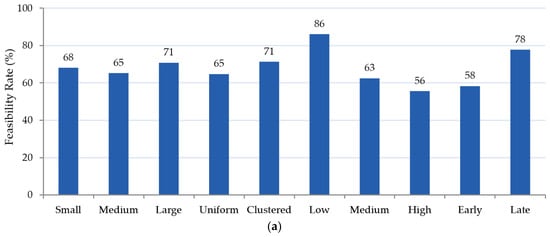
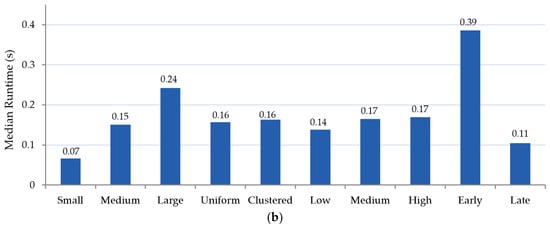
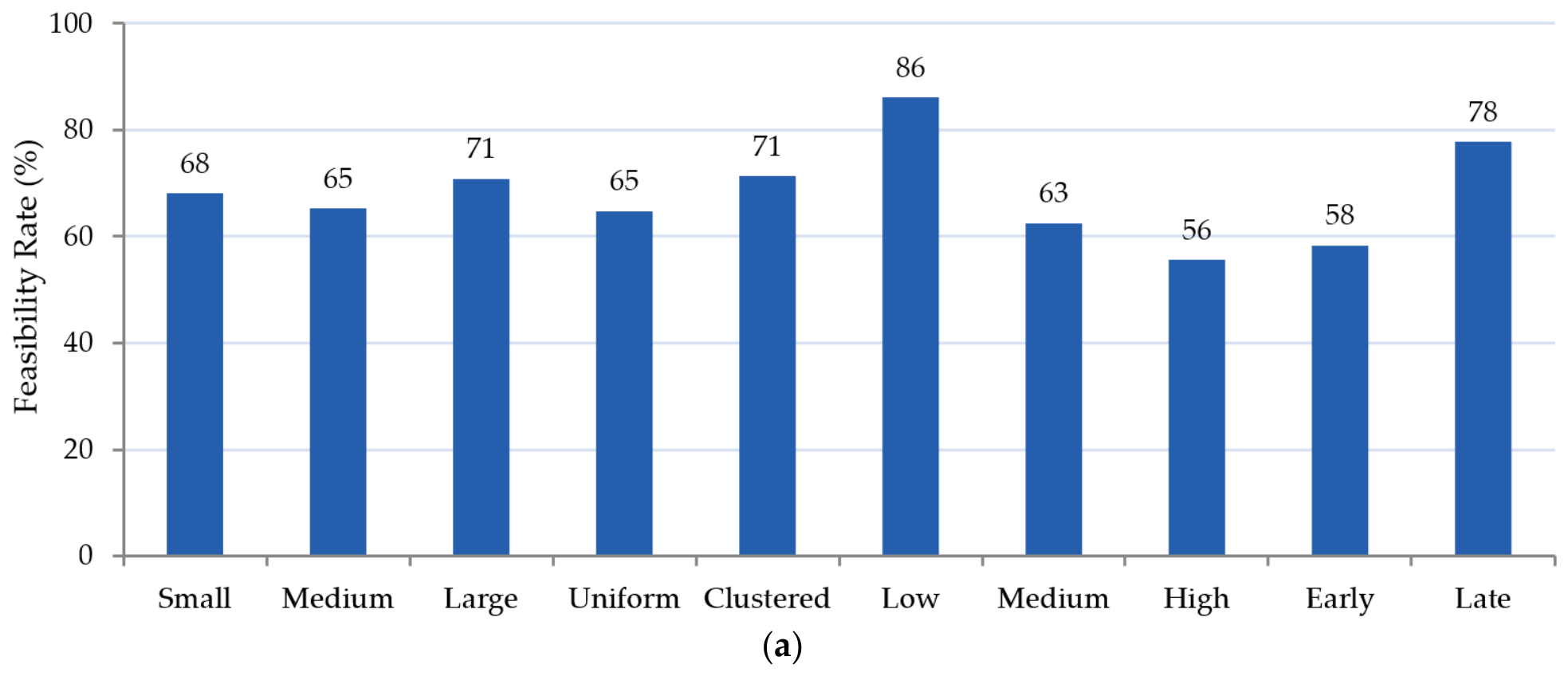
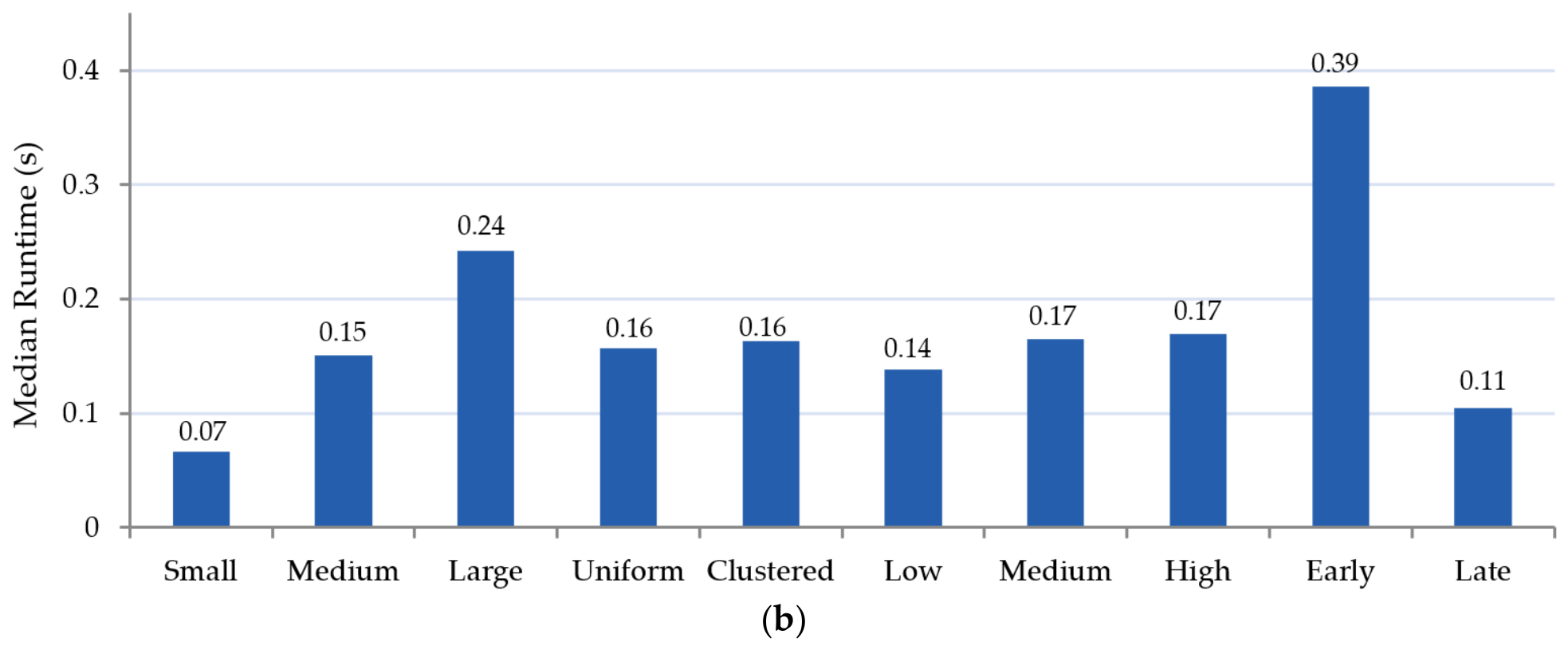
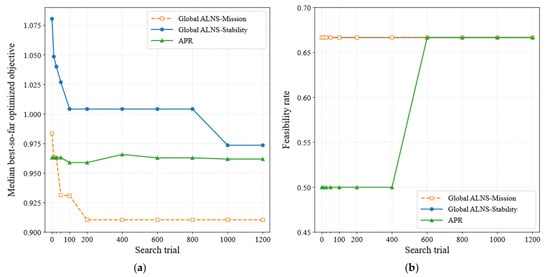
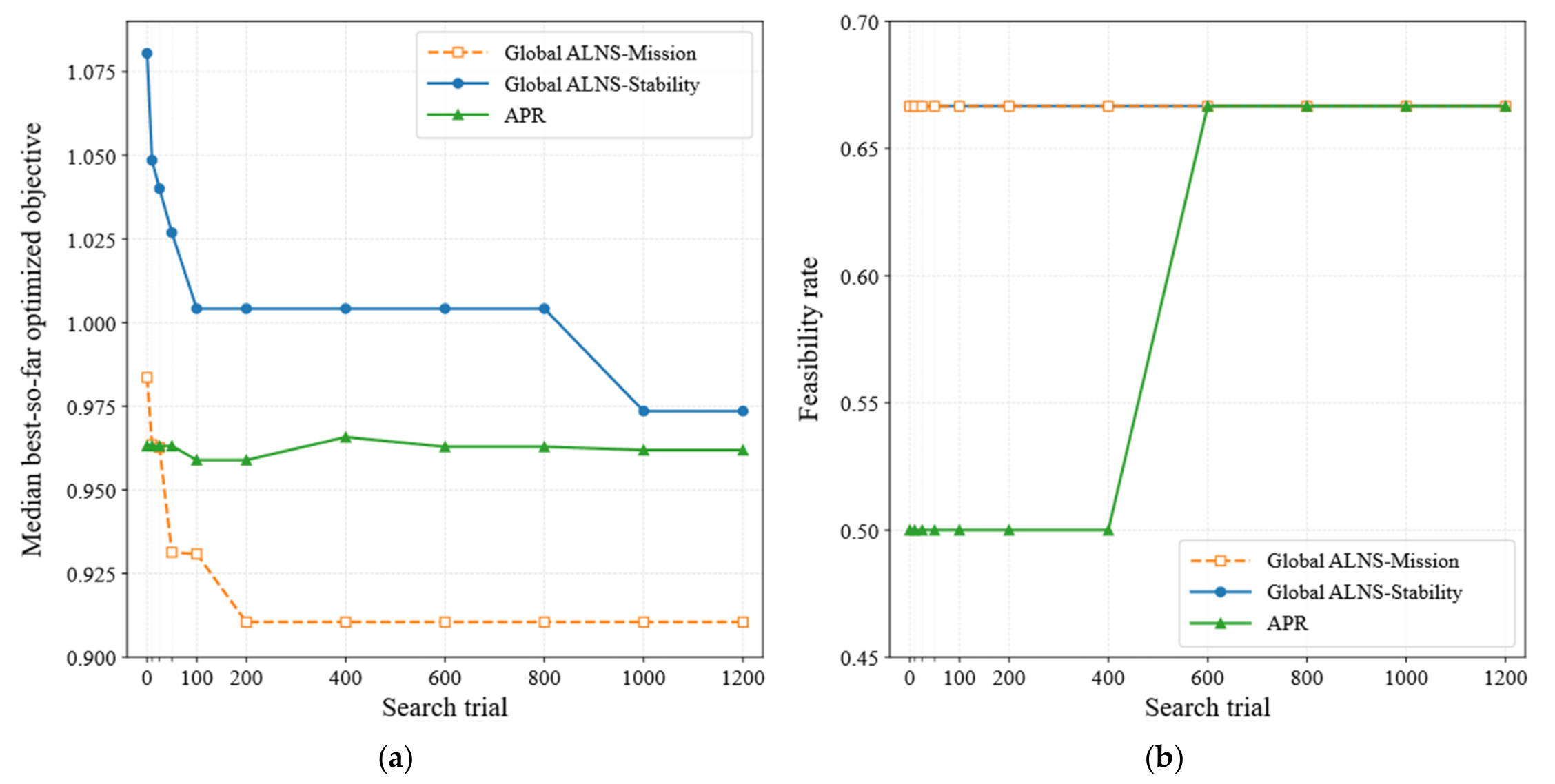
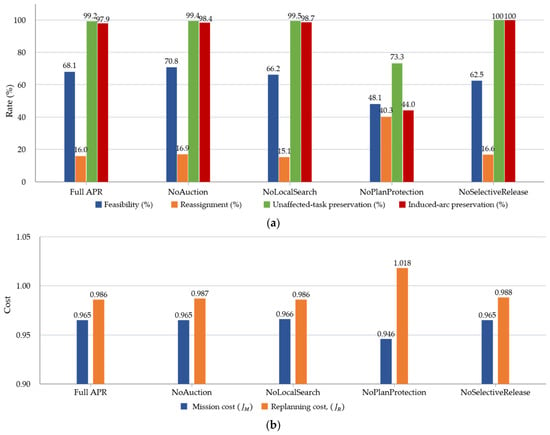
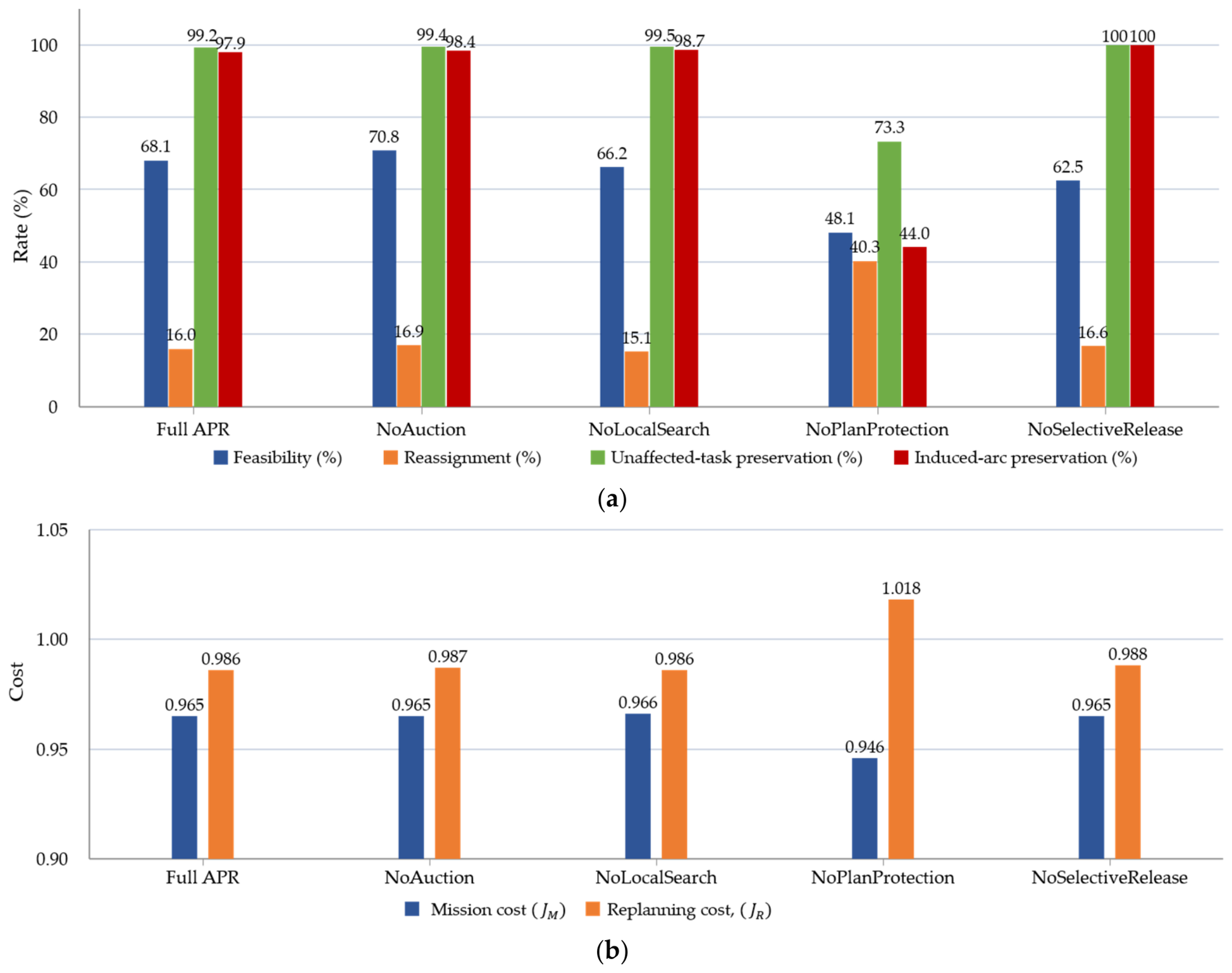
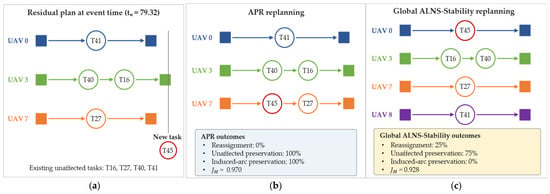
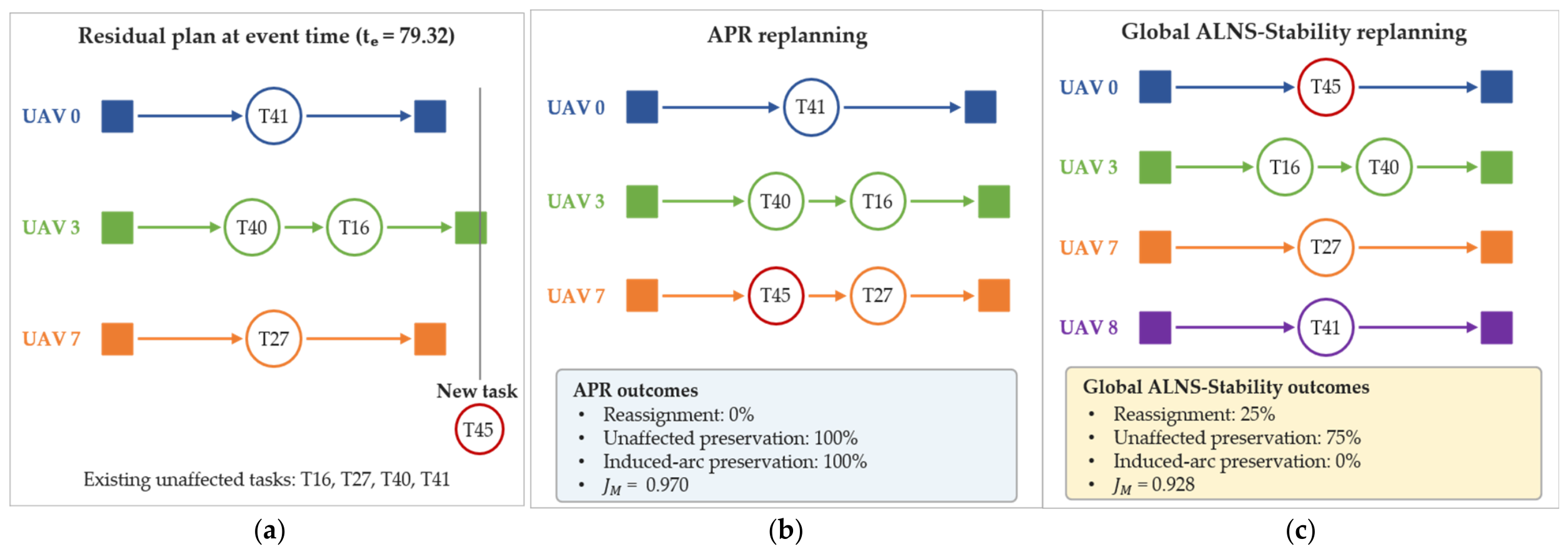
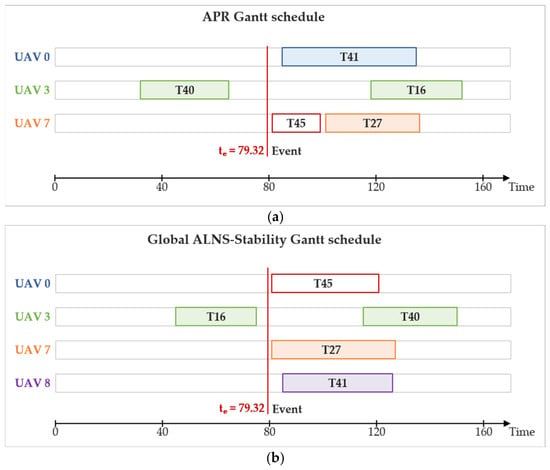
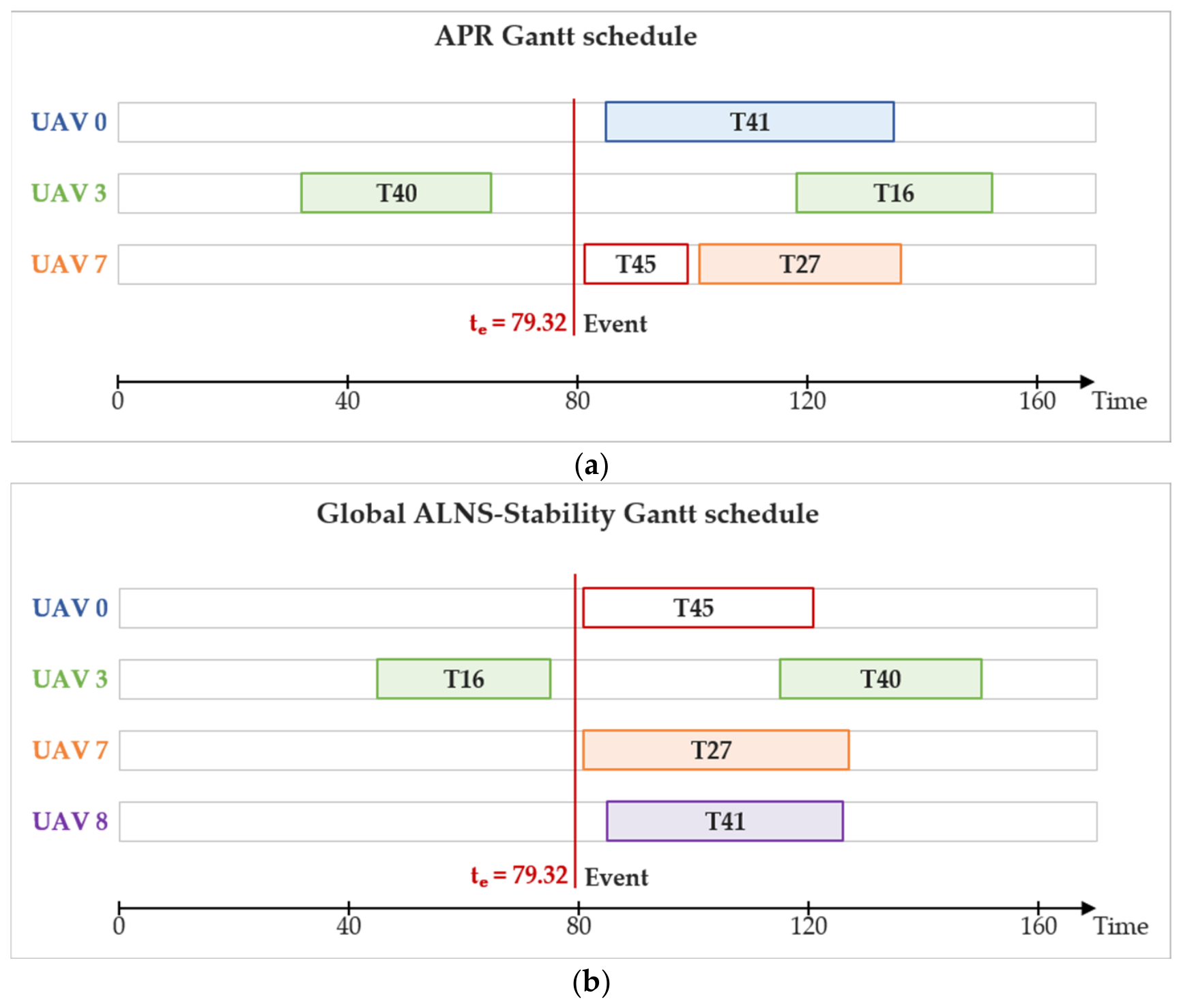

Disclaimer/Publisher’s Note: The statements, opinions and data contained in all publications are solely those of the individual author(s) and contributor(s) and not of MDPI and/or the editor(s). MDPI and/or the editor(s) disclaim responsibility for any injury to people or property resulting from any ideas, methods, instructions or products referred to in the content. |
© 2026 by the authors. Licensee MDPI, Basel, Switzerland. This article is an open access article distributed under the terms and conditions of the Creative Commons Attribution (CC BY) license.