


Featured Application
The findings indicate that the proposed framework can improve the efficiency of text processing for seepage safety assessments and the consistency of risk statistics, thereby providing intelligent support for reservoir dam hazard screening and scientific decision-making.
Abstract
This study proposes a human–computer interactive agent collaboration framework for reservoir dam seepage safety assessment. This is to address the large volume of safety assessment reports, inconsistent textual descriptions, low efficiency of manual statistics, and difficulty in maintaining consistent classification criteria. Using a large language model as the core for semantic understanding, the framework decomposes the report review process into subtasks including data preprocessing, knowledge retrieval, semantic classification, result feedback, and manual review. Structured collaboration among multiple agents is achieved through an “entity location-safety hazard” knowledge primary key, semantic rule constraints, and the Model Context Protocol (MCP). While preserving expert control, the system transforms original texts into aggregable and traceable risk statistics, forming a closed-loop mechanism of “machine-enabled efficiency, human oversight, and knowledge accumulation”. Application validation was conducted using more than 2000 reservoir safety assessment reports, from which 2724 valid severe-risk records were extracted. The results show that severe risks were mainly concentrated in key locations, including dam bodies, culverts, spillways, dam foundations, downstream dams, drainage facilities, and abutments. The main risk types were leakage, abnormal seepage behavior, construction quality problems, noncompliant seepage control, structural damage, and noncompliant drainage facilities. The findings indicate that the proposed framework can improve the efficiency of text processing for seepage safety assessments and the consistency of risk statistics, thereby providing intelligent support for reservoir dam hazard screening and scientific decision-making.
1. Introduction
The seepage safety of reservoir dams is one of the key factors governing their long-term service safety [1]. During long-term impoundment and operation, dam bodies, foundations, bank slopes, and water conveyance structures are affected by water-level fluctuations, material ageing, geological conditions, and construction defects. These factors can lead to defects such as phreatic-line rise, concentrated leakage, contact erosion, piping damage, and around-dam seepage, thereby threatening overall structural stability and downstream safety [2,3,4,5,6]. Therefore, systematic and standardized seepage safety assessment, including accurate identification of risk locations, determination of risk types, and quantification of their frequency and severity, is an important basis for reservoir dam safety management, risk-removal and reinforcement decisions, and operational regulation [7,8,9].
Traditional seepage safety assessment mainly relies on code-based inspections, field patrols, monitoring-data analysis, and integrated expert judgement. Evaluators must extract information from large numbers of inspection records, test reports, monitoring curves, and historical hazard ledgers, and then summarize statistics and assign grades according to industry classification systems. This process involves many steps, takes a long time, and depends heavily on professional experience. Moreover, different evaluators often interpret the same hazard descriptions differently, resulting in inconsistent classification criteria and limited comparability of statistical results [10,11]. With the development of digital twins, smart water conservancy, and engineering safety sensing systems, seepage safety assessment is shifting from an experience-driven paradigm to a data-driven and knowledge-driven paradigm. However, the risk information contained in massive unstructured texts and semi-structured tabular data remains difficult to transform efficiently, stably, and reproducibly into structured assessment outcomes [12].
In recent years, the application of large language models to scientific research and engineering management in the water conservancy sector has been gradually explored [13]. Agents can exhibit strong capabilities in natural language understanding, semantic reasoning, task orchestration, and tool invocation, creating opportunities for semantic identification, classification statistics, and assisted judgement of seepage hazards [14,15,16]. However, in seepage safety assessment, a highly specialized scenario with clear responsibility boundaries, fully automated “black-box” intelligent analysis cannot directly replace expert judgement. On the one hand, raw textual descriptions are diverse, and synonymous, near-synonymous, and elliptical descriptions are common; therefore, general LLMs have limited accuracy in mapping industry classification systems and domain terminology. On the other hand, assessment conclusions involve engineering safety and decision responsibility, so the process must be traceable, the results must be verifiable, and abnormalities must be resolvable [17,18,19]. Therefore, a working mode in which human expert knowledge leads, agents perform the main execution, and humans and machines iterate collaboratively allows agents to exploit their advantages in semantic understanding and batch processing while remaining constrained by expert knowledge frameworks and business rules. This provides a feasible approach for the intelligent transformation of reservoir dam operation and maintenance management [20,21].
This paper proposes a human–computer interactive agent collaboration framework for seepage safety assessment and uses actual engineering hazard text data with expert assessment labels as the data anchor. The framework labels raw texts according to entity location and risk classification, injects statistical templates, semantic mapping rules, and expert experience into the agent context, and enables agents to conduct batch semantic analysis, classification, and statistical analysis on raw texts. At the same time, it retains a feedback loop for manual review, rule correction, and assessment of unclassifiable records. Through the interactive interface, evaluators can monitor processing progress, successful statistics, and abnormal items in real time, and can intervene in classification when necessary, thereby realizing a collaborative mechanism of “machine acceleration, human oversight, and knowledge accumulation” [22,23].
2. Agent Collaboration Architecture
2.1. Agent Modules
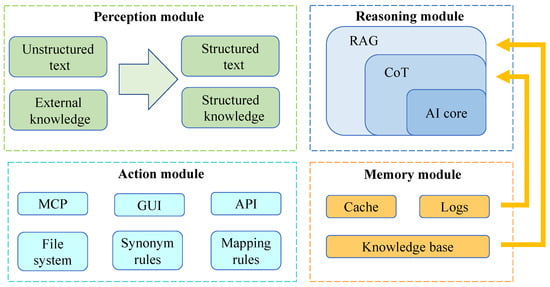
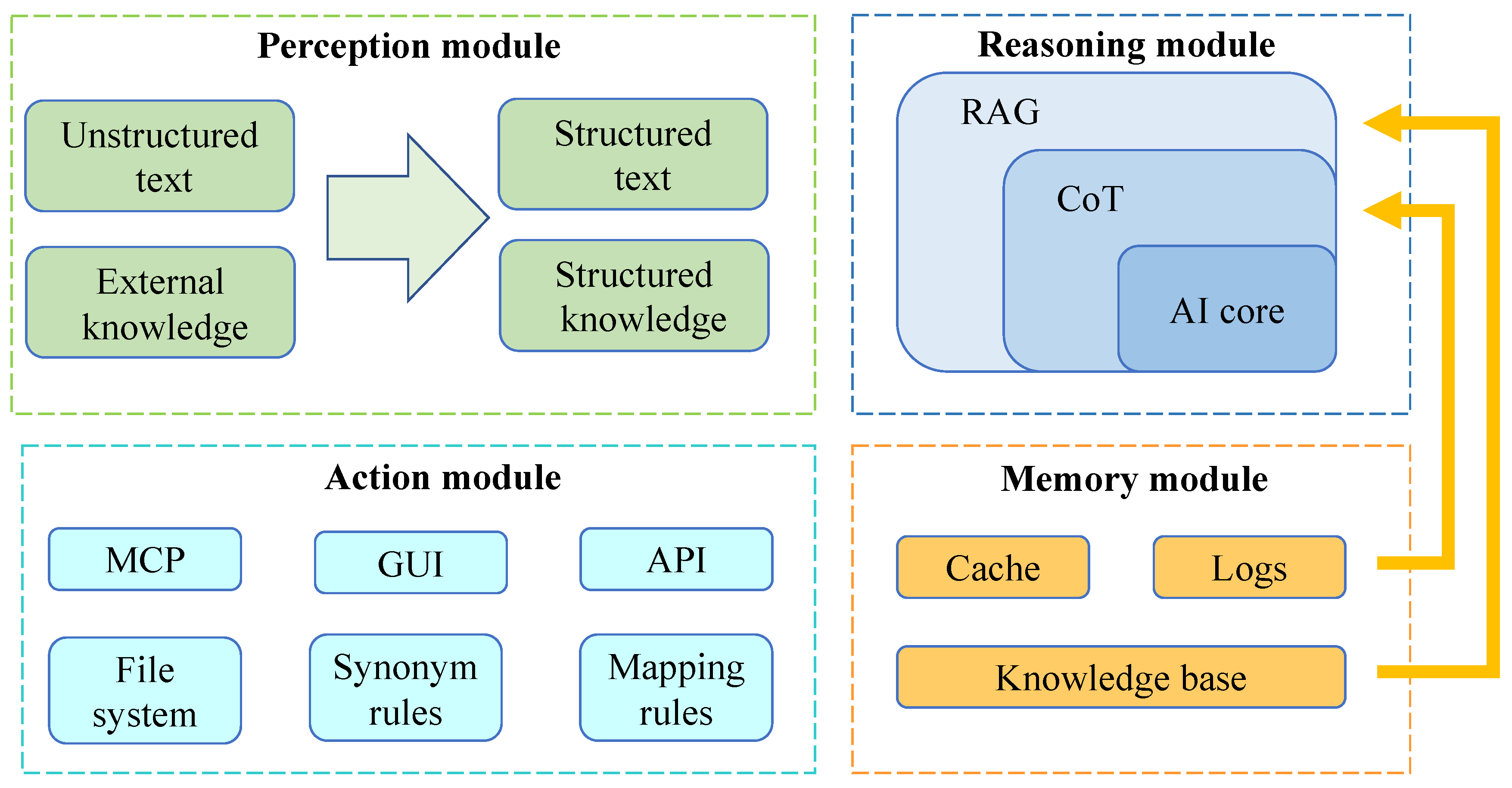
The agent uses a large language model as its core reasoning module and integrates perception, action, and memory modules. The module functions are shown in Figure 1.
Figure 1.
Schematic diagram of module functions.
The perception module provides multiple interfaces to receive textual data in various forms, including raw text, raw text with expert assessment, and structured data with expert assessment. It converts unstructured text into structured data that can be more easily understood by large language models. The perception module also extracts overall assessment constraints.
The action module converts reasoning results into executable, deliverable, and governable business actions, serving as the execution layer through which the agent generates external value. Communication between modules and between sub-agent systems within modules adopts the MCP (Model Context Protocol) for structured message exchange and operation logging. In this implementation, the MCP supports the traceability of tool calls, intermediate outputs, and module interactions.
The reasoning module is the cognitive and decision-making center of the agent. Based on configurable large language model services, it performs semantic understanding, synonym determination, risk grading, and generation of agent action plans. Staged prompt engineering decomposes complex tasks into verifiable subtasks, including structured text splitting, completion and refinement, knowledge matching and pruning, and assessment generation.
The memory module consists of a cache module, a log module, and a knowledge storage module. The cache module stores the agent’s interaction records and the data required for continuous collaboration among modules, and it marks risks according to business rules, thereby providing samples for supervised learning, expert review, and knowledge base iteration. The log module records agent work content and workflows to facilitate task tracing. The GUI status bar synchronously displays key progress information, forming a ‘human–machine shared view’ of the operating status. The knowledge storage module adopts a structured, primary-key-indexed knowledge base.
2.2. Agent Operation Logic
2.2.1. Data Acquisition and Preprocessing
According to the execution sequence, the agent uses semantic regular-expression patterns to structurally label and extract the core data in the input text in the format of entity location-safety hazard-assessment text-assessment score, if available. Examples are shown in Table 1. The agent then calls the core data catalog of the memory module to standardize, complete, and refine the extracted structured data. Examples are shown in Table 2. Assessment scores of 0, 1, and 2 represent safe, basically safe, and unsafe, respectively.
Table 1.
Example of a core dataset.
Table 2.
Example of the completed and refined core dataset.
2.2.2. Knowledge Base and Retrieval Improvement
Knowledge for dam seepage safety assessment has clear location dependence and semantic hierarchy. The same safety hazard often has different engineering meanings under different entity locations. To avoid topic drift during full-text chunking, similarity-based recall, and context concatenation in general RAG (retrieval-augmented generation), this paper constructs an explicitly stored knowledge base using “entity location-safety hazard” as the primary key. This primary key simultaneously corresponds to the engineering object, defect type, and assessment semantic boundary, transforming the knowledge base from a free-text index into a standardized catalog oriented to seepage-assessment tasks.
The knowledge base consists of a standard location table, a risk classification table, a risk categorization mapping table, a synonym expression table, an assessment rule table, and a historical sample table. For example, the standard location table is used to unify near-synonymous or hierarchical expressions such as “dam body”, “upstream dam body”, “upstream slope”, and “impervious face slab”; the risk classification table constrains the attribution boundaries of categories such as leakage, wetting, piping risk, noncompliant drainage facilities, and poor seepage-control performance; the risk categorization mapping table maps risks such as “concrete honeycombing, pockmarks, spalling, and exposed reinforcement” to “concrete quality defects”; the synonym-expression table records colloquial, elliptical, and combined descriptions commonly found in raw reports; the assessment rule table stores interpretation rules for degree words, negation words, quantifiers, and normative judgements; and the historical sample table records correction results after manual review, providing a basis for subsequent retrieval and rule iteration.
Compared with traditional RAG, which uses fixed-length text chunks as retrieval units, the proposed method uses the primary-key vocabulary simultaneously as the knowledge preprocessing standard, knowledge base storage catalog, retrieval tokenization dictionary, and result-merging criterion. The vocabulary formed by the primary keys specifies both how the agent should segment and understand the input text and how the statistical results should ultimately be aggregated and output. This design allows “knowledge injection” and “result statistics” to use the same classification coordinates, ensuring that the model adopts the same criteria during both generation and statistical analysis.
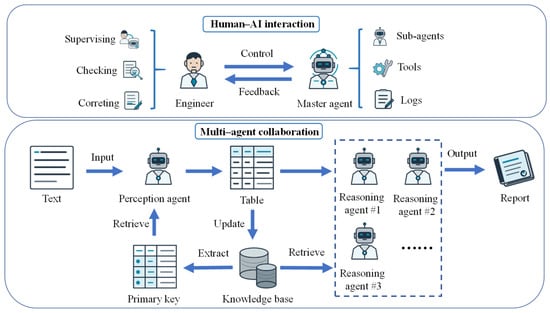
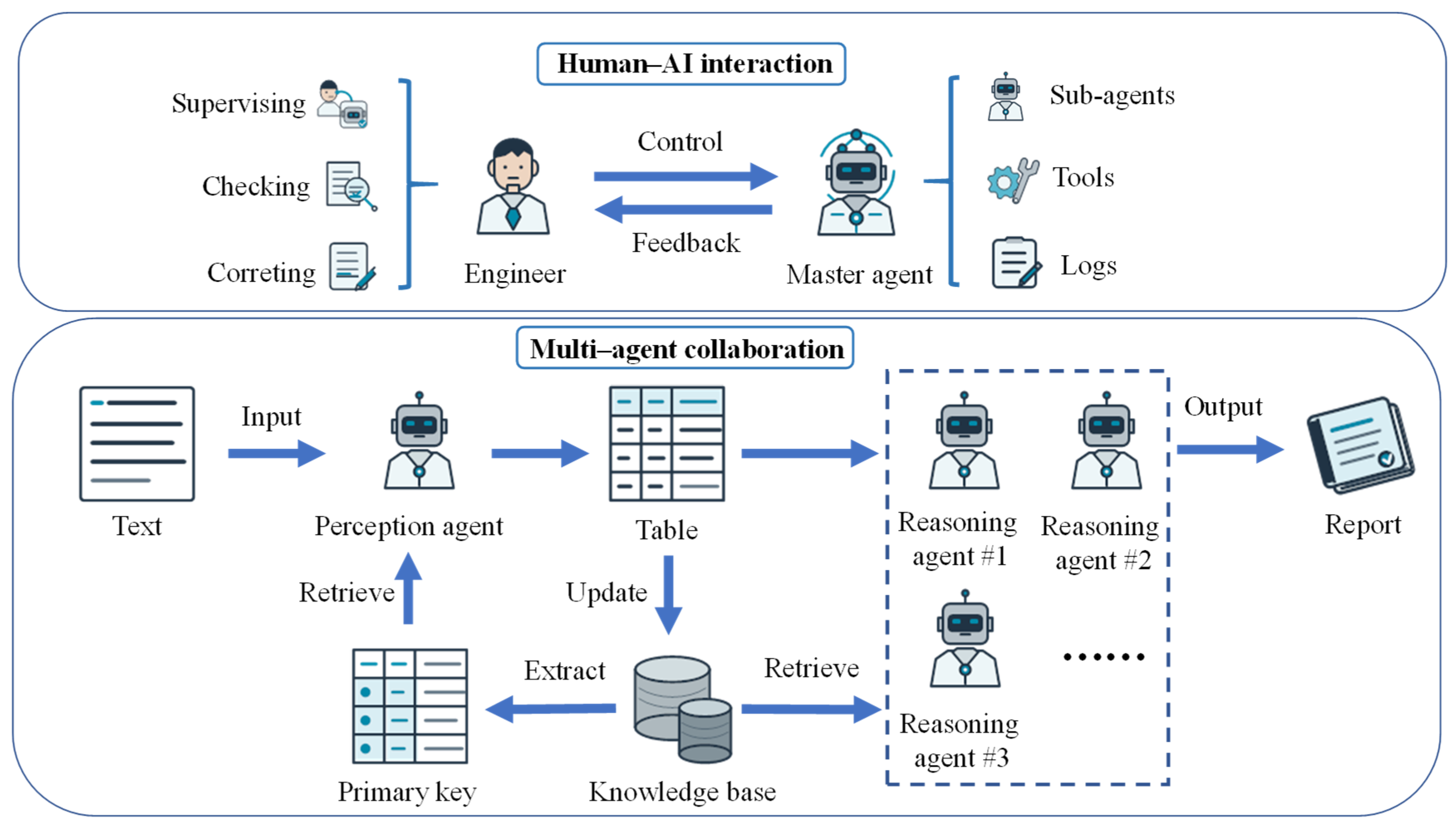
Under the constraints of the MCP context protocol, retrieval results are passed to the reasoning agent as structured objects, including standard locations, standard safety hazards, raw evidence text, candidate confidence, triggered rules, and traceable sample identifiers. The reasoning agent can complete classification judgement and result generation only within this structured context. When evidence is insufficient, rules conflict, or no primary key can be matched, the system outputs the abnormal cause and requests manual confirmation. In this way, the knowledge base becomes a digital defense system that constrains agent behavior, records expert experience, and supports closed-loop correction. The agent layered framework is illustrated in Figure 2.
Figure 2.
Schematic diagram of agent layered framework.
2.2.3. Result Feedback
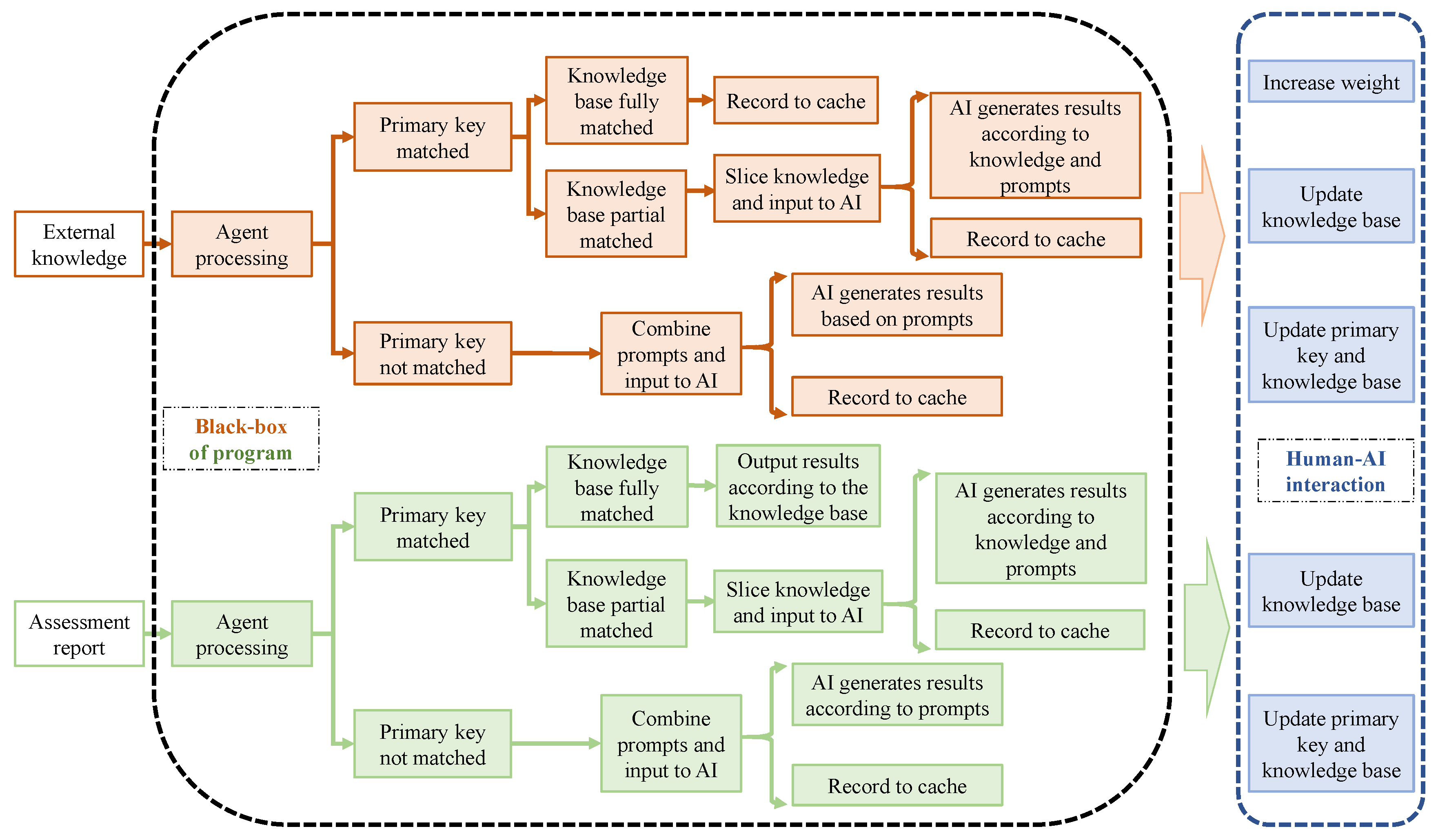
The result feedback stage implements closed-loop control in the agent system. Its objective is to connect model judgement, manual review, and knowledge base updating into a traceable process. After each batch of texts is processed, the action module simultaneously generates three types of results: first, standardized structured records, including entity location, safety hazard, raw assessment text, assessment score, and evidence source; second, statistical results for business analysis, including risk frequencies by location, risk frequencies by type, and cross-statistical results (refer to Section 3.2); and third, an abnormal feedback list, including unclassified records, low-confidence records, rule-conflict records, and boundary samples requiring manual confirmation.
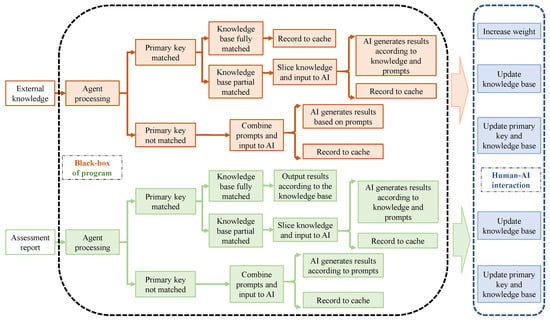
The system synchronously displays processing progress, completed batches, the number of successfully classified records, the number of unclassified records, abnormal causes, and currently invoked knowledge rules in the interactive interface, allowing operators to continuously monitor the agent status during task execution. For records that can be automatically classified, the system preserves the mapping among the raw text, the matched primary key, the invoked rule, and the output result. For records that cannot be automatically classified, the system does not hide the abnormality but pushes it to the user as a sample pending review. This design makes tasks observable, processes intervenable, and results reviewable [24], transforming agent outputs from black-box text into assessment objects with evidence chains.
Manual feedback mainly acts on corrections of synonymous expressions, location boundaries, and degree judgements, for example distinguishing “local slight seepage” from “concentrated leakage accompanied by turbid water” as different risk intensities. User-confirmed corrections are written to the historical sample table and used to update the synonym expression table or rule table, thereby forming structured accumulation of expert experience. Through result feedback, the system shifts from one-time text generation to continuous knowledge iteration. Agents handle high-frequency, batch-based, rule-based semantic classification and statistical calculation, whereas human experts handle low-frequency, high-risk, and boundary-ambiguous samples and confirm the rules. Together, they form a closed-loop mechanism of “machine acceleration, human oversight, and knowledge accumulation”, allowing subsequent batches to reuse confirmed experience under the same classification criteria and providing a basis for review tracing, result verification, and subsequent model optimization. The workflow of model judgement and manual review is illustrated in Figure 3.
Figure 3.
Workflow of model judgement and manual review.
2.3. Initial Development Process and Technical Details of the Agent and Knowledge Base
During Agent development, 400 reservoir dam safety appraisal reports were first selected as the initial development corpus. These reports were used to establish preliminary versions of the primary-key table, matching rules, and scoring rules. More than 2000 additional reservoir dam safety appraisal reports were then processed in batches. During the initial and each subsequent batch, the primary-key table and Agent rules were iteratively refined. The refinements considered Agent-generated matching results, the reasons for unsuccessful matches, and expert verification. This process progressively improved the Agent’s ability to accommodate diverse expressions and risk scenarios.
The primary keys were constructed using a combination of forward and reverse engineering. This strategy was intended to cover both regulatory requirements and terminology used in engineering practice. Forward engineering was based on the Guidelines for Reservoir Dam Safety Evaluation (hereafter, the Guidelines). We systematically reviewed the structural locations, associated seepage safety risk items, risk levels, and assessment requirements specified in the Guidelines. We then established the hierarchical relationships between structural locations and safety risk items, and between each risk item and its subordinate sub-risk items. Reverse engineering analyzed the smallest assessment-unit sentences segmented from the safety appraisal reports. The structural locations, anomalies, causes of defects, and assessment conclusions expressed in these sentences were summarized and distilled. This process yielded the safety risk items and corresponding sub-risk items defined in this study. Alternative descriptions of the same risk item across reports were consolidated according to their semantic meaning and assessment target. This step incorporated engineering expressions that were not fully covered by the Guidelines. Finally, risk items derived through forward and reverse engineering were cross-compared and assigned unified codes. The resulting primary-key table was continuously updated.
The complete knowledge base comprised a standard location table, risk classification table, risk categorization mapping table, synonym-expression table, assessment-rule table, primary-key table, and historical sample table. The data were stored in JSON format or encoded directly in the Agent code. During inference, the matched primary key was used to retrieve associated knowledge from the database. Relevant standardized names, risk classifications and category mappings, synonymous expressions, assessment rules, and historical samples were then provided to the AI reasoning module as context.
The standard location table harmonized alternative descriptions of the same structural location. Each location was assigned a unique standardized name, enabling the Agent to identify the assessment target consistently. First, abbreviations, aliases, and spelling variants in the reports were normalized. For example, “upstream dam,” “upstream dam slope,” “upstream side of the dam,” and “upstream dam face” were mapped to “upstream face.” Second, expressions containing spatial qualifiers or local differences were abstracted to support primary-key matching. For example, “left dam abutment” and “right dam abutment” were mapped to “dam abutment.” This abstraction was used only for primary-key construction and semantic matching. It did not alter the original smallest assessment-unit sentences in the historical sample table, which retained the location descriptions used in the source reports.
The risk classification table similarly normalized alternative descriptions of the same risk and defined the relationship between structural locations and safety risk items. Variations in wording were first standardized. For example, expressions corresponding to “splitting,” “cracking,” and “crack” were mapped to “crack.” Because seepage safety risk types can overlap across structural locations, three tables jointly specified an unambiguous hierarchical path for each risk. These were the risk classification table, primary-key table, and risk categorization mapping table.
The risk categorization mapping table further defined the hierarchical relationships between risk items and their subordinate sub-risk items. For example, “cracks,” “concrete quality defects,” and “concrete aging” were categorized as sub-risk items of “concrete deterioration.” In turn, “carbonation,” “salt attack,” “leaching,” “alkali-aggregate reaction,” and “freeze-thaw damage” were categorized as sub-risk items of “concrete aging.”
The synonym-expression table consolidated diverse descriptions of the same risk across reports and mapped them to a standardized expression. For example, “high permeability coefficient of the fill material” and “poor seepage-control performance of the fill material” were mapped to “high permeability coefficient of the fill material.” Terms explicitly used in the Guidelines were preferred as standardized expressions. Concepts not explicitly listed in the Guidelines were standardized according to their semantic meaning and expert judgment.
The assessment-rule table recorded the detailed provisions for seepage safety assessment in the Guidelines, the constraints governing the overall assessment rating, and rules added during iterative Agent development.
The primary-key table used each combination of structural location and safety risk item as an index. Each index linked the corresponding standardized location, risk item, sub-risk items, synonymous expressions, and assessment rules.
The historical sample table was the core data table of the knowledge base. It stored the “Assessment text” from each of the smallest assessment units in the safety appraisal reports, together with annotations for structural location, risk item, scoring result, and other relevant fields. The table retained the original descriptions of defects in the source reports and provided traceable historical samples for Agent matching, scoring, and subsequent refinement. Knowledge was stored as discrete entries and indexed through primary keys, enabling precise retrieval of relevant entries. All preceding steps used a unified primary-key index, semantic regular expressions, synonym replacement, and risk categorization. Consequently, entries already incorporated into the knowledge base were expected to achieve high retrieval recall.
2.4. System Performance Evaluation and Comparative Experimental Design
2.4.1. Test Set Construction and Evaluation Objectives
To evaluate the classification performance, cross-model adaptability, and practical review efficiency of the proposed framework, we designed three complementary experiments. The first compared five system configurations to assess the overall performance of different technical approaches and the combined contribution of key design elements. The second replaced only the backbone LLM while holding all other conditions constant, thereby evaluating cross-model transferability and run-to-run stability. The third compared the accuracy and processing time of human engineers and the Agent when reviewing the same reports. Except for the factor explicitly varied in each experiment, data preprocessing, label definitions, evaluation criteria, and output formats were held constant. All experiments involving an LLM were conducted through API calls.
The test data comprised two parts. The first consisted of 395 randomly sampled dam seepage safety assessment reports containing 1230 valid data records. This test set was used to compare system configurations and evaluate cross-model transferability and stability. One expert assessed all 1230 records using standardized labels (safe, basically safe, or unsafe), and another expert independently verified the annotations. The verified labels served as the reference standard. No Agent assistance was used during this process in order to reduce the risk of information leakage. The second part comprised 20 randomly selected reports. Their original seepage safety ratings were concealed from both the participants and the Agent during testing and were used only to compare review performance. To preserve a realistic reading context, these reports were neither cleaned nor structurally preprocessed and were submitted directly to three engineers and the Agent. Each engineer independently reviewed all reports, while human–Agent interaction was disabled during Agent processing. The concealed original ratings served as the reference standard for this experiment.
2.4.2. Comparative Experiments with Different System Configurations
To compare different technical approaches and assess the combined contribution of key design elements in the complete framework, we evaluated five system configurations, designated A1–A5. All configurations processed the same 1230 test records. Configurations involving an LLM used Qwen3.5-122B-A10B. The procedures for each configuration are provided in Table 3.
Table 3.
System configurations and corresponding procedures.
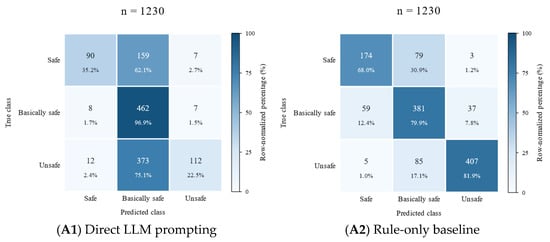
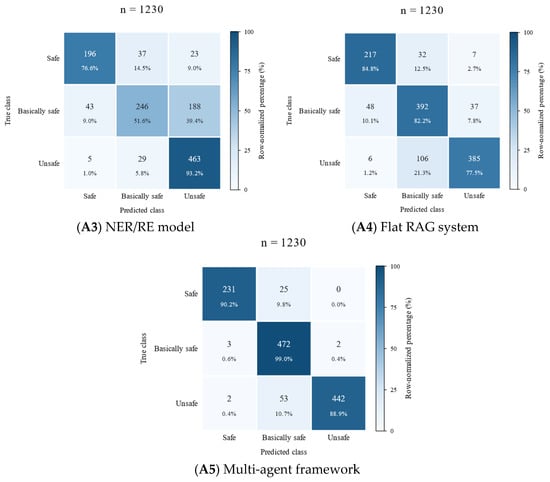
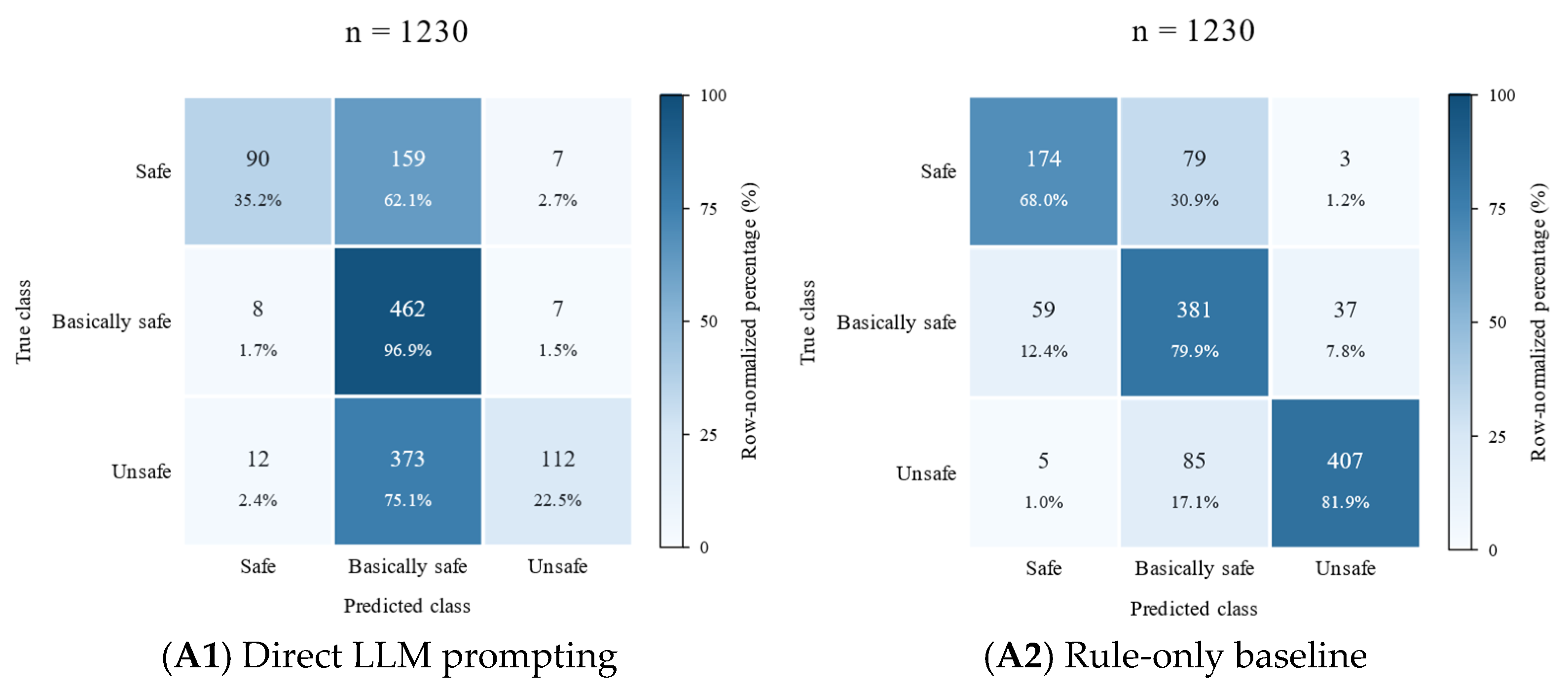
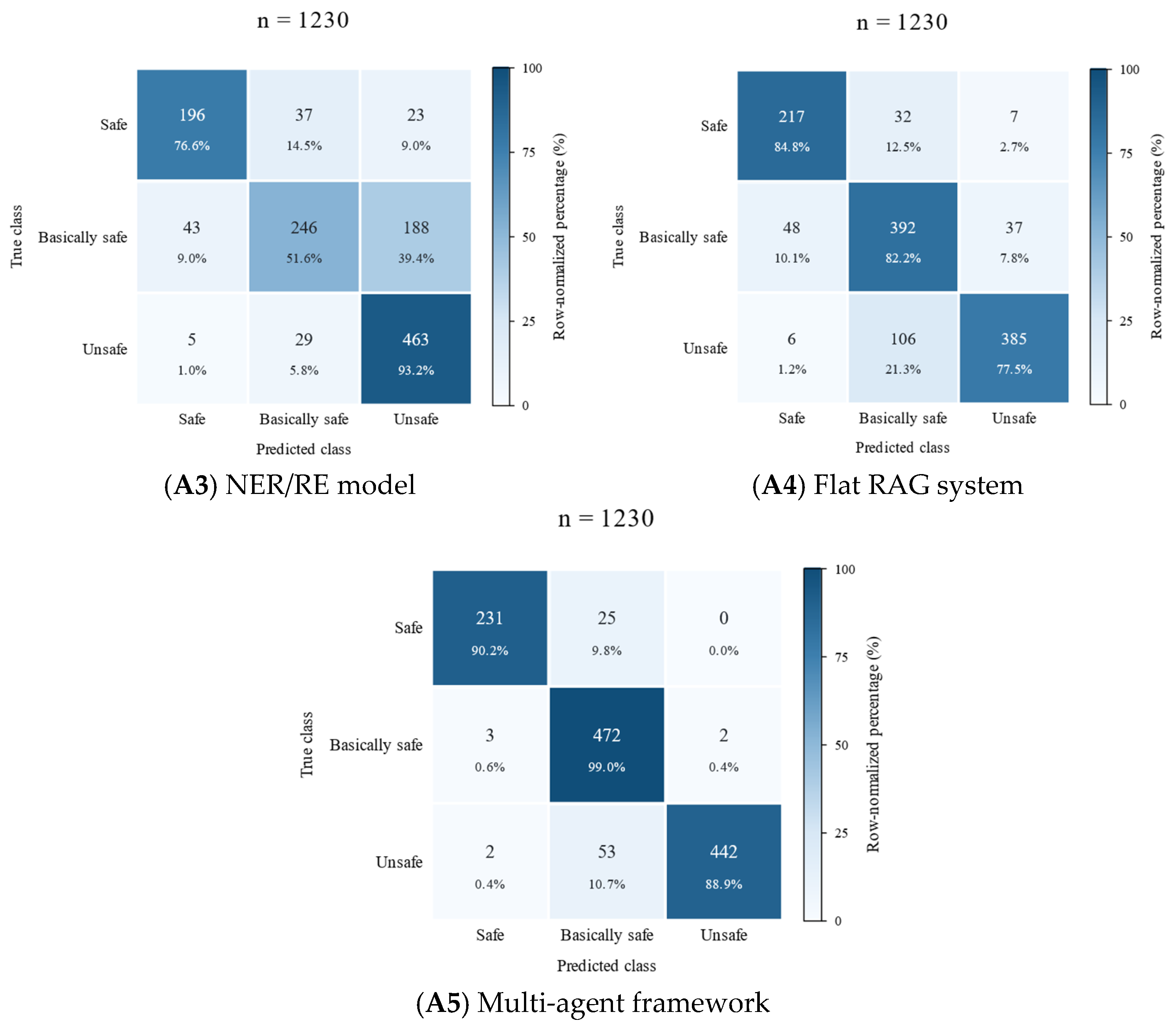
The evaluation metrics included per-class precision, recall, and F1 score, as well as overall accuracy, micro-averaged F1 (Micro-F1), macro-averaged F1 (Macro-F1), and confusion matrices. Because this was a single-label three-class classification task, Micro-F1 was numerically identical to accuracy. Therefore, only accuracy is reported in Table 4 to avoid redundancy. Precision, recall, and F1 characterized false-positive and false-negative patterns within each risk class, whereas Macro-F1 measured performance balance across classes. The confusion matrices reported both sample counts and percentages normalized by true class. The evaluation results are presented in Table 4 and Figure 4.
Table 4.
Performance comparison among the system configurations.
Figure 4.
Confusion matrices for the five system configurations.
Table 4 shows marked differences in overall classification performance among the five system configurations. The complete multi-agent framework (A5) achieved the highest accuracy (0.931) and Macro-F1 (0.933). Its class-specific F1 scores were 0.939, 0.919, and 0.939, indicating balanced performance across classes. Relative to A1, A2, A3, and A4, A5 improved accuracy by 39.1, 14.9, 19.5, and 12.3 percentage points, respectively. A4 achieved an accuracy of 0.808 and a Macro-F1 of 0.811, outperforming A1–A3 but remaining below A5. This result indicates that the complete workflow provided an additional overall performance gain over the flat retrieval workflow.
The confusion matrices further revealed the error patterns of each configuration. A1 strongly favored the basically safe label, misclassifying 159 safe records and 373 unsafe records as basically safe. This may have occurred because A1 could not adequately interpret engineers’ use of degree modifiers such as “slight” and “little”. A2 reduced this bias. A3 achieved the highest recall for the unsafe class (0.932), but it misclassified 188 basically safe records as unsafe, reducing precision for the unsafe class to 0.687. Thus, strengthening entity and relation extraction alone increased high-risk detection at the cost of more false positives. All three class-specific F1 scores for A4 exceeded 0.779, although it still misclassified 106 unsafe records as basically safe. A5 correctly classified 231 of 256 safe records, 472 of 477 basically safe records, and 442 of 497 unsafe records, with only two unsafe records misclassified as safe. Its recall for the unsafe class was 0.889, lower than that of A3, whereas its precision for the unsafe class reached 0.995. A5 therefore provided a better balance between high-risk detection and false-positive control.
2.4.3. Cross-Model Transferability and Stability Experiments
To evaluate the adaptability of the proposed architecture to different backbone LLMs, we replaced only the LLM while keeping all Agent functions and procedures unchanged. Six models were tested through API calls. Their model identifiers and release dates are listed in Table 5.
Table 5.
Backbone LLMs used in cross-model testing.
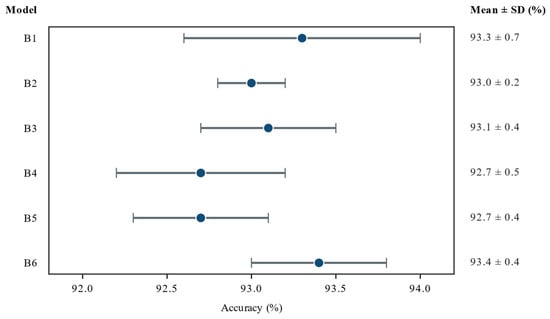
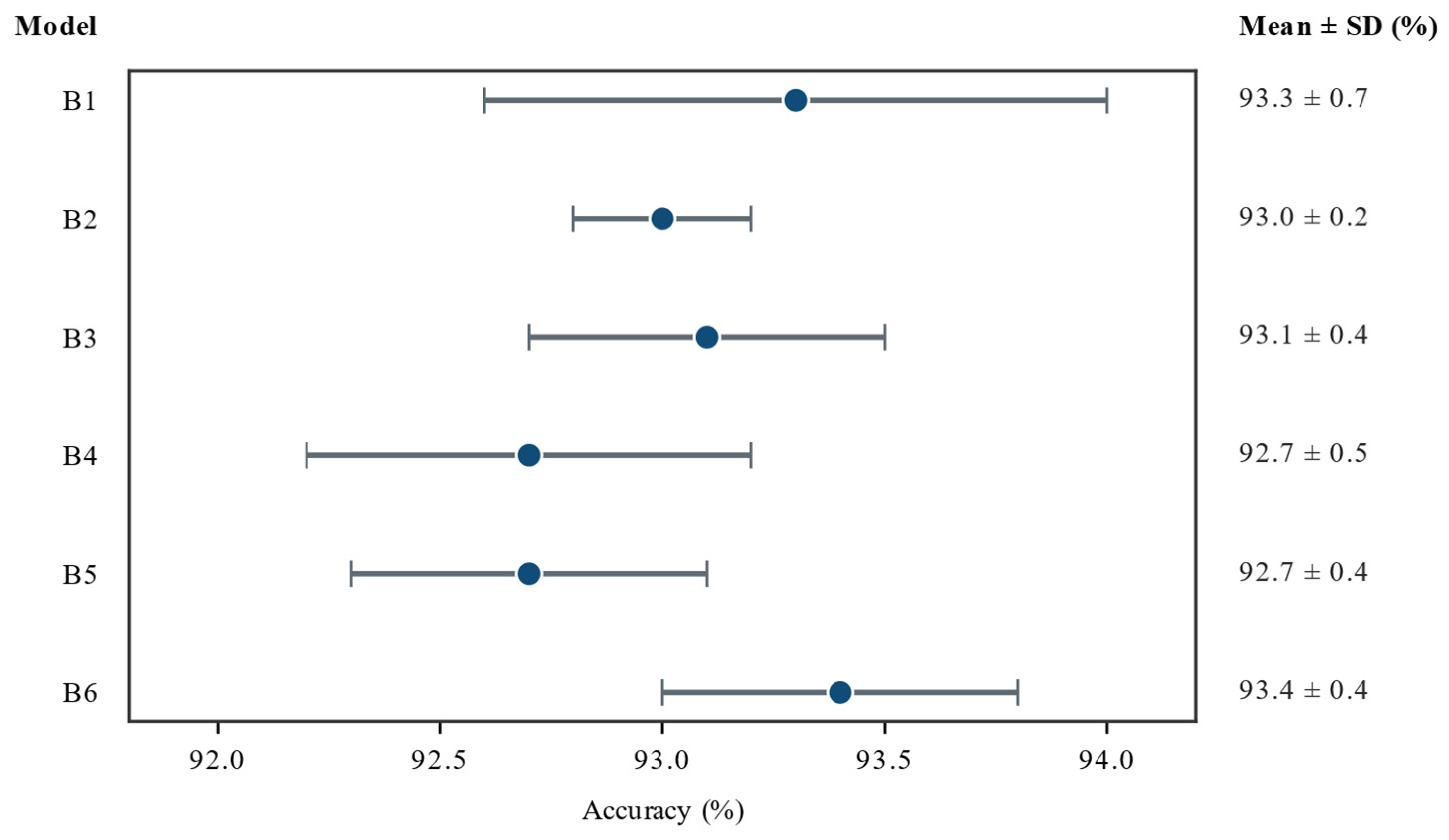
Each model was run independently 10 times on the same 1230 test records, with human–Agent interaction and knowledge base updates disabled during testing. Every run covered the complete test set. Cross-model transferability was compared using the mean accuracy obtained by each model under the same workflow. Repeat-run stability was quantified using the standard deviation (SD) of accuracy across the 10 runs. The points represent the mean values from the 10 repeated runs, and the error bars represent the SD. The results are presented in Figure 5.
Figure 5.
Accuracy of the complete multi-agent framework with different backbone LLMs.
Across the 10 repeated runs, the SD ranged from 0.2% to 0.7%, indicating limited run-to-run variation under the present test set and fixed API parameters. The six backbone LLMs were supplied by two vendors and included both sparse and dense architectures. Their mean accuracy ranged from 92.7% to 93.4%, with a range of only 0.7 percentage points. These results indicate that the architecture was transferable across models with comparable reasoning capabilities. However, because data-security constraints limited testing to two Chinese LLM families, the generalizability of these findings to other models remains to be established.
2.4.4. Comparison of Review Performance Between Engineers and the Agent
To evaluate the efficiency and accuracy of the system by reviewing practical reports, we selected 20 reports for a paired comparison between human engineers and the Agent. The human group comprised three engineers with professional experience in the water sector. Each engineer independently reviewed all reports and assigned a seepage safety rating after reading each report in full. The Agent processed the same reports through an API call to Qwen3.5-122B-A10B, with human–Agent interaction disabled during testing. Both groups were evaluated against the concealed original ratings in the reports. The results are presented in Table 6.
Table 6.
Comparison of review accuracy and processing time between engineers and the Agent.
The three engineers achieved accuracies of 100.0%, 85.0%, and 90.0% for the 20 reports, respectively, with a mean accuracy of 91.7%. The Agent correctly classified 19 reports, corresponding to an accuracy of 95.0%. The difference in accuracy between the engineers and the Agent was small. Because the number of reports and participating engineers was limited, no further inference was made regarding review accuracy.
The three engineers required 8 min 55 s, 11 min 37 s, and 8 min 12 s, respectively, to review all 20 reports. The mean time per engineer was approximately 9 min 35 s, equivalent to 28.7 s per report. The Agent completed the same task in 2 min 41 s, averaging 8.1 s per report. Compared with the human mean, the time per report was reduced by 61.5%, and the processing speed was approximately 2.60 times that of the engineers. Under heavier workloads, human review efficiency and accuracy may decline, in which case the Agent could provide greater benefits for the preliminary screening and standardized processing of reports in batches.
3. Agent Operation Effect and Result Analysis
3.1. Agent Interaction and Functions
Using seepage safety assessment reports as a data basis, the system implements core functions including data access, semantic extraction, knowledge retrieval, risk classification, statistical aggregation, and result feedback. Users can import raw report texts, sample data with expert assessment labels, or organized structured tables. The perception module first performs text cleaning, entity-location identification, and risk-candidate extraction. The reasoning module then matches standard locations, standard safety hazards, and assessment scores according to the knowledge base primary keys and semantic rules. The action module writes the classification results into statistical templates and outputs Excel tables of statistics, abnormal lists, and operation logs for further analysis.
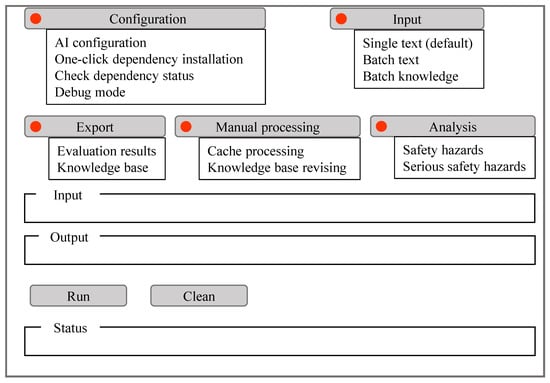
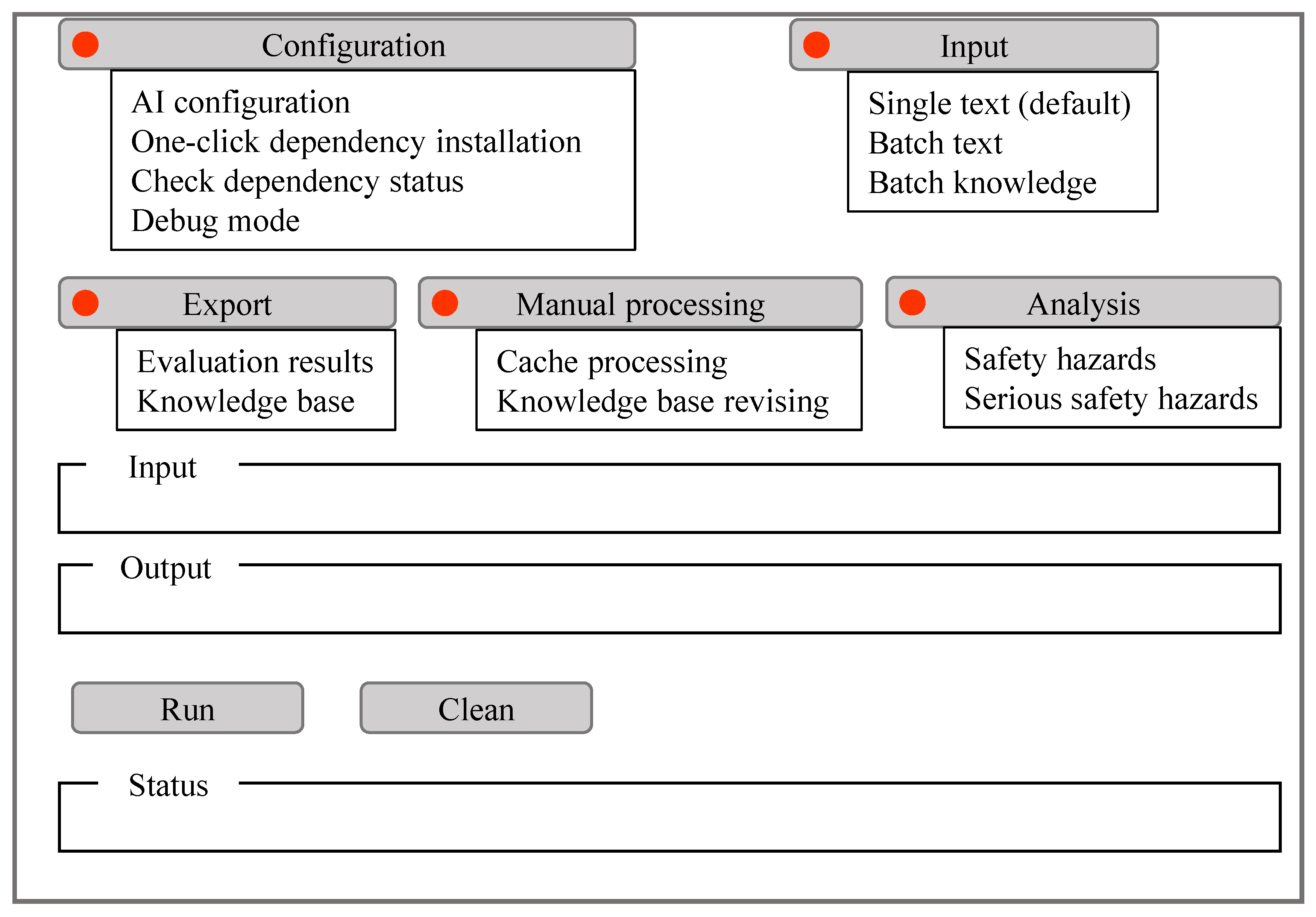
In terms of human–computer interaction, the system adopts a mode combining command flow with graphical interface. Engineers can use the buttons on the graphical interface to propose operations as shown in Figure 6. In addition, a key feature of system interaction is the retention of human control. Engineers can use the “manual processing” button to manually review cached records involving ambiguous locations, overlapping risk items and other complex cases, or directly revise the knowledge base.
Figure 6.
Schematic of GUI Functionalities.
The proposed agent provides two core functions for seepage safety assessment. First, it provides rapid review functions for reservoir dam safety management authorities. The system can automatically read texts of seepage safety from batches of assessment reports, identify locations, extract safety hazards, and perform standardized classification. It then outputs the results as structured tables, abnormal lists, and traceable logs. Management personnel can use these outputs to quickly identify key risk locations, major risk types, and abnormal records requiring manual review, thereby improving the efficiency of initial report screening, hazard investigation, and review organization. Second, it supports safety-risk statistics and association analysis through continuous knowledge accumulation. In each run, the agent not only outputs single-review results but also deposits expert corrections, synonym merging, location mapping, and risk judgement rules into the knowledge base, enabling subsequent tasks to reuse existing experience. As the number of samples increases, the system can further quantify associations and co-occurrence patterns between different engineering locations and severe risk types, identify high-frequency risk combinations, and provide a basis for hazard prioritization, field verification, repair and reinforcement, and operation and maintenance decisions. These descriptive relationships are not interpreted as causal evidence. Thus, the agent’s role extends beyond one-time text processing and forms a closed loop of review efficiency improvement, knowledge accumulation, statistical analysis, and decision support.
3.2. Safety-Risk Statistics and Association Analysis
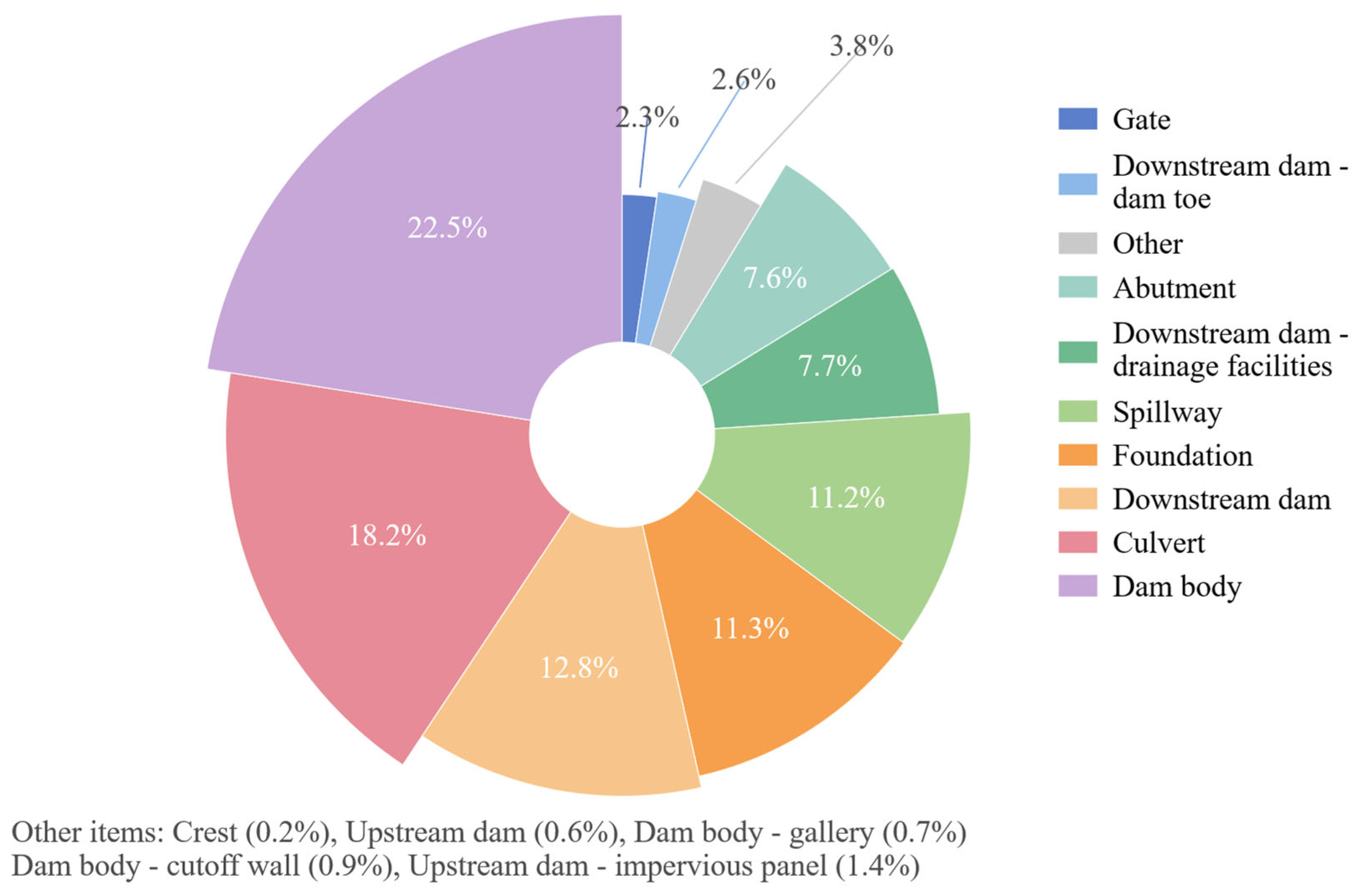
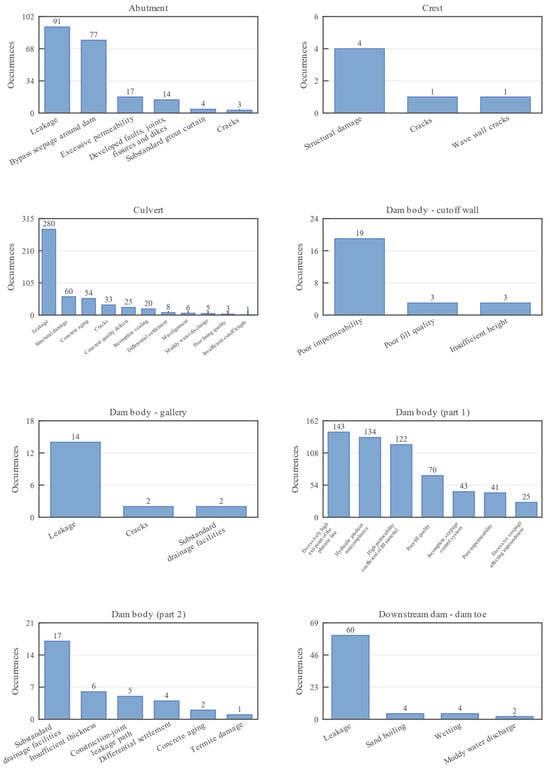
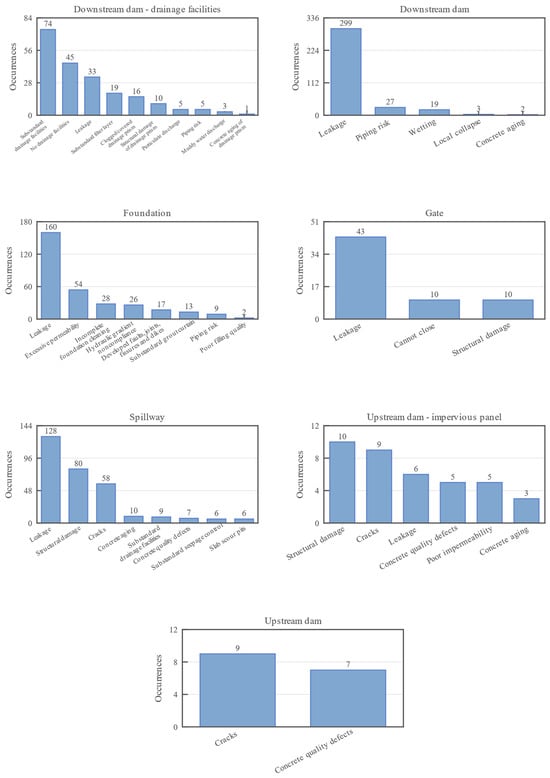
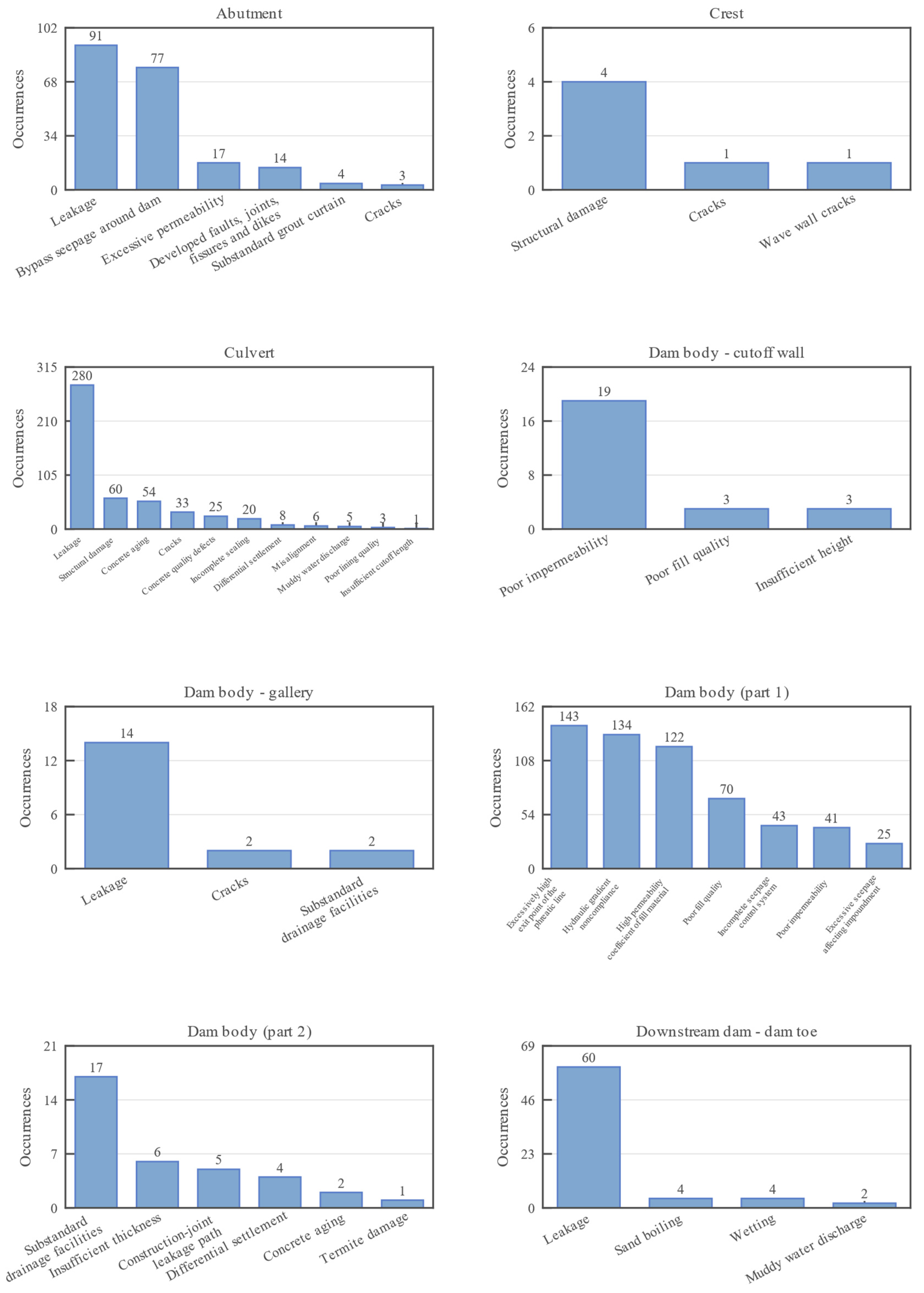
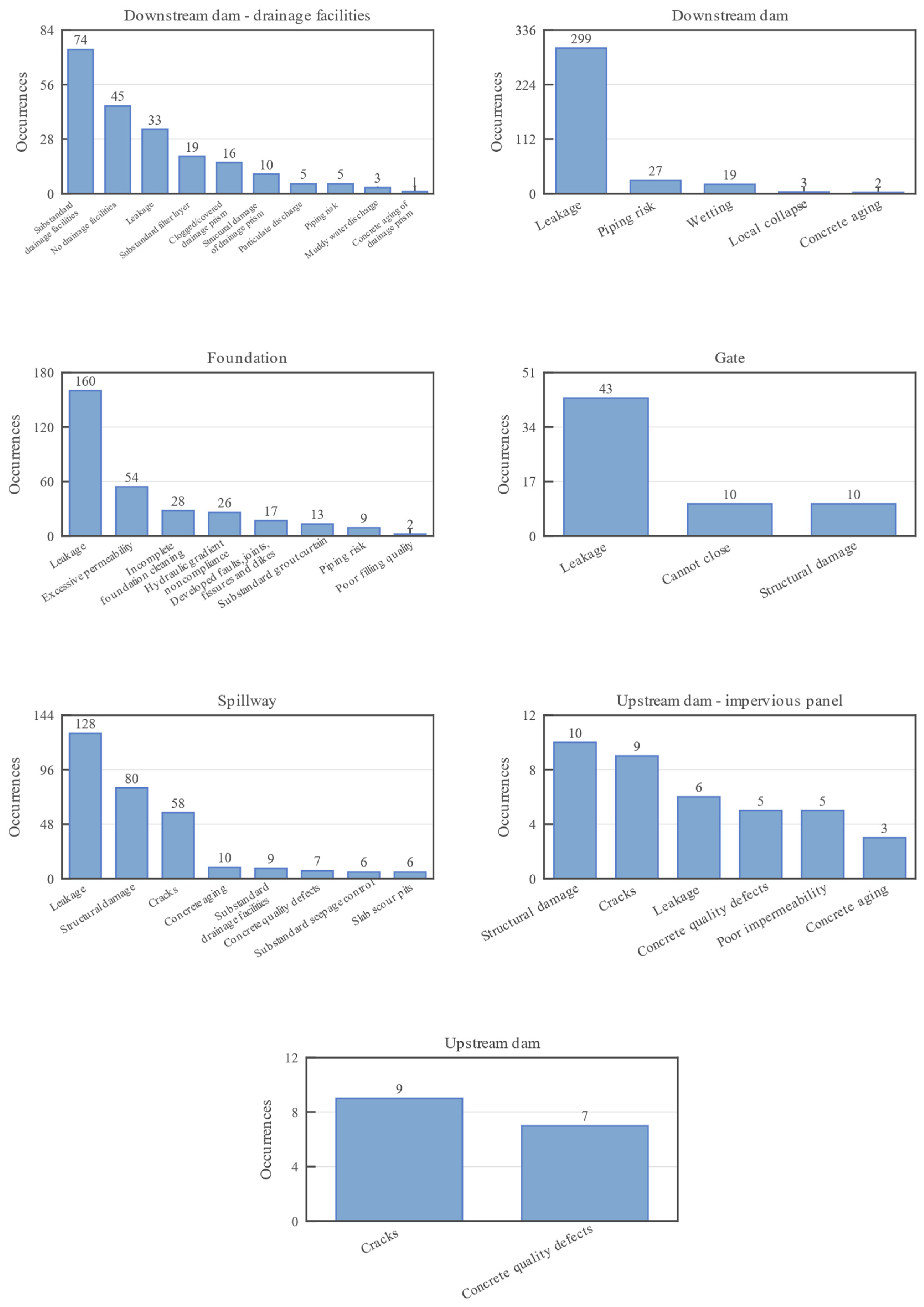
This study selected safety assessment reports for more than 2000 reservoirs and constructed a core dataset by expert annotation of the texts in their seepage safety assessment sections. To examine the interpretability of the agent-assisted statistical results, 2724 valid text records marked as “unsafe” which contained severe safety hazards were extracted. Figure 7 presents the total distribution of severe risks by location and Figure 8 presents the composition of risk sources within each location.
Figure 7.
Distribution of severe risks by locations.
Figure 8.
Composition of risk sources within each location.
In terms of location distribution, severe risks were mainly concentrated in key locations such as dam bodies, culverts, spillways, dam foundations, downstream dam drainage facilities, and abutments. Among them, dam-body-related risks occurred 613 times, accounting for 22.5% of the total, making the dam body the primary risk-bearing location. Culverts occurred 495 times, accounting for 18.2%; the downstream dam section occurred 350 times, accounting for 12.8%; the dam foundation occurred 309 times, accounting for 11.3%; the spillway occurred 304 times, accounting for 11.2%; and drainage facilities and abutments occurred 211 and 206 times, accounting for 7.7% and 7.6%, respectively. These locations together occurred 2488 times, accounting for 91.3% of the total, showing that severe seepage risks were concentrated in locations where seepage paths are likely to form or become exposed, including the seepage-control system, water conveyance facilities, discharge structures, and the dam body, foundation, and abutments.
The observed risk composition of the dam body included an excessively high phreatic-line exit point 143 times, failure of the seepage gradient to meet requirements 134 times, high permeability coefficient of fill materials 122 times, poor fill quality 70 times, an incomplete seepage-control system 43 times, and poor seepage-control performance 41 times. These risks frequently co-occurred. From an engineering perspective, this pattern is consistent with the possibility that a high permeability coefficient and insufficient fill quality weaken the overall seepage-control capacity and are accompanied by a higher phreatic-line exit point or a seepage gradient that does not meet requirements. This interpretation is based on engineering knowledge rather than causal inference from the frequency data. High permeability coefficient of fill materials and poor fill quality were classified as construction quality problems; an excessively high phreatic-line exit point and an unsatisfactory seepage gradient were obtained from seepage-behavior analysis; and an incomplete seepage-control system and poor seepage-control performance represented expert overall evaluations of dam-body seepage control.
The downstream dam section had the highest proportion of leakage risk, with 299 occurrences. From an engineering perspective, this distribution may reflect the position of the downstream dam section at the exit end of the seepage path. Seepage phenomena originating in the dam body, dam foundation, or seepage-control system may appear at the downstream dam slope, dam toe, or drainage outlet as wetting, visible flow, diffuse seepage, or concentrated leakage. The frequency data themselves do not identify the source of each leakage event. Therefore, the high proportion of downstream-dam leakage records should be interpreted as an observed concentration of reported phenomena on the downstream side. Individual cases should be analyzed jointly with the upstream dam, dam body, dam foundation, seepage-control facilities, and drainage system before their sources are inferred.
Risks in culverts and spillways showed co-occurrence patterns consistent with coupled structural and seepage-related conditions in through-dam structures, discharge structures, and the main dam structure. In culverts, leakage occurred 280 times and was the dominant reported risk at this location, accompanied by structural damage 60 times, concrete ageing 54 times, cracks 33 times, and incomplete sealing 20 times. In spillways, structural damage occurred 80 times, leakage 128 times, cracks 58 times, and concrete ageing 10 times. These descriptive data do not establish causal direction. Engineering knowledge suggests that structural ageing or damage may facilitate seepage pathways, while hydraulic action may also contribute to washout or crack propagation. These statements are presented as engineering interpretations of the observed co-occurrence patterns.
Overall, the observed hazard distributions were broadly consistent with engineering understanding in seepage safety assessment. The most frequent reported categories included leakage, abnormal phreatic-line behavior, structural cracking and damage, drainage failure, incomplete seepage-control systems, fill and concrete quality problems, geological defects, weak joints in through-dam structures, and drainage or filter-system maintenance problems. Engineering knowledge provides plausible interpretations of how these conditions may be related, but the present frequency analysis demonstrates associations and co-occurrence rather than causal relationships. By unifying the criteria for locations and risk categories, the agent system converts dispersed hazard descriptions in texts into aggregable and traceable statistical results, enabling evaluators to identify frequent risk locations and risk combinations and providing a basis for subsequent field review, hazard prioritization, and formulation of risk-removal and reinforcement schemes.
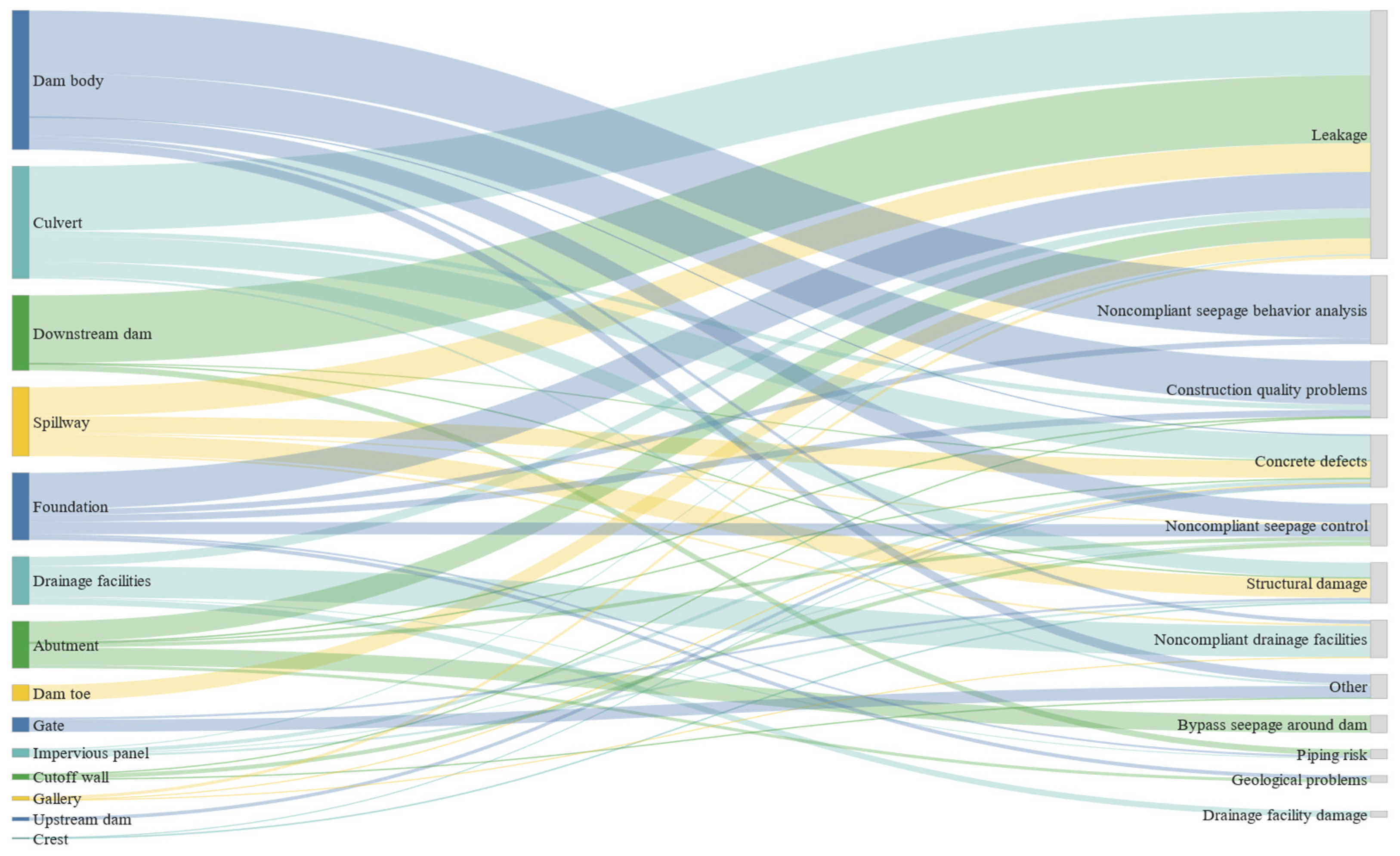
To represent the associations between engineering locations and risk types, selected risk types were classified and merged, as shown in Table 7 and Table 8. A Sankey diagram (Figure 9) was used to visualize their co-occurrence flows. These flows are descriptive associations and should not be interpreted as causal pathways.
Table 7.
Risk classification table a.
Table 8.
Risk classification table b.
Figure 9.
Sankey diagram of locations and severe risks.
In terms of risk type, directly observable leakage was the most prominent severe risk, occurring 1094 times and accounting for 40.16%. It was associated with multiple locations, including the downstream dam sections, culverts, dam foundations, spillways, dam shoulders, dam toes, and drainage facilities. This widespread co-occurrence shows that leakage was reported across multiple engineering contexts, but it does not establish causal direction. In addition to leakage, high proportions were observed for seepage-behavior analysis not meeting code requirements, construction quality problems, concrete defects, noncompliant seepage control, structural damage, and noncompliant drainage facilities. These results describe the risk categories that were frequently reported together across the assessment records.
Regarding the main association flows, downstream dam section leakage occurred 299 times, culvert leakage 280 times, dam body-noncompliant seepage behavior analysis 277 times, dam body construction quality problems 192 times, dam foundation leakage 160 times, noncompliant drainage facilities 138 times, and spillway leakage 128 times. These were the most prominent co-occurrence flows in Figure 9. These high-frequency combinations characterize association patterns rather than causal mechanisms. Dam-body records were frequently associated with seepage-behavior and construction-quality problems. Culvert and spillway records commonly combined structural defects with leakage. Dam foundation and dam shoulder records were associated with geological conditions, seepage-control boundaries, and around-dam seepage. Drainage-facility problems co-occurred with downstream-dam and dam-toe risks. By transforming unstructured hazard descriptions into ‘location-risk type’ statistical relationships, Figure 9 provides descriptive evidence that can help management authorities identify key locations, frequent risk combinations, and review priorities.
4. Conclusions
Focusing on the problems of dispersed report texts, inconsistent terminology, low efficiency of manual screening, review, and statistics, and insufficient classification consistency in reservoir dam seepage safety assessment, this paper proposes a human–computer interactive agent collaboration framework for seepage safety assessment. The framework emphasizes agent assistance rather than replacement of expert judgement. Through “machine-enabled efficiency, human accountability, and knowledge stabilization”, it transforms the traditional assessment process, which relies on manual reading and experience-based summarization, into an observable, intervenable, and traceable collaborative workflow.
In terms of system design, this paper constructs a collaborative framework forming a task chain that links data preprocessing, knowledge retrieval, semantic classification, result feedback, and manual review. Using “entity location-safety hazard” as the core primary key, the system combines expert rules, synonym merging, location mapping, and degree-word inference to improve the stability and consistency of mapping non-standardized assessment texts to standard risk categories.
In terms of engineering application, this paper constructed an analysis sample based on safety assessment reports from more than 2000 reservoirs and statistically analyzed the severe-risk records. The results show that severe risks were mainly concentrated in key locations such as dam bodies, culverts, downstream dam sections, spillways, dam foundations, drainage facilities, and dam shoulders. The major risk types included leakage, noncompliant seepage behavior analysis, construction quality problems, concrete defects, noncompliant seepage control, and structural damage. These descriptive distributions and co-occurrence patterns are generally consistent with engineering understanding in seepage safety assessment, indicating that the proposed agent can support risk identification, statistical aggregation.
The proposed framework provides an intelligent implementation pathway for seepage safety assessment that balances efficiency, consistency, and responsibility boundaries. Its value lies not only in rapid review and batch statistics but also in accumulating expert corrections as reusable knowledge, thereby supporting subsequent risk analysis and management decision-making. It should be noted that the current system mainly focuses on textual reports and expert annotation results. Future work should further integrate monitoring data, spatial location, field review records, and engineering operation status to improve the dynamic nature of risk judgement and the comprehensiveness of decision-making.
Author Contributions
Conceptualization, Y.L. and D.N.; methodology, P.N. and X.J.; software, P.N.; validation, P.N.; data curation, P.N. and Q.L.; writing—original draft preparation, P.N.; writing—review and editing, D.N. and X.J.; visualization, P.N.; supervision, D.N.; project administration, Y.L.; funding acquisition, Y.L. and D.N. All authors have read and agreed to the published version of the manuscript.
Funding
The authors acknowledge the financial support from Theoretical System, Key Technologies, and Equipment for Intelligent Dams (Phase I) (SS110145B0032025); the National Natural Science Foundation of China (No. 52192672); the Open Research Fund of Key Laboratory of Construction and Safety of Water Engineering of the Ministry of Water Resources, China Institute of Water Resources and Hydropower Research (NO. 202406); and the National Natural Science Foundation of China (No. 52409152); Basic Scientific Research Operational Expenses of China Institute of Water Resources and Hydropower Research (SS0145C052026).
Data Availability Statement
The original contributions presented in this study are included in the article. Further inquiries can be directed to the first author (email: nie_pf94@163.com).
Acknowledgments
The authors used the AI language model Composer 2.5 to assist in coding, used QianWen 3.5 to assist in data processing, and used Codex 5.4 to assist in drafting, editing, translating and refining the content of this article. All facts, claims, and editorial decisions were reviewed and verified by a human writer.
Conflicts of Interest
The authors declare no conflicts of interest.
References
- Hunt, S.L.; Temple, D.M.; Neilsen, M.L.; Ali, A.; Tejral, R.D. WinDAM C: Analysis tool for predicting breach erosion processes of embankment dams due to overtopping or internal erosion. Appl. Eng. Agric. 2021, 37, 293–304. [Google Scholar] [CrossRef] [Scilit]
- Hosamo, H.H.; Nielsen, H.K.; Alnmr, A.N.; Svennevig, P.R.; Svidt, K. A review of the digital twin technology for fault detection in buildings. Front. Built Environ. 2022, 8, 878891. [Google Scholar] [CrossRef] [Scilit]
- Moi, T.; Cibicik, A.; Rolvag, T. Digital twin based condition monitoring of a knuckle boom crane: An experimental study. Eng. Fail. Anal. 2020, 119, 104972. [Google Scholar] [CrossRef] [Scilit]
- Zheng, Y.; Li, J.; Zheng, X.; Guo, N.; Yang, G. Pre- and post-failure behaviour of a dike after rapid drawdown of river level based on material point method. Comput. Geotech. 2024, 170, 106269. [Google Scholar] [CrossRef] [Scilit]
- Zheng, Y.; Li, J.; Zhu, T.; Zhang, L. Cascading failure in levee systems: A two-stage material point method framework. Comput. Geotech. 2026, 194, 108039. [Google Scholar] [CrossRef] [Scilit]
- Fan, H.; Fu, Y.; Shen, W.; Chang, X. A coupled 3D DDA-MPM framework for soil-structure interaction modeling and its application in geotechnical hazards modeling. Eng. Geol. 2026, 364, 108591. [Google Scholar] [CrossRef] [Scilit]
- Wright, L.; Davidson, S. How to tell the difference between a model and a digital twin. Adv. Model. Simul. Eng. Sci. 2020, 7, 13. [Google Scholar] [CrossRef] [Scilit]
- VanDerHorn, E.; Mahadevan, S. Digital twin: Generalization, characterization and implementation. Decis. Support Syst. 2021, 145, 113524. [Google Scholar] [CrossRef] [Scilit]
- Semeraro, C.; Lezoche, M.; Panetto, H.; Dassisti, M. Digital twin paradigm: A systematic literature review. Comput. Ind. 2021, 130, 103469. [Google Scholar] [CrossRef] [Scilit]
- Shneiderman, B. Human-centered artificial intelligence: Reliable, safe and trustworthy. Int. J. Hum.-Comput. Interact. 2020, 36, 495–504. [Google Scholar] [CrossRef] [Scilit]
- Sundar, S.S. Rise of machine agency: A framework for studying the psychology of human-AI interaction. J. Comput.-Mediat. Commun. 2020, 25, 74–88. [Google Scholar] [CrossRef] [Scilit]
- Lewis, P.; Perez, E.; Piktus, A.; Petroni, F.; Karpukhin, V.; Goyal, N.; Küttler, H.; Lewis, M.; Yih, W.; Rocktäschel, T.; et al. Retrieval-augmented generation for knowledge-intensive NLP tasks. Adv. Neural Inf. Process. Syst. 2020, 33, 9459–9474. [Google Scholar]
- Wang, L.; Ma, C.; Feng, X.; Zhang, Z.; Yang, H.; Zhang, J.; Chen, Z.; Tang, J.; Chen, X.; Lin, Y.; et al. A survey on large language model based autonomous agents. Front. Comput. Sci. 2024, 18, 186345. [Google Scholar] [CrossRef] [Scilit]
- Wei, J.; Wang, X.; Schuurmans, D.; Bosma, M.; Ichter, B.; Xia, F.; Chi, E.; Le, Q.V.; Zhou, D. Chain-of-thought prompting elicits reasoning in large language models. Adv. Neural Inf. Process. Syst. 2022, 35, 24824–24837. [Google Scholar] [CrossRef] [Scilit]
- Yao, S.; Zhao, J.; Yu, D.; Du, N.; Shafran, I.; Narasimhan, K.; Cao, Y. ReAct: Synergizing reasoning and acting in language models. In Proceedings of the International Conference on Learning Representations, Kigali, Rwanda, 1–5 May 2023. [Google Scholar]
- Schick, T.; Dwivedi-Yu, J.; Dessi, R.; Raileanu, R.; Lomeli, M.; Hambro, E.; Zettlemoyer, L.; Cancedda, N.; Scialom, T. Toolformer: Language models can teach themselves to use tools. Adv. Neural Inf. Process. Syst. 2023, 36, 68539–68551. [Google Scholar] [CrossRef] [Scilit]
- Canas, J.J. AI and ethics when human beings collaborate with AI agents. Front. Psychol. 2022, 13, 830565. [Google Scholar] [CrossRef] [Scilit] [PubMed]
- Vaccaro, M.; Almaatouq, A.; Malone, T. When combinations of humans and AI are useful: A systematic review and meta-analysis. Nat. Hum. Behav. 2024, 8, 2293–2303. [Google Scholar] [CrossRef] [Scilit] [PubMed]
- Bondi, E.; Koster, R.; Sheahan, H.; Chadwick, M.; Bachrach, Y.; Cemgil, T.; Paquet, U.; Dvijotham, K. Role of human-AI interaction in selective prediction. Proc. AAAI Conf. Artif. Intell. 2022, 36, 9511–9519. [Google Scholar] [CrossRef] [Scilit]
- Shinn, N.; Cassano, F.; Gopinath, A.; Narasimhan, K.; Yao, S. Reflexion: Language agents with verbal reinforcement learning. Adv. Neural Inf. Process. Syst. 2023, 36, 8634–8652. [Google Scholar] [CrossRef] [Scilit]
- Wang, Z.; Cai, S.; Chen, G.; Liu, A.; Ma, X.S.; Liang, Y. Describe, explain, plan and select: Interactive planning with large language models enables open-world multi-task agents. Adv. Neural Inf. Process. Syst. 2023, 36, 34153–34189. [Google Scholar]
- Park, J.S.; O’BRien, J.; Cai, C.J.; Morris, M.R.; Liang, P.; Bernstein, M.S. Generative agents: Interactive simulacra of human behavior. In Proceedings of the 36th Annual ACM Symposium on User Interface Software and Technology, San Francisco CA USA, 29 October–1 November 2023; pp. 1–22. [Google Scholar] [CrossRef] [Scilit]
- Hao, S.; Gu, Y.; Ma, H.; Hong, J.; Wang, Z.; Wang, D.; Hu, Z. Reasoning with language model is planning with world model. In Proceedings of the 2023 Conference on Empirical Methods in Natural Language Processing, Singapore, 6 December 2023; pp. 8154–8179. [Google Scholar] [CrossRef] [Scilit]
- Chen, Z.; Ding, R.; Meng, Y.; Li, Y.; Zhang, J.; Cao, L.; Li, J.; Fan, W.; Zhang, Y.; Wang, L.; et al. A multi-agent collaborative framework with human-in-the-loop for well log interpretation and applications. Pet. Explor. Dev. 2026, 53, 900–914. [Google Scholar] [CrossRef] [Scilit]

Disclaimer/Publisher’s Note: The statements, opinions and data contained in all publications are solely those of the individual author(s) and contributor(s) and not of MDPI and/or the editor(s). MDPI and/or the editor(s) disclaim responsibility for any injury to people or property resulting from any ideas, methods, instructions or products referred to in the content. |
© 2026 by the authors. Licensee MDPI, Basel, Switzerland. This article is an open access article distributed under the terms and conditions of the Creative Commons Attribution (CC BY) license.