


Abstract
This paper presents experimental results regarding the feasibility of producing porous ceramic filters through the valorization of two types of industrial waste, i.e., an aluminum-rich material derived from treated black aluminum dross, and coal ashes recovered from an old landfill. To enhance the open, interconnected porosity of the ceramic filters, glucose was employed as a pore-forming agent in two dosages (20% and 40%). The results show that by controlling the thermal treatment parameters together with the composition of the raw mix, it is possible to achieve a microstructure and filtration performance suitable for ceramic filter applications. X-ray diffraction (XRD) analyses confirmed the presence of corundum (αAl2O3) and MgAl2O4 spinel in the ceramics based on aluminum-rich material, phases well-suited for filtration applications due to their chemical and mechanical properties. When kaolin is used as a raw material in combination with the aluminum-rich material, mullite (3Al2O3·2SiO2) can form, enhancing the mechanical strength of the ceramic. However, filters sintered at higher temperatures exhibit reduced filtration efficiency due to the decrease in porosity. In comparison, ceramic filters containing coal ashes, benefiting from the presence of fluxing oxides and gas-releasing components (unburnt fossil fuel and carbonates), develop higher open porosity at lower sintering temperatures. Microstructural analysis of the obtained ceramics revealed an interconnected pore network whose size and distribution depend on the raw-mix composition, glucose content, and sintering temperature. Increasing the glucose content from 20% to 40% significantly enhanced the open porosity and filtration flow rate, but at the expense of mechanical strength and ionic retention capacity. The filtration data confirmed that all investigated materials function effectively as gravity-driven filters without the need for applied pressure. The obtained results underline the strong potential of using waste-derived porous ceramics as sustainable and cost-effective filtration materials for wastewater treatment applications.
1. Introduction
The purification of industrial and municipal wastewater has become an increasingly important issue due to growing water scarcity, a problem expected to worsen under global warming [1]. Separation processes, driven either by gravity or applied pressure, are now widely adopted as effective water treatment technologies [2].
Porous ceramic materials represent a promising class of filtration elements for wastewater treatment. In contrast to conventional polymeric ones, they exhibit superior mechanical strength, enhanced chemical resistance, and exceptional thermal stability [3,4,5]. Moreover, their inherently low fouling tendency contributes to sustained operational efficiency and extended service life [2].
Conventional fabrication methods for porous ceramics are primarily based on the introduction of a pore generator into a ceramic raw mix, followed by a sintering process. Commonly used raw materials include clay, alumina, silica, silicon carbide, cordierite, and zirconia [6,7]. Porous ceramics are commonly produced using the sacrificial template method, polymeric sponge method, direct foaming, partial sintering, or gel-casting techniques [6]. The pore size and structure depend on the processing route, amount of porosity induced, and sintering conditions. To obtain open and interconnected porosity, i.e., creating pore channels that make the material permeable, the most common methods are the sacrificial template, freeze casting, polymeric sponge, and gel casting methods [8,9,10,11].
Conventional ceramic filtration systems still face several limitations that restrict their broader application in water treatment. Their production generally requires costly raw materials and energy-intensive manufacturing processes, making them significantly more expensive than polymeric membranes [3]. These drawbacks can be overcome by replacing conventional raw materials with various types of waste, such as fly ash, blast-furnace slag, or rice husk ash, which can reduce the sintering temperature and simultaneously promote the formation of porosity [3,5,12,13,14,15].
Fly ash, a byproduct generated from the combustion of pulverized coal in power plants, has been produced in vast quantities over the last decades. Much of this material has been disposed of in large historical landfills around the world; thus, today, it represents a huge environmental burden. Different techniques are currently used to valorize these landfilled coal ashes (LCA), such as using them as raw materials for Portland cement production [16] or as alternative aggregates to replace sand in concrete [17]. However, their low pozzolanic activity and high variability in composition (due to impurity contamination and the occurrence of partial reactions during prolonged storage) can pose several technological challenges. Pretreatment of LCA by mechano-chemical activation and negative-pressure sieving can significantly improve its reactivity and the performance of LCA-blended Portland cements due to particle modification and particle selection effects [18]. Other studies have reported the utilization of landfilled coal ash in combination with various slags and supplementary additives to produce geopolymers exhibiting enhanced properties [19,20].
Another technically viable pathway for the valorization of coal ashes is the manufacture of ceramic membranes or filters [21]. TiO2–ZnO-functionalized ceramic membranes obtained from coal fly ash (CFA) by pressing and sintering effectively degraded tetracycline in water under visible light [22]. Other researchers produced whisker mullite ceramic membranes from CFA by sintering, achieving excellent permeate flux and oil removal efficiencies for oily wastewater treatment [23].
Another type of waste that can be used as an alternative raw material for porous ceramic production is aluminum dross [24]. Black aluminum dross (BAD) is a hazardous waste that results from the melting of waste aluminum products and flux addition in a smelting furnace [25]. This waste contains several hazardous substances besides aluminum, such as aluminum nitride and soluble salts [25,26,27]. Various treatments can be applied to this waste to recover aluminum, ammonia, and soluble salts and to reduce its toxicity and environmental impact [25,26,28]. The treated material has a high aluminum content and can be used in various applications such as catalyst synthesis, preparation of refractory materials, ceramics, and Portland cement or concrete [26,27,28,29].
In this context, the main objective of the present study is to develop porous ceramics using a waste material with a high aluminum content, generated during the treatment of black aluminum dross, as the primary alternative raw material. This waste was combined with coal ashes recovered from old landfills or with kaolin. To obtain the open and interconnected porosity required for ceramic filters, glucose was employed as a pore-forming agent in varying proportions. A range of thermal treatment parameters was investigated to determine the optimal synthesis conditions in relation to the raw mix composition. This article also presents results regarding the ionic retention performance and flow rate of the synthesized ceramic membranes.
2. Experimental Section
2.1. Materials
For the synthesis of porous ceramic materials, several types of industrial waste were used:
- A material rich in aluminum (A) obtained by the treatment of a black aluminum dross, with the chemical composition presented in Table 1.
Table 1.
Oxide composition of high aluminum content material (A).
- Two coal ashes from a thermal power plant (C1 and C2) were sampled from old landfills (more than 30 years old);
- Glucose (chemically pure reagent from Sigma Aldrich, St. Louis, MA, USA) was used as a pore-forming agent.
The compositions of the raw mixes used for ceramic filter synthesis are presented in Table 2.
Table 2.
Raw mix compositions.
In the first step of the ceramic filter synthesis, only the aluminum-rich material (A) was used. Glucose, used as a pore-forming agent, was added in two different proportions: 20% and 40%.
Subsequently, 24% of the aluminum-rich material (A) was replaced with a mixture of C1 and C2 ashes (1:1 mass ratio).
The composition 40AK contains kaolin, in addition to aluminum-rich material (A). The use of kaolin is justified as it provides the necessary oxides in the raw mix to form stable ceramic phases and enhance the ceramic’s sintering behavior [30,31].
The components were weighed (according to the recipes presented in Table 2) and then dry-homogenized in a ball mill for 2 h to achieve a uniform distribution and to enhance the reactivity of the raw mix. The resulting powders were then shaped into cylinders with diameters and heights of approx. 13 mm by uniaxial pressing at 120 MPa. The green body samples were subsequently subjected to heat treatments at the following temperatures: 1100 °C, 1200 °C, 1400 °C, 1500 °C, and 1600 °C.
Heat treatment began with an initial heating stage at a rate of 4 °C/min up to 300 °C, followed by a 2 h holding period at this temperature. Heating then continued at a rate of 10 °C/min until the final sintering temperature was reached, where the samples were held for an additional 120 min. This thermal treatment was designed to ensure the complete decomposition of the pore-forming agents, thereby promoting the formation of porosity throughout the entire volume of the ceramic sample.
2.2. Methods
The kaolin, an aluminum-rich material (A), and coal ashes were analyzed using Shimadzu DTG-60 equipment (Shimadzu Corporation, Kyoto, Japan); heating was performed in air and in a temperature range of 30–1000 °C, with a heating rate of 10 °C/min.
XRD analyses were recorded using a Shimadzu XRD 6000 diffractometer, with Ni-filtered Cu Kα radiation (λ = 1.5406 Å).
SEM analyses were carried out with an FEI Quanta Inspect F scanning electron microscope (SEM) (Fei, Hillsboro, OR, USA), and the sample surface was covered with gold.
The ceramic properties, such as apparent density (ρa) and open porosity (Po), were determined using the Arthur method [32] with the following formulas:
where mi is the weight of the sample (g); mxa is the weight (in air) of the sample impregnated with xylene (g); mx is the weight (measured in xylene) of the sample impregnated with xylene (g); ρa is the apparent density (g/cm3); ρxylene is the xylene density (0.866 g/cm3); Po is open porosity (%).
ρa = (mi·ρxylene)/(mxa − mx) (g/cm3)
Po = [(mxa − mi)(mxa − mx)] 100 (%)
The thermal shrinkage was calculated by measuring the cylindrical samples using a caliper. The measurements were performed before and after the sintering process so that the shrinkage assessment could be performed as a function of volume (V).
where Vi is the volume of the sample before sintering (cm3); Vf is the volume of the sample after sintering (cm3).
C = [(Vi − Vf)/Vi] 100 (%)
Compressive strength was recorded on thermally treated cylindric specimens with a Walter Bai AG Testing Machine Lfm 50 KN (Walter + Bai AG, Löhningen, Switzerland). This test was performed on a minimum of three samples.
To assess the ionic retention capacity, an aqueous complex solution of Fe(III) ion and 5-sulfosalicylic acid (SSA) (FeSSA) was used. The concentration of the FeSSA complex solution was 20%, and its electrical conductivity was 13.9 mS/cm. This solution was filtered through ceramic samples, and electrical conductivity was measured again. The filtration rate was measured by passing a known volume of water through the filters and recording the flow in a time frame (30 and 60 min).
3. Results and Discussions
3.1. Waste and Raw Materials Characterization
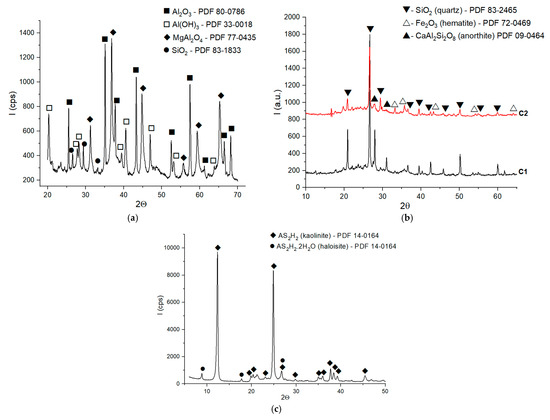
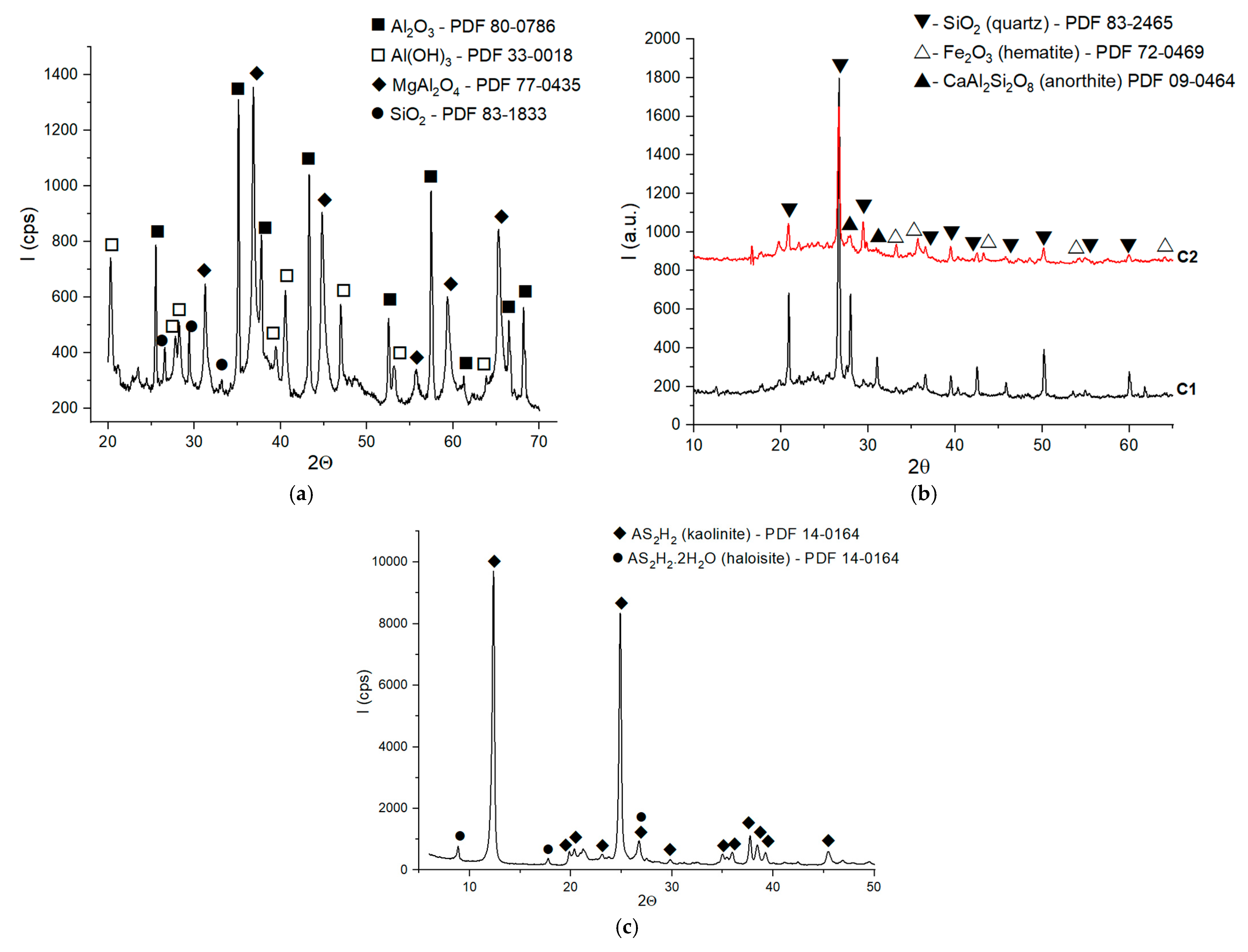
X-ray diffraction (XRD) patterns of aluminum-rich material A (Figure 1a) show the presence of aluminum oxide (α-Al2O3) as the main crystalline phase. Magnesium aluminate spinel (MgAl2O4), aluminum hydroxide Al(OH)3, and silica (SiO2) are also assessed in this material.
Figure 1.
X-ray diffraction patterns of the materials used: (a) waste with high aluminum content (A); (b) coal ashes C1 and C2; (c) kaolin.
The XRD patterns of coal ashes (Figure 1b) show the presence of SiO2 (quartz), Fe2O3 (hematite), and CaO·Al2O3·2SiO2 (anorthite). The mineralogical composition of kaoline, assessed by XRD analysis, consists of kaolinite (Al2Si2O5(OH)4- AS2H2) and halloysite (Al2Si2O5(OH)4·H2O- AS2H2∙H2O) (Figure 1c).
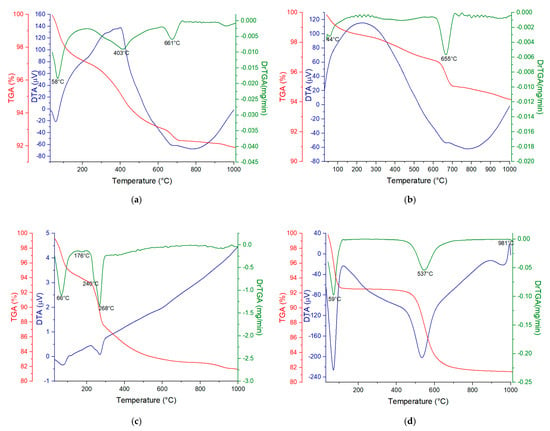
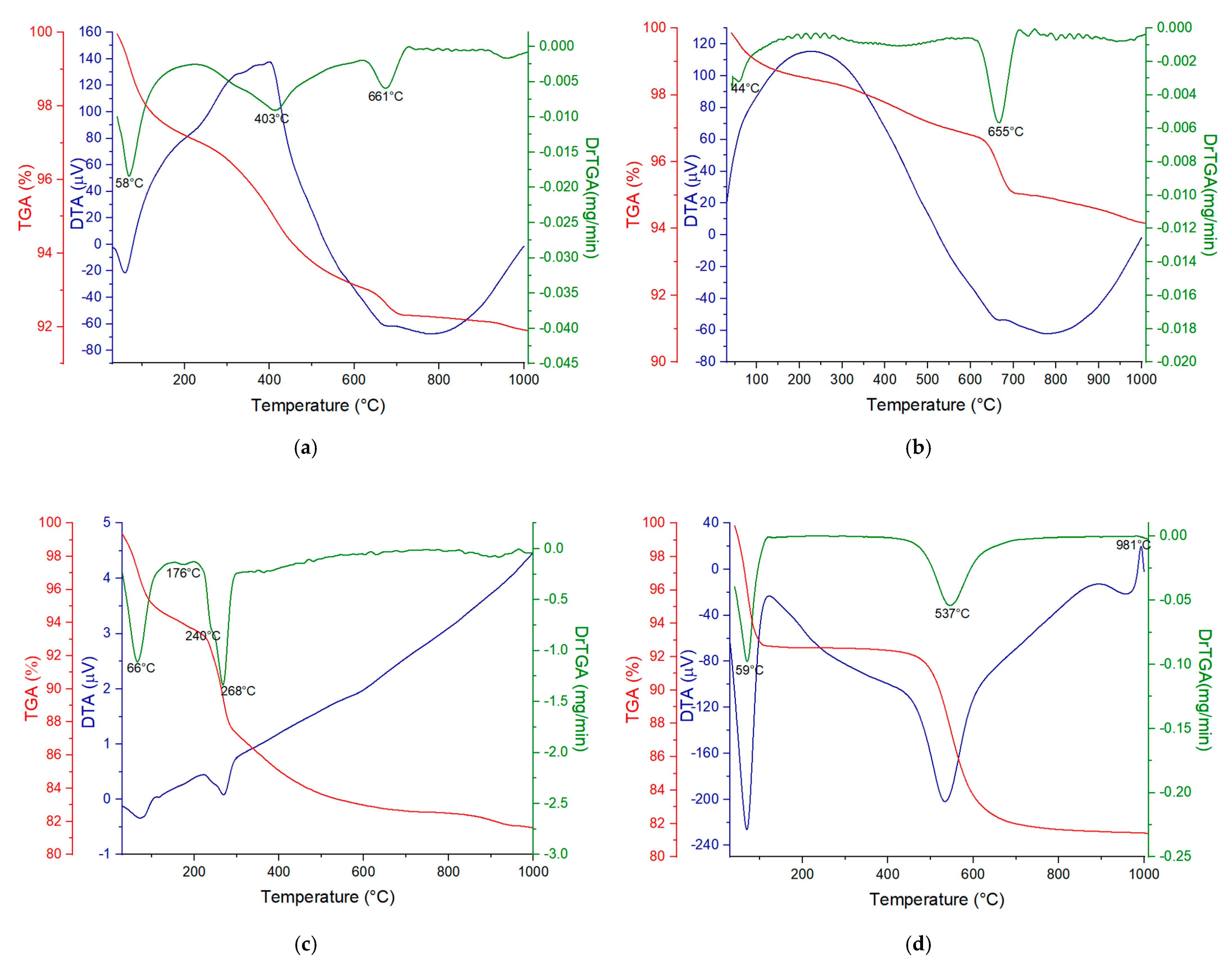
Additional information was obtained by means of thermal analysis (Figure 2). It can be observed that for the C1 ash, an exothermic process with mass loss occurs at approx. 400 °C (Figure 2a). Given the origin of this waste, this effect may be due to the presence of unburned fossil fuel still present in this ash. The endothermic effect assessed at higher temperatures, corresponding to the effect with a maximum at 661 °C assessed on the DTG curve, is attributed to the decomposition of carbonated phases [33].
Figure 2.
DTA and DrTGA curves of coal ashes C1 (a) and C2 (b), of A waste (c) and kaolin (d).
C2 ash also exhibited an exothermic effect, with a maximum at approx. 250 °C, indicating the presence of a lower content of unburned fuels (Figure 2b). On the other hand, the endothermic effect, corresponding to the DTG effect with a maximum at 655 °C, is more pronounced; the greater mass loss assessed for this effect on the TG curve (Table 3) indicates a higher content of carbonate phases present in this ash.
Table 3.
Weight losses recorded on the TG curves of the studied materials.
The presence of unburned fossil fuel and carbonates in coal ashes can contribute to an increase in porosity of the ceramics due to the gases released during thermal treatment.
Thermal analysis of A waste confirms the presence of Al(OH)3 due to its corresponding endothermic effects (assessed on the DTA curve) and is visible on the DTG curve at 240 °C and approx. 270 °C. These effects are a consequence of Al(OH)3 dehydroxylation with the formation of AlOOH, which later transforms into γ-Al2O3 [34].
Thermal analysis, performed on kaolin (Figure 2d), shows the following mass-loss effects [35,36]: (i) the first endo-effect, which occurs in the temperature range 40–115 °C, is attributed to humidity loss; (ii) the second endo-effect, in the temperature range 420–680 °C, is due to the removal of chemically bound water from AS2H2; and (iii) the exothermic effect with a maximum at approx. 990 °C is due to mullite (3Al2O3·2SiO2) formation.
3.2. Mineralogical Composition and Microstructure of Ceramics
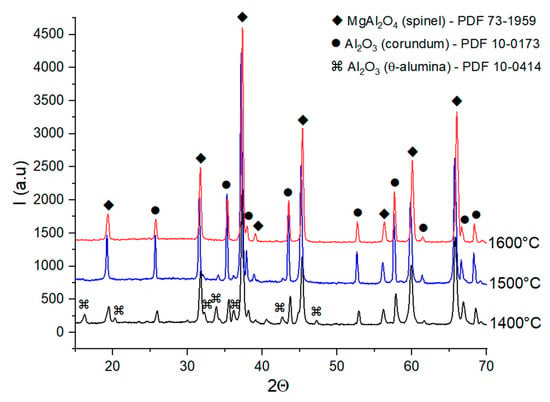
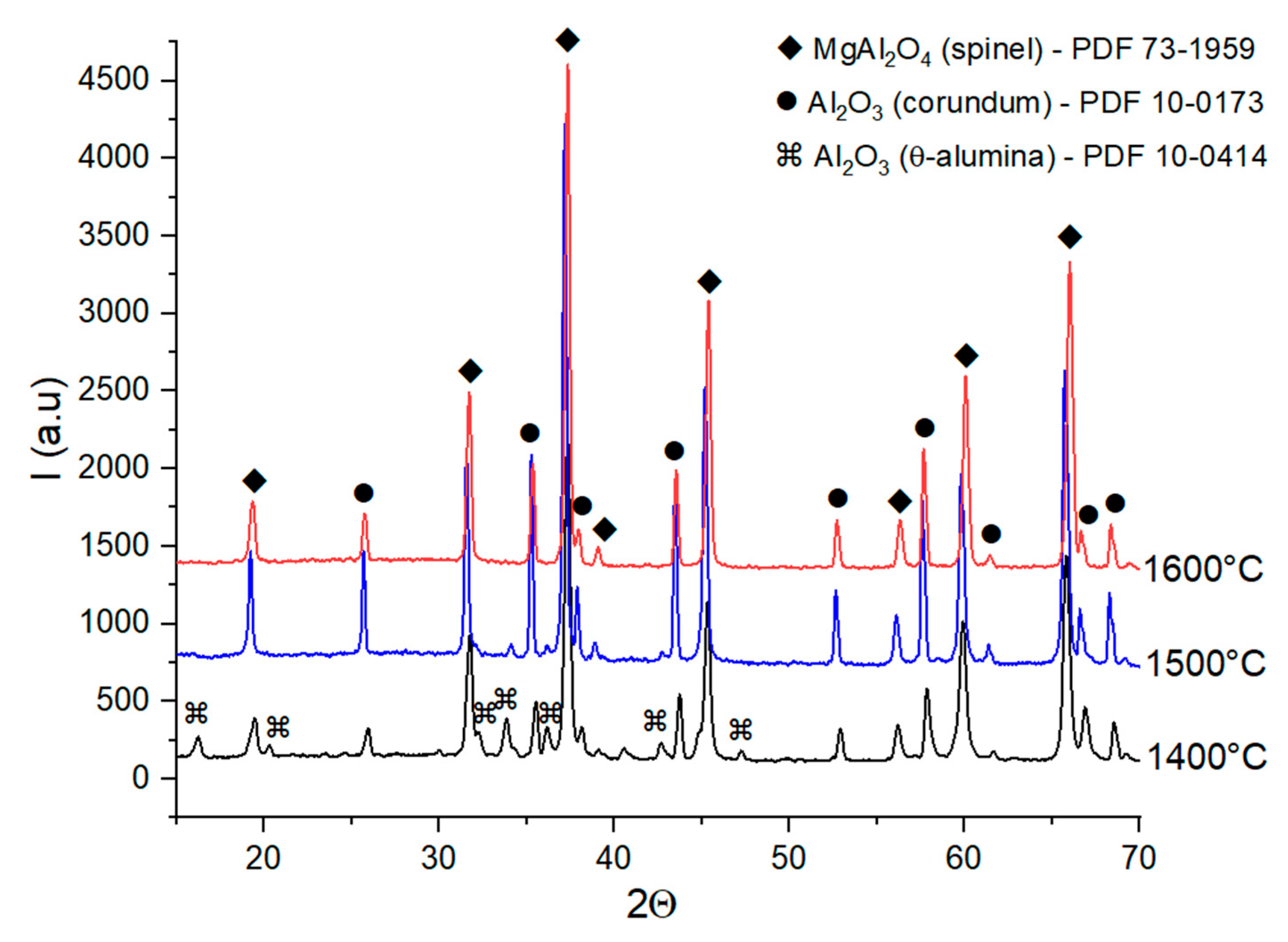
The XRD patterns of 20A ceramics sintered at 1400 °C, 1500 °C, and 1600 °C are shown in Figure 3. Two major crystalline phases are assessed in all ceramics: MgAl2O4 (spinel) and Al2O3 (corundum).
Figure 3.
X-ray diffraction patterns of 20A ceramics after sintering at different temperatures.
The intensity of the diffraction peaks progressively increases with the sintering temperature, indicating a growth in crystallite size at higher temperatures. The corundum phase (α-Al2O3) is present along with the spinel phase (MgAl2O4) in all samples; this suggests a reaction between magnesium and aluminum oxides during heat treatment. Also, for the sample sintered at 1400 °C, one can observe the diffraction lines of a high-temperature intermediate phase of alumina, which is formed during the transformation of γ-alumina (formed from Al(OH)3 decomposition) into corundum [37].
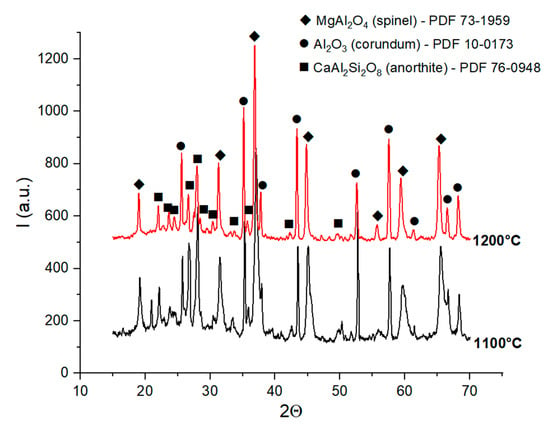
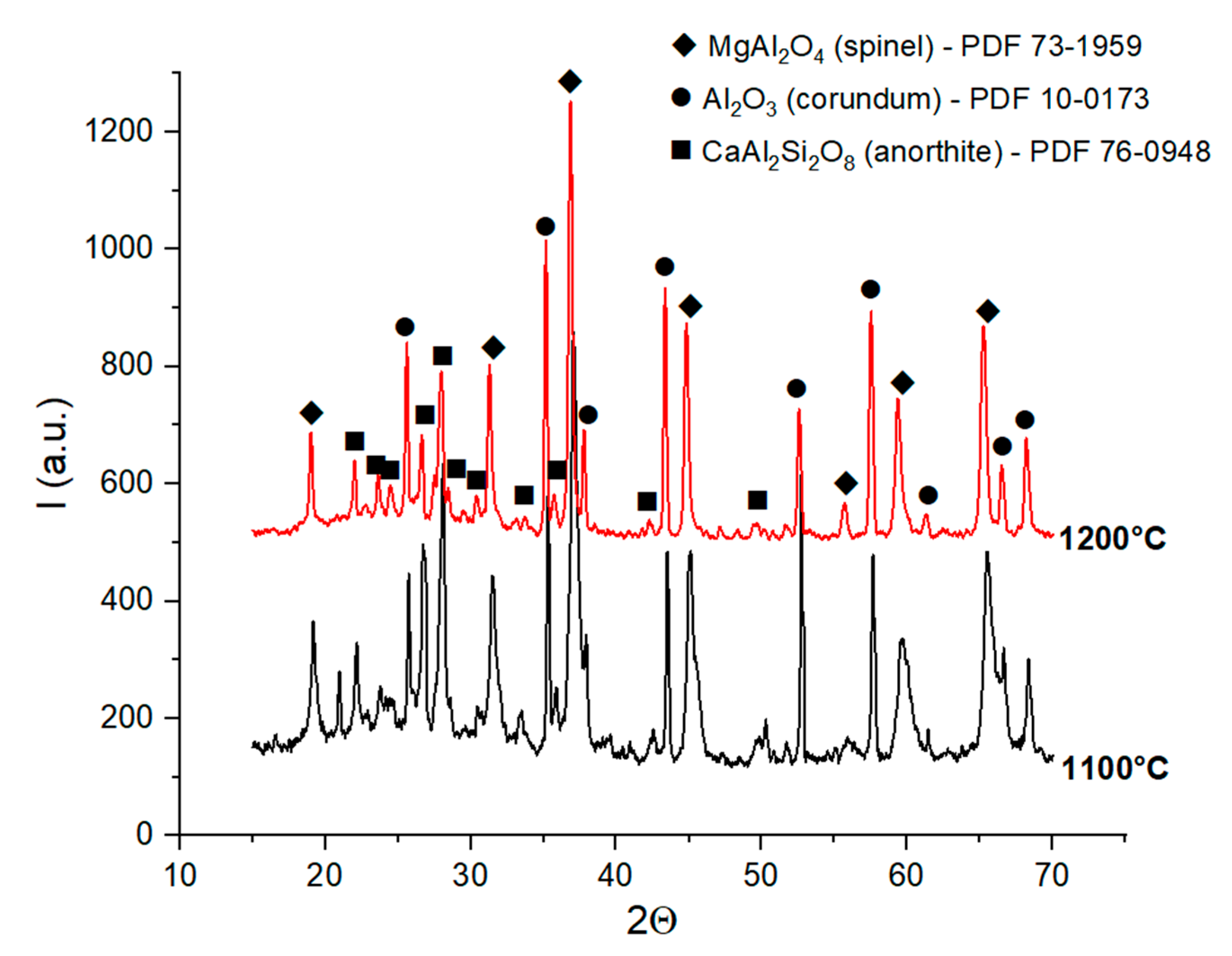
Figure 4 shows the X-ray diffraction for the ceramics containing coal ash mixture (40AC1C2), thermally treated at 1100 and 1200 °C. One can observe the presence of corundum and magnesium spinel, which are phases of interest for industrial filters. Anorthite (a compound that is present in ash) is also identified in these ceramics.
Figure 4.
XRD patterns of ceramics incorporating ash (40AC1C2), thermally treated at 1100° and 1200 °C.
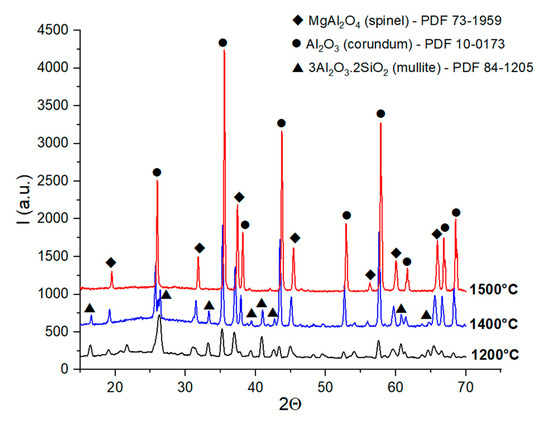
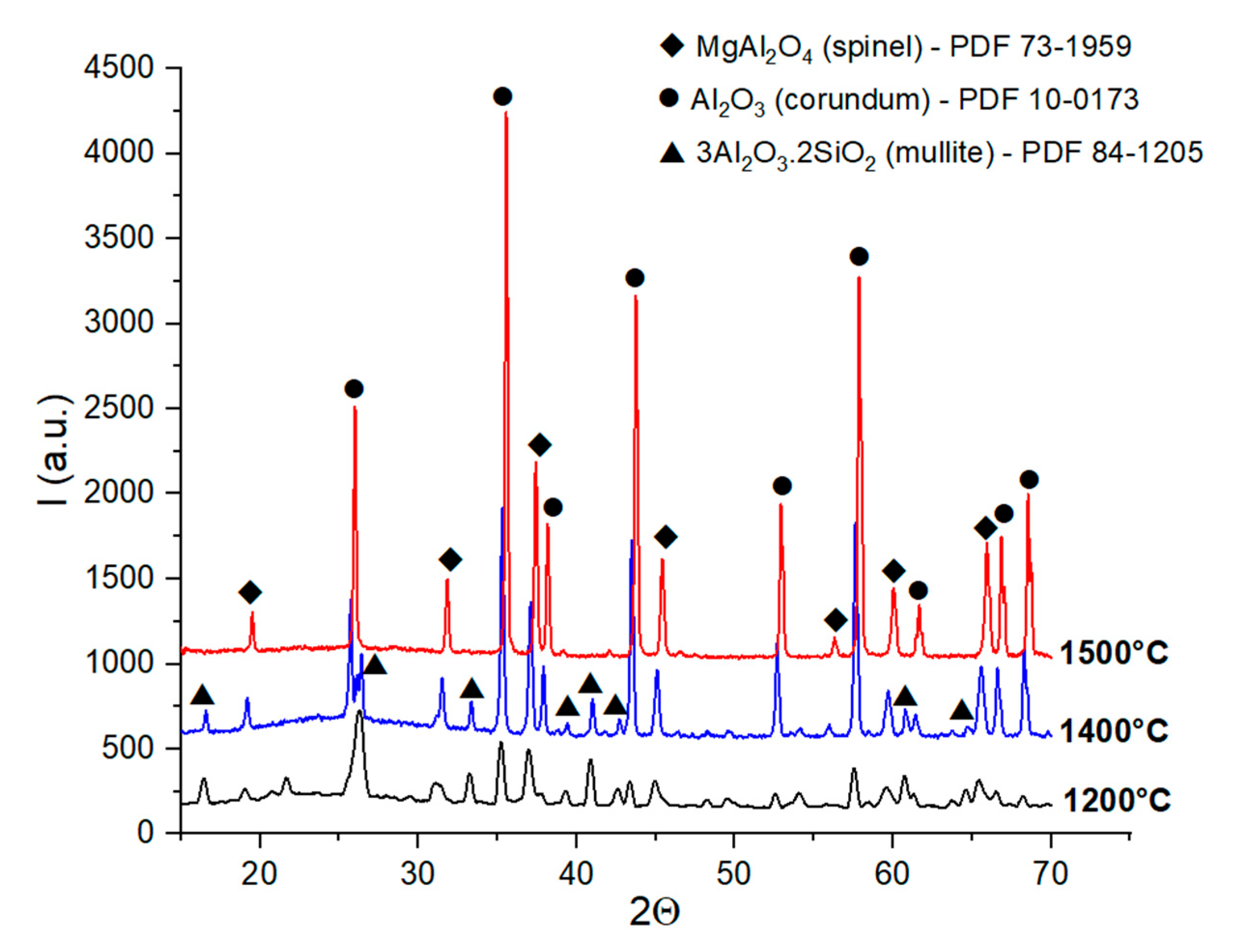
The partial substitution of aluminum-rich material (A) with kaolin in composition 40AK (Figure 5) leads to the formation of a new phase, i.e., mullite (3Al2O3·2SiO2- A3S2). Although this compound is useful in refractory ceramics and industrial filtration, various studies have indicated that its performance in filter applications is inferior to that of spinel-based filters [38,39].
Figure 5.
XRD patterns of ceramics incorporating kaolin (40AK), thermally treated at 1200°, 1400°, and 1500 °C.
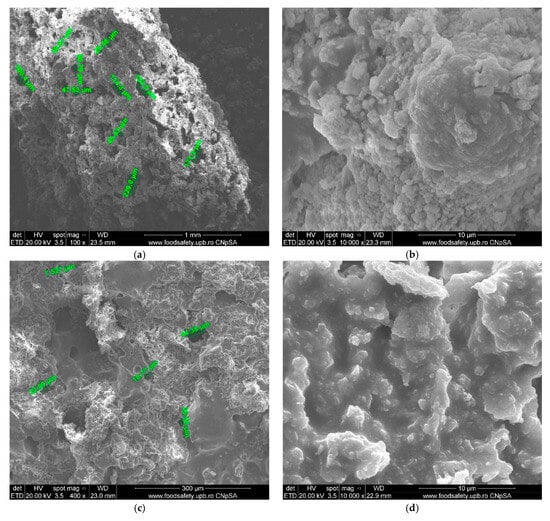
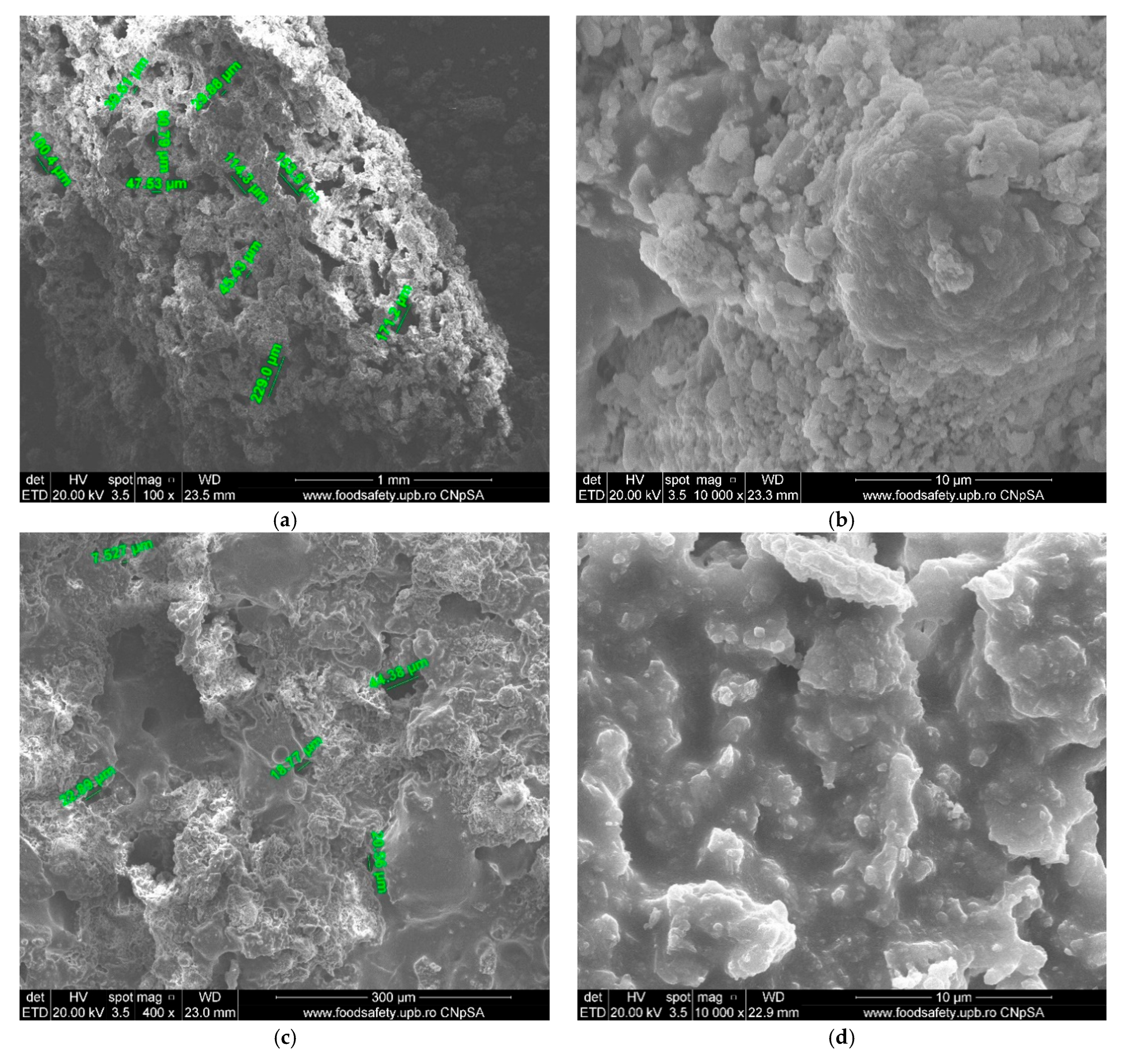
Scanning electron microscopy (SEM) was employed to examine the microstructure of the ceramics.
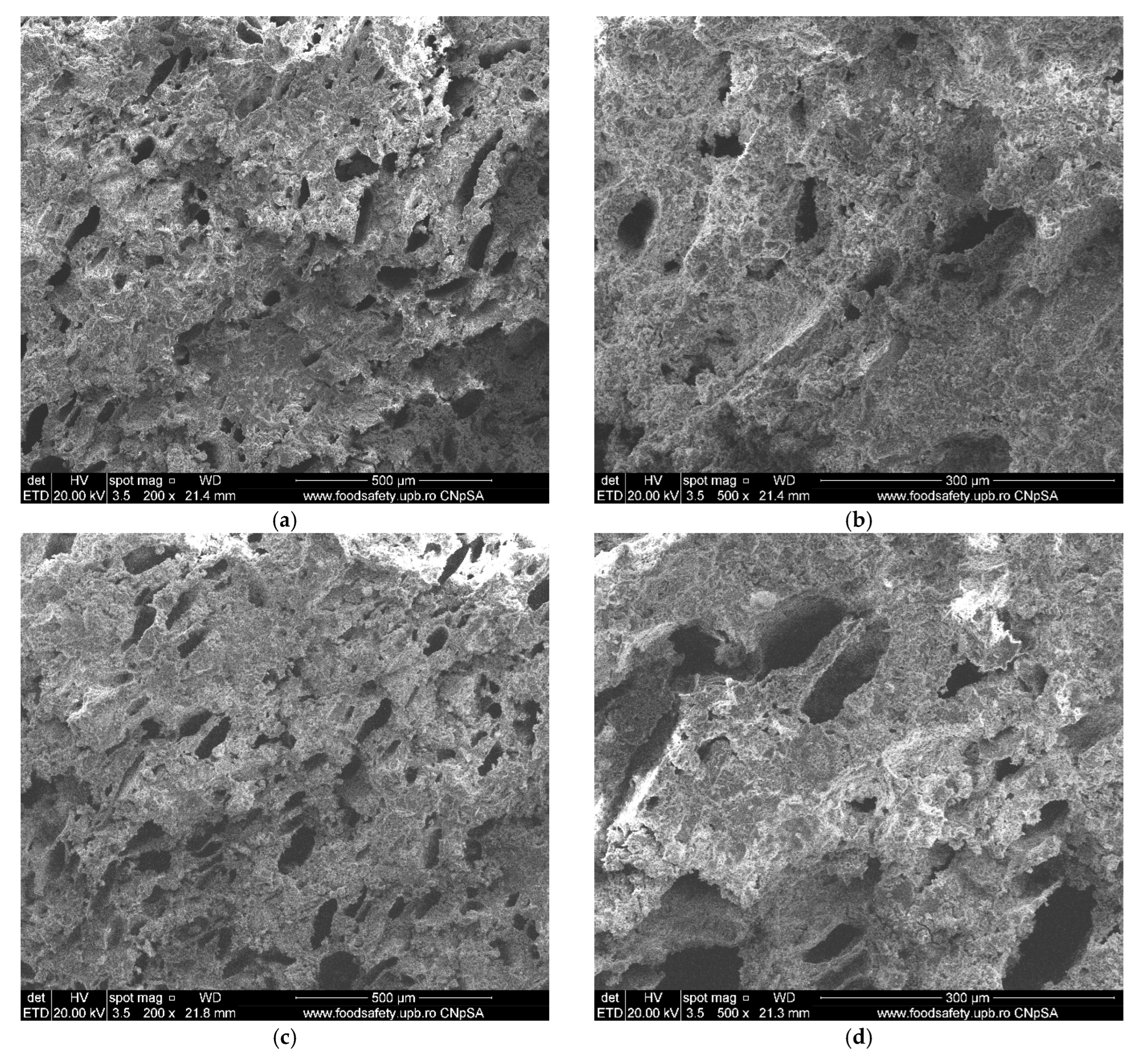
For the 20A (Figure 6a,b) and 40A (Figure 6c,d) ceramics sintered at 1500 °C, the SEM images show a heterogeneous microstructure with a relatively uniform distribution of irregular-shaped pores. A network of well-defined, interconnected pores is observed, suggesting an effective induction of porosity following the decomposition of the pore-forming agent (glucose). No segregation is observed, which indicates good homogeneity of the composition and a uniform sintering of this material.
Figure 6.
Scanning electron microscopy images of samples sintered at 1500 °C with 20% glucose (20A): (a) 200×; (b) 500×; and 40% glucose (40A): (c) 200×; (d) 500×.
For samples containing 40% glucose sintered at 1500 °C (Figure 6c,d), the pores are larger compared to those assessed in the ceramics with 20% glucose (Figure 6a,b) sintered at the same temperature. In the latter case, the pores display elongated shapes and are unevenly distributed throughout the material, indicating an efficient pore formation process resulting from the rapid decomposition of the pore-forming agent (glucose) present in a higher concentration in this sample.
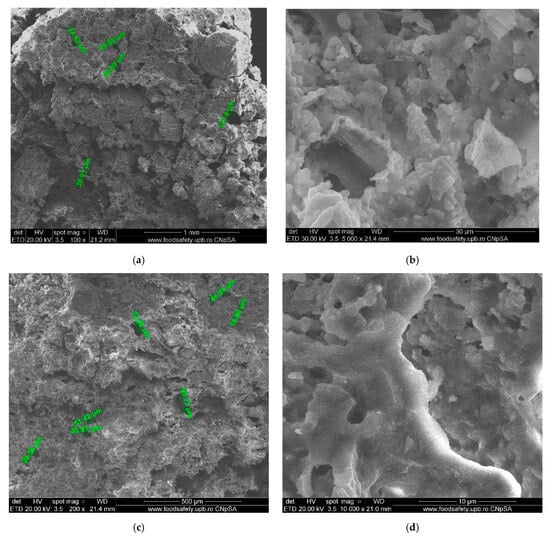
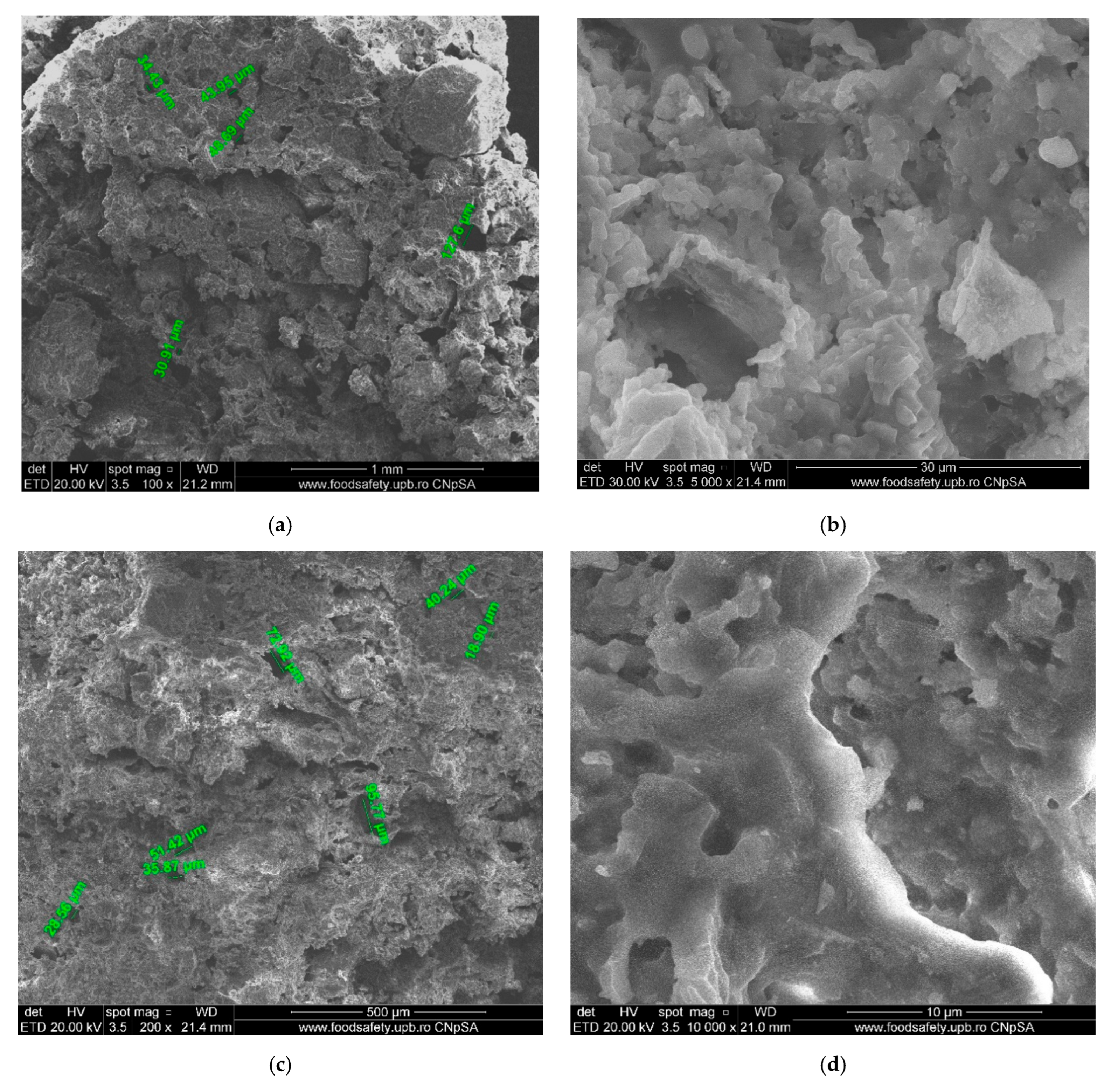
Figure 7 and Figure 8 display the micro-scale pore dimensions in samples containing coal ash (40AC1C2) and kaolin (40AK), heat-treated at 1100 °C and 1200 °C, respectively.
Figure 7.
Scanning electron microscopy images for the 40AC1C2 ceramic sintered at 1100 °C (a,b) and 1200 °C (c,d).
Figure 8.
Scanning electron microscopy images for the 40AK ceramic sintered at 1100 °C (a,b) and 1200 °C (c,d).
In the ceramics containing coal ashes, an increase in thermal treatment temperature leads to the formation of a higher amount of vitreous phase.
In the 40AK ceramic sample (Figure 8), several needle-shaped crystals specific to mullite can be observed [40]. As the sintering temperature increases to 1200 °C, both the size and number of pores decrease, while the amount of vitreous phase increases compared to the same ceramic obtained at 1100 °C.
3.3. Physical and Mechanical Properties
The physical and mechanical properties of porous ceramics are decisive for their functional applications.
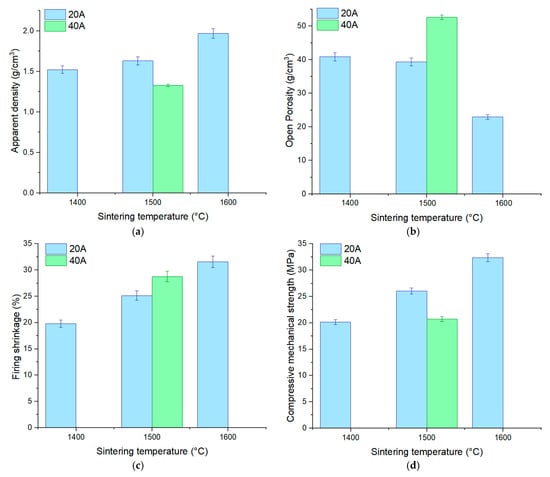
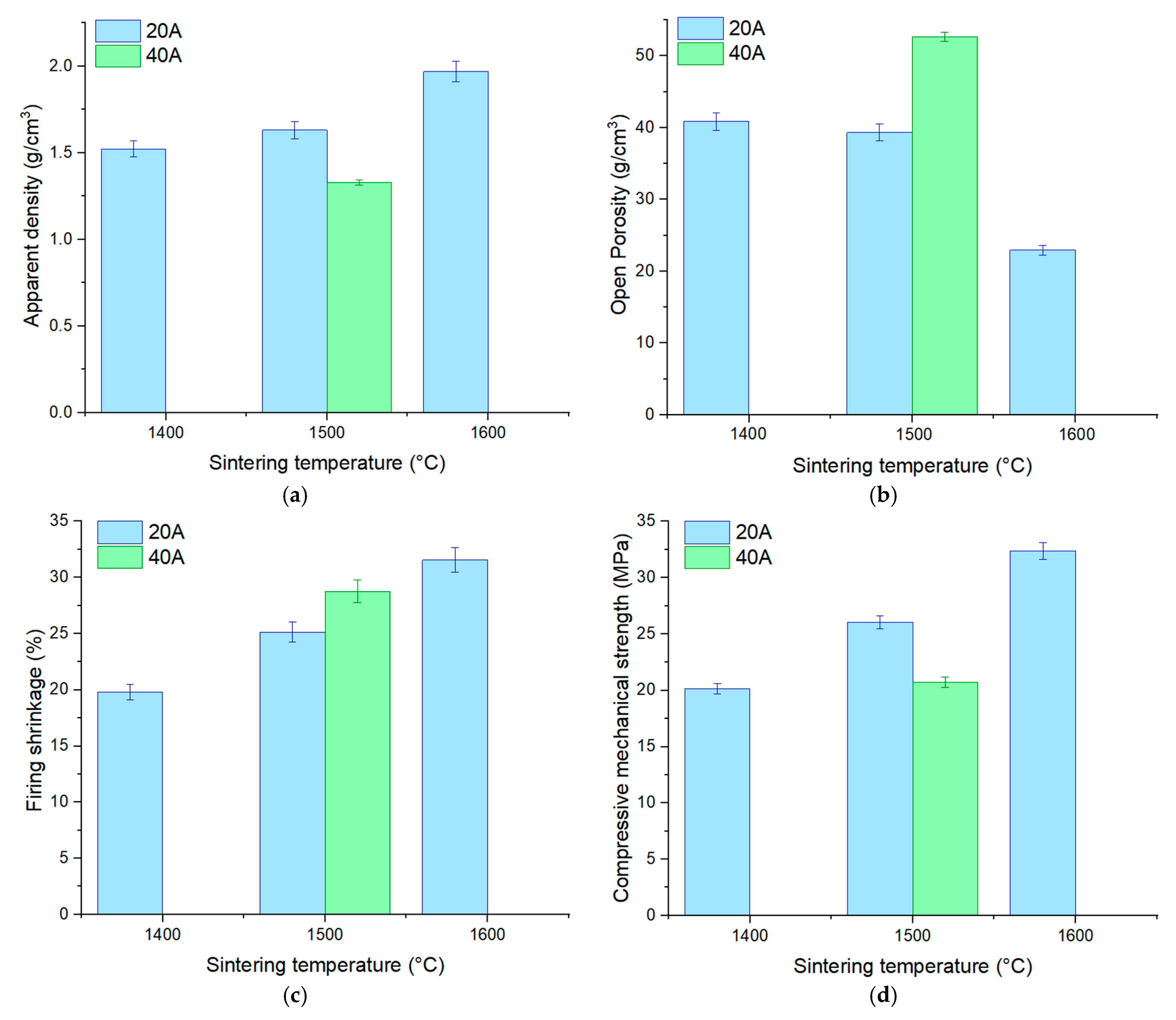
According to the data presented in Figure 9, the ceramic containing 20% glucose (20A) sintered at 1400 °C exhibits an apparent density of 1.52 g/cm3, high open porosity (40.86%), and relatively low firing shrinkage (19.81%). These values suggest incomplete sintering, which is favorable for porosity development. In this case, mechanical strength reaches 20.14 MPa, which is an acceptable value for porous materials.
Figure 9.
Variations of (a) apparent density, (b) open porosity, (c) firing shrinkage, and (d) compressive strength as a function of sintering temperature for samples 20A and 40A.
When thermal treatment is performed at 1500 °C, for the same dosage of glucose (20%), the apparent density increases to 1.63 g/cm3, the porosity decreases slightly (39.33%), and the sintering contraction increases (25.13%), reflecting better densification. As expected, the mechanical strength increases to 26.03 MPa.
For the ceramics sintered at 1500 °C with an increased glucose content (40%), the apparent density decreases to 1.33 g/cm3 and an increase in open porosity to 52.68% was observed, confirming the efficiency of glucose as a pore-forming agent. At the same time, firing shrinkage reached 28.76%, while mechanical strength dropped to 20.74 MPa.
At 1600 °C (for the 20A ceramic), the apparent density increases to 1.97 g/cm3 and open porosity decreases (22.96%), which reflects efficient densification.
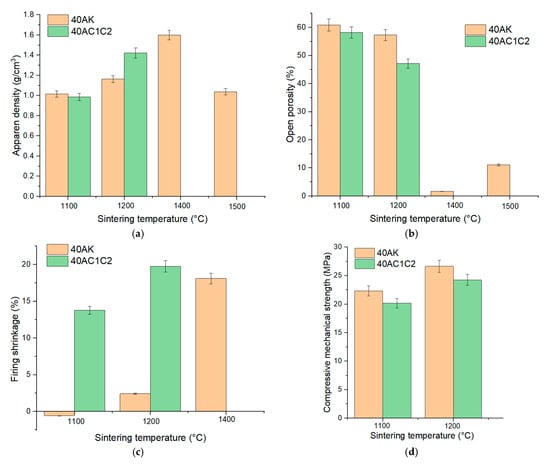
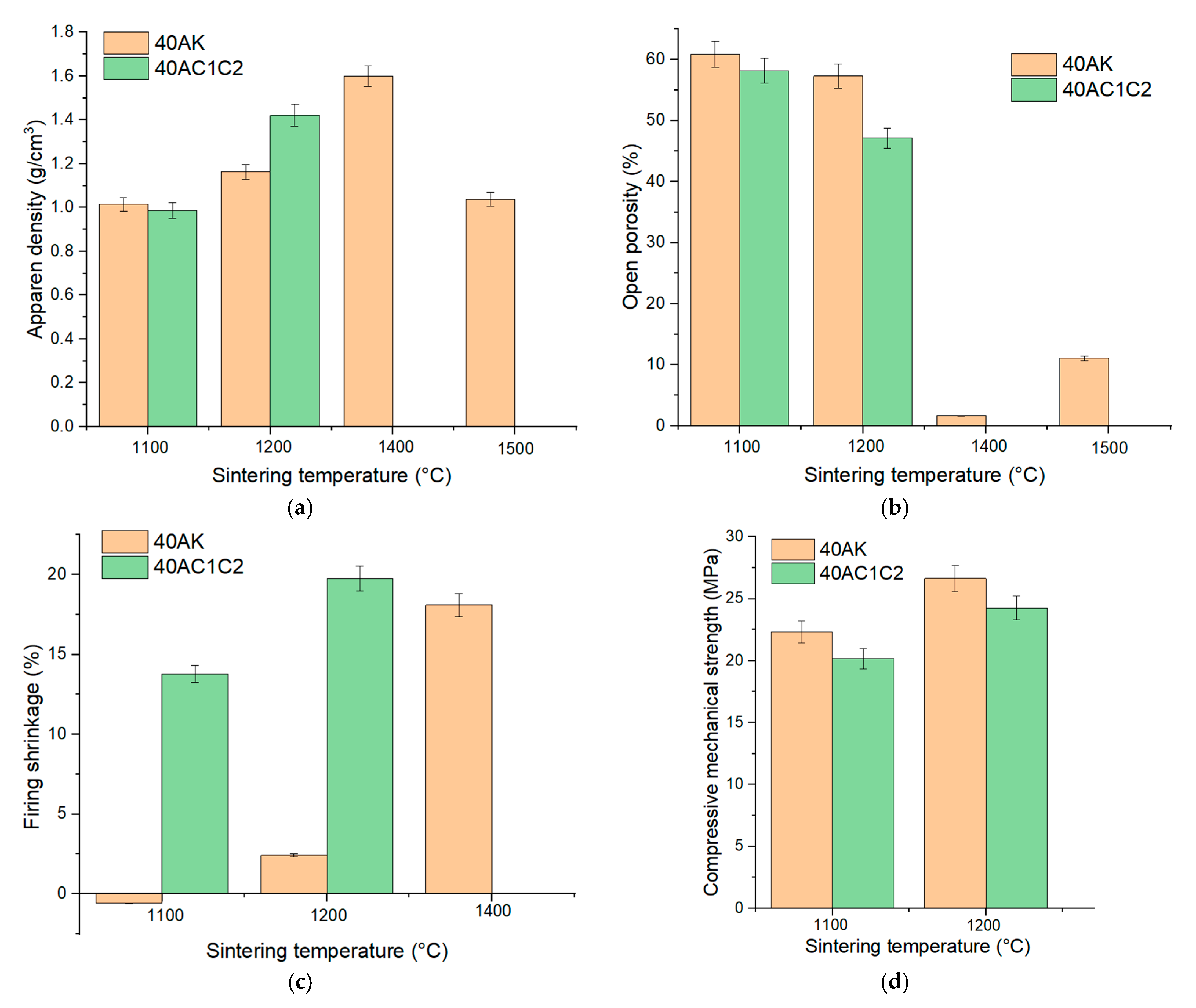
Figure 10 presents the values assessed for these properties for ceramic samples 40AC1C2 and 40AK.
Figure 10.
Apparent density (a), open porosity (b), firing shrinkage (c), and compressive mechanical strength (d) of ceramics containing thermal coal ash (40AC1C2) and kaolin (40AK), obtained at different heat treatment temperatures.
For the ceramic containing coal ash mixture (40AC1C2) the highest value of apparent density (1.42 g/cm3) was achieved at a lower temperature (1200 °C). At the same time, the density increases with sintering temperature, except for the ceramic obtained at 1500 °C.
For open porosity (Figure 10b), high values were obtained for samples sintered at lower temperatures (1100–1200 °C). In both cases, kaolin-containing ceramic (40AK) has a higher open porosity (60.90% and 57.28%, respectively), which is desirable in the case of ceramic filters. For the ceramics sintered at 1400 °C, open porosity is close to zero due to the formation of a melt, which closes the pores from the surface.
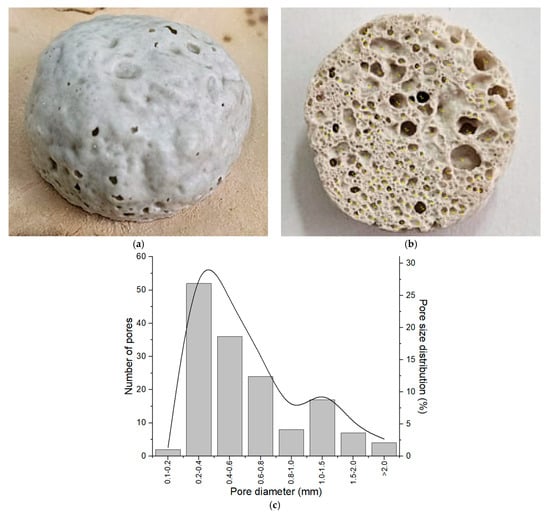
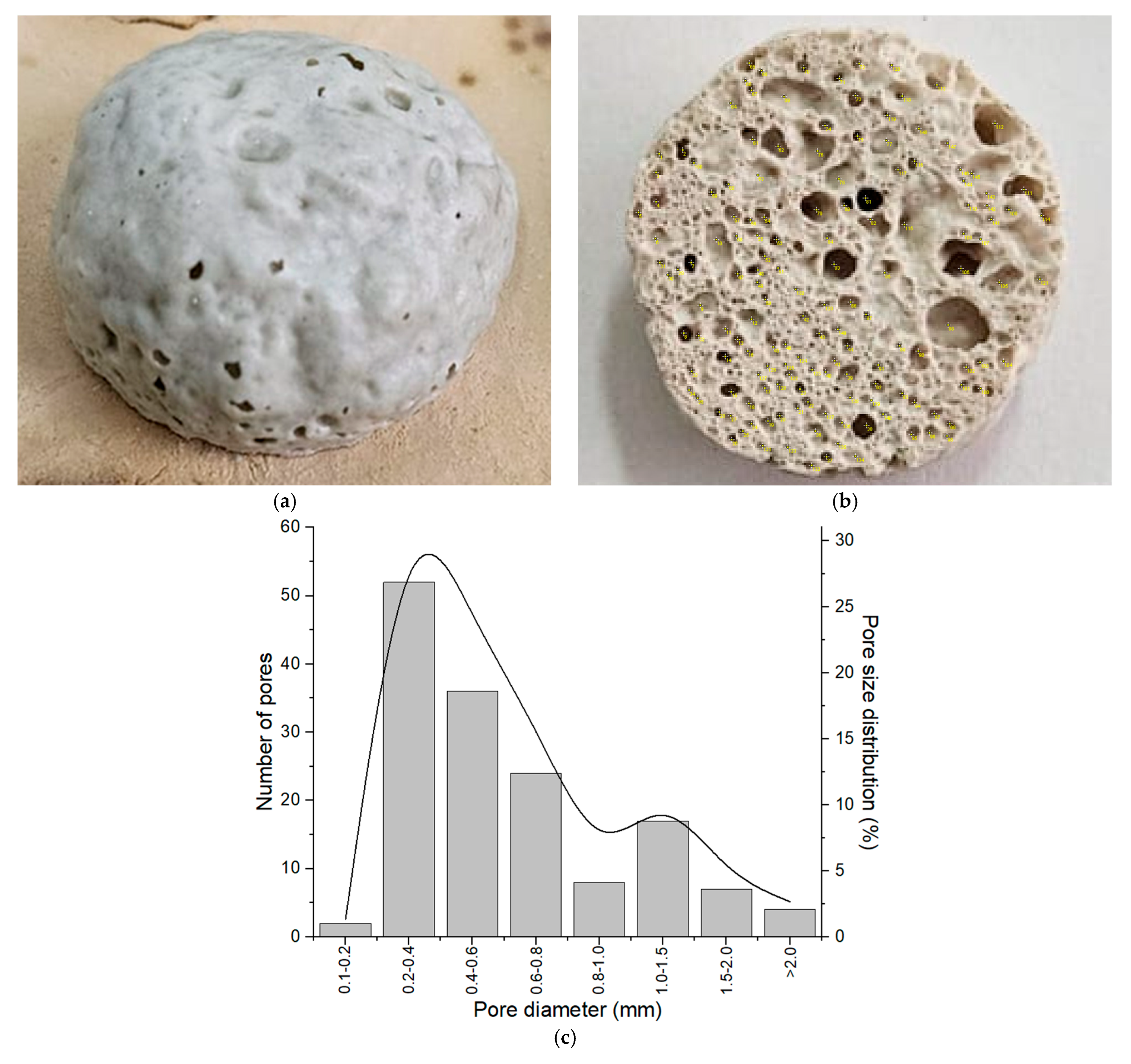
Sintering at 1500 °C further reduces open porosity at the surface of the specimen due to the presence of a vitreous layer (glaze), which explains the low porosities assessed on these materials, especially for the 40AC1C2 ceramic (see Figure 11a).
Figure 11.
40AC1C2 ceramic sample sintered at 1500 °C after cutting (a), pores within the sample (b), and pore size distribution statistics (c).
The removal of this layer (by cutting) from the surface of 40AC1C2 ceramic shows the presence of a wide range of pores in the interior of the ceramic sample (Figure 11).
An image of the sample 40AC1C2 sintered at 1500 °C was uploaded into image processing software (ImageJ 1.50i software—Wayne Rasband, National Institute of Health, 2016, Rockville, MD, USA), where 150 pores (the yellow crosses from Figure 11b) were measured according to a set reference of 0.1 mm. With the obtained values, both the numeric and percentage distributions of the pores in the obtained material were grouped and represented in a histogram graph (Figure 11c). These data reflect a maximum in the 0.2–0.4 mm range, indicating a dominant proportion of medium-sized pores.
Figure 10c presents the firing shrinkage values of ceramics containing either ash (40AC1C2) or kaolin (40AK), sintered at different temperatures. It is obvious that, regardless of the additive used alongside the aluminum-rich material, firing shrinkage increases with a rising heat treatment temperature. However, ceramics incorporating kaolin exhibit less shrinkage compared to those containing coal ashes. This could be due to the fact that ashes contain fluxing oxides (such as CaO, K2O, or Na2O), which induce melt formation at lower temperatures (supporting the sintering that is associated with higher shrinkage); on the other hand, in ceramics with kaolin content, needle-like mullite crystals are formed, thus limiting shrinkage [31,41]. The formation of mullite may also explain the low expansion assessed on the 40AK ceramic sintered at 1100 °C.
A smaller firing shrinkage is desirable; the smaller the shrinkage, the greater the number of pores present inside the material. It is worth mentioning that for both ceramics (40AC1C2 and 40AK) sintered at 1500 °C, shrinkage could not be determined due to the specimens’ deformation.
Kaolin-containing ceramics have higher compressive strengths as compared to the ceramics containing ashes (Figure 10d). However, for both ceramics, the assessed values fulfill the minimal requirement for ceramic filters, which depend on porosity and composition, usually above 1.5 MPa [42].
In the case of the ceramics sintered at 1500 °C, the compressive strength could not be determined due to sample deformation.
The ceramic specimens containing kaolin and coal ash obtained at 1400 °C showed a columnar break, which is why it was not possible to determine an exact value of the mechanical strength.
3.4. Ion Retention Capacity and Flow Rate of Ceramic Filters
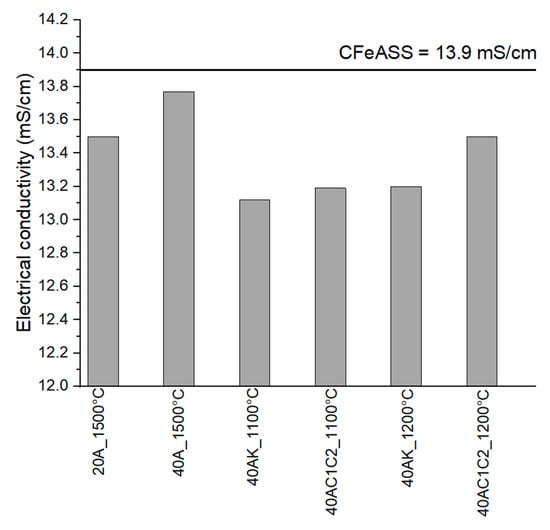
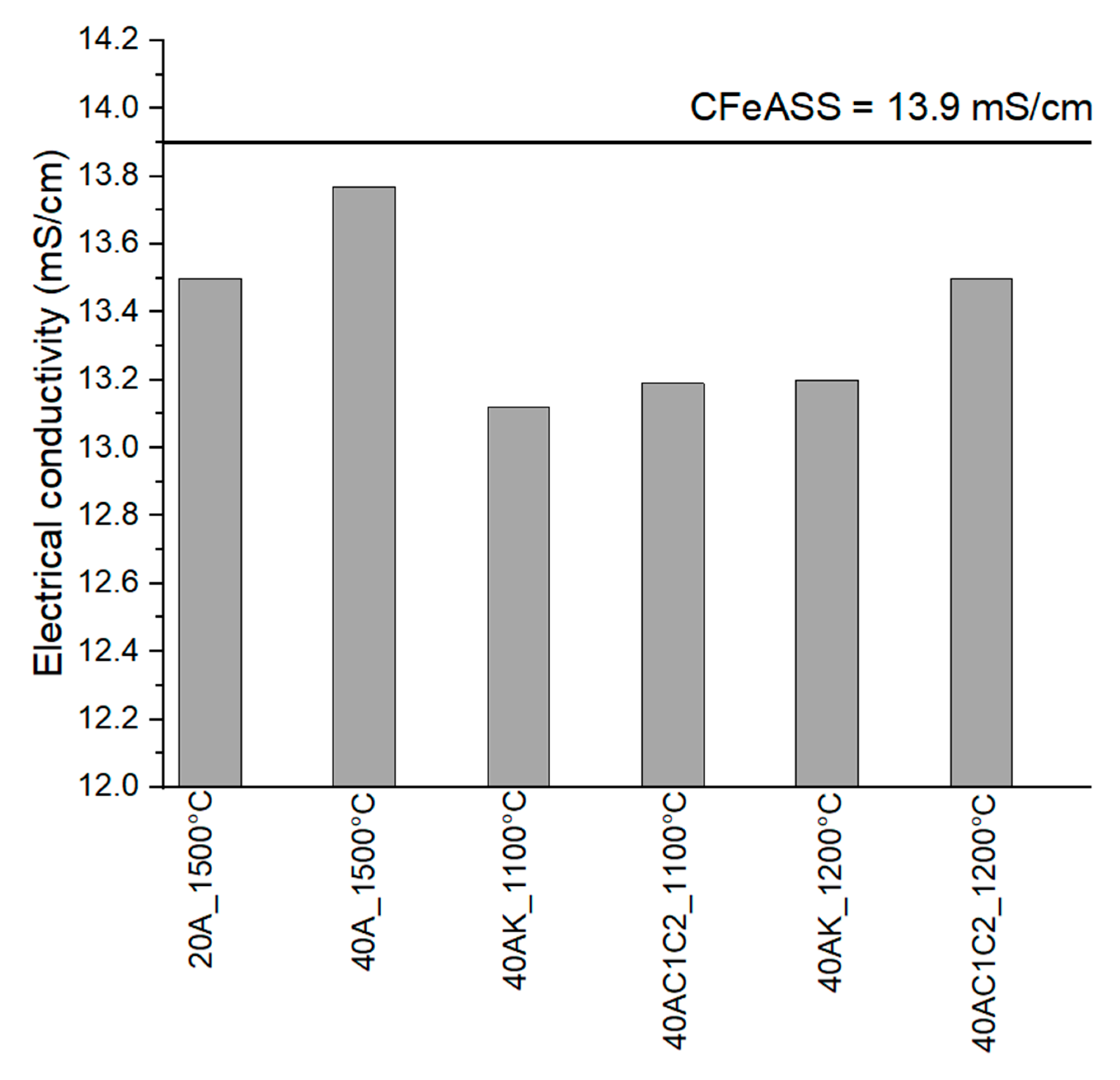
All tests were performed with an ASS 20% solution (Fe3+ complex with sulfosalicylic acid). This solution has an electrical conductivity of 13.9 mS/cm.
Figure 12 shows that after the solution passes through the sintered ceramic filters, its electrical conductivity decreases, indicating the filters’ effectiveness in ion retention.
Figure 12.
Electrical conductivity of AAS solution after passing through the studied ceramic filters with different proportions of glucose and with coal ash or kaolin, sintered at 1100 °C, 1200 °C, and 1500 °C.
Filtration through a 20% glucose-containing ceramic filter (20A_1500 °C) reduced the conductivity to 13.50 mS/cm, suggesting good ion retention. The solution that passed through the 40% glucose filter (40A_1500 °C) exhibited electrical conductivity of 13.77 mS/cm, reflecting lower ion retention efficiency (Figure 9b).
The best ion retention values were obtained for ceramic filters with kaolin or coal ash content sintered at 1100 °C; these values correlate with the higher values of open porosity (Figure 12). The same behavior can be observed in the case of ceramics obtained at 1200 °C, i.e., those that exhibit high values of open porosity.
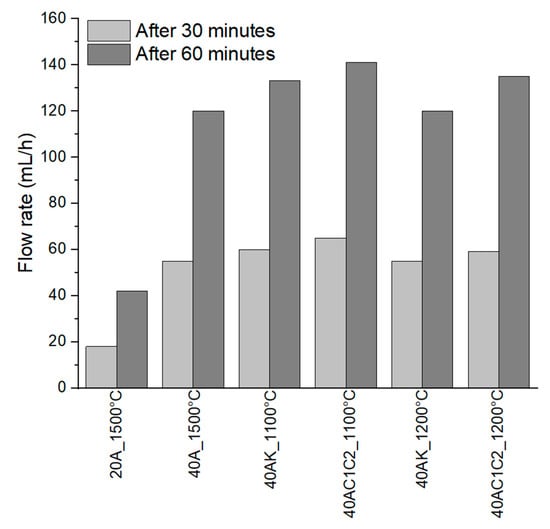
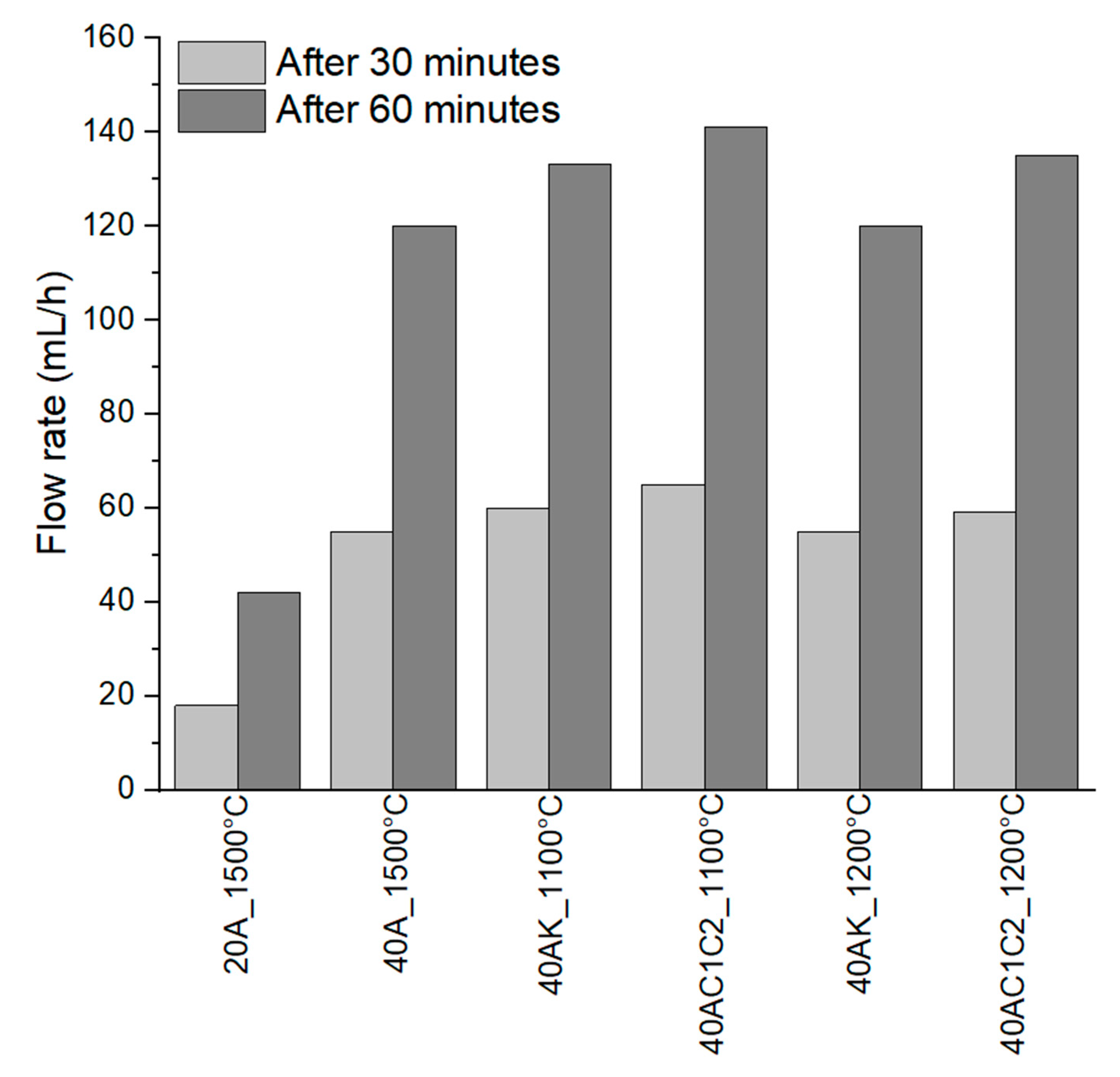
Flow rate was measured by passing a specified volume of water through the filters and recording the flow over a time frame (30 and 60 min). The values obtained are shown in Figure 13.
Figure 13.
Flow rate of the sintered ceramic filters.
Figure 13 illustrates a clear trend; the flow rate increases with time. This indicates progressive wetting, pore activation, or stabilization of the flow paths inside the porous ceramic. Also, the flow rate increases significantly with the increase of glucose content in the raw mix. Both samples sintered at 1500 °C show the lowest filtration rates, confirming the results reported for ceramic properties (i.e., open porosity and apparent density) and, thus, a higher densification at this temperature.
The sample with 20% glucose (20A_1500 °C) shows a filtration rate of 18 mL/h after 30 min and rises to 42 mL/h after 60 min. In contrast, the filter containing 40% glucose (40A_1500 °C) achieves a rate of 55 mL/h after 30 min and 120 mL/h after 60 min. This demonstrates the strong influence of glucose amount on the filtration performance of ceramic filters, i.e., a higher content of pore-forming agent generates a structure with large and interconnected pores.
The samples containing kaolin and coal ash, sintered at 1100 °C and 1200 °C, exhibit a higher filtration rate, indicating a more favorable balance between open porosity and mechanical integrity. The sample 40AC1C2_1100 °C exhibits the best behavior, particularly after 60 min (filtration rate 141 mL/h), suggesting an optimal open and interconnected porosity. The use of coal ash in filter production enhances filtration performance, likely due to increased pore formation and/or improved pore interconnectivity.
Based on the consolidated data, it can be concluded that under normal pressure conditions, the filters operate as gravity-driven filters, enabling filtration without the need for additional pressure. However, further studies are required to evaluate the long-term performance and durability of the filters under different operating conditions.
4. Conclusions
The presented study demonstrates the feasibility of producing porous ceramic filters through the valorization of two types of industrial waste, specifically aluminum-rich material derived from a treated black aluminum dross waste and coal ash recovered from old landfills; kaolin was also used as a complementary raw material in combination with aluminum-rich material (A). Glucose was used as a pore-forming agent in two dosages (20% and 40%). The results show that by controlling the thermal treatment parameters, it is possible to obtain a microstructure and filtration performance that is suitable for ceramic filters.
XRD analysis confirmed the presence of corundum (αAl2O3) and MgAl2O4 spinel in the ceramics based on aluminum-rich material—phases well-suited for filtration applications due to their chemical and mechanical properties. When kaolin is used in combination with aluminum-rich material, mullite (3Al2O3·2SiO2) can form, enhancing the mechanical strength of the ceramic. However, because the resulting microstructure displays low open porosity, these filters sintered at higher temperatures show diminished filtration efficiency.
In contrast, ceramic filters containing coal ash, benefiting from the presence of fluxing oxides and gas-releasing components (unburnt fossil fuel and carbonates), develop higher porosity at lower sintering temperatures. However, excessive vitrification at elevated temperatures ultimately reduces their open porosity, which negatively affects filtration performance.
The microstructural investigation revealed an interconnected pore network whose size and distribution depend both on glucose content and on sintering temperature. Increasing the glucose content from 20% to 40% significantly enhanced the open porosity and flow rates, but at the expense of mechanical strength and ionic retention capacity. These results highlight the interdependence between flow rate and ion retention efficiency in porous ceramic filter systems.
The filtration data confirmed that all investigated materials function effectively as gravity-driven filters without the need for applied pressure.
All the experimental results underline the strong potential of waste-derived porous ceramics to be used as sustainable and cost-effective filtration materials. By adjusting the raw mix composition, the pore-forming agent dosage, and the sintering parameters, the properties of these porous ceramics can be tailored for specific filtration requirements.
This paper contributes both to environmental protection through waste valorization and to the development of durable ceramic filters suitable for wastewater treatment applications.
Author Contributions
Conceptualization, A.I.B. and S.P.S.; methodology, S.P.S.; validation, A.I.B. and S.P.S.; investigation, A.T.N. and M.G.V.; writing—original draft preparation, A.I.B., A.T.N. and M.G.V.; writing—review and editing, A.I.B. and S.P.S. All authors have read and agreed to the published version of the manuscript.
Funding
This research received no external funding.
Data Availability Statement
The original contributions presented in this study are included in the article. Further inquiries can be directed to the corresponding author.
Acknowledgments
The authors are grateful to the Romanian Government for providing access to the research infrastructure of the National Center for Micro- and Nanomaterials through the National Program entitled “Installations and Strategic Objectives of National Interest”.
Conflicts of Interest
The authors declare no conflicts of interest.
References
- Kahn, M.; Sangiorgio, M.; Rosa, L. Potential of wastewater reuse to alleviate water scarcity under future warming scenarios. Environ. Res. Lett. 2025, 20, 034012. [Google Scholar] [CrossRef] [Scilit]
- Akash, F.A.; Shovon, S.M.; Rahman, W.; Rahman, A.; Chakraborty, P.; Prasetya, T.A.E.; Monir, M.U. Advancements in ceramic membrane technology for water and wastewater treatment: A comprehensive exploration of current utilizations and prospective horizons. Desalin. Water Treat. 2024, 319, 100569. [Google Scholar] [CrossRef] [Scilit]
- Samadi, A.; Gao, L.; Kong, L.; Orooji, Y.; Zhao, S. Waste-derived low-cost ceramic membranes for water treatment: Opportunities, challenges and future directions. Resour. Conserv. Recycl. 2022, 185, 106497. [Google Scholar] [CrossRef] [Scilit]
- Rani, S.L.S.; Kumar, R.V. Insights on applications of low-cost ceramic membranes in wastewater treatment: A mini-review. Case Stud. Chem. Environ. Eng. 2021, 4, 100149. [Google Scholar] [CrossRef] [Scilit]
- Ghosh, T.; Santra, N.; Kayal, N. Remediation of industrial solid waste in fabrication of porous alumina ceramic filter and their efficacy in aerosol filtration and removal of oil from wastewater. Mater. Sci. Eng. B 2025, 317, 118202. [Google Scholar] [CrossRef] [Scilit]
- Njoya, I.Q.M.; Lecomte-Nana, G.L.; Barry, K.; Njoya, D.; El Hafiane, Y.; Peyratout, C. An Overview on the Manufacture and Properties of Clay-Based Porous Ceramics for Water Filtration. Ceramics 2025, 8, 3. [Google Scholar] [CrossRef] [Scilit]
- Werr, U. Porous Ceramics Manufacture—Properties—Applications—Ceramic Applications. Ceram. Appl. 2014, 2, 48–53. Available online: https://www.ceramic-applications.com/porous-ceramics-manufacture-properties-applications/ (accessed on 10 September 2026).
- Dele-Afolabi, T.; Hanim, M.A.; Oyekanmi, A.; Ansari, M.; Sikiru, S.; Ojo-Kupoluyi, O. Organic waste-derived pore formers for macroporous ceramics fabrication: A review on synthesis, durability properties and potential applications. Mater. Today Sustain. 2024, 27, 100824. [Google Scholar] [CrossRef] [Scilit]
- Han, J.; Hu, L.; Zhang, Y.; Zhou, Y. Fabrication of Ceramics with Complex Porous Structures by the Impregnate–Freeze-Casting Process. J. Am. Ceram. Soc. 2009, 92, 2165–2167. [Google Scholar] [CrossRef] [Scilit]
- Ramay, H.R.; Zhang, M. Preparation of porous hydroxyapatite scaffolds by combination of the gel-casting and polymer sponge methods. Biomaterials 2003, 24, 3293–3302. [Google Scholar] [CrossRef] [Scilit] [PubMed]
- Munusamy, R.; Ravichandran, A.; El Mabrouk, K.; Anbalagan, B.M. Polymer Sponge Replication Technology Derived Strontium-Substituted Apatite (Sr-HAP) Porous Scaffolds for Bone Tissue Engineering. Biomed. Mater. Devices 2023, 1, 504–511. [Google Scholar] [CrossRef] [Scilit]
- Zhou, W.; Wu, P.; Zhang, L.; Zhu, D.; Zhao, X.; Cai, Y. Heavy metal ions and particulate pollutants can be effectively removed by a gravity-driven ceramic foam filter optimized by carbon nanotube implantation. J. Hazard. Mater. 2022, 421, 126721. [Google Scholar] [CrossRef] [Scilit] [PubMed]
- Mohammadi, F.; Mohammadi, T. Optimal conditions of porous ceramic membrane synthesis based on alkali activated blast furnace slag using Taguchi method. Ceram. Int. 2017, 43, 14369–14379. [Google Scholar] [CrossRef] [Scilit]
- Raychaudhuri, A.; Behera, M. Ceramic membrane modified with rice husk ash for application in microbial fuel cells. Electrochim. Acta 2020, 363, 137261. [Google Scholar] [CrossRef] [Scilit]
- Sun, L.; Wang, Z.; Gao, B. Ceramic membranes originated from cost-effective and abundant natural minerals and industrial wastes for broad applications—A review. Desalin. Water Treat. 2020, 201, 121–138. [Google Scholar] [CrossRef] [Scilit]
- Cheerarot, R.; Jaturapitakkul, C. A study of disposed fly ash from landfill to replace Portland cement. Waste Manag. 2004, 24, 701–709. [Google Scholar] [CrossRef] [Scilit] [PubMed]
- Harasymiuk, J.; Rudziński, A. Old Dumped Fly Ash as a Sand Replacement in Cement Composites. Buildings 2020, 10, 67. [Google Scholar] [CrossRef] [Scilit]
- Xiong, L.; Maltseva, O.; Fernández-Jiménez, A.; Wan, Z.; Palomo, A. Mechanism for activity variation of landfilled coal ash: Deterioration in landfilling and improvement in pretreatment. Case Stud. Constr. Mater. 2025, 22, e04817. [Google Scholar] [CrossRef] [Scilit]
- Liu, W.; Lin, L.; Wang, S.; Peng, X.; Wu, B.; Sun, K.; Zeng, L. Setting and Hardening Behaviour of Alkali-Activated Landfilled Fly Ash–Slag Binder at Room Temperature. Materials 2020, 13, 3130. [Google Scholar] [CrossRef] [Scilit] [PubMed]
- Balachandra, A.M.; Abdol, N.; Darsanasiri, A.; Zhu, K.; Soroushian, P.; Mason, H.E. Landfilled coal ash for carbon dioxide capture and its potential as a geopolymer binder for hazardous waste remediation. J. Environ. Chem. Eng. 2021, 9, 105385. [Google Scholar] [CrossRef] [Scilit]
- Nouira, A.; Ben Hamden, M.; Sayehi, M.; Bekri-Abbes, I. Transforming Waste to Water Filters: A Mini-Review of Ceramic Membranes from Upcycled Materials. Waste 2025, 3, 29. [Google Scholar] [CrossRef] [Scilit]
- Sawunyama, L.; Oyewo, O.A.; Makgato, S.S.; Bopape, M.F.; Onwudiwe, D.C. TiO2–ZnO functionalized low-cost ceramic membranes from coal fly ash for the removal of tetracycline from water under visible light. Discov. Nano 2025, 20, 1. [Google Scholar] [CrossRef] [Scilit] [PubMed]
- Gao, J.-M.; Yan, Z.; Wang, B.; Ma, Z.; Guo, Y. Preparation of whisker mullite ceramic membrane from coal fly ash for efficient oil-water separation. Ceram. Int. 2024, 50, 32727–32736. [Google Scholar] [CrossRef] [Scilit]
- Dong, L.; Chen, H.; Zeng, X.; Chen, X.; Fang, W.; Du, X.; Huang, Z.; He, X.; Li, W.; Wang, D.; et al. Porous ceramics with low thermal conductivity from hazardous secondary aluminum dross. Constr. Build. Mater. 2025, 489, 142162. [Google Scholar] [CrossRef] [Scilit]
- Xie, M.; Li, R.; Liu, F.; Zhao, H. Study on thermal behavior of hazardous substances in the process of preparing corundum from black aluminum dross. Arab. J. Chem. 2023, 16, 105360. [Google Scholar] [CrossRef] [Scilit]
- Zuo, Z.; Lv, H.; Li, R.; Liu, F.; Zhao, H. A new approach to recover the valuable elements in black aluminum dross. Resour. Conserv. Recycl. 2021, 174, 105768. [Google Scholar] [CrossRef] [Scilit]
- Tang, Y.; Ma, L.; Qiu, Z.; Yang, W.; Chen, B.; Lin, Y. Sustainable approaches for multidimensional disposal and applications of aluminum dross: A review. Miner. Eng. 2025, 205, 109194. [Google Scholar] [CrossRef] [Scilit]
- Brighttar Aluminum Machinery. Available online: https://www.machine4aluminium.com/the-comprehensive-treatment-process-of-secondary-aluminum-dross-and-economic-benefit-analysis/ (accessed on 2 February 2026).
- Ramaswamy, P.; Tilleti, P.; Bhattacharjee, S.; Pinto, R.; Gomes, S.A. Synthesis of Value Added Refractories from Aluminium Dross and Zirconia Composites. Mater. Today Proc. 2020, 22, 1264–1273. [Google Scholar] [CrossRef] [Scilit]
- Kłosek-Wawrzyn, E.; Małolepszy, J.; Murzyn, P. Sintering Behavior of Kaolin with Calcite. Procedia Eng. 2013, 57, 572–582. [Google Scholar] [CrossRef] [Scilit]
- Valášková, M.; Blahůšková, V.; Vlček, J. Effects of Kaolin Additives in Fly Ash on Sintering and Properties of Mullite Ceramics. Minerals 2021, 11, 887. [Google Scholar] [CrossRef] [Scilit]
- ISO10545-3:1995; Ceramic Tiles–Part 3. Determination of Water Absorption, Apparent Porosity, Apparent Relative Density and Bulk Density. International Organization for Standardization (ISO): Geneva, Switzerland, 1995.
- Bădănoiu, A.; Paceagiu, J.; Voicu, G. Hydration and hardening processes of Portland cements obtained from clinkers mineralized with fluoride and oxides. J. Therm. Anal. Calorim. 2011, 103, 879–888. [Google Scholar] [CrossRef] [Scilit]
- Candela, L.; Perlmutter, D.D. Kinetics of boehmite formation by thermal decomposition of gibbsite. Ind. Eng. Chem. Res. 1992, 31, 694–700. [Google Scholar] [CrossRef] [Scilit]
- Chakraborty, A.K. Phase Transformation of Kaolinite Clay; Springer: New Delhi, India, 2014. [Google Scholar]
- Ptáček, P.; Frajkorová, F.; Šoukal, F.; Opravil, T. Kinetics and mechanism of three stages of thermal transformation of kaolinite to metakaolinite. Powder Technol. 2014, 264, 439–445. [Google Scholar] [CrossRef] [Scilit]
- Tian, P.; Müller, L.; Zitnan, M.; Sajzew, R.; Wondraczek, L. Theta-phase stabilization by rare-earth and alkali incorporation in sol-gel derived alumina. Int. J. Appl. Glass Sci. 2021, 12, 509–518. [Google Scholar] [CrossRef] [Scilit]
- Voigt, C.; Jäckel, E.; Taina, F.; Zienert, T.; Salomon, A.; Wolf, G.; Aneziris, C.G.; Le Brun, P. Filtration Efficiency of Functionalized Ceramic Foam Filters for Aluminum Melt Filtration. J. Mater. Res. 2016, 48, 497–505. [Google Scholar] [CrossRef] [Scilit]
- Emmel, M.; Aneziris, C.G. Functionalization of carbon-bonded alumina filters through the application of active oxide coatings for steel melt filtration. J. Mater. Res. 2013, 28, 2234–2242. [Google Scholar] [CrossRef] [Scilit]
- Badanoiu, A.-I.; Stoleriu, S.-P.; Carocea, A.-C.; Eftimie, M.-A.; Trusca, R. Influence of Synthesis Route on Composition and Main Properties of Mullite Ceramics Based on Waste. Materials 2025, 18, 1098. [Google Scholar] [CrossRef] [Scilit] [PubMed]
- Sánchez-Soto, P.J.; Eliche-Quesada, D.; Martínez-Martínez, S.; Pérez-Villarejo, L.; Garzón, E. Study of a Waste Kaolin as Raw Material for Mullite Ceramics and Mullite Refractories by Reaction Sintering. Materials 2022, 15, 583. [Google Scholar] [CrossRef] [Scilit] [PubMed]
- Dai, Y.; Voigt, C.; Storti, E.; Hubálková, J.; Gehre, P.; Liang, X.; Yan, W.; Li, Y.; Aneziris, C.G. Open-cell ceramic foam filters for melt filtration: Processing, characterization, improvement and application. J. Mater. Res. Technol. 2024, 32, 3402–3422. [Google Scholar] [CrossRef] [Scilit]

Disclaimer/Publisher’s Note: The statements, opinions and data contained in all publications are solely those of the individual author(s) and contributor(s) and not of MDPI and/or the editor(s). MDPI and/or the editor(s) disclaim responsibility for any injury to people or property resulting from any ideas, methods, instructions or products referred to in the content. |
© 2026 by the authors. Licensee MDPI, Basel, Switzerland. This article is an open access article distributed under the terms and conditions of the Creative Commons Attribution (CC BY) license.