


Abstract
The Jimsar shale reservoir is characterized by low porosity and low permeability. Multistage fracturing of horizontal wells is an effective development method. However, interference between multiple fractures and the presence of well-developed bedding planes limit the effective extension of fractures. To elucidate the initiation and propagation mechanisms of inter-bed fractures in horizontal multi-stage fracturing within shale reservoirs, this study focuses on the Jimusar Shale outcrop and employs large-scale true triaxial hydraulic fracturing physical simulation experiments to construct an experimental model of horizontal multi-stage fracturing. By analyzing fracture morphology, propagation paths, and bedding plane activation characteristics, the study elucidates the fracture propagation patterns under various conditions. Results indicate the following: (1) Increasing the fluid injection rate enhances the net pressure at the fracture tip, effectively overcoming the resistance of bedding planes and promoting the continued propagation of hydraulic fractures across bedding interfaces. (2) Stage spacing affects the coordinated propagation of hydraulic fractures by modifying the stress shadow effect between adjacent fractures. A smaller stage spacing intensifies stress interference, leading to the suppression of local fracture propagation and an increased likelihood of fracture communication. (3) The horizontal stress difference is the primary controlling factor governing fracture propagation direction and bedding penetration capability. A larger horizontal stress difference promotes stable fracture propagation along the direction of the maximum horizontal principal stress and facilitates penetration through bedding planes, whereas a lower horizontal stress difference favors bedding plane activation and fracture deflection, resulting in the formation of a more complex fracture network. The study has established an understanding of the fracture expansion laws under different parameter conditions, which can provide theoretical basis and technical support for the optimization design of multi-stage fracturing parameters in horizontal shale oil wells and the efficient modification of reservoirs.
1. Introduction
As an important unconventional oil and gas resource in China, shale oil holds significant strategic importance for ensuring national energy security and promoting the transformation of the energy structure [1,2]. Bituminous shales are organic-rich, fine-grained sedimentary rocks in which hydrocarbons are generated and retained within micro/nanopores and natural fractures [3]. Shale oil generation and producibility are mainly controlled by organic-matter abundance and maturity, pore structure, reservoir pressure, and fracture connectivity [4]. The Lucaogou Formation in the Jimsar Sag is a typical continental shale oil reservoir characterized by strong heterogeneity, low porosity and permeability, and abundant micro/nanopores [5]. Shale oil consists of light and heavy hydrocarbons, resins, asphaltenes, waxes, and other components, and variations in composition directly affect its density, viscosity, phase behavior, and mobility [6]. A higher proportion of light components generally improves oil mobility, whereas heavy components and strong oil–rock interactions may increase flow resistance and reduce recoverability. Consequently, oil composition and fluid properties affect fluid migration and pressure transmission during production and, together with pressure depletion, effective-stress changes, and fracture conductivity evolution, ultimately control shale oil exploitation efficiency [7]. In recent years, with the rapid development of horizontal well drilling and volumetric fracturing technologies, significant progress has been made in shale oil development both domestically and internationally [8]. Compared to conventional reservoirs, shale reservoirs are characterized by extremely low porosity, extremely low permeability, high heterogeneity, and well-developed natural fractures and bedding structures; solely on matrix flow makes it difficult to achieve economically viable development [9]. Therefore, constructing a complex fracture network within the reservoir through multi-stage, multi-cluster horizontal well fracturing to significantly increase the stimulated reservoir volume (SRV) has become a core technological approach for enhancing shale oil recovery rates [10,11,12].
During multi-stage, multi-cluster fracturing, the initiation and propagation behavior of fractures directly determine the effectiveness of reservoir stimulation and the ultimate production capacity. In theory, multi-cluster fracturing can create multiple uniformly distributed hydraulic fractures within a limited well section, thereby achieving thorough reservoir stimulation. However, during actual operations, factors such as reservoir heterogeneity, variations in situ stress, well-developed bedding structures, and stress interference between fractures often cause fractures within different clusters to exhibit significant uneven expansion. While some fractures expand fully, others are inhibited or fail to initiate effectively, leading to uneven stimulation between clusters and reduced fracturing efficiency [13,14]. Furthermore, the widely developed bedding planes in shale reservoirs, as typical weak planes, exhibit mechanical properties significantly different from those of the matrix rock and play a crucial role in controlling the propagation paths of hydraulic fractures [15,16]. When fractures propagate to bedding planes, complex behaviors such as penetration, deflection, stagnation, or activation of bedding planes may occur, thereby affecting the morphology of the fracture network and the extent of reservoir stimulation [17]. Therefore, in-depth research into the initiation and propagation mechanisms of fractures penetrating bedding planes under multi-cluster hydraulic fracturing conditions in horizontal shale oil wells holds significant theoretical and engineering value for optimizing fracturing parameter design, enhancing fracture complexity, and improving reservoir stimulation effectiveness.
Regarding the fracture propagation mechanism in shale reservoirs, Warpinski et al. demonstrated through true triaxial fracture experiments that natural fractures and weak planes within the formation can significantly alter fracture propagation paths; when natural fractures form a large angle with the principal stress direction, fractures are more likely to deflect and propagate in a complex manner [18]. Zhou et al. employed a combined approach of true triaxial experiments and numerical simulations to investigate fracture propagation patterns in reservoirs with natural fractures, finding that the degree of natural fracture development and stress variations jointly determine the complexity of the fracture network [19]. In recent years, Men et al. established criteria for the interaction between hydraulic fractures and bedding planes based on fracture mechanics, further refining the theory of inter-bedding fracture propagation [20]. With the advancement of fracture mechanics and numerical simulation techniques, methods such as the Extended Finite Element Method (XFEM), Discrete Element Method (DEM), Continuous Damage Model, and Phase Field Method have been widely applied to study fracture propagation processes, revealing the influence of factors such as geological stress differences, injection and discharge volumes, fluid viscosity, and the degree of natural fracture development on the evolution of fracture morphology [21,22].
In terms of experimental research, scholars have conducted systematic studies on fracture propagation behavior through physical simulation experiments of true triaxial hydraulic fracturing [23,24,25]. The studies indicate that the bedding structure in shale reservoirs can significantly influence fracture propagation paths. When horizontal stress differences are large, fractures tend to propagate stably along the direction of the maximum principal stress and readily penetrate bedding planes; under conditions of low stress differences, however, fractures are more easily deflected by bedding planes, leading to the formation of complex fracture networks [26,27]. At the same time, higher injection rates and fluid viscosity help increase the net pressure at the fracture tip, thereby enhancing the fracture’s ability to penetrate bedding planes [28]. Jiang et al. and Yan et al. pointed out that bedding density, bedding strength, and differences in physical properties between beds are key factors controlling the ability of fractures to penetrate bedding planes [29,30]. Furthermore, during multi-cluster fracturing, the stress shadow effect between adjacent fractures alters the local stress field distribution, causing a deviation in the fracture propagation direction and influencing the sequence of fracture initiation and the extent of fracture propagation [31,32]. Lv et al. and Wen et al. found that appropriate cluster spacing and fracture spacing can effectively mitigate the stress shadow effect, enhance the degree of balanced fracture propagation, and thereby form a more complex fracture network [33,34]. The interaction between a propagating fracture and a bedding plane is governed by the mechanical properties of the interface, the in-situ stress state, and the fracture–interface intersection angle. Renshaw et al. [35] proposed and experimentally verified a fracture-mechanics-based criterion for predicting fracture propagation across frictional interfaces, providing a fundamental theoretical basis for fracture–interface interactions. Subsequently, Llanos et al. [36] investigated hydraulic fracture propagation through discontinuities using laboratory experiments, analytical approaches, and numerical simulations, further improving the understanding of fracture crossing and deflection behaviors at discontinuities.
Although previous studies have analyzed fracture propagation mechanisms from various perspectives, most have focused primarily on the propagation behavior of single fractures. Understanding of the synergistic propagation mechanisms of multiple fractures in bedding-developed shale reservoirs remains insufficient [37], and the patterns by which injection parameters, inter-fracture spacing, and in-situ stress conditions influence fracture propagation in shale have not yet been fully elucidated [38]. Therefore, this study takes the well-bedded shale reservoir of the Jimusar Formation as its research subject, collecting experimental rock samples from in-situ shale outcrops. Using large-scale true triaxial hydraulic fracturing physical simulation experiments, a horizontal well multi-stage fracturing experimental model is constructed to systematically investigate the characteristics of fracture initiation, propagation, and interlayer penetration under different experimental conditions. By analyzing fracture geometry and bedding activation patterns, this study reveals the interaction mechanisms between fracture propagation and bedding structures, establishes an understanding of the patterns of multi-fracture inter-bed propagation, and provides a theoretical basis and technical support for the optimization of horizontal well fracturing parameters and efficient reservoir enhancement in shale oil reservoirs.
2. Experimental Samples and Methods
2.1. Rock Sample Preparation
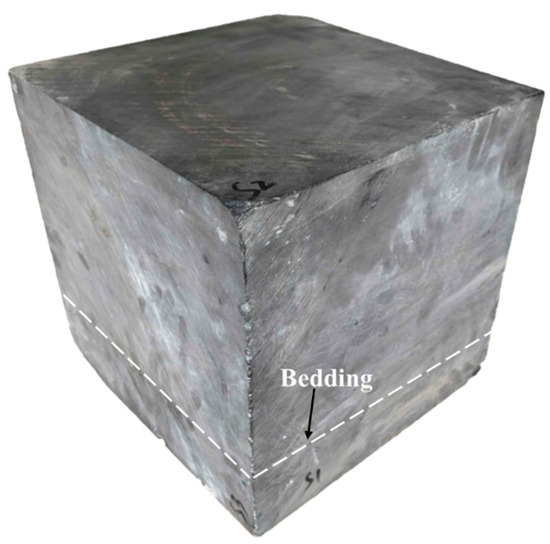
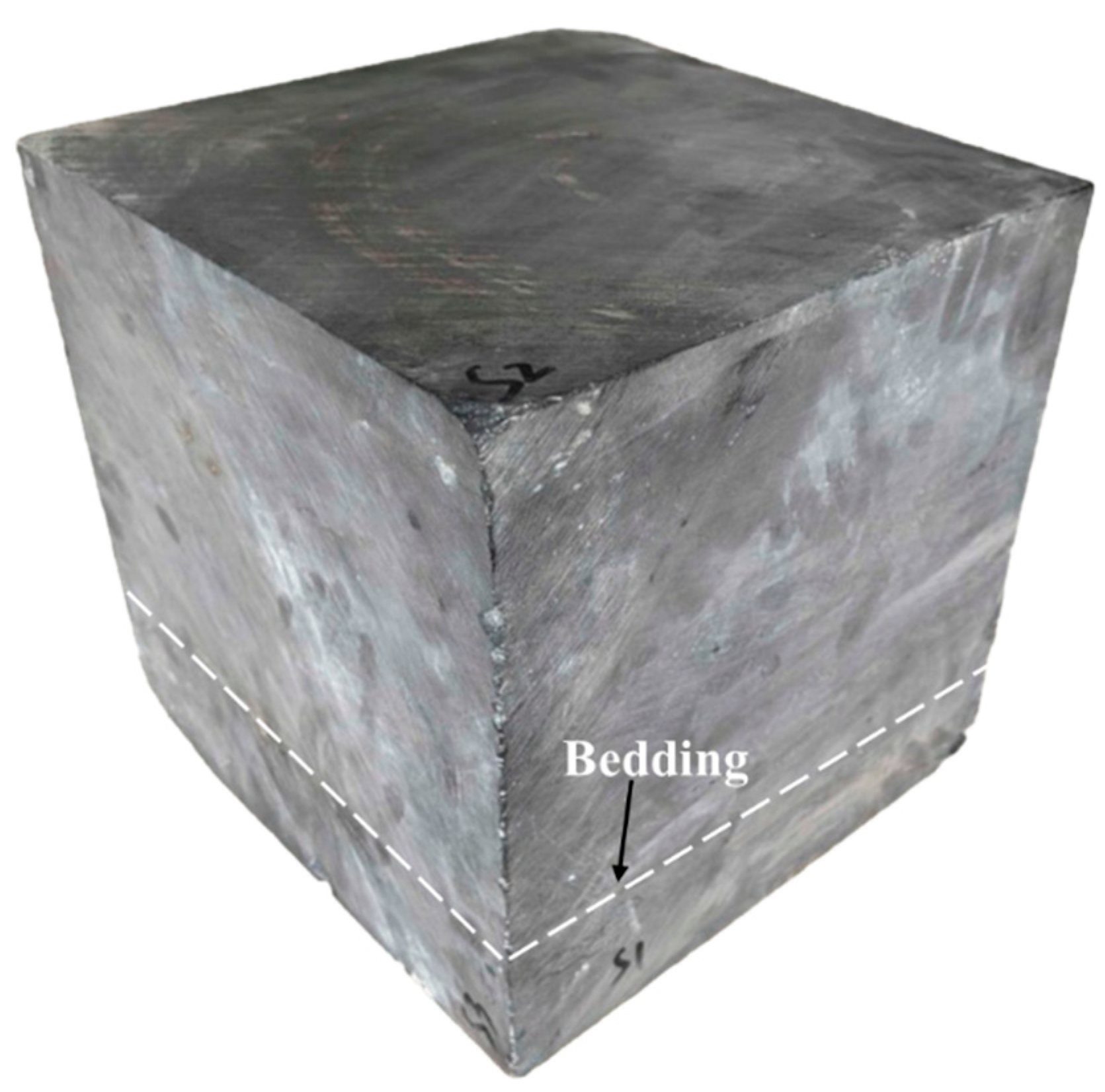
To investigate the patterns of multi-cluster fracture propagation through bedding planes during horizontal shale oil fracturing, we conduct laboratory experiments using shale outcrop samples collected from the Jimusar Shale in Xinjiang, China. The shale consists primarily of quartz and carbonate minerals, with a relatively low clay mineral content. The collected shale outcrop samples are cut into test specimens measuring 300 mm × 300 mm × 300 mm. Based on laboratory rock mechanics tests, the Young’s modulus is measured at 25.9 GPa, with a Poisson’s ratio of 0.27. Figure 1 shows the collected shale outcrop samples, which exhibit bedding planes parallel to the sample ends.
Figure 1.
Rock Sample.
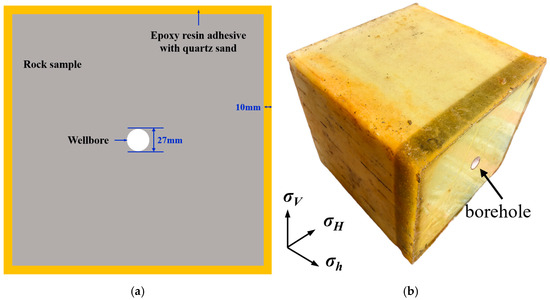
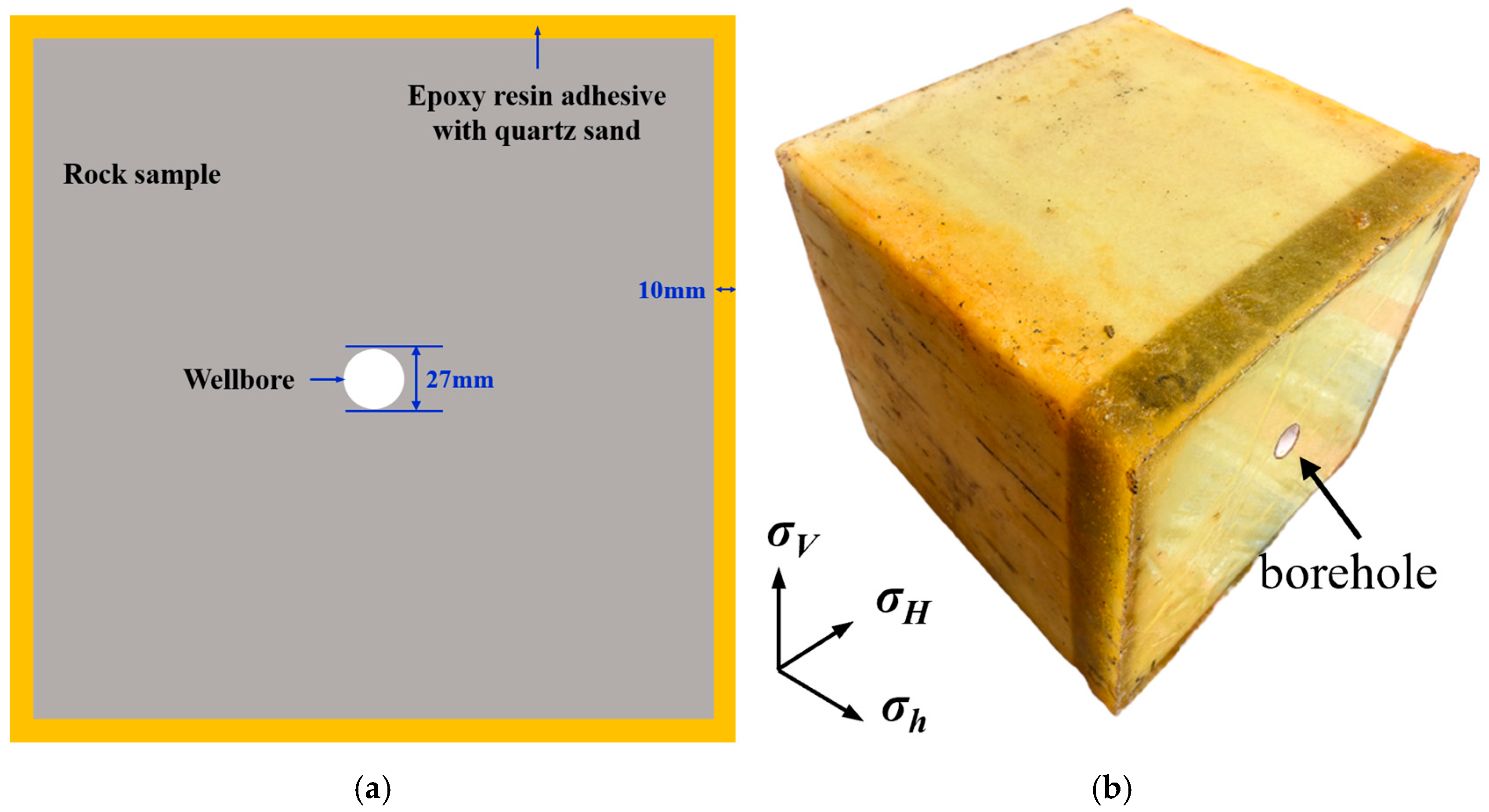
To study the fracture propagation patterns under different experimental parameters, a total of four rock specimens are prepared for this experiment. Because the rock specimens have surface damage and to minimize the loss of fracturing fluid from the specimen surfaces during the experiment, a 1 cm thick layer of a mixture of epoxy resin and quartz sand is applied to the specimen surfaces. This ensures uniform stress distribution on the specimen surfaces during fracturing and reduced the loss of fracturing fluid from the specimen surfaces. Figure 2 shows a schematic of the shale specimen after being coated with the mixture. The overall dimensions of the specimen are 320 mm × 320 mm × 320 mm.
Figure 2.
Rock sample sealing: (a) Schematic of rock sample; (b) Rock sample specimen.
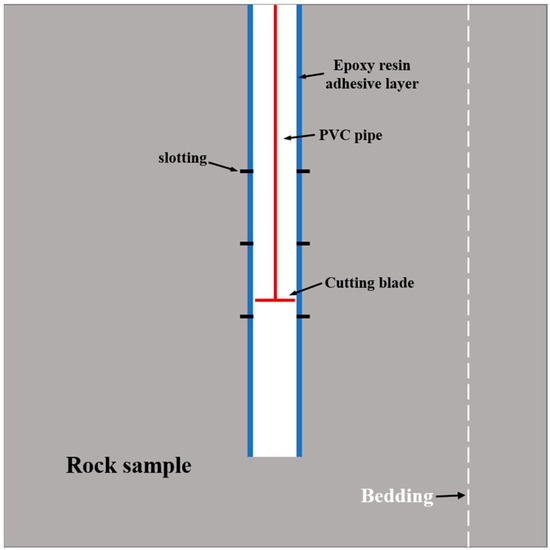
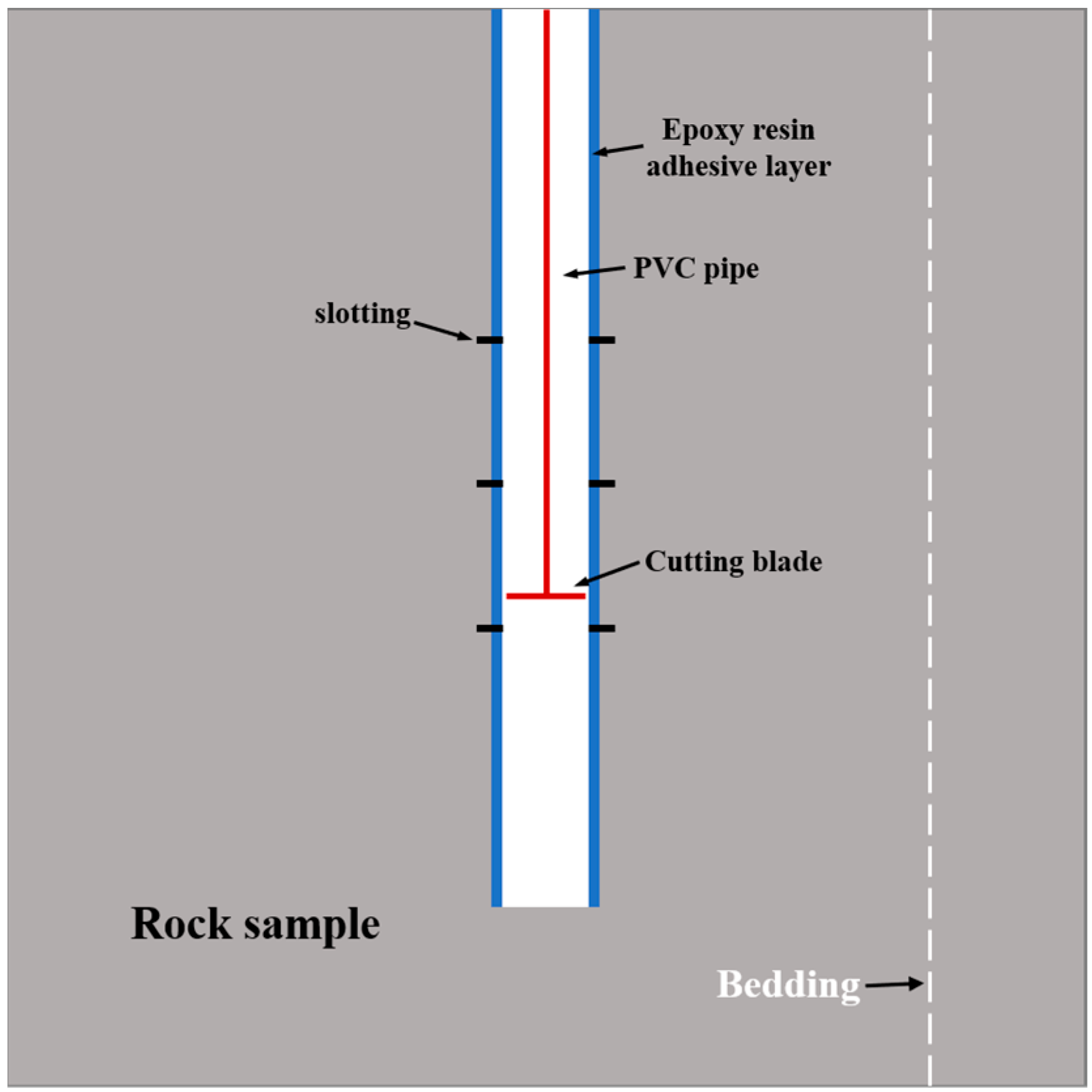
A hole with a diameter of 27 mm and a depth of 250 mm is drilled at the center of the end face of the vertical bedding plane of each prepared rock sample, as shown in Figure 2a. A polyvinyl chloride (PVC) tube with an inner diameter of 22 mm and an outer diameter of 25 mm is then inserted into the hole. Epoxy resin is injected into the annulus between the borehole and the PVC pipe to cement the PVC pipe to the rock sample, simulating the in-situ horizontal well drilling and cementing processes. Using a slitting device, three annular slits are radially cut at different positions inside the PVC pipe, penetrating 2–3 mm into the rock, to simulate the in-situ horizontal well perforation and completion processes. Figure 3 shows a schematic of the slits cut inside the rock sample.
Figure 3.
Rock sample slotting.
2.2. Method
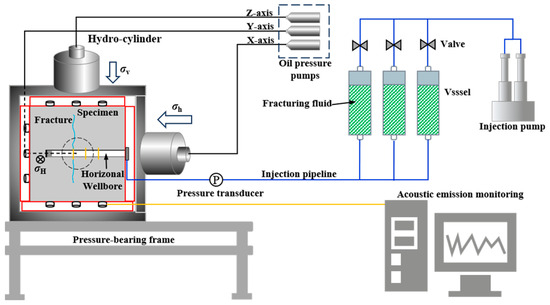
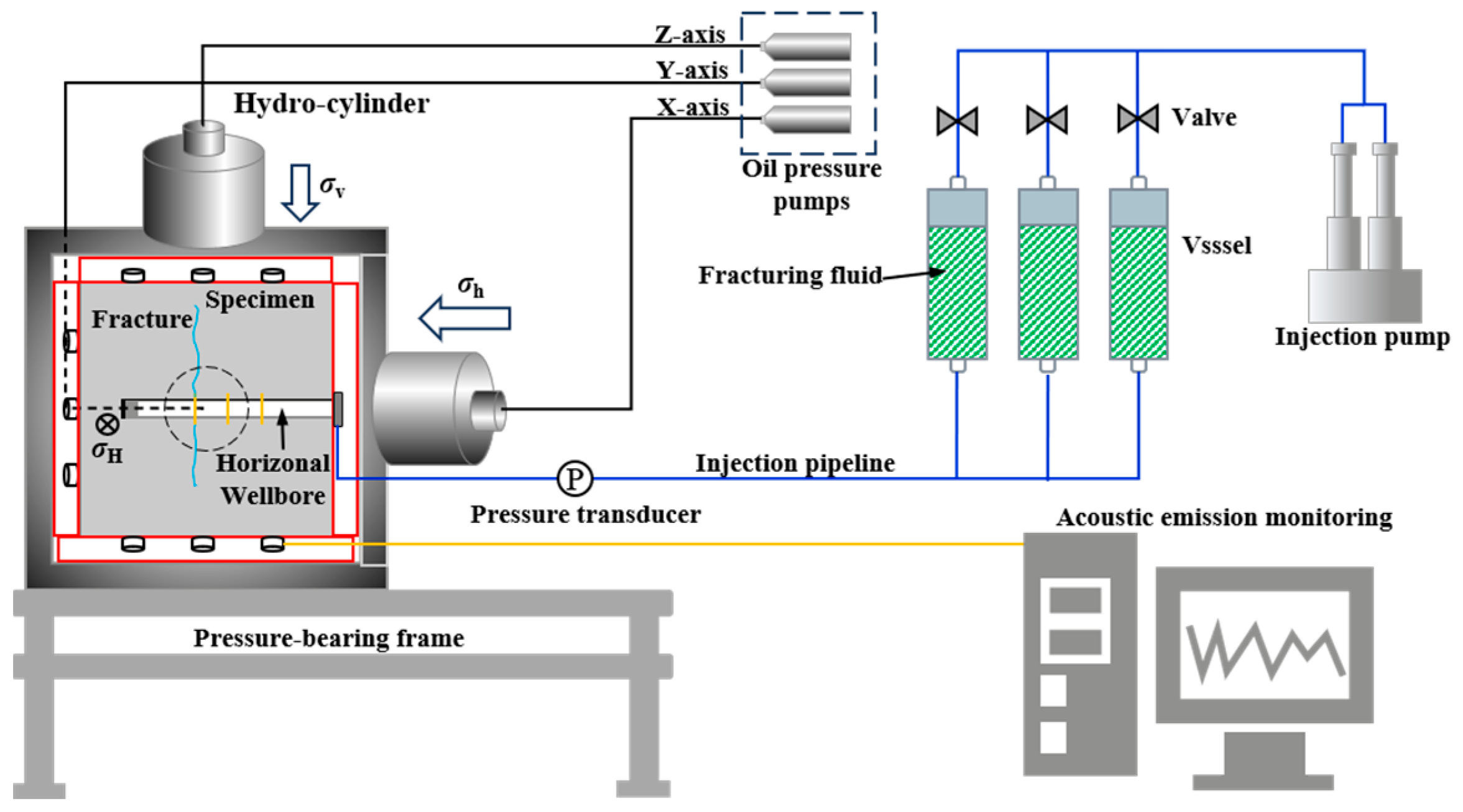
To study fracture propagation during multi-stage fracturing of horizontal wells, physical simulation experiments are conducted using a true triaxial fracturing simulation test rig. The large-scale true triaxial fracturing simulation system used in the experiments is shown in Figure 4. This system is capable of realistically simulating the in-situ stress environment of subsurface reservoirs. During the experiment, three independently controlled hydraulic pumps apply loads to the rock specimen from three orthogonal directions, placing the specimen under the stress conditions of the target reservoir. Specifically, the minimum horizontal principal stress σh is applied along the wellbore direction; the maximum horizontal principal stress σH is applied perpendicular to the wellbore and parallel to the ground; and the vertical stress σv is applied perpendicular to both the wellbore and the ground, thereby reproducing the actual stress conditions of the reservoir. During the fracturing stage, fracturing fluid is sequentially injected into the wellbore via a dual-cylinder high-pressure injection pump to simulate a multi-stage fracturing process. A high-precision pressure sensor installed at the wellhead records changes in injection pressure in real time for analyzing fracture initiation and propagation characteristics. At the same time, multiple sets of acoustic emission monitoring probes are uniformly arranged on the surface of the rock samples to collect micro-fracture signals generated during the fracturing process in real time, monitoring the initiation, propagation, and interconnection of fractures, and providing experimental evidence for studying the evolution patterns of fracture morphology and the mechanisms of fracturing-induced production enhancement. A DS5-32B acoustic emission monitoring (AE) system equipped with eight AE sensors is used to continuously monitor AE signals during hydraulic fracturing of the specimens. The sensors have a receiving frequency range of 40–150 kHz, and the sampling frequency is set to 3 MHz. AE events are spatially localized based on the signals recorded by different sensors and their arrival-time information, allowing the spatial propagation characteristics of hydraulic fractures to be analyzed. After the experiments, the spatial distribution of AE events is combined with the observed post-fracturing morphology of the specimens, and SolidWorks 2025 is used for three-dimensional geometric modeling and visualization of the spatial distribution of the hydraulic fractures. The experiment utilizes a horizontal well segmented fracturing test wellbore to simulate three independent fracturing stages in a horizontal well.
Figure 4.
True 3-axis hydraulic fracturing system.
Experimental Procedure: (1) The experiment uses an acoustic emission monitoring system to capture rock fracture signals during the experiment. After securing the acoustic emission probe to the surface of the rock specimen, the specimen is placed in the fracturing chamber. (2) A hydraulic pump is used to apply the minimum horizontal principal stress in the X direction, the maximum horizontal principal stress in the Y direction, and the normal stress in the Z direction. (3) Once the triaxial stress loading has stabilized, open Valve 1 and close Valves 2 and 3. Start the fluid injection pump to inject the dye-containing fracturing fluid into the rock specimen at a constant flow rate. Open the first stage of artificial fractures; after the first stage is complete, open the second and third stages of artificial fractures in the same manner. (4) During the fluid injection and fracturing process, the wellhead pressure sensor records pressure changes, and the acoustic emission monitoring system monitors rock specimen fracture events. (5) At the end of the experiment, the rock sample is removed from the fracturing chamber, and the internal fracture morphology of the rock sample is described based on the distribution of the dye on the sample’s surface and the distribution characteristics of acoustic emission events within the sample.
2.3. Experimental Setting
Due to limitations in laboratory conditions, laboratory hydraulic fracturing parameters do not fully correspond to actual field operation parameters. Therefore, laboratory parameters are designed in accordance with similarity criteria [39], and parameters such as wellbore parameters and flow rate are converted accordingly. The size of the test rock samples and the interval spacing must satisfy the similarity criteria relative to the actual fracture dimensions and interval spacing at the field site; the geometric relationship is given by Equation (1). Given that the interval spacing for field perforations is 20–30 m, the calculated interval spacing for the laboratory experiment is 2–3 cm. The similarity criterion for flow rate is given by Equation (2). The field flow rate for a single cluster is 2.5–5 m3/min, and the calculated laboratory flow rate is 25–50 mL/min.
where SM is the sample diameter, m; SF is the on-site fracture length, m; LM is the spacing between rock sample sections, m; LF is the in-situ section spacing, m; α is the similarity coefficient; QM is the discharge rate in laboratory tests, m3/min; QF is the discharge rate during in-situ construction, m3/min; wM is the fracture width in laboratory tests, m; wF is the in-situ fracture width, m; hM is the fracture height in laboratory tests, m; hF is the in-situ fracture height, m; β is the similarity coefficient.
The vertical propagation of hydraulic fracturing fractures through bedding planes is influenced by horizontal stress differences. Therefore, based on the actual stress conditions in the Jimsar shale reservoir, the horizontal stress difference is set at 7–10 MPa in the experiments. The specific experimental protocol is shown in Table 1.
Table 1.
Experimental conditions.
3. Results
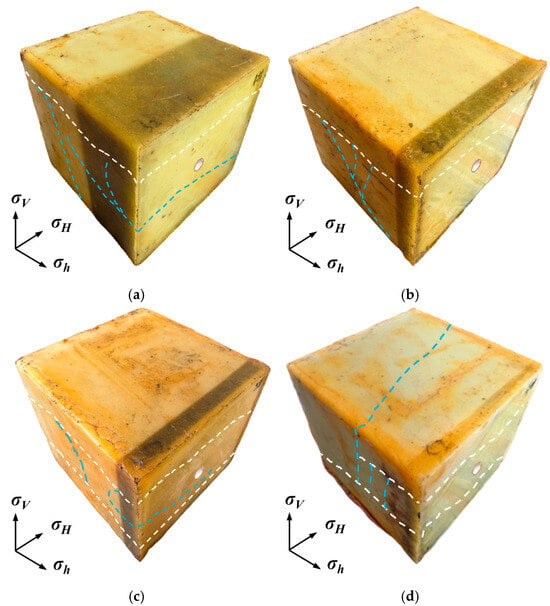
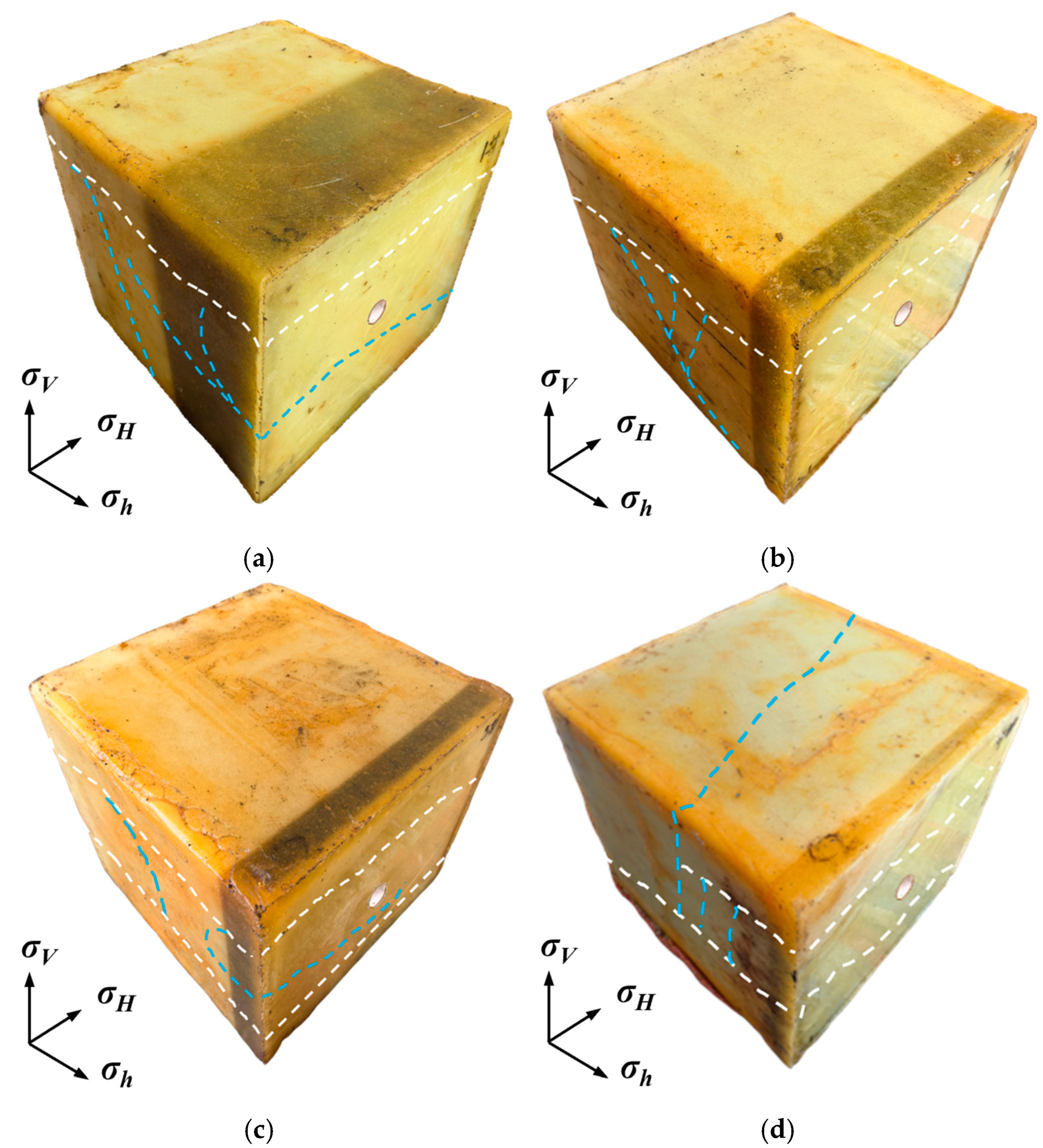
Figure 5 shows the fracture propagation patterns on the surface of rock samples following indoor hydraulic fracturing experiments. The blue dashed lines in the figure represent vertical and oblique fractures formed during the experiment, while the white dashed lines represent horizontal bedding planes opened during the experiment. Table 2 shows the dip angles and total fracture areas of the rock specimens after the experiment. During the experiment, Sample No. 1 develops three oblique fractures extending to the surface and one horizontal bedding plane, with two of the oblique fractures communicating with each other. Rock sample No. 2 develops one oblique fracture, two vertical fractures, and one horizontal bedding plane fracture during the experiment. Both vertical fractures communicate with the oblique fracture. Rock sample No. 3 develops two oblique fractures extending to the surface and two horizontal bedding plane fractures during the experiment. Rock sample No. 4 develops three vertical fractures extending to the surface and two horizontal fractures during the experiment.
Figure 5.
Fracture patterns on rock surfaces: (a) No.1; (b) No.2; (c) No.3; (d) No.4.
Table 2.
Experimental fracture results.
3.1. Effect of Injection Rate
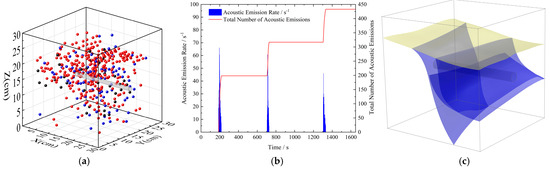
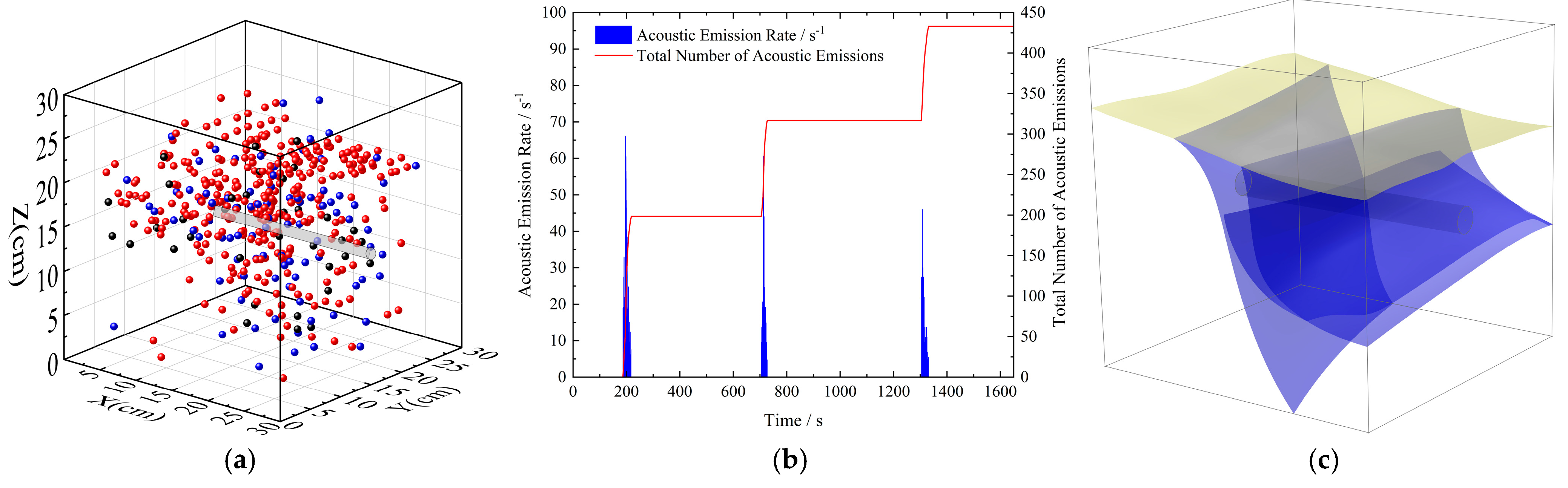
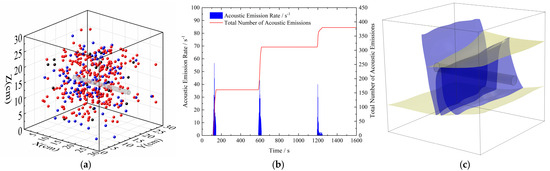
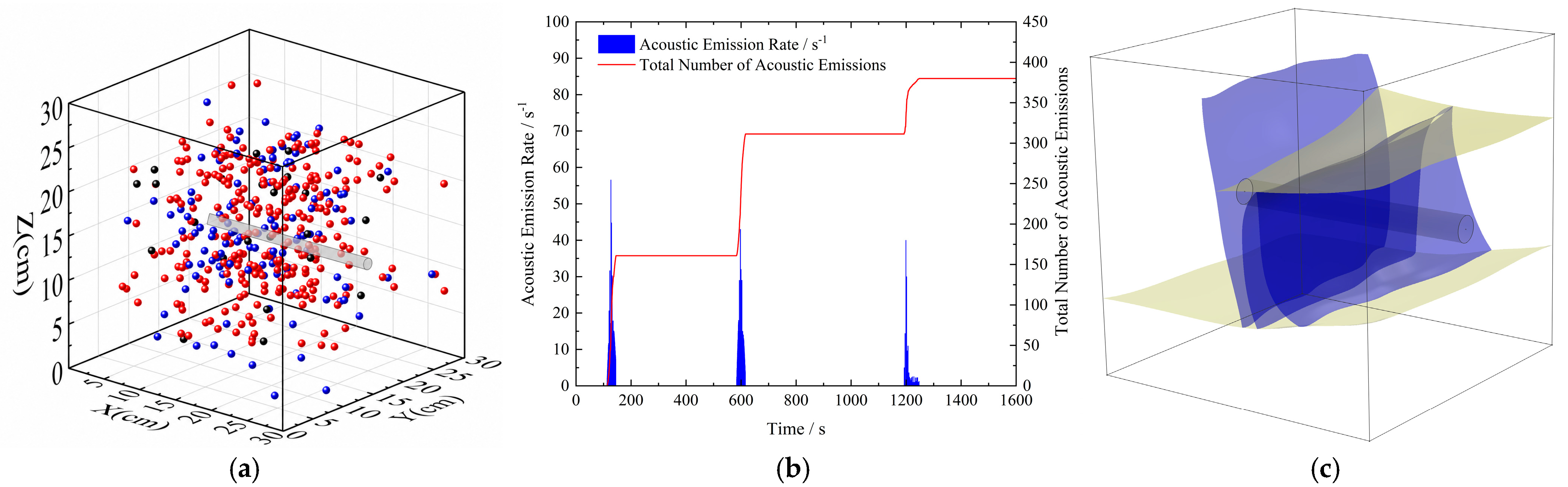
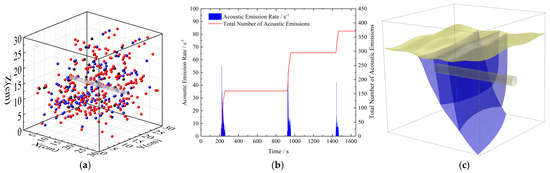
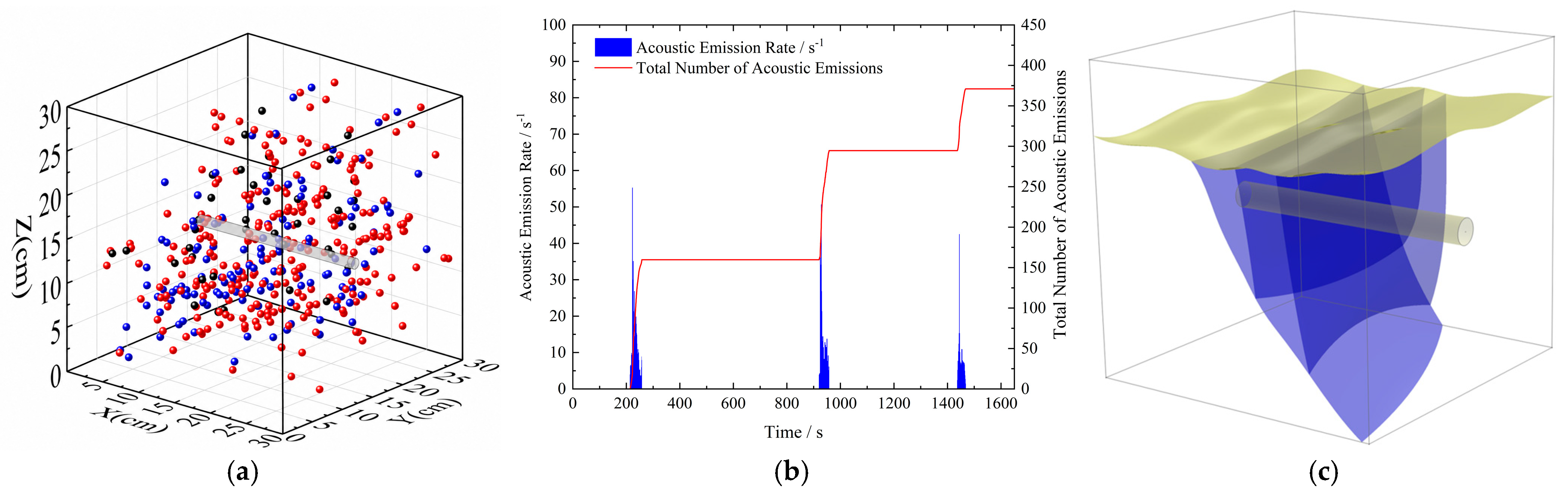
The fluid injection rate can affect the net pressure at the fracture tip and the propagation pattern of hydraulic fractures. When a fracture propagates to a bedding plane, high fluid flow rates allow the fracture tip to maintain a high fluid pressure, effectively overcoming the blocking effect and energy dissipation at the bedding plane, thereby promoting the fracture’s penetration through the bedding plane and continued propagation [40]. Figure 6 and Figure 7 show the distribution of acoustic emission events monitored during the experiments on Rock Sample No. 1 and Rock Sample No. 4, respectively, as well as the reconstructed three-dimensional fracture geometries. In subfigure (a), the red dots represent shear events, the blue dots represent tensile events, and the black dots represent compressive events. In subfigure (c), the blue surfaces represent the main fracture planes, and the yellow surfaces represent open bedding planes.
Figure 6.
Acoustic emission results and 3D fracture morphology of rock sample No. 1: (a) Distribution of acoustic emission events; (b) Acoustic Emission Rate; (c) Reconstructing 3D fracture morphology.
Figure 7.
Acoustic emission results and 3D fracture morphology of rock sample No. 4: (a) Distribution of acoustic emission events; (b) Acoustic Emission Rate; (c) Reconstructing 3D fracture morphology.
Rock sample No. 1 is subjected to laboratory fracturing tests under high-flow-rate conditions. A total of 433 acoustic emission events are recorded during the fracturing process. The acquired acoustic emission responses are primarily concentrated around the wellbore and in the lower half of the rock sample, with fewer events detected at the top of the sample. Following fracturing, three oblique fractures extending to the sample surface and one horizontal bedding plane fracture are formed. Of these, two oblique fractures interconnect, forming a fracture network with good connectivity. Throughout the fracturing process, oblique fractures predominated, with only one bedding plane fracture being penetrated, indicating that the hydraulic fractures are less constrained by bedding structures during their propagation. After the fracturing of Sample No. 4, three vertical fractures extending to the specimen surface and two horizontal bedding plane fractures are formed. Due to the influence of the two open bedding plane fractures, two of the hydraulic fractures extended only a short distance vertically, resulting in a relatively simple fracture pattern. The cumulative number of acoustic emission events during the fracturing process is 380, which is lower than that observed in Rock Sample No. 1. The acquired acoustic emission events are primarily concentrated around the wellbore, with fewer events detected at the top and bottom of the rock sample.
Comparing rock samples No. 1 and No. 4, under low-flow-rate conditions, fractures tend to intersect bedding planes, thereby reducing their vertical extent. This is because bedding planes typically exhibit high permeability and weak cementation strength; when hydraulic fractures propagate near a bedding plane, the fracturing fluid preferentially seeps toward the bedding plane. Under low-flow-rate conditions, the fracturing fluid injection rate is low, and fluid pressure within the fracture increases slowly. The fracturing fluid has ample time to filter out through the bedding planes into the surrounding formation, leading to a decline in pressure at the fracture tip. At the same time, the bedding planes open up after absorbing a large amount of fluid, forming bedding-plane fractures that extend along the bedding planes. This allows more fluid to enter the bedding system, further exacerbating the filtration effect and impairing the vertical propagation of the fracture.
3.2. Effect of Stage Spacing
The spacing between hydraulic fracturing stages is a key parameter affecting the propagation patterns of multiple fractures. During the propagation of multiple fractures, an induced stress field forms around each fracture. The mechanism by which fracturing stage spacing influences fracture propagation is essentially through altering the stress interaction between adjacent fractures and the driving force at the fracture tips, thereby affecting hydraulic fractures [41]. Figure 8 shows the distribution of acoustic emission events monitored during the experiment on Rock Sample No. 2 and the reconstructed three-dimensional fracture morphology.
Figure 8.
Acoustic emission results and 3D fracture morphology of rock sample No. 2: (a) Distribution of acoustic emission events; (b) Acoustic Emission Rate; (c) Reconstructing 3D fracture morphology.
Rock sample No. 2 is subjected to laboratory fracturing tests under conditions of relatively short stage spacing. A total of 371 acoustic emission events are recorded during the fracturing process. The acquired acoustic emission responses are primarily concentrated around the wellbore and in the lower half of the rock sample, with fewer acoustic emission events detected at the top of the sample. Following fracturing, rock sample No. 2 develops one oblique fracture, two vertical fractures, and one horizontal bedding plane fracture. The two vertical fractures have relatively simple morphologies and are both connected to the oblique fracture, forming a complex fracture system characterized by multiple intersecting fractures with the oblique fracture serving as the backbone. Compared to Rock Sample No. 2, Rock Sample No. 4 undergoes laboratory fracturing tests under conditions of smaller stage spacing, and no interconnection is observed between the vertical fractures.
Comparing rock samples No. 2 and No. 4, under conditions where the spacing between hydraulic fracturing segments is small, fractures in a multi-fracture system are easily influenced by the induced stress fields from adjacent hydraulic fractures, thereby reducing the extent of fracture modification. This is because, when fracture spacing is small, the stress fields induced by hydraulic fractures overlap, intensifying the stress shadow effect. As a result, fracture propagation paths are deflected and tend to converge, increasing the likelihood of intersections and connections between hydraulic fractures, thereby inhibiting their effective propagation.
3.3. Effect of Horizontal Stress Difference
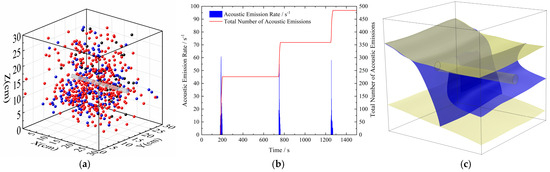
The horizontal stress difference is a key parameter that controls the propagation pattern, direction, and complexity of the fracture network. During fracturing of bedded shale and tight reservoirs, the horizontal stress difference primarily controls fracture propagation behavior by influencing the stress distribution at the fracture tip, the fracture’s ability to deflect, and the degree of activation of natural weak planes [42]. Figure 9 shows the distribution of acoustic emission events monitored during the experiment on Rock Sample No. 3 and the reconstructed three-dimensional fracture pattern.
Figure 9.
Acoustic emission results and 3D fracture morphology of rock sample No. 3: (a) Distribution of acoustic emission events; (b) Acoustic Emission Rate; (c) Reconstructing 3D fracture morphology.
Rock sample No. 3 is subjected to laboratory fracturing tests under conditions of relatively low horizontal stress difference. A total of 484 acoustic emission events are recorded during the fracturing process; the acquired acoustic emission responses are primarily concentrated around the wellbore, with fewer events detected at the top and bottom of the rock sample. After fracturing, Rock Sample No. 3 develops two oblique fractures extending to the specimen surface and two horizontal bedding planes. Additionally, a hydraulic fracture propagates only around the wellbore within the rock sample and did not extend to the surface. During fracture propagation, both fracture bending and the opening of bedding planes occur, exhibiting distinct characteristics of fracture deflection and bedding plane activation, resulting in a relatively complex fracture network structure. Compared to Rock Sample No. 3, Rock Sample No. 4 undergoes laboratory fracturing tests under high stress difference conditions. During fracture propagation, the fractures remain vertical with minimal deflection, and there is evidence of fractures penetrating the bedding planes.
A comparison of rock samples No. 3 and No. 4 shows that, under conditions of lower horizontal stress difference, the fracture propagation process is prone to deflection and the activation of bedding planes. This is because bedding planes have lower tensile strength and fracture toughness; the energy required for a fracture to propagate along a bedding plane is lower than that required to penetrate it. Consequently, the fracture tends to propagate along the bedding plane and induce the opening of bedding joints. At the same time, a lower horizontal stress difference facilitates the transfer of fluid pressure to the bedding planes, promoting their opening and expansion, thereby forming a complex fracture network composed of both hydraulic fractures and bedding fractures. Consequently, as the horizontal stress difference decreases, fracture propagation gradually shifts from stress-controlled to bedding-controlled, and the phenomena of fracture deflection and bedding activation become more pronounced.
4. Conclusions
Based on a true three-axis hydraulic fracturing physical simulation system, this paper constructs an experimental model for multi-stage fracturing in horizontal wells, using the Jimusar shale outcrop as the subject of study. It clarifies the fracture propagation patterns under different parameter conditions, providing a theoretical basis for the optimized design of multi-stage fracturing in horizontal shale oil wells and for the efficient enhancement of reservoirs. The following are the main research findings of this paper:
- (1)
- Bedding structure plays a significant role in controlling the propagation of multiple clusters of hydraulic fractures in horizontal shale oil wells. When hydraulic fractures propagate to a bedding plane, they may exhibit various propagation patterns, such as penetration, deflection, arrest, or propagation along the bedding plane. Bedding structure is a key geological factor influencing fracture geometry and the formation of complex fracture networks.
- (2)
- The fluid injection rate has a significant impact on the cross-layer propagation of fractures. Increasing the rate raises the net pressure at the fracture tip and reduces pressure dissipation of the fracturing fluid near the bedding planes. This allows the fracture to maintain continuous and stable propagation, making it easier to penetrate the bedding interfaces. Under low-flow-rate conditions, the fracturing fluid is more prone to filtration and diffusion along bedding planes. This results in insufficient driving force at the fracture tip, causing the fracture to tend to deflect and propagate along the bedding planes. Therefore, appropriately increasing the flow rate helps improve the fracture’s vertical propagation capability and enhances the three-dimensional stimulation effect on the reservoir.
- (3)
- The spacing between segments controls the synergistic propagation behavior of multiple fracture clusters by influencing the stress shadow effect between fractures. When the spacing is small, the stress fields induced by adjacent fractures superimpose on one another, inhibiting the propagation of some fractures. This leads to increased differences in fracture length and height, as well as a higher likelihood of fracture communication. As the spacing increases, stress interference gradually weakens, allowing each cluster of fractures to propagate relatively independently, and the degree of balanced fracture propagation improves significantly.
- (4)
- The horizontal stress difference is the primary factor controlling the direction of fracture propagation and the ability to penetrate through layers. As the horizontal stress difference increases, fractures are more likely to propagate stably along the direction of the maximum horizontal principal stress. This allows them to effectively overcome the resistance of bedding planes, enabling the fractures to penetrate the bedding and continue propagating. Under conditions of lower horizontal stress differences, the driving force at the fracture tip weakens, while the inducing effect of bedding planes on fracture propagation strengthens; as a result, fractures are more likely to deflect and activate bedding planes, thereby forming a more complex fracture network.
- (5)
- The present study has several limitations. First, outcrop samples were used instead of subsurface cores, and weathering and stress unloading may have altered their mechanical properties and fracture characteristics. Second, the laboratory sample size (~0.3 m) is much smaller than field-scale bedding and fracture systems, which may introduce scale effects. In addition, due to the complexity and high cost of large-scale true-triaxial hydraulic fracturing experiments, only one specimen was tested for each experimental condition, limiting the assessment of experimental reproducibility and statistical significance. Therefore, the present results should be considered preliminary and are primarily intended to reveal fracture propagation mechanisms and relative trends rather than provide direct quantitative predictions at the reservoir scale. Future studies using subsurface cores, larger-scale specimens, and repeated experiments with more specimens are needed to further validate the observed trends and evaluate their reproducibility and statistical significance.
Author Contributions
Conceptualization, Y.C., X.Z., L.Z., X.M., Q.W., H.M. and Y.W.; Methodology, Y.C., X.Z., L.Z., X.M., Q.W., H.M. and Y.W.; Software, Y.C., X.Z., L.Z., X.M. and Q.W.; Validation, Y.C., L.Z., X.M. and Q.W.; Formal analysis, Y.C., X.M. and Q.W.; Investigation, Y.C., X.M., Q.W., H.M. and Y.W.; Resources, Y.C., X.Z., L.Z. and X.M.; Data curation, Y.C., X.M., Q.W., H.M. and Y.W.; Writing—original draft, Y.C., Q.W., H.M. and Y.W.; Writing—review and editing, X.M. and Q.W.; Supervision, Y.C., X.Z., L.Z. and X.M.; Project administration, Y.C., X.Z., L.Z. and X.M.; Funding acquisition, Y.C., X.Z. and L.Z. All authors have read and agreed to the published version of the manuscript.
Funding
This research received no external funding.
Institutional Review Board Statement
Not applicable.
Informed Consent Statement
Not applicable.
Data Availability Statement
The original contributions presented in this study are included in the article. Further inquiries can be directed to the corresponding author.
Conflicts of Interest
Authors Yang Chen, Xiao Zhang and Liwei Zhang were employed by the PetroChina Xinjiang Oilfield Company. The remaining authors declare that the research was conducted in the absence of any commercial or financial relationships that could be construed as a potential conflict of interest.
References
- Wu, Y.; Liu, P.; Cao, Q.; Chang, H.; Li, S.; Zhang, B. Oil-based drilling fluid anti-collapse technology for long openhole wellbore of JimsarShale Oil. Xinjiang Oil Gas 2025, 21, 32–40. [Google Scholar] [CrossRef]
- Wang, M.; Liu, S.; Li, J.; Gao, G.; Mi, J.; Li, E. Special Distribution of Crude Oil in the Lucaogou Formation in Jimusaer Sag and Genetic Analysis of Its Physical Difference. Geofluids 2021, 2021, 6660079. [Google Scholar] [CrossRef] [Scilit]
- Pang, X.; Wang, G.; Kuang, L.; Li, H.; Zhao, Y.; Li, D.; Zhao, X.; Wu, S.; Feng, Z.; Lai, J. Insights into the pore structure and oil mobility in fine-grained sedimentary rocks: The Lucaogou Formation in Jimusar Sag, Junggar Basin, China. Mar. Pet. Geol. 2022, 137, 105492. [Google Scholar] [CrossRef] [Scilit]
- He, X.; Luo, Q.; Jiang, Z.; Qiu, Z.; Luo, J.; Li, Y.; Deng, Y. Control of complex lithofacies on the shale oil potential in saline lacustrine basins of the Jimsar Sag, NW China: Coupling mechanisms and conceptual models. J. Asian Earth Sci. 2024, 266, 106135. [Google Scholar] [CrossRef] [Scilit]
- Sun, S.; Liang, S.; Liu, Y.; Liu, D.; Gao, M.; Tian, Y.; Wang, J. A review on shale oil and gas characteristics and molecular dynamics simulation for the fluid behavior in shale pore. J. Mol. Liq. 2023, 376, 121507. [Google Scholar] [CrossRef] [Scilit]
- Liu, J.; Li, J.; Song, Z.; Shen, A. Flow characteristics of shale oil and their geological controls: A case study of the Lucaogou Formation in the Jimsar Sag, Junggar Basin. Pet. Sci. 2025, 22, 3900–3914. [Google Scholar] [CrossRef] [Scilit]
- Wang, H.; Chang, L.; Zhuo, L.; Xi, C.; Ouyang, Y. Current status and suggestions for drilling technology of CNPC continental shale oil reservoirs. Xinjiang Oil Gas 2024, 20, 1–14. [Google Scholar] [CrossRef]
- Xu, J.; Wang, M.; Wang, J.; Sun, H.; Wang, L. Practice and understanding of volume fracturing technology for horizontal wells in Jimsar shale oil reservoir. Xinjiang Oil Gas 2024, 20, 23–29. [Google Scholar] [CrossRef]
- Liu, C.; Li, H.; Luo, H.; Lu, Y.; Li, Y.; Su, C.; Chen, S. Investigation and Application of Perforation Optimization Method on Shale Gas Horizontal Well with Numerical Simulation of Multicluster Fracturing under Dense-Segment Pattern. ACS Omega 2024, 9, 675–691. [Google Scholar] [CrossRef] [Scilit] [PubMed]
- Jiang, Y.; Long, A.; Zhao, Y.; Zang, A.; Wang, C. Mutual impact of true triaxial stress, borehole orientation and bedding inclination on laboratory hydraulic fracturing of Lushan shale. J. Rock Mech. Geotech. Eng. 2023, 15, 3131–3147. [Google Scholar] [CrossRef] [Scilit]
- Zhang, X.; Zhang, Y.; Zhang, T. Experimental and Numerical Investigation on Hydraulic Fracture Propagation Law of Composite Rock Materials considering the Disturbing Stress Effect. Geofluids 2021, 2021, 9920633. [Google Scholar] [CrossRef] [Scilit]
- Lei, Y.; Fan, L.; Wen, X.; Liu, Q.; Liu, Y.; Xing, J.; Tan, J.; Zhu, S. Investigation on the influence of bedding planes on hydraulic fracture propagation in shale based on true triaxial experiments and numerical simulation. Front. Earth Sci. 2026, 14, 1869277. [Google Scholar] [CrossRef] [Scilit]
- Shan, Q.; Zhang, R.; Jiang, Y. Complexity and tortuosity hydraulic fracture morphology due to near-wellbore nonplanar propagation from perforated horizontal wells. J. Nat. Gas Sci. Eng. 2021, 89, 103884. [Google Scholar] [CrossRef] [Scilit]
- Liu, L.; Ma, X.; Zou, Y.; Zhang, S.; Jin, H. Research on the initiation and propagation of energy enhanced fracturing fractures in tight oilreservoirs. Oil Drill. Prod. Technol. 2025, 47, 511–521. [Google Scholar] [CrossRef]
- Wang, F.; Liu, W.; Deng, J.; Li, D.; Tan, Y.; Feng, Y. FEM numerical simulation for hydraulic fracture propagation in shale reservoirs influenced by weak bedding planes. Pet. Sci. Bull. 2025, 10, 719–735. [Google Scholar] [CrossRef]
- You, G.; Feng, F.; Zhang, J.; Zhang, J. A Study on Fracture Propagation of Hydraulic Fracturing in Oil Shale Reservoir Under the Synergistic Effect of Bedding Weak Plane–Discrete Fracture. Processes 2025, 13, 362. [Google Scholar] [CrossRef] [Scilit]
- Zhao, Y.; Wu, S.; Zhang, Y.; Long, A.; Huang, H.; Li, Y. Effect of Wellbore Orientation and Axial Stress on Hydraulic Fracture Initiation and Propagation in Lushan Shale with Inclined Bedding Planes. Rock Mech. Rock Eng. 2024, 57, 10551–10570. [Google Scholar] [CrossRef] [Scilit]
- Warpinski, N.R.; Teufel, L.W. Influence of geologic discontinuities on HF propagation (includes associated papers 17011 and 17074). J. Pet. Technol. 1987, 39, 209–220. [Google Scholar] [CrossRef] [Scilit]
- Zhou, J.; Chen, M.; Jin, Y.; Zhang, G. Analysis of fracture propagation behavior and fracture geometry using a tri-axial fracturing system in naturally fractured reservoirs. Int. J. Rock Mech. Min. Sci. 2008, 45, 1143–1152. [Google Scholar] [CrossRef] [Scilit]
- Men, X.; Zhang, Y.; Zuo, D. Prediction criterion of the interaction between hydraulic fractures and bedding planes via theoretical and simulation approaches. Sci. Rep. 2025, 15, 6086. [Google Scholar] [CrossRef] [Scilit] [PubMed]
- Yin, P.F.; Yang, S.Q.; Gao, F.; Tian, W.L.; Zeng, W. Numerical investigation on hydraulic fracture propagation and multi-perforation fracturing for horizontal well in Longmaxi shale reservoir. Theor. Appl. Fract. Mech. 2023, 125, 103921. [Google Scholar] [CrossRef] [Scilit]
- Liu, X.; Rasouli, V.; Guo, T.; Qu, Z.; Sun, Y.; Damjanac, B. Numerical simulation of stress shadow in multiple cluster hydraulic fracturing in horizontal wells based on lattice modelling. Eng. Fract. Mech. 2020, 238, 107278. [Google Scholar] [CrossRef] [Scilit]
- Shi, X.; Yang, Y.-Y.; Kong, X.-W.; Gao, Q.; Jiang, S.; Mao, H.-J. Experimental study of hydraulic fracture propagation with multi-cluster in-plane perforations in a horizontal well. Pet. Sci. 2024, 21, 3258–3270. [Google Scholar] [CrossRef] [Scilit]
- Qin, H.; Guo, W.; Zhao, H.; Guo, Y.; Xiang, C.; Zhang, J.; Yin, S.; Yan, W.; Li, C.; Liang, Y.; et al. Experimental study on initiation and propagation of hydraulic fractures in stratified shale oil reservoirs. J. Pet. Explor. Prod. Technol. 2025, 15, 80. [Google Scholar] [CrossRef] [Scilit]
- Zhai, L.; Xun, Y.; Liu, H.; Qi, B.; Wu, J.; Wang, Y.; Chen, C. Experimental study of hydraulic fracturing initiation and propagation from perforated wellbore in oil shale formation. Fuel 2023, 352, 129155. [Google Scholar] [CrossRef] [Scilit]
- Liu, X.; Zhao, L.; Li, S.; Bian, X.; Zhong, G.; Yang, H.; Du, X.; Li, Y. Fracture propagation characteristics in shale bedding planes within structurally complex zones. Sci. Rep. 2026, 16, 7593. [Google Scholar] [CrossRef] [Scilit] [PubMed]
- Zhang, B.; Guo, T.; Chen, M.; Wang, J.; Cao, J.; Wang, H.; Qu, Z. Effect of bedding planes and property contrast between layers on the propagation mechanism of hydraulic fracture height in shale reservoirs. Comput. Geotech. 2024, 175, 106715. [Google Scholar] [CrossRef] [Scilit]
- Xiong, D.; Ma, X.; Zhang, S.; He, J. The influence of bedding interface strength on the vertical propagation of hydraulic fractures. Phys. Fluids 2024, 36, 056610. [Google Scholar] [CrossRef] [Scilit]
- Jiang, M.; Wei, Y.; Li, T.; Dong, K. Influence of Horizontal Multi-Bedding on Hydraulic Fracture Propagation in Shale Reservoirs. Processes 2023, 11, 2846. [Google Scholar] [CrossRef] [Scilit]
- Yan, X.; Wang, D.; Yu, H. Influence of High-Density Bedding Plane Characteristics on Hydraulic Fracture Propagation in Shale Oil Reservoir. Cmes-Comput. Model. Eng. Sci. 2024, 140, 3051–3071. [Google Scholar] [CrossRef] [Scilit]
- Lu, W.; He, C. Numerical simulation on the initiation and propagation of synchronous perforating fractures in horizontal well clusters. Eng. Fract. Mech. 2022, 266, 108412. [Google Scholar] [CrossRef] [Scilit]
- Wang, T.; Chen, M.; Xu, Y.; Weng, D.; Yang, Z.; Liu, Z.; Ma, Z.; Jiang, H. Numerical Simulation of Multifracture Growth under Extremely Limited Entry Fracturing of Horizontal Well. Processes 2022, 10, 2508. [Google Scholar] [CrossRef] [Scilit]
- Lv, J.X.; Hou, B. Fractures interaction and propagation mechanism of multi-cluster fracturing on laminated shale oil reservoir. Pet. Sci. 2024, 21, 2600–2613. [Google Scholar] [CrossRef] [Scilit]
- Wen, G.; Zhao, W.; Zou, H.; Huang, Y.; Liu, Y.; Liu, Y.; Zhao, Z.; Wang, C. Optimizing Multi-Cluster Fracture Propagation and Mitigating Interference Through Advanced Non-Uniform Perforation Design in Shale Gas Horizontal Wells. Processes 2025, 13, 2461. [Google Scholar] [CrossRef] [Scilit]
- Renshaw, C.E.; Pollard, D.D. An experimentally verified criterion for propagation across unbounded frictional interfaces in brittle, linear elastic materials. Int. J. Rock Mech. Min. Sci. Geomech. Abstr. 1995, 32, 237–249. [Google Scholar] [CrossRef] [Scilit]
- Llanos, E.M.; Jeffrey, R.G.; Hillis, R.; Zhang, X. Hydraulic Fracture Propagation Through an Orthogonal Discontinuity: A Laboratory, Analytical and Numerical Study. Rock Mech. Rock Eng. 2017, 50, 2101–2118. [Google Scholar] [CrossRef] [Scilit]
- Shan, Q.; Mu, L.; Yuan, L.; Ji, Z.; Cheng, X.; Luan, H.; Jiang, Y.; Xun, W. Investigating multi-cluster hydraulic fracture propagation in tight reservoir considering actual perforation geometry. Geomech. Geophys. Geo-Energy Geo-Resour. 2025, 11, 69. [Google Scholar] [CrossRef] [Scilit]
- Singh, A.; Zoback, M.; McClure, M. Optimization of Multi-Stage Hydraulic Fracturing in Unconventional Reservoirs in the Context of Stress Variations with Depth. SPE-201739-MS. Presented at the SPE Annual Technical Conference and Exhibition, Virtual, 26–29 October 2020. [Google Scholar] [CrossRef] [Scilit]
- Zou, Y.; Li, Y.; Li, S. Influence of CO2 pre-injection on fracture mophology and the petrophysical properties in shalefracturing. Nat. Gas Ind. 2021, 41, 83–94. [Google Scholar] [CrossRef]
- Zheng, H.; Wang, H.; Li, F.; Li, N. Numerical Simulation of the Interaction Between Hydraulic Fracture and the Bedding Plane in Shale Formation. Processes 2025, 13, 6. [Google Scholar] [CrossRef] [Scilit]
- Ju, Y.; Song, J.; Wang, Y. Stress shadow effects in multistage horizontal hydrofracturing of tight reservoirs: A numerical analysis considering perforation cluster spacings and fracturing sequences. Geomech. Geophys. Geo-Energy Geo-Resour. 2024, 10, 183. [Google Scholar] [CrossRef] [Scilit]
- Gu, M.Z.; Sheng, M.; Zhuang, X.Y.; Li, X.Y.; Li, G.S. The influences of perforating phase and bedding planes on the fracture deflection in laminated shale. Pet. Sci. 2024, 21, 1221–1230. [Google Scholar] [CrossRef] [Scilit]

Disclaimer/Publisher’s Note: The statements, opinions and data contained in all publications are solely those of the individual author(s) and contributor(s) and not of MDPI and/or the editor(s). MDPI and/or the editor(s) disclaim responsibility for any injury to people or property resulting from any ideas, methods, instructions or products referred to in the content. |
© 2026 by the authors. Licensee MDPI, Basel, Switzerland. This article is an open access article distributed under the terms and conditions of the Creative Commons Attribution (CC BY) license.