


Abstract
Alzheimer’s disease (AD) is the most prevalent progressive neurodegenerative disorder in older adults, marked by insidious cognitive decline and gradual loss of functional independence. Growing evidence suggests that handgrip strength (HGS) assessment may provide a simple, noninvasive approach for early screening of AD-related functional changes. This review summarizes current evidence on the association between HGS and AD, while distinguishing evidence obtained directly in AD/MCI populations from evidence derived from general aging, cognitive decline, dementia, or non-AD disease cohorts. Longitudinal and cohort studies have reported associations between reduced grip strength and a higher risk of MCI and AD; however, HGS is influenced by age, sex, body composition, frailty, physical activity, nutritional status, comorbidities, and measurement procedures, and therefore should not be interpreted as an AD-specific diagnostic biomarker. Beyond maximal grip force, dynamic features such as force variability, temporal instability, fatigue-related change, contraction smoothness, and bilateral asymmetry may provide additional information on motor control. The review further discusses measurement standardization, disease specificity, residual confounding, reverse causality, and the methodological requirements of AI-assisted analysis. Recent advances in machine learning, deep learning, and multimodal analysis are considered as tools for integrating multidimensional functional information within an early-screening framework rather than as established diagnostic solutions. In community and home settings, HGS-based assessment may serve as a first-stage screening approach to identify individuals who warrant further clinical evaluation; definitive assessment should remain based on appropriate cognitive/behavioral and neuropsychological examinations and, when clinically indicated, neuroimaging or established AD biomarkers. Future studies should prioritize standardized protocols, prospective longitudinal designs, direct comparison with conventional clinical variables, external validation, calibration, and clinically meaningful screening outcomes.
1. Introduction
HGS, regarded as a core physiological indicator of skeletal muscle function and the severity of physical frailty, has become a widely adopted routine tool for health screening in older adult populations. This is attributed to its advantages, including convenient measurement, objective outcomes, non-invasiveness, and low cost.
In recent years, numerous epidemiological studies have shown that HGS is not merely a measure of local muscle strength but also a broad functional indicator associated with the risk of multiple systemic diseases. For cardiovascular and metabolic diseases, low HGS is strongly correlated with a higher incidence of cardiovascular events [1,2] and a greater risk of diabetes [3,4]. In musculoskeletal disorders, HGS serves as a crucial indicator for diagnosing sarcopenia and frailty syndrome [5]. In neurological and psychiatric disorders, alterations in HGS have been shown to indirectly reflect the central nervous system’s regulatory and compensatory capabilities in governing motor function [6,7,8,9,10]. Given the core physiological link between HGS and central nervous system integrity, HGS assessment has emerged as a potential physiological indicator for tracking neurodegenerative progression. Among neurodegenerative diseases in the elderly, AD is the most prevalent form. It is characterized by an insidious onset and an irreversible course, with core clinical manifestations including memory impairment, cognitive decline, behavioral abnormalities, and diminished social functioning, ultimately resulting in a complete loss of independent living ability [11,12]. Because traditional early biomarkers for AD (such as cerebrospinal fluid testing or positron emission tomography (PET) imaging) are costly and invasive, integrating low-cost, noninvasive HGS measurement [13,14,15,16] as a preliminary tool for physical function monitoring into AD risk screening systems has become an important emerging trend in geriatric neuroscience. However, despite growing evidence linking HGS to AD risk, substantial methodological inconsistencies persist across studies, including variations in measurement posture, device selection, testing protocols, feature extraction strategies, and outcome definitions. These inconsistencies limit inter-study comparability and hinder the clinical translation of HGS-based screening approaches. Currently, clinical practice lacks targeted early-warning strategies for the elderly population, and conventional HGS testing protocols have not been sufficiently adapted to the characteristics of individuals with cognitive impairment [7,17].
Given the emerging association between HGS and AD-related neurodegeneration, this review synthesizes current evidence on HGS-based AD risk prediction, with a particular focus on unresolved issues in measurement standardization, interpretation of dynamic features, AI-assisted modeling strategies, and the potential integration of HGS-derived functional measures into digital health and biomarker research frameworks. By identifying methodological inconsistencies and research gaps, this review aims to clarify the clinical and translational potential of HGS for AD screening and longitudinal monitoring. Moreover, this review summarizes current research limitations and delineates future directions, providing references for subsequent research design and clinical applications.
In this review, HGS-based approaches are considered primarily in the context of early screening and risk stratification rather than etiological diagnosis. Abnormal HGS or grip-dynamics profiles may identify individuals who warrant further assessment, whereas confirmation of AD requires established clinical and biomarker-based evaluation, consistent with current biologically based diagnostic criteria [18].
2. Association Between Grip Strength and AD Risk
2.1. Initial Association Between Grip Strength and Cognitive Function
Handgrip strength, regarded as a classic indicator of skeletal muscle function, was initially used primarily in geriatrics and functional assessment. Early studies focused on frailty and sarcopenia because grip strength was regarded as a surrogate marker of overall muscle function and biological aging. Researchers subsequently observed that reduced grip strength was often accompanied by impaired mobility, reduced activities of daily living, and poorer cognitive performance in older adults, suggesting a potential link between neuromuscular decline and cognitive dysfunction. These cross-sectional and longitudinal observational studies collectively imply a bidirectional correlation between motor function decline and cognitive impairment. As epidemiological research deepens, researchers have increasingly recognized that grip strength not only reflects the status of peripheral muscles but may also be related to central nervous system function. Moreover, it may serve as a functional indicator associated with cognitive impairment in AD [19]. Building on these early observational findings, subsequent large-scale prospective cohort studies have systematically investigated the predictive value of HGS for incident cognitive decline and AD.
2.2. Grip Strength as an Indicator of Cognitive Decline and AD Risk
Compared with conventional AD biomarkers such as cerebrospinal fluid analysis, PET imaging, and structural neuroimaging, grip strength assessment offers a low-cost, non-invasive, portable, and repeatable approach to large-scale functional screening. These characteristics make HGS particularly suitable for community-based monitoring, home-based longitudinal assessment, and digital health applications for aging populations. As demand for accessible and scalable AD screening tools continues to rise, HGS has attracted growing attention as a potential functional indicator for early risk stratification. Longitudinal cohort studies have systematically documented the relationship between grip strength and cognitive decline. Although most consistently report an association between lower grip strength and increased risk of cognitive decline or AD, the interpretation of this association remains a subject of active debate. Some researchers propose that reduced grip strength reflects early central nervous system dysfunction and impaired motor regulation, whereas others argue that the association may be partially mediated by age-related frailty, reduced physical activity, or systemic inflammation. Despite these debates, accumulating evidence suggests that HGS is not merely a peripheral muscle parameter but may also capture broader neurophysiological alterations associated with neurodegeneration [5,6,9]. The Duchowny research group at the University of California, San Francisco, measured grip strength with a standardized hydraulic dynamometer in more than 190,000 middle-aged and elderly participants from the UK Biobank cohort, followed participants for a median of nearly 12 years, and analyzed the association between grip strength and the risk of AD. The findings confirmed that low grip strength is significantly associated with an elevated risk of dementia and is correlated with cognitive decline and neuroimaging markers, including white matter hyperintensities. The findings provided large-scale evidence that lower grip strength is associated with subsequent dementia risk, while genetic analyses further reduced concerns regarding reverse causality [20]. Emerging evidence suggests that the association between AD and grip dysfunction may stem from shared neurophysiological mechanisms rather than simple age-related muscle decline. Emerging neuroimaging and clinical observations suggest that AD-related neurodegeneration involves distributed neural systems associated with motor planning, coordination, and force regulation, including cortical, basal ganglia, cerebellar, and corticospinal networks [21,22]. However, the relationship between these neural alterations and grip performance should not be interpreted as a simple linear pathway. Maximal HGS and dynamic grip-force regulation represent partially distinct functional dimensions: maximal force output is strongly influenced by peripheral and neuromuscular factors, whereas dynamic characteristics such as force variability, temporal stability, coordination, and force modulation may additionally reflect processes related to motor planning, sensorimotor integration, timing, and cognitive–motor control [23]. Accordingly, alterations in grip dynamics associated with cognitive impairment may reflect disturbances across distributed cognitive–motor networks rather than dysfunction of a single motor pathway. Importantly, recent studies suggest that dynamic grip characteristics, such as force fluctuation, fatigue patterns, contraction smoothness, and temporal instability, may be more sensitive indicators of central nervous system dysfunction than static peak grip strength alone [24]. These dynamic features may capture subtle motor-control abnormalities relevant to cognitive impairment, although their relationship to AD-specific pathology remains uncertain.
AD-specific clinical and neurophysiological findings further support this distributed-network interpretation. Previous studies in AD have reported abnormalities in movement planning and execution, including prolonged movement time and reduced movement accuracy, while grip-force studies have identified impaired anticipatory force scaling despite relatively preserved reactive control [25]. In addition, visuomotor grip tasks suggest that hippocampal-dependent associative learning may contribute to predictive force adjustment. These findings indicate that altered grip performance in AD may reflect distributed cognitive–motor network dysfunction rather than isolated impairment of the corticospinal or muscular systems [19,26]. Therefore, dynamic grip features such as force variability, timing, coordination, and anticipatory adjustment may provide complementary functional information beyond maximal force alone, although these alterations are not specific to AD.
2.3. Dynamic Grip Features for Early Cognitive Risk Stratification
Compared with conventional single-point peak grip strength measurements, longitudinal and dynamic grip assessments may provide additional insights into AD-related functional decline trajectories. Longitudinal follow-up data suggest that non-linear, accelerated decline trajectories in grip strength may better capture progressive functional decline patterns associated with neurodegeneration than single cross-sectional measurements [14,27]. Recent studies suggest that dynamic grip-force characteristics, particularly force variability, temporal instability, and bilateral coordination asymmetry, may reflect impaired motor regulation associated with neurodegenerative progression. Abnormal grip-force control and altered force coordination have been observed in patients with early-stage AD, indicating that dynamic grip analysis may provide additional information beyond conventional peak grip strength measurements for cognitive risk stratification and the development of digitally derived functional measures [28,29,30]. However, even comprehensive dynamic grip metrics alone may be insufficient to fully capture the multisystem nature of AD-related motor dysfunction.
2.4. Limitations of Single HGS Indicators and Multimodal Assessment Strategies
Although HGS is widely valued for its simplicity and low cost, conventional clinical assessment relies almost exclusively on a single peak-force measurement, which has significant limitations for early AD detection. These static indicators may be insufficient to characterize the complex motor-control abnormalities associated with AD, particularly in the early and preclinical stages. AD-related neurodegeneration affects not only cognitive circuits but also neural pathways involved in motor planning, gait regulation, balance control, and sensorimotor integration. Consequently, motor dysfunction in AD often manifests as impaired coordination across both upper- and lower-limb systems rather than isolated reductions in grip strength. Given the multidimensional nature of motor dysfunction in AD, current assessment strategies have gradually shifted from static grip-strength measurements to dynamic, multimodal motor evaluations. Representative assessment categories and their potential relevance to AD risk are summarized in Table 1.
Table 1.
Static, Dynamic, and Multimodal Motor Indicators Related to AD Risk Assessment.
The comparison presented in Table 1 demonstrates a clear transition in AD-related motor assessment strategies, from conventional static grip-strength measurements toward multidimensional and dynamic functional evaluations. Traditional peak-force indicators mainly reflect overall muscle strength, but they may be insufficient to capture subtle motor-control abnormalities during the preclinical stages of AD. In contrast, dynamic grip metrics and gait-related parameters provide additional information regarding coordination, movement variability, and sensorimotor integration, which are increasingly recognized as early manifestations of neurodegenerative dysfunction.
Moreover, combined assessment strategies integrating upper- and lower-limb motor indicators may improve risk stratification and enhance the sensitivity of early AD screening. These findings suggest that future HGS research should move beyond isolated maximal-force measurements and adopt multimodal assessment frameworks capable of reflecting the complex neuromuscular characteristics of AD progression.
From a digital biomarker perspective, combining upper-limb grip characteristics with lower-limb gait dynamics may offer a more comprehensive view of whole-body neuromuscular regulation. Research indicates that integrating upper-limb grip strength features with lower-limb gait spatiotemporal parameters (e.g., gait stability and stride variability) can yield more robust multimodal prediction models [9,10,31]. Large-scale longitudinal evidence from the UK Biobank further supports the clinical value of multimodal motor assessment. Studies have shown that reduced grip strength combined with slower gait speed is associated with significantly increased risks of all-cause dementia, AD, and vascular dementia, suggesting that coordinated upper- and lower-limb dysfunction may reflect systemic neurodegenerative progression [32]. With advances in wearable sensors [33,34], digital health platforms, and AI-based motion analysis, multimodal motor assessment is gradually shifting from simple functional testing to continuous digital phenotyping. Recent neurodegenerative-disease frameworks similarly position digitally derived measures as complementary tools for capturing real-world functional change and identifying individuals who may require further clinical assessment [35]. Integrating dynamic grip-force analysis with gait and movement data may enable more sensitive [36], scalable, and non-invasive screening strategies for early AD risk identification [37]. This approach, which combines the analysis of coordinated upper- and lower-limb movements, is increasingly regarded as a promising strategy for early AD risk stratification.
3. Grip Strength Measurement Methods and Standardization Protocols
Standardizing HGS measurement is essential to ensure the reliability, reproducibility, and clinical translational value of research outcomes related to AD. The scientific selection of measurement instruments, standardization of testing postures, and unified implementation of testing procedures constitute the three core dimensions of HGS standardization. Currently, methodological heterogeneity in HGS measurement across clinical and research settings is a key contributor to inconsistencies in findings on the association between HGS and AD [38,39]. Consequently, establishing standardized HGS measurement protocols tailored to AD populations (including mild cognitive impairment (MCI) and different stages of AD) is crucial for clarifying this association and facilitating clinical application.
3.1. Evolution of Grip Strength Measurement Technologies
Handgrip dynamometers have evolved from traditional mechanical devices to electronically integrated sensing systems for digital health applications. Conventional devices, including hydraulic [40], pneumatic [38], and spring-type dynamometers [41], are primarily used for static peak-force assessment, whereas emerging electronic systems enable continuous signal acquisition and dynamic force analysis [42]. Although previous studies have reported acceptable agreement across dynamometer types under standardized testing conditions [39,42,43,44,45], differences in sensing mechanisms and data acquisition capabilities may affect their suitability for AD-related digital functional assessment and monitoring. In particular, electronic dynamometers support longitudinal monitoring, temporal trajectory analysis, and AI-assisted feature extraction. Representative device types and their technical characteristics are summarized in Supplementary Table S1. While technological advancements have expanded the analytical capabilities of HGS assessment, conventional testing protocols remain poorly adapted to the unique cognitive and physical challenges posed by AD populations.
3.2. Handgrip Assessment Considerations for AD Populations
Patients with AD, especially those in the moderate and advanced stages, face numerous challenges when assessing handgrip strength. Diminished muscle strength may obscure weak-force signals, while cognitive dysfunction often leads to reduced task compliance and operational consistency. Additionally, home-based monitoring scenarios require enhanced portability, automated data management, and remote transmission capabilities. These clinical and practical challenges have gradually driven the development of AD-oriented handgrip assessment strategies, particularly in dynamic functional evaluation, longitudinal monitoring, and digital assessment systems.
3.2.1. Limitations of Conventional Grip Assessment in AD Populations
Traditional grip assessment primarily relies on short-duration, maximal-force measurements obtained with conventional hydraulic or electronic dynamometers. Although these devices effectively quantify peak grip strength, they may provide limited information about weak-force sensitivity, dynamic motor changes, and longitudinal functional changes, and have limited adaptability for cognitively impaired populations. In addition, conventional assessments are typically conducted in controlled clinical settings, making them less suitable for continuous home-based monitoring or long-term functional tracking. These inherent limitations of conventional peak-force assessment methods have prompted growing interest in developing more sensitive, cognitively adaptive, and digitally integrated approaches for AD-related functional evaluation. Consequently, recent advancements in handgrip assessment technologies have increasingly focused on several AD-oriented engineering objectives, including high-sensitivity sensing, remote and longitudinal monitoring, and human-centered, cognitively adaptive design. These developments provide crucial technical support for the precise evaluation of grip strength and long-term functional monitoring in AD populations (Figure 1).
Figure 1.
Key Features of Grip Strength Assessment in AD.
3.2.2. Dynamic and Sensitive Grip Assessment for Early Functional Decline
In AD populations, motor impairment may manifest not only as reduced maximal grip strength but also as altered force regulation and reduced movement consistency. These subtle functional changes may be difficult to detect with conventional low-resolution grip measurements. To improve sensitivity to weak-force signals and dynamic force changes, recent studies have explored sensor optimization and multimodal signal acquisition strategies. For example, the GripAble digital dynamometer [46,47] integrates dual strain-gauge pressure sensors with an inertial measurement unit, enabling continuous recording of grip-force variations during task performance. These systems may provide additional information on dynamic motor control beyond isolated peak grip values. Other sensing approaches, such as fiber Bragg grating-based handgrip devices, convert strain variations into optical signals, thereby reducing electromagnetic interference and improving the reliability of weak-force detection [48]. Collectively, these developments suggest that high-sensitivity grip assessment may improve detection of subtle functional decline associated with AD-related motor dysfunction.
3.2.3. Longitudinal Monitoring for AD-Related Functional Progression
The clinical management of AD increasingly emphasizes longitudinal functional monitoring rather than single cross-sectional assessments. However, traditional dynamometers often lack support for continuous data storage, wireless transmission, and standardized longitudinal data management. To address these limitations, recent intelligent handgrip systems have incorporated Internet of Things (IoT) technologies and embedded architectures to enable distributed grip-force acquisition and remote monitoring. Some systems achieve measurement accuracy within ±1% while enabling automated data collection, wireless transmission, and cloud-based data management, thereby enhancing the feasibility of home-based longitudinal assessment [49]. Compared with conventional single-time-point measurements, remote monitoring technologies enable dynamic tracking of changes in motor function over time and may enhance sensitivity for detecting early functional decline in older adults at risk of cognitive impairment. Furthermore, longitudinal grip data may provide a foundation for future AI-assisted trajectory analysis and digitally derived functional markers, potentially supporting scalable, non-invasive AD risk screening strategies.
3.2.4. Cognitively Adapted Assessment Strategies for AD Populations
In addition to measurement precision, assessment usability and cognitive adaptability are important considerations for AD populations. Cognitive impairment, reduced task compliance, and impaired hand coordination may increase measurement variability and reduce the reliability of conventional grip assessment procedures. To address these challenges, recent studies have proposed simplified, adaptive handgrip assessment systems that incorporate automated guidance, ergonomic grip designs, and user-friendly interfaces [50]. These approaches may reduce operational burden and improve testing consistency among older adults with cognitive impairment. Moreover, adaptive sensing strategies and simplified assessment workflows may improve participant compliance during repeated or home-based testing [51]. These developments may enhance the practicality and ecological validity of grip-based functional assessment in AD-related research and long-term monitoring. Overall, current developments in handgrip assessment increasingly emphasize dynamic functional evaluation, longitudinal monitoring, and cognitively adaptive assessment strategies. These advances may contribute to the development of scalable digitally derived functional measures and improve the feasibility of non-invasive functional screening in AD populations. To fully realize this translational potential, however, it is first necessary to establish standardized measurement procedures that ensure consistent and reliable results across different clinical settings and research groups.
3.3. Standardized Measurement Procedures and Considerations
Standardizing HGS assessment involves three major stages: pre-test preparation, test execution, and data acquisition and processing. Standardized procedures across these stages are essential to minimize measurement error and ensure the reliability and reproducibility of results. In studies involving AD, additional attention should be given to cognitive characteristics such as reduced attention, impaired comprehension, and decreased task compliance. Therefore, testing procedures should prioritize simplicity, repeatability, and participant-centered design to reduce the testing burden and improve cooperation.
3.3.1. Standardized Measurement Protocols
Currently, the most widely adopted HGS assessment standards are based on the protocol proposed by the American Society of Hand Therapists (ASHT) [52]. The core requirements include maintaining stable body posture, standardized upper-limb positioning, consistent grip operation, and avoidance of compensatory body movements. More recently, an increasing number of international studies have adopted the Southampton protocol [53]. In China, grip strength assessment standards for older adults are also described in the National Physical Fitness Measurement Standards [54]. The main characteristics of these protocols are summarized in Table 2.
Table 2.
Comparison of Mainstream HGS Measurement Protocols.
The comparison presented in Table 2 highlights substantial methodological heterogeneity across mainstream HGS assessment protocols. Although the ASHT protocol remains the most widely adopted clinical reference standard, noticeable differences exist among protocols regarding participant posture, limb positioning, verbal instructions, trial arrangement, and data extraction strategies. These inconsistencies may lead to significant inter-study variability and reduce the comparability of reported HGS outcomes.
Importantly, different testing protocols may emphasize distinct physiological characteristics. For example, seated protocols primarily focus on isolated upper-limb muscle strength, whereas standing assessments may additionally involve postural stability and whole-body motor coordination. Similarly, variations in trial repetition and data-processing strategies may influence the reliability and sensitivity of HGS measurements in older adults and cognitively impaired populations [55].
These findings indicate that the lack of standardized HGS assessment procedures remains a major barrier to the clinical translation of grip-strength-based functional measures in AD research. Future studies should prioritize protocol harmonization and establish AD-oriented assessment standards capable of integrating dynamic motor-control features and digital monitoring technologies.
3.3.2. Testing Posture
Testing posture directly affects the accuracy of HGS measurements, and nonstandardized positioning is a major source of variability across studies. Given the cognitive and physical characteristics of patients with AD, existing protocols are generally grouped into two categories: standardized baseline postures and adaptive postures for special populations. In addition to the ASHT and Southampton protocols, other studies have examined how different body positions and joint configurations affect HGS measurements. The key influencing dimensions are summarized in Table 3.
Table 3.
Major Factors Influencing HGS Measurement Posture.
Several studies have reported that standing measurements may yield higher grip strength values [56]. However, for older adults with cognitive impairment or postural instability, standing assessments may introduce additional variability due to balance control, fatigue, and reduced task consistency. Consequently, seated assessments are often considered more practical and reproducible for AD-oriented grip evaluation. Other investigations have shown that when the standardized upper-limb posture recommended by ASHT is used, grip strength values obtained in the sitting and supine positions are largely equivalent [64]. Furthermore, some studies suggest that the highest HGS values are achieved when participants sit upright without elbow support. However, unsupported postures may increase upper-limb instability and fatigue in older adults with impaired motor coordination. For AD populations, maintaining a stable seated posture with appropriate elbow support may improve operational consistency and reduce measurement variability during repeated assessments [63]. In addition, several studies have reported that full elbow extension may yield higher maximal grip strength than elbow flexion [60,61]. However, maximal force output alone may not be the most suitable assessment condition for AD populations. Given the reduced motor control and increased variability commonly observed in cognitively impaired older adults, testing postures that enhance comfort, stability, and reproducibility may be more clinically meaningful than those that simply maximize peak force generation. Collectively, current evidence suggests that posture selection in AD-oriented grip assessment should balance maximal force acquisition with measurement stability, patient compliance, and operational reproducibility. Future studies may further explore posture optimization strategies tailored to the motor-control characteristics of cognitively impaired populations.
3.3.3. Testing Procedures
Considerable procedural heterogeneity remains in current HGS assessment protocols, particularly regarding trial number, limb selection strategy, rest intervals, and pre-test preparation procedures. Although the ASHT protocol is widely regarded as a standardized clinical reference [31,65], substantial variation persists across studies, potentially affecting measurement reproducibility and inter-study comparability. These methodological inconsistencies may be even more pronounced in AD populations due to impaired task comprehension, reduced attention maintenance, and increased susceptibility to fatigue. During the preparation phase, ASHT recommends allowing participants to perform practice trials to become familiar with the device resistance, whereas some studies further advocate systematic warm-up exercises to activate muscle function before testing [66]. Regarding testing schemes, ASHT generally recommends three repeated measurements on the dominant hand. However, several studies prefer an alternating bilateral testing protocol (six measurements in total) [31,55,67,68,69,70,71,72], aiming to naturally prolong unilateral muscle recovery time through alternating limb use. In addition, psychological encouragement and fatigue control represent additional sources of procedural heterogeneity. Studies differ on whether standardized verbal encouragement (e.g., “Squeeze harder!”) should be applied during testing. Nevertheless, there is relative consensus on rest intervals, with most studies recommending 15–20 s of rest between trials to minimize the influence of neuromuscular fatigue on peak force output. Finally, the arithmetic mean of three valid measurements is commonly adopted as the core indicator for functional evaluation.
3.3.4. Data Acquisition and Processing
The methods used for HGS data extraction and processing directly affect the stability of subsequent statistical analyses and the comparability of research findings, making them a critical component of methodological standardization. For result extraction, current studies mainly adopt two strategies. The first uses the mean of repeated measurements to reduce random error and improve measurement stability [73]. The second uses the maximum value from one or more trials to reflect an individual’s peak muscle strength. Previous studies have suggested that mean values generally exhibit greater reproducibility, whereas maximal values may offer greater sensitivity in clinical evaluation [74]. Therefore, the choice of extraction strategy should depend on the specific objectives of the study. Following data extraction, processing procedures commonly include standardization and outlier control. Because body size significantly influences grip strength, several studies have adopted normalization methods, such as adjustment by height squared (HGS/Ht2) or body mass index, to improve inter-individual comparability [75]. In addition, for repeated-measures datasets, appropriate intra-individual consistency criteria should be established, and any obvious outliers should be excluded or corrected to reduce measurement bias. Overall, establishing standardized workflows for HGS data extraction and processing—including clearly defined extraction strategies, normalized analytical methods, and rational feature construction—is essential for improving both the reliability of findings and comparability across studies. Importantly, these data processing and feature engineering procedures also constitute the methodological foundation for subsequent predictive modeling. In recent years, standardized HGS features have been increasingly incorporated into regression analyses and machine learning frameworks for predicting cognitive decline and AD risk.
3.4. Machine Learning Approaches for HGS Analysis and Their Potential Relevance to AD Risk Screening
Beyond standardized HGS extraction and preprocessing, machine learning (ML) and deep learning (DL) provide analytical frameworks for modeling nonlinear and multidimensional relationships that may not be adequately captured by conventional statistical approaches. Their potential relevance to AD screening lies not simply in improving prediction accuracy, but in enabling the integration of HGS with demographic, anthropometric, physiological, and temporal features. However, an important distinction should be made between AI models developed specifically for AD risk prediction and models developed for HGS prediction or related functional assessment. The latter constitute an important part of the current literature by demonstrating how multidimensional grip-related information can be modeled, although their clinical relevance to AD requires validation in appropriately characterized populations.
Existing studies vary substantially in study population, input modality, prediction target, model architecture, and validation strategy. Some models estimate continuous grip force from demographic or physiological variables, whereas others classify grip-strength states or related functional phenotypes. Validation also ranges from random train–test splitting and cross-validation to participant-level holdout and leave-one-subject-out (LOSO) evaluation. These methodological differences are important when interpreting reported model performance and potential clinical generalizability. Representative studies and their validation characteristics are summarized in Table 4.
Table 4.
Methodological characteristics and validation of representative AI-based studies relevant to HGS analysis.
3.4.1. Conventional and Machine-Learning Models for Static and Physiological HGS Prediction
Early data-driven approaches to HGS analysis primarily focused on estimating grip force from demographic, anthropometric, or physiological variables. These studies demonstrate that HGS can be modeled as an outcome of multidimensional predictors rather than treated solely as an isolated measured value.
Wang et al. developed a cross-model-selection framework to estimate handgrip force from surface electromyography (sEMG) during force-varying dynamic muscle contraction [76]. Thirty healthy participants were enrolled, of whom 20 were used for model development and the remaining participants for validation. The framework combined constant-force and force-varying samples with regularized regression, cross-validation, and coefficient-term selection, demonstrating the feasibility of modeling nonlinear and dynamic relationships between muscle activation and handgrip force.
At the population level, ML approaches have also been used to estimate HGS or identify individuals at risk of low HGS from multidimensional health information. Wu et al. [77] developed a prediction model integrating demographic, lifestyle, clinical, and functional variables in older adults, illustrating how routinely available variables can be combined for individualized low-HGS risk estimation. Park et al. [78] further compared polynomial regression, multilayer perceptron (MLP), and XGBoost using a large population-based dataset. XGBoost showed the strongest overall predictive performance, suggesting that ensemble-learning methods may better accommodate complex nonlinear interactions among demographic and anthropometric predictors.
Hwang et al. [79] similarly compared MLP-based prediction with polynomial regression and reported favorable performance for the neural-network approach. Collectively, these studies indicate that ML can improve the modeling of multidimensional determinants of HGS. Because their prediction targets were HGS or low-HGS status, these studies primarily establish the feasibility of modeling HGS from multidimensional individual characteristics and provide a methodological basis for incorporating grip-related information into broader risk-assessment frameworks.
3.4.2. Deep Learning for Temporal and Dynamic Grip-Related Features
Static maximal HGS summarizes force output into a single value and therefore does not capture the temporal structure of force generation. Dynamic signals, including time-series grip measurements and electromyographic activity, potentially provide additional information regarding force development, maintenance, fluctuation, and neuromuscular coordination. Deep-learning architectures are particularly suited to these sequential data because they can learn temporal representations directly from repeated measurements.
Syazwan et al. compared RNN, CNN, and LSTM architectures using synthetic time-series grip-strength data [80]. After hyperparameter optimization, the RNN achieved a test accuracy of 94.99%, outperforming the evaluated CNN and LSTM configurations. However, the study was based on synthetic rather than clinically acquired data, and class-level evaluation revealed substantially lower macro-level performance, including a macro F1-score of 0.59 for the RNN. Thus, the high overall accuracy should not be interpreted as evidence of clinical generalizability.
More direct physiological modeling has been performed using sEMG. Anam et al. evaluated standard LSTM, LSTM with a stacked autoencoder (LSTM-SAE), and attention-enhanced LSTM for continuous grip-force prediction from forearm EMG signals [81]. The study included five able-bodied participants and evaluated configurations using one to eight EMG sensors. Training incorporated five-fold cross-validation for model optimization followed by evaluation on a separate testing dataset. The two-layer LSTM-SAE achieved strong testing performance (CC = 0.9867 ± 0.0087, R2 = 0.9676 ± 0.0489, NRMSE = 0.048 ± 0.0213).
These findings demonstrate that temporal deep-learning models can extract informative representations from dynamic grip-related physiological signals. Nevertheless, the available evidence is largely derived from small healthy samples or synthetic datasets. Whether such dynamic HGS representations capture AD-related motor changes beyond conventional maximal HGS remains to be established in clinically characterized cohorts.
3.4.3. Multimodal and Functional Fusion Models
A further methodological direction is the integration of temporal information with complementary functional or kinematic features. Such multimodal strategies may be relevant when a single measurement cannot adequately characterize complex age-related functional changes.
Kumar et al. [82] proposed a hierarchical multi-model fusion framework that combined LSTM-derived temporal representations with handcrafted skeletal and gait features. The study included 34 participants and 102 gait sequences spanning healthy to severe frailty categories. Input features included walking speed and lower-limb skeletal motion and positional information. The framework integrated the 16-dimensional representation extracted from the final LSTM layer with conventional skeletal features before classification using traditional ML models.
Although high performance was reported under conventional evaluation, the more clinically informative result was obtained using LOSO validation, in which all samples from one participant were withheld during training. Under this subject-level evaluation, the HMMF framework achieved an average accuracy of 88.2% and an F1-score of 0.86. This illustrates the importance of participant-independent validation because random sample-level splitting may overestimate performance when repeated observations from the same individual occur in both training and testing sets.
Although Kumar et al. investigated frailty rather than AD, the study illustrates how temporal and spatial functional features can be integrated within multimodal AI frameworks and highlights the importance of participant-independent validation for clinically oriented modeling.
3.4.4. Current Limitations and Implications for AI-Assisted AD Screening
Taken together, current studies demonstrate that machine-learning approaches can model static HGS, dynamic force trajectories, electromyographic signals, and other functional characteristics across heterogeneous data types. These studies establish a technical foundation for extracting and integrating information that is not readily represented by conventional peak HGS alone. The clinical maturity of this field nevertheless varies substantially: many studies have been conducted in healthy or general populations, and differences in sample size, data partitioning, validation strategy, and calibration affect the generalizability of reported performance [83].
Recent evidence further suggests that dynamic force-control features may provide predictive information beyond established predictors. In older adults with MCI, force-control accuracy and signal-complexity measures contributed measurable new information when added to baseline prediction models, with their combination providing up to approximately 21% new predictive information [84]. This study focused on lower-extremity force control and therefore extends the evidence base beyond handgrip-specific assessment. Importantly, it demonstrates that dynamic force-derived variables can contribute measurable information beyond established predictors, providing a proof of principle for exploring analogous multidimensional features in HGS-based cognitive-risk assessment.
To establish this clinical utility, future studies should employ clinically characterized AD and MCI cohorts with subject-level data separation, prospective and external validation, calibration assessment, and transparent reporting. At present, AI-assisted HGS is better positioned as a complementary approach for early risk screening rather than a stand-alone diagnostic tool for AD.
4. Mediating and Confounding Factors in the Association Between AD and Handgrip Strength
The association between AD and HGS is shaped by multiple methodological and physiological factors that can simultaneously influence both grip performance and cognitive outcomes. These variables can introduce substantial heterogeneity and confounding into observational analyses, complicating the interpretation of the intrinsic relationship between AD progression and muscular function [85,86]. Clarifying the roles of these factors is therefore essential for distinguishing true predictive associations from potential sources of bias. In addition, because much of the existing AD–HGS evidence is observational, including both cross-sectional and longitudinal cohort studies, causal interpretation remains challenging. Reduced grip strength may be either an independent predictor of cognitive decline or a secondary manifestation of early neurodegenerative progression. This issue of reverse causality has become an important methodological concern in recent longitudinal cohort analyses.
4.1. Population Heterogeneity and Baseline Characteristics
Population-related variables are major sources of confounding in studies examining the association between AD and HGS [9]. Demographic factors such as age, sex, education level, and geographic background may independently influence both baseline grip strength and the risk of cognitive decline, thereby affecting the observed magnitude of AD–HGS associations across cohorts. Among these variables, aging is considered one of the most critical confounders because both AD prevalence and muscle-strength decline increase substantially with advancing age. Similarly, sex-related differences in skeletal muscle mass, hormonal regulation, and frailty progression may further contribute to inter-study heterogeneity. Educational attainment and cognitive reserve may also affect neuropsychological performance and diagnostic sensitivity in AD assessment. Failure to adequately control for these demographic and anthropometric characteristics may introduce systematic bias and reduce comparability across studies. Consequently, most recent cohort studies have adopted multivariable adjustment strategies to account for major baseline covariates in analytical models [87]. Nevertheless, substantial variability in participant selection and cohort composition continues to limit the consistency of current findings.
4.2. Study Design and Sampling Bias
Methodological heterogeneity in study design directly affects the reliability and generalizability of findings in research on the AD–HGS association. Key methodological considerations include cohort representativeness, follow-up duration, sample-selection strategy, and cognitive assessment criteria. Inadequate study design may introduce selection bias, reduce statistical power, and limit external validity. A major limitation of current evidence is the predominance of cross-sectional analyses, which restricts the ability to establish temporal causality between declining grip strength and cognitive deterioration. Although several longitudinal cohort studies have suggested that reduced HGS may precede AD onset, reverse causality cannot be entirely ruled out, as preclinical neurodegenerative changes may impair neuromuscular performance before formal diagnosis [14]. In addition, insufficient follow-up duration may fail to capture the long-term trajectory of cognitive decline, whereas hospital-based or non-representative cohorts may limit the applicability of findings to broader aging populations. Attrition bias caused by mortality, frailty progression, or loss to follow-up among older adults may further distort longitudinal outcome estimation. Variability in HGS assessment protocols also contributes to methodological inconsistency across studies. Differences in dynamometer type, posture standardization, dominant-hand selection, repetition number, and fatigue-control procedures may influence measurement reliability and partially account for discrepancies among reported findings. Therefore, rigorous study design and standardized measurement procedures are essential to improve comparability and robustness in future AD–HGS research.
4.3. External Factors and Residual Confounding
Beyond demographic characteristics and study design, additional external variables may confound the association between HGS and AD risk. These factors include general health status, physical activity, nutritional status, cardiovascular comorbidities, medication use, testing environment, psychological state, and lifestyle behaviors [88]. Many of these variables are linked to both muscular performance and cognitive health, serving as potential residual confounders even after statistical adjustment. For example, reduced physical activity and malnutrition may accelerate sarcopenia and contribute to neurodegenerative vulnerability. Similarly, depression, chronic inflammation, and vascular disease may independently affect both HGS decline and cognitive impairment trajectories. Although many studies attempt to control for major confounders such as age, sex, body mass index, education level, lifestyle behaviors, and genetic risk factors, residual confounding cannot be completely ruled out [89]. Furthermore, inconsistencies in covariate selection and statistical adjustment strategies across studies may partially explain variability in reported effect sizes. Nevertheless, multiple longitudinal cohort studies have consistently reported significant associations between lower grip strength and increased AD risk, even after extensive multivariable adjustment [90]. These findings suggest that grip strength may retain value as an independent functional indicator of early cognitive decline, although cautious interpretation remains necessary given persistent methodological limitations and unmeasured confounding.
5. Research Limitations and Future Directions
While these findings reinforce the independent predictive value of HGS, they also underscore the need to systematically address the methodological and translational limitations that impede its widespread clinical use.
5.1. Current Limitations
Although accumulating evidence supports an association between reduced HGS and increased risk of AD, several methodological and translational limitations still constrain its clinical applicability. First, substantial heterogeneity remains in HGS assessment protocols across studies. Variations in testing posture, dynamometer type, hand dominance selection, repetition strategy, and outcome extraction methods significantly reduce inter-study comparability. Some studies report the maximum value across repeated trials, whereas others report mean values or bilateral averages, leading to inconsistent estimates of the association between HGS and AD. This methodological inconsistency partially explains the variability in reported associations between HGS and AD outcomes. Second, most existing studies rely predominantly on static upper-limb grip strength indicators, while insufficient attention has been paid to temporal grip-force characteristics and lower-limb neuromuscular performance. However, AD-related motor dysfunction is increasingly recognized as a dynamic multisystem impairment involving motor coordination, muscle fatigability, neural conduction efficiency, and sensorimotor integration. Therefore, single-dimensional HGS indicators may not fully capture early neurodegenerative alterations. Third, most of the currently available evidence derives from observational cohort studies, which limit causal inference. Although many studies adjust for conventional confounders such as age, sex, body mass index, education, and lifestyle behaviors, residual confounding remains difficult to eliminate completely. In addition, reverse causality cannot be ruled out, as declining muscle strength may both contribute to and result from progressive cognitive impairment. Finally, current predictive modeling studies still face important translational limitations. Many machine learning or deep learning models are developed using relatively small datasets, with limited external validation and highly specific populations. Consequently, the extent to which reported model performance generalizes across populations and real-world clinical settings remains an important area for further evaluation.
5.2. Future Research Directions
Future research should move beyond simply confirming the association between HGS and AD and instead focus on improving mechanistic interpretability, longitudinal predictive performance, and clinical applicability. A major priority is establishing standardized HGS assessment protocols. Future studies should adopt unified specifications for posture control, dynamometer selection, bilateral testing strategy, repetition count, rest intervals, and outcome extraction methods. Internationally harmonized testing standards would substantially improve reproducibility and facilitate large-scale meta-analytic integration. Second, future studies should place greater emphasis on longitudinal dynamic monitoring rather than isolated static measurements. Compared with single-time-point HGS values, temporal decline trajectories may better reflect progressive neurodegeneration. Therefore, future studies should evaluate whether repeated longitudinal measurements combined with temporal modeling approaches such as RNNs and LSTM architectures can improve early risk stratification and prediction of disease progression in AD populations. Third, multimodal fusion strategies are likely to become an important direction for future AD-related motor assessment research. Integrating grip-force dynamics with gait characteristics, sEMG, wearable sensor signals, neuroimaging biomarkers, and cognitive assessments may better characterize the complex interactions between central nervous system degeneration and peripheral motor dysfunction. Such multimodal frameworks may also improve robustness under heterogeneous clinical conditions. Fourth, future studies should strengthen causal inference and the exploration of biological mechanisms. Combining longitudinal cohort designs with mediation analysis, structural equation modeling, and neurophysiological biomarkers may help clarify whether reduced grip strength represents an independent risk factor, an early manifestation of neural degeneration, or a parallel aging-related process accompanying cognitive decline. Finally, future translational research should focus on scalable clinical implementation. With the rapid development of wearable sensing systems and digital health platforms, HGS-based measures may gradually extend beyond conventional rehabilitation assessment and become low-cost, accessible, and continuously monitorable functional measures for community-based cognitive screening and early AD risk surveillance. However, achieving this goal will require further validation across diverse populations, healthcare systems, and real-world clinical environments. Collectively, these future research directions will help bridge the gap between the promising epidemiological association and actionable clinical tools for AD early detection.
6. Conclusions
HGS has emerged as a clinically accessible and noninvasive functional measure associated with cognitive decline and increased risk of AD. Accumulating evidence suggests that reduced grip strength may reflect broader neuromuscular and cognitive-motor dysfunction beyond age-related muscle decline. In this context, HGS may have value as a low-cost functional measure for preliminary risk screening and longitudinal functional assessment, but it should not be regarded as an AD-specific diagnostic biomarker.
Importantly, current evidence indicates that the potential value of HGS extends beyond static maximal strength assessment. Dynamic changes in grip performance, including force variability, temporal instability, fatigue-related changes, and bilateral asymmetry, may provide additional information on motor-control alterations beyond conventional maximal HGS measurements. However, whether these dynamic features provide clinically meaningful incremental value for AD risk identification remains to be established in clinically characterized populations.
Nevertheless, several critical challenges continue to limit the clinical translation of HGS-based assessment. Significant methodological heterogeneity persists across studies regarding testing posture, instrumentation, repetition protocols, and outcome extraction methods, reducing comparability and reproducibility. In addition, much of the existing evidence is observational, making causal interpretation difficult and leaving the possibility of residual confounding and reverse causality. Importantly, reduced HGS and altered grip dynamics are not specific to AD and may also occur in normal aging, frailty, sarcopenia, and other neurological or systemic conditions. Therefore, HGS-based measures should be interpreted within a broader clinical context rather than as disease-specific indicators.
Future research should prioritize standardized HGS testing protocols, prospective longitudinal studies in clinically characterized AD and MCI cohorts, and direct comparisons between conventional maximal HGS and dynamic grip features. Multimodal approaches integrating grip dynamics with gait, sEMG, wearable-sensor data, cognitive assessments, and established clinical or biological markers may further improve risk stratification. AI methods may extend conventional HGS assessment by extracting and integrating multidimensional dynamic, functional, physiological, and clinical information that cannot be fully represented by peak strength alone. This emerging framework provides opportunities for more individualized risk stratification and longitudinal functional assessment, while future comparative studies should quantify the added clinical information provided by AI-derived features and establish their generalizability across clinically characterized populations.
Overall, current evidence supports HGS as an accessible complementary functional measure rather than a stand-alone diagnostic tool for AD. Its most plausible near-term role is in first-stage risk screening and longitudinal functional assessment to identify individuals who may warrant further cognitive, neuropsychological, or biomarker-based evaluation.
Supplementary Materials
The following supporting information can be downloaded at: https://www.mdpi.com/article/10.3390/app16188908/s1, Figure S1: Hydraulic Pneumatic Mechanical Electronic. Representative structures of commonly used handgrip dynamometers, including hydraulic, pneumatic, spring-type mechanical, and electronic models; Table S1: Representative Handgrip Dynamometers and Technical Characteristics.
Author Contributions
Conceptualization, X.W. and T.S.; methodology, X.W.; writing—original draft preparation, X.W.; writing—review and editing, X.F., Y.Z., S.G., X.L. and T.S.; supervision, T.S.; funding acquisition, T.S. All authors have read and agreed to the published version of the manuscript.
Funding
This research was funded by the National Natural Science Foundation of China (grant number 82227807), the Shanghai Municipal Science and Technology Commission (grant number 24S11901600 and 26S11902200), and the Open Subject of Shanghai Key Laboratory of Intelligent Manufacturing and Robotics (grant number ZK2501).
Institutional Review Board Statement
Not applicable.
Informed Consent Statement
Not applicable.
Data Availability Statement
No new data were created or analyzed in this study. Data sharing is not applicable to this article.
Conflicts of Interest
Author Tao Song was employed by the company Shanghai Golden Arrow Robot Technology Co., Ltd. The remaining authors declare that the research was conducted in the absence of any commercial or financial relationships that could be construed as a potential conflict of interest.
References
- Prasitsiriphon, O.; Pothisiri, W. Associations of grip strength and change in grip strength with all-cause and cardiovascular mortality in a European older population. Clin. Med. Insights Cardiol. 2018, 12, 1179546818771894. [Google Scholar] [CrossRef] [Scilit]
- Reeve, T.E.; Ur, R.; Craven, T.E.; Kaan, J.H.; Goldman, M.P.; Edwards, M.S.; Hurie, J.B.; Velazquez-Ramirez, G.; Corriere, M.A. Grip strength measurement for frailty assessment in patients with vascular disease and associations with comorbidity, cardiac risk, and sarcopenia. J. Vasc. Surg. 2018, 67, 1512–1520. [Google Scholar] [CrossRef] [Scilit]
- Li, J.J.; Wittert, G.A.; Vincent, A.; Atlantis, E.; Shi, Z.; Appleton, S.L.; Hill, C.L.; Jenkins, A.J.; Januszewski, A.S.; Adams, R.J. Muscle grip strength predicts incident type 2 diabetes: Population-based cohort study. Metabolism 2016, 65, 883–892. [Google Scholar] [CrossRef] [Scilit]
- González-Colaço Harmand, M.; Tejera Concepción, A.; Farráis Expósito, F.J.; Domínguez González, J.; Ramallo-Fariña, Y. Pilot study on the relationship between malnutrition and grip strength with prognosis in diabetic foot. Nutrients 2023, 15, 3710. [Google Scholar] [CrossRef] [Scilit]
- Peng, T.-C.; Chiou, J.-M.; Chen, T.-F.; Chen, Y.-C.; Chen, J.-H. Grip strength and sarcopenia predict 2-year cognitive impairment in community-dwelling older adults. J. Am. Med. Dir. Assoc. 2023, 24, 292–298.e1. [Google Scholar] [CrossRef] [Scilit]
- Su, H.; Sun, X.; Li, F.; Guo, Q. Association between handgrip strength and cognition in a Chinese population with Alzheimer’s disease and mild cognitive impairment. BMC Geriatr. 2021, 21, 459. [Google Scholar] [CrossRef] [Scilit]
- Fritz, N.E.; McCarthy, C.J.; Adamo, D.E. Handgrip strength as a means of monitoring progression of cognitive decline—A scoping review. Ageing Res. Rev. 2017, 35, 112–123. [Google Scholar] [CrossRef] [Scilit]
- Xie, X.; Li, D.; Zhou, M.; Wang, Z.; Zhang, X. Effects of Hand Strength and Walking Speed Combined and in Isolation on the Prediction of Cognitive Decline and Dementia in Middle-Aged and Older Adults: A Systematic Review and Meta-Analysis. J. Am. Med. Dir. Assoc. 2025, 26, 105576. [Google Scholar] [CrossRef] [Scilit]
- Cui, M.; Zhang, S.; Liu, Y.; Gang, X.; Wang, G. Grip strength and the risk of cognitive decline and dementia: A systematic review and meta-analysis of longitudinal cohort studies. Front. Aging Neurosci. 2021, 13, 625551. [Google Scholar] [CrossRef] [Scilit]
- Chou, M.-Y.; Nishita, Y.; Nakagawa, T.; Tange, C.; Tomida, M.; Shimokata, H.; Otsuka, R.; Chen, L.-K.; Arai, H. Role of gait speed and grip strength in predicting 10-year cognitive decline among community-dwelling older people. BMC Geriatr. 2019, 19, 186. [Google Scholar] [CrossRef] [Scilit]
- Masters, C.L.; Bateman, R.; Blennow, K.; Rowe, C.C.; Sperling, R.A.; Cummings, J.L. Alzheimer’s disease. Nat. Rev. Dis. Primers 2015, 1, 15056. [Google Scholar]
- Scheltens, P.; De Strooper, B.; Kivipelto, M.; Holstege, H.; Chételat, G.; Teunissen, C.E.; Cummings, J.; van der Flier, W.M. Alzheimer’s disease. Lancet 2021, 397, 1577–1590. [Google Scholar]
- Bercovitch, R.; Tio, E.S.; Wickramatunga, R.; Misztal, M.; Gicas, K.; De Jager, P.L.; Schneider, J.A.; Buchman, A.S.; Bennett, D.A.; Rajji, T.; et al. Genetic Predisposition to Hand Grip Strength Predicts Cognitive Decline. Neurobiol. Aging 2026, 164, 28–38. [Google Scholar] [CrossRef] [Scilit]
- McGrath, R.; Vincent, B.M.; Hackney, K.J.; Robinson-Lane, S.G.; Downer, B.; Clark, B.C. The longitudinal associations of handgrip strength and cognitive function in aging Americans. J. Am. Med. Dir. Assoc. 2020, 21, 634–639. e1. [Google Scholar] [CrossRef] [Scilit]
- Kobayashi-Cuya, K.E.; Sakurai, R.; Suzuki, H.; Ogawa, S.; Takebayashi, T.; Fujiwara, Y. Observational evidence of the association between handgrip strength, hand dexterity, and cognitive performance in community-dwelling older adults: A systematic review. J. Epidemiol. 2018, 28, 373–381. [Google Scholar] [CrossRef] [Scilit]
- Richardson, J.K.; Ellmers, T.J. The relationship between clinical measures of cognitive function and grip strength in healthy older adults. BMC Geriatr. 2022, 22, 907. [Google Scholar] [CrossRef] [Scilit]
- Schaap, L.A.; Fox, B.; Henwood, T.; Bruyère, O.; Reginster, J.-Y.; Beaudart, C.; Buckinx, F.; Roberts, H.; Cooper, C.; Cherubini, A.; et al. Grip strength measurement: Towards a standardized approach in sarcopenia research and practice. Eur. Geriatr. Med. 2016, 7, 247–255. [Google Scholar] [CrossRef] [Scilit]
- Jack, C.R., Jr.; Andrews, J.S.; Beach, T.G.; Buracchio, T.; Dunn, B.; Graf, A.; Hansson, O.; Ho, C.; Jagust, W.; McDade, E.; et al. Revised criteria for diagnosis and staging of Alzheimer’s disease: Alzheimer’s Association Workgroup. Alzheimer’s Dement. 2024, 20, 5143–5169. [Google Scholar] [CrossRef] [Scilit]
- Namkoong, S.; Roh, H. Function of the hand as a predictor of early diagnosis and progression of Alzheimer’s dementia: A systematic review. Technol. Health Care 2024, 32, 253–264. [Google Scholar] [CrossRef] [Scilit]
- Duchowny, K.A.; Ackley, S.F.; Brenowitz, W.D.; Wang, J.; Zimmerman, S.C.; Caunca, M.R.; Glymour, M.M. Associations between handgrip strength and dementia risk, cognition, and neuroimaging outcomes in the UK biobank cohort study. JAMA Netw. Open 2022, 5, e2218314. [Google Scholar] [CrossRef] [Scilit]
- Gabriel, A.; Lehner, C.T.; Höhler, C.; Schneider, T.; Pfeiffer, T.P.; Diehl-Schmid, J.; Hermsdörfer, J. Anticipatory and reactive grip force control in patients with Alzheimer’s disease: A pilot study. J. Alzheimer’s Dis. 2021, 82, 1651–1665. [Google Scholar] [CrossRef] [Scilit]
- Malek-Ahmadi, M.; Duff, K.; Chen, K.; Su, Y.; King, J.B.; Koppelmans, V.; Schaefer, S.Y. Volumetric regional MRI and neuropsychological predictors of motor task variability in cognitively unimpaired, Mild Cognitive Impairment, and probable Alzheimer’s disease older adults. Exp. Gerontol. 2023, 173, 112087. [Google Scholar] [CrossRef] [Scilit]
- Koppelmans, V.; Ruitenberg, M.F.L.; Schaefer, S.Y.; King, J.B.; Hoffman, J.M.; Mejia, A.F.; Tasdizen, T.; Duff, K. Delayed and more variable unimanual and bimanual finger tapping in Alzheimer’s disease: Associations with biomarkers and applications for classification. J. Alzheimer’s Dis. 2023, 95, 1233–1252. [Google Scholar] [CrossRef] [Scilit]
- Lott, S.A.; Streel, E.; Bachman, S.L.; Bode, K.; Dyer, J.; Fitzer-Attas, C.; Goldsack, J.C.; Hake, A.; Jannati, A.; Fuertes, R.S.; et al. Digital health technologies for Alzheimer’s disease and related dementias: Initial results from a landscape analysis and community collaborative effort. J. Prev. Alzheimer’s Dis. 2024, 11, 1480–1489. [Google Scholar] [CrossRef] [Scilit]
- Ghilardi, M.-F.; Alberoni, M.; Marelli, S.; Rossi, M.; Franceschi, M.; Ghez, C.; Fazio, F. Impaired movement control in Alzheimer’s disease. Neurosci. Lett. 1999, 260, 45–48. [Google Scholar] [CrossRef] [Scilit]
- Manckoundia, P.; Mourey, F.; Pfitzenmeyer, P.; Papaxanthis, C. Comparison of motor strategies in sit-to-stand and back-to-sit motions between healthy and Alzheimer’s disease elderly subjects. Neuroscience 2006, 137, 385–392. [Google Scholar] [CrossRef] [Scilit]
- Zammit, A.R.; Robitaille, A.; Piccinin, A.M.; Muniz-Terrera, G.; Hofer, S.M. Associations between aging-related changes in grip strength and cognitive function in older adults: A systematic review. J. Gerontol. Ser. A 2019, 74, 519–527. [Google Scholar] [CrossRef] [Scilit]
- Choi, J.-Y.; Lee, S.; Min, J.-Y.; Min, K.-B. Asymmetrical handgrip strength is associated with lower cognitive performance in the elderly. J. Clin. Med. 2022, 11, 2904. [Google Scholar] [CrossRef] [Scilit]
- Zhang, J.; Xiao, Y.; Li, Z.-M.; Wei, N.; Lin, L.; Li, K. Reach-to-grasp kinematics and kinetics with and without visual feedback in early-stage Alzheimer’s disease. J. Neuroeng. Rehabil. 2022, 19, 121. [Google Scholar] [CrossRef] [Scilit]
- Neto, O.P.; Pinho, T.O.R. Grip force variability and deep learning: A cross-sectional study of a novel biomarker for early detection of Parkinson’s disease. NeuroMarkers 2025, 2, 100106. [Google Scholar] [CrossRef] [Scilit]
- Orchard, S.G.; Polekhina, G.; Ryan, J.; Shah, R.C.; Storey, E.; Chong, T.T.; Lockery, J.E.; Ward, S.A.; Wolfe, R.; Nelson, M.R.; et al. Combination of gait speed and grip strength to predict cognitive decline and dementia. Alzheimer’s Dement. Diagn. Assess. Dis. Monit. 2022, 14, e12353. [Google Scholar] [CrossRef] [Scilit]
- Kuo, K.; Zhang, Y.-R.; Chen, S.-D.; He, X.-Y.; Huang, S.-Y.; Wu, B.-S.; Deng, Y.-T.; Yang, L.; Ou, Y.-N.; Guo, Y.; et al. Associations of grip strength, walking pace, and the risk of incident dementia: A prospective cohort study of 340212 participants. Alzheimer’s Dement. 2023, 19, 1415–1427. [Google Scholar] [CrossRef] [Scilit]
- Tsiakiri, A.; Plakias, S.; Giarmatzis, G.; Tsakni, G.; Christidi, F.; Karakitsiou, G.; Georgousopoulou, V.; Manomenidis, G.; Tsiptsios, D.; Vadikolias, K.; et al. Wearable Sensor Technologies and Gait Analysis for Early Detection of Dementia: Trends and Future Directions. Sensors 2025, 25, 7669. [Google Scholar] [CrossRef] [Scilit]
- Jiang, Z.; Ghahramani, M.; D’CUnha, N.M.; Rojas, R.F. Sensor-based motion analysis for dementia detection: A systematic review. Front. Digit. Health 2025, 7, 1698551. [Google Scholar] [CrossRef] [Scilit]
- Nerrise, F.; Schütz, N.; Zhao, Q.; Gould, C.; Milstein, A.; Schulman, K.; Henderson, V.W.; Landay, J.; Fei-Fei, L.; Lin, F.V.; et al. A framework of digital biomarkers for neurodegenerative diseases. Nat. Rev. Bioeng. 2026, 4, 675–694. [Google Scholar] [CrossRef] [Scilit]
- Kim, S.-J.; Kim, M.-J.; Kim, J.-S.; Jang, J.; Choi, W.; Lee, H.-J.; Song, J.-H.; Hoe, H.-S. AI-enabled digital phenotyping for Alzheimer’s disease: A review of multimodal sensor integration and symptom trajectories. Alzheimer’s Res. Ther. 2026, 18, 111. [Google Scholar] [CrossRef] [Scilit]
- Gramkow, M.H.; Gleerup, H.S.C.; Simonsen, A.H.; Waldemar, G.; Frederiksen, K.S. Digital biomarkers in early Alzheimer’s disease from wearable or portable technology: A scoping review. J. Neurol. Sci. 2026, 481, 125734. [Google Scholar] [CrossRef] [Scilit]
- Gränicher, P.; Maurer, Y.; Spörri, J.; Haller, B.; Swanenburg, J.; de Bie, R.A.; Lenssen, T.A.F.; Scherr, J. Accuracy and reliability of grip strength measurements: A comparative device analysis. J. Funct. Morphol. Kinesiol. 2024, 9, 274. [Google Scholar] [CrossRef] [Scilit]
- Savas, S.; Kilavuz, A.; Kayhan Koçak, F.Ö.; Cavdar, S. Comparison of grip strength measurements by widely used three dynamometers in outpatients aged 60 years and over. J. Clin. Med. 2023, 12, 4260. [Google Scholar] [CrossRef] [Scilit]
- Gilbertson, L.; Barber-Lomax, S. Power and pinch grip strength recorded using the hand-held Jamar® dynamometer and B+ L hydraulic pinch gauge: British normative data for adults. Br. J. Occup. Ther. 1994, 57, 483–488. [Google Scholar] [CrossRef] [Scilit]
- Benton, M.J.; Spicher, J.M.; Silva-Smith, A.L. Validity and reliability of handgrip dynamometry in older adults: A comparison of two widely used dynamometers. PLoS ONE 2022, 17, e0270132. [Google Scholar] [CrossRef] [Scilit]
- Mutalib, S.A.; Mace, M.; Seager, C.; Burdet, E.; Mathiowetz, V.; Goldsmith, N. Modernising grip dynamometry: Inter-instrument reliability between GripAble and Jamar. BMC Musculoskelet. Disord. 2022, 23, 80. [Google Scholar] [CrossRef] [Scilit]
- Flood-Joy, M.; Mathiowetz, V. Grip-strength measurement: A comparison of three Jamar dynamometers. Occup. Ther. J. Res. 1987, 7, 235–243. [Google Scholar] [CrossRef] [Scilit]
- Mathiowetz, V. Comparison of Rolyan and Jamar dynamometers for measuring grip strength. Occup. Ther. Int. 2002, 9, 201–209. [Google Scholar] [CrossRef] [Scilit]
- Magni, N.; Olds, M.; McLaine, S. Reliability and validity of the K-force grip dynamometer in healthy subjects: Do we need to assess it three times? Hand Ther. 2023, 28, 33–39. [Google Scholar] [CrossRef] [Scilit]
- Vermeulen, J.; Neyens, J.C.L.; Spreeuwenberg, M.D.; van Rossum, E.; Hewson, D.J.; de Witte, L.P. Measuring grip strength in older adults: Comparing the grip-ball with the Jamar dynamometer. J. Geriatr. Phys. Ther. 2015, 38, 148–153. [Google Scholar]
- Mace, M.; Mutalib, S.A.; Ogrinc, M.; Goldsmith, N.; Burdet, E. GripAble: An accurate, sensitive and robust digital device for measuring grip strength. J. Rehabil. Assist. Technol. Eng. 2022, 9, 20556683221078455. [Google Scholar] [CrossRef] [Scilit]
- Jahan, M.A.I.; Chethana, K.; Honnungar, R.V.; Asokan, S. Design and development of optical fiber Bragg grating based device for measurement of handgrip force. Opt. Quantum Electron. 2022, 54, 68. [Google Scholar] [CrossRef] [Scilit]
- Mad Kaidi, H.; Izhar, M.A.M.; Ahmad, N.; Dziyauddin, R.A.; Sarip, S.; Mashudi, N.A.; Mohamed, N.; Jalil, S.Z.A.; Alam Khan, M.A. A smart IoT-based prototype system for rehabilitation monitoring. Int. J. Integr. Eng. 2023, 15, 104–111. [Google Scholar] [CrossRef] [Scilit]
- Luo, K.; Huang, B.; Ma, Y.; Chen, W.; Lai, Z.; Li, J. A Web Service and Embedded System Based hand dynamometer for Grip Strength Assessment. In Chinese Automation Congress (CAC); IEEE: New York, NY, USA, 2019; pp. 4062–4066. [Google Scholar]
- Quattrocchi, A.; Garufi, G.; Gugliandolo, G.; De Marchis, C.; Collufio, D.; Cardali, S.M.; Donato, N. Handgrip strength in health applications: A review of the measurement methodologies and influencing factors. Sensors 2024, 24, 5100. [Google Scholar] [CrossRef] [Scilit]
- Myles, L.; Massy-Westropp, N.; Barnett, F. The how and why of handgrip strength assessment. Br. J. Occup. Ther. 2024, 87, 321–328. [Google Scholar] [CrossRef] [Scilit]
- Roberts, H.C.; Denison, H.J.; Martin, H.J.; Patel, H.P.; Syddall, H.; Cooper, C.; Sayer, A.A. A review of the measurement of grip strength in clinical and epidemiological studies: Towards a standardised approach. Age Ageing 2011, 40, 423–429. [Google Scholar] [CrossRef] [Scilit]
- General Administration of Sport of China. National Physical Fitness Measurement Standards (Revised 2023); China Standard Press: Beijing, China, 2023.
- Mehmet, H.; Yang, A.W.H.; Robinson, S.R. Measurement of hand grip strength in the elderly: A scoping review with recommendations. J. Bodyw. Mov. Ther. 2020, 24, 235–243. [Google Scholar] [CrossRef] [Scilit]
- El-Sais, W.M.; Mohammad, W.S. Influence of different testing postures on hand grip strength. Eur. Sci. J. 2014, 10, 290–301. [Google Scholar]
- Watanabe, T.; Owashi, K.; Kanauchi, Y.; Mura, N.; Takahara, M.; Ogino, T. The short-term reliability of grip strength measurement and the effects of posture and grip span. J. Hand Surg. 2005, 30, 603–609. [Google Scholar] [CrossRef] [Scilit]
- Kong, Y.K. The effects of co-ordinating postures with shoulder and elbow flexion angles on maximum grip strength and upper-limb muscle activity in standing and sitting postures. Int. J. Occup. Saf. Ergon. 2014, 20, 595–606. [Google Scholar] [CrossRef] [Scilit][Green Version]
- Kong, Y.-K.; Song, Y.-W.; Jung, M.-C.; Lee, I. Effects of hand position on maximum grip strength and discomfort. In Proceedings of the HFESA 47th Annual Conference, Crows Nest, Australia, 7–9 November 2011. [Google Scholar]
- Alam, M.M.; Ahmad, I.; Samad, A.; Khan, M.H.; Ali, A.M. Grip strength and endurance: Influences of anthropometric characteristics, posture, and gender. Muscles Ligaments Tendons J. 2022, 12, 214–220. [Google Scholar] [CrossRef] [Scilit]
- Savva, C.; Karagiannis, C.; Rushton, A. Test–retest reliability of grip strength measurement in full elbow extension to evaluate maximum grip strength. J. Hand Surg. (Eur. Vol.) 2013, 38, 183–186. [Google Scholar] [CrossRef] [Scilit]
- Desrosiers, J.; Bravo, G.; Hébert, R.; Mercier, L. Impact of elbow position on grip strength of elderly men. J. Hand Ther. 1995, 8, 27–30. [Google Scholar] [CrossRef] [Scilit]
- Hillman, T.E.; Nunes, Q.M.; Hornby, S.T.; Stanga, Z.; Neal, K.R.; Rowlands, B.J.; Allison, S.P.; Lobo, D.N. A practical posture for hand grip dynamometry in the clinical setting. Clin. Nutr. 2005, 24, 224–228. [Google Scholar] [CrossRef] [Scilit]
- Richards, L.G. Posture effects on grip strength. Arch. Phys. Med. Rehabil. 1997, 78, 1154–1156. [Google Scholar] [CrossRef] [Scilit]
- Chen, X.; Xie, L.; Xia, X.; Luo, X.; Chen, J.; Zhang, J.; Li, Q.; Zhang, X.; Jiang, J.; Yang, M. Effects of measurement protocols and repetitions on handgrip strength weakness and asymmetry in patients with cancer. J. Cachexia Sarcopenia Muscle 2024, 15, 220–230. [Google Scholar] [CrossRef] [Scilit]
- Stijntjes, M.; Aartsen, M.J.; Taekema, D.G.; Gussekloo, J.; Huisman, M.; Meskers, C.G.M.; de Craen, A.J.M.; Maier, A.B. Temporal relationship between cognitive and physical performance in middle-aged to oldest old people. J. Gerontol. Ser. A Biomed. Sci. Med. Sci. 2017, 72, 662–668. [Google Scholar] [CrossRef] [Scilit]
- Sternäng, O.; Reynolds, C.A.; Finkel, D.; Ernsth-Bravell, M.; Pedersen, N.L.; Aslan, A.K.D. Grip strength and cognitive abilities: Associations in old age. J. Gerontol. Ser. B Psychol. Sci. Soc. Sci. 2016, 71, 841–848. [Google Scholar] [CrossRef] [Scilit]
- Reijnierse, E.M.; de Jong, N.; Trappenburg, M.C.; Blauw, G.J.; Butler-Browne, G.; Gapeyeva, H.; Hogrel, J.; McPhee, J.S.; Narici, M.V.; Sipilä, S.; et al. Assessment of maximal handgrip strength: How many attempts are needed? J. Cachexia Sarcopenia Muscle 2017, 8, 466–474. [Google Scholar] [CrossRef] [Scilit]
- Zhuang, C.-L.; Zhang, F.-M.; Li, W.; Wang, K.-H.; Xu, H.-X.; Song, C.-H.; Guo, Z.-Q.; Shi, H.-P. Associations of low handgrip strength with cancer mortality: A multicentre observational study. J. Cachexia Sarcopenia Muscle 2020, 11, 1476–1486. [Google Scholar] [CrossRef] [Scilit]
- Yang, J.; Deng, Y.; Yan, H.; Li, B.; Wang, Z.; Liao, J.; Cai, X.; Zhou, L.; Tan, W.; Rong, S. Association between grip strength and cognitive function in US older adults of NHANES 2011–2014. J. Alzheimer’s Dis. 2022, 89, 427–436. [Google Scholar] [CrossRef] [Scilit]
- Adamo, D.E.; Anderson, T.; Koochaki, M.; Fritz, N.E. Declines in grip strength may indicate early changes in cognition in healthy middle-aged adults. PLoS ONE 2020, 15, e0232021. [Google Scholar] [CrossRef] [Scilit]
- Frederiksen, H.; Hjelmborg, J.; Mortensen, J.; Mcgue, M.; Vaupel, J.W.; Christensen, K. Age trajectories of grip strength: Cross-sectional and longitudinal data among 8,342 Danes aged 46 to 102. Ann. Epidemiol. 2006, 16, 554–562. [Google Scholar] [CrossRef] [Scilit]
- Liang, X.; Jiang, C.Q.; Zhang, W.S.; Zhu, F.; Jin, Y.L.; Cheng, K.K.; Lam, T.H.; Xu, L. Glycaemia and hand grip strength in aging people: Guangzhou biobank cohort study. BMC Geriatr. 2020, 20, 399. [Google Scholar] [CrossRef] [Scilit]
- Haidar, S.G.; Kumar, D.; Bassi, R.S.; Deshmukh, S.C. Average versus maximum grip strength: Which is more consistent? J. Hand Surg. 2004, 29, 82–84. [Google Scholar] [CrossRef] [Scilit]
- Tomkinson, G.R.; Lang, J.J.; Rubín, L.; McGrath, R.; Gower, B.; Boyle, T.; Klug, M.G.; Mayhew, A.J.; Blake, H.T.; Ortega, F.B.; et al. International norms for adult handgrip strength: A systematic review of data on 2.4 million adults aged 20 to 100+ years from 69 countries and regions. J. Sport Health Sci. 2025, 14, 101014. [Google Scholar] [CrossRef] [Scilit]
- Wang, K.; Zhang, X.; Ota, J.; Huang, Y. Development of an SEMG-handgrip force model based on cross model selection. IEEE Sens. J. 2018, 19, 1829–1838. [Google Scholar] [CrossRef] [Scilit]
- Wu, T.; Li, B. A grip strength prediction tool for older adults based on logistic regression: Construction, validation, and clinical application value. Sci. Rep. 2025, 15, 15283. [Google Scholar] [CrossRef] [Scilit]
- Park, M.; Kim, Y.H.; Lee, J.S. Machine learning-based model for grip strength prediction in healthy adults: A nationwide dataset-based study. J. Clin. Med. 2025, 14, 1542. [Google Scholar] [CrossRef] [Scilit]
- Hwang, J.; Lee, J.; Lee, K.S. A deep learning-based method for grip strength prediction: Comparison of multilayer perceptron and polynomial regression approaches. PLoS ONE 2021, 16, e0246870. [Google Scholar] [CrossRef] [Scilit]
- Syazwan, N.A.A.; Shaharum, S.M.; Faudzi, A.A.M.; Samsudin, W.S.W.; Sundaraj, K.; Jasni, F. Comparative Analysis of CNN, RNN and LSTM for Synthetic Grip Strength Prediction. In 2025 IEEE 8th International Conference on Electrical, Control and Computer Engineering (InECCE); IEEE: New York, NY, USA, 2025; pp. 432–437. [Google Scholar]
- Anam, K.; Sudrajat, A.; Rizal, N.A.; Intyanto, G.W.; Muldayani, W.; Negara, M.A.P.; Sumardi; Bukhori, S.; Gitakarma, M.S.; Castellini, C. Evaluation of LSTM for predicting grip strength using electromyography: A comparison of setups and methods. Neural Comput. Appl. 2025, 37, 16461–16485. [Google Scholar] [CrossRef] [Scilit]
- Kumar, M.; Lee, S.-H.; Chien, Y.-A.; Wu, E.H.-K.; Chen, C.-C.; Yeh, S.-C. A Clinically Validated Multi-Model Fusion Framework Integrating Machine Learning and LSTM Networks for Real-Time Geriatric Frailty Assessment. IEEE Access 2025, 14, 1552–1564. [Google Scholar] [CrossRef] [Scilit]
- Qi, W.; Zhu, X.; Wang, B.; Shi, Y.; Dong, C.; Shen, S.; Li, J.; Zhang, K.; He, Y.; Zhao, M.; et al. Alzheimer’s disease digital biomarkers multidimensional landscape and AI model scoping review. npj Digit. Med. 2025, 8, 366. [Google Scholar] [CrossRef] [Scilit]
- Koska, D.; Germano, A.; Schmidt, D.; Harsch, A.-K.; Maiwald, C. Quantifying the added value of foot-controlled force variables in predicting mild cognitive impairment. Sci. Rep. 2026, 16, 22261. [Google Scholar] [CrossRef] [Scilit]
- Ribeiro, L.W.; Berndt, S.; Mielke, G.I.; Doust, J.; Mishra, G.D. Factors associated with handgrip strength across the life course: A systematic review. J. Cachexia Sarcopenia Muscle 2024, 15, 2270–2280. [Google Scholar] [CrossRef] [Scilit]
- Kunutsor, S.K.; Isiozor, N.M.; Voutilainen, A.; Laukkanen, J.A. Handgrip strength and risk of cognitive outcomes: New prospective study and meta-analysis of 16 observational cohort studies. Geroscience 2022, 44, 2007–2024. [Google Scholar] [CrossRef] [Scilit]
- Núñez-Cortés, R.; Calatayud, J.; Calonge-Pascual, S.; Andersen, L.L.; Bláfoss, R.; López-Gil, J.F.; López-Bueno, R. Dose-Response Association of Handgrip Strength with Alzheimer’s Disease: A Longitudinal Study Involving 85,979 Adults. Int. J. Geriatr. Psychiatry 2025, 40, e70137. [Google Scholar] [CrossRef] [Scilit]
- Watson, J.; Ring, D. Influence of psychological factors on grip strength. J. Hand Surg. 2008, 33, 1791–1795. [Google Scholar] [CrossRef] [Scilit]
- Kim, Y.; Wang, M.; Sharp, S.J.; Yeung, S.L.A.; Luo, S.; Jang, H.; Jiesisibieke, Z.L.; Shi, Q.; Chen, Z.; Brage, S. Incidence of dementia and Alzheimer’s Disease, genetic susceptibility, and grip strength among older adults. J. Gerontol. Ser. A 2024, 79, glad224. [Google Scholar] [CrossRef] [Scilit]
- Jin, Y.-L.; Xu, L.; Jiang, C.-Q.; Zhang, W.-S.; Pan, J.; Zhu, F.; Zhu, T.; Thomas, G.N.; Lam, T.-H. Association of hand grip strength with mild cognitive impairment in middle-aged and older people in Guangzhou biobank cohort study. Int. J. Environ. Res. Public Health 2022, 19, 6464. [Google Scholar] [CrossRef] [Scilit]
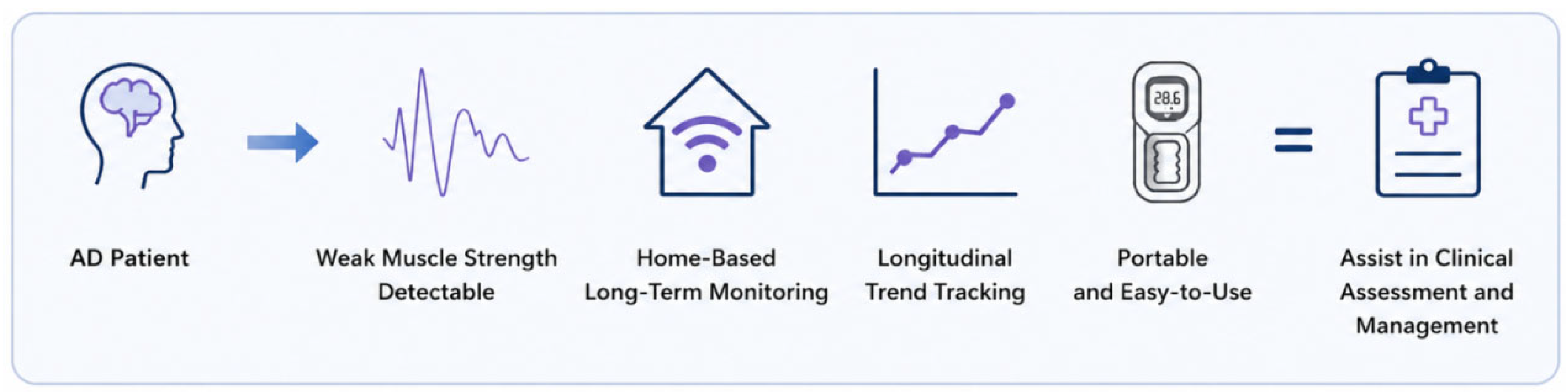

Disclaimer/Publisher’s Note: The statements, opinions and data contained in all publications are solely those of the individual author(s) and contributor(s) and not of MDPI and/or the editor(s). MDPI and/or the editor(s) disclaim responsibility for any injury to people or property resulting from any ideas, methods, instructions or products referred to in the content. |
© 2026 by the authors. Licensee MDPI, Basel, Switzerland. This article is an open access article distributed under the terms and conditions of the Creative Commons Attribution (CC BY) license.