


Abstract
Digital twin (DT) technology has emerged as a cornerstone of Industry 4.0, facilitating real-time synchronization between physical assets and virtual models to drive operational excellence. Unlike prior surveys that address singular industrial domains, presenting qualifications in general terms without paradigm-to-task mapping, this review uniquely synthesizes DT architectural maturation across Technology Readiness Levels (TRLs) 1 through 9, quantitative performance outcomes from 39 documented industrial implementations spanning 10 sectors, and an explicit algorithmic taxonomy mapping distinct AI paradigms to specific functional DT requirements. By synthesizing empirical data across the aerospace, automotive, and manufacturing sectors, this study evaluates the quantitative impact of DT implementation, highlighting significant gains in predictive maintenance, production efficiency, and design cycle reduction. This research further examines the synergistic role of Machine Learning (ML) paradigms integrated within DT systems, specifically, physics-informed neural networks (PINNS), generative adversarial networks (GANs), deep transfer learning, reinforcement learning, and federated learning, in enhancing diagnostic accuracy and enabling autonomous decision-making. Despite these advancements, this review identifies critical barriers in data interoperability, cybersecurity, and workforce expertise that impede widespread adoption. This paper concludes by outlining future research directions, emphasizing the necessity for standardized data protocols and secure, distributed DT ecosystems to unlock the full potential of cyber-physical integration in a data-driven industrial landscape.
1. Introduction
Digital twin technology functions as a sophisticated virtual counterpart to a physical system and enables seamless two-way interaction between the real and digital domains in real time. The initial framework for this technology has undergone a significant transformation driven by continuous research and rapid technological advancements. Since the concept was first proposed by Grieves in 2003, it has experienced persistent development that has led to the creation of diverse frameworks and models. This progression has resulted in various interpretations and structural models of DTs being established across both academic and industrial domains. Recognized as a fundamental enabler of Industry 4.0, the digital twin combines the capabilities of the Internet of Things, sensors, ML, and data analytics to facilitate efficient and intelligent real-time data handling. Scholars such as Tao and colleagues established a specific conceptual framework designed to support the continuous monitoring of the entire lifespan of a product, focusing on the management of geometric variations to improve accuracy and uniformity. Furthermore, an integrated system model for the digital thread was established to enable root cause diagnosis and enhanced control within interconnected processes [1,2,3].
In the automotive industry, digital twin technology facilitates the real-time supervision of remote operations, the detection of spills, and the evaluation of production activities across numerous disparate sites. The adoption of this technology contributes significantly to minimizing carbon emissions, enhancing production efficiency, and strengthening safety and decision-making processes through predictive data analysis. By generating a virtual representation of field assets, DTs allow operators to simulate, predict, and mitigate potential operational challenges before they manifest in the physical world. A specific digital twin architecture was designed to separate users from the physical environment in industrial plants, thereby minimizing their exposure to potential risks. The cloud-based digital twin framework was subsequently introduced to enhance computational and interaction capabilities for remote applications. Further research has focused on implementing digital twin-based intelligent production management and control systems for high-impact assembly operations. Additionally, four key digital twin architectural layers were identified which encompass the internal structure and content application programming interfaces [4,5].
Scholarly discourse has led to the development of a four-layer digital twin framework aimed at improving industrial process monitoring and decision-making efficiency. The first layer is dedicated to collecting and transmitting data, which establishes the necessary foundation for digital connectivity. The second layer models virtual replicas of sub-processes and ensures real-time synchronization between the physical and virtual systems [6,7,8,9,10]. The third layer conducts analytical operations to convert raw data into meaningful insights, while the fourth layer assists in strategic decision-making based on these analytical outcomes. This concept was further expanded through a five-layer digital twin architecture that includes cyber-physical data processing, distributed computing and storage, modeling and algorithmic development and visualization, and a user interface system. Another enhanced structure introduced five key components, such as the physical entity, its virtual counterpart, the associated service, the data management system, and interconnecting networks. This integrated approach highlights the significant role of data storage, distributed computation, and connectivity in achieving an effective and responsive digital twin system [11,12].
The standard structure of a digital twin typically consists of three main components, including the physical system, its virtual model, and the communication interface that enables real-time data exchange between them. To manage complex functions such as data collection, communication, analysis, visualization, and decision-making, researchers have developed advanced multi-layer digital twin architectures. A four-layer model was designed to reduce human exposure to operational risks within industrial plants, whereas a five-layer configuration integrated distributed computing and visualization capabilities. This concept was later extended to a six-layer framework that promotes interoperability and seamless vendor-independent communication across diverse industrial systems [13,14,15,16].
The widespread adoption of digital twin technology, particularly in the aerospace and automotive industries, has heightened cybersecurity risks due to the extensive interconnection of Internet of Things devices and cloud-based platforms. Threats such as Distributed Denial of Service attacks, data spoofing, eavesdropping, and man-in-the-middle intrusions can endanger sensitive operational information. While most existing studies emphasize digital twin development and system integration, data security aspects remain comparatively underexplored. Hence, there is a growing necessity to design digital twin frameworks that integrate customized cryptographic solutions to safeguard real-time industrial data [17,18,19,20].
Despite the proliferation of literature surrounding cyber-physical systems, a critical gap remains. Existing reviews typically isolate their focus within a single industry or remain purely theoretical, failing to connect underlying architectural decisions with empirical financial outcomes. This review is necessary to bridge that gap by providing a comprehensive, cross-sectoral synthesis that quantifies the techno-economic value of these systems, thereby offering a rigorous foundation for future enterprise deployment.
This review article distinguishes itself by bridging the gap between theoretical architectural frameworks and their practical commercial application across multiple high-value sectors. Unlike previous surveys that predominantly focus on singular industrial domains or purely technical specifications, this work provides a holistic examination of how digital twin architectures have evolved from basic concepts to complex AI-integrated systems in aerospace, automotive, and manufacturing contexts. The novelty of this study lies in its comprehensive integration of academic literature with real-world consulting perspectives, offering a unique analysis of how top-tier firms are currently deploying these technologies to solve tangible business problems. Furthermore, this article critically assesses the intersection of ML and DT systems, examined through the lens of the specific ML paradigms that drive each stage of DT functional capability. The contribution of this review is organized around three mutually reinforcing analytical axes. The first axis traces the maturation trajectory of digital twin architectures from TRL 1–3 conceptual models to TRL 7–9 edge-enabled and AI-integrated frameworks, demonstrating a 22-year progression from single-enterprise prototypes to ubiquitous industrial infrastructure. The second axis evaluates the sector-specific techno-economic yield of these architectures across ten industrial domains, revealing that financial returns are the most substantial in capital-intensive environments where asset criticality amplifies the economic consequences of unplanned failure. The third axis examines the progressive role of distinct AI and ML paradigms in enabling the transition from passive digital shadows, which archive data reactively, to active cognitive twin systems capable of autonomous predictive decision-making. To give this synthesis analytical coherence and to ensure that each section of this review contributes to a cumulative scholarly argument rather than serving as a standalone topical inventory, this review is structured around four explicit research questions that are defined in the following subsection. The subsequent sections guide the reader through the systematic methodology, followed by sector-specific application analysis, AI integration, implementation challenges, a critical discussion that identifies cross-cutting patterns and contradictions in the literature, and a forward-looking research agenda.
This review is structured to address the following four research questions, which collectively define its analytical scope and ensure that each section contributes to a coherent, cumulative scholarly argument. RQ1: How have digital twin architectures evolved across successive maturity levels, from their conceptual origin in product lifecycle management to contemporary edge-enabled and AI-integrated frameworks operating at TRLs 7–9? RQ2: What are the empirically documented techno-economic impacts of digital twin deployment across diverse industrial sectors, and how do these impacts vary as a function of asset criticality, operational context, and sector-specific value drivers? RQ3: What is the specific functional role of distinct AI and ML paradigms, including PINNS, generative adversarial networks, deep transfer learning, reinforcement learning, and federated learning, in augmenting the analytical, predictive, and autonomous capabilities of digital twin systems? RQ4: What are the principal systemic barriers impeding enterprise-scale digital twin adoption across manufacturing, aerospace, and automotive domains, and what specific research directions and governance frameworks are required to overcome them? These research questions are revisited explicitly in the Discussion (Section 16) and Conclusions (Section 17), where the evidence accumulated across this review is synthesized to provide consolidated answers and to identify residual gaps in the current state of knowledge.
Following this introduction, Section 2 details the systematic methodology employed for literature selection and data synthesis. Section 3 provides a brief operational overview of the technology. The manuscript then dissects specific architectural evolutions and implementations across the manufacturing, automotive, and aerospace domains. Subsequent sections critically analyze AI integration, evaluate systemic implementation barriers, and conclude with a synthesized discussion of future research trajectories.
2. Methodology
To provide a comprehensive analysis of the role of DT technology in the aerospace, automotive, and manufacturing sectors, this study adopted a systematic literature review approach. The research methodology was designed to identify, screen, and synthesize high-quality peer-reviewed literature to evaluate the evolution of DT architectures, their integration with AI, and their practical implementation challenges.
A structured search was conducted across major scientific databases, including IEEE Xplore, Scopus, Web of Science, and Google Scholar, to ensure a broad coverage of high-impact engineering and computer science literature. The search focused on publications ranging from the inception of the digital twin concept in 2003 by Grieves to the most recent developments in 2025. Boolean operators were employed to refine the search results using specific keyword combinations. The primary search strings included primary descriptors such as “Digital Twin,” “Cyber Physical Systems,” “Virtual Prototyping,” and “Industry 4.0”. These were combined with contextual descriptors encompassing terms like “Aerospace,” “Automotive,” “Manufacturing,” “Smart Cities,” “Supply Chain,” and “Predictive Maintenance”. Furthermore, technological descriptors were utilized to capture the computational aspects, focusing on “AI,” “ML,” “Deep Learning,” “DT Architecture,” and “Internet of Things (IoT)”.
To ensure the relevance and quality of the reviewed material, strict inclusion and exclusion criteria were applied during the screening process. The inclusion criteria prioritized studies explicitly discussing the application, architecture, or algorithmic integration of DTs in industrial contexts. The review selected peer-reviewed journal articles, high-impact conference proceedings, and reputable white papers from organizations such as the Digital Twin Consortium, Siemens, and GE that provide quantitative data on implementation outcomes. Priority was given to recent studies published between 2019 and 2025 to capture the latest advancements in AI integration and edge computing, while foundational papers from 2003 to 2018 were included to trace architectural evolution. Conversely, the exclusion criteria led to the rejection of papers that were purely theoretical without a defined application framework or industrial use case, duplicate studies, and non-peer-reviewed opinion pieces. Articles focusing solely on virtual reality (VR) or simulation without the bidirectional data flow characteristic of a true digital twin were also excluded to maintain the structural integrity of the review.
The selected literature was subjected to a thematic analysis to extract quantitative and qualitative data, and we focused on three key dimensions that directly informed the structure of this review. The thematic coding procedure followed a deductive framework aligned with the three a priori analytical categories of this review: digital twin architectural maturity, techno-economic performance outcomes, and AI/ML integration methods. Each selected source was independently reviewed and coded by two authors using a structured coding rubric that defined specific inclusion criteria for each thematic category. Disagreements between coders were resolved through structured consensus discussion, and any source that could not be assigned to a thematic category by consensus was excluded from the synthesis. No automated qualitative analysis software was employed in this process; the technical specificity of the literature, particularly with respect to engineering terminology, performance metrics, and architectural nomenclature, necessitated discipline-specific human judgment in the application of codes. This represents a recognized limitation of the thematic synthesis approach when applied to highly technical engineering literature, and it is acknowledged accordingly. A critical caveat must be applied to the interpretation of the quantitative data aggregated from the industrial case studies in Table 1 and Table 2. These figures are drawn from heterogeneous reporting contexts and cannot be treated as directly commensurable metrics derived from a controlled, harmonized measurement framework. Reporting standards, operational baselines, and metric definitions vary substantially across industries, organizations, and countries. The performance ranges documented in Table 2 are, therefore, presented as indicative, order-of-magnitude characterizations of reported outcomes rather than as statistically normalized means derived from a meta-analytically validated dataset. Cross-sectoral numerical comparisons should be made with appropriate caution, and readers seeking precise quantitative benchmarks for a specific application domain are advised to consult the primary sources cited for that domain. Furthermore, this review acknowledges that a portion of its evidence base is drawn from white papers, technical reports, and case studies produced by industrial solution providers including, but not limited to, Siemens, General Electric, DHL, Toobler, and Honeywell. While these sources provide access to deployment data that has not yet been published in peer-reviewed form, they are produced under commercially motivated conditions and may reflect best-case or selectively reported scenarios. Performance figures from such sources have been incorporated with explicit acknowledgment of this limitation and, wherever possible, have been cross-validated against independently published peer-reviewed data. The reader is advised to treat industry-sourced performance claims as indicative rather than definitive, and this review has been structured to clearly distinguish between peer-reviewed and industry-sourced evidence throughout.
First, data regarding the structural layers of DT systems was extracted to classify architectures by maturity level. This analysis facilitated the construction of tables, which trace the progression from Grieves’ initial two-layer concept to modern six-layer, edge-enabled frameworks. Second, to evaluate the practical impact of DT, quantitative outcomes such as percentage reduction in downtime, cost savings and efficiency gains were aggregated from case studies across the automotive, aerospace, and oil and gas sectors. This data was synthesized to produce Table 2, which offers a comparative analysis of ROI across industries. Third, specific attention was paid to the algorithms and computational methods used within DT frameworks. Information on the use of PINNs, GANs, and federated learning was extracted to populate Table 3, which highlights the synergistic integration of AI and DT.
While this review aims to be exhaustive, it acknowledges certain limitations. The rapid pace of development in AI-driven DTs means that some proprietary industrial advancements may not yet be documented in academic literature. To mitigate this, the review supplements academic sources with verified industry reports and white papers from leading solution providers to provide a holistic view of the current state of the art.
3. Digital Twin Technology Examples in Real World
The first key principle of a digital twin is that it should be fit for purpose and ensure enough accuracy to support reliable decision-making. The second principle highlights the reusability of technologies, data, and models for various applications, which necessitates interoperable systems and digital platforms capable of working cohesively throughout different phases of the product lifecycle.
Another important factor in ensuring that a digital twin is fit for purpose is determining the appropriate level of detail it should include. It is not always necessary for the twin to replicate every physical aspect to fulfill its intended role. In practical applications, multiple DTs may function together, with some based on physics and domain-specific models and others relying on data-driven, statistical, or ML methods. The intended objective dictates the balance between physics-based and data-driven approaches. Although physics-based modeling can be computationally demanding and time-consuming, AI-driven models can automatically fine-tune parameters, offering more adaptive, efficient, and scalable solutions for digital twin implementations [21,22]. Figure 1 summarizes the application of digital twins in the real world.
Figure 1.
Digital Twin in Real World.
3.1. Manufacturing
DTs are playing a transformative role in modern manufacturing and product development, enabling greater efficiency and deeper operational understanding. By creating virtual representations of industrial processes, manufacturers can quickly evaluate performance data, identify emerging patterns, and refine workflows for improved productivity and optimization.
In the manufacturing sector, DTs are extensively utilized for monitoring production lines, providing real-time insights into parameters like temperature, pressure, speed, and surrounding environmental conditions. This real-time visibility enables early identification of irregularities, facilitating proactive maintenance and troubleshooting and thereby minimizing the likelihood of product defects or process disruptions.
Moreover, DTs enable predictive maintenance by detecting signs of potential equipment failures in advance. This proactive approach helps reduce unplanned downtime, increase the reliability of machinery, and boost overall operational productivity within the manufacturing process.
A prominent illustration of digital twin implementation is Rolls-Royce’s “Intelligent Engine” initiative, which develops a unique digital twin for every engine manufactured [23]. By gathering real-time data from numerous onboard sensors, the company can track engine performance, forecast maintenance requirements, and minimize unexpected downtime. The initiative’s goal is to provide more reliable, efficient, and customer-focused power systems, which showcases the practical benefits of digital twin technology in contemporary manufacturing [24].
3.2. Automotive
DTs are increasingly essential in the automotive sector, aiding in design refinement, streamlined manufacturing, and predictive maintenance across a vehicle’s entire lifecycle. They allow engineers to simulate and evaluate various design alternatives virtually, identifying the most effective solutions without building physical prototypes, which, in turn, lowers development costs and shortens production timelines. As the automotive industry moves increasingly toward electric vehicles, DTs have become significant tools for enhancing energy efficiency, optimizing battery performance, and ensuring overall system reliability. A prime example is Volvo, which utilizes digital twin technology to model and evaluate various materials and aerodynamic configurations [25]. This strategy enables the company to design safer, more efficient, and higher-performing vehicles, reflecting its strong dedication to innovation and passenger safety [26,27,28].
3.3. Construction
DTs are transforming the construction industry by providing virtual visualization and real-time performance monitoring of buildings and infrastructure. They enable engineers and planners to simulate different scenarios, including design modifications, environmental effects, and safety events, without disrupting ongoing construction operations [29].
Using detailed virtual models, construction firms can assess lighting conditions, space utilization, and environmental performance, obtaining critical insights that enhance both design quality and operational efficiency. In addition, DTs support sustainable construction by enabling optimized resource management, waste reduction, and improved energy efficiency throughout the project lifecycle.
A prominent example is the Crossrail in London, where engineers implemented digital twin technology to visualize the completed infrastructure, track project progress, and identify potential issues at an early stage. This method helped streamline workflows, enhance decision-making, and optimize resource allocation, showcasing the transformative impact of DTs in managing complex, large-scale construction projects [30].
3.4. Oil and Gas
DTs are reshaping the oil and gas industry by reducing operational downtime, boosting efficiency, and strengthening safety measures across vital assets. Leading companies like Shell and BP utilize digital twin models to monitor offshore platforms, pipelines, and refineries in real time, which enables early identification of equipment faults and proactive maintenance to prevent costly disruptions. Because even minor equipment failures can result in significant financial losses and environmental hazards, DTs offer a vital advantage by delivering predictive insights and enabling quicker, data-driven responses to potential issues [6,31,32,33].
A prime example is British Petroleum’s implementation of DTs for its offshore platforms. These virtual replicas combine real-time sensor data to continuously monitor temperature, pressure, and equipment performance, enabling engineers to identify anomalies such as unusual vibrations or temperature fluctuations well before they develop into critical system failures.
This strategy not only lowers maintenance expenses and minimizes downtime but also improves worker safety and safeguards the environment, which underscores the essential role of digital twin technology in advancing modern oil and gas operations [34].
3.5. Transportation
Digital twin technology is revolutionizing the transportation sector by enabling virtual simulations of infrastructure systems such as roads, bridges, railways, and vehicles. These digital models allow engineers and planners to evaluate and refine designs under diverse conditions, including traffic density, extreme weather, and maintenance situations, well before they are applied in real-world projects.
A notable example is Ford, which employs digital twin technology in the design and testing of autonomous vehicles [35]. Using virtual simulations, Ford evaluates self-driving algorithms across a range of driving environments without depending solely on physical prototypes. This method helps cut development time and costs while enhancing the safety, reliability, and performance of autonomous vehicle systems [24,36].
3.6. Retail
Digital twin technology is transforming the retail industry by enhancing the customer experience, streamlining store operations, and optimizing inventory management. Through virtual store models, retailers can experiment with various layouts, product placements, and display setups to analyze how these elements affect customer movement and buying behavior. This data-driven approach enables the creation of more efficient store designs that boost sales and elevate the overall shopping experience.
Another major application of DTs in retail is real-time inventory management. By integrating sensor data with operational information, retailers can develop digital replicas of their inventory systems to track stock levels, anticipate shortages, and avoid missed sales opportunities. Moreover, DTs facilitate supply chain optimization by helping retailers analyze shipping routes, detect logistical bottlenecks, and enhance overall supply chain efficiency.
A leading example is Walmart, which leverages digital twin technology to simulate and assess store layouts, enhancing customer convenience and in-store experience. Additionally, Walmart applies DTs for virtual inventory management, analyzing stock behavior under different demand patterns, seasonal variations, and supply chain conditions. This approach helps the company reduce stockouts, maintain optimal product availability, and increase overall customer satisfaction [37,38].
3.7. Smart Cities
DTs are transforming the development of smart cities by enabling the creation of virtual replicas of urban environments for real-time monitoring, simulation, and optimization. By integrating IoT technologies, data analytics, and advanced connectivity, these DTs empower city planners to optimize infrastructure, promote sustainability, and improve the overall quality of the world for citizens.
Using virtual simulations, DTs enable the analysis of traffic patterns, energy usage, and emergency response systems, allowing city authorities to make data-driven decisions that alleviate congestion, enhance operational efficiency, and improve resource allocation. Additionally, they contribute to environmental sustainability by tracking air quality, waste management, and energy consumption, helping cities develop targeted strategies to reduce carbon emissions and advance green urban initiatives.
Furthermore, DTs play a significant role in urban safety and disaster preparedness. By simulating emergency scenarios such as fires, floods, or infrastructure failures, city authorities can develop effective response strategies, optimize rescue operations, and gain in-depth structural insights to enhance public safety and resilience.
A prominent example is the Virtual Singapore Platform, which offers a comprehensive digital model of the entire city-state [39]. This platform consolidates real-time data from diverse sources to simulate a range of urban scenarios, such as evaluating the effects of new infrastructure on traffic flow or forecasting flood risks during heavy rainfall. Through this innovative approach, Singapore is able to plan more intelligently, optimize resource management, and advance sustainable urban development, which demonstrates the transformative potential of digital twin technology in modern city planning and management.
The digital twin concept has vast potential to reshape a wide range of industries, including transportation, retail, healthcare, and smart cities, by supporting data-driven decisions, continuous monitoring, and predictive improvements. As technological advancements progress, the applications of DTs are expected to increase further, driving innovation and delivering practical, high-impact solutions across different sectors. However, the effective implementation of digital twin technology demands careful consideration of data privacy, security, and system integration challenges. Addressing these aspects is crucial for fully unlocking the potential benefits and ensuring reliable and responsible deployment across various industries. To address these challenges, collaboration with skilled digital twin solution providers is essential. For example, Toobler serves as a reliable technology partner offering comprehensive digital transformation services. With expertise in IoT, advanced analytics, and digital twin development, Toobler supports organizations of all scales in the design, implementation, and management of efficient digital twin systems that foster operational excellence and innovation [37,39].
3.8. Sports and Athletics
Digital twin technology is revolutionizing the sports and athletic industry by enabling the creation of precise virtual models of athletes that replicate their physical characteristics, performance metrics, and motion patterns. By integrating data from wearable sensors and tracking systems, these digital models simulate crucial attributes such as muscle strength, flexibility, endurance, and agility, providing a comprehensive digital representation of an athlete’s body mechanics and performance behavior.
One of the key applications of digital twin technology in sports is injury prevention. By virtually simulating how an athlete’s body responds to different stresses, movements, and training loads, coaches and medical teams can detect potential injury risks before they occur, helping to prolong athletic careers. In addition to prevention, DTs support real-time performance monitoring and personalized training, enabling athletes to track fatigue levels, identify weaknesses, and follow customized workout routines to achieve peak performance.
Coaches also gain significant advantages from digital twin technology, using virtual models to evaluate team dynamics, simulate game situations, and develop more effective strategies for improved outcomes. Furthermore, DTs enhance sports analytics by delivering data-driven insights that support performance enhancement, injury recovery, and overall athlete development.
A leading example is the U.S. Ski and Snowboard team, which utilizes digital twin technology to provide athletes with real-time biomechanical feedback. By analyzing factors such as posture, stance, and equipment setup during training sessions, athletes can make instant adjustments to enhance their performance. This personalized, data-driven approach enables more efficient training, lower injury risks, and notable improvements in competitive results, demonstrating how DTs are reshaping modern sports science and elevating athletic performance [40].
3.9. Shipping and Logistics
The shipping and logistics sector depends heavily on precision, efficiency, and timely operations to sustain global trade. Because nearly 90% of goods are transported by sea, even minor inefficiencies can lead to major financial losses. Digital twin technology addresses this challenge by creating virtual replicas of fleets, routes, and warehouses for real-time monitoring, performance simulation, and optimized logistics management.
DTs enable the simulation and analysis of delivery routes, considering factors like traffic, weather, and port activity to identify the most efficient and cost-effective paths. DTs continuously monitor vessel performance and route conditions to optimize fuel usage, reduce emissions, and promote sustainable shipping operations. DTs provide real-time insights into fleet health, allowing early detection of potential equipment issues and proactive maintenance scheduling, which can reduce unplanned downtime by up to 50%. DTs enable logistics managers to anticipate disruptions like port congestion or equipment failures and implement preventive strategies to ensure smooth, uninterrupted operations.
DHL integrates real-time data like traffic, weather, and shipment load into DTs to simulate routes, ensuring faster and more reliable deliveries. Fleet management is enhanced through DTs, which support predictive maintenance to keep vehicles in peak condition while minimizing downtime and repair expenses. DTs help DHL simulate logistics scenarios to streamline warehouse operations and ensure faster, more accurate order fulfillment. Optimized delivery routes enhance efficiency by ensuring on-time shipments and smoother operations. Predictive maintenance and process optimization help reduce operational and maintenance costs across the supply chain. Efficient fuel usage and optimized delivery routes improve sustainability by lowering emissions and promoting greener logistics. Faster and more reliable deliveries enhance customer satisfaction and build trust in services [41,42].
4. Digital Twin and AI
The global digital twin market is projected to expand from USD 10.1 billion in 2023 to USD 110.1 billion by 2028, reflecting a compound annual growth rate of 61.3% over the five-year period. DTs with AI are revolutionizing business operations by offering real-time monitoring and practical insights, helping organizations across various industries from manufacturing to healthcare to improve efficiency, make better decisions, and remain competitive in a rapidly evolving, data-driven landscape.
DTs have become a key pillar of Industry 4.0, empowering organizations to analyze extensive datasets, streamline intricate processes, and improve their overall operational performance. Industry 4.0 represents a shift from traditional embedded systems to advanced cyber-physical systems, enabling real-time interaction between digital and physical environments and reshaping manufacturing technologies, value chains, and business models. The IoT is central to building DTs, as sensor-equipped machines supply live data that keep the virtual model updated and support the ongoing tracking of physical assets at every stage of their lifecycle. When DTs are combined with IoT, they make effective use of the four key characteristics of big data: volume, veracity, velocity, and value. This integration strengthens Internet of Services (IoS) functionalities and provides deeper insights into how systems perform in real operating environments. AI and ML enhance the effectiveness of DTs by supporting predictive modeling, smarter decision-making, and accurate performance forecasting using real-time data from IoT systems. Real-world implementations by companies like Amazon and General Electric show how AI- and ML-based analytics spur the advancement of IoT-enabled DTs and enable more powerful, simulation-driven optimization [1].
AI significantly improves the capabilities of digital twin platforms by offering sophisticated data analysis and real-time insights. A major advantage is predictive analytics: AI examines the data produced by DTs to anticipate possible problems or maintenance needs, allowing organizations to take proactive measures and minimize downtime. AI monitors physical assets in real time, allowing immediate responses to changes and improving overall performance. AI supports better decision-making by simulating various scenarios, allowing leaders to assess outcomes and manage resources more efficiently. AI enables DTs to adapt to specific business requirements by learning from past data and user behavior, enhancing the precision of simulations. AI streamlines the management of DTs by automating routine tasks like data collection and analysis. AI enhances DTs by providing deeper insights, boosting operational efficiency, and enabling innovative solutions. Integrating AI allows businesses to fully leverage the capabilities of their digital twin applications.
The combination of AI with DTs greatly expands their functionality across various sectors. AI can analyze the large volumes of data produced by DTs in real time, providing instant insights and enabling immediate actions. In healthcare, for instance, medical professionals can obtain real-time feedback during surgeries or rehearse procedures within a virtual environment. In manufacturing, AI can alert operators to potential issues, such as overheating machinery, helping to prevent downtime and improve efficiency. Through predictive analytics, AI can anticipate equipment malfunctions or system interruptions, allowing businesses to maintain smooth operations, cut costs, and enhance overall performance. AI also enhances user interaction with DTs, supporting intuitive controls like voice commands or gestures for seamless engagement with virtual models. Advanced simulation capabilities further enable precise virtual testing in industries such as aerospace and automotive, minimizing errors and refining product design. In essence, AI empowers DTs to interpret data, replicate real-world scenarios, and provide actionable insights that enhance efficiency, safety, and innovation [8].
5. Digital Twin Architectures
Digital twin architectures (Table 1) have evolved systematically from Grieves’ seminal 2003 two-layer physical–virtual concept, which represents just 14 percent of today’s architectural complexity, into sophisticated multi-layer standards-based edge-enabled frameworks, which now support 48 to 52 percent industrial deployment rates across at least 10 sectors as of 2025. Grieves formalized the digital twin as a virtual representation of a physical product throughout its complete lifecycle that is tightly coupled with PLM systems and positioned at low TRLs between 1 and 3, with early adoption limited to less than 2 percent of manufacturing enterprises and lacking real-time data integration. Subsequent four- and five-layer models from 2015 to 2020, which were adopted in 15 to 25 percent of Industry 4.0 pilot projects, introduced an explicit separation between data acquisition handling, 1000 to 10,000 IoT-streams-per-second data processing, data quality of 95 percent or higher via cleansing pipelines, simulation modeling 10 to 100× faster than physical testing, and decision-support layers, enabling cyber-physical production systems to achieve 20 to 35 percent development-cycle acceleration in manufacturing and smart industry contexts between TRLs 4 and 6. By 2021, six-layer reference architectures, which were deployed across 35 percent of aerospace defense programs, further refined this structure with features such as the ability to distinguish physical entities, using 500 to 5000 sensors per asset, from virtual entities and digital replicas with less than 1 percent synchronization error; dedicated acquisition processing stages with sub-100-millisecond latency; advanced analytics with 96.83 percent fault diagnosis accuracy; and standardized service interfaces OPC UA and MQTT supporting at least 10,000 concurrent connections, making DTs deployable in high-reliability sectors, where they deliver 45 to 65 percent ROI and 12-to 24-month payback periods for TRLs 6 to 7.
Building on these foundations, by 2023, the Digital Twin Consortiums Platform Stack guided 42 percent of enterprise DT implementations, with RAMI 4.0-aligned designs consolidating governance, zero-trust security for 99.9 percent uptime security multi-layer encryption reducing attack surface with 87 percent interoperability, Asset Administration Shells standardizing 95 percent of industrial assets, the use of OPC UA across 80 percent of automation protocols, and composability into six-layer stacks operating across complete Industry 4.0 ecosystems at TRLs 7 to 9, supporting market growth between USD 149 and 471B by 2034. Recent domain-specific frameworks demonstrate architectural specialization: by 2024, three-layer Industry 4.0 twins achieved 38 to 44 percent bidirectional data flow efficiency in manufacturing reverse logistics, 5D SOA-based architectures separated business logic with 44.8 percent optimization gain from domain logic across multi-disciplinary systems, CAD PLM-integrated twins reduced automotive design iterations by 50 percent from 6 to 3 cycles, oil and gas asset twins delivered more than 2M euros in project savings via 15 to 42 percent efficiency gains, healthcare-specific twins enabled personalized treatment accuracy of 96 percent or higher for 52.7 percent CAGR patient modeling, and edge-enhanced hybrids supported robotic control latencies of less than 100 ms across 21 percent of the automotive transportation market share, reflecting a 22-year technological maturation from deployments of 0.1 percent in 2003 to 48 to 52 percent in 2025 with 37.29 percent CAGR.
Table 1.
Evolution of Digital Twin Architectures.
6. Practical Implementations of Digital Twin Technology
Digital twin technology has proven to be highly valuable across multiple industrial areas. It is greatly enhancing efficiency and supporting informed decision-making. In manufacturing, DTs track equipment performance, predict potential machine failures, and help maintain smooth operations, thereby reducing downtime and boosting productivity. Further, in urban planning, this technology enables the virtual design of entire cities, simulating traffic patterns, energy consumption, and resource management, which helps planners test scenarios and optimize infrastructure before implementation. Within the automotive sector, DTs improve vehicle design, production, and maintenance by creating virtual replicas of systems and vehicles, enabling performance simulation, feature testing, and failure prediction, while real-time monitoring enhances safety and maintenance scheduling. Similarly, in construction, virtual models of structures and infrastructure facilitate continuous monitoring and predictive analysis, which enable early detection of issues, better project planning, improved collaboration, and cost efficiency. Even after construction, DTs support facility management by ensuring safety, operational efficiency, and timely maintenance [36]. Figure 2 represents the digital twin setup of a building.
Figure 2.
Digital Twin Setup of a Building.
Table 2 presents comprehensive performance metrics from 39 documented digital twin implementations across 10 industrial sectors, documenting 150 quantified outcomes with average improvements ranging from 15 to 87.56 percent across operational categories. It must be emphasized, consistent with the methodological caveat in Section 2, that the performance metrics documented in Table 2, particularly those sourced from vendor white papers and industry case studies produced under commercially motivated conditions, should be interpreted as indicative of potential outcomes achievable under favorable implementation scenarios rather than as guaranteed or universally reproducible results; readers are advised to consult the primary sources cited for each domain and to treat industry-sourced figures as indicative of upper bounds rather than normative benchmarks before applying them in investment appraisal or strategic planning.
The dataset reveals that automotive applications achieve the highest assembly line gains, with a 6.01 percent production efficiency increase and an 87.56 percent downtime reduction through predictive maintenance, while vehicle design cycles are reduced by 50 percent via virtual prototyping, which eliminates physical iterations from 6 to 3 cycles and yields 20 to 50 percent development cost savings. Manufacturing demonstrates consistent 30 to 70 percent gains across predictive maintenance, a 30 to 50 percent unplanned downtime reduction, a 30 to 41 percent reduction in energy consumption, an up to 70 percent improvement in quality, and a 15 to 17 percent increase in productivity, with refinery implementations showing the strongest financial returns of 25 to 55 percent, maintenance cost reductions of 15 to 42 percent, operational efficiency gains, and 1.4-year payback periods, generating over USD 100 million NPV for large-scale plants.
The aerospace and oil and gas sectors exhibit domain-specific strengths, with aerospace MRO achieving a 19 percent maintenance cost reduction and 62 percent expense savings through predictive interventions, while engine fuel efficiency improved 5 to 15 percent via optimized design operations. Oil and gas operations delivered savings of at least 2 million euros per offshore project, 9 to 15 percent decommissioning cost reductions, and 30 percent general efficiency gains, reflecting the high-capital-intensity environments where DTs provide the largest absolute value creation. Supply chain and logistics applications show 20 to 47 percent delivery time reductions, up to 25 percent inventory carrying cost savings, 30 to 40 percent end-to-end cost reductions, and 60 percent faster disruption response times, with e-commerce specifically achieving 47 percent delivery acceleration through Amazon-scale end-to-end digital twin modeling.
Energy utilities and sustainability metrics confirm the co-benefits of operational and environmental optimization, with LG facilities achieving 41 percent annual energy reductions, HVAC systems achieving 18 percent energy savings, and plant operations achieving USD 1.14 million in annual savings, while sustainability-focused implementations delivered 25 percent energy reductions, 17 percent waste elimination, and 25 percent CO2 emissions cuts, demonstrating that DTs enable simultaneous ESG compliance and profitability. Emerging sectors such as construction, AEC, smart cities, healthcare, and retail show 20 to 30 percent resource efficiency gains, qualitative urban planning improvements, measurable athlete performance enhancements, and reduced medical device revision rates, though longer 12-to-24-month implementation timelines reflect higher complexity and validation requirements.
Implementation timelines cluster into three bands: rapid 6-to-12-month deployments for design validation and quality applications; 12-to-18-month timelines, which dominate across sectors; and 12-to-36-month horizons for complex plant-wide optimizations. These reflect organizational change management, data infrastructure, and validation requirements. Economic impacts scale with asset criticality, from millions per project in oil and gas to USD 1 million per day avoided downtime in manufacturing and hundreds of millions in NPV in refining, which confirms that DTs deliver the strongest returns in high-value, high-downtime-cost environments, with an average ROI of 45 to 65 percent across documented cases.
Table 2.
Digital Twin Performance Metrics across Various Industrial Sectors.
7. Synergistic Integration of AI and DTS
For the purposes of this review, ‘AI integration’ within DT systems refers specifically to the incorporation of ML paradigms, including supervised, unsupervised, physics-constrained, generative, reinforcement and federated learning methods, rather than broader symbolic AI approaches such as knowledge graphs or expert reasoning engines; this scope is consistent with the dominant paradigm in the current peer-reviewed DT literature and reflects the algorithmic classes documented in the evidence base synthesized in this review.
AI-driven DTs are revolutionizing industries by offering predictive insights and personalized solutions, with healthcare being a standout example. In medical settings, physicians can utilize a patient’s digital twin to model health outcomes and evaluate the effects of various treatments before applying them in reality. For example, a patient with a heart condition can have their digital twin assess multiple treatment options, which enables the creation of a care plan tailored to their individual needs. This approach is already improving patient outcomes by speeding up recovery, minimizing complications, and delivering more precise and effective treatments, effectively making personalized healthcare a practical reality.
AI-powered DTs are reshaping industries by enabling real-time monitoring, predictive analytics, and smarter decision-making across a wide range of sectors. In manufacturing, they track production lines and anticipate equipment failures, maintaining consistent quality and reducing downtime. In the automotive sector, virtual models allow manufacturers to test new designs and features like braking systems or electric engines before actual production, resulting in more refined and reliable vehicles. In construction, DTs simulate entire structures prior to building, helping to identify design issues, optimize material use, and predict maintenance needs to ensure long-term safety. Smart city projects also benefit, as DTs integrate data from IoT devices and sensors to enhance urban planning, manage traffic, optimize energy use, handle waste efficiently, and improve public safety. By simulating scenarios and forecasting outcomes, policymakers can make informed decisions without disrupting daily activities. Across all these fields, AI-enhanced DTs deliver actionable insights, boost operational efficiency, and foster innovation, fundamentally transforming how organizations function [38].
7.1. Emerging Challenges and Ethical Responsibilities
Although AI-powered DTs bring significant advantages, they also pose several challenges that organizations must manage carefully. Protecting data privacy and security is a major concern, as these systems handle large volumes of sensitive information, which makes strong encryption and secure infrastructures essential to prevent breaches. Reliance on AI algorithms carries risks as well; while AI offers valuable insights, it is not flawless, and overdependence may result in errors or misguided decisions. Human supervision remains vital to complement AI outputs and maintain balanced, informed decision-making. Ethical considerations are also important, because AI models can reflect biases present in the training data, potentially causing unfair or unequal outcomes. Ensuring transparency, fairness, and accountability in AI-driven processes is critical, especially when DTs interact with users or influence customer experiences. Despite these challenges, ongoing improvements in technology, security measures, and governance frameworks are helping to create safer, more reliable, and ethically responsible digital twin solutions [31,32].
7.2. Emerging Trends in AI-Driven DTs
The potential of AI-enabled DTs extends across numerous emerging sectors, reshaping how organizations operate and innovate. In education, they create interactive, immersive learning experiences, enabling students to safely simulate historical events, scientific experiments, or complex processes without high costs or risks. In fashion and retail, DTs help forecast trends, virtually test designs, and enhance customer experiences through AI-driven virtual fitting rooms and augmented reality. Environmental management benefits as well, with DTs modeling ecosystems to evaluate climate change impacts, optimize energy use, and support sustainable practices. In space exploration, AI-powered DTs enable the simulation of cosmic events and provide operational support for missions, performing tasks beyond human capability. Likewise, in the energy industry, these systems improve operational efficiency, predict potential issues, and assist in strategic market decisions and risk management.
AI combined with DTs is transforming sectors such as construction, automotive, logistics, and manufacturing. In construction and real estate, DTs offer detailed simulations for energy management, site evaluation, and design risk assessment, enhancing collaboration and reducing dependence on traditional paperwork. The automotive industry leverages virtual testing and real-time monitoring to improve vehicle safety, optimize performance, and advance autonomous driving technologies. In logistics and supply chain management, AI-driven simulations help optimize routes and inventory, ensuring timely and efficient deliveries. Manufacturing benefits from DTs through smart factory operations, including real-time production tracking, predictive maintenance, workflow optimization, and enhanced product quality, which leads to increased efficiency, cost savings, and sustainability. Overall, AI-powered DTs are driving innovation, supporting data-driven decision-making, and fundamentally changing how industries design, operate, and deliver value [68].
A critical analytical issue in the practical deployment of AI within digital twin systems concerns the selection of the appropriate ML paradigm for a given functional requirement. This selection is not arbitrary; it is governed by the nature of the available data, the physical constraints of the system being modeled, and the operational requirements of the deployment environment. Supervised learning methods, including deep transfer learning and convolutional neural networks, are the most appropriate for fault diagnosis tasks where labeled historical operational records are available from prior deployment cycles, as evidenced by the 96.83% diagnostic accuracy achieved through cross-line domain adaptation in automotive body shop applications documented in Table 3. Unsupervised methods such as autoencoders are best suited to anomaly detection in data-sparse operational environments, where they operate on reconstruction error computed from established normal-condition baselines without requiring labeled fault examples. This makes autoencoders the preferred method for newly commissioned assets that have not yet accumulated failure records. PINNs represent the optimal paradigm when the governing physical equations of the system are well characterized but the labeled failure data is insufficient for purely statistical learning. PINNs embed partial differential equations directly into the neural network loss function as differentiable soft constraints during training, ensuring that the network cannot converge to predictions that violate known physical laws even when training data is scarce. In the context of rolling bearing and turbomachinery applications, this property enables high-confidence remaining useful life (RUL) estimation from limited failure datasets, as the physical governing equations of bearing dynamics constrain the solution space to physically realizable degradation trajectories. GANs address the complementary challenge of data scarcity through a fundamentally different mechanism: adversarial synthetic data generation [69]. A generator network learns to produce statistically plausible fault signatures from random noise inputs, while a discriminator network learns to distinguish synthetic signatures from real sensor measurements. The adversarial optimization between these two components continues until the generator produces synthetic fault data that the discriminator can no longer reliably distinguish from real operational measurements, yielding augmented training datasets that improve classifier robustness for rare-event fault categories by factors of 10 to 100, as documented in Table 3. Reinforcement learning agents are best deployed within digital twin simulation environments for autonomous control policy discovery in scenarios where real-world exploration is operationally prohibited due to safety or cost constraints, as demonstrated in microgrid management and process control applications. Federated learning is the necessary paradigm for multi-site deployments where data privacy regulations or intellectual property constraints preclude the centralization of raw operational data, enabling privacy-preserving collective model improvement across geographically distributed manufacturing plants or smart city sensor networks without raw data leaving the local organizational boundary. This paradigm-to-task mapping is cross-referenced with the architectural layer definitions in Section 5, where the data analytics and service interface layers hosting these algorithms are specified, and with the performance outcomes documented in Table 2, which quantify the industrial impact of these AI-augmented digital twin deployments.
Table 3 presents AI/ML integration technologies within digital twin architectures spanning physics-informed neural networks, reinforcement learning, federated learning, and edge computing, with performance metrics including 96.83 percent fault diagnosis accuracy, 10 to 100× synthetic data augmentation, and sub-100-millisecond inference latencies across eight industrial applications. Physics-informed neural networks (PINNs) constrain predictions with partial differential equations, enabling high-confidence remaining useful life (RUL) estimation from limited failure datasets, while generative adversarial networks (GANs) augment sparse fault data by 10 to 100× for rare-event assets and deep transfer learning achieves 96.83 percent accuracy in automotive body shop fault diagnosis through cross-line domain adaptation.
Autoencoders provide unsupervised anomaly detection via reconstruction error analysis on live sensor streams, classical ML random forest support vector machines deliver mode-specific failure classification from labeled time series, and deep convolutional neural networks enable 30 to 50 percent labor savings in visual inspection of automotive electronics components. Predictive analytics pipelines process historical and streaming IoT data for proactive manufacturing energy forecasting, while hybrid discrete-event simulation genetic algorithm optimization identifies production bottlenecks from process-cycle time models.
Reinforcement learning agents trained within digital twin simulations discover near-optimal control policies for microgrid process control and autonomous systems, federated learning enables privacy-preserving model training across multi-plant smart city deployments, and edge TinyML compressed models support sub-100-millisecond real-time inference for robotics and autonomous vehicles from local high-rate sensor signals. Digital thread AI integration creates continuous lifecycle optimization loops, feeding end-to-end product data into ML pipelines and enabling Industry 4.0 continuous learning systems, with demonstrated gains of 44.8 percent in business logic optimization.
These technologies address core digital twin challenges including data scarcity, which is addressed by GANs and PINNs; 96.83 percent diagnostic accuracy real-time requirements, which are met by edge TinyML’s sub-100-millisecond latency; and interoperability, which is resolved through federated learning across decentralized deployments. Implementation requires 500 to 5000 sensors per asset, a synchronization error of less than 1 percent, and 1000 to 10,000 IoT-streams-per-second processing, yielding, on average, 45 to 65 percent ROI, with 6-to-24 month deployment timelines across high-reliability sectors.
Table 3.
AI/ML Technologies Integrated in Digital Twin Architectures.
8. Professional Services for Digital Twin Implementation
The translation of DT architectures from research prototypes to enterprise-scale deployments has been substantially enabled by a specialized ecosystem of platform vendors and consulting firms. Mature platform stacks and integration services are offered by organizations such as Siemens Digital Industries Software, whose Xcelerator platform supports product lifecycle and manufacturing execution integration; General Electric, whose Predix cloud platform manages continuous model updates across aviation, power generation, and manufacturing; IBM, whose Digital Twin Exchange and Maximo Asset Monitor facilitate IoT-driven real-time asset monitoring; ABB, whose RobotStudio Cloud enables the simulation and programming of robotic cells prior to physical deployment; Honeywell, whose solutions address process stability and multimodal predictive analytics in aerospace and oil and gas; and Dassault Systèmes, whose 3D modeling and simulation tools support design validation across aerospace, automotive, and healthcare [13,14,20,21,22,27,61,64,79]. Alongside these platform providers, specialized consultancies deliver domain-adapted, AI- and IoT-integrated solutions tailored to client-specific operational requirements, a model particularly relevant for SMEs that possess the operational data and business case for DT adoption but lack the internal cross-functional talent to architect and sustain the required technical infrastructure. This consulting ecosystem directly addresses the cross-functional talent scarcity identified as a Severity Level 5 barrier in Table 4, and its growth reflects the structural market response to the implementation gap between enterprise DT aspiration and operational deployment capability.
9. Uses of Digital Twin in Manufacturing Industry
The following section addresses RQ2 by providing sector-specific depth for manufacturing applications, where the quantitative performance outcomes summarized in Table 2 represent the consolidated benchmark evidence; the analysis below contextualizes those metrics within the operational realities of production environments. Figure 3 presents the advantages of digital twin implementation.
Figure 3.
Digital Twin Advantages.
DTs are transforming the manufacturing landscape by enabling the creation of virtual models of machinery and production lines. These digital counterparts improve operational efficiency, boost product quality, optimize resource usage, and lower expenses, which highlights their pivotal role in fostering innovation and shaping the future of the manufacturing industry. Figure 4 presents digital twin applications in the manufacturing industry.
Figure 4.
Digital Twin in Manufacturing Industry.
In the automotive sector, developing a new model is a highly intricate process where every component must integrate and perform flawlessly. A digital twin acts as a virtual testing ground, enabling engineers to simulate, analyze, and optimize designs long before physical prototypes are created. Any potential issue such as a design mismatch or performance inefficiency can be detected and resolved in the virtual space. This proactive method not only shortens development cycles and minimizes costs but also elevates product quality by eliminating errors before they manifest in real-world production [66].
DTs empower manufacturers to virtually replicate and assess the entire production workflow before committing to physical implementation. This virtual modeling helps uncover inefficiencies such as material waste, process delays, or unnecessary operations well in advance. By evaluating and optimizing these digital simulations, companies can streamline production strategies, cut down on experimental costs, and improve overall output. Essentially, digital twin technology provides a cost-efficient platform for testing, validating, and fine-tuning manufacturing processes, which results in significant savings of both time and resources while enhancing operational performance.
Unexpected equipment failures in manufacturing can cause major financial losses and production delays. Predicting such breakdowns is difficult, as issues often arise without clear warning. DTs overcome this challenge by constantly tracking equipment performance and replicating real-world operating conditions to identify early indicators of wear or potential failure. Functioning as a predictive tool, they allow maintenance teams to take corrective action before disruptions occur. This forward-looking approach reduces unplanned downtime, maintains consistent production flow, and improves the overall reliability of manufacturing operations.
In manufacturing, meeting growing demand often requires boosting production without compromising quality or efficiency. For instance, an automobile manufacturer aiming to produce more vehicles within the same timeframe can leverage digital twin technology to achieve this goal. By creating detailed virtual models of their production systems, manufacturers can analyze workflows, identify bottlenecks, and eliminate inefficiencies. These insights enable data-driven adjustments that optimize process performance, reduce idle time, and enhance overall output. As a result, DTs play a crucial role in increasing throughput and maximizing manufacturing productivity.
DTs offer manufacturers a dynamic virtual space to design, prototype, and test new products, without the financial burden of physical prototypes. This simulated environment supports rapid experimentation, enabling teams to evaluate multiple design alternatives, validate concepts, and make real-time improvements. By minimizing development risks and reducing costs, DTs cultivate an environment of creativity, flexibility, and ongoing innovation throughout the manufacturing process.
DTs go beyond the manufacturing phase by enabling the continuous monitoring and analysis of products throughout their entire lifecycle. Real-time data gathered from these virtual models offers crucial insights into performance, allowing manufacturers to pinpoint inefficiencies and implement improvements proactively. Additionally, DTs help optimize machinery operation by analyzing performance metrics and maintaining ideal working conditions. This data-driven strategy boosts efficiency, reduces wear and tear, and enhances overall product quality and reliability [27].
DTs allow manufacturers to quickly distribute detailed information about new products, such as design features, materials, and functional parameters, across various teams and departments. Serving as an interactive digital reference, this technology ensures that all stakeholders have access to precise, real-time data. Consequently, it streamlines collaboration, shortens development timelines, minimizes communication gaps, and enables faster introduction of innovative products to the market.
Safety is a critical aspect of every manufacturing process, aimed at both meeting regulatory standards and safeguarding workers. DTs enable manufacturers to virtually simulate operations and predict potential safety risks before they manifest on the factory floor. For instance, when integrating new equipment, digital models can analyze its interaction with existing systems to identify collision points or process interferences. This predictive approach helps prevent accidents, supports compliance with safety norms, and promotes a secure and efficient working environment.
DTs offer an advanced platform for designing, testing, and validating product upgrades driven by customer feedback or market competition. Rather than modifying physical prototypes, manufacturers can simulate new features within the digital model to evaluate integration, performance, and potential challenges. This virtual testing approach allows teams to identify and resolve issues early, ensuring that improvements are both effective and reliable. By refining product enhancements digitally, companies can deliver superior, performance-optimized versions that align with customer needs while minimizing development risks and costs.
Digital transformation is more than adopting new technologies; it is also about reshaping how organizations function and deliver value. It represents a shift from traditional, manual processes to intelligent, data-driven operations. DTs are at the heart of this evolution, connecting the physical and virtual realms to provide real-time visibility and insights into business performance. By pinpointing inefficiencies, uncovering optimization opportunities, and enhancing decision-making, DTs empower enterprises to boost productivity, agility, and long-term sustainability in a rapidly changing digital landscape.
Introducing new manufacturing techniques often involves high costs and potential risks, as errors during hands-on training can lead to equipment damage or safety incidents. DTs eliminate these challenges by offering a realistic, risk-free virtual environment where employees can learn, experiment, and perfect new processes before applying them in real operations. This immersive training method enhances learning outcomes, minimizes production interruptions, and builds worker confidence and expertise. By incorporating DTs into employee training programs, manufacturers can achieve safer operations, smoother process adoption, and a highly skilled, future-ready workforce [20,22,27].
10. Role of Digital Twin in Modern Automotive Systems
Building on the automotive performance outcomes documented in Table 2, including the 87.56% downtime reduction and 50% design cycle compression reported for predictive maintenance and virtual prototyping applications, respectively, this section examines the system-level mechanisms through which digital twin technology is transforming automotive design, manufacturing, and lifecycle management.
The automotive sector is undergoing a fast-paced technological transformation that is redefining vehicle design, manufacturing, and maintenance. At the forefront of this change, DTs serve as accurate virtual representations of vehicles and their individual components. These digital models enable manufacturers to simulate real-world conditions, evaluate design performance, and optimize production processes without the expense or risk of physical testing. By leveraging this technology, the automotive industry can create safer, more efficient, and forward-thinking vehicle solutions that align with the evolving needs of modern transportation [26].
The rise of autonomous vehicles brings new challenges in ensuring their safety, dependability, and real-world performance. DTs offer a powerful solution by creating immersive virtual environments where autonomous systems can be tested under a wide range of scenarios, from busy city streets to extreme weather conditions. This enables engineers to detect vulnerabilities, refine control algorithms, and verify that the vehicles react appropriately in every situation. Through extensive virtual testing, DTs accelerate development, enhance safety assurance, and help make self-driving cars more reliable and ready for real-world deployment [59].
In today’s highly personalized market, customer experience has become a defining factor for success. Automotive DTs empower manufacturers to provide tailored vehicle recommendations that align with each driver’s habits, preferences, and lifestyle data. Beyond the purchase, these digital counterparts continue to add value by delivering predictive maintenance notifications, performance monitoring, and intelligent troubleshooting support. This ongoing digital interaction between the vehicle and its owner ensures seamless operation, greater satisfaction, and a deeper, tech-driven connection throughout the ownership journey. Figure 5 illustrates the process of selecting digital twin consulting services.
Figure 5.
Digital Twin Consulting Services.
Coordinating the vast network of suppliers, producers, and distributors within the automotive sector is a complex task. Digital twin technology simplifies this process by creating a virtual model of the entire supply chain, providing real-time insights into material movement, production schedules, and logistical interconnections. Through these simulations, manufacturers can pinpoint inefficiencies, anticipate potential disruptions, and maintain optimal inventory levels. This data-driven approach enhances agility, boosts efficiency, and builds a more resilient supply chain that supports timely deliveries and cost-effective operations.
Low production efficiency often arises from workflow issues that are hard to identify through traditional observation. By using DTs of the production process, manufacturers can visualize every stage of operation, detect bottlenecks, and virtually test potential design improvements. This enables experimentation with various layouts or configurations while instantly evaluating their impact without halting actual production. Consequently, digital twin technology streamlines operations, boosts productivity, and minimizes both time and operational costs, leading to a more agile and optimized manufacturing system [59,60].
11. Implementation of DTs in Aerospace and Defense Systems
Aerospace and defense applications represent the most demanding deployment context for digital twin technology in terms of reliability, certification, and national security requirements. The 19% maintenance cost reduction and 62% expense reduction outcomes reported for aerospace MRO in Table 2 are achieved within a regulatory environment that places exceptional constraints on data validation and system qualification, which this section examines.
In the defense sector, where strategy, precision, and preparedness are paramount, DTs play a transformative role. By creating virtual replicas of equipment, systems, and operational environments, defense agencies can simulate complex scenarios, from battlefield conditions to equipment performance under stress. These simulations offer critical insights that help refine tactical strategies, optimize resource allocation, and enhance decision-making. Ultimately, the use of DTs strengthens defense readiness, improves equipment reliability, and ensures more effective responses to potential threats, which makes them an essential tool for modern national security and preparedness.
Aircraft maintenance is a critical and highly regulated function within the aerospace and defense industries. DTs transform MRO practices by enabling continuous monitoring of aircraft systems, predicting component degradation, and detecting faults before they escalate. Utilizing real-time data and predictive analytics, maintenance teams can plan repairs strategically, minimizing unplanned downtime and reducing operational expenses. This proactive, data-driven approach not only enhances aircraft reliability and longevity but also ensures consistent performance and the highest standards of flight safety.
In modern defense operations, readiness and adaptability are essential. DTs empower defense organizations to build highly realistic virtual models of combat environments, weapon systems, and tactical missions. These simulations enable detailed analysis of system behavior, mission preparedness, and strategic performance, all without real-world risks. The resulting data-driven insights support better decision-making, efficient resource management, and more robust defense planning. Ultimately, digital twin technology serves as a key enabler in advancing military capability, strengthening resilience, and ensuring national security preparedness [32,58].
12. Key Applications of Digital Twin Technology in Oil and Gas
The oil and gas sector demonstrates the highest absolute financial returns from digital twin deployment among all sectors documented in Table 2, with individual offshore projects reporting savings exceeding EUR 2 million and refinery-scale implementations generating NPV returns exceeding USD 100 million over 10-year horizons. This section examines the application-level mechanisms that drive these returns and situates them within the asset criticality and operational risk context that characterizes upstream and downstream hydrocarbon operations.
DTs allow operators in the oil and gas sector to optimize the utilization of critical assets. For example, a digital twin of an oil reservoir can simulate subsurface conditions, monitor production performance, and forecast future behavior. These insights enable engineers to plan extraction processes more efficiently, reduce resource wastage, and improve overall profitability. By providing real-time visibility into asset performance, DTs empower operators to make informed decisions that extend asset lifespan and maximize returns [2].
Safety is critical in the oil and gas industry, where even small incidents can have serious repercussions. DTs enable operators to model various operational and emergency scenarios, such as pipeline leaks, equipment failures, or fire hazards, to design and enhance safety procedures. By identifying potential risks in advance, these simulations support proactive measures and strengthen emergency response strategies. Consequently, digital twin technology is essential for protecting both personnel and infrastructure, ensuring safer operations across the sector. Amid an increasing global focus on sustainability, DTs assist oil and gas companies in minimizing their environmental impact. They enable the modeling of energy use, emissions, and waste management processes to identify more eco-friendly operational strategies. Furthermore, DTs can simulate the effects of new environmental regulations or emerging technologies, allowing companies to adapt quickly and remain compliant. This forward-looking approach promotes sustainable practices while enhancing overall operational efficiency. Drilling is one of the most intricate and expensive processes in the oil and gas industry. DTs allow operators to simulate various drilling conditions to determine optimal paths, speeds, and pressure settings. By leveraging real-time data alongside historical performance, these models enhance accuracy, reduce operational risks, and minimize non-productive time, resulting in safer, more efficient, and cost-effective drilling operations.
A digital twin of an oil reservoir provides a detailed, real-time view of fluid flow, pressure variations, and geological structures. These insights help refine drilling and extraction strategies, optimize well placement, and maximize recovery rates. Over time, this approach improves resource utilization, extends the productive life of reservoirs, and supports sustainable and profitable operations. The oil and gas supply chain is extensive, covering extraction, processing, storage, and transportation. DTs enable a comprehensive simulation of the entire supply chain, offering visibility into operations, logistics, and inventory management. By detecting bottlenecks and forecasting potential disruptions, companies can improve coordination, reduce delays, and achieve more efficient and cost-effective supply chain operations [58,66]. Figure 6 illustrates the flow chart of digital twin consulting services in oil and gas industries.
Figure 6.
Digital twin consulting services in oil and gas industries. DTs allow operators to model renewable energy systems, including wind turbines and solar panels, under diverse environmental conditions. By evaluating variables such as wind patterns, solar irradiance, and equipment performance, these virtual models help predict energy output, optimize site selection, and enhance overall system efficiency. This approach maximizes energy generation while reducing operational costs, contributing to more sustainable and cost-effective renewable energy operations. The integration of renewable energy introduces complexity to power grid operations. DTs offer a real-time virtual representation of the grid, enabling operators to monitor load distribution, identify potential faults early, and manage supply and demand effectively. This technology enhances the resilience, reliability, and efficiency of energy distribution networks, ensuring stable power delivery even in dynamic conditions.
DTs can model energy storage systems, such as batteries, to evaluate their performance, efficiency, and lifespan under different conditions. These insights enable operators to optimize storage strategies, ensure a steady energy supply, and improve the reliability of both renewable and conventional energy sources. By creating DTs of buildings, industrial facilities, or other energy-intensive operations, operators can monitor and analyze energy usage patterns. This data-driven approach identifies inefficiencies, supports targeted energy-saving initiatives, and promotes more effective energy management. Safety is a top priority in the energy sector due to inherent operational risks. DTs enable the simulation of various scenarios to anticipate hazards and implement preventive measures. This proactive strategy reduces accidents, protects personnel, and safeguards critical infrastructure. With sustainability at the forefront, DTs help track and analyze the carbon footprint of energy operations. By simulating emissions from different processes, organizations can develop strategies to minimize environmental impact and maintain compliance with regulations [3,41].
13. Rolling Bearing Fault Diagnosis Using Digital Twin Technology
Rolling bearing fault diagnosis represents one of the most practically consequential application domains for the AI-augmented digital twin methodologies described in Section 7. Bearings are among the most failure-prone components in rotating machinery across manufacturing, aerospace, and automotive systems, and their degradation often follows complex, nonlinear trajectories that are difficult to characterize from limited real-world failure records alone. The following case study instantiates the PINN-based and deep transfer learning approaches discussed in Section 7 within a high-fidelity digital twin framework for industrial bearing condition monitoring. A robust digital twin-based methodology for rolling bearing fault diagnosis is presented that effectively addresses the challenges arising from complex failure mechanisms in real industrial environments. By developing a high-fidelity digital twin model, the approach replicates the dynamic behavior of bearings under various health conditions and uses these simulations to support intelligent diagnostic decision-making. The integration of a partial domain adaptation algorithm, which is a specialized form of the transfer learning paradigm described in Section 7, enables the effective transfer of diagnostic knowledge from the virtual model to real measured data, allowing accurate fault classification even when fault types and labels in the target domain are unknown or partially labeled. Cross-domain validation experiments further confirm the reliability and adaptability of the proposed approach across diverse operating conditions. This section additionally incorporates the fault prediction framework of Lu and Li (2025) [80], which demonstrates that digital twin models combined with deep transfer learning achieve robust predictive accuracy for rolling element bearings across varying load and speed conditions, extending the generalizability findings to multi-operational-regime deployments.
Overall, the methodology demonstrates significant potential to enhance industrial bearing condition monitoring, reduce maintenance costs, prevent unexpected failures, and support the broader adoption of digital twin technologies in machinery health management [19]. Figure 7 represents digital twin applications in the fault diagnosis of rolling bearings.
Figure 7.
Digital Twin in Fault Diagnosis of Rolling Bearings.
14. Architecture, Engineering, and Construction
The construction, engineering, and architecture industries play a vital role in urban development and infrastructure growth. DTs are revolutionizing these sectors by creating accurate virtual models of buildings, systems, and project sites. These models provide a comprehensive view, allowing real-time monitoring, performance evaluation, and predictive analysis throughout the project lifecycle. By delivering actionable insights, DTs enhance decision-making, minimize risks, and support the development of sustainable, efficient, and future-ready urban infrastructure. Construction sites are dynamic and often complex, with multiple activities occurring simultaneously. DTs enable continuous, real-time monitoring of these operations, ensuring that work stays on track and adheres to design specifications. This constant visibility enables early detection of deviations, helps maintain project timelines, and enhances the overall efficiency and management of construction projects [33].
DTs allow project managers to simulate construction workflows, enabling more efficient allocation of resources and reducing material waste. By analyzing project data in real time, teams can optimize schedules, improve productivity, and lower operational costs, ensuring that projects are completed on time and within budget. Safety is a top priority in construction projects. DTs enable site managers to model potential hazards and implement preventive strategies, minimizing the risk of accidents. They also help ensure that all activities adhere to regulatory requirements, supporting safe, compliant, and efficient project execution. DTs can model the environmental effects of construction projects, including energy consumption, emissions, and land disturbance. These insights support eco-friendly planning and sustainable construction practices, helping to minimize environmental impact. By providing detailed data on materials, labor, and processes, DTs enable precise cost estimation and budgeting. This ensures that projects stay within financial limits and reduces the risk of unexpected expenses. DTs integrate seamlessly with BIM, enhancing visualization, collaboration, and documentation throughout the project lifecycle. This synergy improves coordination, streamlines workflows, and ensures efficient project execution from design to completion.
The maritime sector, including shipbuilding, port operations, and logistics, is increasingly adopting DTs. Virtual models of ships, ports, and maritime systems enable real-time monitoring, predictive analysis, and operational optimization, enhancing efficiency and reducing risks across the ecosystem. DTs optimize port operations by monitoring cargo handling, coordinating vessel movements, and minimizing turnaround times. This leads to smoother workflows and higher operational efficiency. By simulating maritime routes under varying weather patterns, currents, and hazards, DTs identify the safest and most efficient paths. This reduces fuel consumption, ensures timely deliveries, and enhances safety at sea. DTs provide detailed insights into cargo storage, handling, and transportation. This ensures optimal space utilization, reduces the risk of damage, and streamlines loading and unloading operations. Monitoring fuel consumption through DTs helps maritime operators implement energy-saving measures, lower operational costs, and improve environmental performance. DTs track and analyze ship emissions, supporting compliance with environmental regulations and the development of strategies to reduce ecological impact. The design and condition of a ship’s hull affect speed and fuel efficiency. DTs simulate hull performance under various conditions, guiding design improvements and ensuring optimal operational performance [18,19,20,21]. Figure 8 represents digital twin consulting services in the architecture field.
Figure 8.
Digital Twin Consulting Services in Architecture Field.
15. Implementation Challenges
Despite the transformative potential of digital twin technology across aerospace, automotive, and manufacturing sectors, its practical deployment is frequently obstructed by a complex array of technical, organizational, and financial hurdles (Table 4). The transition from theoretical frameworks to operational reality is rarely linear; it requires overcoming the significant friction between legacy infrastructure and modern Industry 4.0 standards. As organizations attempt to scale DTs from isolated pilots to enterprise-wide ecosystems, they encounter systemic challenges that threaten to undermine the reliability and return on investment (ROI) of these sophisticated systems. These impediments, ranging from data heterogeneity to cybersecurity vulnerabilities, necessitate a rigorous strategic approach to implementation.
A primary bottleneck lies in the management and integration of data, which serves as the lifeblood of any high-fidelity digital twin. In many industrial environments, particularly “brownfield” factories with aging infrastructure, data remains trapped in silos or exists in unstructured formats that impede real-time synchronization. The challenge is not merely accessing data but also ensuring that its veracity, velocity, and volume are sufficient to drive accurate simulations. As summarized in Table 4, data management issues, such as poor data quality and the difficulty of integrating legacy systems, are ranked among the most severe impediments (Severity Level 5). Without robust data governance pipelines and standardized interoperability protocols like RAMI 4.0 or the Asset Administration Shell (AAS), the digital twin risks becoming a “digital shadow”, a passive archive rather than an active, predictive tool.
Furthermore, the expansion of connectivity inherent in digital twin architectures significantly broadens the cyber attack surface, introducing critical vulnerabilities into previously air-gapped operational technology (OT) environments. In high-stakes sectors such as aerospace and defense, where proprietary design data and mission-critical operational parameters are exchanged via the cloud, the risk of data spoofing, eavesdropping, and man-in-the-middle attacks is acute. The convergence of IT and OT requires a fundamental shift toward “zero trust” security architectures, yet achieving this without compromising the low-latency performance required for real-time control remains a formidable technical challenge.
Beyond the technical dimensions, the “human factor” and strategic alignment present equally daunting obstacles. There is a palpable scarcity of cross-functional talent capable of bridging the gap between domain-specific engineering knowledge (e.g., mechanical dynamics, fluid mechanics) and advanced data science skills (e.g., AI/ML modeling). This talent gap often stalls implementation or leads to the sub-optimal utilization of deployed systems. Concurrently, establishing a clear business case can be difficult; while the long-term economic impact is substantial, the high upfront costs and extended time to implementation (often 12–24 months for complex systems) can obscure the immediate ROI, making it challenging to secure sustained executive sponsorship in cost-sensitive industries.
Table 4.
Challenges in Digital Twin Implementation for Manufacturing.
16. Discussion
The synthesis of the extensive literature and empirical data presented in this review indicates that DT technology has transitioned from a theoretical construct to a foundational pillar of Industry 4.0, fundamentally reshaping the industrial value chain from design conceptualization to operational sustainment. The evolution of DT architectures, as traced from Grieves’ initial two-layer model to contemporary six-layer, edge-enabled frameworks, reflects a maturation in both technological capability and industrial readiness. While the early conceptualizations of the digital twin focused primarily on product lifecycle management (PLM) at low TRLs of 1–3, current implementations demonstrate high-fidelity synchronization between physical and virtual entities, achieving TRLs 7–9 in advanced manufacturing sectors. This progression has been driven by the convergence of high-performance computing, the IoT, and AI, which collectively enable the real-time data processing required to mirror complex physical systems with sufficient accuracy for predictive decision-making.
A critical analysis of the performance metrics across diverse sectors reveals that the economic impact of digital twin deployment is directly correlated with the asset criticality and the complexity of the operational environment. In capital-intensive industries such as oil and gas refining, the data suggests that DTs deliver the highest absolute financial returns. The reported Net Present Value (NPV) exceeding USD 100 million for large-scale plants, driven by maintenance cost reductions of 25–55% and operational efficiency gains of 15–42%, underscores the technology’s capacity to optimize continuous, high-value process assets where downtime costs are exorbitant. This contrasts with discrete manufacturing sectors, where the primary value proposition shifts toward throughput optimization and quality control. The automotive industry, for instance, exhibits a 6.01% increase in production efficiency and a remarkable 87.56% reduction in downtime through predictive maintenance. These variances highlight that while the underlying architectural principles of the digital twin remain consistent, the strategic application, whether for “asset health” in processing or “cycle time” in assembly, dictates the specific return-on-investment profiles.
The cross-sector evidence synthesized in Table 2 permits the articulation of a central analytical finding with respect to RQ2: DT-derived economic impact is not a uniform function of deployment sophistication but rather is jointly determined by three intersecting variables. The first is asset criticality: environments where a single asset failure triggers disproportionate financial or safety consequences, such as offshore oil platforms, refineries, and commercial aero-engines, yield the highest absolute returns, with individual offshore projects reporting savings exceeding EUR 2 million and refinery-scale NPV returns exceeding USD 100 million. The second is operational data quality and availability: the sectors demonstrating the most consistent and quantifiable performance gains (automotive, advanced manufacturing) are precisely those with mature sensor infrastructure and extensive historical operational records that enable high-fidelity DT model calibration. The third is process complexity and interdependency: sectors characterized by tightly coupled sub-processes such as automotive body-in-white assembly exhibit the greatest proportional benefits from DT-enabled bottleneck identification, as the ripple effects of a single unplanned failure propagate sequentially across the entire production system. This three-variable framework provides practitioners with a structured basis for prioritizing DT investment opportunities across competing deployment contexts and for setting realistic performance expectations calibrated to the specific operational characteristics of each environment.
The role of AI and ML has emerged as the decisive factor in elevating DTs from passive monitoring dashboards to active, cognitive systems. The integration of physics-informed neural networks (PINNs) and GANs addresses the historical limitations of traditional simulation, particularly in scenarios characterized by data scarcity or high computational costs. The analysis indicates that PINNs allow for high-confidence remaining useful life (RUL) estimation, even with limited failure datasets, by constraining neural network predictions with physical laws, while GANs successfully augment rare-event failure data by 10 to 100 times. This hybridization of data-driven modeling and physics-based simulation ensures that DTs remain robust in dynamic environments where purely statistical models might fail. Furthermore, the deployment of deep transfer learning has demonstrated fault diagnosis accuracies of approximately 96.83% in automotive applications, proving that AI-enhanced twins can generalize knowledge across different production lines and thereby reduce the training overhead for new deployments.
With respect to RQ3, the AI/ML paradigm-to-task taxonomy documented in Table 3 can be distilled into the following prescriptive decision framework for DT practitioners and system architects. When labeled historical-failure records are available from prior operational cycles, deep transfer learning and CNNs are the optimal paradigm, capable of achieving up to 96.83% fault diagnosis accuracy through cross-domain adaptation, as demonstrated in automotive body-in-white applications. When governing physical equations are well characterized but labeled failure data is insufficient, PINNs represent the appropriate selection: their physics-constraint mechanism enables high-confidence RUL estimation without requiring large failure datasets, as the embedded PDEs constrain the network’s solution space to physically realizable degradation trajectories. When training data is inherently scarce due to the rarity of fault events, GANs provide the mechanism for synthetic data augmentation, improving classifier robustness by factors of 10 to 100 without the need for additional real-world failure acquisition. When deployment spans multiple geographically distributed sites subject to data privacy regulations, federated learning is the necessary paradigm, enabling model improvement across decentralized plants or smart city networks without centralizing raw operational data. When real-time inference at sub-100-millisecond latency is required at the network edge, edge TinyML compressed models represent the only technically viable solution that avoids cloud round-trip latency penalties. Finally, when the operational environment is too hazardous or costly for real-world exploration, RL agents trained within DT simulation environments provide the mechanism for autonomous control policy discovery without incurring physical risk. This framework transforms the descriptive inventory of Table 3 into an actionable selection guide that practitioners can apply based on the specific data availability, physical knowledge, privacy, and latency characteristics of their deployment context, directly addressing the implementation decision gap identified as a practical barrier to effective AI-DT integration.
Despite these technological advancements, the widespread implementation of DTs faces systemic barriers that are organizational as much as they are technical. As outlined in Table 4, data management and integration challenges are categorized as severe impediments (Severity Level 5) to successful adoption. The efficacy of a digital twin is intrinsically tied to the veracity and velocity of the data it ingests; however, many industrial environments are plagued by poor data quality and fragmented legacy systems. The “brownfield” reality of most manufacturing plants means that modern DTs must interface with aging equipment that lacks standardized communication protocols. The necessity of middleware, adapters, and adherence to interoperability standards such as RAMI 4.0 and OPC UA is paramount to bridge this gap, yet the complexity of integrating these disparate systems often extends implementation timelines to 12–24 months for plant-wide optimization. Without rigorous data governance and cleaning pipelines, the digital twin risks becoming a “digital shadow”, a one-way archive of data that lacks the bidirectional control capabilities required for true optimization.
Cybersecurity emerges as another critical dimension in the discussion of implementation challenges. The expansion of the digital attack surface, inherent in connecting previously air-gapped operational technology (OT) to IT networks and cloud platforms, creates significant vulnerabilities. The review identifies risks such as data spoofing, eavesdropping, and man-in-the-middle attacks as potential threats that can endanger not only sensitive proprietary data but also physical infrastructure integrity. Consequently, the adoption of “zero trust” security architectures and federated learning models is becoming essential. Federated learning allows for the training of AI models across decentralized data sources, such as multiple manufacturing plants or smart city nodes, without transmitting raw sensitive data to a central server, thus preserving privacy while still benefiting from collective intelligence. This suggests that the future of robust digital twin ecosystems will depend heavily on the evolution of secure, distributed computing frameworks that can guarantee data integrity without compromising real-time performance.
The profound impact of DTs extends beyond operational efficiency into the realm of sustainability and environmental stewardship. The data indicate that digital twin implementations are driving significant reductions in resource consumption, with reported energy savings of 30–41% in manufacturing and up to 25% reductions in CO2 emissions in factory-wide sustainability initiatives. By providing granular visibility into energy usage and waste generation, DTs enable precise control over environmental parameters, allowing industries to meet increasingly stringent regulatory standards while simultaneously reducing operating expenses. In the context of smart cities and construction, this capability translates to resource-efficient urban planning and building operations, where simulations allow for the optimization of lighting, HVAC systems, and traffic patterns before physical infrastructure is even built. This predictive capability is vital for the development of the circular economy, where the lifecycle of materials and energy is continuously monitored and optimized to minimize waste.
The projected market trajectory illustrated in Figure 9 serves as a quantitative validation of the technological maturity and economic value proposition analyzed in this review. Starting from an estimated baseline of approximately USD 30–40 billion in 2025, the global digital twin market is forecast to undergo exponential expansion, reaching nearly USD 471 billion by 2034. This accelerating growth curve mirrors the architectural progression discussed earlier, from static, siloed models to dynamic, AI-integrated ecosystems. The steep inflection point observed in the latter half of the decade likely corresponds to the widespread resolution of current interoperability and data governance hurdles, as well as the maturation of the “Industrial Metaverse.” This financial projection reinforces the argument that as DTs transition from pilot projects (TRLs 4–6) to fully operational, enterprise-wide deployments (TRLs 7–9), they are rapidly evolving from niche engineering tools into a ubiquitous economic driver across the global industrial landscape.
Figure 9.
Projected Global Digital Twin Market Size (2025–2034) in USD.
However, a critical examination of Figure 9 in conjunction with Table 4 reveals a fundamental tension that the market projection alone does not resolve. The exponential growth trajectory toward USD 471 billion by 2034 is predicated on assumptions of continued technological maturation, adoption scaling, and barrier resolution that are by no means guaranteed given the current implementation landscape. The same review that documents 87.56% reductions in automotive downtime and USD 100 million NPV returns in refining also identifies data management, legacy system integration, cybersecurity, and cross-functional talent scarcity as Severity Level 5 impediments, the highest classification in the challenge framework of Table 4. The steep inflection in market value projected for the period from 2028 to 2034 is, therefore, contingent upon the concurrent resolution of at least three of these bottlenecks: the maturation and industrial-scale adoption of semantic interoperability standards, particularly the Asset Administration Shell and OPC UA protocols in brownfield manufacturing environments; the development and formal certification of zero-trust security architectures that can operate under the sub-100-millisecond latency constraints required by real-time operational technology control loops; and the scaling of cross-functional workforce development programs to a volume that can close the talent gap identified across both large original equipment manufacturers and small and medium enterprises. The failure to resolve any one of these bottlenecks could sustain the current reality where enterprise-level digital twin adoption remains concentrated in a small number of technologically advanced, capital-intensive sectors while broader industrial diffusion stalls at the pilot project stage. To address the research priorities that emerge from this synthesis, the following structured roadmap is proposed. First, data governance frameworks must evolve from ad hoc organizational policies to formally standardized, semantically interoperable protocols that are enforced at the level of industrial network standards. The Asset Administration Shell represents the most mature candidate for this role, but its deployment across legacy brownfield infrastructure requires middleware toolchains, retroactive asset-digitization programs, and vendor-independent certification schemes that do not yet exist at scale. Second, the cybersecurity architecture for digital twin ecosystems must transition from perimeter-based models to formally verified zero-trust implementations in which every data exchange between physical sensors, edge compute nodes, cloud analytics platforms, and actuator control interfaces is authenticated, encrypted, and audited in real time. Achieving this without incurring latency penalties that undermine the sub-100-millisecond control performance required by edge-enabled twin architectures remains an open and critically important research problem. Third, the ethical and governance dimensions of autonomous digital twin decision-making require dedicated scholarly attention. As DTs transition from decision-support tools to autonomous decision-making agents in safety-critical domains such as aerospace, healthcare, and energy infrastructure, questions of algorithmic transparency, liability attribution, and regulatory compliance become imperative. The development of explainable AI frameworks specifically adapted to the physics-grounded and constraint-embedded nature of PINN-based DTs represents a significant and largely unaddressed research frontier. Fourth, the cross-functional human capital deficit must be addressed through structural interventions that extend beyond individual-firm upskilling programs. Interdisciplinary graduate programs that formally integrate domain-specific engineering, data science, systems architecture, and cybersecurity within a shared digital twin curriculum, supported by industry–academic co-design and public funding, represent the most scalable long-term solution to the talent gap. Simultaneously, professional certification frameworks for digital twin engineering practitioners, analogous to existing frameworks in systems engineering and cybersecurity, would provide a standardized and internationally portable credential structure that could accelerate workforce development across both developed and emerging industrial economies.
Global Technology Readiness Landscape for Digital Twin Deployment
To provide a strategic perspective on the current state of global digital twin adoption, and to address RQ2 at the level of national and organizational deployment maturity, the following analysis identifies the leading economies and representative organizations that have demonstrably achieved TRL 7–9 digital twin deployment based on verified program documentation and peer-reviewed evidence. The United States leads at TRLs 8–9 across aerospace and defense applications, with Boeing, Lockheed Martin, and General Electric operating fully integrated digital twin ecosystems for engine lifecycle management and aircraft MRO at the operational level. GE’s digital twin program for gas turbine management and Boeing’s digital twin-enabled fuselage assembly validation are among the most extensively documented implementations in the peer-reviewed literature. Germany demonstrates TRL 8–9 deployment in automotive and process manufacturing, supported institutionally by the RAMI 4.0 national reference architecture and the Industrial Internet Consortium working groups. Siemens AG operates digital twin environments spanning product design through manufacturing execution across its Amberg and Erlangen facilities, and BMW deploys DTs at TRL 8 for body-in-white assembly quality control. China has achieved TRL 7–9 deployment in steel manufacturing and space systems through Baowu Steel Group and the China Aerospace Science and Technology Corporation, driven by national Industrial Internet policy mandates and the Industrial Internet Identification Resolution Center infrastructure, which provides the interoperability backbone for large-scale asset digitization. The United Kingdom operates TRL 8–9 digital twin systems in aero-engine lifecycle management through Rolls-Royce, whose Intelligent Engine program generates a unique digital twin for every engine manufactured, and in defense platform readiness management through BAE Systems. The National Digital Twin programme, administered by the Centre for Digital Built Britain, extends TRL 7–8 capabilities to critical national infrastructure, including the energy grid and transport networks. Singapore represents the most advanced national-scale smart city digital twin implementation globally, with the Virtual Singapore Platform operating at TRLs 8–9 to integrate real-time urban sensing with counterfactual policy simulation across transport, urban planning, flood risk, and emergency preparedness domains. South Korea and Japan are identified as TRL 6–8 adopters, with Samsung Electronics deploying DTs in semiconductor fab process control and Toyota Motor Corporation applying them in precision manufacturing logistics and vehicle homologation processes. Taken collectively, this landscape confirms that the current frontier of TRL 7–9 deployment is concentrated in capital-intensive sectors, in economies with mature industrial digitalization policy frameworks, and in organizations with the scale to sustain the 18-to-36-month implementation timelines and USD 1 million to USD 100 million investment commitments that enterprise-grade digital twin systems require.
Furthermore, this review highlights the transformative potential of DTs in product development cycles, particularly within the automotive and aerospace sectors. The ability to reduce design cycle times by 50% and virtually validate prototypes has fundamentally altered the R&D landscape. Companies like Volvo and Ford utilize high-fidelity virtual environments to test aerodynamics, material properties, and autonomous driving algorithms under millions of simulated miles, tasks that would be cost-prohibitive and time-consuming using physical prototypes. This shift from physical validation to simulation-led design not only accelerates time to market but also enhances product quality by allowing for the exploration of a vastly larger design space. The documented 20–50% reduction in development costs further reinforces the strategic value of DTs as a tool for competitive advantage in industries facing rapid technological disruption.
However, the realization of these benefits is not without significant human capital challenges. The “talent gap” is identified as a Level 5 severity challenge, reflecting the scarcity of cross-functional expertise required to design, deploy, and maintain these complex systems. Effective digital twin implementation demands a workforce proficient in diverse fields, including domain-specific engineering, data science, cybersecurity, and systems integration. The current shortage of such interdisciplinary talent necessitates aggressive upskilling programs and strategic partnerships with specialized technology providers. As noted in the review of consulting services, firms like Toobler and Siemens play a crucial role in bridging this gap by providing the necessary technical infrastructure and expertise to accelerate deployment. This reliance on external expertise suggests that for many small and medium enterprises (SMEs), the path to digital twin adoption will likely involve collaborative ecosystems rather than purely in-house development.
17. Conclusions
This comprehensive review of DT technology reveals its transition from a theoretical construct to a transformative operational asset across the aerospace, automotive, and manufacturing industries. The evolution of DT architectures, from Grieves’ initial physical–virtual model to contemporary multi-layer frameworks, reflects a maturing capability to handle high-velocity data and complex simulations. This study confirms that the integration of AI and ML has been the decisive factor in this evolution, elevating DTs from passive monitoring tools to active, cognitive systems capable of predictive fault diagnosis and autonomous process optimization.
The economic and operational impact of DT deployment varies significantly by sector, driven by specific asset criticalities. In the automotive industry, the technology has revolutionized the product lifecycle, reducing design iterations by up to 50% through virtual prototyping and significantly lowering downtime via predictive maintenance. Conversely, in capital-intensive process industries like oil and gas, the primary value is realized through asset health management and risk mitigation, delivering substantial returns on investment by preventing catastrophic failures. These findings underscore that while the architectural foundations of DT are universal, their application strategies must be tailored to the specific operational demands of each domain.
Despite these tangible benefits, widespread adoption remains constrained by systemic challenges. This review highlights that data interoperability and legacy infrastructure integration pose severe hurdles and often trap potential value in data silos. Furthermore, the expanded connectivity required for DT ecosystems introduces critical cybersecurity vulnerabilities, necessitating the adoption of zero-trust architectures and privacy-preserving techniques like federated learning. Addressing these technical barriers, alongside the urgent need to bridge the cross-functional talent gap, is essential for moving beyond pilot projects to enterprise-scale implementation.
Looking forward, the trajectory of digital twin technology points toward the development of the “Industrial Metaverse,” where interconnected twins will facilitate holistic optimization across entire supply chains and smart cities. As standardization protocols such as the Asset Administration Shell (AAS) mature and edge-computing capabilities expand, DTs will become ubiquitous drivers of sustainability and efficiency. Future research must focus on robust data governance, standardized semantic interoperability, and the ethical deployment of AI to ensure that this technology continues to deliver secure, resilient, and high-value solutions for the industries of tomorrow.
Author Contributions
Conceptualization, A.H. (Adithya Hegde), R.S., G.B. and S.J.P.; Methodology, A.H. (Adithya Hegde) and S.J.P.; Software, A.H. (Adithya Hegde); Validation, R.S.; Formal analysis, R.S. and S.J.P.; Investigation, A.H. (Adithya Hegde), R.S., V. and S.S.; Resources, A.H. (Adithya Hegde); Data curation, R.S. and S.J.P.; Writing—original draft, A.H. (Adithya Hegde), R.S. and S.J.P.; Writing—review & editing, A.H. (Adithya Hegde), R.S., S.S. and S.J.P.; Supervision, R.S.; Project administration, A.H. (Adithya Hegde) and A.H. (Arjun Hegde); Funding acquisition, V., S.S. and A.H. (Arjun Hegde). All authors have read and agreed to the published version of the manuscript.
Funding
This research received no external funding.
Institutional Review Board Statement
Not applicable.
Informed Consent Statement
Not applicable.
Data Availability Statement
Data sharing is not applicable to this article, as no new datasets were generated or analyzed during the current study.
Acknowledgments
The authors declare that Gemini Pro (Google, https://gemini.google.com/) was utilized during the preparation of this manuscript. This AI tool was employed exclusively to refine grammatical structure, enhance language clarity, and organize the logical flow of the text to ensure high standards of readability. The authors affirm that AI technology was not used to generate scientific data, synthesize core concepts, or create figures; all technical content, critical analysis, and interpretations remain the original intellectual work of the authors. The authors have rigorously reviewed, verified, and edited all content to ensure accuracy, integrity, and originality and take full responsibility for the final content of this publication.
Conflicts of Interest
The authors declare no conflicts of interest.
Abbreviations
| AAS | Asset Administration Shell |
| AEC | Architecture, Engineering, and Construction |
| AI | Artificial Intelligence |
| AV | Autonomous Vehicle |
| BIM | Building Information Modeling |
| CAGR | Compound Annual Growth Rate |
| CAD | Computer-Aided Design |
| CNN | Convolutional Neural Network |
| CPS | Cyber-Physical Systems |
| DES | Discrete-Event Simulation |
| DT | Digital Twin |
| ESG | Environmental, Social, and Governance |
| GA | Genetic Algorithm |
| GAN | Generative Adversarial Network |
| GE | General Electric |
| HMI | Human–Machine Interface |
| HVAC | Heating, Ventilation, and Air Conditioning |
| IDS | Intrusion Detection System |
| IPS | Intrusion Prevention System |
| IoS | Internet of Services |
| IoT | Internet of Things |
| IT | Information Technology |
| ML | Machine Learning |
| MQTT | Message Queuing Telemetry Transport |
| MRO | Maintenance, Repair, and Overhaul |
| NPV | Net Present Value |
| OEM | Original Equipment Manufacturer |
| OPC UA | Open Platform Communications Unified Architecture |
| OPEX | Operating Expenditure |
| OT | Operational Technology |
| PDE | Partial Differential Equation |
| PINN | Physics-Informed Neural Network |
| PLM | Product Lifecycle Management |
| RAMI 4.0 | Reference Architecture Model Industrie 4.0 |
| RF | Random Forest |
| ROI | Return on Investment |
| RQ | Research Question |
| RUL | Remaining Useful Life |
| SME | Small and Medium Enterprise |
| SOA | Service-Oriented Architecture |
| SVM | Support Vector Machine |
| TinyML | Tiny Machine Learning |
| TRL | Technology Readiness Level |
| USD | United States Dollar |
| VR | Virtual Reality |
References
- Adjei, P.; Montasari, R. A critical overview of digital twins. Int. J. Strateg. Eng. (IJoSE) 2020, 3, 48. [Google Scholar] [CrossRef] [Scilit]
- Anda, I.; Mishra, R.; Aliyu, A.M. Data security management framework for digital twins of industrial pipeline. In Proceedings of the 2021 International Conference on Maintenance and Intelligent Asset Management (ICMIAM), Ballarat, VIC, Australia; IEEE: Piscataway, NJ, USA, 2021. [Google Scholar] [CrossRef] [Scilit]
- Anda, I.; Mishra, R.; Iram, S.; Aliyu, A.M.; Jackson, F.F.; Fleming, L. A Machine Learning Model for the Development of a Digital Twin for a Control Valve for Oil and Gas Pipelines. In Proceedings of the 2022 International Conference on Maintenance and Intelligent Asset Management (ICMIAM); IEEE: Piscataway, NJ, USA, 2022; pp. 1–6. [Google Scholar] [CrossRef] [Scilit]
- Attaran, S.; Attaran, M.; Celik, B.G. Digital Twins and Industrial Internet of Things: Uncovering operational intelligence in industry 4.0. Decis. Anal. J. 2024, 10, 100398. [Google Scholar] [CrossRef] [Scilit]
- Ayankoso, S. A hybrid digital twin scheme for the condition monitoring of industrial collaborative robots. Procedia Comput. Sci. 2024, 232, 1099–1109. [Google Scholar] [CrossRef] [Scilit]
- Bu, Q.; Aliyu, A.M.; Mishra, R. Local flow analysis and management for digital twins of control valves. In Proceedings of the 2021 International Conference on Maintenance and Intelligent Asset Management (ICMIAM); IEEE: Piscataway, NJ, USA, 2021. [Google Scholar] [CrossRef] [Scilit]
- Cumo, F. Towards a Healthier Hospital Environment: The Role of Digital Twins in Achieving Optimal Environmental Comfort. Digit. Twins Appl. 2025, 2, 70002. [Google Scholar] [CrossRef] [Scilit]
- Empl, P.; Pernul, G. Digital twin based security analytics for the internet of things. Information 2023, 14, 95. [Google Scholar] [CrossRef] [Scilit]
- Jamil, H. Digital twin driven architecture for AIoT based energy service provision and optimal energy trading between smart nanogrids. Energy Build. 2024, 319, 114463. [Google Scholar] [CrossRef] [Scilit]
- Karobi, S.H.; Ahmed, S.; Sabuj, S.R.; Khokhar, A. EcoEdgeTwin: Driving 6G With AI-Enhanced Edge Integration and Sustainable Digital Twins. Digit. Twins Appl. 2025, 2, 70000. [Google Scholar] [CrossRef] [Scilit]
- Lu, K.; Li, Z.; Longstaff, A. In process surface quality monitoring of the slender workpiece machining with digital twin approach. J. Intell. Manuf. 2025, 36, 2039. [Google Scholar] [CrossRef] [Scilit]
- Pereira, G.R.; Bispo, H.; da Costa, T.V.; Neiro, S.M.d.S. From Process Simulation to Digital Twin: Custom Gasifier Modelling, Complex Kinetics and Optimisation in AVEVA Process Simulation. Digit. Twins Appl. 2025, 2, 70009. [Google Scholar] [CrossRef] [Scilit]
- Phanden, R.K. A state of the art review on implementation of digital twin in additive manufacturing to monitor and control parts quality. Mater. Today Proc. 2022, 56, 88–94. [Google Scholar] [CrossRef] [Scilit]
- Seyedi, M. Digital Twin-Enabled Transfer Learning of RL-Driven Control for DC Microgrids. Digit. Twins Appl. 2025, 2, e70012. [Google Scholar] [CrossRef] [Scilit]
- Singh, P.; van Gulijk, C.; Sunderland, N. The BowTie as a digital twin: How a BowTie looks different from a data perspective. Safety 2024, 10, 34. [Google Scholar] [CrossRef] [Scilit]
- Soori, M.; Arezoo, B.; Dastres, R. Digital twin for smart manufacturing, A review. Sustain. Manuf. Serv. Econ. 2023, 2, 100017. [Google Scholar] [CrossRef] [Scilit]
- Wang, S. Research on the Digital Twin System of Welding Robots Driven by Data. Sensors 2025, 25, 3889. [Google Scholar] [CrossRef] [Scilit] [PubMed]
- Yu, Y.; Karimi, H.R.; Gelman, L.; Liu, X. A novel digital twin enabled three stage feature imputation framework for non contact intelligent fault diagnosis. Adv. Eng. Inform. 2025, 66, 103434. [Google Scholar] [CrossRef] [Scilit]
- Zhang, Y. Digital twin driven partial domain adaptation network for intelligent fault diagnosis of rolling bearing. Reliab. Eng. Syst. Saf. 2023, 234, 109186. [Google Scholar] [CrossRef] [Scilit]
- Zhao, W. Research on rolling bearing virtual real fusion life prediction with digital twin. Mech. Syst. Signal Process. 2023, 198, 110434. [Google Scholar] [CrossRef] [Scilit]
- Zhao, W. Application and research trend of digital twin in measurement technology. Meas. Sci. Technol. 2024, 35, 112003. [Google Scholar] [CrossRef] [Scilit]
- Zhi, J. A digital twin based method for assembly deviations analysis. J. Comput. Inf. Sci. Eng. 2024, 24, 091004. [Google Scholar] [CrossRef] [Scilit]
- Gupta, S.; Iyer, R.S.; Kumar, S. Digital twin: Implementation. In Digital Twins: Advancements in Theory, Implementation, and Applications; Springer Nature: Cham, Switzerland, 2024; p. 159. [Google Scholar] [CrossRef] [Scilit]
- Walker, J.; Childe, S.; Wang, Y. Analysing manufacturing enterprises to identify opportunities for automation and guide implementation a review. IFAC Pap. 2019, 52, 2273–2278. [Google Scholar] [CrossRef] [Scilit]
- Yaqoob, I. Blockchain for digital twins: Recent advances and future research challenges. IEEE Netw. 2020, 34, 290. [Google Scholar] [CrossRef] [Scilit]
- Zhou, H. Digital twin based cyber range for industrial internet of things. IEEE Consum. Electron. Mag. 2022, 12, 66. [Google Scholar] [CrossRef] [Scilit]
- Aitken, A. Getting started with Industry 4.0. Quality 2017, 56, 30. [Google Scholar]
- Lagartinho Oliveira, C.; Moutinho, F.; Gomes, L. Digital twin in the provision of power wheelchairs context: Support for technical phases and conceptual model. Computers 2022, 11, 166. [Google Scholar] [CrossRef] [Scilit]
- Clementson, J.; Teng, J.; Wood, P.; Windmill, C. Legal considerations for using digital twins in additive manufacture–A review of the literature. In Advances in Manufacturing Technology XXXIV; IOS Press: Amsterdam, The Netherlands, 2021; p. 91. [Google Scholar] [CrossRef] [Scilit]
- Sarp, S. Digitalization of railway transportation through AI powered services: Digital twin trains. Eur. Transp. Res. Rev. 2024, 16, 58. [Google Scholar] [CrossRef] [Scilit]
- Baranidharan, M.; Kalel, D.; Raja Singh, R. Potentials and challenges of digital twin: Toward industry 4.0. In Smart Grids and Green Energy Systems; Wiley: Hoboken, NJ, USA, 2022; p. 75. [Google Scholar] [CrossRef] [Scilit]
- Augustine, P. The industry use cases for the digital twin idea. In Advances in Computers; Elsevier: Amsterdam, The Netherlands, 2020; Volume 117, p. 79. [Google Scholar] [CrossRef] [Scilit]
- Caporuscio, M. Architectural concerns for digital twin of the organization. In Proceedings of the European Conference on Software Architecture; Springer: Cham, Switzerland, 2020; p. 265. [Google Scholar] [CrossRef] [Scilit]
- Sircar, A. Digital twin in hydrocarbon industry. Pet. Res. 2023, 8, 270. [Google Scholar] [CrossRef] [Scilit]
- Cao, Y.; Currie, C.; Onggo, B.S.; Higgins, M. Simulation optimization for a digital twin using a multi fidelity framework. In Proceedings of the 2021 Winter Simulation Conference (WSC); IEEE: Piscataway, NJ, USA, 2021; pp. 1–12. [Google Scholar] [CrossRef] [Scilit]
- Kortelainen, J.; Minav, T.; Tammi, K. Digital twin: The dream and the reality. Front. Internet Things 2023, 2, 1108777. [Google Scholar] [CrossRef] [Scilit]
- Tao, F.; Zhang, M. Digital twin shop-floor: A new shop-floor paradigm towards smart manufacturing. IEEE Access 2017, 5, 20418–20427. [Google Scholar] [CrossRef] [Scilit]
- Badia, S.B.I.; Silva, P.A.; Branco, D.; Pinto, A.; Carvalho, C.; Menezes, P.; Almeida, J.; Pilacinski, A. Virtual reality for safe testing and development in collaborative robotics: Challenges and perspectives. Electronics 2022, 11, 1726. [Google Scholar] [CrossRef] [Scilit]
- Shahat, E.; Hyun, C.T.; Yeom, C. City digital twin potentials: A review and research agenda. Sustainability 2021, 13, 3386. [Google Scholar] [CrossRef] [Scilit]
- Lukač, L.; Fister, I., Jr.; Fister, I. Digital twin in sport: From an idea to realization. Appl. Sci. 2022, 12, 12741. [Google Scholar] [CrossRef] [Scilit]
- Wanasinghe, T.R.; Wroblewski, L.; Petersen, B.; Gosine, R.G.; James, L.A.; De Silva, O.; Mann, G.K.I.; Warrian, P.J. Digital twin for the oil and gas industry: Overview, research trends, opportunities, and challenges. IEEE Access 2020, 8, 104175–104197. [Google Scholar] [CrossRef] [Scilit]
- Nica, E.; Popescu, G.H.; Lăzăroiu, G. Sustainable Industry 4.0 Wireless Networks, Machine Learning Algorithms, and Internet of Things based Real Time Production Logistics in Digital Twin driven Smart Manufacturing. SHS Web Conf. 2021, 129, 04003. [Google Scholar] [CrossRef] [Scilit]
- Grieves, M. Digital Twin: Manufacturing Excellence through Virtual Factory Replication. White Pap. 2014, 1, 1–7. [Google Scholar]
- Uhlemann, H.; Lehmann, C.; Steinhilper, R. The Digital Twin: Realizing the Cyber Physical Production System for Industry 4.0. Procedia CIRP 2017, 61, 335–340. [Google Scholar] [CrossRef] [Scilit]
- Tao, F. Digital Twin in Industry: State of the Art. IEEE Trans. Ind. Inform. 2019, 15, 2405–2415. [Google Scholar] [CrossRef] [Scilit]
- Newrzella, S.R.; Franklin, D.W.; Haider, S. Three Dimension Digital Twin Reference Architecture: Design and Evaluation. IEEE Access 2022, 10, 123456–123478. [Google Scholar] [CrossRef] [Scilit]
- Digital Twin Consortium, “Platform Stack Architectural Framework,” Technical Report. 2023. Available online: https://www.digitaltwinconsortium.org (accessed on 26 May 2026).
- Sabri, S.; Alexandridis, K.; Lee, N. Digital Twin; Springer Nature: Cham, Switzerland, 2024; Volume 10, pp. 978–983. [Google Scholar] [CrossRef] [Scilit] [PubMed]
- Hananto, A.L.; Tirta, A.; Herawan, S.G.; Idris, M.; Soudagar, M.E.M.; Djamari, D.W.; Veza, I. Digital twin and 3D digital twin: Concepts, applications, and challenges in industry 4.0 for digital twin. Computers 2024, 13, 100. [Google Scholar] [CrossRef] [Scilit]
- Yang, J.; Son, Y.H.; Lee, D.; Noh, S.D. Digital twin-based integrated assessment of flexible and reconfigurable automotive part production lines. Machines 2022, 10, 75. [Google Scholar] [CrossRef] [Scilit]
- Shen, F.; Ren, S.S.; Zhang, X.Y.; Luo, H.W.; Feng, C.M. A digital twin-based approach for optimization and prediction of oil and gas production. Math. Probl. Eng. 2021, 2021, 3062841. [Google Scholar] [CrossRef] [Scilit]
- Lattanzi, L.; Raffaeli, R.; Peruzzini, M.; Pellicciari, M. Digital twin for smart manufacturing: A review of concepts towards a practical industrial implementation. Int. J. Comput. Integr. Manuf. 2021, 34, 567–597. [Google Scholar] [CrossRef] [Scilit]
- Abdel-Aty, T.A.; Negri, E.; Galparoli, S. Asset administration shell in manufacturing: Applications and relationship with digital twin. IFAC-PapersOnLine 2022, 55, 2533–2538. [Google Scholar] [CrossRef] [Scilit]
- Ramalingam, B.; Govindarajan, B.; Khan, I.; Goel, O. Integrating Digital Twin Technology with PLM for Enhanced Product Lifecycle Management. IRE J. 2024, 8, 727–747. [Google Scholar]
- Pammi, M.; Shah, P.S.; Yang, L.K.; Hagan, J.; Aghaeepour, N.; Neu, J. Digital twins, synthetic patient data, and in-silico trials: Can they empower paediatric clinical trials? Lancet Digit. Health 2025, 7, 100851. [Google Scholar] [CrossRef] [Scilit] [PubMed]
- Picone, M.; Mamei, M.; Zambonelli, F. A flexible and modular architecture for edge digital twin: Implementation and evaluation. ACM Trans. Internet Things 2023, 4, 1–32. [Google Scholar] [CrossRef] [Scilit]
- Mendi, A.F. A digital twin case study on automotive production line. Sensors 2022, 22, 6963. [Google Scholar] [CrossRef] [Scilit] [PubMed]
- Chandrasekaran, M.; Rajesh, P.K. Conceptualisation of digital twin enabled new product design framework for the automotive industry. J. Eng. Des. 2026, 37, 612–652. [Google Scholar] [CrossRef] [Scilit]
- Piromalis, D.; Kantaros, A. Digital twins in the automotive industry: The road toward physical digital convergence. Appl. Syst. Innov. 2022, 5, 65. [Google Scholar] [CrossRef] [Scilit]
- Kochhar, N. Leading the transformation in the automotive industry through the digital twin. In The Digital Twin; Springer International Publishing: Cham, Switzerland, 2023; p. 773. [Google Scholar] [CrossRef] [Scilit]
- Liu, Y.K.; Ong, S.K.; Nee, A.Y.C. State of the art survey on digital twin implementations. Adv. Manuf. 2022, 10, 1–23. [Google Scholar] [CrossRef] [Scilit]
- Duttyal, S. Leveraging supply chain digital twins: Advanced route optimization for enhanced lead time predictability. Eur. J. Comput. Sci. Inf. Technol. 2025, 13, 75–87. [Google Scholar] [CrossRef] [Scilit]
- Maheshwari, R.K. Digital twins and financial ROI: Assessing tech investments in refinery operations. J. Inf. Syst. Eng. Manag. 2025, 10. [Google Scholar] [CrossRef] [Scilit]
- Singh, M. Applications of digital twin across industries: A review. Appl. Sci. 2022, 12, 5727. [Google Scholar] [CrossRef] [Scilit]
- Ghinea, M.; Deac, G.C.; Ivanescu, R.; Deac, C.N.; Deac, G.A. Secure Cloud-Streaming Digital Twin (SCSDT): A Cloud-First Metaverse Architecture for Industrial Training. Preprint 2025. [Google Scholar] [CrossRef] [Scilit]
- Ding, F. Application and Prospect of Digital Twin in Oil and Gas Drilling & Completion Engineering. Pet. Drill. Tech. 2024, 52, 26. [Google Scholar] [CrossRef]
- Jiang, X.; Yang, X. Dynamic optimization of energy efficiency with digital twins and reinforcement learning in lighthouse factories. In Second International Conference on Communication, Information, and Digital Technologies (CIDT 2025); SPIE: Bellingham, WA, USA, 2026; Volume 14064, pp. 787–794. [Google Scholar] [CrossRef] [Scilit]
- Huang, Z.; Shen, Y.; Li, J.; Fey, M.; Brecher, C. A survey on AI driven digital twins in industry 4.0: Smart manufacturing and advanced robotics. Sensors 2021, 21, 6340. [Google Scholar] [CrossRef] [Scilit] [PubMed]
- Lv, X.; Zhang, X.; Gao, H.; He, T.; Lv, Z.; Zhangzhong, L. When crops meet machine vision: A review and development framework for a low-cost nondestructive online monitoring technology in agricultural production. Agric. Commun. 2024, 2, 100029. [Google Scholar] [CrossRef] [Scilit]
- LTIMindtree. LTIMindtree’s Digital Twin Solution: Bridging the Physical and Digital Worlds. In White Paper. 2023. Available online: https://www.ltimindtree.com (accessed on 26 May 2026).
- Ma, X.; Chen, F.; Wang, Z.; Li, K.; Tian, C. Digital twin model for chiller fault diagnosis based on SSAE and transfer learning. Build. Environ. 2023, 243, 110718. [Google Scholar] [CrossRef] [Scilit]
- Liu, H.; Zhang, B.; Wu, V.; Yang, X.; Wang, L. Review of digital twin in the automotive industry on products, processes and systems. Int. J. Automot. Manuf. Mater. 2025, 4, 6. [Google Scholar] [CrossRef] [Scilit]
- Kosova, F.; Unver, H.O. A digital twin framework for aircraft hydraulic systems failure detection using machine learning techniques. Proc. Inst. Mech. Eng. Part C J. Mech. Eng. Sci. 2023, 237, 1563–1580. [Google Scholar] [CrossRef] [Scilit]
- Mashaba, T.; Mathaba, T.N. Advancing Predictive Maintenance Strategies Through the Integration of Fourth Industrial Revolution (4IR) Technologies for Pressure Vessels and Pipelines in the Petrochemical Industry. In International Conference for Emerging Technologies in Computing; Springer Nature: Cham, Switzerland, 2024; pp. 45–59. [Google Scholar]
- Morales Matamoros, O.; Takeo Nava, J.G.; Moreno Escobar, J.J.; Ceballos Chávez, B.A. Artificial intelligence for quality defects in the automotive industry: A systemic review. Sensors 2025, 25, 1288. [Google Scholar] [CrossRef] [Scilit] [PubMed]
- Aldouri, S.N.M. Digital Twin-Enabled Just-In-Time and Kanban Implementation Framework for Industry 4.0 Transformation in SMEs. Int. J. Ind. Eng. Manag. 2025, 16, 339–358. [Google Scholar] [CrossRef] [Scilit]
- Li, J.; Wang, D. Federated learning for digital twin applications: A privacy-preserving and low-latency approach. PeerJ Comput. Sci. 2025, 11, e2877. [Google Scholar] [CrossRef] [Scilit] [PubMed]
- Abdullahi, I.; Longo, S.; Samie, M. Towards a distributed digital twin framework for predictive maintenance in industrial internet of things (IIoT). Sensors 2024, 24, 2663. [Google Scholar] [CrossRef] [Scilit] [PubMed]
- VanDerHorn, E.; Mahadevan, S. Digital Twin: Generalization, characterization and implementation. Decis. Support Syst. 2021, 145, 113524. [Google Scholar] [CrossRef] [Scilit]
- Lu, Q.; Li, M. Fault Prediction Method Towards Rolling Element Bearing Based on Digital Twin and Deep Transfer Learning. Appl. Sci. 2025, 15, 12509. [Google Scholar] [CrossRef] [Scilit]
- Eriksson, K.; Markussen, C. Quality assurance of digital twins. In International Conference on Offshore Mechanics and Arctic Engineering; American Society of Mechanical Engineers: New York, NY, USA, 2023; Volume 86830, p. V001T01A020. [Google Scholar] [CrossRef] [Scilit]
- Cavalieri, S.; Di Natale, R.; Gambadoro, S. Asset Administration Shell Digital Twin of 5G Communication System. ICINCO 2024, 2, 395–402. [Google Scholar] [CrossRef] [Scilit]
- Braunisch, N.; Schmidt, U.; Proskurin, E.; Ristin, M.; Wollschlaeger, M.; van de Venn, H.W.; Bischoff, T. AAS Meets OPC UA: A Unified Approach to Digital Twins. In Proceedings of the 2025 IEEE 8th International Conference on Industrial Cyber-Physical Systems (ICPS); IEEE: Piscataway, NJ, USA, 2025; pp. 1–6. [Google Scholar] [CrossRef] [Scilit]
- Krishnaveni, S.; Chen, T.M.; Sathiyanarayanan, M.; Amutha, B. CyberDefender: An integrated intelligent defense framework for digital-twin-based industrial cyber-physical systems. Clust. Comput. 2024, 27, 7273–7306. [Google Scholar] [CrossRef] [Scilit]
- Jabed, M.M.I.; Khawer, A.S.; Ferdous, S.; Akter, L.; Gupta, A.B. Cognitive Digital Twins For Cyber Defense: Self-Learning Ai Agents Against Emerging Threat Landscapes. Int. J. Environ. Sci. 2025, 11, 20285. Available online: https://theaspd.com/index.php (accessed on 26 May 2026).
- Challoumis, C. The imperative of skill development in an AI revolution. In Proceedings of the XIX International Scientific Conference, London, UK, 12–13 December 2024; pp. 132–168. [Google Scholar]
- Kober, C.; Medina, F.G.; Benfer, M.; Wulfsberg, J.P.; Martinez, V.; Lanza, G. Digital twin stakeholder communication: Characteristics, chalenges, and best practices. Comput. Ind. 2024, 161, 104135. [Google Scholar] [CrossRef] [Scilit]
- Tell Soler, S. Digital Twins in Warehouse Management: A Qualitative Study of Their Construction, Integration, and Operational Value. 2025. Available online: https://hdl.handle.net/2117/442258 (accessed on 26 May 2026).
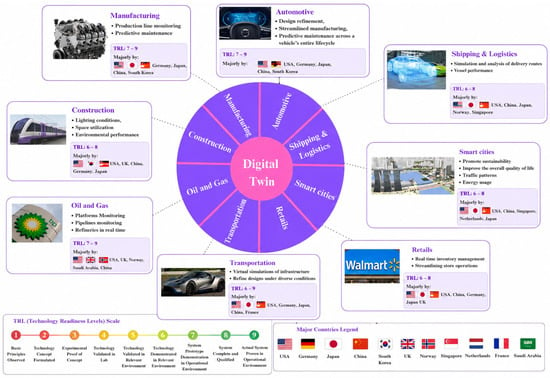
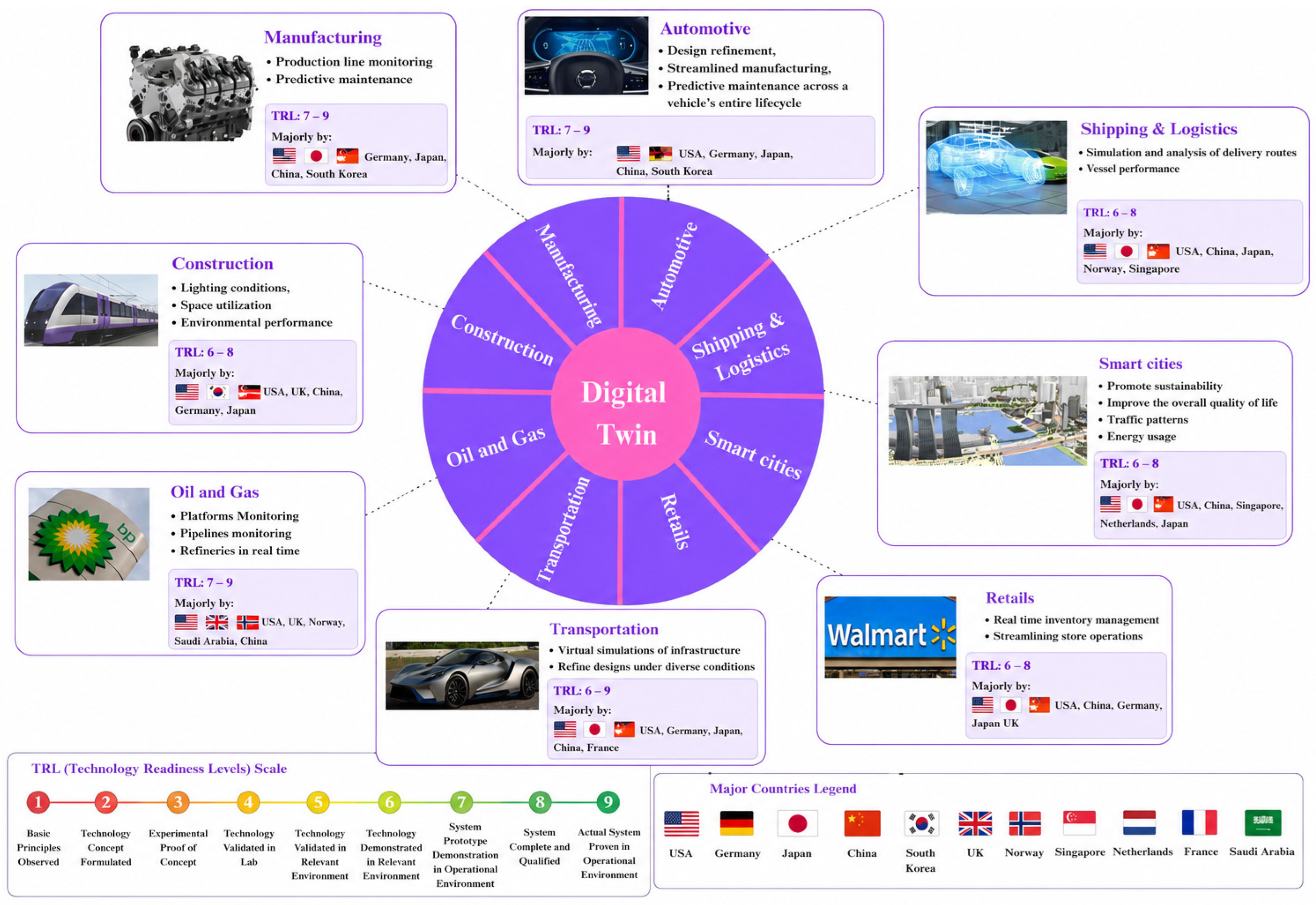
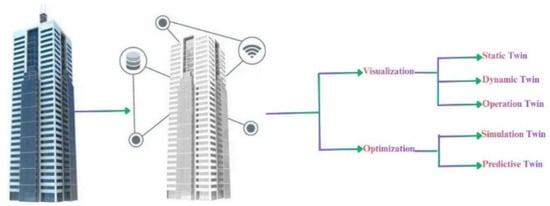
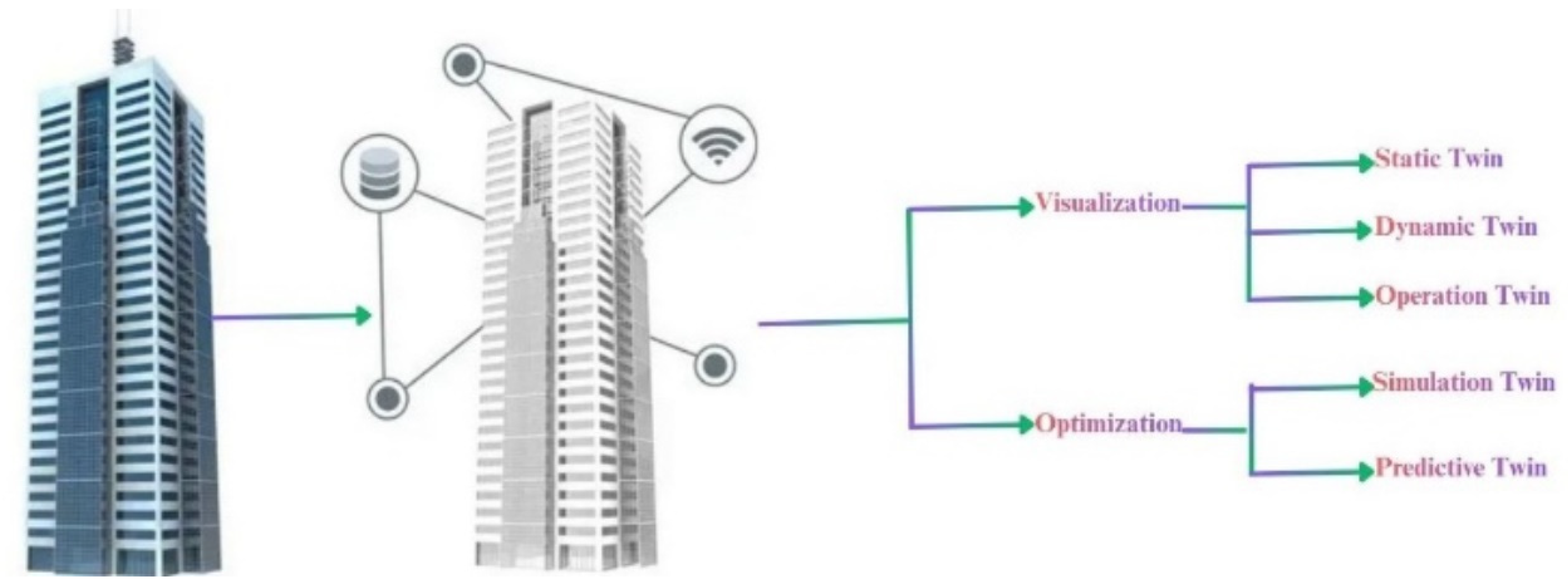
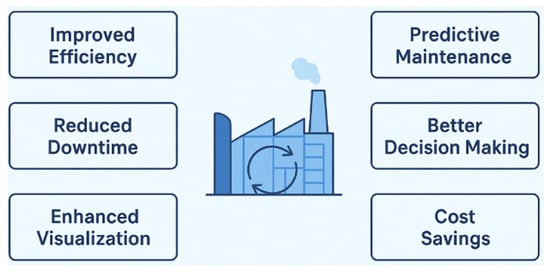
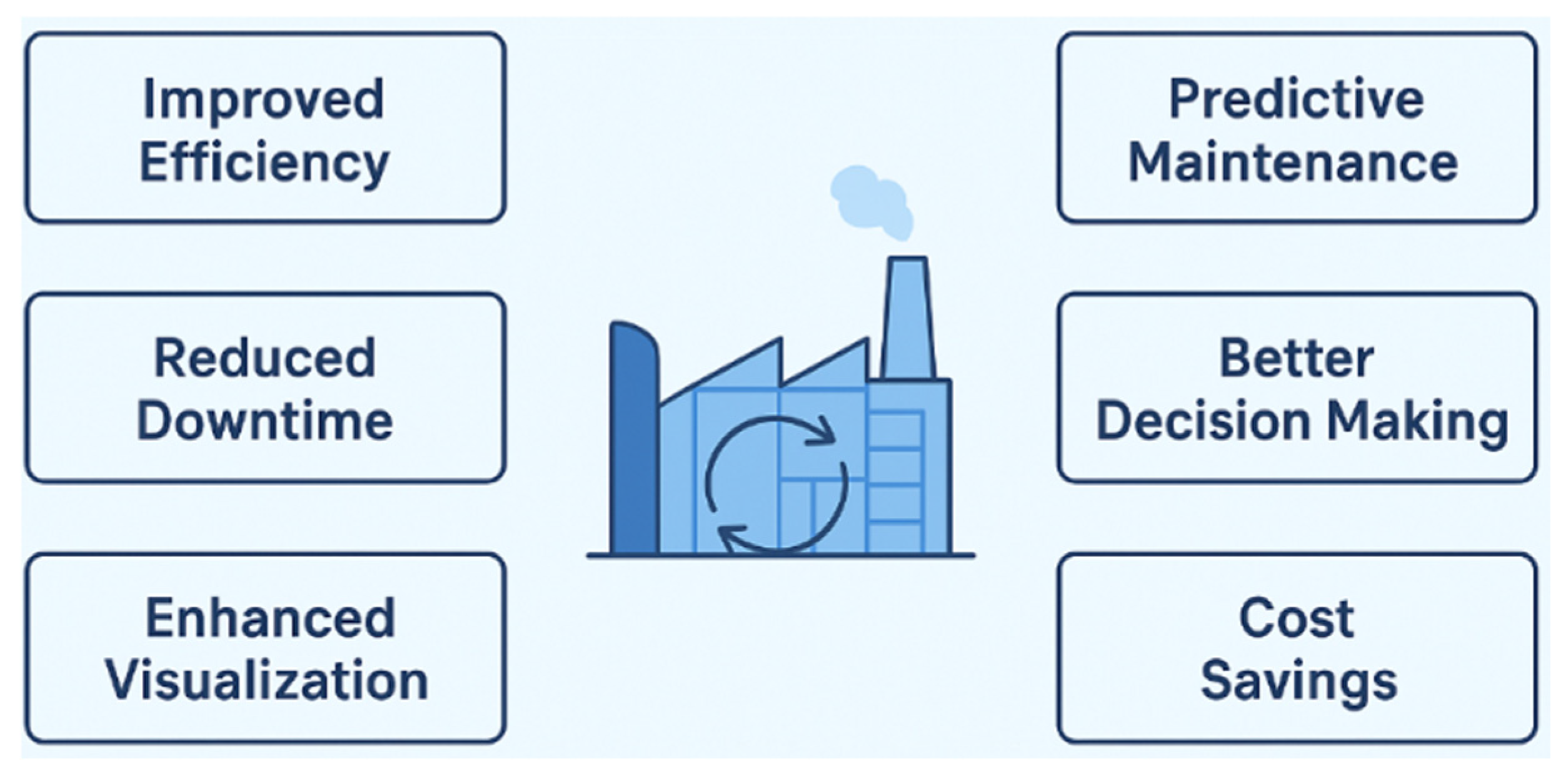
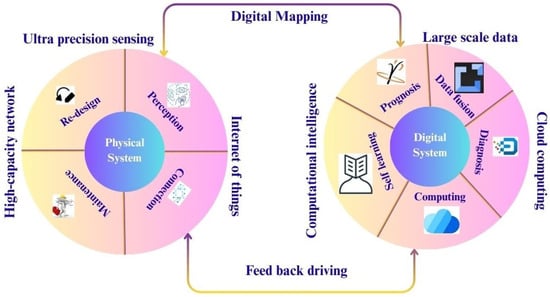
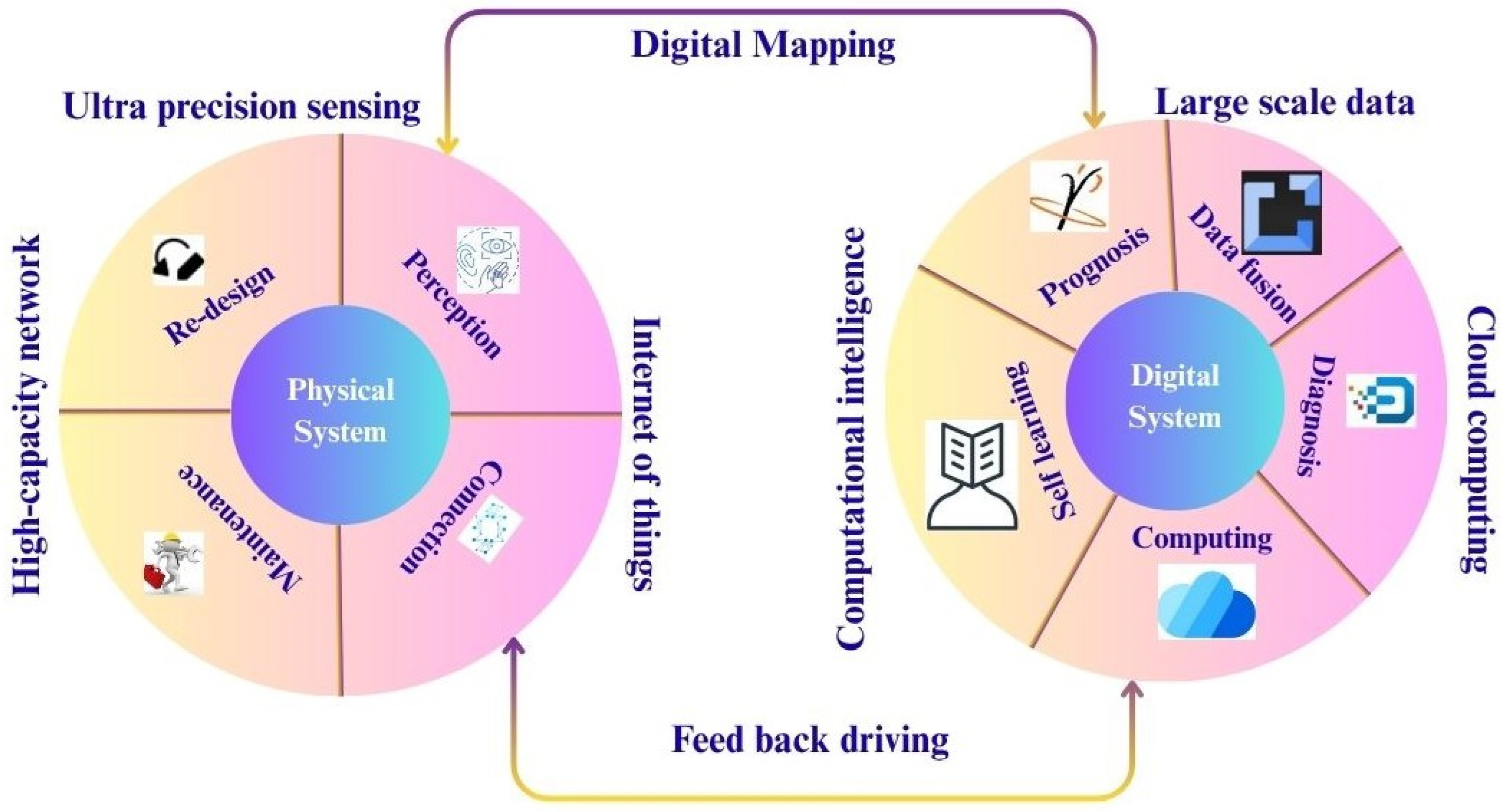
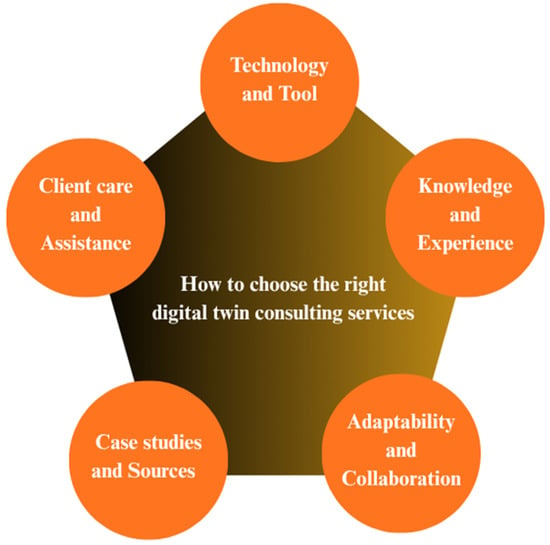
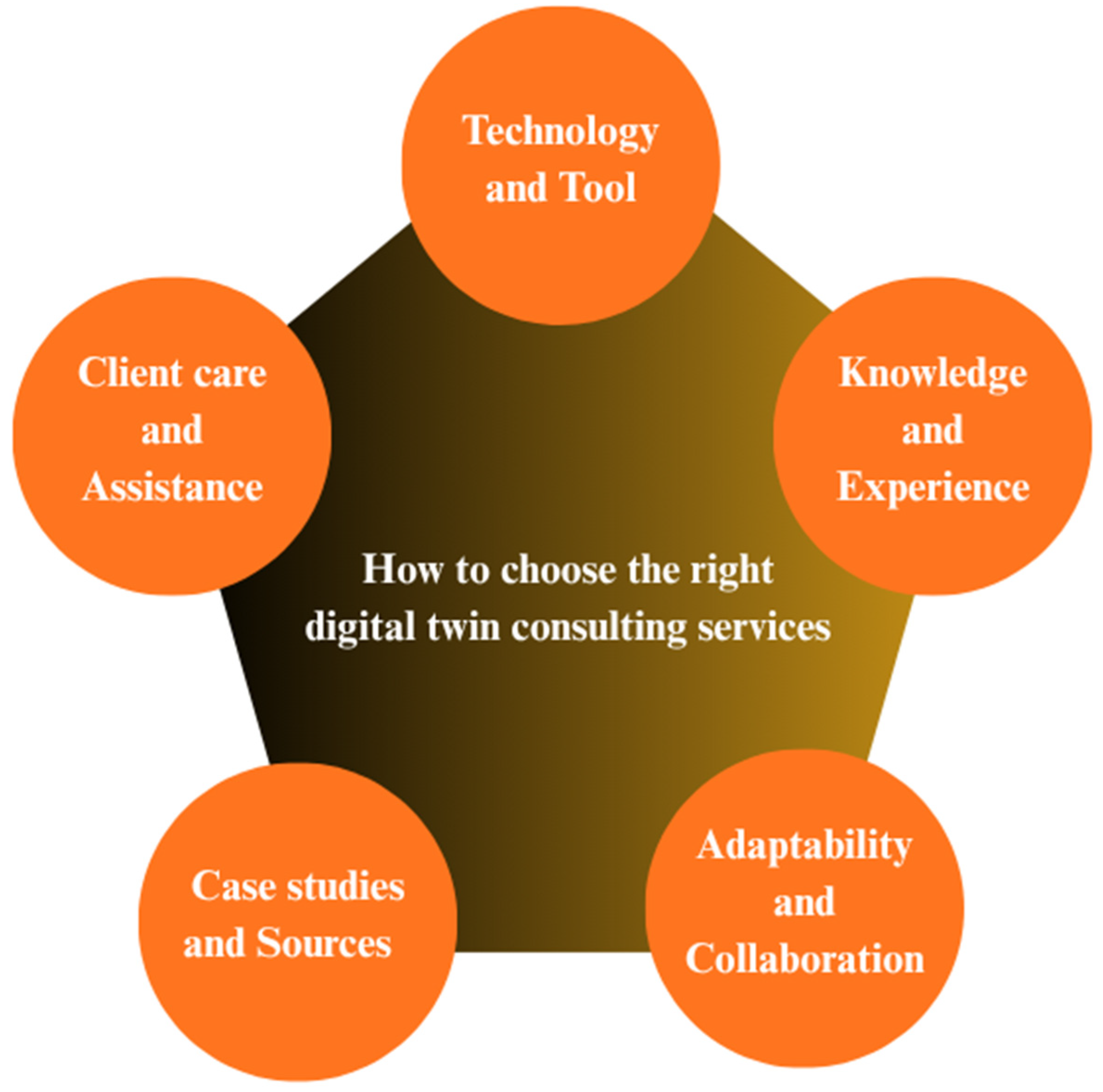
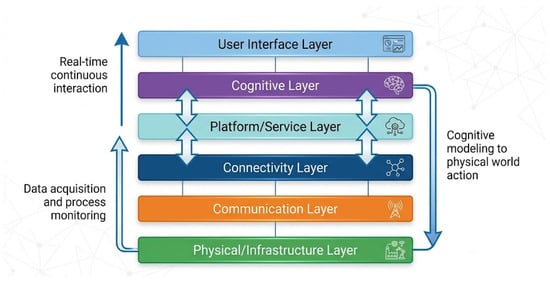
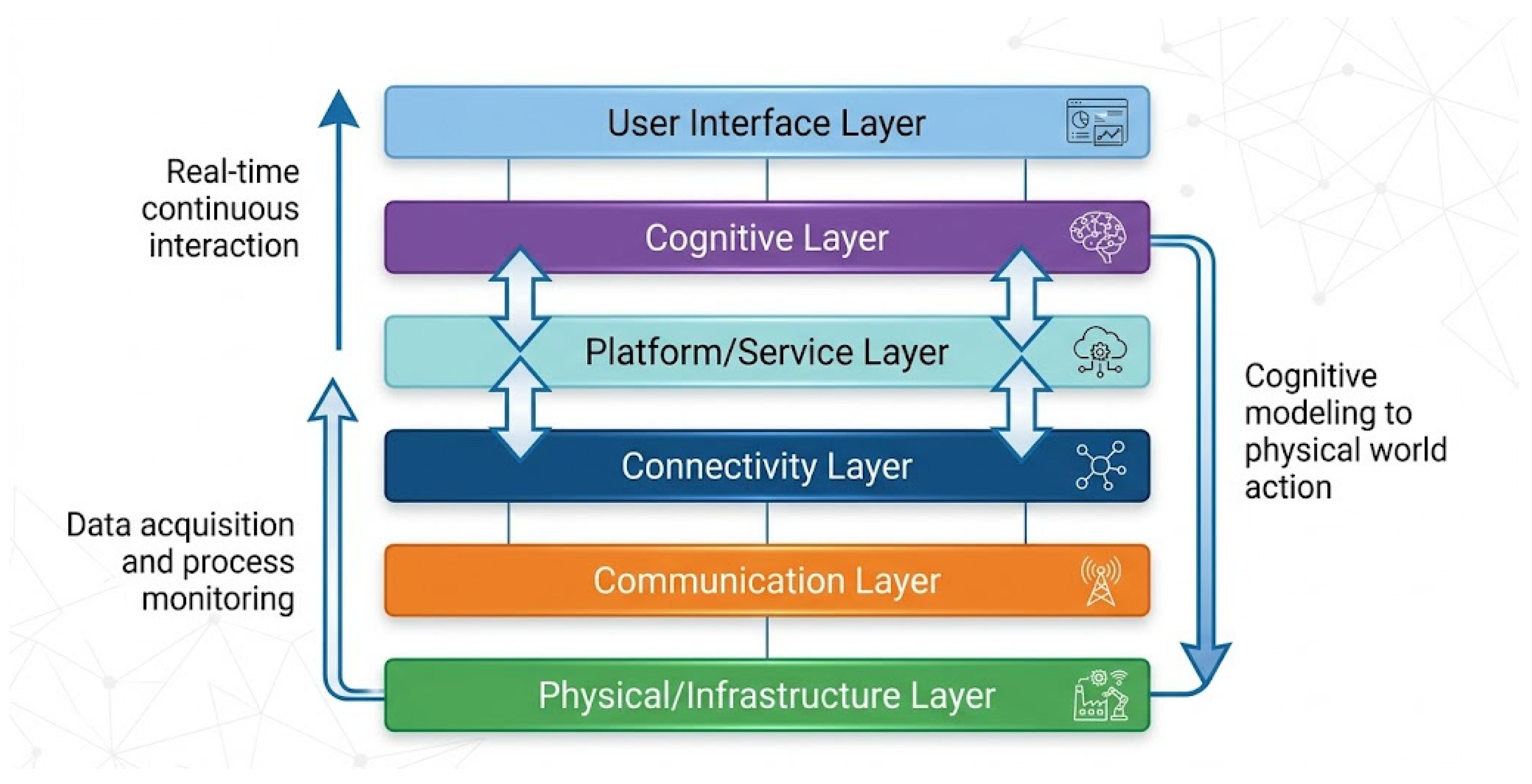
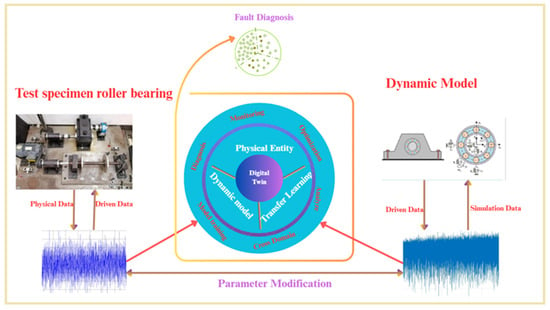
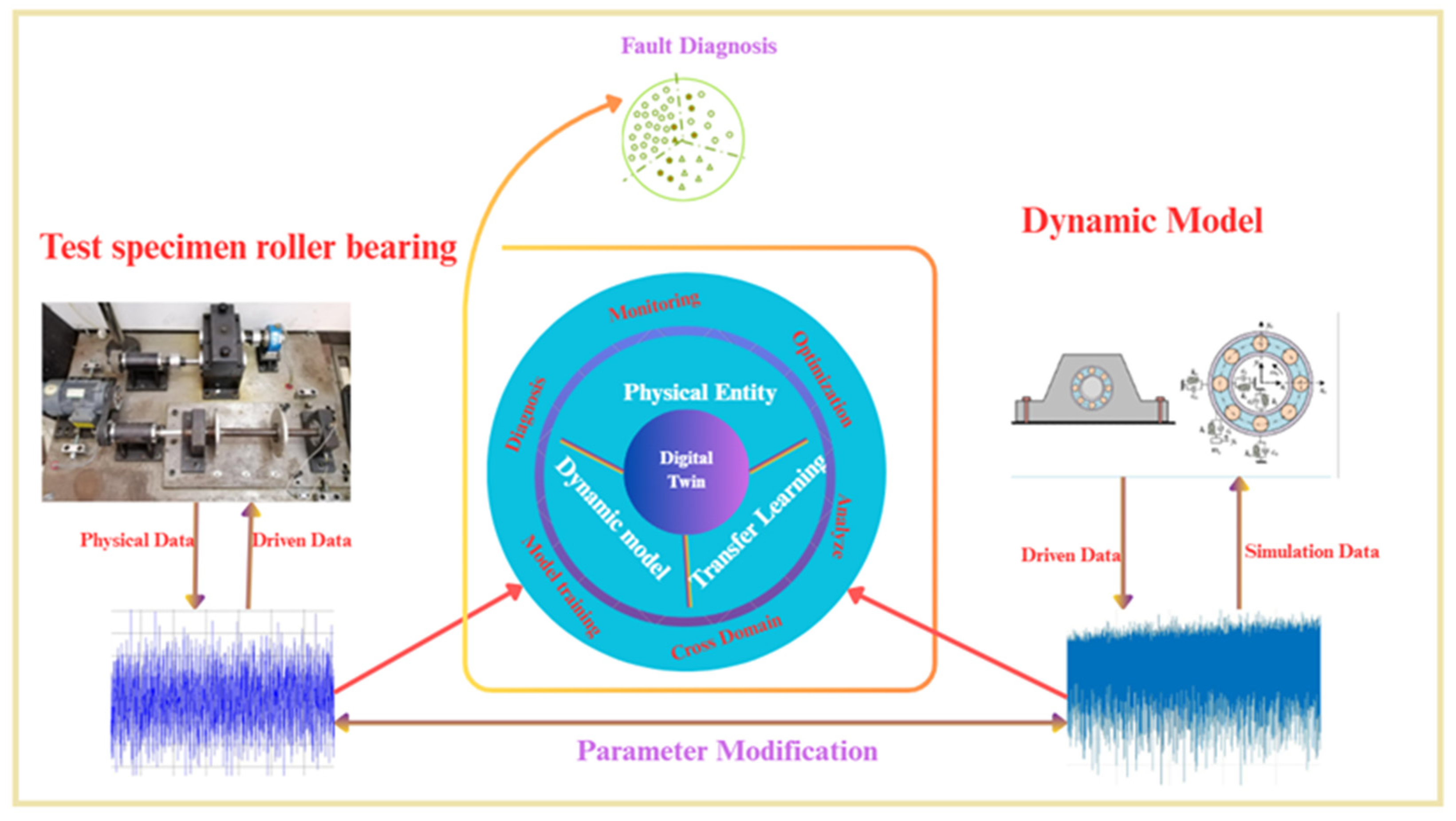
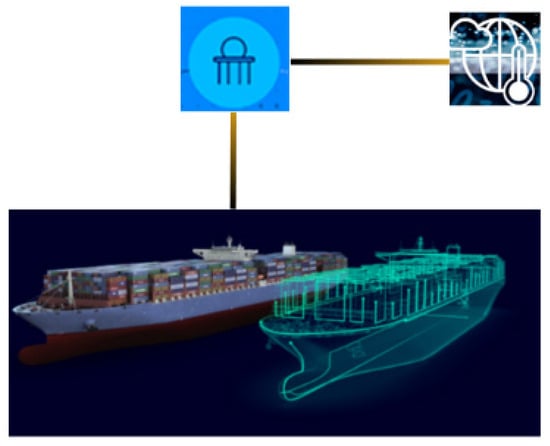
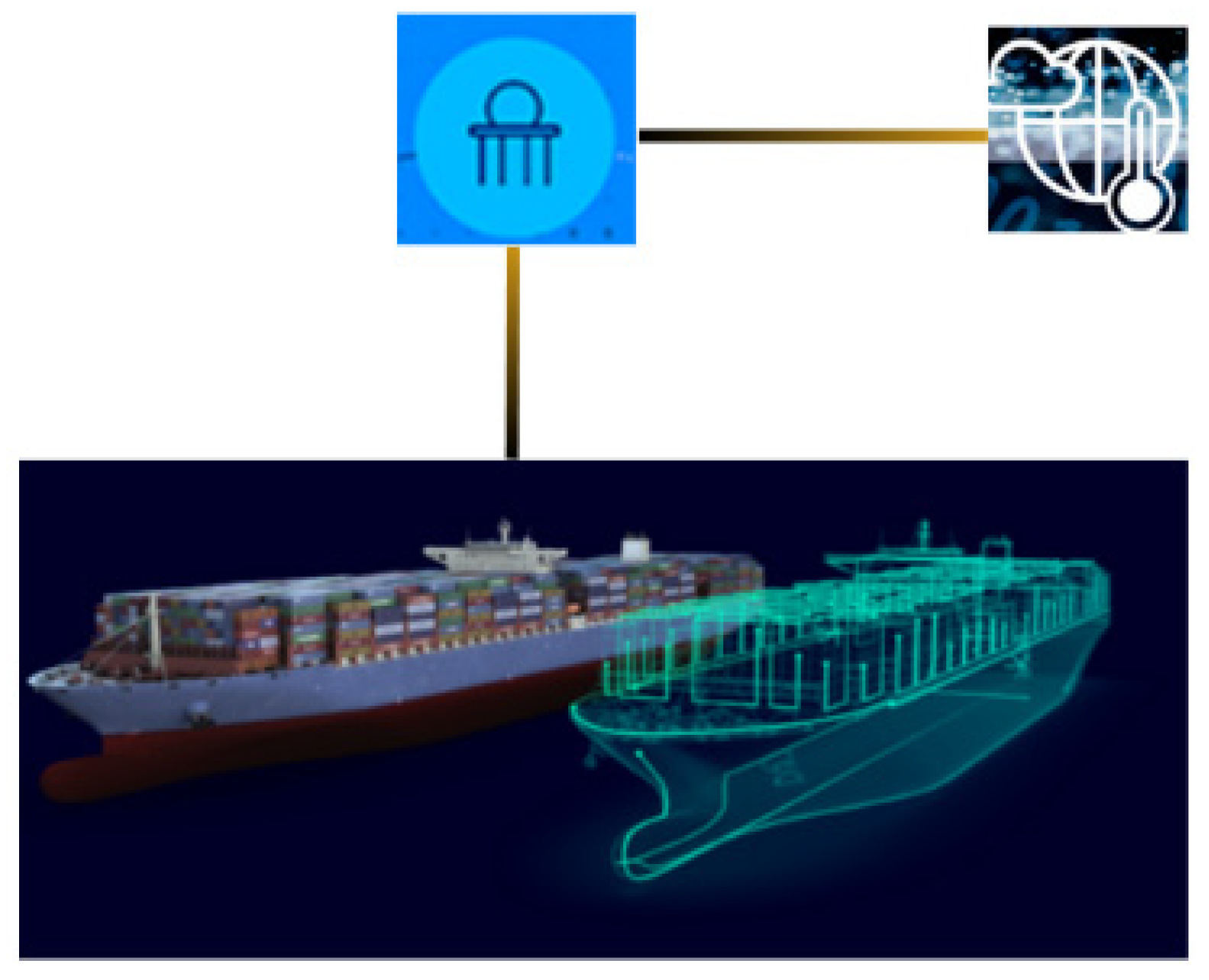
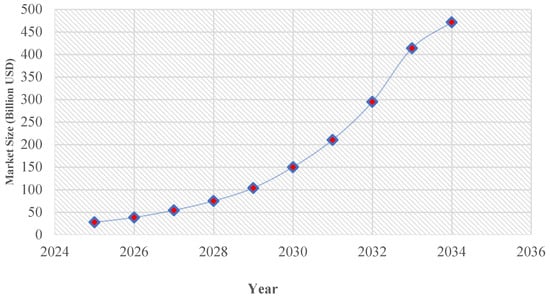
Disclaimer/Publisher’s Note: The statements, opinions and data contained in all publications are solely those of the individual author(s) and contributor(s) and not of MDPI and/or the editor(s). MDPI and/or the editor(s) disclaim responsibility for any injury to people or property resulting from any ideas, methods, instructions or products referred to in the content. |
© 2026 by the authors. Licensee MDPI, Basel, Switzerland. This article is an open access article distributed under the terms and conditions of the Creative Commons Attribution (CC BY) license.