


Abstract
The quality of edible oils is determined not only by the raw material, but also by the applied processing technology. Rapeseed oil is widely valued for its favorable fatty acid profile, however, the effects of combined pressing conditions and low-temperature bleaching on its lipid profile and calculated nutritional quality indices remain insufficiently characterized. This study aimed to evaluate the effects of oil production method and bleaching earth addition on the fatty acid profile, nutritional quality indices, and oxidizability-related indices of rapeseed oil from an applied food processing perspective. Rapeseed oil samples were obtained from a commercial producer using cold pressing, hot pressing, and mixed two-stage pressing. The oils were subjected to low-temperature bleaching with 1–5% bleaching earth. The fatty acid profile was determined by gas chromatography, and selected fatty acid-based indices were calculated and grouped into three categories: fatty acid class ratios, nutritional quality indices, and oxidizability-related indices. These included ratios describing the balance between omega-6 s omega-3 polyunsaturated fatty acids (Σ PUFA n-6/n-3), unsaturated and saturated fatty acids (Σ UFA/Σ SFA), and polyunsaturated and saturated fatty acids (Σ PUFA/Σ SFA). Health-oriented indices such as the Desirable Fatty Acids/Undesirable Fatty Acids ratio (Σ DFA/Σ OFA), hypocholesterolemic/hypercholesterolemic ratio (h/H), Nutritive Value Index (NVI), Atherogenic Index (AI), and Thrombogenic Index (TI), and oxidizability-related indices including the Unsaturation Index (UI), Peroxidizability Index (PI), Oxidizability Index (OI), calculated Oxidizability Value (Cox), and Oxidative Stability Index (OS). The results showed that the production method significantly influenced saturated fatty acid content and selected fatty acid-based nutritional quality indices. Cold-pressed oil was characterized by the lowest saturated fatty acid content and the most beneficial values of selected nutritional quality indices. Hot-pressed oil showed higher saturated fatty acid content and less favorable values for selected indices, whereas mixed oil generally showed values between those of cold-pressed and hot-pressed oils. However, differences in the main unsaturated fatty acid fractions were limited and, for most monounsaturated and polyunsaturated fatty acid parameters, were not statistically significant. Across all processing variants, the nutritional quality indices remained advantageous, with omega-6/omega-3 polyunsaturated fatty acid ratio values of 2.1–2.4, atherogenic index values of approximately 0.04–0.05, and thrombogenic index values of approximately 0.08–0.09. Although significant interactions between production method and bleaching earth addition were observed for selected oxidizability-related indices, the magnitude of bleaching-induced changes was limited. Overall, the findings indicate that low-temperature bleaching may be applied as a mild processing step without substantially compromising the fatty acid-based quality characteristics of rapeseed oil. The study provides practical insight into the relationship between pressing technology, bleaching conditions, and lipid quality assessment in industrial rapeseed oil production.
1. Introduction
The global vegetable oil market plays a crucial role in the agri-food and industrial sectors. Rapeseed oil represents a significant segment of this market, with production dominated by China, Canada, and the European Union [1,2,3,4,5,6,7]. The objective of oil industry producers is to maximize oil yield from seeds while maintaining high-quality parameters, making the optimization of production methods an ongoing priority [8].
Rapeseed oil can be obtained through various pressing methods. Cold pressing is performed without external heating, where the temperature increase results solely from friction in the press, with seed and oil outflow temperatures typically not exceeding 50 °C [9]. Hot pressing involves external heating of the raw material, with rapeseed temperatures during pressing typically ranging from 60 to 120 °C [10]. Solvent extraction using organic solvents represents another single-stage method [11]. In industrial practice, two-stage pressing (mixed system) is widely employed, where oil is cold-pressed in the first stage, followed by extrusion and subsequent hot pressing. According to previous studies, this method yields significantly higher oil recovery compared to single-stage pressing, however, the resulting oil has been reported to exhibit less favorable physicochemical and sensory characteristics [12,13]. It should be noted that sensory properties were not evaluated in the present study, and this statement is provided only as background information from the cited literature.
Following pressing, rapeseed oil undergoes purification processes including sedimentation, filtration, and refining. Complete refining comprises degumming, neutralization, bleaching, and deodorization, a cost-intensive process requiring precise equipment that small and medium enterprises (SMEs) typically cannot afford [14,15]. While refining may improve sensory attributes and extend shelf life, it can also affect various minor oil components, such as tocopherols, sterols, pigments, and phospholipids, as well as lipid composition-related quality parameters [16,17]. However, the present study focuses specifically on the fatty acid profile and fatty acid-based nutritional quality and oxidizability-related indices of rapeseed oil. Consequently, there is increasing interest in partial refining by oil mills, particularly bleaching as a milder technological step aimed mainly at improving selected quality attributes, such as color, clarity, sensory properties, and oxidative stability [18]. We hypothesized that low-temperature bleaching would maintain a relatively stable fatty acid profile and fatty acid-based lipid quality indices because, under mild room-temperature conditions, bleaching earth is expected to act mainly through adsorption of minor polar compounds rather than through chemical modification of fatty acids esterified in triacylglycerols.
Unrefined, cold-pressed oils are gaining attention due to their health-promoting properties. Consumption of vegetable oils, particularly rapeseed oil, has beneficial health effects due to the presence of essential unsaturated fatty acids (UFAs) [19,20]. Compared to flaxseed, sunflower, and soybean oils, rapeseed oil exhibits the lowest saturated fatty acid content (7.20%) and the highest monounsaturated fatty acid content (MUFA, 54.10%) [21,22,23]. A diet rich in vegetable oils with appropriate UFA/SFA ratios inhibits inflammatory reactions, reduces triacylglycerol and LDL (Low-Density Lipoprotein) cholesterol concentrations, and decreases cardiovascular disease risk, where SFAs refers to saturated fatty acids [24]. Cold-pressed and refined rapeseed oils are particularly valued for their high polyunsaturated fatty acid (PUFA) content, especially α-linolenic acid (~10%), low saturated fatty acid content (~6%), and optimal Σ PUFA n-6/n-3 ratio of 2:1 [25].
Changes in fatty acid composition are reflected in lipid health indices including: Σ PUFA n-6/n-3 ratio, Σ UFA/Σ SFA, Σ PUFA/Σ SFA, Desirable Fatty Acids/Undesirable Fatty Acids ratio (Σ DFA/Σ OFA), hypocholesterolemic/hypercholesterolemic ratio (h/H), Nutritive Value Index (NVI), Atherogenic Index (AI), Thrombogenic Index (TI), and oxidizability indicators including Unsaturation Index (UI), Peroxidizability Index (PI), Oxidizability Index (OI), Oxidizability Value (Cox), and Oxidative Stability Index (OS) [26,27,28,29,30,31,32]. These indices provide a comprehensive assessment of nutritional quality and oxidation susceptibility of edible oils.
Although fatty acid-based nutritional and oxidizability-related indices can be calculated from fatty acid composition data, they are not always reported in a systematic and directly comparable form, particularly for oils obtained using different pressing technologies and subjected to partial refining. Previous studies have most often focused on fatty acid profiles of cold-pressed oils, whereas systematic reporting of pre-calculated lipid quality indices for hot-pressed and industrial mixed oil streams remains limited [27,28]. Although two-stage pressing systems combining first-stage cold pressing, extrusion, and subsequent hot pressing are used in industrial practice to increase oil yield, published studies rarely characterize the actual mixed oil stream generated under plant-specific operating conditions. In the cooperating medium-sized oil mill in the Greater Poland region, the mixed oil represented an industrially relevant process stream, with an approximate composition of 84% cold-pressed oil and 16% hot-pressed oil, rather than a laboratory-prepared blend. Therefore, the present study focuses on a plant-specific industrial variant of the mixed system, whose fatty acid-based quality after low-temperature bleaching remains insufficiently described. Furthermore, studies on low-temperature bleaching typically emphasize pigment reduction and color improvement, while rarely providing a broad panel of fatty acid-based quality indices across varying bleaching earth doses [33,34,35]. Therefore, in the present study, fatty acid composition was reported together with a comprehensive set of fatty acid-based nutritional and oxidizability-related indices for cold-pressed, hot-pressed, and mixed oils subjected to low-temperature bleaching, enabling a direct comparison across processing variants.
The aim of this study was to assess the effect of oil production methods (cold-pressed, hot-pressed, and mixed) and bleaching earth addition (1, 2, 3, 4, and 5%) on the fatty acid profile and lipid health indices of rapeseed oil.
Specifically, we address two key questions:
- How does the rapeseed oil production method affect changes in fatty acid profile and lipid health indices?
- What is the relationship between bleaching earth quantity and these parameters?
The contribution of this work lies in the systematic quantitative assessment of how existing industrial processing technologies, specifically two-stage pressing combined with low-temperature bleaching, affect fatty acid–based quality indices of rapeseed oil. This study provides a comprehensive dataset of 15 lipid profile indicators across cold-pressed, hot-pressed, and mixed oils subjected to varying bleaching earth concentrations (1–5%), offering practical guidance for small and medium oil enterprises seeking to optimize product quality within existing technological frameworks. Given the collaboration with an oil mill in the Greater Poland voivodeship and the strong industry interest in this topic, the findings have direct applicability for SME oil producers seeking cost-effective partial refining alternatives. The originality of this study lies in combining an industrially relevant two-stage rapeseed oil pressing system with low-temperature bleaching and a broad fatty acid-based quality assessment. Unlike studies focused mainly on conventional refining, pigment removal, or basic fatty acid composition, the present work compares cold-pressed, hot-pressed, and industrial mixed oil streams using a directly comparable set of nutritional quality and oxidizability-related indices. This approach provides new applied insight into how mild bleaching conditions affect the lipid quality profile of rapeseed oil under conditions relevant to small- and medium-sized oil enterprises.
2. Materials and Methods
2.1. Research Material, Technological Process, and Two-Factor Experimental Design
This section describes the research material, industrial rapeseed oil production process, experimental factors, bleaching conditions, and response variables analyzed in the study.
Oils were obtained from a medium-sized oil producer located in the Greater Poland voivodeship. Industrial double-zero “00” rapeseed with moisture content up to 7.5% and impurity content up to 0.5% was used for oil production. Seeds were stored in a silo at an average annual temperature of 12.5 °C.
To clarify the level of replication, the experimental material was obtained from three independent industrial production cycles conducted at the cooperating oil mill. Within each production cycle, oils were collected from three technological streams: cold-pressed oil, hot-pressed oil, and mixed oil. The collected oils were then divided into subsamples and assigned to six treatment variants: the control sample and 1%, 2%, 3%, 4%, and 5% bleaching earth addition. For each oil type × treatment combination, six technical subsamples were prepared and analyzed within each production cycle. Consequently, each oil type × treatment combination comprised 18 observations (6 technical subsamples × 3 production cycles), and the total number of analyzed samples was 324. The three production cycles should be interpreted as independent technological replicates, whereas the subsamples within each cycle represent process replicates rather than independent biological replicates from different rapeseed cultivars or seed lots.
Research material consisted of rapeseed oil samples (n = 324), including:
- Cold-pressed oil from the first pressing stage (n = 108);
- Hot-pressed oil from the second pressing stage (n = 108);
- Mixed oil from blended first- and second-stage oils (n = 108).
- The sampling structure and number of observations resulting from the three production cycles and technical subsampling are presented in Table 1.
Table 1.
Experimental design and number of rapeseed oil samples analyzed.
The bleaching earth used in the experiment was Sepigel Supreme 200 RF (SEPIOL, S.A.U., Azuqueca de Henares, Spain), and its mineral composition and physicochemical characteristics are presented in Table 2.
Table 2.
Physicochemical characteristics and mineral composition of the bleaching earth used in the low-temperature bleaching process.
Rapeseed oil was produced in a two-stage system consisting of two screw presses of the same type (FARMET S1000 DL, manufacturer Farmet, located in Česká Skalice, Czech Republic) and an extruder (EXTRUDER FE 1000L, manufacturer Farmet, located in Česká Skalice, Czech Republic). In stage I, oil was obtained by cold pressing. The temperature of the oil flowing from the press was 45 °C. Cold-pressed oil was directed to a buffer tank. Press cake from press I was directed to the extruder, heated to 120 °C, and re-pressed hot in the second press. The temperature of oil from stage II pressing, measured in the buffer tank, was 65 °C. This value should be interpreted as the tank temperature after discharge and partial cooling, not as the maximum temperature at the critical heating point of the extruder or press II. This represents a limitation of industrial thermal monitoring, as direct temperature measurement at the point of maximum friction was not available under production conditions. Oil from stage II pressing was directed to storage or a buffer tank, where it was mixed with stage I oil and subjected to filtration. The filter used was an AMAFILTER, model NVD1200-40/1800 (Filtration Group BV, Lochem, The Netherlands), with a surface area of 40 m2 and operating pressure of 6 bar. After filtration, mixed oil with a temperature of approximately 42 °C was obtained. The mixed oil analyzed in this study was not prepared as a laboratory blend with different tested proportions of cold-pressed and hot-pressed oil. It represented the actual industrial oil stream obtained during the two-stage pressing process used by the cooperating oil mill. Monitoring of all production parameters since 2016 enabled the determination that the percentage composition of the mixed oil was approximately 84% cold-pressed oil and 16% hot-pressed oil. Therefore, the study focused on the assessment of this industrially relevant mixed-oil variant rather than on the optimization of blending ratios. After filtration, mixed oil was directed from the production line to storage. Oil samples from all stages were collected directly from presses I and II and the filter at the oil facility into 1 dm3 dark glass bottles to reflect retail conditions and maintain the highest oil quality. Subsequently, cold-pressed, hot-pressed, and mixed oils were transported by refrigerated transport to the research laboratory of the Department of Agroengineering and Quality Analysis at Wroclaw University of Economics and Business. Cold-pressed and hot-pressed oils, due to the presence of large amounts of sediment, were subjected to membrane filtration using a Büchner funnel under vacuum. Mixed oil did not require purification due to the AMAFILTER used at the oil facility, providing research material. Contaminant-free oil samples were subjected to bleaching at room temperature. Into beakers, 200 g of oil was weighed, followed by the addition of bleaching earth in amounts from 1% to 5% (by mass), i.e., 2, 4, 6, 8, and 10 g, respectively. Oil with bleaching earth was mixed using a Heidolph Instruments mechanical stirrer (Heidolph Instruments GmbH & Co. KG, Schwabach, Germany), at 300 rpm for 30 min at room temperature (approximately 21 ± 1 °C). The same contact time, stirring speed, oil mass, and bleaching earth dose range were applied to all oil types. Subsequently, oil was re-filtered as in the initial case. Control samples of rapeseed oil, as well as oil obtained after the low-temperature bleaching process, were transferred into dark glass bottles with a capacity of 250 cm3, tightly sealed, and stored under refrigeration at 4 ± 1 °C during the intervals between physicochemical analyses. The technological process flow is presented in Figure 1, whereas Figure 2 presents the two-factor experimental design, including the independent variables, controlled bleaching conditions, and response variables. The independent variables were oil type (cold-pressed, hot-pressed, and mixed oil) and bleaching earth addition level (CS, 1%, 2%, 3%, 4%, and 5%). The response variables included fatty acid composition, fatty acid-based nutritional quality indices, and oxidizability-related indices.
Figure 1.
Technological flow diagram of the rapeseed oil production process, including raw-material input, unit operations, intermediate streams, and sampling points. C—cold-pressed oil; H—hot-pressed oil; M—blended oil obtained from a mixture of cold-pressed and hot-pressed oils.
Figure 2.
Two-factor experimental design showing the independent variables, i.e., oil type (C, H, M) and bleaching earth addition level (CS, 1%, 2%, 3%, 4%, and 5%), together with controlled bleaching conditions and response variables analyzed in the study. C—cold-pressed oil; H—hot-pressed oil; M—mixed oil.
The low-temperature bleaching process was carried out using bleaching earth, the characteristics of which are presented in Table 2.
The control treatments comprised: cold-pressed oil obtained in the first pressing stage (n = 18), hot-pressed oil obtained in the second pressing stage (n = 18), and blended oil obtained by mixing oils from the first and second pressing stages (n = 18), none of which were subjected to filtration or bleaching. The experiment was conducted in three experimental cycles. In each cycle, 108 oil samples were analyzed, including 36 samples of cold-pressed oil from the first pressing stage, 36 samples of hot-pressed oil from the second pressing stage, and 36 samples of mixed oil obtained by mixing oils from the first and second pressing stages.
2.2. Research Methods
The fatty acid profiles of the tested oils were determined by gas chromatography. Prior to analysis, samples were converted to fatty acid methyl esters (FAMEs) according to the AOCS Ce 2-66 method [36]. FAMEs were separated using an Agilent 7890A gas chromatograph (Agilent Technologies, Santa Clara, CA, USA) equipped with a flame ionization detector (FID) and a J&W Scientific HP-88 capillary column (100 m × 0.25 mm internal diameter × 0.20 μm film thickness). Helium was used as the carrier gas at a constant flow rate of 1.0 mL/min. The oven temperature program was as follows: initial temperature 100 °C held for 4 min, increased at 3 °C/min to 240 °C, and held for 15 min. The injector and detector temperatures were set at 250 °C and 280 °C, respectively. Split injection was applied with a split ratio of 50:1 and an injection volume of 1 μL. Individual fatty acids were identified by comparing retention times with those of a certified FAME standard mixture (Supelco 37 Component FAME Mix, Sigma-Aldrich, St. Louis, MO, USA). Quantification was performed by normalization of peak areas, and results were expressed as the percentage of total identified fatty acids. Data acquisition and integration were carried out using Agilent Technologies ChemStation software.
Fatty acid proportions were calculated as percentages of the sum of all identified fatty acids using Agilent Technologies ChemStation software.
Based on the fatty acid profile determined by gas chromatography, selected fatty acid-based nutritional quality indices and oxidizability-related indices of the rapeseed oils were calculated using Equations (1)–(15). The oxidizability-related indices included the Unsaturation Index (UI), Peroxidizability Index (PI), Oxidizability Index (OI), calculated Oxidizability Value (Cox), and Oxidative Stability Index (OS) [27,31,32,37,38,39,40,41,42].
Ʃ PUFA n-6/n-3
Ʃ UFA/Ʃ SFA
Ʃ PUFA/Ʃ SFA
Ʃ DFA (dietary FA having a desirable neutral hypocholesterolemic effect in humans) = (Σ MUFA + Σ PUFA + C18:0)
Ʃ OFA (dietary FA having an undesirable hypercholesterolemic effect in humans) = (C14:0 + C16:0)
Ʃ DFA/Ʃ OFA
h/H (Hypocholesterolemic/Hypercholesterolemic Index) = [(C18:1 n-9 + C18:1 n-7 + C18:2 n-6 + C18:3 n-6 + C18:3 n-3 + C20:3 n-6 + C20:4 n-6 + C20:5 n-3 + C22:4 n-6 + C22:5 n-3 + C22:6 n-3)/(C14:0 + C16:0)]
NVI (Nutritive Value Index) = (C 18:0 + C18:1)/C 16:0
AI (Atherogenic Index) = (C 12:0 + 4 × C 14:0 + C 16:0)/Σ UFA
TI (Thrombogenic Index) = (C 14:0 + C16:0 + C18:0)/[(0.5 × Σ MUFA) + (0.5 × Σ PUFA n-6) + (3 × Σ PUFA n-3) + (Σ PUFA n-3/Σ n-6)]
UI (Unsaturation Index) = 1 × (% monoenoics) + 2 × (% dienoics) + 3 × (% trienoics) + 4 × (% tetraenoics) +5 × (% pentaenoics) + 6 × (% hexaenoics)
PI (Peroxidizability Index) = (monoenoic acid × 0.025) + (dienoic acid × 1) + (trienoic acid × 2) + (tetraenoic acid × 4) + (pentaenoic acid × 6) + (hexaenoic acid × 8)
OI (Oxidizability Index) = (0.02 · (C16:1 + C18:1) + 1 · C18:2 + 2 · C18:3)/100
Cox (Oxidizability Value) = (C18:1 + (10.3 · C18:2) + (21.6 · C18:3))/100
OS (Oxidative Stability) = MUFA + (45 · C18:2) + (100 · C18:3)
It should be emphasized that the oxidizability-related indices, including UI, PI, OI, Cox, and OS, were calculated from the fatty acid composition. Therefore, these parameters represent theoretical indicators of oxidation susceptibility associated with the degree of fatty acid unsaturation, rather than direct experimental measurements of oxidative stability. Direct oxidation assays, such as peroxide value, p-anisidine value, TOTOX value, Rancimat induction time, or accelerated storage tests, were not performed within the scope of the present study.
Prior to ANOVA, model assumptions were verified using residual diagnostics (normality and homogeneity of variance). Where required—primarily for ratio-based lipid health indices and oxidizability indicators—a logarithmic transformation was applied to stabilize variance and improve the normality of residuals. The transformation was used only for inferential testing, whereas descriptive statistics were calculated and reported on the original scale as mean ± standard deviation. Subsequently, a two-factor analysis of variance was performed within an orthogonal experimental design. Differences among group means were assessed for statistical significance using Tukey’s test at a significance level of p ≤ 0.05. All statistical procedures were conducted using Statistica software, version 13.3 (StatSoft, Cracow, Poland). In addition to two-factor ANOVA, Spearman’s rank correlation analysis was performed as part of the statistical analysis to assess monotonic relationships between selected oxidizability-related indices and fatty acid-based nutritional quality indices. The analyzed oxidizability-related indices included UI, PI, OI, Cox, and OS. Pairwise deletion was used to handle missing data, and Spearman’s correlation coefficients were considered statistically significant at p < 0.05.
3. Results and Discussion
Across all experimental variants, the fatty acid profile of rapeseed oil followed the characteristic pattern SFA < PUFA < MUFA. The results are discussed below in a logical sequence, beginning with saturated fatty acids, followed by monounsaturated and polyunsaturated fatty acids, and then by fatty acid-based nutritional quality and oxidizability-related indices. The fatty acid composition is presented in Table 3, Table 4 and Table 5, whereas the calculated lipid profile, nutritional quality, and oxidizability-related indices are shown in Table 6. The effects of oil type (T), bleaching earth addition level (A), and their interaction (T × A) were evaluated for each parameter. For the fatty acid composition presented in Table 3, Table 4 and Table 5, bleaching earth addition did not produce significant within-row differences. Therefore, redundant homogeneous superscript letters indicating the absence of significant differences between bleaching earth addition levels were removed from these tables to improve readability. Superscript letters were retained only where they indicate statistically significant differences between oil types.
Table 3.
Saturated fatty acid content of rapeseed oils with the addition of bleaching earth.
Table 4.
Monounsaturated fatty acid content of rapeseed oils with the addition of bleaching earth.
Table 5.
Polyunsaturated fatty acid content of rapeseed oils with the addition of bleaching earth.
Table 6.
Lipid profile and nutritional quality indices.
3.1. Fatty Acid Composition
3.1.1. Saturated Fatty Acids (SFAs)
The dominant saturated fatty acid was palmitic acid (C16:0), with the significantly highest content observed in hot-pressed oil and significantly lowest in cold-pressed oil. Stearic acid (C18:0) content, second in proportion in the SFA profile, was significantly highest in hot-pressed oil compared to cold-pressed and mixed oils. Total SFA content was significantly highest—and thus least favorable—in hot-pressed oil, and significantly lowest in cold-pressed oil (Table 3).
Statistical analysis demonstrated that oil type (factor T) exerted a significant influence on all analyzed SFA levels (p < 0.001). However, the addition of bleaching earth (factor A) in amounts ranging from 1% to 5% by mass did not cause significant changes in the individual saturated fatty acid content or their sum (p > 0.05). Importantly, these findings apply specifically to the low-temperature bleaching protocol used in this study (1–5% bleaching earth under the applied conditions) and should not be directly extrapolated to conventional industrial high-temperature bleaching or full refining processes, where process conditions and removal mechanisms may differ. The interaction of both factors (T × A) was also statistically non-significant (p > 0.05), indicating that the effect of oil type on SFAs was similar regardless of bleaching earth addition (Table 3).
Research by Rincón-Cervera et al. [43] demonstrated that total SFA content in rapeseed oil was similar to the present study, ranging from 6.70 to 6.76 g/100 g (i.e., 6.70–6.76%). Similarly to the present analyses, these authors indicated that palmitic and stearic acids dominated in the rapeseed oil they studied, with C16:0 ranging from approximately 4.11% to 4.19% and C18:0 ranging from approximately 1.55% to 1.62%. Analogously, myristic acid (C14:0) occurred in trace amounts (approximately 0.05%). However, these authors did not observe statistically significant differences in SFA content between cold-pressed and hot-pressed oil, nor before and after refining (p ≈ 0.88 for ΣSFA). The present results are consistent with those reported by Wroniak [44], who found Σ SFA values for cold-pressed oils ranging from 6.7% to 7.3%, with C16:0 concentrations varying from approximately 4.1% to 4.4% and C18:0 concentrations from approximately 1.5% to 1.8%. Ghazani et al. [45] also reported Σ SFA ranges of approximately 4.8–6.1%, depending on production method (in cold-pressed oil: C16:0 approximately 3.3%, C18:0 approximately 1.5%; in hot-pressed oil: approximately 4.2% and 1.9%, respectively). In contrast to the present research, Golimowski et al. [34] observed an approximately 17% decrease in SFAs during hemp oil bleaching, accompanied by a proportional increase in PUFAs. This comparison should be interpreted cautiously, because rapeseed oil and hemp oil differ substantially in triacylglycerol composition, fatty acid distribution, and thermal behavior. Therefore, the observed differences indicate that bleaching-induced shifts in fatty acid classes may be matrix-dependent rather than directly transferable between different oils.
3.1.2. Monounsaturated Fatty Acids (MUFAs)
Clinical studies confirm that diets rich in rapeseed oil (with low SFAs and high MUFAs/PUFAs) significantly lower total cholesterol and LDL compared to diets high in saturated fats [46]. Oleic acid (C18:1 n-9) constituted the dominant MUFA fraction in tested rapeseed oils (Table 4), achieving mean values from 57.60% in cold-pressed oil to 59.43% in mixed oil, with no statistically significant effects of oil type, bleaching earth dose, or their interaction (p > 0.05). According to research by Stojanović et al. [47], oleic acid is also the dominant MUFA in rapeseed oil, with a content at a level consistent with the present study, around 60% (approximately 57–62%) of total fatty acids. Comparable values and similarly minor or non-significant differences between cold-pressed, hot-pressed and refined or bleached oils have also been reported [48,49].
The total MUFA content in the conducted study ranged from 58.80% to 60.67%, confirming the dominant proportion of this fraction in the overall fatty acid profile of the analyzed oils. However, these values remained statistically homogeneous across oil types and bleaching earth addition levels (p > 0.05), indicating that neither the production method nor low-temperature bleaching significantly affected total MUFA content. The absence of a significant T × A interaction for all analyzed MUFA parameters further indicates that bleaching earth addition did not modify MUFA composition differently depending on the oil production method (Table 4). Similar findings regarding Σ MUFA stability after bleaching or refining have been reported previously [44,48].
3.1.3. Polyunsaturated Fatty Acids (PUFAs)
Rapeseed oil primarily provides two PUFAs: linoleic acid (LA, C18:2 n-6) at approximately 20–22% and α-linolenic acid (ALA, C18:3 n-3) at approximately 9–11% of total composition, both of which are essential and affect health [50]. In the analyzed cold-pressed, hot-pressed, and mixed rapeseed oil samples, the dominant polyunsaturated fatty acids were also LA and ALA, with content consistent with the literature data (Table 5). Linoleic acid exhibited the highest mean content in hot-pressed oil among control samples (22.22%) and the lowest in mixed oil (20.79%). These values differed between samples, however, statistical analysis did not demonstrate significant effects of oil type (T), bleaching earth addition (A), or the T × A interaction on this acid content (p > 0.05). The mean α-linolenic acid content in the tested oils ranged from 9.47% to 10.35%. The highest values were noted in mixed oil. However, differences between oil types and effects of bleaching earth addition were not statistically significant (p > 0.05) (Table 5).
Total PUFA content in the analyzed rapeseed oils was highest among control samples in hot-pressed oil (up to 32.25%) and lowest in mixed oil (30.79%). Despite noticeable differences in mean values between samples with bleaching earth additions, none reached statistical significance; factor T (oil type), A (bleaching earth addition), and their T × A interaction did not exert significant effects on total PUFA content (p > 0.05) (Table 5). Similar conclusions were presented by Kraljić et al. [51], who found no effect of dehulling temperature (and indirectly, the pressing method) on the fatty acid profile of rapeseed oil. Wroniak et al. [48] report similar Σ PUFA values for rapeseed oils obtained by various methods (C18:2 n-6 from approximately 18% to 19%, C18:3 n-3 from approximately 8% to 9%). Ghazani et al. [45] report slightly higher LA and ALA proportions in cold-pressed oil compared to hot-pressed oil. Still, these differences are minor and fall within typical variation between rapeseed species or varieties. As in other literature reports, the bleaching process did not affect Σ PUFA. Data indicate that the type of oil and the amount of bleaching earth addition do not significantly alter the fatty acid profile composition of rapeseed oil [51].
The absence of significant effects of bleaching earth addition on fatty acid profile composition is consistent with the minor contribution of phospholipids to total oil mass and their similar fatty acid composition compared to the predominant triacylglycerol fraction. Moreover, the bleaching earth used in this study acts mainly as an adsorbent and is therefore expected to remove polar minor compounds, pigments, phospholipids, trace metals, and oxidation products rather than chemically modify fatty acids esterified in triacylglycerols. Under the low-temperature conditions applied in this study, possible changes in fatty acid percentages may therefore result primarily from selective adsorption of minor lipid fractions or proportional shifts in the oil matrix, not from direct transformation of fatty acids. Future studies incorporating phospholipid-specific analysis and absolute fatty acid quantification would provide complementary mechanistic insight.
Overall, the comparison of cold-pressed, hot-pressed, and mixed oils indicates that the production method affected mainly the saturated fatty acid fraction, whereas the monounsaturated and polyunsaturated fatty acid fractions remained relatively stable. Hot-pressed oil was characterized by the highest contents of palmitic acid, stearic acid, and total SFAs, while cold-pressed oil showed the lowest values of these parameters. In contrast, oleic acid, total MUFAs, linoleic acid, α-linolenic acid, and total PUFAs did not differ significantly among the production methods. This suggests that the applied production technology influenced primarily the relative proportion of saturated fatty acids, while the characteristic unsaturated fatty acid profile of rapeseed oil was largely preserved across cold pressing, hot pressing, and mixed two-stage pressing. Mixed oil generally exhibited intermediate characteristics between cold-pressed and hot-pressed oils, which reflects its industrial origin as a combined oil stream obtained from the first and second pressing stages.
3.2. Lipid Health Indices
3.2.1. Fatty Acid Ratios (Σ PUFA n-6/n-3, Σ UFA/Σ SFA, Σ PUFA/Σ SFA)
The literature data indicate that the Σ PUFA n-6 to Σ PUFA n-3 ratio should range from 1:1 to 4:1. However, sources also report modern diets containing 20-fold higher n-6 than n-3 fatty acid levels [52,53]. Jahreis & Schäfer [54] report that the Σ PUFA n-6 to Σ PUFA n-3 ratio in rapeseed oils is 2:1. Values of the Σ PUFA n-6 to Σ PUFA n-3 indicator in all analyzed samples fell within the favorable, literature-indicated [52,53] range of 2.1–2.4. The highest mean Σ PUFA n-6/n-3 ratio was observed in hot-pressed oil control samples (2.27) and in hot-pressed oil with 5% bleaching earth addition (2.37), while the lowest was in mixed oil with 3% bleaching earth addition (2.11). Notably, despite similar values, a statistically significant effect was demonstrated for the oil type factor (T) (p = 0.001), while bleaching earth addition (A) and T × A interaction were not statistically significant (p > 0.05) (Table 6).
Based on calculations performed using data from Ghazani et al. [45] and Wroniak et al. [48], these authors also demonstrated higher Σ PUFA n-6/n-3 ratios in hot-pressed rapeseed oil compared to cold-pressed rapeseed oil. Values obtained by them for cold-pressed rapeseed oil ranged from 1.68 to 2.19, and for hot-pressed rapeseed oil from 2.09 to 2.20. Wroniak [44] demonstrated Σ PUFA n-6/n-3 ratios for cold-pressed oils similar to those obtained in the present work: 2.00–2.10. Sagan et al. [52] demonstrated a Σ PUFA n-6/n-3 ratio for cold-pressed rapeseed oils consistent with present research, equal to 2.30. Kraljić et al. [51] also indicate a higher Σ PUFA n-6/Σ PUFA n-3 ratio in hot-pressed oils obtained from seeds preconditioned at 80 and 100 °C (2.19 in both cases), compared with cold-pressed oil (2.18). In contrast, hot-pressed oil produced from seeds initially conditioned at 60 °C showed a slightly lower Σ PUFA n-6/Σ PUFA n-3 ratio (2.16) than cold-pressed oil. Wroniak [44] likewise reported a higher Σ PUFA n-6/Σ PUFA n-3 ratio in fully refined rapeseed oils (2.20) compared with cold-pressed oils, for which the values ranged from 2.00 to 2.10. Furthermore, Wroniak et al. [48] demonstrated an increased Σ PUFA n-6/Σ PUFA n-3 ratio in bleached rapeseed oils (2.34), in comparison with hot-pressed (2.20) and cold-pressed (2.19) oils.
The Σ UFA also influences the health-promoting properties of edible oils, as determined by the Σ SFA ratio in the fatty acid profile. The literature data report that higher ratios are more beneficial for consumer health [55]. In the present research, the highest values of this indicator were characteristic of cold-pressed oil, and the lowest values were observed in hot-pressed oil, in both control samples and those with 1–5% bleaching earth addition (Table 6). Oil type had a significant effect (p = 0.001), while A and T × A did not show statistical significance (p > 0.05).
Similarly to the present research, Ghazani et al. [45] also demonstrated higher Σ UFA/Σ SFA ratios in cold-pressed oils, ranging from 17.09 to 17.91, compared to hot-pressed oil at 13.84. Similarly, the present research and that of Wroniak et al. [48] did not observe statistically significant differences in the Σ UFA/Σ SFA ratio between cold-pressed, hot-pressed, and bleached oils.
Another analyzed lipid profile indicator is the Σ PUFA/Σ SFA ratio. The literature data indicate that the dietary Σ PUFA/Σ SFA ratio should exceed 0.45, which enables the prevention of cardiovascular diseases and chronic conditions, such as cancer. Foods with Σ PUFA/Σ SFA ratios below 0.45 are undesirable in human diets due to potential blood cholesterol elevation [56]. The present research demonstrated that the significantly highest values of this indicator were characteristic of cold-pressed oil, and the significantly lowest of hot-pressed oil, in both control samples and those with 1–5% bleaching earth addition (Table 6).
Based on the data reported by Ghazani et al. [45], the Σ PUFA/Σ SFA ratio was calculated for cold- and hot-pressed rapeseed oils. The calculations showed that these authors also confirmed a higher ratio of the sum of polyunsaturated to saturated fatty acids in cold-pressed rapeseed oil (6.15–6.42) compared with hot-pressed rapeseed oil (4.24). In turn, Wroniak [44] demonstrated that cold-pressed oil is characterized by a lower Σ PUFA/Σ SFA ratio compared with oil subjected to a complete refining process.
3.2.2. Nutritional Quality Indices
Higher Σ DFA/Σ OFA (desirable fatty acids/undesirable fatty acids) indicator values indicate predominance of fatty acids favorably affecting lipid metabolism—mainly unsaturated fatty acids and stearic acid—over those promoting LDL cholesterol elevation. According to the literature, Σ DFA/Σ OFA values above 1 are considered favorable, while those exceeding 5 are highly desirable for preventing cardiovascular disease [37]. Σ DFA/Σ OFA indicator values for all tested rapeseed oil samples significantly exceeded 5, indicating their high nutritional quality and potential hypocholesterolemic activity (Table 6). Cold-pressed oil showed higher Σ DFA/Σ OFA values than hot-pressed oil, with mixed oil intermediate. The addition of bleaching earth at 1–5% did not significantly affect the Σ DFA/Σ OFA indicator (p > 0.05) or the T × A interaction (p > 0.05), confirming its stability in the context of the bleaching process under the applied low-temperature bleaching conditions.
The h/H index reflects the relative contribution of hypocholesterolemic and hypercholesterolemic fatty acids in the lipid fraction. Compared with the PUFA/SFA ratio, this parameter offers a more specific assessment of the potential impact of fatty acid composition on cholesterol metabolism, therefore, higher h/H values are considered nutritionally advantageous [27,42]. Present research demonstrates that, significantly, the highest h/H indicator values were characteristic of cold-pressed oil, and, significantly, the lowest of hot-pressed oil, in both control samples and those with 1–5% bleaching earth addition (Table 6). Furthermore, statistical analysis revealed that oil type has a significant effect on h/H values (p = 0.001), while neither bleaching earth addition nor the T × A interaction has a significant impact (p > 0.05). Kamińska et al. [30] analyzed lipid profile indicators for niche oils. Analyzed oils exhibited h/H indicator values ranging from 6.01 for pumpkin seed oil to the highest value, most similar to the present research, 26.28, for mustard seed oil.
The nutritive value index (NVI) enables the assessment of lipid profile nutritional value. It reflects relationships between C18:0 and C18:1 n-9 proportions and C16:0 levels in oil fatty acid profiles [39]. In the conducted research, the significantly highest NVI values were characteristic of cold-pressed oil, exceeding those of mixed and hot-pressed oils, in both control samples and those with 1–5% bleaching earth addition (Table 6). This results from the lowest proportion of C16:0 in cold-pressed oil, accompanied by simultaneously high C18:0 and C18:1 n-9 content. Statistical analysis revealed that NVI values were significantly dependent on the type of oil (p < 0.001). Bleaching earth addition at 1–5% did not substantially affect NVI (p > 0.05), similarly to the T × A interaction (p > 0.05), indicating that the bleaching process did not modify the differences resulting from the pressing method (Table 6).
Similarly, Wroniak et al. [48] noted only a slight NVI reduction after bleaching. Analyses based on data from Ghazani et al. [45] and Wroniak et al. [48] confirm that cold-pressed oil exhibits higher NVI values compared to hot-pressed oil, consistent with the present manuscript results.
The atherogenic index (AI), another nutritional quality indicator, expresses the ratio of saturated fatty acids (C12:0, C14:0, and C16:0) to unsaturated fatty acids (UFAs) in edible oil. These saturated acids are proatherogenic, promoting lipid adhesion to cells in the immune and circulatory systems. Unsaturated fatty acids exhibit anti-atherosclerotic properties, inhibiting plaque aggregation and reducing levels of phospholipid, esterified fatty acids, and cholesterol. Among nutritional quality indicators, the Thrombogenic Index (TI) is also distinguished, defined as the relationship between saturated fatty acids (C14:0, C16:0, and C18:0), which cause thrombosis, and unsaturated fatty acids (Σ MUFA, Σ PUFA n-6, and Σ PUFA n-3), which have antithrombotic activity. AI and TI indicators reflect platelet aggregation capacity, and lower values indicate greater prevention of coronary disease [57]. According to recommendations, AI < 1.0 and TI < 0.5 are considered dietetically favorable [38]. In the present work, all oils met standards, achieving AI values from approximately 0.04 to 0.05 and TI values from approximately 0.08 to 0.09 (Table 6), confirming their health-promoting character. These values are consistent with the literature data indicating the typical AI = 0.06 and TI = 0.10 for rapeseed oil [58].
Calculations based on fatty acid profile data obtained by Okrouhlá et al. [58], Ghazani et al. [45], and Wroniak et al. [48] confirm the consistency of the present results with those reported by the authors above, who also found AI values for cold-pressed and hot-pressed oil equal to 0.05. Statistical analysis revealed no significant differences in AI value among control rapeseed oil samples pressed using cold, hot, and mixed methods (p > 0.05). Bleaching earth addition reduced AI only in cold-pressed oil, associated with minor changes in C14:0 and C16:0 content after adsorption. Analysis of variance demonstrated a significant effect of oil type on AI indicator values (p < 0.001), confirming differences resulting from different saturated fatty acid proportions in oils pressed by various methods. The addition of bleaching earth did not significantly affect AI (p > 0.05). However, a significant T × A interaction was found (p < 0.001), indicating that the adsorbent effect depended on oil type. In cold-pressed oil, AI reduction was observed after bleaching, while in hot-pressed and mixed oils, no changes were noted. This oil-specific response may be explained by the composition of cold-pressed oil, which contains a higher proportion of minor polar lipid components than oils subjected to more intensive thermal processing or industrial filtration. Under low-temperature bleaching conditions, bleaching earth is expected to act mainly through adsorption of polar minor compounds rather than through direct chemical modification of triacylglycerol-bound fatty acids. Therefore, the decrease in AI observed only in cold-pressed oil was most likely related to small proportional shifts in the fatty acid profile, particularly in C14:0, C16:0, and total UFAs, caused by selective adsorption of minor lipid fractions. Because AI is calculated from a narrow set of fatty acids, even minor changes in these components may affect its value. However, this interpretation should be treated cautiously, because phospholipid-specific analysis and absolute fatty acid quantification were not performed in the present study. These results are consistent with observations by Wroniak [44] for cold-pressed and refined oils.
The TI indicator was significantly highest for hot-pressed oil (p < 0.001), in both control samples and those with bleaching earth addition, due to a higher SFA proportion compared to other oils (Table 6). This tendency is consistent with calculations performed using data from Ghazani et al. [45], who also found higher TI values in hot-pressed compared to cold-pressed oils. Bleaching earth addition reduced TI values only in the mixed oil, without causing significant changes in cold-pressed and hot-pressed oils (p > 0.05). It did not affect the TI level (p > 0.05), similarly to the T × A interaction (p > 0.05), indicating that the bleaching process did not modify the differences resulting from the pressing method (Table 6).
The observed stability of AI and TI across production methods and bleaching treatments indicates that low-temperature bleaching does not adversely affect fatty acid-based anti-atherogenic and anti-thrombogenic indicators of rapeseed oil.
In summary, the most favorable health indicator profile (high NVI, low AI, and TI) was characteristic of cold-pressed oil in both control samples and after the addition of bleaching earth. The uniformity of AI and TI values across processing variants has practical significance, indicating that low-temperature bleaching did not substantially alter fatty acid-based nutritional indices. The narrow ranges of these indices further reflect the inherent stability of the rapeseed oil fatty acid profile under the tested processing conditions. Hot-pressed oil exhibited the least favorable TI and NVI values, while mixed oil occupied an intermediate position.
While statistically significant differences were observed between oil types for SFA content and several lipid health indices, the biological significance of these differences should be interpreted cautiously. The absolute differences in fatty acid percentages (e.g., 0.48 percentage points for C16:0 between cold-pressed and hot-pressed oils) translate to minimal variation in actual dietary intake under typical consumption patterns. Furthermore, all oils, regardless of production method, exhibited highly favorable lipid health indices well within recommended ranges. The practical implication is that while cold-pressed oil demonstrates marginally superior nutritional parameters, all three production methods yield oils with comparable health-promoting properties. These findings support consumer choice across production methods without substantive concern for differential health impact.
3.2.3. Oxidizability-Related Indices
The susceptibility of the tested oils to oxidation was assessed indirectly using theoretical, fatty acid-based indices, including the Unsaturation Index (UI), Peroxidizability Index (PI), Oxidizability Index (OI), calculated Oxidizability Value (Cox), and Oxidative Stability-related Index (OS) (Table 6). These parameters should be interpreted as predictive indicators rather than direct measurements of oxidative stability.
The oxidizability-related indices presented (UI, PI, OI, Cox, and OS) are computational parameters derived from fatty acid composition and reflect the relative susceptibility of oils to oxidation based on their degree of unsaturation rather than direct experimental measurements of oxidative stability. Therefore, the present results do not allow a direct conclusion on whether bleaching earth affected the actual oxidation status of rapeseed oil. They only indicate that low-temperature bleaching caused minor, oil-type-dependent changes in calculated oxidizability-related indices, without substantially modifying the fatty acid-based oxidizability profile. Similarly, the applied nutritional indices are calculation-based tools and do not directly reflect biological effects in vivo. Therefore, all indices should be interpreted as comparative indicators. Future studies should complement these approaches with instrumental oxidative stability analyses (e.g., Rancimat method or Schaal oven test) as well as experimental biological assessments to validate the predicted oxidative behavior under storage conditions and their physiological relevance.
The UI indicator reflects the total unsaturation level of the fatty acid profile, considering the mass proportion of each unsaturated acid, but without distinguishing between the n-3 and n-6 families. Although originally developed as a nutritionally significant parameter, it is also crucial for assessing susceptibility to fat oxidation. Higher values indicate a higher proportion of unsaturated fatty acids and greater health benefits, but lower oxidative stability [59]. In cold-pressed oil, a gradual increase in UI was noted from the control sample value (132.59) to the maximum value (134.87) at a 3% bleaching earth addition (Table 6). These data indicate that even small adsorbent amounts (1% or 2%) induce a statistically significant increase in UI. Increasing bleaching earth addition (from 3% to 5%) maintained UI values at levels statistically significantly higher than in control samples. This suggests that the bleaching process may have promoted a slight increase in the proportion of polyunsaturated acids or their relationship to monounsaturated acids, resulting in higher UI values. In hot-pressed oil, UI values were highest for control oil samples (133.69) and samples with 1% (133.51%) and 2% (133.97%) bleaching earth addition. However, at 3% and 4% adsorbent addition, a decrease in this indicator value was noted. The change pattern showed an opposite tendency to that observed in cold-pressed oil, only at a 5% bleaching earth addition did UI values return to values similar to those of the control samples (133.12%). This phenomenon suggests that hot-pressed oil is more sensitive to adsorbent action, and medium addition levels may introduce minor changes in unsaturated fraction structure, reducing overall UI. Mixed oil showed the strongest response, achieving the highest UI values at 2% and 3% bleaching earth addition. Statistical analysis of UI values for cold-pressed, hot-pressed, and mixed rapeseed oils, in both control samples and oils with bleaching earth addition (1–5%), demonstrated a significant effect of oil type (T) on this parameter (p = 0.014). UI values were also significantly statistically dependent on bleaching earth addition (p = 0.017). A significant T × A interaction was also demonstrated (p = 0.001), indicating that the effect of bleaching earth dose on UI differed by oil type (Table 6), i.e., UI responded in a processing-dependent manner under the applied conditions. Statistical analysis of UI values for cold-pressed, hot-pressed, and mixed rapeseed oils, in both control samples and oils with bleaching earth addition (1–5%), demonstrated a significant effect of oil type (T) on this parameter (p = 0.014). UI values were also significantly statistically dependent on bleaching earth addition (p = 0.017). A significant T × A interaction was also demonstrated (p = 0.001), indicating that the addition of adsorbent may modulate the degree of fatty acid unsaturation. Still, its action depends on the pressing technology (Table 6).
Values similar to those presented in the results were obtained by Kamińska et al. [30], who, among the analyzed unconventional cold-pressed edible oils, noted the lowest values of 130.40 for sesame oil and 132.03 for pumpkin seed oil, while the highest values were 203.52 for camelina seed oil. In research by Abd El-Baset et al. [60], the lowest UI values (150.00) were indicated—slightly higher than in the present research—for refined soybean oil, while for cold-pressed soybean and safflower oils, values were 160.486 and 167.813, respectively.
The PI indicator reflects susceptibility of unsaturated fatty acids to oxidation in food. Similarly to UI, it provides information on lipid profile unsaturation level, higher values indicate greater UFA proportion, promoting favorable oil nutritional properties, but simultaneously associated with reduced oxidative stability [61]. Statistical analysis showed that the type of oil (factor T) did not significantly affect the Peroxidizability Index PI (p = 0.086). Despite the lack of significance, a clear tendency was observed: cold-pressed and mixed oils exhibited slightly higher mean PI values, whereas hot-pressed oil showed lower values, both in control samples and after the addition of bleaching earth at levels from 1 to 5%. This pattern reflects their PUFA profiles (Table 5), which largely determine the magnitude of PI (Table 6). The addition of bleaching earth (factor A) also had no significant main effect on PI (p = 0.227; p > 0.05); the observed differences were small and are likely attributable to normal variation in linoleic and α-linolenic acid proportions among samples. The stability of PI after low-temperature bleaching is consistent with the finding that the PUFA content of the oils did not change significantly in response to the adsorbent treatment. The only statistically significant effect was found for the interaction between oil type and bleaching earth addition (T × A) (p = 0.033), indicating that the impact of bleaching earth depended on the type of oil. The most significant fluctuations in PI were recorded in the mixed oil, particularly at 2 and 3% bleaching earth, where the index reached the highest values (up to 44.16). In hot-pressed oil, a decrease in PI was observed after the addition of 3 and 4% bleaching earth, suggesting greater sensitivity of this oil type to small changes in PUFA content during adsorption. In contrast, PI values in cold-pressed oil remained the most stable, regardless of the level of adsorbent. The significant T × A interaction therefore indicates that PI is influenced not only by the dosage of bleaching earth, but also by the method of oil production, which determines the initial PUFA profile and degree of oxidation, and thus the selectivity of adsorption during bleaching. These findings are consistent with the behavior of the Unsaturation Index UI (Table 6). Similar PI values to those obtained in the present study have been reported in the literature for rapeseed oils with comparable fatty acid compositions. Similar PI values to those obtained in the present research were reported by Kamińska et al. [30], who found the lowest UI (46.86) for sesame oil and the highest UI (112.60) for camelina seed oil among the tested unconventional cold-pressed oils. Abd El-Baset et al. [60] indicated higher PI values than in the present research (73.84) for refined soybean oil.
The oxidation index (OI) is calculated based on the content of unsaturated fatty acids (UFAs) with 16 and 18 carbon atoms. Similarly to the Unsaturation Index and Peroxidizability Index, higher OI values reflect a greater contribution of UFAs, which is beneficial from a nutritional point of view, but at the same time is associated with reduced oxidative stability of the oil [61].
The oxidation index values for the rapeseed oils fell within a narrow range of 0.42–0.44, which is typical for this raw material. Statistical analysis revealed a significant effect of adding bleaching earth (factor A, p < 0.05), with no significant effect of oil type (factor T, p > 0.05) or the T × A interaction. In the control samples, the highest OI value was recorded for hot-pressed oil compared to cold-pressed and mixed oils, however, after bleaching treatment, these differences were no longer statistically significant. Cold-pressed oil reached the highest OI values at 3% and 5% bleaching earth addition, whereas in hot-pressed oil, the maximum value was observed at a 2% adsorbent level. In the case of mixed oil, the letter designations (a–f) did not indicate significant differences between addition levels, confirming the stability of this parameter within the investigated range of technological modification. Values similar to those obtained in the present study were reported by Kamińska et al. [30], who, among the unconventional cold-pressed edible oils analyzed, found the lowest OI (0.47) for sesame oil. In contrast, the highest value (1.13) was noted for camelina seed oil.
For the assessment of oil oxidation susceptibility, Cox and OS indicators are most commonly used. The Cox coefficient primarily serves to determine the tendency for fat autoxidation. For both parameters, the lowest possible values are desirable, as they indicate lower fatty acid oxidation sensitivity and thus higher oil oxidative stability [42]. Statistical analysis demonstrated a significant effect of the pressing method on the Cox indicator value (p = 0.043), indicating the highest oxidative susceptibility of hot-pressed oil and the lowest of mixed oil among the control samples; an opposite dependence was observed at 4% bleaching earth addition. The addition of bleaching earth at 1–5% did not significantly affect the Cox value (p = 0.179). However, the T × A interaction was significant (p = 0.013), indicating that the direction of the Cox change after low-temperature bleaching depended on oil type. In cold-pressed oil, Cox increased with adsorbent addition, while in hot-pressed oil, a slight decrease was observed, and in mixed oil, an increase was observed at 2% and 3% addition. These changes, although statistically detectable, were minor, suggesting that the bleaching process only minimally modifies the PUFA profile, affecting the calculated coefficient (Table 6). Values similar to the present results were obtained by Kamińska et al. [30], who, among the analyzed unconventional cold-pressed edible oils, noted the lowest Cox values (5.12) for sesame oil and (5.82) for pumpkin seed oil, while the highest values were 12.28 for camelina seed oil. Abd El-Baset et al. [60] reported slightly higher Cox values than those in the present research (7.1778) for refined soybean oil.
Statistical analysis of the OS indicator in none of the analyzed cases demonstrated statistically significant differences—this applies to cold-pressed, hot-pressed, and mixed oils, both between control samples and samples with bleaching earth addition, as confirmed by p > 0.05 values for factors T and A (oil type and bleaching earth addition). This clearly indicates that pressing or bleaching processes alone, regardless of the adsorbent level used, did not significantly affect fat oxidative stability, as expressed by the OS indicator (Table 6). Statistically significant differences were observed for the T × A interaction (p = 0.021), indicating that the bleaching earth addition effect depended on the oil type. Largest fluctuations were characteristic of mixed oil, in which at 2% and 3% bleaching earth addition, some of the highest OS values were achieved (2074.19 and 2070.81, respectively), aside from cold-pressed oil, which at 3% bleaching earth addition achieved the highest OS value among tested oils (2075.68). In contrast, hot-pressed oil showed a local oxidative stability decrease, particularly at 3% adsorbent addition (1987.38). Overall results indicate, however, that these differences remain within the natural lipid system variability range and do not have a clearly deteriorating or improving oxidative stability character (Table 6). Values similar to those presented in the results were obtained by Kamińska et al. [30], who, among the analyzed unconventional cold-pressed edible oils, noted the lowest OS values (2107.08) for sesame oil and the highest values of 5598.47 for camelina seed oil.
Spearman’s rank correlation analysis revealed very strong positive relationships between all oxidizability-related indices, with correlation coefficients exceeding 0.80 (p < 0.05). In particular, Cox, OS, OI, UI, and PI were highly interrelated, which is expected because these indices are computed from overlapping fatty acid inputs and share a common mathematical basis (degree of unsaturation). Therefore, the correlation analysis is presented primarily to demonstrate internal consistency and potential redundancy among derived indices, whereas technological interpretation is based mainly on the factorial ANOVA (effects of production method and bleaching earth dose).
4. Conclusions
The results of this study support the following conclusions: The oil production method significantly influenced the saturated fatty acid content and most fatty acid-based nutritional quality indicators. Cold-pressed oil exhibited the most favorable nutritional profile, characterized by the lowest SFA content and the most beneficial values of indicators, including Σ UFA/Σ SFA, Σ PUFA/Σ SFA, Σ DFA/Σ OFA, h/H, and NVI. Hot-pressed oil demonstrated the least favorable nutritional parameters, while mixed oil occupied an intermediate position.
Bleaching earth addition in amounts from 1% to 5% did not significantly affect the fatty acid profile or most nutritional quality indices of rapeseed oils. This finding indicates that low-temperature bleaching can be applied as a mild processing step without compromising the fatty acid-based nutritional quality of the oil. These results confirm the stability of the fatty acid profile under low-temperature bleaching conditions, regardless of the production method.
These results should not be interpreted as evidence that bleaching earth addition is necessary to improve the fatty acid-based nutritional quality of rapeseed oil. Rather, low-temperature bleaching may be considered a mild technological step that preserves the favorable fatty acid profile and fatty acid-based nutritional quality of rapeseed oil, while its potential usefulness for pigment reduction and color-related improvement should be interpreted based on previous literature rather than measurements performed in the present study.
All tested rapeseed oils, regardless of production method or bleaching treatment, exhibited fatty acid-based quality indices within nutritionally favorable ranges, including optimal Σ PUFA n-6/n-3 ratios (2.1–2.4), low atherogenicity indices (AI ≈ 0.04–0.05), and low thrombogenicity indices (TI ≈ 0.08–0.09), which are commonly regarded as indicative of good nutritional lipid quality.
Oxidizability indicators (UI, PI, Cox, OS) showed that while the bleaching process may induce minor changes depending on oil type (significant T × A interaction), these variations remained within acceptable ranges and did not substantially modify the calculated oxidizability-related profile as expressed by fatty acid-based indicators. It should be emphasized, however, that these indices were calculated from fatty acid composition and therefore represent theoretical indicators of oxidation susceptibility rather than direct experimental measurements of oxidative stability. Consequently, the interpretation of oxidizability-related results should be limited to fatty acid-based assessment.
The applied two-stage pressing system, combined with low-temperature bleaching, represents a technologically feasible and application-oriented approach for small- and medium-sized oil enterprises seeking to apply a mild bleaching step while preserving fatty acid-based nutritional quality comparable to cold-pressed rapeseed oil, potentially at reduced production costs.
These findings provide valuable guidance for the oil industry in optimizing production processes and have significant implications for food technology and consumer health. In practice, this study provides an industry-based, statistically supported dataset linking production routes and low-temperature bleaching (1–5% bleaching earth) with fatty acid composition and lipid health indices, enabling direct comparison of these processing variants for rapeseed oil production, particularly in SME settings. The innovative value of the study lies in the combined evaluation of real industrial oil streams and low-temperature bleaching using an extended set of fatty acid-based quality indicators, which has not been commonly reported in this form for rapeseed oil. Future research should focus on direct assessment of oxidative stability, long-term storage stability, sensory quality, color parameters, and minor bioactive components of low-temperature bleached rapeseed oils. In a further research perspective, this approach could also be extended to value-added rapeseed oils enriched with selected plant-based ingredients, provided that their interaction with bleaching and storage conditions is evaluated.
Author Contributions
Conceptualization, M.B.; methodology, M.B., M.W. and W.W.; software, M.B.; validation, M.B., M.W. and W.W.; formal analysis, M.B.; investigation, M.B.; resources, M.B.; data curation, M.B., M.W. and W.W.; writing—original draft preparation, M.B.; writing—review and editing, M.W. and W.W.; visualization, W.W.; supervision, M.W.; project administration, M.B. All authors have read and agreed to the published version of the manuscript.
Funding
This research received no external funding.
Institutional Review Board Statement
Not applicable.
Informed Consent Statement
Not applicable.
Data Availability Statement
The original contributions presented in the study are included in the article; further inquiries can be directed to the corresponding author.
Conflicts of Interest
The authors declare no conflicts of interest.
References
- FAO. FAOSTAT. 2025. Available online: https://www.fao.org/faostat/en/ (accessed on 12 June 2025).
- Yahya, M.; Dutta, A.; Bouri, E.; Wadström, C.; Uddin, G.S. Dependence structure between the international crude oil market and the European markets of biodiesel and rapeseed oil. Renew. Energy 2022, 197, 594–605. [Google Scholar] [CrossRef] [Scilit]
- OEC Rapeseed Oil. 2025. Available online: https://oec.world/en/profile/hs/rapeseed-oil (accessed on 12 June 2025).
- Jannat, A.; Ishikawa-Ishiwata, Y.; Furuya, J. Does climate change affect rapeseed production in exporting and importing countries? Evidence from market dynamics syntheses. Sustainability 2022, 14, 6051. [Google Scholar] [CrossRef] [Scilit]
- Statista. Production Volume of Rapeseed Oil Worldwide from 2012/13 to 2024/25. Available online: https://www.statista.com/statistics/613487/rapeseed-oil-production-volume-worldwide/ (accessed on 12 June 2025).
- Rapeseed Oil Global Market Report 2025—By Type (Processed, Virgin), by Nature (Organic, Conventional), by Extraction Process (Aqueous Process, Enzyme Based Process), by Distribution Channel (Supermarkets and Hypermarkets, Online Stores, Specialty Stores, Retail Stores, Other Distribution Channels), by End-Use (Food and Beverage, Cosmetics and Personal Care Products, Biodiesel, Animal Feed, Household (Retail))—Market Size, Trends, and Global Forecast 2025–2034. Available online: https://www.thebusinessresearchcompany.com/report/rapeseed-oil-global-market-report (accessed on 12 June 2025).
- United States Department of Agriculture, Foreign Agricultural Service. Oilseeds: World Markets and Trade. 2025. Available online: https://www.fas.usda.gov/report-release-announcement/oilseeds-world-markets-and-trade-55 (accessed on 3 September 2025).
- Cravotto, C.; Claux, O.; Bartier, M.; Fabiano-Tixier, A.S.; Tabasso, S. Leading edge technologies and perspectives in industrial oilseed extraction. Molecules 2023, 28, 5973. [Google Scholar] [CrossRef] [Scilit] [PubMed]
- Zhou, Q.; Yang, M.; Huang, F.; Zheng, C.; Deng, Q. Effect of Pretreatment with Dehulling and Microwaving on the Flavor Characteristics of Cold-Pressed Rapeseed Oil by GC-MS-PCA and Electronic Nose Discrimination. J. Food Sci. 2013, 78, C961–C970. [Google Scholar] [CrossRef] [Scilit] [PubMed]
- Piravi-Vanak, Z.; Dadazadeh, A.; Azadmard-Damirchi, S.; Torbati, M.; Martinez, F. The effect of extraction by pressing at different temperatures on sesame oil quality characteristics. Foods 2024, 13, 1472. [Google Scholar] [CrossRef] [Scilit] [PubMed]
- Mwaurah, P.W.; Kumar, S.; Kumar, N.; Attkan, A.K.; Panghal, A.; Singh, V.K.; Garg, M.K. Novel oil extraction technologies: Process conditions, quality parameters, and optimization. Compr. Rev. Food Sci. Food Saf. 2020, 19, 3–20. [Google Scholar] [CrossRef] [Scilit] [PubMed]
- Shim, Y.Y.; Gui, B.; Wang, Y.; Reaney, M.J. Flaxseed (Linum usitatissimum L.) oil processing and selected products. Trends Food Sci. Technol. 2015, 43, 162–177. [Google Scholar] [CrossRef] [Scilit]
- Östbring, K.; Malmqvist, E.; Nilsson, K.; Rosenlind, I.; Rayner, M. The effects of oil extraction methods on recovery yield and emulsifying properties of proteins from rapeseed meal and press cake. Foods 2019, 9, 19. [Google Scholar] [CrossRef] [Scilit] [PubMed]
- Hew, K.; Asis, A.J.; Tan, T.B.; Yusoff, M.M.; Lai, O.M.; Nehdi, I.A.; Tan, C.P. Revising degumming and bleaching processes of palm oil refining for the mitigation of 3-monochloropropane-1, 2-diol esters (3-MCPDE) and glycidyl esters (GE) contents in refined palm oil. Food Chem. 2020, 307, 125545. [Google Scholar] [CrossRef] [Scilit] [PubMed]
- Gharby, S. Refining vegetable oils: Chemical and physical refining. Sci. World J. 2022, 2022, 6627013. [Google Scholar] [CrossRef] [Scilit] [PubMed]
- Wu, Y.; Zhou, R.; Wang, Z.; Wang, B.; Yang, Y.; Ju, X.; He, R. The effect of refining process on the physicochemical properties and micronutrients of rapeseed oils. PLoS ONE 2019, 14, e0212879. [Google Scholar] [CrossRef] [Scilit] [PubMed]
- Shen, J.; Liu, Y.; Wang, X.; Bai, J.; Lin, L.; Luo, F.; Zhong, H. A comprehensive review of health-benefiting components in rapeseed oil. Nutrients 2023, 15, 999. [Google Scholar] [CrossRef] [Scilit] [PubMed]
- Chen, X.; Sun, S. Color reversion of refined vegetable oils: A review. Molecules 2023, 28, 5177. [Google Scholar] [CrossRef] [Scilit] [PubMed]
- Rabiej-Kozioł, D.; Momot-Ruppert, M.; Stawicka, B.; Szydłowska-Czerniak, A. Health benefits, antioxidant activity, and sensory attributes of selected cold-pressed oils. Molecules 2023, 28, 5484. [Google Scholar] [CrossRef] [Scilit] [PubMed]
- Białek, A.; Białek, M.; Jelińska, M.; Tokarz, A. Fatty acid composition and oxidative characteristics of novel edible oils in Poland. CyTA-J. Food 2017, 15, 1–8. [Google Scholar] [CrossRef] [Scilit]
- Bouazzaoui, N.; Bouajila, J.; Camy, S.; Mulengi, J.K.; Condoret, J.S. Fatty acid composition, cytotoxicity and anti-inflammatory evaluation of melon (Cucumis melo L. Inodorus) seed oil extracted by supercritical carbon dioxide. Sep. Sci. Technol. 2018, 53, 2622–2627. [Google Scholar] [CrossRef] [Scilit]
- Wielebski, F.; Wójtowicz, M.; Spasibionek, S. Zawartość tłuszczu oraz profil kwasów tłuszczowych w oleju żółto i brązowonasiennych odmian lnu oleistego (Linum usitatissimum L.) w zmiennych warunkach agrotechnicznych i siedliskowych. Fragm. Agron. 2017, 34, 103–114. [Google Scholar]
- Kołodziej, M.; Szczurko, K.; Golimowski, W.; Konieczny, R. Wpływ jakości surowca na właściwości odżywcze wybranych olejów jadalnych. Przem. Chem. 2019, 98, 366–371. [Google Scholar] [CrossRef] [Scilit]
- Calder, P.C. Omega-3 fatty acids and inflammatory processes: From molecules to man. Biochem. Soc. Trans. 2017, 45, 1105–1115. [Google Scholar] [CrossRef] [Scilit] [PubMed]
- Park, S.; Lee, J.J.; Lee, J.; Lee, J.K.; Byun, J.; Kim, I.; Ha, J.H. Lowering n-6/n-3 ratio as an important dietary intervention to prevent LPS-inducible dyslipidemia and hepatic abnormalities in ob/ob mice. Int. J. Mol. Sci. 2022, 23, 6384. [Google Scholar] [CrossRef] [Scilit] [PubMed]
- Simopoulos, A.P. Omega-6 and omega-3 fatty acids: Endocannabinoids, genetics and obesity. Ocl 2020, 27, 7. [Google Scholar] [CrossRef] [Scilit]
- Chen, J.; Liu, H. Nutritional indices for assessing fatty acids: A mini-review. Int. J. Mol. Sci. 2020, 21, 5695. [Google Scholar] [CrossRef] [Scilit] [PubMed]
- Zhou, Z.; Gao, P.; Zhou, Y.; Wang, X.; Yin, J.; Zhong, W.; Reaney, M.J. Comparative analysis of frying performance: Assessing stability, nutritional value, and safety of high-oleic rapeseed oils. Foods 2024, 13, 2788. [Google Scholar] [CrossRef] [Scilit] [PubMed]
- Khalili Tilami, S.; Kouřimská, L. Assessment of the nutritional quality of plant lipids using atherogenicity and thrombogenicity indices. Nutrients 2022, 14, 3795. [Google Scholar] [CrossRef] [Scilit] [PubMed]
- Kamińska, W.; Grygier, A.; Rzyska-Szczupak, K.; Przybylska-Balcerek, A.; Stuper-Szablewska, K.; Neunert, G. Nutritional Quality, Fatty Acids Profile, and Phytochemical Composition of Unconventional Vegetable Oils. Molecules 2025, 30, 3269. [Google Scholar] [CrossRef] [Scilit] [PubMed]
- Bielecka, M.; Ziajka, J.; Staniewski, B.; Nowak, H. Oxidative stability and health-related indices of anhydrous milk fat and vegetable oil blends. Int. Dairy J. 2023, 137, 105529. [Google Scholar] [CrossRef] [Scilit]
- Plaha, N.S.; Kaushik, N.; Awasthi, S.; Singh, M.; Kaur, V.; Langyan, S.; Kumar, A.; Kalia, S. Comparison of nutritional quality of fourteen wild Linum species based on fatty acid composition, lipid health indices, and chemometric approaches unravelling their nutraceutical potential. Heliyon 2023, 9, e21192. [Google Scholar] [CrossRef] [Scilit] [PubMed]
- Brooks, D.D.; Berbesi, R.; Hodgson, A.S. Optimization of Bleaching Process. AOCS Lipid Library. Available online: https://www.aocs.org/resource/optimization-of-bleaching-process/ (accessed on 23 July 2019).
- Golimowski, W.; Teleszko, M.; Zając, A.; Kmiecik, D.; Grygier, A. Effect of the bleaching process on changes in the fatty acid profile of raw hemp seed oil (Cannabis sativa). Molecules 2023, 28, 769. [Google Scholar] [CrossRef] [Scilit] [PubMed]
- Marcinkowski, D.; Czwartkowski, K.; Bochniak, M.; Wereńska, M.; Krzaczek, P. Reuse of Bleaching Earth: The Green Solution for Rapeseed Oil Producers. Sustainability 2022, 14, 13071. [Google Scholar] [CrossRef] [Scilit]
- Firestone, D. (Ed.) Official Methods and Recommended Practices, 5th ed.; American Oil Chemists’ Society: Champaign, IL, USA, 1998. [Google Scholar]
- Janiszewski, P.; Grześkowiak, E.; Lisiak, D.; Borys, B.; Borzuta, K.; Pospiech, E.; Poławska, E. The influence of thermal processing on the fatty acid profile of pork and lamb meat fed diet with increased levels of unsaturated fatty acids. Meat Sci. 2016, 111, 161–167. [Google Scholar] [CrossRef] [Scilit] [PubMed]
- Fernandes, C.E.; da Silva Vasconcelos, M.A.; de Almeida Ribeiro, M.; Sarubbo, L.A.; Andrade, S.A.C.; de Melo Filho, A.B. Nutritional and lipid profiles in marine fish species from Brazil. Food Chem. 2014, 160, 67–71. [Google Scholar] [CrossRef] [Scilit] [PubMed]
- Chen, Y.; Qiao, Y.; Xiao, Y.U.; Chen, H.; Zhao, L.; Huang, M.; Zhou, G. Differences in physicochemical and nutritional properties of breast and thigh meat from crossbred chickens, commercial broilers, and spent hens. Asian-Australas. J. Anim. Sci. 2015, 29, 855–864. [Google Scholar] [CrossRef] [Scilit] [PubMed]
- Ulbricht, T.L.V.; Southgate, D.A.T. Coronary heart disease: Seven dietary factors. Lancet 1991, 338, 985–992. [Google Scholar] [CrossRef] [Scilit] [PubMed]
- Erickson, M.C. Variation of lipid and tocopherol composition in three strains of channel catfish (Ictalurus punctatus). J. Sci. Food Agric. 1992, 59, 529–536. [Google Scholar] [CrossRef] [Scilit]
- Belhoussaine, O.; El Kourchi, C.; Mohammed, A.; Yadini, A.E.; Ullah, R.; Iqbal, Z.; Goh, K.W.; Gallo, M.; Harhar, H.; Bouyahya, A.; et al. Unveiling the oxidative stability, phytochemical richness, and nutritional integrity of cold-pressed Linum usitatissimum oil under UV exposure. Food Chem. X 2024, 24, 101785. [Google Scholar] [CrossRef] [Scilit] [PubMed]
- Rincón-Cervera, M.Á.; Romero, N.; Jimenez, P.; Sergio Palma, D.F.; Farias, C.; Cisternas, C.; Guzmán, C.; Hevia, L.; Valenzuela, R. Effect of refining and pressing temperature on chemical attributes of canola oil produced in Chile. Rev. Chil. Nutr. 2024, 51, 7–14. [Google Scholar] [CrossRef] [Scilit]
- Wroniak, M. Wartość żywieniowa olejów rzepakowych tłoczonych na zimno. Żywn. Nauka Technol. Jakość. 2012, 19, 79–92. [Google Scholar]
- Ghazani, M.; García-Llatas, G.; Marangoni, A.G. Micronutrient content of cold-pressed, hot-pressed, solvent extracted and RBD canola oil, Implications for nutrition and quality. Eur. J. Lipid Sci. Technol. 2014, 116, 380–387. [Google Scholar] [CrossRef] [Scilit]
- Amiri, M.; Raeisi-Dehkordi, H.; Sarrafzadegan, N.; Forbes, S.C.; Salehi-Abargouei, A. The effects of Canola oil on cardiovascular risk factors: A systematic review and meta-analysis with dose-response analysis of controlled clinical trials. Nutr. Metab. Cardiovasc. Dis. 2020, 30, 2133–2145. [Google Scholar] [CrossRef] [Scilit] [PubMed]
- Stojanović, Z.S.; Uletilović, D.D.; Kravić, S.Ž.; Kevrešan, Ž.S.; Grahovac, N.L.; Lončarević, I.S.; Đurović, A.D.; Marjanović Jeromela, A.M. Comparative study of the nutritional and chemical composition of new oil rape, safflower and mustard seed varieties developed and grown in Serbia. Plants 2023, 12, 2160. [Google Scholar] [CrossRef] [Scilit] [PubMed]
- Wroniak, M.; Krygier, K.; Kaczmarczyk, M. Comparison of the quality of cold pressed and virgin rapeseed oils with industrially obtained oils. Pol. J. Food Nutr. Sci. 2008, 58, 85–89. [Google Scholar]
- Zaborowska, Z. Wpływ procesu obłuszczania nasion rzepaku na jakość i wartość odżywczą olejów rzepakowych tłoczonych na zimno. Postępy Nauk. Technol. Przem. Rolno-Spoż. 2016, 71, 46–57. [Google Scholar]
- Bertoni, C.; Pini, C.; Mazzocchi, A.; Agostoni, C.; Brambilla, P. The role of alpha-linolenic acid and other polyunsaturated fatty acids in mental health: A narrative review. Int. J. Mol. Sci. 2024, 25, 12479. [Google Scholar] [CrossRef] [Scilit] [PubMed]
- Kraljić, K.; Stjepanović, T.; Obranović, M.; Pospišil, M.; Balbino, S.; Škevin, D. Influence of conditioning temperature on the quality, nutritional properties and volatile profile of virgin rapeseed oil. Food Technol. Biotechnol. 2018, 56, 562. [Google Scholar] [CrossRef] [PubMed]
- Sagan, A.; Blicharz-Kania, A.; Szmigielski, M.; Andrejko, D.; Sobczak, P.; Zawiślak, K.; Starek, A. Assessment of the Properties of Rapeseed Oil Enriched with Oils Characterized by High Content of α-linolenic Acid. Sustainability 2019, 11, 5638. [Google Scholar] [CrossRef] [Scilit]
- Asif, M. Health effects of omega-3, 6, 9 fatty acids: Perilla frutescens is a good example of plant oils. Orient. Pharm. Exp. Med. 2011, 11, 51–59. [Google Scholar] [CrossRef] [Scilit] [PubMed]
- Jahreis, G.; Schäfer, U. Rapeseed (Brassica napus) oil and its benefits for human health. In Nuts and Seeds in Health and Disease Prevention; Academic Press: Cambridge, MA, USA, 2011; pp. 967–974. [Google Scholar] [CrossRef] [Scilit]
- Kowalska, D.; Piechocka, K. Wpływ tempa wzrostu na otłuszczenie tuszy oraz profil kwasów tłuszczowych w mięsie i tłuszczu królików. Rocz. Nauk. Pol. Tow. Zootech. 2014, 10, 49–59. [Google Scholar]
- Mapiye, C.; Chimonyo, M.; Dzama, K.; Hugo, A.; Strydom, P.E.; Muchenje, V. Fatty acid composition of beef from Nguni steers supplemented with Acacia karroo leaf-meal. J. Food Compos. Anal. 2011, 24, 523–528. [Google Scholar] [CrossRef] [Scilit]
- Wołoszyn, J.; Haraf, G.; Okruszek, A.; Wereńska, M.; Goluch, Z.; Teleszko, M. Fatty acid profiles and health lipid indices in the breast muscles of local Polish goose varieties. Poult. Sci. 2020, 99, 1216–1224. [Google Scholar] [CrossRef] [Scilit] [PubMed]
- Okrouhlá, M.; Stupka, R.; Čítek, J.; Lebedová, N.; Zadinová, K. Effect of duration of dietary rapeseed and soybean oil feeding on physical characteristics, fatty acid profile, and oxidative stability of pig backfat. Animals 2018, 8, 193. [Google Scholar] [CrossRef] [Scilit] [PubMed]
- Dal Bosco, A.; Cartoni Mancinelli, A.; Vaudo, G.; Cavallo, M.; Castellini, C.; Mattioli, S. Indexing of fatty acids in poultry meat for its characterization in healthy human nutrition: A comprehensive application of the scientific literature and new proposals. Nutrients 2022, 14, 3110. [Google Scholar] [CrossRef] [Scilit] [PubMed]
- Abd El-Baset, W.S.; Almoselhy, R.I.; Abd-Elmageed, S.M. Physicochemical characteristics and nutritional value of safflower oil: A potential sustainable crop for Egypt. N. Afr. J. Food Nutr. Res. 2024, 8, 140–153. [Google Scholar] [CrossRef] [Scilit]
- Czaplicki, S.; Tańska, M.; Konopka, I. Sea-buckthorn oil in vegetable oils stabilisation. Ital. J. Food Sci. 2016, 28, 412–425. [Google Scholar] [CrossRef] [Scilit]
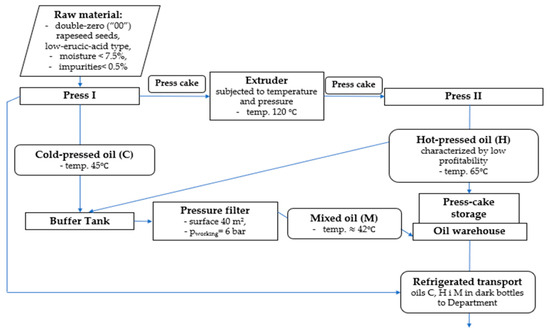
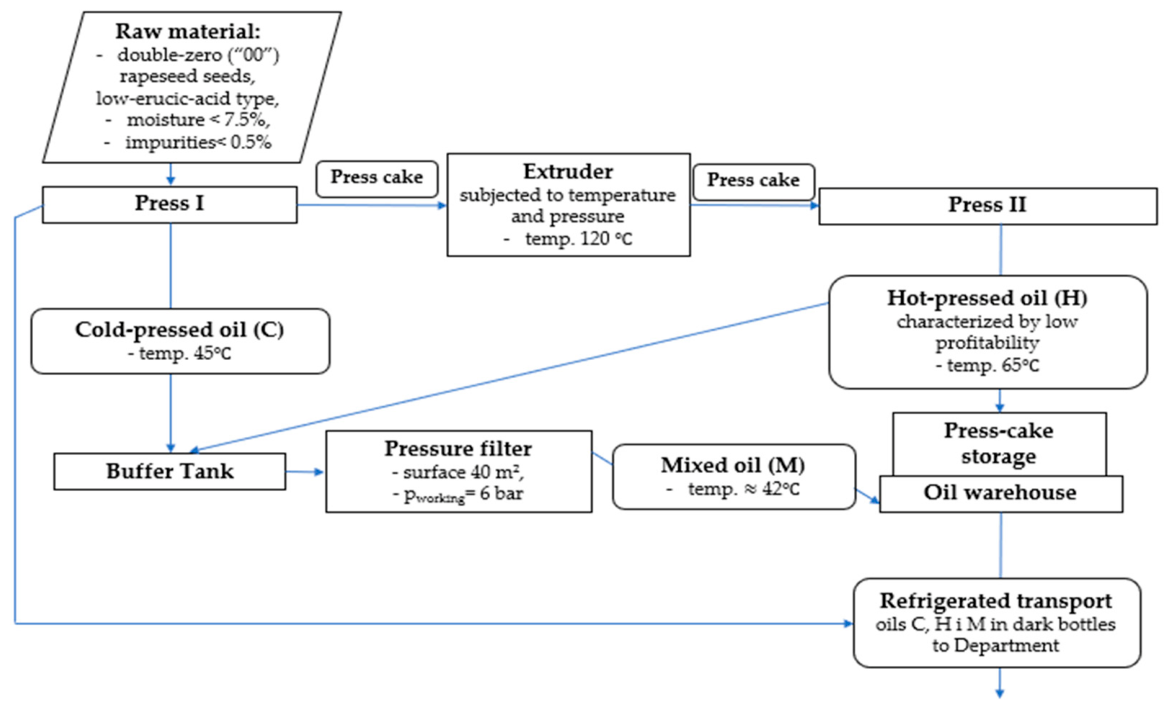
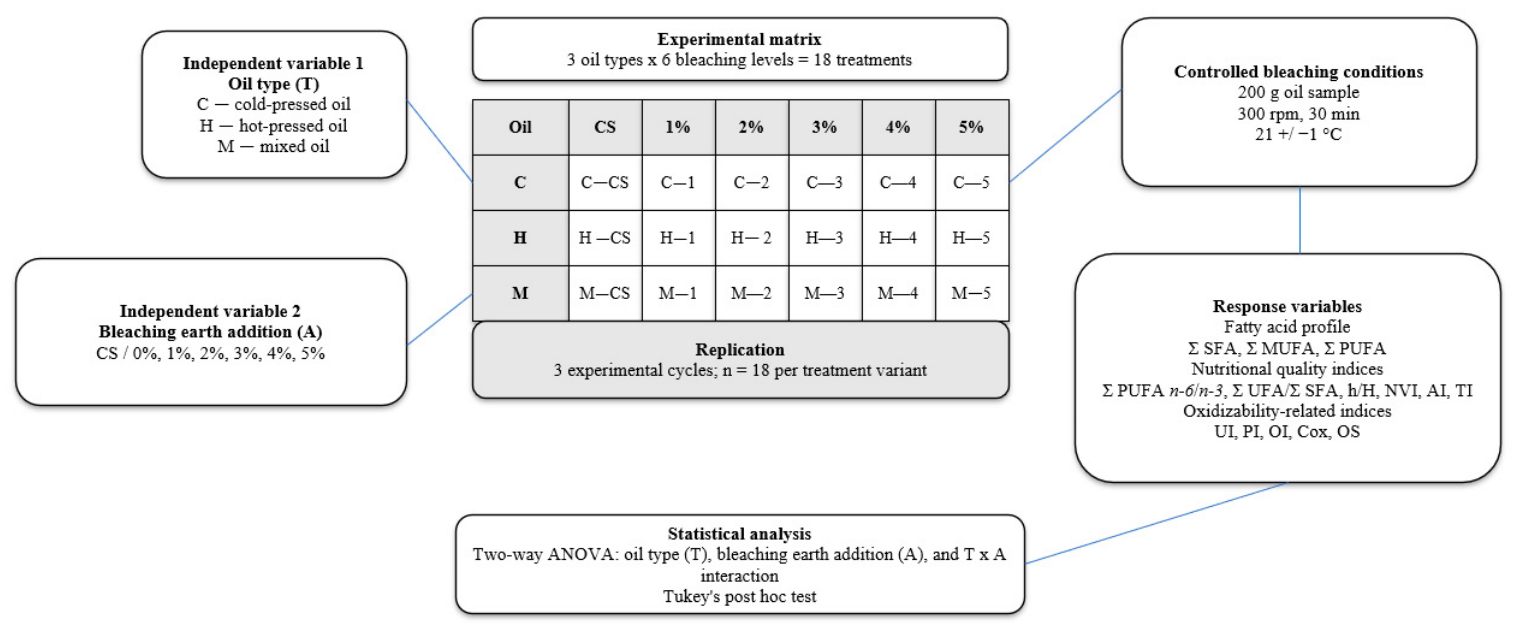

Disclaimer/Publisher’s Note: The statements, opinions and data contained in all publications are solely those of the individual author(s) and contributor(s) and not of MDPI and/or the editor(s). MDPI and/or the editor(s) disclaim responsibility for any injury to people or property resulting from any ideas, methods, instructions or products referred to in the content. |
© 2026 by the authors. Licensee MDPI, Basel, Switzerland. This article is an open access article distributed under the terms and conditions of the Creative Commons Attribution (CC BY) license.