


Abstract
In professional water polo, understanding the effects of ball wettability on game dynamics is essential but remains insufficiently investigated. This research aims to evaluate how the surface wettability of various professional water polo balls could influence their behavior during play. The study employed a combination of laboratory measurements to assess the wettability of multiple ball brands using the sessile drop method under standardized conditions. FTIR spectroscopy was also performed to characterize the surface chemical composition and support the interpretation of wettability differences observed in contact angle measurements. Performance-related parameters, including static contact angle values and droplet behavior during measurement, were analyzed in relation to surface chemistry and material composition. Significant variability in wettability was observed across different ball brands. These differences indicate that surface properties may play an important role in modulating ball–water interaction mechanisms, which are influenced by both chemical composition and surface morphology. Based on these results, we propose including wettability-related parameters in the official water polo equipment guidelines, which currently cover only size, weight, and material composition. This adjustment could help standardize ball behavior across competitive play, leading to more consistent and fair conditions. This study extends current knowledge of the physical factors influencing sports performance and suggests practical improvements to enhance fairness and quality in water polo competitions.
1. Introduction
The study of the interplay between the physical properties of sports equipment and athletic performance has gained significant attention [1,2,3,4,5], particularly within water sports [6,7,8]. In water polo, the ball is a critical element that influences the flow and outcome of the game [9,10,11,12,13,14]. Despite the recognized importance of factors such as ball size, weight, and material composition, the aspect of surface wettability has been comparatively overlooked [15,16,17,18,19].
Modern water polo balls are typically manufactured using a waterproof rubber bladder covered with layers of synthetic rubber. The outer surface is generally composed of vulcanized rubber or rubber-based composites engineered to provide adequate grip under wet conditions, high durability, and resistance to water penetration. Surface texture, roughness, and material composition play a crucial role in determining the interaction between the ball and water, thereby influencing properties such as friction, handling, grip, and wettability. Since these surface-related properties directly affect how the ball behaves during play, differences in material composition and manufacturing processes may lead to variations in performance. In our previous study, significant differences in surface structure, contact angle, surface free energy, and player perception were identified among professional water polo balls produced by different manufacturers. These findings highlighted the importance of material-related surface characteristics and suggested that wettability may represent an additional factor influencing ball performance during competition [20]. Although international regulations define parameters such as ball dimensions, circumference, and mass, they provide limited guidance regarding surface characteristics. Consequently, variations in material composition and surface properties among manufacturers may result in differences in water absorption, wettability, and ultimately playing performance.
Lockie et al. investigated throwing velocity in water polo by asking participants to perform maximal-effort throws [21]. Throwing velocity is influenced by many factors, including age, grip strength, leg/back strength, and upper body strength. Ferragut et al. demonstrated a significant correlation between hand-grip strength and throwing velocity in a “throwing with the goalkeeper” situation [22]. Furthermore, McCluskey et al. reported that throwing velocity and vertical jumping ability are essential components for shooting and passing in water polo [23].
Consequently, any increase in ball mass resulting from enhanced water retention due to greater wettability may influence throwing mechanics, ball control, and passing precision during a match. José L. Arias investigated the influence of ball mass on shooting accuracy and performance in basketball players. The accuracy and effectiveness of throws were higher when using a lighter ball, which supports the hypothesis that ball mass in team sports influences the precision and speed of passes and throws [15]. Ferragut et al. also emphasized that throwing velocity is an important determinant of success in water polo because a faster shot provides defenders and goalkeepers with less time to react [8]. In a study conducted by Karišik et al. regarding the influence of ball resin on shot accuracy in handball, the authors reported that, also in handball, a shot or throw directly affects the success of the player and the team in terms of the result. For this reason, players and coaches often consider shooting one of the most important technical elements of the game and devote substantial training time to its improvement. Karišik et al. concluded that the use of handball resin improves grip and, as a result, enhances shooting accuracy [17].
Taken together, these findings suggest that any radical changes in terms of grip and control under wet conditions and weight differences may influence the accuracy and speed of passes and throws, ultimately affecting match outcomes. This study aims to address this gap by examining the wettability of different professional water polo balls and their potential effect on ball–water interactions [24]. With a foundation in both laboratory measurements and spectroscopic analysis, the study tests the hypothesis that surface wettability substantially affects ball performance, potentially necessitating its inclusion in professional equipment guidelines.
Increased wettability may promote greater water retention on the ball surface, resulting in a measurable increase in ball mass during play. Such changes could affect players’ kinesthetic control, which is essential for the precise execution of passing and throwing actions. Therefore, it can be assumed that differences in wettability between water polo balls may lead to variations in grip, handling characteristics, and overall throwing performance.
Through a comprehensive review of the existing literature and an analysis of current standards, this work contributes to the broader field of sports science and proposes enhancements to the sport of water polo that may support future improvements in water polo equipment standards, promoting fairer and more predictable gameplay [6,25,26,27,28]. The ultimate goal is to enrich the discussion surrounding sports equipment standards and ensure that they fully encompass the factors affecting player performance and game dynamics [29,30,31,32,33,34]. These considerations are fundamentally linked to material properties, which are strongly influenced by the materials used in manufacturing, as well as by composition, surface morphology, and rheological characteristics.
The novelty of the present study lies in the combined assessment of surface wettability, texture-induced anisotropy, and chemical surface characterization of commercially available professional water polo balls. To the best of our knowledge, this is the first study demonstrating directional wettability effects associated with groove orientation in water polo ball surfaces and discussing their potential implications for ball–water interactions.
2. Materials and Methods
2.1. Sample Preparation
The tested surfaces were carefully rinsed with distilled water to remove potential contaminants, residues from manufacturing, and impurities resulting from handling. No detergents, solvents, or mechanical cleaning procedures were applied in order to avoid any modification of the original surface morphology and texture. After rinsing, the samples were placed in a clean laboratory environment and allowed to air-dry until a constant mass was achieved. All measurements were performed using samples prepared according to the same procedure to minimize the influence of surface contamination and variability associated with sample preparation.
2.2. Microscopic Photos
The surface morphology of the ball samples was characterized using a Leica DVM6 optical digital microscope (Leica Microsystems, Wetzlar, Germany). The microscope images were used to visualize surface texture and evaluate potential differences in the surface structure of the tested water polo balls.
2.3. Wettability Measurement
Wettability tests were carried out using the sessile drop method with Attension Theta Flex (Biolin Scientific Oy, Espoo, Finland). The tests were conducted at room temperature using distilled water drops with a volume of 2 µL. Wetting angle measurements were initiated 3 s after the drop was deposited. Each measurement lasted 20 s with a sampling frequency of 3 Hz. For samples characterized by a highly developed surface in the form of furrows, wettability tests were carried out in two directions. The contact angle was measured parallel (LONG) and perpendicular (PERP) to the direction of the furrows. Samples taken from the balls were attached to glass plates to obtain flat measurement surfaces. For individual balls, tests were conducted for each area characterized by different coloration. Before testing, the samples were cleaned with water and air-dried. The measurements were recorded in 5 repetitions per sample.
2.4. FTIR Analysis
The analyses were performed using a Fourier-transform infrared spectroscopy apparatus (Shimadzu IR Tracer-100, Shimadzu Corporation, Kyoto, Japan). Spectra were collected with an ATR (Attenuated Total Reflectance) equipped with a diamond. Measurements were performed using 100 scans and then analyzed using LabSolution IR software version 1.81.
2.5. Statistical Analysis
All wettability measurements were conducted in five independent repetitions for each sample and measurement direction. Results are presented as mean values ± standard deviation (SD). The normality of data distribution was verified using the Shapiro–Wilk test. Differences between groups (ball type, color, and measurement direction) were evaluated using one-way analysis of variance (ANOVA), followed by Tukey’s post hoc test for multiple comparisons. Statistical significance was assumed at p < 0.05.
Considering the anisotropic character of several ball surfaces, the influence of groove orientation (LONG vs. PERP) was additionally analyzed as an independent factor. Due to the exploratory nature of the study and the limited number of samples, the statistical analysis was focused on identifying significant differences in contact angle values rather than establishing predictive models.
3. Results and Discussion
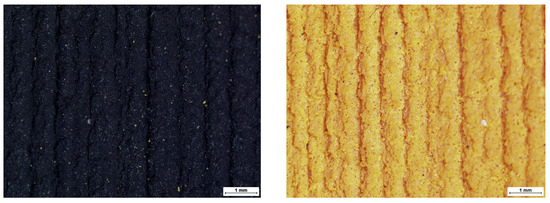
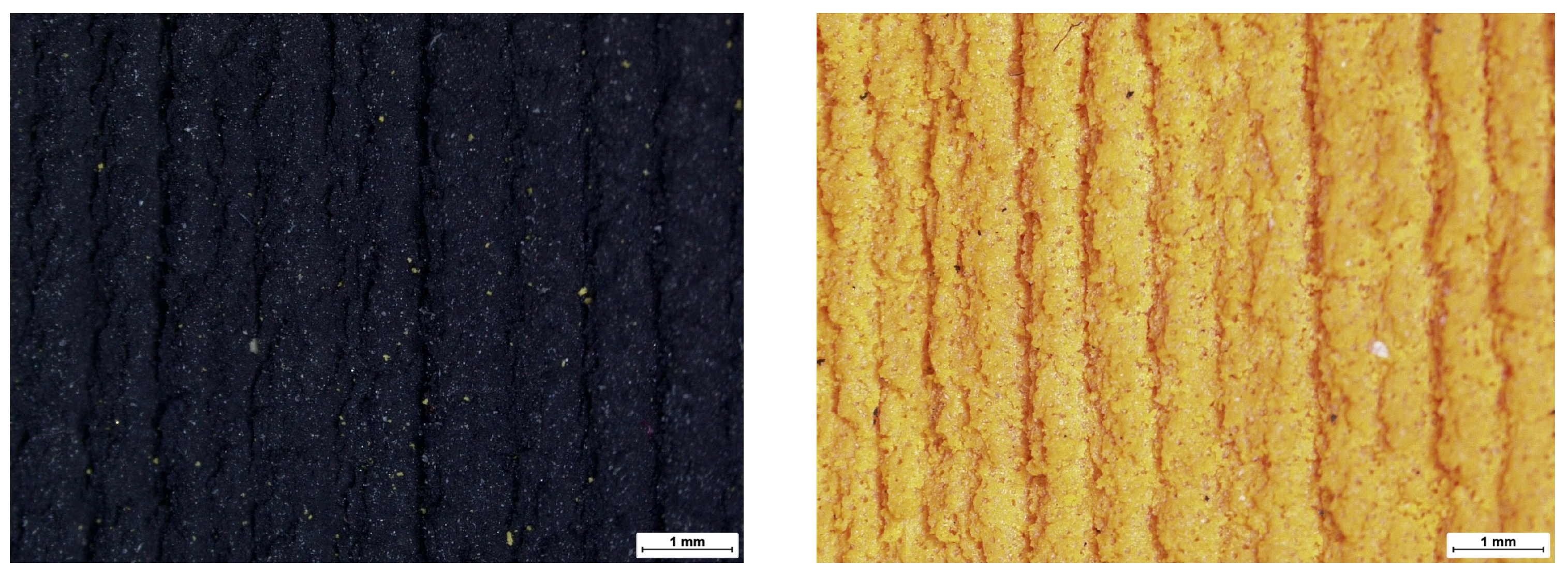
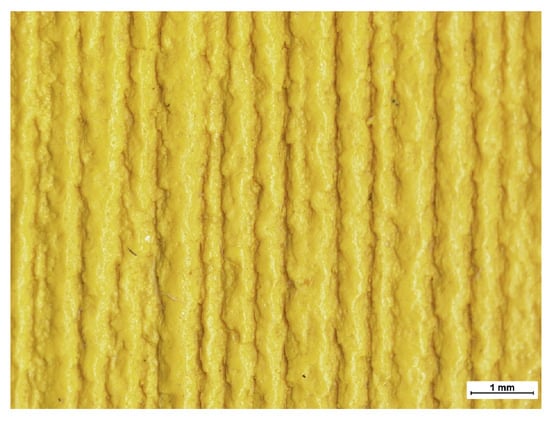
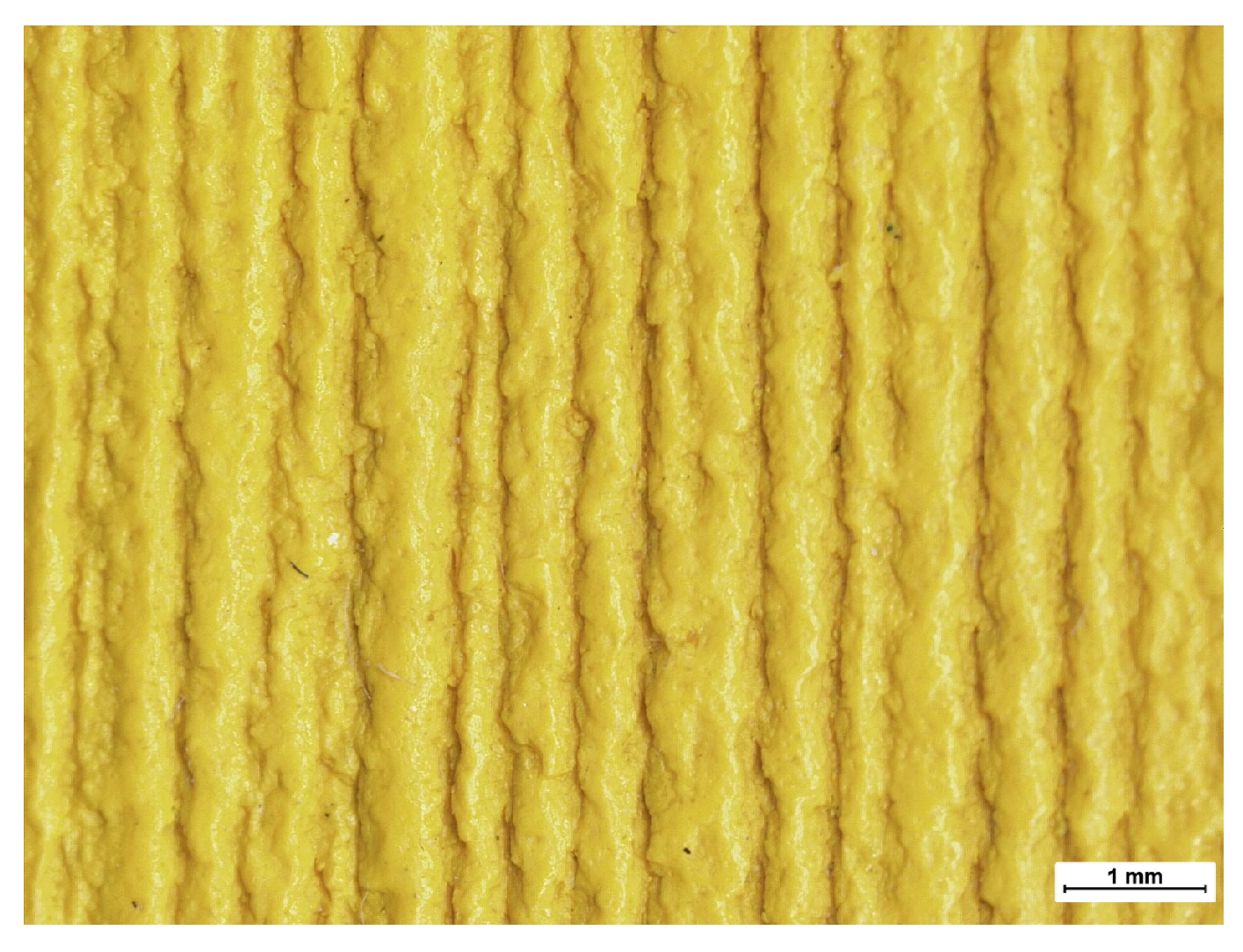
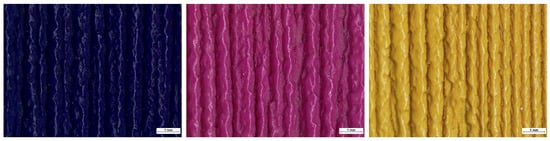
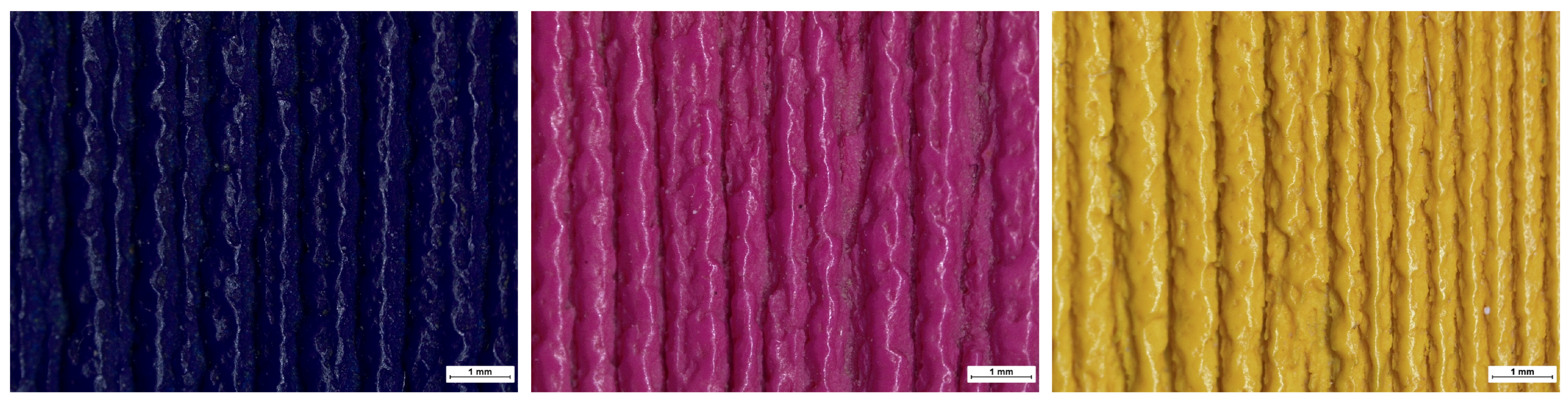
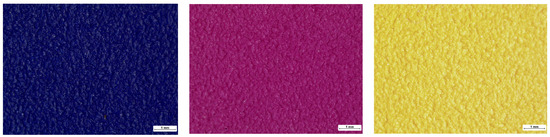
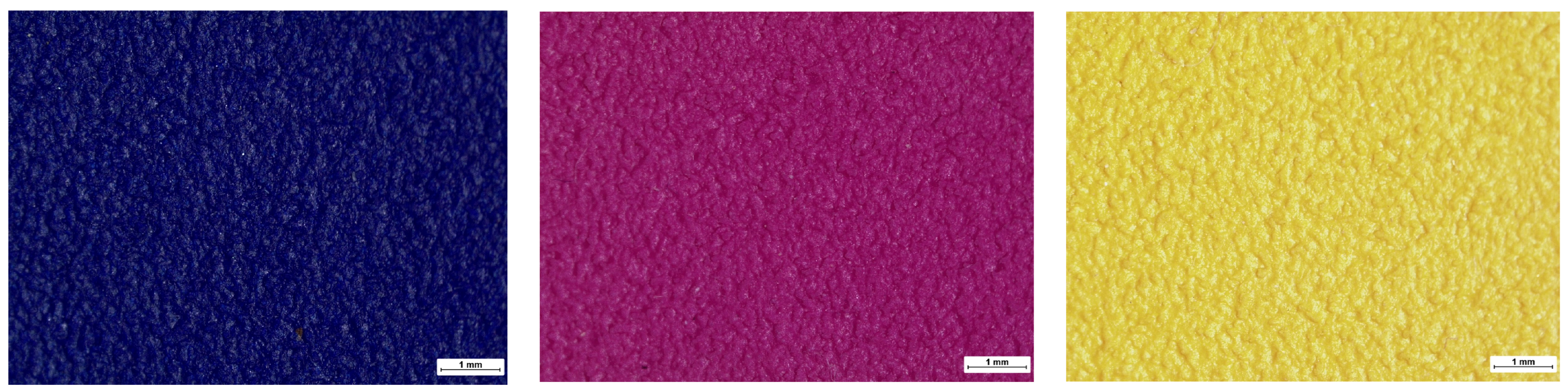
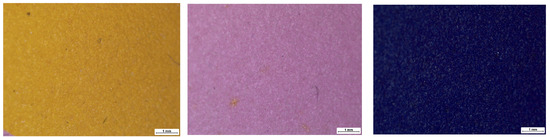
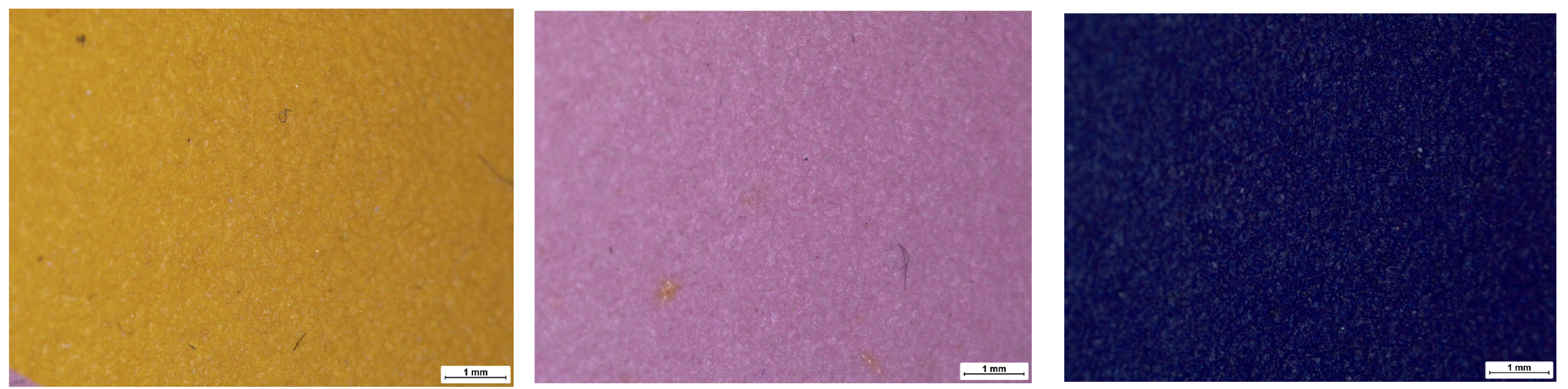
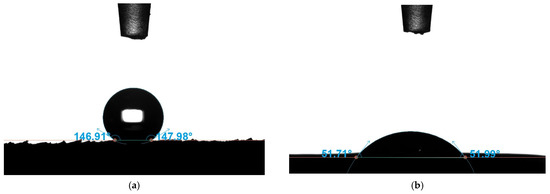
Before conducting the wettability tests, a series of microphotographs of the surfaces was taken to illustrate variations in ball surface morphology (Figure 1, Figure 2, Figure 3, Figure 4 and Figure 5). The photographs showed that, despite the use of different dyes, the texture and structure of each ball type remained consistent regardless of the color applied.
Figure 1.
Microscopic view of a professional water polo ball surface, emphasizing texture for optimal grip in water for Malmsten ball.
Figure 2.
Microscopic view of a professional water polo ball surface, emphasizing texture for optimal grip in water for Kap 7 ball.
Figure 3.
Microscopic view of a professional water polo ball surface, emphasizing texture for optimal grip in water for MIKASA ball.
Figure 4.
Microscopic view of a professional water polo ball surface, emphasizing texture for optimal grip in water for MIKASA Test Ball.
Figure 5.
Microscopic view of a professional water polo ball surface, emphasizing texture for optimal grip in water for FINA ball.
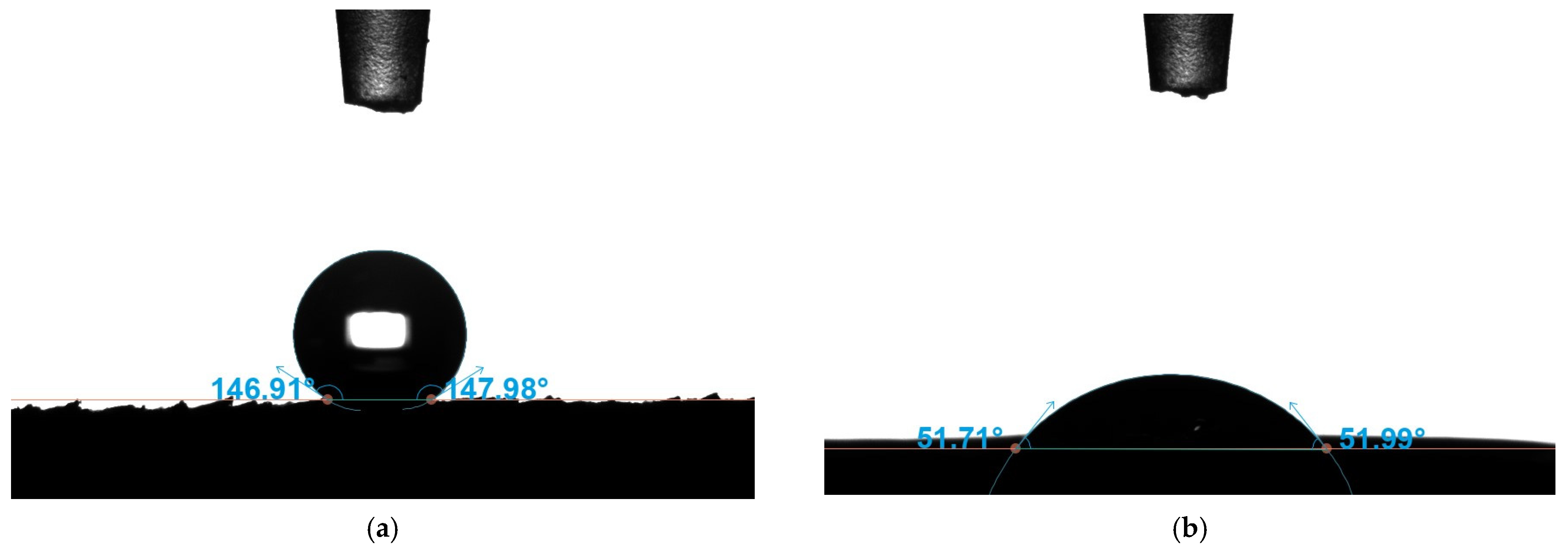
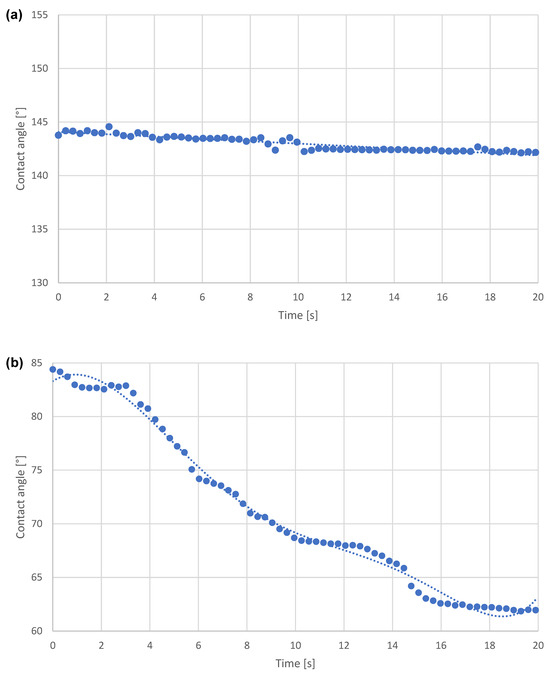
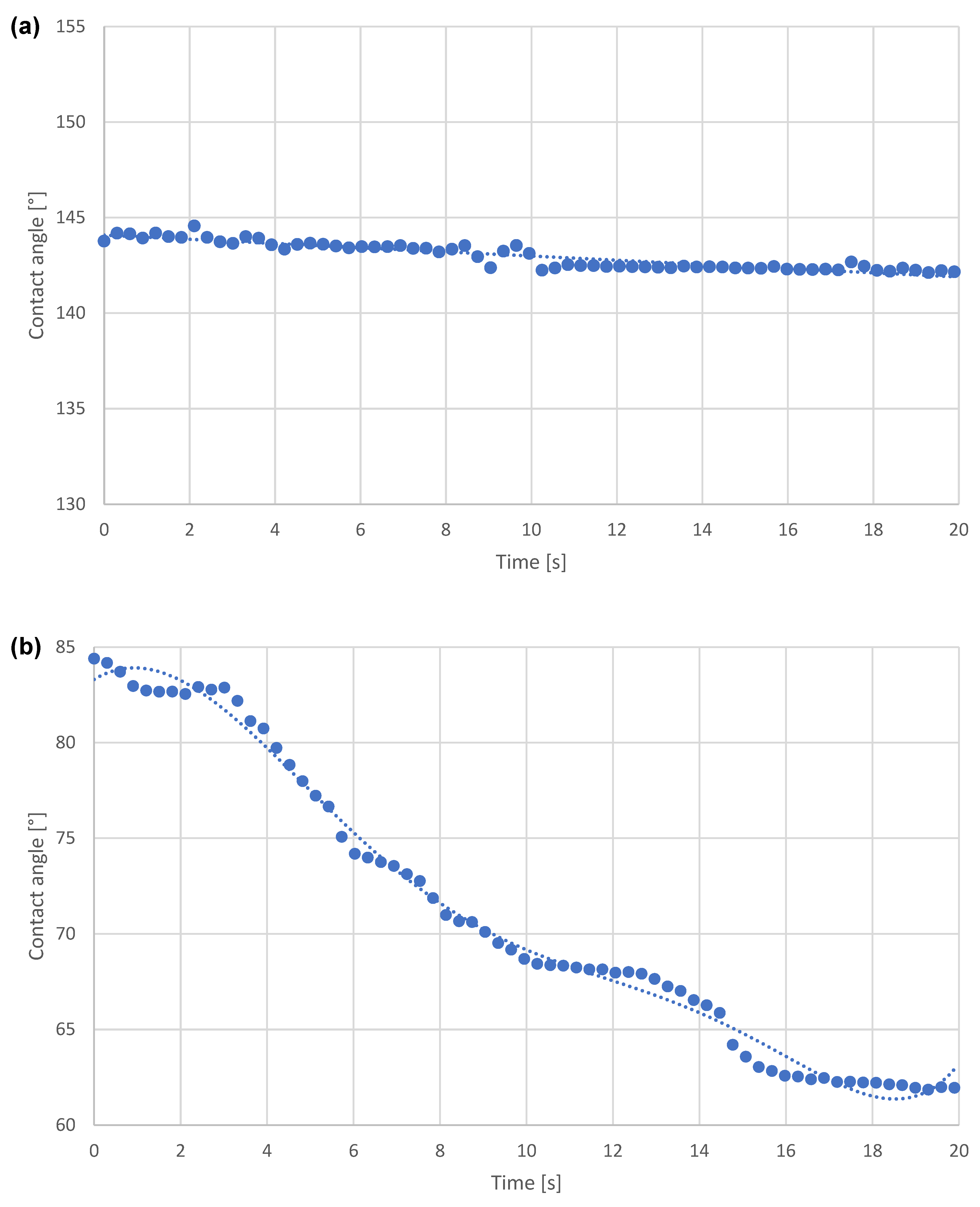
The measured samples exhibited varying wettability depending on surface topography, particularly the measurement direction (longitudinal or perpendicular) and color. The highest hydrophobicity was observed for Malmsten samples, for which the contact angle ranged from 117.7° to 145.7° (Figure 6a). The wettability of these samples was not clearly related to either color or measurement direction. Relatively high contact angle values (approximately 145°) were observed for yellow samples measured in the perpendicular direction and black samples measured in the longitudinal direction. Lower but comparable values (approximately 118°) were recorded for yellow samples measured in the longitudinal direction and black samples measured in the perpendicular direction. Regardless of the measurement direction, the deposited droplets exhibited only minor changes in contact angle during the measurement period (Figure 7a).
Figure 6.
Water droplets of the samples: Malmsten (a) and MIKASA (b).
Figure 7.
Evolution of water contact angle as a function of time for representative Malmsten (a) and MIKASA (b) samples.
MIKASA Test Ball samples exhibited little surface development, with no visible furrows. For this reason, directional wettability measurements were not performed. Regardless of color, the samples exhibited hydrophobic behavior, with contact angle values of approximately 110°. The deposited droplets maintained a stable shape throughout the measurement.
MIKASA samples showed the greatest variation in contact angle values, which depended on both color and measurement direction. The obtained results indicate a pronounced directional dependence of wettability. In general, samples measured in the perpendicular direction exhibited hydrophobic behavior (88–114°), whereas those measured in the longitudinal direction were hydrophilic (47–67°) (Figure 6b). The highest wettability was observed for the pink, blue, and yellow samples, respectively. Regardless of color, the contact angle varied considerably during the measurement, indicating extensive droplet spreading on the surface (Figure 7b). The wettability results are summarized in Table 1.
Table 1.
Wettability parameters of tested samples. Values are presented as mean contact angle ± standard deviation (SD), n = 5.
Representative surface images revealed substantial differences in surface topography among the investigated balls (Figure 1, Figure 2, Figure 3, Figure 4 and Figure 5). In contrast to the relatively smooth MIKASA Test Ball surface, the MIKASA samples exhibited pronounced directional surface features, which may contribute to the observed differences in wettability behavior.
The observed anisotropy suggests that groove orientation significantly influences droplet spreading and contact line propagation. However, because quantitative geometric parameters such as groove depth, width, spacing, and surface roughness were not determined, the present study cannot establish direct mathematical relationships between groove geometry and contact angle values. Future studies employing profilometry or AFM measurements should enable quantitative modelling of the influence of surface architecture on wettability behavior. KAP 7 samples, characterized by a highly developed surface structure, were available only in yellow. Similar to the MIKASA, the surface exhibited hydrophilic behavior in the longitudinal direction (approximately 58°) and hydrophobic behavior in the perpendicular direction (approximately 92°). In the longitudinal direction, the deposited droplets showed substantial changes in shape during the measurement.
FINA samples exhibited relatively uniform wettability behavior across all tested colors. The recorded contact angle values were ~100.0° for blue, ~99.3° for yellow, and ~86.7° for pink samples. No directional measurements were performed for these samples. The contact angle values remained relatively stable during the measurement period, indicating consistent droplet behavior on the surface regardless of coloration.
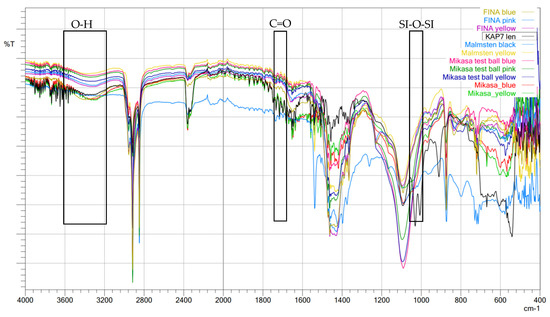
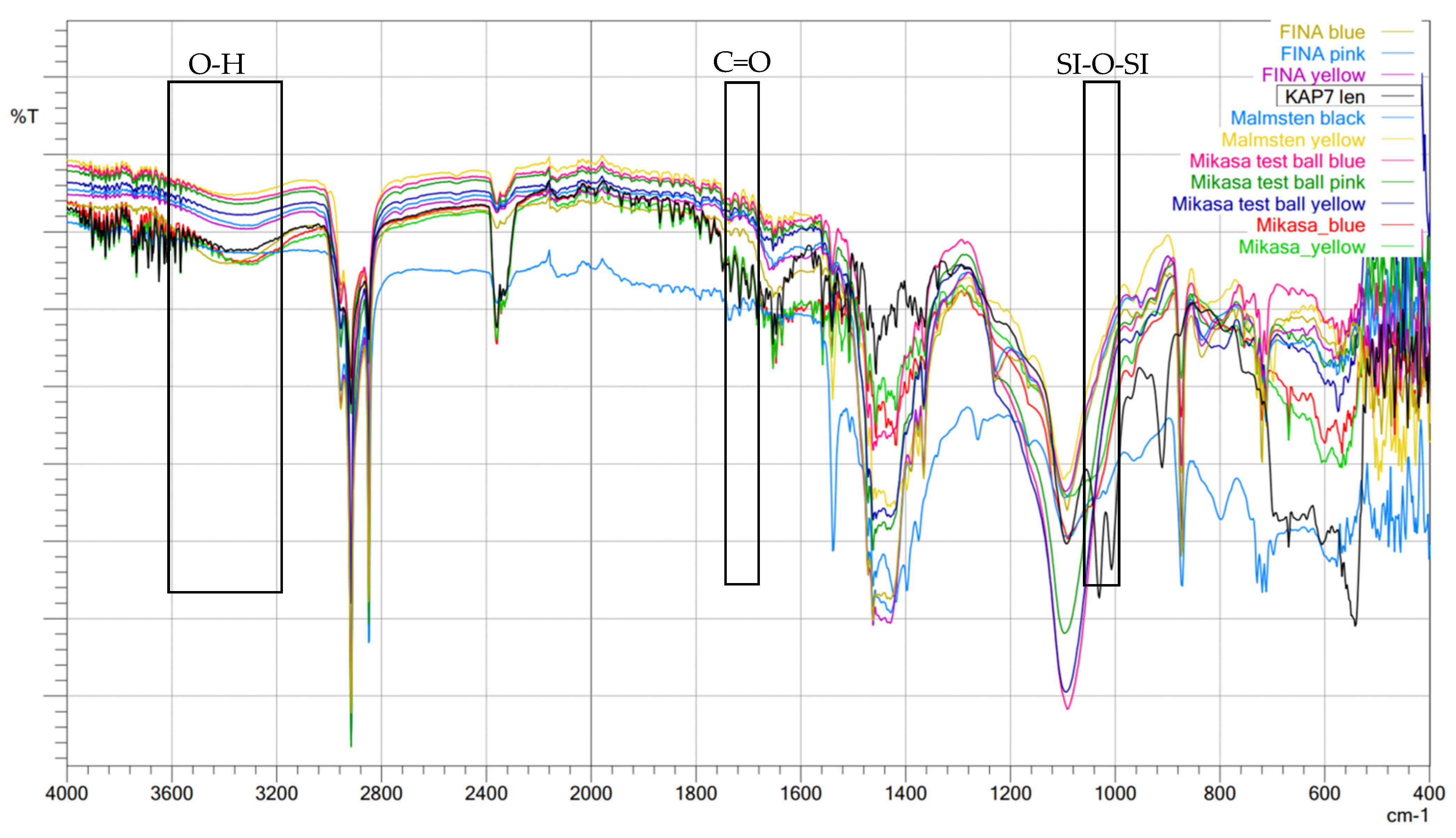
Wettability is influenced not only by surface topography but also by the chemical composition of the material. Therefore, FTIR analysis was performed to further characterize the surfaces of the investigated balls (Figure 8).
Figure 8.
FTIR spectra with a legend in the upper right corner.
MIKASA ball spectra (Blue, Yellow) all show strong O-H stretch peaks within 1708–1726 cm−1, indicating hydrophilic properties that could enhance water wettability. The C=O stretch (1500–1800 cm−1) is also prominent, further suggesting hydrophilic characteristics. The presence of Si-O-Si (1280–1000 cm−1) might indicate some level of surface modification or treatment [35].
KAP7 spectra show slightly lower absorbance in the O-H and N-H (2800–2997 cm−1) stretch regions compared to MIKASA Test Balls, which might indicate a slightly less hydrophilic surface, potentially affecting water drop behavior.
Malmsten (Black and Yellow) spectra peaks around (3572–3581 cm−1) are similar to KAP7, indicating good hydrophilicity. Both exhibit strong O-H stretch peaks, similar to both MIKASA balls, indicating good wettability. The black variant shows a slightly lower absorbance in the Si-O-Si stretch, which might suggest differences in surface treatments affecting hydrophobicity/hydrophilicity balance [35].
FINA (Blue, Pink, Yellow) spectra are similar to MIKASA Test Ball; strong O-H (1708–1726 cm−1) and C=O stretches are observed, indicating hydrophilic surfaces conducive to good water wettability. The Si-O-Si stretch presence across all MIKASA balls suggests surface treatments that could be tailored for specific water interaction behaviors.
The FTIR spectra indicate the coexistence of chemical functionalities commonly associated with both hydrophilic and hydrophobic behavior. However, the present results do not allow quantitative determination of the contribution of individual functional groups to the measured contact angle values. Therefore, the observed wettability should be interpreted as the result of combined chemical and topographical effects. The presence and variation in the Si-O-Si stretch peaks suggest that each brand may use different silicon-based treatments to fine-tune the surface characteristics for specific performance traits, such as grip and water repulsion or absorption [35]. OH Stretch (3200–3600 cm−1): This band indicates hydroxyl groups, typically found in hydrophilic materials. A strong OH stretch suggests higher water affinity, which can increase surface wettability. The surface’s hydrophilic nature could enhance the ball’s water retention capacity, affecting its handling when wet. C=O Stretch (1700–1750 cm−1): The bands are characteristic of the presence of a carbonyl group that is common in various synthetic polymers and coatings, which may indicate the presence of polyesters or polyurethanes. The polarity of the C=O group contributes to hydrophilic characteristics, potentially increasing the surface’s wettability. This could imply a surface that interacts more readily with water, impacting the ball’s behavior in wet conditions. Si-O-Si Stretch (1000–1100 cm−1): This signature is indicative of silicone-based treatments or materials, which are often used to modify surface characteristics like hydrophobicity. Silicone treatments generally enhance hydrophobic properties, leading to lower wettability. This would mean that the water forms beads on the surface, potentially decreasing the weight changes during the game and improving grip under wet conditions.
Overall, the FTIR spectra demonstrated a high degree of similarity between the investigated balls. The observed differences were mainly associated with relative band intensities rather than the appearance of unique functional groups, suggesting that wettability differences are likely influenced by both surface chemistry and surface morphology.
The FTIR spectra suggest a mixed character of the ball surface, with both hydrophilic and hydrophobic elements. Hydrophilic properties (indicated by OH and C=O stretches) would tend to increase wettability, potentially making the ball heavier and more challenging to handle when wet but could improve grip slightly if the surface is not excessively wet. Hydrophobic properties (indicated by Si-O-Si stretches) would decrease wettability, helping maintain a consistent ball weight and handling characteristics in wet conditions, facilitating better control and predictability in play.
By integrating these insights into the design and selection of materials for water polo balls, manufacturers can tailor the wettability to achieve desired performance characteristics. Understanding the balance between hydrophilic and hydrophobic properties on the ball’s surface could lead to better standards for competitive play, ensuring that the balls perform consistently regardless of external conditions.
Water polo as a sport is characterized by high dynamics and variability of playing conditions. A key factor that changes is the condition of the water surface, which is continuously altered by player activity and, to some extent, by the ball. In order to achieve the greatest possible repeatability of match conditions, it is crucial to provide a quantitative characterization of the ball used. One of the important but currently insufficiently characterized parameters appears to be the wettability and topography of the ball surface. The wettability of the surface has a direct impact on the weight of the ball and the quality of contact with the player’s hand. Moreover, contact with the water surface during a sliding throw affects the dynamics and, thus, the ball’s flight trajectory and its rotation.
The developed surface of the ball, in particular through the presence of areas with directed morphology (furrows), may result in high randomness of the ball’s path and its rotation after contact with water. This is caused by the non-uniform distribution of water on the surface of the ball.
In the context of the analyzed issues, the most favorable approach for reducing variability during games seems to be the use of balls with hydrophobic properties and a uniform surface. This would ensure that water drains quickly from the surface of the ball, improving contact with the player’s hand and thus enhancing throw control. In addition, it would reduce temporary water-induced mass gain while minimizing water splash. In terms of contact with water during a gliding throw, it should contribute to increasing the dynamics of the throw while improving the predictability of its trajectory. Nevertheless, the condition of the water surface must also be considered, as it can significantly affect the ball’s trajectory. However, we believe that the wettability parameter should be considered for inclusion in water polo equipment standards.
All balls used in official matches should meet specific wettability standards to ensure consistent grip and performance in the water. This could involve defining a range of acceptable contact angles or absorption rates, based on standardized testing procedures. Regulations should be clearly defined to minimize variations in ball performance during competition. The authors propose consideration of modifications to existing regulations regarding surface properties of the ball. It is suggested that future standards may include a defined range of acceptable contact angles that balls should satisfy, and that competition organizers ensure compliance of match balls with these criteria.
4. Conclusions
This study’s findings highlight significant variations in the wettability of water polo balls and their impact on game dynamics, confirming the necessity for including surface structure parameters in equipment standards. These results are consistent with previous studies indicating that the physical properties of sports equipment critically influence performance outcomes in water sports [6,8].
To better understand the origin of these differences, FTIR spectroscopy was performed to analyze the surface chemistry of the investigated balls. The results revealed both similarities and variations in functional group composition; however, no direct quantitative relationship between spectral intensity and contact angle values could be established within the scope of this study. This suggests that wettability differences cannot be explained solely by chemical composition. Therefore, the observed wettability behavior is likely governed by the combined effects of chemical composition, surface roughness, groove orientation, and texture anisotropy rather than by a single chemical parameter.
It should be noted that the present study does not allow complete separation of the effects originating from surface chemistry and those resulting from surface morphology. Since detailed information regarding coating formulation, pigment composition, and coating thickness is not available for commercial products, the measured differences should be interpreted as the combined effect of multiple surface-related factors. In particular, the differences observed between measurements performed parallel and perpendicular to groove orientation indicate that surface texture anisotropy plays a significant role in determining wettability.
The observed variations in wettability among different brands could explain inconsistencies in ball performance during matches, a factor that can substantially affect the fairness and predictability of game outcomes. This aligns with findings from Arias [16], who noted that even minor modifications in ball mass due to wetness could significantly alter the dynamics of ball trajectory and speed, impacting game results. Furthermore, the impact of surface wettability on grip and control under wet conditions, as observed in this study, corroborates with Ferragut et al. [22], who demonstrated that grip strength is crucial for optimal throwing velocity in water polo. The enhanced grip during wet conditions could mitigate the challenges posed by increased ball mass, as suggested by the hydrophobicity measurements of different ball samples, which showed a direct correlation with performance stability. Our proposition to incorporate wettability standards into official equipment guidelines is supported by research from Schneider et al. [18], who emphasized the role of equipment standardization in reducing performance variability and enhancing fairness in sports competitions.
The most important finding of this study is the demonstration that wettability is not solely a material-dependent property but is also strongly influenced by surface architecture and groove orientation. Significant anisotropy of contact angle values was observed for several commercially available balls, indicating that surface texture may play an important role in determining ball–water interactions.
In summary, this study not only sheds light on the underexplored aspect of ball wettability in water polo but also suggests practical changes to equipment regulations to enhance sport fairness and performance consistency. These findings contribute to the broader discourse on the necessity of adapting sports equipment standards to encompass a wider range of physical properties, as supported by Karišik et al. in their study on handball [17].
Several limitations should be acknowledged. First, quantitative roughness parameters were not determined using profilometry or atomic force microscopy. Second, only static contact angle measurements were performed, whereas dynamic parameters such as contact angle hysteresis and water adhesion may also influence ball performance during competition. Third, the study focused on commercially available products and did not include detailed reverse engineering of polymer formulations. Consequently, the present results should be regarded as a comparative assessment of wettability characteristics rather than a complete mechanistic analysis of all factors affecting water polo ball performance. Another limitation of the present study is the lack of surface free energy determination. Since only water was used as the probe liquid, quantitative calculation of surface free energy components was not possible. Future investigations should include measurements using multiple liquids with different polar and dispersive characteristics to enable surface free energy determination and to establish quantitative relationships between surface energy and wettability behavior.
Author Contributions
Conceptualization, A.S.S., G.M. and G.K.; methodology, A.S.S., G.M. and J.S.; software, R.R.; validation, S.S.; formal analysis, R.R., M.P. and A.M.K.; investigation, A.S.S., G.M., J.S., K.W. and J.G.; data curation, R.R.; writing—original draft preparation, A.S.S., G.M., J.S., K.W. and J.G.; writing—review and editing, A.S.S., G.M., K.M.-S. and A.M.K.; visualization, M.P.; supervision, S.S. All authors have read and agreed to the published version of the manuscript.
Funding
The project was co-financed by the European Union within the program “The European Funds for Śląsk (Silesia) 2021–2027”.
Institutional Review Board Statement
Not applicable.
Informed Consent Statement
Not applicable.
Data Availability Statement
The original contributions presented in this study are included in the article. Further inquiries can be directed to the corresponding author.
Conflicts of Interest
The authors declare no conflict of interest.
References
- Batchev, V.; Gadev, M.; Groshev, O.; Yordanov, P. Metrological aspects of research associated with partial evaluation criteria of sports equipment in sports with speed-power manifestation. Act. Phys. Educ. Sport 2014, 4, 191–193. [Google Scholar]
- Krenn, B. The impact of uniform color on judging tackles in association football. Psychol. Sport Exerc. 2014, 15, 222–225. [Google Scholar] [CrossRef] [Scilit]
- Berglez, J.; Arvidsson, D. Impact of the color of equipment on competition outcomes in Premier League karate. Ido Mov. Cult. J. Martial Arts Anthropol. 2023, 23, 22–27. [Google Scholar]
- Savić, Z.; Ranđelović, N.; Stojanović, N.; Stanković, V.; Šiljak, V. The sports industry and achieving top sports results. Facta Univ. Ser. Phys. Educ. Sport 2017, 15, 513–522. [Google Scholar]
- Kinoshita, H.; Bates, B.T. The Effect of Environmental Temperature on the Properties of Running Shoes. J. Appl. Biomech. 1996, 12, 258–268. [Google Scholar] [CrossRef] [Scilit]
- Lockie, R.G.; Wakely, A.M.; Dawes, J.J.; Viramontes, E.; Patron, J.D. The relationships between muscular strength and power with throwing velocity in high school boys water polo players following a strength training block. Facta Univ. Ser. Phys. Educ. Sport 2023, 21, 99–110. [Google Scholar]
- Platanou, T.; Varamenti, E. Impact of ball possession time and number of passes on the efficiency of scoring in men’s water polo. Hum. Mov. 2023, 24, 18–24. [Google Scholar]
- Ferragut, C.; Abraldes, J.A.; Manchado, C.; Vila, H. Water polo throwing speed and body composition: An analysis by playing positions and opposition level. J. Hum. Sport Exerc. 2015, 10, 81–94. [Google Scholar] [CrossRef] [Scilit]
- Roberts, J.; Jones, R.; Harwood, C.; Mitchell, S.; Rothberg, S. Human perceptions of sports equipment under playing conditions. J. Sports Sci. 2001, 19, 485–497. [Google Scholar] [CrossRef] [Scilit] [PubMed]
- Marković, V.; Milošević, M. The influence of technical and tactical elements of water polo on victory and defeat in Champions League matches. J. Phys. Educ. Sport 2023, 23, 1297–1305. [Google Scholar]
- Bloomfield, J.; Blanksby, B.A.; Ackland, T.R.; Allison, G.T. The influence of strength training on overhead throwing velocity of elite water polo players. Aust. J. Sci. Med. Sport 1990, 22, 63–67. [Google Scholar]
- Escalante, Y.; Saavedra, J.M.; Tella, V.; Mansilla, M.; García-Hermoso, A.; Domínguez, A.M. Differences and discriminatory power of water polo game-related statistics in men in international championships and their relationship with the phase of the competition. J. Strength Cond. Res. 2013, 27, 893–901. [Google Scholar] [CrossRef] [Scilit] [PubMed]
- Marques, M.C.; Liberal, S.M.; Costa, A.M.; Van Den Tillaar, R.; Sánchez-Medina, L.; Martins, J.C.; Marinho, D.A. Effects of two different training programs with same workload on throwing velocity by experienced water polo players. Percept. Mot. Ski. 2012, 115, 895–902. [Google Scholar] [CrossRef] [Scilit]
- Wakely, A.M.; Dawes, J.J.; Hernandez, E.; Lockie, R.G. The effects of a 4-week strength and conditioning program on strength, power, and throwing velocity for junior varsity and varsity high school water polo players. Facta Univ. Ser. Phys. Educ. Sport 2022, 20, 199–216. [Google Scholar]
- Arias, J.L. Does the modification of ball mass influence the types of attempted and successful shots in youth basketball? Hum. Mov. 2012, 13, 147–151. [Google Scholar] [CrossRef] [Scilit]
- Arias, J.L. Influence of ball weight on shot accuracy and efficacy among 9–11-year-old male basketball players. Kinesiology 2012, 44, 52–59. [Google Scholar]
- Karišik, S.; Božić, D.; Tirić, T. Influence of ball resin to shot accuracy in handball. Eur. J. Phys. Educ. Sport Sci. 2018, 4, 39–47. [Google Scholar]
- Schneider, R.; Kalentev, O.; Ivanovska, T.; Kemnitz, S. Computer simulations of table tennis ball trajectories for studies of the influence of ball size and net height. Int. J. Comput. Sci. Sport 2013, 12, 24–35. [Google Scholar]
- Ordóñez, E.G.; del Carmen Iglesias Pérez, M.; González, C.T. Performance assessment in water polo using compositional data analysis. J. Hum. Kinet. 2016, 54, 143–151. [Google Scholar] [CrossRef] [Scilit] [PubMed]
- Gabor, J.; Mikrut, G.; Flak, T.; Cebo, P.; Roczniok, R.; Swinarew, B.; Langer, E.; Popczyk, M.; Stanula, A.; Stach, S.; et al. Influence of Surface Structure on Ball Properties during a Professional Water Polo Game. Materials 2023, 16, 3048. [Google Scholar] [CrossRef] [Scilit] [PubMed]
- Lockie, R.G.; Wakely, A.M.; Viramontes, E.; Dawes, J.J. A Research Note on Relationships Between Age, Body Size, Strength, and Power With Throwing Velocity in High School Water Polo Players. J. Strength Cond. Res. 2023, 37, e466–e469. [Google Scholar] [CrossRef] [Scilit] [PubMed]
- Ferragut, C.; Vila, H.; Abraldes, J.A.; Argudo, F.; Rodríguez, N.; Alcaraz, P.E. Relationship among maximal grip, throwing velocity and anthropometric parameters in elite water polo players. J. Sports Med. Phys. Fit. 2011, 51, 26–32. [Google Scholar]
- McCluskey, L.; Lynskey, S.; Leung, C.K.; Woodhouse, D.; Briffa, K.; Hopper, D. Throwing velocity and jump height in female water polo players: Performance predictors. J. Sci. Med. Sport 2010, 13, 236–240. [Google Scholar] [CrossRef] [Scilit] [PubMed]
- Borges-Hernández, P.J.; Argudo-Iturriaga, F.M.; García-Marín, P.; Ruiz-Lara, E. Origin, evolution and influence on the game of water polo rules. Cult. Cienc. Deporte 2022, 17, 65–75. [Google Scholar]
- Brown, J. The creation and regulation of sports equipment: Implications for the future. Entertain. Sports Law J. 2020, 18, 8. [Google Scholar] [CrossRef] [Scilit]
- Iqbal, Y.; Aslam, S.; Khan, S. Significance of advance technology using modern equipments in international sports competitions. Res. J. Phys. Educ. Sports Sci. 2014, 9, 58–65. [Google Scholar]
- Milanović, D.; Vuleta, D. Association between morphological dimensions of water polo players and play performance indicators introduction. Sport Mont. 2013, 11, 447–453. [Google Scholar]
- Bernardi, D.; Davis, L.L.; Graham, J.; Mayberry, J.K. Change the rules, change the game? Offensive tactics in elite men’s water polo from London to Tokyo. Int. J. Perform. Anal. Sport 2022, 22, 604–620. [Google Scholar] [CrossRef] [Scilit]
- Lopatka, J.E. Antitrust and sports equipment standards: Winners and whiners. Antitrust Bull. 2009, 54, 751–800. [Google Scholar] [CrossRef] [Scilit]
- Crowley, P.J.; Crowley, M.J. Dramatic impact of using protective equipment on the level of hurling-related head injuries: An ultimately successful 27-year programme. Br. J. Sports Med. 2014, 48, 388–393. [Google Scholar]
- Macdonald, D.J.M.; McGlone, S.; Exton, A.; Perry, S. A new skatepark: The impact on the local hospital. Injury 2006, 37, 238–242. [Google Scholar] [CrossRef] [Scilit] [PubMed]
- Crisco, J.J.; Greenwald, R.M.; Blume, J.D.; Penna, L.H. Batting performance of wood and metal baseball bats. Med. Sci. Sports Exerc. 2002, 34, 1675–1684. [Google Scholar] [CrossRef] [Scilit] [PubMed]
- Escalante, Y.; Saavedra, J.M.; Mansilla, M.; Tella, V. Discriminatory power of water polo game-related statistics at the 2008 Olympic Games. J. Sports Sci. 2011, 29, 291–298. [Google Scholar] [CrossRef] [Scilit] [PubMed]
- Hatzimanouil, D.; Giatsis, G.; Kepesidou, M.; Kanioglou, A.; Loizos, N. Shot effectiveness by playing position with regard to goalkeeper’s efficiency in team handball. J. Phys. Educ. Sport 2017, 17, 656–662. [Google Scholar]
- Bhagabati, P.; Chaki, T.K.; Khastgir, D. Chlorinated polyethylene (CPE)/ethylene methacrylate copolymer (EMA)/sepiolite nanocomposite via a facile one-step covalent modification technique. RSC Adv. 2015, 5, 60294–60306. [Google Scholar] [CrossRef] [Scilit]

Disclaimer/Publisher’s Note: The statements, opinions and data contained in all publications are solely those of the individual author(s) and contributor(s) and not of MDPI and/or the editor(s). MDPI and/or the editor(s) disclaim responsibility for any injury to people or property resulting from any ideas, methods, instructions or products referred to in the content. |
© 2026 by the authors. Licensee MDPI, Basel, Switzerland. This article is an open access article distributed under the terms and conditions of the Creative Commons Attribution (CC BY) license.