1. Introduction
Vehicle cabin thermal comfort has become an increasingly important consideration in modern automotive design as consumers increasingly demand higher levels of comfort, personalization, and intelligent vehicle functionality. Among various thermal comfort technologies, ventilated seats have gained widespread adoption in passenger vehicles because they can reduce heat and moisture accumulation at the occupant–seat interface and improve perceived comfort during hot weather conditions [
1,
2,
3]. Unlike conventional HVAC systems that primarily regulate ambient cabin air temperature, ventilated seats directly influence localized thermal sensation at body regions in contact with the seat surface, including the back and thighs [
4]. Previous studies have reported that seat ventilation systems can improve thermal comfort, reduce sweating, decrease local seat temperature, and enhance overall driving satisfaction [
5,
6,
7]. Similar demographic and environmental influences on localized thermal comfort have also been observed in heated automotive seating systems [
8], suggesting that occupant responses to localized thermal interventions may vary substantially across individuals. In addition, ventilated seats have been associated with improved energy efficiency because localized cooling may reduce the need for aggressive cabin-wide air conditioning operation [
5,
9]. As carmakers advance smart and connected vehicle technology, ventilated seats are increasingly being recognized not only as comfort features but also as essential components of adaptive occupant-centered climate control systems [
10,
11]. Recent occupant-centric thermal management frameworks have further emphasized the importance of continuously monitoring and adapting thermal conditions based on individual occupant responses within vehicle cabins [
12,
13].
Previous research has investigated numerous factors influencing occupant responses and preferences regarding seat ventilation intensity. Existing studies have reported that ambient temperature, humidity, airflow rate, seat material, clothing insulation, metabolic rate, age, sex, and body size characteristics can significantly affect thermal [
10,
14,
15]. Karimi et al. [
2] demonstrated that localized seat ventilation influences thermal comfort under non-uniform cabin conditions using a transient thermal model. Lustbader et al. [
5] reported that ventilated seats reduced seat contact temperature and improved occupant comfort while also reducing HVAC energy consumption. Ferreira and Tribess [
7] found that users perceived ventilated seats more favorably during prolonged heat exposure conditions. Rutkowski [
6] quantified thermal behavior in cooled automotive seats and reported that different body regions dissipate heat differently during seated exposure. Walgama et al. [
14] emphasized the importance of localized cooling and human physiological variability in automotive thermal comfort perception. Chludzińska and Bogdan [
16] suggested that airflow velocity and ambient temperature significantly influence occupant satisfaction with seat cooling systems. Ghosh et al. [
9] demonstrated that spot cooling systems integrated into automotive seats may improve comfort while also enhancing energy efficiency. Le Cam et al. [
17] reported that in-seat ventilation systems improved localized comfort under transient cabin conditions. More recently, Shin et al. [
18] demonstrated that selective cooling seats combined with vehicle air-conditioning systems improved driver thermal comfort under summer conditions and highlighted the importance of integrating physiological and subjective responses when evaluating seat-based cooling interventions. Machine learning and intelligent thermal comfort control approaches have been proposed to predict occupant thermal states and optimize climate control operation in dynamic vehicle environments [
11,
19,
20]. Collectively, these studies indicate that seat ventilation preference is influenced by complex interactions among environmental, physiological, and demographic variables.
Despite these advancements, several important limitations remain in the existing literature. First, many previous studies primarily focused on subjective thermal comfort assessment rather than directly predicting user-selected seat ventilation intensity levels [
3,
7]. Second, numerous studies were conducted under static environmental conditions that do not accurately represent realistic transient vehicle cooling environments experienced during actual vehicle operation [
20,
21]. In actual hot-weather vehicle use scenarios, cabin temperature can decrease rapidly after air-conditioning activation, while humidity conditions simultaneously change throughout the transient cooling process. Such rapidly evolving environmental conditions may substantially influence occupant ventilation preferences over relatively short time periods. Third, prior research often relied on limited environmental variables while overlooking the combined effects of demographic characteristics and dynamically changing cabin conditions. Although several recent studies have explored intelligent thermal comfort prediction and AI-assisted HVAC control strategies [
11,
22], relatively few studies have focused specifically on occupant-selected ventilated seat intensity preferences in transient automotive cooling environments. In addition, many existing thermal comfort models remain difficult to implement directly into practical vehicle seat control systems because they require complex physiological measurements, computationally intensive simulations, or laboratory-specific parameters [
6,
10]. Consequently, there remains a limited understanding regarding how occupant demographic characteristics and rapidly changing environmental variables can be integrated into practical predictive models capable of estimating preferred seat ventilation intensity levels for adaptive smart seat applications.
Taken together, the existing literature suggests that ventilated seats can improve occupant comfort and thermal regulation under a variety of environmental conditions. However, most previous studies have focused on evaluating thermal comfort outcomes, physiological responses, or seat cooling performance rather than predicting the ventilation intensity levels that occupants actively select during transient cooling conditions. In addition, many existing studies were conducted under static environments or relied on complex physiological measurements that may be difficult to implement in practical vehicle control systems. Consequently, there remains a gap between current thermal comfort research and the development of adaptive seat control strategies capable of translating occupant preferences into actionable ventilation control decisions in real-world vehicle applications. Recent studies have demonstrated the feasibility of predicting individualized thermal preferences using occupant-specific information and data-driven modeling approaches [
23]. However, relatively little attention has been given to predicting occupant-selected ventilated seat intensity levels under transient vehicle cooling conditions. The present study was designed to help address this gap by examining occupant-selected ventilation intensity preferences under transient cooling conditions and evaluating their predictability using readily obtainable demographic and environmental variables.
Therefore, the purpose of this study was to investigate user-preferred ventilated seat intensity levels under simulated hot vehicle cabin cooling conditions and to develop a preliminary predictive framework for adaptive smart vehicle seat systems using readily obtainable demographic and environmental variables. The findings of this pilot study may contribute to the development of personalized and adaptive thermal comfort control strategies for future intelligent vehicle seating systems. Compared with previous ventilated seat and automotive thermal comfort studies, the present work advances the literature in several ways. First, it focuses on predicting occupant-selected ventilation intensity levels rather than only evaluating subjective thermal comfort outcomes. Unlike traditional thermal comfort assessments that primarily provide subjective perception measures, ventilation intensity prediction produces a control-oriented output that can be directly translated into seat ventilation commands for adaptive climate control systems. Second, it examines ventilation preferences under transient cabin cooling conditions that more closely resemble realistic hot-vehicle recovery scenarios. Third, it evaluates whether readily obtainable demographic and environmental variables can be used to estimate ventilation preferences without requiring complex physiological measurements. The growing interest in personalized thermal comfort modeling and adaptive HVAC control systems further highlights the importance of developing occupant-centered prediction frameworks capable of supporting intelligent climate control strategies [
6,
24,
25]. Together, these contributions provide a preliminary foundation for the development of adaptive occupant-centered seat ventilation control systems.
2. Methods
2.1. Participants
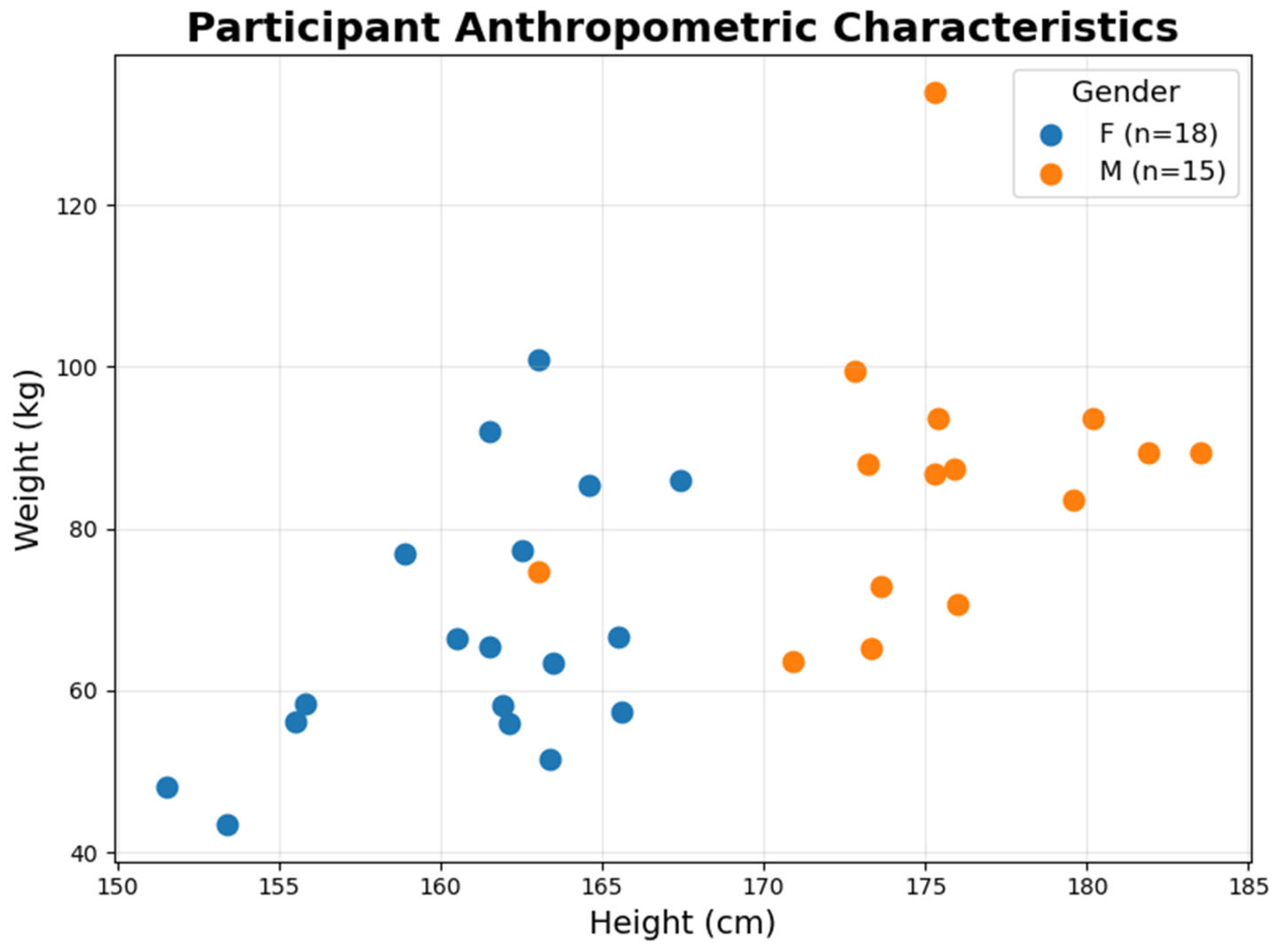
A total of 34 participants were initially enrolled in the study. One participant was excluded from the final analysis due to an identified data quality issue in the recorded ventilation intensity data, resulting in a final analytic sample of 33 participants. Participant demographic information including age, sex, height, weight, and body mass index (BMI) was collected prior to the experiment. The participant sample consisted of 18 females and 15 males with a mean age of 25.4 ± 8.0 years (range: 19.0–59.0 years), mean height of 167.5 ± 8.6 cm (range: 151.5–183.5 cm), mean weight of 75.8 ± 18.9 kg (range: 43.4–134.0 kg), and mean BMI of 26.8 ± 5.5 kg/m
2 (range: 18.4–43.6 kg/m
2). Detailed participant demographic characteristics are summarized in
Figure 1. All participants were informed of the experimental procedures and provided informed consent before participation. Individuals with self-reported cardiovascular, respiratory, or thermoregulatory conditions were excluded from participation. The study protocol was approved by the institutional review board (IRB) of the authors’ institution (TAMU-CC-IRB-2025-1424).
2.2. Equipment
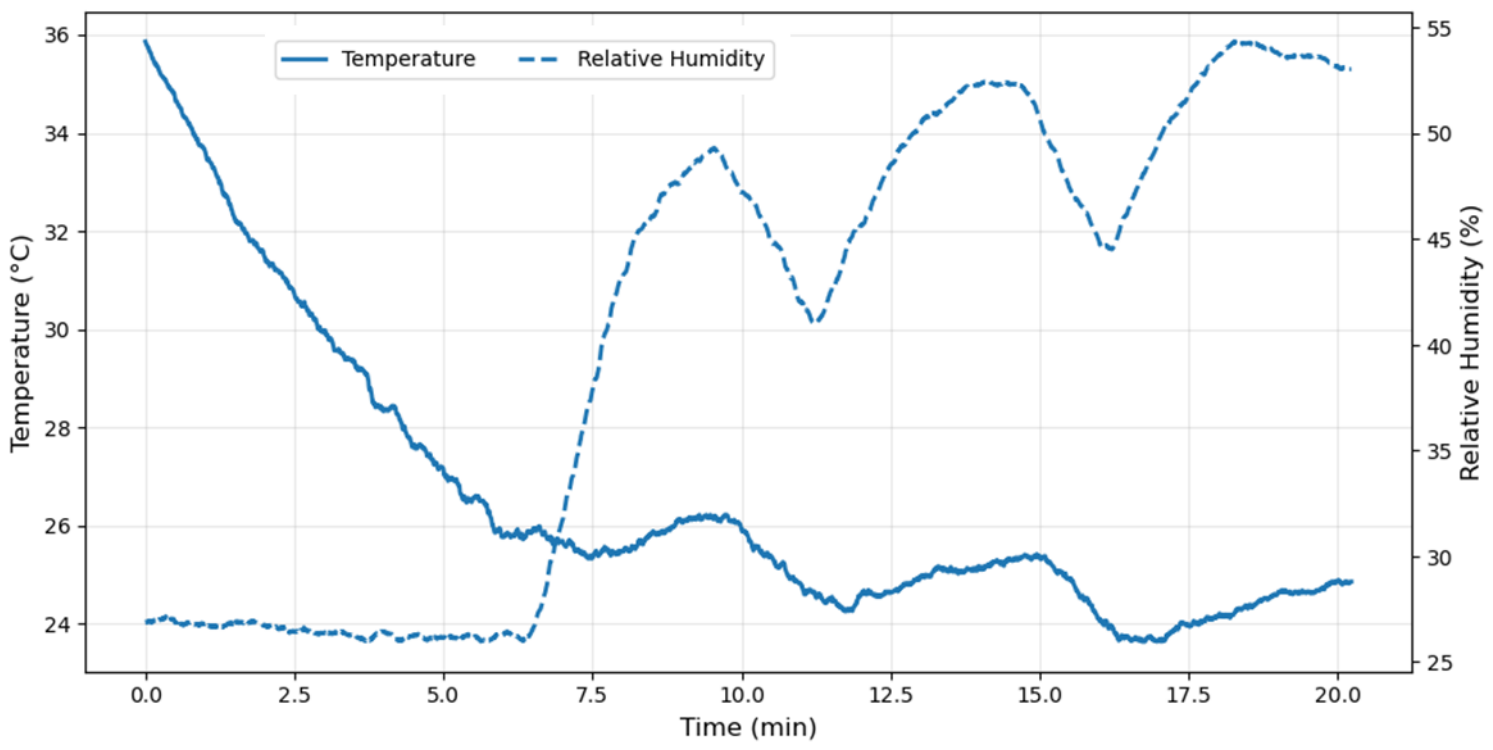
The experiment was conducted in a controlled environmental chamber designed to simulate transient hot vehicle cabin cooling conditions. Each experimental session lasted approximately 25 min in total, consisting of an initial baseline exposure period under hot cabin conditions, followed by an active cooling phase during which the cabin temperature rapidly decreased after air-conditioning activation. Based on high-resolution reference measurements collected under identical chamber operating conditions, the cabin temperature decreased from approximately 38 °C to near 25 °C within approximately 7–8 min after cooling initiation, while relative humidity simultaneously changed throughout the transient cooling process. Minor fluctuations in chamber temperature and relative humidity were observed during the cooling phase due to normal environmental chamber and air-conditioning control cycling behavior. Such oscillatory behavior commonly occurs in controlled thermal environments as the cooling system repeatedly adjusts compressor operation and airflow to maintain target environmental conditions. Cabin temperature and relative humidity at the start of each participant session were measured using environmental sensors installed inside the chamber. Because continuous environmental measurements were not directly recorded during participant experiments, transient chamber temperature and humidity trajectories were reconstructed using a separate second-level reference dataset collected under identical environmental chamber operating conditions (see
Figure 2).
A radiant heater (Visionair 11 in. 120/1500W 5118 BTU Radiant Heater, Visionair, Bentonville, AR, USA) was used to initially raise and maintain the chamber temperature near 38 °C prior to cooling initiation. The selection of approximately 38 °C as the initial chamber temperature was based on two primary considerations. First, vehicle cabin temperatures can readily exceed this level during hot summer conditions. Second, the sponsor company supporting this study maintains an internal evaluation protocol for ventilated seat performance that specifies this temperature condition for testing purposes. The transient cooling process following air-conditioning activation was designed to simulate a realistic hot vehicle cabin recovery scenario.
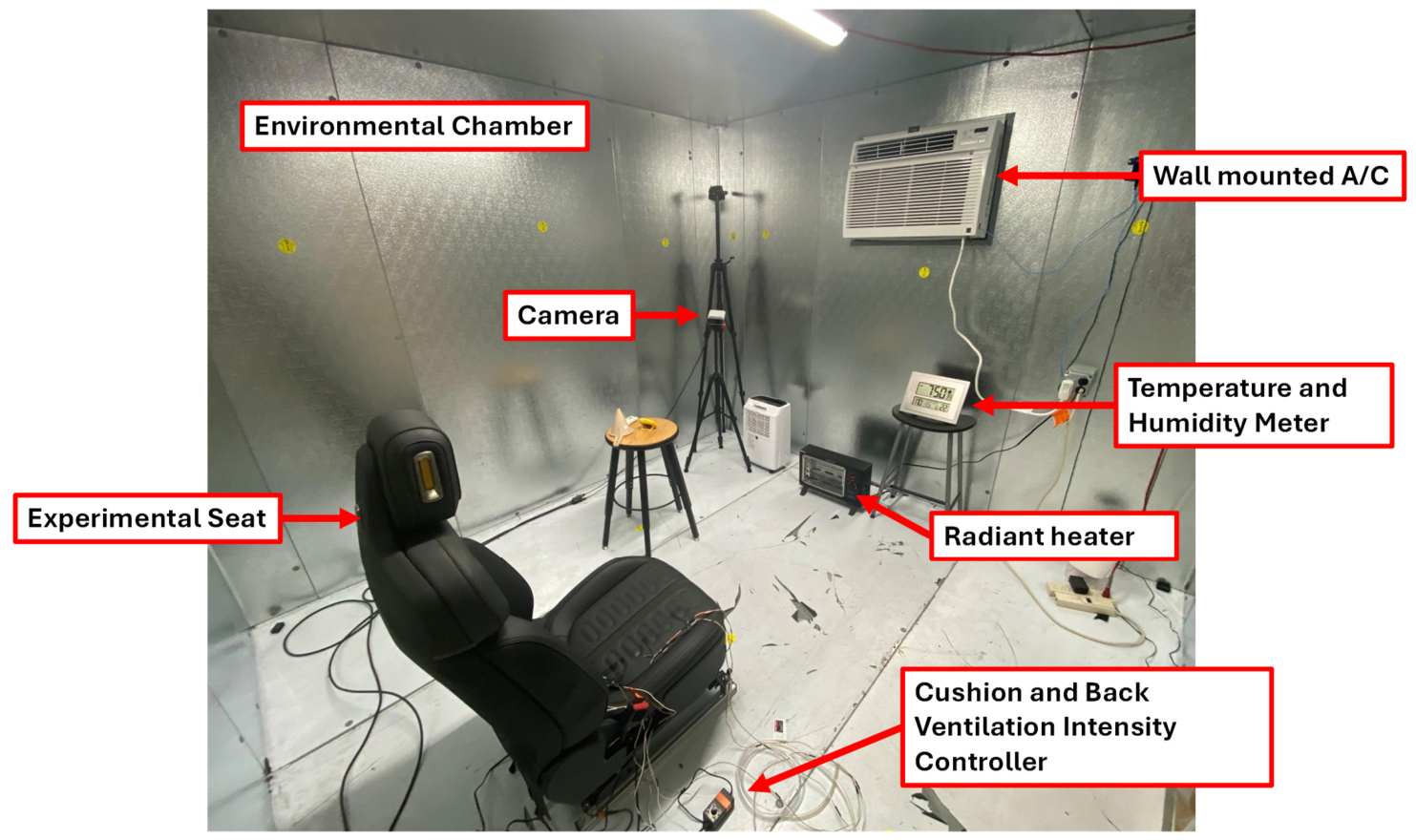
An experimental seat equipped with a seat ventilation system was used in this study (see
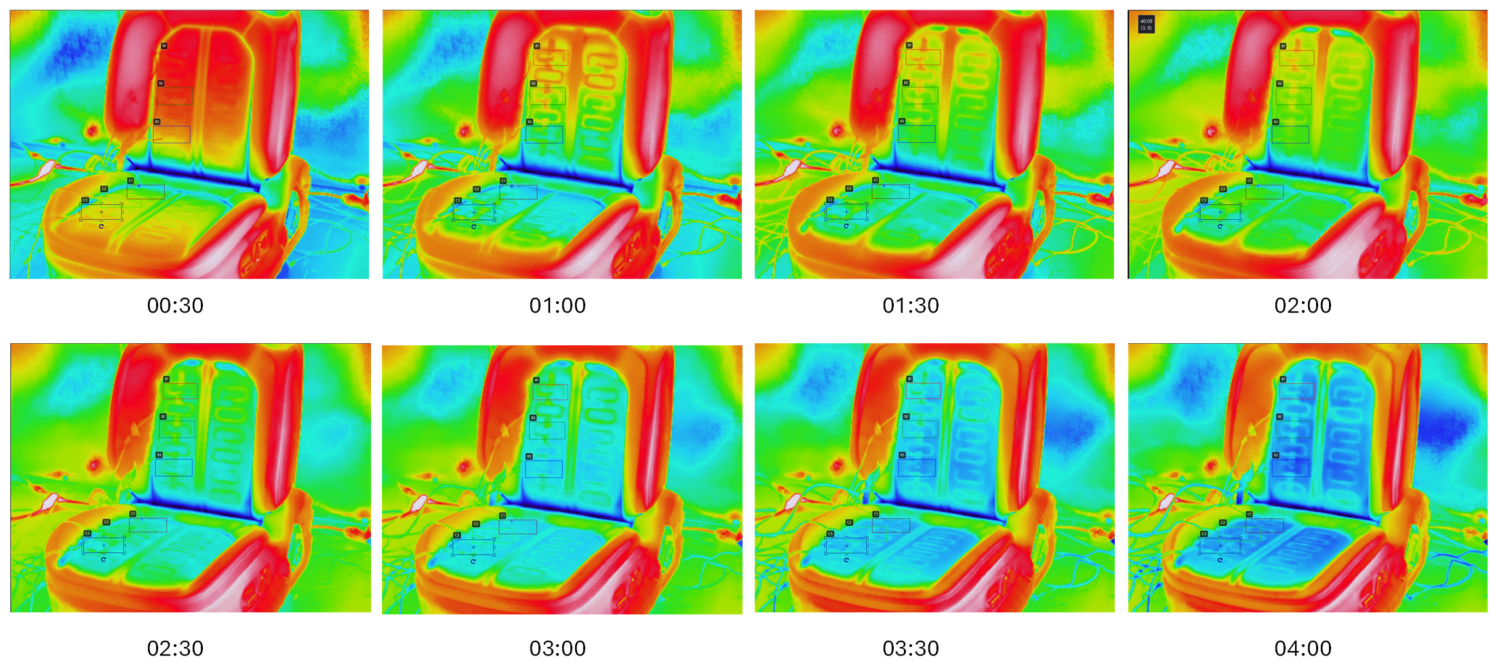
Figure 3). The ventilation system utilized two independently controlled centrifugal blowers to separately regulate airflow intensity for the seat back and seat cushion regions. Each blower was connected to an individual controller, allowing participants to sequentially adjust ventilation intensity levels according to their thermal comfort preferences throughout the experiment. The Low level operated at 6 V (2000 RPM; 38.2 CFM), the Medium level operated at 9 V (2500 RPM; 46.3 CFM), and the High level operated at 12 V (3000 RPM; 55.4 CFM). The blower system consisted of Wathai dual-ball brushless centrifugal blowers (120 mm × 32 mm; rated voltage: 12 V DC; rated current: 1.0 A; maximum speed: 3000 RPM; airflow capacity: approximately 38.5 CFM). A thermal imaging camera (FLIR E75, FLIR Systems, Wilsonville, OR, USA) was additionally used to visually evaluate the transient surface cooling behavior of the ventilated seat system during the experiment.
2.3. Measures
The independent variables included participant demographic characteristics and environmental variables. Demographic variables included age (years), sex, race/ethnicity, height (cm), weight (kg), and body mass index (BMI; kg/m2). Environmental variables included cabin temperature (°C), relative humidity (%), and elapsed experimental time (min). The dependent variable was the participant-selected seat ventilation intensity level, categorized as Low, Medium, or High.
Cabin temperature and relative humidity were measured at the start of each experimental session using environmental sensors installed inside the chamber. Because continuous environmental measurements were not directly recorded during participant experiments, transient cabin temperature and humidity trajectories were reconstructed using a separate high-resolution second-level reference dataset collected under identical environmental chamber operating conditions. During the participant-specific baseline period, cabin temperature and relative humidity were assumed to remain constant. Following baseline completion and initiation of active cooling, participant-specific environmental conditions were estimated by applying a time-shifted reference temperature-humidity trajectory derived from the separate chamber reference measurements. The reference data demonstrated that cabin temperature rapidly decreased from approximately 38 °C to near 25 °C within approximately 7–8 min after cooling initiation, while relative humidity simultaneously changed throughout the transient cooling process. Participant-selected ventilation intensity levels were recorded throughout the experimental session.
2.4. Experimental Procedure
Upon arrival, participants were briefed on the experimental procedures and provided informed consent prior to participation. To minimize the potential influence of clothing insulation on thermal comfort perception, all participants were instructed to change into standardized lightweight clothing consisting of a regular cotton T-shirt and thin 100% polyester shorts provided by the researchers. Demographic and anthropometric information was then collected. Participants were seated on the experimental ventilated seat inside the environmental chamber and instructed to maintain a comfortable seated posture throughout the experiment.
The experiment began under hot cabin conditions at approximately 38 °C. Participants first completed an approximately 5 min baseline exposure period during which they remained seated without adjusting the seat ventilation system. This period was intended to standardize the initial thermal exposure across participants prior to active cooling, rather than to induce complete physiological acclimation. The 5 min duration was selected to reflect a realistic short-duration hot-vehicle entry scenario before air-conditioning activation and to minimize excessive heat exposure under the 38 °C chamber condition. Following the baseline period, active cabin cooling was initiated to simulate a realistic hot vehicle recovery scenario after air-conditioning activation.
During the active cooling phase, participants were instructed to sequentially adjust the seat ventilation intensity level only in a descending order (from High to Medium to Low) according to their thermal comfort preference. The descending-order adjustment protocol was selected because the cabin environment continuously cooled throughout the experiment, making progressive reductions in ventilation intensity consistent with the expected direction of thermal adaptation. In addition, this approach was intended to reduce frequent oscillatory switching among ventilation levels and facilitate the identification of transition points between preferred ventilation settings during this exploratory pilot study. Once participants reduced the ventilation intensity level, they were not allowed to increase it again during the same session. The experiment concluded when participants reported feeling cold and appeared to have reached a relatively stable thermal state under the cooling environment.
2.5. Data Analysis Methods
Descriptive statistical analyses were performed to summarize participant demographic characteristics and environmental exposure conditions during the experiment. Exploratory predictive modeling analyses, including multinomial logistic regression, were conducted to investigate whether demographic and environmental variables could predict preferred seat ventilation intensity levels under dynamically changing cabin cooling conditions. The independent variables included chamber temperature, relative humidity, elapsed experimental time, age, sex, height, body weight, and body mass index (BMI), whereas the dependent variable was the participant-selected ventilation intensity level categorized as High, Medium, or Low.
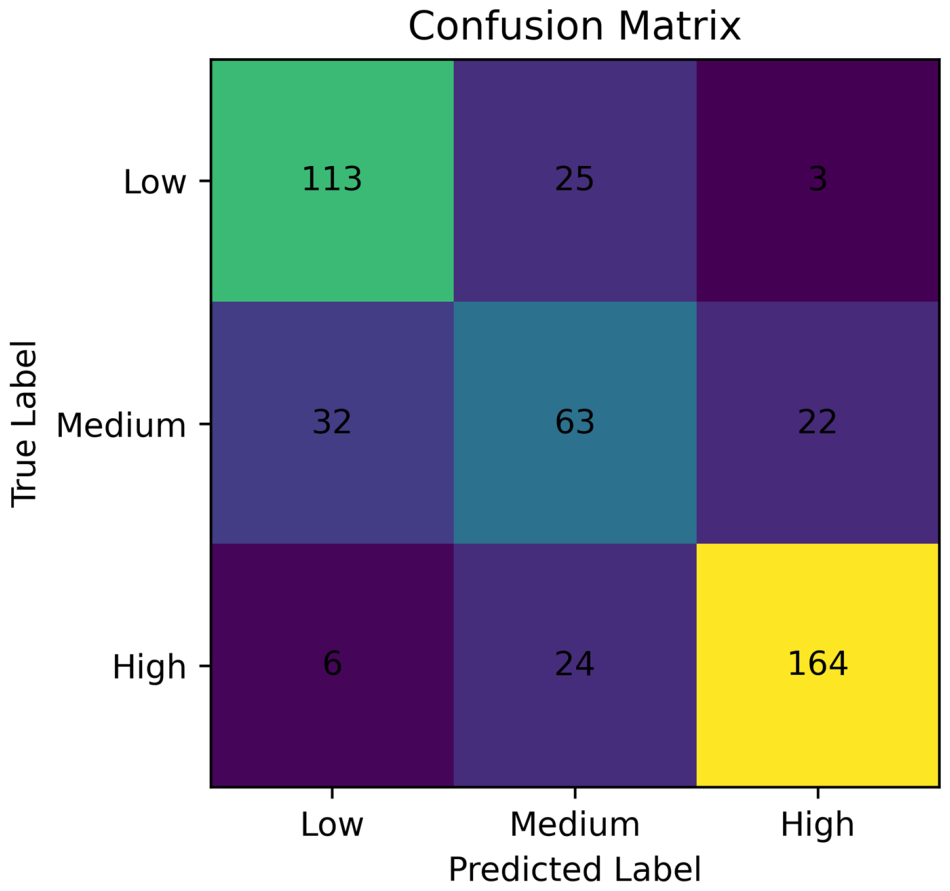
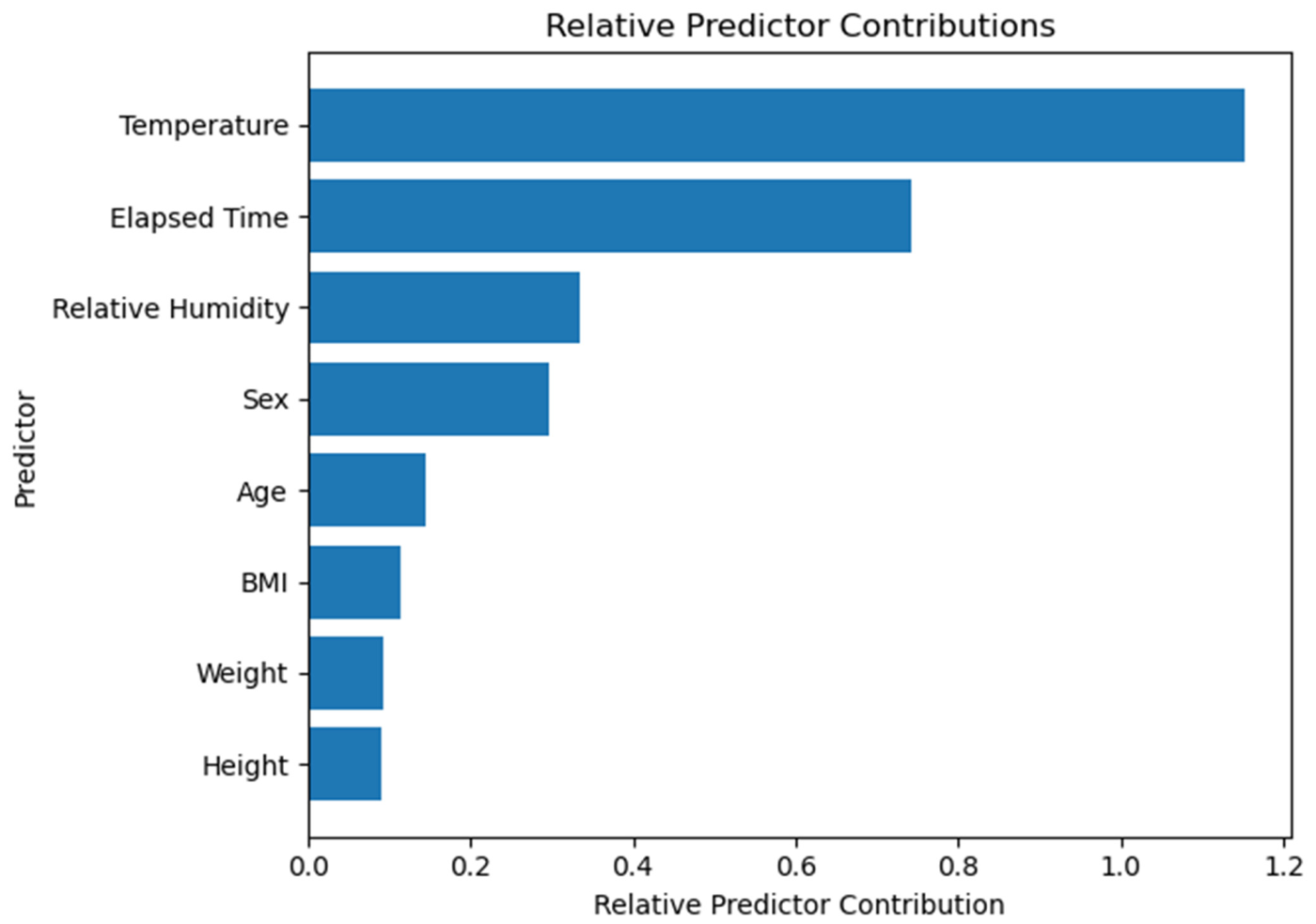
Model performance was evaluated using stratified 5-fold cross-validation to preserve the relative distribution of ventilation intensity categories across validation folds. Classification performance was assessed using overall classification accuracy, class-specific accuracy, confusion matrices, and cross-validated prediction accuracy. Variable importance was evaluated based on multinomial logistic regression coefficients, odds ratios, and statistical significance levels. Visualization analyses were additionally performed to examine relationships among chamber temperature, humidity, elapsed time, and participant-selected ventilation intensity levels during the transient cooling process.
All analyses were conducted using Python (version 3.13.5; Python Software Foundation, Wilmington, DE, USA) within a Jupyter Notebook environment. Data analyses were performed using pandas (version 2.2.3), NumPy (version 2.3.5), matplotlib (version 3.10.8), scikit-learn (version 1.8.0), and statsmodels (version 0.14.6).
4. Discussion
The purpose of this study was to investigate user-preferred ventilated seat intensity levels under simulated hot vehicle cabin cooling conditions and to explore the feasibility of predicting preferred ventilation intensity levels using demographic and environmental variables. Overall, the findings indicated that participants dynamically adjusted seat ventilation intensity levels in response to changing thermal environments and that considerable inter-individual variability existed even under similar environmental conditions. These results support the potential value of personalized and adaptive seat ventilation systems for future intelligent vehicles.
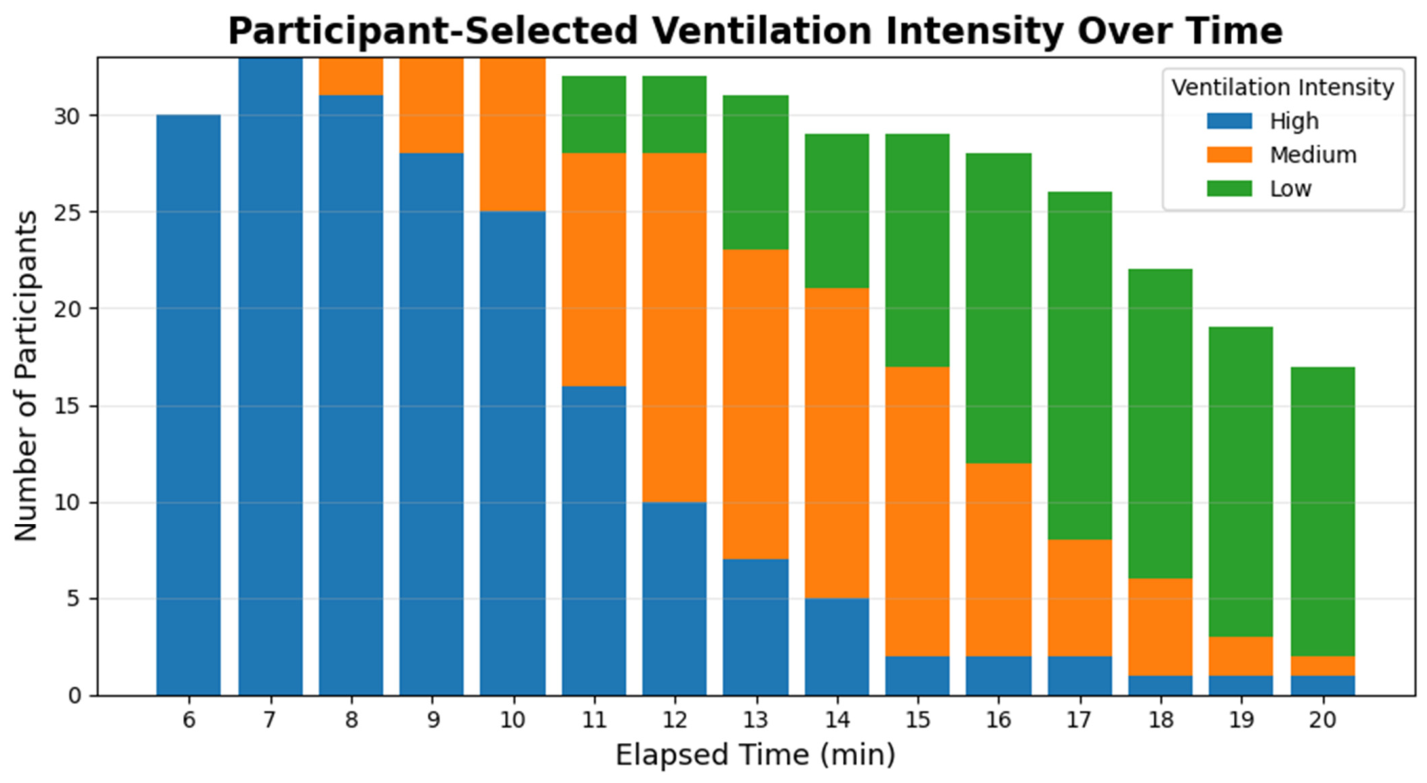
One of the most notable findings was that participants progressively transitioned toward lower ventilation intensity levels as the cabin environment cooled. This behavior is consistent with previous automotive thermal comfort studies reporting that occupants experience greater thermal discomfort immediately after entering a hot vehicle and that localized cooling systems can substantially improve comfort during transient cabin cooling phases [
2,
7]. The present findings further suggest that user-selected ventilation intensity is not static, but changes as thermal conditions evolve over time. Therefore, fixed seat ventilation settings may not adequately reflect real occupant preferences during realistic driving conditions.
Another important finding was the substantial variability observed among participants. Even under similar cabin temperatures and humidity conditions, participants selected different ventilation intensity levels. These differences suggest that individual characteristics, particularly age, may influence thermal sensitivity and preferred seat ventilation behavior, as age remained a statistically significant predictor in the revised model. In contrast, height, body weight, BMI, and sex were not statistically significant predictors. The present study extends previous thermal comfort research by suggesting that age-related differences may contribute to user-selected seat ventilation intensity levels in dynamic vehicle cabin environments.
The predictive modeling results further demonstrated the feasibility of estimating preferred ventilation intensity using a relatively small set of readily obtainable environmental and demographic variables. This finding is important from an applied automotive engineering perspective because such variables may be integrated into adaptive seat control algorithms without requiring complex physiological sensing or computationally intensive thermal simulations. The confusion matrix analysis also suggested that intermediate ventilation preferences may be more difficult to classify than clearly high or low airflow preferences, likely reflecting the gradual nature of thermal adaptation during cabin cooling.
From an applied automotive engineering perspective, the present findings suggest that adaptive ventilated seat control strategies may potentially be implemented using relatively simple rule-based or machine-learning-based approaches. Rather than relying on fixed ventilation settings, future intelligent seat systems may dynamically adjust airflow intensity based on continuously monitored cabin temperature, humidity, elapsed cooling time, and user-specific preference profiles.
The demographic findings additionally suggest opportunities for personalized thermal comfort adaptation. Although age was the only statistically significant demographic predictor in the revised model, this result suggests that future occupant-centered climate control systems may benefit from incorporating user-specific thermal preference profiles. Future studies with larger participant samples are needed to clarify whether body size characteristics also contribute to individualized ventilation preferences.
The thermal imaging analyses additionally provided useful insights into the cooling behavior of the ventilated seat system. As noted in
Section 3.1, the thermal imaging evaluation was conducted as a separate preliminary assessment under a fixed chamber temperature condition. The cushion region generally exhibited more uniform cooling behavior than the backrest region, while the backrest demonstrated greater spatial variability in cooling distribution. This finding may be associated with airflow path geometry, vent hole distribution, foam deformation, or localized airflow resistance within the seat structure. Previous ventilated seat studies similarly reported that airflow performance may decrease when the seat deforms under occupant loading conditions [
9,
26]. It is important to note that this preliminary thermal evaluation did not account for occupant-related seat deformation, which may alter airflow distribution and cooling performance under actual loaded seating conditions. These findings highlight the importance of considering seat structural design and airflow distribution characteristics when developing advanced ventilated seat systems. Although the thermal imaging evaluation was not directly linked to the predictive modeling analysis, it provided useful contextual information regarding the cooling performance of the experimental seat system and helped verify that participants were exposed to meaningful localized cooling conditions during the study. This preliminary verification helped ensure that participant ventilation preferences were evaluated under conditions in which the seat system produced measurable cooling effects.
Several limitations should be acknowledged. Because multiple observations were collected from individual participants, within-subject correlations may have been present. A supplementary generalized estimating equations (GEE) sensitivity analysis was conducted to account for repeated observations within participants. The overall conclusions remained consistent, with environmental variables continuing to demonstrate stronger predictive influence than demographic variables. Future studies involving larger datasets should further investigate repeated-measures modeling approaches, including mixed-effects multinomial regression frameworks. Because chamber temperature, relative humidity, and elapsed experimental time were all derived from the same transient cooling process, additional multicollinearity analyses were conducted. The analyses revealed moderate-to-high correlations among several environmental predictors and elevated variance inflation factors among the anthropometric variables height, weight, and BMI. These findings suggest that individual coefficient estimates should be interpreted cautiously. However, the overall predictor ranking and principal conclusions of the study remained unchanged, with environmental variables continuing to demonstrate substantially greater predictive influence than demographic variables. First, this study involved a relatively small sample size and should therefore be considered exploratory or preliminary in nature. Given the relatively small sample size and the number of predictors included in the multinomial logistic regression model, the predictive findings should be interpreted as exploratory. Although stratified 5-fold cross-validation was used to provide a preliminary assessment of model performance, the model may still be susceptible to overfitting and limited model stability due to the relatively small sample size. Consequently, the observed predictor effects and classification performance may not fully generalize to independent populations. Future studies should include larger participant samples and external validation datasets to further evaluate model robustness and generalizability. Second, the experiment was conducted in a controlled environmental chamber rather than a moving vehicle, meaning that solar radiation, vehicle vibration, driving workload, and real-world traffic conditions were not fully replicated. The importance of evaluating thermal comfort under realistic driving conditions has also been highlighted in recent on-road studies, which demonstrated that thermal conditions can influence driver state and performance during actual vehicle operation [
13]. These factors may influence occupants’ thermal perception, attention to thermal discomfort, and ventilation adjustment behavior during actual vehicle operation. Consequently, the preference patterns observed in the present study may not fully represent those occurring in real-world driving environments. Future studies should evaluate adaptive seat ventilation systems under realistic on-road conditions to further establish external validity. Third, the study focused primarily on demographic and environmental variables and did not include physiological measurements such as skin temperature or sweating responses in the predictive analyses. Furthermore, chamber temperature and relative humidity were not continuously monitored during each participant’s experiment and were instead reconstructed using a high-resolution reference dataset collected under identical chamber operating conditions. Although this approach provided a standardized estimate of environmental exposure, small participant-specific environmental variations may not have been captured. As a result, unquantifiable measurement error may have been introduced into the reconstructed environmental variables used in the predictive analyses. Future studies should incorporate continuous real-time environmental monitoring throughout each participant session to improve measurement accuracy and model reliability. An additional limitation is that participants were only permitted to adjust ventilation intensity in a descending order and were not allowed to increase airflow after selecting a lower setting. Although this approach was intended to simplify the experimental procedure and reduce oscillatory switching behavior during the transient cooling process, it may have influenced the observed transition patterns and ventilation intensity distributions. Consequently, the resulting predictive model may partially reflect the experimental protocol in addition to underlying user preferences. Future studies should evaluate unrestricted and continuous ventilation adjustment behavior while simultaneously recording environmental and seat-control variables in real time to better characterize natural occupant preference dynamics. Although a 5 min baseline period was used to standardize initial hot-cabin exposure, this duration may not have been sufficient to achieve complete physiological thermal acclimation. Future studies should consider longer baseline periods or objective stabilization criteria based on skin temperature, heart rate, or sweating response. In addition, only three discrete ventilation intensity levels were evaluated, and the unequal distribution of time spent at each intensity level may have influenced model performance. Future studies should investigate larger and more diverse participant populations spanning broader age ranges, BMI categories, and demographic backgrounds. Such expanded participant samples may improve model robustness and generalizability while potentially revealing demographic influences on ventilated seat preferences that could not be detected in the present pilot study.
Despite these limitations, the present study suggests the feasibility of predicting occupant-preferred seat ventilation intensity levels under dynamically changing hot cabin conditions. The findings may contribute to the development of personalized occupant-centered thermal comfort systems and future intelligent vehicle seat technologies.