


Abstract
This narrative review explores sauna exposure as an emerging adjunctive intervention with potential relevance to physiotherapy practice. The physiological effects of sauna exposure are presented as related to neuromusculoskeletal performance, cardiorespiratory function, exercise recovery, and systemic health domains relevant to advanced physiotherapy care. The key benefits, owing to hyperthermia and upregulation of heat shock proteins, include thermoregulatory, cardiovascular, neuroendocrine, and cytoprotective responses that support homeostasis and adaptive stress tolerance. From a clinical perspective, frequent sauna use is linked to improved aerobic capacity and blood pressure regulation, particularly when combined with exercise. Furthermore, sauna exposure may support post-exercise and post-intervention recovery through attenuation of muscle soreness and modulation of inflammatory and hormonal responses, contributing to tissue repair and a timely return of neuromuscular function. Despite these potential benefits, substantial variability in evidence-informed dosing parameters exists, underscoring the need for appropriate patient selection and safety considerations. Despite inconsistent dosing parameters, sauna exposure represents a physiologically plausible and increasingly evidence-informed intervention that may complement established physiotherapy interventions. Further clinical research is needed to define optimal dosing, safety guidelines, and its targeted role within rehabilitation populations. Moreover, studies comparing sauna exposure to other physiotherapy thermal modalities are needed to determine efficacy. This manuscript is classified as level 5 evidence based on the Oxford Centre for Evidence-Based Medicine guidelines. Thus, no indication of the superiority of sauna over other interventions is being established.
1. Introduction
Whole-body heating modalities such as conventional sauna bathing (CSB) and infrared sauna (IFS) have gained increased attention within both the health promotion and rehabilitation fields. Although CSB has been practiced for centuries, its resurgence has been driven by a growing body of evidence suggesting its physiological effects and potential clinical applications. In short, sauna exposure induces mild hyperthermia, which is characterized by an elevation in core body temperature and activation of thermoregulatory responses. This process stimulates neuroendocrine, cardiovascular, and cytoprotective mechanisms that may enhance physiological resilience to subsequent stressors. Although several whole-body heating approaches exist, including steam rooms and hydrotherapy, the present review focuses specifically on dry heat sauna modalities.
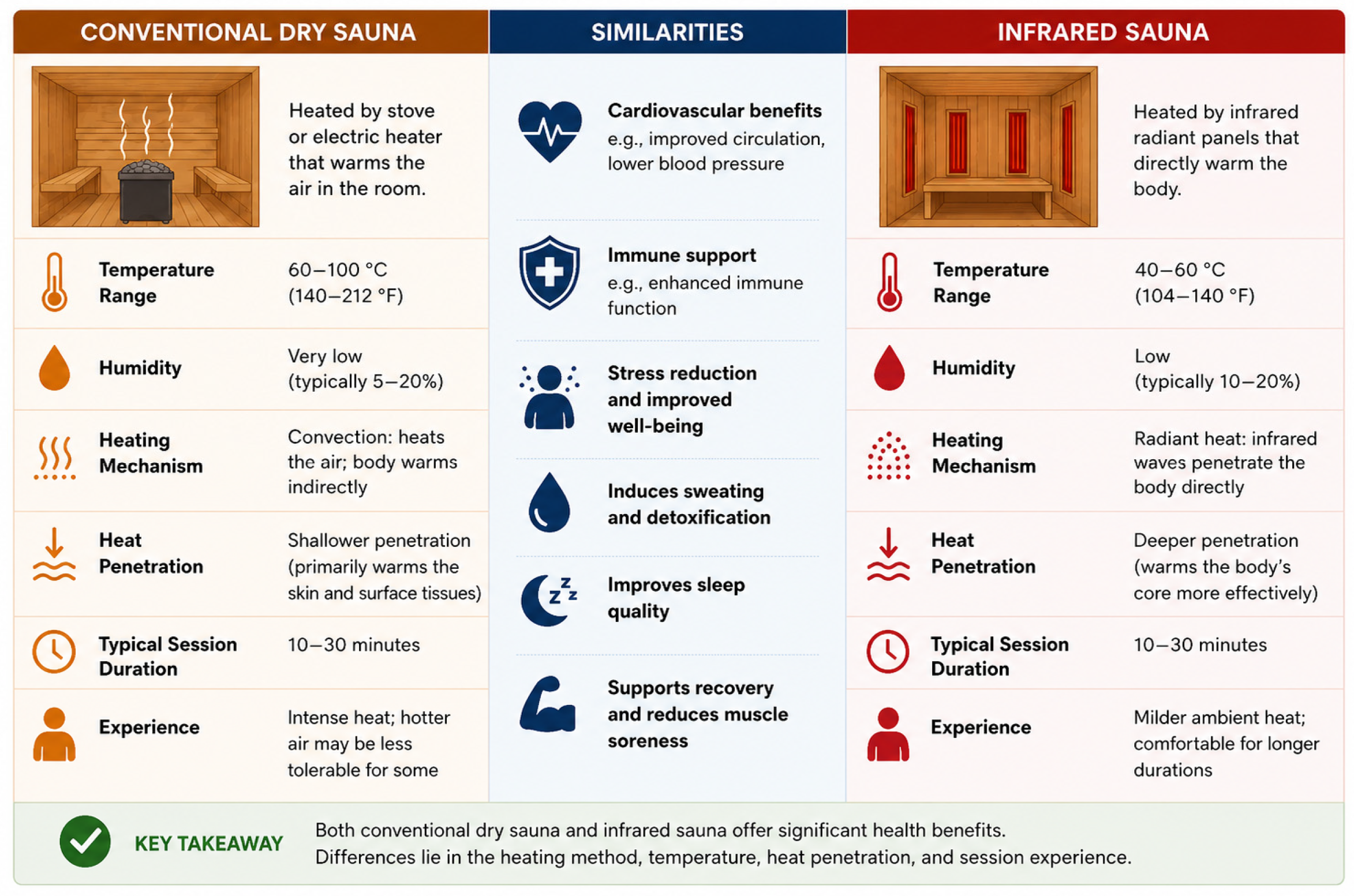
The term “sauna bathing” encompasses a range of passive heating interventions, with CSB being the most extensively studied. In recent years, infrared technology has gained popularity, with IFS offering comparable thermal exposure at lower ambient temperatures and reduced humidity [1]. Despite differences in heat delivery, most sauna protocols involve intermittent heating cycles, cooling or cool-down periods, and rehydration to optimize recovery and physiological adaptation [1]. Conventional sauna units are typically constructed from wood; however, modern fitness and wellness centers may utilize hybrid designs that include hard floors. Most conventional sauna units operate at temperatures between 85 °C and 90 °C as a form of dry heat with relatively low humidity, depending on the specific design and use conditions [1].
The potential health benefits of CSB use are increasingly recognized within both preventive and rehabilitative frameworks. Reported effects include reductions in perceived stress, modulation of blood pressure, anti-inflammatory and antioxidant responses, and improvements in overall cardiovascular function [2]. Sauna exposure has also been shown to influence multiple physiological systems, including the cardiovascular, neuroendocrine, and immune systems [2]. These systemic adaptations suggest that sauna bathing may serve as a valuable adjunct to physiotherapy interventions by promoting repair and recovery, enhancing circulation, and supporting general health. Furthermore, emerging evidence indicates that regular sauna use may complement established lifestyle interventions, such as exercise and cardiorespiratory conditioning, and may help mitigate systemic inflammation and risk of hypertension [2].
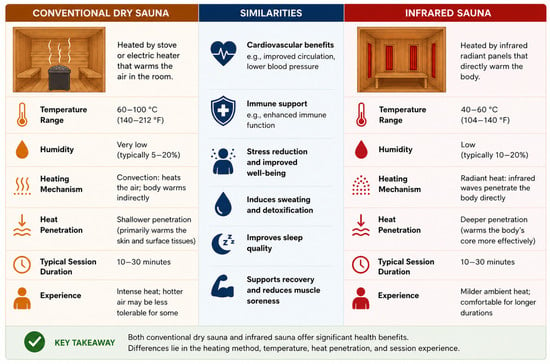
Another form of whole-body heat exposure that has gained traction in both clinical and community settings is IFS. Unlike CSB, which uses convection as a means of heating, IFS systems utilize infrared radiation to directly heat body tissues rather than the surrounding air [1]. As a result, these systems typically operate at lower temperatures, generally between 45 °C and 60 °C, with minimal humidity, while maintaining comparable exposure durations to CSB [1]. Modern IFS units may emit either near- or far-infrared wavelengths depending on the heating elements used. Near-infrared systems typically utilize incandescent bulbs, whereas far-infrared systems rely on ceramic or metal heating elements [1]. See Figure 1 for a comparison of CSB and IFS.
Figure 1.
Sauna Comparison for Conventional and Infrared Sauna.
While whole-body heating has long been used for relaxation and general wellness, its role within physiotherapy is potentially evolving as scientific evidence continues to expand. Existing literature suggests that sauna exposure may have meaningful applications in improving muscle performance, enhancing flexibility, facilitating heat acclimation, and promoting cardiovascular and metabolic health. Thus, the purpose of this narrative review is to examine the therapeutic potential of sauna-based interventions, with particular emphasis on their effects on musculoskeletal function, exercise performance, recovery processes, heat acclimation, and overall health outcomes. A brief overview of the cellular and molecular responses to sauna is first presented to establish the physiological adaptations underpinning its health and fitness benefits.
2. Health and Fitness Benefits
Sauna exposure has been associated with a broad range of physiological and performance-related adaptations that are increasingly relevant to physiotherapy practice. These include improvements in muscle performance (e.g., endurance and strength), flexibility, heat acclimation, aerobic capacity, and exercise recovery, as well as modulation of hormonal and molecular pathways. Many of these effects are mediated, in part, by the upregulation of heat shock proteins (HSPs), which contribute to cellular protection and adaptation under thermal stress. From a clinical perspective, these adaptations position sauna therapy as a potentially valuable adjunct to traditional physiotherapy interventions, particularly in populations requiring enhanced recovery, improved circulation, or modulation of musculoskeletal function.
2.1. Heat Shock Proteins
Shock proteins, which include both cold and HSPs, are a group of stress-responsive proteins that the body produces in response to extreme temperatures. Both cold and HSPs have a critical function in cellular protection, repair, and adaptation. HSPs are produced in response to stressors such as heat exposure and act as molecular chaperones, stabilizing protein structure, preventing misfolding, and assisting in the repair or removal of damaged proteins. The HSPs are typically activated at core body temperatures that range from 38.1–42 °C (Celsius) (100.6–107.6 Fahrenheit), with the latter range providing the most robust HSP response, albeit above safe core temperature for humans [3,4]. These functions are essential for maintaining cellular integrity and function, particularly in the context of physical stress and injury.
Sauna exposure has been shown to significantly upregulate HSP expression, particularly HSP-70 (also referred to as HSP-72), which is closely associated with skeletal muscle adaptation and recovery [5]. Increases in HSP-70 have been observed following both single and repeated sauna sessions, with the most pronounced elevations occurring after initial exposure [5]. In the aforementioned study, subjects underwent three 15-min CSB sessions with a 2 min cool-water rinse between each session for a total of 10 sessions over 3–4 weeks. The CSB temperature was reported at 90° C and rectal temperatures on average increased from 37° on average up to 38.66° after the 1st CSB session. Interestingly, after 10 sessions, the increase in rectal temperatures was slightly smaller compared with changes after the first session, suggesting heat acclimation. With regard to HSP-70, a 144–271 percent increase was reported after the first session; however, higher rectal temperatures did not necessarily correlate with greater increases in rectal temperature, as there appeared to be a level of heat acclimation. From a physiotherapy standpoint, this rapid response may be clinically advantageous in early-stage recovery, where cellular protection and repair are critical.
HSPs also contribute to reductions in oxidative stress, modulation of inflammation, and improved cellular resilience. For example, HSP-27 has been implicated in antioxidant activity, protection against apoptosis, and maintenance of cytoskeletal integrity [6]. These functions are particularly relevant in conditions involving muscle damage, neurodegenerative processes, and chronic inflammation. Differences in HSP responses have been observed between trained and untrained individuals, with non-athletes demonstrating greater expression of HSP-related genes following sauna exposure [6]. Thus, sauna therapy may be particularly beneficial in clinical or deconditioned populations, where baseline adaptive capacity is lower and the potential for physiological improvement is greater.
From a clinical perspective, the upregulation of HSPs provides a reasonable basis for the use of sauna therapy as an adjunct to physiotherapy. Specifically, by enhancing protein repair, reducing cellular stress, and supporting recovery processes, sauna exposure may facilitate tissue healing, improve muscle function, and enhance tolerance to rehabilitation loading.
2.2. Hormonal and Molecular Adaptations
Heat stress induced by sauna exposure has been shown to modulate a wide range of hormonal and inflammatory responses that are relevant to recovery, adaptation, and overall physiological function. Exposure to high temperatures (e.g., 90–91 °C) has been associated with acute and chronic changes in endocrine activity, including alterations in cortisol, β-endorphin, adrenocorticotropic hormone (ACTH), growth hormone (GH), testosterone, dehydroepiandrosterone (DHEA), thyroid hormones, and both pro- and anti-inflammatory cytokines. Furthermore, sauna use has been shown, via muscle biopsy, to increase anabolic upregulation and downregulate catabolism [7]. From a physiotherapy perspective, these responses may underpin many of the observed benefits of sauna exposure on recovery, tissue repair, and systemic adaptation.
Hormonal responses to sauna exposure appear to be both dose- and duration-dependent. Pilch et al. demonstrated that repeated sauna sessions (30–45 min over two weeks) significantly increased GH, ACTH, and cortisol levels in healthy women, with shorter-duration sessions (30 min at 80 °C) eliciting greater GH responses than longer sessions incorporating cooling intervals [8]. Mild reductions in thyroid hormone profiles were also observed [8]. GH in particular plays a central role in tissue repair, protein synthesis, and muscle regeneration, suggesting that sauna exposure may support recovery and adaptation following musculoskeletal injury or exercise-induced stress.
In contrast, Podstawski et al. reported reductions in cortisol levels and non-significant increases in testosterone following repeated sauna exposure in healthy men [9]. Similarly, Rissanen et al. demonstrated that sauna use, both independently and following resistance exercise, resulted in complex hormonal responses influenced by time of day and training type [10]. Notably, testosterone increased following afternoon sauna sessions, particularly when combined with resistance training, while cortisol levels consistently declined following sauna exposure [10]. These findings suggest that sauna therapy may contribute to a more favorable anabolic–catabolic balance, which is critical in optimizing recovery, reducing physiological stress, and enhancing rehabilitation outcomes and timely recovery.
Importantly, reductions in cortisol, a key stress hormone, may have direct clinical implications. Elevated cortisol levels are associated with delayed healing, increased fatigue, and impaired recovery. Therefore, sauna-induced reductions in cortisol may support stress modulation, autonomic recovery, and improved readiness for subsequent rehabilitation sessions. Additionally, observed increases in GH and testosterone, particularly when combined with exercise, suggest that sauna therapy may augment training-induced adaptations and tissue remodeling.
Catecholamine responses to heat exposure further support these findings. Laatikainen et al. reported significant increases in norepinephrine following sauna exposure, indicating activation of the sympathetic nervous system, although no consistent changes were seen in β-endorphins or cortisol [11]. Sex-related differences in hormonal responses have also been observed, with greater ACTH responses reported in women and similar catecholamine responses between sexes [12]. These findings reinforce the importance of individualized treatment approaches, as hormonal responses to sauna may vary based on sex, baseline physiology, and conditioning level. Longer-term adaptations have also been demonstrated. Leppäluoto et al. reported reductions in cortisol and ACTH alongside increased catecholamine excretion following repeated sauna exposure over seven days [13]. Notably, a substantial increase in GH (up to 16-fold) was observed in male participants [13]. These findings suggest that cumulative sauna exposure may drive meaningful endocrine adaptations that support metabolic function, tissue repair, and overall resilience to stress, all of which are highly relevant to physiotherapy populations.
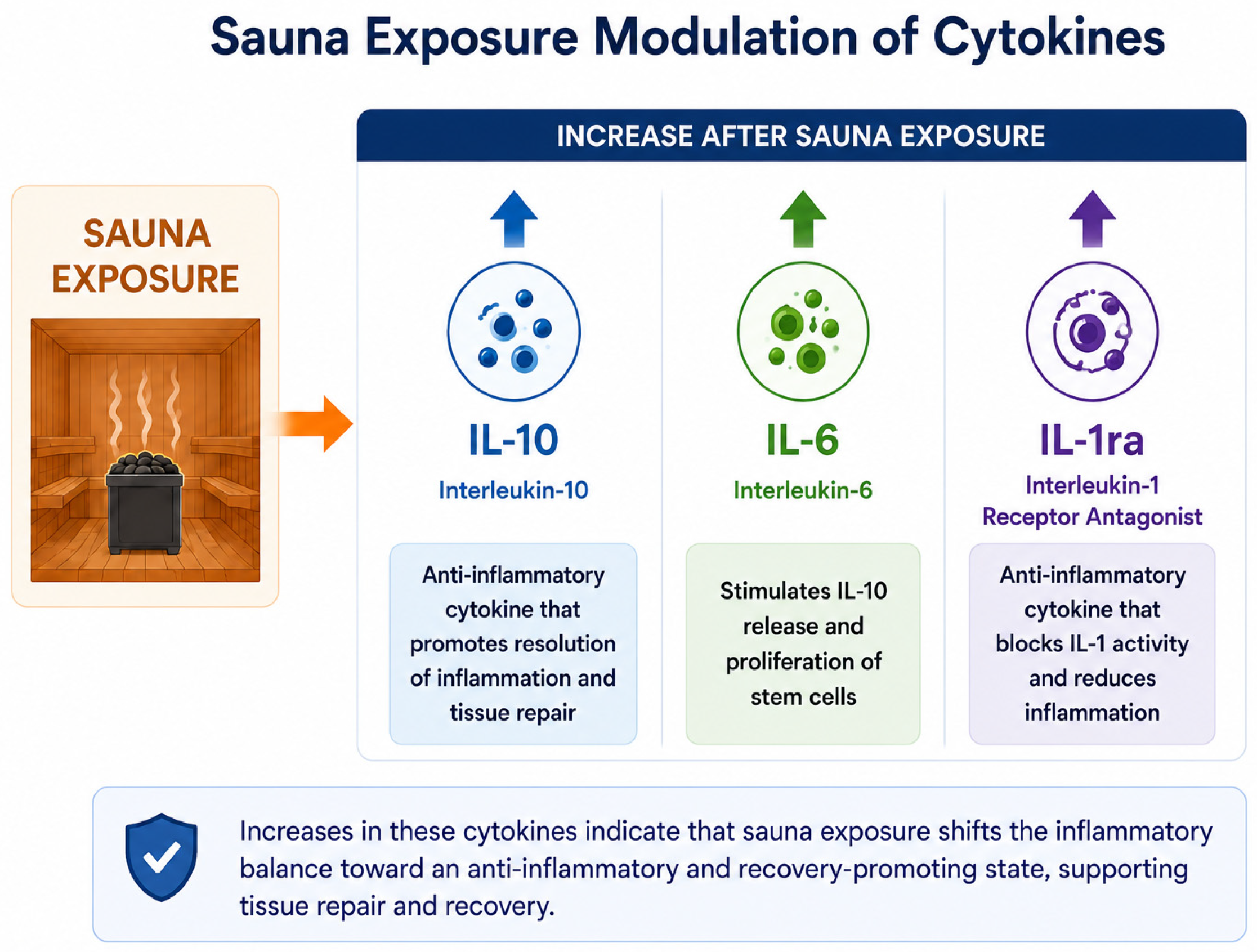
In addition to endocrine responses, sauna exposure influences inflammatory pathways that are central to recovery and tissue healing. Pilch et al. demonstrated increases in both interleukin-6 (IL-6) and interleukin-10 (IL-10) following repeated sauna exposure, with a greater increase in IL-10, suggesting an overall anti-inflammatory effect [5]. IL-10 plays a key role in resolving inflammation and promoting tissue repair, while IL-6, although traditionally viewed as pro-inflammatory, also contributes to anti-inflammatory signaling through stimulation of IL-10 release [14]. These responses are particularly relevant in physiotherapy, where modulation of inflammation is essential for optimizing recovery following injury or exercise. Additional studies further support the anti-inflammatory potential of sauna therapy. Behzadi et al. reported increases in IL-6 and interleukin-1 receptor antagonist (IL-1ra), an anti-inflammatory cytokine, following sauna exposure, without significant changes in C-reactive protein [15]. Zychowska et al. observed differential inflammatory and stress-related gene expression responses between athletes and non-athletes, with non-athletes demonstrating greater increases in IL-6, IL-10, and C-reactive protein [6]. These findings suggest that training status influences the magnitude of inflammatory responses, emphasizing the need for patient-specific dosing and progression of sauna interventions in clinical practice.
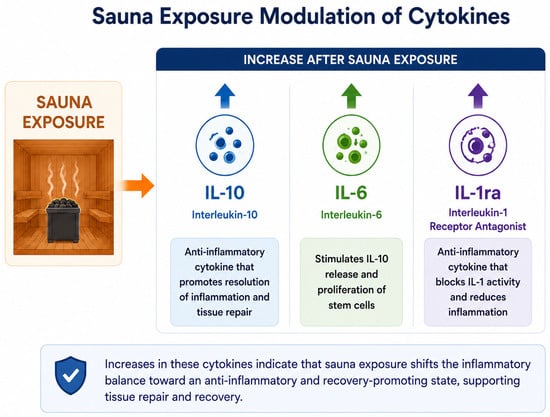
Collectively, these hormonal and inflammatory adaptations highlight the potential role of sauna therapy in facilitating recovery, enhancing tissue repair, and modulating systemic stress responses. When appropriately prescribed, sauna exposure may complement exercise-based interventions by optimizing the internal physiological environment for healing and adaptation. In fact, it is reasonable to view sauna exposure as an anti-inflammatory treatment modality given the reported increases in IL-10 and IL-1ra. These benefits are inarguably desirable in routine physiotherapy care. See Figure 2 for a summary of cytokine responses to sauna exposure.
Figure 2.
Sauna Exposure Modulation of Cytokines.
2.3. Muscle Performance
One of the primary physiological adaptations associated with sauna use is plasma volume expansion, a critical determinant of endurance performance. Intermittent post-exercise sauna exposure has been shown to significantly enhance exercise capacity in trained middle-distance runners under both hot and temperate conditions [16]. These improvements are largely attributed to enhanced thermoregulatory efficiency and increased plasma volume, which collectively support improved cardiovascular output and oxygen delivery to working musculature. Similarly, Scoon et al. reported a 32% increase in plasma volume alongside a 1.9% improvement in 5 -km time-trial performance following three weeks of post-exercise sauna use [17]. From a physiotherapy standpoint, these findings support the integration of sauna therapy into conditioning and return-to-sport programs, particularly for endurance athletes or tactical populations. Enhancing plasma volume and cardiovascular efficiency may allow patients to tolerate higher training loads, progress rehabilitation more effectively, and reduce fatigue during prolonged activity.
Heat acclimation represents an additional mechanism through which sauna exposure may improve endurance performance. Cardiovascular stability during exercise is enhanced through regular exposure to passive heat via increased plasma volume and improved heart rate variability [18]. These findings are further supported in elite populations, with improved thermophysiological responses, such as reduced core body temperature and increased perspiration rate, observed following heat acclimation protocols [19]. Clinically, these adaptations may be particularly beneficial for patients returning to activity in hot environments, such as athletes, military personnel, or firefighters, where heat tolerance is a critical component of safe performance.
Increases in muscle temperature associated with sauna exposure have also been shown to enhance muscle contractility, including improvements in electrically evoked contractions [20,21,22,23]. However, these improvements are not consistently linked to increases in maximal voluntary contraction (MVC) or peak twitch torque. Rather, thermal exposure appears to preferentially enhance rapid force production characteristics, such as rate of force development and time to peak torque [23]. This distinction is clinically meaningful, as improvements in rapid force production are critical for functional tasks such as fall prevention, gait, and explosive movements, making sauna exposure potentially beneficial in both athletic and geriatric rehabilitation contexts.
Additional evidence suggests that sauna exposure may augment strength adaptations during training. Bartolomé et al. demonstrated that incorporating resistance training in a sauna environment resulted in significant improvements in maximal isometric handgrip strength in both trained and untrained extremities. Notably, no such improvements were observed in thermoneutral conditions [24]. This finding may reflect cross-education effects and heightened neuromuscular activation, which are highly relevant in unilateral injury rehabilitation, where maintaining strength in the contralateral limb is critical. Furthermore, given that handgrip strength is a recognized predictor of morbidity and mortality across diverse patient populations [25], these improvements highlight the potential value of sauna interventions in general health screening and functional resilience.
The neuromuscular effects of sauna exposure have also been examined in controlled experimental settings. Cernych et al. demonstrated enhanced sarcolemma excitability and improved muscle contractility during recovery following sauna exposure [26]. Although transient reductions in force steadiness were observed, these did not translate into increased neuromuscular fatigability during sustained contractions. Clinically, this suggests that sauna therapy may be used to facilitate recovery without impairing subsequent performance, making it a practical adjunct following rehabilitation sessions or training.
Beyond endurance, sauna exposure may have important implications for skeletal muscle function, particularly in populations experiencing muscle loss or weakness due to chronic disease or aging. Conditions such as diabetes, cancer, renal failure, heart failure, and acquired immunodeficiency syndrome are commonly associated with reductions in muscle mass and force-generating capacity. Passive heat exposure has been proposed as a potential adjunct to mitigate these declines by promoting hypertrophy, attenuating atrophy, and enhancing strength [23]. For example, one study reported improvements in quadriceps strength as well as anabolic upregulation in patients with heart failure after 10 sessions [7]. In physiotherapy practice, this suggests a role for sauna interventions in low-load or early-stage rehabilitation, where traditional resistance training may be limited due to pain, immobilization, or medical restrictions.
At the cellular level, heat stress stimulates the upregulation of HSPs and activates anabolic signaling pathways, including the Akt/mTOR pathway, which regulates protein synthesis and cellular growth [23]. These molecular adaptations mirror the effects of resistance exercise, supporting the use of sauna therapy as a complementary modality to enhance muscular adaptation, particularly in deconditioned or clinical populations.
Overall, the evidence indicates that sauna-induced plasma volume expansion and thermoregulatory adaptations are key contributors to improved endurance performance and delayed fatigue. In addition, passive heat exposure may enhance muscle contractility and neuromuscular function through both systemic and molecular mechanisms. These findings support the consideration of sauna therapy in physiotherapy as an adjunct to improve performance, accelerate recovery, and address muscle dysfunction.
2.4. Flexibility
The effects of whole-body heating on tissue extensibility and flexibility remain less extensively studied than other physiological outcomes; however, emerging evidence suggests clinically meaningful benefits. From a physiotherapy perspective, improving flexibility and tissue extensibility is central to restoring range of motion, reducing injury risk, and optimizing movement quality.
Bucht and Donath demonstrated that repeated sauna exposure combined with movement (sauna yoga) significantly improved flexibility in older adults, as measured by standardized functional tests [27]. These findings suggest that sauna-based interventions may be particularly useful for aging populations experiencing reduced mobility, joint stiffness, or functional decline. Importantly, the feasibility of this intervention highlights its potential role in promoting adherence and engagement in therapeutic programs. In athletic populations, Bartolomé et al. reported significant improvements in hamstring flexibility following repeated sauna exposure [28]. Notably, these improvements occurred without a dedicated stretching intervention, suggesting that passive heating alone may influence tissue extensibility. This has important clinical implications, as sauna therapy could be used as a pre-treatment modality to enhance the effectiveness of stretching, manual therapy, or other mobility interventions.
Physiologically, increases in tissue temperature reduce muscle stiffness and promote relaxation through enhanced circulation and decreased viscoelastic resistance [29]. These mechanisms support improved tissue compliance and extensibility, which are critical for effective rehabilitation. Additionally, passive heating may facilitate reductions in muscle tone and promote post-exercise relaxation, further contributing to improvements in flexibility [29]. From a clinical application standpoint, sauna exposure may be most beneficial when used prior to therapeutic exercise or manual interventions, where increased tissue pliability can enhance treatment effectiveness. It may also serve as a recovery modality to reduce residual muscle tightness following activity. However, given the limited and heterogeneous evidence base, further research is needed to establish optimal dosing parameters and clarify its role within standardized physiotherapy protocols.
2.5. Heat Acclimation for Optimizing Performance
High-performance athletes and individuals in high-demand tactical occupations (e.g., military personnel, firefighters, and law enforcement officers) are required to maintain optimal physical performance under diverse environmental conditions, including extreme temperatures, humidity, and altitude. Heat acclimation, defined as repeated exposure to thermal stress resulting in adaptive physiological responses, is a well-established strategy to enhance performance and safety in hot environments.
In response to thermal strain, the human body triggers a sequence of integrated physiological and perceptual adaptations aimed at preserving performance and minimizing the risk of heat-related illness [30]. Among the most consistently reported adaptations are increases in plasma volume and total blood volume, which enhance cardiovascular stability and improve heat dissipation [19]. Additional adaptations include reductions in resting core temperature, decreased heart rate during submaximal exercise, and earlier onset and increased rate of perspiration, all of which contribute to improved thermoregulation and decreased physiological strain [19]. These changes ultimately support greater exercise tolerance and performance in thermally stressful environments.
To elicit these adaptations, a sufficient thermal stimulus is required, typically achieved when core body temperature increases by approximately 1.3–1.5 °C [19,31]. However, the rate and magnitude of adaptation vary considerably between individuals and are influenced by baseline fitness level, training intensity, and prior heat exposure [32]. Furthermore, the specific modality of heat exposure, whether active or passive, and whether occurring in air or water, may influence adaptation outcomes depending on the physical demands of the activity or occupation [33]. From a physiotherapy perspective, this highlights the importance of task-specific conditioning, where heat acclimation strategies should align with the environmental and physiological demands of the patient’s sport or occupation.
While active heat acclimation protocols (e.g., exercise in hot environments) are commonly utilized, a systematic review and meta-analysis by Tyler et al. demonstrated that meaningful physiological adaptations can be achieved irrespective of the heating modality [30]. Consequently, passive heating strategies, such as sauna exposure, represent a practical and cost-effective alternative. Clinically, sauna use may be particularly beneficial in rehabilitation settings where active exercise capacity is limited, allowing patients to achieve thermophysiological adaptations without additional mechanical loading. This is especially relevant for injured athletes or tactical personnel progressing through return-to-duty or return-to-sport programs.
Overall, sauna exposure provides a viable method to induce heat acclimation by replicating thermal stress, promoting adaptive responses, and enhancing tolerance to heat. Its integration into physiotherapy practice may support performance optimization, injury prevention in hot environments, and safe return to occupational or athletic demands.
2.6. Aerobic Performance and Cardiorespiratory Health
Maximal oxygen uptake (VO2 max) is a key determinant of aerobic capacity and endurance performance, reflecting the efficiency of oxygen delivery and consumption during sustained physical activity [34]. While acute heat exposure can transiently reduce VO2 max, repeated exposure through acclimation strategies may mitigate these effects and, in some cases, improve aerobic performance [35].
Sauna use has been increasingly investigated as a strategy to enhance aerobic fitness, particularly when incorporated following exercise. Lee et al. conducted an 8-week randomized controlled trial in a sedentary population with cardiovascular disease (CVD) risk factors and demonstrated that post-exercise sauna use significantly improved VO2 max and reduced cholesterol levels [36]. From a physiotherapy perspective, these findings suggest that sauna therapy may serve as a valuable adjunct intervention for cardiopulmonary rehabilitation and chronic disease management, particularly in populations with limited exercise tolerance.
In contrast, findings in highly trained populations appear more nuanced. Pokora et al. reported that repeated sauna exposure did not significantly improve VO2 max in elite cross-country skiers, likely due to pre-existing physiological adaptations from high-level training [19]. However, sauna use may still play a role in the maintenance of cardiovascular fitness during periods of reduced training, such as injury recovery or off-season conditioning.
Beyond VO2 max, sauna exposure may positively influence other markers of aerobic performance and recovery. Sutkowy et al. demonstrated that a single sauna session reduced exercise-induced oxidative stress following aerobic activity, suggesting improved recovery at the cellular level [37]. Similarly, Scoon et al. reported enhanced endurance performance following three weeks of post-exercise sauna use, attributed to increases in plasma volume [17]. Collectively, these findings support the integration of sauna therapy into physiotherapy programs as a recovery modality to enhance training adaptations and reduce physiological stress.
Sauna exposure also has well-documented benefits for cardiovascular health. Frequent sauna bathing has been associated with reductions in hypertension, CVD, dementia, chronic kidney disease, and respiratory conditions [2]. Longitudinal evidence demonstrates that increased frequency and duration of sauna use are associated with decreased cardiovascular morbidity and mortality, with significant risk reductions observed at four sessions per week totaling approximately 45 min [38]. Amongst individuals with heart failure who have preserved ejection fraction, 10 sessions of sauna use (twice per week) have been shown to improve peak VO2 max and the 6 min walk test [7]. Furthermore, anaerobic threshold, quadriceps strength, and diastolic function improved [7]. The 6 min walk test has also been shown to improve following sauna exposure amongst patients with chronic kidney disease [39]. Specifically, IFS exposure was implemented and compared to a control following one session, with improvements in leg blood flow, macrovascular function, and 6 min walk test, suggesting acute improvements in both vascular function and exercise capabilities. These effects are particularly relevant in physiotherapy, where cardiovascular risk reduction and health promotion are central components of care, especially in aging and clinical populations.
Additional metabolic benefits have also been reported. Regular sauna use has been associated with improved lipid profiles, including reductions in total cholesterol, low-density lipoproteins, and triglycerides, alongside increases in high-density lipoproteins [40,41]. In an intervention combining exercise and sauna exposure, participants demonstrated greater improvements in VO2 max, systolic blood pressure, and cholesterol compared to exercise alone [36]. These findings reinforce the role of sauna therapy as an adjunct to exercise in physiotherapy for enhancing cardiometabolic health outcomes.
2.7. Sauna and All-Cause Mortality
Emerging evidence from large-scale longitudinal studies suggests that regular sauna bathing may be associated with reduced all-cause mortality. Laukkanen et al. followed 2315 middle-aged Finnish men over a 20-year period and found that individuals engaging in sauna bathing 4–7 times per week had an approximately 40% lower risk of all-cause mortality compared with those using the sauna once per week [42]. Similarly, Kunutsor et al. reported a 16% reduction in all-cause mortality among men who used the sauna 3–7 times per week after adjusting for established risk factors [43].
From a physiotherapy perspective, these findings highlight the broader role of sauna bathing as a health-promoting lifestyle intervention that may complement exercise therapy and contribute to long-term patient outcomes. While causality cannot be definitively established, the consistent association between frequent sauna use and reduced mortality underscores its potential value as part of a comprehensive approach to preventive care, chronic disease management, and wellness promotion.
2.8. Exercise Recovery
Sauna therapy is widely utilized as a recovery modality due to its potential to mitigate the physiological consequences of intense training and facilitate biological regeneration [44]. Within athletic populations, sauna use is commonly incorporated into recovery routines. A survey of 149 combat sport and martial arts athletes reported that sauna use was the most frequently utilized recovery modality (38%), exceeding other strategies such as hydromassage (26%), taping (20%), and manual therapies (10%) [44]. From a physiotherapy perspective, this highlights the perceived value of sauna exposure as a practical and accessible tool to support recovery and maintain training continuity.
IFS in particular has been investigated for its role in aiding neuromuscular recovery and minimizing post-exercise muscle soreness. Ahokas et al. conducted a randomized controlled trial examining the effects of IFS on muscle soreness and biomarkers of muscle damage following high-intensity resistance training in male basketball players [45]. Participants completed a standardized exercise protocol, after which the experimental group underwent a 20 min IFS session (43 ± 5 °C; ~21% humidity), while the control group completed passive recovery at room temperature. Outcome measures included subjective muscle soreness assessed via a Visual Analog Scale, as well as biochemical markers of muscle damage, including creatine kinase (CK) and myoglobin.
Both groups demonstrated increases in muscle soreness following exercise; however, the IFS group reported significantly lower absolute soreness scores compared to the passive recovery group [45]. Despite these perceptual improvements, no significant differences were observed between groups for CK or myoglobin levels [45]. These findings suggest that while IFS exposure may not directly attenuate biochemical markers of muscle damage, it may positively influence subjective recovery and perceived readiness.
Several physiological mechanisms may explain these observed effects. Passive heat exposure increases peripheral blood flow and induces vasodilation, enhancing the delivery of oxygen and nutrients to recovering tissues while facilitating the removal of metabolic byproducts. Additionally, sauna-induced hyperthermia stimulates activation of the autonomic nervous system, encouraging a shift toward parasympathetic dominance, which is associated with improved recovery, relaxation, and reduced perceived fatigue. At the cellular level, heat stress upregulates HSPs, which play a critical role in cellular repair, protein stabilization, and protection against oxidative stress. These molecular responses may contribute to improved tissue recovery despite the absence of measurable changes in traditional markers such as CK and myoglobin. Furthermore, increased muscle temperature reduces muscle stiffness and viscoelastic resistance, which may alleviate discomfort and improve perceived muscle readiness following exercise.
From a clinical standpoint, reductions in perceived muscle soreness are highly relevant, as they may improve patient tolerance to rehabilitation and facilitate adherence to exercise programs. In physiotherapy practice, IFS may therefore serve as a useful adjunct modality to enhance recovery, reduce discomfort, and support progression of therapeutic exercise, particularly in athletic populations or among individuals with reduced pain or load tolerance.
Although current evidence indicates that IFS does not significantly influence traditional markers of muscle damage, its effects on subjective recovery and underlying physiological processes underscore its potential value within a multimodal rehabilitation framework. Incorporating short-duration sauna sessions (e.g., ~20 min) following exercise may help optimize recovery without adding mechanical stress, making it particularly applicable in early rehabilitation phases, high-frequency training programs, or return-to-sport protocols.
Overall, sauna-based interventions, especially IFS, appear to provide meaningful benefits in perceived recovery, neuromuscular readiness, and symptom management. These effects support their integration into physiotherapy practice as a non-invasive, low-risk strategy to enhance recovery, improve patient comfort, and facilitate ongoing participation in rehabilitation and performance programs.
3. Sauna Parameters
At present, there are no standardized or condition-specific guidelines for the use of sauna therapy to augment physiotherapy treatment. Therefore, parameter selection should be informed by the current body of evidence and adapted to align with individual patient needs, treatment goals, and clinical presentation. Key considerations include frequency, duration, temperature, and progressive acclimation, all of which must be carefully prescribed to optimize therapeutic benefit while minimizing risk.
3.1. Frequency
The existing literature suggests that a frequency of approximately 3–7 CSB sessions per week is associated with the most favorable health outcomes [46]. Higher frequencies (4 or more sessions per week) have also been linked to reductions in all-cause mortality compared to lower frequencies (less than 4 sessions per week) [42]. Additionally, repeated exposure appears to promote greater physiological adaptation, including enhanced heat acclimation and plasma volume expansion [18]. From a physiotherapy perspective, session frequency should be individualized based on patient tolerance, co-morbidities, stage of rehabilitation, and overall recovery capacity. For example, higher-frequency protocols may be appropriate for healthy or athletic populations, whereas lower frequencies may be more suitable in early rehabilitation or medically complex patients. For example, a patient with insulin-dependent diabetes may experience enhanced insulin absorption and a hypoglycemic effect from sauna use lending to a need for close monitoring of blood sugar [47].
3.2. Duration
Session duration typically ranges from 10–20 min, with durations up to 30 min reserved for individuals with greater tolerance or prior heat exposure experience. Evidence indicates that sessions within the 10–20 min range are sufficient to induce meaningful cardiovascular and thermoregulatory responses while minimizing the risk of adverse events such as dehydration or excessive heat strain [48]. Shorter exposures (10–15 min) have also been shown to reduce muscle tension and improve circulation, particularly in individuals new to sauna use [1]. Longer post-exercise exposures (up to 30 min) have been associated with improvements in endurance performance and recovery [17]. Clinically, a progressive dosing strategy is recommended, beginning with shorter durations and gradually increasing over time based on patient response. This approach aligns with physiotherapy principles of graded exposure and minimizes unanticipated responses to heat. An important consideration for physiotherapists who do not have a sauna in their clinic is the consideration of variable temperatures in public access saunas. Saunas in recreational facilities and public settings often maintain inconsistent temperatures, which would directly influence the duration a patient can tolerate.
3.3. Temperature
Temperature selection varies depending on the type of sauna utilized. Traditional dry saunas typically operate within a range of 60–100 °C, which has been shown to produce cardiovascular and thermoregulatory benefits while remaining safe for most individuals [48]. In contrast, IFS units operate at lower temperatures, generally between 40–60 °C, while still eliciting comparable physiological responses. From a clinical standpoint, IFS may be particularly advantageous for heat-sensitive individuals, older adults, or patients with lower exercise tolerance, as it allows for therapeutic benefit at reduced thermal stress. It is important for physiotherapists to educate patients on the variability of temperatures in public access saunas and how that would influence duration. One consideration that should not be overlooked is the potential effects of extreme heat on pregnant women as the possibility of a reduction in placental blood flow and dehydration may occur [49].
3.4. Acclimation and Progression
Gradual acclimation is a critical component of safe and effective sauna therapy. Initial exposure should involve shorter durations and lower cumulative thermal stress, with progressive increases implemented over several weeks. This approach has been shown to improve thermoregulatory efficiency, increase plasma volume, and enhance heat tolerance [18]. Furthermore, gradual progression reduces the likelihood of adverse events, particularly in individuals unaccustomed to heat exposure [1].
In physiotherapy practice, this graded approach mirrors principles used in exercise prescription and ensures that sauna therapy can be safely integrated into broader rehabilitation programs. Clinicians should also consider patient-specific factors such as hydration status, cardiovascular health, medication use, and overall tolerance when prescribing sauna exposure.
Overall, sauna parameters should be individualized and progressively advanced, with careful consideration of patient tolerance and therapeutic goals. When appropriately prescribed, sauna therapy may serve as a valuable adjunct to physiotherapy interventions, supporting recovery, enhancing cardiovascular adaptations, and facilitating return to activity while minimizing additional mechanical load. Table 1 provides a recommended integration dosing strategy. It should be noted that Table 1 represents suggested programming, as consensus for specific recommendations is not clear due to variable research protocols.
Table 1.
Suggested Rehabilitation Protocols Incorporating Sauna Therapy as an Adjunct to Physiotherapy.
3.5. Sauna Versus Traditional Physiotherapy Heating Modalities
This narrative review has focused on sauna bathing as an adjunct to physiotherapy services; however, heating modalities such as hot packs (HP), deeper heat via thermal ultrasound (US), and full-body hot water immersion (HWI) are all potentially viable heating options and many factors must be considered when integrating additional modalities into routine clinical care. Some of the primary differences involve local versus systemic effects, the ability to perform activity while utilizing the modality, and cost. While this review is not intended to establish superiority or provide a robust comparison, a brief overview is necessary to establish the merits and limitations of sauna bathing.
HPs are a cost-effective modality that has a role in short-term pain relief; however, the effects are confined to the local region of the application and the user is typically sitting or lying still during usage [50]. Thermal US is also a passive heating technique that provides local hyperthermia and is purported to promote collagen synthesis, although evidence of its clinical effectiveness has been mixed [51].
Interestingly, while sauna has shown promising findings in improving muscle extensibility, hamstring flexibility is generallynot affected by pre-application of heat with either HPs or US [52,53]. With respect to muscle recovery, a 2021 systematic review with meta-analysis determined there is low-quality evidence to support the use of US versus no treatment in the reduction in post-exercise DOMS, but other studies have shown no effect when US was performed prophylactically prior to exercise, neither providing a compelling argument for utilizing US over sauna for recovery, particularly in larger muscle groups [54,55]. Neither HP nor US provides the benefit of a change in core temperature that is achieved with sauna and thus may not provide the same beneficial effects on the cardiovascular system or HSP modulation. In fact, Sontag and Kruglikov (2009) [56] determined that the induction of HSPs (HSP 72 specifically) was not achieved with the use of US below 10 MHz, a parameter which is significantly outside the therapeutic range used in physiotherapy. While saunas have demonstrated the ability to modulate inflammatory responses in humans, research into US effectiveness on cytokine levels has been most promising in animal or in vitro models. Iacoponi et al. [57] found a decrease in pro-inflammatory TNF-α, IL-1β, and IL-8, although again at an intensity well outside typically utilized therapeutic US ranges and has not been replicated in human clinical trials to this point. Furthermore, unlike US and HP applications, patients are able to be active during sauna bathing, adding to the benefits of performance optimization and heat acclimation.
Sauna and full-body hot water immersion (HWI) are both modalities that systemically induce core temperature increases, and therefore have similar effects on thermoregulatory, cardiovascular, and immune response. Additionally, users are able to be active while employing sauna and HWI, as opposed to US and HP, in which the user is generally a passive recipient. Sauna has greater long-term, large cohort studies than HWI associated with improvements in cardiovascular health and overall mortality, indicating lower risks of heart-related conditions and death, as well as all-cause mortality [58]. Safety profiles are similar between sauna and HWI, however, HWI has the unique risk of accidental drowning associated with it, as well as the potential for slipping on wet surfaces within the environment. Beyond the aforementioned discussion, the choice between these 2 modalities may then depend on personal factors. For example, the duration of treatment of HWI is approximately 45 min, while sauna treatment duration is typically a maximum of 30 min, leading to a more efficient session. Lower cost, increased ease of maintenance, and clinical space are other factors that may sway clinicians toward one particular heating modality [59].
4. Adverse Events and Caution
Despite the growing popularity of sauna use, with an estimated annual market growth of approximately 5% [60], the potential risks and adverse events associated with its use remain less well characterized. A retrospective analysis of sauna-related injuries between 2005 and 2021 identified 209 cases requiring medical attention, with the most common causes being slips and falls, dizziness, and syncopal episodes [60]. Injuries most frequently involved the head and face, followed by the spine, shoulder, and lower extremities, and included contusions, wounds, fractures, ligament sprains, concussions, and, less commonly, burns and internal injuries [60]. Notably, slips and falls accounted for the majority of injuries (57.5%), often occurring secondary to syncope [60]. Alcohol consumption has been identified as a significant contributing factor, with over half of sauna-related fatalities involving intoxication, which increases the risk of loss of consciousness, particularly in individuals with underlying CVD [61]. Additional risk factors include orthostatic hypotension, especially in older adults, which may predispose individuals to dizziness and falls during or following heat exposure [62]. Although severe adverse events such as burns are relatively rare, with an incidence of approximately 7 per 100,000 and largely associated with prolonged exposure while unconscious [63], these findings emphasize the importance of appropriate screening and monitoring.
From a physiotherapy perspective, the safe integration of sauna therapy requires careful consideration of patient-specific risk factors, including cardiovascular status, blood sugar in those prone to hypoglycemia, hydration, medication use, and tolerance to heat exposure. Clinicians should implement precautionary strategies such as gradual heat acclimation, ensuring adequate hydration, supervising initial exposures when appropriate, and educating patients on safe behaviors (e.g., avoiding alcohol use, slow positional transitions, nutrition to prevent low blood sugar). Attention to environmental safety, including proper sauna maintenance to prevent mechanical injuries (e.g., splinters, slips), is also essential [60]. Ultimately, individualized clinical decision-making and adherence to established precautions and contraindications are critical to minimizing risk and optimizing the safe use of sauna therapy as an adjunct within physiotherapy practice.
While a definitive list of contraindications for sauna does not exist, recommendations to avoid sauna use for individuals with uncontrolled blood sugar, dehydration, severe aortic stenosis, recent myocardial infarction, and unstable angina pectoris should be recognized [61].
An important consideration for physiotherapists desiring to integrate sauna into their programming is access to a sauna. Most certainly, a sauna housed within the clinic or wellness center offers the ability to maintain temperatures and specific durations. However, patients who would be instructed to engage in sauna bathing outside of a controlled clinical setting should be educated on the inverse relationship between duration and temperature. While strict programming that emulates research protocols is always desirable, an element of flexibility with parameters is necessary to avoid both over- and underexposure. Physiotherapists prescribing saunas for their patients should recognize that there is no clear dichotomy for precautions versus contraindications and make individual decisions for their patients. Most certainly, patients with multiple co-morbidities are at a higher risk for an adverse event and may be better served with a local heating modality. Furthermore, controlled versus uncontrolled medical conditions should be considered, as a patient with uncontrolled blood sugar or hypertension, or an individual with a propensity for dehydration, should not be considered for sauna use, as the risk may outweigh the benefits.
5. Practical Deployment
Although the benefits of CSB and IFS have been reported, there are workflow and cost considerations that may be a deterrent for use, as a commercial unit is most likely to be required for a clinical setting where higher volume use is expected. A commercial sauna unit that would seat up to four people is likely to cost anywhere from $2000.00 dollars up to $12,000.00 US dollars, excluding construction costs. A conventional sauna that uses dry heat is more expensive due to a heavier heater and build complexity, as well as the need for a dedicated 240 Volt circuit. Thus, an IFS may have a lower cost and be an easier integration as it will, in most cases, operate on a 120 Volt circuit. From an operating cost, the electrical bill for a dry sauna is greater due to increased heat generation, thus an IFS would likely use 60–75% less electricity and be a better unit from a cost perspective (https://sunhomesaunas.com/blogs/saunas/sauna-energy-consumption-and-operating-costs accessed on 20 June 2026). From a time perspective, a CSB unit would require constant heating during clinic hours, as the heating time may take 30 min or longer, whereas an IFS heats up in less than 20 min. From a space and cost perspective, smaller units would be less expensive and require less dedicated floor space.
6. Conclusions
Sauna exposure, including both CSB and IFS, has emerged as a scientifically supported adjunct intervention with broad applications across physiotherapy, health promotion, and performance enhancement. Evidence demonstrates that sauna therapy elicits multifactorial physiological adaptations such as plasma volume expansion, improved thermoregulatory efficiency, upregulation of HSPs, and modulation of endocrine and inflammatory pathways, which collectively contribute to improvements in cardiorespiratory health, muscular strength and endurance, flexibility, aerobic capacity, and exercise recovery.
From a physiotherapy perspective, these adaptations have meaningful clinical implications. Sauna exposure may enhance muscle contractility, rate of force development, and neuromuscular performance, while also facilitating improvements in tissue extensibility and mobility. Additionally, its role in heat acclimation provides a practical strategy for preparing athletes and tactical populations for performance in thermally demanding environments. Benefits are not limited to high-performance populations; improvements in VO2 max and cardiovascular markers have also been observed in recreational and sedentary individuals, supporting its application in cardiopulmonary rehabilitation and general health optimization.
The recovery-promoting effects of sauna therapy are supported by reductions in perceived muscle soreness and improvements in neuromuscular readiness, with IFS demonstrating particular utility in post-exercise contexts. At the molecular level, favorable changes in cortisol, GH, testosterone, and cytokine activity, along with increased expression of HSPs (e.g., HSP-70 and HSP-27), further support its role in facilitating tissue repair, reducing physiological stress, and enhancing cellular resilience. Despite these benefits, the safe integration of sauna therapy into physiotherapy practice requires careful consideration of potential risks. Although adverse events are relatively infrequent, occurrences such as syncope and fall-related injuries, often influenced by factors such as dehydration, orthostatic intolerance, or alcohol use, underscore the importance of appropriate screening, patient education, and clinical monitoring. Physiotherapists should apply principles of individualized care, graded exposure, and risk stratification, particularly in populations with cardiovascular or metabolic comorbidities. While these benefits are all positive, it is likely that a core temperature of at least 38 °C is needed to achieve many of the benefits attributed to HSPs. One aspect of this narrative review that was not highlighted due to a paucity of research is a robust comparison of CSB and IFS. While we can postulate that the benefits of sauna bathing are dependent upon achieving elevations in core body temperature, it is best to extrapolate individual benefits based on the specific sauna modality, rather than assuming translational benefits.
In summary, sauna therapy represents a valuable adjunct to exercise-based physiotherapy when implemented thoughtfully and safely. The ability of sauna to enhance recovery, support physiological adaptation, and improve tolerance to rehabilitation and performance demands positions it as a promising tool in contemporary physiotherapy practice. Future research is warranted to establish standardized protocols and further define its role across diverse clinical populations. The current literature may help establish an evidence-informed approach to implementation; however, standardization of studies to specific patient populations is a necessity for future research. Generalization of findings should be limited to comparable populations based on age, diagnosis, activity, level and comorbidities.
Funding
This research received no external funding.
Institutional Review Board Statement
No patient data was used during this review.
Informed Consent Statement
No patient data was used during this review.
Data Availability Statement
No new data were created or analyzed in this study. Data sharing is not applicable to this article.
Conflicts of Interest
The authors declare no conflicts of interest.
References
- Hussain, J.; Cohen, M. Clinical Effects of Regular Dry Sauna Bathing: A Systematic Review. Evid.-Based Complement. Altern. Med. 2018, 2018, 1857413. [Google Scholar]
- Kunutsor, S.K.; Laukkanen, J.A. Does the Combination of Finnish Sauna Bathing and Other Lifestyle Factors Confer Additional Health Benefits? A Review of the Evidence. Mayo Clin. Proc. 2023, 98, 915–926. [Google Scholar] [CrossRef] [Scilit] [PubMed]
- Sandström, M.E.; Madden, L.A.; Taylor, L.; Siegler, J.C.; Lovell, R.J.; Midgley, A.; McNaughton, L. Variation in basal heat shock protein 70 is correlated to core temperature in human subjects. Amino Acids 2009, 37, 279–284. [Google Scholar] [PubMed]
- Tulapurkar, M.E.; Asiegbu, B.E.; Singh, I.S.; Hasday, J.D. Hyperthermia in the febrile range induces HSP72 expression proportional to exposure temperature but not to HSF-1 DNA-binding activity in human lung epithelial A549 cells. Cell Stress Chaperones 2009, 14, 499–508. [Google Scholar] [CrossRef] [Scilit] [PubMed]
- Pilch, W.; Szarek, M.; Olga, C.L.; Anna, P.; Żychowska, M.; Ewa, S.K.; Andraščíková, Š.; Pałka, T. The effects of a single and a series of Finnish sauna sessions on the immune response and HSP-70 levels in trained and untrained men. Int. J. Hyperth. 2023, 40, 2179672. [Google Scholar] [CrossRef] [Scilit]
- Zychowska, M.; Półrola, P.; Chruściński, G.; Zielińska, J.; Góral-Półrola, J. Effects of sauna bathing on stress-related genes expression in athletes and non-athletes. Ann. Agric. Environ. Med. 2017, 24, 104–107. [Google Scholar] [CrossRef] [Scilit] [PubMed]
- Bekfani, T.; Abo Hwach, A.; Moebert, R.; Seibel, S.; Burger, A.; Kaehne, T.; Bekhite, M.M.; Vargas, K.G.; Janashia, M.; Groscheck, T.; et al. Effects of Sauna bathing on Exercise Capacity and Muscle Function in HFpEF (SAUNA-HFpEF): A mechanistic, prospective, translational, single-arm, and single-centre pilot study. Eur. J. Heart Fail. 2026, xuag082. [Google Scholar] [CrossRef] [Scilit] [PubMed]
- Pilch, W.; Szygula, Z.; Torii, M. Effect of the sauna-induced thermal stimuli of various intensity on the thermal and hormonal metabolism in women. Biol. Sport 2007, 24, 357–373. [Google Scholar]
- Podstawski, R.; Borysławski, K.; Pomianowski, A.; Krystkiewicz, W.; Żurek, P. Endocrine Effects of Repeated Hot Thermal Stress and Cold Water Immersion in Young Adult Men. Am. J. Men’s Health 2021, 15, 15579883211008339. [Google Scholar] [CrossRef] [Scilit]
- Rissanen, J.A.; Häkkinen, A.; Laukkanen, J.; Kraemer, W.J.; Häkkinen, K. Acute Neuromuscular and Hormonal Responses to Different Exercise Loadings Followed by a Sauna. J. Strength Cond. Res. 2020, 34, 313–322. [Google Scholar] [CrossRef] [Scilit] [PubMed]
- Laatikainen, T.; Salminen, K.; Kohvakka, A.; Pettersson, J. Response of plasma endorphins, prolactin and catecholamines in women to intense heat in a sauna. Eur. J. Appl. Physiol. Occup. Physiol. 1988, 57, 98–102. [Google Scholar] [CrossRef] [Scilit] [PubMed]
- Jezová, D.; Kvetnanský, R.; Vigas, M. Sex differences in endocrine response to hyperthermia in sauna. Acta Physiol. Scand. 1994, 150, 293–298. [Google Scholar] [CrossRef] [Scilit] [PubMed]
- Leppäluoto, J.; Huttunen, P.; Hirvonen, J.; Väänänen, A.; Tuominen, M.; Vuori, J. Endocrine effects of repeated sauna bathing. Acta Physiol. Scand. 1986, 128, 467–470. [Google Scholar] [CrossRef] [Scilit] [PubMed]
- Yamada, P.M.; Amorim, F.T.; Moseley, P.; Robergs, R.; Schneider, S.M. Effect of heat acclimation on heat shock protein 72 and interleukin-10 in humans. J. Appl. Physiol. 2007, 103, 1196–1204. [Google Scholar] [CrossRef] [Scilit] [PubMed]
- Behzadi, P.; Gravel, H.; Neagoe, P.E.; Barry, H.; Sirois, M.G.; Gagnon, D. Impact of Finnish sauna bathing on circulating markers of inflammation in healthy middle-aged and older adults: A crossover study. Complement. Ther. Med. 2020, 52, 102486. [Google Scholar] [CrossRef] [Scilit] [PubMed]
- Kirby, N.V.; Lucas, S.J.E.; Armstrong, O.J.; Weaver, S.R.; Lucas, R.A.I. Intermittent post-exercise sauna bathing improves markers of exercise capacity in hot and temperate conditions in trained middle-distance runners. Eur. J. Appl. Physiol. 2021, 121, 621–635. [Google Scholar] [PubMed]
- Scoon, G.S.; Hopkins, W.G.; Mayhew, S.; Cotter, J.D. Effect of post-exercise sauna bathing on the endurance performance of competitive male runners. J. Sci. Med. Sport 2007, 10, 259–262. [Google Scholar] [CrossRef] [Scilit] [PubMed]
- Stanley, J.; Halliday, A.; D’Auria, S.; Buchheit, M.; Leicht, A.S. Effect of sauna-based heat acclimation on plasma volume and heart rate variability. Eur. J. Appl. Physiol. 2015, 115, 785–794. [Google Scholar] [PubMed]
- Pokora, I.; Sadowska-Krępa, E.; Wolowski, Ł.; Wyderka, P.; Michnik, A.; Drzazga, Z. The Effect of Medium-Term Sauna-Based Heat Acclimation (MPHA) on Thermophysiological and Plasma Volume Responses to Exercise Performed under Temperate Conditions in Elite Cross-Country Skiers. Int. J. Environ. Res. Public Health 2021, 18, 6906. [Google Scholar] [CrossRef] [Scilit] [PubMed]
- Mornas, A.; Racinais, S.; Brocherie, F.; Alhammoud, M.; Hager, R.; Desmedt, Y.; Guilhem, G. Hyperthermia reduces electromechanical delay via accelerated electrochemical processes. J. Appl. Physiol. 2021, 130, 290–297. [Google Scholar] [CrossRef] [Scilit] [PubMed]
- Périard, J.D.; Christian, R.J.; Knez, W.L.; Racinais, S. Voluntary muscle and motor cortical activation during progressive exercise and passively induced hyperthermia. Exp. Physiol. 2014, 99, 136–148. [Google Scholar] [PubMed]
- Racinais, S.; Oksa, J. Temperature and neuromuscular function. Scand. J. Med. Sci. Sports 2010, 20, 1–18. [Google Scholar] [CrossRef] [Scilit] [PubMed]
- Rodrigues, P.; Trajano, G.S.; Stewart, I.B.; Minett, G.M. Potential role of passively increased muscle temperature on contractile function. Eur. J. Appl. Physiol. 2022, 122, 2153–2162. [Google Scholar] [CrossRef] [Scilit] [PubMed]
- Bartolomé, I.; Siquier-Coll, J.; Pérez-Quintero, M.; Robles-Gil, M.C.; Muñoz, D.; Maynar-Mariño, M. Effect of Handgrip Training in Extreme Heat on the Development of Handgrip Maximal Isometric Strength among Young Males. Int. J. Environ. Res. Public Health 2021, 18, 5240. [Google Scholar] [CrossRef] [Scilit] [PubMed]
- Vaishya, R.; Misra, A.; Vaish, A.; Ursino, N.; D’Ambrosi, R. Hand grip strength as a proposed new vital sign of health: A narrative review of evidences. J. Health Popul. Nutr. 2024, 43, 7. [Google Scholar] [CrossRef] [Scilit] [PubMed]
- Cernych, M.; Baranauskiene, N.; Vitkauskiene, A.; Satas, A.; Brazaitis, M. Accelerated muscle contractility and decreased muscle steadiness following sauna recovery do not induce greater neuromuscular fatigability during sustained submaximal contractions. Hum. Mov. Sci. 2019, 63, 10–19. [Google Scholar] [CrossRef] [Scilit] [PubMed]
- Bucht, H.; Donath, L. Sauna Yoga Superiorly Improves Flexibility, Strength, and Balance: A Two-Armed Randomized Controlled Trial in Healthy Older Adults. Int. J. Environ. Res. Public Health 2019, 16, 3721. [Google Scholar] [CrossRef] [Scilit] [PubMed]
- Bartolomé, I.; Siquier-Coll, J.; Pérez-Quintero, M.; Robles-Gil, M.C.; Grijota, F.J.; Muñoz, D.; Maynar-Mariño, M. 3-Week passive acclimation to extreme environmental heat (100 ± 3 °C) in dry sauna increases physical and physiological performance among young semi-professional football players. J. Therm. Biol. 2021, 100, 103048. [Google Scholar] [CrossRef] [Scilit] [PubMed]
- Gray, S.; Nimmo, M. Effects of active, passive or no warm-up on metabolism and performance during high-intensity exercise. J. Sports Sci. 2001, 19, 693–700. [Google Scholar] [CrossRef] [Scilit] [PubMed]
- Tyler, C.J.; Reeve, T.; Hodges, G.J.; Cheung, S.S. The Effects of Heat Adaptation on Physiology, Perception and Exercise Performance in the Heat: A Meta-AnalysisThermal vasodilation as a treatment of congestive heart failure: A novel approach. Sports Med. 2016, 46, 1699–1724. [Google Scholar] [CrossRef] [Scilit] [PubMed]
- Pilch, W.; Lech, G.; Pałka, T.; Błach, W.; Tota, Ł.; Cisoń, T. The knowledge about using Finnish sauna in post-event recovery among judokas. J. Combat. Sport Martial Arts 2014, 5, 43–47. [Google Scholar] [CrossRef] [Scilit]
- Zapara, M.A.; Dudnik, E.N.; Samartseva, V.G.; Kryzhanovskaya, S.Y.; Susta, D.; Glazachev, O.S. Passive whole-body hyperthermia increases aerobic capacity and cardio-respiratory efficiency in amateur athletes. Health 2020, 12, 14–26. [Google Scholar] [CrossRef]
- Kissling, L.S.; Akerman, A.P.; Cotter, J.D. Heat-induced hypervolemia: Does the mode of acclimation matter and what are the implications for performance at Tokyo 2020? Temperature 2019, 7, 129–148. [Google Scholar] [CrossRef] [Scilit]
- Srivastava, S.; Tamrakar, S.; Nallathambi, N.; Vrindavanam, S.A.; Prasad, R.; Kothari, R. Assessment of Maximal Oxygen Uptake (VO2 Max) in Athletes and Nonathletes Assessed in Sports Physiology Laboratory. Cureus 2024, 16, e61124. [Google Scholar] [CrossRef] [Scilit] [PubMed]
- James, C.A.; Richardson, A.J.; Watt, P.W.; Willmott, A.G.; Gibson, O.R.; Maxwell, N.S. Short-term heat acclimation improves the determinants of endurance performance and 5-km running performance in the heat. Appl. Physiol. Nutr. Metab. 2017, 42, 285–294. [Google Scholar] [CrossRef] [Scilit] [PubMed]
- Lee, E.; Kolunsarka, I.; Kostensalo, J.; Ahtiainen, J.P.; Haapala, E.A.; Willeit, P.; Kunutsor, S.K.; Laukkanen, J.A. Effects of regular sauna bathing in conjunction with exercise on cardiovascular function: A multi-arm, randomized controlled trial. Am. J. Physiol.-Regul. Integr. Comp. Physiol. 2022, 323, R289–R299. [Google Scholar] [CrossRef] [Scilit] [PubMed]
- Sutkowy, P.; Woźniak, A.; Boraczyński, T.; Mila-Kierzenkowska, C.; Boraczyński, M. The effect of a single Finnish sauna bath after aerobic exercise on the oxidative status in healthy men. Scand. J. Clin. Lab. Investig. 2014, 74, 89–94. [Google Scholar]
- Laukkanen, T.; Kunutsor, S.K.; Khan, H.; Willeit, P.; Zaccardi, F.; Laukkanen, J.A. Sauna bathing is associated with reduced cardiovascular mortality and improves risk prediction in men and women: A prospective cohort study. BMC Med. 2018, 16, 219. [Google Scholar] [CrossRef] [Scilit] [PubMed]
- Chavez, D.A.; Garten, R.S.; Rodriguez-Miguelez, P.; Kim, Y.; Gagnon, D.; Romero, S.A.; Kidd, J.M.; Kirkman, D.L. Acute effects of passive heat exposure on vascular function and exercise capacity in patients with chronic kidney disease. Am. J. Physiol.-Heart Circ. Physiol. 2026, 330, H2001–H2013. [Google Scholar] [CrossRef] [Scilit] [PubMed]
- Gryka, D.; Pilch, W.; Szarek, M.; Szygula, Z.; Tota, Ł. The effect of sauna bathing on lipid profile in young, physically active, male subjects. Int. J. Occup. Med. Environ. Health 2014, 27, 608–618. [Google Scholar] [CrossRef] [Scilit] [PubMed]
- Pilch, W.; Szyguła, Z.; Klimek, A.T.; Pałka, T.; Cisoń, T.; Pilch, P.; Torii, M. Changes in the lipid profile of blood serum in women taking sauna baths of various duration. Int. J. Occup. Med. Environ. Health 2010, 23, 167–174. [Google Scholar] [CrossRef] [Scilit] [PubMed]
- Laukkanen, T.; Khan, H.; Zaccardi, F.; Laukkanen, J.A. Association between sauna bathing and fatal cardiovascular and all-cause mortality events. JAMA Intern. Med. 2015, 175, 542–548. [Google Scholar] [CrossRef] [Scilit] [PubMed]
- Kunutsor, S.K.; Khan, H.; Laukkanen, T.; Laukkanen, J.A. Joint associations of sauna bathing and cardiorespiratory fitness on cardiovascular and all-cause mortality risk: A long-term prospective cohort study. Ann. Med. 2018, 50, 139–146. [Google Scholar] [CrossRef] [Scilit] [PubMed]
- Boguszewski, D. Application of physiotherapeutic methods to support training and post-exercise recovery of combat sports and martial arts contestants. J. Combat Sports Martial Arts 2015, 6, 85–90. [Google Scholar] [CrossRef] [Scilit]
- Ahokas, E.K.; Ihalainen, J.K.; Hanstock, H.G.; Savolainen, E.; Kyröläinen, H. A post-exercise infrared sauna session improves recovery of neuromuscular performance and muscle soreness after resistance exercise training. Biol. Sport 2023, 40, 681–689. [Google Scholar] [CrossRef] [Scilit] [PubMed]
- Laukkanen, J.A.; Laukkanen, T.; Kunutsor, S.K. Cardiovascular and Other Health Benefits of Sauna Bathing: A Review of the Evidence. Mayo Clin. Proc. 2018, 93, 1111–1121. [Google Scholar] [CrossRef] [Scilit] [PubMed]
- Koivisto, V.A. Sauna-induced acceleration in insulin absorption from subcutaneous injection site. Br. Med. J. 1980, 280, 1411–1413. [Google Scholar] [CrossRef] [Scilit] [PubMed]
- Kukkonen-Harjula, K.; Kauppinen, K. Health effects and risks of sauna bathing. Int. J. Circumpolar Health 2006, 65, 195–205. [Google Scholar] [CrossRef] [Scilit] [PubMed]
- Samuels, L.; Nakstad, B.; Roos, N.; Bonell, A.; Chersich, M.; Havenith, G.; Luchters, S.; Day, L.T.; Hirst, J.E.; Singh, T.; et al. Physiological mechanisms of the impact of heat during pregnancy and the clinical implications: Review of the evidence from an expert group meeting. Int. J. Biometeorol. 2022, 66, 1505–1513. [Google Scholar] [CrossRef] [Scilit] [PubMed]
- French, S.D.; Cameron, M.; Walker, B.F.; Reggars, J.W.; Esterman, A.J. Superficial heat or cold for low back pain. Cochrane Database Syst. Rev. 2006, 2006, Cd004750. [Google Scholar] [PubMed]
- Smallcomb, M.; Khandare, S.; Vidt, M.E.; Simon, J.C. Therapeutic Ultrasound and Shockwave Therapy for Tendinopathy: A Narrative Review. Am. J. Phys. Med. Rehabil. 2022, 101, 801–807. [Google Scholar] [PubMed]
- Cho, S.H.; Kim, S.H. Immediate effect of stretching and ultrasound on hamstring flexibility and proprioception. J. Phys. Ther. Sci. 2016, 28, 1806–1808. [Google Scholar] [CrossRef] [Scilit] [PubMed]
- Soysal, A.N.O.; Şimşek, Ş.; Özdemir, A.K.; Korkmaz, M.B.; Aslan, U.B. Comparison of the Effects of Superficial and Deep Heat Agents on Hamstring Muscle Flexibility in Healthy Individuals. J. Clin. Pract. Res. 2023, 45, 327–334. [Google Scholar] [CrossRef] [Scilit] [PubMed]
- Brock Symons, T.; Clasey, J.L.; Gater, D.R.; Yates, J.W. Effects of deep heat as a preventative mechanism on delayed onset muscle soreness. J. Strength Cond. Res. 2004, 18, 155–161. [Google Scholar] [CrossRef] [Scilit] [PubMed]
- Nahon, R.L.; Silva Lopes, J.S.; Monteiro de Magalhães Neto, A. Physical therapy interventions for the treatment of delayed onset muscle soreness (DOMS): Systematic review and meta-analysis. Phys. Ther. Sport 2021, 52, 1–12. [Google Scholar] [CrossRef] [Scilit] [PubMed]
- Sontag, W.; Kruglikov, I.L. Expression of heat shock proteins after ultrasound exposure in HL-60 cells. Ultrasound Med. Biol. 2009, 35, 1032–1041. [Google Scholar] [CrossRef] [Scilit] [PubMed]
- Iacoponi, F.; Cafarelli, A.; Fontana, F.; Pratellesi, T.; Dumont, E.; Barravecchia, I.; Angeloni, D.; Ricotti, L. Optimal low-intensity pulsed ultrasound stimulation for promoting anti-inflammatory effects in macrophages. APL Bioeng. 2023, 7, 016114. [Google Scholar] [PubMed]
- Nagai, M.; Tanaka, A. Effects of Bathtub Bathing and Sauna Practices on Cardiovascular and Systemic Health: A Narrative Review. Int. J. Environ. Res. Public Health 2026, 23, 347. [Google Scholar] [CrossRef] [Scilit] [PubMed]
- Atencio, J.K.; Reed, E.L.; Wiedenfeld Needham, K.; Lucernoni, K.M.; Comrada, L.N.; Halliwill, J.R.; Minson, C.T. Comparison of thermoregulatory, cardiovascular, and immune responses to different passive heat therapy modalities. Am. J. Physiol. Regul. Integr. Comp. Physiol. 2025, 329, R20–R35. [Google Scholar] [CrossRef] [Scilit] [PubMed]
- Kaiser, P.; Seeher, U.; Krasniqi, A.; Keiler, A.; Crazzolara, R.; Meryk, A. Injuries related to sauna bathing. Injury 2023, 54, 110825. [Google Scholar] [CrossRef] [Scilit] [PubMed]
- Hannuksela, M.L.; Ellahham, S. Benefits and risks of sauna bathing. Am. J. Med. 2001, 110, 118–126. [Google Scholar] [CrossRef] [Scilit] [PubMed]
- Blum, N.; Blum, A. Beneficial effects of sauna bathing for heart failure patients. Exp. Clin. Cardiol. 2007, 12, 29–32. [Google Scholar] [CrossRef] [Scilit] [PubMed]
- Papp, A. Sauna-related burns: A review of 154 cases treated in Kuopio University Hospital Burn Center 1994–2000. Burns 2002, 28, 57–59. [Google Scholar] [CrossRef] [Scilit] [PubMed]

Disclaimer/Publisher’s Note: The statements, opinions and data contained in all publications are solely those of the individual author(s) and contributor(s) and not of MDPI and/or the editor(s). MDPI and/or the editor(s) disclaim responsibility for any injury to people or property resulting from any ideas, methods, instructions or products referred to in the content. |
© 2026 by the authors. Licensee MDPI, Basel, Switzerland. This article is an open access article distributed under the terms and conditions of the Creative Commons Attribution (CC BY) license.