


Abstract
Solar energy has emerged as a promising alternative to fossil fuels for mitigating climate change; however, efficient photovoltaic (PV) operation requires continuous monitoring and accurate energy forecasting. This study proposes an intelligent IoT-based photovoltaic monitoring and short-term energy prediction system integrating real-time sensing, solar tracking, and machine learning techniques. A small-scale experimental prototype based on a 10 W photovoltaic panel was implemented to collect real-time data, including voltage, current, temperature, humidity, ultraviolet radiation, and dust accumulation during a 30-day monitoring period under outdoor conditions. The acquired data were transmitted through an IoT architecture based on the Arduino Uno and ESP32, programmed using Arduino IDE, and integrated with the Blynk cloud platform for real-time monitoring and analysis. To evaluate predictive performance, Random Forest, XGBoost, and LSTM models were trained and compared for photovoltaic energy forecasting. Experimental results showed that XGBoost achieved the best predictive performance, obtaining the lowest error values (MAE = 0.00077, RMSE = 0.001103) and the highest coefficient of determination (R2 = 0.918), outperforming the other evaluated models. In addition, the proposed system enabled effective remote monitoring and degradation analysis associated with environmental conditions. The results demonstrate the potential of integrating IoT and machine learning for accurate short-term photovoltaic energy forecasting in small-scale experimental environments. Nevertheless, further long-term and large-scale validation is required to evaluate system robustness under operating conditions.
1. Introduction
Access to energy has become essential for supporting modern economic, industrial, and social activities worldwide [1]. In the coming decades, global demand for energy generation, distribution, and consumption is expected to increase due to population growth, industrial expansion, and technological development [2]. In response to growing environmental concerns and the need to reduce greenhouse gas emissions, renewable energy technologies have gained significant attention as sustainable alternatives to fossil fuels. According to the International Energy Agency (IEA), global renewable energy capacity is projected to increase by more than 60% between 2020 and 2026, with photovoltaic (PV) energy expected to play a dominant role in future electricity generation systems [3,4,5]. Furthermore, the IEA Net Zero Emissions by 2050 report estimates that renewable energy sources will account for 90% of global electricity generation by 2050, with approximately 70% supplied by solar and wind energy [6]. Achieving this transition requires intelligent and reliable infrastructures capable of supporting real-time monitoring, predictive analysis, and efficient energy management in photovoltaic systems [7,8].
Despite the advantages of photovoltaic technology, PV systems are affected by several operational and environmental factors that reduce their efficiency and long-term reliability. Previous studies have reported annual degradation rates ranging from 0.5% to 2% due to aging effects, environmental exposure, and operational stress [9]. In addition, dust accumulation on photovoltaic panels has been identified as a major factor contributing to performance degradation by reducing solar irradiance absorption and increasing operating temperature [10]. Consequently, improving photovoltaic efficiency requires not only efficient hardware configurations but also intelligent monitoring and predictive maintenance strategies capable of identifying degradation patterns and optimizing energy generation. Several studies have explored solar tracking systems as a mechanism for improving photovoltaic performance. Wen Lu [11] developed a sensor-based solar tracking system capable of estimating the sun’s position and dynamically adjusting panel orientation to improve energy capture efficiency. Similarly, an Arduino-based solar tracking prototype proposed in [12] achieved an 18% increase in energy production compared to fixed photovoltaic systems by maintaining perpendicular alignment between the panel and solar radiation. Additional studies employing dual-axis solar trackers reported energy gains ranging from 30% to 60% compared with static installations [13,14,15]. Although these approaches demonstrated improvements in energy harvesting efficiency, most studies primarily focused on mechanical tracking performance without integrating real-time IoT monitoring, predictive analytics, or degradation analysis capabilities.
In recent years, the integration of Internet of Things (IoT) technologies into photovoltaic systems has enabled remote monitoring and intelligent energy management. Cloud-based monitoring systems have demonstrated the ability to acquire and transmit real-time photovoltaic data for performance supervision and operational analysis [1,16]. For example, IoT architectures combining Arduino platforms with wireless communication modules have achieved forecasting accuracies between 90% and 95% while improving energy management efficiency [16]. Likewise, intelligent IoT monitoring frameworks have been proposed to detect discrepancies between expected and actual photovoltaic energy generation [17]. Other studies emphasized that IoT integration can improve photovoltaic efficiency while reducing maintenance costs through predictive monitoring approaches [18]. In addition, intelligent monitoring systems capable of analyzing voltage, current, irradiance, and temperature have achieved high maximum power point tracking efficiencies under controlled operating conditions [19]. Nevertheless, many existing IoT-based photovoltaic monitoring systems still present limitations related to scalability, predictive capability, degradation analysis, and real-time intelligent decision-making.
Recent advances in machine learning (ML) have further expanded the capabilities of photovoltaic monitoring systems by enabling accurate forecasting and fault detection using historical and real-time operational data [20,21,22]. Machine learning techniques such as Random Forest, XGBoost version 2.0.3, and Long Short-Term Memory (LSTM) networks have demonstrated strong potential for photovoltaic energy prediction due to their ability to model nonlinear relationships and temporal dependencies [23,24,25]. In particular, XGBoost has gained considerable attention because of its robustness, computational efficiency, and predictive accuracy in energy forecasting applications. However, several existing studies focus exclusively on prediction accuracy without integrating real-time IoT monitoring architectures, environmental degradation analysis, and intelligent remote supervision into a unified framework [26,27]. Based on the identified research gaps, this study proposes an intelligent IoT-based photovoltaic monitoring and short-term energy forecasting system that integrates real-time sensing, solar tracking, cloud-based monitoring, degradation analysis, and machine learning techniques within a single low-cost experimental framework. Unlike previous studies that focused on either photovoltaic tracking, remote monitoring, or standalone prediction models, the proposed approach combines environmental sensing, IoT communication, degradation analysis, and predictive machine learning to support intelligent photovoltaic energy management. The developed prototype continuously monitors electrical and environmental variables, including voltage, current, temperature, humidity, ultraviolet radiation, and dust accumulation, while evaluating the predictive performance of Random Forest, XGBoost, and LSTM models for photovoltaic energy forecasting. The main contributions of this study include the development of a low-cost IoT-based photovoltaic monitoring prototype capable of integrating real-time environmental and electrical sensing for intelligent energy supervision. The proposed framework combines solar tracking and cloud-based remote monitoring using Arduino Uno, ESP32, and the Blynk IoT platform to enable continuous photovoltaic data acquisition and visualization. In addition, this study presents a comparative evaluation of Random Forest, XGBoost, and Long Short-Term Memory (LSTM) models for short-term photovoltaic energy forecasting. The proposed system also incorporates degradation analysis associated with environmental factors such as temperature variation and dust accumulation on photovoltaic panels. Finally, the experimental results validate the feasibility of an intelligent predictive framework for photovoltaic energy management under small-scale outdoor operating conditions.
The remainder of this paper is organized as follows. Section 2 describes the materials and methods, IoT architecture, and machine learning methodology. Section 3 presents the experimental results and predictive performance analysis. Section 4 discusses the obtained findings and compares them with related studies. Finally, Section 5 summarizes the conclusions, limitations, and future research directions.
2. Materials and Methods
The proposed system operates under outdoor conditions during daylight hours, where the photovoltaic panel captures solar radiation and converts it into electrical energy [28]. The generated energy is regulated by a charge controller that optimizes energy flow for battery charging and improves overall system stability. The developed framework integrates both hardware and software components to enable continuous monitoring of photovoltaic voltage, current, and environmental variables, thereby supporting efficient system operation and predictive energy management. In addition, sensors, cloud services, and mobile applications were integrated to facilitate real-time data acquisition, remote supervision, and visualization. This research follows an applied and experimental design methodology [29], focused on developing and evaluating an intelligent solution for photovoltaic energy monitoring and prediction. The primary objective is to improve photovoltaic energy management through the integration of Internet of Things (IoT) technologies and machine learning (ML) techniques [30]. To maximize solar energy capture, the prototype incorporates a dual-axis solar tracking mechanism based on four Light Dependent Resistor (LDR) sensors integrated with an Arduino-based control system [31]. The tracking mechanism continuously adjusts the photovoltaic panel orientation along both horizontal and vertical axes to maximize solar irradiance exposure [11].
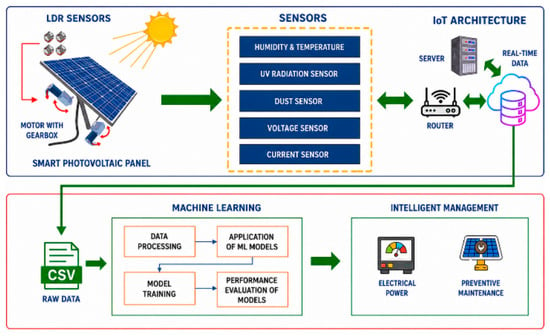
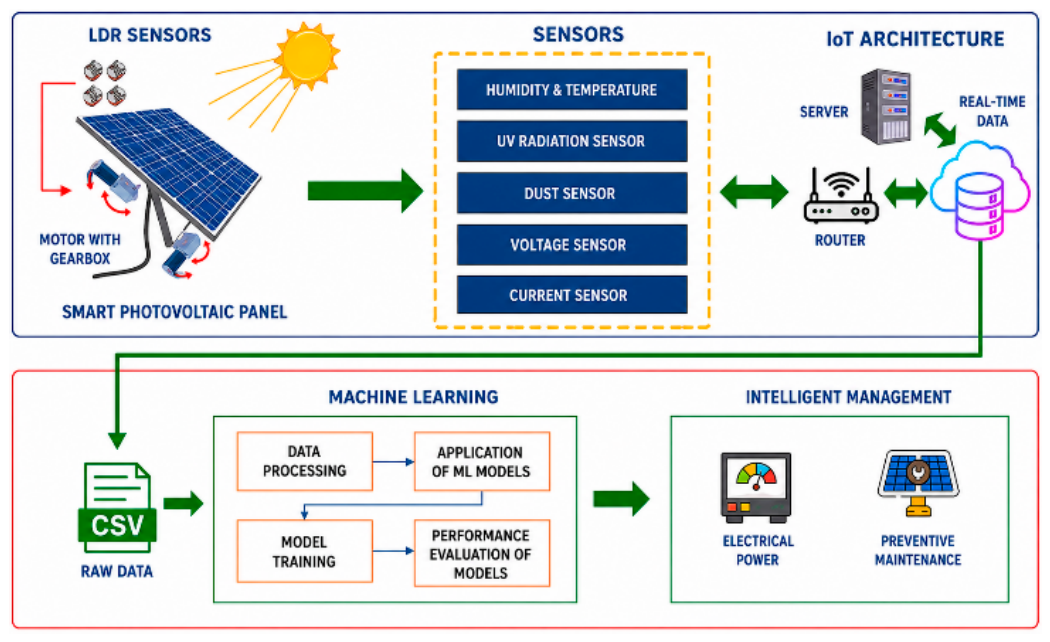
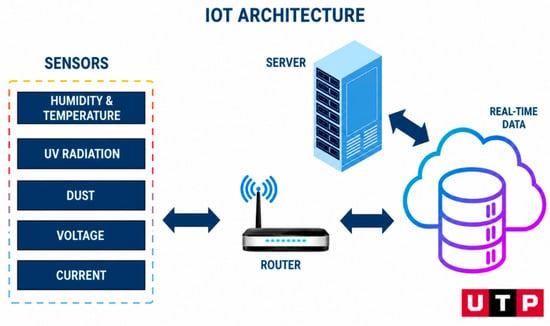
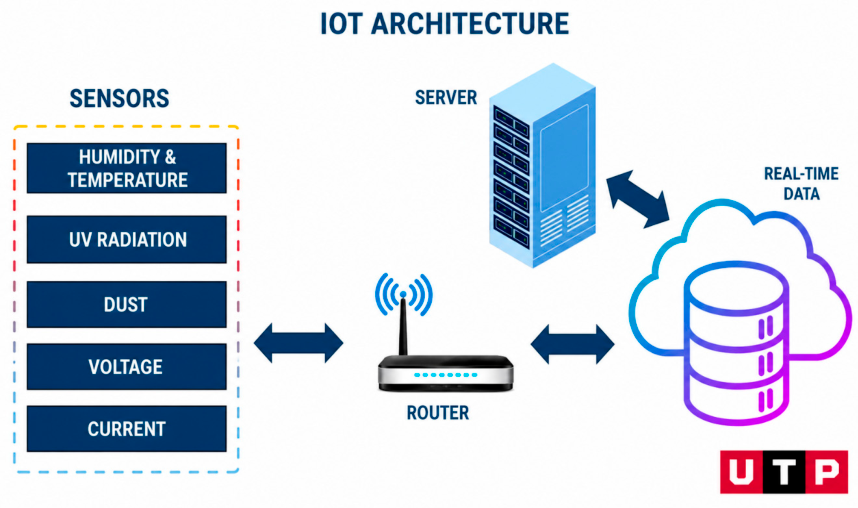
The proposed system continuously acquires electrical and environmental variables, including panel voltage, panel current, battery voltage, temperature, humidity, ultraviolet radiation, and dust accumulation on the photovoltaic surface. The collected data were automatically transmitted to a real-time database and uploaded to the Blynk IoT cloud platform (Blynk Inc., New York, NY, USA) for storage, visualization, and analysis [32]. Remote access to both real-time and historical information is provided through the Blynk IoT mobile application. Figure 1 presents the general architecture of the proposed intelligent photovoltaic monitoring system, illustrating the interaction between sensors, communication modules, cloud infrastructure, and machine learning components.
Figure 1.
Diagram of the components of the photovoltaic system.
2.1. Design and Construction of the Hybrid Photovoltaic System
This section describes the design and implementation process of the proposed photovoltaic prototype. The methodology was divided into four stages. The first stage focused on the development of the electrical schematic and circuit simulation. The second stage involved the selection of the hardware and software components required for prototype implementation. The third stage describes the physical construction of the photovoltaic prototype and sensor integration. Finally, the fourth stage presents the IoT communication architecture and data acquisition process.
2.1.1. Electrical Schematic Design of the Prototype
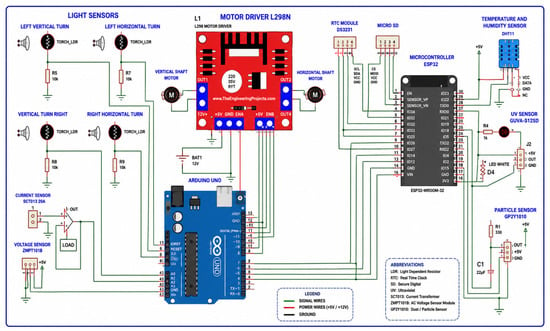
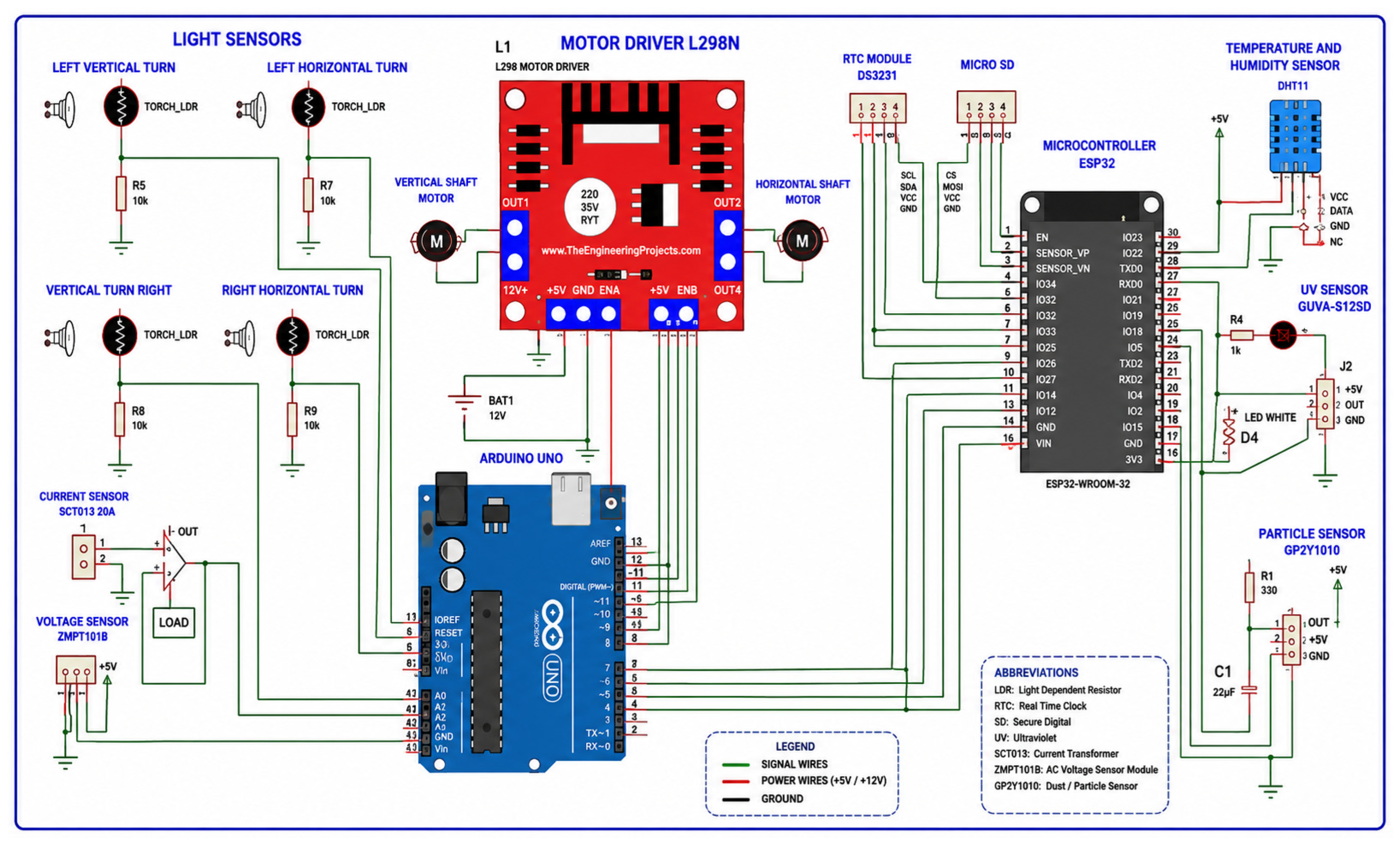
The electrical circuit was designed and simulated using Proteus 8.17 Professional software (Labcenter Electronics Ltd., Yorkshire, UK), as illustrated in Figure 2. This software environment enabled circuit validation and operational verification before physical implementation, reducing potential integration errors during prototype development [6]. After the simulation stage, the circuit was physically tested using a temporary protoboard configuration to identify possible electrical inconsistencies before transferring the design to a printed circuit board (PCB). Finally, the electronic components were permanently assembled through soldering.
Figure 2.
Electrical circuit in Proteus 8.17 software.
2.1.2. Hardware and Software Components of the Prototype
The development of the photovoltaic prototype required the systematic selection of hardware and software components according to electrical demand, communication requirements, computational capability, and implementation cost. For prototype sizing purposes, the electrical load demand was estimated considering two 10 W luminaires and a 55 W mobile phone charger. Based on these requirements, a 10 W monocrystalline photovoltaic panel (Opalux, Lima, Peru), a 100 W DC–AC inverter (Opalux, Lima, Peru), and a 12 V battery (Opalux, Lima, Peru) were selected as the primary power supply components.
The monitoring and control architecture was implemented using an Arduino Uno microcontroller with ATmega328P (Keyestudio, Shenzhen, China) and an ESP32 microcontroller (NodeMCU/DOIT, Shenzhen, China). The Arduino Uno was selected because of its low cost, ease of programming, compatibility with multiple sensors, and extensive community support, making it suitable for rapid prototyping applications. The ESP32 microcontroller was incorporated due to its integrated Wi-Fi communication capabilities, low power consumption, and efficient real-time data transmission performance.
To acquire environmental and operational variables, the prototype integrated multiple sensors, including ACS712 current sensors (Tesla Electronic EIRL, Lima, Peru), DHT11 temperature and humidity sensors (Tesla Electronic EIRL, Lima, Peru), GUVA-S12SD ultraviolet radiation sensors (Keyes, Zhuhai, China), FZ0430 voltage sensors, GP2Y1014AU0F particulate matter sensors, and LDR light sensors (Westor, Wuzhen, China). In addition, MGZY370EC gear motors and an L298N driver controller (BatwhO, Guangzhou, China) were incorporated for solar tracking and mechanical actuation. Data synchronization and storage were performed using an RTC module (Adafruit, New York, NY, USA) and a SparkFun microSD module (SparkFun Electronics, Boulder, CO, USA). The IoT architecture was implemented using Arduino IDE version 2.2.1 (Arduino SA, Ivrea, Italy), Python version 3.14.5 (Python Software Foundation, Wilmington, DE, USA), XGBoost version 2.0.3, and the Blynk cloud platform (Blynk Inc., New York, NY, USA) for real-time monitoring, predictive analysis, and data visualization.
Furthermore, the Blynk IoT platform was selected because it provides cloud-based monitoring, mobile compatibility, rapid deployment, and simplified visualization of sensor information without requiring the development of a dedicated cloud infrastructure. Additional hardware components employed in the prototype are summarized in Table 1.
Table 1.
Supplies for the construction of the prototype.
2.1.3. Construction of the Hybrid Photovoltaic Prototype
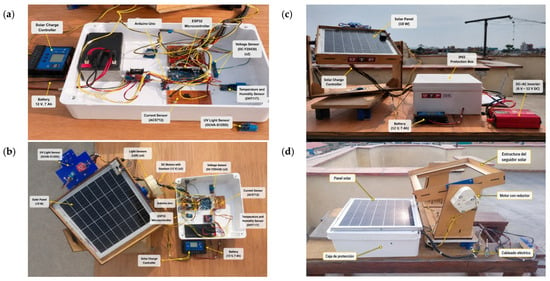
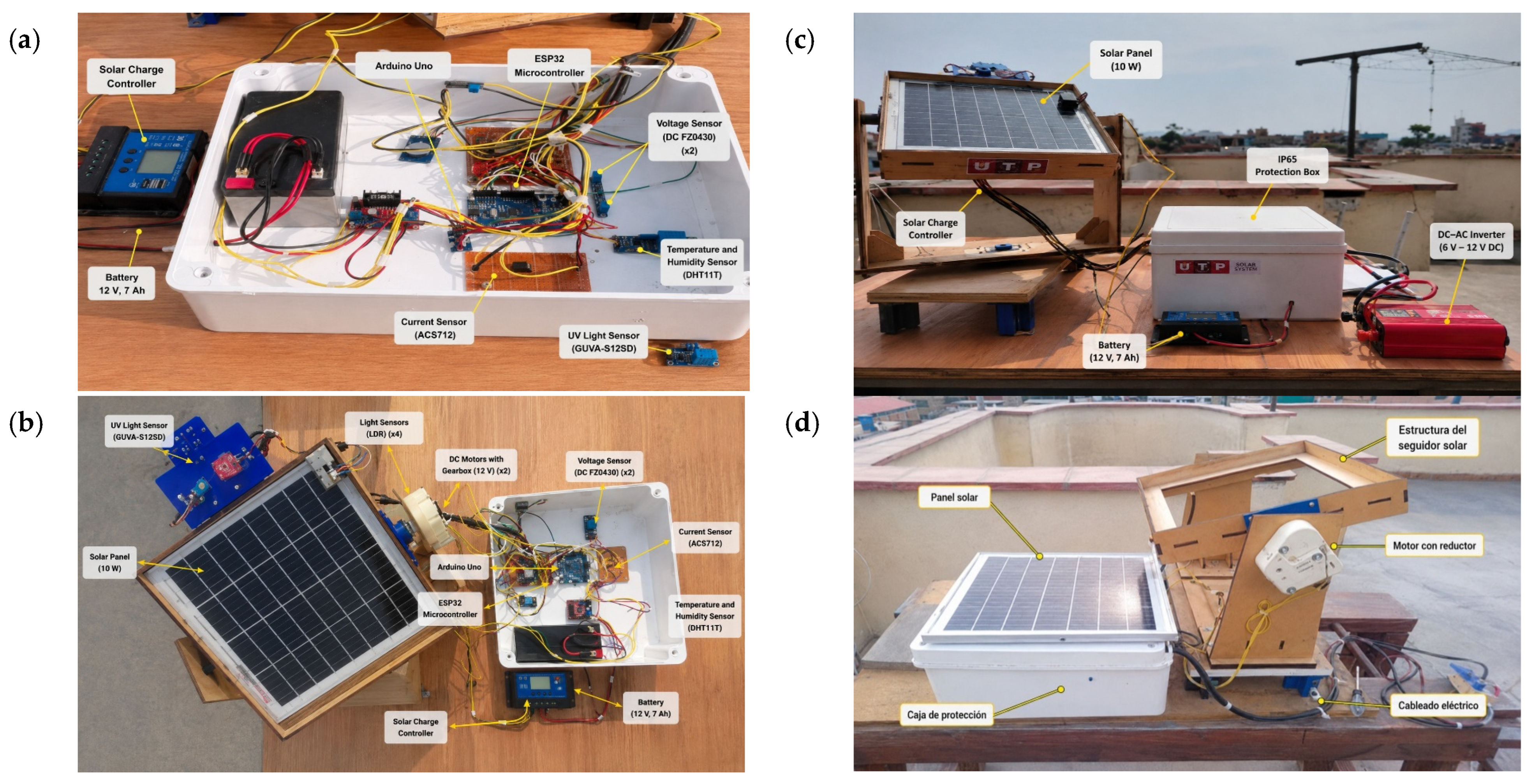
The photovoltaic prototype shown in Figure 3 was constructed using a medium-density fiberboard (MDF) mechanical structure composed of a fixed base and a movable panel support system. Two DC gear motors were installed to enable dual-axis solar tracking movement. A dedicated sensor support structure was incorporated to install ultraviolet radiation, temperature, humidity, and LDR sensors. The dust particle sensor was positioned directly on the photovoltaic panel surface to evaluate environmental contamination effects. The main electronic modules, including the Arduino Uno, ESP32 communication module, L298N motor driver, RTC-DS3231 module, voltage sensors, current sensors, and battery system, were installed inside a PVC enclosure measuring 30 × 30 × 16 cm. Electrical interconnections were routed from the enclosure, while the inverter and charge controller were externally mounted on the structural support.
Figure 3.
(a) Mechanical structure, (b) Plastic support for sensors, (c) Connection of sensors and electronic boards, (d) Finished prototype.
Following prototype assembly, the control program was developed using the Arduino programming environment based on the C programming language. The Arduino Uno functioned as the primary processing unit responsible for acquiring, processing, and storing sensor measurements. The acquired information was synchronized using the RTC-DS3231 module and stored on a SparkFun microSD card module (74LVC125A, 3.3–5 VDC) to maintain a continuous historical operational record. The ESP32 microcontroller functioned as the wireless communication interface responsible for transmitting data to the cloud-based IoT platform.
2.1.4. Internet of Things (IoT) Architecture
Figure 4 illustrates the IoT architecture of the proposed monitoring framework. Once the photovoltaic panel is positioned at the optimal orientation for solar exposure, solar radiation is converted into electrical energy. The integrated sensors continuously monitor electrical and environmental variables, including voltage, current, humidity, temperature, ultraviolet radiation, and dust concentration. The acquired information is transmitted through the ESP32 Wi-Fi communication module to the Blynk IoT cloud platform, enabling remote monitoring and real-time visualization from any location with internet connectivity.
Figure 4.
IoT architecture of the proposed photovoltaic monitoring system.
To improve communication reliability and data security, the IoT platform requires authenticated user access through registered credentials. Although the implemented prototype utilized standard cloud communication protocols, future work will consider advanced encryption and cybersecurity mechanisms to enhance secure large-scale deployment.
2.2. Experimental Design and Monitoring Conditions
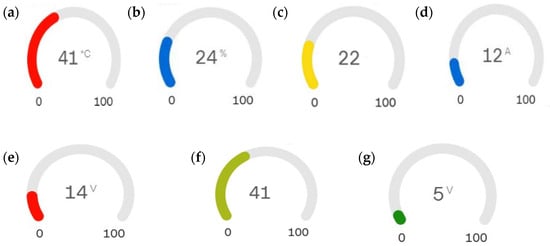
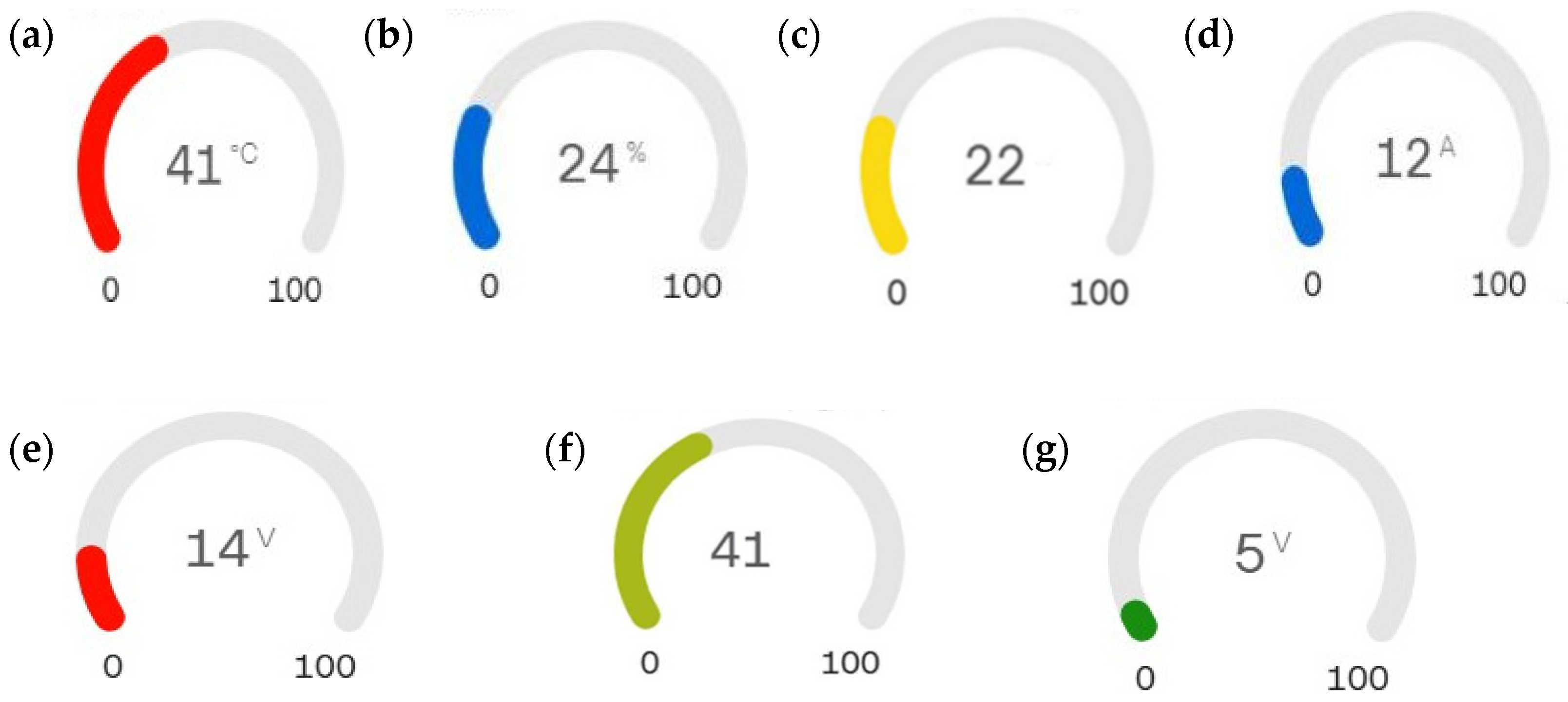
The experimental prototype was deployed under outdoor operating conditions during December 2025. Data acquisition was continuously performed between 10:00 AM and 6:00 PM over a monitoring period of 30 days, corresponding to approximately 240 h of operation. The monitoring process included varying environmental conditions such as fluctuations in solar irradiance, temperature, humidity, and atmospheric dust concentration. The monitored variables included panel voltage, panel current, battery voltage, temperature, humidity, ultraviolet radiation, and dust particle concentration. Sensor measurements were acquired at 1 s intervals, generating approximately 894,000 time-series records throughout the experimental period. Prior to deployment, sensor calibration procedures were conducted by comparing sensor measurements with commercial reference instruments to minimize measurement deviations and improve acquisition reliability. The monitored parameters were visualized through the Blynk IoT platform using both mobile and desktop applications. Through the platform interface, users could access real-time sensor measurements and historical information using interactive graphical dashboards, as shown in Figure 5.
Figure 5.
Parameters in the Blynk IoT mobile application (a) Temperature, (b) Humidity, (c) UV radiation, (d) Panel current, (e) Battery voltage, (f) Dust density, (g) Panel voltage.
2.3. Data Processing and Correlation Analysis
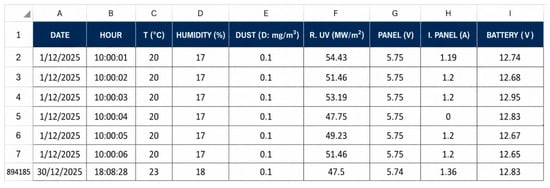
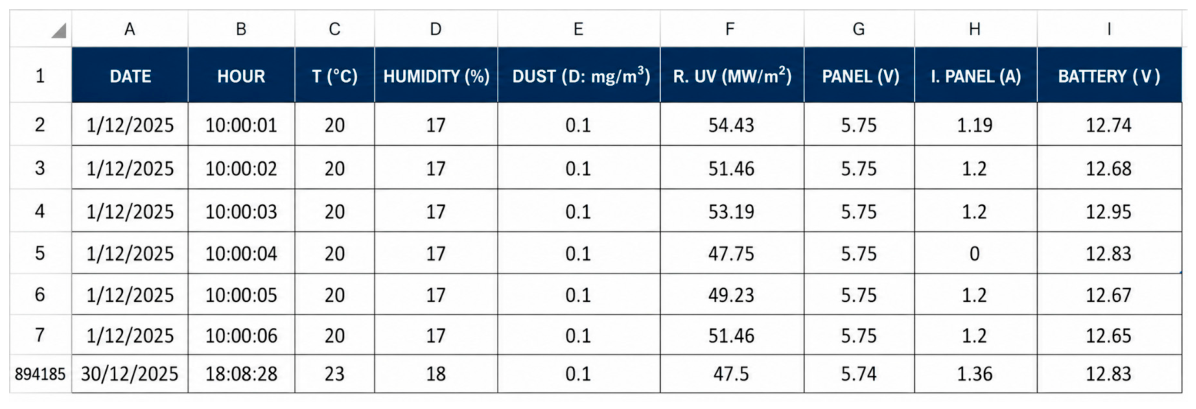
A database was created to organize and process the information collected from the photovoltaic system. The dataset consisted of time-series measurements corresponding to electrical and environmental variables acquired during prototype operation. The collected information was stored locally on a microSD card and subsequently processed for machine learning analysis. Figure 6 presents a sample of the raw dataset collected during the monitoring period.
Figure 6.
Raw data collected 30 days December 2025.
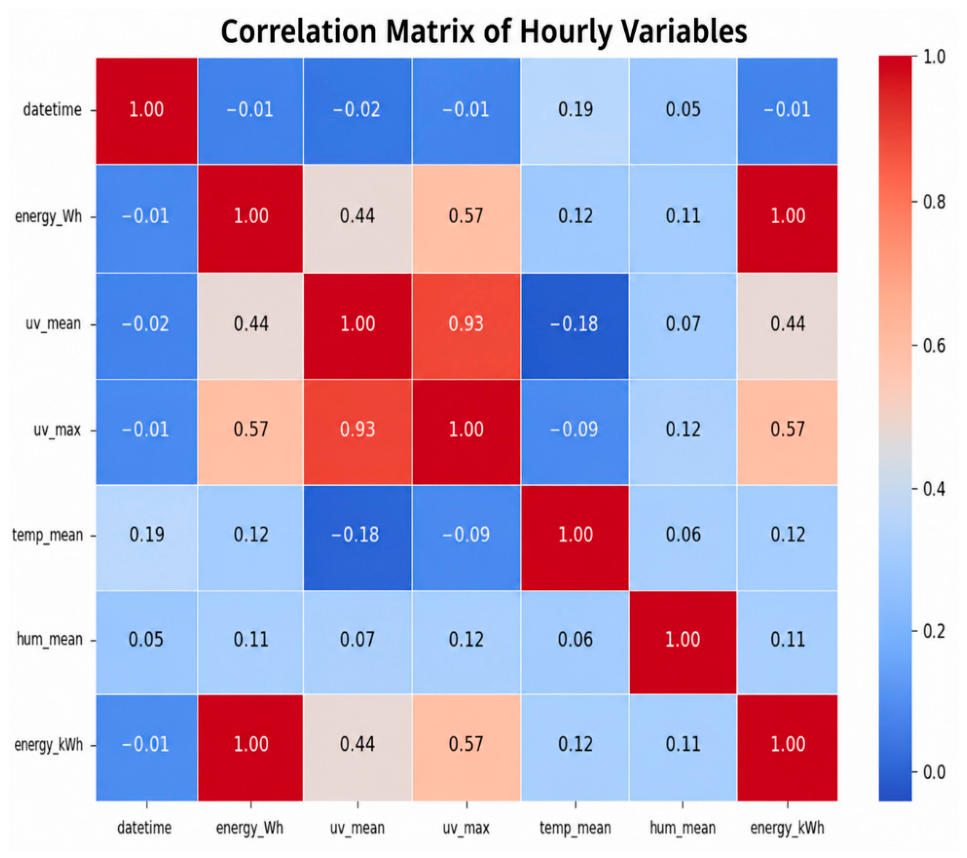
After pre-processing, a correlation matrix was constructed to analyse the linear relationships between variables, as shown in Figure 7. The correlation coefficients ranged from −1 to 1, where values close to one indicate strong positive linear relationships, values close to −1 indicate strong negative linear relationships, and values near zero represent weak or negligible linear associations. The correlation analysis suggests that ultraviolet radiation, voltage, and current exhibit stronger linear associations with photovoltaic energy generation compared to humidity, temperature, time of day, and day of the week, which presented comparatively weaker linear relationships.
Figure 7.
Correlation matrix of time variables.
2.4. Selection of Machine Learning (ML) Models
Three machine learning models were evaluated for short-term photovoltaic energy prediction: Random Forest, XGBoost, and Long Short-Term Memory (LSTM) networks. These models were selected because of their extensive use in forecasting and predictive analytics applications involving nonlinear and time-series data. Random Forest was selected because of its robustness against overfitting, ability to model nonlinear relationships, and impressive performance in small- and medium-sized datasets. XGBoost was selected because of its computational efficiency, gradient boosting optimization capability, and high predictive accuracy in regression problems. Finally, the LSTM model was included because of its ability to capture temporal dependencies and sequential patterns in time-series data. The characteristics of the evaluated models are summarized in Table 2.
Table 2.
Characteristics of the reviewed (ML) models.
After examining the three machine learning techniques, we know that the XGBoost technique performs better due to its low error rates and high coefficient of determination with reliable forecasts. The XGBoost model is computationally more efficient [33].
2.5. Training of Machine Learning Models
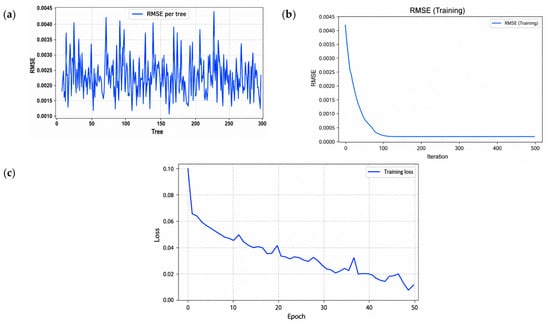
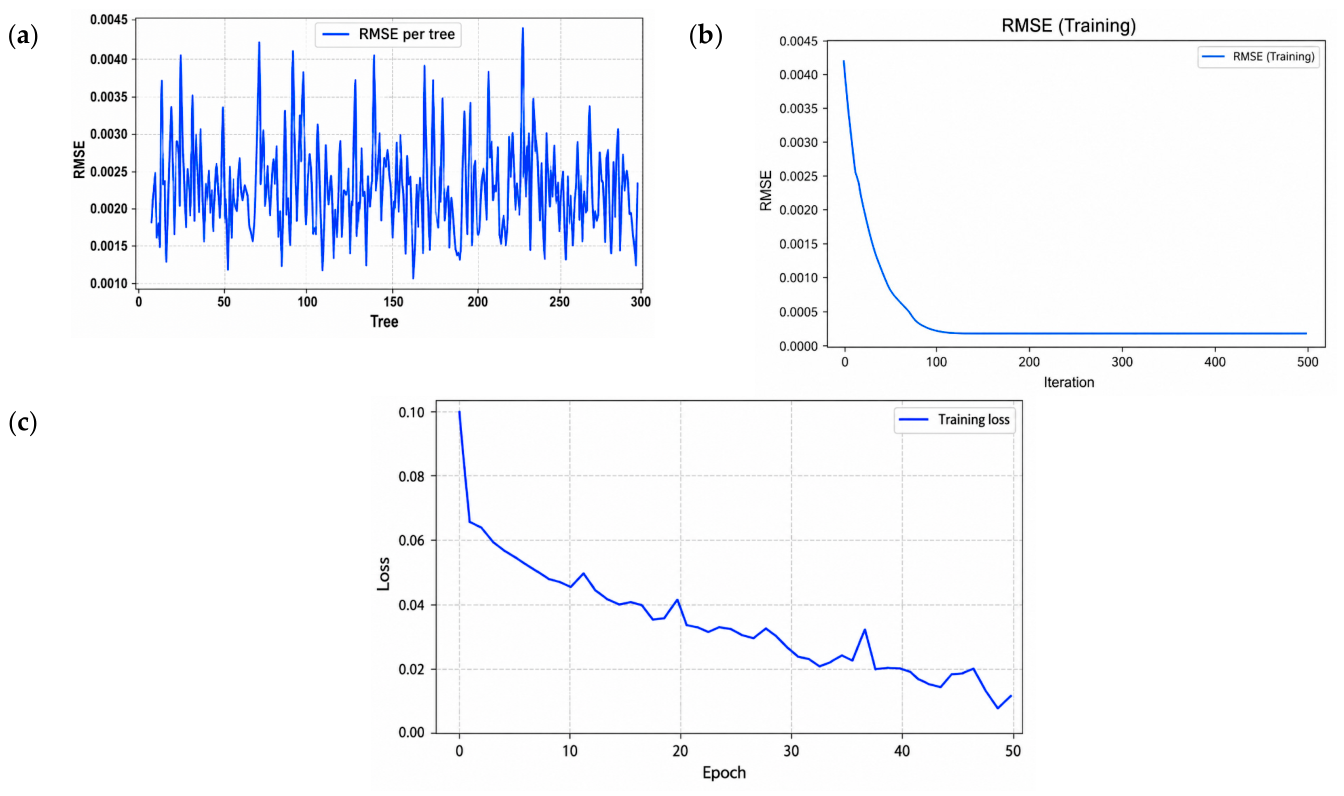
During the training process, several diagnostic plots were generated to evaluate model behavior, optimize hyperparameters, and identify the most robust predictive model, as illustrated in Figure 8. The Random Forest RMSE-per-tree plot was used to evaluate the contribution and variability of individual trees within the ensemble model. The XGBoost RMSE-per-iteration curve illustrates the progressive reduction and stabilization of prediction error during sequential tree generation, facilitating convergence analysis and learning efficiency evaluation. Similarly, the LSTM loss curve illustrates the evolution of the loss function during training, enabling the identification of learning progression and potential overfitting behavior.
Figure 8.
(a) Random Forest Plot: RMSE Error Per Tree, (b) XGBoost Plot: RMSE Curve, (c) LSTM plot: Loss curve.
2.6. Machine Learning Model Performance Metrics
The predictive performance of the evaluated models was assessed using four standard statistical metrics: Mean Absolute Error (MAE), Root Mean Square Error (RMSE), Mean Absolute Percentage Error (MAPE), and the coefficient of determination (R2) [13,34,35]. These metrics were selected because they provide quantitative measurements of prediction accuracy, error magnitude, and model fitting capability, see Table 3.
Table 3.
Model performance metrics.
Table 4, Table 5 and Table 6 present the degradation detection performance results obtained using Logistic Regression, Random Forest, and XGBoost classifiers, respectively, under a threshold value of 0.6.
Table 4.
Logistic Regression.
Table 5.
Random Forest.
Table 6.
XGBoost.
The obtained results demonstrate that all evaluated models exhibit the capability to identify degradation events in photovoltaic operation. However, the predictive reliability varied across models. Among the evaluated approaches, XGBoost achieved the best overall performance, demonstrating higher degradation detection accuracy, superior recall values, and improved discrimination capability. Consequently, XGBoost was identified as the most suitable predictive model for minimizing false degradation alarms while maintaining reliable detection of critical degradation events within the proposed photovoltaic monitoring framework.
3. Results
After evaluating the machine learning (ML) models, several performance metrics, including Mean Absolute Error (MAE), Root Mean Square Error (RMSE), Mean Absolute Percentage Error (MAPE), and the coefficient of determination (R2), were used as evaluation criteria. The comparative performance of the evaluated models is presented in Table 7. Among the analysed approaches, the XGBoost model achieved the best predictive performance for short-term photovoltaic energy forecasting, obtaining the lowest MAE (0.00077) and RMSE (0.001103) values. These results indicate that its predictions were, on average, closer to the observed energy values and exhibited fewer significant prediction deviations compared to the other evaluated models. In addition, XGBoost achieved the highest coefficient of determination (R2 = 0.91821), confirming its strong capability to model the nonlinear relationships present in the photovoltaic dataset.
Table 7.
Summary of model performance with 4 key metrics.
The Random Forest model also demonstrated strong predictive performance, obtaining an R2 value of 0.910968 with low prediction errors. This behaviour confirms the suitability of ensemble tree-based algorithms for photovoltaic energy prediction problems involving environmental and electrical variables. In contrast, the LSTM model produced higher prediction errors, with an MAE of 0.00345 and an RMSE of 0.004086. Furthermore, the negative R2 value (−0.140746) indicates that the LSTM model performed worse than a simple mean-based prediction approach under the conditions evaluated in this study.
The lower performance of the LSTM model can be attributed to the limited size of the dataset and the short temporal sequence available for training. LSTM networks require larger datasets and longer sequential dependencies to effectively capture temporal patterns. Since the proposed prototype collected data over a 30-day monitoring period within a small-scale experimental environment, the available temporal information was insufficient to fully exploit the advantages of deep recurrent architectures. Consequently, ensemble learning approaches such as Random Forest and XGBoost were more appropriate for the current dataset characteristics.
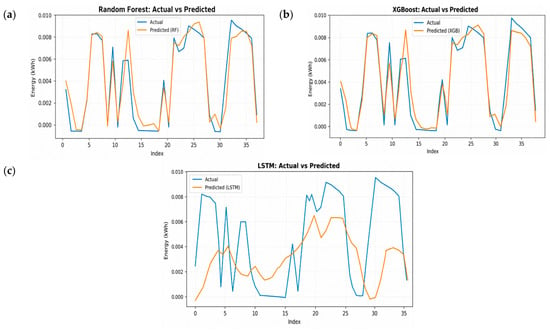
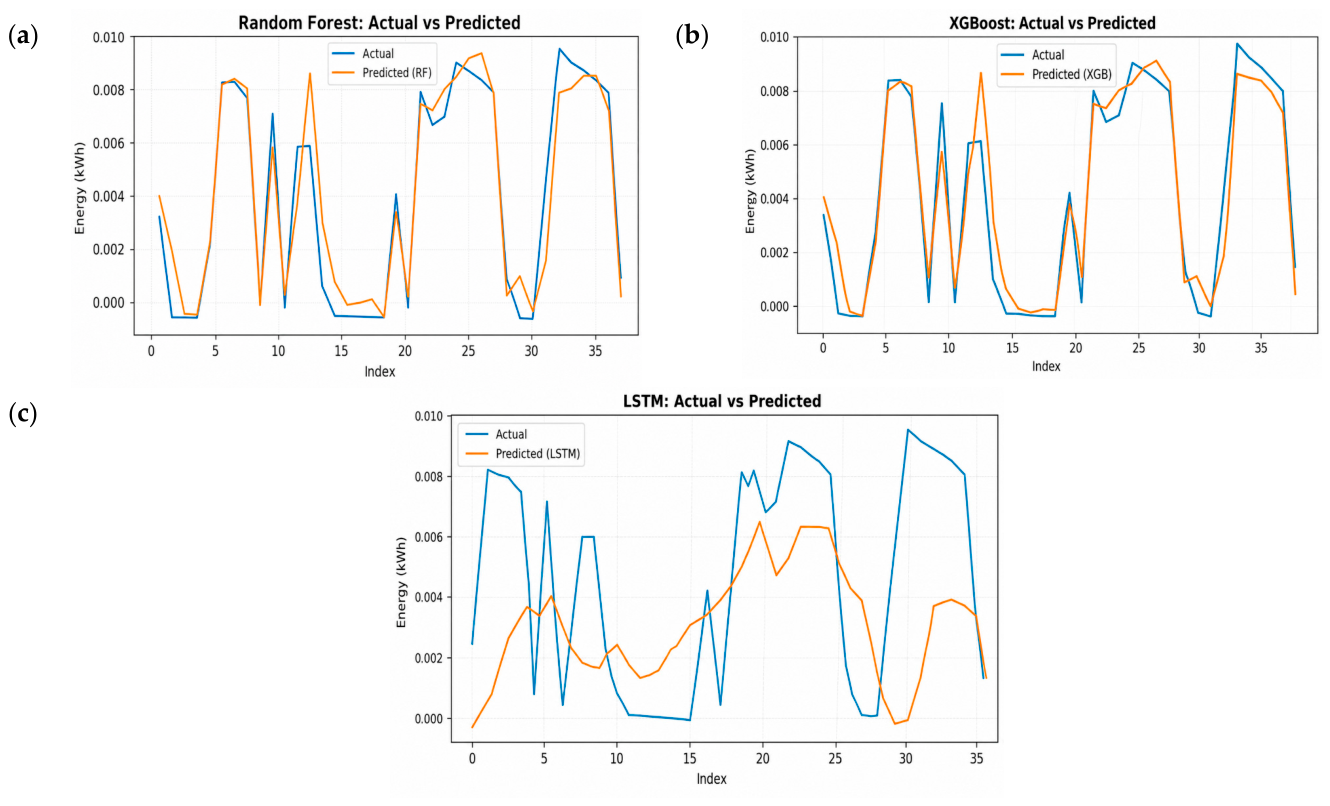
To further validate the predictive capability of the evaluated models, the predicted and actual energy generation values were visually compared over time, as illustrated in Figure 9. This graphical analysis provided additional evidence regarding the robustness and generalization capability of each forecasting approach.
Figure 9.
(a) Time-domain energy prediction of the Random Forest model, (b) Time-domain energy prediction of the XGBoost model, (c) Time-domain energy prediction of the LSTM model.
As shown in Figure 9a, the Random Forest model generated prediction curves that closely followed the actual energy production values throughout the monitored period. This behaviour confirms the model’s ability to capture nonlinear variations in photovoltaic generation while maintaining stable prediction accuracy. Similarly, Figure 9b demonstrates that the XGBoost model achieved the closest agreement between predicted and observed values. The prediction curve completely overlapped the actual energy generation profile, confirming the superior predictive robustness of XGBoost and its ability to accurately replicate the operational behaviour of the photovoltaic system. The improved performance of XGBoost can be associated with its gradient boosting strategy, which sequentially minimizes prediction residuals and enhances model generalization capability. Conversely, Figure 9c reveals a substantial discrepancy between the predicted and actual values generated by the LSTM model. The predicted curve failed to follow the observed energy generation trends, indicating that the model was unable to effectively learn the temporal characteristics of the available dataset. This limitation is related to the short monitoring duration and the reduced volume of sequential training data, which restricted the learning capacity of the recurrent neural network architecture. In general, the obtained results confirm that ensemble learning techniques, particularly XGBoost, are highly suitable for short-term photovoltaic energy prediction in small-scale IoT-based monitoring environments.
Degradation Analysis
Understanding the mechanisms responsible for photovoltaic module degradation under outdoor operating conditions is essential to ensure long-term system reliability and operational efficiency [36]. Photovoltaic degradation is influenced by several environmental and operational factors, including solar irradiance, ambient temperature, humidity, dust accumulation, and atmospheric conditions. These factors can progressively reduce the voltage, current, and overall power generation capability of photovoltaic modules over time.
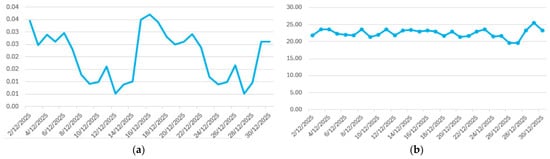
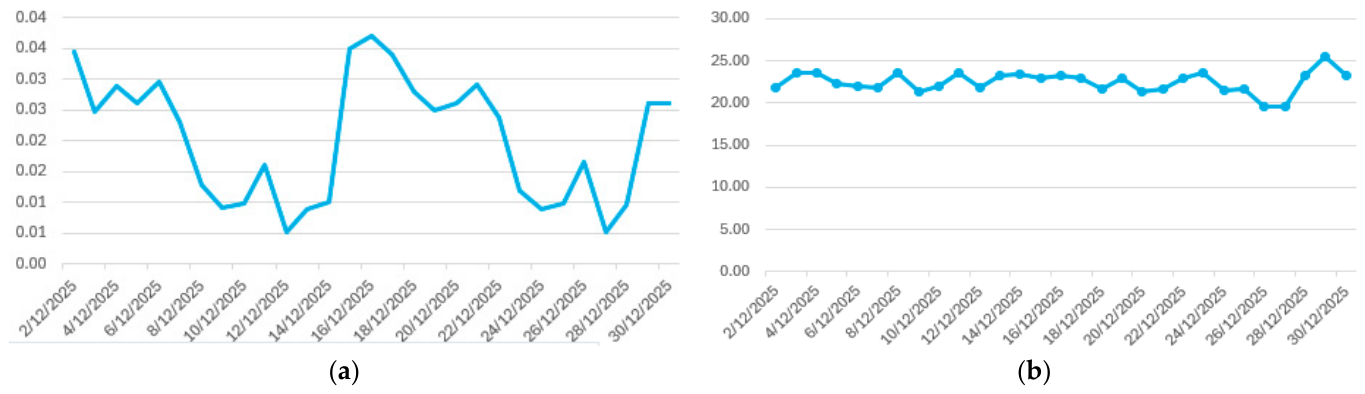
Figure 10 presents the monitored environmental data obtained from the dust particle and temperature sensors during December 2025. The results illustrate the temporal evolution of airborne dust concentration and panel temperature throughout the experimental period. Dust particle concentration exhibited noticeable variability characterized by cyclical fluctuations and multiple peak values during the month. The highest dust accumulation levels were observed around December 2 and particularly between December 16 and 18.
Figure 10.
(a) Graph of dust particle evolution on the panel, (b) Graph of temperature evolution on the panel.
Previous studies [37,38,39] have reported that excessive dust accumulation on photovoltaic surfaces reduces the amount of solar irradiance reaching the solar cells, thereby decreasing photovoltaic conversion efficiency. In addition, elevated operating temperatures negatively affect photovoltaic performance by increasing internal electrical resistance and reducing voltage generation efficiency. The simultaneous presence of high dust concentration and elevated temperatures can therefore accelerate photovoltaic degradation processes and contribute to progressive efficiency losses in solar energy generation systems. Although the present study was conducted over a short monitoring period of 30 days, the obtained results demonstrate the feasibility of integrating environmental sensing and machine learning techniques to support predictive maintenance strategies in photovoltaic systems. However, long-term operational validation under different climatic conditions remains necessary to fully evaluate degradation behaviour and system robustness in real-world deployment scenarios.
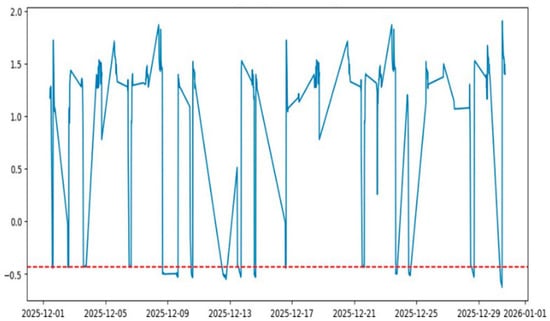
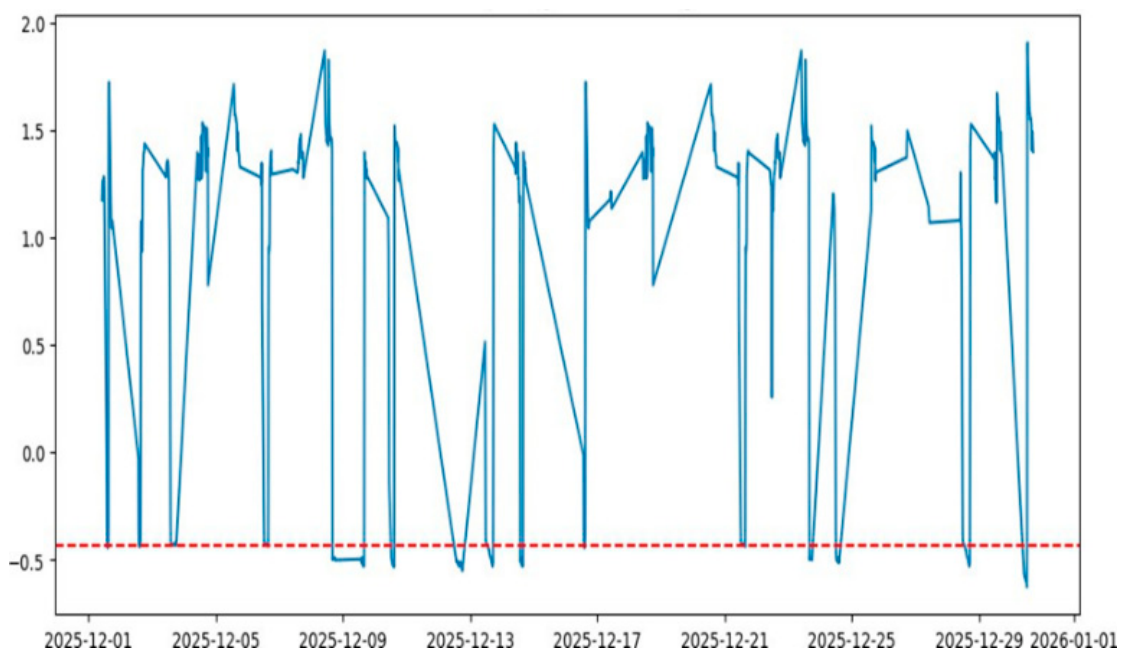
Current degradation refers to the reduction in the photovoltaic system’s capability to generate the expected electrical current output over time. Figure 11 illustrates the temporal evolution of the average panel current together with the predefined degradation threshold used in this study. The dashed red line represents the operational degradation threshold (−0.45 A), established as the minimum acceptable current level for detecting abnormal photovoltaic behavior and potential efficiency losses. The graph allows visualization of periods in which the generated current falls below the operational threshold, indicating potential degradation events or reductions in photovoltaic efficiency. This type of monitoring is particularly useful for predictive maintenance applications because it enables the early identification of abnormal operating conditions before severe performance losses occur. Consequently, integrating degradation analysis with IoT-based real-time monitoring and machine learning prediction models can contribute to improving maintenance scheduling, reducing operational interruptions, and increasing the reliability of photovoltaic energy systems operating in small-scale outdoor environments.
Figure 11.
Panel current chart and degradation threshold.
4. Discussion
The obtained results demonstrate that the integration of Internet of Things (IoT) technologies with photovoltaic systems constitutes a feasible and effective approach for real-time monitoring, short-term energy forecasting, and degradation analysis in small-scale photovoltaic environments. The developed prototype successfully enabled continuous acquisition of environmental and electrical variables while supporting predictive analytics through machine learning models. Among the evaluated approaches, XGBoost and Random Forest exhibited the best predictive performance, confirming the suitability of ensemble learning techniques for photovoltaic energy forecasting tasks involving nonlinear environmental conditions.
The superior performance achieved by XGBoost can be attributed to its gradient boosting optimization strategy, which sequentially minimizes prediction residuals and improves model generalization capability. This behavior allowed XGBoost to achieve lower prediction errors and a higher coefficient of determination compared to the other evaluated models. In contrast, the LSTM model produced lower predictive performance. This limitation is associated with the small dataset size and short monitoring period used in the present study. Recurrent neural networks such as LSTM require larger datasets and longer temporal sequences to effectively learn complex sequential dependencies. Therefore, the obtained results suggest that ensemble tree-based algorithms are more appropriate for short-term photovoltaic prediction problems under limited-data experimental conditions. The findings obtained in this study are consistent with previous research reporting the effectiveness of integrating IoT monitoring systems with machine learning algorithms for photovoltaic energy management. For example, previous studies [33] identified XGBoost as one of the best-performing predictive models according to metrics such as MSE, MAPE, MAE, and R2. Similarly, Krishna Kumba [13] evaluated predictive models using MAE, MSE, RMSE, and R2 metrics, obtaining an accuracy rate of approximately 87% using the Random Forest model. Likewise, N. Rouibah [3] reported a maximum power point tracking (MPPT) efficiency of 97.83% using an intelligent photovoltaic monitoring prototype. Comparative analyses presented in [40,41] also demonstrated that XGBoost outperformed the SMO model, achieving an R2 value of 0.998 for photovoltaic energy generation forecasting.
In the present work, the XGBoost model achieved the best overall predictive performance and enabled the estimation of a total generated energy of 4.0479 kWh within the experimental prototype. Although the obtained R2 value was slightly lower than that reported in certain large-scale studies, the proposed framework demonstrated strong predictive capability despite operating under a reduced-scale experimental environment and limited monitoring duration. These results confirm the effectiveness of the proposed IoT–machine learning architecture for short-term photovoltaic energy prediction and intelligent monitoring applications. Another important contribution of this study is the incorporation of environmental degradation analysis through variables such as dust accumulation and temperature. The obtained results demonstrated that increased dust concentration and elevated temperatures negatively affected photovoltaic performance, contributing to reductions in current generation efficiency. These findings are aligned with previous studies [37,38,39], which reported that dust accumulation and thermal stress accelerate photovoltaic degradation processes and reduce solar conversion efficiency. Consequently, integrating environmental sensing with predictive analytics can support predictive maintenance strategies and improve operational reliability in photovoltaic systems.
In addition, the use of Arduino Uno and ESP32 microcontrollers proved suitable for the proposed application due to their low implementation cost, ease of programming, low energy consumption, and compatibility with IoT communication protocols. The ESP32 module provided stable wireless communication capabilities for real-time cloud transmission, while the Arduino Uno facilitated sensor integration and local data processing. Similarly, the Blynk IoT platform was selected because it offers rapid deployment, real-time visualization tools, cloud-based storage, and mobile accessibility without requiring the development of a dedicated cloud infrastructure. These characteristics allowed efficient implementation of the prototype while reducing development complexity and operational costs. From a cybersecurity perspective, the implemented system employed authenticated access credentials within the Blynk IoT platform to restrict unauthorized access to monitoring data. However, the proposed prototype does not include advanced cybersecurity mechanisms such as end-to-end encryption, intrusion detection systems, or secure industrial communication protocols. Therefore, future implementations intended for large-scale deployment should incorporate additional cybersecurity and data privacy protection strategies to ensure secure remote communication and reliable operation.
Despite the promising results, several limitations should be acknowledged. First, the experimental validation was conducted using a small-scale 10 W photovoltaic prototype under short-term monitoring conditions of approximately 30 days. Consequently, the obtained results cannot yet be generalized to large-scale photovoltaic installations or long-term operational environments. Second, the dataset size was limited, which affected the performance of deep learning models such as LSTM. Third, environmental conditions during testing were limited to the local climatic characteristics observed during the monitoring period. Additional validation under diverse climatic conditions and extended operational durations is required to evaluate system robustness and scalability. Future research should therefore focus on expanding the dataset size, extending monitoring periods, incorporating hybrid machine learning models, and evaluating real-time optimization techniques for large-scale photovoltaic systems. Furthermore, future studies may integrate advanced cybersecurity mechanisms, automated fault diagnosis systems, and adaptive energy management strategies to improve the reliability and intelligence of photovoltaic monitoring platforms.
5. Conclusions
This study demonstrated that the integration of Internet of Things (IoT) technology with machine learning techniques provides an effective framework for real-time monitoring, short-term energy prediction, and degradation analysis in photovoltaic systems. The implemented prototype successfully enabled continuous acquisition of environmental and electrical variables while supporting remote supervision and cloud-based monitoring under experimental outdoor conditions.
Among the evaluated machine learning models, XGBoost achieved the best predictive performance, obtaining the lowest prediction errors and the highest coefficient of determination. The model demonstrated superior capability for accurately forecasting short-term photovoltaic energy generation compared to Random Forest and LSTM approaches. The obtained results confirm that ensemble learning techniques are highly suitable for photovoltaic prediction tasks involving nonlinear environmental variables and limited datasets. The proposed framework also demonstrated the feasibility of integrating environmental degradation indicators such as dust accumulation and temperature into predictive maintenance analysis. This capability can contribute to improving operational efficiency, supporting maintenance scheduling, and reducing performance losses in photovoltaic systems. In addition, the use of low-cost hardware platforms such as Arduino Uno and ESP32, combined with the Blynk IoT cloud platform, enabled the implementation of an accessible and adaptable intelligent monitoring architecture. Although the obtained findings are promising, several limitations must be considered. The experimental validation was performed using a small-scale 10 W photovoltaic prototype under a short monitoring period of 30 days. Therefore, the results should be interpreted within the context of a controlled small-scale experimental environment and short-term forecasting scenario. Additional large-scale validation under diverse environmental conditions and extended operational periods is required to evaluate the scalability, robustness, and long-term reliability of the proposed system.
Future work will focus on increasing dataset size, incorporating hybrid and deep learning models, extending monitoring duration, and integrating advanced cybersecurity and fault diagnosis mechanisms. Overall, this work contributes to the advancement of intelligent photovoltaic energy systems by presenting a low-cost, adaptable, and efficient solution for IoT-based monitoring, short-term energy forecasting, and predictive maintenance planning in solar energy applications.
Author Contributions
J.J.P.O. contributed to conceptualization, methodology, software development, validation, formal analysis, investigation, resources, data curation, writing—original draft preparation, writing—review and editing, visualization, supervision, project administration, and funding acquisition. R.J.G.Z. contributed to methodology, software development, investigation, resources, data curation, writing—review and editing, visualization, and funding acquisition. C.O. contributed to conceptualization, methodology, software development, validation, formal analysis, investigation, resources, data curation, writing—original draft preparation, writing—review and editing, visualization, supervision, project administration, and funding acquisition. All authors have read and agreed to the published version of the manuscript.
Funding
This research received no external funding.
Institutional Review Board Statement
Not applicable.
Informed Consent Statement
Not applicable.
Data Availability Statement
The data presented in this study are available on request from the corresponding author.
Acknowledgments
The authors thank the Universidad Tecnológica del Perú for providing the academic and technological support necessary for the development of this research. Special recognition is also given for facilitating the laboratory resources and guidance that made possible the implementation of the prototype system.
Conflicts of Interest
The authors declare no conflicts of interest.
References
- Rao, C.K.; Sahoo, S.K.; Yanine, F.F. Development of a smart cloud-based monitoring system for solar photovoltaic energy generation. Unconv. Resour. 2025, 6, 100173. [Google Scholar] [CrossRef] [Scilit]
- Rao, C.K.; Sahoo, S.K.; Yanine, F.F. IoT enabled Intelligent Energy Management System employing advanced forecasting algorithms and load optimization strategies to enhance renewable energy generation. Unconv. Resour. 2024, 4, 100101. [Google Scholar] [CrossRef] [Scilit]
- Rouibah, N.; Elhammoumi, A.; Bouttout, A.; Haddad, S.; Oukaci, S.; Limam, A.; Benghanem, M. Smart monitoring of photovoltaic energy systems: An IoT-based prototype approach. Sci. Afr. 2025, 30, e02973. [Google Scholar] [CrossRef] [Scilit]
- Segovia Ramírez, I.; García Márquez, F.P.; Chaparro, J.P. Convolutional neural networks and Internet of Things for fault detection by aerial monitoring of photovoltaic solar plants. Measurement 2024, 234, 114861. [Google Scholar] [CrossRef] [Scilit]
- Remund, J.; Perez, R.; Perez, M.; Pierro, M.; Yang, D. Firm Photovoltaic Power Generation: Overview and Economic Outlook. Sol. RRL 2023, 7, 2300497. [Google Scholar] [CrossRef] [Scilit]
- Nkinyam, C.M.; Ujah, C.O.; Asadu, C.O.; Anyaka, B.; Olubambi, P.A. Development of a low-cost monitoring device for solar electric (PV) system using internet of things (IoT). Results Eng. 2025, 28, 107324. [Google Scholar] [CrossRef] [Scilit]
- Jundi, Z.S.; Al-Waeli, A.H.A.; Switzner, N.T. A Systematic Review of Low-Cost Photovoltaic Monitoring Systems: Technologies, Challenges, and Opportunities; Elsevier Ltd.: Amsterdam, The Netherlands, 2026. [Google Scholar] [CrossRef] [Scilit]
- Stoyanova, M.; Nikoloudakis, Y.; Panagiotakis, S.; Pallis, E.; Markakis, E.K. A Survey on the Internet of Things (IoT) Forensics: Challenges, Approaches, and Open Issues; Institute of Electrical and Electronics Engineers Inc.: Piscataway, NJ, USA, 2020. [Google Scholar] [CrossRef] [Scilit]
- Voudoukis, N.F. Photovoltaic Technology and Innovative Solar Cells. Eur. J. Electr. Eng. Comput. Sci. 2018, 2, 1–10. [Google Scholar] [CrossRef] [Scilit]
- IoT Based Smart Solar Energy Monitoring System with Wiping Mechanism. Available online: www.ijert.org (accessed on 3 December 2025).
- Lu, W.; Ajay, P. Solar PV tracking system using arithmetic optimization with dual axis and sensor. Meas. Sens. 2024, 33, 101089. [Google Scholar] [CrossRef] [Scilit]
- Rao, C.K.; Sahoo, S.K.; Yanine, F.F. A review of IoT-Enabled Intelligent Smart Energy Management for Photovoltaic Power Forecasting and Generation. Unconv. Resour. 2025, 9, 100279. [Google Scholar] [CrossRef] [Scilit]
- Demir, B.E. A New Low-Cost Internet of Things-Based Monitoring System Design for Stand-Alone Solar Photovoltaic Plant and Power Estimation. Appl. Sci. 2023, 13, 13072. [Google Scholar] [CrossRef] [Scilit]
- Nath, D.C.; Kundu, I.; Sharma, A.; Shivhare, P.; Afzal, A.; Soudagar, M.E.M.; Park, S.G. Internet of Things Integrated with Solar Energy Applications: A State-of-the-Art Review; Springer Science and Business Media: London, UK, 2024. [Google Scholar] [CrossRef] [Scilit]
- Morón, C.; Ferrández, D.; Saiz, P.; Vega, G.; Díaz, J.P. New prototype of photovoltaic solar tracker based on arduino. Energies 2017, 10, 1298. [Google Scholar] [CrossRef] [Scilit]
- Kumba, K.; Upender, P.; Buduma, P.; Sarkar, M.; Simon, S.P.; Gundu, V. Solar Tracking Systems: Advancements, Challenges, and Future Directions: A Review; Elsevier Ltd.: Amsterdam, The Netherlands, 2024. [Google Scholar] [CrossRef] [Scilit]
- Wang, Y.; Zhang, J.W.; Qiang, K.; Han, R.; Zhou, X.; Song, C.; Zhang, B.; Putson, C.; Belhora, F.; Abdelowahed, H. IoT-based green-smart photovoltaic system under extreme climatic conditions for sustainable energy development. Glob. Energy Interconnect. 2024, 7, 836–856. [Google Scholar] [CrossRef] [Scilit]
- Awasthi, A.; Shukla, A.K.; SR, M.M.; Dondariya, C.; Shukla, K.N.; Porwal, D.; Richhariya, G. Review on Sun Tracking Technology in Solar PV System; Elsevier Ltd.: Amsterdam, The Netherlands, 2020. [Google Scholar] [CrossRef] [Scilit]
- Tina, G.M.; Ventura, C.; Ferlito, S.; De Vito, S. A state-of-art-review on machine-learning based methods for PV. Appl. Sci. 2021, 11, 7550. [Google Scholar] [CrossRef] [Scilit]
- Jabbar, W.A.; Annathurai, S.; Tajul, T.A.; Mohd Fauzi, M.F. Smart energy meter based on a long-range wide-area network for a stand-alone photovoltaic system. Expert Syst. Appl. 2022, 197, 116703. [Google Scholar] [CrossRef] [Scilit]
- Tradacete-Ágreda, M.; Santos-Pérez, C.; Hueros-Barrios, P.J.; Rodríguez-Sánchez, F.J.; Pérez-Seguí, R.; Melero-Deza, J.; Campoy, P. Framework for autonomous inspection of PV plants using IoT electronics on each PV panel and UAV collaboration. Energy Convers. Manag. X 2025, 26, 100878. [Google Scholar] [CrossRef] [Scilit]
- Adhya, S.; Saha, D.; Das, A.; Jana, J.; Saha, H. 2016 2nd International Conference on Control, Instrumentation, Energy and Communication; IEEE: Piscataway, NJ, USA, 2017. [Google Scholar]
- Das, U.K.; Tey, K.S.; Seyedmahmoudian, M.; Mekhilef, S.; Idris, M.Y.I.; Van Deventer, W.; Horan, B.; Stojcevski, A. Forecasting of Photovoltaic Power Generation and Model Optimization: A Review; Elsevier Ltd.: Amsterdam, The Netherlands, 2018. [Google Scholar] [CrossRef] [Scilit]
- Mahmood, M.; Chowdhury, P.; Yeassin, R.; Hasan, M.; Ahmad, T.; Chowdhury, N.U.R. Impacts of Digitalization on Smart Grids, Renewable Energy, and Demand Response: An Updated Review of Current Applications; Elsevier Ltd.: Amsterdam, The Netherlands, 2024. [Google Scholar] [CrossRef] [Scilit]
- Rao, C.K.; Sahoo, S.K.; Yanine, F.F. A Comprehensive Review of Smart Energy Management Systems for Photovoltaic Power Generation Utilizing the Internet of Things; KeAi Communications Co., Ltd.: Beijing, China, 2025. [Google Scholar] [CrossRef] [Scilit]
- Shrivastava, S.; Thakur, R.K.; Tokas, P. 2017 International Conference on Recent Innovations in Signal processing and Embedded Systems (RISE); IEEE: Piscataway, NJ, USA, 2017. [Google Scholar]
- Farhat, M.; Dekhane, A.; Djellad, A.; Takruri, M.; Al-Qaisi, A.; Barambones, O. Optimizing photovoltaic performance: Data-driven maximum power point prediction via advanced regression models. Results Control Optim. 2025, 20, 100586. [Google Scholar] [CrossRef] [Scilit]
- Yaghoubi, A.A.; Gandomzadeh, M.; Gholami, A.; Gavagsaz-Ghoachani, R.; Zandi, M. Long-term comparative analysis of machine learning models: A deep dive into applications of artificial intelligence for enhancing photovoltaic performance prediction. Int. J. Electr. Power Energy Syst. 2025, 170, 110866. [Google Scholar] [CrossRef] [Scilit]
- Johnston, J.M. Distinguishing Between Applied Research and Practice. Behav. Anal. 1996, 19, 35–47. [Google Scholar] [CrossRef] [Scilit] [PubMed]
- Bentley, P.J.; Gulbrandsen, M.; Kyvik, S. The relationship between basic and applied research in universities. High. Educ. 2015, 70, 689–709. [Google Scholar] [CrossRef] [Scilit]
- Abedi, S.; Moradi, M.H.; Shirmohammadi, R. Real-time photovoltaic energy assessment using a GSM-based smart monitoring system: Addressing the impact of climate change on solar energy estimation software. Energy Rep. 2023, 10, 2361–2373. [Google Scholar] [CrossRef] [Scilit]
- ur Rehman, A.; Alblushi, I.G.M.; Zia, M.F.; Khalid, H.M.; Inayat, U.; Benbouzid, M.; Muyeen, S.M.; Hussain, G.A. A solar-powered multi-functional portable charging device (SPMFPCD) with internet-of-things (IoT)-based real-time monitoring—An innovative scheme towards energy access and management. Green Technol. Sustain. 2025, 3, 100134. [Google Scholar] [CrossRef] [Scilit]
- Singh, U.; Singh, S.; Gupta, S.; Alotaibi, M.A.; Malik, H. Forecasting rooftop photovoltaic solar power using machine learning techniques. Energy Rep. 2025, 13, 3616–3630. [Google Scholar] [CrossRef] [Scilit]
- Singh, P.K.; Saraswat, A.; Gupta, Y. Deep learning prediction models for short-term solar photovoltaic power generation forecasting. Next Energy 2026, 11, 100531. [Google Scholar] [CrossRef] [Scilit]
- Ben Said, L.; Zghal, W.; Hentati, H.; Bouaziz, M.; Chabir, A.; Alharbi, S.; Turki, M. Integrated machine learning and design-based methodology for technical sizing and performance optimization of photovoltaic systems. J. Eng. Res. 2026, 1. [Google Scholar] [CrossRef] [Scilit]
- Islam, M.I.; Bin Jadin, M.S.; Al Mansur, A.; Alharbi, T. Electrical Performance and Degradation Analysis of Field-Aged PV Modules in Tropical Climates: A Comparative Experimental Study. Energy Convers. Manag. X 2024, 24, 100719. [Google Scholar] [CrossRef] [Scilit]
- Oufettoul, H.; Oubraik, O.; Ait Abdelmoula, I.; Motahhir, S.; EL Majid, B. A novel solar panel cleaning system for improved efficiency. Unconv. Resour. 2025, 8, 100249. [Google Scholar] [CrossRef] [Scilit]
- Gholami, A.; Saboonchi, A.; Alemrajabi, A.A. Experimental study of factors affecting dust accumulation and their effects on the transmission coefficient of glass for solar applications. Renew. Energy 2017, 112, 466–473. [Google Scholar] [CrossRef] [Scilit]
- Alves dos Santos, S.A.; João, J.P.; Carlos, C.A.; Lameirinhas, R.A.M. The impact of aging of solar cells on the performance of photovoltaic panels. Energy Convers. Manag. X 2021, 10, 100082. [Google Scholar] [CrossRef] [Scilit]
- Pham, D.T.; Vujanović, M.; Paramasivam, P.; Nguyen, V.N.; Efremov, C.; Sănduleac, M.; Nguyen, X.P.; Tran, V.D.; Hoang, A.T. Transparent artificial intelligence models using sequential minimal optimization and extreme Gradient Boosting for accurate performance prediction of solar farms. Case Stud. Therm. Eng. 2025, 76, 107337. [Google Scholar] [CrossRef] [Scilit]
- Yadaw, R.C.; Dewangan, A.K.; Nagdeve, L.; Yadav, A.K.; Ahmad, A. Enhancing the power quality of a grid-connected rooftop solar PV system under varying environmental conditions: Strategic optimization of influencing parameters using machine learning and desirability-driven approach. Sustain. Energy Technol. Assess. 2025, 83, 104620. [Google Scholar] [CrossRef] [Scilit]

Disclaimer/Publisher’s Note: The statements, opinions and data contained in all publications are solely those of the individual author(s) and contributor(s) and not of MDPI and/or the editor(s). MDPI and/or the editor(s) disclaim responsibility for any injury to people or property resulting from any ideas, methods, instructions or products referred to in the content. |
© 2026 by the authors. Licensee MDPI, Basel, Switzerland. This article is an open access article distributed under the terms and conditions of the Creative Commons Attribution (CC BY) license.