


Abstract
Modern photovoltaic technologies are increasingly evaluated not only in terms of power conversion efficiency and cost, but also with respect to resource origin, toxicity, recyclability, and overall life-cycle impacts. Within this broader sustainability framework, bio-based and bio-inspired materials derived from biomass or mimicking biological structures have emerged as promising candidates for a wide range of photovoltaic components, including active layers, interfacial modifiers, substrates, encapsulants, and natural dyes. This review provides a layer-by-layer overview of such materials implemented or proposed in dye-sensitized, organic, perovskite, biohybrid, and silicon solar cells, linking their molecular structures and optoelectronic properties to representative device performances and key degradation pathways. Cross-cutting challenges related to moisture and thermal stability, barrier performance, feedstock variability, and the risk of “greenwashing” are highlighted, emphasizing that sustainability claims must be supported by quantitative metrics such as life-cycle assessment, circularity indicators, and durability studies. Finally, we outline promising research directions in molecular engineering, hybrid biosynthetic architectures, and advanced encapsulation concepts that could enable bio-based materials to make a meaningful contribution to low-impact photovoltaic technologies.
1. Introduction
Modern photovoltaic (PV) technologies are progressively moving from a purely efficiency-driven optimization paradigm towards a broader sustainability framework that accounts for resource origin, toxicity, recyclability, and life-cycle impacts [1]. Within this context, bio-based and bio-inspired materials, either directly derived from biomass or mimicking biological structures and functions, have emerged as promising candidates for a wide variety of PV components, ranging from light-harvesting dyes and photoactive absorbers to charge-transport layers, substrates, and encapsulants [2,3]. The rapid progress of dye-sensitized solar cells (DSSCs), organic solar cells (OSCs), and metal halide perovskite solar cells has further provided the opportunity to introduce such materials without necessarily sacrificing, and in some cases even improving, power conversion efficiency [4].
Conventional PV devices still depend strongly on fossil-based polymers, inorganic semiconductors produced via energy-intensive routes, and fluorinated or chlorinated processing aids, which together raise concerns regarding embodied energy, end-of-life management, and potential environmental toxicity [5]. By contrast, bio-based components can reduce reliance on non-renewable feedstocks, enable benign processing (e.g., aqueous or low-toxicity solvents), and provide new functionalities such as tailored light scattering, self-healing, or environmentally triggered degradation [6]. At the same time, the growing interest in “green” materials has been accompanied by terminological ambiguities, making it essential to clarify how “bio-based” differs from notions such as “natural”, “biosynthetic”, and “biodegradable”, and to link these concepts to measurable sustainability indicators [7].
Work in the broader bio-based polymers and bioplastics community has shown that origin, structure, processing, and end-of-life behavior jointly determine the sustainability profile of a given material system [8]. For PV applications, this implies that the “bio-based” attribute cannot be evaluated in isolation from performance metrics such as efficiency, stability, and reliability over decades of operation, nor from device-level aspects such as module architecture, encapsulation strategy, and realistic degradation scenarios [9,10]. Recent conceptual papers therefore advocate for integrated frameworks that connect feedstock choice and molecular design with life-cycle assessment (LCA), circularity indicators, and broader bioeconomy goals, rather than relying on single labels [11,12].
In this review, we adopt such a framework to discuss bio-based materials in photovoltaics on equal footing with their fossil-derived counterparts, as candidates that must simultaneously satisfy optoelectronic performance, stability, safety, and resource criteria within a device and system perspective.
To better position this work within the existing literature, Table 1 compares the scope and focus of this review with representative recent articles on bio-based materials in photovoltaics.
Table 1.
Scope of this review versus representative previous reviews on bio-based materials in photovoltaics.
2. Overview of Bio-Based Materials in Photovoltaics
The incorporation of bio-based materials into photovoltaic (PV) technology is another step towards sustainable energy conversion systems. Bio-based materials, based on renewable sources such as plants, microorganisms and biopolymers, can compete thanks to their biodegradability, low toxicity and smaller carbon footprint, and can therefore become attractive in the photovoltaic market [15,16].
2.1. Classification of Bio-Based Components in Photovoltaic Devices
Bio-based components used in photovoltaics can be divided into five main categories according to their role within the system: active layer, charge transport layers, interfacial materials, protective materials and structural substrates [12]. This classification demonstrates the wide range of potential applications for bio-based materials.
The active layer and its components are the most important element of photovoltaic devices, as they are directly responsible for light absorption and charge generation. In the group of bio-based materials, natural dyes derived from plants, algae and microorganisms (e.g., chlorophylls, carotenoids and flavonoids) are being extensively studied for dye-sensitized solar cells (DSSC) [17]. The dyes have conjugated molecular structure that enable the injection of electrons into semiconductor materials, such as TiO2, mimicking the natural processes of photosynthesis [17,18]. Natural dyes represent an interesting alternative because of their abundance and ease of extraction. In addition to dyes, biohybrid approaches with use of photosynthetic proteins are also being investigated. These could serve as advanced systems capable of generating photocurrents using natural mechanisms, but their practical application is still in its early stages [19].
Charge transport layers allow electrons and holes to move more easily from the active layer to the electrodes. There is a growing interest in semiconductors derived from natural sources as a sustainable alternative to synthetic materials. Some examples are functionalized cellulose derivatives and lignin-based carbon materials, which demonstrate promising charge carrier mobility that can be further chemically modified and doped [20,21].
Interfacial materials play a key role at the boundaries of layers, because they influence the efficiency of charge extraction and the dynamics of recombination. Bio-based materials studied for interfacial layers include polyelectrolytes, amino acids and peptides, as they can effectively modify surface energy, passivate defects and improve contact between phases [22,23].
Protective and encapsulating materials serve to protect devices from environmental degradation caused by moisture, oxygen, ultraviolet radiation and mechanical stress. The aim of the studies is to supplement traditional encapsulants (the most common being ethylene-vinyl acetate (EVA)) with bio-based alternatives, such as starch-based polymers, cellulose films and polylactic acid (PLA). These materials can provide suitable optical transparency and mechanical strength, while reducing the environmental impact [24,25].
Structural components ensure the mechanical stability of all layers of the device. Cellulose-based materials are one of the bio-based alternatives. They are lightweight and flexible, which makes them a viable option for roll-to-roll flexible photovoltaic devices [24,26].
2.2. Solar Cell Technologies Incorporating Bio-Based Materials
The suitability of bio-based materials depends strongly on the photovoltaic technology, its operating principles, and technical requirements [27]. Dye-sensitized solar cells (DSSCs) are the most obvious candidates, as their architecture naturally accommodates molecular sensitizers and redox electrolytes; natural dyes derived from plants, algae, and microorganisms have been extensively investigated in this context, typically delivering modest efficiencies but offering low cost and simple fabrication [28]. Organic solar cells (OSCs) also provide a favorable platform for bio-derived components, because their conjugated polymers and small molecules can incorporate biomass-derived building blocks or bio-inspired motifs without fundamentally changing device design [29].
Perovskite solar cells (PSCs) currently represent a leading thin-film technology and offer several entry points for bio-based materials. Natural additives such as amino acids, cellulose-derived compounds, and other biomolecules have been employed as passivating agents or processing additives to reduce defect densities, tune crystallization, and improve moisture tolerance in the perovskite layer [30]. In parallel, bio-based waxes and biopolymers are being explored as moisture-protective encapsulants and barrier coatings. Biohybrid devices, in which photosynthetic proteins, living cells, or whole organisms act as light-absorbing and charge-generating elements, remain at an early stage but are attractive for their potential self-repair and operation under low-light conditions [31].
For crystalline silicon solar cells, state-of-the-art devices achieve very high-power conversion efficiencies, but their sustainability profile is dominated by energy-intensive silicon purification and fossil-based encapsulants and frames. Against this benchmark, third-generation cells incorporating bio-derived components must be evaluated not only in terms of peak efficiency, but also with respect to toxicity, solvent use, and end-of-life options for the emerging material stacks. Selected performance ranges for representative bio-based systems in DSSCs, OSCs, PSCs, and encapsulation applications are summarized in Section 3 and in the corresponding tables [32].
3. Bio-Based Active Layer Materials
The active layer is the central component of modern photovoltaic devices, responsible for photon absorption and charge generation. In the context of sustainable photovoltaics, bio-based and bio-inspired photoactive materials aim to couple competitive power conversion efficiencies with reduced dependence on fossil-derived feedstocks and hazardous processing routes. Bio-derived semiconducting polymers, biomass-based small molecules, and natural or nature-inspired chromophores—including the natural and biosynthetic dyes traditionally associated with DSSCs—are all being explored as candidates for the photoactive layer in organic, dye-sensitized, and emerging hybrid solar cell architectures. In this section, we discuss these classes within a unified structure–property–performance framework, linking molecular design to device-level benchmarks and remaining challenges [12,33].
3.1. Classes of Bio-Based Active Materials
Bio-based active layer materials can be broadly divided into several categories. One major group comprises semiconducting polymers built from monomers partially or fully derived from biomass, such as furan or related heterocycles obtainable from furfural, enabling conjugated backbones with renewable origin [12,34]. A second category includes small organic molecules, for example π-conjugated donor–acceptor systems whose cores or side chains incorporate bio-derived fragments or bio-inspired motifs. A third family is formed by natural and nature-inspired chromophores, including porphyrin-type pigments, chlorophyll derivatives, and carotenoids, which can be used directly as light harvesters in dye-sensitized solar cells or serve as templates for synthetic analogs with improved stability and tunability [14,33].
Bio-inspired small molecules form a complementary class of active materials. Indigoid dyes, porphyrinoid systems, and other naturally inspired donor–acceptor structures have been investigated as absorbers in both OSCs and hybrid architectures. Indigo and its derivatives, for instance, combine strong visible absorption with robust solid-state packing, and functional indigo-based semiconductors have been successfully implemented in organic electronics. In the photovoltaic context, indigoid and porphyrinoid chromophores allow fine-tuning of frontier orbital energies via peripheral substitution and metalation, enabling energy-level alignment with common electron acceptors or transport layers. Although the overall efficiencies of devices based on such small molecules remain below those of the best polymer–fullerene or polymer–non-fullerene systems, they offer a valuable testbed for exploring how bio-inspired molecular scaffolds can be systematically engineered towards higher performance and improved stability [14].
Within the semiconducting polymer category, several molecular design strategies have emerged for introducing bio-derived content without sacrificing electronic performance. Furan-containing donor units obtainable from furfural have been incorporated into benzo1,2-b:4,5-b′difuran and related backbones, yielding bulk heterojunction OSCs with reported PCEs above 17% in combination with non-fullerene acceptors [34,35]. Other approaches rely on isoindigo, diketopyrrolopyrrole, or lactone-based motifs that can be traced back to biomass-derived intermediates and that provide low-bandgap copolymers with tunable HOMO/LUMO levels, enabling energy-level alignment to modern Y6-type acceptors [14,36]. These examples demonstrate that high charge-carrier mobilities and narrow optical bandgaps are compatible with a significant degree of renewable content in the polymer backbone.
3.2. Structure–Property Relationships
As in conventional organic semiconductors, the interplay between molecular structure and optoelectronic properties is crucial for bio-based photoactive layers. Conjugation length, backbone planarity, and the strength of donor–acceptor interactions determine bandgap, absorption onset, and energy-level alignment with electrodes and transport layers [34,35]. At the same time, side-chain architecture and the presence of hydrogen-bonding or ionic groups, which are common in bio-derived motifs, strongly influence film morphology, crystallinity, and phase separation in bulk heterojunctions, thereby affecting exciton dissociation and charge-carrier mobility [14,36].
3.3. Current Device Performance
Devices based on bio-derived semiconducting polymers and small molecules have already achieved power conversion efficiencies in the single- to low-double-digit range, particularly in organic solar cells employing modern non-fullerene acceptors [34,35]. Recent examples of polymers containing benzo [1,2-b:4,5-b′]difuran units, which can be synthesized from furfural, demonstrate efficiencies exceeding 17% in optimized bulk heterojunction architectures, illustrating that high performance can be compatible with bio-renewable building blocks [34]. Natural and biomimetic dyes in dye-sensitized solar cells routinely reach efficiencies adequate for indoor or low-illumination applications, where broad absorption and benign processing can compensate for somewhat lower peak performance compared with state-of-the-art inorganic and perovskite devices [14,33].
For small organic molecules, bio-inspired scaffolds such as indigoids, porphyrinoids, and isoindigo-based acceptors have progressed from proof-of-concept demonstrations to well-optimized devices. Indigo-derived small-molecule donors and acceptors have been implemented in planar heterojunctions and bulk heterojunctions with PCEs in the 5–8% range, while porphyrin-based donors inspired by chlorophyll reach similar efficiencies when paired with fullerene or non-fullerene acceptors [14,36]. Although these values still trail the performance of the best fully synthetic donor–acceptor systems, they provide a clear indication that bio-inspired small molecules can access the same design space of controlled aggregation, energy-level tuning, and suppressed non-radiative recombination that underpins state-of-the-art OSC architectures.
3.4. Opportunities and Challenges
Bio-based active layer materials offer the opportunity to couple photovoltaic functionality with renewable feedstocks, low-temperature synthesis, and compatibility with biorenewable or low-toxicity solvents, which is particularly attractive for large-area, printed organic solar cells [33,37]. In addition, bio-derived architectures can introduce features such as intrinsic chirality, self-assembly via non-covalent interactions, or responsive behavior to environmental stimuli, which may be exploited in next-generation device concepts [14,36]. At the same time, challenges include limited and sometimes variable biomass-derived monomer supply, the need to match or surpass the efficiency and stability of petrochemical benchmarks, and the necessity to evaluate sustainability claims using life cycle and circularity metrics rather than relying solely on the “bio-based” label. In organic solar cells, bio-derived donor polymers currently span PCEs from the low-double-digit range up to approximately 17%, approaching the 18–20% achieved by fully synthetic non-fullerene systems. For dye-sensitized solar cells, unmodified natural plant dyes typically yield 0.1–2.5% PCE, whereas chemically engineered chlorophyll derivatives and biomimetic porphyrins can approach 7–12%. In the case of perovskite solar cells, bio-derived components are currently more maturely explored as interfacial passivation agents and transport-layer additives rather than as bulk photoactive absorbers; these roles are therefore discussed in detail in Section 4, whereas this section is confined to bio-based materials that constitute the primary light-absorbing active layer [36].
In the following subsections, we therefore focus on natural and biosynthetic dyes as a specific sub-class of bio-based active materials. Rather than treating them as a separate technology block, we discuss their molecular design, device architectures, and efficiency benchmarks within the same structure–property–performance framework introduced above for bio-derived polymers and small molecules, highlighting both convergences and unique challenges [38].
3.5. Natural and Biosynthetic Dyes in Dye-Sensitized and Organic Solar Cells
Dye-sensitized solar cells (DSSCs), first demonstrated by O’Regan and Grätzel in 1991, decouple light harvesting from charge transport: a molecular sensitizer adsorbed onto a mesoporous metal oxide photoanode absorbs photons, while charge separation and transport are handled by the semiconductor, electrolyte, and counter electrode [27,39]. This separation of functions creates a particularly wide design space for bio-derived chromophores, in which natural pigments and biomimetic analogs can act as the active light-harvesting component provided that their frontier orbital energies and interfacial kinetics satisfy basic thermodynamic criteria [31]. Organic solar cells (OSCs), although architecturally distinct, similarly allow natural or bio-inspired chromophores to serve as electron donors or antenna materials within bulk heterojunction or bilayer active layers [32,33].
Plant-derived dyes constitute the most extensively studied class of natural sensitizers for DSSCs, owing to the diversity of chromophores and straightforward extraction procedures [14]. Anthocyanins, betalains, chlorophylls, carotenoids, and polyphenolic pigments such as curcumin and lawsone illustrate the range of molecular architectures and anchoring motifs. Anthocyanins and related flavonoids employ catechol and phenolic groups as both intramolecular charge-transfer donors and bidentate anchoring sites to TiO2, while chlorophylls and porphyrins use carboxylate-terminated ligands to bind to metal-oxide surfaces [36,37]. Typical single-pigment DSSCs based on crude plant extracts exhibit low single-digit efficiencies, but chemically engineered chlorophyll derivatives and optimized co-sensitization strategies can approach performance levels of established ruthenium complexes under similar conditions [40].
Beyond higher plants, microbial and marine dyes broaden the palette of bio-derived sensitizers. Microbial pigments such as prodigiosin, violacein, and bacterial chlorophylls can be obtained via fermentation with improved batch-to-batch reproducibility relative to simple plant extracts, although device efficiencies remain modest [41]. Marine chromophores, including carotenoids such as astaxanthin and fucoxanthin as well as protein-bound phycobiliproteins, offer broad and intense absorption in the visible region but often suffer from limited photostability and complex extraction or purification routes. Representative devices based on marine-derived dyes achieve higher efficiencies than those employing crude plant extracts, yet still fall short of state-of-the-art synthetic sensitizers [42,43].
Biosynthetic and biomimetic dyes occupy an intermediate position between purely natural pigments and fully synthetic chromophores. Semi-synthetic derivatives of chlorophylls, porphyrins, and indigoid dyes, as well as bio-inspired donor–acceptor structures incorporating isoindigo, diketopyrrolopyrrole, or related motifs, have been tailored to improve spectral coverage, energy-level alignment, and anchoring strength. Such molecules have reached power conversion efficiencies competitive with ruthenium complexes in DSSCs and with mid-range polymer donors in OSCs, while retaining a clear link to biological scaffolds [44]. Overall, natural and biosynthetic dyes demonstrate that bio-derived chromophores can, in favorable cases, deliver technologically relevant performance, but further advances in stability, light-harvesting breadth, and scalable green processing are required before they can rival the best purely synthetic systems [45].
3.6. Classes of Natural and Biosynthetic Dyes
Natural and biosynthetic dyes relevant to photovoltaic applications can be grouped into four main classes: plant-derived pigments, microbial dyes, marine chromophores, and biomimetic or biosynthetic analogs that draw structural inspiration from biological systems. These families differ in molecular architecture, spectral coverage, anchoring chemistry, and attainable device performance, but all share the overarching goal of combining light-harvesting functionality with reduced reliance on critical metals and fossil-derived ligands.
3.6.1. Plant-Derived Dyes
Plant-derived dyes represent the most extensively investigated natural sensitizers for DSSCs, owing to their chemical diversity and straightforward extraction from abundant biomass [46,47,48]. Anthocyanins, betalains, chlorophylls, carotenoids, and polyphenolic pigments such as curcumin and lawsone provide representative examples, with catechol, carboxylate, and keto–enol groups enabling adsorption onto metal-oxide surfaces [49,50,51,52,53]. In general, single plant pigments used without extensive purification or chemical modification yield modest PCEs in the 0.1–2.5% range, whereas optimized chlorophyll derivatives and tailored co-sensitization schemes can approach efficiencies comparable to lower-end ruthenium complexes under similar conditions [53,54,55,56].
3.6.2. Microbial Dyes
Microbial biosynthesis offers an attractive alternative route to natural photosensitizers, providing higher pigment purity, controlled production, and the possibility of metabolic engineering [57]. Fungal, bacterial, and cyanobacterial pigments span anthraquinone-, naphthoquinone-, and carotenoid-type chromophores, and have been implemented as DSSC sensitizers with proof-of-concept efficiencies typically below 1% for crude extracts. [58]. The main advantages of microbial dyes lie in their scalability and tunability, while current limitations include photochemical instability, sensitivity to processing conditions, and batch-to-batch variability that still constrain device performance [59].
3.6.3. Marine Dyes
Marine organisms such as microalgae, macroalgae, and cyanobacteria produce pigments adapted to spectrally filtered underwater light, making them intrinsically attractive for photovoltaic light harvesting [60]. Phycobiliproteins, marine chlorophylls, and carotenoids like astaxanthin and fucoxanthin exhibit broad and intense visible absorption, and selected systems have achieved higher efficiencies than many plant-dye references, with astaxanthin on nanoengineered photoanodes representing one of the most successful examples reported to date [60,61,62,63]. However, the macromolecular nature of protein–chromophore complexes and the limited stability of some marine pigments under device-relevant conditions currently pose significant challenges for integration and long-term operation [64,65].
3.6.4. Biomimetic and Biosynthetic Dyes
Biomimetic and biosynthetic dyes bridge the gap between purely natural pigments and fully synthetic chromophores by retaining key structural motifs of biological light-harvesting systems while enabling rational molecular design. Synthetic porphyrins and metalloporphyrins inspired by chlorophyll, isoindigo-based copolymers derived from the indigo scaffold, and semi-synthetic chlorophyll derivatives exemplify this class, combining high extinction coefficients, tailored energy-level alignment, and robust anchoring groups [66,67]. These systems currently deliver the highest efficiencies among bio-related dyes, with state-of-the-art zinc porphyrins in DSSCs and isoindigo-based polymers in OSCs reaching performance levels comparable to established synthetic benchmarks, while maintaining a direct conceptual link to bio-derived chromophores [68,69,70].
3.7. Photophysical Considerations for Bio-Derived Sensitizers
For bio-derived dyes in DSSCs, two basic energetic conditions must be satisfied: the excited-state energy (or LUMO level) of the sensitizer must lie above the conduction band edge of the metal oxide to permit spontaneous electron injection, and the ground-state oxidation potential must be sufficiently positive relative to the redox mediator to enable efficient regeneration [71,72]. In addition, broad and intense absorption in the visible range, fast interfacial charge transfer, and suppressed recombination at the dye/semiconductor/electrolyte interface are required to achieve competitive efficiencies. Natural pigments often show narrow or structured absorption bands and are susceptible to pH-induced structural changes and photodegradation, which limits photocurrent generation and long-term stability [73,74].
Co-sensitization and molecular engineering strategies have therefore been widely explored to extend spectral coverage and improve interfacial energetics. Combining complementary natural or semi-synthetic dyes on the same photoanode can broaden absorption and partially compensate the limited extinction coefficients of individual chromophores, while carefully designed anchoring groups and spacer units help control dye packing and suppress aggregation [75,76]. These approaches have yielded stepwise improvements in power conversion efficiency, but they also highlight the need for systematic stability benchmarking under realistic operating conditions [34,77,78].
3.8. Device Architectures Employing Natural and Biosynthetic Dyes
Most natural-dye DSSCs reported to date employ the canonical mesoporous TiO2 photoanode on fluorine-doped tin oxide glass, a liquid iodide/triiodide electrolyte, and a platinum or carbon-based counter electrode [43,77]. Within this architecture, bio-derived dyes are typically introduced via simple soaking of the oxide film in dye solutions prepared in ethanol, water–alcohol mixtures, or other low-toxicity solvents [40]. While such configurations enable straightforward screening of new chromophores, their stability is limited by dye desorption and electrolyte leakage [79,80,81].
To address these issues, several architectural modifications have been proposed for devices containing bio-based sensitizers. Nanostructured photoanodes with hierarchical porosity or plasmonic components can enhance light harvesting and improve dye utilization, whereas quasi-solid or gel electrolytes based on biopolymers reduce leakage and volatility [74,77]. In parallel, biomass-derived carbons and metal-free catalysts have been explored as sustainable counter electrodes compatible with natural dyes. For OSCs incorporating bio-derived chromophores, most studies employ standard bulk heterojunction or planar architectures, with the bio-based component acting either as the primary donor or as a light-harvesting antenna blended with conventional semiconductors [82].
3.9. Device Performance Benchmarks for Natural and Biosynthetic Dyes
Table 2 provides a comparative overview of representative efficiency benchmarks for DSSCs and OSCs employing natural, microbial, marine, and biomimetic/biosynthetic dyes, drawn from the most recent experimental literature.
Table 2.
Comparative overview of representative efficiency benchmarks for DSSCs and OSCs.
Several overarching trends emerge from this compilation. First, unmodified natural plant dyes in standard liquid-electrolyte DSSC architectures routinely achieve PCEs in the range 0.1–2.5%, with the best single-dye results (chlorophyll derivatives: 8%; astaxanthin in nanoengineered photoanodes: 7.2%) requiring either chemical modification of the natural chromophore or specialized photoanode architectures that compensate for the intrinsic limitations of the natural dye [52,83]. Second, co-sensitization with complementary natural dyes (e.g., ABC mixtures of anthocyanin, betalain, and chlorophyll; or combined curcumin/betanin combinations) consistently improves PCE relative to single-dye references, confirming that panchromatic coverage is a key determinant of natural dye DSSC performance [74,84]. Third, biomimetic dyes—particularly synthetic zinc porphyrins—dramatically outperform natural dyes in DSSC architectures, with PCEs exceeding 12% achieved through rational molecular design that maintains the porphyrin chromophore but optimizes the donor–π–acceptor geometry, anchoring group, and aggregation behavior [76,82].
The performance gap between natural dye DSSCs (typically <3–4% PCE) and synthetic-dye or biomimetic DSSC benchmarks (7–14% PCE) is attributable to multiple concurrent factors: limited spectral coverage (individual natural dyes rarely cover more than 100–150 nm of the solar spectrum); modest molar extinction coefficients in the visible region; suboptimal anchoring geometries; rapid photooxidation of the chromophore under prolonged illumination; and, in many cases, poor control over dye aggregation at the TiO2 surface, which creates unproductive excited-state quenching pathways [43,85,86]. Strategies being actively pursued to close this gap include: (i) combinatorial co-sensitization with multiple natural dyes identified by optimization algorithms; (ii) modification of extraction, purification, and dye-loading conditions to maximize surface coverage with well-oriented monomeric dye species; (iii) photoanode nanoengineering to improve light trapping and dye-surface coupling; and (iv) photothermal and chemical stability enhancement through encapsulation or co-adsorption with molecular blocking agents (such as chenodeoxycholic acid) that suppress dye aggregation and surface recombination [43].
The stability of natural dye DSSCs under continuous illumination and elevated temperatures constitutes one of the most persistent practical challenges for the technology. Anthocyanins and betalains undergo progressive photobleaching and oxidative degradation under prolonged AM1.5G illumination, with stability tests typically showing 20–40% PCE decline over 100–200 h of continuous illumination in standard liquid-electrolyte cells [43]. Encapsulation strategies—including quasi-solid gel electrolytes based on carboxymethyl cellulose or chitosan—have extended the operational lifetime of natural dye DSSCs significantly, with quasi-solid cells retaining >80% of initial PCE after 500 h under mild illumination conditions [77]. Marine pigments such as phycobiliproteins are particularly vulnerable to denaturation and bleaching, limiting their practical stability in devices unless protective protein environments or functional analogs of the bilin chromophore are used [62].
3.10. Opportunities for Natural Dyes in Hybrid and Indoor Applications
Despite the sustained research interest in natural and biosynthetic dyes for photovoltaic applications, several fundamental challenges must be addressed before these materials can be considered competitive with synthetic sensitizers for practical applications. The stability issue is arguably the most critical: unlike synthetic Ru-complex dyes or organic D-π-A dyes which can maintain >95% of initial PCE under 1000 h illumination under ISOS protocols, natural dyes routinely exhibit accelerated degradation under prolonged UV exposure, elevated temperature, and humidity [50]. Development of UV-filtering substrates, protective coatings, and photostabilizing additives specifically tailored for natural chromophores represents an important research direction. The incorporation of nanoencapsulated natural dyes—including natural pigment-cyclodextrin inclusion complexes and liposome-embedded chlorophylls—into DSSC sensitizer layers may simultaneously improve stability and optimize dye orientation on the semiconductor surface.
The emergence of non-fullerene acceptors (NFAs) in OSCs—particularly the ITIC family and subsequent Y6-type small molecule acceptors, which have enabled OSC PCEs exceeding 18% with synthetic donors—opens entirely new opportunities for natural dye integration into OSC active layers [87]. As-extracted carotenoids and chlorophylls, which have only been tested against conventional fullerene acceptors (PC61BM, PC71BM) in most existing studies, may exhibit dramatically improved performance when combined with NFAs that provide more favorable energy level offsets and complement the absorption spectra of the natural chromophores more effectively. Computational screening of natural dye compatibility with NFAs, guided by DFT-calculated HOMO/LUMO levels and reorganization energies, represents a high-priority research direction that could rapidly expand the scope of bio-OSC active layer design.
From the perspective of circular economy and sustainable materials design—a framework increasingly important in the evaluation of photovoltaic technologies—natural and biosynthetic dyes offer advantages that extend beyond their photovoltaic performance metrics. Life cycle assessment (LCA) studies comparing natural dye DSSCs with ruthenium-based reference cells consistently demonstrate lower embodied energy and carbon footprint for natural dye extraction and purification processes, particularly when agricultural by-products serve as the feedstock [88]. Waste valorization through recovery of natural pigments from fruit processing waste (pomegranate, berries, grapes), food industry by-products (turmeric, paprika, spirulina biomass), and marine industry residues (astaxanthin from shrimp shell waste, fucoxanthin from algae processing) aligns with circular economy principles and provides a basis for cost-competitive natural dye production at scale [43]. The integration of natural dye DSSCs into agrivoltaic architectures—in which semi-transparent solar panels are co-located with agricultural crops—further demonstrates the multifunctionality possible when plant-derived sensitizers that preserve photosynthetically active radiation are used as the light-harvesting component [74].
To move beyond a purely descriptive overview, it is useful to position representative bio-based systems against conventional photovoltaic benchmarks in quantitative terms. Table 3 summarizes key device-level performance metrics—power conversion efficiency (PCE), open-circuit voltage (VOC), short-circuit current density (JSC), fill factor (FF), and, where available, stability indicators—for selected bio-based photovoltaic architectures together with the corresponding ranges for state-of-the-art fossil-derived reference devices. This comparison highlights where bio-based components already approach or match benchmark performance (e.g., in perovskite passivation and encapsulation) and where substantial efficiency and durability gaps remain, particularly for natural dye sensitizers and fully bio-derived active layers.
Table 3.
Table summarizing the photovoltaic performance (PCE, VOC, JSC, FF, stability) of representative bio-based systems versus conventional benchmark devices.
Representative structural motifs of the main bio-based material classes discussed in Section 3, Section 4, Section 5, Section 6 and Section 7 are summarized in Figure 1.
Figure 1.
Representative structural motifs of bio-based materials relevant to modern photovoltaic devices. Schematic structures of (a) bio-derived donor polymers, (b) natural and biomimetic chromophores, (c) lignin-derived carbon materials, (d) cellulose nanocrystals, (e) biopolymer-based gel electrolytes and interfacial modifiers, and (f) PLA/PHBV-type biopolymers used in encapsulants and substrates.
3.11. Critical Assessment and Research Gaps for Natural Dye-Based Photovoltaic Systems
Beyond natural and biosynthetic dyes themselves, many of the challenges identified here—limited spectral coverage, stability under realistic operating conditions, and the need for harmonized benchmarking protocols—apply more broadly to bio-based active materials. Bio-derived semiconducting polymers and small molecules must likewise demonstrate that the incorporation of renewable building blocks does not compromise long-term device reliability or reproducibility, and that performance gains are robust across architectures and processing routes [34,35,36]. Systematic, side-by-side comparisons of bio-based and fossil-derived absorbers within identical device stacks, including standardized ISOS stability testing and, ideally, life-cycle and circularity metrics, are still rare.
At the same time, the case studies reviewed in this section show that bio-derived design can already deliver competitive power conversion efficiencies in selected systems—for example, furan-based donor polymers in OSCs and chlorophyll-derived or porphyrin-based chromophores in DSSCs—while natural dyes and fully bio-derived active layers remain more application-specific, particularly for indoor, low-illumination, or niche integrated applications [14,33,34,38]. Closing the remaining performance and stability gaps will require coordinated progress in molecular engineering, morphology control, and interfacial optimization, as well as a stronger coupling of materials development to quantitative sustainability assessment. In this sense, bio-based active layers provide both a testbed and a driving force for more holistic design strategies in sustainable photovoltaics.
4. Bio-Based Charge Transport and Interfacial Layers
4.1. Introduction and Scope
The charge-transport layers (CTLs) of a photovoltaic device—both hole-transport layers (HTLs) and electron-transport layers (ETLs)—are critical components between the photoactive absorber and the electrodes, responsible for selectively extracting majority carriers, blocking minority carriers, and protecting the absorber from electrical and chemical stress. In current high-performance devices, CTLs are almost exclusively based on fossil-derived materials such as Spiro-OMeTAD, PEDOT:PSS, TiO2, or SnO2, and their processing often involves complex synthetic routes and toxic dopants or solvents [89,90].
Bio-based and bio-inspired materials have therefore been explored primarily as additives or ultra-thin interfacial modifiers that improve the properties of existing CTLs rather than as direct one-to-one replacements. Amino acids, polysaccharides, polyphenols, and biomass-derived carbons have been used to passivate defects, tune work functions, control wettability, and capture lead at CTL/absorber interfaces in OSCs, PSCs, and DSSCs. This section focuses on such bio-derived HTL and ETL systems, and on interfacial modifiers from natural sources, with emphasis on how they influence interfacial energetics, defect chemistry, and device-level performance [91,92].
This section reviews:
- (a)
- bio-based and bio-inspired hole transport materials (HTMs) and electron transport materials (ETMs), including doped biopolymers and biomolecule-containing conjugated systems;
- (b)
- interfacial modifiers derived from natural sources, covering their role in adhesion, energy-level alignment, and defect passivation.
Schematic cross-sections of representative OSC, PSC, and DSSC architectures highlighting where bio-based materials are integrated into the active layer, charge-transport stacks, and encapsulation/substrate components are shown in Figure 2.
Figure 2.
Schematic integration of bio-based components into representative photovoltaic device stacks. (a) Organic solar cell (OSC/OPV) architecture illustrating a bio-derived donor active layer, biopolymer- or conjugated-polyelectrolyte-based interfacial modifiers at the HTL side, and cellulose-derived cathode interlayers on top of conventional ETLs. (b) Perovskite solar cell (PSC) with bio-based passivation and interfacial layers at both the ETL/perovskite and perovskite/HTL interfaces, combined with cellulose- or PLA/PHBV-type encapsulants that provide barrier and lead immobilization functions. (c) Dye-sensitized solar cell (DSSC) employing natural or biosynthetic dyes on mesoporous TiO2 photoanodes together with bio-based gel electrolytes, biomass-derived carbon counter electrodes, and nanocellulose-reinforced encapsulation films. The asterisks denote the bio-based encapsulant layers (cellulose derivative or PLA/PHBV composite), which provide barrier properties and, in the case of PSCs, may also contribute to Pb-binding and lead immobilization.
4.2. Bio-Based and Bio-Inspired Charge-Transport Materials
4.2.1. Biopolymer-Containing HTL Systems
The commercially dominant HTL in organic and perovskite solar cells is poly(3,4-ethylenedioxythiophene):poly(styrenesulfonate) (PEDOT:PSS), a water-processable conducting polymer that has served as a convenient host for bio-derived additives. Graphene oxide obtained from natural graphite and carbon blacks produced by pyrolysis of lignocellulosic biomass have been incorporated into PEDOT:PSS to increase conductivity and hole mobility, yielding moderate gains in power conversion efficiency and improved stability. Up-cycled biowaste carbons have also been used as hole-collecting electrodes in perovskite and double-perovskite solar cells, demonstrating that biomass-derived carbons can function as cost-effective, sustainable HTL or electrode modifiers [93].
Truly bio-based HTLs that replace the entire transport matrix remain rare and are mostly at the proof-of-concept stage. Existing studies predominantly use bio-derived components as dopants, dispersants, or interfacial treatments embedded within established HTLs such as PEDOT:PSS or Spiro-OMeTAD, rather than as standalone hole-transport materials. This highlights the current role of bio-based design on the hole-transport side: to enhance the performance and stability of conventional HTLs by leveraging the rich surface chemistry and sustainability advantages of bio-derived additives, rather than to provide direct drop-in substitutes [89,94,95].
Figure 3 illustrates biopolymer-containing and bio-compatible HTL systems based on PEDOT:PSS, highlighting their impact on conductivity, hole extraction, interface quality, PCE, and operational lifetime.
Figure 3.
Schematic representation of biopolymer-containing and bio-compatible HTL systems. PCE (power conversion efficiency) and stability metrics expressed as T80/T90, i.e., the time required for devices to retain 80% and 90% of their initial PCE under specified operating conditions.
4.2.2. Cellulose-Derived ETL Modifiers and Cathode Interlayers
Cellulose nanocrystals (CNCs), obtained by acid hydrolysis of plant cell walls, represent a genuinely bio-based building block that has been applied predominantly on the electron-transport side of the device, as modifiers of SnO2 or TiO2 ETLs and as cathode interlayers (CILs). Amine-functionalized CNCs (CNC-a) applied as a CIL on top of SnO2 ETLs in organic photovoltaics have been shown to mitigate SnO2 surface defects, improve the conductivity of the transport layer, reduce charge recombination, and enhance charge collection.
Devices based on CNC-a/SnO2 bilayer ETLs processed with halogen-free solvents achieved PCEs above 13%, and large-area slot-die-coated devices exceeded 10%. The CNC-a/SnO2 bilayer reduced the surface trap density, leading to a higher fill factor and improved shelf-life stability, with unencapsulated devices retaining about 91% of their initial PCE after prolonged illumination, compared with the control device. These examples should therefore be understood as bio-derived ETL and cathode-side interlayers rather than as hole-transport layers.
This work establishes a sustainable pathway from plant biomass to functional photovoltaic components, requiring neither toxic solvents nor complex synthetic procedures [21].
A complementary approach exploits carboxymethyl cellulose (CMC), derived from rice straw and other agroforestry residues, as a cathode interface layer in inverted organic solar cells. Incorporation of CMC sodium salt (CMC-Na) between ZnO and the photoactive layer reduced the work function of the cathode, enhanced optical absorption, and improved interfacial contact, resulting in a PCE of 12.01%—an improvement of over 9.4% compared to the CMC-free reference device. The CMC approach illustrates how abundant, low-cost biopolymers can be directly processed from aqueous suspensions and applied by conventional coating methods [89].
Chitosan, a deacetylated chitin biopolymer derived from crustacean shells and fungal cell walls, has been applied as a cathode interlayer via electrostatic self-assembly on ITO electrodes in organic solar cells. The polar amino and hydroxyl groups of chitosan derivatives facilitate strong interfacial interactions, work function tuning, and improved electron extraction, contributing to enhanced Jsc and overall device efficiency. The low cost, renewability, and film-forming properties of chitosan make it a promising candidate for large-area, solution-processed green electronics [96].
4.3. Bio-Based and Bio-Inspired Electron Transport Materials
4.3.1. Carbon from Biomass Sources
Carbon-based ETLs derived from renewable biomass represent one of the most scalable and truly bio-derived ETL approaches. Graphitic biocarbons can be synthesized by pyrolysis and graphitization of lignin, a by-product of paper and biorefinery industries. The resulting materials—ranging from carbon black analogs to partially graphitized structures—exhibit suitable work functions for electron collection and have been incorporated into mesoscopic ETL stacks in perovskite solar cells. Carbon quantum dots (CQDs) derived from biomass sources can be applied at the ETL/perovskite interface to optimize energy-band alignment and passivate surface defects, leading to enhanced carrier extraction and improved photostability [97,98,99].
A similar situation is observed on the electron-transport side. Reports that use bio-based materials as the primary ETL are essentially absent, whereas a rapidly growing body of work employs bio-derived molecules as surface modifiers, passivation agents, or interfacial dipoles on top of conventional ETLs such as TiO2, SnO2, or ZnO. In the following, we therefore focus on how such bio-based modifiers tune adhesion, energy-level alignment, and defect chemistry at existing ETL/absorber interfaces, rather than on fully bio-derived ETL matrices [98].
More directly, cellulose nanocrystal–SnO2 hybrid ETLs (described in Section 4.2.2) demonstrate that plant-derived nanomaterials can serve not merely as substrates or encapsulants but as integral electronic components within the charge transport stack of OPV devices. The CNC surface chemistry—rich in hydroxyl groups—enables metal oxide surface passivation through chelation of coordinatively unsaturated tin sites, reducing trap-state density and improving electron transport [21].
4.3.2. Amino-Functionalized Biopolymer ETLs
Amino-functionalized conjugated polymers, while not directly bio-sourced, draw inspiration from the nitrogen-rich chemistry of proteins and nucleic acids. Such materials, when applied as ETLs in planar perovskite solar cells, have demonstrated improved UV photostability and enhanced electron transport compared to TiO2-based ETLs. The amine groups passivate TiO2 surface hydroxyl groups and improve energy-level alignment at the ETL/perovskite interface, reducing hysteresis and non-radiative recombination [74,100,101].
4.4. Interfacial Modifiers from Natural Sources
4.4.1. Functional Role of Bio-Based Interfacial Modifiers
Interfacial modifiers are ultrathin layers or molecular treatments positioned at the boundaries between the photoactive absorber and the adjacent charge-transport layers. Their function is not to provide bulk charge transport, but to tailor interfacial energetics and defect landscapes: by passivating under-coordinated ions, reducing interfacial trap densities, and introducing oriented dipoles, they can simultaneously suppress non-radiative recombination and improve energy-level alignment [91,102,103,104,105,106]. In addition, interfacial modifiers frequently influence surface wettability and nucleation behavior during film formation, thereby affecting grain morphology and coverage of the subsequently deposited layers.
Bio-derived and bio-inspired molecules are particularly well suited to this role because they often combine several functional groups—such as carboxylate, amine, thiol, phosphate, and phenolic hydroxyl moieties—within a compact molecular framework. This multidentate character enables simultaneous coordination to cationic and anionic defect sites at perovskite or metal-oxide surfaces, while the intrinsic polarity and zwitterionic character of many biomolecules promote the formation of interfacial dipoles that shift local vacuum levels in a controlled manner [104,105,106,107,108,109]. The following subsections therefore examine specific families of bio-based interfacial modifiers—amino acids, nucleobases, and plant-derived polyphenols—with an emphasis on how their surface chemistry translates into improved interfacial dynamics and device-level performance, rather than on their bulk transport properties.
4.4.2. Amino Acids as Interfacial Modifiers and Defect Passivators
Amino acids are among the most widely studied bio-derived interfacial modifiers in perovskite solar cells due to their abundance, low cost, and rich functional-group chemistry [104,105]. Their amine, carboxylate, thiol, imidazole, or guanidinium groups can coordinate simultaneously to under-coordinated Pb2+ and halide defect sites at perovskite or metal-oxide surfaces, passivating deep trap states and altering surface energy and wettability [106,107].
Representative examples include thio-imidazole amino acids such as L-ergothioneine (L-EGT), which form self-assembled monolayers at the TiO2/perovskite interface in n-i-p devices. The L-EGT treatment reduces trap-assisted recombination, lowers internal series resistance, and increases fill factor, while unencapsulated devices retain a high fraction of their initial PCE under prolonged illumination, highlighting the dual passivation and stabilization role of this molecule [108]. Other amino acids and amino-acid-derived salts have been applied to perovskite surfaces or ETLs to tailor grain growth, reduce ion migration, and engineer band alignment, in some cases contributing to certified PCEs above 26% when combined with state-of-the-art synthetic transport layers and absorbers. Overall, amino-acid-based modifiers exemplify how simple bio-derived molecules can deliver record-level device performance through interfacial engineering, even when the bulk of the stack remains synthetic [104,110,111].
4.4.3. Nucleobases and Purine Derivatives
Nucleobases—the nitrogen-containing heterocyclic components of DNA and RNA—represent another class of bio-derived interfacial modifiers with demonstrated efficacy in perovskite solar cells. Adenine, carrying both Lewis base carbonyl/amine sites and a planar aromatic system capable of π-interactions with perovskite grain surfaces, has been explored as a passivation molecule. The multiple nitrogen donor atoms (–NH2, =N–) allow strong coordination to Pb2+ defect sites, while the aromatic system facilitates face-on interaction with grain boundaries [91].
Caffeine (1,3,7-trimethylxanthine), a plant-derived purine alkaloid structurally related to adenine and guanine, has attracted particular attention as a Lewis base passivator. Its carbonyl groups (C=O) coordinate to exposed Pb2+ ions, suppressing non-radiative recombination at grain boundaries and at the perovskite surface. Studies have demonstrated that caffeine incorporation into perovskite precursor solutions retards crystallization, enlarges grain size, and yields both higher PCE and improved thermal stability—making it one of the earliest and most widely cited “bio-derived” passivation molecules in perovskite photovoltaics [91].
More broadly, the Lewis base character shared by many nitrogen-rich biomolecules (purines, pyrimidines, amino acids, alkaloids) provides a unifying chemical rationale for bio-derived interfacial modification in lead halide perovskites. The Pb2+ ion, acting as a Lewis acid, is susceptible to coordination by any of the lone-pair donors present in these molecules, enabling defect passivation through the formation of Lewis acid–base adducts [109].
4.4.4. Plant-Derived Polyphenols and Natural Organic Acids
Natural polyphenols—including gallic acid, caffeic acid, tannic acid, and curcumin—are abundant in plant biomass and carry multiple phenolic hydroxyl groups and carbonyl functionalities that enable multidentate coordination to metal ion defects in perovskite layers. Tannic acid, a plant-derived polyphenol with a high density of catechol and galloyl groups, has been explored as a multifunctional additive and surface modifier, offering both Lewis base passivation of Pb2+ vacancies and hydrogen-bonding stabilization of the perovskite crystal lattice. Similarly, phytic acid (inositol hexaphosphoric acid), a natural phosphorus storage compound found in plant seeds, offers multiple phosphate groups with strong coordinating ability toward metal ions. Its multi-dentate chelation of Pb2+, combined with moisture-trapping properties conferred by its phosphate ester groups, makes it relevant both as a passivator and a Pb-sequestration material in the context of environmental safety [30].
Ergothioneine (see also Section 4.4.1) and l-carnitine (a zwitterionic molecule biosynthesized from amino acids in animals) exemplify the category of biomolecules simultaneously acting as zwitterionic passivators capable of addressing both cationic and anionic defects in perovskite, which is a recognized advantage over single-function Lewis acid or base treatments [107,109].
Polysuccinimide (PSI), a green polymer additive derived from renewable bio-based succinic acid, has been employed as a passivation agent in perovskite films. PSI-modified perovskite solar cells demonstrated increased charge carrier lifetimes due to efficient passivation of surface defects and enhanced stability, confirming that bio-derived polymer chemistry can contribute meaningfully to the CTL/passivation layer stack [112].
4.4.5. Interfacial Role: Adhesion, Energy-Level Alignment, and Defect Passivation
The roles played by bio-derived interfacial modifiers extend beyond simple defect passivation and encompass three interdependent functions:
- Adhesion and wettability control. Bio-derived molecules with amphiphilic character (e.g., amino acids, polysaccharide derivatives) modify surface energy at the CTL/absorber interface, improving film deposition uniformity and adhesion. CMC and chitosan-derived interlayers have demonstrated reduced interfacial void formation and improved mechanical adhesion in flexible devices [89,96].
- Energy-level alignment. The formation of molecular dipoles at interfaces—through orientation of polar bio-derived molecules—shifts the work function of CTLs and modifies the band alignment at heterojunctions. Lysine-modified perovskite films showed improved energy level alignment; L-EGT SAMs reduced the series resistance and facilitated better band alignment between TiO2 and the perovskite valence band. This principle is analogous to the SAM-based HTL strategies now widely adopted in p-i-n devices but applied with naturally occurring rather than synthetic molecules [112,113].
- Defect passivation and non-radiative recombination suppression. This is the most documented function: functional groups of bio-derived molecules (–NH2, –COOH, –SH, C=O, –SO3H, phosphate) coordinate to undercoordinated Pb2+, I− vacancies, or Sn4+ dangling bonds, converting electrically active deep trap states into benign, passivated sites and extending carrier lifetime. Passivation of both the top and buried interfaces by bio-derived molecules—following a bifacial strategy—represents the current state of the art in interface engineering [13,107,108,111,114].
The following table provides a comparative overview of representative bio-derived interfacial modifiers and their functional roles (Table 4):
Table 4.
Bio-derived interfacial modifiers and their functional roles.
4.5. Opportunities and Challenges of Biomaterials as Charge Transport and Interfacial Layers
Bio-based charge-transport and interfacial materials face several cross-cutting constraints that will determine whether they can move beyond laboratory demonstrations into durable module-scale technologies. Barrier performance of bio-based encapsulants represents perhaps the most technically demanding bottleneck. The water vapor transmission rate (WVTR) targets for perovskite and organic solar cells (typically below 10−3 g m−2 day−1) are orders of magnitude lower than what any neat biopolymer film currently achieves in free-standing form. Composite strategies—including cellulose nanocrystal-reinforced polymer matrices, layer-by-layer polyelectrolyte coatings, and hybrid organic–inorganic barrier architectures—can approach these targets, but their long-term integrity under damp-heat cycling and UV illumination still needs to be demonstrated at the module level [101,115,116,117,118,119]. At the same time, the hygroscopic character intrinsic to hydroxyl-rich cellulosic and polysaccharide surfaces creates a fundamental tension: the same polar groups that enable beneficial coordination to perovskite lattice defects and provide strong adhesion also facilitate moisture uptake under field conditions.
Efficiency competitiveness with state-of-the-art synthetic benchmarks remains another open challenge. Bio-derived interfacial modifiers have enabled certified PCEs exceeding 26% in high-efficiency perovskite solar cells, underscoring that bio-based passivation and encapsulation can be compatible with record performance [16,120]. However, fully bio-based active-layer devices—for example, those where both donor and acceptor are derived from biomass—still lag behind their purely synthetic counterparts. The highest PCEs reported for bio-derived polymer donors (above 17% for furan-based polymers) and for natural or biomimetic dye DSSCs (around 8% for modified chlorophyll derivatives and 7.2% for astaxanthin on nano-engineered photoanodes) illustrate substantial progress, but also highlight the remaining gap relative to non-fullerene acceptor OSCs approaching 20% and perovskite devices beyond 25% [32,33,38,83,121]. Lead management and environmental safety constitute a further prerequisite for the large-scale deployment of perovskite technologies. Bio-derived encapsulants and lead-binding polyelectrolyte coatings—such as alginate/poly-lysine multilayer systems shown to reduce Pb2+ elution by up to an order of magnitude—represent particularly promising approaches that simultaneously address stability and environmental impact [118,122]. The development of such functional coatings and encapsulants, validated through standardized rain-exposure, leaching, and soil-impact tests, will be essential to meeting emerging regulatory frameworks on lead content in photovoltaic products. More broadly, integrating bio-based charge-transport and interfacial materials into device designs that are compatible with circularity and end-of-life recovery—for example, via disassemblable stacks or solvent-triggered delamination—offers a key opportunity for these materials to contribute unique value beyond simple one-to-one replacement of existing synthetic components.
5. Bio-Based Substrates and Structural Components
Substrates and structural components define the mechanical robustness, form factor, and integration pathway of photovoltaic modules, from laboratory-scale devices to building-integrated and portable applications. In conventional technologies, these functions are dominated by glass, aluminum, and fossil-derived polymer films, which together account for a substantial share of embodied energy and environmental impacts. Interest in bio-based substrates and structural elements therefore focuses on replacing or hybridizing these components with materials derived from biomass while preserving optical transparency, dimensional stability, and compatibility with existing cell architectures [12,123].
5.1. Functional Role and Key Requirements
In thin-film and organic photovoltaic devices, the substrate provides mechanical support for the active stack, defines the achievable bending radius and module geometry, and, in front-illuminated designs, must combine high optical transmittance with low haze and surface roughness. Beyond mechanical rigidity, substrates and structural components must withstand coating, drying, and lamination temperatures, maintain dimensional stability under humidity and thermal cycling, and remain chemically inert towards solvents and precursors used during device fabrication [12,123]. For bio-based candidates, these requirements translate into careful control of moisture uptake, coefficient of thermal expansion, and interfacial adhesion to metallic or oxide layers [12].
5.2. Cellulose-Based Flexible Substrates
Cellulose nanomaterials and advanced paper-like substrates are the most extensively explored bio-based platforms for flexible organic and perovskite solar cells. Transparent films prepared from cellulose nanocrystals can combine low surface roughness, sufficient optical clarity, and mechanical robustness to support efficient polymer devices, while enabling water-based delamination and recycling of both the active stack and the substrate. Recent work has demonstrated flexible organic solar cells on cellulose-based substrates with power conversion efficiencies in the double-digit range, indicating that bio-derived substrates can meet the optical and mechanical requirements of state-of-the-art devices when properly engineered [123].
Beyond nanocellulose, fully bio-derived aromatic polyesters such as polyethylene furandicarboxylate (PEF) and related polymers have been investigated as replacements for conventional PET or PEN. These materials offer comparable mechanical performance and processing windows while potentially reducing the fossil carbon footprint of the module stack. Demonstrations of flexible devices that combine such substrates with bio-derived interlayers, for instance poly-lysine electron-extraction layers, illustrate how multiple bio-based components can be integrated into multi-layer architectures without compromising performance [102].
5.3. Other Bio-Derived Flexible Substrates and Structural Components
Beyond the immediate substrate, bio-based materials can also contribute to structural elements such as frames, back sheets, and supporting laminates. Life-cycle assessment studies consistently indicate that glass panes, aluminum frames, and polymeric encapsulants and back sheets dominate the environmental footprint of photovoltaic modules, motivating the exploration of wood-based frames, natural-fiber-reinforced composites, and paper-based laminates as lower-impact alternatives [12,124]. Multifunctional cellulose papers that simultaneously act as mechanical carriers, light-scattering layers, and sensor platforms illustrate how structural elements can be engineered to deliver additional optical or sensing functions alongside mechanical support [102].
5.4. Opportunities and Limitations
Bio-based substrates and structural components offer clear opportunities in terms of reduced reliance on fossil feedstocks, potentially lower embodied energy, and improved end-of-life options such as recyclability or controlled biodegradation [12,124]. At the same time, their broader deployment is constrained by challenges including moisture sensitivity, limited thermal budget compared with glass or high-temperature polymers, and the need to ensure long-term dimensional and mechanical stability under outdoor conditions [102,124]. Furthermore, roughness, porosity, and batch-to-batch variability of biomass-derived materials can complicate the deposition of thin functional layers, requiring planarization schemes that partially offset their simplicity. Going forward, integrating bio-based substrates into holistic module and system designs, supported by transparent life-cycle and circularity assessments, will be essential to demonstrate genuine sustainability benefits beyond the “bio-based” label [12,124,125].
6. Bio-Based Encapsulants and Barrier Layers
6.1. Functional Requirements and Encapsulation Context
Encapsulation is a key determinant of operational lifetime for all photovoltaic technologies, but third-generation devices such as OSCs, DSSCs, and PSCs are particularly sensitive to moisture and oxygen ingress [126]. Even trace amounts of water vapor can decompose metal-halide perovskites via hydrate formation and PbI2 generation, while oxygen drives irreversible photo-oxidation of π-conjugated polymers and small molecules. For flexible and lightweight modules, encapsulation systems must therefore combine excellent barrier performance with mechanical compliance and compatibility with low-temperature processing [126,127,128].
Conventional encapsulants such as ethylene-vinyl acetate (EVA) and polyolefin elastomers provide well-established reliability in crystalline silicon modules but rely entirely on fossil-derived feedstocks and are not optimized for the more stringent water vapor transmission rate (WVTR) targets of perovskite and organic devices [115]. Bio-based encapsulants seek to address this gap by introducing renewable polymers and bio-derived fillers into barrier layers and laminates, while maintaining or approaching the barrier requirements of advanced thin-film technologies [129]. The following subsections survey such systems, ranging from neat biopolymers and cellulose-based films to nanocellulose-reinforced composites and functional encapsulants designed to immobilize lead at end-of-life [117,130].
6.2. Cellulose Derivatives as Encapsulants and Barrier Coatings
Cellulose, the most abundant biopolymer on Earth, can be chemically modified by esterification and etherification of its hydroxyl groups to yield derivatives with tunable solubility, film-forming ability, and barrier performance, making it one of the most intensively studied bio-based encapsulant families for third-generation photovoltaics [131,132]. Ethyl cellulose (EC) was among the first derivatives used directly in perovskite solar cells, where its incorporation into the precursor solution led to hydrogen-bond-assisted grain-boundary passivation, enlarged crystal grains, and reduced defect densities, thereby increasing average PCE from 17.11% to 19.27% and improving stability under ambient humidity by suppressing ion migration and charge trapping [101,110].
Mixed-ester derivatives such as cellulose acetate butyrate (CAB) have been applied as low-cost, solution-processed overlayers that protect perovskite films against moisture and oxygen without significant optical losses [116,133]. More recently, hydroxypropyl methylcellulose phthalate (HPMCP) has emerged as a particularly effective multifunctional encapsulant: its multiple hydroxyl, ether, and carboxylate sites strongly coordinate to under-coordinated Pb2+ at the perovskite surface, simultaneously passivating defects, enhancing PCE up to 26.27%, and drastically reducing lead leakage in environmental safety tests, with plant germination rates comparable to Pb-free controls [109,111,117]. Hydroxyethyl cellulose (HEC) has likewise been used to tailor crystallization and improve film uniformity via strong interactions with perovskite precursors, whereas more heavily substituted cellulose acetates exhibit weaker interactions and less effective passivation, underscoring the central role of accessible hydroxyl functionality in determining both encapsulation and barrier performance [118].
6.3. Polysaccharide-Based Multilayer Coatings and Lead-Binding Encapsulants
A particularly innovative application of bio-based macromolecules in PSC encapsulation addresses not only the conventional moisture and oxygen barrier functions, but also the risk of lead leakage in the event of physical damage to the module—a concern recognized as a significant environmental and regulatory barrier to perovskite photovoltaics commercialization. A biopolymer strategy based on layer-by-layer (LbL) deposition of alginate (Alg) and hyperbranched polylysine (PLL) polyelectrolyte multilayers (PEMs) has been developed specifically for this purpose. Both components are bio-derived: alginate is a polyanionic polysaccharide extracted from brown algae, with well-established divalent metal ion chelation capacity through its guluronate and mannuronate blocks; polylysine is a poly(amino acid) synthesized from L-lysine. After crosslinking with CaCl2, the Alg/PLL multilayers bind Pb2+ ions through Ca2+/Pb2+ ion exchange, effectively capturing lead released upon encapsulation failure [111,118].
A coating of 15.5 Alg/PLL bilayers (film thickness 237 nm) was shown to reduce Pb elution from broken PSC encapsulation in simulated rain tests (pH 4.5 water) by approximately 8-fold compared to uncoated glass. When the PEM coating was applied to a high-surface-area non-woven polyamide scaffold integrated within the encapsulation stack, the lead binding capacity reached 0.7 g Pb m−2, sufficient to adsorb the full 0.4 g Pb m−2 content of a standard perovskite absorber layer, and lead elution was reduced by a factor of 25. Critically, integration of the PEM coating did not impair solar cell performance in either freshly fabricated or damp-heat-aged devices, confirming that ultra-thin biopolymer coatings can serve as functional encapsulation components without optical or electronic penalty. This work establishes a paradigm in which natural polysaccharides and amino acid-derived polymers function not merely as passive moisture barriers, but as active, chemically functional encapsulant layers that contribute to both environmental safety and circular-economy value of PV modules [118].
6.4. Bio-Based Polymer Blends and Composite Encapsulants
Beyond single-component biopolymer coatings, the formulation of bio-based polymer blends and organic–inorganic composite encapsulants offers pathways to simultaneously address optical, mechanical, and barrier property requirements that no single biopolymer can satisfy alone [119,128].
Poly(vinyl butyral) (PVB), while not strictly bio-derived in its most common synthetic form, occupies a transitional position in the bio-based encapsulant landscape: its butyral component can in principle be derived from bio-based butyraldehyde, and its polyvinyl alcohol backbone is itself a hydrolysis product of polyvinyl acetate, for which bio-based acetate routes are being developed. PVB-based encapsulants have a long history in laminated glass applications and have been demonstrated as effective solution-processable encapsulants for OSCs when combined with mica flakes to form composite barrier coatings. PVB/mica flake composite films deposited by solution processing provide effective protection against photobleaching by blocking both moisture and oxygen permeation through the tortuous path mechanism and have been demonstrated on P3HT-based OSCs under continuous illumination conditions [134].
Polyhydroxyalkanoates (PHAs), and specifically poly(3-hydroxybutyrate-co-3-hydroxyvalerate) (PHBV), are bacterial biopolyesters synthesized from renewable feedstocks that have attracted attention as truly bio-based and biodegradable barrier materials. PHBV electrospun fibers incorporated into multilayer barrier film architectures with CNC interlayers demonstrate improved water vapor and limonene vapor barriers, along with mechanical integrity compatible with roll-to-roll lamination. The combination of a semi-crystalline polyhydroxyalkanoate matrix—which inherently presents relatively low oxygen permeability due to its high crystallinity—with an oriented nanocellulose barrier coating represents a fully bio-based composite architecture whose barrier performance may approach that of conventional fossil-based packaging films, opening a conceptual route toward biodegradable solar module encapsulation [134].
Polylactic acid (PLA) and its blends represent the highest-volume commercially available bio-based polyester platform. PLA presents a glass transition temperature (Tg) of 60 °C and oxygen permeability characteristics intermediate between conventional packaging polymers. Blending PLA with PHBV has been demonstrated to reduce water permeability by up to 59% relative to neat PLA, while improving thermal stability—an important finding given that PV encapsulants must withstand temperatures up to 85 °C during damp-heat accelerated aging tests. Although direct application of PLA as a PV module encapsulant has not yet been extensively demonstrated in device-level studies, PLA and its bioplastic cousins (including bio-based polyethylene furandicarboxylate, PEF) have been identified in PV sustainability literature as candidate replacements for EVA and PET back-sheet films, with prospective LCA studies suggesting reduced fossil carbon footprints if bio-based feedstocks are used efficiently. PLA-based bioplastics have additionally been explored in the context of green electronics more broadly, including as encapsulant and substrate materials for printed organic electronic devices, demonstrating compatibility with inkjet and screen-printing processes that are directly relevant to large-area solar cell fabrication [120,130,135]. Figure 4 schematically illustrates the progression from neat bio-based polymers to PLA/PHBV blends and CNC-reinforced composite encapsulants, highlighting the associated improvements in barrier performance and moisture/oxygen permeability.
Figure 4.
Bio-based polymer blends and composite encapsulants. Schematic progression from neat PLA/PHBV to CNC-reinforced composites, showing improved moisture and oxygen barrier performance.
6.5. Moisture/Oxygen Barrier Performance and Durability
The barrier performance of any encapsulant is quantified primarily through WVTR and OTR measurements, which define the rate of water vapor and oxygen permeation through a given film thickness under standardized temperature and humidity conditions. For silicon PV modules, EVA films present WVTR values typically in the range 10–40 g m−2 day−1, with glass acting as the primary barrier and EVA as an adhesive and optical coupling layer; for thin-film PSCs and OSCs, far more stringent WVTR requirements (10−3 to 10−5 g m−2 day−1) are needed given the extreme moisture sensitivity of the active layers. Bio-based polymers in their neat film form generally do not approach these stringent targets: for example, neat PU-based encapsulant films exhibit WVTR values of 60 g m−2 day−1 and OTR of 257 cm3 m−2 day−1 atm−1 as self-standing films. However, the practical barrier performance of an in situ-polymerized or conformally coated encapsulant differs substantially from that of a free-standing film, because the encapsulant is deposited directly onto the device surface with intimate contact and without pinholes, substantially reducing effective permeation paths [115].
CNC-reinforced composite films achieve substantially better intrinsic WVTR values, with optimized PU/PVDC/CNC composites reaching 0.0517 g m−2 day−1—a roughly 3-order-of-magnitude improvement over neat PU films. This improvement arises from the combined effect of enhanced matrix barrier (PVDC contribution) and tortuous path (CNC nanocrystal aspect ratio and orientation). The barrier performance of these composite films places them within the range achievable by conventional multi-layer barrier laminates used in flexible OPV packaging, suggesting a viable substitution pathway [119].
Durability under accelerated aging protocols (IEC 61215: damp heat at 85 °C/85% RH, thermal cycling –40 to +85 °C) provides a more practical measure of encapsulant suitability for field deployment. Bio-based encapsulant strategies based on cellulose derivatives have demonstrated retention of >80% initial PCE in unencapsulated devices after 40 days of ambient storage, while specific cellulose-based encapsulant overlayers such as HPMCP have enabled devices meeting the stringent damp-heat stability criterion while simultaneously providing lead immobilization. Although full IEC 61215-compliant damp-heat qualification (1000 h at 85 °C/85% RH) has not yet been demonstrated for most bio-based encapsulant candidates at the time of writing, these early results are encouraging and highlight the need for systematic comparison of bio-based and fossil-based encapsulants under standardized test conditions [112,136,137].
The processing compatibility of bio-based encapsulants with existing PV manufacturing infrastructure represents a further key consideration. Solution-processed biopolymer coatings (spin coating, blade coating, spray coating) are fully compatible with roll-to-roll processing environments and do not require high-temperature or high-pressure lamination steps that could damage perovskite or organic absorbers. LbL deposition of polyelectrolyte multilayers allows precise nanometer-scale thickness control and can be performed at room temperature from aqueous solutions, making it environmentally benign and manufacturing-scalable. The thermal stability of most cellulose derivatives (decomposition temperatures typically >200 °C) and PHA-based films comfortably exceeds the 85 °C damp-heat test temperature, ensuring structural integrity during accelerated aging [101,118].
For context, conventional EVA encapsulant films used in crystalline silicon modules exhibit WVTR values on the order of 10–40 g m−2 day−1 at ambient conditions, with glass providing the dominant barrier function, whereas neat polyurethane-based encapsulant films can show substantially higher WVTR and OTR as self-standing layers. By contrast, optimized bio-based composite films such as PU–PVDC blends reinforced with cellulose nanocrystals reach WVTR values down to 0.05 g m−2 day−1 under similar test conditions, approaching the barrier performance of synthetic multi-layer laminates used for flexible OPV packaging. However, it is important to note that many reported values are obtained for isolated films and under conditions that do not directly map onto IEC 61,215 qualification tests, so the comparisons presented here should be interpreted as indicative rather than as strict benchmarks [74].
6.6. Overview of Representative Bio-Based Encapsulant Systems
The following Table 5 summarizes the main bio-based materials and their roles in photovoltaic device architectures. It provides a concise overview of the functions of these components and their potential benefits for device performance and stability.
Table 5.
Representative Bio-Based Encapsulant Systems.
6.7. Opportunities and Challenges
Bio-based encapsulants and barrier layers offer several advantages aligned with sustainable photovoltaics. They reduce dependence on fossil-derived monomers and processing aids, potentially lowering the embodied carbon and primary energy demand of the encapsulation subsystem identified in LCA studies as a major contributor to module environmental footprint. Their compatibility with solution processing, aqueous or low-toxicity solvents, and low-temperature curing supports energy-efficient manufacturing and facilitates flexible, lightweight, and wearable device architectures. Moreover, functional groups abundant in biopolymers—such as hydroxyl, carboxylate, amine, and phosphate moieties—provide intrinsic capabilities for defect passivation, ion binding, and improved interfacial adhesion, enabling multifunctional encapsulant designs beyond the purely physical barrier role of conventional polyolefin films [102,124,138].
Significant challenges, however, still hinder large-scale deployment. In neat form, most biopolymers exhibit water-vapor and oxygen transmission rates that are too high for demanding PSC and OSC stability targets, necessitating composite or multilayer architectures and hybrid organic–inorganic approaches to reach required permeation thresholds. The same hydroxyl-rich surfaces that enable strong interactions with perovskites and organic semiconductors also render many cellulosic and polysaccharide materials hygroscopic, limiting their standalone barrier performance under damp-heat conditions [115,119,135]. PLA- and PHA-based films are further constrained by limited thermal stability relative to standard 85 °C damp-heat tests unless modified via blending or nanocomposite strategies. Additional issues include processing compatibility of aqueous systems near moisture-sensitive devices, batch-to-batch variability in natural feedstocks, and the need to validate sustainability claims through rigorous LCA that accounts for land use, agricultural inputs, and processing energy. Future progress will rely on combining the chemical functionality of biopolymers with nanoscale architectural engineering—such as nanocellulose-reinforced films and polyelectrolyte multilayers—and on integrating lead-binding functionalities to address stability, environmental safety, and end-of-life management in perovskite modules [111,118,119].
7. Stability, Toxicity, and “Greenwashing” Issues
7.1. Photochemical and Environmental Stability
Photochemical and environmental stability is one of the principal limitations of bio-based photovoltaic components, particularly in systems using natural dyes. Degradation arises from both external stressors—UV radiation, temperature, humidity, oxygen—and internal chemical processes, including dye decomposition, electrolyte degradation, and electrode corrosion, which together accelerate electrolyte evaporation, dye desorption, and chromophore oxidation. Natural dyes such as anthocyanins, carotenoids, and betalains are intrinsically prone to photooxidation, thermal decomposition, hydrolysis, and structural rearrangements, leading to gradual fading and loss of light-harvesting efficiency. As a result, typical PCE values remain below about 3–4% and often decay rapidly under operating conditions, with chemically modified dyes sometimes trading higher initial efficiency for improved long-term stability [139].
The instability of natural dyes is closely linked to their molecular structure and environmental sensitivity. Anthocyanins, for example, are highly pH-dependent and degrade quickly in neutral or alkaline media, while chlorophyll derivatives are susceptible to demetallization and photobleaching under prolonged irradiation. In DSSCs, weak anchoring of many natural dyes on TiO2 leads to desorption and reduced electron-injection efficiency over time, motivating strategies such as targeted functionalization to strengthen binding and improve durability [140].
Bio-based structural materials, including cellulose derivatives and biopolyesters, face analogous environmental challenges: they can swell or undergo hydrolytic degradation in humid conditions, and UV radiation can induce chain scission and oxidation, compromising mechanical integrity and barrier performance. Studies on biodegradable encapsulants such as PLA-based systems report significant moisture-induced degradation and strength loss under damp-heat and thermal-cycling tests, illustrating the difficulty of meeting long-term outdoor stability requirements [141,142].
Mitigation strategies under investigation include the use of UV filters, more robust sealing and encapsulation schemes, chemical modification of dyes to enhance stability and anchoring, optimized electrolytes, hybrid material stacks, and stabilizing bio-based additives. For instance, TiO2 doped with lignin retained about 77% of its initial PCE after 80 days, attributed to reduced electrolyte leakage and improved structural stability. However, reported stability metrics span a wide range of test conditions, and many studies rely on short-term ambient storage or custom accelerated aging that are not directly comparable to ISOS or IEC 61,215 protocols. A key priority is therefore the systematic evaluation of bio-based components under harmonized ISOS/IEC testing, enabling rigorous benchmarking of their stability relative to conventional photovoltaic technologies [142,143].
It is important to emphasize that the stability metrics reported for bio-based photovoltaic components span a wide range of testing conditions. While a few studies approach or explicitly reference standardized IEC 61,215 protocols (e.g., damp heat at 85 °C/85% RH or thermal cycling between –40 °C and 85 °C), many reports employ shorter-term ambient storage, continuous illumination, or custom accelerated aging tests that do not map directly onto the ISOS stability framework. In the present review we indicate the test type wherever this information is available, but direct numerical comparison of “stability improvements” across different materials and device architectures should be treated with caution. A key research need is therefore the systematic evaluation of bio-based components under harmonized ISOS/IEC protocols that enable rigorous benchmarking against established photovoltaic technologies [143].
7.2. Toxicity and Regulatory Aspects
Natural dyes and bio-based materials are often described as low-toxicity alternatives to conventional photovoltaic components. However, this characterization should be treated with caution. Although many natural sensitizers (e.g., anthocyanins or carotenoids) are indeed biocompatible and derived from renewable resources, the overall toxicity profile of a photovoltaic system depends on the overall material composition, processing processes, and degradation products [18,139,141,142].
One important aspect is the comparison with conventional sensitizers. Metal complex dyes (e.g., ruthenium-based) are associated with higher costs and potential toxicity, which has prompted research into natural alternatives [18,139]. However, replacing synthetic dyes does not eliminate environmental risks, as DSSCs still use liquid electrolytes, solvents, and additional materials that may pose a risk. Hybrid photovoltaic technologies, in particular, often combine bio-based components with hazardous substances. Perovskite solar cells are a good example. The bio-based modifiers or surface additives used in these systems can coexist with lead-based absorbers, which pose well-documented environmental and health risks in the event of leakage or improper disposal. Furthermore, degradation processes of both natural and synthetic components can generate byproducts whose environmental impact remains poorly characterized [141].
From a regulatory perspective, photovoltaic materials and devices must comply with applicable chemical safety frameworks, such as the European Union’s REACH regulation. This requires the assessment of chemical hazards, exposure pathways, and life cycle impacts. Importantly, bio-based origin does not exempt materials from such regulations or guarantee safe environmental behavior. Factors such as durability, bioaccumulation potential, and ecotoxicity must be assessed regardless of whether the material is derived from renewable sources [139,142]. Bio-based origin does not provide a regulatory exemption nor does it guarantee biodegradability under real-world operating conditions. For example, studies of biodegradable photovoltaic modules show that materials intended for degradation can degrade prematurely under operational stress, leading not only to a loss of performance but also to the uncontrolled release of degradation products [141]. A realistic assessment of the toxicity of biophotovoltaics must consider life-cycle aspects, degradation pathways, and component interactions, rather than relying solely on the renewable origin of selected materials.
7.3. Greenwashing and Misleading “Green” Claims
The growing interest in sustainable photovoltaics has led to the widespread use of terms such as “green,” “eco-friendly,” and “bio-based,” which are often used without proper justification. In the context of DSSCs and bio-based materials, this creates the risk of greenwashing, where environmental benefits are exaggerated based on limited criteria. In the context of photovoltaic materials, the term “bio-based” refers strictly to the origin of the raw material and does not inherently imply biodegradability, low toxicity, or reduced environmental impact [43,139,144]. A key problem is the tendency to equate “bio-based” with “sustainable,” despite clear evidence that limitations in efficiency and durability can offset the environmental benefits. For example, natural DSSC dyes typically have low efficiency (often <3%) and limited long-term stability. This limits their practical application and can increase the environmental impact per unit of energy generated, assessed over the entire life cycle [17,18,140]. Similarly, biodegradable module components, while attractive from an end-of-life perspective, exhibit poor resistance to moisture and thermal stress, leading to premature failure and reduced service life [141]. Another example is the frequent emphasis on the low toxicity of natural dyes, without considering device-level factors such as electrolyte leakage, material degradation, or the presence of non-biomass components. In practice, the environmental profile of a photovoltaic system depends on the complex interaction of materials, processing conditions, and performance over the entire life cycle. To address these issues, recent research emphasizes the need for quantitative and standardized assessment methods, including life cycle assessment (LCA), durability studies, and a clear distinction between terms such as “biobased,” “biodegradable,” and “non-toxic.” A critical and evidence-based approach is therefore essential to distinguish real progress in sustainability from simplistic narratives and ensure that biophotovoltaics makes a significant contribution to the transformation towards low-impact energy technologies [43,139,144].
8. Life Cycle, Sustainability, and Circularity Aspects
8.1. Lifecycle and Sustainability Assessment of Bio-Based Photovoltaic Materials
Life cycle assessment (LCA) consistently shows that, despite the very low emissions during the operational phase, material choices and end-of-life strategies strongly influence the environmental profile of photovoltaic technologies at both module and system level [145]. Studies on mono-Si power plants indicate that the production of glass, aluminum frames, and polymeric encapsulants/back-sheets dominates the cumulative carbon footprint, primary energy demand, and resource depletion, while high-recycling scenarios can markedly reduce these burdens compared with landfilling or simple down-cycling [146]. Prospective LCA combined with techno-economic and circularity assessment for silicon- and perovskite-based systems further suggests that strategies such as increased durability, design for disassembly, replacement of highly energy-intensive constituents, and high recovery rates are at least as important as power conversion efficiency when resource efficiency and circular-economy performance are targeted [147]. Within this framework, bio-based components—including frames, substrates, encapsulants, and functional layers—are being evaluated not only for their potential to reduce embodied energy and incorporate biogenic carbon, but also in terms of land use, agricultural inputs, and interactions with global biomass supply chains [148]. Critical reviews of bio-based polymers and bioplastics emphasize that climate and resource benefits are highly pathway-dependent, and that simple one-to-one substitution of fossil-based polymers with bio-based analogs does not automatically guarantee lower environmental impacts [149].
8.2. Circularity and End-of-Life Strategies for Bio-Based PV Components
From an end-of-life and circularity perspective, a key challenge is that bio-based materials in PV modules are typically embedded in multi-material composites that combine them with glass, metals, and thin-film layers [150]. LCA and life-cycle engineering studies on biocomposites highlight that design for disassembly, reduction in difficult-to-separate interfaces, and material compatibility with existing recycling streams (glass, metals, polymer fractions) are critical if bio-based elements are to genuinely support circular-economy pathways rather than generate new residual waste streams [151]. At the same time, research on the sustainable circular bioeconomy stresses the need to couple LCA with broader circularity metrics and socio-economic indicators in order to capture trade-offs such as competition for land between energy, food, and materials [152]. Recent reviews of bio-based materials for solar cells therefore argue that their deployment is most promising in device concepts where reduced mass and embodied energy, enhanced recyclability, and locally available biomass feedstocks are integrated from the outset into module design and system-level planning, rather than being introduced as late-stage “green” replacements of individual polymers [143]. A conceptual overview of how bio-based and fossil-based modules interact with life-cycle stages and circular loops is illustrated in Figure 5.
Figure 5.
Conceptual life cycle and circularity framework for fossil-based and bio-based photovoltaic modules, highlighting feedstock and material production, manufacturing and use, end-of-life options, and recycling-driven circularity loops.
8.3. Economic Feasibility and Scalability Considerations
While bio-based origin and improved end-of-life options are attractive from a sustainability perspective, the economic feasibility and industrial scalability of bio-based photovoltaic components cannot be taken for granted. The cost structure of many bio-derived materials is dominated by feedstock availability and purification, functionalization, or nanostructuring steps that may be more complex than those of incumbent fossil-based polymers. Batch-to-batch variability in biomass-derived feedstocks can further complicate quality control at industrial scale. At the same time, solution-processed biopolymers and small biomolecules are intrinsically compatible with roll-to-roll coating, printing, and low-temperature encapsulation schemes, which offers opportunities for cost-effective large-area manufacturing if process windows can be aligned with device stability requirements. Prospective techno-economic analyses integrated with life-cycle assessment are therefore needed to quantify under which scenarios bio-based components deliver both environmental and cost advantages over established EVA, POE, PET, or glass-based module designs [93].
9. Cross-Cutting Challenges and Commercialization Outlook
9.1. Key Materials and Device Challenges on the Path to Commercialization
Several cross-cutting challenges will determine whether bio-based photovoltaic components can move beyond laboratory demonstrations into commercially relevant modules. On the materials side, barrier performance of bio-based encapsulants remains one of the most demanding bottlenecks: the WVTR and OTR targets required for long-lived perovskite and organic solar cells are orders of magnitude lower than those of neat biopolymer films, necessitating nanocellulose-reinforced composites, polyelectrolyte multilayers, or hybrid organic–inorganic stacks whose long-term integrity under damp-heat and UV stress is still largely unproven at module scale. The inherent hygroscopicity of hydroxyl-rich cellulosic and polysaccharide surfaces further creates a tension between strong interfacial adhesion and moisture uptake in field conditions [115,118,119].
Efficiency competitiveness also remains an open issue. Bio-derived interfacial modifiers and encapsulants have already enabled certified perovskite devices with efficiencies above 25–26%, demonstrating that bio-based passivation and protection can be compatible with record-level performance, but fully bio-derived active-layer systems—in which both donor and acceptor, or the primary sensitizer, originate from biomass—still trail state-of-the-art synthetic OSCs and perovskite cells. Continued progress in molecular design, morphology control, and interface engineering is required before bio-based materials can match the efficiency and stability benchmarks set by non-fullerene acceptor OSCs and high-efficiency perovskite technologies [153,154].
Environmental safety and circularity constitute a third key dimension. For perovskite photovoltaics, robust lead management is a prerequisite for large-scale deployment; bio-derived encapsulants and lead-binding polyelectrolyte coatings, such as alginate/poly-lysine multilayers, have shown substantial reductions in Pb2+ release under simulated damage, but must be validated under standardized leaching and soil-impact tests aligned with emerging regulations. More broadly, integrating bio-based charge-transport, interfacial, and encapsulation materials into device architectures designed for disassembly, solvent-triggered delamination, and material recovery offers a route for these materials to deliver unique value—not as simple one-to-one replacements for existing components, but as enablers of genuinely circular photovoltaic modules [121,122].
9.2. Promising Research Directions
9.2.1. Bio-Inspired Design and Structural Biomimicry
Nature has optimized light-harvesting, charge-separation, and self-repair functions over billions of years of evolution, and bio-inspired device design represents one of the most intellectually rich and practically consequential research directions in sustainable photovoltaics. Several paradigms are particularly promising. Photonic nanostructures replicating the moth-eye corneal patterns, cicada wing micro-textures, and conical petal-epidermal structures found in nature provide omnidirectional antireflection and self-cleaning properties that can be transferred to PV cover glasses or directly to cell surfaces via soft-lithographic nanoimprinting [155,156]. Petal-inspired conical nanocoatings demonstrated on perovskite solar cells delivered an efficiency of 24.2% alongside significantly improved UV stability and superhydrophobic self-cleaning behavior, illustrating how structural biomimicry can simultaneously address optical and environmental durability challenges [156].
Molecular self-assembly based on bio-derived building blocks—including peptide-directed nanostructure formation, DNA-templated chromophore organization, and saccharide-driven liquid-crystal ordering—offers routes to controlling morphology at the 1–20 nm length scales critical for exciton dissociation and charge transport in organic photovoltaic active layers. The intrinsic chirality, programmable hydrogen-bonding, and responsive behavior to environmental stimuli available in bio-derived architectures may further enable new functionalities absent in conventional synthetic organic semiconductors, including environmentally triggered self-repair of degraded interfaces.
9.2.2. Hybrid Bio/Synthetic Systems
A pragmatic and potentially near-term-viable research direction lies in hybrid bio/synthetic systems, where bio-derived components fulfill specific functions that are either poorly served or achieved with sustainability penalties by their synthetic counterparts, while synthetic materials are retained where they are indispensable for performance. The amino acid passivation paradigm already exemplifies this philosophy: naturally occurring molecules (L-ergothioneine, taurine, caffeine, phytic acid, amino acid salts) are introduced as interfacial modifiers at nanometer-scale quantities, delivering certified PCEs above 26% in otherwise synthetic device stacks [16,157]. Systematic expansion of this approach—leveraging the chemical diversity of the natural amino acid, alkaloid, polyphenol, and polysaccharide libraries as a rational pool for interfacial engineering—represents a fertile and well-founded research program.
Biopolymer–inorganic hybrid encapsulants—in which cellulose nanocrystals or nanofibers serve as oriented, high-aspect-ratio diffusion barriers within bio-compatible polymer matrices—offer a pathway to approaching the barrier performance of synthetic multi-layer films while substantially reducing the fossil-carbon content of the encapsulation subsystem [62,117]. Development of PLA/PHBV/CNC ternary composite films with optimized crystallinity, thermal stability above 85 °C, and below 10−2 g m−2 day−1 would represent a meaningful advance toward module-compatible bio-based encapsulants. Simultaneously, LbL deposition of alginate/polylysine or related functional polyelectrolyte multilayers on non-woven scaffolds within the module stack should be further developed and scaled, with particular emphasis on establishing Pb-binding capacity under standardized IEC 61,730 environmental test protocols [93,111].
Biohybrid tandem architectures—in which a bio-sensitized DSSC sub-cell is optically coupled to a silicon or perovskite bottom junction—offer a route to recovering the near-infrared photons not harvested by the natural dye top cell, potentially improving overall spectral utilization without requiring the natural dye to compete with synthetic sensitizers in the same spectral window. In parallel, fully bio-derived multijunction devices based on biomimetic porphyrin sensitizers—whose performance now rivals that of ruthenium dyes in single-junction DSSCs—merit investigation as optically complementary components in multi-absorber stacks [92].
9.2.3. Molecular Engineering of Bio-Derived Sensitizers and Semiconductors
For both DSSCs and organic solar cells, the most direct route to improved bio-derived sensitizer performance lies in semi-synthetic and computationally guided molecular engineering. DFT-based screening of structural modifications to natural chromophores—including the addition of auxiliary electron-donating groups, extension of π-conjugation, introduction of electron-withdrawing cyano-acrylic anchoring groups, and substitution of metal ions—has already identified promising structural variants of theaflavin, curcumin, and betalain-type scaffolds with predicted light-harvesting efficiency (LHE) enhancements of up to 40% relative to the parent natural dye. Machine learning models trained on the rapidly growing natural dye DSSC dataset could accelerate the identification of optimal co-sensitization partners across the six principal natural chromophore classes, far more efficiently than the combinatorial experimental approach [158].
For bio-derived semiconducting polymers, the successful demonstration of furan-based donor polymers achieving PCEs exceeding 17% in optimized bulk heterojunction OSCs establishes the viability of bio-renewable heterocyclic building blocks as performance-competitive replacements for their thiophene-based counterparts. Future molecular design should explore bio-derived acceptor units—particularly fused-ring systems accessible from furanic platform chemicals—alongside bio-derived non-fullerene acceptors in all-organic solar cells built entirely from biomass-derived monomers. This direction, if successful, would mark a fundamental step toward photovoltaic devices whose entire organic semiconductor stack can be traced to renewable feedstocks [135,159].
9.2.4. Standardization of Sustainability Metrics
A persistent and underappreciated obstacle to the rational advancement of bio-based photovoltaics is the absence of standardized, transparent, and harmonized sustainability metrics applicable across device architectures, material classes, and reporting contexts [6,43,144]. The current literature contains numerous claims of “bio-based”, “green”, “sustainable”, or “environmentally benign” character, often based solely on the renewable origin of a feedstock without accounting for the full life-cycle environmental profile of its production, processing, device integration, and end-of-life management [5,141]. Critical reviews in the broader bio-based polymers field have demonstrated that climate and resource benefits are highly pathway-dependent, and that one-to-one substitution of fossil-based components with bio-based analogs does not automatically guarantee lower global warming potential, energy payback time, or land-use impact [149].
To address this gap, future research and reporting should adopt a minimum sustainability reporting framework that includes: (i) quantitative bio-based carbon content expressed against a standardized protocol (e.g., ASTM D6866); (ii) gate-to-gate or cradle-to-gate LCA covering primary energy demand, global warming potential, water footprint, and land use, calculated using recognized databases (ecoinvent, USLCI); (iii) device-level energy payback time (EPBT) and greenhouse gas payback time (GPBT) calculated under standardized irradiation conditions; and (iv) end-of-life characterization covering material recyclability, biodegradability under realistic conditions (ISO 14855), and lead or other hazardous material containment performance. The integration of such metrics into peer review and publication standards for bio-based PV research—analogous to the practice of reporting certified PCE and stability data under ISOS protocols—would substantially raise the evidentiary standard for sustainability claims and enable meaningful cross-study comparisons [143,147].
Development of circularity indicators—including material efficiency indices, recyclability scores, and design-for-disassembly assessments—alongside conventional efficiency and stability metrics would complete a multi-dimensional performance framework that places bio-based materials in photovoltaics on an equal evidentiary footing with their fossil-derived counterparts. In this regard, collaboration between the photovoltaics research community and the broader bio-based materials and circular-economy research communities is essential, as many of the analytical tools and databases needed for rigorous sustainability assessment already exist in those fields and require only adaptation to the PV context [151,152].
9.2.5. Cross-Cutting Challenges and Commercialization Outlook
Despite the promising progress outlined in this review, several cross-cutting challenges must be addressed before bio-based materials can be considered realistic candidates for large-scale photovoltaic deployment. First, long-term durability under IEC-like damp-heat and thermal-cycling conditions remains largely unproven for most bio-derived encapsulants, substrates, and natural dye systems, which are often intrinsically sensitive to moisture, hydrolysis, and UV-induced degradation. Second, the batch-to-batch variability and compositional heterogeneity of biomass-derived feedstocks can compromise reproducibility in thin-film deposition and barrier performance, in contrast to the tightly controlled specifications of synthetic polymers. Third, there are non-trivial trade-offs between increasing the bio-based content of a device stack and maintaining competitive power conversion efficiency, lifetime, and manufacturability. Finally, sustainability claims must be substantiated by quantitative life-cycle and techno-economic assessments; in the absence of such data, there is a real risk of greenwashing, whereby marginal or uncertain environmental benefits are overstated relative to the performance penalties incurred. Addressing these issues will require coordinated efforts in molecular design, process engineering, reliability testing, and systems-level assessment [62].
10. Conclusions and Research Priorities
This review has shown that bio-based and bio-inspired materials are already making a meaningful contribution to modern photovoltaic technologies, but their maturity differs strongly across device components. In general, the most advanced and convincing progress has been achieved in charge-transport, interfacial, encapsulation, and substrate applications, where bio-derived compounds can improve charge extraction, defect passivation, moisture resistance, mechanical flexibility, and recyclability. By contrast, fully bio-based active layers and natural-dye sensitizers still face substantial limitations in efficiency and long-term operational stability, which currently restrict them to niche or application-specific roles rather than broad mainstream deployment.
In dye-sensitized solar cells, natural dyes remain attractive because they are abundant, biodegradable, and low-cost, but their photovoltaic performance is usually well below that of ruthenium-based or optimized metal-free synthetic sensitizers. This gap does not eliminate their relevance, because low-power and indoor applications, educational devices, and sustainability-driven demonstrators may justify moderate efficiency in exchange for reduced toxicity and simpler sourcing. At the same time, the literature makes clear that the complete device context matters: solvent choice, electrolyte formulation, and interfacial engineering can strongly influence the apparent environmental advantage of natural sensitizers.
Organic and perovskite solar cells offer a more favorable landscape for bio-based design. In OSCs, bio-derived donor polymers and small molecules have already reached competitive efficiencies, showing that renewable feedstocks do not necessarily prevent high performance. In PSCs, amino acids, polysaccharides, cellulose-derived additives, and other bio-inspired modifiers have proven especially effective in passivating defects, improving energy-level alignment, and enhancing device stability. These results suggest that bio-based materials are currently most successful when used as functional additives or interlayers rather than as complete replacements for the semiconductor absorber.
Bio-based substrates, structural components, and encapsulants are another area in which the field has moved beyond proof of concept. Cellulose-based substrates, nanocellulose composites, biopolymer films, and related architectures can combine transparency, flexibility, and processability with improved end-of-life options such as recycling or controlled delamination. Similarly, bio-based encapsulation systems can contribute to barrier performance and environmental compatibility, although further improvements are still needed to match the durability of industrial multilayer encapsulants under harsh outdoor conditions. In this context, the strongest near-term promise lies in hybrid device architectures that combine bio-based and conventional components in a targeted way.
Overall, the reviewed literature indicates that the term “bio-based” should not be treated as a synonym for sustainability. The environmental value of any photovoltaic material depends not only on its biological origin, but also on synthesis route, solvent use, toxicity, device lifetime, recycling pathway, and module-level integration. Future progress will therefore depend on closing the performance gap in the least mature areas, standardizing how sustainability is evaluated, and designing hybrid material systems in which bio-based components are selected for the functions they perform best. With continued advances in molecular engineering, interfacial chemistry, and scalable processing, bio-based materials can become an important part of low-impact photovoltaic technologies rather than only an auxiliary research direction.
Author Contributions
Conceptualization, P.S., J.B., W.B. and E.S.; methodology, J.B.; software, R.T. and K.Z.; validation, D.A., P.S. and W.B.; formal analysis, K.Z. and M.C.; investigation, J.B.; resources, J.B.; data curation, R.T.; writing—original draft preparation, J.B., W.B. and P.S.; writing—review and editing, P.S.; visualization, J.B.; supervision, P.S.; project administration, P.S. All authors have read and agreed to the published version of the manuscript.
Funding
This research received no external funding.
Institutional Review Board Statement
Not applicable.
Informed Consent Statement
Not applicable.
Data Availability Statement
The original contributions presented in this study are included in the article. Further inquiries can be directed to the corresponding author.
Conflicts of Interest
The authors declare no conflicts of interest.
Abbreviations
The following abbreviations are used in this manuscript:
| Abbreviation | Meaning |
| PV | Photovoltaic |
| DSSC | Dye-sensitized solar cell |
| OSC | Organic solar cell |
| PSC | Perovskite solar cell |
| SSC | Silicon solar cell |
| CTL | Charge-transport layer |
| HTL | Hole-transport layer |
| ETL | Electron-transport layer |
| PCE | Power conversion efficiency |
| VOC | Open-circuit voltage |
References
- Cavinato, L.M.; Fresta, E.; Ferrara, S.; Costa, R.D. Merging Biology and Photovoltaics: How Nature Helps Sun-Catching. Adv. Energy Mater. 2021, 11, 2100520. [Google Scholar] [CrossRef] [Scilit]
- de la Peña O’Shea, V.A.; Costa, R.D. Recent Advances Towards Sustainable Materials and Processes for Energy Conversion and Storage. Adv. Energy Mater. 2021, 11, 2102874. [Google Scholar] [CrossRef] [Scilit]
- Costa, R.D. Bio-Materials for Light Management. Adv. Funct. Mater. 2018, 28, 1802462. [Google Scholar] [CrossRef] [Scilit]
- Cardone, A.; Capodilupo, A.L. Functional Organic Materials for Photovoltaics: The Synthesis as a Tool for Managing Properties for Solid State Applications. Materials 2022, 15, 6333. [Google Scholar] [CrossRef] [Scilit]
- Lackner, M.; Mukherjee, A.; Koller, M. What Are “Bioplastics”? Defining Renewability, Biosynthesis, Biodegradability, and Biocompatibility. Polymers 2023, 15, 4695. [Google Scholar] [CrossRef] [Scilit]
- Aubin, S.; Beaugrand, J.; Berteloot, M.; Boutrou, R.; Buche, P.; Gontard, N.; Guillard, V. Plastics in a Circular Economy: Mitigating the Ambiguity of Widely-Used Terms from Stakeholders Consultation. Environ. Sci. Policy 2022, 134, 119–126. [Google Scholar] [CrossRef] [Scilit]
- Gazeau, B.; Zaman, A.; Pacini, H.; Khan, M.A. Clarifying the Taxonomy of Plastics and Bioplastics: Toward a ‘Zero-Trace Plastic’ (ZTP) Material Framework. Sustainability 2025, 17, 6763. [Google Scholar] [CrossRef] [Scilit]
- Okolie, O.; Kumar, A.; Edwards, C.; Lawton, L.A.; Oke, A.; McDonald, S.; Thakur, V.K.; Njuguna, J. Bio-Based Sustainable Polymers and Materials: From Processing to Biodegradation. J. Compos. Sci. 2023, 7, 213. [Google Scholar] [CrossRef] [Scilit]
- Nemes, N.; Scanlan, S.J.; Smith, P.; Smith, T.; Aronczyk, M.; Hill, S.; Lewis, S.L.; Montgomery, A.W.; Tubiello, F.N.; Stabinsky, D. An Integrated Framework to Assess Greenwashing. Sustainability 2022, 14, 4431. [Google Scholar] [CrossRef] [Scilit]
- Mazhandu, Z.S.; Muzenda, E.; Mamvura, T.A.; Belaid, M.; Nhubu, T. Integrated and Consolidated Review of Plastic Waste Management and Bio-Based Biodegradable Plastics: Challenges and Opportunities. Sustainability 2020, 12, 8360. [Google Scholar] [CrossRef] [Scilit]
- Gerassimidou, S.; Martin, O.V.; Diaz, G.Y.F.; Wan, C.; Komilis, D.; Iacovidou, E. Systematic Evidence Mapping to Assess the Sustainability of Bioplastics Derived from Food Waste: Do We Know Enough? Sustainability 2022, 15, 611. [Google Scholar] [CrossRef] [Scilit]
- Miettunen, K.; Hadadian, M.; García, J.V.; Lawrynowicz, A.; Akulenko, E.; Rojas, O.J.; Hummel, M.; Vapaavuori, J. Bio-based Materials for Solar Cells. WIREs Energy Environ. 2024, 13, e508. [Google Scholar] [CrossRef] [Scilit]
- Vohra, V. Natural Dyes and Their Derivatives Integrated into Organic Solar Cells. Materials 2018, 11, 2579. [Google Scholar] [CrossRef] [Scilit]
- Mabindisa, R.; Tambwe, K.; Mciteka, L.; Ross, N. Organic Nanostructured Materials for Sustainable Application in Next Generation Solar Cells. Appl. Sci. 2021, 11, 11324. [Google Scholar] [CrossRef] [Scilit]
- Cao, M.; Ji, W.; Chao, C.; Li, J.; Dai, F.; Fan, X. Recent Advances in UV-Cured Encapsulation for Stable and Durable Perovskite Solar Cell Devices. Polymers 2023, 15, 3911. [Google Scholar] [CrossRef] [Scilit] [PubMed]
- Yang, Y.; Zhao, J.; Yang, H.; Yang, X.; Lu, Y.; Huang, Z.; Duo, S.; Xiong, Z.; Hu, X. Green Encapsulants Boost Stability and Sustainability in Inverted Perovskite Solar Cells. Nat. Commun. 2025, 16, 8993. [Google Scholar] [CrossRef] [Scilit]
- Shalini, S.; Balasundara prabhu, R.; Prasanna, S.; Mallick, T.K.; Senthilarasu, S. Review on Natural Dye Sensitized Solar Cells: Operation, Materials and Methods. Renew. Sustain. Energy Rev. 2015, 51, 1306–1325. [Google Scholar] [CrossRef] [Scilit]
- Richhariya, G.; Kumar, A.; Tekasakul, P.; Gupta, B. Natural Dyes for Dye Sensitized Solar Cell: A Review. Renew. Sustain. Energy Rev. 2017, 69, 705–718. [Google Scholar] [CrossRef] [Scilit]
- Szewczyk, S.; Białek, R.; Burdziński, G.; Gibasiewicz, K. Photovoltaic Activity of Electrodes Based on Intact Photosystem I Electrodeposited on Bare Conducting Glass. Photosynth. Res. 2020, 144, 1–12. [Google Scholar] [CrossRef] [Scilit]
- Zhang, W.; Qiu, X.; Wang, C.; Zhong, L.; Fu, F.; Zhu, J.; Zhang, Z.; Qin, Y.; Yang, D.; Xu, C.C. Lignin Derived Carbon Materials: Current Status and Future Trends. Carbon Res. 2022, 1, 14. [Google Scholar] [CrossRef] [Scilit]
- Niazi, M.R.; Zhao, H.; Lamarche, R.M.; Munir, R.; Trudel, S.; Hu, J.; Welch, G.C. Cellulose Nanocrystals–Tin-Oxide Hybrid Electron Transport Layers for Solar Energy Conversion. Adv. Mater. Interfaces 2022, 9, 2201363. [Google Scholar] [CrossRef] [Scilit]
- Islam, A.; Shah, S.H.U.; Haider, Z.; Imran, M.; Amin, A.; Haider, S.K.; Li, M.-D. Biological Interfacial Materials for Organic Light-Emitting Diodes. Micromachines 2023, 14, 1171. [Google Scholar] [CrossRef] [Scilit]
- You, Z.; Gao, A.; Liu, Y. Interfacial Modification in Organic Solar Cells. Chem. Commun. 2025, 61, 5253–5263. [Google Scholar] [CrossRef] [Scilit]
- Valdez García, J.; Hadadian, M.; Aggarwal, V.; Yli-Paavola, S.; Kaschuk, J.; Suhonen, R.; Välimäki, M.; Miettunen, K. Combining Cellulose Substrates and Perovskites in Sustainable Solar Cells Is Possible: A Systematic Literature Review Offering Realistic Solutions. Green Chem. 2026, 28, 3936–3962. [Google Scholar] [CrossRef] [Scilit]
- Ge, C.; Liu, Y.; Wang, R.; Song, L.; Deng, X.; Du, G.; An, Y.; Ke, L.; Jiang, Y.; Lei, T.; et al. Bio-Based Encapsulation Materials Enabling Recyclable and Stable Perovskite Solar Cells. Energy Environ. Sci. 2026, 19, 2900–2909. [Google Scholar] [CrossRef] [Scilit]
- Ngidi, N.P.D.; Martincigh, B.S.; Nyamori, V.O. Recent Progress on Nanocellulose-Based Nanocomposites for Application in Photovoltaic Solar Cells and Supercapacitors. J. Mater. Res. Technol. 2025, 37, 1682–1704. [Google Scholar] [CrossRef] [Scilit]
- Hagfeldt, A.; Boschloo, G.; Sun, L.; Kloo, L.; Pettersson, H. Dye-Sensitized Solar Cells. Chem. Rev. 2010, 110, 6595–6663. [Google Scholar] [CrossRef] [Scilit] [PubMed]
- Błaszczyk, A.; Joachimiak-Lechman, K.; Sady, S.; Tański, T.; Szindler, M.; Drygała, A. Environmental Performance of Dye-Sensitized Solar Cells Based on Natural Dyes. Sol. Energy 2021, 215, 346–355. [Google Scholar] [CrossRef] [Scilit]
- Yi, J.; Zhang, G.; Yu, H.; Yan, H. Advantages, Challenges and Molecular Design of Different Material Types Used in Organic Solar Cells. Nat. Rev. Mater. 2023, 9, 46–62. [Google Scholar] [CrossRef] [Scilit]
- Wang, Z.; Gao, H.; Wu, D.; Meng, J.; Deng, J.; Cui, M. Defects and Defect Passivation in Perovskite Solar Cells. Molecules 2024, 29, 2104. [Google Scholar] [CrossRef] [Scilit]
- Kamran, M.; Delgado, J.D.; Friebe, V.; Aartsma, T.J.; Frese, R.N. Photosynthetic Protein Complexes as Bio-Photovoltaic Building Blocks Retaining a High Internal Quantum Efficiency. Biomacromolecules 2014, 15, 2833–2838. [Google Scholar] [CrossRef] [Scilit] [PubMed]
- Dintcheva, N.T.; Morici, E.; Colletti, C. Encapsulant Materials and Their Adoption in Photovoltaic Modules: A Brief Review. Sustainability 2023, 15, 9453. [Google Scholar] [CrossRef] [Scilit]
- Amollo, T.A.; Mola, G.T.; Nyamori, V.O. Organic Solar Cells: Materials and Prospects of Graphene for Active and Interfacial Layers. Crit. Rev. Solid State Mater. Sci. 2020, 45, 261–288. [Google Scholar] [CrossRef] [Scilit]
- Al-Azzawi, A.G.S.; Aziz, S.B.; Dannoun, E.M.A.; Iraqi, A.; Nofal, M.M.; Murad, A.R.; Hussein, A.M. A Mini Review on the Development of Conjugated Polymers: Steps towards the Commercialization of Organic Solar Cells. Polymers 2022, 15, 164. [Google Scholar] [CrossRef] [Scilit] [PubMed]
- Li, Y.; Huang, W.; Zhao, D.; Wang, L.; Jiao, Z.; Huang, Q.; Wang, P.; Sun, M.; Yuan, G. Recent Progress in Organic Solar Cells: A Review on Materials from Acceptor to Donor. Molecules 2022, 27, 1800. [Google Scholar] [CrossRef] [Scilit]
- Zhang, T.; Gregoriou, V.G.; Gasparini, N.; Chochos, C.L. Porous Organic Polymers in Solar Cells. Chem. Soc. Rev. 2022, 51, 4465–4483. [Google Scholar] [CrossRef] [Scilit]
- Panidi, J.; Mazzolini, E.; Eisner, F.; Fu, Y.; Furlan, F.; Qiao, Z.; Rimmele, M.; Li, Z.; Lu, X.; Nelson, J.; et al. Biorenewable Solvents for High-Performance Organic Solar Cells. ACS Energy Lett. 2023, 8, 3038–3047. [Google Scholar] [CrossRef] [Scilit]
- Schoofs, H.; Schmit, J.; Rink, L. Zinc Toxicity: Understanding the Limits. Molecules 2024, 29, 3130. [Google Scholar] [CrossRef] [Scilit]
- Wu, J.; Liu, Y.; Islam, A.; Zheng, Q.; Li, J.; Ji, W.; Chen, L.; Ouyang, X. From Straw to Device Interface: Carboxymethyl-Cellulose-Based Modified Interlayer for Enhanced Power Conversion Efficiency of Organic Solar Cells. Adv. Sci. 2020, 7, 1902269. [Google Scholar] [CrossRef] [Scilit]
- Podapangi, S.K.; Jafarzadeh, F.; Mattiello, S.; Korukonda, T.B.; Singh, A.; Beverina, L.; Brown, T.M. Green Solvents, Materials, and Lead-Free Semiconductors for Sustainable Fabrication of Perovskite Solar Cells. RSC Adv. 2023, 13, 18165–18206. [Google Scholar] [CrossRef] [Scilit]
- Wang, S.; Sakurai, T.; Wen, W.; Qi, Y. Energy Level Alignment at Interfaces in Metal Halide Perovskite Solar Cells. Adv. Mater. Interfaces 2018, 5, 1800260. [Google Scholar] [CrossRef] [Scilit]
- Schmitz, F.; Bhatia, R.; Burkhart, J.; Schweitzer, P.; Allione, M.; Gallego, J.; Piotrowski, P.; Cajzl, J.; Paszke, P.; Mohan Das, G.; et al. Improved Hole Extraction and Band Alignment via Interface Modification in Hole Transport Material-Free Ag/Bi Double Perovskite Solar Cells. Sol. RRL 2024, 8, 2300965. [Google Scholar] [CrossRef] [Scilit]
- Niu, J.; Yang, D.; Ren, X.; Yang, Z.; Liu, Y.; Zhu, X.; Zhao, W.; Liu, S. (Frank) Graphene-Oxide Doped PEDOT:PSS as a Superior Hole Transport Material for High-Efficiency Perovskite Solar Cell. Org. Electron. 2017, 48, 165–171. [Google Scholar] [CrossRef] [Scilit]
- Samir, M.; Moustafa, E.; Almora, O.; Ramírez-Como, M.; Montero-Rama, M.P.; Sánchez, J.G.; Palomares, E.; Pallarès, J.; Marsal, L.F. CPE-Na-Based Hole Transport Layers for Improving the Stability in Nonfullerene Organic Solar Cells: A Comprehensive Study. ACS Appl. Mater. Interfaces 2024, 16, 16317–16327. [Google Scholar] [CrossRef] [Scilit]
- Gu, H.; Tong, Y.; Xu, H.; Wang, C.; Xu, B.; Geng, D.; Bu, L.; Ye, L.; Deng, Y.; Geng, Y. A Cathode Interlayer Based on an Indandione-Terminated Quinoidal Compound Enables 19% Efficiency in Binary Organic Solar Cells. Mater. Horiz. 2025, 12, 5380–5387. [Google Scholar] [CrossRef] [Scilit]
- Zhang, K.; Xu, R.; Ge, W.; Qi, M.; Zhang, G.; Xu, Q.-H.; Huang, F.; Cao, Y.; Wang, X. Electrostatically Self-Assembled Chitosan Derivatives Working as Efficient Cathode Interlayers for Organic Solar Cells. Nano Energy 2017, 34, 164–171. [Google Scholar] [CrossRef] [Scilit]
- Kim, D.I.; Lee, J.W.; Jeong, R.H.; Boo, J.-H. A High-efficiency and Stable Perovskite Solar Cell Fabricated in Ambient Air Using a Polyaniline Passivation Layer. Sci. Rep. 2022, 12, 697. [Google Scholar] [CrossRef] [Scilit]
- Yelshibay, A.; Bukari, S.D.; Baptayev, B.; Balanay, M.P. Conducting Polymers in Solar Cells: Insights, Innovations, and Challenges. Organics 2024, 5, 640–669. [Google Scholar] [CrossRef] [Scilit]
- Zanotti, G.; Palmeri, F.; Raglione, V. Pot-Economical Approaches to the Synthesis and Functionalization of Phthalocyanines for Clean Energy Production. ECS Meet. Abstr. 2024, MA2024-01, 1128. [Google Scholar] [CrossRef] [Scilit]
- Sastre-Santos, A. Recent Advances in Zinc Anc Cooper Phthalocyanines As Hole Transporting Materials in Perovskite Solar Cells. ECS Meet. Abstr. 2021, MA2021-01, 772. [Google Scholar] [CrossRef] [Scilit]
- Debele, T.A.; Ojha, B.; Kumar, S.; Chen, Y.; Hung, C.; Diau, E.W. Enhancing Efficiency and Stability of Tin-Based Perovskite Solar Cells Through the Addition of Nickel (II) Porphyrin Complex for Defect Passivation and Mitigation of Ion Migration. Sol. RRL 2024, 8, 2301084. [Google Scholar] [CrossRef] [Scilit]
- Cheng, Q.; Chen, W.; Li, Y.; Li, Y. Recent Progress in Dopant-Free and Green Solvent-Processable Organic Hole Transport Materials for Efficient and Stable Perovskite Solar Cells. Adv. Sci. 2024, 11, 2307152. [Google Scholar] [CrossRef] [Scilit] [PubMed]
- Xiong, Y.; Xia, M.; He, J.; Deng, F.; Ming, Y.; Yang, Y.; Rong, Y. Carbon-Based Materials in Perovskite Solar Cells: Electrodes, Charge Transport Layers, and Interlayers. Sol. RRL 2025, 9, 2500691. [Google Scholar] [CrossRef] [Scilit]
- Rigollet, S.; Béguerie, T.; Weiss-Hortala, E.; Flamant, G.; Nzihou, A. Synthesis of Graphitic Biocarbons from Lignin Fostered by Concentrated Solar Energy. Sci. Rep. 2025, 15, 6418. [Google Scholar] [CrossRef] [Scilit]
- Yu, B.; Shi, J.; Li, Y.; Tan, S.; Cui, Y.; Meng, F.; Wu, H.; Luo, Y.; Li, D.; Meng, Q. Regulating Three-Layer Full Carbon Electrodes to Enhance the Cell Performance of CsPbI3 Perovskite Solar Cells. Nat. Commun. 2025, 16, 3328. [Google Scholar] [CrossRef] [Scilit]
- Li, D.; Sun, C.; Li, H.; Shi, H.; Shai, X.; Sun, Q.; Han, J.; Shen, Y.; Yip, H.-L.; Huang, F.; et al. Amino-Functionalized Conjugated Polymer Electron Transport Layers Enhance the UV-Photostability of Planar Heterojunction Perovskite Solar Cells. Chem. Sci. 2017, 8, 4587–4594. [Google Scholar] [CrossRef] [Scilit]
- Song, J.; Wang, L.; Cui, Q.; Song, A.; Yao, Q.; Shao, Z.; Ren, C. Interface Passivation of Perovskite Solar Cells by Fmoc-Ala-OH Amino Acids. J. Electron. Mater. 2023, 52, 2303–2311. [Google Scholar] [CrossRef] [Scilit]
- Hsu, H.-C.; Tsao, J.-C.; Yeh, C.-H.; Wu, H.-T.; Wu, C.-T.; Wu, S.-H.; Shih, C.-F. Large-Area Perovskite Solar Module Produced by Introducing Self-Assembled L-Histidine Monolayer at TiO2 and Perovskite Interface. Nanomaterials 2024, 14, 1315. [Google Scholar] [CrossRef] [Scilit]
- Hou, X.; Yuan, Z.; Liu, J.; Ma, H.; Yu, F. Taurine as a Powerful Passivator of Perovskite Layer for Efficient and Stable Perovskite Solar Cells. RSC Adv. 2023, 13, 16872–16879. [Google Scholar] [CrossRef] [Scilit]
- Yeh, C.-H.; Hsu, H.-C.; Tsao, J.-C.; Wu, H.-T.; Lin, T.-P.; Wu, C.-T.; Wu, S.-H.; Shih, C.-F. Suppressing Interface Defects in Perovskite Solar Cells via Introducing a Plant-Derived Ergothioneine Self-Assembled Monolayer. Materials 2024, 17, 5739. [Google Scholar] [CrossRef] [Scilit]
- Zhang, W.; Liu, X.; He, B.; Zhu, J.; Li, X.; Shen, K.; Chen, H.; Duan, Y.; Tang, Q. Enhanced Efficiency of Air-Stable CsPbBr3 Perovskite Solar Cells by Defect Dual Passivation and Grain Size Enlargement with a Multifunctional Additive. ACS Appl. Mater. Interfaces 2020, 12, 36092–36101. [Google Scholar] [CrossRef] [Scilit]
- Zhang, Z.; Feng, Y.; Ding, J.; Ma, Q.; Zhang, H.; Zhang, J.; Li, M.; Geng, T.; Gao, W.; Wang, Y.; et al. Rationally Designed Universal Passivator for High-Performance Single-Junction and Tandem Perovskite Solar Cells. Nat. Commun. 2025, 16, 753. [Google Scholar] [CrossRef] [Scilit] [PubMed]
- Kim, G.-W.; Min, J.; Park, T.; Petrozza, A. Defect Passivation through (α-Methylguanido)Acetic Acid in Perovskite Solar Cell for High Operational Stability. ACS Appl. Mater. Interfaces 2022, 14, 20848–20855. [Google Scholar] [CrossRef] [Scilit] [PubMed]
- Xu, J.; Maxwell, A.; Song, Z.; Bati, A.S.R.; Chen, H.; Li, C.; Park, S.M.; Yan, Y.; Chen, B.; Sargent, E.H. The Dynamic Adsorption Affinity of Ligands Is a Surrogate for the Passivation of Surface Defects. Nat. Commun. 2024, 15, 2035. [Google Scholar] [CrossRef] [Scilit]
- Li, Y.; Wu, H.; Qi, W.; Zhou, X.; Li, J.; Cheng, J.; Zhao, Y.; Li, Y.; Zhang, X. Passivation of Defects in Perovskite Solar Cell: From a Chemistry Point of View. Nano Energy 2020, 77, 105237. [Google Scholar] [CrossRef] [Scilit]
- Kozlov, S.S.; Alexeeva, O.V.; Nikolskaia, A.B.; Petrova, V.I.; Karyagina, O.K.; Iordanskii, A.L.; Larina, L.L.; Shevaleevskiy, O.I. Defect Passivation in Perovskite Solar Cells Using Polysuccinimide-Based Green Polymer Additives. Polymers 2025, 17, 653. [Google Scholar] [CrossRef] [Scilit]
- Yeo, D.; Shin, J.; Kim, D.; Jaung, J.; Jung, I. Self-Assembled Monolayer-Based Hole-Transporting Materials for Perovskite Solar Cells. Nanomaterials 2024, 14, 175. [Google Scholar] [CrossRef] [Scilit]
- Zhang, X.; Li, B.; Zhang, S.; Lin, Z.; Han, M.; Liu, X.; Chen, J.; Du, W.; Rahim, G.; Zhou, Y.; et al. A Spiro-Type Self-Assembled Hole Transporting Monolayer for Highly Efficient and Stable Inverted Perovskite Solar Cells and Modules. Energy Environ. Sci. 2025, 18, 468–477. [Google Scholar] [CrossRef] [Scilit]
- Li, T.; Wang, C.; Hu, C.; Zhang, N.; Xiong, Q.; Zhang, Z.; Li, F.; Zhang, Y.; Wu, J.; Gao, P. Auxiliary Buried-Interface Passivation Toward Stable and Low-Recombination-Loss Perovskite Photovoltaics. Small Sci. 2024, 4, 2300218. [Google Scholar] [CrossRef] [Scilit]
- Li, Y.; Yao, D.; Tang, Z.; Jiang, B.; Li, C.; Gao, Y.; Tian, N.; Wang, J.; Zheng, G.; Long, F. SnO2—Perovskite Interface Engineering Based on Bifacial Passivation via Multifunctional N-(2-Acetamido)-2-Aminoethanesulfonic Acid toward Efficient and Stable Solar Cells. ACS Appl. Mater. Interfaces 2024, 16, 9388–9399. [Google Scholar] [CrossRef] [Scilit]
- Zhou, Y.; Khan, T.M.; Liu, J.-C.; Fuentes-Hernandez, C.; Shim, J.W.; Najafabadi, E.; Youngblood, J.P.; Moon, R.J.; Kippelen, B. Efficient Recyclable Organic Solar Cells on Cellulose Nanocrystal Substrates with a Conducting Polymer Top Electrode Deposited by Film-Transfer Lamination. Org. Electron. 2014, 15, 661–666. [Google Scholar] [CrossRef] [Scilit]
- Huang, L.; Li, Y.; Zheng, Z.; Bai, Y.; Russell, T.P.; He, C. Flexible, Transparent, and Sustainable Cellulose-Based Films for Organic Solar Cell Substrates. Mater. Horiz. 2024, 11, 1560–1566. [Google Scholar] [CrossRef] [Scilit]
- Kiskira, K.; Kalkanis, K.; Coelho, F.; Plakantonaki, S.; D’onofrio, C.; Psomopoulos, C.S.; Priniotakis, G.; Ioannidis, G.C. Life Cycle Assessment of Organic Solar Cells: Structure, Analytical Framework, and Future Product Concepts. Electronics 2025, 14, 2426. [Google Scholar] [CrossRef] [Scilit]
- Wang, X.; Yao, C.; Wang, F.; Li, Z. Cellulose-Based Nanomaterials for Energy Applications. Small 2018, 14, 1704152. [Google Scholar] [CrossRef] [Scilit] [PubMed]
- Azmi, R.; Zhumagali, S.; Bristow, H.; Zhang, S.; Yazmaciyan, A.; Pininti, A.R.; Utomo, D.S.; Subbiah, A.S.; De Wolf, S. Moisture-Resilient Perovskite Solar Cells for Enhanced Stability. Adv. Mater. 2024, 36, 2211317. [Google Scholar] [CrossRef] [Scilit] [PubMed]
- Aitola, K.; Gava Sonai, G.; Markkanen, M.; Jaqueline Kaschuk, J.; Hou, X.; Miettunen, K.; Lund, P.D. Encapsulation of Commercial and Emerging Solar Cells with Focus on Perovskite Solar Cells. Sol. Energy 2022, 237, 264–283. [Google Scholar] [CrossRef] [Scilit]
- Uddin, A.; Upama, M.B.; Yi, H.; Duan, L. Encapsulation of Organic and Perovskite Solar Cells: A Review. Coatings 2019, 9, 65. [Google Scholar] [CrossRef] [Scilit]
- Bonomo, M.; Taheri, B.; Bonandini, L.; Castro-Hermosa, S.; Brown, T.M.; Zanetti, M.; Menozzi, A.; Barolo, C.; Brunetti, F. Thermosetting Polyurethane Resins as Low-Cost, Easily Scalable, and Effective Oxygen and Moisture Barriers for Perovskite Solar Cells. ACS Appl. Mater. Interfaces 2020, 12, 54862–54875. [Google Scholar] [CrossRef] [Scilit]
- Barretta, C.; Christoefl, P.; Buijsch, F.O.; Sals, S.; Jeangros, Q.; Stannowski, B.; Kuehne, M.; Oreski, G. Guidelines for Selection of Encapsulant Materials for Modules Using Perovskite/Si Tandem Cells. In Proceedings of the 2024 IEEE 52nd Photovoltaic Specialist Conference (PVSC); IEEE: New York, NY, USA, 2024; pp. 0486–0488. [Google Scholar]
- Toniolo, F.; Bristow, H.; Babics, M.; Loiola, L.M.D.; Liu, J.; Said, A.A.; Xu, L.; Aydin, E.; Allen, T.G.; Meneghetti, M.; et al. Efficient and Reliable Encapsulation for Perovskite/Silicon Tandem Solar Modules. Nanoscale 2023, 15, 16984–16991. [Google Scholar] [CrossRef] [Scilit]
- Yang, J.; Xiong, S.; Qu, T.; Zhang, Y.; He, X.; Guo, X.; Zhao, Q.; Braun, S.; Chen, J.; Xu, J.; et al. Extremely Low-Cost and Green Cellulose Passivating Perovskites for Stable and High-Performance Solar Cells. ACS Appl. Mater. Interfaces 2019, 11, 13491–13498. [Google Scholar] [CrossRef] [Scilit]
- Bisconti, F.; Giuri, A.; Vanni, N.; Carallo, S.; Spera, S.; Marrazzo, R.; Po’, R.; Biagini, P.; Paci, B.; Generosi, A.; et al. Inclusion of Polysaccharides in Perovskite Thin Films: From in-Solution Interaction to Film Formation and Stability. Nanoscale Adv. 2025, 7, 2145–2157. [Google Scholar] [CrossRef] [Scilit]
- Saget, M.; Umeileka, C.; Svandova, L.; Lavoine, N.; Laroche, G.; Profili, J. Surface Modification of Cellulose Films By Dielectric Barrier Discharge for Organic Photovoltaics Encapsulation. ECS Meet. Abstr. 2024, MA2024-01, 1405. [Google Scholar] [CrossRef] [Scilit]
- Arockiasamy, F.S.; Manoharan, B.; Santhi, V.M.; Prakalathan, K.; Periasamy, D.; Dhandapani, A.; Natarajan, V.; Krishnasamy, S.; Thiagamani, S.M.K.; Ilyas, R.A. Navigating the Nano-World Future: Harnessing Cellulose Nanocrystals from Green Sources for Sustainable Innovation. Heliyon 2025, 11, e41188. [Google Scholar] [CrossRef] [Scilit] [PubMed]
- Zhang, B.-C.; Lan, S.-W.; Tsai, C.-H.; Chiang, C.-H.; Wu, C.-G. Organic Salt-Doped Polymer Alloy: A New Prototype Hole Transporter for High-Photovoltaic-Performance Perovskite Solar Cells. ACS Appl. Mater. Interfaces 2025, 17, 10674–10685. [Google Scholar] [CrossRef] [Scilit]
- Cui, X.; Hu, Y.; Zhang, Y.; Xu, S.; Xu, J.; Wang, M.; Li, J.; Huang, Q. Synergistic Crystallization and Defect Passivation via Eco-Friendly Anti-Solvent Additives for Air-Processed High-Performance Perovskite Solar Cells. Appl. Phys. Lett. 2025, 126, 263902. [Google Scholar] [CrossRef] [Scilit]
- Liu, C.; Chu, J.; Yu, X.; Chen, X.; Zhu, T.; Li, S.; Tong, Z.; Zhang, W.; Ma, W. Multifunctional Cellulose Derivative Enables Efficient and Stable Wide-Bandgap Perovskite Solar Cells by Inhibiting Ion Migration. Small 2026, 22, 2512469. [Google Scholar] [CrossRef] [Scilit]
- Zhang, Z.; Wang, C.; Li, F.; Liang, L.; Huang, L.; Chen, L.; Ni, Y.; Gao, P.; Wu, H. Bifunctional Cellulose Interlayer Enabled Efficient Perovskite Solar Cells with Simultaneously Enhanced Efficiency and Stability. Adv. Sci. 2023, 10, 2207202. [Google Scholar] [CrossRef] [Scilit] [PubMed]
- Yuwawech, K.; Wootthikanokkhan, J.; Tanpichai, S. Transparency, Moisture Barrier Property, and Performance of the Alternative Solar Cell Encapsulants Based on PU/PVDC Blend Reinforced with Different Types of Cellulose Nanocrystals. Mater. Renew. Sustain. Energy 2018, 7, 21. [Google Scholar] [CrossRef] [Scilit]
- Jiang, C.; Wu, M.; Zhang, F.; Liu, C.; Sun, M.; Li, B. All-Tunicate Cellulose Film with Good Light Management Properties for High-Efficiency Organic Solar Cells. Nanomaterials 2023, 13, 1221. [Google Scholar] [CrossRef] [Scilit]
- Ravi, V.K.; Mondal, B.; Nawale, V.V.; Nag, A. Don’t Let the Lead Out: New Material Chemistry Approaches for Sustainable Lead Halide Perovskite Solar Cells. ACS Omega 2020, 5, 29631–29641. [Google Scholar] [CrossRef] [Scilit]
- Körte, F.; Wessendorf, C.D.; Schnabel, T.; Herrmann, M.; Schröppel, B.; Stadelmann, K.; Arefaine, E.; Busch, L.; Daum, R.; Ahlswede, E.; et al. Lead-Binding Biogenic Polyelectrolyte Multilayer Coating for Lead Retention in Perovskite Solar Cells. RSC Adv. 2022, 12, 34381–34392. [Google Scholar] [CrossRef] [Scilit]
- Figueroa-Lopez, K.; Torres-Giner, S.; Angulo, I.; Pardo-Figuerez, M.; Escuin, J.; Bourbon, A.; Cabedo, L.; Nevo, Y.; Cerqueira, M.; Lagaron, J. Development of Active Barrier Multilayer Films Based on Electrospun Antimicrobial Hot-Tack Food Waste Derived Poly(3-Hydroxybutyrate-Co-3-Hydroxyvalerate) and Cellulose Nanocrystal Interlayers. Nanomaterials 2020, 10, 2356. [Google Scholar] [CrossRef] [Scilit]
- Channa, I.A.; Chandio, A.D.; Rizwan, M.; Shah, A.A.; Bhatti, J.; Shah, A.K.; Hussain, F.; Shar, M.A.; AlHazaa, A. Solution Processed PVB/Mica Flake Coatings for the Encapsulation of Organic Solar Cells. Materials 2021, 14, 2496. [Google Scholar] [CrossRef] [Scilit] [PubMed]
- Bozó, É.; Ervasti, H.; Halonen, N.; Shokouh, S.H.H.; Tolvanen, J.; Pitkänen, O.; Järvinen, T.; Pálvölgyi, P.S.; Szamosvölgyi, Á.; Sápi, A.; et al. Bioplastics and Carbon-Based Sustainable Materials, Components, and Devices: Toward Green Electronics. ACS Appl. Mater. Interfaces 2021, 13, 49301–49312. [Google Scholar] [CrossRef] [Scilit]
- O’Loughlin, J.; Doherty, D.; Herward, B.; McGleenan, C.; Mahmud, M.; Bhagabati, P.; Boland, A.N.; Freeland, B.; Rochfort, K.D.; Kelleher, S.M.; et al. The Potential of Bio-Based Polylactic Acid (PLA) as an Alternative in Reusable Food Containers: A Review. Sustainability 2023, 15, 15312. [Google Scholar] [CrossRef] [Scilit]
- Balla, E.; Daniilidis, V.; Karlioti, G.; Kalamas, T.; Stefanidou, M.; Bikiaris, N.D.; Vlachopoulos, A.; Koumentakou, I.; Bikiaris, D.N. Poly(Lactic Acid): A Versatile Biobased Polymer for the Future with Multifunctional Properties—From Monomer Synthesis, Polymerization Techniques and Molecular Weight Increase to PLA Applications. Polymers 2021, 13, 1822. [Google Scholar] [CrossRef] [Scilit]
- Wang, Y.; Ahmad, I.; Leung, T.; Lin, J.; Chen, W.; Liu, F.; Ng, A.M.C.; Zhang, Y.; Djurišić, A.B. Encapsulation and Stability Testing of Perovskite Solar Cells for Real Life Applications. ACS Mater. Au 2022, 2, 215–236. [Google Scholar] [CrossRef] [Scilit]
- Emery, Q.; Remec, M.; Paramasivam, G.; Janke, S.; Dagar, J.; Ulbrich, C.; Schlatmann, R.; Stannowski, B.; Unger, E.; Khenkin, M. Encapsulation and Outdoor Testing of Perovskite Solar Cells: Comparing Industrially Relevant Process with a Simplified Lab Procedure. ACS Appl. Mater. Interfaces 2022, 14, 5159–5167. [Google Scholar] [CrossRef] [Scilit] [PubMed]
- O’Regan, B.; Grätzel, M. A Low-Cost, High-Efficiency Solar Cell Based on Dye-Sensitized Colloidal TiO2 Films. Nature 1991, 353, 737–740. [Google Scholar] [CrossRef] [Scilit]
- Kusumawati, Y.; Hutama, A.S.; Wellia, D.V.; Subagyo, R. Natural Resources for Dye-Sensitized Solar Cells. Heliyon 2021, 7, e08436. [Google Scholar] [CrossRef] [Scilit]
- Hug, H.; Bader, M.; Mair, P.; Glatzel, T. Biophotovoltaics: Natural Pigments in Dye-Sensitized Solar Cells. Appl. Energy 2014, 115, 216–225. [Google Scholar] [CrossRef] [Scilit]
- Nazeeruddin, K.; Baranoff, E.; Grätzel, M. Dye-Sensitized Solar Cells: A Brief Overview. Sol. Energy 2011, 85, 1172–1178. [Google Scholar] [CrossRef] [Scilit]
- Tamilselvan, S.N.; Shanmugan, S. Towards Sustainable Solar Cells: Unveiling the Latest Developments in Bio-Nano Materials for Enhanced DSSC Efficiency. Clean Energy 2024, 8, 238–257. [Google Scholar] [CrossRef] [Scilit]
- Głowacki, E.D.; Voss, G.; Sariciftci, N.S. 25th Anniversary Article: Progress in Chemistry and Applications of Functional Indigos for Organic Electronics. Adv. Mater. 2013, 25, 6783–6800. [Google Scholar] [CrossRef] [Scilit] [PubMed]
- Kakiage, K.; Aoyama, Y.; Yano, T.; Oya, K.; Fujisawa, J.; Hanaya, M. Highly-Efficient Dye-Sensitized Solar Cells with Collaborative Sensitization by Silyl-Anchor and Carboxy-Anchor Dyes. Chem. Commun. 2015, 51, 15894–15897. [Google Scholar] [CrossRef] [Scilit]
- Rana, N.; Bassi, A. Role of Nanomaterials in the Treatment of Wastewater. In Modern Nanotechnology; Springer International Publishing: Cham, Switzerland, 2023; pp. 125–144. [Google Scholar]
- Ding, I.; Tétreault, N.; Brillet, J.; Hardin, B.E.; Smith, E.H.; Rosenthal, S.J.; Sauvage, F.; Grätzel, M.; McGehee, M.D. Pore-Filling of Spiro-OMeTAD in Solid-State Dye Sensitized Solar Cells: Quantification, Mechanism, and Consequences for Device Performance. Adv. Funct. Mater. 2009, 19, 2431–2436. [Google Scholar] [CrossRef] [Scilit]
- Sandquist, C.; McHale, J.L. Improved Efficiency of Betanin-Based Dye-Sensitized Solar Cells. J. Photochem. Photobiol. A Chem. 2011, 221, 90–97. [Google Scholar] [CrossRef] [Scilit]
- Agrawal, A.; Siddiqui, S.A.; Soni, A.; Sharma, G.D. Advancements, Frontiers and Analysis of Metal Oxide Semiconductor, Dye, Electrolyte and Counter Electrode of Dye Sensitized Solar Cell. Sol. Energy 2022, 233, 378–407. [Google Scholar] [CrossRef] [Scilit]
- Kumara, N.T.R.N.; Lim, A.; Lim, C.M.; Petra, M.I.; Ekanayake, P. Recent Progress and Utilization of Natural Pigments in Dye Sensitized Solar Cells: A Review. Renew. Sustain. Energy Rev. 2017, 78, 301–317. [Google Scholar] [CrossRef] [Scilit]
- Wang, X.-F.; Kitao, O. Natural Chlorophyll-Related Porphyrins and Chlorins for Dye-Sensitized Solar Cells. Molecules 2012, 17, 4484–4497. [Google Scholar] [CrossRef] [Scilit] [PubMed]
- Koyama, Y.; Miki, T.; Wang, X.-F.; Nagae, H. Dye-Sensitized Solar Cells Based on the Principles and Materials of Photosynthesis: Mechanisms of Suppression and Enhancement of Photocurrent and Conversion Efficiency. Int. J. Mol. Sci. 2009, 10, 4575–4622. [Google Scholar] [CrossRef] [Scilit]
- Dhanemozhi, A.C.; Rajeswari, V.; Sathyajothi, S. Green Synthesis of Zinc Oxide Nanoparticle Using Green Tea Leaf Extract for Supercapacitor Application. Mater. Today Proc. 2017, 4, 660–667. [Google Scholar] [CrossRef] [Scilit]
- Corrêa, M.V.F.; Tractz, G.T.; Maia, G.A.R.; Fonseca, H.E.S.; Berbel, L.O.; de Almeida, L.J.; do Prado Banczek, E. Dye-Sensitized Solar Cells Application of TiO2 Using Spirulina and Chlorella Algae Extract. Colorants 2025, 4, 25. [Google Scholar] [CrossRef] [Scilit]
- Nattestad, A.; Mozer, A.J.; Fischer, M.K.R.; Cheng, Y.-B.; Mishra, A.; Bäuerle, P.; Bach, U. Highly Efficient Photocathodes for Dye-Sensitized Tandem Solar Cells. Nat. Mater. 2010, 9, 31–35. [Google Scholar] [CrossRef] [Scilit]
- Mathew, S.; Yella, A.; Gao, P.; Humphry-Baker, R.; Curchod, B.F.E.; Ashari-Astani, N.; Tavernelli, I.; Rothlisberger, U.; Nazeeruddin, K.; Grätzel, M. Dye-Sensitized Solar Cells with 13% Efficiency Achieved through the Molecular Engineering of Porphyrin Sensitizers. Nat. Chem. 2014, 6, 242–247. [Google Scholar] [CrossRef] [Scilit]
- Zhang, Z.; Ito, S.; O’Regan, B.; Kuang, D.; Zakeeruddin, S.M.; Liska, P.; Charvet, R.; Comte, P.; Nazeeruddin, M.K.; Péchy, P.; et al. The Electronic Role of the TiO2 Light-Scattering Layer in Dye-Sensitized Solar Cells. Z. Für Phys. Chem. 2007, 221, 319–327. [Google Scholar] [CrossRef]
- Kim, K.; Yi, C.; Lee, S. Impact of Urban Characteristics on Cooling Energy Consumption before and after Construction of an Urban Park: The Case of Gyeongui Line Forest in Seoul. Energy Build. 2019, 191, 42–51. [Google Scholar] [CrossRef] [Scilit]
- Mukhokosi, E.P.; Mushebo, E.; Nassejje, S.; Botha, N.L.; Velauthapillai, D.; Maaza, M. Green Synthesis of Hematite Nano Flakes and Their Application as a Counter Electrode in Dye-Sensitized Solar Cells. Sci. Rep. 2025, 15, 19837. [Google Scholar] [CrossRef] [Scilit]
- López, J.J.P.; Rivera Botia, K.G.; Ballestas, K.; Velilla, E.; Montoya, J.F.; Jaramillo, F.; Ramirez, D. The Long Road to Outdoor Stability: Real-World Challenges for Controlling Perovskite Materials for Solar Cells. Chem. Soc. Rev. 2026, 55, 4648–4706. [Google Scholar] [CrossRef] [Scilit]
- Mazzolini, E.; Pacalaj, R.A.; Fu, Y.; Patil, B.R.; Patidar, R.; Lu, X.; Watson, T.M.; Durrant, J.R.; Li, Z.; Gasparini, N. Pathways to Upscaling Highly Efficient Organic Solar Cells Using Green Solvents: A Study on Device Photophysics in the Transition from Lab-to-Fab. Adv. Sci. 2024, 11, 2402637. [Google Scholar] [CrossRef] [Scilit]
- Venil, C.K.; Zakaria, Z.A.; Ahmad, W.A. Bacterial Pigments and Their Applications. Process Biochem. 2013, 48, 1065–1079. [Google Scholar] [CrossRef] [Scilit]
- Afzal, A.; Saleel, C.A.; Badruddin, I.A.; Khan, T.M.Y.; Kamangar, S.; Mallick, Z.; Samuel, O.D.; Soudagar, M.E.M. Human Thermal Comfort in Passenger Vehicles Using an Organic Phase Change Material– an Experimental Investigation, Neural Network Modelling, and Optimization. Build. Environ. 2020, 180, 107012. [Google Scholar] [CrossRef] [Scilit]
- Gantt, E. Phycobilisomes. Annu. Rev. Plant Physiol. 1981, 32, 327–347. [Google Scholar] [CrossRef] [Scilit]
- Ravi, S.K.; Udayagiri, V.S.; Suresh, L.; Tan, S.C. Emerging Role of the Band-Structure Approach in Biohybrid Photovoltaics: A Path Beyond Bioelectrochemistry. Adv. Funct. Mater. 2018, 28, 1705305. [Google Scholar] [CrossRef] [Scilit]
- Ludin, N.A.; Al-Alwani Mahmoud, A.M.; Bakar Mohamad, A.; Kadhum, A.A.H.; Sopian, K.; Abdul Karim, N.S. Review on the Development of Natural Dye Photosensitizer for Dye-Sensitized Solar Cells. Renew. Sustain. Energy Rev. 2014, 31, 386–396. [Google Scholar] [CrossRef] [Scilit]
- Khan, M.J.; Ahirwar, A.; Sirotiya, V.; Rai, A.; Varjani, S.; Vinayak, V. Nanoengineering TiO2 for Evaluating Performance in Dye Sensitized Solar Cells with Natural Dyes. RSC Adv. 2023, 13, 22630–22638. [Google Scholar] [CrossRef] [Scilit] [PubMed]
- Ladomenou, K.; Natali, M.; Iengo, E.; Charalampidis, G.; Scandola, F.; Coutsolelos, A.G. Photochemical Hydrogen Generation with Porphyrin-Based Systems. Coord. Chem. Rev. 2015, 304–305, 38–54. [Google Scholar] [CrossRef] [Scilit]
- Zeng, K.; Lu, Y.; Tang, W.; Zhao, S.; Liu, Q.; Zhu, W.; Tian, H.; Xie, Y. Efficient Solar Cells Sensitized by a Promising New Type of Porphyrin: Dye-Aggregation Suppressed by Double Strapping. Chem. Sci. 2019, 10, 2186–2192. [Google Scholar] [CrossRef] [Scilit]
- Higashino, T.; Imahori, H. Porphyrins as Excellent Dyes for Dye-Sensitized Solar Cells: Recent Developments and Insights. Dalton Trans. 2015, 44, 448–463. [Google Scholar] [CrossRef] [Scilit]
- Song, Z.; Fang, Z.; Chen, J.; Zhang, Y.; Guo, L.; Fu, F. Highly Fluorescent Carbon Nitride Oligomer with Aggregation-Induced Emission Characteristic for Plastic Staining. Spectrochim. Acta A Mol. Biomol. Spectrosc. 2022, 276, 121238. [Google Scholar] [CrossRef] [Scilit]
- Wang, Y.; Cao, X.; Ma, Z.; Li, X. Global Stability of Noncritical Traveling Front Solutions of Fisher-Type Equations with Degenerate Nonlinearity. J. Math. Phys. 2021, 62, 051506. [Google Scholar] [CrossRef] [Scilit]
- Bin Mohd Rashid, M.S.R.; Zheng, J.; Sng, E.; Rajendhiran, K.M.; Ye, Z.; Lim, L.H.I. An Enhanced Cloud Segmentation Algorithm for Accurate Irradiance Forecasting. Sol. Energy 2021, 221, 218–231. [Google Scholar] [CrossRef] [Scilit]
- Hernández-Martínez, A.R.; Estevez, M.; Vargas, S.; Quintanilla, F.; Rodríguez, R. Natural Pigment-Based Dye-Sensitized Solar Cells. J. Appl. Res. Technol. 2012, 10, 38–47. [Google Scholar] [CrossRef] [Scilit]
- Kilic, A.; Alcay, F.; Aydemir, M.; Durgun, M.; Keles, A.; Baysal, A. Synthesis, Spectroscopic and Catalytic Properties of Some New Boron Hybrid Molecule Derivatives by BF2 and BPh2 Chelation. Spectrochim. Acta A Mol. Biomol. Spectrosc. 2015, 142, 62–72. [Google Scholar] [CrossRef] [Scilit]
- Yuan, J.; Zhang, Y.; Zhou, L.; Zhang, G.; Yip, H.-L.; Lau, T.-K.; Lu, X.; Zhu, C.; Peng, H.; Johnson, P.A.; et al. Single-Junction Organic Solar Cell with over 15% Efficiency Using Fused-Ring Acceptor with Electron-Deficient Core. Joule 2019, 3, 1140–1151. [Google Scholar] [CrossRef] [Scilit]
- Bäumker, E.; Conrad, L.; Comella, L.M.; Woias, P. A Fully Featured Thermal Energy Harvesting Tracker for Wildlife. Energies 2021, 14, 6363. [Google Scholar] [CrossRef] [Scilit]
- Emmott, C.J.M.; Röhr, J.A.; Campoy-Quiles, M.; Kirchartz, T.; Urbina, A.; Ekins-Daukes, N.J.; Nelson, J. Organic Photovoltaic Greenhouses: A Unique Application for Semi-Transparent PV? Energy Environ. Sci. 2015, 8, 1317–1328. [Google Scholar] [CrossRef] [Scilit]
- Kabir, F.; Manir, S.; Bhuiyan, M.H.; Aftab, S.; Ghanbari, H.; Hasani, A.; Fawzy, M.; De Silva, G.L.T.; Mohammadzadeh, M.R.; Ahmadi, R.; et al. Instability of Dye-Sensitized Solar Cells Using Natural Dyes and Approaches to Improving Stability—An Overview. Sustain. Energy Technol. Assess. 2022, 52, 102196. [Google Scholar] [CrossRef] [Scilit]
- Chabou, A.; Cheknane, B.; Zeffouni, Z.; Zermane, F.; Cordaro, M.; Latino, M.; Citro, I.; Spadaro, D.; Trocino, S.; Calogero, G. A Study on the Impact of Betalain Chemical Modification on the Efficiency and Stability of Dye-Sensitized Solar Cells. Photochem. Photobiol. Sci. 2026, 25, 47–59. [Google Scholar] [CrossRef] [Scilit] [PubMed]
- Pander, M.; Koepge, R.; Jaeckel, B.; Mordvinkin, A. Material Screening for the Development of a Photovoltaic Module Using Biodegradable Materials from Renewable Raw Materials. EPJ Photovolt. 2025, 16, 10. [Google Scholar] [CrossRef] [Scilit]
- Bumanis, G.; Vitola, L.; Pundiene, I.; Sinka, M.; Bajare, D. Gypsum, Geopolymers, and Starch—Alternative Binders for Bio-Based Building Materials: A Review and Life-Cycle Assessment. Sustainability 2020, 12, 5666. [Google Scholar] [CrossRef] [Scilit]
- Rabelsa, G.; Shobih; Hidayat, J.; Milana, P.; Budiawan, W.; Almuqqodas, E.; Nursam, N.M.; Ibrahim, A.; Pranoto, L.M.; Firdaus, Y.; et al. The Stability Improvements of Dye-Sensitized Solar Cell with Natural Template for Photoanode Using Lignin Extracted from Rice Husk. Heliyon 2025, 11, e39913. [Google Scholar] [CrossRef] [Scilit]
- Shukor, N.I.A.; Chan, K.-Y.; Thien, G.S.H.; Yeoh, M.-E.; Low, P.-L.; Devaraj, N.K.; Ng, Z.-N.; Yap, B.K. A Green Approach to Natural Dyes in Dye-Sensitized Solar Cells. Sensors 2023, 23, 8412. [Google Scholar] [CrossRef] [Scilit] [PubMed]
- Leda, P.; Piasecka, I.; Szala, G. Environmental Life Cycle Assessment of the Materials, Components, and Elements of a Mono-Si Photovoltaic Power Plant. Materials 2025, 18, 2748. [Google Scholar] [CrossRef] [Scilit]
- Bartie, N.; Cobos-Becerra, L.; Mathies, F.; Dagar, J.; Unger, E.; Fröhling, M.; Reuter, M.A.; Schlatmann, R. Cost versus Environment? Combined Life Cycle, Techno-economic, and Circularity Assessment of Silicon- and Perovskite-based Photovoltaic Systems. J. Ind. Ecol. 2023, 27, 993–1007. [Google Scholar] [CrossRef] [Scilit]
- Jones, M.D.K.; Willis, B.L.; Campbell, S.; Kartopu, G.; Maiello, P.; Punathil, P.; Cheung, W.M.; Woolley, E.; Jones, L.C.R.; Oklobia, O.; et al. Ecodesign of Kesterite Nanoparticles for Thin Film Photovoltaics at Laboratory Scale. ACS Sustain. Chem. Eng. 2024, 12, 11613–11627. [Google Scholar] [CrossRef] [Scilit]
- Marthey, L.; Virtuani, A.; Feldbacher, S.; Barrou, A.; Gotis, E.; Arruti, O.A.; Duvoisin, P.; Paviet-Salomon, B.; Despeisse, M.; Oreski, G.; et al. Bio-Based Materials to Supply The Solar Photovoltaic Industry: A Review and Critical Assessment. In Proceedings of the 2025 IEEE 53rd Photovoltaic Specialists Conference (PVSC); IEEE: New York, NY, USA, 2025; pp. 0516–0518. [Google Scholar]
- Mouton, L.; Allacker, K.; Röck, M. Bio-Based Building Material Solutions for Environmental Benefits over Conventional Construction Products—Life Cycle Assessment of Regenerative Design Strategies (1/2). Energy Build. 2023, 282, 112767. [Google Scholar] [CrossRef] [Scilit]
- Ferreira-Filipe, D.A.; Paço, A.; Duarte, A.C.; Rocha-Santos, T.; Patrício Silva, A.L. Are Biobased Plastics Green Alternatives?—A Critical Review. Int. J. Environ. Res. Public Health 2021, 18, 7729. [Google Scholar] [CrossRef] [Scilit]
- Fitzgerald, A.; Proud, W.; Kandemir, A.; Murphy, R.J.; Jesson, D.A.; Trask, R.S.; Hamerton, I.; Longana, M.L. A Life Cycle Engineering Perspective on Biocomposites as a Solution for a Sustainable Recovery. Sustainability 2021, 13, 1160. [Google Scholar] [CrossRef] [Scilit]
- Heidari, M.D.; Lawrence, M.; Blanchet, P.; Amor, B. Regionalised Life Cycle Assessment of Bio-Based Materials in Construction; the Case of Hemp Shiv Treated with Sol-Gel Coatings. Materials 2019, 12, 2987. [Google Scholar] [CrossRef] [Scilit]
- Liu, G.; Yang, G.; Feng, W.; Wu, W.-Q. Innovative Chemical Design and Regulation Strategies for Overcoming Lead Toxicity in Perovskite-Based Optoelectronics: A New Perspective. Chem. Sci. 2026, 17, 4846–4862. [Google Scholar] [CrossRef] [Scilit] [PubMed]
- Fu, J.; Yang, Q.; Huang, P.; Chung, S.; Cho, K.; Kan, Z.; Liu, H.; Lu, X.; Lang, Y.; Lai, H.; et al. Rational Molecular and Device Design Enables Organic Solar Cells Approaching 20% Efficiency. Nat. Commun. 2024, 15, 1830. [Google Scholar] [CrossRef] [Scilit] [PubMed]
- Gerold, E.; Antrekowitsch, H. Advancements and Challenges in Photovoltaic Cell Recycling: A Comprehensive Review. Sustainability 2024, 16, 2542. [Google Scholar] [CrossRef] [Scilit]
- Vasilopoulou, M.; Jose da Silva, W.; Soultati, A.; Kim, H.P.; Kim, B.S.; Reo, Y.; Ximim Gavim, A.E.; Conforto, J.; Schneider, F.K.; Felippi, M.; et al. Photonic Nanostructures Mimicking Floral Epidermis for Perovskite Solar Cells. Cell Rep. Phys. Sci. 2022, 3, 101019. [Google Scholar] [CrossRef] [Scilit]
- Fricano, A.; Tavormina, F.; Pignataro, B.; Vetri, V.; Ferrara, V. Progress and Prospects of Biomolecular Materials in Solar Photovoltaic Applications. Molecules 2025, 30, 3236. [Google Scholar] [CrossRef] [Scilit]
- Kang, X.; Wang, J.; Jing, X.; Du, Z.; Li, H.; Bi, F.; Sun, M.; Bao, X.; Chu, J. Benzodifuran-Based Polymer Donors for Binary All-Polymer Solar Cells with Nearly 18% Efficiency. Green Carbon 2025, 3, 363–371. [Google Scholar] [CrossRef] [Scilit]
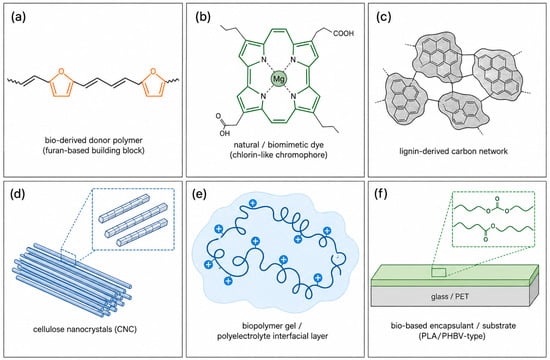
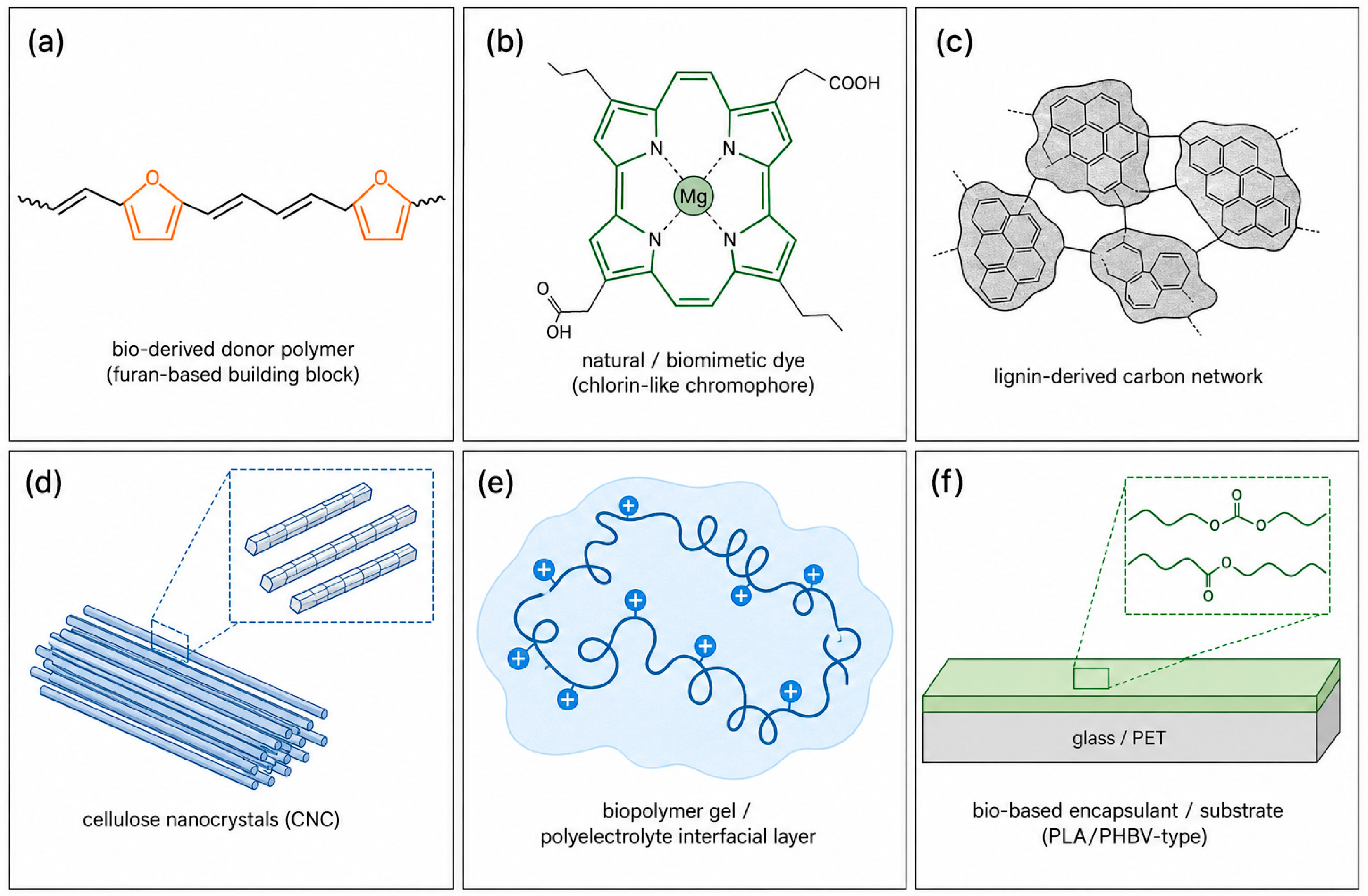
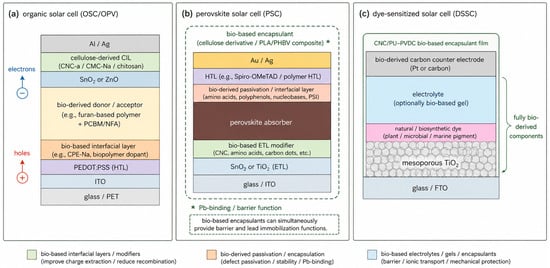
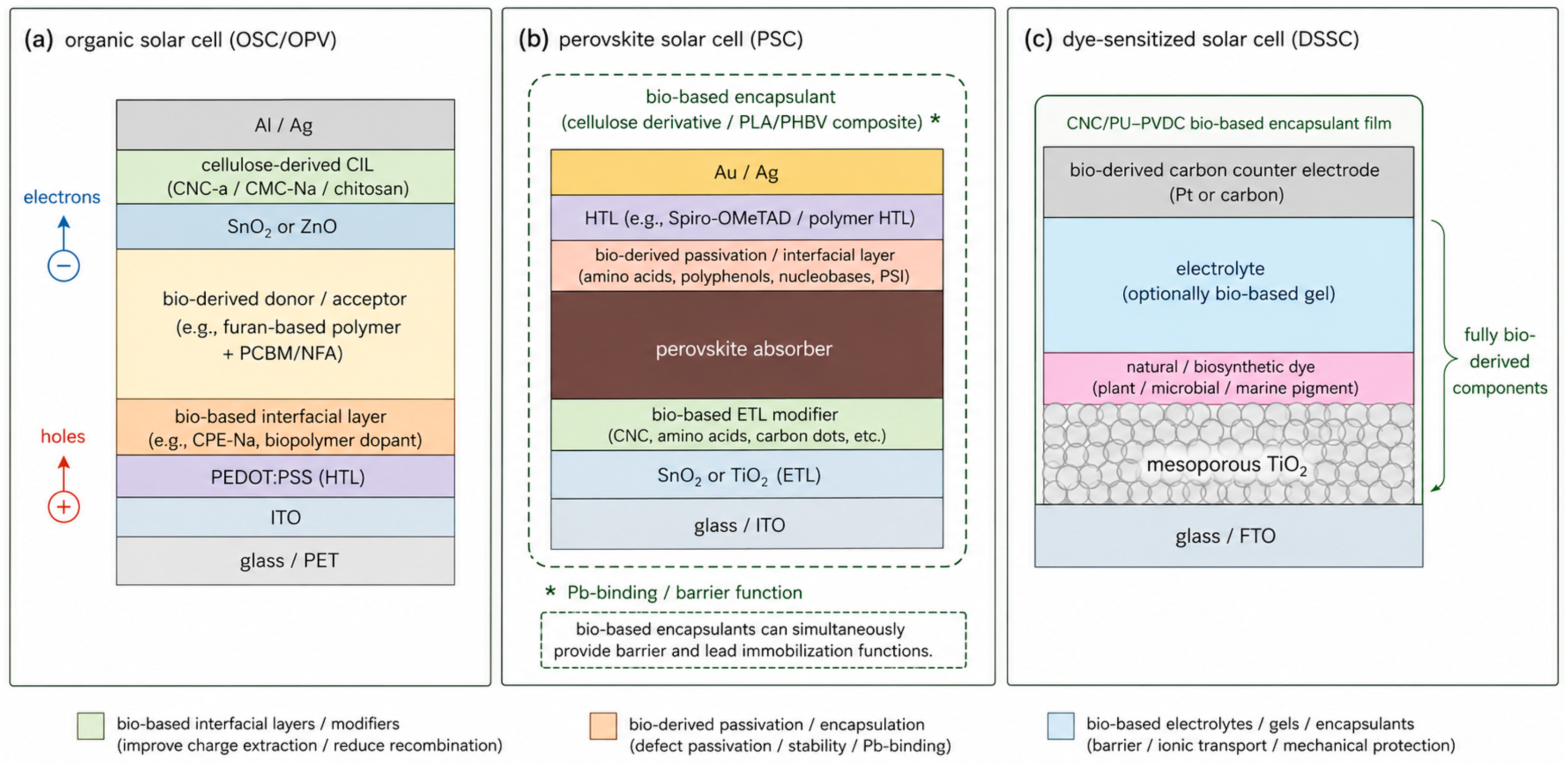
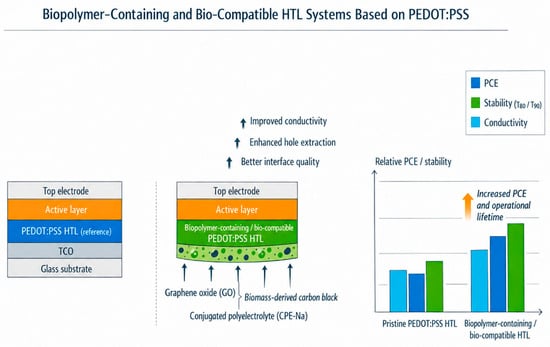
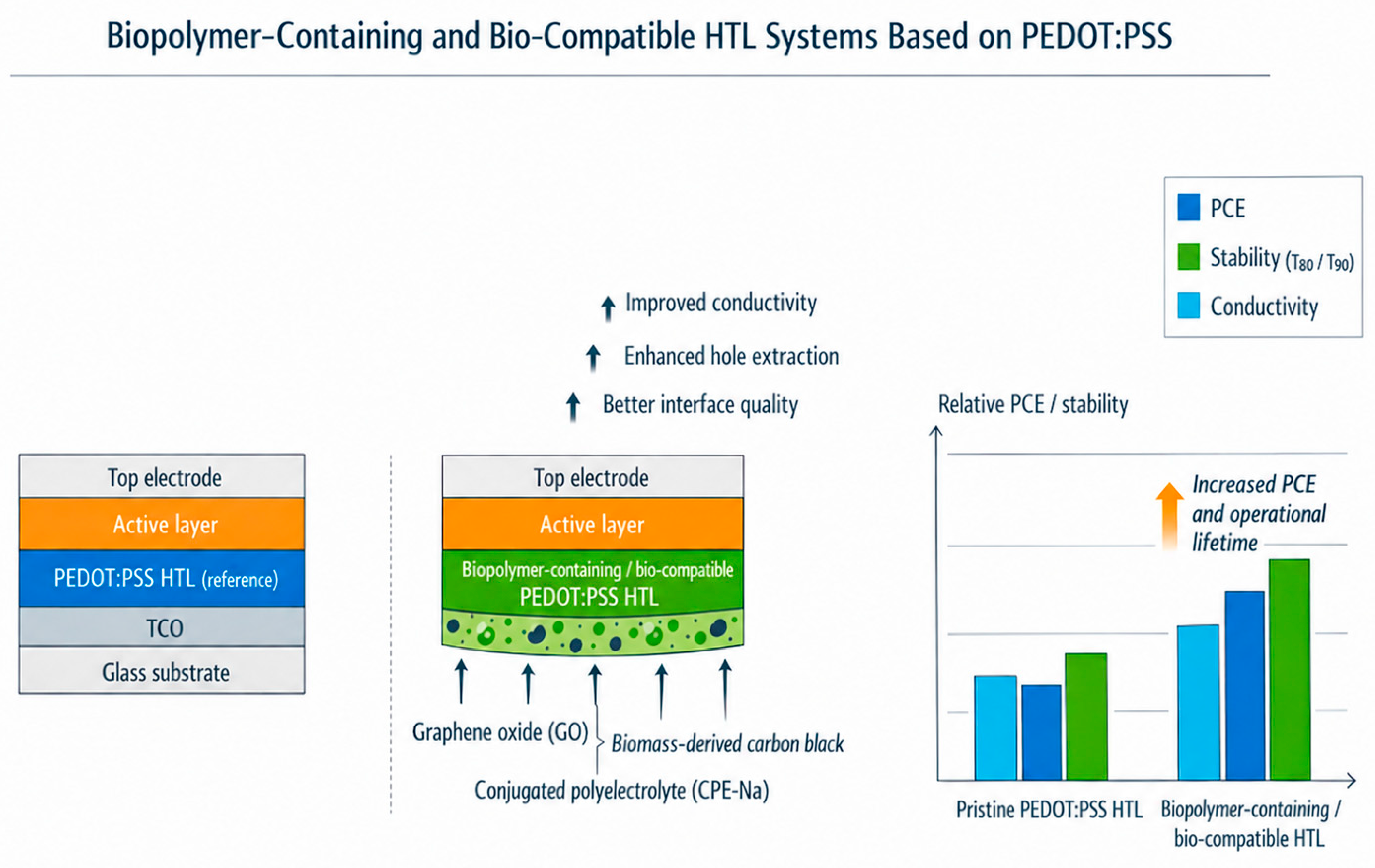
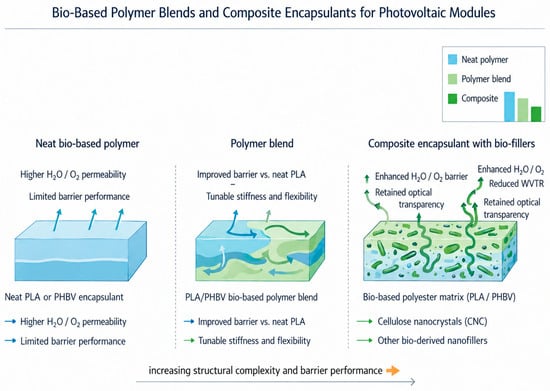
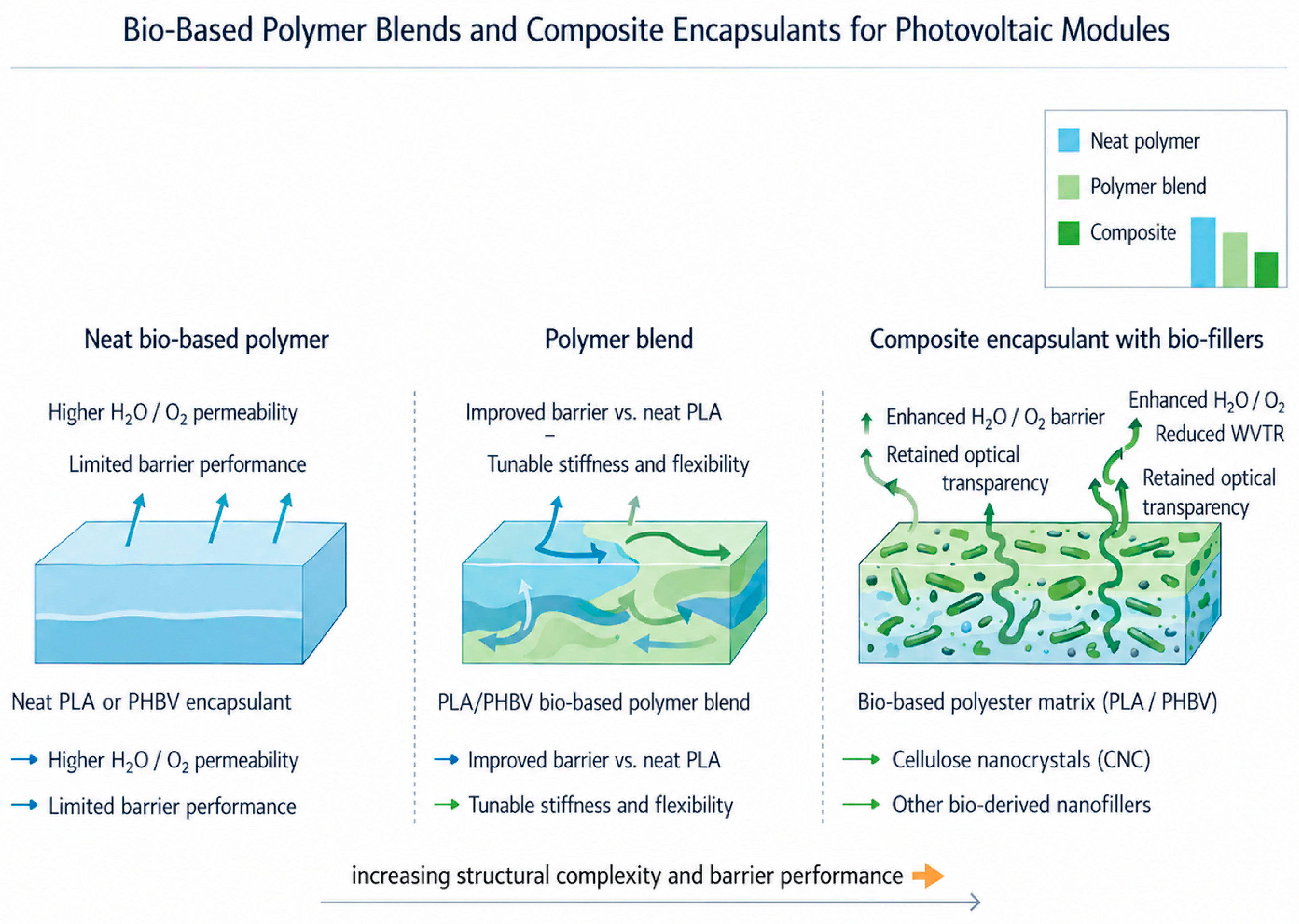
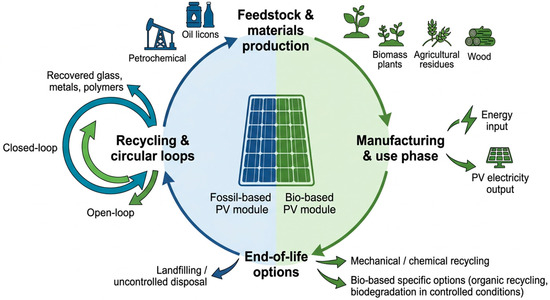
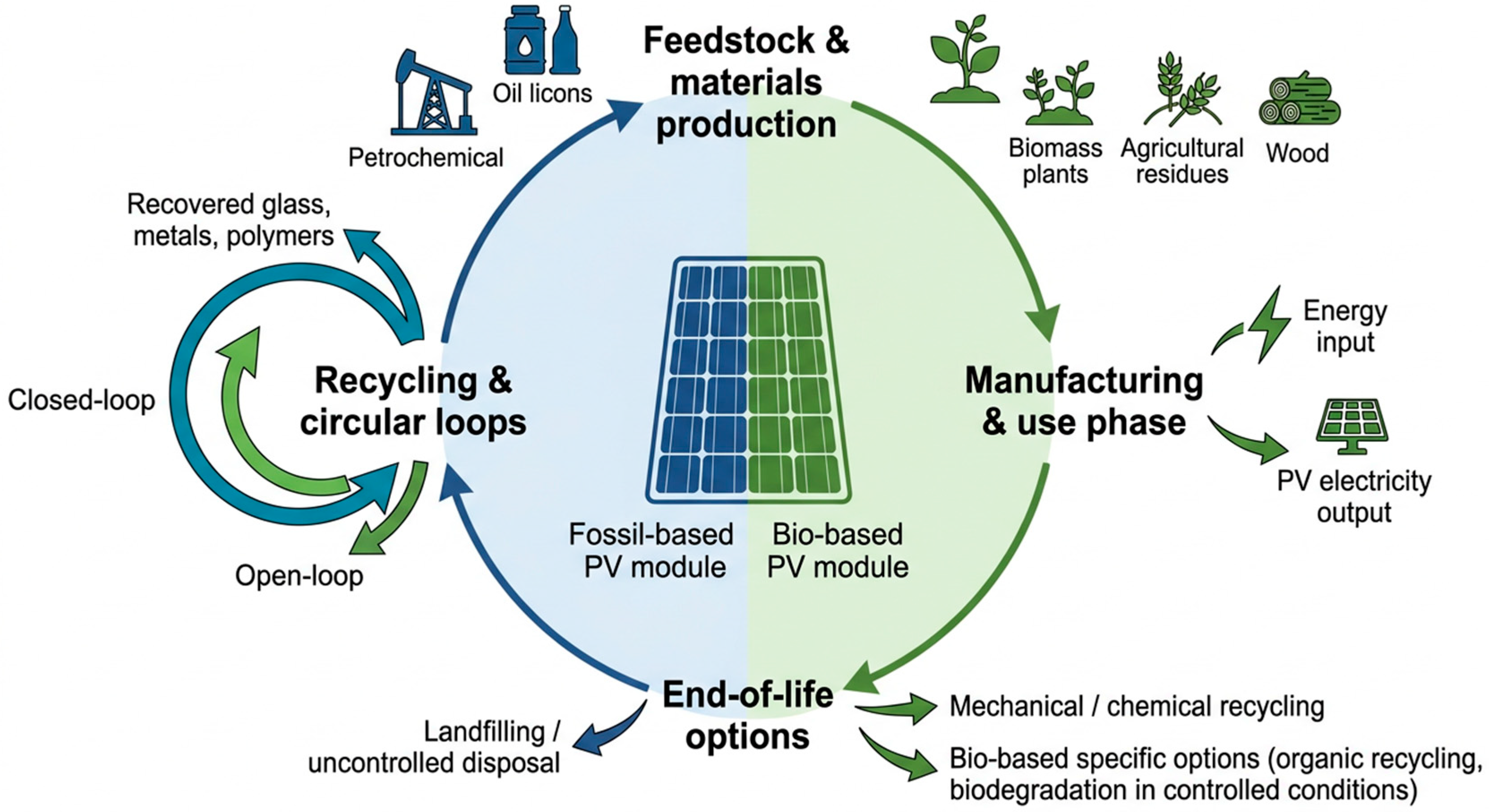

Disclaimer/Publisher’s Note: The statements, opinions and data contained in all publications are solely those of the individual author(s) and contributor(s) and not of MDPI and/or the editor(s). MDPI and/or the editor(s) disclaim responsibility for any injury to people or property resulting from any ideas, methods, instructions or products referred to in the content. |
© 2026 by the authors. Licensee MDPI, Basel, Switzerland. This article is an open access article distributed under the terms and conditions of the Creative Commons Attribution (CC BY) license.