


Abstract
Driven by artificial intelligence, multi-source sensing, agricultural robots and big data technologies, global agriculture is rapidly upgrading from precision agriculture and agriculture 4.0 to agriculture 5.0. Artificial intelligence has evolved from a single diagnostic tool to an intelligent system that integrates the “perception-decision-execution” process throughout. It is widely applied in crop phenotype analysis, remote sensing monitoring, yield prediction, and autonomous operation of intelligent equipment, etc. This article takes the framework of “intelligent perception-cognitive decision-autonomous execution” to systematically review the core technologies, typical applications, and frontier directions of agricultural artificial intelligence. It focuses on introducing the progress of key technologies such as three-dimensional phenotype, hyperspectral remote sensing, multimodal fusion, and causal machine learning, as well as their value in improving resource utilization efficiency, enhancing climate resilience, and supporting field precision management. At the same time, it points out that current agricultural AI still faces practical bottlenecks such as insufficient generalization ability of models, scarce data and high annotation costs, difficulties in edge deployment, barriers in multi-source data integration, and weak interpretability and engineering reliability. Future research will focus on the construction of closed-loop autonomous farms, the collaboration of agricultural large models and intelligent agents, the construction of data centers and AI and data infrastructure, and the development of green and low-cost AI research. This will provide support for the technological innovation and industrialization implementation of agricultural artificial intelligence.
1. Introduction
1.1. Research Background: From Precision Agriculture to Agriculture 5.0
Global agricultural production is facing multiple challenges such as food security, labor shortages, climate fluctuations, resource constraints, and environmental sustainability. Traditional agricultural production mainly relies on human experience, mechanical equipment, and local automatic control, which can improve operational efficiency to a certain extent, but there are still obvious shortcomings in complex environment perception, cross-regional management, dynamic resource optimization, and multi-equipment collaboration. With the rapid development of remote sensing, drones, Internet of Things, machine vision, agricultural robots and artificial intelligence technologies, agricultural production methods are gradually shifting from experience-driven to data-driven, model-driven and system intelligence-driven. Multi-source remote sensing yield prediction studies have shown that satellite remote sensing and machine learning models can provide a basis for field-scale yield mapping and resource optimization [1]. This indicates that agricultural intelligence is no longer limited to single-point monitoring but is gradually entering a stage of systematic management oriented towards the entire production process.
The core objective of precision agriculture is to implement differentiated management based on the spatial heterogeneity within a field. Different regions have different soil nutrients, water status, crop growth, and pest and weed pressures, and unified management can easily lead to resource waste or insufficient local management. Studies on multimodal gating fusion models for sub-field level yield prediction have shown that different data sources have different roles in different spatial regions, and the model needs to dynamically adjust the fusion weights based on information such as crops, soil, weather, and topography [2]. This reflects the trend of refining agricultural management units from the whole field to the sub-field scale.
From precision agriculture to Agriculture 5.0, the goal of agricultural intelligence is no longer limited to improving efficiency but further focuses on resource conservation, environmental friendliness, system resilience, sustainable production, and human–machine collaboration. Agriculture 5.0 is supported by the integration of advanced sensing, unmanned aerial vehicles, remote sensing, the Internet of Things, machine vision, artificial intelligence, agricultural robots, digital twins, and cloud-edge collaborative computing. These technologies provide multi-source agricultural information, transform heterogeneous data into state recognition, trend prediction, and decision support, and further enable resource scheduling, real-time management, and autonomous field operations. Therefore, Agriculture 5.0 can be understood as a closed-loop agricultural production paradigm that integrates perception, cognition, decision-making, execution, and feedback [3].
Nevertheless, the transition toward Agriculture 5.0 still faces challenges in data quality, model generalization, interpretability, rural connectivity, edge computing, deployment cost, system interoperability, farmer acceptance, data governance, and operational safety. Therefore, its realization requires coordinated progress in data, models, infrastructure, system integration, and practical deployment.
This also explains why the role of agricultural AI has expanded from single identification and diagnosis to system-level intelligence. Early agricultural AI was mainly used for crop identification, pest and disease detection, fruit counting, and agricultural product grading, and the research focus was on improving model accuracy. However, real agricultural scenarios have regional differences, seasonal changes, growth sequences, and environmental uncertainty, and a single model is difficult to stably adapt to complex production needs. Data center artificial intelligence research points out that the agricultural and food field not only needs model optimization but also needs to pay attention to data augmentation, data standardization, data quality improvement, and the construction of long-term maintainable data infrastructure [4].
The application scope of agricultural AI is also expanding. A review of the tea industry points out that computer vision and machine learning have been used in tea tree cultivation, tea picking, and tea processing, promoting applications such as tea bud identification, disease detection, and tea product classification [5]. A review of non-destructive testing of citrus quality shows that computer vision, hyperspectral, multispectral, infrared, Raman, fluorescence, and terahertz technologies can be used for quality grading, damage detection, adulteration identification, and traceability assessment [6]. Near-infrared spectroscopy, as a fast, non-destructive, and low-cost technology, has also been widely used in food and agricultural product quality analysis and can be combined with artificial neural networks, support vector machines, and ensemble learning to improve detection accuracy [7].
Therefore, the development of agricultural AI has gradually shifted from “identifying objects” to “understanding processes” and “optimizing systems”. Future agricultural AI will not only need to determine whether crops are diseased, whether the soil is water-deficient, and whether fruits are ripe, but also need to further explain the causes of changes, predict future trends, and generate corresponding production management plans. Based on this, this paper organizes agricultural AI into three levels: “perception-decision-execution” and further discusses cutting-edge directions such as basic models, self-supervised learning, generative AI, and agricultural intelligent agents.
1.2. Paradigm Shift of Artificial Intelligence in Agricultural Engineering
The initial application of artificial intelligence in agricultural engineering focused primarily on single-point tasks, such as disease identification, pest detection, fruit location, yield prediction, and quality inspection. These tasks have clearly defined inputs and outputs, improving production and inspection efficiency in specific scenarios. However, agricultural production is a continuous, dynamic process involving multiple coupled factors, making it difficult for single-point models to support comprehensive production management. Therefore, agricultural AI is shifting from single-point identification to system-level intelligence.
At the data level, the data sources for agricultural AI are expanding from single images to multi-source heterogeneous data. Three-dimensional point clouds can be used for plant structure and phenotypic analysis, RGB-D images can be used for controlled environment growth monitoring, hyperspectral and multispectral images can be used for crop physiological state identification, thermal infrared images can be used for water stress monitoring, ground sensors can be used for soil moisture and environmental parameter collection, and agricultural machinery operation data can reflect equipment operating status and operation efficiency [8]. These data together promote agricultural AI from appearance recognition to a comprehensive understanding of structure, physiology, environment, and operation process.
At the model level, agricultural AI is shifting from local feature extraction to long-range dependency modeling and cross-modal understanding. CNNs have been widely used for agricultural image recognition, detection, and segmentation, but their global modeling capabilities are still limited in high-resolution remote sensing images, complex field backgrounds, and large-scale spatial modeling. State-space models such as Vision Mamba provide new ideas for processing long sequences, high resolution, and large-scale spatial features [9]. In rice pest image segmentation, VM-UNet with multi-scale attention fusion has also shown advantages in segmenting small targets and occluded targets in complex backgrounds [10].
In terms of learning methods, agricultural AI is shifting from supervised learning that relies entirely on manual annotation to self-supervised learning, basic models, and efficient parameter fine-tuning. Agricultural data collection cycles are long and annotation costs are high, and it is difficult to obtain samples of rare diseases and pests and extreme scenarios. Studies on self-supervised crop classification have shown that when fine-tuning is done using only a small number of labeled samples, self-supervised models can still outperform traditional supervised models [11]. Methods such as DINOv2, LoRA, and knowledge distillation have also been used for agricultural disease identification, weed identification, and crop growth stage classification, indicating that basic visual models can be efficiently transferred to agricultural scenarios through parameter fine-tuning [12].
In terms of application goals, agricultural AI is moving from “perception and diagnosis” to “predictive decision-making”. Pest and disease identification, weed detection, and quality grading mainly answer “what is the current state”, while yield prediction, soil moisture prediction, nitrogen status estimation, and fertilizer effect analysis further focus on “what will happen in the future” and “how to manage”. Wheat leaf moisture estimation research uses UAV hyperspectral remote sensing and machine learning to predict the moisture content of winter wheat leaves, providing support for precision irrigation and stress diagnosis [13]. Intelligent spraying systems convert weed identification results into variable spraying control signals, reducing pesticide waste and environmental pollution [14].
Therefore, the paradigm shift of artificial intelligence in agricultural engineering can be summarized in four aspects: at the data level, from single images to multi-source heterogeneous perception; at the model level, from task models to basic models and efficient global modeling; in terms of learning methods, from strongly supervised learning to self-supervised learning, transfer learning, and low-label adaptation; and in terms of application goals, from single-point recognition to predictive decision-making, resource optimization, and equipment execution. This shift has not only promoted the improvement of agricultural perception capabilities but also facilitated the development of agricultural artificial intelligence from offline analysis tools to closed-loop intelligent systems. The “Agricultural Agent” discussed in this paper refers to an intelligent system with closed-loop capabilities of perception, decision-making, execution, and feedback. For its detailed definition, see Section 5.5.
To further summarize the evolution of agricultural artificial intelligence in terms of data sources, core tasks, model structure, learning strategies, and system form, Table 1 summarizes the development characteristics of artificial intelligence application paradigms in agricultural engineering.
Table 1.
Evolution of artificial intelligence paradigms in agricultural engineering.
In addition to the evolution of application paradigms, the research hotspots and technological focuses of agricultural AI have also changed significantly in recent years. To further demonstrate the relationships between the main research topics, this paper constructs a keyword co-occurrence network using CiteSpace based on Web of Science literature.
As shown in Figure 1, the high-frequency keywords in agricultural AI research are mainly concentrated in areas such as “Precision Agriculture”, “Machine Learning”, “Remote Sensing”, “Deep Learning”, and “Artificial Intelligence”, indicating that current research focuses on precision agriculture, machine learning, remote sensing monitoring, and deep learning. Meanwhile, keywords such as “yield prediction”, “vegetation index”, “UAV”, and “internet of things” are also prominent, suggesting that agricultural AI is gradually expanding from single recognition tasks to multi-source sensing, yield prediction, intelligent decision-making, and resource optimization. This further illustrates that agricultural AI is evolving towards an integrated “perception-decision-execution” framework.
Figure 1.
Keyword co-occurrence network of artificial intelligence research in agricultural engineering.
1.3. Overview of This Paper
This paper reviews the current application status, key technologies, engineering challenges, and future directions of artificial intelligence in agricultural engineering, focusing on the “perception-decision-execution” closed loop. Unlike simply categorizing CNN, Transformer, or machine learning methods by algorithm type, this paper focuses on how artificial intelligence is embedded in agricultural production processes to support crop monitoring, state understanding, resource management, equipment control, and system optimization.
First, this paper discusses intelligent sensing in agriculture, primarily addressing the question of “what state are agricultural objects in?” This involves 3D point cloud phenotypic analysis, hyperspectral and multispectral physiological state recognition, thermal infrared water stress detection, pest and weed identification, pre-visual diagnosis, and low-label learning. Second, this paper analyzes agricultural cognitive decision-making, focusing on crop yield prediction, soil nutrient and water management, sub-plot-level precision management, causal machine learning, and agronomic interpretation. Third, this paper discusses autonomous agricultural execution, including intelligent spraying, harvesting robots, autonomous navigation, automated agricultural machinery operations, and multi-platform collaboration. Finally, this paper summarizes cutting-edge directions in agricultural fundamental models, self-supervised learning, generative AI, Mamba models, and agricultural agents, and analyzes challenges such as data quality, cross-domain generalization, edge deployment, multi-source interoperability, and engineering reliability.
2. Intelligent Perception: From Multi-Source Data Acquisition to Agricultural State Interpretation
With the increasing demand for fine-grained monitoring of crop growth, soil environments, and pest disease stressors in modern agriculture, intelligent perception is undergoing a paradigm shift from traditional single-point detection toward multi-source, multi-dimensional, and real-time global information acquisition. Advanced sensing technologies—represented by 3D point clouds, hyperspectral imaging, multispectral imaging, thermal infrared, and UAV or satellite remote sensing—enable the comprehensive capture of crop morphology, physiology, nutrient levels, and health status. By integrating AI methodologies such as low-label learning and self-supervised learning, these technologies effectively address challenges including high annotation costs, high diversity of anomalous categories, and complex open environments, providing high-quality data support and state-understanding capabilities for precision agriculture.
2.1. 3D Phenotypic Perception and Spatial Structural Modeling
To address the complex requirements of crop phenotypic analysis, we have developed a full-process intelligent perception framework, as illustrated in Figure 2. Three-dimensional point clouds, generated via LiDAR, RGB-D, and Structure from Motion (SfM) techniques, have become the primary medium for plant structural analysis and biomass estimation due to their resilience against lighting variations and occlusions [8]. In smart greenhouse environments, the integration of RGB-D with IoT technologies, supplemented by advanced models such as SAM and FastSAM, has significantly enhanced the automation efficiency of organ segmentation [17]. For large-scale forestry perception, the fusion of UAV-LiDAR and multispectral imagery facilitates precise individual tree segmentation and biomass estimation [18]. Simultaneously, high-quality datasets like MangoSense and SeedStudio have propelled the evolution of yield prediction and seed recognition algorithms in open-world scenarios [19,20]. As perception requirements shift toward real-time performance, binocular cameras combined with the lightweight YOLO V4-Tiny have achieved real-time spatial target localization [21]. Furthermore, the Trunk-Seek model and PTA algorithm have enhanced the stability of trunk structure perception and edge computing efficiency in complex orchards [22]. This evolution from static geometric description to dynamic operational benchmark modeling marks 3D phenotypic perception as a core technical pillar for the autonomous operation of smart agricultural robots.
Figure 2.
Comprehensive framework for intelligent agricultural sensing, from multi-source data acquisition to state understanding and robotic guidance via advanced AI paradigms.
2.2. Physiological State Perception via Hyperspectral, Multispectral, and Thermal Imaging
Hyperspectral and multispectral imaging can reflect the spectral response of crops and soil across different wavebands, serving as critical technologies for nitrogen monitoring, early disease identification, soil nutrient estimation, and yield prediction. In rice yield forecasting, hyperspectral imagery combined with the QRBILSTM-MHSA network can capture temporal features and key spectral information throughout the crop growth cycle [23]. This method is particularly advantageous for yield prediction because it jointly models temporal growth dynamics and important spectral bands, making it more suitable than conventional single-stage spectral regression methods for tasks involving crop growth sequences. For soil nutrient prediction, VNIR/SWIR hyperspectral data integrated with CNNs and Neural Architecture Search (NAS) are utilized for estimating nitrogen and phosphorus content [24]. Compared with manually designed CNN architectures, the CNN-NAS strategy is more effective in automatically identifying task-adaptive network structures and is therefore better suited for soil nutrient estimation where spectral-spatial feature combinations are complex. Beyond basic nutrient monitoring, spectral analysis demonstrates significant potential in the inversion of complex physiological stressors. To address the physiological response of plants to heavy metal contamination, researchers proposed a deep learning approach combining Wavelet Transform (WT) and Stacked Convolutional Autoencoders (SCAE). This method efficiently extracts non-linear deep features from visible-to-near-infrared (400.68–1001.61 nm) hyperspectral data, enabling precise non-destructive prediction of complex cadmium (Cd) and lead (Pb) concentrations in lettuce leaves [25]. Among the above prediction models, QRBILSTM-MHSA is more suitable for time-series yield forecasting, CNN-NAS performs better in adaptive nutrient estimation, while WT-SCAE shows stronger capability in extracting non-linear stress-related spectral features. Therefore, the optimal method depends on the specific physiological target rather than being universal across all tasks.
In larger-scale agricultural monitoring, the fusion of AVIRIS-NG hyperspectral, Sentinel-2 multispectral, and SRTM-DEM data enables spatial prediction of soil micronutrients such as zinc, copper, iron, and manganese [26]. UAV-based hyperspectral imagery, combined with spatial attention mechanisms and 1D-CNNs, improves the estimation accuracy of leaf nitrogen concentration in wheat [27]. For nitrogen estimation, the spatial attention-based 1D-CNN method is more effective because it can emphasize nitrogen-sensitive spectral and spatial regions, thereby improving prediction accuracy at the leaf or canopy scale. Meanwhile, the combination of UAV and Sentinel-2 multispectral imagery with machine learning models facilitates in-season nitrogen status assessment and pre-harvest yield evaluation for potatoes [28]. Regarding hydrological physiological perception, UAV-based hyperspectral remote sensing is transitioning from single-index analysis to multi-dimensional machine learning estimation. By extracting full-band spectral information from wheat canopies and employing Random Forest (RF) and Support Vector Regression (SVR) algorithms, researchers can achieve real-time monitoring of leaf water content across different growth stages of winter wheat, providing a scientific basis for variable-rate irrigation decisions in precision agriculture [13]. In this context, RF and SVR are more suitable for practical irrigation decision-making because they offer relatively stable regression performance and lower computational complexity compared with deep models, especially when the available sample size is limited.
For fine-grained disease identification, hyperspectral technology captures biochemical differences that are inaccessible to 2D imagery. For instance, This capability enables disease detection to advance to the pre-visual (asymptomatic) stage;; for example, hyperspectral imaging combined with machine learning can identify physiological damage in strawberries before symptoms manifest [3]. Furthermore, in tea plantation plant protection, hyperspectral imaging can extract spectral fingerprints from lesion areas to distinguish between Tea White Star disease and Anthracnose—two diseases with highly similar visual features. When coupled with an Extreme Learning Machine (ELM) model, this approach achieves high-precision differentiation with an accuracy of 95.77%, significantly reducing the misdiagnosis rates associated with traditional manual inspection for diseases that are difficult to differentiate with the naked eye [29]. Therefore, for visually similar disease discrimination, the hyperspectral-ELM framework shows a clear advantage in classification accuracy and computational efficiency, making it especially suitable for rapid field diagnosis of fine-grained crop diseases.
2.3. Recognition and Pre-Visual Diagnosis of Pests, Diseases, and Weeds
The synergy between AI and remote sensing has enabled disease detection to advance to the pre-visual (asymptomatic) stage. For instance, UAV multispectral imagery and deep neural networks have achieved early detection and classification of wheat soil-borne root rot [30].
In field practice, the use of deep semantic segmentation and the lightweight YOLOv11 framework has facilitated a transition from “qualitative identification” to “quantitative characterization”, enabling the calculation of lesion areas and the quantification of severity in grapes and peanuts, thereby optimizing total pesticide application [31,32]. To address small targets and complex backgrounds, improved YOLO architectures and VM-UNet integrated with multi-scale attention have significantly enhanced segmentation precision for tomato and rice pests [10,33]. With the deep coupling of models such as YOLOv8-nano, VGG-16, and GTDR-YOLOv12 with control systems, vision-feedback-driven variable-rate spraying and autonomous weeding robots have been deployed [14,16,34], signaling a comprehensive shift in pest, disease, and weed control toward “point-to-point prescription-based operations”. To clearly summarize the various application scenarios, perception technologies, and AI models mentioned above, the relevant information is consolidated in Table 2.
Table 2.
Summary of simplified application scenarios, technologies, and AI methods.
2.4. Low-Label, Label-Free, and Open-World Agricultural Recognition
Agricultural image anomalies are characterized by multiple categories, diverse morphologies, and high annotation costs. Label-free anomaly detection leverages Masked Image Modeling (MIM) and Self-Supervised Learning (SSL) to effectively identify water stress, nutrient deficiencies, and weed clusters from UAV imagery, offering new avenues for detecting unknown diseases and enabling low-cost learning [35]. Research on self-supervised crop classification indicates that SSL models outperform traditional supervised learning even with only of images annotated, demonstrating their superiority in few-shot scenarios [11]. In processing high-dimensional non-linear data, Stacked Denoising Autoencoders (SDAE) utilize unsupervised feature reconstruction to reduce reliance on fully annotated sets, significantly improving the quantitative prediction accuracy of indicators such as heavy metal content [36]. For few-shot pest recognition, a cross-modal fine-tuning framework based on CLIP incorporates Prompt tuning and LoRA (Low-Rank Adaptation) to enhance transferability [37]. Additionally, by optimizing transfer learning and multi-label training strategies, models can leverage single-variety prior knowledge to achieve rapid detection of buds across multiple tea varieties, addressing the issues of sample imbalance and high annotation costs [38]. The class-incremental learning mechanism in SeedStudio further suggests that future systems must possess the capability to continuously integrate new categories and scenarios [20]. Through the integration of self-supervised feature extraction, cross-modal transfer, and incremental learning, agricultural intelligent perception systems will achieve greater adaptability to support long-term, precise monitoring in dynamic and open environments.
3. Cognitive Decision Making: From Predictive Modeling to Agricultural Resource Optimization
Agricultural intelligent sensing addresses the questions of “what to see” and “what to identify”, while cognitive decision-making further focuses on “what will happen in the future”, “why this will happen”, and “how to manage it”. In agricultural production, there are complex coupling relationships between crop yield, soil moisture, nutrient supply, climate fluctuations, pest and disease occurrence, and agricultural machinery efficiency. If single sensing results cannot be further transformed into predictive models, explanatory mechanisms, and management schemes, they cannot truly support the optimization of agricultural production. Therefore, cognitive decision-making is the key level connecting intelligent sensing and autonomous execution.
Compared with traditional agricultural decision-making, AI-based cognitive decision-making can integrate remote sensing images, UAV images, ground sensors, meteorological data, soil data, and management records to extract key factors affecting crop growth and resource utilization and generate prediction results and management suggestions. Studies on soil moisture prediction using ground sensors combined with models such as RF, XGBoost, and LSTM have shown that farmland moisture status can be dynamically estimated through data-driven methods, thereby supporting precision irrigation [39]. Based on this, agricultural cognitive decision-making can be understood as a process composed of multi-source agricultural data-driven, intelligent model analysis, and resource optimization output. As shown in Figure 3, after multi-source remote sensing, UAV, hyperspectral, soil, meteorological, and sensor data enter the cognitive decision-making layer, they are processed through modules such as yield prediction, resource management, multimodal fusion, and interpretable analysis, and finally form management strategies such as variable fertilization, precision irrigation, risk warning, and resource optimization.
Figure 3.
Framework of agricultural cognitive decision-making for resource optimization.
3.1. Crop Yield Forecasting and Multi-Temporal Data Modeling
Crop yield forecasting is a fundamental task in agricultural cognitive decision-making. Yield comprehensively reflects factors such as variety, soil, water, nutrients, climate, and management practices. Accurate yield forecasting can provide a basis for farm management, harvest planning, storage and logistics, and regional food security assessments.
With the development of remote sensing, UAVs and hyperspectral imaging, yield prediction has gradually shifted from statistical empirical models to multi-source data-driven models. Rice yield prediction studies use hyperspectral images, BiLSTM, multi-head self-attention mechanisms and quantile regression methods to model the spectral temporal characteristics and yield uncertainty of crop growth [23]. Wheat yield prediction studies integrate UAV images, ground sensors, climate variables and multi-stage data, demonstrating that multi-source and multi-temporal information can improve the stability of yield prediction [40]. This indicates that agricultural prediction models need to move from static estimation to dynamic process modeling.
In field and regional scale forecasting, yield forecasting also needs to serve variable management. Potato yield forecasting research combines Sentinel-2, PlanetScope, and machine learning models to achieve field-scale yield mapping, providing a basis for identifying high-yield areas, low-yield areas, and unstable areas [1]. In addition, a study on carbon flux estimation in tea gardens used an integrated machine learning model to predict net ecosystem exchange and found through SHAP analysis that solar radiation and temperature are the main influencing factors [41]. Although its object is carbon flux rather than yield, it also shows that machine learning can be used to predict agricultural ecological processes and serve low-carbon agricultural management.
3.2. Integration of Crop Models, Remote Sensing Data, and Machine Learning
Purely data-driven models possess strong nonlinear fitting capabilities but are easily affected by data distribution, regional differences, and annual variations. Agricultural systems are influenced by climate, soil, variety, and management practices. If models rely solely on historical samples to learn statistical relationships, their generalization ability may decline under cross-regional or abnormal climatic conditions. Therefore, the integration of crop models, remote sensing data, and machine learning is an important direction for improving the reliability of agricultural decision-making.
Crop models can describe processes such as crop growth and development, dry matter accumulation, water use, and nutrient absorption and have a certain ability to explain mechanisms. The study on winter wheat 10 m yield mapping combined the APSIM-Wheat crop model, GCVI/LAI remote sensing features, and random forest model, which improved the ability to estimate yield over a large area under incomplete irrigation information [42]. This approach allows crop models to provide process priors, remote sensing data to provide spatial observations, and machine learning to enhance nonlinear modeling capabilities.
Compared with completely black-box prediction, “crop mechanism model+remote sensing features+machine learning” is more suitable for agricultural decision-making scenarios. Agricultural producers are not only concerned about the prediction results but also about the reasons for yield changes. Introducing crop mechanisms and remote sensing observation can help improve the interpretability and generalization ability of the model [43]. The study on decoupling wheat water and nitrogen stress used leaf electrophysiological signals to build a machine learning framework to distinguish between water stress and nitrogen stress [44], which shows that the model can move from anomaly identification to stress source diagnosis, providing a basis for precision irrigation and variable fertilization.
3.3. Soil Nutrient, Water and Field Resource Management
Soil nutrients and water are key variables in agricultural resource management. Nitrogen, phosphorus, potassium, and micronutrients affect crop growth, quality, and yield, while soil moisture determines transpiration, root uptake, drought stress, and irrigation needs. Traditional soil testing relies on manual sampling and laboratory analysis, which is accurate but costly, time-consuming, and lacks spatial coverage.
In terms of soil nutrient prediction, machine learning models—such as convolutional neural networks and neural architecture search—have been applied to remote sensing data to predict soil nitrogen and phosphorus content, offering a new path for rapid soil detection [24]. Digital soil trace element mapping research integrates multispectral, DEM, soil, and climate data with machine learning techniques to achieve spatial prediction of elements such as zinc, copper, iron, and manganese [26]. This indicates that soil nutrient management is moving from point sampling to continuous spatial mapping.
In terms of soil moisture prediction, ground sensors combined with models such as RF, XGBoost, and LSTM can realize dynamic estimation of farmland soil moisture [39]. Multi-sensor global soil moisture mapping research uses machine learning frameworks to integrate multi-source passive microwave sensor data, improving spatiotemporal coverage [45]. Wheat leaf moisture estimation research uses UAV-based multispectral remote sensing combined with spectral transformation, feature selection, and machine learning models to estimate the moisture content of winter wheat leaves. The results show good stability and generalization ability [13].
Water and nutrients are highly coupled in actual production. Water shortage will affect nitrogen absorption, and nitrogen deficiency will also change crop canopy structure and physiological response. If the model can only judge ”abnormal growth” but cannot distinguish between water shortage or nitrogen deficiency, it will be difficult to generate an accurate management plan. A study on decoupling water and nitrogen stress in wheat uses leaf electrophysiological signals within a parallel machine learning framework to identify water versus nitrogen stress, providing a new approach for water-fertilizer synergistic management [44].
3.4. Multimodal Fusion and Sub-Field-Level Precision Management
Agricultural production exhibits significant spatial heterogeneity. Within the same field, there may be differences in soil texture, nutrient levels, terrain slope, drainage conditions, and crop growth. If uniform fertilization, irrigation, and pesticide application methods are still used, it is easy to waste resources or lead to insufficient local management. Therefore, precision agriculture is further refining the management unit from the entire field to the sub-field scale.
Multimodal fusion is an important technical approach to achieve sub-field level management. Agricultural production decisions need to consider factors such as crops, soil, weather, topography, and management measures at the same time, and these data differ in spatial resolution, temporal scale, and information meaning. Multimodal gating fusion models can achieve sub-field level crop yield prediction by learning the dynamic weights of different data sources [2]. The study of stable yield areas uses multi-year yield, soil, and rainfall data to identify stable high-yield areas, stable low-yield areas and unstable areas and combines decision trees to explain the driving factors of yield variation [46]. This shows that different regions can adopt differentiated management strategies.
Multimodal fusion can also be extended to agricultural product processing. The study on moisture prediction in the Tencha drying process uses computer vision to extract color space features and constructs models such as 1D-CNN to predict the moisture content in the drying process, realizing the visualization of the moisture migration process [47]. This shows that AI can not only be used for field resource management but also for processing quality control and parameter optimization.
3.5. Causal Machine Learning and Agronomic Explanation
Agricultural AI should not only focus on predictive results but also explain the reasons behind those results. In actual agricultural production, the same fertilizer input, irrigation strategies, or pest and disease control measures may produce different effects under different soil, climate, variety, and management conditions. If the model cannot explain the key influencing factors, it will be difficult to support actual management decisions.
Heterogeneity of fertilizer effects is a typical problem in agricultural causal analysis. A study on fertilizer effects in maize in Ghana combined causal forest, Boosted Random Forest, SHAP, and ALE analyzes to reveal the influence of climate variables, soil properties, and agro-ecological zones on fertilizer yield increase [48]. Deep learning can also provide dynamic state variables for agronomic mechanism models. A CNN canopy cover analysis study combined image segmentation results with the Lotka-Volterra competition model to analyze interspecific competition relationships in cereal-legume intercropping systems [49].
The study on carbon flux estimation in tea gardens also demonstrates the value of interpretable agricultural AI. This study constructed an integrated machine learning model and used SHAP to analyze the impact of climate variables on net ecosystem exchange, pointing out that solar radiation and temperature are the main factors affecting the changes in carbon flux in tea gardens [41]. This approach makes the model no longer just a black box prediction tool but can provide an explanatory basis for carbon balance and low-carbon management in tea gardens.
To further summarize the agricultural cognitive decision-making content discussed in this chapter, Table 3 summarizes the relevant research directions from three aspects: main tasks, decision-making objectives, and typical literature, based on representative studies.
Table 3.
Representative research directions and objectives in agricultural cognitive decision-making.
As shown in Table 3, the research focus of agricultural cognitive decision-making has expanded from single prediction tasks to areas such as water and fertilizer management, spatial zoning optimization, and interpretable decision-making, reflecting a development trend from predictive modeling to agricultural resource optimization. Building on this foundation, future agricultural cognitive decision-making needs to move further from correlational prediction to causal explanation and mechanism-assisted decision-making. On the one hand, methods such as SHAP, ALE, causal forests, and counterfactual inference should be used to interpret model outputs; on the other hand, agronomical knowledge, crop physiological mechanisms, and long-term experimental data should be combined to avoid misinterpreting statistical correlation as causation. Only in this way can agricultural AI be upgraded from a predictive tool to a truly reliable agricultural decision support system.
4. Autonomous Operation: From Intelligent Equipment to Agricultural Robotics Systems
With the growing shortage of agricultural labor and the increasingly urgent need for precision farming, autonomous agricultural operations are shifting from semi-automatic machinery towards a fully autonomous, flexible, and collaborative system of intelligent equipment. Technologies such as intelligent spraying, harvesting robots, autonomous navigation, automated agricultural machinery operations, and reconfigurable robots are maturing steadily. By deeply integrating visual perception, positioning, and planning with mechanical control, these technologies enable precise, efficient, and unmanned field operations, driving agricultural production from a ‘human-assisted’ model towards ‘machine autonomy’. In this section, agricultural robotics systems are regarded as the representative form of intelligent agricultural equipment for autonomous operations.
4.1. Intelligent Spraying and Precision Pest Control Equipment
Intelligent spraying and precision pest control equipment represent a key technological pathway for modern agriculture to transition from traditional pest management models towards greater efficiency and sustainability. In the early stages, crop protection relied primarily on manual spraying and conventional machinery; however, these methods often resulted in uneven pesticide application, low pesticide utilization rates, and excessive use of chemicals. At the same time, plant pests and diseases can damage leaves, stems, root systems, or fruit and pose a threat to local biodiversity. Within the technological framework of modern agriculture, the application of deep learning and non-destructive detection techniques (NDDTs) has significantly advanced the intelligent transformation of agricultural equipment, markedly improving the quality of target detection and the efficacy of pesticide application, thereby providing crucial technical support for precision agriculture [50]. An intelligent spraying and precision pest control equipment system architecture is an intelligent system that integrates three primary functions: environmental perception, intelligent decision-making, and precise execution.
At the environmental perception layer, the system utilizes multimodal sensors such as LiDAR and ultrasonic sensors to collect information [15] and employs technologies including near-infrared spectroscopy, hyperspectral imaging, and thermal imaging to analyze spectral data, thereby enabling crop identification and health monitoring [50]. In particular, RGB cameras and thermal infrared imaging are frequently used to identify the morphology of disease lesions, pests, and weeds, while multispectral and hyperspectral imaging are primarily employed to monitor crop physiological status and enable early warning of diseases [50].
At the intelligent decision-making layer, deep learning models form the core of the system. In crop identification tasks, convolutional neural networks (CNNs) have become the core technology, with mainstream deep learning models such as the VGG series, ResNet series, and Efficient series demonstrating excellent recognition performance [51]. Spectral analysis technology is the most commonly integrated with deep learning. Stacked autoencoders (SAE), deep belief networks (DBN), and convolutional neural networks (CNN) are primarily used to extract spectral features; for example, Wan et al. studied wheat grains and flour affected by Fusarium head blight. They utilized hyperspectral imaging technology to collect spectral data, pre-processed the spectral information using multi-scale continuous wavelet transform (MSC), and combined this with a genetic algorithm (GA) to optimize a stacked autoencoder (SAE) deep learning model, thereby achieving non-destructive detection of target substances in wheat grains and flour affected by Fusarium head blight [52].
At the precision execution level, this primarily includes variable-rate application and mechanical weeding methods. In agriculture, variable-rate application is mainly applied to control systems within aeroponic systems. Internet of Things (IoT) systems can monitor and regulate environmental variables such as light, humidity, and carbon dioxide in real time and use these data to adjust fertilizer distribution, mist fertilization, and spraying cycles via reinforcement learning (RL) [53]. Aeroponic systems also integrate plasma-activated water (PAW) and plasma-activated mist (PAM) into the system. PAW enhances nutrient absorption and reduces the use of chemical inputs such as fertilizers, while PAM, when applied to the roots, promotes nitrogen fixation and enhances antimicrobial effects. Integrating both into the IoT system can address the issues of low nitrogen utilization and the difficulty in managing crop cultivation systems found in traditional agriculture [53]. A complete framework for a smart spraying and precision crop protection system is shown in Figure 4.
Figure 4.
Closed-loop framework for intelligent spraying and precision crop protection.
Although significant progress has been made in the application of smart spraying and precision pest control equipment in agriculture, there remain several pressing issues to be resolved. For instance, such equipment still faces challenges such as insufficient model generalization capabilities, difficulties in balancing real-time performance and accuracy in edge devices, high costs of high-end sensors, and complex system integration [53]. Looking ahead, future intelligent spraying and precision pest control equipment will place greater emphasis on multi-source sensor fusion and system coordination. Single sensors have limitations in complex field environments; consequently, multi-modal perception—fusing RGB imagery, LiDAR, and multispectral data—is gradually becoming a research priority, as it can enhance the accuracy of identifying pests, weeds, and non-target areas, as well as the system’s environmental adaptability [54]. Concurrently, in complex three-dimensional settings such as orchards, environment-sensing-driven targeted spraying technology is evolving towards three-dimensional canopy modeling. By utilizing LiDAR and RGB-D cameras to acquire canopy structural information, spray nozzle flow rates and application paths can be dynamically adjusted, thereby achieving more precise variable-rate spraying [55].
4.2. Harvesting Robots and Active Sensing
Crop harvesting robots are essential equipment for addressing labor shortages and enabling the efficient harvesting of fruit and vegetables. Their core functionality lies in utilizing active sensing technologies to identify fruit, pinpoint their exact location, and perform harvesting tasks within complex agricultural environments. A typical crop harvesting system comprises a mobile platform, a multi-degree-of-freedom robotic arm, an end effector, a vision sensing module, and an intelligent control system.
Firstly, visual perception forms the foundation for crop harvesting. Visual sensors are primarily used to perform crop identification and three-dimensional positioning tasks in complex environments. Currently, visual sensors commonly used in agriculture include monocular cameras, stereo cameras, structured light cameras, and multispectral cameras [56]. The selection of visual sensors for harvesting systems is relatively flexible and is generally determined by the robot’s operating environment. For instance, monocular cameras can only capture two-dimensional information but are cost-effective, while stereo cameras and structured light cameras can capture three-dimensional information but are more expensive and susceptible to interference from strong light. Multispectral cameras, although highly resistant to interference, impose a heavy computational load and suffer from poor real-time performance [56].
In terms of perception algorithms, harvesting robots have gradually shifted from traditional image processing to a deep learning-dominated approach [57]. Early methods combining color, shape, and texture features with traditional classifiers were effective in controlled environments but were significantly affected by changes in lighting, occlusion, and background interference in natural scenes [57]. In recent years, object detection models, typified by the YOLO series, have become the mainstream approach for fruit detection due to their balance of real-time performance and accuracy, whilst instance segmentation models such as Mask R-CNN are utilized for fruit contour extraction and picking point localization [58]. Concurrently, lightweight networks such as EfficientNet and model compression techniques are particularly well-suited to scenarios such as fruit recognition, weed detection, and disease detection [15]. As for the model training process, a high-quality dataset forms the foundation of model training, with its quality and scale directly influencing the model’s practical performance. By establishing dedicated datasets for different types of fruit, models trained on these—such as MinneApple for apple detection and GrapeCS for grape detection—demonstrate exceptional localization capabilities when detecting fruit in complex environments [15].
In addition to fruit recognition, the active detection of obstacles such as branches and fruit stalks is equally critical [58]. Currently, image-based semantic segmentation and point cloud-based 3D reconstruction methods are predominantly employed; whilst point cloud technology provides richer spatial information, its high computational complexity limits real-time applications [58].
In terms of motion planning and control, harvesting robots typically employ various execution methods, such as grasp-and-cut, suction-and-pull, and twist-and-pull [59]. Path planning often incorporates algorithms such as A* and RRT to achieve obstacle avoidance; however, in environments with clustered fruit and occlusion by branches and foliage, simple obstacle avoidance alone is insufficient to meet operational requirements [60]. Consequently, active occlusion separation and vision-based servo closed-loop control have become key research focuses, with the ‘perception-action-re-perception’ closed-loop approach enhancing harvesting success rates in complex environments [60].
4.3. Navigation of Agricultural Robots and Automated Agricultural Machinery Operations
Autonomous navigation forms the foundation for automating field operations in agricultural robotics, with its core lying in the establishment of a closed-loop technical system comprising “environmental perception-path planning-tracking control” [61]. At the environmental perception level, the combination of GNSS-RTK and inertial navigation systems is already capable of providing centimeter-level positioning accuracy, making it the primary method for positioning in open fields [61]. However, due to the effects of canopy obstruction, changes in illumination, and multipath effects, a single sensor struggles to meet the demands of complex environments, making multi-sensor fusion a growing trend [62]. Among these, machine vision is widely adopted due to its low cost and rich information; when combined with deep learning-based semantic segmentation and object detection methods, it significantly enhances the accuracy and robustness of crop row recognition [63]. Concurrently, LiDAR acquires environmental structural information through high-precision 3D point clouds, offering distinct advantages for navigation in orchards and under tree canopies [63].
At the path planning level, the system generates optimal driving paths that meet operational coverage requirements based on environmental information [63]. Traditional ploughing and spiral methods are structurally simple but exhibit poor adaptability to irregular fields and obstacle-avoidance scenarios [61]. In recent years, intelligent optimization algorithms combined with headland turning strategies have been widely adopted for global path optimization to minimize redundant operations and missed areas [63]. In complex scenarios, B-splines and Dubins curves are frequently employed for path smoothing to satisfy the kinematic constraints of agricultural machinery [63].
Path tracking control is a critical factor determining navigation accuracy. Current approaches primarily comprise three categories: geometric control, kinematic/dynamic control, and intelligent control [64]. Among these, pure tracking and the Stanley algorithm are simple to implement and suitable for low-speed, structured scenarios; PID control, due to its simple structure, is widely used in low-level servo control but has limited adaptability to non-linear systems [64]. To enhance disturbance rejection capabilities, advanced methods such as sliding mode control, Model Predictive Control (MPC), and the Linear Quadratic Regulator (LQR) are gradually being applied to agricultural robot navigation. Among these, Model Predictive Control has become a current research focus due to its ability to explicitly handle constraints whilst incorporating predictive capabilities [61].
Model Predictive Control, PID, and pure tracking are currently the most widely used navigation control strategies in agricultural robots. The choice of control method is closely related to the operational environment, robot structure, and task requirements. Although significant progress has been made in autonomous navigation technology, the long-term robustness of the system still needs to be further improved in scenarios such as extreme weather, complex occlusions, and headland turns [64]. Common path planning and optimization algorithms used in agriculture are shown in Table 4.
Table 4.
Path planning methods and optimization objectives in agricultural robotics.
4.4. Reconfigurable Robots, Aerial Operations and Multi-Platform Coordination
As precision agriculture evolves towards customization and greater precision, agricultural robots with a single, fixed form are finding it increasingly difficult to adapt to crop diversity and complex agronomic environments. Reconfigurable robots, through their modular structure and variable-form design, offer agricultural equipment greater flexibility and adaptability [65]. The core of this approach lies in rapidly adjusting hardware and software architectures to adapt to different operational scenarios, whilst maintaining cost-effectiveness [66]. At the hardware level, reconfigurable platforms can adapt to inter-row and inter-plant operations by altering the vehicle structure; at the control level, this encompasses centralized, distributed and hybrid architectures, with distributed, and biomimetic control further enhancing the system’s robustness and self-organization capabilities in complex environments [66].
Regarding multi-platform collaboration, air-ground cooperation between UAVs and unmanned ground vehicles (UGVs) is a key direction in current agricultural robotics research [67]. UAVs offer the advantages of a wide field of view and rapid deployment, making them suitable for high-altitude reconnaissance and global mapping; UGVs, on the other hand, possess strong payload capacity and long endurance, making them suitable for precision ground operations and transport tasks. The main modes of collaboration between the two include UAVs guiding UGV operations, UAVs taking the lead in decision-making, UGVs assisting UAVs with take-off, landing, and charging, and the joint execution of closed-loop perception-decision-execution tasks [67]. By fusing multi-source perception data from both air and ground, a more comprehensive three-dimensional environmental model can be constructed, thereby enhancing task execution capabilities in complex scenarios [68].
At the level of collaborative decision-making and execution, task allocation is typically optimized based on metrics such as information gain, operational cost and coverage, to improve the overall efficiency of the system [68]. Meanwhile, the application of intelligent methods such as reinforcement learning in continuous action spaces enables multi-robot systems to achieve smoother and more efficient collaborative path planning in dynamic, unstructured environments [67].
Overall, reconfigurable robots and air-ground multi-platform collaboration are driving the evolution of agricultural robotics from single-function, fixed-structure systems towards modular, shape-variable, and swarm-cooperative configurations. The former enhances a single platform’s adaptability to multiple crops and tasks, whilst the latter compensates for the limitations of individual robots in terms of field of view, payload, and maneuverability through the complementary capabilities of heterogeneous platforms [69].
5. Emerging Paradigms: Foundation Models, Self-Supervised Learning, and Agricultural Agents
With foundation models and general artificial intelligence gradually entering the agricultural domain, the research focus of agricultural AI is shifting from task-specific models toward emerging paradigms with stronger reusability, adaptability, and system-level coordination. Agricultural vision-language models, foundation models, self-supervised learning, state-space models, generative AI, and agricultural agents provide new technical pathways for intelligent agricultural systems. On the one hand, these paradigms can reduce the dependence on large-scale manually annotated data and improve model adaptability across different crops, regions, and scenarios. On the other hand, they also enable agricultural AI to move beyond isolated tasks such as pest and disease recognition, weed detection, and quality grading and gradually develop toward system-level intelligence that integrates perception, understanding, reasoning, planning, and execution.
It should be noted that the terms “basic models”, “large models”, and “foundation models” are related but not identical concepts in the AI literature. “Basic models” generally refer to fundamental model architectures or baseline pretrained models that serve as building blocks for specific tasks. In contrast, “large models” emphasize the scale of model parameters and training data, highlighting the capability gains brought by large-scale pretraining. The concept of “foundation models” further extends beyond model scale and refers to models trained on broad and diverse datasets that can be adapted to a wide range of downstream tasks through fine-tuning, prompting, or other transfer-learning strategies. Therefore, while many foundation models are also large models, not all large models necessarily function as foundation models, and basic models represent a broader category that may include both traditional task-specific models and large-scale pretrained models.
As shown in Figure 5, agricultural intelligent systems can be understood as consisting of three stages: perception input, intelligent analysis, and execution feedback. Field images, remote sensing data, IoT sensors, and expert knowledge form the front-end data sources. Self-supervised learning, synthetic data, foundation models, vision-language models, and Vision Mamba constitute the intermediate analysis stage. Diagnosis, recommendation, task planning, smart spraying, robotic operation, and field validation correspond to the execution side of agricultural agents. Through feedback, validation, and updating mechanisms, emerging AI technologies can move from one-time model prediction toward sustainable agricultural intelligent systems.
Figure 5.
Framework of emerging AI paradigms for agricultural perception, analysis, and actuation.
5.1. Agricultural Vision-Language Models and Multimodal Understanding
Agricultural vision models have traditionally focused on recognition tasks, such as determining whether leaves are diseased, locating weeds in the field, or classifying agricultural product quality. Deep learning methods have already formed a substantial research foundation in tasks such as pest and disease detection and weed recognition [34,70]. However, real agricultural management is not satisfied with simple class labels. Managers are more concerned with whether a disease is severe, whether intervention is needed, whether it is related to climate conditions or crop growth stages, and what measures should be taken next. Therefore, if agricultural vision models only answer “what is seen”, they remain insufficient for supporting complete decision-making.
Vision-language models provide a new direction for this problem. They process not only images but also connect visual content with natural language, agricultural knowledge, and question-answering tasks, enabling models to generate descriptions, explanations, or recommendations. Agricultural vision-language models such as AgriGPT-VL attempt to build image-text understanding systems for agricultural scenarios, allowing models to perform multimodal understanding around crops, diseases, pests, and agricultural questions [71]. This indicates that agricultural AI is expanding from single visual recognition toward agricultural semantic understanding.
However, agricultural vision-language models should not be overestimated at the current stage. Fine-grained recognition in agricultural scenarios remains difficult. Similar disease spots, different pest morphologies, and the visual similarity between weeds and crops at the seedling stage may be difficult to distinguish, while lighting variation, occlusion, and complex backgrounds further increase the difficulty of judgment. Agricultural vision-language benchmarks such as AgroBench show that existing vision-language models still perform unstably in professional recognition tasks involving diseases, pests, and weeds [72]. Therefore, general-purpose vision-language models cannot be directly transferred to agricultural scenarios without adaptation. Agricultural-specific data, expert annotation, and more refined evaluation systems remain indispensable.
Overall, the value of agricultural vision-language models lies in transforming visual recognition results into explainable and interactive information. However, their professional reliability still requires further validation in real agricultural scenarios. In the future, these models should not only improve response fluency but also address domain knowledge consistency, fine-grained recognition, and expert verification.
5.2. Agricultural Foundation Models and Parameter-Efficient Fine-Tuning
A practical contradiction in agricultural AI is that there are many tasks, but limited data for each task. Data collected from different crops, regions, seasons, and devices often show significant distribution differences. If every disease recognition, weed detection, or crop classification task requires training a model from scratch, the cost is high, and model capabilities are difficult to reuse. Foundation models provide a new starting point for agricultural model development by learning general visual representations from large-scale data and then adapting them to specific agricultural tasks with a small amount of agricultural data.
Studies have applied methods such as DINOv2, LoRA, and knowledge distillation to agricultural disease recognition, weed recognition, and crop growth-stage classification, showing that general visual foundation models can be transferred to agricultural tasks after adaptation [12]. The significance of these studies is not only improving accuracy on a particular dataset but also reducing the dependence on training agricultural models from scratch. For agricultural scenarios with limited data and frequently changing tasks, sharing and reusing foundation representations has strong practical value.
Parameter-efficient fine-tuning further reduces the cost of adapting pretrained foundation models in agriculture. A CLIP-based cross-modal transfer framework has used prompt learning, adapters, and LoRA for crop pest recognition, showing that pretrained foundation models can be adapted to agricultural tasks with fewer trainable parameters [37]. This is especially important for edge devices in the field and small-sample agricultural tasks because agricultural datasets are often limited in scale, and device computing power is usually constrained.
However, foundation models are not universal solutions. Agricultural images are often affected by lighting variation, occlusion, background interference, small disease spots, and differences in acquisition devices. The features learned by general-purpose models may not fully capture these agricultural details. Therefore, foundation models should be understood more as a reusable starting point rather than a direct replacement for agricultural-specific models. Their final performance still depends on agricultural data quality, task adaptation strategies, and the incorporation of domain knowledge.
5.3. Self-Supervised Learning, Synthetic Data, and Low-Label Adaptation
The annotation cost of agricultural data is usually higher than that of general images. Disease categories, crop growth stages, weed species, nutrient stress, and field boundaries often require agronomic knowledge for accurate judgment. At the same time, extreme weather events, rare diseases, and special field scenarios are difficult to collect actively, leading to insufficient samples, class imbalance, and incomplete scenario coverage in agricultural datasets. Therefore, fully relying on large-scale manually annotated supervised learning is not realistic in agricultural scenarios.
Self-supervised learning can first learn visual representations from large amounts of unlabeled agricultural images and then complete specific tasks with only a small number of labeled samples. Related research shows that, in crop classification, self-supervised models using only 5% labeled images for fine-tuning can outperform traditional supervised learning models [11]. This indicates that large amounts of unlabeled agricultural images are not useless data; instead, they can help models learn crop morphology, color, texture, and spatial structure. For agricultural AI, self-supervised learning not only reduces annotation costs but also makes use of long-accumulated field image resources that have not yet been finely annotated.
Synthetic data provides another way to alleviate the shortage of real samples. By procedurally constructing crops, weeds, soil, lighting, and field layouts, agricultural images under different growth stages, backgrounds, and viewpoints can be generated [73]. Such data are suitable for supplementing edge scenarios that are difficult to cover in real data collection, such as lighting variation, differences in crop density, weed occlusion, and changes in soil background. For tasks such as weed detection, semantic segmentation, and model pretraining, synthetic data can increase training scenario diversity and reduce the risk that models only adapt to a small number of real samples.
However, neither self-supervised learning nor synthetic data can replace real agricultural data. Self-supervised learning depends on the coverage of the pretraining data, while synthetic data may still differ from real field images in texture, lighting, and physical distribution. Research on synthetic-to-real transfer in crop segmentation shows that models trained only on synthetic data may suffer performance degradation in real scenarios and require compensation through distillation or domain generalization methods [74]. Therefore, synthetic data are more suitable as a supplement when real data are insufficient, rather than a substitute for long-term field observations.
Low-label adaptation also needs to consider continual learning. Agricultural scenarios are not static. New varieties, new diseases, new weeds, and new management patterns continue to emerge. If a model can only recognize categories included in the training set, it will soon become limited. Systems such as SeedStudio use automated seed imaging and continual classification mechanisms, providing a direction for continuously introducing new categories [20]. This shows that long-running agricultural intelligent systems not only need good performance on existing data but also need the ability to update and expand continuously.
5.4. State-Space Models and Efficient Long-Range Modeling
Agricultural remote sensing and field monitoring tasks often require processing large-scale, high-resolution, or long time-series data. For example, the state of a field in remote sensing imagery depends not only on local texture but also on spatial relationships with surrounding fields, roads, water bodies, and vegetation distribution. Crop growth monitoring also needs to track temporal changes from sowing to maturity. Traditional convolutional networks are effective for local feature extraction but have limited ability to represent long-distance dependencies and large-scale spatial relationships. Transformers can model global relationships, but their computational cost is high for high-resolution remote sensing and long-sequence agricultural data.
State-space models have therefore attracted increasing attention. Studies such as Mamba-RSI have applied state-space deep learning frameworks to remote sensing land-use and land-cover classification, providing a new direction for efficient modeling of large-scale remote sensing images [75]. Compared with methods that rely entirely on attention mechanisms, state-space models emphasize processing long-sequence information with lower computational complexity, which is attractive for agricultural remote sensing data characterized by large spatial coverage and high resolution.
From the broader perspective of remote sensing research, Vision Mamba has been applied to tasks such as classification, detection, and segmentation, and related reviews regard it as an important direction for efficient remote sensing modeling [9]. In specific agricultural tasks, VM-UNet based on multiscale attention fusion has been used for paddy pest image segmentation, indicating that visual state-space structures are beginning to extend to complex field target segmentation tasks [10]. These studies attempt to address the simultaneous presence of large-scale background, small targets, occlusion, and long-range dependencies in agricultural images.
Nevertheless, state-space models are still in an exploratory stage in agriculture. Mamba-RSI mainly targets remote sensing classification, and much of the Vision Mamba research is still focused on general remote sensing tasks. There remains a gap before stable application across the entire agricultural production process. For tasks such as pest and disease recognition, agricultural machinery navigation, crop physiological parameter inversion, and real-time field monitoring, whether state-space models truly outperform convolutional networks or Transformers still requires more validation in real scenarios. Therefore, they are more suitable to be viewed as a promising direction for efficient modeling rather than a mature agricultural intelligence solution.
5.5. Generative AI and Agricultural Agents
Generative AI is driving agricultural intelligent systems from “recognition and prediction” toward “explanation, reasoning, and planning”. In agricultural scenarios, generative AI can be used for agricultural knowledge Q&A, diagnostic explanation of pests and diseases, synthesis of literature evidence, data augmentation, and generation of management recommendations. Compared with traditional classification models, generative models offer a more natural mode of interaction and can lower the barrier for non-specialist users through text-based or image-text dialogue. Therefore, they are regarded as an important foundation for the development of agricultural agents.
However, agricultural agents should not be simply equated with agricultural Q&A chatbots. Q&A systems mainly address “how to answer questions”, whereas agricultural agents focus more on “how to complete tasks”. They need not only to understand agricultural problems but also to access real-world data, invoke domain-specific models, generate management plans, and, when necessary, deliver results to execution terminals such as agricultural machinery, drones, or agricultural robots. AgriGPT-VL represents one direction of agricultural multimodal interaction. By using agricultural image-text corpora, expert-level question answering, and multimodal alignment, it improves the model’s ability to understand agricultural images and textual questions [71]. However, if such systems are to enter real production environments, image-text Q&A capability alone is insufficient; tool use, state awareness, and task execution capabilities are also required.
From a system architecture perspective, agricultural agents should connect multi-source sensing data, crop models, agricultural knowledge bases, digital twin platforms, management rules, and intelligent equipment, forming a closed loop of “perception–reasoning–planning–execution–feedback”. Digital twins can provide a unified representation of sensor, remote sensing, weather, soil, crop growth, and machinery operation data through virtual-physical mapping and dynamic simulation, thereby supporting production management and decision optimization [76]. Agriculture 5.0 also emphasizes the integrated application of artificial intelligence, robotics, the Internet of Things, big data, and human–machine collaboration in precision crop management [77]. Within this framework, agricultural agents can be understood as upper-level scheduling systems: perception models acquire crop and environmental states; foundation models provide general representations and multimodal understanding; crop models and optimization algorithms generate management plans; agricultural robots and intelligent equipment perform operations; and digital twin platforms support state synchronization and feedback correction.
The value of agricultural agents must ultimately be reflected in concrete field operations. Studies on agricultural equipment, agricultural robots, and intelligent pollination show that agricultural intelligence cannot remain at the level of model output alone. Instead, it must be integrated with navigation, path planning, precision control, and execution mechanisms to have a real impact on production processes [78,79,80]. Smart spraying systems can transform weed detection results into variable-rate spraying control signals, indicating that the value of agricultural AI is extending from model prediction to equipment execution [16]. Research on view planning for grape harvesting robots further shows that, under occlusion, the system must not only recognize the target but also actively determine the viewing angle, approach strategy, and harvesting action [81]. These tasks already reflect the basic characteristics of agents, namely perception, planning, and action selection under environmental constraints.
At the same time, the reliability of generative AI in professional agricultural scenarios requires careful attention. Agricultural production is highly specialized and risk-sensitive; incorrect recommendations may lead to resource waste, crop damage, pesticide misuse, or even equipment safety problems. Therefore, agricultural agents should not rely solely on the internal knowledge of language models to generate decisions directly. Instead, they should meet three conditions: first, they should access real agricultural data to avoid judgments detached from field conditions; second, they should invoke domain-specific models or tools such as pest and disease recognition, crop growth simulation, irrigation decision-making, and path planning to avoid fabricating solutions; and third, they should accept expert review and field feedback so that model outputs can be verified and corrected before and after execution. Only under these conditions can generative AI move from an agricultural knowledge interaction tool toward the reasoning and scheduling core of agricultural intelligent architectures [82].
To further summarize the emerging technological paradigms discussed in this chapter, Table 5 compares them in terms of core functions, representative studies, main limitations, and references. These technologies do not replace one another; rather, they address different problems in agricultural intelligent systems, including multimodal understanding, model reuse, low-label adaptation, efficient long-range modeling, generative reasoning, and task-oriented execution loops.
Table 5.
Summary of emerging AI paradigms in agricultural intelligence.
As shown in Table 5, vision-language models and generative AI focus more on semantic understanding, knowledge organization, and interactive reasoning. Foundation models and parameter-efficient fine-tuning mainly address model reuse and lightweight adaptation. Self-supervised learning, synthetic data, and continual learning help alleviate high annotation costs, rare sample scarcity, and dynamic category changes. State-space models and Vision Mamba are oriented toward efficient modeling of high-resolution remote sensing, long-sequence monitoring, and complex field imagery. Agricultural agents further connect these capabilities with smart spraying, robotic operation, equipment control, and field feedback, enabling emerging models to move from isolated algorithms toward executable agricultural intelligent systems.
To further respond to the need for model-level comparison, Table 6 compares representative AI models and methods mentioned in this review in terms of applications, implementation characteristics, advantages, limitations, and references.
Table 6.
Comparison of representative AI models and methods in agricultural intelligence.
As shown in Table 6, traditional models such as CNN, RF, XGBoost, and LSTM are still useful for image recognition, structured prediction, and time-series analysis, whereas DINOv2, LoRA, Vision Mamba, and VM-UNet reflect the recent shift toward reusable representations, lightweight adaptation, and efficient long-range modeling in agricultural intelligence. Therefore, these models should not be viewed as mutually exclusive alternatives but as methods suited to different data types, task requirements, and deployment conditions.
6. Key Challenges and Engineering Barriers
As precision agriculture and Agriculture 4.0 gradually evolve into Agriculture 5.0, agricultural artificial intelligence is moving from single-point technology verification to full-chain engineering implementation. The realization of Agriculture 5.0 does not rely on a single model or device but requires the joint support of technologies such as multi-source sensing, intelligent decision-making, autonomous execution, edge computing, system integration, and human–machine collaboration. However, due to multiple factors such as the complex field environment, data conditions, and engineering implementation constraints, the large-scale application of agricultural AI still faces significant bottlenecks.
This chapter discusses the key challenges in the engineering implementation of agricultural AI, focusing on issues such as data scarcity and standardization, model generalization and cross-domain transfer, multi-source data interoperability and system integration, edge deployment and hardware costs, interpretability, control security, and reliability in real-world scenarios. Only by systematically solving these engineering challenges can agricultural intelligence move from concept to practical application, from pilot projects to widespread adoption, and provide support for the actual implementation of agricultural modernization and Agriculture 5.0.
6.1. Data Scarcity and Data Standardization
During the past decade, there has been an increasing focus on methods and strategies aimed at improving data quality, which complements the long-standing research direction of developing and optimizing the performance of artificial intelligence models. This shift has led to the emergence of an increasing number of high-value datasets specifically designed to optimize the entire process of artificial intelligence systems. As a result, a new development paradigm has emerged, placing data at the core of artificial intelligence development. This paradigm is often referred to as the “data-driven paradigm” [4].
Due to factors such as the complexity of the field environment, the difficulty in obtaining samples of pests, diseases, and stress, high-quality labeled samples are often scarce. Synthetic data generation can effectively expand the diversity and quantity of training samples. By simulating different stages of crop growth, diverse soil conditions, and field layouts under different light conditions, integrating real-world textures and environmental factors into the procedural generation process significantly improves the realism and practicality of synthetic data [73]. At the same time, low-cost sensing technologies also provide new ideas for small sample scenarios, such as using online near-infrared spectroscopy to distinguish new and old grain seeds [83].
The current agricultural datasets still have many shortcomings in terms of standardization, sharing, and reusability, as well as dynamic iteration. As shown in Table 7, currently, agricultural datasets are mostly independently constructed by different teams, using different equipment and following different standards. There is a lack of unified norms in aspects such as collection protocols, annotation rules, data formats, quality control, and coordinate systems, making it difficult for the datasets to be shared, reproduced, and inter-operate across platforms. This lack of standardization directly leads to a sharp decline in model performance when migrating across regions, years, and devices, and also makes it difficult to repeat, verify, and fairly compare the training results. In the dynamic and open agricultural scenarios, new crops, new varieties, new diseases, and new models keep emerging. Traditional static datasets cannot be continuously updated, further exacerbating the unsustainability of the data system. Incremental learning of categories and other technologies can be used to achieve continuous access to new categories and support the dynamic evolution of the data and model systems [20], but their effects still highly depend on the uniformity of the underlying data standards.
Table 7.
Specific manifestations of the lack of multi-dimensional standardization in agricultural datasets.
6.2. Model Generalization and Cross-Domain Transfer Difficulty
The visual perception tasks in agricultural scenarios highly rely on the domain-generalization ability and cross-scenario transfer performance of deep learning models. However, the agricultural environment exhibits significant spatial heterogeneity, temporal volatility, crop species differences, and field management diversity. The models suffer from a sharp decline in accuracy under cross-regional, cross-seasonal, cross-species, and cross-management conditions, and the failure of generalization and the difficulty of transfer have become the core bottlenecks.
Remote sensing semantic segmentation is a core technology for extracting farmland plots, classifying crops, and mapping land use. It exhibits highly consistent failure patterns under domain shift conditions. The bottleneck of agricultural remote sensing segmentation lies not in model capacity but in the design of cross-domain robustness and the absence of boundary perception mechanisms. Boundary delineation is the dominant failure mode under distribution shift. Regardless of whether a visual state space model (SSM), CNN, or Transformer is used as the backbone network, the segmentation accuracy shows a characteristic that the internal regions are significantly better than the boundary regions [84].
Compared with satellite and aerial remote sensing, the near-ground visual images collected by drones and field robots are more susceptible to factors such as lighting, background, and climate and have weaker generalization ability. Cross-domain transfer is almost impossible to be directly achieved. In the task of diagnosing wheat nutrient deficiency, the model can achieve an accuracy of 75–81% on a single year and a single crop, but when directly transferred from winter wheat to winter triticale, or when crossing years, the average accuracy drops from over 80% to around 18%. Even with the introduction of classic domain adaptation methods, the highest improvement can only reach 28.6% [85]. The generalization gap between synthetic domains and real domains is also significant. Crop segmentation models trained based on synthetic data exhibit a significant performance decline in real field scenarios, and strategies such as knowledge distillation are needed for compensation [74]. For fine-grained tasks such as disease identification and nutrient diagnosis, due to the subtle nature of target features and the limited sample size, models are more prone to overfitting, and the cross-scenario generalization ability is further limited [29,30].
In recent years, technologies such as visual base models, self-supervised learning, knowledge distillation, and low-rank fine-tuning (LoRA) have been employed to enhance the generalization ability of agricultural models, but they still cannot fundamentally overcome the strong domain shift problem in agricultural scenarios [86]. Self-supervised learning outperforms traditional supervised learning in agricultural small-sample tasks and can achieve higher accuracy with only 5% of the data labeled [12], but its cross-domain stability is still limited by scene differences. Parameter-efficient fine-tuning methods like LoRA can reduce the deployment cost of large models and improve the adaptability to small samples, but they cannot eliminate the essential distribution shift caused by regions, seasons, and varieties [12].
6.3. Interoperability of Multiple Data Sources and System Integration
The actual implementation of modern agricultural artificial intelligence systems is highly dependent on the deep integration and unified expression of data from satellite remote sensing, unmanned aerial vehicle observations, Internet of Things sensors, and data from intelligent agricultural machinery operations [2]. However, there is significant heterogeneity in spatial resolution, data format, and semantic definition among different sources of data, which makes it difficult to directly collaborate and use multiple sources of data, becoming a key bottleneck in agricultural intelligent perception and predictive modeling [26].
In typical tasks such as soil attribute inversion, nutrient mapping, and crop yield estimation, the integration of multi-source data must systematically address core issues such as spatial registration errors and the transmission of multi-source uncertainties. Existing studies have shown that whether it is the spatiotemporal mapping of soil moisture content [87], the high-resolution prediction of soil texture, or the estimation of crop yield at the plot level, all require the integration of multispectral, hyperspectral, SAR, terrain, and ground-measured data, and the realization of scale transformation and feature alignment through a unified spatiotemporal framework, in order to improve model accuracy and spatial consistency [45,88]. Single sensor data are often limited by cloud cover, insufficient spectral sensitivity, or limited spatial coverage. Only through multi-source complementarity and interoperability can the needs of precision farmland management be met [13].
Agricultural intelligent modeling has long faced the problem of data asymmetry between remote sensing data, mechanistic models, and ground observations. As shown in Figure 6, remote sensing data covers a wide area but is physically indirect, ground samples are precise but sparse, and crop mechanistic models are interpretable but their parameters are difficult to calibrate. To alleviate this asymmetry, deep coupling methods between mechanistic models and data-driven models have been widely studied. Integrating the APSIM-Wheat mechanistic model with machine learning can utilize physical priors to compensate for the missing time series of remote sensing and the insufficiency of ground samples, significantly improving the stability of yield predictions across regions and years [42]. The VITA model based on climate-robust pre-training further proves that through representation learning guided by mechanistic knowledge, the distribution offset between remote sensing features and field observations can be effectively reduced, and the reliability of the prediction system in extreme weather conditions can be enhanced [43].
Figure 6.
Mechanism-Number-coupled agricultural intelligence modeling.
However, multi-source data interoperability and system integration are not only issues of data fusion and model coupling but also place high demands on the professional capabilities of system users, deployers, and operators. The actual operation of agricultural AI systems typically involves multiple stages, including remote sensing data interpretation, UAV aerial survey data processing, sensor deployment and calibration, data cleaning and spatial registration, model selection and updating, agronomic mechanism interpretation, agricultural machinery scheduling, robot maintenance, and platform-based data management. For ordinary farmers, grassroots agricultural technicians, or small and medium-sized agricultural operators, independently judging system applicability, assessing model reliability, maintaining multi-source data platforms, and handling complex equipment failures presents a high barrier to entry [89]. Therefore, insufficient professional knowledge may keep agricultural AI at the laboratory verification or short-term demonstration stage, making it difficult to form stable and sustainable production applications.
This problem is particularly prominent in Chinese agricultural scenarios. Influenced by factors such as smallholder farming, fragmented land plots, and diverse crop types, the complexity of multi-source data acquisition, UAV flight path planning, sensor deployment, continuous robot operation, and agricultural machinery scheduling is further increased. Without public coordination from the government, cooperatives, agricultural socialized service organizations, and enterprise platforms, individual farmers often find it difficult to independently undertake the procurement, evaluation, maintenance, and long-term operation and maintenance of complex systems [90]. Therefore, the large-scale promotion of agricultural AI in the future needs to shift from individual technology optimization to regional collaboration and service support. This can be achieved through regional data platforms, third-party drone inspections, shared agricultural machinery services, unified data standards, agricultural technology training, and professional operation and maintenance teams. These measures aim to lower the barriers to using agricultural AI and promote its transition from laboratory verification and demonstration applications to large-scale production practices.
6.4. Edge Deployment, Low-Cost Hardware and Real-Time Computing
The actual field scenarios impose stringent requirements on agricultural intelligent perception systems, including lightweight design, low power consumption, real-time inference, and low cost. The models need to be deployed on low-computing-power edge devices such as robots, drones, and portable terminals and cannot rely on high-performance computing from the cloud. Relevant research has shifted from lightweighting a single model to integrated optimization of algorithms, hardware, sensors, and control.
For real-time detection and segmentation tasks in the field, lightweight network architectures have become the mainstream technical route. In the task of full-field harvesting navigation in farmland, the navigation line extraction method based on the improved Swin Transformer optimizes the computational complexity while ensuring the positioning accuracy, meeting the real-time constraints of the on-board edge devices of the harvesting machine [91]. For the complex background segmentation problem of rice pests, the multi-scale attention fusion VM-UNet achieves high-precision segmentation with linear computational complexity, outperforming traditional U-Net and Transformer, and is more suitable for deployment on low-computing-power unmanned aerial vehicle platforms [10].
At the hardware level, high-end imaging equipment boasts superior performance but comes at a high cost. Sensors, aerial reconnaissance platforms, and agricultural robots often have high overall costs in practical deployments. High-end sensors such as hyperspectral, multispectral, thermal infrared [92], and LiDAR sensors [93] not only have high purchase prices but also require regular calibration, data preprocessing, and professional interpretation. UAV aerial reconnaissance involves not only the UAV platform itself but also the costs of imaging payloads, flight path planning, flight operations, image stitching, and data analysis. Agricultural robots further involve expenses related to the mechanical body, navigation system, actuators, energy supply, maintenance, and long-term depreciation. For large farms, these costs can be amortized through economies of scale, but for small and medium-sized farmers or operators of fragmented plots, the economic burden of independently undertaking a complete intelligent system is significant [89].
Agricultural intelligent sensing is rapidly developing towards a low-cost and low-barrier direction [94]. The combination of low-cost hardware and performance-enhancing algorithms has become an important solution. Taking thermal imaging as an example, low-cost thermal imaging cameras have problems such as low resolution and large temperature measurement errors. The VisTA-SR algorithm, through the alignment of RGB and thermal images and super-resolution enhancement, significantly improves the accuracy of low-end thermal imaging devices, proving that algorithm optimization can effectively reduce the reliance on high-precision sensors and promote the popularization of low-cost devices in precision agriculture [95].
The edge deployment in agriculture is not merely the implementation of algorithms; it also requires deep coupling with the execution agencies and the motion platforms. The Tilt-X compliant aerial operation system integrates the continuum robotic arm with the unmanned aerial vehicle to address issues such as air turbulence, positioning accuracy, compliant contact, and restricted operation space, thereby confirming that the deployment of agricultural AI needs to achieve the coordinated stability of mechanical structure, motion control, and visual perception [96].
6.5. Interpretability, Control Security and Real-World Scenario Reliability
The agricultural artificial intelligence system should not merely output the final prediction or decision result. Instead, it needs to possess clear decision interpretability, stable control security, and high reliability in real agricultural scenarios in order to be trusted in the complex and variable agricultural production process [97].
The research on field traffic efficiency prediction uses SHAP analysis to clearly reveal the influence mechanism and contribution degree of field geometric features on agricultural machinery operation efficiency, transforming the model from a “black box” into an understandable and interpretable decision-making tool [98]. The study on yield stability zones utilizes multi-year continuous observation data to divide management units such as high-yield stable zones and low-yield fluctuating zones and explains the intrinsic relationship between yield stability and soil, precipitation, and management measures, providing an interpretable basis for differentiated field management [46].
Agricultural robots have long faced engineering challenges such as uneven terrain, muddy and slippery fields, and the risk of damaging crops during operations. These problems place extremely high demands on the robustness and safety of the control system. The rice transplanting machine, considering the narrow space at the water field edge, low soil bearing capacity, and the tendency to skid, adopts a specialized rapid turning control strategy for the field edge, ensuring operational efficiency while enhancing turning safety and trajectory stability [99]. Reconfigurable agricultural robots solve the problems of multi-module collaboration and cross-scenario operation adaptation through a modular control architecture, stable communication mechanisms, and adaptive task scheduling strategies, further enhancing the system’s universality and reliability in real farms [100].
7. Future Directions
In line with the development trends of Agriculture 5.0 and autonomous farms, agricultural artificial intelligence is accelerating its evolution towards closed-loop, base-oriented, data-driven, and green directions. In the future, a complete intelligent system of perception-decision-making-execution-feedback will be formed. In the future, with innovative directions centered around agricultural basic models, agricultural intelligent agents, data center AI, and low-cost edge deployment, it will continuously drive the improvement of agricultural production efficiency, resource conservation, and sustainable development, providing key support for global food security and the transformation of modern agriculture.
7.1. Data Centers AI and Agricultural Data Infrastructure
Data-centric artificial intelligence is shifting from the traditional “model-centric” approach to a “data-centric” research paradigm, focusing on systematic breakthroughs in areas such as data augmentation, the construction of specialized datasets, data quality governance, and industry data standardization [4].
At the level of agricultural data supply, diverse technical approaches are effectively alleviating the problems of data scarcity, high annotation costs, and insufficient scene coverage. For tasks such as crop recognition and weed segmentation, programmatically synthesized data can efficiently generate diverse field scenes and scarce samples, significantly expanding the scale of the training set and enhancing the generalization ability of the model [73]. For long-term tasks such as fruit tree yield prediction, the MangoSense time-series visual dataset, through high-definition cameras and spectral sensors in the orchard, continuously monitors fruit characteristics and environmental factors throughout the cycle, constructing multi-dimensional long-term time series data, supporting precise yield estimation [19].
The large-scale collection, efficient processing, and secure storage of agricultural data cannot be achieved without a stable and efficient agricultural data infrastructure as a guarantee. In the face of the explosive growth of data, the cloud-edge collaborative agricultural data center can achieve centralized storage and distributed processing of multi-source data. It can not only quickly process massive data generated by unmanned aerial vehicles, time-series sensors, etc., but also, through edge node deployment, realize real-time collection and local processing of field data, reducing data transmission delay and providing support for real-time field decision-making [101]. The data security protection system is also being improved simultaneously. Through technologies such as encrypted storage, access control, and security auditing, it can prevent risks such as data leakage and tampering of agricultural data and ensure the security of core information such as germplasm resources and production data.
7.2. Collaborative Development of Agricultural Foundation Models and Agricultural Agents
The agricultural foundation model is becoming the unified technical base for the next generation of agricultural artificial intelligence. Through specialized pre-training and domain adaptation, it provides general features, cross-scenario transfer, and efficient reasoning capabilities for diverse agricultural tasks. As shown in Table 8, compared with traditional single-task models, the agricultural foundation model completes pre-training based on large-scale agricultural multimodal data, accumulates general knowledge and feature patterns in the agricultural field, and then through a small amount of scene data fine-tuning, it can quickly adapt to different agricultural tasks, significantly reducing the research and development costs and cycles of single-task models and promoting the transformation of agricultural AI technology from “single breakthrough” to “systematic development” [102].
Table 8.
Comparison of traditional single-task models and agricultural foundation models.
The visual language large model tailored for agricultural scenarios can directly support interactive tasks such as text-image conversations, crop growth diagnosis, disease and pest image diagnosis, and agricultural-related questions, significantly reducing the usage barriers for farmers and agricultural technicians [71]. The new state-space model, leveraging its linear complexity and long-sequence modeling advantages, provides a lightweight and highly efficient modeling solution for high-resolution remote sensing image interpretation, time-series growth prediction, and large-scale field monitoring [9].
The future agricultural intelligent agents will be centered on the basic model, integrating the entire chain of perception, decision-making, scheduling, and execution to form a production-level intelligent decision-making system that can operate autonomously. The agricultural intelligent agents can dynamically invoke modular tools such as remote sensing interpretation, pest and disease identification, soil nutrient diagnosis, crop growth simulation, variable operation decision-making, agricultural machinery path planning, and field robot control, and automatically generate closed-loop operation plans based on the crop growth stage, field conditions, and management goals [71,104].
7.3. System Intelligence for Closed-Loop Autonomous Farms
In the future, agricultural artificial intelligence will break through the traditional limitations of single-point perception, independent decision-making, and decentralized execution, and shift from isolated technological applications to a smart farm system that is globally coordinated, cloud-based integrated, and autonomously closed-loop operating [105].
Currently, agricultural robots and intelligent equipment have shown a clear trend of closed-loop development. The AI-driven intelligent spraying system can complete field weed identification, positioning, and precise spraying in real time, achieving an immediate closed loop of “perception-identification-decision-execution” [16]. The grape-picking robot, relying on self-supervised deep reinforcement learning, conducts autonomous planning and path optimization from the perspective of operation and can effectively handle typical field disturbances such as fruit occlusion, intertwined branches and leaves, and complex plant types, significantly improving the picking success rate and operational safety [81].
Farm production management is moving towards a direction of data-driven, system prediction, explainability, and traceability. The technology for generating yield distribution maps through multi-source data fusion, in conjunction with crop growth models, can achieve dynamic yield estimation, harvest priority ranking, and optimal operation path planning at the field scale, thereby enhancing harvest efficiency and post-harvest scheduling capabilities [42]. Real-time monitoring data of soil moisture conditions, high-precision meteorological factors, and crop growth models are linked in real time, enabling the prediction of crop water requirements in advance, providing pre-emptive and predictive decision support for on-demand precise irrigation and integrated water and fertilizer regulation [39].
7.4. Sustainable AI and Green Agricultural Engineering
Sustainable agricultural artificial intelligence aims to achieve water conservation, weight reduction, drug reduction, energy conservation, and emission reduction as its core goals. It integrates the concept of green development throughout the entire process of perception, modeling, decision-making, and execution, promoting the transformation of agricultural production from a resource-consuming model to a highly efficient and low-carbon model [106].
In terms of precise management of nutrients and water fertilizers, the soil nitrogen and phosphorus precise prediction model based on hyperspectral remote sensing combined with neural network structure search (NAS) can achieve rapid inversion and classification discrimination of soil available nutrients at the field scale, supporting variable fertilization operations and reducing agricultural pollution and resource loss caused by excessive fertilizer application [24].
In terms of green pest control and reduction of pesticide usage while enhancing efficacy, the real-time weed detection system based on deep learning and the intelligent robotized spraying closed-loop system can precisely identify and locate crops and weeds in complex fields, achieve targeted pesticide application, and significantly reduce the amount of herbicides and pesticide inputs [16].
In terms of low-cost implementation and inclusive intelligence, through lightweight deployment, low-power edge computing, and VisTA-SR high-resolution enhanced thermal imaging technology, it is possible to effectively reduce the hardware, computing power, and energy consumption costs of intelligent equipment in the field, significantly lower the threshold for the promotion of agricultural intelligence, and enhance the inclusiveness and practicality of smart agriculture [96].
Sustainable agriculture artificial intelligence no longer solely relies on model accuracy as the sole evaluation metric; instead, it has established a comprehensive evaluation system consisting of model accuracy, operational efficiency, deployment cost, ecological benefits, and engineering reliability [107].
8. Conclusions
This article focuses on the perception-decision-execution closed-loop system, systematically reviews the research progress and application practices of artificial intelligence in the field of agricultural engineering, and elaborates on core technologies such as multi-source intelligent perception, data-driven cognitive decision-making, autonomous equipment execution, and agricultural basic models.
Perception technologies such as 3D point clouds, hyperspectral imaging, unmanned aerial vehicle remote sensing, and Internet of Things sensors can obtain agricultural information such as crop phenotypes, soil environment, and pest and disease conditions with high precision and in real time, providing reliable data support for the digital control of the entire agricultural process. By comparing and analyzing the differences in application between traditional agricultural technologies and artificial intelligence methods, the adaptability advantages of algorithms such as CNN, Transformer, Mamba, multimodal fusion, and self-supervised learning in scenarios such as yield prediction and disease identification have been clarified. This effectively addresses engineering pain points such as traditional agriculture relying on experience-based decision-making, low data utilization rate, and poor cross-scenario adaptability.
Relying on AI data centers and agricultural infrastructure, combined with cloud-edge collaborative computing, it is possible to achieve standardized collection, processing, and secure storage of multi-source agricultural data, thereby improving system response speed and decision-making accuracy. To address the bottlenecks such as weak model generalization, scarce data, and difficult edge deployment, agricultural basic models, lightweight networks, and unsupervised learning provide feasible paths for implementation. The deep integration of AI and agricultural machinery equipment promotes the upgrading of operations such as spraying, picking, navigation, and harvesting towards autonomous and precise levels, enabling autonomous operation of the agricultural process loop.
In the future, it is necessary to improve the agricultural data infrastructure, promote the coordinated development of agricultural basic models and intelligent agents, optimize the integrated system of algorithms-hardware-sensing-control, build a full-closed-loop intelligent agricultural system with perception-decision-making-execution-feedback, and drive the transformation of agriculture from being driven by experience to being driven by data and models, thereby facilitating the intelligent, efficient, and green upgrade of modern agriculture.
Author Contributions
Conceptualization, H.J., X.S. and C.W.; Methodology, H.J., X.S., C.W. and Y.W.; Formal analysis, Y.W., Y.C., R.D., X.Z., L.H., S.Y.; Investigation, Y.W., Y.C., R.D., X.Z., L.H., S.Y.; Visualization, Y.W.; Writing—original draft preparation, Y.W., Y.C., R.D., X.Z., L.H., S.Y.; Writing—review and editing, H.J., Y.W., Y.C., R.D., L.H., X.Z., S.Y., C.W. and X.S.; Supervision, H.J., C.W. and X.S.; Project administration, H.J. All authors have read and agreed to the published version of the manuscript.
Funding
This research was funded by Jiangsu University, grant number JSU-JSJ-2025010.
Institutional Review Board Statement
Not applicable.
Informed Consent Statement
Not applicable.
Data Availability Statement
No new data were created or analyzed in this study. Data sharing is not applicable to this article.
Acknowledgments
No additional administrative, technical or material support was received for this study.
Conflicts of Interest
The authors declare no conflicts of interest.
References
- Imtiaz, F.; Farooque, A.A.; Randhawa, G.S.; Wang, X.; Esau, T.J.; Hashemi Garmdareh, S.E.; Acharya, B. Optimizing potato yield mapping and prediction: Integrating satellite-based remote sensing and machine learning for sustainable agriculture. Comput. Electron. Agric. 2025, 237, 110636. [Google Scholar] [CrossRef] [Scilit]
- Mena, F.; Pathak, D.; Najjar, H.; Sanchez, C.; Helber, P.; Bischke, B.; Habelitz, P.; Miranda, M.; Siddamsetty, J.; Nuske, M.; et al. Adaptive fusion of multi-modal remote sensing data for optimal sub-field crop yield prediction. Remote Sens. Environ. 2025, 318, 114547. [Google Scholar] [CrossRef] [Scilit]
- Castro-Valdecantos, P.; Egea, G.; Borrero, C.; Pérez-Ruiz, M.; Avilés, M. Detection of fusarium wilt-induced physiological impairment in strawberry plants using hyperspectral imaging and machine learning. Precis. Agric. 2024, 25, 2958–2976. [Google Scholar] [CrossRef] [Scilit]
- Benfenati, D.; Amalfitano, D.; Russo, C.; Tommasino, C.; Rinaldi, A.M. Data centric Artificial Intelligence for agrifood domain: A systematic mapping study. Comput. Electron. Agric. 2025, 239, 110847. [Google Scholar] [CrossRef] [Scilit]
- Wang, H.; Gu, J.; Wang, M. A review on the application of computer vision and machine learning in the tea industry. Front. Sustain. Food Syst. 2023, 7, 1172543. [Google Scholar] [CrossRef] [Scilit]
- Yu, K.; Zhong, M.; Zhu, W.; Rashid, A.; Han, R.; Virk, M.S.; Duan, K.; Zhao, Y.; Ren, X. Advances in computer vision and spectroscopy techniques for non-destructive quality assessment of citrus fruits: A comprehensive review. Foods 2025, 14, 386. [Google Scholar] [CrossRef] [Scilit]
- Zareef, M.; Chen, Q.; Hassan, M.M.; Arslan, M.; Hashim, M.M.; Ahmad, W.; Kutsanedzie, F.Y.; Agyekum, A.A. An overview on the applications of typical non-linear algorithms coupled with NIR spectroscopy in food analysis. Food Eng. Rev. 2020, 12, 173–190. [Google Scholar] [CrossRef] [Scilit]
- Song, H.; Wen, W.; Wu, S.; Guo, X. Comprehensive review on 3D point cloud segmentation in plants. Artif. Intell. Agric. 2025, 15, 296–315. [Google Scholar] [CrossRef] [Scilit]
- Bao, M.; Lyu, S.; Xu, Z.; Zhou, H.; Ren, J.; Xiang, S.; Li, X.; Cheng, G. Vision Mamba in Remote Sensing: A Comprehensive Survey of Techniques, Applications and Outlook. Remote Sens. 2026, 18, 594. [Google Scholar] [CrossRef] [Scilit]
- Zhang, Y.; Shao, Y.; Zhang, T. Paddy pest image segmentation based on multiscale attention fusion VM-UNet. Front. Plant Sci. 2026, 16, 1700556. [Google Scholar] [CrossRef] [Scilit] [PubMed]
- Safonova, A.; Stiller, S.; Yordanov, M.; Ryo, M. Self-supervised learning outperforms supervised learning for crop classification by annotating only 5% of images. Precis. Agric. 2026, 27, 4. [Google Scholar] [CrossRef] [Scilit]
- Espejo-Garcia, B.; Güldenring, R.; Nalpantidis, L.; Fountas, S. Foundation vision models in agriculture: DINOv2, LoRA and knowledge distillation for disease and weed identification. Comput. Electron. Agric. 2025, 239, 110900. [Google Scholar] [CrossRef] [Scilit]
- Wu, Y.; Yuan, S.; Zhu, J.; Tang, Y.; Tang, L. Estimation of Wheat Leaf Water Content Based on UAV Hyper-Spectral Remote Sensing and Machine Learning. Agriculture 2025, 15, 1898. [Google Scholar] [CrossRef] [Scilit]
- Liu, J.; Abbas, I.; Noor, R.S. Development of deep learning-based variable rate agrochemical spraying system for targeted weeds control in strawberry crop. Agronomy 2021, 11, 1480. [Google Scholar] [CrossRef] [Scilit]
- Khan, Z.; Shen, Y.; Liu, H. ObjectDetection in Agriculture: A Comprehensive Review of Methods, Applications, Challenges, and Future Directions. Agriculture 2025, 15, 1351. [Google Scholar] [CrossRef] [Scilit]
- Vijayakumar, V.; Ampatzidis, Y.; Lacerda, C.; Burks, T.; Lee, W.S.; Schueller, J. AI-driven real-time weed detection and robotic smart spraying for optimised performance and operational speed in vegetable production. Biosyst. Eng. 2025, 259, 104288. [Google Scholar] [CrossRef] [Scilit]
- Ajagekar, A.; Jiang, Y.; You, F. Computer vision and IoT based plant phenotyping and growth monitoring with 3D point clouds. Biosyst. Eng. 2026, 264, 104398. [Google Scholar] [CrossRef] [Scilit]
- Shi, Y.; Shen, X.; Hu, M.; Yang, A.; Zhou, K.; Yu, F.; Tao, Y.; Cao, L. An advanced approach for multiscale aboveground biomass estimation by integrating UAV, backpack LiDAR and high-resolution imageries: A case study in Liriodendron sino-americanum mixed forests. Comput. Electron. Agric. 2025, 239, 110898. [Google Scholar] [CrossRef] [Scilit]
- Ven, J.; Sharma, C.; Syed, A. MangoSense: A time-series vision sensing dataset for mango tree segmentation and detection toward yield prediction. Comput. Electron. Agric. 2025, 237, 110524. [Google Scholar] [CrossRef] [Scilit]
- Luo, Y.; Xu, S.; Yuan, H.; Liu, S.; Xue, H.; Sun, G. SeedStudio: A unified system for automated seed imaging and continual classification. Comput. Electron. Agric. 2026, 247, 111713. [Google Scholar] [CrossRef] [Scilit]
- Wang, J.; Gao, Z.; Zhang, Y.; Zhou, J.; Wu, J.; Li, P. Real-Time Detection and Location of Potted Flowers Based on a ZED Camera and a YOLO V4-Tiny Deep Learning Algorithm. Horticulturae 2022, 8, 21. [Google Scholar] [CrossRef] [Scilit]
- Zheng, K.; Yang, S.; Wang, Z.; Fu, H.; Wang, X.; Zou, W.; Zhai, C.; Chen, L. Real-Time Detection and Validation of a Target-Oriented Model for Spindle-Shaped Tree Trunks Leveraging Deep Learning. Agronomy 2026, 16, 210. [Google Scholar] [CrossRef] [Scilit]
- Lu, Y.; Li, P.; Wang, P.; Li, T.; Li, G. A method of rice yield prediction based on the QRBILSTM-MHSA network and hyperspectral image. Comput. Electron. Agric. 2025, 239, 110884. [Google Scholar] [CrossRef] [Scilit]
- Vullaganti, N.; Ram, B.G.; Zhang, X.; Pires, C.B.; Aderholdt, W.; Overby, P.; Sun, X. AI-Augmented hyperspectral soil sensing: Predictive modeling of nitrogen and phosphorus using neural architecture search. Precis. Agric. 2026, 27, 21. [Google Scholar] [CrossRef] [Scilit]
- Zhou, X.; Sun, J.; Tian, Y.; Lu, B.; Hang, Y.; Chen, Q. Hyperspectral technique combined with deep learning algorithm for detection of compound heavy metals in lettuce. Food Chem. 2020, 321, 126503. [Google Scholar] [CrossRef] [Scilit]
- Mondal, B.P.; Sahoo, R.N.; Das, B.; Ahmed, N.; Bandyopadhyay, K.K.; Mukherjee, J.; Arora, A.; Ali Moursy, A.R. Digital mapping of DTPA extractable micronutrients using combined AVIRIS-NG hyperspectral and multispectral data of Sentinel-2 and SRTM-DEM. Comput. Electron. Agric. 2025, 239, 110905. [Google Scholar] [CrossRef] [Scilit]
- Zhao, J.; Li, H.; Liu, J.; Zhao, M.; Yan, Z. Integration of spatial attention mechanism into 1D-CNN for prediction of wheat leaf nitrogen concentration from UAV-borne hyperspectral imagery. Comput. Electron. Agric. 2025, 239, 110906. [Google Scholar] [CrossRef] [Scilit]
- Javed, B.; Cambouris, A.N.; Longchamps, L.; Basran, P.S.; Duchemin, M.; Ziadi, N.; Arnold, S.; Fenech, A.; Karam, A. In-season nitrogen status and pre-harvest potato yield assessment using air-spaceborne imagery with AI techniques. Field Crops Res. 2025, 324, 109794. [Google Scholar] [CrossRef] [Scilit]
- Lu, B.; Jun, S.; Ning, Y.; Xiaohong, W.; Xin, Z. Identification of tea white star disease and anthrax based on hyperspectral image information. J. Food Process Eng. 2021, 44, e13584. [Google Scholar] [CrossRef] [Scilit]
- Xiong, Y.; McCarthy, C.; Humpal, J.; Percy, C. Pre-visual soilborne common root rot disease detection in wheat using UAV multispectral imagery and Deep Neural Networks. Biosyst. Eng. 2026, 264, 104403. [Google Scholar] [CrossRef] [Scilit]
- Zhang, Y.; Liu, J.; Li, S.; Feng, S.; Sun, Z.; Cui, Y.; Liu, H.; Zhang, J.; Cheein, F.A.; Guo, W. ESM-YOLOv11: A lightweight deep learning framework for real-time peanut leaf spot disease detection and precision severity quantification in field conditions. Comput. Electron. Agric. 2025, 238, 110801. [Google Scholar] [CrossRef] [Scilit]
- Hernández, I.; Silva, R.; Melo-Pinto, P.; Gutiérrez, S.; Tardaguila, J. Early detection of downy mildew in vineyards using deep neural networks for semantic segmentation. Biosyst. Eng. 2025, 252, 15–31. [Google Scholar] [CrossRef] [Scilit]
- Tang, Y.; Luo, F.; Wu, P.; Tan, J.; Wang, L.; Niu, Q.; Li, H.; Wang, P. An improved YOLO network for small target insects detection in tomato fields. Comput. Electron. Agric. 2025, 239, 110915. [Google Scholar] [CrossRef] [Scilit]
- Yang, Z.; Khan, Z.; Shen, Y.; Liu, H. GTDR-YOLOv12: Optimizing YOLO for Efficient and Accurate Weed Detection in Agriculture. Agronomy 2025, 15, 1824. [Google Scholar] [CrossRef] [Scilit]
- Shikhar, S.; Sobti, A. Label-free Anomaly Detection in Aerial Agricultural Images with Masked Image Modeling. arXiv 2024, arXiv:2404.08931. [Google Scholar] [CrossRef] [Scilit]
- Zhou, X.; Zhao, C.; Sun, J.; Cao, Y.; Yao, K.; Xu, M. A deep learning method for predicting lead content in oilseed rape leaves using fluorescence hyperspectral imaging. Food Chem. 2023, 409, 135251. [Google Scholar] [CrossRef] [Scilit] [PubMed]
- Liu, J.; Xing, J.; Zhou, G.; Wang, J.; Sun, L.; Chen, X. Transfer large models to crop pest recognition—A cross-modal unified framework for parameters efficient fine-tuning. Comput. Electron. Agric. 2025, 237, 110661. [Google Scholar] [CrossRef] [Scilit]
- Zhang, Z.; Lu, Y.; Yang, M.; Wang, G.; Zhao, Y.; Hu, Y. Optimal training strategy for high-performance detection model of multi-cultivar tea shoots based on deep learning methods. Sci. Hortic. 2024, 328, 112949. [Google Scholar] [CrossRef] [Scilit]
- Tefera, G.W.; Ray, R.L.; Jackson, R.; Deegala, B.; Akenzua, O. Integrating machine learning models with ground sensors to enhance soil moisture prediction in agroecosystems of Texas. Comput. Electron. Agric. 2026, 242, 111358. [Google Scholar] [CrossRef] [Scilit]
- Rufaioglu, S.B.; Bilgili, A.V.; Ipekesen, S.; Ismael, A.M.; Kaya, Y.; Matos-Carvalho, J.P. CNN-based wheat yield prediction using multi-source and multi-stage data integration from UAV imagery and sensors. Ecol. Inform. 2026, 93, 103608. [Google Scholar] [CrossRef] [Scilit]
- Raza, A.; Hu, Y.; Lu, Y. Improving carbon flux estimation in tea plantation ecosystems: A machine learning ensemble approach. Eur. J. Agron. 2024, 160, 127297. [Google Scholar] [CrossRef] [Scilit]
- Xiao, G.; Niu, Q.; Du, K.; Huang, H.; Guan, H.; Li, X.; Huang, J. Rapid 10 m winter wheat yield mapping with machine learning and APSIM-Wheat crop model. Field Crops Res. 2026, 343, 110521. [Google Scholar] [CrossRef] [Scilit]
- Hasan, A.; Roozbehani, M.; Dahleh, M.A. VITA: Variational Pretraining of Transformers for Climate-Robust Crop Yield Forecasting. Proc. Aaai Conf. Artif. Intell. 2026, 40, 38551–38559. [Google Scholar] [CrossRef] [Scilit]
- Zhang, S.; Du, X.; Zhang, B.; Wu, Y.; Yang, X.; Hu, X.; Wu, C. Impedance-Driven Decoupling Water–Nitrogen Stress in Wheat: A Parallel Machine Learning Framework Leveraging Leaf Electrophysiology. Agronomy 2025, 15, 1612. [Google Scholar] [CrossRef] [Scilit]
- Zhang, H.; Zhao, T.; Peng, Z.; Zheng, J.; Bai, Y.; Rodriguez-Fernadez, N.; Zheng, D.; Xue, H.; Yuan, Z.; Cui, Q.; et al. Multi-sensor (since 1997) global soil moisture mapping with enhanced Spatio-temporal coverage through machine learning framework fusion. Remote Sens. Environ. 2026, 334, 115221. [Google Scholar] [CrossRef] [Scilit]
- Wei, M.C.F.; Longchamps, L.; Colaço, A.F.; Molin, J.P. Integrating stability zones and machine learning for enhanced crop management. Precis. Agric. 2026, 27, 38. [Google Scholar] [CrossRef] [Scilit]
- You, J.; Li, D.; Wang, Z.; Chen, Q.; Ouyang, Q. Prediction and visualization of moisture content in Tencha drying processes by computer vision and deep learning. J. Sci. Food Agric. 2024, 104, 5486–5494. [Google Scholar] [CrossRef] [Scilit]
- Kouame, A.K.; Heuvelink, G.B.; Bindraban, P.S. Modeling and explaining fertilizer effect heterogeneity on maize yield in Ghana using causal and predictive machine learning. Field Crops Res. 2026, 337, 110287. [Google Scholar] [CrossRef] [Scilit]
- Kottelenberg, D.; Bastiaans, L.; van Essen, R.; Kootstra, G.; Douma, J.C. Can convolutional neural networks support agronomic analysis of cereal–legume canopy cover dynamics? Field Crops Res. 2026, 337, 110236. [Google Scholar] [CrossRef] [Scilit]
- Wang, Y.; Sun, J.; Wu, Z.; Jia, Y.; Dai, C. Application of Non-Destructive Technology in Plant Disease Detection. Agriculture 2025, 15, 1670. [Google Scholar] [CrossRef] [Scilit]
- Mahmood ur Rehman, M.; Liu, J.; Nijabat, A.; Faheem, M.; Wang, W.; Zhao, S. Leveraging convolutional neural networks for disease detection in vegetables: A comprehensive review. Agronomy 2024, 14, 2231. [Google Scholar] [CrossRef] [Scilit]
- Wan, L.; Li, H.; Li, C.; Wang, A.; Yang, Y.; Wang, P. Hyperspectral sensing of plant diseases: Principle and methods. Agronomy 2022, 12, 1451. [Google Scholar] [CrossRef] [Scilit]
- Qureshi, W.A.; Gao, J.; Elsherbiny, O.; Mosha, A.H.; Tunio, M.H.; Qureshi, J.A. Boosting aeroponic system development with plasma and high-efficiency tools: AI and IoT—A review. Agronomy 2025, 15, 546. [Google Scholar] [CrossRef] [Scilit]
- Gao, X.; Gao, J.; Qureshi, W.A. Applications, trends, and challenges of precision weed control technologies based on deep learning and machine vision. Agronomy 2025, 15, 1954. [Google Scholar] [CrossRef] [Scilit]
- Wang, Y.; Zhang, Z.; Jia, W.; Ou, M.; Dong, X.; Dai, S. A review of environmental sensing technologies for targeted spraying in orchards. Horticulturae 2025, 11, 551. [Google Scholar] [CrossRef] [Scilit]
- Hou, G.; Chen, H.; Jiang, M.; Niu, R. An overview of the application of machine vision in recognition and localization of fruit and vegetable harvesting robots. Agriculture 2023, 13, 1814. [Google Scholar] [CrossRef] [Scilit]
- Xiao, F.; Wang, H.; Li, Y.; Cao, Y.; Lv, X.; Xu, G. Object detection and recognition techniques based on digital image processing and traditional machine learning for fruit and vegetable harvesting robots: An overview and review. Agronomy 2023, 13, 639. [Google Scholar] [CrossRef] [Scilit]
- Mail, M.F.; Maja, J.M.; Marshall, M.; Cutulle, M.; Miller, G.; Barnes, E. Agricultural harvesting robot concept design and system components: A review. AgriEngineering 2023, 5, 777–800. [Google Scholar] [CrossRef] [Scilit]
- Tai, S.; Tang, Z.; Li, B.; Wang, S.; Guo, X. Intelligent recognition and automated production of chili peppers: A review addressing varietal diversity and technological requirements. Agriculture 2025, 15, 1200. [Google Scholar] [CrossRef] [Scilit]
- Wang, W.; Li, C.; Xi, Y.; Gu, J.; Zhang, X.; Zhou, M.; Peng, Y. Research progress and development trend of visual detection methods for selective fruit harvesting robots. Agronomy 2025, 15, 1926. [Google Scholar] [CrossRef] [Scilit]
- Rajendran, V.; Debnath, B.; Mghames, S.; Mandil, W.; Parsa, S.; Parsons, S.; Ghalamzan-E, A. Towards autonomous selective harvesting: A review of robot perception, robot design, motion planning and control. J. Field Robot. 2024, 41, 2247–2279. [Google Scholar] [CrossRef] [Scilit]
- Wang, T.; Chen, B.; Zhang, Z.; Li, H.; Zhang, M. Applications of machine vision in agricultural robot navigation: A review. Comput. Electron. Agric. 2022, 198, 107085. [Google Scholar] [CrossRef] [Scilit]
- Bai, Y.; Zhang, B.; Xu, N.; Zhou, J.; Shi, J.; Diao, Z. Vision-based navigation and guidance for agricultural autonomous vehicles and robots: A review. Comput. Electron. Agric. 2023, 205, 107584. [Google Scholar] [CrossRef] [Scilit]
- Wu, H.; Wang, X.; Chen, X.; Zhang, Y.; Zhang, Y. Review on key technologies for autonomous navigation in field agricultural machinery. Agriculture 2025, 15, 1297. [Google Scholar] [CrossRef] [Scilit]
- Polanía, E.C.M.; Fernandes, H.R.; Albiero, D.; Garcia, A.P. Control System for the Navigation of the Agricultural Robots: A Review. J. Field Robot. 2026. Early View. [Google Scholar] [CrossRef] [Scilit]
- Feng, Y.; Gao, G.; Wang, P.; Zhang, Z.; Liu, K. Introducing reconfigurable manufacturing systems to agriculture. Flex. Serv. Manuf. J. 2025, 37, 816–868. [Google Scholar] [CrossRef] [Scilit]
- Liu, C.; Zhao, J.; Sun, N. A review of collaborative air-ground robots research. J. Intell. Robot. Syst. 2022, 106, 60. [Google Scholar] [CrossRef] [Scilit]
- Tao, H.; Zhao, W.; Zhao, L.; Wang, J. Research on Disaster Environment Map Fusion Construction and Reinforcement Learning Navigation Technology Based on Air–Ground Collaborative Multi-Heterogeneous Robot Systems. Sensors 2025, 25, 4988. [Google Scholar] [CrossRef] [Scilit]
- Schmitz, A.; Badgujar, C.; Mansur, H.; Flippo, D.; McCornack, B.; Sharda, A. Design of a reconfigurable crop scouting vehicle for row crop navigation: A proof-of-concept study. Sensors 2022, 22, 6203. [Google Scholar] [CrossRef] [Scilit]
- Wu, Y.; Chen, L.; Yang, N.; Sun, Z. Research Progress of Deep Learning-Based Artificial Intelligence Technology in Pest and Disease Detection and Control. Agriculture 2025, 15, 2077. [Google Scholar] [CrossRef] [Scilit]
- Yang, B.; Chen, Y.; Feng, L.; Zhang, Y.; Xu, X.; Zhang, J.; Aierken, N.; Huang, R.; Lin, H.; Ying, Y.; et al. AgriGPT-VL: Agricultural Vision-Language Understanding Suite. arXiv 2025, arXiv:2510.04002. [Google Scholar]
- Shinoda, R.; Inoue, N.; Kataoka, H.; Onishi, M.; Ushiku, Y. AgroBench: Vision-Language Model Benchmark in Agriculture. arXiv 2025, arXiv:2507.20519. [Google Scholar]
- Cieslak, M.; Govindarajan, U.; Garcia, A.; Chandrashekar, A.; Hadrich, T.; Mendoza-Drosik, A.; Michels, D.L.; Pirk, S.; Fu, C.C.; Palubicki, W. Generating Diverse Agricultural Data for Vision-Based Farming Applications. In Proceedings of the IEEE/CVF Conference on Computer Vision and Pattern Recognition (CVPR) Workshops, Seattle, WA, USA, 17–18 June 2024; pp. 5422–5431. [Google Scholar]
- Angarano, S.; Martini, M.; Navone, A.; Chiaberge, M. Domain Generalization for Crop Segmentation with Standardized Ensemble Knowledge Distillation. In Proceedings of the IEEE/CVF Conference on Computer Vision and Pattern Recognition (CVPR) Workshops, Seattle, WA, USA, 17–18 June 2024; pp. 5450–5459. [Google Scholar]
- Abdelbaki, W.; Bouchelligua, W.; Nasir, I.M.; Tehsin, S.; Alshaya, H. Mamba-RSI: A state-space deep learning framework for efficient land-use and land-cover classification in remote sensing imagery. AIMS Math. 2026, 11, 5600–5647. [Google Scholar] [CrossRef] [Scilit]
- Zhang, R.; Zhu, H.; Chang, Q.; Mao, Q. A Comprehensive Review of Digital Twins Technology in Agriculture. Agriculture 2025, 15, 903. [Google Scholar] [CrossRef] [Scilit]
- Taha, M.F.; Mao, H.; Zhang, Z.; Elmasry, G.; Awad, M.A.; Abdalla, A.; Mousa, S.; Elwakeel, A.E.; Elsherbiny, O. Emerging Technologies for Precision Crop Management Towards Agriculture 5.0: A Comprehensive Overview. Agriculture 2025, 15, 582. [Google Scholar] [CrossRef] [Scilit]
- Zhu, Y.; Zhang, S.; Tang, S.; Gao, Q. Research Progress and Applications of Artificial Intelligence in Agricultural Equipment. Agriculture 2025, 15, 1703. [Google Scholar] [CrossRef] [Scilit]
- Jin, Y.; Liu, J.; Xu, Z.; Yuan, S.; Li, P.; Wang, J. Development status and trend of agricultural robot technology. Int. J. Agric. Biol. Eng. 2021, 14, 1–19. [Google Scholar] [CrossRef] [Scilit]
- Wu, P.; Lei, X.; Zeng, J.; Qi, Y.; Yuan, Q.; Huang, W.; Ma, Z.; Shen, Q.; Lyu, X. Research progress in mechanized and intelligentized pollination technologies for fruit and vegetable crops. Int. J. Agric. Biol. Eng. 2024, 17, 11–21. [Google Scholar] [CrossRef] [Scilit]
- Yi, T.; Zhang, D.; Luo, L.; Wang, Y.; Liu, B. View planning for grape harvesting based on self-supervised deep reinforcement learning under occlusion. Comput. Electron. Agric. 2025, 239, 110913. [Google Scholar] [CrossRef] [Scilit]
- Wyckhuys, K.A.; Akutse, K.S.; Amalin, D.M.; Araj, S.E.; Beltran, M.J.B.; Ben Fekih, I.; Calatayud, P.A.; Cicero, L.; Cokola, M.C.; Colmenarez, Y.C.; et al. Human versus machine: Can generative AI anticipate insect biological control outcomes? Comput. Electron. Agric. 2026, 242, 111317. [Google Scholar] [CrossRef] [Scilit]
- Liang, Y.; Lin, H.; Kang, W.; Shao, X.; Cai, J.; Li, H.; Chen, Q. Application of colorimetric sensor array coupled with machine-learning approaches for the discrimination of grains based on freshness. J. Sci. Food Agric. 2023, 103, 6790–6799. [Google Scholar] [CrossRef] [Scilit] [PubMed]
- Wasalathilaka, N.; Perera, D.; Samarakoon, O.; Wijenayake, B.; Godaliyadda, R.; Herath, V.; Ekanayake, P. A Controlled Benchmark of Visual State-Space Backbones with Domain-Shift and Boundary Analysis for Remote-Sensing Segmentation. arXiv 2026, arXiv:2604.18721. [Google Scholar]
- Yi, J.; Lopez, G.; Hadir, S.; Weyler, J.; Klingbeil, L.; Deichmann, M.; Gall, J.; Seidel, S.J. Non-invasive diagnosis of nutrient deficiencies in winter wheat and winter rye using UAV-based RGB images. Comput. Electron. Agric. 2025, 239, 110865. [Google Scholar] [CrossRef] [Scilit]
- Xin, Y.; Yang, J.; Luo, S.; Du, Y.; Qin, Q.; Cen, K.; He, Y.; Zhang, Z.; Fu, B.; Yang, X.; et al. Parameter-Efficient Fine-Tuning for Pre-Trained Vision Models: A Survey and Benchmark. arXiv 2025, arXiv:2402.02242. [Google Scholar] [CrossRef] [Scilit]
- Wittstruck, L.; Waske, B.; Jarmer, T. Multi-Modal Vision Transformer for high-resolution soil texture prediction of German agricultural soils using remote sensing imagery. Remote Sens. Environ. 2025, 331, 114985. [Google Scholar] [CrossRef] [Scilit]
- Rafiei, M.; Asif, M.R.; Nørremark, M.; Sørensen, C.A.G. Towards high-spatial-resolution, multi-depth soil water content estimation via SAR data and multimodal deep learning. Precis. Agric. 2026, 27, 33. [Google Scholar] [CrossRef] [Scilit]
- Gumbi, N.; Gumbi, L.; Twinomurinzi, H. Towards Sustainable Digital Agriculture for Smallholder Farmers: A Systematic Literature Review. Sustainability 2023, 15, 12530. [Google Scholar] [CrossRef] [Scilit]
- Li, W.; Liu, C.; Yang, Q.; You, Y.; Zhuo, Z.; Zuo, X. Factors influencing farmers’ vertical collaboration in the agri-chain guided by leading enterprises: A study of the table grape industry in China. Agriculture 2023, 13, 1915. [Google Scholar] [CrossRef] [Scilit]
- Cheng, G.; Jin, C.; Chen, M.; Cai, Z.; Liu, Z. Wheat Full-Width harvesting navigation line extraction method using improved Swin-Transformer. Comput. Electron. Agric. 2025, 239, 110881. [Google Scholar] [CrossRef] [Scilit]
- Yang, N.; Yuan, M.; Wang, P.; Zhang, R.; Sun, J.; Mao, H. Tea diseases detection based on fast infrared thermal image processing technology. J. Sci. Food Agric. 2019, 99, 3459–3466. [Google Scholar] [CrossRef] [Scilit] [PubMed]
- Zhenyu, C.; Hanjie, D.; Yuanyuan, G.; Changyuan, Z.; Xiu, W.; Wei, Z. Research on an orchard row centreline multipoint autonomous navigation method based on LiDAR. Artif. Intell. Agric. 2025, 15, 221–231. [Google Scholar] [CrossRef] [Scilit]
- Du, L.; Huang, X.; Li, Z.; Qin, Z.; Zhang, N.; Zhai, X.; Shi, J.; Zhang, J.; Shen, T.; Zhang, R.; et al. Application of Smart Packaging in Fruit and Vegetable Preservation: A Review. Foods 2025, 14, 447. [Google Scholar] [CrossRef] [Scilit]
- Yun, H.; Lo, S.; Diepenbrock, C.H.; Bailey, B.N.; Earles, J.M. VisTA-SR: Improving the Accuracy and Resolution of Low-Cost Thermal Imaging Cameras for Agriculture. In Proceedings of the IEEE/CVF Conference on Computer Vision and Pattern Recognition (CVPR) Workshops, Seattle, WA, USA, 17–18 June 2024; pp. 5470–5479. [Google Scholar]
- Uthayasooriyan, A.; Digumarti, K.M.; Breward, J.; Vanegas, F.; Galvez-Serna, J.; Gonzalez, F. Tilt-X: Enabling Compliant Aerial Manipulation through a Tiltable-Extensible Continuum Manipulator. arXiv 2026, arXiv:2602.23576. [Google Scholar]
- Liu, F.; El-Mesery, H.S.; ElMesiry, A.H.; Hu, Z.; Salem, A. Predicting mass transfer activation energy and physicochemical properties of dried onion using numerical modeling and artificial intelligence. Sci. Rep. 2025, 15, 19463. [Google Scholar] [CrossRef] [Scilit]
- Benos, L.; Asiminari, G.; Busato, P.; Kateris, D.; Aidonis, D.; Bochtis, D. Explainable artificial intelligence-driven geometric feature selection for enhanced field traversing efficiency prediction. Comput. Electron. Agric. 2025, 239, 111049. [Google Scholar] [CrossRef] [Scilit]
- Yun, C.; Kim, H.J.; Jeon, C.W.; Gang, M.S. Quick turn headland-turning control strategy for autonomous rice transplanters. Comput. Electron. Agric. 2025, 239, 110864. [Google Scholar] [CrossRef] [Scilit]
- Hernández, H.A.; Mondragón, I.F.; González, S.R.; Pedraza, L.F. Reconfigurable agricultural robotics: Control strategies, communication, and applications. Comput. Electron. Agric. 2025, 234, 110161. [Google Scholar] [CrossRef] [Scilit]
- Yang, N.; Chang, K.; Dong, S.; Tang, J.; Wang, A.; Huang, R.; Jia, Y. Rapid image detection and recognition of rice false smut based on mobile smart devices with anti-light features from cloud database. Biosyst. Eng. 2022, 218, 229–244. [Google Scholar] [CrossRef] [Scilit]
- Elsherbiny, O.; Gao, J.; Guo, Y.; Tunio, M.H.; Mosha, A.H. Fusion of the deep networks for rapid detection of branch-infected aeroponically cultivated mulberries using multimodal traits. Int. J. Agric. Biol. Eng. 2025, 18, 75–88. [Google Scholar] [CrossRef] [Scilit]
- Lu, Y.; Liu, P.; Tan, C. MA-YOLO: A Pest Target Detection Algorithm with Multi-Scale Fusion and Attention Mechanism. Agronomy 2025, 15, 1549. [Google Scholar] [CrossRef] [Scilit]
- Rakun, J.; Popič, G. Optimized autonomous navigation for field robots: Extended results and practical deployment. Precis. Agric. 2026, 27, 5. [Google Scholar] [CrossRef] [Scilit]
- Liu, Y.; Yan, H.; Zhang, C.; Zhang, J.; Wang, G.; Zhang, D.; Bao, R.; Han, Y. Application of Irrigation Decision-Making Methods for Smart Irrigation Systems: A Review. Irrig. Drain. 2026. Early View. [Google Scholar] [CrossRef] [Scilit]
- Zhou, M.; Fakayode, O.A.; Ren, M.; Li, H.; Liang, J.; Zhou, C. Green and sustainable extraction of lignin by deep eutectic solvent, its antioxidant activity, and applications in the food industry. Crit. Rev. Food Sci. Nutr. 2024, 64, 7201–7219. [Google Scholar] [CrossRef] [Scilit] [PubMed]
- Jiang, L.; Xu, B.; Husnain, N.; Wang, Q. Overview of Agricultural Machinery Automation Technology for Sustainable Agriculture. Agronomy 2025, 15, 1471. [Google Scholar] [CrossRef] [Scilit]
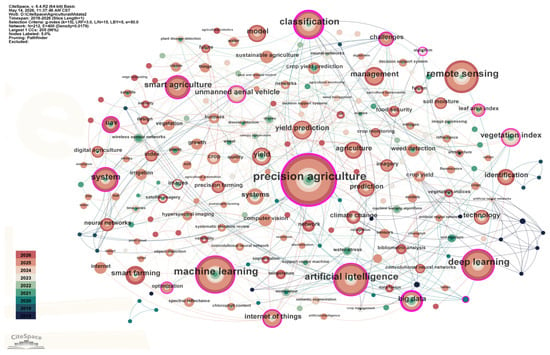
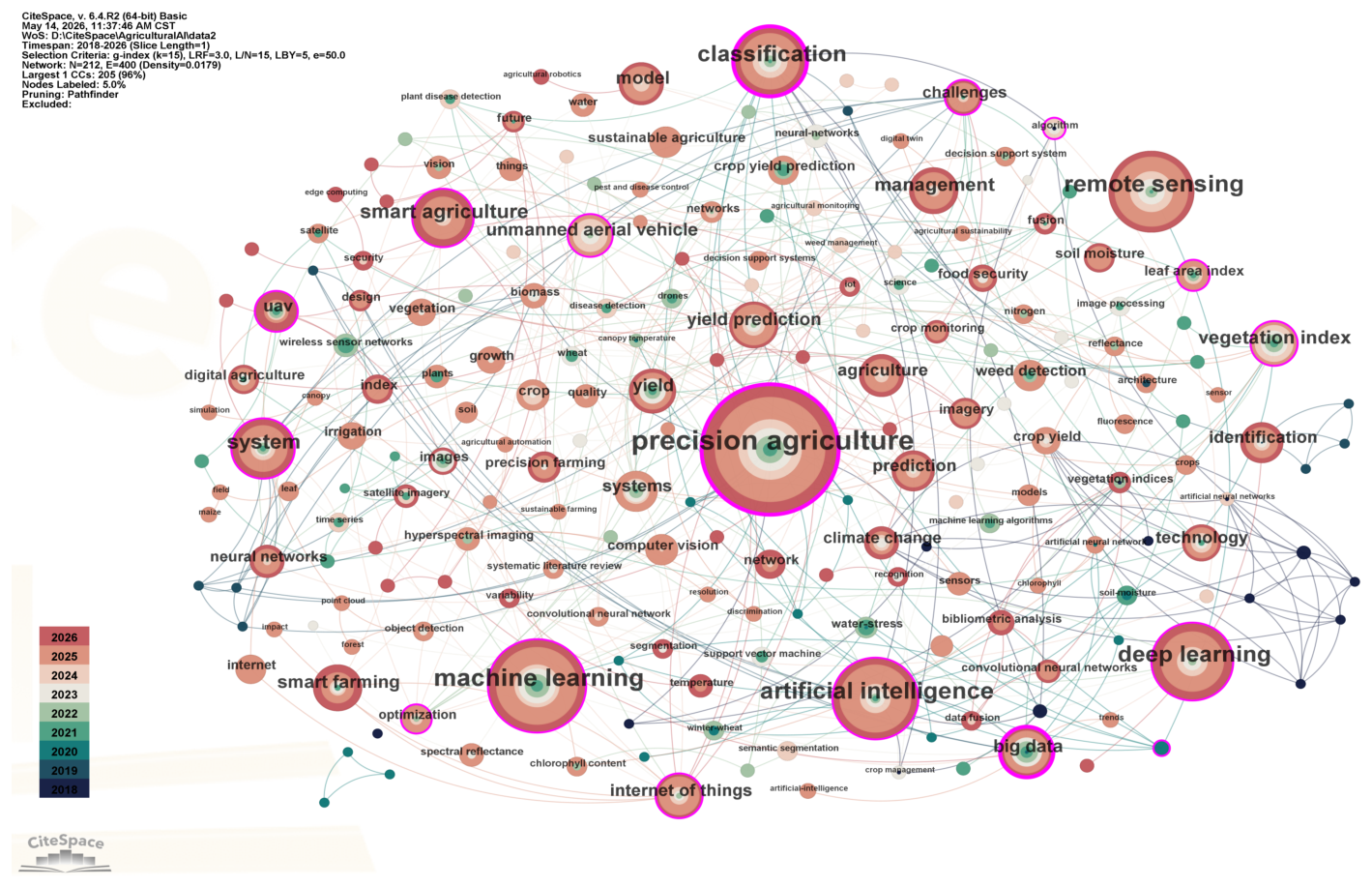
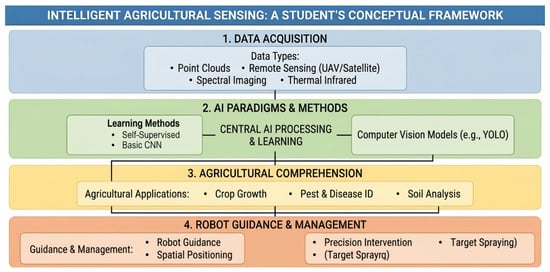
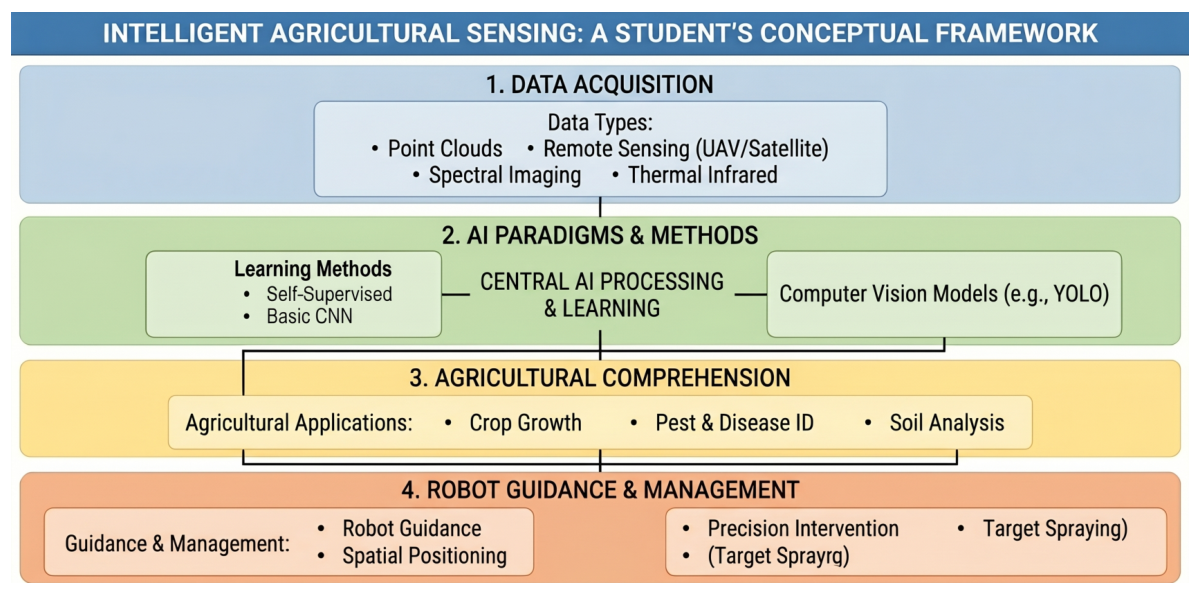
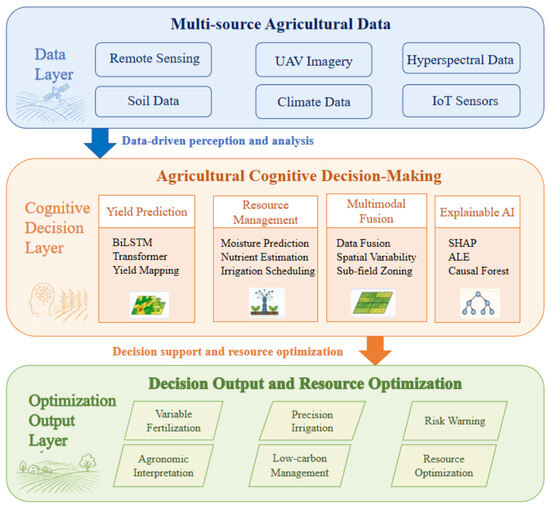
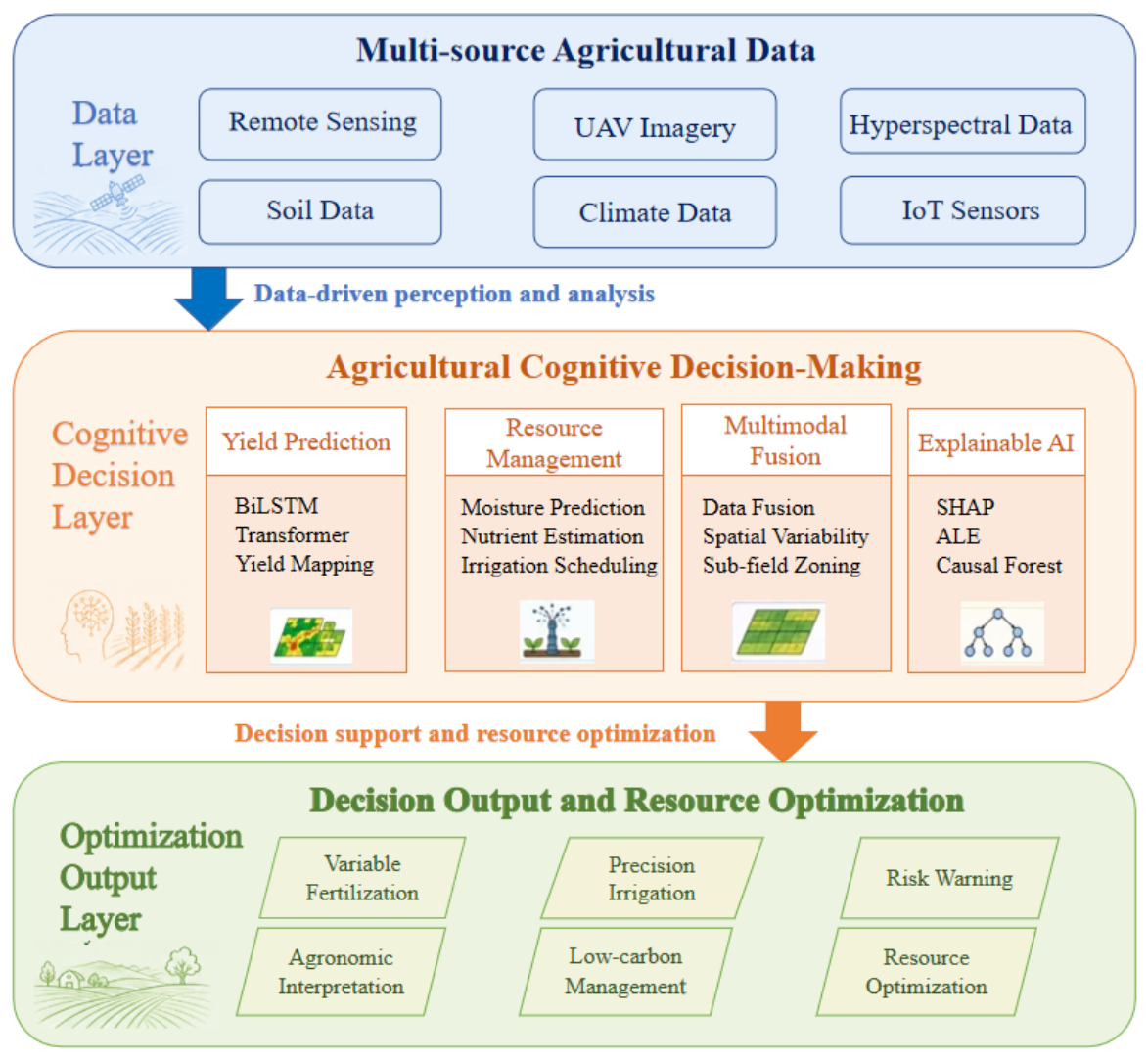
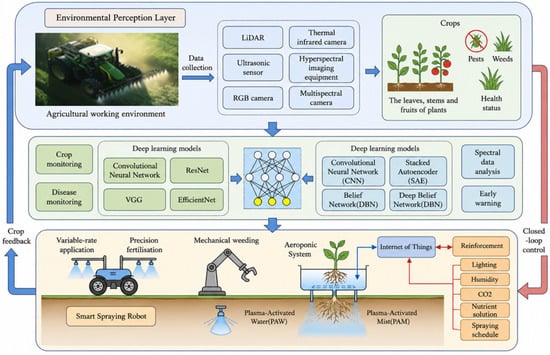
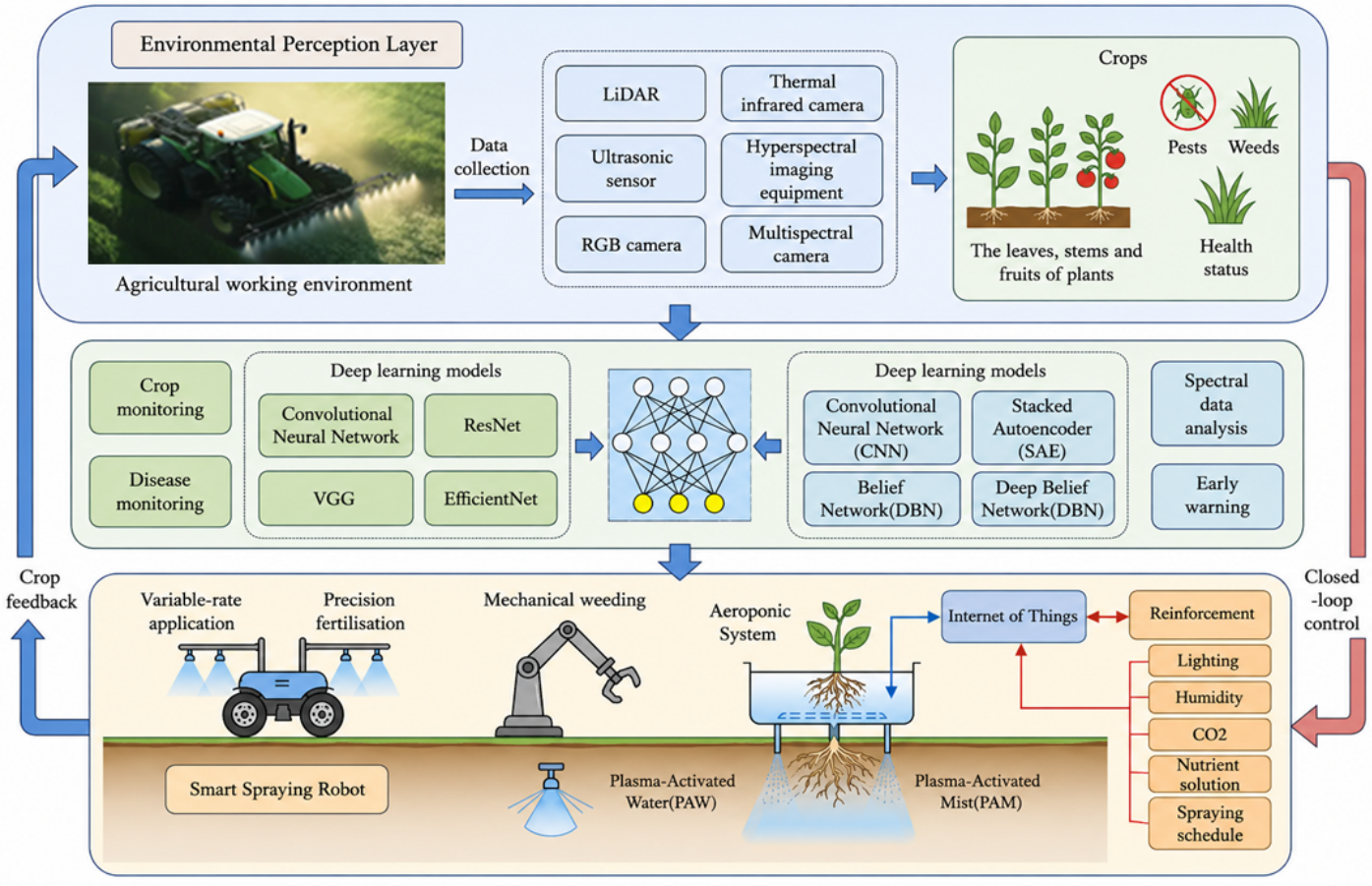
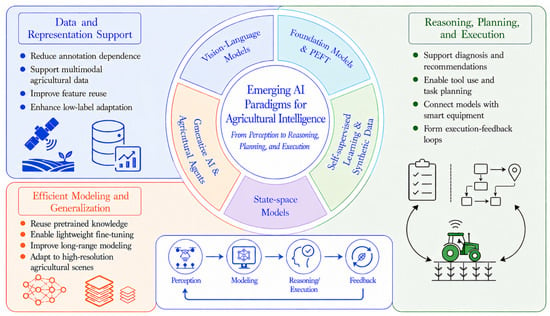
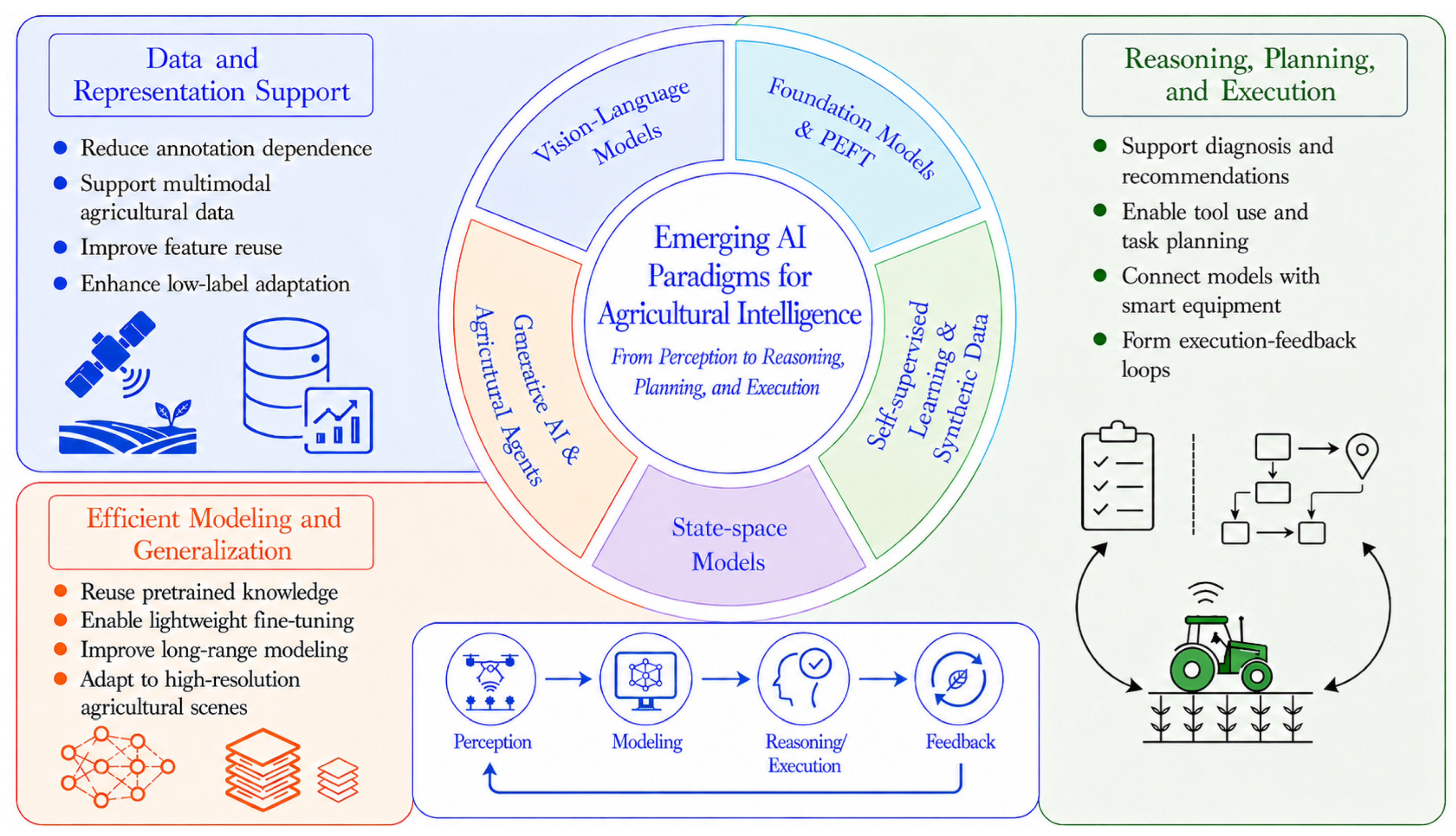
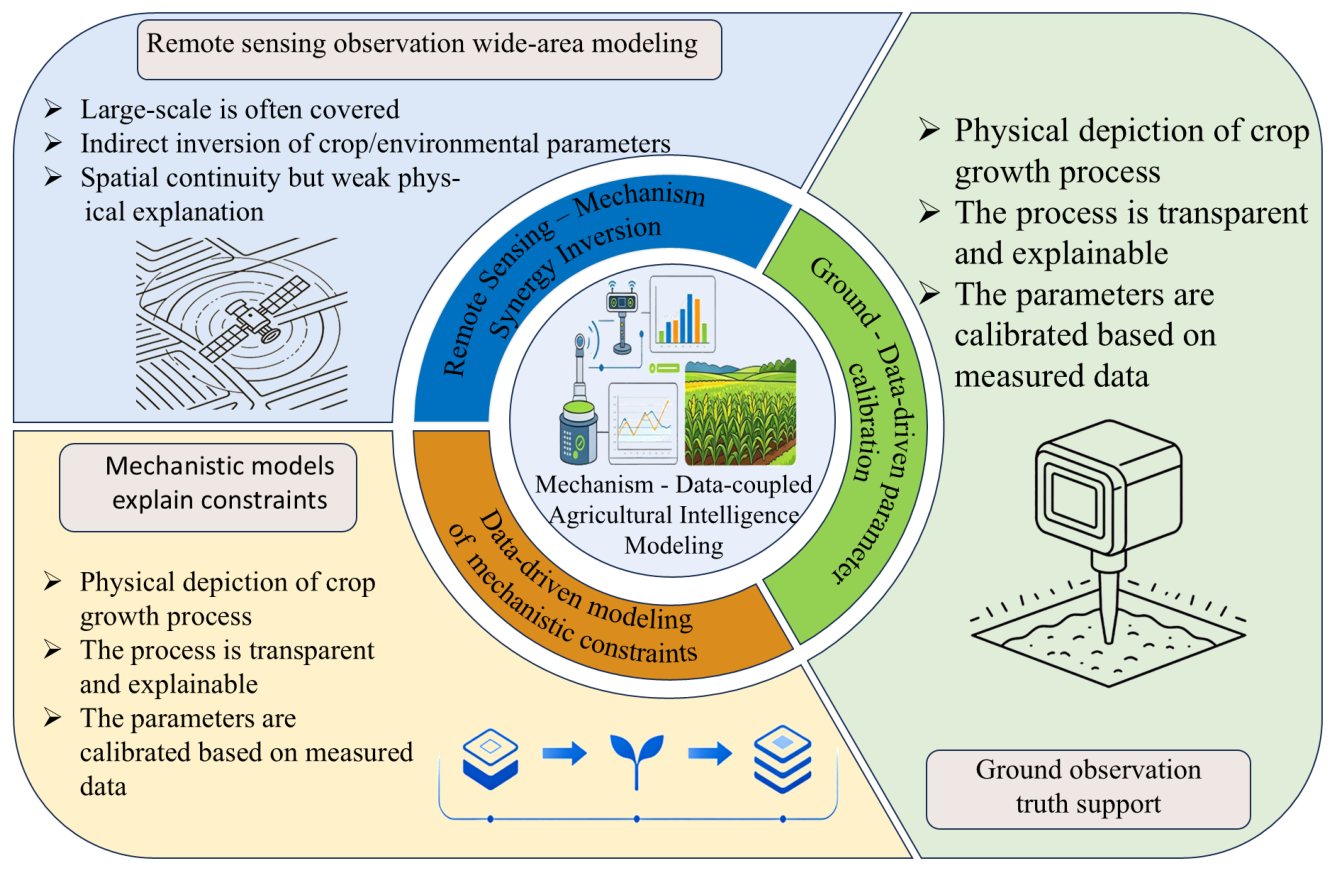

Disclaimer/Publisher’s Note: The statements, opinions and data contained in all publications are solely those of the individual author(s) and contributor(s) and not of MDPI and/or the editor(s). MDPI and/or the editor(s) disclaim responsibility for any injury to people or property resulting from any ideas, methods, instructions or products referred to in the content. |
© 2026 by the authors. Licensee MDPI, Basel, Switzerland. This article is an open access article distributed under the terms and conditions of the Creative Commons Attribution (CC BY) license.