


Abstract
To conduct ecological restoration in the Kubuqi sandy land and to select suitable superior Salix psammophila provenances, four provenances were selected from Dalate Banner, Ordos (DLT), Wushen Banner, Ordos (WSQ), Yulin, Shaanxi (YL), and Yanchi, Ningxia (YC). All cuttings were interplanted and established at an experimental site, and stumping was conducted five years after establishment. Six months after stumping, 11 parameters, including growth characteristics, gas exchange parameters, and photosynthetic pigments, were systematically measured. There were significant differences in plant height and branch number among Salix psammophila from different provenances, while there was no significance in the number of branches among different provenances. The daily variation in net photosynthetic rate (Pn) was significantly different among various Salix psammophila from different provenances, with highest in that from WSQ. The daily variations in stomatal conductance (Gs) and transpiration rate (Tr) from various provenances are relatively consistent, showing a unimodal trend. In terms of pigment content, the WSQ provenance exhibited the highest chlorophyll a content, while the YC provenance showed the highest carotenoid content. The variation coefficients of each parameters ranged 2.607–40.619%, with the highest for branch number, while the lowest for intercellular CO2 concentration. Cluster analysis divided the Salix psammophila from four provenances into two groups, with DLT and YL being one group, and WSQ and YC being the other one. The results of entropy weight TOPSIS showed that the comprehensive ranking of various provenances was: WSQ > YC > YL > DLT, indicating the physiological properties of WSQ being superior to others, indicating its relatively high ecological adaptability in the semi-arid environment of the Kubuqi sandy land, and it can be used as a preferred provenance for ecological restoration and promotion applications.
1. Introduction
Due to the impact of different environmental conditions, the morphological, physiological, and ecological properties of the same species are various among different geographical areas, thus forming geographic variation [1]. Geographic variation is ubiquitous in plants, and genetic variation within plants provides an important material basis for the formation of geographic variation [2]. Previous studies have shown significant differences in growth rhythms, leaf functional properties, and photosynthetic characteristics among seedlings of different provenances [3]. Liu et al. [4] transplanted seedlings from different altitudes to four typical altitude gradients, and the adaptive characteristics and response mechanism to altitude of Picea asperata were systematically analyzed via 18 functional indicators. In the provenance experiment of Pinus tabulaeformis, the growth patterns of seedlings were revealed by comparing the various growth between different provenances [5], which provides a scientific basis for the selection of the excellent provenance. In addition, chlorophyll and carotenoid contents, as important indicators reflecting plant photosynthetic capacity and nitrogen nutritional status, have been widely used in the evaluation of plant growth status and photosynthetic performance, and can serve as effective complements to gas exchange parameters to more comprehensively characterize plant photosynthetic traits [6,7].
Salix psammophila is a typical sand shrub with the characteristics of drought tolerance, barrenness tolerance, and a strong sprouting ability [8]. Based on its developed roots, the Salix psammophila can effectively fix sand and resist wind erosion [9], which plays an important role in maintaining the stability and biodiversity of desert ecosystems. At present, research on Salix psammophila mainly focuses on the adaptation mechanisms, such as biological characteristics [10], pruning methods [11], branch runoff [12], and soil respiration [13] of a single provenance, but are scarce on the systematic comparation of growth performance and environmental adaptability of different provenances. Therefore, in this study, 11 parameters were measured for Salix psammophila from four different provenances, including growth characteristics (plant height, branch number, and shoot number), gas exchange parameters (net photosynthetic rate, stomatal conductance, transpiration rate, and intercellular CO2 concentration), and photosynthetic pigments (chlorophyll a content, chlorophyll b content, total chlorophyll content, and carotenoid content). These indicators comprehensively reflect plant growth status and photosynthetic performance from the perspectives of morphological growth, physiological processes, and photosynthetic function. Subsequently, correlation analysis, cluster analysis, and the entropy weight-TOPSIS method were combined for a comprehensive evaluation, and the differences in photosynthetic characteristics of Salix psammophila among the four provenances were systematically analyzed. The results provide theoretical support for the selection and innovation of superior provenances.
2. Materials and Methods
2.1. Study Area
The experiment was conducted in Jigsitai Town, Ordos Afforestation General Field, Dalate Banner, Ordos City, Inner Mongolia, China (40°14′24″ N, 110°39′14″ E), with an altitude of 1128 m. It belongs to a typical temperate continental monsoon climate, with a large range of temperature changes throughout the year and sufficient sunshine, and the precipitation mainly occurs from June to September. From May to September 2023, the average photosynthetically active radiation was 1125.45 μmol·m−2·s−1, the average temperature (Ta) was 26.48 °C, the relative humidity (RH) ranged 16.78–57.78%, the saturated vapor pressure difference (VPD) ranged 1.27–3.33 kPa, the average soil moisture content (SWC) was 0.057 m3·m−3, and the cumulative precipitation (PPT) was 167.4 mm.
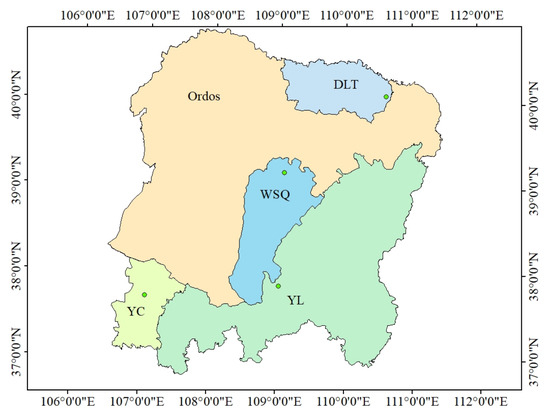
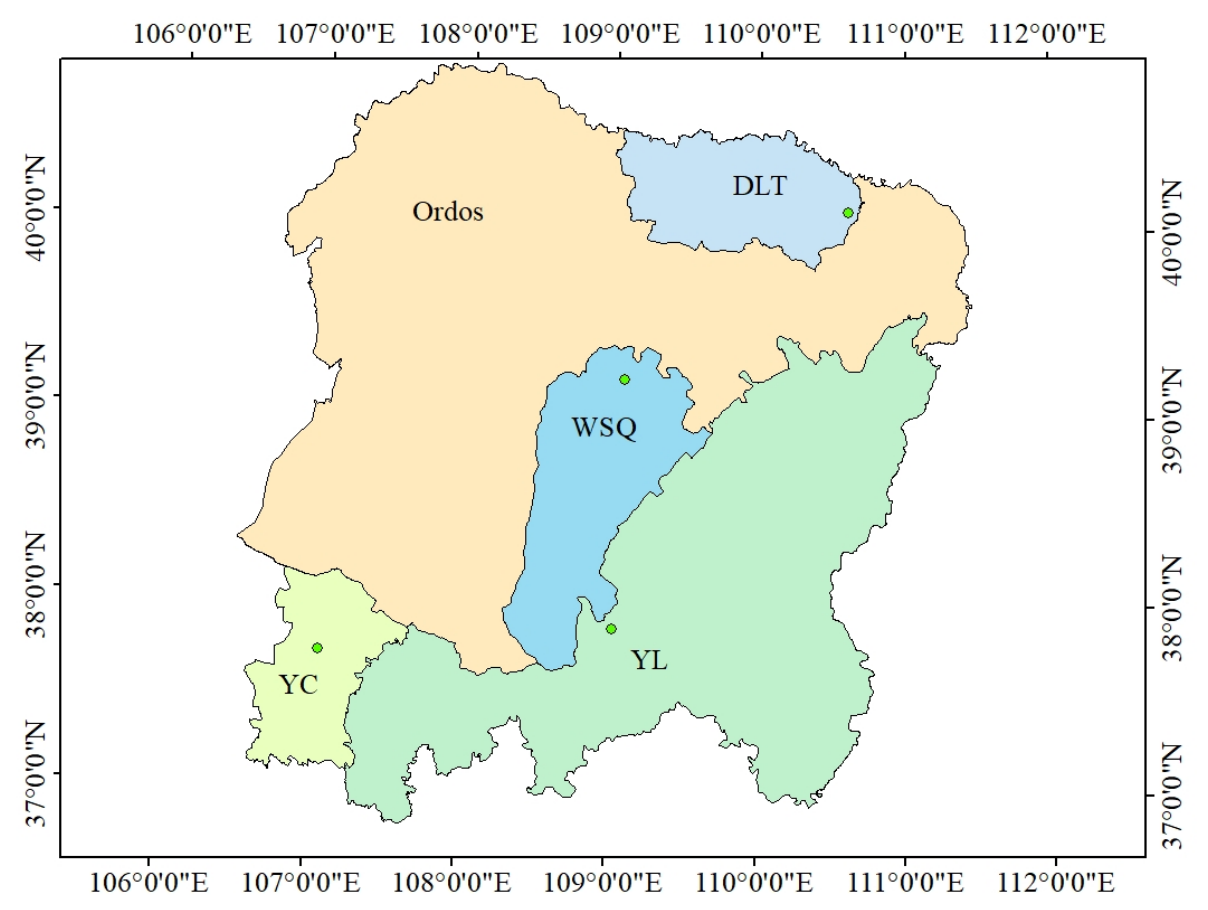
Salix psammophila from four different provenances were selected for this experiment, and the provenance details are presented in Table 1 and Figure 1. All plants were established at an afforestation site with meadow sandy soil in 2018 using cutting and transplanting, and were arranged in an equidistant uniform configuration with a spacing of 4 m × 4 m. The plants were interplanted and subsequently managed under identical conditions. At the end of March 2023, the entire plot was leveled, and no irrigation was applied throughout the growing season to minimize the influence of climatic and soil differences associated with geographical locations. Healthy individuals with uniform growth that were free from pests and diseases were randomly selected, with three samples per provenance, resulting in a total of 12 plants. Measurements were conducted in September 2023, after six months of regrowth following stumping.
Table 1.
Basic information of Salix psammophila from different provenances.
Figure 1.
Geographical overview of the study area. (The green dots in the figure indicate the locations from which Salix was transplanted to the experimental sites).
2.2. Measurement of Indicators
2.2.1. Determination of Growth Indicators
The height, number of branches, and the number of branches of each seedling were measured on 15 September 2023, among which, the height was measured using a ruler, and the number of branches and the number of branches of each seedling were counted manually.
2.2.2. Determination of Gas Exchange Parameters
On 14 September 2023, the LI-6800XT portable photosynthesis analyzer (LI-COR, Lincoln, NE, USA) was used to determinate the real-time photosynthetic parameters of Salix psammophila throughout a whole day. The gas exchange parameters were measured every 2 h from 8:00 to 18:00 on a clear, cloudless, and windless day, and the average of the entire day was taken as the daily average. Three leaves with uniform illumination and consistent condition were selected for each sample, and they were measured three times and the average value was taken. The measured indicators included net photosynthetic rate (Pn), transpiration rate (Tr), intercellular CO2 concentration (Ci), and stomatal conductance (Gs).
2.2.3. Determination of Photosynthetic Pigments
The 3rd and 4th leaves of the top bud exposed to the sun were taken on 10 September 2023. The fresh leaves were cut into pieces, and 0.2 g of them were placed in a mortar, adding 2–3 mL 95% ethanol, an appropriate amount of quartz sand, and calcium carbonate powder. They were then ground and homogenized thoroughly. All samples were performed in triplicate. After grinding, samples were centrifuged at 4000 r · min−1 for 5 min after standing for 3–5 min. The supernatant was collected and transfered to a 10 mL brown volumetric flask to make up the volume. The absorbance of samples was measured using a spectrophotometer (Shanghai Jinghua Technology Instrument Co., Ltd., Shanghai, China) at wavelengths of 665 nm, 649 nm, and 470 nm, respectively [14]. Additionally, the same batch of ethanol solvent was used as the blank sample for calibration, and the absorbance of samples was measured at a wavelength of 700 nm as the scattering correction value to eliminate the influences of solvent and suspended particles. A quartz cuvette with a 1 cm optical path was used to measure the absorbance of samples, ensuring transparency in the visible and near-infrared bands and avoiding absorbance deviation caused by differences in optical path. To avoid photodegradation of photosynthetic pigments during operation, the entire extraction and measurement process was carried out in a low-light environment and the grinding was done quickly. It was measured three times for each sample, and the average value was taken as the final results. The specific calculation formulas were as follows:
Note: Chl a indicates chlorophyll a content; Chl b indicates chlorophyll b content; Chl a + b indicates total chlorophyll content; Car indicates carotenoid content; where D is the absorbance value, V is the volume of the extraction solution (mL), and W is the weight of the sample (g).
2.3. Data and Statistical Analysis
In this study, each plant was used as an experimental unit, and all measurements were based on the single plant. Except for the gas exchange parameters, all other data are presented as mean ± standard deviation (mean ± SD). Due to the high temporal variability and environmental sensitivity of gas exchange parameters, these data are presented as mean values to avoid the influence of large fluctuations on the results. Excel 2021 was used for organizing and preprocessing data. This study focuses on exploring the temporal dynamics of Salix psammophila. In order to reduce the interference of individual differences on the analysis results, the average value was taken using the results of three plants in the same treatment group. As individual differences have been smoothened through averaging, each observed value can be considered independent, and one-way analysis of variance was used to compare the various physiological indicators of Salix psammophila from different provenances. Before statistical analysis, Shapiro–Wilk normality tests were performed, and homogeneity of variance tests, which can serve as a prerequisite for data to satisfy equation analysis, were conducted during the variance analysis. The analysis of variance and significance tests were both completed using IBM SPSS Statistics 27. The Duncan method was used for multiple comparisons (p < 0.05), and the data was subjected to post hoc testing (Bonferroni), where the results met the requirements of statistical analysis.
3. Results
3.1. Growth Traits Among Salix psammophila Provenances
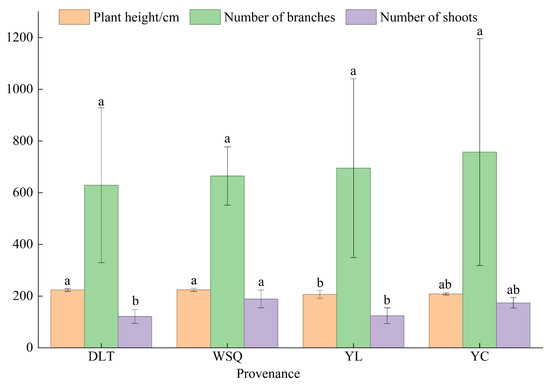
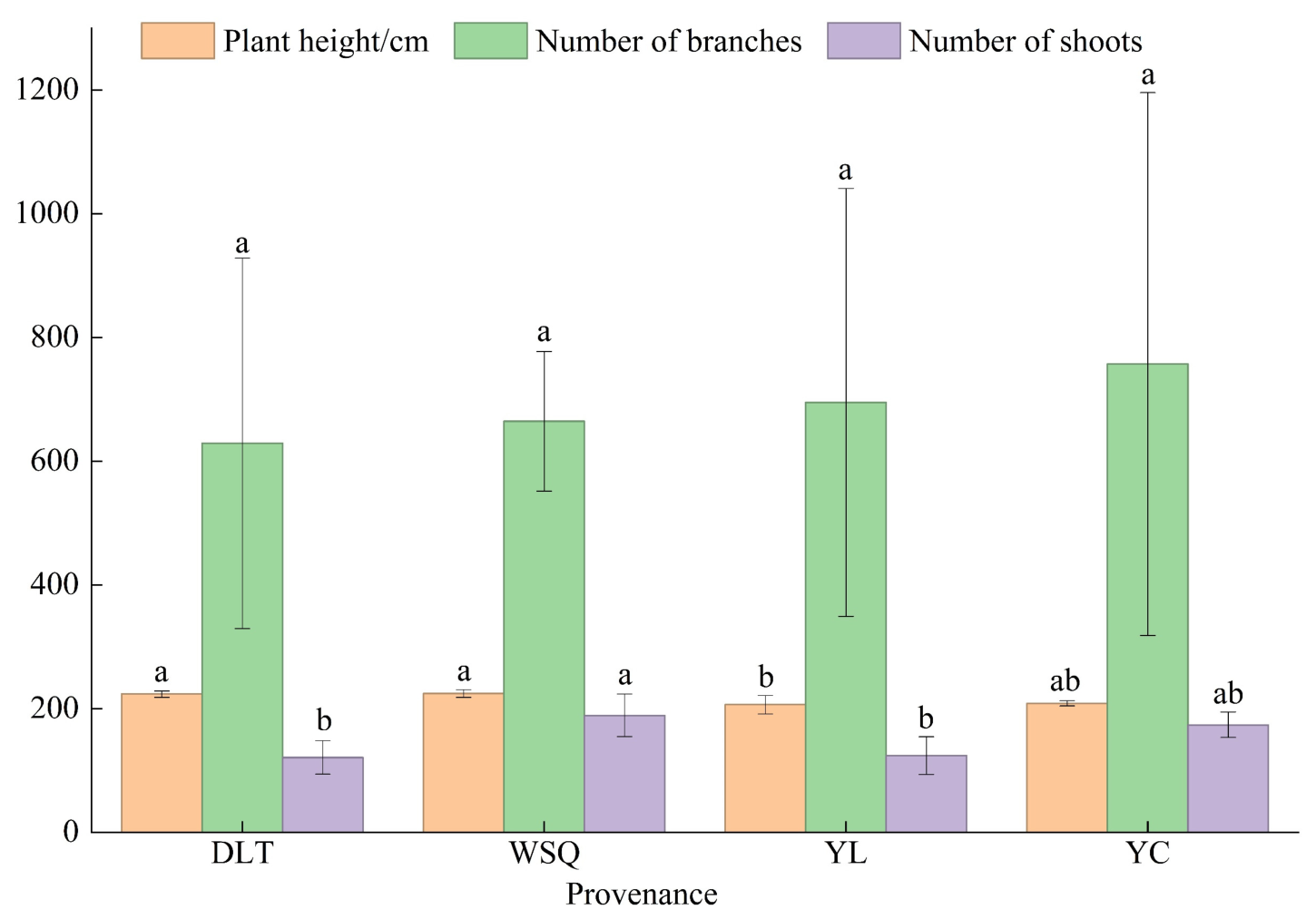
The significant differences were observed in the growth traits of Salix psammophila (Figure 2), particularly in plant height and shoot number.
Figure 2.
Growth traits of Salix psammophila from different provenances. (Lowercase letters in the figure indicate significant differences).
The significance analysis showed that plant height in the YL was lower than those from the DLT and WSQ provenances (p < 0.05), whereas no significant difference was found between the YC and the other three groups. Overall, the DLT, WSQ, and YC maintained relatively high vertical growth, while the YL provenance exhibited the lowest mean height (206.39 cm), representing a reduction of 7.71% and 8.11% compared to DLT and WSQ, respectively. These results indicate that the YL provenance had relatively weaker vertical regrowth capacity after stubble treatments.
Regarding the number of branches, although the mean values for the YC and YL were higher than those of DLT and WSQ, statistical analysis revealed no significant differences across any of the provenances (p > 0.05). Notably, the YL and YC exhibited large variation ranges in branch number, with standard errors of 345.788 and 438.729, respectively, suggesting substantial individual variation in branching traits. This finding implies that branch number may be more sensitive to environmental conditions or individual growth status.
In terms of shoot number, the WSQ provenance showed the highest number of shoots (188.67), which was significantly larger than that of the DLT and YL (p < 0.05), demonstrating superior capacity for shoot formation and stand renewal. Then, the YC provenance showed an intermediate mean value (173.33), with no significant difference from the other provenances while the DLT recorded the lowest count (120.00). These results indicate that provenance exerts a significant influence on shoot production, with the WSQ provenance exhibiting a distinct advantage in terms of vegetative regeneration potential.
3.2. Leaf Gas Exchange Parameters Among Salix psammophila Provenances
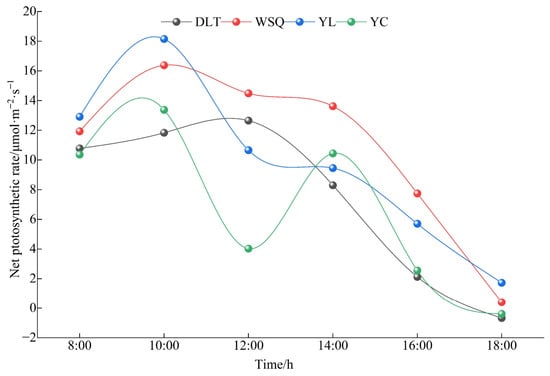
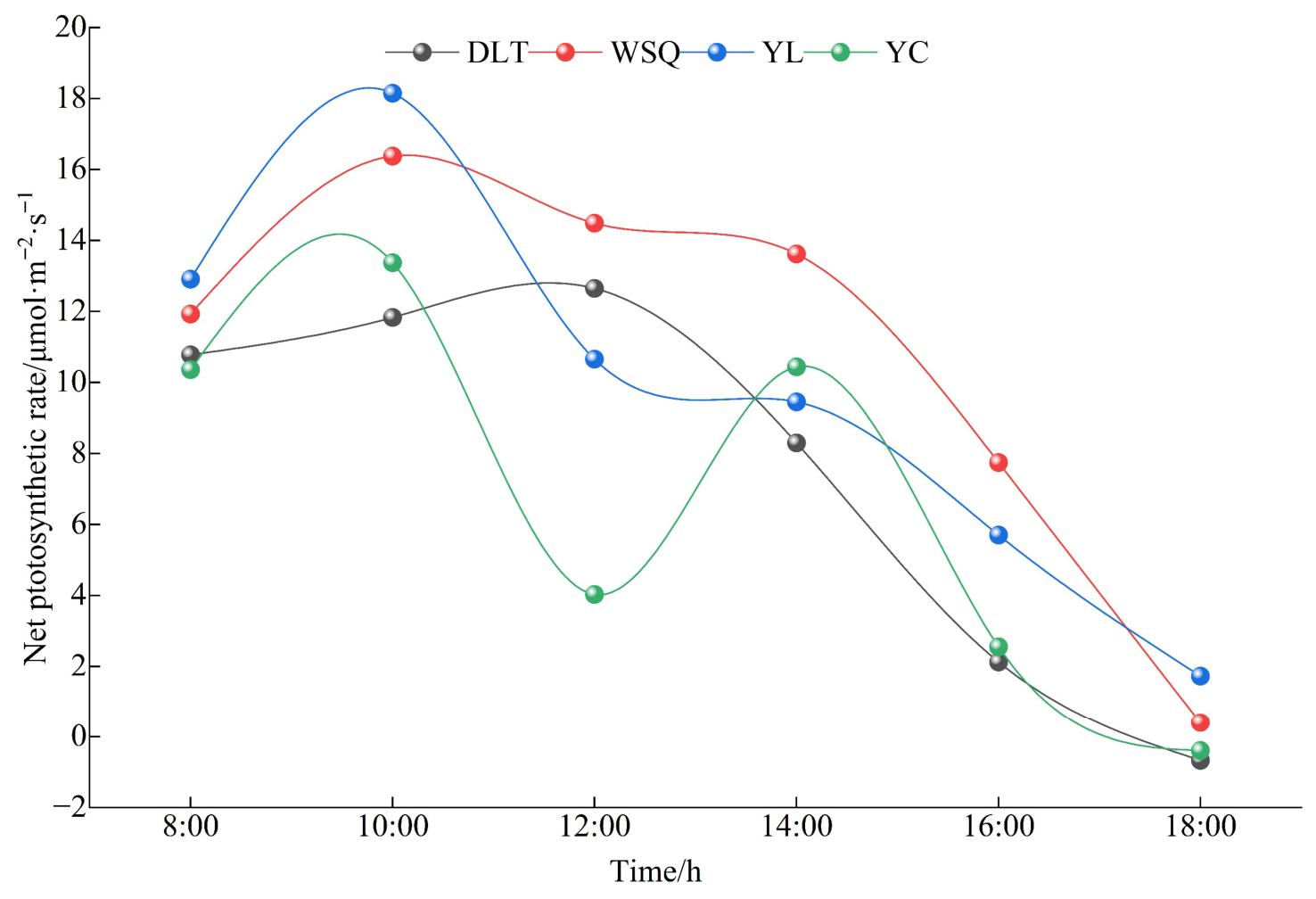
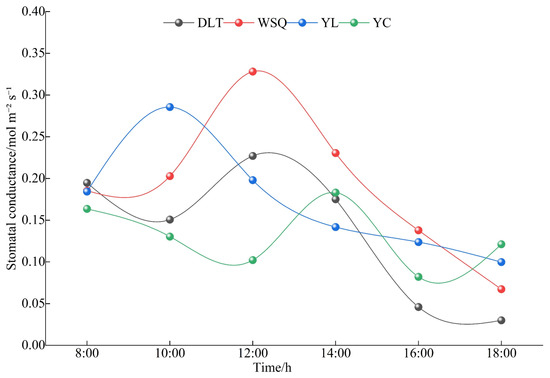
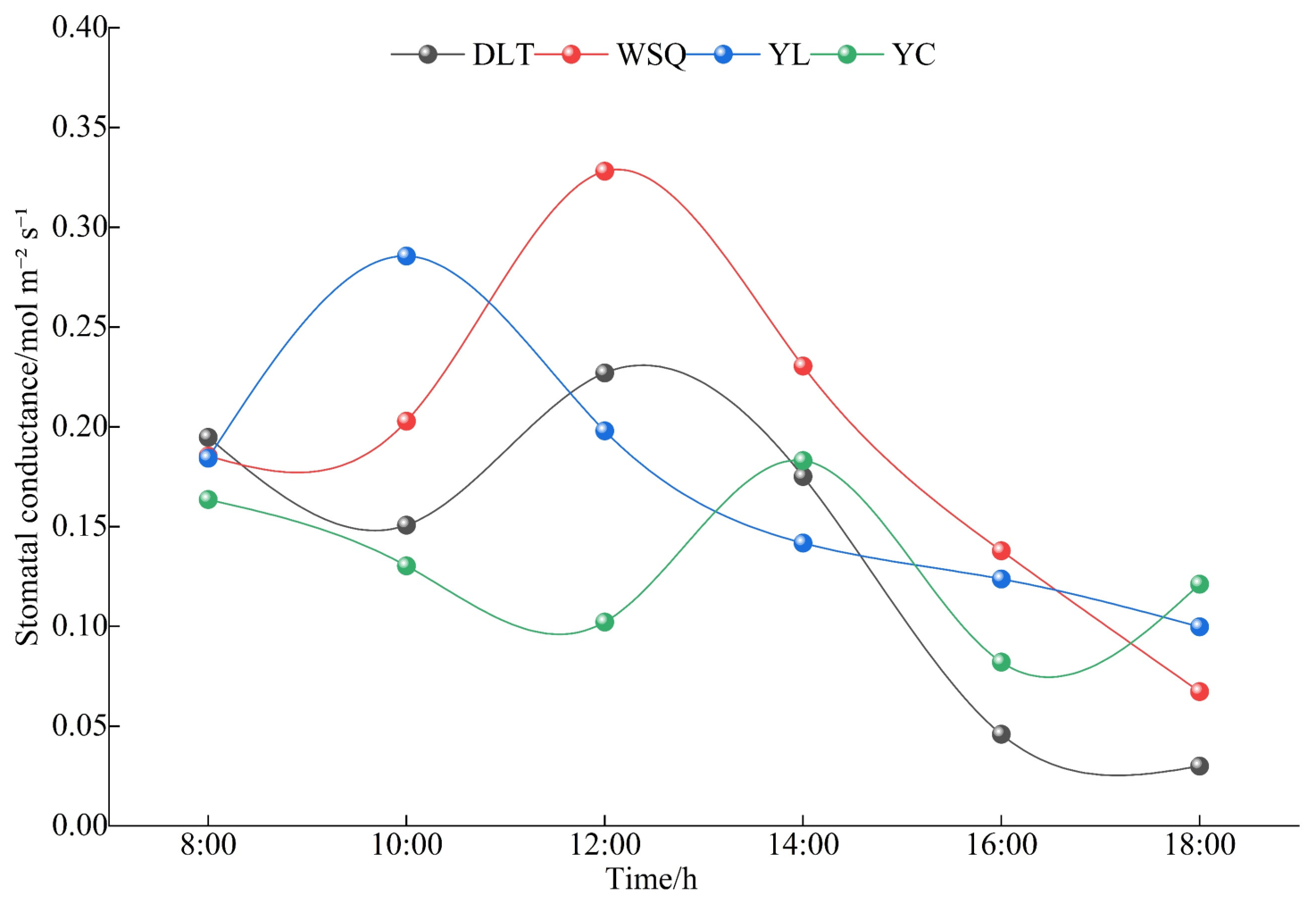
The diurnal patterns of leaf gas exchange varied markedly among Salix psammophila provenances (Figure 3, Figure 4, Figure 5 and Figure 6), indicating clear provenance-related differences in photosynthetic behavior and stomatal regulation.
Figure 3.
Diurnal variation curve of leaf net photosynthetic rate.
Figure 4.
Diurnal variation curve of leaf stomatal conductance.
Figure 5.
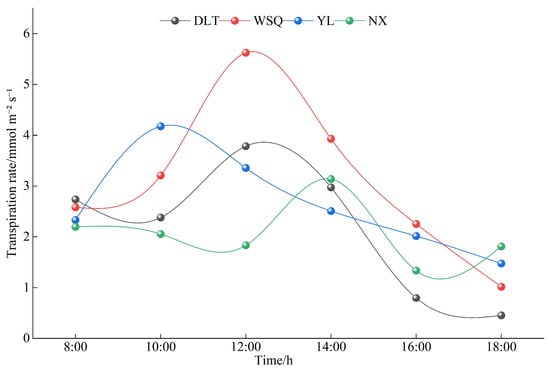
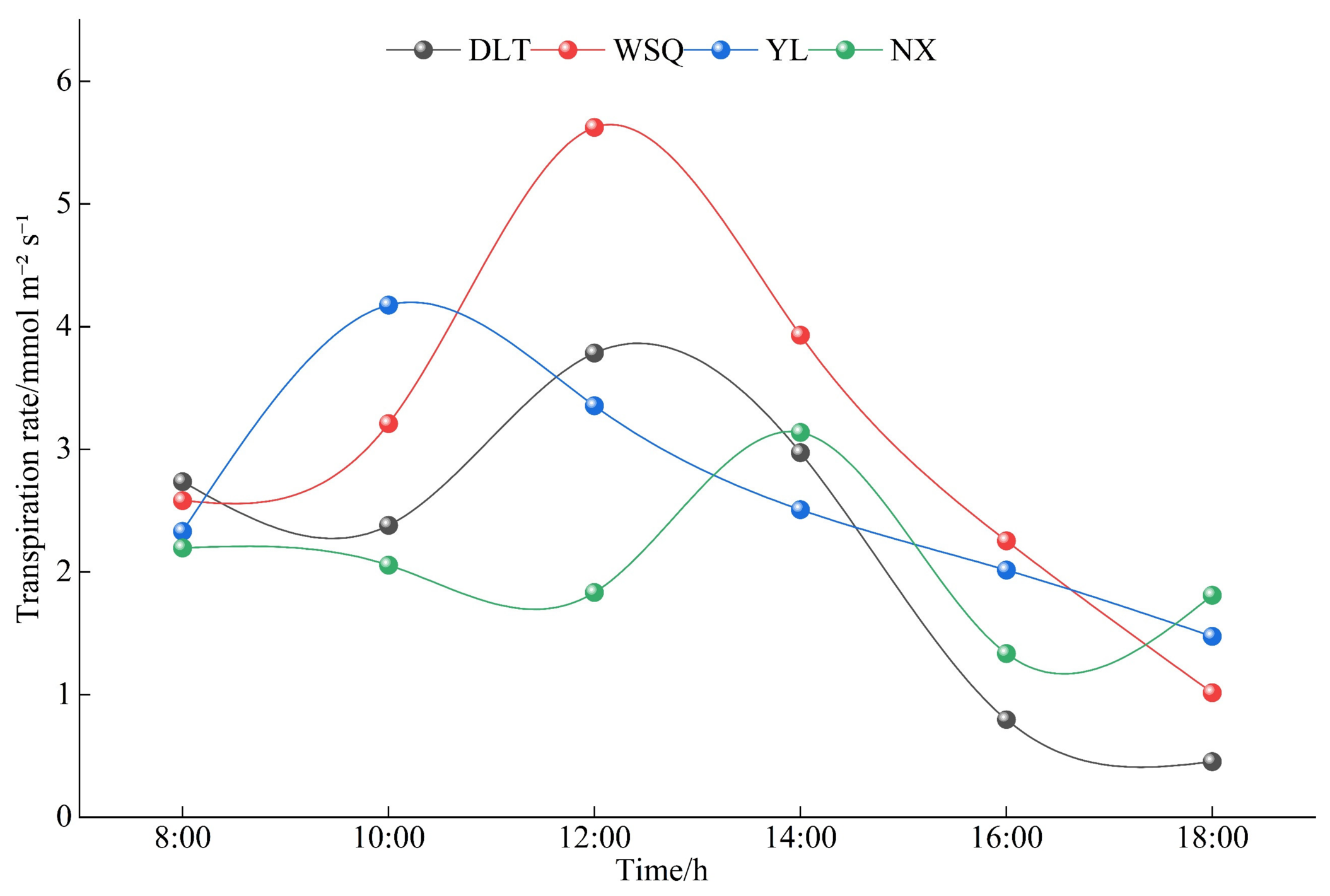
Diurnal variation curve of leaf transpiration rate.
Figure 6.
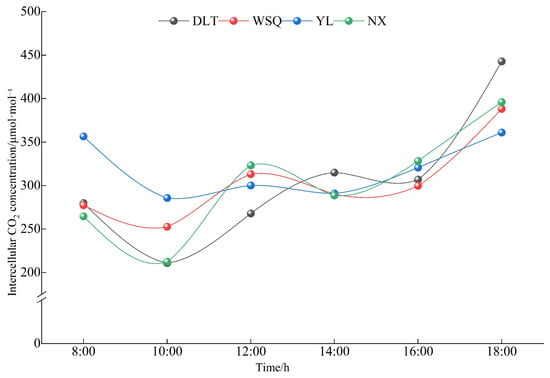
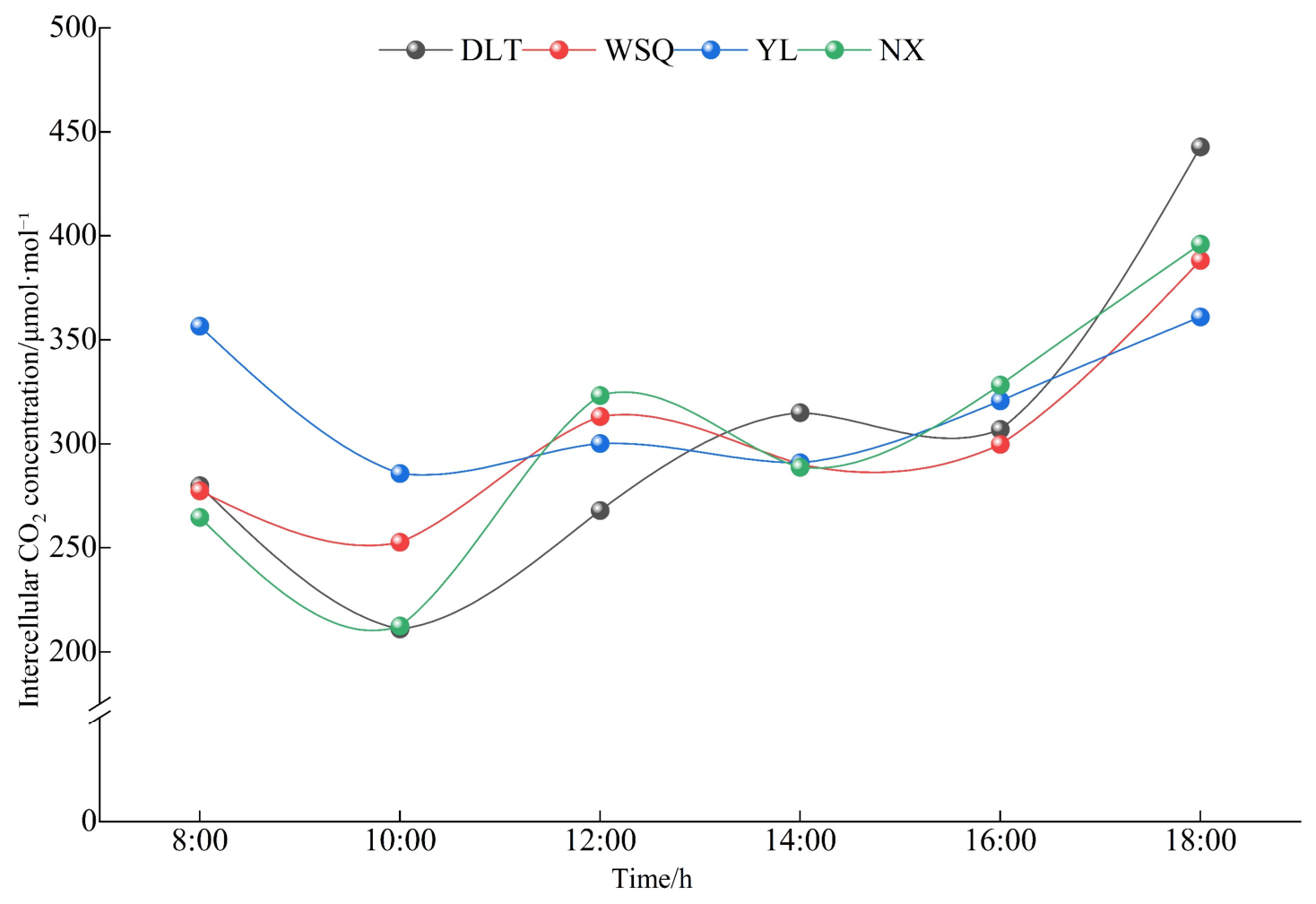
Diurnal variation curve of leaf intercellular CO2 concentration.
The diurnal dynamics of the Pn exhibited distinct variations across the different provenances (Figure 2). The Pn curves for the YC, YL, and WSQ provenances followed a bimodal (double-peak) pattern. However, the bimodal characteristics for YL and WSQ were less pronounced, particularly with a flatter second peak in the afternoon. In contrast, the DLT provenance displayed a unimodal (single-peak) diurnal curve. Between 08:00 and 10:00, Pn increased across all provenances, with YC, YL, and WSQ reaching their initial peaks at approximately 10:00 before declining. The Pn of DLT reached its maximum at 12:00, while YC decreased to its minimum value of the day at the same time. After 14:00, all provenances except DLT showed a secondary rise to varying degrees, followed by a continuous decline toward the evening, with the net photosynthetic rate in some provenances shifting from positive to negative values in the late afternoon, indicating that respiration exceeded photosynthesis. In terms of peak magnitude, YL showed the highest Pn, reaching 18.154 μmol m−2 s−1, whereas DLT showed the lowest peak value, only 12.652 μmol m−2 s−1. Although the timing of peak occurrence varied slightly among provenances, WSQ and YL maintained relatively high Pn values during the peak period and exhibited a comparatively slower decline thereafter.
Diurnal variations in Gs generally followed a unimodal trend, although the timing and magnitude of peaks varied by provenance (Figure 3). Between 06:00 and 10:00, Gs increased continuously for the DLT and WSQ provenances, while a decreasing trend was observed for YL and YC. Subsequently, as Gs for WSQ and DLT continued to rise, the YL provenance began to decline after reaching its peak, and the YC provenance continued its downward trajectory. At 12:00, Gs for both WSQ and DLT reached their maximum values before shifting to a decline; simultaneously, the YC provenance reached its intra-day minimum. Between 12:00 and 16:00, most provenances showed a continuous decrease, with the exception of brief recovery periods in specific groups. After 16:00, Gs for the YC provenance showed a slight recovery, whereas all other provenances continued to decrease.
The diurnal dynamics of the Tr are illustrated in Figure 4. Overall, the variation in Tr was closely synchronized with Gs, both exhibiting a prominent unimodal pattern. This synchronization underscores the critical regulatory role of stomatal behavior in the transpiration process. However, differences were observed in the timing and magnitude of Tr peaks among provenances, specifically, the YL provenance reached its peak earliest, whereas the WSQ provenance exhibited the highest peak Tr, indicating provenance effects on transpiration characteristics.
Figure 6 presents the diurnal dynamics of Ci. In general, both the amplitude of variation and the timing of the minimum Ci differed among provenances. At 08:00, Ci remained relatively high across all provenances, likely due to low initial photosynthetic rates leading to CO2 accumulation in the intercellular spaces. As light intensity increased, the rapid rise in Pn led to a corresponding depletion of intercellular CO2, with all provenances reaching an initial trough around 10:00. Subsequently, Ci began to recover; while the DLT provenance peaked at 14:00, the other provenances reached their midday peaks around 12:00. Following the midday period, Ci gradually increased across all provenances, returning to higher levels by early evening.
3.3. Photosynthetic Pigment Contents Among Salix psammophila Provenances
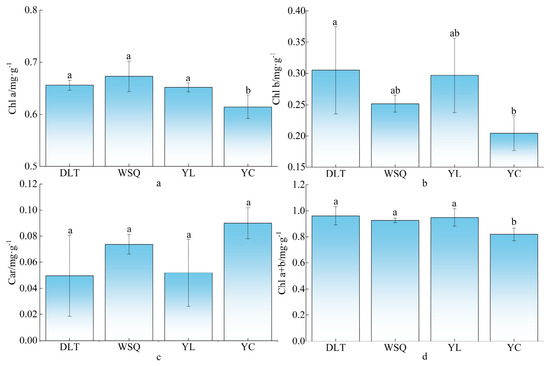
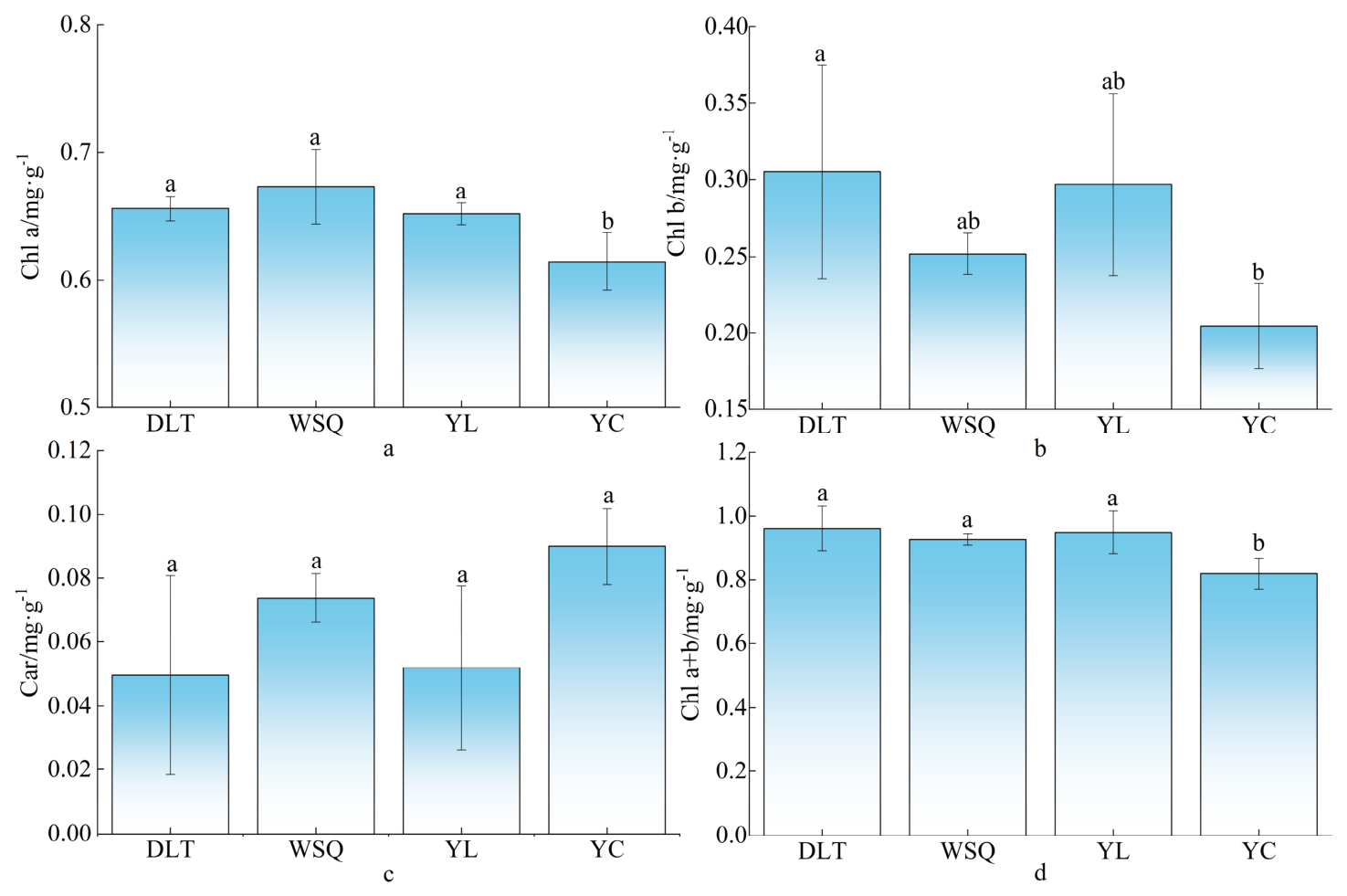
The photosynthetic pigment content in the leaves of Salix psammophila varied among the different provenances (Figure 7). Chlorophyll a (Chl a) content remained at relatively high levels in the DLT, WSQ, and YL provenances, with no significant differences observed among them (Figure 7a). However, the Chl a content of the YC provenance was significantly lower than that of the other three (p < 0.05), at only 0.6147 mg/g. More pronounced variations were observed in the Chlorophyll b (Chl b) content across the provenances (Figure 7b). The DLT provenance exhibited the highest Chl b concentration (0.3050 mg/g), which was significantly greater than that of the YC provenance (p < 0.05), while the WSQ and YL provenances showed intermediate values. In contrast, the carotenoid (Car) content did not differ significantly across the four provenances, although numerical fluctuations were present; specifically, the Car concentrations in the WSQ and YC provenances were higher than those in the DLT and YL provenances (Figure 7c). Total chlorophyll (Chl a + b) content also demonstrated significant inter-provenance variation (Figure 7d). The YC provenance recorded a significantly lower Chl a + b concentration compared to the others (p < 0.05), at only 0.8192 mg/g, whereas the WSQ provenance maintained an intermediate level. These results indicate that the photosynthetic capacity of the YC provenance may be constrained by a lower overall pigment density compared to the other desert-adapted populations.
Figure 7.
Photosynthetic pigment contents in different provenances of Salix psammophila. (a) Chl a, (b) Chl b, (c) Car, (d) Chl a + b. (Lowercase letters in the figure indicate significant differences).
3.4. Coefficient of Variation in Traits Among Different Salix psammophila Provenances
As shown in Table 2, the coefficients of variation (CV) for the 11 examined traits across the four provenances ranged from 2.607% to 40.619%. The highest CV was observed for the number of branches, while the intercellular CO2 concentration (Ci) exhibited the lowest CV. Specifically, the CVs for the number of branches and carotenoid content both exceeded 30%, indicating significant phenotypic variation and a high degree of dispersion for these two traits among the provenances. In contrast, the CVs for plant height, Ci, and chlorophyll a content were all below 6%. These low values suggest that these three traits are relatively stable across the different provenances, exhibiting minimal sensitivity to provenance-specific genetic differences or environmental interactions in this study.
Table 2.
Coefficient of variation in traits of Salix psammophila from different provenances.
3.5. Correlation Analysis of Traits Among Different Salix psammophila Provenances
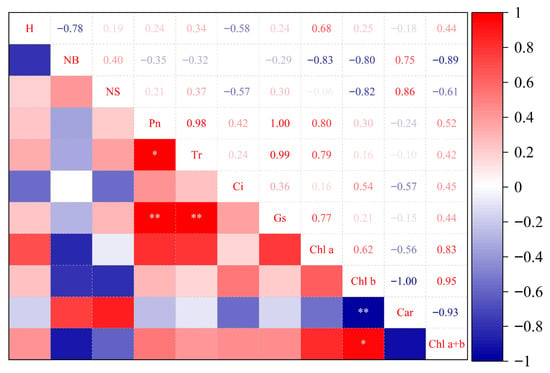
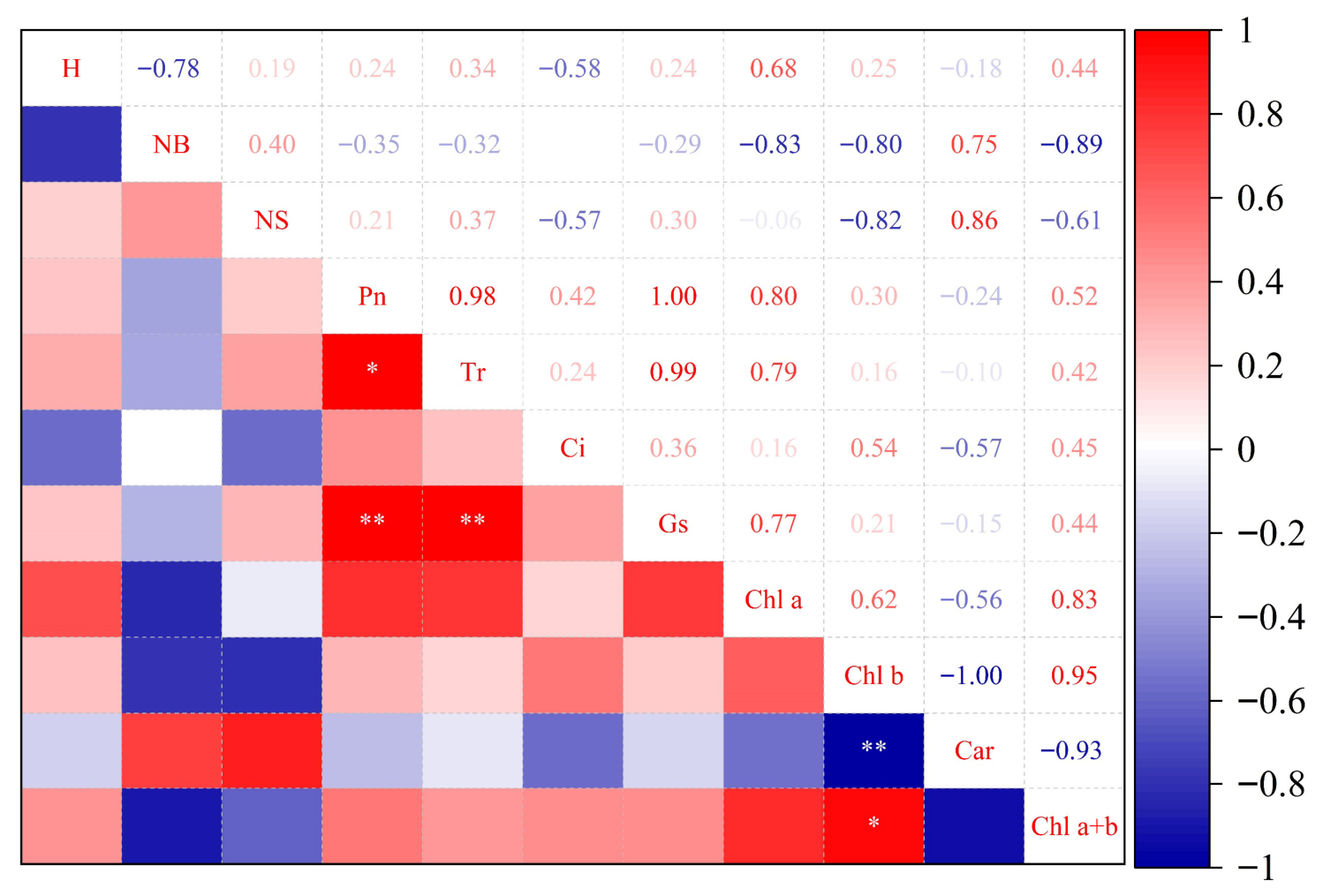
The correlation analysis among morphological traits, physiological parameters, and photosynthetic pigment contents of different Salix psammophila provenances is presented in Figure 8. Overall, significant positive and negative correlations were detected among morphological, physiological, and pigment-related traits, indicating close interactions among growth performance, gas exchange, and pigment accumulation.
Figure 8.
Correlation analysis of Salix psammophila from different provenances. * indicates a significant difference (p < 0.05), and ** indicates an extremely significant difference (p < 0.01).
Among the photosynthetic parameters, a highly significant positive correlation was observed between the Pn and Tr (p < 0.01). Furthermore, both Pn and Tr were significantly and positively correlated with Gs (p < 0.05). These findings suggest that an increase in the net photosynthetic rate is typically accompanied by a synchronized enhancement of the transpiration rate and stomatal conductance, indicating a high degree of coordination among these variables in regulating gas exchange processes. In contrast, Ci exhibited relatively weak or even negative correlations with Pn, Tr, and Gs. Regarding photosynthetic pigments, Chl b was highly significantly negatively correlated with Car content (p < 0.01), while a significant positive correlation with Chl a + b (p < 0.05). Notably, the correlation coefficient between Chl b and Car reached −1.00, suggesting that the variations in pigment components are highly synchronized, reflecting strong consistency and synergy in the synthesis and accumulation of photosynthetic pigments. Conversely, morphological traits, such as H, (NB, and NS, exhibited both positive and negative correlations with photosynthetic and pigment parameters. This indicates that the relationship between morphological growth and physiological function is not a simple linear response but is rather governed by a combination of diverse environmental factors and internal plant regulatory mechanisms.
3.6. Cluster Analysis of the Different Salix psammophila Provenances
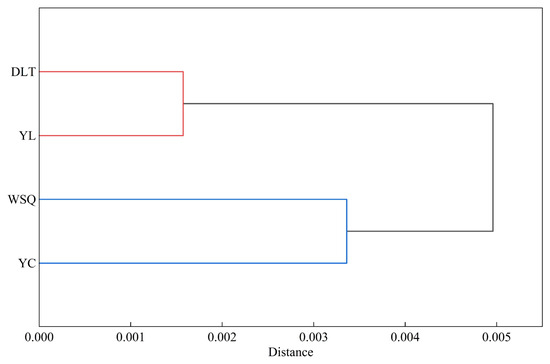
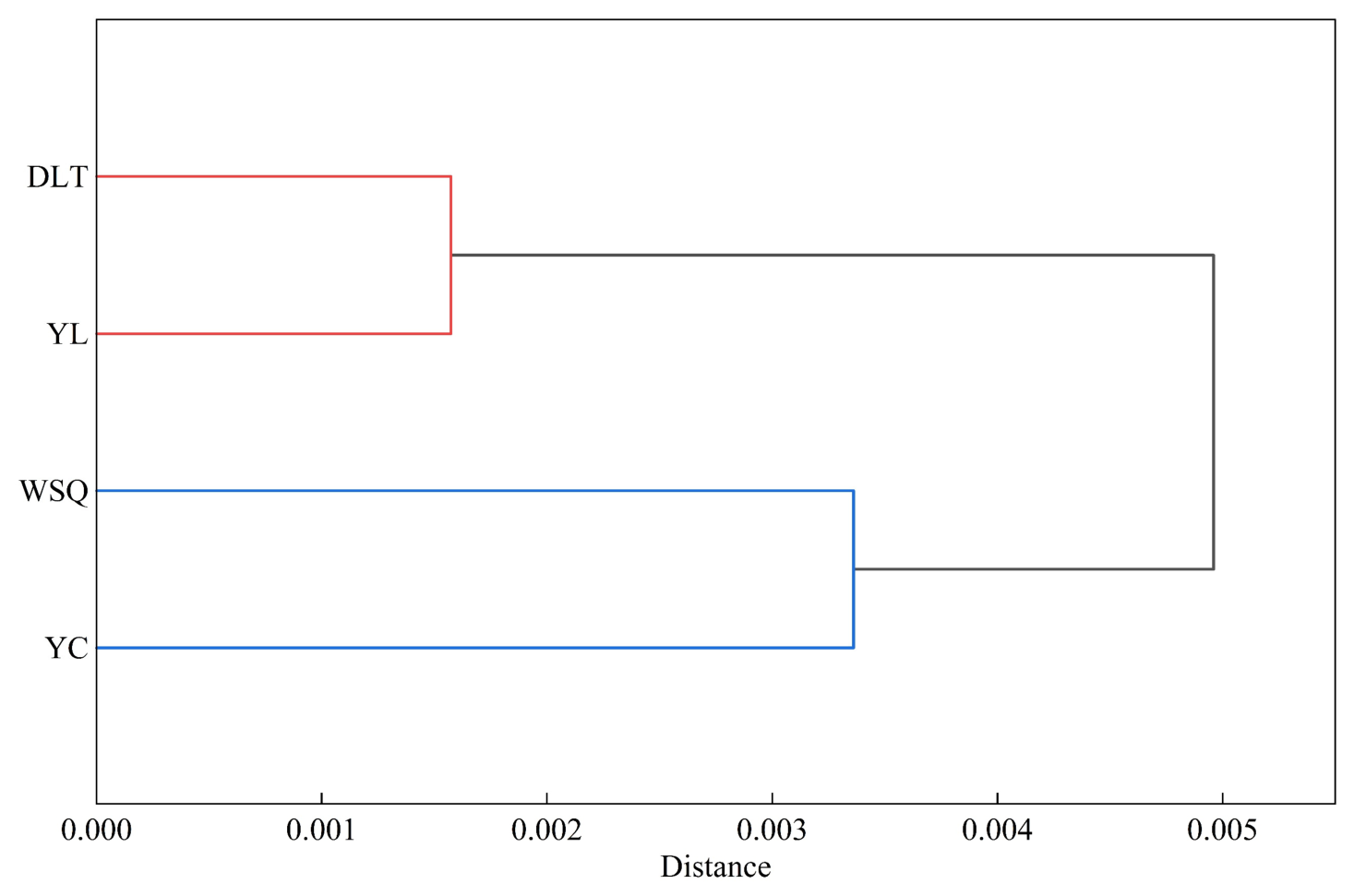
To further evaluate the phenotypic and physiological relationships among the provenances, a systematic cluster analysis was performed based on the 11 measured indicators (Figure 9). At a Euclidean distance of 0.00336, the four Salix psammophila provenances were categorized into two distinct clusters. Cluster I consisted of the DLT and YL provenances, while Cluster II comprised the WSQ and YC provenances, each representing 50% of the total sample set.
Figure 9.
Cluster analysis of Salix psammophila from different provenances.(Lines of different colors represent different clusters/groups).
Analysis of the standardized cluster centroids (Table 3) revealed distinct functional strategies for each group. Cluster I was characterized by relatively higher values for Ci, Chl a, Chl b, and Chl a + b content. In contrast, Cluster II exhibited a clear advantage in growth indicators as well as in Pn, Tr, Gs, and Car content. These results indicate a functional divergence: Cluster I leans toward a pigment-accumulation strategy, whereas Cluster II demonstrates superior growth vigor and photosynthetic potential. These results indicate that Cluster I (DLT and YL) was characterized primarily by greater photosynthetic pigment accumulation, whereas Cluster II (WSQ and YC) exhibited stronger growth performance and greater photosynthetic potential.
Table 3.
Characteristic values of trait indicators for clusters of different provenances.
3.7. Comprehensive Evaluation of Different Provenances Based on Entropy Weight-TOPSIS
A comprehensive evaluation of the growth and photosynthetic characteristics of the four Salix psammophila provenances was conducted using the entropy weight-TOPSIS method based on the 11 measured indicators. The weight analysis results (Table 4) indicated that the weights of the indicators ranged from 0.2257% to 27.1773%. Specifically, Ci contributed the least to the evaluation (0.2257%), whereas Car content carried the highest weight (27.1773%).
Table 4.
Entropy-based calculation of indicator weights.
The TOPSIS ranking results (Table 5) showed that the comprehensive performance of the four provenances followed the order: WSQ > YC > YL > DLT. The WSQ provenance exhibited the highest relative closeness coefficient (Ci = 0.865), whereas the DLT provenance had the lowest (Ci = 0.013). These findings demonstrate that the WSQ provenance is the superior germplasm under the environmental conditions of this experiment, exhibiting the best integration of growth vigor and physiological adaptability.
Table 5.
TOPSIS scores and rankings of different provenances.
4. Discussion
4.1. Difference in Growth Traits Among Salix psammophila Provenances
The individuals of the same species inhabiting diverse ecological conditions often develop pronounced provenance-related differences in growth, physiological characteristics, and morphological structures as a result of long-term natural selection and genetic differentiation [15]. In this study, the observed disparities in growth traits among different Salix psammophila provenances highlight the significant effect of provenance on post-coppicing regenerative performance. Specifically, the plant height of the YL provenance was lower than that of the DLT and WSQ provenances, indicating a diminished capacity for vertical growth capacity. This reduction likely stems from inherent differences in growth potential or specific adaptive strategies to their native environments [16]. For the number of branches, although the YL and YC provenances had relatively high branch numbers, the differences among provenances were not statistically significant, and the large individual variation observed within these two provenances suggests that branching traits may be more sensitive to microenvironmental heterogeneity and individual growth status [17]. In contrast, shoot number differed significantly among provenances. The WSQ provenance produced the greatest number of shoots, indicating a stronger capacity for shoot formation and renewal after coppicing, whereas the DLT provenance had the lowest value, and the YC provenance showed an intermediate level. These findings identify plant height and shoot number as the primary determinants of growth dominance in Salix psammophila. Furthermore, the high variability of branching traits suggests that environmental interactions would be considered when managing these provenances for biomass or sand stabilization [18,19]. Such divergences provide a critical biological basis for selecting high-productivity germplasm and optimizing stumping regimes to enhance regeneration efficiency.
4.2. Variation in Gas Exchange Parameters and Photosynthetic Capacity Among Different Salix psammophila Provenances
Photosynthesis serves as the fundamental driver of plant growth and development. Leaf gas exchange parameters are essential physiological indicators for evaluating photosynthetic performance and environmental adaptation, offering direct insights into light-use efficiency, water consumption characteristics, and stomatal regulatory mechanisms [20,21]. Consequently, analyzing parameters such as Pn, Gs, Ci, and Tr allows for a deeper understanding of photosynthetic efficiency and its response to environmental variables [22]. Under the same habitat conditions, the WSQ provenance exhibited significantly higher Pn, Tr, and Gs compared to other provenances, suggesting a robust gas exchange capacity and superior photosynthetic potential. In contrast, the YC provenance maintained a lower photosynthetic level. When considering its significantly lower photosynthetic pigment content, it can be inferred that insufficient pigment accumulation may limit light absorption and utilization efficiency, thereby constraining its overall carbon assimilation performance. The pattern of Ci also differed among provenances, with relatively low values in the YL provenance and relatively high values in the YC provenance. The lower Ci observed in YL may indicate more efficient utilization of intercellular CO2, whereas the higher Ci in YC may be associated with stomatal limitations and weaker photosynthetic carbon assimilation capacity.
4.3. Variation in Photosynthetic Pigment Content Among Salix psammophila Provenances
Photosynthetic pigments play a crucial role in the process of photosynthesis, and they not only absorb light energy and convert it into chemical energy, but also promote light reactions in plants, thereby supporting plant growth and energy metabolism [23,24]. Chl a and Chl b, the main photosynthetic pigments, synergistically participate in light energy capture and transfer, and they can be regulated to adapt to drought, strong light, and nutrient stress [25]. Car as an important component of the thylakoid membrane, it not only transfers light energy to Chl a, but also reduces the damage of strong light to photosynthetic system through energy dissipation and quenching mechanisms [26]. In this study, it was found that there are significant physiological differences among Salix psammophila from different provenances under the same environmental conditions, with the Chl a content of DLT, WSQ, and YL relatively high but no significance, while that of YC significantly lower. This result indicated that its ability to accumulate pigments in the light reaction center is relatively weak, which may limit the potential of photosynthesis. In contrast, the Chl b content was significantly different among the four provenances, indicating that there are differences in the regulation of light energy capture and transfer structures among various provenances, which is similar to previous studies [27]. There was no significant difference in the Car content of leaves from various provenances, indicating that they were generally consistent in photoprotection and antioxidant pigment accumulation, and posed similar defense capabilities against strong light stress. Furthermore, there were significant differences in Chl a + b, which is an important physiological basis for the relatively weak photosynthesis [28,29], among different provenances, with YC significantly lower than other provenances, suggesting that the YC was weak in photosynthetic pigment accumulation.
4.4. Comprehensive Analysis and Evaluation of Salix psammophila Traits
The coefficient of variation (CV) reflects the degree of dispersion of traits on a relative scale and effectively characterizes the level of phenotypic variation among different traits or provenances [30,31]. In this study, the CV of Salix psammophila traits ranged from 2.607% to 40.619%, indicating significant intra-specific variation under uniform habitat conditions. Nevertheless, the convergence observed in certain traits reflects a balance between environmental adaptation and genetic differentiation, consistent with previous findings in desert shrub research [32]. Cluster analysis categorized the four provenances into two distinct functional groups. Cluster I (DLT and YL) exhibited superiority in chlorophyll content, while Cluster II (WSQ and YC) showed a clear advantage in growth traits and gas exchange capacity. This divergence suggests that different Salix psammophila provenances employ distinct ecological strategies, prioritizing either pigment accumulation or photosynthetic efficiency and biomass allocation. Such functional partitioning aligns with established models of resource acquisition strategies in arid-land plants [33]. The results of the entropy weight-TOPSIS evaluation further quantified these differences. The relative closeness coefficients for the WSQ and YC provenances (0.865 and 0.778, respectively) were more than six times higher than those of the other provenances, underscoring their comprehensive superiority in growth and physiological performance. Notably, the WSQ provenance emerged as the most promising germplasm. Overall, the observed trait variations reflect complex eco-adaptive strategies and highlight the significant genetic selection potential within Salix psammophila populations. These insights provide a scientific framework for provenance selection and high-efficiency cultivation. However, this study focused solely on the first six months of growth following stumping, which is insufficient to capture the variation characteristics across the whole growth cycle. Future research should expand the geographic range of provenances and incorporate long-term systemic observations throughout the full growth period to enhance the representativeness and practical applicability of this study.
5. Conclusions
This study analyzed 11 indicators, such as growth characteristics, gas exchange parameters, and photosynthetic parameters, of Salix psammophila from four different provenances after six months of intercropping at an Afforestation Plant in Ordos, China, and the results indicated that the Salix psammophila exhibited significances among different provenances under the same climate and management conditions. Comprehensive correlation analysis and cluster analysis showed that provenances of DLT and YC have better performance in chlorophyll contents, while those of WSQ and YL were outstanding in growth and gas exchange capacity. The results of entropy weight TOPSIS show that the provenance of WSQ was superior in growth and photosynthesis, suggesting its potential application in the ecological restoration of Kubuqi sandy land.
Author Contributions
Conceptualization, Z.P. and H.W.; methodology, J.Z. and W.Q.; software, X.W.; validation, C.C.; formal analysis, E.L.; investigation, E.L.; resources, Z.P.; data curation, X.W.; writing—original draft preparation, H.L.; writing—review and editing, E.L.; visualization, J.Z.; supervision, H.W.; project administration, Z.P.; funding acquisition, Z.P. All authors have read and agreed to the published version of the manuscript.
Funding
This research was funded by the Demonstration of Integrated Technology for Renewal of Aging Degraded Forests and Upgrading of Ecological Restoration of Green Corridors in Kubugi Desert (No. 2024JBGS0019), by the Natural Science Foundation of Inner Mongolia Autonomous Region under Grant (No. 2024QN03026 and No. 2023QN03029), and by the Major Science and Technology Projects of Inner Mongolia Autonomous Region (No. 2020ZD0009).
Data Availability Statement
The raw data supporting the conclusions of this article will be made available by the authors on request.
Conflicts of Interest
Author Enze Li was employed by the Inner Mongolia Urban Construction Engineering Consulting Co., Ltd. The remaining authors declare that the research was conducted in the absence of any commercial or financial relationships that could be construed as a potential conflict of interest.
References
- Pérez, B.; Rubio, J.; Sáenz-Adán, C. A systematic review of provenance systems. Knowl. Inf. Syst. 2018, 57, 495–543. [Google Scholar] [CrossRef] [Scilit]
- Huo, Y.Q. On the significance and development of comparative phyto-ecological geography. Guangdong For. Sci. Technol. 2014, 30, 60–63. [Google Scholar]
- Xu, B.; Wu, J.Y.; Wu, J.F.; Su, X.Y. Comparison of growth, photosynthetic, and chlorophyll fluorescence characteristics of different native cultivars in Castanea henryi. J. Fruit Sci. 2025, 42, 1786–1796. [Google Scholar]
- Liu, X.; Liang, X.; Huang, T.; Luo, Y.; Li, R. Same risk, different scales: Outcome calibration and contour provenance in a 3D deep NTCP for dysphagia. Radiother. Oncol. J. Eur. Soc. Ther. Radiol. Oncol. 2025, 216, 111352. [Google Scholar] [CrossRef] [Scilit]
- Luo, Y.; Sun, Q.; Cai, N.H.; Zhou, L.; Chen, S.; Wang, D.W.; Li, Y.; Duan, A.A.; Xu, Y.L. Study on annual seedling growth dynamic rhythm of different populations of Pinus tabulaeformis. Southwest China J. Agric. Sci. 2017, 30, 900–906. [Google Scholar]
- Wang, S.; Li, Y.; Ju, W.; Chen, B.; Chen, J.; Croft, H.; Mickler, R.A.; Yang, F. Estimation of leaf photosynthetic capacity from leaf chlorophyll content and leaf age in a subtropical evergreen coniferous plantation. J. Geophys. Res. Biogeosci. 2020, 125, e2019JG005020. [Google Scholar] [CrossRef] [Scilit]
- Lu, H.; Diao, S.; Jiang, B.; Li, S.; Luo, N.; Shen, Z.; Chen, X.; Quan, Y. Comparative Study of the Effects of Shading Treatments on Photosynthetic Capacity, Chlorophyll Fluorescence, Chlorophyll Content, and Antioxidant Activities of Viburnum opulus and V. japonicum. N. Z. J. Crop Hortic. Sci. 2026, 54, e70090. [Google Scholar] [CrossRef] [Scilit]
- Zhao, Y.; Wang, L.; Knighton, J.; Evaristo, J.; Wassen, M. Contrasting adaptive strategies by Caragana korshinskii and Salix psammophila in a semiarid revegetated ecosystem. Agric. For. Meteorol. 2021, 300, 108323. [Google Scholar] [CrossRef] [Scilit]
- Chen, Y.; He, J.; He, Y.; Gao, W.; Zheng, C.; Liu, X. Seasonal hydrological traits in Salix psammophila and its responses to soil moisture and meteorological factors in desert areas. Ecol. Indic. 2022, 136, 108626. [Google Scholar] [CrossRef] [Scilit]
- An, H.; Wang, J.B.; An, Y. Impact of Shrub Density on Salix psammophila Growth and Soil Moisture Dynamics in the Southern Mu Us Sandy Land. Agric. Res. Arid Areas 2012, 30, 197–203. [Google Scholar]
- Zhang, Z.Q.; Miao, H.L.; Guo, Y.F.; Xu, Y.J. Effects of Different Stumping Treatments on Leaf Photosynthesis and Fine Root Morphological Traits of Salix psammophila. J. Yangzhou Univ. (Agric. Life Sci. Ed.) 2025, 46, 28–36. [Google Scholar]
- Sun, K.; Liu, W.J.; Pei, Z.Y.; Zhang, S.J.; Zhu, X.Y.; Chen, H.W.; Yang, J.J. Response of sap flow rate in Salix psammophila plantation to soil water supply and its influencing factors. J. Zhejiang AF Univ. 2025, 42, 163–174. [Google Scholar]
- Wang, J.X.; Lan, X.Z.; Pei, Z.Y.; Zhang, J.Y.; Wang, X.P.; Li, Y.; Wang, H.C.; Sun, X.T.; Sun, K. Response of soil respiration to snowfall in a Kubuqi Salix plantation forest during freeze–thaw period. J. Soil Water Conserv. 2024, 38, 130–141+151. [Google Scholar]
- Li, F.L.; Bao, W.K.; Wu, N. Morphological and physiological responses of current sophora davidii seedlings to drought stress. Acta Ecol. Sin. 2009, 29, 5406–5416. [Google Scholar]
- Herrera, P.B.; Lorenzo, P.S.; Cofrep, P.D. Phenotypic Variability of Juglans neotropica Diels from Different Provenances During Nursery and Plantation Stages in Southern Ecuador. Forests 2025, 16, 1141. [Google Scholar] [CrossRef] [Scilit]
- Liu, Y.Y.; Zhang, Z.M.; Kang, C.; He, H.Z.; Zhang, Y.W. The Variation Comparison of Seedling Growth and Physiological and Biochemical Characteristics Among Different Provenances of Cyclocarya paliurus Seedlings. North. Hortic. 2016, 15, 57–61. [Google Scholar]
- Gao, Q.; Wang, W.Y.; Liang, D. Comparison of growth traits and photosynthetic physiology in Pinus tabuliformis from eight provenances of China. J. Beijing For. Univ. 2014, 36, 87–93. [Google Scholar]
- Chi, Y.Z. The study on growth regularity and the technology of grow seedlings of Tsoongiodendron odorum Chun. J. Fujian For. Sci. Technol. 2007, 132, 122–125. [Google Scholar]
- Yang, L.A.; Qin, W.M.; Qin, J.; Wei, Z.M. Study on growth law of Tsoongiodenron odorum plantation. For. Sci. Technol. 2012, 37, 9–10+14. [Google Scholar]
- Zhu, Q.H.; Xu, D.D.; Xia, H.X.; Hu, Y.W. Effect of Submergence Stress on the Photosynthetic Gas Exchange Parameters of Alocasia Macrorrhiza. J. Hydroecol. 2014, 35, 91–95. [Google Scholar]
- Diao, H.; Cernusak, L.A.; Saurer, M.; Gessler, A.; Siegwolf, R.T.; Lehmann, M.M. Uncoupling of stomatal conductance and photosynthesis at high temperatures: Mechanistic insights from online stable isotope techniques. New Phytol. 2024, 241, 2366–2378. [Google Scholar] [CrossRef] [Scilit]
- Yang, S.G.; Li, X.Y.; Lei, J.Q.; Zhu, J.T. Relationship between Environmental Factors and Gas Exchange Parameters of Different Photosynthetic Types of Plants. J. Desert Res. 2012, 32, 92–99. [Google Scholar]
- Zhang, X.Y.; Zhou, X.H.; Shi, B.S. Comparative Analysis of Photosynthetic Characteristics and Chlorophyll Fluorescence Parameters among Different Lespedeza Species. Anhui Agric. Sci. Bull. 2024, 30, 52–59. [Google Scholar]
- Zha, T.S.; Wu, Y.J.; Jia, X.; Zhang, M.Y.; Bai, Y.J.; Liu, P.; Ma, J.Y.; Bourque, C.P.A.; Peltola, H. Diurnal response of effective quantum yield of PSII photochemistry to irradiance as an indicator of photosynthetic acclimation to stressed environments revealed in a xerophytic species. Ecol. Indic. 2017, 74, 191–197. [Google Scholar] [CrossRef] [Scilit]
- Baker, N.R. Chlorophyll fluorescence: A probe of photosynthesis in vivo. Annu. Rev. Plant Biol. 2008, 59, 89–113. [Google Scholar] [CrossRef] [Scilit]
- Du, P.Z.; Liao, S.B.; Sun, B.; Chen, Y.; Luo, S.X.; Chen, L.; Huang, Y.F. Photosynthetic pigments and chlorophyll fl uorescent characteristics of 17 provenances of Banksia seedlings. J. Cent. South Univ. For. Technol. 2014, 34, 49–54. [Google Scholar]
- Li, T.L.; Sun, M.G.; Song, S.W. Study on photosynthesis characteristics of Cercis chinensis Bunge under drought and salt stress. J. Shandong Agric. Univ. (Nat. Sci. Ed.) 2010, 41, 191–195. [Google Scholar]
- Guo, C.A.; Liu, F.; Xu, X.M. Chlorophyll-b Deficient and Photosynthesis in Plants. Plant Physiol. J. 2006, 42, 967–973. [Google Scholar]
- Wang, Z. Plant Biology, 2nd ed.; China Agriculture Press: Beijing, China, 2008; pp. 125–176. [Google Scholar]
- Wei, L.L.; Xu, T.T.; Ma, Z.J.; Zhang, L.A.; Wang, Z.Y.; Ma, F. Variation in leaf and root functional traits of Caragana jubata across different provenances in a common garden. Chin. J. Appl. Ecol. 2024, 35, 3005–3014. [Google Scholar]
- Wright, I.J.; Reich, P.B.; Westoby, M.; Ackerly, D.D.; Baruch, Z.; Bongers, F.; Cavender-Bares, J.; Chapin, T.; Cornelissen, J.H.; Diemer, M.; et al. The worldwide leaf economics spectrum. Nature 2004, 42, 821–827. [Google Scholar] [CrossRef] [Scilit]
- Chen, L.J.; Liu, M.Q.; Xie, Z.S.; Chen, X.Y. The variation of growth traits and leaf morphological characters from different provenances of Machilu spauhoi at seedling stage. J. Southwest For. Univ. (Nat. Sci.) 2020, 40, 32–39. [Google Scholar]
- Poorter, H.; Niinemets, U.; Poorter, L.; Wright, I.J.; Villar, R. Causes and consequences of variation in leaf mass per area (LMA): A meta analysis. New Phytol. 2009, 182, 565–588. [Google Scholar] [CrossRef] [Scilit] [PubMed]

Disclaimer/Publisher’s Note: The statements, opinions and data contained in all publications are solely those of the individual author(s) and contributor(s) and not of MDPI and/or the editor(s). MDPI and/or the editor(s) disclaim responsibility for any injury to people or property resulting from any ideas, methods, instructions or products referred to in the content. |
© 2026 by the authors. Licensee MDPI, Basel, Switzerland. This article is an open access article distributed under the terms and conditions of the Creative Commons Attribution (CC BY) license.