Article

ATR-FTIR Spectroscopy Analysis of Biochemical Alterations in Pseudomonas aeruginosa Biofilms Following Antibiotic and Probiotic Treatments


1
Dipartimento di Medicina Sperimentale, Università della Campania “Luigi Vanvitelli”, 80123 Naples, Italy
2
Department of Life Sciences, Health and Health Professions, Link Campus University, 00165 Rome, Italy
*
Author to whom correspondence should be addressed.
These authors contributed equally to this work.
Appl. Sci. 2026, 16(1), 482; https://doi.org/10.3390/app16010482
Submission received: 19 November 2025 / Revised: 27 December 2025 / Accepted: 31 December 2025 / Published: 2 January 2026

Featured Application

The indiscriminate use of antibiotics has led to the progressive spread of antibiotic resistance, an increasingly serious health concern. Consequently, there is growing interest in developing new therapeutic strategies that can either inhibit biofilm formation or promote the disassembly of mature biofilms. This manuscript presents the findings of a study investigating the effects of antibiotic and probiotic treatments on bacterial biofilms using Fourier transform infrared (FTIR) spectroscopy, a widely employed vibrational technique for analyzing biofilms and their interactions with external agents.

Abstract

Pseudomonas aeruginosa is a well-studied bacterium, recognized as a primary infectious agent due to its capacity to form multi-resistant biofilms. Various strategies to inhibit the pathogenic activity and biofilm formation of Pseudomonas aeruginosa are under investigation. This study examines the interaction between these pathogenic biofilms and the antibiotic Tobramycin, both in the presence and absence of supernatants from the probiotic organism, Lactiplantibacillus plantarum, using Fourier transform infrared (FTIR) spectroscopy. A Universal Attenuated Total Reflection accessory enabled rapid acquisition of infrared spectra from Pseudomonas aeruginosa biofilms grown on Teflon membranes and subsequently exposed to antibiotic and/or probiotic agents. Spectral changes induced by these agents were analyzed using deconvolution procedures, difference spectra, and ratiometric analysis. The results show that antibiotic treatment modifies the lipid, protein, nucleic acid, and carbohydrate components of bacterial biofilms. Specifically, the spectral analysis suggests that antibiotic treatment alters membrane structural organization, inhibits protein synthesis, and affects sugar and polysaccharide production. Additional treatment with a probiotic agent further changes the characteristics of the bacterial biofilm. FTIR spectroscopy with the Attenuated Total Reflection spectra collection geometry is confirmed as an effective method for rapid spectral acquisition and the use of Teflon membranes further facilitates the application of this vibrational technique in microbiology.

1. Introduction

Biofilms are microbial communities embedded in an exopolysaccharide matrix (EPS) containing lipids, proteins, and extracellular DNA (eDNA), able to firmly adhere and expand on living and inert surfaces [1]. This peculiar structure makes bacteria able to resist the host’s immune defenses, as well as unfavorable environmental conditions and above all, the activity of antibiotics [2]. Antibiotic resistance is mainly due to the high impermeability of the matrix for the drug, which is unable to cross this barrier and reach the bacteria enclosed within it. For this reason, bacterial biofilms cause approximately 80% of infections in humans and 65% of nosocomial infections [3,4]. Microorganisms forming biofilms can colonize prostheses and other medical devices, burn tissues, and open wounds.
Pseudomonas aeruginosa (P. aeruginosa) is an opportunistic pathogen known for its marked ability to form biofilms and colonize catheters, indwelling devices and prostheses [5]. The bacterium is considered an opportunistic pathogen, capable of infecting mainly immunocompromised individuals, particularly those with cystic fibrosis, which contributes to worsening their lung function impairment [6]. Various studies have been carried out on the development of a therapeutic approach to achieve the eradication of P. aeruginosa biofilms, including the possibility of carrying out surface modifications [7], the use of biocides and antibiotics [8], and also the use of bacteriophages [9,10]. Antibiotics are certainly the most commonly used therapeutic approach, due to their selective toxicity and to their different mechanisms of action (the inhibition of cell wall synthesis, disruption of cell membrane function, inhibition of protein and nucleic acid synthesis, and inhibition of metabolic pathways) [11]. However, the indiscriminate use of antibiotics has led to the progressive expansion of the phenomenon of antibiotic resistance, an ever-growing health problem, which is estimated to be the cause of death of 10 million patients per year by 2050 [12]. For this reason, finding new therapeutic approaches that can inhibit biofilm formation or trigger mature biofilm disassembly is attracting considerable interest.
Probiotics are microorganisms that naturally reside in the body, particularly in a healthy gut. They are defined by the World Health Organization as “beneficial live microorganisms that, when ingested in sufficient numbers, produce health benefits for the host” [13,14]. Probiotics represent a valid strategy to counteract the growth of pathogenic microorganisms and to reduce and eradicate bacterial biofilms [15,16]. This ability is exerted by mechanisms of competition for adhesion sites, by production of antimicrobial molecules that prevent pathogens from adhering to target surfaces and epithelia (inhibition), or by the breakdown of preformed biofilms (displacement). It is interesting to underline that probiotics have demonstrated efficacy in the treatment of chronic infections [17,18]; for this reason, the concomitant administration of probiotics and antibiotics can be fundamental in the resolution of such infections. Lactobacillus, a large group of Gram-positive bacteria, is one of the most important groups of probiotics [19]. Among these, Lactiplantibacillus plantarum (L. plantarum) can generate a variety of antimicrobial components, including bacteriocins, other antimicrobial peptides with various activity spectra [20,21], hydrogen peroxide and organic acids, and has recently been shown to be able to inhibit the growth of P. aeruginosa in vitro [22,23,24]. A previous study reported in Ref. [22] has already shown that L. plantarum acts synergistically with Tobramycin in the eradication of P. aeruginosa biofilms. The proposed mechanism takes into account the ability of lactobacilli to produce antimicrobial molecules such as bacteriocins, the activity of which has been reported under acidic conditions. Among these, a relevant role is played by plantaricin, whose production appears to increase in direct proportion to the amount of the quorum-sensing molecule N-3-Oxododecanoyl Homoserine Lactone, produced by P. aeruginosa. Furthermore, L. plantarum produces β-glycosidases capable of cleaving β-polysaccharides, the main components of P. aeruginosa EPS. This ability to degrade EPS probably increases the permeability of the biofilm to antibiotics, which can then be absorbed and can exert their bacterial-killing effect.
Fourier transform infrared (FTIR) spectroscopy is, nowadays, considered a powerful tool for microbiological applications [25,26]. This vibrational spectroscopy has been applied for multiple aims, such as (a) microbial identification [27,28], (b) bacterial typing [29,30], (c) microbial growth phase monitoring [31,32], (d) microbial cell wall component identification [33,34], (e) functional profiling of microbial communities [35,36], (f) the study of microbial bioabsorption with metals [37,38], (g) investigation of the microbial degradation of organic pollutants [39,40], (h) examination of microbial stress and viability assessment [41,42], and (i) microbial biofilm monitoring under different conditions [43,44,45,46,47,48]. The Attenuated Total Reflection (ATR) approach for FTIR spectroscopy (ATR-FTIR) [49] and its reference therein allows the non-destructive investigation of the sample surfaces with very little preparation, especially for biofilms adhering to membranes and polymeric supports [50,51,52,53]. In fact, the ATR approach, in addition to the above-cited advantages, allows a high reproducibility of spectra acquisition from samples that do not have favorable optical properties in the infrared radiation region. This characteristic can be very useful in investigating microbial biofilm formation when substrates that are not transparent to infrared radiation are used [54,55]. Using ATR-FTIR spectroscopy, it is therefore possible to monitor the effects that are induced on biofilm formation, structure, and chemical composition by external agents of a different nature, employing the most suitable growth supports without the need for them to have favorable infrared radiation optical properties [34,56,57,58,59,60].
A small number of investigations has been devoted to the study of the interaction between microbial biofilms and antibiotics using ATR-FTIR [34,42,56,61,62,63,64]. Among the different external agents examined in the previously cited references, the fluoroquinone antibiotic (ciprofloxacin) considered by Suci et al. represents a particularly interesting case [56]. These authors used FTIR spectroscopy to monitor the penetration of the above-mentioned ciprofloxacin into P. aeruginosa biofilms. For their study, Suci et al. [56] used a specially designed flow chamber and cylindrical germanium Internal Reflection Elements (IREs). The reported results evidenced that the IREs were differently colonized by P. aeruginosa during the different phases of the experimental procedure. The introduction of ciprofloxacin to the flow chamber reduced the colonization rate and the antibiotic reached the base of the biofilm. The appearance of new bands in the spectra collected after the addition of the antibiotic to the flow chamber evidenced the occurrence of chemical interactions [56]. Most studies aimed at investigating the interaction between microbial biofilms and antibiotics confirm that ATR-FTIR could represent the best choice for monitoring and optimizing the investigation of the effects of this class of external agents on microbial biofilms.
Considering the relevance of this issue, we decided to investigate the interaction between P. aeruginosa biofilms and Tobramycin in the presence or in the absence of supernatants of a probiotic organism, L. plantarum, that has been recognized to play a significant role in optimizing the effects of antibiotics [65,66,67]. We developed a rapid and easy-to-use method for acquiring good-quality FTIR spectra in ATR geometry from P. aeruginosa biofilms by selecting Teflon membranes as growing supports. These are cheap and easy to handle for microbial biofilm formation and allow rapid spectra acquisitions without specific sample preparation procedures.

2. Materials and Methods

2.1. Materials

Teflon membranes of a 150 μm thickness from Gelman Science (Ann Arbour, MI, USA) were used for biofilm growth. Teflon has hydrophobic characteristics and presents only a few absorption bands in the infrared range (see the Results and Discussion paragraph), so these membranes are well-suited for FT-IR spectra acquisition in ATR geometry.
The P. aeruginosa ATCC® 9027™ and L. plantarum ATCC® 8014 strains were purchased from LGC Standards S.r.l. (Milan, Italy). The Tryptone Soy Broth (TSB), the Man, Rogosa, and Sharpe broth (MRS), and Phosphate-Buffered Saline (PBS) were purchased from Oxoid (Thermo-Fisher Scientific, Milan, Italy). The Tobramycin was provided by Invivogen Europe (Toulouse, France).

2.2. Minimal Inhibitory Concentration (MIC) Assay

Susceptibility assays on planktonic cells were performed to determine the Minimal Inhibitory Concentrations (MICs) of Tobramycin, which was selected after the antibiogram. The MICs were measured in a TSB medium using the broth microdilution assay, according to the guidelines of the European Committee on Antimicrobial Susceptibility Testing. Briefly, an overnight bacterial suspension was diluted to an optical density (OD) of approximately 0.5 at 600 nm and then further diluted to a final concentration of 1 × 10 6 CFU mL−1. The antibiotic was added to the bacterial suspension in each well to obtain final concentrations ranging from 1 μg mL−1 to 1000 μg mL−1. The positive control wells contained bacteria in TSB, while the negative controls consisted of the compounds diluted in TSB without bacteria. The medium turbidity was measured at OD600 using a microtiter plate reader (Tecan, Milan, Italy). The absorbance was proportional to bacterial growth. The experiments were carried out in triplicate, and the results were expressed as mean ± standard deviation.

2.3. Biofilm Preparation

For the biofilm assay, the strains of P. aeruginosa and L. plantarum were grown overnight in TSB and MRS, respectively. Briefly, on the first day, an overnight culture of P. aeruginosa was diluted at a concentration of 107 CFUs/mL and the diluted bacterial suspension was placed on sterilized Teflon membranes and incubated overnight at 37 °C in aerobic conditions to allow biofilm formation. The control was performed after the PBS wash by staining the biofilm using the Gram method. The result showed the formation of a significantly homogeneous layer of Gram-negative bacteria on the Teflon support. A microscopy image of the stained bacterial biofilm (Figure S1) is reported in the Supplementary Materials.
On the second day, an overnight culture of L. plantarum was diluted at the same concentration of P. aeruginosa, centrifuged at 4000 rpm, and the bacterial supernatants were collected and filtered with a 0.22 mm membrane. Then, the P. aeruginosa biofilm was washed with PBS-Oxoid and incubated overnight with the L. plantarum supernatants at 37 °C. The third day, the supernatants were removed and the biofilm was incubated overnight with a solution of Tobramycin 1 mg mL−1. The antibiotic dose was determined by the previously described MIC assay, whose results are summarized in Table S1 in the Supplementary Materials. Some samples of the P. aeruginosa biofilm treated with only Tobramycin (without the L. plantarum supernatants) were also prepared. All the experiments were performed in sterile conditions. The biofilms were washed and stained for biofilm evaluation or fixed with a 4% formalin solution for FTIR spectroscopy analysis.

2.4. Biofilm Evaluation Assay

A conventional biofilm evaluation assay was performed as previously described [2,68,69]. Briefly, the biofilm samples were washed twice with 200 μL of PBS and air-dried for 45 min. The Teflon membranes were then stained with 200 μL of 0.5% aqueous crystal violet solution for 45 min. The samples were rinsed with 200 μL of sterile distilled water to remove excess dye and air-dried. The dye associated with the attached biofilm was dissolved in a solution of 200 μL of 100% ethanol and the OD570/655 absorbance was measured on a microplate reader (580 Bio-Rad Laboratories, Segrate, Milan, Italy). The experiments were carried out in triplicate and the results were expressed as mean ± standard deviation. The aata were analyzed with One-way and Two-way ANOVA, with a Bonferroni post hoc test. All statistical analyses were performed using GraphPad Prism version 10.6.1 for Windows (GraphPad Software, La Jolla, CA, USA—www.graphpad.com).

2.5. FTIR Spectroscopy Measurement Procedure

The infrared absorption spectra from the P. aeruginosa biofilms were acquired using a Spectrum One FTIR (PerkinElmer, Shelton, CT, USA) spectrometer equipped with a PerkinElmer Universal Attenuated Total Reflectance (UATR) accessory. Teflon membranes with and without P. aeruginosa were placed in direct contact with the diamond crystal of UATR. To ensure the removal of any contaminants or residues, the crystal surface was thoroughly cleaned using ethanol and a lint-free tissue before each measurement.
A background spectrum was recorded without a sample on the crystal before obtaining the sample spectrum. All spectra were collected using 64 scans in a range of 4000 to 600 cm−1 with a 4 cm−1 spectral resolution. The samples were prepared in triplicate. Different spectra were acquired from each sample by examining different regions of the microbial biofilms on the Teflon membranes before and after the interaction with Tobramycin in the absence and the presence of the L. plantarum probiotic agent.

2.6. Data Analysis Procedures

Preliminary analysis of the acquired spectra was performed using Perkin Elmer software, which provided background signal subtraction and baseline correction. The signal intensity of all the spectra was normalized to have comparable intensities, adopting the Standard Normal Variate (SNV) method described in Refs. [70,71]. The normalization procedure allowed a quantitative comparison among the spectra acquired from differently treated samples.
After normalization, the SNV spectra contained the contributions of the Teflon support and the examined microbial biofilm. The Teflon spectral contribution was numerically subtracted from each acquired biofilm spectrum to obtain representative spectra of the examined bacterial biofilm.
The resulting spectra were further investigated to identify the different spectral components using a deconvolution analysis performed by a numerical best-fit routine with Voigt functions, which are obtained by the convolution of a Gaussian and a Lorentzian function [72]. After fixing the baseline, peak center, and peak width parameters for fitting procedure initialization, the component parameters were determined using the Levenberg–Marquardt method and c2-minimization as a fit criterion.
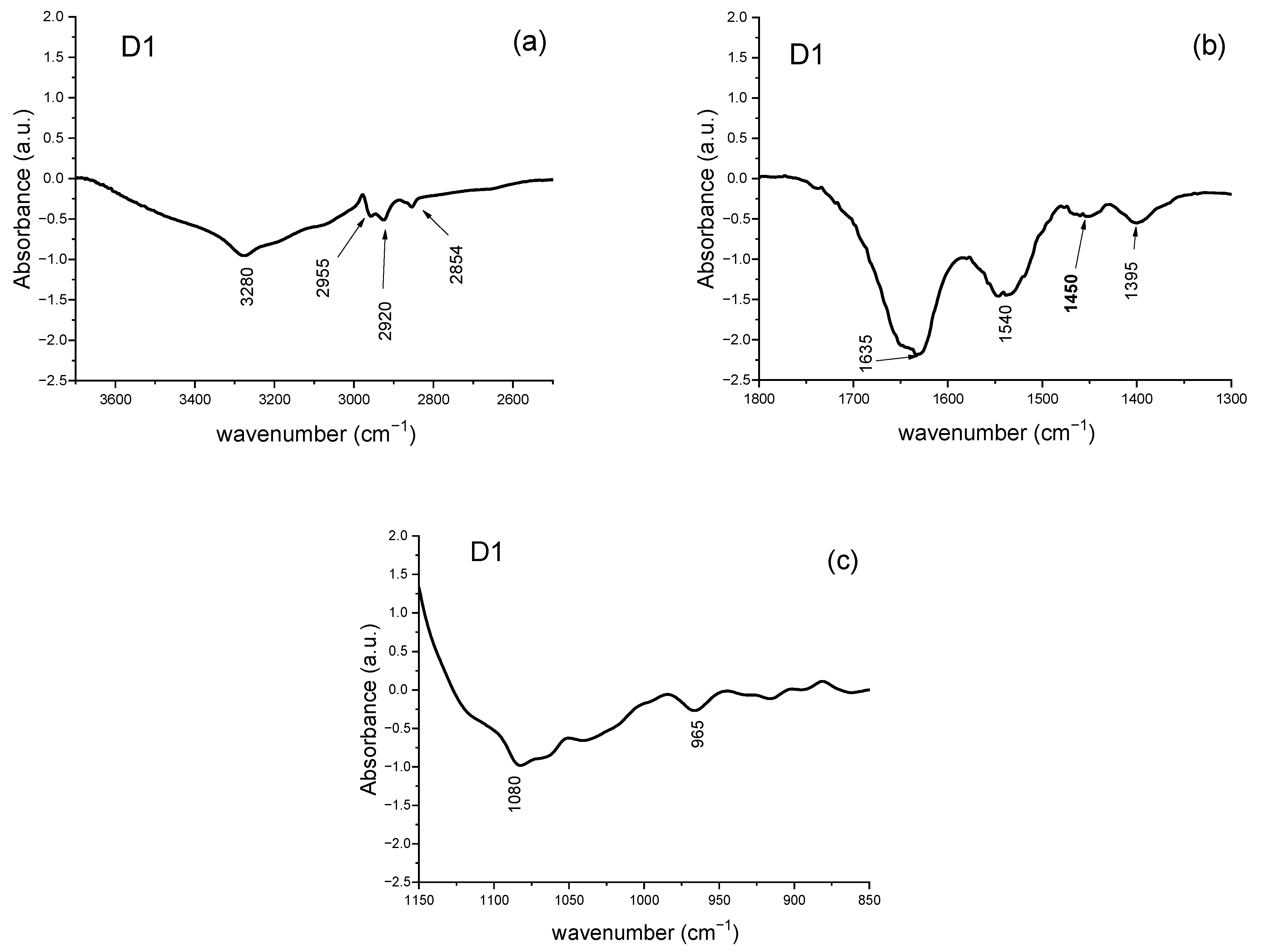
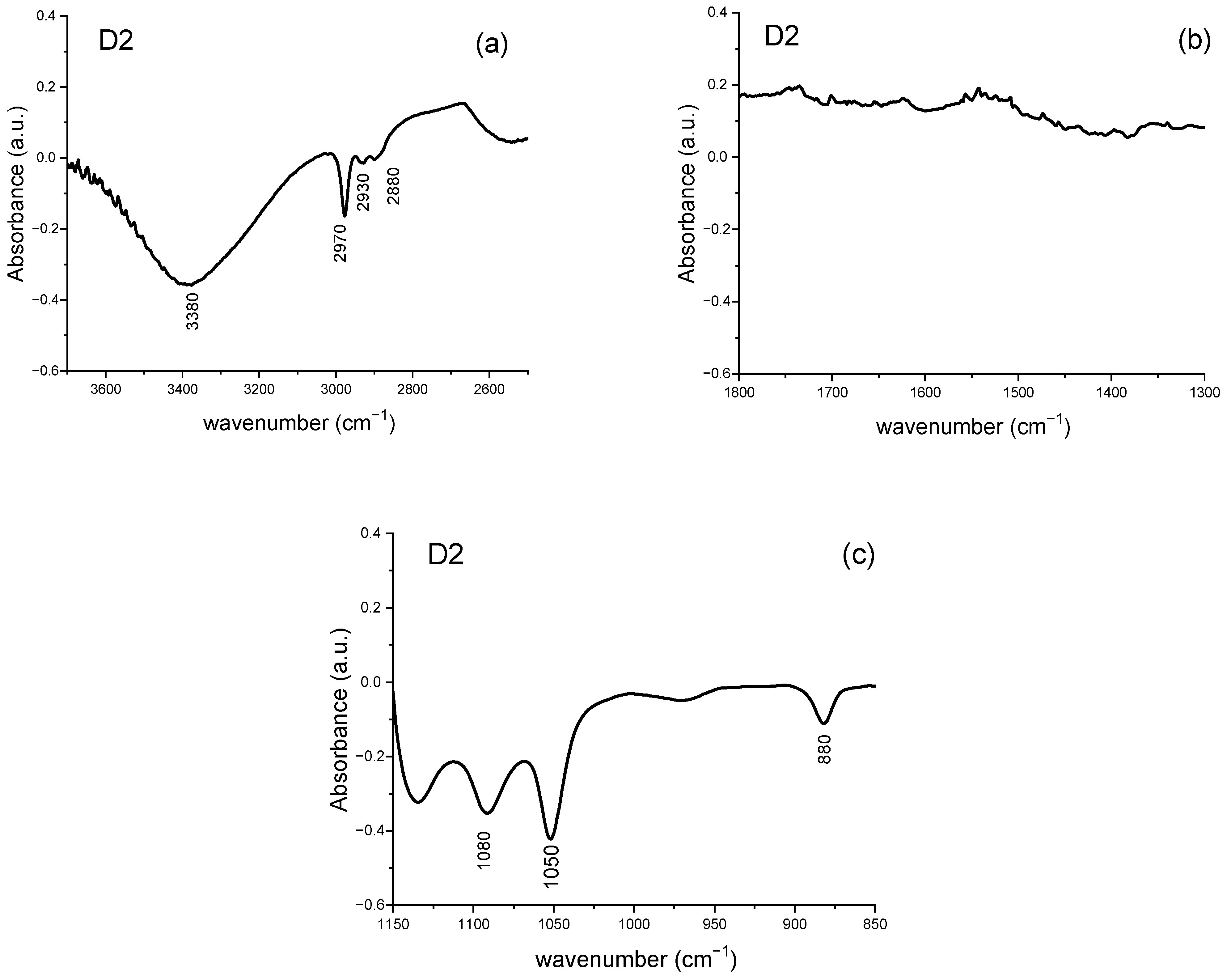
To evidence the changes occurring during the P. aeruginosa treatment with antibiotics and L. plantarum supernatants, the differences between the average SNV-normalized spectra collected from different samples were also evaluated [73,74,75]. The D1 spectrum was obtained by subtracting the average SNV-normalized spectrum of P. aeruginosa from the average SNV-normalized spectrum of P. aeruginosa treated with antibiotics; the D2 spectrum was calculated by subtracting the average SNV-normalized spectrum of P. aeruginosa treated with antibiotics from the average SNV-normalized spectrum of P. aeruginosa treated with antibiotics and the L. plantarum probiotic agent.
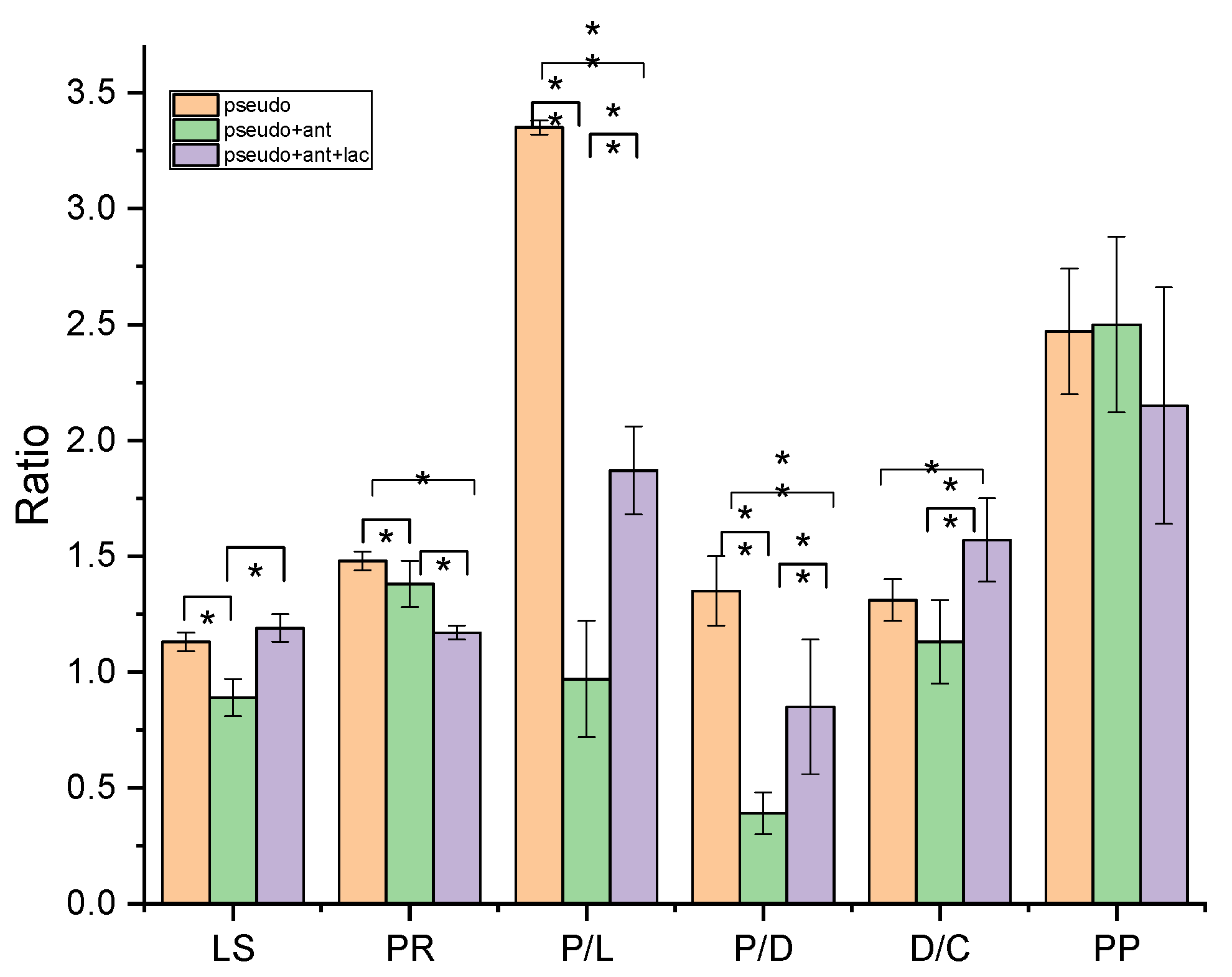
The changes induced in the ATR-FTIR spectra by antibiotics and probiotic agents were also investigated using the ratios between the absorbance of the selected bands reported in Table 1, together with their biochemical indication [76,77,78]. Statistical analysis was performed using a t-test and a 0.05% significance level. The previously described analyses were performed using OriginPro 2025 (OriginLab Corporation, Northampton, MA, USA)

3. Results and Discussion

3.1. Results of Biofilm Formation by Crystal Violet Assay

The working antibiotic concentration was previously established by MIC assay on the planktonic bacterial culture. The results of this assay are reported in the Supplementary Material.
Preformed biofilms of P. aeruginosa treated with antibiotics alone and those with the addition of L. plantarum supernatants were stained and quantified by spectrophotometric reading. The results obtained are reported in Figure 1 and indicate that, while the L. plantarum supernatants alone did not affect the biofilm formation, the antibiotic alone reduces the biofilm biomass, but not in a significant way (14.5%). Conversely, combined treatment with the antibiotic and L. plantarum significantly decreases the amount of biofilm formed (~40%). The results of the crystal violet assay suggest that additional treatment with L. plantarum significantly increases the effect of the antibiotic on biofilm formation.

3.2. FTIR Spectroscopy Investigation Results

3.2.1. Characterization of P. aeruginosa Biofilms on Teflon Membranes

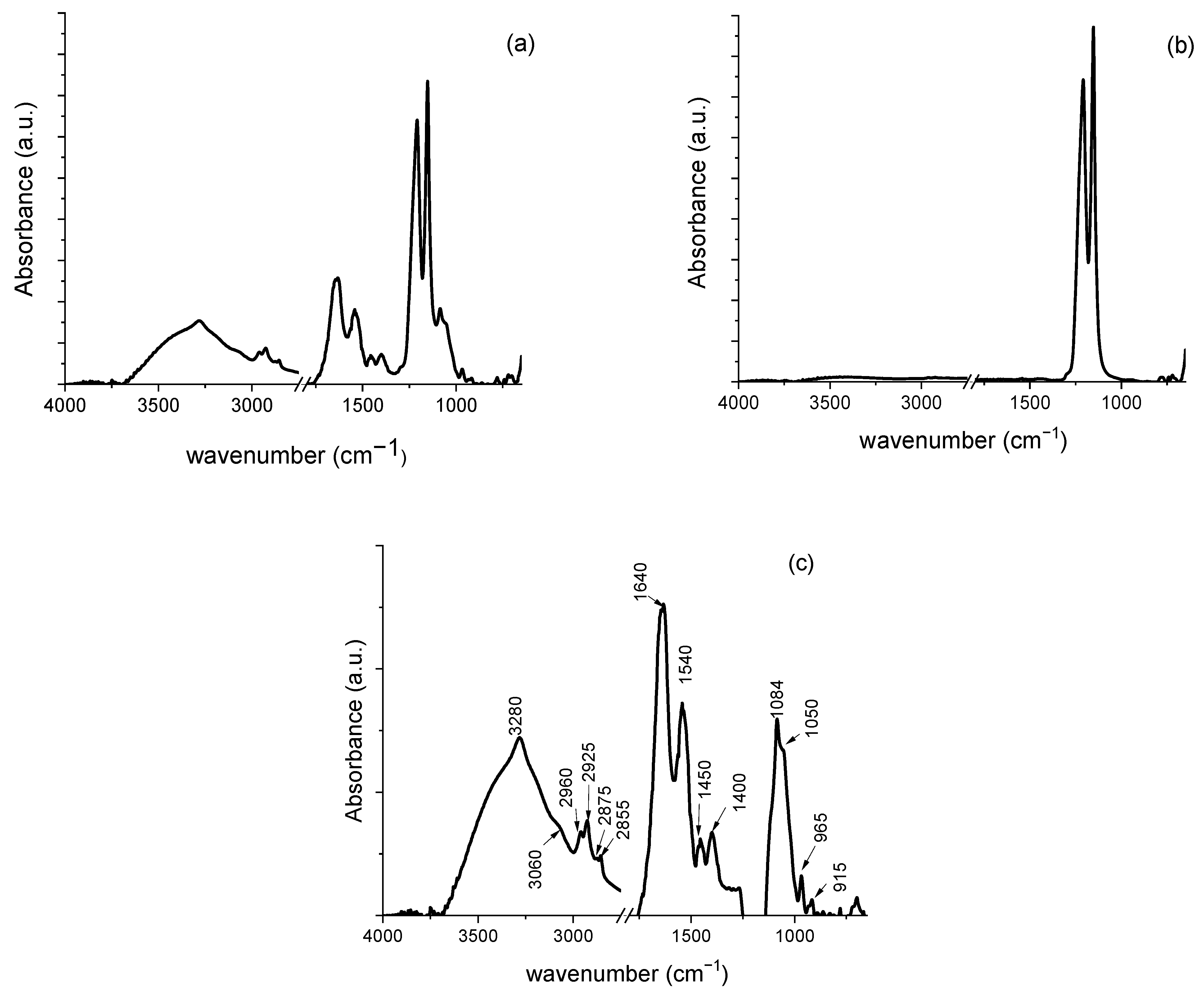
In Figure 2a,b, the average SNV-normalized spectrum of P. aeruginosa biofilms grown on Teflon membranes and the average SNV-normalized spectrum related to the bare Teflon membrane are reported after preliminary preprocessing and SNV normalization as previously described. In these two spectra, two high peaks located at 1210 and 1150 cm−1 due to CF2 stretching modes are evident and represent the Teflon contribution. To evidence P. aeruginosa spectral features, the average SNV-normalized Teflon spectrum in Figure 2b was numerically subtracted from the average SNV-normalized spectrum of P. aeruginosa biofilms grown on Teflon membranes reported in Figure 2a. The resulting spectrum is reported in Figure 2c, where the spectral positions of the most relevant peaks are indicated. In this spectrum, it is possible to identify three main regions. The high-wavenumber region (3600–2800 cm−1) has peaks located around 3000 cm−1 (2960, 2925, 2875, and 2855 cm−1) that are mainly due to the asymmetric and symmetric stretching vibration of CH2 and CH3 groups of bacterial cell wall fatty acids. The second spectral range is located in the 1800–1300 cm−1 region and it is mainly related to protein contributions. In particular, the different spectral features located at 1640, 1540, 1450, and 1400 cm−1 are, respectively, assigned to C=O stretching vibrations of amide I, N-H deformation of amide II and CH3 and CH2 asymmetric and symmetric bending vibrations of proteins. The third region is located in the 1150–850 cm−1 spectral range and it is related to the vibrational features of DNA/RNA, proteins, and membrane and cell wall components. The most relevant peaks are located at 1084, 1050, 965, and 915 cm−1 and are, respectively, ascribed to nucleic acid, phospholipids, polysaccharides, and the DNA backbone; see Ref. [79] and the references therein. In the present analysis, the spectral features located in the 1300–1100 cm−1 region were not considered for further analysis as residual Teflon membrane contributions could be present.
In Table 2, these spectral features are summarized with the above-mentioned assignments that are in agreement with the data reported in the literature, such as [79] and the references therein, for the FTIR spectra collected with different acquisition modes from P. aeruginosa biofilms grown on various substrates [53,56,80,81,82].
The use of Teflon membranes when spectra are acquired in ATR mode can contribute to ease of acquisition of good-quality infrared spectra, facilitating the application of FT-IR spectroscopy for the investigation of bacterial biofilms in microbiology. This aspect can be particularly useful when results must be obtained in a short time, such as when bacterial typing is required.

3.2.2. Characterization of P. aeruginosa Biofilms After Antibiotic Treatment in the Absence and the Presence of L. plantarum Probiotic Agents

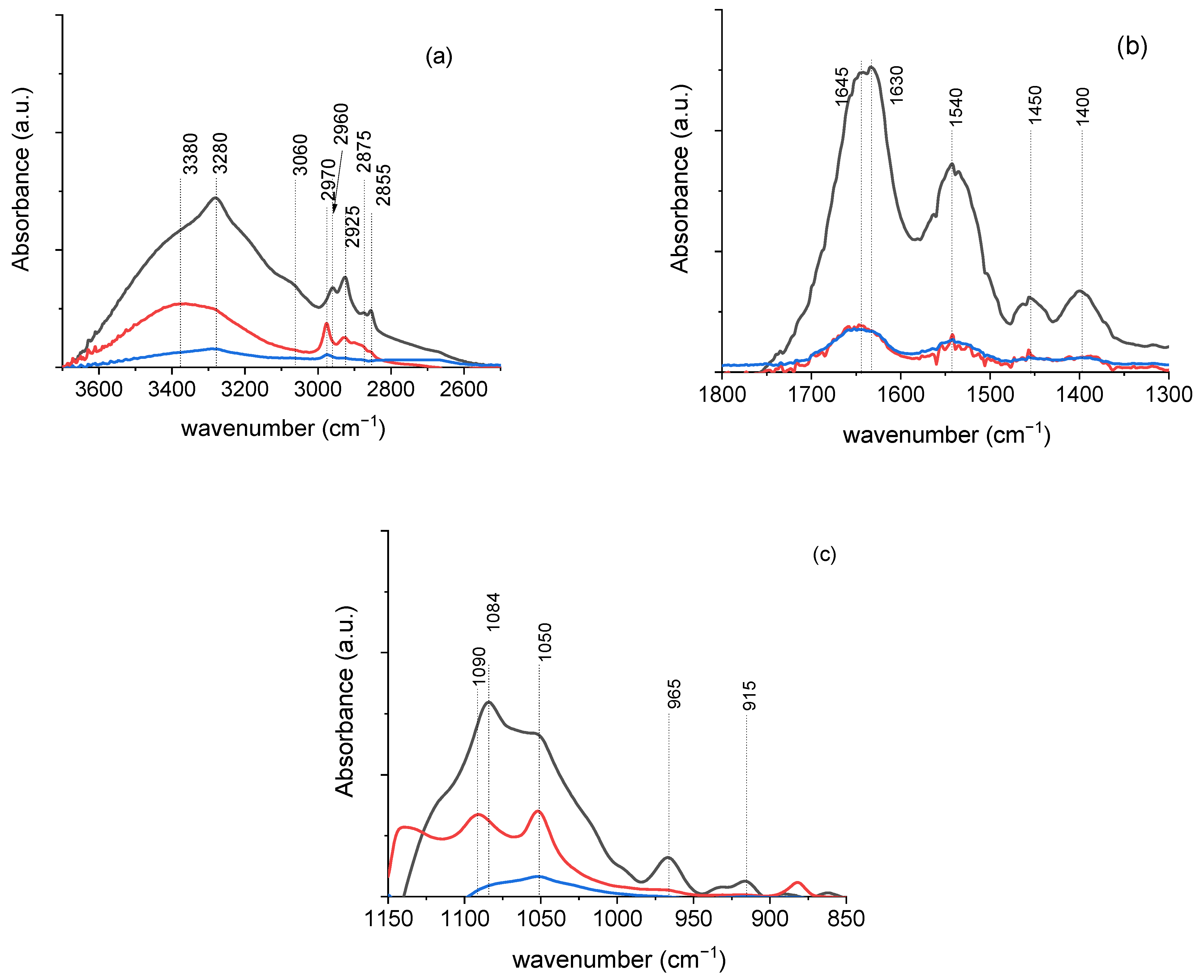
In Figure 3, the average SNV-normalized spectra for the untreated and treated samples are reported for the three spectral regions mentioned above. In Table 2, the peaks observed in the spectra of treated biofilms are reported together with the assignments from the literature, such as [79] and the references therein.
From these spectra, it is evident that treatment with Tobramycin and a probiotic agent induces a significant reduction in the signal intensity in all of the spectral ranges investigated. In the 3600–2600 cm−1 interval, there is a relevant decrease in the band induced by antibiotic treatment and a further one due to probiotic interaction. In the 1800–1300 cm−1 interval, a decrease is present after antibiotic treatment, but no further decrease is induced by probiotic interaction. In the 1150–850 cm−1 region, the antibiotic treatment reduces the intensity of the signal and strongly alters the shape of the spectral curve. The presence of the L. plantarum probiotic further reduces the signal intensity. The visual inspection of the ATR-FTIR spectra of the three different classes of samples reveals the occurrence of changes in the lipid, protein, and carbohydrate contributions. The observed general decrease in signal intensity agrees with the results offered by the crystal violet assay, which evidenced a decrease in the biofilm formation when antibiotic treatments without and with L. plantarum supernatants are performed. As far as the effects induced by the bare antibiotic treatment are concerned, the present evidences are in agreement with the observation of Zeroual et al. [61], who adopted FTIR spectroscopy for the investigation of the bacteria–antibiotic interaction of Escherichia coli cultures treated with four different drugs (penicillin G, ampicillin, tetracycline, and streptomycin), focusing their attention on the 1800–800 cm−1 spectral region. More recently, Zlotnikov et al. [34] have studied the interaction between Escherichia coli and rifampicin by considering the 3000–1000 cm−1 spectral region. Similarly to our results, these authors found changes in the lipid, protein, DNA, and carbohydrate contents.

3.2.3. Deconvolution Analysis Results

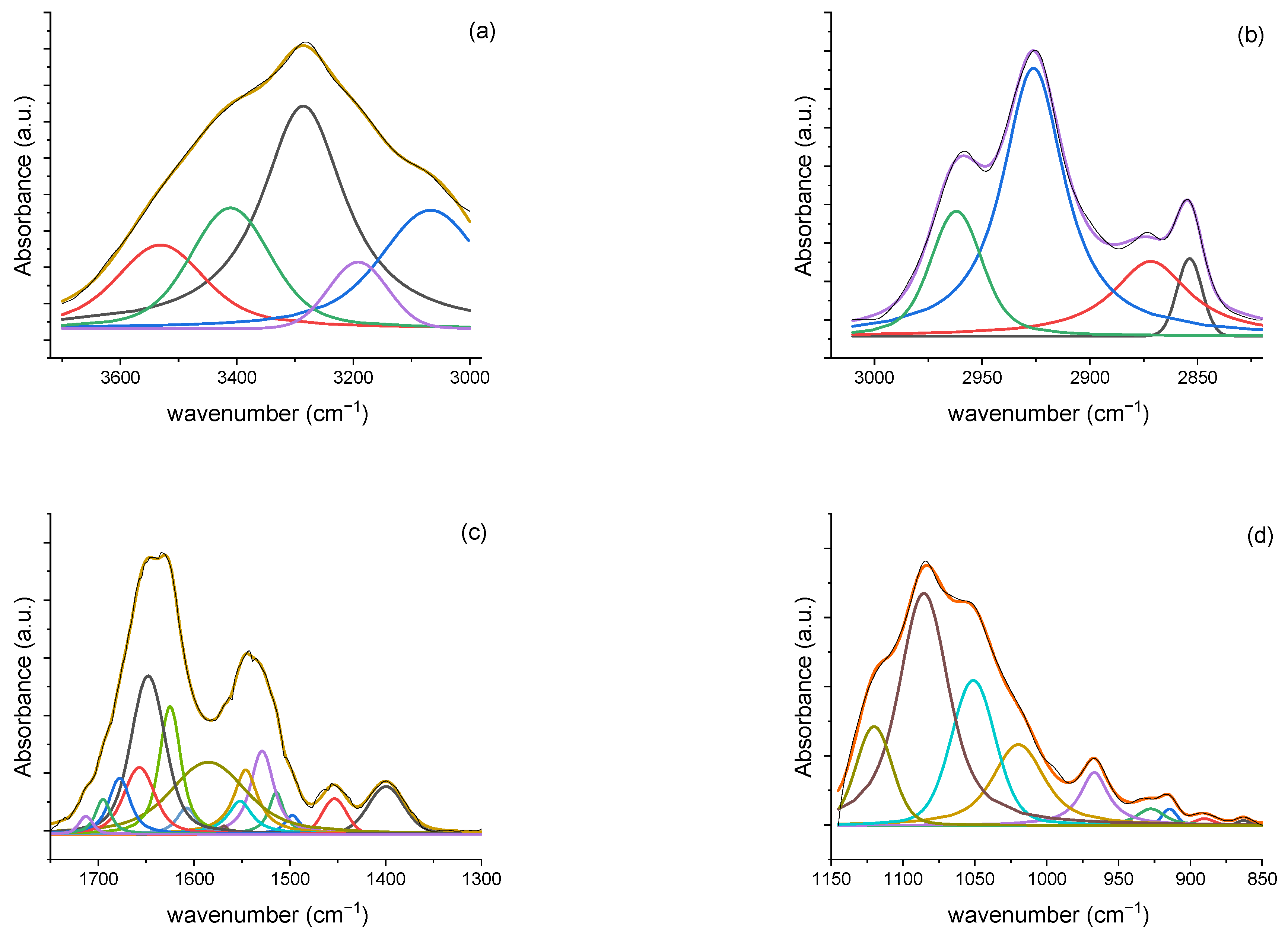
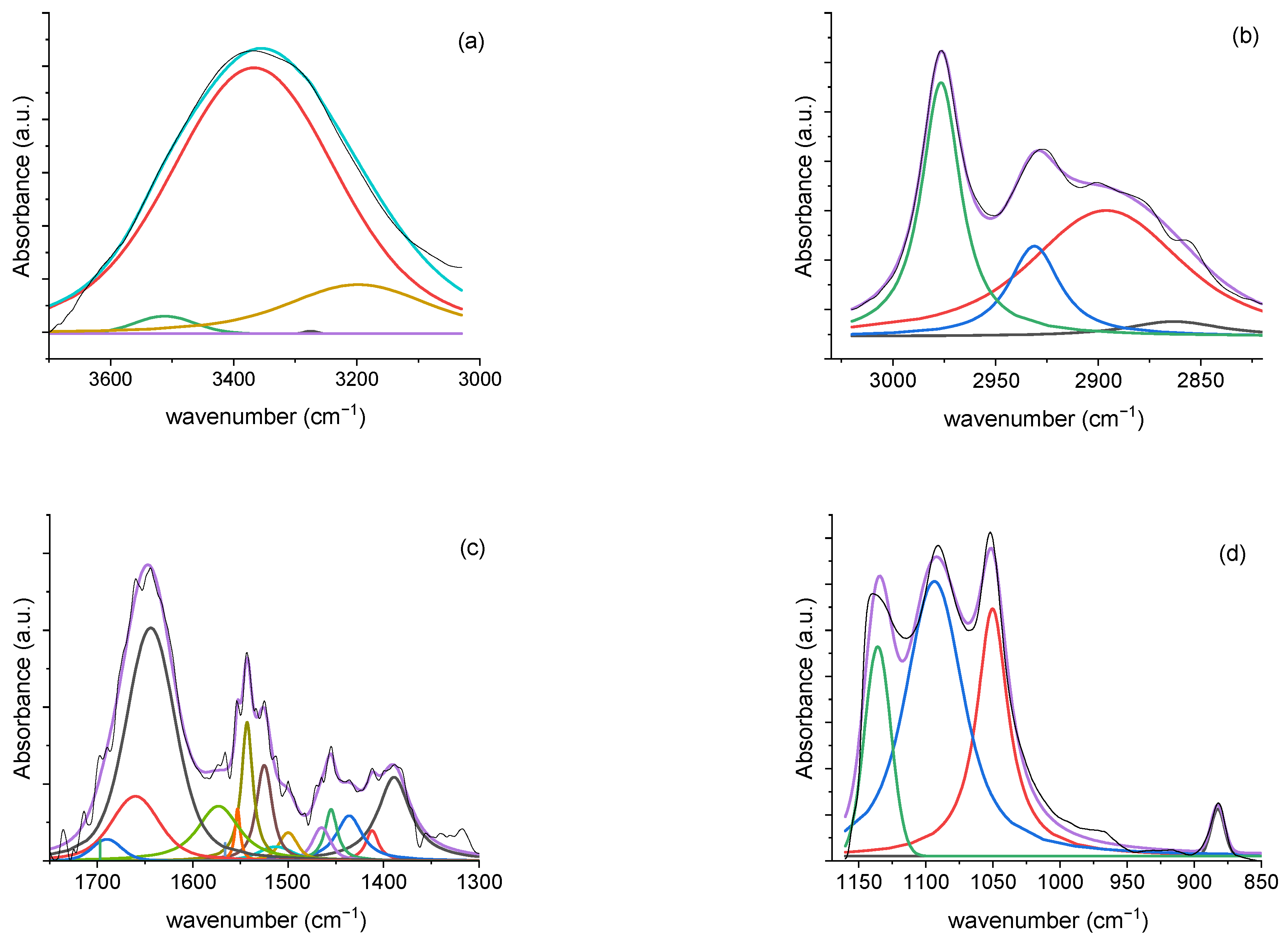
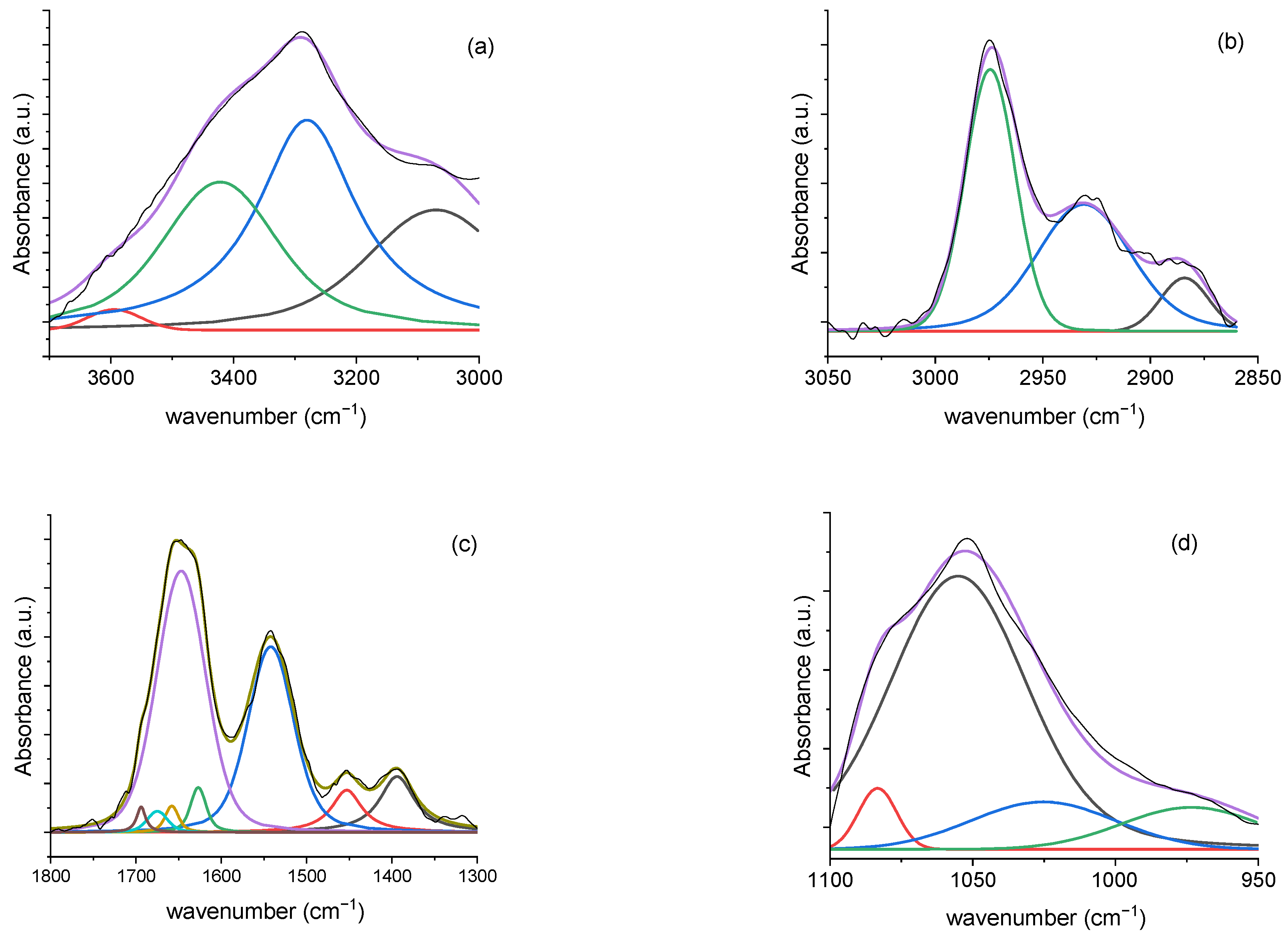
In Figure 4, Figure 5 and Figure 6, the results of a deconvolution analysis have been reported for the average ATR-FTIR spectra of the P. aeruginosa biofilms before and after treatment with Tobramycin and L. plantarum supernatants, respectively. To better evidence the results of this analysis, four different panels are presented in each figure (3600–3000 cm−1, 3000–2850 cm−1, 1700–1300 cm−1, and 1150–850 cm−1). The panels for the different spectra evidence relevant contributions in all four spectral regions and indicate the occurrence of substantial changes in the spectral components of the untreated and treated samples. These changes cause a different number of spectral contributions to be present in the panels related to different classes of samples. For example, in the (a) panel for biofilms before treatment, five components are required for deconvolving this spectral region; conversely, no more than three components can be considered for fitting the spectra of the treated biofilms if the χ2-minimization fit criterion has to be satisfied. Similar situations occur for the other spectral regions reported in the (b), (c), and (d) panels. More detailed information can be recovered by inspecting Table 2, where a bold character is used for reporting additional spectral features that were obtained using the previously described deconvolution procedure. From this Table, it is possible to notice differences in the features of the band due to the polysaccharides and the Amide A protein located around 3280 cm−1. Significant differences are also present in this region due to the CH2 and CH3 groups, indicating that the different treatments change the lipid contributions. It is also evident that the deconvolution analysis reveals the presence of a peak located at 1713 cm−1, attributed to phospholipids for the untreated P. aeruginosa biofilms only. Also, the Amide I region evidences relevant differences. As is well known, the analysis of this spectral region is particularly interesting [49,83] since changes in the subcomponents of this spectral region indicate the occurrence of changes in the secondary structure of protein components. In the present case, the number of subcomponents varies for the untreated and treated samples. For untreated P. aeruginosa biofilms, there are contributions located at 1695, 1678, 1657, 1645, 1630 cm−1 that can be, respectively, ascribed to the antiparallel b-sheet, b-turn, a-helix, unordered, and b-sheet subcomponents. (See Table 2 for the detailed attributions) For P. aeruginosa biofilms treated with Tobramycin, a minor number of subcomponents is present. They are positioned at 1689, 1660, and 1645 cm−1 and can be ascribed to the antiparallel b-sheet, a-helix, and unordered components, respectively. For P. aeruginosa biofilms treated with Tobramycin and the L. plantarum probiotic agent, more contributions are evidenced at 1694, 1675, 1658, 1645, and 1626 cm−1. They are due to the antiparallel b-sheet, b-turn, a-helix, unordered and parallel b-sheet subcomponents, as indicated in Table 2. The carbohydrate region around 900 cm−1 seems to be much less structured for the treated P. aeruginosa biofilms. The changes observed in the lipid, protein, and carbohydrate contributions agree with the observations reported in Refs. [34,61] when only the action of antibiotic treatment is considered, as previously discussed. In the present case, ATR measurements also evidence that the interaction with the L. plantarum probiotic agent induced further modifications in all of the different spectral regions examined.

3.2.4. Analysis of Difference Spectra

The modifications induced in the FT-IR spectra by the antibiotic and probiotic treatments can be further evidenced by examining the difference spectra. As previously mentioned, the D1 spectrum was obtained by subtracting the average SNV-normalized spectrum of P. aeruginosa from the average SNV-normalized spectrum of P. aeruginosa treated with antibiotics. In Figure 7, the D1 spectrum is reported for the three spectral regions of Figure 3. The content of the three panels indicates that the antibiotic treatment modifies the spectral contributions of various functional groups. It is possible to notice decreases for polysaccharides and Amide A proteins at 3280 cm−1, lipids in the 2950–2850 cm−1 spectral range and at around 1450 cm−1, proteins in the 1600–1500 cm−1 interval, and nucleic acids and phospholipids in the region around 1080 cm−1.
The observed decrease for the lipid, amide I, and amide II contributions is in agreement with the results discussed by Zeroual et al. [61]. According to these authors, it is possible to ascribe the decrease in the lipid region to the changes in the membrane structure and organization and to the accumulation of antibiotics inside the cells. This decrease could also be associated with the creation of defects in the biofilms [34]. Furthermore, the decrease in the amide I and amide II regions can contribute to confirming the relevant role of antibiotics in altering protein synthesis in bacterial biofilms [61].
Similarly, the D2 spectrum that has been calculated by subtracting the average SNV-normalized spectrum of P. aeruginosa treated with antibiotics from the average SNV-normalized spectra of P. aeruginosa treated with antibiotics and the L. plantarum probiotic agent is reported in Figure 8 for the above-mentioned three spectral regions. The antibiotic treatment in the presence of a probiotic agent further modifies the spectral features. In this case, the most relevant decrease is present in the region around 3380 cm−1, related to polysaccharide contribution, indicating a reduced presence of these components. A negative trend is also present at 2980 cm−1 due to CH3 groups related to further damage in the cell membrane. The decrease in the spectral interval around 1080 cm−1 can be attributed to lower nucleic acid and phospholipid contributions.

3.2.5. Ratiometric Analysis

The previously reported results indicated that the changes induced by antibiotic treatment for the various components (proteins, lipids, carbohydrates, and nucleic acids) of bacterial biofilms are different if a probiotic agent is present. This experimental evidence is strongly supported by the results of a ratiometric analysis performed using the values of the absorbance ratios listed in Table 1. The results of this analysis are reported in Figure 9. From this Figure, it is evident that the treatments significantly reduce the relative amounts of the different components, indicating alterations in biofilm formation. In fact, the dramatic decrease in the P/L ratio induced by antibiotic treatment further confirms the role of antibiotics in reducing protein synthesis. When the P/L ratio for bare antibiotic treatment is compared with the P/L ratio for biofilms undergoing additional L. plantarum effects, a significant increase is present, probably due to a competitive effect. A similar trend is observed for the P/D ratio; while, for the D/C ratio, the probiotic agent seems to induce the most significant effects, confirming the overproduction of sugars, as noticed by Zeroual et al. [61]. As expected, significant changes are also present in the lipid saturation (LS) and protein rearrangement (PR). The occurrence of these effects has also been indicated by the results of the deconvolution procedure and the analysis of the difference spectra. Concerning the protein phosphorylation processes (PPs), no significant changes are shown.

4. Conclusions

In the present paper, we investigated the interaction between P. aeruginosa biofilms and Tobramycin in the presence or in the absence of the supernatants of a probiotic organism, L. plantarum, that has been recognized to play a significant role in optimizing the effects of antibiotics.
We developed a rapid and easy-to-use method for acquiring good-quality FTIR spectra in ATR geometry from bacterial biofilms by selecting Teflon membranes as growing supports. Our results evidenced that the supernatants of L. plantarum are able to enhance the activity of Tobramycin against P. aeruginosa biofilm. The results reported here confirm that ATR-FTIR spectroscopy is the most appropriate approach for rapid spectra acquisition aimed at highlighting the effects induced by antibiotic and probiotic treatment. In fact, the different data analysis procedures clearly evidence modifications in the lipid, protein, nucleic acid, and carbohydrate components of bacterial biofilms. In agreement with the results of conventional assays and previous FTIR spectroscopy investigations, the present analysis suggests that antibiotic treatment modifies membrane structural organization, inhibits protein synthesis, and alters sugar and polysaccharide production. ATR-FTIR spectroscopy also enables evidence of the effects of additional treatment with a probiotic agent, which further modifies the bacterial biofilm characteristics. To our knowledge, these results represent the first example of the use of ATR-FTIR spectroscopy for investigating probiotic effects in bacterial biofilm formation. Additional insights would be valuable to more comprehensively characterize the effects elicited by probiotic action. Moreover, the use of Teflon membranes can facilitate the investigation of bacterial biofilms and their interaction with external agents. In fact, the use of these membranes and ATR-mode acquisition geometry can contribute to the ease of acquisition of good-quality infrared spectra, facilitating the application of FT-IR spectroscopy for investigating bacterial biofilms in other microbiological research fields.

Supplementary Materials

The following supporting information can be downloaded at https://www.mdpi.com/article/10.3390/app16010482/s1; Figure S1: Microscopy image of a P. aeruginosa stained biofilm on a Teflon membrane; Table S1: Spectrophotometric values at OD600 obtained for MIC assay.

Author Contributions

Conceptualization, M.L., M.P., A.F., and G.D.; methodology, M.L., M.P., A.F., and G.D.; software, M.P.; investigation, M.L., M.P., A.F., and S.A.; data curation, M.P.; writing—original draft preparation, M.P., A.F., and M.L.; writing—review and editing, M.L., M.P., A.F., and G.D.; funding acquisition, M.L. All authors have read and agreed to the published version of the manuscript.

Funding

The authors are pleased to acknowledge the financial support given by the Dipartimento di Medicina Sperimentale of the University of Campania “Luigi Vanvitelli”.

Institutional Review Board Statement

Not applicable.

Informed Consent Statement

Not applicable.

Data Availability Statement

The data are available on request.

Conflicts of Interest

The authors declare no conflicts of interest.

Abbreviations

The following abbreviations are used in this manuscript:
CFUColony-Forming Unit
EPSExopolysaccharide matrix
FTIRFourier transform infrared
MICMinimal Inhibitory Concentration
MRSMan, Rogosa and Sharpe
PBSPhosphate-Buffered Saline
SNVStandard Normal Variate
TSBTryptone Soy Broth

References

  1. Di Martino, P. Extracellular polymeric substances, a key element in understanding biofilm phenotype. AIMS Microbiol. 2018, 4, 274–288. [Google Scholar] [CrossRef]
  2. Fusco, A.; Savio, V.; Stelitano, D.; Baroni, A.; Donnarumma, G. The Intestinal Biofilm of Pseudomonas aeruginosa and Staphylococcus aureus Is Inhibited by Antimicrobial Peptides HBD-2 and HBD-3. Appl. Sci. 2021, 11, 6595. [Google Scholar] [CrossRef]
  3. Fleming, D.; Rumbaugh, K. The Consequences of Biofilm Dispersal on the Host. Sci. Rep. 2018, 8, 10738. [Google Scholar] [CrossRef]
  4. Assefa, M.; Amare, A. Biofilm-Associated Multi-Drug Resistance in Hospital-Acquired Infections: A Review. Infect. Drug Resist. 2022, 15, 5061–5068. [Google Scholar] [CrossRef]
  5. Mishra, A.; Aggarwal, A.; Khan, F. Medical Device-Associated Infections Caused by Biofilm-Forming Microbial Pathogens and Controlling Strategies. Antibiotics 2024, 13, 623. [Google Scholar] [CrossRef]
  6. Mulcahy, L.R.; Isabella, V.M.; Lewis, K. Pseudomonas aeruginosa biofilms in disease. Microb. Ecol. 2014, 68, 1–12. [Google Scholar] [CrossRef]
  7. Kao, W.K.; Gagnon, P.M.; Vogel, J.P.; Chole, R.A. Surface charge modification decreases Pseudomonas aeruginosa adherence in vitro and bacterial persistence in an in vivo implant model. Laryngoscope 2017, 127, 1655–1661. [Google Scholar] [CrossRef]
  8. Wille, J.; Coenye, T. Biofilm dispersion: The key to biofilm eradication or opening Pandora’s box? Biofilm 2020, 2, 100027. [Google Scholar] [CrossRef] [PubMed]
  9. Chegini, Z.; Khoshbayan, A.; Taati Moghadam, M.; Farahani, I.; Jazireian, P.; Shariatiet, A. Bacteriophage therapy against Pseudomonas aeruginosa biofilms: A review. Ann. Clin. Microbiol. Antimicrob. 2020, 19, 45. [Google Scholar] [CrossRef] [PubMed]
  10. Chang, C.; Yu, X.; Guo, W.; Guo, C.; Guo, X.; Li, Q.; Zhu, Y. Bacteriophage-Mediated Control of Biofilm: A Promising New Dawn for the Future. Front. Microbiol. 2022, 13, 825828. [Google Scholar] [CrossRef] [PubMed]
  11. Halawa, E.M.; Fadel, M.; Al-Rabia, M.W.; Behairy, A.; Nouh, N.A.; Abdo, M.; Olga, R.; Fericean, L.; Atwa, A.M.; El-Nablaway, M.; et al. Antibiotic action and resistance: Updated review of mechanisms, spread, influencing factors, and alternative approaches for combating resistance. Front. Pharmacol. 2024, 14, 1305294. [Google Scholar] [CrossRef] [PubMed]
  12. Ferrara, F.; Castagna, T.; Pantolini, B.; Campanardi, M.C.; Roperti, M.; Grotto, A.; Fattori, M.; Dal Maso, L.; Carrara, F.; Zambarbieri, G.; et al. The challenge of antimicrobial resistance (AMR): Current status and future prospects. Naunyn Schmiedebergs Arch. Pharmacol. 2024, 397, 9603–9615. [Google Scholar] [CrossRef] [PubMed]
  13. Carvalho, F.M.; Teixeira-Santos, R.; Mergulhão, F.J.M.; Gomes, L.C. Effect of Lactobacillus plantarum Biofilms on the Adhesion of Escherichia coli to Urinary Tract Devices. Antibiotics 2021, 10, 966. [Google Scholar] [CrossRef]
  14. Fusco, A.; Savio, V.; Cimini, D.; D’Ambrosio, S.; Chiaromonte, A.; Schiraldi, C.; Donnarumma, G. In Vitro Evaluation of the Most Active Probiotic Strains Able to Improve the Intestinal Barrier Functions and to Prevent Inflammatory Diseases of the Gastrointestinal System. Biomedicines 2023, 11, 865. [Google Scholar] [CrossRef] [PubMed]
  15. Prabhurajeshwar, C.; Chandrakanth, R.K. Probiotic potential of Lactobacilli with antagonistic activity against pathogenic strains: An in vitro validation for the production of inhibitory substances. Biomed. J. 2017, 40, 270–283. [Google Scholar] [CrossRef]
  16. Mekky, A.F.; Hassanein, W.A.; Reda, F.M.; Elsayed, H.M. Anti-biofilm potential of Lactobacillus plantarum Y3 culture and its cell-free supernatant against multidrug-resistant uropathogen Escherichia coli U12. Saudi J. Biol. Sci. 2022, 29, 2989–2997. [Google Scholar] [CrossRef]
  17. Li, X.; Wang, Q.; Hu, X.; Liu, W. Current Status of Probiotics as Supplements in the Prevention and Treatment of Infectious Diseases. Front. Cell Infect. Microbiol. 2022, 12, 789063. [Google Scholar] [CrossRef]
  18. Vinayamohan, P.; Joseph, D.; Viju, L.S.; Baskaran, S.A.; Venkitanarayanan, K. Efficacy of Probiotics in Reducing Pathogenic Potential of Infectious Agents. Fermentation 2024, 10, 599. [Google Scholar] [CrossRef]
  19. Gomaa, E.Z. Antimicrobial and anti-adhesive properties of biosurfactant produced by lactobacilli isolates, biofilm formation and aggregation ability. J. Gen. Appl. Microbiol. 2013, 59, 425–436. [Google Scholar] [CrossRef]
  20. Javadi, K.; Emadzadeh, M.R.; Mohammadzadeh Hosseini Moghri, S.A.H.; Halaji, M.; Parsian, H.; Rajabnia, M.; Pournajaf, A. Anti-biofilm and antibacterial effect of bacteriocin derived from Lactobacillus plantarum on the multidrug-resistant Acinetobacter baumannii. Protein Expr. Purif. 2025, 226, 106610. [Google Scholar] [CrossRef]
  21. Danilova, T.A.; Adzhieva, A.A.; Danilina, G.A.; Polyakov, N.B.; Soloviev, A.I.; Zhukhovitsky, V.G. Antimicrobial Activity of Supernatant of Lactobacillus plantarum against Pathogenic Microorganisms. Bull. Exp. Biol. Med. 2019, 167, 751–754. [Google Scholar] [CrossRef] [PubMed]
  22. Batoni, G.; Catelli, E.; Kaya, E.; Pompilio, A.; Bianchi, M.; Ghelardi, E.; Di Bonaventura, G.; Esin, S.; Maisetta, G. Antibacterial and Antibiofilm Effects of Lactobacilli Strains against Clinical Isolates of Pseudomonas aeruginosa under Conditions Relevant to Cystic Fibrosis. Antibiotics 2023, 12, 1158. [Google Scholar] [CrossRef]
  23. Jamalifar, H.; Rahimi, H.; Samadi, N.; Shahverdi, A.; Sharifian, Z.; Hosseini, F.; Eslahi, H.; Fazeli, M. Antimicrobial Activity of Different Lactobacillus species against Multi- Drug Resistant Clinical Isolates of Pseudomonas aeruginosa. Iran. J. Microbiol. 2011, 3, 21–25. [Google Scholar]
  24. Shokri, D.; Khorasgani, M.R.; Mohkam, M.; Fatemi, S.M.; Ghasemi, Y.; Taheri-Kafrani, A. The Inhibition Effect of Lactobacilli against Growth and Biofilm Formation of Pseudomonas aeruginosa. Probiotics Antimicrob. Proteins 2018, 10, 34–42. [Google Scholar] [CrossRef]
  25. Kassem, A.; Abbas, L.; Coutinho, O.; Opara, S.; Najaf, H.; Kasperek, D.; Pokhrel, K.; Li, X.; Tiquia-Arashiro, S. Applications of Fourier Transform-Infrared spectroscopy in microbial cell biology and environmental microbiology: Advances, challenges, and future perspectives. Front. Microbiol. 2023, 14, 1304081. [Google Scholar] [CrossRef]
  26. Yang, H.; Shi, H.; Feng, B.; Wang, L.; Chen, L.; Alvarez-Ordóñez, A.; Zhang, L.; Shen, H.; Zhu, J.; Yang, S.; et al. Protocol for bacterial typing using Fourier transform infrared spectroscopy. STAR Protoc. 2023, 15, 102223. [Google Scholar] [CrossRef] [PubMed]
  27. Feng, B.; Shi, H.; Xu, F.; Hu, F.; He, J.; Yang, H.; Huayan, Y.; Chuanfan, D.; Wenxiang, C.; Shaoning, Y. FTIR-assisted MALDI-TOF MS for the identification and typing of bacteria. Anal. Chim. Acta 2020, 1111, 75–82. [Google Scholar] [CrossRef] [PubMed]
  28. Brito, N.M.R.D.; Lourenço, F.R. Rapid identification of microbial contaminants in pharmaceutical products using a PCA/LDA-based FTIR-ATR method. Braz. J. Pharm. Sci. 2021, 57, 8899. [Google Scholar] [CrossRef]
  29. Xie, J.; Yang, F.; Shi, H.; Yan, J.; Shen, H.; Yu, S.; Gan, N.; Feng, B.; Wang, L. Protein FT-IR amide bands are beneficial to bacterial typing. Int. J. Biol. Macromol. 2022, 207, 358–364. [Google Scholar] [CrossRef]
  30. Muchaamba, F.; Stephan, R. A Comprehensive Methodology for Microbial Strain Typing Using Fourier-Transform Infrared Spectroscopy. Methods Protoc. 2024, 11, 48. [Google Scholar] [CrossRef]
  31. Grace, C.E.E.; Lakshmi, P.K.; Meenakshi, S.; Vaidyanathan, S.; Srisudha, S.; Mary, M.B. Biomolecular transitions and lipid accumulation in green microalgae monitored by FT-IR and Raman analysis. Spectrochim. Acta Part A 2020, 224, 117382. [Google Scholar] [CrossRef]
  32. Spain, O.; Funk, C. Detailed characterization of the cell wall structure and composition of Nordic green microalgae. J. Agric. Food Chem. 2022, 70, 9711–9721. [Google Scholar] [CrossRef]
  33. Ashajyothi, M.; Balamurugan, A.; Patel, A.; Krishnappa, C.; Kumar, R.; Kumar, A. Cell wall polysaccharides of endophytic Pseudomonas putida elicit defense against rice blast disease. J. Appl. Microbiol. 2023, 134, lxac042. [Google Scholar] [CrossRef]
  34. Zlotnikov, I.D.; Ezhov, A.A.; Vigovskiy, M.A.; Grigorieva, O.A.; Dyachkova, U.D.; Belogurova, N.G.; Kudryashova, E.V. Application prospects of FTIR spectroscopy and CLSM to monitor the drugs interaction with bacteria cells localized in macrophages for diagnosis and treatment control of respiratory diseases. Diagnostics 2023, 13, 698. [Google Scholar] [CrossRef]
  35. Miao, L.; Wang, P.; Hou, J.; Yao, Y.; Liu, Z.; Liu, S. Low concentrations of copper oxide nanoparticles alter microbial community structure and function of sediment biofilms. Sci. Total Environ. 2019, 653, 705–713. [Google Scholar] [CrossRef]
  36. Wilson, R.M.; Zayed, A.A.; Crossen, K.B.; Woodcroft, B.; Tfaily, M.M.; Emerson, J.; Raab, N.; Hodgkins, S.B.; Verbeke, B.; Tyson, G.; et al. Functional capacities of microbial communities to carry out large scale geochemical processes are maintained during ex situ anaerobic incubation. PLoS ONE 2021, 16, e0245857. [Google Scholar] [CrossRef] [PubMed]
  37. Dhanwal, P.; Kumar, A.; Dudeja, S.; Badgujar, H.; Chauhan, R.; Kumar, A.; Dhull, P.; Chhokar, V.; Beniwal, V. Biosorption of heavy metals from aqueous solution by bacteria isolated from contaminated soil. Water Environ. Res. 2018, 90, 424–430. [Google Scholar] [CrossRef] [PubMed]
  38. Meng, G.; Liu, J.; Ma, J.; Liu, X.; Zhang, F.; Guo, Y.; Wang, C.; Song, L. Biosorption and bioreduction of aqueous chromium (VI) by different Spirulina strains. FEMS Microbiol. Lett. 2023, 370, fnad070. [Google Scholar] [CrossRef] [PubMed]
  39. Cáceda Quiroz, C.J.; Fora Quispe, G.d.L.; Carpio Mamani, M.; Maraza Choque, G.J.; Sacari Sacari, E.J. Cyanide bioremediation by Bacillus subtilis under alkaline conditions. Water 2023, 15, 3645. [Google Scholar] [CrossRef]
  40. Hosseini, F.; Lashaniand, E.; Moghimi, H. Simultaneous bioremediation of phenol and tellurite by Lysinibacillus sp. EBL303 and characterization of biosynthesized Te nanoparticles. Sci. Rep. 2023, 13, 1243. [Google Scholar] [CrossRef]
  41. Scarsini, M.; Thurotte, A.; Veidl, B.; Amiard, F.; Niepceron, F.; Badawi, M.; Lagarde, F.; Schoefs, B.; Marchand, J. Metabolite quantification by Fourier transform infrared spectroscopy in diatoms: Proof of concept on Phaeodactylum tricornutum. Front. Plant Sci. 2021, 12, 75642. [Google Scholar] [CrossRef]
  42. Soares, J.M.; Guimarães, F.E.G.; Yakovlev, V.V.; Bagnato, V.S.; Blanco, K.C. Physicochemical mechanisms of bacterial response in the photodynamic potentiation of antibiotic effects. Sci. Rep. 2022, 12, 21146. [Google Scholar] [CrossRef]
  43. Schmitt, J.; Nivens, D.; White, D.C.; Flemming, H.C. Changes of biofilm properties in response to sorbed substances—An FTIR-ATR study. Wat. Sci. Technol. 1995, 32, 149–155. [Google Scholar] [CrossRef]
  44. Bosch, A.; Serra, D.; Prieto, C.; Schmitt, J.; Naumann, D.; Yantorno, O. Characterization of Bordetella pertussis growing as biofilm by chemical analysis and FT-IR spectroscopy. Appl. Microb. Biotechnol. 2006, 71, 736–747. [Google Scholar] [CrossRef]
  45. Mukherjee, J.; Ow, S.Y.; Noirel, J.; Biggs, C.A. Quantitative protein expression and cell surface characteristics of Escherichia coli MG1655 biofilms. Proteomics 2011, 11, 339–351. [Google Scholar] [CrossRef] [PubMed]
  46. Tugarova, A.V.; Scheludko, A.V.; Dyatlova, Y.A.; Filip’echeva, Y.A.; Kamnev, A.A. FTIR spectroscopic study of biofilms formed by the rhizobacterium Azospirillum brasilense Sp245 and its mutant Azospirillum brasilense Sp245. 1610. J. Mol. Struct. 2017, 1140, 142–147. [Google Scholar] [CrossRef]
  47. Wang, Y.; Jiang, Z.; Lai, Z.; Yuan, H.; Zhang, X.; Jia, Y.; Zhang, X. The self-adaption capability of microalgal biofilm under different light intensities: Photosynthetic parameters and biofilm microstructures. Algal Res. 2021, 58, 102383. [Google Scholar] [CrossRef]
  48. Kamnev, A.A.; Dyatlova, Y.A.; Kenzhegulov, O.A.; Fedonenko, Y.P.; Evstigneeva, S.S.; Tugarova, A.V. Fourier transform infrared (FT-IR) spectroscopic study of biofilms formed by the Rhizobacterium Azospirillum baldaniorum Sp245: Aspects of methodology and matrix composition. Molecules 2023, 28, 1949. [Google Scholar] [CrossRef] [PubMed]
  49. Errico, S.; Moggio, M.; Diano, N.; Portaccio, M.; Lepore, M. Different experimental approaches for Fourier-Trasform infrared spectroscopy applications in biology and biotechnology: A selected choice of representative results. Biotechnol. Appl. Biochem. 2023, 70, 937–961. [Google Scholar] [CrossRef] [PubMed]
  50. Elzinga, E.J.; Huang, J.H.; Chorover, J.; Kretzschmar, R. ATR-FTIR spectroscopy study of the influence of pH and contact time on the adhesion of Shewanella putrefaciens bacterial cells to the surface of hematite. Environ. Sci. Technol. 2012, 46, 12848–12855. [Google Scholar] [CrossRef]
  51. Cheeseman, S.; Shaw, Z.L.; Vongsvivut, J.; Crawford, R.J.; Dupont, M.F.; Boyce, K.J.; Gangadoo, S.; Bryant, S.J.; Bryant, G.; Cozzolino, D.; et al. Analysis of pathogenic bacterial and yeast biofilms using the combination of synchrotron ATR-FTIR microspectroscopy and chemometric approaches. Molecules 2021, 26, 3890. [Google Scholar] [CrossRef] [PubMed]
  52. Tong, C.Y.; Derek, C.J.C. Biofilm formation of benthic diatoms on commercial polyvinylidene fluoride membrane. Algal Res. 2021, 55, 102260. [Google Scholar] [CrossRef]
  53. Crisp, A.R.; Short, B.; Rowan, L.; Ramage, G.; Rehman, I.U.R.; Short, R.D.; Williams, C. Investigating the chemical pathway to the formation of a single biofilm using infrared spectroscopy. Biofilm 2023, 6, 100141. [Google Scholar] [CrossRef]
  54. Grdadolnik, J. ATR-FTIR spectroscopy: Its advantages and limitations. Acta Chim. Slov. 2002, 49, 631–642. [Google Scholar]
  55. Magalhães, S.; Goodfellow, B.J.; Nunes, A. FTIR spectroscopy in biomedical research: How to get the most out of its potential. Appl. Spectrosc. Rev. 2021, 56, 869–907. [Google Scholar] [CrossRef]
  56. Suci, P.A.; Mittelman, M.W.; Yu, F.P.; Geesey, G.G. Investigation of ciprofloxacin penetration into Pseudomonas aeruginosa biofilms. Antimicrob. Agents Chemother. 1994, 38, 2125–2133. [Google Scholar] [CrossRef] [PubMed]
  57. Nadtochenko, V.A.; Rincon, A.G.; Stanca, S.E.; Kiwi, J. Dynamics of E. coli membrane cell peroxidation during TiO2 photocatalysis studied by ATR-FTIR spectroscopy and AFM microscopy. J. Photochem. Photobiol. A Chem. 2005, 169, 131–137. [Google Scholar] [CrossRef]
  58. Galichet, A.; Sockalingum, G.D.; Belarbi, A.; Manfait, M. FT-IR spectroscopic analysis of Saccharomyces cerevisiae cell walls: Study of an anomalous strain exhibiting a pink-colored cell phenotype. FEMS Microbiol. Lett. 2001, 197, 179–186. [Google Scholar] [CrossRef]
  59. Huang, G.; Ng, T.W.; An, T.; Li, G.; Wang, B.; Wu, D.; Yin Yip, H.; Zhao, H.; Wong, P.K. Interaction between bacterial cell membranes and nano-TiO2 revealed by two-dimensional FT-IR correlation spectroscopy using bacterial ghost as a model cell envelope. Water Res. 2017, 118, 104–113. [Google Scholar] [CrossRef]
  60. Zhang, J.; Su, P.; Chen, H.; Qiao, M.; Yang, B.; Xu, Z. Impact of reactive oxygen species on cell activity and structural integrity of gram-positive and gram-negative bacteria in electrochemical disinfection system. Chem. Eng. J. 2023, 451, 138879. [Google Scholar] [CrossRef]
  61. Zeroual, W.; Choisyl, C.; Millot, J.M.; Manfait, M. FT-IR Spectroscopy Investigation of Bacteria -Antibiotic Interactions. In Fifth International Conference on the Spectroscopy of Biological Molecules; Theophanides, I., et al., Eds.; Kluwer Academic Publishers: London, UK, 1993; pp. 191–192. [Google Scholar]
  62. Vrany, J.D.; Stewart, P.S.; Suci, P.A. Comparison of Recalcitrance to Ciprofloxacin and Levofloxacin Exhibited by Pseudomonas aeruginosa Biofilms Displaying Rapid-Transport Characteristics. Antimicrob.-Agents Chemother. 1997, 41, 1352–1358. [Google Scholar] [CrossRef]
  63. Suci, P.A.; Siedlecki, K.J.; Palmer, R.J.; White, D.C.; Geesey, G.G. Combined light microscopy and attenuated total reflection Fourier Transform infrared spectroscopy for integration of biofilm structure, distribution, and chemistry at solid-liquid interfaces. Appl. Environ. Microbiol. 1997, 63, 4600–4603. [Google Scholar] [CrossRef]
  64. Barrera-Patiño, C.P.; Soares, J.M.; Branco, K.C.; Inada, N.M.; Bagnato, V.S. Spectroscopic Identification of Bacteria Resistance to Antibiotics by Means of Absorption of Specific Biochemical Groups and Special Machine Learning Algorithm. Antibiotics 2023, 12, 1502. [Google Scholar] [CrossRef] [PubMed]
  65. Valdéz, J.C.; Peral, M.C.; Rachid, M.; Santana, M.; Perdigón, G. Interference of Lactobacillus plantarum with Pseudomonas aeruginosa in vitro and in infected burns: The potential use of probiotics in wound treatment. Clin. Microbiol. Infect. 2005, 11, 472–479. [Google Scholar] [CrossRef]
  66. Ramos, A.N.; Cabral, M.E.; Noseda, D.; Bosch, A.; Yantorno, O.M.; Valdez, J.C. Antipathogenic properties of Lactobacillus plantarum on Pseudomonas aeruginosa: The potential use of its supernatants in the treatment of infected chronic wounds. Wound Repair Regen. 2012, 20, 552–562. [Google Scholar] [CrossRef] [PubMed]
  67. Chappell, T.C.; Nair, N.U. Engineered lactobacilli display anti-biofilm and growth suppressing activities against Pseudomonas aeruginosa. npj Biofilm. Microbiomes 2020, 6, 48. [Google Scholar] [CrossRef]
  68. O’Toole, G.A.; Kolter, R. Initiation of biofilm formation in Pseudomonas fluorescens WCS365 proceeds via multiple, convergent signalling pathways: A genetic analysis. Mol. Microbiol. 1998, 28, 449–461. [Google Scholar] [CrossRef]
  69. Alghurabi, M.N.A.; Mubarak, T.H.; Judran, A.K.; Hasoon, B.A. Two-Stage Pulsed Laser Ablation for the Production of Ag@TiO2 Core–Shell Nanoparticles with Enhanced Antimicrobial Properties: An In Silico Study. Plasmonics 2025, 20, 10863–10888. [Google Scholar] [CrossRef]
  70. Lasch, P. Spectral pre-processing for biomedical vibrational spectroscopy and microspectroscopic imaging. Chemom. Intell. Lab. Syst. 2012, 117, 100–114. [Google Scholar] [CrossRef]
  71. Gautam, R.; Vanga, S.; Ariese, F.; Umapathy, S. Review of multidimensional data processing approaches for Raman and infrared spectroscopy. EPJ Tech. Instrum. 2015, 2, 8. [Google Scholar] [CrossRef]
  72. Sadat, A.; Joye, I.J. Peak Fitting Applied to Fourier Transform Infrared and Raman Spectroscopic Analysis of Proteins. Appl. Sci. 2020, 10, 5918. [Google Scholar] [CrossRef]
  73. Gasper, R.; Dewelle, J.; Kiss, R.; Mijatovic, T.; Goormaghtigh, E. IR spectroscopy as a new tool for evidencing antitumor drug signatures. Biochim. Biophys. Acta—Biomembr. 2009, 1788, 1263–1270. [Google Scholar] [CrossRef]
  74. Delfino, I.; Ricciardi, V.; Manti, L.; Lasalvia, M.; Lepore, M. Multivariate analysis of difference Raman spectra of the irradiated nucleus and cytoplasm region of SHSY5Y human neuroblastoma cells. Sensors. 2019, 19, 3971. [Google Scholar] [CrossRef]
  75. Lorenz-Fonfria, V. Infrared difference spectroscopy of proteins: From bands to bonds. Chem. Rev. 2020, 120, 3466–3576. [Google Scholar] [CrossRef] [PubMed]
  76. Kumar, S.; Verma, T.; Mukherjee, R.; Ariese, F.; Somasundaram, K.; Umapathy, S. Raman and infra-red microspectroscopy: Towards quantitative evaluation for clinical research by ratiometric analysis. Chem. Soc. Rev. 2016, 45, 1879–1900. [Google Scholar] [CrossRef]
  77. Liu, H.; Su, Q.; Sheng, D.; Zheng, W.; Wang, X. Comparison of red blood cells from gastric cancer patients and healthy persons using FTIR spectroscopy. J. Mol. Struct. 2017, 1130, 33–37. [Google Scholar] [CrossRef]
  78. Ricciardi, V.; Portaccio, M.; Manti, L.; Lepore, M. An FT-IR microspectroscopy ratiometric approach for monitoring X-ray irradiation effects on SH-SY5Y huma neuroblastoma cells. Appl. Sci. 2020, 10, 2974. [Google Scholar] [CrossRef]
  79. Soler-Arango, J.; Figoli, C.; Muraca, G.; Bosch, A.; Brelles-Mariño, G. The Pseudomonas aeruginosa biofilm matrix and cells are drastically impacted by gas discharge plasma treatment: A comprehensive model explaining plasma-mediated biofilm eradication. PLoS ONE 2019, 14, e0216817. [Google Scholar] [CrossRef] [PubMed]
  80. Al-Qadiri, H.M.; Al-Holy, M.A.; Lin, M.; Alami, N.I.; Cavinato, A.G.; Rasco, B.A. Rapid detection and identification of Pseudomonas aeruginosa and Escherichia coli as pure and mixed cultures in bottled drinking water using Fourier transform infrared spectroscopy and multivariate analysis. J. Agric. Food Chem. 2006, 54, 5749–5754. [Google Scholar] [CrossRef]
  81. Cheung, H.Y.; Chan, G.K.; Cheung, S.H.; Sun, S.Q.; Fong, W.F. Morphological and chemical changes in the attached cells of Pseudomonas aeruginosa as primary biofilms develop on aluminium and CaF2 plates. J. Appl. Microbiol. 2007, 102, 701–710. [Google Scholar] [CrossRef]
  82. Alvarez-Ordonez, A.; Mouwen, D.J.M.; Lopez, M.; Prieto, M. Fourier transform infrared spectroscopy as a tool to characterize molecular composition and stress response in foodborne pathogenic bacteria. J. Microbiol. Methods 2011, 84, 369–378. [Google Scholar] [CrossRef] [PubMed]
  83. Baker, M.J.; Trevisan, J.; Bassan, P.; Bhargava, R.; Butler, H.J.; Dorling, K.M.; Fielden, P.R.; Fogarty, S.W.; Fullwood, N.J.; Heys, K.A.; et al. Using Fourier Transform IR Spectroscopy to Analyze Biological Materials. Nat. Protoc. 2014, 9, 1771–1791. [Google Scholar] [CrossRef] [PubMed]
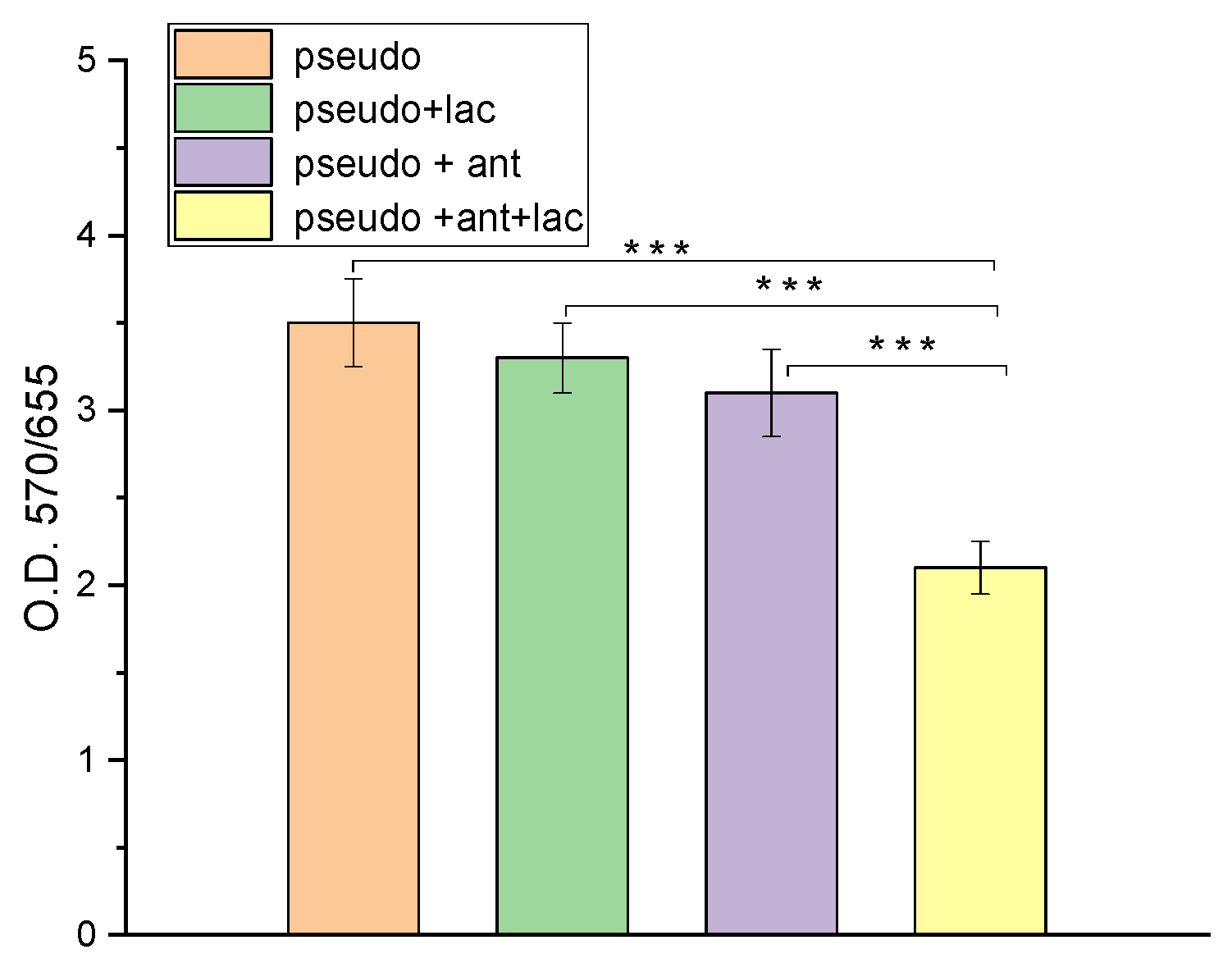
Figure 1. Results of the crystal violet biofilm formation assay. Data are representative of three different experiments ± SD. Significant differences are indicated by *** p < 0.001.
Applsci 16 00482 g001
Figure 2. Average SNV-normalized FT-IR spectra acquired in ATR mode from (a) P. aeruginosa biofilms on the Teflon membrane and (b) the Teflon membrane. Spectrum (c) is obtained by subtracting spectrum (b) from spectrum (a) to eliminate the spectral contribution of the Teflon membrane.
Applsci 16 00482 g002
Figure 3. Average FT-IR spectra of P. aeruginosa biofilms on Teflon membranes (black lines), after antibiotic treatment (red lines) and after antibiotic treatment in the presence of L. plantarum (blue lines) in the range (a) 3600–2800 cm−1, (b) 1800–1300 cm−1, and (c) 1150–850 cm−1.
Applsci 16 00482 g003
Figure 4. The average ATR-FTIR spectrum of the P. aeruginosa biofilms in the (a) 3600–3000 cm−1, (b) 3000–2800 cm−1, (c) 1750–1300 cm−1, and (d) 1150–850 cm−1 spectral ranges with the results of the deconvolution analysis (see colored curves).
Applsci 16 00482 g004
Figure 5. The average ATR-FTIR spectrum of the P. aeruginosa biofilms after antibiotic treatment in the (a) 3600–3000 cm−1, (b) 3000–2800 cm−1, (c) 1750–1300 cm−1, and (d) 1150–850 cm−1 spectral ranges with the results of the deconvolution analysis (see colored curves).
Applsci 16 00482 g005
Figure 6. The average ATR-FTIR spectra of the P. aeruginosa biofilm after antibiotic and L. plantarum treatment in the (a) 3600–3000 cm−1, (b) 3000–2800 cm−1, (c) 1750–1300 cm−1, and (d) 1150–850 cm−1 spectral ranges with the results of the deconvolution analysis (see colored curves).
Applsci 16 00482 g006
Figure 7. The difference spectrum obtained by subtracting the average spectrum acquired from the P. aeruginosa biofilms from the average spectrum acquired from the P. aeruginosa biofilms after antibiotic treatment in the range (a) 3700–2800 cm−1, (b) 1800–1300 cm−1, and (c) 1150–850 cm−1.
Applsci 16 00482 g007
Figure 8. The difference spectrum obtained by subtracting the average spectrum acquired from the P. aeruginosa biofilms after antibiotic treatment from the average spectrum acquired from the P. aeruginosa biofilms on Teflon membranes after antibiotic and L. plantarum treatment in the range (a) 3700–2800 cm−1, (b) 1800–1300 cm−1, and (c) 1150–850 cm−1.
Applsci 16 00482 g008
Figure 9. A comparison of the different absorbance ratios listed in Table 1 for the P. aeruginosa biofilms and P. aeruginosa biofilms after antibiotic interaction in the absence and in the presence of the L. plantarum probiotic agent; the ratio values are reported as the mean ± SD. The asterisks indicate when significant differences occurred at p ≤ 0.05.
Applsci 16 00482 g009
Table 1. Ax/Ay indicate the ratio between the absorbances of the selected band, as in [72,75] and the references therein; abbreviations: as = asymmetric, s = symmetric, ν = stretching.
RatioBiomolecular OriginIndication
A(1645-1630)/A1540Amide I/Amide IIProtein rearrangement (PR)
A(1645-1630)/A(2970-2960)Amide I/CH3 s. νProteins/lipid content (P/L)
A(1645-1630)/A(1085-1090)Amide I/PO2 s. νProteins/DNA content (P/D)
A2925/A(2970-2960)CH2 as. ν/CH3 s. νLipid saturation (LS)
A(1085-1090)/A1050PO2 s. ν/C-OH νDNA/Carbohydrate content (D/C)
A(1085-1090)/A(2970-2960)PO2 s. ν/CH3 s. νProtein phosphorylation (PP)
Table 2. The FT-IR peaks observed in the average spectrum of P. aeruginosa on Teflon membranes with assignments in agreement with the data reported in the literature, such as in [79] and the references therein; abbreviations: as = asymmetric, s = symmetric, ν = stretching, δ = bending. The peaks indicated in bold represent the center of the relative Voigt function obtained from the deconvolution fitting procedure.
Peak Position (cm−1)AssignmentsDescription
P. aeruginosa BiofilmP. aeruginosa Biofilm
+
Antibiotic Treatment
P. aeruginosa Biofilm
+
Antibiotic and
Probiotic
Treatment
353135113560ν (O-H)polysaccharides
338033803422ν (O-H)polysaccharides
328032803280ν (O-H) and ν (N-H)polysaccharides and Amide A protein
3191 ν (N-H)Amide A protein
3060 3070ν (=C-H)Unsaturated fatty acid
296029702970νas (C-H)CH3 of fatty acid chains
292529252930νas (C-H)CH2 in fatty acid chains
287528692884νs (C-H)CH3 of fatty acid chains
28552855 νs (C-H)CH2 in fatty acid chains
1713 >ν (C = O)phospholipids
1695
1678
1657
1645
1630
1607
1689
1660
1645
1694
1675
1658
1645
1626
ν (C=O) and δ (C-N) Antiparallel b-sheets
b-turn
a-helix
Unordered
Parallel b-sheets
Amide I protein
15851573 C=Nadenine
1552
1540
1528
1514
1497
1540
1524
1513
1500
1540δ (N-H) and ν (C-N)Amide II protein
1464 δ (C-H)CH2 and CH3
145014501453δ (C-H)CH2 and CH3
1436 δ (C-H)CH2 and CH3
14001400
1388
1400ν (C-O-H)polysaccharides
11201135 ν (C-O)
108410901084νs (PO2)nucleic acids and phospholipids
105010501050ν (C-OH)polysaccharides
1019 1025ν (C-O)
965 973δ (C-H)DNA backbone
932
915
890
860
880 δ (C–OH)DNA contributions
Disclaimer/Publisher’s Note: The statements, opinions and data contained in all publications are solely those of the individual author(s) and contributor(s) and not of MDPI and/or the editor(s). MDPI and/or the editor(s) disclaim responsibility for any injury to people or property resulting from any ideas, methods, instructions or products referred to in the content.