Article

Psychotropic Medicinal Plant Use in Oncology: A Dual-Cohort Analysis and Its Implications for Anesthesia and Perioperative Care


1
Medizinische Klinik II—Hämatologie und Internistische Onkologie, Universitätsklinikum Jena, Am Klinikum 1, 07747 Jena, Germany
2
Klinik für Hals-, Nasen- und Ohrenheilkunde, Kopf-Hals-Chirurgie, Südharz Klinikum Nordhausen gGmbH, Dr.-Robert-Koch-Str. 39, 99734 Nordhausen, Germany
3
Department of Hematology and Medical Oncology, University Medical Center Göttingen, Robert-Koch-Straße 40, 37075 Göttingen, Germany
*
Author to whom correspondence should be addressed.
Appl. Sci. 2026, 16(1), 481; https://doi.org/10.3390/app16010481 (registering DOI)
Submission received: 20 November 2025 / Revised: 24 December 2025 / Accepted: 30 December 2025 / Published: 2 January 2026

Abstract

Psychotropic medicinal plants are commonly used among oncology patients, yet their relevance in the perioperative setting remains insufficiently characterized. We conducted a literature-based identification of 18 neuroactive plants and surveyed 123 cancer patients and 109 healthcare professionals at a tertiary hospital in Northern Thuringia, Germany. Seventy-five percent of patients reported using at least one psychotropic plant. Knowledge levels were high and similar across groups (median 11 plants), while professionals reported a broader usage spectrum (p = 0.042). Frequently known and applied species included Valeriana officinalis, Lavandula angustifolia, Hypericum perforatum, and Urtica. Women used more plants than men (p = 0.024), and higher usage rates were observed in breast cancer and head and neck cancer patients. Heat-map analyses showed substantial overlap in knowledge but differences for species such as Atropa, Cannabis, and Papaver somniferum. Given the potential interactions with anesthetic and analgesic medications, structured preoperative assessment of herbal use is warranted to enhance perioperative safety.

1. Introduction

Herbal products represent one of the most frequently used forms of complementary and integrative medicine among cancer patients [1,2]. In contrast to earlier reports [1,2], recent studies in specific tumor entities, such as head and neck cancer (HNC), have shown that as many as four out of five patients use phytotherapy to alleviate symptoms such as oral or abdominal discomfort [3,4]. These findings indicate that the use of medicinal plants has become an integral part of daily life for many oncology patients.
Despite its popularity, phytotherapy carries a relevant risk of pharmacological interactions. Wolf et al. [5] reported that more than half of all potential interactions between dietary supplements and conventional cancer therapies involved plant-based products. Such interactions can alter drug metabolism, cause unexpected adverse effects, or reduce therapeutic efficacy, highlighting the clinical importance of systematically assessing herbal use in oncology settings [5].
From a perioperative perspective, herbal products may be clinically relevant because they can (i) potentiate central nervous system depression (e.g., additive sedative effects), (ii) alter pharmacokinetics via induction or inhibition of drug-metabolizing enzymes and transporters, and (iii) affect coagulation or cardiovascular stability. Classic and more recent perioperative reviews highlight that such mechanisms can translate into altered anesthetic requirements, increased bleeding risk, or hemodynamic instability, particularly when use is not disclosed during pre-anesthetic assessment [6].
While most research has focused on general phytotherapeutic use, a particular subset of plants exerts neurotropic or psychotropic effects (here operationalized as sedating, euphoric/invigorating, or hallucinogenic properties) and is traditionally applied for sedation, stimulation, or hallucinogenic purposes. Surveys in the general population have shown that approximately 40% of adults uses sedating herbal preparations [7], with lower but still notable rates for hallucinogenic [8] plants. However, these studies were primarily conducted outside of Central Europe and are not representative of the German population. To date, no systematic data exist on the knowledge or use of neuroactive or psychotropic medicinal plants among cancer patients or healthcare professionals in Germany.
Understanding how such plants are used by oncology patients is essential to anticipate possible interactions with conventional treatments. Cancer patients frequently use complementary medicine—among which phytotherapeutic products play a major role—and up to more than 70% do not inform their treating physicians about such use [9]. This is particularly relevant for neuroactive plants, which may influence the central nervous system (CNS) and thereby interact with anesthetic agents. Given that a large proportion of cancer patients undergo surgery requiring anesthesia [10], potential interactions between herbal products and anesthetic drugs may be clinically relevant in the perioperative management of tumor patients.
Building on previous findings of high phytotherapy usage among cancer patients [3,4], the present study pursued three main objectives: to develop a structured questionnaire for systematically identifying the most frequently mentioned psychotropic medicinal plants in the literature; to assess the level of knowledge and usage rates of these plants among oncology patients; and to evaluate knowledge and usage patterns among healthcare professionals in order to compare both groups and determine whether their botanical knowledge bases are similar.

2. Materials and Methods

2.1. Study Design and Survey Development

This exploratory, cross-sectional study was conducted at a single tertiary medical center in Northern Thuringia, Germany, between March 2022 and February 2023. Recruitment was conducted consecutively over a 12-month period to cover an entire annual cycle and reduce potential seasonal bias in herbal product use. The study consisted of two major components: (1) a systematic screening of ethnobotanical and pharmacognostic literature to identify herbal substances with potential psychotropic effects, and (2) a subsequent survey-based investigation among patients diagnosed with malignant tumors and among medical professionals in anesthesiology and intensive care.
At the beginning of the study, nine books on medicinal and herbal plants were systematically screened (Table 1). Analogous to the approach described by [3], the selection of sources covered three categories: (i) books for laypersons, (ii) works on traditional medicine, and (iii) professional textbooks intended for physicians and healthcare practitioners. Three books from each of these categories were included in the screening to ensure a comprehensive representation of both popular and professional perspectives on psychotropic plant use. Books were selected a priori to represent these three source categories and were drawn from the authors’/working group’s reference library (i.e., a convenience sample of German-language standard references), rather than from a formal popularity ranking. The screening was restricted to nine books to balance feasibility and breadth; during screening, we observed diminishing returns, with few additional psychotropic species emerging as further sources were included.
The screening was restricted to German-language print sources, because the aim was to compile a plant list reflecting information channels that are realistically accessible to German-speaking patients (e.g., popular and practical handbooks) and that can be used as a low-threshold anamnesis tool. Each book was screened by reviewing plant entries/monographs and recording whether the text mentioned at least one of the predefined psychotropic indication categories (sedating, euphoric/invigorating, hallucinogenic). Plant and indication terminology was interpreted within the German-language context, as symptom descriptions often involve multiple synonyms and regional usage, and plant naming may vary across sources. Peer-reviewed reviews, ethnobotanical databases, and unrestricted internet sources were not used, as these would shift the focus toward an exhaustive academic compilation rather than the patient-facing information basis relevant for the intended screening instrument.
A structured content analysis was performed to identify plant species reported to possess psychotropic or neuroactive effects. For the purpose of this study, psychotropic properties were defined as hallucinogenic, euphoric/invigorating, or sedative effects. The three categories were chosen a priori because they are broadly described and comparatively consistently labeled across lay and traditional print sources; more specific categories (e.g., anxiolytic, antidepressant, nootropic) were not used due to heterogeneous terminology and overlap, which would increase subjectivity and reduce reproducibility.
Two researchers independently screened the books using a predefined coding scheme and coded plant mentions against the three indication categories (sedating, euphoric/invigorating, hallucinogenic); disagreements were resolved by discussion until consensus was reached. Synonyms and vernacular/region-specific plant names were harmonized in a master list (initially compiled from the German source terminology) and subsequently mapped to scientific names (full binomials) to avoid duplicate entries arising from different common names referring to the same taxon.
Whenever a plant fulfilled at least one of these criteria, it was recorded as a positive entry. Each mention in a different source contributed one point to a cumulative score (all sources weighted equally). Plants that received the highest cumulative scores were considered to be most frequently mentioned for psychotropic use. This scoring process yielded a hit list of 18 plants with the highest frequency of mention according to the literature review. The hit list was derived by ranking taxa by cumulative mention score; to ensure coverage of the predefined symptom categories, we verified that the highest-ranked taxa represented the three categories (sedating, euphoric/invigorating, hallucinogenic) before selecting the final set of 18.
Based on this hit list, two separate questionnaires were developed, one for oncology patients and one for medical staff. Including healthcare professionals served two purposes: (i) to assess whether patients and clinicians share a comparable familiarity with psychotropic/neuroactive medicinal plants, thereby reducing potential communication gaps during history-taking and counseling; and (ii) to capture clinicians’ own use, as personal familiarity/self-use may shape which herbal products are considered, recommended, or actively queried in clinical practice.
The patient questionnaire was designed to assess awareness and use of these plants, as well as demographic and clinical information including age, sex, and tumor diagnosis. The staff questionnaire was designed to explore whether medical personnel had observed or discussed the use of these plants with their patients. Importantly, ‘knowledge’ refers to self-reported awareness/familiarity (i.e., recognition of the plant name/product; item: ‘Yes, I know the plant’) and does not imply pharmacological competence or correct application. Detailed information on indication, dose, formulation, or route of administration was not collected, as the questionnaire was conceived as a low-threshold screening/anamnesis instrument to capture potential exposure relevant to perioperative risk assessment.
The questionnaires were developed in accordance with principles of survey-based clinical research and were pilot-tested for clarity and comprehensibility among a small sample prior to dissemination. The plant items were implemented as closed-ended binary questions (‘know’/‘use’), and the complete questionnaires (German version as administered and English translation) are provided in Appendix A; pilot testing resulted in minor wording adjustments to improve clarity.
Throughout the manuscript, plants are reported by their scientific (Latin) names to ensure unambiguous taxonomic identification; vernacular names as presented to participants are listed in Appendix A. For clarity in a clinically oriented readership, scientific names are given as full binomials (Genus + species) throughout the text; genus-only references are denoted as sp./spp. where appropriate.

2.2. Study Population and Recruitment

The study was conducted in accordance with the principles of the Declaration of Helsinki and Good Clinical Practice (GCP) guidelines. Ethical approval was obtained from the Ethics Committee of Friedrich Schiller University Jena, Germany, which serves as the institutional review board for the teaching hospital where patient recruitment was performed (approval number: 2022–2535, approval date: 7 February 2022). Informed consent was obtained from all participants prior to study inclusion.
Patients were recruited consecutively from the anesthesiology outpatient clinic of the participating center. All eligible patients were approached during the routine pre-anesthetic assessment using a standardized brief invitation (study purpose, voluntary participation, anonymity, and no impact on care). Inclusion criteria comprised: confirmed diagnosis of a malignant tumor, scheduled preoperative anesthesiology consultation, and ability to understand and complete the questionnaire (with assistance if necessary). Exclusion criteria were age < 18 years and non-oncological/benign indication. Patients were free to decline participation; the number of decliners was not systematically recorded.
Patients were referred to the anesthesiology outpatient clinic from various departments including gynecology, urology, otolaryngology, thoracic surgery, abdominal surgery, and neurosurgery. When necessary, trained medical personnel assisted patients in completing the questionnaires to ensure data completeness and comprehension. Staff assisting with questionnaire completion received written instructions and a short briefing to standardize the procedure. Assistance was limited to clarifying wording without suggesting responses.
The survey targeting medical staff was distributed via the SoSci Survey online platform (https://soscisurvey.de). Participants included both physicians and nurses specializing in anesthesiology and intensive care medicine. Recruitment was facilitated through professional networks and direct contacts with hospitals across Germany and therefore represents a convenience sample; no probability-based sampling was used to ensure representativeness. All responses were collected anonymously via the secure online platform.

2.3. Data Collection and Statistical Analysis

Data from both surveys were stored in encrypted electronic form and analyzed descriptively using standard statistical software GraphPad Prism, version 9; GraphPad Software, San Diego, CA, USA). All data were entered and managed using Microsoft Excel (Microsoft Corporation, Redmond, WA, USA). Data quality was ensured by double-entry verification (two-pass data entry by the same study team member) and consistency checks prior to analysis. In addition, predefined plausibility/logic checks (e.g., range checks and cross-variable consistency checks) were applied, and any discrepancies were resolved against the original questionnaire records prior to analysis. Variables were categorized as either continuous or categorical, and data completeness was assessed before statistical calculations. The extent of missing data was minimal; no imputation was performed and analyses were conducted using complete-case analysis.
Descriptive statistics were used to summarize patient and staff characteristics as well as survey responses. Continuous variables were summarized as mean ± standard deviation when approximately normally distributed and as median (minimum–maximum) for skewed or count-type variables, while categorical variables were presented as absolute and relative frequencies. Descriptive analyses were also used to characterize the sub-cohorts according to tumor type and professional group.
Rates of knowledge and usage (or observed use by staff) were calculated as follows:
Rate = (N (participants knowing/using plant X)/N(participants)).
Here, ‘knowing plant X’ denotes ticking ‘Yes, I know the plant’ (awareness/familiarity), whereas ‘using plant X’ denotes ticking ‘Yes, I use this plant’ (binary self-report). The number of plants known to or used by patients and medical staff were compared using the Mann–Whitney U test. These group comparisons for continuous or ordinal variables were performed using the Mann–Whitney U test because the underlying distributions were not assumed to be normal (non-parametric approach for two independent groups). The same non-parametric test was applied for comparisons between subgroups. A p-value of <0.05 was considered statistically significant.
Sufficient data were available to perform subgroup analyses for the following tumor entities: breast cancer, uro-oncological malignancies, HNC, and other tumor types (combined as “others”). In addition, subgroup analyses were conducted to compare responses between nurses and physicians.
To visualize relationships between individual plant species and reported usage patterns, heat-map cluster analyses were performed using the online tool ClustVis [11]. Hierarchical clustering allowed for pattern recognition and graphical representation of plant knowledge and use among patients and medical staff.
The manuscript text was linguistically edited with the assistance of ChatGPT (GPT-5.0 and GPT-5.1, OpenAI, San Francisco, CA, USA). The tool supported wording and phrasing only and did not influence the scientific content, data analysis, or interpretation of results.

3. Results

3.1. Systematic Literature Screening of Psychotropic Medicinal Plants

The literature screening identified 194 medicinal plants across the nine books examined. Of these, 89 plants were classified as sedating, 59 as euphoric or invigorating, and seven as hallucinogenic. Several plants exhibited overlapping psychotropic indications, including 26 with both sedating and euphoric/invigorating properties, seven with sedating and hallucinogenic effects, three combining all three categories, and three with euphoric/invigorating and hallucinogenic effects. These overlaps are summarized in Figure 1 and detailed in Table 2.

3.2. Cohort Characteristics and Overall Comparison of Plant Knowledge and Use

The study included two distinct cohorts: patients and healthcare professionals (Table 3). Patients had a mean age of 65.2 years (SD ± 11.9 years), with nearly equal gender distribution (52% male, 48% female). The most common diagnoses were breast cancer (26.8%), head and neck cancer (26.0%), and uro-oncological malignancies (13.8%); further details are provided in Table 3.
Healthcare professionals were younger on average (mean 41.8 ± 10.7 years) and predominantly female (66%). Most participants were nurses (61.5%), followed by physicians (24.8%) and other healthcare staff.
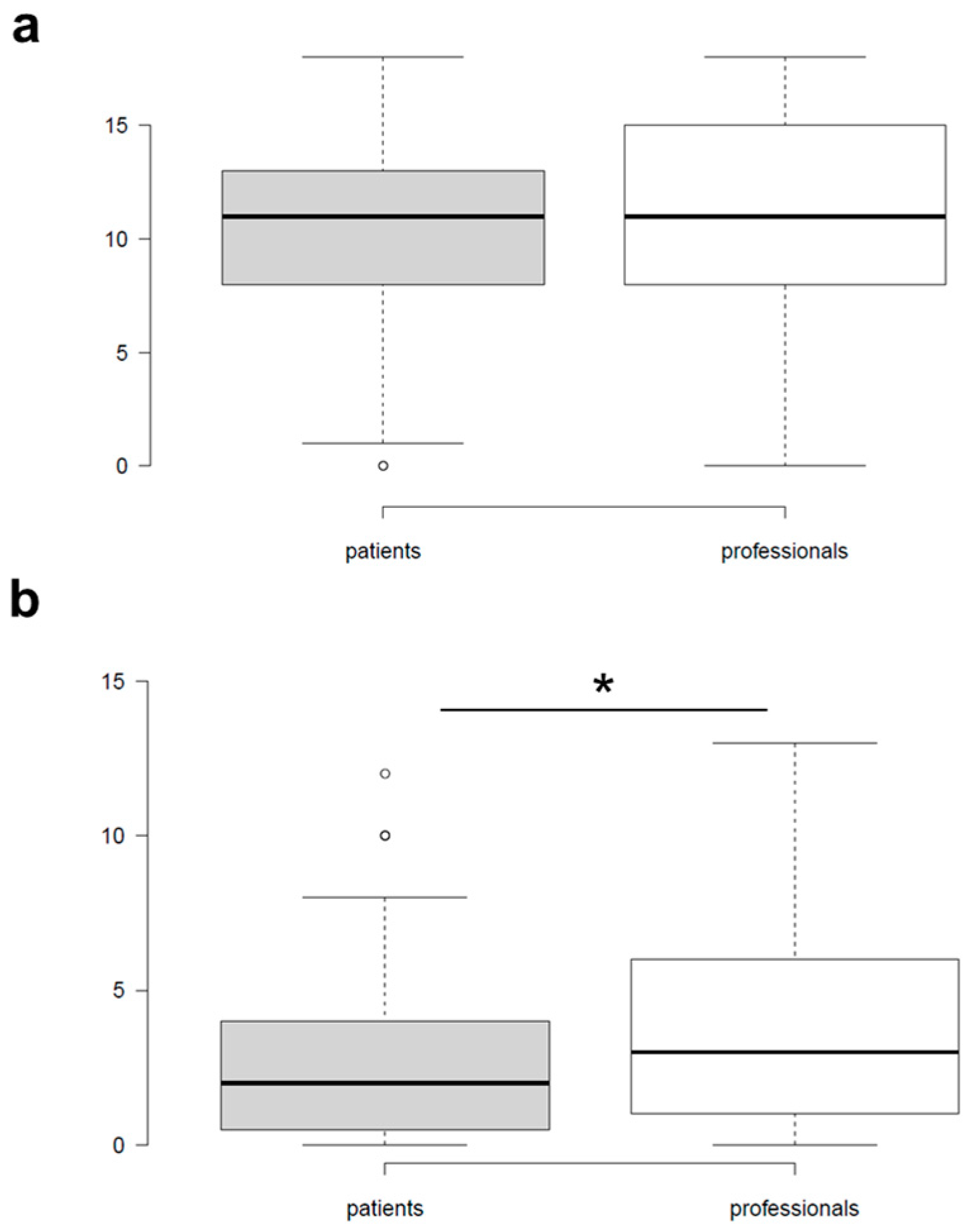
As shown in Figure 2a, both groups demonstrated an identical median knowledge of 11 medicinal plants, with no significant difference between patients and professionals (p = 0.28). In contrast, professionals reported a significantly higher plant usage (median (professionals) = 3) compared to patients (median (patients) = 2; p = 0.042; Figure 2b). The overall user rate of medicinal plants surveyed was 74.0% for patients and 75.2% for professionals, respectively.
In summary, both groups exhibited similar levels of plant-related knowledge, while healthcare professionals reported a broader range of plant use in practice.

3.3. Patterns of Plant Knowledge and Use Among Patients and Professionals

Analysis of individual plants revealed consistent recognition patterns between cohorts. Among patients, the five most frequently known plants were Urtica spp. (90.24%), Humulus lupulus L. (90.24%), Avena spp. (85.37%), Lavandula angustifolia Mill. (85.37%), and Valeriana officinalis L. (84.55%). Among professionals, the most commonly recognized were Humulus lupulus (78.90%), Salvia rosmarinus Spenn. (78.90%), Lavandula angustifolia (76.15%), Valeriana officinalis (75.23%), and Avena spp. (71.56%). Four of the top five plants overlapped, with Urtica spp. unique to patients and Salvia rosmarinus specific to professionals (Table 4).
Reported usage patterns showed minor but notable differences. Patients most frequently used Salvia rosmarinus (42.28%), Urtica spp. (30.89%), Valeriana officinalis (29.27%), Lavandula angustifolia (23.58%), and Hypericum perforatum L./Melissa officinalis L. (22.76% each). Professionals most often used Valeriana officinalis (42.20%), Urtica spp. (37.61%), Hypericum perforatum/Lavandula angustifolia (36.70% each), and Salvia rosmarinus (21.10%). While rankings differed slightly, professionals favoring Valeriana officinalis and Hypericum perforatum, patients favoring Salvia rosmarinus and Urtica spp., the overall plant spectrum was comparable across groups.

3.4. Cluster Visualization of Knowledge and Use Profiles

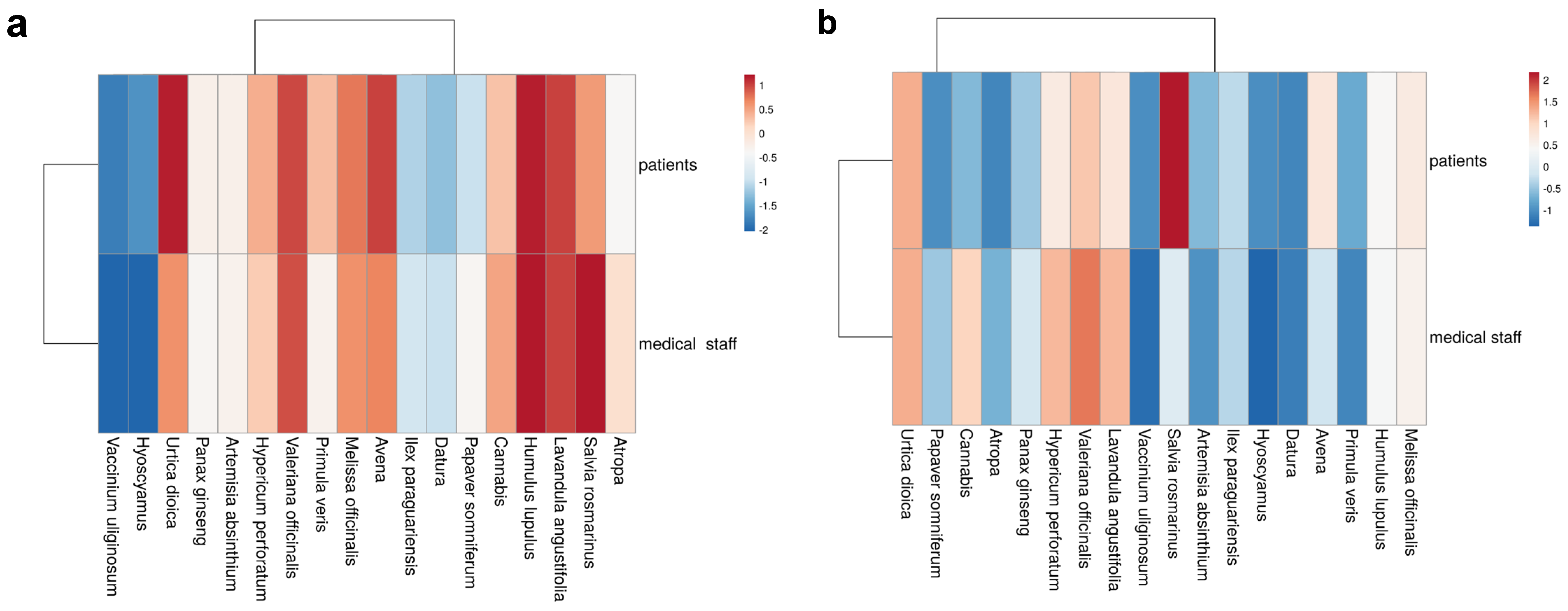
Heatmap cluster analyses (Figure 3) provided a comparative visualization of plant knowledge and usage between patients and professionals.
The knowledge heatmap demonstrated broad consistency across groups, with both cohorts showing high familiarity with Humulus lupulus, Lavandula angustifolia, Valeriana officinalis, and Avena spp. Professionals displayed relatively higher recognition of Salvia rosmarinus and Atropa bellandonna L., whereas patients more frequently identified Urtica spp.
The usage heatmap revealed greater differentiation. Both groups reported frequent use of Valeriana officinalis, Lavandula angustifolia, Hypericum perforatum, Urtica spp., and Salvia rosmarinus. However, professionals more often used Hypericum perforatum and Valeriana officinalis, while patients reported higher usage of Urtica spp. and Salvia rosmarinus Spenn. A steeper gradient for plants such as Cannabis spp. and Papaver somniferum L. indicated higher utilization among professionals, possibly reflecting greater clinical exposure or pharmacological knowledge.
Overall, the heatmaps highlight a strong overlap in botanical knowledge between patients and professionals, alongside specific usage differences for selected species.

3.5. Subgroup Analyses by Tumor Entity and Gender

Gender-based comparison showed that female patients reported significantly higher plant knowledge (median 12, range 0–18) compared to males (median 10, range 1–18; p = 0.035). Similarly, plant usage was higher among women (median 3, range 0–10) than men (median 1, range 0–12; p = 0.024).
Subgroup analysis by tumor entity (Table 5 and Table 6) revealed comparable levels of plant knowledge across groups: median knowledge ranged from 9 in uro-oncology to 11 in breast cancer and HNC, with no significant differences (all p > 0.05). In contrast, plant usage differed significantly. Breast cancer and HNC patients showed the highest usage (median 3 each), compared with lower values in uro-oncology and other tumor types (median 1 each). Pairwise Mann–Whitney U tests identified significantly lower usage in the “others” subgroup versus breast cancer (p = 0.0096) and HNC (p = 0.0025). Usage in uro-oncology trended lower than breast cancer (p = 0.0588) and was significantly lower than HNC (p = 0.0264).
In summary, while medicinal plant knowledge was comparable across oncological subgroups, usage differed markedly, being highest among breast cancer and HNC patients.

4. Discussion

Overall, the present study demonstrates that both oncology patients and healthcare professionals possess a high and largely overlapping level of knowledge regarding psychotropic medicinal plants. While familiarity with common species such as Humulus lupulus, Lavandula angustifolia, and Valeriana officinalis was consistently high in both groups, healthcare professionals reported a broader and more frequent practical use of these plants. Subgroup analyses indicated that female patients, as well as those with breast cancer or head and neck malignancies, exhibited the highest levels of plant usage. Despite these variations, the overall similarity in knowledge patterns between patients and professionals suggests a shared cultural and educational foundation regarding psychotropic medicinal plants. These findings provide an important empirical basis for subsequent discussion on the clinical relevance, safety considerations, and communication strategies surrounding the use of such plants in oncology care.
The central question of this study was straightforward: Do patients undergoing cancer surgery use medicinal plants that could potentially affect anesthesia? As analgesia and sedation represent essential pillars of anesthetic management [12], the focus was placed on plants with sedative, euphoric, invigorating, or hallucinogenic properties. In this perioperative context, ‘sedation’ refers to the hypnotic/sedative component of anesthesia (including procedural sedation), whereas ‘analgesia’ refers to perioperative pain control. Although neuroactive effects are central to the present plant selection, herbal products may also influence anesthesia via other mechanisms (e.g., pharmacokinetic interactions and effects on coagulation, cardiovascular, or metabolic stability), which are discussed below in relation to the most frequently used species.
Interestingly, high user rates were observed, with approximately three out of four patients reporting the use of at least one of the surveyed plants. Usage rates among patients and healthcare professionals were comparable; however, professionals tended to use a broader variety of plants, suggesting a slightly wider spectrum of phytotherapeutic application that may be related to greater exposure to medical information and patient experiences in daily clinical practice. Despite this, knowledge levels were remarkably similar between both groups, indicating a shared foundation of botanical familiarity/awareness that likely originates from traditional medicine. Previous studies have also highlighted this common knowledge base, linking it to the persistence of traditional medical concepts [3,4,13].
Such a shared understanding implies that both patients and professionals are familiar with—and may use—the same medicinal plants, providing a potentially valuable basis for communication and counseling in clinical practice. Recognizing this overlap may facilitate more open discussions about herbal use in the perioperative setting and help to systematically address potential risks. Conversely, this overlap also suggests that professionals’ knowledge may be derived more from traditional pratices than from evidence-based sources. Earlier investigations have demonstrated insufficient knowledge among medical students regarding complementary medicine [14,15] and a limited awareness of officially approved indications for medicinal plants [15].
Taken together, these findings illustrate that while knowledge about medicinal plants is widespread, the actual extent and pattern of their use among cancer patients require closer examination in relation to existing data. The discrepancy between comparable knowledge levels and a broader use among professionals further underlines the need to better understand how phytotherapeutic information is translated into actual behavior in both groups.
Overall, the user rates of phytotherapy observed in this study are consistent with previous investigations in cancer patients, which reported the use of herbal medicine in approximately four out of five individuals [3,4]. These findings suggest that the application of phytotherapy is not unique to oncology; rather, it reflects a broader trend, as user rates between 50% up to nearly 80% have been reported in non-cancer populations [16,17]. Our observation of a higher number of plants used by women aligns with earlier studies on complementary and alternative medicine (CAM), which consistently show higher usage among female and well-educated patients [18]. In addition, the largely similar levels of plant-related knowledge across tumor entities observed in our cohort suggest that familiarity with medicinal plants may be driven more by general cultural and societal exposure than by disease-specific information.
Beyond these general demographic trends, subgroup analyses provided further insight into how the use of medicinal plants varies among specific tumor entities. Interestingly, a higher number of medicinal plants was reported by patients with breast cancer and HNC. The increased use among breast cancer patients is consistent with previous findings showing that this group is generally more inclined to use CAM compared to patients with other tumor entities [1,19]. However, the observation of similarly high usage among HNC patients was unexpected, as this subgroup has traditionally been described as among the least likely to engage in CAM use [1]. A recent review [20] proposed one possible explanation for this apparent discrepancy: patients may not perceive phytotherapy as part of CAM, leading to an underestimation of actual user rates in earlier studies. Our heatmap cluster analyses support these findings by demonstrating substantial overlap in the knowledge and use of core species such as Valeriana officinalis, Lavandula angustifolia, Hypericum perforatum and Urtica spp. between patients and professionals, while at the same time highlighting specific differences for plants with more pronounced psychotropic or regulatory relevance (e.g., Atropa belladonna, Cannabis spp., Papaver somniferum).
In addition to these usage patterns across demographic and tumor-related subgroups, the widespread use of herbal products among cancer patients also carries potential clinical implications, particularly concerning interactions with anesthetic agents during surgical procedures. Our cross-sectional study demonstrates that the use of medicinal plants is common among both cancer patients and healthcare professionals. Awareness of such use is essential to anticipate potential herb–drug interactions, particularly in the perioperative context. Among the five most frequently used plants in our cohort was Valeriana officinalis, a species known to potentiate the sedative effects of anesthetic agents [21]. Hypericum perforatum, by contrast, is a potent cytochrome P450 inducer, which can accelerate the metabolism of anesthetic and analgesic drugs, leading to reduced plasma concentrations and therapeutic efficacy. In addition, other plants identified in our survey, such as Panax ginseng C.A. Mey., are known to influence perioperative parameters—for example, by inducing hypoglycemia [21].
These examples highlight the clinical relevance of routinely assessing herbal medicine use before anesthesia and surgery. International guidelines therefore recommend discontinuing herbal preparations at least two weeks prior to elective procedures to minimize the risk of pharmacological interactions affecting coagulation, cardiovascular or pulmonary stability, and central nervous system activity [6]. In Germany, perioperative recommendations emphasize a structured preoperative history including medication and self-medication; however, herb-/supplement-specific discontinuation intervals are not uniformly standardized across a single national guideline [22]. Given that many patients do not spontaneously disclose their use of complementary or herbal remedies, our findings support the implementation of structured, standardized questions on medicinal plant use in pre-anesthetic assessment to improve patient safety and risk stratification.

Limitations

Several limitations of this study must be acknowledged. First, the cross-sectional design and the sample size may limit the generalizability of the findings. Participation was voluntary and limited to a single tertiary medical center in Northern Thuringia, Germany, which may have introduced selection bias toward patients and professionals with a higher general interest in complementary medicine. Accordingly, the reported usage rates should be interpreted as prevalence estimates for this specific setting (tertiary care; predominantly rural catchment) rather than as nationally representative figures. Regional or setting-related variation (e.g., urban vs. rural populations and differing oncological case-mix) cannot be excluded and should be addressed in future multi-center studies. In addition, all data were based on self-reported questionnaires, which carry the risk of recall bias or socially desirable responses.
Second, although the questionnaire was developed systematically based on a structured literature screening, it covered only a defined number of plants. Consequently, some medicinal plants used by participants may not have been captured, potentially leading to under- or overreporting of certain species. Furthermore, differences in plant nomenclature, regional herbal traditions, and product availability could have influenced the responses. Moreover, the literature screening relied on a convenience sample of books available to the authors/working group and may therefore be subject to selection bias. However, we noted that the number of newly identified species decreased with additional sources, suggesting saturation of the plant list within the screened material. Additionally, restricting the literature screening to German-language print sources (rather than peer-reviewed reviews/databases or online content) may introduce selection bias; however, this choice was intentional to mirror patient-accessible information channels relevant for the screening purpose.
Finally, the results should be interpreted within the cultural and healthcare context of Germany. Phytotherapeutic use patterns, attitudes toward complementary medicine, and access to herbal products as well as professional training and familiarity with phytotherapy, which may vary across professions and institutions may differ considerably in other countries or healthcare systems. Therefore, the findings cannot be generalized to all oncological populations or international settings without caution. As formal training in medicinal plants/phytotherapy was not assessed, subgroup differences cannot be attributed to educational exposure.

5. Conclusions

This study shows that the use of psychotropic and neuroactive medicinal plants is common among both oncology patients and healthcare professionals. Knowledge of these plants is widely shared across groups and tumor entities, reflecting strong cultural and traditional influences. While usage patterns differ slightly—with higher application rates among women, breast cancer patients, and individuals with head and neck cancer—the overall familiarity with core species is remarkably consistent.
Given that several frequently used plants, such as Valeriana officinalis, Hypericum perforatum, and Panax ginseng, may interact with anesthetic or perioperative medications, systematic assessment of herbal product use is essential in the preoperative setting. The identification of a shared botanical knowledge base between patients and professionals may facilitate communication, yet also highlights the need for evidence-based education to address gaps and misconceptions.
Our findings support the implementation of structured questions regarding herbal medicine use in pre-anesthetic evaluations. Future research should validate these results in larger and more diverse cohorts and further explore the clinical impact of plant–drug interactions in oncology and perioperative care.

Author Contributions

Conceptualization, J.B. (Judith Büntzel) and J.B. (Jens Büntzel); methodology, J.B. (Judith Büntzel), A.W., J.B. (Jens Büntzel) and J.H.; validation, J.B. (Judith Büntzel) and J.H.; formal analysis, A.W. and J.B. (Judith Büntzel); investigation, A.W.; resources, J.B. (Jens Büntzel); data curation, A.W. and J.B. (Judith Büntzel); writing—original draft preparation, A.W. and J.B. (Judith Büntzel); writing—review and editing, all authors; visualization, J.B. (Judith Büntzel); supervision, J.B. (Jens Büntzel) and J.H.; project administration, J.B. (Judith Büntzel). All authors have read and agreed to the published version of the manuscript.

Funding

This research received no external funding.

Institutional Review Board Statement

The study was conducted in accordance with the Declaration of Helsinki and approved by the Ethics Committee of Friedrich Schiller University Jena, Germany (approval number: 2022-2535, approval date: 7 February 2022).

Informed Consent Statement

Informed consent was obtained from all subjects involved in the study.

Data Availability Statement

The data presented in this study are available on reasonable request from the corresponding author. The data are not publicly available due to privacy and ethical restrictions.

Acknowledgments

The authors acknowledge the assistance of ChatGPT (GPT-5.1, OpenAI, San Francisco, CA, USA) for language editing and improvement in wording and grammar. The tool was used exclusively for linguistic refinement and did not influence the scientific content, data interpretation, or conclusions of the manuscript.

Conflicts of Interest

The authors declare no conflicts of interest.

Abbreviations

The following abbreviations are used in this manuscript:
CAMComplementary and alternative medicine
GCPGood Clinical Practice
HNCHead and neck cancer
SDStandard deviation

Appendix A

Questionnaire (German) used for surveying cancer patients and health care professionals:
Anamnesebogen Phytotherapie (Heilpflanzen)
Wir bitten Sie, Zutreffendes mit einem “X” zu kennzeichnen.
Name der PflanzeJa, Ich Kenne Die PflanzeJa, Ich Nutze Diese Pflanze
Baldrian
Hopfen
Lavendel
Melisse
Schlüsselblume
Johanniskraut
Rosmarin
Wermut
Ginseng
Mate
Brennnessel
Hafer
Tollkirsche
Stechapfel
Bilsenkraut
Hanf
Rauschbeere
Schlafmohn
Wir verwenden Ihre Angaben streng anonym. Bitte geben Sie uns dennoch ein paar Informationen. Bitte kreuzen Sie Ihr Geschlecht an:
weiblich  ▢  männlich ▢  divers  ▢
Wie alt sind Sie?  _______ Jahre
Liegt oder lag eine Tumorerkrankung bei Ihnen vor? Ja ▢  Nein ▢
Questionnaire (English translation, using Latin plant designations) used for surveying cancer patients and health care professionals:
Plant NameYes, I Know This Plant.Yes, I Use This Plant.
Valeriana officinalis L.
Humulus lupulus L.
Lavandula angustifolia Mil L.
Melissa officinalis L.
Primula veris L.
Hypericum perforatum L.
Salvia rosmarinus Spenn.
Artemisia absinthium L.
Panax ginseng C. A. Mey.
Ilex paraguariensis A. St.—HiL.
Urtica spp.
Avena spp.
Atropa belladonna L.
Datura spp.
Hyoscyamus sp.
Cannabis sp.
Vaccinium uliginosum L.
Papaver somniferum L.
We use your information strictly anonymously. Nevertheless, please provide us with a few details. Please tick your gender:
female ▢ male ▢ diverse ▢
How old are you? _______ years
Do you have or have you had a tumor disease? Yes ▢ No ▢

References

  1. Molassiotis, A.; Fernández-Ortega, P.; Pud, D.; Ozden, G.; Scott, J.A.; Panteli, V.; Margulies, A.; Browall, M.; Magri, M.; Selvekerova, S.; et al. Use of complementary and alternative medicine in cancer patients: A European survey. Ann. Oncol. 2005, 16, 655–663. [Google Scholar] [CrossRef]
  2. Huebner, J.; Micke, O.; Muecke, R.; Buentzel, J.; Prott, F.J.; Kleeberg, U.; Senf, B.; Muenstedt, K. User rate of complementary and alternative medicine (CAM) of patients visiting a counseling facility for CAM of a German comprehensive cancer center. Anticancer Res. 2014, 34, 943–948. [Google Scholar]
  3. Ritschel, M.-L.; Hübner, J.; Wurm-Kuczera, R.; Büntzel, J. Phytotherapy known and applied by head-neck cancer patients and medical students to treat oral discomfort in Germany: An observational study. J. Cancer Res. Clin. Oncol. 2022, 149, 2057–2070. [Google Scholar] [CrossRef]
  4. Buentzel, S.K.; Huebner, J.; Buentzel, J.; Micke, O. Medicinal Plants Used for Abdominal Discomfort—Information from Cancer Patients and Medical Students. In Vivo 2022, 36, 2422–2433. [Google Scholar] [CrossRef]
  5. Wolf, C.P.J.G.; Rachow, T.; Ernst, T.; Hochhaus, A.; Zomorodbakhsch, B.; Foller, S.; Rengsberger, M.; Hartmann, M.; Hübner, J. Interactions in cancer treatment considering cancer therapy, concomitant medications, food, herbal medicine and other supplements. J. Cancer Res. Clin. Oncol. 2022, 148, 461–473. [Google Scholar] [CrossRef] [PubMed]
  6. Elvir Lazo, O.L.; White, P.F.; Lee, C.; Cruz Eng, H.; Matin, J.M.; Lin, C.; Del Cid, F.; Yumul, R. Use of herbal medication in the perioperative period: Potential adverse drug interactions. J. Clin. Anesth. 2024, 95, 111473. [Google Scholar] [CrossRef]
  7. Irún, L.N.; Gras, A.; Parada, M.; Garnatje, T. Plants and mental disorders: The case of Catalan linguistic area. Front. Pharmacol. 2023, 14, 1256225. [Google Scholar] [CrossRef] [PubMed]
  8. Walsh, C.A.; Livne, O.; Shmulewitz, D.; Stohl, M.; Hasin, D.S. Use of plant-based hallucinogens and dissociative agents: U.S. Time Trends, 2002–2019. Addict. Behav. Rep. 2022, 16, 100454. [Google Scholar] [CrossRef]
  9. Davis, E.L.; Oh, B.; Butow, P.N.; Mullan, B.A.; Clarke, S. Cancer patient disclosure and patient-doctor communication of complementary and alternative medicine use: A systematic review. Oncologist 2012, 17, 1475–1481. [Google Scholar] [CrossRef] [PubMed]
  10. Dubowitz, J.A.; Sloan, E.K.; Riedel, B.J. Implicating anaesthesia and the perioperative period in cancer recurrence and metastasis. Clin. Exp. Metastasis 2018, 35, 347–358. [Google Scholar] [CrossRef]
  11. Metsalu, T.; Vilo, J. ClustVis: A web tool for visualizing clustering of multivariate data using Principal Component Analysis and heatmap. Nucleic Acids Res. 2015, 43, W566–W570. [Google Scholar] [CrossRef]
  12. Tobias, J.D.; Leder, M. Procedural sedation: A review of sedative agents, monitoring, and management of complications. Saudi J. Anaesth. 2011, 5, 395–410. [Google Scholar] [CrossRef]
  13. Alotiby, A.; Alshareef, M. Comparison Between Healthcare Professionals and the General Population on Parameters Related to Natural Remedies Used During the COVID-19 Pandemic. J. Multidiscip. Healthc. 2021, 14, 3523–3532. [Google Scholar] [CrossRef]
  14. van Rensburg, R.; Razlog, R.; Pellow, J. Knowledge and attitudes towards complementary medicine by nursing students at a University in South Africa. Health SA Gesondheid 2020, 25, 1436. [Google Scholar] [CrossRef]
  15. Büntzel, S.K.; Ritschel, M.-L.; Wurm-Kuczera, R.; Büntzel, J. Indications of medical plants: What do medical students in Germany know? A cross-sectional study. J. Cancer Res. Clin. Oncol. 2022, 148, 3175–3182. [Google Scholar] [CrossRef]
  16. Planta, M.; Gundersen, B.; Petitt, J.C. Prevalence of the use of herbal products in a low-income population. Fam. Med. 2000, 32, 252–257. [Google Scholar]
  17. Welz, A.N.; Emberger-Klein, A.; Menrad, K. The importance of herbal medicine use in the German health-care system: Prevalence, usage pattern, and influencing factors. BMC Health Serv. Res. 2019, 19, 952. [Google Scholar] [CrossRef]
  18. Rashrash, M.; Schommer, J.C.; Brown, L.M. Prevalence and Predictors of Herbal Medicine Use Among Adults in the United States. J. Patient Exp. 2017, 4, 108–113. [Google Scholar] [CrossRef] [PubMed]
  19. Tautz, E.; Momm, F.; Hasenburg, A.; Guethlin, C. Use of Complementary and Alternative Medicine in breast cancer patients and their experiences: A cross-sectional study. Eur. J. Cancer 2012, 48, 3133–3139. [Google Scholar] [CrossRef] [PubMed]
  20. Lee, E.L.; Richards, N.; Harrison, J.; Barnes, J. Prevalence of Use of Traditional, Complementary and Alternative Medicine by the General Population: A Systematic Review of National Studies Published from 2010 to 2019. Drug Saf. 2022, 45, 713–735. [Google Scholar] [CrossRef] [PubMed]
  21. Ang-Lee, M.K.; Moss, J.; Yuan, C.S. Herbal medicines and perioperative care. JAMA 2001, 286, 208–216. [Google Scholar] [CrossRef] [PubMed]
  22. Available online: https://www.oegari.at/web_files/cms_daten/empfehlung_evaluation_erwachsener_patienten_vor_elektiven_eingriffen_dgai_dgch_dgim.pdf (accessed on 18 December 2025).
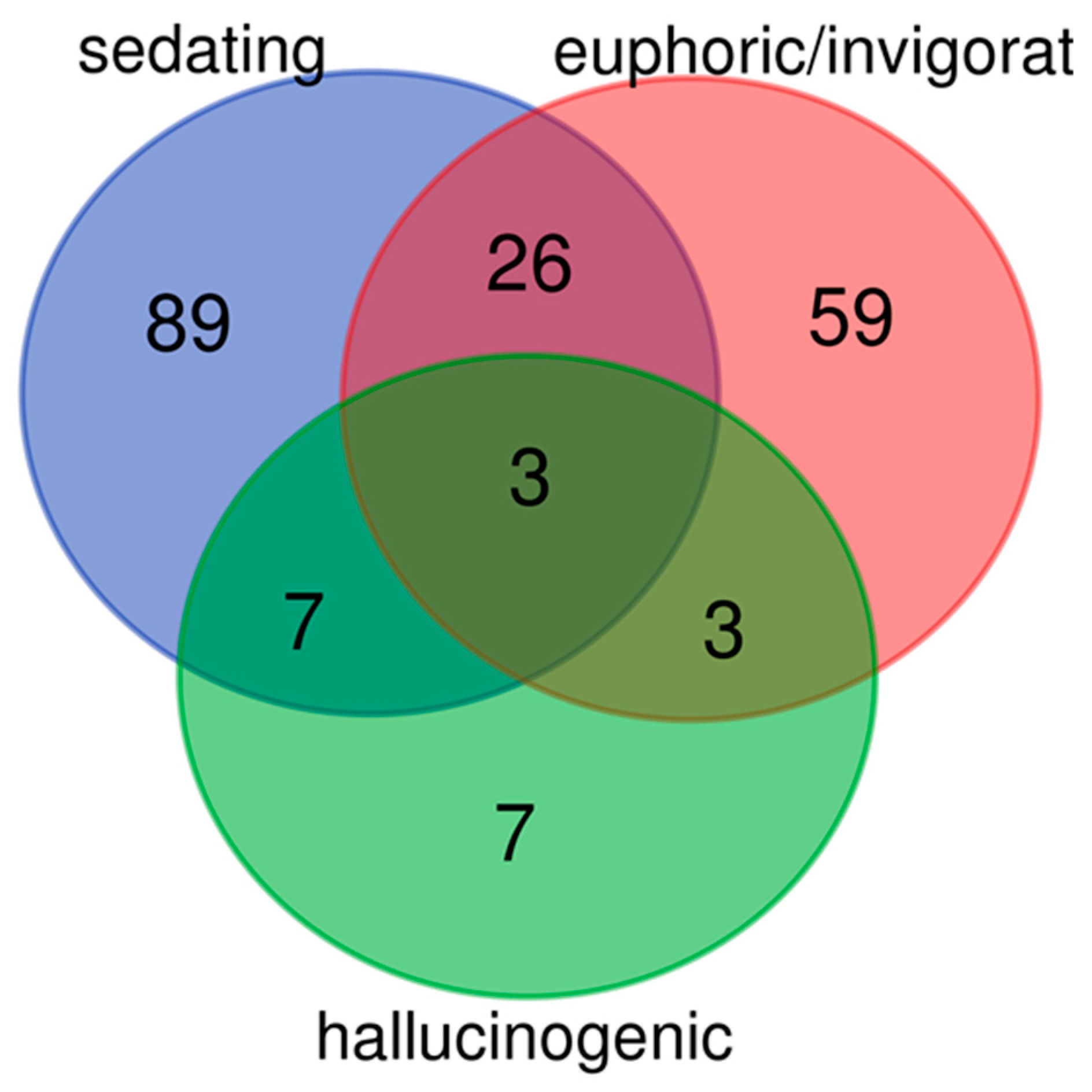
Figure 1. Venn diagram showing the distribution of 194 plants identified in the literature search categorized as sedating, euphoric/invigorating, or hallucinogenic, including their numerical overlaps.
Applsci 16 00481 g001
Figure 2. Comparison of medicinal plant knowledge and usage between patients and healthcare professionals. (a) Number of psychotropic medicinal plants known by patients and healthcare professionals. Median knowledge was identical in both groups (patients: 11; professionals: 11). No statistically significant difference was observed (Mann–Whitney U test, p = 0.28). (b) Number of psychotropic medicinal plants used by patients and healthcare professionals. Professionals reported a significantly higher usage compared to patients (patients: median 2; professionals: median 3; Mann–Whitney U test, p = 0.042). The asterisk (*) indicates p < 0.05.
Applsci 16 00481 g002
Figure 3. Heatmap cluster analyses of knowledge and usage of psychotropic medicinal plants among patients and healthcare professionals. (a) Heatmap illustrating the standardized knowledge scores for all 18 psychotropic medicinal plants in patients and medical staff. Rows represent participant groups, and columns represent plant species. Color intensity indicates z-standardized values (red = higher knowledge; blue = lower knowledge). Hierarchical clustering was applied to visualize similarities between groups and plant profiles. (b) Heatmap showing the standardized usage frequencies of the same 18 plants in patients and medical staff. Color coding reflects z-standardized usage values (red = higher usage; blue = lower usage). Hierarchical clustering highlights overlapping and distinct usage patterns between groups.
Applsci 16 00481 g003
Table 1. German literature screened for plants used as sedative/hallucinogenic/euphoric or invigorating drug in German traditional popular medicine.
TitleCategory
Bäumler Siegfried. Heilpflanzenpraxis heute—Arzneipflanzenporträts: Heilpflanzenpraxis heute—Arzneipflanzenporträts. Elsevier Health Sciences 2021.professional
Heilpflanzen: Erkennen sammeln und anwenden. Neuer Kaiser 2013.traditional
Hirsch Siegrid und Wolf Ruzicka. Die Kräuter in meinem Garten: 500 Heilpflanzen 2000traditional
Huber Roman. Mind-Maps Phytotherapie. 2. aktualisierte Edition. Thieme 2019.professional
Mayer Johannes Gottfried Bernhard Uehleke und Pater Kilian Saum. Das große Buch der Klosterheilkunde. 1. Aufl. ZS Verlag Zabert Sandmann GmbH 2013.traditional
Pahlow Apotheker M. Das große Buch der HEILPFLANZEN. Weltbild 2000.interested layman
Schönfelder Peter und Ingrid Schönfelder. Der Kosmos Heilpflanzenführer: Über 600 Heil- und Giftpflanzen Europas. 4. Aufl. With Marianne Golte-Bechtle und Wolfgang Lang. Franckh Kosmos Verlag 2019.interested layman
Steigerwald Petra-Angela. Phytotherapie pocket. 3. Aufl. Börm Bruckmeier 2015.professional
Stumpf Ursula. Unsere Heilkräuter: bestimmen und anwenden. 3. Aufl. Kosmos 2021.interested layman
Table 2. Indications of plants identified in the literature search. Plant names are reported as retrieved from the screening output; taxonomic authorities and sp./spp. qualifiers were not added to avoid modifying the analytical output.
Indication(s)N (Plants)Plants
Euphoric/invigorating, hallucinogenic, sedating3Cannabis, Dryas_octopetala, Hyoscyamus
Euphoric/invigorating, sedating26Acorus, Actaea_racemosa, Aloysia_citrodora, Alpinia_officinarum,
Angelica, Apium, Artemisia_abrotanum, Artemisia_vulgaris, Avena, Borago_officinalis, Centaurium, Cola, Crataegus, Curcuma_longa, Dictamnus, Fragaria_vesca, Ginkgo_biloba, Hypericum, Jasminum_officinale, Ocimum_basilicum, Origanum_majorana, Piper_methysticum, Rhodiola_rosea, Thymus_serpyllum, Veronica_beccabunga, Vitex_agnus-castus
Hallucinogenic, sedating7Arum, Atropa, Claviceps_purpure, Conium_maculatum, Corydalis_cava, Datura, Solanum_nigrum
Euphoric/invigorating, hallucinogenic3Artemisia_absinthium, Nicotiana_tabacum, Veratrum_album
Sedating89Abies, Achillea_millefolium, Adonis, Ajuga_reptans, Althaea_officinalis, Anagallis_arvensis, Anethum_graveolens, Argentina_anserina, Ballota_nigra, Bellis_perennis, Berberis_vulgaris, Bistorta_officinalis, Boswellia, Calendula_officinalis, Centranthus_ruber, Chelidonium, Cicuta_virosa, Cinchona, Citrus_x_aurantium, Convallaria_majalis, Coriandrum_sativum, Crocus_sativus, Cuminum_cyminum, Cyamopsis_tetragonoloba, Cytisus_scoparius, Drosera, Eschscholzia_californica, Fagopyrum, Foeniculum_vulgare, Fumaria, Galium_odoratum, Gynostemma_pentaphyllum, Helianthus_annuus, Helleborus, Humulus, Hydrocotyle, Lamium, Lavandula_angustifolia, Leonurus_cardiaca, Leptospermum_scoparium, Leucanthemum_vulgare, Lobelia, Lotus, Lycopus, Mandragora, Marrubium, Matricaria_recutita, Melissa_officinalis, Melittis, Mentha_arvensis, Mentha_x_piperita, Meum_athamanticum, Monarda, Morus, Scutellaria, Myrtus_communis, Nardostachys, Nepeta_cataria, Nymphaea_alba, Oenothera, Paeonia, Papaver, Papaver_rhoeas, Parnassia, Passiflora, Peumus_boldus, Pilocarpus_pennatifolius, Piscidia_piscipula, Platycodon_grandifloras, Primula_veris, Rauwolvia, Rheum_rhaponticum, Rhus_coriaria, Salix, Salvia_fruticosa, Sambucus, Sedum, Simaroubaceae, Solidago_canadensis, Syzygium_aromaticum, Tagetes
Tanacetum_parthenium, Thalictrum, Tilia, Valeriana_officinalis, Verbena_officinalis, Veronica_officinalis, Zea_mays, Zingiber_officinale
Euphoric/invigorating59Allium_cepa, Allium_sativum, Allium_schoenoprasum, Allium_ursinum, Anchusa_officinalis, Armoracia_rusticana, Arnica_montana, Artemisia_umbelliformis, Betonica_officinalis, Camellia_sinensis, Carlina_acaulis, Cichorium_intybus
Cinnamomum_camphora, Cochlearia_officinalis, Cupressus, Daucus_carota, Elettaria_cardamomum, Eleutherococcus_senticosus, Ephedra, Erica, Galanthus, Geum_urbanum, Glycine_max, Hippopha_rhamnoides, Hyssopus_officinalis, Illicium_verum, Juglans_regia, Linum, Lycium_barbarum, Mentha, Mercurialis_perennis, Myosotis, Myristica_fragrans, Panax_ginseng, Panicum_miliaceum, Paullinia_cupana, Petasites, Peucedanum_ostruthium, Piper_nirgum, Polygala, Pulsatilla, Punica_granatum, Rosa_corymbifera, Ruta_graveolens, Saliva_officinalis, Salvia_rosmarinus, Salvia_sclarea, Satureja, Serenoa_repens, Sium_sisarum, Solanum_lycopersicum, Syzygium_cumini, Taraxacum, Theobroma_cacao, Thuja, Thymus_officinalis, Urtica, Valeriana_celtica, Vitis_vinifera
Hallucinogenic7Brugmansia, Lactuca_virosa, Papaver_somniferum, Phalaris_canariensis, Sassafras_albidum, Scopolia_carniolica, Vaccinium_uliginosum
Table 3. Clinical characteristics of patients and professionals surveyed. SD—standard deviation.
Patients
Age [years] +/− SD65.18 +/− 11.85
Male64/123 (52.03%)
Female59/123 (47.97%)
Cancer Entity
Breast cancer33/123 (26.83%)
Lung cancer8/123 (6.50%)
Head and neck cancer32/123 (26.02%)
Uro-oncology17/123 (13.82%)
Others21/123 (17.07%)
>1 cancer entity5/123 (4.07%)
No information7/123 (5.69%)
Health care professionals
Age [years] +/− SD41.83 +/− 10.65
Male30/109 (27.52%)
Female72/109 (66.06%)
No information7/109 (6.42%)
Physician27/109 (24.77%)
Nurse67/109 (61.47%)
Others2/109 (1.83%)
No information13 (11.93%)
Table 4. Knowledge and user rates amongst cancer patients and health care professionals.
Knowledge Usage
PatientsProfessionalsPatientsProfessionals
Artemisia absinthium L.52.85%57.80%6.50%8.26%
Atropa belladonna L.49.59%62.39%0.81%11.93%
Avena spp.85.37%71.56%23.58%18.35%
Cannabis spp.66.67%68.81%6.50%33.94%
Datura spp.26.02%47.71%0.81%5.50%
Humulus lupulus L.90.24%78.90%20.33%25.69%
Hyoscyamus spp.16.26%33.03%1.63%2.75%
Hypericum perforatum L.70.73%65.14%22.76%36.70%
Ilex paraguariensis A. St.—HiL.30.08%48.62%10.57%16.51%
Lavandula angustifolia MilL.85.37%76.15%23.58%36.70%
Melissa officinalis L.78.86%70.64%22.76%27.52%
Panax ginseng C. A. Mey. 52.85%56.88%8.94%19.27%
Papaver somniferum L.34.15%56.88%1.63%14.68%
Primula veris L.67.48%57.80%4.88%6.42%
Salvia rosmarinus Spenn. 73.98%78.90%42.28%21.10%
Urtica spp.90.24%70.64%30.89%37.61%
Vaccinium uliginosum L.12.20%33.03%2.44%3.67%
Valeriana officinalis L.84.55%75.23%29.27%42.20%
Table 5. Sub-group analysis of cancer entities depicting median knowledge and use of medicinal plants. HNC—head and neck cancer.
KnowledgeMedianMinimumMaximum
breast11018
HNC11418
uro-oncology9217
others10018
UsageMedianMinimumMaximum
breast308
HNC3010
uro-uncology1012
others1010
Table 6. p-value matrix depicting sub-group analysis of cancer entities comparing either number of plants known or used against each other. HNC—head and neck cancer.
KnowledgeBreastHNCUro-OncologyOthers
breast 0.72790.28010.9761
HNC0.7279 0.14710.8572
uro-oncology0.28010.1471 0.2543
others0.97610.85720.2543
UsageBreastHNCUro-OncologyOthers
breast 0.63120.05880.0096
HNC0.6312 0.02640.0025
uro-oncology0.05880.0264 0.6892
others0.00960.00250.6892
Disclaimer/Publisher’s Note: The statements, opinions and data contained in all publications are solely those of the individual author(s) and contributor(s) and not of MDPI and/or the editor(s). MDPI and/or the editor(s) disclaim responsibility for any injury to people or property resulting from any ideas, methods, instructions or products referred to in the content.