


Abstract
The aim of the study is to carry out a technical assessment of a Hungarian baths complex, which is a major tourist center with approximately 180,000 visitors per year. The bath complex had been partially closed. Following the partial closure of the spa, a comprehensive survey was carried out, identifying four main problem areas: operational difficulties with the thermal and cold-water wells, outdated water treatment technology, structural damage to the swimming pool and general mechanical deficiencies. Based on these investigations, recommendations were made for a safe and sustainable reopening of the spa, such as the reactivation of the geothermal system, the installation of modern filtration and dosing systems, and the application of energy-efficient and intelligent technologies. Based on the recommendations, the safe, economical, and sustainable reopening of the spa can be achieved, while also providing guidance for the modernization of other spa complexes. A separate section presents detailed development proposals, such as restarting the geothermal system, applying modern water treatment technologies and intelligent control systems, renovating the pool structure, and modernizing the mechanical and electrical systems. These proposals contribute to the modernization of the spa infrastructure and can also provide guidance for solving technical problems in other similar facilities.
1. Introduction
Geothermal energy is a sustainable and environmentally friendly source of energy derived from the Earth’s internal heat. As non-renewable energy sources are depleting, global demand for renewable energy sources is increasing, so they are receiving increasing attention [1,2,3,4,5,6]. The use of geothermal energy enables the generation of heat and electricity, while contributing to reducing dependence on fossil fuels and reducing carbon emissions [7,8,9]. Although direct geothermal energy use is still relatively low globally, it has been steadily increasing in recent years.
Geothermal systems also offer the potential for direct heat recovery, such as heating buildings and running spas, as well as electricity generation [10]. Shallow systems (ground source heat pumps) are mainly used in urban environments, while thermal energy from deeper aquifers is used for industrial and energy purposes. With the development of fifth generation district heating systems, geothermal energy has become central to sustainable urban development [11].
Hungary’s geological conditions provide outstanding geothermal potential in Europe, especially due to the favorable geological structure of the Pannonian Basin [12,13]. More than 70% of the country’s territory is covered by thermal water warmer than 30 °C, which is mainly derived from two main aquifer systems: porous Neogene basin-fill sediments and fractured-karstified Paleozoic and Mesozoic basement rocks [14]. There are about 1000 thermal wells in operation in the country, mainly from carbonate and Upper Miocene siliciclastic aquifers. The tradition of geothermal energy exploitation dates back to ancient Roman times and still plays an important role, especially in the operation of balneological and recreational spas [15]. One of the largest applications of geothermal energy is in the operation of thermal baths, which play a prominent role in improving the quality of life of society, especially in the fields of health preservation, rehabilitation, and the prevention of illness in old age. In several countries of the European Union, balneotherapy treatments are not only part of the health care of the population, but can also be interpreted as a factor in tourism and economic development [16,17]. The effectiveness of thermal baths is also supported by several randomized clinical trials focusing on various musculoskeletal diseases and chronic conditions [18].
Geothermal energy plays a particularly important role in the maintenance of domestic spas and thermal baths, which not only provide recreational and health services, but are also drivers of tourism and the local economy.
The following examples illustrate the versatile uses, development potential and challenges of municipal geothermal systems. Buday et al. [19] investigated the sustainability aspects of thermal water extraction in a region of eastern Hungary known for its spa tourism and use of geothermal resources. The study emphasizes the role of geothermal energy in the local economy and tourism, and the importance of measures to ensure the long-term sustainability of water resources. In a northern Hungarian city located near karstic mountain formations, a complex geothermal heating system has been developed that utilizes thermal karst water. The system has significantly reduced natural gas consumption and pollutant emissions, contributing to the sustainable development of the city [20]. In a small Hungarian municipality characterized by rural infrastructure and public service needs, a modern geothermal energy system has been implemented. This project has significantly supported the heating of local public institutions and residential buildings, while also stimulating local economic growth [21]. Vondra et al. [22] show how a Czech spa experimental unit was successfully used to cool thermal water and simultaneously apply heat recovery, leading to significant energy savings. Papadakis and Katsaprakakis [23] examine energy efficiency interventions in public buildings, with a particular focus on building insulation, HVAC system upgrades, renewable energy integration, and smart systems. The authors point out that these measures can significantly contribute to reducing the energy consumption and operating costs of public buildings, such as baths and swimming pools, while improving the sustainability of their operation. Smedegård et al. [24] investigate the energy efficiency of a Norwegian swimming pool facility using multiple linear regression (MLR) to analyze factors affecting energy and water consumption. The research has resulted in the optimization of heat supply and water treatment systems, resulting in significant energy savings and reduced operating costs.
Geothermal energy also plays a key role in tourism [25] by, for example, balancing seasonal traffic [26], and contributing to the physical and mental well-being of visitors [27]. Spas and thermal baths not only offer health services, but also attract thousands of tourists and contribute to the local economy [28]. However, ageing infrastructure and outdated technological systems pose serious sustainability challenges [29]. Moreover, these facilities have significant energy and water requirements. This can threaten the economy and sustainability of operations, along with the aging of the infrastructure and the obsolescence of technological systems. This is why it is important to examine domestic spas, as their technical condition is outdated and old.
A prominent example is the Gyopáros Spa in Orosháza, which has been a key player in the region’s wellness and spa tourism for decades. However, in recent years, the deterioration of the technical condition of the spa—an insufficient geothermal system, unreliable water supply and architectural problems—has led to its partial closure.
The aim of the present study is to provide a detailed assessment of the technical condition of the Gyopáros Spa, a systematic description of the existing problems and recommendations for the necessary renovations and improvements to enable the spa to reopen safely and sustainably. The study pays particular attention to the geothermal system, the water supply and the condition of the 50 m outdoor swimming pool, which are key to the long-term viability of the spa. The initial hypothesis is that the facility’s current operational challenges stem primarily from outdated infrastructure and technological systems, which can be addressed through targeted technical interventions. A separate section presents development proposals for solving technical problems, including the restoration of the geothermal system, the introduction of modern water treatment and dosing systems, the structural improvement of the swimming pool, and the use of energy-efficient and intelligent mechanical and electrical systems. These proposals are not only aimed at remedying local problems, but can also serve as a model for other spa facilities.
2. Materials and Methods
2.1. Study Location and Spa Description
From a hydrogeological perspective, the area represents a transition between the infiltration zone and stagnant or upwelling water flow systems. The majority of the aquifers are Pleistocene, Upper Pannonian and Lower Pannonian, while the underlying bedrock and Miocene layers contain fossil thermal waters (Table 1). In the Orosháza region, the geothermal gradient is higher than the Hungarian average, 55–67 °C/km [30].
Table 1.
Summary of the hydrogeological conditions of the layers [30].
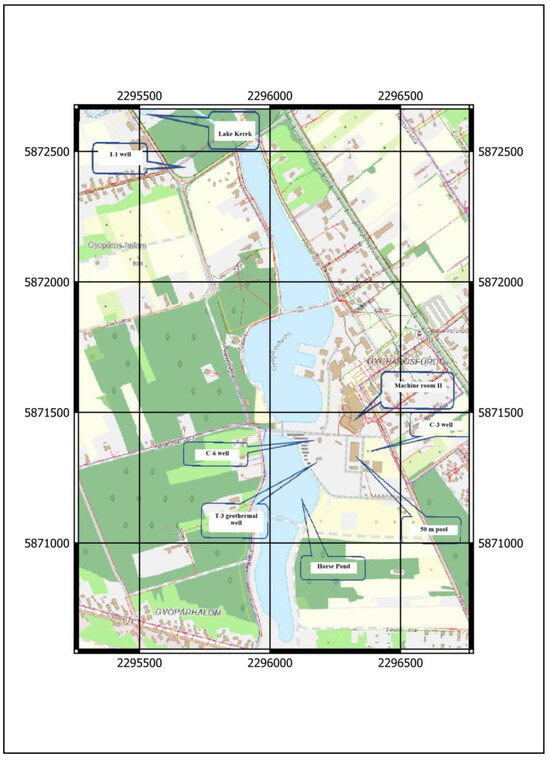
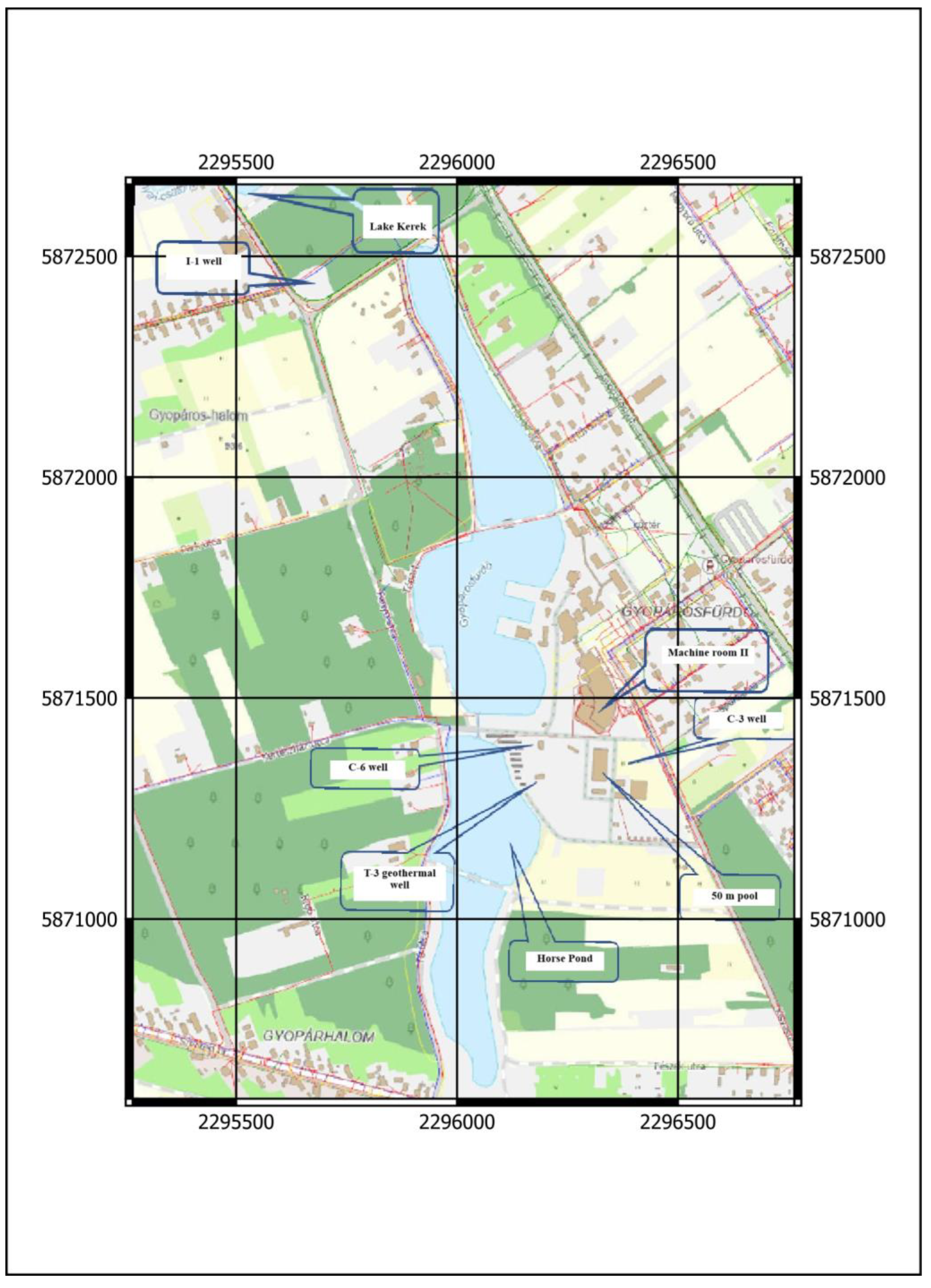
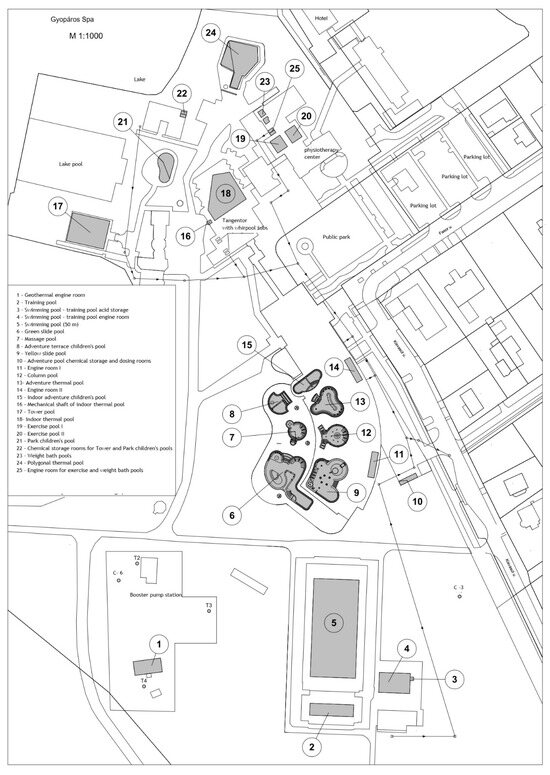
The Gyopáros Spa is located in the eastern part of Orosháza, and used to be a major tourist center with an annual attendance of about 180,000 visitors. The complex consists of several separate units: a leisure pool, a swimming pool, a spa, outdoor pools and a wellness area. Services include balneotherapy treatments, aqua gymnastics, massage, sauna, physiotherapy and children’s pools. Figure 1 and Figure 2 show the site plan with the machine rooms and wells.
Figure 1.
Site plan with the machine rooms and wells.
Figure 2.
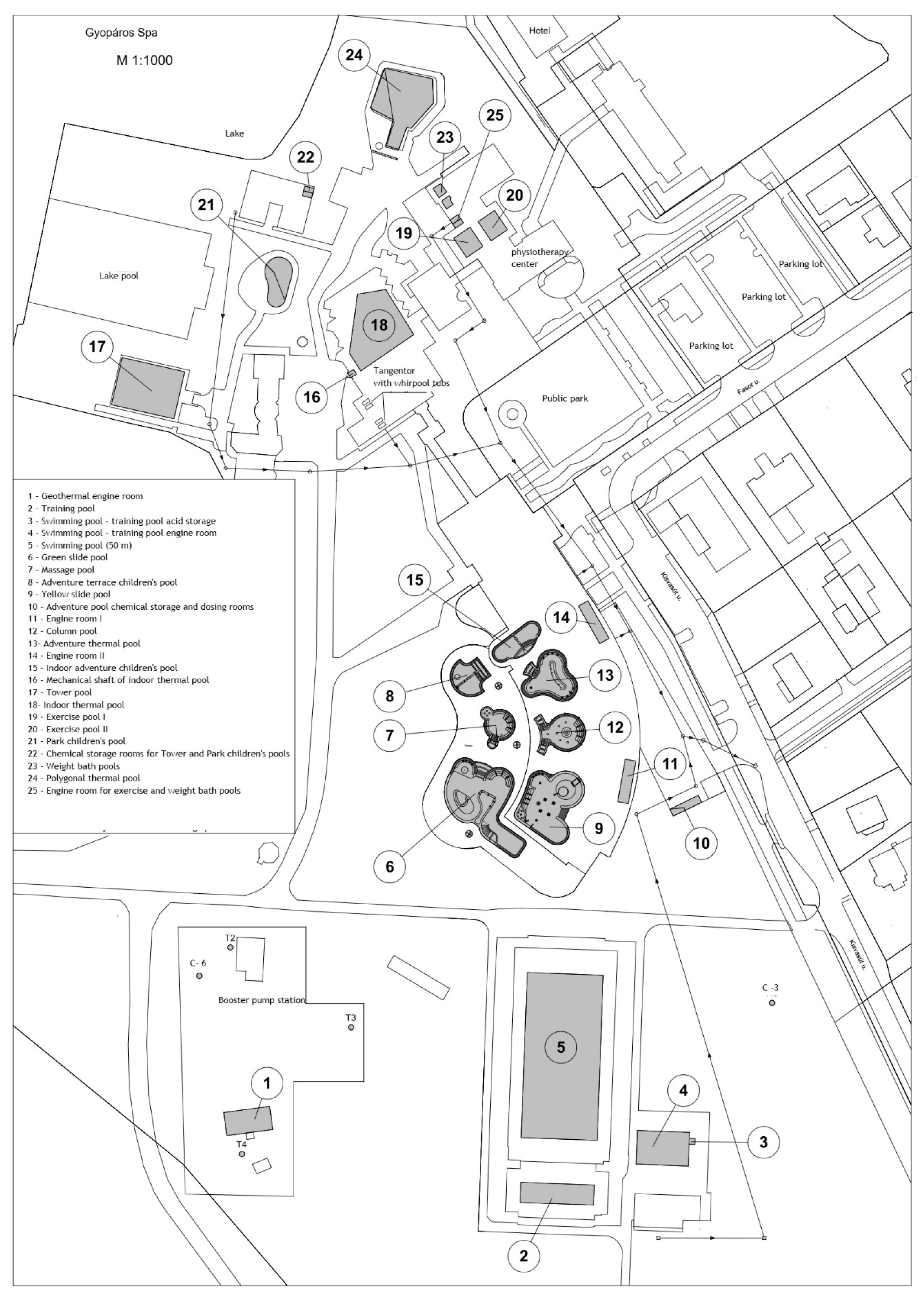
Gyopáros Spa site plan with pools and mechanical rooms.
2.2. The Investigation Process and Criteria
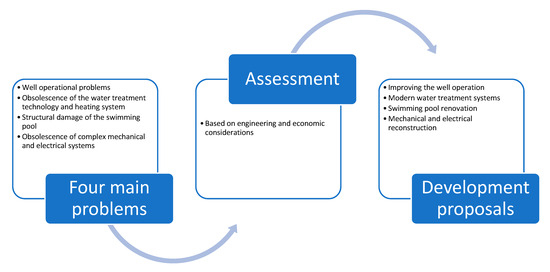
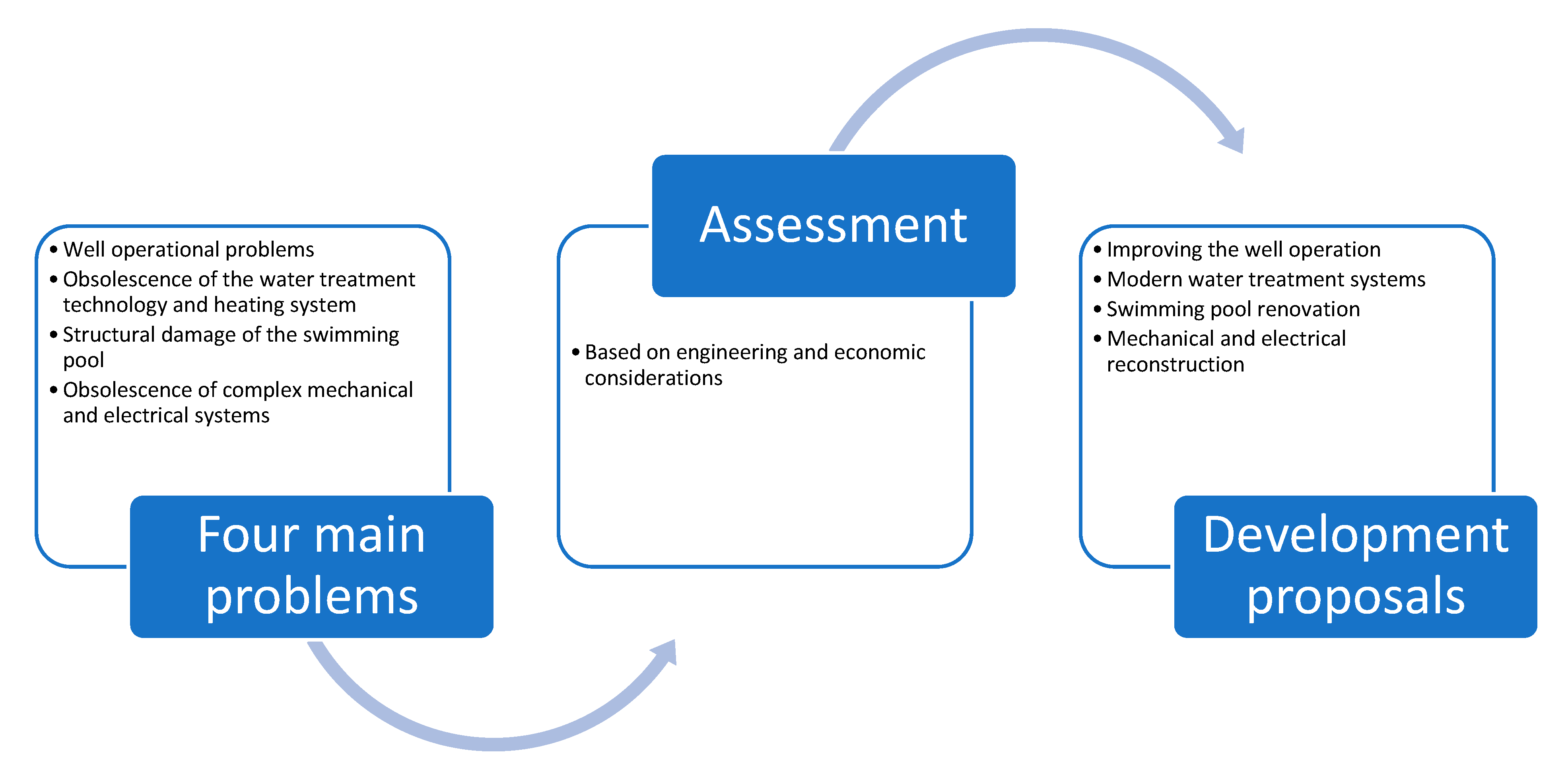
The process is summarized in Figure 3, which illustrates the logical steps of the investigation from the initial assessment to the development of technical solutions.
Figure 3.
Summary of the investigation and proposal process.
The facility-specific processes started with data collection, and a review of previous structural, mechanical and hydrogeological reports related to the facility. Field visits were then conducted to visually inspect the site, in order to identify structural damage, mechanical deficiencies, corrosion phenomena and water leakage paths. This was then continued with the investigation of the wells (Figure 1 and Figure 2) in 2025. To assess the pool engineering and the water preparation system, a specialist contractor conducted a survey. The survey was carried out in several phases. Stakeholder consultations and interviews with operators were also part of the process of collecting practical experiences and operational knowledge. During the site visits, the conditions of the outdoor 50 m pool, the associated engineering tunnel, the geothermal and cold water wells and the water treatment systems were assessed. The inspection criteria were structural integrity, the functionality of mechanical and electrical equipment, the condition of water quality assurance systems and the energy efficiency of the spa.
The assessment found that several serious problems have occurred in the spa, which are as follows:
- The yields of cold water wells C-6 and C-3 (Figure 1) have decreased significantly, threatening the water supply to the basins;
- The 50 m swimming pool has suffered severe structural damage, water leaks and corrosion;
- The outdated water treatment system cannot fulfill the quality requirements;
- A significant proportion of the pumps, heat exchangers, chemical dosing and electrical systems require technical upgrades.
During the operation of the spa complex, there were problems with the geothermal and water supply systems. The economical operation of the spa was therefore not sustainable and significant additional operating costs were incurred. The structural failure of the outdoor swimming pool had occurred earlier and required an investigation of the structural and mechanical systems of the pool structure. Issues in the operation of the spa led to the partial closure of the spa.
Figure 3 visually summarizes this structured methodological process, highlighting the relationship between the identified problems and the proposed solutions.
3. Results
During the investigation, four main operational problems of the spa center were identified. The first problem (PI) concerns the operation of the geothermal system, which is hampered by the reduced capacity of the injection well (I-1). As a result, stable operating well T-4 (depth—1560 m, 30 m3/h, 92 °C) is inoperable. Because of this, there is no geothermal heating and hot water supply. In addition, the production of the cold water well C-6, which supplies water to the pools, has decreased (originally 900 L/min), while the smaller-capacity well C-3 (200 L/min) is not functioning properly. The filter in well C-6 was replaced two years prior to the assessment. The reliable and continuous operation of the wells is essential to the sustainability of the system.
The second problem (PII) is the obsolescence of the water treatment technology, the increased cost of operating the filtration equipment, and the under sizing of the heat exchange equipment for hot water production. The hot water production geothermal capacity is sufficient, but the previously designed system needs to be reconsidered.
The third problem (PIII) is that the concrete structure of the 50 m swimming pool leaks, and the discharge pipe is heavily corroded in several places with traces of leaks. Several water leakage points have developed between the drainage channel and the reinforced concrete slab of the walking surface. The electrical system is worn and non-standard in several places, posing a contact hazard.
The fourth problem (PIV) is that many of the water supply pumps require maintenance, and no standby units are available, which increases the operational risk during operation.
3.1. State Assessment Results of the PI
There are significant deposits in the production pipeline of cold water well C-6 and in the wellhead tubulatura, which may have led to the clogging of the well filter. The well pump was overhauled and the well body cleaner was produced on 14 February 2025–16 February 2025. The water flow rate for well C-6 was measured at 650–750 L/min with the current 8-stage pump. The condition of the deep well pump was inspected during the installation and it was noted that the pump did not fully reach the water (working the water out from underneath itself). The 8-stage deep well pump shows signs of scale formation. The extraction takes place in a buffer reservoir with a capacity of 75 m3, which overflows into the Horse Pond in Gyopáros Lake. The frequency inverter that controls the pump is not working, so the extraction is carried out in an uneconomical and energy-wasting way. Some of the extracted water is discharged into the lake through the overflow pipe.
The other cold water well in the spa is the C-3 well, with a previous flow rate of 200 L/min. The combined capacity of the two wells was found to be sufficient to fill the pools and ensure their water supply. A similar intervention is needed for C-3 to restore capacity so that the required amount of cold water is fully available. In the case of geothermal water, information was received from the operation about ongoing deep well pump problems. Several times, the pump in the well has had to be replaced due to failure. The positive production of the well is due to the buoyancy of the gas in the well. The two operating thermal water wells (T2 and T3) satisfy the water needs of the medicinal pools and medical treatment. The injection well I-1 cannot dispose of the 10–30 m3/h of thermal water extracted from the geothermal well T-4. The well I-1 was installed in 2011 and is considered relatively new, with a modern filter design. The efficiency of the well has decreased in recent years and it is now almost inoperable (functioning at about 10% effectiveness).
3.2. State Assessment Results of the PII
In the case of the external machine room, the walking surface moves and is corroded. The damage control basins do not perform their function; they are worn out, and the watertightness of the covers is inadequate.
The exterior machine room damage pools have disintegrated and structurally deteriorated. Most of the chemical dispensing equipment is not working. Some of it cannot be repaired. Several types have been used, and parts for most of them are no longer available. The geothermal water is not reinjected, and then the used water is pumped through a pipeline into Lake Kerek. The temperature of the water at the leachate outlet is 30–35 °C before the open channel drainage. No thermal energy utilization is possible with the discarded thermal water.
The booster pump shows signs of failure and needs to be overhauled. The heat exchanger for the heating circuit can be significantly upgraded to the existing geothermal capacity; currently a 1.3 MW wet–wet heat exchanger is in operation.
In the case of machine room II (Figure 2), the first and most important step is to reduce the chemical and microbiological parameters of the cold water well C-6 to or below the required limits. The rotating, filtering and chemical dosing systems of each pool cannot be operated cost-effectively and safely until the quality of the make-up water supplied to the system is adequate. Disinfectant dosing and the filtration of suspended solids is useless if new microbiological and sludge contaminants (iron hydroxide, ammonium biofilm) are added to the system by replenishing make-up water. The test report for the well was received. The values of some of the parameters included in the report do not conform to the Hungarian regulations (arsenic, COD, ammonium, sodium).
The technological sequence of the currently operating system is as follows:
- Sand filtering equipment with oxidation;
- GEH (granulated iron hydroxide) filter for arsenic removal;
- RO (reverse osmosis, total desalination) system;
- Post-salting;
- Storage in PP buffer tanks;
- Pressure boosting.
This system is currently adequate, but the installed GEH filter capacity is very low and cannot be operated safely. Filter units with this level of charge are rapidly depleted (after filtering a few 100 m3 of water), and their charge is not regenerable and therefore has to be replaced frequently, leading to high maintenance costs. The GEH filter is only designed to reduce arsenic to below the limit value, and only in partial flow.
3.3. State Assessment Results of the Third Problem
The 50 m pool is a large monolithic reinforced concrete structure. It is constructed from a single concrete base slab and reinforced concrete walls. The basin was raised above ground level, most likely due to the groundwater in order to prevent upwelling. The pool body is laterally enclosed by a service tunnel accommodating mechanical pipework and storage tanks.
The dimensions of the pool are 50 × 23 m. The base slab is 400 mm-thick reinforced concrete, laid over a 100 mm blinding concrete layer and 430 mm of gravel backfill. The walls are constructed of reinforced concrete, with a thickness of 500 mm at the base, reducing to 350 mm in the upper sections, articulated with a stepped ledge. A cantilevered structural element at the top of the wall supports both the drainage channel and the slab of the service tunnel. The pool structure was cast in a single continuous operation. The original construction plans date from 1982.
The reinforced concrete is grade B280, specified to be water-resistant, frost-resistant, and sulfate-resistant. The reinforcement consists of steel grades B38.24 and B60.40, with a nominal concrete cover of 40 mm. The metal fixtures of the drainage channel are embedded within the concrete; however, many have exhibited signs of corrosion. No detailed as-built drawings are available for their layout.
The basin is surrounded by a separate reinforced concrete service tunnel, separated by a dilatation, consisting of a corner-retaining wall and its slab. This assembly defines the tunnel space, resists lateral earth pressure, and supports the external paving on which pedestrian traffic occurs.
The subject of the expert opinion is the structural analysis of the large pool, which is necessary due to corrosion and other defects affecting the drainage channel that runs around the perimeter of the pool. The study is also necessary because of the water leakage from the pool, which affects the side wall, but this causes a bigger problem, which is that the drainage channel section of the pool exhibits significant corrosion damage in numerous locations. In one place, a drainage basin had to be built under the drainage channel to collect the leaking water and drain it in a controlled manner.
Based on the service tunnel, the pool wall is leaking water in several places. The leakage affects the 35 cm-thick vertical reinforced concrete wall section, which constitutes the upper portion of the pool wall. The drainage channel at the top of the wall is monolithically reinforced with the pool wall, but it is also the supporting structure for the tunnel slab. However, the tunnel slab is separated from the console by a dilatation, and there must be a fault here, because in several places water flows from the walkway surrounding the pool through this dilatation into the tunnel. This could be water overflowing from the pool, but it could also be rainwater. The amount of water flowing in, however, has been present for a long time, because there are already stalactite-like formations 10–20 cm long in the tunnel.
A further and potentially critical issue is that water has infiltrated the structure beneath the console and begun to deteriorate the reinforced concrete. The exact damage could not be seen on inspection because the structure had been repaired before using various methods. Nevertheless, the appearance of long cracks running parallel to the concrete edge suggests that the 4–5 cm concrete cover may have become completely delaminated. This indicates a likely severe reinforcement corrosion within the console. No investigation has been carried out, but the presence of water and cracking strongly suggests significant corrosion damage. It is also evident that the fittings at the drainage outlets are completely corroded. The concrete structure probably also contains a steel fitting, which can also be corroded. Corrosion is also visible on the slab of the tunnel, but this is much less significant than the problems mentioned above. The inspection is also necessary because water is leaking from the pool, which is affecting the side wall, but the larger problem is that the drainage channel section of the pool exhibits significant corrosion damage in many places. In one location, a containment tray has already been installed beneath the channel to collect the leaking water and discharge it in a controlled manner.
Additional visible deterioration has been observed at the drainage outlets, where the fittings are completely corroded. It is also likely that embedded steel components exist within the concrete structure itself, which may have also corroded. Corrosion is also visible on the slab of the service tunnel, although this is of lesser significance compared to the aforementioned structural concerns.
The drainage channel and console at the top of the pool wall show signs of both slope and corrosion damage. The fittings in the drainage channel are corroded and leaking water. Water enters the service tunnel from the walking surface through the dilatation gap. Water ingress can occur at the junction of the artificial stone and the paving stone, or even through the paving stone. The detection and repair of the fault will involve the compete dismantling of the paving.
3.4. State Assessment Results of the Fourth Problem
Many of the pumps that supply and treat water are worn out and require maintenance. Replacement pumps are not provided as a hot standby for critical systems, which represents a significant operational risk. Their maintenance can cause several days of downtime for some systems (cold water supply, booster sets, etc.). The RO system booster pump has no maintenance and no heat reserve. Booster pumps for the cold-water system require maintenance. However, the air handling unit needs to be revised, and the cooling radiator is missing, so the system is not able to fully dissipate the humidity load. The heating system of the leisure pool building is provided by 3 Viessmann Vitoplex 100 (620 kW) open combustion boilers with modern boiler capacity or a geothermal heating system. At present, only gas boilers can provide heating and hot water supply due to the maintenance needs of the wells. The restarting of the geothermal system is a cornerstone of cost-effective operation.
4. Suggestions for Solving Problems by Area
4.1. Suggestion for Solving PI
Due to the condition of the pump detailed in Section 3.1, it is recommended to extend the well production pipe to 70 m to allow for the pump to be installed deeper. The extension of the supply and repair of the inverter should also be carried out because the pump production cannot be controlled. It is recommended to install a level sensor in the reservoir and to connect it to the control equipment with a cable to prevent excess production. In the case of the geothermal water wells, the possibility of providing the wells with an overhead pump should be developed following an instrumental inspection of the wells, which would allow for significant maintenance and operating cost reductions. The purchase of one hot water pump should also be considered for operational safety.
The injection well presented in Section 3.1 operates with an efficiency of approximately 10%. The well needs to be repaired and cleaned. The repair and cleaning of the injection well is expected to yield 600–800 m3 of water, which can be released to the lined cooling channel section.
The water discharge would be monitored by pH measurement, chemically disposed of if necessary and discharged into Lake Kerek by providing cooling water from the North Lake. Due to the water discharge, it is necessary to request the owner’s consent from the Water Directorate. Preliminary consultation has been carried out in this regard, and a site visit is required before work begins.
4.2. Suggestions for Solving PII
The room’s finishes need renovation, as they would not comply with public health regulations. Broken and corroded surfaces need to be repaired in accordance with the appropriate regulations. In the case of an external machine room, the water treatment gate valves need to be renovated. Chemical dosing equipment needs to be replaced and calibrated. The filtering capacity of the two pools—if their current function remains unchanged—is considered adequate. The following maintenance and improvement works (in addition to structural reinforcement) are required in the affected area:
- Sand filters need to be replaced due to wear and tear;
- Partial replacement of the fittings is required;
- Complete replacement of measuring/control instruments is needed, as renovation of the old ones is not possible;
- Complete replacement of the chemical dosing system is needed, as the existing ones are broken;
- The filter/rinse pumps need to be completely renovated, or possibly new ones purchased;
- Renovation or replacement of aeration blowers required (to provide a heat reserve);
- Renovation of finishes and walkways, and the repair of damage basins, are required;
- Clean painting is recommended (public health regulations);
- Repair of windows and doors, ensuring lockability, and revision of labeling.
In the case of the thermal machine room, the booster pumps need to be inspected and serviced. The CR20-10-A-F-A-E-HQQE-type booster (injection) pump requires refurbishment.
To ensure the quality of the pool water during operation, it would be advisable to install a chemical dosing system. In the case of machine room II, the removal of the metal (d1200 mm) filter tank filling, repair of internal surfaces, and replacement of filter cartridges as required would be necessary. A mixture of catalytic filler and filter sand would be used as the new filter material after a suitable support layer has been formed. The GEH filter would be completely dismantled and replaced by a filter tank of the same size as the old one, thus the filtration rate would be reduced, the water quality would be improved, and the efficiency would be increased. Due to the duplication, the size of the piping and the number of fittings would change, and they would be added as a completely new system in two transport units. A quantity measuring device, a static mixing element for homogenizing chemicals, and a KMnO4 and FeCl3 dispenser for oxidation and coagulation would be installed (arsenic/As/removal). The system will be fully automatic, with a separate control system. The proportional dosing, the filtration and rinsing operating states, the level indication of the tanks, and the start/stop of the well are carried out by a freely adjustable PLC (Programmable Logic Controller). Only the refilling of chemicals and the recording of operating parameters in the operational log require operator intervention. The system has a high degree of operational safety, a long service life, and if properly operated and maintained, the fillers will not need to be replaced for 4–5 years. RO equipment renovation is required. It is also necessary to replace membranes, membrane covers and seals, and refurbish pumps. Instead of renovating the high-pressure pump, it is more worthwhile to install a new type equipped with a frequency converter to save electricity. The new booster, thanks to the inverter, can save ~30–40% of energy under the same operating conditions. Some of the piping also needs to be replaced, including rotameters, control valves, and the raw water solenoid valve. Since the equipment control is not working, it is also necessary to repair/replace it. It can also be combined with the electrical cabinet of the filtering equipment, so that only one control system would be used to manage the make-up water. Dosing equipment also needs to be replaced with higher-precision stepper motor-driven pumps, with accessories that can be adjusted from 0.1% to 100%, thus guaranteeing accurate dosing. With these modifications and improvements, the right quality and quantity of make-up water for the pools can be ensured in the long term and in a cost-effective way. The measuring/control systems of pools in the machine room (Machine Room II) (thermal indoor pool, indoor and outdoor children’s pool) will be removed and replaced by new, more modern systems capable of controlling the chemical dosing and chlorine gas dosing with analogue and digital outputs based on the measured values. The instruments are not only capable of P, but also of PID, control, which can adapt to inertia due to rotations and to sudden large changes. The current multi-make, multi-type chemical dispenser will be replaced with a stepper motor, installed on a wall console, with safety valve and safety canister holder and a chemical-resistant design, as in the RO unit. The current diatomaceous earth filtration system in the pools should be discontinued and replaced with the well-established, easy-to-operate and maintain sand filter rotation approach. The sizing, technological calculation and design of the systems will be carried out. Each basin (where not built) will require a plastic equalization tank with level indicator, hair trap filter, and a sand filter (based on the process calculations and depending on the space in the machine rooms, this would mean 1, 2, 3, or possibly 4 filters per basin). Sand filters will be equipped with automatic fittings, static mixers, a pressure and volume meter, and transmitters. The system(s) will be completed with additional dosing points, and pumps for dosing flocculant and algaecide chemicals. These chemicals need to be dosed in cases of high load (overload), not during normal operation. Dismantling existing systems and installing new systems is only possible when the pools are not operating, and is a very time-consuming job, not to mention the unloaded and loaded test runs.
The schedule of construction works requires further negotiations. Currently, the proposal is that, in parallel with the dismantling of the diatomaceous earth filters, a “simple” rotary line should be created, where the necessary chemicals can be added to the water and the pools should be operated in a filling-emptying system.
Among the pool’s mechanical elements currently installed in the machine room, the water treatment system of the green slip pool is the most exposed to the highest loads (sunshine, dust, leaves, solar oil, etc.), so its reconstruction would be carried out in step 3. For the other pools, this would also provide a practical experience that could be used to vary the filtration and chemical dosing of the pools depending on the load, thus reducing the operating costs of the units by up to 30–35%.
The mechanical renovation of the other pools would take 2–3 months per pool. This transition period should be bridged by negotiating a grace period with the authorities, and also regarding deadlines, specific limits, frequent water analyses, the extension of permits, water rights and operating permits, etc., if possible. In this area, the same model is followed as in the case of machine room II, in terms of filtration, rotation and chemical dosing, thus these are not detailed here. The technological sequence, filtration and chemical dosing of all the pools are the same:
- Balancing tank with level indicator and hair trap filter;
- Rotary pumps with frequency converter control and hot reserve;
- pH, chlorine measuring/control units;
- Stepper motor metering equipment;
- Depth filtration equipment with automatic fittings;
- Siemens PLC control system.
The reconstruction of the Yellow Slide Pool would follow in the autumn after closure; until then, it would either have to be operated in fill-drain mode or with the current diatom earth filter. Changing the pool water up to three to five times a day during the renovation period will, of course, have higher energy and water costs than the current swirl-filtered version.
Next to the indoor thermal pool building a large mechanical shaft would be built, in which 1 + 1 sand filters (one in operation, one spare or under regeneration/rinse) would be installed on a make-up water line, with control, automatic rinsing and chemical dosing during rinsing and before the filters, and online chemical concentration back-measurement after the filters, as, according to the relevant standard, no chemicals can be discharged into the pool water. During operation, if chemical content is detected in the filtered water, the system will give an alarm and automatically switch to the hot water filter. The heating of the water would be achieved by two (1 + 1) newly installed heat exchangers. The plate/pipe heat exchangers are equipped with CIP connectors and a heat flow control system, also controlled by the pool PLC.
The current design of the gym and weight pools machine room, and the pool hydraulic system, does not allow for the integration of a filtration system of sufficient size and efficiency. As a consequence, water quality control can only be achieved by chemical dosing. To solve this problem, a completely new piping system, including a separate chemical dosing system and an overflow chemical backflow metering system, has to be constructed. A complex PID control system will also need to be incorporated for accurate and dynamic control. Investigations and laboratory tests related to the project should start as soon as possible. If required, this phase of the project will be launched without delay.
4.3. Suggestions for Solving PIII
Based on what was observed during the inspection, injection will be required in several places on the 35 cm-thick vertical walls, as water leakage has been experienced. The drainage channel and console at the top of the pool wall show slope and corrosion damage. The fittings in the drainage channel are corroded and leaking water. Water is entering the tunnel from the walkway through the dilatation gap. Water ingress can occur at the junction of the artificial stone and the paving stone, or even through the paving stone itself. The detection and repair of the fault will involve the complete dismantling of the paving. It is also possible that the corroded drainage channel and console failures will require the tunnel slab to be demolished and a new one built. Repairing the drainage channel is not a simple task either, as the structure will have to be dismantled until corroded reinforcing steel is found. All the steel has to be treated, and in many places even a full rebar repair has to be carried out, and only then can the rebar repair work begin. The structure is nearly 50 years old, and with a structure this old, a full structural and architectural overhaul is overdue. The pool wall is leaking water in several places, which will need to be injected. During injection, the injection material is injected into the structure at a pressure of over 100 bar, where it begins to swell. The process can also produce structural defects that are not currently visible. In addition, secondary damage (e.g., cracking of tiles) can occur in the loose structure of the pool area, which cannot be predicted, and therefore the cost of which cannot be estimated. The demolition of moved concrete coverings, passivation of reinforcing steel, and restoration of coverings on the tunnel side of the troughs and in patches are also required. The material used will give a smooth finish with grey gletted iron. Aesthetic smoothing, priming, and painting are not recommended within six months following the repairs, due to residual moisture remaining in the structure.
Other necessary measures are the elimination of leaks by the PVC lining of the overflow valve, the replacement of overflow pipes, and the installation of new connections on the discharge line. The piping system should be inspected by a specialist contractor and the partial replacement of the piping should be carried out, which is essential for smooth operation. It is recommended to replace the pipe sections with PVC material. Slide valves should also be inspected.
The fittings where the drainage channel is emptied are completely corroded. It is likely that the concrete structure also contains a steel fitting, which can also be corroded, all of which need to be replaced. Corrosion is also visible on the tunnel floor, but these are much less significant than the problems mentioned above.
Continuing the investigation on the surface, the slope of the drainage channel will also need to be improved. The drainage channel will need to be lined and the water that seeps under the cover will also need to be drained. The construction of a drainage sump is recommended to treat the leachate.
4.4. Suggestions for Solving PIV
Modernizing and increasing the efficiency of the heat exchange equipment within the building can result in reduced operating costs.
Table 2 provides a summary of the current state of the spa, highlighting the deficiencies identified in each major system or structure and the corresponding recommended interventions. The table provides an understanding of the complexity of the issues affecting the safe and sustainable operation of the facility.
Table 2.
Summary of the technical condition by segments.
The segmented condition assessment clearly shows that deficiencies exist not only in isolated systems but also in all major infrastructure elements of the facility. Without the comprehensive management of these issues, neither safe operation nor sustainable reopening would be possible. The data presented in this table can be found in more detail in Section 3 and Section 4.
5. Development Proposals
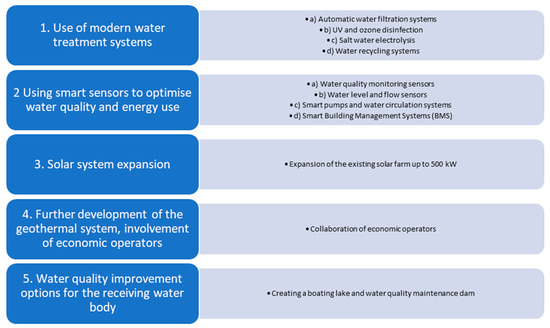
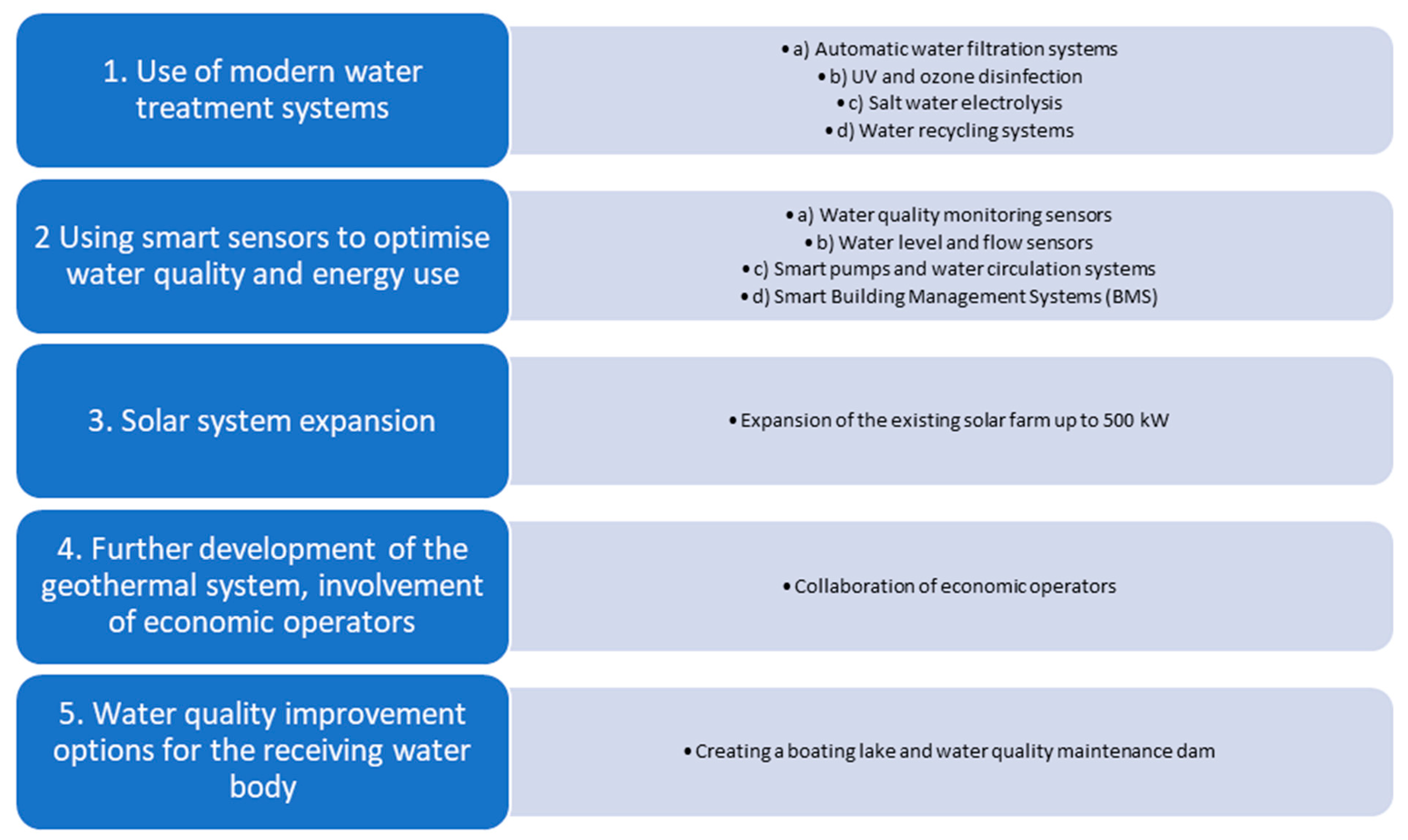
The development proposals are summarized in Figure 4, and are explained in detail in this section.
Figure 4.
Development proposals for the rehabilitation and sustainable operation of the spa complex.
5.1. Use of Modern Water Treatment Systems
The following technologies can help to achieve the purity and quality of water:
- (a)
- Automatic water filtration systems
- -
- Sand and carbon filters—to remove impurities, grease and other suspended solids.
- -
- Ultrafine filters—as a complementary technology to remove minor impurities and microorganisms.
- (b)
- UV and ozone disinfection
- -
- UV-C radiation—reduces chlorine use and neutralizes bacteria.
- -
- Ozone disinfection—more powerful, breaks down organic matter and improves water quality.
- (c)
- Salt water electrolysis
- -
- An alternative chlorine-free disinfection method that requires fewer chemicals and is less irritating to the skin.
- (d)
- Water recycling systems
- -
- Thermal energy recovery from bathing water—the heat recovered from used water can be reused to heat the pools.
- -
- Greywater systems—reuse of shower and rinse water for certain additional functions, such as garden irrigation.
5.2. Using Smart Sensors to Optimize Water Quality and Energy Use
Modern technology allows the operation of the spa to be continuously monitored and optimized.
- (a)
- Water quality monitoring sensorsThese sensors continuously measure the water parameters so that the operation can react to changes in real time.
- -
- pH and chlorine level sensors—automatically control the dosing of chemicals.
- -
- Turbidity meters—immediately indicate if water quality deteriorates.
- -
- Temperature sensors—optimize the heating system.
- (b)
- Water level and flow sensors
- -
- Automatic water refill—reduces unnecessary water waste.
- -
- Leakage sensors—provide early warning of burst pipes or water loss.
- (c)
- Smart pumps and water circulation systems
- -
- Energy efficient pumps—reduce electricity consumption for pool water circulation.
- -
- Timed and automated water recirculation—regulates water circulation based on traffic data.
- (d)
- Smart Building Management Systems (BMS)
- -
- A central system can control water temperature, disinfection and energy consumption.
- -
- AI-based predictive models—analyze visitor numbers and weather data to optimize water consumption and heating.
The introduction of water treatment systems and smart sensors can not only reduce the operating costs of the spa, but also improve the visitor experience and the sustainability of the spa. Automated water quality monitoring, energy-efficient water circulation and digital optimization are investments that pay off in the long term.
5.3. Solar System Expansion
To increase the proportion of renewable energy in the energy demand for water treatment and production, solar farm power should be increased from the existing 330 kW to 500 kW.
5.4. Further Development of the Geothermal System, Involvement of Economic Operators
In a city of 25,000 people, and within the vicinity of it, the sale of thermal energy from geothermal systems offers significant advantages for economic operators, promoting sustainable and cost-effective energy use. The amount of thermal water extracted in the spa area can be suitable for serving the heat energy needs of hotels operating in the area. The main elements of the system are in place, and all the necessary conditions are in place for expansion.
5.5. Water Quality Improvement Options for the Receiving Water Body
A possible objective is to create a boating lake, with limited bathing opportunities, and a water quality maintenance dam in the middle lake.
In addition to preventing fish mortality, the result would be an aesthetically pleasing lake, a boating pond with limited bathing (only on a specific stretch of the shore, subject to public health compliance, probably only for shorter periods, with a smaller number of fish), with water quality improvement, and with the maintenance of fish stocking quantity and composition. Fish stocking will not serve fishing purposes but will aim to improve and maintain water quality through carefully controlled quantities and species composition.
Coordination with other organizations (joint application and planning).
An important element of the development proposals of Gyopáros Spa is the modernization and installation of heat exchangers and heat recovery systems, which aims to increase the efficiency of geothermal energy utilization and modernize the water temperature control. This development direction is supported by the results of Vondra et al. [22]. It was demonstrated in the case of the Czech Carlsbad Spa that similar technological solutions—the integration of heat exchangers and cooling systems—resulted in significant energy efficiency improvements and more efficient system management. The economics and long-term return of the geothermal system are also supported by the study of Pálné Schreiner [31] on the Szigetvár Spa. The modernized geothermal investment is not only sustainable, but also economically profitable. The investment logic planned for Gyopáros Spa follows the same principles. The aim is to achieve long-term, stable and cost-effective operation by using modern technologies. The energy efficiency modernization of the spa buildings includes the installation of solar panels and insulation improvements, which will significantly reduce energy consumption. This is supported by the study by Barwińska-Małajowicz et al. [32], which demonstrated that such interventions can reduce non-renewable energy consumption by up to 85%. Furthermore, the modernization of Gyopáros Spa also includes the use of intelligent water treatment systems, sensors and automated control to optimize energy and water use. The usefulness of these developments is confirmed by the research of Smedegård et al. [24], which showed through data-driven modeling that optimizing swimming pool systems leads to significant energy savings and more efficient operation. It can be said that the proposed developments at the Gyopáros Spa fit well with current international trends, such as renewable energy sources, modern water treatment, intelligent systems and sustainable operation, which ensure long-term economic and environmental returns.
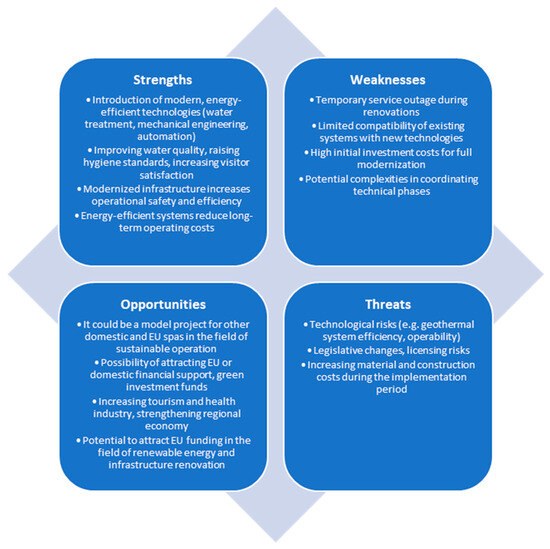
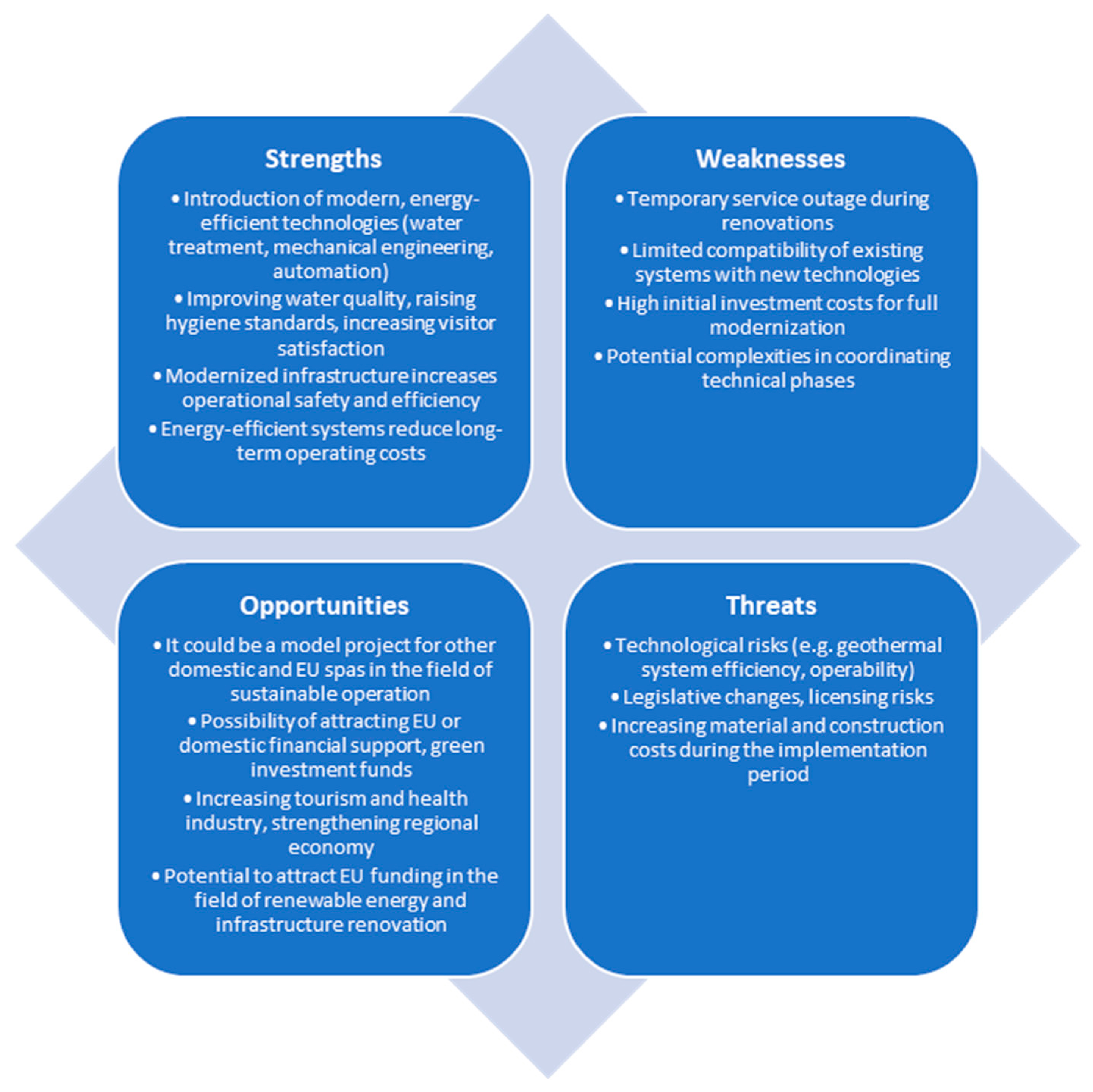
Figure 5 shows the SWOT analysis of the proposed technical interventions for the Gyopáros Spa. The development proposals are based on interventions that provide significant long-term benefits for the operation and sustainability of the facility. The SWOT analysis also shows that the implementation of the proposed technical developments for the Gyopáros Spa is strategically justified and well-founded. The short-term disadvantages (cost, loss of service) have a significant positive impact in the long term, both economically and socially. The project fits in with European trends that support sustainable, energy-efficient and digitally managed spa operations.
Figure 5.
SWOT analysis of the proposed technical interventions.
Potential risks can be minimized through effective project planning and professional implementation, while the benefits strengthen the spa’s local and regional economic role and set an example for other similar facilities.
6. Conclusions
The exploitation of geothermal energy in urban and settlement environments is playing an increasingly important role in sustainable energy management and the fight against climate change. Based on recent research and practical experience, geothermal systems offer many advantages, such as stable energy supply, low carbon emissions and long-term economical operation. However, the potential environmental impacts and the importance of protecting water resources must be taken into account when designing and operating the systems. This study also highlights that regular technical inspections and modernization are essential to ensure sustainable operation. In future developments, the integration of geothermal systems into urban infrastructure will be key to achieving climate-neutral settlements.
Based on the current technical condition of the Gyopáros Spa, it is clear that the reopening of the facility is only possible after comprehensive renovation and modernization works. Restoring the geothermal system, ensuring the water supply, eliminating structural defects, and modernizing mechanical systems are essential for safe and sustainable operation. The implementation of the proposals formulated in the study is not only justified from an energy and environmental perspective, but also aligns with the economic and tourism interests of the region. The proposed developments at the Gyopáros Spa fit well with current international trends, according to which renewable energy sources, modern water treatment, intelligent systems and sustainable operation ensure long-term economic and environmental returns.
The planned renovation will significantly improve operational sustainability, energy efficiency and service quality. The modernization of the geothermal system, water supply infrastructure and treatment technologies will contribute to the safe reopening of the facility. Moreover, it will also contribute to the long-term economic and environmental sustainability of the region.
The revitalization of the spa will promote job creation and support the local economy, as the number of visitors and related services will increase. Thus, it will increase the tourist and health attractiveness of the city. From a scientific and technical perspective, this study contributes to the expansion of knowledge on the modernization of spa facilities, as it offers both a systematic methodological framework and practical solutions. It can offer a replicable model for similar facilities.
Author Contributions
Investigation, K.S.; writing—original draft preparation, D.B. and K.S.; writing—review and editing, N.J. and D.K.; supervision, D.K. All authors have read and agreed to the published version of the manuscript.
Funding
This research received no external funding.
Institutional Review Board Statement
Not applicable.
Informed Consent Statement
Not applicable.
Data Availability Statement
The original contributions presented in this study are included in the article. Further inquiries can be directed to the corresponding author.
Conflicts of Interest
The authors declare no conflict of interest.
References
- Li, J.; Zhang, H.; Zhang, Y.; Wang, L.; Zhang, Z. Enrichment Mechanism of Lithium in Geothermal Waters from a Bedrock Reservoir in Xiong’an New Area, China. Water 2023, 15, 3518. [Google Scholar] [CrossRef] [Scilit]
- Zuo, L.; Zhang, P.; Wang, Y.; Liu, R.; Ma, G. Characteristics and Research Significance of Micro-Nanoparticles in Geothermal Fluids in the Central Area of Shandong Province. Water 2023, 15, 3737. [Google Scholar] [CrossRef] [Scilit]
- Barbier, E. Geothermal Energy Technology and Current Status: An Overview. 2002. Available online: www.elsevier.com/locate/rser (accessed on 12 April 2025).
- Árpád, I. Investigation of Sensible Heat Storage and Heat Insulation in the Exploitation of Concentrated Solar Energy. Hung. J. Ind. Chem. 2011, 39, 163–167. [Google Scholar]
- Noorollahi, Y.; Shabbir, M.S.; Siddiqi, A.F.; Ilyashenko, L.K.; Ahmadi, E. Review of two decade geothermal energy development in Iran, benefits, challenges, and future policy. Geothermics 2019, 77, 257–266. [Google Scholar] [CrossRef] [Scilit]
- Soltani, M.; Kashkooli, F.M.; Dehghani-Sanij, A.R.; Nokhosteen, A.; Ahmadi-Joughi, A.; Gharali, K.; Mahbaz, S.B. A comprehensive review of geothermal energy evolution and development. Int. J. Green Energy 2019, 16, 971–1009. [Google Scholar] [CrossRef] [Scilit]
- Yan, X.; Wei, S.; Zhang, W.; Liu, F.; Liao, Y. Reservoirs and Hydrogeochemical Characterizations of the Yanggao Geothermal Field in Shanxi Province, China. Water 2024, 16, 669. [Google Scholar] [CrossRef] [Scilit]
- Wang, L.; Xing, L.; Lin, W.; Zhang, W.; Zhao, Z.; Zhao, J.; Zhai, T. Chemical Characterization and Genesis of Thermal Reservoir Water in the Southern Part of the Jizhong Depression. Water 2023, 15, 3532. [Google Scholar] [CrossRef] [Scilit]
- Soltani, M.; Farzanehkhameneh, P.; Kashkooli, F.M.; Al-Haq, A.; Nathwani, J. Optimization and energy assessment of geothermal heat exchangers for different circulating fluids. Energy Convers. Manag. 2021, 228, 113733. [Google Scholar] [CrossRef] [Scilit]
- García-Céspedes, J.; Herms, I.; Arnó, G.; de Felipe, J.J. Fifth-Generation District Heating and Cooling Networks Based on Shallow Geothermal Energy: A review and Possible Solutions for Mediterranean Europe. Energies 2023, 16, 147. [Google Scholar] [CrossRef] [Scilit]
- Rybach, L. Global Status, Development and Prospects of Shallow and Deep Geothermal Energy. Int. J. Terr. Heat Flow Appl. 2022, 5, 20–25. [Google Scholar] [CrossRef] [Scilit]
- Lenkey, L.; Mihályka, J.; Paróczi, P. Review of geothermal conditions of Hungary. Foldt. Kozlony 2021, 151, 65–78. [Google Scholar] [CrossRef] [Scilit]
- Kulcsár, B. Combined energy production in the North Great Plain Region. Int. Rev. Appl. Sci. Eng. 2011, 2, 63–67. [Google Scholar] [CrossRef] [Scilit]
- Annamária, N.; László, L. Geothermal resources of Hungary: A play-based review. Geol. Soc. Lond. Spec. Publ. 2024, 555, SP555-2024-43. [Google Scholar] [CrossRef] [Scilit]
- Almási, I.; Szanyi, J. Hydrogeology of the Pannonian Basin. Available online: https://gw-project.org/donate/ (accessed on 12 April 2025).
- Van Tubergen, A.; Van der Linden, S. A brief history of spa therapy. Ann. Rheum. Dis. 2002, 61, 273–275. [Google Scholar] [CrossRef] [Scilit]
- Fioravanti, A.; Manica, P.; Bortolotti, R.; Cevenini, G.; Tenti, S.; Paolazzi, G. Is balneotherapy effective for fibromyalgia? Results from a 6-month double-blind randomized clinical trial. Clin. Rheumatol. 2018, 37, 2203–2212. [Google Scholar] [CrossRef] [Scilit]
- Nasermoaddeli, A.; Kagamimori, S. Balneotherapy in Medicine: A Review. Environ. Health Prev. Med. 2005, 10, 171–179. [Google Scholar] [CrossRef] [Scilit]
- Buday, T.; Szűcs, P.; Kozák, M.; Püspöki, Z.; McIntosh, R.W.; Bódi, E.; Bálint, B. Sustainability aspects of thermal water production in the region of Hajdúszoboszló-Debrecen, Hungary. Environ. Earth Sci. 2015, 74, 7511–7521. [Google Scholar] [CrossRef] [Scilit]
- Rita, M.; László, L.; Enikő, D.; Attila, K. Karst water resources and their complex utilization in the Bükk Mountains, northeast Hungary: An assessment from a regional hydrogeological perspective. Hydrogeol. J. 2020, 28, 2159–2172. [Google Scholar] [CrossRef] [Scilit]
- Szolga, K.; Árpád, I.W.; Kocsis, D. Municipal Geothermal Systems: Evaluation of Three Hungarian Cases. Int. J. Eng. Manag. Sci. 2024, 9, 81–93. [Google Scholar] [CrossRef] [Scilit]
- Vondra, M.; Buzík, J.; Horňák, D.; Procházková, M.; Miklas, V.; Touš, M.; Jegla, Z.; Máša, V. Technology for Hot Spring Cooling and Geothermal Heat Utilization: A Case Study for Balneology Facility. Energies 2023, 16, 2941. [Google Scholar] [CrossRef] [Scilit]
- Papadakis, N.; Al Katsaprakakis, D. A Review of Energy Efficiency Interventions in Public Buildings. Multidiscip. Digit. Publ. Inst. 2023, 16, 6329. [Google Scholar] [CrossRef] [Scilit]
- Smedegård, O.Ø.; Jonsson, T.; Aas, B.; Stene, J.; Georges, L.; Carlucci, S. The implementation of multiple linear regression for swimming pool facilities: Case study at Jøa, Norway. Energies 2021, 14, 4825. [Google Scholar] [CrossRef] [Scilit]
- Pavlakovič, B.; Demir, M.R.; Pozvek, N.; Turnšek, M. Role of tourism in promoting geothermal energy: Public interest and motivation for geothermal energy tourism in slovenia. Sustainability 2021, 13, 10353. [Google Scholar] [CrossRef] [Scilit]
- Marton, G.; Hinek, M.; Kiss, R.; Csapó, J. Measuring seasonality at the major spa towns of Hungary. Hung. Geogr. Bull. 2019, 68, 391–403. [Google Scholar] [CrossRef] [Scilit]
- Strack, F.; Raffay-Danyi, A. Well-being and healing and characteristics of demand for spas in Hungary. Int. J. Spa Wellness 2020, 3, 145–164. [Google Scholar] [CrossRef] [Scilit]
- Torres-Pruñonosa, J.; Raya, J.M.; Crespo-Sogas, P.; Mur-Gimeno, E. The economic and social value of spa tourism: The case of balneotherapy in Maresme, Spain. PLoS ONE 2022, 17, e0262428. [Google Scholar] [CrossRef] [Scilit]
- Cindy, W.-L. Deferred Maintenance and Aging Infrastructure Threaten Water Sustainability, Reliability. Am. Water Work. Assoc. 2017, 109, 53–57. [Google Scholar] [CrossRef] [Scilit]
- Orosháza Municipality. Energy Description of the Bath of Orosháza Municipality 2021-2027, TOP Plusz-2.1.1-23-B51-2024-00056. Available online: www.oroshaza.hu/szechenyi-terv-plusz-2021-2027/ (accessed on 1 July 2025).
- Schreiner, P. The Present and Future of Szigetvár Spa-An Economic Analysis of Geothermal Energy Investment. J. Reg. Dev. Tour. 2014, 6, 94–107. Available online: www.szigetvar.hu (accessed on 22 July 2025). [CrossRef] [Scilit]
- Barwińska-Małajowicz, A.; Pyrek, R.; Szczotka, K.; Szymiczek, J.; Piecuch, T. Improving the Energy Efficiency of Public Utility Buildings in Poland through Thermomodernization and Renewable Energy Sources—A Case Study. Energies 2023, 16, 4021. [Google Scholar] [CrossRef] [Scilit]

Disclaimer/Publisher’s Note: The statements, opinions and data contained in all publications are solely those of the individual author(s) and contributor(s) and not of MDPI and/or the editor(s). MDPI and/or the editor(s) disclaim responsibility for any injury to people or property resulting from any ideas, methods, instructions or products referred to in the content. |
© 2025 by the authors. Licensee MDPI, Basel, Switzerland. This article is an open access article distributed under the terms and conditions of the Creative Commons Attribution (CC BY) license (https://creativecommons.org/licenses/by/4.0/).