


Abstract
This systematic literature review employs the Preferred Reporting Items for Systematic Reviews and Meta-Analyses (PRISMA) methodology to investigate recent applications of explainable AI (XAI) over the past three years. From an initial pool of 664 articles identified through the Web of Science database, 512 peer-reviewed journal articles met the inclusion criteria—namely, being recent, high-quality XAI application articles published in English—and were analyzed in detail. Both qualitative and quantitative statistical techniques were used to analyze the identified articles: qualitatively by summarizing the characteristics of the included studies based on predefined codes, and quantitatively through statistical analysis of the data. These articles were categorized according to their application domains, techniques, and evaluation methods. Health-related applications were particularly prevalent, with a strong focus on cancer diagnosis, COVID-19 management, and medical imaging. Other significant areas of application included environmental and agricultural management, industrial optimization, cybersecurity, finance, transportation, and entertainment. Additionally, emerging applications in law, education, and social care highlight XAI’s expanding impact. The review reveals a predominant use of local explanation methods, particularly SHAP and LIME, with SHAP being favored for its stability and mathematical guarantees. However, a critical gap in the evaluation of XAI results is identified, as most studies rely on anecdotal evidence or expert opinion rather than robust quantitative metrics. This underscores the urgent need for standardized evaluation frameworks to ensure the reliability and effectiveness of XAI applications. Future research should focus on developing comprehensive evaluation standards and improving the interpretability and stability of explanations. These advancements are essential for addressing the diverse demands of various application domains while ensuring trust and transparency in AI systems.
1. Introduction
In recent decades, there has been a rapid surge in the development and widespread utilization of artificial intelligence (AI) and Machine Learning (ML). The complexity and scale of these models have expanded in pursuit of improved predictive capabilities. However, there is growing scrutiny directed towards the sole emphasis on model performance. This approach often results in the creation of opaque, large-scale models, making it challenging for users to assess, comprehend, and potentially rectify the system’s decisions. Consequently, there is a pressing need for interpretable and explainable AI (XAI), which aims to enhance the comprehensibility of AI systems and their outputs for humans. The advent of deep learning over the past decade has intensified efforts to devise methodologies for elucidating and interpreting these opaque systems [1,2,3].
The literature on XAI is highly diverse, spanning multiple (sub-)disciplines [4], and has been growing at an exponential rate [5]. While numerous reviews have been published on XAI in general [1,2,5], there is a noticeable gap when it comes to in-depth analyses focused specifically on XAI applications. Existing reviews predominantly explore foundational concepts and theoretical advancements, but only a few concentrate on how XAI is being applied across different domains. Although a few reviews on XAI applications do exist [6,7,8], they have limitations in terms of the coverage period and the number of articles reviewed. For instance, Hu et al. [6] published their review in 2021, thus excluding any articles published thereafter. Additionally, they do not specify the total number of articles reviewed, and their reference list includes only 70 articles. Similarly, Islam et al. [7] and Saranya and Subhashini [8] reviewed 137 and 91 articles, respectively, but also focused on earlier periods, leaving a gap in the literature regarding the latest XAI applications.
In contrast, our review fills this gap by providing a more comprehensive and up-to-date synthesis of XAI applications, analyzing a significantly larger set of 512 recent articles. Each article was thoroughly reviewed and categorized according to predefined codes, enabling a systematic and detailed examination of current trends and developments in XAI applications. This broader scope not only captures the latest advancements but also offers a more thorough and nuanced overview than previous reviews, making it a valuable resource for understanding the current landscape of XAI applications.
Given the rapid advancements and diverse applications of XAI, our research focuses on addressing the following key questions:
- Domains: what are the most common domains of recent XAI applications, and what are emerging XAI domains?
- Techniques: Which XAI techniques are utilized? How do these techniques vary based on the type of data used, and in what forms are the explanations presented?
- Evaluation: How is explainability measured? Are specific metrics or evaluation methods employed?
The remainder of this review is structured as follows: In Section 2, we provide a brief overview of XAI taxonomies. Section 3 details the process used to identify relevant recent XAI application articles, along with our coding and review procedures. Section 4 presents the findings, highlighting the most common and emerging XAI application domains, the techniques employed based on data type, and a summary of how the different XAI explanations were evaluated. Finally, in Section 5, we discuss our findings in the context of our research questions and suggest directions for future research.
2. Background: XAI Taxonomies
The primary focus of this review is on the recent applications of XAI across various domains. However, to fully appreciate how XAI has been implemented in these areas, it is essential to provide a brief overview of the key taxonomies of XAI methods. While an exhaustive discussion of these taxonomies, along with the advantages and disadvantages of each method, lies beyond the scope of this article, a concise summary is necessary to ensure that the content and findings of this review are accessible to a broad audience. For those seeking a more comprehensive exploration of XAI taxonomies and detailed discussions on the pros and cons of various XAI methods, we recommend consulting recent reviews [5,9,10,11] and comprehensive books on the subject [12,13].
Generally, XAI methods can be categorized based on their explanation mechanisms, which may rely on examples [14,15,16], counterfactuals [17], hidden semantics [18], rules [19,20,21], or features/attributions/saliency [22,23,24,25]. Among these, feature importances are the most common explanation for classification models [26]. Feature importances leverage scoring and ranking of features to quantify and enhance the interpretability of a model, thereby explaining its behavior [27]. In cases where the model is trained on images, leading to features representing super pixels, methods such as saliency maps or pixel attribution are employed. Evaluating the saliency of features aids in ranking their explanatory power, applicable for both feature selection and post-hoc explainability [5,28,29].
Other approaches to categorizing XAI methods are related to the techniques applied, such as (i) ante-hoc versus post-hoc, (ii) global versus local, and (iii) model-specific versus model-agnostic (see Figure 1). Ante-hoc/intrinsic XAI methods encompass techniques that are inherently transparent, often due to their simplistic structures, such as linear regression models. Conversely, post-hoc methods elucidate a model’s reasoning retrospectively, following its training phase [5,26,30]. Moreover, distinctions are made between local and global explanations: while modular global explanations provide an overarching interpretation of the entire model, addressing it comprehensively, local explanations elucidate specific observations, such as individual images [31,32]. Furthermore, explanation techniques may be categorized as model-specific, relying on aspects of the particular model, or model-agnostic, applicable across diverse models [5,33]. Model-agnostic techniques can be further categorized into perturbation- or occlusion-based versus gradient-based. Techniques like occlusion- or perturbation-based methods manipulate sections of input features or images to generate explanations, while gradient-based methods compute the gradient of prediction (or classification score) concerning input features [34].
Figure 1.
Overview of different XAI approaches and evaluation methods. These categories were used to classify the XAI application papers reviewed in this study.
As with machine learning models themselves, there is no universally best XAI approach; the optimal technique depends on factors such as the nature of the data, the specific application, and the characteristics of the underlying AI model. For instance, local explanations are particularly useful when seeking insights into specific instances, such as identifying the reasons behind false positives in a model’s predictions [35]. In cases where the AI model is inherently complex, post-hoc techniques may be necessary to provide explanations, with some methods, like those relying on gradients, being applicable only to specific models, such as neural networks with differentiable layers [34,36]. While a variety of XAI methods are available, evaluating their effectiveness remains a less-explored area [4,11]. As illustrated in Figure 1, XAI evaluation approaches can be categorized into consultations with human experts, anecdotal evidence, and quantitative metrics.
As explained above, our review extends existing work on XAI methods and taxonomies [5,9,10,11] by shifting the focus towards the practical applications of XAI across various domains. In the next section, we will describe how we used the categorizations in Figure 1 to classify the recent XAI application papers in our review.
3. Research Methodology
Based on the research questions posed in Section 1 and the different taxonomies of XAI described in Section 2, we initiated our systematic review on recent applications of XAI. To collect the relevant publications for this review, we followed the analytical protocol of the Preferred Reporting Items for Systematic Reviews and Meta-Analysis (PRISMA) guidelines [37]. A systematic review “is a review of a clearly formulated question that uses systematic and explicit methods to identify, select, and critically appraise relevant research, and to collect and analyze data from the studies that are included in the review” [12]. According to the PRISMA guidelines, our evaluation consisted of several stages: defining eligibility criteria, defining information sources, presenting the search strategy, specifying the selection process, data collection process, data item selection, studying the risk of bias assessment, specifying effect measures, describing the synthesis methods, reporting bias, and certainty assessment [37].
Information sources and search strategy: The search was conducted in February 2024 on Web of Science (WoS) by using the following Boolean search string on the paper topic (note that searches for topic terms in WoS search the following fields within a record: Title, Abstract, Author Keywords, Keywords Plus): TS = ((“explainable artificial intelligence” OR XAI) AND (application* OR process*)). The asterisk (*) at the end of a keyword ensures the inclusion of the term in both singular and plural forms and its derivatives. The search was limited to English-language non-review articles published between 1 January 2021 and 20 February 2024 (the search results can be found here: https://www.webofscience.com/wos/woscc/summary/495b659d-8f9e-4b77-8671-2fac26682231-cda1ce8b/relevance/1, accessed on 24 September 2024). We exclusively used WoS due to its authoritative status and comprehensive coverage. Birkle et al. (2020) [38] highlight WoS as the world’s oldest and most widely used research database, ensuring reliable and high-quality data. Its extensive discipline coverage and advanced citation indexing make it ideal for identifying influential works and mapping research trends [38].
Eligibility criteria and selection process: The literature selection process flow chart is summarized in Figure 2. The database search produced 664 papers. After removing non-English articles (n = 4), 660 were eligible for the full-text review and screening. During the full-text screening, we implemented the inclusion and exclusion criteria (Table 1) established through iterative discussions among the two authors. The reviewers assessed each article under the inclusion and exclusion criteria, with 512 research articles meeting the inclusion criteria and being incorporated into the evaluation procedure.
Figure 2.
PRISMA flow chart of the study selection process.
Table 1.
Inclusion and exclusion criteria for the review of recent applications of XAI.
As reported in Figure 2, five articles were not retrievable from our universities’ networks, and 143 were excluded because they did not meet our inclusion criteria (primarily because they introduced general XAI taxonomies or new methods without describing specific XAI applications). Consequently, 512 articles remained for data extraction and synthesis. For reasons of reproducibility, the entire list of included articles is attached in Table A1, along with the XAI application and the reason(s) why the authors say that explainability is essential in their domain.
Data collection process, data items, study risk of bias assessment, effect measures, synthesis methods, and reporting bias assessment: To categorize and summarize the included articles in this review, the first author developed a Google Survey that was filled out for each selected article. The survey included both categorical (multiple-choice) and open-ended questions designed to systematically categorize the key aspects of the research. This approach ensured a consistent and comprehensive analysis across all articles. The survey provided an Excel file with all responses, simplifying the analysis process.
Each reviewer assessed their allocated articles using the predefined codes and survey questions created by the first author. In cases of uncertainty regarding the classification of an article, reviewers noted the ambiguity, and these articles, along with their tentative classifications, were discussed collectively among both authors to reach a consensus. This discussion was conducted in an unbiased manner to ensure accurate classifications. While no automated tools were used for the review process, Python libraries were employed for quantitative assessment.
Some of the developed codes (survey questions) were as follows:
- What was the main application domain, and what was the specific application?
- In what form (such as rules, feature importance, counterfactual) was the explanation created?
- Did the authors use intrinsically explainable models or post-hoc explainability, and did they focus on global or local explanations?
- How was the quality of the explanation(s) evaluated?
- What did the authors say about why the explainability of their specific application is important? (Open-ended question.)
After completing the coding process and filling out the survey for each included article, we synthesized the data using both qualitative and quantitative techniques to address our research questions [39]. Qualitatively, we summarized the characteristics of the included studies based on the predefined codes. Quantitatively, we performed statistical analysis of the data, utilizing Python 3.11.5 to extract statistics from the annotated Excel table. This combination of qualitative and quantitative approaches, along with collaborative efforts, ensured the reliability and accuracy of our review process.
To assess the risk of reporting bias, we examined the completeness and transparency of the data reported in each article, focusing on the availability of results related to our predefined research questions. Articles that lacked essential data or failed to report key outcomes were flagged for potential bias, and this was considered during the certainty assessment.
Certainty assessment: Regarding the quality of the articles, potential bias, and the certainty of their evidence, we followed the general recommendations [40] and included only articles for which at least seven out of the ten quality questions proposed by Kitchenham and Charters (2007) [39] could be answered affirmatively. Additionally, we ensured quality by selecting only articles published in prestigious journals that adhere to established academic standards, such as being peer-reviewed and having an international editorial board [35].
Table 2 reports the number of publications per journal for the ten journals with the highest publication counts in our sample. As shown in the table, IEEE Access has the highest number of publications, totaling 45, which represents 8.79% of our sample of articles on recent XAI applications. It is followed by this journal (Applied Sciences-Basel) with 37 publications (7.23%) and Sensors with 28 publications (5.47%).
Table 2.
Number of publications for the ten journals with the highest publication counts in our sample of articles on recent XAI applications.
4. Results
In this section, we present the results of the 512 recent XAI application articles that met our inclusion and quality criteria. As detailed in Section 3, we included only those articles that satisfied our rigorous standards and were not flagged for bias. Once the articles passed our inclusion criteria and were coded and analyzed, we did not conduct further assessments of potential bias within the study results themselves. Our analysis relied on quantitative summary statistics and qualitative summaries derived from these high-quality articles. The complete list of these articles is provided in Table A1, along with their specific XAI applications and the authors’ justifications for the importance of explainability in their respective domains. Next, we provide an overview of recent XAI applications by summarizing the findings from these 512 included articles.
4.1. Application Domains
As shown in Figure 3, the absolute majority of recent XAI applications are from the health domain. For instance, several works have focused on different kinds of cancer prediction and diagnosis, such as skin cancer detection and classification [32,41,42], breast cancer prediction [43,44,45], prostate cancer management and prediction [46,47], lung cancer (relapse) prediction [48,49], and ovarian cancer classification and surgery decision-making [50,51]. In response to the COVID-19 pandemic, significant research has been directed toward using medical imaging for detecting COVID-19 [52], predicting the need for ICU admission for COVID-19 patients [53], diagnosing COVID-19 using chest X-ray images [54], predicting COVID-19 [55,56,57,58,59,60], COVID-19 data classification [61], assessment of perceived stress in healthcare professionals attending COVID-19 [62], and COVID-19 forecasting [58].
Figure 3.
Main XAI application domain of the studies in our corpus (including all the main domains mentioned in at least three papers).
Medical imaging and diagnostic applications are also prominent, including detecting paratuberculosis from histopathological images [63], predicting coronary artery disease from myocardial perfusion images [64], diagnosis and surgery [65], identifying reasons for MRI scans in multiple sclerosis patients [66], detecting the health status of neonates [67], spinal postures [68], and chronic wound classification [69]. Additionally, studies have focused on age-related macular degeneration detection [70], predicting immunological age [71], cognitive health assessment [72,73], cardiovascular medicine [74,75], glaucoma prediction and diagnosis [76,77,78], as well as predicting diabetes [79,80,81,82] and classifying arrhythmia [83,84].
General management applications in healthcare include predicting patient outcomes in ICU [60], functional work ability prediction [85], a decision support system for nutrition-related geriatric syndromes [86], predicting hospital admissions for cancer patients [87], medical data management [88], medical text processing [89], ML model development in medicine [90], pain recognition [91], drug response prediction [92,93], face mask detection [94], and studying the sustainability of smart technology applications in healthcare [95]. Lastly, studies about tracing food behaviors [96], aspiration detection in flexible endoscopic evaluation of swallowing [97], human activity recognition [98], human lower limb activity recognition [99], factors influencing hearing aid use [100], predicting chronic obstructive pulmonary disease [101], and assessing developmental status in children [102] underline the diverse use of XAI in the health domain.
It is also noteworthy that brain and neuroscience studies have frequently been the main application (Figure 3), often related to health. For example, Alzheimer’s disease classification and prediction have been major areas of focus [103,104,105,106,107,108,109], and Parkinson’s disease diagnosis has been extensively studied [110,111,112,113]. There is also significant research on brain tumor diagnosis and localization [114,115,116,117,118], predicting brain hemorrhage [119], cognitive neuroscience development [120], and detecting and explaining autism spectrum disorder [121]. Other notable brain studies include the detection of epileptic seizures [122,123], predicting the risk of brain metastases in patients with lung cancer [124], and automating skull stripping from brain magnetic resonance images [125]. Similarly, three pharmacy studies are related to health, including metabolic stability and CYP inhibition prediction [126] and drug repurposing [127,128].
In the field of environmental and agricultural applications, various studies have utilized XAI techniques for a wide range of purposes. For instance, earthquake-related studies have focused on predicting an earthquake [129] and assessing the spatial probability of earthquake impacts [130]. In the area of water resources and climate analysis, research has been conducted on groundwater quality monitoring [131], predicting ocean circulation regimes [132], water resources management through snowmelt-driven streamflow prediction [133], and analyzing the impact of land cover changes on climate [134]. Additionally, studies have addressed predicting spatiotemporal distributions of lake surface temperature in the Great Lakes [135] and soil moisture prediction [136]. Environmental monitoring and resource management applications also include predicting heavy metals in groundwater [137], detection and quantification of isotopes using gamma-ray spectroscopy [138], and recognizing bark beetle-infested forest areas [139]. Agricultural applications have similarly leveraged XAI techniques for plant breeding [140], disease detection in agriculture [141], diagnosis of plant stress [142], prediction of nitrogen requirements in rice [143], grape leaf disease identification [144], and plant genomics [145].
Urban and industrial applications are also prominent, with studies on urban growth modeling and prediction [146], building energy performance benchmarking [147], and optimization of membraneless microfluidic fuel cells for energy production [148]. Furthermore, predicting product gas composition and total gas yield [149], wastewater treatment [150], and the prediction of undesirable events in oil wells [151] have been significant areas of research. Lastly, environmental studies have also focused on predicting drought conditions in the Canadian prairies [152].
In the manufacturing sector, XAI techniques have been employed for a variety of predictive and diagnostic tasks. For instance, research has focused on prognostic lifetime estimation of turbofan engines [153], fault prediction in 3D printers [154], and modeling hydrocyclone performance [155]. Moreover, the prediction and monitoring of various manufacturing processes have seen substantial research efforts. These include predictive process monitoring [156,157], average surface roughness prediction in smart grinding processes [158], and predictive maintenance in manufacturing systems [159]. Additionally, modeling refrigeration system performance [160] and thermal management in manufacturing processes [161] have been explored. Concrete-related studies include predicting the strength characteristics of concrete [162] and the identification of concrete cracks [163]. In the realm of industrial optimization and fault diagnosis, research has addressed the intelligent system fault diagnosis of the robotic strain wave gear reducer [164] and the optimization of injection molding processes [165]. The prediction of pentane content [166] and the hot rolling process in the steel industry [167] have also been areas of focus. Studies have further examined job cycle time [168] and yield prediction [169].
In the realm of security and defense, XAI techniques have been widely applied to enhance cybersecurity measures. Several studies have focused on intrusion detection systems [170,171,172], as well as trust management within these systems [173]. Research has also explored detecting vulnerabilities in source code [174]. Cybersecurity applications include general cybersecurity measures [175], the use of XAI methods in cybersecurity [176], and specific studies on malware detection [177]. In the context of facial and voice recognition and verification, XAI techniques have been employed for face verification [178] and deepfake voice detection [179]. Additionally, research has addressed attacking ML classifiers in EEG signal-based human emotion assessment systems using data poisoning attacks [180]. Emerging security concerns in smart cities have led to studies on attack detection in IoT infrastructures [181]. Furthermore, aircraft detection from synthetic aperture radar (SAR) imagery has been a significant area of research [182]. Social media monitoring for xenophobic content detection [183] and the broader applications of intrusion detection and cybersecurity [184] highlight the diverse use of XAI in this domain.
In the finance sector, XAI techniques have been employed to enhance various decision-making processes. Research has focused on decision-making in banking and finance sector applications [185], asset pricing [186], and predicting credit card fraud [187]. Studies have also aimed at predicting decisions to approve or reject loans [188] and addressing a range of credit-related problems, including fraud detection, risk assessment, investment decisions, algorithmic trading, and other financial decision-making processes [189]. Credit risk assessment has been a significant area of research, with studies on credit risk assessment [190], predicting loan defaults [191], and credit risk estimation [192,193]. The prediction and recognition of financial crisis roots have been explored [194], alongside risk management in insurance savings products [195]. Furthermore, time series forecasting and anomaly detection have been important areas of study [196].
XAI has also been used for transportation and self-driving car applications, such as the safety of self-driving cars [197], marine autonomous surface vehicle engineering [198], autonomous vehicles for object detection and networking [199,200], and the development of advanced driver-assistance systems [201]. Similarly, XAI offered support in retail and sales, such as inventory management [202], on-shelf availability monitoring [203], predicting online purchases based on information about online behavior [204], customer journey mapping automation [205], and churn prediction [206,207].
In the field of education, XAI has been applied to various areas such as the early prediction of student performance [208], predicting dropout rates in engineering faculties [209], forecasting alumni income [210], and analyzing student agency [211]. In psychology, XAI was used for classifying psychological traits from digital footprints [212]; in social care, for child welfare screening [213]; and in the laws, for detecting reasons behind a judge’s decision-making process [214], predicting withdrawal from the legal process in cases of violence towards women in intimate relationships [215], and inter partes institution outcomes predictions [216]. In natural language processing, XAI was used for explaining sentence embedding [217], question classification [218], questions answering [219], sarcasm detection in dialogues [220], identifying emotions from speech [221], assessment of familiarity ratings for domain concepts [222], and detecting AI-generated text [223].
In entertainment, XAI was used, for example, for movie recommendations [224], explaining art [225], and different gaming applications, including analyzing and optimizing the performance of agents in a game [226], deep Q-learning experience replay [227], and cheating detection and player churn prediction [228]. Furthermore, several studies concentrated on (social) media deceptive online content (such as fake news and deepfake images) detection [229,230,231,232,233,234]. In summary, the recent applications of XAI span a diverse array of domains, reflecting its evolving scope; Figure 4 illustrates eight notable application areas.
Figure 4.
Saliency maps of eight diverse recent XAI applications from various domains: brain tumor classification [116], grape leaf disease identification [144], emotion detection [235], ripe status recognition [141], volcanic localizations [236], traffic sign classification [237], cell segmentation [238], and glaucoma diagnosis [77] (from top to bottom and left to right).
4.2. XAI Methods
As shown in Figure 5, the majority of recent XAI papers used local explanations (53%), or a combination of global and local explanations (29%).
Figure 5.
Number of papers in our corpus that used global versus local explanations.
SHapley Additive exPlanations (SHAP) and Local Interpretable Model-agnostic Explanations (LIME) are the most commonly used local XAI methods (Figure 6). While LIME is fully model-agnostic, meaning it is independent of the prediction model and can be used on top of any linear or non-linear model, the SHAP toolbox includes both model-agnostic XAI tools (such as the SHAP Kernel Explainer) and model-specific XAI tools (such as the TreeExplainer, which has been optimized for tree-based models [239]). However, LIME has faced criticism for its instability, meaning the same inputs do not always result in the same outputs [32], and its local approximation lacks a stable connection to the global level of the model. In contrast, SHAP boasts four desirable properties: efficiency, symmetry, dummy, and additivity [240], providing mathematical guarantees to address the local-to-global limitation. These guarantees may explain SHAP’s higher popularity in recent XAI application papers (Figure 6). Another local model-agnostic method used in recent XAI application papers is Anchors, which belongs to the same XAI group as SHAP and LIME but is much less popular in recent XAI application papers (e.g., [167,188,190,229,241]).
Figure 6.
Most common explanation techniques used in the papers in our corpus (only XAI techniques used in at least five papers are shown).
While perturbation-based techniques, such as LIME (e.g., [65,175,187,242,243]) and SHAP (e.g., [65,175,186,244,245]), are often the choices in recent XAI studies for tabular data, studies involving images or other more complex data frequently use gradient-based techniques such as Grad-CAM (e.g., [89,94,164,178,243]), Grad-CAM++ (e.g., [41,94,246,247,248]), SmoothGrad (e.g., [246,249,250,251,252]), Integrated Gradients (e.g, [50,179,182,253,254]), or Layer-Wise Relevance Propagation (LRP), such as those in [175,179,241,255,256]. Figure 4 shows eight examples of saliency maps from image data of diverse recent XAI applications from various domains.
The most commonly used global model-agnostic techniques are Partial Dependence Plots (PDP), such as those in [65,74,102,257,258], Accumulated Local Effects (ALE), as seen in [136,157,258,259,260], and Permutation Importance (e.g., [74,136,137,156,180]). Conversely, the most commonly used global intrinsically explainable methods are decision trees (e.g., [88,91,183,191,261]) and logistic regression (e.g., [50,53,61,191,211]). It should be noted that the latter two are used in countless other papers, but, given their inherent interpretability, they are often not explicitly listed as XAI methods [31].
4.3. ML Models and Tasks
Figure 7 represents the mostly used ML models in recent XAI papers (please note that more than one ML model can be used in the same paper). Various neural network models (predominantly deep NN) are mostly used ML models (used in 59% of papers), followed by the tree-based modes (e.g., decision tree, random forest, gradient boosting, used in 37% of papers), support vector machine (11%), linear or logistic regression (9%), K nearest neighbor (4%), Bayesian-based models (3%), and Gaussian models (e.g., Gaussian process regression and Gaussian mixture model, used in 2% of papers). The distribution of the ML models used in the reviewed articles is comparable to what is generally used.
Figure 7.
Mostly used ML models in the papers in our corpus (only ML models used at least five times are shown).
Besides the most common ML models, there are some others that are less used and could therefore provide interesting alternative views on XAI. These include methods based on fuzzy logic (e.g., fuzzy rule-based classification [262], rule-based fuzzy inference [226,263], fuzzy decision tree [264], fuzzy nonlinear programming [95]), graph-based models (e.g., graph-deep NN [265,266], knowledge graph [267]), or some sort of optimization with computational intelligence (e.g., particle swarm optimization [148,160], clairvoyance optimization [268]).
The ML models have been used mainly for classification purposes (70%), followed by regression (21%), clustering (4%) and reinforcement learning (1%), as can be seen in Figure 8. Other tasks, which occurred in only one or at most two articles, include segmentation [97,269], optimization [270,271], semi-supervised [272,273] or self-supervised tasks [274], object detection [275], and novelty search [276].
Figure 8.
The main ML tasks in the papers in our corpus (all other ML tasks are used in only one or at most two papers).
There is no substantial difference between the major ML models with regard to the ML task of their target application. The distributions of ML tasks for specific ML models (NN, DT, LR, kNN, etc.) are all very similar to the overall one represented in Figure 8. Among all major ML models, SVM stands out the most, which is used for classification somewhat more often than the others (in 80% of cases).
With regard to the application domain, health, environment, industry, and security and defense are among the top five domains for all the major ML models, with the only exception being linear or logistic regression. In the case when linear or logistic regression was used as an ML model, finance is among the top three application domains, which is never the case for other major ML models. As finance is the second most used with the tree-based ML models, which, similarly to linear and logistic regression, can be characterized as the most transparent and inherently interpretable models, it suggests that the users in the financial domain are especially keen on getting insights and explanations on how the ML models operate on their data.
4.4. Intrinsically Explainable Models
As shown in Figure 9, the majority of recent XAI papers used post-hoc explainability approaches on ML models, which are not naturally easily interpretable (79%), as opposed to the intrinsically explainable models (12%); other papers (9%) reported a combination of both. Figure 10 presents the distribution of intrinsically explainable ML models. From all the reviewed XAI papers that reported their used method as intrinsically explainable, the majority were tree-based (41%), followed by deep NN (19%), linear or logistic regression (5%), and some Bayesian models (3%). The predominance of tree-based ML models could have been expected, as well as a relatively high number of linear and logistic regression models, which both are considered naturally transparent and simpler to understand, given their inherent interpretability. On the other hand, the relatively high number of deep neural networks that have been represented as intrinsically explainable is somewhat surprising.
Figure 9.
Number of papers in our corpus that used a post-hoc approach versus intrinsically explainable ML model.
Figure 10.
Number of papers that used a specific ML model, which is presented as intrinsically explainable.
There are significant differences between different ML models represented as intrinsically explainable with regard to the form of explanation they use. While the intrinsically explainable tree-based ML models use a variety of forms of explanation, including feature importance (in 50% of all cases), rules (38%), and visualization (31%), the deep NN models being reported as intrinsically explainable rely mainly on visualization (in more than 67% of all cases). The intrinsically explainable linear and logistic regression ML models, however, use predominantly feature importance as their form of explanation (in 75% of all cases).
In the most frequent XAI application domain, namely health, the use of tree-based ML models is predominant, as the tree-based models are used in 28% of all health applications, followed by (deep) neural networks (22%), and interestingly fuzzy logic (11%), while all other models were used only once in health. Given the known history of the development of ML methods in the field of medicine and healthcare, where the ability to validate predictions is as important as the prediction itself, and consequently the key role of decision trees [277], this result does not even surprise us.
With regard to other application domains, we can see that intrinsically explainable ML models, like tree-based models and linear or logistic regression models, are used for finance and education applications much more often than other ML models. While the financial domain represents only 1% of (deep) neural network applications, it represents 6% of all tree-based ML model applications (used for credit risk estimation [192,193], risk management in insurance [195], financial crisis prediction [194], investment decisions and algorithmic trading [189], and asset pricing [186]) and even 9% of linear or logistic regression applications (used primarily for credit risk assessment [190] and prediction [193], as well as financial decision-making processes [189]). While post-hoc explainability methods, primarily SHAP and LIME, are the most favored in the financial sector [189], intrinsically explainable modes are gaining popularity for revealing the insights and are being used for stock market analysis [278] and forecasting [279], profit optimization, and predicting loan defaults [191]. Education represents 2% of all applications of tree-based ML models (including early prediction of student performance [208], predicting student dropout [209], and advanced learning analytics [211]) and 4% of linear or logistic regression models (such as pedagogical decision-making [211] and prediction of post-graduate success and alumni income [210]), while (deep) neural networks are used for comparison with other methods in only two of all the reviewed XAI papers concerning education [209,211].
4.5. Evaluating XAI
The use of well-defined and validated metrics for evaluating the quality of XAI results (i.e., explanations) is of great importance for widespread adoption and further development of XAI. However, a significant number of authors still use XAI methods as a sort of add-on to their ML models and results without properly addressing the quality aspects of provided explanations, and only a few articles in our corpus use metrics to quantitatively measure the quality of their XAI results (Figure 11). More than 58% of the reviewed articles applied XAI but did not provide any evaluation of their XAI results (e.g., [65,121,170,175,186]). Among those that evaluated their XAI results, most relied on anecdotal evidence (20% of the reviewed articles, e.g., [185,245,249,272,280]). In approximately 8% of papers, the authors evaluated their XAI results by asking domain experts to evaluate the explanations (e.g., [66,70,89,114,167]). In approximately 19% of papers, however, some sort of quantitative metrics are used to provide the quality assessment (e.g., [94,179,187,242,244,281]).
Figure 11.
Evaluation of the explanations in recent XAI application papers.
These numbers are in line with a recent review article about XAI evaluation methods that also highlighted the lack of reporting metrics to measure explanation quality, according to Nauta et al. [4], only one in three studies that developed XAI algorithms evaluates explanations with anecdotal evidence, and only one in five studies evaluates explanations with users. Also, Leite et al. state that “evaluation measures for the interpretability of a computational model is an open issue” [282]. To address this issue, they introduced an interpretability index to quantify how a granular rule-based model is interpretable during online operation. In fact, the gap of “no agreed approach on evaluating produced explanations” [283] is often mentioned as future work. Having such a metric would solve several XAI issues, such as decreasing the risk of confirmation bias [283,284].
For this purpose, we further analyzed the articles that used metrics to measure explanation quality, primarily to see what the authors reported about the explainability of their results. Since different ML tasks and/or ML models may focus on different aspects, we divided the analysis according to the main task of the ML model.
In the case when metrics have been used for evaluating the quality of clustering, segmentation, and other unsupervised ML methods’ explanations, the findings highlight that the evaluated XAI approaches provided accurate, transparent, and robust explanations, aiding in the interpretation of the ML models and results (e.g., [285,286]). Human and quantitative evaluations confirmed the methods’ superiority in generating reliable, interpretable, and meaningful explanations [287], despite occasional contradictory insights that proved useful for identifying anomalies [269].
For the reinforcement learning applications, the findings of papers assessing their XAI results by evaluation metrics demonstrate that the proposed methods effectively explained complex models and highlighted the potential of Shapley values for explainable reinforcement learning [288]. Additionally, participants using the AAR/AI approach identified more bugs with greater precision [289], and while explanations improved factory layout efficiency, their interpretability remains an area for improvement [290].
The findings of the papers using regression as their main task, which used some metric to evaluate the explanations, underscore the critical role of explainability techniques like Shapley and Grad-CAM in enhancing model interpretability and accuracy (e.g., [157,291]) across various domains, from wind turbine anomaly detection [244] to credit card fraud prediction [187]. While global scores aid in feature selection, semi-local analyses offer more meaningful insights [292]. XAI methods revealed system-level insights and emergent properties [293], though challenges like inconsistency, instability, and complexity persist [157,294]. User studies and model retraining confirmed the practical benefits of improved explanations [213,295]. However, the authors mentioned that the explainability of their results was limited by the lack of suitable metrics for evaluating the explainability of algorithms [294].
Finally, for the most frequent ML task of classification, the analysis of the papers, which used some metrics to evaluate their explainability results, emphasizes the importance of explainability in enhancing model transparency, robustness, and decision-making accuracy across various applications, from object detection from SAR images [182] and hate speech detection [296] to classification of skin cancer [32] and cyber threats [297]. Techniques like SHAP, LIME, and Grad-CAM provided insights into feature importance and model behavior (e.g., [124,298,299]). In some situations, the adopted XAI methods showed improved performance and more meaningful explanations, aiding in tasks like malware detection [177], diabetes prediction [82], extracting concepts [298], and remote sensing [300]. Evaluations confirmed that aligning explanations with human expectations and ensuring local and global consistency are key to improving the effectiveness and trustworthiness of AI systems [235]. The authors concluded that while explanation techniques showed promise, there is still a long way to go before automatic systems can be reliably used in practice [32], and widely adopted XAI metrics can help here a lot.
In summary, the results reveal distinct preferences and practices in using XAI. Tree-based models, commonly used in health applications, employ various explanation forms like feature importance, rules, and visualization, while deep neural networks primarily utilize visualization. Linear and logistic regression models favor feature importance. In finance and education, tree-based and regression models are more prevalent than deep neural networks. However, despite the widespread application of XAI methods, evaluation practices remain underdeveloped. Over half of the studies did not assess the quality of their explanations, with only a minority using quantitative metrics. There is a need for standardized evaluation metrics to improve the reliability and effectiveness of XAI systems.
5. Discussion and Conclusions
This systematic literature review explored recent applications of Explainable AI (XAI) over the last three years, identifying 664 relevant articles from the Web of Science (WoS). After applying exclusion criteria, 512 articles were categorized based on their application domains, utilized techniques, and evaluation methods. The findings indicate a dominant trend in health-related applications, particularly in cancer prediction and diagnosis, COVID-19 management, and various other medical imaging and diagnostic uses. Other significant domains include environmental and agricultural applications, urban and industrial optimization, manufacturing, security and defense, finance, transportation, education, psychology, social care, law, natural language processing, and entertainment.
In health, XAI has been extensively applied to areas such as cancer detection, brain and neuroscience studies, and general healthcare management. Environmental applications span earthquake prediction, water resources management, and climate analysis. Urban and industrial applications focus on energy performance, waste treatment, and manufacturing processes. In security, XAI techniques enhance cybersecurity and intrusion detection. Financial applications improve decision-making processes in banking and asset management. Transportation studies leverage XAI for autonomous vehicles and marine navigation. The review also highlights emerging XAI applications in education for predicting student performance and in social care for child welfare screening.
In categorizing recent XAI applications, we aimed to identify and highlight the most significant overarching themes within the literature. While some categories, such as “health”, are clearly defined and widely recognized within the research community, others, like “industry” and “technology”, are broader and less distinct. The latter categories encompass a diverse range of applications, reflecting the varied contexts in which XAI methods are employed across different sectors. This categorization approach, though occasionally less precise, captures the most critical global trends in XAI research. It acknowledges the interdisciplinary nature of the field, where specific categories may overlap or lack the specificity found in others. Despite these challenges, our goal was to provide a comprehensive overview that highlights the most prominent domains where XAI is being applied while recognizing that some categories, by their nature, are more general and encompass a wider array of subfields.
By far the most frequent ML task among the reviewed XAI papers is classification, followed by regression and clustering. Among the used ML models, deep neural networks are predominant, especially convolutional neural networks. The second most used group of ML models are tree-based models (decision and regression trees, random forest, and other types of tree ensembles). Interestingly, there is no substantial difference between the major ML models with regard to the ML task of their target application.
Feature importance, referring to techniques that assign a score to input features based on how useful they are at predicting a target variable [26], is the most common form of explanation among the reviewed XAI papers. Some sort of visualization, trying to visually represent the (hidden) knowledge of a ML model [301], is used very often as well. Other commonly used forms of explanation include the use of saliency maps, rules, and counterfactuals.
Regarding methods, local explanations are predominant, with SHAP and LIME being the most commonly used techniques. SHAP is preferred for its stability and mathematical guarantees [240], while LIME is noted for its model-agnostic nature but criticized for its instability [32]. Gradient-based techniques such as Grad-CAM, Grad-CAM++, SmoothGrad, LRP, and Integrated Gradients are frequently used for image and complex data [179,182]. In general, post-hoc explainability is much more frequent than the use of some intrinsically explainable ML model. However, only a few studies quantitatively measure the quality of XAI results, with most relying on anecdotal evidence or expert evaluation [4].
In conclusion, the recent surge in XAI applications across diverse domains underscores its growing importance in providing transparency and interpretability to AI models [4,5]. Health-related applications, particularly in oncology and medical diagnostics, dominate the landscape, reflecting the critical need for explainable and trustworthy AI in sensitive and high-stakes areas. The review also reveals significant research efforts in environmental management, industrial optimization, cybersecurity, and finance, demonstrating the versatile utility of XAI techniques.
Despite the widespread adoption of XAI, there is a notable gap in the evaluation of explanation quality. The analysis of how the authors evaluate the quality of their XAI approaches and results revealed that in the majority of studies, the authors still do not evaluate the quality of their explanations or simply rely on subjective or anecdotal methods, with only a few employing rigorous quantitative metrics [284]. Cooperation with domain experts and including users can greatly contribute to the practical usefulness of the results, but above all, more attention needs to be paid to the development and use of well-defined and generally adopted metrics for evaluating the quality of explanations. It turns out that in such a case, we can expect reliable, interpretable, and meaningful explanations with a significantly higher degree of confidence. There is an urgent need for standardized evaluation frameworks to ensure the reliability and effectiveness of XAI methods, as well as to improve the interpretability and stability of explanations. The development of such metrics could mitigate risks like confirmation bias and enhance the overall robustness of XAI applications.
Limitations and Future Work
This systematic literature review has several limitations that should be acknowledged. Firstly, the review relied exclusively on the WoS database to identify and retrieve relevant studies. While WoS is recognized as one of the most prestigious and widely utilized research databases globally, known for its rigorous indexing standards and the high quality of its data sources [38], the reliance on a single database may introduce a potential bias by omitting relevant literature indexed in other databases such as Scopus, IEEE Xplore, or Google Scholar. However, it is important to note that the comprehensive nature of WoS mitigates this limitation to some extent. WoS encompasses a vast array of high-impact journals across various disciplines, ensuring that the most significant and influential works in the field of XAI are likely to be included. Moreover, the substantial volume of results yielded from WoS alone necessitated a practical constraint on the scope of the review. Including additional databases would have exponentially increased the literature volume, rendering the review process unmanageable within the given resources and timeframe.
Secondly, the exclusion criteria applied in this review present additional limitations. Only studies published in English were included, which could potentially skew the findings by overlooking valuable contributions from non-English-speaking researchers and regions. Furthermore, the review was limited to studies published after 2021 to ensure the “recentness” of the applications of XAI. While this criterion was essential to focus on the latest advancements and trends, it may have excluded foundational studies that, although older, remain highly relevant to the current state of the field. Additionally, the review was restricted to journal articles, excluding conference papers that often publish seminal work, particularly in the fast-evolving domain of XAI. Given the considerable volume of literature, including conference papers would have extended the scope beyond what was feasible within the current study.
Moreover, the review process involved manually reading and categorizing each paper to develop detailed codes, allowing for a nuanced analysis of the literature. While more automated approaches to systematic reviews could have incorporated a broader range of sources, such methods may lack the precision and depth achieved through manual categorization. Future research could explore the use of automated methods to include key conference papers and older foundational studies, providing a more comprehensive understanding of the field’s development over time. However, for this review, our focus on recent journal publications, combined with an in-depth manual analysis, was necessary to provide a manageable and focused examination of the most current trends in XAI.
In summary, while these limitations—namely, the reliance on a single database, language restrictions, the specific timeframe, and the focus on journal articles excluding conference papers—are noteworthy, they were necessary to manage the scope and ensure a focused and feasible review process. Future research could address these limitations by incorporating multiple databases, including non-English studies, expanding the temporal range to include older foundational work, and considering a broader set of sources, such as conference papers. This approach would provide a more comprehensive overview of the literature on XAI and its development over time. Finally, it is important to highlight that the field of XAI is rapidly evolving. During the course of conducting and writing this review, numerous additional relevant articles emerged that could not be incorporated due to time constraints. This underscores the dynamic and ongoing nature of research in this area.
Author Contributions
Conceptualization, M.S.; methodology, M.S.; validation, M.S. and V.P.; formal analysis, M.S. and V.P.; investigation, M.S. and V.P.; resources, M.S.; data curation, M.S. and V.P.; writing—original draft preparation, M.S. and V.P.; writing—review and editing, M.S. and V.P. All authors have read and agreed to the published version of the manuscript.
Funding
The work by M.S. was supported by the K.H. Renlund Foundation and the Academy of Finland (project no. 356314). The work by V.P. was supported by the Slovenian Research Agency (Research Core Funding No. P2-0057).
Institutional Review Board Statement
Not applicable.
Informed Consent Statement
Not applicable.
Data Availability Statement
The review was not registered; however, the dataset created during the full-text review, including predefined codes and protocol details, is available from the first author upon request.
Acknowledgments
The authors (M.S. and V.P.) would like to thank Lilia Georgieva for serving with them as a guest editor of the special issue on “Recent Application of XAI” that initiated this review.
Conflicts of Interest
The authors declare no conflicts of interest.
Abbreviations
The following abbreviations are used in this manuscript:
| ALE | Accumulated Local Effects |
| AI | Artificial Intelligence |
| CAM | Class Activation Mapping |
| COVID-19 | Coronavirus Disease |
| CYP | Cytochrome P450 |
| DT | Decision Tree |
| ICU | Intensive Care Unit |
| IEEE | Institute of Electrical and Electronics Engineers |
| IG | Integrated Gradients |
| IML | Interpretable Machine Learning |
| IoT | Internet of Things |
| k-NN | k-Nearest Neighbor |
| LIME | Local Interpretable Model-agnostic Explanations |
| LR | Logistic Regression |
| LRP | Layer-wise Relevance Propagation |
| ML | Machine Learning |
| NN | Neural Network |
| PDP | Partial Dependency Plots |
| PRISMA | Preferred Reporting Items for Systematic Reviews and Meta-Analysis |
| RISE | Randomized Input Sampling for Explanation |
| SHAP | SHapley Additive exPlanations |
| SVM | Support Vector Machine |
| WoS | Web of Science |
| XAI | Explainable Artificial Intelligence |
Appendix A. Included Articles
Table A1.
Included articles in our corpus of recent applications of XAI articles, their application, and the reasons why the authors argue that explainability is important in their application.
References
- Adadi, A.; Berrada, M. Peeking inside the black-box: A survey on explainable artificial intelligence (XAI). IEEE Access 2018, 6, 52138–52160. [Google Scholar] [CrossRef]
- Minh, D.; Wang, H.X.; Li, Y.F.; Nguyen, T.N. Explainable artificial intelligence: A comprehensive review. Artif. Intell. Rev. 2022, 55, 3503–3568. [Google Scholar] [CrossRef]
- Saeed, W.; Omlin, C. Explainable AI (XAI): A systematic meta-survey of current challenges and future opportunities. Knowl.-Based Syst. 2023, 263, 110273. [Google Scholar] [CrossRef]
- Nauta, M.; Trienes, J.; Pathak, S.; Nguyen, E.; Peters, M.; Schmitt, Y.; Schlötterer, J.; van Keulen, M.; Seifert, C. From anecdotal evidence to quantitative evaluation methods: A systematic review on evaluating explainable ai. ACM Comput. Surv. 2023, 55, 295. [Google Scholar] [CrossRef]
- Arrieta, A.B.; Díaz-Rodríguez, N.; Del Ser, J.; Bennetot, A.; Tabik, S.; Barbado, A.; García, S.; Gil-López, S.; Molina, D.; Benjamins, R.; et al. Explainable Artificial Intelligence (XAI): Concepts, taxonomies, opportunities and challenges toward responsible AI. Inf. Fusion 2020, 58, 82–115. [Google Scholar] [CrossRef]
- Hu, Z.F.; Kuflik, T.; Mocanu, I.G.; Najafian, S.; Shulner Tal, A. Recent studies of xai-review. In Proceedings of the Adjunct 29th ACM Conference on User Modeling, Adaptation and Personalization, Utrecht, The Netherlands, 21–25 June 2021; pp. 421–431. [Google Scholar]
- Islam, M.R.; Ahmed, M.U.; Barua, S.; Begum, S. A systematic review of explainable artificial intelligence in terms of different application domains and tasks. Appl. Sci. 2022, 12, 1353. [Google Scholar] [CrossRef]
- Saranya, A.; Subhashini, R. A systematic review of Explainable Artificial Intelligence models and applications: Recent developments and future trends. Decis. Anal. J. 2023, 7, 100230. [Google Scholar]
- Schwalbe, G.; Finzel, B. A comprehensive taxonomy for explainable artificial intelligence: A systematic survey of surveys on methods and concepts. Data Min. Knowl. Discov. 2024, 38, 3043–3101. [Google Scholar] [CrossRef]
- Speith, T. A review of taxonomies of explainable artificial intelligence (XAI) methods. In Proceedings of the 2022 ACM Conference on Fairness, Accountability, and Transparency, Seoul, Republic of Korea, 21–24 June 2022; pp. 2239–2250. [Google Scholar]
- Vilone, G.; Longo, L. Notions of explainability and evaluation approaches for explainable artificial intelligence. Inf. Fusion 2021, 76, 89–106. [Google Scholar] [CrossRef]
- Moher, D.; Liberati, A.; Tetzlaff, J.; Altman, D.G.; PRISMA Group. Preferred reporting items for systematic reviews and meta-analyses: The PRISMA statement. Ann. Intern. Med. 2009, 151, 264–269. [Google Scholar] [CrossRef]
- Samek, W.; Montavon, G.; Vedaldi, A.; Hansen, L.K.; Müller, K.R. Explainable AI: Interpreting, Explaining and Visualizing Deep Learning; Springer Nature: Berlin/Heidelberg, Germany, 2019; Volume 11700. [Google Scholar]
- Koh, P.W.; Liang, P. Understanding black-box predictions via influence functions. In Proceedings of the International Conference on Machine Learning, PMLR, Sydney, Australia, 6–11 August 2017; Volume 70. [Google Scholar]
- Yeh, C.K.; Kim, J.; Yen, I.E.H.; Ravikumar, P.K. Representer point selection for explaining deep neural networks. Adv. Neural Inf. Process. Syst. 2018, 31. [Google Scholar]
- Li, O.; Liu, H.; Chen, C.; Rudin, C. Deep Learning for Case-Based Reasoning through Prototypes: A Neural Network that Explains Its Predictions. In Proceedings of the Thirty-Second AAAI Conference on Artificial Intelligence, Orleans, LA, USA, 2–7 February 2018. [Google Scholar]
- Wachter, S.; Mittelstadt, B.; Russell, C. Counterfactual Explanations without Opening the Black Box: Automated Decisions and the GDPR. Harv. J. Law Technol. 2017, 31, 841. [Google Scholar] [CrossRef]
- Erhan, D.; Bengio, Y.; Courville, A.; Vincent, P. Visualizing higher-layer features of a deep network. Univ. Montr. 2009, 1341. [Google Scholar]
- Towell, G.G.; Shavlik, J.W. Extracting refined rules from knowledge-based neural networks. Mach Learn 1993, 13, 71–101. [Google Scholar] [CrossRef]
- Castro, J.L.; Mantas, C.J.; Benitez, J.M. Interpretation of artificial neural networks by means of fuzzy rules. IEEE Trans. Neural Netw. 2002, 13, 101–116. [Google Scholar] [CrossRef]
- Mitra, S.; Hayashi, Y. Neuro-fuzzy rule generation: Survey in soft computing framework. IEEE Trans. Neural Netw. 2000, 11, 748–768. [Google Scholar] [CrossRef]
- Fisher, A.; Rudin, C.; Dominici, F. All Models are Wrong, but Many are Useful: Learning a Variable’s Importance by Studying an Entire Class of Prediction Models Simultaneously. J. Mach. Learn. Res. 2019, 20, 1–81. [Google Scholar]
- Fong, R.C.; Vedaldi, A. Interpretable explanations of black boxes by meaningful perturbation. In Proceedings of the IEEE International Conference on Computer Vision, Venice, Italy, 22–29 October 2017. [Google Scholar]
- Zintgraf, L.M.; Cohen, T.S.; Adel, T.; Welling, M. Visualizing deep neural network decisions: Prediction difference analysis. In Proceedings of the International Conference on Learning Representations, ICLR, Toulon, France, 24–26 April 2017; pp. 1–12. [Google Scholar]
- Zeiler, M.D.; Fergus, R. Visualizing and understanding convolutional networks. In Proceedings of the European Conference on Computer Vision, Zurich, Switzerland, 6–12 September 2014. [Google Scholar]
- Saarela, M.; Jauhiainen, S. Comparison of feature importance measures as explanations for classification models. SN Appl. Sci. 2021, 3, 272. [Google Scholar] [CrossRef]
- Wojtas, M.; Chen, K. Feature Importance Ranking for Deep Learning. In Proceedings of the Advances in Neural Information Processing Systems (NIPS 2020), Vancouver, BC, Canada, 6–12 December 2020; Volume 33, pp. 5105–5114. [Google Scholar]
- Burkart, N.; Huber, M.F. A Survey on the Explainability of Supervised Machine Learning. J. Artif. Intell. Res. 2021, 70, 245–317. [Google Scholar] [CrossRef]
- Saarela, M. On the relation of causality-versus correlation-based feature selection on model fairness. In Proceedings of the 39th ACM/SIGAPP Symposium on Applied Computing, Avila, Spain, 8–12 April 2024; pp. 56–64. [Google Scholar]
- Guidotti, R.; Monreale, A.; Ruggieri, S.; Turini, F.; Giannotti, F.; Pedreschi, D. A survey of methods for explaining black box models. ACM Comput. Surv. (CSUR) 2018, 51, 93. [Google Scholar] [CrossRef]
- Molnar, C. Interpretable Machine Learning; Lulu. com: Morrisville, NC, USA, 2020. [Google Scholar]
- Saarela, M.; Geogieva, L. Robustness, Stability, and Fidelity of Explanations for a Deep Skin Cancer Classification Model. Appl. Sci. 2022, 12, 9545. [Google Scholar] [CrossRef]
- Carvalho, D.V.; Pereira, E.M.; Cardoso, J.S. Machine learning interpretability: A survey on methods and metrics. Electronics 2019, 8, 832. [Google Scholar] [CrossRef]
- Wang, Y.; Zhang, T.; Guo, X.; Shen, Z. Gradient based Feature Attribution in Explainable AI: A Technical Review. arXiv 2024, arXiv:2403.10415. [Google Scholar]
- Saarela, M.; Kärkkäinen, T. Can we automate expert-based journal rankings? Analysis of the Finnish publication indicator. J. Inf. 2020, 14, 101008. [Google Scholar] [CrossRef]
- Samek, W.; Montavon, G.; Lapuschkin, S.; Anders, C.J.; Müller, K.R. Explaining deep neural networks and beyond: A review of methods and applications. Proc. IEEE 2021, 109, 247–278. [Google Scholar] [CrossRef]
- Page, M.J.; McKenzie, J.E.; Bossuyt, P.M.; Boutron, I.; Hoffmann, T.C.; Mulrow, C.D.; Shamseer, L.; Tetzlaff, J.M.; Akl, E.A.; Brennan, S.E.; et al. The PRISMA 2020 statement: An updated guideline for reporting systematic reviews. Int. J. Surg. 2021, 88, 105906. [Google Scholar] [CrossRef]
- Birkle, C.; Pendlebury, D.A.; Schnell, J.; Adams, J. Web of Science as a data source for research on scientific and scholarly activity. Quant. Sci. Stud. 2020, 1, 363–376. [Google Scholar] [CrossRef]
- Kitchenham, B.; Charters, S. Guidelines for Performing Systematic Literature Reviews in Software Engineering; EBSE Technical Report, EBSE-2007-01; Software Engineering Group, School of Computer Science and Mathematics, Keele University: Keele, UK, 2007. [Google Scholar]
- Da’u, A.; Salim, N. Recommendation system based on deep learning methods: A systematic review and new directions. Artif. Intell. Rev. 2020, 53, 2709–2748. [Google Scholar] [CrossRef]
- Mridha, K.; Uddin, M.M.; Shin, J.; Khadka, S.; Mridha, M.F. An Interpretable Skin Cancer Classification Using Optimized Convolutional Neural Network for a Smart Healthcare System. IEEE Access 2023, 11, 41003–41018. [Google Scholar] [CrossRef]
- Carrieri, A.P.; Haiminen, N.; Maudsley-Barton, S.; Gardiner, L.J.; Murphy, B.; Mayes, A.E.; Paterson, S.; Grimshaw, S.; Winn, M.; Shand, C.; et al. Explainable AI reveals changes in skin microbiome composition linked to phenotypic differences. Sci. Rep. 2021, 11, 4565. [Google Scholar] [CrossRef]
- Maouche, I.; Terrissa, L.S.; Benmohammed, K.; Zerhouni, N. An Explainable AI Approach for Breast Cancer Metastasis Prediction Based on Clinicopathological Data. IEEE Trans. Biomed. Eng. 2023, 70, 3321–3329. [Google Scholar] [CrossRef] [PubMed]
- Yagin, B.; Yagin, F.H.; Colak, C.; Inceoglu, F.; Kadry, S.; Kim, J. Cancer Metastasis Prediction and Genomic Biomarker Identification through Machine Learning and eXplainable Artificial Intelligence in Breast Cancer Research. Diagnostics 2023, 13, 3314. [Google Scholar] [CrossRef]
- Kaplun, D.; Krasichkov, A.; Chetyrbok, P.; Oleinikov, N.; Garg, A.; Pannu, H.S. Cancer Cell Profiling Using Image Moments and Neural Networks with Model Agnostic Explainability: A Case Study of Breast Cancer Histopathological (BreakHis) Database. Mathematics 2021, 9, 2616. [Google Scholar] [CrossRef]
- Kwong, J.C.C.; Khondker, A.; Tran, C.; Evans, E.; Cozma, I.A.; Javidan, A.; Ali, A.; Jamal, M.; Short, T.; Papanikolaou, F.; et al. Explainable artificial intelligence to predict the risk of side-specific extraprostatic extension in pre-prostatectomy patients. Cuaj-Can. Urol. Assoc. J. 2022, 16, 213–221. [Google Scholar] [CrossRef] [PubMed]
- Ramirez-Mena, A.; Andres-Leon, E.; Alvarez-Cubero, M.J.; Anguita-Ruiz, A.; Martinez-Gonzalez, L.J.; Alcala-Fdez, J. Explainable artificial intelligence to predict and identify prostate cancer tissue by gene expression. Comput. Methods Programs Biomed. 2023, 240, 107719. [Google Scholar] [CrossRef]
- Anjara, S.G.; Janik, A.; Dunford-Stenger, A.; Mc Kenzie, K.; Collazo-Lorduy, A.; Torrente, M.; Costabello, L.; Provencio, M. Examining explainable clinical decision support systems with think aloud protocols. PLoS ONE 2023, 18, e0291443. [Google Scholar] [CrossRef]
- Wani, N.A.; Kumar, R.; Bedi, J. DeepXplainer: An interpretable deep learning based approach for lung cancer detection using explainable artificial intelligence. Comput. Methods Programs Biomed. 2024, 243, 107879. [Google Scholar] [CrossRef]
- Laios, A.; Kalampokis, E.; Mamalis, M.E.; Tarabanis, C.; Nugent, D.; Thangavelu, A.; Theophilou, G.; De Jong, D. RoBERTa-Assisted Outcome Prediction in Ovarian Cancer Cytoreductive Surgery Using Operative Notes. Cancer Control. 2023, 30, 10732748231209892. [Google Scholar] [CrossRef]
- Laios, A.; Kalampokis, E.; Johnson, R.; Munot, S.; Thangavelu, A.; Hutson, R.; Broadhead, T.; Theophilou, G.; Leach, C.; Nugent, D.; et al. Factors Predicting Surgical Effort Using Explainable Artificial Intelligence in Advanced Stage Epithelial Ovarian Cancer. Cancers 2022, 14, 3447. [Google Scholar] [CrossRef]
- Ghnemat, R.; Alodibat, S.; Abu Al-Haija, Q. Explainable Artificial Intelligence (XAI) for Deep Learning Based Medical Imaging Classification. J. Imaging 2023, 9, 177. [Google Scholar] [CrossRef]
- Lohaj, O.; Paralic, J.; Bednar, P.; Paralicova, Z.; Huba, M. Unraveling COVID-19 Dynamics via Machine Learning and XAI: Investigating Variant Influence and Prognostic Classification. Mach. Learn. Knowl. Extr. 2023, 5, 1266–1281. [Google Scholar] [CrossRef]
- Sarp, S.; Catak, F.O.; Kuzlu, M.; Cali, U.; Kusetogullari, H.; Zhao, Y.; Ates, G.; Guler, O. An XAI approach for COVID-19 detection using transfer learning with X-ray images. Heliyon 2023, 9, e15137. [Google Scholar] [CrossRef]
- Sargiani, V.; De Souza, A.A.; De Almeida, D.C.; Barcelos, T.S.; Munoz, R.; Da Silva, L.A. Supporting Clinical COVID-19 Diagnosis with Routine Blood Tests Using Tree-Based Entropy Structured Self-Organizing Maps. Appl. Sci. 2022, 12, 5137. [Google Scholar] [CrossRef]
- Zhang, X.; Han, L.; Sobeih, T.; Han, L.; Dempsey, N.; Lechareas, S.; Tridente, A.; Chen, H.; White, S.; Zhang, D. CXR-Net: A Multitask Deep Learning Network for Explainable and Accurate Diagnosis of COVID-19 Pneumonia from Chest X-ray Images. IEEE J. Biomed. Health Inform. 2023, 27, 980–991. [Google Scholar] [CrossRef]
- Palatnik de Sousa, I.; Vellasco, M.M.B.R.; Costa da Silva, E. Explainable Artificial Intelligence for Bias Detection in COVID CT-Scan Classifiers. Sensors 2021, 21, 5657. [Google Scholar] [CrossRef] [PubMed]
- Nguyen, D.Q.; Vo, N.Q.; Nguyen, T.T.; Nguyen-An, K.; Nguyen, Q.H.; Tran, D.N.; Quan, T.T. BeCaked: An Explainable Artificial Intelligence Model for COVID-19 Forecasting. Sci. Rep. 2022, 12, 7969. [Google Scholar] [CrossRef] [PubMed]
- Guarrasi, V.; Soda, P. Multi-objective optimization determines when, which and how to fuse deep networks: An application to predict COVID-19 outcomes. Comput. Biol. Med. 2023, 154, 106625. [Google Scholar] [CrossRef]
- Alabdulhafith, M.; Saleh, H.; Elmannai, H.; Ali, Z.H.; El-Sappagh, S.; Hu, J.W.; El-Rashidy, N. A Clinical Decision Support System for Edge/Cloud ICU Readmission Model Based on Particle Swarm Optimization, Ensemble Machine Learning, and Explainable Artificial Intelligence. IEEE Access 2023, 11, 100604–100621. [Google Scholar] [CrossRef]
- Henzel, J.; Tobiasz, J.; Kozielski, M.; Bach, M.; Foszner, P.; Gruca, A.; Kania, M.; Mika, J.; Papiez, A.; Werner, A.; et al. Screening Support System Based on Patient Survey Data-Case Study on Classification of Initial, Locally Collected COVID-19 Data. Appl. Sci. 2021, 11, 790. [Google Scholar] [CrossRef]
- Delgado-Gallegos, J.L.; Aviles-Rodriguez, G.; Padilla-Rivas, G.R.; Cosio-Leon, M.d.l.A.; Franco-Villareal, H.; Nieto-Hipolito, J.I.; Lopez, J.d.D.S.; Zuniga-Violante, E.; Islas, J.F.; Romo-Cardenas, G.S. Application of C5.0 Algorithm for the Assessment of Perceived Stress in Healthcare Professionals Attending COVID-19. Brain Sci. 2023, 13, 513. [Google Scholar] [CrossRef] [PubMed]
- Yigit, T.; Sengoz, N.; Ozmen, O.; Hemanth, J.; Isik, A.H. Diagnosis of Paratuberculosis in Histopathological Images Based on Explainable Artificial Intelligence and Deep Learning. Trait. Signal 2022, 39, 863–869. [Google Scholar] [CrossRef]
- Papandrianos, I.N.; Feleki, A.; Moustakidis, S.; Papageorgiou, I.E.; Apostolopoulos, I.D.; Apostolopoulos, D.J. An Explainable Classification Method of SPECT Myocardial Perfusion Images in Nuclear Cardiology Using Deep Learning and Grad-CAM. Appl. Sci. 2022, 12, 7592. [Google Scholar] [CrossRef]
- Zhang, Y.; Weng, Y.; Lund, J. Applications of Explainable Artificial Intelligence in Diagnosis and Surgery. Diagnostics 2022, 12, 237. [Google Scholar] [CrossRef]
- Rietberg, M.T.; Nguyen, V.B.; Geerdink, J.; Vijlbrief, O.; Seifert, C. Accurate and Reliable Classification of Unstructured Reports on Their Diagnostic Goal Using BERT Models. Diagnostics 2023, 13, 1251. [Google Scholar] [CrossRef] [PubMed]
- Ornek, A.H.; Ceylan, M. Explainable Artificial Intelligence (XAI): Classification of Medical Thermal Images of Neonates Using Class Activation Maps. Trait. Signal 2021, 38, 1271–1279. [Google Scholar] [CrossRef]
- Dindorf, C.; Konradi, J.; Wolf, C.; Taetz, B.; Bleser, G.; Huthwelker, J.; Werthmann, F.; Bartaguiz, E.; Kniepert, J.; Drees, P.; et al. Classification and Automated Interpretation of Spinal Posture Data Using a Pathology-Independent Classifier and Explainable Artificial Intelligence (XAI). Sensors 2021, 21, 6323. [Google Scholar] [CrossRef]
- Sarp, S.; Kuzlu, M.; Wilson, E.; Cali, U.; Guler, O. The Enlightening Role of Explainable Artificial Intelligence in Chronic Wound Classification. Electronics 2021, 10, 1406. [Google Scholar] [CrossRef]
- Wang, M.H.; Chong, K.K.l.; Lin, Z.; Yu, X.; Pan, Y. An Explainable Artificial Intelligence-Based Robustness Optimization Approach for Age-Related Macular Degeneration Detection Based on Medical IOT Systems. Electronics 2023, 12, 2697. [Google Scholar] [CrossRef]
- Kalyakulina, A.; Yusipov, I.; Kondakova, E.; Bacalini, M.G.; Franceschi, C.; Vedunova, M.; Ivanchenko, M. Small immunological clocks identified by deep learning and gradient boosting. Front. Immunol. 2023, 14, 1177611. [Google Scholar] [CrossRef]
- Javed, A.R.; Khan, H.U.; Alomari, M.K.B.; Sarwar, M.U.; Asim, M.; Almadhor, A.S.; Khan, M.Z. Toward explainable AI-empowered cognitive health assessment. Front. Public Health 2023, 11, 1024195. [Google Scholar] [CrossRef]
- Valladares-Rodriguez, S.; Fernandez-Iglesias, M.J.; Anido-Rifon, L.E.; Pacheco-Lorenzo, M. Evaluation of the Predictive Ability and User Acceptance of Panoramix 2.0, an AI-Based E-Health Tool for the Detection of Cognitive Impairment. Electronics 2022, 11, 3424. [Google Scholar] [CrossRef]
- Moreno-Sanchez, P.A. Improvement of a prediction model for heart failure survival through explainable artificial intelligence. Front. Cardiovasc. Med. 2023, 10, 1219586. [Google Scholar] [CrossRef]
- Katsushika, S.; Kodera, S.; Sawano, S.; Shinohara, H.; Setoguchi, N.; Tanabe, K.; Higashikuni, Y.; Takeda, N.; Fujiu, K.; Daimon, M.; et al. An explainable artificial intelligence-enabled electrocardiogram analysis model for the classification of reduced left ventricular function. Eur. Heart J.-Digit. Health 2023, 4, 254–264. [Google Scholar] [CrossRef] [PubMed]
- Kamal, M.S.; Dey, N.; Chowdhury, L.; Hasan, S.I.; Santosh, K.C. Explainable AI for Glaucoma Prediction Analysis to Understand Risk Factors in Treatment Planning. IEEE Trans. Instrum. Meas. 2022, 71, 2509209. [Google Scholar] [CrossRef]
- Deperlioglu, O.; Kose, U.; Gupta, D.; Khanna, A.; Giampaolo, F.; Fortino, G. Explainable framework for Glaucoma diagnosis by image processing and convolutional neural network synergy: Analysis with doctor evaluation. Future Gener. Comput.-Syst.- Int. J. Escience 2022, 129, 152–169. [Google Scholar] [CrossRef]
- Kim, Y.K.; Koo, J.H.; Lee, S.J.; Song, H.S.; Lee, M. Explainable Artificial Intelligence Warning Model Using an Ensemble Approach for In-Hospital Cardiac Arrest Prediction: Retrospective Cohort Study. J. Med. Internet Res. 2023, 25, e48244. [Google Scholar] [CrossRef]
- Obayya, M.; Nemri, N.; Nour, M.K.; Al Duhayyim, M.; Mohsen, H.; Rizwanullah, M.; Zamani, A.S.; Motwakel, A. Explainable Artificial Intelligence Enabled TeleOphthalmology for Diabetic Retinopathy Grading and Classification. Appl. Sci. 2022, 12, 8749. [Google Scholar] [CrossRef]
- Ganguly, R.; Singh, D. Explainable Artificial Intelligence (XAI) for the Prediction of Diabetes Management: An Ensemble Approach. Int. J. Adv. Comput. Sci. Appl. 2023, 14, 158–163. [Google Scholar] [CrossRef]
- Hendawi, R.; Li, J.; Roy, S. A Mobile App That Addresses Interpretability Challenges in Machine Learning-Based Diabetes Predictions: Survey-Based User Study. JMIR Form. Res. 2023, 7, e50328. [Google Scholar] [CrossRef]
- Maaroof, N.; Moreno, A.; Valls, A.; Jabreel, M.; Romero-Aroca, P. Multi-Class Fuzzy-LORE: A Method for Extracting Local and Counterfactual Explanations Using Fuzzy Decision Trees. Electronics 2023, 12, 2215. [Google Scholar] [CrossRef]
- Raza, A.; Tran, K.P.; Koehl, L.; Li, S. Designing ECG monitoring healthcare system with federated transfer learning and explainable AI. Knowl.-Based Syst. 2022, 236, 107763. [Google Scholar] [CrossRef]
- Singh, P.; Sharma, A. Interpretation and Classification of Arrhythmia Using Deep Convolutional Network. IEEE Trans. Instrum. Meas. 2022, 71, 2518512. [Google Scholar] [CrossRef]
- Mollaei, N.; Fujao, C.; Silva, L.; Rodrigues, J.; Cepeda, C.; Gamboa, H. Human-Centered Explainable Artificial Intelligence: Automotive Occupational Health Protection Profiles in Prevention Musculoskeletal Symptoms. Int. J. Environ. Res. Public Health 2022, 19, 9552. [Google Scholar] [CrossRef] [PubMed]
- Petrauskas, V.; Jasinevicius, R.; Damuleviciene, G.; Liutkevicius, A.; Janaviciute, A.; Lesauskaite, V.; Knasiene, J.; Meskauskas, Z.; Dovydaitis, J.; Kazanavicius, V.; et al. Explainable Artificial Intelligence-Based Decision Support System for Assessing the Nutrition-Related Geriatric Syndromes. Appl. Sci. 2021, 11, 1763. [Google Scholar] [CrossRef]
- George, R.; Ellis, B.; West, A.; Graff, A.; Weaver, S.; Abramowski, M.; Brown, K.; Kerr, L.; Lu, S.C.; Swisher, C.; et al. Ensuring fair, safe, and interpretable artificial intelligence-based prediction tools in a real-world oncological setting. Commun. Med. 2023, 3, 88. [Google Scholar] [CrossRef] [PubMed]
- Ivanovic, M.; Autexier, S.; Kokkonidis, M.; Rust, J. Quality medical data management within an open AI architecture-cancer patients case. Connect. Sci. 2023, 35, 2194581. [Google Scholar] [CrossRef]
- Zhang, H.; Ogasawara, K. Grad-CAM-Based Explainable Artificial Intelligence Related to Medical Text Processing. Bioengineering 2023, 10, 1070. [Google Scholar] [CrossRef]
- Zlahtic, B.; Zavrsnik, J.; Vosner, H.B.; Kokol, P.; Suran, D.; Zavrsnik, T. Agile Machine Learning Model Development Using Data Canyons in Medicine: A Step towards Explainable Artificial Intelligence and Flexible Expert-Based Model Improvement. Appl. Sci. 2023, 13, 8329. [Google Scholar] [CrossRef]
- Gouverneur, P.; Li, F.; Shirahama, K.; Luebke, L.; Adamczyk, W.M.; Szikszay, T.M.M.; Luedtke, K.; Grzegorzek, M. Explainable Artificial Intelligence (XAI) in Pain Research: Understanding the Role of Electrodermal Activity for Automated Pain Recognition. Sensors 2023, 23, 1959. [Google Scholar] [CrossRef]
- Real, K.S.D.; Rubio, A. Discovering the mechanism of action of drugs with a sparse explainable network. Ebiomedicine 2023, 95, 104767. [Google Scholar] [CrossRef]
- Park, A.; Lee, Y.; Nam, S. A performance evaluation of drug response prediction models for individual drugs. Sci. Rep. 2023, 13, 11911. [Google Scholar] [CrossRef] [PubMed]
- Li, D.; Liu, Y.; Huang, J.; Wang, Z. A Trustworthy View on Explainable Artificial Intelligence Method Evaluation. Computer 2023, 56, 50–60. [Google Scholar] [CrossRef]
- Chen, T.C.T.; Chiu, M.C. Evaluating the sustainability of smart technology applications in healthcare after the COVID-19 pandemic: A hybridising subjective and objective fuzzy group decision-making approach with explainable artificial intelligence. Digit. Health 2022, 8, 20552076221136381. [Google Scholar] [CrossRef]
- Bhatia, S.; Albarrak, A.S. A Blockchain-Driven Food Supply Chain Management Using QR Code and XAI-Faster RCNN Architecture. Sustainability 2023, 15, 2579. [Google Scholar] [CrossRef]
- Konradi, J.; Zajber, M.; Betz, U.; Drees, P.; Gerken, A.; Meine, H. AI-Based Detection of Aspiration for Video-Endoscopy with Visual Aids in Meaningful Frames to Interpret the Model Outcome. Sensors 2022, 22, 9468. [Google Scholar] [CrossRef]
- Aquino, G.; Costa, M.G.F.; Costa Filho, C.F.F. Explaining and Visualizing Embeddings of One-Dimensional Convolutional Models in Human Activity Recognition Tasks. Sensors 2023, 23, 4409. [Google Scholar] [CrossRef]
- Vijayvargiya, A.; Singh, P.; Kumar, R.; Dey, N. Hardware Implementation for Lower Limb Surface EMG Measurement and Analysis Using Explainable AI for Activity Recognition. IEEE Trans. Instrum. Meas. 2022, 71, 2004909. [Google Scholar] [CrossRef]
- Iliadou, E.; Su, Q.; Kikidis, D.; Bibas, T.; Kloukinas, C. Profiling hearing aid users through big data explainable artificial intelligence techniques. Front. Neurol. 2022, 13, 933940. [Google Scholar] [CrossRef]
- Wang, X.; Qiao, Y.; Cui, Y.; Ren, H.; Zhao, Y.; Linghu, L.; Ren, J.; Zhao, Z.; Chen, L.; Qiu, L. An explainable artificial intelligence framework for risk prediction of COPD in smokers. BMC Public Health 2023, 23, 2164. [Google Scholar] [CrossRef] [PubMed]
- Drobnic, F.; Starc, G.; Jurak, G.; Kos, A.; Pustisek, M. Explained Learning and Hyperparameter Optimization of Ensemble Estimator on the Bio-Psycho-Social Features of Children and Adolescents. Electronics 2023, 12, 4097. [Google Scholar] [CrossRef]
- Jeong, T.; Park, U.; Kang, S.W. Novel quantitative electroencephalogram feature image adapted for deep learning: Verification through classification of Alzheimer’s disease dementia. Front. Neurosci. 2022, 16, 1033379. [Google Scholar] [CrossRef] [PubMed]
- Varghese, A.; George, B.; Sherimon, V.; Al Shuaily, H.S. Enhancing Trust in Alzheimer’s Disease Classification using Explainable Artificial Intelligence: Incorporating Local Post Hoc Explanations for a Glass-box Model. Bahrain Med. Bull. 2023, 45, 1471–1478. [Google Scholar]
- Amoroso, N.; Quarto, S.; La Rocca, M.; Tangaro, S.; Monaco, A.; Bellotti, R. An eXplainability Artificial Intelligence approach to brain connectivity in Alzheimer’s disease. Front. Aging Neurosci. 2023, 15, 1238065. [Google Scholar] [CrossRef] [PubMed]
- Kamal, M.S.; Northcote, A.; Chowdhury, L.; Dey, N.; Gonzalez Crespo, R.; Herrera-Viedma, E. Alzheimer’s Patient Analysis Using Image and Gene Expression Data and Explainable-AI to Present Associated Genes. IEEE Trans. Instrum. Meas. 2021, 70, 2513107. [Google Scholar] [CrossRef]
- Hernandez, M.; Ramon-Julvez, U.; Ferraz, F.; Consortium, A. Explainable AI toward understanding the performance of the top three TADPOLE Challenge methods in the forecast of Alzheimer’s disease diagnosis. PLoS ONE 2022, 17, e0264695. [Google Scholar] [CrossRef] [PubMed]
- El-Sappagh, S.; Alonso, J.M.; Islam, S.M.R.; Sultan, A.M.; Kwak, K.S. A multilayer multimodal detection and prediction model based on explainable artificial intelligence for Alzheimer’s disease. Sci. Rep. 2021, 11, 2660. [Google Scholar] [CrossRef]
- Mahim, S.M.; Ali, M.S.; Hasan, M.O.; Nafi, A.A.N.; Sadat, A.; Al Hasan, S.A.; Shareef, B.; Ahsan, M.M.; Islam, M.K.; Miah, M.S.; et al. Unlocking the Potential of XAI for Improved Alzheimer’s Disease Detection and Classification Using a ViT-GRU Model. IEEE Access 2024, 12, 8390–8412. [Google Scholar] [CrossRef]
- Bhandari, N.; Walambe, R.; Kotecha, K.; Kaliya, M. Integrative gene expression analysis for the diagnosis of Parkinson’s disease using machine learning and explainable AI. Comput. Biol. Med. 2023, 163, 107140. [Google Scholar] [CrossRef] [PubMed]
- Kalyakulina, A.; Yusipov, I.; Bacalini, M.G.; Franceschi, C.; Vedunova, M.; Ivanchenko, M. Disease classification for whole-blood DNA methylation: Meta-analysis, missing values imputation, and XAI. Gigascience 2022, 11, giac097. [Google Scholar] [CrossRef] [PubMed]
- McFall, G.P.; Bohn, L.; Gee, M.; Drouin, S.M.; Fah, H.; Han, W.; Li, L.; Camicioli, R.; Dixon, R.A. Identifying key multi-modal predictors of incipient dementia in Parkinson’s disease: A machine learning analysis and Tree SHAP interpretation. Front. Aging Neurosci. 2023, 15, 1124232. [Google Scholar] [CrossRef]
- Pianpanit, T.; Lolak, S.; Sawangjai, P.; Sudhawiyangkul, T.; Wilaiprasitporn, T. Parkinson’s Disease Recognition Using SPECT Image and Interpretable AI: A Tutorial. IEEE Sens. J. 2021, 21, 22304–22316. [Google Scholar] [CrossRef]
- Kumar, A.; Manikandan, R.; Kose, U.; Gupta, D.; Satapathy, S.C. Doctor’s Dilemma: Evaluating an Explainable Subtractive Spatial Lightweight Convolutional Neural Network for Brain Tumor Diagnosis. Acm Trans. Multimed. Comput. Commun. Appl. 2021, 17, 105. [Google Scholar] [CrossRef]
- Gaur, L.; Bhandari, M.; Razdan, T.; Mallik, S.; Zhao, Z. Explanation-Driven Deep Learning Model for Prediction of Brain Tumour Status Using MRI Image Data. Front. Genet. 2022, 13, 822666. [Google Scholar] [CrossRef]
- Tasci, B. Attention Deep Feature Extraction from Brain MRIs in Explainable Mode: DGXAINet. Diagnostics 2023, 13, 859. [Google Scholar] [CrossRef] [PubMed]
- Esmaeili, M.; Vettukattil, R.; Banitalebi, H.; Krogh, N.R.; Geitung, J.T. Explainable Artificial Intelligence for Human-Machine Interaction in Brain Tumor Localization. J. Pers. Med. 2021, 11, 1213. [Google Scholar] [CrossRef] [PubMed]
- Maqsood, S.; Damasevicius, R.; Maskeliunas, R. Multi-Modal Brain Tumor Detection Using Deep Neural Network and Multiclass SVM. Medicina 2022, 58, 1090. [Google Scholar] [CrossRef]
- Solorio-Ramirez, J.L.; Saldana-Perez, M.; Lytras, M.D.; Moreno-Ibarra, M.A.; Yanez-Marquez, C. Brain Hemorrhage Classification in CT Scan Images Using Minimalist Machine Learning. Diagnostics 2021, 11, 1449. [Google Scholar] [CrossRef]
- Andreu-Perez, J.; Emberson, L.L.; Kiani, M.; Filippetti, M.L.; Hagras, H.; Rigato, S. Explainable artificial intelligence based analysis for interpreting infant fNIRS data in developmental cognitive neuroscience. Commun. Biol. 2021, 4, 1077. [Google Scholar] [CrossRef]
- Hilal, A.M.; Issaoui, I.; Obayya, M.; Al-Wesabi, F.N.; Nemri, N.; Hamza, M.A.; Al Duhayyim, M.; Zamani, A.S. Modeling of Explainable Artificial Intelligence for Biomedical Mental Disorder Diagnosis. CMC-Comput. Mater. Contin. 2022, 71, 3853–3867. [Google Scholar] [CrossRef]
- Vieira, J.C.; Guedes, L.A.; Santos, M.R.; Sanchez-Gendriz, I.; He, F.; Wei, H.L.; Guo, Y.; Zhao, Y. Using Explainable Artificial Intelligence to Obtain Efficient Seizure-Detection Models Based on Electroencephalography Signals. Sensors 2023, 23, 9871. [Google Scholar] [CrossRef]
- Al-Hussaini, I.; Mitchell, C.S. SeizFt: Interpretable Machine Learning for Seizure Detection Using Wearables. Bioengineering 2023, 10, 918. [Google Scholar] [CrossRef]
- Li, Z.; Li, R.; Zhou, Y.; Rasmy, L.; Zhi, D.; Zhu, P.; Dono, A.; Jiang, X.; Xu, H.; Esquenazi, Y.; et al. Prediction of Brain Metastases Development in Patients with Lung Cancer by Explainable Artificial Intelligence from Electronic Health Records. JCO Clin. Cancer Inform. 2023, 7, e2200141. [Google Scholar] [CrossRef] [PubMed]
- Azam, H.; Tariq, H.; Shehzad, D.; Akbar, S.; Shah, H.; Khan, Z.A. Fully Automated Skull Stripping from Brain Magnetic Resonance Images Using Mask RCNN-Based Deep Learning Neural Networks. Brain Sci. 2023, 13, 1255. [Google Scholar] [CrossRef] [PubMed]
- Sasahara, K.; Shibata, M.; Sasabe, H.; Suzuki, T.; Takeuchi, K.; Umehara, K.; Kashiyama, E. Feature importance of machine learning prediction models shows structurally active part and important physicochemical features in drug design. Drug Metab. Pharmacokinet. 2021, 39, 100401. [Google Scholar] [CrossRef]
- Wang, Q.; Huang, K.; Chandak, P.; Zitnik, M.; Gehlenborg, N. Extending the Nested Model for User-Centric XAI: A Design Study on GNN-based Drug Repurposing. IEEE Trans. Vis. Comput. Graph. 2023, 29, 1266–1276. [Google Scholar] [CrossRef]
- Castiglione, F.; Nardini, C.; Onofri, E.; Pedicini, M.; Tieri, P. Explainable Drug Repurposing Approach from Biased Random Walks. IEEE-Acm Trans. Comput. Biol. Bioinform. 2023, 20, 1009–1019. [Google Scholar] [CrossRef]
- Jena, R.; Pradhan, B.; Gite, S.; Alamri, A.; Park, H.J. A new method to promptly evaluate spatial earthquake probability mapping using an explainable artificial intelligence (XAI) model. Gondwana Res. 2023, 123, 54–67. [Google Scholar] [CrossRef]
- Jena, R.; Shanableh, A.; Al-Ruzouq, R.; Pradhan, B.; Gibril, M.B.A.; Khalil, M.A.; Ghorbanzadeh, O.; Ganapathy, G.P.; Ghamisi, P. Explainable Artificial Intelligence (XAI) Model for Earthquake Spatial Probability Assessment in Arabian Peninsula. Remote. Sens. 2023, 15, 2248. [Google Scholar] [CrossRef]
- Alshehri, F.; Rahman, A. Coupling Machine and Deep Learning with Explainable Artificial Intelligence for Improving Prediction of Groundwater Quality and Decision-Making in Arid Region, Saudi Arabia. Water 2023, 15, 2298. [Google Scholar] [CrossRef]
- Clare, M.C.A.; Sonnewald, M.; Lguensat, R.; Deshayes, J.; Balaji, V. Explainable Artificial Intelligence for Bayesian Neural Networks: Toward Trustworthy Predictions of Ocean Dynamics. J. Adv. Model. Earth Syst. 2022, 14, e2022MS003162. [Google Scholar] [CrossRef]
- Nunez, J.; Cortes, C.B.; Yanez, M.A. Explainable Artificial Intelligence in Hydrology: Interpreting Black-Box Snowmelt-Driven Streamflow Predictions in an Arid Andean Basin of North-Central Chile. Water 2023, 15, 3369. [Google Scholar] [CrossRef]
- Kolevatova, A.; Riegler, M.A.; Cherubini, F.; Hu, X.; Hammer, H.L. Unraveling the Impact of Land Cover Changes on Climate Using Machine Learning and Explainable Artificial Intelligence. Big Data Cogn. Comput. 2021, 5, 55. [Google Scholar] [CrossRef]
- Xue, P.; Wagh, A.; Ma, G.; Wang, Y.; Yang, Y.; Liu, T.; Huang, C. Integrating Deep Learning and Hydrodynamic Modeling to Improve the Great Lakes Forecast. Remote. Sens. 2022, 14, 2640. [Google Scholar] [CrossRef]
- Huang, F.; Zhang, Y.; Zhang, Y.; Nourani, V.; Li, Q.; Li, L.; Shangguan, W. Towards interpreting machine learning models for predicting soil moisture droughts. Environ. Res. Lett. 2023, 18, 074002. [Google Scholar] [CrossRef]
- Huynh, T.M.T.; Ni, C.F.; Su, Y.S.; Nguyen, V.C.N.; Lee, I.H.; Lin, C.P.; Nguyen, H.H. Predicting Heavy Metal Concentrations in Shallow Aquifer Systems Based on Low-Cost Physiochemical Parameters Using Machine Learning Techniques. Int. J. Environ. Res. Public Health 2022, 19, 12180. [Google Scholar] [CrossRef] [PubMed]
- Bandstra, M.S.; Curtis, J.C.; Ghawaly, J.M., Jr.; Jones, A.C.; Joshi, T.H.Y. Explaining machine-learning models for gamma-ray detection and identification. PLoS ONE 2023, 18, e0286829. [Google Scholar] [CrossRef]
- Andresini, G.; Appice, A.; Malerba, D. SILVIA: An eXplainable Framework to Map Bark Beetle Infestation in Sentinel-2 Images. IEEE J. Sel. Top. Appl. Earth Obs. Remote. Sens. 2023, 16, 10050–10066. [Google Scholar] [CrossRef]
- van Stein, B.; Raponi, E.; Sadeghi, Z.; Bouman, N.; van Ham, R.; Back, T. A Comparison of Global Sensitivity Analysis Methods for Explainable AI with an Application in Genomic Prediction. IEEE Access 2022, 10, 103364–103381. [Google Scholar] [CrossRef]
- Quach, L.D.; Quoc, K.N.; Quynh, A.N.; Thai-Nghe, N.; Nguyen, T.G. Explainable Deep Learning Models with Gradient-Weighted Class Activation Mapping for Smart Agriculture. IEEE Access 2023, 11, 83752–83762. [Google Scholar] [CrossRef]
- Lysov, M.; Pukhkiy, K.; Vasiliev, E.; Getmanskaya, A.; Turlapov, V. Ensuring Explainability and Dimensionality Reduction in a Multidimensional HSI World for Early XAI-Diagnostics of Plant Stress. Entropy 2023, 25, 801. [Google Scholar] [CrossRef]
- Iatrou, M.; Karydas, C.; Tseni, X.; Mourelatos, S. Representation Learning with a Variational Autoencoder for Predicting Nitrogen Requirement in Rice. Remote. Sens. 2022, 14, 5978. [Google Scholar] [CrossRef]
- Zinonos, Z.; Gkelios, S.; Khalifeh, A.F.; Hadjimitsis, D.G.; Boutalis, Y.S.; Chatzichristofis, S.A. Grape Leaf Diseases Identification System Using Convolutional Neural Networks and LoRa Technology. IEEE Access 2022, 10, 122–133. [Google Scholar] [CrossRef]
- Danilevicz, M.F.; Gill, M.; Fernandez, C.G.T.; Petereit, J.; Upadhyaya, S.R.; Batley, J.; Bennamoun, M.; Edwards, D.; Bayer, P.E. DNABERT-based explainable lncRNA identification in plant genome assemblies. Comput. Struct. Biotechnol. J. 2023, 21, 5676–5685. [Google Scholar] [CrossRef]
- Kim, M.; Kim, D.; Jin, D.; Kim, G. Application of Explainable Artificial Intelligence (XAI) in Urban Growth Modeling: A Case Study of Seoul Metropolitan Area, Korea. Land 2023, 12, 420. [Google Scholar] [CrossRef]
- Galli, A.; Piscitelli, M.S.; Moscato, V.; Capozzoli, A. Bridging the gap between complexity and interpretability of a dataanalytics-based process for benchmarking energy performance of buildings. Expert Syst. Appl. 2022, 206, 117649. [Google Scholar] [CrossRef]
- Nguyen, D.D.; Tanveer, M.; Mai, H.N.; Pham, T.Q.D.; Khan, H.; Park, C.W.; Kim, G.M. Guiding the optimization of membraneless microfluidic fuel cells via explainable artificial intelligence: Comparative analyses of multiple machine learning models and investigation of key operating parameters. Fuel 2023, 349, 128742. [Google Scholar] [CrossRef]
- Pandey, D.S.; Raza, H.; Bhattacharyya, S. Development of explainable AI-based predictive models for bubbling fluidised bed gasification process. Fuel 2023, 351, 128971. [Google Scholar] [CrossRef]
- Wongburi, P.; Park, J.K. Prediction of Sludge Volume Index in a Wastewater Treatment Plant Using Recurrent Neural Network. Sustainability 2022, 14, 6276. [Google Scholar] [CrossRef]
- Aslam, N.; Khan, I.U.; Alansari, A.; Alrammah, M.; Alghwairy, A.; Alqahtani, R.; Alqahtani, R.; Almushikes, M.; Hashim, M.A.L. Anomaly Detection Using Explainable Random Forest for the Prediction of Undesirable Events in Oil Wells. Appl. Comput. Intell. Soft Comput. 2022, 2022, 1558381. [Google Scholar] [CrossRef]
- Mardian, J.; Champagne, C.; Bonsal, B.; Berg, A. Understanding the Drivers of Drought Onset and Intensification in the Canadian Prairies: Insights from Explainable Artificial Intelligence (XAI). J. Hydrometeorol. 2023, 24, 2035–2055. [Google Scholar] [CrossRef]
- Youness, G.; Aalah, A. An Explainable Artificial Intelligence Approach for Remaining Useful Life Prediction. Aerospace 2023, 10, 474. [Google Scholar] [CrossRef]
- Chowdhury, D.; Sinha, A.; Das, D. XAI-3DP: Diagnosis and Understanding Faults of 3-D Printer with Explainable Ensemble AI. IEEE Sens. Lett. 2023, 7, 6000104. [Google Scholar] [CrossRef]
- Chelgani, S.C.; Nasiri, H.; Tohry, A.; Heidari, H.R. Modeling industrial hydrocyclone operational variables by SHAP-CatBoost-A “conscious lab” approach. Powder Technol. 2023, 420, 118416. [Google Scholar] [CrossRef]
- Elkhawaga, G.; Abu-Elkheir, M.; Reichert, M. Explainability of Predictive Process Monitoring Results: Can You See My Data Issues? Appl. Sci. 2022, 12, 8192. [Google Scholar] [CrossRef]
- El-khawaga, G.; Abu-Elkheir, M.; Reichert, M. XAI in the Context of Predictive Process Monitoring: An Empirical Analysis Framework. Algorithms 2022, 15, 199. [Google Scholar] [CrossRef]
- Hanchate, A.; Bukkapatnam, S.T.S.; Lee, K.H.; Srivastava, A.; Kumara, S. Reprint of: Explainable AI (XAI)-driven vibration sensing scheme for surface quality monitoring in a smart surface grinding process. J. Manuf. Process. 2023, 100, 64–74. [Google Scholar] [CrossRef]
- Alfeo, A.L.L.; Cimino, M.G.C.A.; Vaglini, G. Degradation stage classification via interpretable feature learning. J. Manuf. Syst. 2022, 62, 972–983. [Google Scholar] [CrossRef]
- Akyol, S.; Das, M.; Alatas, B. Modeling the Energy Consumption of R600a Gas in a Refrigeration System with New Explainable Artificial Intelligence Methods Based on Hybrid Optimization. Biomimetics 2023, 8, 397. [Google Scholar] [CrossRef] [PubMed]
- Sharma, K.V.; Sai, P.H.V.S.T.; Sharma, P.; Kanti, P.K.; Bhramara, P.; Akilu, S. Prognostic modeling of polydisperse SiO2/Aqueous glycerol nanofluids’ thermophysical profile using an explainable artificial intelligence (XAI) approach. Eng. Appl. Artif. Intell. 2023, 126, 106967. [Google Scholar] [CrossRef]
- Kulasooriya, W.K.V.J.B.; Ranasinghe, R.S.S.; Perera, U.S.; Thisovithan, P.; Ekanayake, I.U.; Meddage, D.P.P. Modeling strength characteristics of basalt fiber reinforced concrete using multiple explainable machine learning with a graphical user interface. Sci. Rep. 2023, 13, 13138. [Google Scholar] [CrossRef]
- Geetha, G.K.; Sim, S.H. Fast identification of concrete cracks using 1D deep learning and explainable artificial intelligence-based analysis. Autom. Constr. 2022, 143, 104572. [Google Scholar] [CrossRef]
- Noh, Y.R.; Khalid, S.; Kim, H.S.; Choi, S.K. Intelligent Fault Diagnosis of Robotic Strain Wave Gear Reducer Using Area-Metric-Based Sampling. Mathematics 2023, 11, 4081. [Google Scholar] [CrossRef]
- Gim, J.; Lin, C.Y.; Turng, L.S. In-mold condition-centered and explainable artificial intelligence-based (IMC-XAI) process optimization for injection molding. J. Manuf. Syst. 2024, 72, 196–213. [Google Scholar] [CrossRef]
- Rozanec, J.M.; Trajkova, E.; Lu, J.; Sarantinoudis, N.; Arampatzis, G.; Eirinakis, P.; Mourtos, I.; Onat, M.K.; Yilmaz, D.A.; Kosmerlj, A.; et al. Cyber-Physical LPG Debutanizer Distillation Columns: Machine-Learning-Based Soft Sensors for Product Quality Monitoring. Appl. Sci. 2021, 11, 1790. [Google Scholar] [CrossRef]
- Bobek, S.; Kuk, M.; Szelazek, M.; Nalepa, G.J. Enhancing Cluster Analysis with Explainable AI and Multidimensional Cluster Prototypes. IEEE Access 2022, 10, 101556–101574. [Google Scholar] [CrossRef]
- Chen, T.C.T.; Lin, C.W.; Lin, Y.C. A fuzzy collaborative forecasting approach based on XAI applications for cycle time range estimation. Appl. Soft Comput. 2024, 151, 111122. [Google Scholar] [CrossRef]
- Lee, Y.; Roh, Y. An Expandable Yield Prediction Framework Using Explainable Artificial Intelligence for Semiconductor Manufacturing. Appl. Sci. 2023, 13, 2660. [Google Scholar] [CrossRef]
- Alqaralleh, B.A.Y.; Aldhaban, F.; AlQarallehs, E.A.; Al-Omari, A.H. Optimal Machine Learning Enabled Intrusion Detection in Cyber-Physical System Environment. CMC-Comput. Mater. Contin. 2022, 72, 4691–4707. [Google Scholar] [CrossRef]
- Younisse, R.; Ahmad, A.; Abu Al-Haija, Q. Explaining Intrusion Detection-Based Convolutional Neural Networks Using Shapley Additive Explanations (SHAP). Big Data Cogn. Comput. 2022, 6, 126. [Google Scholar] [CrossRef]
- Larriva-Novo, X.; Sanchez-Zas, C.; Villagra, V.A.; Marin-Lopez, A.; Berrocal, J. Leveraging Explainable Artificial Intelligence in Real-Time Cyberattack Identification: Intrusion Detection System Approach. Appl. Sci. 2023, 13, 8587. [Google Scholar] [CrossRef]
- Mahbooba, B.; Timilsina, M.; Sahal, R.; Serrano, M. Explainable Artificial Intelligence (XAI) to Enhance Trust Management in Intrusion Detection Systems Using Decision Tree Model. Complexity 2021, 2021, 6634811. [Google Scholar] [CrossRef]
- Ferretti, C.; Saletta, M. Do Neural Transformers Learn Human-Defined Concepts? An Extensive Study in Source Code Processing Domain. Algorithms 2022, 15, 449. [Google Scholar] [CrossRef]
- Rjoub, G.; Bentahar, J.; Wahab, O.A.; Mizouni, R.; Song, A.; Cohen, R.; Otrok, H.; Mourad, A. A Survey on Explainable Artificial Intelligence for Cybersecurity. IEEE Trans. Netw. Serv. Manag. 2023, 20, 5115–5140. [Google Scholar] [CrossRef]
- Kuppa, A.; Le-Khac, N.A. Adversarial XAI Methods in Cybersecurity. IEEE Trans. Inf. Forensics Secur. 2021, 16, 4924–4938. [Google Scholar] [CrossRef]
- Jo, J.; Cho, J.; Moon, J. A Malware Detection and Extraction Method for the Related Information Using the ViT Attention Mechanism on Android Operating System. Appl. Sci. 2023, 13, 6839. [Google Scholar] [CrossRef]
- Lin, Y.S.; Liu, Z.Y.; Chen, Y.A.; Wang, Y.S.; Chang, Y.L.; Hsu, W.H. xCos: An Explainable Cosine Metric for Face Verification Task. ACM Trans. Multimed. Comput. Commun. Appl. 2021, 17, 112. [Google Scholar] [CrossRef]
- Lim, S.Y.; Chae, D.K.; Lee, S.C. Detecting Deepfake Voice Using Explainable Deep Learning Techniques. Appl. Sci. 2022, 12, 3926. [Google Scholar] [CrossRef]
- Zhang, Z.; Umar, S.; Al Hammadi, A.Y.; Yoon, S.; Damiani, E.; Ardagna, C.A.; Bena, N.; Yeun, C.Y. Explainable Data Poison Attacks on Human Emotion Evaluation Systems Based on EEG Signals. IEEE Access 2023, 11, 18134–18147. [Google Scholar] [CrossRef]
- Muna, R.K.; Hossain, M.I.; Alam, M.G.R.; Hassan, M.M.; Ianni, M.; Fortino, G. Demystifying machine learning models of massive IoT attack detection with Explainable AI for sustainable and secure future smart cities. Internet Things 2023, 24, 100919. [Google Scholar] [CrossRef]
- Luo, R.; Xing, J.; Chen, L.; Pan, Z.; Cai, X.; Li, Z.; Wang, J.; Ford, A. Glassboxing Deep Learning to Enhance Aircraft Detection from SAR Imagery. Remote. Sens. 2021, 13, 3650. [Google Scholar] [CrossRef]
- Perez-Landa, G.I.; Loyola-Gonzalez, O.; Medina-Perez, M.A. An Explainable Artificial Intelligence Model for Detecting Xenophobic Tweets. Appl. Sci. 2021, 11, 10801. [Google Scholar] [CrossRef]
- Neupane, S.; Ables, J.; Anderson, W.; Mittal, S.; Rahimi, S.; Banicescu, I.; Seale, M. Explainable Intrusion Detection Systems (X-IDS): A Survey of Current Methods, Challenges, and Opportunities. IEEE Access 2022, 10, 112392–112415. [Google Scholar] [CrossRef]
- Manoharan, H.; Yuvaraja, T.; Kuppusamy, R.; Radhakrishnan, A. Implementation of explainable artificial intelligence in commercial communication systems using micro systems. Sci. Prog. 2023, 106, 00368504231191657. [Google Scholar] [CrossRef] [PubMed]
- Berger, T. Explainable artificial intelligence and economic panel data: A study on volatility spillover along the supply chains. Financ. Res. Lett. 2023, 54, 103757. [Google Scholar] [CrossRef]
- Raval, J.; Bhattacharya, P.; Jadav, N.K.; Tanwar, S.; Sharma, G.; Bokoro, P.N.; Elmorsy, M.; Tolba, A.; Raboaca, M.S. RaKShA: A Trusted Explainable LSTM Model to Classify Fraud Patterns on Credit Card Transactions. Mathematics 2023, 11, 1901. [Google Scholar] [CrossRef]
- Martinez, M.A.M.; Nadj, M.; Langner, M.; Toreini, P.; Maedche, A. Does this Explanation Help? Designing Local Model-agnostic Explanation Representations and an Experimental Evaluation Using Eye-tracking Technology. ACM Trans. Interact. Intell. Syst. 2023, 13, 27. [Google Scholar] [CrossRef]
- Martins, T.; de Almeida, A.M.; Cardoso, E.; Nunes, L. Explainable Artificial Intelligence (XAI): A Systematic Literature Review on Taxonomies and Applications in Finance. IEEE Access 2024, 12, 618–629. [Google Scholar] [CrossRef]
- Moscato, V.; Picariello, A.; Sperli, G. A benchmark of machine learning approaches for credit score prediction. Expert Syst. Appl. 2021, 165, 113986. [Google Scholar] [CrossRef]
- Gramespacher, T.; Posth, J.A. Employing Explainable AI to Optimize the Return Target Function of a Loan Portfolio. Front. Artif. Intell. 2021, 4, 693022. [Google Scholar] [CrossRef]
- Gramegna, A.; Giudici, P. SHAP and LIME: An Evaluation of Discriminative Power in Credit Risk. Front. Artif. Intell. 2021, 4, 752558. [Google Scholar] [CrossRef]
- Rudin, C.; Shaposhnik, Y. Globally-Consistent Rule-Based Summary-Explanations for Machine Learning Models: Application to Credit-Risk Evaluation. J. Mach. Learn. Res. 2023, 24, 1–44. [Google Scholar] [CrossRef]
- Torky, M.; Gad, I.; Hassanien, A.E. Explainable AI Model for Recognizing Financial Crisis Roots Based on Pigeon Optimization and Gradient Boosting Model. Int. J. Comput. Intell. Syst. 2023, 16, 50. [Google Scholar] [CrossRef]
- Bermudez, L.; Anaya, D.; Belles-Sampera, J. Explainable AI for paid-up risk management in life insurance products. Financ. Res. Lett. 2023, 57, 104242. [Google Scholar] [CrossRef]
- Rozanec, J.; Trajkova, E.; Kenda, K.; Fortuna, B.; Mladenic, D. Explaining Bad Forecasts in Global Time Series Models. Appl. Sci. 2021, 11, 9243. [Google Scholar] [CrossRef]
- Kim, H.S.; Joe, I. An XAI method for convolutional neural networks in self-driving cars. PLoS ONE 2022, 17, e0267282. [Google Scholar] [CrossRef]
- Veitch, E.; Alsos, O.A. Human-Centered Explainable Artificial Intelligence for Marine Autonomous Surface Vehicles. J. Mar. Sci. Eng. 2021, 9, 227. [Google Scholar] [CrossRef]
- Dworak, D.; Baranowski, J. Adaptation of Grad-CAM Method to Neural Network Architecture for LiDAR Pointcloud Object Detection. Energies 2022, 15, 4681. [Google Scholar] [CrossRef]
- Renda, A.; Ducange, P.; Marcelloni, F.; Sabella, D.; Filippou, M.C.; Nardini, G.; Stea, G.; Virdis, A.; Micheli, D.; Rapone, D.; et al. Federated Learning of Explainable AI Models in 6G Systems: Towards Secure and Automated Vehicle Networking. Information 2022, 13, 395. [Google Scholar] [CrossRef]
- Lorente, M.P.S.; Lopez, E.M.; Florez, L.A.; Espino, A.L.; Martinez, J.A.I.; de Miguel, A.S. Explaining Deep Learning-Based Driver Models. Appl. Sci. 2021, 11, 3321. [Google Scholar] [CrossRef]
- Qaffas, A.A.; Ben HajKacem, M.A.; Ben Ncir, C.E.; Nasraoui, O. An Explainable Artificial Intelligence Approach for Multi-Criteria ABC Item Classification. J. Theor. Appl. Electron. Commer. Res. 2023, 18, 848–866. [Google Scholar] [CrossRef]
- Yilmazer, R.; Birant, D. Shelf Auditing Based on Image Classification Using Semi-Supervised Deep Learning to Increase On-Shelf Availability in Grocery Stores. Sensors 2021, 21, 327. [Google Scholar] [CrossRef] [PubMed]
- Lee, J.; Jung, O.; Lee, Y.; Kim, O.; Park, C. A Comparison and Interpretation of Machine Learning Algorithm for the Prediction of Online Purchase Conversion. J. Theor. Appl. Electron. Commer. Res. 2021, 16, 1472–1491. [Google Scholar] [CrossRef]
- Okazaki, K.; Inoue, K. Explainable Model Fusion for Customer Journey Mapping. Front. Artif. Intell. 2022, 5, 824197. [Google Scholar] [CrossRef]
- Diaz, G.M.; Galan, J.J.; Carrasco, R.A. XAI for Churn Prediction in B2B Models: A Use Case in an Enterprise Software Company. Mathematics 2022, 10, 3896. [Google Scholar] [CrossRef]
- Matuszelanski, K.; Kopczewska, K. Customer Churn in Retail E-Commerce Business: Spatial and Machine Learning Approach. J. Theor. Appl. Electron. Commer. Res. 2022, 17, 165–198. [Google Scholar] [CrossRef]
- Pereira, F.D.; Fonseca, S.C.; Oliveira, E.H.T.; Cristea, I.A.; Bellhauser, H.; Rodrigues, L.; Oliveira, D.B.F.; Isotani, S.; Carvalho, L.S.G. Explaining Individual and Collective Programming Students’ Behavior by Interpreting a Black-Box Predictive Model. IEEE Access 2021, 9, 117097–117119. [Google Scholar] [CrossRef]
- Alcauter, I.; Martinez-Villasenor, L.; Ponce, H. Explaining Factors of Student Attrition at Higher Education. Comput. Sist. 2023, 27, 929–940. [Google Scholar] [CrossRef]
- Gomez-Cravioto, D.A.; Diaz-Ramos, R.E.; Hernandez-Gress, N.; Luis Preciado, J.; Ceballos, H.G. Supervised machine learning predictive analytics for alumni income. J. Big Data 2022, 9, 11. [Google Scholar] [CrossRef]
- Saarela, M.; Heilala, V.; Jaaskela, P.; Rantakaulio, A.; Karkkainen, T. Explainable Student Agency Analytics. IEEE Access 2021, 9, 137444–137459. [Google Scholar] [CrossRef]
- Ramon, Y.; Farrokhnia, R.A.; Matz, S.C.; Martens, D. Explainable AI for Psychological Profiling from Behavioral Data: An Application to Big Five Personality Predictions from Financial Transaction Records. Information 2021, 12, 518. [Google Scholar] [CrossRef]
- Zytek, A.; Liu, D.; Vaithianathan, R.; Veeramachaneni, K. Sibyl: Understanding and Addressing the Usability Challenges of Machine Learning In High-Stakes Decision Making. IEEE Trans. Vis. Comput. Graph. 2022, 28, 1161–1171. [Google Scholar] [CrossRef] [PubMed]
- Rodriguez Oconitrillo, L.R.; Jose Vargas, J.; Camacho, A.; Burgos, A.; Manuel Corchado, J. RYEL: An Experimental Study in the Behavioral Response of Judges Using a Novel Technique for Acquiring Higher-Order Thinking Based on Explainable Artificial Intelligence and Case-Based Reasoning. Electronics 2021, 10, 1500. [Google Scholar] [CrossRef]
- Escobar-Linero, E.; Garcia-Jimenez, M.; Trigo-Sanchez, M.E.; Cala-Carrillo, M.J.; Sevillano, J.L.; Dominguez-Morales, M. Using machine learning-based systems to help predict disengagement from the legal proceedings by women victims of intimate partner violence in Spain. PLoS ONE 2023, 18, e0276032. [Google Scholar] [CrossRef]
- Sokhansanj, B.A.; Rosen, G.L. Predicting Institution Outcomes for Inter Partes Review (IPR) Proceedings at the United States Patent Trial & Appeal Board by Deep Learning of Patent Owner Preliminary Response Briefs. Appl. Sci. 2022, 12, 3656. [Google Scholar] [CrossRef]
- Cha, Y.; Lee, Y. Advanced sentence-embedding method considering token importance based on explainable artificial intelligence and text summarization model. Neurocomputing 2024, 564, 126987. [Google Scholar] [CrossRef]
- Sevastjanova, R.; Jentner, W.; Sperrle, F.; Kehlbeck, R.; Bernard, J.; El-assady, M. QuestionComb: A Gamification Approach for the Visual Explanation of Linguistic Phenomena through Interactive Labeling. ACM Trans. Interact. Intell. Syst. 2021, 11, 19. [Google Scholar] [CrossRef]
- Sovrano, F.; Vitali, F. Generating User-Centred Explanations via Illocutionary Question Answering: From Philosophy to Interfaces. ACM Trans. Interact. Intell. Syst. 2022, 12, 26. [Google Scholar] [CrossRef]
- Kumar, A.; Dikshit, S.; Albuquerque, V.H.C. Explainable Artificial Intelligence for Sarcasm Detection in Dialogues. Wirel. Commun. Mob. Comput. 2021, 2021, 2939334. [Google Scholar] [CrossRef]
- de Velasco, M.; Justo, R.; Zorrilla, A.L.; Torres, M.I. Analysis of Deep Learning-Based Decision-Making in an Emotional Spontaneous Speech Task. Appl. Sci. 2023, 13, 980. [Google Scholar] [CrossRef]
- Huang, J.; Wu, X.; Wen, J.; Huang, C.; Luo, M.; Liu, L.; Zheng, Y. Evaluating Familiarity Ratings of Domain Concepts with Interpretable Machine Learning: A Comparative Study. Appl. Sci. 2023, 13, 2818. [Google Scholar] [CrossRef]
- Shah, A.; Ranka, P.; Dedhia, U.; Prasad, S.; Muni, S.; Bhowmick, K. Detecting and Unmasking AI-Generated Texts through Explainable Artificial Intelligence using Stylistic Features. Int. J. Adv. Comput. Sci. Appl. 2023, 14, 1043–1053. [Google Scholar] [CrossRef]
- Samih, A.; Ghadi, A.; Fennan, A. ExMrec2vec: Explainable Movie Recommender System based on Word2vec. Int. J. Adv. Comput. Sci. Appl. 2021, 12, 653–660. [Google Scholar] [CrossRef]
- Pisoni, G.; Diaz-Rodriguez, N.; Gijlers, H.; Tonolli, L. Human-Centered Artificial Intelligence for Designing Accessible Cultural Heritage. Appl. Sci. 2021, 11, 870. [Google Scholar] [CrossRef]
- Mishra, S.; Shukla, A.K.; Muhuri, P.K. Explainable Fuzzy AI Challenge 2022: Winner’s Approach to a Computationally Efficient and Explainable Solution. Axioms 2022, 11, 489. [Google Scholar] [CrossRef]
- Sullivan, R.S.; Longo, L. Explaining Deep Q-Learning Experience Replay with SHapley Additive exPlanations. Mach. Learn. Knowl. Extr. 2023, 5, 1433–1455. [Google Scholar] [CrossRef]
- Tao, J.; Xiong, Y.; Zhao, S.; Wu, R.; Shen, X.; Lyu, T.; Fan, C.; Hu, Z.; Zhao, S.; Pan, G. Explainable AI for Cheating Detection and Churn Prediction in Online Games. IEEE Trans. Games 2023, 15, 242–251. [Google Scholar] [CrossRef]
- Szczepanski, M.; Pawlicki, M.; Kozik, R.; Choras, M. New explainability method for BERT-based model in fake news detection. Sci. Rep. 2021, 11, 23705. [Google Scholar] [CrossRef]
- Liang, X.S.; Straub, J. Deceptive Online Content Detection Using Only Message Characteristics and a Machine Learning Trained Expert System. Sensors 2021, 21, 7083. [Google Scholar] [CrossRef]
- Gowrisankar, B.; Thing, V.L.L. An adversarial attack approach for eXplainable AI evaluation on deepfake detection models. Comput. Secur. 2024, 139, 103684. [Google Scholar] [CrossRef]
- Damian, S.; Calvo, H.; Gelbukh, A. Fake News detection using n-grams for PAN@CLEF competition. J. Intell. Fuzzy Syst. 2022, 42, 4633–4640. [Google Scholar] [CrossRef]
- De Magistris, G.; Russo, S.; Roma, P.; Starczewski, J.T.; Napoli, C. An Explainable Fake News Detector Based on Named Entity Recognition and Stance Classification Applied to COVID-19. Information 2022, 13, 137. [Google Scholar] [CrossRef]
- Joshi, G.; Srivastava, A.; Yagnik, B.; Hasan, M.; Saiyed, Z.; Gabralla, L.A.; Abraham, A.; Walambe, R.; Kotecha, K. Explainable Misinformation Detection across Multiple Social Media Platforms. IEEE Access 2023, 11, 23634–23646. [Google Scholar] [CrossRef]
- Heimerl, A.; Weitz, K.; Baur, T.; Andre, E. Unraveling ML Models of Emotion with NOVA: Multi-Level Explainable AI for Non-Experts. IEEE Trans. Affect. Comput. 2022, 13, 1155–1167. [Google Scholar] [CrossRef]
- Beker, T.; Ansari, H.; Montazeri, S.; Song, Q.; Zhu, X.X. Deep Learning for Subtle Volcanic Deformation Detection with InSAR Data in Central Volcanic Zone. IEEE Trans. Geosci. Remote. Sens. 2023, 61, 5218520. [Google Scholar] [CrossRef]
- Khan, M.A.; Park, H.; Lombardi, M. Exploring Explainable Artificial Intelligence Techniques for Interpretable Neural Networks in Traffic Sign Recognition Systems. Electronics 2024, 13, 306. [Google Scholar] [CrossRef]
- Resendiz, J.L.D.; Ponomaryov, V.; Reyes, R.R.; Sadovnychiy, S. Explainable CAD System for Classification of Acute Lymphoblastic Leukemia Based on a Robust White Blood Cell Segmentation. Cancers 2023, 15, 3376. [Google Scholar] [CrossRef]
- Lundberg, S.M.; Erion, G.; Chen, H.; DeGrave, A.; Prutkin, J.M.; Nair, B.; Katz, R.; Himmelfarb, J.; Bansal, N.; Lee, S.I. From local explanations to global understanding with explainable AI for trees. Nat. Mach. Intell. 2020, 2, 56–67. [Google Scholar] [CrossRef]
- Lundberg, S.M.; Lee, S.I. A unified approach to interpreting model predictions. In Proceedings of the 31st International Conference on Neural Information Processing Systems, Long Beach, CA, USA, 4–9 December 2017; pp. 4768–4777. [Google Scholar]
- Bello, M.; Napoles, G.; Concepcion, L.; Bello, R.; Mesejo, P.; Cordon, O. REPROT: Explaining the predictions of complex deep learning architectures for object detection through reducts of an image. Inf. Sci. 2024, 654, 119851. [Google Scholar] [CrossRef]
- Fouladgar, N.; Alirezaie, M.; Framling, K. Metrics and Evaluations of Time Series Explanations: An Application in Affect Computing. IEEE Access 2022, 10, 23995–24009. [Google Scholar] [CrossRef]
- Arrotta, L.; Civitarese, G.; Bettini, C. DeXAR: Deep Explainable Sensor-Based Activity Recognition in Smart-Home Environments. Proc. Acm Interact. Mob. Wearable Ubiquitous-Technol.-Imwut 2022, 6, 1. [Google Scholar] [CrossRef]
- Astolfi, D.; De Caro, F.; Vaccaro, A. Condition Monitoring of Wind Turbine Systems by Explainable Artificial Intelligence Techniques. Sensors 2023, 23, 5376. [Google Scholar] [CrossRef] [PubMed]
- Jean-Quartier, C.; Bein, K.; Hejny, L.; Hofer, E.; Holzinger, A.; Jeanquartier, F. The Cost of Understanding-XAI Algorithms towards Sustainable ML in the View of Computational Cost. Computation 2023, 11, 92. [Google Scholar] [CrossRef]
- Stassin, S.; Corduant, V.; Mahmoudi, S.A.; Siebert, X. Explainability and Evaluation of Vision Transformers: An In-Depth Experimental Study. Electronics 2024, 13, 175. [Google Scholar] [CrossRef]
- Quach, L.D.; Quoc, K.N.; Quynh, A.N.; Ngoc, H.T.; Thai-Nghe, N. Tomato Health Monitoring System: Tomato Classification, Detection, and Counting System Based on YOLOv8 Model with Explainable MobileNet Models Using Grad-CAM plus. IEEE Access 2024, 12, 9719–9737. [Google Scholar] [CrossRef]
- Varam, D.; Mitra, R.; Mkadmi, M.; Riyas, R.A.; Abuhani, D.A.; Dhou, S.; Alzaatreh, A. Wireless Capsule Endoscopy Image Classification: An Explainable AI Approach. IEEE Access 2023, 11, 105262–105280. [Google Scholar] [CrossRef]
- Bhambra, P.; Joachimi, B.; Lahav, O. Explaining deep learning of galaxy morphology with saliency mapping. Mon. Not. R. Astron. Soc. 2022, 511, 5032–5041. [Google Scholar] [CrossRef]
- Huang, F.; Zhang, Y.; Zhang, Y.; Wei, S.; Li, Q.; Li, L.; Jiang, S. Interpreting Conv-LSTM for Spatio-Temporal Soil Moisture Prediction in China. Agriculture 2023, 13, 971. [Google Scholar] [CrossRef]
- Wei, K.; Chen, B.; Zhang, J.; Fan, S.; Wu, K.; Liu, G.; Chen, D. Explainable Deep Learning Study for Leaf Disease Classification. Agronomy 2022, 12, 1035. [Google Scholar] [CrossRef]
- Jin, W.; Li, X.; Fatehi, M.; Hamarneh, G. Generating post-hoc explanation from deep neural networks for multi-modal medical image analysis tasks. Methodsx 2023, 10, 102009. [Google Scholar] [CrossRef]
- Song, Z.; Trozzi, F.; Tian, H.; Yin, C.; Tao, P. Mechanistic Insights into Enzyme Catalysis from Explaining Machine-Learned Quantum Mechanical and Molecular Mechanical Minimum Energy Pathways. ACS Phys. Chem. Au 2022, 2, 316–330. [Google Scholar] [CrossRef]
- Brdar, S.; Panic, M.; Matavulj, P.; Stankovic, M.; Bartolic, D.; Sikoparija, B. Explainable AI for unveiling deep learning pollen classification model based on fusion of scattered light patterns and fluorescence spectroscopy. Sci. Rep. 2023, 13, 3205. [Google Scholar] [CrossRef] [PubMed]
- Ullah, I.; Rios, A.; Gala, V.; Mckeever, S. Explaining Deep Learning Models for Tabular Data Using Layer-Wise Relevance Propagation. Appl. Sci. 2022, 12, 136. [Google Scholar] [CrossRef]
- Dong, S.; Jin, Y.; Bak, S.; Yoon, B.; Jeong, J. Explainable Convolutional Neural Network to Investigate Age-Related Changes in Multi-Order Functional Connectivity. Electronics 2021, 10, 3020. [Google Scholar] [CrossRef]
- Althoff, D.; Bazame, H.C.; Nascimento, J.G. Untangling hybrid hydrological models with explainable artificial intelligence. H2Open J. 2021, 4, 13–28. [Google Scholar] [CrossRef]
- Tiensuu, H.; Tamminen, S.; Puukko, E.; Roening, J. Evidence-Based and Explainable Smart Decision Support for Quality Improvement in Stainless Steel Manufacturing. Appl. Sci. 2021, 11, 10897. [Google Scholar] [CrossRef]
- Messner, W. From black box to clear box: A hypothesis testing framework for scalar regression problems using deep artificial neural networks. Appl. Soft Comput. 2023, 146, 110729. [Google Scholar] [CrossRef]
- Allen, B. An interpretable machine learning model of cross-sectional US county-level obesity prevalence using explainable artificial intelligence. PLoS ONE 2023, 18, e0292341. [Google Scholar] [CrossRef]
- Ilman, M.M.; Yavuz, S.; Taser, P.Y. Generalized Input Preshaping Vibration Control Approach for Multi-Link Flexible Manipulators using Machine Intelligence. Mechatronics 2022, 82, 102735. [Google Scholar] [CrossRef]
- Aghaeipoor, F.; Javidi, M.M.; Fernandez, A. IFC-BD: An Interpretable Fuzzy Classifier for Boosting Explainable Artificial Intelligence in Big Data. IEEE Trans. Fuzzy Syst. 2022, 30, 830–840. [Google Scholar] [CrossRef]
- Zaman, M.; Hassan, A. Fuzzy Heuristics and Decision Tree for Classification of Statistical Feature-Based Control Chart Patterns. Symmetry 2021, 13, 110. [Google Scholar] [CrossRef]
- Fernandez, G.; Aledo, J.A.; Gamez, J.A.; Puerta, J.M. Factual and Counterfactual Explanations in Fuzzy Classification Trees. IEEE Trans. Fuzzy Syst. 2022, 30, 5484–5495. [Google Scholar] [CrossRef]
- Gkalelis, N.; Daskalakis, D.; Mezaris, V. ViGAT: Bottom-Up Event Recognition and Explanation in Video Using Factorized Graph Attention Network. IEEE Access 2022, 10, 108797–108816. [Google Scholar] [CrossRef]
- Singha, M.; Pu, L.; Srivastava, G.; Ni, X.; Stanfield, B.A.; Uche, I.K.; Rider, P.J.F.; Kousoulas, K.G.; Ramanujam, J.; Brylinski, M. Unlocking the Potential of Kinase Targets in Cancer: Insights from CancerOmicsNet, an AI-Driven Approach to Drug Response Prediction in Cancer. Cancers 2023, 15, 4050. [Google Scholar] [CrossRef] [PubMed]
- Shang, Y.; Tian, Y.; Zhou, M.; Zhou, T.; Lyu, K.; Wang, Z.; Xin, R.; Liang, T.; Zhu, S.; Li, J. EHR-Oriented Knowledge Graph System: Toward Efficient Utilization of Non-Used Information Buried in Routine Clinical Practice. IEEE J. Biomed. Health Inform. 2021, 25, 2463–2475. [Google Scholar] [CrossRef]
- Espinoza, J.L.; Dupont, C.L.; O’Rourke, A.; Beyhan, S.; Morales, P.; Spoering, A.; Meyer, K.J.; Chan, A.P.; Choi, Y.; Nierman, W.C.; et al. Predicting antimicrobial mechanism-of-action from transcriptomes: A generalizable explainable artificial intelligence approach. PLoS Comput. Biol. 2021, 17, e1008857. [Google Scholar] [CrossRef]
- Altini, N.; Puro, E.; Taccogna, M.G.; Marino, F.; De Summa, S.; Saponaro, C.; Mattioli, E.; Zito, F.A.; Bevilacqua, V. Tumor Cellularity Assessment of Breast Histopathological Slides via Instance Segmentation and Pathomic Features Explainability. Bioengineering 2023, 10, 396. [Google Scholar] [CrossRef]
- Huelsmann, J.; Barbosa, J.; Steinke, F. Local Interpretable Explanations of Energy System Designs. Energies 2023, 16, 2161. [Google Scholar] [CrossRef]
- Misitano, G.; Afsar, B.; Larraga, G.; Miettinen, K. Towards explainable interactive multiobjective optimization: R-XIMO. Auton. Agents-Multi-Agent Syst. 2022, 36, 43. [Google Scholar] [CrossRef]
- Neghawi, E.; Liu, Y. Analysing Semi-Supervised ConvNet Model Performance with Computation Processes. Mach. Learn. Knowl. Extr. 2023, 5, 1848–1876. [Google Scholar] [CrossRef]
- Serradilla, O.; Zugasti, E.; Ramirez de Okariz, J.; Rodriguez, J.; Zurutuza, U. Adaptable and Explainable Predictive Maintenance: Semi-Supervised Deep Learning for Anomaly Detection and Diagnosis in Press Machine Data. Appl. Sci. 2021, 11, 7376. [Google Scholar] [CrossRef]
- Lin, C.S.; Wang, Y.C.F. Describe, Spot and Explain: Interpretable Representation Learning for Discriminative Visual Reasoning. IEEE Trans. Image Process. 2023, 32, 2481–2492. [Google Scholar] [CrossRef] [PubMed]
- Mohamed, E.; Sirlantzis, K.; Howells, G.; Hoque, S. Optimisation of Deep Learning Small-Object Detectors with Novel Explainable Verification. Sensors 2022, 22, 5596. [Google Scholar] [CrossRef]
- Krenn, M.; Kottmann, J.S.; Tischler, N.; Aspuru-Guzik, A. Conceptual Understanding through Efficient Automated Design of Quantum Optical Experiments. Phys. Rev. X 2021, 11, 031044. [Google Scholar] [CrossRef]
- Podgorelec, V.; Kokol, P.; Stiglic, B.; Rozman, I. Decision trees: An overview and their use in medicine. J. Med Syst. 2002, 26, 445–463. [Google Scholar] [CrossRef]
- Thrun, M.C. Exploiting Distance-Based Structures in Data Using an Explainable AI for Stock Picking. Information 2022, 13, 51. [Google Scholar] [CrossRef]
- Carta, S.M.; Consoli, S.; Piras, L.; Podda, A.S.; Recupero, D.R. Explainable Machine Learning Exploiting News and Domain-Specific Lexicon for Stock Market Forecasting. IEEE Access 2021, 9, 30193–30205. [Google Scholar] [CrossRef]
- Almohimeed, A.; Saleh, H.; Mostafa, S.; Saad, R.M.A.; Talaat, A.S. Cervical Cancer Diagnosis Using Stacked Ensemble Model and Optimized Feature Selection: An Explainable Artificial Intelligence Approach. Computers 2023, 12, 200. [Google Scholar] [CrossRef]
- Chen, Z.; Lian, Z.; Xu, Z. Interpretable Model-Agnostic Explanations Based on Feature Relationships for High-Performance Computing. Axioms 2023, 12, 997. [Google Scholar] [CrossRef]
- Leite, D.; Skrjanc, I.; Blazic, S.; Zdesar, A.; Gomide, F. Interval incremental learning of interval data streams and application to vehicle tracking. Inf. Sci. 2023, 630, 1–22. [Google Scholar] [CrossRef]
- Antoniou, G.; Papadakis, E.; Baryannis, G. Mental Health Diagnosis: A Case for Explainable Artificial Intelligence. Int. J. Artif. Intell. Tools 2022, 31, 2241003. [Google Scholar] [CrossRef]
- Antoniadi, A.M.; Du, Y.; Guendouz, Y.; Wei, L.; Mazo, C.; Becker, B.A.; Mooney, C. Current challenges and future opportunities for XAI in machine learning-based clinical decision support systems: A systematic review. Appl. Sci. 2021, 11, 5088. [Google Scholar] [CrossRef]
- Qaffas, A.A.; Ben Hajkacem, M.A.; Ben Ncir, C.E.; Nasraoui, O. Interpretable Multi-Criteria ABC Analysis Based on Semi-Supervised Clustering and Explainable Artificial Intelligence. IEEE Access 2023, 11, 43778–43792. [Google Scholar] [CrossRef]
- Wickramasinghe, C.S.; Amarasinghe, K.; Marino, D.L.; Rieger, C.; Manic, M. Explainable Unsupervised Machine Learning for Cyber-Physical Systems. IEEE Access 2021, 9, 131824–131843. [Google Scholar] [CrossRef]
- Cui, Y.; Liu, T.; Che, W.; Chen, Z.; Wang, S. Teaching Machines to Read, Answer and Explain. IEEE-ACM Trans. Audio Speech Lang. Process. 2022, 30, 1483–1492. [Google Scholar] [CrossRef]
- Heuillet, A.; Couthouis, F.; Diaz-Rodriguez, N. Collective eXplainable AI: Explaining Cooperative Strategies and Agent Contribution in Multiagent Reinforcement Learning with Shapley Values. IEEE Comput. Intell. Mag. 2022, 17, 59–71. [Google Scholar] [CrossRef]
- Khanna, R.; Dodge, J.; Anderson, A.; Dikkala, R.; Irvine, J.; Shureih, Z.; Lam, K.H.; Matthews, C.R.; Lin, Z.; Kahng, M.; et al. Finding Al’s Faults with AAR/AI An Empirical Study. ACM Trans. Interact. Intell. Syst. 2022, 12, 1. [Google Scholar] [CrossRef]
- Klar, M.; Ruediger, P.; Schuermann, M.; Goeren, G.T.; Glatt, M.; Ravani, B.; Aurich, J.C. Explainable generative design in manufacturing for reinforcement learning based factory layout planning. J. Manuf. Syst. 2024, 72, 74–92. [Google Scholar] [CrossRef]
- Solis-Martin, D.; Galan-Paez, J.; Borrego-Diaz, J. On the Soundness of XAI in Prognostics and Health Management (PHM). Information 2023, 14, 256. [Google Scholar] [CrossRef]
- Mandler, H.; Weigand, B. Feature importance in neural networks as a means of interpretation for data-driven turbulence models. Comput. Fluids 2023, 265, 105993. [Google Scholar] [CrossRef]
- De Bosscher, B.C.D.; Ziabari, S.S.M.; Sharpanskykh, A. A comprehensive study of agent-based airport terminal operations using surrogate modeling and simulation. Simul. Model. Pract. Theory 2023, 128, 102811. [Google Scholar] [CrossRef]
- Wenninger, S.; Kaymakci, C.; Wiethe, C. Explainable long-term building energy consumption prediction using QLattice. Appl. Energy 2022, 308, 118300. [Google Scholar] [CrossRef]
- Schrills, T.; Franke, T. How Do Users Experience Traceability of AI Systems? Examining Subjective Information Processing Awareness in Automated Insulin Delivery (AID) Systems. ACM Trans. Interact. Intell. Syst. 2023, 13, 25. [Google Scholar] [CrossRef]
- Mehta, H.; Passi, K. Social Media Hate Speech Detection Using Explainable Artificial Intelligence (XAI). Algorithms 2022, 15, 291. [Google Scholar] [CrossRef]
- Ge, W.; Wang, J.; Lin, T.; Tang, B.; Li, X. Explainable cyber threat behavior identification based on self-adversarial topic generation. Comput. Secur. 2023, 132, 103369. [Google Scholar] [CrossRef]
- Posada-Moreno, A.F.; Surya, N.; Trimpe, S. ECLAD: Extracting Concepts with Local Aggregated Descriptors. Pattern Recognit. 2024, 147, 110146. [Google Scholar] [CrossRef]
- Zolanvari, M.; Yang, Z.; Khan, K.; Jain, R.; Meskin, N. TRUST XAI: Model-Agnostic Explanations for AI with a Case Study on IIoT Security. IEEE Internet Things J. 2023, 10, 2967–2978. [Google Scholar] [CrossRef]
- Feng, J.; Wang, D.; Gu, Z. Bidirectional Flow Decision Tree for Reliable Remote Sensing Image Scene Classification. Remote. Sens. 2022, 14, 3943. [Google Scholar] [CrossRef]
- Yin, S.; Li, H.; Sun, Y.; Ibrar, M.; Teng, L. Data Visualization Analysis Based on Explainable Artificial Intelligence: A Survey. IJLAI Trans. Sci. Eng. 2024, 2, 13–20. [Google Scholar]
- Meskauskas, Z.; Kazanavicius, E. About the New Methodology and XAI-Based Software Toolkit for Risk Assessment. Sustainability 2022, 14, 5496. [Google Scholar] [CrossRef]
- Leem, S.; Oh, J.; So, D.; Moon, J. Towards Data-Driven Decision-Making in the Korean Film Industry: An XAI Model for Box Office Analysis Using Dimension Reduction, Clustering, and Classification. Entropy 2023, 25, 571. [Google Scholar] [CrossRef]
- Ayoub, O.; Troia, S.; Andreoletti, D.; Bianco, A.; Tornatore, M.; Giordano, S.; Rottondi, C. Towards explainable artificial intelligence in optical networks: The use case of lightpath QoT estimation. J. Opt. Commun. Netw. 2023, 15, A26–A38. [Google Scholar] [CrossRef]
- Aguilar, D.L.; Medina-Perez, M.A.; Loyola-Gonzalez, O.; Choo, K.K.R.; Bucheli-Susarrey, E. Towards an Interpretable Autoencoder: A Decision-Tree-Based Autoencoder and its Application in Anomaly Detection. IEEE Trans. Dependable Secur. Comput. 2023, 20, 1048–1059. [Google Scholar] [CrossRef]
- del Castillo Torres, G.; Francesca Roig-Maimo, M.; Mascaro-Oliver, M.; Amengual-Alcover, E.; Mas-Sanso, R. Understanding How CNNs Recognize Facial Expressions: A Case Study with LIME and CEM. Sensors 2023, 23, 131. [Google Scholar] [CrossRef] [PubMed]
- Dewi, C.; Chen, R.C.; Yu, H.; Jiang, X. XAI for Image Captioning using SHAP. J. Inf. Sci. Eng. 2023, 39, 711–724. [Google Scholar] [CrossRef]
- Alkhalaf, S.; Alturise, F.; Bahaddad, A.A.; Elnaim, B.M.E.; Shabana, S.; Abdel-Khalek, S.; Mansour, R.F. Adaptive Aquila Optimizer with Explainable Artificial Intelligence-Enabled Cancer Diagnosis on Medical Imaging. Cancers 2023, 15, 1492. [Google Scholar] [CrossRef]
- Nascita, A.; Montieri, A.; Aceto, G.; Ciuonzo, D.; Persico, V.; Pescape, A. XAI Meets Mobile Traffic Classification: Understanding and Improving Multimodal Deep Learning Architectures. IEEE Trans. Netw. Serv. Manag. 2021, 18, 4225–4246. [Google Scholar] [CrossRef]
- Silva-Aravena, F.; Delafuente, H.N.; Gutierrez-Bahamondes, J.H.; Morales, J. A Hybrid Algorithm of ML and XAI to Prevent Breast Cancer: A Strategy to Support Decision Making. Cancers 2023, 15, 2443. [Google Scholar] [CrossRef] [PubMed]
- Bjorklund, A.; Henelius, A.; Oikarinen, E.; Kallonen, K.; Puolamaki, K. Explaining any black box model using real data. Front. Comput. Sci. 2023, 5, 1143904. [Google Scholar] [CrossRef]
- Dobrovolskis, A.; Kazanavicius, E.; Kizauskiene, L. Building XAI-Based Agents for IoT Systems. Appl. Sci. 2023, 13, 4040. [Google Scholar] [CrossRef]
- Perl, M.; Sun, Z.; Machlev, R.; Belikov, J.; Levy, K.Y.; Levron, Y. PMU placement for fault line location using neural additive models-A global XAI technique. Int. J. Electr. Power Energy Syst. 2024, 155, 109573. [Google Scholar] [CrossRef]
- Nwafor, O.; Okafor, E.; Aboushady, A.A.; Nwafor, C.; Zhou, C. Explainable Artificial Intelligence for Prediction of Non-Technical Losses in Electricity Distribution Networks. IEEE Access 2023, 11, 73104–73115. [Google Scholar] [CrossRef]
- Panagoulias, D.P.; Sarmas, E.; Marinakis, V.; Virvou, M.; Tsihrintzis, G.A.; Doukas, H. Intelligent Decision Support for Energy Management: A Methodology for Tailored Explainability of Artificial Intelligence Analytics. Electronics 2023, 12, 4430. [Google Scholar] [CrossRef]
- Kim, S.; Choo, S.; Park, D.; Park, H.; Nam, C.S.; Jung, J.Y.; Lee, S. Designing an XAI interface for BCI experts: A contextual design for pragmatic explanation interface based on domain knowledge in a specific context. Int. J.-Hum.-Comput. Stud. 2023, 174, 103009. [Google Scholar] [CrossRef]
- Wang, Z.; Joe, I. OISE: Optimized Input Sampling Explanation with a Saliency Map Based on the Black-Box Model. Appl. Sci. 2023, 13, 5886. [Google Scholar] [CrossRef]
- Puechmorel, S. Pullback Bundles and the Geometry of Learning. Entropy 2023, 25, 1450. [Google Scholar] [CrossRef]
- Machlev, R.; Perl, M.; Belikov, J.; Levy, K.Y.; Levron, Y. Measuring Explainability and Trustworthiness of Power Quality Disturbances Classifiers Using XAI-Explainable Artificial Intelligence. IEEE Trans. Ind. Inform. 2022, 18, 5127–5137. [Google Scholar] [CrossRef]
- Monteiro, W.R.; Reynoso-Meza, G. A multi-objective optimization design to generate surrogate machine learning models in explainable artificial intelligence applications. Euro J. Decis. Process. 2023, 11, 100040. [Google Scholar] [CrossRef]
- Shi, J.; Zou, W.; Zhang, C.; Tan, L.; Zou, Y.; Peng, Y.; Huo, W. CAMFuzz: Explainable Fuzzing with Local Interpretation. Cybersecurity 2022, 5, 17. [Google Scholar] [CrossRef]
- Igarashi, D.; Yee, J.; Yokoyama, Y.; Kusuno, H.; Tagawa, Y. The effects of secondary cavitation position on the velocity of a laser-induced microjet extracted using explainable artificial intelligence. Phys. Fluids 2024, 36, 013317. [Google Scholar] [CrossRef]
- Soto, J.L.; Uriguen, E.Z.; Garcia, X.D.C. Real-Time, Model-Agnostic and User-Driven Counterfactual Explanations Using Autoencoders. Appl. Sci. 2023, 13, 2912. [Google Scholar] [CrossRef]
- Han, J.; Lee, Y. Explainable Artificial Intelligence-Based Competitive Factor Identification. ACM Trans. Knowl. Discov. Data 2022, 16, 10. [Google Scholar] [CrossRef]
- Hasan, M.; Lu, M. Enhanced model tree for quantifying output variances due to random data sampling: Productivity prediction applications. Autom. Constr. 2024, 158, 105218. [Google Scholar] [CrossRef]
- Sajjad, U.; Hussain, I.; Hamid, K.; Ali, H.M.; Wang, C.C.; Yan, W.M. Liquid-to-vapor phase change heat transfer evaluation and parameter sensitivity analysis of nanoporous surface coatings. Int. J. Heat Mass Transf. 2022, 194, 123088. [Google Scholar] [CrossRef]
- Ravi, S.K.; Roy, I.; Roychowdhury, S.; Feng, B.; Ghosh, S.; Reynolds, C.; Umretiya, R.V.; Rebak, R.B.; Hoffman, A.K. Elucidating precipitation in FeCrAl alloys through explainable AI: A case study. Comput. Mater. Sci. 2023, 230, 112440. [Google Scholar] [CrossRef]
- Sauter, D.; Lodde, G.; Nensa, F.; Schadendorf, D.; Livingstone, E.; Kukuk, M. Validating Automatic Concept-Based Explanations for AI-Based Digital Histopathology. Sensors 2022, 22, 5346. [Google Scholar] [CrossRef]
- Akilandeswari, P.; Eliazer, M.; Patil, R. Explainable AI-Reducing Costs, Finding the Optimal Path between Graphical Locations. Int. J. Early Child. Spec. Educ. 2022, 14, 504–511. [Google Scholar] [CrossRef]
- Aghaeipoor, F.; Sabokrou, M.; Fernandez, A. Fuzzy Rule-Based Explainer Systems for Deep Neural Networks: From Local Explainability to Global Understanding. IEEE Trans. Fuzzy Syst. 2023, 31, 3069–3080. [Google Scholar] [CrossRef]
- Lee, E.H.; Kim, H. Feature-Based Interpretation of the Deep Neural Network. Electronics 2021, 10, 2687. [Google Scholar] [CrossRef]
- Hung, S.C.; Wu, H.C.; Tseng, M.H. Integrating Image Quality Enhancement Methods and Deep Learning Techniques for Remote Sensing Scene Classification. Appl. Sci. 2021, 11, 1659. [Google Scholar] [CrossRef]
- Heistrene, L.; Machlev, R.; Perl, M.; Belikov, J.; Baimel, D.; Levy, K.; Mannor, S.; Levron, Y. Explainability-based Trust Algorithm for electricity price forecasting models. Energy AI 2023, 14, 100259. [Google Scholar] [CrossRef]
- Ribeiro, D.; Matos, L.M.; Moreira, G.; Pilastri, A.; Cortez, P. Isolation Forests and Deep Autoencoders for Industrial Screw Tightening Anomaly Detection. Computers 2022, 11, 54. [Google Scholar] [CrossRef]
- Blomerus, N.; Cilliers, J.; Nel, W.; Blasch, E.; de Villiers, P. Feedback-Assisted Automatic Target and Clutter Discrimination Using a Bayesian Convolutional Neural Network for Improved Explainability in SAR Applications. Remote. Sens. 2022, 14, 96. [Google Scholar] [CrossRef]
- Estivill-Castro, V.; Gilmore, E.; Hexel, R. Constructing Explainable Classifiers from the Start-Enabling Human-in-the Loop Machine Learning. Information 2022, 13, 464. [Google Scholar] [CrossRef]
- Angelotti, G.; Diaz-Rodriguez, N. Towards a more efficient computation of individual attribute and policy contribution for post-hoc explanation of cooperative multi-agent systems using Myerson values. Knowl.-Based Syst. 2023, 260, 110189. [Google Scholar] [CrossRef]
- Tang, R.; Liu, N.; Yang, F.; Zou, N.; Hu, X. Defense Against Explanation Manipulation. Front. Big Data 2022, 5, 704203. [Google Scholar] [CrossRef] [PubMed]
- Al-Sakkari, E.G.; Ragab, A.; So, T.M.Y.; Shokrollahi, M.; Dagdougui, H.; Navarri, P.; Elkamel, A.; Amazouz, M. Machine learning-assisted selection of adsorption-based carbon dioxide capture materials. J. Environ. Chem. Eng. 2023, 11, 110732. [Google Scholar] [CrossRef]
- Apostolopoulos, I.D.; Apostolopoulos, D.J.; Papathanasiou, N.D. Deep Learning Methods to Reveal Important X-ray Features in COVID-19 Detection: Investigation of Explainability and Feature Reproducibility. Reports 2022, 5, 20. [Google Scholar] [CrossRef]
- Deramgozin, M.M.; Jovanovic, S.; Arevalillo-Herraez, M.; Ramzan, N.; Rabah, H. Attention-Enabled Lightweight Neural Network Architecture for Detection of Action Unit Activation. IEEE Access 2023, 11, 117954–117970. [Google Scholar] [CrossRef]
- Dassanayake, P.M.; Anjum, A.; Bashir, A.K.; Bacon, J.; Saleem, R.; Manning, W. A Deep Learning Based Explainable Control System for Reconfigurable Networks of Edge Devices. IEEE Trans. Netw. Sci. Eng. 2022, 9, 7–19. [Google Scholar] [CrossRef]
- Qayyum, F.; Khan, M.A.; Kim, D.H.; Ko, H.; Ryu, G.A. Explainable AI for Material Property Prediction Based on Energy Cloud: A Shapley-Driven Approach. Materials 2023, 16, 7322. [Google Scholar] [CrossRef]
- Lellep, M.; Prexl, J.; Eckhardt, B.; Linkmann, M. Interpreted machine learning in fluid dynamics: Explaining relaminarisation events in wall-bounded shear flows. J. Fluid Mech. 2022, 942, A2. [Google Scholar] [CrossRef]
- Bilc, S.; Groza, A.; Muntean, G.; Nicoara, S.D. Interleaving Automatic Segmentation and Expert Opinion for Retinal Conditions. Diagnostics 2022, 12, 22. [Google Scholar] [CrossRef] [PubMed]
- Sakai, A.; Komatsu, M.; Komatsu, R.; Matsuoka, R.; Yasutomi, S.; Dozen, A.; Shozu, K.; Arakaki, T.; Machino, H.; Asada, K.; et al. Medical Professional Enhancement Using Explainable Artificial Intelligence in Fetal Cardiac Ultrasound Screening. Biomedicines 2022, 10, 551. [Google Scholar] [CrossRef] [PubMed]
- Terzi, D.S.; Demirezen, U.; Sagiroglu, S. Explainable Credit Card Fraud Detection with Image Conversion. Adcaij-Adv. Distrib. Comput. Artif. Intell. J. 2021, 10, 63–76. [Google Scholar] [CrossRef]
- Kothadiya, D.R.; Bhatt, C.M.; Rehman, A.; Alamri, F.S.; Saba, T. SignExplainer: An Explainable AI-Enabled Framework for Sign Language Recognition with Ensemble Learning. IEEE Access 2023, 11, 47410–47419. [Google Scholar] [CrossRef]
- Slijepcevic, D.; Zeppelzauer, M.; Unglaube, F.; Kranzl, A.; Breiteneder, C.; Horsak, B. Explainable Machine Learning in Human Gait Analysis: A Study on Children with Cerebral Palsy. IEEE Access 2023, 11, 65906–65923. [Google Scholar] [CrossRef]
- Hwang, C.; Lee, T. E-SFD: Explainable Sensor Fault Detection in the ICS Anomaly Detection System. IEEE Access 2021, 9, 140470–140486. [Google Scholar] [CrossRef]
- Rivera, A.J.; Munoz, J.C.; Perez-Goody, M.D.; de San Pedro, B.S.; Charte, F.; Elizondo, D.; Rodriguez, C.; Abolafia, M.L.; Perea, A.; del Jesus, M.J. XAIRE: An ensemble-based methodology for determining the relative importance of variables in regression tasks. Application to a hospital emergency department. Artif. Intell. Med. 2023, 137, 102494. [Google Scholar] [CrossRef]
- Park, J.J.; Lee, S.; Shin, S.; Kim, M.; Park, J. Development of a Light and Accurate Nox Prediction Model for Diesel Engines Using Machine Learning and Xai Methods. Int. J. Automot. Technol. 2023, 24, 559–571. [Google Scholar] [CrossRef]
- Abdollahi, A.; Pradhan, B. Urban Vegetation Mapping from Aerial Imagery Using Explainable AI (XAI). Sensors 2021, 21, 4738. [Google Scholar] [CrossRef]
- Xie, Y.; Pongsakornsathien, N.; Gardi, A.; Sabatini, R. Explanation of Machine-Learning Solutions in Air-Traffic Management. Aerospace 2021, 8, 224. [Google Scholar] [CrossRef]
- Al-Hawawreh, M.; Moustafa, N. Explainable deep learning for attack intelligence and combating cyber-physical attacks. Ad Hoc Netw. 2024, 153, 103329. [Google Scholar] [CrossRef]
- Srisuchinnawong, A.; Homchanthanakul, J.; Manoonpong, P. NeuroVis: Real-Time Neural Information Measurement and Visualization of Embodied Neural Systems. Front. Neural Circuits 2021, 15, 743101. [Google Scholar] [CrossRef] [PubMed]
- Dai, B.; Shen, X.; Chen, L.Y.; Li, C.; Pan, W. Data-Adaptive Discriminative Feature Localization with Statistically Guaranteed Interpretation. Ann. Appl. Stat. 2023, 17, 2019–2038. [Google Scholar] [CrossRef]
- Li, Z. Extracting spatial effects from machine learning model using local interpretation method: An example of SHAP and XGBoost. Comput. Environ. Urban Syst. 2022, 96, 101845. [Google Scholar] [CrossRef]
- Gonzalez-Gonzalez, J.; Garcia-Mendez, S.; De Arriba-Perez, F.; Gonzalez-Castano, F.J.; Barba-Seara, O. Explainable Automatic Industrial Carbon Footprint Estimation from Bank Transaction Classification Using Natural Language Processing. IEEE Access 2022, 10, 126326–126338. [Google Scholar] [CrossRef]
- Elayan, H.; Aloqaily, M.; Karray, F.; Guizani, M. Internet of Behavior and Explainable AI Systems for Influencing IoT Behavior. IEEE Netw. 2023, 37, 62–68. [Google Scholar] [CrossRef]
- Cheng, X.; Doosthosseini, A.; Kunkel, J. Improve the Deep Learning Models in Forestry Based on Explanations and Expertise. Front. Plant Sci. 2022, 13, 902105. [Google Scholar] [CrossRef] [PubMed]
- Qiu, W.; Chen, H.; Kaeberlein, M.; Lee, S.I. ExplaiNAble BioLogical Age (ENABL Age): An artificial intelligence framework for interpretable biological age. Lancet Healthy Longev. 2023, 4, E711–E723. [Google Scholar] [CrossRef]
- Abba, S.I.; Yassin, M.A.; Mubarak, A.S.; Shah, S.M.H.; Usman, J.; Oudah, A.Y.; Naganna, S.R.; Aljundi, I.H. Drinking Water Resources Suitability Assessment Based on Pollution Index of Groundwater Using Improved Explainable Artificial Intelligence. Sustainability 2023, 15, 5655. [Google Scholar] [CrossRef]
- Martinez-Seras, A.; Del Ser, J.; Lobo, J.L.; Garcia-Bringas, P.; Kasabov, N. A novel Out-of-Distribution detection approach for Spiking Neural Networks: Design, fusion, performance evaluation and explainability. Inf. Fusion 2023, 100, 101943. [Google Scholar] [CrossRef]
- Krupp, L.; Wiede, C.; Friedhoff, J.; Grabmaier, A. Explainable Remaining Tool Life Prediction for Individualized Production Using Automated Machine Learning. Sensors 2023, 23, 8523. [Google Scholar] [CrossRef] [PubMed]
- Nayebi, A.; Tipirneni, S.; Reddy, C.K.; Foreman, B.; Subbian, V. WindowSHAP: An efficient framework for explaining time-series classifiers based on Shapley values. J. Biomed. Inform. 2023, 144, 104438. [Google Scholar] [CrossRef] [PubMed]
- Lee, J.; Jeong, J.; Jung, S.; Moon, J.; Rho, S. Verification of De-Identification Techniques for Personal Information Using Tree-Based Methods with Shapley Values. J. Pers. Med. 2022, 12, 190. [Google Scholar] [CrossRef]
- Nahiduzzaman, M.; Chowdhury, M.E.H.; Salam, A.; Nahid, E.; Ahmed, F.; Al-Emadi, N.; Ayari, M.A.; Khandakar, A.; Haider, J. Explainable deep learning model for automatic mulberry leaf disease classification. Front. Plant Sci. 2023, 14, 1175515. [Google Scholar] [CrossRef] [PubMed]
- Khan, A.; Ul Haq, I.; Hussain, T.; Muhammad, K.; Hijji, M.; Sajjad, M.; De Albuquerque, V.H.C.; Baik, S.W. PMAL: A Proxy Model Active Learning Approach for Vision Based Industrial Applications. ACM Trans. Multimed. Comput. Commun. Appl. 2022, 18, 123. [Google Scholar] [CrossRef]
- Beucher, A.; Rasmussen, C.B.; Moeslund, T.B.; Greve, M.H. Interpretation of Convolutional Neural Networks for Acid Sulfate Soil Classification. Front. Environ. Sci. 2022, 9, 809995. [Google Scholar] [CrossRef]
- Kui, B.; Pinter, J.; Molontay, R.; Nagy, M.; Farkas, N.; Gede, N.; Vincze, A.; Bajor, J.; Godi, S.; Czimmer, J.; et al. EASY-APP: An artificial intelligence model and application for early and easy prediction of severity in acute pancreatitis. Clin. Transl. Med. 2022, 12, e842. [Google Scholar] [CrossRef]
- Szandala, T. Unlocking the black box of CNNs: Visualising the decision-making process with PRISM. Inf. Sci. 2023, 642, 119162. [Google Scholar] [CrossRef]
- Rengasamy, D.; Rothwell, B.C.; Figueredo, G.P. Towards a More Reliable Interpretation of Machine Learning Outputs for Safety-Critical Systems Using Feature Importance Fusion. Appl. Sci. 2021, 11, 1854. [Google Scholar] [CrossRef]
- Jahin, M.A.; Shovon, M.S.H.; Islam, M.S.; Shin, J.; Mridha, M.F.; Okuyama, Y. QAmplifyNet: Pushing the boundaries of supply chain backorder prediction using interpretable hybrid quantum-classical neural network. Sci. Rep. 2023, 13, 18246. [Google Scholar] [CrossRef] [PubMed]
- Nielsen, I.E.; Ramachandran, R.P.; Bouaynaya, N.; Fathallah-Shaykh, H.M.; Rasool, G. EvalAttAI: A Holistic Approach to Evaluating Attribution Maps in Robust and Non-Robust Models. IEEE Access 2023, 11, 82556–82569. [Google Scholar] [CrossRef]
- Hashem, H.A.; Abdulazeem, Y.; Labib, L.M.; Elhosseini, M.A.; Shehata, M. An Integrated Machine Learning-Based Brain Computer Interface to Classify Diverse Limb Motor Tasks: Explainable Model. Sensors 2023, 23, 3171. [Google Scholar] [CrossRef] [PubMed]
- Lin, R.; Wichadakul, D. Interpretable Deep Learning Model Reveals Subsequences of Various Functions for Long Non-Coding RNA Identification. Front. Genet. 2022, 13, 876721. [Google Scholar] [CrossRef]
- Chen, H.; Yang, L.; Wu, Q. Enhancing Land Cover Mapping and Monitoring: An Interactive and Explainable Machine Learning Approach Using Google Earth Engine. Remote. Sens. 2023, 15, 4585. [Google Scholar] [CrossRef]
- Oveis, A.H.; Giusti, E.; Ghio, S.; Meucci, G.; Martorella, M. LIME-Assisted Automatic Target Recognition with SAR Images: Toward Incremental Learning and Explainability. IEEE J. Sel. Top. Appl. Earth Obs. Remote. Sens. 2023, 16, 9175–9192. [Google Scholar] [CrossRef]
- Llorca-Schenk, J.; Rico-Juan, J.R.; Sanchez-Lozano, M. Designing porthole aluminium extrusion dies on the basis of eXplainable Artificial Intelligence. Expert Syst. Appl. 2023, 222, 119808. [Google Scholar] [CrossRef]
- Diaz, G.M.; Hernandez, J.J.G.; Salvador, J.L.G. Analyzing Employee Attrition Using Explainable AI for Strategic HR Decision-Making. Mathematics 2023, 11, 4677. [Google Scholar] [CrossRef]
- Pelaez-Rodriguez, C.; Marina, C.M.; Perez-Aracil, J.; Casanova-Mateo, C.; Salcedo-Sanz, S. Extreme Low-Visibility Events Prediction Based on Inductive and Evolutionary Decision Rules: An Explicability-Based Approach. Atmosphere 2023, 14, 542. [Google Scholar] [CrossRef]
- An, J.; Zhang, Y.; Joe, I. Specific-Input LIME Explanations for Tabular Data Based on Deep Learning Models. Appl. Sci. 2023, 13, 8782. [Google Scholar] [CrossRef]
- Glick, A.; Clayton, M.; Angelov, N.; Chang, J. Impact of explainable artificial intelligence assistance on clinical decision-making of novice dental clinicians. JAMIA Open 2022, 5, ooac031. [Google Scholar] [CrossRef] [PubMed]
- Qureshi, Y.M.; Voloshin, V.; Facchinelli, L.; McCall, P.J.; Chervova, O.; Towers, C.E.; Covington, J.A.; Towers, D.P. Finding a Husband: Using Explainable AI to Define Male Mosquito Flight Differences. Biology 2023, 12, 496. [Google Scholar] [CrossRef] [PubMed]
- Wen, B.; Wang, N.; Subbalakshmi, K.; Chandramouli, R. Revealing the Roles of Part-of-Speech Taggers in Alzheimer Disease Detection: Scientific Discovery Using One-Intervention Causal Explanation. JMIR Form. Res. 2023, 7, e36590. [Google Scholar] [CrossRef] [PubMed]
- Alvey, B.; Anderson, D.; Keller, J.; Buck, A. Linguistic Explanations of Black Box Deep Learning Detectors on Simulated Aerial Drone Imagery. Sensors 2023, 23, 6879. [Google Scholar] [CrossRef] [PubMed]
- Hou, B.; Gao, J.; Guo, X.; Baker, T.; Zhang, Y.; Wen, Y.; Liu, Z. Mitigating the Backdoor Attack by Federated Filters for Industrial IoT Applications. IEEE Trans. Ind. Inform. 2022, 18, 3562–3571. [Google Scholar] [CrossRef]
- Nakagawa, P.I.; Pires, L.F.; Moreira, J.L.R.; Santos, L.O.B.d.S.; Bukhsh, F. Semantic Description of Explainable Machine Learning Workflows for Improving Trust. Appl. Sci. 2021, 11, 804. [Google Scholar] [CrossRef]
- Yang, M.; Moon, J.; Yang, S.; Oh, H.; Lee, S.; Kim, Y.; Jeong, J. Design and Implementation of an Explainable Bidirectional LSTM Model Based on Transition System Approach for Cooperative AI-Workers. Appl. Sci. 2022, 12, 6390. [Google Scholar] [CrossRef]
- O’Shea, R.; Manickavasagar, T.; Horst, C.; Hughes, D.; Cusack, J.; Tsoka, S.; Cook, G.; Goh, V. Weakly supervised segmentation models as explainable radiological classifiers for lung tumour detection on CT images. Insights Imaging 2023, 14, 195. [Google Scholar] [CrossRef] [PubMed]
- Tasnim, N.; Al Mamun, S.; Shahidul Islam, M.; Kaiser, M.S.; Mahmud, M. Explainable Mortality Prediction Model for Congestive Heart Failure with Nature-Based Feature Selection Method. Appl. Sci. 2023, 13, 6138. [Google Scholar] [CrossRef]
- Marques-Silva, J.; Ignatiev, A. No silver bullet: Interpretable ML models must be explained. Front. Artif. Intell. 2023, 6, 1128212. [Google Scholar] [CrossRef] [PubMed]
- Pedraza, A.; del Rio, D.; Bautista-Juzgado, V.; Fernandez-Lopez, A.; Sanz-Andres, A. Study of the Feasibility of Decoupling Temperature and Strain from a f-PA-OFDR over an SMF Using Neural Networks. Sensors 2023, 23, 5515. [Google Scholar] [CrossRef] [PubMed]
- Kwon, S.; Lee, Y. Explainability-Based Mix-Up Approach for Text Data Augmentation. ACM Trans. Knowl. Discov. Data 2023, 17, 13. [Google Scholar] [CrossRef]
- Rosenberg, G.; Brubaker, J.K.; Schuetz, M.J.A.; Salton, G.; Zhu, Z.; Zhu, E.Y.; Kadioglu, S.; Borujeni, S.E.; Katzgraber, H.G. Explainable Artificial Intelligence Using Expressive Boolean Formulas. Mach. Learn. Knowl. Extr. 2023, 5, 1760–1795. [Google Scholar] [CrossRef]
- O’Sullivan, C.M.; Deo, R.C.; Ghahramani, A. Explainable AI approach with original vegetation data classifies spatio-temporal nitrogen in flows from ungauged catchments to the Great Barrier Reef. Sci. Rep. 2023, 13, 18145. [Google Scholar] [CrossRef]
- Richter, Y.; Balal, N.; Pinhasi, Y. Neural-Network-Based Target Classification and Range Detection by CW MMW Radar. Remote. Sens. 2023, 15, 4553. [Google Scholar] [CrossRef]
- Dong, G.; Ma, Y.; Basu, A. Feature-Guided CNN for Denoising Images from Portable Ultrasound Devices. IEEE Access 2021, 9, 28272–28281. [Google Scholar] [CrossRef]
- Murala, D.K.; Panda, S.K.; Dash, S.P. MedMetaverse: Medical Care of Chronic Disease Patients and Managing Data Using Artificial Intelligence, Blockchain, and Wearable Devices State-of-the-Art Methodology. IEEE Access 2023, 11, 138954–138985. [Google Scholar] [CrossRef]
- Brakefield, W.S.; Ammar, N.; Shaban-Nejad, A. An Urban Population Health Observatory for Disease Causal Pathway Analysis and Decision Support: Underlying Explainable Artificial Intelligence Model. JMIR Form. Res. 2022, 6, e36055. [Google Scholar] [CrossRef]
- Ortega, A.; Fierrez, J.; Morales, A.; Wang, Z.; de la Cruz, M.; Alonso, C.L.; Ribeiro, T. Symbolic AI for XAI: Evaluating LFIT Inductive Programming for Explaining Biases in Machine Learning. Computers 2021, 10, 154. [Google Scholar] [CrossRef]
- An, J.; Joe, I. Attention Map-Guided Visual Explanations for Deep Neural Networks. Appl. Sci. 2022, 12, 3846. [Google Scholar] [CrossRef]
- Huang, X.; Sun, Y.; Feng, S.; Ye, Y.; Li, X. Better Visual Interpretation for Remote Sensing Scene Classification. IEEE Geosci. Remote. Sens. Lett. 2022, 19, 6504305. [Google Scholar] [CrossRef]
- Senocak, A.U.G.; Yilmaz, M.T.; Kalkan, S.; Yucel, I.; Amjad, M. An explainable two-stage machine learning approach for precipitation forecast. J. Hydrol. 2023, 627, 130375. [Google Scholar] [CrossRef]
- Kalutharage, C.S.; Liu, X.; Chrysoulas, C.; Pitropakis, N.; Papadopoulos, P. Explainable AI-Based DDOS Attack Identification Method for IoT Networks. Computers 2023, 12, 32. [Google Scholar] [CrossRef]
- Sorayaie Azar, A.; Naemi, A.; Babaei Rikan, S.; Mohasefi, J.B.; Pirnejad, H.; Wiil, U.K. Monkeypox detection using deep neural networks. BMC Infect. Dis. 2023, 23, 438. [Google Scholar] [CrossRef] [PubMed]
- Di Stefano, V.; Prinzi, F.; Luigetti, M.; Russo, M.; Tozza, S.; Alonge, P.; Romano, A.; Sciarrone, M.A.; Vitali, F.; Mazzeo, A.; et al. Machine Learning for Early Diagnosis of ATTRv Amyloidosis in Non-Endemic Areas: A Multicenter Study from Italy. Brain Sci. 2023, 13, 805. [Google Scholar] [CrossRef] [PubMed]
- Huong, T.T.; Bac, T.P.; Ha, K.N.; Hoang, N.V.; Hoang, N.X.; Hung, N.T.; Tran, K.P. Federated Learning-Based Explainable Anomaly Detection for Industrial Control Systems. IEEE Access 2022, 10, 53854–53872. [Google Scholar] [CrossRef]
- Diefenbach, S.; Christoforakos, L.; Ullrich, D.; Butz, A. Invisible but Understandable: In Search of the Sweet Spot between Technology Invisibility and Transparency in Smart Spaces and Beyond. Multimodal Technol. Interact. 2022, 6, 95. [Google Scholar] [CrossRef]
- Patel, J.; Amipara, C.; Ahanger, T.A.; Ladhva, K.; Gupta, R.K.; Alsaab, H.O.O.; Althobaiti, Y.S.S.; Ratna, R. A Machine Learning-Based Water Potability Prediction Model by Using Synthetic Minority Oversampling Technique and Explainable AI. Comput. Intell. Neurosci. 2022, 2022, 9283293. [Google Scholar] [CrossRef]
- Kim, J.K.; Lee, K.; Hong, S.G. Cognitive Load Recognition Based on T-Test and SHAP from Wristband Sensors. Hum.-Centric Comput. Inf. Sci. 2023, 13. [Google Scholar] [CrossRef]
- Schroeder, M.; Zamanian, A.; Ahmidi, N. What about the Latent Space? The Need for Latent Feature Saliency Detection in Deep Time Series Classification. Mach. Learn. Knowl. Extr. 2023, 5, 539–559. [Google Scholar] [CrossRef]
- Singh, A.; Pannu, H.; Malhi, A. Explainable Information Retrieval using Deep Learning for Medical images. Comput. Sci. Inf. Syst. 2022, 19, 277–307. [Google Scholar] [CrossRef]
- Kumara, I.; Ariz, M.H.; Chhetri, M.B.; Mohammadi, M.; Van Den Heuvel, W.J.; Tamburri, D.A. FOCloud: Feature Model Guided Performance Prediction and Explanation for Deployment Configurable Cloud Applications. IEEE Trans. Serv. Comput. 2023, 16, 302–314. [Google Scholar] [CrossRef]
- Konforti, Y.; Shpigler, A.; Lerner, B.; Bar-Hillel, A. SIGN: Statistical Inference Graphs Based on Probabilistic Network Activity Interpretation. IEEE Trans. Pattern Anal. Mach. Intell. 2023, 45, 3783–3797. [Google Scholar] [CrossRef] [PubMed]
- Oblak, T.; Haraksim, R.; Beslay, L.; Peer, P. Probabilistic Fingermark Quality Assessment with Quality Region Localisation. Sensors 2023, 23, 4006. [Google Scholar] [CrossRef]
- Le, T.T.H.; Kang, H.; Kim, H. Robust Adversarial Attack Against Explainable Deep Classification Models Based on Adversarial Images with Different Patch Sizes and Perturbation Ratios. IEEE Access 2021, 9, 133049–133061. [Google Scholar] [CrossRef]
- Capuozzo, S.; Gravina, M.; Gatta, G.; Marrone, S.; Sansone, C. A Multimodal Knowledge-Based Deep Learning Approach for MGMT Promoter Methylation Identification. J. Imaging 2022, 8, 321. [Google Scholar] [CrossRef] [PubMed]
- Vo, H.T.; Thien, N.N.; Mui, K.C. A Deep Transfer Learning Approach for Accurate Dragon Fruit Ripeness Classification and Visual Explanation using Grad-CAM. Int. J. Adv. Comput. Sci. Appl. 2023, 14, 1344–1352. [Google Scholar] [CrossRef]
- Artelt, A.; Hammer, B. Efficient computation of counterfactual explanations and counterfactual metrics of prototype-based classifiers. Neurocomputing 2022, 470, 304–317. [Google Scholar] [CrossRef]
- Abeyrathna, K.D.; Granmo, O.C.; Goodwin, M. Adaptive Sparse Representation of Continuous Input for Tsetlin Machines Based on Stochastic Searching on the Line. Electronics 2021, 10, 2107. [Google Scholar] [CrossRef]
- Pandiyan, V.; Wrobel, R.; Leinenbach, C.; Shevchik, S. Optimizing in-situ monitoring for laser powder bed fusion process: Deciphering acoustic emission and sensor sensitivity with explainable machine learning. J. Mater. Process. Technol. 2023, 321, 118144. [Google Scholar] [CrossRef]
- Jeon, M.; Kim, T.; Kim, S.; Lee, C.; Youn, C.H. Recursive Visual Explanations Mediation Scheme Based on DropAttention Model with Multiple Episodes Pool. IEEE Access 2023, 11, 4306–4321. [Google Scholar] [CrossRef]
- Jia, B.; Qiao, W.; Zong, Z.; Liu, S.; Hijji, M.; Del Ser, J.; Muhammadh, K. A fingerprint-based localization algorithm based on LSTM and data expansion method for sparse samples. Future Gener. Comput.-Syst.- Int. J. Escience 2022, 137, 380–393. [Google Scholar] [CrossRef]
- Munkhdalai, L.; Munkhdalai, T.; Pham, V.H.; Hong, J.E.; Ryu, K.H.; Theera-Umpon, N. Neural Network-Augmented Locally Adaptive Linear Regression Model for Tabular Data. Sustainability 2022, 14, 5273. [Google Scholar] [CrossRef]
- Gouabou, A.C.F.; Collenne, J.; Monnier, J.; Iguernaissi, R.; Damoiseaux, J.L.; Moudafi, A.; Merad, D. Computer Aided Diagnosis of Melanoma Using Deep Neural Networks and Game Theory: Application on Dermoscopic Images of Skin Lesions. Int. J. Mol. Sci. 2022, 23, 3838. [Google Scholar] [CrossRef] [PubMed]
- Abeyrathna, K.D.; Granmo, O.C.; Goodwin, M. Extending the Tsetlin Machine with Integer-Weighted Clauses for Increased Interpretability. IEEE Access 2021, 9, 8233–8248. [Google Scholar] [CrossRef]
- Nagaoka, T.; Kozuka, T.; Yamada, T.; Habe, H.; Nemoto, M.; Tada, M.; Abe, K.; Handa, H.; Yoshida, H.; Ishii, K.; et al. A Deep Learning System to Diagnose COVID-19 Pneumonia Using Masked Lung CT Images to Avoid AI-generated COVID-19 Diagnoses that Include Data outside the Lungs. Adv. Biomed. Eng. 2022, 11, 76–86. [Google Scholar] [CrossRef]
- Ali, S.; Hussain, A.; Bhattacharjee, S.; Athar, A.; Abdullah, A.; Kim, H.C. Detection of COVID-19 in X-ray Images Using Densely Connected Squeeze Convolutional Neural Network (DCSCNN): Focusing on Interpretability and Explainability of the Black Box Model. Sensors 2022, 22, 9983. [Google Scholar] [CrossRef]
- Elbagoury, B.M.; Vladareanu, L.; Vladareanu, V.; Salem, A.B.; Travediu, A.M.; Roushdy, M.I. A Hybrid Stacked CNN and Residual Feedback GMDH-LSTM Deep Learning Model for Stroke Prediction Applied on Mobile AI Smart Hospital Platform. Sensors 2023, 23, 3500. [Google Scholar] [CrossRef] [PubMed]
- Yuan, L.; Andrews, J.; Mu, H.; Vakil, A.; Ewing, R.; Blasch, E.; Li, J. Interpretable Passive Multi-Modal Sensor Fusion for Human Identification and Activity Recognition. Sensors 2022, 22, 5787. [Google Scholar] [CrossRef]
- Someetheram, V.; Marsani, M.F.; Mohd Kasihmuddin, M.S.; Zamri, N.E.; Muhammad Sidik, S.S.; Mohd Jamaludin, S.Z.; Mansor, M.A. Random Maximum 2 Satisfiability Logic in Discrete Hopfield Neural Network Incorporating Improved Election Algorithm. Mathematics 2022, 10, 4734. [Google Scholar] [CrossRef]
- Sudars, K.; Namatevs, I.; Ozols, K. Improving Performance of the PRYSTINE Traffic Sign Classification by Using a Perturbation-Based Explainability Approach. J. Imaging 2022, 8, 30. [Google Scholar] [CrossRef] [PubMed]
- Aslam, N.; Khan, I.U.; Bader, S.A.; Alansari, A.; Alaqeel, L.A.; Khormy, R.M.; Alkubaish, Z.A.; Hussain, T. Explainable Classification Model for Android Malware Analysis Using API and Permission-Based Features. CMC-Comput. Mater. Contin. 2023, 76, 3167–3188. [Google Scholar] [CrossRef]
- Shin, C.Y.; Park, J.T.; Baek, U.J.; Kim, M.S. A Feasible and Explainable Network Traffic Classifier Utilizing DistilBERT. IEEE Access 2023, 11, 70216–70237. [Google Scholar] [CrossRef]
- Samir, M.; Sherief, N.; Abdelmoez, W. Improving Bug Assignment and Developer Allocation in Software Engineering through Interpretable Machine Learning Models. Computers 2023, 12, 128. [Google Scholar] [CrossRef]
- Guidotti, R.; D’Onofrio, M. Matrix Profile-Based Interpretable Time Series Classifier. Front. Artif. Intell. 2021, 4, 699448. [Google Scholar] [CrossRef]
- Ekanayake, I.U.; Palitha, S.; Gamage, S.; Meddage, D.P.P.; Wijesooriya, K.; Mohotti, D. Predicting adhesion strength of micropatterned surfaces using gradient boosting models and explainable artificial intelligence visualizations. Mater. Today Commun. 2023, 36, 106545. [Google Scholar] [CrossRef]
- Kobayashi, K.; Alam, S.B. Explainable, interpretable, and trustworthy AI for an intelligent digital twin: A case study on remaining useful life. Eng. Appl. Artif. Intell. 2024, 129, 107620. [Google Scholar] [CrossRef]
- Bitar, A.; Rosales, R.; Paulitsch, M. Gradient-based feature-attribution explainability methods for spiking neural networks. Front. Neurosci. 2023, 17, 1153999. [Google Scholar] [CrossRef] [PubMed]
- Kim, H.; Kim, J.S.; Chung, C.K. Identification of cerebral cortices processing acceleration, velocity, and position during directional reaching movement with deep neural network and explainable AI. Neuroimage 2023, 266, 119783. [Google Scholar] [CrossRef]
- Khondker, A.; Kwong, J.C.C.; Rickard, M.; Skreta, M.; Keefe, D.T.; Lorenzo, A.J.; Erdman, L. A machine learning-based approach for quantitative grading of vesicoureteral reflux from voiding cystourethrograms: Methods and proof of concept. J. Pediatr. Urol. 2022, 18, 78.e1–78.e7. [Google Scholar] [CrossRef]
- Lucieri, A.; Dengel, A.; Ahmed, S. Translating theory into practice: Assessing the privacy implications of concept-based explanations for biomedical AI. FRontiers Bioinform. 2023, 3, 1194993. [Google Scholar] [CrossRef] [PubMed]
- Suhail, S.; Iqbal, M.; Hussain, R.; Jurdak, R. ENIGMA: An explainable digital twin security solution for cyber-physical systems. Comput. Ind. 2023, 151, 103961. [Google Scholar] [CrossRef]
- Bacco, L.; Cimino, A.; Dell’Orletta, F.; Merone, M. Explainable Sentiment Analysis: A Hierarchical Transformer-Based Extractive Summarization Approach. Electronics 2021, 10, 2195. [Google Scholar] [CrossRef]
- Prakash, A.J.; Patro, K.K.; Saunak, S.; Sasmal, P.; Kumari, P.L.; Geetamma, T. A New Approach of Transparent and Explainable Artificial Intelligence Technique for Patient-Specific ECG Beat Classification. IEEE Sens. Lett. 2023, 7, 5501604. [Google Scholar] [CrossRef]
- Alani, M.M.; Awad, A.I. PAIRED: An Explainable Lightweight Android Malware Detection System. IEEE Access 2022, 10, 73214–73228. [Google Scholar] [CrossRef]
- Maloca, P.M.; Mueller, P.L.; Lee, A.Y.; Tufail, A.; Balaskas, K.; Niklaus, S.; Kaiser, P.; Suter, S.; Zarranz-Ventura, J.; Egan, C.; et al. Unraveling the deep learning gearbox in optical coherence tomography image segmentation towards explainable artificial intelligence. Commun. Biol. 2021, 4, 170. [Google Scholar] [CrossRef] [PubMed]
- Ahn, I.; Gwon, H.; Kang, H.; Kim, Y.; Seo, H.; Choi, H.; Cho, H.N.; Kim, M.; Jun, T.J.; Kim, Y.H. Machine Learning-Based Hospital Discharge Prediction for Patients with Cardiovascular Diseases: Development and Usability Study. JMIR Med. Inform. 2021, 9, e32662. [Google Scholar] [CrossRef]
- Hammer, J.; Schirrmeister, R.T.; Hartmann, K.; Marusic, P.; Schulze-Bonhage, A.; Ball, T. Interpretable functional specialization emerges in deep convolutional networks trained on brain signals. J. Neural Eng. 2022, 19, 036006. [Google Scholar] [CrossRef]
- Ikushima, H.; Usui, K. Identification of age-dependent features of human bronchi using explainable artificial intelligence. ERJ Open Res. 2023, 9. [Google Scholar] [CrossRef]
- Kalir, A.A.; Lo, S.K.; Goldberg, G.; Zingerman-Koladko, I.; Ohana, A.; Revah, Y.; Chimol, T.B.; Honig, G. Leveraging Machine Learning for Capacity and Cost on a Complex Toolset: A Case Study. IEEE Trans. Semicond. Manuf. 2023, 36, 611–618. [Google Scholar] [CrossRef]
- Shin, H.; Noh, G.; Choi, B.M. Photoplethysmogram based vascular aging assessment using the deep convolutional neural network. Sci. Rep. 2022, 12, 11377. [Google Scholar] [CrossRef] [PubMed]
- Chandra, H.; Pawar, P.M.; Elakkiya, R.; Tamizharasan, P.S.; Muthalagu, R.; Panthakkan, A. Explainable AI for Soil Fertility Prediction. IEEE Access 2023, 11, 97866–97878. [Google Scholar] [CrossRef]
- Blix, K.; Ruescas, A.B.; Johnson, J.E.; Camps-Valls, G. Learning Relevant Features of Optical Water Types. IEEE Geosci. Remote Sens. Lett. 2022, 19, 1502105. [Google Scholar] [CrossRef]
- Topp, S.N.; Barclay, J.; Diaz, J.; Sun, A.Y.; Jia, X.; Lu, D.; Sadler, J.M.; Appling, A.P. Stream Temperature Prediction in a Shifting Environment: Explaining the Influence of Deep Learning Architecture. Water Resour. Res. 2023, 59, e2022WR033880. [Google Scholar] [CrossRef]
- Till, T.; Tschauner, S.; Singer, G.; Lichtenegger, K.; Till, H. Development and optimization of AI algorithms for wrist fracture detection in children using a freely available dataset. Front. Pediatr. 2023, 11, 1291804. [Google Scholar] [CrossRef] [PubMed]
- Aswad, F.M.; Kareem, A.N.; Khudhur, A.M.; Khalaf, B.A.; Mostafa, S.A. Tree-based machine learning algorithms in the Internet of Things environment for multivariate flood status prediction. J. Intell. Syst. 2022, 31, 1–14. [Google Scholar] [CrossRef]
- Ghosh, I.; Alfaro-Cortes, E.; Gamez, M.; Garcia-Rubio, N. Modeling hydro, nuclear, and renewable electricity generation in India: An atom search optimization-based EEMD-DBSCAN framework and explainable AI. Heliyon 2024, 10, e23434. [Google Scholar] [CrossRef]
- Mohanrajan, S.N.; Loganathan, A. Novel Vision Transformer-Based Bi-LSTM Model for LU/LC Prediction-Javadi Hills, India. Appl. Sci. 2022, 12, 6387. [Google Scholar] [CrossRef]
- Zhang, L.; Bibi, F.; Hussain, I.; Sultan, M.; Arshad, A.; Hasnain, S.; Alarifi, I.M.; Alamir, M.A.; Sajjad, U. Evaluating the Stress-Strain Relationship of the Additively Manufactured Lattice Structures. Micromachines 2023, 14, 75. [Google Scholar] [CrossRef] [PubMed]
- Wang, H.; Doumard, E.; Soule-Dupuy, C.; Kemoun, P.; Aligon, J.; Monsarrat, P. Explanations as a New Metric for Feature Selection: A Systematic Approach. IEEE J. Biomed. Health Inform. 2023, 27, 4131–4142. [Google Scholar] [CrossRef] [PubMed]
- Pierrard, R.; Poli, J.P.; Hudelot, C. Spatial relation learning for explainable image classification and annotation in critical applications. Artif. Intell. 2021, 292, 103434. [Google Scholar] [CrossRef]
- Praetorius, J.P.; Walluks, K.; Svensson, C.M.; Arnold, D.; Figge, M.T. IMFSegNet: Cost-effective and objective quantification of intramuscular fat in histological sections by deep learning. Comput. Struct. Biotechnol. J. 2023, 21, 3696–3704. [Google Scholar] [CrossRef] [PubMed]
- Pan, S.; Hoque, S.; Deravi, F. An Attention-Guided Framework for Explainable Biometric Presentation Attack Detection. Sensors 2022, 22, 3365. [Google Scholar] [CrossRef] [PubMed]
- Wang, Y.; Huang, M.; Deng, H.; Li, W.; Wu, Z.; Tang, Y.; Liu, G. Identification of vital chemical information via visualization of graph neural networks. Briefings Bioinform. 2023, 24, bbac577. [Google Scholar] [CrossRef] [PubMed]
- Naser, M.Z. CLEMSON: An Automated Machine-Learning Virtual Assistant for Accelerated, Simulation-Free, Transparent, Reduced-Order, and Inference-Based Reconstruction of Fire Response of Structural Members. J. Struct. Eng. 2022, 148, 04022120. [Google Scholar] [CrossRef]
- Karamanou, A.; Brimos, P.; Kalampokis, E.; Tarabanis, K. Exploring the Quality of Dynamic Open Government Data Using Statistical and Machine Learning Methods. Sensors 2022, 22, 9684. [Google Scholar] [CrossRef]
- Kim, T.; Kwon, S.; Kwon, Y. Prediction of Wave Transmission Characteristics of Low-Crested Structures with Comprehensive Analysis of Machine Learning. Sensors 2021, 21, 8192. [Google Scholar] [CrossRef]
- Gong, H.; Wang, M.; Zhang, H.; Elahe, M.F.; Jin, M. An Explainable AI Approach for the Rapid Diagnosis of COVID-19 Using Ensemble Learning Algorithms. Front. Public Health 2022, 10, 874455. [Google Scholar] [CrossRef] [PubMed]
- Burzynski, D. Useful energy prediction model of a Lithium-ion cell operating on various duty cycles. Eksploat. -Niezawodn.-Maint. Reliab. 2022, 24, 317–329. [Google Scholar] [CrossRef]
- Kim, D.; Ho, C.H.; Park, I.; Kim, J.; Chang, L.S.; Choi, M.H. Untangling the contribution of input parameters to an artificial intelligence PM2.5 forecast model using the layer-wise relevance propagation method. Atmos. Environ. 2022, 276, 119034. [Google Scholar] [CrossRef]
- Galiger, G.; Bodo, Z. Explainable patch-level histopathology tissue type detection with bag-of-local-features models and data augmentation. ACTA Univ. Sapientiae Inform. 2023, 15, 60–80. [Google Scholar] [CrossRef]
- Naeem, H.; Dong, S.; Falana, O.J.; Ullah, F. Development of a deep stacked ensemble with process based volatile memory forensics for platform independent malware detection and classification. Expert Syst. Appl. 2023, 223, 119952. [Google Scholar] [CrossRef]
- Uddin, M.Z.; Soylu, A. Human activity recognition using wearable sensors, discriminant analysis, and long short-term memory-based neural structured learning. Sci. Rep. 2021, 11, 16455. [Google Scholar] [CrossRef] [PubMed]
- Sinha, A.; Das, D. XAI-LCS: Explainable AI-Based Fault Diagnosis of Low-Cost Sensors. IEEE Sens. Lett. 2023, 7, 6009304. [Google Scholar] [CrossRef]
- Jacinto, M.V.G.; Neto, A.D.D.; de Castro, D.L.; Bezerra, F.H.R. Karstified zone interpretation using deep learning algorithms: Convolutional neural networks applications and model interpretability with explainable AI. Comput. Geosci. 2023, 171, 105281. [Google Scholar] [CrossRef]
- Jakubowski, J.; Stanisz, P.; Bobek, S.; Nalepa, G.J. Anomaly Detection in Asset Degradation Process Using Variational Autoencoder and Explanations. Sensors 2022, 22, 291. [Google Scholar] [CrossRef]
- Guo, C.; Zhao, Z.; Ren, J.; Wang, S.; Liu, Y.; Chen, X. Causal explaining guided domain generalization for rotating machinery intelligent fault diagnosis. Expert Syst. Appl. 2024, 243, 122806. [Google Scholar] [CrossRef]
- Shi, X.; Keenan, T.D.L.; Chen, Q.; De Silva, T.; Thavikulwat, A.T.; Broadhead, G.; Bhandari, S.; Cukras, C.; Chew, E.Y.; Lu, Z. Improving Interpretability in Machine Diagnosis Detection of Geographic Atrophy in OCT Scans. Ophthalmol. Sci. 2021, 1, 100038. [Google Scholar] [CrossRef]
- Panos, B.; Kleint, L.; Zbinden, J. Identifying preflare spectral features using explainable artificial intelligence. Astron. Astrophys. 2023, 671, A73. [Google Scholar] [CrossRef]
- Fang, H.; Shao, Y.; Xie, C.; Tian, B.; Shen, C.; Zhu, Y.; Guo, Y.; Yang, Y.; Chen, G.; Zhang, M. A New Approach to Spatial Landslide Susceptibility Prediction in Karst Mining Areas Based on Explainable Artificial Intelligence. Sustainability 2023, 15, 3094. [Google Scholar] [CrossRef]
- Karami, H.; Derakhshani, A.; Ghasemigol, M.; Fereidouni, M.; Miri-Moghaddam, E.; Baradaran, B.; Tabrizi, N.J.; Najafi, S.; Solimando, A.G.; Marsh, L.M.; et al. Weighted Gene Co-Expression Network Analysis Combined with Machine Learning Validation to Identify Key Modules and Hub Genes Associated with SARS-CoV-2 Infection. J. Clin. Med. 2021, 10, 3567. [Google Scholar] [CrossRef]
- Baek, M.; Kim, S.B. Failure Detection and Primary Cause Identification of Multivariate Time Series Data in Semiconductor Equipment. IEEE Access 2023, 11, 54363–54372. [Google Scholar] [CrossRef]
- Nguyen, P.X.; Tran, T.H.; Pham, N.B.; Do, D.N.; Yairi, T. Human Language Explanation for a Decision Making Agent via Automated Rationale Generation. IEEE Access 2022, 10, 110727–110741. [Google Scholar] [CrossRef]
- Shahriar, S.M.; Bhuiyan, E.A.; Nahiduzzaman, M.; Ahsan, M.; Haider, J. State of Charge Estimation for Electric Vehicle Battery Management Systems Using the Hybrid Recurrent Learning Approach with Explainable Artificial Intelligence. Energies 2022, 15, 8003. [Google Scholar] [CrossRef]
- Kim, D.; Handayani, M.P.; Lee, S.; Lee, J. Feature Attribution Analysis to Quantify the Impact of Oceanographic and Maneuverability Factors on Vessel Shaft Power Using Explainable Tree-Based Model. Sensors 2023, 23, 1072. [Google Scholar] [CrossRef] [PubMed]
- Lemanska-Perek, A.; Krzyzanowska-Golab, D.; Kobylinska, K.; Biecek, P.; Skalec, T.; Tyszko, M.; Gozdzik, W.; Adamik, B. Explainable Artificial Intelligence Helps in Understanding the Effect of Fibronectin on Survival of Sepsis. Cells 2022, 11, 2433. [Google Scholar] [CrossRef] [PubMed]
- Minutti-Martinez, C.; Escalante-Ramirez, B.; Olveres-Montiel, J. PumaMedNet-CXR: An Explainable Generative Artificial Intelligence for the Analysis and Classification of Chest X-Ray Images. Comput. Y Sist. 2023, 27, 909–920. [Google Scholar] [CrossRef]
- Kim, T.; Moon, N.H.; Goh, T.S.; Jung, I.D. Detection of incomplete atypical femoral fracture on anteroposterior radiographs via explainable artificial intelligence. Sci. Rep. 2023, 13, 10415. [Google Scholar] [CrossRef] [PubMed]
- Humer, C.; Heberle, H.; Montanari, F.; Wolf, T.; Huber, F.; Henderson, R.; Heinrich, J.; Streit, M. ChemInformatics Model Explorer (CIME): Exploratory analysis of chemical model explanations. J. Cheminform. 2022, 14, 21. [Google Scholar] [CrossRef]
- Zhang, K.; Zhang, J.; Xu, P.; Gao, T.; Gao, W. A multi-hierarchical interpretable method for DRL-based dispatching control in power systems. Int. J. Electr. Power Energy Syst. 2023, 152, 109240. [Google Scholar] [CrossRef]
- Yang, J.; Yue, Z.; Yuan, Y. Noise-Aware Sparse Gaussian Processes and Application to Reliable Industrial Machinery Health Monitoring. IEEE Trans. Ind. Inform.S 2023, 19, 5995–6005. [Google Scholar] [CrossRef]
- Cheng, F.; Liu, D.; Du, F.; Lin, Y.; Zytek, A.; Li, H.; Qu, H.; Veeramachaneni, K. VBridge: Connecting the Dots between Features and Data to Explain Healthcare Models. IEEE Trans. Vis. Comput. Graph. 2022, 28, 378–388. [Google Scholar] [CrossRef]
- Laqua, A.; Schnee, J.; Pletinckx, J.; Meywerk, M. Exploring User Experience in Sustainable Transport with Explainable AI Methods Applied to E-Bikes. Appl. Sci. 2023, 13, 1277. [Google Scholar] [CrossRef]
- Sanderson, J.; Mao, H.; Abdullah, M.A.M.; Al-Nima, R.R.O.; Woo, W.L. Optimal Fusion of Multispectral Optical and SAR Images for Flood Inundation Mapping through Explainable Deep Learning. Information 2023, 14, 660. [Google Scholar] [CrossRef]
- Abe, S.; Tago, S.; Yokoyama, K.; Ogawa, M.; Takei, T.; Imoto, S.; Fuji, M. Explainable AI for Estimating Pathogenicity of Genetic Variants Using Large-Scale Knowledge Graphs. Cancers 2023, 15, 1118. [Google Scholar] [CrossRef] [PubMed]
- Kerz, E.; Zanwar, S.; Qiao, Y.; Wiechmann, D. Toward explainable AI (XAI) for mental health detection based on language behavior. Front. Psychiatry 2023, 14, 1219479. [Google Scholar] [CrossRef]
- Kim, T.; Jeon, M.; Lee, C.; Kim, J.; Ko, G.; Kim, J.Y.; Youn, C.H. Federated Onboard-Ground Station Computing with Weakly Supervised Cascading Pyramid Attention Network for Satellite Image Analysis. IEEE Access 2022, 10, 117315–117333. [Google Scholar] [CrossRef]
- Thrun, M.C.; Ultsch, A.; Breuer, L. Explainable AI Framework for Multivariate Hydrochemical Time Series. Mach. Learn. Knowl. Extr. 2021, 3, 170–204. [Google Scholar] [CrossRef]
- Beni, T.; Nava, L.; Gigli, G.; Frodella, W.; Catani, F.; Casagli, N.; Gallego, J.I.; Margottini, C.; Spizzichino, D. Classification of rock slope cavernous weathering on UAV photogrammetric point clouds: The example of Hegra (UNESCO World Heritage Site, Kingdom of Saudi Arabia). Eng. Geol. 2023, 325, 107286. [Google Scholar] [CrossRef]
- Zhou, R.; Zhang, Y. Predicting and explaining karst spring dissolved oxygen using interpretable deep learning approach. Hydrol. Process. 2023, 37, e14948. [Google Scholar] [CrossRef]
- Barros, J.; Cunha, F.; Martins, C.; Pedrosa, P.; Cortez, P. Predicting Weighing Deviations in the Dispatch Workflow Process: A Case Study in a Cement Industry. IEEE Access 2023, 11, 8119–8135. [Google Scholar] [CrossRef]
- Kayadibi, I.; Guraksin, G.E. An Explainable Fully Dense Fusion Neural Network with Deep Support Vector Machine for Retinal Disease Determination. Int. J. Comput. Intell. Syst. 2023, 16, 28. [Google Scholar] [CrossRef]
- Qamar, T.; Bawany, N.Z. Understanding the black-box: Towards interpretable and reliable deep learning models. Peerj Comput. Sci. 2023, 9, e1629. [Google Scholar] [CrossRef] [PubMed]
- Crespi, M.; Ferigo, A.; Custode, L.L.; Iacca, G. A population-based approach for multi-agent interpretable reinforcement learning. Appl. Soft Comput. 2023, 147, 110758. [Google Scholar] [CrossRef]
- Sabrina, F.; Sohail, S.; Farid, F.; Jahan, S.; Ahamed, F.; Gordon, S. An Interpretable Artificial Intelligence Based Smart Agriculture System. CMC-Comput. Mater. Contin. 2022, 72, 3777–3797. [Google Scholar] [CrossRef]
- Wu, J.; Wang, Z.; Dong, J.; Cui, X.; Tao, S.; Chen, X. Robust Runoff Prediction with Explainable Artificial Intelligence and Meteorological Variables from Deep Learning Ensemble Model. Water Resour. Res. 2023, 59, e2023WR035676. [Google Scholar] [CrossRef]
- Nakamura, K.; Uchino, E.; Sato, N.; Araki, A.; Terayama, K.; Kojima, R.; Murashita, K.; Itoh, K.; Mikami, T.; Tamada, Y.; et al. Individual health-disease phase diagrams for disease prevention based on machine learning. J. Biomed. Inform. 2023, 144, 104448. [Google Scholar] [CrossRef]
- Oh, S.; Park, Y.; Cho, K.J.; Kim, S.J. Explainable Machine Learning Model for Glaucoma Diagnosis and Its Interpretation. Diagnostics 2021, 11, 510. [Google Scholar] [CrossRef]
- Borujeni, S.M.; Arras, L.; Srinivasan, V.; Samek, W. Explainable sequence-to-sequence GRU neural network for pollution forecasting. Sci. Rep. 2023, 13, 9940. [Google Scholar] [CrossRef]
- Alharbi, A.; Petrunin, I.; Panagiotakopoulos, D. Assuring Safe and Efficient Operation of UAV Using Explainable Machine Learning. Drones 2023, 7, 327. [Google Scholar] [CrossRef]
- Sheu, R.K.; Pardeshi, M.S.; Pai, K.C.; Chen, L.C.; Wu, C.L.; Chen, W.C. Interpretable Classification of Pneumonia Infection Using eXplainable AI (XAI-ICP). IEEE Access 2023, 11, 28896–28919. [Google Scholar] [CrossRef]
- Aslam, N.; Khan, I.U.; Aljishi, R.F.; Alnamer, Z.M.; Alzawad, Z.M.; Almomen, F.A.; Alramadan, F.A. Explainable Computational Intelligence Model for Antepartum Fetal Monitoring to Predict the Risk of IUGR. Electronics 2022, 11, 593. [Google Scholar] [CrossRef]
- Peng, P.; Zhang, Y.; Wang, H.; Zhang, H. Towards robust and understandable fault detection and diagnosis using denoising sparse autoencoder and smooth integrated gradients. Isa Trans. 2022, 125, 371–383. [Google Scholar] [CrossRef] [PubMed]
- Na Pattalung, T.; Ingviya, T.; Chaichulee, S. Feature Explanations in Recurrent Neural Networks for Predicting Risk of Mortality in Intensive Care Patients. J. Pers. Med. 2021, 11, 934. [Google Scholar] [CrossRef] [PubMed]
- Oliveira, F.R.D.S.; Neto, F.B.D.L. Method to Produce More Reasonable Candidate Solutions with Explanations in Intelligent Decision Support Systems. IEEE Access 2023, 11, 20861–20876. [Google Scholar] [CrossRef]
- Burgueno, A.M.; Aldana-Martin, J.F.; Vazquez-Pendon, M.; Barba-Gonzalez, C.; Jimenez Gomez, Y.; Garcia Millan, V.; Navas-Delgado, I. Scalable approach for high-resolution land cover: A case study in the Mediterranean Basin. J. Big Data 2023, 10, 91. [Google Scholar] [CrossRef]
- Horst, F.; Slijepcevic, D.; Simak, M.; Horsak, B.; Schoellhorn, W.I.; Zeppelzauer, M. Modeling biological individuality using machine learning: A study on human gait. Comput. Struct. Biotechnol. J. 2023, 21, 3414–3423. [Google Scholar] [CrossRef]
- Napoles, G.; Hoitsma, F.; Knoben, A.; Jastrzebska, A.; Espinosa, M.L. Prolog-based agnostic explanation module for structured pattern classification. Inf. Sci. 2023, 622, 1196–1227. [Google Scholar] [CrossRef]
- Ni, L.; Wang, D.; Singh, V.P.; Wu, J.; Chen, X.; Tao, Y.; Zhu, X.; Jiang, J.; Zeng, X. Monthly precipitation prediction at regional scale using deep convolutional neural networks. Hydrol. Process. 2023, 37, e14954. [Google Scholar] [CrossRef]
- Amiri-Zarandi, M.; Karimipour, H.; Dara, R.A. A federated and explainable approach for insider threat detection in IoT. Internet Things 2023, 24, 100965. [Google Scholar] [CrossRef]
- Niu, Y.; Gu, L.; Zhao, Y.; Lu, F. Explainable Diabetic Retinopathy Detection and Retinal Image Generation. IEEE J. Biomed. Health Inform. 2022, 26, 44–55. [Google Scholar] [CrossRef]
- Kliangkhlao, M.; Limsiroratana, S.; Sahoh, B. The Design and Development of a Causal Bayesian Networks Model for the Explanation of Agricultural Supply Chains. IEEE Access 2022, 10, 86813–86823. [Google Scholar] [CrossRef]
- Dissanayake, T.; Fernando, T.; Denman, S.; Sridharan, S.; Ghaemmaghami, H.; Fookes, C. A Robust Interpretable Deep Learning Classifier for Heart Anomaly Detection without Segmentation. IEEE J. Biomed. Health Inform. 2021, 25, 2162–2171. [Google Scholar] [CrossRef] [PubMed]
- Dastile, X.; Celik, T. Making Deep Learning-Based Predictions for Credit Scoring Explainable. IEEE Access 2021, 9, 50426–50440. [Google Scholar] [CrossRef]
- Khan, M.A.; Azhar, M.; Ibrar, K.; Alqahtani, A.; Alsubai, S.; Binbusayyis, A.; Kim, Y.J.; Chang, B. COVID-19 Classification from Chest X-Ray Images: A Framework of Deep Explainable Artificial Intelligence. Comput. Intell. Neurosci. 2022, 2022, 4254631. [Google Scholar] [CrossRef]
- Moon, S.; Lee, H. JDSNMF: Joint Deep Semi-Non-Negative Matrix Factorization for Learning Integrative Representation of Molecular Signals in Alzheimer’s Disease. J. Pers. Med. 2021, 11, 686. [Google Scholar] [CrossRef]
- Kiefer, S.; Hoffmann, M.; Schmid, U. Semantic Interactive Learning for Text Classification: A Constructive Approach for Contextual Interactions. Mach. Learn. Knowl. Extr. 2022, 4, 994–1010. [Google Scholar] [CrossRef]
- Franco, D.; Oneto, L.; Navarin, N.; Anguita, D. Toward Learning Trustworthily from Data Combining Privacy, Fairness, and Explainability: An Application to Face Recognition. Entropy 2021, 23, 1047. [Google Scholar] [CrossRef]
- Montiel-Vazquez, E.C.; Uresti, J.A.R.; Loyola-Gonzalez, O. An Explainable Artificial Intelligence Approach for Detecting Empathy in Textual Communication. Appl. Sci. 2022, 12, 9407. [Google Scholar] [CrossRef]
- Mollas, I.; Bassiliades, N.; Tsoumakas, G. Truthful meta-explanations for local interpretability of machine learning models. Appl. Intell. 2023, 53, 26927–26948. [Google Scholar] [CrossRef]
- Juang, C.F.; Chang, C.W.; Hung, T.H. Hand Palm Tracking in Monocular Images by Fuzzy Rule-Based Fusion of Explainable Fuzzy Features with Robot Imitation Application. IEEE Trans. Fuzzy Syst. 2021, 29, 3594–3606. [Google Scholar] [CrossRef]
- Cicek, I.B.; Colak, C.; Yologlu, S.; Kucukakcali, Z.; Ozhan, O.; Taslidere, E.; Danis, N.; Koc, A.; Parlakpinar, H.; Akbulut, S. Nephrotoxicity Development of a Clinical Decision Support System Based on Tree-Based Machine Learning Methods to Detect Diagnostic Biomarkers from Genomic Data in Methotrexate-Induced Rats. Appl. Sci. 2023, 13, 8870. [Google Scholar] [CrossRef]
- Jung, D.H.; Kim, H.Y.; Won, J.H.; Park, S.H. Development of a classification model for Cynanchum wilfordii and Cynanchum auriculatum using convolutional neural network and local interpretable model-agnostic explanation technology. Front. Plant Sci. 2023, 14, 1169709. [Google Scholar] [CrossRef] [PubMed]
- Rawal, A.; Kidchob, C.; Ou, J.; Yogurtcu, O.N.; Yang, H.; Sauna, Z.E. A machine learning approach for identifying variables associated with risk of developing neutralizing antidrug antibodies to factor VIII. Heliyon 2023, 9, e16331. [Google Scholar] [CrossRef]
- Yeung, C.; Ho, D.; Pham, B.; Fountaine, K.T.; Zhang, Z.; Levy, K.; Raman, A.P. Enhancing Adjoint Optimization-Based Photonic Inverse Designwith Explainable Machine Learning. Acs Photonics 2022, 9, 1577–1585. [Google Scholar] [CrossRef]
- Naeem, H.; Alshammari, B.M.; Ullah, F. Explainable Artificial Intelligence-Based IoT Device Malware Detection Mechanism Using Image Visualization and Fine-Tuned CNN-Based Transfer Learning Model. Comput. Intell. Neurosci. 2022, 2022, 7671967. [Google Scholar] [CrossRef]
- Mey, O.; Neufeld, D. Explainable AI Algorithms for Vibration Data-Based Fault Detection: Use Case-Adadpted Methods and Critical Evaluation. Sensors 2022, 22, 9037. [Google Scholar] [CrossRef]
- Martinez, G.S.; Perez-Rueda, E.; Kumar, A.; Sarkar, S.; Silva, S.d.A.e. Explainable artificial intelligence as a reliable annotator of archaeal promoter regions. Sci. Rep. 2023, 13, 1763. [Google Scholar] [CrossRef]
- Nkengue, M.J.; Zeng, X.; Koehl, L.; Tao, X. X-RCRNet: An explainable deep-learning network for COVID-19 detection using ECG beat signals. Biomed. Signal Process. Control. 2024, 87, 105424. [Google Scholar] [CrossRef]
- Behrens, G.; Beucler, T.; Gentine, P.; Iglesias-Suarez, F.; Pritchard, M.; Eyring, V. Non-Linear Dimensionality Reduction with a Variational Encoder Decoder to Understand Convective Processes in Climate Models. J. Adv. Model. Earth Syst. 2022, 14, e2022MS003130. [Google Scholar] [CrossRef]
- Fatahi, R.; Nasiri, H.; Dadfar, E.; Chelgani, S.C. Modeling of energy consumption factors for an industrial cement vertical roller mill by SHAP-XGBoost: A “conscious lab” approach. Sci. Rep. 2022, 12, 7543. [Google Scholar] [CrossRef] [PubMed]
- De Groote, W.; Kikken, E.; Hostens, E.; Van Hoecke, S.; Crevecoeur, G. Neural Network Augmented Physics Models for Systems with Partially Unknown Dynamics: Application to Slider-Crank Mechanism. IEEE-ASME Trans. Mechatronics 2022, 27, 103–114. [Google Scholar] [CrossRef]
- Takalo-Mattila, J.; Heiskanen, M.; Kyllonen, V.; Maatta, L.; Bogdanoff, A. Explainable Steel Quality Prediction System Based on Gradient Boosting Decision Trees. IEEE Access 2022, 10, 68099–68110. [Google Scholar] [CrossRef]
- Jang, J.; Jeong, W.; Kim, S.; Lee, B.; Lee, M.; Moon, J. RAID: Robust and Interpretable Daily Peak Load Forecasting via Multiple Deep Neural Networks and Shapley Values. Sustainability 2023, 15, 6951. [Google Scholar] [CrossRef]
- Aishwarya, N.; Veena, M.B.; Ullas, Y.L.; Rajasekaran, R.T. “SWASTHA-SHWASA”: Utility of Deep Learning for Diagnosis of Common Lung Pathologies from Chest X-rays. Int. J. Early Child. Spec. Educ. 2022, 14, 1895–1905. [Google Scholar] [CrossRef]
- Kaczmarek-Majer, K.; Casalino, G.; Castellano, G.; Dominiak, M.; Hryniewicz, O.; Kaminska, O.; Vessio, G.; Diaz-Rodriguez, N. PLENARY: Explaining black-box models in natural language through fuzzy linguistic summaries. Inf. Sci. 2022, 614, 374–399. [Google Scholar] [CrossRef]
- Bae, H. Evaluation of Malware Classification Models for Heterogeneous Data. Sensors 2024, 24, 288. [Google Scholar] [CrossRef]
- Gerussi, A.; Verda, D.; Cappadona, C.; Cristoferi, L.; Bernasconi, D.P.; Bottaro, S.; Carbone, M.; Muselli, M.; Invernizzi, P.; Asselta, R.; et al. LLM-PBC: Logic Learning Machine-Based Explainable Rules Accurately Stratify the Genetic Risk of Primary Biliary Cholangitis. J. Pers. Med. 2022, 12, 1587. [Google Scholar] [CrossRef]
- Li, B.M.; Castorina, V.L.; Hernandez, M.D.C.V.; Clancy, U.; Wiseman, S.J.; Sakka, E.; Storkey, A.J.; Garcia, D.J.; Cheng, Y.; Doubal, F.; et al. Deep attention super-resolution of brain magnetic resonance images acquired under clinical protocols. Front. Comput. Neurosci. 2022, 16, 887633. [Google Scholar] [CrossRef] [PubMed]
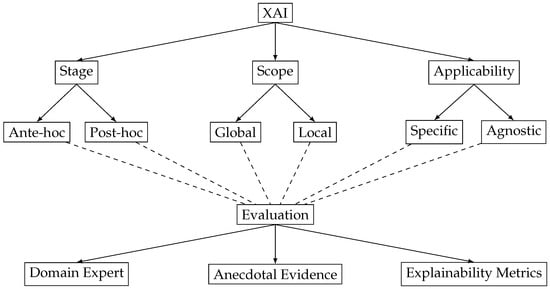
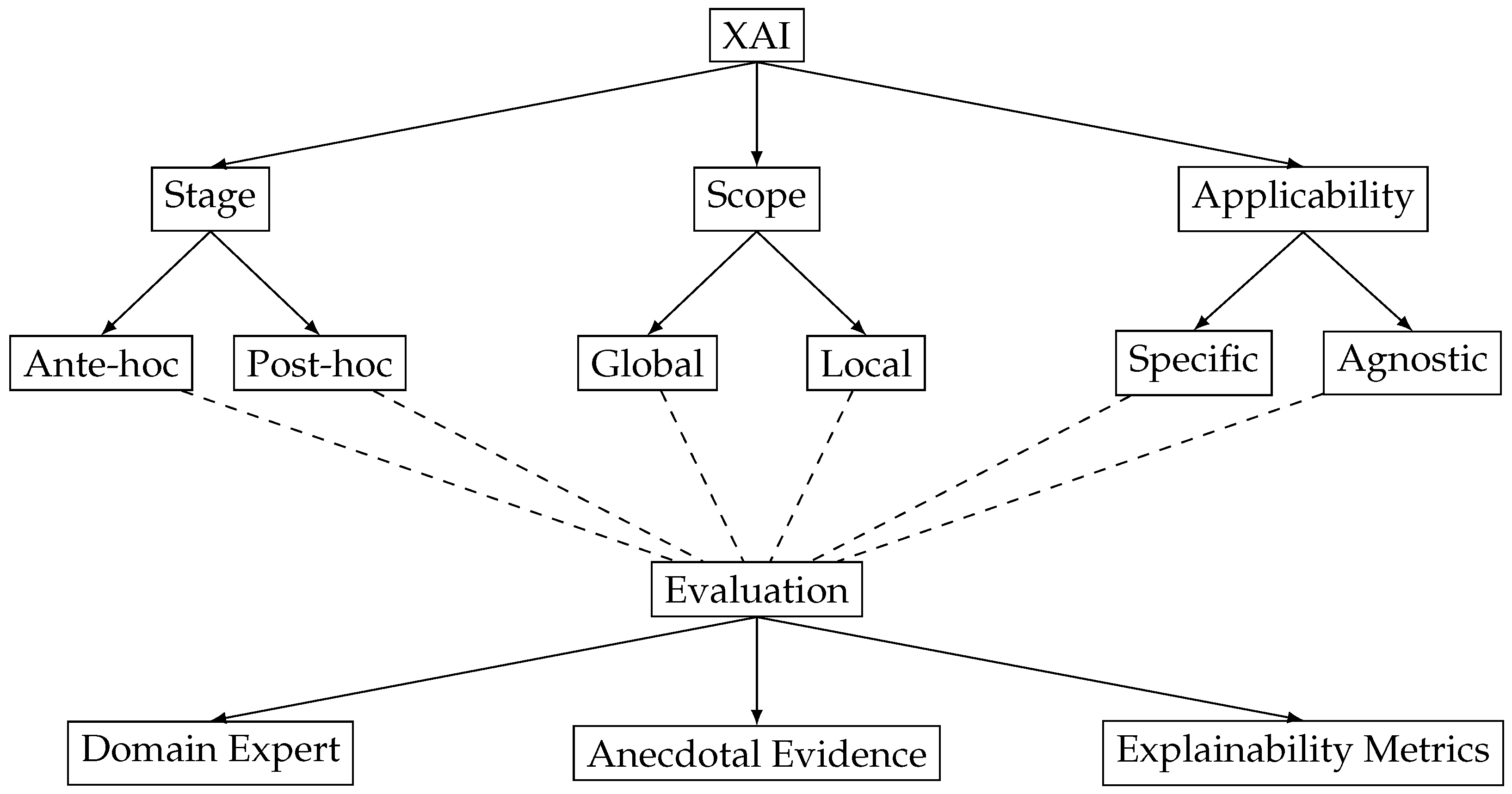
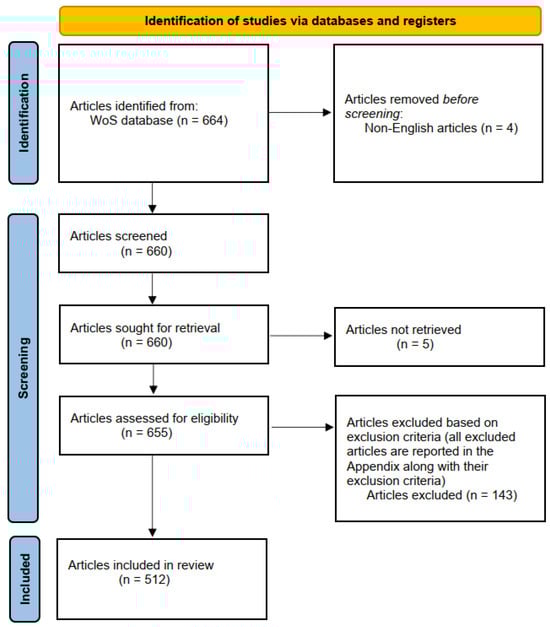
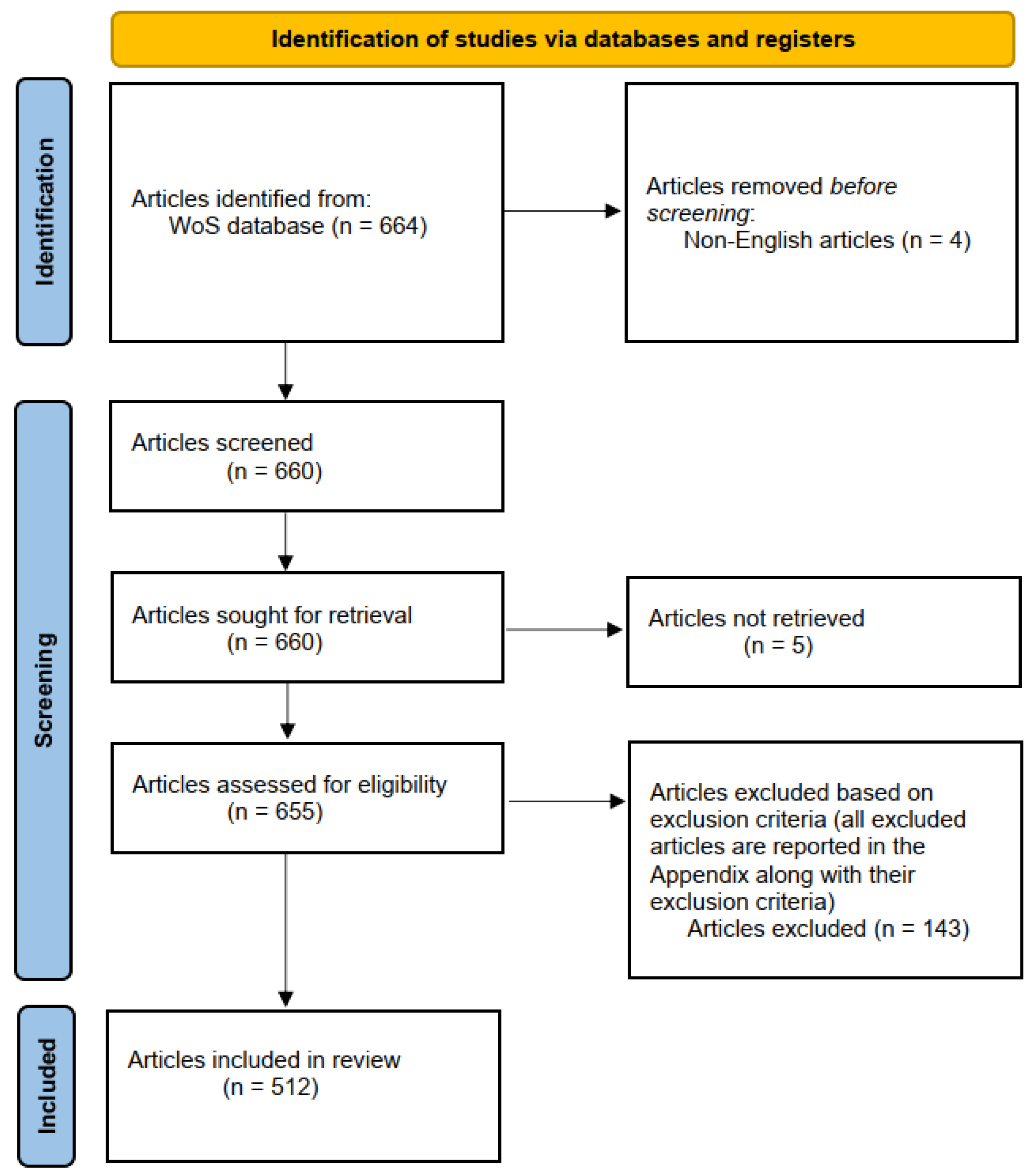
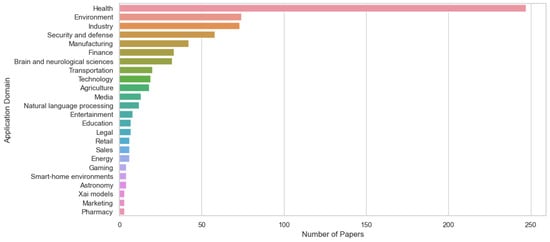
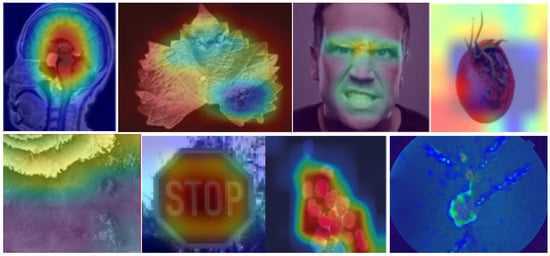
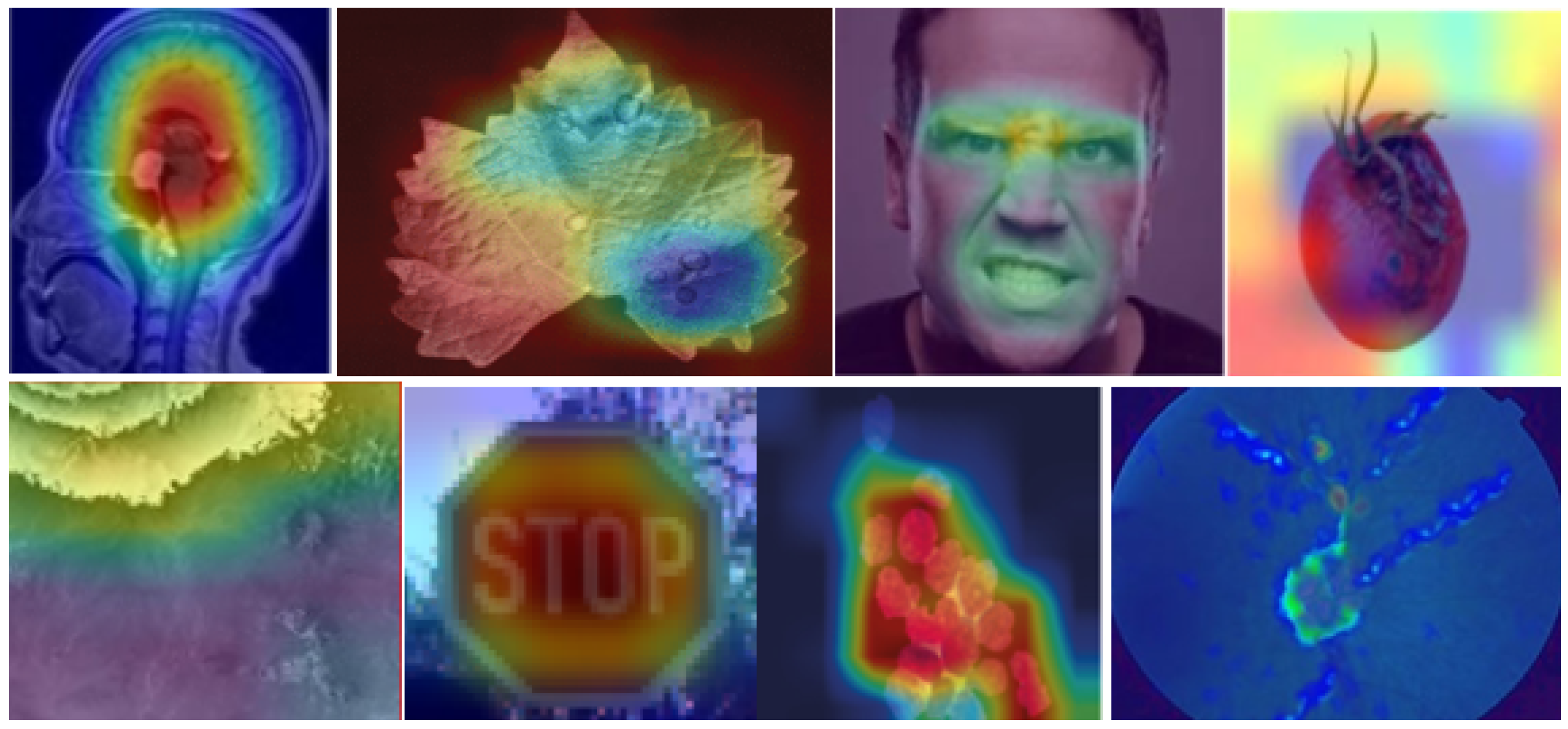
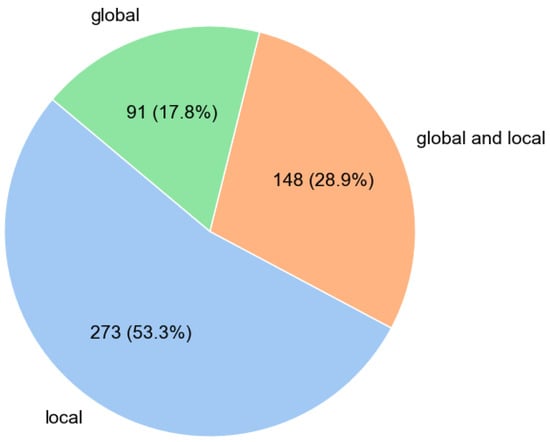
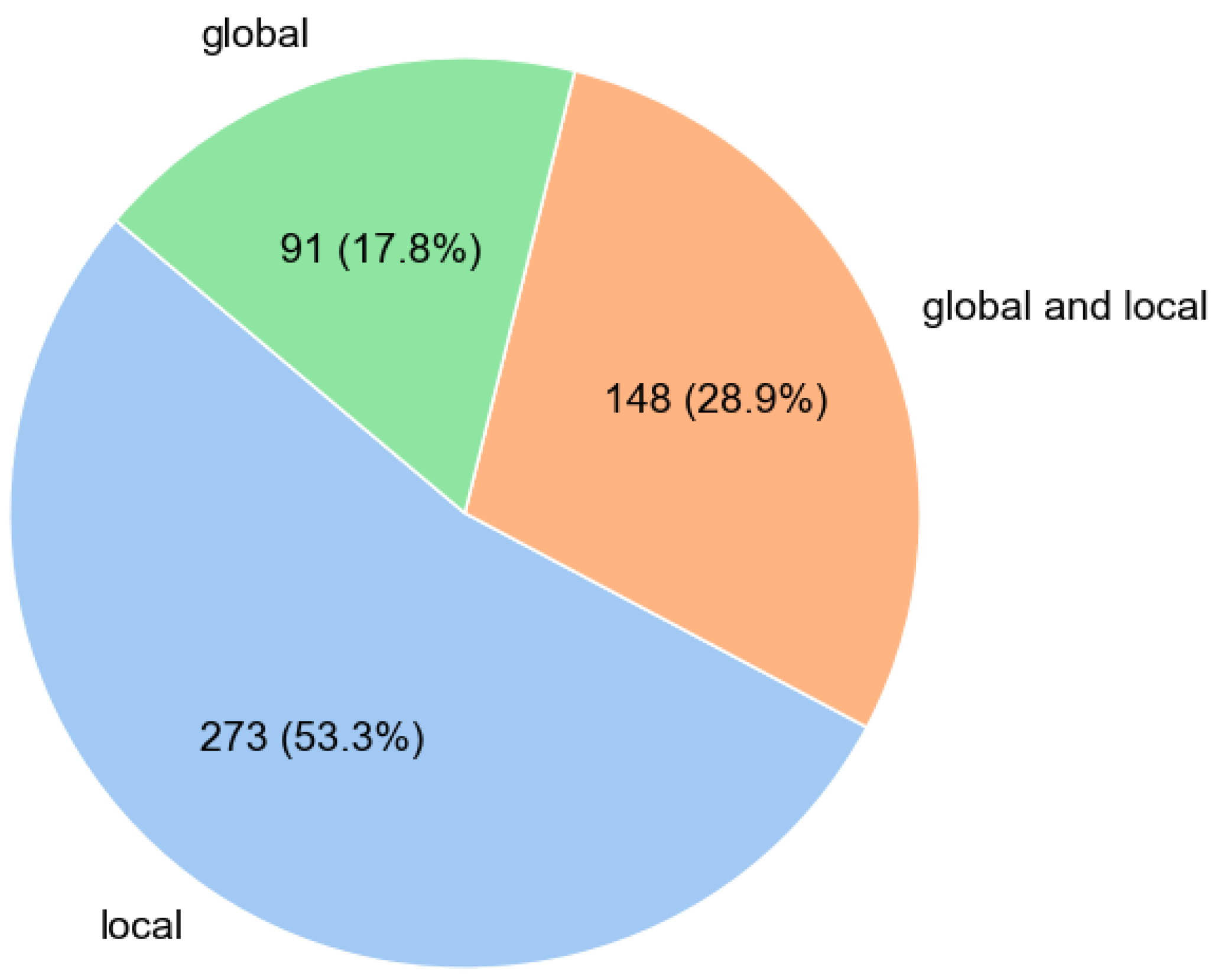
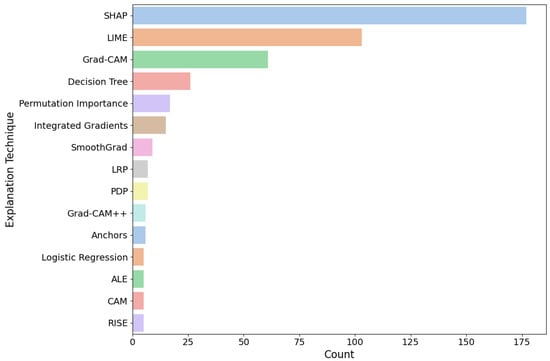
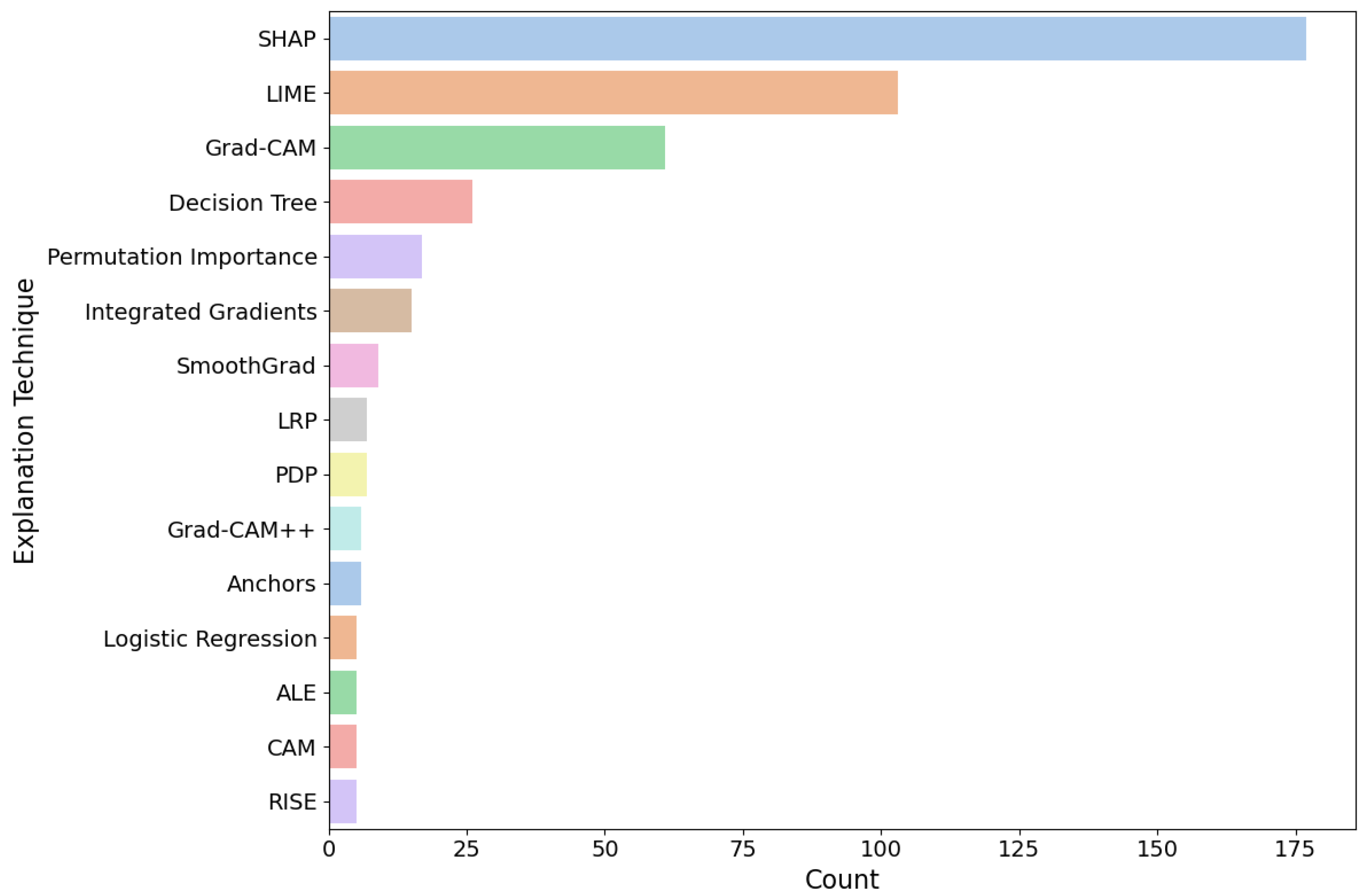
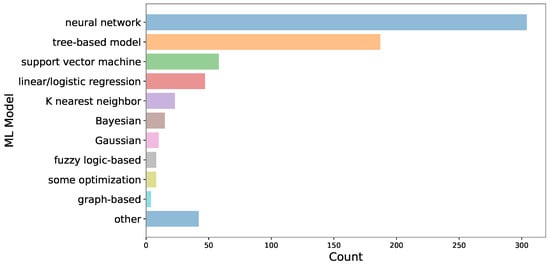
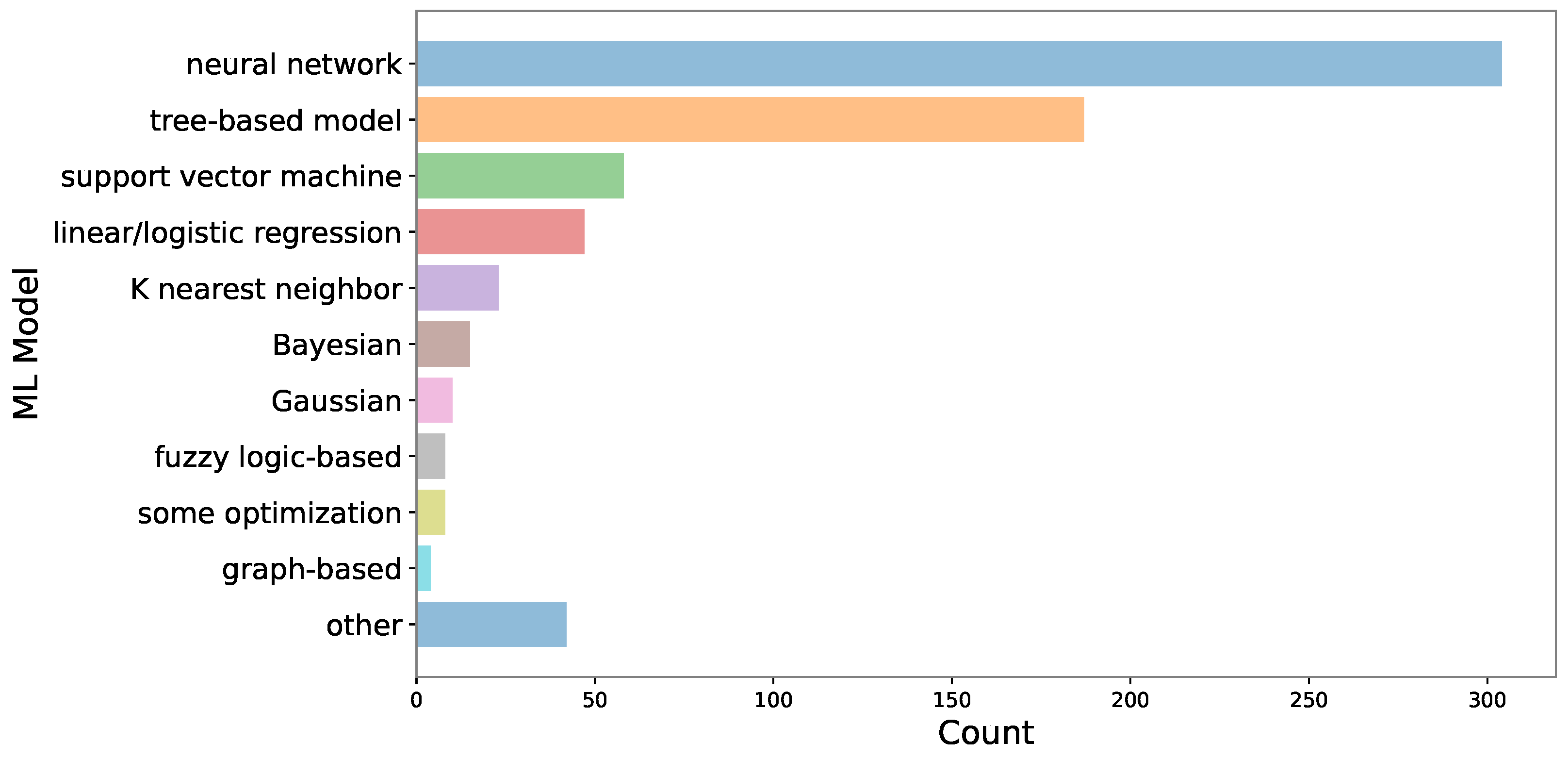
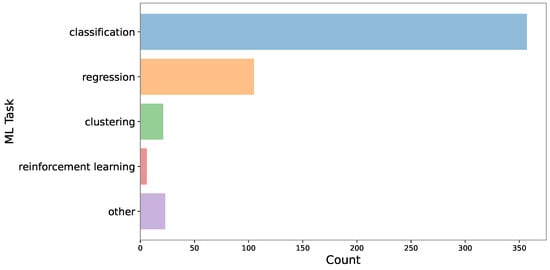
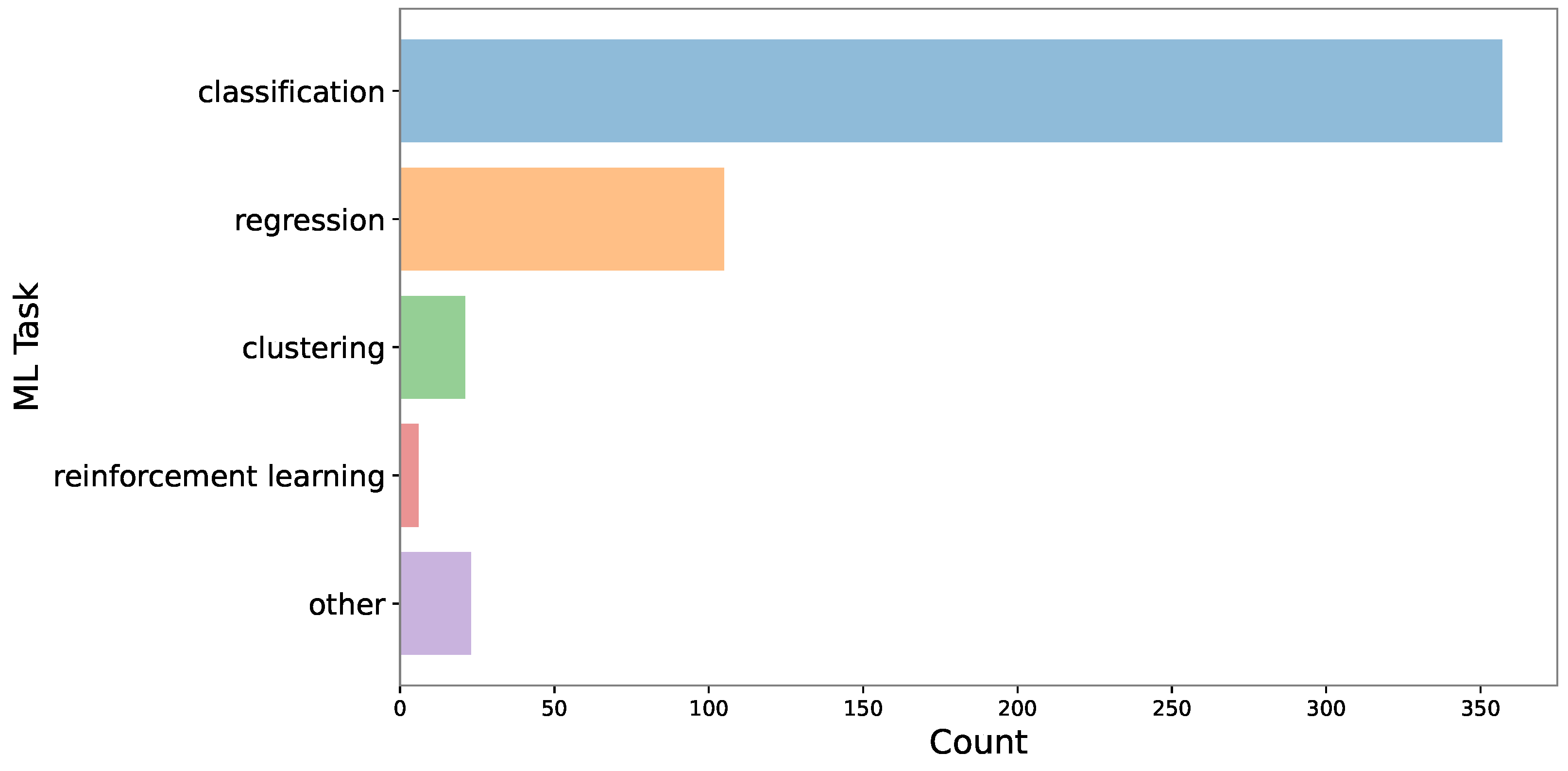
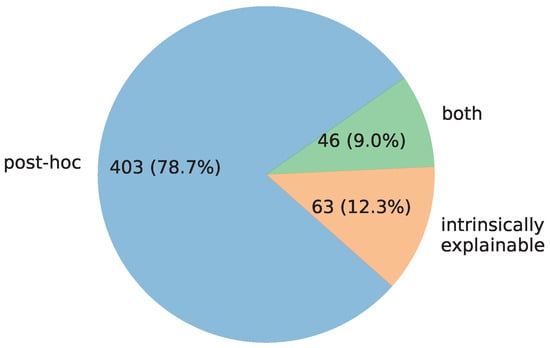
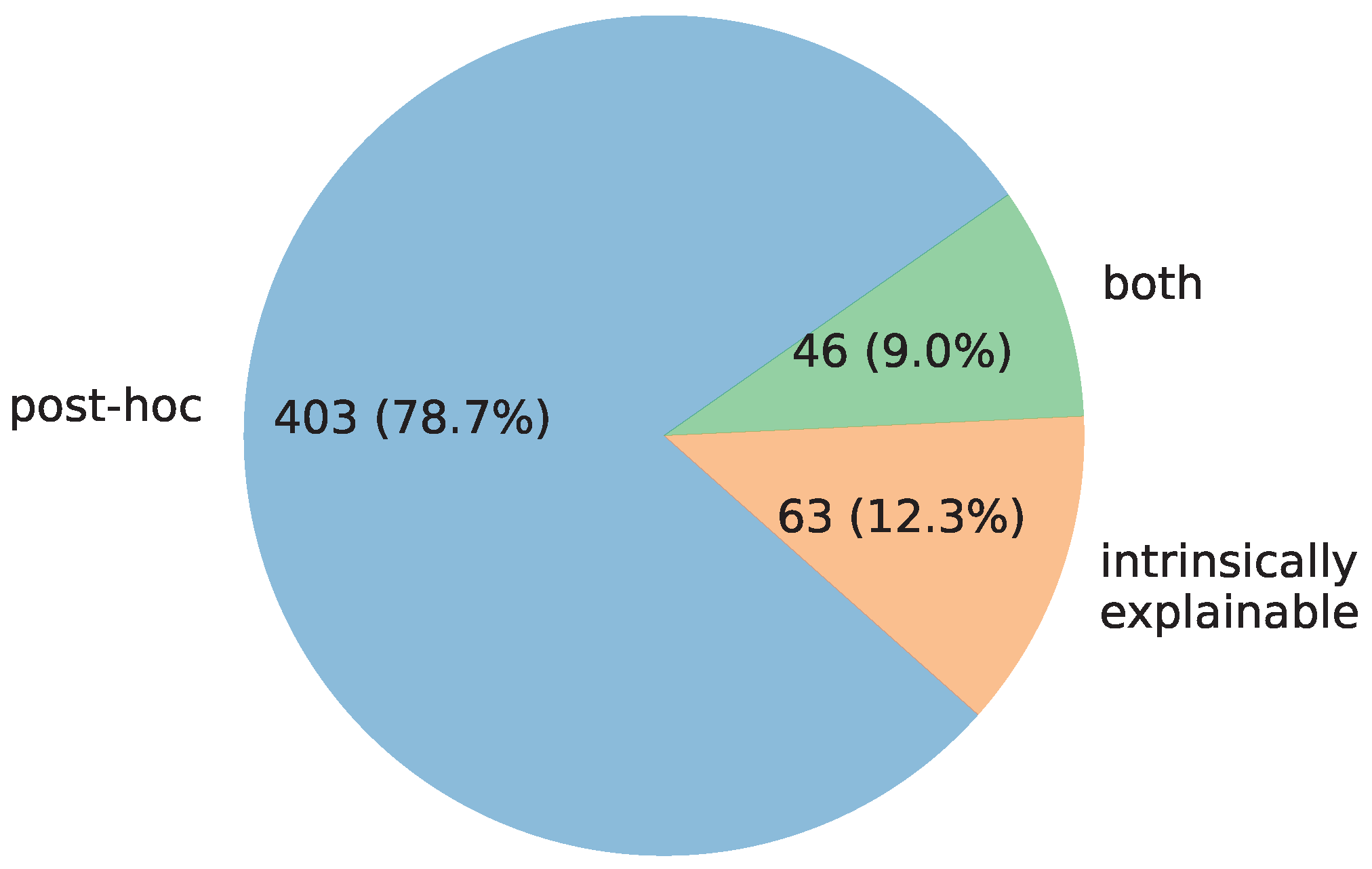
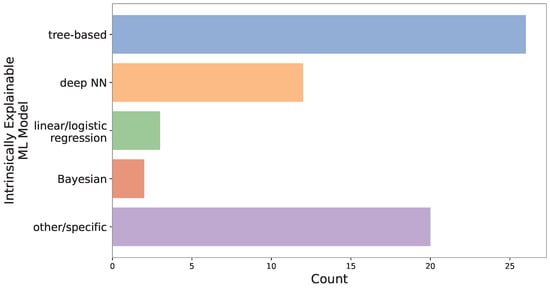
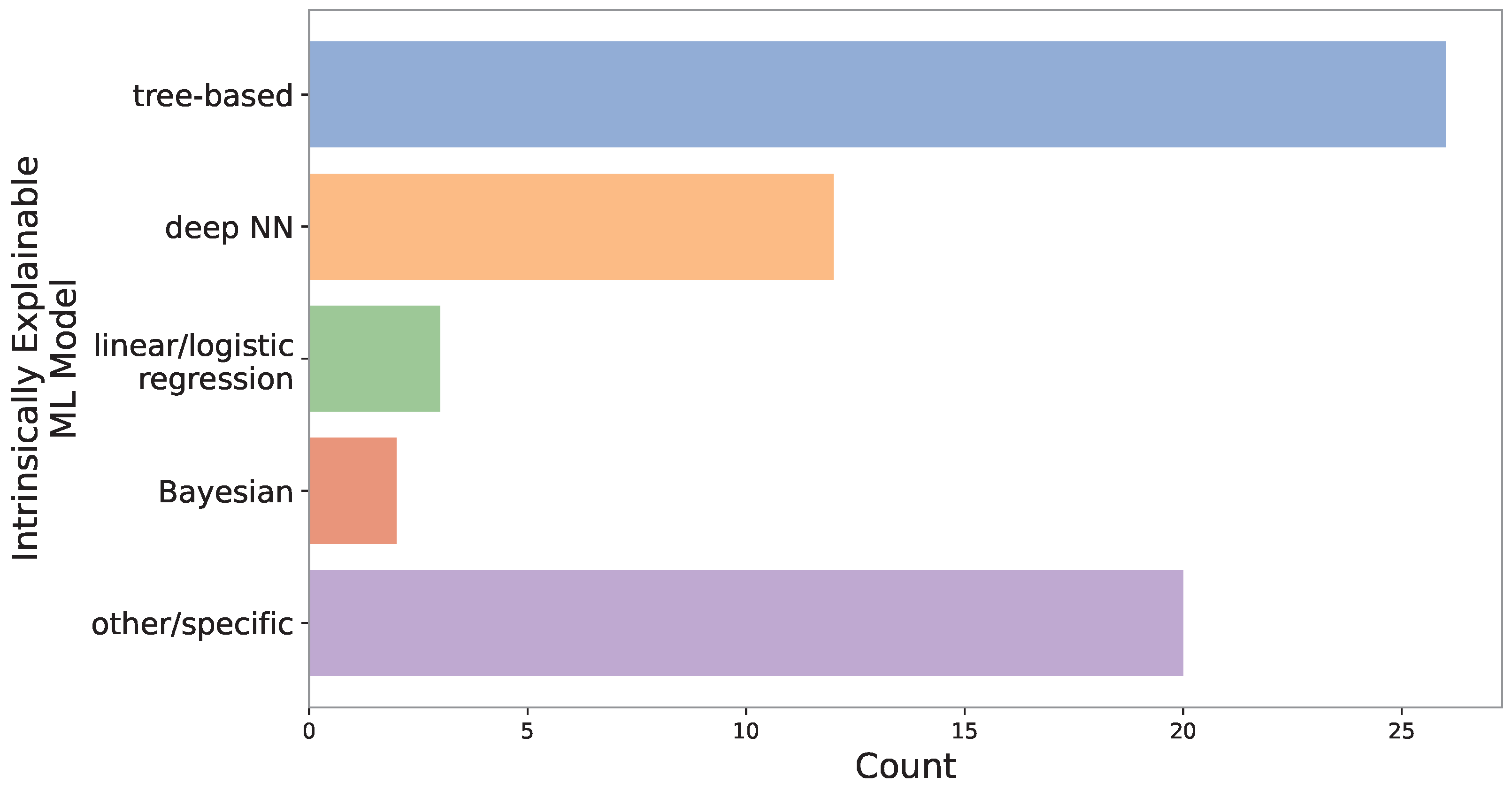
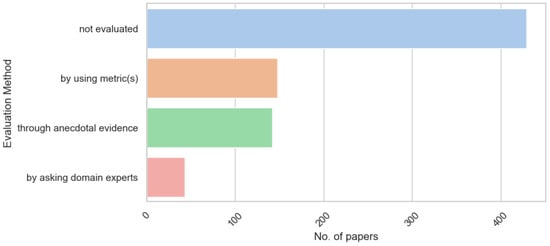
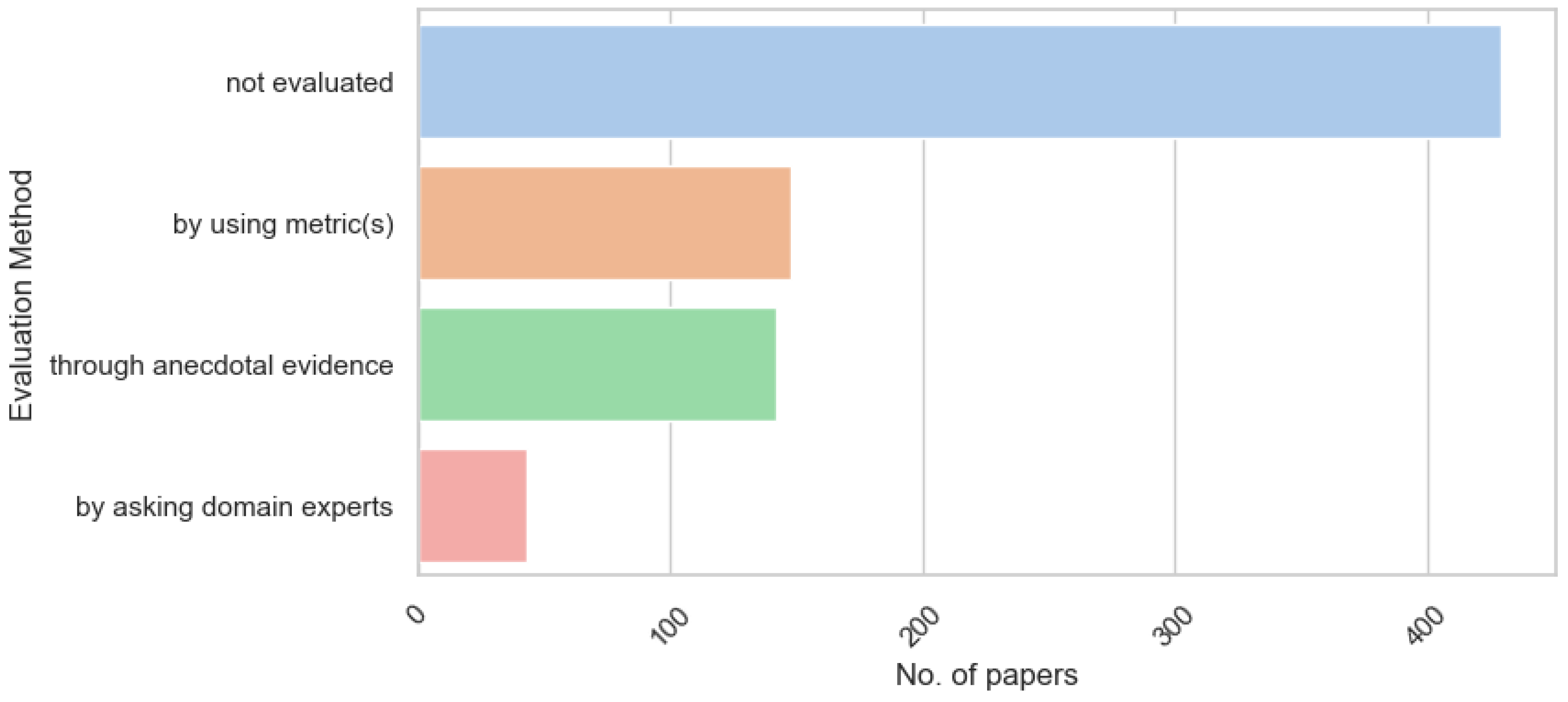

Disclaimer/Publisher’s Note: The statements, opinions and data contained in all publications are solely those of the individual author(s) and contributor(s) and not of MDPI and/or the editor(s). MDPI and/or the editor(s) disclaim responsibility for any injury to people or property resulting from any ideas, methods, instructions or products referred to in the content. |
© 2024 by the authors. Licensee MDPI, Basel, Switzerland. This article is an open access article distributed under the terms and conditions of the Creative Commons Attribution (CC BY) license (https://creativecommons.org/licenses/by/4.0/).