Article

Research on the Operational Performance of Organic Rankine Cycle System for Waste Heat Recovery from Large Ship Main Engine

Merchant Marine College, Shanghai Maritime University, Shanghai 201306, China
*
Author to whom correspondence should be addressed.
Appl. Sci. 2023, 13(14), 8543; https://doi.org/10.3390/app13148543
Submission received: 5 June 2023 / Revised: 6 July 2023 / Accepted: 11 July 2023 / Published: 24 July 2023
(This article belongs to the Special Issue Scientific Advances and Challenges in Ship Waste Heat Utilization)

Abstract

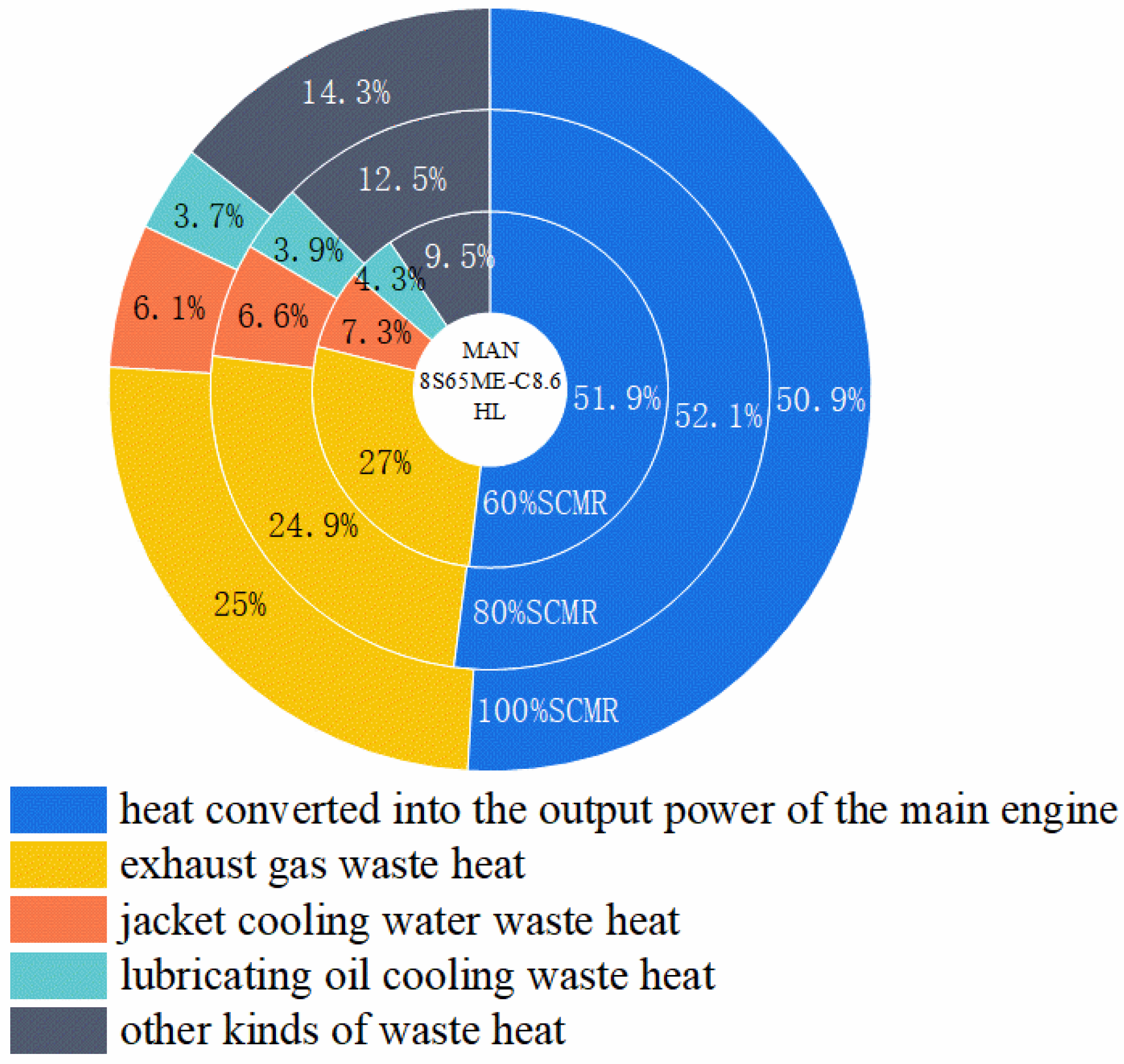
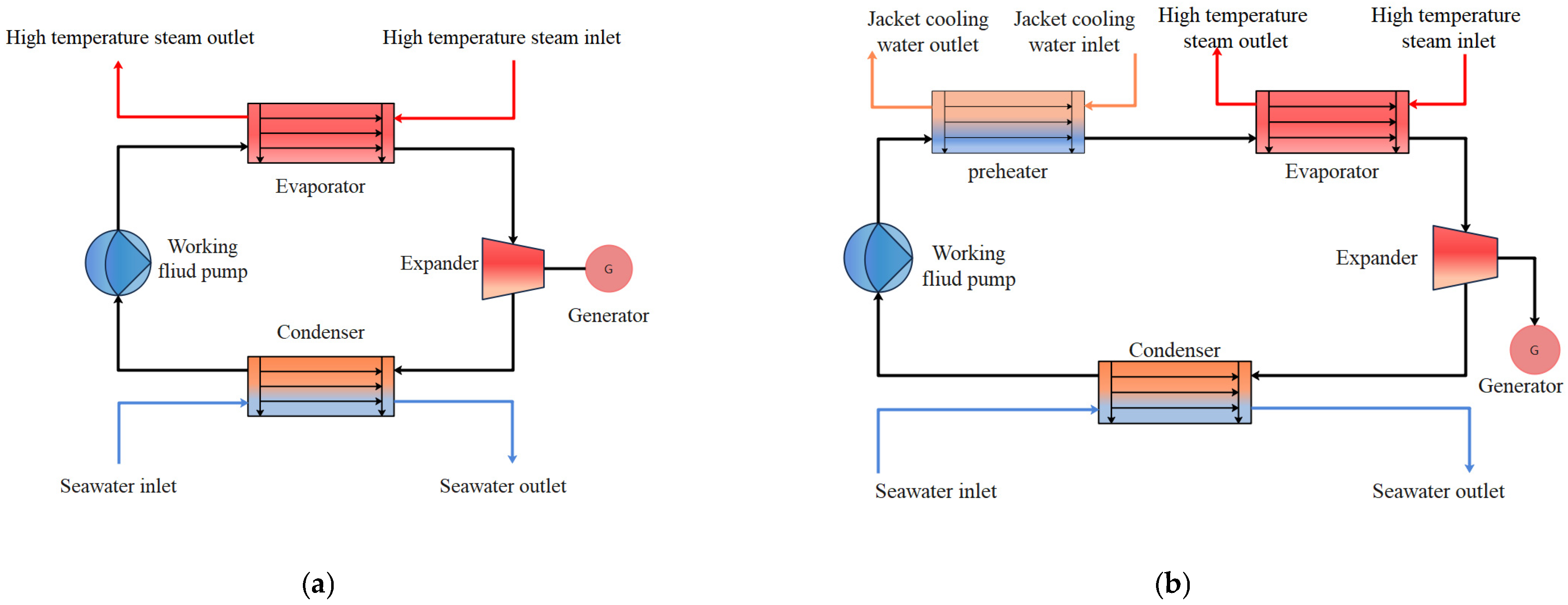
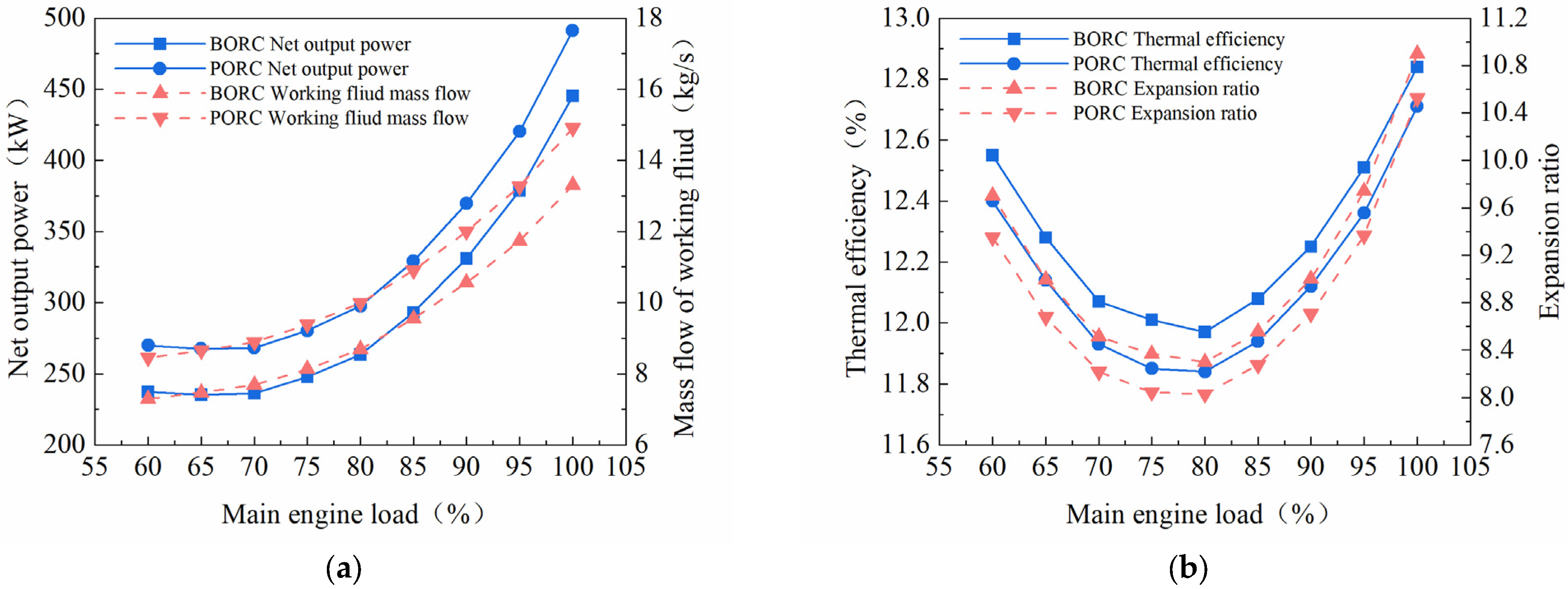
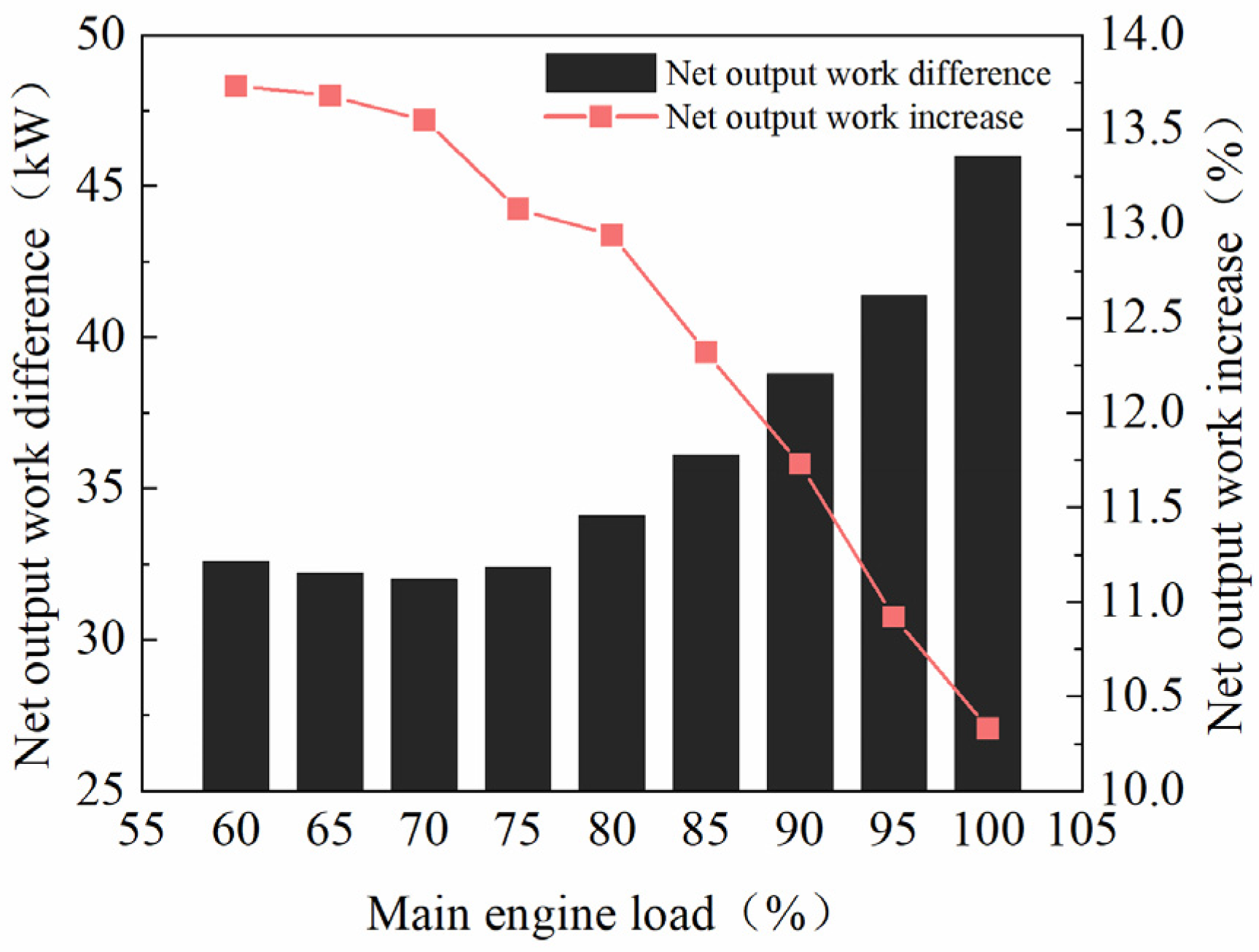
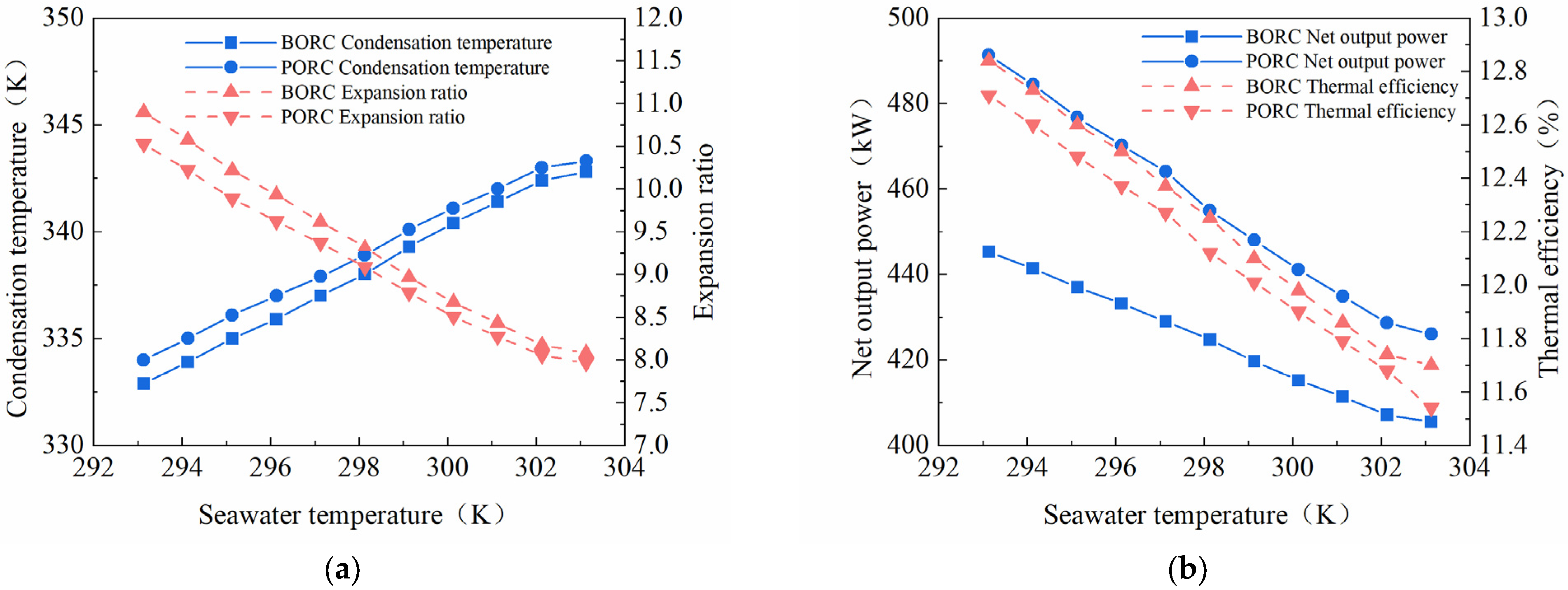
Based on the analysis of the waste heat distribution characteristics of a typical ship two-stroke low-speed main engine (model: MAN 8S65ME-C8.6HL, the specified maximum continuous rating SMCR: 21,840 kW) under different loads, two different types of organic Rankine cycle (ORC) systems, namely the basic system (BORC) and the preheated system(PORC), were constructed to recover the ship main engine’s exhaust gas waste heat and jacket cooling water waste heat. Using the thermodynamic simulation model of the system, the main performance indexes, including net output power of the two ORC systems were studied with the variation of seawater temperature and main engine load, and the annual ship fuel saving and annual carbon emission reduction generated by the two systems were compared and analyzed. It was found that the maximum net output power of the BORC system and PORC system were 445.3 kW and 491.3 kW, respectively, when the ship’s main engine load was 100%, and the outboard seawater temperature was 20 °C; the maximum thermal efficiency was 12.84% and 12.71%, respectively; under the annual operation, the fuel saving of BORC system and PORC system can be 456 tons and 510 tons, respectively, and the carbon emission reduction was 1416 tons and 1581 tons, respectively. The analysis found that the net output power of the PORC system is always greater than that of the BORC system. When the outboard seawater is lower, and the main engine load is more than 80%, the net output power difference between the PORC system and BORC system gradually expands, and the improvement of ORC system performance is more evident by adding a preheater. It can be concluded that when the ship was mainly operated in the sea area with low seawater temperature and the main engine was running under high load most of the time, selecting the PORC system to recover the waste heat of the main engine was more advantageous.
Keywords: ship main engine; waste heat recovery; organic Rankine cycle; preheater; carbon emission reduction ship main engine; waste heat recovery; organic Rankine cycle; preheater; carbon emission reduction