Article

An Efficient UV-C Disinfection Approach and Biological Assessment Strategy for Microphones
by
Valentina Vignali
1,
Tobi Hoff
2,
Jacqueline J. de Vries-Idema
3,
Anke L. W. Huckriede
3,
Jan Maarten van Dijl
3 and
Patrick van Rijn
1,*
1
W. J. Kolff Institute-FB41, Department of Biomedical Engineering-FB40, University Medical Center Groningen, University of Groningen, 9713 AV Groningen, The Netherlands
2
LAC Labs GmbH, Krummenau 4, 53577 Neustadt, Germany
3
Department of Medical Microbiology and Infection Prevention, University Medical Center Groningen, University of Groningen, 9713 AV Groningen, The Netherlands
*
Author to whom correspondence should be addressed.
Appl. Sci. 2022, 12(14), 7239; https://doi.org/10.3390/app12147239
Submission received: 29 June 2022 / Revised: 11 July 2022 / Accepted: 15 July 2022 / Published: 18 July 2022
(This article belongs to the Section Applied Microbiology)

Abstract

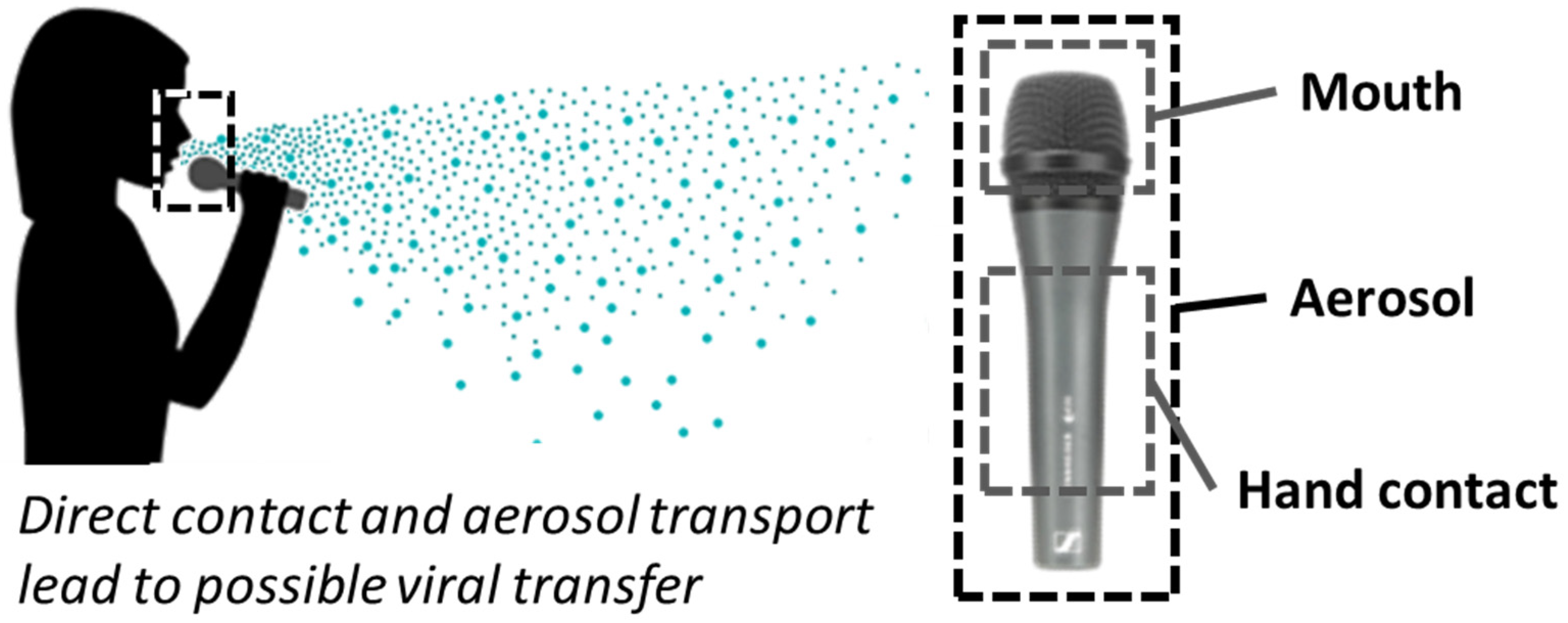
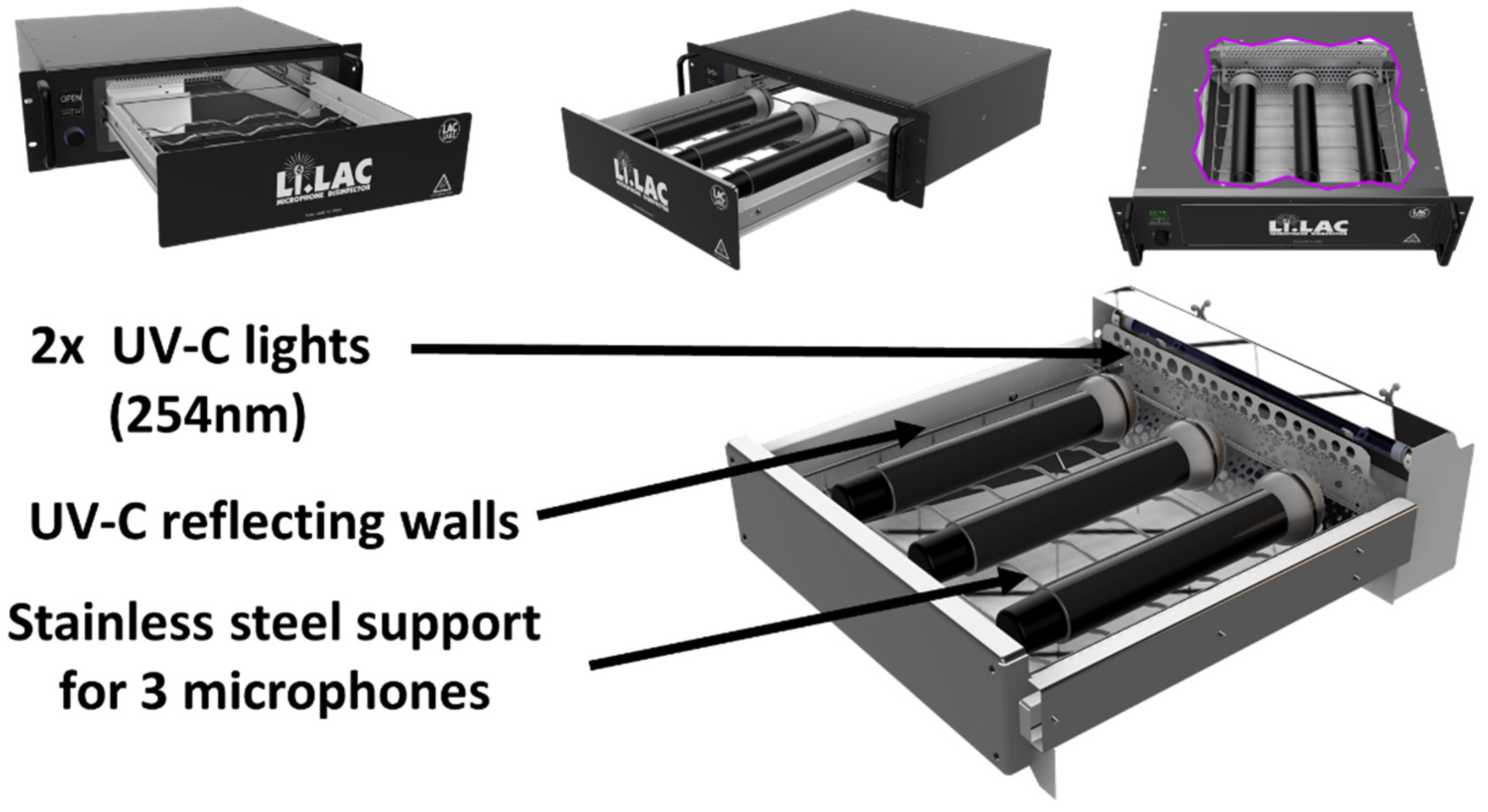
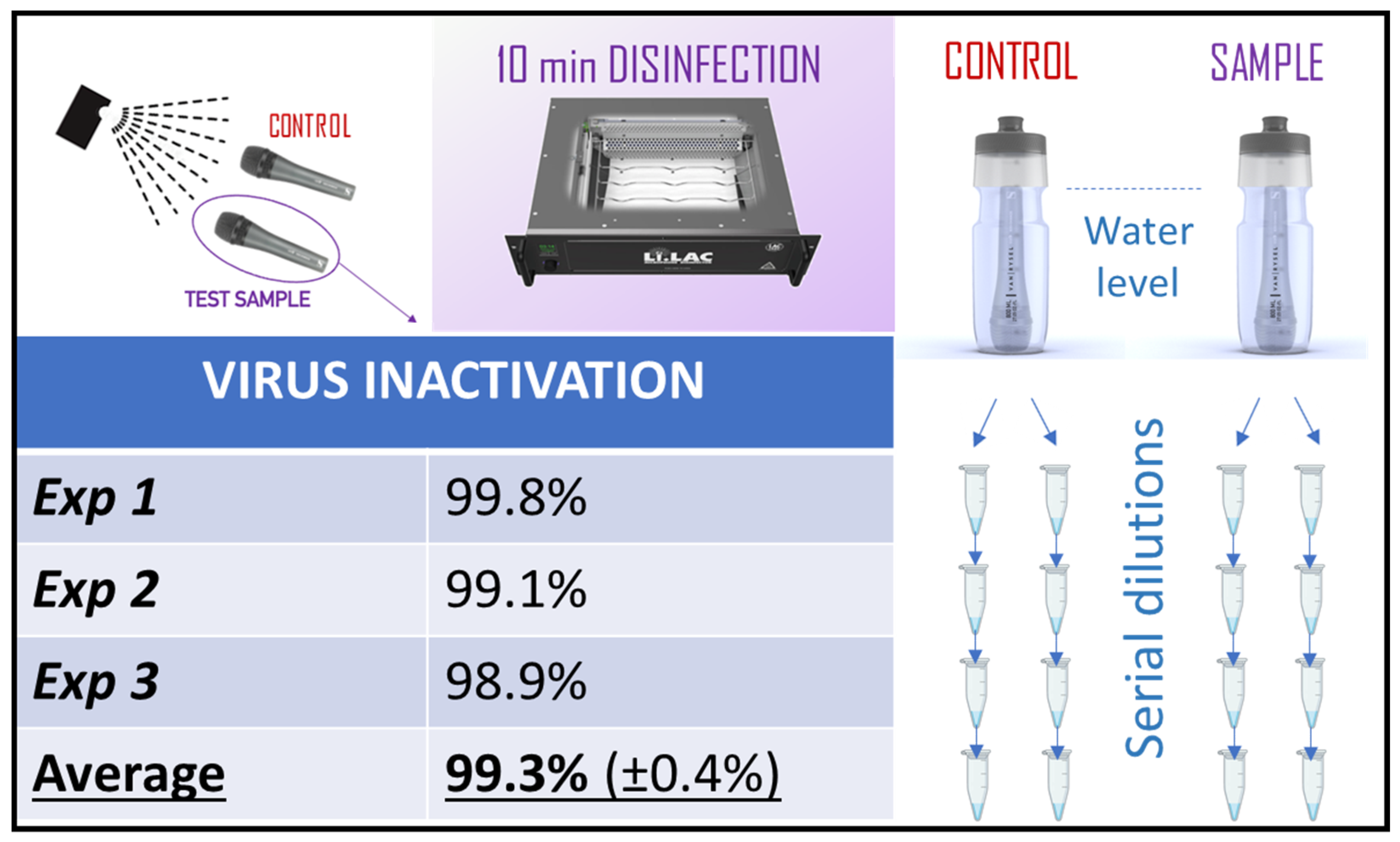
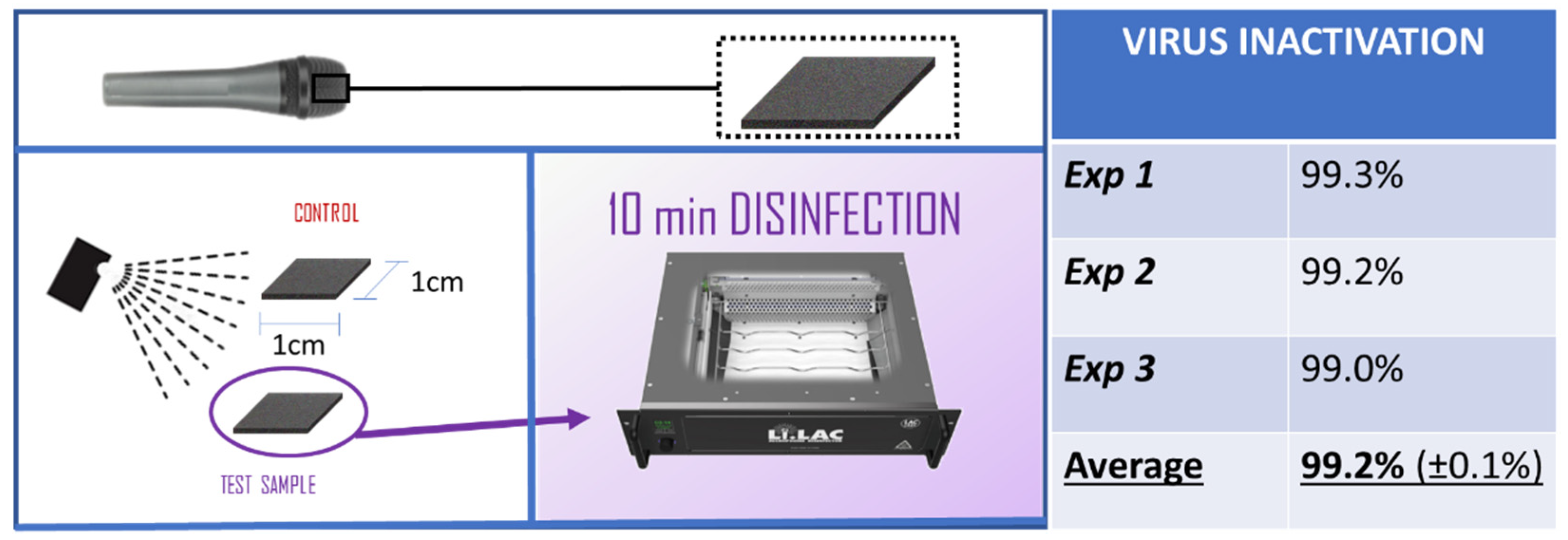
Hygiene is a basic necessity to prevent infections, and though it is regarded as vital in general, its importance has been stressed again during the pandemic. Microbes may spread through touch and aerosols and thereby find their way from host to host. Cleaning and disinfection of possibly contaminated surfaces prevents microbial spread, thus reducing potential illnesses. One item that is used by several people in a way that promotes close contact by touch and aerosol formation is the microphone. A microphone is a complex piece of equipment with respect to shape and various materials used to fabricate it and, hence, its disinfection is challenging. A new device has been developed to efficiently sterilize microphones by using UV-C and a biological assessment has been done to identify its efficacy and translatability. For this investigation, a contamination procedure was developed by using M13 bacteriophage as a model to illustrate the effectiveness of the disinfection. The susceptibility to UV-C irradiation of M13 in solution was compared to that of the PR8 H1N1 influenza virus, which has a similar UV-C susceptibility as SARS-CoV-2. It was found that 10 min of UV-C treatment reduced the percentage of infectious M13 by 99.3% based on whole microphone inoculation and disinfection. UV-C susceptibility of M13 and influenza in suspension were found to be very similar, indicating that the microphone sterilization method and device function are highly useful and broadly applicable.
Keywords: microphones; disinfection; viruses; infection; UV-C; M13 bacteriophage; surfaces microphones; disinfection; viruses; infection; UV-C; M13 bacteriophage; surfaces