


Abstract
Small and medium-sized enterprises (SMEs) play a pivotal role in advancing sustainability, yet many struggle to translate voluntary sustainability practices into structured, strategic business models. This study examines how this gap can be bridged between voluntary certification frameworks and emerging regulatory requirements, with a specific focus on workforce-related sustainability reporting under the European Sustainability Reporting Standards (ESRS). Using a qualitative case study of a Green Globe-certified, family-owned hotel, the research conducts a comparative gap analysis between existing organisational practices and corporate disclosure requirements, applying a Policy–Action–Target–Metric (PAT&M) framework. The findings reveal strong alignment in Policies and Actions (89%) but limited alignment in Targets and Metrics (14%), indicating a gap between sustainability activities and strategic performance management. The results highlight the need to transition from compliance-oriented initiatives to integrated, data-driven management systems. The findings also suggest that voluntary certification schemes, such as Green Globe, can be a useful first step in order to achieve better corporate reporting capabilities related to environmental, social and governance (ESG) issues. As practical implications, a roadmap solution is proposed to support system-level integration, transparency, and measurable outcomes for better business resilience.
1. Introduction
The hospitality industry represents a vital component of economic activity and employment within the European Union, while simultaneously facing increasing pressure to improve its sustainability performance. According to Travalyst (2026), the accommodation sector includes a wide range of sustainability certification schemes, including Green Globe, EarthCheck, Travelife, GreenSign and others, designed to demonstrate organisational commitment to sustainable business practices. These schemes are mainly self-declared and lack external auditing. In recent years, growing stakeholder expectations towards accountability and transparency have driven the expansion and standardisation of corporate Environmental, Social and Governance (ESG) reporting frameworks for more reliability. In general, most of the sustainability initiatives within hospitality continue to be focused on environmental issues, while social and governmental dimensions remain comparatively underdeveloped and underreported (Dias et al., 2024; Velaoras et al., 2025).
This imbalance is becoming increasingly problematic as workforce-related challenges intensify across the sector. Hospitality organisations continue to face persistent labour shortages, high employee turnover, irregular working schedules, and difficulties attracting and retaining qualified personnel (HOTREC, 2022; Eurostat, 2023; Saito et al., 2025). At the same time, workforce expectations are changing. Generation Z, expected to account for almost one-third of the global workforce by 2030, places greater emphasis on diversity, equity and inclusion (DEI), work–life balance, mental well-being and organisational values than previous generations (Oliver Wyman Forum, 2023). These developments require organisations to move beyond traditional human resource management practices and adopt a more strategic approach to workforce sustainability (Farooq & Salam, 2025; Kramar, 2014; Ma et al., 2025; PwC, 2023).
In response to growing demands for corporate transparency and accountability, the European Union introduced the Corporate Sustainability Reporting Directive (CSRD) and the accompanying European Sustainability Reporting Standards (ESRS). Among these standards, ESRS S1 -which covers topics related to Own Workforce-, requires organisations to disclose information relating to working conditions, equal treatment and opportunities, and other work-related rights (EFRAG, 2023a, 2023b, 2023c). Beyond its compliance function, ESRS S1 has been described as a catalyst for improving social sustainability performance by encouraging organisations to establish policies, actions, targets and metrics that enable systematic monitoring and continuous improvement of workforce-related practices (Farzam et al., 2023; Leal Filho et al., 2025).
Although many small and medium-sized enterprises (SMEs) remain outside the direct scope of the CSRD due to their size and revenue thresholds, they increasingly experience indirect pressure from customers, investors, supply chain partners and prospective employees to demonstrate sustainability performance and transparency (Leal Filho et al., 2025; WWTC, 2017). Furthermore, hospitality SMEs often rely on voluntary sustainability certifications, such as Green Globe, to communicate their sustainability commitments (Pommier & Engel, 2021). While these certifications provide structured guidance, they often lack external control and validation. They were largely developed in an environment characterised by lower disclosure requirements and weaker stakeholder expectations about workforce-related performance. One of the most visible changes for consumers in the European Union arrives at the end of 2026, when the Empowering Consumers for the Green Transition Directive starts applying. This legislation directly targets greenwashing, so generic environmental claims such as “eco-friendly”, “green”, or “sustainable” will face much stricter requirements, and sustainability labels must be based on recognised certification schemes or established by public authorities (European Parliament & Council of the European Union, 2024; European Commission, 2026).
The challenge is particularly important for family businesses and SMEs. Compared with larger organisations, they often face resource constraints, limited internal expertise and insufficient digital infrastructure to support sustainability reporting (European Commission, 2025a, 2025b, 2025c; Leal Filho et al., 2025). The introduction of simplified reporting frameworks, including the Voluntary Sustainability Reporting Standard for SMEs (VSME), reflects recognition that reporting requirements must be proportionate to SMEs’ scale and operational realities (Celli et al., 2024; Hummel & Jobst, 2024). The recently proposed Omnibus Simplification Package further reinforces the importance of reducing reporting burdens while maintaining transparency and comparability in sustainability disclosures (European Commission, 2025a, 2025b, 2025c). While many organisations engage in sustainability-related activities, they frequently lack the capabilities required to transform these activities into measurable, transparent and strategically managed outcomes, partially due to less sophisticated data management systems (Bossut et al., 2021; Celli et al., 2024). Understanding how existing voluntary sustainability practices can contribute to the development of sustainability reporting capabilities, therefore, represents an important research and practical challenge.
The hotel sustainability certification landscape is highly fragmented. Recent industry inventories identify more than twenty accommodation-specific sustainability certification schemes worldwide, including Green Globe, EarthCheck, Travelife, GreenSign, GreenStep, and Green Key, reflecting the growing diversity of voluntary sustainability assurance mechanisms available to hospitality organisations (ABTA, 2026; Travalyst, 2026).
Existing literature has extensively examined sustainability certifications in hospitality, the emergence of sustainability reporting frameworks, and the broader implications of the CSRD for European businesses (Elkhwesky et al., 2022; Hummel & Jobst, 2024; Khatter, 2023; Kim et al., 2017; Makoondlall-Chadee & Bokhoree, 2024; Qubbaj & Peiró-Signes, 2022; Saizarbitoria et al., 2019; Sharma et al., 2020; Thottathil, 2022; Vanichchinchai, 2021; Vesce et al., 2019; Yayla et al., 2024). However, limited empirical research has explored how voluntary sustainability certifications align with emerging workforce-related reporting requirements, particularly from the perspective of SME preparedness and capability development. More specifically, little is known about how hospitality SMEs can leverage existing certification-based sustainability practices to support the transition towards more structured workforce sustainability reporting. These requirements reflect broader societal expectations that employees should be treated not merely as operational resources but as key stakeholders whose well-being contributes directly to organisational success (European Commission, 2025a; PwC, 2023).
To address this gap, this study examines a case of a family-owned and Green Globe-certified hotel in Germany. Using ESRS S1 Own Workforce as the analytical framework for the European market, the study evaluates the extent to which existing workforce-related practices align with emerging reporting requirements of the European Union (EU) and explores the implications of this alignment for SME own workforce reporting capability development. Accordingly, the study addresses the following research question:
Does voluntary sustainability certification, such as Green Globe, support the development of workforce corporate reporting capabilities in hospitality SMEs?
Or, in other words,
Can voluntary certification schemes serve as a first step towards corporate ESG reporting?
By addressing this question, the article contributes to the literature on SME sustainability, workforce sustainability and ESG (Environmental, Social and Governance) reporting. It provides empirical insights into the relationship between voluntary certification schemes and workforce reporting readiness, identifies key capability gaps that hinder the transition from operational sustainability practices to strategic sustainability management, and offers practical recommendations for SMEs, certification providers and policymakers seeking to strengthen workforce sustainability and long-term organisational resilience (Ghani et al., 2022; Deloitte Insights, 2024).
2. Literature Review
The growing emphasis on sustainability has transformed corporate reporting across Europe and globally. Years back, initiatives such as the Paris Agreement and the United Nations Sustainable Development Goals (SDGs) have stimulated regulatory developments aimed at enhancing corporate transparency and accountability, culminating in the introduction of the Corporate Sustainability Reporting Directive (CSRD) and the European Sustainability Reporting Standards (ESRS) (European Commission, 2019a, 2019b) for the European market. While these initiatives predominantly target larger organisations, their effects extend beyond directly regulated entities and increasingly influence SMEs through supply chain relationships, investor expectations, and stakeholder demands (Ahern, 2023). There is no uniform definition of small and medium-sized listed companies (SMEs). One definition given by the European Union states that SMEs are enterprises that have at most 250 employees and an annual turnover not exceeding 50 million euros (European Union, 2003). Also, it is worth noting that both the EU and OECD emphasize that SMEs account for a large share of employment and typically represent around 99% of businesses (OECD, 2019). As a result, workforce has become an increasingly important dimension of organisational performance. Workforce-related practices also influence service quality, organisational reputation, and long-term competitiveness (Ghani et al., 2022; Giousmpasoglou, 2024).
2.1. Performance vs. Reporting
Organisations are under growing pressure to demonstrate their Environmental, Social, and Governance (ESG) performance. The implementation of these initiatives does not automatically translate into effective sustainability reporting. ESG reporting has evolved from a largely voluntary communication practice into an increasingly structured and standardised system of corporate accountability. Corporate reporting (both financial and non-financial) requires organisations not only to undertake activities but also to systematically monitor, measure, and communicate their outcomes (Alsayegh et al., 2020; Kuzey & Uyar, 2017). The emergence of the Corporate Sustainability Reporting Directive (CSRD) and the European Sustainability Reporting Standards (ESRS) further reinforces this direction in the European Union.
Under the ESRS framework, sustainability performance must be supported through formal disclosures concerning Policies, Actions, Targets, and Metrics (PAT&M) as mandated by the European Financial Reporting Advisory Group (EFRAG). Consequently, ESG reporting extends beyond documenting activities and requires organisations to establish management systems capable of generating reliable information, monitoring progress, and supporting accountability (EFRAG, 2022a, 2022b; European Commission, 2023a). In this context, the ability to measure sustainability performance becomes as important as the financial reports themselves. Due to limited resources, many SMEs adopt informal approaches to sustainability management and often prioritise implementation over measurement and reporting (Celli et al., 2024; Hummel & Jobst, 2024). While such organisations may engage in numerous sustainability practices, they frequently lack formal systems for target setting, performance measurement, and disclosure (Leal Filho et al., 2025). As sustainability expectations continue to increase, understanding how SMEs transition from sustainability implementation to sustainability accountability has become an increasingly important research challenge.
2.2. Workforce as Part of ESG Reporting
Within the sustainability literature, increasing attention has been devoted to the role of employees as key stakeholders in organisational sustainability. Sustainable Human Resource Management (SHRM) extends traditional human resource management by integrating economic, social, and human sustainability objectives into workforce management practices (Ehnert et al., 2014; Kramar, 2022). Workforce sustainability encompasses a broad range of organisational practices, including health and safety, training and development, diversity and inclusion, fair remuneration, work–life balance, and employee participation. Research increasingly demonstrates that such practices influence important organisational outcomes, including employee engagement, retention, productivity, and organisational reputation (Ghani et al., 2022; Deloitte Insights, 2024). In labour-intensive industries such as hospitality, these outcomes are particularly significant due to chronic labour shortages, high employee turnover, and growing competition for talent (HOTREC, 2022; Giousmpasoglou, 2024).
Moreover, discussions of ESG reporting architectures note that non-financial disclosures, including workforce-related information, are embedded within mandatory reporting channels, such as ESG reports, sustainability reports, and integrated reports, depending on jurisdiction and market expectations (Del Gesso & Lodhi, 2024; Nuhu & Alam, 2023; Yip & Yu, 2023; Zaid & Issa, 2023). The importance of workforce sustainability in the European Union is further reflected in ESRS part S1 covering Own Workforce, which places employees at the centre of social sustainability reporting.
ESRS S1 requires organisations to disclose information about working conditions, equal treatment and opportunities, and other work-related rights (EFRAG, 2023b). Importantly, the standard moves beyond compliance-oriented reporting and encourages organisations to establish measurable objectives and monitoring mechanisms that enable continuous improvement of workforce-related outcomes. From a strategic perspective, workforce sustainability can therefore be viewed as an organisational capability rather than merely a collection of human resource practices (Figure 1). Organisations that systematically manage employee well-being, skill development, inclusion, and workplace conditions may be better positioned to respond to labour market challenges and stakeholder expectations. Consequently, the ability to measure and manage workforce sustainability becomes increasingly important for long-term organisational competitiveness.
Figure 1.
Workforce sustainability as a strategic organisational capability towards business resilience.
Studies in accommodation establishments indicate a strong link between HR practices, organizational resilience, and sustainable tourism outcomes. Resilience of hospitality firms relates to HR practices related to training, socialization, and engagement, with demographic and psychographic profiles shaping effects on business resilience (Pimentel et al., 2024; Mercado & Ricafort, 2023). Also, crisis-responsive policies and welfare programs (remote work, mental health support, workload management) sustain productivity and organizational flexibility during disruptions (Nosike et al., 2024; Low & Cheah, 2024; Lim et al., 2020; Anderson et al., 2020).
2.3. Voluntary Certifications as a Learning Mechanism
Voluntary sustainability certifications have become important instruments for encouraging sustainability adoption in the hospitality industry. Certification schemes such as Green Globe provide organisations with structured frameworks that support the implementation of sustainability initiatives across environmental, social, and cultural dimensions. For many SMEs, certification schemes represent a practical and accessible pathway towards sustainability management, particularly when more corporate reporting frameworks such as the European Corporate Sustainability Reporting Directive (CSRD) and the Global Reporting Initiative (GRI) are perceived as too resource-intensive (Pommier & Engel, 2021).
The popularity of certification schemes and/or self-declared labels reflects their ability to provide legitimacy, external validation, and reputational benefits. Research suggests that environmental certifications can positively influence stakeholder perceptions and demonstrate organisational commitment to responsible business practices (Dias et al., 2024; Velaoras et al., 2025). In fragmented industries such as hospitality, certifications also provide a common framework that helps organisations communicate sustainability performance to external stakeholders. However, certifications and ESG reporting serve fundamentally different purposes. Certification schemes are generally designed to assess the existence of sustainability-related practices, procedures, or management systems. Sustainability and ESG reporting frameworks, in contrast, increasingly focus on accountability, outcomes, and performance measurement. As a result, the successful implementation of certified sustainability practices does not necessarily indicate readiness for structured sustainability reporting.
This distinction is particularly relevant in the social dimension of sustainability. Previous research suggests that sustainability certifications in hospitality tend to place greater emphasis on environmental issues than on workforce-related outcomes (Rodríguez-García et al., 2023; Velaoras et al., 2025). Furthermore, social sustainability criteria are often less standardised and less dependent on measurable indicators, creating challenges for organisations seeking to demonstrate progress and compare performance over time. The growing importance of sustainability disclosure therefore raises an important question: Do certification frameworks merely facilitate sustainability implementation, or do they also support the development of ESG reporting capabilities? While certifications may encourage organisations to adopt sustainability practices, evidence remains limited regarding their ability to support systematic target setting, performance measurement, and reporting readiness, particularly among SMEs operating under resource constraints. Therefore, this study utilises the EFRAG PAT&M framework, as it enables an assessment of sustainability integration at the system level through the examination of organisational Policies (P), Actions (A), Targets (T), and Metrics (M), rather than relying solely on the presence of sustainability practices.
3. Theoretical Background
To understand how voluntary sustainability certification schemes may contribute to workforce ESG reporting readiness, this study draws on three complementary theoretical perspectives. First, Stakeholder Theory helps explain why workforce sustainability has become increasingly important within the ESG agenda. Second, Institutional Theory provides insight into the external pressures encouraging organisations to adopt sustainability reporting and related management practices. Finally, the concepts of Policy–Practice and Means–Ends Decoupling help explain why organisations may implement sustainability policies and procedures without necessarily achieving measurable sustainability outcomes. Together, these perspectives provide a basis for examining whether voluntary certification schemes merely signal sustainability commitment or whether they also contribute to the capabilities required for effective workforce disclosures. This is particularly relevant in the context of evolving ESG reporting requirements, which increasingly emphasise measurable and auditable outcomes rather than the mere existence of sustainability practices.
Stakeholder Theory suggests that organisations create value not only for shareholders but for a broader set of stakeholders who can affect or are affected by organisational activities (Freeman, 2022; Parmar et al., 2010) where stakeholders expect organisations to demonstrate transparency regarding their environmental, social, and governance (ESG) performance and extending accountability beyond purely financial outcomes (Alsayegh et al., 2020; Sun et al., 2022). This theory further suggests that organisational attention is influenced by the power, legitimacy, and urgency associated with stakeholder demands (Mitchell et al., 1997). Recent and increasing regulatory requirements have elevated employees to a strategically important stakeholder group within hospitality organisations. Consequently, workforce sustainability has become a broader strategic issue linked to organisational legitimacy, talent attraction, retention, and long-term competitiveness (Kramar, 2022; PwC, 2023; EFRAG, 2023b).
On the other hand, Institutional Theory helps explain why organisations adopt sustainability reporting practices. Institutional Theory argues that organisational behaviour is shaped by external pressures originating from laws, regulations, professional norms, and industry expectations (DiMaggio & Powell, 1983). Organisations frequently adapt their structures and practices to maintain legitimacy and conform to accepted standards within their institutional environment (Herold, 2018). Three forms of institutional pressure are commonly distinguished. Coercive pressures arise from legal and regulatory requirements, mimetic pressures emerge through the imitation of successful peers, and normative pressures originate from professional standards and industry expectations (DiMaggio & Powell, 1983). Sustainability reporting provides a clear illustration of these mechanisms. The introduction of the CSRD and ESRS represents a coercive force encouraging organisations to adopt more standardised sustainability reporting practices. At the same time, hospitality firms increasingly face mimetic pressures through industry certifications and benchmarking initiatives, while normative pressures emerge from sustainability frameworks, industry alliances, and professional associations (Moseñe et al., 2013; Sun et al., 2022). Voluntary certification schemes such as Green Globe can therefore be interpreted as institutional responses that help SMEs demonstrate conformity with emerging sustainability expectations while operating within resource constraints.
Previous research on voluntary sustainability standards also suggests (Nava & Tampe, 2022) that organisations may experience Policy–Practice Decoupling, whereby formal policies and certifications signal sustainability commitment without generating measurable sustainability outcomes (Aravind & Christmann, 2011; Egels-Zandén, 2014; King et al., 2005). Similarly, Means–Ends Decoupling may occur when organisations adopt sustainability procedures and management practices but fail to establish the targets and performance indicators necessary to evaluate effectiveness in local conditions (de Bakker et al., 2019; Christensen et al., 2017; Wijen, 2014). In such situations, compliance with voluntary standards may enhance legitimacy and stakeholder communication, while providing limited support for strategic sustainability management and accountability.
Research Gap
Existing literature has examined sustainability reporting requirements, workforce sustainability, and voluntary certification schemes largely as separate streams of research. Scholars have explored the implications of the CSRD and ESRS for organisations (Hummel & Jobst, 2024; Leal Filho et al., 2025), workforce sustainability challenges within hospitality (Giousmpasoglou, 2024; Saito et al., 2025), and the adoption of sustainability certifications in the tourism and hospitality sectors (Dias et al., 2024; Velaoras et al., 2025). However, limited empirical research has investigated whether certification-based sustainability practices provide the organisational capabilities required for structured workforce sustainability reporting. Little is known about the extent to which hospitality SMEs possess the strategic measurement capabilities necessary to move from sustainability implementation towards accountability. Addressing this gap is important given the growing demand for transparent workforce-related disclosures and the increasing reliance of SMEs on voluntary sustainability certification schemes as their primary sustainability management framework.
The distinction between implementation (Policy-Practice Decoupling) and measurement (Means-Ends Decoupling) has become increasingly important within the ESRS framework. Whereas traditional sustainability initiatives often only focused on the adoption of Policies and Actions, ESRS disclosures require organisations to demonstrate how effectiveness is monitored through Targets and Metrics (EFRAG, 2022a, 2022b). Consequently, the transition from sustainability implementation to accountability requires more than the existence of sustainability practices; it also requires organisational capabilities that enable consistent measurement, performance evaluation, and transparent reporting.
Viewed through this lens, ESG reporting readiness can be interpreted as an organisational capability that extends beyond operational sustainability activities. Examining the balance between Policies, Actions, Targets, and Metrics (PAT&M) therefore provides insight into whether workforce sustainability is embedded primarily as a compliance-oriented practice or as a strategically managed organisational capability.
4. Methodology
This study adopts a qualitative case study design to examine how voluntary self-declared sustainability certification contributes to the development of workforce sustainability reporting readiness within a hospitality SME. Case study research is particularly appropriate for exploring contemporary organisational phenomena in the real-world context of complex managerial practices. In the present study, the case study approach facilitates an in-depth examination of the relationship between existing workforce sustainability practices and the reporting requirements embedded within ESRS S1 Own Workforce. The study focuses on one hotel, a family-owned five-star hotel in Germany that is certified under the Green Globe sustainability framework. The hotel represents an appropriate case because it combines two characteristics relevant to this research. First, as a hospitality SME, it reflects the realities and resource constraints commonly associated with the sector. Second, its participation in a well-known and recognised voluntary sustainability certification scheme provides an opportunity to explore whether certification-based sustainability practices contribute to workforce sustainability reporting readiness. The study investigates whether existing workforce-related practices provide the organisational foundations required for structured workforce reporting as part of an integrated corporate report. The case therefore serves as an illustrative example of how hospitality SMEs may progress from operational sustainability implementation towards strategic ESG accountability.
4.1. Data
The study is mainly based on qualitative analysis of organisational, confidential data sources. Document analysis is particularly suitable for evaluating sustainability management and reporting practices because workforce-related policies, procedures, management systems, and reporting mechanisms are typically formalised within organisational documents. Furthermore, ESG reporting frameworks are themselves document-based, making comparative document analysis an appropriate research method.
Three categories of documents were examined. First, internal organisational documents provided by the hotel. These included collective agreements, company agreements, workforce-related policies, codes of conduct, training documentation, health and safety procedures, and data protection guidelines. These documents provided evidence regarding the existence and implementation of workforce sustainability practices. Second, publicly available organisational materials were reviewed, including the company website, recruitment materials, sustainability management plans, and workforce-related communications. These materials offered additional insights into publicly communicated sustainability commitments and workforce-related initiatives. Third, the ESRS S1 Own Workforce standard and the Green Globe Certification criteria served as external reference frameworks. These documents provided the basis for evaluating workforce sustainability reporting readiness and for assessing the extent to which voluntary certification frameworks support workforce-related disclosure capabilities.
4.2. The Framework
To operationalise workforce sustainability reporting readiness, the PAT&M framework (Figure 2) used in this study is derived from ESRS 1 General Requirements, which requires undertakings to disclose Policies, Actions, Targets and Metrics relating to material ESG matters as designed by EFRAG (European Commission, 2023a ESRS 1, paragraphs 12–13, and ESRS2, paragraph 13, 33–34; EFRAG, 2025). According to ESRS, sustainability disclosures should communicate the policies organisations establish, the actions implemented to address sustainability matters, and the targets and metrics used to evaluate effectiveness and monitor performance (EFRAG, 2022a, 2022b, 2025).
Figure 2.
PAT&M framework’s visual.
In this study, the PAT&M framework is interpreted as an indicator of workforce sustainability reporting maturity. Policies reflect formal organisational commitments and represent the first level of embeddedness. Actions capture implementation efforts and resource allocation, constituting the second level. Targets define intended outcomes and strategic ambitions, representing the third level. Metrics, as the fourth and highest level, provide mechanisms for monitoring, evaluation, and accountability. Taken together, these dimensions capture the organisational capabilities necessary to transition from sustainability implementation to structured and systematic ESG reporting. The framework is applied across the three main ESRS S1 sub-topics:
- Working Conditions;
- Equal Treatment and Opportunities for All;
- Other Work-Related Rights.
These dimensions collectively comprise seventeen workforce-related sustainability topics (see Table 1), as standardised under the EU CSRD, and form the unit of analysis for this study.
Table 1.
Coverage of ESRS S1 Topics by Green Globe Certification.
4.3. Assessment
The analysis was conducted in three stages. First, the Green Globe Certification framework was subsequently mapped against the ESRS S1 workforce-related topics to determine the extent to which voluntary certification criteria may support the development of reporting capabilities. In doing so, Green Globe is treated as a voluntary sustainability management framework rather than a direct causal explanation of organisational practices. Second, a descriptive assessment was undertaken to identify existing workforce sustainability practices at the hotel. Organisational documents were systematically reviewed and coded according to the PAT&M framework. Existing policies, actions, targets, and metrics were mapped against the seventeen ESRS S1 workforce-related topics. Third, a Workforce Sustainability Reporting Readiness Assessment was performed. Rather than evaluating regulatory compliance, this assessment examined the degree to which existing workforce sustainability practices provide the organisational foundations necessary for structured ESG reporting on the topic of its own workforce. Each workforce-related topic was analysed according to the presence of PAT&M elements (and binary coded) to measure whether the organisation possesses the mechanisms required.
Analytical Logic
The analytical logic underlying this study is based on the premise that workforce sustainability reporting readiness requires more than workforce sustainability practices alone (Policy-Practice). Organisations may possess extensive policies and actions that demonstrate commitment to workforce sustainability while simultaneously lacking the targets and metrics necessary to evaluate effectiveness, demonstrate outcomes, and support transparency. Consequently, reporting readiness is conceptualised as an organisational capability rather than a compliance outcome (Means-Ends).
Within this study, the relative presence of PAT&M elements (binary coded) provides insight into the maturity of workforce sustainability management. Policies and actions indicate implementation capability, whereas targets and metrics reflect the capacity to monitor, measure, and report performance systematically. Assessing the balance between these elements therefore allows the identification of capability gaps that may prevent hospitality SMEs from transitioning from sustainability implementation to sustainability accountability. The approach aligns with the article’s broader objective of understanding how voluntary sustainability certification supports the development of workforce sustainability reporting capabilities within hospitality SMEs.
5. Findings
To assess the extent to which voluntary certification supports workforce sustainability reporting readiness, the Green Globe certification criteria were mapped against the seventeen ESRS S1 workforce-related topics. The results are summarised in Table 1. The mapping exercise shows that Green Globe explicitly addresses several workforce-related topics, including secure employment, working time, adequate wages, health and safety, gender equality, diversity, training and development, child labour, and forced labour, accounting for more than 70% of the ESRS topics. However, other workforce sustainability topics, including work–life balance, employment and inclusion of persons with disabilities, adequate housing, and privacy, are not explicitly represented within the certification criteria. Furthermore, topics such as freedom of association and collective bargaining are only indirectly referenced through broader legal compliance provisions.
The assessment therefore indicates varying levels of thematic coverage across the workforce sustainability topics assessed.
Table 2 summarises reporting readiness within the ESRS S1 dimension Working Conditions. The assessment shows that the strongest alignment was achieved in Working Time and Health and Safety, both of which achieved full readiness scores. Topics including Secure Employment, Adequate Wages, Social Dialogue, Collective Bargaining, and Work–Life Balance demonstrated partial readiness due to the presence of policies and actions but limited evidence of targets or metrics. No evidence was identified for Freedom of Association and Worker Representation, resulting in no readiness for this topic.
Table 2.
Workforce Sustainability Reporting Readiness: Working Conditions.
Overall, the Working Conditions dimension (Table 2) achieved a readiness score of 66%. Policy and action coverage both reached 88%, whereas target and metric coverage reached 22%.
Table 3 presents the results for the ESRS S1 dimension Equal Treatment and Opportunities for All. The highest readiness score within this dimension was observed for Training and Skills Development, which demonstrated full coverage across all PAT&M elements. Gender Equality and Equal Pay, Measures Against Violence and Harassment, and Diversity demonstrated partial readiness due to the absence of formal targets and metrics. No evidence was identified regarding Employment and Inclusion of Persons with Disabilities, resulting in no readiness for this topic. The overall readiness score for this dimension reached 60%, with policy and action coverage both achieving 80%, while target and metric coverage reached only 20%.
Table 3.
Workforce Sustainability Reporting Readiness: Equal Treatment and Opportunities for All.
Table 4 presents the findings for the ESRS S1 dimension Other Work-Related Rights. Across all four topics: Child Labour, Forced Labour, Adequate Housing, and Privacy, evidence was identified for policies and actions. However, no targets or metrics were found for any topic within this dimension. Consequently, all four topics demonstrated identical readiness scores. Overall readiness for this dimension reached 66%. Policy and action coverage both achieved 100%, while target and metric coverage remained at 0%.
Table 4.
Workforce Sustainability Reporting Readiness: Other Work-Related Rights.
The Workforce Sustainability Reporting Readiness Assessment revealed variation across the four PAT&M dimensions. Table 5 summarises the overall results across the seventeen ESRS S1 workforce-related topics. The results indicate consistently high levels of policy and action coverage across the workforce-related sustainability topics assessed. Policy alignment and action alignment both reached 89%, suggesting that workforce sustainability considerations are extensively embedded in organisational practices. In contrast, target and metric alignment reached only 14%, resulting in an overall readiness score of 64%. This pattern was observed across all three ESRS S1 dimensions.
Table 5.
Workforce Sustainability Reporting Readiness Assessment Summary.
6. Discussion
6.1. Stakeholder Theory
The findings show that the hotel has developed extensive workforce-related Policies and Actions across most ESRS S1 topics (hence they were able to obtain the Green Key certification), particularly in relation to working conditions, health and safety, training and skills development, social dialogue, and employee support mechanisms. This suggests that workforce sustainability is not absent from the organisation; rather, it is already embedded in many operational practices. Viewed through Stakeholder Theory, these results indicate that the hotel has responded most strongly to workforce issues that are visible, operationally relevant, and connected to stakeholder expectations, especially those of employees, prospective employees, regulators, and industry partners (Mitchell et al., 1997; Alsayegh et al., 2020; Sun et al., 2022). The high levels of policy and action alignment, both 89%, demonstrate that workforce-related stakeholder concerns are formally and practically recognised within the organisation. This is particularly important in the hospitality sector, where employee-related challenges have become strategically significant. However, the findings also indicate that stakeholder responsiveness is uneven. While health and safety, training and working time are comparatively well developed, other topics such as disability inclusion, diversity metrics and formal employee representation are weakly addressed or absent. This suggests that not all workforce-related stakeholder issues receive the same degree of organisational attention. In terms of stakeholder salience, topics perceived as more urgent, regulated or operationally visible appear to receive stronger organisational responses, while less visible or less legally enforced issues remain underdeveloped (Mitchell et al., 1997; Herold, 2018). This unevenness is important because ESRS S1 treats workforce sustainability as a broad and integrated domain rather than a set of selectively addressed HR practices (EFRAG, 2023b).
The findings therefore refine the stakeholder-based understanding of workforce sustainability in SMEs. They suggest that SMEs may be willing and able to respond to workforce stakeholder expectations, but mostly where those expectations are already embedded in operational routines, legal requirements or sectoral norms. The challenge is not only recognising employees as stakeholders, but ensuring that all relevant workforce-related interests are systematically measured, managed and reported.
6.2. Institutional Theory
The findings show that many workforce practices are shaped by external institutional forces, including labour law, collective agreements, occupational health and safety requirements, data protection obligations (such as GDPR), and voluntary certification criteria. This indicates that the hotel’s workforce sustainability practices do not arise solely from internal strategic choice, but are also strongly influenced by the regulatory and normative environment in which the organisation operates (DiMaggio & Powell, 1983; Moseñe et al., 2013; Herold, 2018). Coercive institutional pressures are particularly visible in areas such as working time, wages, health and safety, privacy, child labour and forced labour. These topics are strongly supported through formal Policies and Actions because they are closely linked to legal compliance and sectoral employment standards. In contrast, topics that are less directly mandated, such as disability inclusion or broader workforce diversity metrics, show weaker development. This reinforces the idea that regulatory pressure strongly influences the maturity of workforce sustainability practices. It also suggests that where institutional requirements are less explicit, SMEs may be less likely to develop reporting systems voluntarily.
Normative and mimetic pressures are also evident. Green Globe certification provides a recognised sustainability framework and allows the hotel to demonstrate alignment with hospitality sustainability norms. As prior research notes, certification schemes can support reputation, stakeholder communication and the formalisation of sustainability practices in hospitality organisations (Dias et al., 2024; Velaoras et al., 2025). In this sense, Green Globe can be understood as an institutional mechanism (Pommier & Engel, 2021; KPMG International, 2024; WWTC, 2023a, 2023b) through which hospitality SMEs demonstrate sustainability commitment. Yet, the findings show that institutionalisation through certification does not automatically create reporting readiness. Green Globe covers several workforce-related topics, but its coverage is uneven and often less demanding than ESRS S1 in relation to targets, metrics and structured disclosure. This is particularly relevant as the institutional environment is shifting from voluntary sustainability signalling towards more standardised sustainability accountability under standards such as the CSRD and ESRS (Hummel & Jobst, 2024; Leal Filho et al., 2025; European Commission, 2023a, 2023b). The findings therefore suggest that SMEs face a changing institutional landscape: practices that were sufficient to demonstrate sustainability commitment under voluntary certification may no longer be sufficient under emerging reporting expectations.
The findings also suggest that the transition towards ESG accountability is increasingly linked to digital tech-driven capability development. The changing institutional environment also makes workforce reporting readiness a digital capability issue. Voluntary certification can support the formalisation of workforce policies and actions, but structured ESG reporting also requires consistent data collection, target setting, performance monitoring, and disclosure. Human resource information systems can support these processes, although managerial commitment and effective implementation remain necessary (Shani & Tesone, 2010). Cloud-based systems may further support consistent access to workforce data across hotel units, providing a stronger basis for workforce target setting (Parveen & Alraddadi, 2024; Zaki & Saad, 2018). They may, therefore, help hospitality SMEs respond to coercive, normative, and stakeholder pressures for more transparent workforce reporting. However, the adoption of technology does not automatically create strategic reporting capability. HR analytics must be linked to organisational objectives, supported by suitable analytical skills, and governed correctly. Without these conditions, organisations may collect more data without improving strategic decision-making or workforce outcomes (Angrave et al., 2016; Gupta et al., 2023). The tech-driven tools can support the systematic collection of workforce-related data and facilitate the development of measurable Targets and Metrics required under ESG reporting frameworks (Hummel & Jobst, 2024; Leal Filho et al., 2025).
6.3. Policy–Practice and Means-Ends Decoupling
The hotel has extensive Policies and Actions across most workforce sustainability topics, but many of these are not accompanied by measurable Targets or Metrics. This pattern reflects what Nava and Tampe (2022) describe as policy–practice decoupling: the presence of formal sustainability commitments without sufficient evidence that these commitments are translated into measurable outcomes. In this case, policy–practice decoupling does not mean that workforce sustainability practices are absent or purely symbolic. On the contrary, many practices are clearly implemented, including training, health and safety procedures, employee feedback mechanisms, flexible scheduling practices, grievance mechanisms and data protection procedures. The issue is more specific: the organisation can demonstrate that Policies and Actions exist, but it often cannot demonstrate their effectiveness through systematic Targets or Metrics.
This distinction is important because it moves the analysis beyond a simple judgement of whether the hotel does the social part of ESG. The findings show that the hotel does many things related to workforce sustainability. However, ESRS S1 requires more than the existence of activities; it requires disclosure of how workforce-related matters are managed, monitored and evaluated (European Commission, 2023a, 2023b; EFRAG, 2023b). In this sense, the main gap lies not in implementation itself, but in the evidencing and evaluation of implementation. The result is a situation in which certification may support the creation of policies and practices, while leaving important questions about impact, progress and accountability insufficiently addressed. The findings therefore demonstrate how policy–practice decoupling can emerge even in organisations with genuine HR sustainability activity.
While policy–practice decoupling concerns the gap between formal commitments and practice, means–ends decoupling refers to a disconnect between implemented activities and the achievement or evaluation of strategic objectives (Nava & Tampe, 2022). This means that the hotel has many workforce-related activities in place, but these are often not connected to measurable objectives. For example, training and development activities are documented, but broader targets for skills development or long-term workforce capability are less clearly established. Diversity and equal treatment policies exist, but measurable diversity goals, disability inclusion indicators or leadership diversity metrics are largely absent. This creates a strategic limitation. Without Targets and Metrics, it becomes difficult to assess whether workforce sustainability initiatives are improving employee outcomes, reducing risks, strengthening retention, or enhancing organisational resilience. In ESRS logic, Policies and Actions explain what an organisation intends and does, while Targets and Metrics show whether progress can be assessed (European Commission, 2023a, 2023b). The absence of these measurement elements weakens the organisation’s ability to move from activity to strategic management. This is particularly problematic in the social dimension of ESG, where outcomes such as inclusion, well-being, representation and employee experience are often more difficult to measure than environmental indicators. Prior research has similarly noted that social sustainability remains less developed and less consistently measured in hospitality sustainability frameworks than environmental performance (Uyar et al., 2021; Rodríguez-García et al., 2023; Velaoras et al., 2025).
The identified means-ends gap may therefore also reflect a digital capability gap. HR Information Systems and Management platforms can provide a central infrastructure for workforce data relating to recruitment, attendance, training, performance, compensation, and employee development. When these data are standardised and integrated, they can support Targets related to staff turnover, training participation, workforce planning, absenteeism, diversity, and employee retention (Kapoor & Sherif, 2012; Shani & Tesone, 2010).
HR analytics and business intelligence tools can then translate these data into monitorable Metrics. Dashboards can make progress visible to HR professionals, managers, and decision-makers and support regular adjustment of Targets. These should reflect the organisation’s workforce sustainability priorities and involve relevant users in their development. Research on tech-driven management dashboards shows that the participation of key users in selecting and prioritising indicators can improve their relevance and usefulness (Nabovati et al., 2023).
7. Practical Implications
The findings have practical implications for hospitality SMEs seeking to move from voluntary certification towards structured ESG reporting. The first step should be to assess the organisation’s current HR technology, data availability, and data quality. Where workforce information is dispersed across documents or departments, a cloud-based integrated platform may provide a common data infrastructure. This can support more consistent data collection and allow HR planning to become more proactive and closely aligned with business strategy (Shani & Tesone, 2010; Zaki & Saad, 2018).
The second step is to use integrated workforce data to establish a limited set of relevant Targets and Metrics. The specific indicators should reflect the hotel’s size, strategy, workforce risks, and technology maturity. They should also be aligned with the relevant jurisdiction rather than being selected only on the basis of convenience.
The third step is to develop a workforce dashboard that links the selected indicators to strategic objectives. Frontline managers, HR staff, finance staff, and senior management should be involved in selecting the indicators. This can help ensure that the dashboard supports both operational decisions and ESG reporting. Evidence from dashboard research indicates that user participation can support the identification and prioritisation of more relevant KPIs (Nabovati et al., 2023).
The fourth step is to invest in analytical skills and data governance. Hotels need employees who can interpret workforce data, connect indicators to business decisions, and communicate the results responsibly. Clear responsibilities should also be established for data quality, access, privacy, and reporting. Technology may improve the availability of information, but it does not replace managerial judgement or cross-functional cooperation. The strategic value of HR analytics depends on the organisation’s ability to use the data critically and responsibly (Angrave et al., 2016; Gupta et al., 2023).
Certification bodies could support this development by adding clearer guidance on technology-enabled monitoring and reporting. Certification criteria could encourage hotels to define measurable workforce Targets, specify data sources, assign responsibility for data quality, and monitor progress through standardised indicators. Digital templates or dashboard structures could also help SMEs connect certification requirements with Targets and Metrics.
8. Limitations and Future Research
Several limitations should be considered when interpreting the findings. First, the study is based on a single case study of one Green Globe-certified hospitality SME in Germany. While the case provides rich insights into workforce sustainability reporting readiness, the findings cannot be generalised to all hospitality SMEs or certification contexts, but it is reasonable to assume that these findings are broadly applicable to most four- and five-star hotels within the European Union, as all Member States are required to comply with the same directives. Second, the analysis relies primarily on document-based evidence. Although this approach is appropriate for examining formal policies, actions, measurements and reporting structures, it does not capture employee perceptions, management perspectives, or the actual effectiveness of workforce sustainability initiatives. Future research could strengthen understanding through interviews, surveys, or mixed-method approaches involving multiple stakeholder groups. Third, the study included only one voluntary certification framework. Comparative research involving other sustainability certifications could provide valuable insights into how different frameworks may contribute to reporting readiness. Finally, the study provides a cross-sectional assessment and therefore captures workforce sustainability practices at a single point in time. Longitudinal studies could investigate how reporting capabilities evolve as SMEs respond to increasing sustainability reporting expectations and emerging regulatory requirements.
Future research should examine whether technology-enabled workforce management systems strengthen ESG reporting readiness in hospitality SMEs. Studies could compare hotels with different levels of HR Information Systems, e-HR Management Platforms, analytics, and dashboard maturity. They could also investigate whether these technologies improve the definition of workforce Targets, the consistency of Metrics, data quality, reporting efficiency, and evidence-based decision-making. Longitudinal research would be particularly valuable for assessing whether digital systems help organisations move from descriptive reporting towards the active management of workforce sustainability as a strategy for business resilience.
Overall, the study demonstrates that hospitality SMEs may already possess many of the workforce sustainability practices necessary to support sustainable business development. However, the transition from certification to integrated corporate reporting requires a further step: the development of targets, metrics, data systems, and reporting capabilities capable of transforming sustainability initiatives into measurable and accountable outcomes. In this sense, workforce ESG reporting should be understood not merely as a compliance obligation, but as a strategic capability that enables hospitality SMEs to become more transparent, resilient, and future-ready.
9. Conclusions
This study examined how voluntary sustainability certification supports the development of workforce reporting capabilities in hospitality SMEs. Using a case study of a family-owned and Green Globe-certified hotel, workforce-related practices were assessed against the disclosure logic of ESRS S1 using the Policies, Actions, Targets and Metrics (PAT&M) framework. The objective was not to evaluate regulatory compliance, but rather to investigate whether certification-based workforce sustainability practices provide the organisational foundations required for structured sustainability reporting. The findings reveal that the hotel demonstrates a high level of workforce sustainability implementation. Workforce-related policies and actions are extensively embedded across the majority of ESRS S1 topics, resulting in very high policy and action alignment scores. However, the study also identified a substantial gap between sustainability implementation and sustainability accountability. While workforce-related policies and actions are highly developed, target and metric alignment scored very low, resulting in an overall readiness score of 64%. Across many workforce sustainability topics, initiatives are implemented without corresponding measurement systems capable of evaluating effectiveness or monitoring progress over time. This imbalance suggests that the hotel is considerably more advanced in workforce sustainability implementation than in workforce reporting capability.
In response to the research question “How can voluntary sustainability certification support the development of workforce sustainability reporting capabilities in hospitality SMEs?’’, the findings suggest that voluntary certification performs two functions. On the one hand, Green Globe provides a valuable foundation for workforce sustainability by encouraging the formalisation of policies, procedures, and management practices. Certification therefore supports the initial stages of ESG capability development by increasing awareness, creating organisational structures, and promoting the implementation of workforce-related initiatives. On the other hand, certification alone appears insufficient for the development of advanced reporting capabilities. The certification framework places relatively limited emphasis on measurable targets, performance indicators, and systematic outcome monitoring, all of which are central components of corporate ESG reporting frameworks. Consequently, certification may facilitate sustainability implementation while simultaneously leaving important reporting capability gaps unresolved.
Overall, the study demonstrates that hospitality SMEs may already possess many of the Policies and Actions needed to support workforce sustainability. However, the transition from certification to integrated ESG reporting requires an additional capability: the ability to define Targets, collect reliable Metrics, monitor progress, and use the results in decision-making by connecting workforce data with strategic objectives (Kapoor & Sherif, 2012; Shani & Tesone, 2010). Technology should not, however, be treated as an automatic solution. Its value depends on data quality, analytical skills, managerial commitment, employee involvement, and responsible governance (Angrave et al., 2016; Gupta et al., 2023).
The study contributes to the growing literature on ESG reporting by showing that the transition from voluntary sustainability management to structured sustainability reporting is fundamentally a capability development challenge and requires a systematic approach (Alsayegh et al., 2020; Kuzey & Uyar, 2017; Sun et al., 2022; Del Gesso & Lodhi, 2024). For many SMEs, these capabilities may represent a more significant barrier than sustainability implementation itself. Systematic workforce reporting can help organisations identify risks, evaluate interventions, strengthen workforce management, and support evidence-based decision-making (Ghani et al., 2022; Giousmpasoglou, 2024; Saito et al., 2025). From this perspective, the transition from voluntary certification to workforce ESG reporting is both a sustainability challenge and a digital transformation challenge. Hospitality SMEs that combine sustainability practices with proportionate, well-governed digital reporting systems may be better positioned to strengthen transparency, resilience, innovation, and long-term decision-making.
Author Contributions
Conceptualization and methodology, M.R. and L.Z.; data collection, curation and formal analysis, L.Z.; writing—original draft preparation, L.Z.; writing-reorganizing, review and editing, M.R.; visualization, M.R.; supervision, M.R.; project management and supervision, M.R. All authors have read and agreed to the published version of the manuscript.
Funding
This research received no external funding. The study builds on research activities initiated within the NWO-funded project Developing a Hospitality Social Sustainability Accreditation Framework (KIEM-MV grant MV.KIEM.01.040). While the project provided the broader research context and inspiration for the topic investigated, no project funding was used for the execution of this study or the preparation of this manuscript.
Institutional Review Board Statement
Not applicable.
Informed Consent Statement
Not applicable.
Data Availability Statement
The original contributions presented in this study are included in the article. Further inquiries can be directed to the corresponding author.
Acknowledgments
Preliminary findings from this research were presented at the EUROCHRIE 2025 Conference. The study originates from a Master’s thesis conducted by L. Zimmermann and was subsequently developed into a journal article. The authors gratefully acknowledge the feedback received from conference participants, which contributed to the refinement of the manuscript.
Conflicts of Interest
The authors declare no conflicts of interest.
Abbreviations
The following abbreviations are used in this manuscript:
| CSRD | Corporate Sustainability Reporting Directive |
| ESG | Environmental, Social and Governance |
| ESRS | European Sustainability Reporting Standards |
| ESRS S1 | European Sustainability Reporting Standards S1—Own Workforce |
| PAT&M | Policies, Actions, Targets and Metrics |
| SHRM | Sustainable Human Resource Management |
References
- ABTA. (2026). Sustainability certification schemes for hotels. ABTA. Available online: https://www.abta.com/industry-zone/sustainable-certification-schemes-hotels (accessed on 1 August 2026).
- Ahern, D. M. (2023). The sustainability reporting ripple: Direct and indirect implications of the EU corporate sustainability reporting directive for SME actors (SSRN scholarly paper No. 4517356). Social Science Research Network. Available online: https://papers.ssrn.com/abstract=4517356 (accessed on 1 August 2026).
- Alsayegh, M. F., Rahman, R. A., & Homayoun, S. (2020). Corporate economic, environmental, and social sustainability performance transformation through ESG disclosure. Sustainability, 12(9), 3910. [Google Scholar] [CrossRef] [Scilit]
- Anderson, C. M., Bieck, C., & Marshall, A. (2020). How business is adapting to COVID-19: Executive insights reveal post-pandemic opportunities. Strategy & Leadership, 49(1), 38–47. [Google Scholar] [CrossRef] [Scilit]
- Angrave, D., Charlwood, A., Kirkpatrick, I., Lawrence, M., & Stuart, M. (2016). HR and analytics: Why HR is set to fail the big data challenge. Human Resource Management Journal, 26(1), 1–11. [Google Scholar] [CrossRef] [Scilit]
- Aravind, D., & Christmann, P. (2011). Decoupling of standard implementation from certification: Does quality of ISO 14001 implementation affect facilities’ environmental performance? Business Ethics Quarterly, 21(1), 73–102. [Google Scholar] [CrossRef] [Scilit]
- Bossut, M., Tietmeyer, R., Spandel, T., Schiemann, F., Pioch, T., Jürgens, I., & Hessenius, M. (2021, August). Why it would be important to expand the scope of the Corporate Sustainability Reporting Directive and make it work for SMEs. Sustainable Finance Research Platform. Available online: https://wpsf.de/wp-content/uploads/2021/09/WPSF_PolicyBrief_8-2021_Scope.pdf (accessed on 2 August 2026).
- Celli, M., Arduini, S., & Beck, T. (2024). Corporate Sustainability Reporting Directive (CSRD) and his future application scenario for Italian SMEs. International Journal of Business and Management, 19, 44. [Google Scholar] [CrossRef] [Scilit]
- Christensen, L. T., Morsing, M., & Thyssen, O. (2017). License to critique: A communication perspective on sustainability standards. Business Ethics Quarterly, 27(2), 239–262. [Google Scholar] [CrossRef] [Scilit]
- de Bakker, F. G., Rasche, A., & Ponte, S. (2019). Multi-stakeholder initiatives on sustainability: A cross-disciplinary review and research agenda for business ethics. Business Ethics Quarterly, 29(3), 343–383. [Google Scholar] [CrossRef] [Scilit]
- Del Gesso, C., & Lodhi, R. N. (2024). Theories underlying environmental, social and governance (ESG) disclosure: A systematic review of accounting studies. Journal of Accounting Literature, 47(2), 433–461. [Google Scholar] [CrossRef] [Scilit]
- Deloitte Insights. (2024). From function to discipline: The rise of boundaryless Hr. Available online: https://www2.deloitte.com/us/en/insights/focus/human-capital-trends/2024/human-capital-strategy-boundaryless-organization.html (accessed on 1 August 2026).
- Dias, F., Lavaredas, A. M., & Esteves, P. (2024). What is the value of an environmental certification label in tourism industry? Is it worth the effort? Sustainability, 16(19), 8587. [Google Scholar] [CrossRef] [Scilit]
- DiMaggio, P. J., & Powell, W. W. (1983). The iron cage revisited: Institutional isomorphism and collective rationality in organizational fields. American Sociological Review, 48(2), 147–160. [Google Scholar] [CrossRef] [Scilit]
- EFRAG. (2022a). ESRS 1 general requirements. European Financial Reporting Advisory Group. Available online: https://www.efrag.org/sites/default/files/sites/webpublishing/SiteAssets/06%20Draft%20ESRS%201%20General%20requirements%20November%202022.pdf (accessed on 15 July 2026).
- EFRAG. (2022b). ESRS S1 own workforce. Available online: https://www.efrag.org/sites/default/files/sites/webpublishing/SiteAssets/ED_ESRS_S1.pdf (accessed on 15 July 2026).
- EFRAG. (2023a). ESRS S1 own workforce: Basis for conclusions. Available online: https://www.efrag.org/sites/default/files/sites/webpublishing/SiteAssets/BFC_ESRS%20S1%20Own%20workforce.pdf (accessed on 15 July 2026).
- EFRAG. (2023b). Exposure draft ED ESRS S1: Own workforce. European Financial Reporting Advisory Group. [Google Scholar]
- EFRAG. (2023c, December 22). ESRS set 1. Available online: https://xbrl.efrag.org/e-esrs/esrs-set1-2023.html (accessed on 29 June 2026).
- EFRAG. (2025, November 10). ESRS 1-General requirements. EFRAG Knowledge Hub. Available online: https://knowledgehub.efrag.org/eng/interactive/esrs-set-1/esrs-1-general-requirements/2025-11-10-quick-fix (accessed on 15 July 2026).
- Egels-Zandén, N. (2014). Revisiting supplier compliance with MNC codes of conduct: Recoupling policy and practice at Chinese toy suppliers. Journal of Business Ethics, 119(1), 59–75. [Google Scholar] [CrossRef] [Scilit]
- Ehnert, I., Harry, W., & Zink, K. J. (2014). Sustainability and human resource management: Developing sustainable business organizations (605965). eBook Index. [Google Scholar] [CrossRef] [Scilit]
- Elkhwesky, Z., Salem, I. E., Varmus, M., & Ramkissoon, H. (2022). Sustainable practices in hospitality pre and amid COVID-19 pandemic: Looking back for moving forward post-COVID-19. Sustainable Development, 30(5), 1426–1448. [Google Scholar] [CrossRef] [Scilit]
- European Commission. (2019a, January 30). A sustainable Europe by 2030. Available online: https://commission.europa.eu/publications/sustainable-europe-2030_en (accessed on 21 March 2025).
- European Commission. (2019b, December 11). The European green deal sets out how to make Europe the first climate-neutral continent by 2050, boosting the economy, improving people’s health and quality of life, caring for nature, and leaving no one behind. Available online: https://enlargement.ec.europa.eu/news/european-green-deal-sets-out-how-make-europe-first-climate-neutral-continent-2050-boosting-economy-2019-12-11_en (accessed on 23 April 2026).
- European Commission. (2023a). Commission Delegated Regulation (EU) 2023/2772 of 31 July 2023 supplementing Directive 2013/34/EU of the European Parliament and of the Council as regards sustainability reporting standards. Official Journal of the European Union. Available online: https://eur-lex.europa.eu/eli/reg_del/2023/2772/oj (accessed on 26 June 2026).
- European Commission. (2023b). Employment and social developments in Europe 2023. Publications Office of the European Union. Available online: https://data.europa.eu/doi/10.2767/089698 (accessed on 26 June 2026).
- European Commission. (2025a). Commission simplifies rules on sustainability and EU investments. Available online: https://ec.europa.eu/commission/presscorner/detail/en/ip_25_614 (accessed on 28 June 2026).
- European Commission. (2025b). Corporate sustainability reporting. Available online: https://finance.ec.europa.eu/capital-markets-union-and-financial-markets/company-reporting-and-auditing/company-reporting/corporate-sustainability-reporting_en (accessed on 8 July 2026).
- European Commission. (2025c). Framework on information and consultation. Available online: https://employment-social-affairs.ec.europa.eu/policies-and-activities/rights-work/labour-law/employee-involvement/framework-information-and-consultation_en (accessed on 5 July 2026).
- European Commission. (2026). Questions and answers on the implementation of the empowering consumers for the green transition directive. European Commission. Available online: https://transition-pathways.europa.eu/retail/news/updated-qa-directive-empowering-consumers-green-transition (accessed on 6 July 2026).
- European Parliament & Council of the European Union. (2024). Directive (EU) 2024/825 of the European Parliament and of the council of 28 February 2024 amending directives 2005/29/EC and 2011/83/EU as regards empowering consumers for the green transition through better protection against unfair practices and through better information. Official Journal of the European Union. Available online: https://eur-lex.europa.eu/eli/dir/2024/825/oj/eng (accessed on 12 May 2026).
- European Union. (2003). Commission recommendation of 6 May 2003 concerning the definition of micro, small and medium-sized enterprises (text with EEA relevance) (notified under document number C(2003) 1422) (OJ L 124 20.05.2003, ELI). Available online: http://data.europa.eu/eli/reco/2003/361/oj (accessed on 1 July 2026).
- Eurostat. (2023). Characteristics of jobs in tourism industries. Tourism Industries-Employment. Available online: https://ec.europa.eu/eurostat/statistics-explained/index.php?title=Tourism_industries_-_employment (accessed on 5 July 2026).
- Farooq, M. S., & Salam, M. (2025). Entrepreneurial orientation dimensions and production process innovation: Secondary appraisal view of organizational learning capability and organizational differentiation strategy. The Bottom Line. Advance online publication. [Google Scholar] [CrossRef] [Scilit]
- Farzam, R., Bartels, W., Stanley, K., & Sanchez Pahmer, G. (2023, July 5). Beyond environmental impact: The case of social in ESG|Deloitte Netherlands. Deloitte. Available online: https://www.deloitte.com/nl/en/issues/climate/beyond-environmental-impact-the-case-of-social-in-esg.html (accessed on 8 February 2026).
- Freeman, R. E. (2022). My own book review. strategic management: A stakeholder approach. M N Gement, 25(1), 66–68. [Google Scholar] [CrossRef] [Scilit]
- Ghani, B., Zada, M., Memon, K. R., Ullah, R., Khattak, A., Han, H., & Araya-Castillo, L. (2022). Challenges and strategies for employee retention in the hospitality industry: A review. Sustainability, 14(5), 2885. [Google Scholar] [CrossRef] [Scilit]
- Giousmpasoglou, C. (2024). Working conditions in the hospitality industry: The case for a fair and decent work agenda. Sustainability, 16(19), 8428. [Google Scholar] [CrossRef] [Scilit]
- Gupta, M., Bhatnagar, J., Khatri, N., & Kumar, V. (2023, October 20–22). Analysing past to prepare for future: A systematic literature review of research on human resource analytics in the last decade. 5th International Conference on the Future of Business, Management and Economics, Rome, Italy. [Google Scholar] [CrossRef] [Scilit]
- Herold, D. (2018). Demystifying the link between institutional theory and stakeholder theory in sustainability reporting. Economics, Management and Sustainability, 3(2), 6–19. [Google Scholar] [CrossRef] [Scilit]
- HOTREC. (2022). Labour shortages in the hospitality sector: Forward-thinking and practices sharing. Hotrec. Hospitality Europe. Available online: https://www.hotrec.eu/media/static/files/import/wp_post_48505/Labour-shortages-in-the-hospitality-sector-.pdf (accessed on 26 July 2026).
- Hummel, K., & Jobst, D. (2024). An overview of corporate sustainability reporting legislation in the European Union. Accounting in Europe, 21(3), 320–355. [Google Scholar] [CrossRef] [Scilit]
- Kapoor, B., & Sherif, J. (2012). Human resources in an enriched environment of business intelligence. Kybernetes, 41(10), 1625–1637. [Google Scholar] [CrossRef] [Scilit]
- Khatter, A. (2023). Challenges and solutions for environmental sustainability in the hospitality sector. Sustainability, 15(15), 11491. [Google Scholar] [CrossRef] [Scilit]
- Kim, S.-H., Lee, K., & Fairhurst, A. (2017). The review of “green” research in hospitality, 2000–2014. International Journal of Contemporary Hospitality Management, 29(1), 226–247. [Google Scholar] [CrossRef] [Scilit]
- King, A., Lenox, M., & Terlaak, A. (2005). The strategic use of decentralized institutions: Exploring certification with the ISO 14001 management standard. Academy of Management Journal, 48(6), 1091–1106. [Google Scholar] [CrossRef] [Scilit]
- KPMG International. (2024). The move to mandatory reporting: Survey of sustainability reporting 2024. KPMG. Available online: https://kpmg.com/xx/en/our-insights/esg/the-move-to-mandatory-reporting.html (accessed on 1 August 2026).
- Kramar, R. (2014). Beyond strategic human resource management: Is sustainable human resource management the next approach? The International Journal of Human Resource Management, 25(8), 1069–1089. [Google Scholar] [CrossRef] [Scilit]
- Kramar, R. (2022). Sustainable human resource management: Six defining characteristics. Asia Pacific Journal of Human Resources, 60(1), 146–170. [Google Scholar] [CrossRef] [Scilit]
- Kuzey, C., & Uyar, A. (2017). Determinants of sustainability reporting and its impact on firm value: Evidence from the emerging market of Turkey. Journal of Cleaner Production, 143, 27–39. [Google Scholar] [CrossRef] [Scilit]
- Leal Filho, W., Wall, T., Williams, K., Dinis, M. A. P., Martin, R. M. F., Mazhar, M., & Gatto, A. (2025). European sustainability reporting standards: An assessment of requirements and preparedness of EU companies. Journal of Environmental Management, 380, 125008. [Google Scholar] [CrossRef] [Scilit] [PubMed]
- Lim, D. H., Hur, H., Ho, Y., Yoo, S., & Yoon, S. W. (2020). Workforce resilience: Integrative review for human resource development. Performance Improvement Quarterly, 33(1), 77–101. [Google Scholar] [CrossRef] [Scilit]
- Low, M. P., & Cheah, J. (2024). Reimaging, reallocating, and repositioning organizational resources with the inclusion of employee-centered CSR for organizational resilience. Human Systems Management, 44(3), 548–561. [Google Scholar] [CrossRef] [Scilit]
- Ma, L., Ali, A., Farooq, M. S., & Musonda, J. (2025). Boosting coordination and employee motivation in mega-project sustainable performance through quality relationships: The key role of quality management system. Buildings, 15(6), 936. [Google Scholar] [CrossRef] [Scilit]
- Makoondlall-Chadee, T., & Bokhoree, C. (2024). Environmental sustainability in hotels: A review of the relevance and contributions of assessment tools and techniques. Administrative Sciences, 14(12), 320. [Google Scholar] [CrossRef] [Scilit]
- Mercado, M. H., & Ricafort, M. V. (2023). Organizational resilience and Human Resource Management Practices (HRMP) of accommodation establishments in Oriental Mindoro. International Journal of Research Studies in Management, 11(14), 101–118. [Google Scholar] [CrossRef] [Scilit]
- Mitchell, R. K., Agle, B. R., & Wood, D. J. (1997). Toward a theory of stakeholder identification and salience: Defining the principle of who and what really counts. The Academy of Management Review, 22(4), 853–886. [Google Scholar] [CrossRef] [Scilit]
- Moseñe, J. A., Burritt, R. L., Sanagustín, M. V., Moneva, J. M., & Tingey-Holyoak, J. (2013). Environmental reporting in the Spanish wind energy sector: An institutional view. Journal of Cleaner Production, 40, 199–211. [Google Scholar] [CrossRef] [Scilit]
- Nabovati, E., Farrahi, R., Sadeqi Jabali, M., Khajouei, R., & Abbasi, R. (2023). Identifying and prioritizing the key performance indicators for hospital management dashboard at a national level: Viewpoint of hospital managers. Health Informatics Journal, 29(4), 1–20. [Google Scholar] [CrossRef] [Scilit] [PubMed]
- Nava, L., & Tampe, M. (2022). The challenge of implementing voluntary sustainability standards: A dynamic framework on the tension between adherence and adaptation. Business Ethics Quarterly, 33(2), 296–326. [Google Scholar] [CrossRef] [Scilit]
- Nosike, C. J., Ojobor, O. S. N., & Nosike, C. U. (2024). Enhancing business resilience: Innovation and adaptation during and after the global pandemic. International Journal of Financial, Accounting, and Management, 6(2), 217–229. [Google Scholar] [CrossRef] [Scilit]
- Nuhu, Y., & Alam, A. (2023). Board characteristics and ESG disclosure in energy industry: Evidence from emerging economies. Journal of Financial Reporting and Accounting, 22(1), 7–28. [Google Scholar] [CrossRef] [Scilit]
- OECD. (2019). SME and Entrepreneurship Outlook 2019. In OECD SME and entrepreneurship outlook. OECD Publishing. [Google Scholar] [CrossRef] [Scilit]
- Oliver Wyman Forum. (2023). A-Gen-Z report. Available online: https://www.oliverwymanforum.com/gen-z.html (accessed on 15 July 2026).
- Parmar, B. L., Freeman, R. E., Harrison, J. S., Wicks, A. C., Purnell, L., & De Colle, S. (2010). Stakeholder theory: The state of the art. Academy of Management Annals, 4(1), 403–445. [Google Scholar] [CrossRef]
- Parveen, F., & Alraddadi, R. (2024). Hospitality 2.0: Decoding e-HRM’s role in innovation and sustainability. Marketing and Management of Innovations, 15(1), 90–111. [Google Scholar] [CrossRef] [Scilit]
- Pimentel, D., Almeida, P., & Cunha, M. (2024). Exploring the nexus of organizational justice, turnover intentions, and resilience levels: An analysis of employees in family and non-family firms within the hotel industry. OSF Preprints, 1–330. [Google Scholar] [CrossRef] [Scilit]
- Pommier, B., & Engel, A. M. (2021). Sustainability reporting in the hospitality industry. Research in Hospitality Management, 11(3), 173–175. [Google Scholar] [CrossRef] [Scilit]
- PwC. (2023). Workforce sustainability reporting. PwC. Available online: https://www.pwc.com/gx/en/services/workforce/workforce-sustainability-reporting.html (accessed on 23 March 2026).
- Qubbaj, A. I. S., & Peiró-Signes, Á. (2022). The importance of environmental certificates for green hotel: Bibliometric and network analysis. Foundations of Management, 14(1), 7–24. [Google Scholar] [CrossRef] [Scilit]
- Rodríguez-García, R., Ferrero-Ferrero, I., & Fernandez-Izquierdo, M. A. (2023). Analysis of integration of sustainability in sustainability certifications in the hotel industry. Frontiers in Sustainability, 4, 1116359. [Google Scholar] [CrossRef] [Scilit]
- Saito, H., Brozović, D., & Baum, T. (2025). Well-being of hospitality employees: A systematic literature review. International Journal of Hospitality Management, 124, 103955. [Google Scholar] [CrossRef] [Scilit]
- Saizarbitoria, I. H., Boiral, O., Allur, E., & García, M. J. G. (2019). Communicating environmental management certification: Signaling without signals? Business Strategy and the Environment, 29(2), 422–431. [Google Scholar] [CrossRef] [Scilit]
- Shani, A., & Tesone, D. V. (2010). Have human resource information systems evolved into internal e-commerce? Worldwide Hospitality and Tourism Themes, 2(1), 30–48. [Google Scholar] [CrossRef] [Scilit]
- Sharma, T., Chen, J. S., & Liu, W. (2020). Eco-innovation in hospitality research (1998–2018): A systematic review. International Journal of Contemporary Hospitality Management, 32(2), 913–933. [Google Scholar] [CrossRef] [Scilit]
- Sun, Y., Davey, H., Arunachalam, M., & Cao, Y. (2022). Towards a theoretical framework for the innovation in sustainability reporting: An integrated reporting perspective. Frontiers in Environmental Science, 10, 935899. [Google Scholar] [CrossRef] [Scilit]
- Thottathil, S. E. (2022). Sustainable food procurement by the University of California’s health systems: Reflections on 10 years and recent COVID-19 challenges. Journal of Agriculture, Food Systems, and Community Development, 12, 1–15. [Google Scholar] [CrossRef] [Scilit]
- Travalyst. (2026, July 24). Travalyst certifications initiative: Self-declared accommodation schemes. Travalyst. Available online: https://travalyst.org/ (accessed on 1 August 2026).
- Uyar, A., Koseoglu, M. A., Kılıç, M., & Mehraliyev, F. (2021). Thematic structure of sustainability reports of the hospitality and tourism sector: A periodical, regional, and format-based analysis. Current Issues in Tourism, 24(18), 2602–2627. [Google Scholar] [CrossRef] [Scilit]
- Vanichchinchai, A. (2021). An analysis of hospital characteristics on lean and service quality. International Journal of Lean Six Sigma, 12(6), 1184–1208. [Google Scholar] [CrossRef] [Scilit]
- Velaoras, K., Menegaki, A. N., Polyzos, S., & Gotzamani, K. (2025). The role of environmental certification in the hospitality industry: Assessing sustainability, consumer preferences, and the economic impact. Sustainability, 17(2), 650. [Google Scholar] [CrossRef] [Scilit]
- Vesce, E., Giachino, C., Beltramo, R., & Re, P. (2019). The importance of changing perspectives: Non-EU ecolabel-certified establishments in the hospitality industry. Tourism Analysis, 24(3), 421–430. [Google Scholar] [CrossRef] [Scilit]
- Wijen, F. (2014). Means versus ends in opaque institutional fields: Trading off compliance and achievement in sustainability standard adoption. Academy of Management Review, 39(3), 302–323. [Google Scholar] [CrossRef] [Scilit]
- WWTC. (2017). Environmental, social & governance reporting in travel and tourism: 1. background on sustainability reporting. Available online: https://researchhub.wttc.org/product/environmental-social-governance-reporting-travel-and-tourism-background-sustainability-reporting (accessed on 15 March 2026).
- WWTC. (2023a). Hotel sustainability basics. Available online: https://wttc.org/Portals/0/Documents/Hotel%20Sustainability%20Basics/Toolkits/Hotel%20Sustainability%20Basics%20_Toolkit_Jan23_en.pdf?ver=N9r6rlaM8jgPwyTuBnC_Vg%3D%3D#:~:text=As%20recognised%20above%2C%20social%20sustainability,measurable%20progress%20takes%20place%20between (accessed on 15 March 2026).
- WWTC. (2023b). WTTC’s ‘hotel sustainability basics’ ends 2023 on a high. Available online: https://wttc.org/news-article/wttc-hotel-sustainability-basics-ends-2023-on-a-high (accessed on 15 March 2026).
- Yayla, Ö., Keleş, H., Silik, C. E., & Akbulut, C. (2024). How does the green and non-green star moderate the effect of hotel environmental strategy on sustainable awareness and green employee behavior? International Journal of Tourism Research, 26(5), e2768. [Google Scholar] [CrossRef] [Scilit]
- Yip, A. W. H., & Yu, W. (2023). The quality of environmental KPI disclosure in ESG reporting for SMEs in Hong Kong. Sustainability, 15(4), 3634. [Google Scholar] [CrossRef] [Scilit]
- Zaid, M. A. A., & Issa, A. (2023). A roadmap for triggering the convergence of global ESG disclosure standards: Lessons from the IFRS foundation and stakeholder engagement. Corporate Governance the International Journal of Business in Society, 23(7), 1648–1669. [Google Scholar] [CrossRef] [Scilit]
- Zaki, Z., & Saad, S. (2018). Adoption of cloud human resource information system in Egyptian hotels: An experimental design research. International Journal of Heritage, Tourism and Hospitality, 12(1), 233–245. [Google Scholar] [CrossRef] [Scilit]
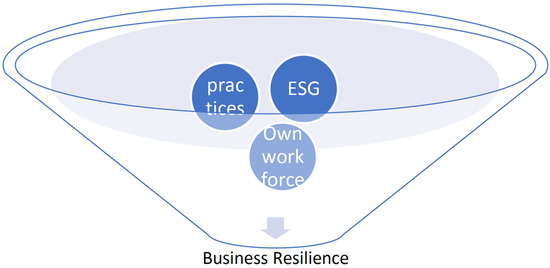
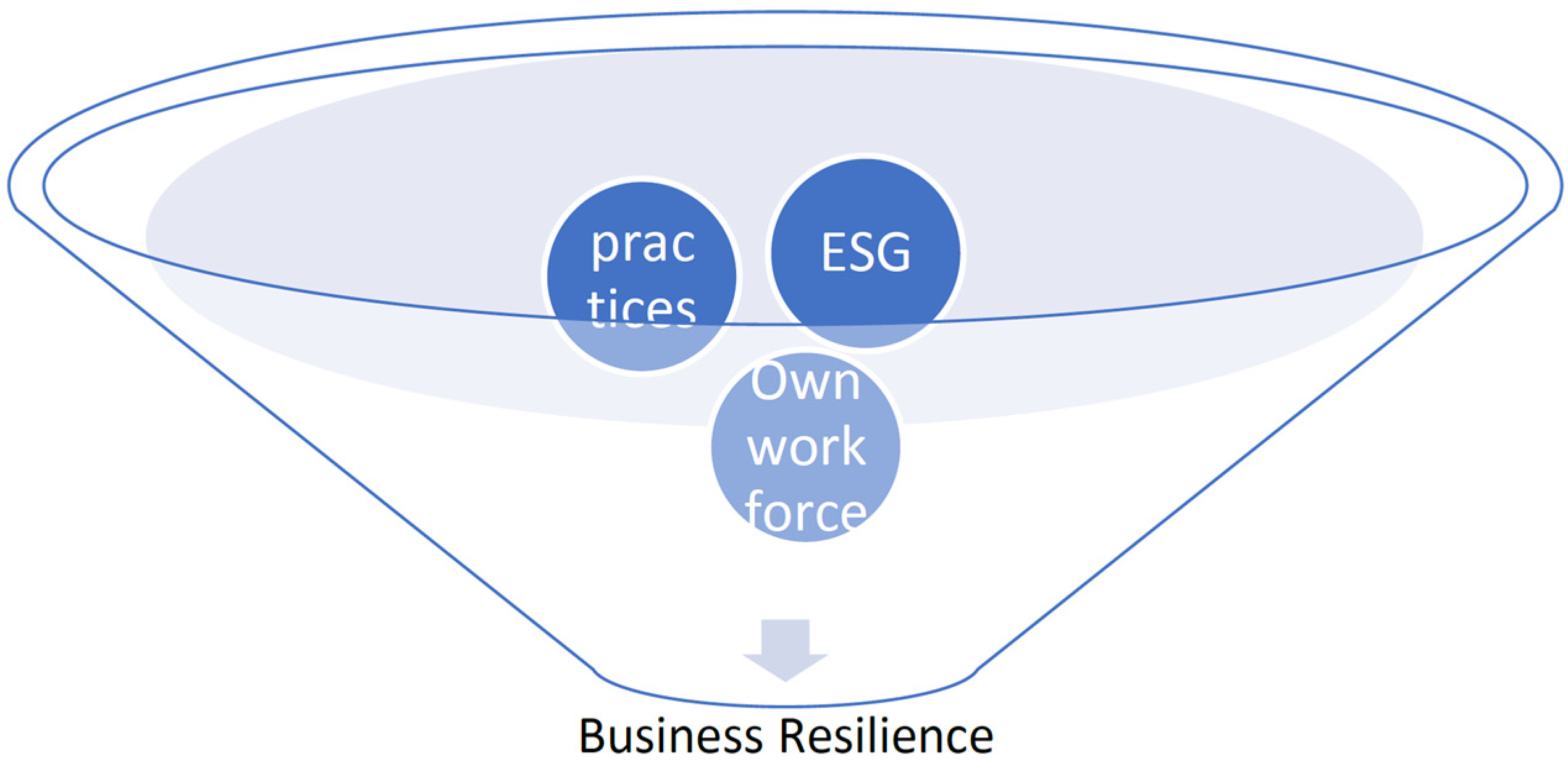
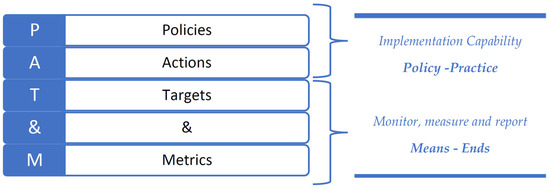
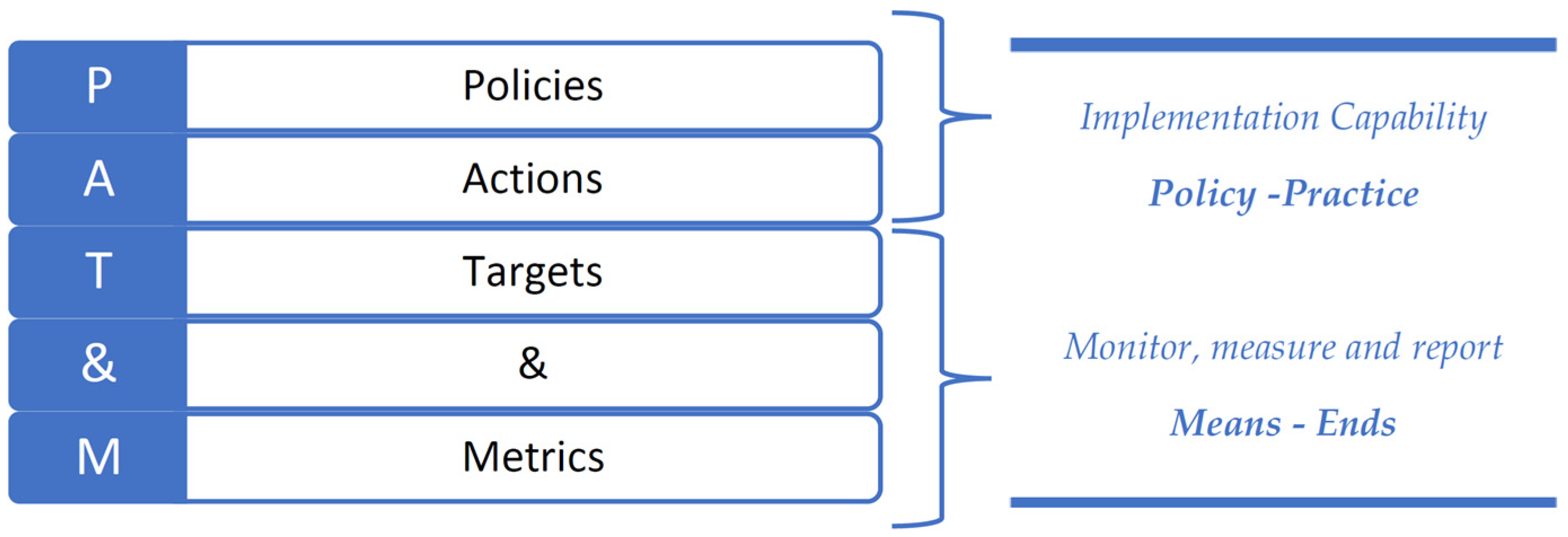

Disclaimer/Publisher’s Note: The statements, opinions and data contained in all publications are solely those of the individual author(s) and contributor(s) and not of MDPI and/or the editor(s). MDPI and/or the editor(s) disclaim responsibility for any injury to people or property resulting from any ideas, methods, instructions or products referred to in the content. |
© 2026 by the authors. Licensee MDPI, Basel, Switzerland. This article is an open access article distributed under the terms and conditions of the Creative Commons Attribution (CC BY) license.