


Abstract
This study explores how small business owners in the hospitality sector in Jordan cope with the threats from the adjacent Gaza-Israel conflict. While crisis research in tourism has focused mainly on macro-level indicators and managerial responses to events, less is known about the psychological processes used by small hospitality business owners to evaluate such geopolitical tensions and translate them into coping reactions. Using a transactional perspective on stress, appraisal, and coping, this study explores how business owners perceive threats and adopt coping mechanisms under unstable geopolitical conditions. Semi-structured interviews with small hospitality business owners in Jordan reveal that geopolitical conflict is not automatically perceived as a catastrophic threat. Rather, threat emerges through a person–environment transaction when owners interpret the conflict as harmful, uncertain, or beyond control within their business context. The findings further reveal that owners combine problem-focused coping, such as operational and marketing adjustments, with emotion-focused coping, such as pragmatic optimism, positive reappraisal, goal resetting, and the normalization of instability. By foregrounding cognitive appraisal and coping in this way, the study extends tourism and hospitality crisis research beyond macro-level outcomes and offers practical insights into strengthening the resilience of small hospitality businesses in geopolitically unstable tourism regions.
1. Introduction
Tourism is a critical economic activity in many developing nations. In the Kingdom of Jordan, tourism as a whole contributes over 14% to GDP and sustains around 57,000 jobs (Jordan Times, 2023; World Travel & Tourism Council, 2024). Of this, international tourism contributed 5.3 billion JOD (7.5 billion USD) and 20.6% of total employment (World Travel & Tourism Council, 2024). Jordan’s tourism strategy encourages sustainable growth by leveraging its unique cultural and historical assets to gain a competitive edge internationally. However, the Country has faced local geopolitical instability in surrounding regions for a long time. Border clashes with Israel in the 1950s–1960s, the Arab Cold War, the aftermath of the 1967 war, the 1973 Arab–Israeli War, and the 1990–1991 Gulf Crisis all strained its security and international relations. More recently, Hamas’s 2006 election victory and 2007 takeover of Gaza have deepened regional tensions. The most recent Gaza-Israel conflict has resulted in an 11% decrease in international arrivals and a 10% reduction in revenue in 2024 (Ministry of Tourism and Antiquities [MOTA], 2024). Al-Dhoun and Al-Lozi (2017), Al-Khalidi et al. (2024), and Al-Shorman et al. (2016) report that this is particularly affecting Petra, Wadi Rum, and the Dead Sea, and that hotel occupancy in Petra has fallen sharply since the conflict began in October 2023.
This shows that tourism and hospitality are especially vulnerable sectors during geopolitical conflicts. Unlike industries that mitigate shocks through inventories, long-term contracts, or geographic diversification, tourism demand can drop sharply if travellers connect a destination to regional unrest even if the country itself is not involved (Duan et al., 2022). Their reliance on perceptions of safety, mobility, border openness, destination reputation, and visitor confidence makes them highly sensitive (Lee et al., 2021; Papagianni et al., 2024).
Geopolitical risk is a central concern for international businesses (Patsiaouras et al., 2026). It includes not only the occurrence of conflict but also the threat of the escalation of adverse events that could disturb the normal progression of business activities (Patsiaouras et al., 2026). This broader business perspective is important for understanding the operation of tourism and hospitality under unstable geopolitical conditions because geopolitical risk does not affect all firms equally. Bretas and Tippmann (2025) argue that firms with fewer resources and lower organizational resilience are disproportionately vulnerable to geopolitical tensions because these tensions increase uncertainty, raise the costs of cross-border activities, constrain access to wider markets, and undermine entrepreneurial confidence. Although their discussion focuses on the international scaling of businesses, the underlying logic is relevant to small, owner-managed hospitality businesses in tourism-dependent destinations, such as Jordan. These hospitality businesses often have limited financial buffers, weak bargaining power, and fewer strategic options for absorbing sudden demand shocks. Consequently, geopolitical crises may affect small hospitality businesses not only through objective market losses but also through a reduction in owners’ expectations, confidence, willingness to invest, and perceived capacity to continue operating.
Much of the existing literature thus documents macro-level outcomes and responses, such as the economic effects of geopolitical tensions, declines in tourism demand, and investment constraints (Balli et al., 2019; Gillen & Mostafanezhad, 2019). It also explores strategies adopted by tourism and hospitality firms, including cost-cutting and diversification (Demir et al., 2019; Gozgor et al., 2021). However, most of these studies are focused on broad, international, and sectoral levels, examining tourist arrivals, revenue, investment flows, destination image, supply chains, or global strategy. While the information they produce is vital for understanding the strategic impacts of geopolitical conflict, they offer limited insight into how hospitality businesses at the micro level perceive, emotionally process, and respond to geopolitical uncertainty in their daily decisions.
The present study addresses this problem by exploring how small local hospitality business owners in Jordan perceive and respond to the geopolitical tensions surrounding the recent Gaza-Israel conflict in the adjacent region. However, instead of viewing geopolitical conflict as a uniform external shock, the study examines how owners interpret the situation subjectively within the context of their own businesses and how these perceptions influence their coping strategies and resilience. The research focuses on three key questions:
- RQ1. How do small hospitality business owners in Jordan perceive the threat of the adjacent Gaza–Israel conflict?
- RQ2. What coping mechanisms do they employ to offset this threat amid the geopolitical instability surrounding it?
- RQ3. How do these coping strategies support resilience at the micro-business level in the Jordanian hospitality industry?
To address these questions, this study employs Lazarus and Folkman’s (1984) transactional model of stress and coping, a well-established psychological framework that conceptualizes stress as the outcome of personal perceptions of threats rather than merely an external event. The model treats stress as a dynamic, iterative person-environment transaction and highlights the flexibility of appraisal and coping over time. Applying this lens to the study of tourism crises shifts the focus from the threats themselves to how small hospitality business owners interpret and respond to them. Furthermore, the transactional model connects perceived geopolitical risks and coping responses at the micro-level by elucidating how perception and coping foster resilience. The study also offers practical guidance for policymakers and practitioners by emphasizing the need for targeted support mechanisms to enhance resilience in the local hospitality sector, where tourism-dependent livelihoods remain vulnerable to the spillover effects of conflicts in neighbouring countries on potential visitor demand.
2. Literature Review
2.1. Geopolitical Risk, Tourism Crises, and Hospitality Business Vulnerability
Recent studies of tourism have increasingly examined geopolitical risk as a key source of uncertainty affecting business in the sector. Geopolitical risk encompasses not only actual conflicts but also threats, the materialization of threats, and the escalation of adverse events that can disrupt international relations, markets, mobility, investment, and business confidence (Caldara & Iacoviello, 2022; Patsiaouras et al., 2026). This view is especially relevant to tourism and hospitality because these sectors rely heavily on perceptions of safety, cross-border mobility, destination reputation, and visitor confidence to establish a destination’s image (Lee et al., 2021; Papagianni et al., 2024).
Geopolitical risk influences firms in multiple ways. These include how managers make investment decisions, their access to markets, how they operate across borders, restructure their supply chains, and navigate political uncertainty. Cavusgil et al. (2020) and Ciravegna et al. (2023) emphasize the need to identify and address these risks, noting that external shocks, such as geopolitical tension, can affect how businesses learn of, adapt to, and handle disruptions. Similarly, Cui et al. (2023) find that geopolitical conflicts expose vulnerabilities in globalization, prompting firms to develop response strategies. Additionally, studies on techno-geopolitical uncertainty indicate that geopolitical rivalry, industrial policies, digital regulations, and national security concerns can transform international business strategies and influence firm conduct (Beugelsdijk & Luo, 2024; Luo & Van Assche, 2023; Luo, 2024). Overall, these findings highlight that geopolitical risk is not only a macro-political issue but also a critical business-level uncertainty influencing managerial judgement and organizational resilience.
The recent business literature also indicates that firms face geopolitical risks in varying ways. Bussy and Zheng (2023) explain that the effectiveness of a company’s response to these risks depends on governance, information, and technology. Moreover, Bretas and Tippmann (2025) point out that organizations with fewer resources and weaker organizational resilience are more susceptible to geopolitical tensions, which can lead to increased uncertainty, restricted market access, and lower entrepreneurial confidence. While their research mainly addresses international expansion, the insights gained are equally relevant to small, owner-managed hospitality businesses, which often have limited financial flexibility and bargaining power, depend on stable visitor flows, and have fewer strategic options to handle sudden shocks.
Geopolitical risks also lead to a decline in tourists, interruptions in tourism services, harm to a destination’s reputation, and lower sector investments (Balli et al., 2019; Duan et al., 2022; Gozgor et al., 2021; Hasan et al., 2020; Lee et al., 2021; Papagianni et al., 2024; Reivan-Ortiz et al., 2023; Tiwari et al., 2019; Tomczewska-Popowycz & Quirini-Popławski, 2021). At the macro level, Balli et al. (2019) demonstrate that geopolitical risk affects tourism demand in emerging economies. Lee et al. (2021) highlight that such risks diminish international tourism and help predict shifts in tourism receipts and inbound visitor numbers. Similarly, Gozgor et al. (2021) find that geopolitical risks influence tourism supply in developing countries, while Papagianni et al. (2024) provide cross-country evidence showing that geopolitical risk shocks consistently weaken tourism demand in many developing nations. In addition, Reivan-Ortiz et al. (2023) show that geopolitical risk, currency fluctuations, and economic policy uncertainty together influence tourist arrivals in BRICS nations. Overall, these findings confirm that the tourism and hospitality sector is highly sensitive to geopolitical uncertainty, as potential tourists tend to favour destinations perceived as secure and stable, and avoid regions affected by conflict or unrest.
Recent research has also examined how hospitality and tourism firms react to crises and uncertainty. The focus is mainly on financial and strategic actions such as reducing costs, delaying expansion, diversifying income streams, targeting niche markets, and seeking new opportunities to keep operations running (Balli et al., 2019; Demir et al., 2019; Demiralay & Kilincarslan, 2019; Gillen & Mostafanezhad, 2019; Gozgor et al., 2021; Irani et al., 2022; Kim et al., 2019; Lee et al., 2021; Papagianni et al., 2024). For example, Demir et al. (2019) observed that hospitality companies modify their cash reserves in response to geopolitical risks, suggesting that uncertainty affects financial conservatism and investment choices. Similarly, geopolitical instability may discourage long-term investments, leading investors to delay projects, cut costs, or move funds to safer markets (Demir et al., 2019; Gozgor et al., 2021). Additionally, Demiralay and Kilincarslan (2019) and Hasan et al. (2020) explore how geopolitical risks influence travel, leisure, and tourism stock performance. Meanwhile, Corbet et al. (2022) show that government support measures can reduce investor fears during crises. As a result, tourism companies often rely on policy tools, including tax incentives and financial aid, to regain confidence and continue operations amid geopolitical uncertainties (Corbet et al., 2022; Demir et al., 2019).
These studies provide useful insights into macroeconomic and strategic reactions to geopolitical risk and highlight notable gaps. Primarily, business studies have deepened understanding of geopolitical risk as a strategic and operational issue, focusing mainly on multinational corporations, firm strategies, foreign investment, cross-border firms, and global supply chains. Secondly, tourism research on geopolitical risks mainly examines macro-level or sector-specific indicators, including tourist arrivals, tourism revenues, supply, destination image, reputation, and national economic performance. These studies detail the scope of crisis impacts but overlook how individual business owners perceive crises in their daily decisions. Thirdly, hospitality researchers often focus on observable managerial or financial responses, such as cost-cutting, delaying investments, diversifying markets, and policy support, explaining what firms do during uncertainty. Yet, they pay less attention to the psychological processes influencing owners’ judgments on whether a situation is threatening or manageable.
This gap is significant because small hospitality businesses usually have limited financial reserves, limited access to alternative markets, and depend heavily on owner decision-making. Hence, understanding how small hospitality owners evaluate geopolitical threats and turn these assessments into coping strategies requires a micro-level, psychologically informed perspective. Table 1 reviews the recent literature on geopolitical risk, tourism crises, and business vulnerability, illustrating the research focus of these studies.
Table 1.
Recent literature on geopolitical risk, tourism crises, and hospitality business vulnerability.
2.2. Psychological Mechanisms of Threat Perception and Coping
Although coping and resilience are frequently discussed in tourism and hospitality crisis studies, they are typically viewed as outcomes at the organizational or destination level rather than as psychological processes. This approach limits our understanding of why geopolitical crises, such as the adjacent Gaza–Israel conflict, lead to varied reactions among small hospitality business owners. To address this limitation, the study employed Lazarus and Folkman’s (1984) transactional model of stress and coping as its foundational theoretical framework. Its value lies in shifting analytical attention from the crisis itself to how stakeholders cognitively appraise threats and determine responses. This approach is particularly valuable during geopolitical instability, as the same external crisis can be perceived differently and elicit various coping strategies based on resources, expectations, perceived control, and the nature of their business environment.
From a transactional perspective, the Gaza-Israel conflict does not automatically pose a business threat; it becomes a risk only when owners see it as significant, harmful, uncertain, or beyond their ability to handle. This approach links recent research on geopolitical risk with the psychological processes at the micro level. In the model, the first stage of this process is primary appraisal, where small hospitality business owners interpret what the geopolitical crisis means for their operations. They consider factors such as relevance, potential harm, future demand uncertainty, and threats to survival, growth, or investments. Owners evaluate instability by observing changes in cancellations, bookings, perceived safety, investment hesitation, and international visitor flows. Ultimately, primary appraisal turns an overarching geopolitical event into business-specific perceptions such as caution, pessimism, uncertainty, loss of control, dilemmas, or instability.
Secondary appraisal involves owners assessing their capacity to manage the perceived threat and choosing suitable coping strategies. In small hospitality businesses, this evaluation might include internal resources such as cash reserves, staff flexibility, operational capacity, and marketing skills. It may also consider external resources such as government aid, destination marketing, financial support, and business networks. Coping strategies are usually categorized into problem-focused and emotion-focused approaches, where problem-focused coping includes actions like cost control, staff adjustments, price modifications, operational restructuring, customer segmentation, and targeting domestic or regional markets, while emotion-focused coping involves psychological efforts to handle uncertainty and maintain motivation when full control is unattainable. The latter includes pragmatic optimism, positive reappraisal, goal resetting, acceptance of uncertainty, and normalizing instability. This distinction is crucial because resilience in small hospitality businesses relies not only on formal management strategies but also on owners’ personal interpretations of uncertainty. It affects how they manage anxiety, maintain confidence, adjust expectations, and decide whether to continue operating. Consequently, coping involves both managerial actions and psychological resilience, combining practical business adjustments with emotional coping strategies to withstand ongoing instability. Using the transactional model of stress and coping as its foundation, along with recent research on tourism, business, and geopolitical risks, this study offers a framework for understanding coping and resilience during tourism crises.
2.3. Conceptual Framework
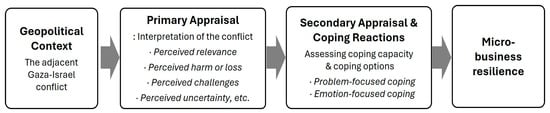
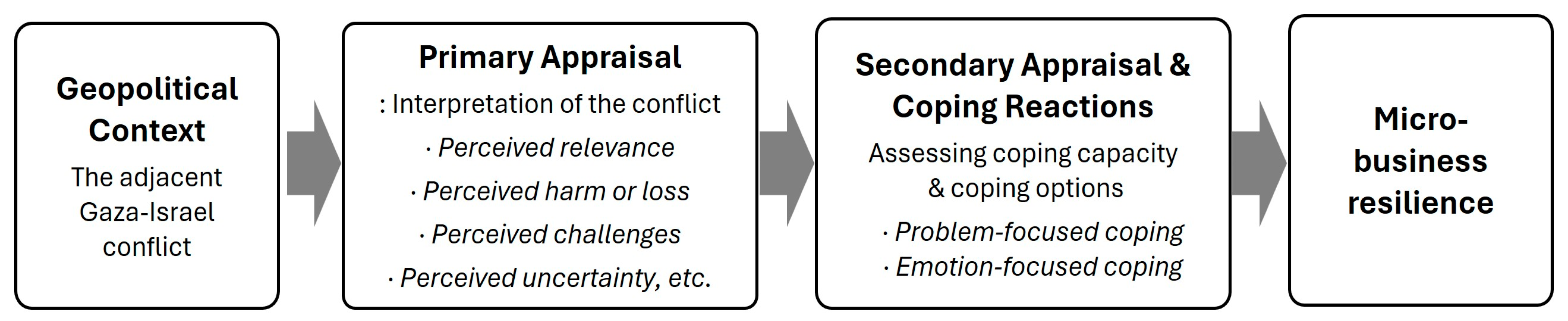
Building on the existing literature, this study seeks to understand how small hospitality business owners respond to geopolitical tensions (see Figure 1). The research framework starts in the context of a geopolitical crisis but does not assume that all owners perceive the same level of threat. Instead, it suggests that owners first perform a primary appraisal, assessing the relevance, harm, uncertainty, threat, and controllability of the situation concerning their businesses. If the situation is deemed relevant and potentially harmful, they then proceed with a secondary appraisal, evaluating their internal resources, external support, and coping options. Based on this assessment, owners may implement problem-focused strategies, such as operational adjustments, cost control, market re-segmentation, or price changes, as well as emotion-focused strategies such as pragmatic optimism, positive reappraisal, goal resetting, or normalizing instability to build resilience.
Figure 1.
Conceptual Framework (Source: created by the authors).
3. Materials and Methods
A qualitative approach was adopted to examine the perception and responses of small business owners in the hospitality sector during the adjacent Gaza-Israel conflict. This study was conducted in Jordan because the country’s economy is heavily dependent on the tourism and hospitality industry, which in turn relies on international visitors who may be affected by the country’s proximity to the Gaza-Israel conflict. Although Jordan is not directly involved in the Gaza-Israel conflict, small business owners at the local level of hospitality feel that they are on the front line. From July to September 2024, semi-structured interviews were conducted with 13 small hotel and restaurant owners and senior managers outside the capital city, Amman (Table 2).
Table 2.
Demographic Information.
This sample size was appropriate for an exploratory qualitative research design, enabling in-depth engagement with each participant, achieving thematic saturation, and providing detailed, case-based insights while remaining feasible within the timeframe of this study. Purposive sampling was adopted to ensure information-rich cases relevant to the study’s aims, focusing on decision-makers responsible for strategy and operations in small hospitality businesses. These participants were approached through hospitality associations and their professional networks, including the Ministry of Tourism and Antiquities (MOTA), which enabled access to a range of business types and managerial positions across the sector.
The interview guide was organized into five main thematic sections: geopolitical threats and investment sustainability; perceptions of geopolitical threats; strategies for overcoming challenges; specific support needs; and satisfaction with government responses (see Table 3). In line with the transactional model, the first part of the interview concentrated on primary appraisal, asking participants about how the adjacent Gaza–Israel conflict affects their businesses, perceived harm or loss, and issues related to the unstable geopolitical environment. The second part moved to secondary appraisal, evaluating participants’ perceived control, available resources, and support mechanisms. Follow-up questions explored their coping strategies, covering both problem-focused and emotion-focused approaches.
Table 3.
Structure of the main interview.
Before collecting data, the researchers, along with an external tourism scholar experienced in qualitative research and a senior officer from MOTA in Jordan, reviewed the interview guide, questions, and procedures. This review aimed to ensure the guide’s theoretical consistency with the transactional model, its relevance to the research goals, and the suitability of questions to gather participants’ experiences, perceptions, and coping strategies related to geopolitical instability. Based on their feedback, the interview process and wording were refined to enhance clarity and logical flow in the semi-structured interviews.
This study complies with all applicable guidelines and regulations for research involving human subjects, as provided by the Ritsumeikan Asia Pacific University Ethics Review Committee for Research Involving Human Subjects (Humanities and Social Sciences). It was screened using the Check Sheet for Ethics Review of Research Involving Human Subjects, provided by the University Research Compliance/Ethics Review Committee, to determine whether it would be subject to research ethics review. The screening process indicated that this study was not subject to the Committee’s ethics review procedures. Finally, all interview participants provided written informed consent before participating, with confidentiality and anonymity assured. Prior to starting, participants were briefed on the study’s objectives, their right to refuse or withdraw at any point, and the use of their data.
Participants were purposively selected based on their work experience during the conflict and their roles in decision-making within their hospitality businesses. The final group consisted of 13 male hospitality business owners and senior managers. This gender distribution aligns with the profile of eligible and reachable participants recruited through hospitality associations, professional networks, and institutional contacts. Their ages ranged from 32 to 50, with an average of 17 years in the hospitality industry. Each interview, lasting one hour, was held at the participants’ workplaces. These interviews were recorded, transcribed, and translated into English. To protect identity and confidentiality, all names were replaced with pseudonyms.
The data were analyzed using a thematic analysis framework. To enhance reliability, two researchers independently double-coded the transcripts with a shared codebook. Initial codes were organized around transactional constructs, such as perceptions of the current situation and coping responses, then inductively refined into themes. The interview responses were validated at three points: first, a summary of key responses was shared with each participant in Jordan to verify their accuracy; any feedback was incorporated. Second, to ensure consistency and minimize researcher bias, the data were cross-checked by the researchers—the primary researcher performed initial coding with MAXQDA 2022, while a second reviewed the process and emerging themes. Third, an external researcher involved in designing the interview was invited to participate in analysis and interpretation, with all ambiguities discussed and resolved collaboratively.
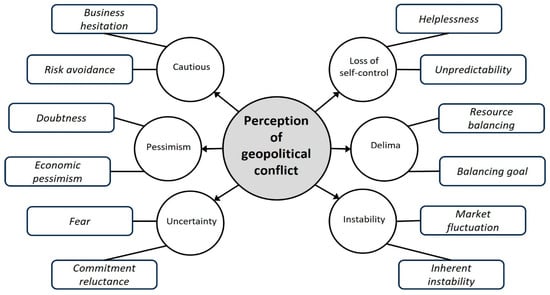
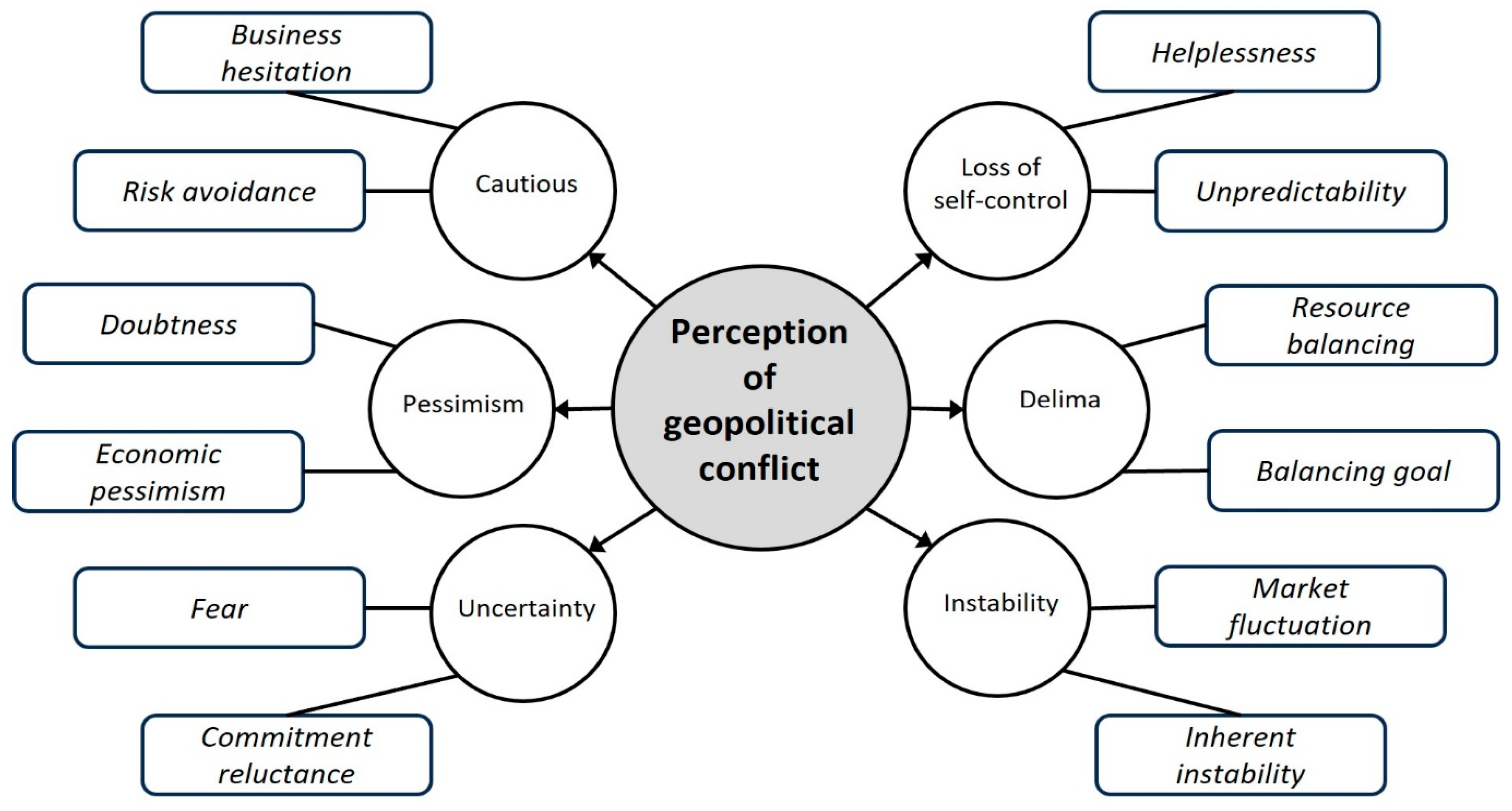
In MAXQDA 2022, thematic coding produced over 1000 codes centred on the transactional model of stress and coping. During primary appraisal, six perception themes emerged: caution, pessimism, uncertainty, loss of self-control, dilemma, and instability. For secondary appraisal and coping, two primary categories were identified: problem-focused and emotion-focused coping.
4. Results
4.1. Primary Appraisals: Perception of the Adjacent Gaza–Israel Conflict
The initial step for small hospitality business owners was to evaluate their perception of how the Gaza–Israel conflict impacted their businesses. Figure 2 presents the primary appraisal process by which small hospitality owners interpret the conflict as a business threat. Results reveal that the conflict did not affect all owners uniformly. Instead, it became threatening when owners evaluated the conflict in light of their specific business conditions, future plans, and resources. Six interconnected appraisal patterns emerged: caution, pessimism, uncertainty, loss of self-control, dilemma, and instability. Caution was reflected in business hesitancy and risk avoidance, with many owners postponing expansion or new investments, often describing their businesses as “stuck” or “on hold.” Statements such as “no progress” and “we put expansion on hold” suggest caution was driven by concerns about potential future harm, although immediate financial losses were limited. Pessimism also appeared in their doubts about economic prospects, especially regarding cash flow, demand, and financing. This indicates that owners anticipated further deterioration if the conflict persisted. Uncertainty was a prominent pattern, linked to geopolitical instability, which causes hesitation in making growth decisions in sectors that rely on stability (Gozgor et al., 2021). In this context, uncertainty related to fear, reluctance to commit, and difficulty predicting future demand leads many owners to adopt a “wait and see” approach before further investments. Loss of self-control reflected feelings of helplessness, as many consequences of the conflict were seen as beyond the owners’ influence.
Figure 2.
Primary appraisal by local hospitality owners: Perception of geopolitical conflicts (Source: created by authors).
One owner explained, “To be honest, a lot of people here feel uneasy about the situation. Many of us who were thinking of starting new projects have decided to put them on hold until things become a bit clearer. A lot of it is out of our hands. What happens outside Jordan really shapes our circumstances” (I-6). This shows how owners viewed the source of uncertainty as external and uncontrollable. Dilemma describes the tension between limited resources and business goals, with owners deciding whether to pursue growth, protect current operations, cut costs, or delay investments until conditions stabilize. Finally, instability was reflected in perceptions of market fluctuation and regional volatility, which may reduce tourism demand and undermine investment confidence, prompting owners to seek more stable conditions before committing further resources (Balli et al., 2019).
Overall, these findings show that threat perception was not a direct reaction to the geopolitical event but was influenced by owners’ subjective evaluations. They considered how the event could affect their business survival, influence future decisions, and their ability to cope.
4.2. Secondary Appraisal: Coping with Threats
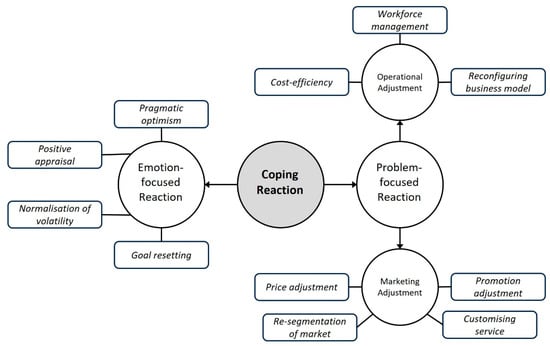
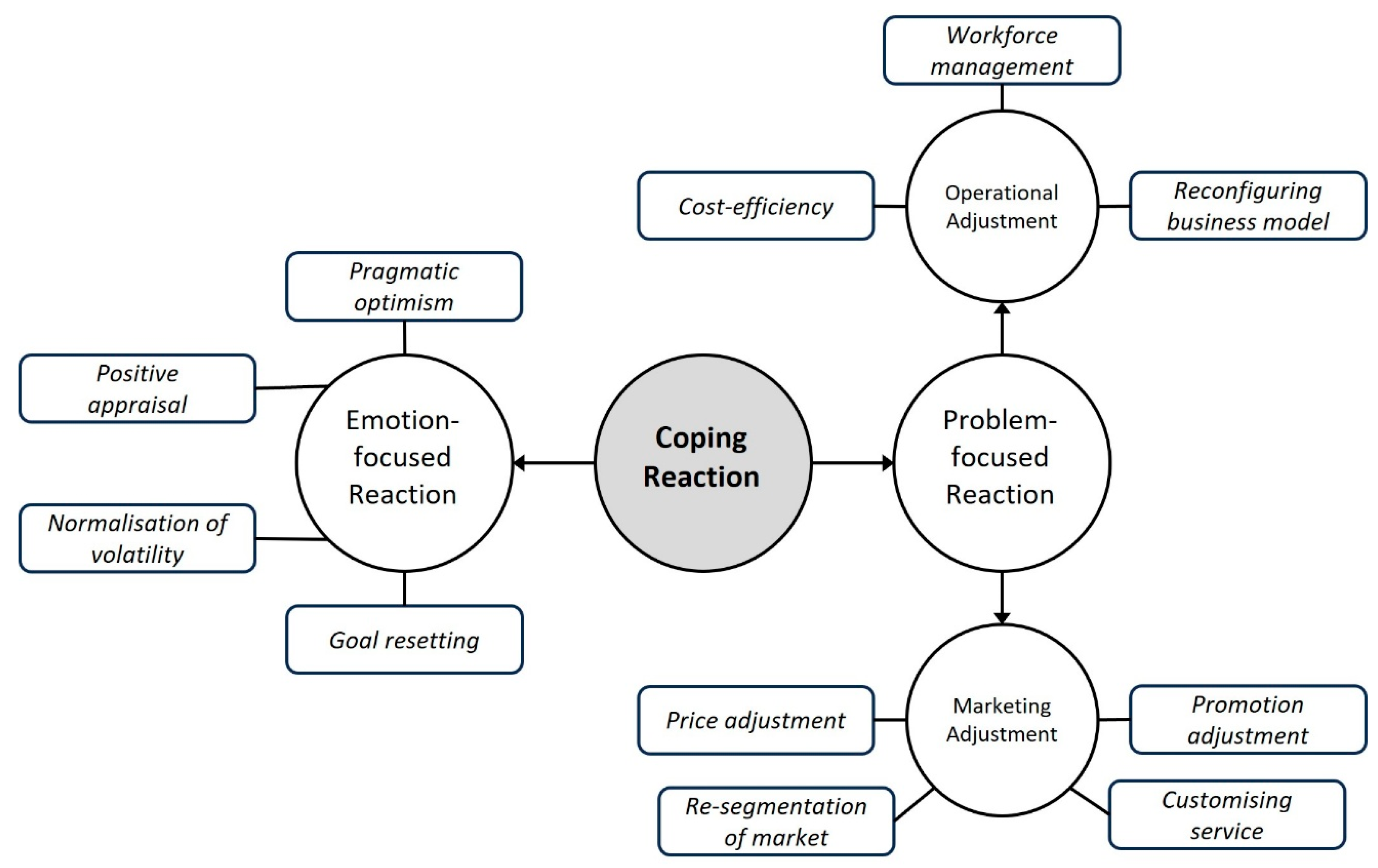
If the adjacent Gaza-Israel conflict was seen as a threat, small hospitality business owners engaged in a secondary appraisal to find coping strategies, as suggested by the transactional model. Many focused on factors within their control. These micro-level responses are divided into two categories: problem-focused coping and emotion-focused coping, aligning with the transactional model of stress and coping (Figure 3).
Figure 3.
Secondary appraisal by owners: Coping reactions (Source: created by authors).
4.2.1. Problem-Focused Coping: Operational and Marketing Adjustments
Problem-focused coping entails specific managerial strategies aimed at alleviating business pressures. This includes operational adjustments, such as workforce management, cost-cutting measures, and business model reconfigurations, along with marketing adjustments such as price modifications, market re-segmentation, promotional tactics, and service customisation.
Despite the apparent uncontrollable geopolitical landscape, owners do identify actionable options. Operational adjustment was a primary form of problem-focused coping in this study context. Some owners reconfigured their business model by launching catering services, cloud kitchens, or event spaces to attract new demand. “We decided to launch a cloud kitchen and start a new catering plan to manage our costs. On top of that, we have discovered a new revenue stream by introducing a new brand that we can offer through cafés” (I-9). When their existing assets are limited, some focus on cost and liquidity by cutting service hours, narrowing menus, and relying on local suppliers. Workforce management is another action owners employ in this circumstance. “I decided to cut back on the number of our staff” (I-2). This includes temporarily reducing shifts, downsizing staff, and implementing flexible hours. These strategies reflect an effort to maintain control over cash flow and liquidity, using high-efficiency options to manage uncertainty.
Marketing adjustment is another problem-focused coping mechanism. Responding to risk, owners deliberately shifted their target market towards domestic and regional segments because these markets are relatively more accessible and stable. To counter revenue declines, some opted for more targeted tactics, such as price revisions, localisation of packages, and family deals, to attract domestic visitors and promote nearby regions, such as the Gulf countries, to stabilize demand. “We adjusted our room prices to better support domestic tourism, and we are targeting our marketing efforts toward the Gulf states and nearby regions. We are trying to diversify our income sources. We are enhancing our events, restaurants, and facilities to give more options to our local community” (I-4). Additionally, loyalty programmes, customized offers, temporary discounts, flexible pricing policies, and special deals were used to retain the domestic market, which is less affected by geopolitical situations. Many participants also used social media and online platforms to promote their existing assets.
4.2.2. Emotion-Focused Coping: Psychological Resilience
In addition to practical adjustments, owners depended heavily on emotion-focused coping strategies to preserve their psychological well-being amid the unpredictable geopolitical environment. These strategies involved pragmatic optimism, positive reframing, normalizing volatility, and resetting goals. Such responses helped owners stay motivated, lessen fear, and view the crisis as temporary or manageable.
One prominent coping pattern was pragmatic optimism, a blend of realism about current challenges and hope for recovery after the crisis. “I feel hopeful about what lies ahead for us. Even though this is a challenging time, I believe better days are coming, and things will improve” (I-7). Statements such as “better days are coming,” “we have seen crises before,” “will get better,” and “this will pass” reflect a belief in the potential for recovery despite current adversity. This demonstrates hope, a typical emotion-focused strategy for regulating distress and sustaining engagement.
Another core part of emotional stance was positive reappraisal. Some owners attempted to highlight positive aspects or growth without denying the negatives. They thus reframed the meaning and values, the uncertain or adverse circumstances as opportunities for potential gains. The statement that this is a “chance to invest in Petra” exemplifies opportunity framing in the conflict and the maintenance of positive emotions amid ongoing tension. Further, some owners engaged in goal resetting, recalibrating their goals to suit perceived constraints. Statements such as “changing a goal from making profits to avoiding losses” indicate a shift in mindset from pursuing profits to prioritizing stability and minimizing losses in a challenging environment, which reduces negative effects.
Finally, some described current geopolitical tensions and business challenges as the “new normal” within the region. “This is a continuing challenge that we’re seeing more and more. Many sectors and businesses are trying to find a balance between stability and growth, and we’re all looking for effective ways to manage this equation of instability” (I-3). This normalization of instability reduces stress by reducing the mismatch between the unstable geopolitical environment and their expected goals, supporting longer-term resilience even when the risk remains high. Overall, these findings indicate that resilience among small hospitality business owners was built through a combination of practical adaptations and psychological adjustments. The owners coped by combining concrete operational changes with emotional strategies, allowing them to withstand uncertainty.
Table 4 summarizes the key appraisal and coping patterns found in the interviews. It provides an overview of the main themes from primary appraisal and the secondary coping strategies identified through thematic analysis. Additionally, it shows how owners’ perceptions of geopolitical uncertainty connect to their practical and emotional coping responses.
Table 4.
Summary of key interview findings.
5. Discussion
This study broadens research into business and tourism crises by adopting a psychological approach to the examination of how small hospitality business owners perceive and respond to geopolitical uncertainty. Rather than treating the adjacent Gaza–Israel conflict as a single external event, the study shows that its impact varies with owners’ interpretations of its relevance, uncertainty, controllability, and potential effects on their businesses. This perspective clarifies why similar geopolitical situations can yield different perceived threats and coping strategies among businesses in the same area.
These findings can be more explicitly linked to the three research questions. Concerning RQ1 (How do small hospitality business owners in Jordan perceive the threat of the adjacent Gaza–Israel conflict?), the results indicate that the conflict was not seen as a consistent or inevitable threat. Instead, owners evaluated the conflict based on interconnected perceptions of caution, pessimism, uncertainty, loss of self-control, dilemma, and instability. These perceptions shaped whether they considered the conflict a serious business risk, a temporary disruption, or part of ongoing regional instability.
For RQ2 (What coping mechanisms do they employ to offset this threat amid the geopolitical instability surrounding it?), the findings indicate that owners adopted both problem-focused and emotion-focused coping strategies. Problem-focused strategies involved operational restructuring, cost control, workforce adjustment, price changes, and market re-segmentation. Meanwhile, emotion-focused strategies included pragmatic optimism, positive reappraisal, resetting goals, and normalization of instability.
Concerning RQ3 (How do these coping strategies support resilience at the micro-business level in the Jordanian hospitality industry?), these strategies bolster resilience by enabling owners to sustain operations, navigate uncertainty, preserve motivation, and view instability as a manageable challenge rather than a solely catastrophic event.
Taken together, these findings indicate that owners’ reactions were influenced not just by external geopolitical events, but also by how the adjacent Gaza–Israel conflict interacted with their resources, expectations, perceived control, and business constraints. The study emphasizes that resilience at the micro level in small hospitality businesses stems from both tangible business strategies and psychological coping mechanisms.
5.1. Theoretical Implications
This study offers four main theoretical contributions to business research on geopolitical risk, tourism crises, hospitality crisis management, and coping and resilience literature. First, it extends recent research on tourism crises and geopolitical risk by shifting focus from macro-level impacts to the perceptions of individual business owners. Past research has shown that political instability, conflict, terrorism, and geopolitical risks can reduce tourist arrivals, harm destination reputation, lower business confidence, and adversely affect economies reliant on tourism (Balli et al., 2019; Tiwari et al., 2019; Hasan et al., 2020; Lee et al., 2021; Gozgor et al., 2021; Reivan-Ortiz et al., 2023; Papagianni et al., 2024). Consistent with these findings, the results demonstrate that small hospitality business owners in Jordan perceive the adjacent Gaza–Israel conflict as a source of uncertainty, caution, and potential harm. In addition, this study shows that geopolitical risk impacts hospitality businesses not only through actual demand disruptions but also via owners’ subjective perceptions related to relevance, uncertainty, controllability, and anticipated damage. Thus, the study broadens tourism crisis research from a macro-outcome view to a stakeholder-focused understanding of how geopolitical threats are perceived at the business owner level.
Second, this study contributes to business research on geopolitical risk by examining its impact on small, owner-managed hospitality firms in a geopolitically unstable region. While prior studies have primarily explored multinational corporations, international scale-ups, foreign direct investment, and global supply chains, highlighting how geopolitical risk disrupts investment, market access, supply chains, and strategic choices (Cavusgil et al., 2020; Ciravegna et al., 2023; Cui et al., 2023; Patsiaouras et al., 2026). This research expands the perspective. It demonstrates that at the micro-business level, factors such as limited financial flexibility, dependence on visitor flows, and owner-led decision-making shape how geopolitical instability is perceived and handled.
Third, this study advances hospitality crisis management literature by exploring the psychological factors behind managerial reactions to geopolitical uncertainty. While prior research in tourism and hospitality has mainly focused on firm-level and strategic responses, such as cost-cutting, delaying expansion, managing liquidity, diversifying revenue streams, shifting markets, and restructuring operations (Demir et al., 2019; Demiralay & Kilincarslan, 2019; Gillen & Mostafanezhad, 2019; Gozgor et al., 2021; Irani et al., 2022; Papagianni et al., 2024), our findings align with this emphasis. This study found that owners employ problem-oriented strategies such as operational adjustments, cost management, workforce modifications, pricing changes, and market re-segmentation. However, these actions are more than merely technical or strategic decisions. They are shaped by owners’ perceptions of the conflict, resource evaluations, and beliefs about controllability. This adds a psychological dimension to understanding managerial responses in crisis situations.
Fourth, this study advances research on coping and hospitality resilience by employing the transactional model of stress and coping in a geopolitical crisis context. Unlike many tourism crisis studies that primarily emphasize organizational recovery, business continuity, or destination adaptation, this study paid particular attention to appraisal and coping mechanisms. The findings show that a single geopolitical event can prompt the development of varying threat perceptions and coping approaches, depending on an owner’s business environment, perceived control, available resources, support networks, and expectations of future instability. The study also demonstrates that resilience results from both problem-focused adjustments and emotion-focused psychological strategies. Techniques such as pragmatic optimism, positive reappraisal, goal adjustment, and normalizing instability help owners remain motivated and operational during uncertain times. Ultimately, resilience in small hospitality businesses is characterized as a process shaped by external geopolitical influences, cognitive appraisal, practical coping ability, and emotional reactions.
5.2. Practical Implications
This study also provides actionable insights for policymakers, destination management organizations, tourism officials, and business support organizations in regions with geopolitical instability. The findings suggest that resilience efforts should go beyond financial recovery and operational adjustments. They should also enhance owners’ skills in understanding uncertain situations, managing stress, and making informed choices during instability. Because owners’ responses are shaped by their perceptions of relevance, harm, uncertainty, controllability, and coping capacity, support should aim to help them interpret rapidly shifting geopolitical scenarios and recognize remaining options for action.
First, policymakers need to strengthen the resilience of small hospitality businesses. Providing temporary tax relief, liquidity support, flexible loans, wage assistance, and grants for adapting business models can encourage owners to continue operating and investing amid current difficulties. These support measures should be customized for small, owner-managed firms that typically lack the reserves and bargaining power of larger hospitality chains.
Second, destination management organizations and tourism authorities should provide market intelligence and support for demand diversification. The study indicates that owners react to uncertainty by changing prices, re-segmenting markets, focusing on domestic and regional visitors, and marketing their services. Supplying timely data on booking patterns, visitor sentiments, regional market prospects, and safety information can strengthen these strategies. Campaigns that promote domestic tourism, regional markets, flexible packages, and guidance on pricing and digital marketing can help small businesses adapt proactively instead of waiting passively.
Third, resilience efforts must target both managerial and psychological coping mechanisms. Advisory sessions and scenario-planning workshops assist owners in distinguishing between uncontrollable geopolitical risks and manageable business choices, such as controlling costs, redesigning products, targeting markets, and adjusting staffing. Moreover, peer support networks, mentoring, crisis communication, and resilience training help owners manage stress and sustain confidence. For destinations like Jordan, which face political instability, resilience policies should go beyond general destination recovery to address the micro-level realities faced by small hospitality businesses: how owners interpret uncertainty, evaluate their coping capacities, and decide whether and how to continue operations.
5.3. Limitations and Future Research
This study has several limitations. First, it relies on a small qualitative sample of hospitality business owners and senior managers in Jordan, aiming for analytical insights rather than broad statistical generalizations about how small hospitality businesses assess and handle geopolitical uncertainty. Second, all participants were male because purposive sampling was used to recruit owners and senior managers with direct experience during the adjacent Gaza–Israel conflict. Participants were identified through hospitality associations, professional networks, and institutional contacts such as MOTA, which resulted in a male-only sample. This likely reflects the male-dominated nature of hospitality leadership networks in Jordan and similar countries. Future research should intentionally include female owners and managers to explore potential gender differences in appraisal and coping strategies. Third, since the study focuses only on Jordan and a particular geopolitical context, future work could compare other destinations affected by instability to see if similar appraisal and coping patterns are present in other tourism-dependent, unstable regions. Fourth, the study did not systematically examine factors such as personality, previous crisis experience, education, business size, social networks, financial resources, or institutional support, all of which could influence appraisal and coping. Future research should investigate how these variables affect the choice between problem-focused and emotion-focused coping. Lastly, as appraisal and coping are dynamic processes, longitudinal studies could track changes in owners’ perceptions and strategies as geopolitical conditions shift.
6. Conclusions
This study examined how small hospitality business owners in Jordan perceive and respond to geopolitical uncertainty stemming from the adjacent Gaza–Israel conflict. Because of its qualitative and context-specific approach, it could not provide broad statistical generalizations. Nonetheless, it offers valuable insights through its identification of meaningful appraisal and coping patterns among these owners facing political instability. From a transactional perspective, geopolitical crises influence small businesses not only through external market factors but also through owners’ personal evaluations and coping strategies. The study’s main contribution lies in providing a psychologically grounded explanation of how small businesses demonstrate resilience amid tourism crises. The findings suggest that resilience relies on an owner’s ability to adapt in real time and their psychological capacity to manage uncertainty. The study emphasizes the need for support systems that address both aspects, combining financial assistance, operational flexibility, and market diversification with advisory services, scenario planning, and resilience training. Future research should explore how appraisal and coping strategies evolve across different crisis situations and tourism settings.
Author Contributions
Conceptualization, M.T. and S.H.Y.; methodology, M.T.; software, M.T.; validation, M.T. and S.H.Y.; formal analysis, M.T. and S.H.Y.; investigation, M.T.; resources, M.T.; data curation, M.T. and S.H.Y.; writing—original draft preparation, M.T.; writing—review and editing, S.H.Y.; visualization, M.T. and S.H.Y.; supervision, S.H.Y.; project administration, M.T. and S.H.Y.; funding acquisition, M.T. and S.H.Y. All authors have read and agreed to the published version of the manuscript.
Funding
This research was funded by the Japan International Cooperation Agency, grant number D2304157.
Institutional Review Board Statement
The study was conducted in accordance with the Declaration of Helsinki, and ethical review and approval were waived for this study due to screening results with the Check Sheet for Ethics Review of Research Involving Human Subjects, provided by the University Research Compliance/Ethics Review Committee.
Informed Consent Statement
Informed consent was obtained from all subjects involved in the study.
Data Availability Statement
The data in this study include confidential interview audio recordings and anonymized transcripts. Due to privacy, ethical restrictions, and compliance with the General Data Protection Regulation (GDPR), the audio files and full transcripts cannot be publicly accessed. An anonymised subset of thematic codes may be provided by the corresponding author upon reasonable request, subject to approval and applicable ethical requirements.
Acknowledgments
The authors appreciate the Ministry of Tourism and Antiquities (MOTA), Jordan, for their collaboration in data collection for this study. We also thank the Research Office at Ritsumeikan Asia Pacific University for their administrative support during the research process.
Conflicts of Interest
The authors declare no conflicts of interest.
References
- Al-Dhoun, R. M., & Al-Lozi, M. (2017). The impact of the September 11th and Amman hotel explosion incidents: The case on the incoming tourism in Jordan. Journal of Social Sciences, 6(4), 869–885. [Google Scholar] [CrossRef] [Scilit]
- Al-Khalidi, S., Plucinska, J., & Shalbak, J. (2024). Jordan’s tourism industry struggling as Gaza war deters visitors. Reuters. [Google Scholar]
- Al-Shorman, A., Rawashdih, A., Makhadmih, A., Oudat, A., & Darabsih, F. (2016). Middle Eastern political instability and Jordan’s tourism. Journal of Tourism Research and Hospitality, 5(1), 20–27. [Google Scholar] [CrossRef]
- Balli, F., Uddin, G. S., & Shahzad, S. J. H. (2019). Geopolitical risk and tourism demand in emerging economies. Tourism Economics, 25(6), 997–1005. [Google Scholar] [CrossRef] [Scilit]
- Beugelsdijk, S., & Luo, Y. (2024). The politicized nature of international business. Journal of International Business Studies, 55(3), 281–284. [Google Scholar] [CrossRef] [Scilit]
- Bretas, V. P., & Tippmann, E. (2025). Geopolitical tensions: Risks and challenges for internationally scaling businesses. Multinational Business Review, 33(4), 585–603. [Google Scholar] [CrossRef] [Scilit]
- Bussy, A., & Zheng, H. (2023). Responses of FDI to geopolitical risks: The role of governance, information, and technology. International Business Review, 32(4), 102136. [Google Scholar] [CrossRef] [Scilit]
- Caldara, D., & Iacoviello, M. (2022). Measuring geopolitical risk. American Economic Review, 112(4), 1194–1225. [Google Scholar] [CrossRef] [Scilit]
- Cavusgil, S. T., Deligonul, S., Ghauri, P., Bamiatzi, V., Park, B., & Mellahi, K. (2020). Risk in international business and its mitigation. Journal of World Business, 55(2), 101078. [Google Scholar] [CrossRef] [Scilit]
- Ciravegna, L., Ahlstrom, D., Michailova, S., Oh, C. H., & Gaur, A. (2023). Exogenous shocks and MNEs: Learning from pandemics, conflicts, and other major disruptions. Journal of World Business, 58(6), 101487. [Google Scholar] [CrossRef] [Scilit]
- Corbet, S., Hou, Y., Hu, Y., & Oxley, L. (2022). Did COVID-19 tourism sector supports alleviate investor fear? Annals of Tourism Research, 95, 103434. [Google Scholar] [CrossRef] [Scilit] [PubMed]
- Cui, V., Vertinsky, I., Wang, Y., & Zhou, D. (2023). Decoupling in international business: The ‘new’ vulnerability of globalization and MNEs’ response strategies. Journal of International Business Studies, 54(8), 1562–1576. [Google Scholar] [CrossRef] [Scilit] [PubMed]
- Demir, E., Díez-Esteban, J. M., & García-Gómez, C. D. (2019). The impact of geopolitical risks on cash holdings of hospitality companies: Evidence from emerging countries. Journal of Hospitality and Tourism Management, 39, 166–174. [Google Scholar] [CrossRef] [Scilit]
- Demiralay, S., & Kilincarslan, E. (2019). The impact of geopolitical risks on travel and leisure stocks. Tourism Management, 75, 460–476. [Google Scholar] [CrossRef] [Scilit]
- Duan, J., Xie, C., & Morrison, A. M. (2022). Tourism crises and impacts on destinations: A systematic review of the tourism and hospitality literature. Journal of Hospitality & Tourism Research, 46(4), 667–695. [Google Scholar] [CrossRef] [Scilit]
- Gillen, J., & Mostafanezhad, M. (2019). Geopolitical encounters of tourism: A conceptual approach. Annals of Tourism Research, 75, 70–78. [Google Scholar] [CrossRef] [Scilit]
- Gozgor, G., Lau, M. C. K., Zeng, Y., Yan, C., & Lin, Z. (2021). The impact of geopolitical risks on tourism supply in developing economies: The moderating role of social globalization. Journal of Travel Research, 61(4), 872–886. [Google Scholar] [CrossRef] [Scilit]
- Hasan, M., Naeem, M. A., Arif, M., Shahzad, S. J. H., & Nor, S. M. (2020). Geopolitical risk and tourism stocks of emerging economies. Sustainability, 12(21), 9261. [Google Scholar] [CrossRef] [Scilit]
- Irani, F., Athari, S. A., & Hadood, A. A. A. (2022). The impacts of country risk, global economic policy uncertainty, and macroeconomic factors on the Turkish tourism industry. International Journal of Hospitality & Tourism Administration, 23(6), 1242–1265. [Google Scholar] [CrossRef] [Scilit]
- Jordan Times. (2023, December 26). Jordan’s tourism sector contributes 14.6% to GDP in 2023 despite challenges. Jordan Times. [Google Scholar]
- Kim, Y. S., Park, K. J., & Kwon, O. B. (2019). Geopolitical risk and trading patterns of foreign and domestic investors: Evidence from Korea. Asia-Pacific Journal of Financial Studies, 48(2), 269–298. [Google Scholar] [CrossRef] [Scilit]
- Lazarus, R. S., & Folkman, S. (1984). Stress, appraisal, and coping. Springer. [Google Scholar]
- Lee, C. C., Olasehinde-Williams, G., & Akadiri, S. S. (2021). Geopolitical risk and tourism: Evidence from dynamic heterogeneous panel models. Journal of Tourism Research, 23(1), 26–38. [Google Scholar] [CrossRef] [Scilit]
- Luo, Y. (2024). Paradigm shift and theoretical implications for the era of global disorder. Journal of International Business Studies, 55(2), 127–135. [Google Scholar] [CrossRef] [Scilit]
- Luo, Y., & Van Assche, A. (2023). The rise of techno-geopolitical uncertainty: Implications of the United States CHIPS and science act. Journal of International Business Studies, 54, 1423–1440. [Google Scholar] [CrossRef] [Scilit] [PubMed]
- Ministry of Tourism and Antiquities [MOTA]. (2024). Tourism statistics 2024. MOTA.
- Papagianni, E., Evgenidis, A., Tsagkanos, A., & Megalooikonomou, V. (2024). Tourism demand in the face of geopolitical risk: Insights from a cross-country analysis. Journal of Travel Research, 63(8), 2094–2119. [Google Scholar] [CrossRef] [Scilit]
- Patsiaouras, G., Saren, M., & Green, W. (2026). Geopolitical risk and international business: A multi-disciplinary review and research agenda. Multinational Business Review, 34(2), 264–287. [Google Scholar] [CrossRef] [Scilit]
- Reivan-Ortiz, G. G., Cong, P. T., Wong, W. K., Ali, A., Thu, H. T. T., & Akhter, S. (2023). Role of geopolitical risk, currency fluctuation, and economic policy on tourist arrivals: Temporal analysis of BRICS economies. Environmental Science and Pollution Research, 30(32), 78339–78352. [Google Scholar] [CrossRef] [Scilit] [PubMed]
- Tiwari, A. K., Das, D., & Dutta, A. (2019). Geopolitical risk, economic policy uncertainty and tourist arrivals: Evidence from a developing country. Tourism Management, 75, 323–327. [Google Scholar] [CrossRef] [Scilit]
- Tomczewska-Popowycz, N., & Quirini-Popławski, Ł. (2021). Political instability equals the collapse of tourism in Ukraine? Sustainability, 13(8), 4126. [Google Scholar] [CrossRef] [Scilit]
- World Travel & Tourism Council. (2024). Jordan 2024 annual research: Key highlights. World Travel & Tourism Council. [Google Scholar]

Disclaimer/Publisher’s Note: The statements, opinions and data contained in all publications are solely those of the individual author(s) and contributor(s) and not of MDPI and/or the editor(s). MDPI and/or the editor(s) disclaim responsibility for any injury to people or property resulting from any ideas, methods, instructions or products referred to in the content. |
© 2026 by the authors. Licensee MDPI, Basel, Switzerland. This article is an open access article distributed under the terms and conditions of the Creative Commons Attribution (CC BY) license.