


Abstract
Voluntary and self-governing systems depend on citizens’ willingness to participate, cooperate, comply with rules, and sustain collective action, yet the psychological foundations of such engagement remain fragmented and insufficiently synthesized. Following PRISMA-ScR guidance, this scoping review examines 42 empirical studies published from 2000 through April 2026 to identify psychological and psychosocial foundations of citizen engagement in self-governing and voluntary governance contexts, the contexts in which they have been studied, and their connections to institutional design. Nine recurring psychological foundations cluster into three broader domains: social–relational, including norms, relational accountability, trust, and reciprocal expectations; agentic–motivational, including agency, autonomy, ownership, efficacy, responsibility, stewardship, and meaning; and cognitive–evaluative, including legitimacy and fairness, risk and uncertainty appraisal, learning and system understanding, and perceived feasibility and participation burden. Across the literature, institutional arrangements such as participatory rule-making, recognized authority, communication, monitoring and feedback, rule congruence, accountability, and capacity support are repeatedly connected to these psychological conditions. Building on these findings, this article proposes a theory-building psycho-institutional framework that outlines potential relationships among institutional conditions, psychological foundations, and voluntary governance actions and outcomes, and offers a psychological interpretation of Ostrom’s design principles. The review highlights psychological processes as an important but underdeveloped dimension of institutional analysis in participatory governance.
1. Introduction
Public agencies increasingly rely on citizens, volunteers, community groups, and civic organizations to participate in collective problem solving. This reliance is especially visible in self-governing commons, polycentric governance, collaborative governance, public-service co-production, and community-based governance, where outcomes depend not only on formal authority but also on citizens’ willingness to deliberate, contribute, cooperate, comply, monitor, and remain engaged over time (Ansell & Gash, 2008; Emerson et al., 2012; Nabatchi et al., 2017; E. Ostrom, 1990, 1996, 2005, 2010). As public problems become more complex and trust in government remains low in many countries, understanding how to make citizen engagement meaningful, effective, and durable has become an urgent task for public administration (Lofthouse & Kral, 2025; Nabatchi, 2010; OECD, 2024).
Despite the importance of this problem, public administration still lacks a systematic synthesis of the psychological foundations of citizen engagement in voluntary, self-governing, and polycentric systems. Existing research has generated valuable insights into the institutional designs, participation processes, and governance arrangements that can facilitate citizen engagement (Bingham et al., 2005; Fung, 2006; Ansell & Gash, 2008; Emerson et al., 2012). Less systematically examined, however, are the psychological and psychosocial foundations that help explain how institutional arrangements translate into citizens’ willingness and capacity to participate, cooperate, comply, and sustain collective action. This gap limits the development of both theory and practice in public administration. Theoretically, this leaves public administration with an incomplete account of why similar participatory or collaborative arrangements may generate different patterns of motivation and engagement across governance settings. Practically, it limits the ability of public managers to design engagement processes that support citizen motivation, reduce barriers to participation, and sustain meaningful cooperation over time (Fung, 2006, 2015; Nabatchi, 2012).
Self-governing and voluntary governance contexts are especially useful for studying citizen engagement because they reveal what fundamentally motivates collective action when command, coercion, and external incentives are limited. Successful self-governance demonstrates that collective outcomes can sometimes be achieved with less direct government intervention, fewer externally supplied incentives, and less continuous administrative control (E. Ostrom, 1990, 2010). The conditions that sustain engagement in such settings may therefore offer insights beyond self-governance itself by illuminating more fundamental human motivations and social processes—such as trust, reciprocity, intrinsic motivation, and expectations about others—that underlie citizens’ willingness to contribute to collective goals (E. Ostrom, 1998, 2000b). These insights can inform how governments design institutions that work with, rather than substitute for, citizens’ own motivations to participate and cooperate. Additionally, research on self-governance can also help reveal how hierarchical interventions and external incentives can sometimes crowd out citizenship and intrinsic motivation, weakening rather than strengthening collective action (Bowles, 2008; E. Ostrom, 2000b).
Public administration has increasingly embraced psychological and behavioral perspectives (Battaglio et al., 2019; Bhanot & Linos, 2020; Grimmelikhuijsen et al., 2017), yet still lacks a systematic account of how psychological mechanisms connect institutional designs and governance structures to successful citizen engagement. Research on self-governance, voluntary governance, and polycentric systems speaks directly to this question, but its psychological insights remain scattered across disciplines, theories, and governance settings. A scoping review is therefore needed to identify the core psychological foundations of voluntary engagement, clarify which theories are most relevant for public administration, and show how institutional arrangements and governance structures may activate or suppress these motivations. Doing so can help bridge a persistent gap between how governance is designed and why citizens actually respond to those designs in the ways they do.
This article addresses that gap through a scoping review of recent empirical research published between 2000 and 2026 on psychological and psychosocial mechanisms of engagement in voluntary, self-governing, and polycentric governance contexts. The review asks three questions: First, what psychological and psychosocial mechanisms have been used to explain citizen engagement and cooperation in voluntary and self-governance contexts? Second, across what governance contexts and forms of discretionary action have these psychological foundations been studied? Third, what governance arrangements and institutional designs have been examined as supporting or undermining key psychological foundations and citizen engagement in voluntary and polycentric governance? The article aims to map a fragmented and interdisciplinary body of research, identify recurring themes, connect psychological foundations with institutional designs, and provide a foundation for future theory-building (Arksey & O’Malley, 2005; Levac et al., 2010; Peters et al., 2020; Tricco et al., 2018). By bringing these studies together, the article develops a psycho-institutional perspective on voluntary governance, integrating institutional design and psychological foundations to explain variation in citizen engagement and voluntary governance.
The following sections first situate the review within the literature on voluntary, self-governing, and polycentric governance and Ostrom’s institutional tradition, then describe the review methods and synthesize the evidence across psychological mechanisms, governance contexts, forms of discretionary action, and institutional design conditions. The discussion draws these findings together to develop broader implications for understanding and designing effective, inclusive, and sustainable voluntary governance, and proposes a psycho-institutional framework for citizen engagement in voluntary governance.
2. Voluntary Governance, Self-Governance, and Psychological Infrastructure
2.1. Voluntary, Self-Governing, and Polycentric Governance
Voluntary governance as used here is broader than strict self-governance but narrower than citizen participation generally. In self-governing commons, resource users participate directly in creating, monitoring, and maintaining rules for shared resources (E. Ostrom, 1990, 2005). In polycentric governance systems, multiple decision centers operate with some autonomy while interacting through overlapping authority, mutual adjustment, and coordination (Aligica & Tarko, 2012; E. Ostrom, 2010; V. Ostrom et al., 1961). Adjacent arrangements such as collaborative governance, co-management, citizen science, and public-service co-production may share these characteristics to varying degrees, but are not treated here as equivalent to self-governance. They are relevant when citizens, resource users, or community actors exercise meaningful discretion in collective decision-making, monitoring, coordination, stewardship, rule-related behavior, or other governance functions rather than merely contributing to professionally managed service delivery. Here, meaningful discretion refers to participants’ ability to exercise substantive judgment or influence over at least one collective governance function, rather than simply carrying out externally prescribed tasks. Across these settings, the central issue is that governance success depends on actions that formal authority can encourage but often cannot fully compel.
Voluntary and self-governing systems are especially useful for studying citizen engagement because they show how people coordinate, cooperate, monitor, and sustain collective action when external command is limited. Insights from commons governance may therefore travel beyond natural-resource settings. Wilson et al. (2013) argue that Ostrom’s design principles apply not only to common-pool resource groups, but also to many groups that depend on cooperation to achieve shared goals. Wilson et al. (2020) further show that stronger implementation of these principles is associated with greater commitment, cooperation, psychological needs satisfaction, satisfaction, and trust across work and non-work groups. Voluntary governance is therefore valuable to public administration because it reveals the psychosocial and institutional conditions that support engagement wherever public outcomes depend on willing contribution.
2.2. Ostromian Institutional Design and Self-Governance
Ostrom’s institutional design tradition provides the central foundation for understanding how voluntary self-governance can succeed despite collective-action problems. In Governing the Commons, E. Ostrom (1990) identified design principles associated with long-enduring common-pool resource institutions, including clearly defined boundaries, congruence between rules and local conditions, collective-choice arrangements, monitoring, graduated sanctions, conflict-resolution mechanisms, recognition of the right to organize, and nested arrangements. Later work extended this institutional perspective through the analysis of rules-in-use, action situations, social-ecological systems, and polycentric governance (Dietz et al., 2003; E. Ostrom, 2005, 2009, 2010). Subsequent reviews have generally supported the design principles empirically while also emphasizing the need for diagnostic, context-sensitive application rather than institutional blueprints (Cox et al., 2010).
Importantly, viewed through a psychological lens, Ostrom’s design principles also suggest that institutions can support self-governance by shaping how participants experience collective action: boundaries can clarify membership and responsibility; locally congruent rules may support fairness and practical fit; collective-choice arrangements can foster voice and ownership; monitoring, sanctions, and conflict-resolution mechanisms can make cooperation more visible and predictable; and recognized rights to organize may reinforce local agency and legitimacy (E. Ostrom, 1990, 2005; Cox et al., 2010). This interpretation aligns with Ostrom’s behavioral account of collective action, which emphasized trust, reciprocity, reputation, communication, and social norms (E. Ostrom, 1998, 2000a, 2005). Cox et al. (2010) similarly argue that design principles reduce uncertainty, allowing trust and reciprocity to be built and sustained. This helps explain why institutional design matters psychologically: rules and governance arrangements shape not only incentives, but also how citizens experience cooperation, authority, fairness, and agency.
2.3. The Missing Psychological Link
Despite broad interest in Ostromian and voluntary governance in public administration, psychological perspectives remain relatively underdeveloped. This is surprising given the extensive evidence from social psychology, political behavior, and behavioral public administration that citizen participation is shaped by perceptions of cost, efficacy, fairness, identity, and social expectation (e.g., Gurney et al., 2016; Lai & Beh, 2025; Ni et al., 2021). Participation requires time, cognitive effort, emotional energy, and opportunity costs associated with work, family, or leisure (Downs, 1957; Verba et al., 1995). These burdens can discourage engagement, especially when citizens are uncertain whether their contributions will matter. At the same time, participation can produce material and psychological returns: improved services or community conditions, stronger self-efficacy, belonging, empowerment, value affirmation, prosocial norms, trust, and reciprocal relationships (Bandura, 1997; Deci & Ryan, 1985; E. Ostrom, 1990; Putnam, 2000; Tyler, 1990; Tyler & Blader, 2003). Sustained engagement in voluntary governance therefore depends not simply on whether participation is institutionally available, but on whether it is psychologically experienced as meaningful, fair, efficacious, socially supported, and worth the effort.
Between institutional design and governance behavior lies a psychological middle that has not been sufficiently synthesized in governance research. This article uses the term “psychological infrastructure” to refer to the motivational, relational, cognitive, and evaluative foundations that make voluntary governance possible. The term is used as an integrative analytical perspective rather than a single psychological construct. It distinguishes institutional conditions and objective participation constraints from the psychological processes through which participants perceive and respond to them. Institutional arrangements may create opportunities for participation, but citizens still interpret whether participation is legitimate, fair, worthwhile, within their capacity, socially supported, and consistent with their values and identities (Bandura, 1997; DeCaro et al., 2021; Tyler, 1990; Tyler & Blader, 2003; E. Ostrom, 1998). A psychological infrastructure perspective therefore asks how institutional designs activate, protect, or undermine the conditions under which people become willing and able to govern together. This review synthesizes how these psychological foundations have been studied across voluntary governance contexts and how they relate to institutional designs that support effective and sustainable collective action. Its contribution is to connect psychological foundations and institutional design in a common framework for understanding discretionary citizen engagement across governance contexts.
3. Methods
This study employed a PRISMA-ScR-guided scoping review (Tricco et al., 2018) with integrative thematic synthesis to examine the psychological and psychosocial foundations of citizen engagement in voluntary, self-governing, and polycentric governance contexts. A scoping review approach was appropriate because the relevant literature is conceptually broad, methodologically heterogeneous, and dispersed across multiple fields, including public administration, political science, psychology, nonprofit studies, environmental governance, collective action research, and organizational behavior. Scoping reviews are especially useful when a body of literature is fragmented, when concepts are still being clarified, and when the purpose is to map the range, nature, and distribution of existing evidence rather than to evaluate intervention effectiveness or estimate effect sizes (Arksey & O’Malley, 2005; Levac et al., 2010; Munn et al., 2018; Peters et al., 2020). This approach directly addresses the study’s three research questions, which seek to identify recurring psychological foundations, map the governance contexts and forms of discretionary action in which they have been examined, and synthesize their connections to institutional arrangements, rather than estimate intervention effects or test specific causal relationships. Scoping-review approaches have also been used to synthesize heterogeneous empirical evidence in adjacent public-governance studies, including public-service co-creation (Rodriguez Müller et al., 2021).
3.1. Overall Review Approach
The review was conducted in accordance with the Preferred Reporting Items for Systematic Reviews and Meta-Analyses Extension for Scoping Reviews (PRISMA-ScR), which provides guidance for transparently reporting the identification, screening, selection, and synthesis of evidence in scoping reviews (Tricco et al., 2018). The search strategy, eligibility criteria, screening and study-selection procedures, data charting, and synthesis process were explicitly documented to enhance transparency and reproducibility (see Figure 1 for PRISMA diagram of the review process). The revised review protocol, building on earlier literature-review research conducted for a 2025 conference paper, was registered with the Open Science Framework on 13 May 2026, following pilot searching and record deduplication and before final eligibility screening, data charting, and synthesis for the journal manuscript (OSF registration ID: zq75n; https://osf.io/zq75n/overview?view_only=3b7cb295b8a7446eab65494867909af0, accessed on 5 November 2026).
Figure 1.
PRISMA Flow Diagram for the Review Process.
An integrative thematic synthesis was then used to move beyond descriptive mapping toward theory development. Integrative review approaches are well suited for synthesizing diverse empirical, conceptual, and theoretical studies in order to generate new frameworks and identify future research directions (Snyder, 2019; Torraco, 2005; Whittemore & Knafl, 2005). In this study, the synthesis proceeded by identifying recurring psychological mechanisms across the reviewed literature, grouping them into broader theoretical families, and then linking these mechanisms to institutional design features associated with voluntary and polycentric governance. This approach allowed the review to connect two bodies of scholarship that are often treated separately: institutional theories of self-governance, particularly Ostromian design principles, and psychological theories of motivation, fairness, identity, reciprocity, values, efficacy, trust, and cognitive burden.
3.2. Objectives and Research Questions
The review aims to map the psychological foundations of voluntary citizen engagement, show how they vary across governance contexts and forms of action, and integrate them with institutional design into a psycho-institutional framework of voluntary governance. The review asks three specific research questions: (1) What psychological and psychosocial mechanisms have been used to explain citizen engagement and cooperation in voluntary and self-governance contexts? (2) Across what governance contexts and forms of discretionary action have these psychological foundations been studied? (3) What governance arrangements and institutional designs have been examined as supporting or undermining key psychological foundations and citizen engagement in voluntary and polycentric governance? The review was not intended to cover all studies on collective action or environmental governance, nor to provide an exhaustive review of individual psychological constructs. Its substantive focus was voluntary, self-governing, and polycentric governance; studies from adjacent participation or co-production studies were included only when they examined meaningful discretionary action relevant to collective governance.
3.3. Search Strategy and Study Identification
The search strategy of this study combined systematic database searches with supplementary citation searching to capture relevant studies across the fragmented and interdisciplinary literature on psychological mechanisms and voluntary governance. The database search was conducted in three major databases—Scopus, PsycINFO, and Academic Search Premier. These databases were selected to balance coverage across public administration, environmental governance, commons research, social psychology, behavioral science, and interdisciplinary social science. Final database searches were executed on 13 May 2026, with eligibility restricted to English-language journal publications published between 1 January 2000 and 30 April 2026. Because database interfaces differed in the precision of their date-filtering options, the 30 April cutoff was applied through database filters where feasible and otherwise during eligibility screening; records published after the cutoff were excluded. For articles published online ahead of formal issue assignment, the first online publication date was used to determine eligibility.
The search and screening process followed a transparent, multi-stage strategy consistent with the logic of PRISMA-ScR reporting. The search strategy combined two core concept blocks: governance-context terms and psychological-mechanism terms. The governance-context block was anchored in terms directly associated with voluntary, self-governing, polycentric, and commons governance. A limited set of adjacent terms, including environmental governance and public-service or citizen co-production, was retained to improve sensitivity because studies involving relevant discretionary governance functions do not always identify themselves explicitly as self-governance or voluntary governance. Retrieval through an adjacent term did not itself establish eligibility; studies were subsequently screened for meaningful discretionary action relevant to collective governance. The governance-context block therefore included terms such as “self-governance,” “self governance,” “polycentric governance,” “voluntary governance,” “collective governance,” “collective self-governance,” “environmental governance,” “common-pool resource,” “common pool resource,” “commons governance”, and selected public-service and citizen co-production terms.
The psychological-mechanism block consisted of the search terms “psycholog*” and “psychosocial,” combined using the Boolean operator OR. The psychological/psychosocial block intentionally used the broad, mechanism-neutral terms “psycholog*” and “psychosocial,” rather than prespecifying individual psychological constructs such as trust, motivation, efficacy, fairness, legitimacy, identity, or autonomy. This choice reflected the exploratory purpose of the scoping review: a central objective was to identify which psychological foundations have been used across governance studies rather than delimit the review a priori to a predefined set of constructs. For example, including the broad term “motivat*” substantially increased retrieval volume in preliminary Scopus searches. Search terms were refined through pilot testing to balance breadth and specificity. The final structured search therefore retained “psycholog*” and “psychosocial” as high-level psychological gateway terms, while supplementary citation searching and targeted Google Scholar searches were used to identify relevant studies described through more specific or heterogeneous disciplinary terminology.
In Scopus, searches were conducted in titles, abstracts, and keywords. PsycINFO and Academic Search Premier were searched through EBSCOhost using the platform’s default keyword search fields with the “Apply equivalent subjects” expander enabled. Database-specific syntax and filters were adapted to each platform. Searches were restricted to English-language journal publications from 2000 onward. Complete database-specific search strings, search fields, filters, and search dates are reported in Appendix C. To reduce the risk of missing relevant studies across a fragmented body of literature, the database search was supplemented by backward and forward citation searching of included and sentinel articles and targeted Google Scholar searches. Citation searching examined references and citing studies of highly relevant articles, while Google Scholar searches combined major psychological mechanisms (e.g., trust, reciprocity, legitimacy, efficacy, norms, motivation, autonomy, and procedural justice) with relevant governance contexts (e.g., commons, co-management, self-governance, polycentric governance, co-production, and civic participation). Seed and sentinel articles were used only to identify candidate studies; all studies identified through supplementary searching were assessed using the same eligibility criteria as database-identified studies. A supplementary Scopus search-sensitivity assessment was also conducted using broader, construct-specific psychological search terms to examine additional relevant literature, with detailed procedures and findings reported in Supplementary Section S1. Conducted on 18 October 2026, the expanded search added construct-specific terms for trust, reciprocity, legitimacy, procedural justice, autonomy, efficacy, motivation, social norms, and psychological ownership, retrieving 2618 additional records. Following preliminary four-signal filtering, 50 records were examined in a focused sample; seven advanced to closer eligibility assessment, of which three met the original criteria and four remained borderline.
3.4. Eligibility Criteria
Studies were assessed against explicit eligibility criteria designed to preserve the interdisciplinary breadth of the literature while maintaining a clear focus on the review questions. Consistent with scoping-review guidance (Levac et al., 2010; Peters et al., 2020), eligibility was defined around three core dimensions: voluntary or self-governing relevance, psychological or psychosocial mechanism, and governance-design relevance. To be included, studies had to: (1) examine either an explicit voluntary, self-governing, polycentric, or commons-based governance arrangement, or an adjacent context such as co-management, environmental governance, citizen science, or public-service co-production, in which citizens, resource users, or community actors exercised meaningful discretion in a core governance function, such as collective decision-making, rule-related behavior, monitoring, coordination, stewardship, or maintenance of a shared public or common good; (2) include psychological, psychosocial, or behavioral mechanisms that were measured, manipulated, theorized, or central to the explanation of governance behavior; (3) connect these mechanisms to governance arrangements, institutional conditions, management practices, or governance functions; (4) provide original empirical evidence involving human participants or observed behavior; and (5) be English-language journal articles first published, including advance online publication, between 1 January 2000 and 30 April 2026. The review focuses on empirical articles because its goal is to synthesize how psychological mechanisms have been observed, tested, or evidenced in governance-relevant behavior, rather than to review broader theoretical claims about collective action or institutional design. The same criteria were applied to both database and supplementary searches.
Records were excluded when they lacked a clear connection among voluntary or self-governing action, psychological or psychosocial processes, and governance-relevant arrangements. Common exclusions included studies focused only on general attitudes, policy support, technology adoption, or behavioral intentions without a link to collective governance; technical, ecological, or institutional analyses without meaningful citizen or community discretion; purely conceptual articles, reviews, simulations, or formal models without empirical human evidence; and metaphorical uses of commons or self-governance. Studies centered solely on conventional political participation or externally mandated behavior were also excluded unless they involved substantive discretionary action relevant to collective rule-making, cooperation, monitoring, stewardship, or other governance functions. Participation or co-production alone was insufficient for inclusion when citizens primarily contributed labor, information, or service inputs within a managerially defined arrangement without meaningful discretion relevant to collective governance.
3.5. Study Screening and Selection
Screening proceeded in three stages: title, abstract, and full-text review, with eligibility criteria applied progressively more strictly at each stage (Levac et al., 2010; Peters et al., 2020). Title screening removed clearly irrelevant records; abstract screening assessed the presence of both a relevant governance context or function and a psychological or psychosocial component. Full-text review then assessed whether studies involved meaningful discretionary governance action and whether the proposed psychological mechanisms were empirically supported.
Across the three databases, the search identified 757 records: 243 from Scopus, 167 from PsycINFO, and 347 from Academic Search Premier. Records were exported in BibTeX format and imported into Zotero (Corporation for Digital Scholarship, 2026) for deduplication and screening. After removing 149 duplicates, 608 unique records remained. Title screening excluded 384 records, followed by 160 exclusions at the abstract stage, leaving 64 articles for full-text assessment. All 64 full texts were retrieved and reviewed, of which 35 were excluded for not meeting the inclusion criteria, yielding 29 studies from the database search. Supplementary searching identified 110 potentially relevant records, including 45 through review of the literature collected for an earlier conference paper and related citation searching, and 65 through targeted Google Scholar searching. The full texts of all 110 were assessed for eligibility using the same criteria applied to database-identified studies; of these, 97 were excluded and 13 additional studies were included—four from the earlier literature and citation searches and nine from Google Scholar. In total, 42 studies were included in the review: 29 identified through database searches and 13 through supplementary methods (Figure 1). The full list of included studies is provided in Appendix B (Table A2).
3.6. Coding Process and Thematic Synthesis
Included studies were systematically charted using a structured Excel coding template organized around the review questions. Coding captured study characteristics; governance context, actors, and forms of discretionary action; psychological foundations and theoretical frameworks; governance behaviors and functions; institutional-design conditions; methods and evidence; key findings; and limitations. Data charting and category development were iterative, with categories refined as patterns across studies became clearer (Levac et al., 2010; Peters et al., 2020). The psychological foundations identified in the review were not restricted to directly measured psychometric constructs. Given the heterogeneous evidence base, they included directly measured psychological or psychosocial processes, behavioral responses to experimentally manipulated conditions, and psychologically relevant processes identified through qualitative evidence. For thematic classification, each study was assigned one primary foundation, reflecting its central explanatory emphasis, and one secondary foundation, reflecting the most salient additional psychological process identified in the article. These coding roles do not imply that both processes were equally emphasized or independently measured. Where constructs overlapped, classifications were guided by their explanatory functions, distinguishing, for example, perceived choice and control (agency), perceived ability or expected benefits (efficacy), evaluations of institutional fairness or rightfulness (legitimacy), and peer expectations or social feedback (social norms).
Screening and coding followed a structured, iterative procedure designed to promote consistency and traceability in this single-author review (Levac et al., 2010; Peters et al., 2020). The author conducted study screening and made all final data-charting and thematic-coding decisions. Eligibility criteria were applied progressively across title, abstract, and full-text screening, with uncertain or boundary cases retained for fuller assessment rather than excluded prematurely. During data charting, article-level coding notes and evidence-status fields were used to document coding decisions and identify ambiguous cases for further examination. As the thematic framework developed, initial classifications were revisited against the underlying study evidence, and categories were refined through iterative comparison across studies. Final classifications and counts were subsequently checked against the article-level coding records before synthesis, consistent with integrative review procedures emphasizing iterative comparison, documentation of analytic decisions, and verification against primary-source evidence (Whittemore & Knafl, 2005). Given the single-author design, consistency was supported through iterative verification of screening and coding decisions against the original studies and article-level records, rather than through independent inter-rater assessment.
The subsequent thematic synthesis compared studies across these dimensions, identified recurring psychological foundations and broader thematic families, and examined how these foundations related to institutional design conditions. This process moved the analysis beyond descriptive mapping toward an integrative account of how institutional arrangements and psychological processes jointly shape voluntary governance (Snyder, 2019; Whittemore & Knafl, 2005).
4. Results
4.1. Characteristics of Included Studies
The included studies reflect a growing but highly interdisciplinary body of literature on the psychological foundations of voluntary governance (Table 1). Publication activity increased substantially over time: six studies (14.3%) were published between 2000 and 2009, 14 (33.3%) between 2010 and 2019, and 22 (52.4%) from 2020 through April 2026. Although the most recent period covers fewer years, it accounts for more than half of the included studies, suggesting growing scholarly attention to psychological and behavioral explanations of voluntary collective action.
Table 1.
Characteristics of Included Studies (N = 42).
The studies also drew on diverse methodological traditions. Quantitative and experimental approaches constituted the largest share (n = 20, 47.6%), including 15 studies (35.7%) coded as primarily experimental designs and five (11.9%) as survey or secondary quantitative analyses. Qualitative research accounted for 14 studies (33.3%), including both field-embedded and interview- or document-based case research, while eight studies (19.0%) used mixed methods. This profile reveals two complementary strands of scholarship: field-based governance research that situates collective action within institutional and social contexts, and experimental research that isolates behavioral mechanisms underlying cooperation.
The disciplinary distribution was similarly broad. Environmental, conservation, and sustainability outlets accounted for the largest share of studies (n = 12, 28.6%), while governance and institutional studies, psychology and behavioral science, and economics each contributed seven studies (16.7%). Sociology, community, and development studies accounted for another six studies (14.3%). This dispersion indicates that relevant psychological insights have developed across adjacent disciplinary communities rather than within a consolidated body of public administration literature.
The empirical settings were geographically diverse but unevenly distributed. Single-region studies were concentrated most heavily in Asia (n = 12, 28.6%), Latin America and the Caribbean (n = 8, 19.0%), and North America (n = 7, 16.7%), with substantially fewer studies from Africa and Europe (n = 3 each, 7.1%). Four studies used multi-region or cross-national data, while five were laboratory or online studies without a clearly identifiable geographic setting. Overall, the evidence base is both interdisciplinary and geographically broad, but remains unevenly distributed across fields and regions, reinforcing the value of synthesizing these dispersed findings within a common governance-centered framework.
The included studies drew on a diverse but uneven theoretical base (Table 2). The most common traditions were commons, common-pool resource, and Ostromian institutional theory, which appeared in 28 studies, and social dilemma, collective action, and behavioral economics frameworks, which appeared in 26 studies. This pattern reflects the field’s strong grounding in institutional and behavioral-economic approaches to collective action, especially studies of how actors cooperate under interdependence, respond to incentives and rules, and manage tensions between individual and collective interests. Psychological motivation and behavior-change theories were also common, appearing in 19 studies, while trust, legitimacy, justice, and social capital frameworks appeared in 15 studies. Participatory, co-production, citizen-science, and collaborative-governance frameworks also appeared in 15 studies, showing the literature’s reach beyond classic common-pool resource settings. Less frequently used, but still important, were social-ecological systems, resilience, and adaptation frameworks, as well as multi-level, state-supported, and transformative governance, each appearing in 11 studies. Overall, the theoretical landscape is highly hybrid: most studies combine institutional or collective-action frameworks with more specific behavioral, psychological, or relational explanations rather than relying on a single unified theory.
Table 2.
Theoretical Foundations of Included Studies.
Additionally, the reviewed studies covered a wide range of settings, with the largest share focused on commons, natural-resource, and experimental collective-action contexts and a smaller body of work examining civic, public-service, and other forms of voluntary governance. Section 4.3 examines these settings and the forms of discretionary action they involve in more detail.
4.2. Psychological and Psychosocial Mechanisms of Voluntary Engagement
Having established the breadth and diversity of the evidence base, the analysis next turns to the review’s central substantive question: what psychological and psychosocial foundations have been used to explain voluntary engagement and cooperation? Across the 42 included studies, nine primary psychological foundations emerged from thematic coding: social norms, trust, agency, legitimacy, risk and uncertainty appraisal, action efficacy and capacity, moral responsibility, participation barriers and costs, and learning and cognitive processes (Table 3). Detailed coding definitions are provided in Appendix A. Supplementary Table S1 provides the article-level primary and secondary classifications, specific supporting constructs, and brief coding rationales for all 42 included studies. These themes represent related explanatory processes, not necessarily interchangeable psychological constructs. In particular, perceived or experienced participation burdens are distinguished from the objective institutional and material conditions that may give rise to them.
Table 3.
Primary Psychological Foundations: Definitions, Constructs, and Illustrative Studies.
Each study was assigned one primary psychological foundation, defined as the explanatory process most central to the study’s account of engagement or cooperation. Social norms, relational accountability, and social comparison were most frequently identified as the primary foundation (11 studies, 26.2%), followed by agency, autonomy, and psychological ownership (7 studies, 16.7%) and trust, trustworthiness, and reciprocal expectations (5 studies, 11.9%). Because many studies contained multiple relevant psychological or psychosocial processes, each study was also assigned one secondary foundation representing the most salient additional process. These assignments summarize the main explanatory emphases of each study rather than exhaustively inventorying every construct it examined. Table 3 defines and illustrates the nine psychological foundations, while Table 4 reports their primary and secondary coding frequencies and organizes them into three higher-order domains. When primary and secondary foundations were considered together, social norms remained the most frequently coded theme (17 studies, 40.5%), while moral responsibility and trust each appeared in 12 studies (28.6%), followed by perceived legitimacy and procedural fairness in 11 (26.2%) and agency in 10 (23.8%).
Table 4.
Psychological Foundations (Both Primary and Secondary) and Higher-order Domains across Included Studies.
These nine foundations cluster into three broader domains (Table 4). The first, social and relational foundations, concerns how cooperation is shaped by actors’ expectations of one another and by the social meaning attached to their behavior. Across the reviewed studies, cooperation was not simply a response to individual material incentives. Studies show that resource users adjust their actions in response to expected group behavior (Velez et al., 2009), prevailing social norms (Eriksson et al., 2021), and the fit between formal rules and established local norms (Vollan et al., 2013). Changes in norms and social capital can also reinforce sustained self-organization (Potiguar et al., 2025). Visibility and accountability further reinforce this relational foundation. Public social feedback can increase cooperation even when private feedback does not (Przepiorka & Diekmann, 2020), while monitoring under shared responsibility can create reputational pressures, information sharing, and greater social acceptance of cooperative practices (Yoder, 2019). Taken together, these studies suggest that cooperation becomes more socially credible when actors expect others to contribute, when cooperative behavior aligns with shared norms, and when individual actions are visible and socially consequential.
The second domain, agentic and motivational foundations, concerns whether citizens experience participation as self-directed, consequential, and connected to values or responsibilities they recognize as their own. Studies on agency suggest that engagement may be strengthened when participants have meaningful choice in collective decisions and greater self-determination (DeCaro et al., 2015), develop psychological ownership of shared resources through greater self-efficacy, responsibility, and belonging (Ni et al., 2021), or have opportunities for local decision-making and self-organization (Sarker et al., 2014; Travers et al., 2011). A related set of studies emphasizes whether participation appears feasible and worthwhile: perceived behavioral control is associated with participation (Ma et al., 2023), while collective payments that make the benefits of cooperation more salient relative to individual costs can stimulate endogenous institution-building (Grillos et al., 2024). Other studies highlight stewardship, environmental concern, responsibility, and the perceived meaning of one’s contribution as motivations for engagement (Alambeigi et al., 2025; Kinchy, 2017; Liang et al., 2026; McCauley, 2017). Taken together, these studies suggest that voluntary engagement is more likely to take root when citizens experience themselves as agents rather than passive recipients, believe their actions can make a worthwhile difference, and connect participation to purposes and responsibilities they value.
The third domain, cognitive and evaluative foundations, concerns how citizens interpret governance problems and judge the arrangements through which they are asked to act. Studies in this domain examine perceived resource vulnerability, scarcity, uncertainty, threshold risks, system dynamics, learning, feedback interpretation, procedural fairness, rule acceptance, participation burden, and feasibility. In common-pool resource experiments, researchers have examined how extraction, conservation, cooperation, and related social behavior respond to conditions such as group-size uncertainty, resource depletion dynamics, scarcity, and threshold-related risk and uncertainty (Au & Ngai, 2003; Camargo & Haydu, 2016; Geschwind & Graf Lambsdorff, 2025; Rocha et al., 2020). Studies also show that participants’ perceptions of procedural fairness, institutional legitimacy, and rule acceptance can shape trust and voluntary cooperation (DeCaro et al., 2021), while weak shared decision-making, unclear responsibilities, and deficient accountability can undermine trust, compliance, and cooperative problem solving (DeCaro et al., 2025). Other studies emphasize experiential learning, interpretation of social and ecological feedback, and cognitive biases in shaping how actors understand and respond to governance problems (Farahmand et al., 2025; McKinnon et al., 2026). For example, Farahmand et al. (2025) drew on interviews with 148 farmers to examine cognitive biases shaping irrigation and water-use decisions in the Lake Urmia basin; the proposed REPAIR interventions were not independently evaluated. A smaller but important set of studies also shows that engagement is constrained by workload, livelihood fit, monitoring and implementation difficulties, and insufficient training or organizational capacity (de Mello Frighetto et al., 2025; Jenny et al., 2007; Partelow et al., 2021). This domain shows that participation depends not only on willingness to cooperate, but also on whether citizens view rules and authorities as legitimate, understand the collective problem and its consequences, learn from feedback, and judge participation as practically feasible.
Across these three domains, the review suggests that voluntary cooperation rests on more than any single psychological mechanism. The reviewed studies connect engagement to how actors relate to others, whether they experience agency and meaningful motivation, and how they interpret governance problems and evaluate the arrangements through which they are asked to act. These foundations are also closely connected to the institutional context in which participation occurs. Formal rules, authority, monitoring, and other governance arrangements may support cooperation when they reinforce trust, legitimacy, agency, shared expectations, and practical feasibility, but may undermine it when they conflict with local norms, constrain meaningful discretion, or impose responsibilities without adequate authority or capacity (DeCaro et al., 2025; Theesfeld, 2004; Vollan et al., 2013; Yoder, 2019). The psychological foundations identified in this review therefore appear not as isolated individual attributes, but as conditions that are closely connected to how governance itself is organized and experienced.
4.3. Governance Contexts and Forms of Discretionary Action
The second research question examines the governance contexts and forms of discretionary action in which these psychological foundations have been studied, recognizing that voluntary governance spans diverse institutional settings that should not be treated as behaviorally or psychologically equivalent. This helps clarify where the evidence is concentrated and how different governance arrangements shape the kinds of citizen action that require explanation. Six governance-context categories emerged from the analysis; their examples and distributions are presented in Table 5. The literature was concentrated in commons, natural-resource, and behavioral collective-action settings: user-led common-pool resource (CPR) or commons governance and local institution-building formed the largest category (n = 9, 21.4%), followed by laboratory, online, or cross-national behavioral cooperation studies (n = 8, 19.0%). Environmental stewardship and collaborative environmental participation and civic, community, and public-service coproduction each accounted for seven studies (16.7%), while devolved or co-managed natural-resource governance accounted for six (14.3%) and field behavioral CPR studies with real resource users for five (11.9%). Overall, the evidence base is broad but remains more developed in commons and natural-resource governance than in civic and public-service settings.
Table 5.
Distribution of Included Studies by Governance Context.
More substantively, these contexts differ not only by policy sector but by the kind of discretionary action expected from participants and resource users. In community-based CPR and commons studies, resource users were often expected to perform core governance functions themselves, including rule choice, restraint in resource extraction, monitoring, sanctioning, communication, and institutional maintenance (Kaur et al., 2023; Sarker et al., 2014). In behavioral experiments, including both laboratory and field settings, similar governance problems were modeled through resource- or social-dilemma games. Some examined how social or resource uncertainty (Au & Ngai, 2003), ecological thresholds and risk (Rocha et al., 2020), scarcity (Geschwind & Graf Lambsdorff, 2025), and resource visibility and behavioral feedback (Camargo & Haydu, 2016) shaped extraction, cooperation, or related social responses. Others examined conditional cooperation and norm conformity (Röttgers, 2016; Velez et al., 2009), as well as responses to formal rules, enforcement, and public social feedback (Przepiorka & Diekmann, 2020; Vollan et al., 2013).
These findings further suggest that governance context matters because different settings appear to foreground different psychological demands on participants. Self-governing commons studies emphasized mutual restraint, trust, self-organization, and peer accountability (Kaur et al., 2023; Travers et al., 2011), whereas co-managed natural-resource arrangements additionally highlighted the local acceptability of formal arrangements, collective ownership and participation, and practical capacity (Partelow et al., 2021). By contrast, citizen science, co-production, and other participatory environmental-governance settings highlighted meaning, stewardship, perceived efficacy, and agency (Kinchy, 2017; Liang et al., 2026; Ma et al., 2023; McCauley, 2017). Yet the literature offers little systematic account of context–mechanism fit: individual studies identify psychological foundations associated with engagement, but provide less guidance on which mechanisms become most consequential across governance contexts and forms of discretionary action.
4.4. Institutional Design Conditions and Governance Functions
The third research question shifts attention from why citizens engage to how institutional arrangements relate to the psychological conditions that sustain or constrain engagement, bringing the analysis toward the design and management of voluntary governance. The focus is the institutional–psychological interface: whether and how the literature identifies governance arrangements that support or undermine key psychological foundations, and what practical guidance these patterns offer for designing effective citizen engagement in voluntary and polycentric governance.
Six recurring institutional-design and/or governance arrangement categories emerged from the coding (Table 6). Table 6 assigns each of the 42 studies to one primary theme. The most frequently identified institutional-design category is participatory rule-making and recognized self-governance authority (9 studies, 21.4%). Studies in this category connected meaningful voice, collective-choice arrangements, recognized self-governance authority, and institutional backing with greater agency, psychological ownership, role legitimacy, and process acceptance (DeCaro et al., 2015, 2025; Kaur et al., 2023; Sarker et al., 2014). For example, DeCaro et al. (2015) found that voting over resource-use rules strengthened procedural justice and self-determination and, when combined with enforcement, increased voluntary cooperation, while Kaur et al. (2023) found that formally recognized collective land rights were associated with greater cooperative behavior and proposed collective psychological ownership as one mechanism that may help explain this relationship. Facilitative leadership, structured communication, and relational coordination formed a second major theme (8 studies, 19.0%), with voluntary leadership, communication and fair decision processes, conflict-resolution mechanisms, and cross-level coordination supporting rule agreement, expectation alignment, conflict management, and trusting relationships (Andersson et al., 2020; DeCaro et al., 2021; Dipierri & Zikos, 2020; Leach & Sabatier, 2005; Li et al., 2026). DeCaro et al. (2021), for instance, found that during a communication phase, groups developed self-governance arrangements alongside substantial increases in cooperation, trust, and psychological need satisfaction; democratically governed groups reported particularly strong outcomes. Andersson et al. (2020) found that unselfish voluntary leadership was associated with stronger agreement on collective rules, particularly under conditions of uncertainty.
Table 6.
Institutional Design and Governance Arrangements Linked to the Psychological Foundations of Voluntary Engagement.
The next two most prevalent themes concerned information and learning and the material feasibility of participation. Resource-condition monitoring, feedback, and social learning appeared in eight studies (19.0%). These studies suggest that making resource conditions, environmental risks, and behavioral consequences more visible and interpretable could support restraint, learning, and informed participation. Camargo and Haydu (2016), for example, found that real-time resource information and written feedback reduced extraction in a common-pool resource experiment. Other studies highlighted information about ecological thresholds and uncertainty (Rocha et al., 2020) and citizen-generated monitoring that helped participants establish baseline conditions, detect environmental change, and produce information for governance (Kinchy, 2017; McCauley, 2017). Capacity support, incentives, and benefit–burden alignment appeared in seven studies (16.7%), encompassing payments and shared benefits as well as training and learning, technical and organizational support, infrastructure, and arrangements that reduced participation burdens. Experimental studies showed that individual and collective incentives could promote cooperation, conservation, and endogenous institution-building, particularly when coupled with opportunities for self-organization (Grillos et al., 2024; Travers et al., 2011), while other studies highlighted learning and participant capacity, reliable infrastructure and service provision, supportive institutional arrangements, and manageable workloads as factors that can make participation more feasible and sustainable (Alambeigi et al., 2025; de Mello Frighetto et al., 2025; Kaur, 2026; Ma et al., 2023).
The remaining themes concerned accountability and the contextual fit of rules. Behavioral monitoring, sanctions, and accountability appeared in six studies (14.3%), with self- and social monitoring, enforcement, binding commitments, joint liability, public feedback, and reputational consequences making participants’ conduct more visible or consequential and potentially reinforcing expectations that rules or commitments would be observed or enforced (Marrocoli et al., 2018; Przepiorka & Diekmann, 2020; Röttgers, 2016; Sheng & Ma, 2023; Yoder, 2019). Rule congruence and practical fit appeared in four studies (9.5%), highlighting whether formal rules and participation requirements aligned with local norms, livelihoods, routines, resource-use practices, and ecological conditions. These studies suggest that even legitimate or participatory rules may face resistance or weak compliance when they conflict with established norms or are poorly aligned with local social, economic, or ecological conditions (Jenny et al., 2007; Partelow et al., 2021; Vollan et al., 2013). The theme therefore highlights the importance of designing rules that are not only institutionally legitimate but also socially and practically congruent with the contexts in which participants or resource users are expected to act. To clarify the empirical basis of these institutional–psychological relationships, Supplementary Table S2 maps representative studies across the six institutional-design categories, distinguishing psychological mechanisms directly assessed in the original studies from those inferred through behavioral findings, qualitative interpretations, or theoretical arguments. This distinction is important because evidence that an institutional arrangement affects governance behavior does not necessarily establish the psychological mechanism underlying that effect.
5. Discussion
The findings point to a psychologically rich yet institutionally consequential account of voluntary engagement. Across diverse settings, voluntary engagement reflected interacting social and relational, agentic and motivational, and cognitive and evaluative foundations. These foundations were closely connected to institutional conditions such as participatory rule-making, communication, monitoring and feedback, accountability, rule congruence, and practical support. Voluntary engagement is therefore neither purely an institutional nor a motivational problem; the findings suggest that it depends partly on how governance arrangements relate to the psychological and relational conditions for discretionary collective action. With relatively few studies reviewed here systematically connecting these two levels, addressing this gap is particularly important for public administration, where contemporary governance increasingly relies on citizens as contributors, coproducers, collaborators, and problem solvers (Bovaird, 2007; Emerson et al., 2012; Nabatchi et al., 2017; E. Ostrom, 1996). This article draws these findings together in a psycho-institutional framework of voluntary engagement.
5.1. A Psycho-Institutional Framework of Voluntary Engagement
Building on the findings across the three research questions, this review proposes a psycho-institutional framework of citizen engagement in voluntary governance (Figure 2). Existing models of collaborative and participatory governance demonstrate how institutional design, relational dynamics, and context jointly shape collective action and governance outcomes (Ansell & Gash, 2008; Emerson et al., 2012), but give less explicit attention to the psychological processes linking institutional arrangements to discretionary citizen action. Ostrom’s behavioral account of collective action offers an important bridge by emphasizing trust, reciprocity, reputation, social norms, and conditional cooperation as foundations of sustained cooperation (E. Ostrom, 1998, 2000a). The framework brings these perspectives together by placing psychological and psychosocial foundations between institutional conditions and voluntary action.
Figure 2.
A Psycho-Institutional Framework of Citizen Engagement in Voluntary Governance. Note. Dashed arrows represent proposed theoretical relationships among institutional design conditions, psychological foundations, and governance outcomes, rather than empirically established causal or mediating pathways. The psychological domains are considered collectively, and the relevance of these relationships may vary across governance contexts.
Figure 2 organizes the framework into three linked layers: institutional design conditions, psychological foundations, and voluntary governance outcomes. Institutional conditions identified in the review, such as participatory rule-making and recognized authority, facilitative leadership and communication, resource monitoring and feedback, capacity support and benefit–burden alignment, connect to three broader psychological domains: social and relational, agentic and motivational, and cognitive and evaluative. These foundations, in turn, are proposed to help explain actors’ engagement outcomes and broader governance effects. Over time, such patterns of discretionary action may have broader implications for the effectiveness and sustainability of voluntary governance. The framework does not assign particular psychological mechanisms to particular design conditions or assume that different institutional arrangements influence engagement in the same way. Rather, it provides a starting point for examining how institutional conditions, psychological foundations, and voluntary action may be connected. As illustrated in Supplementary Table S2, the empirical support for specific institutional–psychological relationships varies in research design and directness of evidence. The proposed framework therefore brings together empirically examined relationships and theoretically informed interpretations rather than representing a fully tested causal model.
This review therefore suggests the term “psychologically supportive governance design” to refer to arrangements that are more likely to sustain, rather than undermine, the psychological and psychosocial conditions underlying citizen involvement and sustained participatory governance. For example, DeCaro et al. (2015) found that voting on conservation rules increased perceived procedural justice and self-determination, while voting combined with enforcement produced the strongest and most sustained voluntary cooperation. DeCaro et al. (2021) found that opportunities for group communication were accompanied by substantial increases in cooperation, trust, and psychological need satisfaction, particularly in groups using democratic decision-making. In forest governance, Kaur et al. (2023) found that formally recognized collective land rights were associated with greater cooperation and communal trust, while proposing collective psychological ownership as a possible explanation. At the same time, poorly aligned authority, locally incongruent rules, and participation burdens could weaken acceptance, agency, or practical capacity (DeCaro et al., 2025; Partelow et al., 2021; Vollan et al., 2013). The concept and framework therefore invite public administration scholars and practitioners to bring psychological and psychosocial conditions more directly into the design and management of citizen engagement and participatory governance.
This perspective also highlights the double-edged role of formal institutional support. Government may support self-governance by recognizing local authority and providing resources or coordination while preserving meaningful local discretion (Kaur et al., 2023; Sarker et al., 2014). Conversely, arrangements that assign responsibilities without adequate authority or capacity, or conflict with established practices and local conditions, may undermine engagement (DeCaro et al., 2025; Theesfeld, 2004; Vollan et al., 2013). Psychologically supportive governance design therefore shifts attention from whether participatory arrangements formally exist to whether they are experienced as meaningful, fair, credible, and feasible. The central design question becomes not simply which arrangements work, but which institutional conditions support which psychological foundations, for which forms of discretionary action, and under what conditions.
5.2. Ostrom’s Design Principles Through a Psychological Lens
The findings provide a basis for considering Ostrom’s design principles through a psychological lens, suggesting that their relevance for durable self-governance may lie not only in their formal institutional functions, but also in how they relate to psychological foundations of citizen engagement. The reviewed articles suggest that these arrangements may shape key psychological infrastructures of citizen engagement, such as agency, perceived legitimacy, trust, fairness, accountability, learning, and perceived capacity (e.g., Camargo & Haydu, 2016; DeCaro et al., 2015, 2025; Partelow et al., 2021; Yoder, 2019). This opens a broader research agenda on how psychological theories can help explain why particular institutional arrangements support or undermine self-governance.
This review provides a natural bridge to Ostrom’s institutional theory. Several recurring design themes—including participatory rule-making and recognized self-governance authority, monitoring and accountability, rule congruence and practical fit, information and feedback, and capacity support—parallel concerns reflected in Ostrom’s design principles. Table 7 builds on this overlap to propose broad psychological explanations for why particular principles may matter. These relationships are not intended as one-to-one mappings or established causal pathways: different principles may operate through different combinations of psychological foundations, and the same foundation may be relevant to several principles. The table is therefore best understood as a starting point for future research to specify and test these mechanisms more directly. Supplementary Table S2 further distinguishes the empirical support for selected institutional–psychological relationships from mechanisms that remain primarily interpretive or theoretical.
Table 7.
Ostrom’s Design Principles and Their Potential Psychological Foundations.
This psychological interpretation also aligns with efforts to extend Ostrom’s design principles beyond natural-resource commons. Wilson et al. (2013, 2020) argue that the core design principles can support cooperation across a wider range of groups, and Wilson et al. (2020) found their implementation to be associated with outcomes including group commitment, cooperation, psychological need satisfaction, and trust. Although this work focuses on group functioning rather than public governance, it reinforces the broader proposition advanced here: institutional design principles may matter partly through the psychological and relational conditions they create for cooperation.
Read through a psychological lens, Ostrom’s design principles may address different vulnerabilities of self-governance: collective choice may support agency and legitimacy, monitoring and sanctions may stabilize expectations and accountability, locally congruent rules may reduce perceived unfairness and burden, and recognized rights to organize may strengthen perceived authority and capacity. This perspective suggests opportunities for future research to move beyond whether particular design principles are present or associated with better outcomes and to examine the psychological pathways through which they may matter.
5.3. Limitations and Future Research
This review has several limitations that should be considered when interpreting its findings. First, the structured database search intentionally relied on broad psychological and psychosocial gateway terms rather than an exhaustive list of construct-specific terms. This supported the exploratory purpose of the scoping review by allowing psychological foundations to emerge through screening and synthesis rather than being predetermined by the search vocabulary. However, this strategy may have missed studies examining relevant mechanisms without using psychological or psychosocial terminology. To mitigate this limitation, the database search was supplemented by backward and forward citation searching and targeted Google Scholar searches using more specific psychological and governance terms, although some relevant studies may nevertheless remain unidentified. Accordingly, the identified themes and their frequencies describe patterns within the included studies rather than the prevalence of psychological mechanisms across the wider literature. The supplementary Scopus assessment identified additional relevant studies that provided further insights into the psychological foundations of voluntary governance. Given its focused scope, the assessment does not establish the completeness of the original corpus or the stability of its thematic frequencies. Second, the included studies span diverse governance settings, methodological approaches, and operationalizations of psychological constructs. The higher-order domains developed in this review therefore synthesize conceptually related foundations rather than imply that constructs such as trust, legitimacy, efficacy, autonomy, and social norms are interchangeable. As the thematic classifications involved interpretive judgments by a single researcher, they were supported by iterative verification against the original studies and coding records. Given its scoping and theory-building objectives, the review synthesizes evidence across diverse research designs rather than formally evaluating individual study quality or estimating causal effects. Third, although the reviewed studies span diverse governance settings, the evidence is more developed in commons, natural-resource, and behavioral collective-action contexts than in civic and public-service settings. Further research is needed to examine how institutional arrangements, psychological foundations, and governance outcomes are connected across these contexts. The proposed psycho-institutional framework should therefore be understood as a theory-building synthesis of empirically informed relationships rather than an established causal or mediation model.
This review points to a rich agenda for public administration research at the intersection of institutional design, behavioral science, and citizen engagement. Future studies should move beyond identifying individual psychological foundations in isolation and examine which combinations of foundations matter most under different governance conditions. For example, self-governing commons may depend especially on trust, norms, accountability, and perceived resource vulnerability, whereas co-production and collaborative governance may require stronger attention to agency, perceived efficacy, legitimacy, practical feasibility, and stewardship. Future research should test the proposed pathways in linking institutional design conditions to psychological foundations and, in turn, to specific governance outcomes such as participation, cooperation, compliance, monitoring, sustained engagement, and adaptive capacity. Experimental, longitudinal, and mixed-methods designs would be especially valuable for clarifying whether governance practices such as participatory rule-making, structured communication, feedback systems, fair monitoring, recognition, and burden reduction actually cultivate the psychological conditions that make voluntary engagement possible. For example, experiments could examine whether participatory rule-making increases cooperation through perceived autonomy and procedural fairness, while longitudinal studies could investigate whether recognized local authority strengthens psychological ownership, trust, and sustained stewardship. Comparing these relationships across commons, co-managed resources, and public-service settings would help identify their generalizability and boundary conditions.
These questions also matter for practice. If voluntary engagement depends partly on how people experience governance arrangements, simply creating opportunities to participate is unlikely to be enough. Participation also needs to feel meaningful, credible, feasible, and consequential. Some improvements may be relatively straightforward, for example, reducing unnecessary participation burdens, providing timely feedback on how input is used, making collective progress visible, recognizing contributions, and communicating expectations clearly. Yet these behavioral and managerial tools cannot substitute for deeper psychologically supportive conditions such as fair procedures, meaningful influence, trusted relationships, adequate capacity, and credible accountability (DeCaro et al., 2025; Kaur, 2026; Sarker et al., 2014). The larger lesson is that successful participatory governance is not simply about encouraging people to participate; it is about creating institutional conditions that support the psychological and psychosocial foundations needed for people to engage, contribute, and remain involved over time.
The same perspective may also be useful beyond citizen participation, extending to the engagement of frontline workers, public managers, volunteers, and organizational actors across collaborative, interorganizational, and network governance settings. An emerging body of research is already bringing psychological perspectives into these areas, using concepts such as trust, motivation, legitimacy, identity, learning, and relational judgments to explain how actors engage and collaborate (Getha-Taylor et al., 2019; Hermeneanu et al., 2026; Osberg, 2026; Reyes-Gonzalez et al., 2024; van den Berg et al., 2022; Villarroel-Nuñez et al., 2026; Yang, 2024, 2025). Extending psycho-institutional research across these levels could therefore help explain why similar governance arrangements generate different patterns of cooperation, commitment, and collective action. More broadly, bringing psychological foundations more explicitly into participatory governance research can deepen our understanding of how institutions work not only through formal rules, incentives, and authority, but also through the conditions that make people willing and able to act together.
6. Conclusions
Voluntary and self-governing arrangements depend on citizens doing more than responding to formal rules or material incentives. Across the 42 studies reviewed here, engagement and cooperation were associated with a diverse set of social and relational, agentic and motivational, and cognitive and evaluative foundations, including trust, norms, agency, perceived legitimacy and fairness, efficacy, responsibility, risk appraisal, learning, and perceived barriers to participation. At the same time, these foundations were repeatedly connected to institutional conditions such as meaningful rule-making authority, communication, monitoring and feedback, locally appropriate rules, accountability, and adequate capacity.
This review therefore advances a psycho-institutional account of voluntary governance in which institutional arrangements and psychological foundations are understood as interdependent rather than competing explanations of collective action. The proposed framework does not establish that particular institutional designs cause specific psychological responses; instead, it identifies plausible pathways through which governance arrangements may support or undermine discretionary engagement and provides a basis for testing those relationships more directly. For public administration, the implication is that institutional design matters not only in creating opportunities for participation, but also in shaping the conditions under which people are willing and able to engage. Bringing these psychological foundations more explicitly into institutional analysis can therefore strengthen both explanations and designs of governance that depend on people choosing to act together.
Supplementary Materials
The following supporting information can be downloaded at: https://www.mdpi.com/article/10.3390/admsci16110558/s1, Table S1. Article-Level Classification of Psychological Foundations Across the 42 Included Studies; Table S2. Illustrative Evidence Linking Institutional Arrangements and Psychological Foundations of Voluntary Engagement; Supplementary Section S1. Focused Scopus Search—Sensitivity Assessment. Table S3. Expanded Search, Preliminary Filtering, and Focused Assessment. Table S4. Eligibility and Conceptual Assessment of Seven Additional Studies. Table S5. Fifty-Record Focused Assessment Log.
Funding
This research received no external funding.
Institutional Review Board Statement
Not applicable.
Informed Consent Statement
Not applicable.
Data Availability Statement
No new data were created or analyzed in this study. Data sharing is not applicable to this article. The evidence synthesized in this scoping review derives from previously published studies identified in the reference list, and the included studies and review materials are reported in the Appendix A, Appendix B and Appendix C and Supplementary Materials.
Acknowledgments
The author gratefully acknowledges the organizers and participants of the 2025 Conference on Voluntary Governance at the University of Pittsburgh for the discussions and intellectual exchange that helped inspire the development of this review.
Conflicts of Interest
The author declares no conflicts of interest.
Appendix A
Table A1.
Coding Definitions for Research Question 1: Psychological Foundations.
Appendix B
Table A2.
List of Scholarly Publications Included in the Final Coding Process.
Appendix C
Database Search Strategies
The final database searches were executed on 13 May 2026, in Scopus, PsycINFO, and Academic Search Premier. Studies were eligible for inclusion only if published, including online-first publication, between 1 January 2000 and 30 April 2026. Where an exact April 30 end-date filter was not available, records published after the cutoff were excluded during eligibility screening. Across databases, the search combined terms representing voluntary, self-governing, polycentric, commons-based, and related governance contexts, including selected public-service and citizen co-production terms used to improve retrieval of studies involving relevant discretionary governance functions, with the broad psychological/psychosocial search terms “psycholog*” and “psychosocial”. Database-specific syntax and filters were adapted to each platform. Table A3 summarizes the searches, followed by the complete search syntax used for each database.
Table A3.
Summary of Database Searches.
Table A4.
Scopus Database Search Summary.
Table A5.
PsycINFO Database Search Summary.
Table A6.
Academic Search Premier Database Search Summary.
Supplementary Search Strategy. Supplementary identification involved backward and forward citation searching of included and high-relevance sentinel articles and targeted Google Scholar searching. Google Scholar queries paired psychological mechanisms—including trust, reciprocity, legitimacy/procedural justice, identity, efficacy, social norms, motivation, and autonomy—with governance contexts including commons, co-management, self-governance, polycentric governance, co-production, and civic participation. The prior-source pool was informed by exploratory research conducted for a 2025 conference paper, using a two-stage search strategy. The first stage employed broad searches to identify psychological mechanisms associated with citizen participation and collective action, while the second combined these mechanisms with specific governance contexts to identify relevant applications. To further strengthen the coverage of the present review, targeted Google Scholar searches combined psychological and governance-related terms, including “common-pool resource” trust legitimacy compliance, “self-governance” legitimacy “rule compliance,” and “co-management” trust legitimacy compliance. These examples illustrate the documented search approach. Candidate records identified through these methods were not automatically included but were assessed against the same eligibility criteria used for database-identified records. Complete historical Google Scholar query logs, exact execution dates, and a definitive list of citation-search seed articles were not retained; the reported information reflects the available search documentation. The earlier-source and citation-search screening log documented one overlapping record with the main database search; overlaps involving the later targeted Google Scholar search were not separately tabulated in the retained documentation. Supplementary methods yielded 110 candidate records (45 through citation searching/prior sources and 65 through Google Scholar), of which 13 met the final eligibility criteria.
References
- Alambeigi, A., Keshavarz, M., Mohammadi, A., & Ziaei, D. (2025). Uniting for survival: Collective conservation drivers and strategies for the Caspian red deer. Journal for Nature Conservation, 87, 127014. [Google Scholar] [CrossRef] [Scilit]
- Aligica, P. D., & Tarko, V. (2012). Polycentricity: From Polanyi to Ostrom, and beyond. Governance, 25(2), 237–262. [Google Scholar] [CrossRef] [Scilit]
- Andersson, K. P., Chang, K., & Molina-Garzón, A. (2020). Voluntary leadership and the emergence of institutions for self-governance. Proceedings of the National Academy of Sciences of the United States of America, 117(44), 27292–27299. [Google Scholar] [CrossRef] [Scilit] [PubMed]
- Ansell, C., & Gash, A. (2008). Collaborative governance in theory and practice. Journal of Public Administration Research and Theory, 18(4), 543–571. [Google Scholar] [CrossRef] [Scilit]
- Arksey, H., & O’Malley, L. (2005). Scoping studies: Towards a methodological framework. International Journal of Social Research Methodology, 8(1), 19–32. [Google Scholar] [CrossRef] [Scilit]
- Au, W. T., & Ngai, M. Y. (2003). Effects of group size uncertainty and protocol of play in a common pool resource dilemma. Group Processes & Intergroup Relations, 6(3), 265–283. [Google Scholar] [CrossRef] [Scilit]
- Baerlein, T., Kasymov, U., & Zikos, D. (2015). Self-governance and sustainable common pool resource management in Kyrgyzstan. Sustainability, 7(1), 496–521. [Google Scholar] [CrossRef] [Scilit]
- Bandura, A. (1997). Self-efficacy: The exercise of control. W. H. Freeman. [Google Scholar]
- Basurto, X., Blanco, E., Nenadovic, M., & Vollan, B. (2016). Integrating simultaneous prosocial and antisocial behavior into theories of collective action. Science Advances, 2(3), e1501220. [Google Scholar] [CrossRef] [Scilit] [PubMed]
- Battaglio, R. P., Jr., Belardinelli, P., Bellé, N., & Cantarelli, P. (2019). Behavioral public administration ad fontes: A synthesis of research on bounded rationality, cognitive biases, and nudging in public organizations. Public Administration Review, 79(3), 304–320. [Google Scholar] [CrossRef] [Scilit]
- Bhanot, S. P., & Linos, E. (2020). Behavioral public administration: Past, present, and future. Public Administration Review, 80(1), 168–171. [Google Scholar] [CrossRef] [Scilit]
- Bingham, L. B., Nabatchi, T., & O’Leary, R. (2005). The new governance: Practices and processes for stakeholder and citizen participation in the work of government. Public Administration Review, 65(5), 547–558. [Google Scholar] [CrossRef] [Scilit]
- Bovaird, T. (2007). Beyond engagement and participation: User and community coproduction of public services. Public Administration Review, 67(5), 846–860. [Google Scholar] [CrossRef] [Scilit]
- Bowles, S. (2008). Policies designed for self-interested citizens may undermine “the moral sentiments”: Evidence from economic experiments. Science, 320(5883), 1605–1609. [Google Scholar] [CrossRef] [Scilit] [PubMed]
- Camargo, J., & Haydu, V. B. (2016). Fostering the sustainable use of common-pool resources through behavioral interventions: An experimental approach. Behavior and Social Issues, 25, 61–76. [Google Scholar] [CrossRef] [Scilit]
- Corporation for Digital Scholarship. (2026). Zotero (Version 9.0.3) [Computer software]. CDS. Available online: https://www.zotero.org/ (accessed on 3 November 2026).
- Cox, M., Arnold, G., & Villamayor Tomás, S. (2010). A review of design principles for community-based natural resource management. Ecology and Society, 15(4), 38. [Google Scholar] [CrossRef] [Scilit]
- DeCaro, D. A., Frimpong Boamah, E., Rudolph, M. A., & Adusei, G. A. (2025). Maladaptive state reinforcement of greenspace in racially marginalized neighborhoods: Lessons from Louisville, Kentucky’s failed cooperative extension partnership. Ecology and Society, 30(2), 3. [Google Scholar] [CrossRef] [Scilit]
- DeCaro, D. A., Janssen, M. A., & Lee, A. (2015). Synergistic effects of voting and enforcement on internalized motivation to cooperate in a resource dilemma. Judgment and Decision Making, 10(6), 511–537. [Google Scholar] [CrossRef] [Scilit]
- DeCaro, D. A., Janssen, M. A., & Lee, A. (2021). Motivational foundations of communication, voluntary cooperation, and self-governance in a common-pool resource dilemma. Current Research in Ecological and Social Psychology, 2, 100016. [Google Scholar] [CrossRef] [Scilit]
- Deci, E. L., & Ryan, R. M. (1985). Intrinsic motivation and self-determination in human behavior. Plenum Press. [Google Scholar] [CrossRef] [Scilit]
- de Mello Frighetto, M., Couto, K. C., Sandaker, I., & de Melo, C. M. (2025). Human resources as common pool resources: Analyzing a volunteer-based pandemic project through Ostrom’s framework and culturo-behavior science. Behavior and Social Issues, 34(2), 642–676. [Google Scholar] [CrossRef] [Scilit]
- Dietz, T., Ostrom, E., & Stern, P. C. (2003). The struggle to govern the commons. Science, 302(5652), 1907–1912. [Google Scholar] [CrossRef] [Scilit] [PubMed]
- Dipierri, A. A., & Zikos, D. (2020). The role of common-pool resources’ institutional robustness in a collective action dilemma under environmental variations. Sustainability, 12(24), 10526. [Google Scholar] [CrossRef] [Scilit]
- Downs, A. (1957). An economic theory of democracy. Harper & Row. [Google Scholar]
- Emerson, K., Nabatchi, T., & Balogh, S. (2012). An integrative framework for collaborative governance. Journal of Public Administration Research and Theory, 22(1), 1–29. [Google Scholar] [CrossRef] [Scilit]
- Eriksson, K., Simpson, B., & Vartanova, I. (2021). The power of tolerance vs. unselfishness as a cultural determinant of cooperation. Frontiers in Psychology, 12, 678237. [Google Scholar] [CrossRef] [Scilit] [PubMed]
- Farahmand, H., Tajrishy, M., Isaai, M. T., Ghoreishi, M., & Mohammadi, M. (2025). Introducing the REPAIR framework for sustainable environmental restoration: Lessons from Lake Urmia, Iran. Journal of Arid Environments, 229, 105369. [Google Scholar] [CrossRef] [Scilit]
- Fung, A. (2006). Varieties of participation in complex governance. Public Administration Review, 66(s1), 66–75. [Google Scholar] [CrossRef] [Scilit]
- Fung, A. (2015). Putting the public back into governance: The challenges of citizen participation and its future. Public Administration Review, 75(4), 513–522. [Google Scholar] [CrossRef] [Scilit]
- Geschwind, S., & Graf Lambsdorff, J. (2025). Does scarcity induce hostility? An experimental investigation of common-pool resources. Ecological Economics, 227, 108388. [Google Scholar] [CrossRef] [Scilit]
- Getha-Taylor, H., Grayer, M. J., Kempf, R. J., & O’Leary, R. (2019). Collaborating in the absence of trust? What collaborative governance theory and practice can learn from the literatures of conflict resolution, psychology, and law. The American Review of Public Administration, 49(1), 51–64. [Google Scholar] [CrossRef] [Scilit]
- Grillos, T., Cook, N. J., & Andersson, K. P. (2024). Collective PES contracts can motivate institutional creation to conserve forests: Experimental evidence. Conservation Letters, 17(6), e13066. [Google Scholar] [CrossRef] [Scilit]
- Grimmelikhuijsen, S., Jilke, S., Olsen, A. L., & Tummers, L. (2017). Behavioral public administration: Combining insights from public administration and psychology. Public Administration Review, 77(1), 45–56. [Google Scholar] [CrossRef] [Scilit]
- Gurney, G. G., Cinner, J. E., Sartin, J., Pressey, R. L., Ban, N. C., Marshall, N. A., & Prabuning, D. (2016). Participation in devolved commons management: Multiscale socioeconomic factors related to individuals’ participation in community-based management of marine protected areas in Indonesia. Environmental Science & Policy, 61, 212–220. [Google Scholar] [CrossRef] [Scilit]
- Hermeneanu, I.-G., Lupsa-Tătaru, D. A., & Ivasciuc, I.-S. (2026). Beyond the carrot and the stick: Communication, autonomy, and volunteer motivation in nonprofit organizations. Administrative Sciences, 16(7), 301. [Google Scholar] [CrossRef] [Scilit]
- Jenny, A., Hechavarria Fuentes, F., & Mosler, H.-J. (2007). Psychological factors determining individual compliance with rules for common pool resource management: The case of a Cuban community sharing a solar energy system. Human Ecology, 35(2), 239–250. [Google Scholar] [CrossRef] [Scilit]
- Kaur, K. P. (2026). Streamlining governance for urban cleanliness: Insights from Indore in India. Elementa: Science of the Anthropocene, 14(1), 00012. [Google Scholar] [CrossRef] [Scilit]
- Kaur, K. P., Chang, K., & Andersson, K. P. (2023). Collective forest land rights facilitate cooperative behavior. Conservation Letters, 16(4), e12950. [Google Scholar] [CrossRef] [Scilit]
- Kinchy, A. (2017). Citizen science and democracy: Participatory water monitoring in the Marcellus shale fracking boom. Science as Culture, 26(1), 88–110. [Google Scholar] [CrossRef] [Scilit]
- Lai, R., & Beh, L.-S. (2025). The impact of political efficacy on citizens’ e-participation in digital government. Administrative Sciences, 15(1), 17. [Google Scholar] [CrossRef] [Scilit]
- Leach, W. D., & Sabatier, P. A. (2005). To trust an adversary: Integrating rational and psychological models of collaborative policymaking. American Political Science Review, 99(4), 491–503. [Google Scholar] [CrossRef] [Scilit]
- Levac, D., Colquhoun, H., & O’Brien, K. K. (2010). Scoping studies: Advancing the methodology. Implementation Science, 5, 69. [Google Scholar] [CrossRef] [Scilit] [PubMed]
- Li, X., Wang, W., Ran, Y., Kohsaka, R., & Liu, J. (2026). How trust shapes the fate of natural resources co-management: Applying trust theory to two matsutake-harvesting communities in the S protected area in China. Forest Policy and Economics, 186, 103758. [Google Scholar] [CrossRef] [Scilit]
- Liang, L., Day, J., & Han, S. S. (2026). Motivations of citizens and environmental NGOs: Co-producing urban greenspaces in Beijing. International Journal of Urban and Regional Research, 50(1), 221–239. [Google Scholar] [CrossRef] [Scilit]
- Lofthouse, J. K., & Kral, L. (2025). A polycentric approach for addressing wicked social problems. Administrative Sciences, 15(1), 22. [Google Scholar] [CrossRef] [Scilit]
- Ma, J., Gao, H., Cheng, C., Fang, Z., Zhou, Q., & Zhou, H. (2023). What influences the behavior of farmers’ participation in agricultural nonpoint source pollution control? Evidence from a farmer survey in Huai’an, China. Agricultural Water Management, 281, 108248. [Google Scholar] [CrossRef] [Scilit]
- Marrocoli, S., Gatiso, T. T., Morgan, D., Nielsen, M. R., & Kühl, H. (2018). Environmental uncertainty and self-monitoring in the commons: A common-pool resource experiment framed around bushmeat hunting in the Republic of Congo. Ecological Economics, 149, 274–284. [Google Scholar] [CrossRef] [Scilit]
- McCauley, J. (2017). “We can help the people who can make a difference”: Motivations, goals, and outcomes in volunteer water quality monitoring. Sociological Focus, 50(2), 125–137. [Google Scholar] [CrossRef] [Scilit]
- McKinnon, A., Kabailaitė, G., Rogers, R. D., & Rauwolf, P. (2026). How experience affects sustainable behavior when sharing a common pool resource with conditional cooperators. Group Dynamics: Theory, Research, and Practice, 30(2), 65–87. [Google Scholar] [CrossRef] [Scilit]
- Munn, Z., Peters, M. D. J., Stern, C., Tufanaru, C., McArthur, A., & Aromataris, E. (2018). Systematic review or scoping review? Guidance for authors when choosing between a systematic or scoping review approach. BMC Medical Research Methodology, 18, 143. [Google Scholar] [CrossRef] [PubMed]
- Nabatchi, T. (2010). Addressing the citizenship and democratic deficits: The potential of deliberative democracy for public administration. The American Review of Public Administration, 40(4), 376–399. [Google Scholar] [CrossRef] [Scilit]
- Nabatchi, T. (2012). Putting the “public” back in public values research: Designing participation to identify and respond to values. Public Administration Review, 72(5), 699–708. [Google Scholar] [CrossRef] [Scilit]
- Nabatchi, T., Sancino, A., & Sicilia, M. (2017). Varieties of participation in public services: The who, when, and what of coproduction. Public Administration Review, 77(5), 766–776. [Google Scholar] [CrossRef] [Scilit]
- Ni, Q., Cai, Y., Xu, T., & Zhao, M. (2021). “What if I feel it is mine?” The impact of psychological ownership on public participation in China’s transboundary watershed eco-compensation. Water Policy, 23(3), 700–717. [Google Scholar] [CrossRef] [Scilit]
- OECD. (2024). OECD survey on drivers of trust in public institutions—2024 results: Building trust in a complex policy environment. OECD Publishing. [Google Scholar] [CrossRef] [Scilit]
- Osberg, G. (2026). Understanding engagement in collaborative governance networks through motivation, learning, and values. Environmental Policy and Governance, 36(3), 460–475. [Google Scholar] [CrossRef] [Scilit]
- Ostrom, E. (1990). Governing the commons: The evolution of institutions for collective action. Cambridge University Press. [Google Scholar] [CrossRef] [Scilit]
- Ostrom, E. (1996). Crossing the great divide: Coproduction, synergy, and development. World Development, 24(6), 1073–1087. [Google Scholar] [CrossRef] [Scilit]
- Ostrom, E. (1998). A behavioral approach to the rational choice theory of collective action: Presidential address, American political science association, 1997. American Political Science Review, 92(1), 1–22. [Google Scholar] [CrossRef] [Scilit]
- Ostrom, E. (2000a). Collective action and the evolution of social norms. Journal of Economic Perspectives, 14(3), 137–158. [Google Scholar] [CrossRef] [Scilit]
- Ostrom, E. (2000b). Crowding out citizenship. Scandinavian Political Studies, 23(1), 3–16. [Google Scholar] [CrossRef] [Scilit]
- Ostrom, E. (2005). Understanding institutional diversity. Princeton University Press. [Google Scholar]
- Ostrom, E. (2009). A general framework for analyzing sustainability of social-ecological systems. Science, 325(5939), 419–422. [Google Scholar] [CrossRef] [Scilit] [PubMed]
- Ostrom, E. (2010). Beyond markets and states: Polycentric governance of complex economic systems. American Economic Review, 100(3), 641–672. [Google Scholar] [CrossRef] [Scilit]
- Ostrom, V., Tiebout, C. M., & Warren, R. (1961). The organization of government in metropolitan areas: A theoretical inquiry. American Political Science Review, 55(4), 831–842. [Google Scholar] [CrossRef] [Scilit] [PubMed]
- Partelow, S., Jäger, A., & Schlüter, A. (2021). Linking fisher perceptions to social-ecological context: Mixed method application of the SES framework in Costa Rica. Human Ecology, 49(2), 187–203. [Google Scholar] [CrossRef] [Scilit]
- Peters, M. D. J., Marnie, C., Tricco, A. C., Pollock, D., Munn, Z., Alexander, L., McInerney, P., Godfrey, C. M., & Khalil, H. (2020). Updated methodological guidance for the conduct of scoping reviews. JBI Evidence Synthesis, 18(10), 2119–2126. [Google Scholar] [CrossRef] [Scilit] [PubMed]
- Potiguar, M. R. S., Gomes, C. V. A., & Thaler, G. M. (2025). Fisheries agreements and transformative governance in the Amazon Estuary: Between state rules and self-organization. Ecology and Society, 30(2), 26. [Google Scholar] [CrossRef] [Scilit]
- Przepiorka, W., & Diekmann, A. (2020). Binding contracts, non-binding promises and social feedback in the intertemporal common-pool resource game. Games, 11(1), 5. [Google Scholar] [CrossRef] [Scilit]
- Putnam, R. D. (2000). Bowling alone: The collapse and revival of American community. Simon & Schuster. [Google Scholar]
- Reyes-Gonzalez, J. A., Agneessens, F., & Esteve, M. (2024). Shaping influence in governance networks: The role of motivations and information exchange. Public Administration, 102(2), 601–625. [Google Scholar] [CrossRef] [Scilit]
- Ritsema, R., Dawson, J., Jorgensen, M., & Macdougall, B. (2015). “Steering our own ship?” An assessment of self-determination and self-governance for community development in Nunavut. The Northern Review, 41, 157–180. [Google Scholar] [CrossRef] [Scilit]
- Rocha, J. C., Schill, C., Saavedra-Díaz, L. M., Moreno, R. d. P., & Maldonado, J. H. (2020). Cooperation in the face of thresholds, risk, and uncertainty: Experimental evidence in fisher communities from Colombia. PLoS ONE, 15(12), e0242363. [Google Scholar] [CrossRef] [Scilit] [PubMed]
- Rodriguez Müller, A. P., Casiano Flores, C., Albrecht, V., Steen, T., & Crompvoets, J. (2021). A scoping review of empirical evidence on (digital) public services co-creation. Administrative Sciences, 11(4), 130. [Google Scholar] [CrossRef] [Scilit]
- Röttgers, D. (2016). Conditional cooperation, context and why strong rules work: A Namibian common-pool resource experiment. Ecological Economics, 129, 21–31. [Google Scholar] [CrossRef] [Scilit]
- Sarker, A., Itoh, T., Kada, R., Abe, T., Nakashima, M., & Herath, G. (2014). User self-governance in a complex policy design for managing water commons in Japan. Journal of Hydrology, 510, 246–258. [Google Scholar] [CrossRef] [Scilit]
- Schafft, K. A., & Brown, D. L. (2000). Social capital and grassroots development: The case of Roma self-governance in Hungary. Social Problems, 47(2), 201–219. [Google Scholar] [CrossRef] [Scilit]
- Sheng, L., & Ma, J. (2023). Village clans and rural households’ willingness to participate in domestic waste governance: Evidence from China. Journal of Cleaner Production, 425, 138951. [Google Scholar] [CrossRef] [Scilit]
- Snyder, H. (2019). Literature review as a research methodology: An overview and guidelines. Journal of Business Research, 104, 333–339. [Google Scholar] [CrossRef] [Scilit]
- Theesfeld, I. (2004). Constraints on collective action in a transitional economy: The case of Bulgaria’s irrigation sector. World Development, 32(2), 251–271. [Google Scholar] [CrossRef] [Scilit]
- Torraco, R. J. (2005). Writing integrative literature reviews: Guidelines and examples. Human Resource Development Review, 4(3), 356–367. [Google Scholar] [CrossRef] [Scilit]
- Travers, H., Clements, T., Keane, A., & Milner-Gulland, E. J. (2011). Incentives for cooperation: The effects of institutional controls on common pool resource extraction in Cambodia. Ecological Economics, 71, 151–161. [Google Scholar] [CrossRef] [Scilit]
- Tricco, A. C., Lillie, E., Zarin, W., O’Brien, K. K., Colquhoun, H., Levac, D., Moher, D., Peters, M. D. J., Horsley, T., Weeks, L., Hempel, S., Akl, E. A., Chang, C., McGowan, J., Stewart, L., Hartling, L., Aldcroft, A., Wilson, M. G., Garritty, C., … Straus, S. E. (2018). PRISMA extension for scoping reviews (PRISMA-ScR): Checklist and explanation. Annals of Internal Medicine, 169(7), 467–473. [Google Scholar] [CrossRef] [Scilit] [PubMed]
- Tyler, T. R. (1990). Why people obey the law. Yale University Press. [Google Scholar]
- Tyler, T. R., & Blader, S. L. (2003). The group engagement model: Procedural justice, social identity, and cooperative behavior. Personality and Social Psychology Review, 7(4), 349–361. [Google Scholar] [CrossRef] [Scilit] [PubMed]
- van den Berg, J., Alblas, A. A., Le Blanc, P. M., & Romme, A. G. L. (2022). Designing for resilience: How Dutch maternity care collaborations anticipate, adapt and thrive during a pandemic. Administrative Sciences, 12(4), 164. [Google Scholar] [CrossRef] [Scilit]
- Velez, M. A., Stranlund, J. K., & Murphy, J. J. (2009). What motivates common pool resource users? Experimental evidence from the field. Journal of Economic Behavior & Organization, 70(3), 485–497. [Google Scholar] [CrossRef] [Scilit]
- Verba, S., Schlozman, K. L., & Brady, H. E. (1995). Voice and equality: Civic voluntarism in American politics. Harvard University Press. [Google Scholar]
- Villarroel-Nuñez, D., Salanova, M., & Acosta-Antognoni, H. (2026). Servant leadership, work engagement, and public service motivation in the Chilean public administration from a gender perspective. Administrative Sciences, 16(4), 171. [Google Scholar] [CrossRef] [Scilit]
- Vollan, B., Prediger, S., & Frölich, M. (2013). Co-managing common-pool resources: Do formal rules have to be adapted to traditional ecological norms? Ecological Economics, 95, 51–62. [Google Scholar] [CrossRef] [Scilit]
- Whittemore, R., & Knafl, K. (2005). The integrative review: Updated methodology. Journal of Advanced Nursing, 52(5), 546–553. [Google Scholar] [CrossRef] [Scilit] [PubMed]
- Wilson, D. S., Ostrom, E., & Cox, M. E. (2013). Generalizing the core design principles for the efficacy of groups. Journal of Economic Behavior & Organization, 90, S21–S32. [Google Scholar] [CrossRef] [Scilit]
- Wilson, D. S., Philip, M. M., MacDonald, I. F., Atkins, P. W. B., & Kniffin, K. M. (2020). Core design principles for nurturing organization-level selection. Scientific Reports, 10, 13989. [Google Scholar] [CrossRef] [Scilit] [PubMed]
- Yang, Z. (2024). Professional associations as networks: How informal networking characterizes inter-agency collaboration from a social psychology perspective. Administration & Society, 56(9–10), 1175–1211. [Google Scholar] [CrossRef] [Scilit]
- Yang, Z. (2025). Understanding spontaneous volunteering in crisis: Towards a needs-based approach of explanation. The Social Science Journal, 62(1), 28–38. [Google Scholar] [CrossRef] [Scilit]
- Yoder, L. (2019). Compelling collective action: Does a shared pollution cap incentivize farmer cooperation to restore water quality? International Journal of the Commons, 13(1), 378–399. [Google Scholar] [CrossRef] [Scilit]
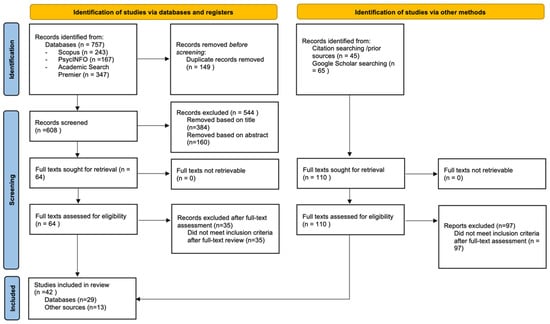
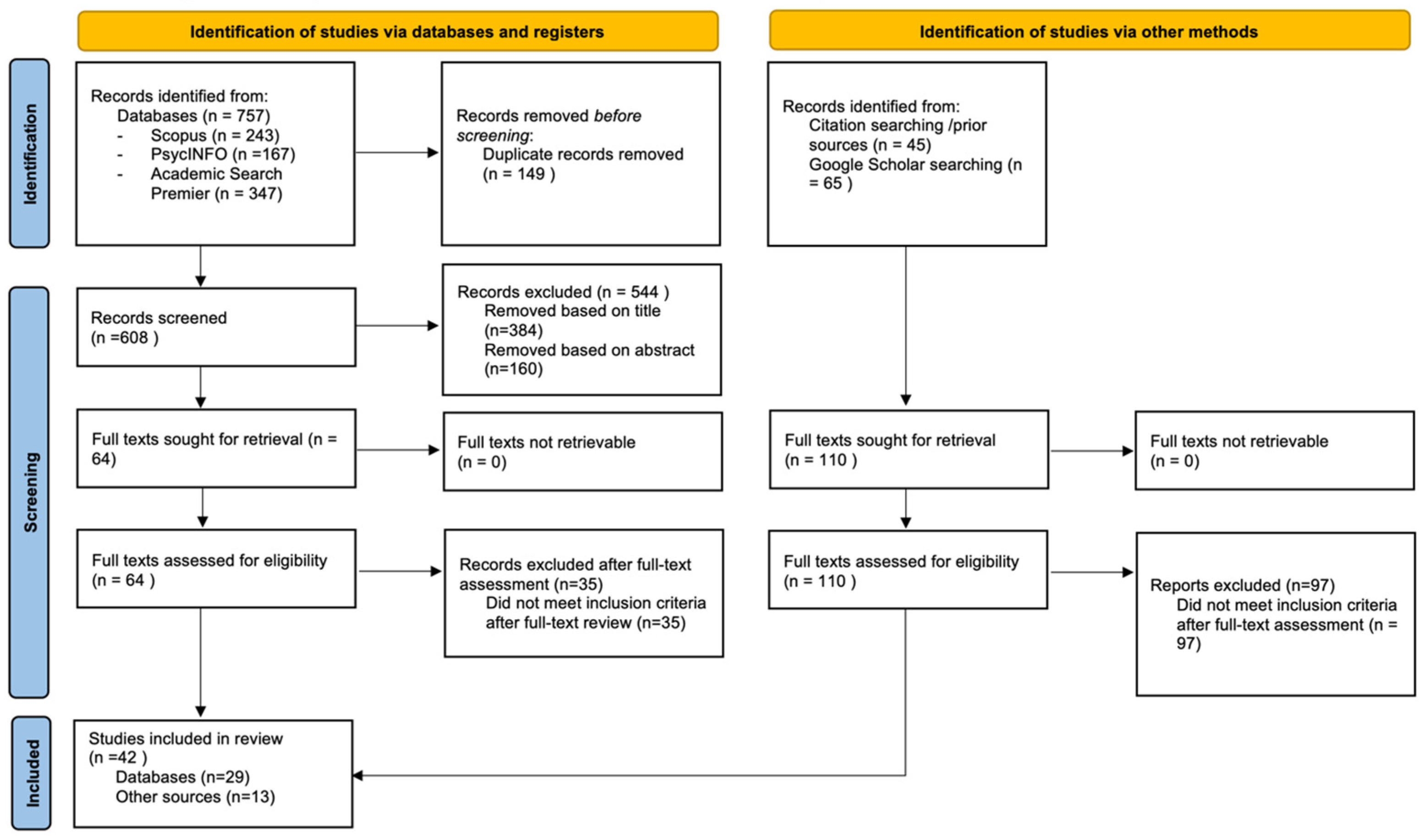
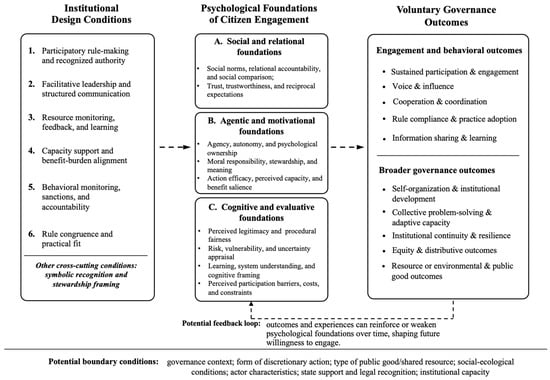
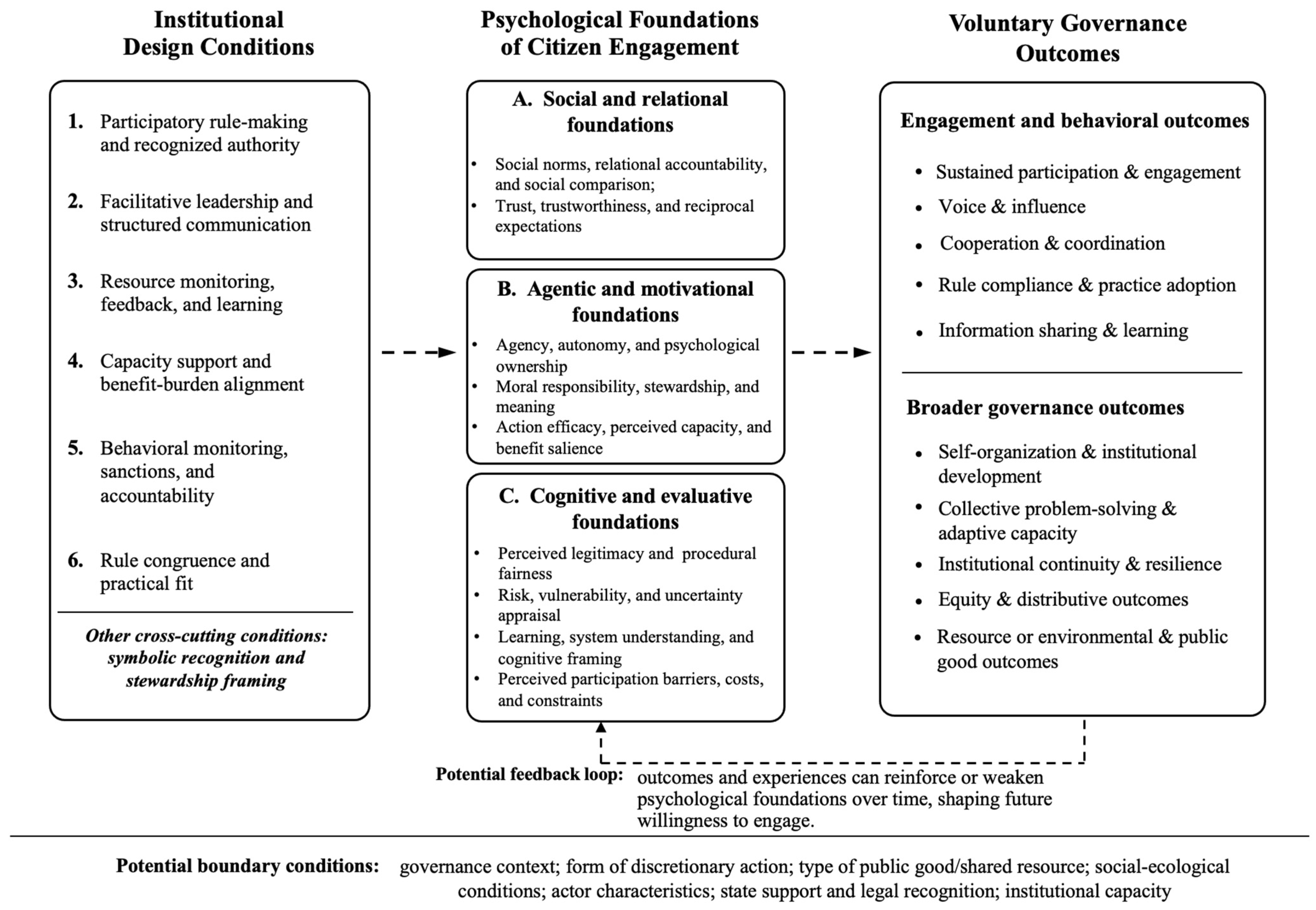

Disclaimer/Publisher’s Note: The statements, opinions and data contained in all publications are solely those of the individual author(s) and contributor(s) and not of MDPI and/or the editor(s). MDPI and/or the editor(s) disclaim responsibility for any injury to people or property resulting from any ideas, methods, instructions or products referred to in the content. |
© 2026 by the author. Licensee MDPI, Basel, Switzerland. This article is an open access article distributed under the terms and conditions of the Creative Commons Attribution (CC BY) license.