


Abstract
Digital connectivity, remote and hybrid work, and expectations of constant availability have made “always-on” work cultures a central feature of contemporary organising, yet work engagement research has only partially incorporated these conditions into its core theoretical frameworks. We conducted a systematic literature review of empirical studies on work and employee engagement in always-on contexts in accordance with the PRISMA 2020 guidelines. The Web of Science Core Collection and Scopus were searched for English-language, peer-reviewed articles published between 2015 and 2025 that examined engagement in work settings and always-on constructs. Studies involving non-work populations, studies that did not examine antecedents of engagement, studies unrelated to an always-on context, and non-empirical studies were excluded. The final sample comprised 36 studies. Risk of bias was formally assessed using Joanna Briggs Institute (JBI) critical appraisal tools. We used narrative synthesis, frequency analysis, and bibliometric analysis to identify antecedents, theoretical frameworks, and boundary-related constructs. Job resources emerged as the dominant antecedent category. The Job Demands–Resources (JD-R) model was the predominant explanatory framework, while key boundary mechanisms—psychological detachment, boundary control, and the right to disconnect—were rarely operationalised as distinct variables. We conceptualise these mechanisms as boundary resources and propose a boundary-sensitive extension of the JD-R model. The evidence is limited by conceptual dispersion, the under-measurement of always-on constructs, and the predominance of cross-sectional studies. The review was retrospectively registered in the OSF Registries on 23 September 2026 using the Open-Ended Registration template.
1. Introduction
Work engagement has become one of the most important constructs in contemporary organisational behaviour research because of its consistent association with performance, well-being, and retention. Originally grounded in Kahn’s (1990) conceptualisation of personal engagement, the construct was refined by Schaufeli et al. (2002), who defined work engagement as a positive, fulfilling, work-related state of mind characterised by vigour, dedication, and absorption. In this formulation, work engagement reflects high levels of energy and mental resilience (vigour), a sense of significance and enthusiasm about one’s work (dedication), and deep concentration in work activities (absorption). Given its associations with desirable individual and organisational outcomes (Bakker et al., 2008; Christian et al., 2011; Schaufeli & Bakker, 2010), work engagement remains a central topic in human resource management, leadership, and organisational psychology.
At the same time, the nature of work has changed substantially in recent years. Digital technologies, remote and hybrid work arrangements, and increasing expectations of constant availability have contributed to the emergence of an always-on work culture (McDowall & Kinman, 2017). In such environments, work is no longer confined to formally bounded times and places but increasingly extends into employees’ non-work hours and private spaces (Fastje et al., 2023; Zhu et al., 2024). Smartphones, email, messaging platforms, and collaboration tools enable continuous connectivity, but they also intensify pressure for immediate responsiveness and weaken the separation between work and non-work domains (Kossek et al., 2012; Mazmanian et al., 2013). As a result, employees may find it more difficult to recover from work demands, achieve psychological detachment, and preserve the boundaries necessary for sustainable performance (McDowall & Kinman, 2017).
Work engagement is not only an individual-level state associated with performance, well-being and retention; it also has strategic relevance for organisations. Organisations increasingly depend on digitally connected work systems (Bakker & Albrecht, 2018). In always-on environments, work engagement may serve as a mechanism through which firms convert pervasive connectivity, remote and hybrid work arrangements, and flexible work designs into sustained performance, innovation and resilience (Bondanini et al., 2025; Kavya et al., 2025; Kulal et al., 2025). Conversely, conditions of excessive work availability may intensify work demands, leading to overload and long-term exhaustion. These conditions can increase the risk of free-riding, passive quitting, and impaired recovery due to blurred work–non-work boundaries. Consequently, the organizational benefits of digital coordination—such as responsiveness and collaboration—may be diminished (Harunavamwe & Kanengoni, 2023; Nuutinen & Bordi, 2025).
The strategic importance of work engagement is amplified by the multilevel nature of always-on work systems (Rademacher et al., 2021). Connectivity norms, boundary practices and right-to-disconnect arrangements are shaped at organisational and policy levels (Josserand & Boersma, 2024), enacted by leaders and supervisors, and experienced by individual employees and their families, thereby creating complex cross-level dynamics (Rademacher et al., 2021; Straub et al., 2019). From a strategic management perspective, this means that work engagement in always-on contexts is not merely a human resource management outcome but also an element of organisational design and governance. Organisations must decide how much connectivity to encourage, how to regulate after-hours communication, and how to provide boundary resources such as opportunities for psychological detachment and control over availability. By examining how antecedents, theoretical frameworks, and boundary-related constructs are addressed in the existing literature, this review provides a foundation for future multilevel research on work engagement in digitally saturated work systems.
Although these developments have been widely discussed, the literature remains conceptually fragmented. The terms always-on work culture, digital connectivity, after-hours connectivity, excessive work availability, working during non-work time, psychological detachment, boundary control, and the right to disconnect are often used in close proximity, although they refer to distinct phenomena. Always-on work culture describes the broader organisational and technological environment in which constant or excessive work availability becomes normalised (McDowall & Kinman, 2017). Digital connectivity (Büchler et al., 2020) and after-hours connectivity (Richardson & Benbunan-Fich, 2011) refer to mechanisms through which employees remain connected and reachable beyond formal working time. Psychological detachment captures the extent to which individuals mentally disengage from work during non-work time (Sonnentag & Fritz, 2007), whereas boundary control refers to an individual’s perceived ability to manage the permeability and flexibility of work–non-work boundaries (Ashforth et al., 2000). The right to disconnect, in turn, represents a formal organisational or regulatory principle intended to protect non-work time from work-related intrusion (Secunda, 2019). These distinctions are important because failing to differentiate these concepts clearly can blur theoretical boundaries and weaken the interpretation of empirical findings.
The existing work engagement literature has examined a wide range of antecedents, yet the role of always-on dynamics remains underexplored and unevenly theorised (McDowall & Kinman, 2017). Much of the prior research relies on broad demand-resource explanations, most notably the Job Demands-Resources (JD-R) model (Bakker & Demerouti, 2007), which has proven useful in explaining how job demands and job resources shape work engagement. Bakker et al. (2014) distinguish between two perspectives on work engagement. The first conceptualises work engagement in relation to burnout, with work engagement representing the positive opposite of the core dimensions of burnout, whereas the second treats work engagement as an independent and distinct construct that is negatively related to burnout (Bakker et al., 2014). However, the JD-R model does not fully specify how digital connectivity and boundary-related processes should be conceptualised. In particular, it does not clearly explain when connectivity functions as a resource, when it becomes a demand, and when boundary-related conditions alter its effects (Bondanini et al., 2025; Zhu et al., 2024). This creates a theoretical gap, particularly in studies where digital availability, after-hours communication, and boundary erosion are present but not explicitly theorised as such.
This systematic literature review addresses this gap by synthesising empirical research on work engagement in always-on work contexts. Its purpose is threefold. First, it identifies the main antecedents of work engagement in studies that explicitly or implicitly reflect always-on dynamics. Second, it examines which theoretical frameworks dominate this literature. Third, it evaluates how boundary-related constructs are conceptualised and operationalised across studies. In doing so, the review clarifies whether existing research primarily treats always-on work as a context, as a set of antecedents, or as a collection of boundary conditions influencing work engagement.
The review also addresses an important practical question. Organisations increasingly depend on digitally connected work systems, yet these systems may generate both benefits and strain. On the one hand, connectivity can support work engagement directly or through increased autonomy and flexibility (Bondanini et al., 2025; Fujimoto et al., 2016; Zhu et al., 2024). On the other hand, it may intensify work demands, undermine recovery, and increase the risk of exhaustion (McDowall & Kinman, 2017; Sokolic, 2022). Understanding how these opposing dynamics shape work engagement is important for designing sustainable work practices in digitally mediated environments. This is particularly relevant at a time when hybrid work, remote coordination, and AI-enabled work processes are further blurring temporal and spatial boundaries between work and non-work.
Accordingly, this study addresses the following research questions:
- RQ1: What antecedents of work engagement emerge in always-on work contexts?
- RQ2: Which theoretical frameworks dominate this literature?
- RQ3: How are boundary-related constructs used in the empirical literature and are they treated as explicit variables, implicit conditions, or theoretical gaps?
By addressing these questions, the study contributes to a more precise conceptualisation of work engagement in digitally connected work environments and provides a foundation for future research on boundary management, sustainable work engagement, and the right to disconnect.
2. Theoretical Framework
2.1. Job Demands–Resources Framework
The Job Demands–Resources (JD-R) framework distinguishes between job demands (work characteristics that require sustained effort and are associated with physiological or psychological costs) and job resources (work characteristics that help employees achieve goals, reduce demands or stimulate development) (Bakker & Demerouti, 2007). Within this framework, job resources support motivation and work engagement, whereas excessive demands may lead to strain and burnout (Bakker et al., 2014; Bakker & Demerouti, 2007).
This review uses JD-R as the organising framework for classifying antecedents of work engagement in always-on contexts: autonomy (Popaitoon, 2023; Zhu et al., 2024), organisational support (Botha et al., 2023; Xu et al., 2025), flexible work arrangements (Arifah et al., 2025; Opoku et al., 2023) and hybrid work practices (Kavya et al., 2025) are coded as job resources; work intensification (Chouhan, 2025), technostrain (Nuutinen & Bordi, 2025), time-related work stress (Palumbo et al., 2025), and work–family or work–life conflict (Chambel et al., 2023; Harunavamwe & Kanengoni, 2023; Xu et al., 2025; Zhu et al., 2024) are coded as job demands; personal and boundary-related constructs are coded as extensions to the classical demands–resources logic (Lazauskaite-Zabielske et al., 2020; Nuutinen & Bordi, 2025). Rather than revisiting the details of JD-R in each section, we refer back to this framework when interpreting empirical patterns, assessing theoretical contributions, and developing implications.
2.2. Complementary Theoretical Perspectives
Several complementary theories deepen and extend the JD-R view of work engagement in always-on work systems by highlighting different mechanisms through which connectivity and boundaries influence employees’ motivational states. Self-Determination Theory (SDT) (Ryan & Deci, 2000) emphasises the role of autonomy-supportive environments and psychological need satisfaction, suggesting that digital connectivity may foster work engagement when it expands discretion and competence, but undermine it when it erodes autonomy or relatedness. Social Exchange Theory (SET) (Blau, 1964; Emerson, 1976) interprets work engagement as a reciprocal response to perceived organisational support, including support for managing work–non-work boundaries. In always-on contexts, employees may engage more strongly when organisations invest in boundary-protective practices and disengage when connectivity expectations are perceived as unilateral demands.
Conservation of Resources (COR) theory (Hobfoll, 2002, 1989) emphasises resource gain and loss spirals, offering a way to understand how continuous digital availability can deplete recovery opportunities, intensify resource loss, and eventually erode work engagement, particularly when technostress and time-related work stress accumulate. Boundary Theory (Ashforth et al., 2000) focuses on how individuals segment, integrate and negotiate work and non-work roles over time and space. It is especially relevant for interpreting constructs such as psychological detachment, boundary control, and blurred work–life boundaries, which shape whether an always-on work culture is experienced as enabling or intrusive. Taken together, these perspectives suggest that always-on work should be theorised as a context in which demands, resources and boundary processes interact, rather than as a simple increase in workload or flexibility.
2.3. Clarifying the Theoretical Gap
Despite the robustness of JD-R and the availability of complementary theories, the existing literature has not fully integrated digital connectivity and boundary processes into core work engagement models. What we know is that JD-R explains how demands and resources shape work engagement and that work engagement measures—particularly the Utrecht Work Engagement Scale—are well established and widely used (Arifah et al., 2025; Bondanini et al., 2025; Timms et al., 2015). What we do not yet know is when connectivity functions as a resource rather than a demand, how boundary-related constructs such as psychological detachment and boundary control operate as boundary resources within the JD-R logic, and how institutional mechanisms such as the right to disconnect are empirically treated in relation to work engagement. Connectivity-related behaviours can operate through both resource and demand pathways (Bondanini et al., 2025; Zhu et al., 2024), boundary constructs are under-operationalised, and right-to-disconnect arrangements are largely discussed conceptually (Bondanini et al., 2025) rather than measured systematically, leaving the role of always-on dynamics in work engagement models theoretically underspecified.
This review addresses that gap by systematically mapping (a) antecedents of work and employee engagement in always-on contexts, classified into job resources, job demands, and boundary-related constructs; (b) the theoretical frameworks used to interpret these relationships, including JD-R, SDT, SET, COR and Boundary Theory; and (c) the operationalisation of boundary constructs and indicators of always-on context, with particular attention to psychological detachment, boundary control, work–life boundaries, connectivity behaviours and the right to disconnect. By doing so, it clarifies where existing theories are sufficient, where boundary-sensitive extensions are needed, and how future research can model digital connectivity and boundary resources more precisely within work engagement research.
3. Materials and Methods
We conducted a systematic literature review to identify antecedents of work and employee engagement in always-on work contexts and to map the dominant theoretical frameworks used to explain these relationships. This review was conducted and reported in accordance with the PRISMA 2020 guidelines (Page et al., 2021) to ensure transparency and replicability of the search, screening, and coding procedures. The review methods were defined before the search and study selection. The review was retrospectively registered in the OSF Registries on 23 September 2026 using the Open-Ended Registration template. The registration provides a time-stamped and transparent record of the methodology and should not be interpreted as a prospective preregistration.
3.1. Database Selection and Time Frame
Articles were retrieved from the Web of Science Core Collection and Scopus, which were selected because of their broad coverage, rigorous indexing standards, and established use in management and organisational research (Harzing & Alakangas, 2016; Torres-Salinas & Arroyo-Machado, 2026). The search was constrained to publications between 2015 and 2025 to capture the period during which remote, hybrid, and digitally mediated work intensified always-on dynamics, while excluding earlier periods when such phenomena were less prevalent.
3.2. Search Strategy
The search proceeded in two stages and was reported in accordance with PRISMA 2020. First, a preliminary search of the work engagement literature was conducted in the Web of Science Core Collection on 8 January 2026 using the Topic field (title, abstract, author keywords and Keywords Plus) and the string (“work engagement” OR “employee engagement” OR “job engagement”). The inclusion of “employee engagement” and “job engagement” reflects the frequent interchangeable use of these terms in the literature, despite conceptual distinctions between work-focused and organization-focused engagement (Teixeira & Santos, 2024; Zahari & Kaliannan, 2023).
To reduce the risk of database-specific retrieval bias, the search strategy was subsequently refined, and the literature search was conducted in both the Web of Science Core Collection and Scopus. The search strategy was expanded beyond engagement terms to identify studies situated in an always-on work context by incorporating concepts capturing boundary-related, connectivity and digital-work conditions. The revised search was conducted in both the Web of Science Core Collection and Scopus on 15 September 2026. In Web of Science, the Topic field was used, while in Scopus the search was conducted within article titles, abstracts, and keywords. The complete database-specific search strings, filters, and search dates are provided in Supplementary Table S1.
These keywords were chosen to capture psychological detachment, work–non-work boundaries, non-work time and regulatory or organisational principles related to the right to disconnect, which together represent key dimensions of the always-on work context (Josserand & Boersma, 2024; McDowall & Kinman, 2017; Sonnentag & Fritz, 2007).
3.3. Screening and Eligibility Criteria
Screening followed a stepwise procedure consistent with PRISMA (Figure 1), combining database filters and manual review. In both the Web of Science Core Collection and Scopus, database-specific filters were applied to retain only English-language, peer-reviewed journal articles and to exclude all disciplinary categories outside management, business and economics. These restrictions excluded papers from fields such as clinical psychology, education, and engineering that fell outside the core scope of strategic and organisational research.
Figure 1.
PRISMA flow diagram of study selection.
In the next step, titles and abstracts were screened against predefined inclusion and exclusion criteria. Studies were included if they: (1) examined work engagement, employee engagement or job engagement in a work context; (2) employed an empirical design (quantitative, qualitative or mixed-methods); and (3) were situated within an always-on context, operationalised through constructs such as psychological detachment, work–non-work boundaries, non-work time, connectivity, ICT demands or the right to disconnect. Studies were excluded if they: (1) focused on non-working populations (e.g., students); (2) did not examine antecedents associated with engagement; (3) addressed engagement without any connection to always-on constructs; or (4) were non-empirical (e.g., conceptual essays or commentaries). The full texts of the remaining studies were assessed for eligibility to verify alignment with the inclusion criteria. Two authors independently screened and coded studies, and disagreements were resolved through discussion to ensure consistency.
Although the expanded two-database search identified additional records, screening against the predefined eligibility criteria did not result in a substantial increase in the final sample. Most additional records were duplicates or were excluded because they fell outside the predefined scope or did not address work engagement in an always-on work context. The expanded search nevertheless strengthened the comprehensiveness and robustness of the study-selection procedure.
After applying these criteria, the final sample comprised 36 empirical studies published between 2015 and 2025. Qualitative studies were retained for conceptual mapping but deliberately excluded from frequency-based analyses of antecedent categories and theoretical frameworks to avoid conflating quantitative prevalence estimates with interpretive evidence.
3.4. Coding of Constructs and Antecedents (RQ1)
To address our first research question on antecedents of work engagement in always-on contexts (RQ1), we developed a coding scheme grounded in the Job Demands–Resources (JD-R) framework (Bakker & Demerouti, 2007) and its extensions (Xanthopoulou et al., 2007), as outlined in the Theoretical Background section. For each study, we extracted information on the operationalisation of work or employee engagement, including the scales used, such as the Utrecht Work Engagement Scale, as well as the antecedents and contextual variables associated with work engagement.
Job resources were defined as aspects of the job that help employees achieve work goals, reduce demands, or stimulate personal growth and development (Bakker & Demerouti, 2007). These included organisational support (Botha et al., 2023; Charles et al., 2025), supervisor and managerial support (Popaitoon, 2023; Xu et al., 2025), family-supportive supervisor behaviours (Chambel et al., 2023; Straub et al., 2019), flexible work arrangements (Arifah et al., 2025; Opoku et al., 2023; Ugargol & Patrick, 2018), hybrid work practices (Kavya et al., 2025), time-spatial job crafting (Lazauskaite-Zabielske et al., 2020), and job autonomy (Fujimoto et al., 2016).
Job demands were defined as aspects of the job that require sustained physical or psychological effort and are therefore associated with physiological or psychological costs (Bakker & Demerouti, 2007), such as work intensification (Chouhan, 2025), technostrain (Nuutinen & Bordi, 2025), time-related work stress (Palumbo et al., 2025) and communication overload (Popaitoon, 2023).
Boundary-related constructs encompassed variables describing work–life balance (Hooi, 2025; Jaharuddin & Zainol, 2019; Tjingovera et al., 2025; Žnidaršič & Marič, 2021), work–life integration (Kavya et al., 2025), work–family enrichment (Chambel et al., 2023; Gillet et al., 2021), blurred work–life boundaries (Popaitoon, 2023), work–family conflict (Chambel et al., 2023; Harunavamwe & Kanengoni, 2023; Zhu et al., 2024), and work–life or work-to-life conflict (Palumbo et al., 2025; Xu et al., 2025), as well as connectivity-related variables such as work connectivity behaviour after-hours (Zhu et al., 2024) and digital connectivity (Bondanini et al., 2025). Personal resources were treated as individual characteristics associated with resilience and motivation, such as positive affect (Goswami et al., 2025), but did not constitute a separate antecedent category.
For each article, antecedents of work and employee engagement were coded based on the construct definitions and measurement instruments, with ambiguous cases resolved through discussion and reference to the theoretical framework cited in the study. Each quantitative and mixed-methods study was then assigned to one dominant antecedent category.
3.5. Coding of Theoretical Frameworks (RQ2)
To address our second research question on dominant theoretical frameworks (RQ2), we extracted and coded the main theories explicitly used to explain work engagement in the sampled studies. The coding distinguished between (a) JD-R and its extensions (Bakker & Demerouti, 2007), (b) Self-Determination Theory (SDT) (Ryan & Deci, 2000), (c) Social Exchange Theory (SET) (Blau, 1964; Emerson, 1976), (d) Conservation of Resources (COR) theory (Hobfoll, 1989, 2002) and (e) Boundary Theory (Ashforth et al., 2000), which are introduced conceptually in the Theoretical Background section. JD-R was coded as present when studies framed antecedents in terms of job demands and job resources (Harunavamwe & Kanengoni, 2023). SDT was coded when autonomy support and psychological need satisfaction were central explanatory mechanisms (Nehra, 2023); SET was coded when reciprocal relationships between organisational support and employee engagement were emphasized (Charles et al., 2025); COR when resource gain and loss processes were discussed (Straub et al., 2018); and Boundary Theory when segmentation, integration or boundary control between work and non-work domains were theorised (Fujimoto et al., 2016).
3.6. Keyword Co-Occurrence and Thematic Mapping (RQ2 and RQ3)
In addition to narrative synthesis and frequency analysis, we conducted a bibliometric analysis to support RQ2 and RQ3 by identifying dominant thematic clusters in the literature on work engagement in always-on contexts. Specifically, we performed a co-occurrence analysis of authors’ keywords using VOSviewer (version 1.6.21), applying the full counting method to the studies included in the final sample. Only keywords with a minimum occurrence of two were included, resulting in 16 keywords entering the network visualization.
VOSviewer grouped these keywords into five clusters, primarily reflecting themes related to employee well-being, telework, and remote work, work–life balance, perceived organisational support, and technostress. This bibliometric analysis complements the qualitative coding by showing that the work engagement literature in always-on contexts is structured around themes that align closely with our theoretical lenses (JD-R, SDT, SET, COR and Boundary Theory), while boundary-specific terms play a secondary role. In doing so, it helps us interpret how frequently boundary constructs and connectivity are foregrounded in the research discourse (RQ3) and how they are situated relative to broader themes of well-being, support and digital work.
3.7. Analytical Approach
Taken together, the screening, coding and bibliometric procedures enable a multi-layered synthesis of the literature. Quantitative frequency counts of antecedent categories and theoretical frameworks provide an overview of the dominant explanatory approaches (RQ1 and RQ2), while qualitative interpretation of boundary-related constructs and connectivity mechanisms helps identify conceptual gaps, particularly the limited operationalisation of psychological detachment and the right to disconnect as distinct empirical variables (RQ3). The combined approach supports both descriptive mapping and theoretically informed interpretation of how work engagement is examined in always-on work contexts.
3.8. Risk of Bias Assessment
Risk of bias was formally assessed using Joanna Briggs Institute (JBI) tools: the JBI Assessment of Risk of Bias for Analytical Cross-sectional Studies (Barker et al., 2026), Checklist for Cohort Studies (Barker et al., 2025), JBI Checklist for Quasi-Experimental Studies (Barker et al., 2024), and Checklist for Qualitative Research (Porritt et al., 2024). The assessment covered methodological and risk-of-bias domains relevant to each study design. The assessment was conducted independently by two reviewers, and disagreements were resolved through discussion. Each item was rated as Yes, No, Unclear, or Not Applicable.
4. Results
4.1. Bibliometric Overview
The systematic search yielded a final sample of 36 empirical studies published between 2015 and 2025, of which 29 were quantitative, 3 mixed-methods and 4 qualitative. The characteristics of the included studies are summarised in Supplementary Table S2.
Scholarly interest in work engagement under always-on conditions is relatively recent, with 29 of the 36 studies (80.6%) published from 2021 onwards (Figure 2), coinciding with the post-pandemic expansion of remote and hybrid work. The highest number of publications was recorded in 2025 (n = 12).
Figure 2.
Annual distribution of included studies.
The geographical distribution of the studies was diverse, although India (19.4%, 7/36) was the most frequently examined national context, followed by China and South Africa (8.3%, 3/36 each). The literature appeared predominantly in human resource management and organisational journals, particularly SA Journal of Human Resource Management (11.1%, 4/36), The International Journal of Human Resource Management (8.3%, 3/36), and South Asian Journal of Human Resources Management (8.3%, 3/36).
4.2. Engagement Definitions and Measures (RQ1 Context)
To interpret antecedents meaningfully, it is important to understand how engagement itself is defined and measured in this corpus (Table 1). The most frequently adopted definition is Schaufeli et al.’s (2002) characterisation of work engagement as a positive, fulfilling, work-related state of mind marked by vigour, dedication and absorption; this definition is used in 24 of the 36 studies. Kahn’s (1990) notion of personal engagement and related formulations by Rothbard (2001), Saks (2006) and Harter et al. (2002) appear less frequently and typically in relation to “employee engagement”, which broadens the focus from the job to the organisation.
Table 1.
Definitions and operationalisations of work and employee engagement in the empirical corpus (n = 32 quantitative and mixed-methods studies).
Consistent with prior reviews (Kossyva et al., 2023; Motyka, 2018; Teixeira & Santos, 2024; Zahari & Kaliannan, 2023), several studies treat work engagement and employee engagement interchangeably, explicitly noting their overlapping usage despite conceptual distinctions (Jaharuddin & Zainol, 2019; Nehra, 2023; Opoku et al., 2023).
Measurement practice was similarly concentrated: 24 of the 32 quantitative and mixed-methods studies (75.0%) used the Utrecht Work Engagement Scale (UWES) or UWES-derived measures, which primarily assess vigour, dedication and absorption. (Schaufeli et al., 2002). The remaining studies relied on alternative operationalisations, including the Gallup Q12, Saks’s engagement scale, Rothbard’s Work Role Engagement Scale, the Flourishing at Work Scale, and study-specific measures. Notably, Kavya et al. (2025) used negatively worded items that resemble burnout dimensions. This definitional and measurement pattern provides a relatively coherent basis for mapping antecedents and theories, even though terminological inconsistency between “work” and “employee” engagement remains.
4.3. Antecedent Categories in Always-On Contexts (RQ1)
The classification of antecedents according to the JD-R framework (introduced in the theoretical background) shows a clear dominance of job resources in explaining work engagement in always-on work cultures. Table 2 summarises these patterns by grouping antecedents into job resources, job demands and boundary-related constructs and highlights the predominance of resource-focused explanations even in contexts characterised by strong connectivity demands. This pattern provides the empirical basis for later theorising about how always-on dynamics alter the meaning and effectiveness of demands and resources.
Table 2.
Antecedent categories of work engagement in always-on work contexts: frequencies, examples and dominant theories.
Across the 32 quantitative and mixed-methods studies, job resources represented the dominant antecedent category in 22 studies (68.8%), followed by job demands in 7 studies (21.9%) and boundary-related constructs in 3 studies (9.4%). At the organisational level, job resources included high-performance work systems and perceived organisational support (Botha et al., 2023; Charles et al., 2025; Chouhan, 2025); at the interpersonal level, supervisor support and family-supportive supervisor behaviours (Chambel et al., 2023; Popaitoon, 2023; Straub et al., 2019); at the work-organisation level, flexible work arrangements, hybrid work practices and time-spatial job crafting (Arifah et al., 2025; Kavya et al., 2025; Lazauskaite-Zabielske et al., 2020; Ugargol & Patrick, 2018); and at the task level, job autonomy (Fujimoto et al., 2016; Popaitoon, 2023). Personal resources were examined less frequently, with positive affect representing one such example and positively predicting work engagement in remote work settings (Goswami et al., 2025).
Job demands associated with reduced work engagement include work intensification, technostrain, time pressure and work–family conflict, which can undermine work engagement directly or indirectly. Work intensification showed a strong negative association with work engagement in Chouhan (2025), while technostrain was negatively related to work engagement in (Nuutinen & Bordi, 2025).
4.4. Theoretical Frameworks (RQ2)
The mapping of theoretical frameworks confirms that the Job Demands–Resources (JD-R) model, as outlined in the Theoretical Background section, remains the dominant lens for explaining work engagement outcomes in always-on contexts. As summarised in Table 3, the JD-R model and its extensions are explicitly used in 15 of the 32 quantitative and mixed-methods studies. Social Exchange Theory (SET) appears in 7 studies, primarily to explain reciprocal exchange processes involving organisational and supervisory support and work engagement. Self-Determination Theory (SDT) is used in 6 studies, typically to explain autonomy and psychological need satisfaction. Conservation of Resources (COR) theory appears in 5 studies, highlighting processes of resource loss and gain under demanding work conditions. Boundary-related theories are explicitly used in 5 studies to conceptualise the boundaries between work and non-work domains.
Table 3.
Theoretical frameworks used to explain work engagement in always-on work systems.
Frameworks represented in only one or two studies—such as the Work–Home Resources Model (Gillet et al., 2021; Goswami et al., 2025), Spillover Theory (Palumbo et al., 2025), the Technostress Model (Bondanini et al., 2025), Work–Family Enrichment Theory (Goswami et al., 2025), and Diffusion of Innovation Theory (Arifah et al., 2025)—are noted but excluded from the frequency tables to maintain focus on the most recurrent theoretical logics. Overall, the theoretical base of the literature is anchored in JD-R, with SET, SDT and COR functioning as complementary perspectives that highlight different facets of work engagement under always-on conditions and set the stage for a boundary-sensitive extension of JD-R.
4.5. Boundary Constructs and Operationalisation of the Always-On Context (RQ3)
Boundary-related constructs and operationalisations of the always-on context emerge as the most distinctive yet unevenly measured elements of the corpus. Positive associations with engagement were reported for work–life balance (Hooi, 2025), work–life integration (Kavya et al., 2025) and work–family enrichment (Chambel et al., 2023; Gillet et al., 2021). In contrast, blurred work–life boundaries (Popaitoon, 2023), work–family conflict and work–life conflict (Chambel et al., 2023; Harunavamwe & Kanengoni, 2023; Zhu et al., 2024) were associated with lower work engagement. Connectivity-related antecedents, including work connectivity behaviour after-hours (WCBA) and digital connectivity, show ambivalent effects. WCBA was positively associated with work engagement directly and indirectly through increased work autonomy, while also producing a negative indirect effect through heightened work–family conflict (Zhu et al., 2024). Digital connectivity showed a positive association with work engagement (Bondanini et al., 2025), whereas mobile technology use showed a positive indirect effect through increased job autonomy (Fujimoto et al., 2016).
Operationalisations of the always-on context itself can be grouped into three analytic categories that mirror our conceptual distinction between context, mechanisms and boundary resources:
4.5.1. Always-On as a Contextual Condition
Several studies treat always-on work as a background context, operationalised through pandemic-driven remote work, hybrid work arrangements or telework settings in which employees work from home for substantial periods (Botha et al., 2023; Hooi, 2025; Jindain & Gilitwala, 2024; Kavya et al., 2025; Kulal et al., 2025). In these studies, the focus is on work or employee engagement under remote or hybrid conditions, with connectivity and boundary challenges largely inferred from the context rather than directly measured.
4.5.2. Always-On as Behavioural Mechanism
Other studies operationalise always-on dynamics through specific connectivity behaviours and technology-related demands, using instruments such as the Constant Connectivity Scale (Bondanini et al., 2025), the ICT Demand Scale (Nuutinen & Bordi, 2025), measures of work connectivity behaviour after-hours (WCBA) (Zhu et al., 2024), and measures of mobile technology use (Fujimoto et al., 2016). These operationalisations capture continuous reachability, expectations of digital availability, and work-related technology use extending beyond regular working hours.
4.5.3. Always-On as a Boundary Condition
A smaller subset of studies explicitly measures boundary-related constructs such as psychological detachment (Nehra, 2023; Nuutinen & Bordi, 2025), operationalising it either as an antecedent of work engagement or as a moderator of the relationship between ICT-related demands and engagement. Psychological detachment from work is explicitly operationalised in only a small number of studies, while other boundary-related constructs appear infrequently. The right to disconnect does not appear as a directly measured variable in the empirical studies, despite being discussed conceptually. This pattern points to a measurement gap in boundary-related constructs and suggests that key aspects of always-on work culture are often treated as contextual conditions rather than as focal empirical variables.
The keyword co-occurrence network presented in Figure 3 reinforces these observations by showing that authors’ keywords cluster primarily around employee well-being and remote work, perceived organisational support and technostress, while boundary-specific terms occupy a more peripheral position in the broader thematic network.
Figure 3.
Bibliometric profile of empirical studies on work engagement in always-on work cultures (2015–2025, VOSviewer).
Taken together, the evidence for RQ3 indicates that, while boundary processes and connectivity are repeatedly discussed, they have not yet been systematically integrated as central constructs in work engagement research under always-on conditions. This gap is addressed in the subsequent Discussion and Theoretical Contributions sections.
4.6. Results of the Risk of Bias Assessment
The risk of bias assessment of the 23 cross-sectional studies, presented in Supplementary Table S3, showed that the strongest aspect was the description of study subjects and settings (Q8), which was adequate in 22 studies (95.7%), followed by valid and reliable exposure measurement (Q3) in 20 studies (87.0%), and outcome measurement (Q4) rated adequate in 20 studies (87.0%). Appropriate statistical analysis (Q7) was reported in 16 studies (69.6%). Reporting of inclusion criteria (Q1) was adequate in 14 studies (60.9%). The main limitations concerned confounding: potential confounders (Q5) were identified in 10 studies (43.5%), while 9 studies (39.1%) reported strategies to address confounding factors (Q6). The Q2 criterion was not applicable to any of the included studies.
The risk of bias assessment of the 8 longitudinal studies, presented in Supplementary Table S4, showed that the strongest aspects were valid and reliable outcome measurement (Q7), which was adequate in all studies (100.0%), followed by valid and reliable exposure measurement (Q3) and identification of confounding factors (Q4), each rated adequately in 7 studies (87.5%). Appropriate statistical analysis (Q11) and strategies to deal with confounding factors (Q5) were adequately rated in 6 studies (75.0%). The main limitations concerned whether the participants were free of the outcome at the start of the study (Q6), which was unclear in 4 studies (50.0%), while follow-up time (Q8) was also unclear in 4 studies (50.0%). Follow-up completeness and reasons for loss to follow-up (Q9) were adequately addressed in 2 studies (25.0%), while no study was adequately rated for strategies to address incomplete follow-up (Q10). Q1 was not applicable to any of the included studies.
The quasi-experimental study (Table S5) clearly identified cause and effect (Q1), included multiple measurements of the outcome before and after intervention (Q5), measured outcomes in a reliable way (Q7), and used appropriate statistical analysis (Q9). The main limitations were the absence of a control group (Q2) and incomplete follow-up (Q8).
The risk of bias assessment of the four qualitative studies (Table S6) showed congruity between research methodology and the research questions/objectives, data collection, data analysis, and interpretation of results (Q2-Q5) in all four qualitative studies. The main limitations concerned locating the researcher culturally or theoretically and addressing researcher influence (Q6 and Q7), which were not reported in three studies. Ethical approval (Q9) was unclear or absent in three studies.
5. Discussion
5.1. Mechanisms Linking Antecedents and Work Engagement in Always-On Work Cultures (RQ1)
The patterns identified for RQ1 suggest that always-on work cultures do not introduce entirely new categories of antecedents, but instead alter how job resources, job demands, and personal and boundary resources operate within JD-R and COR dynamics. The same flexible and connected work designs can therefore generate both resource and demand pathways depending on whether they are accompanied by boundary-supportive practices (Chambel et al., 2023; Opoku et al., 2023; Straub et al., 2018; Zhu et al., 2024). In JD-R terms, the findings suggest that resources may lose part of their motivational potential when embedded in connectivity norms that foster expectations of constant availability.
COR logic clarifies this ambiguity by highlighting resource depletion processes associated with technostress (Harunavamwe & Kanengoni, 2023), ICT-related demands (Nuutinen & Bordi, 2025), and work–family conflict (Chambel et al., 2023). Continuous digital availability may erode recovery opportunities and emotional resources, particularly when work intensification (Chouhan, 2025) and time-related work stress are high (Palumbo et al., 2025), leading to depletion even in the presence of strong job resources. The mechanism is not simply “more demands, less engagement”, but rather “connectivity and demands interacting with insufficient boundary resources”, which undermines employees’ capacity to convert available resources into sustained work engagement. This interpretation explains why work engagement is preserved when resources are aligned with boundary-protective practices (e.g., clear limits on after-hours contact, supervisor support for detachment), but declines when connectivity amplifies demands and erodes the conditions for restoration.
5.2. Integrating Theoretical Frameworks and Exposing Gaps (RQ2)
For RQ2, the dominance of JD-R provides a robust backbone for explaining how demands and resources shape work engagement in digitally connected environments, but the interplay with SDT, SET, COR and Boundary Theory reveals that existing models still lack an explicit account of connectivity and boundary processes.
However, connectivity behaviours themselves—such as work connectivity behaviour after-hours (Zhu et al., 2024) and mobile technology use (Fujimoto et al., 2016)—are often treated as demands or resources without an explicit theoretical rule for when they switch roles. The current frameworks rarely articulate how boundary constructs (psychological detachment, boundary control, right to disconnect) enter JD-R pathways as boundary resources that regulate the translation of connectivity and demands into work engagement or strain. This fragmentation leads to inconsistent classification of connectivity variables and under-specification of institutional mechanisms such as right-to-disconnect arrangements, which are discussed conceptually but not integrated into work engagement models (Bondanini et al., 2025). A more complete theoretical account therefore requires positioning connectivity at the intersection of JD-R and COR, with boundary resources explicitly moderating or mediating its effects.
5.3. Boundary Constructs, Multi-Level Governance and Always-On Context (RQ3)
The findings for RQ3 highlight boundary constructs and operationalisations of the always-on context as critical but under-developed elements for advancing multi-level and strategic theorising. At the individual level, boundary-related constructs may shape employees’ capacity to convert structural resources (e.g., autonomy, flexibility) into sustainable work engagement by preserving recovery and limiting role interference (Fujimoto et al., 2016; Lazauskaite-Zabielske et al., 2020). At the interpersonal and team level, supervisor support (Popaitoon, 2023) and local norms about after-hours contact shape how connectivity is enacted day-to-day (Rademacher et al., 2021), influencing whether digital connectivity is experienced as enabling coordination or as an intrusive demand (Bondanini et al., 2025).
At the organisational and institutional levels, right-to-disconnect policies, formal rules on availability and broader connectivity norms can be understood as part of an emerging “digital psychological contract” that defines expectations about employees’ responsiveness and the protection of non-work time (Bondanini et al., 2025). This measurement gap means that key multi-level governance mechanisms remain largely invisible in empirical models of work engagement, even though they may be important for understanding how always-on work systems affect employee well-being and sustainable work engagement.
Synthesising these insights, always-on work culture is best understood as a context–mechanism–boundary system rather than a monolithic backdrop: context refers to the organisational and technological environment that normalises connectivity (McDowall & Kinman, 2017); mechanisms are the connectivity behaviours and ICT demands through which this environment operates (Bondanini et al., 2025; Nuutinen & Bordi, 2025; Zhu et al., 2024); and boundary resources are the individual, relational and institutional capacities (detachment, boundary control, right to disconnect) that may condition whether these mechanisms generate work engagement or depletion (Bondanini et al., 2025). From a strategic perspective, work engagement in always-on systems becomes a multi-level outcome of how firms design and govern this system, with implications not only for employee well-being but also for the sustainability of digitally mediated work arrangements.
6. Theoretical and Practical Implications
Building on the preceding synthesis, the review offers three theoretical contributions that extend current work engagement frameworks in always-on work systems.
First, the review demonstrates that digital and after-hours connectivity cannot be classified purely as a job resource or a job demand; instead, its effects on work engagement depend on the configuration of demands, resources and recovery opportunities (Fujimoto et al., 2016; Zhu et al., 2024). Within JD-R, connectivity enhances work engagement when it expands autonomy and supports goal achievement, as shown in studies where mobile technology use or WCBA increased autonomy and, in turn, work engagement (Fujimoto et al., 2016; Zhu et al., 2024). Within COR, the same connectivity contributes to resource loss spirals when it is accompanied by work intensification, technostress or work-family conflict (Chouhan, 2025; Harunavamwe & Kanengoni, 2023; Chambel et al., 2023), thereby undermining work engagement. Conceptualising connectivity as an ambivalent mechanism (Bondanini et al., 2025; Fujimoto et al., 2016; Zhu et al., 2024) helps explain why similar connectivity practices produce different work engagement outcomes across studies and contexts and supports models that treat connectivity as a conditional process rather than a fixed predictor.
Second, the review repositions psychological detachment, boundary control and right-to-disconnect arrangements as boundary resources within work engagement models. These resources may help explain why connectivity functions as a resource in some contexts but as a demand in others. Evidence suggests that detachment and other boundary resources are relevant to how employees experience and manage digitally connected work, while weaker boundary resources may contribute to work-family conflict and impaired recovery (Nehra, 2023; Lazauskaite-Zabielske et al., 2020; Nuutinen & Bordi, 2025; Zhu et al., 2024). Treating these constructs as boundary resources gives them a clearer theoretical role within JD-R pathways.
Third, the review advances the understanding of always-on work culture by framing it as a context–mechanism–boundary system rather than a generic backdrop to digital work. This conceptualisation clarifies why similar connectivity practices can produce different work engagement outcomes across studies and settings (Fujimoto et al., 2016; Zhu et al., 2024) and highlights the joint role of connectivity demands, boundary resources and organisational support.
Building on these findings, the proposed boundary-sensitive extension of the JD-R model retains the distinction between job demands and job resources but adds a specific boundary-management layer. This layer captures the extent to which employees can regulate the temporal, psychological, and technological permeability of work. In digitally saturated work environments, the effect of connectivity-related demands on work engagement depends not only on workload and resource depletion, but also on whether employees can detach psychologically, exercise control over work–non-work boundaries and rely on organisational protections such as the right to disconnect. The contribution of the proposed extension therefore lies in specifying boundary conditions through which digital demands and resources shape work engagement.
The practical implications of this review are directed primarily towards reducing digitally intensified demands rather than encouraging employees to adapt individually to constant connectivity. The findings suggest that the effect of digital connectivity on work engagement depends on whether connectivity increases autonomy or flexibility, or conversely, contributes to work-family conflict, blurred work–non-work boundaries, technostrain, and impaired recovery or detachment. Organisational and supervisory support further shape these effects. Organisations should establish clear communication norms, define expected response times, clarify what constitutes an urgent message, protect non-working periods, and implement the right to disconnect in operational rather than symbolic terms. Managers should model these norms by avoiding unnecessary after-hours messages and by making clear that delayed responses outside working hours do not indicate low commitment. HR professionals should assess technostress, digital overload, psychological detachment, and boundary control as interconnected dimensions of employee well-being. These recommendations follow directly from the reviewed evidence showing that the effect of digital connectivity on work engagement depends not only on technology use itself, but also on whether employees retain control over when, how, and under what expectations work-related connectivity occurs.
7. Limitations and Future Research
This review is limited by the conceptual dispersion and under-measurement of key constructs related to always-on work. The empirical studies address always-on dynamics through heterogeneous indicators (e.g., after-hours connectivity, ICT use, psychological detachment, work–life boundaries, segmentation preference and right-to-disconnect policies) that are conceptually related but not interchangeable. Only a small subset explicitly measures boundary resources (detachment, boundary control) (Nehra, 2023; Straub et al., 2019), and none operationalises the right to disconnect as a focal variable, which constrains comparability and helps explain why boundary mechanisms remain under-theorised in work engagement research. Future work should therefore distinguish more clearly between digital connectivity as behaviour, psychological detachment as recovery and the right to disconnect as an institutional condition and measure these constructs directly within integrated models.
A second limitation concerns research design and scope. The corpus is dominated by cross-sectional studies from a relatively small set of countries and sectors, with notable representation from India and smaller concentrations in China and South Africa, which limits causal inference and generalisability across different policy and cultural contexts. Cross-sectional data cannot capture day-to-day fluctuations in work engagement, detachment and connectivity, nor the dynamic effects of segmentation preferences and boundary control over time (Sonnentag & Fritz, 2015). In addition, several studies focus on the COVID-19 and immediate post-pandemic period of rapid remote and hybrid work expansion (Botha et al., 2023; Chambel et al., 2023; Harunavamwe & Kanengoni, 2023; Hooi, 2025; Nuutinen & Bordi, 2025; Popaitoon, 2023; Yeo & Li, 2022), raising questions about whether the observed patterns will persist in more stabilised digital work environments or under AI-mediated connectivity.
Limitations concerning the review process relate to the restriction of the search to the Web of Science Core Collection and Scopus, English-language publications, the 2015–2025 period and the Management, Business and Economics categories.
The risk of bias assessment showed that, although valid and reliable measurement and appropriate statistical analysis were the strongest aspects, important limitations remained, mainly confounding in cross-sectional studies, follow-up in longitudinal and quasi-experimental studies, and researcher influence and positioning in qualitative studies. These limitations should be considered when interpreting the findings of this review.
Building on these limitations, future research should focus on four areas. First, longitudinal, diary and event-contingent designs are needed to examine how specific connectivity behaviours, such as after-hours messages and app notifications, affect work engagement, exhaustion and recovery over time, and when they function as resources or demands. Second, multi-level, multi-country studies should compare different policy contexts, including contexts with right-to-disconnect measures, to examine how institutional environments and organisational practices shape boundary resources and work engagement. Third, future JD-R research should test a boundary-sensitive model in which connectivity or availability expectations and availability ambiguity act as mechanisms that reduce psychological detachment and, in turn, work engagement. Psychological detachment could be examined as a mediator, while boundary control, segmentation preference and right-to-disconnect arrangements could be tested as moderators of these relationships. Fourth, research should examine AI-mediated connectivity and digital monitoring, including algorithmic scheduling, automated notifications and data-driven performance management, as possible sources of demands and resources in always-on work systems. Together, these directions could help explain more clearly how work engagement is supported or weakened in digitally saturated work environments.
8. Conclusions
This systematic review mapped empirical research on work and employee engagement in always-on work contexts, focusing on antecedent categories, dominant theoretical frameworks and the operationalisation of boundary-related constructs and connectivity. Across 36 studies published between 2015 and 2025, it documented how job resources, job demands and boundary-related variables are used to explain work engagement under conditions of remote, hybrid and digitally mediated work, and how constructs such as technostress, work connectivity behaviour after-hours and work–life boundaries represent the empirical manifestations of always-on dynamics.
The review confirms that the JD-R framework provides the main organising logic for this literature but shows that work engagement in always-on contexts cannot be fully understood through demands and resources alone. Connectivity emerges as an ambivalent mechanism that can function as a resource or a demand depending on the configuration of demands, recovery opportunities and boundary resources. Psychological detachment, boundary control and right-to-disconnect arrangements are positioned as potentially important, but still under-operationalised, boundary resources that may condition JD-R and COR pathways. Conceptually, the review reframes always-on work culture as a context–mechanism–boundary system and positions boundary constructs at the centre of work engagement theory rather than at its periphery.
For theory and practice, the main implication is that sustainable work engagement in digitally saturated environments is shaped not only by connectivity itself but also by how organisations design and govern connectivity demands and work–non-work boundaries. Organisations should balance connectivity and flexibility with the protection of non-working time, invest in boundary-supportive leadership and explicit boundary resources, and translate right-to-disconnect principles into concrete communication and availability norms. Future research should further test the role of boundary resources within JD-R pathways, compare different regulatory and organisational contexts, and examine emerging forms of AI-mediated connectivity to develop more boundary-sensitive work engagement theories and guide organisations towards more sustainable digital work practices.
Supplementary Materials
The following supporting information can be downloaded at: https://www.mdpi.com/article/10.3390/admsci16100514/s1. Document S1: PRISMA 2020 Checklist. Table S1: Search strategies for Web of Science Core Collection and Scopus. Table S2: Characteristics of the Included Studies (n = 36 studies; total sample n = 14,773). Table S3: JBI Risk of Bias Assessment for Analytical Cross-sectional Studies (n = 23 of 36). Table S4: JBI Risk of Bias Assessment for Cohort Studies (n = 8 of 36). Table S5: JBI Risk of Bias Assessment for quasi-experimental studies (n = 1 of 36). Table S6: JBI Risk of Bias Assessment for qualitative studies (n = 4 of 36).
Author Contributions
Conceptualization, D.S. and I.L.; methodology, I.L. and D.S.; software, I.L.; validation, D.S. and I.L.; formal analysis, I.L.; data curation, I.L.; writing—original draft preparation, I.L. and D.S.; writing—review and editing, D.S. and I.L.; visualization, I.L.; supervision, D.S.; project administration, D.S.; funding acquisition, D.S. All authors have read and agreed to the published version of the manuscript.
Funding
This research was financed by the University of Rijeka (project no. ZIP-UNIRI-2023-16). The funder had no role in the design of the review, data collection, analysis, interpretation of the results, or preparation of the manuscript.
Institutional Review Board Statement
Not applicable.
Informed Consent Statement
Not applicable.
Data Availability Statement
The data supporting the findings of this review are contained within the article and its references. The retrospective registration record is publicly available in the OSF Registries at https://doi.org/10.17605/OSF.IO/2S43A.
Conflicts of Interest
The authors declare no competing interests.
References
- Arifah, I. D. C., Hadi, H. K., Dewi, R. S., Dhenabayu, R., & Tanuwijaya, H. (2025). Flexible work dynamics in higher education: Unveiling the influence of work engagement and technology adoption on lecturer performance. International Journal of Organizational Analysis, 33, 3468–3493. [Google Scholar] [CrossRef] [Scilit]
- Ashforth, B. E., Kreiner, G. E., & Fugate, M. (2000). All in a day’s work: Boundaries and micro role transitions. The Academy of Management Review, 25, 472–491. [Google Scholar] [CrossRef] [Scilit] [PubMed]
- Bakker, A. B., & Albrecht, S. (2018). Work engagement: Current trends. Career Development International, 23, 4–11. [Google Scholar] [CrossRef] [Scilit]
- Bakker, A. B., & Demerouti, E. (2007). The job demands-resources model: State of the art. Journal of Managerial Psychology, 22, 309–328. [Google Scholar] [CrossRef] [Scilit]
- Bakker, A. B., Demerouti, E., & Sanz-Vergel, A. I. (2014). Burnout and work engagement: The JD–R approach. Annual Review of Organizational Psychology and Organizational Behavior, 1, 389–411. [Google Scholar] [CrossRef] [Scilit]
- Bakker, A. B., Schaufeli, W. B., Leiter, M. P., & Taris, T. W. (2008). Work engagement: An emerging concept in occupational health psychology. Work & Stress, 22, 187–200. [Google Scholar] [CrossRef] [Scilit]
- Barker, T. H., Habibi, N., Aromataris, E., Stone, J. C., Leonardi-Bee, J., Sears, K., Hasanoff, S., Klugar, M., Tufanaru, C., Moola, S., & Munn, Z. (2024). The revised JBI critical appraisal tool for the assessment of risk of bias for quasi-experimental studies. JBI Evidence Synthesis, 22, 378–388. [Google Scholar] [CrossRef] [Scilit] [PubMed]
- Barker, T. H., Hasanoff, S., Aromataris, E., Stone, J. C., Leonardi-Bee, J., Sears, K., Habibi, N., Klugar, M., Tufanaru, C., Moola, S., Liu, X.-L., & Munn, Z. (2025). The revised JBI critical appraisal tool for the assessment of risk of bias for cohort studies. JBI Evidence Synthesis, 23, 441–453. [Google Scholar] [CrossRef] [Scilit] [PubMed]
- Barker, T. H., Hasanoff, S., Aromataris, E., Stone, J. C., Leonardi-Bee, J., Sears, K., Klugar, M., Tufanaru, C., Moola, S., Liu, X.-L., & Munn, Z. (2026). The revised JBI critical appraisal tool for the assessment of risk of bias for analytical cross-sectional studies. JBI Evidence Synthesis, 24, 401–408. [Google Scholar] [CrossRef] [Scilit] [PubMed]
- Blau, P. M. (1964). Justice in social exchange. Sociological Inquiry, 34, 193–206. [Google Scholar] [CrossRef] [Scilit]
- Bondanini, G., Sanchez-Gomez, M., Mucci, N., & Giorgi, G. (2025). Digital connectivity at work: Balancing benefits and risks for engagement, technostress, and performance. Administrative Sciences, 15, 398. [Google Scholar] [CrossRef] [Scilit]
- Botha, D., Van Dijk, G., & Marais, A. (2023). The COVID-19 pandemic: Perspectives on work engagement and work-from-home in a higher education institution. SA Journal of Human Resource Management, 21, a2131. [Google Scholar] [CrossRef] [Scilit]
- Bracht, E. M., Hernandez Bark, A. S., She, Z., Van Dick, R., & Junker, N. M. (2024). The downside of phones at work: Exploring negative relationships between leader phubbing and follower engagement/performance. Leadership & Organization Development Journal, 45, 82–93. [Google Scholar] [CrossRef] [Scilit]
- Büchler, N., ter Hoeven, C. L., & van Zoonen, W. (2020). Understanding constant connectivity to work: How and for whom is constant connectivity related to employee well-being? Information and Organization, 30, 100302. [Google Scholar] [CrossRef] [Scilit]
- Chambel, M. J., Castanheira, F., & Santos, A. (2023). Teleworking in times of COVID-19: The role of family-supportive supervisor behaviors in workers’ work-family management, exhaustion, and work engagement. The International Journal of Human Resource Management, 34, 2924–2959. [Google Scholar] [CrossRef] [Scilit]
- Charles, W. P., Mobara, A., Beretu, T., & Mhembere, L. Y. (2025). How hybrid work and organisation support shape an IT company’s employee engagement. SA Journal of Human Resource Management, 23, a3161. [Google Scholar] [CrossRef] [Scilit]
- Chouhan, V. S. (2025). Is too much work intensification harmful? Impact on psychological health and work engagement of employees. South Asian Journal of Human Resources Management, 12, 61–82. [Google Scholar] [CrossRef] [Scilit]
- Christian, M. S., Garza, A. S., & Slaughter, J. E. (2011). Work engagement: A quantitative review and test of its relations with task and contextual performance. Personnel Psychology, 64, 89–136. [Google Scholar] [CrossRef] [Scilit]
- Clark, S. C. (2000). Work/family border theory: A new theory of work/family balance. Human Relations, 53, 747–770. [Google Scholar] [CrossRef] [Scilit]
- Emerson, R. M. (1976). Social exchange theory. Annual Review of Sociology, 2, 335–362. [Google Scholar] [CrossRef] [Scilit]
- Fastje, F., Mesmer-Magnus, J., Guidice, R., & Andrews, M. C. (2023). Employee burnout: The dark side of performance-driven work climates. Journal of Organizational Effectiveness: People and Performance, 10, 1–21. [Google Scholar] [CrossRef] [Scilit]
- Fujimoto, Y., Ferdous, A. S., Sekiguchi, T., & Sugianto, L.-F. (2016). The effect of mobile technology usage on work engagement and emotional exhaustion in Japan. Journal of Business Research, 69, 3315–3323. [Google Scholar] [CrossRef] [Scilit]
- Gillet, N., Huyghebaert-Zouaghi, T., Austin, S., Fernet, C., & Morin, A. J. S. (2021). Remote working: A double-edged sword for workers’ personal and professional well-being. Journal of Management & Organization, 27, 1060–1082. [Google Scholar] [CrossRef] [Scilit]
- Goswami, M., Sarkar, A., Jena, L. K., & Israel, D. (2025). Building a remote career: Navigating work-life interface from role engagement to work passion while working from home. IIMB Management Review, 37, 100573. [Google Scholar] [CrossRef] [Scilit]
- Harter, J. K., Schmidt, F. L., & Hayes, T. L. (2002). Business-unit-level relationship between employee satisfaction, employee engagement, and business outcomes: A meta-analysis. Journal of Applied Psychology, 87, 268–279. [Google Scholar] [CrossRef] [Scilit] [PubMed]
- Harunavamwe, M., & Kanengoni, H. (2023). Hybrid and virtual work settings; the interaction between technostress, perceived organisational support, work-family conflict and the impact on work engagement. African Journal of Economic and Management Studies, 14, 252–270. [Google Scholar] [CrossRef] [Scilit]
- Harzing, A.-W., & Alakangas, S. (2016). Google Scholar, Scopus and the Web of Science: A longitudinal and cross-disciplinary comparison. Scientometrics, 106, 787–804. [Google Scholar] [CrossRef] [Scilit]
- Hobfoll, S. E. (1989). Conservation of resources: A new attempt at conceptualizing stress. American Psychologist, 44, 513–524. [Google Scholar] [CrossRef] [PubMed]
- Hobfoll, S. E. (2002). Social and psychological resources and adaptation. Review of General Psychology, 6, 307–324. [Google Scholar] [CrossRef]
- Hooi, L. W. (2025). The dynamics of crisis home office and employee engagement. Evidence-Based HRM, 13, 484–500. [Google Scholar] [CrossRef] [Scilit]
- Jaharuddin, N. S., & Zainol, L. N. (2019). The impact of work-life balance on job engagement and turnover intention. South East Asian Journal of Management, 13, 7. [Google Scholar] [CrossRef] [Scilit]
- Jindain, C., & Gilitwala, B. (2024). The factors impacting the intermediating variable of employee engagement toward employee performance in a hybrid working model. RAM Journal, 18, 167–179. [Google Scholar] [CrossRef] [Scilit]
- Josserand, E., & Boersma, M. (2024). Australia’s right to disconnect from work: Beyond rhetoric and towards implementation. Journal of Industrial Relations, 66, 703–720. [Google Scholar] [CrossRef] [Scilit]
- Kahn, W. A. (1990). Psychological conditions of personal engagement and disengagement at work. Academy of Management Journal, 33, 692–724. [Google Scholar] [CrossRef] [Scilit] [PubMed]
- Kavya, R., Mathew, J., & Raghavendra, A. N. (2025). The mediating effect of work–life integration on the relationship between hybrid work practice and work engagement in the information technology industry. South Asian Journal of Human Resources Management. [Google Scholar] [CrossRef] [Scilit]
- Kossek, E. E., Ruderman, M. N., Braddy, P. W., & Hannum, K. M. (2012). Work-nonwork boundary management profiles: A person-centered approach. Journal of Vocational Behavior, 81, 112–128. [Google Scholar] [CrossRef] [Scilit]
- Kossyva, D., Theriou, G., Aggelidis, V., & Sarigiannidis, L. (2023). Outcomes of engagement: A systematic literature review and future research directions. Heliyon, 9, e17565. [Google Scholar] [CrossRef] [Scilit] [PubMed]
- Kulal, A., Abhishek, N., & Dinesh, S. (2025). Beyond the office walls: Exploring the impact of remote work on employees’ engagement and productivity. Journal of Contemporary Human Resource Management, 16, 103–141. [Google Scholar] [CrossRef] [Scilit]
- Lazauskaite-Zabielske, J., Ziedelis, A., & Urbanaviciute, I. (2020). Who benefits from time-spatial job crafting? The role of boundary characteristics in the relationship between time-spatial job crafting, engagement and performance. Baltic Journal of Management, 16, 1–19. [Google Scholar] [CrossRef] [Scilit]
- Mazmanian, M., Orlikowski, W. J., & Yates, J. (2013). The autonomy paradox: The implications of mobile email devices for knowledge professionals. Organization Science, 24, 1337–1357. [Google Scholar] [CrossRef] [Scilit]
- McDowall, A., & Kinman, G. (2017). The new nowhere land? A research and practice agenda for the “always on” culture. Journal of Organizational Effectiveness: People and Performance, 4, 256–266. [Google Scholar] [CrossRef] [Scilit]
- Motyka, B. (2018). Employee engagement and performance: A systematic literature review. International Journal of Management and Economics, 54, 227–244. [Google Scholar] [CrossRef] [Scilit]
- Nehra, N. S. (2023). Can employee engagement be attained through psychological detachment and job crafting: The mediating role of spirituality and intrinsic motivation. Journal of Organizational Effectiveness: People and Performance, 10, 368–393. [Google Scholar] [CrossRef] [Scilit]
- Nuutinen, S., & Bordi, L. (2025). Technology use and employee well-being among teachers during COVID-19: Moderating effects of school support and detachment from work. International Journal of Educational Management, 39, 57–76. [Google Scholar] [CrossRef] [Scilit]
- Opoku, F. K., Kwao, I. T., & Johnson, A.-P. (2023). Human resource policies and work–life balance in higher education: Employee engagement as mediator. SA Journal of Human Resource Management, 21, a1939. [Google Scholar] [CrossRef] [Scilit]
- Page, M. J., McKenzie, J. E., Bossuyt, P. M., Boutron, I., Hoffmann, T. C., Mulrow, C. D., Shamseer, L., Tetzlaff, J. M., Akl, E. A., Brennan, S. E., Chou, R., Glanville, J., Grimshaw, J. M., Hróbjartsson, A., Lalu, M. M., Li, T., Loder, E. W., Mayo-Wilson, E., McDonald, S., … Moher, D. (2021). The PRISMA 2020 statement: An updated guideline for reporting systematic reviews. BMJ, 372, n71. [Google Scholar] [CrossRef] [Scilit] [PubMed]
- Palumbo, R. (2023). Involved at work and disinvolved out of work: Unraveling the implications of involvement on accountants’ work–life balance. Management Decision, 61, 26–53. [Google Scholar] [CrossRef] [Scilit]
- Palumbo, R., Petrolo, D., & Manesh, M. F. (2025). Stressed at work and distressed out of work: Unveiling the implications of time-related work stress on work climate in the nonprofit sector. Journal of General Management, 50, 112–125. [Google Scholar] [CrossRef] [Scilit]
- Popaitoon, P. (2023). Integrative work design for telework practices: Lessons learned from the COVID-19 pandemic in Thailand. Journal of Asia Business Studies, 17, 504–523. [Google Scholar] [CrossRef] [Scilit]
- Porritt, K., Evans, C., Bennett, C., Loveday, H., Bjerrum, M., Salmond, S., Munn, Z., Pollock, D., Pang, D., Vineetha, K., Seah, B., & Lockwood, C. (2024). Systematic reviews of qualitative evidence. In E. Aromataris, C. Lockwood, K. Porritt, B. Pilla, & Z. Jordan (Eds.), JBI manual for evidence synthesis. JBI. [Google Scholar] [CrossRef] [Scilit]
- Rademacher, U., Weber, U., & Zinn, C. T. (2021). Drawing the line—Turning social practices of smartphone use into (in)formal rules and regulations. Management Revue, 32, 366–384. [Google Scholar] [CrossRef] [Scilit]
- Rautenbach, C., & Rothmann, S. (2017). Psychometric validation of the Flourishing-at-Work Scale—Short Form (FWS-SF): Results and implications of a South African study. Journal of Psychology in Africa, 27, 303–309. [Google Scholar] [CrossRef] [Scilit]
- Richardson, K., & Benbunan-Fich, R. (2011). Examining the antecedents of work connectivity behavior during non-work time. Information and Organization, 21, 142–160. [Google Scholar] [CrossRef] [Scilit]
- Rothbard, N. P. (2001). Enriching or depleting? The dynamics of engagement in work and family roles. Admini-strative Science Quarterly, 46, 655–684. [Google Scholar] [CrossRef] [Scilit]
- Ryan, R. M., & Deci, E. L. (2000). Self-determination theory and the facilitation of intrinsic motivation, social development, and well-being. American Psychologist, 55, 68–78. [Google Scholar] [CrossRef] [PubMed]
- Saks, A. M. (2006). Antecedents and consequences of employee engagement. Journal of Managerial Psychology, 21, 600–619. [Google Scholar] [CrossRef] [Scilit]
- Schaufeli, W. B., & Bakker, A. B. (2010). Defining and measuring work engagement: Bringing clarity to the concept. In Work engagement: A handbook of essential theory and research (pp. 10–24). Psychology Press. [Google Scholar] [CrossRef] [Scilit]
- Schaufeli, W. B., Salanova, M., González-Romá, V., & Bakker, A. B. (2002). The measurement of engagement and burnout: A two sample confirmatory factor analytic approach. Journal of Happiness Studies, 3, 71–92. [Google Scholar] [CrossRef] [Scilit]
- Secunda, P. (2019). The employee right to disconnect. Notre Dame Journal of International & Comparative Law, 9, 1. [Google Scholar]
- Sokolic, D. (2022). Remote work and hybrid work organizations. In Proceedings of the 78th International Scientific Conference on Economic and Social Development (pp. 202–213). Varazdin Development and Entrepreneurship Agency and University North. [Google Scholar]
- Sonnentag, S., Eck, K., Fritz, C., & Kühnel, J. (2020). Morning reattachment to work and work engagement during the day: A look at day-level mediators. Journal of Management, 46, 1408–1435. [Google Scholar] [CrossRef] [Scilit]
- Sonnentag, S., & Fritz, C. (2007). The recovery experience questionnaire: Development and validation of a measure for assessing recuperation and unwinding from work. Journal of Occupational Health Psychology, 12, 204–221. [Google Scholar] [CrossRef] [Scilit] [PubMed]
- Sonnentag, S., & Fritz, C. (2015). Recovery from job stress: The stressor-detachment model as an integrative framework: The stressor-detachment model. Journal of Organizational Behavior, 36, S72–S103. [Google Scholar] [CrossRef] [Scilit]
- Straub, C., Beham, B., & Islam, G. (2019). Crossing boundaries: Integrative effects of supervision, gender and boundary control on work engagement and work-to-family positive spillover. The International Journal of Human Resource Management, 30, 2831–2854. [Google Scholar] [CrossRef] [Scilit]
- Straub, C., Vinkenburg, C. J., Van Kleef, M., & Hofmans, J. (2018). Effective HR implementation: The impact of supervisor support for policy use on employee perceptions and attitudes. The International Journal of Human Resource Management, 29, 3115–3135. [Google Scholar] [CrossRef] [Scilit]
- Teixeira, P. M. R., & Santos, F. C. A. (2024). Work engagement measures: A systematic literature review. Universitas Psychologica, 23, 1–16. [Google Scholar] [CrossRef] [Scilit]
- Timms, C., Brough, P., O’Driscoll, M., Kalliath, T., Siu, O., Sit, C., & Lo, D. (2015). Positive pathways to engaging workers: Work–family enrichment as a predictor of work engagement. Asia Pacific Journal of Human Resources, 53, 490–510. [Google Scholar] [CrossRef] [Scilit]
- Tjingovera, I., Murangi, A., & Pieters, W. R. (2025). Work–life balance, well-being and work engagement: The case of working mothers in Namibia. SA Journal of Human Resource Management, 23, a3099. [Google Scholar] [CrossRef] [Scilit]
- Torres-Salinas, D., & Arroyo-Machado, W. (2026). The “Big Three” of scientific information: A comparative bibliometric review of Web of Science, Scopus, and OpenAlex. arXiv. [Google Scholar] [CrossRef] [Scilit]
- Ugargol, J. D., & Patrick, H. A. (2018). The relationship of workplace flexibility to employee engagement among information technology employees in India. South Asian Journal of Human Resources Management, 5, 40–55. [Google Scholar] [CrossRef] [Scilit]
- Xanthopoulou, D., Bakker, A. B., Demerouti, E., & Schaufeli, W. B. (2007). The role of personal resources in the job demands-resources model. International Journal of Stress Management, 14, 121–141. [Google Scholar] [CrossRef] [Scilit]
- Xu, M., Cao, X., & Lu, H. (2025). Leave or not to leave? The impact of managerial work-life support and work engagement on the outcomes of work-to-life conflict for China’s new generation employees. Asia Pacific Business Review, 31, 755–777. [Google Scholar] [CrossRef] [Scilit]
- Yeo, R. K., & Li, J. (2022). Breaking the silence of psychological impact while working from home during COVID: Implications for workplace learning. Human Resource Development International, 25, 114–144. [Google Scholar] [CrossRef] [Scilit]
- Zahari, N., & Kaliannan, M. (2023). Antecedents of work engagement in the public sector: A systematic literature review. Review of Public Personnel Administration, 43, 557–582. [Google Scholar] [CrossRef] [Scilit]
- Zhu, F., Gao, Y., & Chen, X. (2024). Freedom or bondage? The double-edged sword effect of work connectivity behavior after-hours on employee occupational mental health. Chinese Management Studies, 18, 265–285. [Google Scholar] [CrossRef] [Scilit]
- Žnidaršič, J., & Marič, M. (2021). Relationships between work-family balance, job satisfaction, life satisfaction and work engagement among higher education lecturers. Organizacija, 54, 227–237. [Google Scholar] [CrossRef] [Scilit]
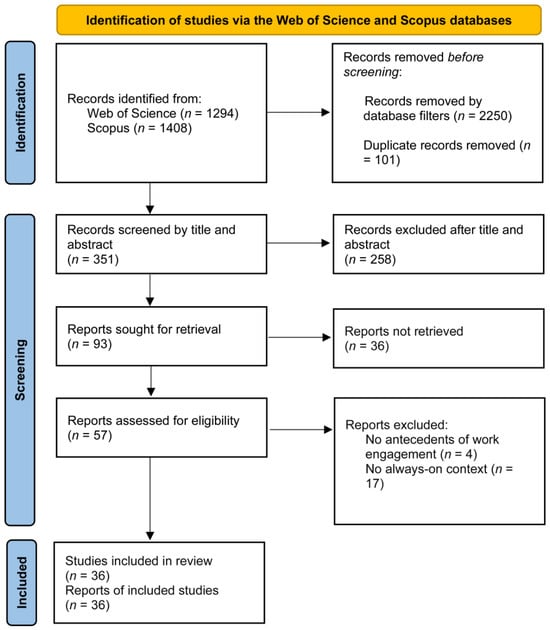
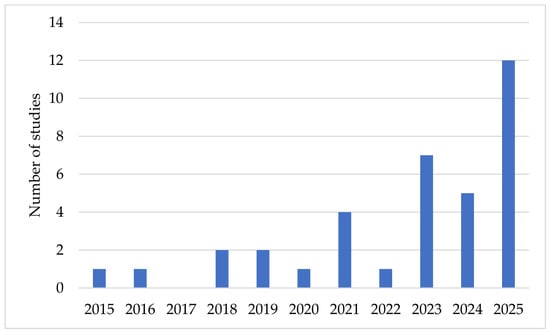
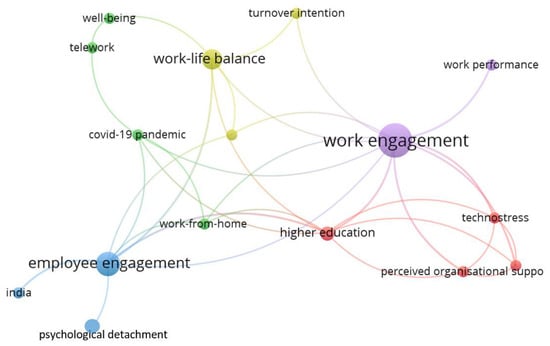
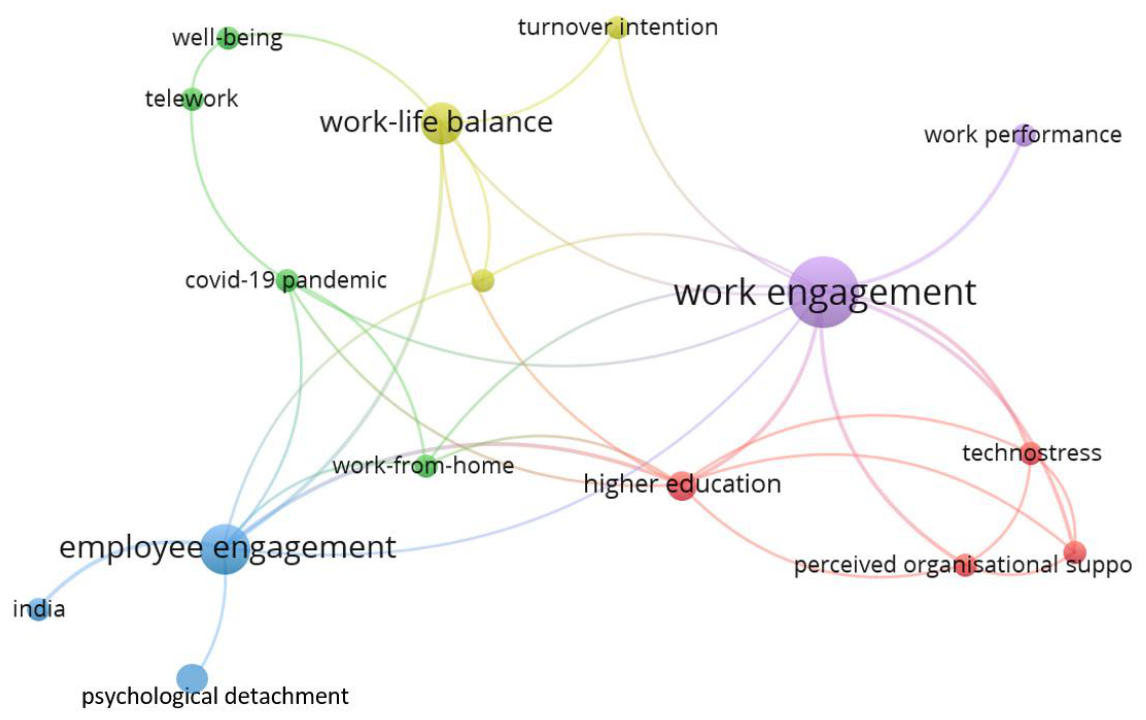

Disclaimer/Publisher’s Note: The statements, opinions and data contained in all publications are solely those of the individual author(s) and contributor(s) and not of MDPI and/or the editor(s). MDPI and/or the editor(s) disclaim responsibility for any injury to people or property resulting from any ideas, methods, instructions or products referred to in the content. |
© 2026 by the authors. Licensee MDPI, Basel, Switzerland. This article is an open access article distributed under the terms and conditions of the Creative Commons Attribution (CC BY) license.