


Abstract
Times of crisis make evident the need to critically re-examine the foundational values that shape the theory and practice of public administration. In this context, institutional kindness has emerged as an increasingly important concept across a range of institutional and policy domains. In our study, institutional kindness refers to a value-based, person- and community-centered approach to public service in which humanity, care, and responsiveness to the needs of individuals and communities are embedded in the structures, policies, and everyday practices of public-sector institutions. The paper examines New Public Management, New Public Governance, New Public Service, and emerging Indigenous Institutional Theory through the lens of institutional kindness, with particular attention to the Alaska context. This paper seeks to advance understanding of crisis-response measures across dominant and emerging models of public institutions and governance by examining institutional kindness and unkind practices during the pandemic crisis in Alaska Indigenous communities. This study addresses two primary research questions: (1) Based on the lived experiences of Indigenous women, what were the real-world manifestations of institutional kindness, as well as unkind practices, during crises like the COVID-19 pandemic? (2) What institutional principles should form the foundation of culturally responsive governance in the Arctic Indigenous communities, particularly in Alaska, during times of crisis and beyond? This research is informed by narratives from the lived experiences of Alaska Indigenous women, with a particular focus on their reflection on interactions with government entities, Native corporations, and non-profit organizations. Drawing on qualitative research methods, the study is based on in-depth, semi-structured interviews conducted in the city of Anchorage, the hub community of Nome and its neighboring rural communities. The study utilized both strengths-based and deficit-based analytical approaches, seeking to provide a more comprehensive examination of both principles of institutional kindness as well as examples of unkind practices that shaped Indigenous women’s lived experiences. The study findings identified several principles associated with institutional kindness, including sharing, contextualization, trust, responsiveness to community needs, humane treatment, co-management and shared control over procedures, and (w)holism. The findings also revealed unkind institutional practices and their negative impacts on participants’ experiences and relationships with public institutions. Finally, institutional kindness is conceptualized as an empirically informed bridge concept that translates the Indigenous values and principles identified in this study into the language of Western public management models and institutions. Although the framework may be relevant to other jurisdictions across the Arctic and beyond, its broader transferability requires further investigation.
1. Introduction
Times of crisis make especially visible the need to critically re-examine the foundational values and principles that shape theories and practices of public administration. Academic debates, reinvigorated during and after the COVID-19 pandemic, emphasize the importance of rethinking and transforming established models of public administration (e.g., Ansell et al., 2021; Krogh & Triantafillou, 2024). Instead of a single paradigm, contemporary public administration reflects a hybrid of traditions (e.g., Bourgon, 2011; Goldsmith & Eggers, 2005)–including New Public Management, New Public Governance, New Public Service, and recently emerging Indigenous Institutional Theory–each offering distinct perspectives on ethical public governance and responsiveness to community and individual needs.
New Public Management (NPM) is one of the most influential public administration paradigms shaping modern government systems around the world. Introduced within Anglo-American government administrative systems in the 1970s, the NPM reform movement placed a strong focus on instrumental rationality, market-value-driven output-oriented efficiency, effectiveness, and performance indicators (e.g., Aucoin, 1995; Hood, 1991, 1995). Guided mainly by hierarchical principles of governance, the NPM relied on a transactional approach to public relations and often demonstrated excessive managerialism, a focus on market-based competition, and limited societal relevance (Dunleavy et al., 2006; de Percy et al., 2021; Lægreid, 2007; Torfing et al., 2020, Chapter 4). Later developments in public administration paradigms include the frameworks of New Public Governance (NPG) and New Public Service (NPS). The NPG prioritizes network governance with focus on “enhancing public–private and public–non-profit collaboration that tackles complex problems” (Krogh & Triantafillou, 2024, p. 3041), public value co-creation (Morgan & Cook, 2014; Osborne, 2010; Torfing & Triantafillou, 2013; Torfing et al., 2020) and citizen engagement for co-creation and co-production in public services, while also prioritizing solutions driven by individual choices (Krogh & Triantafillou, 2024; Brandsen et al., 2018; Strokosch & Osborne, 2021; Torfing et al., 2020). The NPS is more value-oriented, grounded in the humanistic management paradigm (e.g., Melé, 2016) and principles such as “valuing people, not just productivity,” “serving citizens, not customers,” “seeking creation of shared interests” (Denhardt & Denhardt, 2015), and trust-based relationships. The NPS prioritizes the community’s collective good along with individual interests.
While few studies have focused on Tribal governance, scholars emphasize the importance of developing Indigenous Institutional Theory (IIT) as a framework grounded in Indigenous traditions of values-based management (Spiller et al., 2011; T. Love & Tilley, 2014; T. R. Love, 2020; Aufrecht, 1999), relational approaches (Spiller et al., 2011; Stark & Mills, 2024; Reedy et al., 2020), collaboration, and a commitment to address specific community needs. Translating Indigenous Institutional Theory (IIT) into practice is a gradual and complex process. Many Indigenous-led and Indigenous-run institutions operate within legal, administrative, and funding structures shaped by Western institutional models. By incorporating Indigenous values, knowledge systems, and relational accountability, these externally imposed structures could be transformed.
“Institutional kindness” is an emerging concept across various institutional and policy domains. It was closely examined within practices and principles of institutions of higher education by Fox and Aspland (2024), Shillington et al. (2024), Hosoda and Estrada (2024), Lawrence (2021), Denial (2024), Rowland (2009), McLean (2022), and Clarke et al. (2019); healthcare by Nguyen and Lee (2025), Greco et al. (2025), and Biggar et al. (2022); and social work by Hill and Laredo (2020). It is also explored within theoretical frameworks in the fields of organizational management by Weigand et al. (2024), Smith-Merry et al. (2025), and Thurlow (2022); leadership (Haskins et al., 2018b); and public governance by Ferguson and Thurman (2019), Unwin (2018), Anderson and Brownlie (2019), Haskins et al. (2018a), and Willis and Kavka (2021). However, there is a significant gap in research on institutional kindness within the context of Indigenous communities, a basis on which the national public institutions collaborate with Tribal entities.
While there is no universally accepted definition of institutional kindness (Gilbert et al., 2019), it is often grounded in the notion of the broad term of ‘everyday kindness,’ which is characterized by “acts and relationships of help and support” that “people do for one another (both practically and emotionally) in response to moments of perceived need” (Anderson & Brownlie, 2019, pp. 6, 8). Kindness is predominantly associated with both thoughts and actions (Smith-Merry et al., 2025). Within an institutional context, kindness is viewed both as an organizational value (Clarke et al., 2019) and practice (Anderson & Brownlie, 2019), and even as “a path towards enhancing resilience” of public institutions (Nguyen & Lee, 2025, p. 1). Institutional kindness can be understood as an integral core of institutional culture that creates conditions in which acts of kindness are supported. As Anderson and Brownlie (2019, p. 20) suggest, such an institutional approach should be “one that leaves scope for such acts [of kindness–authors] to occur, rather than one that prescribes them.”
In this study, institutional kindness refers to a distinct, institutionally embedded, and value-based form of administrative responsiveness that shapes how public institutions exercise authority in their relationships with both internal actors (staff, employees) and external actors (citizens and communities as a whole). Based on our study findings, this form of responsiveness is enacted through implementation of the following interrelated principles that shape institutional decisions: contextualization, sharing, promotion of mutual support, cultivation of trust, responsiveness to community needs, humane treatment, (w)holism, “Two-Eyed Seeing and Both Hands Doing,” co-management and shared control over procedures, and adherence to local community values.
Institutional kindness is enshrined in institutions’ missions, program/policy design, (informal) protocols, regulations, procedures, and implementation plans. It is always action-oriented and relational in its nature and can extend beyond the intentions of policies or programs, and requires both effective and meaningful implementation, especially during periods of crisis, when vulnerabilities increase.
In Western political traditions, this concept is often interpreted broadly and thus can appear vague, abstract, or even populist in the context of government policies and practices (Curtin & Greaves, 2020). In the Western political realm, there were several attempts to introduce new values into public life, and the broader concept of kindness was explicitly articulated in the rhetoric of Western political leaders. Kindness served as a central narrative and moral compass in the leadership of Jacinda Ardern, the former New Zealand Prime Minister and leader of the Labor Party (2017 to 2023) (Willis, 2022). In 2018, the Scottish Government incorporated kindness as a guiding principle into national public policy (National Performance Framework), aiming to create a more compassionate government. Kindness was also used in the rhetoric of former U.S. Presidents, including Barack Obama, who appealed for adherence to kindness in the decision-making process in his 2013 speech, and George W. Bush, who framed “compassionate conservatism” with connotations of kindness as a core political principle during his 2000 presidential campaign.
In some Indigenous cultures, this concept is “not only more culturally specific… and entails more specific demands for action than the broad concept of kindness” (Willis, 2022). Overall, Indigenous epistemologies can be highly instrumental in illuminating the multifaceted dimensions of institutional kindness, as discussed in the literature that engages with concepts of care for others (Cueva et al., 2024; Howard-Bobiwash et al., 2021), community-centered values (van Doren et al., 2024; Nutbrown et al., 2021), community-centered leadership (Cunningham, 2023), (w)holism and relationality (Thiessen, 2023; Absolon, 2010), trust (van Doren et al., 2024), accountability (Stark & Mills, 2024), generosity and respect (Willis, 2022), non-adversarial justice in tribal court legal processes, and restorative justice systems (Carlson, 2024; Van Schilfgaarde, 2024; A. Mills et al., 2021), among others.
In Western jurisdictions, the concept of institutional kindness, especially when viewed through an Indigenous lens, holds particular significance for Arctic regions. Many Indigenous communities face geographic remoteness and limited connectivity, harsh and rapidly evolving environmental conditions, insufficient public services, inadequate infrastructure, amplified by the legacies of colonization that altogether challenge community resilience. This study focuses on Alaska Native communities in Anchorage and the Nome area as indicative cases of Indigenous communities engaged in ongoing processes of empowerment and self-determination, including the development of governance and service structures grounded in traditional values. The structure of governance in Alaska communities is highly complex, with federal, state, and municipal governments co-existing with Tribal governments, tribal non-profit organizations that provide health and cultural services, tribal economic development corporations, and Alaska Native corporations (e.g., Ristroph, 2022; Hiraldo et al., 2021). Given this complexity, oftentimes, tribal organizations are “incapable of fully participating, or of operating effectively, within the U.S. federalist system of multiple, multi-layered, and overlapping governments” (Henson et al., 2020, p. 8). In Alaska Native communities, natural hazards and other emergencies like pandemics exacerbate multiple, interconnected dimensions of pre-existing socioeconomic inequalities and power imbalances (L. P. Eichelberger et al., 2022; Johnson et al., 2021; Nelson et al., 2024; Scherer, 2021), also placing significant strain on government response efforts (Chhean et al., 2021). In this context, effective governance responses involving Indigenous members require not only well-coordinated collaboration among multilevel public institutions and other key stakeholders, but also a nuanced understanding of the cultural, historical, and local contexts of these communities, as well as the ethical principles that should guide these public responses, especially in times of crisis (e.g., United Nations General Assembly, 2020). Notably, the COVID-19 crisis revived memories of Alaska Native communities about past pandemics that contributed to multigenerational distrust in the federal or state governments’ ability to respond effectively, and amplified concerns about the limitations of healthcare and food security in rural areas (van Doren et al., 2024).
Another layer of complexity is that Alaska Native communities are highly diverse and include both rural and urban populations with varying needs, circumstances (e.g., Rozanova-Smith et al., 2025; Waakebiness-Bryce Institute for Indigenous Health, 2020; Brinkman et al., 2022; Lewis et al., 2024; Petrov et al., 2021; L. P. Eichelberger et al., 2022), and institutional contexts, with crises affecting men and women differently. For instance, during the pandemic, these latter inequalities were particularly acute for Indigenous women who were disproportionately bearing negative impacts of the pandemic (see Haney & Barber, 2022; Srugo et al., 2023; Flores et al., 2022; Fried et al., 2022; Moffitt et al., 2022; Rozanova-Smith et al., 2023; Rozanova-Smith et al., 2025; L. Eichelberger et al., 2021; Carter Olson et al., 2022). To address this important point, our research draws insights from lived experiences of kindness by Alaska Indigenous women during the COVID-19 pandemic. Through Indigenous women’s perspectives, their narratives shed light on both principles of institutional kindness as well as examples of unkind practices in responses to crises.
Goal and Research Questions
This paper advances understanding of crisis-response measures across dominant and emerging models of public institutions and governance by examining institutional kindness and unkind practices during the pandemic crisis in Alaska Indigenous communities. This research draws on narratives from the lived experiences of Indigenous women, with a particular focus on their reflection on interactions with government entities, Native corporations, and non-profit organizations.
The research questions that the research team seeks to address in this paper are as follows:
- Based on the lived experiences of Indigenous women, what were the real-world manifestations of institutional kindness, as well as unkind practices, during crises like the pandemic?
- What institutional principles should form the foundation of culturally responsive governance in the Arctic Indigenous communities, particularly in Alaska, during times of crisis and beyond?
The paper contributes to the literature on institutional kindness and how it can be theorized and implemented in public management models based on Indigenous perspectives.
2. Theoretical Framework
Drawing on the elements of NPS management paradigm by Denhardt and Denhardt (2015), Indigenous Institutional Theory by Coates et al. (2023) and T. R. Love (2020), and findings of Anderson and Brownlie (2019), Haskins et al. (2018a), Clarke et al. (2019), and Willis and Kavka (2021) on kindness in political and organizational domains, our study broadly defines institutional kindness as a value-based, person- and community-centered approach to public service, in which humanity and responsiveness to the needs of both internal actors (such as staff and employees) and external actors (including citizens and communities as a whole) are embedded within the structures, policies, and daily practices of public-sector institutions and organizations, as well as in the relationships between them. In this manuscript, the research team focuses on external actors only. Specifically, we explore the relationships between public-sector institutions, Indigenous-led non-profit organizations, and Tribal corporations and the Indigenous communities they serve, as well as inter-institutional relationships between federal institutions and Indigenous-led organizations within the public sector. These aspects of institutional kindness are explored through the lived experiences and perspectives of Indigenous women. The research team used initial conceptual framework elements to guide the first round of interview analysis. The framework underwent continuous development throughout data collection and analysis. As the analysis progressed, the team distinguished examples of institutional kindness and unkind (unsupportive) practices separately as distinct categories. The initial conceptual framework was then revised and refined based on the interview data, and the finalized framework was applied to the full dataset. In its final version, the framework identified the following principles of institutional kindness and unkind practices (Figure 1 and Figure 2), described below.
Figure 1.
Principles and practices of institutional kindness: examples based on interview data.
Figure 2.
Practices of institutional unkindness: examples based on interview data.
Primarily based on observations and interview data, the following examples of institutional kindness principles were identified:
- Sharing is the collaborative distribution of power, knowledge, and lived experiences among diverse stakeholders, with the aim of sharing resources to effectively respond to the needs of community members.
- A principle of contextualization is a recognition of the geographic, climatic, demographic, socioeconomic, and cultural diversity among communities, requiring nuanced, place-based approaches rather than a one-size-fits-all model of policy implementation.
- A promoting-mutual-support principle refers to policies, programs, and initiatives that foster networks of reciprocal care and promote mental and spiritual health and overall well-being within communities. It promotes the development of supportive structures, like Talking Circles or women’s wellness groups, that give opportunity to community members to share knowledge and traditional skills, as well as provide emotional support.
- A trust-based principle refers to institutional practices in which organizations demonstrate trust to collaborating organizational partners, public servants, and individuals they serve.
- A responsiveness to community needs principle reflects best practices that are designed to address the priorities and specific challenges of local communities.
- A humane treatment principle refers to the shift in institutional focus from skepticism and gatekeeping toward care and meaningful, solution-oriented support, which is especially important for individuals in vulnerable situations or situations falling outside formal classifications.
- A community values-driven principle refers to decision-making processes entrenched in community epistemologies, local cultural norms and values.
- A “Two-Eyed Seeing and BothHands Doing” principle refers to collaboration between Indigenous and non-Indigenous organizations in the implementation of community-oriented projects, drawing on the strengths of both Indigenous and Western knowledge systems (“Two-Eyed Seeing”) while promoting shared action (“Both Hands Doing”) to address community needs with respect to their cultural contexts.
- A principle of (w)holism is based on Indigenous worldviews that understand all aspects of life as interconnected, rejecting siloed thinking. All solutions must be developed with a holistic perspective, when the community is considered as an integrated whole while individual well-being is viewed as a balance of physical, mental, emotional, intellectual, and spiritual health.
- An Indigenous communities’ principle of co-management and control over procedures refers to shared distribution of resources between public institutions and Indigenous or local actors (Tribal government entities, Native corporations, etc.), ensuring that communities have meaningful roles in decision-making processes and exercise self-determination. This principle is especially critical in times of crisis, as communities need to be empowered to urgently address their needs.
Our observations and interview data also revealed the following examples of institutional unkindness (unsupportive practices):
- In our study context, unequal treatment refers to limiting individuals from accessing services, such as financial support during crises, based on factors like residential status (e.g., living outside a tribal service area in Alaska), digital literacy (preventing access to information and applying for services), limited formal education (making it more difficult to complete application forms and provide the necessary justification or supporting documentation), or lack of access to necessary technology that prevents filing electronic forms (e.g., internet connectivity or digital devices with cameras). During the pandemic, this disproportionately affected more vulnerable groups, including low-income families in remote communities, and existing deepened systemic inequalities.
- Formalism, often prevalent in bureaucratic systems, refers to the prioritization of formal procedures, extensive documentation requirements, rigid deadlines, and standardized forms that are often language-biased (written in highly professional language that is neither user-friendly to the average person, nor in the user’s mother-tongue language, in some cases; in the Alaskan context, public institutions often lack the capacity to fully engage with nuances of Traditional Knowledge and practices).
- Inhumane treatment refers to policy and service practices that are lacking compassion and allow the most vulnerable to be left behind by not acknowledging or addressing their critical needs, for instance, housing for single mothers with limited or no support networks who lost their jobs and homes during the pandemic.
- Burdensome bureaucratic inefficiency refers to administrative practices associated with general mismanagement, such as delayed payments and lost or mishandled applications, that are especially harmful for individuals in urgent need.
- Decontextualized practices refer to institutional practices that either entirely ignore or give limited consideration to the historical, geographical, cultural values and traditional beliefs, Indigenous knowledge systems, or socioeconomic contexts of the communities they serve. In the case of Alaska, these practices include, but are not limited to, culturally non-responsive one-size-fits-all policies that are commonly used in the federal system of territorial governance.
- Objectification refers to administrative practices that work with individuals as depersonalized cases, or case numbers, diminishing them to checkboxes that require them to “fit” predetermined generalized criteria.
Through the lens of institutional kindness, public institutions should be assessed not only by the outcomes they produce, but also by how they exercise authority and shape relationships. Although this topic requires further research, it is important to distinguish between well-resourced institutions that engage in unkind administrative practices and under-resourced institutions that, despite limited outcomes, may still demonstrate institutional kindness. Assessing an under-resourced institution is more complex because limited capacity may prevent desirable outcomes, which is not automatically evidence of institutional unkindness. As an example, an under-resourced institution may still demonstrate institutional kindness when it meaningfully engages citizens and communities through meaningful and transparent communication about its limitations and does not show neglect.
3. Methods
This qualitative study explores Indigenous women’s perspectives on the COVID-19 pandemic crisis-response measures through the lens of institutional kindness. This research focuses on Alaska Indigenous urban and rural communities, with a stronger focus on Indigenous female residents in or originating from the Nome region.
Primary sources include interviews with research participants and field observations. In addition, the authors reviewed relevant research and policy publications to contextualize and support the interpretation of interview data. The research team conducted seventeen in-depth thematic interviews in Alaska between November and December 2022, with follow-up feedback collected in August–October 2024. It involved self-identified Indigenous women aged 21 and over, residing during the pandemic and its aftermath in the city of Anchorage, the hub community of Nome, and its neighboring rural communities on the Seward Peninsula (see Table 1). These communities are, in many aspects, illustrative of Alaska. The specific rural communities are not disclosed due to the small population size, which could potentially compromise the confidentiality of research participants.
Table 1.
Demographic characteristics (number of interviews: 17).
Participant recruitment was conducted by Indigenous partners, key personnel, and knowledge holders through several channels: (1) personal networks and contacts; (2) social media platforms, primarily Facebook; (3) recruitment flyers posted at local critical infrastructure and community facilities, including healthcare facilities and grocery stores; and (4) snowball sampling, when participants helped identify and connect the research team with additional potential participants. Interview sessions lasted approximately 80 min on average. The formal consent process was not recorded. At times, participants also requested that certain information not be recorded. In such cases, the recording was paused. In addition, toward the end of each interview, the recording was paused for approximately 7–10 min to allow for immediate verification of participants’ responses. During this interval, the interviewer briefly summarized key points from the interview, using both deficit-based and strengths-based framings, and invited participants to provide immediate feedback and correct any potential misunderstandings. If participants provided additional clarification or important missing information, the recording was resumed so that these comments could be included in the interview record. The unrecorded consent and clarification periods were not included in the verbatim transcripts. The recorded interview data generated approximately 231 pages of verbatim transcripts (at an average of 300 words per page).
The study included a diverse pool of participants representing various occupations and employment characteristics. Participants included independent Indigenous artists, hospital and social service workers, higher education professionals, small-business entrepreneurs, professionals from Tribal organizations and Native non-profit organizations, retired, temporarily unemployed during the pandemic, or unemployed at the time of interview. All participants were mothers, and some were raising their children as single mothers. Most women in Nome and surrounding rural communities remained actively involved in subsistence activities within the limitations imposed by public health measures during COVID-19. In contrast, women in Anchorage were more often disconnected from traditional Native lifeways, and some experienced difficulties accessing Native foods.
The research team followed FAIR, CARE, and SHARE principles for conducting research in Indigenous communities to ensure ethical research (ICC, 2022; IARPC, 2023; Fast & Kovach, 2019): responsiveness to community needs, posed open-ended, practically oriented questions to invite personal storytelling (Apok, 2021, p. 158), and used a voice-centered approach during interpretation (Baldwin et al., 2023, p. 213). With the permission of participants, the interviews were audio-recorded. The study utilized both strengths-based and deficit-based analytical approaches, seeking to provide a more comprehensive examination of both principles of institutional kindness as well as examples of unkind practices that shaped Indigenous women’s lived experiences during the pandemic and its aftermath.
The broadly formulated interview questions focused on the pandemic impacts on women’s lives, particularly in relation to institutional support structures. They allowed participants to reflect openly on how the crisis affected their lives and their communities, as well as on kind and unkind (unsupportive) practices within institutional support systems.
Before the interviews, the participants were informed about the purpose of the study and research objectives, research project design, research procedures, the duration of the interview, potential risks, and privacy, confidentiality, and data protection. Participants had a right to decline to participate and withdraw from the study at any time without penalty. Additionally, all participants were offered the option to exclude questions they were uncomfortable discussing. All participants received compensation for their time, funded through the U.S. National Science Foundation project budget.
3.1. Data Analysis
The researchers used qualitative methods. Drawing on the elements of grounded theory methodology (e.g., Charmaz & Belgrave, 2012; Creswell & Poth, 2018; Foley et al., 2021), the interviews were analyzed through thematic analysis. Special attention was placed on participants’ lived experiences to demonstrate how women themselves understood and interpreted their realities. We incorporated elements of grounded theory methodology to ensure that themes emerged through systematic engagement with the data rather than being imposed in advance. Because these themes are complex, context-driven, and only partially captured in existing literature, this approach allowed the analysis to remain open to unexpected patterns emerging from the interviews.
The audio-recorded interviews were transcribed verbatim. First, the interview transcripts were read repeatedly to support familiarization with the data. Instead of starting from fixed categories, the analysis focused on identifying recurring issues, meanings, and relevant patterns described by participants. ATLAS.ti software (ATLAS.ti Scientific Software Development GmbH, Berlin, Germany) (Version 24.1.1) was used as a supporting tool for the organization of transcripts and the systematic development of initial codes.
For the next step, initial codes were generated inductively from the interview data; this stage involved constant comparison across interviews in order to identify similarities, differences, and recurring processes shaping women’s experiences. The software was utilized to compare coded segments across transcripts, grouping codes into analytical categories, which were then refined into emerging themes and subthemes of institutional kindness and the opposites (unkind, or unsupportive, practices), as the analysis developed. Next, the themes were interpreted with consideration of the cultural and institutional contexts and in light of the study’s conceptual framework and research questions. Resultantly, we developed a set of principles constituting the foundation of institutional kindness or unkindness.
Interpretive rigor was established through several procedures implemented at different stages of the research. At the end of each interview, the interviewer summarized the key points and invited participants to provide immediate feedback, enabling potential misunderstandings or misinterpretations to be identified and corrected. At the early stages of coding and analysis, emerging interpretations and findings were identified and discussed with the project’s Indigenous partner in Alaska, allowing alternative interpretations to be considered. All suggestions provided by the Indigenous partner were incorporated into the analysis presented in this paper. Finally, follow-up interviews conducted in 2024 served as a form of member reflection and provided an additional opportunity to refine the findings. As the study progressed, the framework designed to examine both principles of institutional kindness as well as examples of unkind practices was revised repeatedly and enriched by incorporating insights gathered from interviews (Figure 1 and Figure 2).
3.2. Study Region
In Alaska, the governance system is highly complex and multi-layered, involving federal, state, local (municipal), and Tribal governments. Tribal jurisdiction co-exists simultaneously with the city government, state and federal government’s jurisdictions. The Tribal governments (Tribal Councils) are sovereign in their internal affairs and, as recognized by the U.S. Constitution, have the authority to develop local laws and establish justice systems in the form of Tribal courts with a strong focus on restorative justice.
Most revenues are generated by for-profit Native corporations created under the Alaska Native Claims Settlement Act (ANCSA) in the 1970s (Argetsinger, 2020; Dayo & Kofinas, 2010). Generally, corporations have ownership over certain lands around the village with rights to the subsurface (Village Corporations) of the land and the surface (regional corporations), manage investments, and other business ventures and are not primarily focused on providing social and economic programs. These Indigenous-tailored services are delivered by Tribal service organizations.
During the COVID-19 pandemic, in addition to Alaska Native corporations and Tribal governments, service organizations, such as Native health organizations, tribally designated housing entities, and non-profits, played particularly prominent roles in supporting Alaska Native communities. In many cases, Alaska Native corporations and Tribal entities provided financial, material, and other forms of assistance to community members, while Alaska’s Tribal health system led emergency response efforts, including vaccine distribution and support for remote communities (Chhean et al., 2021). Indigenous non-profit organizations also played an active role in addressing community sociocultural needs and strengthening local resilience during the crisis. To participate in these programs, requirements vary, but may include Tribal enrollment, lineal descent, blood quantum, or residence within a Tribal service area (e.g., Forbes, 2023). In some Alaska Native contexts, eligibility for certain residence-based services may be limited to community residents who live within the Tribal service area, and thus potentially excluding those who relocated to other, predominantly urban, areas.
During the pandemic, the development and implementation of an NPG-oriented intergovernmental and tribal co-governance model involving federal, state, and Tribal entities played a critical role in enabling many Alaska communities to implement timely, community-responsive, and culturally appropriate, action-oriented response measures. This model was characterized by the redistribution of competencies and the delegation of funds to local Indigenous-led entities. In Alaska, for Native nations, the federal CARES Act (i.e., the Coronavirus Aid, Relief, and Economic Security Act) for emergency and interim support has been the most prominent component of this response to date, enabling them to “use their cross-jurisdictional partnership to find comparative advantages, leverage resources, share administrative burdens, and provide services… Having the flexibility to allocate federal funds to core administrative capacity needs are critical to tribes’ abilities to address the pandemic and lay the foundations for addressing future challenges…” (Henson et al., 2020, pp. 7–8).
For example, in the public health sphere, vaccination rates were, on average, significantly higher in tribal communities compared to non-tribal communities in Alaska (Chhean et al., 2021, p. 6) (although these rates varied across communities, reflecting the diversity of Indigenous communities and their varying perspectives on partnerships with governmental agencies and federal aid). These successful outcomes were largely the result of the partnership-focused NPG-oriented model combined with high adaptability demonstrated by tribally owned and operated organizations, including healthcare providers, a capacity rooted in their relationship-based approaches and long-standing engagement within the communities they serve (Schaefer et al., 2023; Gottlieb, 2013; Cueva et al., 2024; Alaska Native Tribal Health Consortium, 2020).
In Alaska, Indigenous communities are highly diverse not only ethnically, linguistically, and culturally, but also in terms of place of residence, with members living in both rural and urban areas, and many residing outside their ancestral lands. In Anchorage, Alaska’s largest city (291,000), the share of Indigenous Peoples (American Indians and Alaska Natives) in Anchorage is 7% (2022), a lot of whom migrated from Alaska rural communities. The City of Nome is a hub community for surrounding villages on the southern Seward Peninsula coast, with 3600 residents (2024). The Alaska Natives (primarily Inupiaq, Central Yup’ik, and St. Lawrence Island Yup’ik) make up a significant portion of this population (56.6%) and retain Indigenous traditional social structures as well as high reliance on subsistence.
In the Nome region, Tribal entities provide social, economic, and cultural services to tribal members either on their own or through their association with the non-profit tribally owned and operated organization, Kawerak, Inc. Kawerak accumulates resources and funding, including from the U.S. federal agency Bureau of Indian Affairs, in order to provide social, educational, construction, economic, and other services to Native people of the region on behalf of the Tribal governments (Kawerak, Inc., n.d.).
During the pandemic, the Norton Sound Health Corporation, the tribally owned health system, played a crucial role in providing social and healthcare services and a vaccination campaign. A not-for-profit tribally owned and operated healthcare organization, Norton Sound Health Corporation (NSHC) is funded by the U.S. federal agency Indian Health Service (IHS) and other state and federal grants and reimbursements such as Medicare and Medicaid, and private insurance. NSHC serves as the healthcare provider in the Bering Strait region. It particularly addresses the health and wellness needs of the Inupiat, Siberian Yup’ik, and Yup’ik people in the region, exercising cultural sensitivity and respect for traditional values. The NSHC also runs the Quyanna Care Center, a tribal nursing home facility in Nome for local Elders.
Another important non-profit service organization in the Nome area is the Tribally Designated Housing Entity Bering Strait Regional Housing Authority (BSRHA), which receives funding from the U.S. Department of Housing and Urban Development (HUD) through the Native American Housing and Self-Determination Act of 1996 to construct affordable, decent, sanitary, and safe housing for low-income Alaska Native/American Indian families in the Bering Strait region. Most revenues for the Nome area Indigenous communities are generated from the Bering Strait Native Corporation (BSNC) and the Village Corporations, for-profit entities. The BSNC has over 8000 Alaska Native shareholders (those born at the time ANCSA was enacted, heirs and gift recipients residing inside and outside Alaska) who receive a dividend check from the profits.
4. Results
The study findings presented below are organized into two parts. The first part describes the principles and practices of institutional kindness, as identified by our interview participants, and the second examines the practices of institutional unkindness they reported. The summarized study findings are illustrated in Figure 1 and Figure 2.
We employed a voice-centered methodological approach by including direct quotations from interviews to authentically present participants’ narratives and enable meaningful interpretation of their lived experiences.
4.1. Principles and Practices of Institutional Kindness: Examples Based on Interview Data
- A principle of sharing: The significance of this principle was highlighted by one interview participant in describing an initiative involving multiple organizations in the distribution of ‘small acts of kindness’ gift boxes. This initiative was implemented utilizing the Promoting Community Conversations About Research to End Suicide (PC CARES) methodology for suicide prevention and support in Nome, carried out in collaboration with local non-profit organizations:
“It was for people that were having a hard time, really struggling… To end suicide… When that <pandemic> started, we started doing small acts of kindness. So, somebody from the big community would send us a big box of goodies and we’d distribute out little note cards that had positive notes on there, little snacks, berry buckets. Throughout COVID we were just handing those out to whoever and anybody that needed something in a safe way. So usually, we’d drop them off at their door. If we knew that they were one of our partners, we would give them a bulk of 10 of them, and then they would distribute it. And that was really nice. People really liked just receiving little gifts like that.”(Nome, 20s.)
- A principle of contextualization: In many remote Alaska communities, especially those lacking running water, year-round road access, reliable digital connectivity, and insufficient public health infrastructure, and those heavily reliant on subsistence, contextualization is foundational for policy success. As described by one of the interview participants,
“…rural Alaska,—it’s decades behind. It feels like a low resource setting that you would see in another country—and not in the US. I think that Alaska is great for showing just that diversity of urban versus rural, and services not being available to people living in levels of poverty.”(Anchorage, 30s.)
In this context of highly diverse Alaska communities, addressing specific local needs during times of crisis became possible through the leadership of Indigenous-led or -run organizations that are closely familiar with every community. As our participants shared, Native corporations and Tribal governments successfully implemented social programs in the Nome region:
“Since we couldn’t come to these bigger hubs for shopping, it was our traditional [Tribal–authors] Council and the Native corporations,—organizations that really helped us during the pandemic because they got us fruits and vegetables, and they got us meat, like meat boxes, and they got us stove oil. It was not only the Native corporation and the traditional [Tribal–authors] Council, but it was our Norton Sound Economic Development Corporation’s program that contributed to helping to make sure we had these needs like our oil. It was very helpful.”(The Nome area, 60s.)
“The [Native–authors] corporations and stuff like that, gave a lot to our community. They would deliver us food. We got a ton of water, a ton of cleaning supplies, a bunch of stuff…we were taken care of. A lot of support. Even when we ran out of oil, there was a worker at the Corporation that would deliver oil, deliver us water when we needed water because we have no running water.”(The Nome area, 40s.)
“When my tribe did give out COVID relief, it [Native corporation–authors] did help paying for gas and then getting food and then putting some money on bills and then stocking up on medicines because some of the over-counter medicines were starting to go into shortages again.”(Anchorage, 40s.)
- A promoting-mutual-support principle: Support of online group gatherings for Indigenous women, including Talking Circles, wellness groups, monthly prenatal and postnatal, or postpartum groups facilitated predominantly by the Indigenous-led entities, were especially important for women in fostering mutual support networks (Watson et al., 2022; Rozanova-Smith et al., 2025):
“It was started by Norton Sound Health Corporation,—the village-based counseling. Talking circles and snacks, and just the ladies talking… sharing experiences and just unwinding… just to talk to each other and let everything out… very important. Because we’re caretaker role models, and we do the motherly role. Make sure your kids are okay. Because as mothers too, we need to support each other and give each other advice. Advice of what we went through when we had COVID and maybe help somebody else… and see what everybody else’s experiences and what they went through when they had COVID or what we should watch out for or what helps, like stinkweed juice or something.”(The Nome area, 40s.)
Many Indigenous-run organizations, such as regional non-profits, Tribal Councils and native corporations, offered supporting services and infrastructure to enable mutual support among community members through networking, virtual gatherings and shared experiences:
“Services that were really good are virtual support groups, and I noticed that those became more common. They would have virtual monthly women’s circles, monthly prenatal and postnatal, or postpartum. There were multiple organizations that we’re hosting within Nome support groups for mothers and for newborn babies, new birthing families.”(Nome, 20s.)
“…there were online women wellness groups, art groups, Zoom meetings where you were able to interact with familiar faces and chit chat. That was a nice break from the reality of the pandemic.”(Anchorage, 40s.)
Additionally, some Indigenous organizations included spiritual mutual support in the online work meetings:
“We had Elders that came in every day when we started [our Zoom meetings–authors], we would start off in prayer. So, we’d have an Elder pray, and they would light a seal oil lamp, and it was all virtual. It was kind of cool that we could still practice that kind of ceremonial and prayer and remembrance in a virtual space.”(Nome, 20s.)
- A trust-based principle during the pandemic meant that organizations placed confidence in (Indigenous) community members and provided assistance without requiring formal documentation to make final decisions for those seeking help in critical situations:
“At my job [in Indigenous-led organization–authors], I said, “We just need to stop saying ‘No’ to people. Stop with the income. When people come to us and say they need help, we don’t need to ask them how much income they have, do they have a car, do they have a house, on and on, do they have a family with money. We don’t need to know that, because if all those were in place for them, they wouldn’t be coming to us to ask for help. Stop saying, ‘Oh, we can’t help you, because you exceeded the income eligibility requirements.’ Stop putting conditions on people who really need help. I know they’re in place for a reason–fraud and all of that. But the number of people who commit fraud on public service programs is minimal. Yes, it does have an impact on the bottom line, I get it. But there are more honest people needing us to say ‘Yes’ to them than those who are trying to scam and have fraudulent activities based around these public service programs.””(Anchorage, 50s.)
The Tribal government of the Nome Eskimo Community prioritized trust-based relationships in the distribution of financial support:
“You didn’t have to prove your financial need, which was good; a lot of people applied, a lot of people didn’t.”(Nome, 60s.)
- Responsiveness to community needs was a highly appreciated principle in our interview data, mentioned explicitly in one of the interviews:
“Our tribal consortiums, our health consortium, our Tribal governments, city government, too,—they were very responsive and understanding of what we’re going through. I would say Kawerak [Kawerak, Inc., the regional non-profit Tribal Consortium—authors] was the most responsive.”(Nome, 20s.)
In our interview data, this principle was also reflected in other important support initiatives, including Indigenous-led conferences, assistance with utility bills, streamlined business procedures, and donations.
Indigenous-led conferences organized by Indigenous organizations created opportunities for professional development and capacity building:
“One of the things that was good that did come out of the pandemic was… more access to different conferences that I wish I would’ve gone to in person before the pandemic and wasn’t able to. I was able to attend these conferences online and take language classes for free or a limited low amount of payment. And that got me in contact with other linguistics or companies that provided online support for language publications… And I really enjoyed the conferences that I had attended. And one of them was an international Indigenous conference that was in 2021 and had different Indigenous small businesses and small women businesses and how they’re boosting their economy.”(Anchorage, 40s.)
As one participant acknowledged, simplified and streamlined business registration procedures by the State of Alaska, including a temporary waiver of the standard fee for obtaining or renewing an Alaska Business License, was a highly important crisis-response measure:
“I was still doing my catering service at the time. This is when they were having free business licenses, so I had applied for two free business licenses. That was huge! Oh man, that was probably one of the most helpful things that they ever could’ve done, ever. I wouldn’t have survived, I think.”(Nome/Anchorage, 40s.)
Allocation of the Coronavirus Aid, Relief, and Economic Security (CARES) Act funds by the City of Nome to assist residents with utility bills, which are especially high during Arctic winter months, was recounted as follows:
“The Nome City government during the pandemic, they were helping to pay for utility bills. That was mostly bills because our light bill goes up in wintertime.”(Nome, 60s.)
One participant described importance of donations by commercial entities, in gift card and other programs as a form of direct-to-recipient support during the pandemic:
“… [Communication corporation–authors] GCI [helped with–authors] phone bills, and Alaska Commercial Company or Hansons [Hansons Trading Co.] [provided–authors] gift cards—$100 gift cards or anything to help, or $200 to help buy orange juice, breakfast, or from the store, or warm gloves and hats. Hats and gloves for the kids…”(Nome, 60s.)
In the Nome region, the Nome-based non-profit shelter provider, the Bering Sea Women’s Group (BSWG), played an important community-support role and contributed to broader local efforts to respond to community needs, also in times of the pandemic crisis. Its services include sponsoring Safe Homes in five Bering Strait village communities, operating Safe Homes for men and women in Nome with comprehensive support services, and maintaining a toll-free 24 h crisis line:
“… Not all the village communities, but a few of them have Safe Homes, where women open their homes to be safe places for other women and children who are experiencing violence or abuse. … Bering Sea Women’s Group has a budget specifically for travel. If women and children are desperately in danger, they’re immediately brought to Nome.”(Nome, 60s.)
- A humane treatment principle: As one participant shared, especially in times of crisis, institutions should shift their focus from skepticism and gatekeeping to care, person-centeredness, and solution-oriented support:
“If people need help, help them. And stop expecting a thank-you. Either you’re helping someone because you truly want to be helpful to people, or you’re helping people to keep score. And if you’re keeping score, you’re in the wrong business.”(Anchorage, 50s.)
Overall, economic relief efforts, such as American Rescue Plan Act (ARPA) funds, the eviction ban, and rent relief, were highlighted by our research participants as critical support mechanisms during the most devastating situations:
“Because of the COVID pandemic relief programs that were out there, she [my friend–authors] was able to avoid eviction twice.”(Anchorage, 50s.)
“I feel like for some people, the deferral of evictions and things like that, if they couldn’t pay rent—from what I saw on social media and things like that,—that was helpful for a lot of people to not have to lose the roof over their head.”(Anchorage, 40s.)
- A community values-driven principle: In the context of our Alaska Indigenous communities, the protection of Elders is one of the core values in Indigenous cultures. As one participant noted, she regularly received wellness checks and offers of support, including the delivery of essential supplies, from the Tribal government of the Nome Eskimo Community:
“Nome Eskimo… kept calling—‘Do you need anything? Do you need me to run any errands for you? We have these supplies’… They … gave Elders supplies. I got one of those buckets…it was very reassuring to know that there were organizations that were caring for Elders”.(Nome, 60s.)
Safeguarding Elders was also central to the Norton Sound Health Corporation’s vaccination distribution efforts in the Nome region:
“Norton Sound Health Corporation was amazing. In January 2021, they provided vaccinations to Elders, and I was one of the first ones up there to get it. That seems like that was the first in the state, January 2021, of providing vaccinations. And Norton Sound was right there.”(Nome, 60s.)
In the Nome hospital, the Norton Sound Health Corporation (NSHC), the tribally owned health system, supports the Quyanna Care Center (QCC) and addressing needs of vulnerable population, Elders, including during the pandemic:
“I think now that an especially vulnerable population would be female Elders. I think it’s still that, even though respecting Elders is one of our most important values, I would say all the Elder women aren’t going to easily ask for help, don’t want to be a burden on anybody, don’t want to have special treatment. And so, the community has to step up, especially when they don’t do that, especially when they won’t reach out and ask for something that they might need… So, we have Quyanna Care at the hospital for Elders who need taking care of.”(Nome, 60s.)
Medical personnel at the Quyanna Care Center were part of a broader system of care that implemented institutional kindness during a time of crisis by providing responsive, culturally- and community-centered support.
“It was very stressful and very scary with a virus [due to personal health conditions—authors]… but, at the same time, I knew I should be going to work [to the hospital] because I need to take care of the Elders because that’s something that’s super important and letting my Elders know that they’re not alone, that they’re not being forgotten, that they’re not outcasts or, untouchables in a way….”(Nome/Anchorage, 30s.)
- A “Two-Eyed Seeing and Both Hands Doing” principle: A meaningful example of Indigenous and non-Indigenous collaboration in project design and implementation is the ‘Indigenous Set Up Shop’ initiative. This program combined Indigenous cultural context with Western business practices to support Indigenous-owned small business development. It was carried out through a partnership among the Anchorage Community Land Trust, a non-profit organization supporting business creation, the Cook Inlet Tribal Council, and the Cook Inlet Region Corporation:
“In the midst of the pandemic, I was taking some classes to learn about starting my own business and taking the extra course that they offered locally, which was for Alaska Native American Indians living in Anchorage,—an opportunity to learn how to create your own business or learn how to make your business more successful. This Business startup program was created through Anchorage Community Land Trust, and they got funding from Cook Inlet Tribal Council and Cook Inlet Region Corporation… And there was some follow-up classes where we went to different businesses to see how they’re operating and how they worked with the Anchorage Community Land Trust, and they had an accounting person, they had a grant person come in and talk and they had an entrepreneurial summit and they had an LLC workshop, patent trademark workshop, business loan, and several other things to listen to presenters that were giving them information on those topics and other topics… They also help with brick-and-mortar locations where they can help you with the realtor too, they also have a partnership with the Cook and Lit Lending Center, and they work closely with the [U.S.–authors] Small Business Administration here in Anchorage.”(Anchorage, 40s.)
- A principle of (w)holism: In Indigenous communities, a (w)holistic principle (Absolon, 2010; Thiessen, 2023) recognizes that everything is interrelated, and facilitating truly meaningful change requires a shift away from a siloed perspective toward one considering the interconnectedness of all aspects of life and the involvement of all community members:
“I also think of indirect ways that help women … [with] violence against women… All that kind of [issues–authors] seems to get exacerbated when people are stressed out. I know it’s really hard but just trying to think about everyone in the communities, their holistic health. I feel like those other things would also be decreased. I feel like that comes through in the way we talk about things. You might ask us about a thing, ‘Why are you talking about this other thing that seems unrelated?’ But I think a lot of times… it’s just a different worldview…. and we’re not focused on silos.”(Anchorage, 30s.)
- An Indigenous communities’ principle of co-management and control over procedures: In the context of Indigenous communities, the principle of co-management and procedural control proved effective during the pandemic, as Tribal governments, Indigenous-led non-profit organizations, and Native corporations took the lead in designing and implementing community-specific social support programs for their communities. Its importance was also justified by our research participant:
“We know the best tactics and the best strategies, and the best solutions forward as to how to live in equitable communities, how to share and distribute resources equally, how to be a good relative and how to be a good neighbor. Because we have been holding up those values through colonization, we know how to do it.”(Nome, 20s.)
To illustrate this principle, another interview used the rent-paying support programs by the publicly owned Alaska Housing Finance Corporation (AHFC), available to Alaska residents:
“Rent relief. Alaska Housing Finance Corporation was offering rent relief. Well, Alaska Housing is partially funded by the state, partially funded by the Department of Housing and Urban Development. I don’t know if it’s state funds or federal funds that were covering it, but there was COVID rent relief money that was available.”(Anchorage, 40s.)
4.2. Practices of Institutional Unkindness: Examples Based on Interview Data
- An unequal treatment practice: As the majority of Alaska Indigenous Peoples reside in larger cities outside their ancestral lands, the consequences of unequal treatment were felt especially acutely during the pandemic. In many cases, Tribal entity policies were not fully inclusive, reinforcing structural inequalities. The loss of tribal membership due to out-migration from tribal service areas, or blood-quantum requirements for shareholder status, left many Indigenous people without access to critical financial support:
“Tribes were offering COVID rent relief, but the issue you run into with tribal rent relief is some tribes required that you had to live within the tribal service area. A good example would be the Nome Eskimo Community, which is a tribe here in Alaska. If you’re a member of the Nome Eskimo Community, they want you to live within the Nome area. Well, not all tribal members of the Nome Eskimo Community live in Nome… Maybe you grew up there, but you moved away because there’s no housing. There’s no employment. There’s no childcare. So then how do you support yourself financially? I know some tribes, if you didn’t live within the tribal service area, you didn’t get rent relief.”(Nome/Anchorage, 40s.)
Geographic remoteness and disparities in digital literacy became sources of unequal treatment under a ‘one-size-fits-all’ model. Our interview data revealed that many inequalities in Alaska were manifested through a digital divide that intersected with the rural–urban geographic divide and was often insufficiently addressed in institutional practices. Remote communities, in particular, faced limited access to information during the pandemic, primarily due to unreliable or unaffordable internet connectivity. Additionally, four participants highlighted the gendered and generational dimensions of the digital divide, noting discomfort with technology use and the limited affordability of digital devices:
“And then everything was closed, like the welfare office, the food stamp office, the housing office. If all these offices are closed and you don’t have a computer or you don’t have internet, how do you apply for them?”(Nome/Anchorage, 40s.)
“State of Alaska … They shut down their public assistance offices, and their workers became remote. So, applying for TANF, applying for Medicaid, applying for food stamps,—all became virtual, and these were things that were done prior to the pandemic in person. You had to bring your documents in to prove who you were, and your income, and your place of residence, and bills to prove that you lived here and to get all the public assistance. And typically, people who apply for public assistance… are women who really don’t have access to a handheld cell phone where they could just look up or scan and email their documents. And these are expensive…One, they don’t have the technology. And if they did have the technology, did they have the knowledge and expertise to use this device to get their documents turned in in a timely manner? That’s the other thing.”(Anchorage, 50s.)
“…Access to that information. I know, a lot of people don’t have phones in the villages… I know that the internet is something that is being worked on, but there are villages that still don’t even have running water, that don’t have the basic necessities that I know Alaska, as a whole state, is still trying to battle. I feel like there’s a lot of things that can help improve for future pandemics that we’ve been working on for a long time.”(Nome/Anchorage, 30s.)
During the pandemic, pre-existing structural inequalities were exacerbated. Women were particularly affected, as many faced unequal treatment, experiencing disproportionately higher rates of job loss combined with a significantly greater burden of unpaid domestic labor and childcare responsibilities. Based on one participant’s observation, these deepened inequalities constrained women’s opportunities for empowerment in public and political life, as well as their advancement in the workplace (Weeks, 2024; Helgøy & Weeks, 2025):
“Historically, women were seen, not heard. It’s getting better these days. We have a voice. We’re learning to use our voice. We’re being heard. But the pandemic… stifled that. Because we’re no longer in the workplace. Back out of the workforce, back at home in the kitchen… Less seen… So, it was like taking us back to pre-voting days and suffrage. I’m not saying it’s the same, but it’s the same, just different degrees of suffrage.”(Anchorage, 50s.)
- Formalism: Western institution-driven practices were present in some Tribal Councils’ procedures, as described by our research participants. Formalistic, impersonal approach was particularly harmful during the pandemic, as it prioritized institutional standard expectations, deadlines, and budget regulation requirements with limited consideration for personal circumstances during critical times:
“Least effective [approaches during the pandemic–authors] was the over-implementation of Tribal Councils’ requirements for all these types of documentations, trying to get on TANF assistance and then get their [Tribal Councils’–authors] COVID relief, and then finding out you couldn’t be on both of them, and so you couldn’t get the help. That was really frustrating.”(Anchorage, 30s.)
Despite the well-known challenges of the pandemic, many public institutions strictly adhered to a formalistic approach by continuing to require paperwork from those seeking support, without recognizing that the termination of in-person services left many people, especially in smaller, remote communities, unable to complete applications or provide the necessary documents. In the context of Indigenous Alaska communities, where women on average hold higher education degrees, the additional workload often fell on women’s shoulders, as they willingly stepped in to support their families and communities:
“During the pandemic, not a lot of people knew how to fill out the applications. I filled out all the applications for my family. It probably went back to other moms, probably filled out for their family members… I was the main person to fill out everything… They weren’t sure what to put down, they weren’t sure how to budget something… I’m the main person to do all the paperwork for anything when it comes to my family.”(Nome, 30s.)
Some participants perceived certain Tribal government crisis measures as overly strict and excessively protective, with harmful consequences for affected community members. During the pandemic, many Native villages adopted stricter entry limits and extended quarantine requirements than those implemented at the state and national levels. In many villages, Tribal Councils enacted their own restrictions, including full shutdowns, and publicly urged 14-day quarantines with multiple tests for those returning to their communities. Study participants recognized that these responses were shaped by historical trauma from devastating epidemics like the Spanish flu in the past and by the need to protect communities with limited healthcare infrastructure. At the same time, some participants described these measures, despite their protective intent, as overly stressful for community members, particularly mothers with children:
“When we traveled here, we had to get tested. Even if you were negative, you had to be quarantined for two weeks and then you get tested again and go back to work. That made things more financially unstable. If you decided to go see family, you would have to add an extra two weeks onto your time off from work… I know a mother who has two kids, and if she traveled during those restrictions, not only would she have to be quarantined, but her two kids would have to be pulled out of school. And then she would have to manage working from home and educating her two kids at the same time, and not be able to go grocery shopping, and had to rely on friends and family to drop food off at her house. So that added a lot of stress… I know she was affected a lot with that. And not everybody can afford internet here, because it can range anywhere from $200 to $500 a month… I guess the quarantine, whether you were sick or not, added more of a stressor with traveling. If it was a couple days of go get tested for three days in a row, if it doesn’t show up from there, then go back to work. I would understand that more, but the two weeks added a whole lot of unnecessary time at the house, and how am I going to do work or not work for an extra two weeks?… It makes it more of a stressor when a woman here, if she’s pregnant and having twins, she must go to Anchorage for a month to deliver those babies. Our hospital is more of a clinic and not really a hospital… If you’re in the villages, you have to travel regardless. But you would have to quarantine here [in Nome—authors] for a week if you’re a woman during that time in an isolated room with your brand-new baby. And then once you’ve tested for a whole week, then you can fly back to your house, and then you must quarantine for another two weeks in the village… The reactions we had were based on how devastating some previous pandemics have been here.”(Nome, 20s.)
- Inhumane treatment: Our interview participants shared personal and secondhand experiences of witnessing inhumane institutional practices characterized by a lack of compassion and a disregard for the very critical needs of the most vulnerable populations—such as mothers with children who lost their homes during the pandemic:
“I don’t think people realize how hard it is to be homeless…Our rent has increased. It was what seemed like a relatively small amount. I think it was $300, but we couldn’t afford the rent increase. So, we had to give a 30-day notice, couldn’t find a place in time, we ended up homeless… We ended up bouncing around between Airbnb’s, hotels, motels, temp rentals, friends of family that let us stay on their couch, sleeping in our car, shelters… I was noticing that there was a boom in homelessness when the eviction moratorium ended… Some of the single moms I know are living in their cars. One of the things that we talk about is how do you be safe living in your car? … Because it’s not safe. This is Alaska where we have some of the highest rates of murdered and missing women.”(Anchorage, 40s.)
“The anxiety of not knowing if you’re going to be homeless the next day, and waiting for it, I think that’s the most terrifying thing about the pandemic…We had to move out of our old apartment…, because we were backed up on rent by $3000… It takes so much work to come back from homelessness than people realize… I still have a very close friend who has been homeless for four years now. There’s no rhyme or reason for that. Very well educated, so empathic, one of the best people I know…”(Nome/Anchorage, 30s.)
“My cousin… She lost her job during the pandemic, and she has faced eviction three times since then here in Anchorage… My cousin and her children are… homeless.”(Anchorage, 50s.)
One participant also emphasized that some Indigenous-led and -run organizations were not always an exception to these practices. According to this participant story, her tribe declined to provide housing assistance because prior to the pandemic she had migrated to Anchorage and was therefore no longer formally eligible for Tribal support, despite her long active service to her home community in Nome:
“Before then [the pandemic–authors], it was like, “Oh no, you’re going to be homeless? No, we’re not going to allow that to happen. We’re going to try to do as much as we can to prevent that from happening.” Now it’s, “Oh, I’m sorry you’re having a hard time.” … I dedicated my life to my communities, and not receiving the help that we needed, or we were promised for housing, that was baffling.”(Nome/Anchorage, 30s.)
- Burdensome bureaucratic inefficiency: According to the interviews, institutional inertia across various levels of government were not uncommon during the pandemic. As one interviewee noted, there were significant delays and systemic mismanagement in delivering critical services, such as the Supplemental Nutrition Assistance Program’s food stamp benefits, largely due to a sharp increase in applications and staffing shortages caused by the pandemic:
“They did the stimulus. Stimulus payment helped some. Food stamps were difficult because there were so many problems with the implementation. People were supposed to be getting the maximum benefit regardless of their income, but if the state didn’t go into each case and authorize it, then you weren’t getting it. What happened was you end up with people who have months’ long backlog of, they were supposed to be getting, let’s say, a $500 benefit, but they were only getting $250. Then the state, once they’re doing their audits, they have to go back through and then they realize,—“Oh, well this person wasn’t getting the full benefit, so now we’re going to go back and authorize all the payments they should have gotten.” Then all at once, now you’ve got $5000 worth of food stamps, so you’re like,—“This would’ve been helpful two years ago…” It was just frustrating because the things that were supposed to be helping, the increased food stamps, if you’re not getting it <in time-authors>, it’s not helpful.”(Anchorage, 40s.)
For many Arctic residents, ambiguity in the distribution of support responsibilities among federal, state, municipal, and Tribal governments, as well as Native corporations, complicated access to pandemic-response measures. In some instances, bureaucratic inefficiency was also evident within Indigenous-led corporations:
“They [non-profit Tribally Designated Housing Entity Bering Strait Regional Housing Authority (BSRHA)–authors] helped three months back, and then the director got on the phone with me and said, “Alaska Housing said they already helped you,” and I said, “They allowed this previous homeowner to embezzle these checks. They embezzled $[XX,000] from us. How am I going to pull $[XX,000]–out of my butt? …That was so hard. We ended up getting one check canceled and then redistributed to the rental agency… I think that needs to be dealt with a lot better.””(Anchorage/Nome, 30s.)
- Decontextualized practices: In Alaska, Christian religious institutions played a complex role in the process of colonization, contributing to cultural assimilation and generational trauma of Indigenous Peoples (Tsosie, 2023; Gone, 2023; Parks, 2023; Slaubaugh, 2023). In discussing church-organized and faith-based shelters in Anchorage serving women in vulnerable circumstances, one of our Indigenous interviewees revealed the continued disregard of local spiritual traditions by imposing mainstream religious doctrines:
“They hired a lot of Christian peer support specialists, which sucks because now what they’re doing is they’re pushing their Christian perspective and agenda. Now you’ve got white savior complex of white Christian religious people coming in, and they’re like proselytizing to people that have already been traumatized by religion. So, now what happens is people don’t want to go to these places.”(Anchorage, 40s.)
- Objectification: Using an example of housing programs assisting low-income individuals in Anchorage, the interview participant noted that they were not always designed to accommodate circumstances of individual hardships. As a result, this approach often leads to inadequate support for help seeking individuals–those who do not “fit” into predefined generalized categories (“boxes”):
“I’m still waiting for my Permanent Fund Dividend. And it’s supposed to have this energy check [a one-time energy relief payment–authors] attached to it. How is this check going to help me if I’m homeless?”(Anchorage/Nome, 30s.)
“They said, ‘Have you applied for low-income housing? These are the places that we suggest that you check–Cook Inlet Housing Authority, Volunteers of America, NeighborWorks.’—But, if you’re on welfare… $800 a month and your rent is $1250 a month, you’re not going to be able to afford it. And then it’s like, ‘Okay, well, if you’re that low income, then you need to apply for a housing voucher.’ But the housing voucher, last I checked, Alaska Housing only opens that application one month out of the year. It’s usually in July, which is the beginning of the fiscal year.”(Anchorage, 40s.)
Further, the interview illuminates profound systemic issues in the administration of social services. It shows how people affected by pandemic-related hardship and seeking support are often perceived through the bureaucratic lens of case files, identification numbers, and eligibility categories, rather than as persons and members of a community:
“If NeighborWorks [an Anchorage-based non-profit housing and community-development organization that provides affordable rental housing, homelessness-related case management, and community programs—authors]—it is not a government agency, although it partners with public agencies and housing institutions—doesn’t want to deal with you, what they do is they do an intake and then they never talk to you again. Or they talk to you, but they make things very difficult. They make appointments and then they go no-show. Or you get a case manager and that case manager quits. And then you don’t get reassigned to a new case manager. I can give you all kinds of examples of how there’s so many cracks in the system, but ultimately what happens is there’s no service delivery. But when it comes time for grant reporting, what they can say is, “Look, we can tell HUD [U.S. Department of Housing and Urban Development–authors] we got 300 referrals, we did 300 intakes, so we provided services to 300 people.”—No, you did 300 intakes. Then, HUD, “Well, you must be attempting… clearly, we’re going to keep giving you grant money because you’re providing.” So, there’s no incentive [for NeighborWorks–authors] to provide, because there’s no tracking of how many people… have successfully gotten [housing–authors]… [The NeighborWorks–authors] has a financial incentive to only do intakes but not actually provide services. And then people wonder, ‘Why are these homeless people giving up?’—Because what we’ve created is a system where we don’t want people to succeed, but we want to have middle class job creation. Because my advocates are still going on vacation… and I still can’t get housing.”(Anchorage, 40s.)
5. Discussion
Consistent with the goal of the study, this paper deepens understanding of institutional kindness as well as unkind practices in crisis-response measures across mainstream models of public administration, using the example of the COVID-19 pandemic in Indigenous communities in Alaska. This interview-based research builds upon and expands the findings of previous works by Denhardt and Denhardt (2015), Anderson and Brownlie (2019), Haskins et al. (2018a), Clarke et al. (2019), Willis and Kavka (2021), and Smith-Merry et al. (2025) on public service and principles of institutional kindness. It also contributes to the conceptual framework of the Indigenous Institutional Theory (e.g., Coates et al., 2023; Spiller et al., 2011; T. Love & Tilley, 2014; T. R. Love, 2020), by articulating practice-oriented principles and illustrating how they can be implemented in various institutional contexts.
In relation to the first research question, the findings identified the real-world manifestations of institutional kindness principles, as well as specific examples of unkind practices, during crises like the COVID-19 pandemic, from the perspective of lived experiences Indigenous women shared with us. Interview data also highlighted the relationships between public-sector institutions, Indigenous-led non-profit organizations, Native corporations, and the Native communities they serve, as well as provided some insights on inter-institutional relationships between federal institutions and Native service corporations and other non-profit organizations within the public sector during the pandemic.
The novelty of this study lies in its use of both strengths-based and deficit-based analytical approaches, allowing the implementation of a comprehensive examination of principles of kindness, as well as examples of unkind practices. Some specific principles of institutional kindness were identified as supporting and, in some cases, empowering Indigenous communities during the pandemic. At the same time, some practices presented significant barriers to community and personal resilience and, for some research participants, pushed them to a state of extreme vulnerability. To the best of our knowledge, this study is the first to examine the pandemic crisis using evidence-based examples of public institutions’ principles and practices in Indigenous communities through the lens of institutional kindness.
The results of this study also contribute to the growing literature on institutional kindness within theoretical frameworks in the fields of organizational management by Weigand et al. (2024), Smith-Merry et al. (2025), and Thurlow (2022); leadership by Haskins et al. (2018b); and public governance by Ferguson and Thurman (2019), Unwin (2018), Anderson and Brownlie (2019), Haskins et al. (2018a), and Willis and Kavka (2021). The study findings shed light on institutional kindness from the Indigenous women’s perspective that translates values of sharing, care and mutual support, contextualization, trust, responsiveness to community needs, humane treatment, “two-eye seeing and both hands doing,” (w)holism, and community co-management into an institutional and governance framework.
In response to the second research question on what institutional principles should form the foundation of culturally responsive governance in the Arctic Indigenous communities, particularly in Alaska, during times of crisis and beyond, the analysis revealed several important findings in the interview data presented below.
New Public Governance (NPG), which emphasizes collaborative governance through an “infusion of partnerships, networks and collaborative platforms” (Krogh & Triantafillou, 2024), and Indigenous Institutional Theory (IIT), which centers relational accountability and meaningful power-sharing (Chhean et al., 2021, p. 2), are both closely aligned with the principle of sharing. This principle emphasizes the collaborative distribution of power, knowledge, and lived experiences among diverse stakeholders, with the aim of sharing resources to effectively respond to the needs of community members. While the NPG supports collaborative governance, IIT and Indigenous governance scholarship go further by adding Tribal sovereignty, authority, and self-determination (e.g., Coates et al., 2023; T. Love & Tilley, 2014), which are manifested in Indigenous co-management and control over procedures that refer to the shared distribution of resources between public institutions and Indigenous or local actors (Tribal governments, Native corporations, etc.), ensuring that communities have meaningful roles in decision-making processes and a capability to exercise self-determination. This principle is especially critical in times of crisis, as communities need to be empowered to urgently address their specific needs (e.g., Hiraldo et al., 2021). Our findings reinforce Goldsmith and Eggers’ (2005) argument that the growing complexity of public problems challenges the hierarchical models of governance and necessitates more networked, collaborative, and community-centered approaches. This highlights the relevance of the “Two-Eyed Seeing and Both Hands Doing” principle of collaboration between Indigenous and non-Indigenous organizations within community projects. It draws on the strengths of both Indigenous and Western knowledge systems through “Two-Eyed Seeing,” while emphasizing shared action through “BothHands Doing” to address community needs in culturally responsive ways. This principle brings together NPG, with its emphasis on collaboration across public, private, and civil-society actors (Krogh & Triantafillou, 2024), and IIT, which seeks to strengthen collaboration within and across Western and Tribal public-sector organizations and other relevant entities (e.g., Burleson, 2007; Quick, 2021; M. Mills & Nie, 2022). At the same time, it is important to emphasize that incorporating the “Two-Eyed Seeing” principle into cross-institutional practices must be done in a way that retains its Indigenous epistemological sovereignty and grounding.
As documented in the literature, the implementation of this principle in Indigenous communities produced significant benefits during pandemic crisis responses. One example was the success of Alaska’s COVID-19 vaccination campaign, which became possible due to collaboration between federal and state institutions and Native health corporations (Chhean et al., 2021). It was implemented in a broader context, where a convergence of Western medicine with Indigenous healing knowledge and practices was no longer an exceptional case. This reflects the principle of Two-Eyed Seeing: learning to use “one eye with the strengths of Indigenous knowledges and ways of knowing, and the other eye with the strengths of Western knowledges and ways of knowing, and to use both of these eyes together, for the benefit of all” (Bartlett et al., 2012, p. 335). A further example of “BothHands Doing” documented in the literature comes from the Nome region, where Kawerak, Norton Sound Health Corporation, and Norton Sound Economic Development Corporation partnered with the City of Nome to help address and expedite investigations of sexual-assault cases that had increased during the pandemic (Slingsby, 2020).
During the pandemic, the New Public Service (NPS) model exhibits substantial conceptual convergence with IIT, in its emphasis on care, dignity, and public service ethics. With its focus on “serving, not steering” (Denhardt & Denhardt, 2015), NPS is making a humane approach fundamental to institutional kindness and consistent with Indigenous values supported by recent research (e.g., Houston et al., 2016). This principle is especially important for individuals in vulnerable circumstances or who often fall outside formal administrative classifications. In Alaska, for example, Tribal organizations adopted an inclusive approach to COVID-19 vaccination by extending portions of their vaccine allocations to non-Indigenous residents, recognizing them as members of the broader community: “The tribes chose to assist non-Indigenous populations with some of their vaccine allotment, as they consider them part of the community, and protecting the larger surrounding communities through vaccination helps protect the tribal residents as well” (Chhean et al., 2021, p. 5). Native health organizations implemented employee-centered policies, including COVID-19 self-care leave and housing and childcare stipends that reflected a strong commitment to supporting employees’ well-being during the pandemic (Schaefer et al., 2023).
IIT also bridges with NPS through their attention to “community commitment” and relational ontology aspects: “the work carried out by Indigenous Peoples places emphasis on the relationship between the institution and the Indigenous community” (Coates et al., 2023, p. 913). In our interviews, a community values-driven approach that refers to decision-making processes entrenched into Indigenous epistemologies and cultural norms was highlighted. Aligned with Cueva et al. (2024), Demientieff et al. (2023), and Crouch et al. (2025), all our interview participants acknowledged protecting Elders as a number one priority, as they play central roles as spiritual and respected community leaders, Indigenous Knowledge holders, and culture bearers; interviewees strongly articulated pandemic-response measures putting Elders first, prioritizing their safety and well-being.
Based on the interview data, the study identified several principles that are highly relevant to the IIT framework: contextualization, responsiveness to community needs, the promotion of mutual support, adherence to community values, and a (w)holistic approach. Leadership is central to operationalizing these principles in practice. As Gram-Hanssen (2021) explains, within Indigenous cultural contexts, “leadership is inherently relational” and “is seen to develop within the context of community,” where phenomena are understood as part of “an intricate interrelationship characterized by co-emergence, codependence, and reciprocity” (p. 521). Supporting our study findings on the importance of the responsiveness-to-community-needs principle by Fienup-Riordan (1990, p. 202), McLeod (2012, p. 43), Gram-Hanssen (2021), and Stark and Mills (2024, p. 60) call for tribal leadership to be linked to the idea of “servant” (Fienup-Riordan, 1990, p. 202), to serve “for the good of all” (McLeod, 2012, p. 43), and should be “protectors of the good life and community harmony… and must be accountable to the people for their administrative actions” (Stark & Mills, 2024, p. 60). Also, this leadership orientation toward “community commitment,” as described by Coates et al. (2023), very closely connects IIT with the concept of institutional kindness of care in Indigenous contexts. It is also more responsive to principles of Indigenous Leadership that “includes the usual aspects of leadership but then … incorporates Indigenous Knowledges, i.e., Indigenous ways of knowing, being, doing and connecting… with a strong focus on Indigenous sovereignty” (Coates et al., 2023, pp. 913–914). The (w)holistic approach in our study findings is supported by Spiller et al.’s (2011) work on relational well-being, which demonstrates how Indigenous values can promote multidimensional forms of well-being, including spiritual, cultural, social, environmental, and economic well-being, through an ethic of care. This sharply contrasts with mainstream approaches to crisis governance, which often compartmentalize housing, health, culture, and community well-being, etc., into separate service categories. Also, it is a “more holistic understanding of leadership for sustainability that includes the individual as well as the collective” (Gram-Hanssen, 2021, p. 520).
IIT’s values of reciprocal care and relational well-being (Coates et al., 2023) were reflected in the principle of promoting mutual support. In institutional contexts, this principle refers to policies and initiatives that cultivate networks of reciprocal care and overall well-being of community members. During the pandemic, in our study, it was manifested through Native health corporations and Indigenous-led organizations’ initiatives that created opportunities for community members to keep sharing knowledge, traditional skills, and “small acts of kindness” while providing emotional support, such as virtual Talking Circles, women’s sewing groups, other culturally oriented virtual gatherings, and Elders’ prayers (Watson et al., 2022).
Our study results reflect that a trust-based approach is an important prerequisite principle in the modern public domain that can be fundamental in bridging NPG, NPS, and IIT. Trust is a highly vague concept with myriads of definitions across various disciplines. While in the public administration domain, trust is typically defined through citizens’ trust in government or public administrators’ “beliefs in citizens’ competency (knowledge, skills, and judgment), honesty (integrity), and benevolence” (Yang, 2005, p. 276), this study confirms the importance of another perspective on the concept of trust as the “unique relationship” between the federal, state, and Tribal governments, where “the United States has a trust responsibility to Indian tribes” (Wood, 1994) and vice versa. More recent scholarship suggests that trust is “a precondition for meaningful participation, co-production, collaborative governance, and humane public service, because officials who distrust citizens are less likely to share authority, listen seriously, or involve communities in decision-making” (e.g., Vento, 2024, p. 879). In the context of pandemic-era governance in Alaska, Chhean et al. (2021) found that “the federal and Alaska state governments recognized and respected the sovereignty of tribes and provided additional financial and supportive resources when needed for tribal nations” (p. 2). This was illustrated by Alaska’s early COVID-19 vaccination campaign in Indigenous communities. The Alaska Department of Health and Social Services and the Alaska Native Tribal Health Consortium established the Alaska Vaccine Task Force, which was “co-led by state and tribal leaders”; decision-making authority was shared, and transparency was prioritized (Chhean et al., 2021, p. 4). The federal government also allocated vaccines and other resources to tribes while “allowing the tribes and communities to lead the vaccination effort, making their own decisions about allocation, prioritization, and outreach” (Chhean et al., 2021, p. 4).
Our interview data demonstrate that, in crisis situations, a trust-based approach enabled some public professionals working within Tribal entities to provide assistance to individuals in urgent need without requiring formal documentation. At the same time, such practices may expose these professionals to legal risks when kindness- and care-oriented leadership conflicts with nationally established organizational rules or professional codes (Anderson & Brownlie, 2019; Ferguson & Thurman, 2019; Unwin, 2018). Within current public administration systems, these professionals may place themselves at risk when formal protective mechanisms for such practices of kindness are absent or insufficiently developed.
Contrary to the authors’ initial expectations, the findings indicate that Tribal entities also experienced tensions between Indigenous values and the administrative requirements of contemporary governance. Consequently, they were not always exceptions to unkind practices. Most Tribal governments operate within Western institutional, legal, and administrative frameworks, and are a part of the complex and hierarchical US system of governance. In this system, principles of standardization, documentation, and eligibility control that ensure accountability and consistency in times of crisis, as the pandemic experience demonstrated, can become sources of unkind practices such as unequal treatment, formalism, inhumane treatment, bureaucratic inefficiency, decontextualized practices, and objectification. The consequences are particularly pronounced when decisions are made within an NPM framework as it is implemented in regions and communities with structural and systemic inequalities and historical legacies of colonialism. Guided mainly by hierarchical principles of governance, a transactional approach to public relations and often-excessive managerialism, focus on market-based competition, and limited societal relevance (Hood, 1991, 1995; Dunleavy et al., 2006; de Percy et al., 2021; Lægreid, 2007; Torfing et al., 2020, Chapter 4), and operating through formal bureaucratic instruments, NPM is considered as particularly incompatible with the needs of Alaska Native communities, both rural and urban. In these communities, crisis-response measures must account for geographic remoteness, digital inequities, historical experiences with epidemics, cultural values, socioeconomic vulnerability, and Indigenous governance structures. As the study demonstrated, in crisis contexts, NPM practices can even become harmful when institutions continue to treat people as cases and prioritize compliance and standardized eligibility over human needs. The findings support Ristroph’s (2022) observation that many Tribal entities, including Alaska Native corporations, went beyond their formal responsibilities to support their communities during the pandemic, despite operating with limited resources. Nevertheless, the interview data also indicate that participants encountered numerous negative or unkind institutional practices associated with NPM-oriented principles. In our study context, a formalistic approach that refers to the prioritization of formal procedures and extensive documentation requirements, combined with burdensome bureaucratic inefficiency and a decontextualized approach, contributed to exacerbated unequal treatment that refers to limiting individuals from accessing services during the pandemic. This disproportionately affected more vulnerable groups, including low-income families in remote Indigenous communities, and deepened existing systemic inequalities (e.g., many services, including medical services, are inaccessible to residents of remote communities). This is particularly important because policies that appear formally equal may produce substantively unequal outcomes for many Indigenous communities. For example, a digital format that replaced in-person communication at the offices, for example, may be formally available to everyone, but it disadvantages people without accessible and affordable broadband, digital devices with cameras and printers, skills like digital literacy or sufficient English-language fluency for bureaucratic vocabulary, familiarity with documentation not written in their mother-tongue language where it is predominantly used, or even time to complete complex documentation within rigid deadlines (e.g., Zheng & Walsham, 2021). Our findings are also consistent with Herd and Moynihan’s (2025) argument that administrative burdens can prevent potentially eligible people from accessing benefits and services to which they are entitled, especially when learning costs (knowing about requirements of public services, especially in the communities with lower digital literacy or limited Internet access during the pandemic), compliance costs (effort spent on paperwork and filing supporting documentation, when often in Alaska Indigenous communities these tasks were forwarded to somebody in the family with higher degrees and better digital skills, primarily women (see Rozanova-Smith et al., 2025)), and very importantly, psychological costs (in Alaska context, emotional responses to Indigenous-citizen–non-Indigenous-agency interactions) are high.
Within the U.S. federal system, power-sharing arrangements, institutional overlaps, and unclear or duplicating competencies created some ambiguities in the distribution of responsibilities among federal, state, municipal, and tribal agencies and Native corporations, as emphasized by Ristroph (2022); these were particularly challenging for Indigenous community members. The study participants confirmed that, in times of crisis, the issues pertaining to governance that are shaped by complex and overlapping tribal, local, state, and federal structures in Indigenous communities as described by Sherman (2023), O’Neil (2023), Ortiz (2002), Kimmel (2014), and Herrmann (2020) have especially negative circumstances, making it crucial to continually re-evaluate the responsiveness of existing governance models and procedures to prevent overcomplication and frustration in crisis measures in evolving community needs.
Often, in times of crisis, NPM reinforces formalism and objectification, focusing on documentation, deadlines, standardized forms and standardized rules, bureaucratic and professionalized language, eligibility categories, and countable outputs, which become ways of controlling and rationalizing costs and fund distribution based on efficiency. As our study participants highlighted, in the context of Alaska Indigenous communities, this produced a contradiction: the people most in need of support are often the least able to satisfy documentation-heavy requirements under rigid deadlines and prove their fit within one-size-fits-all predetermined categories (see also Rozanova-Smith et al., 2025). Objectification turns into a barrier when recognizing people only as claimants or cases, rather than treating them as persons situated and enrooted within communities and cultural contexts. Moreover, NPM standardized rules can be particularly harmful for rural Arctic communities, as they create an illusion that a policy that appears efficient at the federal or state level should also become effective at the local community level. Recent research on administrative burden (e.g., Halling & Baekgaard, 2024) also emphasizes that differences in state capacity to reach vulnerable populations can deepen inequalities in how people experience burdens. This means unequal treatment is not discrimination in a direct sense. It can also be produced through procedural inequality in Indigenous communities, when people must pass through systems designed for administratively advantaged users.
Regarding the decontextualized approach, our findings are consistent with Goldsmith and Eggers’ (2005) argument that one-size-fits-all solutions are becoming increasingly ineffective, as “the complicated problems of diverse … populations increasingly defy simplistic solutions” and “rigid bureaucratic systems that operate with command-and-control procedures … are particularly ill-suited to addressing problems that often transcend organizational boundaries” (Goldsmith & Eggers, 2005, p. 7). In remote Alaska Native communities, the limitations of decontextualized governance are particularly pronounced because access to crisis-response measures is shaped by local conditions. As van Doren et al. (2024) note, “Alaska Native people have expressed that the actions of higher levels of governance are at odds with what rural communities want and need (Shearer, 2007). Levels of government above the local (e.g., state and federal) make decisions that impact more people, and the needs of small, remote, rural communities can become overshadowed with those of the larger population” (pp. 7–8).
The findings also revealed evidence of the inhumane approach, understood as institutional practices that lack compassion and leave the most vulnerable individuals without support during crises, as several study participants described experiencing such practices firsthand. Such outcomes were particularly likely when institutions were NPM-oriented and prioritized rules and market-type values over care-oriented actions. Examples included single mothers losing jobs and housing during the pandemic, Indigenous women residing outside Tribal service areas and cut from community support, and vulnerable residents who lacked digital literacy or the capacity to navigate complex bureaucratic procedures. For many Indigenous urban residents, exclusionary practices were experienced as particularly painful. This was especially true for our study participants who fell outside formal Tribal eligibility criteria or citizenship classifications despite maintaining strong cultural and community ties.
The findings are consistent with Bourgon’s (2011) New Synthesis, suggesting that pandemic crisis-response governance in Alaska was characterized by a hybrid configuration of administrative models operating across federal, state, municipal, Tribal, Indigenous- and non-Indigenous-led non-profit, and Alaska Native corporate institutions. Within this configuration, NPM, NPG, NPS, and IIT were all relevant to participants’ experiences, although they were associated with different institutional outcomes. To better understand these outcomes, the study proposed institutional kindness as an overarching analytical and normative framework capable of evaluating public institutions across various governance models. While participants did not describe their experiences in terms of NPM, NPG, or NPS, practices classified as NPM-oriented were frequently associated with institutional unkindness, whereas NPG- or NPS-oriented practices were more closely consistent with effective collaboration among public-sector institutions, supported by trust and care-centered priorities that aligned with Indigenous values and principles of institutional kindness. Analysis of the principles of institutional kindness revealed that IIT shares the strongest conceptual convergence with NPG and NPS. However, despite IIT (Coates et al., 2023) having the strongest conceptual alignment with Indigenous values and epistemologies, its principles were not always fully realized in practice, as many Tribal entities continued to operate within broader Western legal and administrative systems.
Based on the interview data, the study results also suggest that, in Alaska Indigenous communities, institutional kindness can support more meaningful, culturally responsive, and context-sensitive governance, helping to strengthen Indigenous self-determination and community empowerment (Nguyen & Lee, 2025).
Limitations and Future Research Directions
The research team recognizes that a focus on women’s lived experiences cannot present holistic perspectives of Indigenous communities. The future direction of research should include perspectives of Indigenous men, Elderly people, as well as public servants at different levels of federal, regional, municipal, and Tribal governance, and important Indigenous agencies such as Alaska Native corporations and non-profits to incorporate their perspectives and experiences during crises like the pandemic.
The findings are primarily based on interview data from a relatively small sample and are limited to specific geographic locations, which may constrain their transferability. Future research should include larger and more geographically diverse samples across Alaska, as well as comparative studies with other Arctic Indigenous communities, to further examine the transferability and contextual variation in these findings. Further research is needed to develop IIT more fully and to examine how it can be conceptually and practically connected with dominant public administration models, such as NPM, NPG, and NPS.
The study did not confirm the existence of other unkind practices, such as corruption, nepotism, hierarchical inequality, extractivism, or distrust. Within Alaska Indigenous communities, hierarchical inequality can refer to uneven power relations between Tribal institutions, service organizations, and federal or state agencies, as well as the structural imbalance between Indigenous community members who have to directly deal with the bureaucratic systems of external governing bodies during crisis times. Extractivism may be reflected in governance arrangements that prioritize public safety goals or institutional efficiency over community-specific needs and Indigenous self-determination.
Given the empirical nature of this research based on participants’ accounts of their lived experiences, we were not able to provide an assessment of institutional performance, which required additional data and methodologies to establish the evaluation framework. Future research should also thoroughly examine the ethical and legal risks for public-sector professionals who practice kindness and care-oriented leadership and might face conflicts with organizational formal rules and professional codes (Ferguson & Thurman, 2019; Anderson & Brownlie, 2019; Unwin, 2018).
Future studies should also explore protective mechanisms for such compassionate practices. Future studies are needed to assess how the expanding use of AI in policy design may affect principles and practices of institutional kindness, as AI will likely make public policy procedures more standardized, formulaic, and detached from human lived experience (Unwin, 2018).
6. Conclusions
Similar to other parts of the world, Alaska Indigenous communities were profoundly impacted by the pandemic. This study revealed the importance of principles of institutional kindness and unkind practices in understanding crisis-response measures implemented during the COVID-19 pandemic in Alaska Indigenous communities across both dominant and newly emerging models of public governance. Through an integrated strengths-based and deficit-based approach, this analytical perspective provided a more comprehensive understanding of the institutional dynamics that shaped Indigenous women’s lived experiences during times of crisis.
In Alaska, where the public domain is influenced by a highly complex, multi-layered institutional system with a hybrid combination of multiple models of public administration, the pandemic revealed how this complexity affected institutional practices and crisis-response measures across federal, state, municipal, and Tribal entities, Native corporations, and other non-profit organizations within the public sector. While relying on rules and regulations designed for ‘normal times,’ in a pandemic context characterized by increased workloads and reduced resources, some public institutions’ procedures turned into ‘unkind practices’, ultimately shifting a disproportionate share of the burden onto community members. In particular, as the interview data illustrated, mainstream models of public administration created negative outcomes for both rural and urban Indigenous communities when applied without sufficient consideration of Indigenous values and disregarding general principles of institutional kindness.
The search findings show that despite growing trends toward Indigenous self-determination and strengthened Tribal governance capacity in Alaska and other jurisdictions, many Indigenous-led institutions continue to operate within Western institutional, legal, and administrative frameworks of NPM, NPG, and NPS. Based on the interview data, this study concludes that, especially in crisis contexts, the practices consistent with the NPM model, with its emphasis on formal efficiency, standardization, and a one-size-fits-all approach, can contribute significantly to institutional unkindness practices, particularly when crisis-response measures fail to account for community-specific needs and local Arctic contexts. By contrast, practices aligned with NPG and NPS appear better suited to fostering institutional kindness. Evidence presented in this study indicates that NPG offers important frameworks by emphasizing collaboration, networks, and participation. These approaches better align with principles of sharing, responsiveness to community needs, and trust-based relationships among institutions, service providers, and communities themselves. NPS adds an important ethical dimension by emphasizing meaningful support and community engagement, grounded in the idea that public institutions should serve people rather than manage them. However, both NPG and NPS models remain insufficient in Indigenous contexts unless they are enriched by the key pillars of IIT related to principles of kindness. These propositions should be examined further to ascertain the ability of different public administration paradigms to foster institutional kindness.
As the study findings demonstrate, the concept of kindness in institutional contexts is not merely an abstract administrative category. When clearly articulated and embedded in institutional practices and decision-making, it has the potential to transform formal, standardized, and potentially unkind practices within the contemporary public domain. Institutional kindness can be understood as a bridge concept. It translates Indigenous values, such as sharing, care and mutual support, contextualization, and humane treatment, into a Western institutional and larger governance vocabulary, offering a framework for more humane and community-centered crisis-response governance in Alaska communities, as well as other jurisdictions across the Arctic and beyond. In Indigenous contexts, institutional kindness can serve as a shared ethical foundation and an overarching theoretical framework for bridging Western and Indigenous models of public administration.
The concept of institutional kindness proves to be an integral asset in preparedness planning for future economic shocks, public health emergencies, and environmental disasters. Applying the principles of institutional kindness is not limited to times of crisis or to Arctic Indigenous communities. It has broader relevance for public administration models across global regions and remains relevant to both crisis situations and everyday realities.
Author Contributions
Conceptualization, M.R.-S. and A.N.P.; methodology, M.R.-S. and A.N.P.; formal analysis (Atlas.ti coding), M.R.-S.; investigation (interviews), M.R.-S.; data curation, M.R.-S.; writing—original draft preparation, M.R.-S. and A.N.P.; writing—review and editing, M.R.-S. and A.N.P.; project administration, M.R.-S.; funding acquisition, M.R.-S. All authors have read and agreed to the published version of the manuscript.
Funding
This research was funded by the U.S. National Science Foundation (Project Socio-Ecological Systems Transformation in River basins of the sub-Arctic under climate change (SESTRA), award # 2318381, 2318382; Project “Understanding the Gendered Impacts of COVID-19 in the Arctic” (COVID-GEA), award number PLR 2137410; and Project “Measuring Urban Sustainability in Transition” (MUST), award PLR 2127364 and PLR 2127366).
Institutional Review Board Statement
This study was conducted in accordance with the Declaration of Helsinki and approved by the Institutional Review Board of The George Washington University (approval NCR213739), the Alaska Area Institutional Review Board (IRB) (approved on 17 April 2022), and the Norton Sound Health Corporation Research Ethics and Review (NSCH RERB) Board (approved on 4 October 2022).
Informed Consent Statement
Informed consent was obtained from all subjects involved in the study.
Data Availability Statement
The datasets presented in this article are not readily available. Data retention is governed by U.S. research guidelines and National Science Foundation (NSF) requirements, under which raw data are securely maintained for a specified period and then deleted. Restrictions may apply to primary sources of information based on principles of Indigenous data sovereignty. Requests to access the datasets should be directed to the corresponding author.
Acknowledgments
We sincerely thank all study participants for sharing their experiences. We are especially grateful to our COVID-GEA project Alaska partner, Charlene Apok, for her invaluable support and conceptual guidance throughout the project’s development in Alaska. We extend our gratitude to Stacey Lucason for her valuable contributions to field activities, participant recruitment, and project meetings, as well as her collaboration in organizing project events. We are grateful to the Norton Sound Health Corporation Research Ethics and Review (RERB) Board and the members of the COVID-GEA project Advisory Board for their support. Our special appreciation goes Anna Vaagensmith (ARCTICenter, UNI), for her thoughtful comments and valuable suggestions and editing on the final version of the manuscript. Finally, we extend our sincere thanks to the anonymous reviewers for their highly valuable comments and insightful suggestions for future research directions. The authors honor the ancestral stewards of the Indigenous lands included in our study areas in the Arctic. We acknowledge and respect their knowledge and wisdom.
Conflicts of Interest
The authors declare no conflicts of interest.
References
- Absolon, K. (2010). Indigenous wholistic theory: A knowledge set for practice. First Peoples Child & Family Review, 5(2), 74–87. [Google Scholar] [CrossRef] [Scilit]
- Alaska Native Tribal Health Consortium. (2020). Our health in our hands: The path to tribally managed health care in Alaska: 1950s to today. Available online: https://anthc.org/wp-content/uploads/2025/05/Our-health-in-our-hands.pdf?ver=1748037921 (accessed on 19 October 2025).
- Anderson, S., & Brownlie, J. (2019). Public policy and the infrastructure of kindness in Scotland. Carnegie UK Trust. Available online: https://www.pure.ed.ac.uk/ws/portalfiles/portal/181748852/AndersonSBrownlieJCarnegieUKTrust2019PublicPolicy.pdf (accessed on 6 November 2025).
- Ansell, C., Sørensen, E., & Torfing, J. (2021). The COVID-19 pandemic as a game changer for public administration and leadership? The need for robust governance responses to turbulent problems. Public Management Review, 23(7), 949–960. [Google Scholar] [CrossRef] [Scilit]
- Apok, C. A. (2021). Alaska Native men’s voices: Tracking masculinities through Indigenous gender constructs [Ph.D. dissertation, University of Alaska Fairbanks]. Available online: https://scholarworks.alaska.edu/uaf_grad_indigenous_studies/44/ (accessed on 2 November 2025).
- Argetsinger, T. A. (2020). Advancing Inuit self-determination and governance in Alaska and Canada amidst renewed global focus on the Arctic. In P. Oakes, & T. R. Young (Eds.), Routledge handbook of Indigenous peoples in the Arctic (pp. 267–283). Routledge. [Google Scholar] [CrossRef] [Scilit]
- Aucoin, P. (1995). The new public management: Canada in comparative perspective. Institute for Research on Public Policy. Available online: https://store.irpp.org/products/the-new-public-management (accessed on 17 February 2026).
- Aufrecht, S. E. (1999). Missing: Native American governance in American public administration literature. The American Review of Public Administration, 29(4), 370–390. [Google Scholar] [CrossRef] [Scilit]
- Baldwin, J. A., Alvarado, A., Jarratt-Snider, K., Hunter, A., Keene, C., Castagno, A. E., Ali-Joseph, A., Roddy, J., Begay, M. A., Jr., Joseph, D. H., Goldtooth, C., Camplain, C., Smith, M., McCue, K., Begay, A. B., & Teufel-Shone, N. I. (2023). Understanding resilience and mental well-being in southwest Indigenous nations and the impact of COVID-19: Protocol for a multimethods study. JMIR Research Protocols, 12, e44727. [Google Scholar] [CrossRef] [Scilit]
- Bartlett, C., Marshall, M., & Marshall, A. (2012). Two-Eyed Seeing and other lessons learned within a co-learning journey of bringing together Indigenous and mainstream knowledges and ways of knowing. Journal of Environmental Studies and Sciences, 2, 331–340. [Google Scholar] [CrossRef] [Scilit]
- Biggar, S., Fletcher, M., van der Gaag, A., & Austin, Z. (2022). Finding space for kindness: Public protection and health professional regulation. International Journal for Quality in Health Care, 34(3), mzac057. [Google Scholar] [CrossRef] [Scilit]
- Bourgon, J. (2011). A new synthesis of public administration: Serving in the 21st century. McGill–Queen’s University Press. [Google Scholar] [CrossRef] [Scilit]
- Brandsen, T., Verschuere, B., & Steen, T. (Eds.). (2018). Co-production and co-creation: Engaging citizens in public services (1st ed.). Routledge. [Google Scholar] [CrossRef] [Scilit]
- Brinkman, T., Charles, B., Stevens, B., Wright, B., John, S., Ervin, B., Joe, J., Ninguelook, G., Heeringa, K., Nu, J., Chapin, T., & Rasmus, S. (2022). Changes in sharing and participation are important predictors of the health of traditional harvest practices in Indigenous communities in Alaska. Human Ecology, 50, 681–695. [Google Scholar] [CrossRef] [Scilit]
- Burleson, E. (2007). Tribal, state, and federal cooperation to achieve good governance. Akron Law Review, 40, 207–240. [Google Scholar]
- Carlson, K. M. (2024). Justice beyond the state. Alaska Law Review, 41(1), 45–92. [Google Scholar]
- Carter Olson, C. S., LaPoe, B., LaPoe, V., Azocar, C. L., & Hazarika, B. (2022). “Mothers are medicine”: U.S. Indigenous media emphasizing Indigenous women’s roles in COVID-19 coverage. Journal of Communication Inquiry, 46(3), 289–310. [Google Scholar] [CrossRef] [Scilit]
- Charmaz, K., & Belgrave, L. L. (2012). Qualitative interviewing and grounded theory analysis. In J. F. Gubrium, J. A. Holstein, A. B. Marvasti, & K. D. McKinney (Eds.), The SAGE handbook of interview research: The complexity of the craft (pp. 347–365). SAGE Publications. [Google Scholar]
- Chhean, E., DelFavero, M., Thoumi, A., Tewarson, H., Haldar, S., & Hockenberry, S. (2021, August). Partnering with tribal nations for COVID-19 vaccinations: A case study of Alaska. National Academy for State Health Policy; Duke-Margolis Center for Health Policy; National Governors Association Center for Best Practices. Available online: https://www.nga.org/publications/partnering-with-tribal-nations-for-covid-19-vaccinations-a-case-study-of-alaska/ (accessed on 12 March 2026).
- Clarke, S., Roper, L., Farquharson, L., & Renaud, V. (2019). Identity and values to drive respect for people: A case study based on embedding kindness as an organizational value. In Global lean for higher education (pp. 101–114). Productivity Press. [Google Scholar] [CrossRef] [Scilit]
- Coates, S. K., Trudgett, M., & Page, S. (2023). Indigenous institutional theory: A new theoretical framework and methodological tool. The Australian Educational Researcher, 50, 903–920. [Google Scholar] [CrossRef] [Scilit]
- Creswell, J. W., & Poth, C. N. (2018). Qualitative inquiry and research design: Choosing among five approaches (4th ed.). SAGE. [Google Scholar]
- Crouch, M. C., GreyWolf, I., & Andrew, N. T. (2025). Honoring elder wisdom: In the classroom, in practice, in life. American Psychologist, 80(4), 535–548. [Google Scholar] [CrossRef] [Scilit]
- Cueva, K., Peterson, M., Chaliak, A. J., & Young, R. I. (2024). A qualitative exploration of the impacts of COVID-19 in two rural Southwestern Alaska communities. International Journal of Circumpolar Health, 83(1), 2313823. [Google Scholar] [CrossRef] [Scilit]
- Cunningham, J. B. (2023). Defining the climate for inclusiveness and multiculturalism: Linking to context. Administrative Sciences, 13, 100. [Google Scholar] [CrossRef] [Scilit]
- Curtin, J., & Greaves, L. (2020). Gender, Populism and Jacinda Ardern. In J. Vowles, & J. Curtin (Eds.), A populist exception? The 2017 New Zealand general election (pp. 179–212). ANU Press. [Google Scholar] [CrossRef] [Scilit]
- Dayo, D., & Kofinas, G. (2010). Institutional innovation in less than ideal conditions: Management of commons by an Alaska Native village corporation. International Journal of the Commons, 4(1), 142–159. [Google Scholar] [CrossRef] [Scilit]
- Demientieff, L. X., Rasmus, S., Black, J. C., Presley, J., Jauregui-Dusseau, A., Clyma, K. R., & Jernigan, V. B. B. (2023). Supporting traditional foodways knowledge and practices in Alaska Native communities: The Elders Mentoring Elders Camp. Health Promotion Practice, 24(6), 1101–1104. [Google Scholar] [CrossRef] [Scilit]
- Denhardt, J. V., & Denhardt, R. B. (2015). The new public service: Serving, not steering (4th ed.). Routledge. [Google Scholar] [CrossRef] [Scilit]
- Denial, C. J. (2024). A pedagogy of kindness. University of Oklahoma Press. Available online: https://www.oupress.com/9780806193854/a-pedagogy-of-kindness/ (accessed on 19 January 2026).
- de Percy, M., Podger, A., & Vincent, S. (2021). Politics, policy and public administration in theory and practice: Essays in honour of professor John Wanna. ANU Press. [Google Scholar] [CrossRef] [Scilit]
- Dunleavy, P., Margetts, H., Bastow, S., & Tinkler, J. (2006). New public management is dead—Long live digital-era governance. Journal of Public Administration Research and Theory, 16(3), 467–494. [Google Scholar] [CrossRef] [Scilit]
- Eichelberger, L., Dev, S., Howe, T., Barnes, D. L., Bortz, E., Briggs, B. R., Cochran, P., Dotson, A. D., Drown, D. M., Hahn, M. B., Mattos, K., & Aggarwal, S. (2021). Implications of inadequate water and sanitation infrastructure for community spread of COVID-19 in remote Alaskan communities. Science of the Total Environment, 776, 145842. [Google Scholar] [CrossRef] [Scilit]
- Eichelberger, L. P., Cochran, P., Howe, T., Hahn, M. B., & Fried, R. L. (2022). Understanding COVID-19 as a lived experience of both syndemic vulnerabilities and community strengths: Community leader and provider descriptions of the 2020 pandemic in remote Alaska. Alaska Journal of Anthropology, 20(1–2), 52–67. Available online: https://www.alaskaanthropology.org/product/aja-volume-201-2-2022 (accessed on 2 April 2026).
- Fast, E., & Kovach, M. (2019). Community relationships within Indigenous methodologies. In Applying indigenous research methods (pp. 21–36). Routledge. [Google Scholar] [CrossRef] [Scilit]
- Ferguson, Z., & Thurman, B. (2019). The practice of kindness: Learning from the kindness innovation network and North Ayrshire. Carnegie UK Trust. Available online: https://carnegieuk.org/wp-content/uploads/2024/10/Practice-of-Kindness-Report-WEB-2.pdf (accessed on 5 March 2026).
- Fienup-Riordan, A. (1990). Eskimo essays: Yup’ik lives and how we see them. Rutgers University Press. Available online: https://www.rutgersuniversitypress.org/eskimo-essays/9780813515892 (accessed on 23 July 2025).
- Flores, J., Emory, K., Santos, X., Mashford-Pringle, A., Barahona-López, K., Bozinovic, K., Adams, J., Chen, C., Zuo, Y., & Nguyen, D. (2022). “I think the mental part is the biggest factor”: An exploratory qualitative study of COVID-19 and its negative effects on Indigenous women in Toronto, Canada. Frontiers in Sociology, 7, 790397. [Google Scholar] [CrossRef] [Scilit]
- Foley, G., Timonen, V., Conlon, C., & O’Dare, C. E. (2021). Interviewing as a vehicle for theoretical sampling in grounded theory. Int. J. Qual. Methods, 20, 1–10. [Google Scholar] [CrossRef] [Scilit]
- Forbes, M. (2023). Beyond Indian country: The sovereign powers of Alaska tribes without reservations. Alaska Law Review, 40, 171–209. [Google Scholar]
- Fox, J. L., & Aspland, T. (2024). Finding a place for Kindness within higher education: A systematic literature review. Journal of Applied Learning and Teaching, 7(1), 8–16. [Google Scholar] [CrossRef] [Scilit]
- Fried, R., Hahn, M., Gillott, L., Cochran, P., & Eichelberger, L. (2022). Coping strategies and household stress/violence in remote Alaska: A longitudinal view across the COVID-19 pandemic. International Journal of Circumpolar Health, 81, 2149064. [Google Scholar] [CrossRef] [Scilit]
- Gilbert, P., Basran, J., MacArthur, M., & Kirby, J. N. (2019). Differences in the semantics of prosocial words: An exploration of compassion and kindness. Mindfulness, 10(11), 2259–2271. [Google Scholar] [CrossRef] [Scilit]
- Goldsmith, S., & Eggers, W. D. (2005). Governing by network: The new shape of the public sector. Rowman & Littlefield. [Google Scholar] [CrossRef] [Scilit]
- Gone, J. P. (2023). Indigenous historical trauma: Alter-native explanations for mental health inequities. Daedalus, 152(4), 130–150. [Google Scholar] [CrossRef] [Scilit]
- Gottlieb, K. (2013). The Nuka System of Care: Improving health through ownership and relationships. International Journal of Circumpolar Health, 72, 21118. [Google Scholar] [CrossRef] [Scilit]
- Gram-Hanssen, I. (2021). Individual and collective leadership for deliberate transformations: Insights from Indigenous leadership. Leadership, 17(5), 519–541. [Google Scholar] [CrossRef] [Scilit]
- Greco, A., González-Ortiz, L. G., Gabutti, L., & Lumera, D. (2025). What’s the role of kindness in the healthcare context? A scoping review. BMC Health Services Research, 25, 207. [Google Scholar] [CrossRef] [Scilit]
- Halling, A., & Baekgaard, M. (2024). Administrative burden in citizen–state interactions: A systematic literature review. Journal of Public Administration Research and Theory, 34(2), 180–195. [Google Scholar] [CrossRef] [Scilit]
- Haney, T. J., & Barber, K. (2022). The extreme gendering of COVID-19: Household tasks and division of labour satisfaction during the pandemic. Canadian Review of Sociology, 59, 26–47. [Google Scholar] [CrossRef] [Scilit]
- Haskins, G., Thomas, M., Bennett, D., Gibb, A., Gibb, Y., Gill, A., Johri, L., Murray, C., & Rowland, C. (2018a). Conclusions: Bringing kindness to the fore. In G. Haskins, M. Thomas, & L. Johri (Eds.), Kindness in leadership (pp. 185–198). Routledge. [Google Scholar] [CrossRef] [Scilit]
- Haskins, G., Thomas, M., & Johri, L. (Eds.). (2018b). Kindness in leadership (1st ed.). Routledge. [Google Scholar] [CrossRef] [Scilit]
- Helgøy, A., & Weeks, A. C. (2025). Crowded out: The influence of mental load priming on intentions to participate in public life. British Journal of Political Science, 55, e29. [Google Scholar] [CrossRef] [Scilit]
- Henson, E. C., Hill, M. M., Jorgensen, M. R., & Kalt, J. P. (2020). Policy brief: Federal COVID-19 response funding for tribal governments: Lessons from the CARES act. Native Nations Institute. Available online: https://nni.arizona.edu/publications/policy-brief-federal-covid-19-response-funding-tribal-governments-lessons-cares-act (accessed on 27 November 2025).
- Herd, P., & Moynihan, D. P. (2025). Administrative burdens in the social safety net. Journal of Economic Perspectives, 39(1), 129–150. [Google Scholar] [CrossRef] [Scilit]
- Herrmann, A. (2020). A day in the life of an Alaskan tribe [Graphic]. Alaska Center for Climate Assessment and Policy. Available online: https://uaf-accap.org/document/a-day-in-the-life-of-an-alaskan-tribe (accessed on 9 February 2026).
- Hill, D., & Laredo, E. (2020). The personal is political: Reframing individual acts of kindness as social solidarity in social work practice. European Journal of Social Work, 23(6), 969–979. [Google Scholar] [CrossRef] [Scilit]
- Hiraldo, D., James, K., & Carroll, S. R. (2021). Case report: Indigenous sovereignty in a pandemic: Tribal codes in the United States as preparedness. Frontiers in Sociology, 6, 617995. [Google Scholar] [CrossRef] [Scilit]
- Hood, C. (1991). A public management for all seasons? Public Administration, 69(1), 3–19. [Google Scholar] [CrossRef] [Scilit]
- Hood, C. (1995). The “new public management” in the 1980s: Variations on a theme. Accounting, Organizations and Society, 20(2–3), 93–109. [Google Scholar] [CrossRef] [Scilit]
- Hosoda, K. K., & Estrada, M. (2024). The influence of kindness on academics’ identity, well-being and stress. PLoS ONE, 19(10), e0312269. [Google Scholar] [CrossRef] [Scilit]
- Houston, D. J., Aitalieva, N. R., Morelock, A. L., & Shults, C. A. (2016). Citizen trust in civil servants: A cross-national examination. International Journal of Public Administration, 39(14), 1203–1214. [Google Scholar] [CrossRef] [Scilit]
- Howard-Bobiwash, H. A., Joe, J. R., & Lobo, S. (2021). Concrete lessons: Policies and practices affecting the impact of COVID-19 for urban Indigenous communities in the United States and Canada. Frontiers in Sociology, 6, 612029. [Google Scholar] [CrossRef] [Scilit]
- Interagency Arctic Research Policy Committee. (2023). SHARE principles for conducting research in the arctic. Available online: https://www.iarpccollaborations.org/principles.html (accessed on 17 January 2026).
- Inuit Circumpolar Council. (2022). Circumpolar Inuit protocols for equitable and ethical engagement. Available online: https://www.inuitcircumpolar.com/project/circumpolar-inuit-protocols-for-equitable-and-ethical-engagement/ (accessed on 2 April 2026).
- Johnson, N., Erickson, K. S., Jäger, M. B., Jennings, L. L., Larson, S., Smythe, W. K. S., Strawhacker, C., Walker, A., & Carroll, S. R. (2021). The impact of COVID-19 on food access for Alaska natives in 2020. NOAA. [CrossRef]
- Kawerak, Inc. (n.d.). Our region. Available online: https://kawerak.org/our-region/ (accessed on 22 January 2026).
- Kimmel, M. (2014). Fate control and human rights: The policies and practices of local governance in America’s Arctic. Alaska Law Review, 31(2), 179–210. [Google Scholar]
- Krogh, A. H., & Triantafillou, P. (2024). Developing new public governance as a public management reform model. Public Management Review, 26(10), 3040–3056. [Google Scholar] [CrossRef] [Scilit]
- Lawrence, L. J. (2021). Compassion and kindness: Refiguring discourses of student mental health and wellbeing. In Refiguring universities in an age of neoliberalism (pp. 131–146). Routledge. [Google Scholar] [CrossRef] [Scilit]
- Lægreid, P. (2007). Transcending new public management: The transformation of public sector reforms (T. Christensen, Ed.; 1st ed.). Routledge. [Google Scholar] [CrossRef] [Scilit]
- Lewis, J. P., Kim, S. M., Asquith-Heinz, Z., & Thompson, L. (2024). Cyclical migration in Alaska native elders and its impact on elders’ identity and later life well-being. The Journals of Gerontology: Series B, 79(3), gbad072. [Google Scholar] [CrossRef] [Scilit]
- Love, T., & Tilley, E. (2014). Acknowledging power: The application of Kaupapa Māori principles and processes to developing a new approach to organisation–public engagement. Public Relations Inquiry, 3(1), 31–49. [Google Scholar] [CrossRef] [Scilit]
- Love, T. R. (2020). Indigenous knowledges, priorities and processes in qualitative organization and management research: State of the field. Qualitative Research in Organizations and Management: An International Journal, 15(1), 6–20. [Google Scholar] [CrossRef] [Scilit]
- McLean, J. (2022). Using feminist institutional kindness to reimagine becoming an academic in the contemporary university [Doctoral dissertation, University of Technology Sydney]. Available online: https://opus.lib.uts.edu.au/bitstream/10453/173580/2/02whole.pdf (accessed on 14 December 2025).
- McLeod, Y. G. (2012). Learning to lead Kokum style: An intergenerational study of eight first nation women. In T. N. Fraser, & C. Kenny (Eds.), Living Indigenous leadership: Native narratives on building strong communities (pp. 17–47). UBC Press. [Google Scholar] [CrossRef] [Scilit]
- Melé, D. (2016). Understanding humanistic management. Humanistic Management Journal, 1, 33–55. [Google Scholar] [CrossRef] [Scilit]
- Mills, A., Thom, K., Black, S., & Quince, K. (2021). Kindness in Court in Aotearoa New Zealand. Knowledge Cultures, 9(3), 54–75. [Google Scholar] [CrossRef] [Scilit]
- Mills, M., & Nie, M. (2022). Bridges to a new era, part 2: A report on the past, present, and potential future of tribal co-management on federal public lands in Alaska. Columbia Journal of Environmental Law, 47, 176–268. [Google Scholar] [CrossRef] [Scilit]
- Moffitt, P., Aujla, W., Giesbrecht, C. J., Grant, I., & Straatman, A. (2022). Intimate partner violence and COVID-19 in rural, remote, and northern Canada: Relationship, vulnerability and risk. Journal of Family Violence, 37, 775–786. [Google Scholar] [CrossRef] [Scilit]
- Morgan, D., & Cook, B. (2014). New public governance: A regime-centered perspective. Routledge. [Google Scholar] [CrossRef] [Scilit]
- Nelson, K., Jackson, A. M., Nguyen, C. J., Noonan, C., Muller, C., MacLehose, R. F., Manson, S. M., Dillard, D. A., Buchwald, D., & CONCERTS Collaborative. (2024). Food insecurity in urban American Indian and Alaska native populations during the COVID-19 pandemic. BMC Public Health, 24, 903. [Google Scholar] [CrossRef] [Scilit]
- Nguyen, T. L., & Lee, J. Y. (2025). Kindness as a public health action. Communications Medicine, 5, 122. [Google Scholar] [CrossRef] [Scilit]
- Nutbrown, S., Murphy, B., Demirbas, Y., Muñoz Duran, F., Hikuroa, D., & Harré, N. (2021). Investigating the call to kindness: A study with community participants in Aotearoa New Zealand. Knowledge Cultures, 9(3), 20–38. [Google Scholar] [CrossRef] [Scilit]
- O’Neil, K. (2023). In the room where it happens: How federal appropriations law can enforce tribal consultation policies and protect native subsistence rights in Alaska. Washington Law Review, 98, 659–725. [Google Scholar]
- Ortiz, J. (2002). Tribal governance and public administration. Administration & Society, 34(5), 459–481. [Google Scholar] [CrossRef] [Scilit]
- Osborne, S. P. (Ed.). (2010). The new public governance? Emerging perspectives on the theory and practice of public governance. Routledge. [Google Scholar] [CrossRef] [Scilit]
- Parks, K. I. (2023). Indigenous boarding schools in the United States and Canada: Potential issues and opportunities for redress as the United States government initiates formal investigation. American Indian Law Review, 47(1), 37–70. [Google Scholar]
- Petrov, A. V., Welford, M. R., Golosov, N. S., DeGroote, J., Devlin, M., Degai, T., & Savelyev, A. (2021). Lessons on COVID-19 from Indigenous and remote communities of the Arctic. Nature Medicine, 27, 1491–1492. [Google Scholar] [CrossRef] [Scilit]
- Quick, K. (2021). Tribal sovereignty and the limits and potential of inter-governmental collaboration. In Research handbook on modern legal realism. Edward Elgar Publishing. [Google Scholar] [CrossRef] [Scilit]
- Reedy, J., Orr, R., Spicer, P., Blanchard, J. W., Hiratsuka, V. Y., Ketchum, T. S., Saunkeah, B., Wark, K., & Woodbury, R. B. (2020). Deliberative democracy and historical perspectives on American Indian/Alaska Native political decision-making practices. Humanities and Social Sciences Communications, 7(1), 1–11. [Google Scholar] [CrossRef] [Scilit]
- Ristroph, E. B. (2022). How Alaska native corporations can better support Alaska native villages. American Indian Law Journal, 10, 68–111. [Google Scholar]
- Rowland, S. (2009). Kindness. London Review of Education, 7(3), 207–210. [Google Scholar] [CrossRef] [Scilit]
- Rozanova-Smith, M., Apok, C., & Petrov, A. N. (2025). “I think even in challenging times we can still be uplifting”: Indigenous women’s experiences of resilience to the COVID-19 pandemic in Alaska. Societies, 15, 122. [Google Scholar] [CrossRef] [Scilit]
- Rozanova-Smith, M., Petrov, A., & Apok, C. (2023). Gendered impacts of COVID-19: Designing a COVID-19 gender impacts and policy responses indicators framework for Arctic communities. In J. Spence, H. Exner-Pirot, & A. Petrov (Eds.), Arctic yearbook 2023. Arctic Portal. Available online: https://arcticyearbook.com/arctic-yearbook/2023-special-issue (accessed on 29 December 2025).
- Schaefer, K. R., Triplett, B., Lorenzo, O., Aregood, M., Galbreath, D., Dillard, D. A., & Collier, A. F. (2023). Evaluating COVID-19 response within a tribal health care organization. The Permanente Journal, 27, 36–43. [Google Scholar] [CrossRef] [Scilit]
- Scherer, K. E. (2021). Alaska’s tribal trust lands: A forgotten history. Alaska Law Review, 38, 37–63. [Google Scholar]
- Shearer, A. M. (2007). Implementing government-to-government relationships between federal agencies and Alaska native tribes. Alaska Journal of Anthropology, 5(2), 97–107. [Google Scholar]
- Sherman, J. (2023). Towards better local governance in Alaska’s unorganized borough. Alaska Law Review, 40(2), 305–340. [Google Scholar]
- Shillington, K. J., Morrow, D., Meadows, K., Labadie, C. T., Tran, B., Raza, Z., Qi, C., Vranckx, D. J., Bhalla, M., Bluth, K., Cousineau, T. M., Cunningham, D. E., Estrada, M., Massey, J., Ncube, N., & Irwin, J. D. (2024). Leveraging kindness in Canadian post-secondary education: A conceptual paper. College Teaching, 72(4), 231–238. [Google Scholar] [CrossRef] [Scilit]
- Slaubaugh, B. (2023). American Indian residential boarding schools: Historical trauma and the role of government, churches, and tribes in healing Indigenous communities. Eleutheria: John W. Rawlings School of Divinity Academic Journal, 7(1), 3. [Google Scholar] [CrossRef] [Scilit]
- Slingsby, D. (2020, September 16). Kawerak, NSEDC and NSHC provide donation to City of Nome to expedite processing of sexual assault backlog cases. Kawerak. Available online: https://kawerak.org/kawerak-nsedc-and-nshc-provide-donation-to-city-of-nome-to-expedite-processing-of-sexual-assault-backlog-cases/ (accessed on 4 December 2025).
- Smith-Merry, J., Mellifont, D., Scanlan, J. N., & Hancock, N. (2025). Organisational kindness and compassion: What are the barriers, enablers and outcomes for clients and stakeholders? PLoS ONE, 20(6), e0312450. [Google Scholar] [CrossRef] [Scilit]
- Spiller, C., Erakovic, L., Henare, M., & Pio, E. (2011). Relational well-being and wealth: Māori businesses and an ethic of care. Journal of Business Ethics, 98(1), 153–169. [Google Scholar] [CrossRef] [Scilit]
- Srugo, S. A., Ricci, C., Leason, J., Jiang, Y., Luo, W., Nelson, C., & Indigenous Advisory Committee. (2023). Disparities in primary and emergency health care among off-reserve Indigenous females compared with non-Indigenous females aged 15–55 years in Canada. Canadian Medical Association Journal, 195, E1097–E1111. [Google Scholar] [CrossRef] [Scilit]
- Stark, K., & Mills, M. (2024). Administrative sovereignty: Tribal governance and public administration. In S. R. Rinfret (Ed.), Street-level public servants: Case studies for a new generation of public administration (pp. 53–66). Routledge. [Google Scholar] [CrossRef] [Scilit]
- Strokosch, K., & Osborne, S. P. (2021). Co-production from a public service logic perspective. In E. Loeffler, & T. Bovaird (Eds.), The Palgrave handbook of co-production of public services and outcomes. Palgrave Macmillan. [Google Scholar] [CrossRef] [Scilit]
- Thiessen, S. (2023). Engaging first nations people at work: The influence of culture and context. Administrative Sciences, 13, 179. [Google Scholar] [CrossRef] [Scilit]
- Thurlow, A. (2022). Communicating kindness at work. In M. Thomason (Ed.), Kindness in management and organizational studies (pp. 45–58). Emerald Publishing Limited. [Google Scholar] [CrossRef] [Scilit]
- Torfing, J., Andersen, L. B., Greve, C., & Klausen, K. K. (2020). Public governance paradigms: Competing and co-existing policy, administrative and institutional change series. Edward Elgar Publishing. [Google Scholar] [CrossRef] [Scilit]
- Torfing, J., & Triantafillou, P. (2013). What’s in a name? Grasping new public governance as a political-administrative system. International Review of Public Administration, 18(2), 9–25. [Google Scholar] [CrossRef] [Scilit]
- Tsosie, R. (2023). Accountability for the harms of Indigenous boarding schools: The challenge of healing the persisting wounds of historic injustice. Southwestern Law Review, 52, 20–39. [Google Scholar]
- United Nations General Assembly. (2020). Report of the special rapporteur on the rights of Indigenous peoples, José Francisco Calí Tzay. Available online: https://undocs.org/en/A/75/185 (accessed on 11 September 2025).
- Unwin, J. (2018). Kindness, emotions and human relationships: The blind spot in public policy. Carnegie UK Trust. Available online: https://www.mainehospicecouncil.org/images/PDFs/Carnegie-Trusts-Kindness-Public-Policy-Hs3114-HS4120.pdf (accessed on 27 November 2025).
- van Doren, T. P., Brown, R. A., Izenberg, M., Simmons, C., Heintz, R., & Busch, L. (2024). Risk perception and reappraisal during the COVID-19 pandemic in southeast Alaska: Self-identified determinants of risk and protective health behaviors. Social Science & Medicine, 361, 117378. [Google Scholar] [CrossRef] [Scilit]
- Van Schilfgaarde, L. (2024). Restorative justice as regenerative tribal jurisdiction. California Law Review, 112, 103–166. [Google Scholar] [CrossRef]
- Vento, I. (2024). Trust, collaboration, and participation in governance: A Nordic perspective on public administrators’ perceptions of citizen involvement. Public Administration Review, 84(5), 870–887. [Google Scholar] [CrossRef] [Scilit]
- Waakebiness-Bryce Institute for Indigenous Health. (2020). Urban Indigenous response to COVID-19. YouTube. Available online: https://www.youtube.com/watch?v=j6JvfyeUpVs (accessed on 17 October 2025).
- Watson, A., Purkey, E., Davison, C., Fu, M., Nolan, D., Mitchell, D., Kehoe, J., Traviss, S., & Bayoumi, I. (2022). Indigenous strength: Braiding culture, ceremony and community as a response to the COVID-19 pandemic. International Journal of Indigenous Health, 17(1), 111–121. [Google Scholar] [CrossRef] [Scilit]
- Weeks, A. C. (2024). The political consequences of the mental load [Working paper]. Available online: https://anacweeks.github.io/assets/pdf/Weeks_ML_July2024.pdf (accessed on 8 March 2026).
- Weigand, H., Williams, K. S., Okoroafor, S., Weigand, E., & Liuzzo, G. (2024). Does kindness matter? Discourses on kindness during the pandemic. Qualitative Research in Organizations and Management, 19(4), 229–255. [Google Scholar] [CrossRef] [Scilit]
- Willis, E. (2022). Performing the politics of kindness in Aotearoa New Zealand. Performance Research, 27(6–7), 120–127. [Google Scholar] [CrossRef] [Scilit]
- Willis, E., & Kavka, A. (2021). Editorial: The politics and practices of kindness. Knowledge Cultures, 9(3), 7–19. [Google Scholar] [CrossRef] [Scilit]
- Wood, M. C. (1994). Indian land and the promise of native sovereignty: The trust doctrine revisited. Utah Law Review, 1994, 1471–1569. [Google Scholar] [CrossRef] [Scilit]
- Yang, K. (2005). Public administrators’ trust in citizens: A missing link in citizen involvement efforts. Public Administration Review, 65(3), 273–285. [Google Scholar] [CrossRef] [Scilit]
- Zheng, Y., & Walsham, G. (2021). Inequality of what? An intersectional approach to digital inequality under COVID-19. Information and Organization, 31(2), 100341. [Google Scholar] [CrossRef] [Scilit]
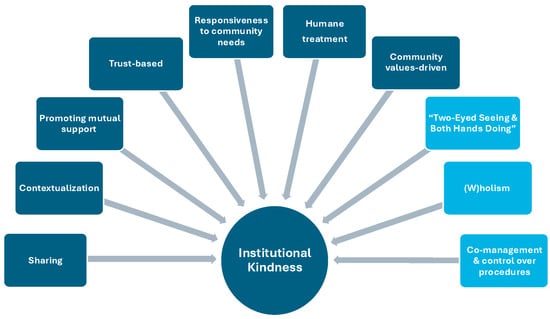
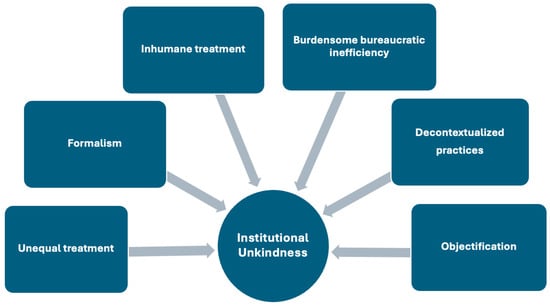

Disclaimer/Publisher’s Note: The statements, opinions and data contained in all publications are solely those of the individual author(s) and contributor(s) and not of MDPI and/or the editor(s). MDPI and/or the editor(s) disclaim responsibility for any injury to people or property resulting from any ideas, methods, instructions or products referred to in the content. |
© 2026 by the authors. Licensee MDPI, Basel, Switzerland. This article is an open access article distributed under the terms and conditions of the Creative Commons Attribution (CC BY) license.