


Abstract
This study examines how organizational justice (OJ) and organizational climate (OCL) are statistically associated with self-reported job performance (JP) through job satisfaction (JS), work engagement (WE), and organizational commitment (ORC) among faculty in Ecuadorian public higher education. The original cross-sectional survey contained 448 responses; because the stated target population was public higher education, the primary reanalysis was restricted to 414 public-university faculty, with the full sample retained for sensitivity analysis. A disjointed two-stage partial least squares structural equation modeling procedure was used to represent multidimensional constructs, with OCL, OJ, JS, ORC, and WE specified as reflective–reflective higher-order constructs and JP as a reflective–formative construct. Directional hypotheses were evaluated using a 5000-resample one-tailed bootstrap inference. OJ and OCL were positively associated with JS; JS was positively associated with WE and ORC; and WE and ORC were positively associated with JP. All four prespecified serial–parallel indirect effects were statistically supported. Robustness analyses using alternative construct scoring, an OJ-JS collapsed specification, and alternative JP specifications preserved the principal downstream pattern. However, higher-order OJ-JS discriminant validity remained unresolved because its bootstrap HTMT interval included 1.00, and common-method diagnostics indicated residual same-source and construct-overlap concerns. Predictive relevance was positive, but no causal or temporal mechanism is established here.
1. Introduction
Understanding the organizational and psychological correlates of faculty performance is important for universities operating under growing teaching, research, administrative, and digital demands (Alimova et al., 2025). In public higher education, these demands are embedded within institutional rules, resource constraints, formalized procedures, and professional norms that may shape how faculty evaluate their work environment and their own performance (Henkel & Ade, 2025). Rather than assuming that favorable organizational conditions are directly reflected in performance, organizational behavior research increasingly distinguishes distal organizational resources from evaluative and motivational states that may intervene between the work environment and employee outcomes (Bakker & Demerouti, 2007; Cropanzano & Mitchell, 2005).
The Job Demands-Resources (JD-R) model and Social Exchange Theory (SET) provide complementary explanations for these associations. JD-R proposes that job resources can be associated with motivational and well-being processes, whereas SET emphasizes reciprocal attitudes and behaviors that may accompany perceptions of fair and supportive treatment (Bakker & Demerouti, 2007; Cropanzano & Mitchell, 2005). In academic settings, recent work has connected job resources, person–organization fit, and job satisfaction among university professors (Rey-Tienda et al., 2026), while research on academics has also shown that commitment dimensions and work–life conditions may have heterogeneous, null, or even adverse associations with job satisfaction (Dorenkamp & Ruhle, 2019). These findings caution against treating positive organizational relationships as universal or temporally fixed.
Three gaps motivate the present study. First, the happy–productive worker literature shows that the satisfaction–performance relationship is heterogeneous and context-dependent rather than mechanically positive (Sender et al., 2021). Second, organizational justice, climate, satisfaction, engagement, commitment, and performance are often studied in separate models, leaving uncertainty about their joint nomological structure and about whether evaluative states and active motivational states provide distinct information. Third, evidence from Ecuadorian public higher education remains limited. The present study therefore frames its contextual contribution specifically around Ecuador rather than generalizing from one national sample to Latin America as a whole.
A further theoretical issue concerns ordering. The focal model proposes JS as the first evaluative state following OJ and OCL, followed by WE and ORC as parallel proximal states associated with JP. This ordering is theoretically plausible but not uniquely established by a cross-sectional design: engagement can also precede satisfaction; commitment may develop before or alongside satisfaction; and justice may be associated with commitment without passing through satisfaction. Accordingly, the study tests a theory-guided serial–parallel structure while explicitly treating alternative orderings and reciprocal relationships as plausible.
The objective is to evaluate a serial–parallel indirect-effects model in which OJ and OCL are associated with JP through JS and, subsequently, the parallel pathways of WE and ORC among faculty in Ecuadorian public universities. The contribution is deliberately narrower than claiming a new causal mechanism. Theoretically, the study tests whether distal organizational conditions, an evaluative state, and proximal psychological states remain empirically separable when represented jointly through JD-R and SET, and it identifies where that differentiation becomes fragile. Methodologically, it re-specifies multidimensional constructs at first- and higher-order levels, formally tests specific indirect effects, and subjects the principal conclusions to alternative scoring, construct-overlap, and JP-specification checks. Practically, it distinguishes organizational diagnostic domains from intervention effects that would require prospective and multi-source validation.
The remainder of the article develops the theory and hypotheses, describes the revised measurement and analytical design, presents measurement, structural, mediation, and predictive diagnostics, and then discusses the findings, limitations, and implications.
2. Literature Review and Hypothesis Development
JD-R conceptualizes work characteristics as demands or resources whose relevance depends on occupational context. Resources can be associated with motivation, engagement, and goal attainment, but the model does not require that every resource have an identical or direct relationship with performance (Bakker & Demerouti, 2007). SET provides a complementary relational mechanism: perceived fair treatment and organizational support can be associated with reciprocal attitudes such as trust, satisfaction, and commitment (Cropanzano & Mitchell, 2005). In higher education, Rey-Tienda et al. (2026) applied the JD-R framework to Spanish university professors and showed that job resources and person–organization fit were relevant to satisfaction, whereas Dorenkamp and Ruhle (2019) demonstrated that commitment dimensions do not operate uniformly among academics. Together, these studies support a resource–attitude framework while also motivating explicit consideration of null, negative, and alternative relationships.
2.1. Organizational Justice, Job Satisfaction, and Organizational Commitment
Organizational justice captures perceived fairness in distributive outcomes, procedures, interpersonal treatment, and information (Colquitt et al., 2001). In SET terms, fair treatment provides relational information about how the institution values and treats its members; in JD-R terms, transparent and respectful procedures can function as resources that reduce uncertainty. Empirical studies in higher education and other public or knowledge-intensive settings generally report positive associations between justice and satisfaction (Assefa et al., 2026; Beuren & dos Santos, 2024; Madadha & Al-Ma’aitah, 2025; Nguyen et al., 2024).
H1.
Organizational justice is positively associated with job satisfaction.
Justice has also been associated with affective and organizational commitment through perceived support, trust, and reciprocity (Aldabbas et al., 2025; Hadian et al., 2022; Ho, 2025; Li, 2020). Nevertheless, direct justice–commitment associations may weaken when satisfaction or other attitudinal states are included simultaneously, making the direct path an empirical rather than assumed feature of the model.
H2.
Organizational justice is positively associated with organizational commitment.
2.2. Organizational Climate, Job Satisfaction, Organizational Commitment, and Performance
Organizational climate refers to shared or aggregated perceptions of the work environment, including leadership, social relations, objectives, rewards, and work processes (Ortega Santos, 2017). A supportive climate can represent a structural and social resource because it provides clearer expectations, access to support, and conditions for coordinating work. Consistent positive associations between climate and satisfaction have been reported in educational and public-sector research (Cueva-De La Cruz et al., 2025; Geraldo-Campos & Haro-Zea, 2025; Otrębski, 2022).
H3.
Organizational climate is positively associated with job satisfaction.
Climate may also be associated with organizational commitment by supporting person–organization fit, internal communication, and identification (España-Rivadeneyra et al., 2025; Kien & Konosu, 2021; Soler-Sanchis et al., 2025). However, the magnitude of this direct association may depend on whether evaluative states such as satisfaction are modeled concurrently.
H4.
Organizational climate is positively associated with organizational commitment.
The original model also specified a direct OCL-JP path because the climate instrument includes execution-relevant dimensions such as processes and technology, leadership, objectives, and social relations that can be statistically proximal to task accomplishment. By contrast, OJ was originally theorized primarily as an attitudinal resource whose association with performance would operate through employee evaluations and psychological states. Because reviewers correctly identified the resulting asymmetry, the revised analysis additionally estimates OJ-JP as a non-hypothesized robustness path rather than introducing a post hoc confirmatory hypothesis.
H5.
Organizational climate is positively associated with job performance.
2.3. Job Satisfaction as an Evaluative State
Job satisfaction reflects an employee’s evaluation of intrinsic and extrinsic aspects of work. Within the proposed architecture, JS is treated as an evaluative state positioned between distal organizational conditions and more active psychological states. This ordering is compatible with evidence that favorable work conditions and resources are associated with satisfaction and that satisfaction is associated with engagement and commitment (Aras et al., 2025; Hasan et al., 2021; Tripathi et al., 2026). Rey-Tienda et al. (2026) further show the relevance of resources and fit for job satisfaction among university professors.
The assumed ordering should not be interpreted as the only plausible one. Dorenkamp and Ruhle (2019), for example, reported that professional commitment dimensions were differentially related to job satisfaction among academics, and the broader literature permits reciprocal or reversed sequences. The hypotheses below therefore represent theory-guided directional associations to be evaluated statistically, not established temporal precedence.
H6.
Job satisfaction is positively associated with work engagement.
H7.
Job satisfaction is positively associated with organizational commitment.
The direct satisfaction–performance hypothesis provides a test of the happy–productive worker proposition. Although positive associations are frequently reported, systematic evidence indicates that the magnitude and even detectability of this relationship depend on measurement, context, and intervening mechanisms (Sender et al., 2021).
H10.
Job satisfaction is positively associated with job performance.
2.4. Work Engagement, Organizational Commitment, and Job Performance
Work engagement is characterized by vigor, dedication, and absorption and represents an active work-related psychological state. Engaged employees tend to report greater persistence, cognitive investment, and extra-role effort, and studies in educational and public-sector contexts link engagement with self-evaluated work performance (Ghani et al., 2024; Santalla-Banderali & Alvarado, 2022b; Scrimpshire et al., 2023).
H8.
Work engagement is positively associated with job performance.
Organizational commitment captures affective, continuance, and normative bonds with the organization. Commitment can be associated with persistence and alignment with institutional goals, but its dimensions may not have identical behavioral consequences. This heterogeneity is particularly relevant in academic employment, where professional and organizational commitments can coexist (Dorenkamp & Ruhle, 2019; Meyer & Allen, 1991).
H9.
Organizational commitment is positively associated with job performance.
2.5. Serial–Parallel Indirect-Effects Hypotheses
The central proposition is not a single uninterrupted serial chain. OJ and OCL are first associated with JS, after which the model branches into two parallel routes through WE and ORC before reaching JP. This architecture is therefore described as serial–parallel. Formal inference focuses on the product terms for each prespecified indirect route rather than inferring mediation from significant component paths or non-significant direct paths. The conceptual architecture is summarized in Figure 1.
Figure 1.
Conceptual research flow of the revised serial–parallel model. Organizational justice (OJ) and organizational climate (OCL) are represented as distal organizational conditions associated with job satisfaction (JS), which is positioned as the primary evaluative state. JS is subsequently linked to two parallel proximal psychological states, work engagement (WE) and organizational commitment (ORC), both of which are associated with self-reported job performance (JP). The diagram represents the theory-guided ordering evaluated in the study and should not be interpreted as an empirically established temporal or causal sequence.
H11a.
Organizational justice has a positive indirect association with job performance through job satisfaction and work engagement (OJ -> JS -> WE -> JP).
H11b.
Organizational justice has a positive indirect association with job performance through job satisfaction and organizational commitment (OJ -> JS -> ORC -> JP).
H11c.
Organizational climate has a positive indirect association with job performance through job satisfaction and work engagement (OCL -> JS -> WE -> JP).
H11d.
Organizational climate has a positive indirect association with job performance through job satisfaction and organizational commitment (OCL -> JS -> ORC -> JP).
3. Materials and Methods
3.1. Research Design and Participants
The study used a quantitative, non-experimental, cross-sectional design with a correlational and explanatory-predictive analytical scope. Data were collected from faculty working in higher education institutions in the central-western zone of Ecuador, including Guayas, Los Ríos, Santa Elena, and Bolívar. Recruitment used non-probability convenience sampling. Because institutional identifiers or academic-rank strata were not retained in the supplied analytical dataset, proportional representation by institution or faculty rank cannot be independently verified and is not claimed in the revised analysis.
The supplied dataset contained 448 respondents: 414 from public universities, 29 from private universities, and 5 from cofinanced institutions. Because the manuscript’s target population is public higher education, the primary inferential analysis in the revised manuscript was restricted to the 414 public-university respondents; the full n = 448 dataset was retained for sensitivity analysis. In the primary sample, 56.0% were women (n = 232), 43.7% were men (n = 181), and 0.2% preferred not to report gender (n = 1). A total of 57.0% were younger than 35 years (n = 236), 34.8% were 35–50 years (n = 144), and 8.2% were older than 50 years (n = 34). Teaching experience was strongly skewed toward early-career faculty: 74.2% reported less than five years (n = 307), 17.6% reported 5–15 years (n = 73), and 8.2% reported more than 15 years (n = 34). Full-time appointments represented 55.3% (n = 229), with 44.7% reporting half-time or part-time appointments (n = 185).
3.2. Measures and Data Collection
Data were collected digitally through Google Forms between August and December 2025 after institutional permissions were obtained. The first page of the questionnaire contained digital informed consent and described anonymity, confidentiality, voluntary participation, and the study purpose. These are the procedural common-method safeguards that can be verified from the available study documentation. The original design did not include a marker variable or temporal separation between construct measurements; therefore, such procedures are not claimed retrospectively.
All questionnaire items used a six-point Likert-type response format from 1 (strongly disagree) to 6 (strongly agree). The six-point format contains no neutral midpoint and therefore requires a directional response rather than midpoint selection. The same response format was applied consistently across the study to avoid changes in scale granularity between constructs. Three constructs (OCL, OJ, and JS) were drawn from Ortega Santos (2017), a locally developed doctoral study that operationalized organizational climate, justice, and satisfaction in Ecuadorian higher-education organizations. Its use for the three constructs was retained because it provides context-specific wording and a common measurement basis for the Ecuadorian setting. ORC was based on Moreira Mero (2022), WE on the Ecuadorian validation of the UWES-9 by Santalla-Banderali and Alvarado (2022b), and JP on the Individual Work Performance Questionnaire assessment by Santalla-Banderali and Alvarado (2022a), drawing on the Individual Work Performance Questionnaire framework (Koopmans et al., 2011).
A raw-data audit identified an important issue in the original treatment of counterproductive work behavior (CWB). The five CWB items do not have near-zero variance: in the public-university sample, individual standard deviations were approximately 1.57–1.73; the reverse-scored five-item sum ranged from 5 to 30; and internal consistency was alpha = 0.931. Accordingly, the previous statement that CWB was excluded because of near-zero variance was withdrawn. CWB was restored as a conceptually distinct lower-order component of JP and modeled in the higher-order performance construct rather than discarded post hoc. The measurement instruments and first-order dimensions are summarized in Table 1.
Table 1.
Measurement instruments and first-order dimensions.
3.3. Revised PLS-SEM Measurement Architecture
The original model was estimated in SmartPLS 4. For the major revision, the supplied raw data were independently audited and re-estimated with a path-weighted PLS procedure implemented in Python 3.13.5 (NumPy 2.3.5, SciPy 1.17.0, scikit-learn 1.8.0, statsmodels 0.14.6, and pandas 2.2.3). Before re-specification, the independent implementation reproduced the original path coefficients and values to rounding precision, providing a reproducibility check on the source analysis. A fixed random seed (20,260,910) was used for resampling analyses.
Multidimensional constructs were evaluated with a disjoint two-stage higher-order procedure. In stage 1, each first-order component (LOC) was estimated from its assigned indicators. Indicator reliability was evaluated through standardized outer loadings, internal consistency through Cronbach’s alpha, rho_A, and composite reliability (rho_C), and convergent validity through average variance extracted (AVE). A loading of 0.708 was treated as a preferred indicator-reliability benchmark, while decisions to retain or remove indicators also considered content validity and the effect on construct reliability and AVE (Hair et al., 2021). To directly address indicator-level inferential uncertainty, all first-order loadings were additionally evaluated using a 5000-resample non-parametric bootstrap inference; Table S1 reports the loading and retention decision for each indicator; its note reports that all retained first-order loadings were statistically different from zero at p < 0.001 in the 5000-resample bootstrap sensitivity check.
In stage 2, OCL, OJ, JS, ORC, and WE were specified as reflective–reflective higher-order constructs because their lower-order dimensions were treated as manifestations of the broader construct. JP was specified as a reflective–formative construct at the higher-order level because task performance, contextual performance, and CWB are non-interchangeable dimensions that jointly define the conceptual performance domain (Becker et al., 2012; Diamantopoulos & Winklhofer, 2001; Hair et al., 2021). For JP, higher-order assessment therefore emphasized outer weights, bootstrap confidence intervals, outer loadings, and LOC-level collinearity rather than alpha or AVE for the formative block.
3.4. Discriminant Validity, Common Method Bias, and Normality
Discriminant validity was assessed using HTMT at both higher-order and lower-order levels. The complete HTMT matrix was first evaluated using 0.90 as a conventional screening threshold. To address inferential uncertainty directly, the higher-order scores were independently reconstructed from the lower-order construct scores under the same two-stage architecture, and every reflective higher-order pair with HTMT > 0.90 was subjected to 5000-resample non-parametric bootstrap inference. Percentile 95% confidence intervals were evaluated relative to 1.00; an interval including 1.00 was treated as insufficient evidence to rule out empirical indistinguishability (Henseler et al., 2015; Franke & Sarstedt, 2019). Item-based bootstrap HTMT inference was retained for the three originally flagged pairs (OJ-JS, JS-ORC, and ORC-WE), and the assessment was complemented by the Fornell–Larcker criterion and lower-order HTMT pairs above 0.85. This combined screening-and-inference strategy follows recommendations to evaluate discriminant validity across complementary criteria rather than relying on a single diagnostic rule (Voorhees et al., 2016).
Because all variables were obtained through the same self-report questionnaire at one time point, common method variance was treated as a material threat rather than dismissed. Harman’s single-factor procedure was retained only as a legacy descriptive diagnostic and was complemented with full-collinearity VIF assessment (Kock, 2015). Because the original questionnaire did not include a marker variable, a marker-variable procedure could not be introduced retrospectively. As an additional confirmatory sensitivity check, the 17 lower-order scores defining the five reflective higher-order constructs (OCL, OJ, JS, ORC, and WE) were compared under a single-factor model and the theoretically specified five-correlated-factor model. JP was excluded from this confirmatory comparison because its higher-order specification is formative. This comparison was used only to assess whether one general factor adequately represented the covariance structure, not as evidence that common-method variance was absent. Multivariate normality was evaluated with Mardia’s skewness and kurtosis statistics (Mardia, 1970). This conservative treatment is consistent with evidence that Harman’s single-factor test has limited diagnostic sensitivity and that post hoc statistical checks should not be interpreted as proof that common-method bias is absent (Aguirre-Urreta & Hu, 2019; Fuller et al., 2016; Podsakoff et al., 2003, 2012, 2024).
3.5. Structural, Indirect-Effect, Predictive, and Sensitivity Analyses
The structural model was assessed using standardized path coefficients, inner VIF, f2 effect sizes, , and adjusted . Because the prespecified hypotheses were directional, significance testing used a one-tailed non-parametric bootstrap with 5000 resamples and a 5% significance level. This replaces the two-tailed procedure used in the original version. The four serial–parallel indirect hypotheses were tested directly through the corresponding products of coefficients, with bootstrap standard errors and 95% confidence intervals. Total indirect effects were also estimated for OJ, OCL, and JS with respect to JP.
Predictive assessment was separated from in-sample explanation and implemented following the out-of-sample logic of PLSpredict (Shmueli et al., 2019). A repeated 10-fold holdout procedure (10 repetitions) generated construct-level predictions for each endogenous construct. For every held-out observation, prediction errors were summarized using RMSE and MAE and compared with a naive training-mean benchmark. Predictive relevance was quantified as _predict = 1 − PRESS_model/PRESS_naive, where PRESS is the sum of squared prediction errors in held-out observations; _predict > 0 therefore indicates lower prediction error than the naive benchmark. Paired one-sided loss tests evaluated whether squared prediction errors were significantly lower for the revised model. This procedure was implemented independently from in-sample and was not used to adjudicate discriminant validity, common-method variance, or temporal ordering. The separation of predictive and explanatory assessment also follows the broader distinction between prediction and explanation in statistical modeling (Shmueli, 2010).
Additional robustness analyses targeted the measurement-overlap concerns directly. First, the reflective higher-order constructs were rescored using two alternatives to the disjoint LOC-equal specification: unit-weighted composites across all assigned items and first-principal-component scores. Second, because OJ-JS produced the strongest overlap, an extreme sensitivity model collapsed OJ and JS into a single attitudinal composite to test whether downstream WE/ORC-to-JP associations persisted when their separation was not assumed. Third, JP was re-estimated under four outcome definitions: the primary Task + Contextual + reverse-coded CWB formative composite, Task + Contextual Performance only, Task Performance only, and Contextual Performance only. Direct JP coefficients and focal indirect products under these outcome specifications were evaluated using 5000-resample bootstrap confidence intervals. All resampling analyses used the fixed seed 20,260,910. These robustness checks are consistent with recommendations to evaluate higher-order constructs across plausible estimation/specification choices and to preserve content validity when formative components are assessed (Becker et al., 2012; Diamantopoulos & Winklhofer, 2001; Sarstedt et al., 2019).
4. Results
4.1. Data Integrity, Sample Definition, and Preliminary Diagnostics
The raw-data audit confirmed 448 complete respondent records and identified university type as a substantive population-defining variable. Restricting the primary analysis to the 414 public-university respondents aligned the inferential sample with the target population described in the manuscript; 34 respondents from private or cofinanced institutions were retained only for sensitivity analysis. No post hoc case deletions were made to improve model fit or statistical significance.
Descriptive scale scores for the primary sample are shown in Table 2. The restored 18-item JP score, including reverse-coded CWB, had a mean of 81.07 (SD = 12.48) and ranged from 35 to 108. Mardia’s test rejected multivariate normality for the higher-order construct scores (multivariate skewness b1, p = 19.267, chi-square = 1329.44, df = 56, p < 0.001; multivariate kurtosis b2, p = 119.589, z = 74.33, p < 0.001), supporting the use of a distribution-robust resampling strategy.
Table 2.
Descriptive statistics for the primary public-university sample (n = 414).
Harman’s first factor accounted for 63.50% of variance under the original 110-item specification and 60.82% after restoring CWB. These values are not interpreted as evidence that common method variance is absent. The CWB audit further showed a reverse-scored sum ranging from 5 to 30 (M = 15.82, SD = 7.49, alpha = 0.931), contradicting the earlier near-zero-variance rationale for excluding this dimension.
4.2. First- and Higher-Order Measurement Model
At the LOC level, internal consistency and convergent validity were high across all 20 dimensions (Table 3). Cronbach’s alpha ranged from 0.882 to 0.976, rho_C from 0.927 to 0.979, and AVE from 0.704 to 0.883. Of the 115 indicators, only clim_proc20 had a loading below the preferred 0.708 benchmark (loading = 0.632). It was retained because the Processes/Technology dimension still had alpha = 0.957, rho_C = 0.963, and AVE = 0.704, and deleting the item solely to improve a statistical threshold would narrow the original content domain. Complete indicator loadings and retention decisions are provided in Table S1.
Table 3.
First-order construct reliability and convergent validity.
At the higher-order level, OCL, OJ, JS, ORC, and WE showed high internal consistency and AVE (Table 4). The original manuscript reported an unusually high overall Cronbach’s alpha of 0.986 for the 35-item OCL block. The revised disjoint two-stage specification no longer treats all 35 indicators as a single undifferentiated reflective block; instead, OCL is evaluated through five first-order dimensions and a higher-order construct. The revised OCL higher-order alpha is 0.962, while LOC alphas range from 0.909 to 0.976. These values remain high and are interpreted cautiously because extreme consistency can reflect content redundancy as well as reliability. Accordingly, the revision neither presents alpha near or above 0.95 as an unqualified strength nor removes theoretically necessary indicators solely to lower reliability coefficients.
Table 4.
Higher-order assessment for reflective–reflective constructs.
For the reflective–formative JP higher-order construct, Task and Contextual Performance had significant positive outer weights, whereas the reverse-coded CWB component had a small, non-significant weight (Table 5). Task and Contextual Performance also showed high LOC collinearity (VIF = 7.58 and 7.69), while CWB showed low collinearity (VIF = 1.04). The result indicates that CWB contributes distinct content but relatively little shared variance to the higher-order performance composite. It was retained for content-domain transparency rather than removed on statistical grounds.
Table 5.
Reflective–formative assessment of job performance.
4.3. Discriminant Validity and Common Method Diagnostics
Discriminant validity remained the principal measurement limitation. At the reflective higher-order level, seven HTMT ratios exceeded 0.90 in the primary model (Table 6): OCL-OJ = 0.920, OCL-JS = 0.912, OJ-JS = 0.985, OJ-ORC = 0.904, JS-ORC = 0.947, JS-WE = 0.915, and ORC-WE = 0.963. Expanded 5000-resample bootstrap inference (Table S5) showed upper 95% bounds below 1.00 for six of these seven pairs: OCL-OJ, 0.831–0.973; OCL-JS, 0.848–0.961; OJ-ORC, 0.863–0.938; JS-ORC, 0.920–0.970; JS-WE, 0.877–0.945; and ORC-WE, 0.940–0.983. In contrast, the OJ-JS higher-order interval was 0.964–1.004 and therefore included 1.00. Consequently, the revised manuscript does not claim that higher-order discriminant validity is fully resolved, and the OJ-JS distinction is treated as specifically inconclusive at that level. At the item-based level, the same three originally flagged pairs remained below 1.00: OJ-JS HTMT = 0.945 (95% CI 0.921–0.964), JS-ORC = 0.922 (0.895–0.944), and ORC-WE = 0.943 (0.916–0.965). The combined evidence therefore indicates substantial overlap, with the strongest uncertainty concentrated in the higher-order OJ-JS separation. This interpretation is consistent with recommendations to assess discriminant validity using multiple convergent diagnostics, particularly when HTMT values approach conventional thresholds (Voorhees et al., 2016).
Table 6.
HTMT matrix for reflective higher-order constructs.
The Fornell–Larcker cross-check was broadly consistent with this concern (Fornell & Larcker, 1981). The square root of AVE exceeded the largest interconstruct correlation for OCL, JS, ORC, and WE, whereas OJ failed the criterion against JS (sqrtAVE_OJ = 0.918 vs. r_OJ, JS = 0.929). Lower-order HTMT inspection localized the strongest overlap to specific dimension pairs, particularly OJ interpersonal/informational justice with JS intrinsic satisfaction and ORC affective/normative commitment with WE vigor/dedication (Table S2). Taken together with the higher-order bootstrap result, these diagnostics imply that the OJ-JS boundary is the most measurement-sensitive part of the model and that coefficients linking adjacent attitudinal constructs should be interpreted as conditional associations rather than cleanly isolated unique effects. The complete cross-check is reported in Table 7.
Table 7.
Fornell–Larcker cross-check for reflective higher-order constructs.
Full-collinearity VIFs were OCL = 4.85, OJ = 8.60, JS = 11.55, ORC = 10.39, WE = 7.48, and JP = 6.66 (Table 8). Because several values exceeded 3.3 and 5.0, the analysis cannot rule out common-method variance or substantial conceptual collinearity. The confirmatory LOC-score sensitivity check also rejected a simple one-factor representation as sufficient: the five-correlated-factor model (chi-square = 645.66, df = 109, CFI = 0.950, TLI = 0.937, RMSEA = 0.109, SRMR = 0.030) fit substantially better than the single-factor model (chi-square = 1909.59, df = 119, CFI = 0.833, TLI = 0.809, RMSEA = 0.191, SRMR = 0.056; Table S9). This comparison indicates that one common factor does not adequately reproduce the covariance structure, but it does not clear the dataset of common-method variance because residual misfit and very high inter-factor correlations remain. Statistically, the elevated collinearity means that individual path coefficients represent conditional unique associations in the presence of highly correlated predictors; their standard errors can be inflated and their magnitudes can redistribute across alternative specifications. The stability analyses below are therefore used to evaluate the robustness of the overall pattern, not to interpret beta magnitudes as clean causal contributions. Such caution is consistent with common-method research showing that method variance can distort construct correlations and structural estimates and cannot be excluded by Harman’s test alone (Aguirre-Urreta & Hu, 2019; Fuller et al., 2016; Podsakoff et al., 2024). The combined measurement diagnostics are summarized in Figure 2.
Table 8.
Full-collinearity VIF and common-method diagnostic.
Figure 2.
Measurement validity, construct overlap, and method-bias diagnostics. (A) HTMT among reflective higher-order constructs. (B) Bootstrap HTMT inference for the three originally problematic construct pairs. (C) Full-collinearity VIFs. (D) First-order reliability and convergent-validity profile. Colors are used to distinguish constructs and diagnostic elements; quantitative interpretation is determined by the reported values, axes, confidence intervals, and reference lines.
4.4. Structural Model and Direct Hypothesis Tests
The revised structural model explained 87.8% of JS variance, 75.7% of WE, 81.2% of ORC, and 85.0% of JP (Table 9 and Figure 3). These values are treated as in-sample explanatory variance rather than direct evidence of predictive performance. Inner VIFs were elevated for several equations, especially those involving OJ, JS, ORC, and WE. Accordingly, the sign, statistical support, and cross-specification stability of the focal associations are emphasized more strongly than small differences in individual coefficient magnitude. This emphasis on coefficient stability rather than small differences in magnitude is consistent with PLS-SEM guidance for structural models affected by collinearity (Hair et al., 2021).
Table 9.
Revised direct structural effects using one-tailed bootstrap inference.
Figure 3.
Re-estimated direct and indirect structural associations in the public-university sample (n = 414). (A) Focal serial–parallel pathways. (B) Direct effects with 95% bootstrap confidence intervals. (C) Prespecified specific indirect effects. (D) In-sample values for endogenous constructs. Colors are used to distinguish constructs and diagnostic elements; quantitative interpretation is determined by the reported values, axes, confidence intervals, and reference lines.
H1 and H3 were supported: OJ (beta = 0.715, p < 0.001) and OCL (beta = 0.244, p < 0.001) were positively associated with JS. H2 and H4 were not supported after re-estimation: the direct OJ-ORC (beta = 0.120, p = 0.103) and OCL-ORC (beta = 0.086, p = 0.150) paths were not significant once JS was included. H6 and H7 were supported, with JS associated with WE (beta = 0.870, p < 0.001) and ORC (beta = 0.712, p < 0.001). H8 and H9 were also supported: WE (beta = 0.304, p < 0.001) and ORC (beta = 0.488, p < 0.001) were positively associated with JP. H5 was not supported (OCL-JP beta = 0.048, p = 0.175). H10 remained just above the directional 5% threshold (JS-JP beta = 0.115, p = 0.052) and was therefore classified as not supported rather than rounded into significance.
To address the original OCL/OJ direct-path asymmetry, a robustness model added OJ -> JP. The added coefficient was small (beta = 0.024), and JP changed only from 0.8497 to 0.8498. This indicates that omission of the OJ direct path did not materially determine the substantive pattern, while also confirming that direct OJ-JP evidence is weak in these data.
4.5. Formal Serial–Parallel Indirect-Effects Tests
The central serial–parallel claims were evaluated directly rather than inferred from the component paths. All four prespecified specific indirect effects were positive and their 95% bootstrap confidence intervals excluded zero (Table 10). OJ was indirectly associated with JP through JS and WE (beta_indirect = 0.189, 95% CI 0.099–0.278) and through JS and ORC (beta_indirect = 0.249, 0.154–0.345). OCL showed smaller but significant indirect associations through JS and WE (beta_indirect = 0.065, 0.031–0.111) and through JS and ORC (beta_indirect = 0.085, 0.043–0.146). Thus, H11a–H11d were supported.
Table 10.
Specific and total indirect effects.
The total indirect association with JP was 0.562 for OJ (95% CI 0.393–0.699), 0.229 for OCL (0.135–0.365), and 0.608 for JS (0.491–0.731). Because all variables were measured at one time point, these significant products support theory-consistent indirect associations but do not establish temporal mediation or exclude reverse/reciprocal relationships.
4.6. Predictive and Sensitivity Assessment
The PLSpredict-aligned repeated 10-fold holdout assessment produced positive _predict values for all endogenous constructs: JS = 0.876, WE = 0.757, ORC = 0.806, and JP = 0.845 (Table 11). Model RMSE was substantially below the naive training-mean benchmark for every outcome, and one-sided paired loss tests were significant at p < 0.001. Thus, the revised model demonstrates out-of-sample predictive relevance at the construct-score level under the specified holdout procedure. This finding is analytically distinct from the high in-sample values and establishes only that the fitted model predicts held-out construct scores better than the stated benchmark. It does not establish construct distinctiveness, eliminate same-source bias, identify temporal order, or support causal interpretation. This distinction follows the principle that explanatory fit and out-of-sample predictive performance answer different analytical questions (Shmueli, 2010; Shmueli et al., 2019).
Table 11.
PLSpredict-aligned repeated holdout predictive assessment.
The full-sample sensitivity analysis yielded coefficients broadly similar to those of the n = 414 public-university analysis. The largest changes occurred for WE-JP (beta = 0.304 vs. 0.389) and ORC-JP (0.488 vs. 0.403), whereas upstream OJ/OCL-JS and JS-WE/ORC coefficients changed by less than 0.04. Alternative structural orderings had equivalent or near-equivalent aggregate information criteria for some specifications, indicating that the cross-sectional covariance structure does not uniquely identify temporal order. This result reinforces the decision to use association language throughout the revised manuscript.
Measurement-score robustness was also strong (Table S6). Relative to the baseline LOC-equal score model, unit-weighted item composites and first-principal-component scores produced closely similar coefficients: OJ-JS = 0.695/0.695 versus 0.706, OCL-JS = 0.263/0.265 versus 0.252, JS-WE = 0.867/0.869 versus 0.867, JS-ORC = 0.729/0.751 versus 0.700, WE-JP = 0.324/0.321 versus 0.308, and ORC-JP = 0.468/0.464 versus 0.483. The four specific indirect products were likewise stable across the baseline, unit-weighted, and principal-component specifications. Under the unit-weighted specification, all four 95% bootstrap intervals remained above zero (Table S6). These results indicate that the main downstream structural pattern is not dependent on one particular higher-order scoring rule. Sensitivity across alternative score-construction rules is particularly relevant for higher-order constructs, for which estimation choices can affect empirical results (Becker et al., 2012; Sarstedt et al., 2019).
Because the OJ-JS higher-order HTMT interval included 1.00, an additional extreme sensitivity model collapsed OJ and JS into one attitudinal composite (Table S7). In that model, the downstream associations remained similar: WE-JP = 0.316 (95% CI 0.182–0.445) and ORC-JP = 0.482 (0.335–0.615), with JP = 0.846. The resulting OCL-to-combined-attitude-to-WE-to-JP indirect product was 0.239 (0.138–0.343), and the corresponding ORC route was 0.343 (0.228–0.439). This sensitivity analysis therefore preserves the broader resource–attitude–performance pattern but, by design, makes an OJ-specific OJ -> JS serial interpretation non-identifiable. The manuscript consequently treats the OJ-specific sequential pathway as measurement-contingent rather than as evidence of a uniquely separated process.
The JP specification sensitivity analysis reached the same general conclusion (Table S8). Removing CWB and retaining Task + Contextual Performance yielded JP = 0.845, WE-JP = 0.312 (95% CI 0.176–0.441), and ORC-JP = 0.464 (0.311–0.600). Task-only and contextual-only outcomes also retained positive WE-JP and ORC-JP coefficients, and all four focal OJ/OCL indirect products had bootstrap intervals above zero under every JP specification. Thus, the small, non-significant CWB outer weight does not determine the central downstream findings, although CWB remains in the primary model for content-domain completeness. Retaining CWB in the primary formative specification despite its weak outer weight is also consistent with formative-measurement guidance that content-domain coverage should not be sacrificed solely to maximize statistical significance (Diamantopoulos & Winklhofer, 2001; Hair et al., 2021). The principal robustness and predictive results are summarized in Figure 4.
Figure 4.
Robustness, alternative ordering, and predictive assessment. (A) Structural-coefficient sensitivity for n = 414 versus n = 448. (B) Relative information-criterion comparison of theory-plausible orderings. (C) Repeated holdout _predict values following PLSpredict logic. (D) Model RMSE compared with a naive training-mean benchmark. Alternative-ordering comparisons are interpreted as covariance-consistency checks rather than evidence of temporal precedence. Colors are used to distinguish constructs and diagnostic elements; quantitative interpretation is determined by the reported values, axes, confidence intervals, and reference lines.
5. Discussion
This revision provides a more conservative interpretation of the organizational resource–attitude–performance network than the original manuscript. Under the differentiated specification, OJ and OCL are strongly associated with JS; JS is associated with both WE and ORC; and those proximal psychological states are associated with self-reported JP. However, the expanded diagnostics show that several construct boundaries are empirically tight and that the OJ-JS higher-order distinction cannot be treated as conclusively established. Importantly, alternative scoring, an OJ-JS collapsed sensitivity model, and alternative JP specifications preserve the principal downstream WE/ORC-to-JP pattern and the broader resource–attitude–performance architecture. The theoretical contribution is therefore not a new causal sequence, but a bounded mapping of how JD-R and SET constructs organize jointly, together with evidence about where their empirical differentiation becomes fragile in a single-source cross-sectional design. This bounded positioning is consistent with the measurement literature emphasizing explicit evaluation of discriminant validity and method effects before structural paths receive substantive interpretation (Podsakoff et al., 2024; Voorhees et al., 2016).
5.1. Organizational Justice and Climate as Distal Resources
OJ showed a substantially larger association with JS than OCL, but both paths were statistically supported. This pattern is consistent with SET, under which perceptions of fairness provide salient relational information, and with JD-R, under which supportive climate characteristics can function as job resources (Cropanzano & Mitchell, 2005; Bakker & Demerouti, 2007). The result should not be read as evidence that OCL is unimportant: OCL remained independently associated with JS even after accounting for OJ, and its dimensions include leadership, processes, social relations, and rewards that may shape faculty evaluations of their work context. In the revised interpretation, justice and climate are complementary distal resources rather than competing interventions.
The non-significant direct OJ-ORC and OCL-ORC coefficients are also theoretically informative. They suggest that, within this joint model, much of the shared association between organizational conditions and commitment is statistically carried out through JS. This is compatible with the possibility that commitment is not a uniform downstream response to every organizational resource. Dorenkamp and Ruhle (2019), for example, showed heterogeneous relationships between commitment dimensions and job satisfaction among academics, underscoring that positive direct effects should not be assumed across contexts.
5.2. Job Satisfaction, Engagement, and Commitment
JS was strongly associated with both WE and ORC, supporting its role as a central evaluative state in the fitted differentiated model. The distinction is theoretically useful because satisfaction concerns appraisal of the work experience, whereas engagement captures energetic involvement and commitment captures bonds with the organization. Nevertheless, the expanded HTMT inference shows that these conceptual distinctions are only partially reflected in the present self-report data, and the OJ-JS higher-order interval specifically includes 1.00. The alternative-scoring analyses preserve the downstream coefficient pattern, while the OJ-JS collapsed model shows that the broader network remains visible even when their separation is not assumed. The revised contribution therefore lies as much in identifying the empirical boundaries of differentiation as in estimating the structural paths themselves. Meta-analytic evidence likewise treats satisfaction, engagement, and commitment as related but non-equivalent work attitudes and documents distinct links with performance-relevant outcomes (Christian et al., 2011; Judge et al., 2001; Meyer et al., 2002).
The alternative-ordering exercise further tempers a strict sequencing claim. Theory permits engagement to precede satisfaction and commitment to develop reciprocally with satisfaction. The cross-sectional covariance structure did not uniquely distinguish all plausible orderings. Consequently, Figure 1 represents the study’s theory-guided ordering, not an empirically established chronology. Longitudinal evidence is required before the serial component can be interpreted temporally.
5.3. Proximal Associations with Job Performance
WE and ORC were both positively associated with JP, with ORC showing the larger direct coefficient in the revised model. These findings are consistent with research linking engagement, institutional identification, and work performance (Scrimpshire et al., 2023; Santalla-Banderali & Alvarado, 2022b; Tang & Vandenberghe, 2021). The JP sensitivity analyses further showed that both associations remained positive when CWB was omitted and when Task or Contextual Performance was examined separately. Nevertheless, the outcome is self-reported, and the predictors are highly collinear, so differences in coefficient magnitude should be interpreted as conditional associations under the fitted specification rather than as clean causal or uniquely attributable contributions.
H5 was also not supported in the revised directional bootstrap (OCL -> JP: beta = 0.048, p = 0.175). This does not imply that organizational climate is unrelated to performance. OCL remained independently associated with JS, and both prespecified OCL indirect pathways to JP through JS and either WE or ORC were significant. The revised interpretation is therefore that climate is statistically connected to self-reported performance primarily through evaluative and proximal psychological states in this sample, rather than through a detectable direct OCL-JP association. This pattern is consistent with JD-R reasoning in which distal resources may operate through motivational or attitudinal processes and also explains why the manuscript no longer characterizes climate-based initiatives as superficial.
H10 was not supported at the pre-specified one-tailed 5% level (p = 0.052). This near-threshold result is more appropriately interpreted as uncertain evidence for a direct JS-JP association than as proof that satisfaction is irrelevant to performance. Sender et al. (2021) showed that the happy–productive worker relationship is heterogeneous, and the present significant indirect effects indicate that JS remains strongly connected to JP through WE and ORC even when its direct coefficient is not statistically distinguishable from zero.
5.4. What the Formal Indirect Effects Add
The formal tests of the four specific indirect effects provide evidence for theory-consistent statistical ordering under the differentiated measurement specification. All four products were positive and their bootstrap confidence intervals excluded zero, with the OJ -> JS -> ORC -> JP pathway showing the largest specific estimate in the primary model. These products do not validate a causal mediation mechanism. In cross-sectional data, significant products can arise under alternative temporal sequences or reciprocal processes, and the unresolved higher-order OJ-JS distinction further means that OJ-specific serial interpretations are contingent on treating those constructs as distinct. The revised manuscript therefore describes the findings as indirect associations within a theory-guided ordering rather than as empirically confirmed sequential mediation. This caution follows longitudinal mediation research showing that cross-sectional indirect effects can be biased representations of temporally unfolding processes and broader guidance against causal claims from observational associations without adequate identification (Antonakis et al., 2010; Maxwell & Cole, 2007).
The indirect-effects results refine rather than replace the core propositions of JD-R and SET. When fairness and climate are modeled together, the strongest associations with self-reported performance are organized through employee evaluations and proximal psychological states. At the same time, the robustness analyses show an important boundary condition: the downstream WE/ORC-to-JP architecture is stable across multiple scoring and JP specifications, whereas the finer OJ-to-JS separation is measurement-sensitive. This combination of structural stability and measurement fragility provides a more precise, context-specific contribution for Ecuadorian public higher education than a claim of a universal serial mechanism. The interpretation is therefore framed as a refinement of established theoretical architectures rather than evidence of a newly identified mechanism (Bakker & Demerouti, 2007; Cropanzano & Mitchell, 2005).
5.5. Theoretical and Practical Implications
Theoretically, the results support three bounded refinements. First, JD-R resources need not exhibit equivalent direct associations with performance; distal organizational conditions can be statistically connected to outcomes primarily through evaluative and motivational states. Second, SET-based reciprocity is better represented here as an interconnected attitudinal architecture than as a single justice-to-performance path. Third, the elevated HTMT and VIF diagnostics, together with the OJ-JS bootstrap result, show that theoretically distinct organizational attitudes can become empirically difficult to separate when measured simultaneously from the same source. The contribution is therefore the joint identification of an interpretable resource–evaluation–proximal-state architecture and its measurement boundaries, rather than the mere aggregation of established constructs or the assertion of a new causal chain. The measurement boundary is substantively important because insufficient discriminant validity can blur theoretical distinctions among constructs even when structural associations remain statistically stable (Henseler et al., 2015; Voorhees et al., 2016).
Practically, the findings are most appropriately used for organizational diagnosis and for generating prospective intervention hypotheses, not as evidence that a specific justice or climate intervention will necessarily improve objective faculty performance. OJ had the stronger association with JS in the differentiated model, but OCL remained independently associated with JS and represents leadership, communication, work processes, recognition, and social coordination domains that can be examined diagnostically. Potential actions such as clarifying workload criteria, improving procedural transparency, strengthening supervisor feedback, redesigning administrative processes, or improving technological support should therefore be treated as candidate interventions whose effects require prospective testing rather than as effects established by the present cross-sectional model. Accordingly, claims about intervention effects require prospective, experimental, or credible quasi-experimental designs capable of supporting causal identification (Antonakis et al., 2010).
The practical interpretation must also recognize that JP is self-reported and was collected from the same respondents as the explanatory constructs. The results should not be converted directly into productivity targets, promotion criteria, resource-allocation rules, or claims of intervention efficacy. Any managerial application should be prospectively evaluated using independent performance indicators, administrative records, supervisor assessments, or other multi-source outcomes. This recommendation is also consistent with common-method guidance emphasizing source separation, temporal separation, or independent criterion measures when same-source inflation is a plausible threat (Conway & Lance, 2010; Podsakoff et al., 2024).
5.6. Limitations and Future Research
Several limitations materially constrain inference. First, the design is cross-sectional, so temporal precedence, mediation in a causal sense, and reverse causality cannot be established. Second, all focal constructs, including JP, were measured by the same respondents in the same survey. Harman’s first factor remained above 60%, several full-collinearity VIFs exceeded 5, and the confirmatory sensitivity analysis, although strongly favoring the five-factor representation over one common factor, still showed residual misfit and very high inter-factor correlations. These results indicate that common-method variance and conceptual collinearity may inflate observed associations and complicate attribution of unique variance to adjacent constructs. A marker-variable analysis could not be added retrospectively because no marker was included in the original questionnaire. These limitations are consistent with evidence that Harman’s test is insensitive to many forms of method bias and that cross-sectional mediation does not establish a temporal process (Aguirre-Urreta & Hu, 2019; Fuller et al., 2016; Maxwell & Cole, 2007; Podsakoff et al., 2024).
Third, the primary sample comes from a single country and a specific Ecuadorian region, limiting external generalizability. The earlier Latin American framing has therefore been narrowed to Ecuador. Fourth, the sample is strongly weighted toward faculty with less than five years of teaching experience (74.2%), so findings should not be generalized without qualification to senior or long-tenured academics. Academic rank was not collected in the supplied dataset, preventing an explicit evaluation of representativeness across professorial ranks. Institution identifiers were also unavailable for the present reanalysis, precluding multilevel modeling or independent verification of proportional allocation by institution.
Fifth, discriminant validity is not fully resolved. Six of the seven higher-order HTMT pairs above 0.90 had bootstrap upper bounds below 1.00, but the OJ-JS higher-order interval included 1.00 even though the item-based interval remained below unity. The resulting evidence is therefore mixed rather than definitive, and OJ-specific sequential interpretations should be treated cautiously. Future research should refine measurement content, prospectively evaluate potentially redundant indicators, and compare theoretically plausible factor structures before structural ordering is interpreted. Sixth, longitudinal or cross-lagged designs are required to distinguish JS-first, engagement-first, commitment-first, or reciprocal processes. Seventh, multi-source designs should pair faculty attitudes with supervisor ratings, administrative records, or objective teaching/research indicators. Finally, multi-country replication and stratified sampling by academic rank, appointment type, and institution would directly address the generalizability and representativeness limitations identified in this study. The recommendation for measurement refinement follows discriminant-validity guidance (Henseler et al., 2015; Voorhees et al., 2016), while longitudinal designs are required to evaluate temporal mediation rather than contemporaneous indirect association (Challa & Dadhabai, 2024; Maxwell & Cole, 2007).
6. Conclusions
The revised analysis yields a bounded conclusion about the happy–productive worker proposition in Ecuadorian public higher education. Favorable organizational conditions are better represented here as distal correlates embedded in a tightly connected attitudinal network than as direct and independent determinants of performance. Under the differentiated specification, organizational justice and organizational climate are most consistently associated with job satisfaction, while work engagement and organizational commitment are the psychological states most proximally associated with self-reported job performance. The four prespecified indirect products are supported statistically, and the downstream pattern is robust to alternative construct scoring and JP specifications. However, the higher-order OJ-JS distinction remains inconclusive, and the concurrent same-source design prevents the fitted ordering from being interpreted as a verified temporal mechanism.
These results do not establish a temporal or causal chain. The study is cross-sectional, same-source, and characterized by substantial construct overlap and common-method diagnostics that require cautious interpretation. The strongest contribution is therefore a context-specific mapping of an organizational resource–attitude–performance network, together with explicit evidence about which downstream associations are robust across plausible specifications and which construct boundaries remain measurement-sensitive. This bounded interpretation is consistent with recommendations against making causal claims from observational organizational models without an appropriate identification strategy (Antonakis et al., 2010).
For university management, the findings identify fairness, climate, satisfaction, engagement, and commitment as potentially informative diagnostic domains rather than validated intervention levers. Transparent procedures, equitable treatment, effective communication, supportive leadership, workable processes, and psychological involvement can be monitored, but any intervention based on these domains should be tested prospectively against independent performance outcomes. For research, the principal next step is longitudinal, multi-source, and cross-institutional testing capable of separating temporal processes from the strong contemporaneous associations and measurement overlap documented here. Longitudinal and multi-source designs are also the principal design-based remedies for separating temporal process from same-source covariance (Maxwell & Cole, 2007; Podsakoff et al., 2024).
Supplementary Materials
The following supporting information can be downloaded at https://www.mdpi.com/article/10.3390/admsci16100464/s1. Table S1: Complete first-order indicator loadings and retention decisions; Table S2: Lower-order HTMT pairs exceeding 0.85; Table S3: Counterproductive work behavior item distributions; Table S4: Structural coefficient sensitivity to sample definition; Table S5: Higher-order HTMT bootstrap inference; Table S6: Alternative construct-score robustness; Table S7: OJ-JS collapsed-construct sensitivity; Table S8: Job Performance specification sensitivity; Table S9: Confirmatory common-factor sensitivity; Figure S1: Sample composition and Job Performance specification audit. (A) University-type composition of the supplied dataset. (B) Teaching-experience distribution in the public-university sample. (C) Reverse-coded CWB indicator distributions. (D) Reflective-formative Job Performance outer weights with 95% bootstrap confidence intervals.
Author Contributions
Conceptualization, L.E.S.G. and Z.S.-B.; methodology, L.E.S.G. and Z.S.-B.; software, L.E.S.G.; validation, L.E.S.G. and Z.S.-B.; formal analysis, L.E.S.G.; investigation, L.E.S.G. and Z.S.-B.; resources, L.E.S.G. and Z.S.-B.; data curation, L.E.S.G.; writing—original draft preparation, L.E.S.G.; writing—review and editing, L.E.S.G. and Z.S.-B.; visualization, L.E.S.G.; supervision, Z.S.-B.; project administration, L.E.S.G. All authors have read and agreed to the published version of the manuscript.
Funding
This research received no external funding.
Institutional Review Board Statement
Ethical review and approval were not required for this study under the scope of the CEISH-UNEMI because the research was a non-interventional organizational survey and did not involve health interventions, biological samples, vulnerable populations, or confidential/sensitive information requiring CEISH review. Institutional permission was obtained before data collection. Participation was voluntary and anonymous, and the questionnaire included digital informed consent.
Informed Consent Statement
Informed consent was obtained from all subjects involved in the study.
Data Availability Statement
The analytical dataset used in this study is provided in the Supplementary Materials as Data Article.xlsx. The independent reanalysis code is available from the corresponding author upon reasonable request.
Acknowledgments
During the preparation of this work, the authors utilized Scopus AI and Google AI Studio (Gemini) for literature synthesis, language polishing, and refinement of analytical coding scripts used in the PLS-SEM reanalysis. All AI-assisted outputs, analytical code, results, and interpretations were reviewed and verified by the authors, who take full responsibility for the final content.
Conflicts of Interest
The authors declare no conflicts of interest.
References
- Aguirre-Urreta, M. I., & Hu, J. (2019). Detecting common method bias: Performance of the Harman’s single-factor test. The DATA BASE for Advances in Information Systems, 50(2), 45–70. [Google Scholar] [CrossRef] [Scilit]
- Aldabbas, H., Elamin, A. M., & Ahmed, A. Z. E. (2025). Organizational justice and affective commitment: The mediating role of perceived organizational support among UAE government employees. Cogent Business & Management, 12(1), 2514807. [Google Scholar] [CrossRef] [Scilit]
- Alimova, S., Narziyeva, N., Jumanova, S., & Abdullayev, D. (2025). Role of digital tech in optimizing employee performance in educational organizations: A post-pandemic analysis. Procedia Environmental Science, Engineering and Management, 12(3), 701–707. [Google Scholar]
- Antonakis, J., Bendahan, S., Jacquart, P., & Lalive, R. (2010). On making causal claims: A review and recommendations. The Leadership Quarterly, 21(6), 1086–1120. [Google Scholar] [CrossRef] [Scilit]
- Aras, Y., Avcı, K., & Goktas, M. (2025). The mediating role of job satisfaction in the impact of quality of work life on organizational commitment and job performance. Journal of Health Organization and Management, 1–17. [Google Scholar] [CrossRef] [Scilit] [PubMed]
- Assefa, Y., Tilwani, S. A., Alhur, A. A., & Majeed, H. (2026). Organizational justice in higher education: A qualitative inquiry into faculty perspectives on issues of distributive, procedural, and interactional justice. SAGE Open, 16, 21582440251. [Google Scholar] [CrossRef] [Scilit]
- Bakker, A. B., & Demerouti, E. (2007). The job demands-resources model: State of the art. Journal of Managerial Psychology, 22(3), 309–328. [Google Scholar] [CrossRef] [Scilit]
- Becker, J.-M., Klein, K., & Wetzels, M. (2012). Hierarchical latent variable models in PLS-SEM: Guidelines for using reflective-formative type models. Long Range Planning, 45(5–6), 359–394. [Google Scholar] [CrossRef] [Scilit]
- Beuren, I. M., & dos Santos, V. (2024). Organisational justice perception and job satisfaction of professors. International Journal of Business Excellence, 34(4), 494–516. [Google Scholar] [CrossRef] [Scilit]
- Challa, S., & Dadhabai, S. (2024). Limitations and future directions in studying organisational justice in academia: A call for longitudinal and multivariate approaches. International Journal of Computational and Experimental Science and Engineering, 10(4), 846–852. [Google Scholar] [CrossRef] [Scilit]
- Christian, M. S., Garza, A. S., & Slaughter, J. E. (2011). Work engagement: A quantitative review and test of its relations with task and contextual performance. Personnel Psychology, 64(1), 89–136. [Google Scholar] [CrossRef] [Scilit]
- Colquitt, J. A., Conlon, D. E., Wesson, M. J., Porter, C. O. L. H., & Ng, K. Y. (2001). Justice at the millennium: A meta-analytic review of 25 years of organizational justice research. Journal of Applied Psychology, 86(3), 425–445. Available online: https://psycnet.apa.org/doi/10.1037/0021-9010.86.3.425 (accessed on 3 July 2026). [CrossRef] [Scilit] [PubMed]
- Conway, J. M., & Lance, C. E. (2010). What reviewers should expect from authors regarding common method bias in organizational research. Journal of Business and Psychology, 25(3), 325–334. [Google Scholar] [CrossRef] [Scilit]
- Cropanzano, R., & Mitchell, M. S. (2005). Social exchange theory: An interdisciplinary review. Journal of Management, 31(6), 874–900. [Google Scholar] [CrossRef] [Scilit]
- Cueva-De La Cruz, J. M., Mendoza-Castañeda, J. M., & Boñón-Díaz, D. (2025). Relationship between organizational climate and job satisfaction in a retail company in Peru. In Proceedings of the LACCEI international multi-conference for engineering, education and technology (Vol. 2, Issue 13). LACCEI. [Google Scholar] [CrossRef] [Scilit]
- Diamantopoulos, A., & Winklhofer, H. M. (2001). Index construction with formative indicators: An alternative to scale development. Journal of Marketing Research, 38(2), 269–277. [Google Scholar] [CrossRef] [Scilit]
- Dorenkamp, I., & Ruhle, S. (2019). Work-life conflict, professional commitment, and job satisfaction among academics. The Journal of Higher Education, 90(1), 56–84. [Google Scholar] [CrossRef] [Scilit]
- España-Rivadeneyra, M., Taruchain-Pozo, L., Núñez-Naranjo, A. F., & Escobar-Bermudes, D. (2025). Work environment and its influence on organizational commitment: A study in the financial sector. Journal of Educational and Social Research, 15(1), 198. [Google Scholar] [CrossRef] [Scilit]
- Fornell, C., & Larcker, D. F. (1981). Evaluating structural equation models with unobservable variables and measurement error. Journal of Marketing Research, 18(1), 39–50. [Google Scholar] [CrossRef] [Scilit]
- Franke, G., & Sarstedt, M. (2019). Heuristics versus statistics in discriminant validity testing: A comparison of four procedures. Internet Research, 29(3), 430–447. [Google Scholar] [CrossRef] [Scilit]
- Fuller, C. M., Simmering, M. J., Atinc, G., Atinc, Y., & Babin, B. J. (2016). Common methods variance detection in business research. Journal of Business Research, 69(8), 3192–3198. [Google Scholar] [CrossRef] [Scilit]
- Geraldo-Campos, L. A., & Haro-Zea, K. L. (2025). Is there a relationship between organisational climate and job satisfaction? A view from a systematic review and meta-analysis. World Review of Entrepreneurship, Management and Sustainable Development, 21(2), 23–53. [Google Scholar] [CrossRef] [Scilit]
- Ghani, B., Malik, M. A. R., & Memon, K. R. (2024). Effects of performance appraisal on employees’ extra-role behaviors and turnover intentions—A parallel mediation model. Personnel Review, 53(9), 2413–2441. [Google Scholar] [CrossRef] [Scilit]
- Hadian, D., Manik, E., Hardiyana, A., & Coenraad, D. P. (2022). Perception of justice and commitment: Cross-sectional survey of outsourcing employees in banking sector, Bandung, Indonesia. Humanities and Social Sciences Letters, 10(4), 511–524. [Google Scholar] [CrossRef] [Scilit]
- Hair, J. F., Hult, G. T. M., Ringle, C. M., Sarstedt, M., Danks, N. P., & Ray, S. (2021). Partial least squares structural equation modeling (PLS-SEM) using R: A workbook (p. 197). Springer Nature. [Google Scholar] [CrossRef] [Scilit]
- Hasan, T., Jawaad, M., & Butt, I. (2021). The influence of person–job fit, work–life balance, and work conditions on organizational commitment: Investigating the mediation of job satisfaction in the private sector of the emerging market. Sustainability, 13(12), 6622. [Google Scholar] [CrossRef] [Scilit]
- Henkel, T. G., & Ade, A. M. (2025). Higher education in turbulence: A need for transformational leadership. Journal of Higher Education Policy and Leadership Studies, 6(1), 152–167. [Google Scholar] [CrossRef] [Scilit]
- Henseler, J., Ringle, C. M., & Sarstedt, M. (2015). A new criterion for assessing discriminant validity in variance-based structural equation modeling. Journal of the Academy of Marketing Science, 43(1), 115–135. [Google Scholar] [CrossRef] [Scilit]
- Ho, H. C. (2025). A one-year prospective study of organizational justice and work attitudes: An extended job demands-resources model. Journal of Managerial Psychology, 40(1), 21–36. [Google Scholar] [CrossRef] [Scilit]
- Judge, T. A., Thoresen, C. J., Bono, J. E., & Patton, G. K. (2001). The job satisfaction–job performance relationship: A qualitative and quantitative review. Psychological Bulletin, 127(3), 376–407. [Google Scholar] [CrossRef] [PubMed]
- Kien, N. T., & Konosu, T. (2021). Organizational climate and its impacts on organizational commitment and perceived organizational performance: A comparison of state-owned and non-state-owned organizations in Vietnam. In Proceedings—2021 10th international congress on advanced applied informatics (IIAI-AAI 2021) (pp. 743–748). IEEE Computer Society. [Google Scholar] [CrossRef] [Scilit]
- Kock, N. (2015). Common method bias in PLS-SEM: A full collinearity assessment approach. International Journal of e-Collaboration, 11(4), 1–10. [Google Scholar] [CrossRef] [Scilit]
- Koopmans, L., Bernaards, C. M., Hildebrandt, V. H., Schaufeli, W. B., de Vet Henrica, C. W., & Van Der Beek, A. J. (2011). Conceptual frameworks of individual work performance: A systematic review. Journal of Occupational and Environmental Medicine, 53(8), 856–866. [Google Scholar] [CrossRef] [Scilit] [PubMed]
- Li, Y. (2020). Linking organizational justice to affective commitment: The role of perceived supervisor support in Chinese higher education settings. Asia-Pacific Journal of Teacher Education, 48(3), 237–250. [Google Scholar] [CrossRef] [Scilit]
- Madadha, H., & Al-Ma’aitah, N. (2025). An empirical study on the impact of organizational justice on employee job satisfaction: Evidence from the Manaseer industrial complex in the mining sector. Journal of Asian Scientific Research, 15(4), 759. [Google Scholar] [CrossRef] [Scilit]
- Mardia, K. V. (1970). Measures of multivariate skewness and kurtosis with applications. Biometrika, 57(3), 519–530. [Google Scholar] [CrossRef]
- Maxwell, S. E., & Cole, D. A. (2007). Bias in cross-sectional analyses of longitudinal mediation. Psychological Methods, 12(1), 23–44. [Google Scholar] [CrossRef] [Scilit] [PubMed]
- Meyer, J. P., & Allen, N. J. (1991). A three-component conceptualization of organizational commitment. Human Resource Management Review, 1(1), 61–89. [Google Scholar] [CrossRef] [Scilit]
- Meyer, J. P., Stanley, D. J., Herscovitch, L., & Topolnytsky, L. (2002). Affective, continuance, and normative commitment to the organization: A meta-analysis of antecedents, correlates, and consequences. Journal of Vocational Behavior, 61(1), 20–52. [Google Scholar] [CrossRef] [Scilit]
- Moreira Mero, N. Y. (2022). La gestión del marketing interno y el compromiso organizacional en el cooperativismo de Ecuador [Doctoral dissertation, Universidad de Córdoba]. UCOPress. Available online: https://hdl.handle.net/10396/22706 (accessed on 18 September 2026).
- Nguyen, T.-T.-N., Vu, M.-C., Nguyen, T.-N.-H., & Hoang, T.-H. (2024). Linking organizational justice and knowledge sharing: An empirical investigation of SMEs in Vietnam. Nurture, 18(1), 16–34. [Google Scholar] [CrossRef] [Scilit]
- Ortega Santos, J. P. (2017). Incidencia del clima organizacional en la satisfacción laboral de los empleados: Análisis para dos instituciones de educación superior en Ecuador [Doctoral, dissertation, Universidad del Rosario]. [Google Scholar] [CrossRef]
- Otrębski, W. (2022). The correlation between organizational (school) climate and teacher job satisfaction—The type of educational institution moderating role. International Journal of Environmental Research and Public Health, 19(11), 6520. [Google Scholar] [CrossRef] [Scilit] [PubMed]
- Podsakoff, P. M., MacKenzie, S. B., Lee, J. Y., & Podsakoff, N. P. (2003). Common method biases in behavioral research: A critical review of the literature and recommended remedies. Journal of Applied Psychology, 88(5), 879. [Google Scholar] [CrossRef] [Scilit] [PubMed]
- Podsakoff, P. M., MacKenzie, S. B., & Podsakoff, N. P. (2012). Sources of method bias in social science research and recommendations on how to control it. Annual Review of Psychology, 63(1), 539–569. [Google Scholar] [CrossRef] [Scilit] [PubMed]
- Podsakoff, P. M., Podsakoff, N. P., Williams, L. J., Huang, C., & Yang, J. (2024). Common method bias: It’s bad, it’s complex, it’s widespread, and it’s not easy to fix. Annual Review of Organizational Psychology and Organizational Behavior, 11, 17–61. [Google Scholar] [CrossRef] [Scilit]
- Rey-Tienda, S., Leal-Rodríguez, A. L., & Ariza-Montes, A. (2026). Understanding job satisfaction and person-organization fit in R&D and innovation: Managerial insights for the job demands-resources model. European Journal of Innovation Management, 29(4), 1073–1095. [Google Scholar] [CrossRef] [Scilit]
- Santalla-Banderali, Z., & Alvarado, J. M. (2022a). Factorial structure of individual work performance questionnaire (version 1.0) revisited: Evaluation of acquiescence bias. PLoS ONE, 17(7), e0271830. [Google Scholar] [CrossRef] [Scilit] [PubMed]
- Santalla-Banderali, Z., & Alvarado, J. M. (2022b). Structural and predictive validity of the Spanish short version of Utrecht work engagement scale in educational institutions workers. The Spanish Journal of Psychology, 25, e10. [Google Scholar] [CrossRef] [Scilit] [PubMed]
- Sarstedt, M., Hair, J. F., Cheah, J.-H., Becker, J.-M., & Ringle, C. M. (2019). How to specify, estimate, and validate higher-order constructs in PLS-SEM. Australasian Marketing Journal, 27(3), 197–211. [Google Scholar] [CrossRef] [Scilit]
- Scrimpshire, A. J., Edwards, B. D., Crosby, D., & Anderson, S. J. (2023). Investigating the effects of high-involvement climate and public service motivation on engagement, performance, and meaningfulness in the public sector. Journal of Managerial Psychology, 38(1), 1–20. [Google Scholar] [CrossRef] [Scilit]
- Sender, G., Nobre, G. C., Armagan, S., & Fleck, D. (2021). In search of the holy grail: A 20-year systematic review of the happy-productive worker thesis. International Journal of Organizational Analysis, 29(5), 1199–1224. [Google Scholar] [CrossRef] [Scilit]
- Shmueli, G. (2010). To explain or to predict? Statistical Science, 25(3), 289–310. [Google Scholar] [CrossRef] [Scilit]
- Shmueli, G., Sarstedt, M., Hair, J. F., Cheah, J.-H., Ting, H., Vaithilingam, S., & Ringle, C. M. (2019). Predictive model assessment in PLS-SEM: Guidelines for using PLSpredict. European Journal of Marketing, 53(11), 2322–2347. [Google Scholar] [CrossRef] [Scilit]
- Soler-Sanchis, A., Gil-Saura, I., & Berenguer-Contri, G. (2025). Relationship between internal communication, corporate social responsibility and workplace well-being in service companies. Retos, 15(29), 165–179. [Google Scholar] [CrossRef] [Scilit]
- Tang, W. G., & Vandenberghe, C. (2021). Role overload and work performance: The role of psychological strain and leader–member exchange. Frontiers in Psychology, 12, 691207. [Google Scholar] [CrossRef] [Scilit] [PubMed]
- Tripathi, S., Chaturvedi, K. R., & Tripathi, A. (2026). Quality of work life and organisation citizenship behaviour: Mediating effects of organisational commitment among employees of information technology entrepreneurs. International Journal of Entrepreneurship and Small Business, 57(4), 403–421. [Google Scholar] [CrossRef] [Scilit]
- Voorhees, C. M., Brady, M. K., Calantone, R. J., & Ramirez, E. (2016). Discriminant validity testing in marketing: An analysis, causes for concern, and proposed remedies. Journal of the Academy of Marketing Science, 44(1), 119–134. [Google Scholar] [CrossRef] [Scilit]
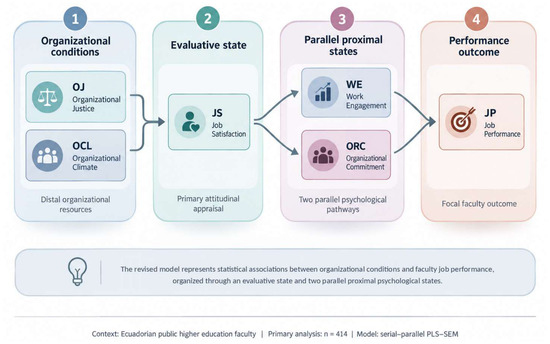
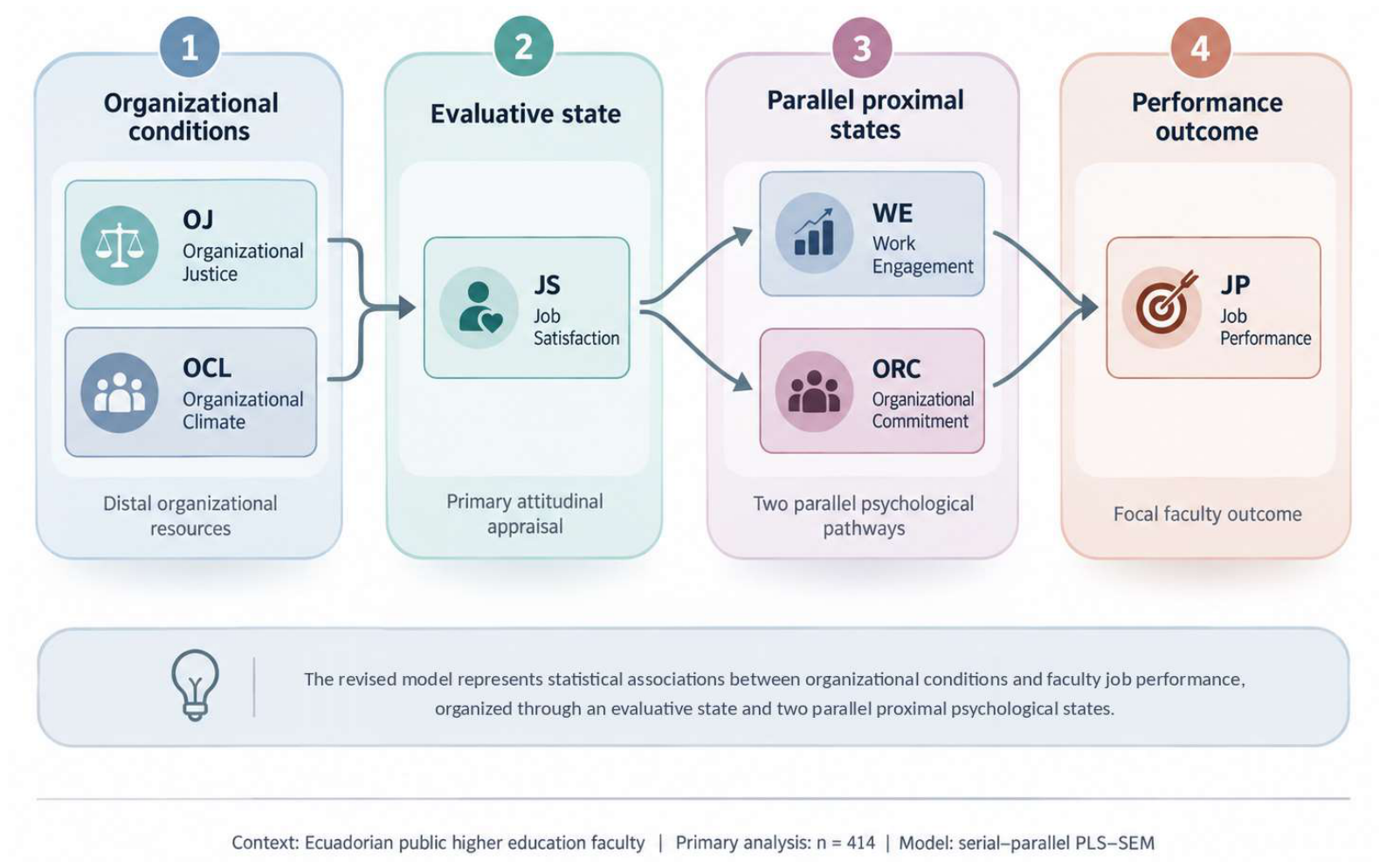
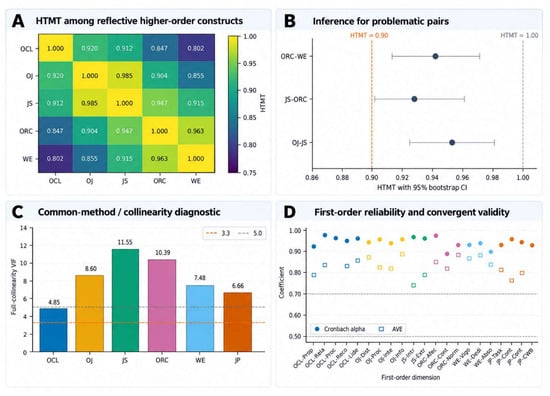
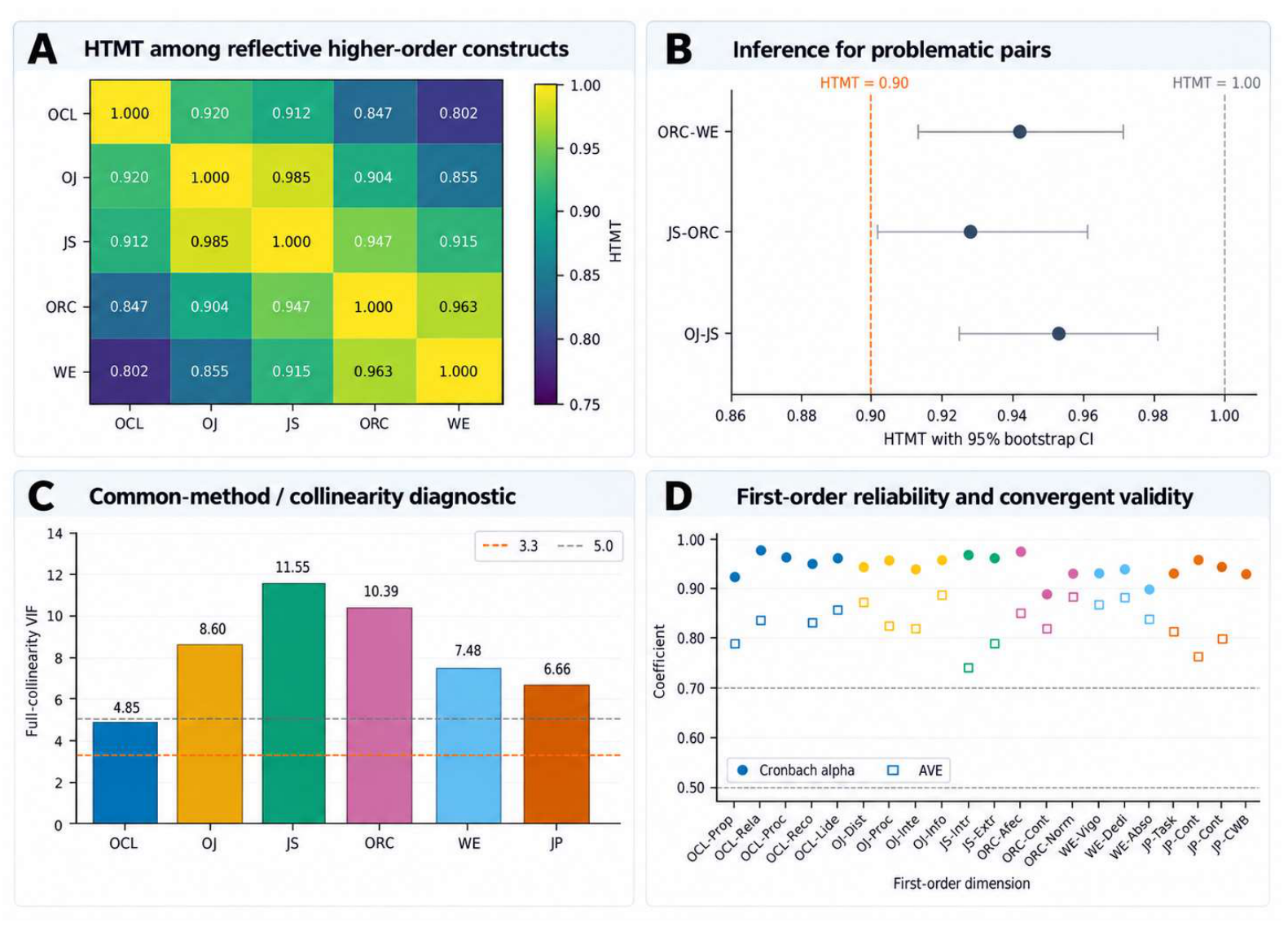
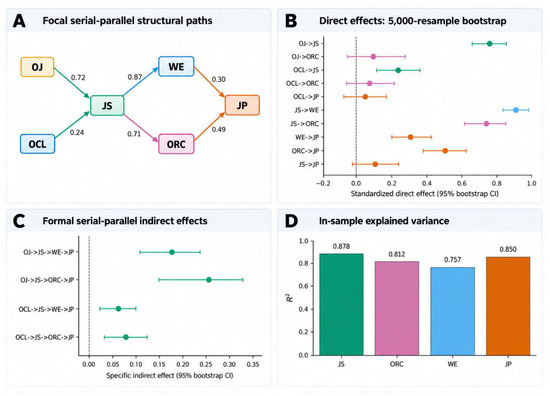
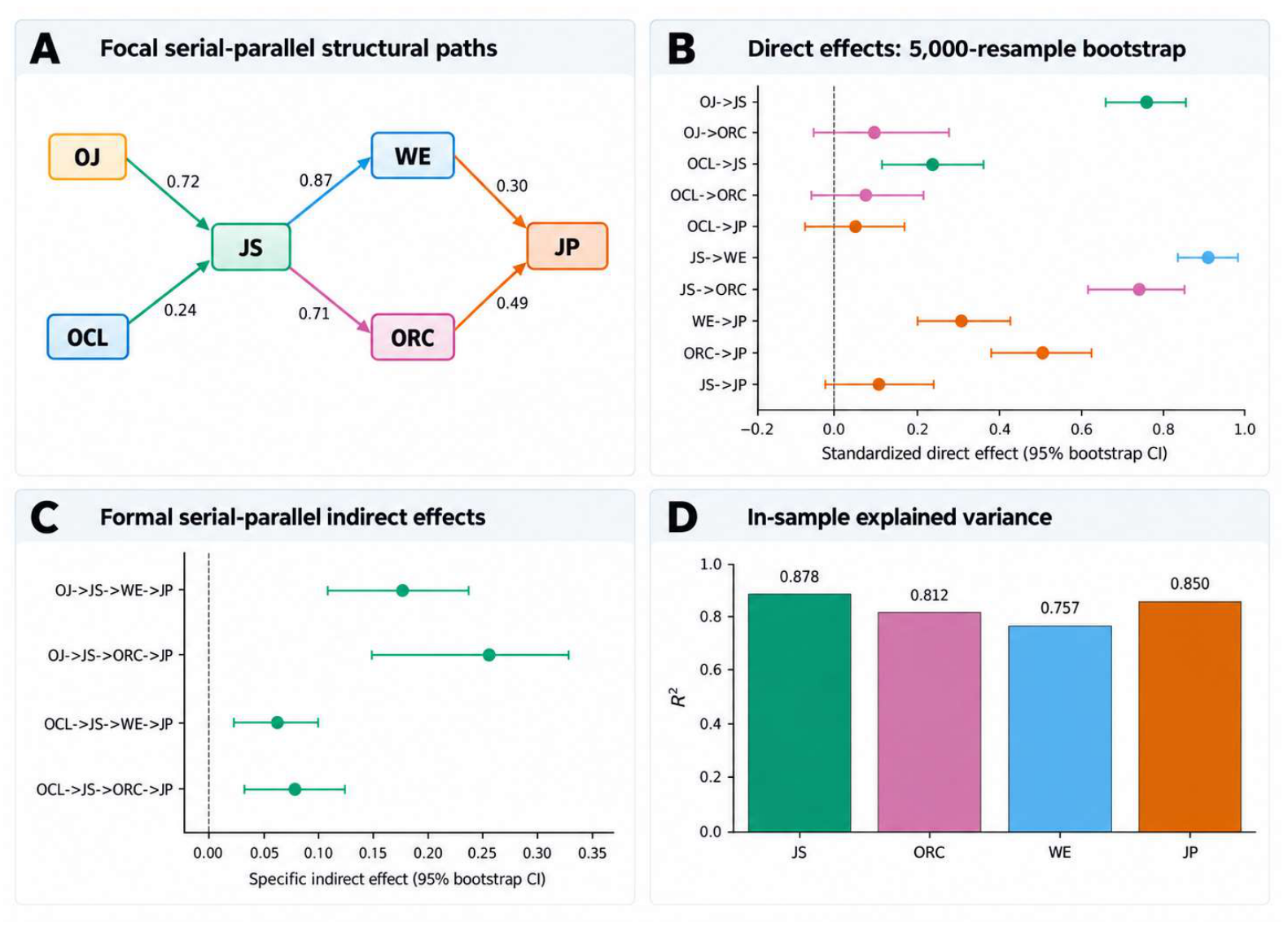
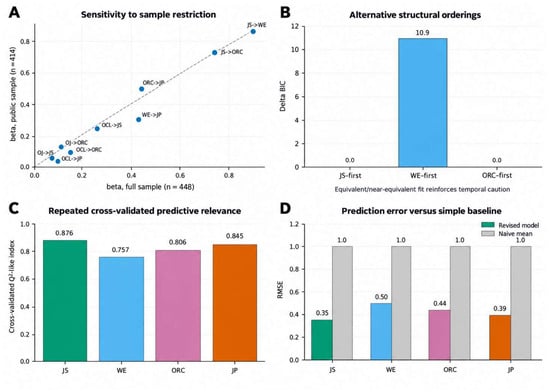
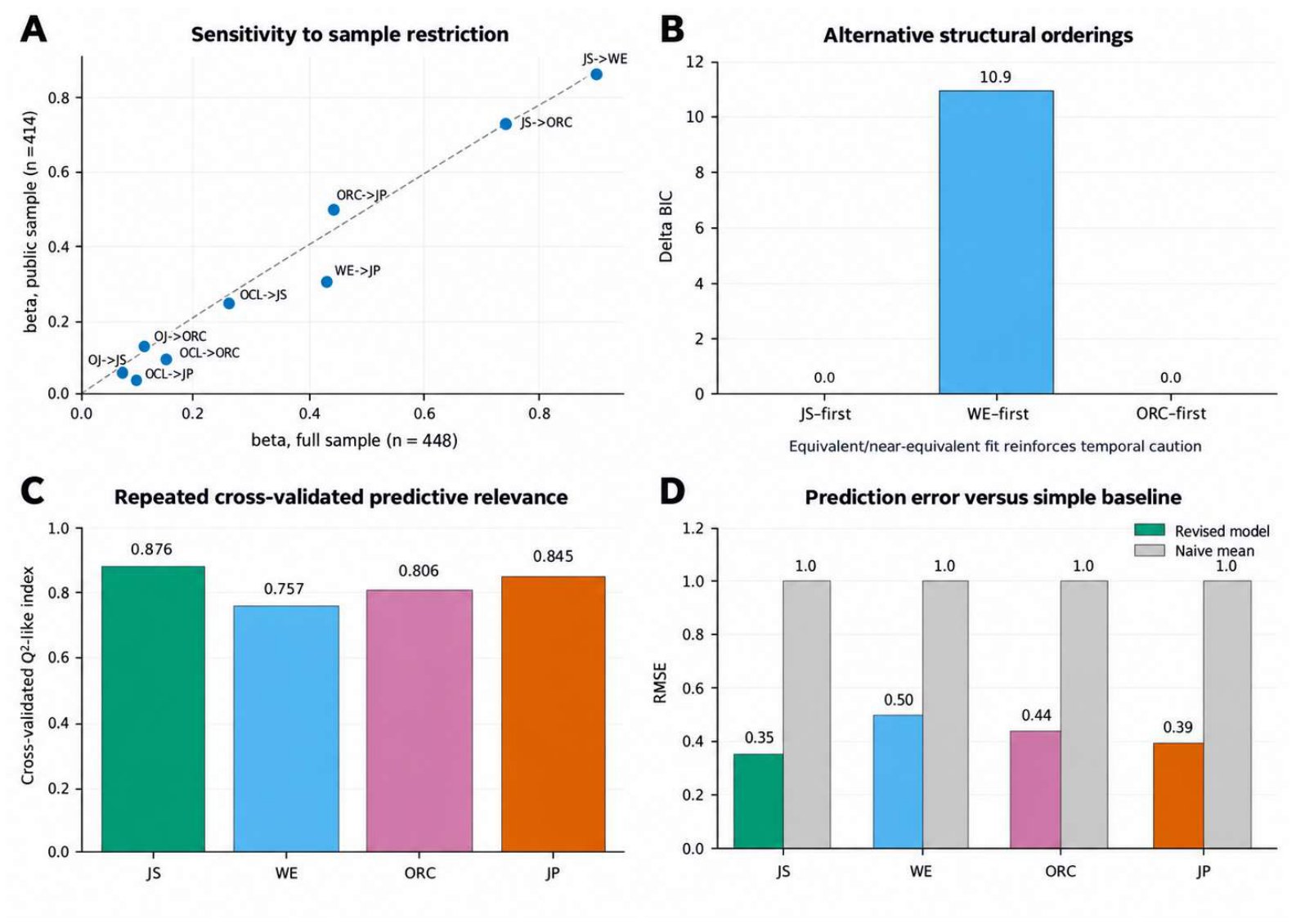

Disclaimer/Publisher’s Note: The statements, opinions and data contained in all publications are solely those of the individual author(s) and contributor(s) and not of MDPI and/or the editor(s). MDPI and/or the editor(s) disclaim responsibility for any injury to people or property resulting from any ideas, methods, instructions or products referred to in the content. |
© 2026 by the authors. Licensee MDPI, Basel, Switzerland. This article is an open access article distributed under the terms and conditions of the Creative Commons Attribution (CC BY) license.