


Abstract
The age of entrepreneurship calls for the evolving of learning and development (L&D) models to meet the dynamic demands of innovation, sustainability, and technology innovation. This study examines the trends and issues of L&D models for entrepreneurs, more so focusing on how these models influence business success in a rapidly changing global landscape. The research employs bibliometric analysis, VOSviewer cluster analysis, and co-citation analysis to explore the literature from 1994 to 2024. Data collected from the Web of Science Core Collection database reflect significant trends in entrepreneurial L&D, with particular emphasis on the use of digital tools, sustainability processes, and governance systems. Findings emphasize the imperative role of L&D in fostering entrepreneurship, more so in areas such as digital transformation and the adoption of new technologies. The study also identifies central regions propelling this field, such as UK and USA. Future studies will be centered on the role of digital technologies, innovation, and green business models within entrepreneurial L&D frameworks. This study provides useful insight into the future of L&D within the entrepreneurial domain, guiding academia and companies alike in the planning of effective learning strategies to foster innovation and sustainable business growth.
1. Introduction
Embedding learning and development mechanisms into the entrepreneurial age has become even more pivotal in ensuring sustainable business growth and innovation in modern dynamic economies (Koe Hwee Nga & Shamuganathan, 2010). Research indicates that these mechanisms have the potential to impact significantly the viability and scalability of entrepreneurial start-ups, especially within emerging markets (Liu & Zhang, 2022). Practical learning and development methods, including mentorship, capacity development, and tailored training programs, have been shown to increase the potential of entrepreneurs, especially when the individualized needs of the market are attached to them (Zacharakis & Meyer, 1998). The success of entrepreneurial firms in diverse parts of the globe underscores the necessity for such mechanisms in diverse business models (Downing, 2005). Owing to diverse institutional arrangements and regulatory environments, learning and development strategies have differing impacts across regions (Bhagavatula et al., 2010). Entrepreneurship development models and leadership training programs are essential in enabling investment attraction and reorientation to meet market demands (Kassean et al., 2015). In addition, sector-specific dynamics underscore the significance of learning and development in influencing business operations and long-term performance, particularly in industries like technology and green energy (Drayton, 2002). Governance structures, organizational responsibility, and corporate performance have significant correlations across different industries (Ravasi & Turati, 2005). In the entrepreneurial era, the transition towards holistic learning and development systems is driven by cultural, economic, and educational factors to a significant degree (Lerner et al., 1997). Ethical systems, including cultural norms and those promoting sustainable business practices, play a central role in shaping entrepreneurial behaviors and success (Herbane, 2019). However, problems of weak institutions and financial instability can undermine the effectiveness of applying proper learning and development strategies (Busch & Barkema, 2021). Governments and school administrations have initiated these steps for entrepreneurship development, yet inadequate infrastructure and resource misallocation remain strong barriers (Shepherd et al., 2009). Corporate governance has a significant function to fulfill in incorporating learning and development in the entrepreneurial process in making educational strategy adaptive to organizational goals and market requirements (Shepherd & Gruber, 2021). Leadership diversity and stakeholder engagement are most crucial in business domains dealing with balancing business and societal obligations (Ahmed et al., 2020). New paradigms of learning, such as entrepreneurial training programs, focus on the capacity to develop local communities and economic diversification (Secundo et al., 2021). Despite the improvement, challenges still exist, particularly in big entrepreneurial projects, since institutional and regulatory constraints still persist (Kaminski & Hopp, 2020). Education and awareness are crucial for facilitating the adoption of learning and development systems in the era of entrepreneurship (Nicolopoulou et al., 2017). Schools and entrepreneurial training programs have a central position to play in promoting sustainable business and entrepreneurial mentality (Fiore et al., 2019). To address the issue of scaling up entrepreneurial ventures, there is a need for more knowledge sharing and capacity building (Zozimo et al., 2017). Governance, regulation, and culture influence the integration of learning and development into the entrepreneurial system (Hoppe, 2016). Future research requires investigations into how the institutional structures, cultural values, and education practice can complement each other to induce sustainable business growth and innovation during the entrepreneurial phases (Vlas et al., 2024). We are the first to analyze such a meeting of interests extensively, offering fresh insight into what learning and development has in store in the entrepreneurial setting.
1.1. Objective of the Study
The primary objective of this study is to provide a comprehensive analysis of the emerging trends in learning and development mechanisms for entrepreneurial ventures in the entrepreneurial era while identifying current developments, potential research areas, and future directions. A big part of the study looks at the annual growth of publications, how they are distributed by country, publication patterns, intellectual structure, and the cluster analysis of scientific production in the field of learning and development strategies for entrepreneurs in today’s business world.
1.2. Novelty of the Study
To confirm the study’s originality, we are the first to combine bibliometric and cluster analyses in examining learning and development strategies within the entrepreneurial era. The study provides a unique comparison of trends, processes, and phenomena shaping the current economic and social landscapes of fostering entrepreneurship in emerging markets. It focuses on policies and strategies for learning and development that align with sustainability goals and the evolving demands of the entrepreneurial ecosystem.
1.3. Research Inquiries
This study addresses the following research inquiries:
- RQ1. What are the current trends in learning and development strategies within the entrepreneurial era?
- RQ2. How are learning and development initiatives distributed across various regions, and which regions lead in terms of impact and adoption?
- RQ3. Which educational platforms and journals are most relevant in the field of learning and development for entrepreneurship?
- RQ4. Who are the most influential thought leaders in the integration of learning and development mechanisms into entrepreneurial practices?
- RQ5. Which are the most impactful studies and articles in the realm of entrepreneurial learning and development?
- RQ6. What is the intellectual structure of current research on learning and development in the entrepreneurial era?
- RQ7. What themes related to learning and development are most popular among scholars in entrepreneurial contexts?
- RQ8. Which areas in learning and development for entrepreneurship require further investigation and refinement?
2. Methodology of the Study
Our research investigates the entrepreneurial education and development history, focusing on the mechanisms of learning within universities and rural areas that impact entrepreneurial activities. Among the issues of interest in this research is the way in which such learning mechanisms encourage innovation, adaptability, and sustainability within entrepreneurial systems, highlighting their role in shaping prospective entrepreneurs.
The study attempts to discover the dynamics of entrepreneurial education in the university context, as well as how curriculum, approach, and learning environment make contributions towards entrepreneurial development. It also addresses rural entrepreneurship and whether educational and development initiatives might be able to help people become involved in business entrepreneurial activity in the rural areas. It contributes to the global debate about learning and developing entrepreneurial skills. We compare our study to two critical articles: Dissanayake et al. (2022) and Pangriya and Pandey (2024). Dissanayake et al. (2022) employs bibliometric analysis in examining entrepreneurial education worldwide within universities, laying out general themes and research currents. However, it only focuses on universities and does not study the broader impact on rural business or how entrepreneurial education is included with rural development. This work is an expansion of this by linking entrepreneurial learning at the university to rural entrepreneurship, closing the entrepreneurial learning gap across different contexts. Pangriya and Pandey (2024) is a bibliometric and thematic analysis of rural entrepreneurship research, and it unveils rural development research clusters. While it observes trends in rural entrepreneurship, it does not address entrepreneurial education’s role in these environments as shown in Table 1. Our research, by bridging both university education and rural entrepreneurship, offers a broader context, considering how education in both settings impact greater entrepreneurial ecosystems. In this way, our research offers a more complete understanding of how to be an entrepreneur, bridging the urban–rural entrepreneurship gap and uncovering new trends and potential future research directions in the era of entrepreneurship.
Table 1.
Comparison of previous studies and our research.
2.1. Research Methodology Approaches
This research applied methods such as evaluation, performance analysis, and text mining in establishing patterns and associations. The methods were applied to examine the work of authors, citations, and scholarly work on the subject of learning and development during the entrepreneurial age. Apart from that, we employed bibliometric mapping as methodology for visualizing the structural properties of research output, in accordance with the guidelines established by Cobo et al. (2011) and Van Eck and Waltman (2011). Bibliometric mapping is one of the specialized techniques among a broader generalizable methodology covered by the field of bibliometric analysis that analyzes academic trend patterns quantitatively in publications in journals, books, conferences, and papers. This difference between method (the general approach) and technique (a particular procedure or tool in the method) is essential in understanding the analysis framework of the study.
The study primarily aimed at identifying research hotspots via the analysis of the frequency of indexed keywords, top-performing researchers, and journals between 1994 and 2024. The approach resonates with bibliometric reviews by Qudah et al. (2023) and Alqudah et al. (2023), which all conducted a review of entrepreneurial learning and development trends. Bibliometric analysis is essential in the social sciences for the quantitative assessment of world trends and a research field’s knowledge structure, as emphasized by Qudah et al. (2023) and Alqudah et al. (2023) in their studies on entrepreneurship education and rural entrepreneurship. The bibliometric methods applied by Momani et al. (2023) and Alqudah et al. (2024) were essential in the understanding of research transformations over time in digital learning and rural entrepreneurial growth. This method is essential for the understanding of the evolving face of learning and development in the era of entrepreneurship.
Applying cluster analysis using VOSviewer (version 1.6.17), we examined recent trends and future directions in learning and development in entrepreneurial environments. This was based on the research of Al Karabsheh et al. (2024) and Qabajeh et al. (2024). Co-citation analysis was used as a technique for examining relationships between authors, journals, or documents from citation data, with bibliographic coupling examining citing documents. In addition, co-word analysis was employed to examine the conceptual structure in this discipline, as witnessed in bibliometric studies of Abu Anzeh et al. (2024) and Abu Orabi et al. (2024). In line with Qudah et al. (2024) and Samara et al. (2024), the present paper also analyzed emerging patterns in entrepreneurial learning, digital technology, and the impact they have on entrepreneurial ecosystem growth. AlQudah et al.’s (2024a) considerations identify the significance of technology and digitalization in developing future research directions, as well as the development and learning process in the era of entrepreneurship.
2.2. Strategy for Conducting the Search
The study developed a search strategy with a number of parameters and filters (Table 2). The Web of Science Core Collection database was utilized as the primary source of data due to it being robust and widely utilized as a platform for measuring scholarly research. According to Archambault et al. (2009), the Web of Science Core Collection is one of the largest and most reliable databases for bibliometric analysis, particularly in science, social science, and humanities. However, the use of a single database should be noted as it may limit the scope of analysis. Future studies may benefit from incorporating other databases such as Scopus or Google Scholar to obtain a broader view of the literature.
Table 2.
Data retrieval method and search approach.
A search for data was built using the terms “entrepreneurial education” and “development” over the past 31 years (1994–2024), with the aim to determine future trends in entrepreneurial learning and development. With this question created, the first filter was applied in order to select English articles, and it retrieved a list of 558 articles from the Web of Science Core Collection based on a pre-retrieved search. The second filter consisted of specified topics such as education, business management, entrepreneurship, and innovation that provided 354 articles from the Web of Science Core Collection categorized under these domains.
We examined various measures such as the number of citations, publication distribution by countries, intellectual structure, author/journal distribution, and year-by-year growth in publications. This research focused on articles that explained learning and development within the entrepreneurship age, particularly in the fields of social science, economics, and business education, as indicated in Table 3. From the search strategy explained above, we selected 354 articles published between 1994 and 2024 from 97 sources, i.e., journals, books, and conference papers. The total of all citations from the articles averaged 28.08 per paper. The dataset reports the per annum rate of increase in the publications to be 5.33%, with an average document age of 5.74 years. The authors’ network of this dataset has 943 authors, among which 38 authors have single-authored documents. On an average, each document had 2.92 co-authors. International collaboration made up 36.72% of the total collaboration. The documents were primarily articles (354), reflecting the focus on peer-reviewed academic work.
Table 3.
Dataset Metadata.
3. Data and Results
3.1. Publication Trends over the Years
To address RQ1, we analyzed the annual growth in publications related to learning and development in the entrepreneurial era, using data from the Web of Science Core Collection database. The first article on this topic was published in 1994, with a single publication in that year. From 1994 to 2016, the number of publications grew steadily, with 1 article in 1994, 2 in 2000, and 5 in 2007 (Figure 1). After 2016, there was a significant surge in the annual growth of publications, with the number rising from 6 articles in 2018 to 15 in 2019, and further increasing to 20 in 2020. This upward trend continued with 47 publications in 2021, 43 in 2022, 50 in 2023, and 76 publications in 2024. This growing interest in learning and development in the entrepreneurial era highlights the increasing significance of this area of research in the scientific community.
Figure 1.
Annual publication trends from the Web of Science Core Collection database. Source: Compiled by the author using Biblioshiny in R.
3.2. Global Distribution of Publications by Region
Table 4, Table 5 and Table 6 address RQ2. Results from Table 4 indicate that the United Kingdom contributed the most publications (62), followed by the USA (43), China (28), and Sweden (18). Other countries with significant contributions include Canada and Spain (14 each), India (12), and Australia, Norway, and Germany (11 each). Table 4 highlights the top ten countries in terms of the total number of publications, while Table 5 will focus on the top ten countries in terms of influential publications based on citations.
Table 4.
Publications by country.
Table 5.
High-impact publications by country based on citation count.
Table 6.
Top institutions by article output.
In terms of citations, the United Kingdom ranks first with 1878 total citations, followed by the USA with 1820 citations, and Canada in third place with 541 citations (as seen in Table 5). Although the United Kingdom and the USA produced the highest number of citations, other countries like India (with a higher MCP ratio) show significant international collaboration despite having fewer citations. The MCP ratio, which highlights the level of multiple-country publications, is high for countries like Australia (0.636) and Sweden (0.444), indicating substantial international research collaboration. Meanwhile, countries like China, Italy, and Spain have lower MCP ratios, which suggest their research outputs may be more focused domestically.
Next, we examine the leading institutions across various countries that have significantly contributed to the field of learning and development in the entrepreneurial era. Table 6 presents the top ten institutions in terms of publication volume. Coventry University (UK) and the University System of Ohio (USA) each lead with six publications, followed by the University of North Carolina (USA) and De Montfort University (UK), each contributing five publications. Notably, although countries like the USA and the UK are prominent in publication volume, some institutions, despite their high output, do not always achieve the highest levels of influence in terms of citation impact. For example, while the USA and the UK lead in citations, institutions such as De Montfort University and King Faisal University (Saudi Arabia) do not share the same citation impact, suggesting that higher publication volumes do not necessarily correlate with greater research influence. Furthermore, international collaboration patterns emerge from these institutions. For instance, institutions such as Laval University (Canada) and King Faisal University (Saudi Arabia) demonstrate significant international engagement, indicating a more global research focus. In contrast, institutions like Austral University (Australia) show a more localized research focus, with fewer international collaborations reflected in their multiple-country publication (MCP) ratios.
3.3. Notable Journals
To address RQ3, a bibliometric analysis was conducted on publications related to learning and development in the entrepreneurial era. Table 7 presents key journals in the field, with Entrepreneurship and Regional Development leading in terms of total publications (32), total citations (1301), and an h-index of 20. This positions the journal as a significant contributor to research in this area. Similarly, The International Journal of Entrepreneurial Behavior & Research stands out with an h-index of 18 and 47 total publications, reflecting its substantial influence in the entrepreneurial field since it began publishing in 2011. A second observation from Table 7 highlights the contributions of journals such as The Journal of Business Venturing and Small Business Economics. While these journals have fewer total publications (13 and 14, respectively), their relatively high citation counts (1431 and 431) demonstrate their significant impact on the field. This finding emphasizes that even journals with lower publication volumes can drive impactful research through high-quality, widely cited articles.
Table 7.
Major journals of publication.
In line with prior findings, while certain journals, such as The Journal of Small Business and Enterprise Development and The International Journal of Management Education, focus on recent trends in entrepreneurial learning and development, journals like The Journal of Business Research and Entrepreneurship Theory and Practice reveal a more interdisciplinary approach by integrating insights from business, management, and innovation. These interdisciplinary contributions highlight the evolving and cross-sectoral nature of research in learning and development during the entrepreneurial era. Lastly, journals based in diverse academic traditions, such as Entrepreneurship and Regional Development and Small Business Economics, lead in terms of both quality and quantity of publications. However, despite their high publication counts, the influence of journals like The International Small Business Journal remains moderate in comparison to high-impact journals like Entrepreneurship Theory and Practice, with an h-index of 7 and over 1000 citations from only seven publications. This demonstrates a segmented research landscape where high-impact research is concentrated in a few leading journals, underscoring the need for a broader distribution of impactful contributions.
The findings from Table 7 indicate that impactful research in learning and development during the entrepreneurial era is concentrated in a few high-performing journals. These journals, such as Entrepreneurship and Regional Development and The International Journal of Entrepreneurial Behavior & Research, play pivotal roles in shaping the discourse. However, the field would benefit from more diversified contributions and increased international collaboration to enhance the visibility and impact of this dynamic and interdisciplinary research area.
3.4. Researchers and Contributors
To respond to RQ4, we compared the most cited authors and their h-index. Table 8 presents the top contributors by citation number. The author who has been most cited, by citation, is Shepherd Da, with 419 citations and an h-index of 4, followed closely behind Shepherd Da are Secundo G, with 226 citations and an h-index of 5, and Jack S, with 173 citations and an h-index of 4. This indicates the extent of their influence on the field. Also, Del Vecchio P and Nicholls-Nixon Cl, with 199 and 184 citations, respectively, demonstrate notable contributions despite their h-index of 3 being marginally lower. New entrants to the field are Haneberg Dh and Mele G, who, although they entered the field in 2021, have already achieved h-indices of 3 and total citation counts of 51 and 159, respectively. Similarly, Indarti N is a remarkable emerging researcher, having contributed considerably in 2023 with an h-index of 3 and a promising citation trajectory.
Table 8.
Leading contributors by citation count.
Most prominently, established authors like Passiante G and Hamilton E have laid a sound groundwork for the field. This reflects the extent to which new and interdisciplinarity approaches are implemented when studying learning and development in an entrepreneurial setting. These writers, with citation counts of 103 and 171, respectively, emphasize the various research streams and approaches that characterize this field. Table 8 shows a combination of old and new authors shaping the study of learning and development during the entrepreneurial phase. Foremost authors such as Shepherd Da and Secundo G provide a critical foundation for future research works, while younger authors such as Indarti N and Haneberg Dh stress the dynamic and increasing role of this field. These findings suggest promise for the increased coordination and continued discovery of innovative learning and development methods targeted to the entrepreneurial environment.
The bibliographic coupling analysis, as shown in Figure 2, reveals key relationships among leading authors in the field of learning and development in the entrepreneurial era, grouped into three prominent clusters. Cluster 1 emerges as the most influential, featuring authors such as Thorpe R, Cunningham JA, and Hamilton E, with Thorpe R achieving the highest Normalized Local Citation Score (2.71). Other notable contributors in this cluster, including Walsh GS (2.01) and Pittaway L (1.91), play pivotal roles in shaping research on entrepreneurial learning frameworks. Emerging contributors such as Gabrielsson J and Politis D add depth to the cluster by exploring innovative dimensions of entrepreneurial education. Cluster 2 focuses on methodological advancements and includes significant authors such as Dimov D, with a Normalized Local Citation Score of 1.41, alongside Clausen TH (0.99) and Ramadani V (0.97), highlighting critical insights into strategic approaches in entrepreneurship. Cluster 3 centers on entrepreneurial ecosystems and leadership dynamics, featuring key contributors such as St-Jean E (1.48) and Ciptono WS (1.44), while Shepherd Da (1.34) offers substantial contributions to understanding leadership-driven learning processes. Emerging authors like Indarti N (1.28) signal a growing focus on addressing contemporary challenges in entrepreneurial education and strategy, reflecting the field’s expanding scope. Together, these clusters highlight the interconnected nature of research in the entrepreneurial era, with shared methodologies and themes driving advancements in the field. Influential authors such as Thorpe R and Shepherd Da provide a robust foundation for ongoing research, while emerging contributors like Indarti N and Haneberg Dh underscore the importance of fostering innovation in entrepreneurial learning. This analysis not only maps the intellectual structure of the field but also underscores opportunities for collaboration to advance entrepreneurial education and strategy in a rapidly evolving landscape.
Figure 2.
Network of collaboration among leading authors. Source: compiled by the author using Biblioshiny in R.
3.5. Notable Publications
To address RQ5, which explores the most influential studies in learning and development in the entrepreneurial era, we first examined the most cited articles on this topic (Table 9). The highest-cited article is by Koe Hwee Nga and Shamuganathan (2010), which investigates the influence of personality traits and demographic factors on social entrepreneurship start-up intentions, with 405 citations. This paper has had a significant impact, highlighting the critical role of personal attributes and socio-demographic factors in shaping entrepreneurial ventures. The second most cited study is by Downing (2005), which explores the social construction of entrepreneurship through narrative and dramatic processes, garnering 281 citations. This research provides foundational insights into how entrepreneurial identities are co-produced in social and organizational contexts, which is highly relevant to understanding learning and development in entrepreneurship.
Table 9.
Noteworthy influential publications.
The third most cited publication is by Zacharakis and Meyer (1998), which examines the decision-making processes of venture capitalists and their lack of insight into their own decisions. With 250 citations, this study sheds light on the cognitive and experiential dimensions of learning for venture capitalists, a key stakeholder group in entrepreneurship. Other influential studies include Dimov (2007), which highlights the importance of person–situation learning matches in opportunity recognition, with 242 citations. This research emphasizes the contextual learning required for transitioning from opportunity insights to actionable entrepreneurial intentions.
Additionally, Lerner et al. (1997) analyze factors affecting the performance of Israeli women entrepreneurs, with 236 citations, contributing to the understanding of gender-specific learning and performance in entrepreneurship. Bhagavatula et al. (2010) focus on how social and human capital influence opportunity recognition and resource mobilization in India’s handloom industry, with 235 citations, underscoring the importance of social networks in entrepreneurial learning.
These studies, listed in Table 9, illustrate the evolving landscape of learning and development in entrepreneurship, with a particular focus on individual attributes, social networks, and contextual factors. Figure 2 presents the network of collaboration among leading authors in the field, revealing prominent researchers such as Koe Hwee Nga, Downing, and Dimov as central to shaping this discourse. The collaborative map highlights clusters of research focused on entrepreneurial learning and development, providing a comprehensive understanding of the factors driving entrepreneurial success in the modern era.
3.6. Co-Occurrence of Keywords
Keyword analysis was conducted using VOSviewer to examine the intellectual structure of current research on Learning and Development in the Entrepreneurial Era. This analysis follows a four-stage process: identifying key phrases; selecting significant phrases using VOSviewer’s algorithms; constructing maps and clusters based on the identified keywords/authors; and visualizing these maps and clusters (Van Eck & Waltman, 2011). Table 10 illustrates the frequency of keyword occurrences in the scientific literature on entrepreneurial learning and development. This table reveals that numerous studies have focused on critical themes such as entrepreneurship education, entrepreneurial learning, and experiential learning, which are fundamental to understanding the mechanisms through which individuals and institutions foster entrepreneurial growth.
Table 10.
Keywords occurring at least 8 times.
The keywords entrepreneurship education (48 occurrences) and entrepreneurial learning (43 occurrences) appear frequently, reflecting the growing emphasis on education and learning processes as core components of entrepreneurial success. Themes such as social entrepreneurship (15 occurrences), experiential learning (11 occurrences), and innovation (11 occurrences) further underscore the focus on practical, real-world applications of entrepreneurial knowledge, as well as the integration of innovation into entrepreneurial ecosystems. Additionally, keywords such as higher education and entrepreneurial intention highlight the role of formal education in shaping entrepreneurial ambitions and capabilities.
The keyword analysis provides valuable insights into the intellectual structure of this field by identifying prominent trends, methodologies, and research areas. For instance, the recurring mention of human capital (eight occurrences) emphasizes its importance in entrepreneurial learning, aligning with the broader narrative that skilled and knowledgeable individuals are central to entrepreneurial success. Other frequently discussed themes, such as effectuation (eight occurrences) and the impact of COVID-19 pandemic on entrepreneurship, reveal a focus on adaptability and resilience within the entrepreneurial landscape.
By mapping these trends, the analysis sheds light on the evolving research agenda in learning and development in the entrepreneurial era. The findings highlight the interplay between education, innovation, and human capital in fostering entrepreneurial activity, offering a comprehensive understanding of how learning processes drive entrepreneurship in a rapidly changing environment. These insights pave the way for the further exploration of experiential learning models and the integration of entrepreneurial education into broader learning frameworks.
3.7. Analysis of Keyword Trends
Figure 3 presents a VOSviewer map analyzing the trends in learning and development in the entrepreneurial era by visualizing key concepts and their evolution over time in entrepreneurship research. Early studies, especially recent years (2020–2022), primarily focused on traditional themes such as entrepreneurship and entrepreneurial intention. However, a noticeable shift occurred in more recent years (2020–2022), with research increasingly emphasizing entrepreneurial learning, innovation, and human capital. These emerging trends highlight the growing recognition of learning processes as central to entrepreneurial success. Keywords like entrepreneurial learning, experiential learning, and entrepreneurship education reflect a deeper focus on how individuals acquire the skills and knowledge necessary to launch and sustain ventures. The importance of human capital, which includes skills, experiences, and competencies, underscores its role in shaping entrepreneurial outcomes. Furthermore, the rise of innovation as a key concept emphasizes its role in driving new entrepreneurial ventures. The inclusion of COVID-19 points to the pandemic’s significant impact on the entrepreneurial landscape, highlighting resilience and adaptability. Other terms, like social entrepreneurship and entrepreneurial ecosystems, demonstrate a shift toward considering broader social and environmental factors. These evolving trends suggest that future research should explore how learning mechanisms and contextual factors, such as global crises, influence entrepreneurial success.
Figure 3.
Evolution of Keywords Over Time. Source: calculated by the author using VOSviewer (version 1.6.17). Visualization created with VOSviewer, a software tool developed by Van Eck and Waltman (2011).
4. Discussion (Present and Future Trends: Cluster Analysis)
To more broadly address RQ7, cluster analysis was additionally conducted to identify key themes related to learning and development in the entrepreneurial era. VOSviewer software has generated a total of six clusters to highlight the most popular themes among scholars.
4.1. Cluster 1 (Red Color: Entrepreneurship Education and Learning)
Cluster 1 analysis highlights the pivotal role played by education programs in entrepreneurial knowledge and skills development as shown in Figure 4. Kassean et al. (2015) highlighted the importance of entrepreneurship education for fostering reflective, real-world learning approach. This strongly resonates with the argument that formal education systems allow people to become more entrepreneurial. In addition, formal education significantly contributes to the development of entrepreneurial intention as it provides entrepreneurs with tools and knowledge to navigate business venturing and firm management challenges (Ahmed et al., 2020). Entrepreneurship education is more than the provision of theoretical knowledge but rather inspires and motivates students to venture into entrepreneurship. In this respect, educational settings that offer both knowledge acquisition and practical engagement have the potential to trigger entrepreneurial intentions and behavior (Cui & Bell, 2022). According to Shepherd et al. (2009), settings of this kind offer space for experimentation and risk-taking, which are essential for entrepreneurship. Hence, the relationship between entrepreneurial learning and education is centered not merely on the passive learning of knowledge but active participation in entrepreneurial activities, which builds competencies that are essential for venture creation.
Figure 4.
Cluster 1: entrepreneurship education and learning. Source: calculated by the author using VOSviwer.
Further, the evolving nature of entrepreneurship education reflects global patterns in the integration of practice into academic studies. Such trends are significant in bridging the divide between theory and practice, as Harrison and Leitch (2005) assert. Through the application of techniques such as the utilization of case studies, mentoring, and experiential learning, educator programs can provide exciting learning experiences outside standard classroom environments. Dimov (2007) argues that experiential learning activities such as these allow individuals to align their ability with situational conditions, facilitating the transition from opportunity awareness to entrepreneurial action. This focus on experiential learning in entrepreneurship education is even more relevant to international concerns, including the COVID-19 pandemic, which has accelerated the need for digital transformation in education (Secundo et al., 2021). Learning systems are increasingly integrating digital platforms and tools to provide adaptive and scalable learning experiences. These developments not only make education in entrepreneurship more accessible but also facilitate a more participative learning style, where students can engage in live simulations and global networks (Gouveia et al., 2024). This mode flexibility in education is needed for cultivating entrepreneurial resilience, particularly in dynamic and resource-scarce environments, as proposed by Duchek (2018).
Apart from this, cluster 1 indicates the gradual shift towards the inclusion of social and human capital in entrepreneurial education. Bhagavatula et al. (2010) explain that networks and social capital are extremely important for the discovery of opportunities as well as for the exploitation of resources. They opine that entrepreneurial education for students should include making students effective exploiters of such resources. Curricula that emphasize teamwork, peer-to-peer instruction, and networking are also responsible for allowing new entrepreneurs to interface with the general entrepreneurial setting, which is of paramount importance in new venture performance. Entrepreneurship education in the future will consist of strengthening further the interface between formal learning and entrepreneurial practice. This will require greater focus on designing learning environments that not only offer information but also give rise to the development of an entrepreneurial mindset. Learning in the entrepreneurial environment, as stated by Drayton (2002), will need to be as competitive and dynamic as business. This will be more likely to involve a greater emphasis on creative problem-solving, building resilience, and creating innovative mindsets among the learners. The convergence of entrepreneurial learning and entrepreneurship education is the crux of developing entrepreneurial competences. Evolving education trends, which are increasingly experiential in nature, digital technologies, and social media, hold the potential to increase the impact of entrepreneurship courses. These trends not only motivate students to become entrepreneurs but also provide them with the critical skills and resources necessary to succeed in a competitive, rapidly changing global economy.
4.2. Cluster 2 (Green Color: Entrepreneurial Intention)
Cluster 2 reveals multiple facets of how individuals decide to engage in entrepreneurial activities as shown on Figure 5. One important part of the green cluster is “Entrepreneurial Intention”, which shows that learning experiences, human capital, and the entrepreneurial ecosystem all play a big role in people’s decisions to start their businesses. As Koe Hwee Nga and Shamuganathan (2010) highlight, entrepreneurial intentions are deeply influenced by personality traits and demographic factors, which can mediate how individuals approach entrepreneurial opportunities. This suggests that the internal and external learning experiences, along with personal characteristics, create a fertile ground for entrepreneurial action. Educational and experiential learning plays a crucial role in molding these intentions. Harrison and Leitch (2005) explain how entrepreneurial learning, particularly in the context of real-world experiences, facilitates the transition from initial interest to business creation. As individuals gain knowledge about the entrepreneurial landscape, they are more likely to recognize opportunities and assess risks accurately. Downing (2005) emphasizes that narratives and storytelling about entrepreneurship serve to shape identities and aspirations, thus influencing decisions to start a business. Therefore, the combination of learning about entrepreneurship and personal experiences can significantly increase the likelihood of entrepreneurial intention.
Figure 5.
Cluster 2: entrepreneurial intention. Source: calculated by the author using VOSviwer.
Apart from knowledge acquisition, human capital, that is, skills and knowledge, is a decisive factor in the decision-making process. Lerner et al. (1997) are of the opinion that human capital influences entrepreneurs’ success, since it enables one to understand the challenges of establishing a business and enhances problem-solving abilities. Bhagavatula et al. (2010) also develop this argument by showing how human and social capital influence the recognition of opportunity, thus persuading individuals to start entrepreneurial endeavors. If individuals possess the needed skills, information, and contacts, they will be more confident in their ability to turn an idea into a successful enterprise. Moreover, the entrepreneurial environment also plays an important role in aiding individuals’ entrepreneurial intentions. Dimov (2007) outlines how there exists the potential for entrepreneurial intentionality to occur with a matching between an individual’s experiences in the domain of learning and the range of possibilities which can be capitalized on within any one context. Supportive entrepreneurial networks providing access to resource bases, networking, and funding capital is likely to compound entrepreneurial likelihood as well. This is corroborated by Bhattacharya et al. (2020), who observe that a well-established ecosystem promotes the circulation of resources and ideas, hence equipping entrepreneurs with what it takes to thrive.
Emergent entrepreneurial trends lean towards a greater focus on innovation and digitalization as drivers in entrepreneurial aspirations. Secundo et al. (2021) point out the application of technology and digital platforms to reinvent the practice of learning entrepreneurship, particularly amid international threats like the COVID-19 pandemic. These are advancements that suggest that entrepreneurs will continue to utilize online platforms for business operations, learning, and interactions, with AI playing a leading role in making the operations effective. AI-powered tools are transforming the manner in which entrepreneurs obtain information, sort data, and make informed decisions, increasing their innovation and responsiveness capabilities to rapidly changing environments even further. This reliance on technology and AI will also impact their desires to venture into new businesses.
In addition, the growing rate of social entrepreneurship introduces a fresh perspective to this debate. Social entrepreneurs are driven by contributions to society, and not by money, Drayton (2002) implies, an argument that has increased validity in the recent past (Bhattacharya et al., 2020). Social entrepreneurship hence offers a vehicle for uniting personal belief and entrepreneurial desire, once more widening the range of entrepreneurial intentions. Edwards-Schachter and Wallace (2017) illustrate that social innovation, which incubators and accelerators support, makes such goals more likely to achieve, especially when they are addressing the most pressing social issues.
Cluster 2 shows a more complex and entangled set of factors that bear on entrepreneurial aspirations. Among these are the learning opportunities to individuals, human capital building, and assets in the entrepreneurial environment. The application of advanced digital technologies, including digital platforms, and social entrepreneurship are poised to revolutionize how people are going to become entrepreneurs in the future, with a focus on developing new ideas and making the world a better place. This requires a greater understanding of how the factors mentioned above influence and interact to mold decision-making among prospective entrepreneurs, emphasized by scholars such as Shepherd et al. (2009) and Nicolopoulou et al. (2017), who emphasize learning and eco-system development functions to initiate entrepreneurship development.
4.3. Cluster 3 (Blue Color: Social Entrepreneurship)
Future and present prospects of entrepreneurship, or rather social entrepreneurship, are driven by a greater emphasis on education, innovation, and social impact as shown in Figure 6. Entrepreneurial education is central to the creation of a new generation of entrepreneurs who are as driven by profit as they are by addressing social challenges. As highlighted by Koe Hwee Nga and Shamuganathan (2010), integrating social and environmental concerns in business school education has become a central element in promoting social entrepreneurship. Future entrepreneurs are provided with the necessary skills through their schools so that they can create business models that positively impact society and the environment. Downing (2005) too subscribes to this view and highlights the social construction of entrepreneurship and how it may serve higher-level societal objectives. The role of social capital and human networks in entrepreneurship has attracted increased attention, specifically in situations where there are restricted resources like in India’s handloom industry (Bhagavatula et al., 2010). These findings highlight the need for formal and informal education to provide people with the instruments required to recognize and avail themselves of opportunities that will positively contribute to society. Further, the growing perception of social entrepreneurship as a vehicle for positive change is supported by Lerner et al. (1997), who argue that entrepreneurs can use their businesses to achieve dramatic improvements in disadvantaged neighborhoods.
Figure 6.
Cluster 3: social entrepreneurship. Source: calculated by the author using VOSviwer.
As entrepreneurship education transforms, researchers like Kassean et al. (2015) present an argument that experiential learning and exposure to reality should be given more focus. This development, besides promoting entrepreneurs’ practical skills, creates a mindset which focuses on maximizing social outcomes. In this regard, accelerators and innovative programs play a critical role in providing support to social entrepreneurs, helping them expand their businesses and achieve sustainability in addressing complex social issues. Edwards-Schachter and Wallace (2017) note that social innovation, a key component of social entrepreneurship, has become more prominent as institutions recognize the potential of entrepreneurial solutions to address global challenges such as poverty, climate change, and inequality. Secundo et al. (2021) explain how the entrepreneurial education of the future will be shaped by the use of digital tools and virtual platforms that enable more individuals to reach networks and resources. The COVID-19 pandemic has accelerated this transformation, highlighting the need for digital-enabled redesigns in entrepreneurship and education. This shift in roles creates opportunities for educators to influence a global market and offer varied social entrepreneurship activities across the globe. Furthermore, Zozimo et al. (2017) highlight that an increased focus towards entrepreneurial learning through role models and mentorship programs significantly influences social enterprise growth.
In terms of policy implications, the need for supportive frameworks that enable social entrepreneurs to thrive is becoming increasingly evident. Herbane (2019) and Hoppe (2016) argue that governments must develop policies that promote innovation while also providing incentives for entrepreneurs to focus on social and environmental outcomes. Furthermore, the entrepreneurial resilience highlighted by Duchek (2018) and the importance of strategic experimentation (Nicholls-Nixon et al., 2000) will be vital as social entrepreneurs navigate challenges in uncertain environments. Looking to the future, entrepreneurship education is poised to continue its evolution toward a more inclusive, socially responsible model. By focusing on entrepreneurial resilience, as advocated by Shepherd et al. (2009), and enhancing the interface between learning and entrepreneurial practice (Ravasi & Turati, 2005), educational institutions can create an ecosystem where social entrepreneurship can flourish. The growing trend of incorporating soft skills, such as leadership agility and transformative learning (Gouveia et al., 2024; Tiberius et al., 2020), will ensure that entrepreneurs are well equipped to address the complex issues of tomorrow. This suggests a future where education, innovation, and policy work together to create a generation of social entrepreneurs capable of driving sustainable change, as emphasized by the research of Shepherd and Gruber (2021).
4.4. Cluster 4 (Yellow Color: Mentoring Entrepreneur)
Looking at how entrepreneurship and mentoring are connected now, it seems that mentoring is very important for helping and growing entrepreneurs, especially in places where there is a lot of uncertainty and not enough resources as shown on Figure 7. This relationship between mentoring and entrepreneurship is well documented in the literature, highlighting how mentorship offers aspiring entrepreneurs’ essential guidance, advice, and emotional support, ultimately enhancing their likelihood of success (Koe Hwee Nga & Shamuganathan, 2010). According to Downing (2005), the social construction of entrepreneurship is heavily influenced by such narrative processes, wherein mentors contribute to the shaping of entrepreneurial identities and strategies. These mentorship programs are important for both individual growth and the growth of entrepreneurial ecosystems as a whole. They create a network of support for entrepreneurs, especially those who are just starting (Zacharakis & Meyer, 1998), which can help them deal with problems. Entrepreneurial resilience, as discussed by Duchek (2018), also underscores the role of mentoring in helping entrepreneurs overcome setbacks and persist despite adversities. By offering insight derived from personal experience, mentors provide entrepreneurs with a framework for learning from failure, thereby enabling them to manage grief and project failure more effectively (Shepherd et al., 2009). Mentors, therefore, facilitate not only learning but also emotional resilience, which is often necessary to thrive in the competitive and volatile environments that characterize the entrepreneurial landscape.
Figure 7.
Cluster 4: mentoring entrepreneur. Source: calculated by the author using VOSviwer.
Furthermore, mentoring is a more group-oriented function than pure one-on-one support. Mentors may also aid in the opportunity recognition process, which is essential to entrepreneurial success. According to Bhagavatula et al. (2010), opportunity recognition tends to rely on an entrepreneur’s level of exposure to human and social capital. Mentoring provides a means by which prospective entrepreneurs can tap into such resources, thus enhancing their ability to access necessary resources. This is in consonance with Dimov’s (2007) argument that the inter-relatedness of the personal attributes, learning, and context of environment may exert a tremendous influence on entrepreneurial intent. Facilitators of these inter-relations are mentors, guiding mentees through the complex process of opportunity recognition and subsequent mobilization of resources. Entrepreneurship mentorship’s future lies in more sophisticated digital platforms utilizing technology to facilitate mentoring relationships. Recent trends indicate a shift to online platforms for entrepreneurship education and mentorship, particularly with the COVID-19 pandemic. Secundo et al. (2021) elaborate on how technology is transforming the face of entrepreneurship learning, providing entrepreneurs with alternative means of learning and growth. These web sites offer new avenues for mentorship, enabling entrepreneurs to access seasoned mentors other than geographic location, thereby widening the scope of assistance that they can receive.
Furthermore, mentorship is at the heart of shaping entrepreneurial learning processes. Harrison and Leitch (2005) highlight the importance of the learning–entrepreneurial context interface, noting that mentorship is at the heart of entrepreneurial learning development. Mentoring as a process provides a context for experiential learning, wherein mentees can experiment reflectively and apply learning acquired to real entrepreneurial issues. This is also said by Kassean et al. (2015), whose focus on ensuring that entrepreneurship training offers experiential learning over theoretical knowledge once again supports the connection of mentorship and learning goals. As entrepreneurship keeps evolving, in the future, mentorship will continue to emphasize adaptation and resilience. In a changing world, entrepreneurs will need to learn to change and adapt on a continuous basis in terms of technology, shifting the needs of the marketplace, and global challenges. Mentorship will therefore increasingly focus on creating a mindset of entrepreneurialism that is committed to change and continuous learning. Cohen et al. (2019) explain how accelerator programs are structured to help new firms deal with cognitive biases and bounded rationality. These initiatives are equivalent to an extension of the mentorship relationship, where mentors aid entrepreneurs in navigating uncertainty and making smart decisions. Mentorship remains a pillar of entrepreneurial success, granting entrepreneurs emotional and functional support. Digitalization in the future will be at the central forefront of expanding access to mentorship, hence entrepreneurial guidance is democratized. These trends highlight the need for a strategic, adaptive mentoring approach that takes into account the evolving needs of entrepreneurs in a more dynamic, sometimes volatile marketplace.
4.5. Cluster 5 (Purple Color: Entrepreneurship and Entrepreneurial Failure)
Cluster 5 is a powerful tool for identifying patterns and trends in entrepreneurship research as shown in Figure 8. As we explore present and future trends within this domain, it is evident that various factors shape entrepreneurial behavior, from personality traits to environmental conditions. These days, people think of entrepreneurship as a complicated, ever-changing process that is affected by many things, such as personality traits, seeing opportunities, and being resilient (Koe Hwee Nga & Shamuganathan, 2010; Downing, 2005). For instance, entrepreneurial success often depends on the ability to navigate uncertainties, and individuals who demonstrate certain personality traits, such as risk tolerance, are more likely to pursue entrepreneurial ventures (Zacharakis & Meyer, 1998). This trend aligns with the emerging perspective that entrepreneurial failure is not merely a negative outcome but can serve as a stepping stone for learning and growth (Dimov, 2007; Shepherd et al., 2009). Furthermore, the current entrepreneurial landscape emphasizes the significance of both human and social capital in the recognition of opportunities and resource mobilization. Research highlights that entrepreneurs who possess robust networks and the ability to leverage social capital tend to perform better in identifying and capitalizing on opportunities (Bhagavatula et al., 2010). This aligns with the growing emphasis on collaborative entrepreneurship, where the collective ability to innovate and adapt plays a crucial role in venture success (Drayton, 2002). This trend of collaboration is particularly visible in sectors such as social entrepreneurship, where the primary goal is not only profit maximization but also creating value for society (Edwards-Schachter & Wallace, 2017).
Figure 8.
Cluster 5: entrepreneurship and entrepreneurial failure. Source: calculated by the author using VOSviwer.
A notable future trend is the integration of entrepreneurial education into mainstream curricula. According to scholars, the combination of experiential learning and theoretical insights boosts entrepreneurial intentions and behavior (Kassean et al., 2015; Secundo et al., 2021; AlQudah et al., 2024b). As technology continues to disrupt traditional business models, educational frameworks are adapting to include more digital and remote learning methods, empowering a broader demographic to engage in entrepreneurial activities (Cui & Bell, 2022). Furthermore, experts anticipate that the emergence of digital platforms and crowdfunding will significantly influence the future of entrepreneurship. These tools offer new ways for entrepreneurs to raise capital and build networks while simultaneously increasing access to previously untapped resources (Kaminski & Hopp, 2020). Thus, the future of entrepreneurship will likely be characterized by a more democratized and decentralized ecosystem. Moreover, entrepreneurial resilience is gaining attention as a key factor for long-term success. Future research is likely to focus on the mechanisms that support entrepreneurial resilience, particularly in the face of failure or adversity (Herbane, 2019; Duchek, 2018). The ability of entrepreneurs to recover from setbacks and continue to innovate despite challenges is a critical element in ensuring sustained success. This is especially true in the context of startups, where failure is often a part of the journey, but the lessons learned can drive future growth (Shepherd & Gruber, 2021). A closer examination of these resilience-building strategies will be crucial as the field continues to evolve. The increasing integration of education, technology, and resilience strategies will shape the future of entrepreneurship. The evolving entrepreneurial landscape will increasingly prioritize social innovation, adaptability, and learning from failure. The collaboration between academic research and practical applications in entrepreneurship will continue to enhance our understanding of how ventures can thrive in an ever-changing world (Ravasi & Turati, 2005; Shepherd et al., 2014). By embracing these trends, future entrepreneurs will be better equipped to face uncertainties and navigate the complex, dynamic environments they operate within.
4.6. Cluster 6 (Light Blue Color: Innovation in Entrepreneurship)
The current trends in entrepreneurship have evolved significantly, with innovation playing a central role in shaping the future of entrepreneurial activity. Cluster 6 reveals a strong connection between innovation and entrepreneurship, suggesting that these two elements often intertwine to drive successful business ventures as shown in Figure 9. Innovative entrepreneurs tend to create disruptive products, services, or business models that challenge the status quo, often reshaping entire industries (Koe Hwee Nga & Shamuganathan, 2010). In this context, entrepreneurship serves as a vehicle for bringing these innovations to market, providing the necessary infrastructure and resources to translate ideas into profitable ventures (Downing, 2005). One of the significant aspects of the current entrepreneurial landscape is the role of opportunity recognition and resource mobilization, which are critical for both new ventures and established businesses aiming for expansion. Research indicates that entrepreneurs with access to diverse networks and social capital are better positioned to identify opportunities and secure the necessary resources for innovation (Bhagavatula et al., 2010). This notion is reinforced by Dimov (2007), who argues that entrepreneurs who can match their learning experiences to specific opportunities are more likely to succeed in exploiting new business possibilities. The relationship between entrepreneurial learning and innovation is also crucial, as it enables entrepreneurs to adapt their strategies in response to new challenges and uncertainties (Ravasi & Turati, 2005).
Figure 9.
Cluster 6: innovation in entrepreneurship. Source: calculated by the author using VOSviwer.
People increasingly recognize the role of entrepreneurial education as a vital factor in fostering innovation. Educational initiatives are designed not only to impart technical knowledge but also to encourage the development of critical thinking and problem-solving skills that are essential for navigating the complexities of new ventures (Kassean et al., 2015). These programs often emphasize real-world experience and reflection, providing students with the tools necessary to identify and pursue innovative opportunities in various sectors (Ahmed et al., 2020). However, the entrepreneurial journey is not without its challenges. Entrepreneurs must navigate numerous obstacles, including resource constraints, market competition, and the pressures of scaling their ventures. The concept of resilience, as explored by Duchek (2018), highlights how successful entrepreneurs are often those who can adapt to changing circumstances, pivot when necessary, and learn from setbacks. Resource-constrained environments often drive entrepreneurial action due to necessity rather than opportunity (Busch & Barkema, 2021). Understanding how to scale innovation under such conditions is critical for long-term success.
Several emerging trends are likely to shape the future of entrepreneurship. One key area of focus is the digital transformation of business practices. Digitalization is not only revolutionizing the operations of entrepreneurs but also shaping the nature of innovations under development. Secundo et al. (2021) emphasize the importance of leveraging digital tools and platforms to facilitate innovation and improve access to resources, particularly in times of crisis, such as the COVID-19 pandemic. This trend is likely to continue as digital solutions become more integrated into entrepreneurship education and practice, creating new opportunities for both new and established businesses. The intersection of innovation and entrepreneurship is also becoming more global, with cross-border collaborations and partnerships facilitating the exchange of ideas and technologies. Research suggests that soft power, learning capabilities, and strategic decisions made by leaders are crucial factors in determining the success of international ventures (Vlas et al., 2024). As such, future entrepreneurs will need to adopt a more global mindset, understanding the complexities of operating in diverse cultural and regulatory environments. The ongoing evolution of entrepreneurship emphasizes the growing significance of innovation as both a catalyst and a product of entrepreneurial activity. Entrepreneurs who can recognize opportunities, harness social and human capital, and remain resilient in the face of adversity will continue to drive innovation forward (Shepherd & Gruber, 2021). As digitalization accelerates and global opportunities expand, the future of entrepreneurship looks increasingly interconnected, with innovation at its core.
5. Conclusions
In order to respond to RQ8, the entrepreneurial era, with its rapid technological advancements and shift towards sustainable business models, presents a set of challenges to learning and development (L&D) models. With evolving industries, entrepreneurs and companies must adapt rapidly to them in order to remain relevant, and thus their L&D must address key issues on the sustainability and innovation fronts. Among the central issues of concern in the entrepreneurial sector is the deficit between traditional studies and practical capability to execute entrepreneurship within the present-day digitalized and sustainability-led climate. A majority of classes within academies are failing students in acquiring the appropriate ability to take up challenges faced in entrepreneurship, especially for controlling innovative and green business models. Therefore, the school curricula must be immediately updated to include newer fields such as green technology, technological tools such as AI and blockchain, and sustainable business practices. The gap between practice and theory creates a severe shortage of trained manpower with the ability to tackle the issues of the entrepreneurial era and successfully implement sustainability and techno-innovations within their organizations.
The rapid pace of technological advancements also presents regular challenges to L&D within entrepreneurship. Entrepreneurs need to continuously upskill themselves to keep pace with evolving digital tools, including fintech platforms and blockchain technology. Constant access to learning resources is constrained, especially in regions that are underdeveloped. In the absence of effective mechanisms for upskilling and reskilling, firms will be likely to fall behind in their adoption and deployment of cutting-edge technologies, thus endangering their competitiveness. This underscores the urgency of creating adaptive L&D programs that empower entrepreneurs with skills and knowledge necessary to stay competitive in a fast-changing, increasingly digitalized world. Beyond this, there is an increased necessity of integrating sustainability principles into L&D systems. Since sustainability has risen to become an essential business agenda, entrepreneurs struggle to embed such principles into their business models. L&D programs must go beyond the imparting of technical competencies and embrace sustainability education, governance practice, and ethical decision-making. Educating entrepreneurs to conduct their businesses in a sustainable manner compliant with global sustainability goals is central to sustaining long-term business success. Toward this aim, L&D programs must highly prioritize building programs for the purpose of equipping entrepreneurs to align their businesses with environmental, social, and governance (ESG) principles.
Accessibility and equity in accessing learning facilities form another fundamental concern. As technology continues to expand, inequalities in the level of education resources and digital assets can exclude certain segments from being able to access modern training facilities. Entrepreneurs in the developing world might be subjected to greater barriers in obtaining advanced L&D platforms, thus impacting their capacity to expand their businesses optimally. To respond to this, developing inclusive and balanced learning environments through which entrepreneurs with diverse backgrounds get the chance to access the competence and knowledge they require to prosper is critical.
From a university point of view, incorporating L&D into entrepreneurship processes provides the opportunity for research and innovation and much more research. The teaching institutions need to modify their learning curricula and focus on incorporating the skills and competencies involved in running sustainable and innovative enterprise practices. This entails the strengthening of entrepreneurial competencies in areas of CSR, corporate governance, and driving digital technologies. Institutions also ensure that there is room for collaboration with industry players, governments, and research institutions through establishing innovation hubs where students can test green business models and other entrepreneurial ventures that can feed into global agendas on sustainability. Academic-level research is also needed to shift towards examining the application of technology towards developing sustainable business processes. New technologies such as blockchain and artificial intelligence hold the promise of transforming entrepreneurship, especially in the area of resource mobilization and governance. It is the responsibility of universities to make it a point to research how these new technologies converge with CSR and sustainability and thus empower entrepreneurs with the capacity to apply cutting-edge, responsible business practices.
At the applied level, firms have to incorporate L&D initiatives that integrate sustainability, innovation, and governance concepts into the mainstream activities of their firms. This requires designing targeted training programs that include both technical and soft skills. Entrepreneurs should be provided with constant learning that enhances their understanding of emerging technologies like AI, blockchain, and digital tools for sustainable approaches. Establishing alliances with schools and universities can help ensure that entrepreneurs and their teams have the abilities to make them successful in a digital and sustainable business environment. In the real world, it is necessary to build a culture of innovation and sustainability in businesses. Entrepreneurs can align business models with green technologies, ensure ethical investment practices, and develop sustainable supply chains. Knowledge-sharing initiatives and industry collaborations will also empower entrepreneurs to acquire the right hands-on skills to grow their sustainable enterprises. By linking L&D initiatives to hands-on business applications, organizations can drive long-term success and sustainability.
The restriction of this research is that the research relies upon the data available at specific databases, say the Web of Science Core Collection (WoCC), and consequently will not encapsulate all the existing literature which can truly be used. Excluding databases like Scopus and Google Scholar may also provide an unbalanced image about the tendencies and innovations existing at the borderline of L&D and entrepreneurship. Future research needs to expand the scope of sources to include other geographic regions and diverse sources in order to have a more balanced representation of global differences in L&D strategies. Future research needs to also make the review more actionable by placing more emphasis on the practical implications of L&D for entrepreneurs, startups, and businesses so that the findings can be made actionable and applicable to real-world circumstances.
The age of entrepreneurship is accompanied by challenges and opportunities for synchronizing learning and development strategies with sustainable business practices. With entrepreneurs being faced with rapid technological changes and growing emphasis on sustainability, L&D strategies must shift to equip them with the skills needed to cope with these changes. Through strategic education programs, entrepreneurs can integrate environmental, social, and governance strategies into the models of operation of their businesses, resulting in long-term success and alignment with global causes of sustainability. Entrepreneurship’s future depends on its ability to adopt technological innovations and sustainability measures to gain solid and value-driven businesses amidst mounting change.
Author Contributions
Conceptualization, F.E.A.A.S. and A.a.A.; methodology, F.E.A.A.S.; software, K.A.; validation, A.a.A., K.A. and K.A.N.; formal analysis, F.E.A.A.S.; investigation, F.E.A.A.S. and K.A.N.; resources, A.a.A.; data curation, K.A.; writing—original draft preparation, F.E.A.A.S.; writing—review and editing, A.a.A. and K.A.N.; visualization, K.A.; supervision, A.a.A.; project administration, F.E.A.A.S. All authors have read and agreed to the published version of the manuscript.
Funding
This research received no external funding.
Conflicts of Interest
The authors declare no conflicts of interest. The funders had no role in the design of the study; in the collection; analyses; or interpretation of data; in the writing of the manuscript; or in the decision to publish the results.
References
- Abu Anzeh, A. Y., Basel Abushaweesh, Q., Alfayez, M., & AlQudah, M. Z. (2024). Mapping the future information systems and marketing strategy: A bibliometric analysis of emerging trends. EDPACS, 69(10), 1–29. [Google Scholar] [CrossRef] [Scilit]
- Abu Orabi, T., Almasarweh, M. S., Qteishat, M. K., Qudah, H. A., & AlQudah, M. Z. (2024). Mapping leadership and organizational commitment trends: A bibliometric review. Administrative Sciences, 14(8), 171. [Google Scholar] [CrossRef] [Scilit]
- Ahmed, T., Chandran, V. G. R., Klobas, J. E., Liñán, F., & Kokkalis, P. (2020). Entrepreneurship education programmes: How learning, inspiration, and resources affect intentions for new venture creation in a developing economy. The International Journal of Management Education, 18(1), 100327. [Google Scholar] [CrossRef] [Scilit]
- Al Karabsheh, F. I., Abuorabi, Y. K., Abdul Kareem Abu Shaqra, K. T., & AlQudah, M. Z. (2024). Quantifying the evolution of IT audit and control practices: A bibliometric approach. EDPACS, 69(8), 1–20. [Google Scholar] [CrossRef] [Scilit]
- Alqudah, H., Al Qudah, M. Z., Abu Huson, Y., Lutfi, A., Alrawad, M., & Almaiah, M. A. (2024). A decade of green economic literature: An analysis-based bibliometric. International Journal of Energy Economics and Policy, 14(3), 497–511. [Google Scholar] [CrossRef] [Scilit]
- Alqudah, M., Ferruz, L., Martín, E., Qudah, H., & Hamdan, F. (2023). The sustainability of investing in cryptocurrencies: A bibliometric analysis of research trends. International Journal of Financial Studies, 11(3), 93. [Google Scholar] [CrossRef] [Scilit]
- AlQudah, M. Z., Samara, H., Qudah, H., Nazzal, R., Yousef Bani Hani, L., Radwan, R. A., & Alrahamneh, S. (2024a). Financial technology’s role in advancing social responsibility: A bibliometric review of research progress and future opportunities. International Journal of Law and Management. ahead-of-print. [CrossRef] [Scilit]
- AlQudah, M. Z., Shatnawi, A., Samara, H., Ghasawneh, D., Al_Majali, R. T., & Al-Rahamneh, A. (2024b). Digital technologies in business education: A hybrid literature review from the Web of Science database. On the Horizon: The International Journal of Learning Futures. ahead-of-print.
- Archambault, I., Janosz, M., Fallu, J. S., & Pagani, L. S. (2009). Student engagement and its relationship with early high school dropout. Journal of adolescence, 32(3), 651–670. [Google Scholar] [CrossRef] [Scilit]
- Bhagavatula, S., Elfring, T., Van Tilburg, A., & Van De Bunt, G. G. (2010). How social and human capital influence opportunity recognition and resource mobilization in India’s handloom industry. Journal of Business Venturing, 25(3), 245–260. [Google Scholar] [CrossRef] [Scilit]
- Bhattacharya, S., Momaya, K. S., & Iyer, K. C. (2020). Benchmarking enablers to achieve growth performance: A conceptual framework. Benchmarking: An International Journal, 27(4), 1475–1501. [Google Scholar] [CrossRef] [Scilit]
- Busch, C., & Barkema, H. (2021). From necessity to opportunity: Scaling bricolage across resource-constrained environments. Strategic Management Journal, 42(4), 741–773. [Google Scholar] [CrossRef] [Scilit]
- Cobo, M. J., López-Herrera, A. G., Herrera-Viedma, E., & Herrera, F. (2011). Science mapping software tools: Review, analysis, and cooperative study among tools. Journal of the American Society for Information Science and Technology, 62(7), 1382–1402. [Google Scholar] [CrossRef] [Scilit]
- Cohen, S. L., Bingham, C. B., & Hallen, B. L. (2019). The role of accelerator designs in mitigating bounded rationality in new ventures. Administrative Science Quarterly, 64(4), 810–854. [Google Scholar] [CrossRef] [Scilit]
- Cui, J., & Bell, R. (2022). Behavioural entrepreneurial mindset: How entrepreneurial education activity impacts entrepreneurial intention and behaviour. The International Journal of Management Education, 20(2), 100639. [Google Scholar] [CrossRef] [Scilit]
- Dimov, D. (2007). From opportunity insight to opportunity intention: The importance of person–situation learning match. Entrepreneurship Theory and Practice, 31(4), 561–583. [Google Scholar] [CrossRef] [Scilit]
- Dissanayake, H., Iddagoda, A., & Popescu, C. (2022). Entrepreneurial education at universities: A bibliometric analysis. Administrative Sciences, 12(4), 185. [Google Scholar] [CrossRef] [Scilit]
- Downing, S. (2005). The social construction of entrepreneurship: Narrative and dramatic processes in the coproduction of organizations and identities. Entrepreneurship Theory and Practice, 29(2), 185–204. [Google Scholar] [CrossRef] [Scilit]
- Drayton, W. (2002). The citizen sector: Becoming as entrepreneurial and competitive as business. California Management Review, 44(3), 120–132. [Google Scholar] [CrossRef] [Scilit]
- Duchek, S. (2018). Entrepreneurial resilience: A biographical analysis of successful entrepreneurs. International Entrepreneurship and Management Journal, 14(2), 429–455. [Google Scholar] [CrossRef] [Scilit]
- Edwards-Schachter, M., & Wallace, M. L. (2017). ‘Shaken, but not stirred’: Sixty years of defining social innovation. Technological Forecasting and Social Change, 119, 64–79. [Google Scholar] [CrossRef] [Scilit]
- Fiore, E., Sansone, G., & Paolucci, E. (2019). Entrepreneurship education in a multidisciplinary environment: Evidence from an entrepreneurship programme held in Turin. Administrative Sciences, 9(1), 28. [Google Scholar] [CrossRef] [Scilit]
- Gouveia, S., de la Iglesia, D. H., Abrantes, J. L., & López Rivero, A. J. (2024). Transforming strategy and value creation through digitalization? Administrative Sciences, 14(11), 307. [Google Scholar] [CrossRef] [Scilit]
- Harrison, R. T., & Leitch, C. M. (2005). Entrepreneurial learning: Researching the interface between learning and the entrepreneurial context. Entrepreneurship Theory and Practice, 29(4), 351–371. [Google Scholar] [CrossRef] [Scilit]
- Herbane, B. (2019). Rethinking organizational resilience and strategic renewal in SMEs. Entrepreneurship & Regional Development, 31(5–6), 476–495. [Google Scholar]
- Hoppe, M. (2016). Policy and entrepreneurship education. Small Business Economics, 46(1), 13–29. [Google Scholar] [CrossRef] [Scilit]
- Kaminski, J. C., & Hopp, C. (2020). Predicting outcomes in crowdfunding campaigns with textual, visual, and linguistic signals. Small Business Economics, 55(3), 627–649. [Google Scholar] [CrossRef] [Scilit]
- Kassean, H., Vanevenhoven, J., Liguori, E., & Winkel, D. E. (2015). Entrepreneurship education: A need for reflection, real-world experience and action. International Journal of Entrepreneurial Behavior & Research, 21(5), 690–708. [Google Scholar]
- Koe Hwee Nga, J., & Shamuganathan, G. (2010). The influence of personality traits and demographic factors on social entrepreneurship start-up intentions. Journal of Business Ethics, 95, 259–282. [Google Scholar] [CrossRef] [Scilit]
- Lerner, M., Brush, C., & Hisrich, R. (1997). Israeli women entrepreneurs: An examination of factors affecting performance. Journal of Business Venturing, 12(4), 315–339. [Google Scholar] [CrossRef] [Scilit]
- Liu, Y., & Zhang, H. (2022). Driving sustainable innovation in new ventures: A study based on the fsQCA approach. Sustainability, 14(9), 5738. [Google Scholar] [CrossRef] [Scilit]
- Momani, M. A. K. A., Alharahasheh, K. A., & Alqudah, M. (2023). Digital learning in sciences education: A literature review. Cogent Education, 10(2), 2277007. [Google Scholar] [CrossRef] [Scilit]
- Nicholls-Nixon, C. L., Cooper, A. C., & Woo, C. Y. (2000). Strategic experimentation: Understanding change and performance in new ventures. Journal of Business Venturing, 15(5–6), 493–521. [Google Scholar] [CrossRef] [Scilit]
- Nicolopoulou, K., Karataş-Özkan, M., Vas, C., & Nouman, M. (2017). An incubation perspective on social innovation: The London Hub–a social incubator. R&D Management, 47(3), 368–384. [Google Scholar]
- Pangriya, R., & Pandey, S. (2024). Development in rural entrepreneurship and future scope of research: A bibliometric analysis. Journal of Global Entrepreneurship Research, 14(1), 27. [Google Scholar] [CrossRef] [Scilit]
- Qabajeh, M., Qubbaja, A., Jebreel, M., Zakaria AlQudah, M., & Salim Faiq Alkhatib, F. (2024). Trends and patterns in coso-related auditing research: A bibliometric study. EDPACS, 69(10), 30–53. [Google Scholar] [CrossRef] [Scilit]
- Qudah, H., Baqila, B. K. A., Albadienah, J. M. O., AlQudah, M. Z., Al Qudah, S., Alrahamneh, S., Ababne, A., & Qudah, I. (2024). Using bibliometrics to understand algorithmic finance. Journal of Applied Economics, 27(1), 2389497. [Google Scholar] [CrossRef] [Scilit]
- Qudah, H., Malahim, S., Airout, R., Alomari, M., Hamour, A. A., & Alqudah, M. (2023). Islamic finance in the era of financial technology: A bibliometric review of future trends. International Journal of Financial Studies, 11(2), 76. [Google Scholar] [CrossRef] [Scilit]
- Ravasi, D., & Turati, C. (2005). Exploring entrepreneurial learning: A comparative study of technology development projects. Journal of Business Venturing, 20(1), 137–164. [Google Scholar] [CrossRef] [Scilit]
- Samara, H. H., Qudah, H. A., Mohsin, H. J., Abualhijad, S., Bani Hani, L. Y., Al Rahamneh, S., & AlQudah, M. Z. (2024). Artificial intelligence and machine learning in corporate governance: A bibliometric analysis. Human Systems Management, 1–27. [Google Scholar] [CrossRef] [Scilit]
- Secundo, G., Gioconda, M. E. L. E., Del Vecchio, P., Gianluca, E. L. I. A., Margherita, A., & Valentina, N. D. O. U. (2021). Threat or opportunity? A case study of digital-enabled redesign of entrepreneurship education in the COVID-19 emergency. Technological Forecasting and Social Change, 166, 120565. [Google Scholar] [CrossRef] [Scilit]
- Shepherd, D. A., Covin, J. G., & Kuratko, D. F. (2009). Project failure from corporate entrepreneurship: Managing the grief process. Journal of Business Venturing, 24(6), 588–600. [Google Scholar] [CrossRef] [Scilit]
- Shepherd, D. A., & Gruber, M. (2021). The lean startup framework: Closing the academic–practitioner divide. Entrepreneurship Theory and Practice, 45(5), 967–998. [Google Scholar] [CrossRef] [Scilit]
- Shepherd, D. A., Patzelt, H., Williams, T. A., & Warnecke, D. (2014). How does project termination impact project team members? Rapid termination, ‘creeping death’, and learning from failure. Journal of Management Studies, 51(4), 513–546. [Google Scholar] [CrossRef] [Scilit]
- Tiberius, V., Rietz, M., & Bouncken, R. B. (2020). Performance analysis and science mapping of institutional entrepreneurship research. Administrative Sciences, 10(3), 69. [Google Scholar] [CrossRef] [Scilit]
- Van Eck, N. J., & Waltman, L. (2011). VOSviewer manual. Manual for VOSviewer Version, 1, 1–27. [Google Scholar]
- Vlas, C. O., de Góes, B. B., Vlas, R. E., & See, E. (2024). Competing in innovation-intensive environments: The role of soft power, learning, and CEO heuristics. Administrative Sciences, 14(8), 169. [Google Scholar] [CrossRef] [Scilit]
- Zacharakis, A. L., & Meyer, G. D. (1998). A lack of insight: Do venture capitalists really understand their own decision process? Journal of Business Venturing, 13(1), 57–76. [Google Scholar] [CrossRef] [Scilit]
- Zozimo, R., Jack, S., & Hamilton, E. (2017). Entrepreneurial learning from observing role models. Entrepreneurship & Regional Development, 29(9–10), 889–911. [Google Scholar]
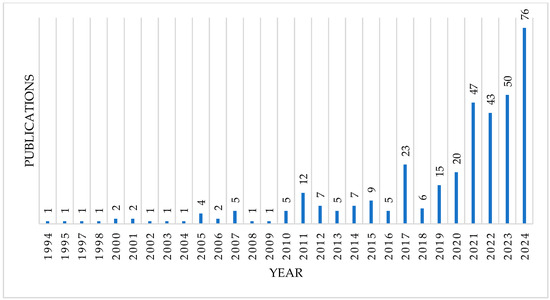
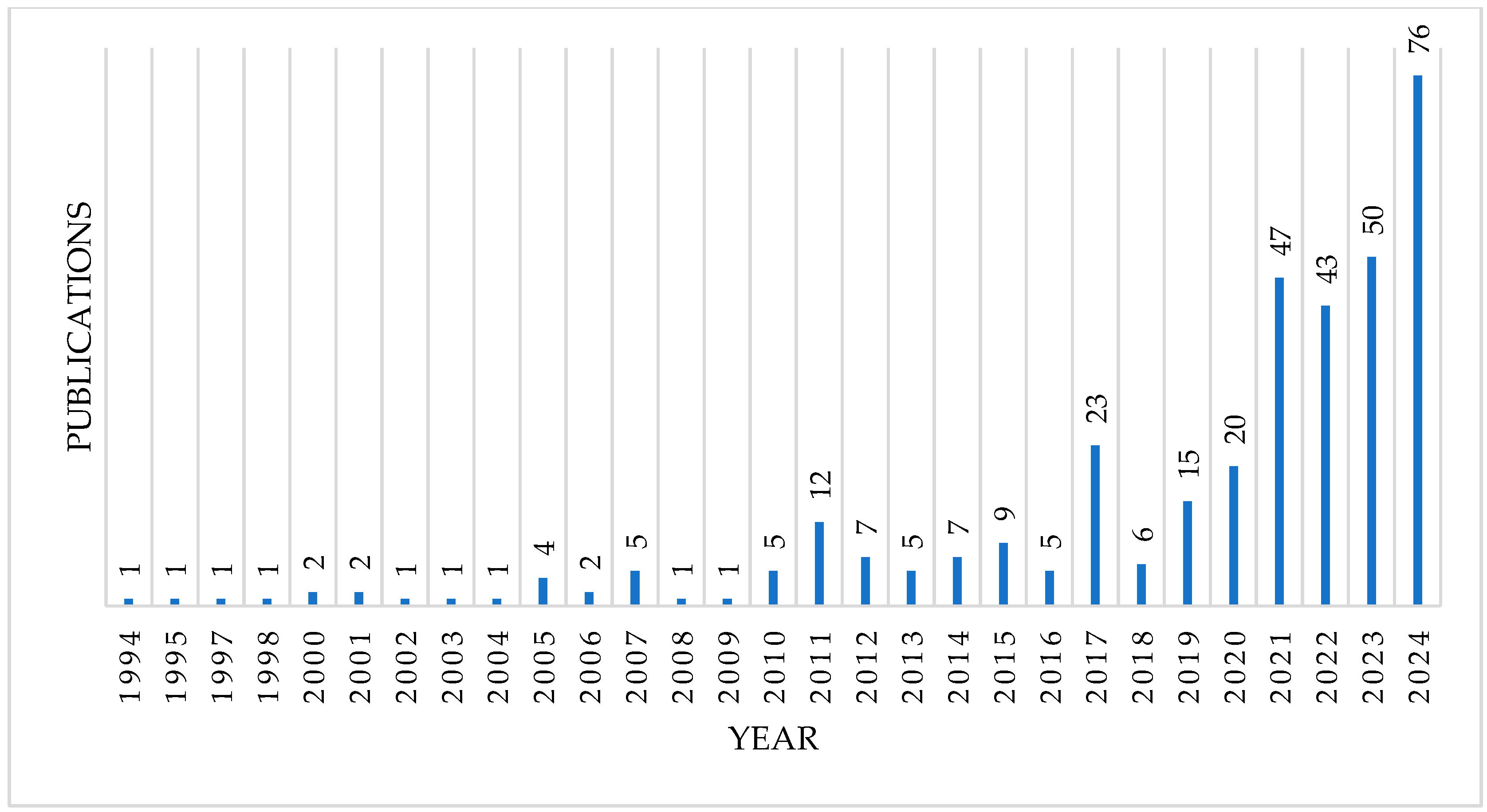
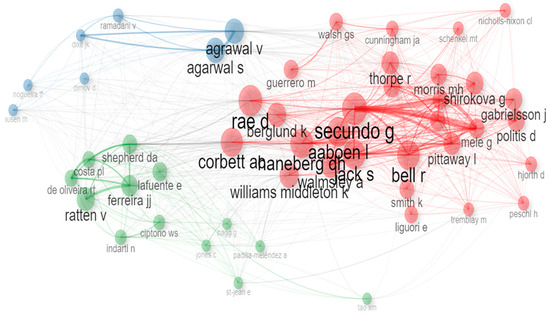
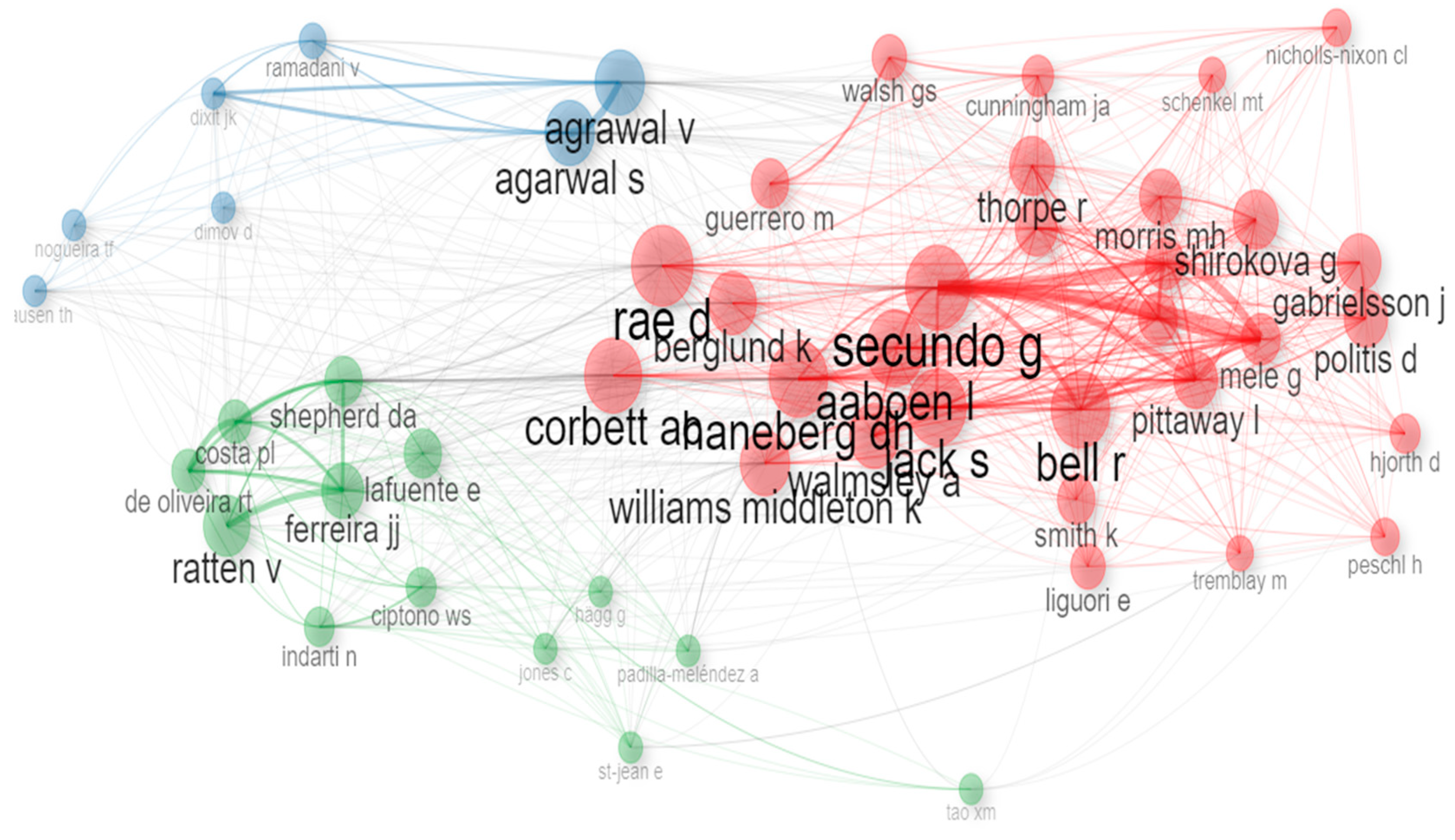
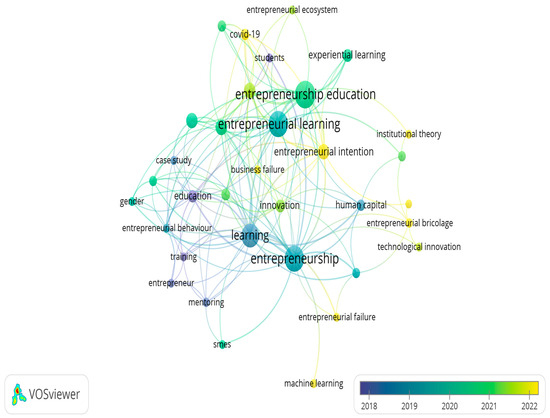
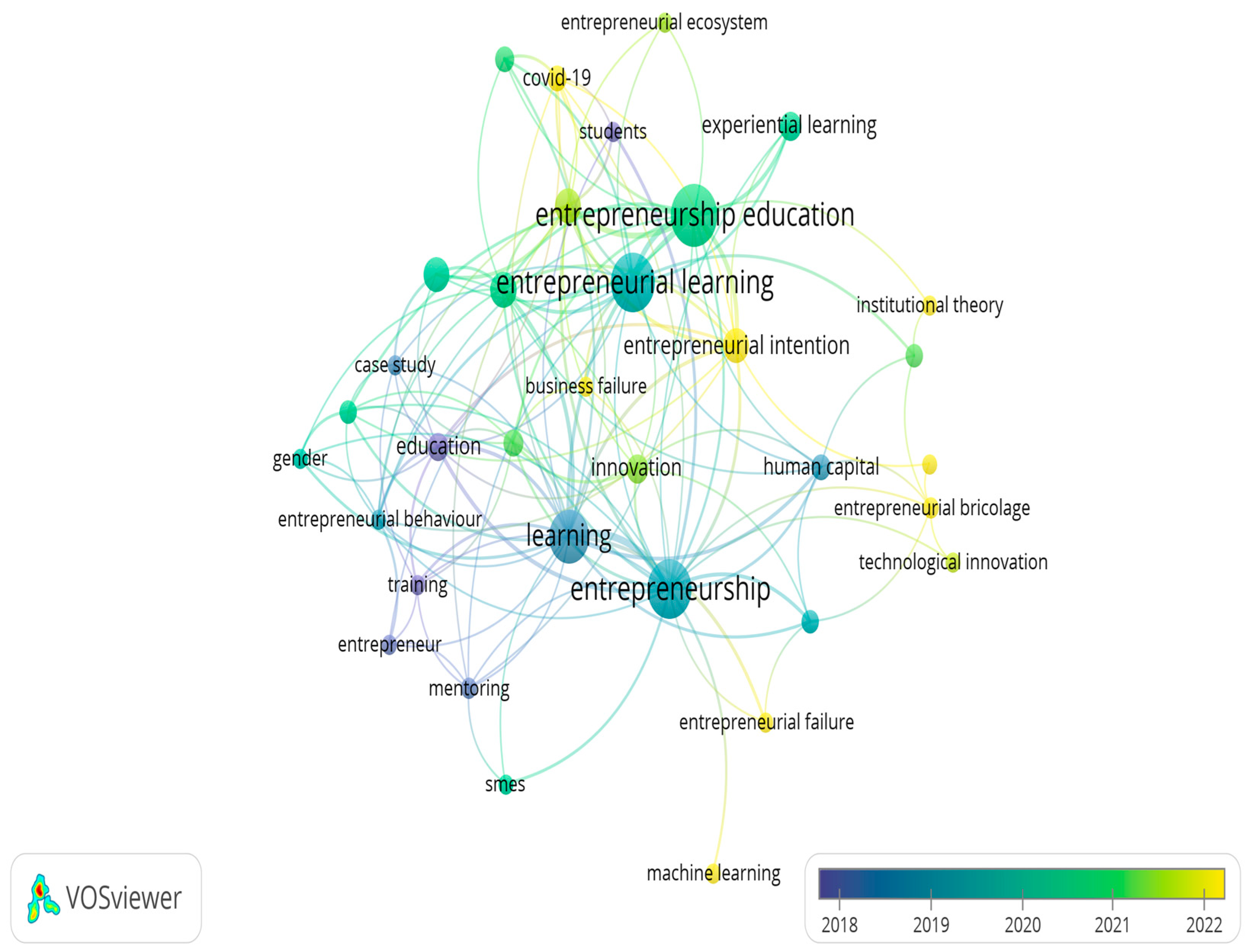
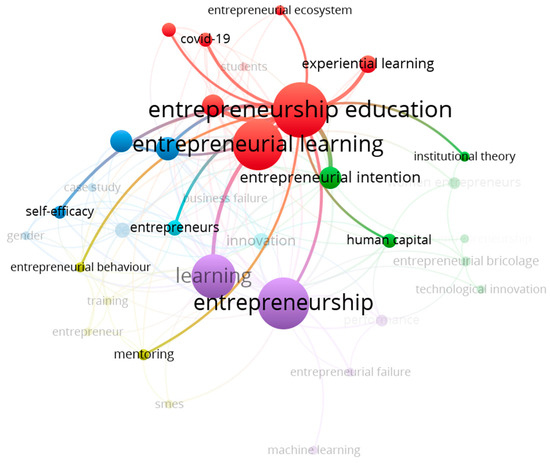
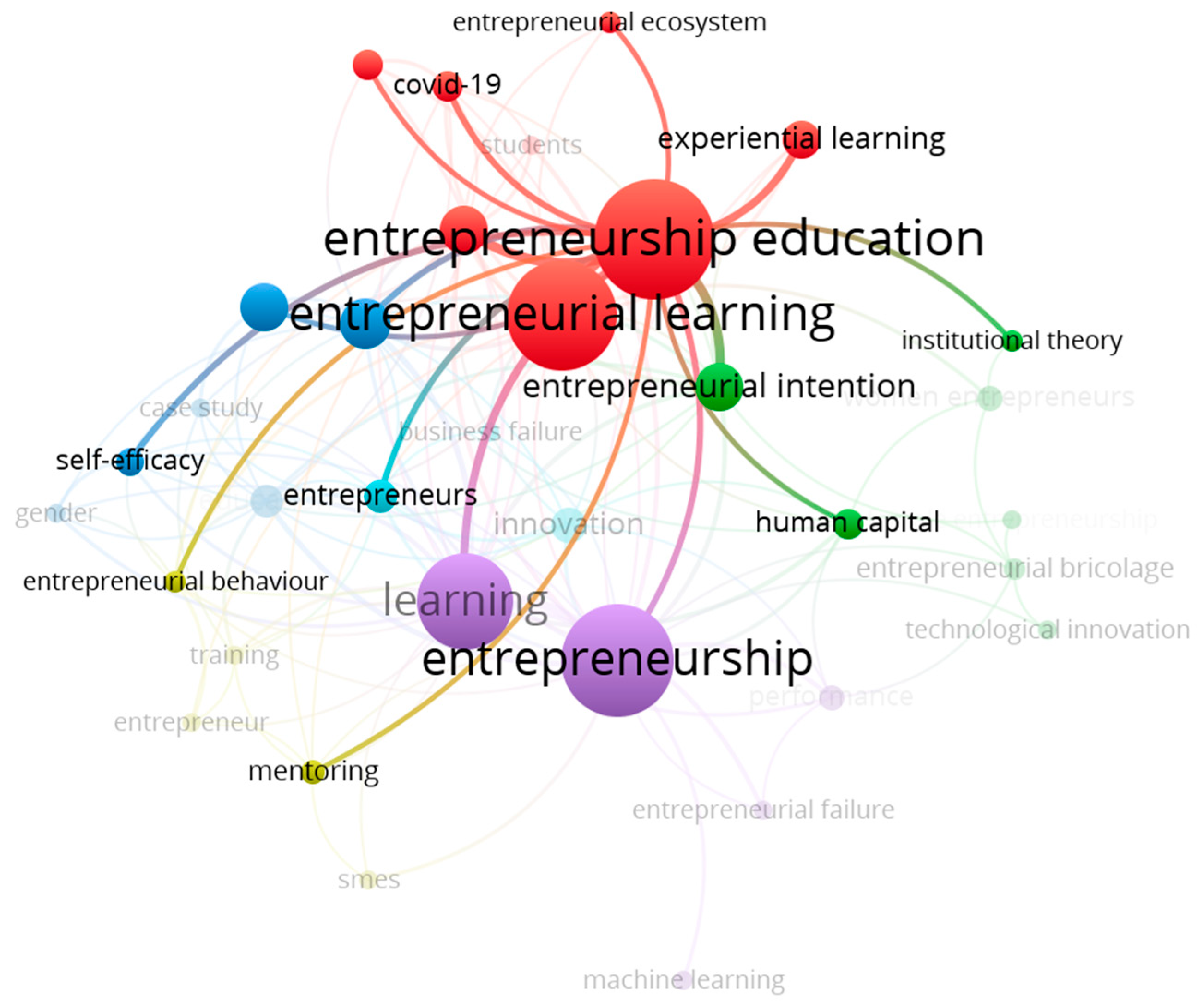
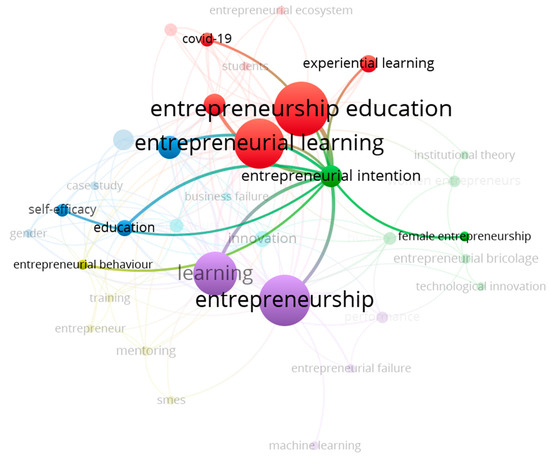
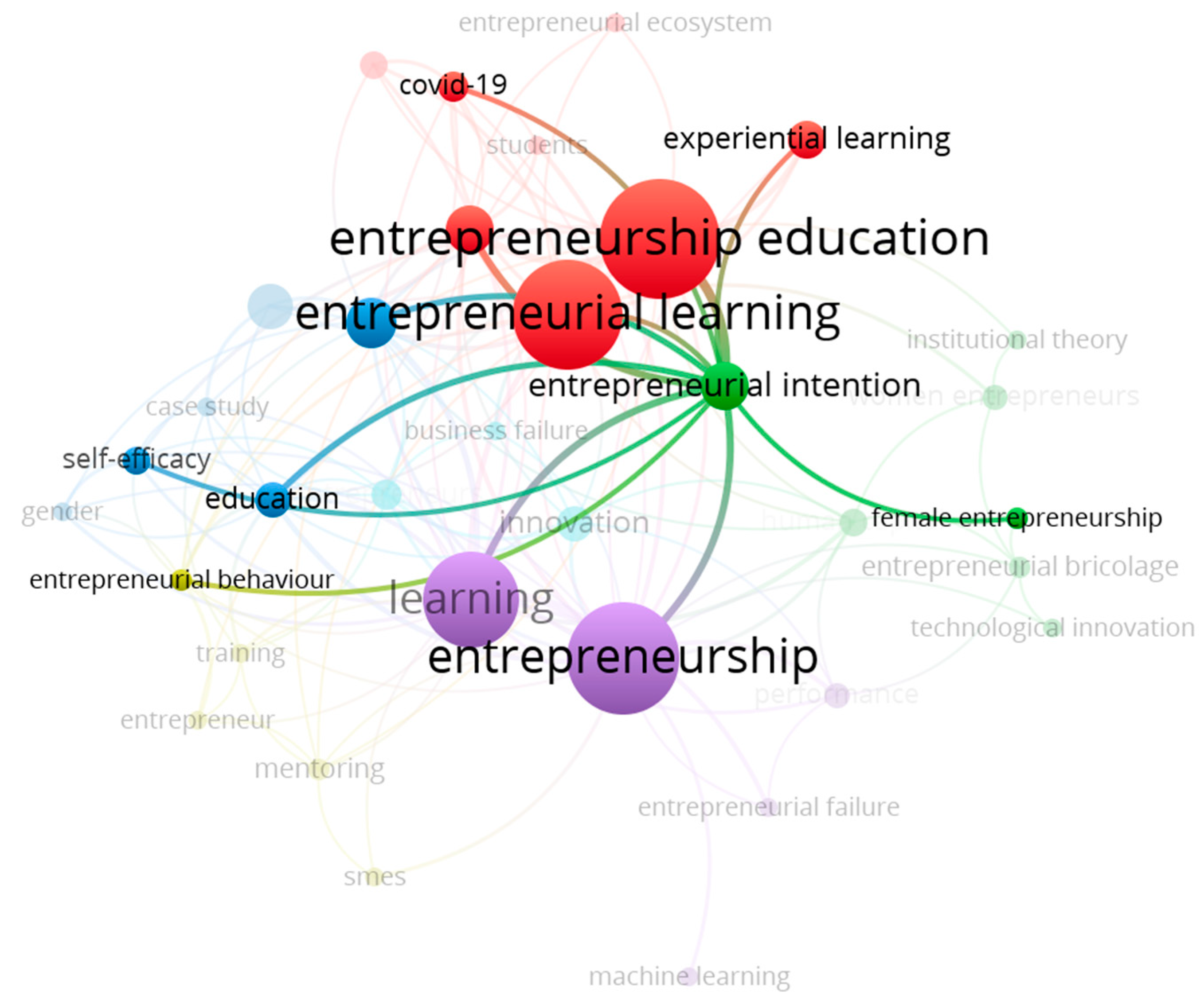
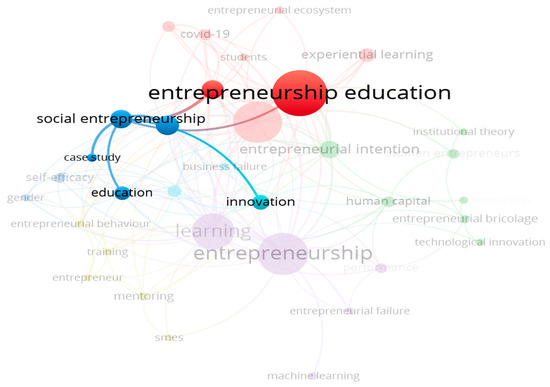
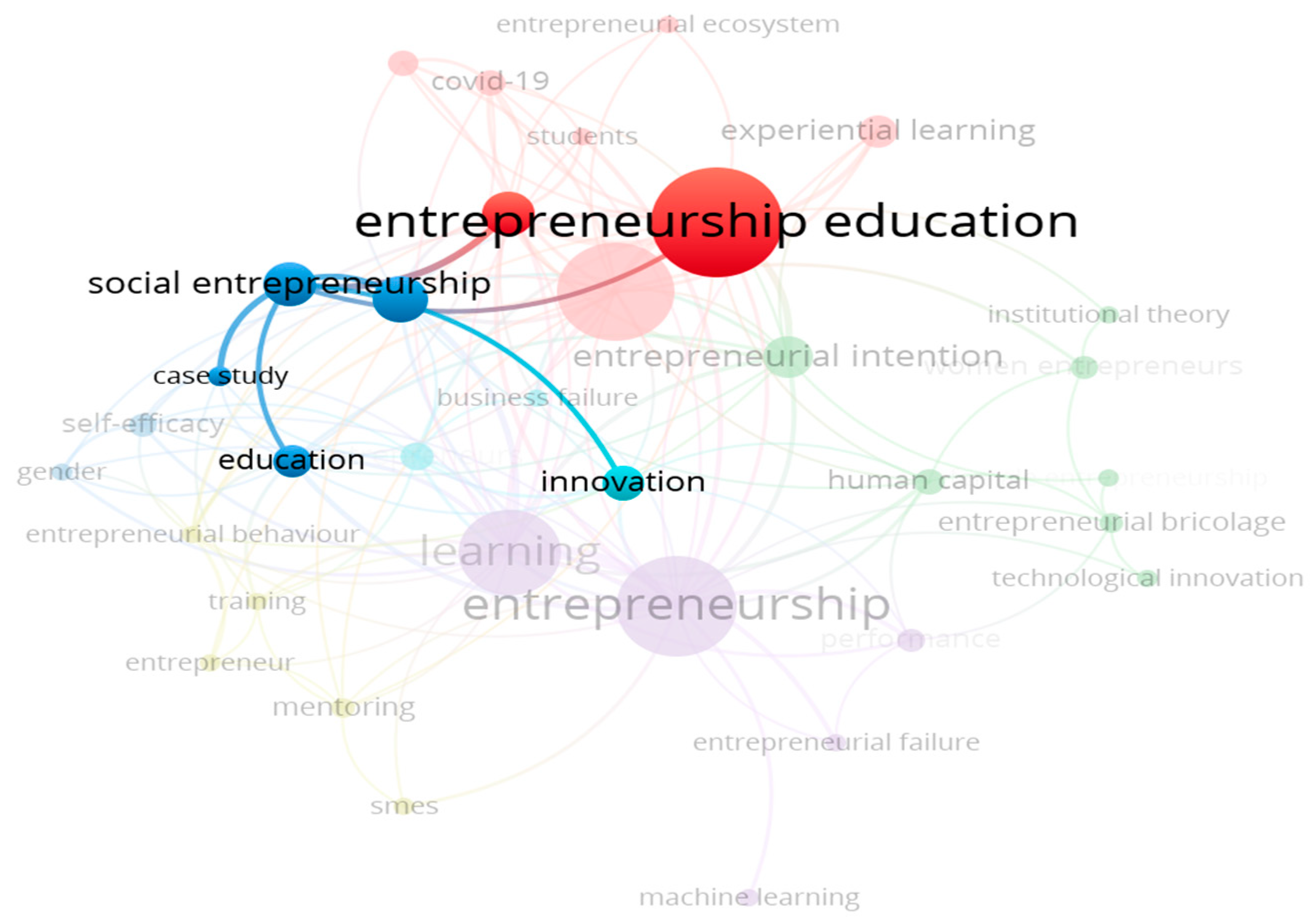
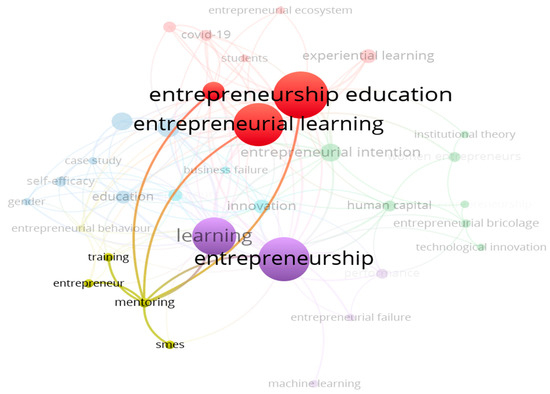
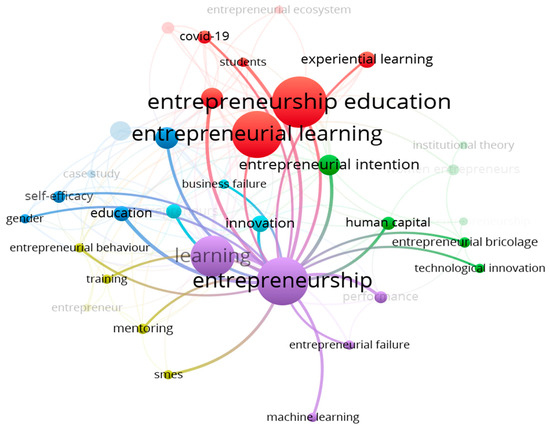
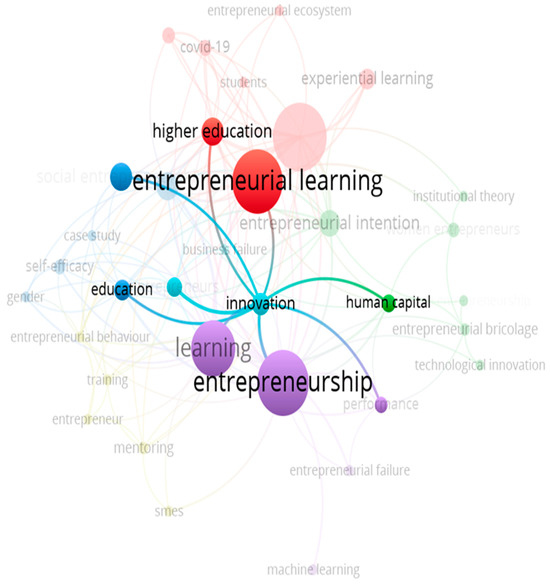
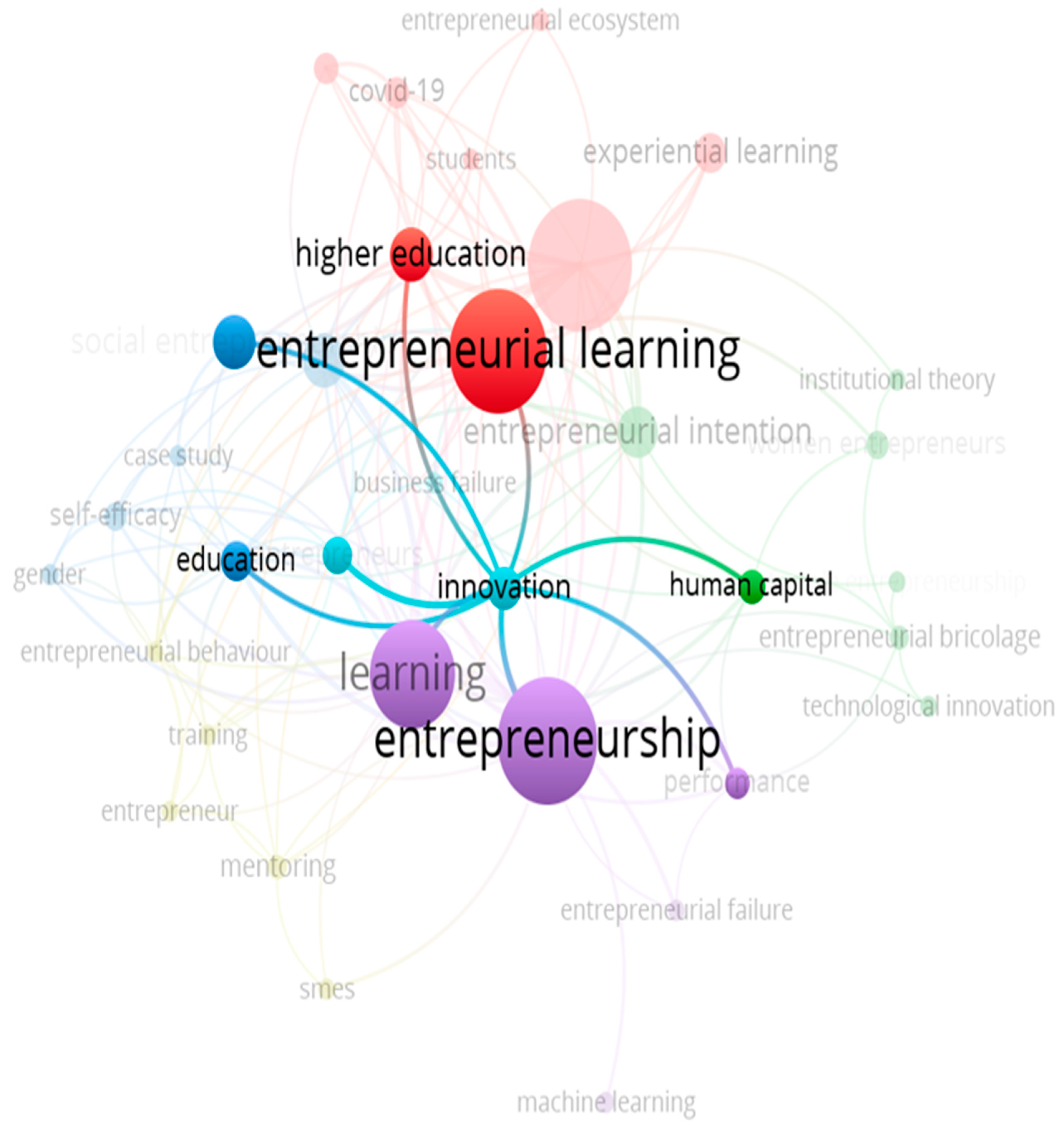

Disclaimer/Publisher’s Note: The statements, opinions and data contained in all publications are solely those of the individual author(s) and contributor(s) and not of MDPI and/or the editor(s). MDPI and/or the editor(s) disclaim responsibility for any injury to people or property resulting from any ideas, methods, instructions or products referred to in the content. |
© 2025 by the authors. Licensee MDPI, Basel, Switzerland. This article is an open access article distributed under the terms and conditions of the Creative Commons Attribution (CC BY) license (https://creativecommons.org/licenses/by/4.0/).