


Abstract
Heavy metal contamination of agricultural soils and urban green spaces has become a major environmental concern, threatening ecosystem functioning, food safety, and sustainable land management. Silicon-based growing media have emerged as an environmentally friendly approach for reducing metal mobility while enhancing plant establishment in contaminated environments. Despite growing research interest, a comprehensive evaluation of the mechanisms, effectiveness, and practical applications of silicon-amended growing media across diverse plant systems remains lacking. This systematic review addresses this gap by synthesizing current evidence following the PRISMA 2020 framework. A systematic search of Web of Science, Scopus, PubMed, ResearchGate and Google Scholar identified 247 publications published between 2010 and 2025, of which 32 peer-reviewed studies met the predefined inclusion criteria for qualitative analysis. The reviewed literature demonstrates that silicon incorporation into growing media improves substrate functionality by modifying physicochemical properties, immobilizing heavy metals, regulating metal transport within plants, strengthening antioxidant and osmo-protective defense systems, preserving photosynthetic activity, and improving nutrient acquisition and water-use efficiency. Furthermore, silicon influences molecular signaling pathways and promotes beneficial rhizosphere interactions that collectively enhance plant resilience under metal stress. Among the evaluated materials, silicon nanoparticles consistently exhibited greater remediation efficiency than conventional silicon sources because of their higher surface reactivity and improved bioavailability. Overall, silicon-based substrate engineering represents a multifunctional and sustainable strategy for mitigating heavy metal contamination while improving the performance of agricultural crops and urban vegetation. Future research should focus on validating these findings under long-term field conditions, optimizing silicon formulations for different substrate types and contamination scenarios, evaluating environmental safety, and integrating silicon-based technologies into climate-resilient agricultural practices and urban green infrastructure.
Keywords:
silicon; heavy metals; pollution stress; growing substrate; ROS; phytoremediation; urban plants; green roof; PRISMA 1. Introduction
Heavy metal pollution is one of the most discussed and ongoing environmental issues of this century. Heavy metals are not biodegradable substances and tend to accumulate in soil [1,2], plant tissues [3,4], and the food chain [5,6,7], and hence into humans and wildlife [8,9,10]. Some of the most common phytotoxic metals that have been reported to accumulate in soil the environment include cadmium (Cd), lead (Pb), arsenic (As), chromium (Cr), copper (Cu), zinc (Zn), and manganese (Mn), which are mostly related to industrial effluents, mining, vehicular exhaust, phosphate fertilizer application, and atmospheric deposition [11,12,13]. In urban areas, especially, multi-metal pollution levels are high, with rooftop and roadside vegetation simultaneously being subjected to high concentration of particulate matter (PM2.5, PM10), heavy metals, as well as gaseous pollutants [14].
The harmful effects of heavy metals on plant physiology affect almost all metabolic functions [2,15]. Heavy metal ions affect the activity of enzymes, displace the mineral cations essential for enzyme action and cause lipid peroxidation of membranes and the overproduction of ROS such as superoxide radicals (O2•−), hydrogen peroxide (H2O2), and hydroxyl radicals (•OH) [4,8]. Oxidative stress caused by the accumulation of ROS damages nucleic acids, proteins, chloroplast and mitochondrial function, which ultimately results in growth inhibition, decreased photosynthetic efficiency, yield loss, and even plant mortality in extreme situations [16].
Silicon (Si) amendments have emerged as an alleviation strategy for phytoremediation, applied in combination with nano-fertilizers and organic amendments. Si is a non-essential nutrient for higher plants but has been proven to be beneficial for plant growth and structural development, and it has recently been receiving a lot of attention from the scientific community due to its pollutant accumulation properties that extend across a wide spectrum of abiotic stresses as well [1,17,18]. The bioavailability of silicon to plants is strongly related to its chemical state in the substrate, soil pH, redox conditions, and the microbial activity in the soil [1,17].
The use of the Si-enriched growing substrates (such as orthosilicic acid, potassium silicate, and silicon nanoparticles, SiNPs) is a viable and scalable way to improve plant resistance to pollution stress. It is a strategy that can be used in agricultural crop systems, horticultural media, and increasingly urban green infrastructure demand such as green roof substrates [19,20]. This is especially important considering the known ability of urban plants to immobilize and sequester heavy metals from atmospheric deposition, which is facilitated by the Si-mediated fortification.
Although significant advances have been made in individual studies on the response of Si to specific metals or to specific crop species, a synthesis of the role of a Si-enriched substrate under the entire range of pollution involving multiple metals, cultivation media, and agricultural and urban plant settings is still missing. The previous reviews have only considered a few specific metals, including arsenic [12,13], cadmium [21,22], or Si nutrition in general [12,17], and have not comprehensively included substrate composition as a key factor.
This systematic review aims to fill this gap. It follows the PRISMA 2020 methodology [23] to collate evidence from 32 peer-reviewed publications (January 2010–July 2025). Objective of this qualitative systematic review is to (i) identify the forms and bioavailability of Si in growing substrates; (ii) systematically map the mechanistic pathways for the mitigation of heavy metals and pollution stress by Si; (iii) review the efficacy of Si in the major pollutants and plant systems; (iv) discuss the emerging importance of Si-enriched substrates in the urban plant context; and (v) highlight key research gaps and future directions for science and application.
2. Materials and Methods
2.1. Protocol and Registration
The Preferred Reporting Items for Systematic Reviews and Meta-Analyses 2020 PRISMA 2020 statement [23] was followed in conducting this systematic review. The review protocol was prepared before searching for literature and followed throughout the review process. No pre-registration was achieved (acknowledged as per the PRISMA 2020 reporting requirements). A complete PRISMA 2020 checklist is provided as Supplementary Material Table S1. The narrative style of this review adheres to the Synthesis Without Meta-analysis (SWiM) reporting guidelines [24].
2.2. Search Strategy
A thorough literature search was conducted using five electronic databases: Web of Science (WoS), Scopus, ResearchGate, PubMed, and Google Scholar. The following structured search term was used in all databases:
Plant OR crop OR substrate OR growing media OR soil amendment AND stress mitigation OR detoxification OR antioxidant OR phytotoxicity OR remediation AND silicon OR orthosilicic acid OR potassium silicate OR silicon nanoparticles OR heavy metal OR cadmium OR lead OR arsenic OR chromium OR copper OR zinc OR pollution stress.
Date limits were set to January 2010–July 2025 to capture contemporary research while reflecting the acceleration of the field. Language was restricted to English. Where titles or abstracts appeared borderline, full texts were retrieved for assessment.
A study was considered eligible for inclusion in the analysis if it: (i) studied silicon as a component of the growing medium, as a soil amendment or as a treatment applied to the soil; (ii) investigated one or more heavy metal or pollution stressors; (iii) evaluated plant growth, physiological, biochemical, or molecular response variables; (iv) was published in peer-reviewed journals; (v) was performed in vitro, in pot, in greenhouse, or in field experiments; and (vi) have reproducible outcomes.
The reviewed articles were included for contextual synthesis but not for primary data studies. Strict exclusion criteria was applied to studies that examined Si only as a nanoparticle foliar spray (SNIPs) without the context of the substrate characteristics (substrate type, pH, metal profile, concentration), pathogen-only effect or biotic stresses, or used substrate-less controls and conference proceedings, theses, and grey literature. A total of 32 studies were qualified for synthesis as shown in Figure 1.
Figure 1.
PRISMA 2020 flow diagram.
2.3. Study Selection
Duplication of records was checked within the databases. Title and abstract screening were done by two independent reviewers; disagreements were resolved by consensus. Remaining records were then analyzed in full text. A total of 247 articles was initially identified, and 64 studies led to the evidence base, and 32 studies qualified after applying Synthesis without meta-analysis (SWiM). A complete list of all 32 studies with detailed characteristics, Si forms, experimental crops, targeted metals, research design, and outcomes are presented in Supplementary Table S2.
2.4. Data Extraction and Risk of Bias
Systematically, relevant data were retrieved from all studies included, which included plant species, form and application dose of Si, metal(s) studied, substrate type, biochemical and physiological observations, study design, and outcome parameters. It also included growth parameters, antioxidant enzymes such as superoxide dismutase (SOD), catalases (CAT), ascorbate peroxidases (APX), and hydrogen peroxidases (H2O2), translocation factors, metal accumulation, and Si relative effect to untreated substrate. Missing data fields were recorded as “not reported; no assumptions made; or unclear outcome.”
The quality of the individual study was assessed according to the research design methodology; randomized complete block design (RCBD) trials have more points than greenhouse experiments, which have more points than completely randomized design (CRD)/ in vitro experiments; the number of subjects was adequate (minimum n = 3), the presence of positive and negative controls, and the statistical rigor. No pool effect measure was calculated, given substantial heterogeneity in plant species and their response to one specific metal, source of Si, substrate type, metal type, and experimental designs; quantitative meta-analysis was not performed. Results are synthesized qualitatively.
2.5. Risk of Bias (RoB)
Risk of bias (RoB) in individual studies was assessed using SYRCLE’s Risk of Bias tool [25], adapted for plant experimental studies. Six domains were evaluated for each included study: (D1) selection bias: random sequence generation and baseline comparability, (D2) performance bias: controlled experimental conditions and random housing of experimental units, (D3) detection bias: blinding of outcome assessors, (D4) attrition bias: completeness of outcome data reporting, (D5) reporting bias: consistency between pre-specified and reported outcomes, and (D6) other sources of bias including funding and competing interests. Each domain was rated as low risk, unclear risk, or high risk. An overall risk of bias rating (low, moderate, or high) was assigned per study based on domain-level ratings. A formal SYRCLE assessment summary for all 32 included studies is provided in Supplementary Materials Table S3.
Reporting bias was assessed in accordance with SWiM guideline item 8 through three approaches: (i) within-study selective outcome reporting was evaluated via SYRCLE domains, comparing outcomes stated in each study’s methods section against those reported in results; (ii) directional consistency of findings across independent research groups was used as a qualitative indicator of evidence robustness; and (iii) consideration was given to whether null or negative Si effects were represented in the retrieved literature. The predominance of positive Si findings across the evidence base likely reflected publication bias inherent to the plant stress literature and is acknowledged as a limitation in Section 9.
2.6. Certainty of Evidence
Strength of evidence for each mechanism is characterized as strong (≥3 independent species), moderate (≥2 studies, single crop system) or emerging (≥2 studies or in vitro experiments). No study was discarded because of risk of bias, and high-risk studies were not referenced as the only evidence to support any mechanism. Studies assigned to an overall low to moderate risk rating are identified in Supplementary Materials Table S3, and all key mechanistic claims in Section 4 and Section 5 are supported by at least two independent low-risk studies.
3. Silicon in Growing Substrate: Forms, Bioavailability, and Dynamics
3.1. Silicon Abundance and Bioavailability Challenge
Silicon is the second most abundant element in the earth’s crust (after oxygen), accounting for about 28% of the Earth’s weight based on mass [11]. In spite of this abundance, the vast majority of soil Si is not directly available to plants, such as SiO2, silicate minerals, and aluminosilicates, which are not readily absorbed by the plant [17]. The only plant-bioavailable form is monosilicic acid or orthosilicic acid (OSA), H4SiO4, which is found in soil solutions at typically low concentrations (0.1–0.6 mM) [26,27].
The bioavailability of Si in growing substrates (Figure 2) is determined by many factors such as the pH, organic matter (OM) content, microbial activity, redox status, and mineralogy of the substrate. Si is readily polymerized into less soluble form in alkaline substrates (pH > 8), while moderately acidic to neutral substrates (pH 5.5–7) are ideal for keeping the Si in the form of monosilicic acid in solution [17]. In addition, silicolytic bacteria can release Si in mineral forms through a microbial weathering process, particularly with organic-rich substrates [28]. The consequences of these dynamics have important implications for substrate design both in agricultural and urban horticultural settings.
Figure 2.
Silicon bioavailability cascades from substrate input to plant deposition.
3.2. Forms of Silicon in Substrate
The reactivity of silicon-containing material towards heavy metal immobilization varies. Although quartz sand (SiO2) is readily available, it is chemically passive in agronomic situations and provides a negligible supply of plant-available Si or metal fixation [29]. Reactivity of rock-derived silicates ranges considerably: mafic igneous minerals (olivine, pyroxenes) are relatively easily weathered and thus increase the pH of the substrate and metal precipitation; phyllosilicate clays (smectite, illite) bind metals through cation exchange at silanol surface sites; metamorphic wollastonite (CaSiO3) raises the pH and simultaneously releases Si in a bioavailable form, lowering the availability of Cd and Pb [4]. Amorphous diatomaceous earth, which has high surface area and dissolution rate [16], is the most reactive Si source. Compared with all other conventional Si sources, orthosilicic acid (OSA) is the most bioavailable source, being absorbed by plant roots directly through influx transporters Lsi1 (Low Silicon 1) and efflux transporters Lsi2 [30].
Table 1 elaborates on the forms of silicon that can be used in substrates, their availability rates, uptake mechanisms, and applications. Potassium silicate has to be converted into its monosilicic acid form through microbial or chemical weathering processes before it can be taken up by plants, which can take several weeks to months in substrates that are free of microbes or have a low microbial load (e.g., hydroponics, green roof systems) [26]. An alternative that is highly effective is silicon nanoparticles (SiNPs), which have nanoscale dimensions allowing them to penetrate the cell walls and stomata and thus be internalized at doses as low as 50–100 mg/L, yet providing strong physiological effects [31,32].
Table 1.
Forms of silicon applied in growing substrates; bioavailability and application mode.
3.3. Silicon Uptake and Transport Pathways
Uptake of silicon in plants occurs at the root epidermis/exodermis cell through Lsi1, one of the NIP (nodulin-like intrinsic proteins) aquaporin subfamily members, which has been found in rice and subsequently in wheat, barley, maize and other dicotyledonous plants [18]. Si is carried to aerial tissues mostly as monosilicic acid when it is moved into the xylem, as illustrated in Figure 3. Once it reaches shoot tissues, Si is converted to amorphous silica (SiO2•nH2O), which deposits in cell walls, intercellular spaces, trichomes, and epidermal cells, forming silica bodies (phytoliths) that contribute to the structure and provide a physical barrier to the movement of metal ions [37,38,39].
Figure 3.
Si-mediated plant mitigation pathway: from rhizosphere to leaf.
Notably, under pollution stress, the Si uptake pathway is like the route of arsenite (As(III)), which uses NIP aquaporin channels. It is a mechanistically important pathway at the transporter level for direct arsenic uptake from contaminated media, in which Si in the substrate may play a direct role [30,40]. In multi-metal-contaminated substrates, Si thus provides protection in two ways: the structural and the transporter-competition mechanism.
4. Mechanistic Pathways of Si-Mediated Pollution Mitigation
The potential mechanisms through which Si in substrates reduces the stress imposed by heavy metals and pollution in plants are complex. It involves intracellular physiological adaptation from rhizospheric levels to cellular, biochemical, and molecular transport mechanisms, as shown in Figure 4 and are elaborated in Table 2.
Figure 4.
Mechanistic pathway involving Si-mediated pollutant mitigation in plants.
Table 2.
Summary of mechanistic pathways of Si-mediated pollution stress mitigation in plants.
4.1. Rhizosphere pH Elevation and Metal Immobilization
Raising the rhizospheric and substrate pH by hydroxylation of silicate compounds is among the most documented external mechanism of stresss alleviation due to Si. The rhizospheric pH is raised during the plant’s growth, and the metal is immobilized during the flowering of the plant [41,42]. Alkalinization of the soil-substrate interface, caused by adding potassium as well as calcium silicate, results in reduction in the bioavailability of most of the heavy metals, especially Cd and Pb, because they precipitate as metal hydroxides, carbonates, and/or silicate complexes [11]. Gu et al. [34] showed that Si-rich amendments significantly raised the pH of multi-metal-polluted acidic soils, lowered extractable Cd, Pb, and Zn concentrations, and resulted in lower concentrations of metals in the shoots of rice. The same results were found by Dong et al. [43], who recorded elevated soil pH induced by Si amendment, which also lowered the concentration of Cd in plants and the Cd translocation factor in Pennisetum plots.
In addition to the effects of pH, Si does form direct complexes in the rhizosphere with metal ions. These studies on Cd-polluted soils have thus verified the presence of Si-Cd co-precipitated products, especially in higher Si concentrations [17]. The use of combined amendments, including silicates, decreased the concentrations of Cd and Pb in paddy soils by about 70–80%, and the accumulation of Cd and Pb in the shoots was reduced by 42–44%, while the grain accumulation was reduced by 77–88% [34]. This immobilization effect in the rhizosphere has a distinctive role in devising remediation strategies for polluted growing substrates.
4.2. Apoplastic Silicon Deposition and Physical Barriers
There are apoplastic silicon deposition and physical barriers, as Si taken up is preferentially deposited in the apoplast (cell walls, Casparian strip, endodermal layers), and a structural physical barrier is created, which blocks the radial transport of metal ions from the cortex into the xylem [30]. The apoplastic Si barrier is a second barrier, which is independent of the metal immobilization mechanism in the rhizosphere. It has been shown by Vaculík and Vaculíková that the root anatomy is altered by thickening of the Casparian strip and decreasing translocation of Cd to the aerial tissues in Cd-stressed maize [44]. Another component in rice cell walls that has been described as a key regulator for Cd uptake by cells in the root is Si-bound to hemicelluloses.
Structural silica deposition in leaves and stems also makes leaves and stems less porous to metal-contaminated water droplets and particulate matter, which could be instrumental in urban applications where pollutants (Pb, Zn, Cu from vehicle emissions and industrial processes) are deposited onto urban vegetation as wet and dry deposition [15]. Shoot tissues, therefore, could have both physical and physiological pollution interception capabilities, which might be combined in such a manner that one tissue takes care of both.
4.3. Competition at Influx Transporters (Lsi/Lsi2)
Monosilicic acid and arsenite (As(III)) are both taken up into the root cells through NIP aquaporin channels (Lsi1), as mentioned in Section 3.3. This structural competition is complex, yet the uptake of arsenic is directly and specifically lowered by increasing the concentration of Si in the substrate, without involving a plant biochemical defense response that would consume energy [45]. This molecular evidence for the transporter competition hypothesis was confirmed in rice by the increase in Si accumulation with the simultaneous decrease in As accumulation seen in plants overexpressing Lsi1 [30,46,47]. This mechanism is of key agronomic relevance in paddy rice production where, under anaerobic flooded conditions, arsenite is released, which is a key food safety risk. In recent years, there is recognition that amendment of paddy substrates is a feasible practice that not only decreases grain deposition of As but also improves the structural and antioxidant properties of paddy fields [48,49]. The possibility of extension of this transporter competition concept to other metals with similar uptake pathways to Si, such as Germanium, is also an underexplored global research topic [50,51].
4.4. Chelation, Phyto-Chelatin Induction, and Vacuolar Sequestration
At the cellular level, Si induces the detoxification of accumulated heavy metals by synthesizing metal chelators, mainly phytochelatins (PCs) and metallothioneins (MTs). These peptides contain cysteines that bind the metals into non-toxic complexes, which would then be transported into vacuoles for long-term sequestration, thus avoiding the inhibition of cytoplasmic enzymes [52]. A study by Bari et al. [53] showed that Si treatment significantly enhanced phytochelatin synthesis and ROS scavenging capacity in cadmium-stressed rice, which led to reduced cytoplasmic free Cd concentration. Studies from [44,54] and most recently from Pan et al. [55] reported that Si coprecipitates with Cd and Zn in leaf cell cytoplasm and vesicles and forms Si–metal complexes.
The positive response of Si to stimulate metal chelators has been suggested for Cu excess and Fe-deficient conditions, in addition to Cd and Zn, as it promotes the distribution and molar ratios of co-transported microelements [56,57]. This means that, in the design of the growing media, the substrate can be a solution that treats the problem of multiple metals instead of single-metal pathways, a task that cannot be performed by other methods.
4.5. Reactive Oxygen Species Scavenging and Antioxidant Enzyme Upregulation
The biochemical mechanism of stress alleviation in the presence of pollutants, revealed to the greatest extent, involves the upregulation of the enzymatic and non-enzymatic antioxidant defense system, which can remove ROS produced by the heavy metal stress. Accumulation of ROS such as superoxide (O2•−), H2O2, and hydroxyl radicals results in extensive oxidative damage and electrolyte leakage from damaged membranes [58,59].
The four key enzymes of the plant antioxidant system (superoxide dismutase, SOD, catalase, CAT, ascorbate peroxidase, APX, and peroxidase, POD) are consistently upregulated after Si supplementation, restoring ROS homeostasis. SOD promotes the dismutation of O2•− to H2O2, which is detoxified by CAT, APX, and POD in the ascorbate–glutathione cycle [60]. Hosain et al. [60] showed coordinated upregulation of all four enzyme classes both in roots and shoots of Cd-stressed rice plants supplemented with SiNPs, with significant reduction in the accumulation of H2O2, in MDA content, and in electrolyte leakage when compared with Cd-alone plants. Cadmium-stress-induced wheat showed similar patterns [61]; Cd-stressed rice with Si and Fe nanoparticles showed a similar pattern [62]; and Cr stressed maize with SiNPs showed a similar pattern [63].
In addition to enzymatic antioxidants, Si supports non-enzymatic antioxidants for ROS, such as ascorbic acid, glutathione, proline, flavonoids, and phenolic antioxidants. These are small molecules that act as direct radical scavengers and as substrates for the ascorbate–glutathione cycle, thus serving as an additional line of defense against oxidative stress in metal-contaminated substrates [64]. The combination of enzymatic and non-enzymatic ROS scavenging potential of Si exerts a strong defense response that is unique and effective in the context of multi-metal (oids) pollution, as is found in an urban growing environment.
4.6. Photosynthetic Apparatus Protection
Heavy metal accumulation has a significant impact on photosynthesis in several ways: destruction of chloroplast ultrastructure, reduction in the activity of Rubisco, decrease in chlorophyll biosynthesis, stomatal closure, and disturbance of the electron transport chain. Under metal stress, the ratio of Fv/Fm, which is the maximum quantum yield ratio in photosystem II, decreases significantly, thus creating a sensitive biomarker of photoinhibition caused by metal stress [63,64,65].
The addition of Si into growing substrates offers consistent protection of photosynthetic function. Under heavy metal stress, the chlorophyll a and b content, Fv/Fm ratio, net photosynthesis rate, stomatal conductance, and intercellular CO2 concentration in SiNPs-treated plants are significantly better maintained than in untreated heavy metal-stressed plants [66,67]. The protective mechanisms involved are: (i) sequestration and apoplastic barriers to reduce the concentration of metals at the chloroplast membranes; (ii) upregulation of protective enzymes in the chloroplast; (iii) abscisic acid (ABA) mediated stomatal regulation to avoid excess metal entry through transpiration; and (iv) avoiding the reduction in thylakoid membrane integrity due to low level of lipid peroxidation [68,69].
4.7. Gene-Level Regulation of Metal Transporters and Antioxidants Loci
The latest research on Si, using transcriptome and molecular biology methods, has confirmed that Si has stress-alleviating activity that can be seen in the regulation of gene expression networks related to metal transport and antioxidant responses. Rice also exhibits downregulation of the expression of metal transporters, including OsNramp5 (a major Cd/Mn influx transporter), and upregulation of the expression of vacuolar metal sequestration transporters (vacuolar-encoded) HMA2 and HMA3 in the presence of Si [62]; a similar mechanism was observed for cobalt in rice [45]. The net result is a decrease in Cd loading to the xylem and an increase in Cd sequestration in xylem vacuoles in roots [70]. The antioxidant gene-level response to Si includes increase in antioxidant enzyme levels and upregulation of antioxidant gene expression, such as the antioxidant gene for chloroplastic SOD (SOD-CP), APX7, and metal-responsive element binding proteins [71,72,73].
Under Cd stress, Andrade et al. [74] showed that arbuscular mycorrhizal fungi (AMF) in combination with Si resulted in a synergistic effect for minimizing Cd accumulation in maize by both a gene-regulatory and a structural mechanism, involving a change in the hormonal transduction pathways and the reduction in lignin accumulation. The present finding indicates that Si can not only act as a passive antioxidant reactively but also act as an active agent to reprogram plant gene expression networks into a pollution-tolerant gene-expression network, which can be relevant for designing substrates and crop genetic improvement.
5. Si Efficacy Across Specific Heavy Metals and Pollutants
The magnitude of Si’s protective capacity across different heavy metals and pollution dynamics is a key factor for this review. Table 3 presents a systematic summary of Si effects across key heavy metals, crop species, Si forms, and doses. A complete table of all 32 studies included in the evidence synthesis for silicon is mentioned in Supplementary Table S2.
5.1. Cadmium (Cd)
Cadmium, the most studied and the most mobile of all heavy metals, is transported in the phloem and is most common in contaminated food chains. A meta-analysis of 105 peer-reviewed papers, including 593 paired observations, revealed that Si amendment effectively decreased the accumulation of Cd in cereal crops (rice, wheat and maize), while the effect size depended on the pH of the substrate, the initial concentration of Cd in the substrate, the form of Si amendment and the dosage of amendment [64]. Soil amendment methods generally performed better than foliar application in Cd immobilization compared with soil alone in studies, while reduction in grain Cd ranged between 30% and >60% [75]. Hou et al. [54] stated the uptake of Cd via the downregulation of OsNramp5 and the increased production of antioxidants as the coordinated mechanisms for Cd tolerance in Si-supplemented rice.
5.2. Lead (Pb)
The primary contributors of lead in agriculture and urban soils are paints, emissions from vehicles, and industries. The apoplastic transport of Pb is relatively unrestricted compared with other metals and occurs via calcium ion channels in plants [76]. Si-enriched substrates lower the phytotoxicity of Pb by immobilization in the rhizosphere, achieved by precipitation of lead as a silicate or carbonate at elevated pH in substrate, and by increasing the ROS defense. The Si and Fe nanoparticles co-application produced substantial improvement in CAT, SOD, and POD gene expression, along with a minimized amount of Pb in the shoots and improved biomass of rice plants under Pb stress [77]. Shehzad et al. [15] reported high concentrations of Pb in urban green roof samples compared with other heavy metals, including Zn, Cu, and Cr, which indicates lead is widely present in urban settings irrespective of type and height of urban structure. Si-enriched growing media could have the dual effects of improving plant resistance and also possibly react to immobilize the Pb in the growing media matrix, lowering the concentration in leachate.
5.3. Arsenic (As)
The Si–As antagonism at shared loci Lsi/Lsi transporters makes silicon an exclusive target in arsenic-contaminated soils [78]. In flooded paddy soils, arsenite is the major form of As, and the competitive effects of As for Si at root influx transporters are especially severe. The solution of the paddy substrate increased to 1–2 mM Si and consistently decreased the concentration of As in paddy grain and uptake into the solution [79]. This means that in the affected areas, Si amendment should be a routine practice in growing media for rice crop production. Meharg and Meharg [48] were able to summarize their review and come to a conclusion that Si is a practical ‘silver bullet’ for management of As in rice systems, with other notable benefits of growth and improved grain quality, findings strengthened by subsequent experiments.
5.4. Chromium (Cr)
The high redox reactivity and increased generation of ROS by the reaction of Cr(VI) with Fe2+ in recent Fenton-like reactions cause high toxicity to crop plants as a result of its industrial uses: as tannery effluents and chromite mining [80]. SiNPs have proven to be especially effective in decreasing the toxicity of Cr in Brassica napus, where the metal is compartmentalized and immobilized in plant structures, and the activities of photosynthetic pigments and antioxidants are balanced [81]. Si application under Cr stress at the gene level upregulates SOD-CP and APX7, further strengthening the antioxidant defense mechanism at the transcription level. For Leersia hexandra, a Cr hyperaccumulator, the activities of the plant defense enzymes SOD, CAT, and APX are significantly increased under Cr stress and further enhanced by Si application, indicating a synergy between the constitutive hyperaccumulation mechanisms and Si-induced defense enzymes [82,83].
5.5. Copper (Cu), Zinc (Zn) and Manganese (Mn)
Si has a complex regulatory effect on the phytotoxicity of micronutrient elements such as Cu, Zn, and Mn, which are essential nutrients; however, they are toxic at high concentrations. Si, however, regulates the molar ratios of microelements taken up with its own and the distribution of other microelements, ensuring optimal mineral nutrition without causing the accumulation of toxic concentrations [22]. Alshegaihi et al. [82] reported that the addition of Si with AMF led to a decrease in Cu concentration in maize and altered the hormonal signaling pathway; specifically, the salicylic acid and jasmonic acid pathways and greater deposition of lignin, physically limiting the movement of Cu in the root tissues. In cucumber under Mn excess, Si application reduced only hydroxyl radical accumulation in the leaf apoplast, which is the most vulnerable part to Mn-induced oxidative damage [84].
Table 3.
Silicon-mediated mitigation of specific heavy metal stresses in crops and urban plants.
6. Discussion
6.1. Silicon-Enriched Substrate Types: Agricultural, Horticultural and Urban Applications
The effectiveness of Si-mediated pollution stress mitigation is closely linked to the composition, physical properties, and microbial ecology of the growing substrate. Table 4 provides a comparative overview of substrate types, Si incorporation strategies, pollution stress contexts, and key outcomes.
Table 4.
Green Roof and Horticultural Substrate Performance as Heavy Metal Sinks from Experimental Evidence and proposed Si-Enriched Substrate composition.
6.2. Soil-Based Agricultural Substrate
The most solid evidence for pollution stress mitigation provided by Si is found in soil-based agricultural systems involving the application of Si to polluted cropland. The most common agents are calcium and potassium silicates, which are effective in rice, wheat, maize, and vegetable crops under Cd-, Pb-, and As-contaminated soils [64,86]. The mechanisms are mainly rhizospheric (increased pH, metal immobilization) and are accompanied by an increase in antioxidant defense at the physiological level. However, low-microbial soils and/or sterilized soils present a challenge to bulk silicate amendments because they are not in bioavailable forms in such soils and are pH-dependent, and repeated applications are required because of leaching of Si by intensive irrigation [42,87,88].
6.3. Soilless Hydroponic System
As in soilless and hydroponic systems, the availability of orthosilicic acid or potassium silicate in the nutrient solution does not depend on the process of soil-substrate conversion, allowing the direct delivery of Si in a readily bioavailable form. For heavy metal stress, concentrations of 1–2 mM Si in nutrient solution have been reported for various crop species to be optimal without causing symptoms of Si toxicity [17]. The added benefit of hydroponic systems is the ability to control the Si concentration, which is very useful for studying mechanisms. The implementation of these in commercial controlled-environment agriculture (CEA) systems is simple and well reported in the literature, especially in the cases of rice, lettuce, and tomato crops in sites impacted by the presence of As or Cd in the groundwater [89,90,91].
7. Future Perspective on Urban Green Roof and Si-Substrate
Urban vegetation is chronically exposed to traffic and industrial emissions, which are the main cause of heavy metal accumulation in all urban areas. Wild roadside species including Acacia nilotica, Calotropis procera, Ricinus communis, and Ziziphus mauritiana absorbed considerable Pb, Zn, Ni, Mn, and Fe, with Mn reaching 1.6 mg/g in A. nilotica at high-traffic sites [92]. Along Pakistan’s N-5 highway, Calotropis procera and Nerium oleander accumulated leaf Pb up to 16.34 mg/kg and Cu up to 32.74 mg/kg, with metal contamination peaking in summer [93]. Field studies confirm high accumulation of heavy metals in areas with little or no vegetation at all [15]. In Guangzhou, mean leaf concentrations of Cu, Ni, Zn, Pb, and Cr were 28.3, 7.7, 142.1, 23.4, and 195.1 mg/kg, respectively, with Pb significantly elevated at roadside versus park locations [94]. Table 5 demonstrates green roof and horticultural substrate performance as heavy metal sinks from the experimental evidence base, which is instrumental in informing Si-enriched substrate strategies, as explained in Table 4.
Table 5.
Green roof substrate performance as a heavy metal sink from experimental evidence.
Comparable patterns hold in Malaysia (Fe up to 850 mg/kg in roadside leaves) and Ghana, where lead concentrations in roadside vegetation increased with decreasing distance from the road edge [102,103]. Early monitoring found contaminant retention of 95% for Pb and 88% for Cd, while optimized substrates have achieved removal of up to 97% in green roof leachate [102]. Retention is substrate composition dependent: some substrate mixes leached significant Fe and Al, while others leached considerable Cu, and vegetated surfaces consistently generated better runoff quality than non-vegetated controls [97,104]. Since substrate chemistry already governs whether a green roof acts as a metal source or sink, incorporating Si amendments (Table 4) into this active retention matrix is a mechanistically coherent extension of existing practice.
A cross-section of Si-enriched green roof substrate for heavy metal inception and bioavailability zone across substrate layers is illustrated in Figure 5. Diatomaceous earth, a naturally amorphous silica product, representing 86–89% SiO2, has been suggested as a dual-use (green roof) additive for water retention (one of the key criteria in the design of a green roof) and slow-release Si provision for growing plants [19,105]. The advantage of SiNPs is to lighten green roof substrates at the low concentration range of 50–100 mg/kg and increase bioavailability [6,106], without causing any significant increase in the loading of the green roof substrate on the buildings’ structure, which is a challenge in green roof engineering. But there is a scarcity of direct experimental proof that the Si-enriched green roof substrates work specifically in the context of the stress mitigation of urban pollution, which was identified as a priority research field to this review.
Figure 5.
Cross section of Si-enriched green roof substrate for heavy metal inception and bioavailability zone across substrate layers.
Si-Substrate and Urban Pollution Stress
Si-enriched substrates on urban green infrastructure, especially green roofs, are a new frontier that is ripe for research and application. The substrates used in green roofs are lightweight growing media specifically designed to grow plants on the roofs of buildings, generally consisting of expanded clay, pumice, volcanic tuff, recycled aggregates, and organic matter fractions [20,106,107]. Industrial emissions of heavy metals, such as Pb, Zn and Cu, from vehicles, as well as PM2.5 and PM10, have been chronically affecting urban plants, including those grown on green roofs [14,15].
Urban heat and metal stress are not additive but synergistic: their combination significantly elevates ROS beyond either stress alone, activating antioxidant defense [108]. It represents a physiological pattern corroborated in combined heat-drought trials where H2O2 and lipid peroxidation were significantly higher under combined stress than under either stressor individually [109]. Because urban heat, pollution, and PM stress converge on the same SOD, CAT, APX, POD pathway that Si is documented to upregulate (Section 4 and Section 5), Si-enriched substrates are positioned to address multiple co-occurring urban stresses through a single intervention. Thus, the strategy is directly relevant to South Asian cities, which are most vulnerable to the climate crisis, where green roof deployment is investigated as climate adaptation infrastructure under simultaneous heat and pollution exposure. Direct experimental validation of Si-fortified (versus conventional) green roof substrates under combined urban stress remains the priority gap identified in Section 9. For the qualitative nature of this synthesis, the certainty of evidence of the 32 studies included was represented in a narrative form. Evidence of Si-mediated rhizospheric metal immobilization, apoplastic barrier formation, and antioxidant enzyme upregulation (SOD, CAT, APX, POD) presented in Section 4 was considered as strong, based on more than one study in three or more crop species and consistent directional results. The evidence for Si–As transporter competition at Lsi1/Lsi2 and phytochelatin induction was moderate and mainly found in rice (Oryza sativa) systems (Table 2). Urban and green roof plant species in which Si enrichment of the substrate is suggested were grouped as “emerging” evidence, given the lack of direct substrate tests in urban systems in the current literature and the observed lack of mechanistic inferences in these systems (Table 4 and Table 5).
8. Conclusions
The systematic review is the first to make a comprehensive synthesis of silicon-enriched substrate strategies to reduce the heavy metal/pollution stress in crops and urban plants, compiled from 32 peer-reviewed studies (15 years). The following main conclusions are drawn:
Silicon fortified substrates effect pollution stress mitigation in 7 mechanistically different and complementary ways: metal immobilization in rhizosphere (via pH elevation and deposition in the Si complex); apoplastically deposited Si as physical barriers to metal transport; competition of arsenite at common metal influx transporters (Lsi1/Lsi2); induction of the formation of phytochelatins and vacuolar metal sequestration; upregulation of the enzymatic (SOD, CAT, APX, POD) and non-enzymatic antioxidant defense; protection of the photosynthetic apparatus and gas exchange; and gene-level regulation of the systems involved in metal influx and antioxidant defense. Si’s action is broad-spectrum, as it is related to many mechanisms being activated at the same time, which is greater than the action of a single-target mechanism.
The superior efficacy of silicon nanoparticles is explained by their higher bioavailability, surface reactivity, and stomatal and cellular uptake. Nevertheless, they should be systematically evaluated over time in substrate ecosystems to ensure their long-term ecotoxicological profile will be known prior to field recommendations. Gene-level regulation of Si effects on metal transporters (OsNramp5, HMA2/3) has been identified in rice, but there were few examples of similar molecular regulatory networks in urban plant species, such as Sedum, ornamental plants, and other typical green roof species. A major research need is to conduct transcriptomic and metabolomic profiling of Si responses for plant species growing in cities when exposed to realistic pollution levels. Lastly, cost–benefit comparisons between Si substrate amendments and other pollution control measures (such as phytoremediation, biochar and/or organic amendments) in various crop and urban plant systems need thorough research. These types of analyses should be the basis of policy recommendations and when advocating for the adoption of Si substrate at scale for urban planners and agricultural extension services.
Si substrate enrichment is emerging as a safe, affordable, and environmentally friendly solution for sustainable food production and resilient green infrastructure in urban areas. The current evidence suggests that mainstreaming the use of Si substrate amendment to agricultural extension programs and design guidelines for urban green infrastructure is warranted.
Risk of Bias Assessment
Across all 32 included studies, 29 studies (91%) were rated overall low risk, characterized by randomized pot allocation, controlled greenhouse or hydroponic conditions, complete outcome reporting, and absence of competing interests. Three studies (9%) were rated moderate risk, primarily due to unclear blinding of outcome assessors (Domain 3), a limitation ubiquitous in plant eco-physiology research reflecting standard reporting practice rather than deliberate methodological weakness. No studies were rated high risk. No formal certainty grading based on the GRADE (Grading of Recommendations, Assessment, Development and Evaluation) framework was performed, as this is not a standard practice for plant ecophysiology systematic reviews that have a heterogeneous experimental design, which is a limitation of the present review.
9. Gaps and Limitations
Using Si-enriched substrates in urban green infrastructure, especially green roof systems, is an exciting challenge with a strong scientific appeal, but little empirical research to date. Urban plants are exceptionally good candidates for Si’s multi-mechanistic protection effect in the multi-stress environment of urban plants (combination of metal pollution, heat, and PM pollution). Field research in this domain is seen as the greatest need in the field. Most mechanistic studies are performed when the metal is stressed in a controlled manner. Contaminated substrates rarely have simple pollution profiles; rather, they contain multi-metals in urban soils and green roof growing media. The synergism reported in this study with the Cd, Pb, and As co-contamination has not been characterized, and the relative importance of the detoxification mechanisms competing in the presence of multi-metal conditions is not known, nor is the interaction effect between transporters. Secondly, field-based research on Si-enriched green roof substrate is in its infancy. Extensive experimental studies, including pilot-scale field tests of Si-enriched substrates versus conventional substrates in known urban atmospheric pollution, are urgently needed. Additionally, the fate of Si in growing substrates has yet to be considered in multi-year trials. As phytoliths gradually dissolve out of substrates as plant tissue decays, potential Si cycling and ongoing availability exist, but the length of time substrate amendments are effective and when additional amendments need to be made periodically across the various types of substrates are unknown.
The major limitations of this review are lack of prospective registration, inclusion of overrepresented Si-enriched substrates as publication positive bias, and no validated risk of bias assessment performed, as this review is solely qualitative. Another notable limitation is excessive presentation of material based on wheat and rice studies, which limits generalizability to urban plants and there’s limited experimental evidence for Si-enriched green roof substrate under pollution exposure. Although there’s an emerging understanding of mitigating urban pollution by using Si-enriched growing media, there are still a lot of gaps in the knowledge that can be limiting factors in translating theoretical knowledge to laboratory or greenhouse results, especially in urban rooftop settings.
Supplementary Materials
The following supporting information can be downloaded at: https://www.mdpi.com/article/10.3390/environments13090493/s1, Table S1: PRISMA 2020 Checklist, Table S2: A List of Complete Characteristics of all Studies (n = 32), Table S3: SYRCLE Risk of Bias Assessment (n = 32). References [110,111] are cited in Supplementary Materials.
Author Contributions
Conceptualization, M.S. and A.Y.; methodology, M.S. and S.N.; software, M.S., S.N. and A.Y.; validation, A.Y. and M.Z.A.; formal analysis, M.S. and M.Z.A.; investigation, M.S., A.Y. and M.Z.A.; resources, M.Z.A. and A.Y.; data curation, M.S. and A.Y.; writing—original draft preparation, M.S.; writing—review and editing, A.Y. and M.Z.A.; visualization, A.Y.; supervision, A.Y.; project administration, A.Y.; funding acquisition, A.Y. and M.Z.A. All authors have read and agreed to the published version of the manuscript.
Funding
This research received no external funding.
Data Availability Statement
The data presented in this study are available upon request from the corresponding authors.
Conflicts of Interest
The authors declare no conflicts of interest.
Correction Statement
This article has been republished with a minor correction to resolve spelling and grammatical errors. This change does not affect the scientific content of the article.
References
- Ali, H.; Khan, E.; Ilahi, I. Environmental chemistry and ecotoxicology of hazardous heavy metals: Environmental persistence, toxicity, and bioaccumulation. J. Chem. 2019, 2019, 6730305. [Google Scholar] [CrossRef] [Scilit]
- Briffa, J.; Sinagra, E.; Blundell, R. Heavy metal pollution in the environment and their toxicological effects on humans. Heliyon 2020, 6, e04691. [Google Scholar] [CrossRef] [Scilit] [PubMed]
- Eissa, M.A. Phytoremediation of heavy metal-contaminated soils: Evaluating agronomic crops, hyperaccumulators, and halophytes. Soil. Sed. Cont. Int. J. 2026, 35, 1320–1338. [Google Scholar] [CrossRef] [Scilit]
- Nagajyoti, P.C.; Lee, K.D.; Sreekanth, T.V.M. Heavy metals, occurrence and toxicity for plants: A review. Environ. Chem. Lett. 2010, 8, 199–216. [Google Scholar] [CrossRef] [Scilit]
- Khan, I.; Akbar, F.; Ali, M.; Ali, S.S.; Ali, Z.; Iqbal, A.; Ali, S.; Ahmad, N.; Uddin, M.N. Integrated bioremediation approaches for air, soil and water pollution: From microbial consortia to engineered systems (2015–2026): A review. Preprints 2026. [Google Scholar] [CrossRef] [Scilit]
- Pan, S.; Guo, C.; Zhang, H.D.; Cen, H.; Zhang, Q.; Dai, F.; Li, C.; Yang, Q.; Zhang, Z.; Yin, W.; et al. Advances in ecotoxicological research using planarians: A comprehensive review. Environ. Sci. Pollut. Res. 2026, 33, 8550–8580. [Google Scholar] [CrossRef] [Scilit] [PubMed]
- Rosman, W.; Felinda, S.; Hartono, U.; Amfotis, P.; Muhammad, A.; Antonius, A.; Heriyansyah, H.; Oktavia, D.; Ansanai, M.; Marhayuni, Y. Machine learning for heavy metal pollution status classification using spectroscopic and electrochemical data: A systematic review. F1000Research 2026, 15, 880. [Google Scholar] [CrossRef] [Scilit]
- Mansoor, S.; Manzoor, S.; Gull, R.; Gani, G.; Wani, O.A.; Farooq, S.; Popescu, S.M.; Arya, V.M.; Park, W.-P.; Chung, Y.S. Biochar mediated remediation of emerging inorganic pollutants and their toxicological effects on plant and soil health. J. Soil Sci. Plant Nut. 2025, 25, 1612–1642. [Google Scholar] [CrossRef] [Scilit]
- Samad, S.U.; Ghayyur, S.; Ullah, R.; Ghayyur, S.; Arshad, S.M.; Shah, R. Assessment of heavy metal contamination in water, soils, and fish tissues from barandu river, buner, Pakistan: Implications for food safety and human health risk. Biol. Trace Elem. Res. 2026, 204, 514–537. [Google Scholar] [CrossRef] [Scilit] [PubMed]
- Zhang, M.-W.; Chen, J.; Wu, K.; Chen, S.; Wang, J.; Shu, Y. Complex Cd–Pb multigenerational exposure improves the growth and food utilization of the cutworm Spodoptera litura. Agronomy 2023, 13, 1207. [Google Scholar] [CrossRef] [Scilit]
- Emamverdian, A.; Khalofah, A.; Pehlivan, N.; Li, Y.; Zhang, L. Mechanisms Underlying the Synergistic Effects of Selenium Nanoparticles and Melatonin in Enhancing Arsenic Stress Tolerance in Bamboo. Res. Sq. 2026, 1–33. [Google Scholar] [CrossRef] [Scilit] [PubMed]
- Garg, T.; Arora, B.; Bokolia, M.; Joshi, A.; Kumar, V.; Kumar, A.; Kaur, S. Exogenous application of biostimulants for As stress tolerance in crop plants. In Biostimulants in Alleviation of Metal Toxicity in Plants; Elsevier: Amsterdam, The Netherlands, 2023; pp. 243–266. [Google Scholar]
- Karimi, N.; Pakdel, H.; Souri, Z.; Norouzi, L.; Rizwan, M.; Yong, J.W.H. Effects of phytostabilized zinc sulfide nanocomposites on growth and arsenic accumulation in wheat (Triticum aestivum L.) under arsenic stress. Plant Stress 2025, 16, 100886. [Google Scholar] [CrossRef] [Scilit]
- Shehzad, M.; Younis, A.; Mehmood, K.; Alfagham, A.T.; Alamri, S.; Rais, A.; Khan, S. Physiological and biochemical responses of plants to rooftop and ground-level conditions in urban green spaces. HortScience 2025, 60, 93–99. [Google Scholar] [CrossRef] [Scilit]
- Shehzad, M.; Younis, A.; Asif, M.; Hameed, M.A. Prospects of green roof technology as a sustainable solution to urban pollution index. J. Agric. Food Res. 2023, 14, 100751. [Google Scholar] [CrossRef] [Scilit]
- Yu, J.a.; Chen, Z.; Gao, W.; He, S.; Xiao, D.; Fan, W.; Huo, M.; Nugroho, W.A. Global trends and prospects in research on heavy metal pollution at contaminated sites. J. Environ. Manag. 2025, 383, 125402. [Google Scholar] [CrossRef] [Scilit] [PubMed]
- Greger, M.; Landberg, T.; Vaculík, M. Silicon influences soil availability and accumulation of mineral nutrients in various plant species. Plants 2018, 7, 41. [Google Scholar] [CrossRef] [Scilit] [PubMed]
- Sogarwal, A.; Kumari, N.; Sharma, V. Role of silicon in abiotic stress tolerance in wheat. Cereal Res. Commun. 2022, 51, 809–819. [Google Scholar] [CrossRef] [Scilit]
- Krawczyk, A.; Domagała-Świątkiewicz, I.; Lis-Krzyścin, A. The effect of substrate on growth and nutritional status of native xerothermic species grown in extensive green roof technology. Ecol. Eng. 2017, 108, 194–202. [Google Scholar] [CrossRef] [Scilit]
- Tian, Y.; Zou, W.; Xu, L.B.; Tang, H.; Qin, B.L.; Pan, X.-X. The effects of substrate types on rainwater control on a container green roof. IOP Conf. Ser. Earth Environ. Sci. 2021, 770, 012068. [Google Scholar] [CrossRef] [Scilit]
- Khadijeh, S.; Seyed Sharifi, R.; Sedghi, M.; Farzaneh, S. The effects of cadmium and biological and inorganic protectants on yield and the trend of changes of chlorophyll fluorescence components and some physiological traits of rye (Secale cereale L.). J. Plant Biol. Sci. 2025, 17, 25–54. [Google Scholar] [CrossRef]
- Souri, Z.; Farooq, M.A.; Karimi, N. Editorial: Silicon and heavy metal stress in plants: Current knowledge and future prospects. Front. Plant Sci. 2023, 14, 1227863. [Google Scholar] [CrossRef] [Scilit] [PubMed]
- Page, M.J.; McKenzie, J.E.; Bossuyt, P.M.M.; Boutron, I.; Hoffmann, T.C.; Mulrow, C.D.; Shamseer, L.; Tetzlaff, J.M.; Akl, E.A.; Brennan, S.E.; et al. The PRISMA 2020 statement: An updated guideline for reporting systematic reviews. Syst. Rev. 2021, 10, 89. [Google Scholar] [CrossRef] [Scilit] [PubMed]
- Campbell, M.; McKenzie, J.E.; Sowden, A.; Katikireddi, S.V.; Brennan, S.E.; Ellis, S.; Hartmann-Boyce, J.; Ryan, R.; Shepperd, S.; Thomas, J. Synthesis without meta-analysis (SWiM) in systematic reviews: Reporting guideline. Bmj 2020, 368, l6890. [Google Scholar] [CrossRef] [Scilit] [PubMed]
- Hooijmans, C.R.; Rovers, M.M.; De Vries, R.B.; Leenaars, M.; Ritskes-Hoitinga, M.; Langendam, M.W. SYRCLE’s risk of bias tool for animal studies. BMC Med. Res. Methodol. 2014, 14, 43. [Google Scholar] [CrossRef] [Scilit] [PubMed]
- Coskun, D.; Deshmukh, R.; Sonah, H.; Menzies, J.G.; Reynolds, O.; Ma, J.F.; Kronzucker, H.J.; Bélanger, R.R. The controversies of silicon’s role in plant biology. New Phytol. 2019, 221, 67–85. [Google Scholar] [CrossRef] [Scilit] [PubMed]
- Van Bockhaven, J.; De Vleesschauwer, D.; Höfte, M. Towards establishing broad-spectrum disease resistance in plants: Silicon leads the way. J. Exp. Bot. 2013, 64, 1281–1293. [Google Scholar] [CrossRef] [Scilit] [PubMed]
- Schaller, J.; Puppe, D. Silicon Biogeochemistry in Terrestrial Ecosystems. In Benefits of Silicon in the Nutrition of Plants; de Mello Prado, R., Ed.; Springer International Publishing: Cham, Switzerland, 2023; pp. 1–16. [Google Scholar]
- Raza, T.; Abbas, M.; Amna; Imran, S.; Khan, M.Y.; Rebi, A.; Rafie-Rad, Z.; Eash, N.S. Impact of silicon on plant nutrition and significance of silicon mobilizing bacteria in agronomic practices. Silicon 2023, 15, 3797–3817. [Google Scholar] [CrossRef] [Scilit]
- Ma, J.F.; Yamaji, N. A cooperative system of silicon transport in plants. Trends Plant Sci. 2015, 20, 435–442. [Google Scholar] [CrossRef] [Scilit] [PubMed]
- Shi, Y.; An, L.; Guo, S.; Li, J.; Sun, H.; Zhang, R.; Zhao, H.; Bai, L.; Hou, L.; Zhang, Y.; et al. Nano silicon causes a shift in rhizospheric soil microbial community structure and improves nutrient uptake and assimilation in tomato plants under low temperature. Soil. Tillage Res. 2025, 248, 106451. [Google Scholar] [CrossRef] [Scilit]
- Zhu, P.; Chen, S.; Shi, Y. Assessment of nano silicon fertilizer effects on soil nutrients, enzyme activities, and microbial communities. Environ. Sci. Nano 2024, 11, 3124–3136. [Google Scholar] [CrossRef] [Scilit]
- Elakiya, A.; Jerlin, R.; Sundaralingam, K.; Gnanachitra, M.; Maruthasalam, S.; Sathyamoorthy, P. Exploring crop stress alleviation: A potassium silicate perspective. J. Soil Sci. Plant Nutr. 2025, 25, 4687–4705. [Google Scholar] [CrossRef] [Scilit]
- Gu, H.-H.; Qiu, H.; Tian, T.; Zhan, S.-S.; Deng, T.-H.-B.; Chaney, R.L.; Wang, S.-Z.; Tang, Y.-T.; Morel, J.-L.; Qiu, R.-L. Mitigation effects of silicon rich amendments on heavy metal accumulation in rice (Oryza sativa L.) planted on multi-metal contaminated acidic soil. Chemosphere 2011, 83, 1234–1240. [Google Scholar] [CrossRef] [Scilit] [PubMed]
- Yan, G.; Huang, Q.; Zhao, S.; Xu, Y.; He, Y.; Nikolic, M.; Nikolic, N.; Liang, Y.; Zhu, Z. Silicon nanoparticles in sustainable agriculture: Synthesis, absorption, and plant stress alleviation. Front. Plant Sci. 2024, 15, 1393458. [Google Scholar] [CrossRef] [Scilit] [PubMed]
- El-Sayed, I.M.; Othman, E.Z.; Hewidy, M.; Saudy, H.S.; El-Ziat, R.A. Modulation of biochemical constituents, nutritional status, growth and flowering of Brunfelsia grandiflora via supplying diverse silicon sources. Sci. Rep. 2025, 15, 34293. [Google Scholar] [CrossRef] [Scilit] [PubMed]
- Deshmukh, R.K.; Ma, J.F.; Bélanger, R.R. Editorial: Role of silicon in plants. Front. Plant Sci. 2017, 8, 1858. [Google Scholar] [CrossRef] [Scilit] [PubMed]
- Mir, R.A.; Bhat, B.A.; Yousuf, H.M.; Islam, S.T.; Raza, A.; Rizvi, M.A.; Charagh, S.; Albaqami, M.; Sofi, P.A.; Zargar, S.M. Multidimensional role of silicon to activate resilient plant growth and to mitigate abiotic stress. Front. Plant Sci. 2022, 13, 819658. [Google Scholar] [CrossRef] [Scilit] [PubMed]
- Sharma, S.; Mushtaq, M.; Sudhakaran, S.; Thakral, V.; Raturi, G.; Bansal, R.; Kumar, V.; Vats, S.; Shivaraj, S.M.; Deshmukh, R. Silicon uptake, transport, and accumulation in plants. In Beneficial Chemical Elements of Plants; Pandey, S., Tripathi, D.K., Singh, V.P., Sharma, S., Chauhan, D.K., Eds.; Springer International Publishing: Cham, Switzerland, 2023; pp. 205–226. [Google Scholar]
- Yamaji, N.; Mitatni, N.; Ma, J.F. A transporter regulating silicon distribution in rice shoots. Plant Cell 2008, 20, 1381–1389. [Google Scholar] [CrossRef] [Scilit] [PubMed]
- Xu, R.; Tian, Y.; Li, Q.; Qu, G.; Liao, L.; Yin, Z.; Wu, Z.; Han, Y.; Zhang, Y.; Yang, Y.-b.; et al. Immobilization of arsenic and antimony by silica-Fe (hydr)oxides composite: Investigation of potential ecological effects on the soil microbial environment. Environ. Geochem. Health 2025, 47, 549. [Google Scholar] [CrossRef] [Scilit] [PubMed]
- Yang, S.; Hao, Q.; Liu, H.; Zhang, X.; Yu, C.; Yang, X.; Xia, S.; Yang, W.; Li, J.-W.; Song, Z. Impact of grassland degradation on the distribution and bioavailability of soil silicon: Implications for the Si cycle in grasslands. Sci. Total Environ. 2019, 657, 811–818. [Google Scholar] [CrossRef] [Scilit] [PubMed]
- Dong, Q.; Fang, J.; Huang, F.; Cai, K. Silicon amendment reduces soil Cd availability and Cd uptake of two Pennisetum species. Int. J. Environ. Res. Public Health 2019, 16, 1624. [Google Scholar] [CrossRef] [Scilit] [PubMed]
- Vaculík, M.; Vaculíková, M. Role of silicon under heavy metal and toxic element stress: An emphasis on root biology. In Silicon in Plants; Tripathi, D.K., Singh, V.P., Ahmad, P., Chauhan, D.K., Prasad, S.M., Eds.; CRC Press: Boca Raton, FL, USA, 2016. [Google Scholar]
- Shao, Z.; Wang, Z.; Qi, Q.; Chen, M.; Guan, C.; Zhang, S.; Liang, Y.; Zhao, L.; Yu, E. Silicon accumulation in shoots suppresses cobalt uptake in rice through cobalt transporter gene downregulation. Plant Physiol. Biochem. 2026, 233, 111254. [Google Scholar] [CrossRef] [Scilit] [PubMed]
- Wang, H.; Wang, X.; Peng, B. Using an improved Si-rich husk ash to decrease inorganic arsenic in rice grain. Sci. Total Environ. 2021, 803, 150102. [Google Scholar] [CrossRef] [Scilit] [PubMed]
- Wu, C.; Zou, Q.; Xue, S.-G.; Pan, W.-S.; Yue, X.; Hartley, W.; Huang, L.; Mo, J.-Y. Effect of silicate on arsenic fractionation in soils and its accumulation in rice plants. Chemosphere 2016, 165, 478–486. [Google Scholar] [CrossRef] [Scilit] [PubMed]
- Meharg, C.; Meharg, A.A. Silicon, the silver bullet for mitigating biotic and abiotic stress, and improving grain quality, in rice? Environ. Exp. Bot. 2015, 120, 8–17. [Google Scholar] [CrossRef] [Scilit]
- Seyfferth, A.L.; Amaral, D.C.d.; Limmer, M.A.; Guilherme, L.R.G. Combined impacts of Si-rich rice residues and flooding extent on grain As and Cd in rice. Environ. Int. 2019, 128, 301–309. [Google Scholar] [CrossRef] [Scilit] [PubMed]
- Maryam, S.; Gul, A. The mechanism of silicon transport in plants. In Plant Metal and Metalloid Transporters; Kumar, K., Srivastava, S., Eds.; Springer Nature Singapore: Singapore, 2022; pp. 245–273. [Google Scholar]
- Talukdar, P.P.; Douglas, A.; Price, A.H.; Norton, G.J. Biallelic and genome wide association mapping of germanium tolerant loci in rice (Oryza sativa L.). PLoS ONE 2015, 10, e0137577. [Google Scholar] [CrossRef] [Scilit] [PubMed]
- Parveen, A.; Mumtaz, S.; Saleem, M.H.; Hussain, I.; Perveen, S.; Thind, S. Silicon and nanosilicon mediated heat stress tolerance in plants. In Silicon and Nano-Silicon in Environmental Stress Management and Crop Quality Improvement; Etesami, H., Al Saeedi, A.H., El-Ramady, H., Fujita, M., Pessarakli, M., Anwar Hossain, M., Eds.; Academic Press: London, UK, 2022; pp. 153–159. [Google Scholar]
- Bari, M.A.; Prity, S.A.; Das, U.; Akther, M.S.; Sajib, S.A.; Reza, M.; Kabir, A. Silicon induces phytochelatin and ROS scavengers facilitating cadmium detoxification in rice. Plant Biol. 2020, 22, 472–479. [Google Scholar] [CrossRef] [Scilit] [PubMed]
- Hou, L.; Ji, S.; Zhang, Y.; Wu, X.; Zhang, L.; Liu, P. The mechanism of silicon on alleviating cadmium toxicity in plants: A review. Front. Plant Sci. 2023, 14, 1141138. [Google Scholar] [CrossRef] [Scilit] [PubMed]
- Pan, W.; Zhang, H.-J.; Zhang, Y.-f.; Wang, M.; Tsui, M.T.-K.; Yang, L.; Miao, A. Silica nanoparticle accumulation in plants: Current state and future perspectives. Nanoscale 2023, 15, 15079–15091. [Google Scholar] [CrossRef] [Scilit] [PubMed]
- Hernandez-Apaolaza, L. Can silicon partially alleviate micronutrient deficiency in plants? A review. Planta 2014, 240, 447–458. [Google Scholar] [CrossRef] [Scilit] [PubMed]
- Singhal, R.K.; Fahad, S.; Kumar, P.; Choyal, P.; Javed, T.; Jinger, D.; Singh, P.; Saha, D.; Prathibha; Bose, B.; et al. Beneficial elements: New Players in improving nutrient use efficiency and abiotic stress tolerance. Plant Growth Regul. 2022, 100, 237–265. [Google Scholar] [CrossRef] [Scilit]
- Mansoor, S.; Ali, A.; Kour, N.; Bornhorst, J.; AlHarbi, K.; Rinklebe, J.; Abd El Moneim, D.; Ahmad, P.; Chung, Y.S. Heavy metal induced oxidative stress mitigation and ROS scavenging in plants. Plants 2023, 12, 3003. [Google Scholar] [CrossRef] [Scilit] [PubMed]
- Rao, M.J.; Duan, M.; Zhou, C.; Jiao, J.; Cheng, P.; Yang, L.; Wei, W.; Shen, Q.; Ji, P.; Yang, Y.; et al. Antioxidant defense system in plants: Reactive oxygen species production, signaling, and scavenging during abiotic stress-induced oxidative damage. Horticulturae 2025, 11, 477. [Google Scholar] [CrossRef] [Scilit]
- Hosain, M.T.; Shahid, M.; Sarkar, M.I.U.; Rahman, M.M.; Naidu, R.; Rahman, M.M. Unravelling the influence of silicon nanoparticles on growth and physiological changes in rice under cadmium stress. J. Sustain. Agric. Environ. 2026, 5, e70160. [Google Scholar] [CrossRef] [Scilit]
- Shi, Z.; Yang, S.; Han, D.; Zhou, Z.; Li, X.; Liu, Y.; Zhang, B. Silicon alleviates cadmium toxicity in wheat seedlings (Triticum aestivum L.) by reducing cadmium ion uptake and enhancing antioxidative capacity. Environ. Sci. Pollut. Res. 2018, 25, 7638–7646. [Google Scholar] [CrossRef] [Scilit] [PubMed]
- Feng Shao, J.; Che, J.; Yamaji, N.; Fang Shen, R.; Feng Ma, J. Silicon reduces cadmium accumulation by suppressing expression of transporter genes involved in cadmium uptake and translocation in rice. J. Exp. Bot. 2017, 68, 5641–5651. [Google Scholar] [CrossRef] [Scilit] [PubMed]
- Kumar, N.; Venkat Raman, P.; Singh, A. Role of Si/SiO2 NPs in mitigation of heavy metal stress. Silicon Nanopart. Synth. Uptake Appl. 2025, 317–340. [Google Scholar] [CrossRef] [Scilit]
- Liu, Y.; He, Q.; Zhang, R.; Shi, Y.; Khan, A.; Zhang, Y. Nano-silicon spraying enhances antioxidant defense and nutritional value in pepper fruits: A metabolomics insight. BMC Plant Biol. 2026, 26, 496. [Google Scholar] [CrossRef] [Scilit] [PubMed]
- Pandey, B.C.; Gupta, A.; Yaseen, M.; Kushwaha, R. Heavy Metals Effect on Photosynthesis in the Plants. In Heavy Metals in Aquatic Ecosystems; Gautam, R.K., Chandra, S., Rani, R., Eds.; CRC Press: Boca Raton, FL, USA, 2025; p. 16. [Google Scholar]
- Liang, Y.; Liu, H.; Fu, Y.; Li, P.; Li, S.; Gao, Y. Regulatory effects of silicon nanoparticles on the growth and photosynthesis of cotton seedlings under salt and low-temperature dual stress. BMC Plant Biol. 2023, 23, 504. [Google Scholar] [CrossRef] [Scilit] [PubMed]
- Siddiqui, H.; Ahmed, K.B.M.; Sami, F.; Hayat, S. Silicon nanoparticles and plants: Current knowledge and future perspectives. In Sustainable Agriculture Reviews 41. Sustainable Agriculture Reviews; Hayat, S., Pichtel, J., Faizan, M., Fariduddin, Q., Eds.; Springer: Cham, Switzerland, 2020; Volume 41. [Google Scholar]
- Nedjimi, B. Silicon nanoparticles (Si–NPs) biofortification: An effective agronomic practice against cadmium toxicity—A review. Plant Nano Biol. 2026, 16, 100282. [Google Scholar] [CrossRef] [Scilit]
- Orzechowska, A.; Trela-Makowej, A.; Gondek, Ł.; Rusiniak, P.; Żądło, A.C.; Chrząszcz, A.; Trtílek, M.; Maziarka, O.; Rousseau, A.N.; Jaskóła, P.; et al. Foliar application of silica nanoparticles enhances the growth of Vitis vinifera L. (var. Cabernet) under field conditions. Ind. Crops Prod. 2026, 242, 123016. [Google Scholar] [CrossRef] [Scilit]
- Komorowska-Trepner, M.; Głowacka, K. The role of silicon compounds in plant responses to cadmium stress: A review. Plants 2025, 14, 2911. [Google Scholar] [CrossRef] [Scilit] [PubMed]
- Cannea, F.B.; Padiglia, A. Antioxidant defense systems in plants: Mechanisms, regulation, and biotechnological strategies for enhanced oxidative stress tolerance. Life 2025, 15, 1293. [Google Scholar] [CrossRef] [Scilit] [PubMed]
- Hu, Z.-H.; Zhuo, F.; Jing, S.-H.; Li, X.; Yan, T.-X.; Lei, L.-L.; Lu, R.-R.; Zhang, X.-F.; Jing, Y.-X. Combined application of arbuscular mycorrhizal fungi and steel slag improves plant growth and reduces Cd, Pb accumulation in Zea mays. Int. J. Phytoremediat. 2019, 21, 857–865. [Google Scholar] [CrossRef] [Scilit] [PubMed]
- Miao, G.-p.; Han, J.; Han, T.; Wang, C.; Liang, C. Unveiling Silica Nanoparticle Targets in Rice and Mechanistic Insights into Apoplastic Remodeling. J. Agric. Food Chem. 2025, 73, 20756–20769. [Google Scholar] [CrossRef] [Scilit] [PubMed]
- Andrade, J.L.S.d.; Garcia, K.G.V.; de Araujo Pereira, A.P.; Mendes Filho, P.F. Synergistic effects of silicon and arbuscular mycorrhizae on the tolerance and growth of Mimosa caesalpiniaefolia Benth. in Cd-contaminated soil. Trop. Plant Biol. 2025, 18, 60. [Google Scholar] [CrossRef] [Scilit]
- Li, D.; Liu, H.; Gao, M.; Zhou, J.; Zhou, J. Effects of soil amendments, foliar sprayings of silicon and selenium and their combinations on the reduction of cadmium accumulation in rice. Pedosphere 2022, 32, 649–659. [Google Scholar] [CrossRef] [Scilit]
- ur Rahman, S.; Qin, A.; Zain, M.; Mushtaq, Z.; Mehmood, F.; Riaz, L.; Naveed, S.; Ansari, M.J.; Saeed, M.; Ahmad, I.; et al. Pb uptake, accumulation, and translocation in plants: Plant physiological, biochemical, and molecular response: A review. Heliyon 2024, 10, e27724. [Google Scholar] [CrossRef] [Scilit] [PubMed]
- Ghouri, F.; Sarwar, S.; Sun, L.; Riaz, M.; Haider, F.U.; Ashraf, H.; Lai, M.; Imran, M.; Liu, J.; Ali, S.; et al. Silicon and iron nanoparticles protect rice against lead (Pb) stress by improving oxidative tolerance and minimizing Pb uptake. Sci. Rep. 2024, 14, 5986. [Google Scholar] [CrossRef] [Scilit] [PubMed]
- Khan, E.; Gupta, M. Arsenic–silicon priming of rice (Oryza sativa L.) seeds influence mineral nutrient uptake and biochemical responses through modulation of Lsi-1, Lsi-2, Lsi-6 and nutrient transporter genes. Sci. Rep. 2018, 8, 10301. [Google Scholar] [CrossRef] [Scilit] [PubMed]
- Yin, Y.; Jia, M.; Li, P.; Zhu, K.; Nie, M.; Tang, X.; He, L.; Li, T.-T.; Guo, Z.; Zhou, Z.; et al. Exploring the role of endogenous and exogenous silicon in reducing arsenic accumulation in rice: A multi-scale hydroponic to field study. J. Adv. Res. 2025, 79, 23–35. [Google Scholar] [CrossRef] [Scilit] [PubMed]
- Dong, C.; Ji, J.; Shen, B.; Xing, M.; Zhang, J. Enhancement of H2O2 decomposition by the co-catalytic effect of WS2 on the Fenton reaction for the synchronous reduction of Cr(VI) and remediation of phenol. Environ. Sci. Technol. 2018, 52, 11297–11308. [Google Scholar] [CrossRef] [Scilit] [PubMed]
- Batool, I.; Hu, Y.; Zhang, K.; Hannan, F.; Sun, Y.; Qin, T.; Naeem, M.S.; Farooq, M.A.; Ayyaz, A.; Zhou, W. Integrated transcriptomic and physiological analyses elucidate the role of silicon nanoparticles in chromium detoxification in Brassica napus. Plant Stress 2025, 19, 101192. [Google Scholar] [CrossRef] [Scilit]
- Alshegaihi, R.M.; Alatawi, A.; Alenezi, M.A. Ameliorative effects of plant growth promoting rhizobacteria and arbuscular mycorrhizal fungi on cu stress in maize (Zea mays L.) with a focus on oxidative damage, antioxidant responses, and gene expression. J. Soil. Sci. Plant Nutr. 2024, 24, 2437–2455. [Google Scholar] [CrossRef] [Scilit]
- Fu, Y.; Lin, Y.; Deng, Z.; Chen, M.; Yu, G.; Jiang, P.; Zhang, X.; Liu, J.; Yang, X. Transcriptome and metabolome analysis reveal key genes and metabolic pathway responses in Leersia hexandra Swartz under Cr and Ni co-stress. J. Hazard Mater. 2024, 473, 134590. [Google Scholar] [CrossRef] [Scilit] [PubMed]
- Dragišić Maksimović, J.; Mojović, M.; Maksimović, V. Silicon facilitates manganese phytoextraction by cucumber (Cucumis sativus L.). Zašt. Mater. 2016, 57, 424–429. [Google Scholar] [CrossRef] [Scilit]
- Zia, U.U.; Niazi, A.R.; Ahmad, Z.; Alharby, H.F.; Waraich, E.A.; Abbasi, A.; Iqbal, M.A.; Ahmed, S.; Hina, S. Dose optimization of silicon for boosting arbuscular mycorrhizal fungi colonization and cadmium stress mitigation in maize (Zea mays L.). Environ. Sci. Pollut. Res. 2023, 30, 67071–67086. [Google Scholar] [CrossRef] [Scilit] [PubMed]
- Emamverdian, A.; Ghorbani, A.; Li, Y.; Pehlivan, N.; Barker, J.; Ding, Y.; Liu, G.; Zargar, M. Responsible mechanisms for the restriction of heavy metal toxicity in plants via the co-foliar spraying of nanoparticles. Agronomy 2023, 13, 1748. [Google Scholar] [CrossRef] [Scilit]
- Li, Z.; Unzué-Belmonte, D.; Cornelis, J.-T.; Linden, C.V.; Struyf, E.; Ronsse, F.; Delvaux, B. Effects of phytolithic rice-straw biochar, soil buffering capacity and pH on silicon bioavailability. Plant Soil 2019, 438, 187–203. [Google Scholar] [CrossRef] [Scilit]
- Schaller, J.; Puppe, D.; Kaczorek, D.; Ellerbrock, R.H.; Sommer, M. Silicon cycling in soils revisited. Plants 2021, 10, 295. [Google Scholar] [CrossRef] [Scilit] [PubMed]
- Kleiber, T.; Krzesinski, W.; Przygocka-Cyna, K.; Spizewski, T. The response of hydroponically grown lettuce under Mn stress to differentiated application of silica sol. J. Elem. 2015, 20, 609–619. [Google Scholar]
- Poudel, K.; Ghimire, A.; Kwon, M.-J.; Mbembo, M.B.w.; Kim, Y. Effect of silicon on early root and shoot phenotypes of rice in hydroponic and soil systems. Plants 2026, 15, 176. [Google Scholar] [CrossRef] [Scilit] [PubMed]
- Sivanesan, I.; Park, S.W. The role of silicon in plant tissue culture. Front. Plant Sci. 2014, 5, 571. [Google Scholar] [CrossRef] [Scilit] [PubMed]
- Anjum, S.; Sarwar, M.; Ali, Q.; Alam, M.W.; Manzoor, M.T.; Mukhtar, A. Assessment of bioremediation potential of Calotropis procera and Nerium oleander for sustainable management of vehicular released metals in roadside soils. Sci. Rep. 2024, 14, 8920. [Google Scholar] [CrossRef] [Scilit] [PubMed]
- Chukwuma, C., Sr. Concerns in the sustainable management of heavy metals in plants and soils. Int. Interv. J. Agric. Soil. Sci. 2014, 2, 143–152. [Google Scholar]
- Boahen, E. Heavy metal contamination in urban roadside vegetables: Origins, exposure pathways, and health implications. Discov. Environ. 2024, 2, 145. [Google Scholar] [CrossRef] [Scilit]
- dos Santos, G.C.; Ursulino, B.S.; de Souza, G.V.; de Paiva, A.L.R.; dos Santos, S.M. Retention of heavy metals in the substrate of an extensive green roof: An experimental study in Recife, Brazil. Rev. de Gest. Soc. E Ambient. 2025, 19, e102711. [Google Scholar] [CrossRef] [Scilit]
- Vijayaraghavan, K.; Badavane, A. Preparation of growth substrate to improve runoff quality from green roofs: Physico-chemical characterization, sorption and plant-support experiments. Urban Water J. 2017, 14, 804–810. [Google Scholar] [CrossRef] [Scilit]
- Vijayaraghavan, K.; Raja, F.D. Design and development of green roof substrate to improve runoff water quality: Plant growth experiments and adsorption. Water Res. 2014, 63, 94–101. [Google Scholar] [CrossRef] [Scilit] [PubMed]
- Pérez, G.; Coma, J.; Chocarro, C.; Juárez, A.; Marín, C.; Rauter, F.; Zupanc, N.; Šubic, B.; Majkovič, D. Rock mineral wool–based green roofs to improve the quality of urban water runoff. Environ. Sci. Pollut. Res. 2025, 32, 8986–9003. [Google Scholar] [CrossRef] [Scilit] [PubMed]
- Castiglia Feitosa, R.; Oliveira, J.L.; de Souza, B.A. Water quality assessment of a long-term established extensive green roof under tropical conditions. Environ. Monit. Assess. 2026, 198, 243. [Google Scholar] [CrossRef] [Scilit] [PubMed]
- Georgin, J.; Franco, D.S.; Miyah, Y.; El Messaoudi, N.; Al-Msiedeen, A.M.; Knani, S. Green roof substrates for water quality improvement: A critical review of biosorption–phytoremediation synergies. Molecules 2026, 31, 1862. [Google Scholar] [CrossRef] [Scilit] [PubMed]
- Ashitey, P.; Benjankar, R.; Morgan, S.; Retzlaff, W.; Celik, S. Analyses of the effectiveness of different media depths and plant treatments on green roof rainfall retention capability under various rainfall patterns. Hydrology 2023, 10, 149. [Google Scholar] [CrossRef] [Scilit]
- Alsup, S.; Ebbs, S.; Retzlaff, W. The exchangeability and leachability of metals from select green roof growth substrates. Urban Ecosyst. 2010, 13, 91–111. [Google Scholar] [CrossRef] [Scilit]
- Sulaiman, F.R.; Hamzah, H. Heavy metals accumulation in suburban roadside plants of a tropical area (Jengka, Malaysia). Ecol. Process. 2018, 7, 28. [Google Scholar] [CrossRef] [Scilit]
- Vijayaraghavan, K.; Raja, F.D. Pilot-scale evaluation of green roofs with Sargassum biomass as an additive to improve runoff quality. Ecol. Eng. 2015, 75, 70–78. [Google Scholar] [CrossRef] [Scilit]
- Sarkar, B.; Basak, B.B.; Sarkar, S.; Mandal, S.; Bhaduri, D. Use of soil amendments in an integrated framework for adaptive resource management in agriculture and forestry. In Adaptive Soil Management: From Theory to Practices; Rakshit, A., Abhilash, P., Singh, H., Ghosh, S., Eds.; Springer: Singapore, 2017. [Google Scholar]
- Krawczyk, A.; Domagała-Świątkiewicz, I.; Lis-Krzyścin, A.; Daraż, M. Waste silica as a valuable component of extensive green-roof substrates. Pol. J. Environ. Stud. 2017, 26, 643–653. [Google Scholar] [CrossRef] [Scilit] [PubMed]
- Riva, E.; Guffanti, D.; Ferrari, E.; Vignati, S.; Franzoni, G.; Provolo, G.; Ferrante, A. Effect of substrate depth on plant and thermal performances of a light-weight green roof for rural buildings. Heliyon 2025, 11, e43745. [Google Scholar] [CrossRef] [Scilit]
- Hendrix, S.; Verbruggen, N.; Cuypers, A.; Meyer, A.J. Essential trace metals in plant responses to heat stress. J. Exp. Bot. 2022, 73, 1775–1788. [Google Scholar] [CrossRef] [Scilit] [PubMed]
- Senadheera, S.S.; Withana, P.A.; Lim, J.Y.; You, S.; Chang, S.X.; Wang, F.; Rhee, J.H.; Ok, Y.S. Carbon Negative Biochar Systems Contribute to Sustainable Urban Green Infrastructure: A Critical Review. Green Chem. 2024, 26, 10634–10660. [Google Scholar] [CrossRef] [Scilit]
- Chen, M.; Zhang, X.; Jiang, P.; Liu, J.; You, S.; Lv, Y. Advances in heavy metals detoxification, tolerance, accumulation mechanisms, and properties enhancement of Leersia hexandra Swartz. J. Plant Inter. 2022, 17, 766–778. [Google Scholar] [CrossRef] [Scilit]
- Yang, Y.; Peng, H.; Deng, K.; Shi, Y.; Wei, W.; Liu, S.; Li, C.; Zhu, J.; Song, M.; Ji, X. Rice rhizospheric effects and mechanism on soil cadmium bioavailability during silicon application. Sci. Tot. Environ. 2024, 930, 172702. [Google Scholar] [CrossRef] [Scilit]
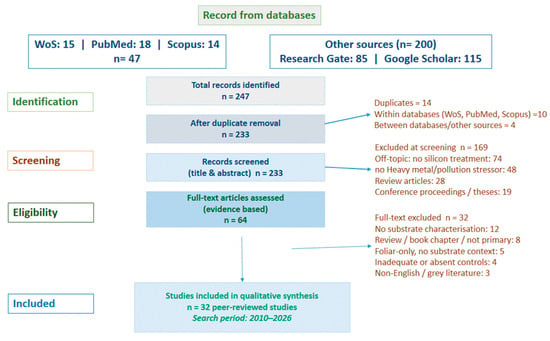
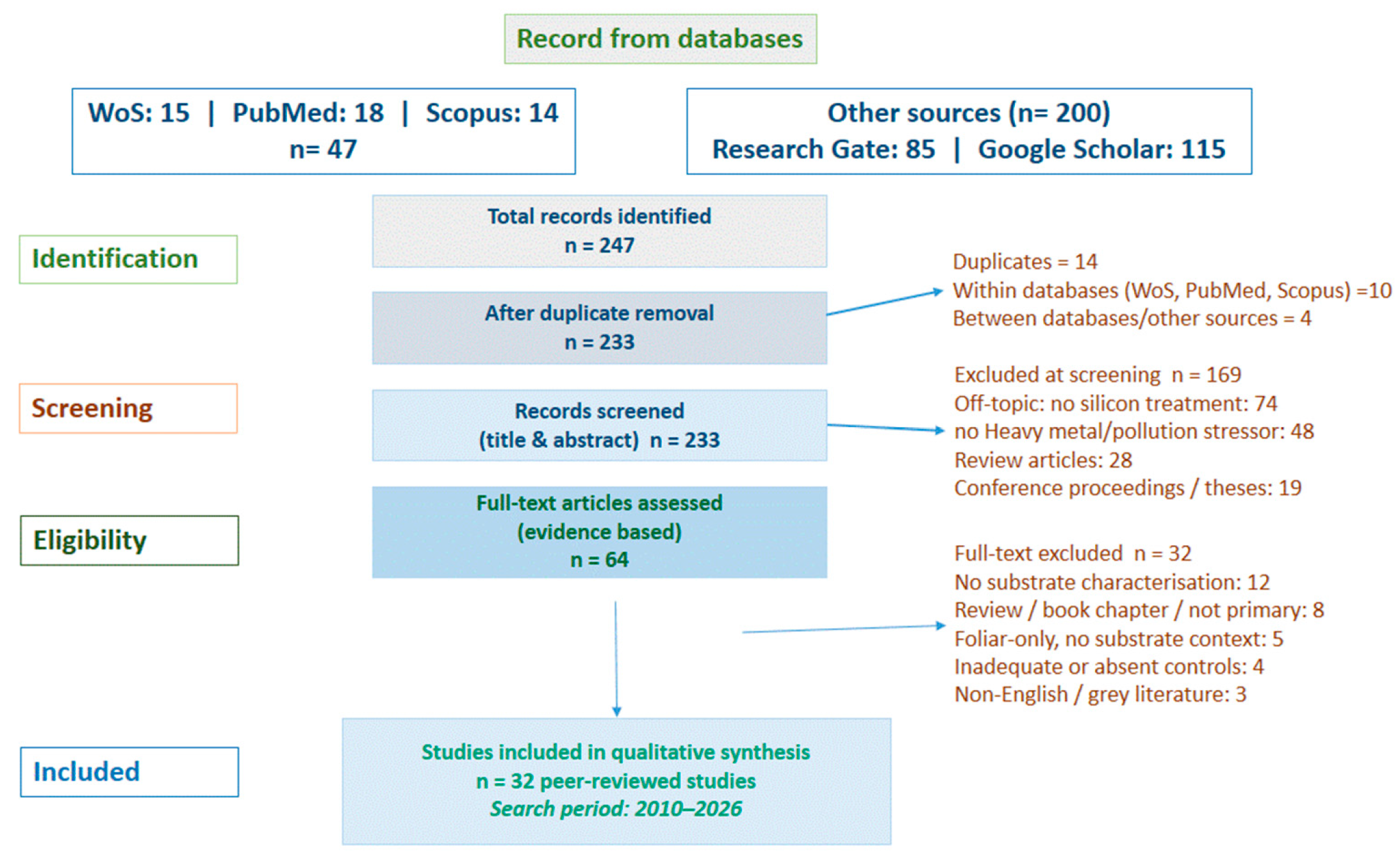
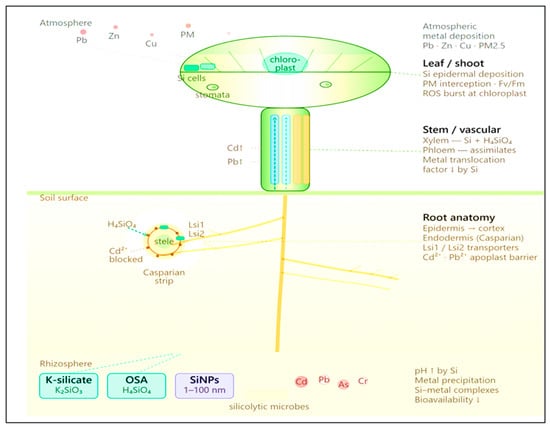
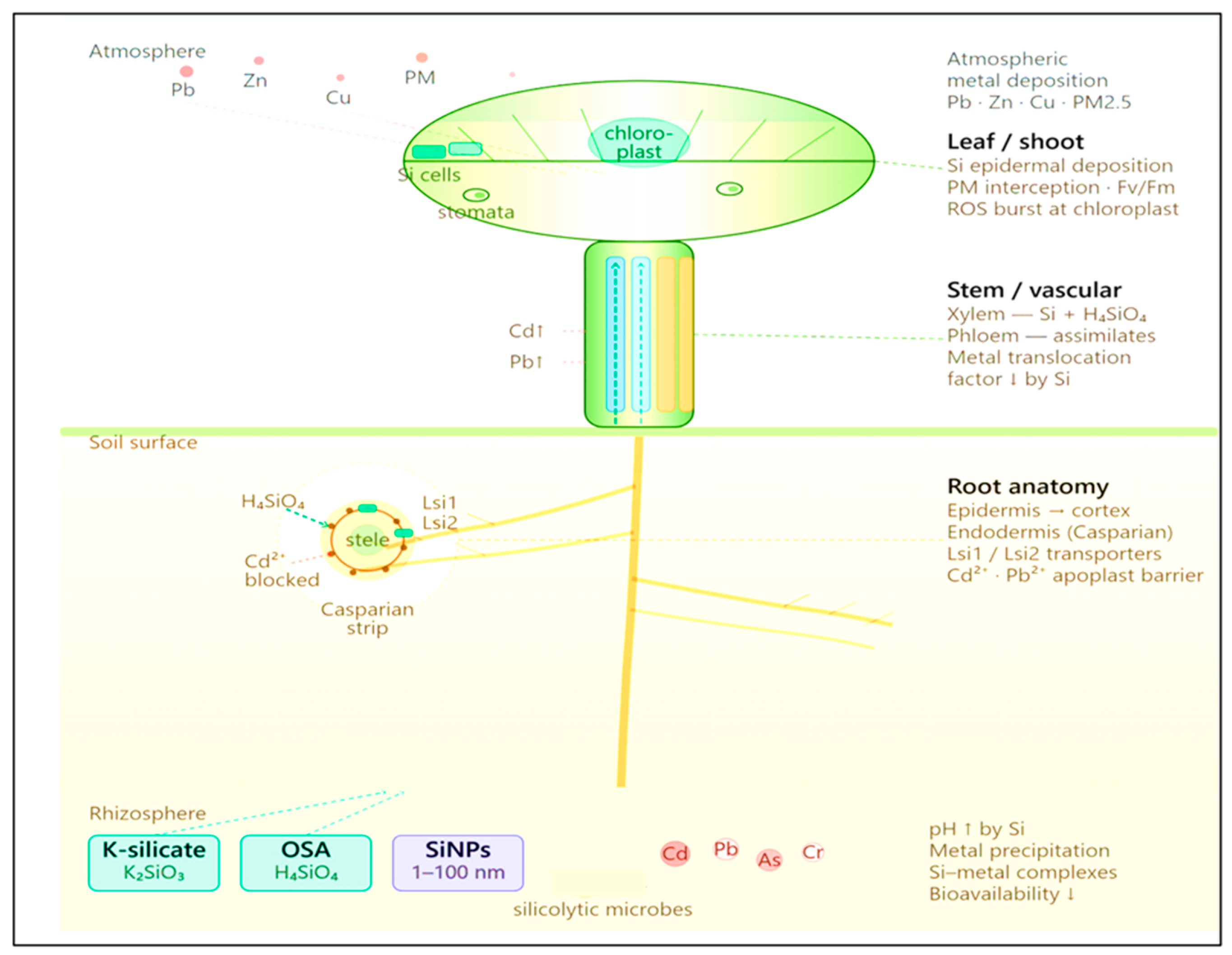
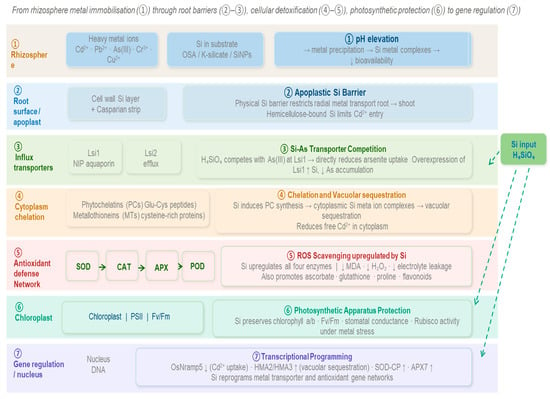
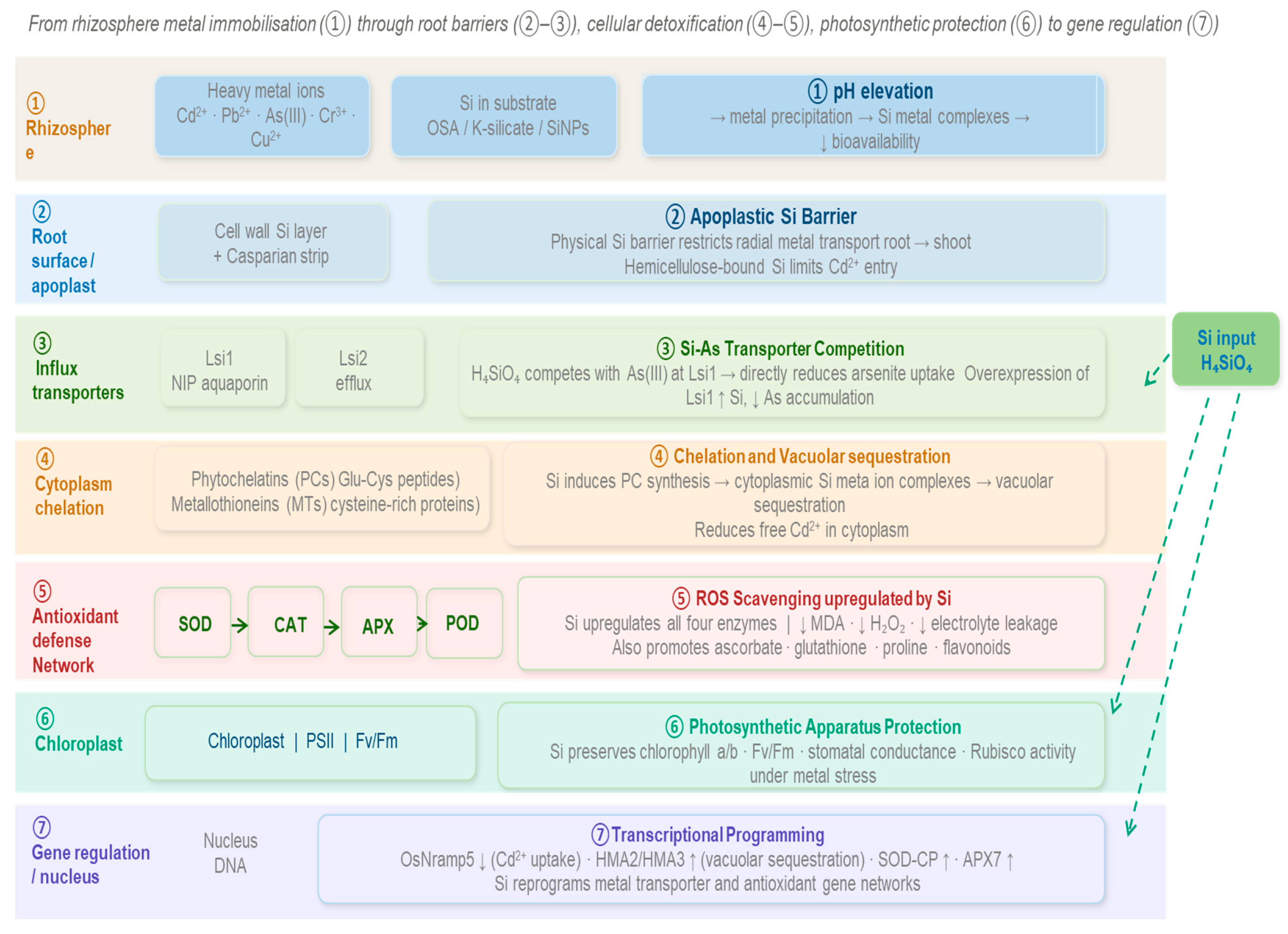
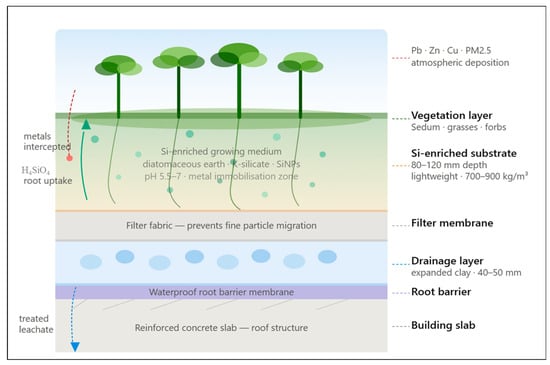
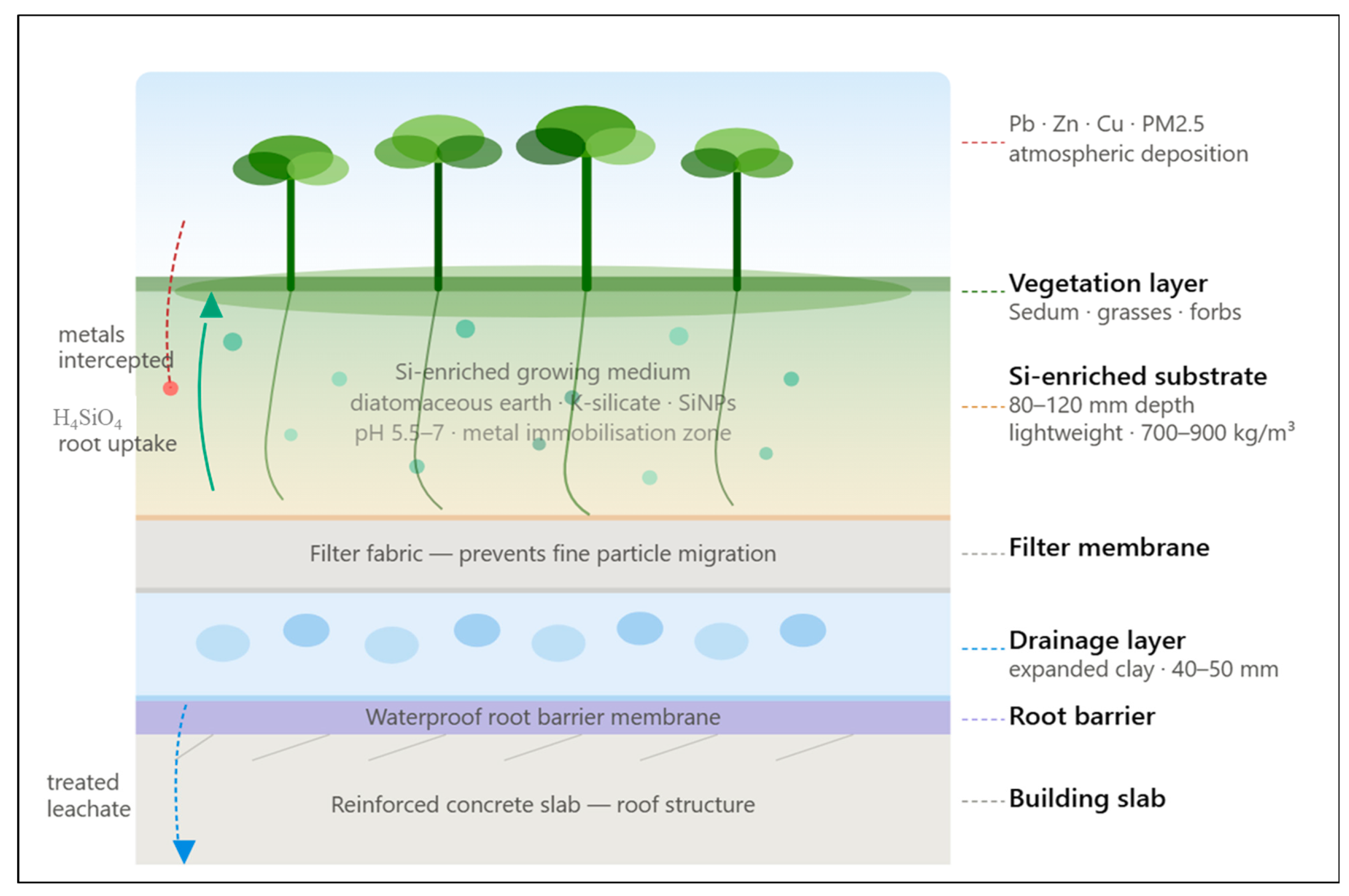

Disclaimer/Publisher’s Note: The statements, opinions and data contained in all publications are solely those of the individual author(s) and contributor(s) and not of MDPI and/or the editor(s). MDPI and/or the editor(s) disclaim responsibility for any injury to people or property resulting from any ideas, methods, instructions or products referred to in the content. |
© 2026 by the authors. Licensee MDPI, Basel, Switzerland. This article is an open access article distributed under the terms and conditions of the Creative Commons Attribution (CC BY) license.