


Abstract
Conservation governance frameworks assess equity through recognition, procedure, and distribution. These dimensions give limited attention to Indigenous authority over land and conservation decisions in settler-colonial contexts, including the relationships, responsibilities, and governance conditions that shape equitable conservation. This study develops and pilots the Conservation with Equity framework across three UNESCO-designated Biosphere Reserves in Canada: Clayoquot Sound, Mount Arrowsmith, and Redberry Lake. Using document analysis of UNESCO governance documents, complemented by semi-structured interviews with Biosphere Reserve managers, we examined how equity is reflected in conservation governance practices. The pilot application identified ecological reconciliation as a fourth and foundational dimension of equitable conservation governance, extending existing equity frameworks. Results show that the Biosphere Reserves incorporate Indigenous knowledge into conservation activities, involve communities in decision-making through governance processes, and support local livelihoods and restoration initiatives. However, these practices improve participation and benefit sharing without consistently shifting decision-making authority over land and conservation. Indigenous-led initiatives, including Tribal Parks, land-based education, healing initiatives, and food production systems, demonstrate pathways where Indigenous communities direct land use and conservation decisions. The Conservation with Equity framework provides a basis for assessing conservation governance with greater attention to Indigenous authority, governance, and relationships with land.
1. Introduction
Conservation has long been framed as a conceptual divide between “nature-first” (biocentric) and “people-first” (anthropocentric) paradigms. Nature-first approaches emphasize the intrinsic value of biodiversity and intact ecosystems [1,2], while people-first frameworks highlight nature’s role in supporting human well-being [3,4]. Yet neither fully addresses the concerns of Indigenous Peoples and Local Communities (IPLCs). Indigenous Peoples are generally defined as peoples who identify as Indigenous and descend from the original inhabitants of a region, and maintain close cultural, spiritual, economic, and ecological relationships with their territories [5]. Local Communities, while not Indigenous in the legal or self-identifying sense, are long-established social groups who maintain close livelihood and cultural relationships with specific ecosystems [6].
Conservation models focused primarily on environmental protection marginalize IPLCs, restricting access to ancestral lands and undermining customary governance [7,8,9]. Development-oriented approaches to conservation similarly displace IPLCs and position them mainly as implementation partners, not as rights-holders [10,11]. Even in co-governance contexts, IPLCs are often treated as stakeholders rather than shared responsibility holders with inherent authority [12,13]. These entrenched colonial power structures continue to ignore IPLCs’ sustained calls for rights-based conservation grounded in Indigenous knowledge and governance [14,15]. Recognizing and responding to these calls is both a moral imperative and a pragmatic necessity. Indigenous-managed lands overlap with much of the world’s remaining biodiversity and often conserve biodiversity as effectively as state-managed protected areas [16,17,18,19]. This effectiveness reflects a fundamental difference in worldview. Western environmental ethics often treat conservation as “a one-way street in which it is the humans who are to extend their ethics to include nature” [20] (p. 122). In contrast, Indigenous and local stewardship is rooted in “reciprocity and harmony with nature, including Mother Earth” [21,22] (p. 8).
Although global conservation frameworks increasingly recognize IPLC rights and knowledge, they often adopt a narrow conception of equity. The Convention on Biological Diversity (CBD), in Decision 14/8, defines equity as recognition of rights, participation in decision-making, and fair distribution of costs and benefits [23]. This three-dimensional model has influenced global conservation targets, including protected areas and Other Effective Area-Based Conservation Measures (OECMs), many of which are governed by IPLCs using customary practices such as rotational harvesting and low-impact agriculture [12,24,25]. However, the model fails to account for deeper structural conditions that shape access, participation, and benefit sharing. These omissions reflect the exclusion of contextual equity, despite its identification as essential to equitable outcomes [26,27]. Bennett et al. [28] (p. 3) define contextual equity as “the surrounding social, economic, [cultural] and political conditions that influence people’s pre-existing status … as well as the structures that enable or undermine people’s ability to achieve recognitional, procedural, distributional, managerial, and environmental equity.” In other words, contextual equity highlights the systemic and historical conditions such as colonial legacies, legal exclusion, economic marginalization, and cultural erasure that create inequities. When left unaddressed, these conditions undermine even well-intended participation or benefit-sharing mechanisms.
Such context-specific barriers are particularly acute in settler-colonial states like Canada. Protected areas often overlap with Indigenous territories, yet state and industry actors retain land-use control [9,29]. Indigenous law is frequently sidelined unless upheld in court, and even where title is recognized, procedural tools and fragmented jurisdiction constrain Indigenous authority [30]. Approaches such as Two-Eyed Seeing, introduced by Mi’kmaw Elder Albert Marshall [31], and ethical space, developed by Ermine [32], promote co-learning between knowledge systems and inform shared responsibility for conservation [13,33]. Yet failure to address power imbalances can allow these approaches to be co-opted to maintain settler dominance. Tuck and Yang [34] (p. 10) call this co-optation a “settler move to innocence,” referring to tactics that ease settler guilt without requiring meaningful changes in land ownership, power, or privilege.
To address these limitations, this study advances Conservation with Equity as an approach to biodiversity conservation that extends existing equitable governance frameworks. Through the development and pilot application of the Conservation with Equity (Co-WE) framework across three Biosphere Regions (BRs), this study identifies ecological reconciliation as the fourth and foundational dimension of equitable conservation governance. The Conservation with Equity (Co-WE) framework operationalizes this approach by foregrounding contextual equity beyond narrow understandings of equity based only on inclusion or benefit-sharing. Throughout this paper, we use the term “Conservation with Equity” to refer to the broader approach to biodiversity conservation and “Co-WE” to refer to the framework developed to operationalize and assess that approach. In the Canadian context, ecological reconciliation addresses the contextual conditions that shape Indigenous authority, governance, and responsibilities to land [35,36], providing the conceptual foundation for this fourth dimension. This is described in more detail in Section 2. Ecological reconciliation is particularly important in Canada given the legacy of State and/or Church-run residential schools (1884–1996) for Indigenous children and the establishment of an apartheid-style reserve system, both of which disrupted Indigenous governance systems, land relationships, and cultural continuity [37,38].
To assess the practical utility of the Co-WE framework, we examined it in relation to governance processes in three UNESCO-designated Biosphere Regions (BRs) in Canada: Clayoquot Sound (CSBR), Mount Arrowsmith (MABR), and Redberry Lake (RLBR). Although UNESCO officially uses the term “Biosphere Reserve,” this paper uses “Biosphere Region,” adopted in Canada, to reflect efforts toward reconciliation and more inclusive, community-centered conservation. Designated in 2000 under a shared national framework, the three BRs vary in ecology, livelihood strategies, institutional capacities, and governance [39,40,41,42,43]. They also span diverse legal contexts: CSBR is situated on Tla-o-qui-aht territory and other Nuu-chah-nulth Nations; RLBR on Treaty 6 territory and the homeland of the Métis, and MABR lies within the territories of several Coast Salish and Nuu-chah-nulth First Nations and includes lands associated with the Douglas Treaties. The locations of the three BRs are shown in Figure 1.
Figure 1.
Location of the three UNESCO-designated Biosphere Regions in Canada: Map A, Redberry Lake Biosphere Region; Map B, Clayoquot Sound Biosphere Region; Map C, national location of the three study Biosphere Regions; and Map D, Mount Arrowsmith Biosphere Region. The Redberry Lake Biosphere Region is shown with its extended operating area, which is pending approval by the International Coordinating Council of UNESCO’s Man and the Biosphere Programme. Map created in ArcGIS Pro 3.3.0 (Esri) using boundary information from Biosphere Regions Canada and the respective Biosphere Region sources. Basemap imagery: Earthstar Geographics.
In each region, we used two complementary qualitative methods, document analysis and semi-structured key-informant interviews, to examine how BR activities, governance processes, and conservation practices aligned with the four Co-WE dimensions, including ecological reconciliation. The term “review” reflects the framework’s role as a learning tool, not as a benchmarking exercise. This approach aligns with the BR model as a platform for experimentation [44], adaptation, and learning in supporting both conservation and sustainable development [40,45].
Section 2 reviews the theoretical foundations of equity and ecological reconciliation. Section 3 outlines the research design. Section 4 presents the findings across Co-WE’s four dimensions. Section 5 discusses implications for conservation governance and Indigenous rights. Section 6 presents recommendations for policy and practice, and Section 7 concludes by outlining the study’s contribution, limitations, analytical transferability, and directions for future research.
2. Theoretical Framework for Equity and Reconciliation in Conservation
This section presents the theoretical foundations of the Co-WE framework by tracing the evolution of equity in conservation governance, critiquing prevailing models, and proposing ecological reconciliation as a fourth, foundational dimension.
2.1. The Evolution and Limits of Global Equity Frameworks in Conservation
Conservation was originally framed as a crisis response to protect nature, with Soulé [1] emphasizing the need to protect species and ecosystems while giving limited attention to human relationships with nature. By the late 1980s, global policy began to shift. The Brundtland Report [46] and the 1986 Conservation with Equity conference [4] linked ecological protection to development goals. By the early 2000s, community-based models challenged exclusionary approaches [47], but many protected areas still denied Indigenous Peoples access to their lands. Although the 2003 World Parks Congress and the 2007 UN Declaration on the Rights of Indigenous Peoples (UNDRIP) advanced rights-based approaches, IPLCs were still often treated as stakeholders rather than rights-holders [7,8].
Until the adoption of the Convention on Biological Diversity (CBD) Decision 14/8 in 2018, conservation policy treated equity in fragmented ways and often equated it with abstract notions of fairness or justice [48,49]. CBD Decision 14/8 and emerging conservation literature frame equity through three core dimensions: recognition, procedure, and distribution [50,51,52]. Recognition refers to formally acknowledging IPLCs’ rights, knowledge, and identities. Procedure involves fair, inclusive, and culturally appropriate decision-making, as exemplified in the principle of Free, Prior, and Informed Consent (FPIC) introduced by First Nations in Canada. Distribution concerns how conservation’s costs and benefits are shared. Decision 14/8 now guides the 30 × 30 agenda as well as the CBD’s 2050 Vision of “living in harmony with nature” [53].
Despite these advances, the Decision 14/8 framework omits contextual equity. Contextual equity refers to the systemic conditions that shape people’s ability to claim rights, participate in decision-making, and receive benefits. These include land tenure arrangements, colonial legacies, income and education disparities, gender relations, and unequal access to information, political influence, and legal mechanisms [26,27,28]. As Franks and Quesada-Aguilar [54] note, contextual factors are often considered beyond the reach of many policy interventions and are therefore omitted from operational frameworks. Although earlier scholars emphasized the need to treat contextual equity as a separate and necessary concern [26,27], its exclusion from CBD guidance has contributed to conceptual confusion and limited uptake in practice [28,55,56].
Some efforts have expanded the definition of recognition to cover these conditions. For example, Martin et al. [57] proposed a typology of recognition that includes cultural, economic, and political harms. This has the effect of folding contextual equity into recognition rather than treating it as a separate dimension. Two factors help explain why contextual equity has been largely omitted or collapsed into recognition in global equity frameworks. First is the failure to distinguish Indigenous Peoples from Local Communities. Grouping these categories obscures the specific land rights, legal recognition, and governance roles of Indigenous Peoples [58]. Second is the CBD’s origins in development-oriented policy, especially in Global South contexts where equity has often been equated with participation in projects or access to resources, with less emphasis on land restitution, jurisdictional authority, or legal pluralism [50]. This conflation has made it difficult to see how deeper conditions such as dispossession, legal exclusion, or intergenerational disadvantage continue to affect access, representation, and benefit-sharing in conservation [51,52]. As Howard et al. [59] (p. 101) noted, many efforts “miss out ‘contextual equity,’ despite finding that this dimension poses the biggest challenges.”
In response to these limitations, emerging frameworks [55,60,61,62] propose reinstating contextual equity as a fourth equity dimension. However, aside from a few exceptions such as Bennett et al. [60,61], most frameworks offer limited guidance for translating contextual equity into actionable principles and indicators. As Campbell et al. [63] warn, without such guidance, equity assessments risk becoming disconnected from the underlying conditions that affect conservation outcomes. While contextual equity identifies the structural conditions that shape equitable conservation, it does not specify how these conditions can be addressed within particular governance contexts. In the Canadian context, we argue that ecological reconciliation provides a governance approach for addressing these conditions and serves as the fourth dimension of the Co-WE framework.
2.2. Toward Ecological Reconciliation and the Role of Biosphere Regions
Ecological reconciliation responds to the limitations of global equity frameworks by centering Indigenous law, intergenerational responsibilities, and place-based governance [35,36,64]. In Canada, the Truth and Reconciliation Commission’s Calls to Action, particularly Call 43 on the application of the United Nations Declaration on the Rights of Indigenous Peoples (UNDRIP) and Call 45 on treaty renewal, highlighted the need to restore Indigenous legal orders and treaty relationships [37]. The Indigenous Circle of Experts further described reconciliation as “identifying the appropriate healing process for restoring relationships: first, between Crown and Indigenous Peoples … and second, between all people (Indigenous and non-Indigenous) and the lands” [64] (p. 104). This framing situates conservation within shared responsibilities for renewing relationships among peoples, lands, waters, and more-than-human beings. Though the term is recent, the relational ethics it describes are ancient across Indigenous cultures. Indigenous philosophies such as All My Relations (Anishinaabe [in Canada]), the Great Law of Peace (Haudenosaunee [in the United States]), and Ubuntu (in southern Africa, meaning “I am because we are”) emphasize mutual responsibility, kinship, and reciprocity with more-than-human life [21,35,65,66].
UNESCO BRs function both as geographic territories and as convening platforms that facilitate collaboration among governments, Indigenous Peoples, civil society organizations, researchers, and local communities [67]. In Canada (as elsewhere), BRs do not possess regulatory or jurisdictional authority and cannot supersede provincial, federal, municipal, or Indigenous governance systems. Rather, they operate through voluntary cooperation, partnership-building, research, education, and knowledge-sharing initiatives that support conservation and sustainable development across multiple governance scales [68,69]. Their role is therefore primarily facilitative, helping to connect diverse actors, coordinate regional initiatives, and foster dialogue around shared social-ecological priorities.
Based on their explicit commitment to uphold Indigenous rights, including commitments such as the Pessamit Call for Reconciliation by BRs and the Canadian Commission for UNESCO [70], BRs offer an opportunity to apply and evaluate ecological reconciliation as a fourth dimension of conservation governance. BRs have been envisioned as “special places for people and nature” [71] (p. 12), “sites of excellence to demonstrate approaches to conservation and sustainable development” [68] (p. 451), “regional innovation systems” [44] (p. 4), and “open laboratories for sustainable development” [72] (p. 1). Their zonation structure includes a core area with protection typically provided through provincial or national jurisdiction, surrounded by buffer and transition zones. These outer zones allow more flexible governance arrangements. They provide opportunities for Indigenous authority, knowledge systems, and community-led conservation and sustainability initiatives to influence land use and stewardship [45,64,73]. While core areas are typically established under state-designated protection regimes, emerging Indigenous-led governance models within BRs, including Indigenous-managed regions such as Tsá Tué, suggest evolving governance arrangements that may challenge this distinction [74].
Despite this potential, Indigenous participation and authority within BR governance remain uneven across many settler-colonial contexts, including Canada. Core zones are characterized by private and public property regimes that were established and are maintained by longstanding state and colonial powers. Consequently, tensions may persist between state-led conservation priorities and Indigenous land use, governance systems, legal orders, and responsibilities to land and water. These gaps persist, even as Indigenous and local scholars have long called for governance that prioritizes Indigenous resurgence, equity [39,40,68,69], and shared responsibility [13]. International and national guidance, including UNESCO’s Seville Strategy [75], the Lima Action Plan [76], and the Conseil des Innus de Pessamit Call for Reconciliation [70], also support these priorities. More recently, although references to reconciliation and equity have become more common in BR policy discourse [77], implementation remains uneven and often lacks clear mechanisms for advancing Indigenous authority and ecological reconciliation. Bruce and Mulrennan [33] argue that co-management arrangements in Canada are increasingly shaped by reconciliation processes, while Lemieux et al. [78] emphasize that effective conservation governance depends not only on participation but also on how authority, responsibilities, and stewardship relationships are structured across institutions and Indigenous communities. These observations align with broader calls for Indigenous leadership, shared governance, and ecological reconciliation in conservation [64,67]. The Co-WE framework responds to these challenges by providing a four-dimensional structure for embedding equity and ecological reconciliation in BR governance.
2.3. Conceptualizing the “Conservation with Equity” (Co-WE) Framework
The Co-WE framework provides a structured governance approach to advancing equity in conservation governance. Its name reflects a dual commitment. “Co” signals co-responsibility, drawing on Reed et al. [13] to highlight the obligation of settlers to uphold fair and accountable governance. “WE” expresses mutual responsibility and collective belonging, aligning with Indigenous worldviews grounded in relational accountability to land, people, and more-than-human beings [64].
The Co-WE framework is grounded in four interlinked and mutually reinforcing dimensions of equity: recognition, procedure, distribution, and ecological reconciliation.
- Recognition. Co-WE adopts the Royal Commission on Aboriginal Peoples (RCAP)’s framing of mutual recognition as respect for the distinct rights and responsibilities held by Indigenous Peoples and non-Indigenous communities [79]. For Indigenous Peoples in Canada, this includes Section 35 of the Constitution Act, 1982, such as treaty rights (e.g., hunting and fishing), Aboriginal title (e.g., land and resource governance), and self-government (e.g., conservation authority). In this case, Indigenous Peoples require recognition of distinct rights, governance authorities, and responsibilities. Meanwhile, non-Indigenous communities contribute to conservation through long-standing stewardship and local knowledge systems [5,6]. Co-WE maintains this distinction to ensure conceptual clarity by avoiding conflation of recognition with equity or with ecological reconciliation.
- Procedure emphasizes Indigenous-led decision-making grounded in Indigenous legal traditions and responsibilities. Other actors support these processes by participating ethically and transparently, and by helping to create decision-making structures that are relationally accountable and just [12,13,21,32].
- Distribution addresses how benefits, costs and risks are shared in culturally and contextually appropriate ways [21,80]. Indigenous Peoples determine priorities for land-based well-being, while others contribute to equity through measures that address exclusion and improve access to resources and opportunities [48].
- Ecological Reconciliation is foundational. It refers to structural and relational repair led by Indigenous law, ceremony, and governance. This dimension involves restoring responsibilities to land and renewing relationships among peoples and with more-than-human kin [35,36,37,66]. Only actions grounded in Indigenous jurisdiction and authority are included here. Symbolic or normative efforts that do not involve legal or governance shifts are classified under Recognition.
Each dimension is designed to be assessed through concrete criteria and indicators, making the Co-WE framework a usable and context-sensitive governance tool. Figure 2 illustrates the relationships among the four dimensions and their contribution to equitable conservation governance.
Figure 2.
Conservation with Equity (Co-WE) framework. Building on the recognition, procedure, and distribution dimensions of equity identified by Schreckenberg et al. [48], the framework identifies ecological reconciliation as the fourth and foundational dimension of Conservation with Equity, addressing the contextual conditions that shape equitable conservation governance.
3. Methodology
3.1. Research Design and Case Studies
We used a qualitative comparative case-study design to develop and pilot the Conservation with Equity (Co-WE) framework across three UNESCO-designated Biosphere Regions (BRs) in Canada: Clayoquot Sound Biosphere Region (CSBR) and Mount Arrowsmith Biosphere Region (MABR), Vancouver Island, British Columbia, and Redberry Lake Biosphere Region (RLBR), Saskatchewan (Figure 1).
The three BRs operate within Canadian federal and provincial policy and legal contexts, but UNESCO Biosphere Region designation itself does not confer regulatory or jurisdictional authority. The two British Columbia BRs operate within a provincial context shaped by the Declaration on the Rights of Indigenous Peoples Act (DRIPA), whereas RLBR operates in Saskatchewan, which lacks a comparable provincial reconciliation policy. In addition, only CSBR received a $12 million federal endowment at the time of designation. These variations provide an opportunity to examine how the Co-WE dimensions operate across different ecological, legal, and institutional contexts. Detailed governance and ecological contexts for the three BRs are provided in Table S1.
3.2. Data Collection
Within the qualitative comparative case-study design, we used two complementary qualitative methods: qualitative document analysis of official UNESCO governance documents and semi-structured key-informant interviews. Document analysis provided the primary documentary evidence for examining how the four Co-WE dimensions were reflected in governance practice, while the interviews were used to assess the framework’s relevance and applicability, clarify terminology, contextualize and qualify case-specific interpretations, identify potential omissions, and contribute to refinement of the framework.
Official UNESCO Biosphere governance documents were purposively selected because they provide a consistent, publicly available record of governance from designation through successive review cycles. These included UNESCO Biosphere Nomination Forms, UNESCO Biosphere Periodic Review Reports, and UNESCO Biosphere Periodic Review Self-Study Reports (Table 1).
Table 1.
UNESCO documentary sources used in the analysis.
The most recent self-study reports served as the primary documentary source for identifying operational examples of the four Co-WE dimensions, whereas the nomination forms and earlier periodic review reports provided historical context for interpreting changes in governance over time. Although periodic ten-year reviews are central to UNESCO’s Man and Biosphere (MAB) Programme, these reviews often prioritize compliance over governance flexibility, thereby limiting continuous learning [40,73,81,82]. To complement these documentary sources, we conducted interviews with executive directors of the three BRs following institutional ethical approval and informed consent procedures. The interviews aimed to: (1) assess the Co-WE model’s relevance in each context, particularly the four equity dimensions; (2) clarify terms like “youth” and “local”; and (3) explain and contextualize examples identified during the document analysis. We provided questions in advance to support reflection and informed responses. The interview questions are provided in Supplementary File S1. The interview guides reflected a preliminary version of the Co-WE framework containing 12 criteria and 15 indicators. During framework refinement, overlapping criteria were consolidated, resulting in the final 11 criteria and 15 indicators presented in Table 2 and Table S2.
3.3. Development of the Conservation with Equity (Co-WE) Framework
We developed and refined the Co-WE framework through a four-step qualitative process. First, we conducted a targeted literature review, with CBD Decision 14/8 as a starting point. We traced foundational studies on conservation equity, including [26,27,48,49,57]. We then identified reviews and empirical studies that built on or critiqued the three-dimensional equity framework, including [50,51,52,60,61]. These sources informed the development of the framework’s first three equity dimensions—recognition, procedure, and distribution—along with the associated criteria and indicators. Snowball sampling helped identify influential and thematically relevant studies across an evolving body of literature, an approach used in similar conservation framework studies [18,48,49].
To address gaps in existing frameworks, particularly the exclusion of relational and place-based approaches grounded in Indigenous law and governance, we introduced ecological reconciliation as a fourth equity dimension. This addition draws on scholarship focused on responsibilities to land and more-than-human relations [33,37,38,64,66]. The Co-WE framework centers Indigenous-led governance, intergenerational land-based knowledge, and reciprocal human–nature relationships.
Second, we conducted qualitative document analysis of the official UNESCO governance documents described in Section 3.2, organizing evidence from each BR in relation to the preliminary Co-WE dimensions, criteria, and indicators. Third, we used semi-structured key-informant interviews to assess the framework’s clarity, relevance, suitability, and applicability, contextualize case-specific evidence, and identify potential omissions. Fourth, we compared evidence across the three BRs and used the documentary and interview evidence to refine the framework. Overlapping criteria were consolidated during this process, resulting in the final Co-WE framework of 11 criteria and 15 indicators presented in Table 2.
4. Results
4.1. The Conservation with Equity (Co-WE) Framework
The proposed Co-WE framework is operationalized through a set of criteria and indicators summarized in Table 2. It includes eleven criteria and fifteen indicators that reflect observable governance practices.
Table 2.
Equity dimensions, criteria, and indicators in the Conservation with Equity (Co-WE) framework.
4.2. Application of Conservation with Equity (Co-WE) to Governance Practices in the Three Biosphere Regions
We applied the Co-WE framework to evaluate conservation equity practices across the three BRs. The following sections present the findings for each equity dimension, with detailed operational examples provided in Table S2.
4.2.1. Recognition
The findings indicate that all three BRs formally acknowledge Indigenous rights, histories, and knowledge. This recognition is reflected in the Canadian Biosphere Regions Association’s adoption of the term “Biosphere Region” in place of “Biosphere Reserve” as part of broader efforts toward reconciliation. Historically, the term “reserve” is closely associated with the colonial reserve system established under the federal Indian Act, through which many First Nations were confined to reserves while their broader traditional territories were alienated and controlled by the Crown. The adoption of the term “Biosphere Region” in place of “Biosphere Reserve” reflects a conscious move away from the colonial connotations of the term “reserve” and signals a commitment to more inclusive, place-based governance that recognizes Indigenous Peoples as rights holders and shared responsibility holders in conservation. This commitment is further reflected in how these three BRs engage with Indigenous Peoples through relationship building, language revitalization, and the recognition of Indigenous knowledge, governance protocols, and histories. For example, in CSBR, governance includes Indigenous stewardship groups such as the Kwuuth-wiltəm Rangers, who hold significant decision-making authority within the territory. Indigenous languages, particularly Nuu-chah-nulth dialects, are visibly integrated through signage and official documentation, reinforcing cultural identity in public spaces and governance processes. MABR incorporates First Nations participation through its Roundtable governance structure. Elders and knowledge holders are actively engaged in shaping research initiatives, educational programming, and outreach activities, such as the “Experience the Biosphere” project, which centers Indigenous perspectives and cultural values. In RLBR, Cree and Métis worldviews are foregrounded through inclusive land-use planning processes. The region’s astam, pī-pīkiskwātotān (“Come, let’s talk together”) workshops exemplify collaborative dialogue spaces that honor Indigenous knowledge and foster community engagement. These recognition practices collectively affirm Indigenous identities and knowledge systems as foundational to governance and conservation efforts in each region.
4.2.2. Procedure
Procedure is demonstrated as the three BRs demonstrate increasingly inclusive governance practices. First, governance structures have diversified to reflect more voices. In CSBR, partnerships support Indigenous leadership training and participation in the Forest Management Forum; the board includes five Indigenous members and several women. MABR’s roundtable brings together First Nations, civil society, and local governments. Similarly, RLBR recently amended its bylaws to formally recognize members of First Nations with traditional or land-based ties to the region as full participants in its governance. This marks a shift from previous landowner-based rules and reflects RLBR’s commitment to honouring treaty relationships and Indigenous rights. Second, the three BRs prioritize youth and public engagement through open meetings, surveys, and citizen science. CSBR’s youth council and events foster intergenerational participation; MABR involves students and reserves a youth roundtable seat; RLBR connects with Mistawasis schools. Third, collaborative processes support conflict resolution, transparency, and collaborative learning. CSBR’s WildCoast initiative manages infrastructure disputes; RLBR holds public forums on land-use; and MABR’s research institute provides neutral data for dialogue.
Finally, all the BRs reflect FPIC by emphasizing that research and agreements proceed with Indigenous knowledge, participation, and approval. In CSBR, a formal Research Code of Conduct requires researchers to follow Nuu-chah-nulth protocols prior to initiating research [83]. In RLBR, the astam, pī-pīkiskwātotān report highlights the importance of recognizing Traditional Knowledge and involving knowledge holders across all stages of research and decision-making [42,84]. In MABR, the Guiding Principles for Collaboration with First Nations outline processes that prioritize respect, Indigenous stewardship, and the inclusion of First Nations perspectives in decision-making [43].
4.2.3. Distribution
Each BR tailors approaches to equitably share conservation’s benefits and burdens. CSBR supports Indigenous employment, cultural guiding, and language revitalization, and waives park fees for Indigenous visitors. MABR promotes food security, cultural events, aquaculture, and ecotourism. RLBR collaborates with Indigenous and rural communities on projects like the Food Forest, includes culturally significant lands, and supports planning reform and job creation. The three BRs also address environmental burdens through restoration initiatives. CSBR restores salmon habitat recovery using Indigenous land-use visions, RLBR promotes prairie recovery, and MABR rehabilitates eagle nesting sites and monitors buffer zones. Together, these initiatives link conservation benefits with local livelihoods, cultural continuity, and ecosystem restoration.
4.2.4. Ecological Reconciliation
Ecological reconciliation involves structural and relational shifts that restore Indigenous authority, legal orders, and land-based responsibilities within conservation governance. Across the three BRs, this dimension is reflected in Indigenous-led governance and stewardship initiatives grounded in Indigenous law, ceremony, and reciprocal relationships with the land (Table 3).
Table 3.
Application of the Conservation with Equity (Co-WE) framework across three UNESCO-designated Biosphere Regions, highlighting shared patterns and context-specific differences in governance and conservation practice.
In CSBR, ecological reconciliation is evident through the formal declaration of multiple Tribal Parks by the Nuu-chah-nulth Nations, which assert Indigenous jurisdiction and stewardship grounded in Indigenous law and ceremony. These Tribal Parks embody land-based governance that challenges conventional protected area models and restores Indigenous authority over ancestral territories. As described in the literature, Tribal Parks often lack full formal recognition within state governance systems, which may limit their inclusion in official BR mapping [85]. The ongoing work to integrate these Tribal Parks within the BR’s governance framework reflects a significant structural realignment toward ecological reconciliation.
The MABR demonstrates ecological reconciliation through collaborative governance innovations, such as the establishment of a Culture of Engagement that fosters partnership between Indigenous and non-Indigenous shared responsibility holders. Initiatives like the Snaw-naw-as Garden of Spiritual Healing and the Qualicum Language Nest Project reinforce cultural continuity and revitalization deeply rooted in place and Indigenous knowledge systems. The MABR’s efforts to qualify buffer and transition zones as OECMs, in partnership with First Nations and other stakeholders, further operationalize Indigenous stewardship and contribute to biodiversity conservation under Indigenous leadership.
In the RLBR, ecological reconciliation is expressed through a broad suite of Indigenous-led conservation initiatives, including the Indigenous-led Bridge to Land Water and Sky Living Lab, focused on integrating farming systems with biodiversity and climate resilience. The RLBR is working with First Nations to support the designation of Indigenous traditional territories as Indigenous-led OECMs. These proposals seek to restore legal recognition and governance systems of Indigenous traditional territories. Additional partnerships on species at risk management and agricultural stewardship with Cree and Métis communities reinforce land-based responsibilities and reciprocal relationships with the territory. These efforts ground reconciliation in local governance, cultural resurgence, and shared responsibility.
5. Discussion
Our findings demonstrate how applying the Co-WE framework across three BRs in Canada reveals both promising practices and ongoing challenges in advancing equity in conservation governance. The pilot application of the Co-WE framework across the three BRs identified ecological reconciliation as a fourth and foundational dimension of equitable conservation governance. In this discussion, we reflect on three key insights through the lens of the Co-WE framework: (1) recognition without restored Indigenous authority reinforces settler control, (2) OECMs’ support for all four equity dimensions through relational governance, and (3) gendered and generational exclusions continue to limit transformative leadership.
5.1. From Recognition to Ecological Reconciliation
Our findings show that recognition alone is insufficient to advance Conservation with Equity. Evidence across the three BRs shows that recognition and ecological reconciliation play different roles in conservation governance, yet both are essential to Conservation with Equity [56,59]. While recognition affirms Indigenous rights, knowledge, cultures, and histories, ecological reconciliation asks whether these forms of recognition are accompanied by changes in authority, governance, and stewardship. Distinguishing these dimensions helps explain why recognition alone has not consistently shifted authority over land and conservation decision making [51,52,57].
Across the three BRs we studied, recognition was expressed through symbolic and institutional actions such as land acknowledgements, Indigenous language revitalization, and bilingual signage. These included efforts to restore Indigenous place names and the national decision to replace the term “Reserve” with “Region.” While such recognition efforts have expanded over the past decade [40,86,87], our findings indicate they remain largely performative when not accompanied by structural change. For example, RLBR includes the Cree name Mihkomin sâkahikan (Redberry Lake) in signage and outreach, although its use is not yet consistent across official documents, websites, and signage. Similarly, while “Biosphere Region” was adopted nationally to reject colonial legacies, the English place names of the three BRs remain unchanged since their designation in 2000. These examples suggest that symbolic recognition has outpaced changes in governance that reflect Indigenous priorities, consistent with findings from other contexts around the world [88,89]. As Shaw et al. [90] also observed, relational engagement has increased, but progress toward Indigenous-led governance remains limited.
Our findings show that ecological reconciliation requires substantive transformation. The strongest examples move beyond recognition by strengthening Indigenous authority, governance, and stewardship while reinforcing procedural and distributional equity [27,52,54,66]. In CSBR, this is reflected in the reassertion of hereditary leadership and the establishment of Tribal Parks governed by Indigenous law, alongside Language Nests and Nuu-chah-nulth cultural programming. In MABR, Indigenous partners co-lead Healing Gardens and cultural restoration, supported by co-developed protocols that signal shared authority. At RLBR, an exemplary reconciliation initiative is Bridge to Land Water and Sky, a three-year project funded through the federal government agency, Agriculture and Agri-Food Canada. Led by Mistawasis Nêhiyawak, it is Canada’s only Indigenous-led Living Lab and reflects Cree-led conservation grounded in ceremony and Indigenous legal traditions. These initiatives align with what Coulthard [91] describes as the “resurgence paradigm,” shifting conservation from inclusion within colonial frameworks to Indigenous resurgence and law-based authority.
Our findings support recent scholarship advocating for contextual equity as a foundational dimension of conservation justice [27,52,54]. Recognition alone, without corresponding changes in governance, risks reinforcing the very structures it seeks to critique. When recognition is accompanied by Indigenous authority, legal pluralism, and shared stewardship, it supports ecological reconciliation. These changes move conservation beyond symbolic inclusion by recognizing Indigenous Peoples as rights holders, decision makers, and stewards of their lands and biodiversity [13].
The next section considers how these principles are being advanced through Indigenous-led conservation mechanisms, including emergent OECMs. These are areas that achieve long-term biodiversity conservation outside formally designated protected areas.
5.2. Indigenous-Led OECMs as Pathways to Ecological Reconciliation
Across the three BRs examined, Indigenous-led conservation increasingly takes shape through initiatives that extend beyond existing governance and spatial arrangements. Several of these areas share key characteristics of Indigenous-led OECMs [12,24]. When led by Indigenous Peoples, they also align with all four dimensions of the Co-WE framework: recognition, procedure, distribution, and ecological reconciliation.
In CSBR, Tribal Parks governed by Nuu-chah-nulth hereditary leaders uphold Indigenous legal orders while delivering measurable biodiversity outcomes. In MABR, Healing Gardens co-developed with First Nations combine ecological restoration with cultural teaching. At RLBR, the Cree-led Food Forest and ceremonial sites support food security, species protection, and intergenerational knowledge transfer. Although none of these sites are formally recognized as OECMs, they align with core CBD criteria, namely sustained biodiversity outcomes, Indigenous governance, and cultural continuity [12,24,92]. Each initiative affirms Indigenous law and authority (recognition), reflects shared planning and Indigenous leadership (procedural), and delivers tangible land-based benefits (distributional). Ecological reconciliation is expressed through restored responsibilities to land and renewed relationships among peoples and places.
Our findings suggest that UNESCO BRs can support Indigenous-led conservation while advancing global biodiversity commitments. This supports Barraclough et al.’s [93] argument that UNESCO BRs should be more fully recognized within the Kunming-Montreal Global Biodiversity Framework’s (GBF) 30 × 30 Target. While formal coordination between BR governance and Indigenous-led OECMs remains limited, our findings indicate that BRs can create space for Indigenous-led conservation founded on ecological reconciliation. Despite this alignment, fewer than 1% of Canada’s registered OECMs are Indigenous-led as of mid-2025 [94,95,96]. This reflects a persistent disconnect between Indigenous conservation leadership and state-controlled designation processes.
Recognizing initiatives such as the Tribal Parks, Healing Gardens, and Food Forest as OECMs would help address this gap and support implementation of the GBF’s 30 × 30 target, the United Nations Declaration on the Rights of Indigenous Peoples, and Canada’s related Truth and Reconciliation Commission’s Calls to Action [37,53,64,97]. As Shore and Potter [98] (p. 8) remind us, “We’ll never have Reconciliation between Crown and Indigenous Nations until there’s Reconciliation with the land.” In their view, and as our findings suggest, OECMs offer one such pathway for achieving this form of reconciliation if they are committed to centering Indigenous customs, restoring land-based responsibilities, and redistributing authority in conservation governance.
5.3. Advancing Gendered and Generational Equity
Across the three BRs, women and youth are taking on increasingly prominent roles as research directors, advisory members, and grant reviewers. These developments reflect growing attention to gendered and intergenerational equity [99,100,101], and build on evidence that Indigenous women and youth make important contributions to environmental governance and climate adaptation within and beyond BRs e.g., [101,102,103]. Our findings suggest that these developments represent important progress but do not necessarily translate into greater Indigenous authority within conservation governance [101].
Our review and interviews indicate that executive and senior leadership remains concentrated among settlers, many of whom have longstanding ties to the BRs. This concentration of authority often limits Indigenous participation to advisory or project-based roles, constraining broader equity goals. Our findings point to systemic barriers embedded within conservation institutions rather than to individual shortcomings. Three interrelated institutional factors help explain why these inequities persist.
First, equity is often framed in generic terms that emphasize broad community inclusion rather than recognizing the distinct governance responsibilities of Indigenous Peoples. This framing obscures the legal and political status of First Nations and weakens initiatives aimed at redistributing authority [58,77]. For instance, in CSBR, the Living Wage campaign emphasized economic justice using settler-defined metrics, sidelining Indigenous economies rooted in reciprocity and land-based responsibilities [21,80].
Second, initiatives described as Indigenous-led often continue to operate within settler institutional frameworks. We observed this governance structure in the Food Forest initiative at Muskeg Lake Cree Nation. RLBR, a formal partner, describes the site in its periodic review as a model of reconciliation-oriented collaboration. While the initiative is presented as Indigenous-led, coordination was at times overseen by trusted settler practitioners. Frequently, these arrangements emerge not from intent to dominate but from the limited financial and staffing resources available to First Nations governments [100]. Without sustained investment and institutional support from governments, partner organizations, and other shared responsibility holders [13], efforts to devolve authority can become untenable, placing additional burdens on already overstretched communities [39,104]. Yet, regardless of intent, such structures risk entrenching settler control and limiting opportunities for Indigenous self-determination [18,105], particularly given the multiple, immediate priorities that communities must navigate with limited capacity.
Third, based on broader research insights, hiring practices and leadership models grounded in settler norms often privilege formal qualifications and managerial experience over Indigenous knowledge, legal orders, and community-based leadership. Such hiring criteria contribute to inequity when they are treated as the primary indicators of expertise. As a result, Indigenous candidates, especially women and youth, may lack role models and mentors, and face persistent barriers to accessing roles with decision-making authority, even when they already lead conservation efforts within their communities [106,107].
Our findings suggest that achieving gendered and generational equity requires more than representational inclusion. It demands rethinking how leadership is defined, how power is shared, and how Indigenous knowledge and responsibilities are institutionally supported [50,51,52]. In line with George and Reed [104] (p. 4), “It is important that processes are inclusive and fair —meaning that [decision-makers, including those in BRs] should reflect [the] affected population, not only in terms of demographics (age, gender, ethnicity), but also in terms of values and interests.”
These findings should also be interpreted in light of the institutional role of BRs. Because BRs do not possess regulatory authority, many inequities identified through the Co-WE framework originate within broader provincial, federal, and historical governance structures that extend beyond the direct control of BR organizations. In this context, the Co-WE framework helps distinguish challenges that BRs can address through partnerships, dialogue, and collaborative initiatives from those requiring broader policy and governance reforms.
6. Recommendations for Practice and Policy
Our findings point to four priorities for strengthening BRs as platforms for equitable conservation and ecological reconciliation. These recommendations build directly on the opportunities and barriers identified across the three case studies.
6.1. Institutionalize Indigenous Leadership
BRs should strengthen Indigenous leadership by embedding Indigenous law, governance, and representation within their governance structures. The soft-law status of Canada’s BRs limits their authority to enforce decision-making reforms, and Indigenous Peoples often lack meaningful decision-making power. Progress has involved co-developed governance and formal recognition of Indigenous legal orders. Advancing these models aligns with Section 35 of the Constitution Act, 1982 and UNDRIP, moving beyond symbolic inclusion toward decision-making power—a shift UNESCO can champion through leadership advocacy [44].
6.2. Embed Long-Term, Indigenous-Directed Funding
Provincial and federal governments should provide stable, long-term funding to enable BRs to build and sustain equitable conservation partnerships. Despite substantial effort devoted to securing support from provincial and federal governments, BRs often remain dependent on short-term grants and pilot funding. This instability undermines continuity, organizational capacity, and long-term relationship-building with Indigenous communities. Sustained public investment is needed to support shared governance, Indigenous-led land-based programmes, and Indigenous knowledge revitalization. Funding mechanisms should align with Indigenous self-determined priorities and reconciliation commitments while advancing biodiversity objectives, consistent with commitments recognized at CBD COP16 [108] and broader calls for Indigenous-led conservation financing [109].
6.3. Advance Indigenous Protected and Conserved Areas (IPCAs) and OECMs as Pathways to Ecological Reconciliation
BRs should support ecological reconciliation by helping address the fragmented legal and administrative recognition of Indigenous Protected and Conserved Areas (IPCAs) and OECMs across Canada [94,110,111]. This fragmentation is partly driven by the complexity, procedural length, and relational nature of Indigenous-led conservation processes. To advance Indigenous-led conservation effectively, BRs should develop streamlined, community-driven pathways that uphold Indigenous sovereignty and self-determination. As BRs are part of national and international networks, they can demonstrate leadership by supporting diverse governance arrangements, including sole Indigenous authority and hybrid co-governance, while providing targeted capacity-building and resource sharing [93]. In this context, BRs must demonstrate how to adopt patience and flexibility, allowing Indigenous communities to navigate these processes on their own terms without compromising autonomy or long-term biocultural outcomes [64,95].
6.4. Mainstream Co-WE in Man and the Biosphere Programme’s Reviews of Biosphere Regions
Our findings show that the Co-WE framework provides a practical approach for assessing conservation with equity across BRs. UNESCO’s Man and the Biosphere Programme should integrate the Co-WE framework into its periodic review guidelines, building on more than two decades of efforts to strengthen evaluation [73,81,82]. Doing so would strengthen the World Network of Biosphere Regions’ capacity to generate actionable, place-based knowledge that advances equitable conservation and sustainable development [112].
7. Conclusions
Drawing on Indigenous governance scholarship [e.g., 18,19,38,100] and ecological reconciliation theory in settler-colonial contexts [e.g., 35,36,91], the pilot application of the Conservation with Equity (Co-WE) framework identified ecological reconciliation as the fourth and foundational dimension of equitable conservation governance, complementing the recognition, procedure, and distribution dimensions. The framework is grounded in Indigenous resurgence [14,64,113] and informed by the Truth and Reconciliation Commission of Canada [37] and the United Nations Declaration on the Rights of Indigenous Peoples [114], which call for conservation governance that upholds Indigenous rights, responsibilities, authority, and relationships to land.
Piloting the Co-WE framework across the BRs of Clayoquot Sound, Mount Arrowsmith, and Redberry Lake demonstrated its utility for assessing conservation with equity. Importantly, the pilot identified ecological reconciliation as a distinct and foundational dimension of equitable conservation governance that was not adequately captured within existing equity frameworks. Its inclusion expanded the analytical scope of the framework to encompass relational responsibilities, treaty obligations, land-based governance, and processes of restoration that were not adequately addressed within the recognition, procedure, and distribution dimensions. The accompanying criteria and indicators provided a structured approach for examining the historical and institutional conditions that shape conservation practice.
Applying the framework also revealed uneven progress across the four equity dimensions, highlighting how legal contexts, governance arrangements, and Indigenous-state relationships shape conservation. Although the cases used in this study represent diverse governance arrangements, they are all situated within the Canadian legal, policy, and reconciliation context. We therefore suggest that the Co-WE framework is analytically transferable across governance contexts, although its applicability beyond Canada requires further empirical testing.
As a pilot study, this research demonstrates the conceptual and practical utility of the Co-WE framework for understanding and assessing conservation with equity. At the same time, the study recognizes the limitations of the documentary and interview data, which primarily reflect institutional perspectives and do not fully capture the diversity of Indigenous experiences across different conservation contexts. More detailed empirical research that engages Indigenous Peoples directly across diverse Indigenous-state and conservation contexts will provide deeper insights into how ecological reconciliation, recognition, procedure, and distribution are experienced in practice; how authority shifts over time; and how the framework can be strengthened across different governance contexts. The Co-WE framework nevertheless offers a flexible approach that can be adapted to diverse legal, cultural, and political settings and can support meaningful collaboration among rights holders, governments, and others who share conservation responsibilities. We therefore encourage researchers to apply and adapt the framework in other conservation settings, including Indigenous Protected and Conserved Areas (IPCAs), Other Effective Area-based Conservation Measures (OECMs), protected areas, and community-conserved areas, where Indigenous-state relationships, governance arrangements, and historical contexts may differ.
Supplementary Materials
The following supporting information can be downloaded at https://www.mdpi.com/article/10.3390/environments13080459/s1, Table S1, Governance and ecological contexts of the three UNESCO-designated Biosphere Regions examined in this study; Table S2, Operationalizing the Conservation with Equity (Co-WE) framework across four equity dimensions in three UNESCO Biosphere Regions in Canada; File S1, Case-specific semi-structured interview guides used across three UNESCO Biosphere Regions in Canada. References cited in Tables S1 and S2 are included in the main reference list [39,40,41,42,43,115,116,117,118,119,120,121,122].
Author Contributions
G.B.A.: Conceptualization, Methodology, Investigation, Formal analysis, Data curation, Writing—original draft preparation and Funding acquisition. M.G.R.: Conceptualization, Methodology, Writing—review and editing stages, Supervision, and Funding acquisition. All authors have read and agreed to the published version of the manuscript.
Funding
This research was supported by the Vanier Canada Graduate Scholarship (Funding Reference Number: 180838), funded by the Government of Canada through the Tri-Agency programs. The Shyluk Nature’s Health Fund provided additional funding through the University of Saskatchewan. Engagement with TRANSECTS, a project funded by the Social Sciences and Humanities Research Council of Canada (SSHRC) (Reference No. 795-2022-1008) also provided insights to this initiative.
Institutional Review Board Statement
The study was conducted in accordance with the Declaration of Helsinki and approved by the University of Saskatchewan Behavioural Research Ethics Board (Beh-REB) (Application ID: 4408; approved on 22 April 2024; re-approved on 19 April 2025).
Informed Consent Statement
Verbal informed consent was obtained from all participants prior to participation and audio recording. The study used the oral informed consent procedure described in the ethics protocol approved by the University of Saskatchewan.
Data Availability Statement
Most of the data supporting the conclusions of this article are publicly available through the sources cited in the manuscript and Supplementary Materials. Interview data are not publicly available due to research ethics requirements but may be made available by the authors upon reasonable request, subject to approval and alignment with the research ethics certificate.
Acknowledgments
We thank the Executive Directors of the Clayoquot Sound, Mount Arrowsmith, and Redberry Lake Biosphere Regions for their time and insights. We also thank the reviewers and journal editors for their feedback. We acknowledge Tayyab Shah, Canadian Hub for Applied and Social Research (CHASR), University of Saskatchewan, for assistance with the design and development of the figures presented in this paper. We also acknowledge Heather McWhinney for editorial review and comments on earlier drafts. During manuscript preparation, the first author used Microsoft 365 Copilot (version 2.20260811.29.0) to support language refinement, editorial assistance and manuscript organization. All outputs were critically reviewed and revised by the authors, who take full responsibility for the content of this publication.
Conflicts of Interest
The authors declare that they have no competing financial interests or personal relationships that could have appeared to influence the work reported in this paper.
Abbreviations
The following abbreviations are used in this manuscript:
| BR | Biosphere Region (or Biosphere Reserve) |
| CBD | Convention on Biological Diversity |
| Co-WE | Conservation with Equity |
| CSBR | Clayoquot Sound Biosphere Region |
| DRIPA | Declaration on the Rights of Indigenous Peoples Act |
| FPIC | Free, Prior, and Informed Consent |
| ICE | Indigenous Circle of Experts |
| ILK | Indigenous and Local Knowledge |
| IPCAs | Indigenous Protected and Conserved Areas |
| IPLCs | Indigenous Peoples and Local Communities |
| IPBES | Intergovernmental Science-Policy Platform on Biodiversity and Ecosystem Services |
| IUCN | International Union for Conservation of Nature |
| MAB | Man and the Biosphere Programme |
| MABR | Mount Arrowsmith Biosphere Region |
| OECMs | Other Effective Area-Based Conservation Measures |
| RCAP | Royal Commission on Aboriginal Peoples |
| RLBR | Redberry Lake Biosphere Region |
| TRC | Truth and Reconciliation Commission |
| UNESCO | United Nations Educational, Scientific and Cultural Organization |
| UNDRIP | United Nations Declaration on the Rights of Indigenous Peoples |
| WNBR | World Network of Biosphere Reserves/Regions |
References
- Soulé, M.E. What is conservation biology? BioScience 1985, 35, 727–734. [Google Scholar] [CrossRef] [Scilit] [PubMed]
- Wilson, E.O. Half-Earth: Our Planet’s Fight for Life; W.W. Norton and Company: New York, NY, USA, 2016. [Google Scholar]
- Prescott-Allen, R.; Victoria, R.R. National Conservation Strategies and Biological Diversity (World Conservation Strategy Series No. 11); IUCN—The World Conservation Union: Gland, Switzerland, 1986; Available online: https://portals.iucn.org/library/efiles/documents/WCS-011.pdf (accessed on 1 August 2026).
- Jacobs, P.; Munro, D.A. Conservation with Equity: Struggles for Sustainable Development; IUCN: Gland, Switzerland; Cambridge, UK, 1987; Available online: https://digitallibrary.un.org/record/46286?ln=en (accessed on 1 August 2026).
- Hill, R.; Adem, C.; Alangui, W.V.; Molnár, Z.; Aumeeruddy-Thomas, Y.; Bridgewater, P.; Tengö, M. Working with Indigenous, local and scientific knowledge systems in assessments of nature and nature’s linkages with people. Curr. Opin. Environ. Sustain. 2020, 43, 8–20. [Google Scholar] [CrossRef] [Scilit]
- IPBES (Intergovernmental Science-Policy Platform on Biodiversity and Ecosystem Services). Methodological Assessment Report on the Diverse Values and Valuation of Nature of the Intergovernmental Science-Policy Platform on Biodiversity and Ecosystem Services; IPBES Secretariat: Bonn, Germany, 2022. [Google Scholar] [CrossRef]
- Adams, W.M.; Aveling, R.; Brockington, D.; Dickson, B.; Elliott, J.; Hutton, J.; Roe, D.; Vira, B.; Wolmer, W. Biodiversity conservation and the eradication of poverty. Science 2004, 306, 1146–1149. [Google Scholar] [CrossRef] [Scilit] [PubMed]
- Agrawal, A.; Redford, K.H. Poverty, Development, and Biodiversity Conservation: Shooting in the Dark; Wildlife Conservation Society: New York, NY, USA, 2006; Available online: https://www.forest-trends.org/publications/poverty-development-and-biodiversity-conservation/ (accessed on 1 August 2026).
- Tauli-Corpuz, V.; Alcorn, J.; Molnar, A.; Healy, C.; Barrow, E. Cornered by PAs: Adopting rights-based approaches to enable cost-effective conservation and climate action. World Dev. 2020, 130, 104923. [Google Scholar] [CrossRef] [Scilit]
- Dudley, N.; Jonas, H.; Nelson, F.; Parish, J.; Pyhälä, A.A.; Stolton, S.; Watson, J. The essential role of other effective area-based conservation measures in achieving big bold conservation targets. Glob. Ecol. Conserv. 2018, 15, e00424. [Google Scholar] [CrossRef] [Scilit]
- Dudley, N.; Kettunen, M.; Gorricho, J.; Krueger, L.; MacKinnon, K.; Oglethorpe, J.; Sekhran, N. Area-based conservation and the Sustainable Development Goals: A review. Biodiversity 2022, 23, 146–151. [Google Scholar] [CrossRef] [Scilit]
- Jonas, H.D.; Ahmadi, G.N.; Bingham, H.C.; Briggs, J.; Butchart, S.H.M.; Cariño, J.; Chassot, O.; Chaudhary, S.; Darling, E.; DeGemmis, A.; et al. Equitable and Effective Area-Based Conservation: Towards the Conserved Areas Paradigm. PARKS 2021, 27, 71–84. [Google Scholar] [CrossRef] [Scilit]
- Reed, M.G.; Robson, J.P.; Campos Rivera, M.; Chapela, F.; Davidson-Hunt, I.; Friedrichsen, P.; Vasseur, L. Guiding principles for transdisciplinary sustainability research and practice. People Nat. 2023, 5, 1094–1109. [Google Scholar] [CrossRef] [Scilit]
- Dunbar, W.; Subramanian, S.M.; Yanagiya, M. Recognising and Supporting the Role of Culture in Effective Area-Based Conservation; UNU-IAS Policy Brief Series, No. 38; United Nations University Institute for the Advanced Study of Sustainability: Tokyo, Japan, 2022. [Google Scholar] [CrossRef] [Scilit]
- Newing, H.; Fisher, M.; Brittain, S.; Kenrick, J.; Milner-Gulland, E.J. How can we advance equitable, rights-based conservation? Oryx 2023, 57, 273–274. [Google Scholar] [CrossRef] [Scilit]
- Garnett, S.T.; Burgess, N.D.; Fa, J.E.; Fernández-Llamazares, Á.; Molnár, Z.; Robinson, C.J.; Watson, J.E.M.; Zander, K.K.; Austin, B.; Brondizio, E.S.; et al. A spatial overview of the global importance of Indigenous lands for conservation. Nat. Sustain. 2018, 1, 369–374. [Google Scholar] [CrossRef] [Scilit]
- Schuster, R.; Germain, R.R.; Bennett, J.R.; Reo, N.J.; Arcese, P. Vertebrate biodiversity on Indigenous managed lands in Australia, Brazil, and Canada equals that in protected areas. Environ. Sci. Policy 2019, 101, 1–6. [Google Scholar] [CrossRef] [Scilit]
- Dawson, N.M.; Coolsaet, B.; Sterling, E.J.; Loveridge, R.; Gross-Camp, N.D.; Wongbusarakum, S.; Sangha, K.; Rosado-May, F.J. The role of Indigenous peoples and local communities in effective and equitable conservation. Ecol. Soc. 2021, 26, 19. [Google Scholar] [CrossRef] [Scilit]
- Dawson, N.M.; Coolsaet, B.; Bhardwaj, A.; Pascual, U.; Sherpa, P.; Worsdell, T. Is it just conservation? A typology of Indigenous peoples’ and local communities’ roles in conserving biodiversity. One Earth 2024, 7, 1007–1021. [Google Scholar] [CrossRef] [Scilit]
- Berkes, F. Sacred Ecology, 3rd ed.; Routledge: New York, NY, USA, 2012. [Google Scholar]
- Kimmerer, R.W. Braiding Sweetgrass: Indigenous Wisdom, Scientific Knowledge and the Teachings of Plants; Milkweed Editions: Minneapolis, MN, USA, 2013. [Google Scholar]
- IPBES (Intergovernmental Science-Policy Platform on Biodiversity and Ecosystem Services). Summary for Policymakers of the Thematic Assessment Report on the Underlying Causes of Biodiversity Loss and the Determinants of Transformative Change and Options for Achieving the 2050 Vision for Biodiversity; O’Brien, K., Garibaldi, L., Agrawal, A., Bennett, E., Biggs, O., Calderón Contreras, R., Carr, E., Frantzeskaki, N., Gosnell, H., Gurung, J., et al., Eds.; IPBES Secretariat: Bonn, Germany, 2024. [Google Scholar] [CrossRef]
- CBD (Convention on Biological Diversity). Decision 14/8, Protected Areas and Other Effective Area-Based Conservation Measures; Convention on Biological Diversity: Montreal, QC, Canada, 2018; Available online: https://www.cbd.int/doc/decisions/cop-14/cop-14-dec-08-en.pdf (accessed on 1 August 2026).
- Jonas, H.D.; Bingham, H.C.; Bennett, N.J.; Woodley, S.; Zlatanova, R.; Howland, E.; Belle, E.; Upton, J.; Gottlieb, B.; Kamath, V.; et al. Global status and emerging contribution of other effective area-based conservation measures (OECMs) towards the ‘30x30’ biodiversity target 3. Front. Conserv. Sci. 2024, 5, 1447434. [Google Scholar] [CrossRef] [Scilit]
- Gurney, G.G.; Darling, E.S.; Ahmadia, G.N.; Agostini, V.N.; Ban, N.C.; Blythe, J.; Jupiter, S.D. Biodiversity needs every tool in the box: Use OECMs. Nature 2021, 595, 646–649. [Google Scholar] [CrossRef] [Scilit] [PubMed]
- McDermott, M.; Mahanty, S.; Schreckenberg, K. Examining equity: A multidimensional framework for assessing equity in payments for ecosystem services. Environ. Sci. Policy 2013, 33, 416–427. [Google Scholar] [CrossRef] [Scilit]
- Pascual, U.; Phelps, J.; Garmendia, E.; Brown, K.; Corbera, E.; Martin, A.; Muradian, R. Social equity matters in payments for ecosystem services. BioScience 2014, 64, 1027–1036. [Google Scholar] [CrossRef] [Scilit]
- Bennett, N.J.; Katz, L.; Yadao-Evans, W.; Ahmadia, G.N.; Atkinson, S.; Ban, N.C.; Dawson, N.M.; de Vos, A.; Fitzpatrick, J.; Gill, D.; et al. Advancing social equity in and through marine conservation. Front. Mar. Sci. 2021, 8, 711538. [Google Scholar] [CrossRef] [Scilit]
- Stevens, S.; Hay-Edie, T.; Miranda, C.; Ramos, A.; Pathak Broome, N.; Eghenter, C.; Tabanao, G. Recognising Territories and Areas Conserved by Indigenous Peoples and Local Communities (ICCAs) Overlapped by Protected Areas; IUCN World Commission on Protected Areas Good Practice Guidelines on Protected and Conserved Areas Series, No. 34; IUCN: Gland, Switzerland, 2024. [Google Scholar] [CrossRef] [Scilit]
- Domínguez, L.; Luoma, C. Decolonising conservation policy: How colonial land and conservation ideologies persist and perpetuate Indigenous injustices at the expense of the environment. Land 2020, 9, 65. [Google Scholar] [CrossRef] [Scilit]
- Bartlett, C.; Marshall, M.; Marshall, A. Integrative science and Two-Eyed Seeing: Enriching the discussion framework for healthy ecosystems. J. Environ. Stud. Sci. 2012, 2, 331–340. [Google Scholar]
- Ermine, W. The ethical space of engagement. Indig. Law J. 2007, 6, 193–210. [Google Scholar]
- Bruce, K.; Mulrennan, M.E. A typology of national park co-management agreements in the era of reconciliation in Canada. Environ. Manag. 2024, 74, 564–589. [Google Scholar] [CrossRef] [Scilit] [PubMed]
- Tuck, E.; Yang, K.W. Decolonization is not a metaphor. Decolonization Indig. Educ. Soc. 2012, 1, 1–40. [Google Scholar]
- Mugumbate, J.; Nyanguru, A. Exploring African philosophy: The value of ubuntu in social work. Afr. J. Soc. Work 2013, 3, 82–100. [Google Scholar]
- Whyte, K. Settler colonialism, ecology, and environmental injustice. Environ. Soc. 2018, 9, 125–144. [Google Scholar] [CrossRef] [Scilit]
- TRC (Truth and Reconciliation Commission of Canada). Truth and Reconciliation Commission of Canada: Calls to Action; TRC: Winnipeg, MB, Canada, 2015; Available online: http://trc.ca/assets/pdf/Calls_to_Action_English2.pdf (accessed on 1 August 2026).
- Zurba, M.; Beazley, K.F.; English, E.; Buchmann-Duck, J. Indigenous protected and conserved areas (IPCAs), Aichi Target 11, and Canada’s Pathway to Target 1: Focusing conservation on reconciliation. Land 2019, 8, 10. [Google Scholar] [CrossRef] [Scilit]
- Reed, M.G. Uneven environmental management: A Canadian comparative political ecology. Environ. Plan. A 2007, 39, 320–338. [Google Scholar] [CrossRef] [Scilit]
- Reed, M.G.; Egunyu, F. Management effectiveness in UNESCO Biosphere Reserves: Learning from Canadian periodic reviews. Environ. Sci. Policy 2013, 25, 107–117. [Google Scholar] [CrossRef] [Scilit]
- Mason, A.; Loucks, L.; Beasley, B.; Hurwitz, R. Clayoquot Sound Biosphere Reserve Periodic Review Self-Study 2010–2020; Prepared for the Canadian Commission for UNESCO and the International Coordinating Council of the MAB Programme; Clayoquot Biosphere Trust: Tofino, BC, Canada, 2021. [Google Scholar]
- Schuster-Wallace, C.; Shaw, P. Redberry Lake Biosphere Region Periodic Review—Final Report; Canadian Commission for UNESCO: Ottawa, ON, Canada, 2023. [Google Scholar]
- MABR Research Institute. Mount Arrowsmith Biosphere Region Periodic Review 2014–2024; Prepared for the Canadian Commission for UNESCO and the International Coordinating Council of the MAB Programme; MABR Research Institute: Nanaimo, BC, Canada, 2024; Available online: https://www.mabr.ca/documents (accessed on 1 August 2026).
- Dabard, C.H.; Mann, C.; Martín-López, B. Biosphere reserves as catalysts for sustainability transformations: Five strategies to support place-based innovation. Curr. Opin. Environ. Sustain. 2025, 73, 101508. [Google Scholar] [CrossRef] [Scilit]
- Sinare, H.; Coetzer, K.; Schultz, L. Participatory governance for people and nature in multifunctional landscapes—Insights from Biosphere Reserves. Curr. Opin. Environ. Sustain. 2025, 77, 101585. [Google Scholar] [CrossRef] [Scilit]
- WCED (World Commission on Environment and Development). Our Common Future; United Nations: New York, NY, USA, 1987; Available online: https://digitallibrary.un.org/record/139811?v=pdf (accessed on 1 August 2026).
- Berkes, F. Community-based conservation in a globalized world. Proc. Natl. Acad. Sci. USA 2007, 104, 15188–15193. [Google Scholar] [CrossRef] [Scilit] [PubMed]
- Schreckenberg, K.; Franks, P.; Martin, A.; Lang, B. Unpacking equity for protected area conservation. PARKS 2016, 22, 11–26. [Google Scholar] [CrossRef] [Scilit]
- Zafra-Calvo, N.; Pascual, U.; Brockington, D.; Coolsaet, B.; Cortes-Vazquez, J.A.; Gross-Camp, N.; Burgess, N.D. Towards an indicator system to assess equitable management in protected areas. Biol. Conserv. 2017, 211, 134–141. [Google Scholar] [CrossRef] [Scilit]
- Friedman, R.S.; Law, E.A.; Bennett, N.J.; Ives, C.D.; Thorn, J.P.R.; Wilson, K.A. How just and just how? A systematic review of social equity in conservation research. Environ. Res. Lett. 2018, 13, 053001. [Google Scholar] [CrossRef] [Scilit]
- Franks, P.; Blythe, J.; Campese, J.; Dawson, N.; Gurney, G.; Lassen, B.; Martin, A.; Twinamatsiko, M.; Tugendhat, H. Advancing Equitable Governance in Area-Based Conservation; IUCN: Gland, Switzerland, 2024; Available online: https://iucn.org/sites/default/files/2024-05/wcpa-issues-paper-advancing-equitable-governance-final.pdf (accessed on 1 August 2026).
- Hampton-Smith, M.; Gurney, G.G.; Cinner, J.E. A systematic review of equity perceptions and outcomes in marine conservation. Biol. Conserv. 2024, 289, 110395. [Google Scholar] [CrossRef] [Scilit]
- CBD (Convention on Biological Diversity). Decision Adopted by the Conference of the Parties to the Convention on Biological Diversity 15/4; Kunming–Montreal Global Biodiversity Framework; United Nations Environment Programme: Montreal, QC, Canada, 2022; Available online: https://www.cbd.int/decisions/cop/?m=cop-15 (accessed on 1 August 2026).
- Franks, P.; Quesada-Aguilar, A. Equitable REDD+: Exploring Concepts and Strategies; IIED: London, UK, 2014; Available online: https://www.iied.org/13575iied (accessed on 1 August 2026).
- Bennett, N.J.; Villasante, S.; Espinosa-Romero, M.J.; Lopes, P.F.M.; Allison, E.H. Social sustainability and equity in the blue economy. One Earth 2022, 5, 964–968. [Google Scholar] [CrossRef] [Scilit]
- Garcia, S.M.; Rice, J.; Charles, A.; Diz, D.; Zhang, W. OECMs in Marine Capture Fisheries: Systematic Approach to Identification, Use and Performance Assessment in Marine Capture Fisheries (Version 2); Fisheries Expert Group of the IUCN Commission on Ecosystem Management: Gland, Switzerland, 2021; Available online: https://ebcd.org/wp-content/uploads/2022/05/2021-Garcia-et-al-Systematic-approach-WKTOPS-ver-2.1-corrected-1.pdf (accessed on 5 June 2026).
- Martin, A.; Coolsaet, B.; Corbera, E.; Dawson, N.M.; Fraser, J.A.; Lehmann, I.; Rodriguez, I. Justice and conservation: The need to incorporate recognition. Biol. Conserv. 2016, 197, 254–261. [Google Scholar] [CrossRef] [Scilit]
- Kimura, H. Differentiating Indigenous Peoples from local communities under climate regimes in just energy transition: Implications for the Inuit and Sami Peoples. Polar Sci. 2025, 44, 101123. [Google Scholar] [CrossRef] [Scilit]
- Howard, R.J.; Tallontire, A.M.; Stringer, L.C.; Marchant, R.A. Which “fairness”, for whom, and why? An empirical analysis of plural notions of fairness in Fairtrade Carbon Projects. Environ. Sci. Policy 2016, 56, 100–109. [Google Scholar] [CrossRef] [Scilit]
- Bennett, N.J.; Calò, A.; Guidetti, P.; Milazzo, M.; Prato, G.; Lamine, E.B.; Di Franco, A. Access and well-being in small-scale fisheries. Mar. Policy 2024, 169, 106328. [Google Scholar] [CrossRef] [Scilit]
- Bennett, N.J.; Relano, V.; Roumbedakis, K.; Blythe, J.; Andrachuk, M.; Claudet, J.; Villasante, S. Ocean equity: From assessment to action to improve social equity in ocean governance. Front. Mar. Sci. 2025, 12, 1473382. [Google Scholar] [CrossRef] [Scilit]
- Wells, H.B.; Kirobi, E.H.; Chen, C.L.; Winowiecki, L.A.; Vågen, T.G.; Ahmad, M.N.; Stringer, L.C.; Dougill, A.J. Equity in ecosystem restoration. Restor. Ecol. 2021, 29, e13385. [Google Scholar] [CrossRef] [Scilit]
- Campbell, L.; Horan, R.; Fail, R. Equity in Areas Beyond National Jurisdiction; EDF and Duke University: Durham, NC, USA, 2021; Available online: https://hdl.handle.net/10161/23982 (accessed on 1 August 2026).
- Indigenous Circle of Experts. We Rise Together: Achieving Pathway to Canada Target 1 Through the Creation of Indigenous Protected and Conserved Areas in the Spirit and Practice of Reconciliation; Government of Canada: Ottawa, ON, Canada, 2018. Available online: https://www.conservation2020canada.ca/resources/ (accessed on 1 August 2026).
- McGregor, D. Reconciliation and environmental justice. J. Glob. Ethics 2018, 14, 222–231. [Google Scholar] [CrossRef] [Scilit]
- Nikolakis, W. Reconciliation in the woods? Three pathways towards forest justice. Can. J. For. Res. 2022, 52, 1154–1164. [Google Scholar] [CrossRef] [Scilit]
- Reed, M.G.; Price, M.F. (Eds.) UNESCO Biosphere Reserves: Supporting Biocultural Diversity, Sustainability and Society; Routledge: London, UK, 2020. [Google Scholar]
- Reed, M.G. Conservation (in) action: Renewing the relevance of UNESCO biosphere reserves. Conserv. Lett. 2016, 9, 448–456. [Google Scholar] [CrossRef] [Scilit]
- Reed, M.G. The contributions of UNESCO Man and Biosphere Programme and biosphere reserves to the practice of sustainability science. Sustain. Sci. 2018, 14, 809–821. [Google Scholar] [CrossRef] [Scilit]
- Conseil des Innus de Pessamit; Réserve de la biosphère de Manicouagan Uapishka; Canadian Biosphere Reserves Association; Canadian Commission for UNESCO. Pessamit Call for Reconciliation. 2017. Available online: https://blbra.ca/wp-content/uploads/2023/04/rewording-of-pessamit-agreement-as-passed-by-BLBRA-board-jan-2018.pdf (accessed on 1 August 2026).
- Bridgewater, P.B. Biosphere reserves: Special places for people and nature. Environ. Sci. Policy 2002, 5, 9–12. [Google Scholar] [CrossRef] [Scilit]
- Pool-Stanvliet, R.; Coetzer, K. The scientific value of UNESCO biosphere reserves. S. Afr. J. Sci. 2020, 116, 7432. [Google Scholar] [CrossRef] [Scilit] [PubMed]
- Price, M.F. The Re-territorialisation of Biosphere Reserves: The Case of Wester Ross, Northwest Scotland. Environ. Sci. Policy 2017, 72, 30–40. [Google Scholar] [CrossRef] [Scilit]
- Pawłowska-Mainville, A.; Reed, M.G. Heritage in Canada’s protected and conserved areas. In Protected and Conserved Areas in Canada: Advancing Conservation Through Policy, Practice and Indigenous Leadership; Lemieux, C.J., Carruthers Den Hoed, D., Enns, E., Reining, C.E., Eds.; Wilfrid Laurier University: Waterloo, ON, Canada, 2026; Chapter 11. [Google Scholar]
- UNESCO. Biosphere Reserves: The Seville Strategy and the Statutory Framework of the World Network; UNESCO: Paris, France, 1995; Available online: https://unesdoc.unesco.org/ark:/48223/pf0000103544 (accessed on 1 August 2026).
- UNESCO. Lima Action Plan for Biosphere Reserves (2016–2025); UNESCO: Paris, France, 2016; Available online: https://unesdoc.unesco.org/ark:/48223/pf0000381215 (accessed on 1 August 2026).
- Boakye-Danquah, J.; Marfo, O.C. Assessing the Readiness and Capacity of Biosphere Regions to Implement Equity, Diversity and Inclusion: A Desktop Review; TRANSECTS: Saskatoon, SK, Canada, 2024; Available online: https://hdl.handle.net/10388/16765 (accessed on 1 August 2026).
- Lemieux, C.J.; Carruthers Den Hoed, D.; Enns, E.; Reining, C.E. Protected and Conserved Areas in Canada: Advancing Conservation Policy, Practice and Indigenous Leadership; Wilfrid Laurier University: Waterloo, ON, Canada, 2026. [Google Scholar] [CrossRef] [Scilit]
- RCAP (Royal Commission on Aboriginal Peoples). Report of the Royal Commission on Aboriginal Peoples; Canada Communication Group: Ottawa, ON, Canada, 1996; Available online: https://www.canada.ca/en/library-archives/collection/research-help/indigenous-history/royal-commission-aboriginal-peoples.html (accessed on 1 August 2026).
- Gurney, G.G.; Mangubhai, S.; Fox, M.; Kim, M.K.; Agrawal, A. Equity in environmental governance: Perceived fairness of distributional justice principles in marine co-management. Environ. Sci. Policy 2021, 124, 23–32. [Google Scholar] [CrossRef] [Scilit]
- Price, M.F.; Park, J.J.; Bouamrane, M. Reporting progress on internationally designated sites: The periodic review of biosphere reserves. Environ. Sci. Policy 2010, 13, 549–557. [Google Scholar] [CrossRef] [Scilit]
- Price, M.F. The periodic review of biosphere reserves: A mechanism to foster sites of excellence for conservation and sustainable development. Environ. Sci. Policy 2002, 5, 13–18. [Google Scholar] [CrossRef] [Scilit]
- Clayoquot Biosphere Trust. 2021 Annual Report; Clayoquot Biosphere Trust: Tofino, BC, Canada, 2022; Available online: https://clayoquotbiosphere.org/files/file/62a227928e2c6/CBT_AR_2021_final.pdf (accessed on 4 June 2026).
- King, I.; Johnston, A.B.D.; Kindrachuk, J. astam, pī-pīkiskwātotān (“Come, Let’s Talk Together”): A Reflection Paper for the Canadian Commission for UNESCO; Canadian Commission for UNESCO: Ottawa, ON, Canada, 2019; Available online: https://biospherecanada.ca/reconciliation-stories/astam-pi-pikiskwatotan-come-lets-talk-together/ (accessed on 4 June 2026).
- Murray, G.; Burrows, D. Understanding Power in Indigenous Protected Areas: The Case of the Tla-o-qui-aht Tribal Parks. Hum. Ecol. 2017, 45, 763–772. [Google Scholar] [CrossRef] [Scilit]
- Reed, M.G.; Massie, M. What’s Left? Canadian Biosphere Reserves as Sustainability-in-Practice. J. Can. Stud. 2013, 47, 200–225. [Google Scholar]
- Reed, M.G.; Godmaire, H.; Abernethy, P.; Guertin, M.A. Building a Community of Practice for Sustainability: Strengthening Learning and Collective Action of Canadian Biosphere Reserves through a National Partnership. J. Environ. Manag. 2014, 145, 230–239. [Google Scholar] [CrossRef] [Scilit] [PubMed]
- Paül, V.; Vila-Lage, R.; Trillo-Santamaría, J.M. “The n°1 Country”? A Critical Investigation of the Booming Designation of Biosphere Reserves in Spain. Landsc. Urban Plan. 2022, 222, 104375. [Google Scholar] [CrossRef] [Scilit]
- Oliva, M.; García-Frapolli, E. Conservation Backfire: Local Effects of International Protected Area Policy. Environ. Sci. Policy 2024, 153, 103676. [Google Scholar] [CrossRef] [Scilit]
- Shaw, P.; Shore, M.; Bennett, E.H.; Reed, M.G. Perspectives on Growth and Change in Canada’s 18 UNESCO Biosphere Reserves. In UNESCO Biosphere Reserves: Supporting Biocultural Diversity, Sustainability and Society; Reed, M.G., Price, M.F., Eds.; Routledge: London, UK, 2020; pp. 76–88. [Google Scholar]
- Coulthard, G.S. Red Skin, White Masks: Rejecting the Colonial Politics of Recognition; University of Minnesota Press: Minneapolis, MN, USA, 2014. [Google Scholar]
- IUCN-WCPA Task Force on OECMs. Recognising and Reporting Other Effective Area-Based Conservation Measures; IUCN: Gland, Switzerland, 2019. [Google Scholar] [CrossRef] [Scilit]
- Barraclough, A.D.; Reed, M.G.; Mâren, I.E.; Price, M.F.; Moreira-Muñoz, A.; Coetzer, K. Recognize 727 UNESCO Biosphere Reserves for Biodiversity COP15. Nature 2021, 598, 257. [Google Scholar] [CrossRef] [Scilit] [PubMed]
- Mansuy, N.; Staley, D.; Alook, S.; Parlee, B.; Thomson, A.; Littlechild, D.B.; Munson, M.; Didzena, F. Indigenous Protected and Conserved Areas (IPCAs): Canada’s New Path Forward for Biological and Cultural Conservation and Indigenous Well-Being. Facets 2023, 8, 1–16. [Google Scholar] [CrossRef] [Scilit]
- Townsend, J.; Roth, R. Indigenous and Decolonial Futures: Indigenous Protected and Conserved Areas as Potential Pathways of Reconciliation. Front. Hum. Dyn. 2023, 5, 1286970. [Google Scholar] [CrossRef] [Scilit]
- UNEP-WCMC; IUCN. Protected Planet: The World Database on Other Effective Area-Based Conservation Measures (WD-OECM); UNEP-WCMC: Cambridge, UK; IUCN: Gland, Switzerland, 2025; Available online: https://www.protectedplanet.net (accessed on 4 June 2026).
- McDermott, C.L.; Montana, J.; Bennett, A.; Gueiros, C.; Hamilton, R.; Hirons, M.; Maguire-Rajpaul, V.A.; Parry, E.; Picot, L. Transforming Land Use Governance: Global Targets without Equity Miss the Mark. Environ. Policy Gov. 2023, 33, 245–257. [Google Scholar] [CrossRef] [Scilit]
- Shore, M.; Potter, K. Assessing Biosphere Reserves for Qualification as Other Effective Area-Based Conservation Measures (OECMs): A Preliminary Analysis; Environment and Climate Change Canada: Gatineau, QC, Canada, 2018.
- Barraclough, A.D.; Schultz, L.; Måren, I.E. Voices of Young Biosphere Stewards on the Strengths, Weaknesses, and Ways Forward for 74 UNESCO Biosphere Reserves across 83 Countries. Glob. Environ. Change 2021, 68, 102273. [Google Scholar] [CrossRef] [Scilit]
- Zurba, M.; Suchet-Pearson, S.; Bullock, R.; Castillo, A.R.; Chang, K.; Archer, R.; Enns, E.; Sherpa, P.D.; Batzin, R.; Munguia, O.; et al. Enhancing Meaningful Indigenous Leadership and Collaboration in International Environmental Governance Forums. Environ. Sci. Policy 2024, 162, 103864. [Google Scholar] [CrossRef] [Scilit]
- Sidloski, M.; Reed, M.G.; Andrews-Key, S. “Are You Prepared or Not?”: An Intersectional Analysis of a Community-Engaged Climate Change Vulnerability Assessment and Adaptation Planning Process with Tsáá? Ché Ne Dane. Environ. Sci. Policy 2025, 163, 103984. [Google Scholar] [CrossRef] [Scilit]
- Reed, M.G.; Scott, A.; Natcher, D.; Johnston, M. Linking Gender, Climate Change, Adaptive Capacity, and Forest-Based Communities in Canada. Can. J. For. Res. 2014, 44, 995–1004. [Google Scholar] [CrossRef] [Scilit]
- Mitrofanenko, T.; Snajdr, J.; Muhar, A.; Penker, M.; Schauppenlehner-Kloyber, E. Biosphere Reserve for All: Potentials for Involving Underrepresented Age Groups in the Development of a Biosphere Reserve through Intergenerational Practice. Environ. Manag. 2018, 62, 429–445. [Google Scholar] [CrossRef] [Scilit] [PubMed]
- George, C.; Reed, M.G. Operationalising Just Sustainability: Towards a Model for Place-Based Governance. Local Environ. 2017, 22, 1105–1123. [Google Scholar] [CrossRef] [Scilit]
- Youdelis, M.; Townsend, J.; Bhattacharyya, J.; Moola, F.; Fobister, J.B. Decolonial Conservation: Establishing Indigenous Protected Areas for Future Generations in the Face of Extractive Capitalism. J. Polit. Ecol. 2021, 28, 990–1022. [Google Scholar] [CrossRef] [Scilit]
- Straka, T.M.; Bal, P.; Corrigan, C.; Di Fonzo, M.M.I.; Butt, N. Conservation Leadership Must Account for Cultural Differences. J. Nat. Conserv. 2018, 43, 111–116. [Google Scholar] [CrossRef] [Scilit]
- Durand-Moreau, Q.; Lafontaine, J.; Ward, J. Work and Health Challenges of Indigenous People in Canada. Lancet Glob. Health 2022, 10, E1189–E1197. [Google Scholar] [CrossRef] [Scilit] [PubMed]
- CBD (Convention on Biological Diversity). Resource Mobilization (Decision 16/34); Secretariat of the Convention on Biological Diversity: Montreal, QC, Canada, 2025; Available online: https://www.cbd.int/doc/decisions/cop-16/cop-16-dec-34-en.pdf (accessed on 4 June 2026).
- Loft, L.; Gehrig, S.; Salk, C.; Rommel, J. Fair Payments for Effective Environmental Conservation. Proc. Natl. Acad. Sci. USA 2020, 117, 14094–14101. [Google Scholar] [CrossRef] [Scilit] [PubMed]
- Tran, T.C.; Ban, N.C.; Bhattacharyya, J. A Review of Successes, Challenges, and Lessons from Indigenous Protected and Conserved Areas. Biol. Conserv. 2020, 241, 108271. [Google Scholar] [CrossRef] [Scilit]
- Mullen, R.A. The (In)Ability to Develop Indigenous Protected and Conserved Areas in Canada: A Literature Review. Master’s Thesis, University of Saskatchewan, Saskatoon, SK, Canada, 2022. Available online: https://harvest.usask.ca/items/eb6e4240-bbe1-4cee-8cc5-a904854d374b (accessed on 4 June 2026).
- Barraclough, A.D.; Reed, M.G.; Coetzer, K.; Price, M.F.; Schultz, L.; Moreira-Muñoz, A.; Måren, I. Global Knowledge–Action Networks at the Frontlines of Sustainability: Insights from Five Decades of Science for Action in UNESCO’s World Network of Biosphere Reserves. People Nat. 2023, 5, 1430–1444. [Google Scholar] [CrossRef] [Scilit]
- Artelle, K.A.; Zurba, M.; Bhattacharyya, J.; Chan, D.E.; Brown, K.; Housty, J.; Moola, F. Supporting Resurgent Indigenous-Led Governance: A Nascent Mechanism for Just and Effective Conservation. Biol. Conserv. 2019, 240, 108284. [Google Scholar] [CrossRef] [Scilit]
- United Nations. United Nations Declaration on the Rights of Indigenous Peoples; United Nations: New York, NY, USA, 2007; Available online: https://www.un.org/esa/socdev/unpfii/documents/DRIPS_en.pdf (accessed on 4 June 2026).
- Clayoquot Sound UNESCO Biosphere Nomination Working Group. Clayoquot Sound Biosphere Reserve Nomination. 1999. Available online: https://clayoquotbiosphere.org/files/file/5f721aae90b67/CSUBRNominationCompressed.pdf (accessed on 1 August 2026).
- Francis, G.; Mendis-Millard, S.; Reed, M.G. Clayoquot Sound Biosphere Reserve: Periodic Review, August 2010; Report submitted to the Canadian Commission for UNESCO on behalf of the Canadian Biosphere Reserves Association. 2010. Available online: https://clayoquotbiosphere.org/files/file/5d6f3daeb7149/CSBR-Periodic-Review-2010.pdf (accessed on 1 August 2026).
- Mendis-Millard, S.; Reed, M.G. Understanding Community Capacity Using Adaptive and Reflexive Research Practices: Lessons From Two Canadian Biosphere Reserves. Soc. Nat. Resour. 2007, 20, 543–559. [Google Scholar] [CrossRef] [Scilit]
- Mount Arrowsmith Biosphere Foundation. Nomination Form for the Proposed Mount Arrowsmith Biosphere Reserve; Mount Arrowsmith Biosphere Foundation: Vancouver Island, BC, Canada, 2000. [Google Scholar]
- Reed, M.G.; Massie, M.M. Embracing Ecological Learning and Social Learning: UNESCO Biosphere Reserves as Exemplars of Changing Conservation Practices. Conserv. Soc. 2013, 11, 391–405. [Google Scholar] [CrossRef] [Scilit]
- Reed, M.G.; Mendis-Millard, S.; Francis, G. Mount Arrowsmith Biosphere Reserve: Periodic Review, August 2010; Report submitted to the Canadian Commission for UNESCO on behalf of the Canadian Biosphere Reserves Association. 2010. Available online: https://www.mabr.ca/s/MABR-2010-Periodic-Review.pdf (accessed on 1 August 2026).
- Redberry Lake Biosphere Reserve. Part II: Description, Nomination Papers Submitted to the UNESCO-MAB; Redberry Lake Biosphere Reserve: Hafford, SK, Canada, 1998. [Google Scholar]
- Whitelaw, G.; Schmutz, J.K. Redberry Lake Biosphere Reserve Periodic Review; Prepared on behalf of the Canadian Commission for UNESCO. 2011. Available online: https://www.redberrylake.ca/work/resources (accessed on 1 August 2026).
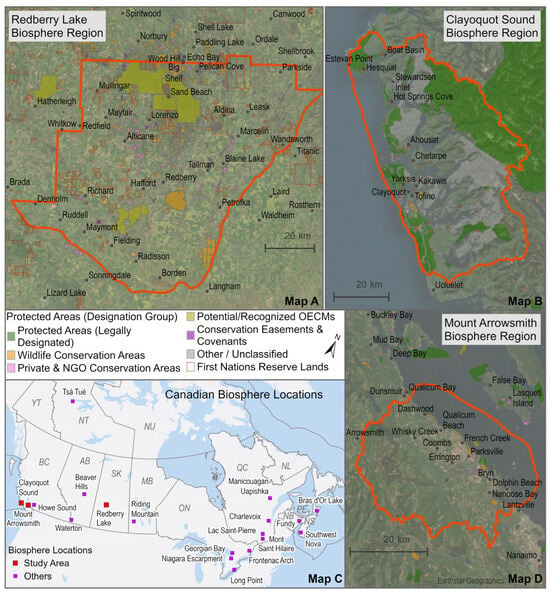
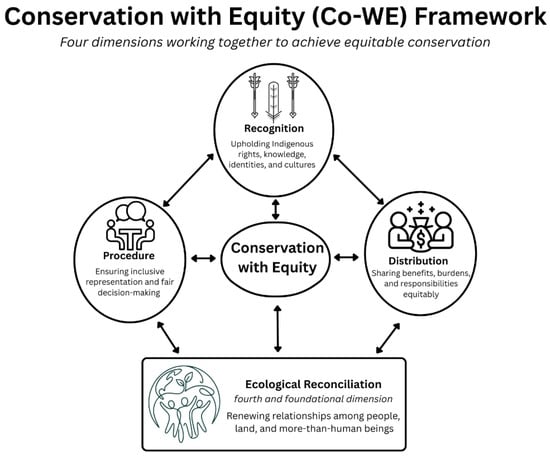

Disclaimer/Publisher’s Note: The statements, opinions and data contained in all publications are solely those of the individual author(s) and contributor(s) and not of MDPI and/or the editor(s). MDPI and/or the editor(s) disclaim responsibility for any injury to people or property resulting from any ideas, methods, instructions or products referred to in the content. |
© 2026 by the authors. Licensee MDPI, Basel, Switzerland. This article is an open access article distributed under the terms and conditions of the Creative Commons Attribution (CC BY) license.