


Abstract
Natural, synthetic, and modified zeolites are widely recognized as versatile materials for environmental remediation due to their high capacity for cation-exchange, adjustable pore structure, and strong chemical stability. These properties enable their effective application in removing diverse contaminants, including heavy metals, ammonium ions, dyes, and various organic pollutants, making them highly relevant in water, wastewater, and soil treatment systems. However, although research in this field has expanded considerably, the overall global development patterns and knowledge structure of zeolite-related studies have not been thoroughly quantified. This study conducts a bibliometric assessment of global research on zeolite applications in water, wastewater, and soil remediation covering the period from 2010 to 2024, using a dataset of 203 peer-reviewed Scopus-indexed publications. The analysis was carried out using VOSviewer to examine publication trends, leading authors, productive countries and institutions, as well as thematic clusters and emerging research directions. The findings indicate a consistent increase in scientific output over the study period, with China, India, Malaysia, and the United States emerging as the most influential contributors in terms of both publication volume and citation impact. Key journals publishing in this area include the Journal of Hazardous Materials, Chemosphere, and Science of the Total Environment. Keyword co-occurrence mapping reveals dominant research themes such as adsorption processes, ion exchange mechanisms, heavy metal remediation, nanostructured materials, and advanced oxidation technologies, highlighting a clear shift toward integrated and hybrid remediation approaches. Overall, the results emphasize the growing significance of modified and composite zeolite materials in enhancing pollutant removal efficiency and supporting sustainable environmental management. This bibliometric evaluation provides a structured overview of the research landscape and offers insights into future directions for zeolite-based remediation technologies.
1. Introduction
Water scarcity, pollution, and soil degradation are among the most pressing environmental challenges of the 21st century, driven by rapid urbanization, industrial expansion, and population growth [1,2]. According to the United Nations, global freshwater demand is projected to increase by 55% by 2050, with approximately two-thirds of the world’s population expected to live under water-stressed conditions [3]. Simultaneously, the contamination of aquatic and terrestrial ecosystems by heavy metals, nutrients, pharmaceuticals, and organic pollutants poses significant threats to environmental and human health [4,5]. Conventional treatment technologies, though effective to some extent, often suffer from high operational costs, limited selectivity, and the generation of secondary pollution [6]. Consequently, the search for cost-effective, sustainable, and efficient materials for environmental remediation has become a major research priority [7].
In this context, zeolites, crystalline and microporous aluminosilicate minerals have gained increasing attention for their exceptional ion-exchange capacity, adsorption selectivity, and catalytic activity [8,9]. Both natural and synthetic zeolites have been extensively utilized for removing heavy metals, ammonium, dyes, and organic contaminants from wastewater and polluted soils due to their large surface area, tunable pore structures, and chemical stability [10,11]. Zeolites are also employed as catalysts and catalysts support in advanced oxidation processes (AOPs), enabling the degradation of recalcitrant organic pollutants under mild conditions [12,13]. Moreover, the emergence of nano-zeolites and modified zeolitic materials such as surfactant-modified zeolites, hierarchical zeolites, and zeolitic imidazolate frameworks (ZIFs)has expanded their applications in environmental engineering [14,15]. These innovations not only improve pollutant removal efficiency but also contribute to the principles of green chemistry and circular economy through the regeneration and reuse of zeolitic materials [16].
Natural and synthetic zeolites possess distinct structural and physicochemical characteristics that influence their environmental applications. Natural zeolites are abundant, inexpensive, environmentally friendly, and suitable for large-scale remediation; however, their mineral impurities and variable composition may limit adsorption performance. In contrast, synthetic zeolites exhibit highly controlled pore structures, greater purity, tunable Si/Al ratios, and superior adsorption selectivity, although their production generally involves higher manufacturing costs and energy consumption. Modified zeolites combine the advantages of both materials by incorporating functional groups or metal nanoparticles to improve adsorption capacity, catalytic activity, and regeneration potential. Consequently, selecting appropriate zeolite material depends on contaminant characteristics, treatment objectives, economic considerations, and sustainability requirements.
Despite the vast number of studies on zeolite-based remediation, the research landscape remains fragmented, encompassing a wide range of pollutants, treatment configurations, and modification strategies [17]. Previous reviews have provided qualitative overviews of zeolite performance in water and soil treatment; however, a quantitative evaluation of research trends, scientific collaborations, and thematic evolution over time is still lacking [18,19]. Understanding these patterns is essential to identify knowledge gaps, emerging hotspots, and future research directions in the field of environmental remediation using zeolites [20]. In light of these challenges, it is crucial to explore the primary areas of future directions, hotspots, and focus on biomass valorization and biofuel production research. There is an urgent need for further investigation to fill existing knowledge gaps and address emerging health concerns related to the application of zeolite for water, wastewater, and soil remediation. An in-depth understanding of the research environment is essential for recognizing emerging trends and informing practical applications.
Bibliometric analysis has emerged as a robust approach to systematically evaluate and visualize the intellectual structure of a research domain [21]. By integrating quantitative techniques such as co-citation, co-authorship, and keyword co-occurrence analysis, bibliometrics offers deep insights into publication trends, influential authors, institutions, and countries, as well as the evolution of scientific themes [22,23]. When coupled with visualization tools such as VOSviewer or CiteSpace, this approach provides a comprehensive understanding of how research on zeolites in environmental remediation has evolved and where it is heading [24,25].
This study conducts a bibliometric analysis of literature on the application of natural, synthetic, and modified zeolites in water, wastewater, and soil remediation, based on data extracted from the Scopus database covering the period from 2010 to 2024. Unlike previous bibliometric studies that focused on general adsorption materials, groundwater remediation, or catalytic nanomaterials, the present study specifically examines zeolite-based materials across water, wastewater, and soil remediation simultaneously. Furthermore, this study integrates publication trends, collaboration networks, institutional productivity, citation impact, and thematic evolution into one comprehensive framework, thereby providing a more holistic understanding of the development of this rapidly growing research field. The main objectives are to: (i) examine publication and citation trends; (ii) identify the most influential journals, authors, institutions, and countries; (iii) explore research collaborations through co-authorship and co-citation networks; and (iv) analyze thematic clusters and emerging hot spots using keyword co-occurrence mapping. The novelty of this work lies in providing a holistic bibliometric perspective on the role of zeolites in environmental remediation, bridging the gap between chemical innovation and environmental sustainability. Ultimately, this analysis aims to guide researchers and policymakers toward more integrated and efficient uses of zeolite-based technologies for addressing global challenges in water and soil pollution management.
Bibliometric analysis serves as a robust methodology for systematically evaluating and visualizing published literature, yielding both quantitative and qualitative insights into scientific activities [22]. By utilizing statistical techniques, this analysis scrutinizes articles, books, and their citations, revealing patterns of research productivity across individuals, institutions, and countries [23]. Such insights contribute to a nuanced understanding of current research dynamics and facilitate the forecasting of future advancements. Moreover, co-citation analysis enhances bibliometric methods by elucidating the interrelationships among documents, thereby aiding in the identification of new research frontiers [24]. However, the data should be interpreted with caution, considering the potential biases and limitations inherent in citation-based metrics. It is crucial to balance these metrics with qualitative assessments of research quality and impact. This work not only addresses important gaps but also sets the stage for future investigations into innovative solutions for environmental and water pollution.
2. Methods
2.1. Data Sources and Bibliometric Methodology
This study employed a systematic bibliometric approach to evaluate global research trends concerning the application of zeolites in water, wastewater, and soil remediation. Data were retrieved from the Scopus database, chosen for its comprehensive coverage and wide disciplinary scope across environmental engineering, chemistry, and materials science. The search period spanned from 2010 to 2024, ensuring the inclusion of recent developments in zeolite-based remediation technologies.
This study utilized the PRISMA checklist to guide its literature review process following PRISMA standards but intentionally omitting meta-analysis procedures [23]. Bibliometric analysis plays a crucial role in systematic reviews by enabling the creation of a comprehensive and reproducible database [25]. Its popularity stems from its ability to present an integrated perspective of research domains, outputs, institutions, and evolving trends [26]. This approach is especially effective for examining large volumes of academic data, identifying citation linkages among journals, and revealing insights into established or emerging research areas [27]. Additionally, bibliometric analysis contributes to ongoing research and innovation by emphasizing its significance and applications, making it a widely preferred method across diverse scientific disciplines [28].
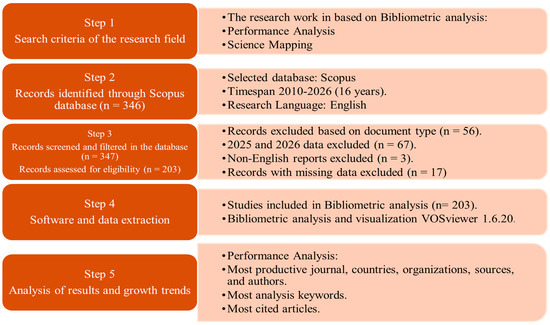
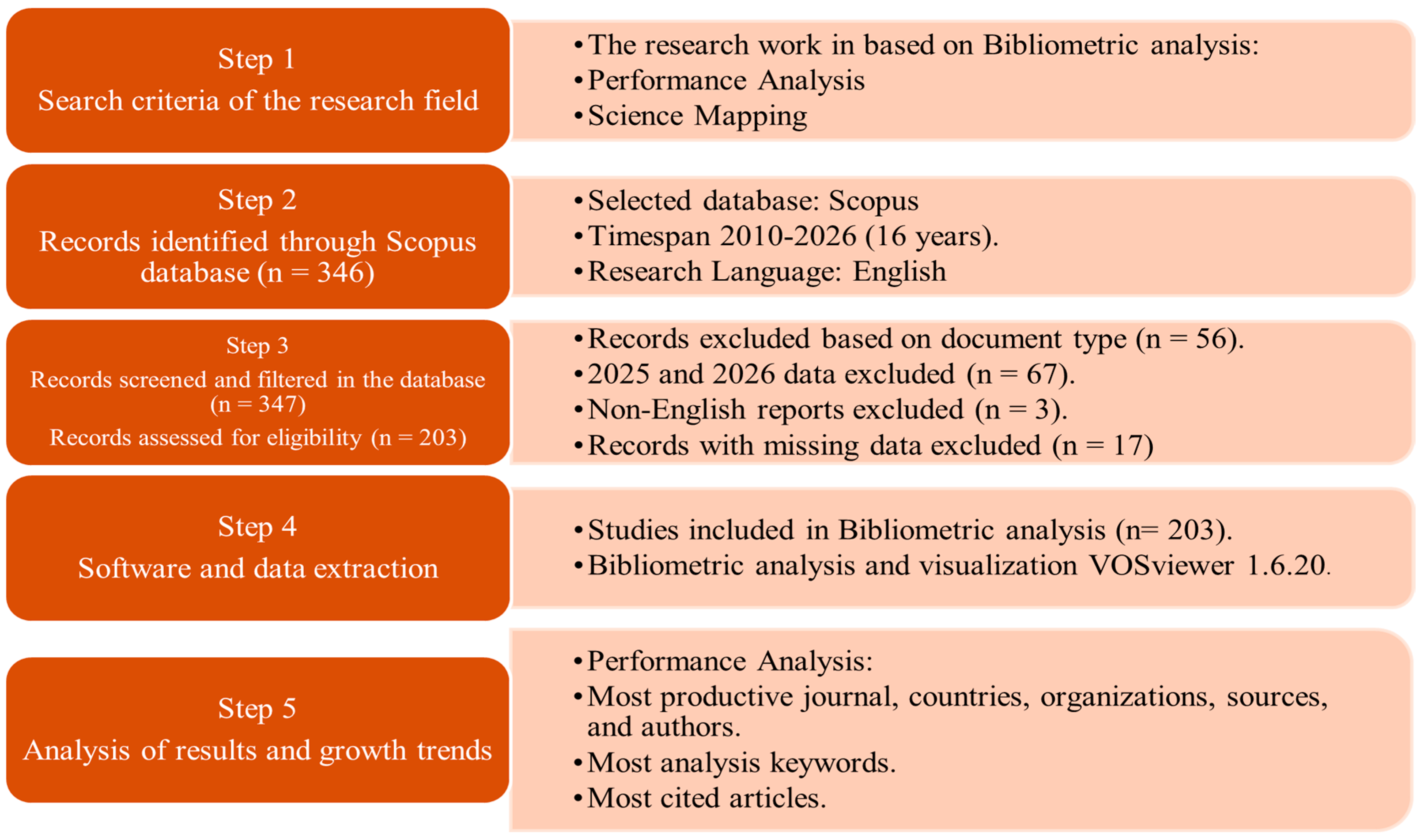
The literature search utilized the following query string and keywords: “(TITLE-ABS-KEY ((“Zeolite”) AND (“wastewater” OR “soil remediation” OR “water purification”)) AND PUBYEAR > 2010 AND PUBYEAR < 2025 AND (LIMIT-TO (LANGUAGE, “English”)) AND (LIMIT-TO (DOCTYPE,”ar” OR DOCTYPE,”re”)) AND (LIMIT-TO (SRCTYPE,”j”) OR LIMIT-TO (SRCTYPE,”p”))). The research methodology is shown in Figure 1. The search yielded an initial dataset comprising all peer-reviewed journal articles and review papers published in English. Non-English publications, conference proceedings, book chapters, and non-journal documents were excluded to ensure data quality and consistency.
Figure 1.
Research methodology.
To enhance dataset reliability, duplicate entries were eliminated, and inclusion/exclusion criteria were applied based on title, abstract, and keyword relevance to zeolite applications in environmental remediation. The resulting dataset was exported as comma-separated values (CSV) files for subsequent analysis. After extracting and organizing data from the Scopus database, CSV files were generated for detailed analysis. To maintain data accuracy and reliability during the source selection stage, several filtering steps were applied. These included removing duplicate records and enforcing specific inclusion and exclusion criteria based on language, document type, and publication source. Once the records were segmented and reviewed, a detailed analysis was performed on source titles, authors, funding agencies, and institutional affiliations for each publication year. The document quality was further evaluated by examining titles, abstracts, and keywords. Incomplete or incorrect entries were systematically eliminated through a rigorous filtering process to strengthen the dataset’s validity. Consequently, the final dataset comprised only peer-reviewed journal articles written in English, narrowing the total number of publications to 203. Institutional affiliations exported from Scopus were manually standardized to eliminate inconsistencies arising from different naming conventions. Department-, faculty-, and laboratory-level affiliations were merged under their parent universities or research institutions. For example, “Department of Environmental Engineering, Erciyes Üniversitesi “ and “Faculty of Engineering, Erciyes Üniversitesi “ were both standardized as “ Erciyes Üniversitesi.” Manual verification was conducted to ensure institutional consistency and avoid duplication.
2.2. Visualization Procedure
In bibliometric research, creating and visualizing bibliometric maps greatly improves clarity and facilitates the identification of relationships among various sources. This approach supports the interpretation of results and helps researchers better understand the structural patterns within bibliometric data. To examine these patterns, VOSviewer version 1.6.20 was employed for data analysis. VOSviewer is freely available, user-friendly software specifically developed for visualizing and mapping bibliometric networks [29]. It was selected for this study due to its ability to handle large datasets and its advanced text-mining functions [30]. The software effectively reveals connections and trends in the literature by generating visual bibliometric maps that illustrate relationships between selected publications [31]. One of its main advantages lies in its adaptive label management, which automatically adjusts to optimize the visualization of co-occurrence data [32]. The analysis in this study centered on three main dimensions: the journals publishing the articles, the keywords used by authors, and the countries of origin. These factors offer a holistic view of the research domain and are fundamental components of bibliometric evaluation [33,34]. Core analytical parameters included publication frequency, average normalized citations, and total link strength (TLS), which serve as key indicators of research influence and academic impact [35,36].
The search yielded a total of 203 documents, all of which were journal articles, published across 108 distinct sources. This body of literature was substantially shaped by the efforts of 1046 authors representing 608 different institutions worldwide. In terms of geographical distribution, researchers from 72 countries contributed notably to this field. Collectively, these 203 publications have received 14,600 citations, reflecting their strong academic influence. Further analysis of the authors’ keywords offered deeper insights into the research themes, identifying 711 unique terms that highlight the diversity of focus areas. Table 1 presents a summary of the main bibliometric indicators related to zeolite applications in water, wastewater, and soil remediation.
Table 1.
Summary of key bibliometric results (2010–2024).
3. Results and Discussion
3.1. Trends in Publication and Citation for Zeolite Applications in Water, Wastewater, and Soil Remediation Research
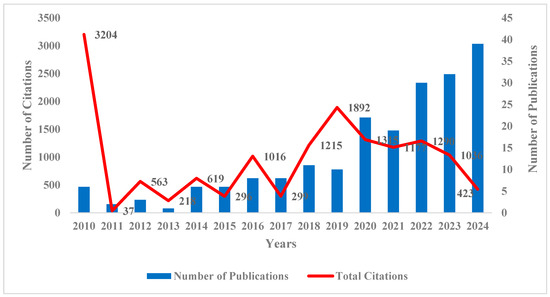
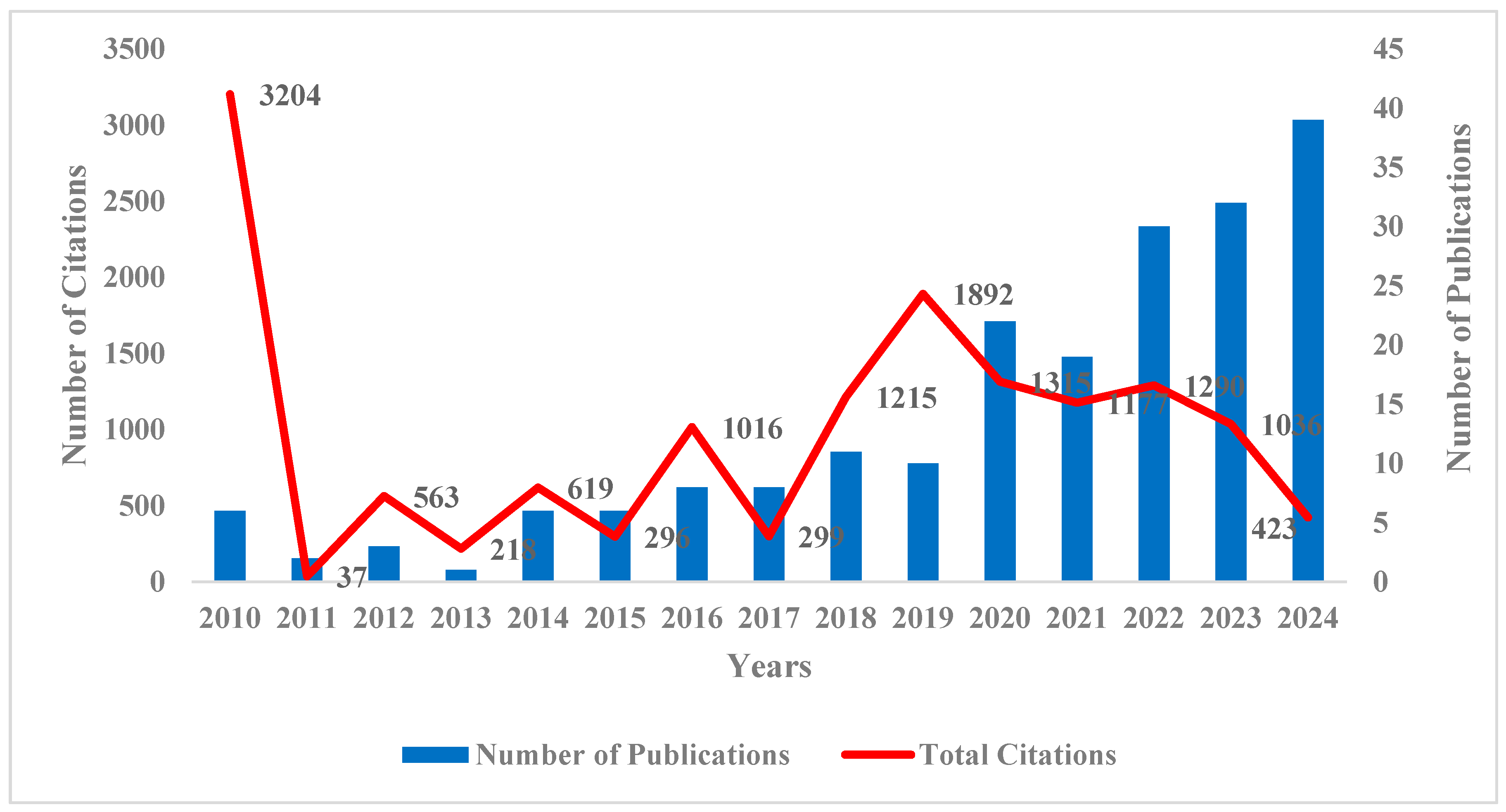
The annual number of published articles serves as an important indicator for evaluating trends in scientific research progress. At the same time, examining citation frequency provides valuable insights into the impact and scholarly influence of these publications. Figure 2 offers a comprehensive overview of publication trends on zeolite applications in water, wastewater, and soil remediation from 2010 to 2024, highlighting a marked overall increase in publication activity during this period. In 2010, only six articles were published, collectively receiving 3204 citations, demonstrating that even early studies made meaningful contributions to the field. Although the number of publications dropped to two in 2011, yielding just 37 citations, citations rose notably in 2012, with two papers receiving 563 citations, indicating growing recognition of the research topic. A significant rise in publication output emerged in 2016, when eight papers were published and accumulated 1016 citations, reflecting heightened research interest. The same number of papers appeared in 2017, garnering 299 citations. In 2018, publications increased to eleven, achieving 1215 total citations, a trend that persisted through 2023 with steady growth in both publication and citation counts. In 2019, ten papers were published, collectively earning 1892 citations, reinforcing the upward momentum of research in this area. The year 2024 marked the peak in publication volume, with 39 articles producing 423 citations, indicating sustained enthusiasm for zeolite research in environmental remediation. Meanwhile, 2022 recorded the highest citation total of 1290 citations across 30 papers. Overall, the data clearly demonstrates a growing trajectory in research on zeolite applications for water, wastewater, and soil treatment. This upward trend reflects increasing scientific attention and environmental awareness. However, the variability in citation counts suggests fluctuations in the influence and quality of research outputs over time, warranting further analysis of the factors driving these patterns.
Figure 2.
Analysis of total citation and annual publications on the topic of zeolite applications in water, wastewater, and soil remediation, as determined by the Scopus database until 2024 (n = 203).
The observed increase in publication output after 2018 reflects a broader global transition toward sustainable remediation technologies driven by increasing concerns over water scarcity, industrial pollution, and resource recovery. During this period, international environmental policies promoting circular economy principles and the United Nations Sustainable Development Goals (particularly SDG 6: Clean Water and Sanitation) stimulated extensive research into environmentally benign adsorbents. Zeolites have become particularly attractive because they combine high adsorption capacity, ion-exchange properties, structural stability, and relatively low production costs. The simultaneous increase in publications and citations also indicates that the research field has progressed beyond laboratory-scale adsorption studies toward the development of multifunctional materials capable of removing emerging contaminants, pharmaceuticals, and complex industrial pollutants. Similar publication trajectories have recently been reported for biochar-, nanomaterial-, and advanced oxidation-based remediation technologies, suggesting that zeolite research has become an integral component of next-generation sustainable water treatment strategies.
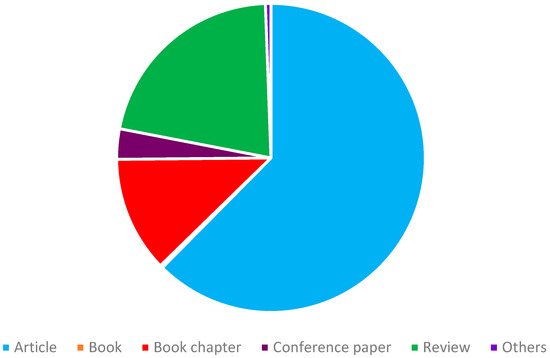
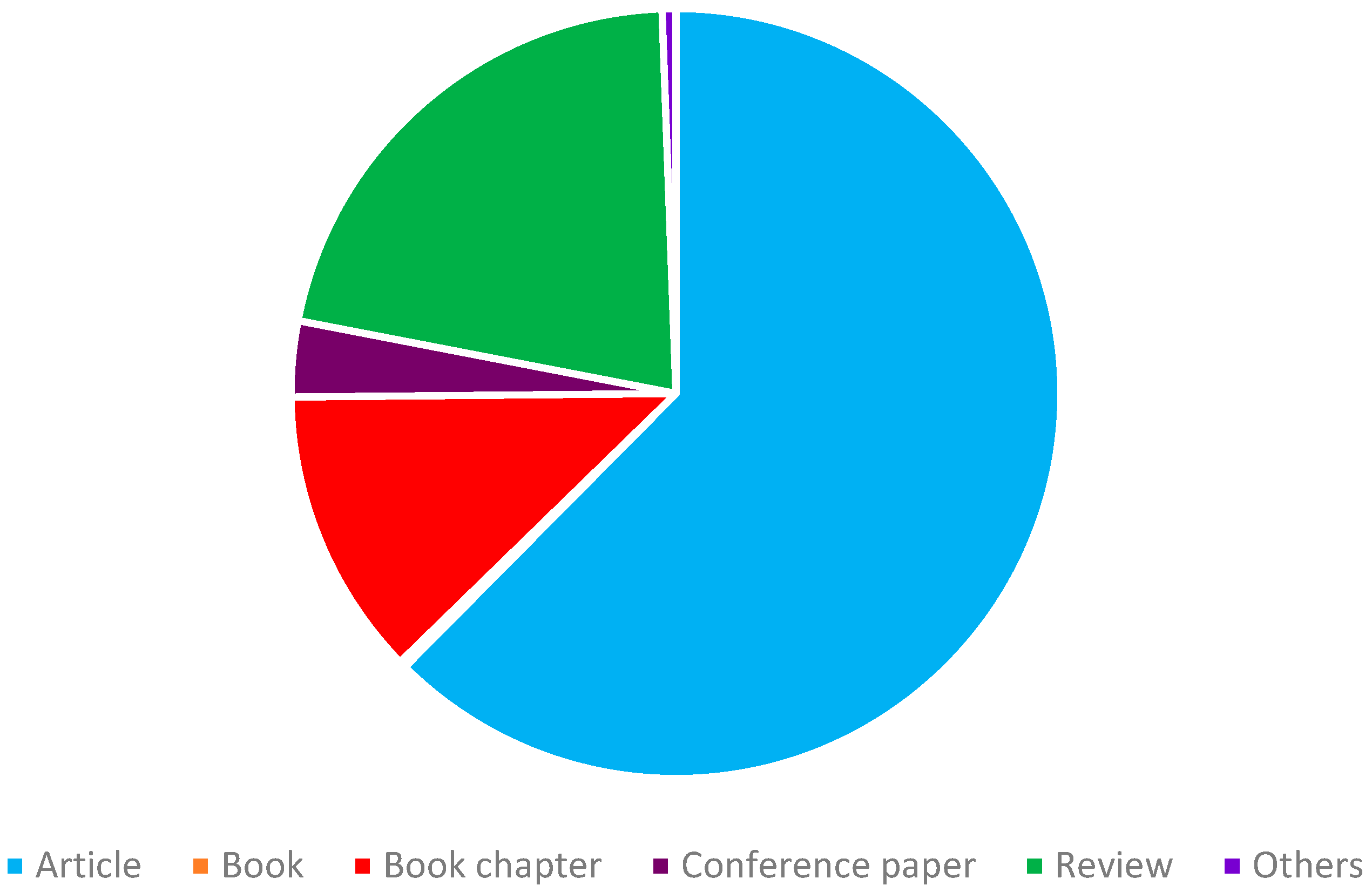
Figure 3 depicts the publication trends concerning zeolite applications in water, wastewater, and soil remediation across five major Scopus subject categories. A comprehensive search of the Scopus database identified 346 research documents published between 2010 and 2024 on these topics. Among these, the majority were classified as “articles,” representing 216 publications, or 62.4% of the total output. The remaining publications consisted of “review articles” (21.4%), “book chapters” (12.1%), and a small proportion categorized as “books,” “conference papers,” “non-English language documents,” and “non-journal publications.” Since articles and review articles together comprised the vast majority of the dataset, the other categories were excluded from subsequent analyses.
Figure 3.
Categorization of documents related to zeolite applications in water, wastewater, and soil remediation.
3.2. Leading Journals for Articles of Zeolite Applications in Water, Wastewater, and Soil Remediation
Table 2 provides a comprehensive summary of the top eight journals most frequently cited in research on zeolite applications for water, wastewater, and soil remediation. The table highlights key bibliometric indicators, including the SCImago Journal Rank (SJR), Total Link Strength (TLS), number of publications, and total citations. The data reveals a strong concentration of research output in high-impact journals, emphasizing their central role in advancing knowledge within this field. Between 2010 and 2024, notable contributions were observed in journals such as Journal of Hazardous Materials, Science of the Total Environment, Chemosphere, and Chemical Engineering Journal. These outlets exhibit high citation counts and SJR scores, reflecting their broad academic influence and significant impact on the discipline. In contrast, journals such as Environmental Research and Sustainability report comparatively lower citation and SJR values, possibly due to their more specialized scope, recent establishment, or narrower audience. Overall, the data demonstrate a diverse publishing landscape—spanning well-established, widely recognized journals as well as emerging or niche platforms that cater to specific areas of zeolite-related environmental research.
Table 2.
The top 8 sources by citation count for zeolite applications in water, wastewater, and soil remediation research.
In summary, Table 2 reveals a clear pattern in which high-impact journals dominate the scholarly discussion on zeolite applications in water, wastewater, and soil remediation. Among these, Chemosphere is distinguished by its high volume of publications, whereas the Journal of Hazardous Materials exhibits a particularly strong citation impact. The concentration of both research output and citations within these leading journals underscores their pivotal role in advancing scientific understanding in this field, emphasizing the importance of continued research on zeolite-based environmental applications. The dominance of journals such as Journal of Hazardous Materials, Chemosphere, and Chemical Engineering Journal demonstrates that zeolite research has evolved into an interdisciplinary field that integrates environmental engineering, materials science, chemistry, and chemical process engineering. These journals typically prioritize studies presenting novel adsorbent synthesis, mechanistic adsorption investigations, catalyst development, and pilot-scale treatment technologies, thereby attracting substantial international citations. Conversely, journals with broader sustainability scopes generally publish a larger diversity of environmental studies, which may explain their comparatively lower citation densities despite increasing publication volumes. This publishing pattern indicates that high scientific impact is closely associated with methodological innovation rather than publication quantity alone.
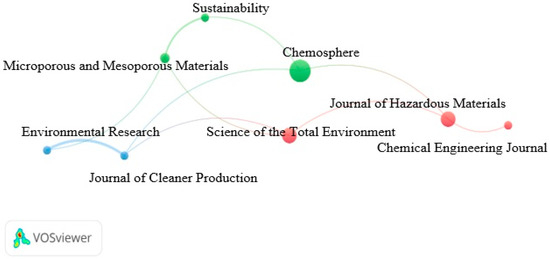
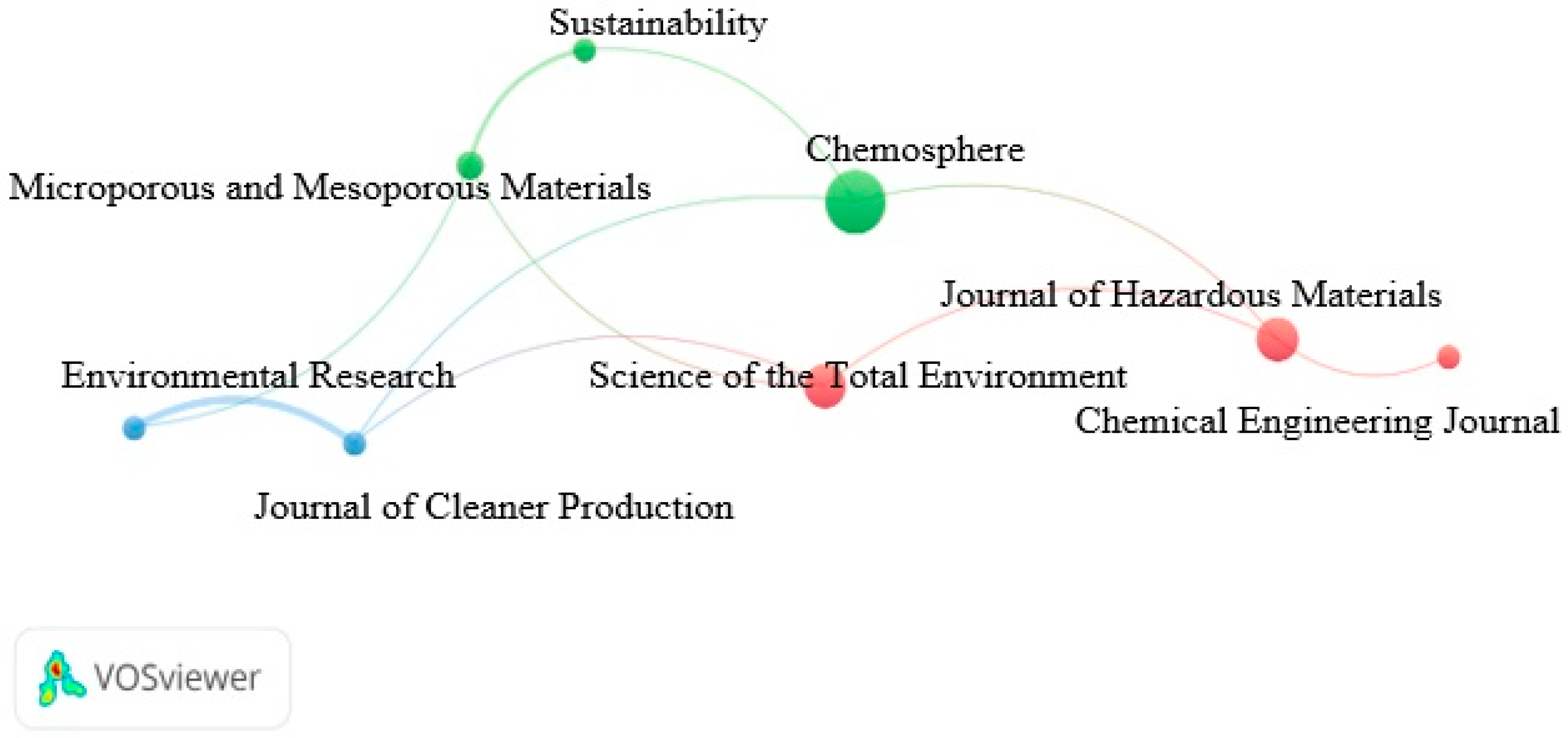
To further examine patterns of international collaboration within this research area, a network visualization was generated using VOSviewer. In this diagram, the journals contributing to the field are represented as labeled nodes, with connecting lines illustrating their collaborative relationships. The size of each node reflects the total number of citations received by that journal’s publications, while the thickness of the connecting lines indicates the strength of co-publication or citation linkages between journals [37]. This bibliometric visualization provides meaningful insights into the structure and intensity of global research cooperation on zeolite applications in water, wastewater, and soil remediation. The analysis identified a total of 25 source journals that published related articles between 2010 and 2024, of which 14 met the criteria for inclusion in the network, as shown in Figure 4.
Figure 4.
Co-occurrence map of journals published in 2010–2024 that have more than 14 articles related to zeolite applications in water, wastewater, and soil remediation research.
This analysis highlights the existence of a strong network of high-impact journals dedicated to research on zeolite applications in water, wastewater, and soil remediation. These journals play a crucial role in disseminating influential scientific findings and advancing understanding within this domain. The observed variation in citation counts among journals reflects their differing levels of influence and thematic focus, emphasizing the importance for researchers to consider such bibliometric indicators when selecting publication outlets. The prominence of journals such as ‘’Chemosphere’’, which records the highest number of publications, and the ‘’Journal of Hazardous Materials’’, recognized for its substantial citation impact, demonstrates the wide range of opportunities available for contributing to this vital area of study. Collectively, these journals not only serve as key platforms for knowledge exchange but also shape emerging research directions in zeolite-based environmental remediation.
3.3. Distribution of Research on Zeolite Applications in Water, Wastewater, and Soil Remediation by Country
The bibliometric analysis in Table 3 offers a comprehensive overview of the leading countries involved in research on zeolite applications for water, wastewater, and soil remediation. Key metrics such as publication counts, citation numbers, and total link strength (TLS) were analyzed for each nation. The findings reveal that China is the foremost contributor, with 40 publications and 3259 citations, underscoring its prominent role in advancing this research field. India follows with 32 publications and 2259 citations, reflecting substantial research activity. Malaysia and the United States also make significant contributions, with 16 publications and 4112 citations, and 13 publications with 1121 citations, respectively, demonstrating strong engagement with this critical environmental topic. China’s leading position can be attributed to factors such as robust governmental support and funding, abundant biomass resources, extensive research collaborations and international partnerships, a large research workforce, and institutional capacity development [38]. Overall, the data indicates that numerous countries are actively contributing to the study of zeolite applications in environmental remediation, each with distinct strengths in publication output and citation influence. These findings emphasize the global significance of this research area and highlight opportunities for enhanced international collaboration.
Table 3.
Leading 16 countries through publishing zeolite applications in water, wastewater, and soil remediation research from 2010 to 2024.
The data reveals a diverse global landscape of research on zeolite applications in water, wastewater, and soil remediation, with countries showing different levels of productivity and impact. China’s leadership reflects sustained governmental investment in environmental technologies, strong university-industry collaboration, and increasing national emphasis on sustainable water management. Similar publication growth has also been reported in recent bibliometric studies on environmental adsorbents, suggesting that global research priorities are shifting toward low-cost and circular-economy-based remediation technologies. This suggests both countries have well-established research capacities and active scientific communities focused on environmental applications of zeolites. Interestingly, although China produces the most papers, Malaysia’s studies receive the highest number of citations, showing that its research in this area has had considerable influence. The United States and South Korea also rank high in citation impact, reflecting their important contributions to the field. Meanwhile, growing interest is evident in places like Hong Kong, South Africa, the United Kingdom, and Canada, highlighting a global commitment to tackling environmental challenges through zeolite-based technologies. Overall, the results emphasize the value of international cooperation in driving forward innovations and solutions related to zeolite use in water and soil remediation.
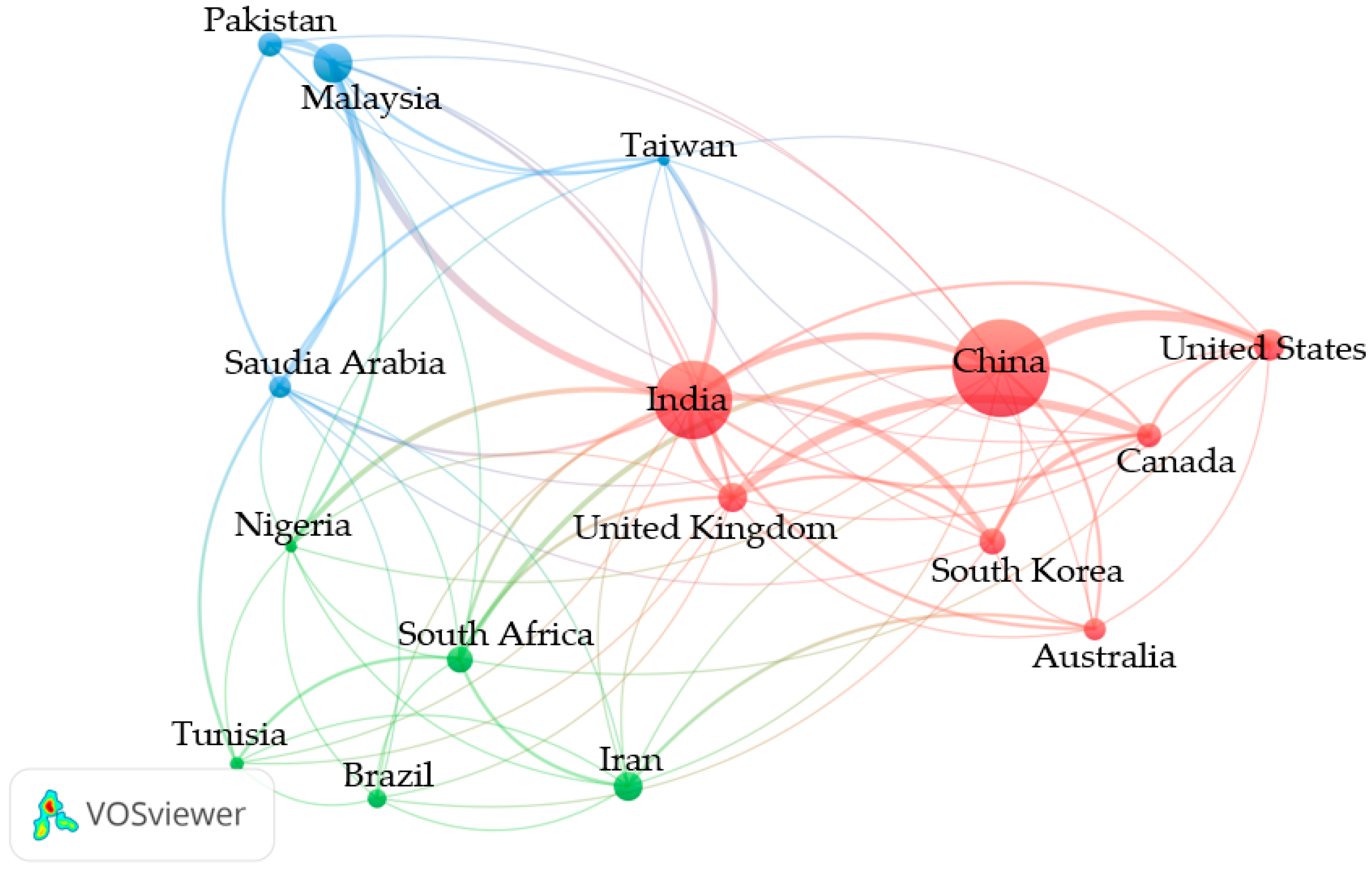
The network analysis, illustrated in Figure 5, revealed sixteen countries actively contributing to research on the application of zeolite in water and soil remediation. In this network, the larger nodes and thicker connecting lines indicate countries with more significant influence and stronger collaborative relationships. This visualization offers valuable insight into the global research landscape, highlighting the leading nations and their interconnections. Analyzing these collaboration patterns helps to identify major contributors and emerging partnerships that drive progress in zeolite-based water and soil remediation studies.
Figure 5.
A network visualization displaying the primary nations taking part in zeolite application in water, wastewater, and soil remediation research.
The geographical distribution of publications also reflects regional environmental priorities and national research investments. China’s leading position is consistent with its extensive governmental funding programs targeting wastewater treatment, industrial pollution control, and advanced functional materials. Likewise, India’s strong publication output corresponds to increasing research efforts addressing groundwater contamination and affordable treatment technologies suitable for developing regions. Interestingly, Malaysia demonstrates exceptionally high citation performance relative to its publication output, indicating that its contributions have focused primarily on comprehensive review papers and highly influential research published in high-impact journals. These findings suggest that publication quantity alone should not be interpreted as the sole indicator of scientific leadership, since research quality, international collaboration, and publication strategy collectively determine academic influence.
Beyond identifying productive countries, the collaboration network reveals the structural organization of global research partnerships. Countries occupying central positions within the collaboration network function as important knowledge hubs by facilitating multidisciplinary cooperation and accelerating the exchange of scientific expertise. Strong collaborative relationships between Asian, European, and North American institutions have contributed significantly to the rapid dissemination of innovative zeolite modification techniques, adsorption mechanisms, and hybrid treatment technologies. Such international cooperation is expected to become increasingly important as environmental remediation research shifts toward large-scale implementation, pilot demonstrations, and commercialization of advanced zeolite-based materials.
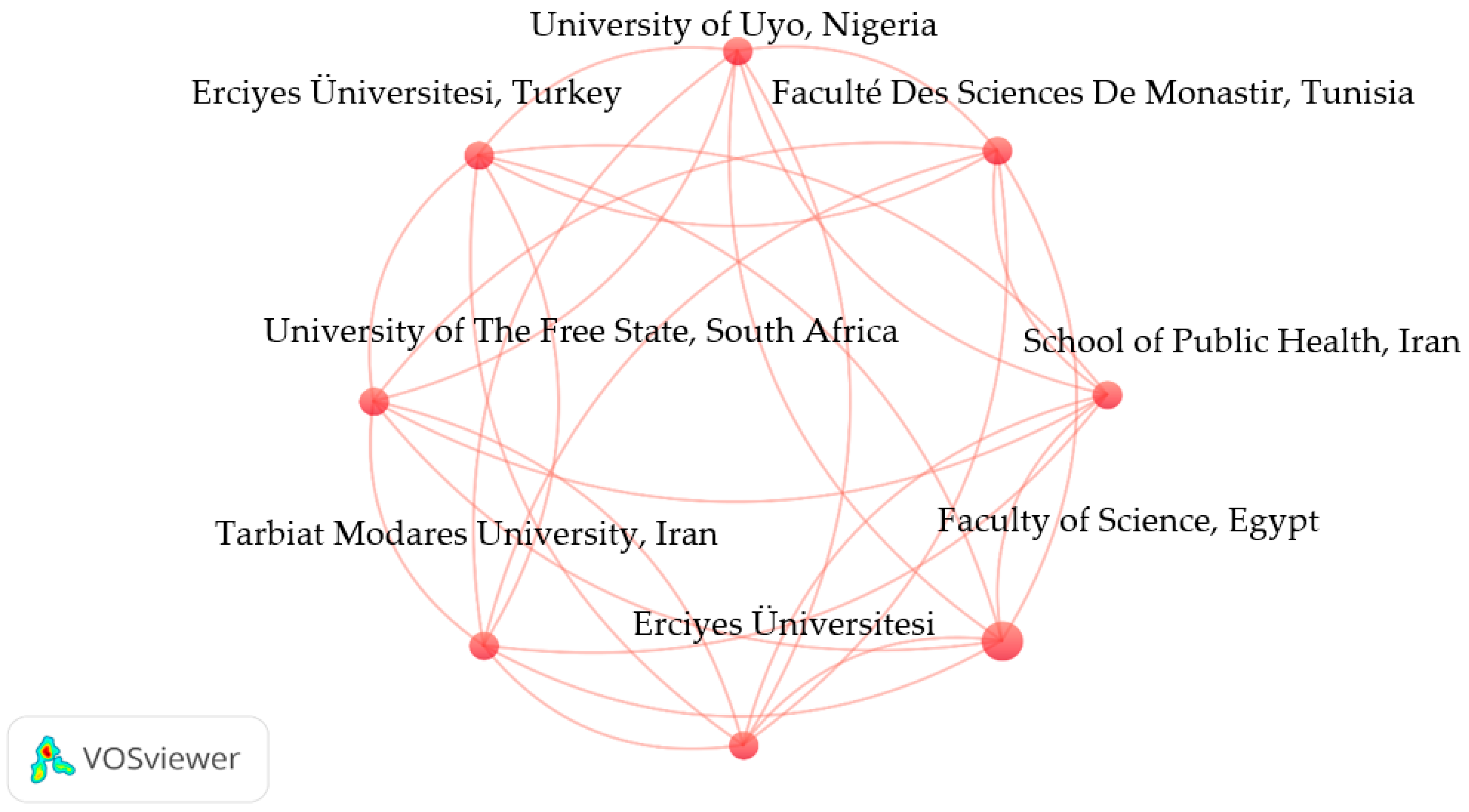
The bibliometric analysis highlights the worldwide commitment to tackling issues associated with the use of zeolites in water and soil remediation. Several nations have become prominent contributors to this vital research area. To pinpoint the top institutions involved in studies on zeolite applications for water and soil remediation, a comprehensive map was generated based on data from the Scopus database, as shown in Figure 6.
Figure 6.
A network visualization showcasing the main universities involved in the zeolite use in water, wastewater, and soil remediation research.
Figure 6 reveals several well-defined institutional collaboration clusters. Universities from Egypt, Turkey, South Africa, and Iran occupy central positions within the network, indicating their important role in facilitating international collaboration. Institutions with larger nodes possess higher publication productivity, whereas thicker connecting lines indicate stronger collaborative relationships. The network further demonstrates that research on zeolite applications is becoming increasingly international, with collaborative partnerships extending across Asia, Europe, and Africa.
The initial dataset primarily listed affiliations by departments or colleges rather than specifying the universities or research institutions. As a result, it was necessary to reorganize this information to accurately reflect the universities or research entities involved, as presented in Table 4.
Table 4.
Top 8 affiliations and universities according to authors’ affiliation.
The institutional collaboration pattern demonstrates that scientific excellence is not solely determined by publication productivity but also by research specialization and access to advanced analytical infrastructure. Universities exhibiting high citation impact typically possess multidisciplinary research centers that integrate environmental engineering, materials science, chemistry, and nanotechnology. Such integration enables the development of advanced zeolite composites, catalyst-supported adsorption systems, and multifunctional remediation technologies. Furthermore, institutions participating in international collaborative projects generally produce publications with higher visibility and greater scientific influence than institutions conducting research independently.
3.4. Co-Citation Network of Authors in Zeolite Application in Water, Wastewater and Soil Remediation Research
Co-citation author network analysis is a recognized bibliometric technique that systematically maps existing literature. This method identifies authors who are frequently cited together, thereby uncovering conceptual frameworks and thematic interconnections within a specific research area. In this study, we employed VOSviewer to perform a detailed co-citation network analysis, which provided insightful perspectives on the relationships among publications centered on zeolite application in wastewater and soil remediation.
Table 5 outlines the most prolific researchers in the field, indicating their publication counts and total citations. For example, Ok, Yong Sik leads with 5 publications and 1396 citations, followed by Aloulou, Hajer and Aloulou, Wala, who have 4 publications and a total of 129 citations. Other contributors include Priya, A. K. with 409 citations, Khoo, Kuan Shiong with 335 citations, even though their number of publications is low.
Table 5.
Most prolific researchers in zeolite application in water, wastewater, and soil remediation.
The distinction between publication productivity and scientific influence deserves careful consideration when interpreting bibliometric results. While prolific authors contribute substantially to the growth of the research field through sustained publication activity, influential authors are characterized by the scientific impact of their work rather than publication quantity alone. Total citation counts may be affected by publication age, journal visibility, and article type, particularly review papers, which generally accumulate citations more rapidly than original research articles. Therefore, a normalized indicator such as citations per publication (CPP) was additionally considered to provide a more balanced assessment of scholarly influence. The results indicate that some authors with fewer publications exhibit considerably higher average citation rates, demonstrating that research quality and scientific significance are not necessarily proportional to publication output. These findings highlight the importance of evaluating bibliometric performance using complementary indicators rather than relying solely on total publications or total citations.
In contrast, Table 6 highlights the most influential researchers based on citation impact. Anees Ahmed, Rokiali Hashim, Mohd Rafatullah, and Sulaiman, O. stand out with only one publication but an exceptional total of 2891 citations. Ok, Yong Sik and Zhou, Yi also show significant impact with five and two publications, respectively, garnering 1396 and 1117 citations. Other authors contributed with one paper that resulted in 1113 citations.
Table 6.
Most influential researchers by citation impact in zeolite application in water, wastewater, and soil remediation.
A comparison between the two tables highlights several authors with both a high number of publications and significant citation impact. Among them, Ok, Yong Sik stands out, appearing in both lists, which demonstrates his prominent role through extensive research output and strong scholarly influence. This intersection underscores the importance of these researchers in shaping the intellectual foundation of zeolite applications in wastewater and soil remediation. Their prolific publications and high citation rates confirm their status as leading figures driving progress in this critical field of environmental science. Furthermore, the co-citation network analysis provides valuable insight into the current research landscape and the collaborative relationships among these influential authors.
The distinction between prolific and influential researchers deserves careful interpretation. While prolific authors contribute consistently to the development of the field through sustained publication activity, influential authors often achieve exceptionally high citation impact through landmark review articles or pioneering methodological contributions. Consequently, total citation counts alone may not fully represent scientific influence because citation accumulation depends strongly on publication age, article type, and journal visibility. To provide a more balanced assessment, future bibliometric studies should incorporate normalized indicators such as citations per publication and citations per year, allowing more meaningful comparisons between established and emerging researchers.
3.5. Top Cited Publications in Zeolite Application in Water, Wastewater and Soil Remediation
Citation analysis serves as an essential tool for uncovering intellectual relationships among publications, particularly when one research work cites another. This method helps identify the most influential studies within a given field and enables the evaluation of citation trends and patterns [36]. In the present study, a citation analysis was performed on articles related to the application of zeolite in wastewater and soil remediation. Table 7 lists the top 10 most cited papers, ranked according to the criteria established by the Scopus database. The analysis provides meaningful insights into the most impactful and widely recognized publications in this domain. The reviewed studies underscore the strong link between zeolite applications and advancements in wastewater and soil treatment technologies.
Table 7.
The top 10 most-cited articles in the field of zeolite application in water, wastewater and soil remediation.
For instance, Rafatullah et al. [39] highlights the growing use of low-cost adsorbents for removing methylene blue (MB) from industrial wastewater, particularly from textile and paper sectors. While activated carbon remains effective, its high-cost limits large-scale use, prompting exploration of alternative materials such as agricultural waste, industrial residues, biomass, clays, and zeolites. These sustainable and affordable adsorbents have shown excellent removal efficiency, making them promising substitutes for conventional materials in dye remediation processes. In addition, Zhou et al. [40] summarizes key advancements in the development, modification, and functionalization of new adsorbents to enhance dye removal efficiency under various conditions. It discusses dye types, their environmental impacts, removal technologies, the properties and limitations of different adsorbents, and the mechanisms governing adsorption. The review also outlines current challenges and future directions for improving adsorption-based dye removal technologies and their practical applications. Another study by Stefaniuk et al. [41] explores the benefits and risks of using nanoscale zero-valent iron (nZVI) for environmental remediation. It compares traditional and emerging synthesis methods such as green, ultrasound, and electrochemical techniques and emphasizes the importance of these advances for treating various contaminants. Pereira et al. [42] examines the application of synthetic and natural iron (hydr)oxides as catalysts in advanced oxidation processes, particularly Fenton-like systems, for environmental remediation. These systems are highly effective in generating reactive species, such as hydroxyl radicals, under mild conditions of room temperature and atmospheric pressure. The catalytic performance of Fe (hydr)oxides is influenced by several factors, including the iron oxidation state, surface area, isomorphic substitution by other cations, as well as pH and temperature conditions.
Moreover, Rajendran et al. [43] evaluate the effectiveness of nano-adsorbents for removing heavy metals from wastewater. It discusses how factors like surface area, pH, dosage, temperature, and contact time influence adsorption performance and examines kinetic and isotherm models to explain the mechanisms. The study highlights the potential and challenges of nanomaterial-based adsorption as a promising technique for environmental remediation. Vikrant et al. [44] highlight recent advances in biochar technology for phosphate removal from water, addressing its technical aspects, influencing variables, and existing challenges. Despite its potential, research on phosphate remediation using biochar remains limited compared to studies on other pollutants. Given the harmful impacts of excess phosphate in aquatic systems, the paper emphasizes the need for intensive future research and aims to provide a roadmap for advancing this emerging field. El-Sayed [45] present the latest advancements, potential benefits, and current limitations of nano-adsorbents, offering an updated perspective on their role in sustainable water and wastewater treatment. Rasaki et al. [46] highlight the potential of geopolymers porous, zeolite-like ceramic materials for wastewater treatment, particularly in adsorption, photocatalysis, disinfection, and hydrogen generation. Their properties depend on synthesis methods and precursors such as fly ash and metakaolin. While offering promising applications for cleaner production, large-scale use faces technical, economic, and regulatory challenges that require further research and development. Alby et al. [47] discuss the remediation of wastewater containing hazardous heavy metals and radionuclides, particularly Cs137 and Sr90. It emphasizes sorption-based technologies as effective methods for reducing radionuclide levels and minimizing solid waste. Although materials like resins, clays, and zeolites have been widely used, improvements in capacity and selectivity are still needed. Advances in nanostructured inorganic materials including titanates, vanadate, manganese oxides, and hexacyanoferrates show promise due to their enhanced ion exchange properties and structural flexibility.
The highly cited publications identified in this analysis represent the intellectual foundation of research on zeolite-based environmental remediation rather than merely the most frequently referenced studies. Their influence extends beyond individual applications by establishing the scientific principles that have guided subsequent research over the past decade. The citation network demonstrates that early influential publications primarily focused on adsorption mechanisms, particularly the removal of dyes and heavy metals using low-cost adsorbents. These studies significantly contributed to positioning zeolites as efficient and economically viable adsorbents for wastewater treatment and stimulated extensive research into adsorption kinetics, equilibrium models, and surface modification techniques. A second generation of highly cited publications shifted attention toward advanced functional materials, including nano-zeolites, engineered adsorbents, and hybrid oxidation systems. These works expanded the research frontier from conventional adsorption to multifunctional remediation technologies capable of simultaneously removing inorganic and organic contaminants. More recent highly cited studies illustrate the evolution of the field toward sustainable environmental engineering by integrating photocatalysis, nanotechnology, biochar composites, geopolymers, and advanced oxidation processes. The increasing citation impact of these publications indicates a clear transition from single-function adsorption systems toward integrated treatment technologies with enhanced regeneration, selectivity, and environmental sustainability.
Overall, the citation analysis reveals that the scientific evolution of this research area has progressed through three major stages: (i) establishing adsorption as the dominant remediation mechanism, (ii) developing modified and nanostructured zeolite materials to improve treatment performance, and (iii) integrating zeolites into multifunctional hybrid remediation technologies. These influential publications have collectively shaped the current research agenda and continue to guide future developments in sustainable water and soil remediation.
3.6. Key Research Topics in Zeolite Application in Water, Wastewater and Soil Remediation Research
Berci [38] emphasized that co-occurrence analysis is essential for identifying research themes and tracking the evolution of research trends within a specific field. In this study, data obtained from the Scopus database were analyzed using a minimum occurrence threshold of 15 for keywords. Through this method, 15 keyword terms were extracted from a total of 1046 author-provided keywords. Table 8 presents the keywords that met or exceeded this threshold. It is important to note that the analysis was conducted based on authors’ keywords rather than indexed terms. The top 15 keywords are ranked in descending order according to their Total Link Strength (TLS), determined through a comprehensive evaluation that considered cumulative link strength, the number of connections for each keyword, and their frequency of occurrence.
Table 8.
Top 15 keywords from the studies published on Zeolite Application in Wastewater and Soil Remediation Research.
Table 8 displays the top 15 keywords retrieved from the Scopus database, representing core concepts in the research on zeolite applications for wastewater and soil remediation. Prominent terms such as adsorption, zeolite, wastewater treatment, and remediation reflect the fundamental importance of zeolite in addressing environmental contamination issues. Additionally, the presence of keywords like adsorbent, nanomaterials, and ion exchange underscores the relevance of various adsorbent types and their potential roles in enhancing water, wastewater, and soil remediation processes.
The keywords “ photocatalysis,” “ natural zeolites,” and “ advanced oxidation process “ underscore the technological advancements in water, wastewater, and soil remediation processes are critical for enhancing reaction efficiencies [29]. For instance, terms such as “ion exchange” and “sorption” represent key chemical methods for water, wastewater, and soil remediation [1,47,48].
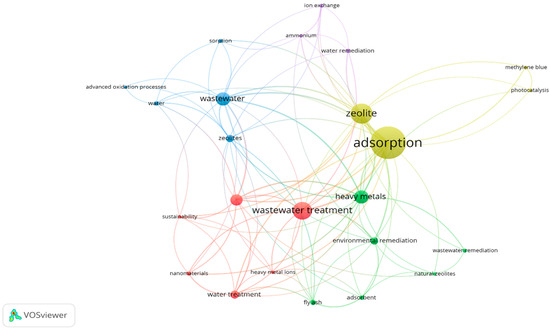
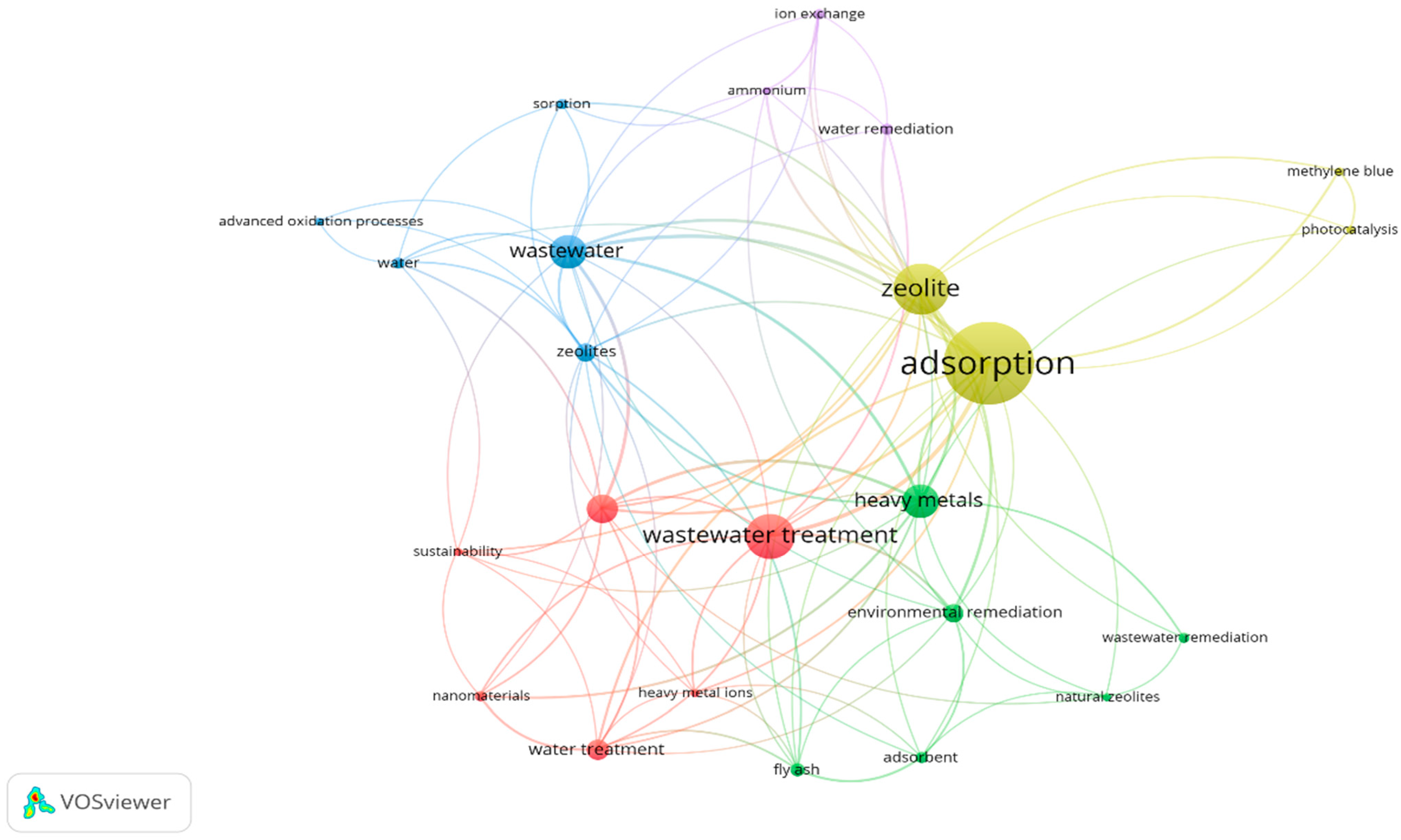
The repeated occurrence of “heavy metals,” “remediation,” and “environmental remediation” reflects the research community’s emphasis on mitigating toxic metal pollution and restoring environmental quality through advanced treatment technologies. Furthermore, the inclusion of “fly ash,” “adsorbent,” “nanomaterials,” and “ion exchange” signifies the exploration of diverse materials and hybrid approaches that enhance adsorption efficiency and selectivity. Keywords such as “water treatment,” “wastewater remediation,” and “sustainability” illustrate the growing concern for environmentally responsible water management strategies aligned with sustainable development goals. The presence of terms like “ammonium,” “methylene blue,” and “natural zeolites” indicates targeted studies focusing on the removal of specific contaminants and the utilization of naturally occurring minerals for cost-effective remediation. Moreover, the occurrence of “photocatalysis” and “advanced oxidation process” points to the integration of innovative oxidation-based methods to complement conventional adsorption systems. In summary, these keywords collectively reveal a holistic research landscape centered on zeolite-based adsorption, heavy metal removal, and sustainable wastewater remediation. They emphasize the advancement of multifunctional materials, hybrid processes, and environmentally friendly technologies aimed at enhancing water quality and supporting global sustainability initiatives. In this context, Figure 7 presents a network diagram that illustrates the co-occurrences of keywords found in research articles on zeolite application in water, wastewater, and soil remediation.
Figure 7.
Co-occurrence clustering of author keyword in a network visualization.
Four major thematic clusters can be identified from the keyword network. The first cluster focuses on adsorption-based treatment technologies and includes adsorption, wastewater treatment, and zeolite. The second cluster emphasizes heavy metal remediation, environmental remediation, and adsorbent development. The third cluster represents emerging hybrid technologies such as photocatalysis, advanced oxidation processes, and nanomaterials. Finally, the fourth cluster highlights sustainable water treatment strategies incorporating ion exchange, natural zeolites, and ammonium removal. The strong interconnections among these clusters indicate that future research increasingly integrates adsorption with catalytic and nanotechnology-based remediation approaches.
The keyword co-occurrence analysis also reveals a clear transition in research priorities over time. Earlier investigations concentrated primarily on conventional adsorption processes using natural zeolites for heavy metal removal, whereas more recent studies increasingly emphasize modified zeolites, nanostructured materials, photocatalytic systems, and advanced oxidation processes. This evolution reflects growing recognition that adsorption alone is often insufficient for removing persistent organic contaminants, pharmaceuticals, and emerging pollutants. Consequently, recent research has shifted toward multifunctional treatment systems that combine adsorption, catalysis, and oxidation within a single remediation platform. Such developments indicate that future innovation is likely to focus on engineered zeolite composites with enhanced regeneration capacity, higher selectivity, and improved long-term environmental sustainability.
To better understand the evolution of research topics, an overlay visualization of author keywords was generated using VOSviewer. The temporal analysis reveals a clear progression in research priorities over the study period. During the early years (2010–2015), research predominantly focused on conventional adsorption, ion exchange, natural zeolites, and heavy metal removal. These studies established the fundamental understanding of zeolite adsorption mechanisms and demonstrated their effectiveness for wastewater treatment. Between 2016 and 2020, research diversified toward modified zeolites, nanomaterials, engineered adsorbents, and composite materials. Increasing attention was devoted to improving adsorption capacity, regeneration efficiency, and multifunctional properties. Since 2021, the research landscape has shifted toward integrated environmental technologies, including photocatalysis, advanced oxidation processes, sustainability, circular economy concepts, and hybrid treatment systems. These emerging topics reflect the growing emphasis on combining adsorption with catalytic degradation to improve treatment efficiency while minimizing environmental impacts. Overall, the temporal evolution demonstrates a transition from fundamental adsorption research toward advanced multifunctional remediation technologies, highlighting increasing interdisciplinary collaboration among materials science, environmental engineering, and sustainable development.
In Figure 7, the nodes illustrate various keywords, where their shapes and spatial arrangements denote the degree of co-occurrence among them. The keyword co-occurrence network identifies four distinct clusters, each represented by different colors that correspond to specific research themes within the study of zeolite applications in wastewater and soil remediation. The colored nodes indicate the grouping of related keywords, with each cluster focusing on a particular aspect of adsorption processes, heavy metal removal, or sustainable treatment technologies. The node size reflects the frequency of keyword occurrence, while the thickness of the connecting lines represents the strength of the relationships and collaboration between the associated research topics.
A closer examination of the identified keyword clusters provides valuable insight into the conceptual structure of the research field. The first cluster primarily represents conventional adsorption technologies and wastewater treatment processes, highlighting the historical importance of ion exchange and sorption mechanisms. The second cluster focuses on heavy metal remediation and environmental restoration, emphasizing contaminant-specific treatment approaches. The third cluster reflects emerging technological developments involving nanomaterials, photocatalysis, and advanced oxidation processes, demonstrating the increasing integration of adsorption with catalytic degradation technologies. Finally, the fourth cluster illustrates growing attention toward sustainability, environmental management, and multifunctional treatment systems. Collectively, these clusters reveal the gradual transformation of zeolite research from traditional adsorption studies toward integrated, sustainable remediation technologies addressing increasingly complex environmental challenges.
The evolution of zeolite research demonstrates a clear transition from conventional adsorption toward multifunctional environmental materials. While early investigations primarily evaluated the adsorption capacity of natural zeolites for heavy metal and ammonium removal, more recent studies increasingly emphasize engineered zeolites with tailored physicochemical properties. Surface modification, ion exchange, metal oxide impregnation, and composite synthesis have significantly enhanced adsorption selectivity, catalytic activity, regeneration efficiency, and long-term operational stability. These developments have enabled zeolite materials to function not only as adsorbents but also as catalysts, catalyst supports, microbial carriers, and multifunctional components within integrated water treatment systems.
4. Limitations of the Study
Although this bibliometric study provides a comprehensive overview of global research trends, several limitations should be acknowledged. First, the analysis relied exclusively on the Scopus database. Although Scopus offers extensive multidisciplinary coverage, relevant publications indexed exclusively in Web of Science, Dimensions, or Google Scholar were not included. Second, only English-language publications were considered. Consequently, important contributions published in other languages may have been excluded, potentially introducing language bias. Third, the study was limited to peer-reviewed journal articles and review papers. Conference proceedings, books, book chapters, patents, and other publication types were intentionally excluded to ensure data consistency but may contain valuable scientific information. Finally, citation-based indicators naturally favor older publications that have had more time to accumulate citations. Therefore, recently published studies with high scientific quality may be underrepresented in citation analyses. Future bibliometric investigations should integrate multiple databases and alternative bibliometric indicators to provide a more comprehensive understanding of the evolving research landscape.
5. Key Trends in Zeolite Applications in Water, Wastewater, and Soil Remediation
5.1. Dominance of Adsorption-Based Treatment Technologies
- ▪
- The data reveal that adsorption is the most prevalent keyword, highlighting its central role as a primary mechanism in pollutant removal processes. Zeolites, as natural or synthetic adsorbents, continue to attract research attention due to their high surface area, ion-exchange capacity, and selectivity for heavy metals and ammonium ions.
- ▪
- The frequent co-occurrence of terms such as adsorbent, sorption, and ion exchange indicates a strong emphasis on improving adsorption efficiency through material modification and process optimization.
5.2. Zeolites as Multifunctional and Sustainable Adsorbents
- ▪
- The appearance of keywords like photocatalysis and advanced oxidation process (AOP) suggests a growing trend toward combining adsorption with oxidation-based techniques. Such hybrid systems enhance pollutant degradation, enabling simultaneous adsorption and catalytic breakdown of complex contaminants.
- ▪
- This integration represents a shift toward multi-functional treatment systems that improve water quality while minimizing energy consumption and secondary pollution.
5.3. Emphasis on Environmental Remediation and Sustainability
- ▪
- The clustering of keywords such as remediation, environmental remediation, water remediation, and sustainability demonstrates an expanding focus on holistic approaches for restoring contaminated ecosystems.
- ▪
- These studies align with global efforts to promote sustainable water management practices and to achieve the United Nations Sustainable Development Goals (SDGs), particularly those related to clean water and environmental protection.
Future research should focus on developing modified zeolites and composite materials with enhanced selectivity and regeneration capacity, as well as integrating adsorption–oxidation hybrid systems for broader contaminant removal. The adoption of life-cycle assessment (LCA) and techno-economic evaluation frameworks will be crucial for promoting large-scale application and ensuring long-term sustainability in zeolite-based remediation technologies.
6. Conclusions
This bibliometric study provides a comprehensive overview of global research on zeolite applications for water, wastewater, and soil remediation from 2010 to 2024. The findings reveal a marked growth in scientific output, highlighting the increasing importance of zeolite-based technologies as sustainable and cost-effective solutions for environmental remediation. China and India have emerged as leading contributors, with extensive international collaborations supporting knowledge exchange and innovation. Citation and thematic analyses indicate that adsorption, ion exchange, and advanced oxidation processes remain the core research directions, while increasing attention has been given to modified zeolites, nanocomposite materials, and photocatalytic systems to improve removal efficiency, selectivity, and regeneration. Despite these advances, the analysis has several limitations. The study is based on a single bibliographic database and English-language publications, which may have excluded relevant research indexed elsewhere or published in other languages. In addition, bibliometric methods evaluate publication and citation patterns rather than the technical performance or practical effectiveness of remediation technologies. Future research should focus on developing environmentally friendly zeolite modification strategies, advanced composite materials, and integrated adsorption–oxidation systems for the efficient removal of emerging contaminants. Greater emphasis on life-cycle assessment, techno-economic analysis, and pilot- to full-scale validation will be essential to bridge the gap between laboratory research and practical implementation. Expanding international collaboration and interdisciplinary research will further accelerate the development of scalable, sustainable zeolite-based remediation technologies.
Author Contributions
Conceptualization, M.B.R.; methodology, M.Y.D.A.; software, M.F.M.A.; validation, D.E.N. and O.F.; writing—original draft preparation, A.A.B.M. and M.Y.D.A. writing—review and editing, M.Y.D.A. All authors have read and agreed to the published version of the manuscript.
Funding
This research was funded by A’Sharqiyah University under the Internal Research Grant Program, ID ASU/IRG/25/26/04.
Data Availability Statement
The original contributions presented in this study are included in the article. Further inquiries can be directed at the corresponding author.
Conflicts of Interest
The authors declare no conflicts of interest.
References
- AbdelMoula, S.; Sorour, M.T.; Aly, S.A.A. Cost Analysis and Health Risk Assessment of Wastewater Reuse from Secondary and Tertiary Wastewater Treatment Plants. Sustainability 2021, 13, 13125. [Google Scholar] [CrossRef] [Scilit]
- Zheng, X.-J.; Li, Q.; Peng, H.; Zhang, J.-X.; Chen, W.-J.; Zhou, B.-C.; Chen, M. Remediation of Heavy Metal-Contaminated Soils with Soil Washing: A Review. Sustainability 2022, 14, 13058. [Google Scholar] [CrossRef] [Scilit]
- Ghafoor, I.; Nawaz, S.; Nawaz, S.; Iqbal, M.; Akhtar, T.; Shurjeel, H.K. A Review on Emerging Strategies for Heavy Metal Remediation from Various Sources. J. Qual. Assur. Agric. Sci. 2023, 3, 40. [Google Scholar] [CrossRef] [Scilit]
- Madesh, S.; Sudhakaran, G.; Meenatchi, R.; Guru, A.; Arockiaraj, J. Interconnected environmental challenges: Heavy metal–drug interactions and their impacts on ecosystems. Drug Chem. Toxicol. 2024, 47, 1282–1299. [Google Scholar] [CrossRef] [Scilit] [PubMed]
- World Health Organization. Ambient Air Pollution: A Global Assessment of Exposure and Burden of Disease; World Health Organization: Geneva, Switzerland, 2016. [Google Scholar]
- Liu, J.; Burciaga, R.; Tang, S.; Ding, S.; Ran, H.; Zhao, W.; Wang, G.; Zhuang, Z.; Xie, L.; Lyu, Z.; et al. Heterogeneous catalysis for the environment. Innov. Mater. 2024, 2, 100090. [Google Scholar] [CrossRef] [Scilit]
- Abujazar, M.S.S.; Karaağaç, S.U.; Amr, S.S.A.; Alazaiza, M.Y.; Bashir, M.J. Recent advancement in the application of hybrid coagulants in coagulation-flocculation of wastewater: A review. J. Clean. Prod. 2022, 345, 131133. [Google Scholar] [CrossRef] [Scilit]
- Aziz, H.A.; Noor, A.F.M.; Keat, Y.W.; Alazaiza, M.Y.; Hamid, A.A. Heat activated zeolite for the reduction of ammoniacal nitrogen, colour, and COD in landfill leachate. Int. J. Environ. Res. 2020, 14, 463–478. [Google Scholar] [CrossRef] [Scilit]
- Detho, A.; Daud, Z.; Rosli, M.A.; Awang, H.; Ridzuan, M.B.B. Review on COD and ammoniacal nitrogen removal from landfill leachate using low-cost adsorbent. J. Air Waste Manag. Assoc. 2022, 72, 10–23. [Google Scholar] [PubMed]
- Mudaber, S.; Batur, J. Differences in Heavy Metals Adsorption on Natural, Modified, and Synthetic Zeolites—A Review. J. Turk. Chem. Soc. Sect. A Chem. 2023, 10, 847–860. [Google Scholar] [CrossRef] [Scilit]
- Simić, M.; Koprivica, M.; Dimitrijević, J.; Ercegović, M.; Anđić, D.; Fiol Santaló, N.; Petrović, J. Valorization of Corn Processing Waste as Adsorbents for Soil and Water Remediation: A Systematic and Comparative Review of Native Biomass, Hydrochar, and Biochar. Processes 2026, 14, 1376. [Google Scholar] [CrossRef] [Scilit]
- Serna-Galvis, E.A.; Arboleda-Echavarría, J.; Echavarría-Isaza, A.; Torres-Palma, R.A. Removal and elimination of pharmaceuticals in water using zeolites in diverse adsorption processes and catalytic advanced oxidation technologies—A critical review. Environ. Sci. Pollut. Res. 2024, 31, 63427–63457. [Google Scholar] [CrossRef] [Scilit] [PubMed]
- Palanisamy, S.; Subramani, J.; Muthusamy, S.; Ezekwem, C.; Vedpathak, S.; Chan, C.K.; Yong, X.; Tejani, G.G.; Shaik, F. A review of zeolite nanoparticles in wastewater treatment for sustainable water management in the advanced oxidation process application. Int. J. Chem. React. Eng. 2026, 24, 287–302. [Google Scholar] [CrossRef] [Scilit]
- Rahman, R.O.A.; El-Kamash, A.M.; Hung, Y.-T. Applications of Nano-Zeolite in Wastewater Treatment: An Overview. Water 2022, 14, 137. [Google Scholar] [CrossRef] [Scilit]
- Fawzy, S.; Osman, A.I.; Doran, J.; Rooney, D.W. Strategies for Mitigation of Climate Change: A Review. Environ. Chem. Lett. 2020, 18, 2069–2094. [Google Scholar] [CrossRef] [Scilit]
- Ahmed, M.; Mavukkandy, M.O.; Giwa, A.; Elektorowicz, M.; Katsou, E.; Khelifi, O.; Naddeo, V.; Hasan, S.W. Recent developments in hazardous pollutants removal from wastewater and water reuse within a circular economy. npj Clean Water 2022, 5, 12. [Google Scholar] [CrossRef] [Scilit]
- Pandya, T.; Patel, S.; Kulkarni, M.; Singh, Y.R.; Khodakiya, A.; Bhattacharya, S.; Prajapati, B.G. Zeolite-based nanoparticles drug delivery systems in modern pharmaceutical research and environmental remediation. Heliyon 2024, 10, e36417. [Google Scholar] [CrossRef] [Scilit] [PubMed]
- Chowdhury, H.; Loganathan, B. Third-Generation Biofuels from Microalgae: A Review. Curr. Opin. Green Sustain. Chem. 2019, 20, 39–44. [Google Scholar] [CrossRef] [Scilit]
- Verma, Y.; Sharma, G.; Kumar, A.; Wang, T.; Dhiman, P.; Mola, G.T. Zeolites and their composites as novel remediation agent for antibiotics: A review. Environ. Eng. Res. 2025, 30, 240062. [Google Scholar]
- Alazaiza, M.Y.D.; Bin Mokaizh, A.A.; Baarimah, A.O.; Al-Zghoul, T. From Agro-Waste to Bioactive Wealth: Analyzing Nutraceutical Extraction and Applications. Case Stud. Chem. Environ. Eng. 2025, 11, 101066. [Google Scholar] [CrossRef] [Scilit]
- Alazaiza, M.Y.; Al-Yazeedi, A.A.; Al Wahaibi, T.; Mjalli, F.; Abubakar, A.; El Hameed, M.A.; Siddique, M.J. Global Research Trends in Catalysis for Green Hydrogen Production from Wastewater: A Bibliometric Study (2010–2024). Catalysts 2025, 15, 915. [Google Scholar] [CrossRef] [Scilit]
- Hamid Nour, A.; Mokaizh, A.A.B.; Alazaiza, M.Y.D.; Bashir, M.J.K.; Mustafa, S.E.; Baarimah, A.O. Innovative Strategies for Microalgae-Based Bioproduct Extraction in Biorefineries: Current Trends and Future Solutions Integrating Wastewater Treatment. Sustainability 2024, 16, 10565. [Google Scholar] [CrossRef] [Scilit]
- Alazaiza, M.Y.D.; Alzghoul, T.M.; Abu Amr, S.S.; Ramu, M.B. Microalgae Cultivation for Dairy Wastewater Treatment: Insight from Recent Research and Bibliometric Analysis. Results Eng. 2024, 24, 103052. [Google Scholar] [CrossRef] [Scilit]
- Alazaiza, M.Y.; Alzghoul, T.M.; Nassani, D.E.; Bashir, M.J. Natural Coagulants for Sustainable Wastewater Treatment: Current Global Research Trends. Processes 2025, 13, 1754. [Google Scholar] [CrossRef] [Scilit]
- Alazaiza, M.Y.; Al-Zghoul, T.M. Mapping Artificial Intelligence Innovations in Climate Change Research: Trends, Challenges, and Future Directions. In 2025 Joint Urban Remote Sensing Event (JURSE); IEEE: Gammarth, Tunisia, 2025; pp. 1–4. [Google Scholar]
- Raasch, C.; Lee, V.; Spaeth, S.; Herstatt, C. The rise and fall of interdisciplinary research: The case of open source innovation. Res. Policy 2013, 42, 1138–1151. [Google Scholar] [CrossRef] [Scilit]
- Boyack, K.W.; Klavans, R. Co-citation analysis, bibliographic coupling, and direct citation: Which citation approach represents the research front most accurately? J. Am. Soc. Inf. Sci. Technol. 2010, 61, 2389–2404. [Google Scholar] [CrossRef] [Scilit]
- Sahoo, S.K.; Fischer, S.; Sahu, S.; Choudhury, B.B.; Dhal, P.R.; Dhar, I. Mapping Tools, Techniques, and Applications for Research Excellence: A Bibliometric Study. Spectr. Eng. Manag. Sci. 2026, 4, 120–145. [Google Scholar] [CrossRef] [Scilit]
- Alazaiza, M.Y.; Alzghoul, T.M.; Ramu, M.B.; Nassani, D.E. Catalysis in biofuel production and biomass valorization: Trends, challenges, and innovations through a bibliometric analysis. Catalysts 2025, 15, 227. [Google Scholar] [CrossRef] [Scilit]
- Kasavan, S.; Yusoff, S.; Guan, N.C.; Zaman, N.S.K.; Fakri, M.F.R. Global Trends of Textile Waste Research from 2005 to 2020 Using Bibliometric Analysis. Environ. Sci. Pollut. Res. 2021, 28, 44780–44794. [Google Scholar] [CrossRef] [Scilit] [PubMed]
- Musigmann, B.; von der Gracht, H.; Hartmann, E. Blockchain Technology in Logistics and Supply Chain Management—A Bibliometric Literature Review from 2016 to January 2020. IEEE Trans. Eng. Manag. 2020, 67, 988–1007. [Google Scholar] [CrossRef] [Scilit]
- Alazaiza, M.Y.D.; Alzghoul, T.M.; Al Maskari, T.; Amr, S.A.; Nassani, D.E. Analyzing the Evolution of Research on Student Awareness of Solid Waste Management in Higher Education Institutions: A Bibliometric Perspective. Sustainability 2024, 16, 5422. [Google Scholar] [CrossRef] [Scilit]
- Alazaiza, M.Y.D.; Alzghoul, T.M.; Ramu, M.B.; Amr, S.S.A.; Abushammala, M.F.M.; Nassani, D.E. Global Perspectives on Industrial Wastewater Management: A Bibliometric Analysis of Research Output. J. Hazard. Mater. Adv. 2025, 17, 100567. [Google Scholar] [CrossRef] [Scilit]
- Baarimah, A.O.; Bazel, M.A.; Alaloul, W.S.; Alazaiza, M.Y.D.; Al-Zghoul, T.M.; Almuhaya, B.; Khan, A.; Mushtaha, A.W. Artificial Intelligence in Wastewater Treatment: Research Trends and Future Perspectives through Bibliometric Analysis. Case Stud. Chem. Environ. Eng. 2024, 10, 100926. [Google Scholar] [CrossRef] [Scilit]
- Donthu, N.; Kumar, S.; Mukherjee, D.; Pandey, N.; Lim, W.M. How to Conduct a Bibliometric Analysis: An Overview and Guidelines. J. Bus. Res. 2021, 133, 285–296. [Google Scholar] [CrossRef] [Scilit]
- Kumar, R. Bibliometric analysis: Comprehensive insights into tools, techniques, applications, and solutions for research excellence. Spectr. Eng. Manag. Sci. 2025, 3, 45–62. [Google Scholar] [CrossRef] [Scilit]
- Firdaus, A.; Razak, M.F.A.; Feizollah, A.; Hashem, I.A.T.; Hazim, M.; Anuar, N.B. The Rise of “Blockchain”: Bibliometric Analysis of Blockchain Study. Scientometrics 2019, 120, 1289–1331. [Google Scholar] [CrossRef] [Scilit]
- Biberci, M.A. Bibliometric Analysis of the Use of Biodiesel Production from Essential Oils as Biofuels. Processes 2023, 11, 974. [Google Scholar] [CrossRef] [Scilit]
- Rafatullah, M.; Sulaiman, O.; Hashim, R.; Ahmad, A. Adsorption of methylene blue on low-cost adsorbents: A review. J. Hazard. Mater. 2010, 177, 70–80. [Google Scholar] [CrossRef] [Scilit] [PubMed]
- Zhou, Y.; Lu, J.; Zhou, Y.; Liu, Y. Recent advances for dyes removal using novel adsorbents: A review. Environ. Pollut. 2019, 252, 352–365. [Google Scholar] [CrossRef] [Scilit] [PubMed]
- Stefaniuk, M.; Oleszczuk, P.; Ok, Y.S. Review on nano zerovalent iron (nZVI): From synthesis to environmental applications. Chem. Eng. J. 2016, 287, 618–632. [Google Scholar] [CrossRef] [Scilit]
- Pereira, M.C.; Oliveira, L.C.A.; Murad, E. Iron oxide catalysts: Fenton and Fentonlike reactions—A review. Clay Miner. 2012, 47, 285–302. [Google Scholar] [CrossRef] [Scilit]
- Rajendran, S.; Priya, A.K.; Kumar, P.S.; Hoang, T.K.; Sekar, K.; Chong, K.Y.; Khoo, K.S.; Ng, H.S.; Show, P.L. A critical and recent developments on adsorption technique for removal of heavy metals from wastewater—A review. Chemosphere 2022, 303, 135146. [Google Scholar] [CrossRef] [Scilit] [PubMed]
- Vikrant, K.; Kim, K.H.; Ok, Y.S.; Tsang, D.C.; Tsang, Y.F.; Giri, B.S.; Singh, R.S. Engineered/designer biochar for the removal of phosphate in water and wastewater. Sci. Total Environ. 2018, 616, 1242–1260. [Google Scholar] [CrossRef] [Scilit] [PubMed]
- El-Sayed, M.E. Nanoadsorbents for water and wastewater remediation. Sci. Total Environ. 2020, 739, 139903. [Google Scholar] [CrossRef] [Scilit] [PubMed]
- Rasaki, S.A.; Bingxue, Z.; Guarecuco, R.; Thomas, T.; Minghui, Y. Geopolymer for use in heavy metals adsorption, and advanced oxidative processes: A critical review. J. Clean. Prod. 2019, 213, 42–58. [Google Scholar] [CrossRef] [Scilit]
- Alby, D.; Charnay, C.; Heran, M.; Prelot, B.; Zajac, J. Recent developments in nanostructured inorganic materials for sorption of cesium and strontium: Synthesis and shaping, sorption capacity, mechanisms, and selectivity—A review. J. Hazard. Mater. 2018, 344, 511–530. [Google Scholar] [CrossRef] [Scilit] [PubMed]
- Siyal, A.A.; Shamsuddin, M.R.; Low, A.; Rabat, N.E. A review on recent developments in the adsorption of surfactants from wastewater. J. Environ. Manag. 2020, 254, 109797. [Google Scholar] [CrossRef] [Scilit] [PubMed]

Disclaimer/Publisher’s Note: The statements, opinions and data contained in all publications are solely those of the individual author(s) and contributor(s) and not of MDPI and/or the editor(s). MDPI and/or the editor(s) disclaim responsibility for any injury to people or property resulting from any ideas, methods, instructions or products referred to in the content. |
© 2026 by the authors. Licensee MDPI, Basel, Switzerland. This article is an open access article distributed under the terms and conditions of the Creative Commons Attribution (CC BY) license.