


Abstract
This study proposes a site-specific technical and environmental water management strategy for agricultural irrigation in Chocontá, within the Upper Basin of the Bogotá River, Colombia. Water quality data provided by the Regional Autonomous Corporation of Cundinamarca (CAR) were assessed against the agricultural-use criteria established in Article 2.2.3.3.9.5 of Decree 1076 of 2015. The assessment identified exceedances for chromium and total and fecal coliforms at the Telecom Bridge monitoring point, while compliance for cadmium and selenium remained undetermined due to analytical reporting limits. Management alternatives were evaluated using a multi-criteria approach supported by the assessment of 11 experts, considering technical, environmental, social, and economic factors. Based on these findings, a vertical constructed wetland was proposed as a complementary treatment alternative to the existing wastewater treatment infrastructure. A preliminary cost estimate ranged from USD 119,055 to USD 181,367. The proposed strategy integrates water quality monitoring, irrigation management, technical assistance, and complementary wastewater treatment. The findings provide a basis for local decision-making; however, pilot-scale validation and detailed engineering assessment are required before implementation and confirmation of treatment performance.
1. Introduction
Water is essential for life and supports a wide range of environmental and socioeconomic activities. Approximately 71% of the Earth’s surface is covered by water, with an estimated volume of 1.39 billion km3; however, 97.5% is salt water and only 2.5% is freshwater [1]. During the 21st century, demand for water has increased and is expected to continue growing alongside population and economic development [2]. This trend highlights the need to manage water resources not only in terms of availability but also according to their quality and suitability for different uses.
Water quality becomes a particular concern where human activities affect surface-water resources. Inadequate wastewater treatment, water withdrawals, agricultural activities, and other pollution sources can alter water quality and limit the uses for which water is suitable [3,4,5]. Under these conditions, water management requires identifying the parameters that may restrict a specific use and establishing measures that address the conditions found in the affected water body [6,7].
Agriculture depends on an adequate supply of water whose quality is compatible with irrigation requirements. The use of contaminated water may affect agricultural production and pose environmental and public health risks [8,9,10,11,12]. Assessing water suitability for irrigation therefore involves comparing measured water quality parameters with the criteria established for this purpose. This assessment is particularly important in watersheds where agricultural production takes place alongside wastewater discharges and other potential sources of pollution [12,13,14].
Colombia has considerable water resources distributed among the Pacific, Caribbean, Orinoco, and Amazon drainage systems [8]. However, water availability does not necessarily ensure suitability for a particular use, as several water bodies are affected by inadequate wastewater treatment and other pollution pressures [9,10,11]. The Bogotá River illustrates this challenge. Its environmental degradation has been documented over several decades and was addressed by the Constitutional Court of Colombia in a 2014 ruling concerning the river’s protection, conservation, maintenance, and restoration [15,16,17]. This context highlights the need to consider water quality and the requirements of different water uses when defining management measures.
Within the Upper Basin of the Bogotá River, the municipality of Chocontá provides a relevant setting for examining water quality in relation to agricultural irrigation. The river is used as a water source for agricultural activities, while the basin is exposed to pressures associated with agriculture, wastewater discharges, and other productive activities [13]. In this study, water quality at the entrance to the municipality was assessed using the Telecom Bridge monitoring point as the reference location.
The available water quality data for this monitoring point were provided by the Directorate of Laboratory and Environmental Innovation of the Regional Autonomous Corporation of Cundinamarca (CAR) (unpublished institutional data). Chromium contamination in the Bogotá River basin has been associated with tannery wastewater discharges, particularly in the upper basin. Cadmium may originate from industrial effluents, while selenium can be associated with both natural geological processes and anthropogenic activities. However, the specific sources of these metals at the monitoring site have not been established.
These conditions define the specific problem addressed in this case study: how to formulate a water management strategy that responds to the quality constraints identified for the use of Bogotá River water in agricultural irrigation in Chocontá. Rather than evaluating a universally applicable intervention, the study integrated the available water quality information, the regulatory criteria for agricultural use, technical alternatives, and the perspectives of professionals with experience in water management. The methodological sequence was selected to connect the diagnosis of local conditions with the formulation and preliminary assessment of feasible management measures. It comprised five stages: diagnosis of current water management conditions, identification of water quality parameters relevant to agricultural use, formulation of the management strategy, assessment of its technical and environmental feasibility, and estimation of associated costs. This sequence allowed the proposed measures to be linked to the specific water quality constraints identified in the study area, while considering their potential implementation requirements [18,19,20].
Despite the existing literature on constructed wetlands and water management, a practical challenge remains in translating general treatment approaches into site-specific strategies that account for local water quality conditions, agricultural-use regulations, and technical, environmental, social, and economic constraints. In Chocontá, the available water quality information needs to be connected more directly with the selection and preliminary assessment of management alternatives for agricultural irrigation. This study addresses that local planning gap by integrating regulatory water quality assessment, a multi-criteria evaluation informed by 11 experts, and a preliminary technical-environmental and economic assessment. Its original contribution lies in this site-specific integration and in the formulation of a management strategy that identifies a vertical constructed wetland as a complementary treatment option. The study does not introduce a new wetland design or provide experimental evidence of contaminant removal; rather, it establishes a structured basis for subsequent engineering design and pilot-scale validation.
Accordingly, the research question addressed in this case study was: What technical-environmental water management strategy can be formulated for the use of Bogotá River water for crop irrigation in the municipality of Chocontá, considering the existing water quality conditions, the regulatory criteria for agricultural use, and the technical, environmental, social, and economic considerations associated with the available management alternatives?
To address this question, the study first characterized the water quality conditions at the selected monitoring point and identified the parameters requiring management attention according to Decree 1076 of 2015, the Single Regulatory Decree of the Environment and Sustainable Development Sector. Specifically, Article 2.2.3.3.9.5 establishes criteria for agricultural water use, including limits for cadmium, hexavalent chromium, and selenium, as well as total and fecal coliforms for irrigation of certain crops consumed without peeling or consisting of short-stem vegetables.
The contribution of this work is therefore not the development of a general water management model or the experimental validation of a treatment technology. Its contribution lies in demonstrating how water quality diagnosis, regulatory assessment, expert knowledge, and technical-environmental evaluation can be integrated to formulate a site-specific management strategy for a defined agricultural water-use problem. In the Chocontá case, this process led to the preliminary selection of a vertical constructed wetland and the consideration of plant species according to their reported capacity to contribute to the removal of the contaminants identified in the study area. The resulting proposal is intended as a context-specific case study that provides a structured basis for decision-making in Chocontá; its applicability to other river basins would require an independent assessment of their water quality conditions, regulatory requirements, and local technical and socioeconomic context.
2. Materials and Methods
To achieve the objectives of this project, a structured methodological approach was organized into five key phases:
- Diagnosis of current water management in the Upper Basin of the Bogotá River.
- Identification of water parameters for agricultural use.
- Proposal of a water management strategy for the Bogotá River in Chocontá.
- Determination of technical and environmental feasibility.
- Cost estimation of the selected strategy.
2.1. Study Area and Monitoring Locations
The study was conducted in the Upper Basin of the Bogotá River, with emphasis on the municipality of Chocontá, Cundinamarca, Colombia. The Upper Basin extends from the headwaters of the Bogotá River in the Guacheneque páramo to the La Virgen Bridge in the municipality of Cota. Within this basin, Chocontá was selected as the specific study area because the Bogotá River is used for agricultural activities in the municipality and is subject to pressures associated with agricultural activities, wastewater discharges, and other productive activities along the basin.
The spatial scope of the study was defined using the monitoring information reported by the Regional Autonomous Corporation of Cundinamarca (CAR). For Chocontá, eight monitoring locations were identified, including four points located along the main course of the Bogotá River and four points associated with secondary tributaries. These locations were considered to characterize the general water quality conditions within the municipality and to establish the spatial context of the study, as shown in Figure 1.
Figure 1.
Area of interest and monitoring points—Chocontá, Bogotá River.
Among the monitoring locations, the “Telecom Bridge” station was selected as the main reference point for the detailed assessment of water quality. This station is located at the entrance to the municipality of Chocontá, at 5°09′09.9″ N and 73°40′45.6″ W. The available information for this location was provided by the Directorate of Laboratory and Environmental Innovation (DLIA), Colombia of the Regional Autonomous Corporation of Cundinamarca (CAR). The station was used to characterize the water entering the municipality and to assess its suitability for agricultural irrigation according to the applicable regulatory criteria.
This study also considered the existing Chocontá Wastewater Treatment Plant (WWTP) as a complementary component of the assessment. Available information on the WWTP discharge was reviewed to identify the water quality parameters that remained of concern after the existing treatment process. This information was not treated as a new monitoring campaign, but as secondary information used to identify additional treatment requirements within the proposed water management strategy.
The water quality assessment therefore combined two levels of spatial information: the Water Quality Index (WQI) reported by CAR for the monitoring locations within Chocontá and the parameter-specific analytical results available for the Telecom Bridge station. The WQI information was used to describe the general spatial condition of water quality, whereas the analytical results from the Telecom Bridge station were compared individually with the agricultural-use criteria established in Article 2.2.3.3.9.5 of Decree 1076 of 2015. No new sampling campaign or independent temporal monitoring was conducted; consequently, the diagnosis and subsequent formulation of the proposed water management strategy were based on the available CAR records.
2.2. Water Quality Data Source and Analytical Approach
The water quality assessment was based on secondary information provided by the Directorate of Laboratory and Environmental Innovation (DLIA) of the Regional Autonomous Corporation of Cundinamarca (CAR). The study did not conduct a new sampling campaign or modify the monitoring program established by CAR. Instead, the available records were used to characterize the water quality conditions relevant to agricultural irrigation in the municipality of Chocontá.
Two types of information were considered. First, the Water Quality Index (WQI) reported for the monitoring stations located in the municipality was used to provide an overall classification of water quality at the different locations. The available CAR records included monitoring stations located both on the main course of the Bogotá River and on secondary tributaries. These data were used to identify the spatial differences in the reported water quality conditions and to establish the Telecom Bridge station as the main reference point for the detailed assessment.
Second, the analytical results available for the Telecom Bridge monitoring point were evaluated at the parameter level in Colombia. The variables considered included microbiological parameters (total coliforms, Escherichia coli and Pseudomonas aeruginosa), physicochemical parameters (sulfates, chlorides, nitrites and nitrates), pH, and chemical elements considered in the agricultural-use criteria, including aluminum, arsenic, beryllium, cadmium, zinc, cobalt, copper, chromium, fluorine, iron, lithium, manganese, molybdenum, nickel, lead, selenium, vanadium and boron. The reported concentrations were compared individually with the corresponding criteria established in Article 2.2.3.3.9.5 of Decree 1076 of 2015.
The analysis followed a parameter-by-parameter compliance approach. Values above the applicable regulatory criterion were classified as non-compliant, whereas values within the criterion were classified as compliant. When the analytical reporting limit was higher than the regulatory threshold, compliance was considered undetermined rather than being interpreted as a confirmed exceedance. This criterion was particularly relevant for cadmium and selenium.
For the existing Chocontá wastewater treatment plant (WWTP), the available discharge information was analyzed separately from the river monitoring data. The assessment focused on cadmium, chromium, selenium, total coliforms and fecal coliforms because these parameters were identified as requiring additional management attention. Their reported values were compared with the corresponding agricultural-use criteria to determine the need for complementary treatment measures.
The WQI information and the parameter-specific results were not combined into a new index. The WQI was used as an overall classification of water quality, whereas the individual analytical results were used to identify the specific parameters responsible for the management concerns. The results from both levels of assessment were subsequently integrated with the expert consultation and the multi-criteria assessment to define the technical and environmental management measures proposed for Chocontá.
2.3. Phase 1: Diagnosis of Current Water Management in the Upper Basin of the Bogotá River
The first phase consisted of a diagnosis of the current water management conditions in the Upper Basin of the Bogotá River, with emphasis on Chocontá. Information from scientific literature, environmental documents, and available institutional records was reviewed to characterize the environmental and water management context of the study area.
The literature search was conducted using academic databases and search platforms including Elsevier, Google Scholar, ScienceDirect, and ResearchGate, accessed through the University of America’s CRAI services. The search used the terms “water management,” “Bogotá River,” “crop irrigation,” “water strategy,” and “water pollution.” Publications from 2017 onward were prioritized, together with documents addressing the Colombian regulatory framework for water use and quality, particularly Decree 1076 of 2015.
The resulting literature was organized into three main groups: general information on the Bogotá River, water management strategies applicable to the river basin, and pollution-related problems affecting the river. The information was used to characterize the environmental pressures, water management conditions, and potential management approaches relevant to Chocontá.
2.4. Phase 2: Identification of Water Parameters for Agricultural Use
The analysis of water quality parameters used information provided by the Directorate of Laboratory and Environmental Innovation (DLIA) of the Regional Autonomous Corporation of Cundinamarca (CAR). The assessment was conducted using the water quality criteria established in Decree 1076 of 2015, the Colombian regulatory framework that compiles provisions related to the environmental sector and water resources. Specifically, Article 2.2.3.3.9.5 (transitional criteria for agricultural use) was used as the regulatory reference to assess the suitability of the available water quality data for agricultural irrigation. The analysis therefore focused on identifying the parameters that exceeded the applicable criteria or for which compliance could not be conclusively determined from the available analytical results.
- Identifying critical water quality parameters in the Bogotá River.
- Evaluating compliance with legal standards for water use in agricultural irrigation.
The analysis aimed to determine the parameters exceeding permissible limits and their impact on agricultural water management in Chocontá.
This phase focused on identifying the water quality parameters relevant to the use of the Bogotá River for agricultural irrigation in the municipality of Chocontá. The Directorate of Laboratory and Environmental Innovation (DLIA) of the Regional Autonomous Corporation of Cundinamarca (CAR) provided the available water quality information and the corresponding criteria for agricultural use established in Article 2.2.3.3.9.5 of Decree 1076 of 2015.
In addition, the quality of the water discharged from the existing WWTP was reviewed using the available information. This assessment focused on the parameters identified as critical in the previous analysis and through expert evaluation, allowing the study to establish the treatment requirements considered in the proposed water management strategy. The parameters identified through these two assessment conditions were subsequently used to define the technical requirements of the proposed management measures, particularly the additional treatment required for the contaminants that remained of concern [21,22].
2.5. Monitoring Points and Variables Considered
The monitoring approach was defined according to the objective of evaluating the suitability of water from the Bogotá River for agricultural irrigation and identifying the main parameters requiring management. Two monitoring conditions were considered in the study. The first corresponds to the “Telecom Bridge” monitoring point, located at the entrance to the municipality of Chocontá, which was used to characterize the water resource before considering the proposed management measures. The second corresponds to the water leaving the existing wastewater treatment plant (WWTP), which was considered to evaluate the quality conditions after the current treatment system and to identify the parameters that would require additional treatment.
For the Telecom Bridge monitoring point, the variables considered included microbiological parameters (total coliforms, Escherichia coli and Pseudomonas aeruginosa), physicochemical parameters (sulfates, chlorides, nitrites and nitrates), and elements regulated for agricultural use, including aluminum, arsenic, beryllium, cadmium, zinc, cobalt, copper, chromium, fluorine, iron, lithium, manganese, molybdenum, nickel, lead, selenium, vanadium and boron, as well as pH. These variables were compared with the quality criteria for agricultural use established in Article 2.2.3.3.9.5 of Decree 1076 of 2015. The purpose of this assessment was to identify the parameters that may limit the use of the water for crop irrigation.
At the WWTP discharge, the assessment focused on the parameters identified as the main concerns in the previous analysis and expert evaluation, particularly cadmium, chromium, selenium, total coliforms and fecal coliforms. The purpose of this evaluation was to determine the water quality conditions after the existing treatment system and to identify the contaminants that should be considered in the design of additional treatment measures.
The monitoring information used in the study was obtained from the available records provided by the Directorate of Laboratory and Environmental Innovation (DLIA) of the Regional Autonomous Corporation of Cundinamarca (CAR). Therefore, the study does not propose a new sampling campaign or establish a new sampling frequency; rather, it uses the available monitoring information as the basis for the diagnosis and formulation of the proposed water management strategy.
2.6. Phase 3: Proposal of a Water Management Strategy for the Bogotá River in Chocontá
A multi-step approach was employed to develop a comprehensive and sustainable water management strategy for the Bogotá River in Chocontá. This phase involved:
- Expert consultation: A total of 11 experts were consulted to provide technical and contextual information for the assessment of water management alternatives in the study area. The experts were selected based on their professional experience and knowledge related to water resources, environmental management, agricultural water use, wastewater treatment, and/or the local conditions of the Bogotá River basin. The information obtained through the expert questionnaire was organized in an evaluation matrix and incorporated into the multi-criteria decision analysis (MCDA). The assessment considered the experts’ ratings of water quality parameters, their identification of management priorities, the technical and economic challenges associated with implementation, and the stakeholders involved. The ratings assigned to individual water quality parameters were summarized using average scores to identify those perceived as requiring greater management attention. The results were considered alongside the water quality diagnosis and the applicable agricultural-use criteria to support the selection of the proposed management measures.
The experts’ profiles were as follows:
- “Agricultural Engineer, Master’s in Conservation Sciences and Natural Resource and Environmental Management, Ph.D. in Sustainability. State researcher in Durango, Mexico. Leader in Natural Resource Biotechnology.”
- “Specialist in Business Management and Chemical Engineer, with 20 years of technical and commercial experience in the development and management of corporate accounts in Latin American geomarkets. Leadership in strategic accounts, bidding processes, and the sale of chemical products in the oil market, water treatment, and various industrial sectors. Leading interdisciplinary teams to ensure the execution of contracts and accounts through a work style focused on strategic business vision, talent development, and results orientation, thereby optimizing sales, profits, and brand positioning.”
- “Industrial chemistry technologist and international negotiator with 10 years of experience in physicochemical and chromatographic analysis of water samples.”
- “Environmental and Sanitary Engineer, Master’s in Environmental Management, and specialist in Environment and Development; a professional with expertise and 15 years of experience in sustainability, environmental management, public policy, and project management. Additionally, he works in the education sector as a director of academic units and a university professor”.
- “Chemical Engineering, Marketing and Sales Management, MBA, 16 years of experience in the water sector.”
- “Chemical engineer, specialist in waste management, Master’s degree in Product Formulation and Technology, and Ph.D. candidate in project management. Experience in the treatment of both urban and industrial wastewater using microalgae.”
- “Environmental Engineer, Master’s in Sustainable Development and the Environment, Ph.D. student in Engineering. Professor with 10 years of experience in topics related to water resource management.” ➢ “Chemical Engineer, specializing in Sanitary and Environmental Engineering, with a Master’s degree in Engineering—emphasis on Chemical Engineering. Three years of experience in water treatment at drinking water treatment plants, including coagulation and flocculation. Master’s thesis on the physicochemical treatment of vinasse.”
- “Environmental and Sanitary Engineer, with a Master’s degree in Process Design and Management and a certification as a QHSE Internal Auditor. I have experience in academia and the private sector: water treatment (drinking, industrial, and wastewater), solid waste management and recovery processes, formulation and implementation of environmental management systems (ISO 14001), environmental permits, and the manufacturing industry; monitoring organizational performance regarding their management systems—OHSAS (ISO 18001), Quality (ISO 9001), and Good Manufacturing Practices.”
- “Industrial Engineer, Specialist in Quality Systems Administration and Management. Manager at Empresa General de Aguas S.A.S., a manufacturer of inorganic polymers for water treatment, for 12 years.”
- “Chemical Engineer with 12 years of experience in water quality issues, serving as a supernumerary engineer to provide solutions to the industry.”
- Identification of Key Issues: The key issues affecting water management in the study area were identified from the diagnosis of the Bogotá River, the review of available water quality information, and the expert consultation. Three main sources of pressure were considered: agricultural runoff, industrial discharges, and domestic wastewater.
Agricultural runoff was considered in relation to agricultural activities developed in the study area and their potential contribution to the deterioration of river water quality. Runoff from agricultural areas can transport substances associated with crop management to the river, particularly pesticides and chemical fertilizers, as identified in the reviewed information [23,24,25,26]. This source of pollution was therefore considered relevant to the management of water intended for agricultural irrigation.
Industrial discharges were considered as a potential source of chemical pollution associated with productive activities located within the river basin. The available information identifies industrial activities, including mining and tannery-related activities, among the pressures associated with water quality deterioration in the Bogotá River [23,24,25,26]. These pressures were considered particularly relevant because of the presence of heavy metals among the parameters evaluated in the water quality assessment.
Domestic wastewater was considered in relation to the discharge of wastewater into the river and the operation of the Chocontá Wastewater Treatment Plant. The available water quality information showed microbiological parameters requiring management attention, particularly total and fecal coliforms. Consequently, domestic wastewater and the performance of the existing treatment system were considered relevant factors in defining the additional treatment and monitoring measures included in the proposed strategy.
These three sources were subsequently considered in the expert consultation and in the formulation of the management measures, allowing the identified pressures to be related to the water quality conditions and the actions proposed in the technical-environmental strategy.
- Evaluation of Potential Strategies: A range of potential strategies were evaluated, including source control, in-stream treatment, water conservation, regulatory enforcement, and community engagement.
2.7. Phase 4: Determination of Technical and Environment Feasibility
To determine the technical and environmental feasibility of the proposed water management strategy, a multi-criteria decision analysis (MCDA) was employed. This involved identifying key criteria, such as environmental impact, economic feasibility, social acceptability, and technical feasibility. Experts assigned weights to each criterion based on their relative importance.
A matrix of experts was developed to gather input from various stakeholders, including environmental scientists, engineers, and community representatives. The experts evaluated the proposed strategy against each criterion, assigning scores based on its performance. The overall score for each strategy was calculated by multiplying the weight of each criterion by its corresponding score and summing the results. The strategy with the highest overall score was selected as the most suitable option, by carefully considering both technical and environmental factors; this phase ensured that the selected strategy was not only effective but also sustainable and environmentally responsible.
2.8. Phase 5: Cost Estimation of the Selected Strategy
An adequate estimation of the costs associated with the proposed water management strategy was established through multiple references that approximate the costs associated with the pre-feasibility of the water management strategy, thus establishing the direct costs (preliminary studies and design, excavation and land preparation, impermeable linings, vegetation, monitoring equipment, maintenance, and continuous monitoring) and indirect costs (community management, training programs, and construction of auxiliary structures), human capital involved (workers involved in the project), and infrastructure and technology required to achieve the strategy in projects or cases where a similar project has been carried out, in order to demonstrate the necessary economic capital that achieves the proposed technical and environmental strategy.
The cost estimation was developed at a preliminary level to establish an indicative economic range for the implementation and initial operation of the proposed vertical constructed wetland. The estimation considered the main activities and resources required for its implementation, including preliminary studies and design, ground excavation and preparation, waterproof coating, vegetation, construction of auxiliary structures, monitoring equipment, regular maintenance, continuous monitoring, training programs, community management, and human capital.
The costs were organized according to the nature of the activities considered in the proposal, distinguishing between infrastructure and implementation requirements, operation and monitoring activities, and human resources.
Given the preliminary scope of the proposal and the information available for the study, the resulting values should be considered an indicative cost range rather than a detailed construction budget. Therefore, costs associated with aspects that were not specifically quantified in the reference information used, such as detailed engineering studies, permitting, financing, or other site-specific requirements, are not included in the estimate.
3. Results
3.1. Diagnosis of Current Water Management in the Upper Basin of the Bogotá River with Emphasis on Chocontá
The Bogotá River is in Colombia, exactly in the Cundiboyacense plateau, running from northeast to southeast through the department of Cundinamarca. It is born in the Guacheneque moor to the northeast of the municipality of Villapinzon and flows into the Magdalena River at the height of the municipality of Girardot [20], after crossing 46 municipalities along its route [21].
According to the provisions of the Adjustment of the Management and Planning Plan of the Bogotá River Basin, the Upper Bogotá River Basin has 21 municipalities, which are named below: Cajica, Chia, Chocontá, Cogua, Cota, Cucunuba, Gachancipa, Guasca, Guatavita, La Calera, Nemocón, Sesquile, Sopo, Subachoque, Suesca, Tabio, Tausa, Tenjo, Tocancipa, Villapinzon and Zipaquira [22].
In the Upper Basin of the Bogotá River, there are problems that have led to the contamination of the water resource, very close to its source, in the Paramo del Guacheneque. To cite some examples, there are industrial discharges from tanneries in the municipality of Villapinzon, which is located 5 km from the source of the Bogotá River [13], and there is also a lack of optimization of wastewater treatment plants in the municipality of Chocontá [22].
The most common pollutants found in the waters of the Upper Basin of the Bogotá River include organic compounds and heavy metals. These contaminants are associated with different anthropogenic activities, including leachates from landfills and benthic sludge, tannery waste, and agricultural and floriculture practices involving pesticides and chemical fertilizers [23,24,25,26].
The Regional Autonomous Corporation of Cundinamarca (CAR) monitors, maintains and recovers the Bogotá River, and has 42 monitoring points to determine the Water Quality Index (WQI) in the upper basin of the river between the main stream and tributaries, where for 2021 it was indicated that for the first semester, seven (7) points are in an acceptable range, eleven (11) in regular, eighteen (18) in bad and one (1) in very bad, while for the second semester, the WQI was distributed as follows: six (6) points in acceptable quality, thirteen (13) in regular, seventeen (17) in bad and one (1) in very bad [27].
Specifically for the municipality of Chocontá, according to the reports presented by the CAR between 2017 and 2021, the eight (8) monitoring points in the area are divided into four (4) points located in the mainstream and four (4) in the secondary tributaries. In the mainstream, poor water quality is reported in three (3) points and regular in the remaining points. Table 1 presents the results according to the CAR reports, considering not only the mainstream but also the reported tributaries [27].
Table 1.
Water Quality Index in the municipality of Chocontá.
According to a study carried out in the municipality of Chocontá, there are concerning results regarding the presence of pathogens in the Bogotá River (Table 2), where the water is used to irrigate different agricultural products grown in the area. These conditions indicate a potential public health risk associated with the microbiological quality of the water used for irrigation and the possible exposure of crops to pathogenic microorganisms [28].
Table 2.
Physical–chemical characterization of the Bogotá River—Chocontá.
The Water Quality Index (WQI) values used in this study were obtained from the available CAR monitoring records and were used to provide an overall classification of the water quality at the monitoring locations; therefore, the study did not perform a new WQI calculation or establish a new monitoring protocol. For the WWTP effluent, the available assessment considered the parameters identified as relevant in the study, particularly cadmium, chromium, selenium, total coliforms and fecal coliforms. Their results were compared with the corresponding agricultural-use criteria established in Article 2.2.3.3.9.5 of Decree 1076 of 2015, with acceptable values of ≤0.01 mg/L for cadmium, ≤0.1 mg/L for chromium, ≤0.02 mg/L for selenium, <5000 NMP for total coliforms and <1000 NMP for fecal coliforms. The WQI and effluent results were subsequently used to identify the main water quality conditions requiring management attention and to define the additional treatment measures proposed in the strategy.
This is why including adequate water resource management would allow compliance with the ruling issued by the Superior Council regarding the environmental problems of the Bogotá River, since it would allow planning, organizing, directing and controlling the use of water to satisfy a human need and guarantee the sustainability of the resource [10,29,30], in addition to ensuring the parameters established in Decree 1076 of 2015, which dictates the water quality parameters for agricultural use and in general, for other activities in which its use is necessary.
3.2. Identification of Water Parameters for Water Use in Crops
It is important to know and have characterized the conditions of the water resources present in the municipality of Chocontá; for this reason, the Directorate of Laboratory and Environmental Innovation (DLIA) of the CAR was asked to provide the history of admissible criteria of water for agricultural use according to the parameters established in Decree 1076 of 2015, in article 2.2.3.3.9.5 TRANSITIONAL. Quality criteria for agricultural use.
The data used was taken at the monitoring point known as “Telecom Bridge” located at the entrance of the municipality under the coordinates 5°09′09.9″ N 73°40′45.6″ W. The regulatory criteria used for the assessment are presented in Table 3. The table compares the available water quality results at the Telecom Bridge monitoring point with the corresponding criteria for agricultural use established in Article 2.2.3.3.9.5 of Decree 1076 of 2015. This comparison was used to identify the parameters requiring management attention within the proposed technical-environmental strategy.
Table 3.
Comparison of water quality at the Telecom Bridge monitoring point with agricultural-use criteria established in Decree 1076 of 2015.
Data were provided by the Directorate of Laboratory and Environmental Innovation (DLIA) of the Regional Autonomous Corporation of Cundinamarca (CAR), based on monitoring at the Telecom Bridge, Chocontá. Compliance was assessed using the agricultural-use criteria established in Article 2.2.3.3.9.5 of Decree 1076 of 2015.
The results obtained for the Telecom Bridge monitoring point indicate that the water quality presents conditions that require management attention before its use for agricultural irrigation. The WQI reported for this point was 0.49, corresponding to a “Bad” classification, consistent with the general water quality conditions reported for several monitoring points in the municipality of Chocontá. The results obtained at the Telecom Bridge monitoring point show that the water quality conditions require management attention before its use for agricultural irrigation. The main parameters requiring control are associated with microbiological contamination and the presence of chemical contaminants. These findings provide the basis for defining the management priorities of the proposed strategy and were subsequently considered together with the results of the expert assessment.
The detailed characterization also identified microbiological and chemical parameters requiring attention. Total coliforms, Escherichia coli, Pseudomonas aeruginosa, sulfates, chlorides, chromium and cadmium were reported as non-compliant in the available characterization, while nitrites, nitrates, manganese and iron were within the reported criteria. In the subsequent comparison with the agricultural-use criteria established in Article 2.2.3.3.9.5 of Decree 1076 of 2015, total and fecal coliforms and chromium were identified as parameters requiring particular attention, while the interpretation of cadmium and selenium requires consideration of the analytical reporting limits.
These findings were used as the basis for the subsequent expert assessment and for defining the management measures proposed for the municipality. Thus, the strategy was not formulated independently of the diagnosis, but in response to the water quality conditions identified in the study area.
3.3. Proposal for a Water Management Strategy for the Use of Water from the Bogotá River in the Municipality of Chocontá
The water management strategy for the use of water from the Bogotá River in the municipality of Chocontá was developed using an expert-based assessment. A questionnaire was administered to eleven experts to evaluate the level of concern associated with individual water quality parameters. The average rating for each parameter was calculated from the experts’ assessments and used to establish a preliminary order of management priority. These ratings represent expert perceptions and were interpreted alongside compliance with the agricultural water-use criteria established in Decree 1076 of 2015. The resulting assessment was used to identify the parameters requiring greater attention in the proposed water management strategy.
The water quality information used in this study was obtained from the available monitoring records provided by the Directorate of Laboratory and Environmental Innovation (DLIA) of the Regional Autonomous Corporation of Cundinamarca (CAR); therefore, the data reported in Table 2 and Table 3 correspond to the available records and are not presented as a new annual monitoring campaign conducted by the authors. The WQI values reported in the study were obtained directly from the CAR records and used as an overall classification of water quality; no new WQI calculation was performed by the authors. For the detailed assessment, the available results were compared individually with the agricultural-use criteria established in Article 2.2.3.3.9.5 of Decree 1076 of 2015. The units in Table 2 have been revised according to the parameter reported, distinguishing microbiological results (NMP/100 mL) from physicochemical and chemical parameters (mg/L). The “Average Result” in Table 3 corresponds to the value reported in the available CAR information for the Telecom Bridge monitoring point and should not be interpreted as a new annual average calculated from an independent sampling campaign. Similarly, the results presented for the WWTP discharge in Table 4 correspond to the available analytical information for that assessment condition. Regarding the expert assessment, the values in Table 4 represent the average rating assigned by the participating experts to each parameter in the expert questionnaire; higher values indicate greater perceived concern or priority for management, while lower values indicate lower concern within the assessment. These ratings were subsequently used to identify the parameters considered most relevant for the proposed water management strategy.
Table 4.
Parameters of greatest concern according to experts.
The results in Table 4 were used to establish a relative order of management priority based on the average ratings assigned by the eleven experts. Chromium received the highest rating (7.36), followed by total coliforms (7.00) and fecal coliforms (6.91), indicating that these parameters were perceived as the main concerns for water management. The expert ratings were interpreted alongside compliance with the agricultural water-use criteria established in Decree 1076 of 2015, since perceived concern and regulatory compliance represent different aspects of the assessment. This approach provided a preliminary basis for identifying priority parameters within the proposed water management strategy; however, the results do not constitute a comprehensive ranking of management alternatives.
To increase the wastewater treatment capacity, the possibility of implementing a constructed wetlands system can be studied, where these are phytodepuration systems for contaminated water, in which a culture of rooted macrophytes is developed on a waterproof gravel bed. Regarding the operation of the wastewater treatment plant (WWTP) present in the municipality of Chocontá, it was built in 1995 and began operations in 1997, and is governed by a preliminary treatment consisting of four (4) stages and a secondary treatment consisting of three (3) stages, and its efficiency ranges between 68% and 80% in terms of water quality treatment; the structure of the WWTP is shown in Figure 2 and Table 5.
Figure 2.
Current Chocontá water treatment plant.
Table 5.
Parameters of greatest concern according to experts.
Once the water resource passes through this water treatment system, the output parameters downstream of the WWTP discharge are analyzed, according to the requirements of Decree 1076 of 2015 according to article 2.2.3.3.9.5 Transitional Quality criteria for agricultural use, which are presented in Table 6.
Table 6.
Quality criteria for water use in crops in the municipality of Chocontá—Telecom Bridge.
The results obtained after the existing wastewater treatment process indicate that additional management measures are required to address the parameters that remain of concern. The presence of total and fecal coliforms and the reported concentrations of chromium indicate the need to strengthen treatment and monitoring measures. Cadmium and selenium should also remain under monitoring, considering the analytical limitations of the available results. These findings support the incorporation of complementary treatment within the existing wastewater treatment system, together with continuous water quality monitoring.
4. Discussion
4.1. Identification of Water Parameters for Water in Crops
According to the information presented, the parameters that are not met according to Decree 1076 of 2015 are: cadmium, chromium, selenium, total coliforms and fecal coliforms, which may have serious environmental, social and economic consequences.
The identification of these parameters is consistent with previous assessments of water quality in the upper Bogotá River basin, where persistent deterioration has been associated with domestic, agricultural and industrial pressures.
Environmental considerations: In environmental terms, the presence of these heavy metals together with bacteria generates an impact on the quality of the water in the Bogotá River; the latter could generate risks for all living beings that use this resource. These contaminants present in the water resource can cause eutrophication of the water, which would give way to excessive algae growth, thus affecting the amount of oxygen available, altering the ecosystem balance present in the area [31,32,33,34].
Recent studies have shown that the presence of heavy metals, especially those not complied with as stipulated in Decree 1076 of 2015, can cause long-term toxic effects on aquatic biota [35].
The relevance of chromium in the study area is particularly important because previous research in the upper Bogotá River has associated deterioration in water quality with anthropogenic activities, including leather tanning. A recent study conducted specifically in Chocontá reported the presence of total chromium at several sampling points and identified potential non-compliance with current environmental regulations, highlighting the influence of human activities and the need for stronger control of wastewater discharges. Similarly, research conducted in Villapinzón found elevated chromium concentrations in areas influenced by tanneries, together with microbiological parameters above recommended levels [36,37,38,39]. Therefore, the occurrence of chromium and microbiological contamination identified in the present study is consistent with previous evidence from the upper basin and reinforces the need to address both industrial and domestic sources as part of an integrated management strategy [40,41].
It has been shown that exposure to cadmium can affect the reproduction and survival of aquatic organisms, while cadmium exposure to human health can cause gastrointestinal problems and sometimes death [42]. On the other hand, chromium causes respiratory problems, and if ingested it affects the stomach, small intestine and blood, causing diseases such as anemia, irritation and ulcers. Studies have shown that it can be carcinogenic in humans [43].
Selenium has beneficial effects on health; however, chronic exposure to high levels can cause a disease known as selenosis [44]. Finally, the high concentration of total and fecal coliforms puts aquatic life at risk, and is also a risk to public health, because these organisms are often vectors of gastrointestinal diseases and other infections [34,45].
Social considerations: The contamination present in the Bogotá River has a direct impact on the surrounding community. According to the parameters evaluated, the use of this resource for agricultural irrigation in the area is not recommended. Furthermore, this could also affect access to the resource and local development of economic activities, since if this resource is consumed, it would cause gastrointestinal, dermatological, respiratory and neurological diseases in the population [46,47].
Previous research has provided a multitemporal assessment of water quality in the Upper Basin of the Bogotá River for the period 2008–2017. Díaz-Casallas et al. [46] analyzed information provided by the Regional Autonomous Corporation of Cundinamarca (CAR) from 29 monitoring stations and 19 monitoring periods. The assessment used the WQI developed by the Institute of Hydrology, Meteorology and Environmental Studies (IDEAM), calculated from dissolved oxygen, total suspended solids, chemical oxygen demand, electrical conductivity and pH. The authors organized the information according to monitoring station and sampling period and identified regular to poor water quality conditions at several locations, including stations associated with municipal wastewater discharges such as Chocontá [46]. These findings provide regional context for the present study, but the 2008–2017 multitemporal analysis was not reproduced in the present work.
The social relevance of these findings is also supported by previous research in the Bogotá River basin. Studies have documented the use of contaminated river water for agricultural irrigation and have raised concerns regarding the transfer of contaminants from irrigation water to crops. In particular, investigations of horticultural crops irrigated with Bogotá River water have reported the accumulation of heavy metals in edible plant tissues, while studies in Sibaté have also identified elevated concentrations and transfer of several metals, including cadmium and chromium, in crops associated with areas influenced by the Bogotá River system. These findings indicate that the implications of the present diagnosis extend beyond the river itself and may involve food safety and agricultural production when contaminated water is repeatedly used for irrigation.
Economic considerations: In terms of economic dimensions, the type of contaminants present at the monitoring point show that the agricultural sector is directly harmed by not being able to use water, mainly because due to the metals and bacteria present, crops can be affected [47]. Pollution also negatively affects agricultural productivity and food security, since the use of contaminated water or water in unsuitable conditions as stipulated in Decree 1076 of 2015 can transfer heavy metals to crops, making them unsafe for human consumption [48].
Possible causes of pollution: The tanning industry processes hides from cattle, mostly, to convert the raw material into leather, to be later used in footwear, upholstery, and clothing, among others [49]. This process usually contaminates the waters where the waste is dumped after leather production with heavy metals such as cadmium, chromium [32] and aluminum [50].
On the other hand, the constant use of fertilizers and pesticides in agricultural processes is another source of river pollution. Usually, the runoff from agricultural fields carries nutrients and chemicals to the river, giving way to eutrophication and chemical pollution, where studies have shown that fertilizers may contain traces of heavy metals [51].
Finally, population growth results in a significant proportion of domestic wastewater being discharged without adequate treatment, thus contributing to the high levels of total and fecal coliforms in the Bogotá River [34,52].
4.2. Proposal for a Water Management Strategy for the Use of Water from the Bogotá River in the Municipality of Chocontá
According to the results obtained in Table 4, the consulted experts identified the main water quality parameters requiring control and the management challenges associated with the use of water from the Bogotá River in Chocontá. The average weighting of the experts’ responses showed particular concern regarding the parameters that do not comply with the applicable criteria established in Decree 1076 of 2015. These results provided a basis for defining management actions according to the specific conditions identified in the municipality.
A second question was conducted regarding technical-environmental strategies to reduce pollutants in the Bogotá River, and the answers were related to the following strategies:
- Increase in wastewater treatment capacity.
- Restoration of green areas and tributaries near the municipality of Chocontá.
- Implementation of advanced water filtration and purification technologies.
- Stricter control of industrial discharges.
- Education and community participation.
- Nature-based solutions.
A third question was conducted regarding technical and economic challenges for water management of the Bogotá River and the answers were the following:
- Budgetary constraints.
- Obsolete water treatment infrastructure.
- Industrial pollution.
- Lack of cooperation between government entities.
- Tax incentives for companies focused on clean production.
- Coordination of planning instruments.
- Commitment of generators and social considerations.
- Socioeconomic problems and spending control.
- Continuing environmental education.
Then, a final question was related to the importance of multi-stakeholder participation in water management, where experts should consider which actors or sectors should be actively involved in the implementation of the technical-environmental strategies mentioned or proposed, and the answers were the following:
- Government.
- Environmental entities.
- Industry.
- Surrounding community.
- Educational institutions.
- Public service providers.
- Non-governmental organizations (NGOs).
- Private companies.
According to the experts’ responses, and considering the water quality diagnosis presented in this study, a water management strategy was developed for the municipality of Chocontá, as presented in Figure 3. The strategy combines general management components with specific actions defined according to the water quality conditions and pressures identified in the study area.
Figure 3.
Water management strategy for the municipality of Chocontá.
Based on the water quality diagnosis and the expert assessment, the management actions were defined according to the main problems identified in the study. At the Telecom Bridge monitoring point, total coliforms reached 102,537 NMP/100 mL, compared with the agricultural-use criterion of <5000 NMP/100 mL, while fecal coliforms reached 19,341 NMP/100 mL, compared with <1000 NMP/100 mL. Chromium was reported at 0.2051 mg/L, exceeding the applicable criterion of 0.1 mg/L. Cadmium and selenium also require continued monitoring; however, compliance could not be conclusively established because the analytical reporting limits did not allow a direct comparison with the corresponding criteria.
These results define the specific management priorities for Chocontá. The microbiological contamination identified in the Bogotá River supports the need for strengthened water quality monitoring and complementary wastewater treatment. The chromium concentration supports the inclusion of specific chemical monitoring and treatment evaluation. The analytical limitations identified for cadmium and selenium support the need for improved analytical monitoring using reporting limits that allow their compliance to be determined. At the same time, the agricultural pressures identified in the study support the implementation of training and technical assistance focused on practices that can reduce soil erosion and pollutant runoff. The need for efficient water use and coordinated management among the actors involved supports the inclusion of irrigation infrastructure improvements and integrated water resource management.
Therefore, the proposed strategy was structured into five complementary technical components: improvement of irrigation infrastructure, integrated water resource management (IWRM), monitoring and strict control of water quality, training and technical assistance, and increase in wastewater treatment capacity. These components are complemented by an implementation and management mechanism involving the stakeholders identified by the experts. The proposed actions are not intended as standardized solutions for other river basins; rather, their selection and application in this study respond to the specific water quality conditions and management needs identified in Chocontá.
The technical-environmental strategy for water management of the Bogotá River in Chocontá begins with a diagnosis of the current situation to establish the starting point and objectives of the strategy. This diagnosis considers the quality of the water available in the Bogotá River, its suitability for agricultural use, and the pressures that may affect water quality in the municipality [34].
For this strategy, two objectives are proposed that address the needs of the community, as well as the economic and environmental sustainability of Chocontá:
- Propose the proper use and management of water for agricultural irrigation, ensuring the availability and quality of water resources for the sustainable development of agriculture in the municipality of Chocontá.
- Reduce pollution in the waters of the Bogotá River by promoting sustainable agricultural practices that minimize negative environmental impacts.
The five technical components of the strategy are intended to be implemented in an articulated manner and according to the conditions identified in the diagnosis. These components are: improvement of irrigation infrastructure, integrated water resource management, monitoring and strict control of water quality, training and technical assistance, and an increase in wastewater treatment capacity [30,53,54].
Considering the experts’ input and the fact that the implementation of an IWRM system is a continuous learning process and requires long-term commitment, as well as the willingness of the community to adapt and learn [48], seven key steps are proposed for the case of Chocontá to ensure its development and implementation in the short, medium and long term, as shown in Figure 4.
Figure 4.
Key steps for the development and implementation of IWRM in Chocontá.
Monitoring and strict control of water quality: The monitoring component is intended to maintain continuous knowledge of the conditions of the water used or potentially used for agricultural irrigation. Based on the diagnosis, monitoring should give particular attention to total coliforms, fecal coliforms and chromium, as well as cadmium and selenium, for which the available analytical reporting limits did not allow definitive compliance assessment. The results should be compared with the applicable agricultural-use criteria to support decisions regarding the continuation, restriction or modification of water use and the need for additional treatment measures. This component should be coordinated with the monitoring activities of the competent environmental authorities and with the management of the WWTP.
The monitoring component should therefore focus on the critical parameters identified in the diagnosis. For microbiological parameters, total and fecal coliform concentrations should be periodically evaluated. For chemical parameters, chromium should be monitored together with cadmium and selenium using analytical methods with reporting limits sufficiently below the corresponding criteria. This approach would allow changes in water quality to be evaluated and provide a basis for determining whether additional treatment or management measures are required.
Training and technical assistance: Understanding the crop needs of the municipality of Chocontá, it is essential to provide farmers with technical guidance on crop rotation, soil health and appropriate nutrient management, as these practices can contribute to reducing the incidence of pests and improving agricultural management [55,56,57,58,59]. In addition, training in appropriate agricultural practices is recommended to reduce soil erosion and pollutant runoff, including direct seeding techniques, the use of plant cover, and the implementation of plant barriers that can reduce runoff and improve infiltration [60].
The training component should therefore be directed toward agricultural practices relevant to the pressures identified in the study area. Its implementation should be accompanied by technical assistance and periodic follow-up to assess the adoption of the proposed practices and their relationship with the water quality conditions monitored in the municipality [34].
Increase in wastewater treatment capacity: The updating and expansion of existing wastewater treatment facilities in the municipality and its surroundings is required to handle an approximate volume of 14,341.04 m3/day [61], while improving their operation and maintenance practices.
This component responds specifically to the microbiological and chemical conditions identified in the water quality diagnosis and to the need to improve the treatment capacity of the existing system. Within the water management strategy, a constructed wetland is proposed between Facultative Lagoon 2 and the Delivery Head as a complementary treatment unit integrated with the existing infrastructure.
Based on the information previously shared about the WWTP, the proposed constructed wetland would be evaluated in relation to the treatment of heavy metals, total and fecal coliforms, and organic load in the treated water. Constructed wetlands have been reported in the literature as treatment systems capable of contributing to the removal or retention of these types of contaminants [62,63,64,65]. However, the removal efficiencies reported in previous studies should not be directly interpreted as expected efficiencies for the proposed system in Chocontá. Its actual performance will depend on the characteristics of the influent, hydraulic loading, substrate, vegetation, climatic conditions and operational parameters. Therefore, the proposed wetland should be validated through pilot-scale or operational monitoring based on measured influent and effluent concentrations.
Implementation and management: Considering the responses of the consulted experts, it is important to establish a water management committee responsible for coordinating, supervising and monitoring the proposed measures. This committee should include local farmers, government representatives, academia, technical advisors in water management, community leaders and industry representatives. Its function would be to facilitate coordination among the actors involved and support the implementation of the actions according to the monitoring results and the conditions identified in the municipality.
Overall, the proposed strategy links the management measures to the specific conditions identified in Chocontá. Consequently, its effectiveness should be assessed through measurable indicators, particularly total and fecal coliforms, chromium, cadmium and selenium, together with indicators related to the implementation of agricultural practices, irrigation improvements and the performance of the complementary wastewater treatment system. This monitoring-based approach would allow the strategy to be adjusted according to the results obtained during its implementation.
4.3. Determination of the Technical and Environmental Feasibility of the Selected Proposal
The selected proposal consists of the development and implementation of a constructed wetland as a water management alternative for the treatment of water intended for agricultural use in Chocontá. Its selection resulted from the expert assessment and the water quality conditions identified in the study. Constructed wetlands have been widely investigated as nature-based treatment systems because they integrate physical, chemical and biological processes that can contribute to the removal of different contaminants [66,67,68]. Previous studies have particularly reported the potential of these systems for the retention or removal of heavy metals and microbiological contaminants. However, their performance is strongly dependent on the characteristics of the influent, hydraulic conditions, substrate, vegetation and operational configuration. Therefore, the evidence reported in the literature was considered as technical support for the selection of the alternative rather than as direct evidence of the expected performance of the proposed system in Chocontá [34].
The suitability of a constructed wetland under the conditions identified in Chocontá is associated with the interaction of several removal mechanisms. In systems treating metal-contaminated water, reported studies describe processes such as adsorption, filtration, precipitation and ion exchange, with the substrate playing an important role in contaminant retention. Microorganisms can also contribute through biosorption, transformation processes and interactions with the vegetation. Consequently, heavy-metal removal cannot be attributed exclusively to the plants incorporated into the wetland. Instead, treatment performance results from the combined effect of the substrate, hydraulic conditions, vegetation and microbial communities. This consideration is particularly relevant for the present proposal because the water quality diagnosis identified heavy metals and microbiological contamination as relevant constraints for agricultural use.
The selection of plant species therefore represents one component of the proposed treatment configuration. Previous studies have evaluated different aquatic and wetland species according to their ability to accumulate or retain specific contaminants, providing a basis for identifying candidate species for the proposed system [69,70,71,72,73,74,75,76,77,78,79]. Nevertheless, the removal efficiencies reported in these studies were obtained under specific experimental or operational conditions and should not be interpreted as expected efficiencies for the Chocontá wetland. Differences in influent concentration, hydraulic loading, substrate characteristics, climatic conditions, plant development and system operation may substantially affect treatment performance. Thus, the values presented in Table 7 are used as evidence supporting the selection of candidate species and not as quantitative predictions of contaminant removal.
Table 7.
Ideal aquatic species for the constructed wetland.
From a technical perspective, the design of the proposed vertical-flow constructed wetland depends on the influent flow rate and quality, hydraulic loading, available area, substrate characteristics, and treatment objectives [76,77,78]. The system is proposed as a complementary treatment unit between Facultative Lagoon 2 and the WWTP discharge structure. However, its dimensions, treatment capacity, and expected removal efficiency cannot yet be quantified because site-specific hydraulic and treatability data are unavailable. The design should therefore establish target effluent quality based on the applicable agricultural-use criteria in Decree 1076 of 2015, particularly for cadmium, chromium, selenium, and microbiological indicators. These requirements, together with the management of accumulated metals in the substrate and biomass, should guide subsequent engineering design and pilot-scale validation in Figure 5.
Figure 5.
Conceptual configuration of the proposed complementary treatment system.
The selection of vegetation should also respond to the environmental conditions of the study area. Three considerations were therefore established for the proposed system: the use, where technically feasible, of local or native species from Chocontá, Cundinamarca, and the surrounding area of the Upper Bogotá River Basin; the preference for species naturally occurring in wetlands or along the Bogotá River, given their adaptation to local environmental conditions; and the capacity of the selected plants to tolerate temporary periods of drought, flooding and waterlogging. These criteria are complementary to the contaminant-removal capacities reported in the literature and seek to reduce the risk of selecting species solely on the basis of removal efficiencies obtained under different environmental conditions.
For the selection of candidate plants, the study reported in [80] was considered because it evaluated aquatic plant species occurring in wetlands in Bogotá and their potential relationship with the removal of heavy metals. This information was compared with the contaminants identified in the present study to establish a preliminary set of species for the proposed wetland. Table 7 summarizes the species considered most relevant according to the available evidence.
The information in Table 7 shows that the candidate species have been associated with the removal or retention of several of the contaminants relevant to the study area. However, the differences among the reported removal percentages also illustrate the importance of the treatment conditions under which each study was conducted. For this reason, the selection of vegetation should not be based exclusively on the highest reported removal percentage. Instead, species adaptation, contaminant tolerance, interaction with the substrate, hydraulic configuration and local environmental conditions should be considered together. This approach is particularly important in Chocontá, where the proposed wetland has not yet been experimentally implemented.
Before selecting the constructed wetland, three complementary treatment alternatives were considered: (i) chemical precipitation and coagulation–flocculation, which can promote the removal of selected metals but generate sludge; (ii) adsorption or ion exchange, which can retain dissolved contaminants but requires media regeneration or replacement; and (iii) constructed wetlands, which combine filtration, adsorption, precipitation, and plant–microorganism interactions, generally with lower energy requirements but potential contaminant accumulation in the substrate and biomass [75,77,86,87]. Their suitability depends on contaminant characteristics, operational requirements, residual management, and local conditions in Table 8.
Table 8.
Preliminary comparison of treatment alternatives.
The treatment performance of a constructed wetland depends on the interaction between the substrate, microbial communities, vegetation and hydraulic conditions, rather than on plant uptake alone. In vertical-flow systems, wastewater is distributed over the surface and percolates through a porous medium, where suspended particles can be retained by filtration and sedimentation, while dissolved and particulate contaminants undergo different physical, chemical and biological transformations. The substrate provides attachment surfaces for microbial biofilms and may retain dissolved metals through adsorption, ion exchange and surface complexation. Depending on the substrate composition, pH and redox conditions, precipitation reactions may also contribute to metal retention. These processes operate simultaneously, and their relative contribution depends on the characteristics of the influent and the operating conditions of the wetland [75,77,87].
Microorganisms play a central role in the treatment of wastewater because they transform organic matter and nutrients and contribute to the attenuation of microbiological contamination. Under the predominantly aerobic conditions expected in a properly operated vertical-flow bed, heterotrophic bacteria oxidize biodegradable organic matter, while nitrifying microorganisms can convert ammonium into nitrite and nitrate. Denitrification may occur in anoxic microsites when suitable electron donors are available. The removal of total and fecal coliforms, however, should not be attributed exclusively to microbial degradation; physical filtration, attachment to the substrate, predation and natural inactivation can also contribute. Consequently, the reduction achieved will depend on hydraulic loading, retention time, oxygen availability, temperature and the characteristics of the treatment medium. For Chocontá, these mechanisms support the selection of a constructed wetland as a complementary treatment stage, but its effectiveness must be verified under the actual influent conditions [56,75,77,87].
The behavior of heavy metals requires a separate consideration because metals cannot be biodegraded in the same way as organic pollutants. Their concentrations in the water may decrease through transfer to the substrate, precipitation, association with organic matter or uptake by plants; however, these processes do not necessarily eliminate the contaminant from the treatment system. Changes in pH and redox potential can alter metal solubility and binding strength, potentially allowing previously retained metals to be released back into the water. For example, reducing conditions may favor the formation of metal sulfides where sufficient sulfide is available, whereas subsequent oxidation may destabilize some of these phases. The long-term performance of the wetland therefore depends not only on the initial removal from the water column but also on the stability of the retained fraction and the management of the accumulated solids [74,75,76,77,87].
Cadmium deserves particular attention because the available results for the Chocontá WWTP effluent report 0.03 mg/L, exceeding the agricultural-use criterion of 0.01 mg/L applied in this study. Unlike organic compounds, cadmium cannot be destroyed by biological treatment. Its retention will depend on its dissolved and particulate forms, substrate properties, pH, competing ions and the availability of sorption sites. Although macrophytes such as Lemna gibba and Typha latifolia have been investigated for cadmium uptake, the accumulation of this metal in roots, shoots or other plant tissues represents a transfer to biomass rather than definitive removal unless the contaminated material is harvested and appropriately managed [73,77,82]. Accordingly, the species identified in Table 7 should be considered candidate components of the treatment system, not evidence that the proposed wetland will achieve a specific cadmium-removal efficiency.
Vegetation may contribute to treatment by taking up dissolved elements, providing surfaces for microbial colonization, releasing oxygen into the rhizosphere in species capable of doing so, and influencing the physical and chemical conditions of the substrate. Nevertheless, metal uptake varies with plant species, tissue, exposure duration and water chemistry. If contaminated biomass is allowed to senesce and decompose within the wetland, some of the accumulated metals may return to the water or substrate. The proposed system should therefore include periodic assessment of metal concentrations in plant tissues and accumulated solids, together with a harvesting and disposal or recovery protocol appropriate to their measured contamination. The reuse of harvested biomass should not be assumed to be safe without prior characterization [73,76,77].
These considerations are particularly relevant to the proposed vertical-flow wetland between Facultative Lagoon 2 and the discharge structure of the Chocontá WWTP. The available results identify cadmium, chromium, selenium and microbiological indicators as treatment priorities, but the present study does not establish the chemical speciation of the metals, their distribution between dissolved and particulate fractions, or the expected accumulation rates in the substrate and vegetation. Pilot-scale validation should therefore measure influent and effluent concentrations, pH, redox potential, suspended solids and relevant microbiological indicators, while periodically characterizing the substrate and plant tissues for cadmium and chromium. A mass balance would help distinguish actual export in harvested biomass or removed solids from temporary retention within the wetland. This verification is necessary before claiming compliance with agricultural-use criteria or confirming the long-term environmental suitability of the proposed intervention [75,76,77,87].
From an environmental perspective, the implementation of a constructed wetland could contribute to improving water quality and maintaining or recovering ecosystem services associated with water regulation. Previous studies have also identified the potential of wetlands to contribute to rainwater retention and water regulation during periods of drought [87]. Other research has considered constructed wetlands as systems capable of retaining carbon and therefore contributing, under certain conditions, to climate-change mitigation [88]. These potential benefits should nevertheless be considered as complementary environmental contributions rather than as direct results demonstrated by the present study, since the proposed wetland has not been constructed and its environmental performance has not been experimentally quantified.
An additional research opportunity concerns the role of microorganisms in constructed wetland performance. Recent research has highlighted the contribution of microbial communities to contaminant removal and the interactions established between microorganisms, plants and the treatment substrate. Microbial bioaugmentation has also been proposed as a possible approach to improve pollutant removal in constructed wetlands, although its effectiveness depends on environmental conditions and the establishment and stability of microbial communities. In the context of Chocontá, future pilot-scale research could therefore evaluate the performance of planted wetlands and plant–microorganism configurations under controlled hydraulic and water quality conditions. Such experimental evaluation would provide site-specific evidence on the removal of the contaminants identified in the present study and would allow the proposed configuration and vegetation selection to be optimized before considering full-scale implementation.
The findings should be interpreted in light of the methodological scope of this study. The water quality assessment relied on available monitoring data from the CAR rather than on a new field-sampling campaign, while the prioritization of management alternatives incorporated the judgments of eleven experts, which may be influenced by their professional backgrounds and individual assessments. Consequently, the results provide a context-specific basis for identifying management priorities but do not represent an exhaustive characterization of temporal and spatial water quality variability or all stakeholder perspectives. Furthermore, the proposed vertical-flow constructed wetland has not been experimentally validated under local conditions. Its treatment performance, final design requirements, and economic feasibility therefore remain uncertain. The cost estimates are based on published references and should be considered preliminary rather than a site-specific budget. These limitations do not invalidate the proposed strategy, but they indicate that its implementation requires site-specific engineering, updated local cost data, and pilot-scale validation before its performance and applicability can be confirmed.
4.4. Estimation of Costs Associated with the Proposed Water Management Strategy
The preliminary cost assessment was based on published references on constructed wetlands and nutrient-management practices [89,90,91,92,93]. The source thesis also reports a reference construction cost of USD 12,695.52 per acre, expressed in 2024 values, and an annualized cost of USD 1026.93 under a 4% discount rate, a 40-year lifespan, and 20 years of maintenance. The cost ranges in Table 9 cover direct implementation costs, maintenance and monitoring, and human resources. However, the available information does not provide sufficient detail to independently reproduce each range or establish its direct applicability to the proposed system in Chocontá. Therefore, these values should be interpreted as preliminary estimates for planning purposes, not as a validated project budget.
Table 9.
Estimated costs for the development of a constructed wetland.
The proposed vertical-flow constructed wetland is a preliminary treatment alternative whose final engineering design remains to be established. Its sizing should be based on the design flow, influent characteristics, target effluent quality, hydraulic loading requirements, substrate properties, and available land. These variables determine the required surface area, bed depth, dimensions, and treatment capacity and should be established through site-specific calculations. Although the scientific literature supports the use of constructed wetlands through physical, chemical, and biological treatment mechanisms, reported efficiencies cannot be directly transferred to the proposed system without considering local conditions and validating its performance. Therefore, the present study supports the selection of the treatment alternative but does not claim to establish its final dimensions or demonstrate its operational performance in Chocontá. Engineering calculations and pilot-scale evaluation are required before implementation.
The applicability of these estimates is subject to uncertainty arising from differences between the projects reported in the literature and the conditions of the proposed intervention. Local construction prices, transportation of materials, labor costs, land acquisition or preparation requirements, substrate availability, hydraulic infrastructure, monitoring needs, and operation and maintenance requirements may differ from those underlying the published estimates. In addition, the absence of a defined design flow and final system dimensions limits the ability to scale the reference costs reliably to the conditions of the study area. The ranges should therefore be understood as indicative values whose transferability depends on the technical and contextual comparability of the reference projects.
A more rigorous economic assessment should be conducted once the preliminary engineering design and site requirements have been established. This assessment should include a site survey, definition of the design flow and treatment objectives, determination of the required land area, preparation of construction quantities and material specifications, and collection of current local prices and labor rates. It should also estimate energy consumption, routine maintenance, substrate replacement where applicable, water quality monitoring, personnel requirements, and other recurring expenses over a defined operating period. Where sufficient data are available, sensitivity or scenario analysis should be used to examine how changes in construction prices, system size, and operating requirements affect total costs. This subsequent assessment would provide a more robust basis for determining the economic feasibility of implementing and operating the proposed wetland in Chocontá.
The estimated total cost of the proposed intervention ranges from USD 119,055 to USD 181,367. The largest cost component corresponds to the activities directly associated with implementation, including preliminary studies and design, excavation and ground preparation, waterproofing, vegetation, auxiliary structures and monitoring equipment. These activities represent an estimated range of USD 92,909–139,364 and therefore constitute the main initial investment required for the proposed system.
The estimate also includes the resources required for the subsequent management of the wetland. Regular maintenance, continuous monitoring, training programs and community management represent an estimated range of USD 16,103–26,394, while human capital represents an additional USD 10,043–15,609. Considering these components separately is relevant because the economic requirements of a constructed wetland extend beyond the initial construction phase and include activities necessary to maintain treatment performance and support its long-term management.
The cost ranges reported in Table 8 should be interpreted in relation to the scope and conditions of the studies used as references [89,90,91,92,93]. Differences in wetland size, treatment capacity, site conditions, construction requirements, materials, labor costs and monitoring requirements can substantially affect the final investment. Therefore, the reported values provide a reference range for the proposed intervention rather than a site-specific construction budget. In particular, the costs should not be interpreted as definitive values for implementation in Chocontá until the final treatment flow, wetland dimensions, hydraulic configuration, substrate requirements, land availability and construction conditions have been established.
The estimated investment also needs to be considered within the broader management context identified by the expert consultation. The experts emphasized the importance of identifying financial mechanisms capable of supporting the implementation of water management interventions. In this context, potential financing could involve public environmental programs, water-resource management initiatives, research and innovation funds, environmental organizations and private stakeholders. These mechanisms are presented as potential sources of financial support and would require further evaluation according to the institutional and regulatory conditions applicable to the project [34].
From an environmental management perspective, the estimated investment should not be considered solely as an infrastructure cost. The proposed intervention is intended to address water quality limitations identified for agricultural use and could therefore generate environmental and agricultural benefits if adequate treatment performance is achieved. However, these potential benefits were not monetized in the present study, and consequently a cost–benefit assessment cannot be established from the current results. The economic information should therefore be understood as a preliminary input for decision-making rather than as evidence of definitive economic viability.
A more detailed economic assessment should be conducted during a subsequent design or pilot-scale stage. This assessment should incorporate the measured hydraulic performance of the system, treatment efficiency, site-specific construction quantities, material and labor costs, maintenance requirements, monitoring frequency and expected service life. A pilot-scale implementation would also provide information to refine the investment estimate and determine whether the proposed configuration can be economically scaled to the conditions of the Bogotá River in Chocontá.
Methodological limitations and uncertainties: This study has several limitations that should be considered when interpreting its findings. The multi-criteria assessment relied on the judgments of 11 experts with relevant professional backgrounds; however, the relatively small and professionally oriented panel may not fully represent the perspectives of farmers, local communities, regulators, and other stakeholders, and individual judgments may have influenced the prioritization of alternatives. In addition, the water quality assessment relied on available CAR records rather than new field measurements, and the proposed vertical constructed wetland has not been experimentally, or at pilot scale, validated under local conditions. Consequently, its contaminant removal performance and the overall feasibility of the strategy remain to be demonstrated. The cost estimates are also preliminary and may vary depending on site conditions, detailed engineering requirements, construction prices, operation, and maintenance. These limitations do not invalidate the diagnostic findings or the value of the proposed strategy as a planning tool, but they restrict the interpretation of its technical performance, economic viability, and wider applicability. The results should therefore be understood as a site-specific preliminary assessment, requiring field monitoring, pilot-scale testing, broader stakeholder participation, and detailed engineering and economic evaluation before implementation or transfer to other settings.
5. Conclusions
This study assessed the suitability of water from the Bogotá River for agricultural irrigation in Chocontá using available water quality data and the criteria established in Article 2.2.3.3.9.5 of Decree 1076 of 2015. The assessment identified exceedances of the applicable criteria for total and fecal coliforms and chromium at the Telecom Bridge monitoring point. Compliance for cadmium and selenium could not be conclusively established because of the analytical reporting limits. These findings highlight the need for continued water quality monitoring and for management measures addressing the parameters that limit its potential agricultural use.
Based on the water quality assessment and the multi-criteria evaluation involving 11 experts, a vertical constructed wetland was proposed as a complementary treatment alternative within a broader water management strategy that includes monitoring, irrigation management, farmer training and technical assistance. The estimated investment of USD 119,055–181,367 provides a preliminary reference for planning. This study is a desktop assessment and strategy proposal; no pilot-scale system was constructed or experimentally evaluated. Consequently, the proposed wetland’s treatment efficiency, hydraulic performance and economic viability under the specific conditions of Chocontá remain unverified. The performance reported in previous studies cannot be assumed to apply directly to the proposed configuration.
For future research, a detailed technical assessment is needed to determine the treatment flow rate, the dimensions of the wetland, the hydraulic configuration, substrate and vegetation requirements, and site-specific costs. Subsequently, a pilot-scale study should evaluate the removal of the identified contaminants through repeated measurements of inflow and outflow water quality, along with hydraulic performance, operational requirements, and maintenance costs. These results would allow for the refinement of the proposed design and cost estimates and would help determine whether the intervention is technically and economically viable prior to large-scale implementation. Until this validation is complete, the strategy should be considered a decision-support proposal rather than a proven treatment solution for agricultural irrigation.
Author Contributions
Conceptualization, A.T.O.-R. and J.C.G.C.; methodology, A.T.O.-R. and J.C.G.C.; software, A.T.O.-R. and J.C.G.C.; validation, A.T.O.-R. and J.C.G.C.; formal analysis, A.T.O.-R. and J.C.G.C.; investigation, J.C.G.C.; resources, A.T.O.-R.; data curation, J.C.G.C. and P.A.P.G.; writing—original draft preparation, J.C.G.C.; writing—review and editing, A.T.O.-R.; visualization, A.T.O.-R.; supervision, A.T.O.-R.; project administration, A.T.O.-R.; funding acquisition, A.T.O.-R. All authors have read and agreed to the published version of the manuscript.
Funding
This research received no external funding.
Data Availability Statement
The authors declare that the data supporting the findings of this study are available within the paper. Should any raw data files be needed in another format they are available from the corresponding author upon reasonable request.
Acknowledgments
The authors would like to thank the University of Santander and the University of América for their cooperation on the project.
Conflicts of Interest
The authors declare no conflicts of interest.
Abbreviations
The following abbreviations are used in this manuscript:
| CAR | Corporación Autónoma Regional (Regional Autonomous Corporation) |
| DLIA | Definition to be verified against its first occurrence in the manuscript |
| WQI | Water Quality Index |
| MCDA | Multi-Criteria Decision Analysis |
| WWTP | Wastewater Treatment Plant |
References
- Yang, S.-Q. World water crisis and possible solutions. In Coastal Reservoir Technology and Applications; Elsevier: Amsterdam, The Netherlands, 2022; pp. 1–37. [Google Scholar] [CrossRef] [Scilit]
- Dalstein, F.; Naqvi, A. 21st Century water withdrawal decoupling: A pathway to a more water-wise world? Water Resour. Econ. 2022, 38, 100197. [Google Scholar] [CrossRef] [Scilit]
- Ortega-Ramírez, A.T.; Triana-Moreno, D. El agua es vida. Una Mirada ecofeminista. In Ecotecnologías, Crisis Socioambiental Y Poscapitalismo; Fundación Universidad de América: Bogotá, Colombia, 2021; pp. 163–192. [Google Scholar] [CrossRef] [Scilit]
- Alonso, J. El Agua en la Bolsa de Valores: ¿Protección o Especulación?|Ciencia y Ecología|DW|19.12. 2020. Available online: https://www.dw.com/es/el-agua-en-la-bolsa-de-valores-protecci%C3%B3n-o-especulaci%C3%B3n/a-55998251 (accessed on 19 June 2022).
- Garrick, D.E.; Hahn, R.W. An Economic Perspective on Water Security; University of Chicago Press: Chicago, IL, USA, 2021. [Google Scholar] [CrossRef] [Scilit]
- Chakraborti, L.; Shimshack, J.P. Environmental disparities in urban Mexico: Evidence from toxic water pollution. Resour. Energy Econ. 2022, 67, 101281. [Google Scholar] [CrossRef] [Scilit]
- Cohen, A.J.; Brauer, M.; Burnett, R.; Anderson, H.R.; Frostad, J.; Estep, K.; Balakrishnan, K.; Brunekreef, B.; Dandona, L.; Dandona, R.; et al. Estimates and 25-year trends of the global burden of disease attributable to ambient air pollution: An analysis of data from the Global Burden of Diseases Study 2015. Lancet 2017, 389, 1907–1918, Correction in Lancet 2018, 391, 1576. [Google Scholar] [CrossRef] [Scilit] [PubMed]
- Yang, S.-Q. Water crisis in American continent and possible CRs. In Coastal Reservoir Technology and Applications; Elsevier: Amsterdam, The Netherlands, 2022; pp. 523–568. [Google Scholar] [CrossRef] [Scilit]
- Banco Mundial. Colombia: Rica en Agua, Pero con sed de Inversiones. Available online: https://www.bancomundial.org/es/news/feature/2020/09/02/colombia-water-security (accessed on 24 February 2023).
- Banco Mundial. Gestión de Recursos Hídricos: Panorama General. Available online: https://www.bancomundial.org/es/topic/waterresourcesmanagement (accessed on 25 February 2023).
- Centro de Ciencia y Tecnología de Antioquia—CTA Línea de Agua y Medio Ambiente. Propuestas De Acciones Y Recomendaciones Para Mejorar La Productividad Del Agua, La Eficiencia En El Tratamiento De Aguas Residuales Y El Reúso Del Agua En Colombia; Centro de Ciencia y Tecnología de Antioquia: Antioquia, Colombia, 2018; pp. 1–164. Available online: https://www.dnp.gov.co/LaEntidad_/misiones/mision-crecimiento-verde/Documents/ejes-tematicos/Agua/INFORME_PROPUESTAS%20FINAL_18_05_18.pdf? (accessed on 24 February 2023).
- Aretz, D. El río Bogota, un río Olvidado en el Corazón del país.|El Espectador. Available online: https://blogs.elespectador.com/actualidad/las-palabras-y-las-cosas/rio-bogota-rio-olvidado-corazon-del-pais (accessed on 24 February 2023).
- Corporación Autónoma Regional de Cundinamarca (CAR). Problemática—Río Bogota. Available online: https://www.car.gov.co/rio_bogota/vercontenido/5 (accessed on 24 February 2023).
- Verdes, M. Importancia de Contaminación del río Bogota. Available online: https://www.manosverdes.co/contaminacion-del-rio-bogota-impacto/ (accessed on 24 February 2023).
- Secretaría Distrital de Planeación. Aproximacion a las Implicaciones del Fallo del Consejo de Estado Sobre el Río Bogota; Secretaría Distrital de Planeación: Bogotá, Colombia, 2014; pp. 1–76. Available online: https://www.sdp.gov.co/sites/default/files/aproximacion_a_las_implicaciones_del_fallo_del_consejo_de_estado_sobre_el_rio_bogota.pdf (accessed on 20 June 2022).
- Consejo de Estado. Sentencia Río Bogota. Available online: http://siriobogota.car.gov.co/assets/sentencia_rio_bogota.pdf (accessed on 24 February 2023).
- ElTiempo. Condenan a la Nación por contaminación del río Bogota. Available online: https://www.eltiempo.com/archivo/documento/CMS-13745376 (accessed on 24 February 2023).
- Díaz-Martínez, J.A.; Granada-Torres, C.A. Efecto de las actividades antrópicas sobre las características fisicoquímicas y microbiológicas del río Bogota a lo largo del municipio de Villapinzón, Colombia. Rev. Fac. Med. 2018, 66, 45–52. [Google Scholar] [CrossRef]
- Ramírez, L.C.C.; Leal, L.C.S.; Salamanca, M.E.Q. Microorganismos potencialmente fitopatógenos en aguas de riego proveniente de la cuenca media del rio Bogota. Nova 2018, 16, 71–89. [Google Scholar] [CrossRef] [Scilit]
- Observatorio Regional Ambiental y de Desarrollo Sostenible del Río Bogota. Así es el Río Bogota. Available online: http://orarbo.gov.co/es4/el-observatorio-y-los-municipios/asi-es-el-rio-bogota (accessed on 20 June 2022).
- Corporación Autónoma Regional. Río Bogota. Available online: https://www.car.gov.co/rio_bogota (accessed on 20 June 2022).
- Coorporación Autonoma Regional de Cundinamarca (CAR). Ajuste Del Plan De Ordenación Y Manejo De La Cuenca Del Río Bogota; Coorporación Autonoma Regional de Cundinamarca: Bogotá, Colombia, 2018. [Google Scholar]
- Pinzón Uribe, L.F.; Rojas, H.S. Pollution Analysis of the Basin High in the Bogotá River-Colombia. 2020. Available online: https://www.researchgate.net/publication/339210321 (accessed on 3 June 2022).
- Pinzón Uribe, L.F. Metales Pesados En Los Lodos De La Cuenca Alta Del Río Bogota, Entre Villapinzón Y Chocontá. Rev. Ambient. Agua Aire Suelo 2021, 10, 1–8. [Google Scholar] [CrossRef] [Scilit]
- Gallini, S.; Felacio, L.; Agredo, A.; Garcés, S. Waste and Water Pollution|Environment & Society Portal. Available online: https://www.environmentandsociety.org/exhibitions/water-bogota/waste-and-water-pollution (accessed on 25 February 2023).
- Díaz-Casallas, D.M.; Castro-Fernández, M.F.; Bocos, E.; Montenegro-Marin, C.E.; Crespo, R.G. Bogotá River Water Quality Assessment Based on the Water Quality Index. Sustainability 2019, 11, 1668. [Google Scholar] [CrossRef] [Scilit]
- Corporación Autónoma Regional De Cundinamarca—CAR. Boletin Del Índice De Calidad Del Agua—Ica 2021; Corporación Autónoma Regional De Cundinamarca: Bogotá, Colombia, 2022; pp. 1–142. Available online: https://www.car.gov.co/uploads/blog/Ny82KWMTeM.jpeg (accessed on 27 April 2023).
- Silva Marrufo, O.; Rodríguez Gamíz, K.N.; Ortega Ramírez, A.T.; Morales Fonseca, D.M. Caracterización Físico-Química del Agua de Riego para los Procesos de Biofortificación en Cultivos de Frijol. Caso Chocontá-Colomb. 2023, 1–4. [Google Scholar]
- Banco Mundial. Agua. Available online: https://www.bancomundial.org/es/topic/water/overview (accessed on 3 June 2023).
- Ministerio de Ambiente y Desarrollo Sostenible. Gestión Integral del Recurso Hídrico. Available online: https://www.minambiente.gov.co/gestion-integral-del-recurso-hidrico/ (accessed on 3 June 2023).
- Espinoza_Rivas, G.R.; Cárdenas_Catalán, J.A.; Echegaray_Peña, N.G. Presencia de metales pesados en suelos agrícolas de la subcuenca Llallimayo, departamento de Puno. C&T Riqchary Rev. Investig. Cienc. Tecnol. 2022, 4, 12–19. [Google Scholar] [CrossRef] [Scilit]
- Silva, M.J.; Morales, D.S. La contaminación proveniente de la industria curtiembre, una aproximación a la realidad ecuatoriana. Rev. Científica Uisrael 2022, 9, 69–80. [Google Scholar] [CrossRef] [Scilit]
- Sharma, K.; Gulati, R.; Kour, A.; Sharma, P. Ecological impact of heavy metals on aquatic environment with reference to fish and human health. J. Appl. Nat. Sci. 2022, 14, 1471–1484. [Google Scholar] [CrossRef] [Scilit]
- Gómez Caipa, J.C. Propuesta de una Estrategia Técnico Ambiental de Gestión Hídrica en la Cuenca alta del río Bogotá (Chocontá) para su Aprovechamiento en Riego de Cultivos. Master’s Thesis, Fundación Universidad de América, Bogotá, Colombia, 2024. Available online: https://hdl.handle.net/20.500.11839/9592 (accessed on 15 June 2022).
- Sánchez-Alfonso, A.C.; Venegas, C.; Díez, H.; Méndez, J.; Blanch, A.R.; Jofre, J.; Campos, C. Microbial indicators and molecular markers used to differentiate the source of faecal pollution in the Bogotá River (Colombia). Int. J. Hyg. Environ. Health 2020, 225, 113450. [Google Scholar] [CrossRef] [Scilit] [PubMed]
- Venegas, C.; Diez, H.; Blanch, A.R.; Jofre, J.; Campos, C. Microbial source markers assessment in the Bogotá River basin (Colombia). J. Water Health 2015, 13, 801–810. [Google Scholar] [CrossRef] [Scilit] [PubMed]
- Castro Fernández, M.F.; Cárdenas Manosalva, I.R.; Colmenares Quintero, R.F.; Montenegro Marín, C.E.; Diaz Cuesta, Y.E.; Escobar Mahecha, D.; Pérez Vásquez, P.A. Multitemporal Total Coliforms and Escherichia coli Analysis in the Middle Bogotá River Basin, 2007–2019. Sustainability 2022, 14, 1769. [Google Scholar] [CrossRef] [Scilit]
- Vivas Becerra, A.B. Problemática Macro Ambiental del Río Bogotá en Colombia. Cienc. Lat. Rev. Científica Multidiscip. 2024, 8, 12076–12094. [Google Scholar] [CrossRef] [Scilit]
- Santos Santos, T.F.; Camacho, L.A. An Integrated Water Quality Model to Support Multiscale Decisions in a Highly Altered. Water 2022, 14, 374. [Google Scholar] [CrossRef] [Scilit]
- Reyes, C.R.; Appasamy, D.; Roberts, C. An Integrated Remediation System Using Synthetic And Natural Zeolites For Treatment Of Wastewater and Contaminated Sediments. Dyna 2011, 78, 125–134. [Google Scholar]
- Molina León, D.C.; Fontecha Tarazona, H.D.; Torres Vargas, D.A.; Suárez Pulido, D.X. Alternativas Biotecnológicas para el Tratamiento de agua del Rio Bogotá y Aguas Residuales Porcícolas y Piscícolas en la Región del Alto Magdalena: Avances (Universidad Libre); Universidad Libre: Bogotá, Colombia, 2024; Volume 21. [Google Scholar]
- Agencia para Sustancias Tóxicas y el Registro de Enfermedades—ATSDR. Resúmenes de Salud Pública—Cadmio (Cadmium). ToxFAQs: Cadmio (Cadmium). Available online: https://www.atsdr.cdc.gov/es/phs/es_phs5.html (accessed on 2 May 2024).
- Agencia para Sustancias Tóxicas y el Registro de Enfermedades. Resumen De Salud Pública Cromo; Agencia para Sustancias Tóxicas y el Registro de Enfermedades: Atlanta, GA, USA, 2012.
- Agencia para Sustancias Tóxicas y Registro de Enfermedades—ATSDR. Selenio (Selenium); Agencia para Sustancias Tóxicas y Registro de Enfermedades: Atlanta, GA, USA, 2003.
- Banseka, Y.J.; Tume, S.J.P. Coliform Bacteria Contamination of Water Resources and Implications on Public Health in Fako Division, South West Region, Cameroon. Adv. Environ. Eng. Res. 2024, 5, 1–13. [Google Scholar] [CrossRef] [Scilit]
- Jefferson, G.M.; Ciro, P.M.; María Andrea, M.S. Environmental education and the Bogotá River: An intervention to be carried out in Cundinamarca (Colombia). Int. Res. Geogr. Environ. Educ. 2017, 26, 281–296. [Google Scholar] [CrossRef] [Scilit]
- Salamanca-Cano, A.K.; Durán-Díaz, P. Stakeholder Engagement around Water Governance: 30 Years of Decision-Making in the Bogotá River Basin. Urban Sci. 2023, 7, 81. [Google Scholar] [CrossRef] [Scilit]
- Velázquez-Chávez, L.d.J.; Ortiz-Sánchez, I.A.; Chávez-Simental, J.A.; Pámanes-Carrasco, G.A.; Carrillo-Parra, A.; Pereda-Solís, M.E. Influencia de la contaminación del agua y el suelo en el desarrollo agrícola nacional e internacional. Rev. Espec. En Cienc. Quím.-Biológicas 2022, 25, 1–13. [Google Scholar] [CrossRef] [Scilit]
- Reyes, Y.; Vergara, I.; Torres, O.; Díaz Lagos, M.; González Jimenez, E.E. Contaminación por metales pesados Implicaciones en salud, ambiente y seguridad alimentaria. Ing. Investig. Desarro. I2+D 2016, 16, 66–77. [Google Scholar] [CrossRef] [Scilit]
- Alcaldía Mayor de Bogota; Secretaría Distrital de Ambiente; Universidad Distrital Francisco José de Caldas. Guía Para la Gestión y Manejo Integral de Residuos—Industria de Curtiembres y Tenerías; Observatorio Ambiental de Bogotá: Colombia, CO, USA, 2010. [Google Scholar]
- Esparaza, E.; Gamboa, N. Contaminación Debida a la Industria Curtiembre. Rev. Quím. 2001, XV, 1–24. [Google Scholar]
- Albou, E.M.; Abdellaoui, M.; Abdaoui, A.; Boughrous, A.A. Agricultural Practices and their Impact on Aquatic Ecosystems—A Mini-Review. Ecol. Eng. Environ. Technol. 2024, 25, 321–331. [Google Scholar] [CrossRef] [Scilit] [PubMed]
- Environmental Protection Agency—EPA. Urban Waste Water Treatment in 2022; Environmental Protection Agency: Wexford, Ireland, 2023. [Google Scholar]
- Ministerio de Medio Ambiente y Agua. Guía Técnica Para El Reúso De Aguas Residuales En La Agricultura; Ministerio de Medio Ambiente y Agua: Quito, Ecuador, 2018. [Google Scholar]
- Ministerio de Ambiente y Desarrollo Sostenible. Planes de Ordenación y Manejo de Cuencas Hidrográficas—POMCA. Available online: https://www.minambiente.gov.co/gestion-integral-del-recurso-hidrico/cuencas-hidrograficas/? (accessed on 28 March 2024).
- United Nations. Integrated Water Resources Management (IWRM). Available online: https://www.unep.org/en/what-we-do/fresh-water/water-resources-management/integrated-water-resources-management? (accessed on 29 March 2024).
- Carranza-Patiño, M.; Aragundi-Sabando, L.; Macias-Barrera, K.; Paredes-Sarabia, E.; Villegas-Ramírez, A. Conservación y Manejo Sostenible del Suelo en la Agricultura: Una Revisión Sistemática de Prácticas Tradicionales y Modernas. Código Científico Rev. Investig. 2024, 5, 1–28. [Google Scholar] [CrossRef] [Scilit]
- California, U.A.d.B.; Arizaga, L.A.G.; Valenzuela, C.A.; Angulo, J.C.V.; Ceceña-Durán, C.; Hernandez, A.M.S.; González-Mendoza, D.; Gonzalez, I.B.; Grimaldo-Juárez, O.; Camacho, O.T.; et al. La rotación de Cultivos como Estrategia de Manejo y Control de la Marchitez en Alfalfa; OmniaScience: Terrassa, Spain, 2019. [Google Scholar] [CrossRef] [Scilit]
- Servín Niz, A.I.; Ovkdo, M.O.D.S.; López, E.M.; Casuriaga, O.L.C.; Geissenhoff, L.O.; de Oliveirá, F.C.; Aguilera, A.D. Cobertura de abonos verdes de verano como supresor de malezas en un sistema de rotación de cultivos utilizando Pennisetum glaucum. Idesia 2022, 40, 123–128. [Google Scholar] [CrossRef] [Scilit]
- Tanveer, A.; Ikram, R.M.; Ali, H.H. Crop Rotation: Principles and Practices. In Agronomic Crops; Springer: Singapore, 2019; pp. 1–12. [Google Scholar] [CrossRef] [Scilit]
- Xiuling, D.; Qian, L.; Lipeng, L.; Sarkar, A. The Impact of Technical Training on Farmers Adopting Water-Saving Irrigation Technology: An Empirical Evidence from China. Agriculture 2023, 13, 956. [Google Scholar] [CrossRef] [Scilit]
- Mier-Tous, J.-M.; Pineda-Vides, F.; Hernández-Ureche, J.; Troncoso-Palacio, A.; Andrade-Perez, J.; Padilla-Barrios, J.-I. Una Revisión Preliminar de la Literatura Sobre los Retos en la Agricultura Sostenible de América Latina. Bol. Innov. Logíst. Oper. 2023, 5, 95–105. [Google Scholar] [CrossRef] [Scilit]
- Corporación Autónoma Regional de Cundinamarca—CAR. Cuenca Río Bogota Evaluación Regional Del Agua—ERA; Corporación Autónoma Regional De Cundinamarca: Bogotá, Colombia, 2021. [Google Scholar]
- Delgadillo, O.; Camacho, A.; Pérez, L.F.; Andrade, M. Depuración de Aguas Residuales Por Medio de Humedales Artificiales; Universidad Mayor de San Simón: Cochabamba, Bolivia, 2010. [Google Scholar]
- Superintendencia de Servicios Públicos Domiciliarios. Informe De Vigilancia O Inspección Especial, Detallada O Concreta; Superintendencia de Servicios Públicos Domiciliarios: Bogotá, Colombia, 2022. [Google Scholar]
- Méndez Sayago, J.A.; Carreño Sayago, F.; Hernández Escolar, H.A. Confiabilidad y viabilidad para la reutilización de los efluentes de las Ptar que operan con lagunas de estabilización en cundinamarca. Prod. Limpia 2011, 6, 35–49. [Google Scholar]
- Ang, S.Y.; Goh, H.W.; Fazli, B.M.; Haris, H.; Azizan, N.A.; Zakaria, N.A.; Johar, Z. Heavy Metals Removal from Domestic Sewage in Batch Mesocosm Constructed Wetlands using Tropical Wetland Plants. Water 2023, 15, 797. [Google Scholar] [CrossRef] [Scilit]
- Challies, E.; Newig, J. Water, rivers and wetlands. In Routledge Handbook of Global Environmental Politics; Routledge: London, UK, 2022; pp. 512–525. [Google Scholar] [CrossRef] [Scilit]
- Ortega Ramírez, A.T. Estrategia Para El Uso Sostenible De Agua De Producción Para Riego de Suelos, Adaptada de la Experiencia del Desierto de Omán a un Patrón de Pozos en un Campo Colombiano. Master’s Thesis, Universidad de América, Bogotá, Colombia, 2019. [Google Scholar]
- Ortega-Ramírez, A.T.; Angulo-De Castro, I.; Becerra, N.L.; Gómez Caipa, J.C.; Huerta-Quiñones, V.A. Use of Water from Petroleum Production in Colombia for Soil Irrigation as a Sustainable Strategy Adapted from the Oman Desert. Sustainability 2022, 14, 14892. [Google Scholar] [CrossRef] [Scilit]
- Carvajal Arias, C.E.; Ortiz, P.; Vega Beltran, A.L. Propuesta de tratamiento de aguas residuales domésticas implementando un humedal artificial de flujo subsuperficial empleando bambusa sp en la finca el recreo ubicada en Tauramena, Casanare. Rev. Tecnol. 2017, 16, 65–76. [Google Scholar] [CrossRef] [Scilit][Green Version]
- Pérez de Arco, K.; Castelblanco Lancheros, J. Especies Acuaticas De Los Humedales De Bogota, Colombia Con Capacidad Para El Tratamiento De Aguas Residuales Con Metales Pesados: Review. Suelos Ecuat. 2019, 1, 84–95. [Google Scholar] [CrossRef] [Scilit]
- Megateli, S.; Semsari, S.; Couderchet, M. Toxicity and removal of heavy metals (cadmium, copper, and zinc) by Lemna gibba. Ecotoxicol. Environ. Saf. 2009, 72, 1774–1780. [Google Scholar] [CrossRef] [Scilit] [PubMed]
- Rahman, K.Z.; Wiessner, A.; Kuschk, P.; van Afferden, M.; Mattusch, J.; Müller, R.A. Fate and distribution of arsenic in laboratory-scale subsurface horizontal-flow constructed wetlands treating an artificial wastewater. Ecol. Eng. 2011, 37, 1214–1224. [Google Scholar] [CrossRef] [Scilit]
- Khan, S.; Ahmad, I.; Shah, M.T.; Rehman, S.; Khaliq, A. Use of constructed wetland for the removal of heavy metals from industrial wastewater. J. Environ. Manag. 2009, 90, 3451–3457. [Google Scholar] [CrossRef] [Scilit] [PubMed]
- Sundberg, S.E.; Hassan, S.M.; Rodgers, J.H. Enrichment of elements in detritus from a constructed wetland and consequent toxicity to Hyalella azteca. Ecotoxicol. Environ. Saf. 2006, 64, 264–272. [Google Scholar] [CrossRef] [Scilit] [PubMed]
- Marchand, L.; Mench, M.; Jacob, D.L.; Otte, M.L. Metal and metalloid removal in constructed wetlands, with emphasis on the importance of plants and standardized measurements: A review. Environ. Pollut. 2010, 158, 3447–3461, Correction in Environ. Pollut. 2011, 159, 663. [Google Scholar] [CrossRef] [Scilit] [PubMed]
- Hadad, H.R.; Maine, M.A.; Bonetto, C.A. Macrophyte growth in a pilot-scale constructed wetland for industrial wastewater treatment. Chemosphere 2006, 63, 1744–1753. [Google Scholar] [CrossRef] [Scilit] [PubMed]
- Di Luca, G.A.; Maine, M.A.; Mufarrege, M.M.; Hadad, H.R.; G. C. Sánchez, C.; Bonetto, A. Metal retention and distribution in the sediment of a constructed wetland for industrial wastewater treatment. Ecol. Eng. 2011, 37, 1267–1275. [Google Scholar] [CrossRef] [Scilit]
- Maine, M.A.; Suñe, N.; Hadad, H.; Sánchez, G.; Bonetto, C. Removal efficiency of a constructed wetland for wastewater treatment according to vegetation dominance. Chemosphere 2007, 68, 1105–1113. [Google Scholar] [CrossRef] [Scilit] [PubMed]
- Gomes, M.V.T.; de Souza, R.R.; Teles, V.S.; Mendes, É.A. Phytoremediation of water contaminated with mercury using Typha domingensis in constructed wetland. Chemosphere 2014, 103, 228–233. [Google Scholar] [CrossRef] [Scilit] [PubMed]
- Kumari, M.; Tripathi, B.D. Efficiency of Phragmites australis and Typha latifolia for heavy metal removal from wastewater. Ecotoxicol. Environ. Saf. 2015, 112, 80–86. [Google Scholar] [CrossRef] [Scilit] [PubMed]
- Arias, C.A.; Brix, H.; Marti, E. Recycling of Treated Effluents Enhances Removal of Total Nitrogen in Vertical Flow Constructed Wetlands. J. Environ. Sci. Health Part A 2005, 40, 1431–1443. [Google Scholar] [CrossRef] [Scilit] [PubMed]
- Garcia Serrano, J.; Corzo Hernández, A. Guía Práctica de Diseño, Construcción y Explotación de Sistemas de Humedales de Flujo Subsuperficial; Departamento de Ingenieria Hidraulica Maritima y Ambiental de la Universidad Politecnica de Catalunya: Catalunya, Spain, 2008. [Google Scholar]
- EPA. Wetlands. Why are Wetlands Important? Available online: https://www.epa.gov/wetlands/why-are-wetlands-important (accessed on 3 June 2024).
- Iqbal, A.; Shang, Z. Wetlands as a Carbon Sink: Insight Into the Himalayan Region. In Carbon Management for Promoting Local Livelihood in the Hindu Kush Himalayan (HKH) Region; Springer International Publishing: Cham, Switzerland, 2020; pp. 125–144. [Google Scholar] [CrossRef] [Scilit]
- Kadlec, R.H.; Wallace, S.D. Treatment Wetlands, 2nd ed.; CRC Press: Boca Raton, FL, USA, 2009. [Google Scholar]
- Mitsch, W.J.; Gosselink, J.G. Wetlands, 5th ed.; John Wiley & Sons Inc.: Hoboken, NJ, USA, 2015. [Google Scholar]
- Tyndall, J.; Bowman, T. Iowa Nutrient Reduction Strategy Best Management Practice Cost Overview Series: Constructed Wetlands; Department of Ecology & Natural Resource Management, Lowa State University: Ames, IA, USA, 2016. [Google Scholar]
- Vymazal, J. Constructed Wetlands for Wastewater Treatment. Water 2010, 2, 530–549. [Google Scholar] [CrossRef] [Scilit]
- Mander, Ü.; Jenssen, P.D. Constructed Wetlands for Wastewater Treatment in Cold Climates; Universidad de Michigan: Ann Arbor, MI, USA, 2003. [Google Scholar]
- Reddy, K.R.; DeLaune, R.D. Biogeochemistry of Wetlands; CRC Press: Boca Raton, FL, USA, 2008. [Google Scholar] [CrossRef] [Scilit]
- Christianson, L.; Tyndall, J.; Helmers, M. Financial comparison of seven nitrate reduction strategies for Midwestern agricultural drainage. Water Resour. Econ. 2013, 2–3, 30–56. [Google Scholar] [CrossRef] [Scilit]
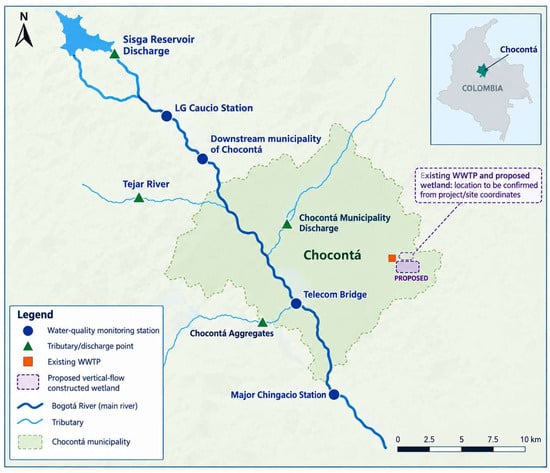
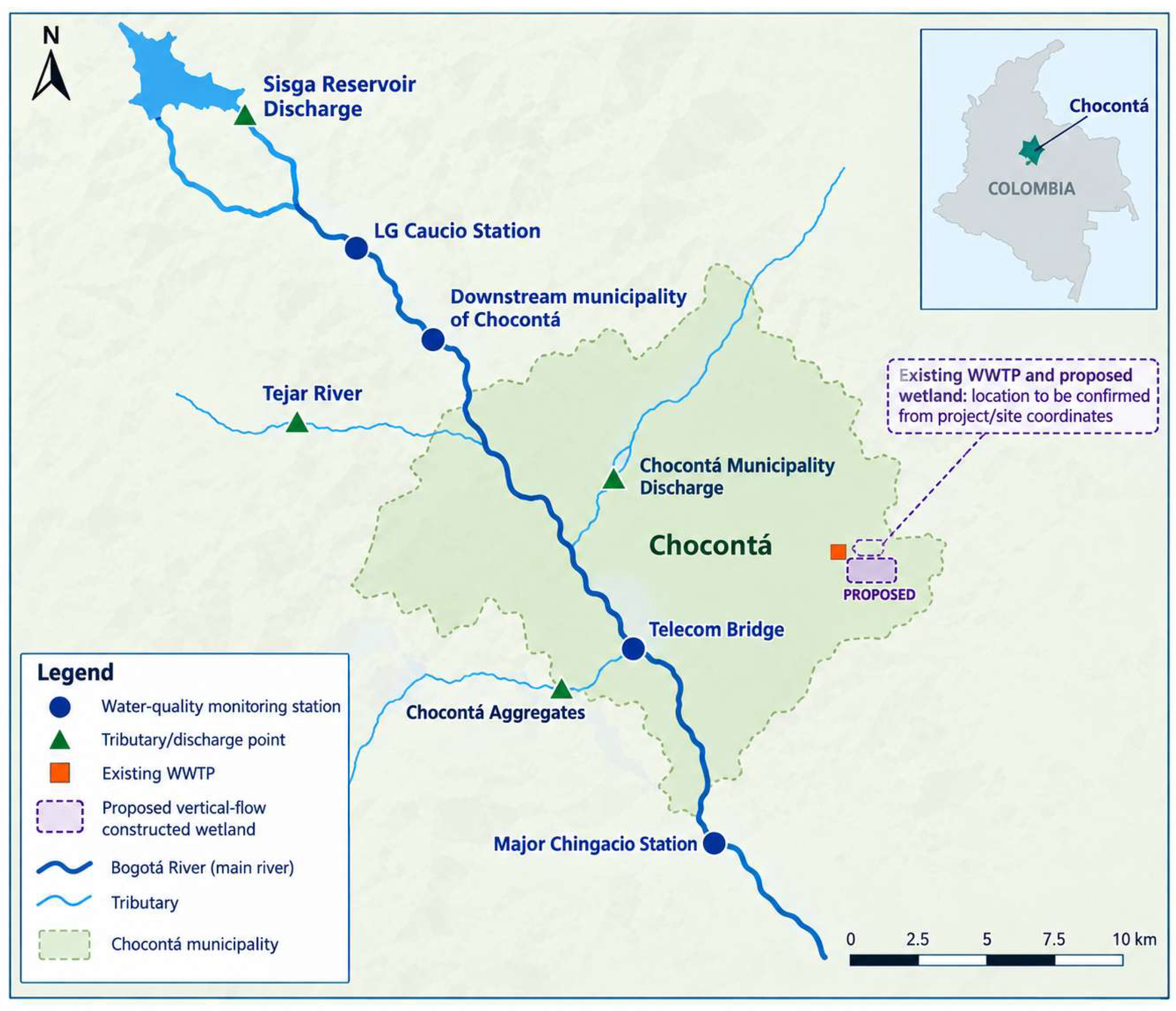


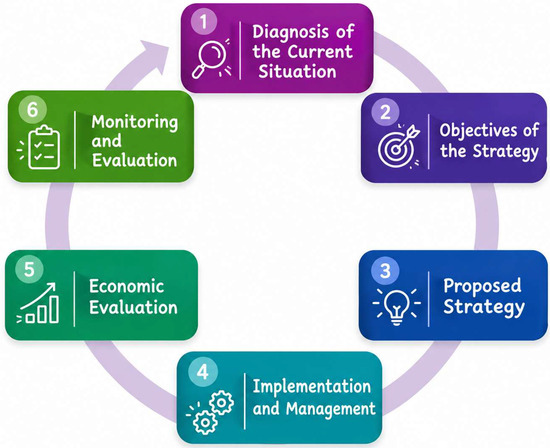
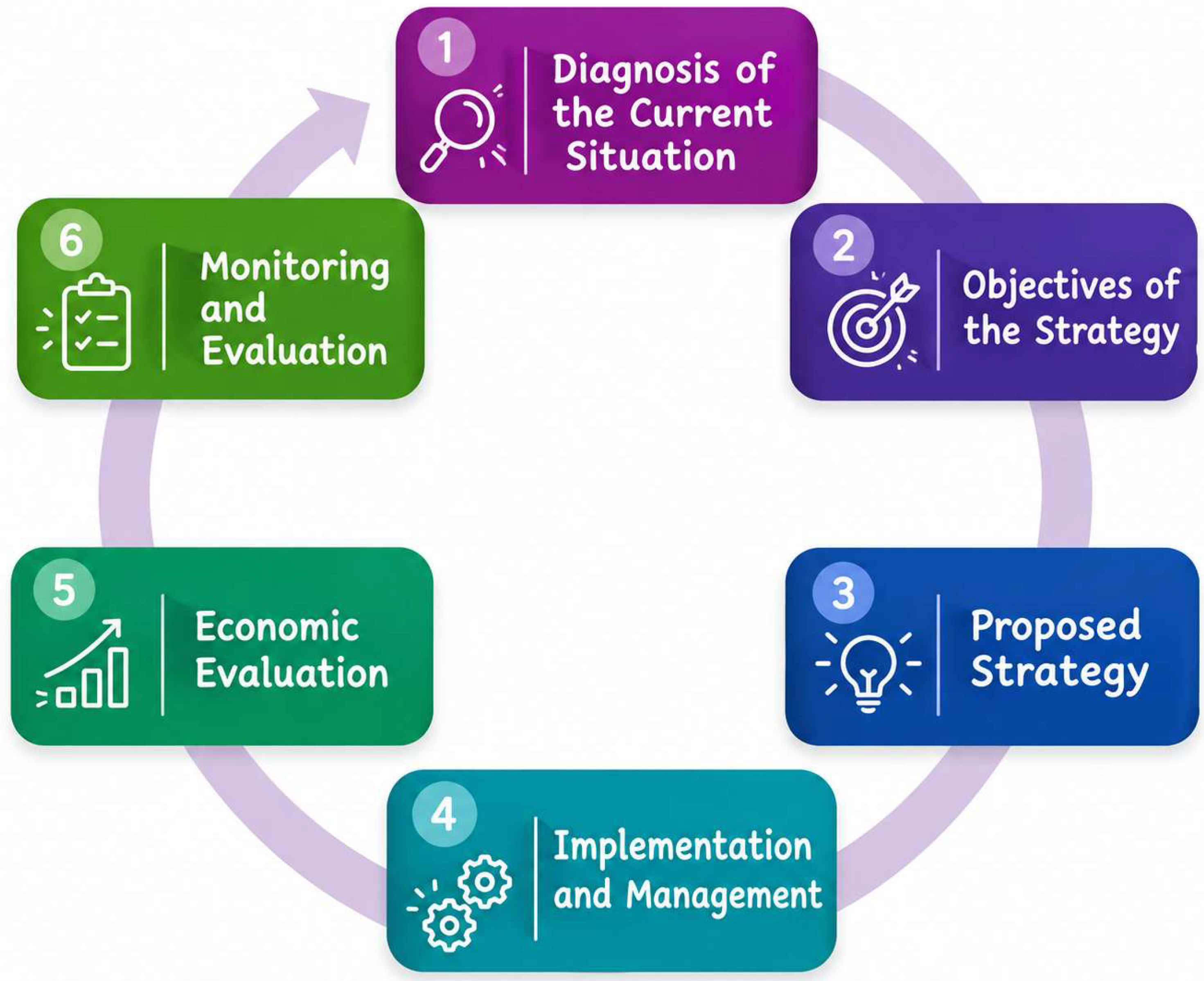
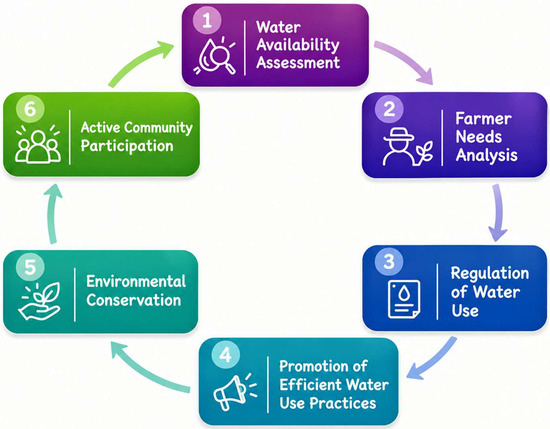
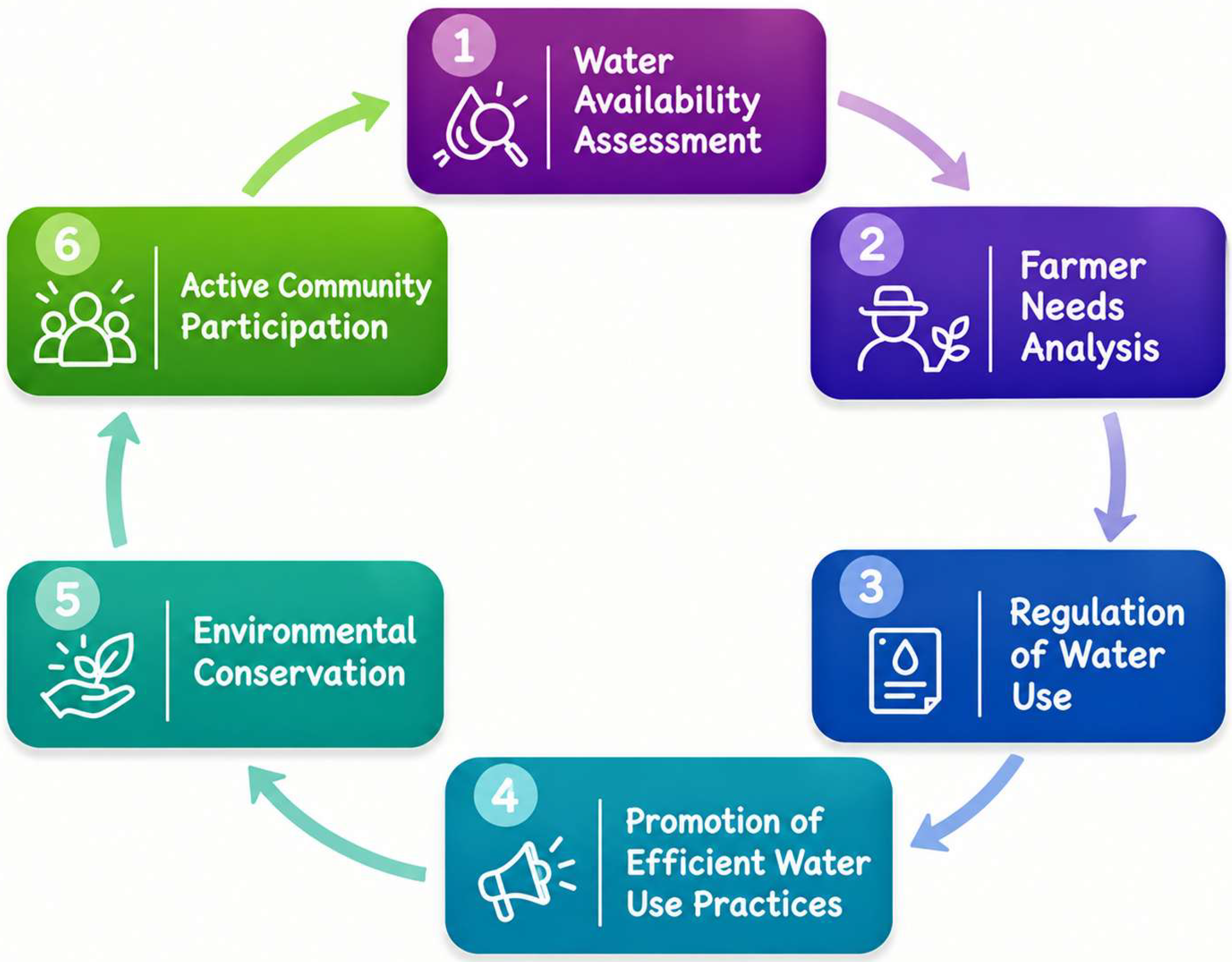
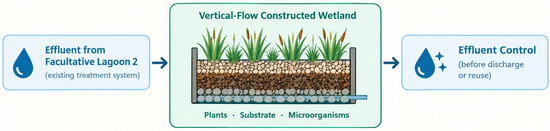
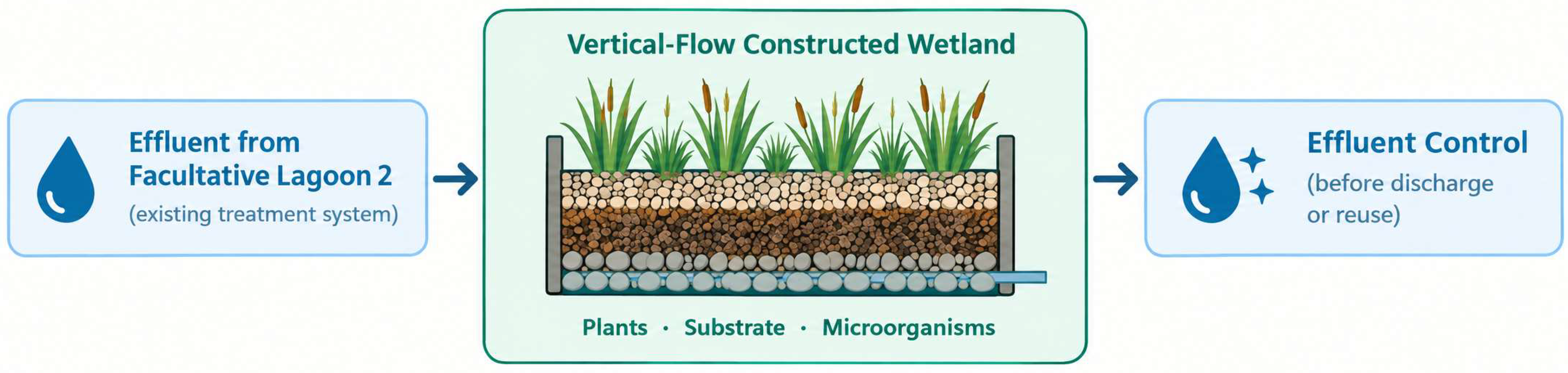

Disclaimer/Publisher’s Note: The statements, opinions and data contained in all publications are solely those of the individual author(s) and contributor(s) and not of MDPI and/or the editor(s). MDPI and/or the editor(s) disclaim responsibility for any injury to people or property resulting from any ideas, methods, instructions or products referred to in the content. |
© 2026 by the authors. Licensee MDPI, Basel, Switzerland. This article is an open access article distributed under the terms and conditions of the Creative Commons Attribution (CC BY) license.