


Abstract
Whether psychosocial resources equitably buffer the harms of discrimination is a foundational but contested question in minority aging research, one that existing evidence from Western contexts answers inconsistently. We address this question in a structurally distinct setting: Hong Kong, a high-density, Chinese-majority global hub where South Asian and other ethnic minority residents age as post-migration minorities under compounding institutional exclusions. Drawing on the Hong Kong Elder Well-being Survey and employing propensity score matching alongside instrumental variables regression, we show that perceived discrimination is robustly associated with higher levels of depression, anxiety, loneliness and lower subjective well-being among older ethnic minorities. The critical finding is not the harm itself but its structural conditionality: low-SES elders experience stronger adverse associations between discrimination and psychological well-being while simultaneously possessing significantly lower baseline endowments of ethnic identity and sense of community. This double burden challenges two common assumptions in minority aging and active aging policy: that psychosocial resilience resources are equally accessible, and that economic integration translates into social inclusion. In stratified urban Asian societies, addressing structural racism and enabling equitable access to social infrastructure are prerequisites for, not complements to, individual-level resilience interventions.
1. Introduction
Understanding the determinants of psychological well-being among marginalized populations is a critical area warranting extensive inquiry within the social and health sciences. A substantial body of research demonstrates that ethnic minorities are disproportionately subjected to structural and interpersonal forms of discrimination, significantly compromising their mental health and subjective well-being (Cokley et al., 2011; Gong et al., 2017). These challenges are intensified in later life, as older adults encounter age-related vulnerabilities such as declining physical health, diminished social networks, and increased reliance on institutional support (Andrew & Keefe, 2014; Rook & Charles, 2017). Consequently, ethnic minority elders experience a convergence of disadvantages rooted in both racialized marginalization and the aging process.
Perceived discrimination is widely recognized as a key social determinant of psychological well-being, especially among ethnic minorities and the elderly, and studies have shown consistently that discrimination affects psychological outcomes negatively by inducing stress, eroding self-esteem, and weakening social ties (Pascoe & Richman, 2009; Šedovič, 2024). Research demonstrates that perceived discrimination negatively impacts well-being among ethnic minorities and immigrants (Chan et al., 2025; Ticar, 2025). Studies across diverse contexts, including the U.S., and Europe, reveal strong associations between perceived discrimination and greater loneliness, stress and anxiety, more severe depressive symptoms, and reduced life satisfaction and self-esteem (Park & Mair, 2021; Yoon et al., 2019). Gender, age, and type of discrimination moderate these relationships (Jang et al., 2008; Yoon et al., 2019).
Recent research has begun to highlight the important role that psychosocial resources play in promoting resilience among ethnic minority populations (Jasinskaja-Lahti et al., 2006; Park & Mair, 2021). Strong ethnic identity serves as a protective buffer, reducing the impact of discrimination on the internalization of problems and enhancement of self-esteem (Cobb et al., 2019; He et al., 2024; Ikram et al., 2016; Stevens & Thijs, 2018). Religious practice and ethnic social networks also provide protection, although the effects vary across ethnic groups (Ikram et al., 2016). Social capital and sense of community also moderate the negative consequences of discrimination (Christens et al., 2025; Heim et al., 2011). Meta-analytic evidence confirms that discrimination makes the occurrence of psychotic experiences 1.94 times more likely, while supportive policies and multicultural environments provide additional protection (Bardol et al., 2020; de Freitas et al., 2018). Evidence from Asian societies demonstrates that later-life psychological well-being is deeply shaped by ethnic stratification, socioeconomic status, and cultural norms. Across China, Malaysia, and Singapore, ethnic minority status and poverty heighten risks of anxiety and depression among older adults, whereas family obligations, culturally familiar social participation, and community support serve as key protective factors (Aw et al., 2017; Foong et al., 2021; Mohd et al., 2019). In Hong Kong, studies among South Asians link discrimination, acculturative stress, and structural barriers to poorer psychological health and constrained help-seeking (Sharif et al., 2026a, 2026b; Shum, 2023; Tonsing et al., 2016).
Despite these insights, several critical gaps remain within the migration literature. First, few empirical studies examine the moderating and associated pathway roles of psychosocial resources specifically among older ethnic minority adults. The resource profiles, coping strategies, and historical migration trajectories of this cohort differ substantially from those of younger, economically active migrants, yet active aging frameworks routinely assume a homogenous aging population and render this group analytically invisible. Second, the migration and minority aging literature remains heavily skewed toward Western, transatlantic contexts. How these dynamics unfold in non-Western, high-density Asian global hubs remains poorly understood, particularly in settings like Hong Kong that combine a distinct colonial history, a rigid Chinese-majority cultural landscape, and institutional approaches to minority integration that are themselves stratified by class and legal status. Third, and most critically, existing studies rarely ask whether psychosocial protective resources are equally accessible across socioeconomic strata within minority communities. Most research tests whether resources buffer discrimination on average, but this average conceals a structural question: whether the very elders who face the greatest discriminatory burden are also the least able to access the resources that would protect them.
This study directly addresses these omissions by examining how perceived discrimination shapes psychological well-being among older ethnic minority adults in Hong Kong, a population aging in place within a highly urbanized, ethnically stratified society. Drawing on data from the 2024 Hong Kong Elder Well-being Survey, we analyze four well-being indicators: subjective well-being, depression, anxiety, and loneliness. To address endogeneity, we combine propensity score matching with instrumental variables. We then evaluate how psychosocial resources at three levels, namely ethnic identity at the individual level, sense of community at the neighborhood level, and social trust at the societal level, operate simultaneously as conditional buffers and indirect pathways in the discrimination–well-being relationship. Specifically, we conceptualize these resources as dynamic constructs that function both as protective shields (moderators) when mobilized from an individual’s existing resource endowment and as vulnerable assets (associated pathways) susceptible to gradual erosion under chronic exclusion. Finally, through rigorous subgroup and heterogeneity analyses, we show that these protective resources are not equitably distributed. This exposes how class stratification within minority communities determines not just who experiences discrimination, but who has the means to survive it psychologically.
1.1. Theoretical Foundations and Analytical Framework
The concept of psychosocial resources has long been central to understanding individual resilience in the face of adversity. Psychosocial resources are defined conceptually as the internal psychological dispositions and external social-relational assets that individuals draw upon to appraise stressors, regulate emotional distress, and sustain adaptive functioning in the face of adversity (Hobfoll, 2002; Pearlin et al., 1981). Rather than representing a single trait, psychosocial resources encompass a multidimensional repertoire of intrapersonal strengths, such as self-esteem, optimism, and perceived control, alongside interpersonal and collective endowments, such as social support, group belonging, and social capital (Brance et al., 2024; Ferguson & Goodwin, 2010). Empirical research consistently demonstrates that individuals with ready access to abundant psychosocial resources experience more favorable psychological outcomes, with social support emerging as a particularly robust protective factor (Ilevbare & Idemudia, 2019; Luo & Waite, 2011). These resources exert their influence through multiple pathways, including direct effects on well-being and buffering against adverse experiences such as elder mistreatment and health-related stressors (Luo & Waite, 2011; Pinquart & Frohlich, 2009). Moreover, psychosocial resources are dynamic and context-dependent, shaped by life-course trajectories, social environments, and structural conditions. Their influence extends beyond psychological domains to physiological processes, with evidence linking them to reduced physiological dysregulation and improved cardiovascular and frailty outcomes in older adults (Dent & Hoogendijk, 2015; Wiley et al., 2018). Collectively, psychosocial resources represent foundational determinants of adaptation and well-being across the lifespan (Hobfoll, 2002).
Theoretical perspectives on ethnic minority aging and migration further enrich our understanding of these dynamics. These frameworks emphasize the roles that cultural identity, intergenerational transmission, and community networks play in shaping psychological resilience and well-being. Older migrants often face a “double jeopardy” of aging and marginalization, wherein cultural discontinuity and limited access to mainstream services exacerbate psychological distress. Cultural or ethnic identity functions both as a phenomenon and as an epiphenomenon—shaping and being shaped by broader structural forces (Fleischmann et al., 2019; Perozzo et al., 2016).
Community networks are also central to well-being, with collective-level analyses underscoring the importance of social embeddedness and informal support systems in policy interventions (Biddle et al., 2025; Crockett et al., 2011). Adaptation theories of aging and migration share assumptions regarding time-dependent, multidimensional processes, challenging static categorizations and revealing the fluidity of ethnic minority aging experiences (Burton et al., 2019; Phillipson, 2015; Treas, 2015; Zubair & Norris, 2015). These perspectives highlight ethnic identity and community embeddedness as key sources of meaning, belonging, and resilience, but these resources are not uniformly distributed and may be undermined by experiences of discrimination, exclusion, and social fragmentation.
Our analytical framework integrates three interrelated theoretical traditions. The Stress Process Model (Pearlin et al., 1981) frames discrimination as a primary stressor that generates psychological distress, particularly when coping resources are unavailable or depleted. Crucially, within the Stress Process Model, psychosocial resources are not static traits; they possess a dual functional nature, acting simultaneously as protective shields and vulnerable assets. On the one hand, an individual’s existing stock of psychosocial resources serves as a baseline coping endowment that buffers the immediate psychological shock of discriminatory encounters. On the other hand, because discrimination in later life often operates as a chronic, recurring stressor, sustained exposure actively depletes and erodes these very resources over time, thereby forming indirect pathways through which discrimination undermines well-being. Conservation of Resources Theory (Hobfoll, 1989) complements this dual-role logic by positing that individuals strive to retain and protect valuable psychological and social resources: while initial resource abundance mitigates acute stress reactivity, persistent discriminatory threats trigger resource loss spirals, leaving those with fewer baseline resources most vulnerable to further depletion. Social Identity Theory (Tajfel & Turner, 2004) further provides the mechanism linking ethnic identity to resilience, explaining how group membership and identification foster self-esteem and resistance to stigmatization as a buffer, while also revealing how chronic exclusion can undermine group pride and generate internalized harm.
Drawing on these foundations, we operationalize the Multi-Level Psychosocial Resource Framework (see Figure 1) to conceptualize protective resources at three interconnected levels: ethnic identity at the individual level, sense of community at the neighborhood level, and social trust at the societal level. We selected these three specific resources because they represent complementary, non-redundant pillars of psychosocial adaptation tailored to the lived realities of older ethnic minorities aging in place in Hong Kong. First, at the intrapersonal level, ethnic identity captures an internal cognitive and affective anchor that preserves self-worth, cultural continuity, and positive group esteem when mainstream society marginalizes minority heritage (Tajfel & Turner, 2004). Second, at the meso-relational level, sense of community reflects localized spatial cohesion, mutual aid, and immediate peer connectedness, which become especially vital in later life as physical mobility declines and daily routines center on immediate residential neighborhoods (Crockett et al., 2011). Third, at the macro-societal level, generalized social trust measures confidence in wider civic institutions and out-group interactions, determining whether minority elders perceive the broader urban environment as predictable and safe or chronically threatening. Together, these three dimensions span internal self-concept, local residential solidarity, and broader civic integration. Within this framework, perceived discrimination is expected to undermine psychological well-being, with these three resources functioning both as moderators that attenuate its immediate harm (reflecting baseline resource endowments) and as intervening pathways through which ongoing discrimination erodes belonging, connectedness, and institutional trust (reflecting resource depletion dynamics). Examining both mechanisms simultaneously is theoretically essential because focusing on either role alone yields an incomplete picture: considering only moderation treats psychosocial resources as immutable safeguards while overlooking how structural exclusion actively dismantles them, whereas considering only indirect pathways reduces minority elders to passive recipients of harm while obscuring their active resilience. Integrating both roles thus captures how resource-based protection and resource depletion co-exist in the lived experience of minority aging.
Figure 1.
A Multi-Level Psychosocial Resource Framework.
1.2. Contextualizing the Hong Kong Case
Although Hong Kong presents itself as a multicultural society, ethnic minority communities, particularly those comprising South Asian and Southeast Asian groups, have long experienced and continue to experience systemic and interpersonal discrimination. These barriers manifest in limited access to healthcare, employment, housing, and social services (Law & Lee, 2012; Loper, 2004). For older adults, these challenges are compounded by age-related vulnerabilities and cultural isolation. Many ethnic minority elders report difficulties navigating public services caused by language barriers, lack of culturally sensitive care, and exclusion from mainstream social networks (Law & Lee, 2012).
Empirical studies have shown that ethnic minority elders in Hong Kong experience higher levels of loneliness, anxiety, and depression than their Chinese counterparts (Sharif et al., 2026b; The Zubin Foundation, 2023). Discrimination in this context erodes institutional trust and community belonging through both overt and subtle mechanisms. Exclusion from neighborhood networks generates social isolation, while negative stereotyping and microaggressions undermine ethnic identity and self-worth. Some elders maintain resilience through strong ethnic identities and community ties sustained by religious institutions, cultural associations, and informal networks, but these resources are unevenly distributed across socioeconomic lines and remain vulnerable to the pressures of persistent discrimination. How these dynamics operate, and for whom they operate differently, is the central empirical question this study addresses.
2. Data and Method
2.1. Data
To evaluate the empirical relationship between perceived discrimination and psychological well-being among older ethnic minorities in Hong Kong, this study analyzed micro-level data from the 2024 Hong Kong Elder Well-being Survey (HKEWS). HKEWS is a multi-ethnic, cross-sectional survey executed between November 2023 and September 2024. Structured, face-to-face interviews were conducted by bilingual, trained fieldworkers using validated questionnaires available in English, Urdu, Hindi, and Nepali to eliminate language barriers.
Eligibility criteria for participation were strictly defined to include community-dwelling individuals residing in Hong Kong who self-identified with Indian, Pakistani, or Nepali ethnic heritage, were aged 65 years or older at the time of the interview, and possessed the cognitive capacity, assessed via a mini-cognitive screening, to provide informed consent and complete the structured survey. Institutionalized individuals or those with severe cognitive impairment precluding survey comprehension were excluded from participation. Together, the Indian, Pakistani, and Nepali communities represent approximately 80% of Hong Kong’s non-Chinese ethnic minority population but only roughly 0.07% of the whole population in Hong Kong (5900 out of 7.41 million), qualifying them as a classic hard-to-reach, low-density population lacking an official residential registry frame.
Sampling Procedures. As there is no existing sampling frame for our target population available through random sampling, we implemented Respondent-Driven Sampling (RDS), as conceptualized by Heckathorn (1997) and refined by Volz and Heckathorn (2008), to ensure scientific rigor and overcome the homophily and selection biases inherent in conventional non-probability chain-referral designs. Formative preliminary fieldwork, including qualitative pre-survey interviews, community outreach, and consultation with local minority NGOs and religious centers, was conducted to select initial recruitment seeds. To maximize socio-demographic and geographic heterogeneity, 12 diverse seeds were purposefully chosen across distinct age categories, religious traditions, and residential districts. Each seed was issued three uniquely numbered, trackable recruitment coupons to invite eligible peers from their pre-existing social networks. Recruited participants who completed the survey received a primary incentive and additional coupons to recruit up to two peers, generating secondary and tertiary waves. Each seed sustained 5.5 waves of referral activity on average, and recruitment chains extended up to nine waves, indicating strong network penetration.
Analytic Sample. A total of 295 ethnic minority elderly participants were recruited through HKEWS, yielding the largest analytical sample for ethnic minority elders’ health in Hong Kong to date. After excluding respondents with missing data on key variables (subjective well-being, mental well-being, social trust, sense of community, and ethnic identity), the final analytic sample comprised 229 individuals. A complete-case analysis was methodologically justified because missingness was modest (22%) and satisfied Little’s Missing Completely at Random (MCAR) assumption, ensuring that excluding incomplete cases does not introduce systemic selection bias or invalidate statistical inferences.
The analytical sample of N = 229 is statistically and methodologically justified, as it represents approximately 4.6% of Hong Kong’s total population of Indian, Pakistani, and Nepali elders—a low-density, hard-to-reach group lacking a formal sampling frame (see Appendix A, Table A1). Geographically, the sample spans 16 of Hong Kong’s 18 administrative districts, covering Hong Kong Island, Kowloon, and the New Territories (see Figure A1 in Appendix A). We benchmarked its age, gender, and district distributions against the 2021 Hong Kong Population Census, the most recent source of population-level data on ethnic minority residents aged 65 and above. Across these dimensions, including age and gender, the HKEWS sample broadly mirrors the demographic profile of Hong Kong’s ethnic minority elderly population in its latest census; minor structural discrepancies, where present, are reported and discussed in Figure A2 and Figure A3 of the Appendix A.
A post hoc power analysis using G*Power 3.1 confirmed that a sample size of 229 achieves a statistical power exceeding 0.88, providing adequate sensitivity for our multi-variable models. To further address potential sources of bias associated with non-probability network sampling and self-report instruments, our study design and estimation strategy incorporated targeted safeguards. Specifically, to mitigate social desirability, recall, and comprehension biases on sensitive discrimination and mental health questions, interviews were conducted in private settings by culturally matched, bilingual fieldworkers.
2.2. Method
We employ a probit model and an instrumental variable (IV) method to estimate the influence of perceived discrimination on the subjective well-being of ethnic minority elders. The equation is as follows:
Participants’ psychological well-being (Psychological_wellbeingi) includes subjective well-being, depression, anxiety, and loneliness (Table 1). Perceived discrimination was operationalized as a continuous measure derived from the Everyday Discrimination Scale. Depressive symptoms were evaluated using the continuous score from the standardized 9-item Patient Health Questionnaire (PHQ-9; Cronbach’s α = 0.841). In contrast, the remaining outcome measures were operationalized as binary indicators based on internationally established clinical and theoretical thresholds to assess policy-relevant risk probabilities and facilitate non-linear Probit specifications.
Table 1.
Sample Characteristics.
Specifically, subjective well-being was assessed via the 5-item Satisfaction with Life Scale (SWLS; Cronbach’s α = 0.821) and dichotomized following established scoring benchmarks (Diener et al., 2002; Pavot & Diener, 2008), where scores of 21–35 indicate positive life satisfaction (1) and scores of 5–20 represent neutral or dissatisfied states (0). Anxiety was measured using the 7-item Generalized Anxiety Disorder scale (GAD-7; Cronbach’s α = 0.896). In accordance with standardized clinical severity thresholds established by Spitzer et al. (2006)—which categorize total scores of 0–4 as minimal anxiety and scores of 5–21 as mild (5–9), moderate (10–14), or severe (15–21) anxiety—we dichotomized the scale at >4 (i.e., ≥5 = 1; ≤4 = 0) to capture the presence of any clinically relevant (mild-to-severe) anxiety symptoms. Finally, loneliness was measured using the 3-item UCLA Loneliness Scale (UCLS, range 3–9; Cronbach’s α = 0.856). Because the 3-item UCLS does not carry a formal clinical diagnostic threshold, we followed established gerontological and epidemiological conventions (Hughes et al., 2004; Steptoe et al., 2013) by setting the cut-off at >5 (i.e., ≥6 = 1, indicating respondents experience loneliness “some of the time” or “often” across multiple items; ≤5 = 0, representing non-lonely or minimal loneliness states).
The key independent variable, perceived discrimination, was operationalized as a continuous measure derived from the 9-item Everyday Discrimination Scale (Cronbach’s α = 0.900), with aggregate scores capturing the frequency of chronic, routine experiences of unfair treatment.
Among the remaining variables, Xi constitutes a vector of control variables that capture various individual- and community-level characteristics, including age, gender, years of education, marriage status, and self-rated socioeconomic status. By incorporating these control variables, the analysis accounts for potentially confounding factors that may influence the subjective well-being outcomes. γd represents district fixed effects. εi is the error term.
Analytical Strategy. To empirically test our theoretical framework and underlying hypotheses, we execute a structured analytical strategy that integrates baseline econometric modeling, observational and endogeneity robustness checks, mechanism tests, and contextual boundary evaluations. First, we specify Ordinary Least Squares (OLS) and Probit model as our baseline specification to test the primary hypothesis regarding the direct association between perceived discrimination and psychological well-being. Second, to evaluate the robustness of our baseline findings against potential selection bias on observables, we conduct Propensity Score Matching estimations. Third, as an additional sensitivity analysis addressing potential unobserved heterogeneity, reporting bias, or reverse causality, we employ a leave-one-out Instrumental Variable probit estimation to test the stability of these associations under exogenous variation. Fourth, upon confirming the robustness of these empirical estimates, we perform associated pathway analyses to unpack the underlying theoretical pathways (testing how discrimination links to well-being) and moderation analyses to evaluate contextual boundary conditions and subgroup heterogeneity (testing when and for whom these associations vary).
3. Main Results
Table 2 presents the results of probit regressions used to examine the association between perceived discrimination and subjective well-being. We used Model 1 to estimate a baseline specification, revealing that, within our study sample, higher levels of perceived discrimination are associated with a lower marginal probability of high subjective well-being. Models 2 and 3 incorporate individual-level control variables and district fixed effects, respectively. Specifically, a one-unit increase in the perceived discrimination score is associated with a 1.5 percentage point reduction in the marginal probability of reporting high subjective well-being (β = −0.015, p < 0.001). Across specifications, the estimated association remains negative and statistically significant, suggesting a robust within-sample pattern whereby higher perceived discrimination is consistently associated with diminished subjective well-being.
Table 2.
Perceived Discrimination and Subjective Well-being.
Table 3 extends the analysis to mental well-being outcomes, including depression, anxiety, and loneliness. Using the same regression framework, Models 1 and 2 show that higher levels of perceived discrimination are significantly associated with more severe depressive symptoms among our respondents. Similarly, with Models 3 and 4 we demonstrate that perceived discrimination is linked to greater anxiety risk. With Models 5 and 6 we reveal that individuals experiencing greater perceived discrimination are more likely to report feelings of loneliness. Notably, while the models are tailored to specific mental health outcomes, they consistently underscore the detrimental impact of perceived discrimination on psychological well-being.
Table 3.
Perceived Discrimination and Mental Well-being.
Robustness Checks
While the baseline regression model controls for a comprehensive set of individual-level covariates and incorporates district fixed effects, concerns regarding endogeneity remain. Specifically, issues such as selection bias and omitted variable bias may compromise the validity of the estimated effects. Systematic differences may exist between individuals reporting varying levels of perceived discrimination, and unobserved factors could simultaneously influence both the explanatory and outcome variables. To address these concerns and assess the robustness of our findings, we conducted a series of additional analyses, including sensitivity tests, propensity score matching (PSM) regressions, and instrumental variable (IV) regressions.
For the sensitivity analysis, we excluded individuals who are not permanent residents or who have resided in Hong Kong for fewer than seven years. This restriction aims to reduce bias stemming from unstable residency status and limited exposure to local social environments. As shown in Table 4, the core findings remain consistent after these adjustments. The negative association between perceived discrimination and well-being persists, suggesting that the observed effects are not driven by transient or newly arrived populations. These results reinforce the robustness of our baseline estimates and support our interpretation of the association between perceived discrimination and psychological well-being among ethnic minority elders.
Table 4.
Sensitivity Test of Effects of Perceived Discrimination on Well-being (Excluding Non-Permanent Residents and Individuals with Less Than Seven Years of Residency in Hong Kong).
To address selection bias, we employ PSM regressions using both kernel matching (bandwidth = 0.06) and K-nearest-neighbor matching (N = 1). The results, presented in Table 5, indicate significant differences in subjective and mental well-being between individuals reporting high levels and those reporting low levels of perceived discrimination. To verify the internal validity of our PSM, we evaluated the common support condition and covariate balance. First, Figure A4 confirms substantial overlap in propensity scores between treated and control groups, supporting the common support assumption. Second, as demonstrated in Table A2 and Figure A5, matching substantially reduced standardized biases across all covariates and rendered the t-tests for mean differences non-significant, indicating excellent covariate balance between the matched groups. These findings suggest that individuals in HKEWS experiencing higher levels of perceived discrimination are more likely to report lower well-being outcomes, consistent with our baseline results.
Table 5.
Robustness Check: Impact of Perceived Discrimination on Well-being (PSM Regressions).
Finally, we implement IV estimations to address endogeneity concerns. We use the average perceived discrimination score within a respondent’s residential district—excluding the individual’s own score—as a leave-one-out instrument (Angrist et al., 1999). The identification strategy relies on two core econometrically validated assumptions.
First, the relevance condition holds because district-level discrimination reflects the prevailing local socio-cultural climate and structural biases, which directly heighten an individual resident’s exposure to discriminatory behaviors. This relevance is strongly confirmed by our first-stage regression results presented in Table 6, where the leave-one-out instrument exhibits a highly significant and negative relationship with individual-reported discrimination (β = −1.009, p < 0.001). Second, the exclusion restriction dictates that the aggregated discrimination score of other district residents affects an individual’s psychological well-being exclusively through its impact on that individual’s own discrimination exposure, rather than through direct idiosyncratic psychological channels. By removing the respondent’s own reported score, the leave-one-out formulation eliminates mechanical correlation and controls for individual-level reporting bias or negative affectivity.
Table 6.
Instrumental Variable Regressions of Impact of Perceived Discrimination on Well-being.
The second-stage IV regression results, shown in Table 6, confirm that perceived discrimination is significantly associated with lower subjective well-being and higher levels of depression, anxiety, and loneliness in the recruited samples. These estimated associations remain statistically significant after controlling for individual health status, healthcare access, and district fixed effects. Standard diagnostic tests further support the validity and strength of the instrument. Specifically, the first-stage Wald F statistics range from 18.29 to 19.83, substantially exceeding the conventional threshold of 10, which firmly rules out any weak instrument concerns.
Taken together, these robustness checks provide strong empirical support for a robust relationship between perceived discrimination and both subjective and mental well-being among older ethnic minority respondents of the study.
4. Mechanisms
Drawing on our baseline and robustness-check regression analyses and integrating insights from the extant literature, we hypothesize that the adverse effects of perceived social discrimination on subjective and mental well-being may be mediated or moderated by three key psychosocial mechanisms. In this section, we explore these moderating dynamics and underlying associated pathways, specifically focusing on ethnic identity, sense of community, and social trust, to assess whether psychosocial resources and resilience factors can attenuate the primary effects, as suggested by our literature review.
4.1. Moderating Effects Analysis
4.1.1. Moderating Effects of Ethnic Identity
We first investigate ethnic identity, which encompasses an individual’s sense of belonging to an ethnic group and the significance attached to that membership. Individuals with well-developed and positive ethnic identities may demonstrate enhanced resilience to the psychological consequences of perceived social discrimination. Ethnic identity provides a framework for interpreting experiences, fostering self-esteem, and promoting coping strategies that buffer an individual against stress (Bousquet & Mathevet, 2019). Research shows that a strong ethnic identity is positively associated with well-being and can mitigate the negative effects of discrimination, particularly among adolescents and individuals from marginalized groups (De Lise et al., 2024; Martinez & Dukes, 1997).
We assessed ethnic identity using the validated 6-item Ethnic Identity Scale (EIS-B), which captures core dimensions such as exploration, resolution, and affirmation of one’s ethnic group membership (Umaña-Taylor et al., 2014). This scale has been widely used to measure the strength and clarity of ethnic identity across diverse populations. As shown in Model 1 of Table 7 and illustrated in Figure A6, the findings reveal that ethnic identity marginally moderates the relationship between perceived social discrimination and subjective well-being among our respondents (β = 0.002, z = 1.80). While falling just outside conventional significance thresholds (p < 0.05), this pattern suggests a potential buffering trend, whereby individuals with strong and positive ethnic identities experience less pronounced declines in well-being when confronted with discriminatory experiences.
Table 7.
Moderating Effects of Ethnicity Identity on Psychological Well-Being.
Model 2 to model 4 in Table 7 and Figure A6 illustrate the moderating effects of ethnic identity on mental well-being. The outcomes suggest that individuals in our study with well-developed ethnic identities are less susceptible to adverse psychological outcomes of depression and anxiety in the context of perceived social discrimination. The moderating effect on loneliness is, however, nonsignificant. Simple slope tests further confirm that at low levels of ethnic identity (−1 SD), perceived discrimination significantly increases depression (b = 0.365, p < 0.001) and the probability of anxiety (AME = 0.016, p < 0.001), whereas at high levels (+1 SD), these conditional effects attenuate to b = 0.111 (p = 0.279) and AME = 0.005 (p = 0.482), becoming statistically indistinguishable from zero (see Appendix A Table A3). Ethnic identity may function as a protective factor by reinforcing cultural pride and providing a stable sense of self, potentially buffering individuals against the internalization of negative societal messages (Sellers & Shelton, 2003). This finding also supports the existing literature where studies suggest that ethnic identity serves as a psychological resource that enhances self-esteem, fosters a sense of belonging, and promotes adaptive coping strategies (Phinney et al., 2001). Cultural and ethnic identity could act as a means of promoting resilience and psychological health, particularly among individuals from marginalized backgrounds.
4.1.2. Moderating Effects of Sense of Community
We also examine sense of community, which reflects individuals’ feelings of belonging, emotional connection, and perceived support within their social environments, as a moderating mechanism. We hypothesize that a strong sense of community can buffer an individual against the negative effects on well-being of perceived social discrimination, a finding that is consistent with the stress-buffering model of social support. Individuals embedded in supportive communities may experience stronger emotional validation and access to coping resources, potentially helping to mitigate psychological distress. Prior research has shown that community attachment enhances resilience and reduces the impact of discrimination-related stress (Townley et al., 2011), underscoring the protective role it plays in promoting mental health.
To evaluate this, we employed the standardized Sense of Community Index-1 (SCI-1) to measure participants’ perceived sense of community, which encompasses feelings of belonging, emotional connection, and mutual support within a social group (Chavis et al., 2008). As shown in Models 2 and 3 of Table 8 and illustrated in Figure A7, a strong sense of community significantly moderates the associations between perceived social discrimination and adverse mental health outcomes—specifically depression (β = −0.027, p < 0.001) and anxiety (β = −0.002, p < 0.01). Simple slope tests further confirm that at low levels of sense of community (−1 SD), perceived discrimination significantly increases depression (b = 0.341, p < 0.001) and the probability of anxiety (AME = 0.017, p < 0.001), whereas at high levels (+1 SD), the conditional slope for depression attenuates substantially to b = 0.125 (p = 0.018) and the conditional marginal effect on anxiety drops to AME = 0.005 (p = 0.325), becoming statistically indistinguishable from zero (see Appendix A Table A3). Within our study sample, individuals reporting stronger community attachment are less susceptible to heightened depression and anxiety when confronted with perceived discrimination. These findings align with the stress-buffering theory, which posits that social resources mitigate the psychological impact of stressors (Cohen & Wills, 1985), as supportive networks foster emotional validation and collective efficacy against the internalization of discriminatory stress. These findings support prior research studies indicating that community belonging enhances psychological resilience and promotes adaptive coping mechanisms.
Table 8.
Moderating Effects of Sense of Community on Psychological Well-Being.
Turning to subjective well-being in Model 1 of Table 8, the interaction term between perceived discrimination and sense of community is marginally significant (β = 0.001, z = 1.83). While falling just outside conventional significance thresholds (p < 0.05), this pattern suggests a potential buffering trend whereby stronger community ties may attenuate declines in subjective well-being.
4.1.3. Moderating Effects of Social Trust
The third moderating mechanism we examined, social trust, captures individuals’ belief in the reliability, honesty, and goodwill of others in society. Consistent with the stress-buffering model of social support (Cohen & Wills, 1985), we hypothesize that higher social trust may attenuate the negative impact of perceived social discrimination on mental well-being. Individuals who perceive others as generally trustworthy are more likely to anticipate fairness and empathy in their social interactions, which may enhance psychological resilience in the face of discriminatory experiences. Prior research has demonstrated that generalized trust is positively associated with mental health outcomes and adaptive coping strategies (Townley et al., 2011).
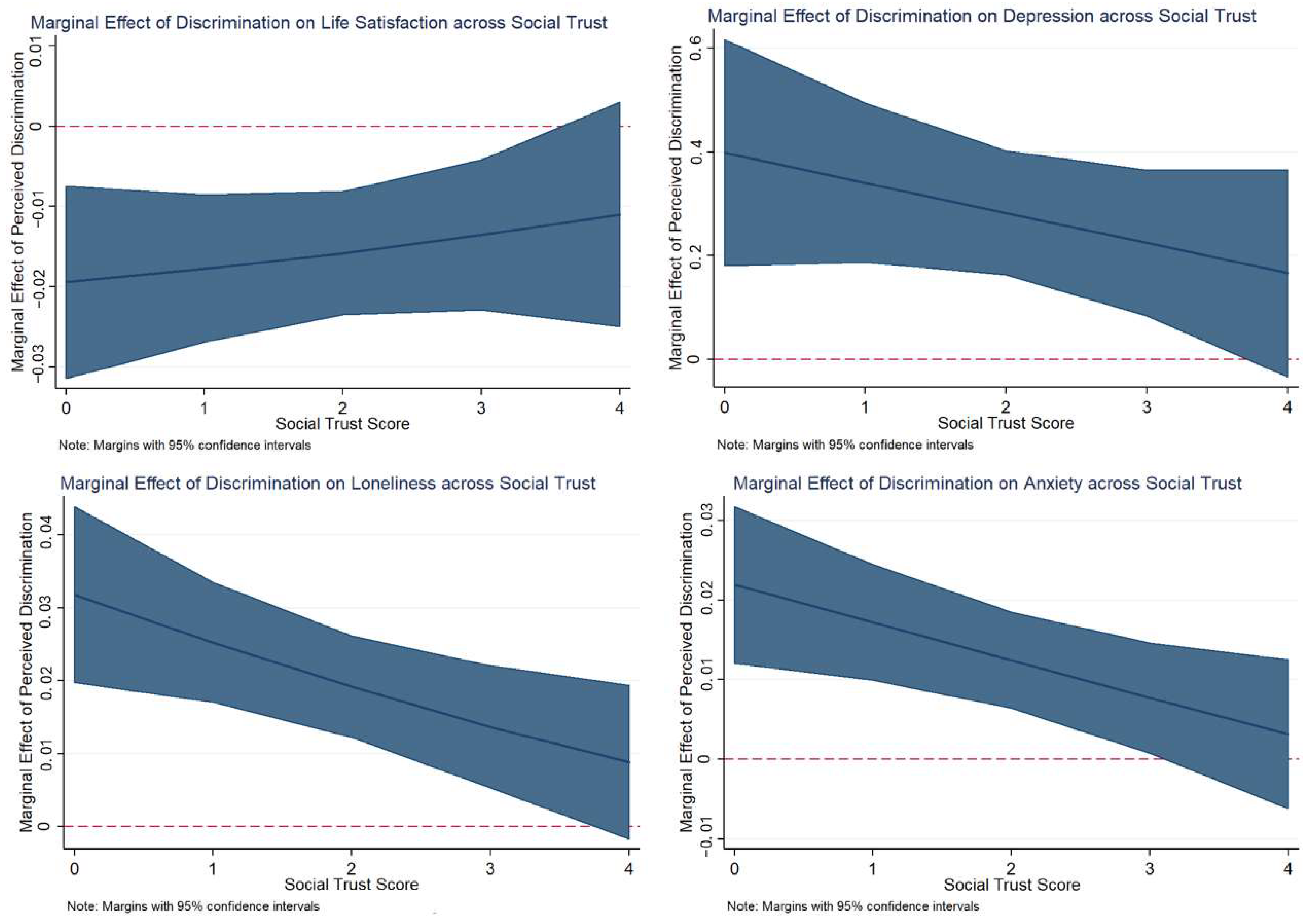
We employed a standard measure of generalized social trust at the individual level to estimate the effects. We derived this measure from a widely used item in the World Values Survey: “Generally speaking, would you say that most people can be trusted or that you can’t be too careful in dealing with people?” In this study, participants responded to a similarly worded statement—“Generally speaking, most people can be trusted”—on a five-point Likert scale ranging from 1 (“strongly disagree”) to 5 (“strongly agree”). As shown in Model 3 of Table 9 and Figure A8, the results indicate that social trust significantly moderates the relationship between perceived social discrimination and anxiety in the recruited samples. Simple slope tests further confirm that at low levels of social trust (−1 SD), perceived discrimination significantly increases the probability of anxiety (AME = 0.019, p < 0.001), whereas at high levels (+1 SD), this conditional marginal effect attenuates to AME = 0.006 (p = 0.166) and becomes statistically indistinguishable from zero (see Appendix A Table A3). Specifically, individuals reporting higher social trust exhibit smaller increases in anxiety in response to discrimination than those with lower trust, suggesting that generalized trust helps alleviate acute anxious arousal during social encounters. However, the moderating effects of social trust on subjective well-being, depression, and loneliness (Models 1, 2, and 4 of Table 9 and Figure A8) were statistically nonsignificant. Taken together, these findings demonstrate that the protective role of social trust is limited and domain-specific, buffering against discrimination-related anxiety rather than conferring broad protection across overall mental health and subjective well-being.
Table 9.
Moderating Effects of Social Trust on Psychological Well-Being.
4.2. Pathway Analysis
Pathways Analysis of Ethnic Identity, Sense of Community and Social Trust
We next examine the potential associated pathways involving ethnic identity, sense of community, and social trust in relation to perceived social discrimination and well-being. Due to the cross-sectional nature of our data, these analyses are designed to capture co-variation and statistical associations rather than establishing causal mediation chains. As discussed in the literature review and conceptual framework, these psychosocial constructs represent key resilience resources that exhibit negative associations with discriminatory experiences.
Table 10 presents estimations obtained from ordinary least squares regression and ordered probit models. The results indicate that perceived discrimination is significantly associated with declines in ethnic identity, sense of community, and social trust in the recruited samples. These findings suggest that discriminatory experiences coincide with diminished psychosocial resources among ethnic minority elders, thereby reflecting potential associated pathways through which discrimination aligns with psychological strain. This pattern is consistent with findings reported in prior studies, which have documented the inverse linkages between discrimination and identity formation, social connectedness, and interpersonal trust.
Table 10.
Indirect Pathway analysis of Ethnic Identity, Sense of Community and Social Trust.
5. Heterogeneity Analysis and Further Discussions
We explore heterogeneity in the effects of perceived discrimination on both subjective and mental well-being in our surveyed groups. Drawing on existing literature, we recognize that certain social groups may be more susceptible to discrimination and its psychological consequences. Accordingly, we examine heterogeneity along three key dimensions: self-reported socioeconomic status (SES), age, and religious affiliation.
For this analysis we stratify the sample into subgroups: high-SES versus low-SES, “young-old” versus “older-old,” and religious groups including Buddhists, Hindus, and Muslims. For each dimension, we conduct subgroup-specific regression analyses.
Results presented in Table 11 show that, within our study, perceived discrimination significantly affects subjective well-being, depression, and loneliness across both high-SES and low-SES groups, with stronger effects observed in the low-SES subgroup. Notably, the impact on anxiety is statistically nonsignificant among high-SES individuals but remains significant for those in the low-SES group.
Table 11.
Heterogeneity test (Low SES vs. Higher SES).
Table 12 presents results obtained for age-based heterogeneity. The effects of perceived discrimination on all well-being indicators—subjective well-being, anxiety, depression, and loneliness—are statistically significant within the recruited samples, with larger coefficients observed in the older-old group, suggesting heightened vulnerability among older individuals.
Table 12.
Heterogeneity test (young-old vs. older-old).
Religious affiliation also exhibits meaningful variation in the psychological impact of perceived discrimination. As shown in Table 13, the effects of perceived discrimination are statistically nonsignificant among individuals identifying with Buddhism, whereas significant associations are observed among those practicing Hinduism and Islam among our respondents. These findings suggest that religious identity may shape both the perception of discrimination and its psychological consequences, potentially through differing cultural narratives, coping mechanisms, and community support structures embedded within each religious tradition.
Table 13.
Heterogeneity test (Buddhism, Hinduism and Islam).
To further enrich the analysis, we examine the distribution of key moderating factors—ethnic identity and sense of community—as well as well-being outcomes, including subjective well-being, depression, anxiety, and loneliness, across distinct socioeconomic groups. As presented in Table 14, we find that individuals in the low-SES group report significantly lower levels of subjective well-being and higher levels of depression and anxiety among our respondents. These individuals also exhibit significantly weaker ethnic identity and sense of community. Taken together, our subgroup comparisons and mean-difference tests indicate that low-SES older adults systematically report both greater exposure to perceived discrimination and significantly lower levels of the psychosocial resources that buffer their adverse effects. This compounded disadvantage underscores the need to address both structural inequalities and resource disparities in efforts to promote mental health and social inclusion among marginalized populations.
Table 14.
t-test of Mean Difference between Psychosocial resources and Outcomes by SES Groups.
The heterogeneity analysis reveals that the psychological impact of perceived discrimination is not uniformly distributed across social groups within our research. Respondents from low socioeconomic backgrounds, older age cohorts, and certain religious minorities experience more pronounced negative effects on both subjective and mental well-being. These groups also report weaker ethnic identities and sense of community—key psychosocial resources that buffer the effects of discrimination. Theoretically, these findings align with the stress process model and social identity theory, suggesting that exposure to chronic stressors such as discrimination is more detrimental among subgroups characterized by lower levels of psychosocial coping resources and weaker group affiliations.
6. Discussions
Guided by a Multi-Level Psychosocial Resource Framework, this study examines how perceived discrimination relates to psychological well-being among older ethnic minority adults in Hong Kong. Utilizing data from the Hong Kong Elder Well-being Survey, we show that experiences of racialized exclusion correlate with poorer subjective and mental well-being, coinciding with higher levels of depression, anxiety, and loneliness. Crucially, psychosocial resources, specifically ethnic identity, sense of community, and social trust, emerge as pivotal protective factors. Operating across individual, neighborhood, and societal levels, these resources serve a dual role. They buffer the psychological harms of discrimination and simultaneously act as structural pathways, exhibiting a distinct susceptibility to erosion through ongoing discriminatory experiences. This dual function underscores the dynamic and context-sensitive nature of psychosocial resources, aligning with ecological models of social vulnerability in aging (Andrew & Keefe, 2014).
Subgroup analyses reveal that these adverse psychological associations are not uniformly distributed across marginalized populations. Individuals from lower socioeconomic backgrounds, older age cohorts, and religious minority groups experience more pronounced psychological harm while concurrently suffering from structurally restricted access to the very psychosocial resources that could mitigate these effects. These findings highlight the intersectional and cumulative nature of structural disadvantage, reinforcing the need for multidimensional, equity-oriented approaches to understanding disparities in health and well-being (Achdut et al., 2021; Christens et al., 2025). This empirical contribution resonates with the broader gerontological literature by emphasizing the necessity of culturally relevant frameworks to address diversity and stratification in post-migration aging (Burton et al., 2019).
While psychosocial resources are often treated using a composite construct, emerging research suggests that specific resources may exert distinct influences on specific dimensions of well-being. For instance, Cobb et al. (2019) demonstrated that ethnic or racial identity centrality moderated the negative effects of discrimination on psychological well-being among unauthorized Hispanic immigrants, offering psychological insulation through an enhanced sense of belonging and localized social support. In a similar vein, our findings indicate that individual-level ethnic identity is strongly associated with subjective well-being, whereas macro-level social trust plays a more targeted role in mitigating anxiety. This nuanced differentiation contributes to the refinement of psychosocial theory within migration studies and supports the deployment of targeted interventions tailored to specific psychological outcomes rather than treating minority resilience as a monolithic trait.
This study also addresses a critical gap in the migration and integration literature by focusing explicitly on older ethnic minority adults. Much existing scholarship concentrates on younger, economically active cohorts, thereby neglecting how the aging process intersects with minority status to shape resource availability and coping strategies. Older adults engage with identity, community networks, and institutional trust in distinct ways that reflect their unique life-course experiences, legal settlement histories, and shifting social roles within the host society. As Cokley et al. (2011) demonstrated, perceived discrimination functions as a key mediator in the linkage between minority status and mental health, with ethnic minorities reporting both more severe discrimination and poorer mental health outcomes. Our findings extend this line of inquiry by illustrating that ethnic minority elders face unique resource configurations and particular vulnerabilities, especially in contexts marked by cultural exclusion and institutional neglect.
The geographic and cultural context informing this study offers a critical corrective to the persistent Western-centric bias in migration and gerontological research. Much of the literature on discrimination, ethnic minority status, and psychological well-being has been conducted in Western, transatlantic societies, frequently applying analytical frameworks that may fail to capture the lived experiences of individuals in collectivist, non-Western settings. Our study responds to calls for culturally grounded research by examining ethnic minority aging in Hong Kong, a global city characterized by complex migration histories and entrenched ethnic hierarchies. As Bousquet and Mathevet (2019) argue, cultural resilience is not merely about preserving tradition in a vacuum but involves mobilizing cultural distinctiveness as a strategic resource for adaptation and identity preservation in the face of structural adversity. By situating our analysis within Hong Kong’s unique socio-political landscape, this study contributes to cross-cultural psychology and public health sciences by demonstrating how context-specific factors shape the operation, accessibility, and protective capacity of multi-level psychosocial resources.
7. Conclusions
In conclusion, this study provides empirical evidence on the psychological correlates of perceived discrimination among older ethnic minority adults in Hong Kong, an understudied population navigating the intersection of aging and social marginalization. Guided by a Multi-Level Psychosocial Resource Framework, our findings demonstrate that perceived discrimination is consistently associated with diminished subjective well-being as well as elevated levels of depression, anxiety, and loneliness, with the most severe psychological burdens concentrated among socioeconomically disadvantaged individuals, older age cohorts, and religious minorities. Importantly, psychosocial resources operating across individual, neighborhood, and societal levels play a dual and differentiated role: ethnic identity and sense of community serve as vital buffers and indirect pathways, generating a protective association against discrimination-related distress, whereas generalized social trust offers more targeted protection against anxiety. Ultimately, promoting healthy and equitable aging in diverse urban societies requires dual-pronged policy and community interventions that simultaneously dismantle structural barriers to inclusion and cultivate culturally affirming, socially cohesive environments for older ethnic minorities.
7.1. Implications of the Research
Our findings highlight a consistent negative association between perceived discrimination and subjective and mental well-being among our respondents, which suggests several practical directions for policy and service delivery. Community-based initiatives that strengthen ethnic identity and cultural pride, as well as programs that promote social trust and connectedness, may be beneficial for supporting well-being among ethnic minority older adults (Carmen et al., 2022; Di Napoli et al., 2019; Lateef et al., 2022). At the institutional level, expanding culturally and linguistically appropriate mental health support in primary care and social welfare services, alongside anti-discrimination education and enforcement, may help address barriers faced by this group (Fenkl & Purnell, 2024; Raval et al., 2024). Given the specialized nature of our sampling design, these implications are presented as targeted, practice-oriented considerations for building equity-based active aging frameworks rather than definitive population-level prescriptions.
7.2. Limitations and Future Research
Several limitations qualify the findings of this study and present avenues for future inquiry. First, the data are cross-sectional in nature, which limits our capacity to make definitive causal inferences, meaning the possibility of reverse causality cannot be entirely ruled out. Similarly, this cross-sectional design precludes the establishment of strict temporal precedence required for formal causal mediation. Second, although we utilized validated measurement scales and implemented multiple econometric robustness checks, unobserved confounding remains a statistical possibility, and certain psychological constructs may not fully capture the complete cultural specificities present in Hong Kong’s multi-ethnic landscape. In addition, because both discrimination experiences and mental health outcomes were assessed via retrospective self-report instruments, potential reporting biases such as recall bias, social desirability bias, and common method variance cannot be entirely excluded, despite our use of private face-to-face interviews by culturally matched bilingual fieldworkers to mitigate these risks. Third, because the ethnic minority data were collected using Respondent-Driven Sampling, peer-referral recruitment may still under-represent socially isolated older adults, and statistical generalizability to the broader macro-population remains conditional on specific network assumptions. Consequently, we interpret these results as highly robust within-sample associations rather than universal population estimates.
Future research could significantly strengthen causal inference by adopting longitudinal and mixed-method designs. Longitudinal tracking would clarify the precise temporal mechanisms linking cumulative discrimination experiences to long-term health decline, while qualitative components could capture nuanced lived experiences that quantitative scales routinely miss. Furthermore, comparative studies across distinct ethnic groups, administrative districts, and recruitment channels would help assess contextual heterogeneity and the geographical stability of these findings. Finally, future work should incorporate objective measures of institutional and structural discrimination, moving beyond individual perceptions to better characterize the macro-level social determinants of psychological well-being among populations aging in place.
Author Contributions
Conceptualization, W.C. and N.S.; methodology, W.C.; software, W.C.; validation, W.C. and N.S.; formal analysis, W.C.; investigation, W.C. and N.S.; resources, N.S.; data curation, W.C.; writing—original draft preparation, W.C.; writing—review and editing, W.C. and N.S.; visualization, W.C.; supervision, N.S.; project administration, W.C. and N.S.; funding acquisition, N.S. All authors have read and agreed to the published version of the manuscript.
Funding
This research was generously supported by a grant from the Center for Aging Studies at The Hong Kong University of Science and Technology, Hong Kong SAR (Grant Number Z1045, awarded 3 June 2022).
Institutional Review Board Statement
The study was conducted in accordance with the Declaration of Helsinki, and approved by the Human and Artefacts Research Ethics Committee of the Hong Kong University of Science and Technology (Approval Code: HREP-2023-0146, Approval Date: 9 May 2023).
Informed Consent Statement
Informed consent was obtained from all subjects involved in the study.
Data Availability Statement
The data supporting the findings of this study are available from the Hong Kong University of Science and Technology. Access to this data is restricted and was granted under a license for use in this study.
Conflicts of Interest
The authors declare no conflicts of interest.
Appendix A
Table A1.
Sample Representation.
Table A2.
Covariate Balance Before and After Propensity Score Matching.
Table A3.
Simple Slope Analyses of Moderating Effects.
Figure A1.
Geographic coverage of the HKEWS analytical sample.
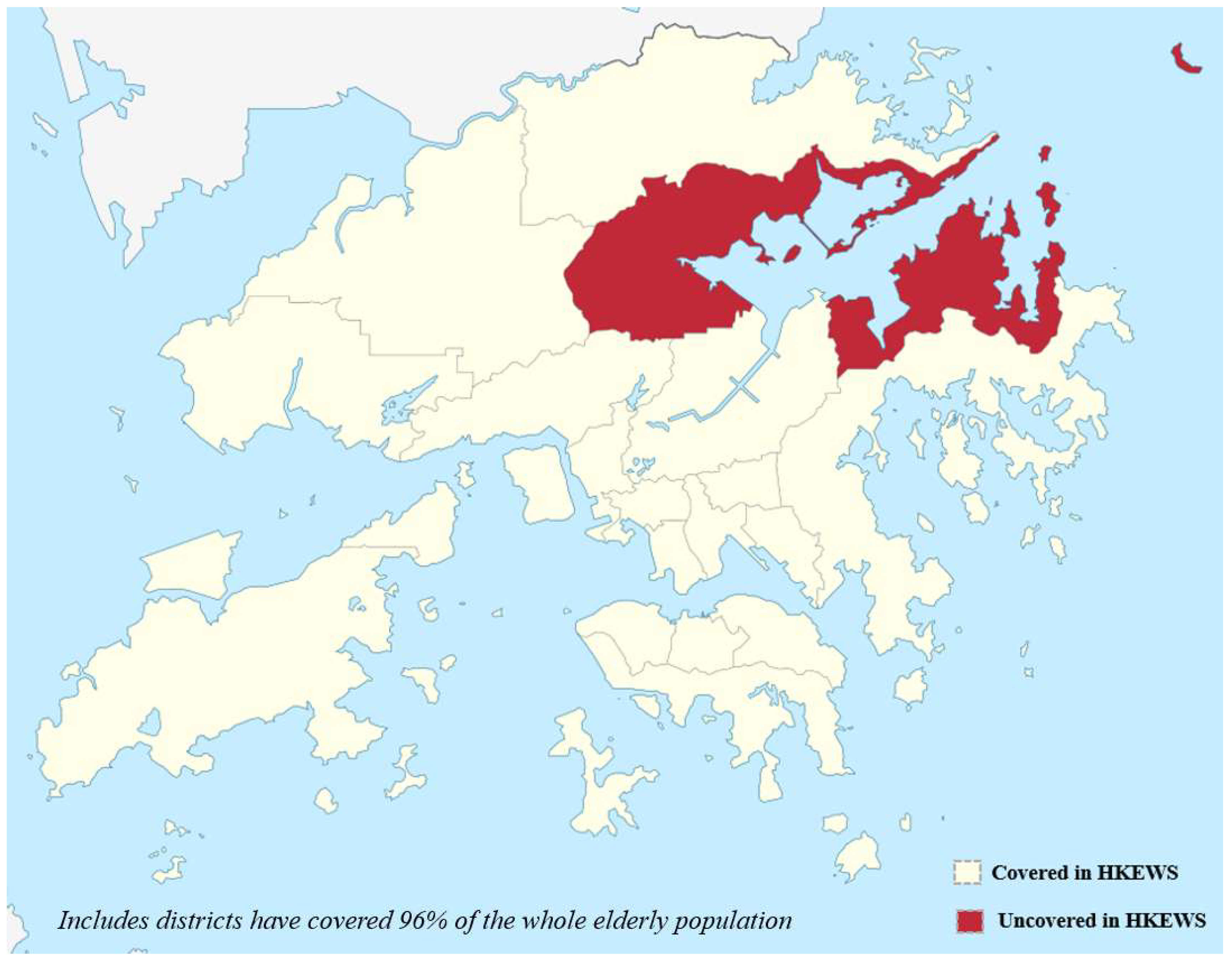
Figure A2.
Age Distribution of Ethnic Minority Elders in HK Census and HKEWS.
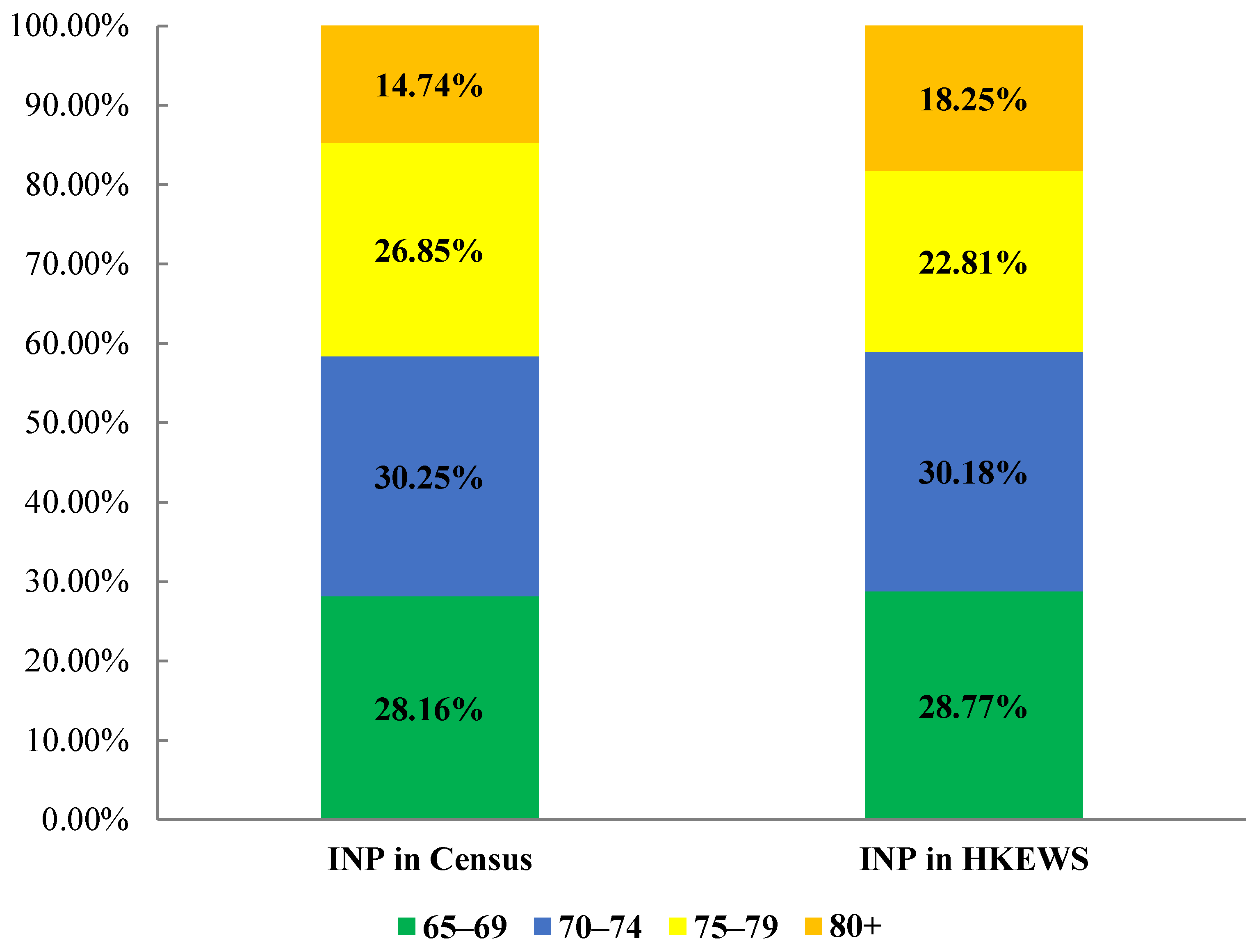
Figure A3.
Gender Distribution of Ethnic Minority Elders in HK Census and HKEWS.
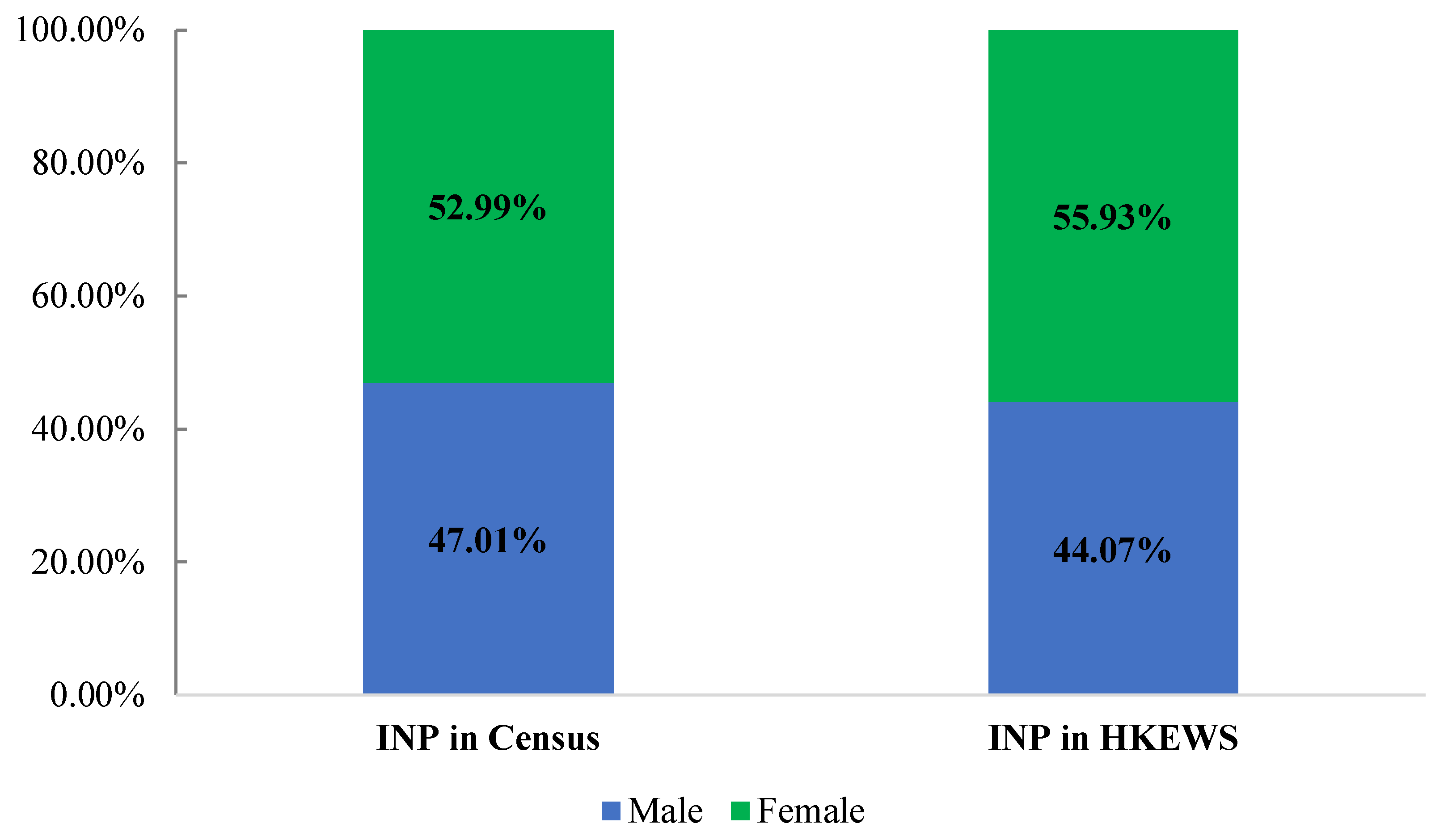
Figure A4.
Propensity Score Distribution and Common Support Between Treated and Control Units.
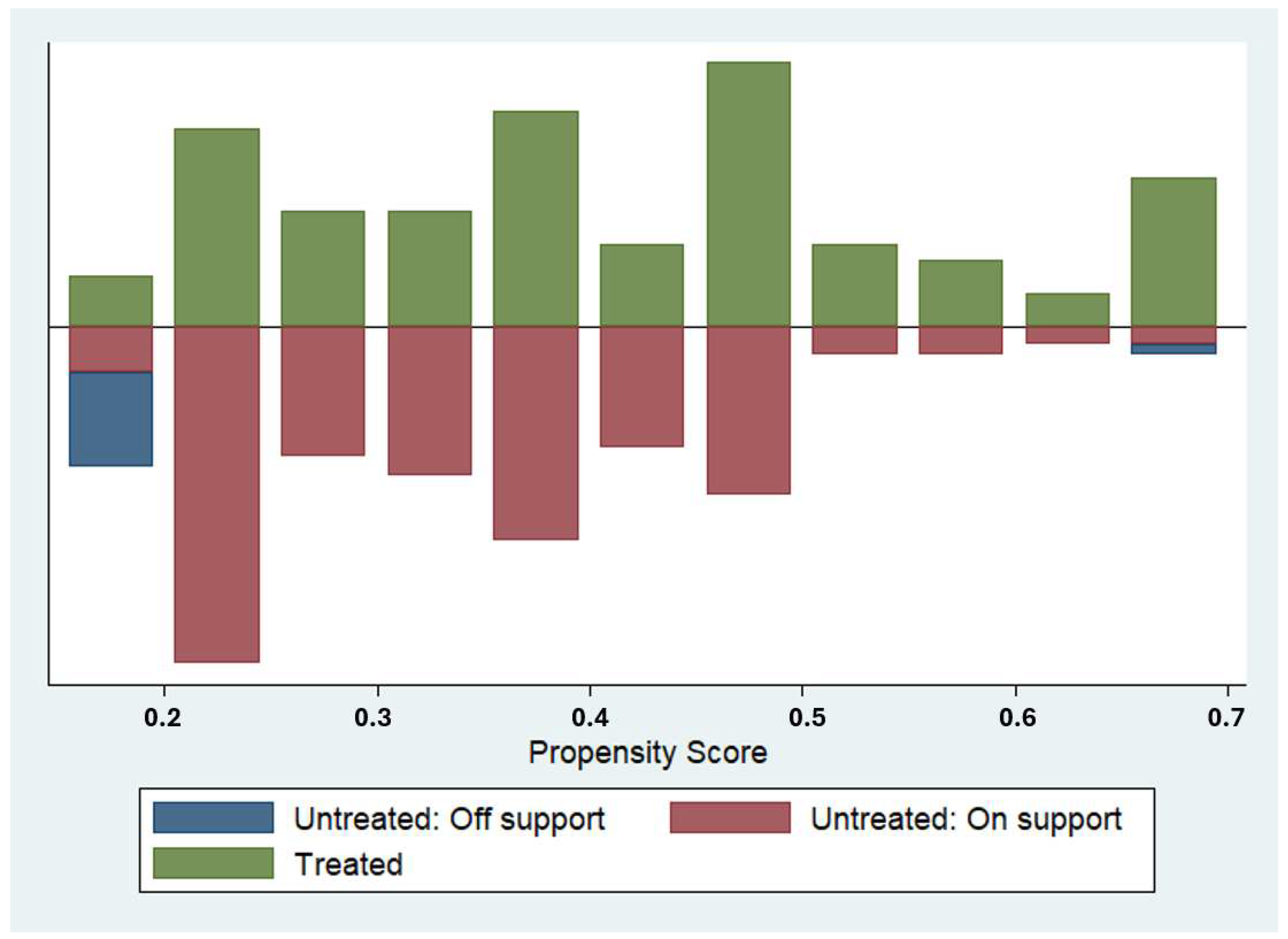
Figure A5.
Balance test results for PSM regression.
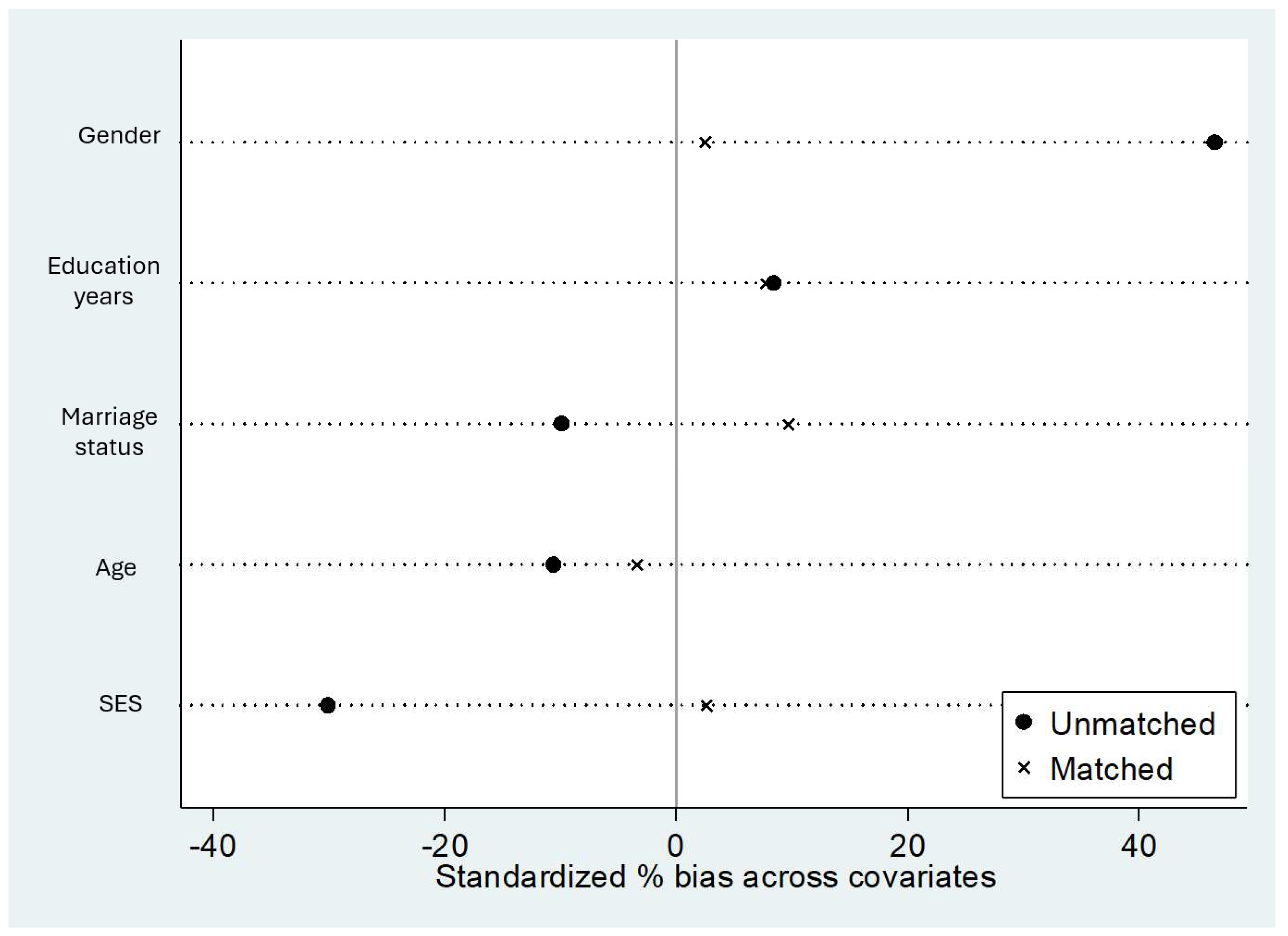
Figure A6.
Moderating Effects of Ethnic Identity on the Association between Perceived Discrimination and Psychological Well-Being.
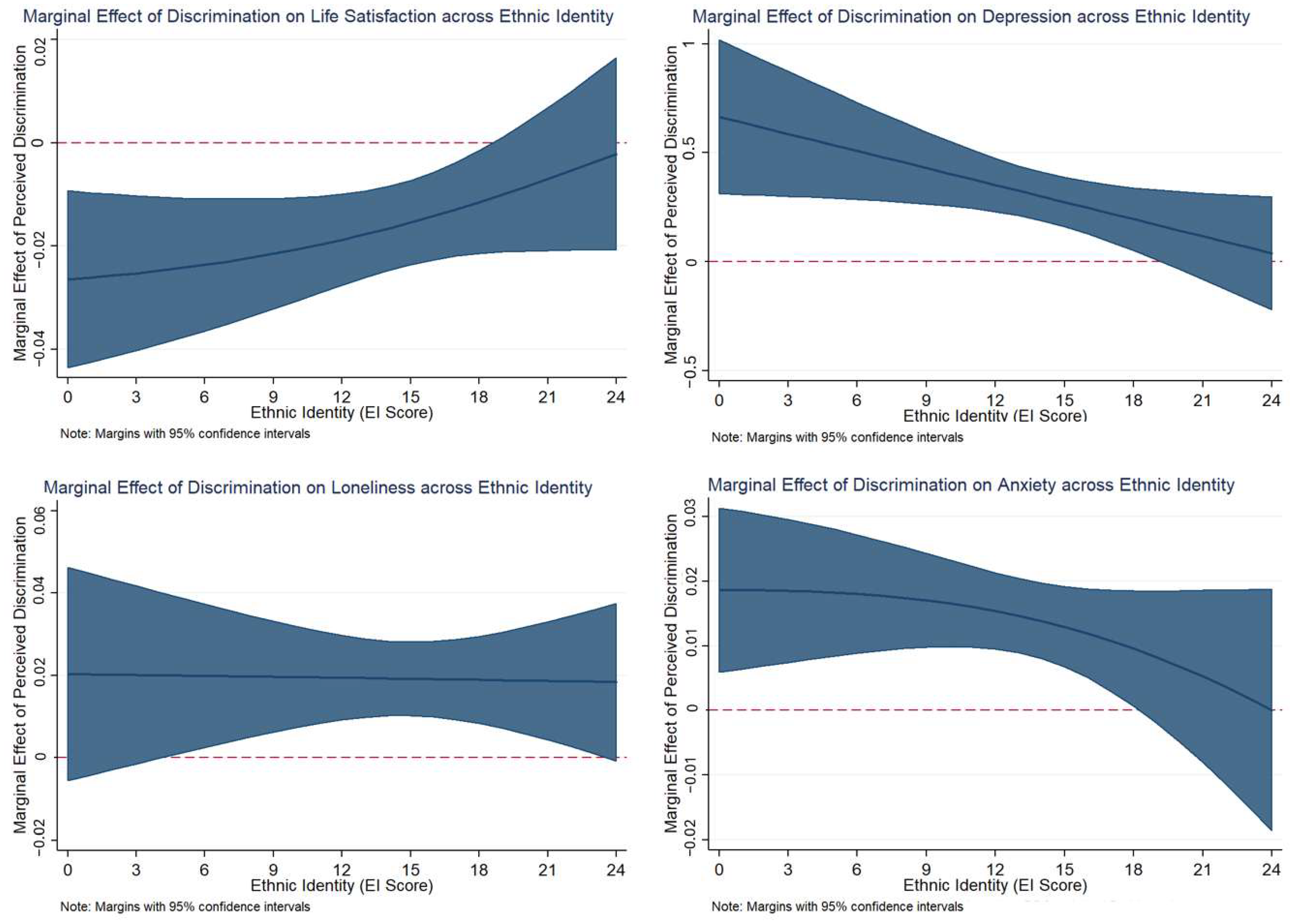
Figure A7.
Moderating Effects of Sense of Community on the Association between Perceived Discrimination and Psychological Well-Being.
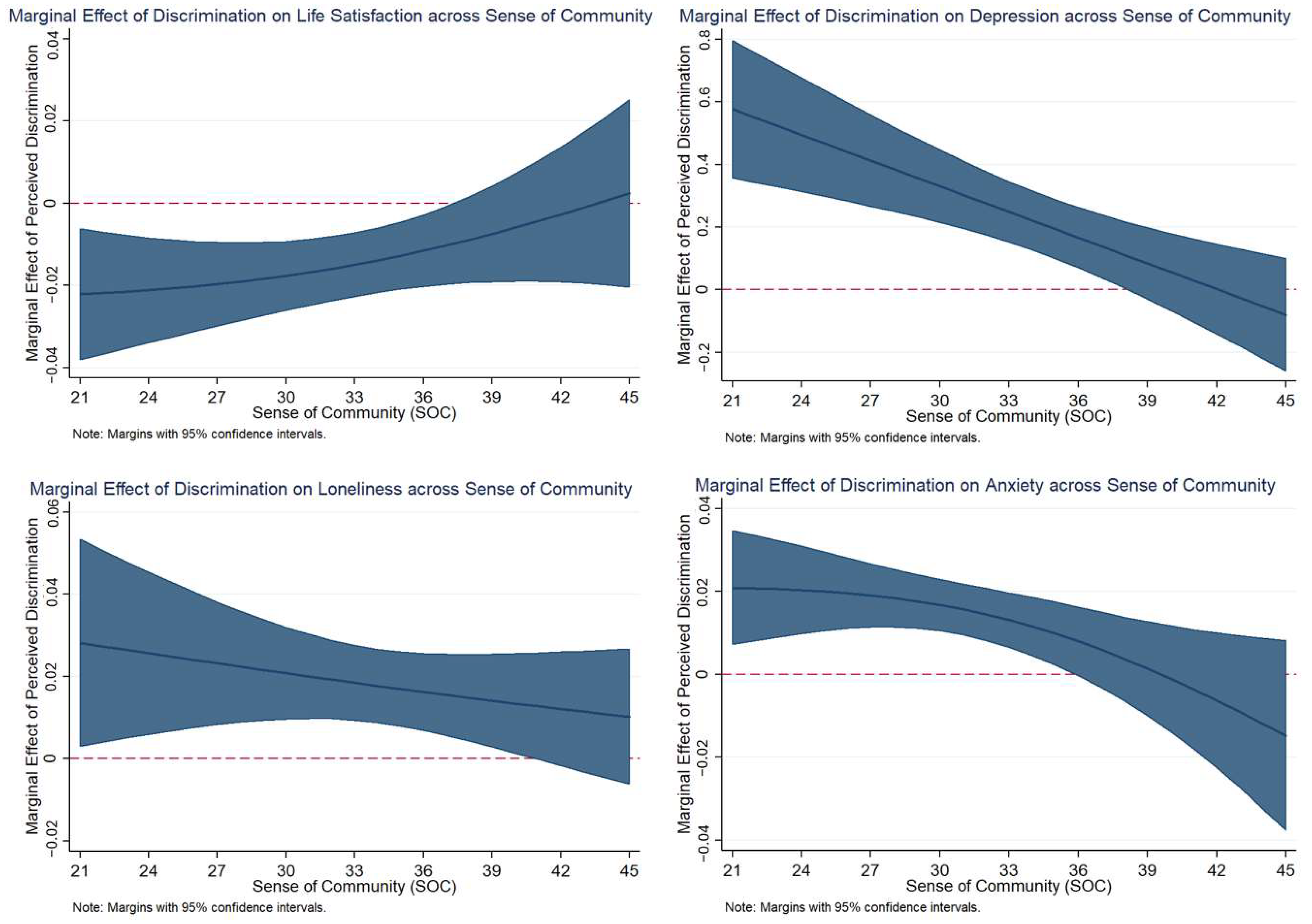
Figure A8.
Moderating Effects of Social Trust on the Association between Perceived Discrimination and Psychological Well-Being.
References
- Achdut, N., Refaeli, T., & Schwartz Tayri, T. M. (2021). Subjective poverty, material deprivation indices and psychological distress among young adults: The mediating role of social capital and usage of online social networks. Social Indicators Research, 158(3), 863–887. [Google Scholar] [CrossRef] [Scilit]
- Andrew, M. K., & Keefe, J. M. (2014). Social vulnerability from a social ecology perspective: A cohort study of older adults from the National Population Health Survey of Canada. BMC Geriatrics, 14(1), 90. [Google Scholar] [CrossRef] [Scilit] [PubMed]
- Angrist, J. D., Imbens, G. W., & Krueger, A. B. (1999). Jackknife instrumental variables estimation. Journal of Applied Econometrics, 14(1), 57–67. [Google Scholar] [CrossRef] [Scilit]
- Aw, S., Koh, G., Oh, Y. J., Wong, M. L., Vrijhoef, H. J. M., Harding, S. C., Geronimo, M. A. B., Lai, C. Y. F., & Hildon, Z. J. L. (2017). Explaining the continuum of social participation among older adults in Singapore: From “closed doors” to active ageing in multi-ethnic community settings. Journal of Aging Studies, 42, 46–55. [Google Scholar] [CrossRef] [Scilit] [PubMed]
- Bardol, O., Grot, S., Oh, H., Poulet, E., Zeroug-Vial, H., Brunelin, J., & Leaune, E. (2020). Perceived ethnic discrimination as a risk factor for psychotic symptoms: A systematic review and meta-analysis. Psychological Medicine, 50(7), 1077–1089. [Google Scholar] [CrossRef] [Scilit] [PubMed]
- Biddle, L., Stacherl, B., & Heidinger, E. (2025). Perceived discrimination among migrants in Germany: Does social capital moderate harmful effects on mental health? Social Science & Medicine, 370, 117854. [Google Scholar] [CrossRef] [Scilit] [PubMed]
- Bousquet, F., & Mathevet, R. (2019). Cultural resilience as the resilience of a distinctness. Distinctness from what? For what? In B. Rampp, M. Endreß, & M. Naumann (Eds.), Resilience in social, cultural and political spheres (pp. 305–321). Springer Fachmedien. [Google Scholar] [CrossRef] [Scilit]
- Brance, K., Chatzimpyros, V., & Bentall, R. P. (2024). Social identity, mental health and the experience of migration. British Journal of Social Psychology, 63(4), 1681–1700. [Google Scholar] [CrossRef] [Scilit] [PubMed]
- Burton, L. M., Dilworth-Anderson, P., & Bengtson, V. L. (2019). Creating culturally relevant ways of thinking about diversity and aging: Theoretical challenges for the twenty-first century. In Diversity (pp. 129–142). Routledge. [Google Scholar] [CrossRef] [Scilit]
- Carmen, E., Fazey, I., Ross, H., Bedinger, M., Smith, F. M., Prager, K., McClymont, K., & Morrison, D. (2022). Building community resilience in a context of climate change: The role of social capital. Ambio, 51(6), 1371–1387. [Google Scholar] [CrossRef] [Scilit] [PubMed]
- Chan, R. C. H., Lam, M. S., Mao, L., Prankumar, S. K., & Wong, H. (2025). Intracommunity intersectional discrimination and its impact on psychological distress and smoking behavior among sexual minority men from minority ethnic backgrounds. Social Science & Medicine, 370, 117723. [Google Scholar] [CrossRef] [Scilit] [PubMed]
- Chavis, D. M., S. Lee, K., & D. Acosta, J. (2008, June 4–6). The sense of community (SCI) revised: The reliability and validity of the SCI-2. 2nd International Community Psychology Conference, Lisbon, Portugal. [Google Scholar]
- Christens, B. D., Galeotti, T., Lenzi, M., Peterson, N. A., & Treitler, P. C. (2025). Direct and indirect effects of socioeconomic status and neighborhood disadvantage on mental health: Psychological sense of community as mediator. Social Indicators Research, 179(1), 463–480, (Correction in 2025, Social Indicators Research, 180, 1257–1258). [Google Scholar] [CrossRef] [Scilit]
- Cobb, C. L., Meca, A., Branscombe, N. R., Schwartz, S. J., Xie, D., Zea, M. C., Fernandez, C. A., & Sanders, G. L. (2019). Perceived discrimination and well-being among unauthorized Hispanic immigrants: The moderating role of ethnic/racial group identity centrality. Cultural Diversity & Ethnic Minority Psychology, 25(2), 280–287. [Google Scholar] [CrossRef] [Scilit] [PubMed]
- Cohen, S., & Wills, T. A. (1985). Stress, social support, and the buffering hypothesis. Psychological Bulletin, 98(2), 310–357. [Google Scholar] [CrossRef]
- Cokley, K., Hall-Clark, B., & Hicks, D. (2011). Ethnic minority-majority status and mental health: The mediating role of perceived discrimination. Journal of Mental Health Counseling, 33(3), 243–263. [Google Scholar] [CrossRef] [Scilit]
- Crockett, D., Anderson, L., Bone, S. A., Roy, A., Wang, J. J., & Coble, G. (2011). Immigration, culture, and ethnicity in transformative consumer research. Journal of Public Policy & Marketing, 30(1), 47–54. [Google Scholar] [CrossRef] [Scilit]
- de Freitas, D. F., Fernandes-Jesus, M., Ferreira, P. D., Coimbra, S., Teixeira, P. M., de Moura, A., Gato, J., Marques, S. C., & Fontaine, A. M. (2018). Psychological correlates of perceived ethnic discrimination in Europe: A meta-analysis. Psychology of Violence, 8(6), 712–725. [Google Scholar] [CrossRef] [Scilit]
- De Lise, F., Luyckx, K., & Crocetti, E. (2024). Identity matters for well-being: The longitudinal associations between identity processes and well-being in adolescents with different cultural backgrounds. Journal of Youth and Adolescence, 53(4), 910–926. [Google Scholar] [CrossRef] [Scilit] [PubMed]
- Dent, E., & Hoogendijk, E. O. (2015). Psychosocial resources: Moderators or mediators of frailty outcomes? Journal of the American Medical Directors Association, 16(3), 258–259. [Google Scholar] [CrossRef] [Scilit] [PubMed]
- Diener, E., Lucas, R. E., & Oishi, S. (2002). Sujective well-being: The science of happiness and life satisfaction. In Handbook of positive psychology (pp. 463–473). Oxford University Press. [Google Scholar]
- Di Napoli, I., Dolce, P., & Arcidiacono, C. (2019). Community trust: A social indicator related to community engagement. Social Indicators Research, 145(2), 551–579. [Google Scholar] [CrossRef] [Scilit]
- Fenkl, E. A., & Purnell, L. D. (Eds.). (2024). Handbook for culturally competent care. Springer International Publishing. [Google Scholar] [CrossRef] [Scilit]
- Ferguson, S. J., & Goodwin, A. D. (2010). Optimism and well-being in older adults: The mediating role of social support and perceived control. International Journal of Aging & Human Development, 71(1), 43–68. [Google Scholar] [CrossRef] [Scilit] [PubMed]
- Fleischmann, F., Leszczensky, L., & Pink, S. (2019). Identity threat and identity multiplicity among minority youth: Longitudinal relations of perceived discrimination with ethnic, religious, and national identification in Germany. British Journal of Social Psychology, 58(4), 971–990. [Google Scholar] [CrossRef] [Scilit] [PubMed]
- Foong, H. F., Hamid, T. A., Ibrahim, R., & Haron, S. A. (2021). The intersectional effects of ethnicity/race and poverty on health among community-dwelling older adults within multi-ethnic Asian populace: A population-based study. BMC Geriatrics, 21(1), 516. [Google Scholar] [CrossRef] [Scilit] [PubMed]
- Gong, F., Xu, J., & Takeuchi, D. T. (2017). Racial and ethnic differences in perceptions of everyday discrimination. Sociology of Race and Ethnicity, 3(4), 506–521. [Google Scholar] [CrossRef] [Scilit]
- He, J., Zhao, Y., Zhang, C., Wang, W., & Huang, J. (2024). Relationship between ethnic essentialism and psychological compatibility: Roles of ethnic identity and self-construal. Behavioral Sciences, 14(12), 1207. [Google Scholar] [CrossRef] [Scilit] [PubMed]
- Heckathorn, D. D. (1997). Respondent-driven sampling: A new approach to the study of hidden populations. Social Problems, 44(2), 174–199. [Google Scholar] [CrossRef] [Scilit]
- Heim, D., Hunter, S. C., & Jones, R. (2011). Perceived discrimination, identification, social capital, and well-being: Relationships with physical health and psychological distress in a U.K. minority ethnic community sample. Journal of Cross-Cultural Psychology, 42(7), 1145–1164. [Google Scholar] [CrossRef] [Scilit]
- Hobfoll, S. E. (1989). Conservation of resources: A new attempt at conceptualizing stress. American Psychologist, 44(3), 513–524. [Google Scholar] [CrossRef] [PubMed]
- Hobfoll, S. E. (2002). Social and psychological resources and adaptation. Review of General Psychology, 6(4), 307–324. [Google Scholar] [CrossRef]
- Hughes, M. E., Waite, L. J., Hawkley, L. C., & Cacioppo, J. T. (2004). A short scale for measuring loneliness in large surveys: Results from two population-based studies. Research on Aging, 26(6), 655–672. [Google Scholar] [CrossRef] [Scilit] [PubMed]
- Ikram, U. Z., Snijder, M. B., de Wit, M. A. S., Schene, A. H., Stronks, K., & Kunst, A. E. (2016). Perceived ethnic discrimination and depressive symptoms: The buffering effects of ethnic identity, religion and ethnic social network. Social Psychiatry and Psychiatric Epidemiology, 51(5), 679–688. [Google Scholar] [CrossRef] [Scilit] [PubMed]
- Ilevbare, F. M., & Idemudia, E. S. (2019). Psychosocial factors and psychological well-being in Ilaje oil-producing community, Niger-Delta region of Ondo State, Nigeria. International Journal of Happiness and Development, 5(1), 57. [Google Scholar] [CrossRef] [Scilit]
- Jang, Y., Chiriboga, D. A., & Small, B. J. (2008). Perceived discrimination and psychological well-being: The mediating and moderating role of sense of control. International Journal of Aging & Human Development, 66(3), 213–227. [Google Scholar] [CrossRef] [Scilit] [PubMed]
- Jasinskaja-Lahti, I., Liebkind, K., Jaakkola, M., & Reuter, A. (2006). Perceived discrimination, social support networks, and psychological well-being among three immigrant groups. Journal of Cross-Cultural Psychology, 37(3), 293–311. [Google Scholar] [CrossRef] [Scilit]
- Lateef, H., Nartey, P. B., Amoako, E. O., & Lateef, J. S. (2022). A systematic review of African-centered therapeutic interventions with Black American Adults. Clinical Social Work Journal, 50(3), 256–264. [Google Scholar] [CrossRef] [Scilit]
- Law, K.-Y., & Lee, K.-M. (2012). The myth of multiculturalism in ‘Asia’s world city’: Incomprehensive policies for ethnic minorities in Hong Kong. Journal of Asian Public Policy, 5(1), 117–134. [Google Scholar] [CrossRef] [Scilit]
- Loper, K. (2004). Race and equality: A study of ethnic minorities in Hong Kong’s education system: Project report and analysis. Centre for Comparative and Public Law, The University of Hong Kong. Available online: http://hub.hku.hk/handle/10722/54929 (accessed on 18 November 2026).
- Luo, Y., & Waite, L. J. (2011). Mistreatment and psychological well-being among older adults: Exploring the role of psychosocial resources and deficits. The Journals of Gerontology Series B: Psychological Sciences and Social Sciences, 66B(2), 217–229. [Google Scholar] [CrossRef] [Scilit] [PubMed]
- Martinez, R. O., & Dukes, R. L. (1997). The effects of ethnic identity, ethnicity, and gender on adolescent well-being. Journal of Youth and Adolescence, 26(5), 503–516. [Google Scholar] [CrossRef] [Scilit]
- Mohd, T. A. M. T., Yunus, R. M., Hairi, F., Hairi, N. N., & Choo, W. Y. (2019). Social support and depression among community dwelling older adults in Asia: A systematic review. BMJ Open, 9(7), e026667. [Google Scholar] [CrossRef] [Scilit] [PubMed]
- Park, M.-K., & Mair, C. (2021). Perceived discrimination, social environment, and older adults’ psychological well-being. Innovation in Aging, 5(Suppl. 1), 460. [Google Scholar] [CrossRef] [Scilit]
- Pascoe, E. A., & Richman, L. S. (2009). Perceived discrimination and health: A meta-analytic review. Psychological Bulletin, 135(4), 531–554. [Google Scholar] [CrossRef] [Scilit] [PubMed]
- Pavot, W., & Diener, E. (2008). The satisfaction with life scale and the emerging construct of life satisfaction. The Journal of Positive Psychology, 3(2), 137–152. [Google Scholar] [CrossRef] [Scilit]
- Pearlin, L. I., Menaghan, E. G., Lieberman, M. A., & Mullan, J. T. (1981). The stress process. Journal of Health and Social Behavior, 22(4), 337–356. [Google Scholar] [CrossRef] [Scilit]
- Perozzo, C., de la Sablonnière, R., Auger, E., & Caron-Diotte, M. (2016). Social identity change in response to discrimination. British Journal of Social Psychology, 55(3), 438–456. [Google Scholar] [CrossRef] [Scilit] [PubMed]
- Phillipson, C. (2015). Placing ethnicity at the centre of studies of later life: Theoretical perspectives and empirical challenges. Ageing & Society, 35(5), 917–934. [Google Scholar] [CrossRef] [Scilit]
- Phinney, J. S., Horenczyk, G., Liebkind, K., & Vedder, P. (2001). Ethnic identity, immigration, and well-being: An interactional perspective. Journal of Social Issues, 57(3), 493–510. [Google Scholar] [CrossRef] [Scilit]
- Pinquart, M., & Frohlich, C. (2009). Psychosocial resources and subjective well-being of cancer patients. Psychology & Health, 24(4), 407–421. [Google Scholar] [CrossRef] [Scilit] [PubMed]
- Raval, V. V., Gopal, B., Aggarwal, P., Mohan, M. P., Padmakumari, P., Thomas, E., Luebbe, A. M., & Hay, M. C. (2024). Training in cultural competence for mental health care: A mixed-methods study of students, faculty, and practitioners from India and USA. Culture, Medicine, and Psychiatry, 48(4), 699–730. [Google Scholar] [CrossRef] [Scilit] [PubMed]
- Rook, K. S., & Charles, S. T. (2017). Close social ties and health in later life: Strengths and vulnerabilities. The American Psychologist, 72(6), 567–577. [Google Scholar] [CrossRef] [Scilit] [PubMed]
- Sellers, R. M., & Shelton, J. N. (2003). The role of racial identity in perceived racial discrimination. Journal of Personality and Social Psychology, 84(5), 1079–1092. [Google Scholar] [CrossRef] [Scilit] [PubMed]
- Sharif, N., Chen, W., & Niu, M. (2026a). Mental health problems among ethnic minorities during public crises: A systematic review of coping strategies during the COVID-19 pandemic. Frontiers in Public Health, 14, 1822085. [Google Scholar] [CrossRef] [Scilit] [PubMed]
- Sharif, N., Chen, W., Niu, M., & Cheng, Z. (2026b). “As I know, there is nothing there for our people”: Unmasking mental health literacy and help-seeking attitudes among ethnic minorities in Hong Kong. Journal of Asian Public Policy, 19(4), 1136–1151. [Google Scholar] [CrossRef] [Scilit]
- Shum, T. C. T. (2023). Quality of life of south asian older adults in Hong Kong: Policy implications for a multicultural active aging framework. Gerontology and Geriatric Medicine, 9, 23337214231179837. [Google Scholar] [CrossRef] [Scilit] [PubMed]
- Spitzer, R. L., Kroenke, K., Williams, J. B. W., & Löwe, B. (2006). A brief measure for assessing generalized anxiety disorder: The GAD-7. Archives of Internal Medicine, 166(10), 1092–1097. [Google Scholar] [CrossRef] [Scilit] [PubMed]
- Steptoe, A., Shankar, A., Demakakos, P., & Wardle, J. (2013). Social isolation, loneliness, and all-cause mortality in older men and women. Proceedings of the National Academy of Sciences of the United States of America, 110(15), 5797–5801. [Google Scholar] [CrossRef] [Scilit] [PubMed]
- Stevens, G. W. J. M., & Thijs, J. (2018). Perceived group discrimination and psychological well-being in ethnic minority adolescents. Journal of Applied Social Psychology, 48(10), 559–570. [Google Scholar] [CrossRef] [Scilit]
- Šedovič, M. (2024). Immigrants’ subjective well-being in Europe: Variation by regional attitudes towards immigrants. Migration Studies, 12(1), 68–92. [Google Scholar] [CrossRef] [Scilit]
- Tajfel, H., & Turner, J. C. (2004). The social identity theory of intergroup behavior. In Political psychology. Psychology Press. [Google Scholar]
- The Zubin Foundation. (2023). Mental health of ethnic minorities in Hong Kong. The Zubin Foundation. [Google Scholar]
- Ticar, J. E. (2025). Im/migration, mental health and well-being, and newcomer Filipino families: Implications for anti-racist and anti-oppressive policies and practice. Journal of Ethnic and Migration Studies, 51(7), 1981–1995. [Google Scholar] [CrossRef] [Scilit]
- Tonsing, K. N., Tse, S., & Tonsing, J. C. (2016). Acculturation, perceived discrimination, and psychological distress: Experiences of South Asians in Hong Kong. Transcultural Psychiatry, 53(1), 124–144. [Google Scholar] [CrossRef] [Scilit] [PubMed]
- Townley, G., Kloos, B., Green, E. P., & Franco, M. M. (2011). Reconcilable differences? Human diversity, cultural relativity, and sense of community. American Journal of Community Psychology, 47(1–2), 69–85. [Google Scholar] [CrossRef] [Scilit] [PubMed]
- Treas, J. (2015). Incorporating immigrants: Integrating theoretical frameworks of adaptation. The Journals of Gerontology: Series B, 70(2), 269–278. [Google Scholar] [CrossRef] [Scilit] [PubMed]
- Umaña-Taylor, A. J., Lee, R. M., Rivas-Drake, D., Syed, M., Seaton, E., Quintana, S. M., Cross, W. E., Schwartz, S. J., & Yip, T. (2014). Ethnic and racial identity during adolescence and into young adulthood: An integrated conceptualization. Child Development, 85(1), 21–39. [Google Scholar] [CrossRef] [Scilit] [PubMed]
- Volz, E., & Heckathorn, D. (2008). Probability based estimation theory for respondent driven sampling. Journal of Official Statistics, 24(1), 79. [Google Scholar]
- Wiley, J. F., Gruenewald, T. L., & Seeman, T. E. (2018). Psychosocial resources and physiological dysregulation. In C. D. Ryff, & R. F. Krueger (Eds.), The Oxford handbook of integrative health science. Oxford University Press. [Google Scholar] [CrossRef] [Scilit]
- Yoon, E., Coburn, C., & Spence, S. A. (2019). Perceived discrimination and mental health among older African Americans: The role of psychological well-being. Aging & Mental Health, 23(4), 461–469. [Google Scholar] [CrossRef] [Scilit] [PubMed]
- Zubair, M., & Norris, M. (2015). Perspectives on ageing, later life and ethnicity: Ageing research in ethnic minority contexts. Ageing and Society, 35(5), 897–916. [Google Scholar] [CrossRef] [Scilit] [PubMed]
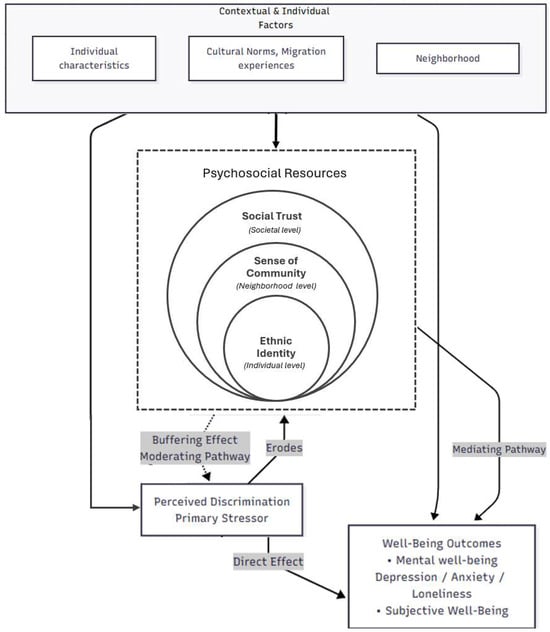
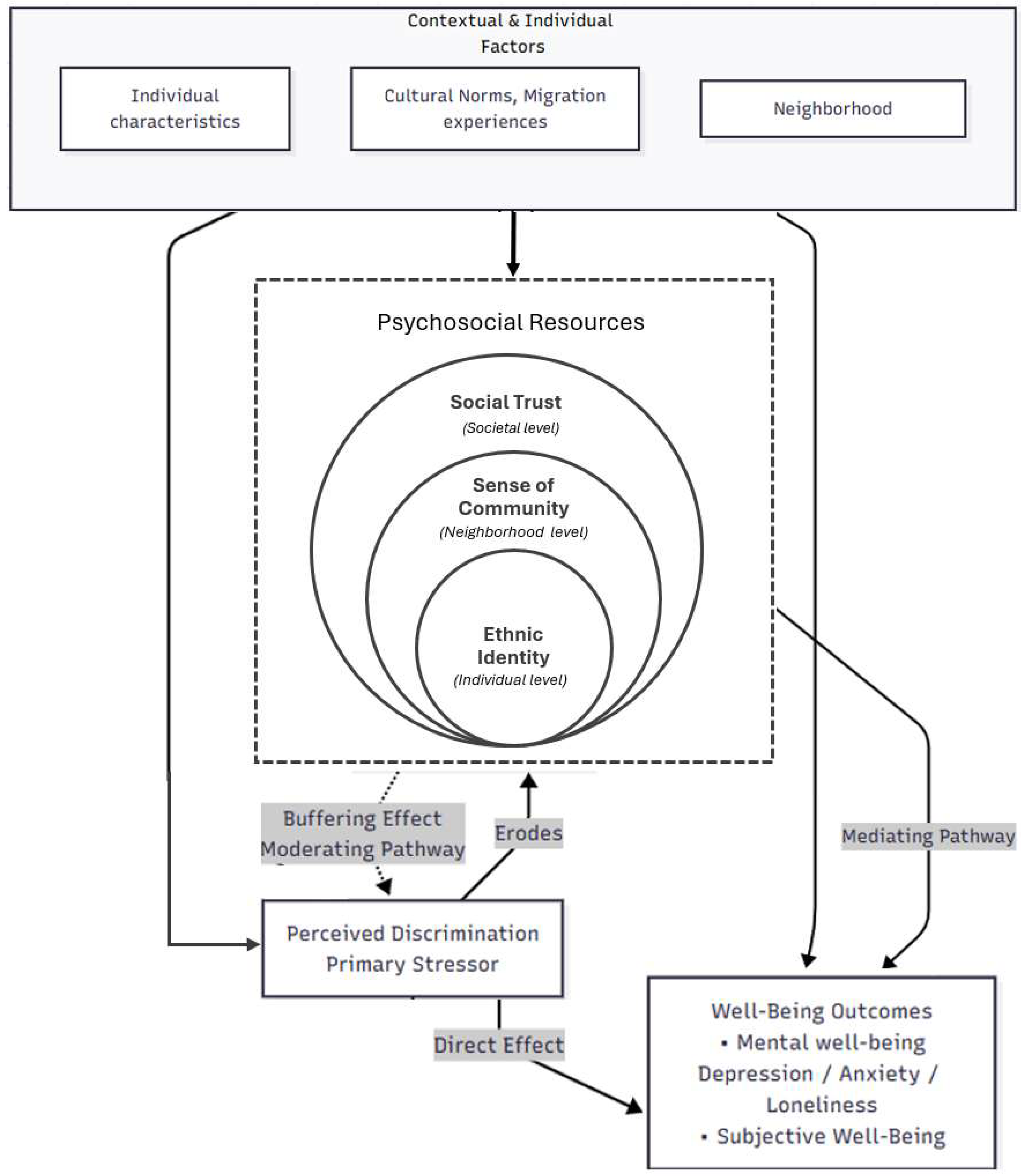

Disclaimer/Publisher’s Note: The statements, opinions and data contained in all publications are solely those of the individual author(s) and contributor(s) and not of MDPI and/or the editor(s). MDPI and/or the editor(s) disclaim responsibility for any injury to people or property resulting from any ideas, methods, instructions or products referred to in the content. |
© 2026 by the authors. Licensee MDPI, Basel, Switzerland. This article is an open access article distributed under the terms and conditions of the Creative Commons Attribution (CC BY) license.