


Abstract
Rituals’ influence on consumer behavior has been extensively documented, but existing reviews have not yet theorized the bodily dimension in a systematic way, particularly as physical co-presence becomes increasingly contested in digital consumption contexts. Following PRISMA guidelines, this systematic review synthesizes 77 peer-reviewed articles and treats the body as an analytical category in its own right. We advance a framework with four components that examines how consumption contexts structurally assign distinct bodily roles (replaceable experience enhancer to non-replaceable meaning executor), how these roles activate specific combinations of five analytical dimensions (physical body, sensory, emotional, cognitive, and social), and how these dimensional configurations translate into consumer effects through distinct mechanistic pathways. Our analysis reveals three critical patterns. First, the body is systematically instrumentalized across all five dimensions—positioned as an observable tool for extrinsic ends rather than an experiencing subject with proprioceptive and interoceptive depth. Second, quantitative studies collapse rich bodily differences into binary manipulations, with mediation pathways uniformly oriented toward positive psychological states; this positivity bias marginalizes avoidance-related outcomes and reflects a structural disconnect between qualitative insights and quantitative designs. Third, although digital consumption challenges the assumption of physical co-presence, existing research assesses digital embodiment as an inferior surrogate rather than as a distinct mode of configuration, and does not specify which bodily dimension a given technology substitutes. By moving the body from analytical background to theoretical core, this study offers an integrative agenda for future research on body-oriented consumption rituals.
1. Introduction
In contemporary consumer landscapes, brands increasingly orchestrate ritualized bodily behaviors to forge consumer connections. Starbucks defines its “third place” experience through precise hand-brewing sequences; live-streamed shopping generates collective excitement via synchronized countdowns (e.g., live-streamers and their assistant shout and act simultaneously “3, 2, 1—link up”); fitness apps transform body discipline into gamified rituals through check-in badges. These strategies rest on a shared premise: bodily participation is central to ritual efficacy. Ritual has long been theorized as a cultural mechanism that strengthens bonds, constructs identity, and creates meaning through temporal sequences, social interaction, or symbolic resources (Hobson et al., 2018; Rook, 1985). Yet the “body” has remained a peculiar theoretical blind spot: heavily mobilized yet rarely understood. In extant research, physical actions are reduced to mere “nodes” within sequences (Stanfield & Kleine, 1990; Sezer et al., 2016), treated as “vehicles” for social structures (Collins, 2004; Goffman, 1967), or construed as “channels” for cultural symbols. The body’s theoretical status remains suspended between instrument and subject: simultaneously a means generating effects and a site bearing them, yet never the focal object of explanation. This paper therefore asks: what changes if we reframe the body not merely as a mobilized instrument but as a subject demanding interpretation? How would fundamental questions in ritual studies (particularly how rituals influence consumers) be rewritten?
Consumer ritual research has historically been anchored in a meaning-oriented perspective that conceptualizes ritual as a vehicle for transferring cultural meanings and attaining sacred experiences (McCracken, 1986; Belk et al., 1989). In this tradition, the body serves only as a carrier of symbolic content, an object that needs no theoretical treatment of its own. The embodied perspective, by contrast, attributes autonomous causal power to structured bodily action sequences themselves, demonstrating that these patterns can enhance consumption enjoyment independent of symbolic content (Vohs et al., 2013). This recalibration—from viewing the body as a passive medium to recognizing it as an active mechanism—opens a pivotal theoretical opportunity to reposition the body at the center of ritual inquiry. However, this opportunity remains largely unrealized: the two traditions have developed separately: meaning researchers treat bodily actions as experimental manipulations, and embodiment researchers treat cultural meaning as a variable to be held constant.
Moreover, the acceleration of digital consumption has intensified this theoretical divide. Online ancestral worship platforms substitute virtual offerings for physical incense; synchronous technology-mediated tourism replaces physical co-presence with video presence; metaverse brand experiences deploy digital avatars in lieu of physical bodies. These developments appear to challenge Durkheim (1912/1995)’s and Collins (2004)’s foundational emphasis on physical bodily co-presence: when the physical body is absent, can ritual effects persist? Emerging digital ethnographic research suggests that perceived co-presence and material anchoring can partially compensate for the loss of physical presence (Sandikci et al., 2025). Yet as digital contexts fundamentally transform how bodies participate in rituals, physical presence is no longer the exclusive pathway through which bodily rituals influence consumer behavior.
These converging developments point to a central theoretical lacuna: we lack a framework capable of simultaneously accommodating the body as tool and subject, as physical and digital, within ritual processes. Consequently, critical questions remain unresolved. Do different modes of bodily participation produce distinct ritual effects? Does ritual efficacy persist when the physical body is displaced in digital settings? And how should the body’s role in rituals be theoretically conceptualized? Existing reviews have categorized ritual types and functions from consumer culture perspectives (see e.g., Hobson et al., 2018) or examined the psychological mechanisms of collective rituals through cognitive perceptions (see, e.g., Boyer & Liénard, 2020), but none has systematically integrated the body as an independent analytical thread. This omission constrains the development of body-centered ritual theory.
This paper advances the core argument that differences in ritual effects ultimately stem from differences in bodily engagement, which in turn reflect divergent theoretical assumptions about the body’s nature. We conduct a systematic review of 77 peer-reviewed journal articles, foregrounding the body as an independent analytical lens across ritual research’s theoretical trajectory. This review accomplishes three tasks: (1) deconstruction—revealing how the body is systematically instrumentalized across five analytical dimensions, how its subjectivity and avoidance-related outcomes are excluded, and how the physical body operates as an unexamined ontological default; (2) reconstruction—repositioning the body from an analytical backdrop to an emergent generative field of ritual, whereby contextual settings structurally assign bodily roles, dimensional configurations activate distinct embodiment profiles, and these configurations translate into consumer effects through identifiable mechanistic pathways; and (3) prospect—charting an integrative agenda across three fronts: introducing underutilized theoretical resources (phenomenology, sensory anthropology, embodied cognition, and practice theory), advancing the conceptualization and operationalization of bodily ritual typologies, and bridging the structural fractures between causal chains and digital contexts. Our contribution is twofold: we enrich ritual typology by centering bodily consumption rituals, and more fundamentally, we transform the theoretical status of the body in ritual studies from an instrumentalized object to an experiencing subject and analytical core, thereby encouraging future consumer ritual research to adopt a body-centered theoretical lens and methodological approach.
2. Research Background
2.1. Objective and Subjective Bodies in Consumption Rituals
Research on the body in ritual has changed markedly over the past eight decades, passing through three phases, each resting on a different assumption about the body’s status (Figure 1). The move from Phase 1 to Phase 2 carried the body from implicit background to causal foreground; the move to Phase 3 opened an ontological crisis that remains unresolved.
Figure 1.
The shift from objective to subjective bodies in consumption rituals. Selected milestones are drawn from Baur (1949), Sherry et al. (1993), Lastovicka and Fernandez (2005), Weinberger and Wallendorf (2012), and Sandikci et al. (2025).
Phase 1: The body as implicit background (1940–2000). In foundational sociological and anthropological scholarship, ritual was understood through collective effervescence (Durkheim, 1912/1995) and rites of passage (van Gennep, 1909/1960). The body figured as the necessary but unexamined vessel of ritual practice: physical presence was presupposed as a prerequisite for efficacy, yet the body itself was not theorized as an object of analysis. As ritual research migrated into consumer culture studies during the 1990s, the meaning transfer model repositioned the body as a channel through which cultural meaning flowed into mundane objects (McCracken, 1986; Belk et al., 1989). Within this paradigm, bodily participation served merely as a condition enabling the flow of meaning, not as an independent object of interpretation.
Phase 2: The body as causal agent (2001–2020). During this period, ritual research entered the mainstream of marketing. The practice turn, and Bourdieu’s (1990) concept of habitus in particular, first gave the body a role in explanation by treating taste as class position incorporated in the body. In the 2010s, the embodiment turn pushed this logic further: research on sensory marketing (Krishna, 2012) and experimental demonstrations that structured bodily actions enhance consumption enjoyment (Vohs et al., 2013) established the body as a causal starting point of consumption effects. Along this trajectory, experimental studies of brand rituals, relationship rituals, and interaction rituals consolidated the body’s causal status (Lyu et al., 2025). Yet this establishment was not accompanied by a corresponding deepening of conceptualization. The body was treated as a uniform operational input—manipulated as an independent variable in experimental designs—rather than as a heterogeneous experiential subject whose sensorimotor, proprioceptive, and interoceptive dimensions might differentially shape ritual outcomes.
Phase 3: The body in ontological crisis (2021–Present). The acceleration of digital consumption has systematically challenged the foundational presupposition of physical bodily co-presence, giving rise to a new wave of research on the digital body. Current scholarship offers two competing perspectives: the body weakening thesis holds that digitization necessarily dilutes ritual effects because the virtual body lacks embodied feedback and material anchoring; the functional compensation thesis suggests that perceived co-presence and symbolic materiality can partially offset physical absence (Lyu et al., 2025). However, this debate has not reconciled the divide between the meaning and embodied paradigms; rather, it has exacerbated conceptual confusion by assuming that physical presence can be unconditionally replaced by technological mediation without asking which bodily dimension is being substituted. Consequently, the body has thus moved from implicit background to causal foreground to digitally reconfigured entity, but its theoretical status remains unresolved between tool and subject.
2.2. Physical Body and Digital Body in Consumption Rituals
Traditional ritual theory rests on the presupposition of physical bodily co-presence. Both Durkheim’s (1912/1995) collective effervescence and Collins’s (2004) interaction ritual chains treat the spatiotemporal aggregation of physical bodies as a necessary condition for ritual effects. Co-presence generates emotional energy, while physical contact and synchronous action constitute the foundation of ritual intensity. However, the acceleration of digital consumption is systematically challenging this presupposition.
The debate between the weakening and compensation theses, outlined in Section 2.1, frames current work on digital ritual. Lyu et al.’s (2025) study of synchronous technology-mediated tourism shows that psychological ownership partly mediates the restorative effects of interactive rituals when physical presence is absent. The digital body, on this evidence, is not a degraded copy of the physical body but an analytical unit with mechanisms of its own.
Recent advances in metaverse and virtual-embodiment research have further complicated this landscape. First, studies on avatar creation and customization reveal that consumers develop psychological ownership over digital bodies when afforded control over virtual appearance, and that this ownership drives virtual consumption intentions (Taylor et al., 2024). Second, research on metaverse retail demonstrates that consumer experience in immersive environments is shaped by three core characteristics—sociability, immersiveness, and environmental fidelity—which jointly determine behavioral intention (Shahzad et al., 2025; Garcia et al., 2024). Third, work on virtual influencers shows that while physical authenticity is absent, high interactivity can compensate by enhancing consumer engagement and purchase intention (Cao et al., 2025). Fourth, scholarship on VR marketing experiences distinguishes embodiment from immersion, showing that bodily engagement with virtual environments produces enjoyment through distinct psychological mechanisms (Leveau & Camus, 2023). Fifth, research on virtual selfhood documents that consumers actively construct digital personas that reflect their identities and form social relationships within virtual environments, with avatar attachment functioning as an extension of the self (Kalyvaki et al., 2023; Yoo et al., 2023). Collectively, these studies suggest that digital rituals are not simply deficient surrogates for physical rituals; they constitute distinct modes of embodiment governed by distributed proprioception, technologically mediated intersubjectivity, and sensory substitution.
Yet the rise of digital body research has not reconciled the divide between the meaning and embodied paradigms; rather, it has deepened the conceptual confusion. Digital ritual research often assumes that physical presence can be unconditionally replaced by technological mediation without specifying which bodily dimension is being substituted—the sensorimotor system, social co-presence, or meaning-bearing capacity. When researchers suspend the physical body in virtual environments, they simultaneously suspend the causal basis on which the embodied paradigm rests; when they treat digital avatars as new carriers of meaning, they merely repeat the meaning paradigm’s instrumentalization of the body. The opposition between physical and digital bodies is therefore a second blind spot: no ritual theory yet accommodates both.
2.3. Deficiencies of Existing Reviews on Consumption Rituals
Despite their distinct theoretical commitments, the two most comprehensive reviews of ritual consumption, namely Hobson et al. (2018) from a psychological regulatory perspective and Boyer and Liénard (2020) from a cognitive evolutionary perspective, share a fundamental blind spot: the body is admitted into the analytical frame only as an instrumental variable, never as a theoretical subject. Hobson et al. (2018) synthesize ritual functions into three regulatory pathways (emotion regulation, performance goal regulation, and social connection regulation) and distinguish bottom-up, form-feature-driven mechanisms from top-down, meaning-assignment-driven mechanisms. Yet within this framework, bodily movements figure merely as input variables in the bottom-up pathway, functioning as causally opaque triggers that enter the model as form features but exit without theoretical elaboration. Boyer and Liénard (2020) decompose rituals into normative scripts, alliance signals, and ritualized behaviors, offering a granular taxonomy of the cognitive bases of ritual participation. However, bodily movements are reduced to stereotyped action sequences that are precisely executed, socially transmitted, but theoretically inert, which leaves proprioception and sensory modalities outside the analytical frame.
In both accounts, the body performs and executes rituals, but it does not generate or interpret them. Rituals act on the body, pass through it, or make use of it; the body is not an experiencing subject whose internal states form part of ritual efficacy. This objectification manifests in two unresolved dualisms that the present review directly interrogates. First, the object–subject dualism: existing reviews treat the body either as a passive receiver of cultural meaning or as a manipulable causal mechanism, but never as a heterogeneous experiential subject whose sensorimotor, proprioceptive, and interoceptive dimensions differentially shape ritual outcomes. Second, the physical–digital dualism: existing reviews presuppose the physical body as the default analytical unit and either ignore digital rituals or assume that technological mediation can unconditionally substitute for physical presence, without specifying which bodily dimension is being replaced.
Three differences separate the present review from these accounts. First, in scope: both Hobson et al. (2018) and Boyer and Liénard (2020) synthesize experimental and theoretical work on ritual in general, drawing on psychology and cognitive science, whereas this review restricts itself to consumer ritual and codes 77 empirical studies of consumption contexts. Second, in analytical unit: in both prior reviews the body enters the model as one variable among others, whether as a form feature in a regulatory pathway or as a stereotyped action sequence in a cognitive taxonomy, whereas here the body is the organizing lens and its five dimensions are coded as separate analytical categories. Third, in contextual reach: neither review addresses technologically mediated ritual, whereas this review treats physical and digital ritual as comparable configurations rather than as a standard and its deviation. These three differences define the space the present review occupies. In the result, to our knowledge, no prior systematic review of consumer ritual research has coded the body as a multi-dimensional analytical object across both physical and digital contexts.
This article addresses these deficiencies by conducting, to our knowledge, the first systematic review of ritual consumption research that treats the body as an analytical category in its own right across the field’s theoretical development. We ask: How do existing studies position the body—as tool or subject, as physical vessel or digital avatar? What dimensions of bodily experience are rendered visible or invisible in different theoretical traditions? And how can the body be reconceptualized as a generative site that simultaneously accommodates meaning and mechanism, physicality and digitality? By foregrounding these questions, this article offers an integrative framework that existing reviews, preoccupied with psychological functions and cognitive components, have been unable to provide.
3. Methodology
3.1. Literature Search Strategy
This review was conducted in accordance with the PRISMA 2020 guidelines for systematic reviews (Page et al., 2021). A further limitation concerns protocol registration. This review was not prospectively registered in PROSPERO or a comparable registry. The review protocol, including the research questions, eligibility criteria, search strategy, coding scheme, and synthesis plan, was specified before screening began and followed the PRISMA-P recommendations (Shamseer et al., 2015). The completed PRISMA 2020 checklist is provided in Supplementary Table S1. The protocol is publicly archived on the Open Science Framework (https://osf.io/3ecgz/overview?view_only=e3b175d2c5a147938dd6d316020fa428; accessed on 12 November 2026). Nevertheless, the absence of prospective registration limits independent verification of whether the review adhered to its original plan, and we acknowledge this as a limitation. Future systematic reviews in this field should register their protocols prospectively to strengthen transparency and reproducibility.
A systematic search of the Scopus database was performed on 25 April 2026. Scopus was selected as the sole database for three reasons. First, Scopus offers the broadest coverage of peer-reviewed journals in the social sciences and business/management disciplines, indexing the vast majority of journals also covered by Web of Science (Mongeon & Paul-Hus, 2016; Singh et al., 2021), which substantially mitigates the risk of omitting relevant studies; we verified that all leading journals in marketing, consumer research, and psychology are fully indexed in Scopus. Second, Scopus applies a rigorous and transparent content selection process overseen by an independent Content Selection & Advisory Board, with continuous quality monitoring and standardized metadata, making it particularly suitable for systematic retrieval and citation-based analyses (Baas et al., 2020). Third, relying on a single database is an established practice in systematic reviews in business and management research (e.g., Paul et al., 2021), as it ensures sample consistency, avoids duplication errors arising from cross-database integration, and enhances the replicability of the review protocol. To further compensate for the potential coverage limitations of a single database, we complemented the database search with backward and forward citation chasing (i.e., screening the reference lists and citing articles of the included studies, please refer to Section 3.2). The search strategy combined three thematic blocks using Boolean operators: The search formula was: TITLE-ABS-KEY (synchron* OR “bodily” OR “interpersonal” OR movement* OR action* OR motion*) AND TITLE-ABS-KEY (ritual* OR ceremony OR rite*) AND TITLE-ABS-KEY (consumer* OR marketing OR brand* OR advertising OR purchase*). Asterisks are truncation operators; for example, synchron* retrieves synchronization, synchronous, and synchrony, while ritual* covers ritual, rituals, and ritualized. The first block captured the embodied and sensory dimensions of ritual practice. In the consumer literature, sensory experiences in rituals are predominantly examined through the lens of bodily action, movement, and interpersonal synchrony (e.g., studies on collective movement and synchrony in consumption rituals); accordingly, this block combined embodiment-oriented terms (bodily, interpersonal, synchron*) with movement- and action-oriented terms (movement*, action*, motion*) to retrieve this literature. Pilot scoping searches indicated that adding generic sensory terms (e.g., sensor*) substantially reduced precision by retrieving large volumes of sensory-marketing studies unrelated to embodied ritual practice (e.g., food sensory evaluation), so we retained action-oriented terms and relied on backward and forward citation chasing to capture additional sensory-focused studies. The second block (ritual*, ceremony, rite*) delimited the focal phenomenon of consumer rituals, and the third block (consumer*, marketing, brand*, advertising, purchase*) confined the scope to consumption and marketing contexts. The AND operator ensured that retrieved records simultaneously addressed all three constructs. Search terms were derived from seminal works on consumption rituals and embodiment and refined through iterative pilot searches. Title, abstract, and keyword fields were searched. No date restrictions were applied. The initial search yielded 169 records1.
3.2. Literature Screening Process
The 169 retrieved records were screened through a two-phase process following PRISMA protocols. Phase 1 (title and abstract screening): Two authors independently screened titles and abstracts against predefined eligibility criteria. Discrepancies were resolved through discussion until consensus was reached. Phase 2 (full-text screening): Potentially eligible records underwent independent full-text review by the same two authors. Each exclusion was documented with a specific reason to ensure a transparent and auditable screening trail. Inclusion Criteria: (1) the study addresses rituals, ceremonies, or ritualized behaviors; (2) the study explicitly involves bodily actions, synchronization, or embodied dimensions; (3) the study is situated in consumption, marketing, or brand contexts; (4) the study is published as a peer-reviewed journal article. Exclusion Criteria: (1) pure religious rituals without a consumption or marketing dimension; (2) animal behavior rituals; (3) medical or clinical rituals (e.g., therapeutic protocols); (4) full text unavailable or inaccessible. This process resulted in the retention of 77 articles. A PRISMA flow diagram summarizing the screening process is provided in Figure 2.
Figure 2.
PRISMA flow diagram.
3.3. Literature Content Coding
Each retained article was systematically coded along five categories: (1) consumption scenario and product; (2) bodily ritual manifestation; (3) theoretical framework; (4) research method; (5) independent and dependent variables (where applicable). The first author conducted open coding on a pilot sample of 15 articles (approximately 20% of the entire literature pool) to generate preliminary categories. These categories were then refined through discussion between both authors and aligned with the theoretical objectives of this review. The coders also compared their coding, discussed all discrepancies, and refined the category definitions and decision rules until a shared understanding of the scheme was established. Second, both authors independently coded the full corpus of N studies using the finalized scheme. Third, inter-coder reliability was evaluated by computing Cohen’s kappa across all studies and coding categories. The analysis yielded κ = 0.85, exceeding the conventional 0.80 threshold and indicating almost perfect agreement (Landis & Koch, 1977; McHugh, 2012). All remaining coding discrepancies were subsequently resolved through discussion until the two coders reached full consensus, producing the final coded dataset used in the synthesis (Supplementary Table S2).
The category of bodily ritual manifestations underwent particular scrutiny. Drawing on embodied cognition (Barsalou, 2008), sensory marketing (Krishna, 2012), and interaction ritual theory (Collins, 2004), we developed a five-dimensional typology through repeated thematic coding: (a) physical body, (b) embodied sense, (c) embodied emotion, (d) embodied cognition, and (e) social embodiment. The five dimensions were derived through a three-stage abductive procedure combining inductive coding with theory-informed grouping. In the inductive stage, open coding of the 176 manifestation descriptions yielded an initial set of codes phrased in the language of the source studies. These codes were grouped by analytical unit, asking what the body does (physical body), receives through sensory channels (embodied sense), feels (embodied emotion), knows (embodied cognition), and enacts jointly with others (social embodiment). In the theory-mapping stage, each emergent cluster was checked against the theoretical traditions reviewed in Section 2: embodied cognition separates sensorimotor states from propositional knowledge (Barsalou, 2008), sensory marketing separates sensory channels from the actions that produce them (Krishna, 2012), and interaction ritual theory supplies the collective dimension that individual-level accounts leave unaddressed (Collins, 2004). In the validation stage, explicit boundary rules were specified for adjacent dimensions.
Saturation was assessed following established procedures for inductive thematic saturation (Saunders et al., 2018). The codebook was developed bottom-up from the coded material, and the stopping criterion was set in advance: no new subcategory should appear across a final consecutive batch of ten articles, 13% of the corpus. That batch produced no new subcategories (M. Hennink & Kaiser, 2022). We further examined whether the final batch added new facets to the meaning of existing subcategories (meaning saturation; M. M. Hennink et al., 2017) and found code saturation was achieved while meaning saturation was approached in the final batch.
4. Research Results
4.1. Scenarios and Products Involved in Bodily Consumption Rituals
Of the 69 articles with clearly identifiable consumption contexts, the body is positioned as an object across all four meta-categories (daily consumption, high-ritual scenarios, experiential consumption, and social intervention, see Table 1). Throughout Section 4.1, Section 4.2, Section 4.3 and Section 4.4, retained studies are referred to by study ID; the full bibliographic record for each ID, together with the complete coding, is provided in Supplementary Table S2.
Table 1.
Contexts and products involved in bodily rituals.
4.1.1. Daily Consumption
In food and beverage consumption (ID 24, 43, 44, 48, 54, 56, 28, 71) and daily brand rituals (ID 40, 41, 47, 50, 57), ritualized bodily actions enhance experiences without becoming the focal object of inquiry. The body functions as a replaceable experience enhancer: its actions are light, repeatable, and subordinate to the product. In chocolate tasting (ID 24) and tea preparation (ID 28), sensory particularities are treated as channels through which the product delivers meaning, not as generative sites of meaning in their own right. The physical body is present, yet its presence is so taken for granted that it becomes analytically invisible.
4.1.2. High-Ritual-Related Scenario
Life-transition rituals (ID 12, 67, 68, 70), religious practices (ID 7, 11, 13, 16, 18, 21, 52, 55, 61), and identity-marking goods (ID 6, 10, 15, 30, 33, 45, 49) embed the body in institutionalized physical sequences. The body becomes a non-replaceable meaning executor: consumers must physically enact specific sequences (e.g., wearing the gown in ID 15, bowing at the altar in ID 7, processing the corpse in ID 12) to infuse objects with cultural significance. Without physical execution the ritual does not take place. Yet this indispensability does not equate to subjectivity. The body is a reliable instrument for cultural transmission; its grief, trembling, or proprioceptive tension are noted as part of the performance but never treated as internal states that might resist or exceed the script. The digital body is entirely absent here.
4.1.3. Experiential Consumption
Tourism and spatial experiences (ID 32, 37, 38, 45, 53, 58, 62), sports and music events (ID 5, 8, 27, 35, 39, 64), fan practices (ID 22, 31, 33, 42, 51, 72), and media or digital experiences (ID 23, 63, 69, 74, 75, 76, 77) constitute the largest category, where the consumption process itself is the value and physical presence is treated as the necessary condition for collective effervescence. In Black Friday queuing (ID 37) and heavy-metal concerts (ID 39), the body’s tactile exposure, loud sound, or physical collision are interpreted as social integration devices rather than individual sensory experiences that might be ambivalent or resisted. The media and digital experience subcategory (ID 23, 63, 69, 74, 75, 76, 77) appears to challenge the physical default, yet it ultimately reinforces it. Digital rituals are theorized through compensation logic: they are assessed by their capacity to restore or approximate the effects of physical co-presence. The digital body is thus framed as a degraded version of the physical body, not as an independent analytical unit with distinct generative mechanisms.
4.1.4. Social Intervention
Addiction substitution and environmental behavior (ID 19, 34, 36, 65), relationship management (ID 4, 26, 29, 73), and social action and contested consumption (ID 3, 59, 60, 66) involve rituals that are externally implanted to modify behavior. The body is a disciplined object of transformation: repeated physical practice replaces existing motor habits, ceremonial gestures repair damaged relationships, and coordinated protest action expresses political dissent. In addiction-substitution programs (ID 34, 36) and environmental campaigns (ID 65), collective bodily labor is designed to produce psychological ownership over community spaces. The body is the target of intervention, not the subject of inquiry. Its resistance, fatigue, or discomfort during disciplined repetition is rarely documented. The digital body is largely absent, as the intervention paradigm presupposes the physical body’s malleability through direct physical repetition.
4.1.5. Cross-Category Comparison
These four categories exhibit a systematic progression across three analytical dimensions, yet the progression never crosses the threshold from object to subject. Commodity attributes shift from practicality (ID 24, 43, 44, 48, 54, 56, 28, 71) to symbolization (ID 12, 67, 68, 70) to experientiality (ID 32, 37, 38, 45, 53, 58, 62) and finally to transformation tools (ID 19, 34, 36, 65). The body’s role shifts from replaceable experience enhancer to non-replaceable meaning executor to necessary condition for collective co-presence and finally to disciplined object of transformation. Functional levels shift from individual experience optimization to cultural meaning inheritance to collective emotion construction and finally to social behavior transformation. At each level, the body is the means by which a higher-order goal is achieved; it is never the end of analysis. Across this entire continuum, the physical body is the unexamined default. Even in the experiential category, where digital practices are most visible (ID 23, 63, 69, 74, 75, 76, 77), the digital body is theorized as a compensatory surrogate for physical presence. No category treats the digital body as possessing distinct sensory modalities or generative capacities. The physical body is not merely dominant; it is ontologically presupposed as the invisible ground against which all ritual effects are measured. This cross-category analysis reveals a striking pattern: as the body becomes more indispensable, its objectification intensifies rather than diminishes. Across the whole comparison the body is always a means that rituals use, whether to enhance, execute, co-present, or transform; it is never something that rituals constitute.
4.2. Manifestations of Bodily Consumption Rituals
A multi-label coding of the 77 retained articles yielded 293 dimension-level codings of bodily ritual performance across five dimensions (see Table 2). Because a single item can be assigned to more than one dimension, these codings derive from 176 distinct items. By dimension, the social embodiment accounts for 118 codings, the physical body for 76, the embodied sense for 53, the embodied cognition for 33, and the embodied emotion for 13. The distribution favours dimensions that are externally observable, socially embedded, and cognitively tractable, and marginalizes those that require access to internal, subjective, or interoceptive experience.
Table 2.
The five dimensions and sub-dimensions of bodily ritual manifestations.
The framework proceeds in three linked steps that correspond to the components named in the research questions: consumption contexts assign bodily roles, roles activate configurations across the five dimensions of bodily experience. Coding followed this sequence. Open coding of the manifestation descriptions produced an initial set of codes phrased in the language; these codes were then grouped by analytical unit (what the body does, receives, feels, knows, and is oriented toward), which yielded the five dimensions; finally, each cluster was checked against the original text of the articles assigned to it, and ambiguous cases were resolved by discussion. The traditions reviewed informed this procedure: embodied cognition (Barsalou, 2008) separates sensorimotor states from propositional knowledge, sensory marketing (Krishna, 2012) separates sensory channels from the actions that produce them, and interaction ritual theory (Collins, 2004) supplies the collective dimension that the other two leave unaddressed. The resulting scheme is an empirical classification of what ritual research studies, not a taxonomy of the body derived from first principles.
4.2.1. The Physical Body: The Observable Body
The most frequently coded dimension (69 items across 34 articles) reveals a stark asymmetry: 25 items address observable motor behaviors such as injecting, packing, and queuing (ID 3, 4, 7), while only four articles examine visual bodily behaviors (ID 5, 6, 22), and proprioception or body schema remain virtually absent. This reflects the deep influence of behaviorist traditions: Goffman’s (1967) micro-interaction analysis treats the body as observable interactional behavior rather than the body-subject in Merleau-Ponty’s (2012) sense, and Bourdieu’s (1990) habitus is routinely simplified to behavioral patterns. The physical body serves as the unexamined baseline, and the movements of digital avatars are either excluded or treated as poor approximations of physical motor behavior (ID 69).
4.2.2. The Embodied Sense: The Externally Directed Body
This dimension accounts for 53 codings across 28 articles, yet vision (13 items: ID 22, 50, 62) and touch (11 items: ID 5, 41, 71) dominate, while olfaction (4 items: ID 58, 59, 71) and gustation (5 items: ID 24, 28, 71) are severely underrepresented; auditory (6 items) and internal sensation (14 items) account for the remainder. This bias is not accidental: vision and touch are object-friendly senses that can be standardized in experiments, whereas smell and taste resist objectification due to their intimate ties to subjective, pre-reflective experience. This visual-haptic centrism aligns with McCracken’s (1986) meaning transfer model, while sensory anthropology’s intersensoriality theory (Krishna & Schwarz, 2014) remains peripheral: In the Black Friday queuing ritual (ID 37), cold tactile sensation, auditory chaos, and olfactory food stalls constitute an inter-sensory atmosphere; yet existing studies isolate these into discrete variables rather than theorizing the body as the generative site of atmospheric experience.
4.2.3. The Embodied Emotion: The Subordinated Body
The least frequently coded dimension (17 items) indicates that affect remains the most marginalized aspect of bodily ritual experience. Emotions are overwhelmingly treated as subordinate phenomena—byproducts of social interaction, cognitive appraisal, or sensory stimulation—rather than as independent bodily states. This marginalization is rooted in theoretical tradition: Durkheim (1912/1995) treated collective effervescence as the result of ritual; Collins (2004) operationalized emotional energy as cognitive variables such as satisfaction; and Goffman (1967) limited emotional analysis to negative affects for face preservation (ID 8, 17, 20). Even mindfulness and flow theories (ID 27, 71), which offer potential entry points for theorizing the body-emotion connection, treat emotions as dependent variables of cognitive processes. The body is permitted to act, sense, and socialize, but it does not feel as an experiential domain in its own right.
4.2.4. The Embodied Cognition: The Rule-Executing Body
This dimension accounts for 33 codings across 50 articles, yet rules and structures dominate (13 items: ID 6, 27, 28), while thought and reflection appear only once (ID 34). This reflects an overwhelming emphasis on propositional knowledge (i.e., the body as an executor of rules) over practical knowledge. Thirteen articles describe procedural characteristics (e.g., the three-step tea ceremony in ID 28, prayer order in ID 6), yet rarely interrogate how these rules are learned and inhabited through the body itself. This tendency reflects cognitivist dominance: Goffman’s social script theory and McCracken’s (1986) meaning transfer model assume meaning exists prior to the body, which merely executes it. By contrast, practice theory (Bourdieu, 1990) and embodied cognition (Barsalou, 2008) posit that meaning is generated within the body’s perceptual-motor system. The tea ceremony’s bodily positioning (ID 28) is not an intentional following of rules but a knowing-how formed through repeated bodily practice as a body schema.
4.2.5. The Social Embodiment: The Collectivized Body
This dimension accounts for 118 codings across 56 articles, with rituals and celebrations dominating (44 items: ID 1, 37, 67) and conflict and resistance marginalized (3 items: ID 6, 66, 72). This overemphasis on the social risks obscuring the individual, experiential dimension of the body. Durkheim’s tradition treats rituals as social facts, with the individual body merely a passive carrier of collective force; Collins’s (2004) interaction ritual chains retain physical co-presence as a necessary prerequisite, making digital rituals inherently problematic. Actor-network theory (Latour, 2005) and structuration theory (Giddens, 1984) offer paths beyond this determinism: ANT treats rituals as temporary assemblies of heterogeneous actors (bodies, objects, technologies), as seen in the online third place (ID 69) where customers prepare wine at home and share drinking rituals through video platforms. Structuration theory emphasizes reflective monitoring capabilities, evidenced in public intimate behaviors resisting heterosexual norms (ID 6) and K-pop fans’ protestive bodily rituals (ID 72). Yet these agency-centered perspectives remain underdeveloped.
4.2.6. Cross-Dimensional Pattern: The Hierarchy of Objectifiability
Before the cross-dimensional pattern is described, the boundaries that make the five dimensions separable must be stated, since they overlap in ordinary language. Physical body and embodied sense divide on analytical unit: the former is coded when a study measures what the body does (posture, gesture, technique, locomotion), the latter when it measures what a sensory channel receives (visual, auditory, olfactory, gustatory, tactile input). Embodied sense and embodied emotion divide on whether the recorded variable is a channel or a state: a study that manipulates ambient scent is coded under sense, whereas a study that measures the pleasantness aroused by that scent is coded under emotion. Embodied emotion and embodied cognition divide on the form of the recorded content: valence and arousal are emotional, while meaning, memory, belief, and evaluation are cognitive. Embodied cognition and social embodiment divide on analytical level: processes located within one person are cognitive, while processes constituted by co-presence, shared attention, or collective identification are social. Where an item satisfied more than one criterion, it received a primary code for the dimension the source study treated as its main analytical focus and secondary codes for the remaining dimensions, so a single item can contribute to more than one count and the five figures in Table 2 sum to more than the 176 items.
The five-dimensional distribution reveals a systematic hierarchy that mirrors the object–subject and physical–digital divides identified in Section 4.1. Dimensions that are externally observable, collectively embedded, and cognitively tractable (physical body, social/cultural, cognitive) receive the most analytical attention, while dimensions that are internally felt and resistant to operationalization (sensory—particularly olfaction/gustation; emotional) are marginalized. This hierarchy is not merely methodological convenience; it is a theoretical choice that reproduces the body-as-object paradigm. The body is permitted to act, socialize, and think according to rules, but its capacity to feel, to sense atmospherically, and to generate autonomous affect is systematically excluded. Moreover, all five dimensions are tacitly calibrated to the physical body as the default unit of analysis; when digital contexts are examined, researchers ask which physical dimension is “lost” or “compensated for” rather than asking how digital embodiment reconfigures the dimensions themselves.
4.3. Theoretical Foundations
The five-dimensional hierarchy in Section 4.2 sediments out of distinct theoretical traditions, mapped across five domains in Table 3. However different their questions, these traditions share two commitments: the physical body is the unmarked default of ritual efficacy, and the body is treated as an instrument rather than an experiencing subject. The following subsections take each tradition in turn and show how deeply these commitments are built into it.
Table 3.
Theoretical foundations of bodily ritual research.
4.3.1. Classical Sociology and Anthropology Foundations
Classical sociology and anthropology constitute the deepest layer of the field’s intellectual architecture. Goffman (1967) brought rituals into everyday life by focusing on observable gestures and postures (ID 2, 17), yet the body’s internal proprioceptive landscape (trembling hands, tightened chest) remains analytically inaccessible. Durkheim (1912/1995) and van Gennep (1909/1960) share this orientation: ritual efficacy requires physical co-presence, and the individual body’s sensory particularity (fatigue, cold, smell of incense in ID 58) is not the focus. Bodies appear as objects to be handled, as when an infant is sprinkled with water or a bride is dressed (ID 67). Bourdieu (1990) appears to offer a corrective through habitus, yet empirical research routinely simplifies it to observable behavioral patterns, as when the Japanese tea ceremony (ID 28) operationalizes habitus as sitting and pouring styles, stripping away the pre-reflective body-schema. The digital body is treated as an absent body whose absence must be compensated (ID 34), not as a body-schema reconfigured by its environment. The excluded alternative, Merleau-Ponty’s (2012) body phenomenology, remains almost entirely outside the frame, which explains why twenty-five articles address observable actions but virtually zero address proprioception.
4.3.2. Marketing and Consumer Culture Foundations
Marketing and consumer culture theory constitutes the second major tradition, sharing a functional view of the body as either a channel for meaning or a lever for effects. McCracken’s (1986) meaning transfer model positions the body as a transparent channel that receives cultural meaning without generating it, privileging the eye as the most detached receptor (ID 71); participants “observe the color change of the tea soup” and “feel the temperature of the watch strap,” yet these sensory manipulations are treated as independent variables, not emergent properties of a sensing subject. Belk et al. (1989) understand the body as a boundary object that incorporates possessions to construct identity, with ritualized handling (wiping, packing, handing over in ID 12) treated as surface performances. Rook (1985) conceptualizes consumption rituals as fixed action sequences; Black Friday queuing (ID 37) documents the body as an executor of pre-structured patterns rather than an experiencing subject. The physical default is built into these frameworks: competitive wedding dress shopping (ID 45) presupposes that the digital body is irrelevant because one cannot physically try on a digital gown. The excluded alternative, sensory anthropology’s intersensoriality theory (Howes, 2005; Krishna & Schwarz, 2014), remains peripheral, despite the Black Friday queuing ritual (ID 37) constituting an inter-sensory atmosphere in which cold tactile exposure, auditory chaos, and olfactory hints coalesce into a pre-reflective bodily orientation.
4.3.3. Psychology and Cognitive Science Foundations
Psychology and cognitive science constitute the third major foundation. These frameworks explain how rituals influence consumers by treating the body as something that can be manipulated and measured. Collins (2004) argues that emotional energy is central to interaction ritual chains, but when researchers put this idea to the test, they routinely reduce that energy to cognitive variables such as satisfaction and commitment. For instance, fair-trade consumption studies (ID 24) record rhythmic coordination and emotional entrainment during face-to-face shop interactions, yet they capture this energy through survey scales rather than by attending to the body’s trembling or visceral excitement. Mindfulness theory and flow theory appear to move closer to bodily experience. Brand ritual research (ID 57) uses mindfulness as a mediator between ritual and purchase intention, but the framework still treats mindfulness as a cognitive control mechanism that drives brand connection, not as a fully embodied way of being. Additionally, the physical body remains the unquestioned baseline here. Collins theorizes emotional energy as something that arises only when physical bodies gather together, which makes digital rituals (e.g., technology-mediated tourism research, ID 76) seem inherently inferior.
4.3.4. Digital and Technology Foundations
Digital and technology theories constitute the most recent foundation. Media ritual theory and Collins’s digital adaptation analyze how media events construct collective attention, but the underlying assumption is compensatory; pandemic-era viewing parties (ID 77) are analyzed as technologically mediated ritual communities, yet the question is whether they can replicate the collective effervescence of physical cinema attendance. Online Turkish taverns (ID 69) present a more nuanced case, in which participants hold real wine glasses and arrange tables while interacting through video platforms, yet the underlying logic remains compensatory, with the wine glass and food as prosthetic devices restoring the missing physical body. Synchronous technology-mediated tourism (ID 76) demonstrates that psychological ownership mediates restorative effects under physical absence, but does not distinguish between sensorimotor replacement, social co-presence replacement, and meaning-bearing replacement. The excluded alternatives, actor-network theory (Latour, 2005) and post-phenomenology (Ihde, 1990), treat rituals as temporary assemblies of heterogeneous actors distributing agency across the network, and distinguish embodiment relations from alterity relations. These frameworks position the body as a subject and as a digital entity, asking not whether the digital body can replicate the physical body but how it generates distinct ritual logics, yet they remain almost entirely outside the consumer ritual literature.
4.3.5. Theoretical Synthesis
The four traditions show a consistent pattern of exclusion. First, the object-subject dualism: existing studies treat the body either as a passive receiver of cultural meaning (ID 22’s advertising bodies, ID 58’s heritage tourists) or as a manipulable causal mechanism (ID 71’s brand ritual participants). In both cases, the body is an object. Second, the physical-digital dualism: all traditions are calibrated to the physical body as the default unit. When digital contexts are examined, researchers ask which physical dimension is being lost or compensated for (ID 76’s tourism, ID 69’s taverns, ID 77’s viewing parties). The digital body is assessed against the physical body’s standards.
These dualisms are mutually reinforcing. The body is objectified precisely because it is physical: a physical body can be observed, measured, and manipulated. The physical body is privileged precisely because it is objectifiable. A subject-centered, digitally reconfigured body would require fundamentally different theoretical tools that the field has yet to develop. The following section examines how methodological choices cement this impasse.
4.4. Research Methods
The methodological landscape of the 77 reviewed articles (see Table 4) reinforces the theoretical blind spots identified in Section 4.1, Section 4.2 and Section 4.3. To substantiate the methodological claims advanced in this review, all included studies were subjected to the following appraisal. Each study was coded for design type (conceptual, qualitative, quantitative, mixed). Quantitative studies were additionally coded on four criteria: (1) how the ritual was operationalized (binary manipulation, continuous measure); (2) the valence of measured outcome variables (positive/approach only, negative/avoidance only, or both); (3) the type of mediator examined (psychological state, bodily sensation); and (4) the direction and significance of the focal ritual effects (positive, null, negative). The appraisal showed that the distribution is heavily skewed: 10 articles adopt a conceptual design, 64 use qualitative methods (with several studies combining multiple qualitative techniques), and 12 adopt quantitative approaches. Nine articles carry two codes: five conceptual articles also report qualitative case work (ID 31, 32, 60, 63, 66), and four qualitative articles also report quantitative analyses (ID 53, 74, 75, 76). The three categories thus yield 86 design codes across the 77 articles. Specifically, 4 (ID 46, 48, 57, 71) of the 12 quantitative studies operationalized ritual as a binary manipulation, 11 measured only positively valenced outcomes, of which 9 reported statistically significant positive effects (ID 48, 53, 57, 65, 67, 70, 71, 74, 76), while only one study (ID 35) examined an avoidance-related outcome and a resistance effect. These counts provide the empirical basis for the limitations discussed in Section 5.2.
Table 4.
Methods applied in bodily ritual research.
4.4.1. Qualitative Findings
Qualitative methods dominate this corpus, with ethnography (19 studies), in-depth interviews (21), content analysis (11), case studies (11), and historical analysis (10) constituting the primary toolkit. These methods have produced the field’s most detailed descriptive record, identifying differences that quantitative designs cannot capture: synchronous versus asynchronous bodily action, active execution versus passive reception, immersion versus reflective monitoring, and the dual consciousness through which consumers simultaneously inhabit and observe their ritual performance. Four core mechanisms emerge from this qualitative work.
Ritualized immersion. Immersion represents the most intuitive characteristic of ritual experience. Consumers connect sensory experiences with the symbolic meaning of consumption objects through repetitive, ordered bodily movements, and its occurrence depends on the sequentialization of actions and synchronous activation of senses. During late-night queuing on Black Friday, for instance, shoppers undergo not mere commodity transactions but a structured bodily sequence of lining up, rushing in, competing, and dividing tasks (ID 37); in bridal shopping, trying on dresses, taking photos, and celebrating constitute a ritualized expression of the quasi-bridal identity transition (ID 45). Flow theory and mindfulness theory corroborate this from a cognitive-psychological perspective: ritualized structured action sequences compel attention to focus on the present moment, and this state of concentration itself constitutes a rewarding psychological experience (ID 41, 42, 57), forming mutual verification with the attention-mediated pathway revealed by quantitative research.
Ritualized meaning-negotiation. Meaning in ritual is not fixed to objects or actions; it is negotiated and reconstructed in the course of bodily execution. In life-cycle rituals such as wedding dress try-ons and processions or graduation tassel-turning and cap-tossing, symbolic meanings are reinterpreted and adjusted by participants in the act of performance (ID 45, 72). The body thus becomes a site where meaning is negotiated: consumers amplify, diminish, or rewrite bodily movements, so that the ritua’s meaning drifts from the existing script and binds them more tightly to the values of a brand or a community.
Ritualized social-bond. Social bonding is the theme most fully documented in qualitative work. Collective cheering and physical contact at sports venues, as well as collective prayer in religious rituals, demonstrate that bodily co-presence or synchrony directly produces a sense of group belonging. In brand communities, the formation hand signals of cycling groups constitute a ritual threshold for group entry, assimilating bodily differences into collective identity (ID 42). Digital contexts pose new questions: in online taverns, participants hold real glasses and drink synchronously toward the screen, and material anchoring enables remote bodily co-presence to still activate emotional amplification effects (ID 69). This indicates that the key to social bonding lies in the perceivable synchrony of bodily actions and the achievement of shared emotion: belonging is not merely a measurable mediating variable but also an embodied experience generated through bodily co-presence.
Ritualized introspection. Reflectiveness represents the most easily overlooked characteristic of ritual experience. The study finds that consumers maintain dynamic adjustment between immersion and monitoring. Research on the Irish heavy metal subculture (ID 39) shows that participants precisely control bodily rhythms to express anger while avoiding actual harm to others, revealing a dual-consciousness state: on one hand, consumers are immersed in the collective emotions endowed by the ritual; on the other hand, they continuously monitor and adjust their behavioral performance. The tension between immersion and reflection embodies the psychological characteristic that distinguishes ritual consumption from habitual consumption, whereby consumers are aware that they are situated within a ritual sequence and consciously amplify or adjust these movements to better integrate into the context. Notably, quantitative research excluded reflective experience from the mediation pathway, implying that this experience identified by qualitative research has not yet received attention from the quantitative paradigm.
Yet these findings remain descriptive rather than generative. The body’s reflective dual consciousness, proprioceptive self-awareness, and interoceptive emotional states are documented as empirical curiosities not theorized as constitutive dimensions of ritual efficacy. Qualitative methods also presuppose the physical body almost without exception: ethnography requires the researcher’s physical presence, participant observation requires co-presence with physical bodies, and interviews solicit verbal accounts of physically enacted experience. Digital rituals are either left out or studied through methods that treat the digital body as a textual or visual stand-in for the physical body rather than as a distinct modality of embodiment.
4.4.2. Quantitative Findings
As shown in Table 5, 12 studies employ quantitative methods including questionnaire-based regression (6 studies), experiments (4), SEM (1), and content analysis (2). The dominant paradigm manipulates the presence versus absence of ritualized bodily action, reducing rich qualitative findings into a single, uniform treatment. The body becomes a dummy variable: present or absent, ritualized or non-ritualized. Its internal structure, sensory modality, and social configuration are erased. All mediation pathways point toward positive psychological states (mindfulness, flow, commitment, psychological ownership, relationship satisfaction), while avoidance-related outcomes are systematically excluded. Seven studies examine moderating effects, but none links these boundary conditions to the type or modality of bodily action. For example, perceived consumer ineffectiveness strengthens a mediation path to environmental behavior, yet whether this moderation differs for tactile versus visual rituals, or for synchronous versus asynchronous actions, is never asked. Furthermore, quantitative designs are overwhelmingly anchored in the physical body; the digital body is entirely absent from the quantitative corpus, as no experimental designs manipulate avatar synchronization, virtual haptic feedback, or screen-mediated proprioceptive cues.
Table 5.
Causal chains in quantitative studies of bodily consumption rituals.
4.4.3. Methodological Consequences
The methodological landscape actively reproduces the two theoretical dualisms that structure the field. First, the object–subject dualism is built into method. The theoretical frameworks employed within qualitative research (Durkheimian collective effervescence, Goffmanian interaction ritual, consumer culture symbolism) consistently objectify the body even as they describe its experiences. Quantitative research flattens the body into a manipulable input and permits only positive effects. The near absence of mixed methods capable of bridging thick description and causal inference means that the body’s subjectivity is documented qualitatively but not theorized, while its objectification is measured quantitatively but analyzed thinly.
Second, the physical–digital dualism is methodologically enforced. Qualitative methods require physical co-presence; quantitative methods manipulate physical actions; mixed methods presuppose physical embodiment. The digital body is methodologically invisible, as the available tools are designed for physical bodies and cannot capture digital embodiment except as an inferior version of physical presence. This incapacity is compounded by a critical measurement gap: no validated scale for bodily ritual performance exists. Lu et al. (2024) developed a ritual interaction scale decomposing ritual into situational elements, ritual symbols, scripted processes, and shared emotion, but this tool has not been validated in core consumer ritual contexts, and its dimensions remain skewed toward social interaction rather than individual bodily awareness. Without fine-grained measurement tools, the quantitative stream cannot test the rich bodily differences identified by the qualitative stream.
5. Discussions
5.1. The Research Framework of Body-Oriented Consumption Rituals
This study establishes a research framework (Figure 3) based on the previous review on scenarios, manifestations, and the causal chains in quantitative research on body-oriented consumption rituals, and then identifies three key limitations of the current literature. Specifications are provided in the following.
Figure 3.
Four components of body-oriented consumption rituals and their linkages.
5.1.1. Components and Linkages of the Framework
The first component, contextual conditions, covers to the structural features of the consumption settings in which rituals are embedded, including interaction format (dyadic service encounter, collective gathering, brand-mediated interaction), degree of formalization, and mode of mediation (physical or digital). Contextual conditions matter because they determine what the body is recruited to do.
The second component, bodily roles, denotes the function assigned to the body within a ritual’s causal structure. We position roles on a continuum. At one end is the replaceable experience enhancer: bodily participation amplifies the experience, but the ritual’s meaning and core effects can in principle be achieved through other means. At the other end is the non-replaceable meaning executor: bodily performance is constitutive, so that removing or substituting the body removes the ritual’s meaning or efficacy. Role assignment is not arbitrary. Contexts that treat the body as a delivery channel for symbolic content (e.g., televised viewing rituals) assign enhancer roles, whereas contexts in which ritual meaning is enacted through the body itself (e.g., the tea ceremony’s trained posture sequence, ID 28) assign executor roles.
The third component, dimensions of bodily experience, refers to the five analytical dimensions identified in Section 4.2 (physical body, embodied sense, embodied emotion, embodied cognition, social embodiment). A bodily role does not engage “the body” in general; it activates a specific combination of these dimensions. For instance, an enhancer role typically recruits externally directed sensory and propositional-cognitive channels, whereas an executor role necessarily engages proprioceptive, interoceptive, and socially entrained dimensions.
The fourth component, consumer outcomes, comprises the psychological (e.g., enjoyment, restoration), relational (e.g., self–brand connection, belonging), and behavioral (e.g., purchase, word-of-mouth) effects documented in the causal-chain analysis (Section 4.4).
The four components connect in a sequential manner. First, the structural features of a consumption setting determine whether bodily participation is necessary or dispensable for the ritual to work, which assigns the body its role. Second, a given role does not engage the body as a whole but recruits a characteristic profile across the five dimensions of bodily experience. Third, the resulting dimensional configuration produces consumer effects through identifiable pathways, such as embodied simulation, sensory amplification, emotional entrainment, and meaning generation.
5.1.2. The Manifestations (Five Dimensions) of Body-Oriented Consumption Rituals
The five dimensions are not an arbitrary classification. They rest on two converging bodies of theory: the experiential component tradition in consumer research, which supplies the individual-level architecture, and ritual theory in sociology and anthropology, which requires its extension to the collective level. Four of the five dimensions correspond to the experiential components most consistently identified across consumer experience research, namely the bodily, sensory, affective, and cognitive components (Brakus et al., 2009; Verhoef et al., 2009). Each of these dimensions additionally rests on a deeper theoretical foundation that specifies what it captures in ritual contexts.
The physical body dimension is grounded in phenomenology and embodied cognition. Merleau-Ponty (2012) distinguishes the lived body, the body as the subject of perception and action, from the body as an object, and locates practical knowledge in the body schema rather than in propositional representation. Work on embodied cognition makes a parallel claim: cognition is grounded in sensorimotor systems, so that bodily states help constitute thought rather than merely serve it (Barsalou, 2008). This dimension therefore captures posture, gesture, technique, and movement as the motor and proprioceptive substrate of ritual participation.
The embodied sense dimension draws on sensory marketing and sensory anthropology. Sensory marketing establishes that perception, judgment, and behavior are shaped by stimulation arriving through specific sensory channels (Krishna, 2012); sensory anthropology shows that the organization and valuation of those channels are culturally patterned rather than physiologically uniform (Howes, 2005). The dimension covers ritual perception through the exteroceptive channels (vision, audition, olfaction, gustation, touch) together with internal bodily sensation, the layer in which ritual atmospheres are registered before they are interpreted.
The embodied emotion dimension rests on theories of emotion as bodily states and on ritual theory’s account of collective affect. Research on the embodiment of emotion treats feeling states as constituted by bodily processes rather than as purely mental evaluations (Damasio, 1994; Barrett, 2017). Ritual theory adds that the emotions generated in ritual are not incidental byproducts but central outcomes: collective effervescence and emotional energy are the mechanisms through which rituals produce solidarity (Durkheim, 1912/1995; Collins, 2004). This dimension captures the valenced feeling states that ritual participation generates, transmits, and regulates.
The embodied cognition dimension captures the symbolic and rule-governed content of ritual: formalized scripts, meanings, beliefs, memories, and narratives. Its theoretical grounding lies in the account of rituals as carriers of culturally constituted meaning (McCracken, 1986) and in grounded cognition’s demonstration that even propositional knowledge is partially reenacted through sensorimotor simulation (Barsalou, 2008). Including this dimension acknowledges that ritual participation is simultaneously a bodily enactment and an act of meaning processing.
The fifth dimension, social embodiment, reflects the constitutively collective character of ritual, which individual-level experience taxonomies omit but ritual theory requires. Standard experience models conceptualize experience as an individual consumer’s internal response to firm-related stimuli (Brakus et al., 2009; Verhoef et al., 2009), and therefore provide no category for experience that is generated between bodies. Ritual theory holds precisely the opposite premise. For Durkheim (1912/1995), ritual efficacy arises from the physical assembly of bodies and the collective effervescence this assembly generates. Collins (2004) specifies the mechanism: bodily co-presence, mutual focus of attention, and a shared mood entrain participants into rhythmic synchronization, which in turn produces emotional energy and group solidarity. Bodily experience in ritual is thus not merely experience that happens to occur in social settings; it is experience constituted through co-presence, synchronization, shared attention, and collective identification. A framework of bodily experience in ritual that omitted this dimension would reproduce the very individualism that ritual theory was developed to correct.
5.1.3. The Replaceable and Non-Replaceable Distinction
Whether a bodily experience is replaceable by technological mediation is a dimension-specific property, not a property of the ritual as a whole, and it follows from two theoretically grounded criteria (introduced in Section 4.2.6). The first criterion is physiological channel dependence. Grounded and embodied cognition research shows that experiential states are reinstated through modality-specific sensorimotor simulation (Barsalou, 2008). Channels that require chemical or mechanical transduction, namely olfaction, gustation, cutaneous touch, proprioception, and interoception, cannot be delivered by current consumer-facing technologies, which simulate only audiovisual input. Interoceptive and body-ownership research further indicates that the minimal bodily self is constituted by signals that avatars and screens cannot supply (Craig, 2002; Tsakiris, 2017). The second criterion is co-presence dependence. Interaction ritual theory locates ritual efficacy in bodily synchronization and mutual entrainment among co-present bodies (Collins, 2004), and media and social-presence research demonstrates that mediated interaction attenuates, without fully reproducing, this bandwidth of bodily cues (Short et al., 1976; Biocca et al., 2003). Dimensions that satisfy neither criterion (visual and auditory sensing, propositional cognition) are the most digitally replaceable; dimensions that satisfy either criterion (olfaction, gustation, proprioception, interoception, collective emotional energy) can at present only be approximated. This continuum explains why digital rituals succeed in some respects and fail in others, and it specifies which bodily dimension a given technology substitutes, the question that existing digital ritual research leaves unasked (Section 5.2.2).
5.2. Current Literature Limitations
5.2.1. The Body as Object
The most consistent pattern is the pervasive objectification of the body. As established in Section 4.2.6, the coded distribution forms a gradient of objectifiability. Of the 176 coded manifestations, 25 measure observable motor behavior and none measures proprioception or body schema, while visual and tactile coding outnumbers olfactory and gustatory coding by 24 to 9. We read this distribution as evidence of an instrumental orientation in how the body is measured and theorized, not as a claim about ritual practice itself. This instrumentalization, as we interpret it, is rooted in theoretical commitments across dominant traditions. The Durkheimian lineage (Durkheim, 1912/1995), extended through Collins’s (2004) interaction ritual chains, renders the individual body as a passive carrier of observable co-presence and collective effervescence. McCracken’s (1986) visual model reinforces the priority given to vision by focusing on visual symbols and setting aside olfactory and gustatory channels, which have more direct neural pathways to emotion and memory (Howes, 2005; Scott & Uncles, 2018). Bourdieu’s (1990) habitus, though foregrounding the pre-reflective body, is routinely operationalized as behavioral regularities rather than embodied disposition. The body is thus permitted to execute ritual and bear meaning, but rarely to generate it. Alternative frameworks such as Merleau-Ponty’s (2012) phenomenology and actor-network theory (Latour, 2005) are sidelined not because they are irrelevant, but because they require treating the body as more than an object, a move that current methods cannot support.
The pattern is not universal, and the exceptions matter. Studies of resistance and transgressive ritual document the body as a site of agency: the Irish heavy-metal subculture (ID 39) describes collective rage held in check by precise bodily control, the Black Friday queue (ID 37) records cold, fatigue, and loud noise as constitutive of the ritual atmosphere, and the football fan culture examined in this corpus (ID 35) documents resistance to ritualized consumption rather than compliance with it. These cases show that ritual can position the body as subject. What the corpus does not show is a research design capable of measuring that position. The claim we advance is therefore about the analytical apparatus rather than about ritual practice as such: the reviewed studies tend to measure and theorize the body in instrumental terms, and this tendency shapes what the field is able to find.
5.2.2. The Physical Default and the Digital Ontology Gap
In the reviewed studies, the physical body generally serves as the unstated baseline against which all ritual performance is measured. Digital rituals are rarely theorized as distinct modalities of embodiment but as compensatory surrogates for physical absence, where perceived co-presence substitutes for physical co-presence, material anchoring substitutes for haptic feedback, and avatar synchronization substitutes for bodily entrainment. The research question is always whether digital rituals can replicate physical effects, rather than what kind of body digital ritual constitutes. Our review reveals a continuous spectrum from the irreplaceability of physical co-presence to the sufficiency of material anchoring to the efficacy of pure symbolism, yet these positions merely displace the object-subject divide from the physical to the digital domain without resolving it.
This default has serious theoretical consequences. If ritual effects depend on proprioceptive feedback, motor entrainment, and sensory interoception, then an avatar lacks the ontological equipment to generate these effects. Conversely, treating digital avatars as new carriers of meaning merely repeats the instrumentalization of the body as a channel for symbolic content, whether transmitted through flesh or pixels. In neither case is the digital body theorized as an analytical unit with its own mechanisms of sensory substitution, distributed proprioception, and technologically mediated intersubjectivity. No such theory yet exists in the consumer ritual literature.
The reviewed studies support two different claims about technology and bodily engagement, and they support one of them far better than the other. The first claim is that technology substitutes for bodily engagement. This is well documented and is, in effect, the organizing assumption of the digital corpus: media and digital experiences form one of the four largest scenario categories (ID 23, 63, 69, 74, 75, 76, 77), and physical presence is treated as the necessary condition against which the digital variant is assessed. Pandemic-era viewing parties (ID 77), for instance, are analyzed as technologically mediated ritual communities, but the analytical question posed to them is whether they can replicate the collective effervescence of physical gatherings. The second claim is that technology creates forms of bodily engagement that have no physical counterpart. The corpus does not support this claim. No reviewed study theorizes the digital body as an analytical unit with distinct mechanisms of sensory substitution, distributed proprioception, or technologically mediated intersubjectivity, and none specifies which bodily dimension a given technology replaces and which it reconfigures. We therefore treat the second claim as a question for future research rather than as a finding of this review.
5.2.3. The Missing Subject
As reported in Section 4.4.2, the quantitative corpus displays a pronounced positivity bias. Only one study captured an avoidance outcome (football fan resistance, ID 35), treating it as a behavioral anomaly rather than a systematic dimension. This bias reflects the brand-management perspective that positions the body as a tool for producing positive consumer responses, leaving no conceptual entry point for ambivalence, pain, or refusal.
Yet the qualitative archive contains important counterevidence. The Irish heavy-metal subculture study (ID 39) reveals a dual consciousness in which collective rage coexists with precise bodily control to avoid harm, while the Black Friday queuing study (ID 37) documents cold, fatigue, and auditory assault as constitutive of the ritual atmosphere. Song et al. (2022) and Labrecque et al. (2017) further document rituals triggering discomfort, resistance, and exit. However, the field cannot accommodate this complexity because ritual is treated either as a causal starting point in binary manipulations or as a predicted outcome shaped by attitudes and norms (ID 67, 70). These conceptions remain theoretically unbridged, leaving no vocabulary for how consumers move from being subjects of ritual to objects of ritual, and no conceptual space for avoidant responses.
5.3. Future Research Directions
5.3.1. Introducing New Theoretical Resources
The field’s current theoretical vocabulary cannot apprehend the body as subject or the digital body as distinct. Future research should integrate four underutilized traditions. First, Merleau-Ponty’s (2012) phenomenology redirects attention from observable actions to pre-reflective, proprioceptive transformations that constitute ritual immersion, addressing the “heavy action, light awareness” tendency (Krishna et al., 2024). Second, sensory anthropology’s intersensoriality theory (Howes, 2005; Scott & Uncles, 2018; Hallikainen et al., 2025) challenges the fragmentation of the body into separable channels, requiring methodological innovations such as phenomenological interviews and body diaries to capture unified atmospheric experiences. Third, embodied cognition (Barsalou, 2008; Krishna et al., 2024) offers a dynamic alternative to McCracken’s (1986) meaning-transfer model by positing that meaning is generated within the perceptual-motor system rather than flowing through the body. Fourth, actor-network theory (Latour, 2005) and structuration theory (Giddens, 1984) restore agency to participants, opening space for studying how consumers negotiate, resist, or transform ritual scripts rather than merely executing them. Most valuable research questions include:
- How does ritual immersion reconfigure the consumer’s body schema and proprioceptive relation to space, time, and others?
- How do olfactory and gustatory rituals construct meaning through intersensorial atmospheres rather than visual-symbolic channels? Do smell- and taste-dominant rituals activate distinct emotional and memory pathways compared to vision-dominant rituals?
- How do consumers exercise reflective monitoring to resist, subvert, or renegotiate ritual scripts in real time? What bodily markers (micro-pauses, posture shifts, withdrawal gestures) signal the transition from ritual compliance to ritual resistance?
5.3.2. Advancing Conceptualization and Operationalization
The field’s theoretical stagnation is compounded by a measurement gap. Existing scales such as Lu et al. (2024) remain skewed toward social interaction, leaving the five-dimensional architecture from Section 4.2 underoperationalized. Future research should develop a bodily ritual typology grounded in the physical body, sensory, emotional, cognitive, and social/cultural dimensions. Rather than binary present or absent manipulations (Peng et al., 2025), researchers should operationalize actions by bodily modality (observable motor behavior versus proprioceptive awareness), sensory integration (visual and tactile channels versus olfactory and gustatory atmospheres), emotional valence (positive, regulatory, negative, and transcendent affects), cognitive orientation (rule execution versus reflective monitoring), and social configuration (collective synchronization versus individual resistance). This typology demands corresponding measurement innovation: multi-item scales should capture interoceptive arousal and proprioceptive tension alongside visible gestures; experimental designs should manipulate dimensional specificity rather than collapsing bodily complexity into a uniform treatment; and neurophysiological measures including skin conductance, heart rate variability, and EEG (Alsharif & Isa, 2024) should triangulate with phenomenological interviews to access real-time bodily states beyond self-report. Most valuable research questions included:
- How can a multi-dimensional bodily ritual scale be developed and validated to capture the full five-dimensional profile, including proprioceptive awareness and sensory interoception across physical and digital contexts?
- How do differentiated experimental manipulations along the sensory modality spectrum (tactile versus olfactory versus digitally mediated sequences) produce divergent effects on mindfulness, flow, commitment, and psychological ownership?
- Can neurophysiological measures track real-time bodily states during ritual enactment, and do these physiological signatures predict self-reported outcomes beyond post-hoc recall?
5.3.3. Bridging Causal Chains and Digital Contexts
Our review reveals a structural fracture in ritual causality literature. Ritual is treated either as a causal starting point producing positive outcomes or as a predicted outcome shaped by attitudes and norms, yet these conceptions remain theoretically unbridged. Future research should adopt processual, longitudinal designs tracking consumers across the ritual lifecycle from anticipation through enactment to post-ritual reflection, capturing both approach and avoidance trajectories. Systematic attention to avoidance outcomes is essential: Song et al. (2022) and Labrecque et al. (2017) document ritual-induced discomfort and exit, yet these remain outside the quantitative mainstream. The digital context offers a promising site for bridging these fractures. Emerging research suggests that virtual influencers compensate for physical absence through interactivity (Cao et al., 2025), and that metaverse consumption extends self-boundaries through digital avatars to maintain ritual effects (Ahn et al., 2024). Future research should examine how different digital platforms (synchronous video, asynchronous social media, immersive VR) reconfigure the sensorimotor, sensory, emotional, cognitive, and social dimensions of bodily ritual, and whether these reconfigurations produce distinct causal pathways. Only by integrating physical and digital bodies into a single analytical framework can the field move beyond the current deficit model of digital embodiment. Most valuable research questions included:
- Under what boundary conditions do consumer rituals generate avoidance outcomes (resistance, withdrawal, fatigue, reactance) rather than approach outcomes? How do autonomy orientation, past ritual experience, and cultural background moderate the positivity bias?
- How do different digital platforms (synchronous video, asynchronous social media, immersive VR, mixed reality) differentially reconfigure the five dimensions of bodily ritual? Do platform-specific reconfigurations activate distinct causal pathways?
- How do digital avatars extend or contract self-boundaries during ritual enactment, and does this self-expansion mechanism compensate for absent physical co-presence? For which ritual types is digital self-expansion most effective?
6. Conclusions
This review has several limitations. Our search was limited to the Scopus database and English-language peer-reviewed journal articles, excluding books, dissertations, and non-English publications that might contain relevant phenomenological and anthropological work. Our thematic coding approach, while systematic, is inherently interpretive, and different coding schemes might yield different dimensional emphases. We also did not systematically code experimental design details such as specific manipulation protocols, sample sizes, or effect sizes, which limits our capacity to assess the statistical robustness of quantitative findings. Finally, no formal risk-of-bias assessment was conducted using validated instruments; although a structured methodological appraisal was applied to all included articles, the absence of a standardized quality score limits comparability with reviews that employ such tools. Despite these limitations, this review makes a distinctive contribution by treating the body as an independent analytical thread running through the entire theoretical trajectory of ritual research. We have revealed a systematic pattern of instrumentalization, positivity bias, and physical default that constrains the field’s capacity to explain how rituals actually work through and as bodies. The body is not merely a variable to be manipulated or a channel to be filled with meaning, but a generative site of ritual experience that is internally differentiated, emotionally ambivalent, and ontologically reconfigurable in digital space.
The implications extend beyond academic theory. For brand managers designing ritualized consumer experiences, the current obsession with “adding ritual” to consumption may be theoretically underspecified. Not all bodily actions produce the same effects, not all positive effects are produced through the same bodily pathways, and not all consumers experience ritual immersion as pleasure. A body-centered approach to ritual design would require attending to which bodily modality is activated, which experiential pathway is targeted, and which consumer segment is addressed, rather than simply adding a scripted sequence to a product encounter. Concretely, this yields five design principles, one for each dimension of bodily experience: script the body through short, performable action sequences rather than passive observation (physical body); orchestrate intersensory congruence instead of relying on visual stimuli alone (sense); choreograph affective trajectories of buildup and release through moments of collective synchrony (emotion); anchor symbolic meaning in repeatable scripts and proprietary artifacts (cognition); and engineer shared focus and synchrony among co-present consumers (social embodiment). In digital contexts, these principles require selective application: visual, auditory, and cognitive dimensions can be technologically substituted, whereas tactile, olfactory, and collectively entrained dimensions can only be approximated and call for compensation, for instance through material anchoring. Ultimately, this review calls for a fundamental reorientation: from asking what rituals do to consumers, to asking what rituals are with and as consumers’ bodies. Only by taking the body seriously, as subject rather than merely as object, and as physically and digitally variable rather than merely physically default, can consumer ritual research fulfill its explanatory promise.
Supplementary Materials
The following supporting information can be downloaded at: https://www.mdpi.com/article/10.3390/bs16122240/s1, Table S1: Completed PRISMA 2020 checklist for the present review; Table S2: Reference list of the 77 reviewed articles, corresponding to the study ID used in Section 4.1, Section 4.2, Section 4.3 and Section 4.4.
Author Contributions
Conceptualization, Q.X.; methodology, J.C.; validation, Q.X. and J.C.; formal analysis, Q.X.; investigation, J.C.; data curation, Q.X. and J.C.; writing—original draft preparation, Q.X.; writing—review and editing, Q.X. and J.C.; visualization, J.C.; supervision, J.C.; project administration, Q.X. All authors have read and agreed to the published version of the manuscript.
Funding
This research was funded by the 2026 Annual Philosophy and Social Sciences Foundation of Xinjiang Uygur Autonomous Region, grant number [2026BGL168].
Institutional Review Board Statement
Not applicable.
Informed Consent Statement
Not applicable.
Data Availability Statement
The reference list of the 77 reviewed articles is provided in the Supplementary Materials (Table S2). The coding data underlying the review are available from the corresponding author on reasonable request. The review protocol is publicly archived on the Open Science Framework. (https://osf.io/3ecgz/overview?view_only=e3b175d2c5a147938dd6d316020fa428, accessed on 20 November 2026).
Conflicts of Interest
The authors declare no conflicts of interest.
Note
| 1 | Because the review targets the intersection section of bodily action, ritual, and consumption, the search structure prioritized precision over recall. Sensitivity was verified through three procedures. An expanded auxiliary search was executed in Scopus on 9 November 2026 with an enlarged first block (behavio*, gesture*, posture*, perform*, embodi*, sensor*, haptic*, tactile*, multisensor*, kinesthetic*), yielding no additional included articles after screening. |
References
- Ahn, S., Ellie Jin, B., & Seo, H. (2024). Why do people interact and buy in the Metaverse? Self-expansion perspectives and the impact of hedonic adaptation. Journal of Business Research, 175, 114557. [Google Scholar] [CrossRef] [Scilit]
- Alsharif, A. H., & Isa, S. M. (2024). Electroencephalography studies on marketing stimuli: A literature review and future research agenda. International Journal of Consumer Studies, 49, 70015. [Google Scholar] [CrossRef] [Scilit]
- Baas, J., Schotten, M., Plume, A., Côté, G., & Karimi, R. (2020). Scopus as a curated, high-quality bibliometric data source for academic research in quantitative science studies. Quantitative Science Studies, 1(1), 377–386. [Google Scholar] [CrossRef] [Scilit]
- Barrett, L. F. (2017). How emotions are made: The secret life of the brain. Houghton Mifflin Harcourt. [Google Scholar]
- Barsalou, L. W. (2008). Grounded cognition. Annual Review of Psychology, 59(1), 617–645. [Google Scholar] [CrossRef] [Scilit] [PubMed]
- Baur, E. J. (1949). The functions of ceremony in the advertising business. Social Forces, 27(4), 358–365. [Google Scholar] [CrossRef] [Scilit]
- Belk, R. W., Wallendorf, M., & Sherry, J. F., Jr. (1989). The sacred and the profane in consumer behavior: Theodicy on the Odyssey. Journal of Consumer Research, 16(1), 1–38. [Google Scholar] [CrossRef] [Scilit]
- Biocca, F., Harms, C., & Burgoon, J. K. (2003). Toward a more robust theory and measure of social presence: Review and suggested criteria. Presence: Teleoperators and Virtual Environments, 12(5), 456–480. [Google Scholar] [CrossRef] [Scilit]
- Bourdieu, P. (1990). The logic of practice. Stanford University Press. [Google Scholar] [CrossRef] [Scilit]
- Boyer, P., & Liénard, P. (2020). Ingredients of “rituals” and their cognitive underpinnings. Philosophical Transactions of the Royal Society B: Biological Sciences, 375(1805), 20190439. [Google Scholar] [CrossRef] [Scilit] [PubMed]
- Brakus, J. J., Schmitt, B. H., & Zarantonello, L. (2009). Brand experience: What is it? How is it measured? Does it affect loyalty? Journal of Marketing, 73(3), 52–68. [Google Scholar] [CrossRef] [Scilit]
- Cao, N., Isa, N. M., Perumal, S., & Chen, C. (2025). Perceived value, consumer engagement, and purchase intention in virtual influencer marketing. Journal of Theoretical and Applied Electronic Commerce Research, 20(2), 150. [Google Scholar] [CrossRef] [Scilit]
- Collins, R. (2004). Interaction ritual chains. Princeton University Press. [Google Scholar] [CrossRef] [Scilit]
- Craig, A. D. (2002). How do you feel? Interoception: The sense of the physiological condition of the body. Nature Reviews Neuroscience, 3(8), 655–666. [Google Scholar] [CrossRef] [Scilit] [PubMed]
- Damasio, A. R. (1994). Descartes’ error: Emotion, reason, and the human brain. G. P. Putnam’s Sons. [Google Scholar]
- Durkheim, E. (1995). The elementary forms of religious life (K. E. Fields, Trans.). Free Press. (Original work published 1912). [Google Scholar]
- Garcia, M. B., Quejado, C. K., Maranan, C. R. B., Ualat, O. N., Adao, R. T., Happonen, A., Yilmaz, R., & Bozkurt, A. (2024). Social relationship development in the metaverse: The roles of embodiment, immersion, and the moderating effect of copresence. In Proceedings of the TENCON 2024—2024 IEEE region 10 conference (pp. 1533–1536). IEEE. [Google Scholar] [CrossRef] [Scilit]
- Giddens, A. (1984). The constitution of society: Outline of the theory of structuration. Polity Press. [Google Scholar]
- Goffman, E. (1967). Interaction ritual: Essays on face-to-face behavior. Pantheon Books. [Google Scholar]
- Hallikainen, H., Halinen, M., Tervonen, H., Ruusunen, N., & Wang, Y. (2025). Rating with the senses: How sensory encounters are reflected on online review ratings? Psychology & Marketing, 42(1), 159–174. [Google Scholar] [CrossRef] [Scilit]
- Hennink, M., & Kaiser, B. N. (2022). Sample sizes for saturation in qualitative research: A systematic review of empirical tests. Social Science & Medicine, 292, 114523. [Google Scholar] [CrossRef] [Scilit] [PubMed]
- Hennink, M. M., Kaiser, B. N., & Marconi, V. C. (2017). Code saturation versus meaning saturation: How many interviews are enough? Qualitative Health Research, 27(4), 591–608. [Google Scholar] [CrossRef] [Scilit] [PubMed]
- Hobson, N. M., Schroeder, J., Risen, J. L., Xygalatas, D., & Inzlicht, M. (2018). The psychology of rituals: An integrative review and process-based framework. Personality and Social Psychology Review, 22(3), 260–284. [Google Scholar] [CrossRef] [Scilit] [PubMed]
- Howes, D. (Ed.). (2005). Empire of the senses: The sensual culture reader. Berg. [Google Scholar]
- Ihde, D. (1990). Technology and the lifeworld: From garden to earth. Indiana University Press. [Google Scholar]
- Kalyvaki, M., McIntosh, H., & Nash, K. (2023). Virtual selfhood and consumer behavior: Exploring avatar attachment and consumption patterns in Second Life’s metaverse. Computers in Human Behavior: Artificial Humans, 1(2), 100016. [Google Scholar] [CrossRef] [Scilit]
- Krishna, A. (2012). An integrative review of sensory marketing: Engaging the senses to affect perception, judgment and behavior. Journal of Consumer Psychology, 22(3), 332–351. [Google Scholar] [CrossRef] [Scilit]
- Krishna, A., Luangrath, A. W., & Peck, J. (2024). A review of touch research in consumer psychology. Journal of Consumer Psychology, 34(2), 359–381. [Google Scholar] [CrossRef] [Scilit]
- Krishna, A., & Schwarz, N. (2014). Sensory marketing, embodiment, and grounded cognition: A review and introduction. Journal of Consumer Psychology, 24(2), 159–168. [Google Scholar] [CrossRef] [Scilit]
- Labrecque, J. S., Wood, W., Neal, D. T., & Harrington, N. (2017). Habit slips: When consumers unintentionally resist new products. Journal of the Academy of Marketing Science, 45(1), 119–133. [Google Scholar] [CrossRef] [Scilit]
- Landis, J. R., & Koch, G. G. (1977). The measurement of observer agreement for categorical data. Biometrics, 33(1), 159–174. [Google Scholar] [CrossRef] [Scilit]
- Lastovicka, J. L., & Fernandez, K. V. (2005). Three paths to disposition: The movement of meaningful possessions to strangers. Journal of Consumer Research, 31(4), 813–823. [Google Scholar] [CrossRef] [Scilit] [PubMed]
- Latour, B. (2005). Reassembling the social: An introduction to actor-network-theory. Oxford University Press. [Google Scholar] [CrossRef] [Scilit]
- Leveau, P.-H., & Camus, S. (2023). Embodiment, immersion, and enjoyment in virtual reality marketing experiences. Psychology & Marketing, 40(11), 1329–1343. [Google Scholar] [CrossRef] [Scilit]
- Lu, J., Lai, I. K. W., Zhang, H., Liu, G., & Li, J. (2024). How can tourism be made engaging and meaningful? A measurement scale for ritual interaction. Tourism Management, 103, 104900. [Google Scholar] [CrossRef] [Scilit]
- Lyu, C., Jiang, Y., & Balaji, M. S. (2025). From interaction rituals to mental restoration: The role of psychological ownership in synchronous technology-mediated tourism. Tourism Management, 111, 105231. [Google Scholar] [CrossRef] [Scilit]
- McCracken, G. (1986). Culture and consumption: A theoretical account of the structure and movement of the cultural meaning of consumer goods. Journal of Consumer Research, 13(1), 71–84. [Google Scholar] [CrossRef] [Scilit]
- McHugh, M. L. (2012). Interrater reliability: The kappa statistic. Biochemia Medica, 22(3), 276–282. [Google Scholar] [CrossRef] [Scilit]
- Merleau-Ponty, M. (2012). Phenomenology of perception (D. A. Landes, Trans.). Routledge. [Google Scholar] [CrossRef] [Scilit]
- Mongeon, P., & Paul-Hus, A. (2016). The journal coverage of Web of Science and Scopus: A comparative analysis. Scientometrics, 106(1), 213–228. [Google Scholar] [CrossRef] [Scilit]
- Page, M. J., McKenzie, J. E., Bossuyt, P. M., Boutron, I., Hoffmann, T. C., Mulrow, C. D., Shamseer, L., Tetzlaff, J. M., Akl, E. A., Brennan, S. E., Chou, R., Glanville, J., Grimshaw, J. M., Hróbjartsson, A., Lalu, M. M., Li, T., Loder, E. W., Mayo-Wilson, E., McDonald, S., … Moher, D. (2021). The PRISMA 2020 statement: An updated guideline for reporting systematic reviews. BMJ, 372, n71. [Google Scholar] [CrossRef] [Scilit] [PubMed]
- Paul, J., Lim, W. M., O’Cass, A., Hao, A. W., & Bresciani, S. (2021). Scientific procedures and rationales for systematic literature reviews (SPAR-4-SLR). International Journal of Consumer Studies, 45(4), O1–O16. [Google Scholar] [CrossRef] [Scilit]
- Peng, Y., Wei, X., Li, Y., & Liu, S. (2025). The influence mechanism of brand ritual on consumers’ self-brand connection. Social Behavior and Personality, 53(3), e13936. [Google Scholar] [CrossRef] [Scilit]
- Rook, D. W. (1985). The ritual dimension of consumer behavior. Journal of Consumer Research, 12(3), 251–264. [Google Scholar] [CrossRef] [Scilit] [PubMed]
- Sandikci, O., Saatcioglu, B., & Fischer, E. (2025). Creating and maintaining digital third places: Orchestrating interaction ritual chains at a distance. Journal of Retailing, 102(1), 24–43. [Google Scholar] [CrossRef] [Scilit]
- Saunders, B., Sim, J., Kingstone, T., Baker, S., Waterfield, J., Bartlam, B., Burroughs, H., & Jinks, C. (2018). Saturation in qualitative research: Exploring its conceptualization and operationalization. Quality & Quantity, 52(4), 1893–1907. [Google Scholar] [CrossRef] [Scilit] [PubMed]
- Scott, R. O., & Uncles, M. D. (2018). Bringing sensory anthropology to consumer research. European Journal of Marketing, 52(1/2), 302–327. [Google Scholar] [CrossRef] [Scilit]
- Sezer, O., Norton, M. I., Gino, F., & Vohs, K. D. (2016). Family rituals improve the holidays. Journal of the Association for Consumer Research, 1(4), 509–526. [Google Scholar] [CrossRef] [Scilit]
- Shahzad, K., Shahzad, M. F., Ahmad, B., Hayat, K., & Liu, W. (2025). Impact of metaverse experiences on consumer behavior in metaverse-enabled hospitality retailing: The role of realism, immersion, convenience, and social interaction. Journal of Hospitality Marketing & Management, 34(1), 1–22. [Google Scholar] [CrossRef] [Scilit]
- Shamseer, L., Moher, D., Clarke, M., Ghersi, D., Liberati, A., Petticrew, M., Shekelle, P., & Stewart, L. A. (2015). Preferred reporting items for systematic review and meta-analysis protocols (PRISMA-P) 2015: Elaboration and explanation. BMJ, 349, g7647. [Google Scholar] [CrossRef] [Scilit] [PubMed]
- Sherry, J. F., Jr., McGrath, M. A., & Levy, S. J. (1993). The dark side of the gift. Journal of Business Research, 28(3), 225–244. [Google Scholar] [CrossRef] [Scilit]
- Short, J., Williams, E., & Christie, B. (1976). The social psychology of telecommunications. Wiley. [Google Scholar]
- Singh, V. K., Singh, P., Karmakar, M., Leta, J., & Mayr, P. (2021). The journal coverage of Web of Science, Scopus and Dimensions: A comparative analysis. Scientometrics, 126(6), 5113–5142. [Google Scholar] [CrossRef] [Scilit]
- Song, W., Zhao, T., Huang, E., & Liu, W. (2022). How positive and negative emotions promote ritualistic consumption through different mechanisms. Frontiers in Psychology, 13, 901572. [Google Scholar] [CrossRef] [Scilit] [PubMed]
- Stanfield, M. A., & Kleine, R. E. (1990). Ritual, ritualized behavior, and habit: Refinements and extensions of the consumption ritual construct. In M. E. Goldberg, G. Gorn, & R. W. Pollay (Eds.), Advances in Consumer Research (Vol. 17, pp. 31–38). Association for Consumer Research. [Google Scholar]
- Taylor, A., Hook, M., Carlyle, T., & Carlson, J. (2024). Creating a metaverse-me: Exploring the consumer avatar creation process. Journal of Consumer Behaviour, 23(6), 2846–2861. [Google Scholar] [CrossRef] [Scilit]
- Tsakiris, M. (2017). The multisensory basis of the self: From body to identity to others. Quarterly Journal of Experimental Psychology, 70(4), 597–609. [Google Scholar] [CrossRef] [Scilit] [PubMed]
- van Gennep, A. (1960). The rites of passage (M. B. Vizedom, & G. L. Caffee, Trans.). University of Chicago Press. (Original work published 1909). [Google Scholar] [CrossRef] [Scilit]
- Verhoef, P. C., Lemon, K. N., Parasuraman, A., Roggeveen, A., Tsiros, M., & Schlesinger, L. A. (2009). Customer experience creation: Determinants, dynamics and management strategies. Journal of Retailing, 85(1), 31–41. [Google Scholar] [CrossRef] [Scilit]
- Vohs, K. D., Wang, Y., Gino, F., & Norton, M. I. (2013). Rituals enhance consumption. Psychological Science, 24(9), 1714–1721. [Google Scholar] [CrossRef] [Scilit] [PubMed]
- Weinberger, M. F., & Wallendorf, M. (2012). Intracommunity gifting at the intersection of contemporary moral and market economies. Journal of Consumer Research, 39(1), 74–92. [Google Scholar] [CrossRef] [Scilit] [PubMed]
- Yoo, K., Welden, R., Hewett, K., & Haenlein, M. (2023). The merchants of meta: A research agenda to understand the future of retailing in the metaverse. Journal of Retailing, 99(2), 173–192. [Google Scholar] [CrossRef] [Scilit]
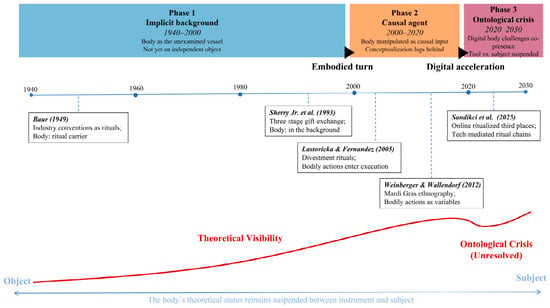
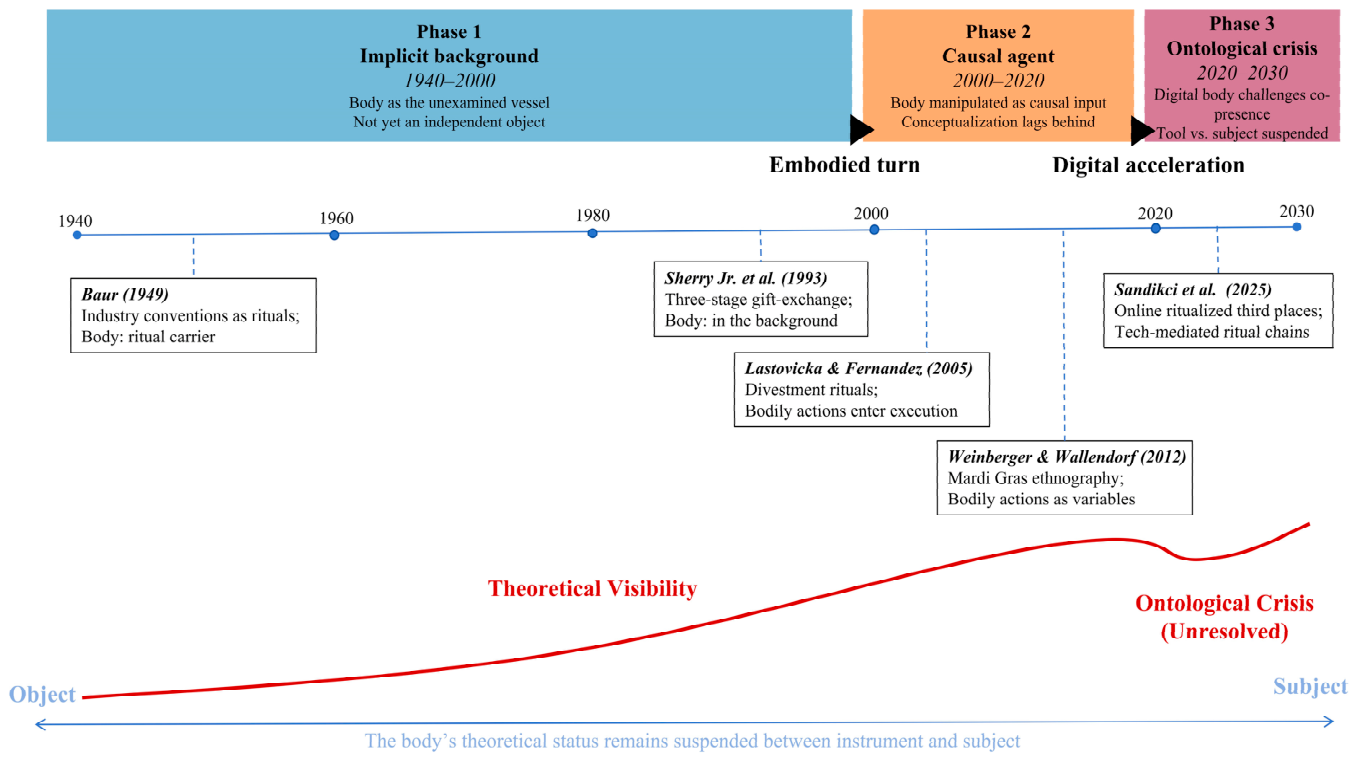
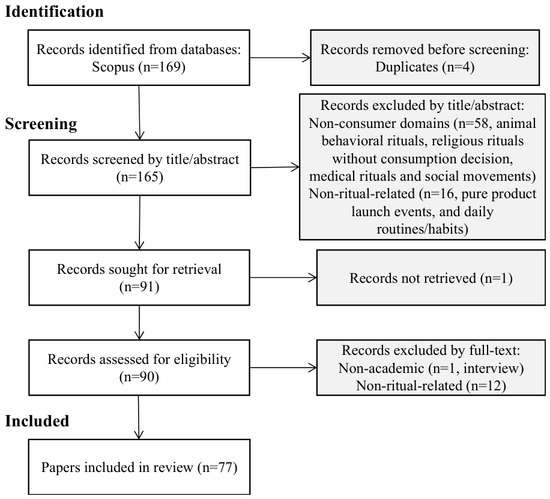
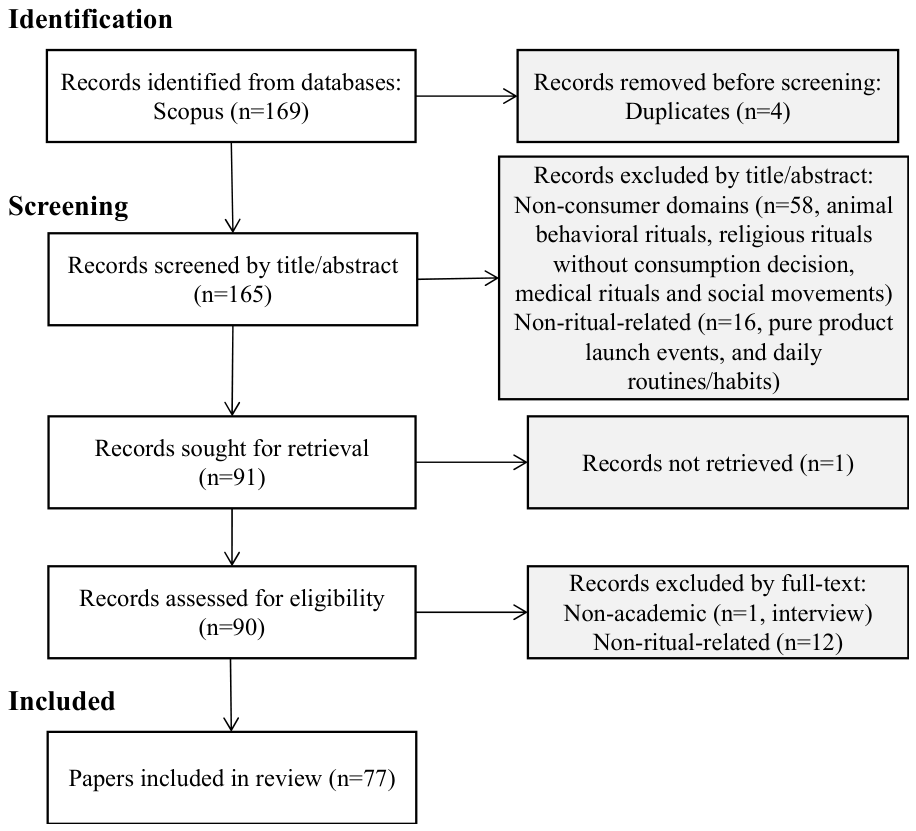
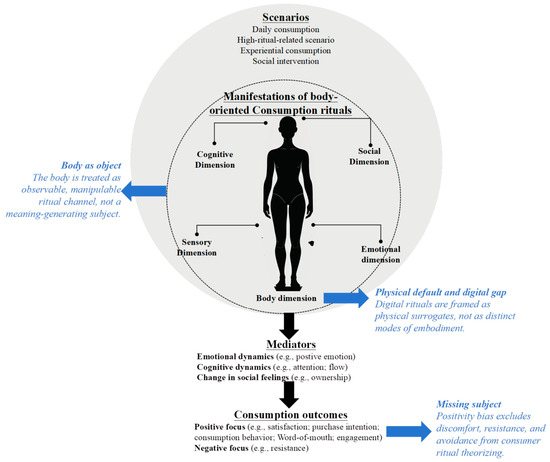
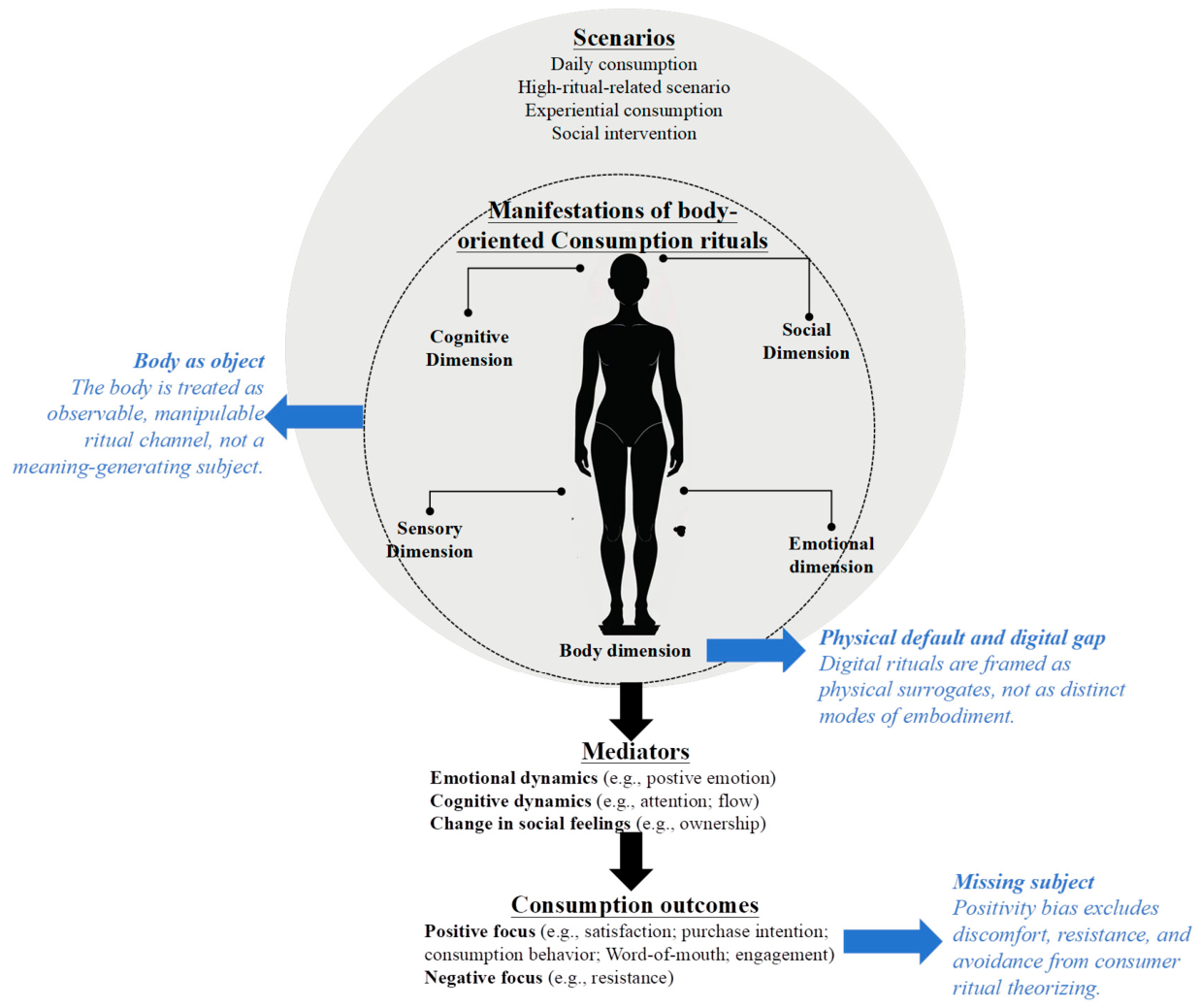

Disclaimer/Publisher’s Note: The statements, opinions and data contained in all publications are solely those of the individual author(s) and contributor(s) and not of MDPI and/or the editor(s). MDPI and/or the editor(s) disclaim responsibility for any injury to people or property resulting from any ideas, methods, instructions or products referred to in the content. |
© 2026 by the authors. Licensee MDPI, Basel, Switzerland. This article is an open access article distributed under the terms and conditions of the Creative Commons Attribution (CC BY) license.