


Abstract
Depression is prevalent among nursing students and may adversely affect their academic performance, clinical competence, and well-being. We synthesized randomized trial evidence to determine whether psychological interventions alleviate depressive symptoms in undergraduate nursing students. PubMed, CINAHL, EMBASE, and CENTRAL were searched for randomized controlled trials published between January 2015 and June 2026. Two reviewers evaluated risk of bias with Cochrane RoB 2. We pooled standardized mean differences (SMDs) and their 95% confidence intervals (CIs) using random-effects models and explored variation by intervention category, academic year, and COVID-19 period. Nine trials were included in the systematic review and eight in the meta-analysis. Psychological interventions significantly reduced depressive symptoms compared with control conditions (SMD = −0.88, 95% CI = −1.32 to −0.43, p = 0.0001; I2 = 82%). Significant effects were observed for cognitive behavioral therapy, mindfulness-based interventions, and other psychological interventions, as well as across academic-year and pandemic-period subgroups; however, differences between subgroups were not statistically significant. Psychological interventions may reduce depressive symptoms among nursing students. Recurring educational features, including reflection, interaction, feedback, and behavioral practice, were noted in intervention descriptions; however, their contributions to intervention effects were not directly evaluated.
1. Introduction
Depressive symptoms constitute a substantial mental health concern in university populations, with potential consequences for students’ academic progress, quality of life, and subsequent professional functioning (Auerbach et al., 2018; World Health Organization, 2022). Nursing students are particularly vulnerable to depressive symptoms because they are exposed to multiple stressors, including demanding academic workloads, frequent examinations, clinical practice, emotional labor associated with patient care, and concerns regarding future employment and licensure examinations (Ríos-Risquez et al., 2018). Compared with students in many other disciplines, nursing students experience higher levels of psychological distress, making depression an important issue in nursing education (Ríos-Risquez et al., 2018).
Depression among nursing students is associated with reduced academic achievement, impaired concentration, lower self-efficacy, decreased resilience, and increased risk of burnout (Beiter et al., 2015; Ríos-Risquez et al., 2018). Furthermore, untreated depression may negatively influence clinical judgment, communication skills, empathy, and the ability to provide safe and effective patient care during clinical training (Ríos-Risquez et al., 2018). Because nursing students represent the future healthcare workforce, promoting their psychological well-being is essential not only for individual health but also for maintaining the quality of nursing education and healthcare services (World Health Organization, 2022).
To address these concerns, various non-pharmacological psychological interventions have been developed and implemented for nursing students. Cognitive behavioral therapy (CBT), mindfulness-based interventions (MBIs), positive psychology interventions, psychoeducation, laughter therapy, and other psychological approaches have demonstrated beneficial effects on depression and psychological well-being (Bolier et al., 2013; Breedvelt et al., 2019; Cuijpers et al., 2013; Galante et al., 2021). These interventions are generally designed to improve emotional regulation, strengthen adaptive coping strategies, enhance self-awareness, and increase psychological resilience (Gu et al., 2015/2016; Kabat-Zinn, 1990).
Several systematic reviews and meta-analyses have evaluated psychological interventions among university students or healthcare students. Previous evidence has generally shown that interventions such as CBT and mindfulness effectively reduce depression, anxiety, and stress in higher education settings (Breedvelt et al., 2019; Galante et al., 2021). However, these reviews have typically included students from diverse academic disciplines or mixed healthcare populations, making it difficult to determine intervention effectiveness specifically for nursing students, whose educational environments and psychological stressors differ substantially from those of other student populations.
Moreover, recently published randomized controlled trials involving nursing students have not been comprehensively synthesized, particularly studies conducted after the COVID-19 pandemic. In addition, previous reviews have focused primarily on estimating the overall effectiveness of psychological interventions without examining whether intervention effects differ according to intervention type, participants’ academic year, or the COVID-19 pandemic period.
Therefore, this systematic review and meta-analysis aimed to synthesize evidence from randomized controlled trials investigating psychological interventions for depression among nursing students. Specifically, this study evaluated the overall effectiveness of psychological interventions in reducing depressive symptoms and explored whether intervention effects differed according to intervention type, academic year, and the COVID-19 pandemic period.
2. Methods
2.1. Study Design
We systematically identified and quantitatively synthesized randomized trials examining whether psychological interventions reduce depressive symptoms in nursing students. The review was performed in accordance with the Preferred Reporting Items for Systematic Reviews and Meta-Analyses (PRISMA 2020) guidelines. This systematic review was registered with INPLASY (registration number: INPLASY202690087).
2.2. Eligibility Criteria
We defined study eligibility in terms of participants, interventions, comparators, outcomes, and study design (PICOS). Eligible participants were students enrolled in undergraduate nursing programs. Interventions (I) included non-pharmacological psychological interventions aimed at reducing depressive symptoms, such as cognitive behavioral therapy (CBT), mindfulness-based interventions, positive psychotherapy, psychoeducation, laughter therapy, and other psychological interventions. Comparators (C) included usual care, routine education, wait-list controls, physical exercise, or no intervention. The primary outcome (O) was depression measured using validated instruments, including the Beck Depression Inventory (BDI), Beck Depression Inventory-II (BDI-II), Center for Epidemiologic Studies Depression Scale (CES-D), Patient Health Questionnaire-9 (PHQ-9), and Depression subscales of the Depression Anxiety Stress Scale (DASS-42). The study design (S) was limited to randomized controlled trials (RCTs).
Studies were excluded if they (1) were not conducted among undergraduate nursing students, (2) used non-randomized or quasi-experimental designs, (3) did not report depression outcomes, (4) lacked sufficient quantitative data to calculate effect sizes, or (5) were review articles, conference abstracts, study protocols, dissertations, editorials, or non-English publications.
2.3. Search Strategy
We searched four bibliographic sources for eligible trials: PubMed, CINAHL, EMBASE, and the Cochrane Central Register of Controlled Trials (CENTRAL). The searches covered studies published from January 2015 to June 2026. All four databases were last searched on 1 July 2026. The January 2015 starting date was selected to focus on evidence from approximately the preceding decade relevant to contemporary nursing education. Search terms included controlled vocabulary, such as Medical Subject Headings (MeSH) in PubMed, and free-text keywords related to nursing students, depression, psychological interventions, and randomized controlled trials. Database-specific queries combined concepts with AND and OR. We additionally checked the reference lists of included reports for studies not captured by electronic searching. Complete database-specific search strategies, including Boolean operators, field restrictions, any applied filters, and actual search dates, are provided in Supplementary Material S1.
2.4. Study Selection Procedure
Search results were consolidated in reference-management software before duplicate entries were eliminated. Two reviewers independently screened titles and abstracts according to the predefined eligibility criteria. Potentially eligible studies subsequently underwent full-text review. Disagreements between reviewers regarding study eligibility were resolved through discussion until consensus was achieved.
2.5. Data Extraction
Using the same structured extraction form, two reviewers separately recorded study identification details (first author, year, and country), participant numbers, intervention type and delivery characteristics (duration, frequency, provider, format, and setting), comparator, follow-up schedule, outcome instruments, and depression results after the intervention. Depression outcomes were extracted as post-intervention mean and standard deviation whenever available. When studies reported multiple assessment time points, the immediate post-intervention outcome was selected for the primary meta-analysis to maximize comparability across studies. Dai et al. (2022) reported baseline and change-score summaries but did not provide post-intervention means and standard deviations. The original authors were not contacted to request additional data. During revision, alternative approaches were considered. However, SMDs standardized using change-score standard deviations are not directly interchangeable with those standardized using post-intervention standard deviations. Reconstructing post-intervention standard deviations from the reported summaries would require assumptions about within-person correlations. Therefore, this study was retained in the systematic review but excluded from the primary meta-analysis.
2.6. Risk of Bias Assessment
Two reviewers separately applied the Cochrane Risk of Bias 2 (RoB 2) instrument to assess potential bias in the included randomized trials. The assessment covered five RoB 2 domains: randomization, departures from assigned interventions, incomplete outcome data, outcome measurement, and selective reporting of results. RoB 2 judgments were assigned as low risk, some concerns, or high risk, with differences between reviewers settled by discussion.
2.7. Statistical Analysis
Statistical analyses were performed using Review Manager (RevMan), version 5.4 (The Cochrane Collaboration, Copenhagen, Denmark). Because different instruments were used to assess depressive symptoms across studies, standardized mean differences (SMDs) with 95% confidence intervals (CIs) were calculated as the summary effect size. A random-effects model was applied because clinical and methodological heterogeneity among studies was anticipated. Statistical heterogeneity was assessed using Cochran’s Q test and the I2 statistic. An I2 value of 25%, 50%, and 75% was interpreted as indicating low, moderate, and high heterogeneity, respectively. Subgroup analyses were conducted according to intervention type (CBT, mindfulness-based interventions, and other psychological interventions), participants’ academic year (first-year students versus mixed academic years), and study period (before versus during/after the COVID-19 pandemic). Statistical significance was defined as a two-sided p value < 0.05.
3. Results
3.1. Study Selection
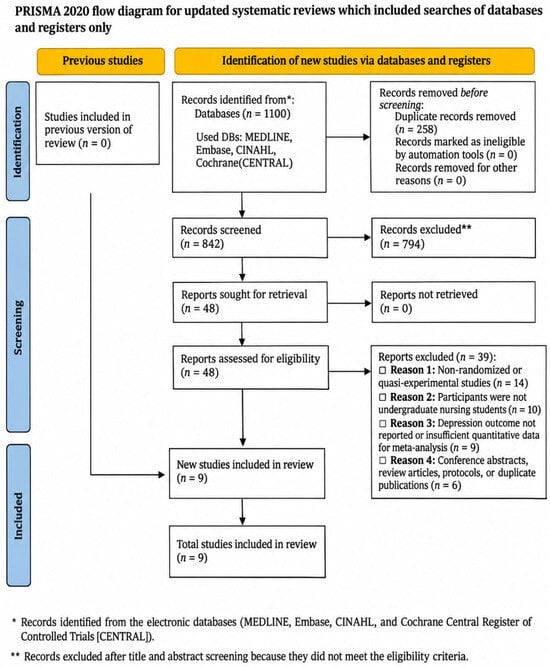
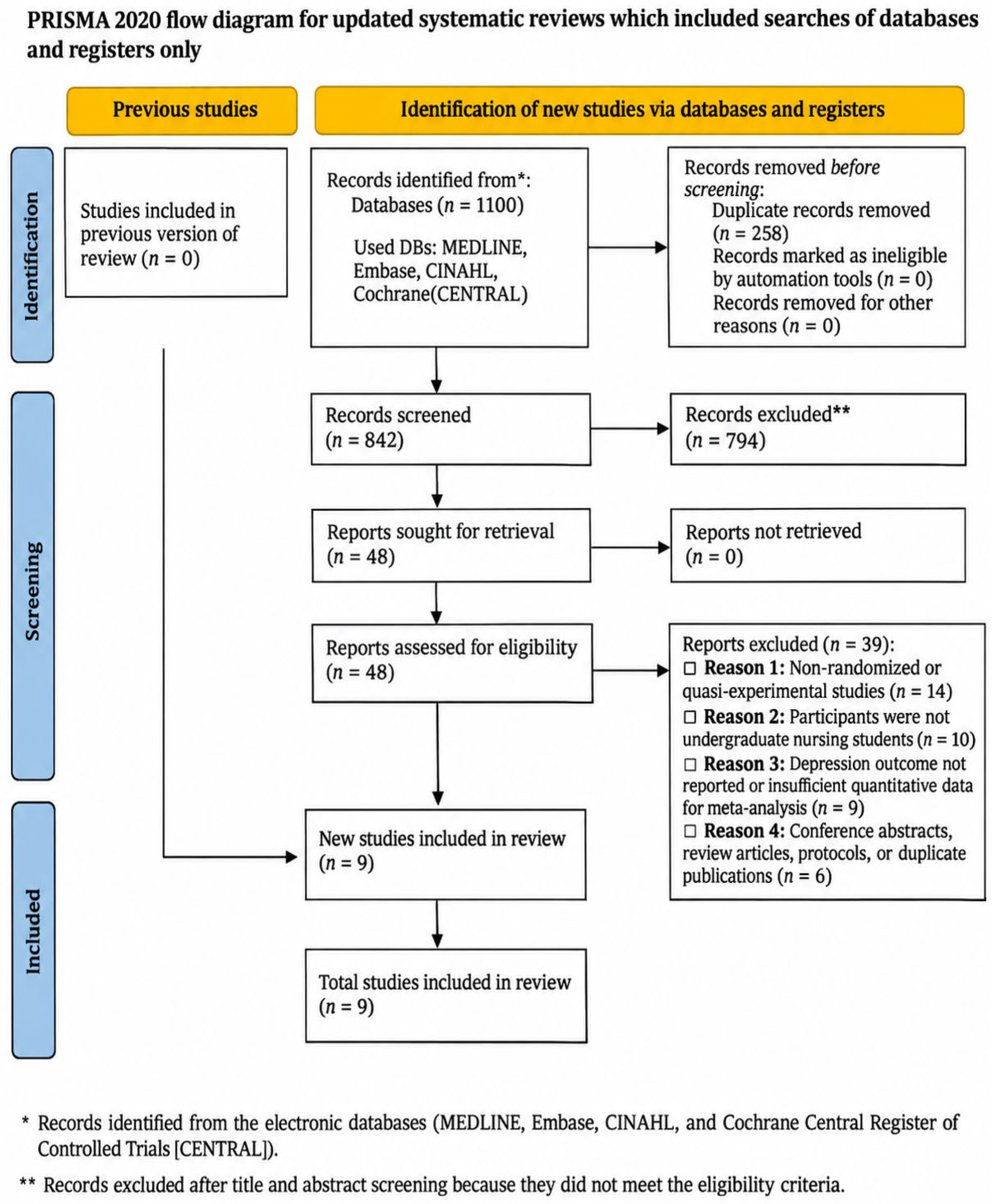
The literature search identified 1100 records from four electronic databases (MEDLINE/PubMed, EMBASE, CINAHL, and the Cochrane Central Register of Controlled Trials [CENTRAL]). After removing 258 duplicate records, 842 records remained for title and abstract screening. Following screening, 794 records were excluded because they did not meet the eligibility criteria. The full texts of 48 articles were assessed for eligibility, of which 39 were excluded for the following reasons: non-randomized or quasi-experimental study design (n = 14), participants other than undergraduate nursing students (n = 10), failure to report depression outcomes or insufficient quantitative data for effect size calculation (n = 9), and conference abstracts, review articles, protocols, or duplicate publications (n = 6). Consequently, nine randomized controlled trials met the inclusion criteria for the systematic review. One study (Dai et al., 2022) reported baseline and change-score summaries without the post-intervention means and standard deviations required for the primary SMD analysis. This study was retained in the systematic review but excluded from the quantitative synthesis. Consequently, eight studies were included in the meta-analysis (Figure 1).
Figure 1.
PRISMA 2020 flow diagram of the study selection process.
3.2. Characteristics of the Included Studies
The characteristics of the included studies are summarized in Table 1. Nine randomized controlled trials published between 2015 and 2025 were included in the systematic review, comprising a total of 673 undergraduate nursing students. The studies were conducted in Turkey (n = 3), China (n = 2), Korea (n = 1), Jordan (n = 1), Morocco (n = 1), and Iran (n = 1).
Table 1.
Characteristics of the included randomized controlled trials.
The interventions were equally distributed across three categories: mindfulness-based interventions (n = 3, 33.3%), cognitive behavioral therapy (CBT)-based interventions (n = 3, 33.3%), and other psychological interventions, including positive psychotherapy, psychoeducation, and laughter therapy (n = 3, 33.3%). Most interventions were delivered face-to-face in university settings, whereas two studies implemented online interventions. Intervention duration ranged from five to eight weeks, with eight-week programs being the most common (7/9, 77.8%). Depression outcomes were measured using validated instruments, including the Beck Depression Inventory (BDI), Beck Depression Inventory-II (BDI-II), Center for Epidemiologic Studies Depression Scale (CES-D), and the depression subscales of the 21-item and 42-item Depression Anxiety Stress Scales (DASS-21 and DASS-42).
3.3. Risk of Bias
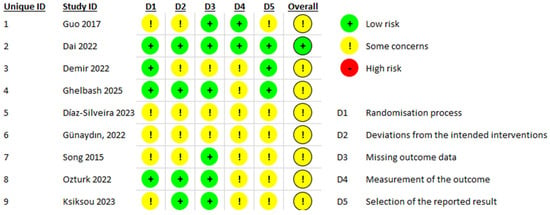
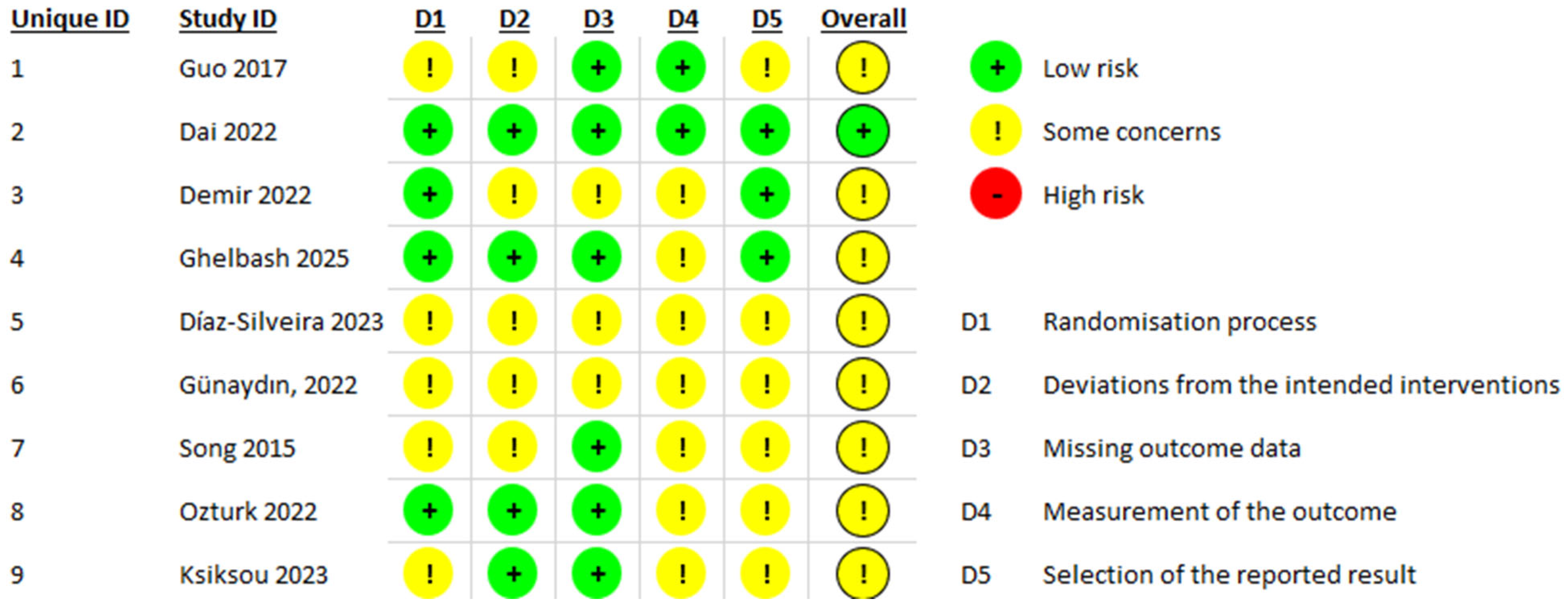
The methodological quality of the included studies was assessed using the Cochrane Risk of Bias 2 (RoB 2) tool (Figure 2). Overall, most studies were judged as having some concerns, primarily because of uncertainty regarding the randomization process and deviations from intended interventions. The risk of bias associated with missing outcome data and outcome measurement was generally low across studies. No study was judged to have an overall high risk of bias.
Figure 2.
Risk of bias assessment (RoB 2).
3.4. Overall Effects of Psychological Interventions on Depression
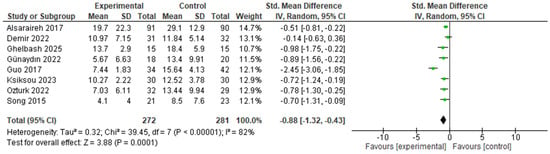
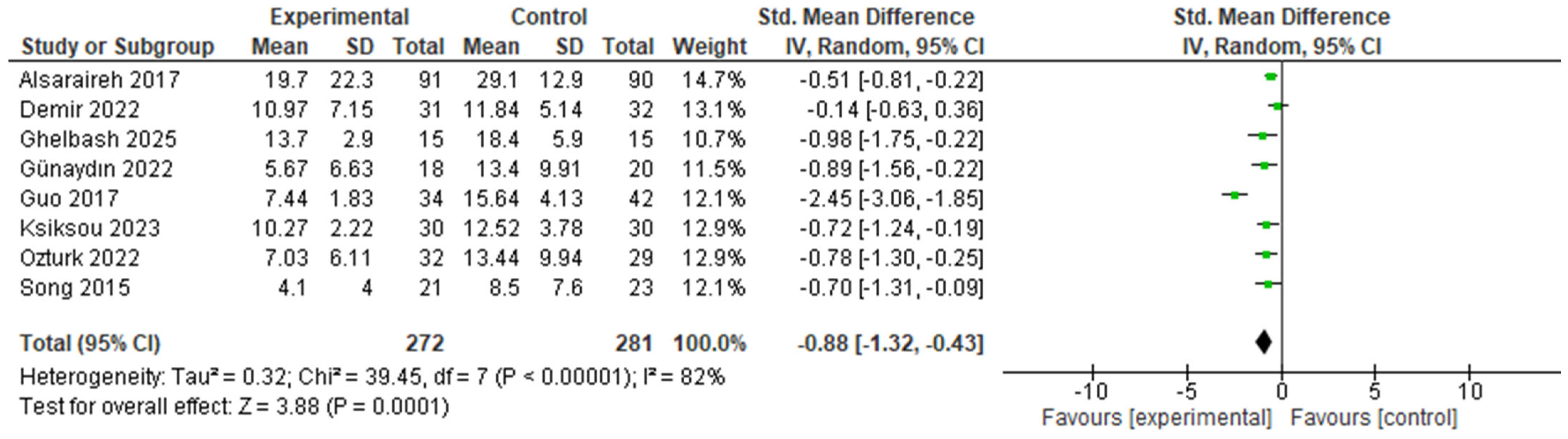
Eight randomized controlled trials were included in the quantitative synthesis. The pooled analysis demonstrated that psychological interventions significantly reduced depressive symptoms among nursing students compared with the control conditions (SMD = −0.88, 95% CI = −1.32 to −0.43, Z = 3.88, p = 0.0001). According to Cohen’s criteria, this represents a large effect size. Considerable heterogeneity was observed among the included studies (I2 = 82%). The pooled effect was estimated using a random-effects model (Figure 3).
Figure 3.
Forest plot of the overall effects of psychological interventions on depression among nursing students.
3.5. Subgroup Analyses
3.5.1. Intervention Type
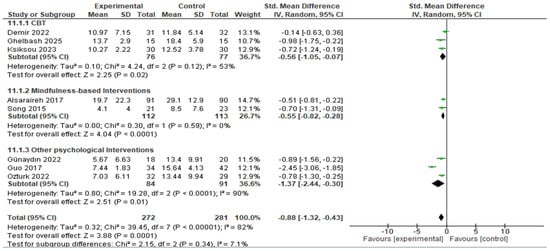
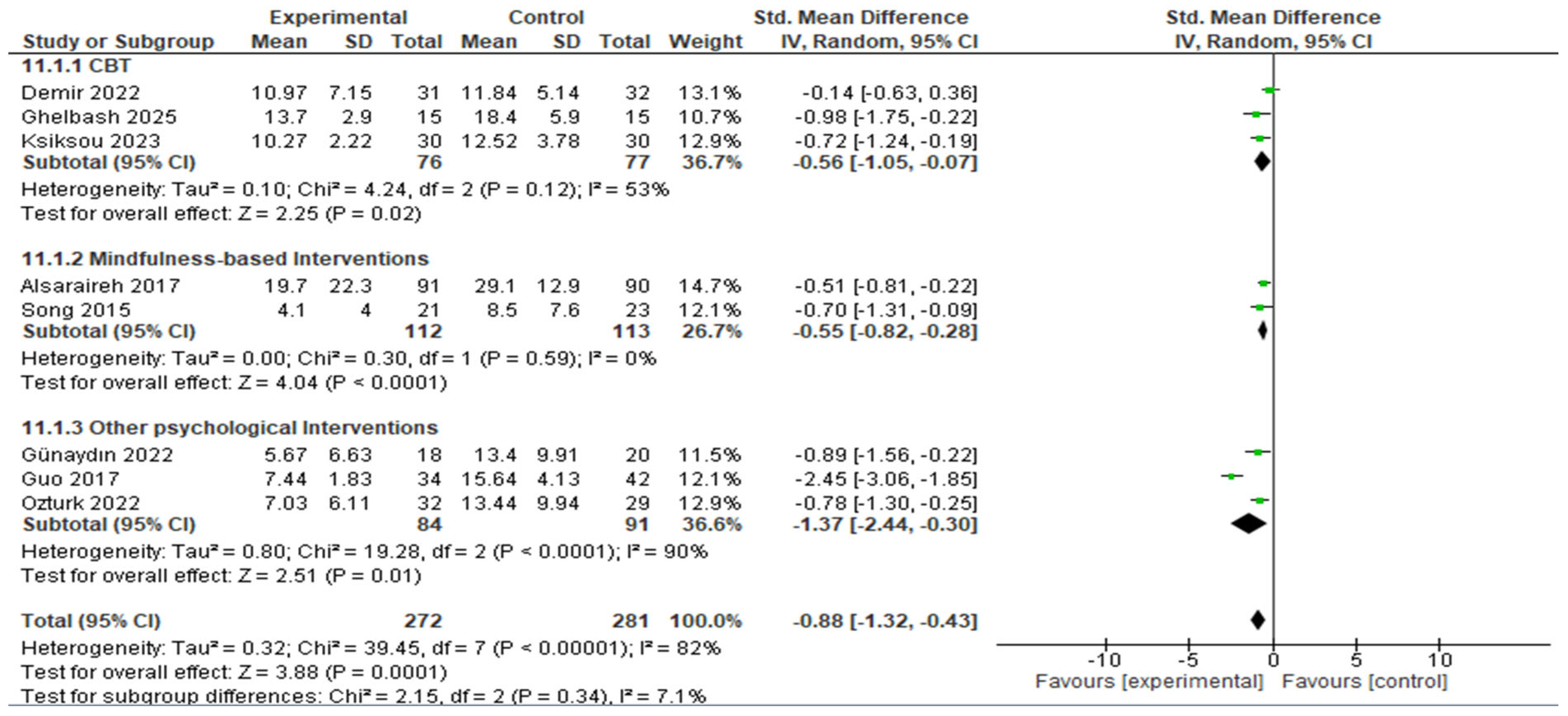
Subgroup analysis according to intervention type demonstrated significant reductions in depressive symptoms within each intervention category (Figure 4). CBT-based interventions significantly reduced depressive symptoms (SMD = −0.56, 95% CI = −1.05 to −0.07, p = 0.02) with moderate heterogeneity (I2 = 53%). Mindfulness-based interventions also showed a significant effect (SMD = −0.55, 95% CI = −0.82 to −0.28, p < 0.0001) with no observed heterogeneity (I2 = 0%). Other psychological interventions showed a significant pooled effect (SMD = −1.37, 95% CI = −2.44 to −0.30, p = 0.01), although heterogeneity was substantial (I2 = 90%). However, no statistically significant difference was observed between intervention subgroups (χ2 = 2.15, p = 0.34). Thus, these findings do not provide evidence that intervention effects differ by intervention type.
Figure 4.
Forest plot of subgroup analysis according to intervention type.
3.5.2. Academic Year
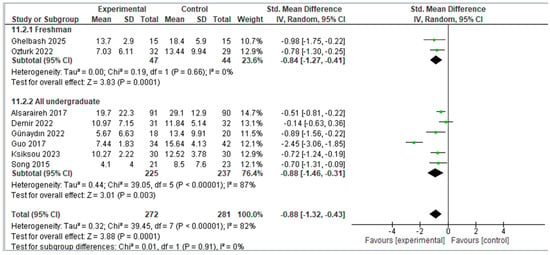
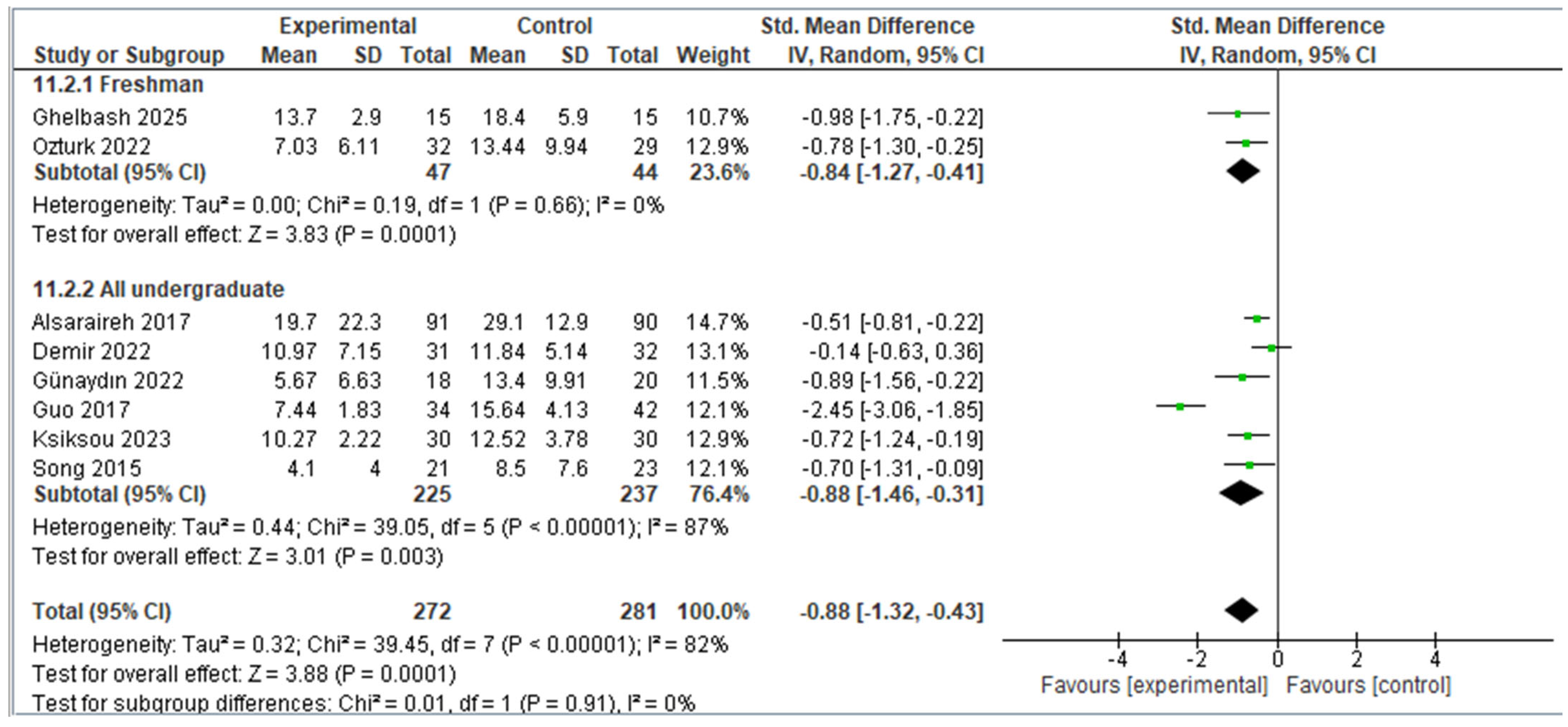
Subgroup analysis based on participants’ academic year indicated that psychological interventions significantly reduced depression among first-year nursing students (SMD = −0.84, 95% CI = −1.27 to −0.41, p = 0.0001), with no heterogeneity (I2 = 0%). Studies including students from all academic years also demonstrated a significant reduction in depressive symptoms (SMD = −0.88, 95% CI = −1.46 to −0.31, p = 0.003), although heterogeneity remained high (I2 = 87%). The difference between the two academic-year subgroups was not statistically significant (χ2 = 0.01, p = 0.91) (Figure 5).
Figure 5.
Forest plot of subgroup analysis according to participants’ academic year.
3.5.3. COVID-19 Pandemic Period
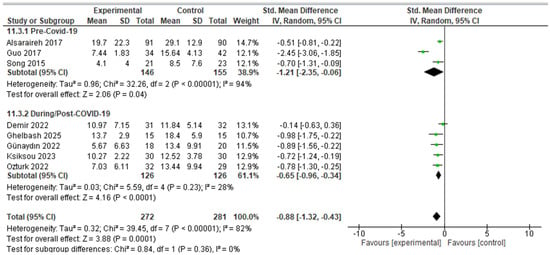
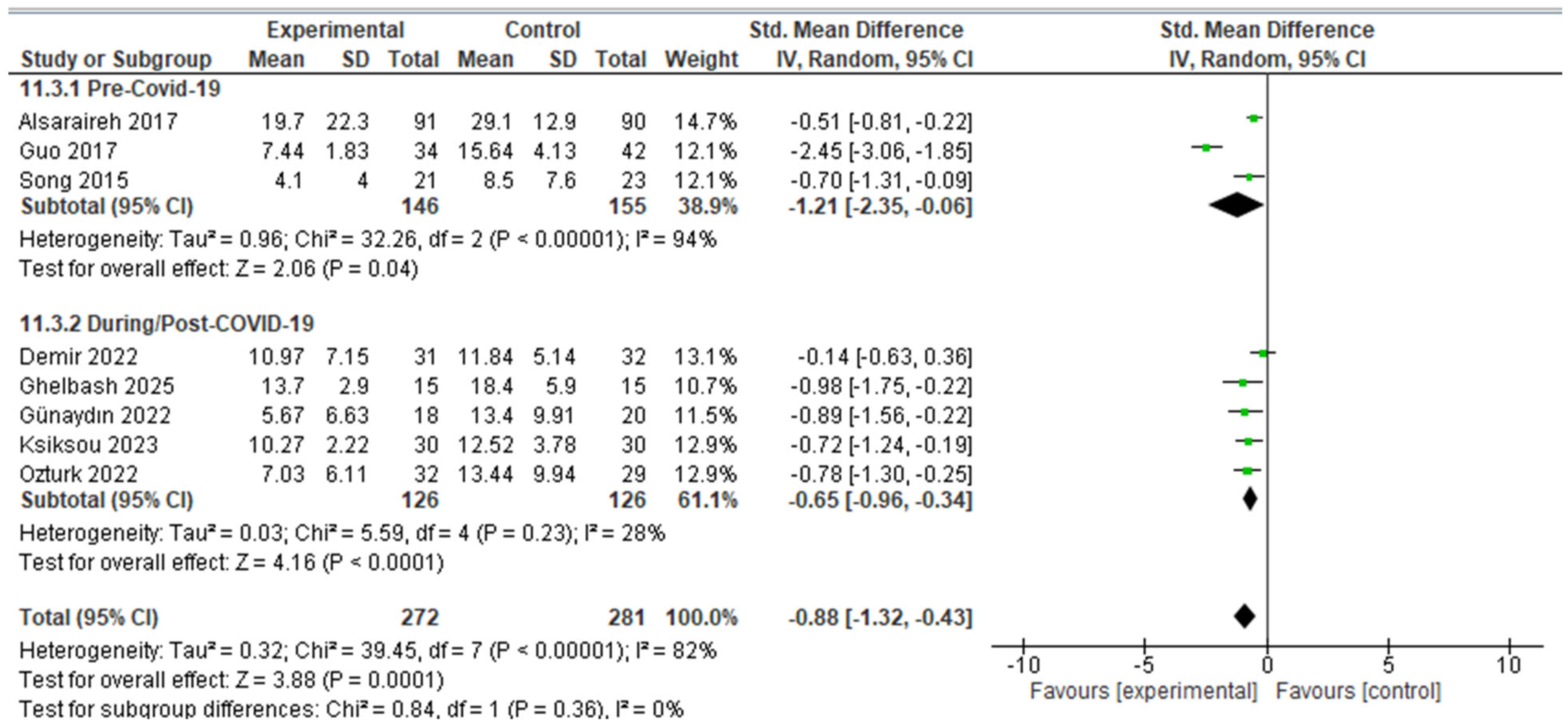
Subgroup analysis according to the COVID-19 pandemic period demonstrated significant intervention effects both before and after the pandemic (Figure 6). Studies conducted before the COVID-19 pandemic reported a significant reduction in depressive symptoms (SMD = −1.21, 95% CI = −2.35 to −0.06, p = 0.04), although heterogeneity was very high (I2 = 94%). Studies conducted during or after the pandemic also demonstrated significant improvements (SMD = −0.65, 95% CI = −0.96 to −0.34, p < 0.0001) with relatively low heterogeneity (I2 = 28%). No statistically significant subgroup difference was observed between the pre- and post-COVID-19 studies (χ2 = 0.84, p = 0.36).
Figure 6.
Forest plot of subgroup analysis according to the COVID-19 pandemic period.
3.5.4. Summary of Subgroup Findings
Significant reductions in depressive symptoms were observed within each intervention-type, academic-year, and pandemic-period subgroup. However, tests for subgroup differences were not statistically significant for intervention type (p = 0.34), academic year (p = 0.91), or pandemic period (p = 0.36). These analyses therefore did not provide evidence that intervention effects differed according to these characteristics. The absence of statistically significant subgroup differences should not be interpreted as evidence of equivalent effects.
4. Discussion
4.1. Overall Effectiveness of Psychological Interventions
The present meta-analysis synthesized the evidence on non-pharmacological psychological interventions for depression among nursing students and sought to identify the common characteristics of effective interventions. The included interventions were broadly categorized into cognitive behavioral therapy (CBT), mindfulness-based interventions (MBIs), and other psychological interventions, including positive psychology interventions, laughter therapy, and group psychoeducation.
The findings demonstrated that psychological interventions significantly reduced depressive symptoms among nursing students. Based on eight randomized controlled trials (RCTs), psychological interventions produced a large overall effect on depression (SMD = −0.88, 95% CI = −1.32 to −0.43, p = 0.0001, I2 = 82%) indicating a significant pooled reduction in depressive symptoms for improving nursing students’ mental health. However, substantial heterogeneity was observed across the included studies (I2 = 82%), suggesting that intervention characteristics or study contexts may have influenced the observed effects. Therefore, subgroup analyses were conducted according to intervention type, the COVID-19 pandemic period, and participants’ academic year to further explore potential sources of heterogeneity.
4.2. Effectiveness of Non-Pharmacological Psychological Interventions for Depression in Nursing Students
The interventions included in this meta-analysis were diverse, encompassing cognitive behavioral therapy (CBT), mindfulness-based interventions (MBIs), positive psychology interventions, laughter therapy, and group psychoeducation. Despite their different theoretical foundations and intervention strategies, the pooled analysis demonstrated a large overall effect on depressive symptoms (SMD = −0.88). However, given the substantial heterogeneity across studies, this pooled estimate should be interpreted with caution.
4.2.1. Mindfulness-Based Interventions
Mindfulness-based interventions demonstrated a significant effect in reducing depressive symptoms among nursing students. This finding is consistent with previous meta-analyses reporting that mindfulness-based interventions effectively reduce depression and anxiety while improving emotional regulation among university students (Breedvelt et al., 2019; Galante et al., 2021). Mindfulness is thought to reduce rumination and enhance emotional regulation by encouraging individuals to attend to present-moment experiences with non-judgmental awareness and acceptance (Gu et al., 2015/2016; Kabat-Zinn, 1990).
However, a closer examination of the mindfulness-based interventions included in this review suggests that their effectiveness may not be attributable solely to mindfulness practice itself. Rather, most interventions incorporated structured reflective learning processes in which participants repeatedly monitored their thoughts and emotions, documented their experiences, and discussed them through group sharing or instructor feedback. These activities may offer opportunities for students to recognize and reflect on their emotional responses; however, their specific contributions to intervention effects were not evaluated in this review.
This interpretation is particularly relevant for nursing students, who frequently experience emotional exhaustion while coping with clinical practice, academic demands, and preparation for the national licensure examination. In this context, mindfulness-based interventions may be understood not merely as meditation techniques but as educational processes that foster self-awareness, acceptance, and adaptive coping with psychological distress.
Taken together, repeated reflection, self-monitoring, and opportunities for sharing or feedback were recurring features in the mindfulness-based interventions included in this review. These features may provide useful considerations for understanding the educational context in which mindfulness interventions are delivered; however, their specific contribution to reductions in depressive symptoms was not directly examined in the included studies.
4.2.2. Cognitive Behavioral Therapy (CBT)
CBT-based interventions also demonstrated a significant effect in reducing depressive symptoms among nursing students. This finding is consistent with previous meta-analyses and systematic reviews showing that CBT is an effective intervention for alleviating depression by modifying maladaptive cognitive patterns and promoting more adaptive thoughts and behaviors (Cuijpers et al., 2013; Hofmann et al., 2012/2014). Previous studies have further reported that CBT not only reduces depression and anxiety but also enhances self-efficacy and problem-solving skills among university students.
The descriptions of the included CBT programs suggested that activities such as homework, behavioral practice, self-reflection, and feedback were incorporated into the interventions, potentially providing opportunities for participants to apply cognitive and behavioral strategies to real-life situations. Through these iterative learning experiences, students were encouraged to identify automatic negative thoughts, replace them with more adaptive interpretations, and repeatedly practice new behavioral responses in their daily lives.
These activities may provide opportunities for students to practice adaptive cognitive and behavioral strategies and potentially support self-efficacy and problem-focused coping. However, the included studies did not directly examine whether these educational features independently contributed to reductions in depressive symptoms or mediated the observed intervention effects. Therefore, these features should be interpreted as exploratory observations rather than empirically established mechanisms of CBT effectiveness.
4.2.3. Other Psychological Interventions (Positive Psychology, Laughter Therapy, and Psychoeducation)
Other psychological interventions, including positive psychology interventions, laughter therapy, and group psychoeducation, also demonstrated significant effects in reducing depressive symptoms among nursing students. These findings are consistent with previous evidence indicating that positive psychology interventions enhance personal strengths and positive emotions while reducing depression and stress (Bolier et al., 2013; Seligman et al., 2005). Recent evidence among university students further suggests that personal psychological resources may be relevant to mental health. Fabio et al. (2026) found that optimism and critical thinking attenuated the association between sleep problems and perceived stress, suggesting a potential protective role of these personal psychological resources in the context of psychological distress. Likewise, psychoeducational interventions have been shown to improve psychological well-being by enhancing self-understanding and adaptive coping strategies (Donker et al., 2009). In addition, laughter therapy has been reported to promote positive emotions, alleviate stress responses, and reduce psychological tension, thereby contributing to improvements in psychological well-being (Ozturk & Tekkas-Kerman, 2022).
Although these interventions were based on different theoretical approaches, they appeared to share a common objective of strengthening students’ psychological resources. Positive psychology interventions encouraged participants to recognize their personal strengths and cultivate positive emotions, psychoeducation enhanced understanding of stress and adaptive coping strategies, and laughter therapy promoted positive emotional experiences and social interaction through group-based activities. Collectively, these interventions may have helped students recognize not only their internal psychological resources but also the interpersonal resources available through supportive relationships with others.
These intervention descriptions suggest a shared emphasis on personal and interpersonal psychological resources. However, whether changes in these resources contributed to reductions in depressive symptoms was not evaluated in the present review.
4.3. Integrated Discussion
Psychological interventions grounded in different theoretical traditions were associated with reductions in depressive symptoms among nursing students. In comparing the descriptions of the included interventions, several recurring features were observed, including self-reflection, sharing of experiences, group interaction, feedback, behavioral practice, and homework. These features were not prespecified or systematically coded as intervention components in the present review and should therefore be regarded as interpretative observations rather than systematically derived findings or empirically established mechanisms.
The included interventions emphasized different psychological resources, including self-awareness in mindfulness-based interventions, self-efficacy in CBT, and positive affect, social support, and adaptive coping in other interventions. Despite these differences, opportunities for reflection, interaction, feedback, and behavioral practice appeared across multiple intervention types. This observation is broadly consistent with the common factors perspective proposed by Wampold and Imel (2015) and with the emphasis placed by Norcross and Lambert (2018) on therapeutic relationships, collaborative engagement, feedback, and emotional support. However, the included RCTs did not directly examine whether these components mediated or independently contributed to reductions in depressive symptoms.
From an educational perspective, these recurring features may provide useful considerations for the future design of psychological interventions for nursing students. Opportunities to reflect on experiences, interact with peers, receive feedback, and practice adaptive coping behaviors are broadly consistent with Kolb’s (1984) experiential learning theory and Schön’s (1983) concept of reflective practice. Rather than representing established mechanisms of intervention effectiveness, these features may therefore be viewed as potential educational design considerations that warrant further empirical investigation.
Reductions in depressive symptoms were observed in studies conducted before and during/after the COVID-19 pandemic. However, the between-subgroup comparison was not statistically significant (p = 0.36). Therefore, the numerical differences between the pooled estimates do not establish that intervention effects differed by pandemic period.
Notably, most studies conducted during or after the pandemic continued to use face-to-face, group-based formats. Although online delivery became more common during the pandemic, the predominance of in-person programs in the included studies highlights the continued importance of direct interaction, immediate feedback, and shared group experiences. However, because delivery format was not directly compared as an independent moderator, the relative advantages of face-to-face and online interventions require further investigation.
Similarly, significant effects were observed both in studies targeting first-year students and in those including students across multiple academic years, with no significant between-group difference. This finding suggests that psychological support may be relevant throughout the nursing curriculum rather than only at a single stage of training. Although the sources of distress may change over time-from adjustment to university life in the early years to clinical practice, licensure preparation, and career concerns in later years psychological burden may persist across different stages of nursing education. Accordingly, psychological interventions may be more appropriately conceptualized as an ongoing educational support strategy than as a one-time program limited to a particular academic year.
Taken together, psychological interventions were associated with reductions in depressive symptoms among nursing students, although the findings require cautious interpretation. Reflection, interaction, feedback, and behavioral practice were recurring features noted in intervention descriptions. Because these features were not systematically coded and their contributions to intervention effects were not directly evaluated, they should be regarded as exploratory observations that may inform future intervention development. Further research is needed to determine whether and how these features contribute to psychological outcomes.
4.4. Limitations
This meta-analysis has several limitations. First, the number of randomized controlled trials included in the analysis was relatively small, which may limit the robustness of the pooled estimates. In addition, the possibility of publication bias or small-study effects cannot be excluded. Because only eight studies were included in the quantitative synthesis, formal tests for funnel-plot asymmetry would have limited reliability; therefore, publication bias could not be adequately assessed, and the pooled effect estimate should be interpreted with caution. Second, most studies were conducted in Asian countries, potentially limiting the generalizability of the findings to other cultural and educational settings. Third, considerable heterogeneity was observed across studies because of variations in intervention type, duration, and program characteristics. Fourth, the recurring educational features discussed in this review emerged as interpretative observations from the descriptions of the included interventions and were not prespecified or systematically coded as intervention components. Dai et al. (2022) was excluded from the quantitative synthesis because post-intervention means and standard deviations were unavailable, and the original authors were not contacted to obtain these data. This represents a limitation of the data-retrieval process. The study reported no statistically significant between-group difference in depressive symptom changes (p = 0.195). Its exclusion may have affected the pooled estimate, although the direction and magnitude of this impact remain unknown. Moreover, their potential roles as mediators or moderators of intervention effects were not directly examined. Accordingly, these features should be considered exploratory and hypothesis-generating rather than empirically established mechanisms. The certainty of evidence was not formally assessed using GRADE. Although no included study was judged to have an overall high risk of bias, most studies had some concerns according to RoB 2. These concerns, together with substantial heterogeneity and the limited evidence base, constrain confidence in the pooled effect estimate. Statistical significance should not be interpreted as indicating high-certainty evidence, and the magnitude of the pooled effect should be interpreted cautiously. This review focused primarily on depressive symptoms, and the long-term sustainability of intervention effects could not be adequately evaluated because of the limited availability of follow-up data. Finally, restricting the search to studies published from January 2015 onward may have excluded relevant earlier trials.
5. Conclusions
This meta-analysis found that non-pharmacological psychological interventions were associated with significant reductions in depressive symptoms among nursing students. However, these findings should be interpreted cautiously given the limited number of included studies, substantial heterogeneity, and methodological limitations of the available evidence.
Across interventions with different theoretical foundations, several recurring educational features were observed, including reflection, interaction, feedback, and behavioral practice. Although these features may provide useful considerations for the design of future psychological interventions in nursing education, their specific contribution to intervention effects has not been empirically established. Future research should directly examine whether and how these components contribute to psychological outcomes and evaluate their applicability across diverse cultural, educational, and delivery contexts.
Supplementary Materials
The following supporting information can be downloaded at https://www.mdpi.com/article/10.3390/bs16112071/s1, Supplementary Material S1. Search Strategies.
Author Contributions
Conceptualization, H.-J.Y. and J.-H.K.; methodology, H.-J.Y. and J.-H.K.; formal analysis, H.-J.Y. and J.-H.K.; investigation, H.-J.Y. and J.-H.K.; data curation, H.-J.Y. and J.-H.K.; writing—original draft preparation, H.-J.Y. and J.-H.K.; writing—review and editing, H.-J.Y. and J.-H.K.; visualization, H.-J.Y. and J.-H.K. All authors have read and agreed to the published version of the manuscript.
Funding
This paper was funded by the Sahmyook University Research Fund in 2025.
Institutional Review Board Statement
Not applicable.
Informed Consent Statement
Not applicable.
Data Availability Statement
No new data were generated in this study. All data analyzed in this systematic review and meta-analysis were obtained from previously published studies. The data supporting the findings of this study are available from the corresponding author upon reasonable request.
Conflicts of Interest
The authors declare no conflicts of interest.
References
- Alsaraireh, F. A., & Aloush, S. M. (2017). Mindfulness meditation versus physical exercise in the management of depression among nursing students. Journal of Nursing Education, 56(10), 599–604. [Google Scholar] [CrossRef] [Scilit] [PubMed]
- Auerbach, R. P., Mortier, P., Bruffaerts, R., Alonso, J., Benjet, C., Cuijpers, P., Demyttenaere, K., Ebert, D. D., Green, J. G., Hasking, P., Murray, E., Nock, M. K., Pinder-Amaker, S., Sampson, N. A., Stein, D. J., Vilagut, G., Zaslavsky, A. M., & Kessler, R. C. (2018). Mental disorders among college students in the World Health Organization World Mental Health Surveys. Journal of Abnormal Psychology, 127(7), 623–638. [Google Scholar] [CrossRef] [Scilit] [PubMed]
- Beiter, R., Nash, R., McCrady, M., Rhoades, D., Linscomb, M., Clarahan, M., & Sammut, S. (2015). The prevalence and correlates of depression, anxiety, and stress in a sample of college students. Journal of Affective Disorders, 173, 90–96. [Google Scholar] [CrossRef] [Scilit] [PubMed]
- Bolier, L., Haverman, M., Westerhof, G. J., Riper, H., Smit, F., & Bohlmeijer, E. (2013). Positive psychology interventions: A meta-analysis of randomized controlled studies. BMC Public Health, 13, 119. [Google Scholar] [CrossRef] [Scilit] [PubMed]
- Breedvelt, J. J. F., Amanvermez, Y., Harrer, M., Karyotaki, E., Gilbody, S., Bockting, C. L. H., Cuijpers, P., & Ebert, D. D. (2019). The effects of meditation, yoga, and mindfulness on depression, anxiety, and stress in tertiary education students: A meta-analysis. Frontiers in Psychiatry, 10, 193. [Google Scholar] [CrossRef] [Scilit] [PubMed]
- Cuijpers, P., Berking, M., Andersson, G., Quigley, L., Kleiboer, A., & Dobson, K. S. (2013). A meta-analysis of cognitive-behavioural therapy for adult depression, alone and in comparison with other treatments. The Canadian Journal of Psychiatry, 58, 376–385. [Google Scholar] [CrossRef] [Scilit] [PubMed]
- Dai, Z., Jing, S., Wang, H., Xiao, W., Huang, Y., Chen, X., Fu, J., Pan, C., Tang, Q., Wang, H., & Su, X. (2022). Mindfulness-based online intervention on mental health among undergraduate nursing students during coronavirus disease 2019 pandemic in Beijing, China: A randomized controlled trial. Frontiers in Psychiatry, 13, 949477. [Google Scholar] [CrossRef] [Scilit] [PubMed]
- Demir, S., & Ercan, F. (2022). The effectiveness of cognitive behavioral therapy-based group counseling on depressive symptomatology, anxiety levels, automatic thoughts, and coping ways among Turkish nursing students: A randomized controlled trial. Perspectives in Psychiatric Care, 58(4), 2394–2406. [Google Scholar] [CrossRef] [Scilit] [PubMed]
- Donker, T., Griffiths, K. M., Cuijpers, P., & Christensen, H. (2009). Psychoeducation for depression, anxiety and psychological distress: A meta-analysis. BMC Medicine, 7(1), 79. [Google Scholar] [CrossRef] [Scilit] [PubMed]
- Fabio, R. A., Di Pietro, A., & Suriano, R. (2026). Sleep quality, stress, and mental health in college students: The protective role of optimism and critical thinking. Psychiatry International, 7(1), 5. [Google Scholar] [CrossRef] [Scilit]
- Galante, J., Friedrich, C., Dawson, A. F., Modrego-Alarcón, M., Gebbing, P., Delgado-Suárez, I., Gupta, R., Dean, L., Dalgleish, T., White, I. R., Jones, P. B., & Kuyken, W. (2021). Mindfulness-based programmes for mental health promotion in adults in nonclinical settings: A systematic review and meta-analysis of randomized controlled trials. PLoS Medicine, 18(1), e1003481. [Google Scholar] [CrossRef] [Scilit] [PubMed]
- Ghelbash, Z., Vizeshfar, F., & Yektatalab, S. (2025). Prevention of depression in freshman nursing students based on group cognitive-behavioral therapy: A randomized trial study. Acta Psychologica, 260, 105604. [Google Scholar] [CrossRef] [Scilit] [PubMed]
- Gu, J., Strauss, C., Bond, R., & Cavanagh, K. (2015). How do mindfulness-based cognitive therapy and mindfulness-based stress reduction improve mental health and wellbeing? A systematic review and meta-analysis of mediation studies. Clinical Psychology Review, 37, 1–12, (Erratum in 2016, Clinical Psychology Review, 49, 119). [Google Scholar] [CrossRef] [Scilit] [PubMed]
- Guo, Y.-F., Zhang, X., Plummer, V., Lam, L., Cross, W., & Zhang, J.-P. (2017). Positive psychotherapy for depression and self-efficacy in undergraduate nursing students: A randomized, controlled trial. International Journal of Mental Health Nursing, 26, 375–383. [Google Scholar] [CrossRef] [Scilit] [PubMed]
- Günaydın, N. (2022). Effect of group psychoeducation on depression, anxiety, stress and coping with stress of nursing students: A randomized controlled study. Perspectives in Psychiatric Care, 58, 640–650. [Google Scholar] [CrossRef] [Scilit] [PubMed]
- Hofmann, S. G., Asnaani, A., Vonk, I. J. J., Sawyer, A. T., & Fang, A. (2012). The efficacy of cognitive behavioral therapy: A review of meta-analyses. Cognitive Therapy and Research, 36, 427–440, (Erratum in 2014, Cognitive Therapy and Research, 38, 368). [Google Scholar] [CrossRef] [Scilit] [PubMed]
- Kabat-Zinn, J. (1990). Full catastrophe living: Using the wisdom of your body and mind to face stress, pain, and illness. Delacorte Press. [Google Scholar]
- Kolb, D. A. (1984). Experiential learning: Experience as the source of learning and development. Prentice Hall. [Google Scholar]
- Ksiksou, J., Maskour, L., & Alaoui, S. (2023). Effects of cognitive-behavioral group therapy on the management of Internet addiction, depression, anxiety, and stress among nursing students in Morocco. Iranian Journal of Psychiatry and Behavioral Sciences, 17(3), e136425. [Google Scholar] [CrossRef] [Scilit]
- Norcross, J. C., & Lambert, M. J. (2018). Psychotherapy relationships that work III. Psychotherapy, 55(4), 303–315. [Google Scholar] [CrossRef] [Scilit] [PubMed]
- Ozturk, F. O., & Tekkas-Kerman, K. (2022). The effect of online laughter therapy on depression, anxiety, stress, and loneliness among nursing students during the COVID-19 pandemic. Archives of Psychiatric Nursing, 41, 271–276. [Google Scholar] [CrossRef] [Scilit] [PubMed]
- Ríos-Risquez, M. I., García-Izquierdo, M., Sabuco-Tebar, E., Carrillo-Garcia, C., & Solano-Ruiz, C. (2018). Connections between academic burnout, resilience, and psychological well-being in nursing students: A longitudinal study. Journal of Advanced Nursing, 74, 2777–2784. [Google Scholar] [CrossRef] [Scilit] [PubMed]
- Schön, D. A. (1983). The reflective practitioner: How professionals think in action. Basic Books. [Google Scholar]
- Seligman, M. E. P., Steen, T. A., Park, N., & Peterson, C. (2005). Positive psychology progress: Empirical validation of interventions. American Psychologist, 60, 410–421. [Google Scholar] [CrossRef] [Scilit] [PubMed]
- Song, Y., & Lindquist, R. (2015). Effects of mindfulness-based stress reduction on depression, anxiety, stress and mindfulness in Korean nursing students. Nurse Education Today, 35(1), 86–90. [Google Scholar] [CrossRef] [Scilit] [PubMed]
- Wampold, B. E., & Imel, Z. E. (2015). The great psychotherapy debate: The evidence for what makes psychotherapy work (2nd ed.). Routledge. [Google Scholar]
- World Health Organization. (2022). World mental health report: Transforming mental health for all. World Health Organization. [Google Scholar]

Disclaimer/Publisher’s Note: The statements, opinions and data contained in all publications are solely those of the individual author(s) and contributor(s) and not of MDPI and/or the editor(s). MDPI and/or the editor(s) disclaim responsibility for any injury to people or property resulting from any ideas, methods, instructions or products referred to in the content. |
© 2026 by the authors. Licensee MDPI, Basel, Switzerland. This article is an open access article distributed under the terms and conditions of the Creative Commons Attribution (CC BY) license.