


Abstract
Background: Treating perinatal substance use disorder is a public health priority. Social support is associated with better substance use and perinatal outcomes. Doula care and recovery coaching from peers who are in recovery themselves are two evidence-based interventions designed to provide social support. The aim was to braid doula care and peer recovery coaching into a novel healthcare personnel role and develop a delivery model for implementation in community settings. Methods: A team led by community members from the recovery and birth justice communities and perinatal clinicians, with a policy analysts, and an implementation scientist applied the Transcreation Framework guided by extant literature, theory, formative research, and existing community infrastructure in weekly or biweekly sessions over three years. Results: The team identified a strong evidentiary foundation for Recovery Coach Doula care and supportive community infrastructure. Through theory analysis and formative research, the team identified 15 core functions of the Recovery Coach Doula role and developed a delivery model. The core functions were intentionally designed to be adaptable to allow Recovery Coach Doulas to meet the needs of their clients. To deliver Recovery Coach Doula care in community settings, the team created a hub and spoke model delivery program to accommodate varying healthcare models and center the needs of the Recovery Coach Doulas, as well as the clients. The transcreation process provided structure required for rigorous co-design over an extended period time with iteration. Conclusions: Systematic application of the Transcreation Framework with community laid the foundation for implementation of Recovery Coach Doula care. Next steps include rigorously testing the effectiveness of Recovery Coach Doula care and developing implementation strategies and outcomes.
1. Background
Substance use is a leading cause of maternal and newborn mortality and morbidity; therefore, designing and implementing interventions to treat perinatal substance use is a public health priority (Gemmill et al., 2019; Kountanis et al., 2023; Ragsdale et al., 2024). Researchers and public health experts have identified a lack of social support as a key contributor to adverse perinatal outcomes (Asta et al., 2021; Colorado Department of Public Health and Environment, 2023; Mondragón et al., 2019). Designing and implementing interventions aimed at increasing social support for pregnant and postpartum individuals with substance use disorder (SUD) is a promising approach to improving maternal health outcomes. Interventions designed by community for which they are intended in collaboration researchers is a key strategy to improve the impact of healthcare interventions (Burdett, 2024). In this article, we describe a community-led co-development process to design a novel intervention in the form of a new healthcare workforce category and integrated delivery model aimed at increasing social support for pregnant and postpartum individuals with SUD.
Substance use disorder in the perinatal period is associated with adverse pregnancy outcomes, including preterm birth, fetal growth restriction, neonatal abstinence syndrome, and maternal death and infant mortality (Hirai et al., 2021; Ragsdale et al., 2024). Pregnancy-associated deaths related to opioid overdose in the US more than doubled between 2007 and 2016, and continue to rise (Gemmill et al., 2019; Margerison et al., 2022). Studies have shown that women with substance use or dependence have more than twice the rate of preterm births compared to those without reported use or dependence (Baer et al., 2019).
The presence of social supports can improve pregnancy outcomes and substance use outcomes. Lack of social support in pregnancy is associated with increased depression and anxiety, including self-harm (Bedaso et al., 2021; Feinberg et al., 2022). Preliminary data links a lack of social support in pregnancy with epigenic changes that can adversely affect neurological function (Surkan et al., 2020). Among individuals with substance use disorder, social support has been associated with increase abstinence from substances, as well as decreased depression (Chang et al., 2022; Khazaee-Pool et al., 2025). For pregnant women with an opioid use disorder, social support from individuals not using substances has been associated with decreased substance use and engagement in treatment (Asta et al., 2021).
Two interventions designed to provide expanded social support are care from a doula and peer support from a recovery coach (i.e., peer support specialists; peer support providers). Doulas are non-medical professionals that offer support throughout pregnancy, labor, birth, and the postpartum period. Doulas work independently for clients or for healthcare systems. Although some doulas may have lived experience with pregnancy and birth, it is not a prerequisite. Doulas are not legally required to be trained or certified and do not hold licensure, although employers and payers can require training or certification (Howard & Low, 2020).
Recovery coaches for SUD are trained professionals who are in sustained recovery from SUD themselves and provide peer support (United States Substance Abuse and Mental Health Services Administration, 2023). Recovery coaches are generally required to be in sustained recovery (>1–2 years), receive formalized training, and be certified. These requirements can vary by state and certifying body. Recovery coaches use their training and lived experience to provide peer support to others with SUD to navigate challenging situations including SUD, mental illness, interactions with the judicial and healthcare systems, unstable housing, and social isolation. Peer support is delivered in a wide variety of settings including, but not limited to, inpatient and outpatient SUD and behavioral health treatment, emergency departments, jails and prisons, primary care clinics, and perinatal care clinics. Peer support can be provided through in-person scheduled clinic visits, telehealth scheduled visits, phone conversations, and texting. Peer support is intended to have a reciprocal benefit in that the recovery coach also benefits from providing support to others (Fortuna et al., 2022).
The local community of birth workers and clinicians with lived experience came together with the aim of braiding the doula and recovery coach roles together to create a new healthcare workforce category, the Recovery Coach Doula (RCD), to provide Recovery Coach Doula care. The rationale for the new role was that people with substance use disorder have unique needs during the perinatal period that cannot be met by an individual who does not have knowledge and experience with both. For example, the experience of navigating sleep deprivation related to having a newborn with SUD triggers or selecting pain medication options in labor with a history of SUD. The local community invited academic researchers to participate to add structure and rigor to the intervention development but retained control of the development of the intervention. The co-development of RCD described in this report moved beyond traditional participatory methods in which a researcher consults with community members, to the far spectrum of participatory science in which the community leads and consults with researchers; this approach of deferring to community, referred to as empower, is intended to have the greatest impact (Burdett, 2024). The epistemological foundation of this approach, therefore, was the lived experience the community developers. This report describes the novel RCD intervention and delivery model co-developed by community members with lived experience.
2. Methods and Results
The overarching method applied was co-development of an intervention led by community. To support rigor and reproducibility, we applied the Transcreation Framework developed by Nápoles and Stewart (2018). This implementation science framework provides a community-based process of iteratively planning, delivering, and evaluating interventions that reduce health disparities in communities so that the intervention aligns with the community’s priorities. There are seven steps of the Transcreation Framework: (1) engage partners and identify community infrastructure; (2) specify theory; (3) identify multiple inputs for new program; (4) design intervention prototype; (5) design study, methods, and measures for community setting; (6) build community capacity for delivery; and (7) deliver transcreated intervention and monitor implementation processes. In this report, we describe Steps 1–4 and Step 6 as they focus on the components specific to the intervention co-design. Steps 5 (design study, methods, and measures for community setting) and 7 (monitor implementation process) are beyond the scope of this paper and will be reported separately. Below, the methods and corresponding results for each step are presented together.
Across all steps of the Transcreation Framework, a research associate collected structured notes of transcreation sessions (134 weekly or biweekly 30–60 min online meetings between 2022 and 2025; average attendance ≥ 80%) to create an audit trail and allow the transcreation team to reflect on decisions made throughout the process. Each step of the framework applied additional research methods that, consistent with the empowered participatory approach, were led by the community members (Burdett, 2024). As appropriate, the methods applied to each step of the framework are described with each step, as well as the results. All activities were reviewed by the Colorado Multiple Institutional Review Board (Protocol # 24-1882) and the activities reported in this report were determined to not require consent because they met criteria for programmatic quality improvement.
2.1. Setting and Co-Development Team of All Transcreation Steps
The setting was a large urban center in a state in the Mountain West region of the United States in which unintentional drug overdose was the second most common cause of pregnancy-associated death in the state (Colorado Department of Public Health and Environment, 2023). The organizations included were a grassroots community birth justice organization and a college of nursing within a large, urban, public academic medical center. The transcreation team (N = 5) comprised members of the recovery community (BW), doula community (SL), healthcare providers that care for pregnant and postpartum individuals with SUD (JA and EBT), policy researchers (LC), healthcare administrator (JA), and a perinatal implementation scientist (EBT). All team members had lived experience with pregnancy, birth, and postpartum and/or substance use disorder. Consistent with community-based participatory methods, all individuals engaged in the transcreation process (i.e., participants) were encouraged to participate in dissemination and are therefore authors of this manuscript (Collins et al., 2018). The development was ignited by data from our state maternal mortality review that found substance use and lack of social support were leading drivers of maternal death (Colorado Department of Public Health and Environment, 2020).
Step 1: Engage Partners and Identify Community Infrastructure
The first stage of transcreation is establishing academic–community partnerships and identifying necessary local infrastructure to support delivering the intervention. Community members from the recovery community, birth community, and healthcare providers that care for pregnant and postpartum individuals with SUD from across the state came together with the aim of bringing together key informants who held information power. They solicited the contribution of researchers to create an academic–community partnership. In the initial 12 months, the group held weekly online meetings for potential partners to attend, with the number of attendees and composition of meetings varying from week to week (total N = 24). The group regularly assessed whether they had individuals involved to represent the necessary perspectives (e.g., representative of patients from racially and ethnically marginalized groups, representative from heath system risk management), with open discourse about shifting membership. Finally, the primary partners were distilled to six specific areas of expertise who became the core transcreation team: recovery coach, doula, perinatal clinical care, healthcare administration, policy, and implementation science (i.e., the transcreation team; herein referred to as the team); two members had intersecting areas of expertise (JA = healthcare administration/perinatal clinical care and EBT = implementation science/perinatal clinical care). Other areas that considered and engaged early in the process were recovery coach trainers, perinatal psychologists, and addiction medicine physicians. In the weekly meetings, the team conceptualized four required infrastructures to support development of the RCD role: (a) a doula organization to provide technical expertise and training, (b) a recovery coach organization to provide technical expertise and training, (c) a perinatal clinical setting in which to embed an RCD to provide services to clients, and (d) policy supports (e.g., Medicaid reimbursement and billing requirements) that influence operational and financial sustainability.
2.2. Step 2: Theoretical Foundation of the Recovery Coach Doula Role
Step 2 is to identify the theoretical framework or model that underpins the intervention and its mechanism of action.
2.2.1. Step 2 Methods
To identify existing theories for recovery coaches and doulas, the team conducted a review of the peer-reviewed and gray literature using PubMed, Google Scholar, and the general Google search engine in November 2023 with search terms theory, doula, recovery coach, peer support, social support, perinatal, substance use disorder, and pregnancy.
2.2.2. Step 2 Results
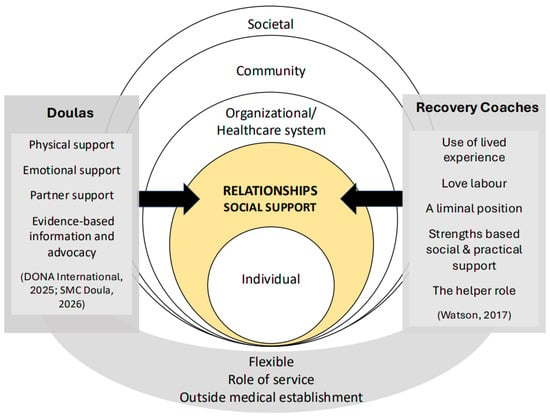
First, the team identified that RCDs are targeting the interpersonal level of the socioecological model, which captures the relationship between the RCD and client that affects an individual’s health and well-being (Bronfenbrenner, 1977). To capture the theoretical foundation and mechanism of action of doula care, the team selected descriptions of doula activities described by two doula organizations, DONA International and SMC (Shafia Monroe Consulting) Full Circle Doula Birth Companions. DONA International (previously Doulas of North America) listed four offerings of doula care: physical support, emotional support, partner support, and evidence-based information and advocacy (DONA International, 2025; Howard & Low, 2020). SMC Doulas, grounded in teachings of the 20th Century African America Midwife, states “[doulas] provide physical, emotional, and informational support to women and their partners before, during and after labor and birth” (SMC Doula, 2026).
A synthesis of mechanisms of peer work identified five primary mechanisms; notably, these mechanisms are described as how they affect both the client and the peer (Watson, 2017):
- Use of lived experience: Peers sharing their experience and drawing on their lived experience in determining what works and what does not work to assist their client.
- Love labor: Peers emotionally engaging at a deep level with the work.
- A liminal position: Peers existing in-between the healthcare system and the world of their client.
- Strengths-based social and practical support: Practical support in accessing services, informational support.
- The helper role: Peers being useful and aiding clients to manage what they need.
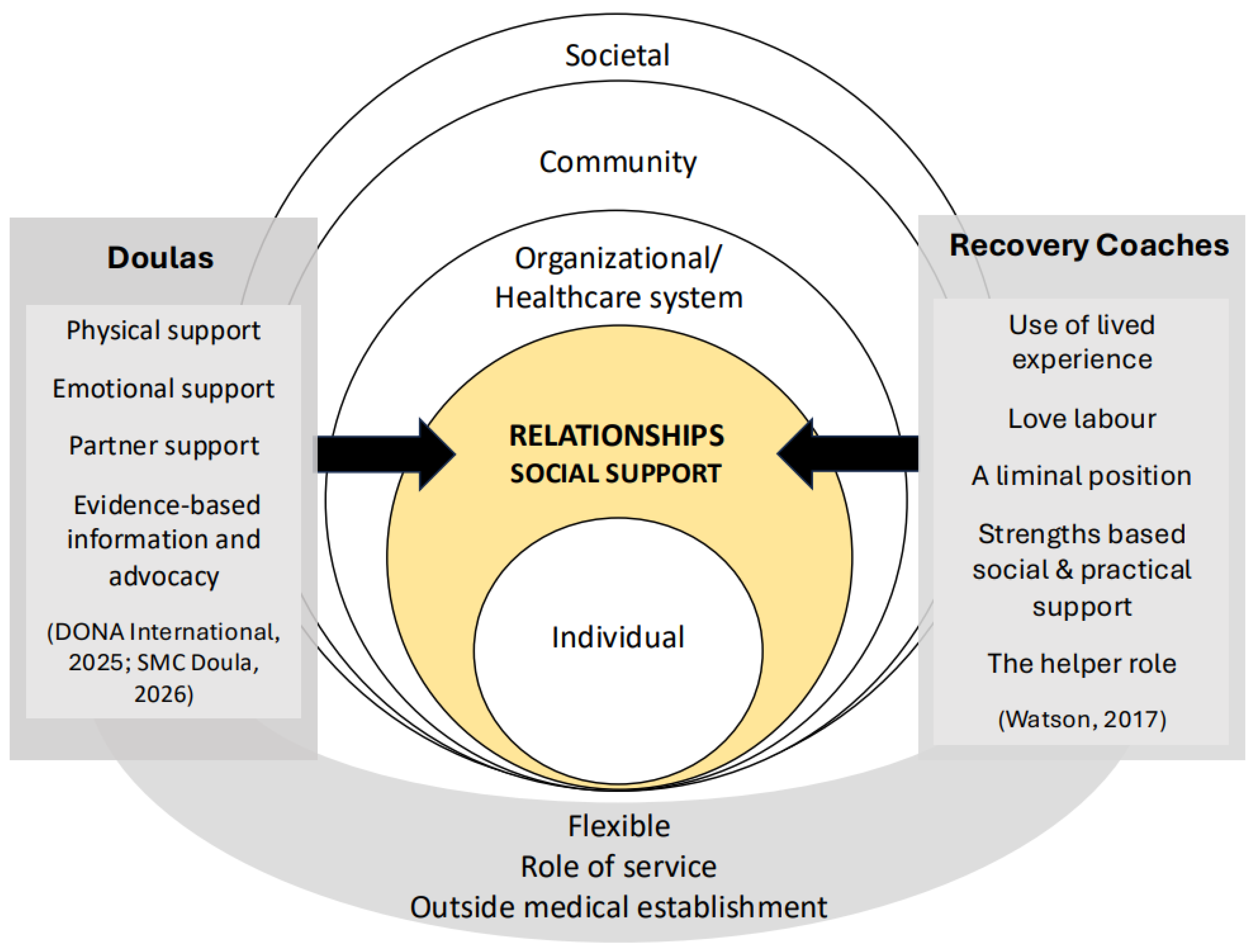
The theoretical underpinnings of the two roles (doula and recovery coach) overlapped. For example, they were similarly driven in their role of service, being general and flexible enough to meet the needs of the clients, and existing outside of or on the margins of the medical establishment. See Figure 1 for the theoretical model of the RCD role.
Figure 1.
Theoretical model of Recovery Coach Doula care (DONA International, 2025; SMC Doula, 2026; Watson, 2017).
2.3. Step 3. Identify Multiple Inputs for New Program
Step 3 of the framework involves reviewing extant evidence for the intervention and conducting formative research for the specific intervention and context.
2.3.1. Step 3 Methods
Similar to Step 2, the team conducted a review of the peer-reviewed and gray literature using PubMed, Google Scholar, and the general Google search engine with search terms doula, recovery coach, peer support, social support, perinatal, substance use disorder, and pregnancy. The team also requested documents from peer and doula organizations, including training curricula for peers and doulas, to compare core competencies and identify redundancies in content, the ethical codes of peers and doulas, and hospital and regulatory policies for peers and doulas. Finally, the team performed a policy scan for local, state, and national statements and policies about doula and peer care. The literature, policies, and statements were identified by all members in their unique areas of expertise. For example, policies and statements were identified by the team member with expertise in policy (LC) and shared with the group, and recovery coach management and supervision guidance documents were identified by the team member with expertise in peer support (BW). Consistent with the empowered participatory approach, the literature, policies, and statements were included if the transcreation team members determined they were relevant to the envisioned intervention (Burdett, 2024); no documents brought to the team were determined to not be relevant. All review activities were conducted between spring 2022 and fall 2025.
Additionally, the team conducted listening sessions lasting 1 h with two peer organizations (n = 5 individual participants), one doula organization (n = 3 individual participants), and perinatal healthcare providers with expertise in SUD (n = 3) to obtain data about the following: concept of merging recovery coach and doula into a single role; scope and ethics of doula and peer care; employment structures and requirements for peers and doulas (e.g., required education and certification); and how peers and doulas were implemented across different healthcare settings. Participants were recruited through professional networks of the team and snowballing. Notes were taken by a research associate during listening session, and the team met afterwards to debrief and distill the notes.
2.3.2. Step 3 Results
The review of the scientific literature identified a large body of evidence supporting both doula care and peer support. Doula care has been demonstrated to improve outcomes for both the birthing individual and the infant, including an increased rate of spontaneous vaginal birth, reduced labor duration, higher APGAR scores at five minutes, and fewer negative perceptions of the childbirth experience (Bohren et al., 2017; Kozhimannil et al., 2016; Thomas et al., 2023). Doula care tailored for individuals with perinatal SUD has been associated with improved self-advocacy, maternal health literacy, and reduced perceived bias by healthcare providers (Gannon et al., 2022). Peer support has been shown to improve health outcomes by reducing re-hospitalization rates, emergency room admissions, substance use, mental illness symptoms, and overall cost of care while increasing engagement rates, treatment adherence, whole health, and quality-of-life outcomes (Eddie et al., 2025; Mahon, 2025; Zhang et al., 2025). For individuals during the perinatal period, qualitative studies suggest peer support contributes to positive experiences with pregnancy, parenthood, and recovery, including increased engagement in SUD treatment and providing inspiration for clients to become peers themselves (Fallin-Bennett et al., 2020; Gruß et al., 2021; Olding et al., 2022).
The results of the review of policies and position statements identified local, state, and national position statements and policies supporting the roles of doulas and peers independently. Nationally, the 2022 White House Blueprint for Addressing the Maternal Health Crisis recommended increased access to doula care to improve maternal health outcomes (The White House, 2022). In 2020, the state legislative body passed a law that made peer support services eligible for Medicaid reimbursement (HB20-1139), and in June 2022, passed legislation allocating $15 million to design a Qualified Behavioral Health Assistant Certificate to support regulation and employment of peers (United States Government Accountability Office, 2020). In 2023, the state maternal mortality report specifically called for increased access to doula care and peer support services to decrease maternal deaths (Colorado Department of Public Health and Environment, 2023). This was aligned with the state’s Behavioral Health Administration’s 2022 Behavioral Health Plan that identified designing the peer support workforce as a top priority (Colorado Behavioral Health Administration, 2022). Additionally, the Colorado Health Foundation created a dedicated peer support association to elevate peers’ voices across the state, offering training, a support network, and networking opportunities (Colorado Association of Peer Support Professionals, 2025). Medicaid reimbursement of doula care was expanding across the United States at the time of designing the program and, in 2023, our state passed Medicaid reimbursement legislation to reimburse for doulas (SB23-288). Organizational support grew alongside national and state support. The academic hospital where the development took place and other local hospitals started integrating peers into clinical practice in 2023, and other affiliated hospitals had integrated doulas. This national and local support for doulas and peers independently substantiated the aim of integrating the two roles.
Listening sessions identified three key differences between the peer and doula roles that could lead to role conflict and identified strategies to reconcile the differences. First, peers are in recovery themselves and applying their lived experience to successfully carry out their work, unlike doulas for whom lived experience is not a prerequisite. This has implications for the social–emotional supports peers need as part of their employment, which can be provided with supervision from a certified peer supervisor who has specialized training and lived experience themselves. Second, the listening sessions identified differences in laws governing recovery coaches and doulas. Specifically, in our jurisdiction, recovery coaches are mandated reporters of suspected child abuse or neglect, whereas doulas are not. Potential implementers are encouraged to conduct a review of similar laws in their local jurisdictions. The third difference identified was peers having clearly defined ethical guidelines that doulas do not have. This potential conflict was resolved with a unanimous determination among informants that dual-credentialed individuals should adhere to certification standards and local laws when present, deferring to what a reasonable person would consider the most stringent when they differ.
Additional RCD program delivery considerations included challenges in hiring peers into healthcare organizations; need for ongoing professional development; integration into the perinatal healthcare team, including potential discrimination and bias of the healthcare team towards individuals with SUD; required peer-specific supervision from a certified peer supervisor; creating referral mechanisms; considerations for documentation and billing of peer and doula services; and flexibility to meet client’s needs (see Table 1 for details of program delivery considerations).
Table 1.
Program contextual delivery considerations for Recovery Coach Doula (RCD) services.
2.4. Step 4: Design Intervention Prototype
Step 4 of the Transcreation Framework is designing the intervention to incorporate scientific evidence and locally developed programs, as well as fit to community setting and population.
2.4.1. Step 4 Methods
In designing the prototype, the team conceptualized the RCD role as a complex health intervention because (1) it has multiple components; (2) it targets multiple groups and settings; (3) RCDs have specific skills and expertise; and (4) the core components of the program will require adaptation to different contexts (Skivington et al., 2021). Complex health interventions can best be understood by identifying core functions and forms (Perez Jolles et al., 2019). Functions refer to the intended purpose of the intervention and macrolevel structural and procedural goals, while forms refer to the activities or approaches to achieve the functions. Applying functions and forms is particularly helpful for behavioral interventions that are flexible and cannot be manualized, a concept appropriate for RCD care. During the meetings, the team applied their lived experience and the results of Steps 2 and 3 to generate the core functions. Then, based on community inputs and existing infrastructure, they developed forms of the functions to create the prototype. As needed, the team referred to meeting notes and notes of listening sessions.
2.4.2. Step 4 Results
The team identified 15 core functions of the RCD role (Table 2). Based upon this, the prototype was designed by the team for implementation in an academic institution, with the forms described for each in Table 2. The forms are presented not for replication but as examples of how communities can operationalize the core functions.
Table 2.
Core functions of the RCD role and forms those functions in the prototype.
Several potential functions arose that the team ultimately determined were not core to the RCD intervention. Two examples were providing implicit bias training for healthcare providers and assisting clients with transportation in the form of vouchers. As RCDs integrated into new clinical practice, the team identified biases among the existing staff and discussed whether it was a core function of the RCD program to provide clinic-level implicit bias training classes. The team determined that while it may be a form of improving perinatal healthcare provider understanding of SUD, it was not a core function of providing RCD care. The team also determined that providing assistance for transportation for clients was not a core function of the RCD program, but a form of support that may be provided based upon client needs. Likewise, the team identified some proposed forms that would not be consistent with core functions, specifically peers without lived experience with SUD (e.g., peers with lived experience with mental illness), peers without doula training, and doulas that are not peers.
2.5. Step 6 Build Community Capacity for Delivery
The goal of Step 6 of the Transcreation Framework is to build community capacity by enhancing community expertise and infrastructure and train community-based interventionists (i.e., RCDs).
2.5.1. Step 6 Methods
To build the capacity for RCD care in the local community, the team synthesized the data collected in Steps 2 and 3 to design an interactive PDF blueprint for communities that want to implement RCD care. The blueprint includes an RCD training program to build the workforce and an RCD delivery program designed to employ RCDs and facilitate RCDs delivering care. In designing the delivery program, the team again applied the functions and forms matrix (Perez Jolles et al., 2019). To evaluate the accuracy and ease of use, the blueprint was reviewed by all team members independently (n = 6), clinic administrators (n = 2), and two individuals naïve to the program (a birth worker and a research associate; n = 2; N = 10). Below is an overview of the blueprint, and details about the training plan and delivery model.
2.5.2. Step 6 Results
Recovery Coach Doula Program Blueprint. Contents of the blueprint include content for RCD training modules; employment practices (salary range, benefits, workload, ongoing support); models for employment and supervision; supplies for RCDs (birthing supplies [massage oils, birthing balls], phones, computers, office space); process for Medicaid reimbursement; guidance for developing and troubleshooting referral workflow; forms and flowsheets for RCDs to document client interactions; an interactive costing calculator; and guidance for creating a supportive work environment for RCDs.
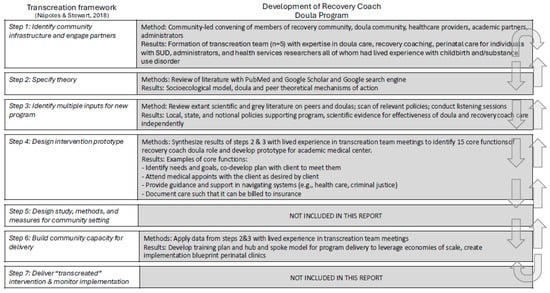
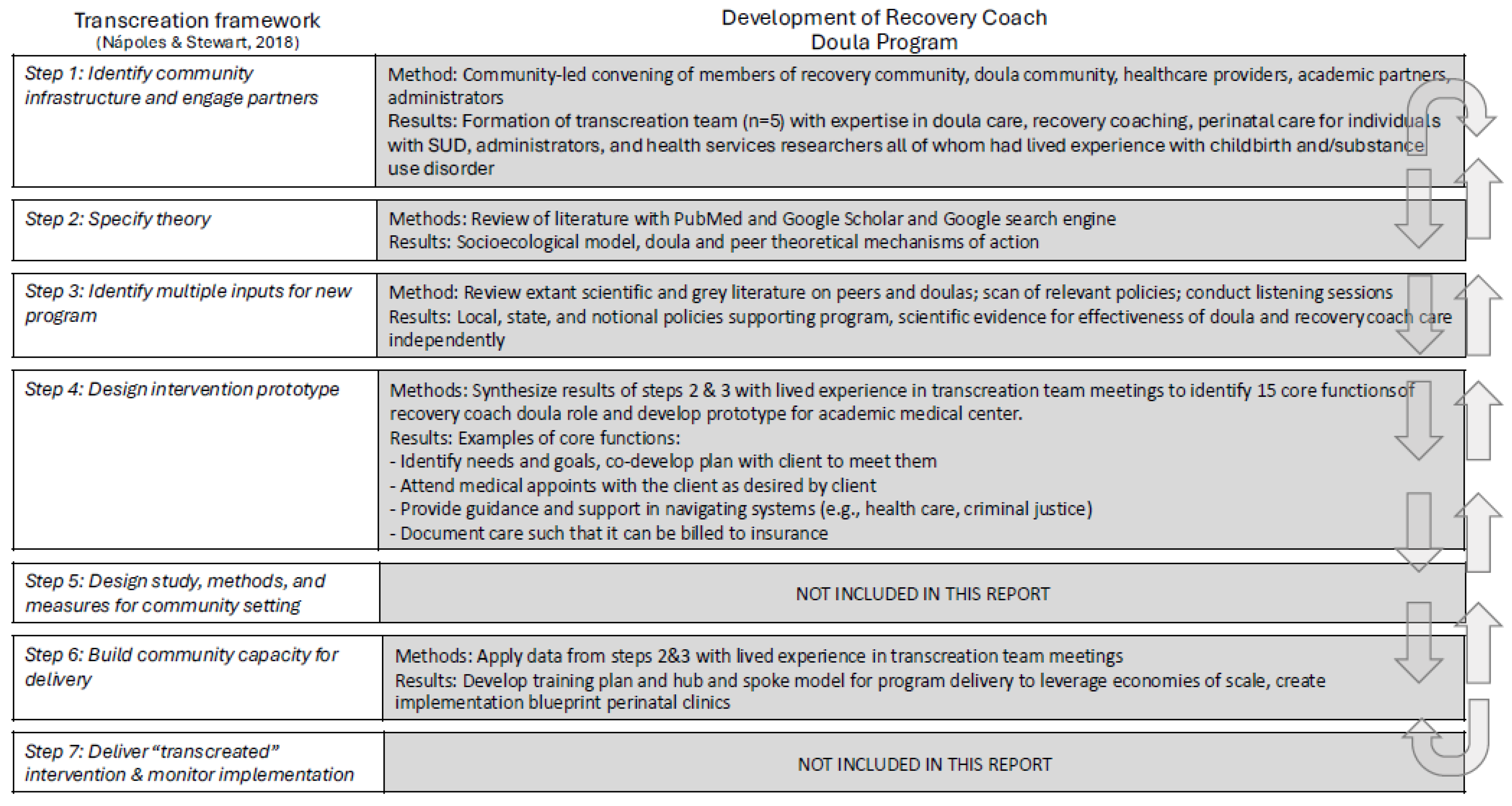
RCD Training Plan. The RCD training plan leverages national training and certification infrastructure for peers, coupled with a doula training curriculum with supplementary content created specifically for providing doula care to individuals with substance use in the perinatal period. The training program begins with individuals independently completing any credentialed peer training that enables them to be eligible for certification. Following peer certification, individuals complete a 4-day doula training. The curriculum includes an overview of the physiology of pregnancy and birth, labor support techniques, and childbirth education tools. The training also incorporates subjects not commonly covered in standard doula programs, including pregnancy and substance use, systemic racism within the healthcare system, intimate partner violence, and a thorough understanding of patient and doula rights. To support workforce development, trainees are also provided the opportunity to be doula-certified, access mentorship, engage in continued professional development, and learn about billing for services. Strategies to improve engagement included being located in the community to avoid extensive travel and providing food and childcare. Training sessions are conducted by community members: doula trainers and at least one recovery coach. See Figure 2 for a synthesis of all transcreation steps.
Figure 2.
Steps of the transcreation framework applied to the development of the recovery coach doula intervention (Nápoles & Stewart, 2018).
Recovery Coach Doula Delivery Model. The team determined that the program for delivering RCD care has five core functions: (1) develop and maintain structure of employing RCDs; (2) provide ongoing supervision from a certified peer supervisor; (3) develop structure for receiving referrals for RCD care; (4) develop a means of funding RCD care; (5) create work environment to support RCDs in their RCD work, professional development, and personal recovery.
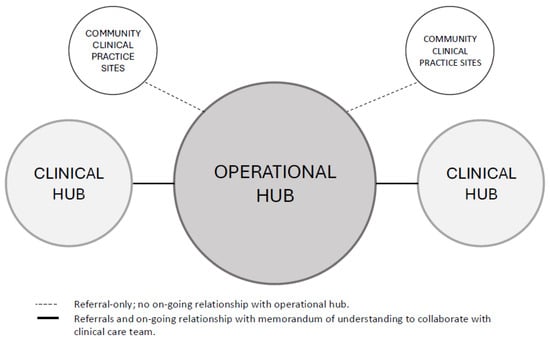
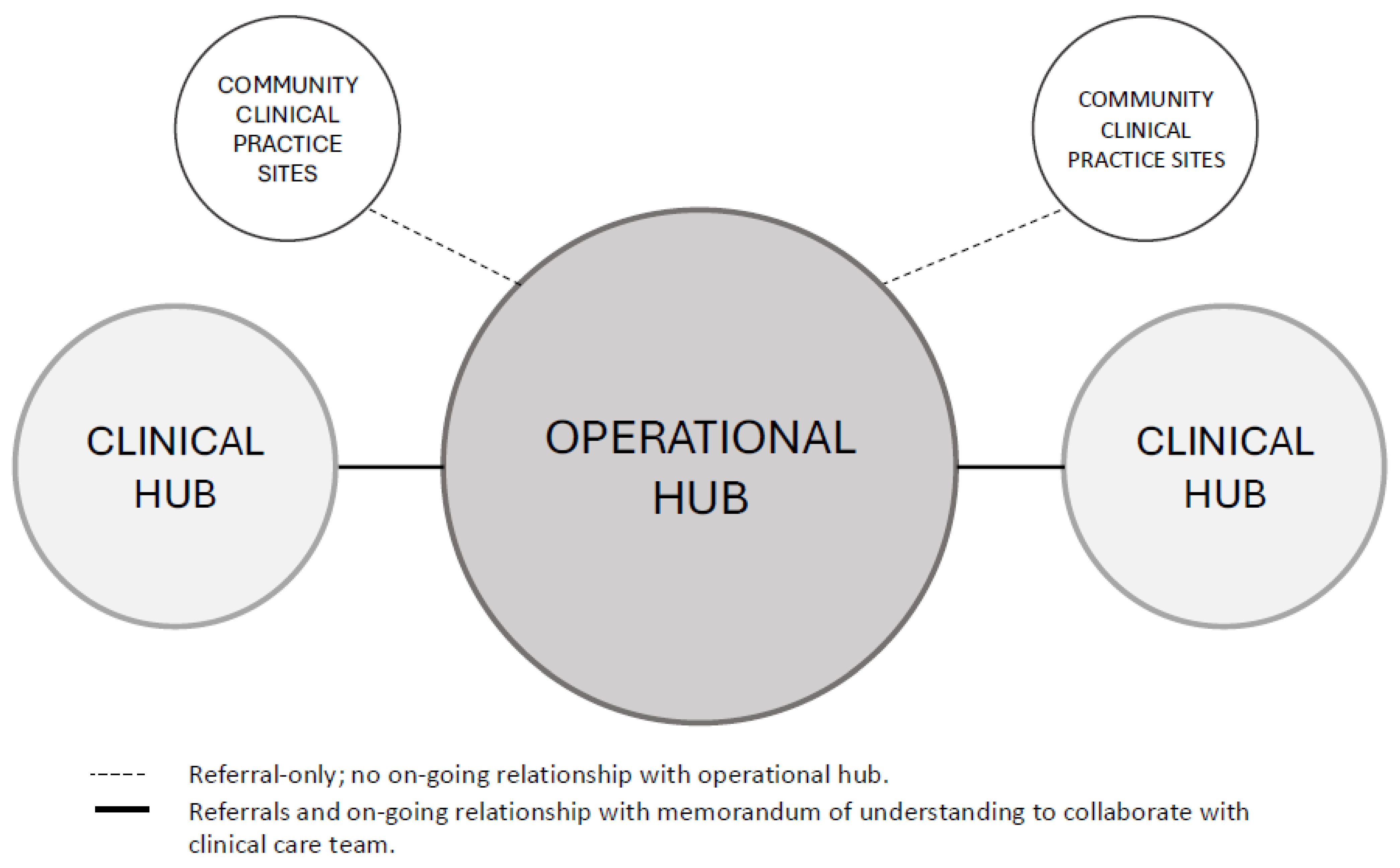
The team conceptualized a hub and spoke model with a single central operational hub serving multiple clinical hubs to maximize economies of scale and create a community of RCDs to meet the five core functions (see Figure 3). The operational hub provides administrative infrastructure such as employment, privileging/credentialing, billing for services, and liability insurance. For financial sustainability, the hub and spoke model enables RCDs to care for clients from multiple clinical hubs to maintain a full client panel, while maximizing business operations’ efficiency. The operational hub has the capacity to bill for services and submit for and manage grant funding—an important feature with everchanging reimbursement policies that was identified by the health policy team member. The central operational hub allows for sharing of resources and expertise unique to employing and supervising RCDs. For example, the operational hub has expertise in employing individuals with criminal records, such as navigating background checks, providing detailed histories for credentialing that include a history of illicit substance use, and securing employment without re-traumatizing RCDs. Finally, the operational hub employs a certified peer supervisor to supervise multiple RCDs in weekly one-on-one sessions and group supervision. By enabling employment of multiple RCDs, the operational hub can support a professional community for the RCDs to avoid social isolation in the workplace, which supports the RCD’s recovery, and have a critical mass to advocate for their workplace rights.
Figure 3.
Hub and spoke model of Recovery Coach Doula delivery program.
The clinical hubs are perinatal and behavioral health clinics where pregnant and postpartum individuals with SUD receive their medical care within the inpatient and outpatient setting. Depending on timing of entry into care, the first visit can occur in the inpatient setting, within the emergency department, labor, or postpartum episode of care. RCDs are integrated into the healthcare team, with ongoing relationships with the staff and medical and behavioral health providers. These integrated teams communicate regularly about the care of RCD clients and engage in ongoing learning about perinatal care and SUD. A memorandum of understanding between the operational and clinical hubs ensures that the RCDs and clinical hubs share patient information and that RCDs can work in clinical spaces, and explicitly delineates liability. The clinical hubs and operational hub maintain regular communication about RCD care and the RCD job performance.
By design, the clinical hubs provide most referrals to RCDs. However, an external-facing referral mechanism for self-referral and for community clinical practice sites that are not the clinical hub or the community partners extends the reach of RCD care to individuals who do not engage in outpatient care during pregnancy or who receive care at locations other than the clinical hub.
3. Discussion
This report describes the community-led co-development of the RCD role and delivery model and provides a unique window into a community-led intervention design process. Use of the Transcreation Framework facilitated a structured approach to designing the RCD program, prioritizing both lived experience and acknowledgement of community context in the design. As a result, the RCD program model is designed with the intention of maximizing the potential effects of two evidence-based workforce models (doula care and recovery coaching) while simultaneously acknowledging and adapting to the complex local, clinical, and policy environments that can moderate outcomes.
The methods described rely heavily on lived experience and challenge the academic positivist paradigms that may oversimply the contribution of complex social context on both program implementation and individual and community outcomes (Park et al., 2020). Future research can focus on evaluating the reproducibility and generalizability of such community-led co-development approaches, and could contribute to the science of community-engaged research.
A strength of the Transcreation Framework is its iterative design, which encourages returning to the steps for continued growth and sustainment. For example, in 2025, changes to Medicaid billing were enacted in Colorado that limited the billing codes available for peer support services, and in 2026, Medicaid rolled out additional changes requiring specific certification for peer support professionals billing Medicaid (Colorado Department of Health Care Policy and Financing, 2025). The team are therefore returning to Step 1 in reviewing the infrastructure available to support the RCD intervention and sustainability.
Systematically applying the Transcreation Framework aided the team in several ways. First, the team used the scaffolding provided by the seven steps of the framework to organize the work and elucidate gaps while working with multiple partners (academic, clinical, and community) throughout a lengthy design period (3 years). Second, the distinction between Step 4 (design intervention prototype) and Step 6 (build community capacity for delivery) was important for the team to distinguish what was core to the intervention and should transfer across settings, and what was unique to implementation in the community setting.
While only Steps 1–4 and 6 are summarized in this report, future research can aim to complete the remaining steps of the Transcreation Framework—Step 5 Design study, methods, and measures for community setting and Step 7 Deliver “transcreated” intervention and monitor implementation process—to provide the evidence to determine the effectiveness of the transcreated RCD intervention, and to identify and study implementation outcomes. In studying innovative interventions such as RCD care, researchers can consider the necessity of efficacy studies given the strong independent, existing evidence for doulas and recovery coaches and consider moving directly to a hybrid study approach that includes effectiveness and implementation (Curran et al., 2022).
The feasibility of new interventions can be determined, at least in part, by the potential for long-term financial sustainability. The availability of grant funding, the reimbursement environment (among both public and private payers), and strong institutional support may influence sustainability. A strength of the co-design process described in this report is that financial considerations were incorporated a priori and examined in terms of both organizational financial performance (for example, assessing the potential for a positive return on investment) and individual financial outcomes (for example, is the RCD salary competitive and aligned with local costs). This has implications for teams designing innovative interventions in the United States and elsewhere, where a full understanding of the legislative, regulatory, and structural context of healthcare delivery can help frame financial sustainability.
Limitations
Because co-development was led by community members, this report lacks detail commonly included by researcher-led initiatives such as the duration of listening sessions and details of literature reviews. However, the methods and results discussed provide details on how others can approach similar types of intervention design processes and can support other community–academic teams in their own work. The team chose to focus on mechanisms of action specific to recovery coaches and doulas (Step 2), which may have led to limitations in the epistemic foundation of the RCD intervention because the team did not explore the concepts underlying the identified mechanisms, such as support and use of lived experience. An additional limitation is that the work focused on designing a new intervention in a single state. As such, the program design considerations and forms and functions of a similar intervention in another location may need to be operationalized differently. Additional limitations of the work reports are the relatively small transcreation team; single-state context; possible underrepresentation of service users; reliance on meeting notes rather than complete recordings; risk of positive interpretation bias; and uncertain transferability to rural, low-resource, or non-US settings. Finally, open participation, while intended to promote inclusiveness, may have led to missing voices, unequal power, or attrition.
4. Conclusions
The RCD role and delivery model, developed by community members and grounded in lived experience, form a potential strategy to increase social support for individuals with substance use disorder in the perinatal period. This report supports the conceptualization and preliminary feasibility of RCD care. The Transcreation Framework, applied throughout co-development, can continue to serve as a guide in building additional community capacity as the program expands and conducting increasingly rigorous, powered studies to test the effectiveness and implementation of the RCD intervention to improve outcomes for individuals with SUD in the perinatal period.
Author Contributions
Conceptualization, E.B.T., B.W., E.G.P., S.L., L.M.C. and J.L.A.; methodology, E.B.T.; validation, B.W., E.G.P. and S.L.; formal analysis, E.B.T., B.W., E.G.P., S.L., L.M.C. and J.L.A.; investigation, E.B.T., B.W., E.G.P., S.L., L.M.C. and J.L.A.; resources, E.B.T., L.M.C. and J.L.A.; writing—original draft preparation, E.B.T., B.W., E.G.P., S.L., L.M.C. and J.L.A.; writing—review and editing, E.B.T. and L.M.C.; visualization, E.B.T.; supervision, E.B.T. and J.L.A.; project administration, E.B.T. and J.L.A.; funding acquisition, E.B.T., J.L.A. and L.M.C. All authors have read and agreed to the published version of the manuscript.
Funding
This work was funded by Integrated Care for Women and Babies and the Colorado Behavioral Health Administration.
Institutional Review Board Statement
The study was conducted in accordance with the Declaration of Helsinki, and approved by the Colorado Multiple Institutional Review Board (Approval Code: 24-1882, Approval Date: 30 January 2025).
Informed Consent Statement
Informed consent was obtained from all subjects involved in the study.
Data Availability Statement
The raw data supporting the conclusions of this article will be made available by the authors on request.
Conflicts of Interest
Author Sarah Lopez was employed by the company Elephant Circle. The remaining authors declare that the research was conducted in the absence of any commercial or financial relationships that could be construed as a potential conflict of interest.
References
- Asta, D., Davis, A., Krishnamurti, T., Klocke, L., Abdullah, W., & Krans, E. E. (2021). The influence of social relationships on substance use behaviors among pregnant women with opioid use disorder. Drug and Alcohol Dependence, 222, 108665. [Google Scholar] [CrossRef] [Scilit] [PubMed]
- Baer, R. J., Chambers, C. D., Ryckman, K. K., Oltman, S. P., Rand, L., & Jelliffe-Pawlowski, L. L. (2019). Risk of preterm and early term birth by maternal drug use. Journal of Perinatology, 39(2), 286–294. [Google Scholar] [CrossRef] [Scilit] [PubMed]
- Bedaso, A., Adams, J., Peng, W., & Sibbritt, D. (2021). The relationship between social support and mental health problems during pregnancy: A systematic review and meta-analysis. Reproductive Health, 18(1), 162. [Google Scholar] [CrossRef] [Scilit] [PubMed]
- Bohren, M. A., Hofmeyr, G. J., Sakala, C., Fukuzawa, R. K., & Cuthbert, A. (2017). Continuous support for women during childbirth. Cochrane Database of Systematic Reviews, 7(7), Cd003766. [Google Scholar] [CrossRef] [Scilit] [PubMed]
- Bronfenbrenner, U. (1977). Toward an experimental ecology of human development. American Psychologist, 32(7), 513. [Google Scholar] [CrossRef] [Scilit]
- Burdett, T. (2024). Community engagement, public participation and social impact assessment. In Handbook of social impact assessment and management (pp. 308–324). Edward Elgar Publishing. [Google Scholar]
- Chang, C. W., Chang, K. C., Griffiths, M. D., Chang, C. C., Lin, C. Y., & Pakpour, A. H. (2022). The mediating role of perceived social support in the relationship between perceived stigma and depression among individuals diagnosed with substance use disorders. Journal of Psychiatric and Mental Health Nursing, 29(2), 307–316. [Google Scholar] [CrossRef] [Scilit]
- Collins, S. E., Clifasefi, S. L., Stanton, J., The Leap Advisory Board, Straits, K. J. E., Gil-Kashiwabara, E., Rodriguez Espinosa, P., Nicasio, A. V., Andrasik, M. P., Hawes, S. M., Miller, K. A., Nelson, L. A., Orfaly, V. E., Duran, B. M., & Wallerstein, N. (2018). Community-based participatory research (CBPR): Towards equitable involvement of community in psychology research. American Psychologist, 73(7), 884–898. [Google Scholar] [CrossRef] [Scilit] [PubMed]
- Colorado Association of Peer Support Professionals. (2025). About the association. Available online: https://coloradopeersupport.com/about-us/ (accessed on 23 January 2025).
- Colorado Behavioral Health Administration. (2022). 2022 Behavioral health plan. Available online: https://bha.colorado.gov/data-and-reports/reports (accessed on 15 October 2026).
- Colorado Department of Health Care Policy and Financing. (2025). Peer services. Available online: https://hcpf.colorado.gov/peerservices#:~:text=Peer%20Support%20Professionals.-,Effective%20January%201%2C%202026%2C%20all%20Peer%20Support%20Professionals%20delivering%20Medicaid,credentialed%20by%20July%201%2C%202026 (accessed on 20 January 2025).
- Colorado Department of Public Health and Environment. (2020). Maternal mortality in Colorado, 2014–2016. Available online: https://drive.google.com/file/d/11sB0qnM1DmfCA-Z87el3KMHN6oBy5t2y/view (accessed on 15 October 2025).
- Colorado Department of Public Health and Environment. (2023). Maternal mortality in Colorado legislative report, 2016–2020. Available online: https://cdphe.colorado.gov/maternal-mortality-prevention-program/maternal-health-data (accessed on 15 October 2025).
- Colorado Providers Association. (2025). Colorado peer and family specialist a quick start guide. Available online: https://drive.google.com/file/d/1yDEVxiRAEX3d8Ovp4td2l9B25HXn0XnC/view (accessed on 15 October 2026).
- Curran, G. M., Landes, S. J., McBain, S. A., Pyne, J. M., Smith, J. D., Fernandez, M. E., Chambers, D. A., & Mittman, B. S. (2022). Reflections on 10 years of effectiveness-implementation hybrid studies. Frontiers in Health Services, 2, 1053496. [Google Scholar] [CrossRef] [Scilit] [PubMed]
- DONA International. (2025). What do birth doulas offer? Available online: https://www.dona.org (accessed on 4 January 2025).
- Eddie, D., O’Connor, J. B., George, S. S., Klein, M. R., Lam, T. C., Abry, A., Hoffman, L. A., Hennessy, E. A., Vilsaint, C. L., & Kelly, J. F. (2025). Peer recovery support services and recovery coaching for substance use disorder: A systematic review. Current Addiction Reports, 12(1), 40. [Google Scholar] [CrossRef] [Scilit] [PubMed]
- Fallin-Bennett, A., Elswick, A., & Ashford, K. (2020). Peer support specialists and perinatal opioid use disorder: Someone that’s been there, lived it, seen it. Addictive Behaviors, 102, 106204. [Google Scholar] [CrossRef] [Scilit] [PubMed]
- Feinberg, E., Declercq, E., Lee, A., & Belanoff, C. (2022). The relationship between social support and postnatal anxiety and depression: Results from the listening to mothers in California survey. Women’s Health Issues, 32(3), 251–260. [Google Scholar] [CrossRef] [Scilit] [PubMed]
- Fortuna, K. L., Solomon, P., & Rivera, J. (2022). An update of peer support/peer provided services underlying processes, benefits, and critical ingredients. Psychiatric Quarterly, 93(2), 571–586. [Google Scholar] [CrossRef] [Scilit] [PubMed]
- Gannon, M., Short, V., Becker, M., Parikh, S., McGuigan, K., Hand, D., Keith, S., & Abatemarco, D. (2022). Doula engagement and maternal opioid use disorder (OUD): Experiences of women in OUD recovery during the perinatal period. Midwifery, 106, 103243. [Google Scholar] [CrossRef] [Scilit] [PubMed]
- Gemmill, A., Kiang, M. V., & Alexander, M. J. (2019). Trends in pregnancy-associated mortality involving opioids in the United States, 2007–2016. American Journal of Obstetrics and Gynecology, 220(1), 115–116. [Google Scholar] [CrossRef] [Scilit] [PubMed]
- Gruß, I., Firemark, A., & Davidson, A. (2021). Motherhood, substance use and peer support: Benefits of an integrated group program for pregnant and postpartum women. Journal of Substance Abuse Treatment, 131, 108450. [Google Scholar] [CrossRef] [Scilit] [PubMed]
- Hirai, A. H., Ko, J. Y., Owens, P. L., Stocks, C., & Patrick, S. W. (2021). Neonatal abstinence syndrome and maternal opioid-related diagnoses in the US, 2010–2017. JAMA, 325(2), 146–155. [Google Scholar] [CrossRef] [Scilit] [PubMed]
- Howard, E. D., & Low, L. K. (2020). It’s time to dial up doula care. The Journal of Perinatal & Neonatal Nursing, 34(1), 4–7. [Google Scholar] [CrossRef] [Scilit] [PubMed]
- Khazaee-Pool, M., Pashaei, T., Yazdani, F., Ghara, A. A. N., & Ponnet, K. (2025). The pathways between abstinence self-efficacy, perceived social support and substance use craving. Scientific Reports, 15(1), 19504. [Google Scholar] [CrossRef] [Scilit] [PubMed]
- Kountanis, J. A., Roberts, M., Admon, L. K., Smith, R., Cropsey, A., & Bauer, M. E. (2023). Maternal deaths due to suicide and overdose in the state of Michigan from 2008 to 2018. American Journal of Obstetrics & Gynecology MFM, 5(2), 100811. [Google Scholar] [CrossRef] [Scilit] [PubMed]
- Kozhimannil, K. B., Hardeman, R. R., Alarid-Escudero, F., Vogelsang, C. A., Blauer-Peterson, C., & Howell, E. A. (2016). Modeling the cost-effectiveness of doula care associated with reductions in preterm birth and cesarean delivery. Birth, 43(1), 20–27. [Google Scholar] [CrossRef] [Scilit] [PubMed]
- Mahon, D. (2025). Umbrella review of systematic reviews of peer support in substance use settings. Mental Health and Social Inclusion, 29(5), 535–550. [Google Scholar] [CrossRef] [Scilit]
- Margerison, C. E., Roberts, M. H., Gemmill, A., & Goldman-Mellor, S. (2022). Pregnancy-associated deaths due to drugs, suicide, and homicide in the United States, 2010–2019. Obstetrics and Gynecology, 139(2), 172–180. [Google Scholar] [CrossRef] [Scilit] [PubMed]
- Mondragón, C. V. P., Dorado, H. M., Gómez, S. Y. M., Martínez, R. A. O., Linthon, S. A., & Benavides, A. C. L. (2019). Relationship between the absence of adequate social support during pregnancy and low birth weight. Revista Colombiana de Psiquiatría, 48(3), 140–148. [Google Scholar] [CrossRef] [Scilit]
- Nápoles, A. M., & Stewart, A. L. (2018). Transcreation: An implementation science framework for community-engaged behavioral interventions to reduce health disparities. BMC Health Services Research, 18(1), 710. [Google Scholar] [CrossRef] [Scilit] [PubMed]
- Olding, M., Cook, A., Austin, T., & Boyd, J. (2022). “They went down that road, and they get it”: A qualitative study of peer support worker roles within perinatal substance use programs. Journal of Substance Abuse Treatment, 132, 108578. [Google Scholar] [CrossRef] [Scilit] [PubMed]
- Park, Y. S., Konge, L., & Artino, A. R., Jr. (2020). The positivism paradigm of research. Academic Medicine, 95(5), 690–694. [Google Scholar] [CrossRef] [Scilit] [PubMed]
- Perez Jolles, M., Lengnick-Hall, R., & Mittman, B. S. (2019). Core functions and forms of complex health interventions: A patient-centered medical home illustration. Journal of General Internal Medicine, 34, 1032–1038. [Google Scholar] [CrossRef] [Scilit] [PubMed]
- Ragsdale, A. S., Al-Hammadi, N., Loux, T. M., Bass, S., Keller, J. M., & Chavan, N. R. (2024). Perinatal substance use disorder: Examining the impact on adverse pregnancy outcomes. European Journal of Obstetrics & Gynecology and Reproductive Biology: X, 22, 100308. [Google Scholar] [CrossRef] [Scilit] [PubMed]
- Shafia Monroe Consulting (SMC) Full Circle Doula Birth Companion. (2026). SMC doula philosophy. Available online: https://smcdoulas.com/ (accessed on 14 October 2026).
- Skivington, K., Matthews, L., Simpson, S. A., Craig, P., Baird, J., Blazeby, J. M., Boyd, K. A., Craig, N., French, D. P., & McIntosh, E. (2021). A new framework for developing and evaluating complex interventions: Update of medical research council guidance. BMJ, 374, n2061. [Google Scholar] [CrossRef] [Scilit] [PubMed]
- Surkan, P. J., Hong, X., Zhang, B., Nawa, N., Ji, H., Tang, W.-Y., Ji, Y., Kimmel, M. C., Wang, G., & Pearson, C. (2020). Can social support during pregnancy affect maternal DNA methylation? Findings from a cohort of African-Americans. Pediatric Research, 88(1), 131–138. [Google Scholar] [CrossRef] [Scilit] [PubMed]
- The White House. (2022). White house blueprint for addressing the maternal health crisis. Available online: https://bidenwhitehouse.archives.gov/wp-content/uploads/2022/06/Maternal-Health-Blueprint.pdf (accessed on 15 October 2026).
- Thomas, M. P., Ammann, G., Onyebeke, C., Gomez, T. K., Lobis, S., Li, W., & Huynh, M. (2023). Birth equity on the front lines: Impact of a community-based doula program in Brooklyn, NY. Birth, 50(1), 138–150. [Google Scholar] [CrossRef] [Scilit] [PubMed]
- United States Government Accountability Office. (2020). Substance use disorder: Medicaid coverage of peer support services for adults. Available online: https://www.gao.gov/assets/gao-20-616.pdf#:~:text=SUD%20treatment%20can%20help%20individuals%20reduce%20or,peer%20support%20services%20is%20an%20optional%20benefit (accessed on 22 January 2025).
- United States Substance Abuse and Mental Health Services Administration. (2023). Incorporating peer support into substance use disorder treatment services [Internet] (Treatment Improvement Protocol (TIP) Series, No. 64). Chippewa Valley Technical College. Available online: https://www.ncbi.nlm.nih.gov/books/NBK596268/box/ch6.b8/?report=objectonly (accessed on 16 February 2024).
- Watson, E. (2017). The mechanisms underpinning peer support: A literature review. Journal of Mental Health, 28(6), 677–688. [Google Scholar] [CrossRef] [Scilit] [PubMed]
- Zhang, X., Hardcastle, V., Ho, T., & Ozanich, G. (2025). Potential impact of peer support service on SUD treatment engagement following ED visits among Kentucky medicaid beneficiaries. Journal of Substance Use and Addiction Treatment, 176, 209746. [Google Scholar] [CrossRef] [Scilit] [PubMed]

Disclaimer/Publisher’s Note: The statements, opinions and data contained in all publications are solely those of the individual author(s) and contributor(s) and not of MDPI and/or the editor(s). MDPI and/or the editor(s) disclaim responsibility for any injury to people or property resulting from any ideas, methods, instructions or products referred to in the content. |
© 2026 by the authors. Licensee MDPI, Basel, Switzerland. This article is an open access article distributed under the terms and conditions of the Creative Commons Attribution (CC BY) license.