



Behav. Sci., Volume 15, Issue 12 (December 2025) – 153 articles
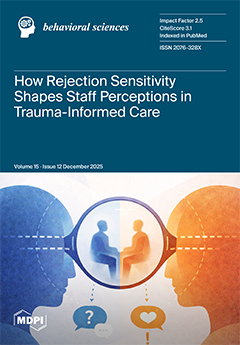
Cover Story (view full-size image):
Trauma-informed care requires workers to be skilled in building and maintaining relationships and managing emotional challenges, yet we know relatively little about how workers’ personal histories and capacities shape their experience delivering trauma-informed care. Using survey data from frontline workers, the study shows that staff who are more sensitive to rejection are more likely to feel disengaged at work and less emotionally connected to clients. However, supportive work conditions, including higher job satisfaction and trauma knowledge, appear to buffer these challenges. The findings suggest that creating healthy and sustainable trauma-informed care environments depends not only on policies and procedures, but also on how organizations support staff in navigating relational challenges at work. View this paper
- Issues are regarded as officially published after their release is announced to the table of contents alert mailing list.
- You may sign up for e-mail alerts to receive table of contents of newly released issues.
- PDF is the official format for papers published in both, html and pdf forms. To view the papers in pdf format, click on the "PDF Full-text" link, and use the free Adobe Reader to open them.
Previous Issue
Next Issue
