


Abstract
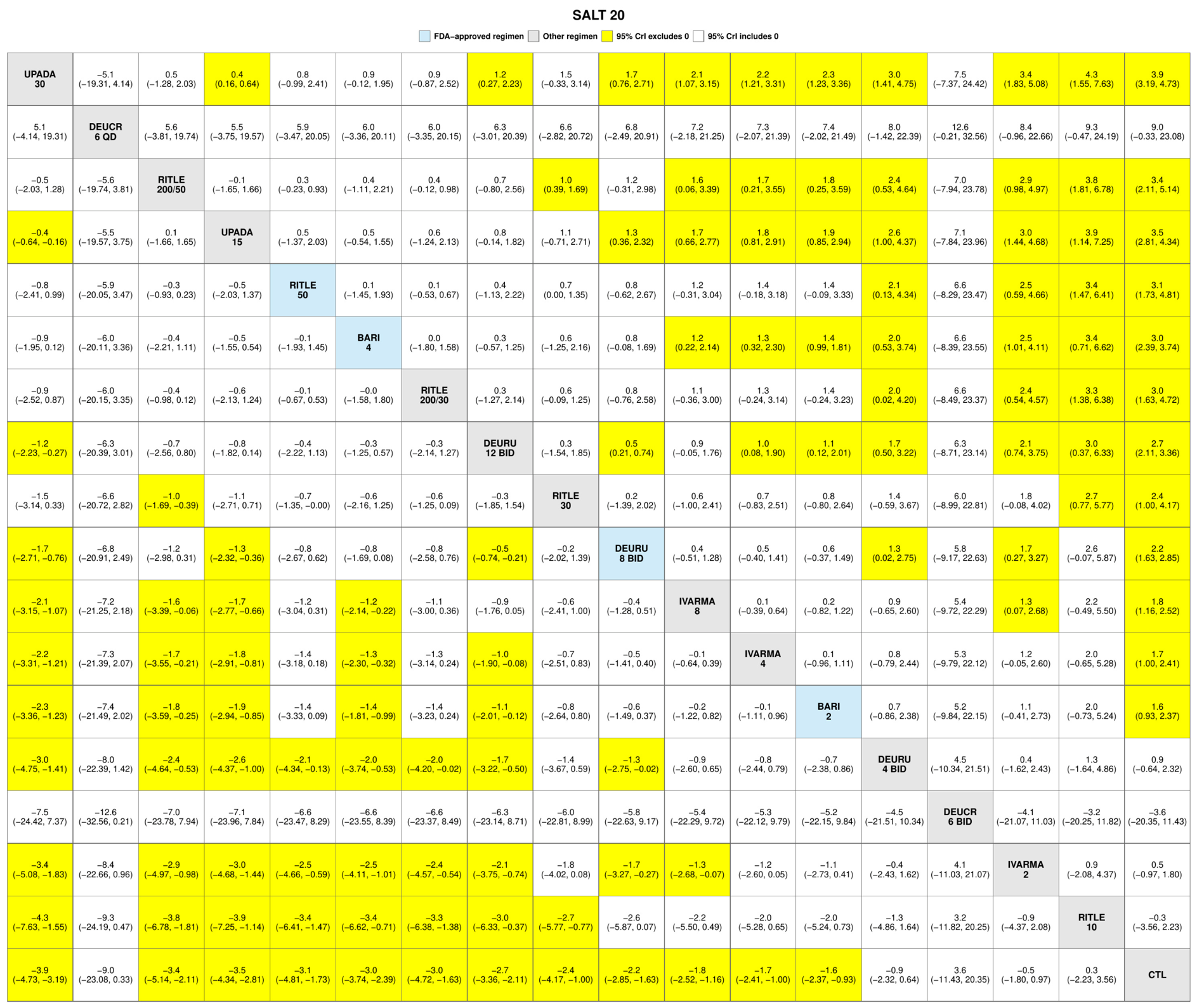
Background/Objectives: Numerous monotherapies have emerged for alopecia areata (AA), although gaps regarding their comparative effectiveness persist. We conducted network meta-analyses (NMAs) of updated evidence. Methods: Following a systematic review, we conducted Bayesian NMAs of randomized trials that examined the efficacy of immunomodulatory monotherapies in adults with moderate-to-severe AA—insofar as Severity of Alopecia Tool (SALT)-based outcomes at 24 weeks. Ranking of efficacy was based on estimates of Surface Under the Cumulative Ranking Curve (SUCRA) values. For pairwise relative effects, mean differences and log odds ratios (logORs)—and corresponding 95% credible intervals (CIs)—were estimated. Results: We identified 27 regimens including Food and Drug Administration (FDA)-approved ones, namely baricitinib 2 mg and 4 mg once daily, ritlecitinib 50 mg once daily, and deuruxolitinib 8 mg twice daily. Upadacitinib 30 mg once daily ranked highest for SALT 20 (SUCRA = 90.59%). The FDA-approved regimens showed broadly comparable efficacy; for example, deuruxolitinib 8 mg twice daily and baricitinib 4 mg once daily were not different for SALT 20 (logOR = −0.8, 95% CI: −1.69, 0.08). While the efficacy of some FDA-approved regimens did differ from that of newly emerged ones, others did not; for example, upadacitinib 30 mg once daily was more efficacious than deuruxolitinib 8 mg twice daily (logOR = 1.7, 95% CI: 0.76, 2.71), but not different from baricitinib 4 mg once daily (logOR = −0.9, 95% CI: −1.95, 0.12) insofar as SALT 20. Conclusions: Although FDA-approved therapies demonstrated broadly comparable efficacy, newly emerged agents such as upadacitinib may outperform established options.
1. Introduction
Hair loss can result from various pathophysiological mechanisms. In androgenetic alopecia (AGA), androgen metabolism is implicated, while alopecia areata (AA) results from immune dysfunction [1,2]. Though AGA is more prevalent than AA [1,2], there has been—within the past decade—proportionally more registered pharmacological trials for AA than for AGA. In Parra-Guerra et al.’s (2026) [3] descriptive analyses of registered trials for hair loss, the authors found that 87 of the 174 (50%) trials for AGA were pharmacological, while 123 of the 159 (i.e., 77.4%) trials for AA were pharmacological [3]. The pharmacologic evidence base for AA has expanded at a rate that outpaces its incorporation into formal comparative evidence syntheses. The most recent peer-reviewed network meta-analysis (NMA) study of pharmacologic therapies for adult AA included efficacy evidence identified until 10 February 2025 [4,5]; since then, numerous additional randomized studies have been published [5,6]. Among the recent NMA studies for AA is that of Babul et al. (2026), who analyzed the recent evidence base to determine the relative efficacy of therapies for AA in adolescents [6].
The conduct of an updated NMA is highly relevant because recent efficacy data from pharmacologic studies have not been formally compared for adults with AA. Moreover, how the newer agents perform relative to the ones already indicated for AA would be informative to various stakeholders including regulatory agencies, clinicians, and patients. Evidence from quantitative synthesis would also inform Delphi consensus statements, such as the recent one by Gregoire et al. (2026) [7]. In addition, evidence from NMAs would support personalized medicine, as such evidence would aid clinicians in choosing optimal care on a per patient basis. The relevance of up-to-date comparative evidence is further pronounced by the fact that AA is a greater source of psychosocial burden than other forms of hair loss like AGA [8,9]. The objective of this study was to determine the relative efficacy of monotherapy with select immunomodulatory small-molecule agents and biologics in adults with moderate-to-severe AA.
2. Materials and Methods
We estimated comparative efficacy by first conducting a systematic review to obtain data that would be used for our NMAs. We consulted the Preferred Reporting Items for Systematic Reviews and Meta-Analyses (PRISMA) extension for NMAs [10] for the conduct of our work. The protocol for the current study was prospectively registered in PROSPERO under the ID CRD420261503522.
2.1. Identification of Eligible Trials
Implementing the patient(P), intervention(s)(I), comparator(s)(C), outcome(s)(O) framework (i.e., PICO), we included randomized trials that investigated the efficacy of monotherapy with select immunomodulatory small-molecule agents and biologics (I/C) on adults (i.e., age ≥ 18 years) with moderate-to-severe AA (P), where efficacy, measured at 24 weeks, was quantified using metrics derived from the Severity of Alopecia Tool (SALT) score. Comparators could include the placebo, vehicle, or another eligible intervention. Evidence published in a language other than English was excluded. Furthermore, conventional immunomodulators (i.e., methotrexate, corticosteroids, and calcineurin inhibitors such as cyclosporine) were excluded based on real-world clinical experience, as their benefit-to-risk ratio may make them less attractive as long-term therapy.
On 10 September 2026, systematic searches without date restrictions were conducted in PubMed and ClinicalTrials.gov. Our search terms for PubMed were ((“areata”[Title/Abstract] OR “alopecia”[Title/Abstract] OR “hair loss”[Title/Abstract]) AND (SALT* OR “Severity of Alopecia Tool”)) AND (random*[Title/Abstract] OR effic*[Title/Abstract] OR impact*[Title/Abstract]). In ClinicalTrials.gov, we entered “alopecia areata” under “Condition/disease”, “Interventional” under “Study Type”, and “With results” under “Study Results”.
Additionally, we searched two other databases, namely Web of Science and the Cochrane Central Register of Controlled Trials (CENTRAL), on 12 November 2026. The search terms in Web of Science were (“areata” AND “alopecia” (Title) and random* OR effic* (Abstract) and “Severity of Alopecia Tool” (Abstract)). The search terms in CENTRAL were (“alopecia” OR “areata” in Record Title AND “Severity of Alopecia Tool” OR SALT* in Abstract AND random* OR effic* in Abstract).
After the searches were conducted, the screening of abstracts, titles, and full texts was performed independently by 2 authors (MAB, MT); disagreements were resolved through discussion with a third author (AKG). These screening stages were managed using the Rayyan software [11].
2.2. Evaluation of Evidence Quality
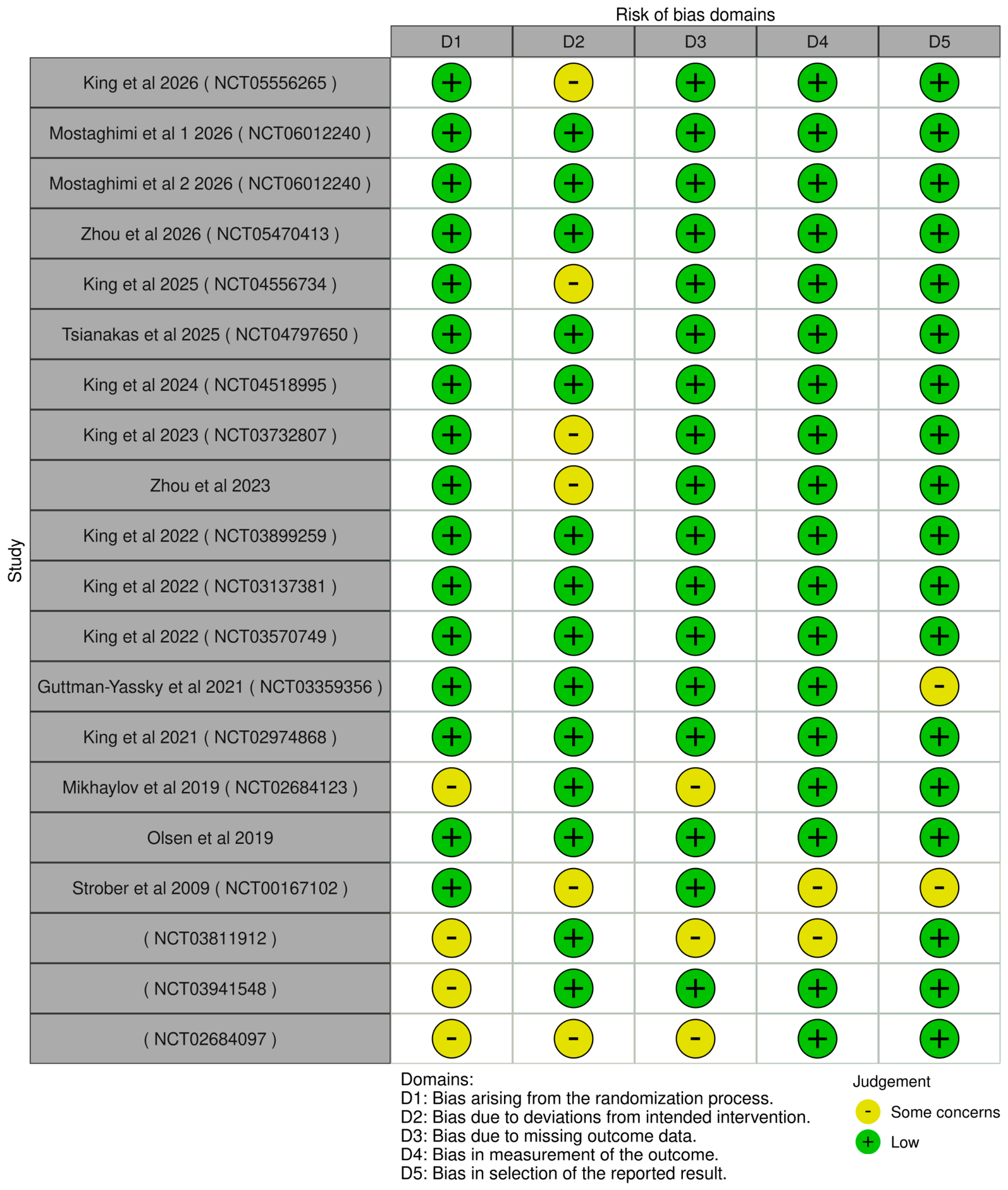
The evidence quality of each eligible trial was assessed in terms of risk of bias (RoB); we used “traffic plots” to present our qualitative evaluation for each trial’s RoB; plots were generated with the “robvis” [12] web application. Assessment of RoB was based on five domains, namely randomization process, deviations from intended interventions, missing outcome data, outcome measurement, and selection of the reported result. Each domain could be assessed as “low”, “some concerns”, “high”, or “no information”. Two authors independently assessed RoB (MT and MAB), and disagreements were resolved through discussion with a third author (AKG).
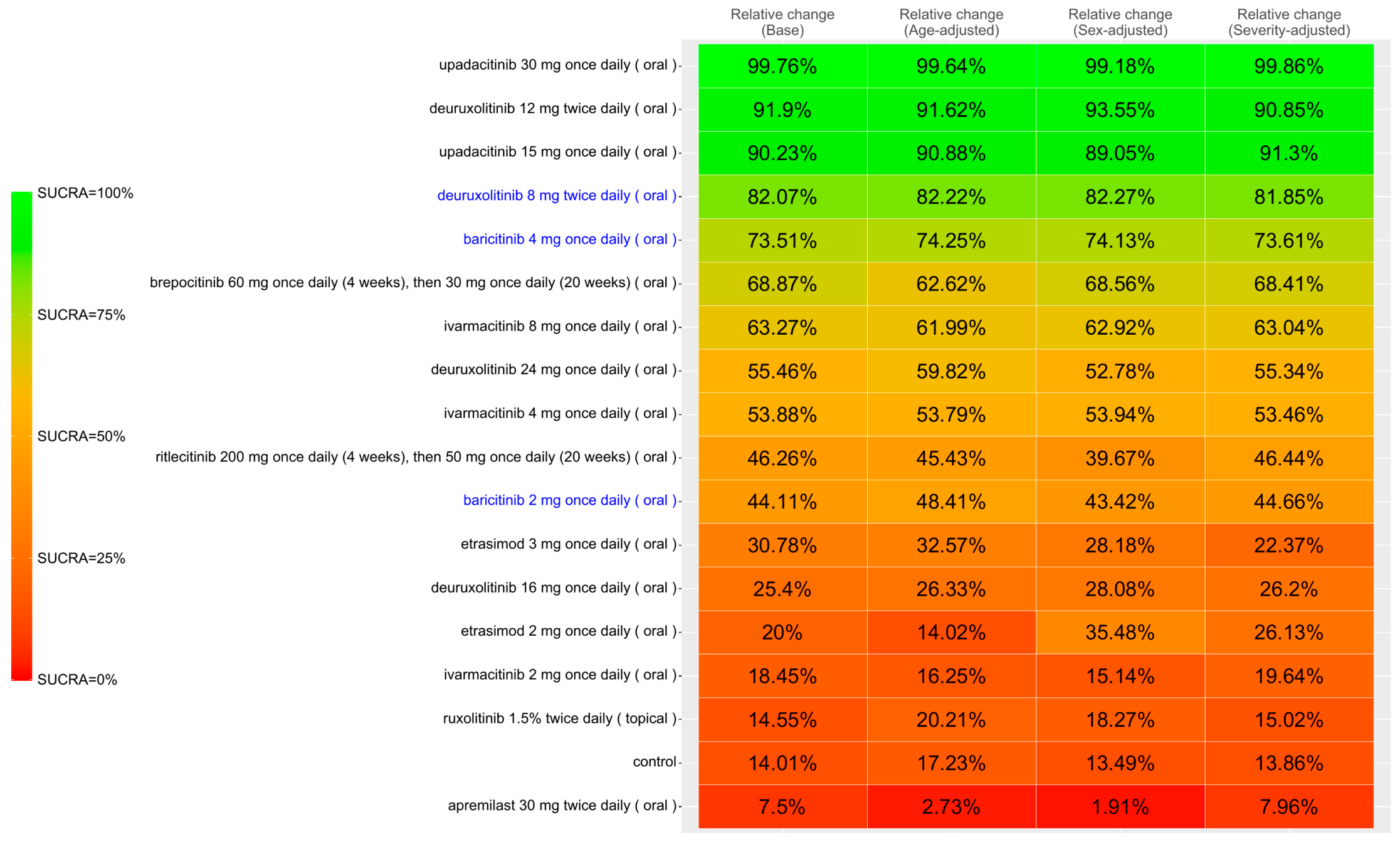
2.3. Data Management
After eligible trials were identified, extracted data were organized into spreadsheets. Extracted data corresponded to arm-level information and included data on participants’ age, sex, and disease severity at baseline. We reported participants’ baseline severity measured with the SALT score. Included information also pertained to trial phase and regimen details, where a regimen corresponded to the distinct combination of agent, dosage, and route of administration. Network plots were used to depict the geometry of the network. Two authors extracted the data independently (MT and MAB), and discrepancies were resolved through discussion between these two authors.
2.4. Transitivity and Consistency
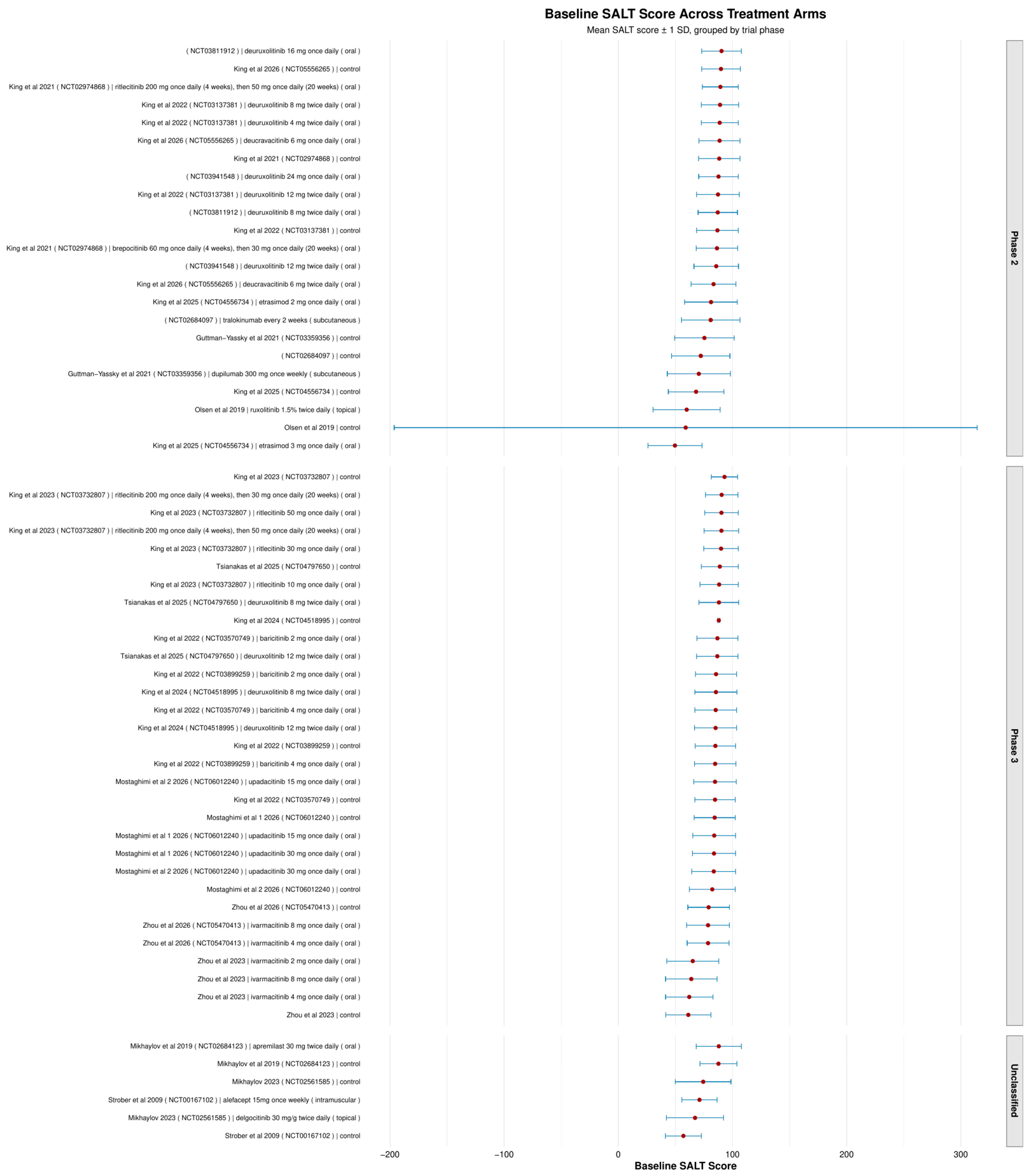
Transitivity was assessed by examining the distribution of relevant baseline characteristics across studies, namely age, sex, and disease severity. These plots facilitated the visual assessment of transitivity. For each covariate, plots were generated to visualize its distribution at the treatment-arm level, stratified by trial phase. Stratification by trial phase was undertaken to account for potential differences in study populations between Phase 2 and Phase 3 trials, particularly with respect to participant selection and baseline characteristics [13]. Substantial similarities in eligibility criteria and patient populations may exist across trial phases, particularly since the adoption of the seamless Phase 2/3 trial design (i.e., “the 2-stage seamless design”), where elements of exploratory (i.e., phase dose-ranging) and confirmatory (i.e., Phase 3) development are integrated within a single trial framework [13,14]. Statistical inconsistency was assessed through node-splitting analysis, and the feasibility of conducting a node-splitting analysis was dependent on a network’s geometry.
2.5. Quantitative Analyses
For each outcome, we fitted a Bayesian fixed-effects NMA model with uniform priors by using the multinma [15] package in R [16] software (version 4.3.2). Binary outcomes were analyzed using a binomial likelihood with a logit link, while continuous outcomes were analyzed using a normal likelihood with an identity link. Each NMA estimated regimens’ surface under the cumulative ranking curve (SUCRA) values and pairwise treatment effects (i.e., pairwise relative effects).
Treatment effects were assigned a normal prior distribution with a mean of 0 and standard deviation of 10, while study-specific intercepts were assigned a normal prior distribution with a mean of 0 and standard deviation of 100. Four Markov chain Monte Carlo (MCMC) chains were run, each with 2000 iterations, including 1000 warm-up iterations, yielding 4000 posterior samples across the four chains. Multi-arm trials were analyzed natively within the Bayesian framework, and treatment arms with zero events were retained without applying continuity corrections. Model convergence was assessed using the Gelman–Rubin potential scale reduction factor (Rhat) and effective sample sizes (ESS).
For each outcome, we conducted 2 sets of sensitivity analyses. In the first set, we ran NMAs on studies that were Phase 3-only and Phase 2-only. This approach was adopted because the literature supports both the pooling and separate analysis of trials across different phases. Pooling is justified when trials are sufficiently comparable in their distribution of potential effect modifiers [17]; phase-stratified sensitivity analyses help evaluate whether differences in trial design, patient selection, or other phase-related characteristics influence the findings. Pooling data from multiple trial phases also maximizes statistical power and is also helpful—or even necessary—when studying rare diseases. In the second set of sensitivity analyses, network meta-regression models were fitted to adjust separately for age, sex, and disease severity at baseline; sex was represented by the proportion of male participants, while disease severity was represented by the mean SALT score.
For each NMA, pairwise relative effects were summarized using the posterior mean value for point estimate and corresponding 95% equal-tailed credible intervals (CI), defined by the 2.5th and 97.5th percentiles of the posterior distribution [18]. As per Bayesian decision rules, evidence of a treatment effect is inferred when the 95% CI excludes the null value, while under frequentist decision rules, statistical significance corresponds to a p-value less than 0.05 (i.e., “p < 0.05”) [19,20,21]. For continuous outcomes, the mean difference (MD) along with 95% CI were reported, while the log odds ratio (logOR) and corresponding 95% CI were reported for binary outcomes.
3. Results
3.1. Included Studies and Risk of Bias
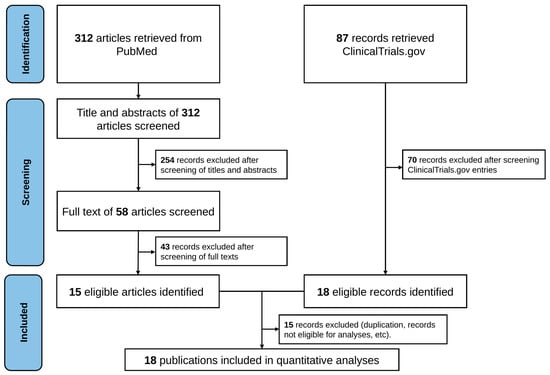
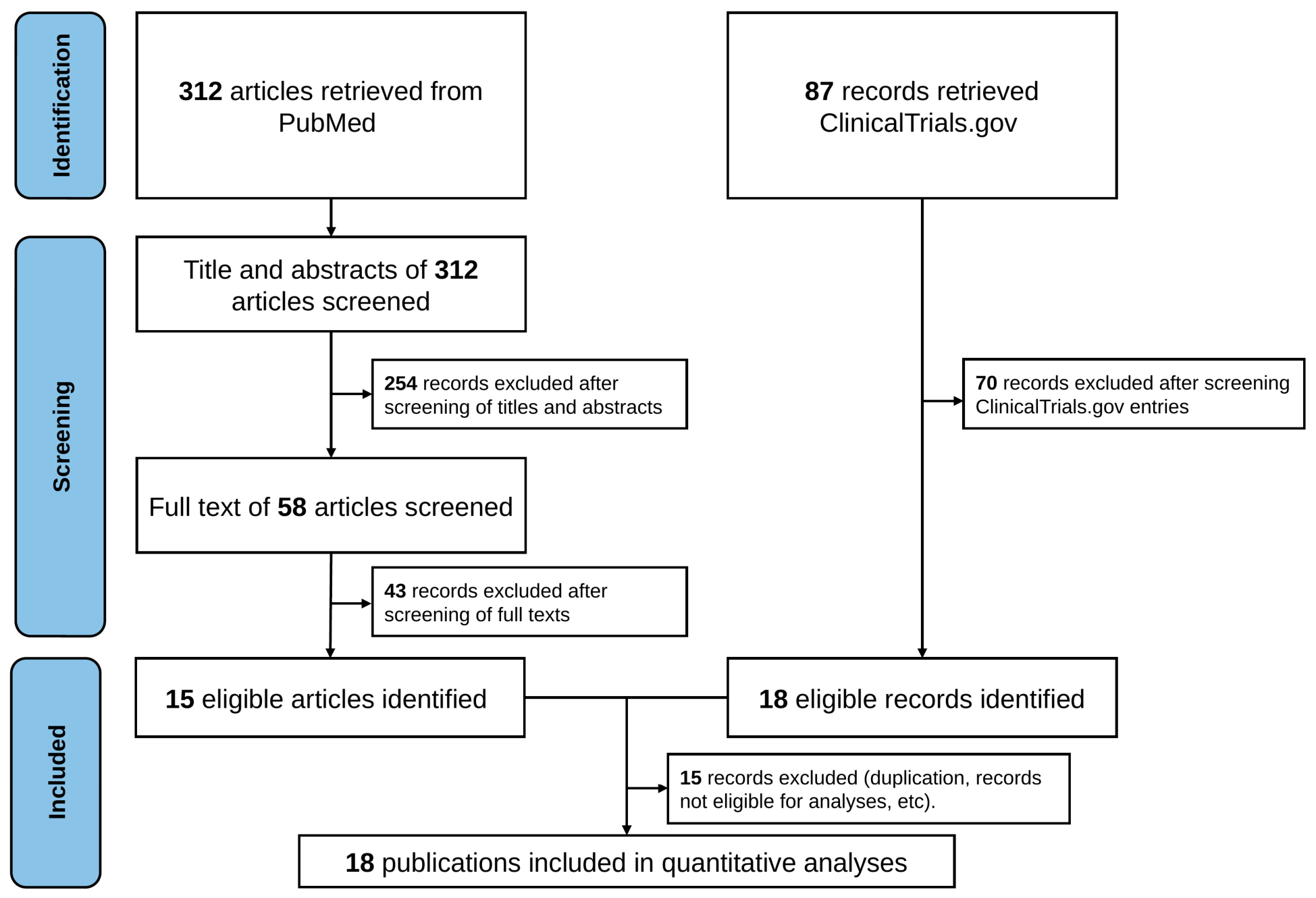
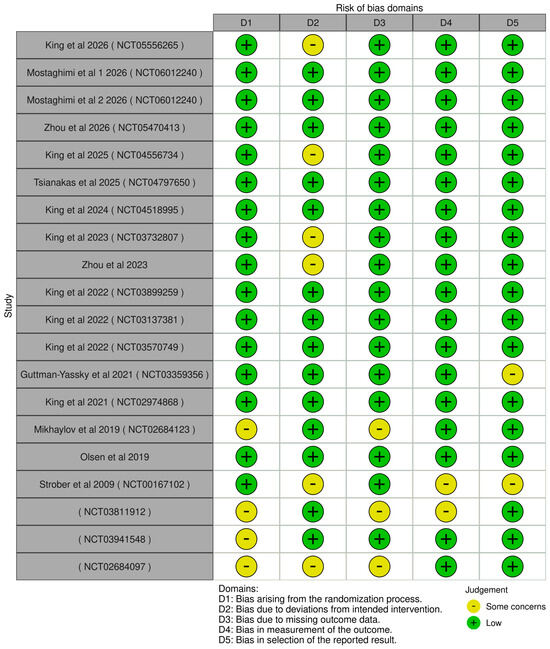
Our systematic search identified a total of 20 trials—across 18 peer-reviewed publications—that met our eligibility criteria (Figure 1) [5,22,23,24,25,26,27,28,29,30,31,32,33,34,35,36,37,38]. A summary of the trials’ study characteristics at baseline is provided in Table 1. Our trial-specific qualitative evaluation of RoB is presented in the traffic plot in Figure 2. Because our network geometry lacked closed loops of direct comparisons, key domains of a Confidence in Network Meta-Analysis (CINeMA) assessment—such as statistical incoherence—could not be meaningfully evaluated.
Figure 1.
A summary of the selection process for eligible studies. This flow diagram depicts the screening process of trials through PubMed and ClinicalTrials.gov and whose data would be included in quantitative analyses.
Table 1.
A summary of study characteristics for the included trials.
Figure 2.
Risk of bias (RoB) assessment for eligible studies [5,22,23,24,25,26,27,28,29,30,31,32,33,34,35,36,37,38]. Evidence quality was conducted at the study (i.e., trial) level. Judgment of each trial’s RoB was based on five domains (Ds): D1 = bias arising from the randomization process, D2 = bias due to deviations from intended interventions, D3 = bias due to missing outcome data, D4 = bias in measurement of the outcome, and D5 = bias in selection of the reported result. Green circles with a plus sign indicate low risk of bias; yellow circles with a minus sign indicate some concerns.
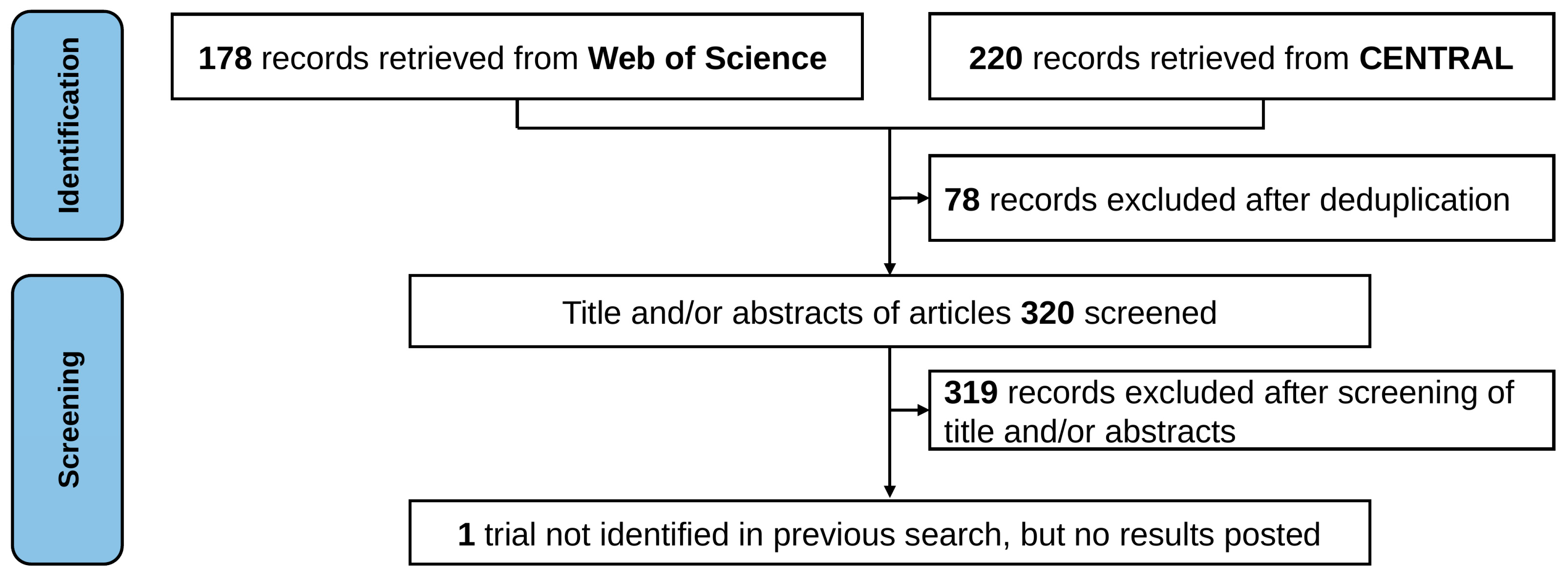
The process of our additional search (that was conducted on 12 November 2026) is depicted in Appendix A; we retrieved 178 and 220 searches from Web of Science and CENTRAL, respectively. Records retrieved from these database searches were deduplicated using the TERA Deduplicator [39], followed by manual verification of duplicate classifications. The additional searches in Web of Science and CENTRAL identified one eligible trial investigating amlitelimab (NCT06444451), which had not been identified in the initial search; however, no published efficacy data were available for this trial.
3.2. Outcome Measures
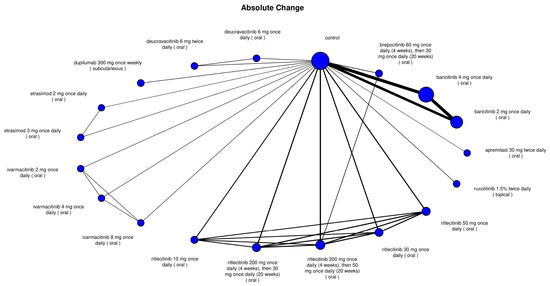
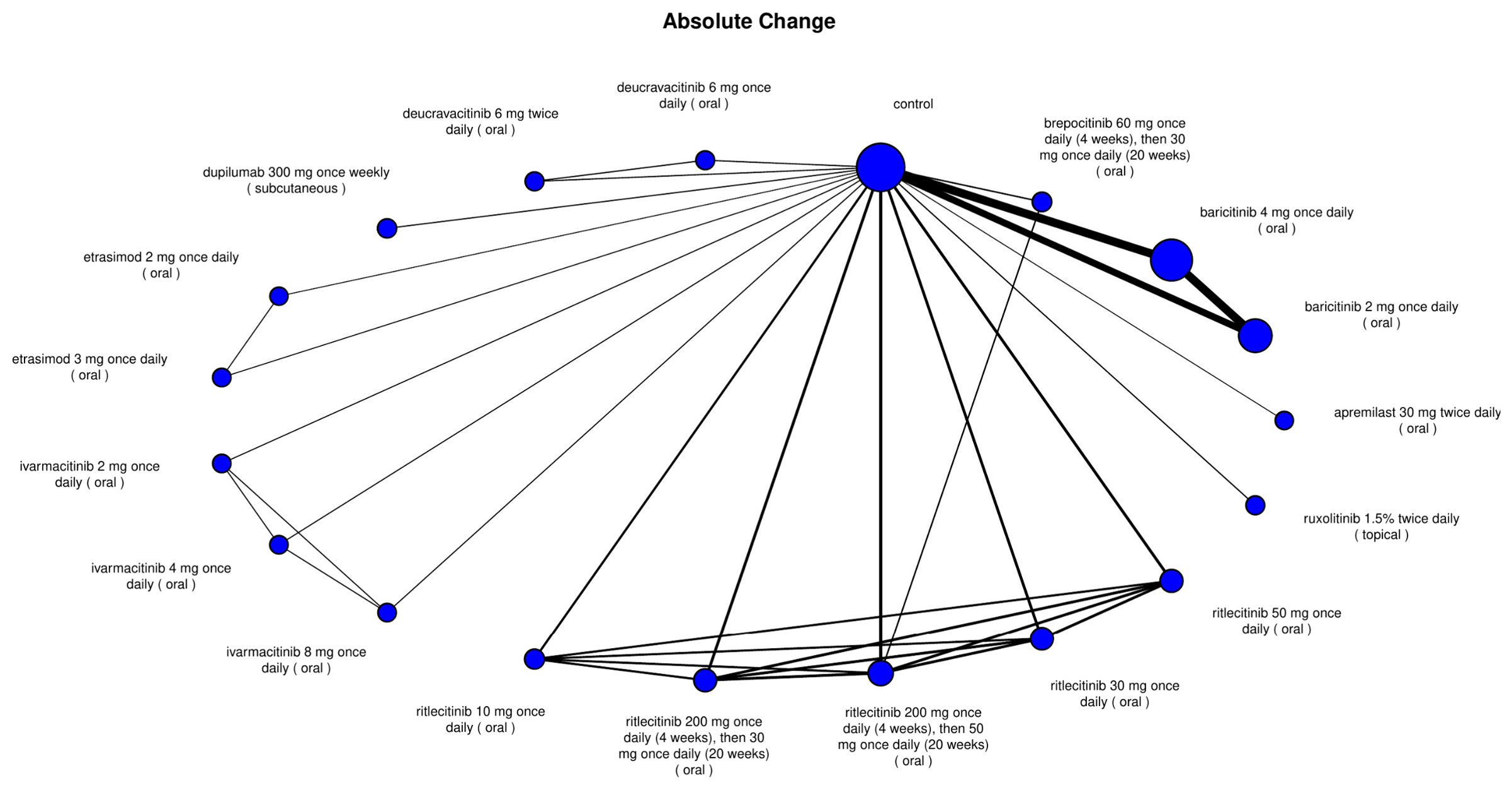
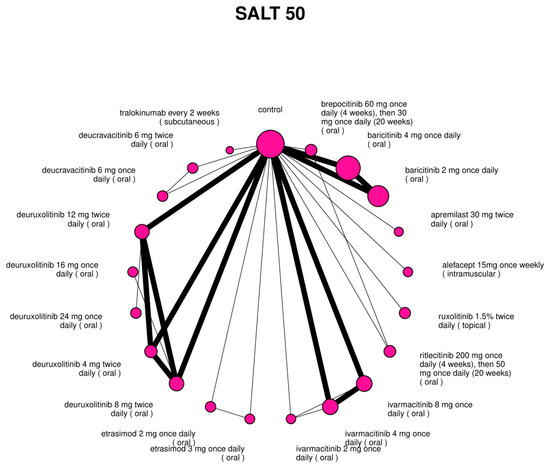
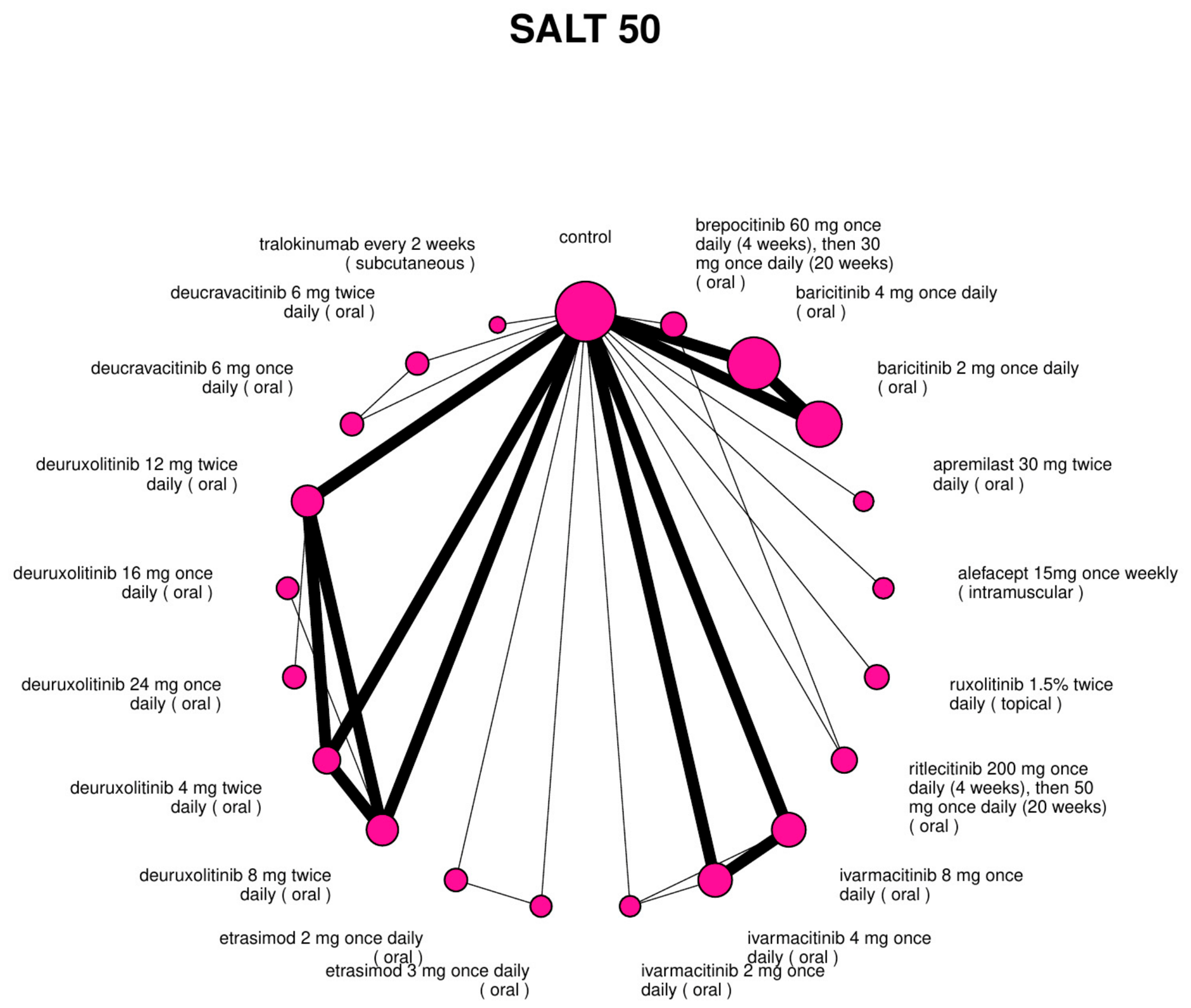
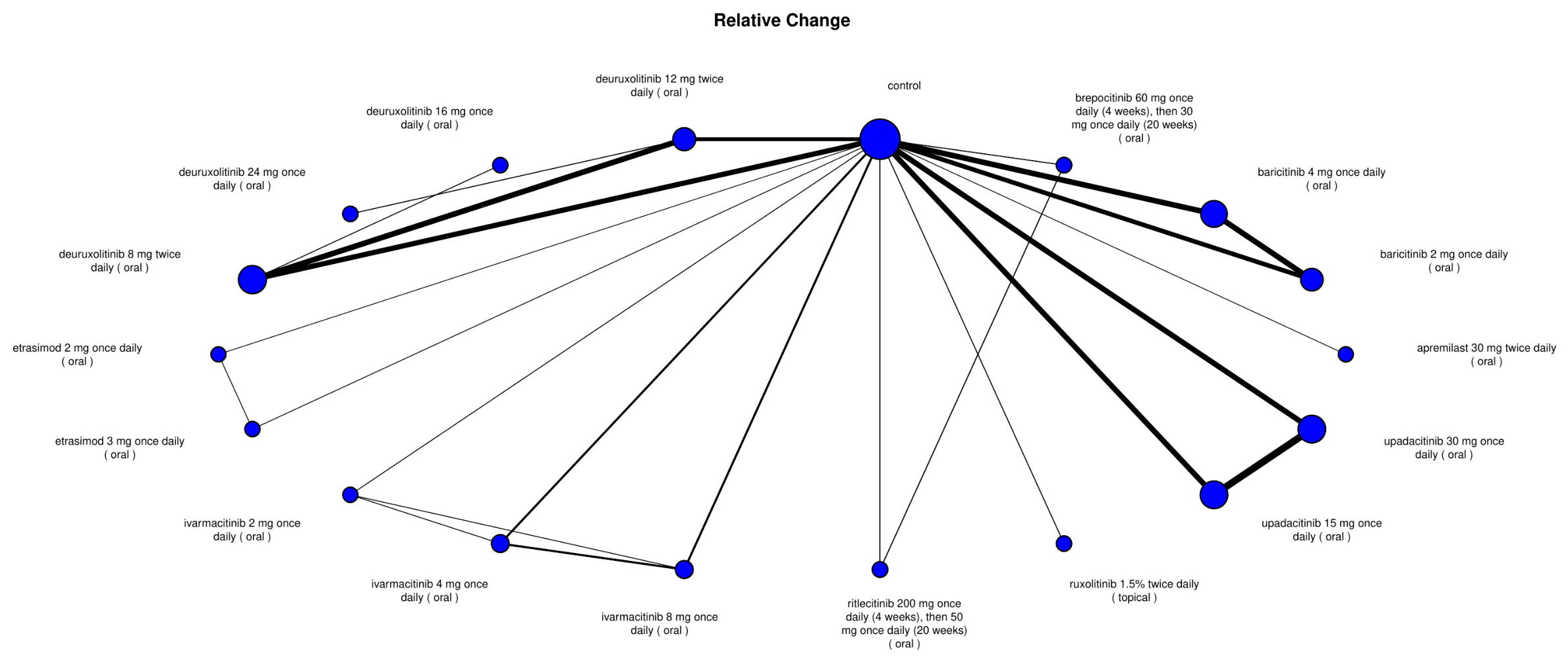
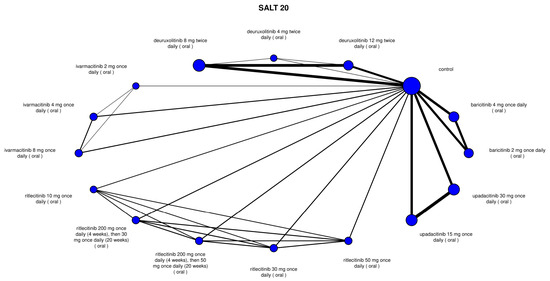
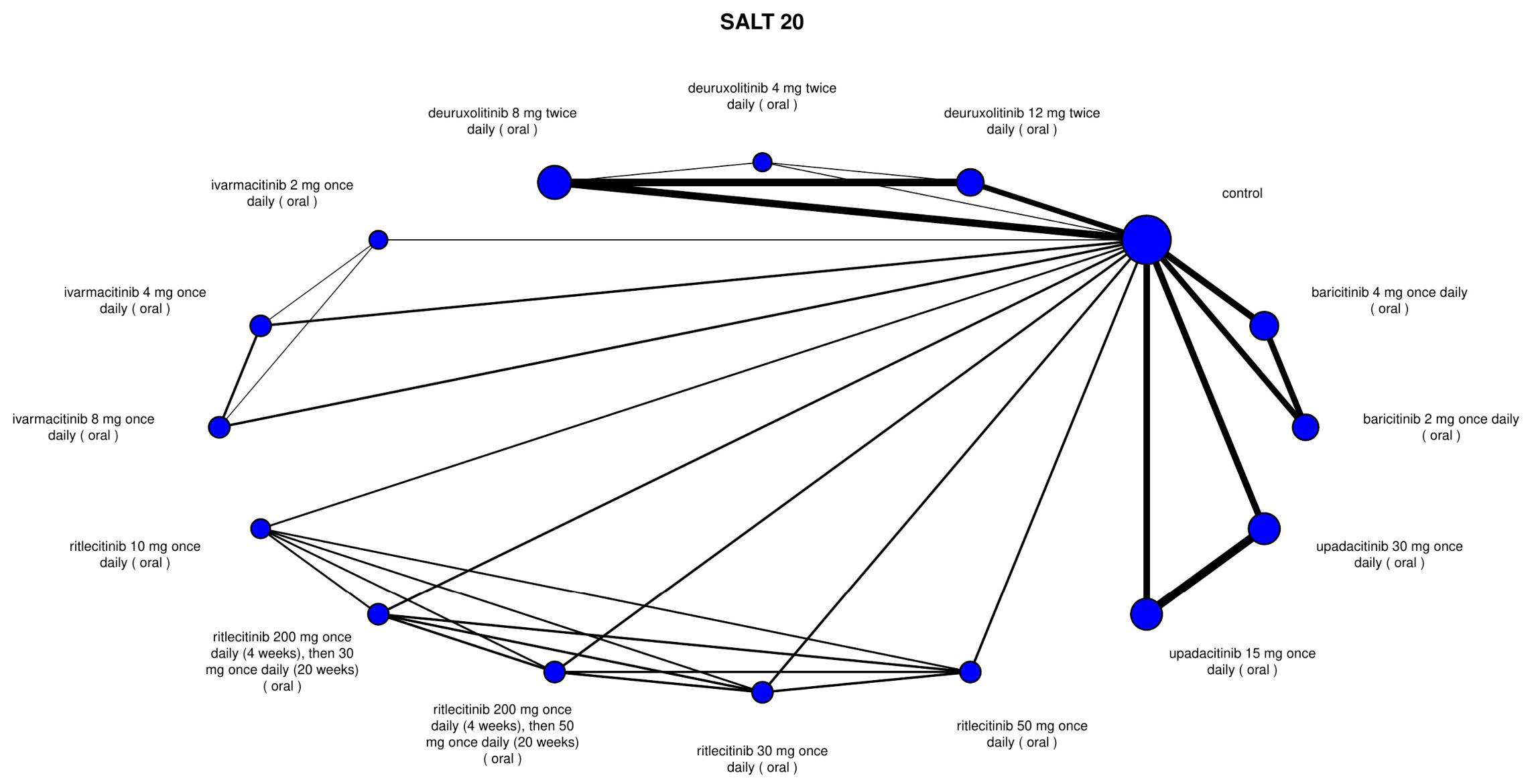
The eligible studies had data that were sufficient for determining the relative efficacy of the monotherapies in terms of four clinically relevant outcomes, namely (1) “proportion of participants who attained SALT score of 20 or lower at 24 weeks (SALT 20)”, (2) “proportion of participants who attained a 50% or greater improvement in SALT score at 24 weeks (SALT 50)”, (3) “absolute mean change in SALT score at 24 weeks”, and (4) “percentage change (i.e., relative change) in SALT score at 24 weeks”. The network plots for absolute change, SALT 50, relative change, and SALT 20 are presented in Figure 3, Figure 4, Figure 5 and Figure 6, respectively. In the respective plots, the thickness of the edges corresponds to the number of participants in the direct comparison.
Figure 3.
Network geometry for absolute change in SALT score. Network of treatment regimens contributing to the Bayesian network meta-analysis of absolute change in Severity of Alopecia Tool (SALT) score at 24 weeks. Nodes represent the individual treatment regimens or control; connections represent direct randomized comparisons.
Figure 4.
Network geometry for SALT 50. Network of treatment regimens contributing to the Bayesian network meta-analysis of the proportion of participants achieving at least a 50% improvement in SALT score at 24 weeks (SALT 50). Nodes represent treatment regimens or control, and connections indicate direct randomized comparisons.
Figure 5.
Network geometry for relative change in SALT score. Network of treatment regimens contributing to the Bayesian network meta-analysis of percentage change from baseline in SALT score at 24 weeks. Nodes represent treatment regimens or control; connections indicate direct randomized comparisons.
Figure 6.
Network geometry for SALT 20. Network of treatment regimens contributing to the Bayesian network meta-analysis of the proportion of participants achieving a SALT score of 20 or lower at 24 weeks (SALT 20). Nodes represent treatment regimens or control; connections indicate direct randomized comparisons.
3.3. Regimens
A total of 27 active treatment regimens were identified across the included studies: alefacept 15 mg once weekly (intramuscular), apremilast 30 mg twice daily (oral), baricitinib 2 mg once daily (oral), baricitinib 4 mg once daily (oral), brepocitinib 60 mg once daily (4 weeks) then 30 mg once daily (20 weeks) (oral), deucravacitinib 6 mg once daily (oral), deucravacitinib 6 mg twice daily (oral), deuruxolitinib 4 mg twice daily (oral), deuruxolitinib 8 mg twice daily (oral), deuruxolitinib 12 mg twice daily (oral), deuruxolitinib 16 mg once daily (oral), deuruxolitinib 24 mg once daily (oral), dupilumab 300 mg once weekly (subcutaneous), etrasimod 2 mg once daily (oral), etrasimod 3 mg once daily (oral), ivarmacitinib 2 mg once daily (oral), ivarmacitinib 4 mg once daily (oral), ivarmacitinib 8 mg once daily (oral), ritlecitinib 10 mg once daily (oral), ritlecitinib 30 mg once daily (oral), ritlecitinib 50 mg once daily (oral), ritlecitinib 200 mg once daily (4 weeks) then 30 mg once daily (20 weeks) (oral), ritlecitinib 200 mg once daily (4 weeks) then 50 mg once daily (20 weeks) (oral), ruxolitinib 1.5% twice daily (topical), tralokinumab every 2 weeks (subcutaneous), upadacitinib 15 mg once daily (oral), and upadacitinib 30 mg once daily (oral) (Table 1). The placebo and vehicle arms were amalgamated into a “control” node, and details of the regimen’s agent class are provided in Table 2.
Table 2.
Pharmacological classes of agents across included studies.
3.4. Main Analyses and Sensitivity Analyses
Convergence diagnostics indicated satisfactory convergence across all four Bayesian NMA models. The Gelman–Rubin potential scale reduction factor ranged from 1.00 to 1.01 across model parameters. Both bulk and tail effective sample sizes (ESS) exceeded 400 for all parameters, with minimum values of approximately 794 and 1077, respectively, indicating adequate posterior sampling.
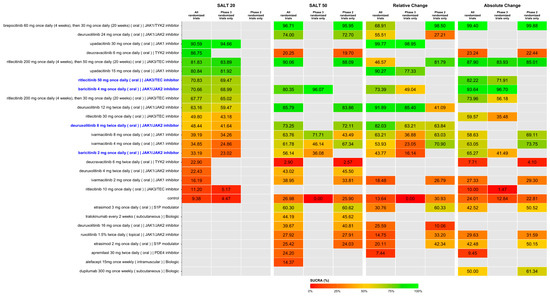
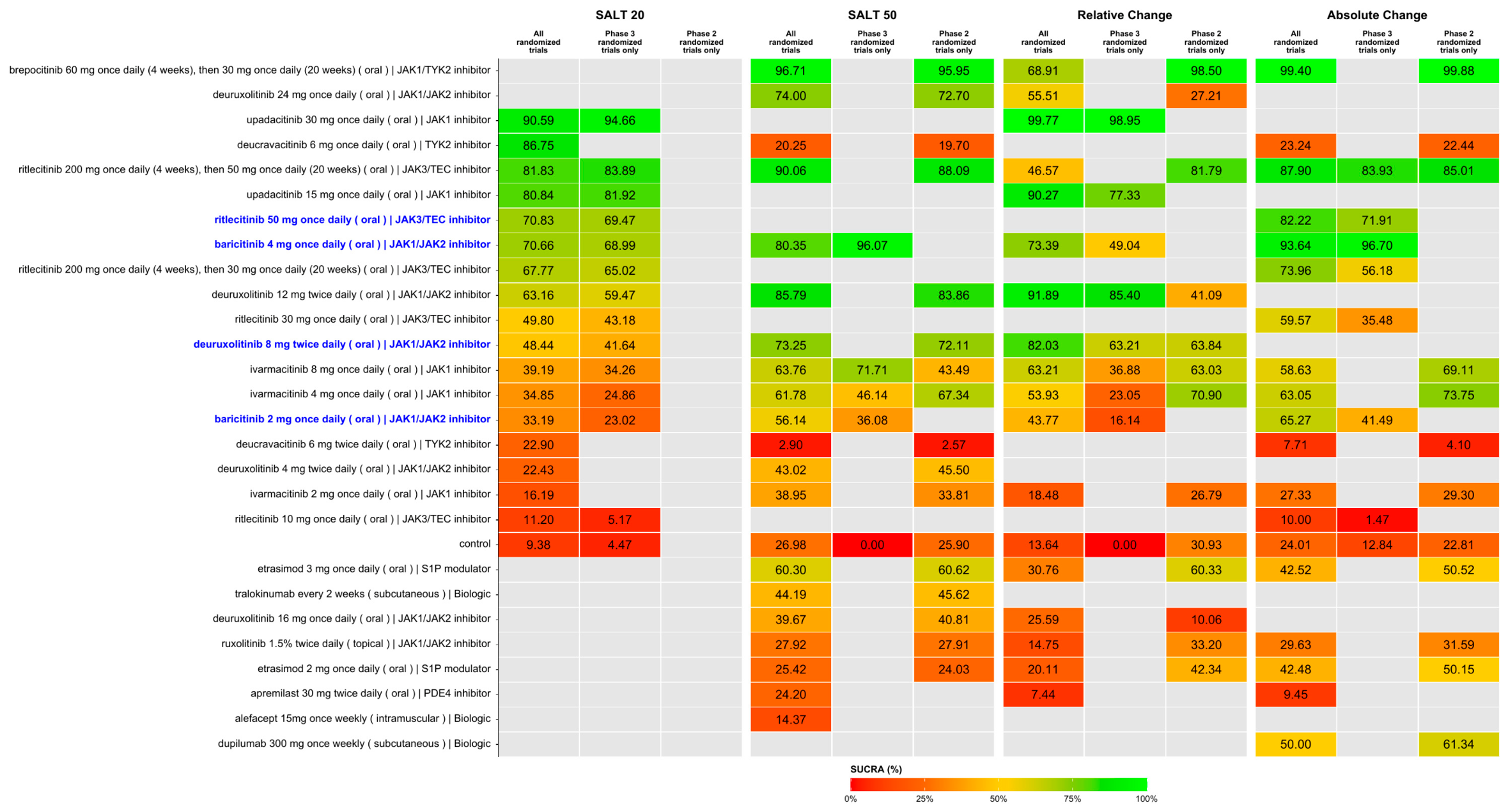
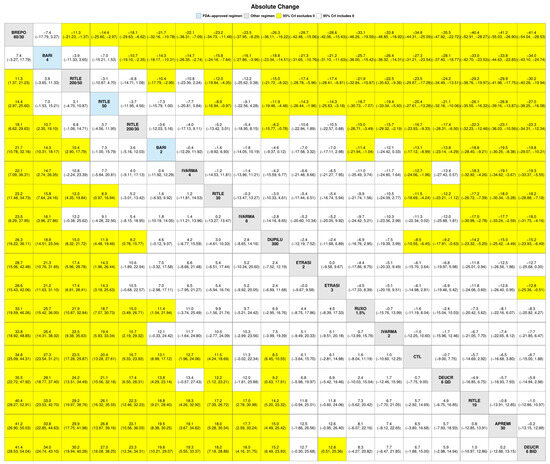
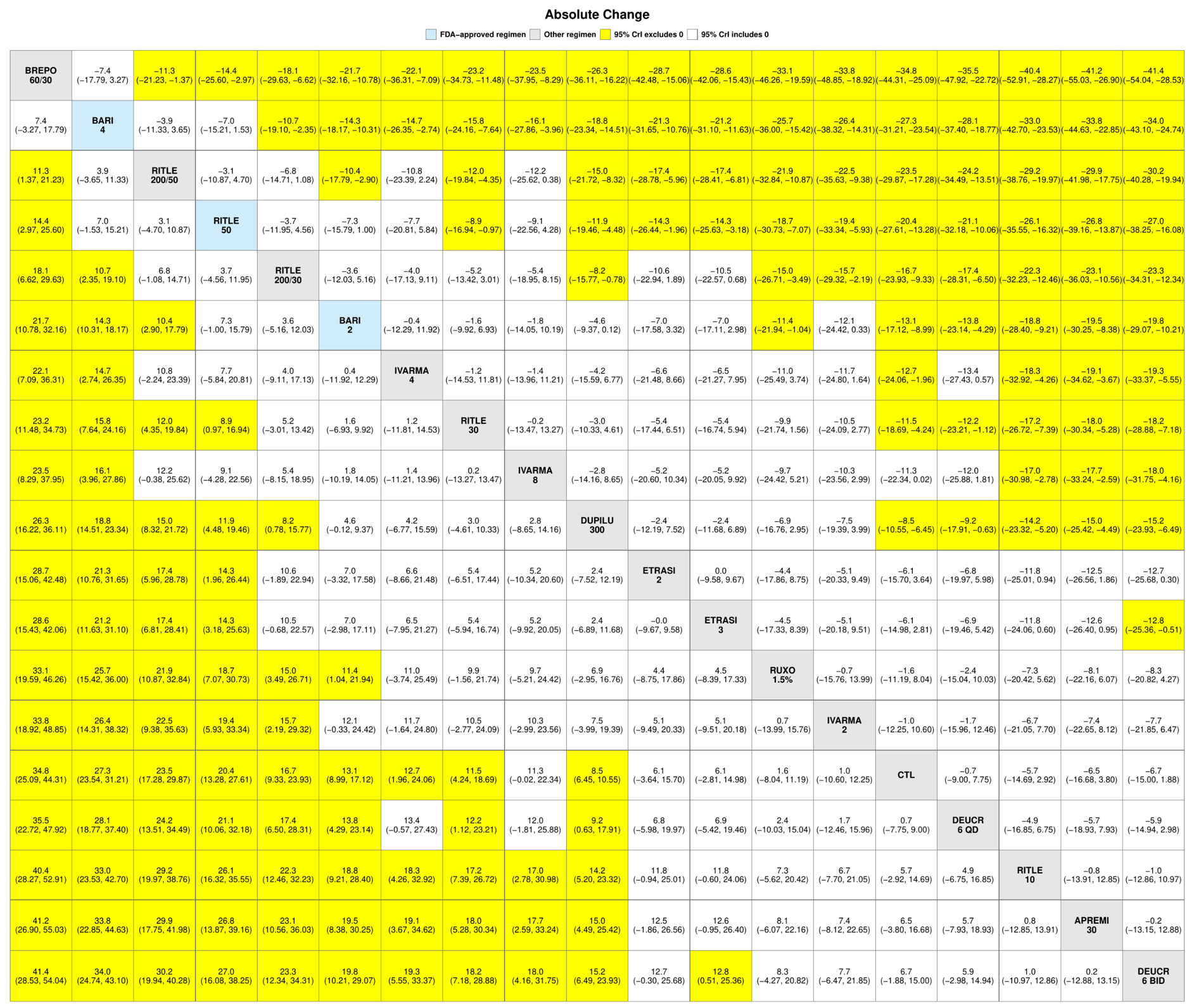
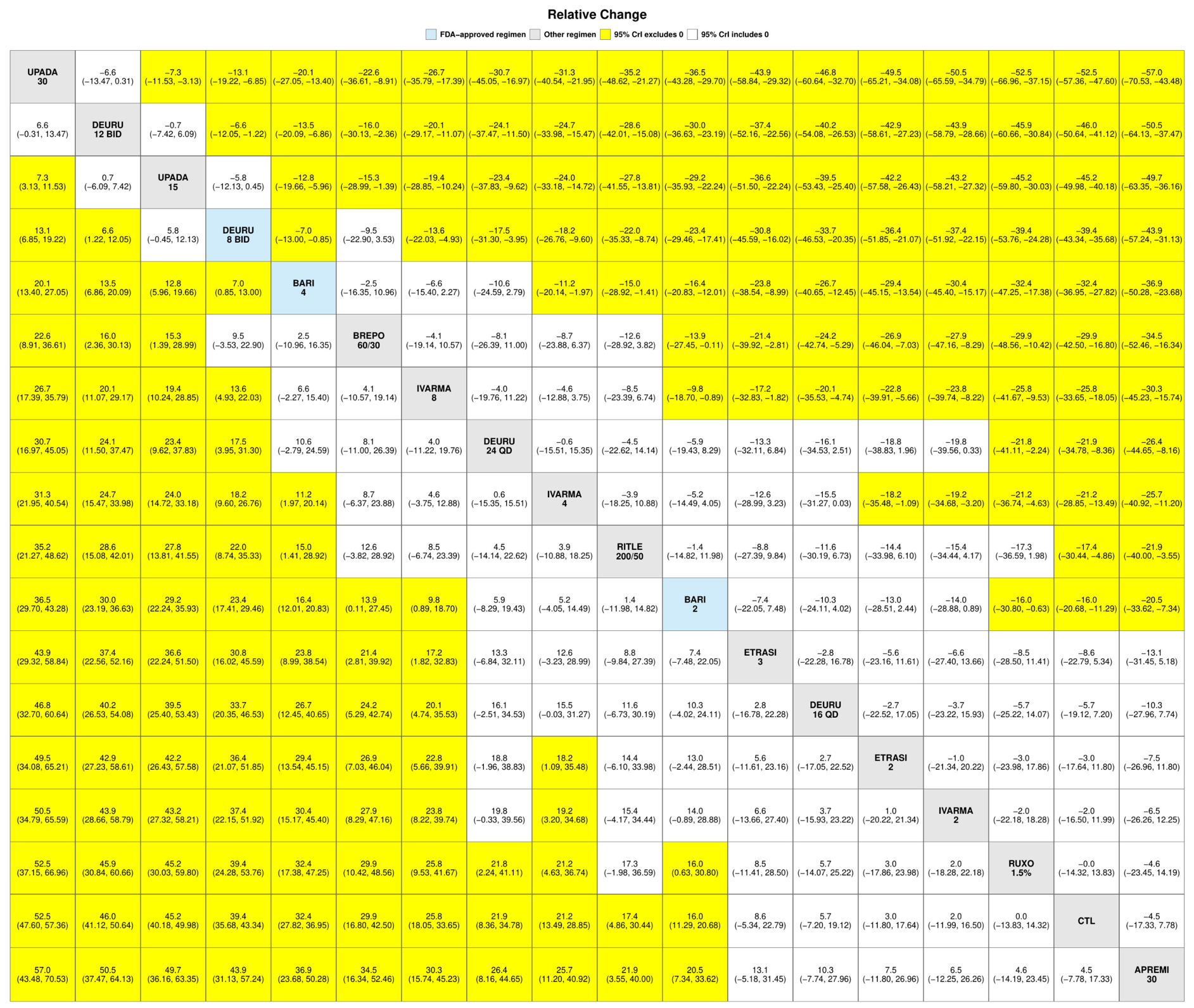
The SUCRA values for each regimen, derived from the main and phase-specific analyses, are presented in Figure 7. Pairwise relative treatment effects from the main analyses are presented in league tables for absolute change, relative change, SALT 20, and SALT 50 in Figure 8, Figure 9, Figure 10 and Figure 11, respectively. SUCRA rankings were generally consistent between the main and phase-specific analyses (Figure 7).
Figure 7.
Treatment efficacy rankings across outcomes and trial phases. Heatmap of surface under the cumulative ranking curve (SUCRA) values for SALT 20, SALT 50, relative change, and absolute change in SALT score at 24 weeks. Results are displayed for all randomized trials and separately for Phase 3 and Phase 2 randomized trials. Treatment labels identify drug regimens and pharmacologic classes. Higher SUCRA percentages indicate more favorable relative efficacy rankings; blank cells indicate that a regimen was not represented in the corresponding analysis. Blue bold texts indicate regimens approved by the Food and Drug Administration (FDA) for alopecia areata. Abbreviations: AA, alopecia areata; BID, twice daily; JAK, Janus kinase inhibitor; mg, milligram; PDE4, phosphodiesterase 4 inhibitor; QD, once daily; SALT, Severity of Alopecia Tool; SALT 20, SALT score ≤ 20; SALT 50, ≥50% improvement from baseline SALT score; S1P, sphingosine-1-phosphate receptor modulator; SUCRA, surface under the cumulative ranking curve; TYK2, tyrosine kinase 2 inhibitor.
Figure 8.
League table of comparative efficacy for absolute change in SALT score. Pairwise treatment comparisons from the Bayesian network meta-analysis of absolute change in SALT score at 24 weeks. Cells present mean differences with 95% credible intervals (CrIs). Regimens on the diagonal are ordered by descending SUCRA values. The figure distinguishes Food and Drug Administration (FDA)-approved regimens from other regimens and identifies whether the 95% CrI includes or excludes zero (i.e., null value). Abbreviations: BREPO 60/30 = brepocitinib 60 mg once daily for 4 weeks, followed by 30 mg once daily for 20 weeks (oral); BARI 4 = baricitinib 4 mg once daily (oral); RITLE 200/50 = ritlecitinib 200 mg once daily for 4 weeks, followed by 50 mg once daily for 20 weeks (oral); RITLE 50 = ritlecitinib 50 mg once daily (oral); RITLE 200/30 = ritlecitinib 200 mg once daily for 4 weeks, followed by 30 mg once daily for 20 weeks (oral); BARI 2 = baricitinib 2 mg once daily (oral); IVARMA 4 = ivarmacitinib 4 mg once daily (oral); RITLE 30 = ritlecitinib 30 mg once daily (oral); IVARMA 8 = ivarmacitinib 8 mg once daily (oral); DUPILU 300 = dupilumab 300 mg once weekly (subcutaneous); ETRASI 2 = etrasimod 2 mg once daily (oral); ETRASI 3 = etrasimod 3 mg once daily (oral); RUXO 1.5% = ruxolitinib 1.5% twice daily (topical); IVARMA 2 = ivarmacitinib 2 mg once daily (oral); CTL = control (placebo/vehicle); DEUCR 6 QD = deucravacitinib 6 mg once daily (oral); RITLE 10 = ritlecitinib 10 mg once daily (oral); APREMI 30 = apremilast 30 mg twice daily (oral); DEUCR 6 BID = deucravacitinib 6 mg twice daily (oral).
Figure 9.
League table of comparative efficacy for relative change in SALT score. Pairwise treatment comparisons from the Bayesian network meta-analysis of relative (percentage) change in SALT score at 24 weeks. Cells present mean differences with 95% CrIs. Regimens on the diagonal are ordered by descending SUCRA values. Figure annotations distinguish Food and Drug Administration (FDA)-approved regimens and indicate whether each 95% CrI includes or excludes zero (i.e., null value). Abbreviations: UPADA 30 = upadacitinib 30 mg once daily (oral); DEURU 12 BID = deuruxolitinib 12 mg twice daily (oral); UPADA 15 = upadacitinib 15 mg once daily (oral); DEURU 8 BID = deuruxolitinib 8 mg twice daily (oral); BARI 4 = baricitinib 4 mg once daily (oral); BREPO 60/30 = brepocitinib 60 mg once daily for 4 weeks, followed by 30 mg once daily for 20 weeks (oral); IVARMA 8 = ivarmacitinib 8 mg once daily (oral); DEURU 24 QD = deuruxolitinib 24 mg once daily (oral); IVARMA 4 = ivarmacitinib 4 mg once daily (oral); RITLE 200/50 = ritlecitinib 200 mg once daily for 4 weeks, followed by 50 mg once daily for 20 weeks (oral); BARI 2 = baricitinib 2 mg once daily (oral); ETRASI 3 = etrasimod 3 mg once daily (oral); DEURU 16 QD = deuruxolitinib 16 mg once daily (oral); ETRASI 2 = etrasimod 2 mg once daily (oral); IVARMA 2 = ivarmacitinib 2 mg once daily (oral); RUXO 1.5% = ruxolitinib 1.5% twice daily (topical); CTL = control (placebo/vehicle); APREMI 30 = apremilast 30 mg twice daily (oral).
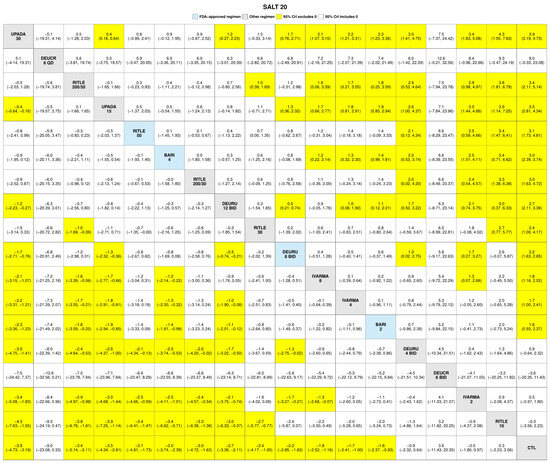
Figure 10.
League table of comparative efficacy for SALT 20. Pairwise treatment comparisons from the Bayesian network meta-analysis of SALT 20 at 24 weeks. Cells present log odds ratio (logOR) with 95% CrIs. Regimens on the diagonal are ordered by descending SUCRA values. Figure annotations distinguish Food and Drug Administration (FDA)-approved regimens and indicate whether each 95% CrI includes or excludes zero (i.e., null value). Abbreviations: UPADA 30 = upadacitinib 30 mg once daily (oral); DEUCR 6 QD = deucravacitinib 6 mg once daily (oral); RITLE 200/50 = ritlecitinib 200 mg once daily for 4 weeks, followed by 50 mg once daily for 20 weeks (oral); UPADA 15 = upadacitinib 15 mg once daily (oral); RITLE 50 = ritlecitinib 50 mg once daily (oral); BARI 4 = baricitinib 4 mg once daily (oral); RITLE 200/30 = ritlecitinib 200 mg once daily for 4 weeks, followed by 30 mg once daily for 20 weeks (oral); DEURU 12 BID = deuruxolitinib 12 mg twice daily (oral); RITLE 30 = ritlecitinib 30 mg once daily (oral); DEURU 8 BID = deuruxolitinib 8 mg twice daily (oral); IVARMA 8 = ivarmacitinib 8 mg once daily (oral); IVARMA 4 = ivarmacitinib 4 mg once daily (oral); BARI 2 = baricitinib 2 mg once daily (oral); DEURU 4 BID = deuruxolitinib 4 mg twice daily (oral); DEUCR 6 BID = deucravacitinib 6 mg twice daily (oral); IVARMA 2 = ivarmacitinib 2 mg once daily (oral); RITLE 10 = ritlecitinib 10 mg once daily (oral); CTL = control (placebo/vehicle).
Figure 11.
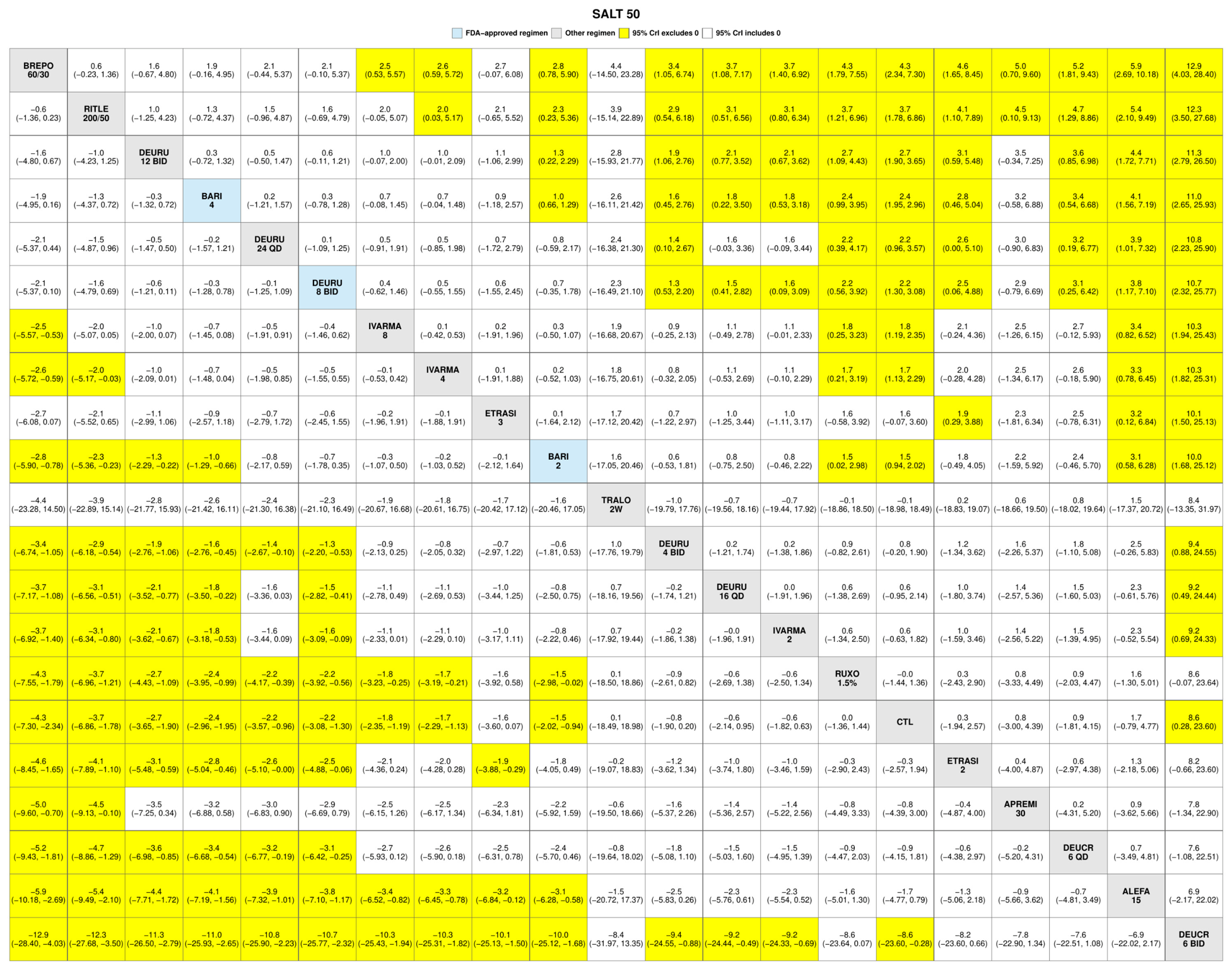
League table of comparative efficacy for SALT 50. Pairwise treatment comparisons from the Bayesian network meta-analysis of SALT 50 at 24 weeks. Cells present log odds ratio (logOR) with 95% CrIs. Regimens on the diagonal are ordered by descending SUCRA values. Figure annotations distinguish Food and Drug Administration (FDA)-approved regimens and indicate whether each 95% CrI includes or excludes zero (i.e., null value). Abbreviations: BREPO 60/30 = brepocitinib 60 mg once daily for 4 weeks, followed by 30 mg once daily for 20 weeks (oral); RITLE 200/50 = ritlecitinib 200 mg once daily for 4 weeks, followed by 50 mg once daily for 20 weeks (oral); DEURU 12 BID = deuruxolitinib 12 mg twice daily (oral); BARI 4 = baricitinib 4 mg once daily (oral); DEURU 24 QD = deuruxolitinib 24 mg once daily (oral); DEURU 8 BID = deuruxolitinib 8 mg twice daily (oral); IVARMA 8 = ivarmacitinib 8 mg once daily (oral); IVARMA 4 = ivarmacitinib 4 mg once daily (oral); ETRASI 3 = etrasimod 3 mg once daily (oral); BARI 2 = baricitinib 2 mg once daily (oral); TRALO 2W = tralokinumab every 2 weeks (subcutaneous); dose not specified in Kilim figure; DEURU 4 BID = deuruxolitinib 4 mg twice daily (oral); DEURU 16 QD = deuruxolitinib 16 mg once daily (oral); IVARMA 2 = ivarmacitinib 2 mg once daily (oral); RUXO 1.5% = ruxolitinib 1.5% twice daily (topical); CTL = control (placebo/vehicle); ETRASI 2 = etrasimod 2 mg once daily (oral); APREMI 30 = apremilast 30 mg twice daily (oral); DEUCR 6 QD = deucravacitinib 6 mg once daily (oral); ALEFA 15 = alefacept 15 mg once weekly (intramuscular); DEUCR 6 BID = deucravacitinib 6 mg twice daily (oral).
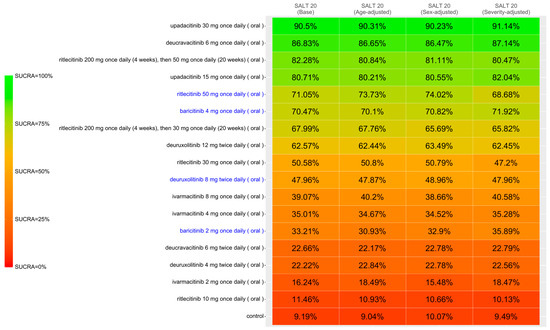
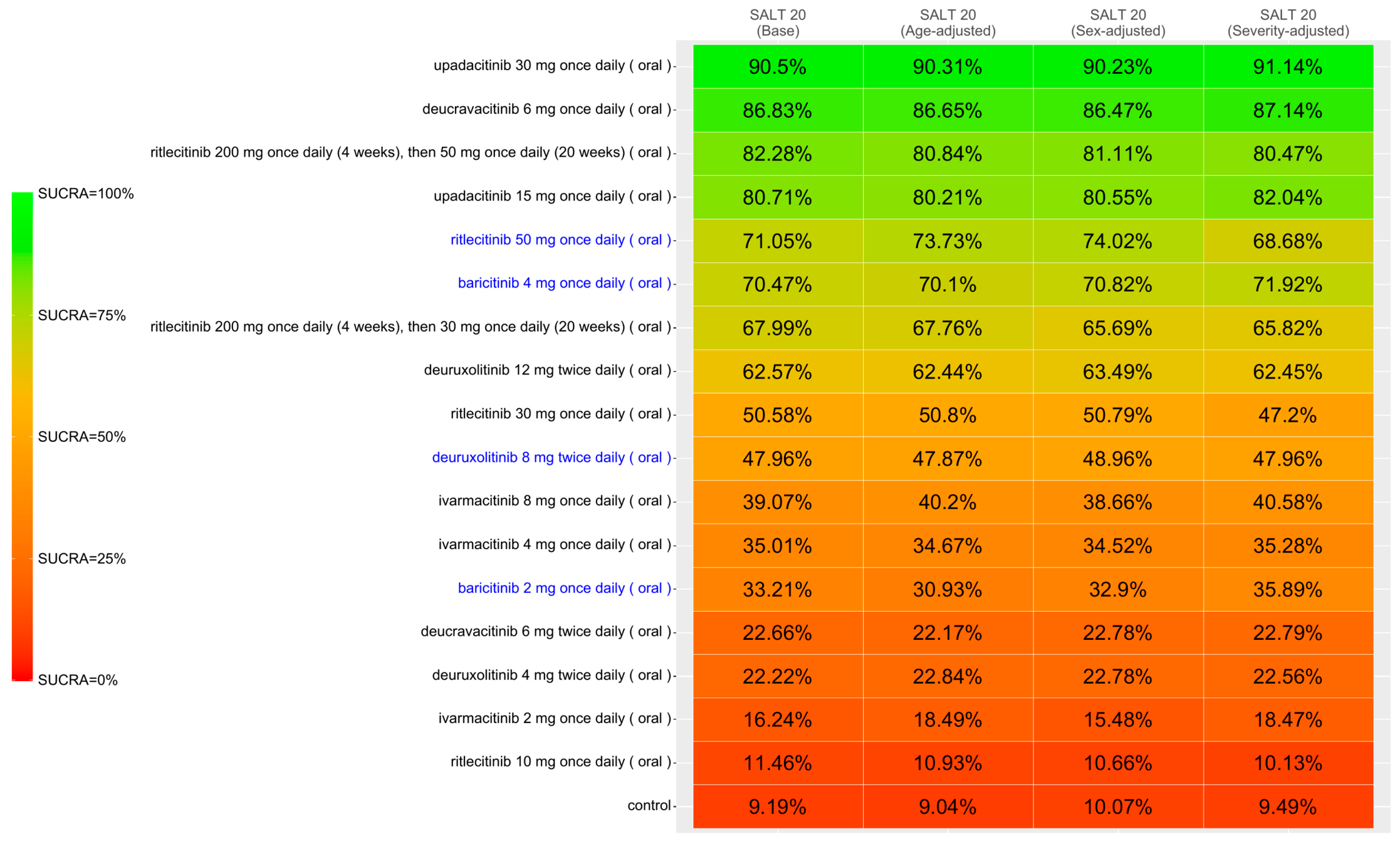
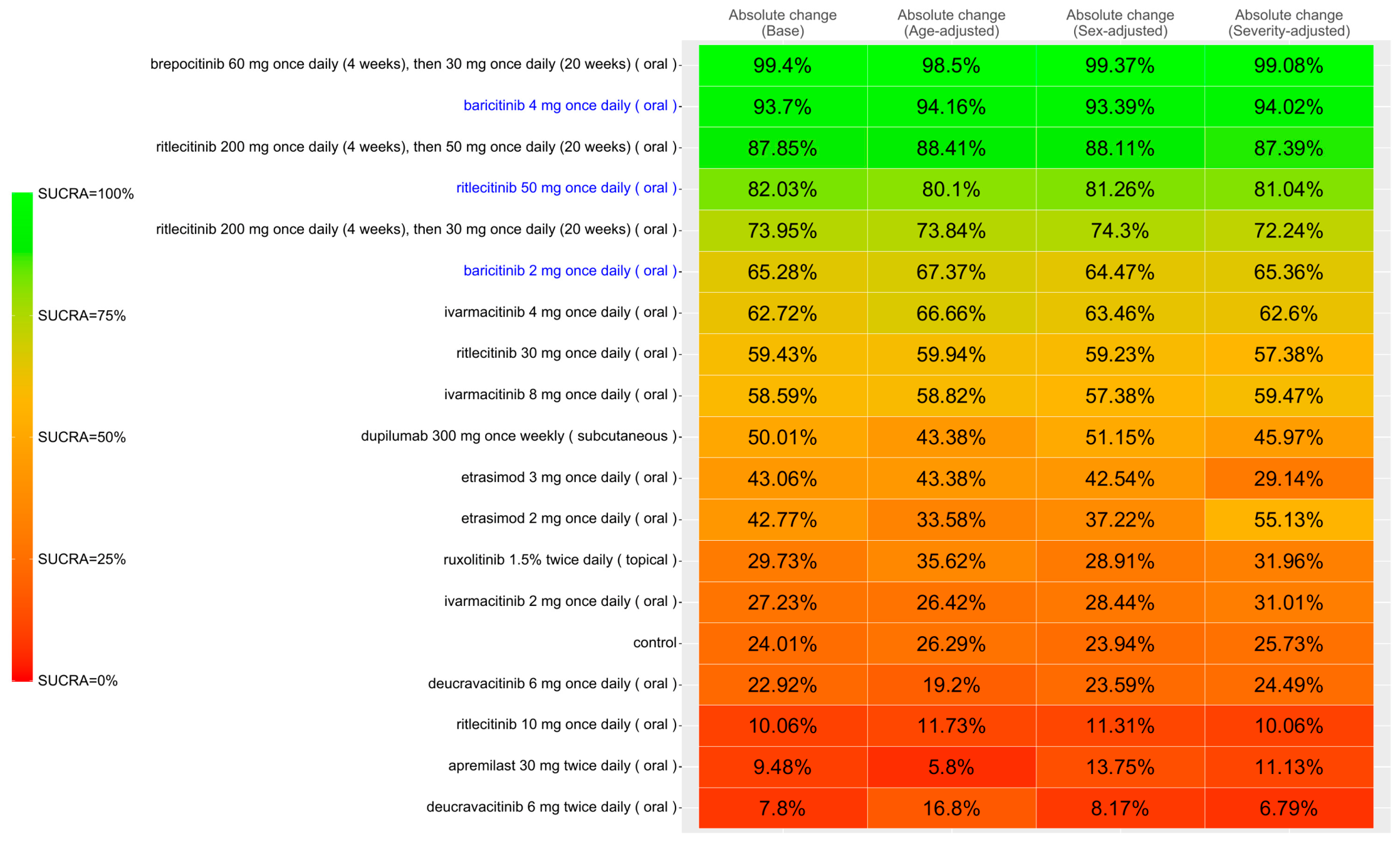
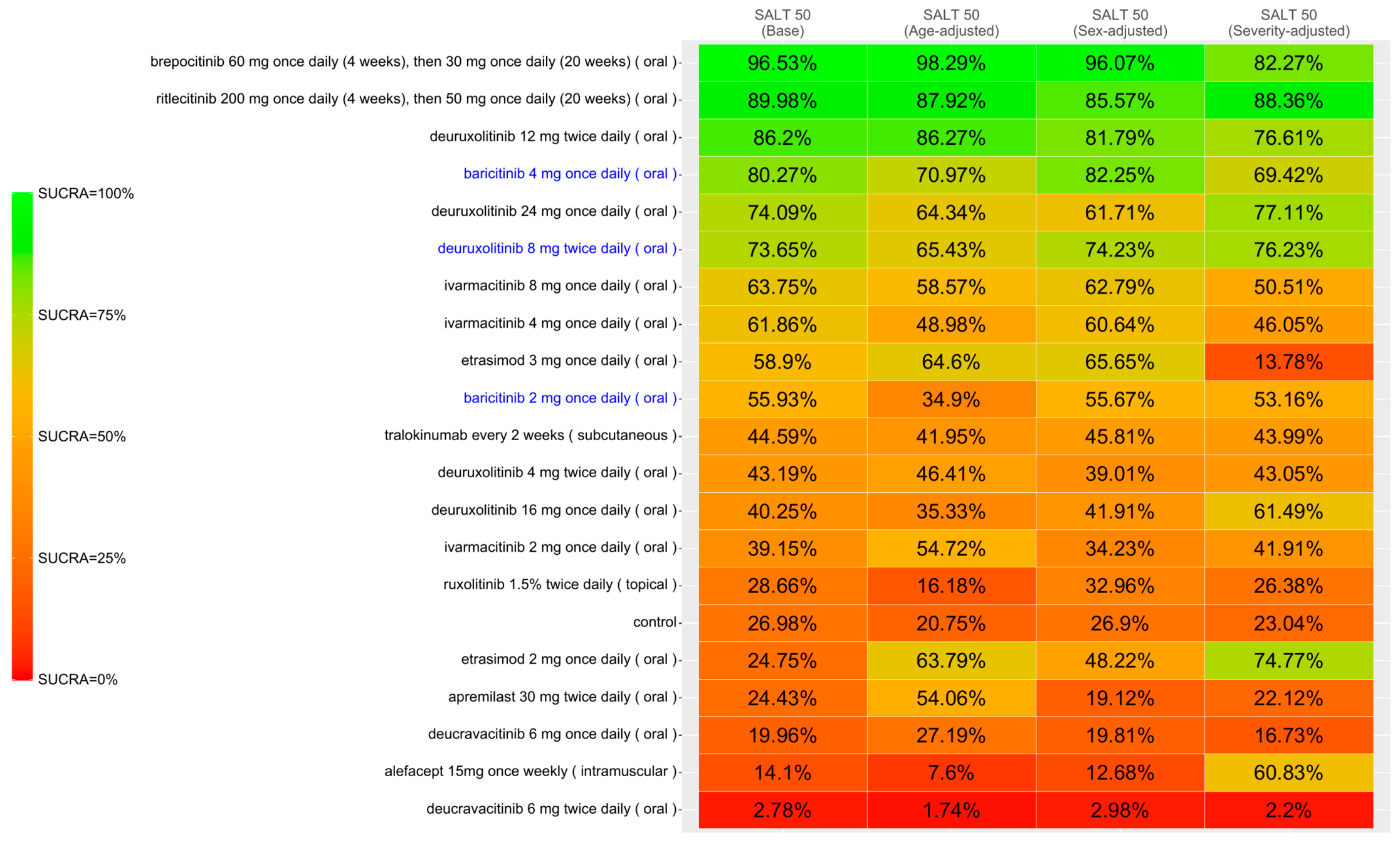
The Kilim plots in Figure 12, Figure 13, Figure 14 and Figure 15 present the results of the covariate-adjusted network meta-regressions for SALT 20, absolute change, relative change, and SALT 50, respectively. For each outcome, the corresponding Kilim plot comprised four columns of SUCRA values representing the main (unadjusted), age-adjusted, sex-adjusted, and baseline disease severity-adjusted analyses. SUCRA rankings remained generally consistent across the main and covariate-adjusted analyses, indicating that treatment rankings were largely unaffected by variation in these potential effect modifiers.
Figure 12.
Sensitivity analyses of SALT 20 treatment rankings. Comparison of SUCRA values for SALT 20 at 24 weeks from the base-case network meta-analysis and network meta-regression models adjusted separately for mean baseline age, proportion of male participants, and mean baseline SALT score (disease severity). Higher SUCRA values indicate more favorable efficacy rankings. Blue texts indicate regimens approved by the Food and Drug Administration (FDA) for alopecia areata.
Figure 13.
Sensitivity analyses of absolute-change treatment rankings. Comparison of SUCRA values for absolute change in SALT score at 24 weeks from the base-case network meta-analysis and network meta-regression models adjusted separately for mean baseline age, proportion of male participants, and mean baseline SALT score. Higher SUCRA values indicate more favorable efficacy rankings. Blue texts indicate regimens approved by the Food and Drug Administration (FDA) for alopecia areata.
Figure 14.
Sensitivity analyses of relative-change treatment rankings. Comparison of SUCRA values for relative change in SALT score at 24 weeks from the base-case network meta-analysis and network meta-regression models adjusted separately for mean baseline age, proportion of male participants, and mean baseline SALT score. Higher SUCRA values indicate more favorable efficacy rankings. Blue labels indicate regimens approved by the Food and Drug Administration (FDA) for alopecia areata.
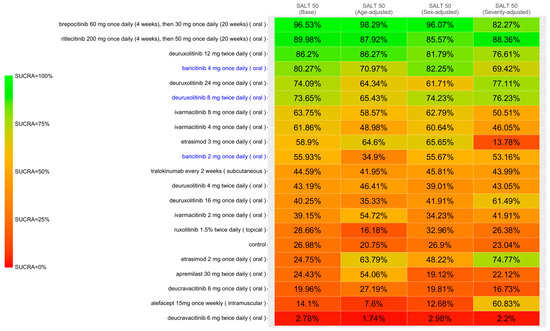
Figure 15.
Sensitivity analyses of SALT 50 treatment rankings. Comparison of SUCRA values for SALT 50 at 24 weeks from the base-case network meta-analysis and network meta-regression models adjusted separately for mean baseline age, proportion of male participants, and mean baseline SALT score. Higher SUCRA values indicate more favorable efficacy rankings. Blue labels indicate regimens approved by the Food and Drug Administration (FDA) for alopecia areata.
Overall, the consistency of SUCRA values across both sets of sensitivity analyses—i.e., phase-specific analyses and covariate-adjusted network meta-regressions—supports the robustness of the treatment rankings derived from the main analyses to differences in trial phase and the baseline characteristics of study populations. Notwithstanding this, residual and unmeasured confounding may exist.
3.5. Transitivity and Consistency
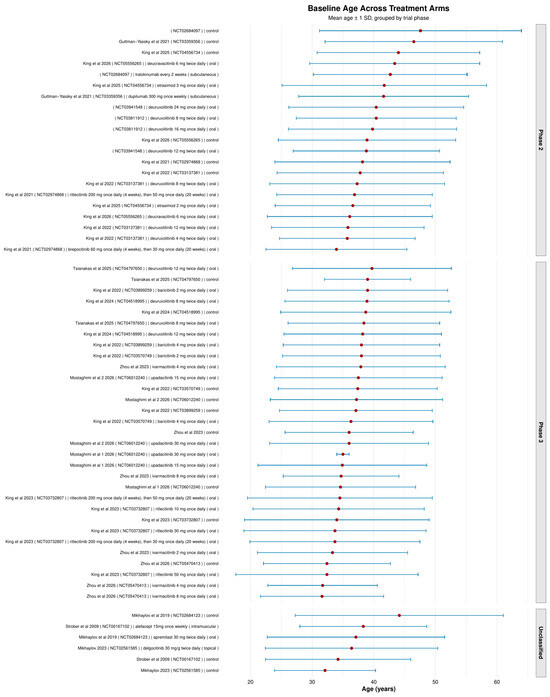
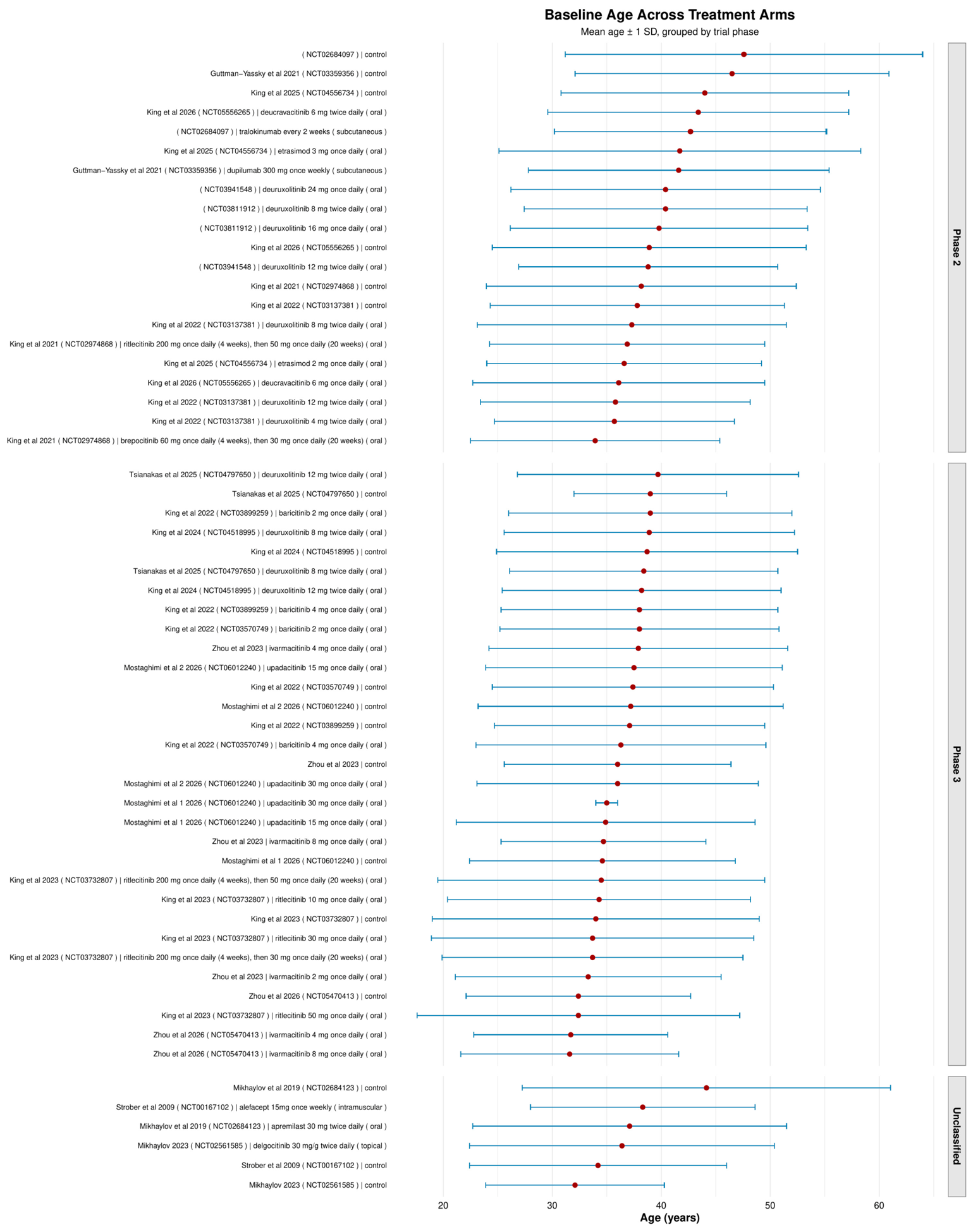
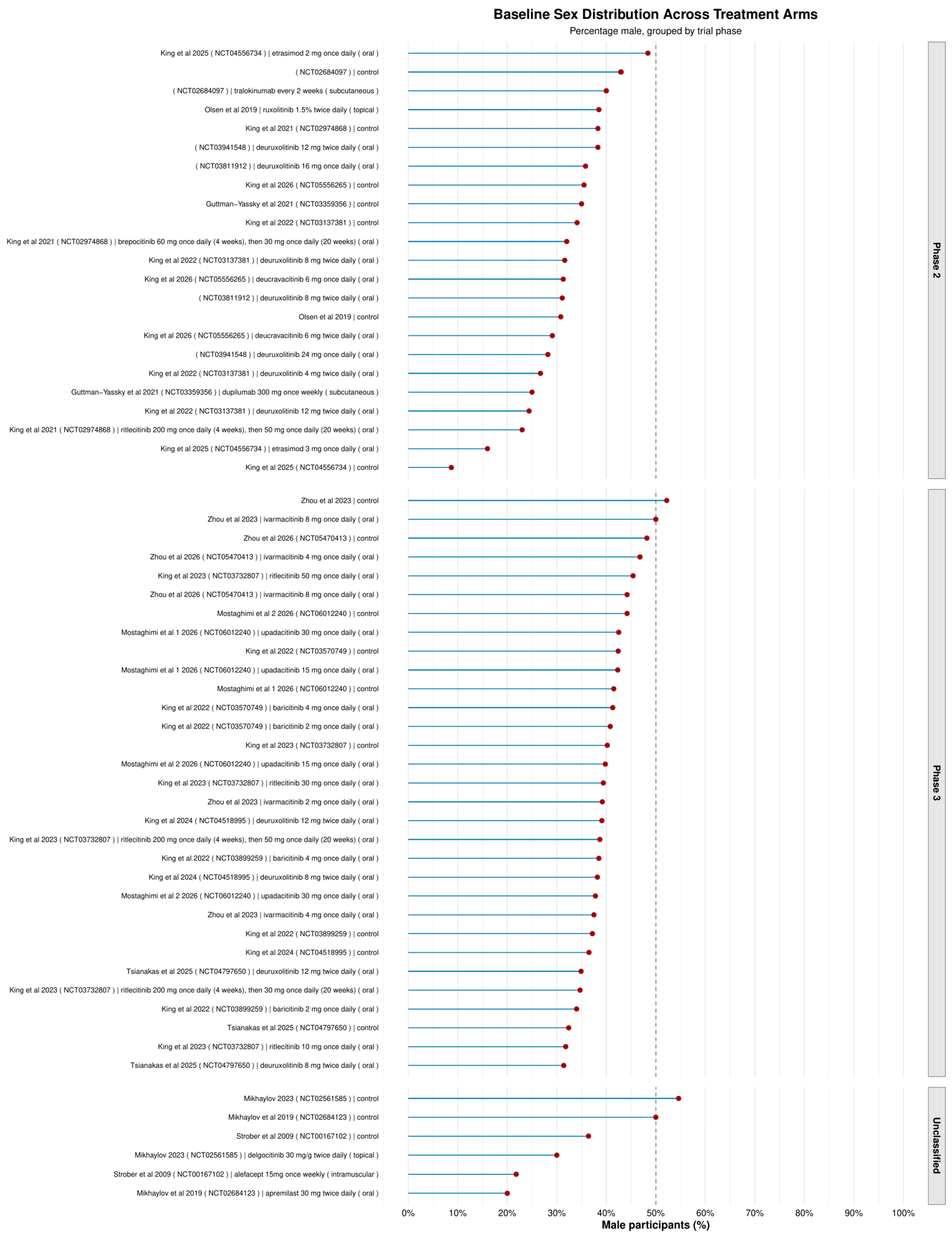
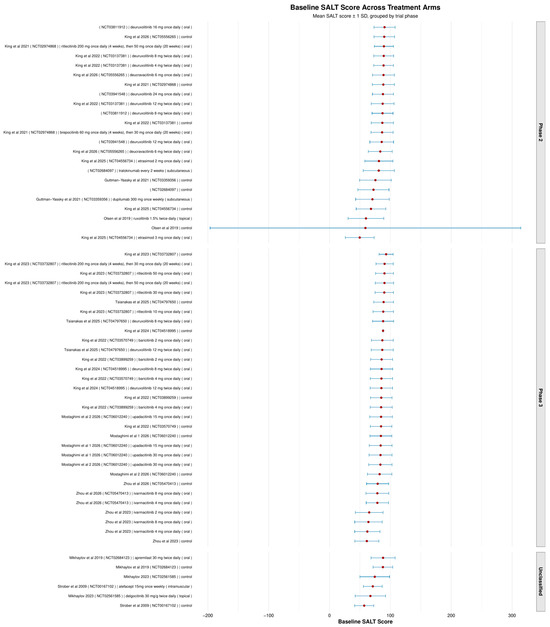
The networks’ geometry precluded node-splitting analyses for inconsistency. The absence of closed loops meant that direct and indirect evidence could not be independently obtained and compared for these treatment comparisons, thereby preventing formal assessment of inconsistency. We reviewed the plots depicting sex distribution, mean age and SALT score—along with their corresponding standard deviations—across all arms of included studies at baseline (Figure 16, Figure 17 and Figure 18), and the distributions support that our networks were transitive.
Figure 16.
Distribution of baseline age by trial phase. Study-arm-level mean age, with error bars representing one standard deviation (SD), grouped by trial phase [5,22,23,24,25,26,27,28,29,30,31,32,33,34,35,36,37,38]. The distribution was examined as part of the assessment of comparability of potential effect modifiers across trials and the transitivity assumption. Red circles indicate study-arm-level means, and blue horizontal lines indicate ± SD.
Figure 17.
Distribution of male participants at baseline by trial phase. Study-arm-level percentage of male participants, grouped by trial phase [5,22,23,24,25,26,27,28,29,30,31,32,33,34,35,36,37,38]. The distribution was examined as part of the assessment of comparability of potential effect modifiers across trials and the transitivity assumption. Red circles indicate the percentage of male participants in each study arm, blue lines extend from 0% to each value, and the dashed vertical line marks 50%.
Figure 18.
Distribution of baseline disease severity by trial phase. Study-arm-level mean baseline SALT score, with error bars representing one SD, grouped by trial phase [5,22,23,24,25,26,27,28,29,30,31,32,33,34,35,36,37,38]. The distribution was examined as part of the assessment of comparability of baseline disease severity across trials and the transitivity assumption. Red circles indicate study-arm-level means, and blue horizontal lines indicate ± SD.
3.6. Tofacitinib: Disconnected Evidence and Exploratory Analyses
Two randomized comparative trials evaluating oral tofacitinib 5 mg twice daily—Almutairi et al. (2019) [40] and Paracha et al. (2024) [41]—could not be connected to the primary treatment network because their active comparators were not evaluated in any of the connected trials. Furthermore, Paracha et al. (2024) [41] enrolled a mixed adolescent and adult cohort without reporting separate adult-only outcome data, thereby precluding its inclusion in main quantitative syntheses.
To explore the potential relative standing of oral tofacitinib 5 mg twice daily without compromising the integrity of the primary randomized network, we conducted separate, hypothesis-generating exploratory NMAs where data from Almutairi et al. (2019) [40] were incorporated. Although Almutairi et al. (2019) [40] used an open-label randomized design rather than the double-blind, placebo-controlled design, it met our core eligibility criteria as a prospective randomized comparative trial in adults with severe alopecia areata. Following methodological frameworks for disconnected networks proposed by Leahy et al. (2019) [42] and Cameron et al. (2015) [43], we connected the arms of Almutairi et al. (2019) [40] to the primary network by matching them to a reference study with comparable baseline characteristics. However, matching across separate trials breaks within study randomization and does not guarantee exchangeability. We systematically tested all 20 possible single-study connection configurations across the primary network to assess sensitivity to the choice of matching study.
Across all 20 matching configurations, oral tofacitinib 5 mg twice daily consistently ranked among the top interventions (exploratory SUCRA range: 88.82–99.93%), alongside oral ruxolitinib 20 mg twice daily (exploratory SUCRA range: 81.92–94.84%), with minimal variation in the overall treatment hierarchy (Supplementary Figure S1). Using Mikhaylov et al. (2019) [22] as the primary matching anchor based on closest overall alignment in baseline age, sex distribution, and SALT score (Figure 16, Figure 17 and Figure 18), pairwise exploratory effect estimates for all regimens—including oral tofacitinib 5 mg twice daily—are presented in Supplementary Figure S2. These findings are strictly exploratory and are kept separate from our primary analyses.
3.7. Ranks for Efficacy: An Overview
Upadacitinib 30 mg once daily (oral) ranked most efficacious for SALT 20 (SUCRA = 90.5%) and relative change (SUCRA = 99.8%). We also found brepocitinib 60 mg once daily (4 weeks), then 30 mg once daily (20 weeks) (oral) to rank high for SALT 50 (SUCRA = 96.5%) and absolute change (SUCRA = 99.4%). Baricitinib 4 mg once daily (oral) ranked moderately high for SALT 20 (SUCRA = 70.47%), SALT 50 (SUCRA = 80.27%), relative change (SUCRA = 73.51%) and absolute change (SUCRA = 93.7%) (Figure 7).
4. Discussion
We conducted an NMA study that determined the relative efficacy of monotherapy with JAK inhibitors and small-molecule agents in adults with moderate-to-severe AA. Our search, which was conducted on 10 September 2026—without date restrictions—identified 20 eligible trials [5,22,23,24,25,26,27,28,29,30,31,32,33,34,35,36,37,38]. Non-English publications were excluded because we lacked access to certified medical translation services that are needed to reliably appraise complex phenomena (without misinterpretation) in another language.
While our visual assessments of age, sex, and baseline disease severity across treatment arms (Figure 16, Figure 17 and Figure 18) provide supportive evidence for network transitivity, they do not offer definitive confirmation of transitivity. Other clinically relevant covariates—such as alopecia areata subtype (e.g., patchy alopecia areata vs. alopecia totalis (AT) or alopecia universalis (AU)) and disease duration—may act as potential effect modifiers. Because these variables were inconsistently reported across the included trials, residual clinical heterogeneity cannot be entirely ruled out.
We advise that regimens’ SUCRA rankings be interpreted cautiously, as a higher rank does not automatically imply clinically meaningful superiority—especially for interventions supported by small studies or sparse data with wide credible intervals. This is because SUCRA values do not account for the magnitude of treatment differences; therefore, clinical decision-making should prioritize pairwise relative effect estimates and corresponding 95% credible intervals along with trials’ evidence quality.
Evaluating safety outcomes—such as serious adverse events, treatment discontinuations due to adverse events, serious infections, or herpes zoster—was beyond the predefined scope of the current study, which focused specifically on synthesizing comparative short-term efficacy data. However, treatment decisions for patients with moderate-to-severe AA, particularly when considering long-term therapy with immunomodulatory agents such as JAK inhibitors, would not be based on efficacy alone and must carefully weigh each intervention’s safety profile. Therefore, we suggest that the SUCRA rankings estimated from our analyses be considered alongside existing safety data when determining the optimal therapeutic choice. Furthermore, future network meta-analyses would build upon our findings in evaluation of comparative safety outcomes and risk-to-benefit ratio to better guide real-world clinical decision-making.
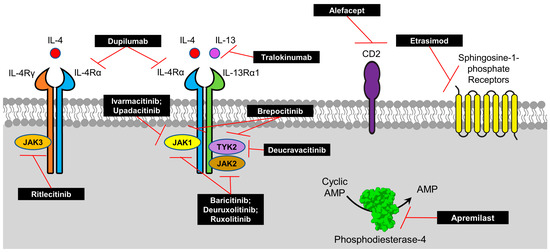
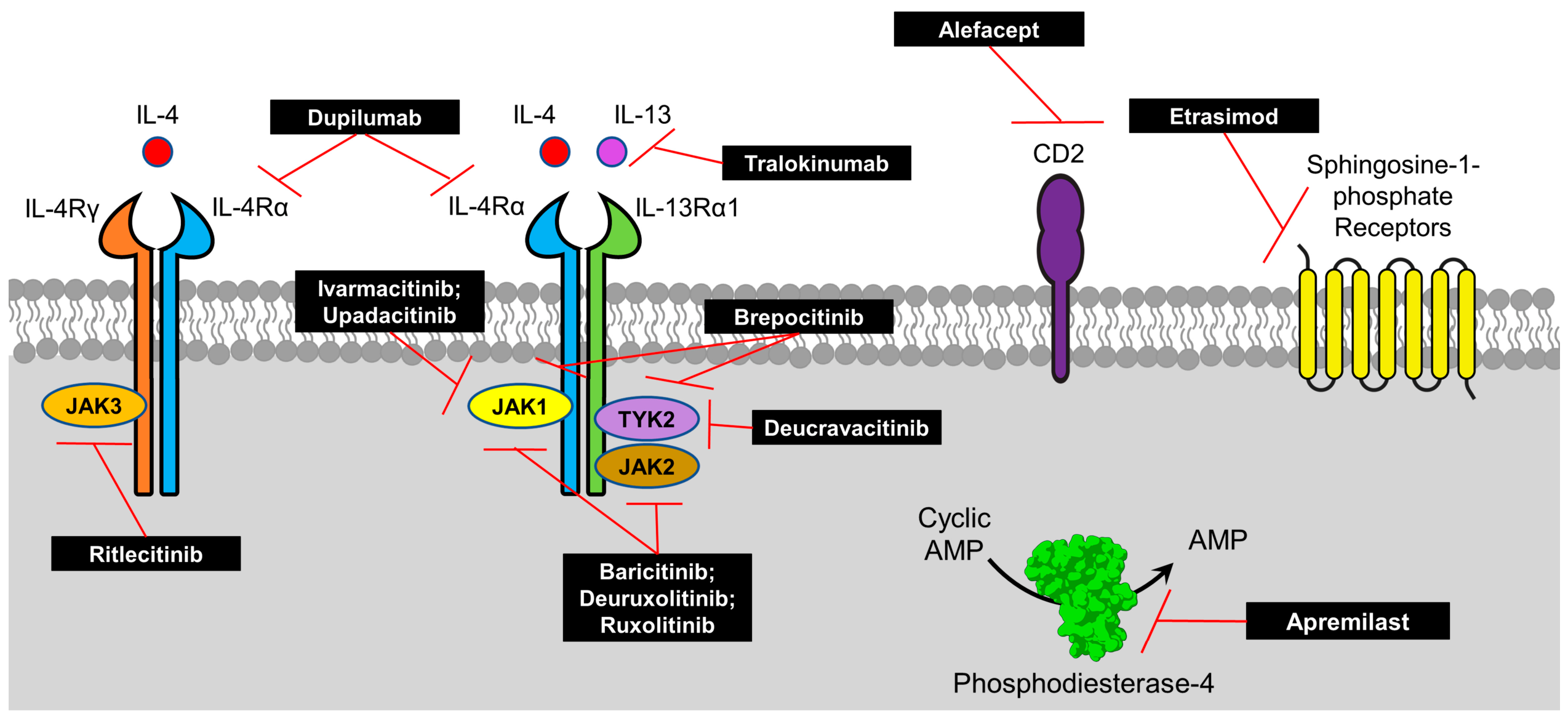
Across the eligible studies, we identified a total of 13 agents (10 small-molecule agents and 3 biologics) (Figure 1, Table 1). The agents were alefacept, apremilast, baricitinib, brepocitinib, deucravacitinib, deuruxolitinib, dupilumab, etrasimod, ivarmacitinib, ritlecitinib, ruxolitinib, tralokinumab, and upadacitinib. Of the 10 small-molecule agents, most were targeted members of the Janus kinase (JAK) family; etrasimod is a sphingosine-1-phosphate (S1P) receptor modulator, while apremilast is a phosphodiesterase-4 (PDE4) inhibitor. The three biologics were alefacept, dupilumab and tralokinumab. Across the 13 agents, a total of 27 regimens were identified; placebo and vehicle arms were pooled into a control node. A schematic of the agents’ mechanisms of action is depicted in Figure 19.
Figure 19.
Mechanism of action of identified agents. This schematic depicts the mechanism of action of the 13 identified agents, consisting of Janus kinase inhibitors (baricitinib; brepocitinib; deucravacitinib; deuruxolitinib; ivarmacitinib; ritlecitinib; ruxolitinib; upadacitinib), a sphingosine-1-phosphate receptor modulator (etrasimod), a phosphodiesterase-4 inhibitor (apremilast), and biologics (alefacept [LFA-3–IgG1 fusion protein]; dupilumab [IgG4 monoclonal antibody]; tralokinumab [IgG4 monoclonal antibody]). Red blunt-ended lines indicate inhibition. Abbreviations: AMP = adenosine monophosphate; CD = cluster of differentiation; IgG = immunoglobulin G; IL = interleukin; IL-13R = interleukin-13 receptor; IL-4R = interleukin-4 receptor; JAK = Janus kinase; TYK = tyrosine kinase.
Nodes were defined at the regimen level because we differentiated between agents’ various dosages and their routes of administration. Across the eligible studies, there were sufficient efficacy data to conduct a network meta-analysis (NMA) for four clinically relevant outcomes, namely (1) proportion of participants who attained a SALT score of 20 or lower at 24 weeks (i.e., “SALT 20”), (2) proportion of participants with a 50% or greater improvement in SALT score at 24 weeks (i.e., “SALT 50”), (3) mean relative (i.e., percentage) change in SALT score at 24 weeks (i.e., “relative change”), and (4) mean absolute change in SALT score at 24 weeks (i.e., “mean change”).
Although the geometry of each of the four networks precluded node-splitting analyses to assess inconsistency (Figure 3, Figure 4, Figure 5 and Figure 6), examination of baseline characteristics, such as mean age, sex distribution, and disease severity (for which data were available across all treatment arms) (Figure 16, Figure 17 and Figure 18), indicated sufficient comparability across studies and thereby supported the transitivity assumption across each network. Although our NMA was not designed to formally validate the SALT instrument, we observed broad congruence of regimens’ SUCRA ranks across the four efficacy outcomes—and under both the base (Figure 7) and covariate-adjusted models for each of the four outcomes (Figure 7, Figure 12, Figure 13, Figure 14 and Figure 15).
The regimens we identified also included regimens indicated for the treatment of moderate-to-severe alopecia areata in adults [44,45]. In 2022, the Food and Drug Administration (FDA) approved baricitinib (4 mg and 2 mg once daily) for the treatment of adults with severe alopecia areata [45,46]—and findings from the BRAVE-AA1 and BRAVE-AA2 trials [28] were pivotal in these regimens becoming indicated for this condition. In 2023, ritlecitinib (50 mg once daily) was approved by the FDA for treatment of severe alopecia areata in persons aged 12 years and above [45,47]; results from the ALLEGRO trials [24] contributed to this regimen becoming indicated for this condition. Following the THRIVE-AA1 and THRIVE-AA2 trials, the FDA approved deuruxolitinib (8 mg twice daily) for the treatment of moderate-to-severe alopecia areata in adults in 2024 [45,48].
Many of the trials that met our eligibility criteria were dose-ranging studies. Such studies evaluate whether an agent demonstrates efficacy and, if so, explore the dose at which therapeutic efficacy is optimal. Such dose-ranging investigations are commonplace across various disease conditions—though, interestingly, not all approved drugs undergo formal dose-ranging studies before being indicated [49]. In AA, comprehensive dose-ranging is particularly important for ascertaining pharmacological immunomodulators’ benefit–risk ratio [50]. Unlike trials for other conditions, which have historically sought the maximum tolerated dose for life-threatening diseases (e.g., cancer), AA trials must balance the potential for hair regrowth against the safety implications of long-term treatment with JAK inhibitors—which carry well-documented mild to serious side effects [50,51]. Our network meta-analyses of the most up-to-date evidence provide findings that substantiate not only the FDA’s—and other regulatory agencies’—selection of therapeutic agents but also their choice of the agents’ dosages.
All four FDA-approved regimens were compared in our network for SALT 20, a standard endpoint for this condition (Figure 7) [52]. For SALT 20, we found no clear evidence of a difference between deuruxolitinib 8 mg twice daily (oral) and baricitinib 2 mg once daily (oral) (logOR = −0.6, 95% CI: −1.49, 0.37) (Figure 10)—nor deuruxolitinib 8 mg twice daily (oral) and baricitinib 4 mg once daily (oral) (logOR = −0.8, 95% CI: −1.69, 0.08) (Figure 10). We also found no clear evidence of a difference between ritlecitinib 50 mg once daily (oral) and deuruxolitinib 8 mg twice daily (oral) (logOR = −0.9, 95% CI: −2.67, 0.62) (Figure 10). The efficacy of ritlecitinib 50 mg once daily (oral) was not different from that of baricitinib 4 mg once daily (oral) (logOR = −0.1, 95% CI: −1.93, 1.45) (Figure 10), nor that of baricitinib 2 mg once daily (oral) (logOR = −1.4, 95% CI: −3.33, 0.09) (Figure 10). Taken together, these findings for SALT 20 suggest broadly comparable efficacy among the three FDA-approved agents at their approved doses.
The availability of multiple agents with generally similar efficacy broadens the therapeutic options for adults with moderate-to-severe AA and allows treatment selection to incorporate other patient- and treatment-specific considerations such as safety, tolerability, contraindications, patient preferences, accessibility, and costs. Hence, our results would be relevant to cost-effectiveness studies—especially given that different drugs can have equivalent efficacy while differing significantly in cost [53].
The present NMA affirms the FDA’s choice of the approved dosage for ritlecitinib. The ALLEGRO trials [24,29] investigated the efficacy of ritlecitinib 50 mg once daily (oral) without a loading dose; the trials also had a separate arm that examined efficacy with a loading dose (i.e., ritlecitinib 200 mg once daily (4 weeks), then 50 mg once daily (20 weeks) (oral)). King et al. (2023) [29] showed that each of these two regimens was significantly more efficacious than the placebo, and the FDA selected the non-loading regimen (i.e., 50 mg once daily (oral)) because loading provided marginal added benefit over time [54]. Our NMA, which incorporated the most up-to-date evidence, supports this regulatory decision: no evidence of difference was observed between ritlecitinib 200 mg once daily (4 weeks), then 50 mg once daily (20 weeks) (oral) and ritlecitinib 50 mg once daily (oral) for the SALT 20 outcome (logOR = −5.9, 95% CI: −20.05, 3.47) (Figure 10). Collectively, these findings suggest that the addition of a loading regimen may not confer a meaningful efficacy advantage over continuous maintenance dosing in this instance.
Since 2019, numerous NMA studies for AA have been published [55,56,57,58,59]; the recent comparative effectiveness literature has been focusing on moderate-to-severe AA—as evidenced by the works of Fukumoto et al. (2021) [60], Wei et al. (2023) [61], and Husein-El Ahmed et al. (2024) [62]. Our study corroborates the findings of these previous NMAs while building upon their work by incorporating evidence that has emerged since their respective literature search. The results of the current NMA complement those of Xia et al. (2026) [4], who searched the literature until 10 February 2025. Xia et al. (2026) [4] determined the relative efficacy of JAK inhibitors across patients with severe AA. Despite differences in methodological approach and the narrower evidence base available at the time of their review, Xia et al.’s (2026) [4] conclusions were broadly consistent with those of the present NMA study. The authors designed their Bayesian NMA to pool outcome data between 24 and 36 weeks; nonetheless, they reported deuruxolitinib 12 mg to be the most efficacious therapy. Since Xia et al.’s (2026) [4] literature search, randomized trials have been published providing empirical evidence on agents not previously compared within an NMA; these newly evaluated agents/regimens identified in the present study are (1) upadacitinib 30 mg once daily (oral), (2) upadacitinib 15 mg once daily (oral), (3) deuruxolitinib 24 mg once daily (oral), (4) deuruxolitinib 16 mg once daily (oral), (5) etrasimod 3 mg once daily (oral), (6) etrasimod 2 mg once daily (oral), (7) deucravacitinib 6 mg once daily (oral), (8) deucravacitinib 6 mg twice daily (oral), and (9) alefacept 15 mg once weekly (intramuscular). Furthermore, for several agents that had been evaluated in previous NMAs, the evidence base has since expanded with the publication of additional randomized trials. The present NMA therefore updates the comparative evidence for these therapies by incorporating data that were unavailable to earlier analyses. For example, ivarmacitinib had been evaluated previously using evidence from Zhou et al. (2023) [27]; however, the present NMA additionally incorporates findings from the more recently published trial by Zhou et al. (2026) [32].
Thus, beyond introducing agents and regimens not represented in previous NMAs, the present study updates the evidence for previously evaluated therapies as new trial data have become available. The evidence base for several agents evaluated in previous NMAs has expanded with the publication of additional randomized trials. This NMA updates the comparative evidence by incorporating data unavailable to earlier analyses. For example, previous assessments of ivarmacitinib relied on Zhou et al. (2023) [27], whereas this NMA also includes the more recent trial by Zhou et al. (2026) [32]. In short, the present study both introduces agents and regimens absent from prior NMAs and updates the evidence for previously evaluated therapies.
Our findings provide an updated comparative assessment of the efficacy of the FDA-approved deuruxolitinib regimen of 8 mg twice daily (oral), alongside other evaluated dosing regimens, including the higher 12 mg twice-daily dose (oral), across SALT 20, SALT 50, and relative change in SALT score. Overall, the rank order and corresponding relative effects of the deuruxolitinib regimens broadly demonstrated a dose-dependent pattern. For SALT 20, we found the efficacy of deuruxolitinib 12 mg twice daily (oral) (SUCRA = 62.57%) to be greater than that of deuruxolitinib 8 mg twice daily (oral) (SUCRA = 47.96%) (logOR = 0.5, 95% CI: 0.21, 0.74) (Figure 10). For SALT 50, the efficacy of deuruxolitinib 12 mg twice daily (oral) (SUCRA = 85.72%) did not differ from that of deuruxolitinib 24 mg once daily (oral) (SUCRA = 71.6%) (logOR = −0.5, 95% CI: −1.47, 0.50) (Figure 11). For SALT 50, the efficacy of deuruxolitinib 8 mg twice daily (oral) (SUCRA = 71.23%) was greater than that of deuruxolitinib 16 mg once daily (oral) (SUCRA = 32.77%) (logOR = 1.5, 95% CI: 0.41, 2.82) (Figure 11).
In short, the relative efficacy of the deuruxolitinib regimens generally increased with dose, although the pattern was not strictly monotonic across all outcomes and dosing regimens. The literature provides various explanations for the non-monotonic phenomenon we occasionally observed across our networks for deuruxolitinib such as the “hook effect” [63]. The hook effect—historically known as the “prozone” effect [64]—occurs when increasing concentrations of a drug initially produce a stronger response to a point after which higher drug concentrations reduce the response. Rather than following a conventional monotonic (i.e., linear) dose–response curve, in which the response increases progressively toward a plateau, the hook effect produces an inverted U-shaped pattern, with the greatest response occurring at an intermediate concentration [63,65]. The hook effect has been well documented for deucravacitinib for other conditions such as systemic lupus erythematosus [66,67], where the optimal dose was not the highest as dose–response was not linear. Notwithstanding the plausibility of a hook effect, our observation for deuruxolitinib could be due to unmeasured trial-phase heterogeneity.
The present NMA is the first to provide comparative evidence on the efficacy of two upadacitinib dosing regimens relative to existing approved therapies for moderate-to-severe AA. Though it is not currently indicated for AA, upadacitinib has been approved by the FDA as a treatment for other inflammatory conditions [68]. For instance, upadacitinib 30 mg once daily (oral) is indicated for refractory moderate-to-severe atopic dermatitis [69]; upadacitinib 15 mg once daily (oral) is FDA-approved for rheumatoid arthritis. As per SALT 20, we found upadacitinib 30 mg once daily (oral) (SUCRA = 84.6%) to be more efficacious than deuruxolitinib 8 mg twice daily (oral) (logOR = 1.7, 95% CI: 0.76, 2.71) (Figure 10). We did not find a difference between upadacitinib 15 mg once daily (oral) and baricitinib 4 mg once daily (oral) (logOR = −0.5, 95% CI: −1.55, 0.54) (Figure 10), nor did we find any difference between upadacitinib 15 mg once daily (oral) and ritlecitinib 50 mg once daily (oral) (logOR = −0.5, 95% CI: −2.03, 1.37) (Figure 10). The two dosage regimens of etrasimod ranked moderately efficacious, while the dosage regimens of deucravacitinib (6 mg twice daily and 6 mg once daily) ranked fairly low.
We did not exclude zero-response arms—as a way of avoiding selection bias. Therefore, the relatively high SUCRA ranking of deucravacitinib 6 mg once daily for SALT 20 (SUCRA = 86.75%), despite its substantially lower rankings for SALT 50 (SUCRA = 20.25%) and absolute change (SUCRA = 23.24%), may reflect the influence of including sparse data and including zero-response arms in NMAs.
We acknowledge the limitations of the present study. Potential effect modification by race and/or ethnicity could not be examined as such characteristics were inconsistently reported across the included trials. Given documented racial and ethnic differences in the epidemiology and clinical presentation of AA [70], unmeasured ethnic and racial variation may be a source of residual confounding. Our study is subject to language bias; restricting our review to studies published only in English may have resulted in the underrepresentation of evidence from non-Anglophone regions [71]. Consequently, the evidence synthesized in the present NMA may not fully reflect the global evidence base, potentially limiting the geographic generalizability of our findings.
5. Conclusions
The current study provided an updated and comprehensive synthesis of the comparative efficacy of monotherapy with small-molecule agents and biologics for moderate-to-severe alopecia areata in adults; we incorporated the most up-to-date available evidence and distinguished therapies at the regimen level. Across four SALT-based efficacy outcomes, the findings generally support the efficacy of the FDA-approved therapies (baricitinib, ritlecitinib, deuruxolitinib), while providing evidence for other agents that are also effective (upadacitinib, brepocitinib, tofacitinib, and ruxolitinib) and dosing regimens not examined in previous NMAs. Our findings underscore the importance of dose-specific evaluation rather than considering therapeutic agents as homogeneous treatment nodes.
As the therapeutic landscape for AA continues to evolve, future randomized trials should more consistently report more demographic characteristics to permit investigation of potential treatment effect modifiers like race and ethnicity. Future randomized trials should prioritize direct head-to-head comparisons and more consistently report baseline demographic and clinical characteristics to allow for the investigation of potential effect modifiers such as race, ethnicity, and disease duration. Ultimately, because clinical and regulatory treatment decisions require balancing short-term efficacy against long-term safety, tolerability, and benefit–risk profiles, our efficacy synthesis should be integrated with comprehensive safety evidence rather than used in isolation to guide therapy selection.
Supplementary Materials
The following supporting information can be downloaded at: https://www.mdpi.com/article/10.3390/medsci14080811/s1, Supplementary Figure S1: Relative Treatment Efficacy Following Tofacitinib Inclusion: SUCRA Rankings Across Alternative Network Connections; Supplementary Figure S2: Relative Change in SALT—Including Tofacitinib 5 mg Twice Daily and Ruxolitinib 20 mg Twice Daily. References [5,22,24,27,28,30,31,32,33,35,36,37,40] are cited in the Supplementary Materials.
Author Contributions
Conceptualization: A.K.G. (Main); Methodology: M.A.B. (Equal), M.T. (Equal); Data Curation: M.A.B. (Main); Formal Analysis: M.A.B. (Main); Writing—Original Draft Preparation: M.A.B. (Main); Writing—Review and Editing: A.K.G. (Main), V.P. (Equal), P.M. (Equal), M.T. (Equal), M.A.B. (Equal); Supervision: A.K.G. (Main), P.M. (Equal), V.P. (Equal); Project Administration: A.K.G. (Main). All authors have read and agreed to the published version of the manuscript.
Funding
This research received no external funding.
Institutional Review Board Statement
Not applicable. Ethical review and approval were not required for this study because it was a systematic review and network meta-analysis of previously published and publicly available data and did not involve the collection of individual-level participant data.
Informed Consent Statement
Not applicable.
Data Availability Statement
The original contributions presented in this study are included in the article/Supplementary Material. Further inquiries can be directed to the corresponding author.
Conflicts of Interest
The authors declare no conflicts of interest.
Appendix A
Figure A1.
Flow diagram of the additional searches of Web of Science and the Cochrane Central Register of Controlled Trials (CENTRAL), conducted on 12 November 2026. Records retrieved from both databases were deduplicated, and the titles and/or abstracts of the remaining records were screened for eligibility.
References
- Villasante Fricke, A.C.; Miteva, M. Epidemiology and burden of alopecia areata: A systematic review. Clin. Cosmet. Investig. Dermatol. 2015, 8, 397–403. [Google Scholar] [CrossRef] [Scilit] [PubMed]
- Elgobashy, A.; El-Nefiawy, N.; El-Sayed, S.; Magdy, S.; Abdelmoez, W. A Review on Androgenic Alopecia: Etiology, Pathogenesis, Pharmacological and Non-Pharmacological Treatment Approaches. Ain Shams Med. J. 2024, 75, 587–602. [Google Scholar] [CrossRef] [Scilit]
- Parra-Guerra, A.; Sánchez-Dueñas, L.; Quintero-Loreto, M.; Quiñones-Hernández, D.; Moreno-Alanis, J.; González, F.; Cavazos, C.R.; Gutiérrez Mendoza, D.; Villarreal-Villarreal, C.; Chejfec-Ciociano, J.M. A decade of hair-loss clinical trials: A registry-based analysis of studies registered on ClinicalTrials.gov. Front. Med. 2026, 13, 1821858. [Google Scholar] [CrossRef] [Scilit] [PubMed]
- Xia, Y.; Chen, H.; Chen, Y.; Chen, Z. Comparative efficacy of Janus kinase inhibitors in severe alopecia areata: A network meta-analysis based on randomized controlled trials. Postgrad. Med. J. 2026, 102, 855–861. [Google Scholar] [CrossRef] [Scilit] [PubMed]
- King, B.; Mesinkovska, N.; Senna, M.; Luo, X.; Minkiewicz, J.; Selfridge, A. Efficacy and safety of etrasimod in alopecia areata: A multicentre, randomized, double-blind, placebo-controlled, Phase 2 study. J. Eur. Acad. Dermatol. Venereol. 2025, 39, 1174–1184. [Google Scholar] [CrossRef] [Scilit] [PubMed]
- Babul, A.; Mehta, D.; Soliman, Y.; Rajpara, A. Comparative Efficacy of Ritlecitinib, Baricitinib, and Upadacitinib in Adolescents With Severe Alopecia Areata: A Bayesian Network Meta-Analysis. Cureus 2026, 18, e117968. [Google Scholar] [CrossRef] [Scilit] [PubMed]
- Gregoire, S.; Dewey, E.; Biba, U.; Sanchez, K.; Englander, H.; Salloum, L.; Ershadi, S.; Cheng, D.; McIntosh, B.A.; Zangenah, N.; et al. Delphi Consensus Statement on Treatment of Severe Alopecia Areata in US Adults. JAMA Dermatol. 2026, 162, 1176. [Google Scholar] [CrossRef] [Scilit] [PubMed]
- Titeca, G.; Goudetsidis, L.; Francq, B.; Sampogna, F.; Gieler, U.; Tomas-Aragones, L.; Lien, L.; Jemec, G.; Miséry, L.; Szabo, C.; et al. ‘The psychosocial burden of alopecia areata and androgenetica’: A cross-sectional multicentre study among dermatological out-patients in 13 European countries. J. Eur. Acad. Dermatol. Venereol. 2020, 34, 406–411, Correction in J. Eur. Acad. Dermatol. Venereol. 2020, 34, 1119. https://doi.org/10.1111/jdv.16298. [Google Scholar] [CrossRef] [Scilit] [PubMed]
- Aldhouse, N.; Kitchen, H.; Knight, S.; Macey, J.; Nunes, F.; Dutronc, Y.; Mesinkovska, N.; Ko, J.; King, B.; Wyrwich, K. “‘You lose your hair, what’s the big deal?’ I was so embarrassed, I was so self-conscious, I was so depressed:” A qualitative interview study to understand the psychosocial burden of alopecia areata. J. Patient Rep. Outcomes 2020, 4, 76. [Google Scholar] [CrossRef] [Scilit] [PubMed]
- Hutton, B.; Salanti, G.; Caldwell, D.M.; Chaimani, A.; Schmid, C.H.; Cameron, C.; Ioannidis, J.P.A.; Straus, S.; Thorlund, K.; Jansen, J.P.; et al. The PRISMA extension statement for reporting of systematic reviews incorporating network meta-analyses of health care interventions: Checklist and explanations. Ann. Intern. Med. 2015, 162, 777–784. [Google Scholar] [CrossRef] [Scilit] [PubMed]
- Ouzzani, M.; Hammady, H.; Fedorowicz, Z.; Elmagarmid, A. Rayyan—A web and mobile app for systematic reviews. Syst. Rev. 2016, 5, 210. [Google Scholar] [CrossRef] [Scilit] [PubMed]
- McGuinness, L.A.; Higgins, J.P.T. Risk-of-bias VISualization (robvis): An R package and Shiny web app for visualizing risk-of-bias assessments. Res. Synth. Methods 2021, 12, 55–61. [Google Scholar] [CrossRef] [Scilit] [PubMed]
- Zheng, J.; Chow, S.C. Criteria for dose-finding in two-stage seamless adaptive design. J. Biopharm. Stat. 2019, 29, 908–919. [Google Scholar] [CrossRef] [Scilit] [PubMed]
- Stallard, N.; Todd, S. Seamless phase II/III designs. Stat. Methods Med. Res. 2011, 20, 623–634. [Google Scholar] [CrossRef] [Scilit] [PubMed]
- Phillippo, D.M.; Dias, S.; Ades, A.E.; Belger, M.; Brnabic, A.; Schacht, A.; Saure, D.; Kadziola, Z.; Welton, N.J. Multilevel Network Meta-Regression for Population-Adjusted Treatment Comparisons. J. R. Stat. Soc. Ser. A Stat. Soc. 2020, 183, 1189–1210. [Google Scholar] [CrossRef] [Scilit] [PubMed]
- R Core Team. R: A Language and Environment for Statistical Computing; R Foundation for Statistical Computing: Vienna, Austria, 2023; Available online: https://www.R-project.org/ (accessed on 23 August 2026).
- Jansen, J.P.; Naci, H. Is network meta-analysis as valid as standard pairwise meta-analysis? It all depends on the distribution of effect modifiers. BMC Med. 2013, 11, 159. [Google Scholar] [CrossRef] [Scilit] [PubMed]
- Morán-Vásquez, R.A.; Mazo-Lopera, M.A.; Escobar-Arias, J.A. Bayesian Estimation of Marginal Quantiles with Missing Data in a Multivariate Regression Framework. Entropy 2026, 28, 201. [Google Scholar] [CrossRef] [Scilit] [PubMed]
- Sidebotham, D.; Barlow, C.; Martin, J.; Jones, P. Interpreting frequentist hypothesis tests: Insights from Bayesian inference. Can. J. Anaesth. 2023, 70, 1560–1575. [Google Scholar] [CrossRef] [Scilit] [PubMed]
- Ruberg, S. Détente: A Practical Understanding of P values and Bayesian Posterior Probabilities. Clin. Pharmacol. Ther. 2021, 109, 1489–1498. [Google Scholar] [CrossRef] [Scilit] [PubMed]
- Esterhuizen, T.M.; Mbuagbaw, L.; Rehman, N.; Yanwou, N.; Swaby, D.J.; Kittle, E.; Licht, J.C.; Thabane, L. Reporting of second-generation p-values, Bayes factors and fragility indices in trials enhances assessment of clinical importance beyond p-values: A meta-epidemiologic study. Contemp. Clin. Trials Commun. 2026, 52, 101667. [Google Scholar] [CrossRef] [Scilit] [PubMed]
- Mikhaylov, D.; Pavel, A.; Yao, C.; Kimmel, G.; Nia, J.; Hashim, P.; Vekaria, A.S.; Taliercio, M.; Singer, G.; Karalekas, R.; et al. A randomized placebo-controlled single-center pilot study of the safety and efficacy of apremilast in subjects with moderate-to-severe alopecia areata. Arch. Dermatol. Res. 2019, 311, 29–36. [Google Scholar] [CrossRef] [Scilit] [PubMed]
- Strober, B.E.; Menon, K.; McMichael, A.; Hordinsky, M.; Krueger, G.; Panko, J.; Siu, K.; Lustgarten, J.L.; Ross, E.K.; Shapiro, J. Alefacept for Severe Alopecia Areata: A Randomized, Double-blind, Placebo-Controlled Study. Arch. Dermatol. 2009, 145, 1262–1266. [Google Scholar] [CrossRef] [Scilit] [PubMed]
- King, B.; Guttman-Yassky, E.; Peeva, E.; Banerjee, A.; Sinclair, R.; Pavel, A.B.; Zhu, L.; Cox, L.A.; Craiglow, B.; Chen, L.; et al. A phase 2a randomized, placebo-controlled study to evaluate the efficacy and safety of the oral Janus kinase inhibitors ritlecitinib and brepocitinib in alopecia areata: 24-week results. J. Am. Acad. Dermatol. 2021, 85, 379–387. [Google Scholar] [CrossRef] [Scilit] [PubMed]
- King, B.; Mesinkovska, N.; Mirmirani, P.; Bruce, S.; Kempers, S.; Guttman-Yassky, E.; Roberts, J.L.; McMichael, A.; Colavincenzo, M.; Hamilton, C.; et al. Phase 2 randomized, dose-ranging trial of CTP-543, a selective Janus Kinase inhibitor, in moderate-to-severe alopecia areata. J. Am. Acad. Dermatol. 2022, 87, 306–313. [Google Scholar] [CrossRef] [Scilit] [PubMed]
- Guttman-Yassky, E.; Renert-Yuval, Y.; Bares, J.; Chima, M.; Hawkes, J.E.; Gilleaudeau, P.; Sullivan-Whalen, M.; Singer, G.K.; Garcet, S.; Pavel, A.B.; et al. Phase 2a randomized clinical trial of dupilumab (anti-IL-4Rα) for alopecia areata patients. Allergy 2022, 77, 897–906. [Google Scholar] [CrossRef] [Scilit] [PubMed]
- Zhou, C.; Yang, X.; Yang, B.; Yan, G.; Dong, X.; Ding, Y.; Fan, W.; Li, L.; Yang, D.; Fang, H.; et al. A randomized, double-blind, placebo-controlled phase II study to evaluate the efficacy and safety of ivarmacitinib (SHR0302) in adult patients with moderate-to-severe alopecia areata. J. Am. Acad. Dermatol. 2023, 89, 911–919. [Google Scholar] [CrossRef] [Scilit] [PubMed]
- King, B.; Ohyama, M.; Kwon, O.; Zlotogorski, A.; Ko, J.; Mesinkovska, N.; Hordinsky, M.; Dutronc, Y.; Wu, W.-S.; McCollam, J.; et al. Two Phase 3 Trials of Baricitinib for Alopecia Areata. N. Engl. J. Med. 2022, 386, 1687–1699. [Google Scholar] [CrossRef] [Scilit] [PubMed]
- King, B.; Zhang, X.; Harcha, W.G.; Szepietowski, J.C.; Shapiro, J.; Lynde, C.; Mesinkovska, N.A.; Zwillich, S.H.; Napatalung, L.; Wajsbrot, D.; et al. Efficacy and safety of ritlecitinib in adults and adolescents with alopecia areata: A randomised, double-blind, multicentre, phase 2b–3 trial. Lancet 2023, 401, 1518–1529, Correction in Lancet 2023, 401, 1928. https://doi.org/10.1016/S0140-6736(23)01078-4. [Google Scholar] [CrossRef] [Scilit] [PubMed]
- King, B.; Senna, M.M.; Mesinkovska, N.A.; Lynde, C.; Zirwas, M.; Maari, C.; Prajapati, V.H.; Sapra, S.; Brzewski, P.; Osman, L.; et al. Efficacy and safety of deuruxolitinib, an oral selective Janus kinase inhibitor, in adults with alopecia areata: Results from the Phase 3 randomized, controlled trial (THRIVE-AA1). J. Am. Acad. Dermatol. 2024, 91, 880–888. [Google Scholar] [CrossRef] [Scilit] [PubMed]
- Tsianakas, A.; Passeron, T.; Magnolo, N.; Blume-Peytavi, U.; Kelly, V.; Day, I.; Serrao, R.; Guttman-Yassky, E.; Sticherling, M.; Csernus, A.E.; et al. Efficacy and safety of deuruxolitinib, an oral selective Janus kinase 1/2 inhibitor, in adults with alopecia areata: Results from the THRIVE-AA2 Phase 3, randomized, double-blind, controlled trial. J. Am. Acad. Dermatol. 2026, 94, 1134–1143. [Google Scholar] [CrossRef] [Scilit] [PubMed]
- Zhou, C.; Yang, C.; Fan, W.; Wu, J.; Yang, D.; Jin, H.; Yang, Q.; Hu, G.; Lin, N.; Yang, X.; et al. Ivarmacitinib for the treatment of adults with severe alopecia areata: Results from a phase 3 trial. J. Am. Acad. Dermatol. 2026, 94, 161–171. [Google Scholar] [CrossRef] [Scilit] [PubMed]
- Mostaghimi, A.; Gooderham, M.J.; Lynde, C.; Sinclair, R.; King, B.; Hordinsky, M.; Rudnicka, L.; Guttman-Yassky, E.; Serrao, R.; Ohyama, M.; et al. Upadacitinib for Severe Alopecia Areata in Adults and Adolescents: Two Phase 3 UP-AA Randomized Clinical Trials. JAMA Dermatol. 2026, 162, 1006–1017. [Google Scholar] [CrossRef] [Scilit] [PubMed]
- King, B.; Ehst, B.; Foley, P.; Reygagne, P.; Ohyama, M.; Szepietowski, J.C.; Popmihajlov, Z.; De Leonardis, F.; Hippeli, L.; Treitel, M.; et al. Deucravacitinib, an oral, selective, allosteric tyrosine kinase 2 inhibitor, in patients with alopecia areata: Efficacy and safety results of a phase II, multicentre, randomized, double-blinded, placebo-controlled trial. Br. J. Dermatol. 2026, 195, 211–221. [Google Scholar] [CrossRef] [Scilit] [PubMed]
- Olsen, E.A.; Kornacki, D.; Sun, K.; Hordinsky, M.K. Ruxolitinib cream for the treatment of patients with alopecia areata: A 2-part, double-blind, randomized, vehicle-controlled phase 2 study. J. Am. Acad. Dermatol. 2020, 82, 412–419. [Google Scholar] [CrossRef] [Scilit] [PubMed]
- ClinicalTrials.gov. Efficacy and Tolerability Study of Two Dose Regimens of CTP-543 in Adults With Alopecia Areata (NCT03811912). 2022. Available online: https://clinicaltrials.gov/study/NCT03811912 (accessed on 27 September 2026).
- ClinicalTrials.gov. Efficacy and Tolerability Study of Two Dosing Regimens of CTP-543 in Adults With Alopecia Areata (NCT03941548). 2023. Available online: https://clinicaltrials.gov/study/NCT03941548 (accessed on 27 September 2026).
- ClinicalTrials.gov. A Pilot Study of Tralokinumab in Subjects With Moderate to Severe Alopecia Areata (NCT02684097). 2020. Available online: https://clinicaltrials.gov/study/NCT02684097 (accessed on 21 October 2026).
- Forbes, C.; Greenwood, H.; Carter, M.; Clark, J. Automation of duplicate record detection for systematic reviews: Deduplicator. Syst. Rev. 2024, 13, 206. [Google Scholar] [CrossRef] [Scilit] [PubMed]
- Almutairi, N.; Nour, T.M.; Hussain, N.H. Janus Kinase Inhibitors for the Treatment of Severe Alopecia Areata: An Open-Label Comparative Study. Dermatology 2019, 235, 130–136. [Google Scholar] [CrossRef] [Scilit] [PubMed]
- Paracha, M.; Wasim, M.; Noor, S.M.; Khan, A.Q.; Sagheer, F.; Ahmad, I. Comparison of efficacy and safety of tofacitinib and azathioprine in patients with alopecia areata and variants: A double-blind, randomized controlled trial. Arch. Dermatol. Res. 2024, 316, 458. [Google Scholar] [CrossRef] [Scilit] [PubMed]
- Leahy, J.; Thom, H.; Jansen, J.P.; Gray, E.; O’Leary, A.; White, A.; Walsh, C. Incorporating single-arm evidence into a network meta-analysis using aggregate level matching: Assessing the impact. Stat. Med. 2019, 38, 2505–2523. [Google Scholar] [CrossRef] [Scilit] [PubMed]
- Cameron, C.; Fireman, B.; Hutton, B.; Clifford, T.; Coyle, D.; Wells, G.; Dormuth, C.R.; Platt, R.; Toh, S. Network meta-analysis incorporating randomized controlled trials and non-randomized comparative cohort studies for assessing the safety and effectiveness of medical treatments: Challenges and opportunities. Syst. Rev. 2015, 4, 147. [Google Scholar] [CrossRef] [Scilit] [PubMed]
- Rudnicka, L.; Arenbergerová, M.; Grimalt, R.; Ioannides, D.; Katoulis, A.; Lazaridou, E.; Olszewska, M.; Ovcharenko, Y.; Piraccini, B.; Prohic, A.; et al. European expert consensus statement on the systemic treatment of alopecia areata. J. Eur. Acad. Dermatol. Venereol. 2024, 38, 687–694. [Google Scholar] [CrossRef] [Scilit] [PubMed]
- Spindler, A.; Maas, D.; Zappi, I.; Brinks, A.; Kearney, C.; Nohria, A.; Orlow, S.; Grant-Kels, J.; Shapiro, J.; Lo Sicco, K. Alopecia areata: Emerging therapies and up-to-date management strategies. J. Am. Acad. Dermatol. 2026, in press. [Google Scholar] [CrossRef] [Scilit] [PubMed]
- U.S. Food and Drug Administration. Highlights of Prescribing Information (Baricitinib) (Reference ID 4998371). 2022. Available online: https://www.accessdata.fda.gov/drugsatfda_docs/label/2022/207924s007lbl.pdf (accessed on 18 November 2026).
- U.S. Food and Drug Administration. Highlights of Prescribing Information (Ritlecitinib) (Reference ID 5196496). 2023. Available online: https://www.accessdata.fda.gov/drugsatfda_docs/label/2023/215830s000lbl.pdf (accessed on 27 September 2026).
- U.S. Food and Drug Administration. Highlights of Prescribing Information (Deuruxolitinib) (Reference ID 5418989). 2024. Available online: https://www.accessdata.fda.gov/drugsatfda_docs/label/2024/217900s000lbl.pdf (accessed on 27 September 2026).
- Lyauk, Y.K.; Jonker, D.M.; Lund, T.M. Dose Finding in the Clinical Development of 60 US Food and Drug Administration–Approved Drugs Compared With Learning vs. Confirming Recommendations. Clin. Transl. Sci. 2019, 12, 481–489. [Google Scholar] [CrossRef] [Scilit] [PubMed]
- Yan, T.; Wang, T.; Tang, M.; Liu, N. Comparative efficacy and safety of JAK inhibitors in the treatment of moderate-to-severe alopecia areata: A systematic review and network meta-analysis. Front. Pharmacol. 2024, 15, 1372810. [Google Scholar] [CrossRef] [Scilit] [PubMed]
- Rapparini, L.; Starace, M.; Apalla, Z.; El Barch, M.; Delpuech, A.; Baali, S.; Sibaud, V. Dermatologic Toxicities Induced by JAK Inhibitors. Am. J. Clin. Dermatol. 2026, 27, 725–744. [Google Scholar] [CrossRef] [Scilit] [PubMed]
- Law, E.; Hanson, K.; Harries, M.; Korver, D.; Sherif, B.; Chirila, C. Patient-reported outcome improvements following scalp hair regrowth among patients with Alopecia Areata: Analysis of the ALLEGRO-2b/3 trial. J. Dermatol. Treat. 2025, 36, 2460577. [Google Scholar] [CrossRef] [Scilit] [PubMed]
- McCoy, T.; Natarelli, N.; Pan, A.; Shakhbazova, A.; Sivamani, R.K.; Chambers, C.J. Systematic review and estimated cost-efficacy of biologics compared with narrowband ultraviolet B light for the treatment of moderate to severe psoriasis and atopic dermatitis. Int. J. Dermatol. 2023, 62, 986–999. [Google Scholar] [CrossRef] [Scilit] [PubMed]
- Piliang, M.; Soung, J.; King, B.; Shapiro, J.; Rudnicka, L.; Farrant, P.; Magnolo, N.; Piraccini, B.; Luo, X.; Woodworth, D.; et al. Long-Term Efficacy of Ritlecitinib up to Month 24 From the ALLEGRO Phase 2b/3 and Long-Term Phase 3 Clinical Studies in Alopecia Areata. SKIN J. Cutan. Med. 2024, 8, s394. [Google Scholar] [CrossRef] [Scilit]
- Gupta, A.K.; Carviel, J.L.; Foley, K.A.; Shear, N.H.; Piraccini, B.M.; Piguet, V.; Tosti, A. Monotherapy for alopecia areata: A systematic review and network meta-Analysis. Skin Appendage Disord. 2019, 5, 331–337. [Google Scholar] [CrossRef] [Scilit] [PubMed]
- Mateos-Haro, M.; Novoa-Candia, M.; Sánchez Vanegas, G.; Correa-Pérez, A.; Gaetano Gil, A.; Fernández-García, S.; Ortega-Quijano, D.; Urueña Rodriguez, M.G.; Saceda-Corralo, D.; Bennouna-Dalero, T.; et al. Treatments for alopecia areata: A network meta-analysis. Cochrane Database Syst. Rev. 2023, 2023, CD013719. [Google Scholar] [CrossRef] [Scilit] [PubMed]
- Guan, R.; Lin, Y.; Zhang, C.; Wang, Z.; Wu, Z.; Liu, X.; Chen, X.; Piao, Y. Comparative efficacy and safety of systemic steroids, oral JAK inhibitors and Contact Immunotherapy in the Treatment of severe alopecia areata: A systematic review and network meta-analysis. Arch. Dermatol. Res. 2024, 316, 483. [Google Scholar] [CrossRef] [Scilit] [PubMed]
- Gupta, A.K.; Wang, T.; Bamimore, M.A.; Piguet, V.; Tosti, A. The relative efficacy of monotherapy with Janus kinase inhibitors, dupilumab and apremilast in adults with alopecia areata: Network meta-analyses of clinical trials. J. Cosmet. Dermatol. 2023, 22, 2553–2559. [Google Scholar] [CrossRef] [Scilit] [PubMed]
- Gupta, A.K.; Bamimore, M.A.; Mirmirani, P.; Piguet, V.; Talukder, M. The Relative Efficacy and Safety of Monotherapies for Alopecia Areata: A Network Meta-Analysis Study. J. Cosmet. Dermatol. 2025, 24, e70185. [Google Scholar] [CrossRef] [Scilit] [PubMed]
- Fukumoto, T.; Fukumoto, R.; Magno, E.; Oka, M.; Nishigori, C.; Horita, N. Treatments for alopecia areata: A systematic review and network meta-analysis. Dermatol. Ther. 2021, 34, e14916. [Google Scholar] [CrossRef] [Scilit] [PubMed]
- Wei, D.; Chen, Y.; Shen, Y.; Xie, B.; Song, X. Efficacy and safety of different JAK inhibitors in the treatment of alopecia areata: A network meta-analysis. Front. Immunol. 2023, 14, 1152513. [Google Scholar] [CrossRef] [Scilit] [PubMed]
- Husein-El Ahmed, H.; Husein-El Ahmed, S. Comparative efficacy of oral Janus kinase inhibitors and biologics in adult alopecia areata: A systematic review and Bayesian network meta-analysis. J. Eur. Acad. Dermatol. Venereol. 2024, 38, 835–843. [Google Scholar] [CrossRef] [Scilit] [PubMed]
- Hsieh, Y.-C.; Chang, L.; Barron, A. A Novel Approach for Modeling Biphasic Dose–Response Curves. Stat. Biopharm. Res. 2023, 15, 726–736. [Google Scholar] [CrossRef] [Scilit]
- Alter, D. Commentary on The Hook Effect in Immunoglobulin A Measurements: A Diagnostic Challenge-A Case Series. J. Appl. Lab. Med. 2025, 10, 1707–1708. [Google Scholar] [CrossRef] [Scilit] [PubMed]
- Lagarde, F.; Beausoleil, C.; Belcher, S.; Belzunces, L.; Emond, C.; Guerbet, M.; Rousselle, C. Non-monotonic dose-response relationships and endocrine disruptors: A qualitative method of assessment. Environ. Health 2015, 14, 13. [Google Scholar] [CrossRef] [Scilit] [PubMed]
- Morand, E.; Pike, M.; Merrill, J.T.; van Vollenhoven, R.; Werth, V.P.; Hobar, C.; Delev, N.; Shah, V.; Sharkey, B.; Wegman, T.; et al. Deucravacitinib, a Tyrosine Kinase 2 Inhibitor, in Systemic Lupus Erythematosus: A Phase II, Randomized, Double-Blind, Placebo-Controlled Trial. Arthritis Rheumatol. 2023, 75, 242–252. [Google Scholar] [CrossRef] [Scilit] [PubMed]
- Nikolopoulos, D.; Parodis, I. Janus kinase inhibitors in systemic lupus erythematosus: Implications for tyrosine kinase 2 inhibition. Front. Med. 2023, 10, 1217147. [Google Scholar] [CrossRef] [Scilit] [PubMed]
- Sanmartí, R.; Corominas, H. Upadacitinib for Patients with Rheumatoid Arthritis: A Comprehensive Review. J. Clin. Med. 2023, 12, 1734. [Google Scholar] [CrossRef] [Scilit] [PubMed]
- Gargiulo, L.; Ibba, L.; Bianco, M.; Di Giulio, S.; Alfano, A.; Cascio Ingurgio, R.; Facheris, P.; Perugini, C.; Valenti, M.; Costanzo, A.; et al. Upadacitinib 30 mg for the optimal management of moderate-to-severe atopic dermatitis: A 52-week single-center real-world study. J. Dermatol. Treat. 2024, 35, 2375102. [Google Scholar] [CrossRef] [Scilit] [PubMed]
- Ezemma, O.; Devjani, S.; Jothishankar, B.; Kelley, K.; Senna, M. Racial and Ethnic Diversity in Janus Kinase Inhibitor Alopecia Areata Clinical Trials: A Systematic Review. Skin Appendage Disord. 2023, 9, 351–354. [Google Scholar] [CrossRef] [Scilit] [PubMed]
- Gomez, R.; Wang Cho Ee, E. Understanding the epidemiology and burden of Alopecia Areata in Asia: A systematic review. Arch. Dermatol. Res. 2026, 318, 163. [Google Scholar] [CrossRef] [Scilit]

Disclaimer/Publisher’s Note: The statements, opinions and data contained in all publications are solely those of the individual author(s) and contributor(s) and not of MDPI and/or the editor(s). MDPI and/or the editor(s) disclaim responsibility for any injury to people or property resulting from any ideas, methods, instructions or products referred to in the content. |
© 2026 by the authors. Licensee MDPI, Basel, Switzerland. This article is an open access article distributed under the terms and conditions of the Creative Commons Attribution (CC BY) license.