


Abstract
Background: Cigarette smoking is a widely recognized risk factor for several diseases and a crucial problem in global health, as it contributes to the development and worsening of various diseases, resulting in an increase in both morbidity and mortality. One of the strategies to reduce the impact of tobacco damage is based on the transition from flammable to non-flammable nicotine products. Objectives: The aim of this narrative review is to summarize the effects of traditional cigarette smoking and non-combustible nicotine products on kidney function. Conclusions: The evidence shows that both combustible and non-combustible nicotine products have harmful effects on kidney health and may promote the onset and progression of kidney dysfunction, leading to chronic kidney disease (CKD).
1. Introduction
Cigarette smoking is a widely recognized leading risk factor for several diseases, such as arterial hypertension, atherosclerosis, chronic obstructive pulmonary disease (COPD), cancer, and cardiovascular and kidney diseases [1,2,3,4].
The harmful effects of cigarette smoking are mainly mediated by oxidative stress, chronic inflammation and sympathetic system activation [1,4].
An important role in cigarette smoking-mediated damage is also played by the released toxic chemicals, approximately 7000 substances, the combustion of which promotes organ damage [5].
Despite the harmful effects of smoking being widely known, the number of smokers still remains very high. According to the most recent “WHO” data, tobacco addiction causes over 8 million deaths each year; among these, more than 7 million are the result of direct smoking, while approximately 1.3 million arise from exposure to second-hand smoke (SHS). Europe is the region with the second highest prevalence of smokers both among adolescents, aged 13–15, (10.8%) and adults (25.3%) [6].
While previously cigarette smoking was mainly a male habit, currently the gap between men and women is no longer relevant (<5%) [6].
Cigarette smoking is a crucial problem in global health, as it contributes to the development and worsening of various diseases, resulting in an increase in both morbidity and mortality [2,3]. To reduce the impact of this condition, many campaigns have been implemented to raise awareness among the population, although one of the major difficulties consists of counteracting the addiction to tobacco use [2].
One of the strategies to reduce tobacco damage, which is mainly caused by combustion products, is based on the transition from combustible to non-combustible tobacco devices, including
- Electronic nicotine delivery systems (ENDSs), such as electronic cigarettes (e-cigs);
- Heated tobacco products (HTPs);
- Oral nicotine products.
These combustion-free products have been shown to provide less exposure to toxic substances than combustible cigarettes, suggesting fewer harmful effects on general health from these devices [7].
The aim of this narrative review is to summarize the effects of cigarette smoking and non-combustible nicotine products on kidney function.
2. Materials and Methods
This article is a narrative review. We carried out a search in PubMed, Elsevier, Oxford Academic, BioMed Central and MDPI from July 1996 to July 2025 with the following keywords: “smoking”, “cigarette smoking”, “nicotine”, “tobacco”, “e-cigarettes”, “HTP”, “oral nicotine products”, “non-combusted cigarettes” and/or “CKD”, “kidney diseases” and “renal function”.
We applied a broad range of inclusion criteria to include all articles relevant to the effects of traditional smoking and non-combustible nicotine products on kidney health.
Studies were excluded if they were clearly unrelated to the keywords previously listed, showed incorrect references, or were based on a very small sample size (fewer than 50 participants). Only English-language, peer-reviewed articles were considered, with no restriction on publication date. Both clinical (human and animal) and mechanistic (in vitro) studies were included where relevant to the topic. A total of 96 articles were identified through the search, of which 17 were included in the review after applying the inclusion/exclusion criteria described above.
3. Cigarette Smoking and Kidney Disease
The effects of cigarette smoking on kidney function have been studied for several years. Smoking is recognized to worsen renal function and it is a significant risk factor for the progression to kidney failure [8]. Studies show that both direct and second-hand smoke can impair kidney and glomerular function [9,10]. A link exists between exposure to SHS and CKD both in adults [11] and in children. In a cohort of 366 children with CKD (aged 1–16) SHS exposure was associated with nephrotic range proteinuria [12].
Different studies searched for a correlation between estimated glomerular filtration rate (eGFR), microalbuminuria, and serum levels of cotinine in both active and passive smokers [9,10]. Cotinine is a primary metabolite of nicotine, characterized by a long half-life (3–4 days), and is widely used as marker of exposure to tobacco [13]. The analyses show a positive correlation between serum cotinine levels and microalbuminuria in both active and passive smokers [9] and a negative correlation with the eGFR in people over 20 years old [10]. These data suggest that direct and second-hand smoking can lead to a decrease in renal function and can accelerate the progression of CKD to end-stage kidney disease (ESKD) [14,15], thus emerging as an independent risk factor for incident CKD [16].
A direct relationship between kidney functional decline and the number of packs smoked per year was observed through a dose–response and duration-dependent mechanism: longitudinal data also show that long-term cessation of smoking (≥10 years) may decrease the risk of renal failure [17,18].
Cigarette smoking is not only a risk factor for the development and progression of CKD, but also an emerging risk factor for other kidney diseases such as hypertensive and diabetic nephropathy, especially in patients with type 1 diabetes mellitus (T1DM) [19,20,21]; it may accelerate the progression of IgA nephropathy [22]; furthermore it is associated with increased endothelial dysfunction and atherosclerosis in patients with autosomal dominant polycystic kidney disease (ADPKD) [23].
Other interesting results are derived from the “Atherosclerosis Risk in Communities” (ARIC) study, a prospective observational study that examined the relationship between cigarette smoking and the risk of acute kidney injury (AKI). A total of 14,571 participants were followed over a median period of 26 years. Cigarette smoking was strongly associated with the risk of AKI in a dose–response manner. The risk of AKI decreased 10 years after quitting smoking and after 30 years it became similar to never smokers [24]. These findings suggest the benefit of smoking cessation for kidney health.
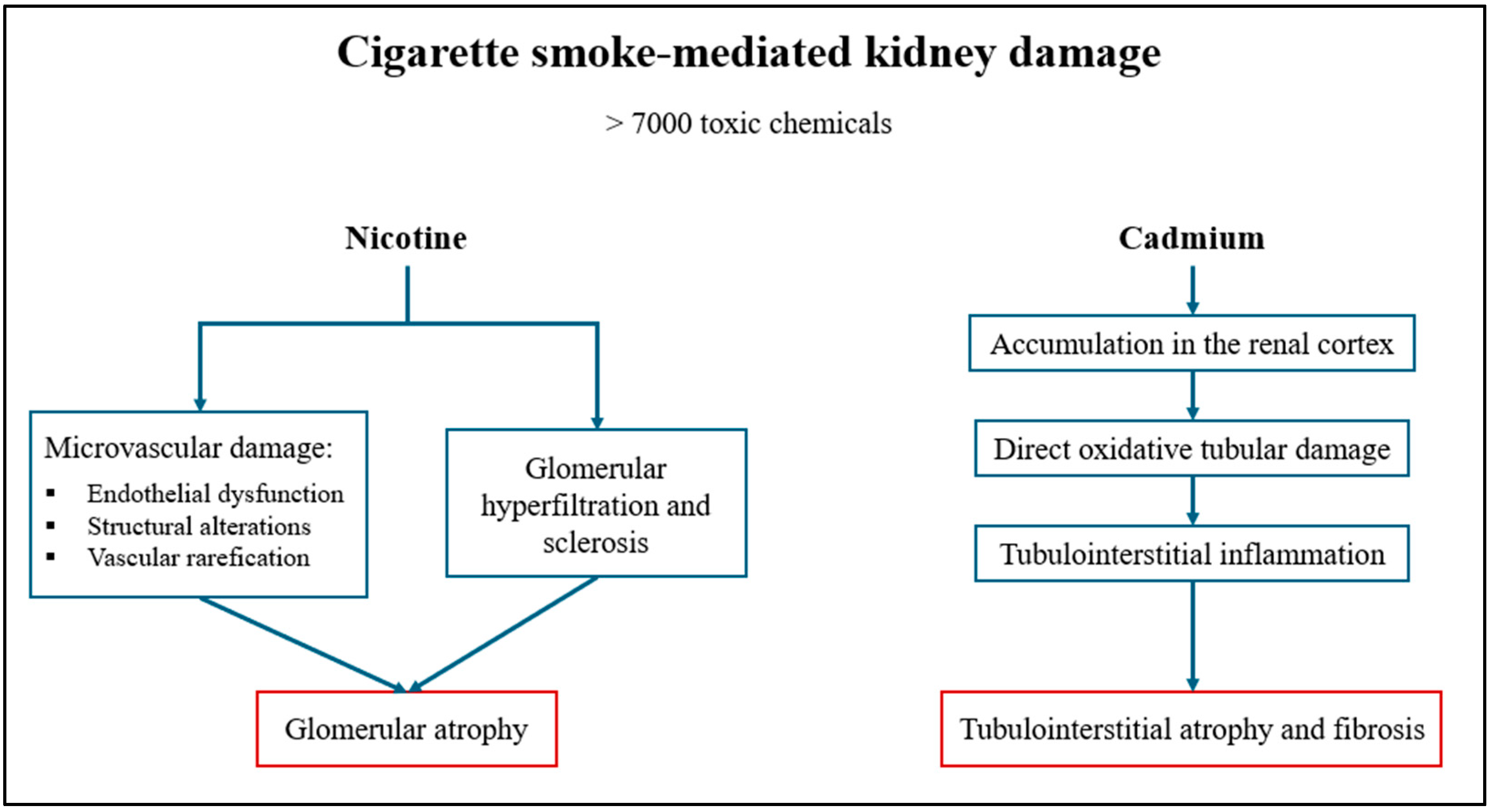
Significant information derived from renal biopsy specimens were obtained from smokers: glomerulosclerosis, arteriolar hyalinosis, interstitial fibrosis and tubular atrophy [15,25] are the most common findings. The pathophysiological mechanisms involved in smoking-related kidney damage are still unclear. The main hypothesized mechanisms include oxidative stress, platelet activation, nitric oxide depletion, chronic inflammation, direct cadmium-mediated tubular toxicity, hemodynamic alterations induced by nicotine leading to endothelial dysfunction, microvascular damage, glomerular hyperfiltration and sclerosis [10,15]. These elements lead to proteinuria, initial hyperfiltration, eGFR decline and progression of renal dysfunction. The association between cigarette smoking and renal hyperfiltration (RHF) is a widely recognized condition leading to kidney impairment [26,27]; RHF is an established key factor that mediates smoking effects on non-cardiovascular and all-cause mortality [28].
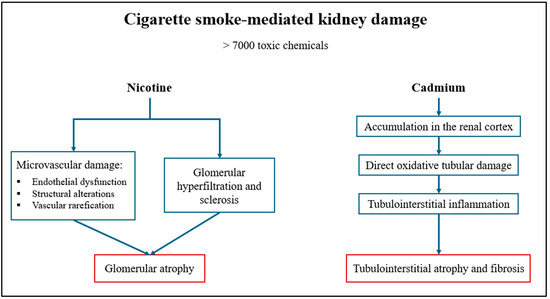
Chronic cadmium exposition, in turn, causes its accumulation in the renal cortex of cigarette smokers, production of reactive oxygen species (ROS) and direct oxidative tubular damage. As a consequence, tubular epithelial cells undergo functional and structural changes due to inflammatory and fibrogenic cells, with subsequent production of molecules that cause tubulo-interstitial inflammation, fibrosis and atrophy [15,29] (Figure 1).
Figure 1.
Summary of the main mechanisms potentially implicated in cigarette smoke-mediated kidney damage [15].
Nicotine exerts a nephrotoxic effect, so it is a relevant link between smoking and kidney dysfunction. Nicotine induces mesangial cell proliferation and promotes fibronectin and ROS synthesis and these alterations are involved in CKD onset and progression [15,30]. Nicotine can alter systemic and renal hemodynamics through vasoconstriction, leading to endothelial dysfunction and microvascular damage; it also promotes podocyte disfunction, glomerular fibrosis and subsequent albuminuria and GFR decline [31] (Figure 1). Other nicotine effects include fibroblast activation and pro-inflammatory and pro-oxidative properties [31,32,33]. Table 1 shows the summary of the main mechanisms implicated in kidney damage.
Table 1.
Summary of the main nephrotoxic substances related to cigarette smoking [15,29,30,31,32,33,34].
4. Effects of Non-Combustible Nicotine Products on Kidney Function
In recent years there has been an exponential increase in the use of non-combustible nicotine products such as e-cig/ENDS and HTPs and oral nicotine products as alternatives to conventional cigarettes, mainly among adolescents and young adults [35]. Comparative emission analyses show that these devices appear to release fewer toxic substances than conventional cigarettes, especially HTPs, which heat tobacco without burning it, thus reducing the production of many harmful substances [36,37]. However, these devices also have harmful effects on kidney function.
E-cigarettes release several toxic molecules, including volatile organic compounds, formaldehyde, acetaldehyde, acrolein, tobacco-specific nitrosamines (TSNAs), and heavy metals such as lead (Pb) and nickel (Ni) [38] (Table 2); these substances have important nephrotoxic effects.
Furthermore, the components of e-cigs include cadmium and nicotine [39], with a relationship between elevated serum cadmium levels and e-cigarette use [40].
Cross-sectional studies suggest an association between e-cig use and kidney damage (albuminuria and a decrease in eGFR) in both adolescents and young adults [41].
HTPs and oral nicotine products have fewer but similar harmful effects due to nicotine and other toxic substances such as acrolein, benzene, and TSNAs [42,43]. The main mechanisms involved in nicotine-related kidney damage have already been described. Further effects involve renin–angiotensin–aldosterone system (RAAS) homeostasis [44], the activation of the hypothalamic–pituitary–adrenal (HPA) axis and sympathetic stimulation [45,46], podocyte damage through NLRP3 inflammasome activation and subsequent reduced expression of podocin and nephrin [47].
These data show that the long-term effects of non-combustible nicotine products on renal function are not fully understood and require further investigation.
Table 2.
Summary of the main nephrotoxic substances related to non-combustible nicotine products [38,39,42,43].
5. Molecular Patterns Involved in Smoking-Mediated Kidney Damage
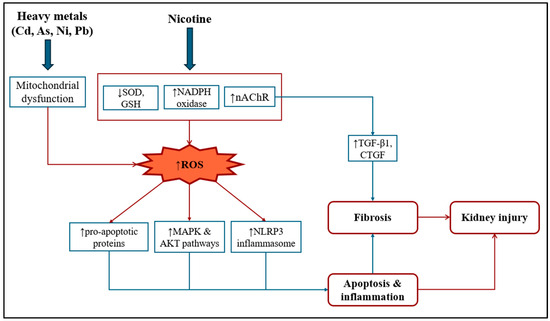
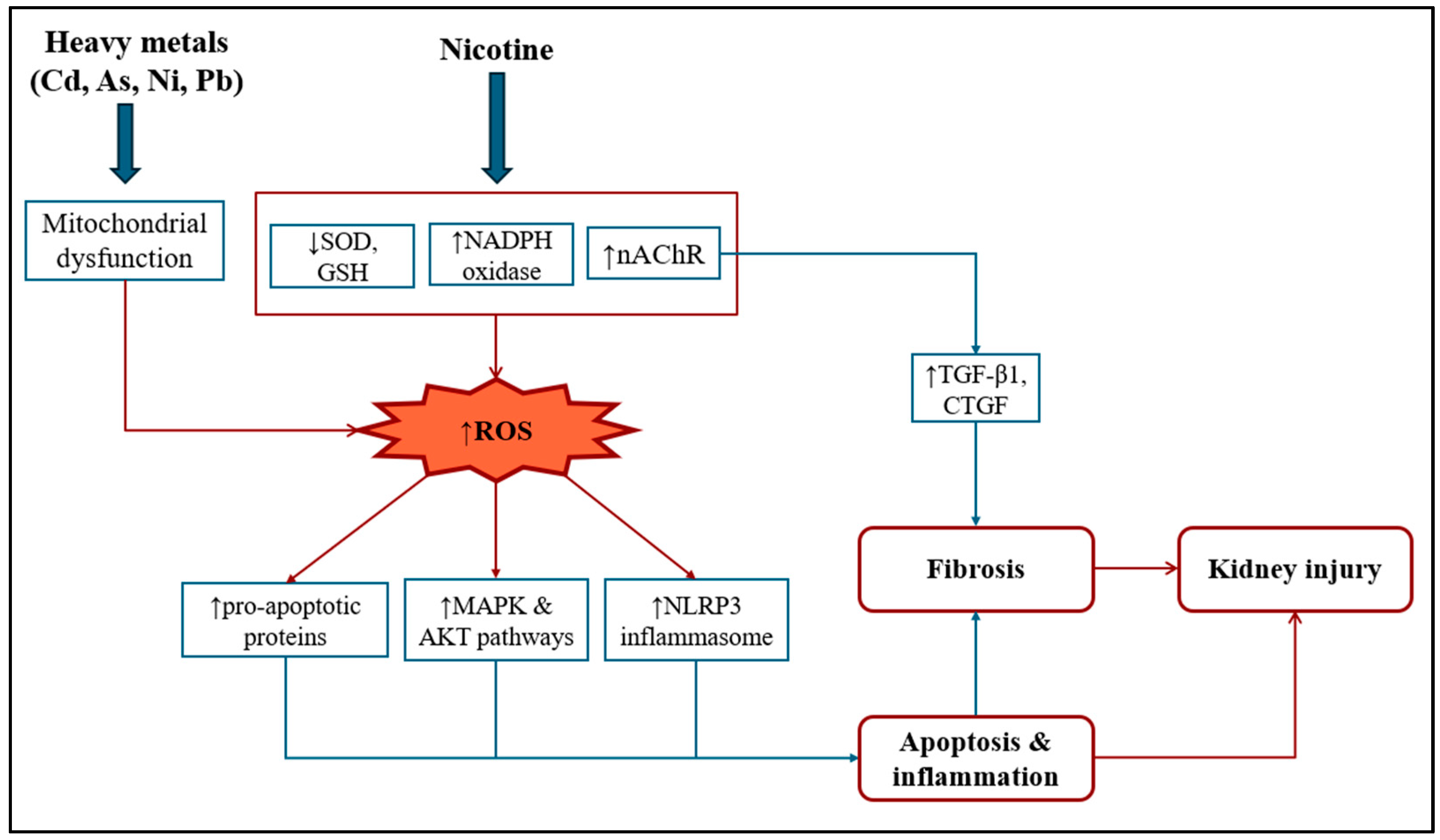
The principal nephrotoxic effects of both traditional cigarettes and non-combustible nicotine devices are largely mediated by cadmium and nicotine. These substances can damage the kidneys through various molecular mechanisms, as illustrated in Figure 2.
Figure 2.
Main molecular mechanisms implicated in smoking-mediated kidney damage [29,32,38,48]. SOD: superoxide dismutase; GSH: glutathione; NADPH: nicotinamide adenine dinucleotide phosphate (reduced form); nAChR: nicotine acetylcholine receptor; TGF-β1: transforming growth factor; CTGF: connective tissue growth factor; MAPK: mitogen-activated protein kinase.
Although their role in renal injury is well established, other cited nephrotoxic agents deserve greater attention.
5.1. Nephrotoxic Effects of Heavy Metals
It is well known that exposure to heavy metals, such as lead, nickel, cadmium and arsenic, exerts nephrotoxic effects primarily due to their ability to induce mitochondrial dysfunction and generate ROS, thus leading to oxidative stress and subsequent cellular damage (Figure 2) [48,49,50,51].
In addition to oxidative stress, there are other mechanisms implied in heavy metal-mediated renal damage.
Arsenic can activate mitogen-activated protein kinases (MAPKs) in a dose-dependent manner and promote inflammation through the upregulation of nuclear factor kB (NF-kB) [48]. It appears to increase cardiovascular risk by inducing endothelial disfunction through the inhibition of endothelial nitric oxide synthase (eNOS) [48]. Moreover, arsenic may directly damage podocytes and subsequently cause albuminuria [50].
Lead nephrotoxicity involves decreased synthesis of eicosanoids, increased thromboxane B2 levels, and the phagocytosis of erythrocytes by renal cells due to enhanced phosphatidylserine externalization, thus leading to iron accumulation and subsequent oxidative damage [52]. In addition, lead has been shown to promote apoptosis in proximal tubule cells through activation of the AMPK pathway and TLR4 receptor in experimental models [52]. Other nephrotoxic mechanisms include the activation of inflammatory pathways through the upregulation of NF-kB and the impairment of calcium signalling [52].
In mouse renal cells, nickel has been shown to damage the kidney via induction of autophagy, ferroptosis (iron-dependent lipid peroxidation which leads to cell death) [53], and pyroptosis (Caspase-1-dependent inflammatory programmed cell death) via the Nrf2/NLRP3 signalling pathway in mouse renal cells [54]. Moreover, nickel promotes mitochondrial fission while inhibiting their fusion and biogenesis, resulting in mitochondrial damage and dysfunction [51].
5.2. Acetaldehyde, Formaldehyde and Acrolein Patterns of Renal Damage
The molecular mechanisms underlying the nephrotoxic effects of these agents are not yet fully understood due to the lack of available data.
In vitro evidence indicates that acrolein promotes activation of hypoxia-inducible factor 1-alpha (HIF-1α) signalling, thus leading to mitochondrial dysfunction and ROS production [55]. In addition, acrolein can directly inhibit aldehyde dehydrogenase 2 (ALDH2), a detoxifying enzyme whose downregulation is associated with the development of renal fibrosis and the progression of CKD [55].
It is demonstrated that formaldehyde has severe nephrotoxic effects, largely due to its ability to cause oxidative damage by impairing the anti-oxidant defence systems in renal cells [56]. It was also observed that formaldehyde exposure leads to tubule-glomerular thickening and degeneration [56].
The nephrotoxic effects of acetaldehyde are less studied; however, evidence from in vitro experiments in mouse model suggests that it can activate the integrin β1/JNK pathway, thereby promoting tubular cell apoptosis [57].
5.3. Summary of Clinical Evidence
The following table summarizes the main characteristics of the clinical studies cited (Table 3).
Table 3.
Synthesis of evidence from the studies included in the review.
6. Conclusions
Smoking represents an independent risk factor for kidney damage, regardless of the presence of pre-existing chronic kidney disease. Both combustible and non-combustible nicotine products promote the onset and progression of renal dysfunction through multiple molecular mechanisms, ultimately leading to CKD and ESKD.
The evidence supports a dose–response and duration-dependent relationship between smoking exposure and kidney damage, with long-term cessation associated with a reduced—though not fully reversed—risk of renal impairment. This underscores the importance of early intervention and smoking prevention across all stages of life.
While conventional cigarettes appear to exert greater nephrotoxicity than non-combustible alternatives, the latter should not be considered safe. E-cigarettes, HTPs and oral nicotine products share key nephrotoxic substances—particularly nicotine and cadmium—and their long-term renal effects remain incompletely understood.
From a clinical perspective, smoking cessation counselling should be considered a cornerstone of nephroprotective strategies, not only by nephrologists but also by all clinicians—including general practitioners, cardiologists and internists—who encounter smokers in daily practice. Every patient who smokes is a patient at risk for kidney disease, irrespective of their current renal function.
These findings highlight the urgent need for targeted public health campaigns aimed at primary prevention of smoking, with particular attention to adolescents and young adults, among whom the use of non-combustible devices is rapidly growing.
Author Contributions
Conceptualization, G.M. and C.C.; methodology, E.C. and M.E.C.; investigation, A.S., N.S. and G.G.; writing—original draft preparation, E.C. and C.C.; writing—review and editing, all authors; visualization, all authors; supervision, G.M. and C.C.; project administration, all authors. All authors have read and agreed to the published version of the manuscript.
Funding
This research received no external funding.
Institutional Review Board Statement
Not applicable.
Informed Consent Statement
Not applicable.
Data Availability Statement
No new data were created or analyzed in this study.
Conflicts of Interest
The authors declare no conflicts of interest.
References
- Virdis, A.; Giannarelli, C.; Neves, M.F.; Taddei, S.; Ghiadoni, L. Cigarette smoking and hypertension. Curr. Pharm. Des. 2010, 16, 2518–2525. [Google Scholar] [CrossRef] [Scilit] [PubMed]
- Lushniak, B.D.; Samet, J.M.; Pechacek, T.F.; Norman, L.A.; Taylor, P.A. The Health Consequences of Smoking—50 Years of Progress: A Report of the Surgeon General. Available online: https://stacks.cdc.gov/view/cdc/21569 (accessed on 6 August 2025).
- Varghese, J.; Muntode Gharde, P. A Comprehensive Review on the Impacts of Smoking on the Health of an Individual. Cureus 2023, 15, e46532. [Google Scholar] [CrossRef] [Scilit] [PubMed]
- Ishida, M.; Sakai, C.; Kobayashi, Y.; Ishida, T. Cigarette Smoking and Atherosclerotic Cardiovascular Disease. J. Atheroscler. Thromb. 2024, 31, 189–200. [Google Scholar] [CrossRef] [Scilit] [PubMed]
- Soleimani, F.; Dobaradaran, S.; De-la-Torre, G.E.; Schmidt, T.C.; Saeedi, R. Content of toxic components of cigarette, cigarette smoke vs cigarette butts: A comprehensive systematic review. Sci. Total Environ. 2022, 813, 152667. [Google Scholar] [CrossRef] [Scilit] [PubMed]
- Status of Tobacco Use in the Region. Available online: https://www.who.int/europe/news-room/fact-sheets/item/tobacco (accessed on 2 August 2025).
- Polosa, R.; Rodu, B.; Farsalinos, K. Health effects of e-cigarettes, heated tobacco, and oral nicotine products. Intern. Emerg. Med. 2025, 20, 1671–1673. [Google Scholar] [CrossRef] [Scilit] [PubMed]
- Hallan, S.I.; Orth, S.R. Smoking is a risk factor in the progression to kidney failure. Kidney Int. 2011, 80, 516–523. [Google Scholar] [CrossRef] [Scilit] [PubMed]
- Dülger, H.; Dönder, A.; Sekeroğlu, M.R.; Erkoç, R.; Ozbay, B. Investigation of the relationship between serum levels of cotinine and the renal function in active and passive smokers. Ren. Fail. 2011, 33, 475–479. [Google Scholar] [CrossRef] [Scilit] [PubMed]
- Fu, Y.C.; Xu, Z.L.; Zhao, M.Y.; Xu, K. The Association Between Smoking and Renal Function in People Over 20 Years Old. Front. Med. 2022, 9, 870278. [Google Scholar] [CrossRef] [Scilit] [PubMed]
- Jhee, J.H.; Joo, Y.S.; Kee, Y.K.; Jung, S.Y.; Park, S.; Yoon, C.Y.; Han, S.H.; Yoo, T.H.; Kang, S.W.; Park, J.T. Secondhand Smoke and CKD. Clin. J. Am. Soc. Nephrol. 2019, 14, 515–522. [Google Scholar] [CrossRef] [Scilit] [PubMed]
- Omoloja, A.; Jerry-Fluker, J.; Ng, D.K.; Abraham, A.G.; Furth, S.; Warady, B.A.; Mitsnefes, M. Secondhand smoke exposure is associated with proteinuria in children with chronic kidney disease. Pediatr. Nephrol. 2013, 28, 1243–1251. [Google Scholar] [CrossRef] [Scilit] [PubMed]
- Benowitz, N.L. Cotinine as a biomarker of environmental tobacco smoke exposure. Epidemiol. Rev. 1996, 18, 188–204. [Google Scholar] [CrossRef] [Scilit] [PubMed]
- Leonberg-Yoo, A.K.; Rudnick, M.R. Tobacco Use: A Chronic Kidney Disease Accelerant. Am. J. Nephrol. 2017, 46, 257–259. [Google Scholar] [CrossRef] [Scilit] [PubMed]
- Lang, S.M.; Schiffl, H. Smoking status, cadmium, and chronic kidney disease. Ren. Replace. Ther. 2024, 10, 17. [Google Scholar] [CrossRef] [Scilit]
- Xia, J.; Wang, L.; Ma, Z.; Zhong, L.; Wang, Y.; Gao, Y.; He, L.; Su, X. Cigarette smoking and chronic kidney disease in the general population: A systematic review and meta-analysis of prospective cohort studies. Nephrol. Dial. Transpl. 2017, 32, 475–487. [Google Scholar] [CrossRef] [Scilit] [PubMed]
- Jin, A.; Koh, W.P.; Chow, K.Y.; Yuan, J.M.; Jafar, T.H. Smoking and risk of kidney failure in the Singapore Chinese health study. PLoS ONE 2013, 8, e62962. [Google Scholar] [CrossRef] [Scilit] [PubMed]
- Lee, S.; Kang, S.; Joo, Y.S.; Lee, C.; Nam, K.H.; Yun, H.R.; Park, J.T.; Chang, T.I.; Yoo, T.H.; Kim, S.W.; et al. Smoking, Smoking Cessation, and Progression of Chronic Kidney Disease: Results From KNOW-CKD Study. Nicotine Tob. Res. 2021, 23, 92–98. [Google Scholar] [CrossRef] [Scilit] [PubMed]
- Tylicki, L.; Puttinger, H.; Rutkowski, P.; Rutkowski, B.; Horl, W.H. Smoking as a risk factor for renal injury in essential hypertension. Nephron Clin. Pract. 2006, 103, c121–c128. [Google Scholar] [CrossRef] [Scilit] [PubMed]
- Yacoub, R.; Habib, H.; Lahdo, A.; Al Ali, R.; Varjabedian, L.; Atalla, G.; Kassis Akl, N.; Aldakheel, S.; Alahdab, S.; Albitar, S. Association between smoking and chronic kidney disease: A case control study. BMC Public Health 2010, 10, 731. [Google Scholar] [CrossRef] [Scilit] [PubMed] [PubMed Central]
- Liao, D.; Ma, L.; Liu, J.; Fu, P. Cigarette smoking as a risk factor for diabetic nephropathy: A systematic review and meta-analysis of prospective cohort studies. PLoS ONE 2019, 14, e0210213. [Google Scholar] [CrossRef] [Scilit] [PubMed]
- Wang, S.; Qin, A.; Pei, G.; Jiang, Z.; Dong, L.; Tan, J.; Tan, L.; Tang, Y.; Qin, W. Cigarette smoking may accelerate the progression of IgA nephropathy. BMC Nephrol. 2021, 22, 239. [Google Scholar] [CrossRef] [Scilit] [PubMed] [PubMed Central]
- Gul, C.B.; Yildiz, A.; Sag, S.; Oruc, A.; Ersoy, A.; Gullulu, S. The Effect of Smoking on Endothelial Dysfunction in Autosomal Dominant Polycystic Kidney Disease Patients with Preserved Renal Function. Ren. Fail. 2021, 43, 1124–1129. [Google Scholar] [CrossRef] [Scilit] [PubMed]
- Chen, M.; Ding, N.; Grams, M.E.; Matsushita, K.; Ishigami, J. Cigarette Smoking and Risk of Hospitalization with Acute Kidney Injury: The Atherosclerosis Risk in Communities (ARIC) Study. Am. J. Kidney Dis. 2024, 83, 794–802.e1. [Google Scholar] [CrossRef] [Scilit] [PubMed]
- Liang, K.V.; Greene, E.L.; Oei, L.S.; Lewin, M.; Lager, D.; Sethi, S. Nodular glomerulosclerosis: Renal lesions in chronic smokers mimic chronic thrombotic microangiopathy and hypertensive lesions. Am. J. Kidney Dis. 2007, 49, 552–559. [Google Scholar] [CrossRef] [Scilit] [PubMed]
- Mickelsson, M.; Söderström, E.; Stefansson, K.; Andersson, J.; Söderberg, S.; Hultdin, J. Smoking tobacco is associated with renal hyperfiltration. Scand. J. Clin. Lab. Investig. 2021, 81, 622–628. [Google Scholar] [CrossRef] [Scilit] [PubMed]
- Maeda, I.; Hayashi, T.; Sato, K.K.; Koh, H.; Harita, N.; Nakamura, Y.; Endo, G.; Kambe, H.; Fukuda, K. Cigarette smoking and the association with glomerular hyperfiltration and proteinuria in healthy middle-aged men. Clin. J. Am. Soc. Nephrol. 2011, 6, 2462–2469. [Google Scholar] [CrossRef] [Scilit] [PubMed] [PubMed Central]
- Aissani, M.S.; Niskanen, L.; Tuomainen, T.P.; Ould Setti, M. Renal Hyperfiltration as a New Mechanism of Smoking-Related Mortality. Nicotine Tob. Res. 2025, 27, 1092–1097. [Google Scholar] [CrossRef] [Scilit] [PubMed]
- Yan, L.J.; Allen, D.C. Cadmium-Induced Kidney Injury: Oxidative Damage as a Unifying Mechanism. Biomolecules 2021, 11, 1575. [Google Scholar] [CrossRef] [Scilit] [PubMed]
- Jaimes, E.A.; Tian, R.X.; Raij, L. Nicotine: The link between cigarette smoking and the progression of renal injury? Am. J. Physiol. Heart Circ. Physiol. 2007, 292, H76–H82. [Google Scholar] [CrossRef] [Scilit] [PubMed]
- Van Laecke, S.; Van Biesen, W. Smoking and chronic kidney disease: Seeing the signs through the smoke? Nephrol. Dial. Transplant. 2017, 32, 403–405. [Google Scholar] [CrossRef] [Scilit] [PubMed]
- Jensen, K.; Nizamutdinov, D.; Guerrier, M.; Afroze, S.; Dostal, D.; Glaser, S. General mechanisms of nicotine-induced fibrogenesis. FASEB J. 2012, 26, 4778–4787. [Google Scholar] [CrossRef] [Scilit] [PubMed]
- Arany, I.; Hall, S.; Reed, D.K.; Reed, C.T.; Dixit, M. Nicotine Enhances High-Fat Diet-Induced Oxidative Stress in the Kidney. Nicotine Tob. Res. 2016, 18, 1628–1634. [Google Scholar] [CrossRef] [Scilit] [PubMed]
- Rahman, H.H.; Niemann, D.; Munson-McGee, S.H. Association of chronic kidney disease with exposure to polycyclic aromatic hydrocarbons in the US population. Environ. Sci. Pollut. Res. Int. 2022, 29, 24024–24034. [Google Scholar] [CrossRef] [Scilit] [PubMed]
- Bozier, J.; Chivers, E.K.; Chapman, D.G.; Larcombe, A.N.; Bastian, N.A.; Masso-Silva, J.A.; Byun, M.K.; McDonald, C.F.; Crotty Alexander, L.E.; Ween, M.P. The Evolving Landscape of e-Cigarettes: A Systematic Review of Recent Evidence. Chest 2020, 157, 1362–1390. [Google Scholar] [CrossRef] [Scilit] [PubMed]
- Kanobe, M.N.; Dull, G.M.; Darnell, J.; Jin, T.; Brown, B.; Coffield, J.; Keyser, B.M.; Fearon, I.M.; Makena, P.; Baxter, S.A. Evaluation of environmental emissions from glo heated tobacco products and combustible Cigarettes. Environ. Adv. 2024, 17, 100580. [Google Scholar] [CrossRef] [Scilit]
- Gunduz, I.; Nordlund, M.; King, J.; Gustin, B.; Cudazzo, G.; Nesovic, M.; Butin, Y.; Stura, E.; Alriquet, M.; Chauhan, M. A comparative assessment of HPHC yields and in vitro toxicity for 1R6F reference cigarette smoke versus aerosol generated by Tobacco Heating System 3.0. Aerosol Sci. Technol. 2025, 59, 146–162. [Google Scholar] [CrossRef] [Scilit]
- Raja, A.; Zelikoff, J.T.; Jaimes, E.A. A contemporary review of nephrotoxicity and e-cigarette use. Curr. Opin. Toxicol. 2022, 31, 100361. [Google Scholar] [CrossRef] [Scilit]
- Smith, D.M.; Christensen, C.; van Bemmel, D.; Borek, N.; Ambrose, B.; Erives, G.; Niaura, R.; Edwards, K.C.; Stanton, C.A.; Blount, B.C.; et al. Exposure to Nicotine and Toxicants Among Dual Users of Tobacco Cigarettes and E-Cigarettes: Population Assessment of Tobacco and Health (PATH) Study, 2013–2014. Nicotine Tob. Res. 2021, 23, 790–797, Erratum in Nicotine Tob. Res. 2024, 27, 164. https://doi.org/10.1093/ntr/ntae235. [Google Scholar] [CrossRef] [Scilit] [PubMed]
- Lee, J.W.; Kim, Y.; Kim, Y.; Yoo, H.; Kang, H.T. Cigarette Smoking in Men and Women and Electronic Cigarette Smoking in Men are Associated with Higher Risk of Elevated Cadmium Level in the Blood. J. Korean Med. Sci. 2020, 35, e15. [Google Scholar] [CrossRef] [Scilit] [PubMed]
- Lang, S.M.; Hoffmann, J.; Schiffl, H. E-cigarettes and kidney health: Current knowledge and future perspectives. Int. Urol. Nephrol. 2025, 57, 1199–1205. [Google Scholar] [CrossRef] [Scilit] [PubMed]
- Cancelada, L.; Sleiman, M.; Tang, X.; Russell, M.L.; Montesinos, V.N.; Litter, M.I.; Gundel, L.A.; Destaillats, H. Heated Tobacco Products: Volatile Emissions and Their Predicted Impact on Indoor Air Quality. Environ. Sci. Technol. 2019, 53, 7866–7876. [Google Scholar] [CrossRef] [Scilit] [PubMed]
- Leigh, N.J.; Palumbo, M.N.; Marino, A.M.; O’Connor, R.J.; Goniewicz, M.L. Tobacco-specific nitrosamines (TSNA) in heated tobacco product IQOS. Tob. Control 2018, 27, s37–s38. [Google Scholar] [CrossRef] [Scilit] [PubMed]
- Oakes, J.M.; Fuchs, R.M.; Gardner, J.D.; Lazartigues, E.; Yue, X. Nicotine and the renin-angiotensin system. Am. J. Physiol. Regul. Integr. Comp. Physiol. 2018, 315, R895–R906. [Google Scholar] [CrossRef] [Scilit] [PubMed]
- Rohleder, N.; Kirschbaum, C. The hypothalamic-pituitary-adrenal (HPA) axis in habitual smokers. Int. J. Psychophysiol. 2006, 59, 236–243. [Google Scholar] [CrossRef] [Scilit] [PubMed]
- Scharf, P.; Rizzetto, F.; Xavier, L.F.; Farsky, S.H.P. Xenobiotics Delivered by Electronic Nicotine Delivery Systems: Potential Cellular and Molecular Mechanisms on the Pathogenesis of Chronic Kidney Disease. Int. J. Mol. Sci. 2022, 23, 10293. [Google Scholar] [CrossRef] [Scilit] [PubMed]
- Singh, G.B.; Kshirasagar, N.; Patibandla, S.; Puchchakayala, G.; Koka, S.; Boini, K.M. Nicotine instigates podocyte injury via NLRP3 inflammasomes activation. Aging 2019, 11, 12810–12821. [Google Scholar] [CrossRef] [Scilit] [PubMed]
- Jomova, K.; Alomar, S.Y.; Nepovimova, E.; Kuca, K.; Valko, M. Heavy metals: Toxicity and human health effects. Arch. Toxicol. 2025, 99, 153–209. [Google Scholar] [CrossRef] [Scilit] [PubMed]
- Ekong, E.B.; Jaar, B.G.; Weaver, V.M. Lead-related nephrotoxicity: A review of the epidemiologic evidence. Kidney Int. 2006, 70, 2074–2084. [Google Scholar] [CrossRef] [Scilit] [PubMed]
- Robles-Osorio, M.L.; Sabath-Silva, E.; Sabath, E. Arsenic-mediated nephrotoxicity. Ren. Fail. 2015, 37, 542–547. [Google Scholar] [CrossRef] [Scilit] [PubMed]
- Yin, H.; Li, X.; Wang, C.; Li, X.; Liu, J. Nickel induces mitochondrial damage in renal cells in vitro and in vivo through its effects on mitochondrial biogenesis, fusion, and fission. Chem. Biol. Interact. 2024, 394, 110975. [Google Scholar] [CrossRef] [Scilit] [PubMed]
- Gopalakrishnan, A.V. Lead-Induced Nephrotoxicity and Its Therapeutic Interventions: An Updated Review. Biol. Trace Elem. Res. 2026, 204, 495–513. [Google Scholar] [CrossRef] [Scilit] [PubMed]
- Yang, Q.; Zuo, Z.; Zeng, Y.; Ouyang, Y.; Cui, H.; Deng, H.; Zhu, Y.; Deng, J.; Geng, Y.; Ouyang, P.; et al. Autophagy-mediated ferroptosis involved in nickel-induced nephrotoxicity in the mice. Ecotoxicol. Environ. Saf. 2023, 259, 115049. [Google Scholar] [CrossRef] [Scilit] [PubMed]
- Li, J.; Dai, X.; Hu, S.; Yang, Q.; Jing, Z.; Zhou, Y.; Jian, X. Nickel induces pyroptosis via the Nrf2/NLRP3 pathway in kidney of mice. Biol. Trace Elem. Res. 2024, 202, 3248–3257. [Google Scholar] [PubMed]
- Li, S.Y.; Tsai, M.T.; Kuo, Y.M.; Yang, H.M.; Tong, Z.J.; Cheng, H.W.; Lin, C.C.; Wang, H.T. Aldehyde dehydrogenase 2 preserves kidney function by countering acrolein-induced metabolic and mitochondrial dysfunction. JCI Insight 2024, 9, e179871. [Google Scholar] [CrossRef] [Scilit] [PubMed] [PubMed Central]
- İnci, M.; Zararsız, İ.; Davarcı, M.; Görür, S. Toxic effects of formaldehyde on the urinary system. Turk. J. Urol. 2013, 39, 48–52. [Google Scholar] [CrossRef] [Scilit] [PubMed]
- Zhan, Z.; Chen, J.; Zhou, H.; Hong, X.; Li, L.; Qin, X.; Fu, H.; Liu, Y. Chronic alcohol consumption aggravates acute kidney injury through integrin β1/JNK signaling. Redox Biol. 2024, 77, 103386. [Google Scholar] [CrossRef] [Scilit] [PubMed]

Disclaimer/Publisher’s Note: The statements, opinions and data contained in all publications are solely those of the individual author(s) and contributor(s) and not of MDPI and/or the editor(s). MDPI and/or the editor(s) disclaim responsibility for any injury to people or property resulting from any ideas, methods, instructions or products referred to in the content. |
© 2026 by the authors. Licensee MDPI, Basel, Switzerland. This article is an open access article distributed under the terms and conditions of the Creative Commons Attribution (CC BY) license.