


Abstract
Natural gas hydrate is a clean energy resource critical for global energy security and low-carbon transition. Understanding its geological accumulation mechanisms is essential for exploration and development. However, the current research on NGH geological accumulation lacks a systematic and quantitative analysis of its global research evolution, hotspots, and frontiers. To fill this gap, this study conducts a bibliometric analysis of 5891 articles (1999–2025) from the Web of Science Core Collection using CiteSpace and VOSviewer to map research trends, contributions, and frontiers. The results show that annual publications followed a three-stage trajectory: slow initiation, rapid growth, and stable development, with key boosts from production tests in Japan (2013) and China (2017). Marine and Petroleum Geology emerged as the most cited journal. China, the United States, and Germany lead research output, with the Chinese Academy of Sciences serving as the central hub (centrality: 0.46). Core researchers such as Jinqiang Liang have established foundational knowledge through highly cited studies on accumulation theory and resource–environment interactions. Research focus has shifted from early resource assessment to controlling factors, and recently toward production technologies and parameter optimization, highlighting a transition from basic to applied research with strong interdisciplinary integration. While bibliometrics reveals structural evolution and hotspots, limitations in data sources and analytical scope remain. Future efforts should integrate multi-source data and deepen content analysis to address unresolved challenges in NGH geological accumulation.
1. Introduction
Natural gas hydrates (NGHs) are widely distributed in permafrost regions and continental margin marine sediments. Their organic carbon reserves are estimated to be twice the total known fossil fuel carbon reserves globally, demonstrating immense energy potential [1,2]. Concurrently, the formation and decomposition processes of NGHs profoundly impact seafloor stability, the global carbon cycle, and climate change [3,4,5,6]. Therefore, research into natural gas hydrates is crucial not only for energy security but also for understanding global environmental changes. However, realizing this potential and mitigating the associated risks requires a fundamental understanding of hydrate deposit formation.
The formation of natural gas hydrates requires four key elements: gas, water, temperature, and pressure, and involves complex processes of gas migration, accumulation, and entrapment [7,8,9,10,11]. Researchers have employed various methods, including geophysical exploration [12], geological background analysis [13,14], geochemical analysis [15,16], and drilling and logging verification [17,18], to identify and evaluate hydrate resource enrichment zones. However, due to the complexity of the accumulation system, the diversity of occurrence conditions, and the differing behaviors of various hydrate types, the geological accumulation research of NGH still faces numerous challenges. These include the precise characterization of accumulation mechanisms, the extraction of effective information from heterogeneous data, and the assessment of reservoir producibility and geological hazards induced by decomposition [10,19].
In recent years, with the advancement of exploration programs worldwide, research on hydrate accumulation systems has gradually shifted from static description to dynamic evolution. Research content now encompasses gas source genesis, gas migration pathways, reservoir characteristics, accumulation dynamics simulation, and accumulation model construction [20,21,22,23]. This highly interdisciplinary field involves geology, geophysics, geochemistry, petroleum engineering, and thermodynamics, necessitating a systematic review of its knowledge structure and research trends. Bibliometrics, as a quantitative analytical method based on mathematics and statistics, can objectively reveal the development trajectory, knowledge base, and research hotspots of a particular field [24,25], and has been widely applied in review studies across various disciplines. Although some bibliometric studies have touched upon the hydrate field [26,27], they have not focused on the critical aspect of “geological accumulation.”
Therefore, this paper conducts a systematic bibliometric and knowledge graph analysis based on the natural gas hydrate geological accumulation literature collected from the Web of Science Core Collection database between 1999 and 2025. The study aims to (1) reveal the annual publication trends and core literature in this field; (2) identify major contributing countries, institutions, and scholars; (3) and capture the evolution of research themes and frontier dynamics through keyword co-occurrence, clustering, and burst detection analysis, providing a reference for future research directions in this field.
The remainder of this paper is organized as follows. Section 2 introduces the data sources and search strategy; Section 3 describes the research methods and tools; Section 4 presents the bibliometric analysis results; Section 5 discusses the research findings and prospects for future development; Section 6 summarizes the research conclusions.
2. Data
2.1. Data Source and Search Strategy
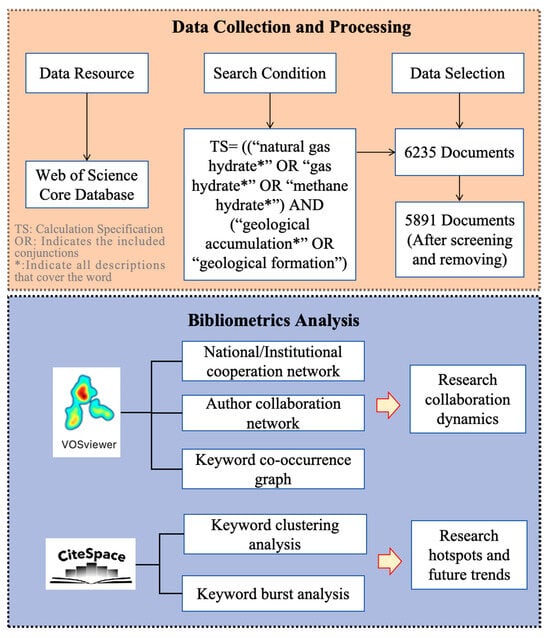
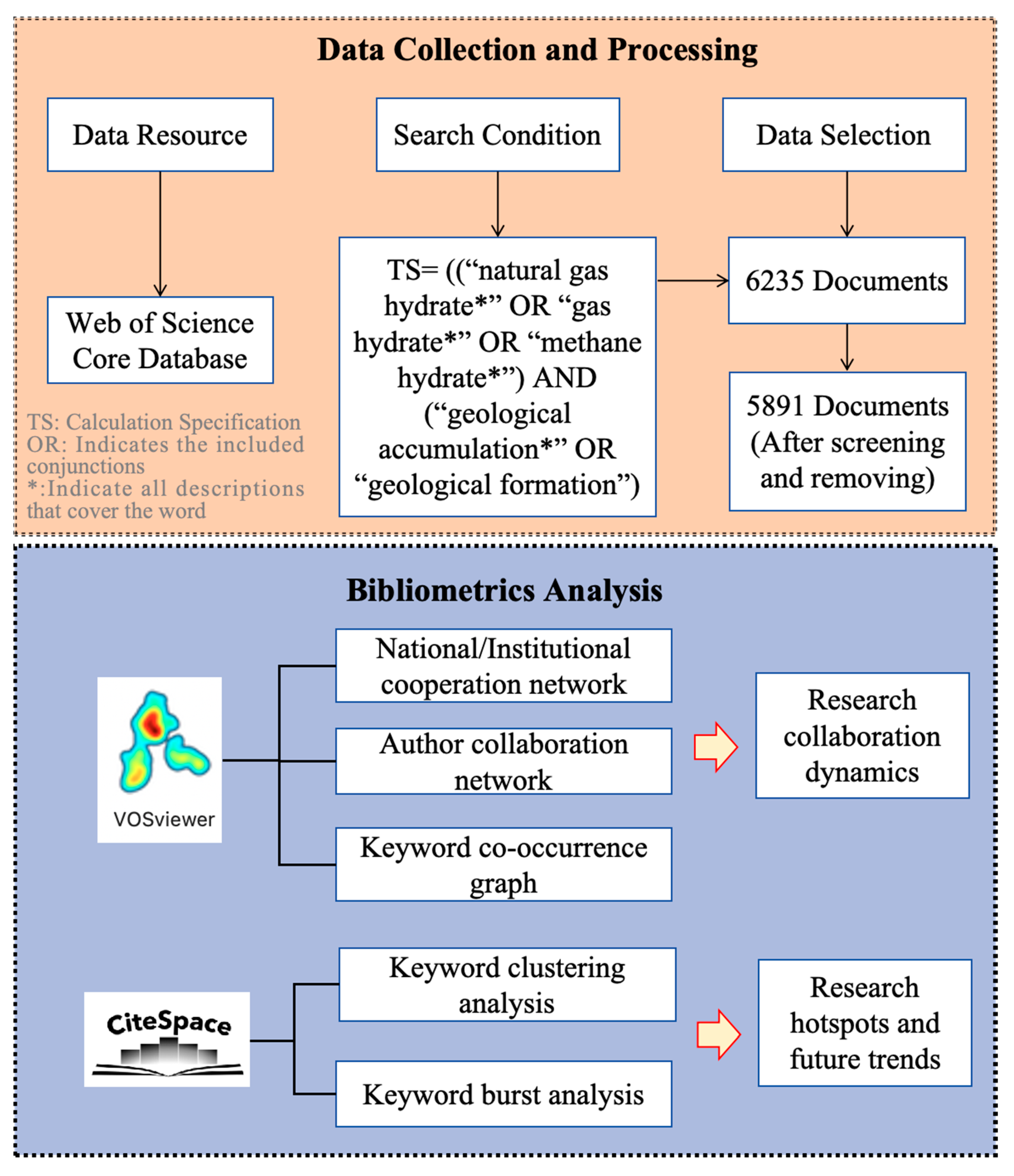
The data for this study were sourced from the Web of Science Core Collection database, specifically selecting SCI/SSCI indexed articles published between 1 January 1999 and 1 September 2025. The document type was restricted to “Article”. A topic-based search strategy was employed, combining keywords with logical operators as follows: the topic (TS) = ((“natural gas hydrate*” OR “gas hydrate*” OR “methane hydrate*”) AND (“geological accumulation*” OR “geological formation”)). This strategy ensures that the retrieved literature is highly relevant to the core research topic of NGH geological accumulation.
2.2. Preliminary Retrieval and Metadata Extraction
The initial retrieval yielded 6235 documents. We used the built-in export function of WoS to extract the complete metadata of all retrieved documents, including title, author, affiliation, country/region, keywords, abstract, citation count, journal name, and disciplinary category. Third-party tools were not used for metadata extraction to ensure the accuracy of the original data.
2.3. Manual Screening of Valid Documents
We conducted manual one-by-one screening of the 6235 preliminary retrieved documents to remove irrelevant entries, including (1) non-article type documents (e.g., reviews, letters, conference abstracts); (2) literature with inconsistent research themes (e.g., only laboratory synthesis of hydrates, pure chemical thermodynamics research without geological accumulation context, engineering simulation unrelated to natural geological settings); (3) and duplicate documents caused by WoS database indexing errors. After screening, 5891 valid documents were finally retained for subsequent bibliometric analysis. Figure 1 illustrates the data extraction, screening, and analysis workflow.
Figure 1.
Flowchart of data extraction and filtering process and research method.
3. Methods
The concept of bibliometrics first emerged in the early 20th century and was formally established as an independent discipline by [28]. Over the following decades, bibliometrics has been widely applied in the field of Earth sciences [29,30,31]. In this paper, we employ two specialized bibliometric tools, CiteSpace 6.3.R1 and VOSviewer 1.6.20. CiteSpace, developed by Professor Chaomei Chen at Drexel University, is dedicated to scientific mapping and knowledge visualization, and is particularly suited for identifying research frontiers, detecting emerging trends, and revealing evolutionary pathways in a discipline [32]. VOSviewer, developed by the Center for Science and Technology Studies of Leiden University, emphasizes the visualization and cluster analysis of bibliometric networks, and excels at constructing collaboration networks, keyword co-occurrence maps, and cluster-based visualizations [33].
In this paper, CiteSpace is used to perform keyword burst detection and cluster analysis, helping to identify the evolution of research hotspots and emerging frontiers. VOSviewer is employed to construct country/institution collaboration networks, author co-citation networks, and keyword co-occurrence maps. The complementary use of these two tools ensures the comprehensiveness and reliability of the analytical results.
4. Results of Bibliometric Analysis
4.1. Analysis of Publications and Core Papers
4.1.1. Annual Publication Output and Trends
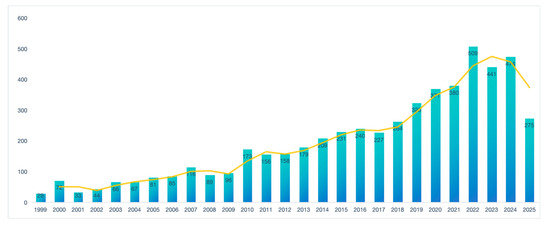
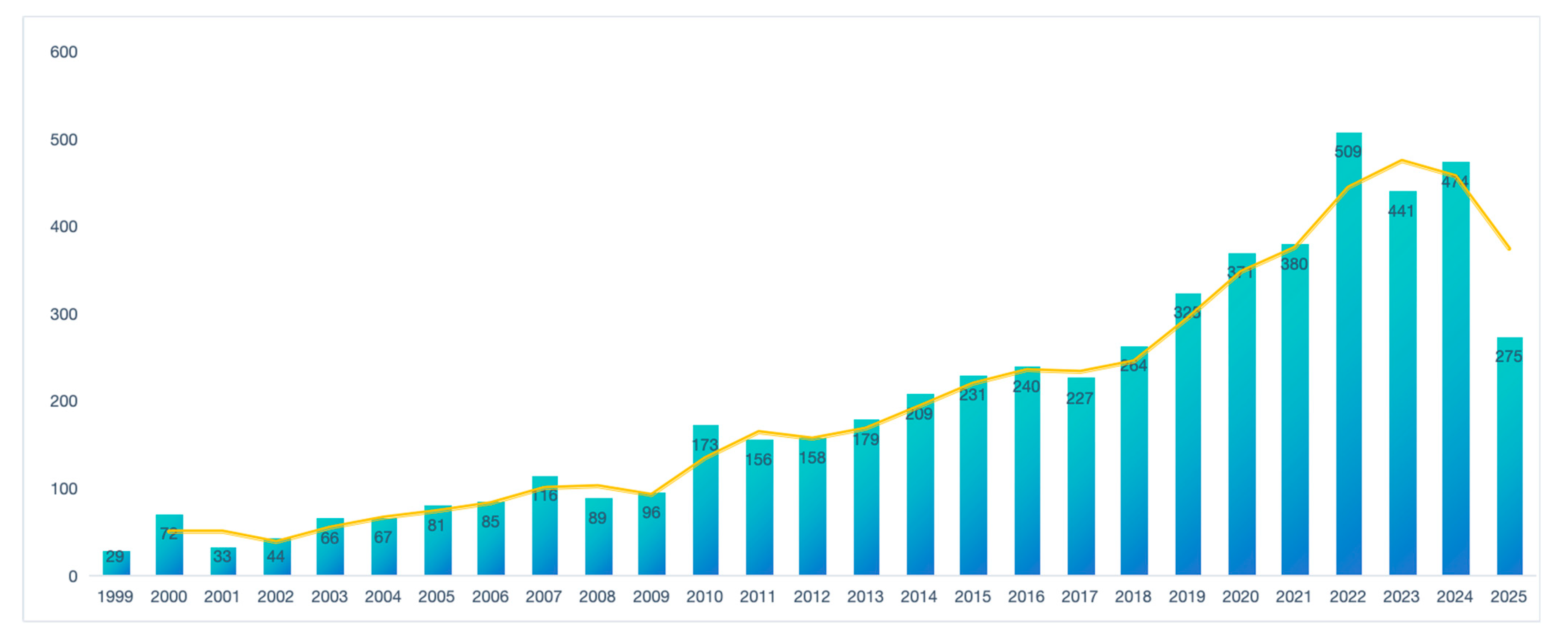
Publication count serves as a key indicator of research activity in a given field [34]. Between 1999 and 2025, the number of publications in the field of NGH geological accumulation underwent significant changes, as illustrated in Figure 2. The annual publication output exhibited a three-phase development pattern: slow initiation—rapid growth—stable development.
Figure 2.
Annual publication trend in the NGH accumulation field.
From 1999 to 2009, the field was in a phase of slow initiation, with an average annual output of fewer than 100 publications. Research during this period primarily focused on foundational theories of hydrate accumulation. The period from 2009 to 2023 marked a phase of rapid growth, with annual publications increasing from 96 to 509. This surge was significantly driven by key milestones, including Japan’s successful production test in the Nankai Trough in 2013 and China’s trial production in the Shenhu Area in 2017. Since 2023, the field has entered a stage of stable development, with annual publications maintaining between 450 and 500 (we calculate and simulate the publication trend in 2025 using a Moving Average, as well as the statistical law of research output growth in the field). This reflects the maturation of the research domain and a growing diversification of research directions (Figure 3).
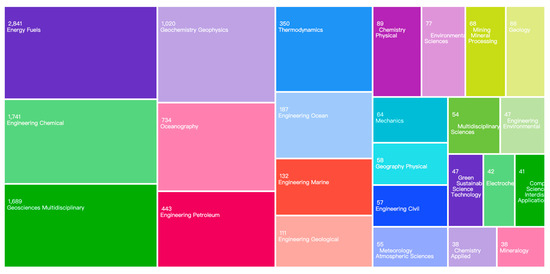
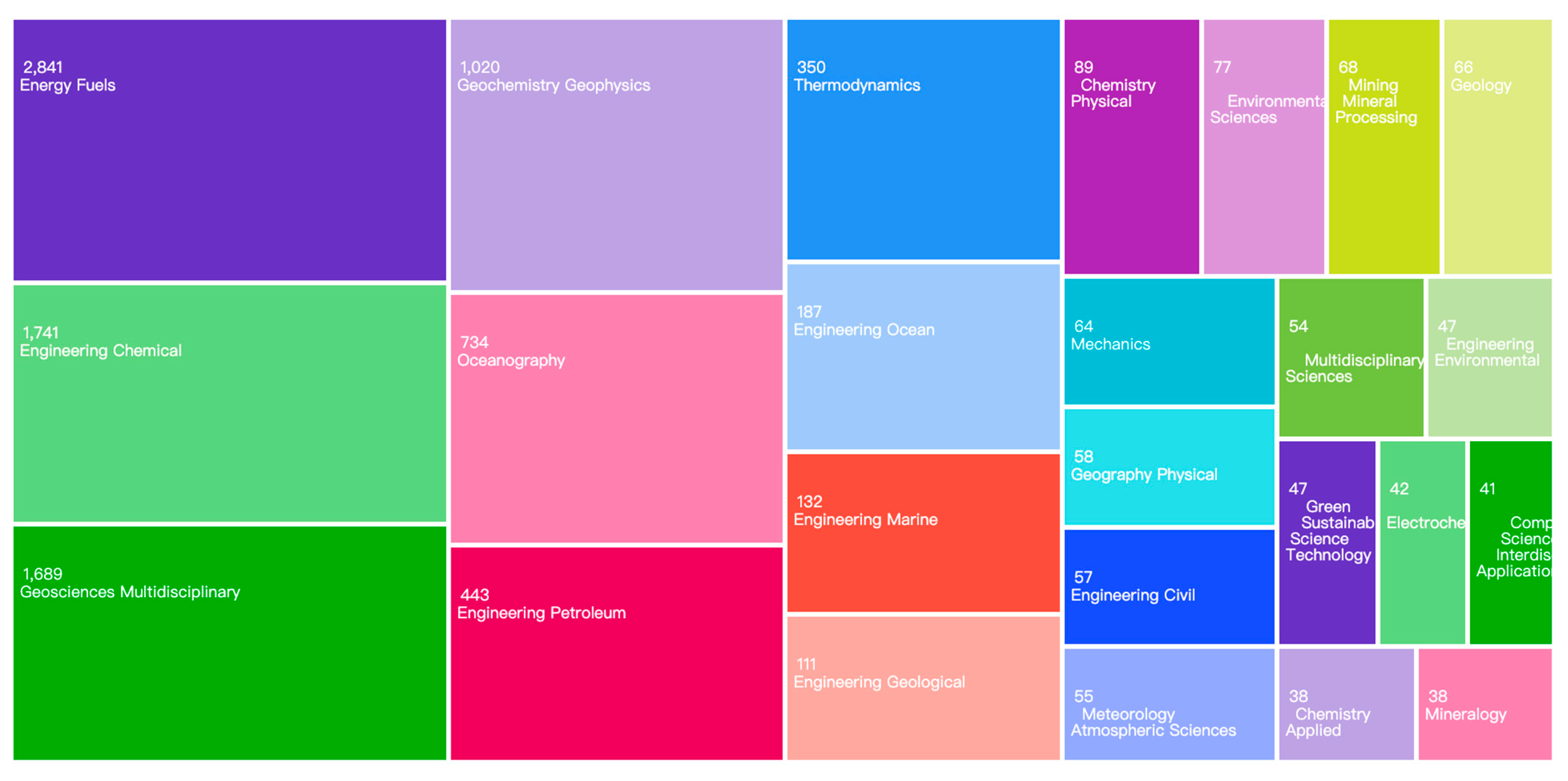
Figure 3.
Distribution of publications across interdisciplinary categories.
4.1.2. Interdisciplinary Collaboration
The distribution of research across disciplinary categories is a key indicator for assessing the contributions of different fields to a given research topic [35]. Interdisciplinary analysis reveals that studies in this domain span ten major disciplines, including energy fuels, geosciences, oceanography, and petroleum engineering. Among these, energy sciences (2841 publications), geosciences (1689 publications), and marine sciences (734 publications) constitute the three core disciplines (Figure 3).
From the perspective of energy sciences, natural gas hydrates are regarded as a future fossil fuel resource, with research ultimately aimed at supporting engineering objectives such as exploration, assessment, and extraction. Geoscience research focuses on the geological nature of hydrate accumulation and its governing mechanisms, emphasizing the understanding of formation conditions, distribution patterns, geological controls, and impacts on the geological environment, thereby providing the theoretical foundation for deciphering accumulation laws. Marine science, in turn, treats gas hydrates as a critical component of the global marine carbon cycle and ecosystem, concentrating on the unique processes and effects arising from the presence of hydrates in the marine environment.
Interdisciplinary collaboration has introduced innovative perspectives into hydrate accumulation research, particularly through the integration of engineering geology, chemical engineering, ocean engineering, and computer science. Although these disciplines differ in their applications, they often share underlying physical processes and collectively address complex geological accumulation challenges. As knowledge, technology, and resources continue to converge, the role of interdisciplinary collaboration is becoming increasingly vital. It not only drives innovation within the field but also facilitates knowledge exchange, positioning multidisciplinary integration as a dominant research direction in the coming years.
4.1.3. Journal Publication Ranking
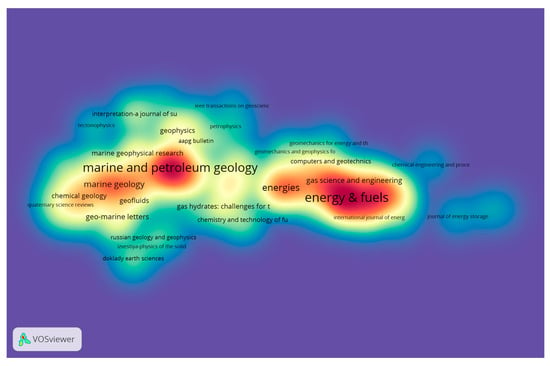
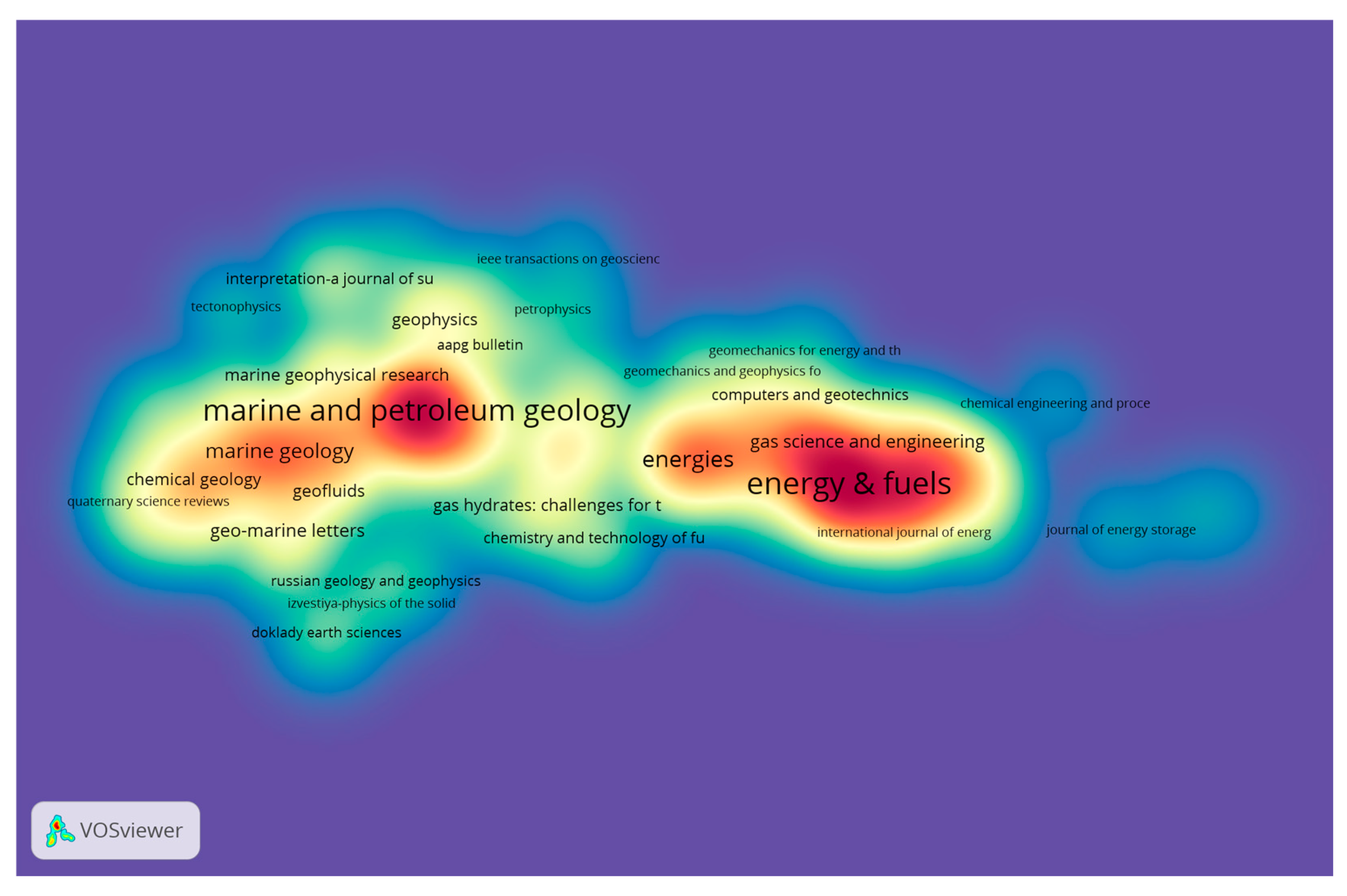
Journals play a crucial role in disseminating specialized knowledge and showcasing academic achievements [36,37]. A total of 261 journals have published papers related to gas hydrate accumulation, reflecting significant research interest in this field. Using VOSviewer and setting a publication threshold of at least 20 articles, a network density map was generated for 51 journals (Figure 4). Publications in this field are predominantly concentrated in journals specializing in energy geology and marine sciences. The top five journals by publication volume are Energy & Fuels, Marine and Petroleum Geology, Journal of Natural Gas Science and Engineering, Fuel, and Energy. Among these, Marine and Petroleum Geology has the highest number of citations, with a CiteScore of 7.7 as of 2025. The journal focuses on the geological conditions and distribution patterns of hydrate accumulation, representing a core platform and reflecting key research directions in the field. This analysis helps identify influential journals in gas hydrate accumulation research, providing valuable guidance for knowledge dissemination and future development in the area.
Figure 4.
Network density map of journals.
4.2. Analysis of Contributions by Country/Region and Institution
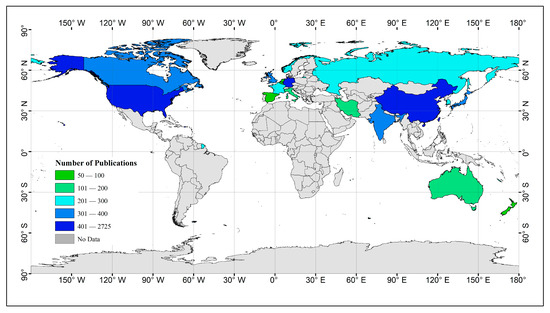
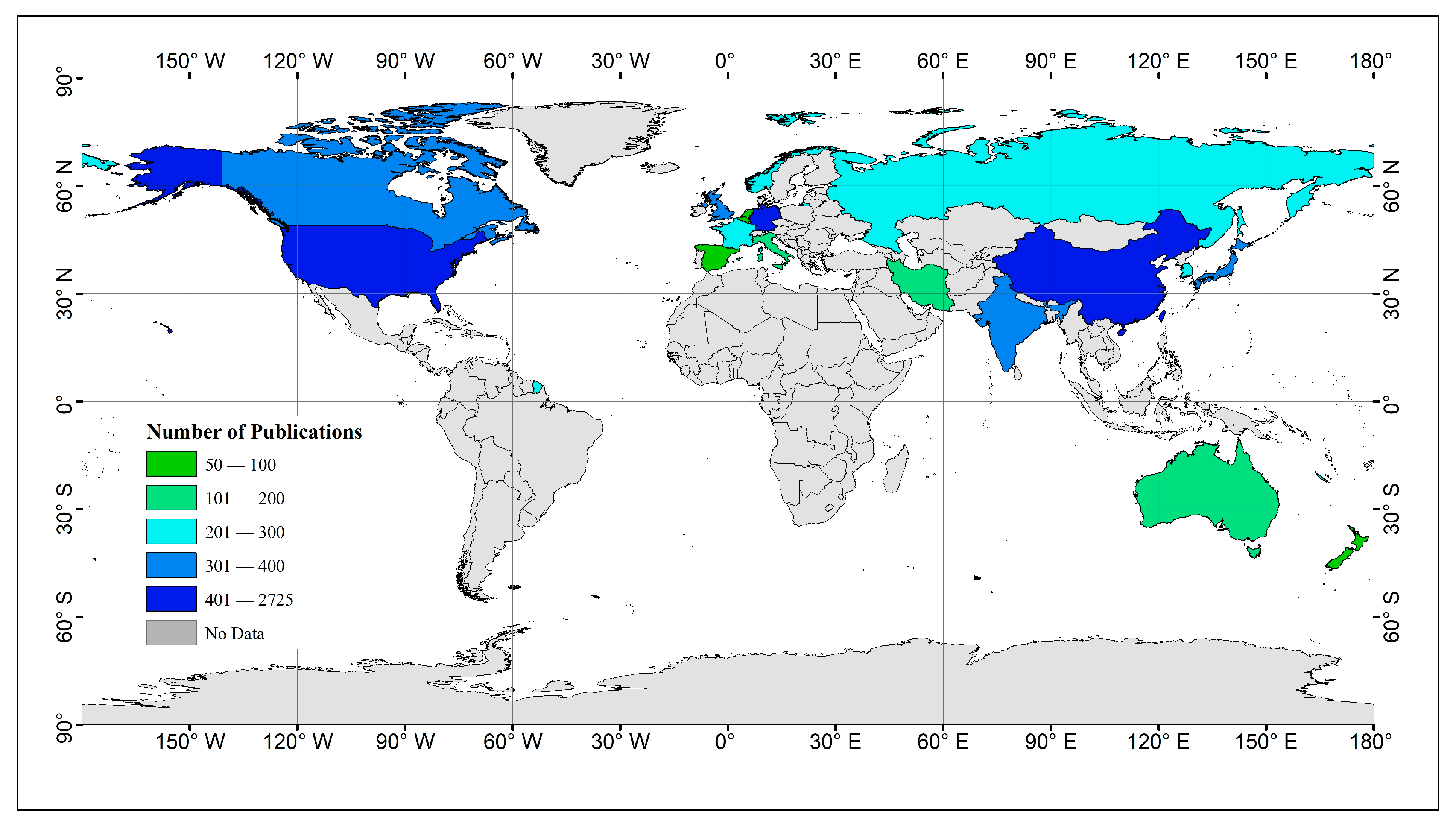
The country/region collaboration network map illustrates the degree of connectivity and social relationships among different nations within a specific research domain. Statistical analysis of national publication output reveals that China, the United States, Germany, Japan, and India are the top five most productive countries in the field of gas hydrate accumulation, collectively contributing 66% of the total publications (Figure 5). Among these, China leads in both the number of publications and total citations (Table 1). Although the United States ranks second in publication volume, it exhibits the highest average citations per article, indicating the broad impact of its research.
Figure 5.
Countries/regions associated with global publication output in the gas hydrate accumulation field.
Table 1.
Top 10 Countries/regions by publication output in gas hydrate accumulation research.
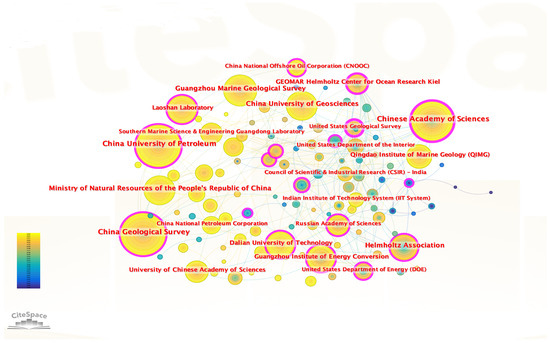
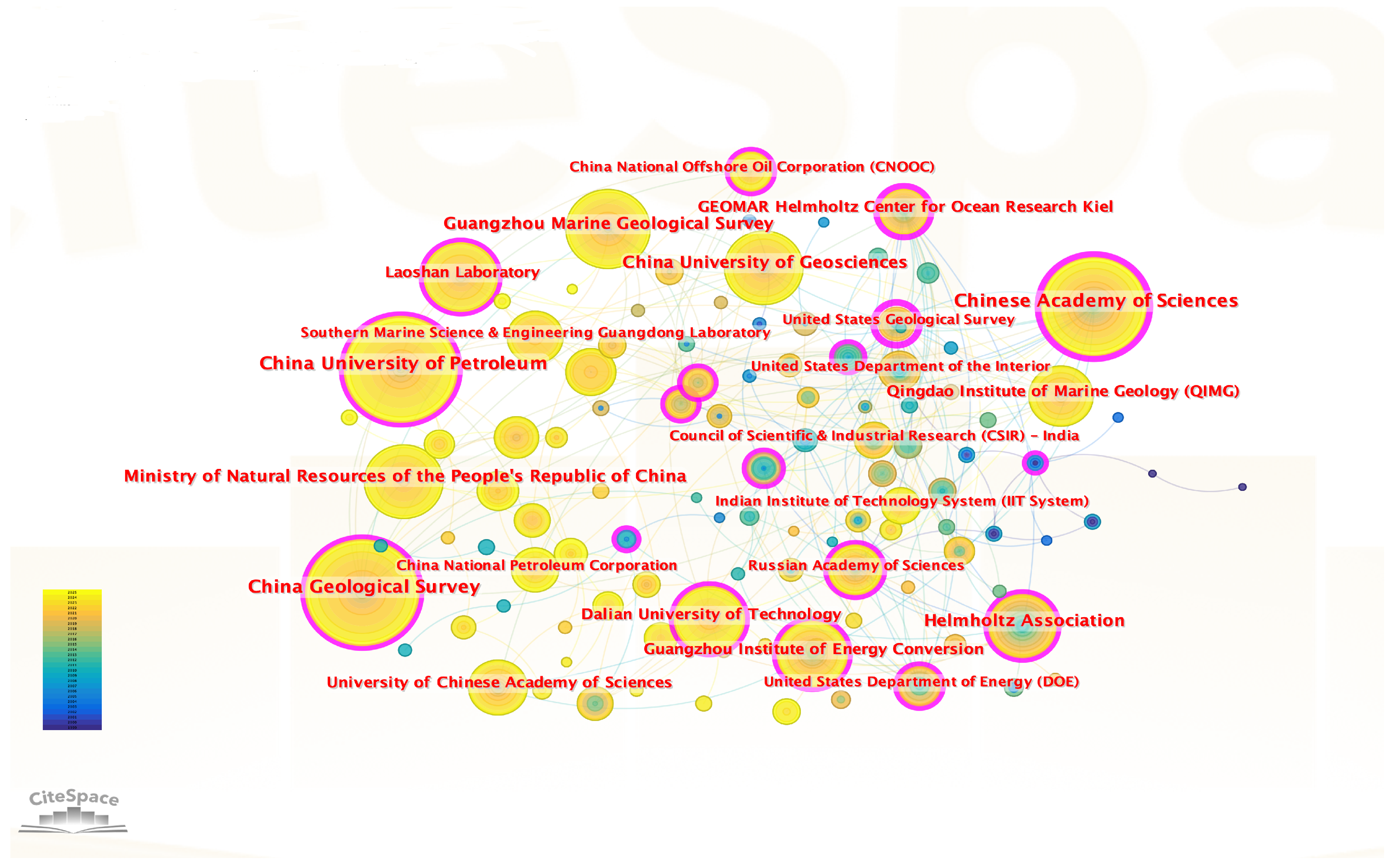
Collaboration analysis among research institutions helps identify key organizations and groups that have made significant contributions to a specific field, thereby laying the foundation for future partnerships. As shown in Figure 6, the Chinese Academy of Sciences (CAS) and China University of Geosciences (CUG) are the most prolific institutions in terms of publication output. However, international collaborations among top institutions remain largely confined within their respective national clusters. Centrality, a core metric for evaluating the importance and influence of a node within a network, further underscores the pivotal role of CAS, which records a centrality value of 0.46. This indicates that CAS occupies a hub position in the global collaborative network on gas hydrate accumulation research, serving as a critical connector facilitating knowledge exchange and resource flow among diverse institutions.
Figure 6.
Collaboration network among research Institutions (the nodes display all the countries/regions that have published articles, with those with text indicating countries with publication counts greater than 50).
4.3. Analysis of Author Collaboration Networks and Highly Cited Publications
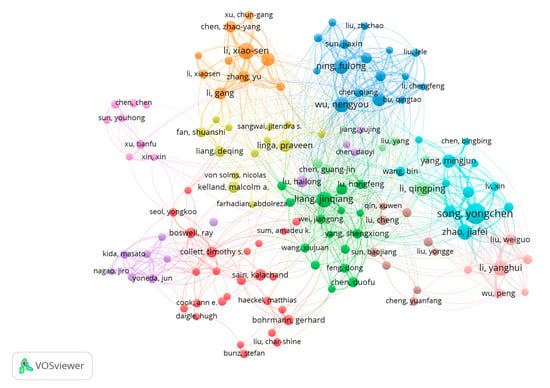
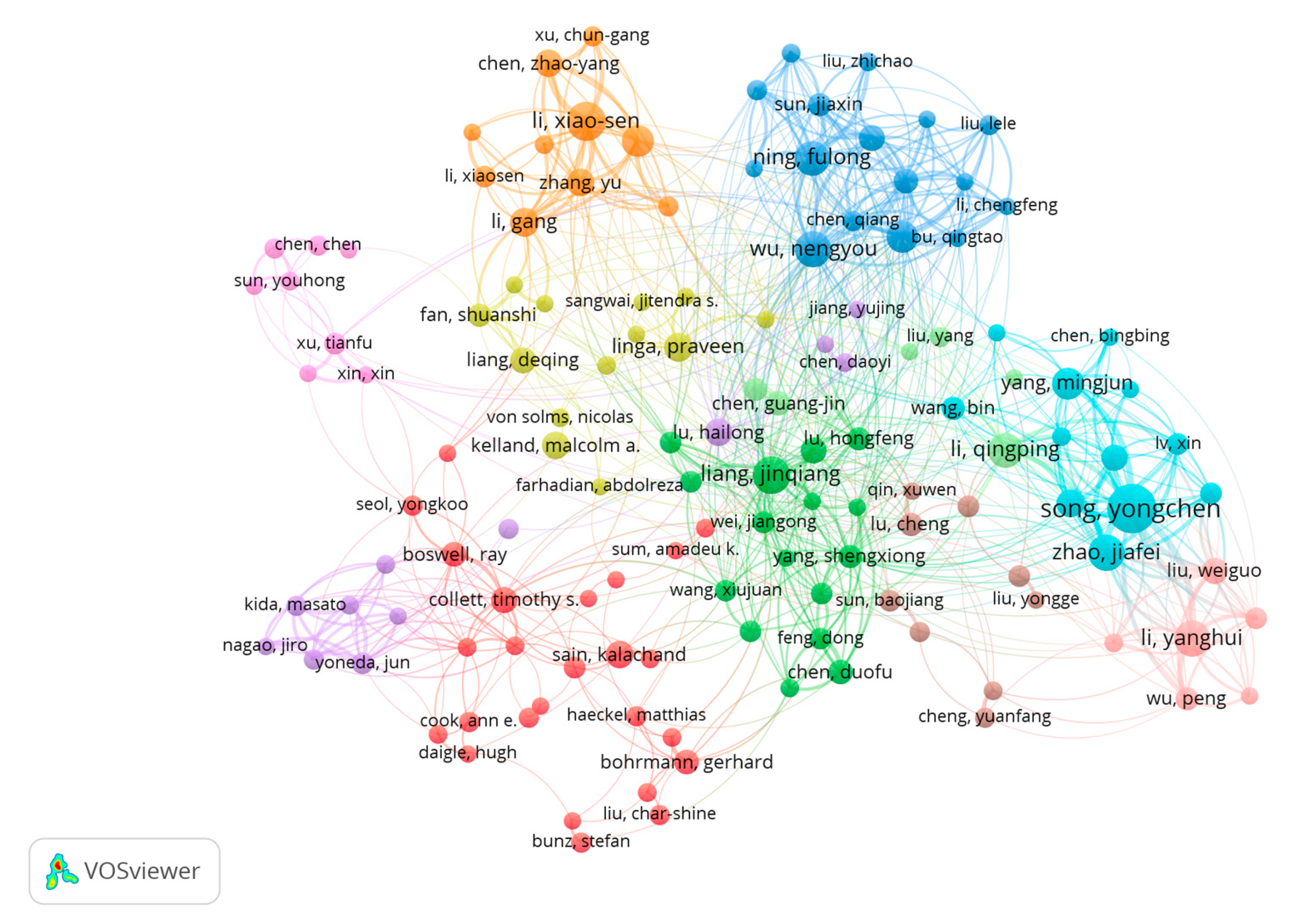
An author collaboration network analysis reveals the intellectual foundation and core scholars in the field. The analysis identifies several key researchers, including Jinqiang Liang, Xiaosen Li, Yongchen Song, and Timothy Collett, who exhibit high centrality values. Their work serves as fundamental theoretical groundwork for subsequent studies. These scholars have formed multiple research groups (Figure 7), within which collaborations are strong; however, cross-group collaboration remains an area for potential enhancement.
Figure 7.
Author collaboration network analysis.
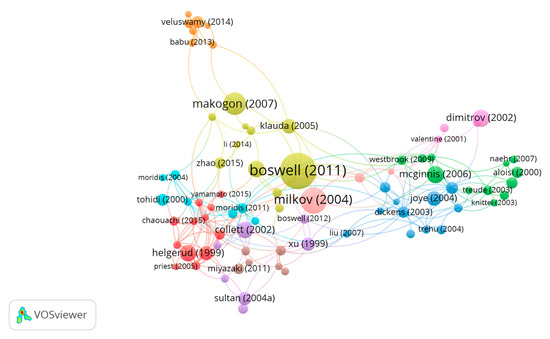
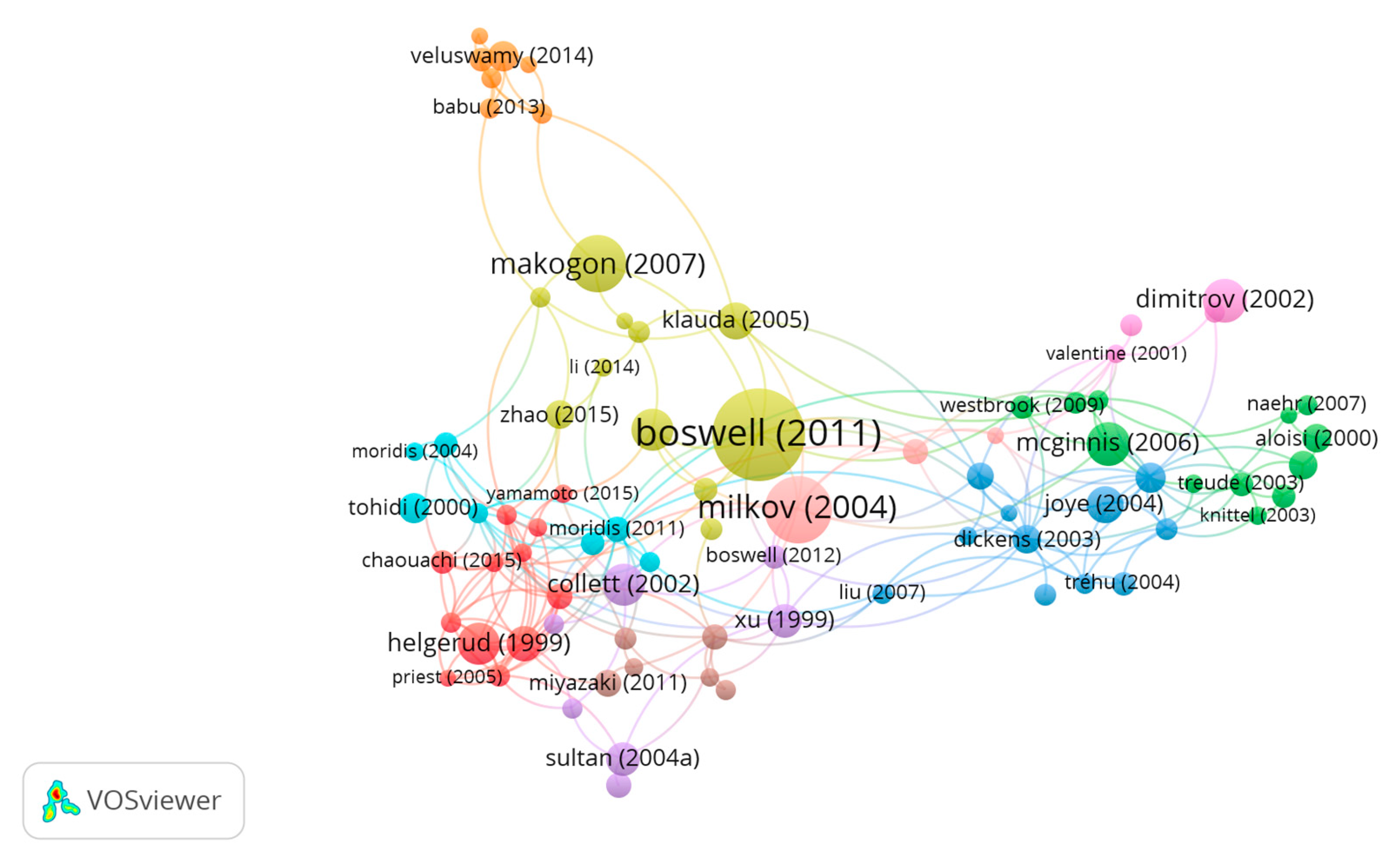
A high citation frequency indicates significant contributions to a research domain and helps uncover its knowledge foundation [38]. This study compiled the globally highly cited papers in the field, with the top 10 most cited publications (Figure 8) each receiving more than 650 citations. These works cover multiple aspects, including hydrate resource potential, accumulation mechanisms, production technologies, and environmental impacts.
Figure 8.
Core literature network analysis (citations: >200).
Boswell and Collett discussed the potential of natural gas hydrates as an energy source and their possible role in ongoing climate change, suggesting that hydrate-bearing sands represent the most feasible targets for energy recovery [2]. They noted that the most suitable deposits for production—deep, localized accumulations—are also those least coupled with oceanic and atmospheric conditions.
Milkov (2004), using data from DSDP/ODP drilling and direct measurements of gas concentrations in sediments, estimated the global quantity of gas in submarine hydrates to be between 1 × 10¹⁵ m3 and 5 × 10¹⁵ m3, 4 to 20 times lower than some widely cited estimates [39].
Makogon et al., provided a comprehensive overview of gas hydrates, covering their discovery history, properties, locations, reservoir characteristics, gas composition, and development. Through case studies of the Messoyakha gas hydrate field and Blake Ridge deposits, they emphasized that internationally coordinated research is essential to accelerate technological progress [40].
Collett (2002) reported a consensus estimate of approximately 20,000 trillion cubic meters of gas in global marine and permafrost hydrate accumulations [41]. The study addressed key issues such as reservoir properties, production system design, and the crucial economic aspects of gas hydrate production.
Dimitrov (2002) examined mud volcanism as a mechanism for degassing deeply buried sediments. He classified mud volcanoes into three main types based on activity and discussed their morphological expressions [42]. The study concluded that mud volcanoes represent a significant natural source of atmospheric methane, emitting about 10.3–12.6 Tg annually.
Helgerud et al. (1999) modeled the effect of gas hydrates on sediment elastic moduli using two independent hypotheses: (a) hydrates modify pore fluid elastic properties without affecting the sediment frame, and (b) hydrates form part of the solid frame, altering its elasticity. Their model enabled the prediction of hydrate content in sediments [43].
McGinnis et al. (2006) combined bubble modeling with acoustic observations of rising methane bubbles to quantify dissolution and determine the fraction of bubble-transported methane reaching the atmosphere [44]. Methane bubbles originating within the hydrate stability zone were found to form outer hydrate rims, making the ocean a relatively effective barrier against methane transfer to the atmosphere.
Klauda and Sandler (2005) developed an equilibrium thermodynamic model to predict the thickness of the hydrate stability zone, estimating that 4.4 × 10¹⁶ m3 of methane is stored in continental margin sediments [45].
Xu and Ruppel (1999) solved coupled momentum, mass, and energy equations governing the evolution and accumulation of methane hydrate in marine sediments, deriving the top and bottom boundaries of the hydrate stability zone. They inferred that advection likely dominates methane flux in all gas hydrate systems [46].
Konno et al. (2017) reported on the world’s first offshore methane hydrate production test in the eastern Nankai Trough, Japan. Hydrate saturation reached 80%, with permeability in the presence of hydrate ranging from 0.01 to 10 millidarcies [47]. They highlighted that identifying highly saturated, permeable layers is crucial for enhancing energy efficiency and technical feasibility during depressurization-induced gas production.
The results of the author collaboration network and core researcher identification in this section can provide important references for other researchers in the field of NGH geological accumulation: First, this clarifies the core research teams and key researchers worldwide, which is convenient for subsequent researchers to carry out academic cooperation and exchange, and avoid repeated research. Second, this reveals the current status of cross-group and international collaboration and provides a direction for researchers to expand cooperation channels and break the regional and disciplinary barriers of research. Third, the identification of highly cited publications and core researchers provides a quick way for new researchers in the field to understand the knowledge foundation and classic research results of NGH geological accumulation, helping them quickly grasp the research hotspots and frontiers.
4.4. Research Hotspots and Trends
The frequency of keyword occurrence reflects the foundational knowledge of a research field, while emerging keywords—identified through rapid increases in citations over short periods—highlight potential hotspots, trends, or frontiers [48]. Conducting co-occurrence, clustering, and burst detection analyses of keywords is essential for identifying research hotspots and tracking their developmental trajectories.
4.4.1. Co-Occurrence Analysis
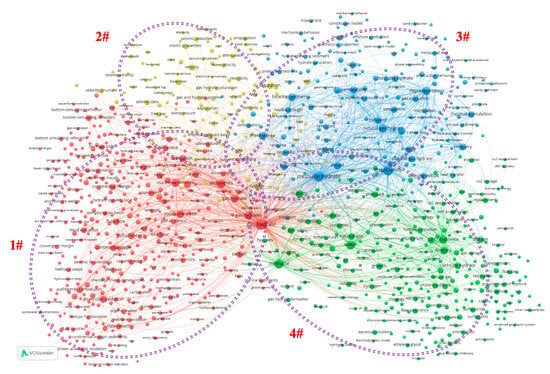
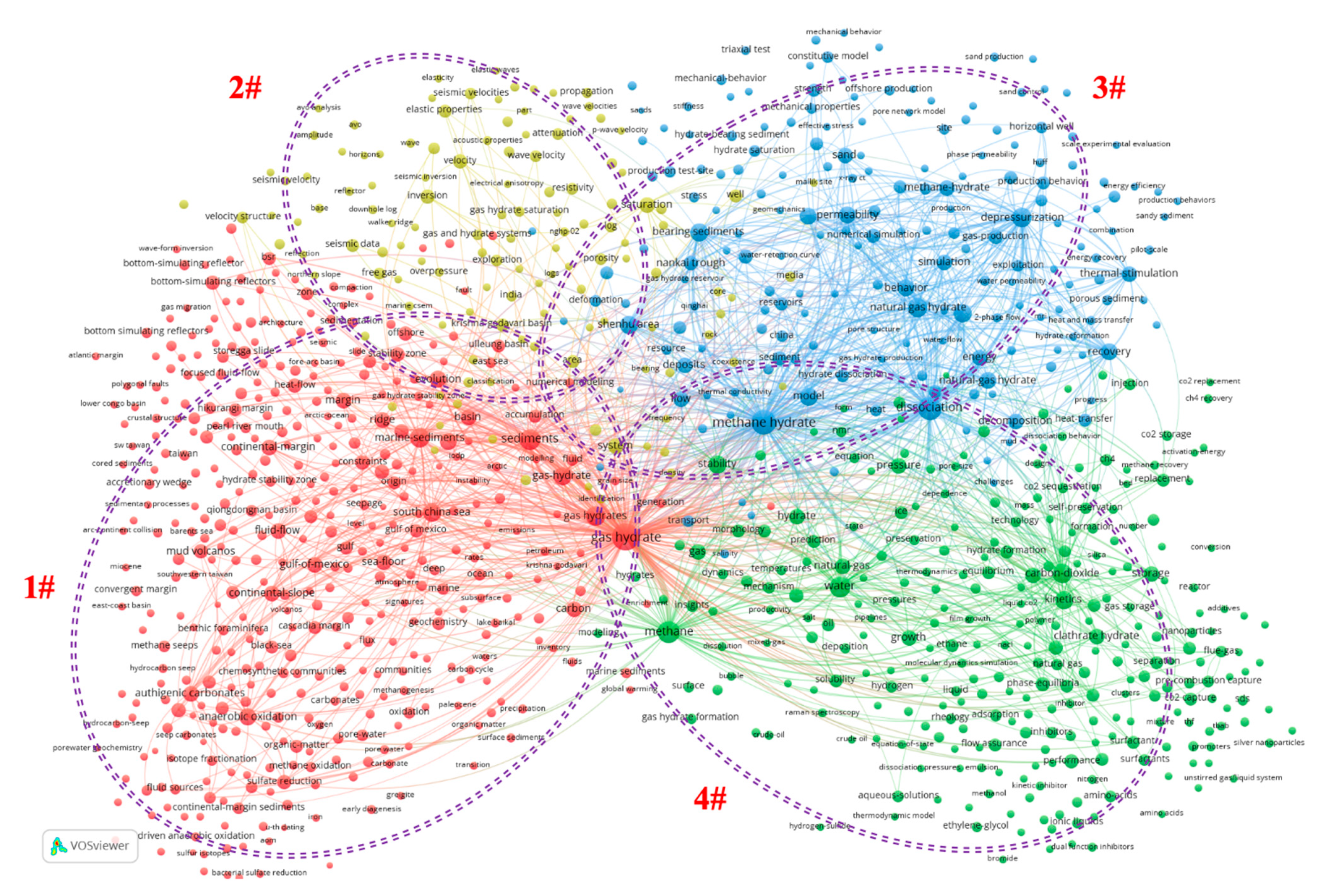
By examining the co-occurrence relationships among keywords in the literature, this study identifies core thematic clusters in gas hydrate geological accumulation research, clarifies the logical connections among different research topics, and systematically reveals the knowledge structure and core research scope of the field. These hotspot keywords reflect the central focus and attention within the domain. As shown in Figure 9, “gas hydrate” occupies the central position in the network and has formed four major thematic clusters. Researchers have conducted studies centering on hydrate accumulation, including (1) geological foundations of hydrate accumulation, consisting of 413 keywords; (2) geophysical and fundamental property studies related to hydrates, consisting of 127 keywords; (3) engineering technologies for hydrate development; consisting of 188 keywords; and (4) chemical and thermodynamic aspects of hydrates, consisting of 272 keywords. This demonstrates the diversity and interdisciplinary nature of research themes.
Figure 9.
Keyword co-occurrence network.
4.4.2. Cluster Analysis
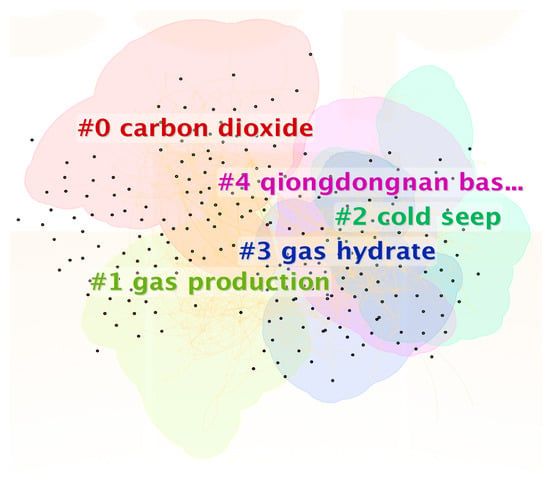
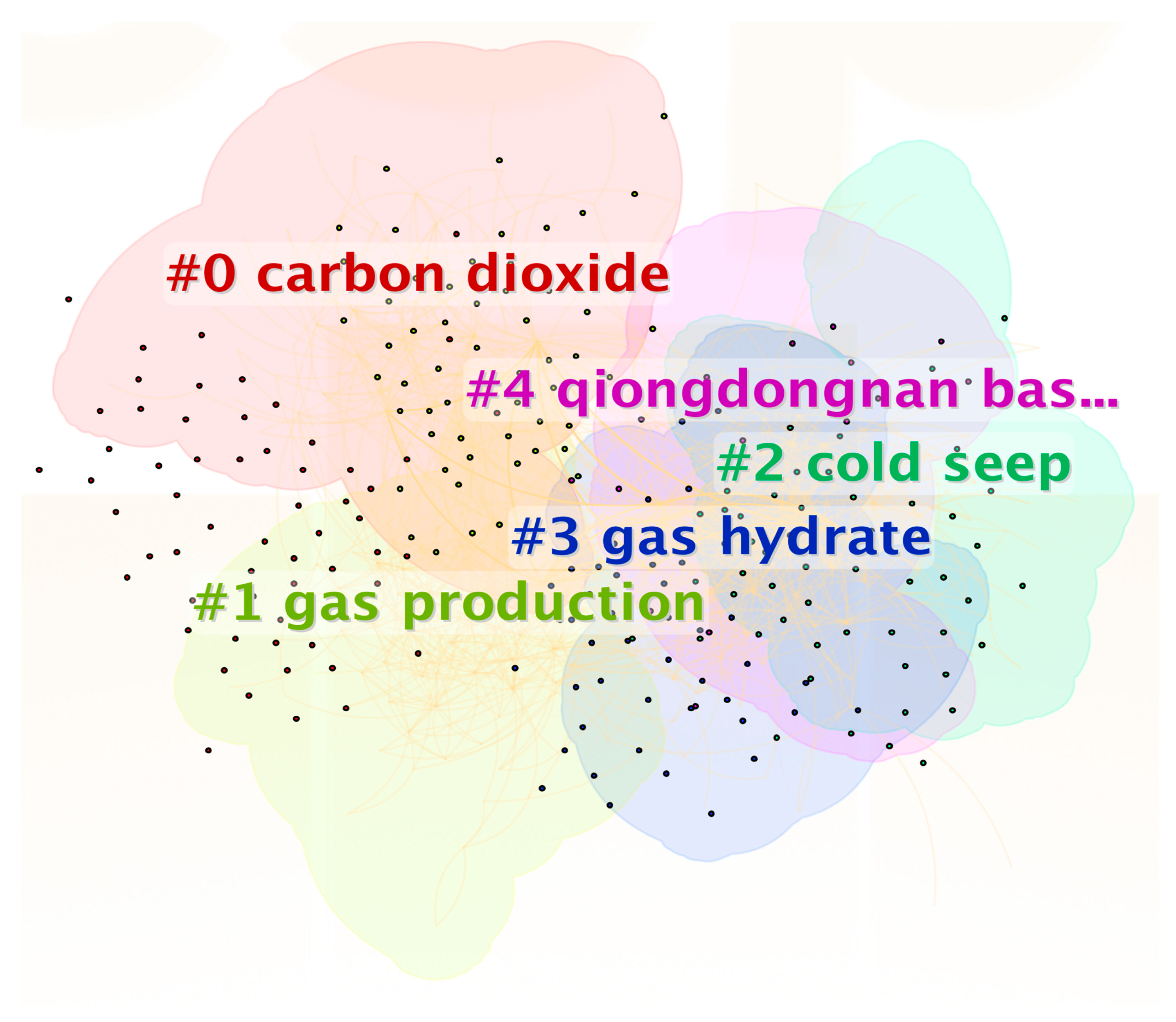
Keyword clustering involves categorizing hotspot terms into distinct groups according to specific partitioning patterns, thereby summarizing research hotspots or themes. Based on CiteSpace’s log-likelihood ratio (LLR) clustering algorithm, this study identifies five major research clusters: #0 carbon dioxide, #1 gas production, #2 cold seep, #3 gas hydrate, and #4 Qiongdongnan Basin (Figure 10). The Silhouette metric (S-value) is used to evaluate clustering quality; generally, an S-value > 0.5 indicates reasonable clustering, while S > 0.7 signifies convincing results. The S-values for the five clusters in this study are 0.827, 0.739, 0.831, 0.832, and 0.902, respectively, demonstrating excellent clustering performance.
Figure 10.
Keyword clustering network.
- Cluster #0: carbon dioxide
This cluster includes keywords such as gas hydrate, water, carbon dioxide, storage, kinetics, methane, and clathrate hydrate. It focuses on the structure of hydrates and their relationship with carbon dioxide, particularly the clathrate crystal characteristics. Research in this cluster investigates the interaction mechanisms between hydrates and CO2, encompassing both the kinetic processes of CO2-CH4 replacement in hydrates and the potential of hydrates as natural carbon storage reservoirs. It also addresses the climate impacts of methane release during hydrate dissociation, positioning this cluster as a key bridge between energy utilization and environmental effects.
- Cluster #1: gas production
Keywords in this cluster include dissociation, bearing sediments, numerical simulation, the Shenhu area, deposits, and behavior. Centered on the development and production of gas hydrates, this group examines dissociation behavior in sediments and the optimization of extraction processes through numerical simulation. With a focus on test production sites such as the Shenhu Area, it aims to develop efficient and safe extraction methods, such as depressurization and thermal stimulation, and refine technical parameters. This cluster serves as a critical link between accumulation theory and engineering practice.
- Cluster #2: cold seep
This cluster is characterized by keywords including gas hydrates, continental margin, bottom simulating reflectors, sea, evolution, stability, and heat flow. It explores the coupling between cold seep systems and gas hydrate formation at continental margins, analyzing the mechanisms of hydrate formation, dissociation, and stability evolution driven by seep activity. Research in this cluster elucidates the role of cold seeps in controlling the development of hydrate reservoirs.
- Cluster #3: gas hydrate
Relevant keywords include sediment, fluid flow, Gulf of Mexico, authigenic carbonates, marine sediment, anaerobic oxidation, and stability zone. Studies in this cluster emphasize geological controls on hydrate accumulation systems. Using representative regions such as the Gulf of Mexico as case studies, researchers analyze the integrated effects of sedimentary environments, fluid migration, and stability zone distribution on hydrate formation. This work establishes a theoretical foundation for understanding accumulation mechanisms.
- Cluster #4: Qiongdongnan Basin
This cluster contains keywords such as velocity, earthquake, deep water, inversion, and saturation. It concentrates on case studies of hydrates in deep-water settings like the Qiongdongnan Basin in the South China Sea. Emphasis is placed on analyzing the relationships among seismic velocity, reservoir saturation, and hydrate stability in deep-water environments. Findings from this cluster provide practical support for understanding accumulation patterns and identifying prospective exploration targets in specific regions.
4.4.3. Burst Detection Analysis
Keyword burst detection is used to analyze the evolutionary characteristics of research stages in recent years and predict emerging frontiers. By identifying bursts in keyword usage, this method reveals the dynamic progression of research hotspots.
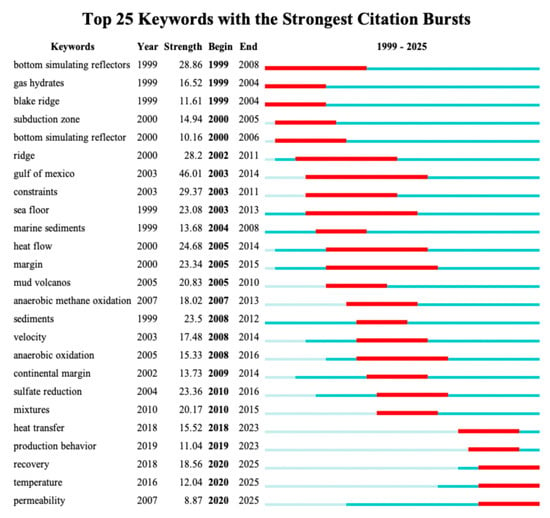
Figure 11 displays the top 25 keywords with the strongest citation bursts in the field from 1999 to 2025, and the chart contains three core columns with clear meanings: the “Year” column indicates the start year of the keyword’s citation burst, reflecting the emerging time of the research hotspot; the “Strength” column represents the intensity of the citation burst, which is a quantitative index to measure the attention degree of the keyword in the field, and the higher the value, the more widely the corresponding research direction is concerned; and the “End” column is the end year of the citation burst (if the end year is not marked, it means the keyword is still in the burst stage up to 2025). By analyzing the three indicators together, we can not only clarify the evolutionary process of research hotspots in different stages but also identify the current emerging research frontiers in the field, which provides a quantitative basis for predicting the future research direction of NGH geological accumulation.
Figure 11.
Top 25 keywords with the strongest citation bursts.
- (1)
- Evolution of Research Hotspots
Phase 1 (1999–2005): This stage was characterized by the emergence of keywords such as bottom-simulating reflectors, gas hydrates, Blake Ridge, and subduction zone. Research during this period focused on the basic identification of hydrates and their distribution patterns in typical regions. Scholars primarily used geophysical indicators like bottom-simulating reflectors to identify hydrates and investigated hydrate distribution in typical geological structures such as the Blake Ridge and subduction zones, aiming to clarify the fundamental distribution patterns of gas hydrates.
Phase 2 (2005–2015): Keywords such as Gulf of Mexico, constraints, heat flow, mud volcanoes, and anaerobic methane oxidation exhibited strong bursts. During this phase, research expanded toward a deeper understanding of accumulation controls and biogeochemical processes. Key exploration areas like the Gulf of Mexico received significant attention regarding accumulation constraints. The influence of heat flow on hydrate stability, the relationship between mud volcano activity and hydrates, and the role of microbial processes such as anaerobic methane oxidation in hydrate formation and dissociation became central research themes.
Phase 3 (2015–2025): Bursting keywords included heat transfer, production behavior, recovery, temperature, and permeability. Research hotspots shifted toward engineering technologies and key parameters related to hydrate development. The impact of heat transfer on extraction processes, production behavior characteristics, strategies for enhancing recovery efficiency, and the influence of reservoir parameters such as temperature and permeability on hydrate development have become central research priorities, marking a shift from basic research to applied development studies.
- (2)
- Research Trends
Progression from basic identification to development and application: Early research focused on fundamental questions such as whether hydrates exist and where they are located. Current studies increasingly emphasize efficient development strategies, including key parameters such as heat transfer, temperature, and permeability, as well as engineering technologies related to production behavior and recovery efficiency.
Deepening interdisciplinary integration: Research increasingly integrates knowledge from multiple disciplines, including geophysics (e.g., bottom-simulating reflectors), geology (e.g., subduction zones, mud volcanoes), geochemistry (e.g., anaerobic methane oxidation), and engineering (e.g., heat transfer, permeability). The role of interdisciplinary approaches has become increasingly prominent in gas hydrate studies.
5. Discussion and Prospects
This bibliometric analysis provides a comprehensive overview of the research landscape and knowledge evolution in the field of NGH geological accumulation from 1999 to 2025. The results demonstrate a dynamic developmental trajectory, driven by global energy demand and successful production tests, transitioning from fundamental scientific exploration to applied technological research.
5.1. Discussion of Research Results
5.1.1. Analysis of Differences in Publication Volume and Citation Rate
The United States has a higher average number of citations per article despite fewer publications than China, which reflects the differences in research orientation and academic influence between the two countries. Chinese research on NGH geological accumulation has formed a large-scale research system with a focus on regional exploration practice (e.g., the South China Sea) and technical application, with a large number of studies focusing on specific geological conditions and engineering tests, leading to a high output of publications. In contrast, American research has been more focused on the construction of basic theoretical models (e.g., hydrate formation/dissociation kinetics, global carbon cycle coupling) and the development of core detection technologies, with fewer but more influential studies that are widely cited in international interdisciplinary research. This difference also implies that the current research on NGHs in China needs to further strengthen the innovation of basic theories to balance the quality and quantity of research.
5.1.2. Analysis of the Reasons for the Weak Collaboration Among Authors Across Teams
The weak cross-group collaboration among authors is mainly restricted by three structural and institutional barriers: First, the regionalization of research topics—most research groups are centered on local NGH exploration areas (e.g., Chinese teams focus on the South China Sea, American teams on the Gulf of Mexico), and the differences in regional geological conditions lead to the relative independence of research content. Second, the segmentation of research disciplines—some teams focus on geological theory, some on engineering development, and the lack of interdisciplinary communication platforms leads to the difficulty of cross-group cooperation. Third, the limitations of international research funding mechanisms—most research projects are funded by national or regional scientific research foundations, and the research objectives are oriented to local resource and environmental needs, which reduces the motivation of cross-border and cross-group collaborative research.
5.1.3. Analysis of the Underlying Reasons for the Evolution of Research Hotspots
The shift of NGH geological accumulation research from basic identification to development application is driven by the dual needs of global energy transition and technological progress. Before 2015, the core problem of the field was to clarify the distribution and formation mechanism of NGHs, and the research focus was on basic identification due to the limitation of exploration technology and lack of production test data. After the successful offshore production tests of NGHs in Japan (2013) and China (2017), the key scientific and technological problem of the field shifted to “how to realize safe and efficient commercial development”, which led to the burst of research hotspots such as production behavior, permeability, and heat transfer. In addition, increasing attention to global climate change has also promoted the integration of NGH research with carbon cycle research, making the research direction more inclined to applied research with engineering and environmental value.
5.2. Future Prospects for NGH Geological Accumulation
The field has evolved into a highly collaborative and multidisciplinary research system, with China and the United States taking leading roles. Research emphasis has progressively shifted from identifying whether hydrates exist and where they are distributed to understanding how they form and accumulate, and further to the current focus on safe and efficient extraction and assessment of their environmental impacts.
Based on current research trends and the needs of future energy–climate systems, we propose the following key research directions, and we acknowledge that several of the topics discussed below have already been extensively investigated in other scientific disciplines, including climate science, data science, information technology, and geochemistry. However, their direct application to the specific context of NGH geological accumulation remains limited, and significant knowledge gaps persist.
Deepening Earth System Integration. Strengthening the coupling between hydrate research and climate models is necessary. Climate models have long incorporated methane sources and sinks [49], and the potential feedback between hydrate dissociation and global warming has been explored in general terms [6]. However, the quantitative coupling of hydrate-specific accumulation and dissociation dynamics into Earth system models remains immature, particularly for regional-scale predictions under varying climate scenarios. This includes quantifying feedback mechanisms between hydrate stability, methane release, and global warming under different climate scenarios; advancing research on the carbon sequestration potential of CO2-CH4 hydrate replacement; and incorporating hydrates into global carbon cycle and climate modeling frameworks.
Promoting Digital Transformation. The integration of artificial intelligence, machine learning, and high-performance computing is crucial. Machine learning and high-performance computing have been widely applied in petroleum geoscience, seismology, and climate modeling [50,51]. However, their integration with multi-source hydrate data—including seismic attributes, logging-while-drilling, production test records, and long-term seafloor monitoring—for resource prediction, production optimization, and risk assessment is still at an early stage. These tools will enable the development of next-generation models for resource assessment, production optimization, and risk prediction, enhancing data-driven research capabilities and extracting new insights from the growing volume of multi-source geological, geophysical, and production data.
Establishing Open Science and Global Collaboration Networks. To accelerate research progress, the academic community should transcend the current nationally bounded collaboration models. Open-access geoscience databases (e.g., EarthChem, PetDB) and international initiatives (e.g., CODATA, RDA) have demonstrated the benefits of data sharing. However, a dedicated, community-agreed gas hydrate database with unified metadata standards and real-time updating mechanisms is currently lacking, which hinders model benchmarking and cross-region comparative studies. We advocate for the creation of an international, openly accessible gas hydrate database that integrates multi-source geological, geophysical, and monitoring data with unified format standards, thereby facilitating model benchmarking and knowledge dissemination.
Linking Multi-Scale Research from Reservoir to Region. There is a need to achieve multi-level integration from pore-scale dynamics to regional environmental impacts. Through a combination of laboratory experiments, numerical simulations, and long-term observational studies, the systematic chain mechanisms of accumulation, extraction, and environmental impact can be revealed. Multi-scale approaches have been successfully implemented in hydrology and reservoir engineering (e.g., upscaling methods). In hydrate research, while pore-scale observations [52] and regional basin modeling exist separately, systematic linkage across scales—from hydrate morphology in pores to field-scale production behavior—remains a critical gap.
In summary, gas hydrate research is at a critical juncture, moving from fundamental understanding toward technological integration and systemic evaluation. While each of these directions has benefited from foundational work in other disciplines, their effective translation to NGH geological accumulation requires sustained interdisciplinary collaboration, domain-specific adaptation of digital tools, and community-wide commitment to open data and multi-scale integration. Addressing these knowledge gaps will help realize the potential of natural gas hydrates as a safe, sustainable, and strategically significant component of future energy and climate solutions.
5.3. Research Limitations
As a bibliometric study, this work provides an objective perspective on macro-trends but has certain limitations. (1) The research data are only sourced from the Web of Science Core Collection, which excludes conference proceedings, dissertations, and related reports in the field of NGH geological accumulation. Conference proceedings, in particular, often contain cutting-edge research results and preliminary exploration findings, and the exclusion of such literature may lead to the omission of some emerging research trends. (2) The time range of the study is set from 1999 to 2025 because the Web of Science Core Collection has only consistently and comprehensively covered SCI/SSCI indexed papers in this field since 1999. However, a large number of foundational and important studies on gas hydrates were conducted before 1999; these studies are not included in this analysis and may lead to the incompleteness of the evolutionary analysis of research hotspots in the early stage. (3) Other databases such as CNKI and Scopus were not considered, potentially omitting some high-quality Chinese language or non-English publications. (4) This study has a potential limitation related to author collaboration, as one of the co-authors (Jinqiang Liang) is identified as a key researcher in the bibliometric analysis of the field. The research team has strictly avoided subjective evaluative language for the co-author in the revised version to ensure the objectivity of the bibliometric results. (5) While bibliometric methods effectively reveal broad trends, they cannot directly evaluate the substantive scientific contributions and research quality of individual papers, nor can they fully capture genuinely original research in its nascent stages that has not yet gained significant traction.
6. Conclusions
This study presents a comprehensive bibliometric analysis of 5891 publications in the field of gas hydrate accumulation from 1999 to 2025, leading to the following main conclusions:
Research on gas hydrate accumulation has progressed through three distinct stages: “slow initiation–rapid growth–stable development.” Annual publication output has increased from fewer than 100 articles in the initial phase to approximately 500 at present, with successful production tests serving as critical catalysts for heightened research activity. Research directions have expanded from relatively narrow focuses to increasing diversity, with interdisciplinary characteristics becoming progressively more prominent.
China, the United States, and Germany form the core countries driving research in this field. The Chinese Academy of Sciences, with a centrality value of 0.46, serves as a pivotal hub in international collaboration networks, although transnational cooperation among institutions still requires further strengthening.
Research teams led by scholars such as Jinqiang Liang, Xiaosen Li, Yongchen Song, and Timothy Collett constitute the intellectual foundation of the field. Highly cited publications primarily focus on resource potential, accumulation mechanisms, environmental impacts, and production development.
Keyword analysis has identified core research themes including “accumulation mechanisms”, “climate and environmental impacts”, “production development”, and “cold seep activity”. Research hotspots have gradually shifted from early-stage identification and distribution studies toward development engineering and parameter optimization, demonstrating a clear transition from theoretical investigation to practical application.
This research provides a systematic and objective macro-level perspective of the field, offering valuable insights to help research institutions and policymakers identify emerging frontiers, optimize resource allocation, and enhance the role of natural gas hydrates in energy transition and climate change mitigation.
Author Contributions
Conception, Q.Z. and W.D.; methodology, Q.Z.; software, Q.Z.; validation, M.S. and J.L.; formal analysis, Q.Z. and W.D.; investigation, Q.Z. resources, Q.Z.; writing—original draft preparation, Q.Z.; writing—review and editing, J.L. and L.L.; visualization, Q.Z.; supervision, M.S.; project administration, L.L.; funding acquisition, J.L. and L.L. All authors have read and agreed to the published version of the manuscript.
Funding
The research works are financially supported by the National Key Research and Development Program of China (No. 2024YFC2814701); the Director General’s Scientific Research Fund of Guangzhou Marine Geological Survey, China (No. 2025GMGSJZJJ00014); the National Natural Science Foundation of China (No. 42206067); and China Geological Project (No. DD20230064).
Data Availability Statement
The raw data can be downloaded at: https://github.com/QlongZhang-sysu/NGHs-Bibliometric.git (accessed on 1 February 2026).
Conflicts of Interest
The funders had no role in the design of the study; in the collection, analysis, or interpretation of the data; in the writing of the manuscript; or in the decision to publish the results. The authors used Gemini 3.5 to improve the language of this work.
References
- Kvenvolden, K.A. Gas hydrate-Geological perspective and global change. Rev. Geophys. 1993, 31, 173–187. [Google Scholar] [CrossRef] [Scilit]
- Boswell, R.; Collett, T.S. Current perspectives on gas hydrate resources. Energy Environ. Sci. 2011, 4, 1206–1215. [Google Scholar] [CrossRef] [Scilit]
- Denman, K.L.; Brasseur, G.; Chidthaisong, A.; Ciais, P.; Cox, P.M.M.; Dickinson, R.E.E.; Hauglustaine, D.; Heinze, C.; Holland, E.; Jacob, D.; et al. Couplings between changes in the climate system and biogeochemistry. In Climate Change 2007: The Physical Science Basis. Contribution of Working Group I to the Fourth Assessment Report of the Intergovernmental Panel on Climate Change; Cambridge University Press: Cambridge, UK; New York, NY, USA, 2007; pp. 499–587. [Google Scholar]
- Dugan, B.; Sheahan, T.C. Offshore sediment overpressures of passive margins: Mechanisms, measurement, and models. Rev. Geophys. 2012, 50, RG3001. [Google Scholar] [CrossRef] [Scilit]
- Stranne, C.; O’Regan, M.; Jakobsson, M. Overestimating climate warming-induced methane gas escape from the seafloor by neglecting multiphase flow dynamics. Geophys. Res. Lett. 2016, 43, 8703–8712. [Google Scholar] [CrossRef] [Scilit]
- Ruppel, C.D.; Kessler, J.D. The interaction of climate change and methane hydrates. Rev. Geophys. 2017, 55, 126–168. [Google Scholar] [CrossRef] [Scilit]
- Wu, S.; Zhang, G.; Huang, Y.; Liang, J.; Wong, H.K. Gas hydrate occurrence on the continental slope of the northern South China Sea. Mar. Pet. Geol. 2005, 22, 403–412. [Google Scholar] [CrossRef] [Scilit]
- Max, M.D.; Johnson, A.H.; Dillon, W.P. Economic Geology of Natural Gas Hydrate; Springer: Dordrecht, The Netherlands, 2006. [Google Scholar]
- Collett, T.S. Gas hydrate petroleum systems in marine and arctic permafrost environments. In Unconventional Energy Resources: Making the Unconventional Conventional; Society for Sedimentary Geology: Tulsa, OK, USA, 2009. [Google Scholar]
- You, K.; Flemings, P.B.; Malinverno, A.; Collett, T.; Darnell, K. Mechanisms of methane hydrate formation in geological systems. Rev. Geophys. 2019, 57, 1146–1196. [Google Scholar] [CrossRef] [Scilit]
- Ruppel, C.D.; Waite, W.F. Timescales and processes of methane hydrate formation and breakdown, with application to geologic systems. J. Geophys. Res. Solid Earth 2020, 125, e2018JB016459. [Google Scholar] [CrossRef] [Scilit]
- Haacke, R.R.; Westbrook, G.K.; Hyndman, R.D. Gas hydrate, fluid flow and free gas: Formation of the bottom-simulating re-flector. Earth Planet. Sci. Lett. 2007, 261, 407–420. [Google Scholar] [CrossRef] [Scilit]
- Ito, T.; Komatsu, Y.; Fujii, T.; Suzuki, K.; Egawa, K.; Nakatsuka, Y.; Konno, Y.; Yoneda, J.; Jin, Y.; Kida, M.; et al. Lithological features of hydrate-bearing sediments and their relationship with gas hydrate saturation in the eastern Nankai Trough, Japan. Mar. Pet. Geol. 2015, 66, 368–378. [Google Scholar] [CrossRef] [Scilit]
- Liang, J.; Zhang, W.; Lu, J.A.; Wei, J.; Kuang, Z.; He, Y. Geological occurrence and accumulation mechanism of natural gas hydrates in the eastern Qiongdongnan Basin of the South China Sea: Insights from site GMGS5-W9-2018. Mar. Geol. 2019, 418, 106042. [Google Scholar] [CrossRef] [Scilit]
- Hornafius, J.S.; Quigley, D.; Luyendyk, B.P. The world’s most spectacular marine hydrocarbon seeps (Coal Oil Point, Santa Barbara Channel, California): Quantification of emissions. J. Geophys. Res. Oceans 1999, 104, 20703–20711. [Google Scholar] [CrossRef] [Scilit]
- Lai, H.; Qiu, H.; Kuang, Z.; Ren, J.; Fang, Y.; Liang, J.; Lu, J.; Su, X.; Guo, R.; Yang, C.; et al. Integrated signatures of secondary microbial gas within gas hydrate reservoirs: A case study in the Shenhu area, northern South China Sea. Mar. Pet. Geol. 2022, 136, 105486. [Google Scholar] [CrossRef] [Scilit]
- Zhang, W.; Liang, J.; Wan, Z.; Su, P.; Huang, W.; Wang, L.; Lin, L. Dynamic accumulation of gas hydrates associated with the channel-levee system in the Shenhu area, northern South China Sea. Mar. Pet. Geol. 2020, 117, 104354. [Google Scholar] [CrossRef] [Scilit]
- Kuang, Z.; Cook, A.; Ren, J.; Deng, W.; Cao, Y.; Cai, H. A flat-lying transitional free gas to gas hydrate system in a sand layer in the Qiongdongnan Basin of the South China Sea. Geophys. Res. Lett. 2023, 50, e2023GL105744. [Google Scholar] [CrossRef] [Scilit]
- Deng, W.; Kuang, Z.; Daigle, H.; Zhang, W.; Wang, X.; Yan, P.; Meng, M.; Xie, Y. Coupled geomechanical and thermodynamic controls on global distribution and mor-phology of gas hydrate in clay-rich marine sediments. Geophys. Res. Lett. 2025, 52, e2025GL116985. [Google Scholar] [CrossRef] [Scilit]
- Paull, C.K.; Ussler, W., III; Lorenson, T.; Winters, W.; Dougherty, J. Geochemical constraints on the distribution of gas hydrates in the Gulf of Mexico. Geo-Mar. Lett. 2005, 25, 273–280. [Google Scholar] [CrossRef] [Scilit]
- Wu, N.; Yang, S.; Zhang, H.; Liang, J.; Wang, H.; Su, X.; Fu, S. Preliminary discussion on gas hydrate reservoir system of Shenhu area, North Slope of South China Sea. In Proceedings of the 6th International Conference on Gas Hydrates (ICGH 2008), Vancouver, BC, Canada, 6–10 July 2008. [Google Scholar]
- Pohlman, J.W.; Kaneko, M.; Heuer, V.B.; Coffin, R.; Whiticar, M. Methane sources and production in the northern Cascadia margin gas hydrate system. Earth Planet. Sci. Lett. 2009, 287, 504–512. [Google Scholar] [CrossRef] [Scilit]
- Lorenson, T.D.; Collett, T.S. National Gas Hydrate Program Expedition 01 offshore India; gas hydrate systems as revealed by hydrocarbon gas geochemistry. Mar. Pet. Geol. 2018, 92, 477–492. [Google Scholar] [CrossRef] [Scilit]
- Secinaro, S.; Brescia, V.; Calandra, D.; Biancone, P. Employing bibliometric analysis to identify suitable business models for electric cars. J. Clean. Prod. 2020, 264, 121503. [Google Scholar] [CrossRef] [Scilit]
- Li, Y.; Fang, R.; Liu, Z.; Jiang, L.; Zhang, J.; Li, H.; Liu, C.; Li, F. The association between toxic pesticide environmental exposure and Alzheimer’s disease: A sci-entometric and visualization analysis. Chemosphere 2021, 263, 128238. [Google Scholar] [CrossRef] [Scilit]
- Lu, X.; Ma, C. Mapping research collaboration network of international methane hydrate research. Procedia Comput. Sci. 2017, 122, 820–825. [Google Scholar] [CrossRef] [Scilit]
- Linga, P. Historical perspectives on gas hydrates and citation impact analysis. Can. J. Chem. Eng. 2023, 101, 583–605. [Google Scholar] [CrossRef] [Scilit]
- Pritchard, A. Statistical Bibliography, An Interim Bibliography; Clearing House for Federal Scientific and Technical Information: Springfield, VA, USA, 1969. [Google Scholar]
- Wu, X.; Chen, X.; Zhan, F.B.; Hong, S. Global research trends in landslides during 1991–2014: A bibliometric analysis. Landslides 2015, 12, 1215–1226. [Google Scholar] [CrossRef] [Scilit]
- Hou, Z.W.; Liu, X.; Zhou, S.; Jing, W.; Yang, J. Bibliometric analysis on the research of Geoscience Knowledge Graph (GeoKG) from 2012 to 2023. ISPRS Int. J. Geo-Inf. 2024, 13, 255. [Google Scholar] [CrossRef] [Scilit]
- Zhang, H.; Sun, T. Bibliometric Analysis of Mineral Prospectivity Mapping Research from 2006 to 2024: Zhang and Sun. Nat. Resour. Res. 2025, 35, 137–163. [Google Scholar] [CrossRef] [Scilit]
- Chen, C. CiteSpace: A Practical Guide for Mapping Scientific Literature; Nova Science Publishers: Hauppauge, NY, USA, 2016. [Google Scholar]
- Van Eck, N.; Waltman, L. Software survey: VOSviewer, a computer program for bibliometric mapping. Scientometrics 2010, 84, 523–538. [Google Scholar] [CrossRef] [Scilit]
- Wang, Y.; Zhou, X.; Tian, J.; Zhou, J.; He, M.; Li, J.; Dong, J.; Yan, Y.; Liu, F.; Yao, B.; et al. Volatile characteristics and fluxes of He-CO2 systematics in the southeastern Tibetan Plateau: Constraints on regional seismic activities. J. Hydrol. 2023, 617, 129042. [Google Scholar] [CrossRef] [Scilit]
- Wang, L.; Liu, K.; Wan, L.; Zhang, S.; Jia, W.; Guo, J.; Yu, T. Progress in geothermal gas research in the last 50 years: A bibliometric review. Earth Sci. Inform. 2025, 18, 364. [Google Scholar] [CrossRef] [Scilit]
- Wang, X.; Xu, Z.; Su, S.F.; Zhou, W. A comprehensive bibliometric analysis of uncertain group decision making from 1980 to 2019. Inf. Sci. 2021, 547, 328–353. [Google Scholar] [CrossRef] [Scilit]
- Zhang, J.; Jiang, L.; Liu, Z.; Li, Y.; Liu, K.; Fang, R.; Li, H.; Qu, Z.; Liu, C.; Li, F. A bibliometric and visual analysis of indoor occupation environmental health risks: Development, hotspots and trend directions. J. Clean. Prod. 2021, 300, 126824. [Google Scholar] [CrossRef] [Scilit]
- Liu, S.; Sun, Y.P.; Gao, X.L.; Sui, Y. Knowledge domain and emerging trends in Alzheimer’s disease: A scientometric review based on CiteSpace analysis. Neural Regen. Res. 2019, 14, 1643–1650. [Google Scholar] [PubMed]
- Milkov, A.V. Global estimates of hydrate-bound gas in marine sediments: How much is really out there? Earth-Sci. Rev. 2004, 66, 183–197. [Google Scholar] [CrossRef] [Scilit]
- Makogon, Y.F.; Holditch, S.A.; Makogon, T.Y. Natural gas-hydrates—A potential energy source for the 21st Century. J. Pet. Sci. Eng. 2007, 56, 14–31. [Google Scholar] [CrossRef] [Scilit]
- Collett, T.S. Energy resource potential of natural gas hydrates. AAPG Bull. 2002, 86, 1971–1992. [Google Scholar] [CrossRef] [Scilit]
- Dimitrov, L.I. Mud volcanoes—The most important pathway for degassing deeply buried sediments. Earth-Sci. Rev. 2002, 59, 49–76. [Google Scholar] [CrossRef] [Scilit]
- Helgerud, M.B.; Dvorkin, J.; Nur, A.; Sakai, A.; Collett, T. Elastic-wave velocity in marine sediments with gas hydrates: Effective medium modeling. Geophys. Res. Lett. 1999, 26, 2021–2024. [Google Scholar] [CrossRef] [Scilit]
- McGinnis, D.F.; Greinert, J.; Artemov, Y.; Beaubien, S.E.; Wüest, A. Fate of rising methane bubbles in stratified waters: How much methane reaches the atmosphere? J. Geophys. Res. Ocean. 2006, 111, C09007. [Google Scholar] [CrossRef] [Scilit]
- Klauda, J.B.; Sandler, S.I. Global distribution of methane hydrate in ocean sediment. Energy Fuels 2005, 19, 459–470. [Google Scholar] [CrossRef] [Scilit]
- Xu, W.; Ruppel, C. Predicting the occurrence, distribution, and evolution of methane gas hydrate in porous marine sediments. J. Geophys. Res. 1999, 104, 5081–5095. [Google Scholar] [CrossRef] [Scilit]
- Konno, Y.; Fujii, T.; Sato, A.; Akamine, K.; Naiki, M.; Masuda, Y.; Yamamoto, K.; Nagao, J. Key findings of the world’s first offshore methane hydrate production test off the coast of Japan: Toward future commercial production. Energy Fuels 2017, 31, 2607–2616. [Google Scholar] [CrossRef] [Scilit]
- Hu, H.; Xue, W.; Jiang, P.; Li, Y. Bibliometric analysis for ocean renewable energy: An comprehensive review for hotspots, fron-tiers, and emerging trends. Renew. Sustain. Energy Rev. 2022, 167, 112739. [Google Scholar] [CrossRef] [Scilit]
- Masson-Delmotte, V.; Zhai, P.; Pirani, A.; Connors, S.L.; Péan, C.; Chen, Y.; Goldfarb, L.; Gomis, M.I.; Matthews, J.B.R.; Berger, S.; et al. Climate Change 2021: The Physical Science Basis. Contribution of Working Group I to the Sixth Assessment Report of the Intergovernmental Panel on Climate Change; Cambridge University Press: Cambridge, UK; New York, NY, USA, 2021. [Google Scholar]
- Reichstein, M.; Camps-Valls, G.; Stevens, B.; Jung, M.; Denzler, J.; Carvalhais, N.; Prabhat. Deep learning and process understanding for data-driven Earth system science. Nature 2019, 566, 195–204. [Google Scholar] [CrossRef] [Scilit] [PubMed]
- Bergen, K.J.; Johnson, P.A.; de Hoop, M.V.; Beroza, G.C. Machine learning for data-driven discovery in solid Earth geoscience. Science 2019, 363, eaau0323. [Google Scholar] [CrossRef] [Scilit] [PubMed]
- Zhang, Y.; Nie, Z.; Ma, S.; Li, J.; Luan, Y.; Luo, Y. A Review of Multiscale Mechanics and Pore-Scale Flow in Natural Gas Hydrate-Bearing Sediments. Pet. Geosci. 2026, petgeo2024-092. [Google Scholar] [CrossRef] [Scilit]

Disclaimer/Publisher’s Note: The statements, opinions and data contained in all publications are solely those of the individual author(s) and contributor(s) and not of MDPI and/or the editor(s). MDPI and/or the editor(s) disclaim responsibility for any injury to people or property resulting from any ideas, methods, instructions or products referred to in the content. |
© 2026 by the authors. Licensee MDPI, Basel, Switzerland. This article is an open access article distributed under the terms and conditions of the Creative Commons Attribution (CC BY) license.