


Simple Summary
Animal welfare assessment is an important part of managing research animals. Animal welfare assessment tools help to standardize welfare criteria to ensure consistent, holistic assessments. Rabbits are an important biomedical model but information on optimal practices for rabbit welfare within a research environment are limited. To meet this gap, a rabbit welfare assessment tool was developed as part of a Rabbit Welfare Working Group within an international contract research organization. The tool contained 134 welfare descriptors across six categories: physical, behavioral, environmental, training, procedural, and culture of care. The tool was launched within the organization, assessing 13 facilities across seven countries. Benchmarking assessments occurred in March and September 2025. The tool aided facilities in identifying strengths and weaknesses in their rabbit management programs, allowing for targeting goal setting for program improvement and creating a culture of continuous improvement for animal welfare.
Abstract
Animal welfare assessment is a vital component of working with animals in a research environment and is a growing expectation. Rabbits are a common species worked with in biomedical research, but information on rabbit welfare and best practices are limited, making it difficult to assess welfare. To address this gap, a rabbit welfare assessment tool was developed within an international contract research organization and commercial breeder. The tool contained 134 descriptors including input- and output-based measures of welfare across six categories: physical, behavioral, environmental, training, procedural, and culture of care. Benchmarking assessments occurred in March and September 2025, assessing 13 facilities across seven countries. In March, overall scores were in the range of 70–92%, with high scores in the physical category (avg: 97%) and the most room for improvement in training (avg: 73%). In September, overall scores were in the range of 77–88%, with the highest score in the physical category (avg: 98%) and the most room for improvement in culture of care (avg: 74%). The results of the assessments identified strengths in rabbit management programs, as well as identified areas needing refinement. The results allow for development of facility and organizational level goals to improve rabbit welfare and create a culture of continuous improvement.
1. Introduction
Rabbits are a common species worked with in biomedical research, especially in pharmacological [1], cardiovascular [2], vaccine development [3], ocular [4], and embryo-fetal development [5] studies. Within the U.S., rabbits were the third most worked with species in 2024 [6], and their use continues to grow within the EU as well [7]. Rabbits are often used as a second, non-rodent species for studies requiring regulatory testing [8]. As work with dogs and primates becomes more restricted [9], work with rabbits will likely continue to grow. While working with rabbits in a research environment can present benefits in terms of housing, size, and breeding ease, rabbits present challenges with handling and restraint [10,11,12,13,14] and social housing [15]. Additionally, despite their regular use in research environments, information on optimal practices for improving rabbit welfare is scarce.
When working with research animals, monitoring and assessing animal welfare should be standard practice, and there are growing expectations from study sponsors and regulatory requirements for animal welfare assessment [16]. Local animal ethics committees, third-party animal welfare assessors, or national ethical guidelines may outline criteria to consider for animal welfare assessment [16,17,18,19], but interpretation and implementation is largely left to the institution. There are different models of welfare that could be considered, such as the three components model of welfare [20], Five Freedoms model [21], and Five Domains model [22]. Each model may offer similar, but varying suggestions on what factors should be considered important to animal welfare. Which of these are considered and prioritized may differ based on experience, education, research purpose, culture, and region [23,24].
Implementing welfare assessment tools can help to harmonize welfare assessment across research groups and facilities by creating common criteria and language around welfare. Welfare assessment tools can also help provide a quantitative measure of welfare that can be used to identify needed refinements and monitor the impacts of programmatic changes over time. Welfare assessment tools should aim to be holistic and comprehensive, considering both input- and output-based measures of welfare [25,26]. Input-based measures are what we provide to the animals, such as housing, resources, and social companions [25,27]. Output-based measures are measures taken directly from the animal, such as body condition, animal behavior, and hormonal measures of stress [26].
There are some welfare assessment tools developed and available, such as Welfare Quality®, but these tend to be geared toward livestock species such as pigs [28], cattle [29], and laying hens [30]. The Welfare Quality protocol was adapted for use in meat rabbits [31,32]. Additionally, welfare impact scoring criteria were developed and compared for meat rabbit across housing systems [33], and a welfare assessment protocol was developed for pet rabbits [34], but there are no welfare assessment criteria or tools specific to research rabbits. Previously, a welfare assessment tool for research primates was developed [35]. Based on the positive outcomes and feedback from that tool, additional species tools were developed, including rabbits. The goal of this project was to develop a rabbit welfare assessment tool that could be implemented across a global contract research organization that does commercial breeding, discovery research, and safety testing with rabbits. The aims of this paper are to describe the development of the rabbit welfare assessment tool, provide an overview of the tool, and discuss the results and outcomes of the assessment.
2. Materials and Methods
All sites housing rabbits within the organization were AAALAC-accredited and met or exceeded country- or region-specific requirements for animal care and welfare. Animals assessed using the welfare assessment tool were covered under site- and/or protocol-specific animal care and use protocols.
2.1. Tool Development
The development of the rabbit welfare assessment tool followed previous work with a primate welfare assessment tool, described in Paterson et al., 2024 [35]. The rabbit welfare assessment tool was developed and implemented by Charles River, led by Global Animal Welfare, which is a corporate animal welfare oversight group. To improve rabbit welfare and harmonize optimal practices when working with rabbits, a Rabbit Welfare Working Group was formed. The group was formed in June 2023 and completed discussions in March 2024. The full details of the working group is described by Thurston and colleagues [36]. Briefly, the Rabbit Welfare Working Group consisted of rabbit experts split into subcommittees based on topic area, including one specific to rabbit welfare assessment [36].
The framework of the tool was based on the primate welfare assessment tool [35], with the welfare descriptors and welfare weights being adapted to reflect the welfare needs of rabbits based on the available literature and expert opinion from the Rabbit Welfare Working Group where there were gaps in the literature. The main researchers (CIO, SET) developed descriptors based on rabbit welfare criteria. The draft tool was then presented to members of the subcommittee on Animal Welfare Assessment for review and feedback. The subcommittee included 13 members across 9 sites and 6 countries (US, Canada, France, Netherlands, Ireland, and Scotland). The subcommittee members were all subject matter experts in rabbit welfare and included an animal behavior and welfare scientist, behavior and welfare technicians and program coordinators, technical trainers, and a clinical veterinarian. The subcommittee members reviewed the draft tool and provided feedback on the descriptors and welfare weights. The preliminary tool was built in Microsoft Excel (Microsoft Corporation, Redmond, WA, USA, Microsoft 365 version).
The descriptors were the individual items being scored. The welfare weights ranged from 1 to 5 based on importance to rabbit welfare, with items ascribed a welfare weight of 5 being items that are most important to welfare and 1 being items less important for rabbit welfare. The scores were numeric, including 0, 1, or 2. A score of 0 indicated never or disagree, 1 is sometimes or somewhat agree, and 2 is always or agree. A few descriptors had binary scores of “yes” or “no”, and some items had “NA” or “non-applicable” as an option. Non-applicable was used in situations where a descriptor was not possible at that site or could not be observed during the time of assessment, such as observing social behaviors or social compatibility if the animals were singly housed (facilities would have to put a score of 0 for “Animals are housed with at least one other compatible social partner” but could not otherwise assess social behavior if animals are singly housed), or parental behavior if breeding did not occur at the site. There were bonus items as well for items that were beneficial to rabbit welfare but were not possible at most sites, such as having remote video monitoring to observe animals or providing rabbits substrate to dig in. The forms of the tool, including the scoring criteria for each descriptor, are included in Supplementary Materials.
An overview of the welfare categories, subcategories, and maximum scores per welfare subcategory is outlined in Table 1, with the full tool provided in Table 2. The assessment was completed across three forms, including a room-level form that includes descriptors scored within animal rooms using animal-based and resource-based indicators while observing the animals in their home environment; the site-level form that assesses over facility protocols; and a culture of care form that is a survey provided to employees working with rabbits to assess employee training, resources, and well-being.
Table 1.
Description of each category included in the rabbit welfare assessment tool, the subcategories within each category, and the maximum score for each subcategory.
Table 2.
Full list of Rabbit Welfare Assessment Tool descriptors with respective welfare weights, and which form it was included on (room, site, or Culture of Care). The table is divided by category: (a) physical, (b) behavioral, (c) environment, (d) training, (e) procedural, and (f) culture of care.
2.2. Tool Launch
The final version of the tool was translated into French, Hungarian, and Dutch. The translations were conducted in DeepL (DeepL SE, Cologne, Germany), and then reviewed by people fluent in each language to ensure accuracy. The tool was then created in Smartsheet (Smartsheet Inc., Bellevue, WA, USA, version 2024) to allow for the welfare assessment data to be submitted into Smartsheet. Forms were created for room, site, and culture of care and in each language. The data entered with the forms was collected into a worksheet, which took the score entered and multiplied by the welfare weight for each descriptor. The data collected in Smartsheet had a live connection with PowerBI (Microsoft Corporation, Redmond, WA, USA, version 2024), where there were equations to summarize the data for each subcategory and category per site, and display the results in visual dashboards. The dashboards allowed tool users to filter data based on category, subcategory, time frame, year, and facility, as well as to review data inputs and sort and filter based on tool descriptors or scores. This method allowed for automated data analysis and visualization, providing results to tool users as soon as they had finished their assessment.
Facilities with rabbits were asked to identify 1–3 tool users. Tool users were assigned to tool-use training, which was provided in the previously listed languages. The training was presented as an e-learning module that took 10–15 min to complete. The training was generic to species to allow training to be used across all species tools. The training includes learning outcomes, purpose of the welfare assessment tools, what is included in the tools, how to complete the assessment, and a knowledge check. The knowledge check is five questions. Tool users needed to achieve 100% on the knowledge check to successfully complete training. Tool users who had completed the training were provided access to the Smartsheet forms and a Teams (Microsoft Corporation, Redmond, WA, USA) channel that contained links to the Smartsheet forms, printable versions of the forms, and instructions on how to access the PowerBI report dashboard.
Tool users were instructed to complete one site-level form, room-level assessments for approximately 10% of their rabbit rooms (minimum 3 rooms, or total number of rooms if less than 3, and a maximum of 10 rooms), and 3–6 culture of care assessments by sending the link to the form to employees who work with rabbits. For the room-level forms, tool users were instructed to have the assessments reflect the rabbit population at the facility, considering breeds, study types, short- and long-term studies, non-GLP and GLP studies, and include colony or training stock, where relevant. Similarly, tool users were instructed to recruit short- and long-term employees who work with rabbits in different roles (i.e., husbandry personnel, study technician, veterinarian) for the culture of care surveys. The surveys were completely anonymous to understand opportunities for local improvement only. As such, ethical review was not required under institutional policy.
The rabbit welfare assessment tool was launched company-wide in March 2025 (Q1) with a second assessment conducted in September 2025 (Q3). These assessments aimed to collect baseline data to allow sites to understand how to use the tool and provide a benchmark for future assessments, to allow sites to monitor their progress over time. The same tool users completed both assessments.
EndNote 21 (Clarivate, Philadelphia, PA, USA) was used to manage the reference library.
3. Results
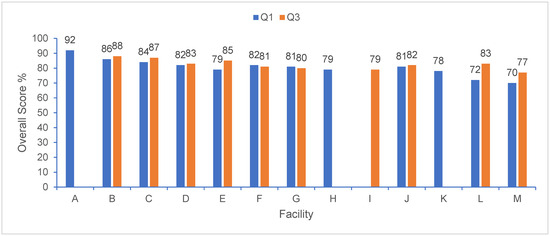
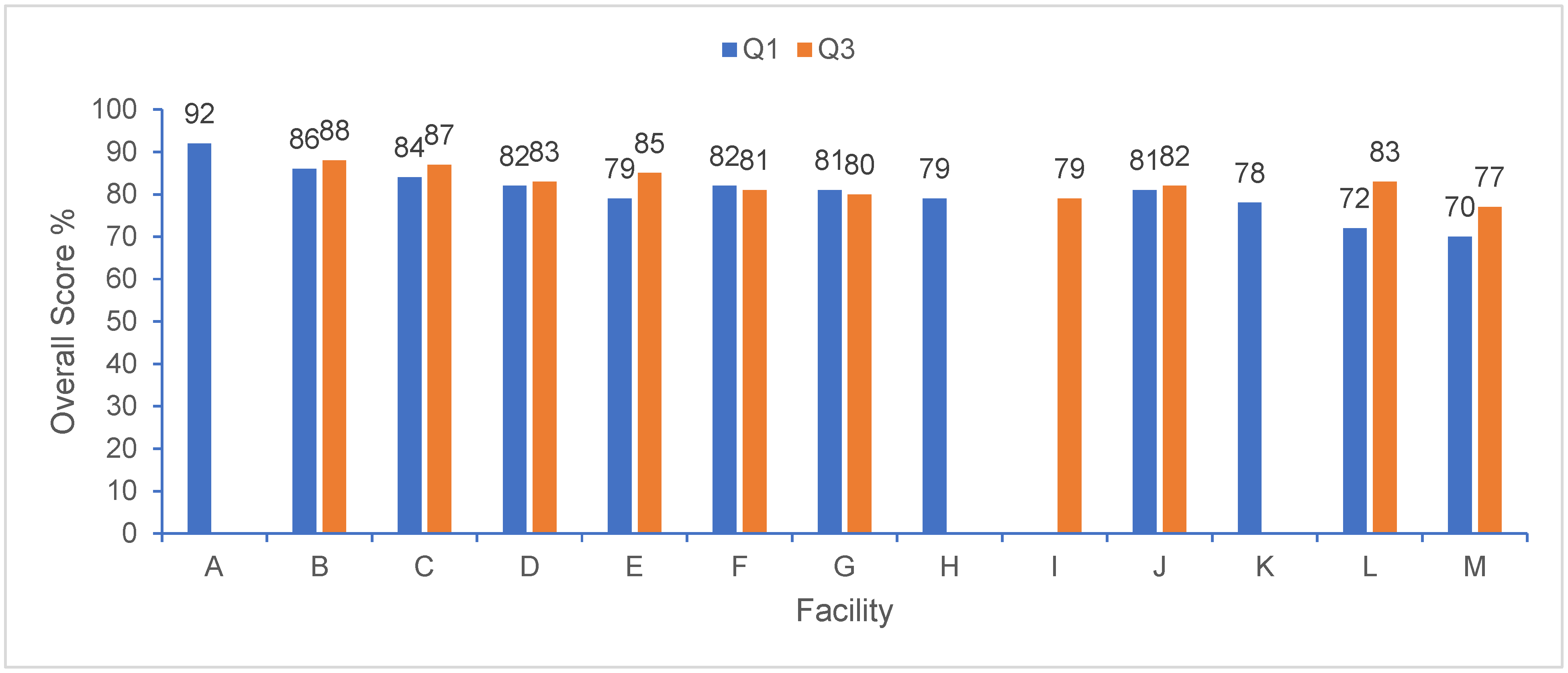
An overview of the overall scores for each facility for each assessment is summarized in Figure 1. At the time of the benchmarking assessments, there were 13 facilities in the company with rabbits. In March 2025 (Q1), 12 facilities participated in the rabbit welfare assessment, with overall scores being in the range of 70–92%. There were 16,238 animals assessed across 31 rooms, and a total of 39 employees completed the culture of care assessment. When looking at the global overall scores, the highest scoring category was physical (97%), followed by behavioral (87%), procedural (76%), culture of care (75%), environmental (75%), and training (73%). In September 2025 (Q3), 10 facilities participated with scores in the range of 77–88%, assessing 3927 animals across 23 rooms, with 36 employees assessed. Globally, the highest scoring category was again physical (98%), followed by behavioral (88%), procedural (81%), environmental (77%), training (76%), and culture of care (74%). The full results for each assessment for each facility are provided in Table 3. General findings for each category are discussed below.
Figure 1.
Overall rabbit welfare assessment scores (presented as percentage based on score achieved/total maximum score) for the first two assessments in March 2025 (Q1) and September 2025 (Q3).
Table 3.
The rabbit welfare assessment score (presented as percentage based on score achieved/total maximum score) for each facility and the average global scores for each category and subcategory. Each facility is denoted by a different letter.
Physical. The physical category assessed the clinical health of the rabbit and factors that may influence health and included the subcategories general condition, nutrition, pain assessment and mitigation, and records. Overall scores in the physical category were in the range of 93–100% in Q1 and of 95–100% in Q3. The subcategory with the highest average score was general condition (Q1: 99%; Q3: 100%), which assessed posture, hair coat, body condition, teeth, and whether animals appear well hydrated, are responding normally to external stimuli, and are free of obvious wounds or health concerns. The subcategory with the lowest average score was pain assessment and mitigation (Q1: 92%; Q3: 89%), where the descriptor “care personnel are trained in recognizing species-specific signs of pain” was scored with a “1” for three facilities, suggesting the need for more rabbit-specific training.
Behavioral. The behavioral category assessed normal and abnormal rabbit behavior, including behavioral assessments, normal behavior, and social, feeding, and parental behaviors. Overall scores were in the range of 76–96% in Q1 and of 72–97% in Q3. The subcategory normal behavior had the highest average scores (Q1: 99%; Q3: 99%). In Q1, the lowest score subcategory (Q1: 74%) was feeding behavior, which assessed whether food was provided in a way to encourage natural behaviors, but in Q3, this subcategory increased to 87%, suggesting facilities used the results to implement more natural feeding opportunities for rabbits. The other lower scoring subcategories were behavioral assessments (Q1: 81%; Q3: 72%) and social behavior (Q1: 80%; Q3: 82%). For behavioral assessments, the results indicate a need for regular behavioral assessments of rabbits. Four facilities indicated that behavioral assessments are not regularly conducted for rabbits, and five indicated sometimes or for some animals (score of “1”). For social behavior, the scores reflected that single housing rabbits is common practice due to study protocols and/or difficulty managing socially housed rabbits. Many of the social behavior descriptors were scored as “NA”. For those facilities that did socially house rabbits, the scores reflected no or inconsistent social behavior monitoring for compatibility. Only 6 of the 13 facilities scored above 80% for social behavior, indicating a crucial opportunity for improvement. One site received bonus points for having remote video monitoring for observing animals.
Environmental. The environmental category assessed the quality of the space and resources and the ability for rabbits to express species-typical behaviors and postures. It included housing, resources, and exercise opportunities. The overall scores were in the range of 48–98% in Q1 and of 55–95% in Q3. The subcategory with the highest average scores was resources (Q1: 82%; Q3: 84%), followed by housing (Q1: 76%; Q3: 77%), then exercise opportunities (Q1: 40%; Q3: 41%). In the resources subcategory, facilities most often struggled with having formal behavioral management programs for rabbits, where there were guidelines, rotating resource schedules, documentation, and evaluation. Providing thermoneutral surfaces in the rabbit enclosures was also an identified area for improvement. For the housing subcategory, providing visual barriers within the environment and substrate were the biggest challenges. Three sites received bonus points for providing substrate for the animals to dig in.
Training. The training category assessed how rabbits were prepared for the research environmental to reduce stress and promote cooperation, including acclimation, habituation and training, human interactions, and animal cooperation. The overall scores were in the range of 47–91% in Q1 and 52–94% in Q3. The subcategory with the highest average score was acclimation (Q1: 96%; Q3: 100%), with all facilities providing an acclimation period after arrival to the facility before study procedures started by the Q3 assessment. The lowest scoring subcategory was habituation and training (Q1: 60%; Q3: 65%) followed by human interactions (Q1: 73%; Q3: 76%), highlighting the need for more formal programs with rabbits to encourage voluntary cooperation and positive human–rabbit interactions.
Procedural. The procedural category assessed the procedures and techniques used at the facility to ensure they are in line with the recent literature on optimal practices for rabbits. The overall scores were in the range of 57–88% in Q1 and of 60–94% in Q3. The subcategories with the highest average scores were ambience (Q1: 85%; Q3: 88%) and restraint (Q1: 88%; Q3: 85%). Scheduling was the biggest challenge (Q1: 63%; Q3: 56%), indicating that personnel felt rushed. Only 6 of the 13 sites responded with scores of “2”, stating there were sufficient personnel scheduled to avoid feeling rushed. The procedures subcategory also identified needed refinements (Q1: 64%; Q3: 75%) in providing post-procedure rewards. Facilities additionally lost points in this subcategory due to lack of compatible social partners. Eight facilities received bonus points for preparing animals for adoption prior to rehoming.
Culture of care. The culture of care category assessed the training and resources provided to employees working with rabbits. This included initial training, continuing education, compassion fatigue and resiliency building programs and activities, involvement and opportunity, choice and control in work schedule, recognition, and competencies. The overall scores were in the range of 66–97% in Q1 and of 62–95% in Q3. In Q1, there were 39 employees assessed. A total of 20 identified as women, 7 identified as men, and 12 chose not to answer. For length of time working at the site, 5 worked less than 1 year, 12 worked for 1–5 years, 11 worked from 6–10 years, and 11 worked for over 10 years. In Q3, there were 36 employees assessed. Of the employees assessed, 20 were women, 14 were men, and 2 preferred not to respond. A total of 4 of the employees worked at the site for less than a year, 15 worked 1–5 years, 7 worked 6–10 years, and 10 worked over 10 years. The subcategory with the highest average scores was initial training (Q1: 87%; Q3: 84%). The lowest scoring subcategories were choice and control (Q1: 65%; Q3: 57%) and compassion fatigue and resiliency building programs/ activities (CF/RBA) (Q1: 63%, Q3: 67%). For choice and control, the descriptors relate to whether personnel can choose to specialize with a preferred species, whether they can opt out of performing activities they are uncomfortable with, and if they feel rushed. There were mixed responses for each item across facilities (responses of 0, 1, and 2). For the CF/RBA subcategory, there were again mixed responses of 0, 1, and 2 across the descriptors that include whether personnel could identify their Resiliency Building Advocates, had good work–life balance, could step away when feeling overwhelmed, had resources on compassion fatigue and resiliency building, facility had an active CF/RBA program, and the facility had opportunities to honor the animals they work with.
Recommendations. Based on the results of the benchmarking rabbit welfare assessments, recommendations were developed for how to address gaps in rabbit management programs. These recommendations are provided in Table 4.
Table 4.
Recommendations for improvement for each category based on assessment results.
4. Discussion
The goal of this project was to develop a rabbit welfare assessment tool for animals in varied research environments, including commercial breeding, discovery research, and safety testing. A rabbit welfare assessment tool was successfully implemented across 13 facilities in a global contract research organization and commercial breeder. The tool included input- and outcome-based measures of animal welfare and personnel wellbeing to ensure holistic assessment of factors that influence research rabbit welfare. The tool helped to identify facility- and company-level strengths and weaknesses in rabbit management and resulted in global recommendations, goal setting, and action items to address gaps and create opportunities for improvement.
The results of the assessment highlight key areas where rabbit management programs could be refined. More details on key recommendations for improving rabbit welfare in a research environment are provided by Thurston and colleagues [36]. The main challenge found in developing criteria and recommendations for improved rabbit welfare is a lack of research for rabbits in this environment. At the time of this publication, much of the published literature on rabbit welfare is on meat rabbits [25,31,32,33,37,38] or pet rabbits [34,39,40]. There are few empirical studies investigating refinements for research rabbits. As their use in biomedical studies continues to be important, more research is needed to better understand how management practices impact rabbit welfare.
Welfare assessment criteria has been developed for use in meat rabbits [31,32] and pet rabbits [34], but due to differences in how animals are housed and worked with in a research setting, previously developed tools did not meet the needs of the company. For meat rabbits, the Welfare Quality protocol was adapted for rabbits where the criteria focused on absence of negative experiences (i.e., absence of injuries; absence of prolonged hunger) and included environmental criteria such as cleanliness and height of drinkers, light quality, and temperature [31,32]. All the facilities assessed with the tool described in this paper were AAALAC-accredited; therefore, they already meet or exceed a minimum standard in terms of housing and environment. Additionally, the goal was to move beyond assessing the absence of negative behaviors and factoring in positive experiences [41] and comprehensive behavioral management [42]. For the behavioral parameters under the Welfare Quality criteria for rabbits, biting and isolation were the two criteria for social behavior, and human–animal relationship included a human approach test, training, and touching kits [31,32]. In contrast, the current described tool had more emphasis on observing normal behavior and positive social behaviors, regularly assessing behavior and compatibility of socially housed animals for proactive animal management, and the training category focused on building cooperation with the animals through habituation and positive reinforcement training. Research animals are used for a variety of purposes and study procedures that involve regular human–animal interactions, which is why assessing animal training, procedural refinements, and culture of care (looking at personnel training and resources) were important additions for welfare assessment of research animals. Additionally, due to previous welfare assessment tools within the organization, the same framework was implemented for rabbits to aid in communication, training, and ease of use for personnel using the tools. While the framework of the tool is the same, each tool is fully adapted for that particular species and reviewed by species experts.
The development of the rabbit welfare assessment tool came after previous efforts and feedback from implementation of a primate welfare assessment tool [35] and a dog welfare assessment tool. Each iteration of species-specific welfare assessment tools helped to refine the tools and messaging to ensure uptake and proper use of the assessment results in evaluating programs. Facilities were coached in reviewing and sharing results with key personnel at their facility (i.e., veterinarians, behavior groups, ethics committee members, operations personnel, site management) and identifying 1–3 goals for the following year. Feedback from the primate welfare assessment tool stated that the goal setting was helpful for sites to prioritize efforts and resources and improving communication towards common goals. The corporate animal welfare group followed up on goals annually through virtual check-ins and site visits. From a company level, the assessment results identified global gaps that resulted in working groups addressing those gaps (e.g., habituation harmonization, species housing improvement) and targeted training opportunities (e.g., animal welfare and 3Rs certificate program, behavioral management certificate program, species-specific workshops, discussions, on-demand virtual trainings).
The rabbit welfare assessment tool was the first tool to be used in commercial rabbit breeding facilities. Previous species tools were designed for animals used in discovery and safety testing research, which have different goals and priorities compared to the commercial breeding facilities. Additional considerations were needed to ensure the tool was effective at evaluating facilities from the three different business units. More descriptors had the opportunity to score “non-applicable” to accommodate the breeding facilities. Following the benchmarking assessments, personnel from the breeding facilities were asked to provide feedback and suggestions on the tool. Ultimately, they believed the tool was useful in evaluating their programs but indicated that additional descriptors needed to have the “non-applicable” option (personal communications). The non-applicable option was mainly provided for descriptors in the training and procedural categories, as the breeding facilities are not training animals for cooperation nor conducting procedures, (i.e., oral gavage, dermal applications, blood collection).
There are limitations of the tool. While the tool was designed to have input- and outcome-based measures of animal welfare, the tool cannot provide individual animal assessment, provide assessment on severity or cumulative use [43], or directly measure the effectiveness or quality of the programs on animal-based measures of welfare (i.e., is the behavioral assessment program effective at identifying and mitigating abnormal behaviors), but rather use the animal-based measured (i.e., abnormal behavior observed, evidence of fighting, animals show fear towards humans) to highlight programmatic or systemic animal management gaps that allow for targeted discussions, training, and resource allocation. Therefore, the tool may not directly improve an individual animal’s welfare at a given time point, but rather helps facilities and the organization identify issues and implement changes that will impact animals in the future (i.e., capital investment in updating animal housing, providing more time for habituation and training of animals prior to study start). It is also important to note that each facility has its own animal use protocol review process; therefore, the animals assessed with this tool would be additionally monitored based on the protocol they are under.
Additionally, using the tool can be time consuming, with tool users reporting that it can take 2–8 h depending on the size of the facility. With multiple species welfare assessment tools now being used within the company, the time commitment needed to complete the assessments can add up for facilities that have multiple species. Therefore, frequent assessment is not practical using this tool. The tool is best at evaluating systemic welfare risks in species-specific management programs and monitoring the impacts of programmatic changes over time. Initial assessments are conducted six months apart. Following the benchmarking assessments, facilities have the option to conduct the assessment one or two times during the calendar year. To truly have a holistic assessment of animal welfare, multiple welfare assessment tools may be needed to capture different factors that impact welfare at an individual animal and programmatic level. For example, in the CCAC guidelines for animal welfare assessment, it is stated that assessments should consider the whole life of the animals, monitor species normal and abnormal behaviors, identify systemic welfare risks and individual animal scientific, humane intervention, and cumulative endpoints, considering physical condition, psychological well-being, and experimental impacts [16]. To meet these criteria and have a comprehensive welfare assessment protocol that can allow for decision making at an individual and programmatic level, multiple types of welfare assessment tools need to be used. There also needs to be strong data collection, visualization, and communication pathways to ensure key personnel are involved and appropriate actions are taken to reduce risk and improve animal welfare [16,43].
Another current limitation of the tool is that formal measures of reliability and validity have not yet been conducted. Because the tools are developed by species experts based on empirical evidence and expert experience (where the literature is lacking), the tool has content validity. However, the tools were developed and released internally within an organization; therefore, obtaining external feedback would be necessary to confirm content validity. No formal measures of construct validity were assessed. Anecdotally, the rabbit welfare assessment scores across facilities typically reflect internal observations of animal management programs and what is observed on site visits, but no formal measures have been conducted. Because the tool has three separate forms measuring different aspects of welfare (animal-based measures, resource- and management-based measures, employee resources and training), there would need to be targeted efforts to identify other objective measures, such as comparing severity scores across different studies with the scores from the room-based form, or using employee satisfaction surveys compared with the culture of care form scores. Because the assessments are conducted at least six months apart, measures of reliability have also not been performed. The facilities have rotating animals and studies, and therefore, conducting the assessment within the same room with the same animals over time is difficult to arrange logistically. At any moment, there may be studies with different objectives that could impact animal-based measures of welfare, making test–retest reliability assessment difficult. The benchmarking assessment is meant to capture an average score based on changing studies six months apart to provide a baseline for comparison for future assessments. During the benchmarking assessment, facilities are instructed to use the same tool users to ensure consistency and reduce observer bias; however, overtime, employee changes can impact the ability to assess intra-observer reliability. Future work with the species welfare assessment tools will aim to formally assess validity and reliability. Validity and reliability measures may help pinpoint the most valuable items for rabbit welfare and personnel wellbeing, simplify the tool to make it more efficient, and/or identify companion tools for individual animal, severity, and cumulative use assessments to provide a comprehensive package for facilities to use for improved research rabbit welfare.
5. Conclusions
In conclusion, a rabbit welfare assessment tool was developed and implemented within a global contract research organization and commercial breeder. The tool was developed as part of a rabbit welfare working group that developed recommendations on best practices for working with research rabbits [36]. The tool successfully evaluated strengths and weaknesses across facilities and business purposes (i.e., breeding, discovery research, safety testing) and identified global gaps in rabbit welfare and management. The tool investigates room-, site-, and personnel-level welfare indicators related to physical, behavioral, environmental, training, procedural, and culture of care factors. The rabbit welfare assessment tool will aid the organization in improving rabbit welfare company-wide and create a culture of continuous animal welfare improvement.
Supplementary Materials
The following supporting information can be downloaded at: https://www.mdpi.com/article/10.3390/ani16081229/s1, Table S1: RbtWAT Worksheet–Room level–EN; Table S2: RbtWAT Worksheet–Site level–EN; Table S3: CoC Site Worksheets–English.
Author Contributions
Conceptualization, C.I.O., S.E.T., and E.A.N.; methodology, C.I.O.; formal analysis, C.I.O.; data curation, C.I.O.; writing—original draft preparation, C.I.O.; writing—review and editing, S.E.T. and E.A.N. All authors have read and agreed to the published version of the manuscript.
Funding
This research received no external funding.
Institutional Review Board Statement
Ethical review and approval were waived for this study because the survey was intended solely for local internal improvement and was completely anonymous. The survey serves as a tool alongside the welfare assessment instrument to support local improvement rather than to make research claims. The data was fully anonymous by design, and the results are included in this manuscript only to demonstrate how the tool can identify lessons learned and ongoing risks specific to the institution. Ethical review was not required under institutional policy.
Informed Consent Statement
Not applicable.
Data Availability Statement
The original contributions presented in this study are included in the article/Supplementary Materials. Further inquiries can be directed to the corresponding author.
Acknowledgments
The authors would like to thank P.V. Turner for her contributions to this project and also thank the members of the rabbit welfare working group and the welfare assessment subcommittee in their feedback on the rabbit welfare assessment tool. During the preparation of this manuscript/study, the authors used EndNote 21 (Clarivate, Philadelphia, PA, USA) to manage their reference library for the manuscript reference section. The authors have reviewed and edited the output and take full responsibility for the content of this publication.
Conflicts of Interest
Carly I. O’Malley, Sarah E. Thurston, and Elizabeth A. Nunamaker are affiliated with Charles River. Charles River was not involved in the study design, collection, analyses, interpretation of the data, the writing of this article, or decision to submit to Animals for publication.
References
- Franco, N.H. Animal Experiments in Biomedical Research: A Historical Perspective. Animals 2013, 3, 238–273. [Google Scholar] [CrossRef] [Scilit]
- Hornyik, T.; Rieder, M.; Castiglione, A.; Major, P.; Baczko, I.; Brunner, M.; Koren, G.; Odening, K.E. Transgenic rabbit models for cardiac disease research. Br. J. Pharmacol. 2022, 179, 938–957. [Google Scholar] [CrossRef] [Scilit] [PubMed]
- Green, M.D.; Al-Humadi, N.H. Chapter 27—Preclinical Toxicology of Vaccines11Disclaimer: The findings and conclusions in this chapter have not been formally disseminated by the Food and Drug Administration and should not be construed to represent any Agency determination or policy. In A Comprehensive Guide to Toxicology in Nonclinical Drug Development, 2nd ed.; Faqi, A.S., Ed.; Academic Press: Boston, MA, USA, 2017; pp. 709–735. [Google Scholar] [CrossRef] [Scilit]
- Ahn, S.J.; Hong, H.K.; Na, Y.M.; Park, S.J.; Ahn, J.; Oh, J.; Chung, J.Y.; Park, K.H.; Woo, S.J. Use of Rabbit Eyes in Pharmacokinetic Studies of Intraocular Drugs. J. Vis. Exp. 2016, 133, e53878. [Google Scholar] [CrossRef] [Scilit] [PubMed]
- Fischer, B.; Chavatte-Palmer, P.; Viebahn, C.; Navarrete Santos, A.; Duranthon, V. Rabbit as a reproductive model for human health. Reproduction 2012, 144, 1–10. [Google Scholar] [CrossRef] [Scilit] [PubMed]
- Animal and Plant Health Inspection Service. FY 2023 Research Facility Annual Report Summary; Animal and Plant Health Inspection Service: Riverdale, MD, USA, 2023.
- European Commission. Summary Report on the Statistics on the Use of Animals for Scientific Purposes in the Member States of the European Union and Normway in 2022; Animal Use Reporting–EU System; European Commission: Brussels, Belgium, 2024. [Google Scholar]
- Sokolowski, K.; Turner, P.V.; Lewis, E.; Wange, R.L.; Fortin, M.C. Exploring rabbit as a nonrodent species for general toxicology studies. Toxicol. Sci. 2024, 199, 29–39. [Google Scholar] [CrossRef] [Scilit]
- Brown, P.C.; Wange, R.L. Considerations regarding the use of nonhuman primates in assessing safety endpoints for pharmaceuticals. Regul. Toxicol. Pharmacol. 2023, 143, 105449. [Google Scholar] [CrossRef] [Scilit]
- Suckow, M.A.; Stevens, K.A.; Wilson, R.P. Basic experimental methods in the rabbit. In The Laboratory Rabbit, Guinea Pig, Hamster, and Other Rodents, 1st ed.; Elsevier Academic Press: Amsterdam, The Netherlands, 2012. [Google Scholar]
- Bradbury, A.G.; Dickens, G.J. Appropriate handling of pet rabbits: A literature review. J. Small Anim. Pract. 2016, 57, 503–509. [Google Scholar] [CrossRef] [Scilit]
- Carli, G.; Farabollini, F. Neurophysiological mechanisms involved in tonic immobility (TI). Prog. Brain Res. 2022, 271, 145–166. [Google Scholar] [CrossRef] [Scilit]
- Farabollini, F.; Facchinetti, F.; Lupo, C.; Carli, G. Time-course of opioid and pituitary-adrenal hormone modifications during the immobility reaction in rabbits. Physiol. Behav. 1990, 47, 337–341. [Google Scholar] [CrossRef] [Scilit]
- Giannico, A.T.; Lima, L.; Lange, R.R.; Froes, T.R.; Montiani-Ferreira, F. Proven cardiac changes during death-feigning (tonic immobility) in rabbits (Oryctolagus cuniculus). J. Comp. Physiol. A Neuroethol. Sens. Neural Behav. Physiol. 2014, 200, 305–310. [Google Scholar] [CrossRef] [Scilit]
- Fuentes, G.C.; Newgren, J. Physiology and clinical pathology of laboratory new zealand white rabbits housed individually and in groups. J. Am. Assoc. Lab. Anim. Sci. 2008, 47, 35–38. [Google Scholar] [PubMed]
- Canadian Council on Animal Care. CCAC Guidelines: Animal Welfare Assessment; Canadian Council on Animal Care: Ottawa, ON, Canada, 2021. [Google Scholar]
- Kendall, L.V.; Petervary, N.; Bergdall, V.K.; Page, R.L.; Baneux, P.J.R. Institutional animal care and use committee review of clinical studies. J. Am. Vet. Med. Assoc. 2018, 253, 980–984. [Google Scholar] [CrossRef] [Scilit] [PubMed]
- Bayne, K.; Turner, P.V. Animal Welfare Standards and International Collaborations. ILAR J. 2019, 60, 86–94. [Google Scholar] [CrossRef] [Scilit] [PubMed]
- Mohan, S.; Huneke, R. The Role of IACUCs in Responsible Animal Research. ILAR J. 2019, 60, 43–49. [Google Scholar] [CrossRef] [Scilit]
- Fraser, D.; Weary, D.M.; Pajor, E.A.; Milligan, B.N. A Scientific Conception of Animal Welfare that Reflects Ethical Concerns. Anim. Welf. 1997, 6, 187–205. [Google Scholar] [CrossRef] [Scilit]
- Farm Animal Welfare Council. Second Report on Priorities for Research and Development in Farm Animal Welfare; Farm Animal Welfare Council: London, UK, 1993; pp. 187–205.
- Mellor, D.J.; Beausoleil, N.J. Extending the ‘Five Domains’ model for animal welfare assessment to incorporate positive welfare states. Anim. Welf. 2015, 24, 241–253. [Google Scholar] [CrossRef] [Scilit]
- Underwood, W.J. Contracting in vivo research: What are the issues? J. Am. Assoc. Lab. Anim. Sci. 2007, 46, 16–19. [Google Scholar]
- Fraser, D. Understanding animal welfare. Acta Vet. Scand. 2008, 50, S1. [Google Scholar] [CrossRef] [Scilit]
- Trocino, A.; Tolini, C. Measuring on farm welfare in rabbits: A review with emphasis on animal based indicators. In Proceedings of Book of the Abstracts of the 13th World Rabbit Congress—WRC 2024; World Rabbit Science Association: Paris, France, 2024; pp. 194–211. [Google Scholar]
- Rushen, J.; Marie de Passillé, A. The scientific basis of animal welfare indicators. In Welfare of Production Animals: Assessment and Management of Risks; Wageningen Academic: Wageningen, The Netherlands, 2023; pp. 391–415. [Google Scholar]
- Vasseur, E.; Pellerin, D.; de Passillé, A.M.; Winckler, C.; Lensink, B.J.; Knierim, U.; Rushen, J. Assessing the welfare of dairy calves: Outcome-based measures of calf health versus input-based measures of the use of risky management practices. Anim. Welf. 2012, 21, 77–86. [Google Scholar] [CrossRef] [Scilit]
- Welfare Quality. Assessment Protocol for Pigs; Welfare Quality: Monells, Spain, 2009. [Google Scholar]
- Welfare Quality. Assessment Protocol for Cattle; Welfare Quality: Monells, Spain, 2009. [Google Scholar]
- Welfare Quality. Assessment Protocol for Laying Hens; Welfare Quality: Monells, Spain, 2019. [Google Scholar]
- Botelho, N.; Vieira-Pinto, M.; Batchelli, P.; Pallisera, J.; Dalmau, A. Testing an animal welfare assessment protocol for growing-rabbits reared for meat production based on the welfare quality approach. Animals 2020, 10, 1415. [Google Scholar] [CrossRef] [Scilit]
- Dalmau, A.; Moles, X.; Pallisera, J. Animal welfare assessment protocol for does, bucks, and kit rabbits reared for production. Front. Vet. Sci. 2020, 7, 445. [Google Scholar] [CrossRef] [Scilit] [PubMed]
- EFSA Panel on Animal Health and Welfare; Saxmose Nielsen, S.; Alvarez, J.; Bicout, D.J.; Calistri, P.; Depner, K.; Drewe, J.A.; Garin-Bastuji, B.; Gonzales Rojas, J.L.; Schmidt, C.G.; et al. Health and welfare of rabbits farmed in different production systems. EFSA J. 2020, 18, e05944. [Google Scholar] [CrossRef] [Scilit] [PubMed]
- Schepers, F.; Koene, P.; Beerda, B. Welfare assessment in pet rabbits. Anim. Welf. 2009, 18, 477–485. [Google Scholar] [CrossRef] [Scilit]
- Paterson, E.A.; O’Malley, C.I.; Abney, D.M.; Archibald, W.J.; Turner, P.V. Development of a novel primate welfare assessment tool for research macaques. Anim. Welf. 2024, 33, e3. [Google Scholar] [CrossRef] [Scilit]
- Thurston, S.E.; O’Malley Carly, I.; Portman, M.R.; Nunamaker Elizabeth, A. Recommendations for best practices to harmonize care and management for research rabbits (Oryctolagus cuniculus). JAALAS, 2026; under review.
- Trocino, A.; Xiccato, G. Animal welfare in reared rabbits: A review with emphasis on housing systems. World Rabbit Sci. 2006, 14, 77–93. [Google Scholar] [CrossRef] [Scilit]
- Verga, M.; Luzi, F.; Petracci, M.; Cavani, C. Welfare aspects in rabbit rearing and transport. Ital. J. Anim. Sci. 2009, 8, 191–204. [Google Scholar] [CrossRef] [Scilit]
- Rioja-Lang, F.; Bacon, H.; Connor, M.; Dwyer, C.M. Rabbit welfare: Determining priority welfare issues for pet rabbits using a modified Delphi method. Vet. Rec. Open 2019, 6, e000363. [Google Scholar] [CrossRef] [Scilit]
- Rooney, N.J.; Blackwell, E.J.; Mullan, S.M.; Saunders, R.; Baker, P.E.; Hill, J.M.; Sealey, C.E.; Turner, M.J.; Held, S.D. The current state of welfare, housing and husbandry of the English pet rabbit population. BMC Res. Notes 2014, 7, 942. [Google Scholar] [CrossRef] [Scilit]
- Turner, P.V. Moving Beyond the Absence of Pain and Distress: Focusing on Positive Animal Welfare. ILAR J. 2020, 60, 366–372. [Google Scholar] [CrossRef] [Scilit]
- Turner, P.V.; Bayne, K. Research Animal Behavioral Management Programs for the 21st Century. Animals 2023, 13, 1919. [Google Scholar] [CrossRef] [Scilit]
- Nunamaker, E.A.; Davis, S.; O’Malley, C.I.; Turner, P.V. Developing Recommendations for Cumulative Endpoints and Lifetime Use for Research Animals. Animals 2021, 11, 2031. [Google Scholar] [CrossRef] [Scilit]

Disclaimer/Publisher’s Note: The statements, opinions and data contained in all publications are solely those of the individual author(s) and contributor(s) and not of MDPI and/or the editor(s). MDPI and/or the editor(s) disclaim responsibility for any injury to people or property resulting from any ideas, methods, instructions or products referred to in the content. |
© 2026 by the authors. Licensee MDPI, Basel, Switzerland. This article is an open access article distributed under the terms and conditions of the Creative Commons Attribution (CC BY) license.