


Simple Summary
Weaned piglets must adapt to solid feed while their intestine and immune system are still developing. Plant extracts are being studied to reduce diarrhea and support this transition, but products from the same plant do not necessarily have the same effects. This review examines how extract composition and the amount consumed relate to changes in digestion, intestinal protection, and gut bacteria. It compares studies reporting clear benefits with those showing unchanged growth or unwanted effects. An important distinction is whether an extract acts on intestinal cells, changes microbial activity, or influences feed intake and nutrient use. These processes can occur together, and similar changes in inflammatory markers do not show that different products work in the same way. Several preparations improve intestinal measurements without increasing growth, while some improve growth mainly alongside greater feed intake. The review therefore evaluates clinical benefit separately from its proposed explanation. It identifies which links have been measured and which still require testing, including the contribution of microbial metabolites. In one 35-day trial, licorice flavonoids reduced diarrhea scores without a clear increase in daily weight gain. This preparation may therefore help control loose stools under comparable nursery conditions. Higher chestnut-tannin inclusion also reduced diarrhea in one trial, but piglets gained less weight, making that dose a poor choice when growth must be maintained.
Abstract
Plant extracts can improve selected intestinal outcomes in weaned piglets, but similar host responses are frequently interpreted as evidence of a shared mechanism despite differences in preparation and exposure. This narrative review evaluates feeding studies through the relationships among extract identity, intestinal exposure, host responses, microbial function, and clinical outcomes. It distinguishes three potentially overlapping explanations: direct host effects, microbial functional contributions, and responses associated with altered intake or nutrient utilization. Essential oils, crude herbal extracts, and enriched multicomponent fractions are included; whole biomass, fungal extracts, and purified single compounds are excluded from extract-efficacy evidence. Comparative examples reveal that reduced diarrhea need not coincide with greater gain, and greater gain need not establish improved digestive efficiency. Changes in NF-κB- or Nrf2-related measurements identify responding host processes but do not distinguish upstream causes. Joint microbial and metabolite measurements narrow candidate mechanisms, whereas auxiliary transfer and cell experiments support specific links within their tested models. The synthesis identifies unresolved attribution in combination products and separates missing measurements from unchanged outcomes. Licorice flavonoids reduced diarrhea scores without a significant gain response. Rosemary extract at 200 mg/kg increased daily gain and feed intake without significantly changing the feed-to-gain ratio (F/G). High chestnut-tannin inclusion reduced diarrhea at the expense of gain. These findings support product selection against a specified clinical or production endpoint.
1. Introduction
Weaning combines separation from the sow, mixing, relocation, and a sudden change from milk to solid feed while digestive and immune functions are still developing [1,2,3]. Reduced feed intake, villus shortening, altered digestive activity, and increased epithelial permeability can impair adaptation to nursery diets [2,4,5]. Intestinal inflammation and microbial instability can increase susceptibility to post-weaning diarrhea, with consequences for growth, treatment requirements, and survival in severe disease [6,7]. In a cohort of 272 piglets that survived to weaning on two Danish farms using neither medicinal zinc oxide nor prophylactic antimicrobials, the 14-day cumulative incidence of diarrhea after nursery entry was 41.8% on one farm and 51.1% on the other [8]. The immediate nutritional disturbance is important because low intake and intestinal dysfunction can reinforce each other. Reduced nutrient supply constrains adaptation to solid feed, while impaired digestion and inflammation can further discourage consumption. Recovery also follows different time courses across intestinal segments and physiological processes. Consequently, an additive evaluated during the first days after weaning may address a different limitation from one fed throughout the nursery period. This timing helps explain why a short-term intestinal response need not produce a measurable whole-period growth advantage.
Plant extracts contain mixtures of volatile oils, phenolics, alkaloids, saponins, or carbohydrates that may affect digestion, epithelial protection, inflammatory responses, antioxidant defenses, and microbial ecology [7,9,10]. Their composition depends on botanical source and extraction. Essential oils, crude aqueous or hydroalcoholic extracts, and enriched fractions therefore require separate evaluation. These products are of interest as nutritional tools for reducing intestinal disturbances during weaning, although a favorable biomarker response alone does not establish clinical efficacy. Their chemical diversity offers several possible sites of action, but also complicates product selection. A volatile oil, a phenolic-rich extract, and a carbohydrate-rich fraction differ in composition and may differ in intestinal persistence and microbial utilization. The botanical name therefore provides only the starting point for interpretation. Processing, enrichment, and formulation determine the preparation actually consumed, while inclusion rate and feed intake influence exposure. These distinctions matter when translating a promising experimental result into a reproducible feeding practice.
Meta-analyses report average benefits of phytogenic additives or essential oils for selected performance and intestinal outcomes, together with substantial variation among trials [11,12]. Direct studies of graded essential oils, Astragalus total flavones, and capsicum extract illustrate the preparations evaluated in weaned piglets [13,14,15]. An average class response does not identify the constituent mixture, dose, or route responsible for benefit in an individual nursery setting. Comparisons must therefore retain differences in preparation, diet, health status, and endpoints before interpreting apparently inconsistent outcomes.
Existing reviews address post-weaning diarrhea and microbial responses to plant polysaccharides [16,17]. The unresolved question considered here is how different preparations can produce similar host-marker responses while differing in diarrhea, nutrient utilization, and growth. Broad pathway lists do not distinguish direct epithelial effects from microbial contributions or responses accompanying greater feed intake. This review therefore compares the experimental links supporting each explanation rather than treating pathway convergence as evidence that extracts share an upstream mechanism. Preparation-specific outcomes and alternative explanations are retained together, so that a clinical benefit can be recognized even when its mechanism remains unresolved.
The organizing proposition is that mechanistic transfer between extracts requires a comparable route from preparation and exposure to intestinal function, not merely a matching host biomarker. We examine three potentially overlapping routes: direct host responses to extract constituents, microbial functional changes with possible host consequences, and effects associated with altered intake or nutrient utilization. These are explanatory alternatives proposed for synthesis, not mutually exclusive extract classes or a validated causal model. The analysis identifies which route is supported by each experimental setting, where attribution fails, and which comparison could resolve it. Clinical efficacy, mechanism, and tolerance are evaluated separately before considering their agreement.
Figure 1 relates extract composition, dose, and gastrointestinal exposure to digestive, epithelial, immune, redox, and microbial responses. Diarrhea and intestinal function are the primary outcomes. Growth provides complementary production information. The arrows group related measurements. Their direction does not establish the order of events or identify the initiating mechanism.
Figure 1.
Plant extracts and intestinal responses in weaned piglets (created by the authors using Figdraw, https://www.figdraw.com, accessed on 5 November 2026).
2. Data Sources and Literature Selection
We conducted a narrative synthesis of evidence on plant extracts in weaned piglets [18,19,20]. PubMed (https://pubmed.ncbi.nlm.nih.gov/, accessed on 5 October 2026) was last searched on 5 November 2026. The literature covered essential oils, aqueous and hydroalcoholic extracts, and fractions enriched in polyphenols, flavonoids, alkaloids, or polysaccharides. Botanical sources included Astragalus, licorice, rosemary, oregano, Capsicum, Macleaya, Lycium, Forsythia, Terminalia, mulberry, chicory, Silybum, Moringa, Sophora, Perilla, Magnolia, and quebracho.
Peer-reviewed feeding trials in weaned or nursery pigs provided the primary evidence for efficacy. Studies were selected for their relevance to extract composition and exposure, diarrhea, digestion, epithelial integrity, mucosal immunity, redox responses, microbial activity, or growth. Trials remained relevant when growth was unchanged or unmeasured. For multistage studies, we considered only nursery outcomes. For mixtures, we attributed effects to the complete preparation unless separate treatment groups identified a component effect. Whole plant material, unextracted powders, fungal extracts, and purified single compounds fell outside the feeding-efficacy synthesis. Cellular and non-porcine studies informed the interpretation of mechanisms, while reviews and methodological papers supplied background.
We compared trials in light of dose, feeding duration, basal diet, health status, experimental unit, and intestinal sampling site. In evaluating a proposed mechanism, we distinguished direct host measurements from changes in microbial composition and from responses that coincided with greater feed intake. An unmeasured outcome was recorded separately from a measured outcome showing no significant treatment effect. Reports from overlapping cohorts were considered together when assessing replication.
The six SANRA items [21] guided our review of the rationale, aims, search description, referencing, scientific reasoning, and presentation of endpoint data. The 122 cited publications span 1997–2026 and include primary studies, reviews, and methodological papers. The synthesis is qualitative, with no pooled effect estimate or formal study-level risk-of-bias assessment. Relevance-based selection and differences in preparations, trial designs, and outcome definitions limit coverage and comparisons across studies.
3. Extract Classes, Composition, and Dietary Exposure
3.1. Classification of Extract Preparations
Preparations used in weaned piglets can be grouped by extraction and composition: volatile essential oils; crude aqueous or hydroalcoholic herbal extracts; and enriched fractions containing flavonoids, other polyphenols, alkaloids, or polysaccharides. Direct examples include essential oils [13], Astragalus total flavones [14], capsicum extract [15], and alkaloid-containing Macleaya cordata extract [22]. A dried extract powder is a delivery form, whereas aqueous, ethanolic, or other solvent extraction describes how the material was obtained. These categories describe preparation methods or dominant constituents rather than mutually exclusive chemical classes; flavonoids are a subclass of polyphenols.
An essential oil, crude solvent extract, and enriched fraction from one botanical source are separate preparations. Commercial names alone do not establish their equivalence. Astragalus total flavones and licorice flavonoids illustrate enriched plant fractions with different administration regimens [14,23], while rosemary provides a phenolic-rich extract evaluated over a graded dietary inclusion range [24].
3.2. Degree of Preparation Characterization
The composition of an extract is essential for comparison. Reports range from botanical or commercial names to extraction procedures, carriers, quantitative marker compounds, and chromatographic profiles. High-performance liquid chromatography (HPLC), gas chromatography–mass spectrometry (GC-MS), and liquid chromatography–mass spectrometry (LC-MS) can characterize different extract classes. A stated solvent or extraction yield describes preparation but does not, by itself, establish the concentration of active constituents.
A standardized preparation has a reported compositional specification or comparable quality-control criterion. A marker can identify a batch without establishing the constituent responsible for benefit, and a total chemical-class measurement does not resolve its individual components. Table 1 summarizes representative feeding trials by preparation, animal population, dose, duration, and outcome. Where extraction or marker details are not established in this synthesis, this limits product comparability rather than demonstrating that the original investigators failed to report them.
Table 1.
Preparation, study design, and principal findings of representative feeding trials in weaned piglets.
3.3. Dietary Dose and Estimated Daily Intake
Dietary concentration and daily intake express different exposures. Essential-oil preparations have been tested at 50–200 mg/kg diet [13], whereas Astragalus total flavones were administered at 60 mg/piglet/day [14]. Product inclusion cannot be converted to a dose of a particular constituent without its measured concentration. If dietary concentration and feed intake are available, their product estimates mean daily extract intake, but not intestinal absorption or luminal concentration.
Product dose, quantified fraction dose, and trial duration require separate interpretation. The same principle applies to oils carried on a solid matrix and to flavonoid-rich preparations. Low feed intake immediately after weaning can reduce exposure even when the formulated inclusion rate remains unchanged.
3.4. Extraction and Gastrointestinal Exposure
Local exposure depends on the concentration of a constituent in a particular intestinal segment and the time it remains available there after a meal. A 21-day feeding period describes repeated administration. It does not give the contact time of each dose with jejunal mucosa or colonic microbes. Release from the feed matrix, digesta transit, absorption, and microbial conversion can each shorten or shift that contact.
A lipid-matrix thymol study illustrates the distinction [27]. In simulated gastric fluid, 26% of encapsulated thymol was released, and release was complete by 24 h in the subsequent intestinal-fluid assay. In weaned pigs, the investigators estimated that 42% of thymol was delivered to the mid-jejunum. The 24 h value applies to the laboratory assay. Segment-specific recovery in pigs locates delivery, but an estimate of residence time would require measurements at successive times after feeding. For a microbial mechanism, the relevant measurement is exposure in the compartment where the proposed transformation occurs.
3.5. Stability, Delivery, and Dietary Matrix Effects
Feed storage can materially reduce the amount of an essential-oil constituent consumed. In starter feed containing 1.2% oregano essential-oil formulation, carvacrol declined from 845.72 to 583.38 mg/kg and thymol from 46.34 to 30.16 mg/kg over 34 days [26]. Calculated retention was approximately 69% and 65%, respectively. These are measured constituent losses under the reported storage conditions, not equivalent percentage losses of antidiarrheal efficacy. The garlic-powder arm of that study is outside the extract-efficacy scope.
Free and nanoencapsulated Minthostachys essential oil differed in tolerability and responses in weaned piglets [28], and coated-oil studies measured immune, microbial, or morphological outcomes [29,30]. Direct measurements of thymol during pelleting and in intestinal release assays document formulation-specific stability and release [27]. Wang et al. evaluated essential oil coated with glycerol monolaurate [30]. A comparison of the coated product with basal feed estimates the response to the whole product. A carrier-only comparison would isolate the contribution of the coating.
4. Effects on Intestinal Function and Clinical Outcomes
4.1. Post-Weaning Diarrhea and Fecal Outcomes
Diarrhea is a clinically relevant outcome, but studies differ in scoring criteria, observation frequency, follow-up duration, treatment policies, and the denominator used to calculate incidence. Experimental enteric infection should also be distinguished from systemic inflammatory challenges, including parenteral lipopolysaccharide exposure. These models do not reproduce the same disease process, even when both produce intestinal changes [9,12]. Delivery through drinking water has also been tested, illustrating that water intake and formulation stability can affect exposure independently of feed consumption [31]. Essential-oil blend studies in early-weaned pigs and newer oil-mixture trials provide further clinical and microbial observations [32,33]. Their findings should be compared at the preparation and endpoint level rather than combined solely because all were labeled essential oils.
Reduced diarrhea has been reported for several eligible extract preparations, including essential oils, rosemary extract, and licorice flavonoids [13,23,24]. Lycium polysaccharide trials extend this antidiarrheal evidence to another plant-extract class [34,35]. However, reduced diarrhea is not universal: herbal extract with or without isomalto-oligosaccharides changed selected biological indices without a significant reduction in diarrhea [36]. Extract-specific feeding evidence also comes from Terminalia chebula, Isatidis root polysaccharides, and the ShenQiGan herbal preparation [37,38,39]. Quebracho tannin products have reduced diarrhea without improving growth in some trials [40,41]. These outcomes support a clinical effect under the tested conditions, but they do not establish interchangeability among tannin products or between herbal polysaccharides.
Fecal consistency also needs to be separated from growth. Higher feed intake early after weaning can support faster weight gain while simultaneously increasing the probability of diarrhea, as shown in a non-phytogenic feeding study that is useful for interpreting this relationship [42]. A reduction in diarrhea alongside unchanged growth may therefore still represent a relevant intestinal benefit, whereas greater growth accompanied by more loose feces should not be described uncritically as improved gut health. Field and infection studies further separate prevention from treatment context. Microencapsulated-oil field studies and F18 ETEC challenge studies report responses under different exposure pressures [43,44]. A blend containing oils, medium-chain fatty acids, and a toxin-binding mineral reduced severe diarrhea after challenge, but its efficacy belongs to the combination [45]. Differences in diarrhea definitions and antimicrobial treatment policies limit direct comparison of these clinical responses.
4.2. Digestive and Absorptive Function
Digestive responses have been reported with essential oils, rosemary extract, and natural capsicum extract [13,15,24]. Citrus extract has also been linked to improved nitrogen utilization and intestinal enzyme activity [46]. Trials separating organic acids from essential oils help identify component-specific effects on apparent digestibility and jejunal enzymes [47]. These measurements are closer to digestive function than morphology or transporter transcripts alone. Essential-oil trials measured nutrient utilization both in routine nursery feeding [48,49] and in enterically challenged piglets given a 0.0125% oil blend [50].
Digestibility measures nutrient disappearance, whereas villus height describes structure and transporter transcripts describe expression. These findings are complementary, but morphology or transcripts alone do not demonstrate increased absorption. Greater intake can also promote intestinal development, so concordant digestive and growth responses do not establish which response occurred first.
4.3. Intestinal Morphology
Forsythia extract has been evaluated against an antibiotic comparator for digestibility, fecal E. coli, and intestinal morphology [51]. Earlier essential-oil additive studies examined ileal nutrient digestibility and selected intestinal bacteria [52]. Villus height (VH), crypt depth (CD), and the villus height-to-crypt depth ratio (VH:CD) describe mucosal architecture. Favorable changes have been reported with essential oils, rosemary, and capsicum extracts [13,15,24]. Macleaya studies provide extract-level evidence in early-weaned piglets, with preparation-specific responses [22,53]. Orientation, fixation, intestinal site, feed intake, and epithelial turnover still affect the measurement, so these changes do not directly establish lower permeability.
Morphological responses also depend on formulation. Studies of Schinus terebinthifolius essential oil, described as red-pepper oil in the original report, and microencapsulated oils have examined intestinal architecture under distinct nursery conditions [54,55,56]. In the nursery experiment of an oregano-extract study that also included growing pigs, improved villus height did not establish a corresponding performance advantage [57].
4.4. Effects of Plant Extracts on Growth Performance
Performance responses are variable even among studies reporting intestinal changes. Essential-oil and microencapsulation studies show dose- and phase-dependent benefits [13,55,56]. Codonopsis–Astragalus extract lowered diarrhea in selected groups without a statistically established improvement in gain or feed conversion [58]. Silybum seed extract increased intake and growth without improving digestibility, illustrating a different route to production response [59].
Nursery performance should be compared with intake and outcome timing. A natural phytogenic formulation was evaluated against pharmaceutical zinc oxide [60], and a study of changing extract delivery through microencapsulation examined a different exposure question [55]. A reduction in diarrhea without a detectable growth response can remain relevant during a short nursery trial. Conversely, increased intake may contribute to both faster gain and greater digestive load [42]. Growth and intestinal outcomes therefore require separate interpretation.
4.5. Concordance Among Clinical, Digestive, Morphological, and Production Outcomes
Rosemary illustrates a comparatively coherent response within one trial [24]. At 200 mg/kg diet, reported ADG was 402.38 versus 328.10 g/day in controls, and crude-protein digestibility was 83.1% versus 79.6%. These correspond to a calculated 22.6% higher mean gain and a 3.5-percentage-point difference in digestibility; the growth response coincided with greater intake, while the feed-to-gain ratio was not significantly changed. Lycium polysaccharide trials also reported production and intestinal responses [34,35]. Astragalus crude extract and Platycodon polysaccharides broaden the preparation range [61,62]. However, these findings do not establish one extract as superior across nursery conditions. Table 2 contrasts these responses with partial and mixture-dependent benefits. Essential-oil blends and licorice flavonoids show clearer diarrhea responses than uniform growth benefits [23,63].
Black-wattle tannin trials assessed digestibility, diarrhea, and rectal microbial communities under nursery conditions [64], while tannin-rich extracts combined with potentiated zinc were evaluated after ETEC exposure [65]. Meta-analysis of tannin supplementation provides secondary context but cannot resolve product composition or replace the individual challenged and unchallenged trials [66]. Taken together, clinical and digestive responses vary by preparation and study context. Concordant intestinal endpoints strengthen evidence of benefit, whereas growth contributes complementary information on production relevance. A broader extract literature includes herb mixtures, Litsea oil, and essential-oil mixtures assessed for clinical, digestive, and microbial outcomes [32,67,68]. Other mixtures report intestinal morphology or serum antioxidant responses without uniform clinical benefit [69,70]. Each outcome should therefore retain its own denominator, sampling site, and observation period.
Table 2.
Representative patterns of clinical, digestive, morphological, and production outcomes reported for plant-extract interventions in weaned piglets.
5. Intestinal Barrier, Immune Responses, and Redox Homeostasis
5.1. Structural and Mucus Barrier Evidence
The intestinal barrier is often discussed as a single entity, although the measurements used to describe it represent different biological layers. Structural evidence includes epithelial continuity, goblet-cell abundance, mucus-related gene expression, and mucin production. These features are important because the mucus layer separates luminal contents from the epithelium and can influence microbial contact with the mucosal surface. Several phytogenic interventions have altered mucus-associated traits in weaned piglets. Astragalus flavonoids increased goblet-cell-related indices together with intestinal immune responses [14], while microencapsulated essential oils combined with organic acids increased ileal MUC2 expression in a direct feeding study [72]. Apple polyphenols increased jejunal MUC1 and MUC4 transcripts together with other barrier-associated markers [73].
MUC2 is a secreted gel-forming mucin, whereas MUC1 and MUC4 are primarily membrane-associated mucins. Their expression therefore reflects different aspects of epithelial protection. Neither transcript abundance nor goblet-cell number alone establishes mucus thickness, secretion, or permeability.
5.2. Molecular Tight-Junction Evidence
Astragalus and ginseng polysaccharides have been tested for intestinal barrier and immune responses in LPS-challenged weaned piglets [74]. Cinnamomum oil feeding studies add intestinal-function measurements [75]. Within this broader evidence, tight-junction conclusions should be restricted to studies that directly measured junction-associated transcripts, proteins, or localization. Thyme and cinnamon extracts have also been examined in isolated piglet intestinal tissue for secretory responses [76]. These ex vivo observations provide complementary physiological context, but they do not constitute molecular tight-junction evidence or establish the clinical direction of an oral feeding effect.
Apple polyphenol extract and Glycyrrhiza polysaccharide altered junction-associated measurements [73,77]. Citrus flavonoid and Isatidis polysaccharide studies add clinical or microbial observations [39,78]. Transcripts, protein abundance, junctional localization, and direct permeability describe different outcomes. Concordant transcript and protein responses strengthen molecular support, but they do not establish lower permeability. Interpretation also depends on the intestinal segment, challenge status, and whether the extract preserved function during injury or promoted recovery afterward.
5.3. Functional Permeability Evidence
Direct permeability measurements remain less common than molecular markers. Essential-oil and organic-acid combinations have been evaluated under LPS or ETEC challenge [25,79]. Encapsulated acid–oil and benzoic-acid–oil interventions add inflammatory and antioxidant measurements [80,81]. These findings concern the tested combinations; reductions in circulating damage markers alone do not identify the intestinal route of leakage or prove restoration of paracellular sealing.
Thus, evidence for altered barrier-related expression is more extensive than evidence for reduced permeability. Table 3 summarizes the molecular and biochemical measurements reported for representative preparations and identifies where direct permeability measurements are lacking. Its entries should not be interpreted as demonstrations of improved paracellular sealing. Differences in extract composition and assay selection also limit comparisons between plant preparations.
Table 3.
Host-response findings, competing explanations, and comparisons that could distinguish plant-extract mechanisms.
5.4. Local Inflammatory and Mucosal Immune Responses
Local mucosal responses have been described for licorice flavonoid extract, Glycyrrhiza polysaccharide, and apple polyphenols [23,73,77]. Magnolia extract and Astragalus total flavones provide additional immune-related findings [14,83]. Changes in cytokine abundance are interpreted alongside clinical status and the tissue measured, rather than assuming that every increase or decrease is beneficial. Commercial citrus-flavonoid extracts have been examined both as stand-alone botanical treatments and within antibiotic-containing feeding programs [78,84]. The latter can support a comparison of feeding programs, but cannot establish an antibiotic-free extract effect. Recent Glycyrrhiza polysaccharide work adds preparation-specific intestinal evidence [85].
Systemic and mucosal immunity should remain separate. Acanthopanax polysaccharide altered circulating and splenic inflammatory responses after LPS challenge, which supplies systemic context rather than direct proof of a mucosal mechanism [86]. Similarly, blood-based antioxidant-reserve tests of plant extracts cannot substitute for intestinal assays [70]. An essential-oil blend trial reported serum, hepatic, and intestinal responses under a nursery feeding design [87]. A fermented rice-bran extract study additionally examined mucosal inflammation and morphology, but its multicomponent fermentation product requires characterization before effects can be assigned to plant constituents [88].
5.5. Intestinal Redox Homeostasis
Intestinal redox evidence includes tissue antioxidant-enzyme activities, lipid-peroxidation products, and related signaling. Apple polyphenols and Glycyrrhiza polysaccharide changed jejunal antioxidant indices [73,77]. Rosemary extract has also been assessed under deoxynivalenol exposure [89]. The rosemary findings under deoxynivalenol exposure concern that challenge model and should not be generalized to unchallenged nursery pigs without qualification.
Apple-polyphenol and Glycyrrhiza studies illustrate convergence between antioxidant, inflammatory, and junction-associated measurements [73,77]. Such convergence may reflect coordinated epithelial protection, but it cannot distinguish a primary antioxidant action from reduced inflammatory demand or another upstream change. Herbal-mixture findings also show that antioxidant-enzyme activities do not invariably increase alongside other responses [90]. Perilla and Illicium combination studies add the problem of concurrent microbial treatments [91,92]. Polyphenol products tested as partial vitamin E replacements and grape-polyphenol–amino-acid mixtures address different nutritional questions [93,94]. These designs therefore do not establish a common polyphenol mechanism or transferable requirement.
5.6. Direct Host Responses and Alternative Explanations
A direct host effect is most clearly isolated when an extract acts in a host-cell system without an intact intestinal community. Tea tree oil attenuated inflammatory responses in LPS-exposed porcine IPI-2I cells [82]. This supports an epithelial response under the culture conditions, whereas feeding efficacy still depends on whether relevant constituents reach that site at a compatible exposure. In contrast, apple-polyphenol feeding produced concurrent jejunal junction, inflammatory, and antioxidant responses [73]. These local measurements connect the preparation to host biology but do not identify whether parent constituents, transformed metabolites, or secondary physiological changes initiated the response. Thus, cell isolation and local piglet measurements address complementary parts of the direct-host explanation.
The distinction also changes the interpretation of improved growth. Rosemary increased mean gain and feed intake without a significant feed-to-gain response [24], whereas Silybum seed extract increased intake and gain without improving digestibility [59]. These patterns leave intake-related adaptation as an alternative explanation to a primary improvement in absorptive efficiency. Terminalia, ShenQiGan, and mulberry-leaf studies add overlapping intestinal and clinical observations [37,39,95]; Sophora, Cortex Phellodendri, and Acalypha studies broaden the preparation settings [96,97,98], while Moringa was evaluated under LPS exposure [99]. Their combined contribution is to identify responding host processes, not to establish one sequence from antioxidant signaling to barrier recovery and greater gain. Table 3 makes the supported inference and its main alternatives explicit.
6. Gut Microbiota and Microbial Metabolites: From Observation to Mechanistic Evidence
6.1. Sampling Compartment and Ecological Context
The sampling compartment determines the ecological question. Lycium polysaccharide studies used targeted ileal and cecal populations [34], while rosemary work assessed a different microbial sampling design [24]. Colonic microbiome–metabolome work and essential-oil–organic-acid studies linked local community information with metabolites or host indices [72,100]. Feces do not fully represent ileal or mucosal communities, even when they provide useful repeated measurements.
The distinction is particularly important in early-weaned pigs because microbial succession is rapid. A treatment effect detected in feces at the end of a 28 d trial may reflect a different ecological state from one measured in ileal digesta after 7 or 14 d. Mucosa-associated organisms are also exposed to a different oxygen gradient and host environment from those experienced by luminal bacteria. Microbial responses should therefore be interpreted in relation to sampling compartment, piglet age, and time after weaning. Other direct extract trials broaden the microbial evidence to thyme/cinnamon/oregano-based mixtures and different nursery formulations [49,68]. However, changes in fecal community composition should be separated from small-intestinal mucosal responses.
6.2. Functional Prediction Versus Direct Functional Measurement
Functional prediction from 16S data generates hypotheses about genetic potential; it does not measure gene expression, enzyme activity, or metabolite output. Metagenomics measures gene content and still cannot establish realized activity. Metatranscriptomics, enzyme assays, and metabolite measurements provide complementary functional information, but each addresses a different part of the proposed pathway.
Essential-oil supplementation has been associated with concurrent colonic microbial and metabolic changes [100]. This is more informative than taxonomy alone, but untargeted features require reliable identification and do not establish microbial origin or metabolic flux. Broad pathway predictions cannot explain a specific fermentation response without the corresponding biochemical measurements.
6.3. Measured Fermentation Products and Other Metabolites
Measured fermentation profiles differ by extract and compartment. Mulberry leaf extract altered colonic organic acids and aromatic or nitrogen-containing metabolites [95], while essential-oil and organic-acid mixtures changed hindgut fermentation [72,101]. Litsea oil studies measured local organic-acid responses alongside microbial and host outcomes [67]. These measured fermentation responses support intestinal modulation, but they do not establish that a higher SCFA concentration caused the clinical response.
Metabolite interpretation also depends on matrix and sampling site. Fecal concentrations are the net result of production, absorption, cross-feeding, transit, and water content, whereas cecal or colonic digesta more directly reflect local luminal fermentation. An increased concentration can result from greater production, reduced absorption, or both. Conversely, unchanged luminal concentration does not exclude higher production if host uptake also increased. The present evidence therefore supports differences in fermentation profiles more strongly than it supports precise flux through individual microbial pathways.
6.4. Linking Microbiota, Metabolites, and Host Gut-Health Phenotypes
Matched microbial and metabolite measurements in oil and mulberry-leaf trials nominate relationships for further testing [95,100]. Field microencapsulation work adds integrated profiling [43]. The green-tea–butyric-acid–vitamin-K complex links a defined formulation to reported bile-salt-hydrolase-related responses, but does not isolate the green-tea contribution [102]. Proanthocyanidin-related bile-acid gene measurements address host regulation rather than microbial flux [103]. These contrasts separate a measured microbial function, host expression, and a joint profile; none alone establishes that a metabolite carries the extract effect to the host.
The next experimental question depends on the candidate route. A microbial-product hypothesis requires evidence connecting the administered preparation to the relevant reaction and host exposure. Supplementing a candidate metabolite tests its capacity to reproduce a response, while a controlled loss-of-effect or rescue comparison addresses a different causal question. An apparent association across treatment groups may otherwise arise because the extract independently changes both microbial and host variables.
6.5. What Transfer, Cell, and Computational Experiments Resolve
The chicory-polysaccharide study separates three questions [104]. Piglet feeding tested the preparation under nursery conditions; fecal transfer to antibiotic-treated, DSS-challenged mice examined a transferable fecal-community-associated effect; HDCA exposure in Caco-2 cells tested a candidate host response. This combination advances beyond a taxon–metabolite correlation. Nevertheless, the mouse recipient and human cell system do not establish that the complete HDCA–TGR5–Akt–NF-κB sequence is necessary for the benefit in piglets. Transfer also concerns a fecal inoculum rather than a single identified organism. The mechanistic gain lies in connecting selected links experimentally while retaining the setting in which each link was tested.
Computational analysis resolves a different question. The Codonopsis–Glycyrrhiza study proposed a liquiritin–AMBP interaction using target analysis, docking, and molecular dynamics [105]. A stable simulated interaction identifies a candidate binding explanation; it does not measure binding in the piglet intestine or demonstrate that AMBP is required for the extract response. It should therefore not be treated as equivalent to fecal transfer or direct cell exposure. Table 4 compares the microbial or target-related process measured, any actual manipulation, and the claim that remains justified within that experiment.
Across these designs, the principal limitation is not simply a shortage of measured variables. It is a mismatch between the causal question and the experiment: community sequencing describes a response, enzyme or metabolite assays address selected functions, transfer tests an effect in a recipient, and target simulation prioritizes an interaction. Combining these results is informative only when the preparation, exposure, biological setting, and host endpoint remain compatible. Otherwise, an apparently complete pathway is assembled across conditions in which its individual links were never tested together.
6.6. Convergent Host Responses and Distinct Upstream Routes
The comparative evidence supports a working interpretation in which host-marker convergence and upstream-route equivalence are separate questions. A reduction in an inflammatory signal may accompany direct epithelial action, altered microbial activity, or improved nutritional adaptation. The route is therefore not assigned from NF-κB or Nrf2 measurements alone. Instead, preparation identity, likely intestinal exposure, the process actually measured, and the clinical endpoint determine the mechanistic question. This interpretation does not rank all oils as direct-acting or all polysaccharides as microbiota-dependent: compositionally different extracts can engage overlapping processes, and the relative contribution of each route can change with diet or challenge.
Several outcome patterns make this distinction useful. Licorice flavonoids improved diarrhea-related or morphological outcomes without a statistically established growth response [23], whereas rosemary and Silybum responses leave greater intake as a plausible contributor to gain [24,59]. High chestnut-tannin inclusion reduced diarrhea while impairing gain [106]. These are, respectively, a clinical response without established production gain, a production response with unresolved intake attribution, and a clinical–tolerance trade-off. Treating them as different routes to a single favorable gut-health label would conceal the feature most relevant to feeding decisions. Their comparison instead identifies whether the unresolved question concerns intestinal efficacy, production translation, or tolerance.
The synthesis yields three testable implications. If direct epithelial action is proposed, a compatible host response should remain demonstrable without an intact microbial community at an exposure relevant to feeding. If microbial mediation is proposed, changing the candidate microbial activity or product should alter the host response rather than merely track it. If greater nutrient intake explains the response, separating intake from extract exposure should change the estimated contribution of the extract. These are hypothesis-specific predictions, not requirements already met by every study. They direct subsequent work toward the missing link that changes interpretation, rather than toward another panel of host markers unlikely to distinguish the competing routes.
Table 4.
Microbial and target-related findings and the experimental links supporting proposed plant-extract mechanisms.
7. Factors Affecting Efficacy and Dietary Application
7.1. Extract Composition, Dose, and Exposure
Extracts from the same source may differ in solvent, recovered fractions, carriers, or batch composition. A red-ginseng study evaluated fermented marc and extract separately [108], illustrating the distinction between an extracted product and residual biomass. Such preparation differences can limit reproducibility, but their contribution to inconsistent clinical results remains uncertain without composition-matched feeding comparisons.
Dose can also separate clinical benefit from tolerance. Quebracho and chestnut-containing tannin trials show that reduced diarrhea does not guarantee greater gain [41,106], and proanthocyanidin dose studies assessed intestinal responses and tolerance over a wide inclusion range [109]. The apparent optimum therefore depends on the product and endpoint. Phase-specific feed intake is particularly relevant immediately after weaning, when reduced consumption lowers daily extract exposure.
7.2. Basal Diet, Concurrent Additives, and Piglet Health
Protein, fiber, fat, minerals, and background additives can modify the response to an extract. Dietary protein altered the intestinal effects of a plant-extract blend [110]. Essential oils have also been tested in a low-energy diet [111]. The protein-by-extract comparison directly addresses dietary modification of the response, whereas testing oils within a low-energy diet establishes efficacy in that setting without necessarily isolating an energy-by-extract interaction.
Combinations may be useful in practical feeding, but a mixture outperforming a control does not establish synergy or identify the active component [71,72]. Separate extract and co-additive treatments are needed to assign responses to essential oils in acid–oil products [25,79].
Factorial or component-separated designs show that combinations are not necessarily superior. Perilla extract with probiotics and condensed tannins with zinc oxide did not yield a uniform additional intestinal benefit [91,112]. Calcium butyrate–tannin mixtures and artichoke extract–inulin products should therefore be described as combination interventions [113,114]. Other practical mixtures combine oils with protease, tributyrin, organic acids, or multiple microbial products [115,116,117]. Their value for feeding systems can be assessed without assigning the complete response to the oil fraction. Similarly, an Achyranthes polysaccharide–probiotic study includes separate arms that help distinguish the extract from the combination [118].
Piglet age, time after weaning, intake, and sanitary status influence the capacity to respond. ETEC infection, parenteral LPS, mycotoxins, and viral models also impose different injuries. Improvements during experimentally induced inflammation cannot be assumed to predict disease prevention in an unchallenged nursery.
7.3. Study Design and Limits of Mechanistic Interpretation
The experimental unit follows treatment allocation. When diets are assigned to pens, independent replication generally lies at the pen level; multiple sampled pigs within a pen are subsamples unless the design and statistical model justify another structure. One sampled pig from each independently assigned pen can represent independent pen-level replicates and is not inherently pseudoreplication. Precision depends primarily on the number of independent units and the variance of the endpoint.
Differences in sequencing, metabolomics, and barrier assays limit cross-study comparison at the measurement level. Host transcriptomics identifies candidate responses [119], whereas direct tea-tree-oil cell exposure isolates selected epithelial responses [82]. As the comparisons in Table 3 and Table 4 show, these methods cannot be substituted for one another when judging whether the extract acted through a host target, microbial process, or secondary physiological change.
Unchanged and adverse outcomes delimit the conditions under which extracts may be useful. High chestnut-tannin inclusion reduced diarrhea but lowered gain and altered blood-cell measures [106]. Licorice flavonoids improved diarrhea-related and selected morphological outcomes without a statistically established increase in gain [23]. These findings represent different clinical and production responses. A nonsignificant difference is not evidence of equivalence, and numerical improvement alone does not establish efficacy.
Unchanged and unfavorable production responses have also been reported for essential-oil products. A nursery factorial experiment found no growth benefit from an Origanum-oil product and a reduction in feed efficiency under its conditions [120]. Another study showed intestinal or microbial responses to oils and protease without a significant growth response [117]. Such findings define the limits of an efficacy claim and should be considered alongside favorable trials. Table 5 summarizes representative null, dose-specific, and discordant outcomes.
Table 5.
Clinical benefits, unchanged outcomes, and adverse responses to selected plant extracts in weaned piglets.
Evidence from later pig stages also requires separation. Alpinia oxyphylla essential oil was fed at 250, 500, or 1000 mg/kg diet for 35 days to fattening pigs initially weighing approximately 80–83 kg [121]. Changes in selected serum indices, mineral digestibility, and microbiota occurred without significant growth improvement. This study provides context for the botanical preparation but does not establish an effective nursery dose or protection against post-weaning diarrhea.
Auxiliary-model evidence has a similar application boundary. As discussed in Section 6.5, transfer, cell exposure, and computational prediction can resolve selected mechanistic questions without establishing that the same route accounts for clinical benefit under nursery feeding conditions [104,105]. The practical claim should therefore follow the piglet outcome, while the mechanistic claim follows the experiment that tested the proposed link.
7.4. Practical Selection and Research Priorities
Preparation-specific dose examples support selection for validation rather than a universal recommendation. Essential oils have broad feeding-trial coverage, but composition and concurrent additives limit a class-wide optimum [13,29,63]. Rosemary at 200 mg/kg was associated with the most favorable growth response within one-dose trials [24], while licorice flavonoids at 50–250 mg/kg showed a clearer diarrhea response than a gain response [23]. For application, the relevant comparison is whether the intended product reproduces the clinical outcome and tolerance under a comparable diet and health setting, not whether it changes the same signaling marker.
Practical selection should favor a defined preparation with replicated clinical benefit and acceptable tolerance. Chestnut-tannin, proanthocyanidin, and charcoal–herb findings remain product-specific [106,109,122]. Trials should report diarrhea, intake, gain, efficiency, and adverse findings together. Table 6 links these application questions to measurements that could resolve them.
Table 6.
Preparation, feeding, and study factors affecting plant-extract efficacy and nursery application.
8. Conclusions
Plant-extract efficacy and mechanistic explanation should be transferred between products only when the preparation, exposure, and relevant intestinal process are comparable. Similar inflammatory or antioxidant responses do not establish a common upstream route. The feeding evidence separates clinical improvement without established gain, gain accompanied by greater intake, and antidiarrheal responses accompanied by impaired growth; each has a different application implication. Direct host-cell effects, microbial functional observations, and auxiliary transfer experiments resolve complementary questions rather than provide interchangeable proofs of mechanism. The resulting priority is to identify which route connects a defined preparation to a clinically relevant outcome and to test the alternative explanation that would change its interpretation. For a nursery targeting loose stools, the 35-day licorice-flavonoid trial supports a reduction in diarrhea score at the tested dietary inclusions, with no established gain advantage [23]. For a nursery targeting growth, 200 mg/kg of the tested rosemary extract increased intake and gain but did not significantly improve F/G [24]. A high chestnut-tannin inclusion that reduced diarrhea while depressing gain is unsuitable when maintenance of growth is a priority [106].
Author Contributions
Conceptualization, L.Z. and F.J.; methodology, H.W. and J.F.; investigation, K.W., C.H. and R.L.; data curation, B.T. and L.Z.; Visualization, K.W., C.H. and R.L.; writing—original draft preparation, L.Z. and H.W.; writing—review and editing, F.J. and G.H.; resources, G.H. and F.J.; supervision, F.J. and G.H.; project administration, F.J.; funding acquisition, F.J. All authors have read and agreed to the published version of the manuscript.
Funding
This research was funded by the Hainan Province Science and Technology Special Fund (ZDYF2024XDNY215 and ZDYF2024XDNY216), Hainan Agriculture Research System (HNARS-02-G03), and Central Public-interest Scientific Institution Basal Research Fund (No. 1630032024020).
Institutional Review Board Statement
Not applicable.
Informed Consent Statement
Not applicable.
Data Availability Statement
No new data were created or analyzed in this study. Data sharing is not applicable to this article.
Acknowledgments
We are grateful to Lijun Wang and Sanjun Jin, College of Animal Science and Technology, Henan Agricultural University, for their valuable suggestions and guidance regarding figure design.
Conflicts of Interest
The authors declare no conflicts of interest.
Abbreviations
The following abbreviations are used in this manuscript:
| 16S rRNA | 16S ribosomal RNA |
| ADFI | Average daily feed intake |
| ADG | Average daily gain |
| BW | Body weight |
| CD | Crypt depth |
| CP | Crude protein |
| DM | Dry matter |
| DSS | Dextran sulfate sodium |
| EO | Essential oil |
| ETEC | Enterotoxigenic Escherichia coli |
| F/G | Feed-to-gain ratio |
| FMT | Fecal microbiota transplantation |
| GC-MS | Gas chromatography–mass spectrometry |
| GE | Gross energy |
| GSH-Px | Glutathione peroxidase |
| HDCA | Hyodeoxycholic acid |
| HO-1 | Heme oxygenase 1 |
| HPLC | High-performance liquid chromatography |
| IFN-γ | Interferon gamma |
| IL | Interleukin |
| IMO | Isomalto-oligosaccharides |
| iNOS | Inducible nitric oxide synthase |
| Keap1 | Kelch-like ECH-associated protein 1 |
| LC-MS | Liquid chromatography–mass spectrometry |
| LPS | Lipopolysaccharide |
| MDA | Malondialdehyde |
| mRNA | Messenger RNA |
| MUC1 | Mucin 1 |
| MUC2 | Mucin 2 |
| MUC4 | Mucin 4 |
| NF-κB | Nuclear factor kappa B |
| NQO1 | NAD(P)H quinone dehydrogenase 1 |
| Nrf2 | Nuclear factor erythroid 2-related factor 2 |
| SCFA | Short-chain fatty acids |
| sIgA | Secretory immunoglobulin A |
| SOD | Superoxide dismutase |
| T-AOC | Total antioxidant capacity |
| TGF-β | Transforming growth factor beta |
| TLR4 | Toll-like receptor 4 |
| TNF-α | Tumor necrosis factor alpha |
| T-SOD | Total superoxide dismutase |
| VFA | Volatile fatty acids |
| VH | Villus height |
| ZnO | Zinc oxide |
| VH:CD | Villus height-to-crypt depth ratio |
| ZO-1 | Zonula occludens 1 |
| IL-1β | Interleukin-1 beta |
| IL-8 | Interleukin-8 |
| IL-10 | Interleukin-10 |
| AMBP | Alpha-1-microglobulin/bikunin precursor |
| BSH | Bile salt hydrolase |
| IPI-2I | Porcine ileal epithelial cell line |
| TGR5 | Takeda G protein-coupled receptor 5 |
| Akt | Protein kinase B |
References
- Pluske, J.R.; Hampson, D.J.; Williams, I.H. Factors influencing the structure and function of the small intestine in the weaned pig: A review. Livest. Prod. Sci. 1997, 51, 215–236. [Google Scholar] [CrossRef] [Scilit]
- Moeser, A.J.; Vander Klok, C.; Ryan, K.A.; Wooten, J.G.; Little, D.; Cook, V.L.; Blikslager, A.T. Stress signaling pathways activated by weaning mediate intestinal dysfunction in the pig. Am. J. Physiol. Gastrointest. Liver Physiol. 2007, 292, G173–G181. [Google Scholar] [CrossRef] [Scilit] [PubMed]
- Campbell, J.M.; Crenshaw, J.D.; Polo, J. The biological stress of early weaned piglets. J. Anim. Sci. Biotechnol. 2013, 4, 19. [Google Scholar] [CrossRef] [Scilit] [PubMed]
- Modina, S.C.; Polito, U.; Rossi, R.; Corino, C.; Di Giancamillo, A. Nutritional Regulation of Gut Barrier Integrity in Weaning Piglets. Animals 2019, 9, 1045. [Google Scholar] [CrossRef] [Scilit] [PubMed]
- Gresse, R.; Chaucheyras-Durand, F.; Fleury, M.A.; Van de Wiele, T.; Forano, E.; Blanquet-Diot, S. Gut microbiota dysbiosis in postweaning piglets: Understanding the keys to health. Trends Microbiol. 2017, 25, 851–873. [Google Scholar] [CrossRef] [Scilit] [PubMed]
- Tang, X.; Xiong, K.; Fang, R.; Li, M. Weaning stress and intestinal health of piglets: A review. Front. Immunol. 2022, 13, 1042778. [Google Scholar] [CrossRef] [Scilit] [PubMed]
- Upadhaya, S.D.; Kim, I.H. The Impact of Weaning Stress on Gut Health and the Mechanistic Aspects of Several Feed Additives Contributing to Improved Gut Health Function in Weanling Piglets—A Review. Animals 2021, 11, 2418. [Google Scholar] [CrossRef] [Scilit] [PubMed]
- Eriksen, E.Ø.; Kudirkiene, E.; Christensen, A.E.; Agerlin, M.V.; Weber, N.R.; Nødtvedt, A.; Nielsen, J.P.; Hartmann, K.T.; Skade, L.; Larsen, L.E.; et al. Post-weaning diarrhea in pigs weaned without medicinal zinc: Risk factors, pathogen dynamics, and association to growth rate. Porc. Health Manag. 2021, 7, 54. [Google Scholar] [CrossRef] [Scilit] [PubMed]
- Song, Z.; Li, P.; Wu, M.; Guo, S.; Wu, T.; Hou, Y.; Yi, D. Multi-effects of natural plant bioactive components on intestinal health in pigs: Promising feed-antibiotic alternatives? J. Nutr. 2025, 155, 1068–1076. [Google Scholar] [CrossRef] [Scilit] [PubMed]
- Hao, Y.; Qian, Y.; Liu, D.; Li, F.; Zhou, H.; Jin, M.; Li, C.; Liu, T.; Wang, D. Biological applications and future perspectives of bioactive compounds as pig feed additives. Anim. Nutr. 2026, 26, 354–379. [Google Scholar] [CrossRef] [Scilit] [PubMed]
- Camargo, N.O.T.; Cony, B.S.L.; da Silva, M.K.; Franceschi, C.H.; Andretta, I. A systematic review and meta-analysis of the effect of phytogenic feed additives on pig performance. Livest. Sci. 2023, 270, 105190. [Google Scholar] [CrossRef] [Scilit]
- Hernández-García, P.A.; Orzuna-Orzuna, J.F.; Godina-Rodríguez, J.E.; Chay-Canul, A.J.; Vázquez Silva, G. A meta-analysis of essential oils as a dietary additive for weaned piglets: Growth performance, antioxidant status, immune response, and intestinal morphology. Res. Vet. Sci. 2024, 170, 105181. [Google Scholar] [CrossRef] [Scilit] [PubMed]
- Su, G.; Zhou, X.; Wang, Y.; Chen, D.; Chen, G.; Li, Y.; He, J. Dietary supplementation of plant essential oil improves growth performance, intestinal morphology and health in weaned pigs. J. Anim. Physiol. Anim. Nutr. 2020, 104, 579–589. [Google Scholar] [CrossRef] [Scilit] [PubMed]
- Che, Y.; Li, L.; Kong, M.; Geng, Y.; Wang, D.; Li, B.; Deng, L.; Chen, G.; Wang, J. Dietary supplementation of Astragalus flavonoids regulates intestinal immunology and the gut microbiota to improve growth performance and intestinal health in weaned piglets. Front. Immunol. 2024, 15, 1459342. [Google Scholar] [CrossRef] [Scilit] [PubMed]
- Long, S.; Liu, S.; Wang, J.; Mahfuz, S.; Piao, X. Natural capsicum extract replacing chlortetracycline enhances performance via improving digestive enzyme activities, antioxidant capacity, anti-inflammatory function, and gut health in weaned pigs. Anim. Nutr. 2021, 7, 305–314. [Google Scholar] [CrossRef] [Scilit] [PubMed]
- Jiang, X.; Xiao, H.; Huang, P. Mechanism of Action of Plant Extracts in Preventing Post-Weaning Diarrhea in Piglets: A Review. Vet. Sci. 2026, 13, 312. [Google Scholar] [CrossRef] [Scilit] [PubMed]
- Huang, X.; Jiang, F.; Chen, X.; Xian, Y. Plant-Derived Polysaccharides Benefit Weaned Piglets by Regulating Intestinal Microbiota: A Review. J. Agric. Food Chem. 2024, 72, 28225–28245. [Google Scholar] [CrossRef] [Scilit] [PubMed]
- Grant, M.J.; Booth, A. A typology of reviews: An analysis of 14 review types and associated methodologies. Health Inf. Libr. J. 2009, 26, 91–108. [Google Scholar] [CrossRef] [Scilit] [PubMed]
- Green, B.N.; Johnson, C.D.; Adams, A. Writing narrative literature reviews for peer-reviewed journals: Secrets of the trade. J. Chiropr. Med. 2006, 5, 101–117. [Google Scholar] [CrossRef] [Scilit] [PubMed]
- Ferrari, R. Writing narrative style literature reviews. Med. Writ. 2015, 24, 230–235. [Google Scholar] [CrossRef] [Scilit]
- Baethge, C.; Goldbeck-Wood, S.; Mertens, S. SANRA—A scale for the quality assessment of narrative review articles. Res. Integr. Peer Rev. 2019, 4, 5. [Google Scholar] [CrossRef] [Scilit] [PubMed]
- Chen, J.; Kang, B.; Yao, K.; Fu, C.; Zhao, Y. Effects of dietary Macleaya cordata extract on growth performance, immune responses, antioxidant capacity, and intestinal development in weaned piglets. J. Appl. Anim. Res. 2019, 47, 349–356. [Google Scholar] [CrossRef] [Scilit]
- You, T.; Tang, J.; Yin, S.; Jia, G.; Liu, G.; Tian, G.; Chen, X.; Cai, J.; Kang, B.; Zhao, H. Effect of dietary licorice flavonoids powder on performance, intestinal immunity and health of weaned piglets. J. Anim. Physiol. Anim. Nutr. 2023, 107, 147–156. [Google Scholar] [CrossRef] [Scilit] [PubMed]
- Yang, M.; Yin, Y.; Wang, F.; Bao, X.; Long, L.; Tan, B.; Yin, Y.; Chen, J. Effects of dietary rosemary extract supplementation on growth performance, nutrient digestibility, antioxidant capacity, intestinal morphology, and microbiota of weaning pigs. J. Anim. Sci. 2021, 99, skab237. [Google Scholar] [CrossRef] [Scilit] [PubMed]
- Zheng, X.; Wang, Y.; Zhou, X.; Deng, T.; Zhao, Y.; Fu, Z.; Wei, Y.; Ma, W.; Zhang, S.; Guan, W.; et al. Plant essential oils combined with organic acids restored lipopolysaccharide-induced leaky intestine via gut microbial modulation in weaned piglets. Anim. Nutr. 2024, 18, 419–432. [Google Scholar] [CrossRef] [Scilit] [PubMed]
- Serrano-Jara, D.; Rivera-Gomis, J.; Tornel, J.A.; Jordán, M.J.; Martínez-Conesa, C.; Pablo, M.J.C. Oregano Essential Oil and Purple Garlic Powder Effects on Intestinal Health, Microbiota Indicators and Antimicrobial Resistance as Feed Additives in Weaning Piglets. Animals 2024, 14, 111. [Google Scholar] [CrossRef] [Scilit] [PubMed]
- Choi, J.; Wang, L.; Ammeter, E.; Lahaye, L.; Liu, S.; Nyachoti, M.; Yang, C. Evaluation of lipid matrix microencapsulation for intestinal delivery of thymol in weaned pigs. Transl. Anim. Sci. 2020, 4, 411–422. [Google Scholar] [CrossRef] [Scilit] [PubMed]
- Montironi, I.D.; Arsaute, S.; Roma, D.A.; Cecchini, M.E.; Pinotti, A.; Mañas, F.; Bessone, F.A.; de Moreno de LeBlanc, A.; Alustiza, F.E.; Bellingeri, R.V.; et al. Evaluation of oral supplementation of free and nanoencapsulated Minthostachys verticillata essential oil on immunological, biochemical and antioxidants parameters and gut microbiota in weaned piglets. Vet. Res. Commun. 2024, 48, 1641–1658. [Google Scholar] [CrossRef] [Scilit] [PubMed]
- Niu, Y.; Chen, Y.; Liu, J.; Liu, Y.; Xiao, S.; Yang, C.; Yang, T.; Huan, W. Effect of diets supplemented with coated plant essential oil on the growth performance, immunity, antioxidant activity, and fecal microbiota of weaned piglets. Front. Vet. Sci. 2024, 11, 1346922. [Google Scholar] [CrossRef] [Scilit] [PubMed]
- Wang, Y.; Li, J.; Wang, H.; Mi, Y.; Xue, Y.; Li, J.; Ma, Y. Effects of essential oil coated with glycerol monolaurate on growth performance, intestinal morphology, and serum profiles in weaned piglets. Anim. Biosci. 2023, 36, 753–760. [Google Scholar] [CrossRef] [Scilit] [PubMed]
- Bontempo, V.; Jiang, X.R.; Cheli, F.; Lo Verso, L.; Mantovani, G.; Vitari, F.; Domeneghini, C.; Agazzi, A. Administration of a novel plant extract product via drinking water to post-weaning piglets: Effects on performance and gut health. Animal 2014, 8, 721–730. [Google Scholar] [CrossRef] [Scilit] [PubMed]
- Li, Y.; Cao, H.; Zhang, S.; Guo, P.; Zhao, J.; Zhang, D.; Zhang, S. Effects of the Supplementation of Essential Oil Mixtures on Growth Performance, Nutrient Digestibility, Immune Status and Microbial Community in Weaned Piglets. Animals 2023, 13, 3697. [Google Scholar] [CrossRef] [Scilit] [PubMed]
- Shao, Y.; Peng, Q.; Wu, Y.; Peng, C.; Wang, S.; Zou, L.; Qi, M.; Peng, C.; Liu, H.; Li, R.; et al. The Effect of an Essential Oil Blend on Growth Performance, Intestinal Health, and Microbiota in Early-Weaned Piglets. Nutrients 2023, 15, 450. [Google Scholar] [CrossRef] [Scilit] [PubMed]
- Chen, J.; Long, L.; Jiang, Q.; Kang, B.; Li, Y.; Yin, J. Effects of dietary supplementation of Lycium barbarum polysaccharides on growth performance, immune status, antioxidant capacity and selected microbial populations of weaned piglets. J. Anim. Physiol. Anim. Nutr. 2020, 104, 1106–1115. [Google Scholar] [CrossRef] [Scilit] [PubMed]
- Yin, Y.; Wang, F.; Yang, M.; Tan, B.; Yin, Y.; Chen, J.; Yang, Z. Lycium barbarum Polysaccharides as Antibiotic Substitutes Improve Growth Performance, Serum Immunity, Antioxidant Status, and Intestinal Health for Weaned Piglets. Front. Microbiol. 2022, 12, 819993. [Google Scholar] [CrossRef] [Scilit] [PubMed]
- Pi, G.; Wang, J.; Song, W.; Li, Y.; Yang, H. Effects of isomalto-oligosaccharides and herbal extracts on growth performance, serum biochemical profiles and intestinal bacterial populations in early-weaned piglets. J. Anim. Physiol. Anim. Nutr. 2022, 106, 671–681. [Google Scholar] [CrossRef] [Scilit] [PubMed]
- Wang, T.; Li, Y.; Yin, L.; Chen, J.; Shi, P.; Wang, F.; Wu, K.; Yao, K.; Yin, Y. Terminalia Chebula Extract Replacing Zinc Oxide Enhances Antioxidant and Anti-Inflammatory Capabilities, Improves Growth Performance, and Promotes Intestinal Health in Weaned Piglets. Antioxidants 2024, 13, 1087. [Google Scholar] [CrossRef] [Scilit] [PubMed]
- Guo, R.; Jiang, C.; Niu, Y.; Niu, C.; Chen, B.; Yuan, Z.; Hua, Y.; Wei, Y. ShenQiGan Extract Repairs Intestinal Barrier in Weaning-Stressed Piglets by Modulating Inflammatory Factors, Immunoglobulins, and Short-Chain Fatty Acids. Animals 2025, 15, 2218. [Google Scholar] [CrossRef] [Scilit] [PubMed]
- Zhou, M.; Yan, Z.; Wang, D.; Li, C.; Wang, L.; Li, R.; Yin, J.; Yin, Y. Isatidis root polysaccharides ameliorates post-weaning diarrhea by promoting intestinal health and modulating the gut microbiota in piglets. Vet. Q. 2025, 45, 1–15. [Google Scholar] [CrossRef] [Scilit] [PubMed]
- Ma, M.; Enomoto, Y.; Takahashi, T.; Uchida, K.; Chambers, J.K.; Goda, Y.; Yamanaka, D.; Takahashi, S.I.; Kuwahara, M.; Li, J. Study of the Effects of Condensed Tannin Additives on the Health and Growth Performance of Early-Weaned Piglets. Animals 2024, 14, 2337. [Google Scholar] [CrossRef] [Scilit] [PubMed]
- Ma, M.; Chambers, J.K.; Uchida, K.; Ikeda, M.; Watanabe, M.; Goda, Y.; Yamanaka, D.; Takahashi, S.I.; Kuwahara, M.; Li, J. Effects of Supplementation with a Quebracho Tannin Product as an Alternative to Antibiotics on Growth Performance, Diarrhea, and Overall Health in Early-Weaned Piglets. Animals 2021, 11, 3316. [Google Scholar] [CrossRef] [Scilit] [PubMed]
- Engelsmann, M.N.; Nielsen, T.S.; Hedemann, M.S.; Krogh, U.; Nørgaard, J.V. Effect of postweaning feed intake on performance, intestinal morphology, and the probability of diarrhoea in piglets. Animal 2023, 17, 100891. [Google Scholar] [CrossRef] [Scilit] [PubMed]
- Xu, X.; Mo, K.; Cui, C.; Lan, Y.; Ling, L.; Xu, J.; Li, L.; Huang, X. Microencapsulated essential oils alleviate diarrhea in weaned piglets by modulating the intestinal microbial barrier as well as not inducing antibiotic resistance: A field research. Front. Vet. Sci. 2024, 11, 1396051. [Google Scholar] [CrossRef] [Scilit] [PubMed]
- Garavito-Duarte, Y.; Duarte, M.E.; Kim, S.W. Efficacy of ground herb-based and essential oil-based phytobiotics on the intestinal health and performance of nursery pigs challenged with F18+Escherichia coli. J. Anim. Sci. 2025, 103, skaf018. [Google Scholar] [CrossRef] [Scilit] [PubMed]
- He, Y.; Jinno, C.; Li, C.; Johnston, S.L.; Xue, H.; Liu, Y.; Ji, P. Effects of a blend of essential oils, medium-chain fatty acids, and a toxin-adsorbing mineral on diarrhea and gut microbiome of weanling pigs experimentally infected with a pathogenic Escherichia coli. J. Anim. Sci. 2022, 100, skab365. [Google Scholar] [CrossRef] [Scilit] [PubMed]
- Cui, Y.; Tian, Z.; Wang, G.; Ma, X.; Chen, W. Citrus Extract Improves the Absorption and Utilization of Nitrogen and Gut Health of Piglets. Animals 2020, 10, 112. [Google Scholar] [CrossRef] [Scilit] [PubMed]
- Xu, Y.T.; Liu, L.; Long, S.F.; Pan, L.; Piao, X.S. Effect of organic acids and essential oils on performance, intestinal health and digestive enzyme activities of weaned pigs. Anim. Feed Sci. Technol. 2018, 235, 110–119. [Google Scholar] [CrossRef] [Scilit]
- Li, S.Y.; Ru, Y.J.; Liu, M.; Xu, B.; Péron, A.; Shi, X.G. The effect of essential oils on performance, immunity and gut microbial population in weaner pigs. Livest. Sci. 2012, 145, 119–123. [Google Scholar] [CrossRef] [Scilit]
- Li, P.; Piao, X.; Ru, Y.; Han, X.; Xue, L.; Zhang, H. Effects of adding essential oil to the diet of weaned pigs on performance, nutrient utilization, immune response and intestinal health. Asian-Australas. J. Anim. Sci. 2012, 25, 1617–1626. [Google Scholar] [CrossRef] [Scilit] [PubMed]
- Ahmed, S.T.; Hossain, M.E.; Kim, G.M.; Hwang, J.A.; Ji, H.; Yang, C.J. Effects of resveratrol and essential oils on growth performance, immunity, digestibility and fecal microbial shedding in challenged piglets. Asian-Australas. J. Anim. Sci. 2013, 26, 683–690. [Google Scholar] [CrossRef] [Scilit] [PubMed]
- Long, S.F.; Liu, L.; Liu, S.J.; Mahfuz, S.; Piao, X.S. Effects of Forsythia suspensa extract as an antibiotics substitute on growth performance, nutrient digestibility, serum antioxidant capacity, fecal Escherichia coli concentration and intestinal morphology of weaned piglets. Animals 2019, 9, 729. [Google Scholar] [CrossRef] [Scilit] [PubMed]
- Maenner, K.; Vahjen, W.; Simon, O. Studies on the effects of essential-oil-based feed additives on performance, ileal nutrient digestibility, and selected bacterial groups in the gastrointestinal tract of piglets. J. Anim. Sci. 2011, 89, 2106–2112. [Google Scholar] [CrossRef] [Scilit]
- Chen, J.; Kang, B.; Zhao, Y.; Yao, K.; Fu, C. Effects of natural dietary supplementation with Macleaya cordata extract containing sanguinarine on growth performance and gut health of early-weaned piglets. J. Anim. Physiol. Anim. Nutr. 2018, 102, 1666–1674. [Google Scholar] [CrossRef] [Scilit] [PubMed]
- Cairo, P.L.G.; Gois, F.D.; Sbardella, M.; Silveira, H.; de Oliveira, R.M.; Allaman, I.B.; Cantarelli, V.S.; Costa, L.B. Effects of dietary supplementation of red pepper (Schinus terebinthifolius Raddi) essential oil on performance, small intestinal morphology and microbial counts of weanling pigs. J. Sci. Food Agric. 2018, 98, 541–548. [Google Scholar] [CrossRef] [Scilit] [PubMed]
- Chen, K.; Dai, Z.; Zhang, Y.; Wu, S.; Liu, L.; Wang, K.; Shen, D.; Li, C. Effects of Microencapsulated Essential Oils on Growth and Intestinal Health in Weaned Piglets. Animals 2024, 14, 2705. [Google Scholar] [CrossRef] [Scilit] [PubMed]
- Chen, X.; Song, W.; Xiong, P.; Cheng, D.; Wei, W.; Zhou, Q.; Xu, C.; Song, Q.; Ji, H.; Hu, Y.; et al. Effects of microencapsulated plant essential oils on growth performance, immunity, and intestinal health of weaned Tibetan piglets. Front. Vet. Sci. 2024, 11, 1456181. [Google Scholar] [CrossRef] [Scilit]
- Duarte, M.E.; Kim, S.W. Phytobiotics from Oregano Extracts Enhance the Intestinal Health and Growth Performance of Pigs. Antioxidants 2022, 11, 2066. [Google Scholar] [CrossRef] [Scilit] [PubMed]
- Guo, R.; Zhang, H.; Jiang, C.; Niu, C.; Chen, B.; Yuan, Z.; Wei, Y.; Hua, Y. The impact of Codonopsis pilosulae and Astragalus membranaceus extract on growth performance, immunity function, antioxidant capacity and intestinal development of weaned piglets. Front. Vet. Sci. 2024, 11, 1470158. [Google Scholar] [CrossRef] [Scilit] [PubMed]
- Dang, X.; Cho, S.; Kim, I.H. Silybum marianum seed extract supplementation positively affects the body weight of weaned piglets by improving voluntary feed intake. J. Anim. Sci. Technol. 2022, 64, 696–706. [Google Scholar] [CrossRef] [Scilit] [PubMed]
- Papadomichelakis, G.; Palamidi, I.; Paraskeuas, V.V.; Giamouri, E.; Mountzouris, K.C. Evaluation of a natural phytogenic formulation as an alternative to pharmaceutical zinc oxide in the diet of weaned piglets. Animals 2023, 13, 431. [Google Scholar] [CrossRef] [Scilit]
- Che, Y.; Cai, L.; Zhu, L.; Li, L.; Deng, L.; Chen, G.; Wang, J. Dietary Astragalus Crude Extract Boosts Piglet Growth and Mitigates Weaning Stress by Enhancing Antioxidant Activity, Improving Immunity, and Modulating Intestinal Microbiota. Vet. Sci. 2026, 13, 242. [Google Scholar] [CrossRef] [Scilit] [PubMed]
- Li, S.; Cao, M.; Dong, J.; Hao, J.; Wei, H.; Guo, Y.; Wang, H.; Liu, X.; Sun, H. Dietary supplementation of Platycodon grandiflorum polysaccharides mitigates weaning stress in piglets by modulating intestinal microbiota and improving gut health. Anim. Biosci. 2026, 39, 250877. [Google Scholar] [CrossRef] [Scilit] [PubMed]
- Grando, M.A.; Costa, V.; Genova, J.L.; Rupolo, P.E.; Azevedo, L.B.; Costa, L.B.; Carvalho, S.T.; Ribeiro, T.P.; Monteiro, D.P.; Carvalho, P.L.O. Blend of essential oils can reduce diarrheal disorders and improve liver antioxidant status in weaning piglets. Anim. Biosci. 2023, 36, 119–131. [Google Scholar] [CrossRef] [Scilit] [PubMed]
- Souza, K.L.; Dias, C.P.; Callegari, M.A.; Friderichs, A.; Paes, A.O.S.; de Carvalho, R.H.; da Silva, C.A. Performance and intestinal health of piglets in the nursery phase subjected to diets with condensed black wattle (Acacia mearnsii) tannin. Anim. Biosci. 2025, 38, 117–130. [Google Scholar] [CrossRef] [Scilit] [PubMed]
- Ollagnier, C.; Mellino, M.R.; Pradervand, N.; Tretola, M.; Dubois, S.; Durosoy, S.; Desrues, O.; Bellon, J. Feed supplementation with potentiated zinc and/or tannin-rich extracts reduces ETEC infection severity and antimicrobial resistance genes in pig. Front. Vet. Sci. 2025, 12, 1494103. [Google Scholar] [CrossRef] [Scilit] [PubMed]
- Nuamah, E.; Poaty Ditengou, J.I.C.; Hirwa, F.; Cheon, I.; Chae, B.; Choi, N.J. Dietary Supplementation of Tannins: Effect on Growth Performance, Serum Antioxidant Capacity, and Immunoglobins of Weaned Piglets-A Systematic Review with Meta-Analysis. Antioxidants 2024, 13, 236. [Google Scholar] [CrossRef] [Scilit]
- Yang, Z.; Wang, F.; Yin, Y.; Huang, P.; Jiang, Q.; Liu, Z.; Yin, Y.; Chen, J. Dietary Litsea cubeba essential oil supplementation improves growth performance and intestinal health of weaned piglets. Anim. Nutr. 2023, 13, 9–18. [Google Scholar] [CrossRef] [Scilit] [PubMed]
- Castillo, M.; Martín-Orúe, S.M.; Roca, M.; Manzanilla, E.G.; Badiola, I.; Perez, J.F.; Gasa, J. The response of gastrointestinal microbiota to avilamycin, butyrate, and plant extracts in early-weaned pigs. J. Anim. Sci. 2006, 84, 2725–2734. [Google Scholar] [CrossRef] [Scilit]
- Wang, M.; Huang, H.; Hu, Y.; Liu, Y.; Zeng, X.; Zhuang, Y.; Yang, H.; Wang, L.; Chen, S.; Yin, L.; et al. Effects of dietary supplementation with herbal extract mixture on growth performance, organ weight and intestinal morphology in weaning piglets. J. Anim. Physiol. Anim. Nutr. 2020, 104, 1462–1470. [Google Scholar] [CrossRef] [Scilit] [PubMed]
- Corino, C.; Prost, M.; Pizzi, B.; Rossi, R. Dietary Plant Extracts Improve the Antioxidant Reserves in Weaned Piglets. Antioxidants 2021, 10, 702. [Google Scholar] [CrossRef] [Scilit] [PubMed]
- Ming, D.; Wang, J.; Yin, C.; Chen, Y.; Li, Y.; Sun, W.; Pi, Y.; Monteiro, A.; Li, X.; Jiang, X. Porous Zinc Oxide and Plant Polyphenols as a Replacement for High-Dose Zinc Oxide on Growth Performance, Diarrhea Incidence, Intestinal Morphology and Microbial Diversity of Weaned Piglets. Animals 2024, 14, 523. [Google Scholar] [CrossRef] [Scilit] [PubMed]
- Ma, J.; Long, S.; Wang, J.; Gao, J.; Piao, X. Microencapsulated essential oils combined with organic acids improves immune antioxidant capacity and intestinal barrier function as well as modulates the hindgut microbial community in piglets. J. Anim. Sci. Biotechnol. 2022, 13, 16, Erratum in J. Anim. Sci. Biotechnol. 2024, 15, 136. https://doi.org/10.1186/s40104-024-01094-5. [Google Scholar] [CrossRef] [Scilit] [PubMed]
- Guo, Z.; Chen, X.; Huang, Z.; Chen, D.; Yu, J.; Yan, H.; Chen, H.; He, J.; Zheng, P.; Luo, Y.; et al. Apple polyphenols improve intestinal barrier function by enhancing antioxidant capacity and suppressing inflammation in weaning piglets. Anim. Sci. J. 2022, 93, e13747. [Google Scholar] [CrossRef] [Scilit] [PubMed]
- Wang, K.; Zhang, H.; Han, Q.; Lan, J.; Chen, G.; Cao, G.; Yang, C. Effects of astragalus and ginseng polysaccharides on growth performance, immune function and intestinal barrier in weaned piglets challenged with lipopolysaccharide. J. Anim. Physiol. Anim. Nutr. 2020, 104, 1096–1105. [Google Scholar] [CrossRef] [Scilit] [PubMed]
- Yi, D.; Fang, Q.; Hou, Y.; Wang, L.; Xu, H.; Wu, T.; Gong, J.; Wu, G. Dietary Supplementation with Oleum Cinnamomi Improves Intestinal Functions in Piglets. Int. J. Mol. Sci. 2018, 19, 1284. [Google Scholar] [CrossRef] [Scilit] [PubMed]
- Boudry, G.; Perrier, C. Thyme and cinnamon extracts induce anion secretion in piglet small intestine via cholinergic pathways. J. Physiol. Pharmacol. 2008, 59, 543–552. [Google Scholar] [PubMed]
- Zhang, C.; Li, C.; Zhao, P.; Shao, Q.; Ma, Y.; Bai, D.; Liao, C.; He, L.; Huang, S.; Wang, X. Effects of dietary Glycyrrhiza polysaccharide supplementation on growth performance, intestinal antioxidants, immunity and microbiota in weaned piglets. Anim. Biotechnol. 2023, 34, 2273–2284. [Google Scholar] [CrossRef] [Scilit] [PubMed]
- Chen, C.; Feng, F.; Qi, M.; Chen, Q.; Tang, W.; Diao, H.; Hu, Z.; Qiu, Y.; Li, Z.; Chu, Y.; et al. Dietary Citrus Flavonoids Improved Growth Performance and Intestinal Microbiota of Weaned Piglets via Immune Function Mediated by TLR2/NF-κB Signaling Pathway. J. Agric. Food Chem. 2024, 72, 16761–16776. [Google Scholar] [CrossRef] [Scilit]
- Xu, Y.; Lahaye, L.; He, Z.; Zhang, J.; Yang, C.; Piao, X. Micro-encapsulated essential oils and organic acids combination improves intestinal barrier function, inflammatory responses and microbiota of weaned piglets challenged with enterotoxigenic Escherichia coli F4 (K88+). Anim. Nutr. 2020, 6, 269–277. [Google Scholar] [CrossRef] [Scilit] [PubMed]
- Liu, A.; Li, Z.; Jin, X.; Wu, Q.; Hu, H.; Zhang, C. An Encapsulated Organic Acid and Essential Oil Mixture Improves the Intestinal Health of Weaned Piglets by Altering Intestinal Inflammation and Antioxidative Capacity. Animals 2022, 12, 2426. [Google Scholar] [CrossRef] [Scilit] [PubMed]
- Cui, C.; Wei, Y.; Wang, Y.; Ma, W.; Zheng, X.; Wang, J.; Ma, Z.; Wu, C.; Chu, L.; Zhang, S.; et al. Dietary supplementation of benzoic acid and essential oils combination enhances intestinal resilience against LPS stimulation in weaned piglets. J. Anim. Sci. Biotechnol. 2024, 15, 4. [Google Scholar] [CrossRef] [Scilit] [PubMed]
- Dong, L.; Yuan, Q.; Qiu, G.; Zhang, Y.; Wang, H.; Yu, L. Protective effects of tea tree oil on inflammatory injury of porcine intestinal epithelial cells induced by lipopolysaccharide in vitro. Animals 2024, 14, 2577. [Google Scholar] [CrossRef] [Scilit]
- Zhang, C.; Liu, B.; Cui, Z.; Wu, K.; Huang, H.; Wang, Y.; Ma, X.; Tan, B. Effects of Magnolia officinalis extract on the growth performance and immune function of weaned piglets. Porc. Health Manag. 2025, 11, 16. [Google Scholar] [CrossRef] [Scilit] [PubMed]
- Paniagua, M.; Villagómez-Estrada, S.; Crespo, F.J.; Pérez, J.F.; Arís, A.; Devant, M.; Solà-Oriol, D. Citrus Flavonoids Supplementation as an Alternative to Replace Zinc Oxide in Weanling Pigs’ Diets Minimizing the Use of Antibiotics. Animals 2023, 13, 967. [Google Scholar] [CrossRef] [Scilit] [PubMed]
- Wang, X.; Zhao, P.; Zhang, C.; Li, C.; Ma, Y.; Huang, S. Effects of supplemental Glycyrrhiza polysaccharide on growth performance and intestinal health in weaned piglets. Anim. Biotechnol. 2024, 35, 2362640. [Google Scholar] [CrossRef] [Scilit] [PubMed]
- Han, J.; Bian, L.; Liu, X.; Zhang, F.; Zhang, Y.; Yu, N. Effects of Acanthopanax senticosus Polysaccharide Supplementation on Growth Performance, Immunity, Blood Parameters and Expression of Pro-inflammatory Cytokines Genes in Challenged Weaned Piglets. Asian-Australas. J. Anim. Sci. 2014, 27, 1035–1043. [Google Scholar] [CrossRef] [Scilit]
- Du, J.; Dai, Z.; Li, C.; Adugna, C.; Wang, Y.; Li, C. Effects of Essential Oil Blends Supplementation on Growth Performance, Meat Physiochemical Parameters, Intestinal Health and Lipid Metabolism of Weaned Bamei Piglets. J. Anim. Physiol. Anim. Nutr. 2025, 109, 574–583. [Google Scholar] [CrossRef] [Scilit] [PubMed]
- Zheng, L.; Son, J.; Kim, S.W. Effects of fermented rice bran extract with multi-microbial species on intestinal health and growth of nursery pigs. Anim. Biosci. 2026, 39, 250402. [Google Scholar] [CrossRef] [Scilit] [PubMed]
- Tang, W.; Zhao, J.; Liu, K.; Liao, P. Rosemary extract mitigates deoxynivalenol-induced intestinal inflammation in weaned piglets via activation of the Nrf2/HO-1 pathway and suppression of NF-κB/MAPK signaling. Toxicon 2026, 273, 109019. [Google Scholar] [CrossRef] [Scilit] [PubMed]
- Wang, M.; Huang, H.; Wang, L.; Yang, H.; He, S.; Liu, F.; Tu, Q.; He, S. Herbal Extract Mixture Modulates Intestinal Antioxidative Capacity and Microbiota in Weaning Piglets. Front. Microbiol. 2021, 12, 706758. [Google Scholar] [CrossRef] [Scilit] [PubMed]
- Li, J.; Zhang, Q.; Zhuo, Y.; Fang, Z.; Che, L.; Xu, S.; Feng, B.; Lin, Y.; Jiang, X.; Zhao, X.; et al. Effects of Multi-Strain Probiotics and Perilla frutescens Seed Extract Supplementation Alone or Combined on Growth Performance, Antioxidant Indices, and Intestinal Health of Weaned Piglets. Animals 2022, 12, 2246. [Google Scholar] [CrossRef] [Scilit] [PubMed]
- Zhang, J.; Liu, Y.; Yang, Z.; Yang, W.; Huang, L.; Xu, C.; Liu, M.; Ge, J.; Wang, Y.; Jiang, S. Illicium verum extracts and probiotics with added glucose oxidase promote antioxidant capacity through upregulating hepatic and jejunal Nrf2/Keap1 of weaned piglets. J. Anim. Sci. 2020, 98, skaa077. [Google Scholar] [CrossRef] [Scilit] [PubMed]
- Pastorelli, G.; Benamri, R.; Faustini, M.; De Bellis, R.; Serra, V.; Turin, L.; Haumont, M.; Durand, P.; Bianchessi, L.; Prost-Camus, E.; et al. Partial Replacement of Synthetic Vitamin E by Polyphenols in Post-Weaning Piglets. Antioxidants 2023, 12, 1752. [Google Scholar] [CrossRef] [Scilit] [PubMed]
- Fraga, A.Z.; Campos, P.H.R.F.; Hauschild, L.; Chalvon-Demersay, T.; Beaumont, M.; Le Floc’h, N. A blend of functional amino acids and grape polyphenols improves the pig capacity to cope with an inflammatory challenge caused by poor hygiene of housing conditions. BMC Vet. Res. 2023, 19, 25. [Google Scholar] [CrossRef] [Scilit] [PubMed]
- Song, M.; Wang, C.; Yu, M.; Deng, D.; Liu, Z.; Cui, Y.; Tian, Z.; Rong, T.; Li, Z.; Ma, X.; et al. Mulberry leaf extract improves intestinal barrier function and displays beneficial effects on colonic microbiota and microbial metabolism in weaned piglets. J. Sci. Food Agric. 2023, 103, 1561–1568. [Google Scholar] [CrossRef] [Scilit] [PubMed]
- Yang, T.; Qin, W.; Xu, Y.; Chen, Y.; Huang, J.; Wang, E.; Ma, L.; Yang, C.; Xu, B. Sophora japonica Extract Supplementation Facilitates Piglets’ Early Weaning Transition by Alleviating Intestinal Oxidative Stress, Inflammation, and Microbiota Dysbiosis. Vet. Sci. 2026, 13, 887. [Google Scholar] [CrossRef] [Scilit] [PubMed]
- Huang, X.; Yang, T.; Qin, W.; Ma, L.; Yang, C.; Xu, B. Cortex Phellodendri Extract Supplementation Alleviates Intestinal Oxidative Stress, Inflammation, and Microbiota Dysbiosis in Early Weaning Piglets. Animals 2026, 16, 2628. [Google Scholar] [CrossRef] [Scilit] [PubMed]
- Guo, J.; Guo, X.; Wang, M.; Ren, Y.; Ye, Y.; Pan, L.; Zhu, W.; Yu, K. Effects of Acalypha australis L. Extract on Growth Performance, Antioxidant Capacity and Intestinal Microbial Composition in Weaned Piglets. J. Anim. Physiol. Anim. Nutr. 2026. Online ahead of print. [Google Scholar] [CrossRef] [Scilit] [PubMed]
- Liu, Z.; Ding, L.; Daniel, S.; Hou, M.; Wu, J.; Miao, J.; Sui, Z.; Deng, W.; Hang, S.; Xiang, X. Moringa oleifera leaf extract alleviates LPS-induced colonic injury in piglets by modulating oxidative status and microbial fermentation. J. Sci. Food Agric. 2026, 106, 6755–6765. [Google Scholar] [CrossRef] [Scilit] [PubMed]
- Li, Y.; Fu, X.; Ma, X.; Geng, S.; Jiang, X.; Huang, Q.; Hu, C.; Han, X. Intestinal microbiome-metabolome responses to essential oils in piglets. Front. Microbiol. 2018, 9, 1988. [Google Scholar] [CrossRef] [Scilit] [PubMed]
- Yang, C.; Zhang, L.; Cao, G.; Feng, J.; Yue, M.; Xu, Y.; Dai, B.; Han, Q.; Guo, X. Effects of dietary supplementation with essential oils and organic acids on the growth performance, immune system, fecal volatile fatty acids, and microflora community in weaned piglets. J. Anim. Sci. 2019, 97, 133–143, Corrigendum in Anim. Sci. 2020, 98, skz039. https://doi.org/10.1093/jas/skz039. [Google Scholar] [CrossRef] [Scilit] [PubMed]
- Cho, S.; Vasquez, R.; Song, J.H.; Son, K.Y.; Kim, H.Y.; Park, S.N.; Chae, J.P.; Moon, J.O.; Kang, D.K.; Kim, I.H. Green tea extract complex as a phytogenic supplement to reduce bile salt hydrolase activity and enhance growth performance in weaning pigs. J. Anim. Sci. 2025, 103, skaf242. [Google Scholar] [CrossRef] [Scilit] [PubMed]
- Yu, A.; Wang, Z.; Wang, S.; Zhao, W.; Chen, L.; Wang, D.; Li, Z.; Wang, Y.; Fang, Z.; Lin, S. Effects of Proanthocyanidins on Growth Performance, Intestinal Inflammation and Barrier Function, and Bile Acid Metabolism-Related Genes in Weaned Piglets Challenged with Lipopolysaccharide. Animals 2025, 15, 1826. [Google Scholar] [CrossRef] [Scilit] [PubMed]
- Cao, L.; Zhang, G.; Zhang, G.; Zhang, F.; Li, W.; Song, Q.; He, J.; Zhao, J.; Zhang, Z. Cichorium intybus L. polysaccharide improves growth performance and colonic barrier function in weaned piglets via the microbiota-HDCA-TGR5-Akt-NF-κB signaling axis: Validation by FMT and in vitro models. J. Anim. Sci. Biotechnol. 2026, 17, 140. [Google Scholar] [CrossRef] [Scilit] [PubMed]
- Cai, Y.; Jiang, L.; Yang, S.; Zhang, F.; Hua, Y.; Ji, P.; Yuan, Z.; Wei, Y. Mechanism of liquiritin from Codonopsis pilosula-Glycyrrhiza uralensis extract in alleviating piglet weaning stress via binding to alpha-1-microglobulin/bikunin precursor by machine learning and molecular dynamics simulation. Int. J. Biol. Macromol. 2026, 370, 152885. [Google Scholar] [CrossRef] [Scilit] [PubMed]
- Yang, Z.; Shi, P.; Wang, K.; Ma, M.; Enomoto, Y.; Suda, T.; Li, J. Effects of chestnut tannin and in combination with quebracho tannin on early-weaned piglets. Vet. Anim. Sci. 2026, 33, 100824. [Google Scholar] [CrossRef] [Scilit] [PubMed]
- Cheng, B.; Huang, M.; Zhou, T.; Deng, Q.; Wassie, T.; Wu, T.; Wu, X. Garlic essential oil supplementation modulates colonic microbiota compositions and regulates immune response in weaned piglets. Heliyon 2023, 9, e18729. [Google Scholar] [CrossRef] [Scilit] [PubMed]
- Yin, J.; Kim, H.S.; Kim, Y.M.; Kim, I.H. Effects of dietary fermented red ginseng marc and red ginseng extract on growth performance, nutrient digestibility, blood profile, fecal microbial, and noxious gas emission in weanling pigs. J. Appl. Anim. Res. 2018, 46, 1084–1089. [Google Scholar] [CrossRef] [Scilit]
- Liu, J.; Qiao, Y.; Yu, B.; Luo, Y.; Huang, Z.; Mao, X.; Yu, J.; Zheng, P.; Yan, H.; Li, Y.; et al. Functional characterization and toxicological study of proanthocyanidins in weaned pigs. Toxins 2023, 15, 558. [Google Scholar] [CrossRef] [Scilit] [PubMed]
- Manzanilla, E.G.; Pérez, J.F.; Martín, M.; Blandón, J.C.; Baucells, F.; Kamel, C.; Gasa, J. Dietary protein modifies effect of plant extracts in the intestinal ecosystem of the pig at weaning. J. Anim. Sci. 2009, 87, 2029–2037. [Google Scholar] [CrossRef] [Scilit] [PubMed]
- Zeng, Z.; Xu, X.; Zhang, Q.; Li, P.; Zhao, P.; Li, Q.; Liu, J.; Piao, X. Effects of essential oil supplementation of a low-energy diet on performance, intestinal morphology and microflora, immune properties and antioxidant activities in weaned pigs. Anim. Sci. J. 2015, 86, 279–285. [Google Scholar] [CrossRef] [Scilit] [PubMed]
- Yi, H.; Wang, Z.; Yang, B.; Yang, X.; Gao, K.; Xiong, Y.; Wu, Q.; Qiu, Y.; Hu, S.; Wang, L.; et al. Effects of zinc oxide and condensed tannins on the growth performance and intestinal health of weaned piglets in ETEC-challenged environment. Front. Microbiol. 2023, 14, 1181519. [Google Scholar] [CrossRef] [Scilit] [PubMed]
- Maito, C.D.; Melo, A.D.B.; Oliveira, A.C.D.F.; Genova, J.L.; Filho, J.R.E.; Macedo, R.E.F.; Monteiro, K.M.; Weber, S.H.; Koppenol, A.; Costa, L.B. Simultaneous feeding of calcium butyrate and tannin extract decreased the incidence of diarrhea and proinflammatory markers in weaned piglets. Anim. Biosci. 2022, 35, 87–95. [Google Scholar] [CrossRef] [Scilit] [PubMed]
- Martínez, G.; Decundo, J.M.; Diéguez, S.N.; Pérez Gaudio, D.S.; Bianchi, C.P.; Colusi, E.; Amanto, F.A.; Soraci, A.L. Cynara scolymus Extract-Inulin Feed Additive Improves Intestinal Function and Growth in Weaned Piglets. Animals 2026, 16, 2250. [Google Scholar] [CrossRef] [Scilit] [PubMed]
- Wang, X.; Deng, T.; Zhou, X.; Chu, L.; Zeng, X.; Zhang, S.; Guan, W.; Chen, F. A Mixture of Formic Acid, Benzoic Acid, and Essential Oils Enhanced Growth Performance via Modulating Nutrient Uptake, Mitochondrion Metabolism, and Immunomodulation in Weaned Piglets. Antioxidants 2024, 13, 246. [Google Scholar] [CrossRef] [Scilit] [PubMed]
- Zhang, W.X.; Zhang, Y.; Zhang, X.W.; Deng, Z.X.; Liu, J.X.; He, M.L.; Wang, H.F. Effects of dietary supplementation with combination of tributyrin and essential oil on gut health and microbiota of weaned piglets. Animals 2020, 10, 180. [Google Scholar] [CrossRef] [Scilit] [PubMed]
- Peng, X.; Zhou, Q.; Wu, C.; Zhao, J.; Tan, Q.; He, Y.; Hu, L.; Fang, Z.; Lin, Y.; Xu, S.; et al. Effects of dietary supplementation with essential oils and protease on growth performance, antioxidation, inflammation and intestinal function of weaned pigs. Anim. Nutr. 2022, 9, 39–48. [Google Scholar] [CrossRef] [Scilit] [PubMed]
- Hou, G.; Peng, W.; Wei, L.; Li, R.; Huang, X.; Yin, Y. Probiotics and Achyranthes bidentata Polysaccharides Improve Growth Performance via Promoting Intestinal Nutrient Utilization and Enhancing Immune Function of Weaned Pigs. Animals 2021, 11, 2617. [Google Scholar] [CrossRef] [Scilit] [PubMed]
- Le Coz, J.; Ilic, S.; Fibi-Smetana, S.; Schatzmayr, G.; Zaunschirm, M.; Grenier, B. Exploring with transcriptomic approaches the underlying mechanisms of an essential oil-based phytogenic in the small intestine and liver of pigs. Front. Vet. Sci. 2021, 8, 650732. [Google Scholar] [CrossRef] [Scilit] [PubMed]
- Feldpausch, J.A.; Amachawadi, R.G.; Tokach, M.D.; Scott, H.M.; Dritz, S.S.; Goodband, R.D.; Woodworth, J.C.; DeRouchey, J.M. Effects of dietary chlortetracycline, Origanum essential oil, and pharmacological Cu and Zn on growth performance of nursery pigs. Transl. Anim. Sci. 2018, 2, 62–73. [Google Scholar] [CrossRef] [Scilit] [PubMed]
- Chen, F.; Liu, Z.; Xie, C.; He, J.; Chen, J.; Peng, K.; Chen, X.; He, J.; Liu, Z.; Yang, H.; et al. The effect of Alpinia oxyphylla essential oil on growth performance, immune, antioxidant functions and gut microbiota in pigs. Front. Vet. Sci. 2024, 11, 1468520. [Google Scholar] [CrossRef] [Scilit] [PubMed]
- Wang, L.; Zhu, L.; Gong, L.; Zhang, X.; Wang, Y.; Liao, J.; Ke, L.; Dong, B. Effects of Activated Charcoal-Herb Extractum Complex on Antioxidant Status, Lipid Metabolites and Safety of Excess Supplementation in Weaned Piglets. Animals 2019, 9, 1151. [Google Scholar] [CrossRef] [Scilit] [PubMed]
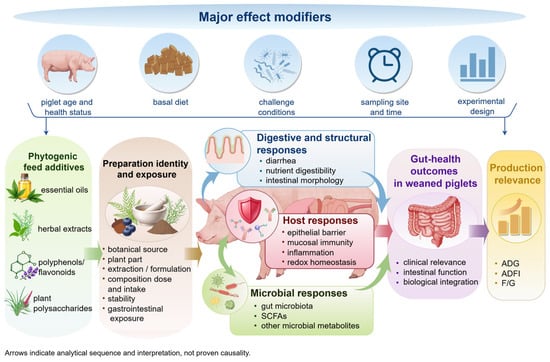
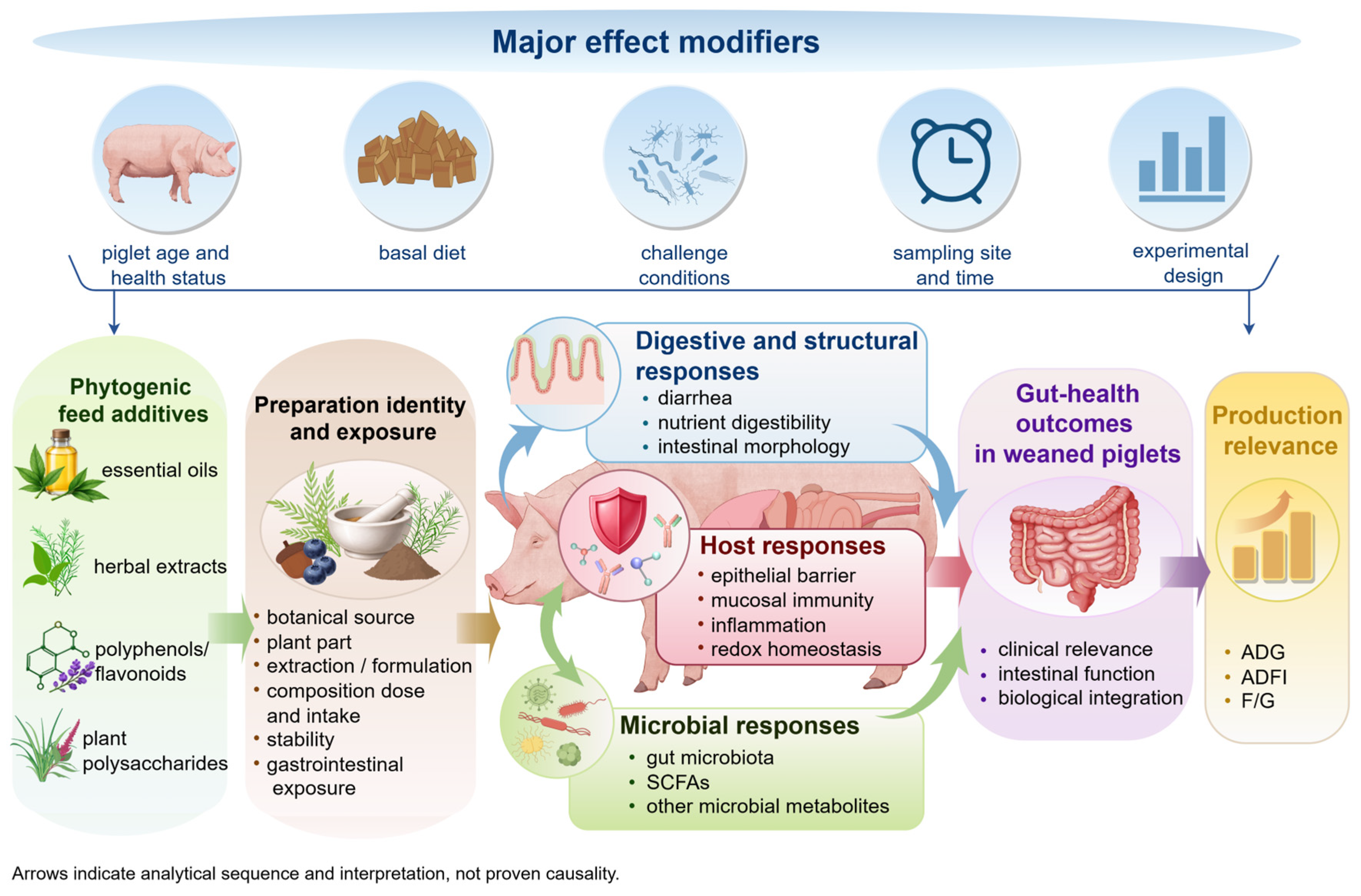

Disclaimer/Publisher’s Note: The statements, opinions and data contained in all publications are solely those of the individual author(s) and contributor(s) and not of MDPI and/or the editor(s). MDPI and/or the editor(s) disclaim responsibility for any injury to people or property resulting from any ideas, methods, instructions or products referred to in the content. |
© 2026 by the authors. Licensee MDPI, Basel, Switzerland. This article is an open access article distributed under the terms and conditions of the Creative Commons Attribution (CC BY) license.