


Simple Summary
Cryopreservation of epididymal sperm is an important tool for preserving feline genetic resources. In this study, Tris and Uppsala extender systems were compared for epididymal sperm recovery and cryopreservation in tomcats. Prior to freezing, sperm recovered in the Tris extender showed higher concentration, motility, viability, and acrosome integrity. Following cryopreservation and thawing, however, sperm processed in the Uppsala system exhibited higher subjective motility and acrosome integrity. Although cryopreservation reduced sperm quality in both groups, the results indicate differences between the two extender systems. Because collection and freezing extenders were evaluated as linked protocols, the individual contribution of each extender component could not be determined. These findings provide useful information for optimizing feline sperm banking protocols.
Abstract
Feline epididymal sperm cryopreservation is an important reproductive biotechnology tool; however, optimal strategies for sperm recovery and preservation remain unclear. This study investigated the influence of Tris and Uppsala extenders on the quality of epididymal spermatozoa before and after cryopreservation using the same sperm recovery technique. Epididymal spermatozoa were collected from 14 tomcats following bilateral orchiectomy. Cauda epididymides were incubated in either Tris or Uppsala extender for sperm recovery. Sperm quality was assessed by subjective motility, computer-assisted sperm analysis (CASA), acrosome integrity, plasma membrane integrity, live/dead ratio, and morphology. Samples were cryopreserved using glycerol egg-yolk-based extenders, stored in liquid nitrogen, and thawed. Before cryopreservation, the Tris extender yielded significantly higher sperm concentrations than the Uppsala extender (31.8 ± 25.7 × 10⁶/mL vs. 29.1 ± 27.8 × 10⁶/mL, p < 0.05). Sperm recovered in Tris also showed significantly higher total motility (42.8 ± 16.2% vs. 36.2 ± 17.3%, p < 0.05), acrosome integrity (48.8 ± 11.4% vs. 45.4 ± 11.0%, p < 0.05), and live sperm proportion (55.5 ± 12.0% vs. 52.0 ± 12.0%, p < 0.05) than sperm recovered in the Uppsala extender After thawing, however, spermatozoa processed within the Uppsala extender system exhibited significantly higher subjective motility (19.5 ± 8.3% vs. 16.0 ± 8.8%, p < 0.05) and acrosome integrity (20.0 ± 8.2% vs. 17.1 ± 7.3%, p < 0.05) than those processed within the Tris extender system, whereas post-thaw plasma membrane integrity, viability, and morphology did not differ significantly between systems. Overall, cryopreservation resulted in a marked decline in most sperm quality parameters in both extender systems. Within the limitations of the present study, the results indicate differences between the two extender systems, with the Tris system associated with superior pre-cryopreservation sperm quality and the Uppsala system associated with higher post-thaw motility and acrosome integrity. Because collection and freezing extenders were evaluated as linked protocols, the individual contribution of each extender component could not be determined.
1. Introduction
Retrieving and preserving epididymal spermatozoa is an important tool in feline reproductive biotechnology. As the cauda epididymidis provides a reliable source of mature, fertilization-competent sperm, optimizing recovery and cryopreservation methods is important for assisted reproduction and genetic conservation in domestic cats [1,2]. In this context, domestic cats represent an important model species in conservation biology, as their close evolutionary relationship with wild felids provides valuable opportunities to investigate hybridization processes, assess genetic integrity, and evaluate threats to endangered wildcat populations [3]. Early work demonstrated that simple compression of the cauda epididymidis and vas deferens could yield motile spermatozoa in isotonic media immediately after orchiectomy [4]. Later modifications to the protocol included transporting the excised testes in Ringer’s solution and minimizing the interval between orchiectomy and sperm recovery, thereby reducing sperm deterioration during handling [5]. Routine castration has also been used as a practical source of epididymal sperm, with centrifugation and resuspension forming part of the basic workflow [6]. More complex extenders, such as Tris-citric acid-egg yolk formulations, have been applied to support sperm viability during collection at physiological temperatures [7].
Alternative retrieval strategies have been developed to improve sample purity and reduce contamination. Flushing the cauda epididymidis through the ductus deference produces clean suspensions with minimal blood contamination [8], a technique later adopted in several studies [9,10]. However, the most widely used approach remains the mechanical disruption of epididymal tissue. Mincing the cauda epididymidis in buffered media efficiently releases spermatozoa after short incubation periods [11]. Temperature-dependent variations demonstrated that both room temperature and chilled storage can be compatible with successful sperm recovery [12]. Tris-based extenders have repeatedly been validated for maintaining motility and structural integrity during tissue chopping [13], and transversal cutting of the cauda in warm Tris buffer reliably produces high-quality sperm samples [14,15,16]. Additional refinements include longitudinal incisions with extended incubation [17] and controlled warm-temperature handling prior to tissue processing [18].
The diversity of retrieval protocols reflects the complexity of epididymal physiology and the need to adapt methods to different research and clinical contexts. Repeated cutting in Tris diluent [19], cold storage prior to processing [20], and comparative media such as Tris versus TALP [21] illustrate the breadth of methodological variation. Later studies expanded these approaches by incorporating large-volume Tris extenders and layered freezing media [22], or by adjusting incubation times to optimize sperm release [23]. Egg yolk-based Tris extenders have also been used to facilitate sperm migration from minced epididymal tissue [24], and cold storage prior to processing has been validated repeatedly [25,26]. Comparative work further demonstrated that seminal plasma could serve as an alternative collection medium to conventional Tris-based extenders [27]. Parallel to advances in retrieval techniques, significant progress has been made in cryopreservation protocols for feline epididymal spermatozoa. Cryopreservation is essential for long-term storage, genetic banking, and ART applications, yet feline spermatozoa are particularly sensitive to cold shock, osmotic stress, and cryoprotectant toxicity. Standard cryopreservation protocols involve centrifugation, the addition of a first extender, cooling to 4–5 °C, addition of a second extender containing glycerol, and stepwise freezing in liquid nitrogen vapor. Numerous studies have introduced modifications to improve post-thaw quality, including adjustments in glycerol concentration [21,28], extender composition [12,29], cooling rates [7,30], and antioxidant supplementation [14,16]. Additional innovations include the use of commercial freezing media [31], TES-Tris extenders [10], lactose-based extenders [32], and programmable freezing devices [33,34]. The influence of cooling duration prior to freezing has also been examined extensively. Short-term cooling (1 h) versus long-term cooling (24 h) produced measurable differences in motility and membrane integrity, although post-thaw parameters often remained comparable [7]. Toyonaga et al. found no significant differences in motility, viability, or morphology between sperm cooled for 0 or 24 h, and artificial insemination trials yielded similar pregnancy rates [26]. These findings suggest that epididymal spermatozoa possess a degree of resilience to pre-freeze cooling, though the optimal cooling duration may depend on extender composition and anatomical origin. Despite substantial progress, challenges remain. Feline epididymal sperm samples are often small in volume, highly variable in quality, and sensitive to handling conditions. Reference values for epididymal sperm differ from those of ejaculated semen, complicating interpretation. Moreover, correlations between sperm quality parameters and in vivo fertility remain insufficiently defined [35]. Nevertheless, advances in retrieval, processing, and cryopreservation techniques have significantly improved the feasibility of using epididymal spermatozoa in assisted reproductive technologies (ART) and conservation programs.
Therefore, the present study aimed to compare two methods of epididymal sperm retrieval in tomcats and to evaluate the functional characteristics of sperm obtained through these techniques. A further objective was to assess how these functional parameters are affected by cryopreservation, using two different extender systems. Ultimately, the findings are intended to support the optimization of feline epididymal sperm cryopreservation, improving its reliability and future applicability in reproductive management and conservation programs. In addition, the study provides a concise synthesis of the current literature on epididymal sperm retrieval and preservation in felids.
2. Material and Methods
2.1. Ethical Approval
The castrations were performed as part of routine veterinary practice, and all procedures complied with applicable animal welfare regulations. Written informed consent for the scientific use of the excised epididymides was obtained from all owners.
2.2. Semen Handling and Cryopreservation Methodology
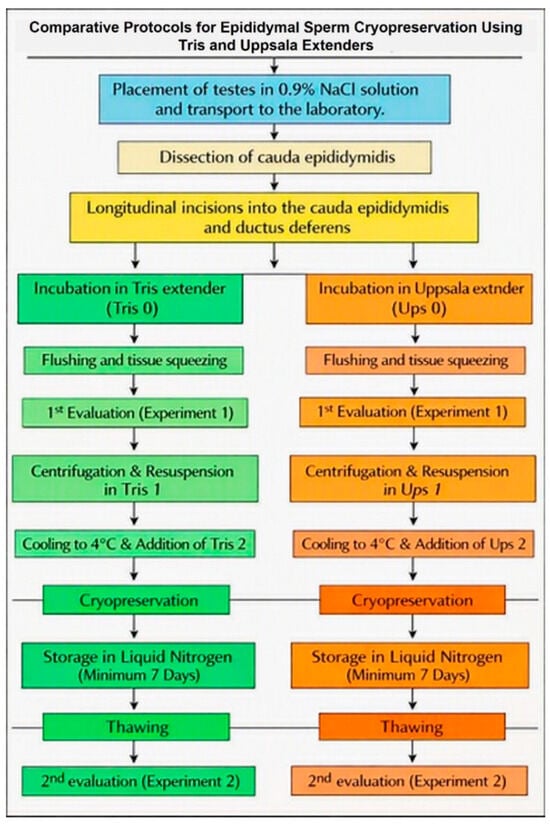
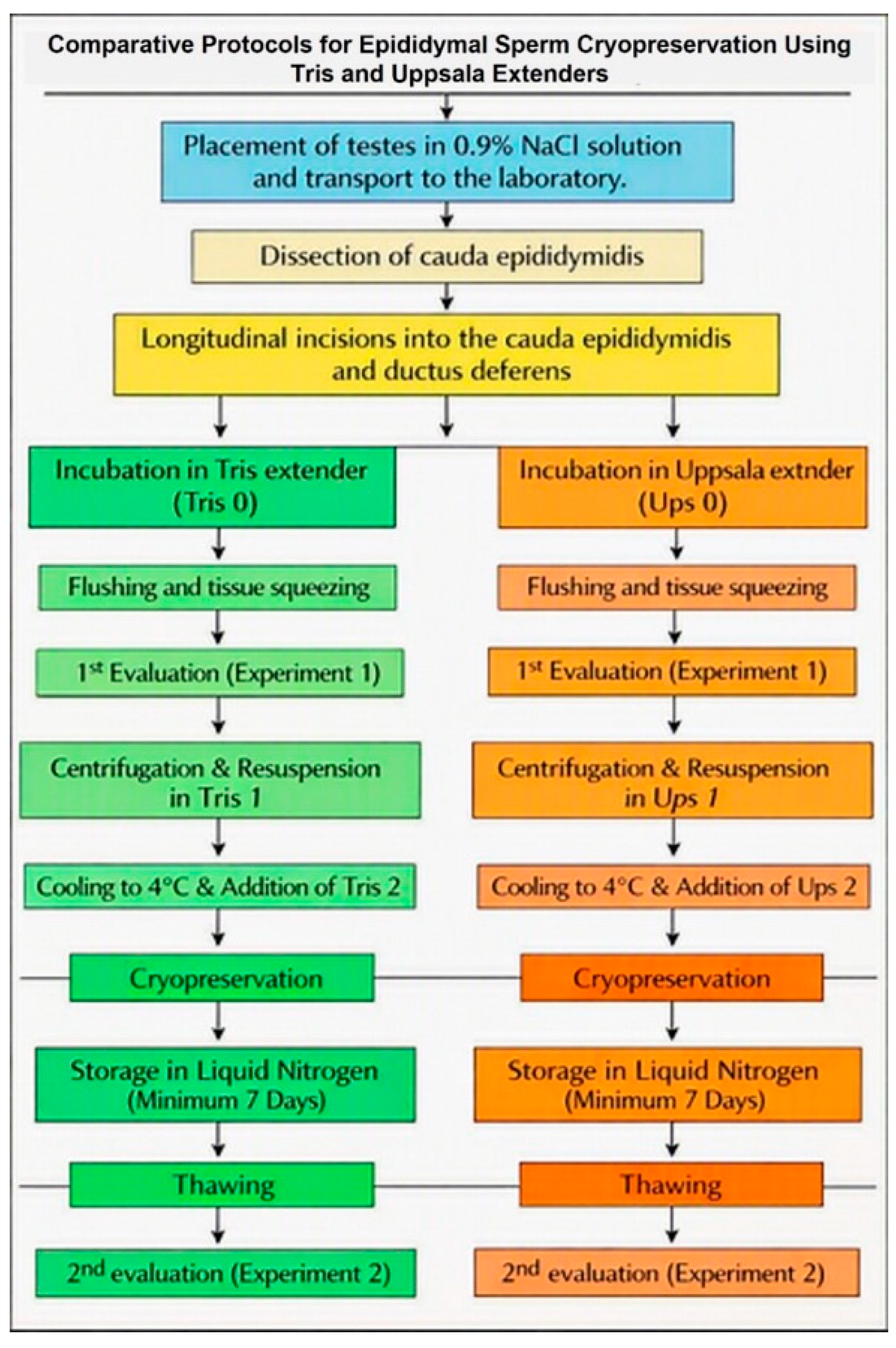
This study was carried out at the Veterinary Clinic for Reproductive Medicine and Neonatology, Justus Liebig University Giessen, Germany. The objective was to compare two extender systems, each comprising a collection extender and a freezing extender, for the retrieval and cryopreservation of feline epididymal spermatozoa obtained from domestic cats (Felis catus). Fourteen privately owned tomcats undergoing elective routine orchiectomy were enrolled in the study between March and November 2016. Epididymal spermatozoa were successfully recovered from 10 of these animals. The procedures were performed at the owners’ request, primarily for population control purposes. Twelve cats were European Shorthairs or mixed breeds, while one British Shorthair and one Maine Coon were also included. The age of the tomcats ranged from 6 months to 5 years. Because each tomcat contributed samples to both the Tris and Uppsala extender systems, age-related variation was equally represented in both treatment groups. All animals were clinically healthy and exhibited no clinical abnormalities of the reproductive tract. During surgery, a ligature was placed around the testicular vessels and the ductus deferens to prevent sperm leakage. Following orchiectomy, both testes with the attached epididymides were transported in 38 °C isotonic saline and processed within 1 h, as described in Figure 1.
Figure 1.
Concise schematic summary of the two experimental workflows. Fourteen tomcats were included in the study. Epididymal spermatozoa were successfully recovered from 10 animals, with one testis assigned to the Tris extender system and the contralateral testis to the Uppsala extender system. This paired design enabled within-animal comparisons and minimized inter-individual variability. Epididymal sperm recovery was performed using 125 µL of collection extender followed by rinsing with an additional 125 µL, resulting in a final recovery volume of 250 µL. Spermatozoa recovered using Tris 0 were subsequently cryopreserved using the corresponding Tris 1 and Tris 2 freezing extenders, whereas spermatozoa recovered using Ups 0 were cryopreserved using the corresponding Ups 1 and Ups 2 freezing extenders. Thus, the study compared two complete extender systems rather than independent combinations of collection and freezing extenders. After centrifugation, sperm pellets were resuspended in 250 µL of the first freezing extender, cooled at 4 °C for 1 h, and subsequently diluted with 250 µL of the second freezing extender before loading into two 0.25 mL straws (500 µL total volume). Straws were frozen for 10 min in liquid nitrogen vapor at a height of 6 cm above the liquid nitrogen surface before immersion in liquid nitrogen.
The study compared two complete extender systems, each consisting of a collection extender followed by two corresponding freezing extenders. One testis was assigned to the Tris extender system and the contralateral testis to the Uppsala extender system. This paired experimental design allowed each tomcat to serve as its own control, thereby minimizing inter-individual variability between treatment groups. Potential differences between left and right epididymides were not evaluated separately, and samples were analyzed according to extender assignment. In the laboratory, the cauda epididymidis and a short segment of the ductus deferens were dissected and subjected to multiple longitudinal incisions to allow epididymal sperm release. The tissue was incubated for 10 min at 38 °C in 125 µL of the respective collection extender (Tris 0 or Ups 0) and subsequently rinsed with an additional 125 µL of the same extender. The tissue was then gently compressed to facilitate sperm recovery and removed, resulting in a final recovery volume of 250 µL. Sperm recovery efficiency was assessed based on the sperm concentration and quality parameters determined immediately after recovery; total sperm yield was not evaluated separately. Following the initial evaluation, the remaining sperm suspension was centrifuged at 2000 rpm for 6 min, the supernatant removed, and the sperm pellet resuspended in 250 µL of the corresponding first freezing extender (Tris 1 or Ups 1) at room temperature. The recovered sperm suspensions were cryopreserved at their native concentrations; no standardization of sperm concentration was performed prior to freezing. Samples were cooled to 4 °C for 1 h before the addition of 250 µL of the second freezing extender (Tris 2 or Ups 2). The resulting sperm suspension (500 µL total volume) was loaded into two 0.25 mL plastic straws. Straws were placed on a floating rack positioned 6 cm above the surface of the liquid nitrogen and exposed to liquid nitrogen vapor for 10 min before being plunged into liquid nitrogen for storage.
2.3. Tris and Uppsala Extender Systems
The Tris-based extender system used in this study consisted of a single collection extender and two sequential freezing extenders, all formulated according to previously established protocols. Together, these solutions provided a buffered, antimicrobial medium for epididymal sperm retrieval and a stepwise cryoprotective environment during cooling and freezing. The collection extender (Tris 0) served as the medium for releasing epididymal spermatozoa. It contained Tris-(hydroxymethyl)-aminomethane (2.4 g), citric acid (1.4 g), glucose (0.8 g), sodium benzylpenicillin (0.06 g), and streptomycin sulfate (0.1 g), with distilled water added to a final volume of 100 mL. For cryopreservation, two extenders were applied sequentially. The first freezing extender (Tris 1) shared the same basic composition as Tris 0 but was supplemented with 3% glycerol and 20% egg yolk. The second freezing extender (Tris 2) contained the same base components but included 7% glycerol, 20% egg yolk, and 1% Equex STM Paste. Because Tris 1 and Tris 2 were added in equal volumes during cooling, the final sperm suspension contained 5% glycerol and 0.5% Equex STM Paste prior to freezing [14,15,16,17,30].
For comparison, a modified Uppsala extender system was employed, based on a previously published protocol [36]. The original Uppsala cryopreservation protocol consists of two freezing extenders (Ups 1 and Ups 2) and a separate thawing medium. In the present study, a modified version of the thawing medium was used for epididymal sperm recovery and was therefore designated as the collection extender (Ups 0), while the corresponding Ups 1 and Ups 2 extenders were subsequently applied during cryopreservation. The modified Uppsala extender system consisted of a collection medium (Ups 0) and two freezing extenders (Ups 1 and Ups 2). The basal composition of all extenders included 3.025 g Tris-(hydroxymethyl)-aminomethane, 1.7 g citric acid, and 1.25 g fructose per 100 mL distilled water. Ups 0 contained only the basal solution and was used for sperm recovery. Ups 1 was supplemented with 3% glycerol and 20% egg yolk, while Ups 2 contained 7% glycerol, 20% egg yolk, and 1% Equex STM Paste. Equal volumes of Ups 1 and Ups 2 were added during the cooling phase, resulting in final concentrations of 5% glycerol and 0.5% Equex STM Paste in the cryopreservation medium.
2.4. Semen Parameters Analyses
The epididymal sperm samples were examined immediately after collection (Experiment 1) and after thawing (Experiment 2). In addition to computer-assisted analysis using the SpermVision® CASA system (Minitüb, Tiefenbach, Germany), conventional semen parameters were evaluated using established andrological methods [37]. Table 1 summarizes all evaluated parameters and the corresponding examination time points.
Table 1.
Overview of the evaluated sperm quality parameters and their respective assessment time points.
The assessed parameters included subjective motility, CASA-derived motility and concentration values, membrane integrity (HOS test), acrosome status (Spermac staining), viability (live/dead staining), and detailed sperm morphology (normal forms, loops, coiled tails, neck fractures, bent tails, detached heads, cytoplasmic droplets, and double tails). All parameters, except CASA, were recorded both immediately after sperm collection and after thawing of the cryopreserved samples. CASA analysis was performed only before cryopreservation using the AndroVision™ system. Post-thaw motility was assessed subjectively because the egg-yolk-containing freezing extenders could interfere with automated sperm detection and tracking. Subjective motility was evaluated under standardized laboratory conditions following thawing and incubation of the samples and was assessed by the same experienced observer throughout the study.
The motion characteristics of spermatozoa were evaluated using a computer-assisted sperm analysis (CASA) system (AndroVision™ 3.5R, Minitube GmbH & Co., Tiefenbach, Germany). Because no validated species-specific CASA settings for feline epididymal spermatozoa were available within the system, the manufacturer’s recommended settings for canine spermatozoa were applied. All samples were analysed using the same CASA configuration to ensure the consistency of measurements across treatment groups. Images were captured at a speed of twenty-five frames per second. To evaluate sperm motility and velocity, a 3 μL semen sample was placed on a pre-warmed chamber slide, covered with glass coverslips, and analyzed across 8 microscopic fields. This approach ensured that at least 2000 sperm were counted per sample. The parameters obtained from CASA included total motility (%), progressive motility (%), VAP (average path velocity, μm/s), VSL (straight linear velocity, μm/s), VCL (curvilinear velocity, μm/s), STR (straightness, VSL/VAP, (%), LIN (linearity, VSL/VCL, %), ALH (amplitude of lateral head displacement, μm), and BCF (beat cross frequency, Hz).
In addition, macroscopic evaluation was performed immediately after each collection. The sperm–diluent mixture was inspected for abnormalities in color, consistency, and smell. Regarding the microscopic assessment, live-dead status and morphological abnormalities were evaluated using an eosin smear. A drop of epididymal sperm was mixed with approximately twice the volume of Eosin G (Merck, Darmstadt, Germany) on a pre-warmed slide, spread evenly, and air-dried. Two hundred spermatozoa were examined at 400× magnification (H500, Hund, Wetzlar, Germany). Live spermatozoa remained unstained due to intact plasma membranes, whereas dead spermatozoa stained red [38]. Independently of staining, sperm were classified into morphological categories including normal forms, loops/coiled tails, neck fractures, bent tails, detached heads, proximal droplets, and other abnormalities. Each spermatozoon was assigned to a single morphological category. In cases where multiple abnormalities were present, only the predominant abnormality was recorded to avoid double counting. Distal cytoplasmic droplets were not observed as a separate category and were therefore not included in the morphological classification.
Acrosomal integrity was assessed using the Spermac® staining method (Spermac®, Stefan Glück, Berlin, Germany), as previously described for epididymal spermatozoa [39]. After air-drying a smear for three minutes, slides were fixed for 5–10 min, dried, and stained sequentially with solutions A, B, and C, with rinsing between steps. The procedure resulted in green flagella, pale-green equatorial segments, red nuclei, and green acrosomes [39,40]. Two hundred spermatozoa were examined at 1000× magnification with oil immersion (Leica Microsystems GmbH, Wetzlar, Germany) and classified according to the presence or absence of acrosomal staining.
Membrane integrity was further evaluated using the HOS test. Five microlitres of epididymal sperm was mixed with 50 µL of hypoosmotic fructose solution (50 mOsm/kg) and incubated at 37 °C for 30 min [41]. After preparing a coverslip slide, 200 spermatozoa were examined at 400× magnification. Sperm with intact membranes showed tail curling (stages 1–4), whereas non-curling tails or excessive curling (stage 5) indicated membrane defects [40].
2.5. Statistical Analysis
All data were organized in Excel and subsequently analysed using the BMDP/Dynamic statistical package. The analysis began with descriptive statistics, including mean, standard deviation, minimum, and maximum values. The experimental unit was the individual epididymis, with paired observations originating from the same tomcat because one epididymis was assigned to the Tris extender system and the contralateral epididymis to the Uppsala extender system. Therefore, comparisons between extender systems were performed using paired statistical procedures. Differences between the two extender systems were evaluated using either paired t-tests or Wilcoxon matched-pairs tests, depending on data distribution. Prior to analysis, the assumptions of parametric testing were assessed by evaluating the distribution of the paired differences between treatments and by visual inspection of the data. Relationships between quantitative variables were examined through correlation and regression analysis (BMDP6D). To assess the combined effects of extender type and evaluation time (fresh vs. post-thaw), a two-factor repeated-measures ANOVA was applied to sperm quality parameters measured at both time points, including plasma membrane integrity (HOST), acrosome integrity, sperm viability, and normal morphology. Extender system and evaluation time were treated as within-subject factors to account for the paired experimental design. CASA-derived motility parameters were assessed only before cryopreservation, whereas subjective motility was assessed only after thawing. Therefore, motility variables were not included in the repeated-measures ANOVA. No formal adjustment for multiple testing was applied. Given the exploratory nature of the study and the limited sample size, exact p-values are reported throughout the manuscript to allow independent interpretation of the results. Findings with p-values close to the significance threshold should therefore be interpreted with appropriate caution. Statistical significance was defined as p ≤ 0.05. Four cats produced no sperm and were therefore excluded from analyses.
3. Results
3.1. Sperm Concentration Analysis
Epididymal sperm was collected directly into 250 µL of diluent. Because the epididymis contains only a minimal amount of fluid, volume could not be determined. Across all samples, the mean sperm concentration was 30.45 × 10⁶ sperm/ml. Sperm collected with the Tris diluent had a mean concentration of 31.84 ± 25.73 × 10⁶ sperm/ml, with individual values ranging from 3.20 to 63.85 × 10⁶ sperm/ml. In comparison, sperm collected with the Uppsala diluent had a mean concentration of 29.06 ± 27.82 × 10⁶ sperm/ml, with values ranging from 2.23 to 82.51 × 10⁶ sperm/ml. Although both diluents yielded highly variable sperm concentrations, samples collected with the Tris diluent exhibited significantly higher concentrations than those collected with the Uppsala diluent (p = 0.038).
Pre-Cryopreservation Quality of Epididymal Spermatozoa
Immediately after epididymal sperm collection, the CASA analysis revealed, as presented in Table 2, a significantly higher total motility in sperm collected with the Tris diluent compared with the Uppsala diluent (p = 0.029). Progressive motility and rapid motility did not differ significantly between diluents (p = 0.059 and p = 0.39, respectively). In contrast, slow motility was significantly higher in the Tris group (p = 0.0039), whereas local motility showed no significant difference between groups (p = 0.13). Immotile sperm were not analysed separately, as they represent the remainder of the total sperm population.
Table 2.
Results of the CASA analysis of feline epididymal sperm immediately after collection, presented as mean ± SD and minimum–maximum values (n = 10 epididymides per diluent).
In addition, the assessment of further sperm quality parameters revealed differences between the two collection diluents (Table 3). Plasma membrane integrity, as determined by the Hypo-Osmotic Swelling Test (HOST), did not differ significantly between sperm collected with the Tris and Uppsala diluents, averaging 55.0 ± 11.0% (36.0–75.5%) and 51.7 ± 12.1% (35.0–74.0%), respectively (p > 0.05). Similarly, the percentage of morphologically normal spermatozoa was comparable between groups, with values of 74.5 ± 3.4% (70.5–81.5%) for the Tris diluent and 73.5 ± 4.7% (67.5–83.0%) for the Uppsala diluent (p > 0.05). In contrast, acrosome integrity was significantly higher in sperm collected with the Tris diluent than in sperm collected with the Uppsala diluent (48.8 ± 11.4% vs. 45.4 ± 11.0%, respectively; p = 0.0027). Furthermore, Eosin staining demonstrated a significantly greater proportion of live spermatozoa in the Tris group, with mean values of 55.5 ± 12.0% (31.5–72.5%) compared with 52.0 ± 12.0% (31.0–71.0%) in the Uppsala group (p = 0.02). Taken together, these results indicate that the Tris diluent was associated with improved acrosomal integrity and sperm viability immediately after collection, whereas plasma membrane integrity and sperm morphology were not significantly influenced by the choice of diluent.
Table 3.
Results of the assessment of feline epididymal sperm quality immediately after collection, presented as mean ± SD and minimum–maximum values (n = 10 epididymides per diluent).
3.2. Post-Cryopreservation Quality of Epididymal Spermatozoa
In addition, the assessment of further sperm quality parameters revealed only limited differences between the two diluents (Table 4). Plasma membrane integrity, as determined by the Hypo-Osmotic Swelling Test (HOST), did not differ significantly between sperm cryopreserved in the Tris and Uppsala diluents, with mean values of 21.5 ± 7.8% (6.0–34.5%) and 22.4 ± 8.9% (4.5–38.0%), respectively (p = 0.34). Similarly, the proportion of live spermatozoa was comparable between groups, averaging 21.3 ± 7.5% (7.0–34.0%) in the Tris group and 22.0 ± 9.2% (5.0–36.5%) in the Uppsala group (p = 0.39). Likewise, the percentage of morphologically normal spermatozoa showed no significant difference between diluents, reaching 61.3 ± 3.4% (56.5–68.5%) in the Tris group and 60.7 ± 4.4% (54.0–68.5%) in the Uppsala group (p = 0.65). In contrast, acrosome integrity was significantly higher in sperm cryopreserved in the Uppsala diluent than in the Tris diluent, with values of 20.0 ± 8.2% (4.5–34.5%) and 17.1 ± 7.3% (5.0–31.0%), respectively (p = 0.012).
Table 4.
Results of the assessment of feline epididymal sperm quality after cryopreservation and thawing, presented as mean ± SD and minimum–maximum values (n = 10 epididymides per diluent).
Compared with the pre-cryopreservation values, cryopreservation resulted in a marked decline in all evaluated sperm quality parameters in both extender groups. Plasma membrane integrity decreased by 33.5 percentage points in the Tris group (from 55.0% before freezing to 21.5% after thawing) and by 29.3 percentage points in the Uppsala group (from 51.7% to 22.4%). Acrosome integrity declined by 31.7 percentage points in the Tris group (from 48.8% to 17.1%) and by 25.4 percentage points in the Uppsala group (from 45.4% to 20.0%). Likewise, live sperm percentages decreased by 34.2 percentage points in the Tris group (from 55.5% to 21.3%) and by 30.0 percentage points in the Uppsala group (from 52.0% to 22.0%). Normal morphology declined by 13.2 percentage points in the Tris group (from 74.5% to 61.3%) and by 12.8 percentage points in the Uppsala group (from 73.5% to 60.7%). These absolute changes illustrate the magnitude of cryopreservation-associated sperm quality loss within each extender system. Overall, these findings indicate that both diluents resulted in comparable post-thaw plasma membrane integrity, sperm viability, and morphology. Although significant extender × time interactions indicated different patterns of change in plasma membrane integrity and sperm viability during cryopreservation, the final post-thaw values did not differ significantly between extender systems. In contrast, the Uppsala diluent provided superior protection of acrosomal integrity and resulted in higher post-thaw motility.
Subjective Motility Parameters
Following cryopreservation and thawing, subjective sperm motility differed significantly between the two diluent systems. Sperm cryopreserved in the Tris diluent exhibited a mean subjective motility of 16.0 ± 8.8% (range: 5.0–35.0%), whereas sperm cryopreserved in the Uppsala diluent showed a significantly higher mean motility of 19.5 ± 8.3% (range: 5.0–35.0%; p = 0.0312). These findings indicate that sperm preserved in the Uppsala diluent retained a greater proportion of motile cells after thawing compared with sperm cryopreserved in the Tris diluent. Because subjective motility was assessed only after thawing, no direct comparison between pre- and post-cryopreservation motility was performed.
4. Discussion
The present study demonstrated that the choice of extender affected feline epididymal sperm quality before and after cryopreservation. Prior to freezing, sperm recovered with the Tris extender showed significantly higher total motility, acrosome integrity, and viability than sperm recovered with the Uppsala extender. In contrast, after cryopreservation and thawing, the Uppsala extender system resulted in significantly higher post-thaw motility and acrosome integrity compared with the Tris extender system. Because collection and freezing extenders were evaluated as integrated protocols, the individual contribution of each extender component could not be determined. Consequently, the observed differences should be interpreted as effects of the overall extender systems. These findings suggest that the Tris extender system may be advantageous during sperm recovery, whereas the Uppsala extender system was associated with better post-thaw sperm quality. However, the present design does not allow for a determination of whether these differences originated from the collection phase, the freezing phase, or their combined effects. The cryopreservation of feline spermatozoa remains challenging and less standardized than in other domestic species [42]. Therefore, the identification of effective protocols for sperm recovery and cryopreservation is of particular importance for both domestic cats and the conservation of endangered felid species.
The method of sperm retrieval, mincing the cauda epididymidis, was selected because it is widely used and consistently yields sufficient spermatozoa for analysis [11,14,15]. However, this technique inevitably introduces contaminants such as erythrocytes, epithelial cells, and bacteria, all of which can impair sperm survival and fertilizing capacity [43,44,45]. These contaminants are particularly relevant when comparing extender systems, because the Tris-based extender contained antibiotics whereas the Ups-based extender did not. Although antibiotics may reduce bacterial load during handling, their inclusion also raises concerns regarding antimicrobial resistance and potential cytotoxicity during cryopreservation. This duality illustrates the broader tension between the aseptic technique and chemical additives in reproductive biotechnology.
The observed differences between the Tris and Uppsala extender systems may be related to differences in their composition, including buffer concentration, sugar source, and antibiotic supplementation. However, because individual variation in sperm cryotolerance could not be fully controlled for in the present study, the contribution of individual extender components should be interpreted with caution. Future studies should evaluate cross-combinations of collection and freezing extenders to determine their respective contributions to sperm quality and cryosurvival. Tris 0 contained glucose and antibiotics, whereas Ups 0 contained fructose and no antimicrobial additives. Although these compositional differences may have influenced sperm quality, the present study did not evaluate the specific effects of buffer capacity, sugar source, or antibiotic supplementation. Therefore, any association between these factors and the observed outcomes should be regarded as hypothetical and requires further investigation. Both systems incorporated glycerol and egg yolk in their freezing steps, with Equex STM added only in the second extender. The cryoprotective strategy employed, stepwise addition of glycerol, cooling to 4 °C, and vapor-phase freezing, reflects established feline protocols and acknowledges the species’ sensitivity to high glycerol concentrations. The final glycerol concentration of 5% represented a compromise between cryoprotection and toxicity, consistent with previous findings that feline spermatozoa exhibit reduced motility at higher glycerol levels [46,47]. In addition, egg yolk remains indispensable in feline cryopreservation due to its LDL-mediated protection of sperm membranes [48,49], and Equex STM continues to be debated in the literature. Some studies report improved acrosomal integrity when Equex is included [22,30], whereas others describe detrimental effects on motility and membrane stability [50]. The strategy of adding Equex only in the second extender was intended to minimize exposure time and reduce toxicity, reflecting an effort to balance its potential benefits with its known risks.
The observed motility patterns highlight the complex relationship between extender composition and the cellular stress induced by cryopreservation. Prior to freezing, sperm recovered with the Tris diluent exhibited significantly higher total motility and slow motility as assessed by CASA. In contrast, sperm cryopreserved in the Uppsala system showed higher subjective motility after thawing. However, because different methods were used to assess motility before and after cryopreservation, these findings should not be interpreted as a direct comparison of pre- and post-thaw motility. Furthermore, individual variation in sperm cryotolerance should be considered when interpreting the observed differences between extender systems. Instead, spermatozoa processed within the Uppsala extender system exhibited significantly higher post-thaw motility, whereas samples processed within the Tris extender system showed a greater decline relative to their pre-freeze values. Thus, the initial superiority observed in fresh samples did not necessarily correspond to superior post-thaw sperm quality, emphasizing the importance of evaluating extender systems under both fresh and post-thaw conditions. This shift in performance may be related to differences between the two extender systems. However, because collection and freezing extenders were not evaluated independently, the present data do not allow for conclusions regarding which stage of the protocol contributed most to the observed differences. Although differences in extender composition may have contributed to the observed variation in sperm quality parameters, the present data do not allow conclusions regarding the role of specific components. Therefore, any association between extender composition and cryoprotective efficacy should be interpreted with caution and requires further investigation.
To support the subjective assessment of motility, fresh sperm samples were additionally analyzed using the AndroVision® computer-assisted sperm analysis (CASA) system. However, because CASA-derived parameters are highly dependent on methodological factors, including species-specific settings, sample preparation, chamber characteristics, sperm concentration, extender composition, and instrument configuration, the obtained values must be interpreted within the context of the applied system [51,52]. Accordingly, differences between CASA platforms and analytical settings may limit direct comparisons among studies [53]. In the present study, CASA analysis was performed exclusively prior to cryopreservation, whereas post-thaw motility was assessed subjectively. This represents a limitation of the study, as CASA-based evaluation before and after cryopreservation would have allowed for a more objective comparison of motility changes. Post-thaw CASA analysis was not performed because the egg-yolk-containing freezing extenders used in the present study were considered likely to interfere with automated sperm detection and tracking under the specific analytical conditions of the CASA system employed. However, we acknowledge that successful CASA assessment of frozen-thawed spermatozoa cryopreserved in egg-yolk-based extenders has been reported when appropriate sample preparation procedures and system-specific settings are applied.
Nevertheless, additional sample preparation procedures, such as centrifugation, filtration, or other approaches intended to reduce interfering particles, were intentionally avoided to maintain standardized handling conditions for all samples and to minimize potential processing-related effects on sperm quality. The absence of post-thaw CASA analysis represents an important limitation of the present study, particularly because sperm motility was a primary outcome parameter. Future studies should incorporate objective CASA-based assessments before and after cryopreservation to enable a more comprehensive evaluation of motility changes. Despite this limitation, the applied methodology allowed a consistent comparison of the Tris and Uppsala extender systems under identical experimental conditions. Taken together, the results demonstrate that the evaluation of sperm preservation requires consideration of both the initial sperm quality and the ability of a diluent to maintain functionality during cryopreservation. Future studies should include CASA assessments before and after cryopreservation to enable a more comprehensive evaluation of extender effects on sperm motility.
The assessment of membrane integrity and acrosomal status provided a more differentiated picture of extender performance after cryopreservation. A significant extender × time interaction was detected for plasma membrane integrity, indicating that the effect of cryopreservation on plasma membrane integrity differed between the two extender systems. However, this interaction should not be interpreted as evidence of a significant difference in absolute post-thaw membrane integrity between the two extender systems. Although statistically significant differences were observed for post-thaw motility and acrosome integrity, the magnitude of these differences was relatively small and should be interpreted with caution considering the limited sample size. Similarly, although viability declined during cryopreservation in both groups, no significant difference was detected between extender systems after thawing. Consequently, any differences should be interpreted in terms of the response to cryopreservation rather than as differences in absolute post-thaw viability. This pattern partially mirrors the motility results. While Ups samples showed significantly higher post-thaw acrosome integrity, post-thaw plasma membrane integrity and viability did not differ significantly between extender systems. Therefore, the observed differences should primarily be interpreted in relation to acrosome integrity rather than overall membrane preservation. Acrosomal integrity, which is particularly sensitive to cryodamage, declined substantially in both groups, consistent with previous reports in feline sperm research [39,54]. The use of Spermac® staining provided reliable differentiation of acrosomal defects, although egg-yolk particles occasionally interfered with slide evaluation.
Regarding morphological evaluation, the data revealed no significant differences between extenders, either before or after freezing. The most common abnormalities, loose heads and proximal cytoplasmic droplets, reflect incomplete epididymal maturation rather than true pathology [4,55]. Cryopreservation increased the frequency of tertiary abnormalities such as bent tails and coiled midpieces, reflecting mechanical and osmotic stress. However, both extenders performed similarly in this respect, suggesting that extender composition influences functional parameters more strongly than gross morphology. Taken together, the findings reveal a nuanced but consistent pattern: the Tris extender performs slightly better for fresh sperm, whereas the Ups extender performs better after cryopreservation. This divergence underscores the importance of evaluating extender performance across the entire workflow rather than relying solely on pre-freeze parameters. The results suggest that the Uppsala extender system, when applied as a complete collection and cryopreservation protocol, was associated with higher post-thaw motility and acrosome integrity than the Tris extender system. However, because the collection and freezing extenders were always used in combination, the present study does not allow for discrimination between the effects of the collection medium and those of the freezing media. Consequently, the observed differences should be attributed to the overall extender systems rather than to the cryoprotective properties of any individual extender component. However, because collection and freezing extenders were applied as integrated protocols within each system, the individual effects of the collection and freezing extenders could not be distinguished. Further studies evaluating cross-combinations of collection and freezing extenders are required to determine the individual contribution of each component to sperm quality and cryosurvival. Several limitations of the present study should be acknowledged. First, the number of animals included was relatively small, which may have limited the statistical power to detect subtle differences between extender systems. Second, the donor population consisted predominantly of young cats, which may restrict the generalizability of the findings to older individuals. Third, post-thaw sperm motility was assessed subjectively rather than by CASA, which may have reduced the objectivity of motility evaluation despite the use of standardized assessment procedures. Finally, because each collection extender was exclusively combined with its corresponding freezing extenders, the independent effects of the collection and freezing phases could not be determined. Consequently, the observed differences should be interpreted as effects of the overall extender systems rather than of individual extender components. These limitations should be considered when interpreting the results and highlight the need for future studies including larger and more diverse populations, objective post-thaw motility assessments, and experimental designs that allow for the independent evaluation of collection and freezing extenders. Despite these limitations, the present data contribute to the currently limited knowledge on feline epididymal sperm cryopreservation. By directly comparing two commonly used extender systems, this study provides useful information for the further optimization of sperm banking protocols in domestic cats and may support future conservation efforts in endangered felid species.
5. Conclusions
The present study demonstrates that the two complete extender systems evaluated under the experimental conditions investigated resulted in different patterns of feline epididymal sperm preservation before and after cryopreservation. Although the Tris-based system supported slightly better initial motility and membrane integrity in fresh samples, the Uppsala-based system resulted in higher post-thaw subjective motility and acrosome integrity. However, no significant differences were observed between extender systems regarding post-thaw plasma membrane integrity, sperm viability, or morphology. These findings indicate that pre-freeze sperm quality alone is not predictive of post-thaw performance and underscore the importance of evaluating extender systems across the entire cryopreservation workflow. Because collection and freezing extenders were applied as linked protocols, the observed differences cannot be attributed to the cryoprotective effect of the freezing medium alone. Rather, the results reflect the overall performance of the two complete extender systems under the conditions investigated. Overall, the Uppsala-based system showed advantages for selected post-thaw functional parameters, particularly subjective motility and acrosome integrity, but further studies using independent combinations of collection and freezing extenders are required to determine the contribution of individual extender components. These findings provide additional information for the optimization of feline epididymal sperm cryopreservation protocols and may contribute to future sperm banking efforts in domestic cats and endangered felid species.
Author Contributions
A.R.R.: Project administration, Methodology, Investigation, Formal analysis, and Writing—Review and Editing. A.W.: Conceptualization, Project administration, and Supervision. A.F.: Data analysis, writing—original draft, writing—review and editing, visualization. All authors have read and agreed to the published version of the manuscript.
Funding
This research did not receive any external financial support.
Institutional Review Board Statement
All animal-related procedures complied with the requirements of the Animals (Scientific Procedures) Act 1986 and relevant institutional and national guidelines. The study also adhered to the standards set by EU Directive 2010/63 governing the ethical use of animals in scientific research, as well as the NIH Guide for the Care and Use of Laboratory Animals. Ethical approval for the use of semen samples was granted by the local authority through the Animal Welfare Office of Justus Liebig University Giessen (approval number kTV 11–2017; updated on January 2023).
Informed Consent Statement
Written informed consent for the use of the collected data was obtained from all animal owners.
Data Availability Statement
The authors retain ownership of the data produced in this study, which can be obtained by contacting the corresponding author.
Conflicts of Interest
The authors declare no conflicts of interest.
References
- Axnér, E. Sperm maturation in the domestic cat. Theriogenology 2006, 66, 14–24. [Google Scholar] [CrossRef] [Scilit] [PubMed]
- Buranaamnuay, K. Protocols for sperm cryopreservation in the domestic cat: A review. Anim. Reprod. Sci. 2017, 183, 56–65. [Google Scholar] [CrossRef] [Scilit] [PubMed]
- Randi, E.; Pierpaoli, M.; Beaumont, M.; Ragni, B.; Sforzi, A. Genetic identification of wild and domestic cats (Felis silvestris and Felis catus) and their hybrids using Bayesian clustering methods. Mol. Ecol. 2001, 10, 119–135. [Google Scholar]
- Tebet, J.M.; Martins, M.I.M.; Chirinea, V.H.; Souza, F.F.; Campagnol, D.; Lopes, M.D. Cryopreservation effects on domestic cat epididymal versus electroejaculated spermatozoa. Theriogenology 2006, 66, 1629–1632. [Google Scholar] [CrossRef] [Scilit] [PubMed]
- Villaverde, A.I.S.B.; Martins, M.I.M.; Castro, V.B.; Lopes, M.D. Morphological and functional characteristics of chilled semen obtained from domestic feline epididymides. Theriogenology 2006, 66, 1641–1644. [Google Scholar] [CrossRef] [Scilit] [PubMed]
- Luvoni, G.C.; Ruggiero, C.; Marinoni, G.; Kalchschmidt, E. Effect of taurine-containing diluents for cryopreservation of domestic cat epididymal spermatozoa. Theriogenology 2002, 57, 466. [Google Scholar]
- Martins, J.L.A.; Villaverde, A.I.S.B.; Lima, A.F.M.; Steagall, P.V.M.; Ferreira, J.C.P.; Taconeli, C.A.; Lopes, M.D. Impact of 24-h cooling prior to freezing on the survival of domestic cat (Felis catus) epididymal sperm. Reprod. Domest. Anim. 2009, 44, 366–368. [Google Scholar] [CrossRef] [Scilit] [PubMed]
- Niwa, K.; Ōhara, K.; Hosoi, Y.; Iritani, A. Early events of in vitro fertilization of cat eggs by epididymal spermatozoa. J. Reprod. Fertil. 1985, 74, 657–660. [Google Scholar] [CrossRef] [Scilit] [PubMed]
- Bogliolo, L.; Leoni, G.; Ledda, S.; Naitana, S.; Zedda, M.; Carluccio, A.; Pau, S. Intracytoplasmic sperm injection of in vitro matured oocytes of domestic cats with frozen-thawed epididymal spermatozoa. Theriogenology 2001, 56, 955–967. [Google Scholar] [CrossRef] [Scilit] [PubMed]
- Bogliolo, L.; Bonelli, P.; Madau, L.; Zedda, M.T.; Santucciu, C.; Leoni, G.; Pau, S.; Ledda, S. Fertilizing ability of epididymal cat spermatozoa after cryopreservation or storage at 4 °C. Reprod. Fertil. Dev. 2004, 16, 222. [Google Scholar] [CrossRef] [Scilit]
- Cocchia, N.; Ciani, F.; El-Rass, R.; Russo, M.; Borzacchiello, G.; Esposito, V.; Montagnaro, S.; Avallone, L.; Tortora, G.; Lorizio, R. Cryopreservation of feline epididymal spermatozoa from dead and alive animals and its use in assisted reproduction. Zygote 2010, 18, 1–8. [Google Scholar] [CrossRef] [Scilit] [PubMed]
- Gañán, N.; Gomendio, M.; Roldan, E.R.S. Effect of storage of domestic cat (Felis catus) epididymides at 5 °C on sperm quality and cryopreservation. Theriogenology 2009, 72, 1268–1277. [Google Scholar] [CrossRef] [Scilit] [PubMed]
- Hermansson, U.; Axnér, E. Epididymal and ejaculated cat spermatozoa are resistant to cold shock but egg yolk promotes sperm longevity during cold storage at 4 °C. Theriogenology 2007, 67, 1239–1248. [Google Scholar] [CrossRef] [Scilit] [PubMed]
- Thuwanut, P.; Chatdarong, K.; Techakumphu, M.; Axnér, E. The effect of antioxidants on motility, viability, acrosome integrity and DNA integrity of frozen-thawed epididymal cat spermatozoa. Theriogenology 2008, 70, 233–240. [Google Scholar] [CrossRef] [Scilit] [PubMed]
- Thuwanut, P.; Axnér, E.; Johannisson, A.; Chatdarong, K. Detection of lipid peroxidation reaction in frozen-thawed epididymal cat spermatozoa using BODIPY581/591 C11. Reprod. Domest. Anim. 2009, 44, 373–376. [Google Scholar] [CrossRef] [Scilit] [PubMed]
- Thuwanut, P.; Chatdarong, K.; Johannisson, A.; Bergqvist, A.-S.; Söderquist, L.; Axnér, E. Cryopreservation of epididymal cat spermatozoa: Effects of in vitro antioxidative enzymes supplementation and lipid peroxidation induction. Theriogenology 2010, 73, 1076–1087. [Google Scholar] [CrossRef] [Scilit] [PubMed]
- Siemieniuch, M.; Dubiel, A. Preservation of tomcat (Felis catus) semen in variable temperatures. Anim. Reprod. Sci. 2007, 99, 135–144. [Google Scholar] [CrossRef] [Scilit] [PubMed]
- Siemieniuch, M.J.; Wocławek-Potocka, I. Assessment of selected quality parameters of epididymal cat sperm using flow cytometry and computer-assisted sperm analysis. Reprod. Domest. Anim. 2008, 43, 633–637. [Google Scholar] [CrossRef] [Scilit] [PubMed]
- Chatdarong, K.; Thuwanut, P.; Suksamai, P.; Patanatiradaj, S.; Sangwornrachasup, A. Survival of frozen-thawed cat spermatozoa pre-cooled in the epididymides. Reprod. Domest. Anim. 2009, 44, 377–380. [Google Scholar] [CrossRef] [Scilit] [PubMed]
- Tittarelli, C.; Savignone, C.A.; Arnaudín, E.; Stornelli, M.C.; Stornelli, M.A.; de la Sota, R.L. Effect of storage media and storage time on survival of spermatozoa recovered from canine and feline epididymides. Theriogenology 2006, 66, 1637–1640. [Google Scholar] [CrossRef] [Scilit] [PubMed]
- Buranaamnuay, K. Sperm-TALP: An alternative extender for retrieving and diluting epididymal sperm in the domestic cat. Reprod. Domest. Anim. 2013, 48, 912–917. [Google Scholar] [CrossRef] [Scilit] [PubMed]
- Buranaamnuay, K. Determination of appropriate cryopreservation protocols for epididymal cat spermatozoa. Reprod. Domest. Anim. 2015, 50, 378–385. [Google Scholar] [CrossRef] [Scilit] [PubMed]
- Buranaamnuay, K. Cryopreservation and storage of cat epididymal sperm using −75 °C freezer versus liquid nitrogen. Anim. Reprod. Sci. 2018, 191, 56–63. [Google Scholar] [CrossRef] [Scilit] [PubMed]
- Tsutsui, T.; Wada, M.; Anzai, M.; Hori, T. Artificial insemination with frozen epididymal sperm in cats. J. Vet. Med. Sci. 2003, 65, 397–399. [Google Scholar] [CrossRef] [Scilit] [PubMed]
- Toyonaga, M.; Sato, Y.; Morita, M.; Watanabe, M.; Oba, H.; Mizutani, T.; Hori, T.; Tsutsui, T. The qualities of cryopreserved epididymal sperm collected from feline epididymides stored at low temperature. J. Vet. Med. Sci. 2010, 72, 777–780. [Google Scholar] [CrossRef] [Scilit] [PubMed]
- Toyonaga, M.; Sato, Y.; Sasaki, A.; Kaihara, A.; Tsutsui, T. Artificial insemination with cryopreserved sperm from feline epididymides stored at 4 °C. Theriogenology 2011, 76, 532–537. [Google Scholar] [CrossRef] [Scilit] [PubMed]
- Toyonaga, M.; Tsutsui, T. The quality of cryopreserved sperm collected from feline caudal epididymides using seminal plasma. J. Vet. Med. Sci. 2012, 74, 1349–1353. [Google Scholar] [CrossRef] [Scilit] [PubMed]
- Chatdarong, K.; Thuwanut, P.; Morell, J.M. Single-layer centrifugation through colloid selects improved quality of epididymal cat sperm. Theriogenology 2010, 73, 1284–1292. [Google Scholar] [CrossRef] [Scilit] [PubMed]
- Jiménez, E.; Pérez-Marín, C.C.; Vizuete, G.; Millán, Y.; Agüera, E.I. Effect of different extenders on in vitro characteristics of feline epididymal sperm during cryopreservation. Reprod. Domest. Anim. 2013, 48, 665–672. [Google Scholar] [CrossRef] [Scilit] [PubMed]
- Axnér, E.; Hermansson, U.; Linde-Forsberg, C. The effect of Equex STM paste and sperm morphology on post-thaw survival of cat epididymal spermatozoa. Anim. Reprod. Sci. 2004, 84, 179–191. [Google Scholar] [CrossRef] [Scilit] [PubMed]
- Brusentsev, E.; Kizilova, E.; Mokrousova, V.; Kozhevnikova, V.; Rozhkova, I.; Amstislavsky, S. Characteristics and fertility of domestic cat epididymal spermatozoa cryopreserved with two different freezing media. Theriogenology 2018, 110, 148–152. [Google Scholar] [CrossRef] [Scilit] [PubMed]
- Kashiwazaki, N.; Yamaguchi, R.; Uesugi, R.; Hishiyama, N.; Kim, M.; Nakatsukasa, E.; Kojima, Y.; Okuda, Y.; Hisamatsu, S.; Inomata, T.; et al. Sperm motility, plasma membrane integrity, and binding capacity to homologous zona pellucida of cryopreserved epididymal spermatozoa in the domestic cat. J. Reprod. Dev. 2005, 51, 735–739. [Google Scholar] [CrossRef] [Scilit] [PubMed]
- Lengwinat, T.; Blottner, S. In vitro fertilization of follicular oocytes of domestic cat using fresh and cryopreserved epididymal spermatozoa. Anim. Reprod. Sci. 1994, 35, 291–301. [Google Scholar] [CrossRef] [Scilit]
- Tsutsui, T.; Tanaka, A.; Takagi, Y.; Nakagawa, K.; Fujimoto, Y.; Murai, M.; Anzai, M.; Hori, T. Unilateral intrauterine horn insemination of frozen semen in cats. J. Vet. Med. Sci. 2000, 62, 1247–1251. [Google Scholar] [CrossRef] [Scilit] [PubMed]
- Rijsselaere, T.; Van Soom, A. Semen collection, assessment and artificial insemination in the cat. Vlaams Diergeneeskd. Tijdschr. 2010, 79, 467–470. [Google Scholar]
- Linde-Forsberg, C. Regulations and recommendations for international shipment of chilled and frozen semen. In Recent Advances in Small Animal Reproduction; Concannon, P.W., England, G., Verstegen, J., Eds.; International Veterinary Information Service: Ithaca, NY, USA, 2001. [Google Scholar]
- Wehrend, A.; Bostedt, H. Genitaltrakt: Untersuchungsmethoden bei männlichen Kleintieren. In Klinische Labordiagnostik in der Tiermedizin, 7th ed.; Moritz, A., Ed.; Schattauer: Stuttgart, Germany, 2013; pp. 498–511. [Google Scholar]
- Klumb, I.S.; Wehrend, A.; Farshad, A. Comparative evaluation of staining techniques in thawed cryopreserved dog semen. Vet. Sci. 2026, 13, 627. [Google Scholar] [CrossRef] [Scilit] [PubMed]
- Schäfer, S.; Holzmann, A. The use of transmigration and SpermacTM stain to evaluate epididymal cat spermatozoa. Anim. Reprod. Sci. 2000, 59, 201–211. [Google Scholar] [CrossRef] [Scilit] [PubMed]
- Hoffmann, B. Samenbeurteilung. In Andrologie: Physiologie, Pathologie und Biotechnologie der Männlichen Fortpflanzung; Hoffmann, B., Ed.; Lehmanns Media: Berlin, Germany, 2003; pp. 19–28. [Google Scholar]
- Comercio, E.A.; Monachesi, N.E.; Loza, M.E.; Gambarotta, M.; Wanke, M.M. Hypo-osmotic test in cat spermatozoa. Andrologia 2013, 45, 310–314. [Google Scholar] [CrossRef] [Scilit] [PubMed]
- Bernklau, E.; Wehrend, A.; Farshad, A. Evaluation of sperm retrieval efficiency and extender impact in cryopreserved canine epididymal semen. Vet. Sci. 2025, 12, 840. [Google Scholar] [CrossRef] [Scilit] [PubMed]
- Sánchez, B.; Pizarro, M.; García, P.; Flores, J.M. Postnatal development of seminiferous tubules in the cat. J. Reprod. Fertil. Suppl. 1993, 47, 349–353. [Google Scholar] [PubMed]
- Rijsselaere, T.; Van Soom, A.; Maes, D.; Verberckmoes, S.; de Kruif, A. Effect of blood admixture on in vitro survival of chilled and frozen-thawed canine spermatozoa. Theriogenology 2004, 61, 1589–1602. [Google Scholar] [CrossRef] [Scilit] [PubMed]
- Verberckmoes, S.; Van Soom, A.; De Pauw, I.; Dewulf, J.; Rijsselaere, T.; de Kruif, A. Effect of whole blood and serum on bovine sperm quality and in vitro fertilization capacity. Theriogenology 2004, 61, 25–33. [Google Scholar] [CrossRef] [Scilit] [PubMed]
- Nelson, K.L.; Crichton, E.G.; Doty, L.; Volenec, D.E.; Morato, R.G.; Pope, C.E. Heterologous and homologous fertilizing capacity of cryopreserved felid sperm: A model for endangered species. Theriogenology 1999, 51, 290. [Google Scholar] [CrossRef] [Scilit]
- Baran, A.; Bacinoglu, S.; Evecen, M.; Sahin, B.E.; Alkan, S.; Demir, K.; Ak, K.; Ileri, I.K. Freezing of cat semen in straws with different glycerol levels containing Tris extender. Turk. J. Vet. Anim. Sci. 2004, 28, 545–552. [Google Scholar]
- Farstad, W. Cryopreservation of canine semen: New challenges. Reprod. Domest. Anim. 2009, 44, 336–341. [Google Scholar] [CrossRef] [Scilit] [PubMed]
- Glover, T.E.; Watson, P.F. The effects of egg yolk, the low-density lipoprotein fraction of egg yolk, and three monosaccharides on the survival of cat (Felis catus) spermatozoa stored at 5 °C. Anim. Reprod. Sci. 1987, 13, 229–237. [Google Scholar] [CrossRef] [Scilit]
- Zambelli, D.; Iacono, E.; Raccagni, R.; Merlo, B. Quality and fertilizing ability of electroejaculated cat spermatozoa frozen with or without Equex STM Paste. Theriogenology 2010, 73, 886–892. [Google Scholar] [CrossRef] [Scilit] [PubMed]
- Verstegen, J.; Iguer-Ouada, M.; Onclin, K. Computer assisted semen analyzers in andrology research and veterinary practice. Theriogenology 2002, 57, 149–179. [Google Scholar] [CrossRef] [Scilit] [PubMed]
- Rijsselaere, T.; Van Soom, A.; Maes, D.; de Kruif, A. Effect of technical settings on canine semen motility parameters measured by the Hamilton-Thorne analyzer. Theriogenology 2003, 60, 1553–1568. [Google Scholar] [CrossRef] [Scilit] [PubMed]
- Rijsselaere, T.; Van Soom, A.; Maes, D.; Nizanski, W. Computer-assisted sperm analysis in dogs and cats: An update after 20 years. Reprod. Domest. Anim. 2012, 47, 204–207. [Google Scholar] [CrossRef] [Scilit] [PubMed]
- Baran, A.; Şahin, B.E.; Evecen, M.; Demir, K.; Ak, K.; Ileri, I.K. Use of Spermac® staining technique in the determination of acrosomal defects in cat semen. Turk. J. Vet. Anim. Sci. 2004, 28, 519–525. [Google Scholar]
- Axnér, E.; Ström Holst, B.; Linde-Forsberg, C. Morphology of spermatozoa in the cauda epididymidis before and after electroejaculation and a comparison with ejaculated spermatozoa in the domestic cat. Theriogenology 1998, 50, 973–979. [Google Scholar] [CrossRef] [Scilit] [PubMed]

Disclaimer/Publisher’s Note: The statements, opinions and data contained in all publications are solely those of the individual author(s) and contributor(s) and not of MDPI and/or the editor(s). MDPI and/or the editor(s) disclaim responsibility for any injury to people or property resulting from any ideas, methods, instructions or products referred to in the content. |
© 2026 by the authors. Licensee MDPI, Basel, Switzerland. This article is an open access article distributed under the terms and conditions of the Creative Commons Attribution (CC BY) license.