


Simple Summary
Peanut meal is a protein-rich by-product of peanut oil production, but it is not always easy for young pigs to digest. In this study, we tested whether fermenting peanut meal could improve its nutritional value and benefit piglet growth. We found that piglets fed fermented peanut meal grew faster and used nutrients more efficiently than those fed regular peanut meal or a standard soybean-based diet. The fermented products also changed the types and balance of bacteria found in the pigs’ feces. These results suggest that fermentation can enhance the quality of plant-based protein ingredients, making fermented peanut meal a promising and sustainable alternative to soybean meal in weaned piglet diets.
Abstract
This study investigated the effects of incorporating fermented peanut meal (FPM) into weaned piglet diets as a partial replacement for soybean meal (SBM), with particular emphasis on growth performance, nutrient digestibility, serum amino acid profiles, and intestinal microbial fermentation. Thirty 28-day-old weaned Duroc × Landrace × Yorkshire piglets (initial body weight 7.85 ± 0.05 kg) were randomly assigned to three dietary treatments (n = 10 per group): a basal corn–soybean meal diet (Control), a diet with 6% peanut meal (PM), and a diet with 6% FPM, fed for 21 days. Growth performance, apparent nutrient digestibility, fecal short-chain fatty acids (SCFAs), serum biochemical parameters, amino acid profiles, and fecal microbiota composition were analyzed using standard methods. The FPM diet significantly increased average daily gain (ADG) and apparent digestibility of energy and crude protein while reducing the feed conversion ratio compared with the Control and PM groups (p < 0.05). Serum alanine aminotransferase, aspartate aminotransferase, and albumin concentrations were greater in the FPM group (p < 0.05), whereas serum amino acid profiles and fecal SCFA concentrations were unaffected. Microbiota analysis revealed a greater Shannon index in the FPM group than in the Control group and a greater Simpson index than in the PM group (p < 0.05). Principal coordinate analysis indicated differences in microbial community structure among dietary treatments. The PM group had a greater relative abundance of Streptococcus, whereas the FPM group was enriched in the Veillonellaceae and Selenomonadaceae. Overall, the inclusion of FPM at 6% of the diet in place of soybean meal was associated with improved growth performance and nutrient digestibility and altered fecal microbial community composition in weaned piglets, supporting its potential as an alternative protein ingredient.
1. Introduction
Early weaning is routinely applied in modern pig production systems, mainly to improve reproductive efficiency [1]. However, this management strategy often comes at the cost of impaired growth and metabolic imbalance in piglets. One of the main reasons is the incomplete development of digestive and metabolic functions at this stage [2,3]. In particular, protein digestion and absorption are not fully established after weaning, leading to reduced amino acid availability for growth. A considerable proportion of undigested protein may therefore reach the hindgut, where microbial fermentation can increase the production of ammonia, biogenic amines, and other metabolites that adversely affect intestinal health [4]. Improving protein availability during the post-weaning period is therefore essential.
Meanwhile, conventional protein feeds like soybean meal face supply limitations and high costs, prompting interest in alternative, locally available protein sources [5]. On a dry-matter basis, conventional soybean meal generally contains approximately 49.5–52.6% crude protein, whereas PM, a major by-product of oil extraction, contains approximately 50–55% crude protein [6,7]. Despite its high protein content, the application of PM in diets for weaned piglets is limited by several factors, including low digestibility, an imbalanced amino acid composition, and the presence of anti-nutritional factors [8]. Previous studies have characterized the energy value and amino acid digestibility of PM in growing pigs [9]. Earlier feed trials also reported reduced growth performance when PM was used as the sole replacement for SBM in piglets [10]. Thus, the suitability of PM depends not only on its crude protein concentration but also on its digestible amino acid supply and processing quality.
Microbial fermentation can improve plant protein quality by breaking down complex proteins, reducing anti-nutritional factors, and generating metabolites that support nutrient utilization [11,12]. Several studies indicate that after fermentation, the protein in PM is broken down into small-molecule peptides, and at the same time, the allergenicity of PM is significantly reduced [13,14]. Fan et al. (2023) tested FPM as an SBM replacer in common carp feed and found that FPM replacing 50% SBM promoted the absorption and utilization of nutrients and consolidated the immune response capacity [15]. Moreover, FPM was also reported to be able to play a preventive role in the dysbacteriosis of mice induced by antibiotics and increased the richness and species evenness of gut microbiota in mice [16]. However, its effects on piglet growth, protein metabolism, amino acid profiles, gut microbiota, and SCFA production remain unclear.
Therefore, the present study investigated the effects of partially replacing SBM with PM or FPM in diets for weaned piglets. Growth performance, apparent nutrient digestibility, serum biochemical parameters, serum amino acid profiles, fecal microbiota composition, and fecal SCFA concentrations were evaluated. This study aimed to determine whether FPM could improve growth performance and nutrient utilization in weaned piglets and to characterize its effects on serum indices and fecal microbial communities. The findings may provide a basis for evaluating the potential use of FPM as an alternative protein ingredient in diets for weaned piglets.
2. Materials and Methods
2.1. Ethical Approval
Ethical clearance for the experimental procedures was obtained from the Biomedical Research Ethics Committee of Hunan Agricultural University (Approval No. 29/2023, 7 April 2023). The animal feeding experiment took place at the Pingjiang Branch of Hunan Xin-guangan Agriculture and Animal Husbandry Co., Ltd., located in Hunan, China.
2.2. Preparation of FPM
PM was supplied by Jiexin Grain and Oil Processing Co., Ltd., located in Changde, Hunan, China. Solid-state fermentation of PM was carried out using a mixed microbial inoculum comprising Bacillus subtilis (1 × 10⁹ CFU/g) and yeast (1 × 10⁸ CFU/g), together with a commercial enzyme preparation containing cellulase, pectinase, and protease (Beijing Challenge International Trade Co., Ltd., Beijing, China), to produce FPM. Briefly, the fermentation substrate was prepared by mixing PM with the microbes (1% yeast and 1% Bacillus subtilis) and enzymes (0.4% proteinase, 105 U/g; 0.5% cellulase, 5 × 10³ U/g; 0.5% pectinase, 8 × 10³ U/g) at 50% moisture content, followed by incubation at 35 °C for 72 h. The conventional nutrient analysis of FPM and PM is shown in Table 1. Crude fat was determined using the Soxhlet extraction method [17]. Crude protein (CP) was determined by the Kjeldahl method using an automatic Kjeldahl analyzer (K9860, Hanon Instruments, Jinan, Shandong, China) [18]. Crude fiber (CF) was determined using a fiber analyzer (K830, Meimian Ci., Ltd., Yancheng, Jiangsu, China) [19]. Crude ash was determined by combustion in a muffle furnace (SX2-4-10NP, Shanghai Jingke Scientific Instrument Co., Ltd., Shanghai, China) at 550 °C [20]. Gross energy (GE) was determined using a bomb calorimeter [21]. Aflatoxin B1 (AFB1) concentrations in PM and FPM were determined using a commercial ELISA kit (Jiangsu Meimian Industrial Co., Ltd., Nanjing, China)) according to the manufacturer’s instructions. Amino acids were analyzed using an Amino Acid Analyzer (L-8900-1, Hitachi High-Tech Corp., Dalian, Liaoning, China) [22].
Table 1.
Nutritional composition of FPM and PM (dry matter basis) 1.
2.3. Animals and Experimental Design
Thirty Duroc × Landrace × Yorkshire piglets, aged 28 days and with an average initial body weight of 7.85 ± 0.05 kg, were assigned to three experimental treatments through random allocation, with initial body weight considered as the grouping criterion. Each group contained 10 replicates, with an equal number of males and females, and each replicate consisted of one pig. The control group was fed a corn–soybean meal-based basal diet, while the PM group received a diet with 6% peanut meal partially replacing soybean meal, and the FPM group received a diet with 6% fermented peanut meal partially replacing soybean meal. All diets were formulated to meet or exceed NRC (2012) nutrient requirements for weaned piglets [23] (Table 2). Each piglet was maintained in a separate pen (1.5 × 2.0 m) fitted with plastic slatted flooring. The animal housing environment was regulated at 24 ± 2 °C, with relative humidity maintained at 60 ± 5%. Automatic feeding equipment and nipple drinkers were provided to ensure unrestricted access to feed and water.
Table 2.
Composition and nutrient levels of the basal diets (as-fed basis, %).
2.4. Sample Collection
Fresh fecal samples were collected daily over a three-day period, beginning on experimental day 19 and ending on day 21. The collected samples were immediately stored at −80 °C pending analyses of apparent nutrient digestibility, short-chain fatty acid (SCFA) concentrations, and microbial community composition. Blood sampling was performed on experimental day 21 via the anterior vena cava. Following collection, the samples were centrifuged at 4000 rpm for 15 min to obtain serum, which was subsequently aliquoted and preserved at −80 °C until analysis of biochemical parameters and amino acid concentrations.
2.5. Growth Performance
Average daily gain (ADG) = (final body weight (FBW) − initial body weight (IBW))/21 days. Average daily feed intake (ADFI) = total feed consumption/21 days. Feed conversion ratio (FCR) = feed intake/weight gain. All measurements were performed by trained technicians using calibrated electronic scales (±0.01 kg accuracy). Feed intake was recorded daily at 08:00 h, with any spilled feed collected and accounted for in the calculations.
2.6. Nutrient Apparent Digestibility
Apparent nutrient digestibility was determined using the chromium sesquioxide (Cr2O3) indicator method. The contents of dry matter, crude protein, crude fat, crude fiber, and gross energy were analyzed in both feces and feed samples. The apparent digestibility of energy and nutrients was calculated using chromium oxide as an indigestible marker according to the following equation: Apparent digestibility (%) =(1 − (Cr_diet / Cr_feces) × (X_feces / X_diet) × 100, where X represents gross energy or individual nutrients.
2.7. Fecal SCFA
One gram of fecal sample was placed in a 10 mL centrifuge tube and mixed with 2 mL of 0.1% hydrochloric acid. The mixture was homogenized and incubated on ice for 25 min, followed by centrifugation at 15,000× g for 15 min. The supernatant was filtered through a 0.22 μm filter membrane and derivatized using N-tert-butyl dimethylsilyle-N-methyl trifluoroacetamide (MTBSTFA). The SCFAs were analyzed using a gas chromatograph (Agilent HP 6890, Agilent Technologies, Inc., Santa Clara, CA, USA) combined with a DB-FFAP column (30 m × 0.25 mm × 0.25 μm). A calibration curve was established using acetic acid, propionic acid, butyric acid, and valeric acid standards. All gas chromatography analyses were repeated three times.
2.8. Serum Biochemical Parameters
Serum biochemical parameters, including alanine aminotransferase (ALT), alkaline phosphatase (ALP), aspartate aminotransferase (AST), total protein (TP), albumin (ALB), blood urea nitrogen (BUN), glucose (GLC), triglycerides (TG), and total cholesterol (TC), were determined using an automated biochemical analyzer (Kehua, Bio-engineering Co., Ltd., Shanghai, China) with corresponding ZY-400 reagent kits (Kehua, Bio-engineering Co., Ltd., Shanghai, China), following the manufacturer’s instructions.
2.9. Determination of Amino Acid Profiles in Serum
Amino acids in serum were analyzed using an L-8900 automatic amino acid analyzer (Hitachi, Tokyo, Japan) with post-column derivatization using ninhydrin. Briefly, serum samples were deproteinized with 5% sulfosalicylic acid, centrifuged at 15,000× g for 10 min, and the supernatant was filtered through a 0.22 μm membrane before analysis.
2.10. Microbiota Analysis
Six fecal samples per treatment were randomly selected for 16S rRNA sequencing (n = 6). The microbial DNA in feces was extracted using the TGuide S96 magnetic universal DNA kit from Tiangen (Tiangen Biotech Co., Ltd., Beijing, China). We used primers 338F (5′-ACTCCTACGGGAGGCAGCA-3′) and 806R (5′-GGACTACHVGGGTWTCTAAT-3′) with KOD FX Neo DNA polymerase to amplify the V3–V4 region of the bacterial 16S rRNA gene. The PCR amplification included an initial denaturation at 95 °C for 5 min, followed by 25 cycles of 95 °C for 30 s, 50 °C for 30 s, and 72 °C for 40 s, and a final 72 °C extension for 7 min. The purified amplified products were used for library construction and were sequenced in dual-end 250 bp mode using the Illumina NovaSeq 6000 platform (BMKGENE, Beijing, China). Sequencing data were processed using QIIME2 to obtain ASVs, and taxonomic annotation was performed based on the SILVA database. Based on the feature analysis results, taxonomic profiling was conducted at various classification levels. Alpha diversity indices were calculated to describe the richness and diversity of microbial communities within individual samples, whereas beta diversity was examined to evaluate variations in community composition and structure across samples. In addition, statistical comparisons among dietary groups were conducted to identify microbial taxa showing significant differential representation.
2.11. Statistical Analysis
Statistical analyses were performed with SPSS software (version 19.0; SPSS Inc., Chicago, IL, USA). Differences among dietary treatments were evaluated by one-way analysis of variance (ANOVA), followed by Duncan’s multiple range procedure to determine pairwise differences. Data are expressed as arithmetic means with their corresponding standard errors (SEM). Statistical significance was set at p < 0.05, and trends were noted for 0.05 ≤ p ≤ 0.10. Microbial alpha diversity was characterized using the Chao1, Shannon, and Simpson indices, with differences between dietary treatments examined by one-way ANOVA followed by Duncan’s multiple range test. For beta diversity analysis, Bray–Curtis dissimilarities were used to generate PCoA plots, providing a visual representation of microbial community variation among treatments. LEfSe analysis was conducted to identify microbial taxa that discriminated among the dietary treatment groups.
3. Results
3.1. Growth Performance
No significant differences in initial body weight were observed among treatments (p > 0.05), indicating a comparable baseline. Dietary supplementation with FPM significantly improved growth performance in weaned piglets (Table 3). Piglets in the FPM group exhibited a greater final body weight compared with the PM group (p < 0.05) and showed a tendency toward improvement relative to the control group. ADG was significantly increased in the FPM group compared with both the control and PM groups (p < 0.05). Similarly, the FCR was lower in the FPM group than in the Control and PM groups.
Table 3.
Effects of FPM on growth performance of weaned piglets 1.
3.2. Apparent Nutrient Digestibility
As shown in Table 4, piglets in the FPM group exhibited greater apparent digestibility of gross energy and crude protein than those in the Control and PM groups (p < 0.05). No significant differences were observed in crude fat digestibility among treatments (p > 0.05), while crude fiber digestibility showed a numerical increase in the FPM group without reaching statistical significance (p = 0.10).
Table 4.
Effects of FPM on apparent digestibility of weaned piglets (%) 1.
3.3. Fecal SCFAs
The concentrations of fecal SCFAs are shown in Table 5. No significant differences were observed among treatments in individual SCFA (acetic, propionic, butyric, isobutyric, isovaleric, and valeric acids) or total SCFA concentration (p > 0.05).
Table 5.
Effect of FPM on fecal short-chain fatty acid content of weaned piglets 1.
3.4. Serum Biochemical Parameters
As shown in Table 6, dietary treatments significantly influenced several serum biochemical indices. Piglets in the FPM group exhibited greater levels of ALT, AST, and ALB compared with the control and PM groups (p < 0.05). TG concentration was significantly lower in the PM group compared with the other groups (p < 0.05). No significant differences were observed in ALP, TP, BUN, GLC, or TC among treatments (p > 0.05).
Table 6.
Effects of FPM on serum biochemical indicators of weaned piglets 1.
3.5. Serum Amino Acid Profiles
As shown in Table 7, dietary treatments did not significantly affect serum amino acid concentrations, including essential amino acids (EAAs), non-essential amino acids (NEAAs), or total amino acids (TAAs) (p > 0.05).
Table 7.
Effects of FPM on serum amino acids of weaned piglets (mg/L).
3.6. Effects of FPM on Fecal Microbiota of Weaned Piglets
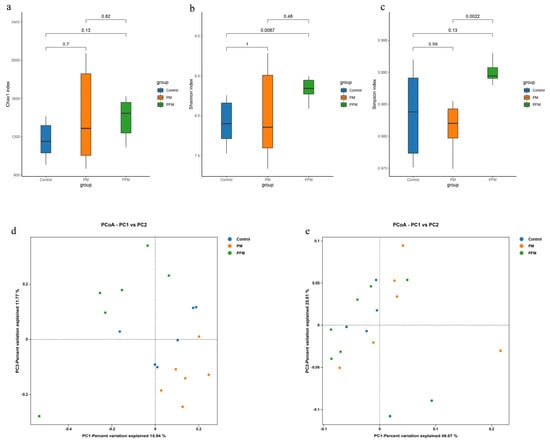
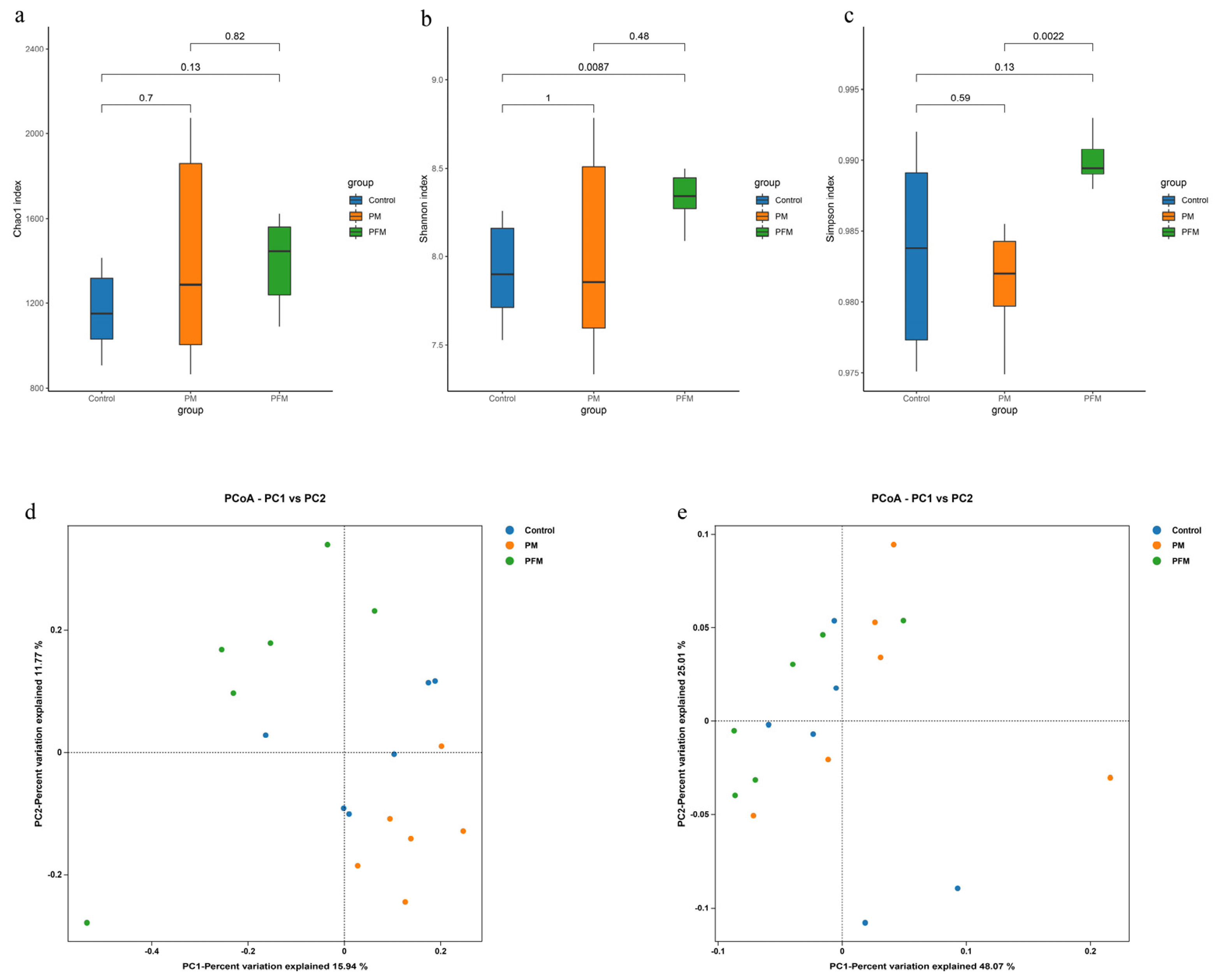
Dietary treatments did not significantly affect the Chao1 richness index among groups (p > 0.05; Figure 1a). The Shannon index was significantly greater in the FPM group than in the Control group (p < 0.05), but did not differ from the PM group (p > 0.05; Figure 1b). The Simpson diversity index was significantly greater in the FPM group than in the PM group (p < 0.05), while no difference was observed between FPM and Control groups (p > 0.05; Figure 1c). PCoA was employed to evaluate shifts in microbial community structure. The FPM group showed a distinct separation from the Control and PM groups, particularly in the model capturing 48.07% of the PC1 variation (Figure 1e).
Figure 1.
Influence of dietary fermented peanut meal on bacterial community richness and biodiversity. Control, basal diet; PM, basal diet with soybean meal partially replaced by peanut meal; FPM, basal diet with soybean meal partially replaced by fermented peanut meal; (a), Chao1 Index; (b), Shannon Index; (c) Simpson Index; (d), the PCoA based on OTU-level data; (e), the PCoA based on phylum-level data; n = 6.
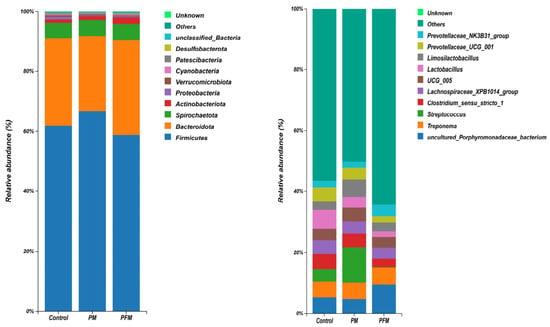
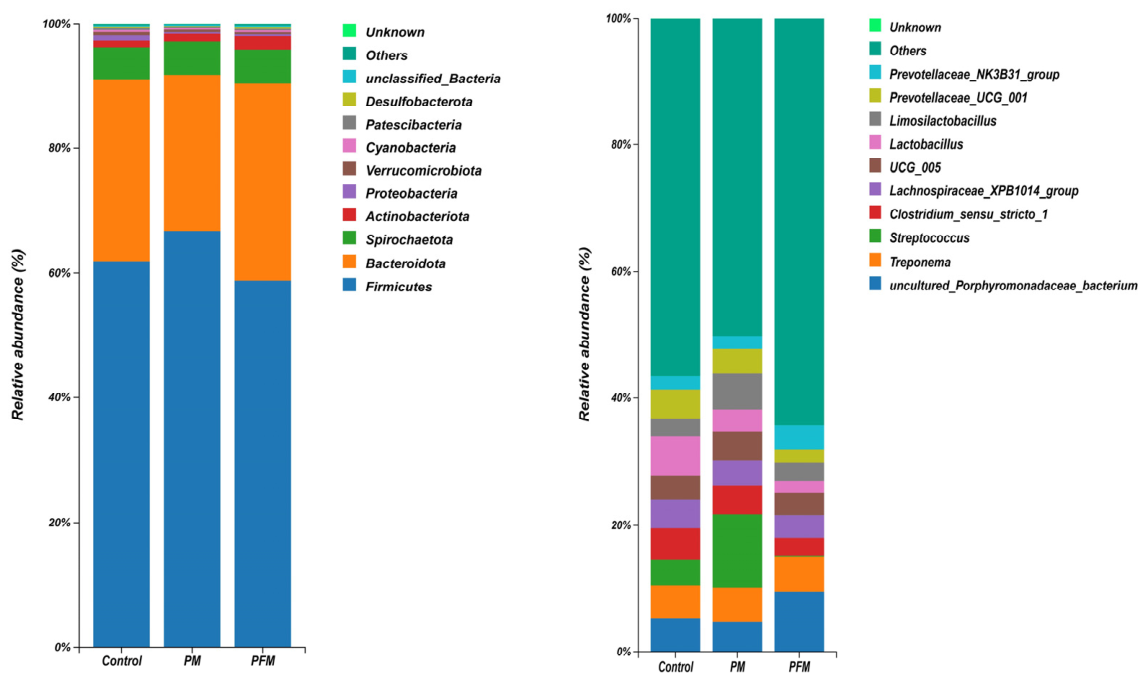
At the phylum level, Firmicutes and Bacteroidota were the dominant bacterial phyla across all groups (Figure 2). The PM group exhibited a greater relative abundance of Firmicutes compared with the control group, whereas the FPM group showed a more balanced composition, approaching that of the control. At the genus level, dietary treatments altered the relative abundance of several bacterial taxa (Figure 2). The PM group was characterized by an increased abundance of Streptococcus, while the FPM group displayed a more evenly distributed microbial profile without obvious dominance of a single genus.
Figure 2.
Effects of dietary fermented peanut meal on the fecal microbial composition at the phylum level and the genus level in piglets (%). Control, basal diet; PM, basal diet with soybean meal partially replaced by peanut meal; FPM, basal diet with soybean meal partially replaced by fermented peanut meal; n = 6.
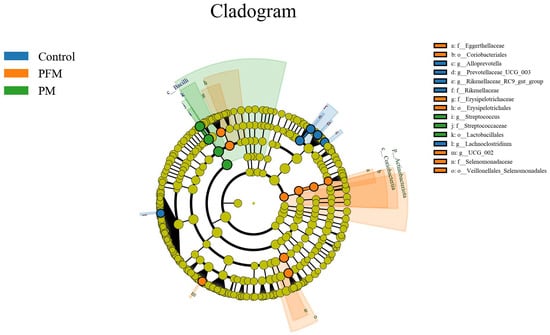
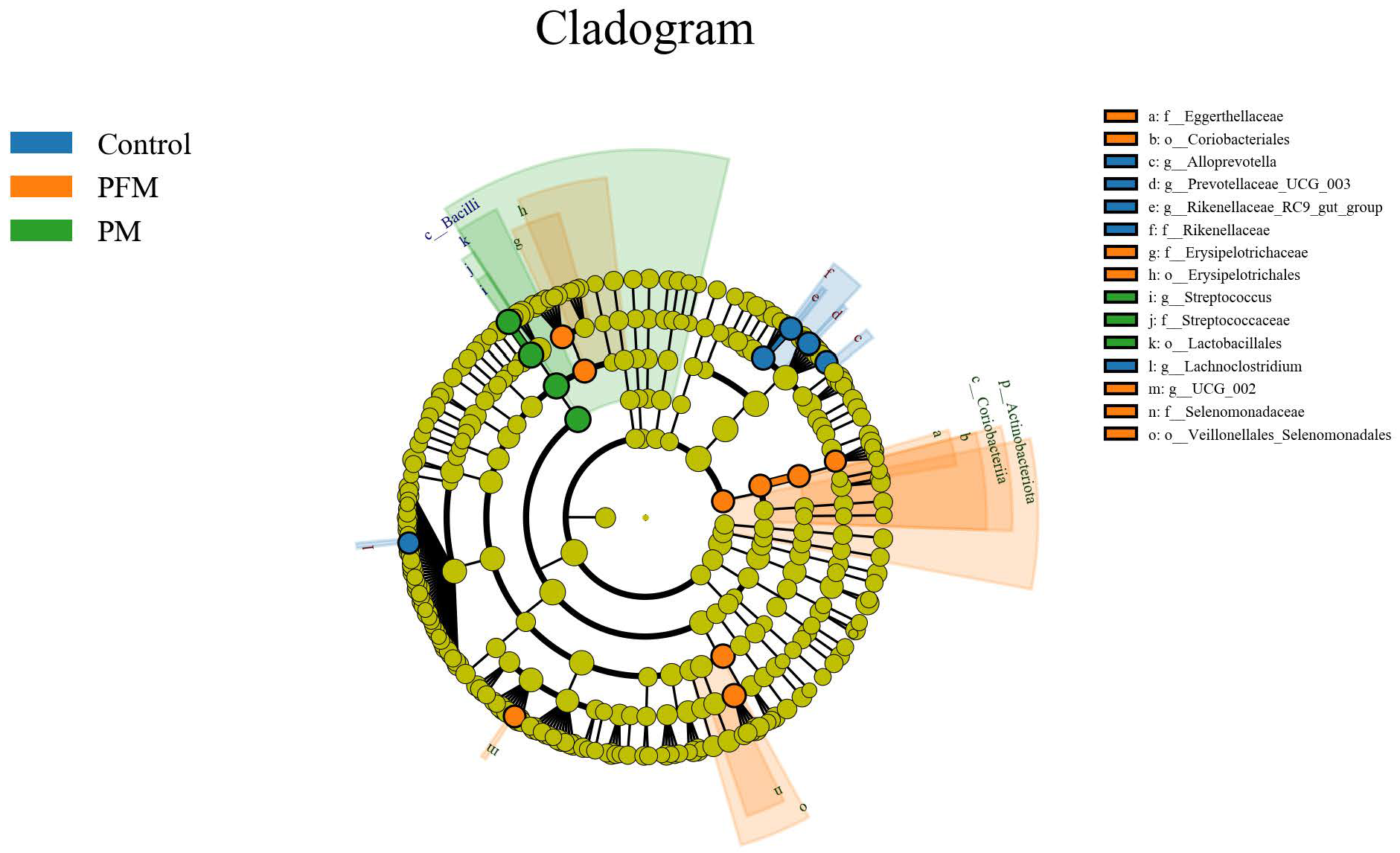
LEfSe analysis further identified distinct microbial biomarkers among treatments (Figure 3 and Figure 4). As shown in Figure 3, there were distinct distributions of differentially abundant microbial taxa among the Control, PFM, and PM groups. Group-specific taxa were identified across multiple taxonomic levels, indicating differences in the phylogenetic composition of gut microbial communities among dietary treatments.
Figure 3.
Cladogram illustrating the phylogenetic distribution of differentially abundant microbial taxa among the Control, PFM, and PM groups. Control, basal diet; PM, basal diet with soybean meal partially replaced by peanut meal; FPM, basal diet with soybean meal partially replaced by fermented peanut meal; n = 6.
Figure 4.
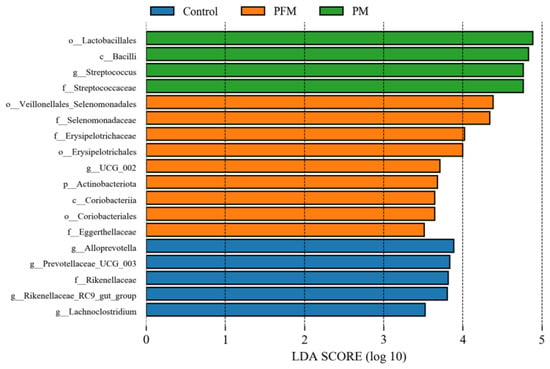
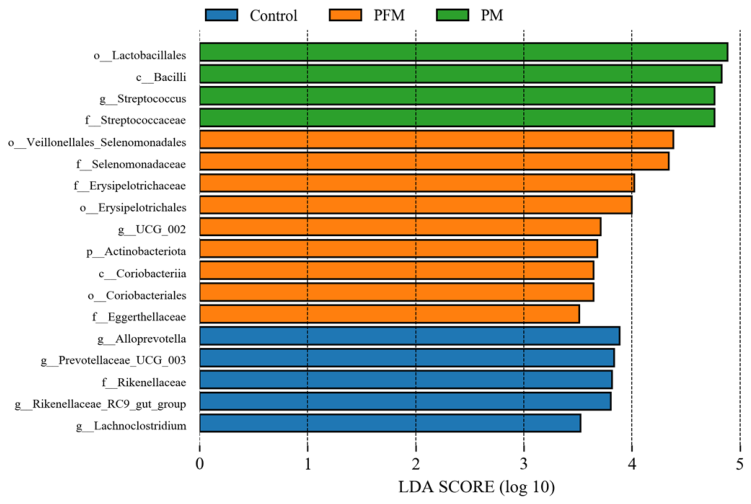
Differentially abundant microbial taxa identified by LEfSe analysis among the Control, PFM, and PM groups. The length of the histogram represents the LDA score, which can be interpreted as the effect size of each differentially abundant feature. Species with significant differences that have an LDA score greater than 2.0 are presented. Control, basal diet; PM, basal diet with soybean meal partially replaced by peanut meal; FPM, basal diet with soybean meal partially replaced by fermented peanut meal; n = 6.
As shown in Figure 4, the PM group was enriched with taxa such as Lactobacillales and Streptococcus, whereas the FPM group was characterized by the enrichment of Veillonellaceae and Selenomonadaceae. The control group showed enrichment of taxa including Alloprevotella and members of Rikenellaceae.
4. Discussion
The present study demonstrated that partial replacement of soybean meal with 6% FPM improved growth performance and apparent nutrient digestibility in weaned piglets, whereas unfermented PM did not produce comparable benefits. Specifically, FPM increased ADG and reduced the FCR without significantly affecting ADFI. These findings suggest that the improved growth performance was associated primarily with more efficient nutrient utilization rather than increased feed consumption. Similar improvements in animal performance have been reported following the inclusion of fermented plant protein ingredients in pig diets [24,25]. However, the mechanisms underlying the responses observed in the present study require further investigation.
The improvement in growth performance was accompanied by greater apparent digestibility of gross energy and crude protein in piglets fed FPM. In weaned piglets, digestive capacity is not fully developed, limiting the utilization of intact plant proteins [3]. Fermentation has been shown to hydrolyze macromolecular proteins into small peptides and free amino acids and to reduce anti-nutritional factors such as phytic acid and protease inhibitors, thereby improving enzymatic accessibility [11]. For instance, Cao et al. (2023) demonstrated that fermentation significantly increased the proportion of low-molecular-weight peptides in soybean meal, enhancing its digestibility [26]. In peanut-derived ingredients, similar modifications have been reported, including reduced allergenicity and improved protein functionality [13,14]. In contrast, the absence of improvement in the PM group suggests that without processing, the intrinsic limitations of PM remain, including reduced digestibility and the presence of anti-nutritional factors [6,8].
Although nutrient digestibility was improved, serum amino acid concentrations were not significantly changed in the study. This indicates that increased protein digestion did not translate into greater circulating amino acid levels. A plausible explanation is that absorbed amino acids were rapidly utilized for tissue deposition, which is consistent with the observed increase in growth rate. In growing animals, circulating amino acid concentrations reflect a dynamic balance between absorption and utilization [27,28]. Previous studies have shown that plasma amino acid concentrations are not always sensitive to changes in dietary protein quality or digestibility [29]. For example, studies on protein nutrition in pigs have demonstrated that improved performance and nitrogen retention can occur without proportional increases in circulating amino acids, due to increased utilization efficiency [30]. In addition, the gastrointestinal tract itself utilizes a substantial proportion of absorbed amino acids, which further limits their appearance in systemic circulation. Therefore, the lack of change in serum amino acids observed in the present study likely reflects enhanced metabolic utilization rather than insufficient absorption.
Previous studies have reported that diets containing fermented feed increase the activities of hepatic enzymes (ALT and AST) in the serum of weaned piglets [31,32]. In the present study, dietary supplementation with FPM similarly elevated serum ALT and AST activities in weaned piglets. This was accompanied by concurrent increases in serum albumin levels, and all measured biochemical parameters remained within normal physiological ranges. Although these changes occurred alongside improved growth performance, their physiological significance remains unclear. Further studies are therefore needed to clarify the biological significance of these changes.
The microbial results in the present study indicate that dietary FPM not only altered nutrient utilization but also reshaped the hindgut microbial ecosystem. Dietary interventions are widely recognized to influence microbial composition, and the extent of these changes depends on factors such as animal physiological status, dietary inclusion level, and the intensity of nutritional perturbation [33,34]. In the present study, the Shannon index was greater in the FPM group than in the Control group, while the Simpson diversity index was greater in the FPM group than in the PM group. These findings indicate treatment-specific differences in fecal microbial diversity. Such changes may be related to the biochemical modifications of plant-derived substrates during fermentation. Previous studies have shown that microbial fermentation can hydrolyze complex proteins into smaller peptides and free amino acids and modify carbohydrate fractions, potentially changing the availability of nutrients for intestinal microorganisms [35,36]. These results suggest that FPM created a more favorable ecological environment for a broader range of microbial taxa, rather than promoting the dominance of a few specific groups. The β-diversity analysis further supports this interpretation, as clear separation among treatment groups indicates that dietary treatments induced distinct microbial community structures. This finding suggests that both FPM and PM altered the composition of the microbiota, reflecting systematic shifts in microbial community assembly driven by dietary composition and nutrient availability.
From a mechanistic perspective, these changes are likely linked to differences in nutrient digestion and substrate flow. The greater apparent digestibility of crude protein and gross energy in the FPM group suggests improved nutrient utilization. However, greater nutrient digestibility does not necessarily indicate an increased supply of fermentable substrates to the hindgut. Microbial fermentation may alter the molecular characteristics and accessibility of dietary proteins and carbohydrates, potentially changing the composition of substrates available to intestinal microorganisms [37,38]. Consequently, differences in the substrates reaching the hindgut may influence the ecological niches available to different microbial taxa and require further investigation.
Given these community-level shifts, the LEfSe analysis provides more direct insight into the specific microbial taxa driving the differences among treatments. In the PM group, the enrichment of Streptococcus suggests a microbial response to increased availability of rapidly fermentable substrates. This genus is typically associated with fast growth under nutrient-rich conditions and may reflect an imbalanced fermentation environment when undigested nutrients accumulate in the hindgut [39,40]. In contrast, the FPM group was characterized by the enrichment of Veillonellaceae and Selenomonadaceae. These taxa are known to utilize intermediate fermentation products, such as lactate, and are often involved in cross-feeding interactions within the gut microbial network [41]. Their increased relative abundances may indicate changes in the microbial groups associated with fermentation intermediate utilization following FPM supplementation. This type of microbial organization is typically associated with greater metabolic efficiency and ecological stability. However, fecal SCFA concentrations did not differ significantly among treatments, indicating that the observed taxonomic changes were not accompanied by detectable differences in the concentrations of the measured fermentation products. Therefore, the functional implications of these microbial shifts should be interpreted cautiously.
Taken together, these results indicate that FPM does not merely maintain microbial stability but actively promotes a more diverse microbial community. This effect is likely mediated through changes in nutrient digestion and substrate composition, which reshape ecological niches in the hindgut. The resulting increase in microbial diversity and enrichment of functionally complementary taxa may contribute to improved intestinal homeostasis, thereby supporting the enhanced growth performance observed in piglets.
5. Conclusions
The inclusion of 6% fermented peanut meal as a partial substitute for soybean meal improved average daily gain, feed conversion, and apparent digestibility of crude protein and gross energy in weaned piglets over the 21-day trial. These findings indicate that appropriately processed peanut meal can serve as a promising supplementary protein ingredient in early-weaning diets. FPM was also associated with changes in fecal microbial diversity and the relative abundance of selected bacterial groups, although fecal SCFA concentrations were not altered. The measured AFB1 concentration was lower in FPM than in unfermented PM, but this preliminary observation requires confirmation with replicated safety testing. Taken together, the results provide initial in vivo evidence for the feeding value of FPM in weaned piglets, while further studies are needed to clarify the mechanisms underlying the microbial changes and verify product safety.
Furthermore, FPM promoted a more balanced hindgut microbiota by enriching lactate-utilizing taxa and mitigating the dominance of Streptococcus observed in the PM group. These beneficial shifts are likely attributable to enhanced small intestinal digestibility and a more favorable substrate supply to the hindgut.
Overall, microbial fermentation effectively improves the nutritional value of PM. As a result, FPM represents a promising alternative protein source that supports both optimal growth performance and gut microbial homeostasis in early-weaned piglets.
Author Contributions
Writing—original draft preparation, H.C. and Y.G.; Formal analysis, H.C. and Y.G.; Resources and software, L.M.; Funding acquisition, K.L. and Q.T.; Writing—review and editing, K.L. and Q.T. All authors have read and agreed to the published version of the manuscript.
Funding
This research was supported by the School-level Initiation Project (25BSQD52) and the Hunan Provincial University Discipline Fund for Supporting Leading Industries—Biology (Grant No. Xiang Jiao Tong [2026] 66).
Institutional Review Board Statement
The animal study protocol was approved by the Biomedical Research Ethics Committee of Hunan Agricultural University (Approval No. 29/2023, 7 April 2023).
Informed Consent Statement
Written informed consent was obtained from the owner of the animals involved in this study.
Data Availability Statement
The raw data supporting the conclusions of this article will be made available by the corresponding author upon reasonable request.
Conflicts of Interest
The authors declare that there are no conflicts of interest.
References
- Blavi, L.; Oriol, D.S.; Llonch, P.; Verge, S.L.; Orue, S.M.M.; Perez, J.F. Management and feeding strategies in early life to increase piglet performance and welfare around weaning: A review. Animals 2021, 11, 302. [Google Scholar] [CrossRef] [Scilit] [PubMed]
- Guo, D.X.; Sun, L.F.; Chen, D.W.; Pu, J.N.; Yu, B. Nano-porous zinc oxide effectively alleviates diarrhea and intestinal inflammation induced by enterotoxigenic Escherichia coli in weaned piglets. J. Anim. Sci. 2026, 104, skag053. [Google Scholar] [CrossRef] [Scilit] [PubMed]
- Trevisi, P.; Negrini, C.; Correa, F.; Virdis, S.; Laghi, L.; Marcello, M.; Conte, G.; Mazzoni, M.; Luise, D. Insight into the long-term impact of birth weight on intestinal development, microbial settlement, and the metabolism of weaned piglets. J. Anim. Sci. 2023, 101, skad395. [Google Scholar] [CrossRef] [Scilit] [PubMed]
- Wang, P.; Zhang, J.; Tian, Y.; Yu, B.; He, J.; Yu, J.; Zheng, P. Weaning stress aggravates defense response and the burden of protein metabolism in low-birth-weight piglets. Animals 2025, 15, 1369. [Google Scholar] [CrossRef] [Scilit]
- Kim, S.W.; Less, J.G.; Wang, L.; Yan, T.H.; Kiron, V.; Kaushik, S.J.; Lei, X.G. Meeting global feed protein demand: Challenge, opportunity, and strategy. Annu. Rev. Anim. Biosci. 2019, 7, 221–243. [Google Scholar] [CrossRef] [Scilit] [PubMed]
- Zhao, T.; Ying, P.F.; Zhang, Y.H.; Chen, H.Y.; Yang, X.B. Research advances in the high-value utilization of peanut meal resources and its hydrolysates: A review. Molecules 2023, 28, 6862. [Google Scholar] [CrossRef] [Scilit] [PubMed]
- Nevara, G.T.; Ibrahim, S.A.G.; Muhammad, S.K.Y.; Zawawi, N.; Mustapha, N.A.; Karim, R. Oilseed meals into foods: An approach for the valorization of oilseed by-products. Crit. Rev. Food Sci. 2022, 23, 6330–6343. [Google Scholar] [CrossRef] [Scilit]
- Zhang, M.E.; Wang, D.; Wang, S.Q.; Du, H.S.; Li, G.D.; Lan, R.B.; Li, Y.L. Resource utilization of peanut shells: Nutritional characteristics, regulation of antinutritional factors, and application potential in livestock and poultry production. Food Sci. Nutr. 2025, 13, e70994. [Google Scholar] [CrossRef] [Scilit] [PubMed]
- Casas, G.A.; Jaworski, N.W.; Htoo, J.K.; Stein, H.H. Ileal digestibility of amino acids in selected feed ingredients fed to young growing pigs. J. Anim. Sci. 2018, 96, 2361–2370. [Google Scholar] [CrossRef] [Scilit] [PubMed]
- Ilori, J.O.; Miller, E.R.; Ullrey, D.E.; Ku, P.K.; Hogberg, M.G. Combinations of peanut meal and blood meal as substitutes for soybean meal in corn-based, growing-finishing pig diets. J. Anim. Sci. 1984, 59, 394–399. [Google Scholar] [CrossRef] [Scilit]
- Feng, X.Y.; Ng, K.; Ajlouni, S.; Zhang, P.Z.; Fang, Z.X. Effect of solid-state fermentation on plant-sourced proteins: A review. Food Rev. Int. 2023, 40, 2580–2617. [Google Scholar] [CrossRef] [Scilit]
- Sun, H.X.; Kang, X.Y.; Tan, H.Z.; Cai, H.Y.; Chen, D. Progress in fermented unconventional feed application in monogastric animal production in China. Fermentation 2023, 9, 947. [Google Scholar] [CrossRef] [Scilit]
- Pi, X.W.; Fu, G.M.; Yang, Y.L.; Wan, Y.; Xie, M.Y. Changes in IgE binding capacity, structure, physicochemical properties of peanuts through fermentation with Bacillus natto and Lactobacillus plantarum along with autoclave pretreatment. Food Chem. 2022, 392, 133208. [Google Scholar] [CrossRef] [Scilit] [PubMed]
- Hariharan, S.; Patti, A.; Arora, A. Functional proteins from biovalorization of peanut meal: Advances in process technology and applications. Plant Food Hum. Nutr. 2023, 78, 13–24. [Google Scholar] [CrossRef] [Scilit] [PubMed]
- Fan, Z.; Cheng, M.; Wang, L.S.; Li, C.H.; Wu, D.; Li, J.N.; Cheng, Z.Y.; Zhang, H.T.; Li, W.Q. Feasibility evaluation of fermented peanut meal to replace soybean meal in the diet of common carp (Cyprinus carpio): Growth performance, serum biochemistry, intestinal health and microflora composition. Aquacult. Rep. 2023, 31, 101675. [Google Scholar] [CrossRef] [Scilit]
- Jiang, X.Y.; Ding, H.Y.; Liu, Q.; Wei, Y.X.; Zhang, Y.J.; Wang, Y.P.; Lu, Y.Q.; Ma, A.G.; Li, Z.C.; Hu, Y.F. Effects of peanut meal extracts fermented by Bacillus natto on the growth performance, learning and memory skills and gut microbiota modulation in mice. Br. J. Nutr. 2019, 123, 383–393. [Google Scholar] [CrossRef] [Scilit] [PubMed]
- GB/T 6433-2025; Determination of Crude Fat in Feeds. Standardization Administration of China: Beijing, China, 2025.
- GB/T 6432-2018; Determination of Crude Protein in Feeds—Kjeldahl Method. Standardization Administration of China: Beijing, China, 2018.
- GB/T 6434-2022; Determination of Crude Fiber Content in Feeds. Standardization Administration of China: Beijing, China, 2022.
- GB/T 6438-2025; Determination of Crude Ash in Feeds. Standardization Administration of China: Beijing, China, 2025.
- GB/T 45104-2024; Determination of Gross Energy of Feeds—Bomb Calorimetric Method. Standardization Administration of China: Beijing, China, 2024.
- GB/T 18246-2019; Determination of Amino Acids in Feeds. Standardization Administration of China: Beijing, China, 2019.
- NRC. Nutrient Requirements of Swine, 11th ed.; National Academic Press: Washington, DC, USA, 2012. [Google Scholar]
- Tran, T.V.; Kim, Y.S.; Yun, H.H.; Nguyen, D.H.; Bui, T.T.; Tran, P.V. A blend of bacillus-fermented soybean meal, functional amino acids, and nucleotides improves nutrient digestibility, bolsters immune response, reduces diarrhea, and enhances growth performance in weaned piglets. J. Anim. Sci. 2024, 3, skae293. [Google Scholar] [CrossRef] [Scilit] [PubMed]
- Muniyappan, M.; Shanmugam, S.; Park, J.H.; Han, K.; Kim, I.H. Effects of fermented soybean meal supplementation on the growth performance and apparent total tract digestibility by modulating the gut microbiome of weaned piglets. J. Anim. Sci. Bio 2023, 13, 3691. [Google Scholar] [CrossRef] [Scilit] [PubMed]
- Cao, Y.Z.; Xu, M.W.; Xu, J.; Cai, G.L. Simultaneous microbial fermentation and enzymolysis: A biotechnology strategy to improve the nutritional and functional quality of soybean meal. Food Rev. Int. 2023, 40, 1296–1311. [Google Scholar] [CrossRef] [Scilit]
- Hou, Y.; Wu, G. L-Glutamate nutrition and metabolism in swine. Amino Acids 2018, 50, 1497–1510. [Google Scholar] [CrossRef] [Scilit] [PubMed]
- Wu, G.Y.; Bazer, F.W.; Johnson, G.A.; Hou, Y.Q. BOARD-INVITED REVIEW: Arginine nutrition and metabolism in growing, gestating, and lactating swine. J. Anim. Sci. 2018, 96, 5035–5051. [Google Scholar] [CrossRef] [Scilit] [PubMed]
- Morales, A.; Buenabad, L.; Castillo, G.; Espinoza, S.; Arce, N.; Bernal, H.; Htoo, J.K.; Cervantes, M. Serum concentration of free amino acids in pigs of similar performance fed diets containing protein-bound or protein-bound combined with free amino acids. Anim. Feed Sci. Tech 2020, 267, 114552. [Google Scholar] [CrossRef] [Scilit]
- Duarte, M.E.; Parnsen, W.; Zhang, S.H.; Abreu, M.L.T.; Kim, S.W. Low crude protein formulation with supplemental amino acids for its impacts on intestinal health and growth performance of growing-finishing pigs. J. Anim. Sci. Biotechnol. 2024, 15, 55. [Google Scholar] [CrossRef] [Scilit] [PubMed]
- Czech, A.; Sembratowicz, I.; Kiesz, M. The effects of a fermented rapeseed or/and soybean meal additive on antioxidant parameters in the blood and tissues of piglets. Animals 2021, 11, 1646. [Google Scholar] [CrossRef] [Scilit] [PubMed]
- Hyder, M.A.; Hasan, M.; Mohieldein, H.A. Comparative levels of ALT, AST, ALP and GGT in liver associated diseases. Eur. J. Exp. Biol. 2013, 3, 280–284. [Google Scholar]
- Upadhaya, S.D.; Kim, I.H. Maintenance of gut microbiome stability for optimum intestinal health in pigs—A review. J. Anim. Sci. Bio 2022, 13, 140. [Google Scholar] [CrossRef] [Scilit] [PubMed]
- Kolodziejczyk, A.A.; Zheng, D.P.; Elinav, E. Diet–microbiota interactions and personalized nutrition. Nat. Rev. Microbiol. 2019, 17, 742–753. [Google Scholar] [CrossRef] [Scilit] [PubMed]
- Fassarella, M.; Blaak, E.E.; Penders, J.; Nauta, A.; Smidt, H.; Zoetendal, E.G. Gut microbiome stability and resilience: Elucidating the response to perturbations in order to modulate gut health. Gut 2021, 70, 595–605. [Google Scholar] [CrossRef] [Scilit] [PubMed]
- Zhang, B.H.; Zhang, M.; Peng, W.Q.; Qu, X.D.; Ge, J.J.; Zhang, H.P.; Zhang, Y.H.; Du, L.F.; Song, Z.B.; Wu, N.C. Functional redundancy buffers aquatic ecosystem stability under environmental stress: Insights from multi-trophic and multidimensional biodiversity in a Disturbed River basin. Ecol. Indic. 2026, 186, 114815. [Google Scholar] [CrossRef] [Scilit]
- Su, W.F.; Jiang, Z.P.; Wang, C.; Zhang, Y.; Gong, T.; Wang, F.Q.; Jin, M.L.; Wang, Y.Z.; Lu, Z.Q. Co-fermented defatted rice bran alters gut microbiota and improves growth performance, antioxidant capacity, immune status and intestinal permeability of finishing pigs. Anim. Nutr. 2022, 11, 413–424. [Google Scholar] [CrossRef] [Scilit] [PubMed]
- Liu, S.; Xiao, H.; Xiong, Y.X.; Chen, J.P.; Wu, Q.W.; Wen, W.L.; Jinag, Z.Y.; Wang, L. Effects of fermented feed on the growth performance, intestinal function, and microbiota of piglets weaned at different age. Front. Vet. Sci. 2022, 9, 841762. [Google Scholar] [CrossRef] [Scilit] [PubMed]
- Cullen, J.T.; Lawlor, P.G.; Cormican, P.; Gardiner, G.E. Microbial quality of liquid feed for pigs and its impact on the porcine gut microbiome. Animals 2021, 11, 2983. [Google Scholar] [CrossRef] [Scilit] [PubMed]
- Tang, X.P.; Liu, X.G.; Zhang, K. Effects of microbial fermented feed on serum biochemical profile, carcass traits, meat amino acid and fatty acid profile, and gut microbiome composition of finishing pigs. Front Vet. Sci. 2021, 8, 744630. [Google Scholar] [CrossRef] [Scilit] [PubMed]
- Zhang, S.M.; Hung, J.H.; Yen, T.N.; Huang, S.L. Mutualistic interactions of lactate-producing lactobacilli and lactate-utilizing Veillonella dispar: Lactate and glutamate cross-feeding for the enhanced growth and short-chain fatty acid production. Microb. Biotechnol. 2024, 17, e14484. [Google Scholar] [CrossRef] [Scilit] [PubMed]

Disclaimer/Publisher’s Note: The statements, opinions and data contained in all publications are solely those of the individual author(s) and contributor(s) and not of MDPI and/or the editor(s). MDPI and/or the editor(s) disclaim responsibility for any injury to people or property resulting from any ideas, methods, instructions or products referred to in the content. |
© 2026 by the authors. Licensee MDPI, Basel, Switzerland. This article is an open access article distributed under the terms and conditions of the Creative Commons Attribution (CC BY) license.